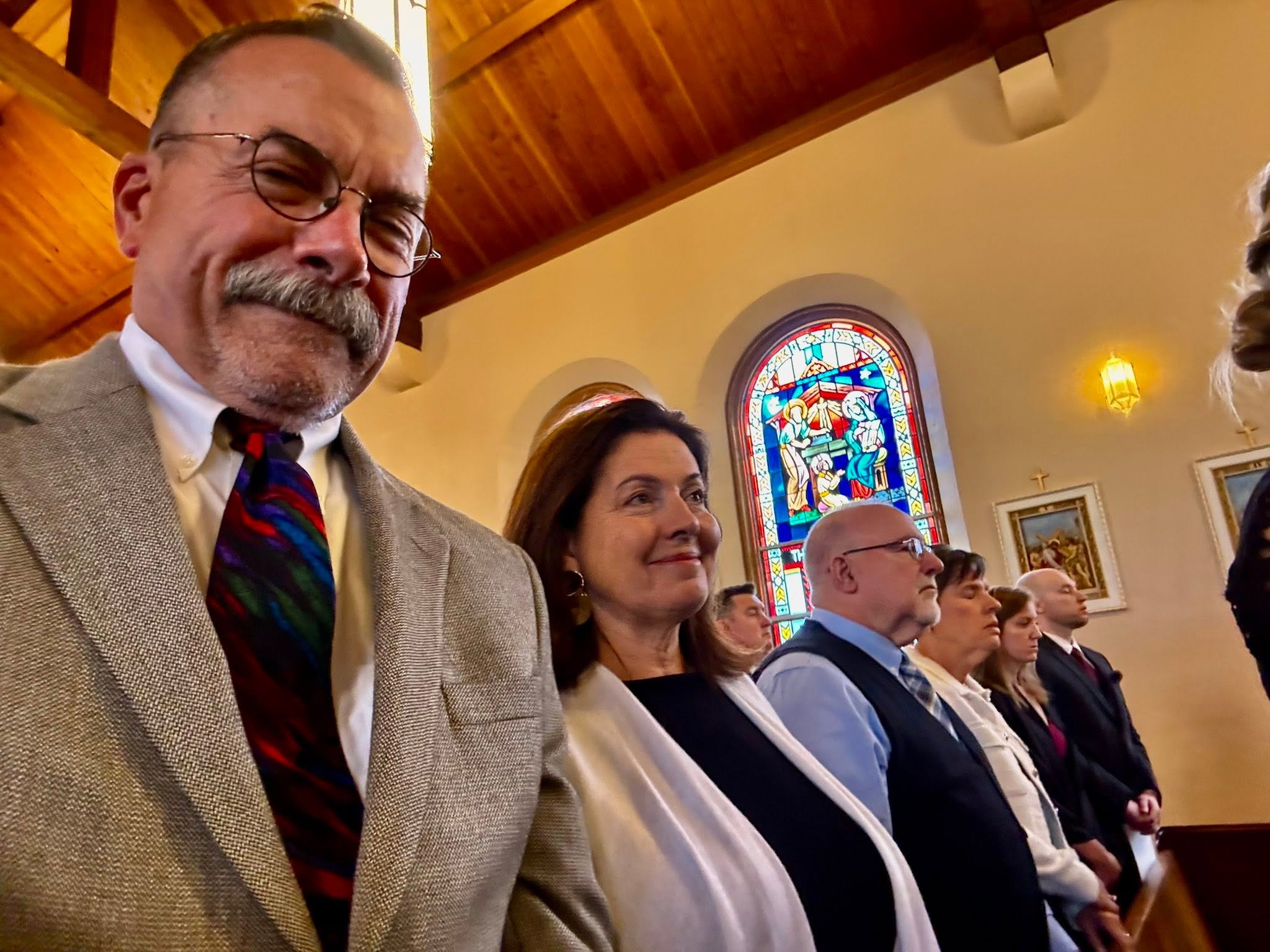
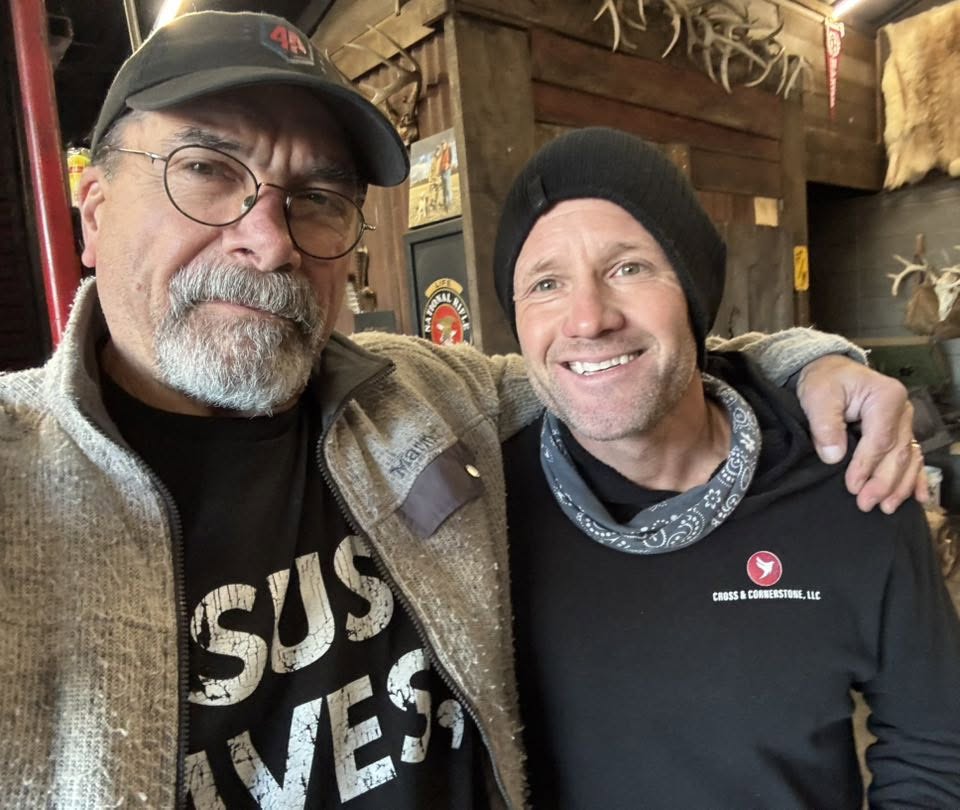
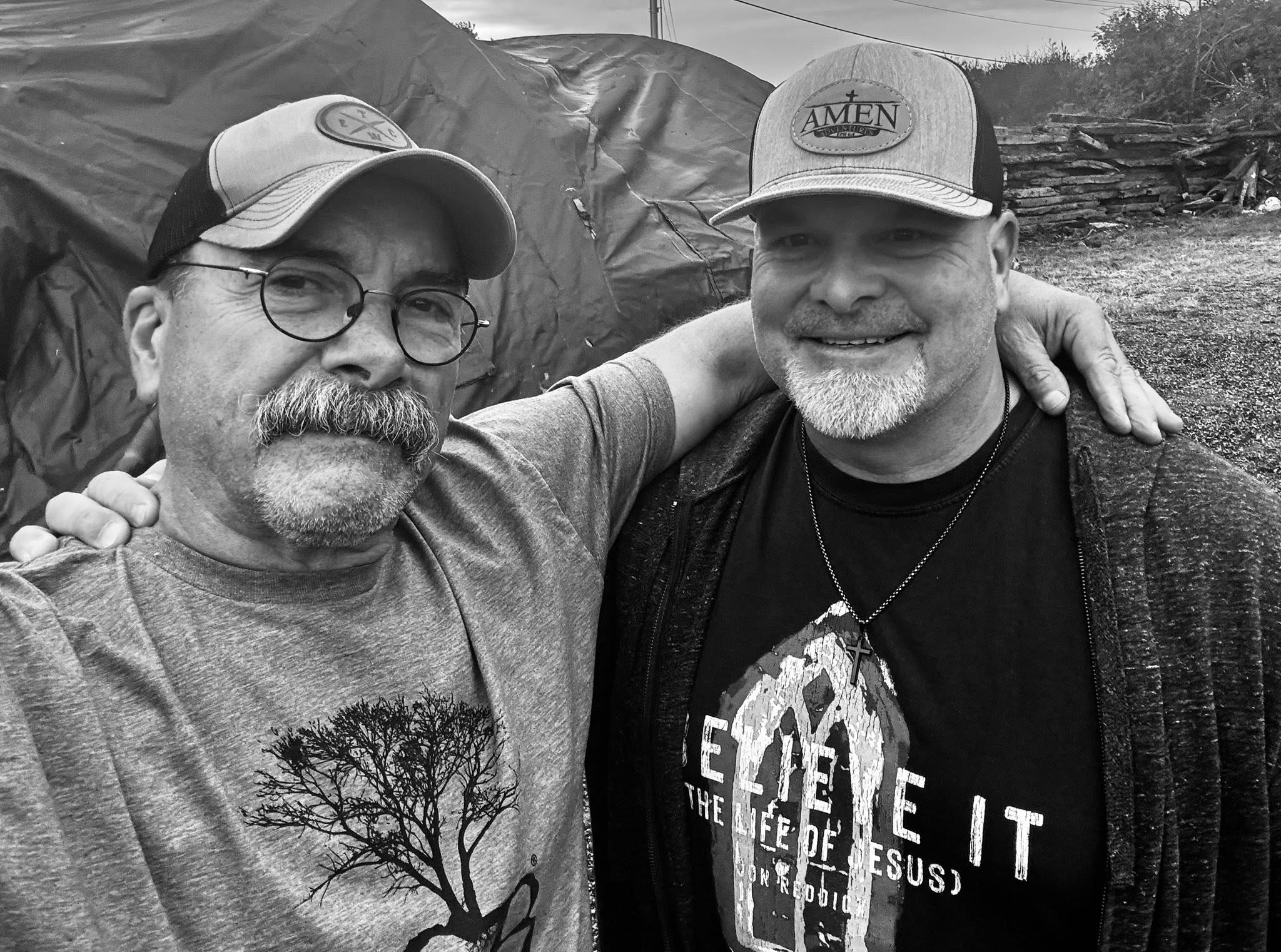
There’s something extraordinary about gathering to remember a man like Paul Turnbaugh. Over these past several weeks, as I’ve reflected on his life and visited with so many people who loved him, I’ve come to recognize something remarkable about my friend Paul.
Everybody thought Paul was the greatest guy in the world.
And almost everybody seemed to believe they were one of his best friends.
I’ve been thinking about that. How does one man manage to have a hundred best friends? But that was Paul. He possessed an extraordinary capacity to love people, to take an interest in their lives, and to make them feel genuinely important. He was about as true-blue, all-American a man as I’ve ever known. He loved his family, his friends, his country, the outdoors, and above all, his Lord Jesus Christ.
Paul was an artist, a musician, a photographer, a hunter, a fisherman, a teacher, a mentor, a thinker, and a wonderful friend. He loved life. And if I could summarize something about him in just a few words, I would say that Paul had a remarkable gift for being fully alive.
This morning, we gathered at St. Francis, and the priest reminded us that we are presently in what the Church calls Ordinary Time. In the Christian liturgical calendar, Ordinary Time is represented by the color green, a color that reminds us of life, growth, and the ongoing work of God in the world.¹
As I sat there thinking about Paul, I couldn’t help but smile.
Ordinary Time. Green. Life. Growth. Creation.
I thought, how wonderfully appropriate for Paul Turnbaugh.
Because Paul had an extraordinary love for the ordinary things of life.
For Paul, there really wasn’t such a thing as an ordinary day. There were ordinary routines, certainly, but he approached them with an enthusiasm that made each day feel like a new adventure.
Paul could look at the same birds every single day and somehow be just as excited about them as he had been the day before.
Some of you may remember Paul’s fascination with the sandhill cranes, particularly one young crane he affectionately named Egbert.
Paul became captivated by this little bird. He would photograph him, follow his development, and document his life with the kind of enthusiasm you might expect from someone witnessing a once-in-a-lifetime event. Except Paul could experience that same excitement again tomorrow, and the day after that, and the day after that.
I can just imagine him heading out with his camera, ready to capture another chapter in Egbert’s life.
And it wasn’t just the cranes.
There were the turkeys. The deer. The birds along the roadside. Thérèse laughed as she remembered Paul wanting to stop and photograph the turkeys yet again. She would remind him that they had just photographed them yesterday, and that they were, after all, standing in the middle of a road!
But Paul couldn’t help himself. There was something beautiful to see, and he didn’t want to miss it.
And then there were the crows.
Apparently, Paul developed a special relationship with the neighborhood crows. He started feeding them, eventually settling on peanuts, and before long he was making crow noises to call them into the yard. Whenever he heard them nearby, he would excitedly announce their arrival and head outside.
And he would tell Thérèse how beautiful they were. Crows!
Most of us look at a crow and see a black bird. But Paul would point out the extraordinary colors hidden in those feathers, the purples and other iridescent shades that become visible when the sunlight catches them just right.
He was seeing things the rest of us didn’t even notice.
And Thérèse said something that I thought was profoundly beautiful. She said that because of Paul, she will never look at turkeys, cranes, or even crows quite the same way again.
That’s what happened when you spent time with Paul. He changed the way you saw the world.
I love that.
Psalm 19 tells us that the heavens declare the glory of God and the skies proclaim the work of his hands. The psalmist describes creation as a continual witness to its Creator, declaring his glory without ever needing to speak a word.²
Paul seemed to understand that instinctively.
He spent his life photographing a creation that was already proclaiming the majesty of the Lord. And in sharing those images, he invited the rest of us to stop long enough to appreciate it.
There is something deeply Christian about that kind of attentiveness. We live in a world where it’s easy to become so occupied with responsibilities, worries, and schedules that we overlook the simple gifts God has placed all around us.
But Paul didn’t need extraordinary circumstances to experience joy. He recognized the extraordinary goodness of God in ordinary life. and in ordinary time.
And that brings me to a passage of Scripture that I think describes Paul remarkably well.
In Romans 12, the apostle Paul gives a beautiful description of what a life devoted to Christ ought to look like. He speaks of sincere love, affection for one another, generosity, hospitality, and faithfulness.
And in verse 11, he writes:
“Never be lacking in zeal, but keep your spiritual fervor, serving the Lord.”
The Greek word translated fervent is zeontes (ζέοντες), pronounced ZEH-on-tess.
It’s a wonderful word that comes from the Greek verb zeō, which means to boil or to be hot. Figuratively, it describes someone burning with enthusiasm, zeal, and devotion.³ Calmly overflowing. Somewhat calculated but consistent and persevering, almost never stopping -overflowing.
I can’t think of a better description of Paul. He was fervent in spirit.
Look at the surrounding verses. Love sincerely. Honor one another. Practice hospitality. Rejoice with those who rejoice. Weep with those who weep.
In other words, our devotion to the Lord becomes visible in the way we love and serve others.
And this is where I think Paul’s life offers such a beautiful testimony.
He didn’t simply love God’s creation. He loved the people God had placed within it. At our TOV community Paul Loved to be the photographer. And he treated everyone as if they were the most important person of the night. Come over here stand next to this person, Lets get this truck in the background put your arms around each other, oh you have a great smile, WOW look at this- Check out the light in the sky… LOOK at this photo! People were so captivated by his presence.
Paul could find common ground with almost anybody.
Even when someone was a little different, awkward, or perhaps not the easiest person to connect with, Paul would find something interesting about them. He would ask questions. He would engage them in conversation. He would take time to listen.
He had a way of removing the awkwardness from a conversation and making people feel completely comfortable being themselves.
I think that’s one of the reasons so many people considered Paul their best friend.
He wasn’t looking for reasons to avoid people. He was always finding reasons to love them. I was his pastor, but he shepherded me in this area.
I am also a wedding photographer and Paul would often shoot with me. The first time He shot a wedding with me I found him in a barn surrounded by groomsmen, laughing and talking with everyone. There he’d be, sitting on a pool table, right in the middle of the conversation, having the time of his life.
“Paul, aren’t we supposed to be taking pictures?” But Paul was enjoying the people and the joy of the occasion.
That was Paul.
He never seemed too busy to enjoy someone else’s happiness.
And I think that reflects something beautiful about the heart of Christ. Jesus had an extraordinary way of seeing people whom others overlooked. He made time for those who were often pushed aside, and he treated them with dignity, patience, and genuine compassion.
I saw something of that same spirit in my friend.
Of course, one of the most beautiful expressions of Paul’s love was his relationship with Thérèse.
Over the years, when I’ve spoken about marriage within our TOV community, I’ve often pointed to Paul and Thérèse as a wonderful example of covenant love.
They genuinely delighted in each other.
The smiles, the laughter, the morning coffee, their walks together, the drives through the countryside, and their endless conversations about life, creation, and the Lord.
They weren’t simply committed to one another. They thoroughly enjoyed being together.
And there is something deeply meaningful about that.
So much of marriage is discussed in terms of commitment, responsibility, and perseverance. Those things certainly matter. But Paul and Thérèse also demonstrated the beauty of friendship within marriage, the kind of relationship where two people continue discovering reasons to be thankful for one another.
Thérèse, your life together has been a beautiful testimony to so many of us.
And Paul’s love for Elliott, Rachel, Trinity, Marie, and Max was equally evident. His family meant the world to him. You couldn’t spend much time talking with Paul before he began telling you about the people he loved. His family wasn’t simply one part of his life. They were at the very heart of it.
Paul also left a remarkable impression on so many young people.
He was an extraordinarily gifted artist who spent more than forty years as a professional illustrator. He contributed to hundreds of books and taught art at Judson College and Faith Christian School.
But beyond his professional accomplishments, I think one of his greatest gifts was the way he encouraged creativity in others.
He helped young people recognize that the gifts God had placed within them were meaningful and worth developing.
The opening chapters of Genesis introduce God as Creator, and humanity is subsequently described as bearing his image. Our capacity to create, cultivate, imagine, and bring beauty into the world reflects something of the Creator whose image we bear.⁴
Paul understood this. He used his gifts to celebrate God’s creation and inspire others to do the same.
I think particularly about the students at Faith Christian School, many of whom will carry something of Paul’s influence for the rest of their lives.
And on a very personal level, I think about my own children, especially my son Will, who shares Paul’s love for art.
As a father, I’ve spent a great deal of time thinking about the kind of men I hope my boys become. And as I reflect on Paul’s life, I realize how much of what I desire for them was embodied in my friend.
I hope they grow to appreciate life the way he did. To love their families, cultivate meaningful friendships, develop their gifts, and serve the Lord with genuine enthusiasm.
I hope they learn to see beauty where others might overlook it.
And I hope they learn to love people the way Paul did.
When you find yourself hoping that your children grow up to resemble one of your friends, that says an extraordinary amount about the character of that friend.
Paul was that kind of man.
I’m also deeply grateful for the friendship we shared.
The hunting excursions, the early mornings outdoors, the countless conversations about theology and life, the men’s Bible studies, and the hours we spent wandering around with our cameras trying to capture something extraordinary.
Paul had so many interests, and somehow we seemed to share an awful lot of them.
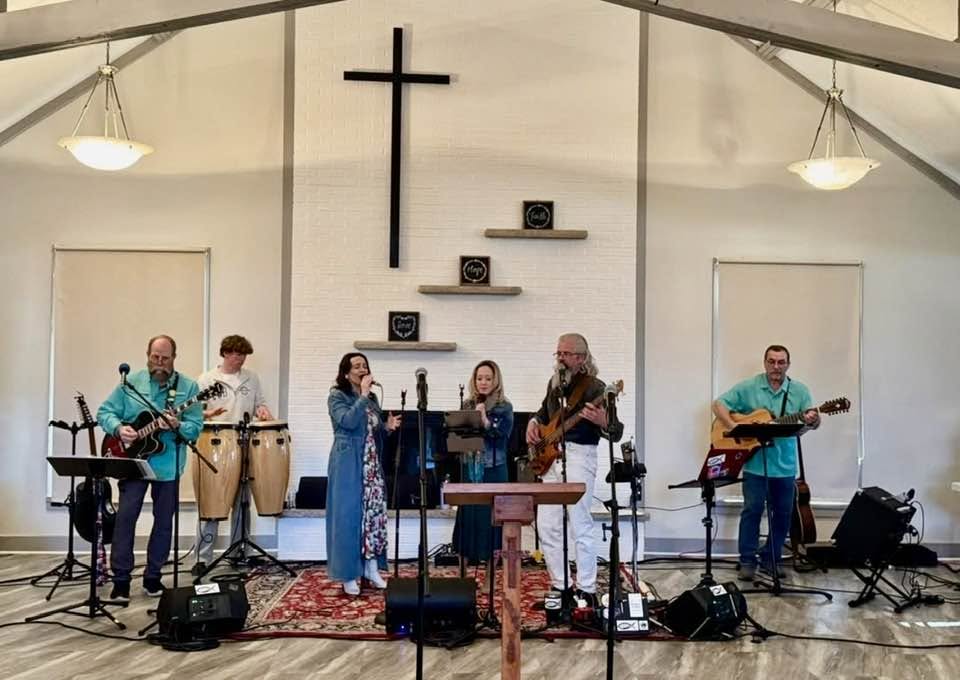
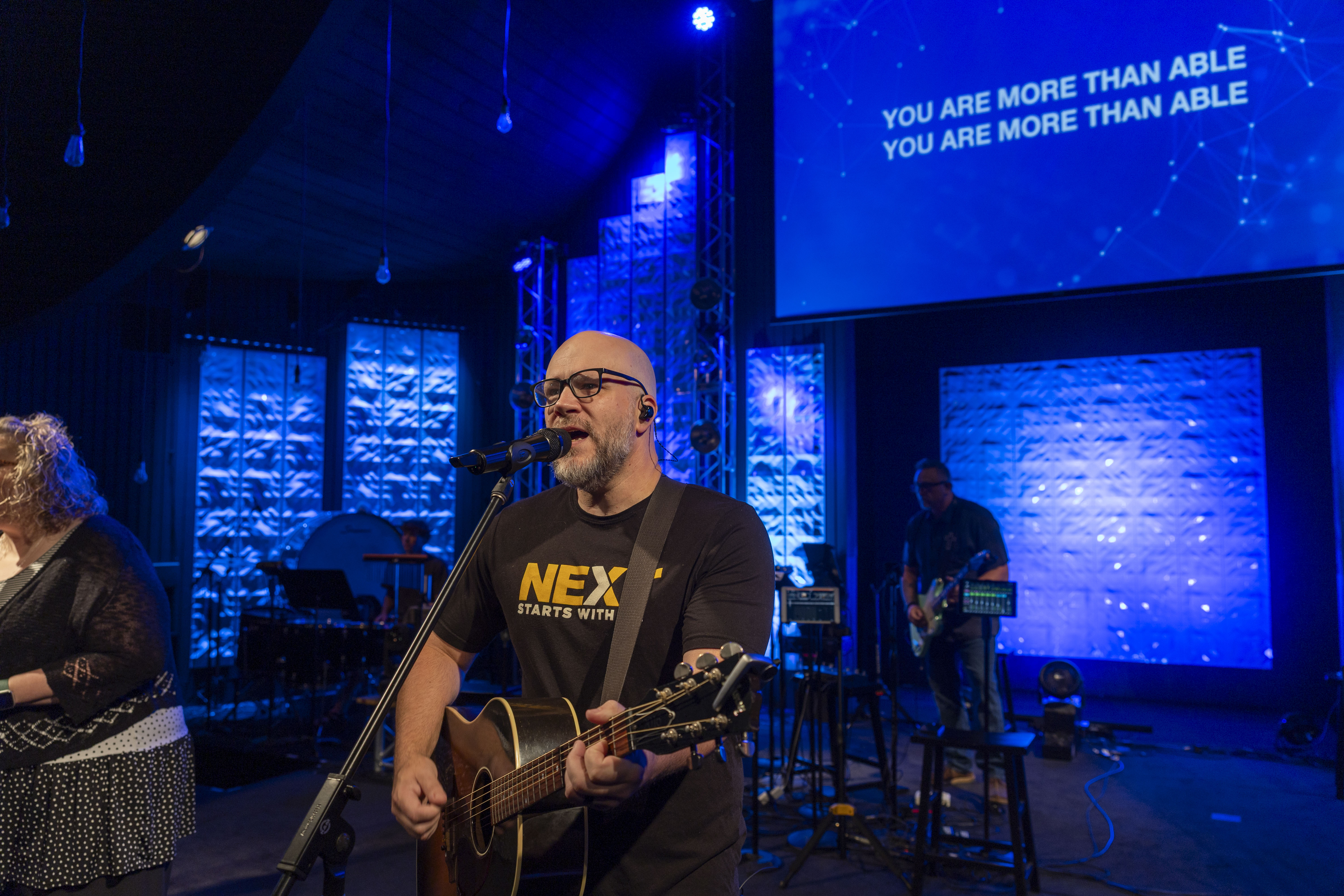
His love of music was another important part of his life. Through Tribe 519, Ebenezer Stone, and the many opportunities he had to worship with others, Paul expressed his devotion to the Lord with the same enthusiasm he brought to everything else. I think his practice times in His studio with the Band were some of the greatest and most cherished days of his life.
He loved Christ.
And that love permeated the way he lived.
One of the things I appreciated most about my conversations with Thérèse was her description of their final morning together.
It was, in so many ways, an ordinary morning.
They had their coffee. They talked. They enjoyed being together. They went for a walk.
There was no indication that it would be the last day they shared in this life.
And yet, as Thérèse reflected on that morning, she said something that has stayed with me.
Paul didn’t know it was his last day.
But he lived that day with the same enthusiasm and gratitude that had characterized all the others.
He didn’t suddenly decide to appreciate life because he knew time was running out.
He had already made a practice of appreciating life.
Every day was a new opportunity to enjoy the people he loved and the beauty God had created.
And isn’t that something?
We often hear people say that we should live every day as though it might be our last. But I think Paul’s example teaches us something a little deeper.
We should live every day as though it is a gift from the Lord, because it is.
Not with anxiety about what tomorrow might bring, but with gratitude for what God has entrusted to us today.
Jesus reminds us in Matthew 6 not to become consumed with tomorrow’s worries. And the book of James reminds us that we do not know what tomorrow will bring (Jas 4:13–15).
That uncertainty is part of our humanity. It doesn’t mean we should live in fear. It means we ought to live faithfully, gratefully, and attentively in the time we have been given.
Paul did that so beautifully.
And this brings me back to that reflection from St. Francis this morning.
Ordinary Time.
Green.
Life. Growth. Hope.
In the Christian calendar, Ordinary Time is not a season when nothing significant is happening. It’s a season of learning to follow Christ in the ongoing rhythms of daily life. A season of growing in faithfulness, love, and maturity.
Paul’s life was a beautiful illustration of that.
His greatest testimony wasn’t found only in the extraordinary accomplishments of his professional career, although those were considerable.
It was found in the ordinary faithfulness of his life.
In loving his wife.
In cherishing his family.
In encouraging a student.
In befriending someone others might overlook.
In lifting his voice in worship.
In photographing a sunrise.
In finding delight in a sandhill crane named Egbert.
Or in noticing the remarkable colors hidden in the feathers of a crow.
Paul didn’t have to wait for some great spiritual occasion to experience the goodness of God.
He found opportunities to love and serve the Lord in the ordinary moments of every day.
And perhaps that’s one of the most important lessons his life leaves with us.
The Christian life is not simply about preparing for eternity. It is about learning to live faithfully before the Lord here and now, allowing his love to shape the way we see creation, treat other people, and steward the gifts we’ve been given.
Of course, today there is also genuine sorrow.
We miss Paul.
I miss my friend.
I miss the conversations, the laughter, the hunting adventures, the music, and the countless memories I thought we still had time to make.
And for Thérèse and the family, that absence is felt in ways deeper than words can express.
But Christian hope never asks us to pretend that grief is insignificant.
When Jesus stood before the tomb of Lazarus, his friend, he wept. He entered into the sorrow of those who loved Lazarus, even as he proclaimed himself the resurrection and the life.
And because of the resurrection of Jesus Christ, we believe that death does not have the final word.
The apostle Paul describes the hope of resurrection in 1 Corinthians 15, while Revelation 21 gives us that magnificent picture of God’s ultimate renewal of creation, when death and mourning will be no more.⁵
Our hope is rooted in the faithfulness of God, who has promised to make all things new.
And I find that especially meaningful as we remember a man who loved God’s creation so deeply.
A man who delighted in the beauty of this world and whose faith was anchored in the Lord who created it.
As I reflect on Paul’s legacy, I realize that his life has left me wanting to live differently.
I want to notice more sunrises.
I want to be more patient with people.
I want to be more generous with encouragement.
I want to take more time with my family and friends.
I want to see more beauty in the ordinary things I might otherwise overlook.
And perhaps that’s the greatest gift Paul leaves us.
His influence doesn’t end with his passing. It continues in the people whose lives he touched and whose perspectives he helped change.
Thérèse said that she will never look at a crane, a turkey, or a crow quite the same way again.
And I think all of us who knew Paul could say something similar.
Because when you spent time with Paul, you came away seeing life a little differently.
I began today by wondering how one man could have a hundred best friends.
I think I understand it a little better now.
Paul simply loved people. And he loved them with the same extraordinary enthusiasm with which he embraced the rest of God’s creation.
He lived richly.
He loved deeply.
He gave generously.
And he followed the Lord with genuine fervency.
My dear friend, thank you for the hunts, the photographs, the music, the conversations, and the years of extraordinary friendship. Thank you for loving my family and investing in my children. Thank you for the joy you brought to our TOV community and for the example you set for so many of us.
Thank you for reminding us that the glory of God can be found in the most ordinary moments of life, if only we will take the time to see it.
And thank you for demonstrating what it means to be fervent in spirit, faithful in love, and fully alive in Christ.
I will miss you tremendously, my brother.
But I suspect that every time I see a sandhill crane, hear a crow, or pause to appreciate a beautiful sunrise, I’ll be reminded of you.
And I’ll smile.
Because somewhere along the way, you taught me to see those things differently.
Until we meet again, my friend.
Endnotes
United States Conference of Catholic Bishops, “Ordinary Time,” USCCB, https://www.usccb.org/prayer-worship/liturgical-year/ordinary-time. Ordinary Time emphasizes growth in Christian discipleship and the continuing life of Christ in the Church. Green is its designated liturgical color.
Ps 19:1–4; cf. Ps 104:1–24. The heavens are portrayed as a continual witness to God’s glory, offering testimony through the created order without spoken words.
Rom 12:11. Greek ζέοντες (zeontes), from ζέω (zeō), “to boil” or “to be fervent.” See Walter Bauer, Frederick W. Danker, William F. Arndt, and F. Wilbur Gingrich, A Greek-English Lexicon of the New Testament and Other Early Christian Literature, 3rd ed. (Chicago: University of Chicago Press, 2000), 426. See also Acts 18:25. The immediate context of Rom 12:9–21 connects spiritual fervency with sincere love, hospitality, generosity, and mutual devotion.
Gen 1:26–28; 2:15; Exod 31:1–5. The biblical theme of humanity as the image of God includes the vocation to cultivate and steward creation. Bezalel’s Spirit-enabled craftsmanship provides a particularly meaningful example of artistic skill employed in service to God.
John 11:25–35; 1 Cor 15:20–28, 42–58; Rom 8:18–25; Rev 21:1–5. Christian hope is grounded in the resurrection of Christ, the promised resurrection of the dead, and God’s ultimate renewal of creation.
Beyond the Pulpit: Teaching, Mentorship, and the Formation of a People Who Follow Jesus
Introduction: Has the Modern Church Reversed the Model of Jesus?
One of the most significant questions facing contemporary homiletics is whether the modern church has gradually elevated one dimension of Jesus’ ministry—public proclamation—above the larger vocation that gave proclamation its purpose. In many congregations, the pastor’s primary responsibility has become the preparation and delivery of a weekly sermon. The congregation assembles, receives instruction from a platform, and returns to ordinary life until the following gathering. Spiritual growth is often measured through attendance, sermon engagement, and familiarity with biblical teaching. While public proclamation has an undeniable place within the biblical tradition, this arrangement deserves careful examination against the actual ministry of Jesus and the patterns of the earliest Christian communities.
Jesus certainly preached. The Gospels describe him teaching in synagogues (Mark 1:21–22), addressing crowds (Matt 5–7), and proclaiming the kingdom throughout Galilee (Mark 1:14–15). Yet the remarkable feature of his ministry is how little of his work can be adequately described by the modern concept of delivering a weekly sermon. Jesus called people to follow him, not merely to listen to him. He shared meals, traveled with his disciples, interpreted Scripture along the road, confronted their misplaced ambitions, involved them in ministry, corrected their misunderstandings, and eventually entrusted them with responsibility for others. His ministry was lived in proximity to those he was forming. The proclamation of truth was central, but proclamation belonged to a much larger process of discipleship.
The contrast becomes even more striking in Acts 2:42–47. Luke describes the first community of believers as devoted to the apostles’ teaching, fellowship, the breaking of bread, and prayer. The Greek verb proskartereō (προσκαρτερέω), expressed here as the participle proskarterountes, communicates sustained devotion or persistent participation. Teaching was essential, but it was embedded within a shared life characterized by meals, generosity, prayer, mutual responsibility, and daily fellowship. Public teaching and household gatherings operated alongside one another (Acts 2:46; 5:42). The earliest church was not simply an audience gathered around gifted communicators; it was a community being formed around the risen Messiah.¹
This does not mean the first-century church possessed no recognizable preaching ministry, nor does it establish that every congregation must reproduce the social arrangements of Jerusalem. The New Testament repeatedly emphasizes public instruction (Acts 20:7–12; 1 Tim 4:13; 2 Tim 4:2), and historical developments in Christian worship are considerably more complex than a simple movement from homes to auditoriums. Nevertheless, we should distinguish the biblical legitimacy of public preaching from the modern tendency to make sermon delivery the organizing center of pastoral ministry.
In some contemporary settings, the pastor has become an increasingly distant religious professional whose principal contact with the congregation occurs through a microphone. The congregation knows the preacher’s voice, illustrations, opinions, and theological positions, yet may have little opportunity to observe the preacher’s life, participate in ministry alongside that leader, or experience personal spiritual mentorship. We have become highly proficient at constructing platforms for teaching while sometimes neglecting the relationships through which teaching becomes embodied.
This raises a difficult but necessary question: If our model of pastoral ministry produces effective public speakers but few mature disciples capable of discipling others, have we preserved the form of proclamation while neglecting its intended purpose?
John Stott’s Between Two Worlds appropriately identifies the preacher’s responsibility to bridge the world of Scripture and the world of contemporary hearers. Yet the biblical picture suggests that the bridge cannot be constructed through communication alone. The shepherd must also be present among the sheep. Preaching should not become a substitute for the personal, relational, and communal formation that characterized the ministry of Jesus.²
The Biblical Foundation: God Dwelling Among an Image-Bearing People
The formation of disciples is not an innovation introduced by Jesus in the first century. It belongs to the larger biblical story of God’s intention to dwell among humanity and form a people who reflect his character within creation.
Genesis 1:26–28 describes humanity as created in the ṣelem (צֶלֶם), or image, and dĕmût (דְּמוּת), or likeness, of God. Ancient Near Eastern royal ideology frequently associated kingship with the representation of divine authority, while divine images could symbolize a deity’s presence and rule. Genesis places this representative vocation upon humanity itself, male and female alike. Rather than restricting divine representation to a particular earthly king, the narrative identifies human beings as those commissioned to reflect God’s purposes throughout creation.³
This vocation develops through Israel’s covenant calling. Exodus 19:5–6 identifies Israel as a treasured possession, a kingdom of priests, and a holy nation. The priestly imagery is significant because Israel’s calling was never exhausted by its own religious preservation. Israel was to embody Yahweh’s character among the nations, mediating knowledge of the true God through its worship, justice, covenant loyalty, and communal practices.
The theme of divine dwelling accompanies this vocation. Yahweh commands Israel to build a sanctuary so that he might dwell among them (Exod 25:8). Jeremiah anticipates a renewed covenant in which God’s instruction is written upon the hearts of his people (Jer 31:31–34). John’s Gospel identifies Jesus as the Word who became flesh and dwelt among humanity (John 1:14), employing the verb skēnoō (σκηνόω), which evokes the language of dwelling or tabernacling. Finally, Revelation 21:3 announces the consummation of this trajectory: God’s dwelling is with humanity.
The goal is not merely that people receive correct information about God. God forms a covenant people who know him, reflect his character, and participate in his purposes. Discipleship therefore belongs to the theological structure of the entire biblical narrative. It concerns the recovery and fulfillment of humanity’s vocation as God’s image bearers through Jesus Christ, the definitive image of God (Col 1:15).
Ancient Near Eastern Education and the Formation of Disciples
Ancient education was not ordinarily understood as the detached communication of information by an isolated lecturer. Mesopotamian scribal training involved memorization, copying, repetition, correction, and the progressive acquisition of practical competencies. Evidence from Old Babylonian scribal exercises indicates that education frequently operated through apprenticeship and household instruction, although more formal scribal settings also existed. Knowledge was transmitted through sustained relationships and repeated participation in the activities associated with a particular vocation.⁴
Israel’s covenant traditions likewise emphasize formation within ordinary life. Deuteronomy 6:4–9 instructs parents to teach Yahweh’s commandments to their children while sitting at home, traveling, lying down, and rising. The Hebrew šānan (שָׁנַן), used in Deuteronomy 6:7, communicates diligent instruction or impressing something upon another. The point is not that Israel should occasionally offer religious lectures to its children, but that covenant identity should permeate the daily rhythms of the household.
The prophetic narratives provide another analogy. The bĕnê hannĕbîʾîm (בְּנֵי הַנְּבִיאִים), or “sons of the prophets,” appear in communities associated with Samuel, Elijah, and Elisha (1 Sam 19:18–24; 2 Kgs 2:3–5; 4:38; 6:1). Although the expression “school of the prophets” may suggest more formal educational institutions than the texts warrant, the narratives reveal communities in which prophetic identity and vocation were cultivated through association with recognized prophetic leaders.
The succession of Elijah and Elisha is particularly illuminating. Elijah’s mantle, ʾadderet (אַדֶּרֶת), becomes a sign of Elisha’s calling (1 Kgs 19:19), while 2 Kings 2 describes the transmission of prophetic responsibility in the context of Elisha’s continuing allegiance to his master. Elisha requests a double portion of Elijah’s spirit, language that evokes the inheritance of a principal heir rather than simply a request to perform twice as many miracles. The mantle becomes a visible symbol of continuity, but the narrative ultimately emphasizes the presence and empowerment of Yahweh.
The theological relevance for pastoral ministry is considerable. Leadership was not simply the possession of specialized religious knowledge. It involved forming others who could continue the work after the mentor was gone. The measure of Elijah’s legacy was not how many people had heard him speak, but whether the prophetic vocation continued through Elisha.
Leaving the Nets: The Radical Call to Follow Jesus
The calling of the first disciples challenges some of the most comfortable assumptions of contemporary church life. In Mark 1:16–20, Jesus encounters Simon and Andrew while they are fishing and calls them to follow him. Mark records that they immediately leave their nets. Jesus then calls James and John, who leave their father Zebedee in the boat with the hired servants.
The Greek verb aphiēmi (ἀφίημι), used for their leaving, can convey releasing, abandoning, or leaving something behind. Mark employs the adverb euthys (εὐθύς), “immediately,” emphasizing the urgency of their response. Luke 5:11 strengthens the imagery, describing the disciples as leaving everything and following Jesus.
This is not merely a commitment to add religious instruction to an otherwise unchanged life. Jesus’ invitation reorganizes their vocational identity, daily schedule, social relationships, and future expectations. They are not signing up for a weekly Bible study. They are entering the life and mission of a rabbi whose calling will demand an entirely different ordering of their priorities.⁵
The language of discipleship in the Gospel tradition is important. The Greek mathētēs (μαθητής), “disciple,” identifies a learner or follower, while akoloutheō (ἀκολουθέω), “to follow,” frequently communicates the concrete act of accompanying Jesus and the deeper allegiance that accompaniment represents. The Hebrew term talmid (תַּלְמִיד), meaning student or disciple, provides a helpful Jewish conceptual parallel, although the detailed educational structures of later rabbinic Judaism should not simply be projected backward onto Jesus’ ministry.
Later rabbinic literature offers evidence of master-disciple relationships involving close association, observation, and the imitation of a teacher’s conduct. These materials illuminate broader Jewish traditions of learning but were compiled after the lifetime of Jesus and must be used with historical caution. The Gospel narratives themselves, however, offer sufficient evidence to establish that Jesus’ discipleship involved sustained personal participation rather than periodic attendance at formal instruction.⁶
The distinction becomes especially significant in Mark 3:13–15. Jesus appoints the Twelve so that they might be with him, hina ōsin met’ autou (ἵνα ὦσιν μετ’ αὐτοῦ), and so that he might send them out, hina apostellē autous (ἵνα ἀποστέλλῃ αὐτούς). Presence precedes mission. Their formation takes place through proximity to Jesus before they are commissioned to represent him publicly.
This raises a challenging comparison with contemporary theological education. A residential seminary or intentional discipleship community may, in some respects, resemble the immersive learning environment of the Gospel narratives more closely than a congregation organized almost exclusively around weekly attendance. Students study Scripture, share life, wrestle with theological questions, receive correction, and prepare for a vocation that reshapes their priorities.
Yet even seminary education can reproduce the very problem under consideration when it becomes primarily the accumulation of academic credits, detached from spiritual mentorship, communal life, and actual ministry practice. The greater challenge is not to turn every Christian into a full-time seminary student. It is to recover the seriousness of Jesus’ call to discipleship within the ordinary circumstances of Christian life.
Jesus did not explicitly require every follower to abandon their occupation. Some continued to maintain households, support his ministry, and serve within existing social relationships (Luke 8:1–3; 19:1–10). Peter himself appears fishing again in John 21. Therefore, the command to leave the nets should not be universalized into a prohibition against ordinary employment. Nevertheless, the underlying demand remains uncompromising: no occupation, possession, family obligation, or former identity may retain ultimate authority over the call of Jesus. Luke 9:57–62 and 14:25–33 make this especially clear. Following Jesus requires a willingness to relinquish competing allegiances. His teaching is not framed as a convenient religious supplement to an otherwise autonomous existence.
This also illuminates Jesus’ invitation in Matthew 11:28–30. He invites the weary to take his zygos (ζυγός), or yoke, upon themselves and learn from him: mathete ap’ emou (μάθετε ἀπ’ ἐμοῦ). The term zygos could signify a literal yoke, but it also functions metaphorically for obligation or submission to instruction. Jewish wisdom traditions offer important parallels, including Sirach 51:26, which invites learners to place their necks under the yoke of wisdom.
Jesus’ yoke is described as chrēstos (χρηστός), kind or well-suited, and his burden as elaphron (ἐλαφρόν), light. This does not mean discipleship requires little commitment. Matthew’s Gospel contains demanding teachings about self-denial, faithfulness, and costly allegiance. The distinction is that Jesus offers a form of discipleship grounded in his own character, authority, and provision of rest. The yoke is gracious, but the allegiance is comprehensive. Jesus does not invite disciples to attend his teaching occasionally while retaining their former way of life as the governing framework of their existence. He invites them to learn an entirely new way of being human.
The Pedagogy of Jesus: Questions, Experience, Correction, and Participation
Jesus’ methods of instruction reveal a remarkable integration of theological exposition and lived experience. His teaching was neither an uninterrupted lecture nor an unstructured series of religious encounters. The Gospel narratives suggest deliberate development in the understanding, character, and participation of his disciples. They observe Jesus, receive instruction, engage in ministry, misunderstand his intentions, experience correction, and are repeatedly brought back to the central realities of the kingdom.
Mark 4 provides an example of his use of parables. The Greek parabolē (παραβολή) refers broadly to a comparison, illustration, or figurative saying and shares conceptual territory with the Hebrew māšāl (מָשָׁל). Jesus employs familiar agricultural imagery to communicate the character and reception of the kingdom. Yet the parables do more than make complex theological concepts accessible. Mark 4:10–12 presents a tension between revelation and concealment, emphasizing that the hearer’s response is itself part of the narrative. Jesus subsequently explains the parables to his disciples (4:33–34), showing that public proclamation and more intimate theological instruction were complementary rather than competing practices.⁷
In Luke 10:25–37, Jesus demonstrates another form of pedagogical engagement. A legal expert asks what he must do to inherit eternal life. Jesus directs him back to Scripture, asking, Pōs anaginōskeis? (πῶς ἀναγινώσκεις), “How do you read?” The question is not merely whether the man possesses biblical information but how he understands and interprets it. After the lawyer correctly identifies love for God and neighbor as central to the law, Jesus tells the parable of the Samaritan.
The rhetorical movement is significant. The lawyer initially seeks to establish the boundaries of his obligation by asking who qualifies as his neighbor. Jesus reverses the question, identifying the one who acted as a neighbor through mercy. The concluding imperative, poreuou kai sy poiei homoiōs (πορεύου καὶ σὺ ποίει ὁμοίως), directs the hearer toward action: go and do likewise. The distinction between knowing the law and embodying its intent becomes the central pedagogical achievement of the exchange.⁸
John 4 illustrates another dimension of Jesus’ method. In his encounter with the Samaritan woman, Jesus engages questions of social identity, religious tradition, worship, and messianic expectation. The conversation develops through a series of responses and misunderstandings, allowing the woman’s assumptions to emerge before Jesus redirects her toward a more comprehensive understanding of worship. The encounter subsequently becomes the occasion for communal testimony, as others from the town come to hear Jesus for themselves (John 4:39–42). Teaching moves from conversation to revelation and then toward the participation of a wider community.
Jesus also teaches through embodied demonstration. In John 13:1–17, he washes the feet of his disciples and then explains the significance of his actions. The Greek hypodeigma (ὑπόδειγμα), used in John 13:15, identifies his action as an example or pattern. The disciples are not merely instructed to value humility. They encounter humility practiced by the one they recognize as Lord and Teacher, and they are called to imitate what they have witnessed.
Equally important is the way Jesus permits his disciples to participate in ministry before they fully understand it. Mark 6:7–13 describes the Twelve being sent out with authority to proclaim repentance and confront unclean spirits. When they return, they report what they have done and taught (Mark 6:30). The pattern resembles supervised participation more than conventional lecture-based instruction.
Even their failures become occasions for formation. The disciples repeatedly misunderstand Jesus’ identity, the meaning of his mission, and the character of greatness within the kingdom (Mark 8:14–21; 9:33–37; 10:35–45). Rather than abandoning them, Jesus revisits these themes through further teaching, correction, and demonstration.
This recurring pattern offers an important challenge to contemporary preaching. How often do pastors revisit a theological subject because the congregation has not yet learned to embody it? How frequently do leaders invite people into actual ministry, observe their development, and provide personal correction? Jesus’ teaching was repetitive not because he lacked additional material, but because the formation of disciples required more than a single encounter with truth.
Emmaus: The Master Teacher Reconstructs a Failed Theological Framework
The encounter on the road to Emmaus (Luke 24:13–35) provides one of the most compelling narratives of Jesus’ pedagogical approach. It also illustrates why correct information alone is insufficient for faithful biblical interpretation. The two disciples possess considerable information about Jesus. They know of his prophetic ministry, his crucifixion, the discovery of the empty tomb, and the reports of angelic witnesses. Yet they interpret these events through disappointed expectations concerning Israel’s redemption. Their confession in Luke 24:21, hēmeis de ēlpizomen (ἡμεῖς δὲ ἠλπίζομεν), “but we had hoped,” reveals the tension between their expectations and what has occurred.
Jesus begins with questions, allowing the disciples to articulate their understanding. He then challenges their failure to comprehend the prophetic witness and interprets the Scriptures concerning the Messiah’s suffering and glory (Luke 24:25–27). Luke uses the verb diermēneuō (διερμηνεύω), meaning to interpret or explain, to describe Jesus’ exposition of Moses and the Prophets. The significance is not simply that Jesus supplies additional proof texts. He reconstructs their understanding of Israel’s story around the necessity of the Messiah’s suffering and vindication. Their problem is hermeneutical. They possess biblical expectations, but those expectations have not adequately accounted for the shape of God’s redemptive purposes.
Recognition occurs when Jesus takes bread, blesses it, breaks it, and gives it to them (Luke 24:30–31). The narrative deliberately brings together scriptural exposition, shared hospitality, and recognition of the risen Lord. The breaking of bread recalls earlier Lukan meal scenes, particularly the feeding narrative and the Last Supper, without requiring the conclusion that Luke is describing a formal Eucharistic service. The disciples subsequently return to Jerusalem and bear witness to their encounter. Their explanation of Scripture has become inseparable from recognition, renewed hope, and communal testimony.
For homiletics, Emmaus is especially instructive because Jesus does not merely deliver a theological lecture to disappointed followers. He walks with them, listens to their confusion, engages their assumptions, interprets Scripture, shares a meal, and brings them into a renewed recognition of the Messiah. The primary theological claim remains the revelation of the risen Christ, but the narrative also demonstrates that biblical understanding often develops within relationships and experiences that extend beyond formal instruction.
A sermon may faithfully interpret the Scriptures, but discipleship asks what happens when the sermon concludes. Who walks with the people who remain confused? Who helps them reconsider assumptions that have shaped their theology for decades? Who sits with them in their grief, answers their questions, and helps them recognize the presence of Christ within their circumstances?
The preacher who understands Emmaus should not only aspire to explain Scripture with clarity but also cultivate a ministry where people are accompanied through the difficult process of learning to understand and inhabit the biblical story.⁹
Recovering a Congregational Scope and Sequence: Preaching Within a Larger Discipleship Strategy
If the purpose of pastoral ministry is the formation of disciples, then sermon preparation should be connected to a more intentional understanding of congregational development. Most pastors understandably plan their preaching in terms of individual messages or short sermon series. A biblical book may occupy several months, followed by topical series addressing marriage, prayer, spiritual disciplines, or the life of Jesus. While there is considerable value in these approaches, they can become disconnected from a larger vision of what a congregation needs to learn and practice over time.
Educational theory offers a helpful framework through the concepts of scope and sequence. Scope concerns the breadth of material to be addressed, while sequence considers the order and recurrence through which learning develops. These concepts should not turn the local church into a conventional classroom or impose an artificial timetable upon spiritual growth. They can, however, help pastors consider whether their teaching ministries are intentionally forming a mature community or simply producing a succession of individual sermons.
A pastor might begin by asking what a healthy congregation should understand and embody after three, five, or ten years of shared life. Such planning would consider the biblical narrative, the character of God, the Trinity, creation and image bearing, covenant, the kingdom, the person and work of Christ, the Holy Spirit, the church, reconciliation, spiritual formation, justice, suffering, prayer, mission, and the hope of renewed creation. The goal would not be to create a checklist of doctrines to be completed once, but to establish a framework of theological formation that is intentionally revisited and deepened.
The doctrine of the Trinity provides an illustrative example. A church might devote an entire sermon series to the biblical foundations and historical development of Trinitarian theology. Yet the subject should not disappear for the following decade simply because the series has been completed. The Trinity should continually inform teaching about prayer, worship, creation, salvation, Christian community, baptism, and the ministry of the Holy Spirit. Congregants encounter the doctrine repeatedly within different biblical and practical contexts, gradually developing a more integrated theological understanding.
This approach reflects the importance of repetition in the ministry of Jesus. The disciples encountered recurring themes of servanthood, kingdom greatness, faith, prayer, and the necessity of the cross. Their understanding developed over time as Jesus returned to these subjects in new circumstances.
For pastoral planning, I would recommend organizing a congregational teaching map around several recurring fields of formation rather than a rigid sequence of isolated courses.
A Pastoral Teaching and Discipleship Map
Illustrative rhythms for a congregation, not a mandatory curriculum or prescribed biblical schedule
Area of formation
Suggested recurrence
Biblical narrative and hermeneutics
Continuous exposition, with dedicated interpretive training annually
God’s character and the Trinity
Regular reinforcement, with substantial treatment every 2–3 years
Jesus, covenant, kingdom, and atonement
Integrated throughout the year, with periodic focused series
Holy Spirit, spiritual gifts, and discernment
Annual attention and recurring practical engagement
Spiritual practices, prayer, and worship
Continuous practice, with seasonal teaching and mentoring
Marriage, family, friendship, and reconciliation
Regular relational formation, with periodic focused teaching
Justice, generosity, vocation, and public witness
Integrated into exposition and revisited through service opportunities
Suffering, lament, death, and resurrection hope
Regular pastoral teaching alongside care for actual suffering
Mission, evangelism, and discipleship
Continuous participation, with annual equipping and assessment
Leadership development and mentoring
Ongoing apprenticeship with periodic evaluation
The purpose of such a map is not to displace expository preaching or force biblical passages into a predetermined topical system. Rather, it encourages pastors to recognize the cumulative theological and formational effect of their teaching over the life of a congregation. A pastor might discover, for example, that the church regularly addresses personal morality while rarely teaching the biblical story of covenant, kingdom, and new creation. Another congregation might possess extensive doctrinal knowledge while giving comparatively little attention to reconciliation, hospitality, or the care of vulnerable people.
A congregational teaching map makes these imbalances visible. It also helps pastors select sermon series with greater theological and pastoral intentionality.
The selection of a sermon series should therefore involve several considerations: What does the biblical text itself demand? What theological subjects have been neglected? What questions or misunderstandings are emerging within the congregation? What practices require renewed attention? Where is the Spirit directing the community toward repentance, growth, or mission? How does the proposed series contribute to the church’s larger understanding of Scripture?
These questions do not guarantee an ideal preaching calendar, but they provide a more intentional alternative to selecting messages primarily because a topic seems interesting, timely, or likely to attract an audience.
Discipleship Beyond Sunday: Recovering the Shepherd’s Full Vocation
The most important implication of an intentional teaching strategy is that preaching cannot be expected to accomplish the entire task of discipleship by itself. A sermon may introduce, clarify, challenge, and reinforce biblical truth, but the formation of Christian character ordinarily requires sustained participation within a community of faith.
The New Testament provides several complementary expressions of this ministry. Acts 2:42–47 integrates teaching with fellowship, prayer, shared meals, and generosity. Acts 20:20 describes Paul’s ministry as both public and house-to-house. Colossians 3:16 envisions believers teaching and admonishing one another, while Ephesians 4:11–16 identifies the purpose of ministry leadership as equipping the saints for the work of ministry and the growth of the whole body.
In Ephesians 4:12, the term katartismos (καταρτισμός), often translated “equipping,” points toward preparing God’s people for their responsibilities. The pastor is not simply the person who performs religious ministry on behalf of the congregation. Pastoral leadership helps others become capable participants in the life and mission of the church.
A congregation committed to this understanding will recognize the value of multiple environments of formation. Sunday preaching provides corporate proclamation and a common theological framework. Small groups allow believers to wrestle with biblical teaching, pray together, confess struggles, and practice mutual encouragement. Personal mentorship provides opportunities for mature disciples to accompany those who are developing in faith. Deeper Bible-study gatherings enable the exploration of historical context, biblical languages, theological questions, and matters that cannot be adequately addressed within a typical sermon. Retreats, conferences, and study intensives create opportunities for concentrated reflection and fellowship. Shared meals, hospitality, service projects, pastoral counseling, and opportunities to participate in ministry provide contexts in which theological convictions are tested and embodied.
These environments should not be treated as unrelated programs competing for attention. They are complementary expressions of a common discipleship vocation. A sermon on forgiveness might be followed by small-group conversations about reconciliation, pastoral support for those navigating painful relationships, and practical opportunities to cultivate peacemaking. A series on the kingdom of God might connect with deeper biblical studies on covenant and eschatology, opportunities for local service, and mentoring relationships that help believers discern their own vocation.
The objective is not to keep congregants perpetually occupied with religious activities. Excessive programming can undermine the ordinary household, vocational, and relational settings in which discipleship must also take place. Rather, the objective is to provide meaningful environments in which biblical teaching becomes practiced wisdom.
The pastor, then, must think beyond the sermon calendar toward the entire formative life of the community. The question is no longer simply what will be preached on Sunday, but how the church will help people understand, practice, and pass on what is being taught.
The Ministry Think Tank
Another practice worthy of recovery is the communal dimension of sermon preparation. The contemporary pastor often develops messages in relative isolation, moving from personal study to manuscript preparation and finally to public delivery. While solitude and careful exegesis are indispensable, the New Testament’s vision of the church as a body possessing diverse gifts challenges the assumption that one individual necessarily possesses every insight required for faithful and pastorally effective proclamation.
Ephesians 4:11–16, 1 Corinthians 12–14, and Colossians 3:16 portray a community in which teaching, wisdom, discernment, encouragement, and mutual edification extend beyond a single leader. This does not eliminate the responsibility of pastors and teachers to interpret Scripture faithfully. It does suggest that the congregation’s gifts can meaningfully contribute to the preparation and application of biblical teaching.
As discussed in our earlier Expedition 44 article, The Message, the Method, and the Messenger, a ministry think tank offers one practical expression of this principle.¹⁰
A pastor might gather a small group of trusted participants two or three weeks before a planned sermon or series. The group could include other pastors, teachers, elders, individuals with theological training, counselors, younger and older believers, and people whose life experiences offer perspectives that the primary preacher may not possess.
The discussion would begin with the biblical text rather than a predetermined message. Participants might examine the literary setting, historical context, difficult interpretive questions, competing theological perspectives, and possible applications. They might identify where a proposed sermon risks oversimplification, where an illustration may unintentionally alienate or harm listeners, or where a familiar passage has been interpreted through assumptions that deserve further scrutiny.
For example, a series addressing marriage and covenant might benefit from the perspectives of married and single believers, widows, counselors, and those who have experienced relational trauma. A message concerning poverty or generosity could be enriched by people who understand economic hardship firsthand. A sermon addressing the role of women in ministry should not be developed without serious engagement with women who have studied, practiced, and reflected upon their calling.
Such conversations can also reveal the questions a congregation is actually asking. The pastor may enter preparation intending to answer one theological problem only to discover that the text raises a more pressing question for the community.
The think tank should not become a committee that determines biblical truth through majority opinion. Sound exegesis remains essential, and the primary preacher retains responsibility for the message. Nor should pastoral confidentiality be sacrificed in the pursuit of relevant illustrations. Rather, the process encourages humility, collaboration, and the recognition that God has distributed gifts throughout the body.
This practice also models discipleship. Participants are not simply supplying material for a better sermon; they are learning to handle Scripture responsibly, listen across differing perspectives, and participate in theological discernment. Sermon preparation itself becomes an environment of formation.
A mature preaching ministry should therefore aspire to do more than produce fifty excellent sermons each year. It should increasingly develop people capable of studying Scripture, discerning truth, mentoring others, and participating in the ongoing work of the kingdom.
Conclusion: The Pastor as Shepherd, Teacher, and Disciple-Maker
Perhaps one of the most important recoveries needed in contemporary ministry is a renewed understanding of what it means to be a pastor. The Greek poimēn (ποιμήν), translated “shepherd,” is not primarily a title for a professional religious communicator. It describes one entrusted with the care, guidance, protection, and nurture of a flock. In John 21:15–17, Jesus charges Peter to feed and tend his sheep. In Acts 20:28, Paul instructs the Ephesian elders to shepherd the church of God, while 1 Peter 5:2–3 calls elders to exercise oversight willingly, not as domineering authorities, but as examples to the flock. These passages present pastoral ministry as a responsibility for people, not merely for the delivery of messages.
There is something deeply challenging about the distance that can develop between this biblical vocation and contemporary pastoral practice. A minister may become extraordinarily skilled at sermon preparation, public communication, organizational leadership, and theological explanation while remaining largely absent from the ordinary lives of the people entrusted to that ministry. Yet Jesus’ example consistently brings leadership back into relationship. He knew his disciples, shared their experiences, recognized their weaknesses, challenged their misplaced ambitions, and entrusted them with responsibilities they were still learning to carry. His disciples did not simply learn his teachings; they learned his way of life.
Recovering this model does not mean every pastor must personally mentor every congregant or abandon the necessary responsibilities of public proclamation. The New Testament’s emphasis upon a plurality of leaders, shared gifts, and mutual ministry provides a healthier vision than concentrating all spiritual formation in one individual. Nevertheless, the pastor must help establish and personally embody a culture of discipleship. Sermons, small groups, shared meals, mentoring relationships, theological studies, pastoral conversations, and opportunities for ministry should not function as disconnected programs. They should belong to a coherent vision of helping people grow into the likeness of Christ.
Ultimately, the question facing aspiring preachers is not simply whether they can hold the attention of a congregation for thirty minutes. It is whether they are willing to give themselves to the long, patient, frequently inconvenient work of forming disciples. Jesus invited fishermen to leave their nets, not to become spectators of his ministry, but to walk with him, learn his ways, and eventually participate in the same mission. His invitation remains profoundly demanding. The church does not need to abandon preaching; it needs to recover the larger life of discipleship within which preaching belongs. We need shepherds who open the Scriptures and open their homes, who teach from the platform and walk alongside people in their struggles, who proclaim the kingdom and demonstrate its character, and who measure the fruitfulness of their leadership not merely by those who gather to hear them but by those who are learning to follow Jesus and teach others to do the same. The church was never intended to become an audience gathered around a religious personality. It was called to become a people walking in the Way of Jesus. And perhaps the greatest legacy of any pastor is not the sermons remembered after their ministry is finished, but the disciples who continue walking in that Way long after the pastor is gone.
Endnotes
1. Eckhard J. Schnabel, Acts, ZECNT (Grand Rapids: Zondervan, 2012), commentary on Acts 2:42–47; Wayne A. Meeks, The First Urban Christians: The Social World of the Apostle Paul, 2nd ed. (New Haven: Yale University Press, 2003). See also Larry W. Hurtado, At the Origins of Christian Worship: The Context and Character of Earliest Christian Devotion (Grand Rapids: Eerdmans, 1999).
2. John R. W. Stott, Between Two Worlds: The Challenge of Preaching Today (Grand Rapids: Eerdmans, 1982); Thomas G. Long, The Witness of Preaching, 3rd ed. (Louisville: Westminster John Knox, 2016). Both works underscore the pastoral and theological significance of proclamation, although the critique of contemporary sermon-centered ministry developed here is the present article’s argument.
3. J. Richard Middleton, The Liberating Image: The Imago Dei in Genesis 1 (Grand Rapids: Brazos, 2005); John H. Walton, The Lost World of Genesis One: Ancient Cosmology and the Origins Debate (Downers Grove, IL: IVP Academic, 2009).
4. Niek Veldhuis, Religion, Literature, and Scholarship: The Sumerian Composition Nanše and the Birds, CM 22 (Leiden: Brill, 2004); Christopher A. Rollston, Writing and Literacy in the World of Ancient Israel: Epigraphic Evidence from the Iron Age, ABS 11 (Atlanta: Society of Biblical Literature, 2010). For prophetic associations, see Joseph Blenkinsopp, A History of Prophecy in Israel, rev. and enl. ed. (Louisville: Westminster John Knox, 1996).
5. R. T. France, The Gospel of Mark: A Commentary on the Greek Text, NIGTC (Grand Rapids: Eerdmans, 2002), commentary on Mark 1:16–20 and 3:13–19; Joel Marcus, Mark 1–8: A New Translation with Introduction and Commentary, AB 27 (New York: Doubleday, 2000).
6. Catherine Hezser, The Social Structure of the Rabbinic Movement in Roman Palestine, TSAJ 66 (Tübingen: Mohr Siebeck, 1997); Shmuel Safrai, “Education and the Study of the Torah,” in The Jewish People in the First Century, ed. S. Safrai and M. Stern, CRINT 1.2 (Assen: Van Gorcum, 1976), 945–70. Later rabbinic evidence should be distinguished from direct first-century documentation.
7. Klyne R. Snodgrass, Stories with Intent: A Comprehensive Guide to the Parables of Jesus, 2nd ed. (Grand Rapids: Eerdmans, 2018); France, Gospel of Mark, commentary on Mark 4.
8. Joel B. Green, The Gospel of Luke, NICNT (Grand Rapids: Eerdmans, 1997), commentary on Luke 10:25–37; Expedition 44, “Who Is My Neighbor?,” September 2, 2026. For John 4 and 13, see Marianne Meye Thompson, John: A Commentary, NTL (Louisville: Westminster John Knox, 2015).
9. François Bovon, Luke 3: A Commentary on the Gospel of Luke 19:28–24:53, Hermeneia (Minneapolis: Fortress, 2012), commentary on Luke 24:13–35; N. T. Wright, The Resurrection of the Son of God, Christian Origins and the Question of God 3 (Minneapolis: Fortress, 2003). The interpretation here emphasizes the movement from mistaken expectation to scriptural understanding, recognition, and renewed witness. I could not independently locate the more recent X44 article specifically devoted to Emmaus, so I have not attributed unverified arguments to it.
11. Frank Thielman, Ephesians, BECNT (Grand Rapids: Baker Academic, 2010), commentary on Eph 4:11–16; David G. Peterson, The Acts of the Apostles, PNTC (Grand Rapids: Eerdmans, 2009), commentary on Acts 20:17–38; Karen H. Jobes, 1 Peter, BECNT (Grand Rapids: Baker Academic, 2005), commentary on 1 Pet 5:1–4.
TKC homiletics discussion
Leaving the nets: How does the calling of the Twelve challenge contemporary models of church membership and the assumptions we make about the commitment involved in following Jesus?
The pastor’s vocation: If preaching is one dimension of shepherding, what should actually occupy a pastor’s time throughout the week? How would this affect the way churches evaluate pastoral success?
Long-term formation: If you were responsible for shepherding the same congregation for ten years, what biblical truths, theological disciplines, and kingdom practices would you want people to have encountered repeatedly?
Shared preparation: How might a sermon think tank strengthen both the biblical integrity of a message and the discipleship of those involved in preparing it?
Ask students to imagine that they have accepted responsibility for a congregation of seventy-five people and expect to pastor them for the next five years. Rather than writing a sermon series, have them design a pastoral discipleship philosophy. What will they teach repeatedly? How will they mentor emerging leaders? Where will serious biblical study happen? How will people practice what they are learning? What role will homes, meals, small groups, and ministry participation play? Finally, what will they do personally to remain accessible as shepherds rather than functioning only as weekly speakers?
The exercise should close with one question: If Jesus visited your congregation for six months, would he recognize your approach to making disciples as something resembling his own?
Design a Five-Year Congregational Discipleship and Teaching Map
Imagine you are pastoring a congregation for the next five years. What theological and doctrinal foundations do you want your people to understand, and how will you intentionally develop and reinforce those teachings over time? Consider which subjects deserve an entire sermon series, which need regular revisiting, and how you will account for the reality that many congregants do not attend consistently.
Your plan should extend well beyond Sunday preaching. How will you incorporate weekly Bible studies, small groups, mentoring, conferences, and other opportunities for discipleship? How will you provide theological direction and oversight for these ministries, particularly when others are leading them?
The goal is not simply to plan five years of sermons, but to develop an intentional strategy for forming mature disciples who understand Scripture, live out their faith, and disciple others.
Rediscovering the Ancient Near Eastern World Behind “God Almighty”
Beyond the English Word “Almighty”
When modern Christians hear the title “God Almighty,” they typically imagine a God possessing unlimited power, capable of doing anything at any moment. Although divine omnipotence is an important theological consideration, this understanding can obscure the ancient worldview behind the biblical language. The Greek title Pantokratōr (παντοκράτωρ), appearing nine times in Revelation and once elsewhere in the New Testament (2 Cor 6:18), carries a rich inheritance from the Hebrew Scriptures, the Septuagint, and the cosmic kingship traditions of the ancient Near East (ANE). Derived from pas (“all”) and kratos (“might,” “dominion,” or “power”), the term identifies God as the sovereign ruler over all things. Yet the biblical emphasis is not merely on God’s ability to exercise power. It concerns his rightful authority over the entire created order, including the nations, heavenly beings, and powers that presume to challenge his reign.¹
YHWH Ṣĕbāʾôt: The Lord of Heaven’s Armies
One of the most significant and often overlooked connections is that Pantokratōr frequently appears in the Septuagint as a rendering of the Hebrew title YHWH Ṣĕbāʾôt (יְהוָה צְבָאוֹת), commonly translated “LORD of Hosts.” The Hebrew ṣābāʾ denotes an army, assembled force, or organized host. While this language can describe earthly armies, it also refers to the heavenly host surrounding God’s throne (1 Kgs 22:19; Ps 103:20–21). Consequently, “Lord of Hosts” is not simply another way of saying that God is powerful. It is a royal designation depicting YHWH as the supreme commander of the heavenly armies and sovereign over the cosmic realm.²
An intriguing connection emerges in Isaiah 6:3, where the seraphim proclaim, “Holy, holy, holy is YHWH of Hosts; the whole earth is full of his glory.” Revelation 4:8 echoes this heavenly liturgy but identifies God as Kyrios ho Theos ho Pantokratōr (“Lord God Almighty”). John’s vision draws upon Isaiah’s throne-room imagery while employing the Greek vocabulary of universal sovereignty. The earthly prophet is permitted to witness the heavenly court, where divine kingship is already established regardless of the political instability unfolding below.
El Shaddai: Was “Almighty” the Original Meaning?
Another fascinating linguistic connection concerns El Shaddai (אֵל שַׁדַּי), traditionally translated “God Almighty.” In Genesis 17:1, God introduces himself to Abraham using this designation, but the original meaning of Shaddai remains uncertain. Some scholars have investigated connections with Akkadian šadû, meaning “mountain,” suggesting a possible ancient association with a mountain deity or divine mountain imagery. Others propose connections with sufficiency, strength, or fertility. None of these explanations has achieved scholarly consensus.
Interestingly, the Septuagint does not consistently translate El Shaddai with Pantokratōr. The Greek association becomes especially prominent in Job, where Shaddai frequently appears as Pantokratōr. This suggests that the familiar translation “Almighty” reflects an important history of interpretation rather than an unquestionable original Hebrew etymology. The distinction matters because ancient divine titles often communicated identity, relationship, and royal authority before later theological traditions expressed them through abstract philosophical categories.³
The Divine Council: God’s Authority over the Elohim
The ANE background becomes particularly illuminating when we encounter the divine council. Ugaritic texts discovered at Ras Shamra describe a heavenly assembly associated with El, the senior deity of the Canaanite pantheon. Biblical authors employ comparable imagery while presenting YHWH’s sovereignty within their own developing theological framework. Psalm 82:1 declares that Elohim stands in the ʿadat El (עֲדַת־אֵל), the divine assembly, judging among the elohim. The vocabulary closely resembles West Semitic descriptions of heavenly councils. Similarly, Psalm 89:5–7 depicts an assembly of holy ones surrounding YHWH, while 1 Kings 22:19 portrays the heavenly host standing on either side of his throne.⁴
These passages are sometimes flattened into poetic descriptions of God’s greatness. Yet their ANE setting suggests something more substantial: the biblical writers envisioned a populated heavenly realm operating under divine authority. Precisely how individual council passages reflect the historical development of Israelite monotheism remains debated. Nevertheless, the broader literary connection is unmistakable. When Revelation calls God Pantokratōr, its language resonates with this ancient portrayal of supreme kingship. God is not struggling to secure a position within the heavenly hierarchy; the biblical narrative presents his authority as unrivaled.
An additional connection appears in Deuteronomy 32:8–9. While the Masoretic Text refers to the “sons of Israel,” the Dead Sea Scrolls preserve the reading “sons of God,” and Greek witnesses refer to divine sons or angels. This older textual tradition places the division of the nations within a heavenly framework, with Israel identified as YHWH’s particular inheritance. The passage does not directly employ Pantokratōr, but it contributes to the worldview inherited by later Jewish apocalyptic literature: the nations and their spiritual powers remain subject to the ultimate authority of God.⁵
Cosmic Warfare: When the King Confronts Chaos
Within Mesopotamian and West Semitic literature, divine kingship was frequently associated with victory over chaos. The Ugaritic Baal Cycle portrays Baal’s conflict with Yamm, the personification of the sea, within a larger struggle over cosmic kingship. Biblical authors likewise employ imagery of waters, sea monsters, and defeated enemies to describe YHWH’s sovereignty (Ps 74:12–17; 89:9–10; Isa 27:1). The Hebrew term tannîn (תַּנִּין), referring to a great serpent or sea creature, participates in this symbolic world, as does Leviathan, the twisting serpent. These images were not necessarily intended as straightforward descriptions of zoological creatures. They belonged to a larger literary vocabulary depicting disorder, rebellion, and forces hostile to God’s created order.⁶
Revelation draws heavily upon this imagery. The dragon, the beast arising from the sea, and Babylon’s imperial arrogance represent hostile powers seeking dominion that does not rightfully belong to them. Against these claims stands Pantokratōr, the sovereign whose kingship will ultimately be vindicated. The biblical drama is therefore not a contest between equally powerful divine rivals but a revelation of the Creator’s authority over powers that have corrupted the world.
The Lamb and the Throne: A Surprising Reversal of Ancient Kingship
Perhaps the most striking feature of Revelation is how John transforms the imagery of ANE conquest. In Revelation 5, John hears of the Lion of Judah who has conquered, but when he turns, he sees a Lamb standing as though slain. The expected royal conqueror is revealed through the imagery of sacrificial death. This is not the abandonment of divine kingship but its surprising revelation through Jesus.
The connection becomes even more compelling in Revelation 19:6, where the heavenly multitude announces that the Lord God Pantokratōr reigns. The proclamation occurs within a narrative celebrating the downfall of Babylon and anticipating the marriage supper of the Lamb. Divine victory is inseparable from the faithfulness of Jesus and the vindication of those who belong to him. Unlike ANE imperial ideologies that frequently legitimized domination through overwhelming military strength, Revelation presents a kingdom whose victory is disclosed through the slain and risen Messiah. The power of God is not absent from the cross; it is revealed through the cross.⁷
One final detail is worth considering. In Revelation 21:22, John declares that the New Jerusalem contains no temple because the Lord God Pantokratōr and the Lamb are its temple. In the ANE, temples functioned as earthly representations of divine dwelling and cosmic order. Revelation’s concluding vision moves beyond a sacred building altogether. God’s presence fills the renewed creation. The cosmic King no longer needs a localized sanctuary because heaven and earth have become the dwelling place of God with humanity.
Conclusion: The God Who Holds All Things Together
Recovering the ANE background of Pantokratōr changes how we hear this remarkable title. God is not merely the strongest being in a universe filled with competing powers. He is the rightful King of creation, Lord of the heavenly hosts, judge of rebellious authorities, and the One who will restore what sin, death, and corruption have disordered. Yet perhaps the most encouraging revelation is that this sovereign King has made himself known through Jesus, the Lamb who was slain.
For those walking through suffering, uncertainty, or the apparent triumph of evil, Pantokratōr offers something deeper than the reassurance that God possesses unlimited strength. It reminds us that the powers presently shaping our circumstances do not possess ultimate authority. The Lamb has overcome, and the kingdom is being restored. Our calling is not to secure God’s victory through coercion or fear, but to live faithfully beneath his reign, embodying the love, justice, mercy, and covenant faithfulness revealed in Jesus.
The One who rules the heavenly hosts is also the One who dwells among his people. And the kingdom he is restoring is marked not merely by the defeat of evil, but by the renewal of all things.
Endnotes
1. Walter Bauer, Frederick William Danker, William F. Arndt, and F. Wilbur Gingrich, A Greek-English Lexicon of the New Testament and Other Early Christian Literature, 3rd ed. (Chicago: University of Chicago Press, 2000), s.v. “παντοκράτωρ”; Rev 1:8; 4:8; 11:17; 15:3; 16:7, 14; 19:6, 15; 21:22; 2 Cor 6:18.
2. Ludwig Koehler, Walter Baumgartner, and Johann Jakob Stamm, The Hebrew and Aramaic Lexicon of the Old Testament, trans. and ed. M. E. J. Richardson, 2 vols. (Leiden: Brill, 2001), s.v. “צבא”; Isa 6:3; 1 Kgs 22:19; Ps 103:20–21.
4. E. Theodore Mullen Jr., The Divine Council in Canaanite and Early Hebrew Literature, Harvard Semitic Monographs 24 (Chico, CA: Scholars Press, 1980); Mark S. Smith, The Origins of Biblical Monotheism: Israel’s Polytheistic Background and the Ugaritic Texts (Oxford: Oxford University Press, 2001). For a recent alternative account of Psalm 82, see Shane M. Thompson, “Local Manifestations of YHWH within El’s Divine Council: Psalm 82 in the Context of Israelite Religion,” Journal of Biblical Literature 143, no. 2 (2024): 245–63.
6. John Day, God’s Conflict with the Dragon and the Sea: Echoes of a Canaanite Myth in the Old Testament, University of Cambridge Oriental Publications 35 (Cambridge: Cambridge University Press, 1985); Frank Moore Cross, Canaanite Myth and Hebrew Epic: Essays in the History of the Religion of Israel (Cambridge, MA: Harvard University Press, 1973).
7. Richard Bauckham, The Theology of the Book of Revelation, New Testament Theology (Cambridge: Cambridge University Press, 1993); Michael J. Gorman, Reading Revelation Responsibly: Uncivil Worship and Witness: Following the Lamb into the New Creation (Eugene, OR: Cascade Books, 2011).
A Review of Sandra L. Richter’s The Epic of Eden: A Christian Entry into the Old Testament, Second Edition (IVP Academic, 2026)
There are books that inform our theological understanding, and there are those rare works that fundamentally change the way we read Scripture. For me, Sandra Richter’s The Epic of Eden belongs firmly in the latter category. It remains one of my favorite books on the Old Testament, and I am genuinely excited to see this newly revised edition. At The King’s Commission School of Divinity, we have used Richter’s work since its original publication in 2008, and I have consistently recommended it to students, pastors, and anyone seeking a more historically grounded understanding of the biblical narrative. Few introductory works have accomplished what Richter has managed to do: introduce the ancient world of Israel with academic credibility while remaining remarkably accessible to readers without formal theological training.¹
The enduring strength of The Epic of Eden is its insistence that the Old Testament must be understood as an interconnected historical and theological narrative rather than an anthology of disconnected religious stories. Richter recognizes that many Christians are familiar with Abraham, Moses, David, and the prophets yet struggle to locate these figures within the broader development of Israel’s covenant history. Her well-known illustration of organizing the Old Testament closet provides more than an effective teaching device; it identifies a genuine hermeneutical problem. Without an understanding of chronology, geography, covenant, and the cultural world of ancient Israel, readers often interpret Scripture through assumptions foreign to its original setting. Richter’s approach provides a coherent framework through which these historical and theological relationships become intelligible.
Particularly valuable is Richter’s examination of ancient Israel’s social organization, including the patriarchal, patrilineal, and patrilocal structures that governed household identity and communal life. The Hebrew bêt ʾāb (בֵּית אָב), the father’s household, represented considerably more than what modern Western readers understand as the nuclear family. It functioned as a network of economic responsibilities, inherited identity, land stewardship, and kinship obligations. These structures provide essential background for understanding inheritance, marriage, widowhood, and the responsibilities associated with the gōʾēl (גֹּאֵל), or kinship redeemer. Richter’s discussion becomes especially helpful when considering the narratives of Ruth and Naomi, where redemption involves the preservation of family, inheritance, and communal belonging. This cultural framework also enriches our understanding of theological redemption, which cannot be adequately reduced to an abstract legal transaction detached from restoration, relationship, and covenant loyalty. Importantly, understanding Israel’s patriarchal social organization does not require treating every element of that organization as a timeless divine prescription. Richter’s historical methodology helps readers distinguish the cultural environment of biblical revelation from the theological claims communicated within it.
Equally significant is her treatment of covenant as an organizing principle of redemptive history. Richter situates the Hebrew bĕrît (בְּרִית) within the diplomatic and political traditions of the ancient Near East, including the relationship between suzerain-vassal treaties and Israel’s covenant traditions. Her discussion of the Sinai covenant is particularly useful because it challenges the persistent Christian assumption that Israel’s relationship with YHWH was fundamentally established through obedience to religious law. Within the Exodus narrative, divine deliverance precedes the covenant stipulations, making obedience the appropriate response to an already established relationship rather than the mechanism by which Israel earns divine acceptance. This observation has considerable implications for Christian discussions of law, grace, faithfulness, and salvation. Meredith Kline’s covenantal studies provide an important scholarly precedent for this approach, although questions concerning the historical development of treaty forms and their relationship to biblical covenant literature remain debated.²
Richter’s treatment of Eden and the New Jerusalem also deserves particular attention. By locating creation, sanctuary, divine presence, and new creation within a unified theological narrative, she demonstrates that the biblical story concerns more than individual salvation. The movement from Eden toward renewed creation reflects God’s continuing purpose to dwell with humanity and restore what has been fractured through human rebellion. Her treatment of tabernacle and temple traditions helps illuminate the relationship between sacred space and divine presence, while the culmination in Revelation 21–22 emphasizes restoration rather than the abandonment of creation. Here Richter’s work intersects meaningfully with John Walton’s exploration of ancient Near Eastern cosmology and sacred space. Walton’s The Lost World of Genesis One offers a more specialized and sometimes contested reconstruction of the conceptual world of Genesis, whereas Richter’s contribution lies in integrating related themes into an accessible canonical framework.³
Richter’s scholarship also invites productive comparison with John Goldingay, Christopher J. H. Wright, and N. T. Wright. Goldingay’s Old Testament Theology gives sustained attention to the distinctive theological voices of Israel’s Scriptures, frequently resisting the tendency to organize their diversity too quickly around later Christian categories.⁴ Richter is more explicitly concerned with constructing a coherent Christian reading of the biblical narrative, making her particularly effective as an introduction, though Goldingay provides a helpful reminder that the Old Testament must first be heard within its own historical and literary horizons. Christopher Wright, particularly in The Mission of God, develops the ethical and missional implications of Israel’s covenant identity, demonstrating how election, covenant faithfulness, and the Abrahamic promise are inseparable from God’s purposes for the nations.⁵ N. T. Wright extends this conversation into Second Temple Judaism, emphasizing how Jesus’ kingdom proclamation and messianic vocation emerge within Israel’s continuing story of exile, restoration, and covenant expectation.⁶ Together, these scholars illustrate the importance of understanding Scripture as a developing narrative without neglecting the historical particularity of its individual voices.
The second edition retains the book’s fundamental twelve-chapter structure while updating historical and anthropological material and refining its maps, charts, and language. Richter’s acknowledgments describe these revisions as measured improvements intended to serve a new generation of readers rather than a wholesale reconstruction of her original thesis. This continuity is welcome. The book’s lasting value resides in its ability to bring geography, history, cultural anthropology, and covenant theology together into a coherent educational experience. It remains an exceptional starting point for biblical studies and an indispensable resource for theological educators seeking to cultivate historically responsible interpretation.
For nearly two decades, The Epic of Eden has helped students recognize that understanding the biblical world is not an academic luxury but an essential part of responsible interpretation. Richter succeeds in making that conviction both compelling and accessible. I cannot recommend this new edition highly enough, particularly for those who have inherited a fragmented understanding of the Old Testament or have been taught to regard Israel’s Scriptures as little more than preliminary background to the New Testament.
Conclusive Reflections
What I love most about this book is that it helps us remember whose story we have been invited into. Scripture tells the story of a God who has remained faithful through humanity’s repeated failures, through wandering and rebellion, through exile and restoration. From Eden to Abraham, from Israel’s deliverance to the ministry of Jesus, we encounter a God who has never abandoned his purposes for creation or his desire to dwell among his people.
And there is something deeply encouraging about that, particularly when we recognize how often our own lives resemble the struggles of those ancient communities. We experience disappointment, fractured relationships, misplaced allegiances, and seasons when God’s promises seem distant. Yet the biblical story continually calls us back to his faithfulness. The God who delivered Israel remains concerned with the broken, the vulnerable, the displaced, and those longing for restoration.
My hope is that readers will come away from Richter’s book with more than an improved understanding of biblical chronology or covenant terminology. I hope they will begin to recognize that following Jesus means participating in the story of God’s kingdom, becoming people who embody his character through faithfulness, justice, reconciliation, compassion, and love. We study the ancient world not simply to understand what God was doing thousands of years ago, but to better discern how we are called to live today.
That is why The Epic of Eden continues to hold such an important place in my teaching and ministry. Richter helps us recover the world of Scripture so that we might better understand the way of Jesus. And the more deeply we understand that story, the more faithfully we can live within it.
Dr. Will Ryan Expedition 44 | The King’s Commission School of Divinity
Endnotes
1. Sandra L. Richter, The Epic of Eden: A Christian Entry into the Old Testament, 2nd ed. (Downers Grove, IL: IVP Academic, 2026), chaps. 1–4.
2. Richter, Epic of Eden, chap. 5; Meredith G. Kline, Treaty of the Great King: The Covenant Structure of Deuteronomy: Studies and Commentary (Grand Rapids: Eerdmans, 1963).
3. Richter, Epic of Eden, chaps. 6–7; John H. Walton, The Lost World of Genesis One: Ancient Cosmology and the Origins Debate (Downers Grove, IL: IVP Academic, 2009).
4. John Goldingay, Old Testament Theology, vol. 1, Israel’s Gospel (Downers Grove, IL: InterVarsity Press, 2003).
5. Christopher J. H. Wright, The Mission of God: Unlocking the Bible’s Grand Narrative (Downers Grove, IL: IVP Academic, 2006).
6. N. T. Wright, Jesus and the Victory of God, Christian Origins and the Question of God 2 (Minneapolis: Fortress, 1996).
Introduction: The Character of God and the Problem of Divine Violence
Among the most difficult theological questions in Scripture is the apparent tension between the revealed character of YHWH and the repeated biblical accounts of divine judgment involving the destruction of entire populations, including children and others who bear no identifiable personal responsibility for the offenses being judged. Throughout Scripture, God is revealed as compassionate, merciful, patient, covenantally faithful, and committed to the restoration of his creation. Yet the same biblical canon contains accounts in which God not only permits catastrophic loss of life but is explicitly presented as its initiating agent. These narratives include the destruction of humanity in the flood (Gen 6–9), the annihilation of Sodom and Gomorrah (Gen 19), the death of Egypt’s firstborn (Exod 12), the destruction of households associated with Korah’s rebellion (Num 16), the conquest of Jericho (Josh 6), the command to destroy the Amalekites, including infants and nursing children (1 Sam 15:3), and the death of David’s infant son following the king’s transgression (2 Sam 12:15–18). Taken together, these accounts present something considerably more difficult than an isolated passage requiring historical clarification. They raise a sustained theological problem concerning the relationship between divine sovereignty, human innocence, covenant judgment, and the very nature of God.
The difficulty becomes especially pronounced when these narratives are read alongside YHWH’s self-revelation in Exodus 34:6–7. Following Israel’s rebellion with the golden calf, God reveals himself to Moses as רַחוּם וְחַנּוּן (raḥûm weḥannûn), compassionate and gracious; אֶרֶךְ אַפַּיִם (ʾerekh ʾappayim), slow to anger; and רַב־חֶסֶד וֶאֱמֶת (rav-ḥesed weʾemet), abounding in covenant loyalty and faithfulness. The language is not incidental. It becomes one of the most frequently recalled confessions of God’s character in Israel’s theological memory, appearing in various forms throughout Numbers 14:18, Nehemiah 9:17, Psalms 86:15 and 103:8, Joel 2:13, and Jonah 4:2. The Hebrew raḥûm, associated with the verbal root רחם (rḥm), carries the semantic field of compassion and deep tenderness, while ḥesed communicates enduring loyalty expressed through covenantal relationship. These qualities are not merely occasional divine behaviors; they belong to Israel’s foundational confession concerning who YHWH is.[1]
The same confession, however, includes the difficult declaration that God does not simply leave guilt unaddressed and that the consequences of ancestral iniquity may extend into subsequent generations. Exodus 34:7 employs the expression פֹּקֵד עֲוֹן אָבוֹת עַל־בָּנִים (poqed ʿawon ʾavot ʿal-banim), conventionally understood as visiting the iniquity of fathers upon children. The verb paqad can denote attending to, overseeing, reckoning with, or bringing an account into consideration. The text therefore holds divine mercy and intergenerational accountability together, but it does not explicitly explain why morally innocent children would be subjected to death because of the failures of their parents. Indeed, the problem intensifies when we encounter Deuteronomy 24:16, which expressly prohibits putting children to death for their fathers’ sins, and Ezekiel 18:20, which declares that a child shall not bear the iniquity of the parent. These texts cannot simply be dismissed as unrelated legal technicalities. They reveal that personal responsibility is itself a concern of covenant justice. While Deuteronomy addresses human judicial conduct and does not directly legislate divine action, it raises an unavoidable question: how are we to understand the moral consistency of the God who commands justice among his people when biblical narratives attribute to that same God the destruction of persons who appear innocent of the offenses being punished?
Numbers 16 illustrates this tension with particular clarity. When Moses confronts the rebellion of Korah, Dathan, and Abiram, the narrative places the wives, sons, and little children of Dathan and Abiram at the entrances of their tents (Num 16:27). The Hebrew טַפָּם (ṭappām) refers to their little ones or dependents, emphasizing individuals who cannot reasonably be assumed to share the informed culpability of the rebellious leaders. Shortly afterward, the earth opens and swallows the households. Moses himself had already raised the moral question when he and Aaron appealed to God: would the sin of one man provoke divine anger against the entire congregation (Num 16:22)? The narrative then describes a judgment that appears to reach beyond the guilty. Numbers 26:11 subsequently clarifies that Korah’s sons did not die, an important qualification to any overly comprehensive reading of the destruction, but it does not establish that the children of Dathan and Abiram survived. The theological question remains whether the death of innocent dependents can properly be identified as an expression of the compassionate character revealed in Exodus 34.[2]
This difficulty is not overcome by distinguishing the God of the Hebrew Scriptures from the God revealed in Jesus Christ. Such a distinction would be foreign to the theological claims of the New Testament. Jesus identifies himself with the mission and purposes of Israel’s God, while the apostolic writings present him as the definitive revelation of the Father. Hebrews 1:1–3 describes the Son as the exact representation of God’s being, and John 1:18 presents the Son as the one who makes the unseen Father known. Jesus’ declaration in John 14:9, that whoever has seen him has seen the Father, places considerable interpretive weight upon his life and ministry. His treatment of enemies, children, outsiders, sinners, and the religiously excluded must therefore inform Christian reflection upon divine character. Jesus welcomes little children, commands love for enemies, rebukes disciples who wish to summon destructive fire upon a Samaritan village, and prays for those responsible for his execution (Luke 9:51–56; 18:15–17; 23:34). Nevertheless, the New Testament also preserves stern warnings of judgment, including sayings attributed to Jesus himself. A Christological hermeneutic cannot resolve the difficulty merely by identifying violence with the Old Testament and mercy with the New. The theological task is to understand how judgment and mercy coexist within the revelation of the one God whose character is made known in Christ.
This has long been, in my personal estimation, the most difficult theological problem to reconcile in the biblical canon. The problem is not primarily the existence of divine judgment. A God who never confronted evil, oppression, or covenant unfaithfulness could hardly be described as just. Rather, the difficulty concerns the destruction of those who are not themselves morally accountable for the rebellion being judged. A newborn Egyptian firstborn cannot meaningfully be assigned Pharaoh’s culpability. An Amalekite nursing infant cannot be treated as an informed participant in generations of hostility against Israel. David’s child cannot reasonably be held responsible for the king’s adultery and orchestration of Uriah’s death. The seriousness of human sin does not settle the question of the innocence of those who suffer because of it. Nor does a future benefit automatically establish the moral legitimacy of an earlier harm.
One may affirm that Scripture is coherent in its ultimate theological witness without claiming that every text is immediately reconcilable at the level of surface description. The challenge, then, is not to announce a contradiction within Scripture and abandon the question, nor to force the texts into agreement through assertions that leave their moral implications unexplored. It is to investigate whether the biblical canon itself provides categories for understanding divine judgment within a larger redemptive horizon. Traditional Christian theology has offered several important explanations, many of which preserve genuine biblical truths. Three approaches in particular deserve careful consideration. Yet, in my estimation, each leaves an unresolved difficulty and can require considerable theological maneuvering to reconcile the destruction of innocent people with God’s confessed compassion. I wish to explore another possibility, rooted in ancient Jewish understandings of death, the intermediate state, Christ’s proclamation to the dead, and the possibility that divine judgment, even when involving physical death, does not necessarily represent God’s final disposition toward those who perish.
Traditional Theological Explanations and Their Limitations
Divine Sovereignty and the Creator’s Prerogative over Life
The first traditional explanation appeals to the absolute sovereignty of God as creator and sustainer of life. Since life originates in God and remains dependent upon his sustaining will, God possesses authority over its beginning and termination in a manner that human beings do not. Deuteronomy 32:39 declares that YHWH kills and makes alive, wounds and heals, while 1 Samuel 2:6 similarly attributes both death and life to divine agency. Job’s confession that YHWH gives and takes away is frequently invoked to emphasize creaturely dependence upon divine providence. Within classical Christian theology, this account has often been developed through the distinction between divine authority over life and the moral limitations imposed upon human creatures. Human beings may not take innocent life because they do not possess unrestricted sovereignty over another person’s existence. God, however, as the giver of life, is understood to possess an authority that transcends ordinary human jurisdiction.[3]
There is considerable theological force in this argument. Any serious doctrine of creation must acknowledge that humanity does not exist autonomously and that divine authority cannot simply be reduced to human categories of legal ownership or moral jurisdiction. Yet sovereignty, by itself, establishes authority rather than demonstrating the goodness of a particular exercise of authority. The question is not whether God has the power to terminate physical life but why terminating the life of an innocent child would constitute an expression of divine justice or compassion. To argue that an action is morally good solely because God performs it risks making divine goodness indistinguishable from unrestricted power. Scripture, however, repeatedly invites reflection upon God’s actions according to recognizably moral categories. Abraham’s question in Genesis 18:25—whether the Judge of all the earth will do justice—presupposes that divine judgment is meaningfully connected to justice rather than exempt from its evaluation. Moses’ intercession in Numbers 16:22 similarly appeals to the apparent injustice of indiscriminate destruction.
A more developed doctrine of sovereignty therefore needs to distinguish between God’s rightful authority over human life, his moral purposes in the exercise of that authority, and the particular means through which his judgment is accomplished. Without these distinctions, the argument effectively becomes that God is necessarily just even where the reasons for his action remain inaccessible. Such an appeal may be consistent with certain understandings of providence, but it does not fully reconcile the moral tension. It relocates the tension into an assertion of unknowable divine prerogative. Moreover, the God revealed in Exodus 34 is not described merely as sovereign but as compassionate, patient, and faithful. A sufficient theological account must explain how sovereignty is exercised in accordance with those attributes rather than treating sovereignty as an answer that renders further moral inquiry unnecessary.
Corporate Solidarity and the Consequences of Covenant Rebellion
The second traditional explanation appeals to the corporate character of ancient Israelite society and the broader ancient Near Eastern understanding of household, kinship, and covenant identity. In this worldview, moral action was rarely conceived as affecting only the isolated individual. The Hebrew בַּיִת (bayit), meaning house or household, could encompass children, extended relatives, servants, possessions, and successive generations. The behavior of a household’s representative could affect the social, economic, political, and religious welfare of the entire group. Biblical narratives frequently operate within this corporate framework, particularly where rebellion threatens covenant identity or communal holiness. The account of Achan in Joshua 7, the destruction of the households in Numbers 16, and the judgment upon Egypt’s firstborn all reflect, in different ways, the collective dimensions of ancient covenant life. Such accounts should not be interpreted as though they were written within the individualistic moral assumptions of modern Western society.[4]
Corporate solidarity, however, describes the social framework within which the narratives operate; it does not independently demonstrate the moral legitimacy of every consequence experienced by members of the group. There is a meaningful distinction between recognizing that children suffer because of their parents’ decisions and affirming that those children deserve punishment for decisions they did not make. Indeed, the Torah itself complicates a simplistic corporate model. Deuteronomy 24:16 rejects substituting one generation for another in judicial execution, while Ezekiel 18 challenges the assumption that ancestral wrongdoing establishes the guilt of descendants. Jeremiah 31:29–30 similarly anticipates an understanding of responsibility in which individuals answer for their own wrongdoing. These texts need not eliminate every form of corporate consequence to establish the important principle that inherited consequences and inherited moral culpability are not synonymous.
The problem is particularly apparent where the narrative depicts God as directly initiating destruction rather than merely allowing a community to experience the foreseeable consequences of collective decisions. Children may suffer famine because of a king’s policies, but the moral question becomes more difficult when the text portrays God as intentionally destroying those children as part of judgment upon the king. The claim that the household constituted a single covenantal unit helps us understand why an ancient narrator might describe the event corporately. It does not explain why the God who prohibits the judicial execution of children for parental wrongdoing would enact a judgment involving their deaths. Corporate solidarity remains an indispensable historical consideration, but it cannot function as a complete theological reconciliation.
Progressive Revelation, Ancient Literary Conventions, and Divine Accommodation
A third approach locates the difficulty in the historical and literary character of biblical revelation. Ancient Near Eastern literature often attributed political, military, and natural events to divine agency, interpreting national victories and catastrophes through the theological assumptions of the communities preserving those traditions. Accounts of conquest could also employ sweeping destruction formulas, describing the elimination of entire populations in language that did not always correspond to literal demographic annihilation. Biblical texts participate in this literary environment while also revising its theological assumptions. The apparent tension between Joshua’s descriptions of comprehensive conquest and Judges’ accounts of surviving Canaanite populations illustrates why ancient victory rhetoric requires careful examination. Likewise, Numbers 16 displays literary complexities concerning the interwoven accounts of Korah and the Reubenite rebels, while Numbers 26:11 explicitly preserves the survival of Korah’s sons.[5]
This approach becomes more theologically significant when combined with progressive revelation. It proposes that divine revelation was received, narrated, and interpreted within the developing historical understanding of Israel, culminating in the revelation of God through Jesus Christ. The differing attributions of David’s census in 2 Samuel 24:1 and 1 Chronicles 21:1 provide a particularly interesting example: the former attributes the incitement to YHWH, while the latter attributes it to Satan. This difference does not necessarily establish that the earlier author was mistaken, since traditions of primary and secondary causation provide another plausible explanation. Nevertheless, it demonstrates that biblical texts may describe divine agency through differing theological perspectives. A Christocentric approach can therefore distinguish the inspired theological significance of a narrative from the assumption that every ancient description of divine causality constitutes an exhaustive explanation of God’s involvement.
The limitation is that this solution becomes increasingly difficult when applied universally to the biblical accounts of destructive judgment. We are not dealing with a single disputed metaphor or one ambiguous historical tradition. Across multiple literary genres and historical settings, Scripture repeatedly and explicitly associates YHWH with catastrophic destruction. To claim that these attributions consistently reflect inadequate ancient understandings of God places a considerable burden upon the doctrine of inspiration and upon the reliability of the narratives themselves. Literary conventions can help explain the language of total destruction but cannot be used indiscriminately to deny the deaths of children who are explicitly included within the accounts. Nor can progressive revelation become a convenient mechanism for rejecting every earlier text that challenges a preferred theological formulation. Although this model has substantial interpretive value, I remain unconvinced that it adequately resolves the cumulative moral problem. It may explain how the texts were written without fully addressing what their testimony implies about divine character.
Toward Another Possibility: Divine Judgment Within a Larger Redemptive Horizon
An alternative approach begins not by diminishing divine agency in the judgment narratives but by questioning whether physical death represents the termination of God’s redemptive dealings with those who die. Much traditional discussion assumes that the destruction of a person within a biblical judgment constitutes that individual’s final encounter with divine justice, or at least fixes irreversibly the person’s eternal condition. Yet this assumption deserves examination. The Hebrew Scriptures, Second Temple Jewish literature, and early Christian writings preserve an extensive range of traditions concerning the realm of the dead, the intermediate condition of departed persons, future resurrection, judgment beyond physical death, and the possibility of divine activity among those who have already died. Although these traditions do not establish a uniform doctrine of postmortem repentance, they provide a conceptual framework in which death and final judgment need not be understood as identical events.
The importance of this distinction becomes apparent when we return to the innocent victims of divine judgment. If physical death ends the possibility of any further encounter with divine grace, then the death of an innocent child appears not only tragic but potentially an irreversible exclusion from the fulfillment of that child’s created purpose. If, however, the dead remain within God’s redemptive horizon and await a resurrection in which justice, restoration, and reconciliation may yet be realized, the theological implications change considerably. A child killed during the destruction of Jericho or in the judgment upon Egypt would not necessarily have been rejected by God, even if the narrative attributes the catastrophe to divine judgment. This does not establish that the child’s death was morally necessary or justified. It does, however, challenge the assumption that temporal destruction and eternal condemnation must be understood as inseparable.
Such a proposal must avoid confusing three distinct claims. The first is that the dead exist in an intermediate condition before final resurrection and judgment. The second is that God may act redemptively toward persons in that condition, including through proclamation, revelation, or purification. The third is that all persons will eventually respond positively and experience complete reconciliation. The first has substantial support within Jewish and Christian eschatological traditions. The second is more contested but possesses important textual and historical witnesses. The third constitutes the much larger claim associated with universal reconciliation and remains a disputed question within Christian theology. My proposal does not depend initially upon affirming all three. It begins by asking whether the first two provide a more adequate framework for approaching the deaths of those who appear innocent within the biblical judgment narratives.
Sheol and the Intermediate State in Ancient Israelite Thought
The principal Hebrew designation for the realm of the dead is שְׁאוֹל (šĕʾôl), usually transliterated Sheol. Within the Hebrew Scriptures, Sheol is not consistently presented as the equivalent of later Christian conceptions of hell. It is the domain associated with the dead, the grave, darkness, silence, and separation from ordinary participation in earthly life. Jacob anticipates descending to Sheol in grief over Joseph (Gen 37:35), while Job describes Sheol as a place to which human beings descend irrespective of their earthly prosperity or suffering (Job 3:11–19; 7:9). Psalm 88 presents the realm of the dead as a place of profound darkness and abandonment, whereas Psalm 139:8 strikingly declares that even Sheol lies within the reach of God’s presence. These portrayals do not amount to a developed doctrine of the afterlife, but they resist the assumption that physical death necessarily constitutes a final judicial verdict concerning eternal destiny.[6]
The ancient Israelite conception of the person is also important. The Hebrew נֶפֶשׁ (nepeš) generally denotes a living being, life, or the person understood as a whole, rather than functioning consistently as the Greek philosophical concept of an independently immortal soul. Likewise, רוּחַ (rûaḥ) can refer to breath, wind, spirit, or the life-giving activity associated with God. Biblical anthropology is therefore not adequately summarized through a rigid separation between an immortal soul and a disposable material body. Resurrection, especially as it develops in later biblical literature, concerns the vindication and restoration of embodied human existence. Daniel 12:2 is particularly significant because it anticipates the awakening of those who sleep in the dust, some to everlasting life and others to shame and contempt. Isaiah 26:19 similarly expresses the hope that the dead shall live and rise. These passages establish that death does not necessarily exhaust the possibility of future divine judgment or restoration.
The idea of an intermediate condition becomes more developed in Second Temple Jewish literature. First Enoch 22 presents a visionary account of the souls of the dead gathered within distinct compartments while awaiting an appointed day of judgment. The angel Raphael explains that these places have been prepared to receive the dead until the great judgment. Particularly notable is the portrayal of Abel, whose spirit continues to appeal for justice after his murder. Here the dead are not simply absent from divine concern. Their condition remains connected to unresolved justice, and their final disposition lies in the future. However, this passage should not be overstated. First Enoch 22 does not clearly teach universal postmortem repentance; indeed, its different compartments include severe expectations for the wicked. Its significance for the present argument is more limited but still substantial: death and final judgment are differentiated, and the dead await an eschatological resolution beyond their earthly circumstances.[7]
A related but somewhat different picture appears in 4 Ezra 7:75–101, a Jewish apocalypse written in the aftermath of the destruction of Jerusalem. The text describes the experiences of departed spirits before the final renewal of creation, distinguishing the condition of the righteous from that of the wicked. The dead are conscious of their moral history and of the judgment that awaits them. Yet this witness also exposes a significant obstacle to any easy doctrine of a second opportunity, since 4 Ezra 7:82 expressly describes the wicked as unable to repent in order to obtain life after death. This evidence is important because Second Temple Judaism was not theologically uniform. Some Jewish traditions imagined an intermediate realm in which the dead awaited judgment, while others strongly emphasized the irreversible consequences of earthly decisions. An appeal to Jewish eschatology must therefore acknowledge diversity rather than treating the entire period as though it possessed a single, established doctrine of postmortem conversion.[8]
The parable of the rich man and Lazarus in Luke 16:19–31 reflects this larger world of Jewish eschatological imagination. The dead are depicted as conscious, differentiated in their circumstances, and awaiting a larger eschatological fulfillment. Lazarus rests in Abraham’s bosom, while the rich man experiences anguish in Hades. The Greek ᾅδης (hadēs), regularly used in the Septuagint for Hebrew Sheol, designates the realm of the dead and does not necessarily carry every later theological association attached to the English term hell. The narrative also describes a great chasm separating the two conditions, a detail that must be taken seriously by any proposal concerning postmortem repentance. Whether this parable should be interpreted as a literal geography of the intermediate state remains disputed; its primary rhetorical concern is the reversal of earthly status and the responsibility to heed Moses and the prophets. Nevertheless, it confirms that Jesus could employ a recognizable Jewish conceptual framework in which death did not immediately eliminate consciousness, moral differentiation, or expectation.
Christ’s Descent to the Dead: The Gospel Beyond the Grave
The Christian confession that Jesus descended to the dead introduces a potentially decisive development. Within early Christian theology, the death and resurrection of Jesus were not merely events occurring among the living but constituted a victory extending into the realm of death itself. The Apostles’ Creed eventually articulated this conviction through the confession that Christ descended to the dead, traditionally expressed in Latin as descendit ad inferos. This formulation should not automatically be equated with the claim that Jesus entered the place of final condemnation or suffered additional punishment there. Rather, in important strands of historic Christian interpretation, the descent signifies that Christ truly entered the condition of the departed and that his redemptive victory extends beyond the boundaries of earthly life. The precise nature of that descent, its beneficiaries, and the content of Christ’s activity there have been debated throughout Christian history.[9]
First Peter 3:18–20 is central to the discussion. Following the statement that Christ suffered for sins, the righteous for the unrighteous, the author declares that Christ was put to death in the flesh but made alive in the spirit, ἐν ᾧ καὶ τοῖς ἐν φυλακῇ πνεύμασιν πορευθεὶς ἐκήρυξεν (en hō kai tois en phylakē pneumasin poreutheis ekēryxen), commonly rendered as a proclamation made to the spirits in prison. The verb κηρύσσω (kēryssō) means to proclaim or herald and does not by itself establish that the message offered repentance or salvation. The reference to the days of Noah is especially intriguing because it connects Christ’s proclamation to one of the most devastating accounts of corporate destruction in the Hebrew Scriptures. If the imprisoned spirits are interpreted as deceased human beings from the flood generation, the text would appear to demonstrate that those who experienced catastrophic judgment were not thereby beyond the reach of Christ’s proclamation.
There are, however, substantial interpretive disagreements. Some understand the spirits as the rebellious heavenly beings associated with Genesis 6 and the Watchers traditions preserved in First Enoch 6–15. In this interpretation, Christ announces his victory over imprisoned cosmic powers rather than extending salvation to deceased human beings. Others understand Christ to have preached through Noah to people who were alive before the flood but are now described as imprisoned spirits. A third interpretation, prominent in portions of early Christian tradition, understands the passage as Christ’s proclamation to the human dead during his descent. These possibilities cannot be collapsed into a single uncontroversial reading. The Enochic context provides strong support for the angelic interpretation, while the broader history of interpretation demonstrates that a proclamation to the human dead was an early and influential Christian understanding.[10]
First Peter 4:6 presents an equally important and perhaps more promising passage: εἰς τοῦτο γὰρ καὶ νεκροῖς εὐηγγελίσθη (eis touto gar kai nekrois euēngelisthē), commonly translated, “For this reason the gospel was preached even to the dead.” Unlike the verb employed in 3:19, εὐαγγελίζομαι (euangelizomai) explicitly denotes the proclamation of good news. The passage continues by describing a purpose in which people, though judged according to human standards in the flesh, might live according to God in the spirit. The central disagreement concerns whether the recipients were already dead when the gospel was proclaimed or whether they heard the gospel during earthly life and subsequently died. David Horrell has argued that the former interpretation remains more defensible than many modern commentators acknowledge. If so, the passage provides meaningful textual grounds for investigating the possibility that the redemptive proclamation of Christ reaches beyond physical death.[11]
The importance of this possibility should not be minimized, particularly when considering the flood narrative. If those who died during Noah’s generation remained subjects of divine concern and encountered the proclamation of Christ, then their physical destruction did not necessarily constitute God’s final word concerning them. A judgment that terminated their historical existence could still be followed by an opportunity to encounter divine truth. Such an interpretation would not establish that all responded favorably, nor would it demonstrate that the deaths themselves were morally justified. Nevertheless, it would significantly modify the assumption that divine destruction and eternal exclusion must coincide. The God revealed as compassionate in Exodus 34 might continue to extend mercy even beyond the temporal judgments attributed to him within Israel’s historical narratives.
Paradise, Abraham’s Bosom, and the Thief on the Cross
Jesus’ exchange with the repentant criminal in Luke 23:39–43 provides another important dimension. As one of the crucified men appeals to Jesus to remember him when he comes into his kingdom, Jesus responds that the man will be with him in paradise. The Greek παράδεισος (paradeisos) derives from an older Iranian term associated with an enclosed garden or park and appears in the Greek Scriptures in connection with garden imagery, particularly Eden. Within Jewish and early Christian eschatological discourse, paradise could designate a place or condition of blessedness associated with the righteous dead and the anticipated renewal of creation. Jesus’ promise therefore suggests fellowship with him beyond the immediate event of physical death, even though the thief will not live to participate in the earthly ministry of the emerging church.
This passage is commonly joined with the traditions of Abraham’s bosom and Christ’s descent to suggest that the righteous dead awaited the fulfillment of redemption within a blessed intermediate condition. Such an association is theologically plausible, though the relevant texts do not explicitly identify paradise and Abraham’s bosom as identical locations. Nor does Luke 23 independently demonstrate that the thief descended with Jesus into precisely the same realm described in 1 Peter 3. The account primarily establishes that the thief’s death does not prevent his participation in the saving presence of Jesus. The familiar debate concerning the placement of the comma in Jesus’ statement also deserves mention, since the earliest Greek manuscripts did not contain modern punctuation. The conventional reading attaches “today” to Jesus’ promise of companionship, and this remains the most natural reading in the immediate Lukan context, although alternative punctuation has been proposed.
The broader theological implication concerns the ability of Christ’s presence to transcend physical death. If the thief can enter into communion with Christ beyond the grave, and if Christ’s descent involves the proclamation of divine victory or good news among the dead, then the intermediate state may need to be understood not merely as passive waiting but as a domain reached by the Messiah’s redemptive accomplishment. This is compatible with the historic Christian confession of Christ’s descent, but a crucial distinction must be retained: the descent of Christ to liberate the righteous dead is a historically orthodox Christian teaching; the assertion that all deceased persons receive a new opportunity for repentance is a further, disputed theological proposal. The Roman Catholic Catechism, for example, explicitly affirms Christ’s descent to the realm of the dead while distinguishing his liberation of the righteous from the deliverance of the damned. It therefore supports the larger doctrine of Christ’s activity among the dead without endorsing an unrestricted postmortem offer of salvation.[12]
This distinction is essential for the argument. It would be historically inaccurate to describe universal postmortem conversion as the established orthodox doctrine of the early church. Yet it would be equally inaccurate to suggest that Christian tradition uniformly imagined death as a boundary beyond which Christ exercised no further redemptive activity. The descent tradition stands as an important witness that the victory of Jesus extends into the realm of those who died before his historical ministry. The question is whether this reality should be understood as an exceptional event associated with the transition between the covenants or as the disclosure of something enduring about the redemptive character of God.
Prayer for the Dead and the Possibility of Postmortem Reconciliation
A further dimension emerges from Jewish practices associated with the remembrance of the dead and the expectation of resurrection. The clearest pre-Christian Jewish textual witness to prayer on behalf of the dead appears in 2 Maccabees 12:38–46. Following a battle in which Jewish soldiers were killed, Judas Maccabeus and his companions discovered forbidden objects associated with idolatry among the possessions of the fallen. The community prayed that the offense might be forgiven, and Judas collected funds to provide an offering at Jerusalem. The narrator explicitly connects this action to the expectation of resurrection, arguing that prayer for the dead would be meaningless if the fallen were not expected to rise again. This is a remarkable witness to the conviction that the moral and eschatological condition of the deceased remained within the concern of the living covenant community.[13]
The historical setting needs to be understood accurately. The passage describes a collection for a purification offering in Jerusalem, not the construction of individual altars over the graves of the dead. Although burial sites, memorial practices, and care for ancestors were known throughout the ancient Near East, the Hebrew Bible does not establish a normative system of erecting altars to pray deceased Israelites into reconciliation. Indeed, the Torah sharply restricts ritual engagement with the dead, particularly where necromancy and the consultation of departed spirits are concerned (Deut 18:10–12). The intercession described in 2 Maccabees belongs to a different category from the forbidden attempt to obtain information or power from the dead. Its theological concern is that those who have died remain persons for whom forgiveness and future resurrection are meaningful realities.
The canonical status of 2 Maccabees differs among Christian traditions. It is received as Scripture in Roman Catholic and Eastern Orthodox contexts, while most Protestant traditions classify it among the Apocrypha rather than the canonical books of the Old Testament. Regardless of one’s canonical commitments, the account provides important evidence for the theological imagination of Second Temple Judaism. It also became significant for later Christian discussions of prayer for the dead, purification, and the intermediate state. The Catholic doctrine of purgatory should not simply be identified with universal reconciliation or an unrestricted second chance after death. Within Catholic theology, purgatory concerns the purification of those already destined for salvation, not a general postmortem conversion of the finally unrepentant. Nevertheless, the practice of praying for the dead reflects the broader conviction that the departed are not beyond God’s concern and that the living community continues to participate in hope for their eschatological well-being.
The language of reconciliation provides an important theological framework for interpreting such practices. If persons who died in sin may still be objects of prayer, and if the efficacy of those prayers is associated with future resurrection, then the community’s relationship to the dead is not defined exclusively by the finality of earthly circumstances. They remain brothers, sisters, ancestors, and members of a history that God has not yet fully brought to completion. This does not establish that every deceased person can repent after death, but it demonstrates that portions of Jewish and Christian tradition have refused to regard the boundary of physical death as the termination of every meaningful relationship between the departed and God’s redemptive purposes.
Judgment, Refinement, and the Destruction of Evil
Any account of postmortem restoration must also consider whether divine judgment is fundamentally retributive, corrective, restorative, or some combination of these. The Hebrew Scriptures employ a variety of metaphors for judgment, including fire, refining, cleansing, and purification. Malachi 3:2–3 describes YHWH as a refiner’s fire and fullers’ soap, purifying the descendants of Levi so that their offerings may once again be acceptable. Isaiah 1:25 similarly depicts divine action as the removal of dross, while Isaiah 4:4 associates cleansing with a spirit of judgment and burning. These passages reveal an important biblical pattern: the purpose of divine judgment may be the removal of impurity rather than the annihilation of the person or community undergoing purification. Judgment, in such contexts, serves covenant restoration.
This restorative dimension is also reflected in texts concerning the nations. Isaiah 19:22 declares that YHWH will strike Egypt, striking and healing, and that the Egyptians will return to YHWH, who will respond to their pleas and heal them. The Hebrew pairing of נָגַף (nāgap, to strike) and רָפָא (rāpāʾ, to heal) is theologically arresting. Egypt, the nation associated with Israel’s oppression and the death of the firstborn, is nevertheless imagined as a people capable of returning to YHWH and receiving divine healing. Isaiah 19:23–25 extends the vision further, presenting Egypt and Assyria alongside Israel within an extraordinary oracle of blessing. Such passages make it difficult to regard national judgment as necessarily synonymous with irrevocable national rejection. The prophetic imagination is capable of envisioning the restoration of peoples previously subjected to divine destruction or condemnation.
Hosea 11:8–9 likewise portrays YHWH’s compassion in striking tension with impending judgment. God’s heart recoils at the prospect of delivering Ephraim to destruction, and the declaration that God is divine rather than human becomes the reason for restraint rather than a justification for unlimited wrath. Lamentations 3:31–33 similarly declares that the Lord will not reject forever and that affliction does not arise willingly from his heart. The Hebrew expression מִלִּבּוֹ (millibbô), literally “from his heart,” is particularly significant. The passage acknowledges divine affliction while distinguishing it from God’s fundamental disposition toward his people. Although these texts concern particular covenant communities and should not automatically be universalized to every human being, they establish a genuine prophetic pattern in which judgment is situated within a larger movement toward compassion, healing, and restoration.
The New Testament expands this imagery through its account of judgment by fire. First Corinthians 3:13–15 describes the testing of human works, some of which are consumed while the person is saved through fire. Paul is addressing the work of Christian builders and ministers, so the passage should not be treated as a direct exposition of universal postmortem purification. Nevertheless, it demonstrates that destructive fire and personal salvation are not necessarily mutually exclusive theological categories. Hebrews 12:5–11 likewise portrays divine discipline as ordered toward holiness, though its immediate concern is God’s formation of his children during their earthly lives. These passages provide conceptual resources for distinguishing the destruction of what is evil from the ultimate destruction of those in whom evil has taken root.
A significant historical development of this understanding appears in the theology of Gregory of Nyssa. In his reflections on the soul, resurrection, freedom, and the final restoration of creation, Gregory develops a conception of purification in which evil is removed so that the created person may be restored toward the goodness for which humanity was intended. His thought participates in a larger early Christian discussion concerning ἀποκατάστασις (apokatastasis), or restoration, associated also with Origen and later theological debates. The precise relationship between Gregory’s thought and modern universalism requires careful qualification, but his work demonstrates that the relationship between judgment, purification, and ultimate restoration was a serious concern within patristic theology rather than merely a modern attempt to soften difficult biblical texts.[14]
The moral implications for the present discussion are significant. If judgment is understood as restorative rather than exclusively retaliatory, then those who die under divine judgment may not necessarily be understood as permanently excluded from the possibility of communion with God. Yet an essential distinction must again be maintained concerning innocent children. A child killed as part of a corporate judgment does not require purification from the guilt of a rebellion in which the child did not participate. Any account of restoration must therefore recognize the difference between the correction of genuine moral evil and the healing of innocent persons who suffered through the actions of others. The former may involve repentance and refinement; the latter requires vindication, resurrection, and the restoration of a life prematurely interrupted. A theology that subjects innocent children to punitive purification for ancestral offenses would merely recreate the original moral problem in the afterlife.
Universal Reconciliation and the Scope of Christ’s Victory
The possibility that God’s redemptive activity continues beyond physical death naturally leads to the larger question of universal reconciliation. Within Christian theology, this view is often called universal reconciliation, Christian universalism, or, in certain historical contexts, apokatastasis. Although these expressions are not always interchangeable, they share an interest in whether God’s ultimate victory over evil includes the eventual restoration of every human person. This differs from the narrower claim that Christ proclaimed good news to some of the pre-Christian dead. Universal reconciliation proposes that divine judgment, however severe, does not finally defeat God’s restorative purposes and that the consummation of redemption results in the reconciliation of all persons to God.
Several Pauline passages provide significant material for this discussion. Romans 5:18–19 establishes a sweeping correspondence between Adam’s trespass and Christ’s righteous act. The Greek expression εἰς πάντας ἀνθρώπους (eis pantas anthrōpous), “to all human beings,” appears within Paul’s contrast between condemnation through Adam and justification leading to life through Christ. Universalist interpreters emphasize the parallel scope of these statements, arguing that the redemptive work of Christ is presented as no less comprehensive than the consequences of Adam’s transgression. Other interpreters maintain that the universal language describes the extent or availability of Christ’s saving accomplishment without necessarily asserting the salvation of every individual. The interpretive question concerns whether Paul’s parallelism implies an identical final population on both sides or whether the broader argument introduces distinctions concerning those who receive the gift of grace.
First Corinthians 15:22–28 offers a related but distinct argument. Paul declares that as all die in Adam, so all will be made alive in Christ, before describing the defeat of every opposing rule and authority and the destruction of death itself. The eschatological culmination occurs when the Son subjects all things to the Father so that God may be πάντα ἐν πᾶσιν (panta en pasin), “all in all.” The Greek vocabulary is expansive, although interpreters debate whether being made alive in Christ refers to universal resurrection or universal salvific participation. It is also necessary to distinguish the subjection of hostile powers from their reconciliation. Yet the passage unquestionably places the destruction of death within the larger accomplishment of Christ’s reign. Death is not presented as God’s final victory over humanity but as the last enemy overcome by the Messiah.
Colossians 1:19–20 may provide an even more direct theological statement concerning the scope of reconciliation. The text declares God’s purpose to reconcile τὰ πάντα (ta panta), “all things,” through Christ, making peace through the blood of his cross, whether things on earth or things in heaven. The verb ἀποκαταλλάσσω (apokatallassō) denotes reconciliation, and the cosmic scope of Paul’s language has generated considerable discussion regarding whether the final renewal encompasses the restoration of every rational creature or the comprehensive ordering of creation under Christ’s victorious lordship. Philippians 2:9–11 likewise anticipates every knee bowing and every tongue confessing the lordship of Jesus Christ, echoing Isaiah 45:23. The confession may be understood as willing worship or as universal acknowledgment of divine sovereignty, depending upon the interpreter’s broader theological commitments. Acts 3:21 adds the expression χρόνων ἀποκαταστάσεως πάντων (chronōn apokatastaseōs pantōn), referring to the times of restoration of all things spoken through the prophets. In context, this concerns the promised restoration of God’s purposes; whether it includes the eventual salvation of every individual is debated.
The universalist reading must also account for passages that appear to establish the possibility of definitive exclusion or destruction. Matthew 25:46 contrasts eternal punishment with eternal life, employing αἰώνιος (aiōnios) in both expressions. The word is related to αἰών (aiōn), meaning an age, but its contextual usage can express enduring or everlasting duration. It is therefore linguistically inadequate simply to assert that aiōnios always means temporary or age-limited. Second Thessalonians 1:9 speaks of everlasting destruction, while Revelation 20:11–15 portrays a final judgment involving the lake of fire and the second death. Hebrews 9:27 describes death followed by judgment, a sequence that provides little direct support for an unrestricted series of postmortem opportunities. These texts constitute substantial challenges to universal reconciliation and cannot be dismissed merely by appealing to divine love.
My own position remains one of cautious theological hope rather than settled universalist conviction. I find the universal scope of Christ’s victory, the prophetic anticipation of restored nations, and the early Christian traditions of divine activity among the dead compelling enough to resist confidently declaring that God’s redemptive purposes necessarily terminate at physical death. At the same time, I do not believe the biblical evidence establishes with sufficient clarity that every person will ultimately repent or that all eschatological judgment must be understood as temporary purification. The strength of hopeful universal reconciliation lies in its insistence that God’s mercy and Christ’s victory may possess a greater eschatological reach than conventional theological systems sometimes allow. Its weakness arises when a legitimate theological hope is presented as an exegetically certain conclusion despite the serious counterevidence.
The Central Unresolved Question: Did Christ’s Descent Establish a Pattern for All Humanity?
The most important issue for this proposal is therefore not simply whether Jesus descended to the dead, but whether the redemptive significance of that descent extends beyond those who died before his historical incarnation. Within traditional Christian interpretation, the descent is frequently understood as the liberation of the righteous who awaited the fulfillment of God’s promises. This raises an important historical distinction. Those who lived before the death and resurrection of Christ could not have responded to the gospel in precisely the same historical circumstances as those who encountered its proclamation afterward. The descent tradition thus provides a theological account of how Christ’s saving accomplishment reaches backward into human history. But does the same redemptive logic reach forward to those who die after the resurrection without having adequately encountered, understood, or responded to the Christ and His gospel?
The question is sharpened by the universal scope of Christ’s work. If his death and resurrection constitute the decisive defeat of sin, death, and the hostile powers, it is reasonable to ask whether the boundaries of physical existence restrict the reach of that victory. Romans 8:38–39 insists that neither death nor life can separate believers from the love of God in Christ Jesus, although the immediate promise concerns those already participating in that relationship. Revelation 1:18 presents the risen Jesus as possessing the keys of Death and Hades. The imagery communicates authority over the realm that previously held humanity captive. Yet authority over death does not, by itself, establish that every person within that realm will eventually experience reconciliation.
One theological possibility is that the descent of Christ discloses something enduring about God’s relationship to the dead: that judgment is not necessarily the cessation of divine address, and that the revelation of Christ may reach persons whose earthly lives ended before they possessed a meaningful opportunity to respond. Such a possibility is especially relevant to the innocent victims of biblical catastrophe, including infants and young children whose developmental condition renders the categories of conscious rebellion, repentance, and informed covenant allegiance inapplicable. In their case, the central issue is not necessarily a second opportunity for repentance but the fulfillment of a created destiny that earthly death prevented them from experiencing. Any coherent account must preserve the distinction between those who knowingly resist the good and those whose lives end before such a response is possible.
A further question concerns the scope of divine knowledge and human freedom. If God desires all people to be saved and to come to the knowledge of the truth, as 1 Timothy 2:4 declares, does the divine provision of saving grace necessarily cease at the moment of physical death? Conversely, if Scripture warns that judgment follows death, what grounds exist for asserting that opportunities for repentance remain available afterward? Neither question can be answered merely through an appeal to sovereignty. A robust theological account must explain how God’s desire for reconciliation, the reality of human response, the seriousness of evil, and the finality of eschatological judgment belong together. The possibility of postmortem proclamation should not be employed to diminish the urgency of discipleship, repentance, reconciliation, or participation in the kingdom of God during earthly life.
This brings the discussion back to the destruction of the innocent. Suppose the narratives of the flood, the Egyptian firstborn, Jericho, Amalek, and Numbers 16 describe genuine historical acts of divine judgment. Suppose also that those who perished were not universally or individually guilty of the offenses that precipitated the judgments. If the dead remain within the possibility of divine restoration, then physical destruction and final condemnation need not be identified. Those who died might yet encounter the righteous judgment and reconciling presence of Christ. For morally guilty persons, this could involve exposure, repentance, and transformation. For innocent victims, it would involve vindication, healing, and resurrection. Yet the possibility of such an outcome does not demonstrate that the initial deaths were necessary, proportionate, or morally justified. Any eventual reconciliation would need to address the original harm rather than merely render it insignificant.
The emerging theological proposal, then, is neither a denial of the biblical judgments nor an unqualified endorsement of universalism. It is an investigation into whether the biblical distinction between death and final judgment, the Second Temple expectation of an intermediate state, the Christian confession of Christ’s descent, and the possibility of eschatological restoration provide a more coherent framework for understanding divine violence. The central question remains whether temporal judgment can be distinguished from ultimate divine intention without weakening the moral force of the suffering described in the narratives. If God’s ultimate purpose is reconciliation, how does that purpose govern our understanding of judgments that appear to destroy the innocent? And if Christ’s victory reaches into the realm of the dead, what theological grounds exist for limiting that victory to those who died before his resurrection?
These are questions that require further examination before a conclusion concerning divine violence and ultimate reconciliation can responsibly be drawn.
Conclusion
Perhaps the greatest challenge in wrestling with these passages is not whether we can develop a theological framework capable of explaining every difficult act attributed to God, but whether we can emerge from that examination with greater confidence in the character of the One we worship. I have spent much of my life studying Scripture, teaching theology, and seeking to understand the nature of God through the Hebrew Scriptures, the world of Second Temple Judaism, and the revelation of Jesus Christ. Yet few questions have challenged me more deeply than the apparent destruction of innocent lives within the biblical accounts of divine judgment. I remain convinced that we do neither Scripture nor the character of God any service when we attempt to resolve these difficulties with simplistic appeals to sovereignty or assertions that whatever God does must necessarily be good, regardless of whether we can recognize goodness in the action itself. Biblical faith invites something more substantial. Abraham appealed to the justice of God, Moses appealed to his mercy, and the prophets repeatedly called Israel to understand YHWH through his covenant faithfulness. Their confidence was not rooted in the absence of difficult questions but in the conviction that God’s character was worthy of their deepest trust.
What encourages me most is that the biblical story does not end in the grave, nor does it culminate in the triumph of judgment over mercy. It culminates in Jesus Christ, who entered our suffering, embraced our mortality, descended into death, and emerged victorious over the very enemy that has held humanity captive since Eden. Whatever conclusions we ultimately reach concerning the intermediate state, postmortem repentance, or universal reconciliation, we cannot overlook the extraordinary significance of a God who refuses to leave his creation abandoned to death. The resurrection declares that death does not possess the final authority over human existence. This is particularly meaningful when considering those whose lives were interrupted through violence, catastrophe, injustice, or circumstances beyond their control. If our theology leaves us imagining that the innocent have somehow slipped beyond the reach of God’s compassion, I believe we have not yet taken seriously enough the implications of the resurrection.
I find myself increasingly drawn to the possibility that God’s redemptive work is far more extensive than the boundaries we have traditionally placed around it. I remain cautiously hopeful concerning universal reconciliation, though not convinced that Scripture permits us to declare it an inevitable outcome. Nevertheless, I am deeply convinced that the God revealed in Jesus has not surrendered his commitment to justice, mercy, or the restoration of creation. His judgments must ultimately be understood within that larger purpose, even where we lack the information necessary to explain their particular historical expression. I cannot confidently tell someone why an innocent child died in the judgment upon Egypt, in the conquest of Jericho, or in the destruction described in Numbers 16. Nor am I willing to suggest that such a child deserved death simply because the narrative associates the event with divine judgment. What I can affirm is that the same biblical witness which confronts us with those troubling accounts also reveals a God who hears the cries of the oppressed, remembers the forgotten, defends the vulnerable, and ultimately defeats death through the resurrection of his Son.
This understanding has profound implications for the way we live. Our theology of judgment inevitably shapes our posture toward those we believe have failed, rebelled, or wandered from the purposes of God. If we imagine divine holiness primarily through destruction, we may begin to regard condemnation, exclusion, and punishment as the highest expressions of faithfulness. But when we understand holiness through the life of Jesus, we encounter a different pattern. Jesus does not minimize evil or deny the seriousness of sin. He confronts it relentlessly, yet he moves toward the sinner with the possibility of repentance, healing, and restoration. His response to human brokenness is neither indifference nor a sentimental dismissal of accountability. It is a costly and courageous commitment to reconciliation. If this is how God has made himself known, then those who claim to follow him should be recognized not by their eagerness to announce judgment but by their willingness to participate in the ministry of reconciliation.
For the church, this means that we must recover a confidence in the goodness of God that produces goodness within us. We should be the first to defend the innocent, protect children, pursue justice for the vulnerable, and resist every temptation to justify suffering simply because it can be incorporated into a theological system. We should approach those who are spiritually wounded with compassion rather than suspicion, those who have rebelled with a genuine invitation to return, and those who are grieving with the hope that no tragedy is beyond God’s capacity to redeem. This is not a diminished view of divine judgment. It is a conviction that judgment, properly understood, must never be detached from the righteous and compassionate character of the Judge. The God who calls his people to practice mishpat, love ḥesed, and walk humbly with him (Mic 6:8) cannot be honored by a theology that treats justice and mercy as opposing interests.
I also believe this conversation should produce a deeper humility concerning the eternal destiny of others. We are frequently more confident about the boundaries of God’s mercy than Scripture authorizes us to be. We sometimes speak as though we possess exhaustive knowledge of what occurs beyond death, who has received a sufficient opportunity to respond to God, and precisely how divine judgment will unfold in the age to come. Yet the apostolic witness repeatedly directs our attention away from human mastery of these mysteries and toward the faithfulness of Christ. Our responsibility is to proclaim the gospel, call people to repentance, embody the kingdom, and participate in God’s reconciling work here and now. We need not diminish the urgency of that calling in order to hope that God’s mercy extends further than our present understanding. Christian hope is not a substitute for discipleship; it is one of the reasons discipleship can be pursued with such confidence and joy.
Ultimately, I return to the confession of Exodus 34 with a deeper appreciation for its theological significance. When YHWH revealed himself to Moses as compassionate and gracious, slow to anger, and abounding in covenant faithfulness, he gave Israel something far more enduring than an abstract definition of divine goodness. He disclosed the character upon which an entire covenant relationship could be established. That revelation finds its fullest Christian expression in Jesus, who demonstrates what divine faithfulness looks like when confronted with human violence, betrayal, rejection, and death. The cross does not reveal a God reluctantly persuaded to become merciful. It reveals the costly depths of the mercy that has always belonged to him. The resurrection then declares that neither human evil nor death itself can ultimately overthrow God’s redemptive purposes.
I may never possess a completely satisfying explanation for every biblical account of the destruction of the innocent. I am increasingly comfortable acknowledging that limitation without surrendering my confidence in Scripture or the character of God. Theological maturity does not require us to defend every difficult passage with equal certainty. It requires us to remain faithful to what God has made known while continuing to wrestle with what we do not yet understand. And what God has made known most clearly in Jesus is that his heart is directed toward the healing of the broken, the recovery of the lost, the reconciliation of enemies, and the restoration of his creation.
My hope, therefore, rests not in my ability to explain every divine judgment but in the One who has conquered death. I trust that the Judge of all the earth will indeed do what is right, not because justice is whatever divine power declares it to be, but because righteousness, compassion, and covenant faithfulness belong to the very character of God. I cannot tell you with certainty how every innocent life lost within the biblical narratives will be accounted for in the age to come. But I can hope, with substantial biblical and theological reason, that not one of those lives is forgotten, that resurrection places them within the reach of God’s final justice, and that the mercy revealed in Jesus is more profound than our present understanding of judgment allows us to comprehend.
And perhaps that is where this difficult theological journey should leave us: not with diminished concern for justice, not with indifference toward judgment, and certainly not with an unwillingness to ask difficult questions, but with a renewed determination to become people who reflect the character of the God we confess. People who love mercy because God is merciful, who pursue reconciliation because Christ has reconciled us, who protect the vulnerable because every human life bears the dignity of God’s creation, and who refuse to surrender hope because the tomb is empty.
Until every mystery is brought into the light of God’s final restoration, we will continue to walk in the Way of Jesus, trusting that the compassion revealed in his life is not an exception to the Father’s character, but its clearest and most faithful expression.
Notes
[1] See Exod 34:6–7; Num 14:18; Neh 9:17; Ps 103:8; Joel 2:13; Jonah 4:2. For the Hebrew vocabulary, consult Ludwig Koehler, Walter Baumgartner, and Johann Jakob Stamm, The Hebrew and Aramaic Lexicon of the Old Testament, trans. and ed. M. E. J. Richardson, 2 vols. (Leiden: Brill, 2001), s.vv. רחם, חסד, פקד.
[2] Num 16:22, 27–33; 26:9–11. For the textual distinction between the deaths of the rebels and the survival of Korah’s descendants, see the broader discussion of Numbers 16–17 in Jacob Milgrom, Numbers, JPS Torah Commentary (Philadelphia: Jewish Publication Society, 1990). See also Baruch A. Levine, Numbers 1–20: A New Translation with Introduction and Commentary, AB 4A (New York: Doubleday, 1993).
[3] Deut 32:39; 1 Sam 2:6; Job 1:21. For classical discussions of divine providence and moral authority, see Thomas Aquinas, Summa Theologiae 1.22 and 2–2.64.5–6. Aquinas’s treatment should be distinguished from the simpler assertion that divine power alone establishes moral goodness.
[4] See Deut 24:16; Ezek 18:1–32; Jer 31:29–30. For the relationship between corporate identity, covenant responsibility, and Israelite legal traditions, see Moshe Weinfeld, Deuteronomy 1–11: A New Translation with Introduction and Commentary, AB 5 (New York: Doubleday, 1991), alongside the pertinent laws in Deuteronomy 24.
[5] Compare Josh 6–12 with Judg 1; 2 Sam 24:1 with 1 Chr 21:1. For the ancient Near Eastern context of conquest language, see K. Lawson Younger Jr., Ancient Conquest Accounts: A Study in Ancient Near Eastern and Biblical History Writing, JSOTSup 98 (Sheffield: JSOT Press, 1990).
[6] Gen 37:35; Job 3:11–19; Pss 88; 139:8; Isa 26:19; Dan 12:2. See Philip S. Johnston, Shades of Sheol: Death and Afterlife in the Old Testament (Downers Grove, IL: InterVarsity Press, 2002).
[7]1 Enoch 22:1–14, especially 22:3–4 and the presentation of Abel’s appeal. See George W. E. Nickelsburg and James C. VanderKam, 1 Enoch: A New Translation (Minneapolis: Fortress, 2012). The existence of differentiated intermediate conditions should not be conflated with a doctrine of universal postmortem repentance.
[8]4 Ezra 7:75–101, especially 7:82. For the text and historical context, see Michael E. Stone, Fourth Ezra: A Commentary on the Book of Fourth Ezra, Hermeneia (Minneapolis: Fortress, 1990).
[9] See 1 Pet 3:18–22; 4:6; Acts 2:27–31; Eph 4:8–10. For the historical development of the descent tradition, see J. N. D. Kelly, Early Christian Creeds, 3rd ed. (London: Longman, 1972). Not all of these biblical texts independently require the doctrine of a descent to the realm of the dead.
[10] Chad Pierce, Spirits and the Proclamation of Christ: 1 Peter 3:18–22 in Its Tradition-Historical and Literary Context, WUNT 2/305 (Tübingen: Mohr Siebeck, 2011). See also D. N. Campbell and Fika J. van Rensburg, “A History of the Interpretation of 1 Peter 3:18–22,” Acta Patristica et Byzantina 19 (2008): 73–96.
[11] David G. Horrell, “Who Are ‘The Dead’ and When Was the Gospel Preached to Them? The Interpretation of 1 Pet 4.6,” New Testament Studies 49 (2003): 70–89. https://doi.org/10.1017/S0028688503000055.
[12]Catechism of the Catholic Church §§632–37. The document affirms Christ’s descent to the realm of the dead and liberation of the righteous who preceded him but explicitly distinguishes this from delivering the damned.
[13]2 Maccabees 12:38–46. See Jonathan A. Goldstein, II Maccabees: A New Translation with Introduction and Commentary, AB 41A (Garden City, NY: Doubleday, 1983). The passage describes prayers and funds for a purification offering at Jerusalem, not the erection of memorial altars over graves.
[14] Gregory of Nyssa, On the Soul and the Resurrection. See Ilaria L. E. Ramelli, “Gregory of Nyssa on the Soul (and the Restoration): From Plato to Origen,” in Exploring Gregory of Nyssa: Philosophical, Theological, and Historical Studies, ed. Anna Marmodoro and Neil B. McLynn (Oxford: Oxford University Press, 2018), 110–41.
Additional Sources
Eric A. Seibert, Disturbing Divine Behavior: Troubling Old Testament Images of God (Minneapolis: Fortress, 2009).
Christian Hofreiter, Making Sense of Old Testament Genocide: Christian Interpretations of Herem Passages (Oxford: Oxford University Press, 2018).
Thomas Talbott, The Inescapable Love of God, 2nd ed. (Eugene, OR: Cascade, 2014).
Robin A. Parry, The Evangelical Universalist, 2nd ed. (Eugene, OR: Cascade, 2012).
David Bentley Hart, That All Shall Be Saved: Heaven, Hell, and Universal Salvation (New Haven: Yale University Press, 2019).
Ilaria L. E. Ramelli, The Christian Doctrine of Apokatastasis: A Critical Assessment from the New Testament to Eriugena (Leiden: Brill, 2013).
Alan E. Bernstein, The Formation of Hell: Death and Retribution in the Ancient and Early Christian Worlds (Ithaca, NY: Cornell University Press, 1993).
Luke 17:1–10 and the Ancient World Behind Jesus’ Teaching
There are places where faith is relatively easy to discuss. It is easy to speak about trusting God when faith remains abstract. It becomes much harder when faith enters the complicated territory of relationships—when someone has wounded us, disappointed us, betrayed our trust, or repeated an offense we thought had already been settled. Luke 17 brings faith directly into that world. Jesus does not introduce the mustard seed while discussing abstract theology or even miraculous healing. Luke places the saying immediately after a difficult command concerning forgiveness. The apostles hear Jesus tell them that if a brother sins repeatedly, repents repeatedly, and returns repeatedly, they are to forgive repeatedly. Their response is remarkably honest: “Increase our faith” (Luke 17:5).
That literary connection matters. The disciples are not asking for greater faith so that they can accomplish impressive supernatural feats. They have just been told what life inside Jesus’ covenant community is supposed to look like, and they recognize that such a life demands something beyond ordinary human instinct. Jesus is asking them to become the kind of people who refuse to allow offense to become vengeance, who confront wrongdoing without being consumed by it, and who remain open to restoration when repentance occurs. It is in that setting that Jesus begins talking about mustard seeds and uprooted trees.
Luke 17, then, is not simply a lesson about believing God for impossible things. It is about what faithfulness looks like when the impossible thing is forgiveness.
When Offenses Come
Jesus begins with a sober observation: “It is impossible that no offenses should come” (Luke 17:1). The Greek noun skandalon refers to something that causes stumbling, entrapment, or ruin. Jesus is realistic about communal life. Wherever human beings live closely together, wounds will occur. Discipleship does not eliminate the possibility of offense; it changes what the community does when offense happens.
That is particularly important in the social world of the first century. Mediterranean society was deeply communal. Identity was formed through household, kinship, reputation, obligation, patronage, loyalty, honor, and shame far more than through the modern Western ideal of the autonomous individual. An offense could therefore extend far beyond a private disagreement. It could damage a household, fracture alliances, divide a community, and compromise the standing of those involved. Zeba Crook’s The Ancient Mediterranean Social World is especially helpful here, showing how honor, shame, kinship, patronage, reciprocity, friendship, and collective identity formed the social environment in which texts such as Luke were heard.¹
This makes Jesus’ warning in Luke 17:1–2 even more serious. The kingdom community is not to become a place where power is used carelessly against the vulnerable. Yet Jesus immediately turns the attention of the disciples toward their own response: “Pay attention to yourselves” (17:3). The disciple must guard against causing another person to stumble, but must also guard the heart when another person sins.
This has deep roots in Israel’s covenant ethic. Leviticus 19:17 tells Israel not to hate a brother “in your heart,” but instead to reprove the neighbor honestly. The next verse prohibits vengeance and bearing a grudge before giving the command, “you shall love your neighbor as yourself” (Lev. 19:18). In its Torah context, confrontation and love are not opposites. Rebuke actually stands between hidden hatred and vengeance. Jesus continues that same covenant logic when he says, “If your brother sins, rebuke him; and if he repents, forgive him.” Biblical forgiveness does not require pretending that nothing happened. It refuses both silent hatred and retaliatory vengeance.
Forgiveness in the Jewish World
Jesus’ teaching is demanding, but it is not disconnected from the Jewish moral world in which he taught. One of the clearest parallels appears in Ben Sira, written roughly two centuries before Jesus. Sirach 28 warns against vengeance and sustained anger, telling the hearer to forgive a neighbor’s injustice while remembering one’s own dependence upon the mercy of God. The underlying question is striking: how can someone ask God for mercy while refusing mercy to another human being?²
A related tradition appears in the Testament of Gad. The compositional history of the Testaments of the Twelve Patriarchs is complicated, so it should not be treated as though Jesus were directly quoting it. Nevertheless, the moral world is remarkably similar. The text warns against hatred taking root within a person, encourages honest confrontation when a brother sins, speaks of forgiveness when confession and repentance occur, and ultimately urges the injured person to leave vengeance with God rather than carrying hatred within the heart.³
This wider Jewish context helps us see that forgiveness is not merely an interior therapeutic exercise. It belongs to covenant faithfulness. Jesus is forming a people whose relationships are governed by mercy because they themselves live by the mercy of God. The Torah had forbidden vengeance; Jewish wisdom had warned against harboring anger; Jesus now intensifies that tradition by making repeated forgiveness a defining practice of his disciples.
That is the force of the number seven in Luke 17. Jesus says that even if someone sins seven times in one day and returns seven times saying, “I repent,” forgiveness is still required. Seven is not functioning as a literal ceiling. As elsewhere in Scripture, it carries the sense of fullness or completion. Matthew preserves a similar exchange when Peter asks whether seven acts of forgiveness are enough and Jesus answers with “seventy-seven” or “seventy times seven” (Matt. 18:21–22). Peter wants a number he can count. Jesus gives him a way of life.
This does not erase repentance, accountability, consequences, or wise boundaries. Luke explicitly includes repentance in the saying. Forgiveness is also not identical with the immediate restoration of trust. A person may relinquish vengeance while recognizing that rebuilding trust requires time and demonstrated faithfulness. Jesus is not instructing a wounded person to pretend destructive behavior is harmless. He is teaching his disciples not to allow another person’s sin to transform them into people ruled by hatred.
“Increase Our Faith”
The apostles’ response now makes considerably more sense: “Increase our faith” (Luke 17:5). Read in context, this is not primarily a request for greater miracle-working power. Jesus has just described a kind of relational life that seems almost impossible. The disciples know how difficult it is to forgive someone once, much less repeatedly, and so their instinct is that they must not possess enough faith for what Jesus is asking.
Darrell Bock draws attention to this connection in his commentary on Luke. The request for increased faith follows directly from Jesus’ demanding instruction concerning interpersonal relationships and repeated forgiveness. The disciples sense that living this way requires dependence upon God.⁴ Yet Jesus’ answer is surprising because he does not simply grant their request for a larger quantity of faith. Instead, he tells them, “If you have faith like a mustard seed…”
The point is not that they must somehow grow enormous faith before obedience becomes possible. The mustard seed suggests almost the opposite. Faith may appear insignificant, unimpressive, or inadequate, and yet genuine faith is sufficient because its significance lies not in its size but in the one toward whom it is directed. Jesus does not tell them to wait until they feel spiritually powerful enough to forgive. He calls them to trust him with the faith they already possess.
This is also where modern discussions of pistis can sometimes be overly narrowed. In ordinary Christian speech, faith is often reduced to believing something strongly enough. In the biblical world, however, pistis regularly carries dimensions of trust, faithfulness, fidelity, and allegiance. In Luke 17, the disciples do not merely need greater intellectual certainty. They need enough trust in Jesus to follow him into an obedience that feels beyond them.
The Sycamine Tree and the Roots Beneath the Surface
Jesus then gives one of the strangest images in the passage: “If you had faith like a mustard seed, you could say to this sykaminos, ‘Be uprooted and planted in the sea,’ and it would obey you” (Luke 17:6). English translations variously render sykaminos as “mulberry” or “sycamine.” The precise botanical identification is less certain than popular preaching sometimes suggests, and we should be cautious about attaching elaborate symbolic meanings to the species itself. Ancient terminology for mulberries, sycamines, and related trees does not map neatly onto modern botanical categories.⁵
What Luke emphasizes much more clearly is the verb: ekrizōō, “to uproot.” Jesus chooses the image of something established in the ground being torn out by the roots and then planted in the sea. The imagery is intentionally excessive. Trees do not naturally root themselves in the sea. Jesus combines the deeply established with the apparently impossible.
It is therefore unnecessary to claim that the mulberry tree was an established ancient symbol of bitterness. Luke never says that. But the literary placement of an uprooted tree immediately after a command concerning repeated forgiveness is nevertheless suggestive. Resentment can become deeply rooted. The memory of an offense can spread beneath the surface long after the visible conflict has ended. A wound can eventually become more than something that happened to us; it can become the lens through which we interpret other people, relationships, and even ourselves.
That is where Jesus’ language becomes especially powerful. Faith is capable of dealing not only with what appears above the surface but with what has taken root underneath it. The person may have moved on outwardly while resentment remains alive within. The conversation ended years ago, but the argument is still rehearsed internally. The relationship changed, but the need to be vindicated remains. Jesus speaks of uprooting.
Craig Keener’s work on the cultural background of the New Testament is valuable precisely because it reminds modern interpreters not to flatten sayings like this into abstract formulas. Jesus regularly taught through vivid exaggeration: camels passing through the eye of a needle, logs protruding from someone’s eye, mountains thrown into the sea. These images were meant to seize the imagination and expose the radical character of the kingdom.⁶ Luke 17 belongs in that same world.
The disciples have effectively said, “What you are asking is impossible.” Jesus’ answer is that genuine faith is precisely what allows the disciple to obey when obedience appears impossible.
The Servant and the Shape of Faithfulness
The saying about the mustard seed is immediately followed by a short parable about a servant returning from the field. After plowing or tending sheep, the servant does not ordinarily expect the master to reverse roles and begin serving him. The servant completes the responsibility entrusted to him. Jesus concludes, “So you also, when you have done everything you were commanded, should say, ‘We are unworthy servants; we have only done our duty’” (Luke 17:10).
The ancient social world behind this saying can sound uncomfortable to modern ears, and it should. Slavery and household servitude were embedded in Greco-Roman life, and Jesus’ use of that familiar social arrangement should not be mistaken for an endorsement of everything associated with it. His listeners nevertheless understood the basic relationship being invoked: service carried obligation. Completing what had been commanded did not place the master in the servant’s debt.
Mark Allan Powell’s discussion of the Roman social world is helpful here. Ancient Mediterranean life was structured through relationships of patronage, obligation, benefaction, loyalty, honor, and reciprocity.⁷ Jesus uses a recognizable social relationship to make a theological point: obedience does not create leverage over God.
That connects the entire passage. The disciples say, “Increase our faith.” Jesus responds that mustard-seed faith is enough, and then explains what faith looks like: do what the Master has asked. Forgiveness is not an act of spiritual heroism for which God now owes us something. It is simply what life under the lordship of Jesus looks like.
That may be the most important movement in the passage. Faith is not merely something the disciples possess internally. Faith becomes visible as faithfulness. Their allegiance to Jesus takes concrete form in the way they treat the people who have wounded them.
Forgiveness Without Pretending
This also gives us an important pastoral distinction. Forgiveness is not pretending evil is good. Jesus explicitly says, “rebuke him.” It is not pretending repentance is irrelevant; Jesus speaks of the offender returning and saying, “I repent.” Nor does forgiveness necessarily mean immediate restoration of relational access or trust. Scripture does not require foolishness in the name of mercy.
Forgiveness means that vengeance is surrendered. The disciple refuses to nurture hatred as though hatred were a form of justice. Truth may still need to be spoken, consequences may remain, and wisdom may require distance. But the disciple no longer gives the wound permission to determine the kind of person he or she will become.
Joel Green’s commentary on Luke repeatedly emphasizes that Luke’s theology takes concrete social form. Jesus is not merely producing people who hold correct ideas about God; he is forming a community whose relationships embody the character of God’s kingdom.⁸ Luke 17 is one of the clearest examples of that formation. The issue is not whether sin matters. It matters deeply enough to confront. But neither is sin permitted to have the final word over the community.
When the Tree Begins to Move
There is probably a reason the disciples immediately asked for more faith. They understood that Jesus was asking for something they could not manufacture through willpower. We understand that too. Some wounds run deep. Some names still produce an emotional response years later. Some conversations have been replayed so often that the hurt has become almost inseparable from the way we remember the relationship. Jesus is not asking us to pretend those things did not happen. He is not asking us to rename injustice, overlook abuse, or put ourselves back into dangerous relationships. He is asking whether we will trust him with what happened.
Sometimes that trust begins very small. It may begin with little more than, “Jesus, I do not know how to forgive this, but I trust you enough to begin.” That is mustard-seed faith. It does not feel heroic. It may not feel powerful at all. But it moves toward obedience. For some of us, obedience may mean having an honest conversation. For others it may mean receiving a sincere apology. Sometimes reconciliation will be possible, and sometimes wisdom will require boundaries. But in every circumstance, Jesus refuses to allow bitterness to become the permanent caretaker of our hearts. Perhaps that is the deepest image in Luke 17. We tend to deal with branches while Jesus keeps reaching for roots. We want God to remove the feeling, fix the other person, or rewrite what happened. Jesus begins somewhere deeper. He asks us to release vengeance, tell the truth, remain open to redemption, and entrust justice to God. The disciples thought they needed much greater faith before they could live this way. Jesus pointed to a seed.
You do not have to feel powerful enough to forgive. You do not have to convince yourself that the wound was insignificant. You simply begin by trusting Jesus enough to take the next faithful step. Sometimes the greatest evidence that God is moving something impossible is not a mountain disappearing into the sea. Sometimes it is an old root finally loosening its grip on the human heart.
And that is where mustard-seed faith becomes real.
Article written by Dr. Will Ryan and special guest, lifetime friend Pastor Mike Donahoe
Endnotes
Zeba A. Crook, ed., The Ancient Mediterranean Social World: A Sourcebook (Grand Rapids: Eerdmans, 2020). Crook’s collection is particularly useful for reconstructing the relational world of the New Testament, including kinship, honor and shame, patronage, friendship, reciprocity, loyalty, and collectivism. These categories help explain why interpersonal offenses in the ancient Mediterranean world could threaten not simply private relationships but households and communities.
Sirach 27:30–28:7. This Second Temple Jewish wisdom text closely associates vengeance, anger, forgiveness, covenant faithfulness, and the expectation of divine mercy. Particularly striking is its insistence that the person seeking mercy from God cannot casually refuse mercy to a neighbor.
Testament of Gad 6. The text encourages honest confrontation rather than concealed hatred, forgiveness in response to repentance, and the surrender of vengeance to God. Because the Testaments of the Twelve Patriarchs underwent a complicated history of composition and transmission, the passage is best used as evidence for a related Jewish ethical tradition rather than as proof of literary dependence upon Jesus’ teaching.
Darrell L. Bock, Luke, IVP New Testament Commentary Series (Downers Grove, IL: InterVarsity Press, 1994). Bock reads Luke 17:5–10 in connection with the relational demands of vv. 1–4, observing that the apostles’ request for increased faith arises naturally from the difficulty of living out Jesus’ teaching on repeated forgiveness.
I. Howard Marshall, The Gospel of Luke: A Commentary on the Greek Text, New International Greek Testament Commentary (Grand Rapids: Eerdmans, 1978). Marshall discusses the Greek sykaminos and the rhetorical character of Jesus’ saying. Because the exact botanical identification is less important than the image itself, the primary exegetical emphasis should fall upon the impossible act of uprooting and replanting rather than speculative symbolic properties of the tree.
Craig S. Keener, The IVP Bible Background Commentary: New Testament, 2nd ed. (Downers Grove, IL: IVP Academic, 2014). Keener situates New Testament sayings within Jewish and Greco-Roman cultural conventions and is particularly helpful for recognizing the force of Jesus’ vivid rhetorical exaggerations without turning them into abstract formulas disconnected from their historical setting.
Mark Allan Powell, Introducing the New Testament: A Historical, Literary, and Theological Survey, 2nd ed. (Grand Rapids: Baker Academic, 2018). Powell’s discussion of Mediterranean society highlights patronage, benefaction, social obligation, honor, shame, and reciprocity, categories that illuminate the servant imagery of Luke 17:7–10 and Jesus’ argument that faithful obedience does not place God in the disciple’s debt.
Joel B. Green, The Gospel of Luke, New International Commentary on the New Testament (Grand Rapids: Eerdmans, 1997). Green consistently reads Luke as a theological narrative in which salvation creates a distinctive social reality. Luke’s presentation of discipleship therefore cannot be reduced to inward belief; allegiance to Jesus becomes visible in concrete relationships, communal practices, and the reshaping of ordinary social life.
Marriage in the biblical world was never merely a private agreement between two individuals. It was the formation of a household, the joining of kinship lines, the reordering of inheritance, and the creation of new obligations within a village, clan, and covenant community. Modern Western marriage tends to begin with two individuals choosing one another and then informing their families. In the ancient world, the family and community were often already structurally involved in the union itself. This does not mean ancient marriage was more romantic, more just, or inherently more biblical. Ancient households could be patriarchal, economically coercive, and socially complex. But they did understand something that modern individualism often obscures: when two people married, an entire web of relationships was affected.
The basic social unit of ancient Israel was the בֵּית אָב — bêt ʾāb, the “father’s house.” This was not simply a father, mother, and children living beneath one roof. It could include several generations, married sons, unmarried daughters, servants, dependents, livestock, fields, tools, and inherited land. The household was simultaneously economic, agricultural, educational, religious, and social. Children learned covenant identity there. Land was passed through it. Elderly members were sustained by it. Agricultural labor was organized through it. Marriage therefore did not simply create a romantic partnership; it altered the structure of the household itself.¹
This helps explain why biblical marriage so often appears before witnesses. Ruth 4 is particularly revealing. Boaz goes to the city gate, where legal and economic matters were conducted, and gathers elders. The transaction regarding land, kinship responsibility, and Ruth cannot be separated into neat modern categories of “business” and “marriage.” They belong to the same household reality. When the elders say, “We are witnesses,” they are not merely confirming that Boaz and Ruth like one another. They are publicly recognizing the formation of a new household and its place within Israel’s ongoing story. Their blessing is equally significant: “May YHWH make the woman who is coming into your house like Rachel and Leah, who together built the house of Israel” (Ruth 4:11). Marriage is spoken of as the building of a house because in Israel a house was never merely a building. It was a lineage, an inheritance, a memory, and a future.²
One of the lesser-noticed features of the ancient marriage world is the degree to which economic exchange functioned as social obligation. Texts from Mesopotamia regularly describe marriage arrangements involving gifts, dowries, household property, and formal agreements. The biblical מֹהַר — mōhar, often translated “bride-price,” should not be imagined simply as purchasing a woman. In many ancient societies such payments functioned within a larger network of obligations between households. Exodus 22:16–17 assumes such a payment, while Genesis 24 depicts gifts exchanged around Rebekah’s marriage and Genesis 29 presents Jacob’s labor for Laban in a similar social world. Comparative law from Eshnunna, Nuzi, and the Laws of Hammurabi confirms that marriage belonged to the legal and economic structure of households, not simply to the emotions of a couple.³
Even the wedding celebration itself reflected this communal character. Judges 14 describes Samson’s wedding feast lasting seven days, and Genesis 29 assumes a week associated with the marriage celebration. Later Jewish sources preserve the idea of seven days of bridal rejoicing, although they should not simply be projected backward unchanged into early Israel. The important cultural point is that a wedding was not treated as a short ceremony inserted into an otherwise normal week. Marriage interrupted normal time. The community stopped, gathered, ate, exchanged gifts, witnessed, and celebrated. A household was being created, and this was considered worthy of prolonged communal attention.⁴
Deuteronomy 24:5 may be one of the clearest examples of how seriously Israel treated the establishment of that household. A newly married man was exempted from military service and certain public duties for one year so that he could “bring joy” to the wife he had married. The Hebrew verb comes from שׂמח — śmḥ, the language of rejoicing and gladness. The text is remarkable because it allows the demands of the larger society to yield temporarily to the needs of a new marriage. In an agrarian culture where labor mattered and military threats were real, this was not a sentimental provision. Israel was protecting the fragile first season of a newly formed household. The Torah appears to recognize that covenant requires cultivation before it can bear responsibility outwardly.
This becomes especially important when reading Song of Songs. The Song should not simply be called an Israelite wedding liturgy. Its exact setting remains debated, and its similarities with Egyptian and Mesopotamian love poetry suggest that it belongs within a wider ancient Near Eastern literary world. Egyptian love songs also speak of gardens, fruit, fragrance, brothers, mothers, longing, bodies, fields, and the intoxication of desire. Michael Fox, Othmar Keel, and others have shown that Song is best read with this comparative material in view.⁵ Yet that cultural background makes the Song more interesting, not less. Within a world where marriages could involve property, households, lineage, and negotiation, Song gives unusual space to the voices and desires of the lovers themselves.
The woman in Song is not a silent object transferred between households. She speaks repeatedly, initiates desire, searches for her beloved, praises his body, invites him into the countryside, and declares reciprocal belonging: דּוֹדִי לִי וַאֲנִי לוֹ — dôdî lî waʾănî lô, “My beloved is mine and I am his” (Song 2:16). Later the order reverses: “I am my beloved’s and my beloved is mine” (6:3), and again, “I am my beloved’s, and his desire is for me” (7:10). In an ancient environment where marriage carried strong household and economic dimensions, this repeated emphasis on mutual delight is significant. Song does not reject the social structure of marriage, but it refuses to let marriage be reduced to property, fertility, or family arrangement. Covenant belonging also includes desire, delight, and mutuality.⁶
The garden imagery of Song likewise belongs within the wider symbolic world of the ancient Near East. Gardens were associated with fertility, abundance, pleasure, royal space, and cultivated order. Yet for a biblical reader it is difficult not to hear echoes of Eden. Genesis begins with a man and woman together in a garden, naked and unashamed. Song repeatedly returns the lovers to orchards, vineyards, spices, fruit, springs, and enclosed gardens. The woman is called “a garden locked” and “a spring sealed” in Song 4:12, language of protected fertility and exclusive access. The imagery is erotic, but it is also ordered. Desire is not portrayed as inherently dangerous; rather, it is powerful enough that the Song repeatedly warns not to awaken love before its proper time. Biblical sexuality is therefore neither embarrassed nor unrestrained. It belongs within the ordered world of covenant.
The phrase “set me as a seal upon your heart” in Song 8:6 also carries more cultural weight than is often recognized. The חוֹתָם — ḥôtām, the seal, was an object of identity and authorization in the ancient world. Seals authenticated documents, marked property, and represented the person whose image or inscription they bore. To be placed “as a seal” upon the heart and arm is therefore more than romantic sentiment. It evokes identity, exclusivity, and permanent belonging. Love is described as something that marks the person. It becomes part of who one is.
The biblical prophets could later use marriage as a metaphor for covenant precisely because marriage already carried these ideas of belonging, faithfulness, exclusivity, and public obligation. Hosea portrays Israel’s idolatry as marital infidelity. Jeremiah remembers Israel’s “love as a bride” in the wilderness. Isaiah speaks of YHWH rejoicing over Zion as a bridegroom rejoices over a bride. Ezekiel 16 uses intentionally disturbing marriage imagery to describe covenant betrayal. These texts do not mean that every aspect of marriage directly corresponds to Israel’s covenant with YHWH, but they show that marriage had become one of Israel’s strongest social metaphors for allegiance. A covenant could be betrayed because a covenant created claims upon the participants.
It is also important to recognize that biblical narratives frequently show what happens when household formation becomes distorted. Jacob’s marriages generate rivalry. Elkanah’s household contains the pain produced by polygyny. David’s household becomes fractured by sexual exploitation, violence, and competing sons. Solomon’s marriages become extensions of political alliance and eventually religious compromise. Scripture describes these arrangements without presenting them as the creational ideal. The canonical movement repeatedly returns the reader to Genesis 2, where a man leaves father and mother, דבק — dābaq, “clings” to his wife, and the two become “one flesh.” The same verb dābaq later describes Israel clinging to YHWH. The linguistic connection does not make marriage and Sinai identical covenants, but it reveals a shared biblical vocabulary of durable attachment.
The overlooked social dimension may be the most useful one for the church today. Ancient marriage was surrounded by people because the household mattered to everyone. Families negotiated, elders witnessed, guests feasted, communities blessed, and society itself made space for the newly married. Our culture has often preserved the wedding while losing the communal responsibility that surrounded the marriage. We gather around a couple for one day, make promises about supporting them, and then largely leave them alone.
A discipleship culture shaped by the biblical world would take those promises more seriously. Older couples would not merely attend weddings; they would help younger couples learn how to live covenantally. Parents would bless without controlling. Friends would remain near after the celebration ends. Pastors and elders would know the households within their care well enough to recognize when strain is developing. Couples would understand that asking for help is not evidence that marriage has failed but part of belonging to a covenant community.
Perhaps Ruth 4 gives us the clearest image. Boaz and Ruth make the covenant, but the people around them say, “We are witnesses.” They bless the house before they know what that house will eventually produce. They cannot see Obed, Jesse, David, or the generations that will follow. They simply understand that this marriage matters beyond the two people standing before them.
That may be one of the most important things the ancient world can recover for us. Marriage is deeply personal, but it was never intended to be isolated. A household is formed through the promises of two people, but strong households are often sustained by a community that remembers those promises with them. The ancient village knew that a marriage could strengthen or wound an entire community. The church should probably know the same thing. Shepherding discipleship does not stand at a distance and applaud covenant; it walks close enough to help people keep it.
Selected References
Carol Meyers, “The Family in Early Israel,” in Families in Ancient Israel, ed. Leo G. Perdue et al. (Louisville: Westminster John Knox, 1997)
Philip J. King and Lawrence E. Stager, Life in Biblical Israel (Louisville: Westminster John Knox, 2001); Victor H. Matthews, “Marriage and Family in the Ancient Near East,” in Marriage and Family in the Biblical World, ed. Ken M. Campbell (Downers Grove, IL: IVP Academic, 2003).
Raymond Westbrook, Property and the Family in Biblical Law (Sheffield: JSOT Press, 1991)
Daniel I. Block, “Marriage and Family in Ancient Israel,” in Marriage and Family in the Biblical World
Michael V. Fox, The Song of Songs and the Ancient Egyptian Love Songs (Madison: University of Wisconsin Press, 1985)
J. Cheryl Exum, Song of Songs: A Commentary (Louisville: Westminster John Knox, 2005)
Leo G. Perdue et al., Families in Ancient Israel (Louisville: Westminster John Knox, 1997).
Tikva Frymer-Kensky, Reading the Women of the Bible (New York: Schocken, 2002).
Ken M. Campbell, ed., Marriage and Family in the Biblical World (Downers Grove, IL: IVP Academic, 2003).
David G. Hunter, ed., Marriage in the Early Church (Minneapolis: Fortress, 1992).
Roland de Vaux, Ancient Israel: Its Life and Institutions (Grand Rapids: Eerdmans, 1997).
Karel van der Toorn, Family Religion in Babylonia, Syria and Israel (Leiden: Brill, 1996).
Victor H. Matthews and Don C. Benjamin, Social World of Ancient Israel 1250–587 BCE (Peabody, MA: Hendrickson, 1993).
John H. Walton, Ancient Near Eastern Thought and the Old Testament, 2nd ed. (Grand Rapids: Baker Academic, 2018).
Marten Stol, Women in the Ancient Near East (Berlin: De Gruyter, 2016).
There is an unusual moment near the beginning of Job in which his friends respond almost perfectly to his suffering. That observation is easily obscured because readers already know what follows. Eliphaz, Bildad, and Zophar eventually become associated with inadequate explanations of suffering and with attempts to defend a moral calculus that does not fit Job’s circumstances. Yet before they begin interpreting Job’s pain, they respond to it relationally. They hear what has happened, travel to him, grieve with him, sit beside him, and remain silent for seven days. Job 2:11–13 is therefore more than a narrative transition into the speeches that dominate the book. It presents an important biblical picture of what faithfulness can look like when suffering cannot be explained.
Job belongs within Israel’s wisdom tradition, but that tradition developed within the larger intellectual world of the ancient Near East. Mesopotamian and Egyptian wisdom texts regularly wrestled with questions of justice, divine activity, human limitation, and inexplicable suffering. Texts such as Ludlul bēl nēmeqi, sometimes called the “Babylonian Job,” and the Babylonian Theodicy demonstrate that the problem of righteous suffering was not unique to Israel. These works should not be treated as direct literary sources for Job without stronger evidence of dependence, but they provide important comparative material. They show that Job participates in a much wider ancient conversation concerning whether suffering can be reliably connected to guilt, whether prosperity necessarily indicates divine favor, and whether human beings can understand the moral structure of the world from their immediate circumstances.¹
Within that wider context, Job is distinctive because the reader is given information that the characters do not possess. The opening chapters explicitly reject the assumption that Job’s suffering is the consequence of hidden wickedness. This creates tension throughout the dialogues that follow. Job’s friends repeatedly appeal to recognizable wisdom principles, yet they apply them to a situation they do not actually understand. Their theology is not always false in its general form; rather, it becomes false in its application to Job. The book therefore presses beyond the abstract question of why good people suffer and confronts the deeper problem of whether human beings can confidently interpret divine justice from observable circumstances.²
Hearing and Coming
The scene begins with the words, וַיִּשְׁמְעוּ שְׁלֹשֶׁת רֵעֵי אִיּוֹב, wayyišmeʿû šĕlōšet rēʿê ʾiyyôb, “when Job’s three friends heard.” The use of שׁמע (šāmaʿ) is straightforward here, yet within the Hebrew Bible hearing frequently carries the expectation of response. Job’s suffering has become known beyond his household, and once his friends hear of it, they act. In an ancient social world where identity was embedded within family, kinship, village, and community, suffering was rarely conceived as an entirely private affair. The pain of one member created obligations for others.
The narrator explains that the friends arranged to come לָנוּד־לוֹ וּלְנַחֲמוֹ, lānûd-lô ûlĕnaḥămô, “to sympathize with him and comfort him.” The first verb, נוד (nûd), can carry the sense of showing sympathy, lamenting with another, or expressing grief toward someone in distress. The second, נחם (nāḥam) in the Piel, refers to comforting or consoling. Their stated purpose is therefore not investigation but companionship. Before any theological explanation is offered, their intention is to share Job’s grief and bring comfort through presence.
This beginning is important because it establishes a contrast with what follows later in the book. The friends are initially responsive to Job as a person rather than treating his suffering as a theological problem to be solved. Their first instinct is not to determine why this happened but to move toward him. Francis Andersen was right to resist reducing Job to a philosophical essay on suffering; the theology of the book emerges through encounter, lament, accusation, silence, and speech.³ The narrative is concerned not merely with ideas about suffering but with what happens when those ideas are brought into the presence of an actual sufferer.
The Embodied Language of Mourning
When Job’s friends arrive, they initially do not recognize him: וְלֹא הִכִּירֻהוּ, wĕlōʾ hikkîruhû. His suffering has altered him so profoundly that the familiar has become almost unrecognizable. Their response is immediate and embodied. They lift their voices and weep, tear their garments, and throw dust upon their heads toward heaven. These actions belonged to a recognizable vocabulary of mourning in the ancient world.
The expression “lift the voice and weep” appears elsewhere in biblical narratives where grief exceeds ordinary speech. Mourning was not expected to remain silent or emotionally restrained. Likewise, tearing one’s garments appears repeatedly in contexts of death, catastrophe, and devastating news. Jacob tears his clothing when he believes Joseph has died; Joshua and the elders do so after Israel’s defeat at Ai; David and his men tear their garments upon hearing of the deaths of Saul and Jonathan. The outward tearing gives physical expression to an inward rupture. Something in the social and relational world has been torn, and the body participates in acknowledging that reality.
The throwing of עָפָר (ʿāpār), “dust,” upon the head carries similar significance. Dust is closely associated in the Hebrew Bible with creatureliness, mortality, humiliation, and death. Humanity is formed from the dust in Genesis 2:7 and returns to dust in Genesis 3:19. In mourning contexts, placing dust upon the body symbolically lowers the mourner toward the earth and acknowledges the nearness of death. Comparable mourning practices are attested throughout the ancient Near East, where grief was expressed through altered clothing, ashes or dust, fasting, lament, bodily posture, and public acts of mourning.⁴
These practices expose a significant cultural difference between the world of Job and much of contemporary Western Christianity. Modern grief is often privatized. People are expected to “process” loss internally and eventually re-enter normal life. Ancient mourning customs made grief visible because loss had actually disrupted the social world. The mourner did not pretend that normal life remained intact. The friends’ torn garments and dust-covered bodies communicate that Job’s catastrophe has affected more than Job alone. They identify themselves with his sorrow.
Sitting with Job
The most striking action occurs in verse 13: וַיֵּשְׁבוּ אִתּוֹ לָאָרֶץ, wayyēšĕbû ʾittô lāʾāreṣ, “and they sat with him on the ground.” The phrase אִתּוֹ, “with him,” carries much of the theological force of the scene. Job is sitting in ashes, and his friends do not attempt to pull him immediately out of that place. They enter it with him.
This spatial movement matters. Ancient mourning was not simply an expression of sympathy from a distance; it involved identification. By sitting on the ground, Job’s friends assume the posture of mourners themselves. Their bodies communicate solidarity before their mouths offer interpretation. There is an important theological pattern here that appears elsewhere in Scripture. In Exodus, God’s response to Israel’s suffering is described through a sequence of hearing, remembering, seeing, knowing, and coming down. Divine compassion is not presented as remote awareness but as movement toward the afflicted. The biblical story repeatedly associates faithfulness with nearness.
This becomes particularly important for Christian theology because the same movement reaches its fullest expression in the incarnation. The gospel does not present God merely as one who explains human suffering from a distance. It announces that God has entered the human condition. The Word becomes flesh and dwells among us. Theologically, Job’s friends cannot be identified directly with the incarnation, but their movement toward Job reflects a wider biblical pattern in which genuine compassion closes distance rather than preserving it.
Seven Days of Silence
The narrator then tells us that the friends sat with Job שִׁבְעַת יָמִים וְשִׁבְעַת לֵילוֹת, “seven days and seven nights.” Seven-day periods of mourning appear elsewhere in the Hebrew Bible. Joseph observes seven days of mourning for Jacob in Genesis 50:10, and the people of Jabesh-gilead fast for seven days after the deaths of Saul and his sons in 1 Samuel 31:13. Ezekiel 3:15 also describes the prophet sitting overwhelmed among the exiles for seven days. Although the contexts differ, the recurring seven-day period reflects a recognizable span of complete or formalized mourning.
The significance is not simply numerical. The friends remain long enough for their presence to become costly. They do not make a brief appearance and then return immediately to ordinary life. Their grief is sustained because Job’s grief is sustained. In this respect, the passage exposes something that remains pastorally relevant. Communities often respond well to immediate crisis. People visit hospitals, bring food, attend funerals, and send messages. The more difficult task is remaining present after the visible crisis has passed and everyone else’s routines have resumed. Job 2 portrays compassion as something with duration.
The final clause is equally important: וְאֵין־דֹּבֵר אֵלָיו דָּבָר כִּי רָאוּ כִּי־גָדַל הַכְּאֵב מְאֹד, “and no one spoke a word to him, for they saw that his pain was very great.” Their silence is prompted by what they see. The magnitude of Job’s suffering places a restraint upon speech. There are moments in which words are inadequate, and the narrator does not portray that inadequacy as failure.
Indeed, one of the great ironies of the book is that the friends are arguably at their most faithful before they begin speaking. Once Job breaks the silence in chapter 3, the dialogues begin, and the friends increasingly attempt to fit his suffering within familiar theological categories. Their concern for divine justice gradually becomes an insistence that Job’s experience must correspond to their understanding of how divine justice operates. The result is that they move from sharing Job’s suffering to explaining it.
The Failure of Explanation
The theological mistake of Job’s friends is more subtle than merely saying “bad things.” Much of what they say resembles ideas found elsewhere in biblical wisdom literature. Scripture does affirm that choices have consequences, that righteousness matters, and that God is just. The problem arises when those truths are converted into a closed system capable of explaining every instance of suffering. The friends assume that if God is just and Job is suffering, some hidden guilt must account for his condition.
The reader already knows this conclusion is false.
This is one of Job’s most important contributions to biblical theology. Wisdom is not the possession of enough correct principles to make every circumstance transparent. John Walton has emphasized that Job challenges mechanical versions of the retribution principle and redirects the reader toward trust in divine wisdom rather than confidence in human ability to explain providence.⁵ Bartholomew and O’Dowd similarly identify the limits of human knowledge as central to Job’s contribution to the wisdom tradition.⁶
The pastoral implication follows naturally. A theological statement may be true in abstraction and still be misused in a particular circumstance. Truth requires wisdom in its application. The question is therefore not only whether a sentence is doctrinally defensible but whether speaking it is appropriate to the person and moment before us. Job’s friends eventually illustrate how easily theology can become harmful when it is used to manage another person’s pain rather than accompany that person through it.
Their original silence should therefore not be understood as the absence of ministry. It is part of their ministry. They have seen that Job’s suffering is “very great,” and rather than immediately attempting to interpret it, they remain with him.
Lament and Faith
One reason contemporary Christians often struggle with this kind of presence is that grief can be mistaken for a lack of faith. The biblical witness does not support that conclusion. Job laments openly. Jeremiah weeps. Lamentations gives sustained voice to the trauma of Jerusalem’s destruction. The Psalms repeatedly ask why God seems absent, how long suffering will continue, and why enemies appear to prosper. Biblical faith is capable of carrying protest, confusion, sorrow, and unanswered questions.
Lament does not necessarily indicate the collapse of faith. Often it reveals the persistence of relationship. The sufferer who asks God, “Where are you?” is still addressing God. The complaint assumes that divine presence matters and that God is expected to hear. Lindsay Wilson’s treatment of Job is particularly helpful here because he recognizes Job’s questioning not as simple unbelief but as part of the struggle of genuine faith under extreme pressure.⁷ The lament tradition more broadly confirms that grief can remain an act of faith even when it lacks immediate resolution.
This is also why the New Testament command to “weep with those who weep” in Romans 12:15 should be taken seriously. Paul does not instruct believers to suppress another person’s mourning with optimism. Shared grief itself becomes an expression of Christian fellowship. Similarly, Galatians 6:2 calls believers to “bear one another’s burdens,” language that assumes some burdens are too heavy to be carried alone. Christian community is therefore not merely a gathering of people who affirm common doctrines; it is a people willing to become involved in one another’s suffering.
The Ministry of Presence
Job 2:11–13 offers a remarkably simple theology of presence. The friends hear, come, lament, sit, and remain. None of these actions solves Job’s suffering. His children are still dead. His wealth is still gone. His body is still afflicted. The questions that dominate the remainder of the book remain unanswered. Yet for seven days Job is not alone.
That may be the point modern readers most need to recover. Ministry is often imagined primarily as something verbal. We teach, counsel, explain, encourage, and offer Scripture. All of these can be faithful acts. But Job reminds us that there are circumstances in which the most truthful form of ministry is presence itself. There are experiences so painful that attempting to improve the moment with words can diminish rather than honor what has happened.
This does not mean Christian hope is silent forever. Job itself does not end in silence. Scripture speaks meaningfully about suffering, resurrection, restoration, and the faithfulness of God. Yet timing matters. There is a difference between speaking hope and using hope to avoid grief. Jesus himself illustrates this distinction at the tomb of Lazarus. He knows resurrection is near and still weeps. The certainty of what God will ultimately do does not erase the reality of what death has presently done.
Conclusion
There are seasons when we find ourselves beside someone who is hurting and have no idea what to say. Job 2 suggests that this may not be the failure we imagine it to be. We do not always need to understand another person’s pain in order to love them faithfully. We do not need to explain every loss, defend God against every difficult question, or find language capable of making tragedy less tragic. Sometimes faithfulness means recognizing that another person’s pain is great and refusing to leave them alone in it.
There are also seasons when we are Job. We are the ones sitting in the dust, trying to reconcile what we believe about God with something in life that no longer makes sense. Those seasons require another kind of faithfulness: the willingness to allow others to sit with us. Many Christians are far more comfortable carrying another person’s burdens than allowing anyone else to carry theirs. We can speak beautifully about community while living remarkably isolated lives. Yet isolation makes us vulnerable precisely because the body of Christ cannot carry what we refuse to let the body see.
There is no failure of faith in saying that we are hurting. There is no contradiction between resurrection hope and mourning. Jesus stood before the tomb knowing that Lazarus would live again, and still he wept. Christian hope does not require us to pretend death, disappointment, betrayal, illness, or loss have not wounded us. It gives us permission to grieve without believing grief will have the final word.
Perhaps this is one of the more important ways a community becomes recognizably Christian. We learn how to remain near one another when there is nothing to fix. We become less anxious about silence. We learn to listen without preparing an answer. We continue showing up after everyone else has moved on. We make room for lament without treating it as spiritual failure. And when someone among us finds themselves sitting in the dust, they discover that they will not be sitting there alone.
The gospel itself gives us this pattern. God did not remain at a distance from the suffering of humanity. In Jesus, God came near. He entered the frailty of human existence, shared our grief, suffered violence, faced death, and carried human sorrow into himself. Immanuel is not merely the promise that God has an explanation. It is the promise that God is with us.
Perhaps faithfulness in suffering begins there. Not in having all the answers, but in learning how to be present.
Selected Sources
John H. Walton and Tremper Longman III, How to Read Job (Downers Grove, IL: IVP Academic, 2015).
John H. Walton, Job, NIV Application Commentary (Grand Rapids: Zondervan, 2012).
Francis I. Andersen, Job: An Introduction and Commentary, Tyndale Old Testament Commentaries (Downers Grove, IL: IVP Academic).
John H. Walton, Victor H. Matthews, and Mark W. Chavalas, The IVP Bible Background Commentary: Old Testament (Downers Grove, IL: IVP Academic, 2000).
Craig G. Bartholomew and Ryan P. O’Dowd, Old Testament Wisdom Literature: A Theological Introduction (Downers Grove, IL: IVP Academic, 2018).
Tremper Longman III and Peter Enns, eds., Dictionary of the Old Testament: Wisdom, Poetry & Writings (Downers Grove, IL: IVP Academic, 2008).
I was deeply grateful to spend this morning at The Point in Seymour, Indiana. Matt did an incredible job preparing our hearts and minds for the morning, and Pastor Jon Gibson brought a timely and challenging message about something that sits near the center of genuine discipleship: God does not simply want to modify our behavior; he wants to transform the way we think.
Paul writes:
“You were taught… to be renewed in the spirit of your minds, and to put on the new self, created after the likeness of God.” (Eph 4:22–24)
There is something much deeper happening here than positive thinking or simply replacing bad thoughts with good ones. The Greek word Paul uses for “renewed,” ananeoō (ἀνανεόω), carries the sense of being made new or “divinely” renewed again. Even more striking is Paul’s phrase tō pneumati tou noos hymōn—“in the spirit of your mind.”¹ The transformation Christ brings reaches beneath outward behavior into the interior place from which our perceptions, desires, judgments, and actions emerge. Paul places this within the larger biblical movement of old humanity becoming new humanity. Ephesians 4 speaks of taking off the palaios anthrōpos, the “old person,” and putting on the kainos anthrōpos, the “new person.” This is almost clothing language: one identity is stripped away and another is put on. But Paul’s imagery reaches even deeper. The “new person” is created according to God (Eph 4:24). That language echoes Genesis. Humanity was created in the image and likeness of God; now, in Christ, humanity is being recreated toward what it was always intended to become. That makes transformation much more than “How can I become a better version of myself?”
The gospel asks a more radical question: What if Jesus intends to make me into someone new?
This is where Jon’s message connected beautifully with Paul’s words in 1 Corinthians 2.
Paul contrasts the wisdom of the present age with the wisdom revealed through the Spirit. God’s wisdom cannot finally be reached merely through human intelligence, education, cultural assumptions, or inherited ways of seeing the world. The Spirit searches even “the depths of God” (1 Cor 2:10), and Paul concludes the chapter with an extraordinary declaration:
“But we have the mind of Christ.” (1 Cor 2:16)
The Greek is noun Christou—νοῦν Χριστοῦ.
The nous is more than the modern idea of the brain. It involves understanding, perception, judgment, disposition—the internal framework through which we interpret reality.² Paul is saying that through the Spirit we are learning to perceive reality through Christ. That is spiritual transformation.
The Hebrew Scriptures anticipate something similar. Biblical wisdom—ḥokmâ (חָכְמָה)—was never merely knowing information. Wisdom was knowing how to live faithfully within God’s world. “The fear of YHWH is the beginning of wisdom” (Prov 9:10). Wisdom begins when our perception of reality becomes reordered around God. Paul takes that ancient wisdom tradition and centers it upon Jesus. Christ becomes “the wisdom of God” (1 Cor 1:24). So encountering Christ necessarily challenges the ways we have learned to think without Christ. And perhaps that is where Jon’s message should stay with us beyond Sunday morning.
Before asking, “What do I need to do differently?”, perhaps we should ask: “What is keeping me from thinking like Jesus?”
Maybe it is fear.
Maybe pride.
Maybe resentment.
Maybe the need to control everything.
Maybe an old wound through which we interpret every new relationship.
Maybe success, money, sexuality, politics, reputation, addiction, insecurity, bitterness, or simply an identity we constructed long before we learned who we are in Christ.
Whatever it is, name it.
There is tremendous spiritual significance in identifying the thing that continues shaping our minds. We cannot easily surrender what we refuse to acknowledge.
Paul’s imagery in Ephesians is wonderfully practical: take it off.
Not because God is waiting for us to fix ourselves, but because Christ has already invited us into another way of being human.
Take off the old.
Be renewed in the mind.
Put on the new.
And increasingly discover what Paul could astonishingly say was already becoming a spiritual reality among God’s people:
“We have the mind of Christ.”
The invitation from this morning is therefore much larger than gaining a few new ideas. It is an invitation to encounter Jesus so completely that his Spirit begins reshaping the very way we see ourselves, other people, our circumstances, and ultimately God himself.
So perhaps the challenge for this week is simple:
What is one thing shaping your mind that needs to be surrendered to Christ?
Identify it. Name it. Bring it before Jesus. Give it up.
Then ask the Spirit to teach you to see that same place through the mind of Christ.
Because following Jesus isn’t merely about changing what we do.
It is allowing Christ to transform the place from which everything we do begins.
I’m thankful for Pastor Jon Gibson’s faithful challenge this morning and for the people at The Point who welcomed us so warmly. May we not simply hear the invitation to transformation, but encounter Christ deeply enough that our minds, desires, identities, and lives are continually made new in him.
Notes
Frederick William Danker, ed., A Greek-English Lexicon of the New Testament and Other Early Christian Literature, 3rd ed. (Chicago: University of Chicago Press, 2000), s.v. “ἀνανεόω”; cf. Eph 4:23.
Danker, Greek-English Lexicon, s.v. “νοῦς.” See also Rom 12:2, where Paul similarly connects transformation (metamorphoō) with the “renewal of the mind.”
On biblical wisdom as embodied skill and faithful orientation rather than merely intellectual knowledge, see Michael V. Fox, Proverbs 1–9: A New Translation with Introduction and Commentary, AB 18A (New York: Doubleday, 2000), 31–43.
See also Rom 12:1–2; Col 3:9–10; Phil 2:5; 1 Cor 1:18–31; 2 Cor 5:17.
A Review of Adriel Sanchez, Why We Worship: Experiencing Heaven on Earth at Church (Downers Grove, IL: InterVarsity Press, 2026).
Adriel Sanchez’s Why We Worship enters a crowded conversation about Christian worship, but it does so from a somewhat different direction than many recent evangelical works. Rather than centering the discussion on musical style, congregational preference, technological excellence, or the perennial tension between traditional and contemporary forms, the book begins with a more fundamental theological question: what is actually happening when the church gathers? Sanchez answers by drawing upon the biblical imagery of sacred ascent. The assembled church approaches Zion, enters the presence of God, receives the gifts of Word and Table, and then returns to the world as a priestly and prophetic people whose lives have been reordered by worship.
This image of ascent gives the book its structure and much of its theological coherence. The opening section considers the church as a people moving toward the mountain of God. The central chapters explore what happens at the summit through the call to worship, confession, song, preaching, Communion, and benediction. The final movement brings the congregation back into ordinary life and vocation. In this sense, Why We Worship is not so much a manual for constructing worship services as it is an accessible biblical theology of Christian liturgy. Sanchez wants the reader to recover a conviction that has often become thin within modern evangelicalism: Sunday worship is not merely a gathering Christians arrange for themselves, but a response to the initiative of God, who calls his people into his presence.
That point is worth emphasizing because it places the book against several habits that have become almost instinctive within contemporary church culture. Worship can easily become something evaluated primarily through the categories of experience, preference, production, or effectiveness. The question becomes whether people were engaged, whether the music connected emotionally, whether the sermon held attention, or whether visitors felt comfortable. Sanchez does not dismiss those pastoral concerns, but he relocates them within a much larger theological reality. Christian worship begins before human response. God summons; the people answer. God speaks; the congregation listens. God gives; the church receives. Worship, then, is fundamentally responsive rather than self-generated.
Sacred Space and the Ascent of Worship
One of the more compelling elements of the book is its use of temple and mountain imagery. The tabernacle and Jerusalem temple are not treated simply as ancient religious structures but as earthly representations of a heavenly reality, sacred spaces in which creation, divine presence, priesthood, sacrifice, and human vocation converge. Sanchez’s approach sits comfortably within a substantial stream of contemporary biblical theology represented by G. K. Beale, L. Michael Morales, T. Desmond Alexander, and others who have drawn attention to the Eden-tabernacle-temple trajectory that runs across the canon.¹
The importance of that trajectory becomes clearer when Eden, Sinai, Zion, Hebrews, and Revelation are allowed to speak together. Eden itself carries features later associated with sanctuary and sacred mountain imagery. Rivers flow outward from the divine dwelling place, humanity serves within the garden, and Ezekiel 28 can describe Eden in relation to the “holy mountain of God.” Sinai becomes another site of divine encounter, a place where God descends and Israel is summoned upward, although access is carefully guarded. Zion and the temple continue this theology of divine dwelling and ordered approach. Hebrews 12 then announces that believers have come not merely to an earthly mountain but “to Mount Zion and to the city of the living God, the heavenly Jerusalem” (Heb 12:22).
There is also a wider ancient Near Eastern texture beneath these images that helps illuminate their significance. Temples throughout the ancient world commonly represented cosmic centers, places where divine and earthly realms were understood to intersect. Mesopotamian temple complexes and ziggurats participated in a broader cultural imagination in which height, sacred geography, divine presence, and royal authority were interconnected. Israel participates in some of this shared symbolic world while simultaneously resisting its theology. Yahweh is not a deity who can be maintained, manipulated, or localized through human ritual. Solomon’s declaration that even “heaven and the highest heaven” cannot contain God (1 Kgs 8:27) becomes especially significant when read against cultures in which temples could function as houses constructed for localized divine presence.
This background adds depth to Sanchez’s argument because biblical worship does not make God manageable. Quite the opposite occurs. Sacred space confronts the worshiper with the holiness, otherness, and gracious nearness of a God who chooses to dwell among his people while remaining utterly beyond human control. That biblical tension offers an important corrective to forms of worship that unintentionally reduce God to an atmosphere that can be generated through music, lighting, emotional intensity, or carefully managed liturgical movement.
The language of ascent, however, should remain in conversation with an equally prominent biblical movement: God comes down. Yahweh descends upon Sinai (Exod 19:18–20); divine glory fills the tabernacle (Exod 40:34–38) and later the temple (1 Kgs 8:10–11); the incarnation itself is the supreme movement of divine presence toward humanity; and Revelation reaches its culmination not with humanity permanently escaping upward but with the New Jerusalem descending from heaven to earth (Rev 21:2). The biblical story therefore includes both ascent and descent. God comes near so that humanity may approach. Heaven and earth are not finally separated but reconciled within the renewed creation.
This does not weaken the controlling metaphor of Why We Worship. It gives it greater canonical texture. Christian worship participates in an extraordinary meeting of movements: God graciously draws near, and humanity, in Christ, is brought into divine fellowship.
Leviticus, Sacrifice, and the Logic of Approach
The book’s interaction with Leviticus is particularly fruitful. Sanchez draws attention to the Hebrew title of the book, wayyiqrāʾ, “and he called,” and uses that opening word to reinforce the claim that worship begins with divine initiative. Israel does not simply devise a way into God’s presence. God calls, orders, provides, and makes approach possible.
Leviticus is therefore about much more than a collection of sacrifices. At its theological center stands a difficult question: how can a holy God dwell among a people who are vulnerable to impurity, sin, and death? The sacrificial system belongs within that larger drama of divine presence. Approach requires purification, atonement, mediation, holiness, and ultimately a reordered communal life. Worship is not merely ritual performance but participation in a world in which God is present at the center.
Sanchez makes imaginative use of the burnt offering, Hebrew ʿōlâ, connecting the terminology with the concept of “going up.” Morales has developed this motif substantially in his own work on Leviticus, particularly in relation to humanity’s return to divine presence.² The connection works well within Sanchez’s broader mountain theology, especially when sacrificial smoke, priestly movement, sacred geography, and the ascent toward God are considered together.
At times, however, the lexical observation risks carrying slightly more theological freight than a word by itself can support. The verb ʿlh certainly conveys ascent, and the offering “goes up” before God, but the fuller theology of sacrificial ascent comes from the ritual, spatial, and canonical context rather than from etymology alone. This is not a serious problem in the book so much as an example of a tendency that appears occasionally throughout it: the larger theological pattern is often persuasive even when the exegetical bridge could have been developed with a little more precision.
Still, the larger insight remains valuable. The Levitical world reminds modern readers that access to God is never casual in the biblical imagination. Grace makes approach possible, but grace does not make divine holiness trivial.
Revelation and the Shape of Heavenly Worship
Another creative feature of the book is its treatment of Revelation as something resembling a worship order. Revelation 1 situates John’s vision on the Lord’s Day, chapters 2–3 call the churches toward repentance and faithfulness, chapters 4–5 open heaven and reveal the throne room, the scroll is opened, songs and proclamations erupt around the Lamb, and the Apocalypse eventually moves toward the marriage supper and final blessing.
There is real theological value in reading Revelation this way. The book is saturated with worship. Incense, prayers, hymns, elders, altars, robes, temple imagery, heavenly creatures, repeated acclamations, and liturgical responses fill John’s vision. The suffering churches of Asia Minor are invited to see their earthly circumstances from the perspective of the heavenly throne. Rome may appear sovereign, but Revelation repeatedly relocates sovereignty around God and the Lamb.
It is probably best, however, to understand the “worship bulletin” idea as a theological analogy rather than as the literary architecture of Revelation itself. John was not encoding a first-century order of service into the Apocalypse, and the marriage supper in Revelation 19 is first an eschatological image before it becomes a source of Eucharistic resonance. The distinction is important because typological connections are often most persuasive when they are allowed to remain typological rather than being pressed into claims about original literary structure.
Even so, Sanchez succeeds in recovering something that many modern readings of Revelation miss. The Apocalypse is not primarily a chart for decoding the end of history. It is a book that teaches churches how to see reality and whom to worship while empires claim their allegiance.
Confession and the Formation of Christian Desire
The chapter on confession is among the more pastorally useful portions of the book because it recognizes that liturgy does more than transfer theological information. Repeated practices shape the imagination of a congregation. They teach Christians what to notice, what to love, what to lament, and how to understand themselves before God.
This places Why We Worship in productive conversation with Simon Chan and James K. A. Smith, although Sanchez approaches the matter more pastorally than philosophically.³ A congregation that regularly confesses sin develops a theological vocabulary for repentance, mercy, forgiveness, and reconciliation. A church that never confesses corporately may eventually find that these categories become increasingly difficult to articulate because its liturgical habits have ceased to rehearse them.
Isaiah 6 provides a particularly rich biblical pattern. Isaiah encounters divine holiness, recognizes his own uncleanness, receives cleansing, and is then commissioned. The movement is neither self-loathing nor therapeutic affirmation. It is revelation, confession, grace, and vocation. Matthew 5:23–24 similarly refuses to separate worship from reconciliation, while Paul’s instruction surrounding the Lord’s Table in 1 Corinthians 11 demonstrates that communal sin cannot simply be ignored in sacred practice.
At the same time, a helpful distinction remains between biblical theology and liturgical prescription. The New Testament strongly supports confession as part of Christian life and communal worship, but it does not clearly prescribe an identical corporate confession at the same point in every Lord’s Day gathering. Historic liturgies have often embodied sound biblical theology through such practices, yet the theological wisdom of a practice should not always be described as though it were a direct apostolic rubric.
That nuance matters particularly for churches emerging from low-church evangelical traditions, where recovering historic practices can occasionally turn into an overcorrection in which later liturgical patterns are retroactively read into the New Testament.
Singing, Allegiance, and the Divine Warrior
Sanchez’s discussion of congregational singing moves in an interesting direction by drawing upon biblical warfare imagery. Exodus 15 is simultaneously a song of worship and a victory hymn. The Psalms frequently portray Yahweh as king and divine warrior. In 2 Chronicles 20, singers move before Jehoshaphat’s army, while Revelation repeatedly places songs of praise alongside the conquest of the Lamb.
This material has an important ANE setting as well. Divine-warrior language, royal hymns, temple praise, and victory songs were common throughout Israel’s cultural environment. Israel does not invent those categories in isolation, but the biblical writers radically redirect them. Yahweh’s kingship relativizes every earthly empire, and the New Testament ultimately reveals divine victory in the crucified and risen Messiah.
That Christological development is essential. Without it, language about “worship as warfare” can easily drift toward contemporary ideas in which music itself is treated almost mechanically, as if sufficient intensity, volume, or spiritual enthusiasm could displace demonic forces from geographic territory. The New Testament offers a more demanding picture. Revelation’s conquering Lion appears as a slaughtered Lamb. Christian victory is therefore cruciform. Praise becomes an act of spiritual resistance because it publicly names the true king, refuses rival allegiances, and forms a people around the Lamb rather than around the liturgies of empire.
Seen this way, congregational song is far more significant than emotional preparation for preaching. Songs teach theology, preserve memory, confess allegiance, and form the identity of the gathered people.
Preaching and the Voice of God
The chapter on preaching reflects Sanchez’s Reformed commitments and provides another needed corrective to contemporary worship culture. The sermon is not an informational interruption between more experiential elements of the service, nor is it simply a motivational talk shaped loosely around biblical themes. Preaching belongs within worship because the congregation gathers to hear the Word of God proclaimed.
His resistance to Christless moralism is particularly welcome. Scripture cannot finally be reduced to a series of character lessons in which David teaches courage, Daniel teaches conviction, and Joseph teaches perseverance. Those themes may be present, but the canonical witness continually draws the reader into the larger redemptive drama that culminates in Christ.
There is, nevertheless, an important theological safeguard when speaking about hearing “God’s voice” through preaching. The authority of a sermon is derivative rather than inherent. A preacher does not possess canonical authority by virtue of occupying a pulpit. The church hears the Word of God through preaching insofar as the preacher faithfully bears witness to the scriptural text. Acts 17 provides a healthy model because proclamation can be received eagerly while still being examined in light of Scripture.
This is not a diminishment of preaching but one of its most important protections. The authority of Christian proclamation should remain tethered to the text rather than to personality, office, charisma, or institutional power.
Communion, Participation, and the Coming Feast
The treatment of Communion may be the strongest theological contribution of the book, particularly for readers formed within low-church evangelical settings. Sanchez resists the thin memorialism that has sometimes reduced the Lord’s Supper to little more than a symbolic reminder of an absent Christ. Instead, he places Communion within the larger biblical worlds of covenant, sacrifice, remembrance, participation, eschatology, and the work of the Spirit.
His discussion of anamnēsis is especially helpful. “Do this in remembrance of me” need not be heard as though Jesus were simply asking disciples to engage in private mental recollection. Biblical memorial language carries covenantal depth. Memorials bring God’s saving acts into the worshiping present and place the community again within the story those acts created.
First Corinthians 10:16 provides an even stronger anchor. Paul describes the cup and bread as koinōnia in the blood and body of Christ. Christian traditions have disagreed sharply over how Christ is present at the Table, but Paul’s language is difficult to collapse into mere mental recollection. Something participatory is happening.
At this point the book enters fruitful conversation not only with Reformed sacramental theology but also with voices such as Alexander Schmemann and the broader Christian tradition, where Eucharistic worship has consistently been understood as participation in Christ and anticipation of the age to come.⁴ The recovery of the epiclesis is particularly noteworthy because it places sacramental life within dependence upon the Holy Spirit rather than within any mechanical understanding of the elements themselves.
The connection between Isaiah 25, eschatological banquet imagery, victory over the enemies of God, and the marriage supper of the Lamb also gives Communion an important forward-looking dimension. The Table remembers the cross, but it does not only look backward. It stands between resurrection and consummation. The church eats and drinks while announcing that the crucified Christ has been vindicated and that the final feast is still coming.
John 6 deserves some caution here. The language of eating Christ’s flesh and drinking his blood became deeply Eucharistic within the early Christian tradition, but exegetes continue to debate how directly the discourse should be identified with the Lord’s Supper. It may be better to allow the Johannine language to retain both its emphasis on receiving Christ by faith and its unmistakable sacramental resonance rather than forcing the passage into a single later theological category.
Even with that qualification, this chapter is one of the book’s most important correctives. It invites evangelical readers to recover a Table that is simultaneously remembrance, participation, proclamation, thanksgiving, communion, and anticipation.
Descending the Mountain: Worship and Vocation
The ascent motif becomes most useful when Sanchez refuses to leave the church on the mountain. Worship does not terminate in an encounter, however profound. The congregation descends into neighborhoods, workplaces, families, relationships, and ordinary responsibilities as a people whose lives have been reordered around God.
First Peter 2 provides much of the biblical framework for this movement. The church is a “holy priesthood” and a “royal priesthood,” language that joins worship and witness rather than separating them. Priestly identity involves sacrifice, holiness, mediation, proclamation, mercy, prayer, and service.
Isaiah 6 again offers a beautiful pattern: the prophet sees, confesses, is cleansed, and is sent. The movement toward God eventually becomes movement toward the world. Christian worship that never produces compassion, reconciliation, justice, patience, hospitality, witness, and sacrificial love has failed to carry the worshiper very far into the character of the God being worshiped.
This becomes especially important when worship is considered alongside political power. The church’s public vocation is not strengthened when Christian identity is reduced to the acquisition of cultural control. Revelation offers another way. The Lamb conquers through faithful witness, suffering love, and resurrection. The priestly people of God are sent into the nations not merely to secure influence but to embody the life of another kingdom.
In Conversation with Contemporary Worship Scholarship
Within the wider landscape of worship studies, Why We Worship occupies a useful middle ground. Simon Chan’s Liturgical Theology offers a more developed ecclesiology of worship. James K. A. Smith explores the formative power of liturgical practice through the language of desire, habit, and cultural formation. Lester Ruth and Lim Swee Hong provide the historical genealogy necessary for understanding how the term “worship” came to be associated so strongly with congregational music in many Protestant contexts.⁵ Beale and Morales provide much of the temple and sacred-space theology that supports Sanchez’s ascent imagery, while Schmemann offers a broader sacramental vision in which worship participates in the life of the coming kingdom.
Sanchez does not attempt to match the technical depth of all these works, nor does he need to. The value of Why We Worship lies partly in its ability to gather conversations that often remain separated—biblical theology, sacramental theology, liturgical history, ecclesiology, mission, and pastoral practice—and place them within reach of the ordinary church reader.
Those already familiar with this scholarship will occasionally wish for slower exegetical development at several points. The mountain imagery could have benefited from a fuller ANE context, the Revelation material needs careful qualification, and some of the sacramental connections might have been strengthened by sustained engagement with competing interpretations. Even so, the overall theological architecture is compelling and, importantly, pastorally usable.
Conclusion: Worship That Reorders a Life
Perhaps the most important contribution of Why We Worship is its resistance to a church culture in which worship has become increasingly easy to evaluate according to the categories of consumption. We ask whether the music was good, whether the sermon was interesting, whether the service flowed, whether we felt something, whether we were comfortable, or whether the whole experience was worth coming back for next week. None of those questions are entirely meaningless, but they become dangerously small if they are allowed to define Christian worship.
The biblical vision is far stranger and far more beautiful. The church gathers because God has called a people to himself. Christians come carrying gratitude and sin, faith and doubt, joy and grief, maturity and immaturity. They confess, listen, sing, eat, drink, pray, receive blessing, and then return to lives that may look externally much the same as they did before they arrived. Yet worship assumes that something has happened in the meantime. The imagination has been re-centered. Allegiance has been rehearsed. Grace has been announced. The story of the world has been told again, and Christ has been named as Lord within it.
This is where the mountain image becomes especially useful pastorally. The goal is not to spend the entire Christian life attempting to preserve a mountaintop experience. Scripture rarely allows its people to remain on the mountain. Moses descends. Elijah returns. The disciples come down after the transfiguration. Isaiah is sent. Even the glory of the resurrection drives the disciples toward Jerusalem, Judea, Samaria, and the nations.
The test of worship, therefore, is not whether we managed to feel close to God for ninety minutes. It is whether the encounter with God begins to shape the way we descend.
Do we become easier to reconcile with? Are we slower to anger? Do we become more attentive to the lonely person standing at the edge of the room? Does the Table teach us to stop dividing people whom Christ has welcomed? Does confession make us less defensive when someone exposes our failures? Does hearing the Word make us more willing to obey when obedience is costly? Does singing about the Lamb slowly detach our hearts from the smaller kingdoms competing for our allegiance?
These are not secondary consequences of worship. They are among its fruits.
Romans 12 makes the connection explicit when Paul moves from the mercies of God into the call to present our bodies as a living sacrifice. The sanctuary expands into ordinary life. Worship continues in the marriage, at the workplace, around the dinner table, in forgiveness, generosity, sexual faithfulness, care for the poor, hospitality toward strangers, and courageous witness to Jesus. The gathered liturgy trains the church for this scattered liturgy of everyday faithfulness.
That may ultimately be where Sanchez’s book is most helpful. Why We Worship does not merely ask churches to reconsider what they do on Sunday mornings. It invites them to reconsider what sort of people Sunday worship is forming.
Pastors and worship leaders should probably ask more than whether the congregation sang loudly or whether the service landed emotionally. We might ask whether our people are learning the story of Scripture, whether they know how to confess without despair, whether they know how to receive grace without entitlement, whether the Table is teaching reconciliation, whether preaching is forming allegiance to Christ, and whether benediction is actually sending them into the world as people of peace.
Perhaps that is what it finally means to ascend Zion. We do not climb toward God in order to escape the world. We are drawn into the presence of God so that we may return to the world carrying something of his character with us.
And if our worship never makes us more truthful, more merciful, more faithful, more forgiving, more hospitable, more courageous, and more deeply committed to the way of Jesus, we may need to ask whether we have actually understood what worship is for.
Sanchez has written a helpful invitation to ask that question again.
Notes
See G. K. Beale, The Temple and the Church’s Mission: A Biblical Theology of the Dwelling Place of God, New Studies in Biblical Theology 17 (Downers Grove, IL: InterVarsity Press, 2004); T. Desmond Alexander, From Eden to the New Jerusalem: An Introduction to Biblical Theology (Grand Rapids: Kregel Academic, 2008); and L. Michael Morales, Who Shall Ascend the Mountain of the Lord? A Biblical Theology of the Book of Leviticus, New Studies in Biblical Theology 37 (Downers Grove, IL: InterVarsity Press, 2015).
Morales, Who Shall Ascend the Mountain of the Lord? Sanchez’s use of sacrificial ascent works particularly well alongside Morales’s larger reading of Leviticus as a movement toward restored access to divine presence.
Simon Chan, Liturgical Theology: The Church as Worshiping Community (Downers Grove, IL: IVP Academic, 2006); James K. A. Smith, You Are What You Love: The Spiritual Power of Habit (Grand Rapids: Brazos Press, 2016).
Alexander Schmemann, For the Life of the World: Sacraments and Orthodoxy (Crestwood, NY: St. Vladimir’s Seminary Press, 1973); Michael Horton, People and Place: A Covenant Ecclesiology (Louisville: Westminster John Knox, 2008).
Lester Ruth and Lim Swee Hong, A History of Contemporary Praise & Worship: Understanding the Ideas That Reshaped the Protestant Church (Grand Rapids: Baker Academic, 2021).
For the broader cosmic-temple trajectory from Eden through new creation, see Beale, Temple and the Church’s Mission.
Hebrews 12:22–24 is particularly important for Sanchez’s argument because the author does not merely describe Zion as a future destination. The perfect verb proselēlythate portrays believers as those who have already “come” to Mount Zion, the heavenly Jerusalem, and the festal assembly.
Chan’s account of ecclesial formation through worship provides an important conversation partner here because it resists treating liturgy as a secondary expression of an already fully constituted church. See Chan, Liturgical Theology, 41–66.
Paul’s use of koinōnia in 1 Cor 10:16 remains one of the stronger New Testament challenges to purely memorialist interpretations of the Lord’s Supper. The text does not resolve every later sacramental debate, but it clearly presents the meal in participatory terms.
For Revelation’s throne-room worship and temple imagery, see G. K. Beale, The Book of Revelation: A Commentary on the Greek Text, New International Greek Testament Commentary (Grand Rapids: Eerdmans, 1999). Sanchez’s use of Revelation as a liturgical pattern is most convincing when treated as theological correspondence rather than as a claim about the formal literary structure of the Apocalypse.
Sanchez’s discussion of priesthood may also be placed alongside Hank Voss, The Priesthood of All Believers and the Missio Dei: A Canonical, Catholic, and Contextual Perspective, Princeton Theological Monograph Series 223 (Eugene, OR: Pickwick, 2016).
Romans 12:1 is especially important for bringing the book’s final movement into focus. Paul’s description of embodied Christian existence as logikē latreia prevents Christian theology from placing an artificial boundary between liturgical worship and the life that follows it.