A Biblical Theology of Presence

Pentecost, Divine Dwelling, and the Covenant Life of God’s People

Today, the Church celebrates Pentecost.

For many Christians, Pentecost is often reduced to discussions surrounding spiritual gifts, tongues, empowerment, or the birth of the church. While each of these themes carries genuine theological significance, Pentecost ultimately represents something far deeper in the biblical imagination: the fulfillment of God’s long desire to dwell among His people. The rushing wind of Acts 2, the tongues of fire, and the outpouring of the Holy Spirit are not isolated phenomena disconnected from Israel’s story. Rather, Pentecost stands as the culmination of a divine movement that begins in Eden itself, revealing a God who has always sought covenantal nearness with humanity.¹

The story of Scripture is, in many ways, a story of presence. From the opening pages of Genesis to the closing vision of Revelation, the biblical narrative consistently portrays God not merely as sovereign ruler over creation, but as One who desires to dwell among His people. Unlike the distant deities of surrounding Ancient Near Eastern cultures, whose favor was often mediated through inaccessible sanctuaries or royal elites, Yahweh repeatedly moves toward His covenant people.²

He walks in gardens, descends upon mountains, fills tents and temples with glory, journeys with wandering tribes, clothes Himself in flesh, and ultimately pours His Spirit upon ordinary men and women gathered together in one place.

Pentecost, therefore, should not first be viewed merely as empowerment for ministry. Pentecost is the restoration of divine dwelling.

Yet throughout Scripture, divine presence never terminates on the individual. God dwells among a people. Presence in the biblical imagination is covenantal, communal, and relational. The God who repeatedly chooses to draw near simultaneously calls His people into faithful nearness with Him and with one another. In a modern age increasingly shaped by mobility, distraction, autonomy, and loosely connected spirituality, Scripture quietly presses an uncomfortable question upon us: What kind of life is formed when God dwells among His people?³

To answer that question rightly, one must begin not in Acts, but in Eden.

The biblical story begins not with distance, but proximity. Humanity is not created merely to obey God from afar, but to dwell with Him in sacred space. Genesis presents Eden not simply as an idyllic garden, but as the first sanctuary, a place where heaven and earth overlap and where divine presence is experienced without obstruction. Increasingly, Old Testament scholarship has recognized the temple-like features embedded within the garden narrative. Eden contains priestly vocation, sacred geography, eastward entrances, precious stones, rivers flowing outward, and cherubim guardianship—imagery that later reappears in Israel’s tabernacle and temple traditions.⁴

John Walton argues persuasively that Genesis presents Eden less as primitive geography and more as sacred cosmic space where divine order and divine presence uniquely reside.⁵ Likewise, Gordon Wenham notes significant literary parallels between Eden and Israel’s sanctuary structures, suggesting that humanity’s original vocation was priestly participation within sacred space.⁶ Humanity, in other words, was created for relational nearness with God.

Genesis 3:8 offers one of Scripture’s most striking portraits of divine intimacy:

“And they heard the sound of the LORD God walking in the garden in the cool of the day.”

The Hebrew verb translated “walking” is הָלַךְ (halak), a term frequently conveying movement, accompaniment, and relational nearness.⁷ God is not portrayed as distant or inaccessible. He walks among humanity.

This image becomes even more striking when read against its Ancient Near Eastern backdrop. In surrounding cultures, gods were often perceived as territorial, distant, or accessible only through elite mediation. Sacred presence remained largely confined to temples and priestly systems. Israel’s story begins differently. Yahweh walks among His image-bearers. The biblical God is relationally near.⁸ Humanity’s original calling likewise reflects priestly overtones. Genesis 2:15 describes Adam’s responsibility to “work” and “keep” the garden using the Hebrew terms עָבַד (abad) and שָׁמַר (shamar), language later used to describe priestly service within the tabernacle.⁹ Eden functions not merely as habitat, but sanctuary. Humanity’s purpose is covenant participation in the presence of God. The tragedy of Genesis 3, then, is not simply moral failure. It is rupture of presence. Humanity is driven eastward into exile, removed from sacred space and estranged from unhindered communion with God.¹⁰ Much of Scripture thereafter unfolds as the story of God restoring what was lost in Eden: a people dwelling faithfully in divine presence.

The Old Testament understanding of presence extends beyond abstract theological categories into deeply relational language. Perhaps no Hebrew term better captures this than פָּנִים (panim), most commonly translated “face,” yet frequently carrying the broader meaning of presence itself.¹¹ In modern thought, presence often implies simple proximity. One may occupy the same room while remaining emotionally or relationally absent. Hebrew thought presses further.

To stand “before the face” of another signifies attentiveness, relational encounter, covenant nearness, and shared communion.

This reality explains the repeated biblical emphasis on seeking God’s face: “You have said, ‘Seek my face.’ My heart says to you, ‘Your face, LORD, do I seek’” (Ps 27:8). The psalmist does not long for visual access to divine features. He longs for nearness. Seeking God’s face means seeking communion with God Himself.¹² Walter Brueggemann rightly observes that Israel’s faith consistently resisted detached religiosity and instead emphasized covenant relationship with the living God.¹³

Likewise, the priestly blessing frames divine favor in terms of presence: “The LORD make his face shine upon you” (Num 6:25). Blessing is relational before it is material. God’s shining face signifies divine attentiveness, covenant favor, and sustained nearness.¹⁴ Conversely, when Scripture speaks of God hiding His face, the imagery signals rupture, grief, judgment, or covenant distance.¹⁵

No figure illustrates this dynamic more profoundly than Moses. Following Israel’s rebellion with the golden calf, God declares that He will no longer go among the people lest His holiness consume them. Moses responds with one of the most theologically significant prayers in the Old Testament: “If your presence does not go with us, do not send us up from here” (Exod 33:15).

The Hebrew term translated “presence” literally reads פָּנֶיךָ (panecha)—“your face.”¹⁶ Moses understands something essential: Israel’s identity is not secured by military strength, geography, gifted leadership, or national success.

The distinguishing feature of God’s people is divine presence.

If Eden reveals humanity’s original experience of divine nearness, the tabernacle represents God’s redemptive movement toward restoring what sin fractured. Following Israel’s liberation from Egypt, God does not merely establish law or provide direction for national identity. Instead, one of His earliest commands concerns sacred space: “And let them make me a sanctuary, that I may dwell among them” (Exod 25:8). The Hebrew verb translated “dwell” is שָׁכַן (shakan), a word carrying the sense of settling down, residing, or tabernacling among a people.¹⁷ The theological implications of this term are difficult to overstate. God’s intention is not simply to oversee Israel from a distance, but to reside in their midst. Unlike neighboring deities whose presence remained fixed within inaccessible sanctuaries or royal temples, Yahweh chooses proximity. The God of Israel desires to dwell among His people.

The grammar of Exodus 25:8 deserves careful attention. God does not first say, “Build me a sanctuary so that you may worship me there.” Rather, He says, “that I may dwell among them.” Divine initiative precedes human response. Covenant begins with God moving toward humanity. Presence is not earned through religious performance; it is given through grace.¹⁸ In some regard building sanctuaries may be the opposite of what God was intimately desiring – That is what ANE culture did for “the other gods.” Could building “MAGNIFICENT” sanctuaries have been offense to the LORD? Perhaps, but let’s consider what a simple tabernacle meant.

The tabernacle itself becomes a visible sign of restored Edenic communion. Increasingly, scholars have recognized significant literary and symbolic parallels between Eden and Israel’s sanctuary traditions. Gordon Wenham famously argued that the tabernacle functions as a kind of renewed Eden, sacred overlap between heaven and earth where God’s presence once again resides among humanity.¹⁹ Like Eden, access moves eastward. Cherubim guard sacred space. Gold and precious stones adorn the sanctuary. Priestly service echoes humanity’s original vocation to cultivate and guard holy ground.²⁰ But we also need to keep in mind that God created Eden as a sanctuary – it was not man made.

John Walton similarly notes that sacred space in the Old Testament functions not primarily as religious architecture but as the localized manifestation of divine presence.²¹ The tabernacle was never fundamentally about ritual performance or man’s ability to build. It was about nearness. This reality becomes unmistakable in Exodus 40: “Then the cloud covered the tent of meeting, and the glory of the LORD filled the tabernacle” (Exod 40:34). The imagery echoes Sinai while simultaneously moving beyond it. The God who descended upon the mountain now resides among His people in the wilderness. Israel carries not merely commandments but divine presence.

Later Jewish theology would describe this manifest indwelling through the concept of Shekinah, a term derived from the root shakan. Though the noun itself does not explicitly appear in Scripture, rabbinic tradition employed it to describe the dwelling glory of God among His covenant people.²² What matters biblically is not terminology but theological reality: covenant life in Israel was fundamentally shaped by God’s nearness.

This is why wilderness narratives repeatedly emphasize God’s movement with Israel: “By day the LORD went ahead of them in a pillar of cloud… and by night in a pillar of fire” (Exod 13:21). God journeys with His people. Presence accompanies wandering, uncertainty, fear, formation, and dependence. Israel learns that covenant life is not sustained through self-sufficiency but through continual nearness to God. Divine presence becomes the defining characteristic of covenant identity.

Leviticus deepens this theological vision: “I will walk among you and will be your God, and you shall be my people” (Lev 26:12). The language intentionally echoes Eden. Once again, God “walks among” humanity. Redemption is portrayed not merely as forgiveness of sins or moral improvement, but restoration of fellowship.²³ The goal of covenant is communion. Yet Israel repeatedly struggled with what might be described as religious proximity without relational presence. The people often maintained sacrifice while abandoning covenant faithfulness.

Worship continued while hearts drifted. Ritual persisted while devotion weakened. The prophets relentlessly expose this fracture.

Isaiah famously rebukes Israel: “These people draw near with their mouth and honor me with their lips, while their hearts are far from me” (Isa 29:13). The problem was not external participation alone. Israel remained physically present within worship structures while relationally absent from God Himself. Scripture repeatedly refuses to separate covenant participation from genuine relational devotion.²⁴ Presence in the biblical imagination is never reduced to mere proximity. This tension reaches its most devastating moment in Ezekiel’s vision of divine departure. In Ezekiel 10–11, the prophet witnesses the gradual withdrawal of God’s glory from the temple. The imagery is profoundly tragic. The God who desired to dwell among His people slowly departs because covenant rebellion has made sacred space inhospitable to communion.²⁵

For Israel, exile represented far more than political defeat. It was the grief of absence. Temple destruction symbolized disrupted nearness, covenant fracture, and longing for restored communion. Much of Israel’s lament literature emerges from this ache: “My soul thirsts for God, for the living God. When shall I come and appear before God?” (Ps 42:2). Yet even amid judgment, the prophets refuse despair. Again and again, restoration is framed through the language of renewed presence.

Ezekiel proclaims: “My dwelling place shall be with them, and I will be their God, and they shall be my people” (Ezek 37:27). Once more, the language of dwelling dominates redemption. God’s answer to exile is not merely moral correction or national restoration. It is renewed presence.²⁶ Joel likewise anticipates a day when God will pour out His Spirit upon all flesh (Joel 2:28–29), signaling something extraordinary: divine nearness will no longer remain concentrated within temple structures, prophets, priests, or kings. The presence of God will expand outward into the gathered people themselves.²⁷ By the close of the Old Testament, this longing remains unresolved. Israel possesses worship, memory, and covenant expectation, yet the fullness of divine dwelling still feels incomplete. The question lingers quietly over the biblical narrative:

How will God once again fully dwell among His people?

The answer arrives not first in wind or fire, but in flesh.

The New Testament opens with language saturated in Old Testament expectation. Matthew introduces Jesus as Emmanuel, “God with us” (Matt 1:23), immediately signaling that the story unfolding in Christ cannot be separated from Israel’s centuries-long longing for restored presence. Yet it is John’s Gospel that develops the theological implications most fully.

John writes: “And the Word became flesh and dwelt among us, and we have seen his glory…” (John 1:14). The Greek verb translated “dwelt” is ἐσκήνωσεν (eskēnōsen), literally meaning “to tabernacle” or “pitch a tent.”²⁸ John intentionally evokes Exodus imagery. Just as Yahweh once dwelled among Israel through tabernacle presence, God has now chosen to dwell among humanity in the person of Jesus Christ. This wording is profoundly deliberate. John could have chosen a more generic term for residence. Instead, he employs language saturated with covenant memory. Jesus becomes the fulfillment of tabernacle theology itself. Sacred space is no longer confined to architecture. Divine presence now resides within a person.²⁹

Even the reference to glory deepens the connection. When John writes, “we have seen his glory,” readers familiar with Israel’s Scriptures would immediately recall the cloud of divine glory filling tabernacle and temple (Exod 40:34–35; 1 Kings 8:10–11). Jesus is presented not merely as a messenger from God but as the embodied return of divine presence among humanity.³⁰

By the time the reader arrives at Acts 2, the biblical story has already established a profound theological expectation. God walked with humanity in Eden, dwelled among Israel through tabernacle and temple, departed amid covenant rebellion, and returned in the person of Christ. Yet Jesus Himself repeatedly spoke of a coming reality that would intensify divine nearness even further. During the Farewell Discourse, He comforts His disciples with language rooted in covenant continuity: “And I will ask the Father, and he will give you another Helper, to be with you forever… He dwells with you and will be in you” (John 14:16–17).

The language marks a dramatic theological shift. Under the old covenant, divine presence often rested selectively upon prophets, kings, judges, priests, sanctuary, or temple. Soon, Jesus says, the Spirit will not merely remain beside God’s people but within them. The trajectory of Scripture presses steadily closer. God moves from walking beside humanity in Eden, to dwelling among Israel in sacred space, to tabernacling in flesh through Christ, and now toward inhabiting the gathered people of God themselves.³¹

Luke’s account of Pentecost deliberately presents Acts 2 not as an isolated spiritual event but as the culmination of centuries of covenant longing. The narrative opens with a detail often overlooked: “When the day of Pentecost arrived, they were all together in one place” (Acts 2:1).

The gatheredness matters.

Throughout Scripture, divine presence repeatedly manifests within assembled covenant contexts. Israel gathered at Sinai. The tabernacle stood in the midst of the camp. Temple worship centered around communal rhythms of sacrifice, prayer, pilgrimage, and feasting. God forms a people before He commissions a mission. Presence in Scripture consistently possesses a communal dimension.³²

Luke then describes: “Suddenly there came from heaven a sound like a mighty rushing wind…” (Acts 2:2).

The imagery immediately evokes Old Testament categories. The Hebrew word רוּחַ (ruach) simultaneously means spirit, breath, and wind. The biblical imagination consistently associates divine breath with life, renewal, and creative activity. The Spirit of God hovers over creation in Genesis 1:2. Divine breath restores dry bones in Ezekiel 37. Wind and Spirit become theological symbols of God moving toward chaos to bring life.³³ Pentecost therefore signals not simply empowerment but new creation.

The imagery of fire deepens the Old Testament resonance: “Divided tongues as of fire appeared to them and rested on each one of them” (Acts 2:3). Fire throughout Scripture regularly signifies divine presence. Yahweh appears to Moses in the burning bush (Exod 3). Sinai trembles beneath divine fire (Exod 19:18). God’s glory fills tabernacle and temple through visible manifestation (Exod 40:34–38; 2 Chron 7:1–3). Jewish readers would not have perceived Pentecost as disconnected supernatural spectacle. They would have recognized familiar covenant imagery. The God who once descended upon mountain and sanctuary now descends upon ordinary men and women gathered together in one place.³⁴

Perhaps the most remarkable feature of Pentecost lies in the democratization of divine presence. In the Old Testament, the Spirit often rested upon select individuals for specific purposes. Kings received empowerment for leadership. Prophets proclaimed divine words. Priests mediated sacred worship. Yet Joel had anticipated a future day when God would radically expand covenant participation: “I will pour out my Spirit on all flesh” (Joel 2:28).

Peter explicitly identifies Pentecost as the fulfillment of this prophetic hope (Acts 2:16–18). Divine nearness is no longer restricted by sacred geography, priestly mediation, or social status. Sons and daughters, young and old, servants and free alike become participants in divine indwelling.³⁵ The presence of God has moved outward. This theological movement carries enormous implications for the church. Under the old covenant, God dwelled among His people through sacred structures. At Pentecost, God begins dwelling within His people collectively. Paul later makes this explicit: “Do you not know that you are God’s temple and that God’s Spirit dwells in you?” (1 Cor 3:16).

Importantly, Paul’s pronouns are plural. The emphasis is communal rather than merely individual. The gathered church becomes sacred space. The people themselves become the dwelling place of God.³⁶ Again, God doesn’t seem to be looking for people to build any sort of elaborate buildings, He is merely seeking presence. To build a building could actually be contrary to what God is asking. It once again would seem to be people doing what people want to do in their own eyes rather than faithfully following exactly what the Lord is asking of them.

The Greek term Paul employs for temple, ναός (naos), refers not simply to outer temple courts but to the inner sanctuary where divine presence uniquely dwelled. The implications are staggering. Under the old covenant, the naos represented sacred space inaccessible to most people. Through the Spirit, gathered believers now collectively become the place where heaven and earth overlap.³⁷ Acts itself immediately demonstrates that divine indwelling generates embodied devotion. Following Pentecost, Luke writes: “And they devoted themselves to the apostles’ teaching and fellowship, to the breaking of bread and the prayers” (Acts 2:42).

The verb translated “devoted” is προσκαρτερέω (proskartereō), conveying steadfastness, constancy, and persistent participation.³⁸ The early church did not imagine covenant life as occasional attendance or loosely connected spirituality. Shared rhythms of worship, teaching, meals, generosity, and prayer formed the ordinary fabric of Christian existence. This should not surprise us. Throughout Scripture, divine presence consistently creates relational presence. God’s nearness never produces detached spirituality or isolated faith. Rather, covenant life becomes increasingly embodied, mutual, and communal. Presence generates participation. And again, (take note) no building is seen in the recipe.

Jesus Himself anticipated this dynamic through the language of abiding. In John 15, Christ repeatedly uses the Greek term μένω (menō), meaning to remain, continue, or abide: “Abide in me, and I in you” (John 15:4). Abiding language carries covenantal permanence. Relationship with God is not envisioned as sporadic encounter or momentary enthusiasm but sustained relational nearness. Significantly, Jesus employs vine imagery that is profoundly communal. Branches remain connected not only to the vine but to one another through shared participation in divine life. Fruitfulness emerges through constancy.³⁹

Likewise, Paul’s body imagery resists fragmented spirituality: “For just as the body is one and has many members… so it is with Christ” (1 Cor 12:12). Believers are not portrayed as autonomous spiritual consumers orbiting around religious experiences in a building. They become members of one another. Gifts exist for mutual edification. Weakness is shared. Joy is shared. Suffering is shared. Presence matters because covenant formation occurs in proximity.⁴⁰

The writer of Hebrews reinforces this reality: “And let us consider how to stir up one another to love and good works, not neglecting to meet together…” (Heb 10:24–25). The concern is not institutional attendance for attendance’s sake. The writer understands something far deeper:

perseverance requires presence. Encouragement requires nearness. Spiritual formation happens within rhythms of gathered devotion. Covenant life cannot flourish from a distance.⁴¹

Modern Christianity frequently places overwhelming emphasis upon personal spirituality in buildings, often reducing faith to private devotion, theological agreement, or individualized worship experiences or a need to independently “SERVE.”. Yet the biblical witness consistently pushes against isolated spirituality. God does not merely redeem individuals. He forms a people.

From Eden onward, covenant life has always been communal. Israel gathered for feasts, worship, prayer, sacrifice, lament, and celebration. The early church gathered around tables in homes and rented spaces (often gathering in the wilderness areas), prayers, shared resources, teaching, and mutual encouragement. Scripture consistently assumes that formation occurs through repeated rhythms of embodied presence.⁴² Paul’s repeated use of familial language is telling. Believers are not merely attendees or acquaintances sharing theological interests. They are described as: “members of the household of God” (Eph 2:19). (but the household here is eternal not physical.)

Households are built through constancy. Trust deepens through repeated presence. Burdens are carried through proximity. Formation occurs not merely through extraordinary moments but through ordinary rhythms of shared life.⁴³

This helps explain why the New Testament repeatedly commands practices impossible to sustain from a distance: bearing one another’s burdens (Gal 6:2), confessing sins to one another (James 5:16), encouraging one another daily (Heb 3:13), devoting oneself to fellowship (Acts 2:42), stirring one another toward love and good works (Heb 10:24). Such commands presume nearness. Covenant life assumes a deep sense of presence.

The biblical story consistently moves toward this reality. God walks with humanity in Eden, dwells among Israel, tabernacles in Christ, and fills His people through the Spirit. Divine presence moves ever closer, ever deeper, ever more relational. The question Scripture quietly leaves before us is not simply whether God is present to His people. The more searching question is whether God’s people are learning to be truly present—to Him, and to one another.

Before bringing this to a close, there is one final observation worth considering because it quietly reshapes how we think about church, gathering, and what it actually means to dwell with God. If the biblical story truly moves from Eden, to tabernacle, to temple, to Christ, and ultimately to Spirit-indwelt people, then one of the clearest theological movements in Scripture is this: sacred space gradually shifts from buildings to people.

This is not to suggest that buildings are bad, unnecessary, or somehow opposed to ministry. Spaces can serve beautiful purposes. They can create places for worship, hospitality, teaching, discipleship, prayer, and community. Yet when we turn to the New Testament, it is striking how little emphasis is placed upon buildings themselves. Jesus spends remarkably little time discussing sacred architecture, and the apostles devote virtually no energy to constructing elaborate worship environments or institutional structures. Instead, the overwhelming focus becomes people, devotion, fellowship, prayer, generosity, and shared life together in the Spirit.

Even within the Old Testament, there are hints of tension surrounding sacred buildings. While Solomon’s temple stood as a magnificent expression of worship and national identity, Scripture quietly warns against confusing grandeur with presence. Solomon himself, standing before the completed temple, offers a profound acknowledgment: “But will God indeed dwell on the earth? Behold, heaven and the highest heaven cannot contain you, how much less this house that I have built” (1 Kings 8:27).

In other words, even at the dedication of Israel’s most extravagant sacred structure, there remained an awareness that God could never be contained by architecture. The prophets later sharpen this warning, repeatedly confronting Israel for placing confidence in the temple while neglecting covenant faithfulness. Jeremiah famously rebukes those who trusted in the words, “The temple of the LORD,” as though proximity to a sacred building somehow guaranteed nearness to God (Jer 7:4). The issue was never the existence of the temple itself; the issue was mistaking the building for the dwelling.

Then comes Jesus, and the movement becomes unmistakable. He speaks of the temple in reference to His own body, predicts the temple’s destruction, and tells the Samaritan woman that worship will no longer be confined to sacred geography. After Pentecost, the New Testament writers make an astonishing claim: we are now the temple. The Spirit of God no longer dwells primarily in buildings made by human hands, but within a gathered people learning to live in covenant presence with God and one another.

That reality should probably cause us to pause and ask some honest questions. Is it possible that modern Christianity has, at times, unintentionally reversed the movement of the New Testament? Have we sometimes become so focused on buildings, productions, polished environments, and experiences that we have overlooked the very thing Jesus seemed most interested in forming: a people deeply devoted to His presence and genuinely present with one another?

The question, then, is not whether buildings are wrong. The deeper question is whether we have ever confused the building for the dwelling. Because from Pentecost forward, God’s primary concern seems far less about constructing impressive places and far more about forming a covenant people in whom His Spirit actually resides. And if that is true, then presence will always matter more than production.

As I finish this article, I want to speak pastorally and honestly for a moment. I also want to direct some of this towards our local body organic church – the TOV community, whom I deeply love and shepherd.

Part of why I felt compelled to write this on Pentecost is because I have been wrestling with the idea of presence, not simply in a theological sense, but in the life of our community. If God’s story is truly a story of divine nearness, if covenant life has always revolved around dwelling together before the face of God, then we have to ask ourselves an honest question: What does presence actually look like in the body of Christ?

And if I can be transparent, this is something I think we need to grow in at TOV.

TOV was never envisioned as an event to attend, a production to consume, or a place where people simply show up whenever it works best for their schedule and leave once they have gotten what they came for. We are not trying to build a show here. We are not interested in creating a church culture built around performers and spectators, musicians and attenders, servers, professionals and consumers. That is not family. That is not covenant. And frankly, that is not the picture Scripture gives us of the gathered people of God.

I want to speak especially to something specific because I think clarity matters in family.

Part of the challenge, if we are honest, is that many people today struggle with the idea of family itself. For some, family has meant pain, dysfunction, inconsistency, betrayal, distance, or disappointment. Others have simply absorbed the rhythms of a modern culture that increasingly values independence over interdependence, convenience over commitment, and autonomy over covenant. We often protect ourselves by staying loosely connected, keeping one foot in and one foot out, avoiding the vulnerability that real belonging requires.

But the biblical vision of family is something altogether different.

When Scripture speaks of the people of God as brothers and sisters, as a household, as one body, it is inviting us into something redeemed. Covenant family is meant to become a picture of restoration, beauty, healing, and belonging. In many ways, the family of God should become what earthly families sometimes fall short of being. A place where people are known and loved, challenged and encouraged, forgiven and strengthened, seen in weakness yet still embraced. Not perfect people, but a faithful people learning to dwell together in the Spirit of God. A people who remain.

And the truth is, that kind of family only happens through presence.

When someone only shows up to play music and then leaves, or disengages once their “part” is done, something is lost. When people begin packing up during the message, leave before prayer, or mentally check out because worship is over and now the “important part” for them is finished, something is communicated whether it is intended or not. It quietly says: I came to do my role, but I was not really here to dwell.

Please hear my heart because this is not condemnation.

I love every person at TOV deeply, and I am thankful beyond words for every gift, every volunteer, every musician, every servant, every person who walks through the doors. This is not about questioning motives or attacking hearts. It is simply an invitation to something deeper.

Because presence matters.

If Pentecost teaches us anything, it is that God does not merely distribute gifts; He creates a people. The Spirit falls not upon isolated individuals doing their own thing, but upon a gathered body devoted to one another. Acts 2 does not describe consumers of spiritual moments. It describes people lingering, eating together, praying together, worshiping together, carrying burdens together, growing together. They remained.

And I think in our modern church culture we have unintentionally normalized a kind of low-commitment Christianity that says, “I’ll be there when it works,” or “I’ll come when I’m needed,” or “I’ll show up for my piece.” But covenant life asks something more beautiful than obligation. It asks for presence.

Not perfection.

Not guilt.

Not legalism.

Presence.

To stay.

To linger.

To pray for someone after service.

To sit through the teaching even when your role is done.

To worship when you are not leading.

To listen when you are not speaking.

To encourage when nobody notices.

To show up not because you are needed on schedule, but because you belong to a family.

Because a better mosaic of new formed spiritual family changes things.

In family, you do not ask, “When is my part over?” In family, you remain because your presence matters to the whole. You stay because people are hurting. You stay because conversations happen after the gathering. You stay because someone might need prayer. You stay because dwelling together in the presence of God cannot be reduced to a timeslot or role.

I want TOV to be a place where people are fully present. Present in worship. Present in the Word. Present in prayer. Present around the table. Present in each other’s victories and heartbreaks. Present enough to notice when someone is struggling. Present enough to help carry burdens. Present enough to actually become woven together in covenant relationship.

And yes, there will be grace. There will always be grace. We all have busy seasons, family demands, work realities, exhaustion, and complications. This is not about attendance policing or performance expectations. It is about posture. It is about asking ourselves if we are truly dwelling among one another in the Spirit of the Lord or simply orbiting around spiritual moments.

Because maybe one of the greatest things we can offer God and one another in an exhausted, distracted, fragmented world is not another program, another production, or another performance.

Maybe it is simply our presence.

Endnotes

  1. Craig S. Keener, Acts: An Exegetical Commentary, Vol. 1 (Grand Rapids: Baker Academic, 2012), 776.
  2. John H. Walton, Ancient Near Eastern Thought and the Old Testament: Introducing the Conceptual World of the Hebrew Bible, 2nd ed. (Grand Rapids: Baker Academic, 2018), 114.
  3. Michael J. Gorman, Becoming the Gospel: Paul, Participation, and Mission (Grand Rapids: Eerdmans, 2015), 89.
  4. G. K. Beale, The Temple and the Church’s Mission: A Biblical Theology of the Dwelling Place of God (Downers Grove, IL: IVP Academic, 2004), 66.
  5. John H. Walton, The Lost World of Genesis One: Ancient Cosmology and the Origins Debate (Downers Grove, IL: IVP Academic, 2009), 76.
  6. Gordon J. Wenham, Genesis 1–15, Word Biblical Commentary 1 (Grand Rapids: Zondervan, 1987), 63.
  7. Ludwig Koehler and Walter Baumgartner, The Hebrew and Aramaic Lexicon of the Old Testament, rev. Walter Baumgartner and Johann Jakob Stamm (Leiden: Brill, 2001), 246.
  8. John H. Walton, Ancient Near Eastern Thought and the Old Testament, 101.
  9. G. K. Beale, The Temple and the Church’s Mission, 81.
  10. Walter Brueggemann, Genesis, Interpretation Commentary (Atlanta: John Knox Press, 1982), 49.
  11. Willem A. VanGemeren, ed., New International Dictionary of Old Testament Theology and Exegesis, vol. 3 (Grand Rapids: Zondervan, 1997), 641.
  12. John Goldingay, Psalms, Volume 1: Psalms 1–41 (Grand Rapids: Baker Academic, 2006), 399.
  13. Walter Brueggemann, Theology of the Old Testament: Testimony, Dispute, Advocacy (Minneapolis: Fortress Press, 1997), 662.
  14. Gordon J. Wenham, Numbers: An Introduction and Commentary (Downers Grove, IL: IVP Academic, 1981), 93.
  15. John Goldingay, Old Testament Theology: Israel’s Gospel (Downers Grove, IL: IVP Academic, 2003), 520.
  16. Brevard S. Childs, The Book of Exodus: A Critical, Theological Commentary (Louisville: Westminster John Knox, 1974), 597.
  17. Willem A. VanGemeren, ed., New International Dictionary of Old Testament Theology and Exegesis, vol. 4 (Grand Rapids: Zondervan, 1997), 58.
  18. Walter Brueggemann, Theology of the Old Testament, 698.
  19. Gordon J. Wenham, Genesis 1–15, 84.
  20. G. K. Beale, The Temple and the Church’s Mission, 78.
  21. John H. Walton, Ancient Near Eastern Thought and the Old Testament, 123.
  22. Samuel Terrien, The Elusive Presence: Toward a New Biblical Theology (San Francisco: Harper & Row, 1978), 19.
  23. John Goldingay, Old Testament Theology: Israel’s Life (Downers Grove, IL: IVP Academic, 2009), 229.
  24. Walter Brueggemann, Isaiah 1–39 (Louisville: Westminster John Knox, 1998), 251.
  25. Daniel I. Block, The Book of Ezekiel, Chapters 1–24 (Grand Rapids: Eerdmans, 1997), 352.
  26. Daniel I. Block, The Book of Ezekiel, Chapters 25–48 (Grand Rapids: Eerdmans, 1998), 406.
  27. Ben Witherington III, The Acts of the Apostles: A Socio-Rhetorical Commentary (Grand Rapids: Eerdmans, 1998), 134.
  28. Andreas J. Köstenberger, John, Baker Exegetical Commentary on the New Testament (Grand Rapids: Baker Academic, 2004), 42.
  29. N. T. Wright, Jesus and the Victory of God (Minneapolis: Fortress Press, 1996), 407.
  30. Craig R. Koester, The Dwelling of God: The Tabernacle in the Old Testament, Intertestamental Jewish Literature, and the New Testament (Washington, DC: Catholic Biblical Association, 1989), 101.
  31. Craig S. Keener, The Gospel of John: A Commentary, vol. 2 (Grand Rapids: Baker Academic, 2003), 964.
  32. Craig S. Keener, Acts: An Exegetical Commentary, Vol. 1 (Grand Rapids: Baker Academic, 2012), 779.
  33. Gordon D. Fee, God’s Empowering Presence: The Holy Spirit in the Letters of Paul (Grand Rapids: Baker Academic, 1994), 887.
  34. Ben Witherington III, The Acts of the Apostles, 138.
  35. Craig S. Keener, Acts: An Exegetical Commentary, Vol. 1, 818.
  36. Gordon D. Fee, The First Epistle to the Corinthians, NICNT (Grand Rapids: Eerdmans, 1987), 133.
  37. G. K. Beale, The Temple and the Church’s Mission, 248.
  38. Frederick William Danker, ed., A Greek-English Lexicon of the New Testament and Other Early Christian Literature, 3rd ed. (Chicago: University of Chicago Press, 2000), 878.
  39. Andreas J. Köstenberger, John, 454.
  40. Gordon D. Fee, The First Epistle to the Corinthians, 606.
  41. Luke Timothy Johnson, Hebrews: A Commentary (Louisville: Westminster John Knox, 2006), 264.
  42. Michael J. Gorman, Becoming the Gospel, 90.
  43. N. T. Wright, Paul and the Faithfulness of God (Minneapolis: Fortress Press, 2013), 1101.
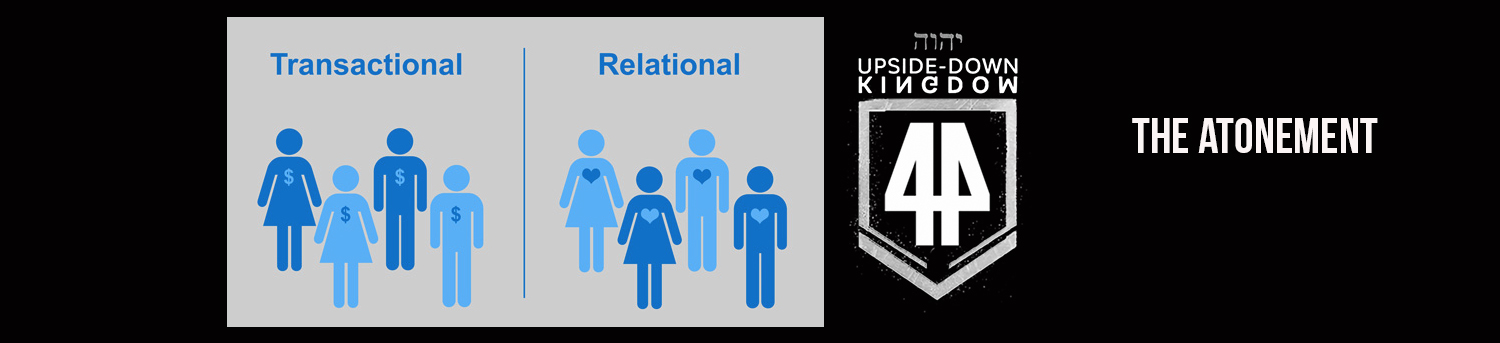
Atonement as Relational Victory

For many Christians, the cross has traditionally been explained using transactional language. We often hear that Jesus “paid our debt,” “bought us back,” or “settled the account” for our sin. Sometimes this language even drifts into the idea that some kind of deal had to be struck between God and Satan, as though humanity had been legally claimed by the enemy and Christ’s death functioned as the payment that secured our release. While these ideas have circulated widely in Christian teaching, they are not actually grounded in the biblical text. The Scriptures never describe the cross as a financial transaction between God and Satan, nor do they suggest that forgiveness required some kind of negotiated payment before God could extend mercy to humanity.

“The world operates through transactions, but the kingdom of God moves through relational covenant interactions.”

Much of this transactional language became especially prominent within Western Christian theology and has been reinforced in certain streams of Christian teaching, particularly within Reformed theology. In these frameworks, the cross is often framed as the place where Jesus paid the penalty for human sin so that God could justly forgive those who believe. While this language has shaped the way many Christians understand the gospel, it raises an important question: does the Bible itself consistently describe the cross in these transactional terms?

When we step back and examine Scripture more carefully, the picture becomes more complex. One of the clearest indications that the cross cannot simply be understood as a payment mechanism is the fact that God forgave people long before the crucifixion. Throughout the Old Testament, God repeatedly forgives His people because of His mercy, covenant love, and faithfulness. David declares, “Blessed is the one whose transgression is forgiven” (Psalm 32), and the prophets frequently speak of God removing sin and restoring His people. These acts of forgiveness occur centuries before Jesus’ death. If forgiveness was already being extended by God prior to the cross, then the cross cannot be understood as the event that finally made forgiveness possible.

The same observation can be made regarding the gift of life. God is consistently portrayed throughout Scripture as the sovereign giver of life. Eternal life ultimately flows from God’s character and His desire to restore creation. While the cross and resurrection stand at the center of God’s redemptive work, the Bible does not suggest that God was unable to grant life until a transaction occurred. The cross reveals and accomplishes something decisive in God’s plan of restoration, but it is not presented as a legal payment (between God and Jesus, or worse, between God and Satan) that suddenly made divine generosity possible.

This is where the New Testament’s description of the cross becomes especially important. When the apostles speak about the work of Christ, they most often describe it using language that is relational, restorative, and victorious rather than transactional. The cross is the place where Christ confronts the powers of sin and death, reconciles humanity to God, and inaugurates the renewal of creation. Rather than focusing on an exchange of payment, the New Testament emphasizes themes such as reconciliation, liberation, purification, and new creation.

Framing the cross transactionally actually creates significant theological and exegetical difficulties. If the cross must function as a payment in order for forgiveness to occur, then numerous biblical passages describing God’s prior forgiveness become difficult to explain. Likewise, the sacrificial language of the Old Testament—centered on purification and restoration—becomes misinterpreted as economic exchange. The transactional model can also distort key New Testament terms such as “ransom,” “redemption,” and “atonement,” which in their original contexts frequently describe liberation from bondage or the restoration of relationship rather than financial payment. When these texts are forced into a commercial framework, the broader narrative logic of Scripture becomes strained and important theological themes are overshadowed.

None of this diminishes the significance of the cross. On the contrary, it helps us see its meaning more clearly. The cross represents the decisive moment in which God, in Christ, enters fully into the depths of human suffering and death in order to overcome them. Through the cross and resurrection, the powers that enslave humanity are defeated, death itself is overturned, and the path to restored communion with God is opened.

There was unquestionably a profound cost in what Jesus did. The cross reveals the depth of divine love and the willingness of Christ to bear the full weight of human brokenness. Yet this cost should not be confused with a transactional payment. The cost belongs to God’s self-giving love, not to a required exchange that humanity somehow owed.

Understanding the cross relationally rather than transactionally also preserves the radical nature of grace. When the gospel is framed as a transaction, it can subtly suggest that salvation operates according to an economy of debt and repayment. In that framework, the Christian life can begin to feel like an attempt to pay God back for what Jesus has done. But the New Testament consistently presents salvation as a gift—freely given by God and received through faith.

There is certainly a covenantal response to this gift. Those who encounter the grace of God are invited into a life of faithfulness, trust, and transformation. But this response is not repayment. It is the natural expression of restored relationship.

In the end, the cross is not the story of a transaction that settles an account. It is the story of God’s love breaking into the world, defeating the powers of sin and death, and restoring humanity to communion with Himself. Christ did not die in order to balance a ledger. He died to rescue, renew, and reconcile creation.

And because of that, the grace we receive is not something we owe back. It is something we are invited to live within.

  1. How have you most often heard the cross explained in Christian teaching?
    • Was it described more in transactional terms (payment, debt, penalty) or relational terms (restoration, reconciliation, victory)?
  2. Why do you think transactional language about the cross has become so common in Christian theology, especially in Western traditions?
  3. What difference does it make theologically if forgiveness was already happening in Scripture before the cross?
    • How does this shape the way we understand what Jesus accomplished?
  4. The New Testament often describes salvation using relational language like reconciliation, adoption, and new creation.
    • Which of these images helps you understand the work of Christ most clearly, and why?
  5. If the cross is primarily about God restoring relationship and defeating the powers of sin and death, how might that reshape the way we think about grace, faith, and the Christian life?

Western Christian theology has often interpreted the atonement through juridical and transactional categories, describing the cross in terms of debt, payment, or penal substitution. While these frameworks have shaped much theological reflection since the medieval period, the narrative structure and conceptual vocabulary of Scripture suggest a different emphasis. This article argues that the biblical witness more consistently presents the work of Christ as the decisive act through which God restores covenant relationship and liberates humanity from enslaving powers. Through examination of the sacrificial theology of the Hebrew Scriptures, lexical analysis of key Greek terms associated with redemption, and reconsideration of texts often interpreted transactionally—particularly Romans 3 and Isaiah 53—this study proposes that the atonement is best understood within a relational and participatory framework. Engagement with patristic theology further demonstrates that early Christian writers emphasized victory over death and restoration of humanity rather than payment or penal substitution. When placed within the broader narrative arc of Scripture—from Eden to new creation—the cross emerges as the climactic act through which God defeats the powers of sin and death and restores humanity to communion with Himself.


Introduction

The doctrine of the atonement lies at the center of Christian theology. Yet the conceptual frameworks through which the cross has been interpreted have varied significantly across the history of the church. Within much of Western theology, particularly since the medieval period, the atonement has frequently been explained through juridical and transactional categories. The cross has been described in terms of debt, satisfaction, and penal substitution, suggesting that Christ’s death functions as the necessary payment required to satisfy divine justice.¹

While such models have exercised considerable influence, they do not necessarily represent the dominant conceptual framework of the biblical narrative. Increasingly, biblical scholars have argued that the New Testament presents the work of Christ primarily as God’s decisive act of covenant restoration and cosmic liberation rather than the settlement of a legal account.²

This perspective aligns with what Gustaf Aulén famously described as Christus Victor, the interpretation that the cross represents the moment in which God confronts and defeats the powers that enslave humanity.³ Within this framework, the atonement is fundamentally relational: the restoration of communion between God and humanity accomplished through Christ’s victory over sin, death, and the hostile spiritual powers.

This article argues that when the atonement is examined within the narrative and cosmological framework of Scripture, the cross emerges not primarily as a transaction but as the climactic act of divine love through which God restores creation and reconciles humanity to Himself.


The Human Condition: Alienation and Dominion

The biblical narrative portrays humanity’s fundamental problem not merely as legal guilt but as alienation from God and subjection to destructive powers.

Genesis introduces this condition through humanity’s expulsion from Eden (Gen 3:23–24). The central consequence of sin is exile from the presence of God and the entrance of death into human existence.

Paul expands this understanding by describing sin and death as reigning powers. In Romans 5:12–14, sin enters the world through Adam and death spreads to all humanity. Sin functions not merely as individual wrongdoing but as a dominion under which humanity lives.⁴

Similarly, Ephesians 2:1–3 describes humanity as living under the authority of “the ruler of the power of the air.” Such language reflects a cosmological worldview in which spiritual forces shape human life and social structures.

Recent scholarship has highlighted the importance of the Deuteronomy 32 worldview, in which the nations are described as being placed under spiritual rulers while Israel remains under Yahweh’s direct authority.⁵ This cosmological background provides an important interpretive context for New Testament discussions of “principalities and powers.”

Within this narrative framework, humanity’s fundamental problem is not merely guilt but enslavement and estrangement. Consequently, the work of Christ addresses both the restoration of relationship with God and the defeat of the powers that sustain humanity’s alienation.


Sacrifice in the Hebrew Scriptures

Transactional interpretations of the atonement often assume that the sacrificial system of the Hebrew Scriptures operates according to payment logic. However, the language and ritual context of sacrifice suggest a different conceptual framework.

The primary Hebrew verb associated with atonement is כפר (kāphar). While often translated “to atone,” the term more broadly signifies to cleanse, purge, or wipe away impurity.⁶ Within Israel’s cultic system, sin is understood as a contaminating force that threatens the holiness of the sanctuary and disrupts the relationship between God and the community.

The Day of Atonement ritual described in Leviticus 16 illustrates this logic clearly. The high priest performs purification rites for the sanctuary and the people, symbolically removing impurity from Israel. The purpose of the ritual is not the payment of a debt but the restoration of covenantal proximity between God and His people.

Jacob Milgrom’s extensive study of Leviticus demonstrates that sacrificial rituals function primarily to purge the sanctuary of pollution caused by human sin rather than to appease divine wrath through payment.⁷

Thus the sacrificial system of the Hebrew Scriptures is fundamentally concerned with restoring relational communion between God and His people.


Greek Lexical Analysis of Atonement Language

The vocabulary used in the New Testament further supports a relational rather than transactional understanding of the atonement.

Hilastērion (ἱλαστήριον)

Romans 3:25 describes Christ as ἱλαστήριον (hilastērion). While sometimes translated “propitiation,” the term most directly refers to the mercy seat of the Ark of the Covenant—the place where the high priest performed the Day of Atonement ritual.⁸

The imagery therefore evokes temple purification and divine presence rather than economic payment.


Lytron (λύτρον)

The Greek term λύτρον (lytron), used in Mark 10:45, refers broadly to liberation from captivity. In Jewish and Greco-Roman contexts, the term often functions metaphorically for deliverance rather than literal financial exchange.⁹

Thus the emphasis lies on release from bondage rather than payment to a specific recipient.


Apolutrōsis (ἀπολύτρωσις)

Another important term is ἀπολύτρωσις (apolutrōsis), often translated “redemption.” The word combines lytron with the prefix apo, emphasizing release or liberation.

Paul uses this term to describe the liberation of humanity from the powers of sin and death (Rom 8:23; Eph 1:7).¹⁰


Katallagē (καταλλαγή)

Paul’s preferred term for the result of Christ’s work is καταλλαγή (katallagē), meaning reconciliation (Rom 5:11; 2 Cor 5:18–19). The word describes the restoration of relationship after estrangement.¹¹

This relational language stands at the center of Paul’s theology of the cross.


Reconsidering Penal Substitution in Romans 3 and Isaiah 53

Two passages frequently cited in support of penal substitutionary interpretations are Romans 3:21–26 and Isaiah 53.

In Romans 3, Paul describes Christ as the hilastērion, evoking the mercy seat of the temple. The imagery points toward purification and restored access to God rather than the satisfaction of divine punishment. N. T. Wright argues that the passage primarily reveals God’s covenant faithfulness rather than a mechanism of penal substitution.¹²

Similarly, Isaiah 53 describes the suffering servant bearing the consequences of the people’s rebellion. Yet the passage emphasizes healing and restoration: “by his wounds we are healed” (Isa 53:5). The servant’s suffering results in the restoration and justification of the many (Isa 53:11), suggesting a restorative rather than strictly punitive framework.

While substitutionary elements are arguably present (two voices), the text does not explicitly frame the servant’s suffering as the satisfaction of divine wrath but rather as the means through which God restores His people.¹³


Patristic Theology and the Atonement

Early Christian theologians overwhelmingly interpreted the atonement through themes of victory, restoration, and participation.

Irenaeus articulated the doctrine of recapitulation, arguing that Christ retraced the steps of humanity in order to restore what had been lost in Adam.¹⁴

Athanasius emphasized that Christ’s incarnation culminates in the defeat of death and the restoration of humanity’s participation in divine life.¹⁵

Gregory of Nyssa described the cross as the moment in which Christ enters the realm of death in order to defeat it from within.¹⁶

These patristic perspectives closely align with the New Testament emphasis on liberation and relational restoration.


Atonement within the Narrative of New Creation

When interpreted within the broader narrative of Scripture, the atonement appears as the decisive turning point in God’s restorative mission for creation.

Humanity’s exile from Eden establishes the central problem of the biblical story: separation from God’s presence. The temple functions as a partial restoration of this communion, yet the prophets anticipate a more complete renewal.

The New Testament presents Jesus as the fulfillment of this expectation. John describes the incarnation using temple language: “The Word became flesh and dwelt among us” (John 1:14).

The resurrection inaugurates the renewal of creation. Paul describes Christ as the “firstborn from the dead” (Col 1:18), signaling the beginning of a new humanity.¹⁷

The biblical narrative culminates in the vision of Revelation 21:3: “Behold, the dwelling place of God is with humanity.”


Conclusion

When interpreted within the narrative and cosmological framework of Scripture, the atonement emerges as God’s decisive act of relational restoration and cosmic victory.

The cross represents the moment in which divine love confronts and defeats the powers of sin and death. Through Christ’s self-giving act, humanity’s exile is reversed, the powers of death are overthrown, and the renewal of creation begins.

The biblical vision of atonement therefore invites a shift away from transactional frameworks toward a more holistic understanding in which the cross is the victorious and relational act through which God reconciles the world to Himself and inaugurates new creation.


Footnotes

  1. Anselm, Cur Deus Homo.
  2. N. T. Wright, The Day the Revolution Began.
  3. Gustaf Aulén, Christus Victor.
  4. James D. G. Dunn, Romans 1–8.
  5. Michael S. Heiser, The Unseen Realm.
  6. William L. Holladay, Concise Hebrew and Aramaic Lexicon.
  7. Jacob Milgrom, Leviticus 1–16.
  8. Leon Morris, The Apostolic Preaching of the Cross.
  9. R. T. France, The Gospel of Mark.
  10. Gordon Fee, Pauline Christology.
  11. Michael J. Gorman, Apostle of the Crucified Lord.
  12. N. T. Wright, The Day the Revolution Began.
  13. John Goldingay, The Message of Isaiah 40–55.
  14. Irenaeus, Against Heresies.
  15. Athanasius, On the Incarnation.
  16. Gregory of Nyssa, The Great Catechism.
  17. Richard Bauckham, The Theology of the Book of Revelation.

Bibliography

Aulén, Gustaf. Christus Victor.
Bates, Matthew W. Salvation by Allegiance Alone.
Bauckham, Richard. The Theology of the Book of Revelation.
Fee, Gordon. Pauline Christology.
France, R. T. The Gospel of Mark.
Goldingay, John. The Message of Isaiah 40–55.
Gorman, Michael J. Apostle of the Crucified Lord.
Heiser, Michael S. The Unseen Realm.
Milgrom, Jacob. Leviticus 1–16.
McKnight, Scot. A Community Called Atonement.
Morris, Leon. The Apostolic Preaching of the Cross.
Rutledge, Fleming. The Crucifixion.
Wright, N. T. The Day the Revolution Began.

Jesus Paid it all?!

I bet you have become accustomed to Christians describing Jesus on the cross with phrases like “purchased” or “paid” describing salvation. That through Christ on the cross, salvation was “bought” or “paid in full.” First, to be clear I don’t think the terminology is horrible, this conversation doesn’t mean much to me and I am certainly not “going to war” over anything in this conversation! I believe that as a light metaphor that this kind of phrase can have some truth to it, we make references all the time in day-to-day life with this sort of linguistic analogy. For instance, my son Will was playing soccer the other night in a recreational game on astroturf and made a heralding dive to strike the ball into the goal. After the game I noticed the giant carpet burn on his knee and saif to him, well you certainly paid for that one, but what a shot! No one really thinks that He actually paid money, that would be absurd; we simply mean that there is a cost associated. That is what the Bible means when it talks about what Jesus did at the cross. Yet too many people have turned a simple biblical metaphor into a theological doctrine, and I find it problematic.

There are better ways to communicate what Christ did for us on the cross than using descriptions like paid for or purchased. This gets into atonement theories (x44 has made several videos on this subject) and if you are reformed you might think this language is “correct”; but if you’re not reformed or a Calvinist, you might want to consider a better formation for your cross theology. Let me walk you through some things towards a better consideration.

Twice the apostle Paul informed believers at Corinth, “You were bought with a price.” In 1 Corinthians 6, Paul was making a passionate appeal against sexual immorality. He concluded his argument, stating, “Or do you not know that your body is a temple of the Holy Spirit within you, whom you have from God? You are not your own, for you were bought with a price. So glorify God in your body” (1 Corinthians 6:19–20, ESV). I quoted the ESV (which is a reformed translation if you didn’t know).  1 Peter 1:18–19 says,“For you know that God paid a ransom to save you from the empty life you inherited from your ancestors. And it was not paid with mere gold or silver, which lose their value. It was the precious blood of Christ, the sinless, spotless Lamb of God” (NLT). We also have Jesus Himself saying that He came to give His life as a ransom for us (Matthew 20:28). We now belong to Him according to 1 Corinthians 7:22. Paul repeated this teaching in 1 Corinthians 7:23, notice however, the emphasis on spiritual freedom: “You were bought at a price; do not become slaves of human beings.” Believers are set free from the dominion of the world or sin through the death of Christ (Galatians 1:4). In this way you might say that spiritual freedom comes at the “price” of Christ’s sacrificial death on the cross (1 Peter 2:24). Consequently, since we now belong to Christ, we must not let ourselves come under the control of other humans, Satan, principalities, or the world… we are or should completely be given to Jesus. 1 That is what we all can agree on right? I mean it is right out of the bible! So, there you have it. The Bible specifically uses words like ransom, paid, bought, price etc… So, I bet you are wondering why do I have issues with phrasing it that way?

In biblical theology, the concept of “ransom” is deeply intertwined with the themes of deliverance and salvation. The term “ransom” according to antiquity refers to the “price paid” to secure the release of someone from bondage or captivity. In general describing what Jesus accomplished through the cross this way is known as the ransom which theory teaches that the death of Christ was a ransom sacrifice, usually said to have been paid to Satan, in satisfaction for the bondage and debt on the souls of humanity as a result of inherited sin.2 Well as you might have perceived,

In the Old Testament, the Hebrew word “kopher” is often used to denote a ransom, particularly in the context of redeeming a person or property.3 For example, Exodus 21:30 discusses the payment of a ransom for the life of a person who has been sentenced to death: “If payment is demanded of him, he may redeem his life by paying the full amount demanded of him.” So there is a Hebraic understanding of transactional payment biblically that is associated with the term ransom, but the problem with thinking that way is that what Jesus does for us on the cross intentionally came with no strings attached, it is a free gift of Grace. What Christ did on the cross was a backwards kingdom dynamic, it was opposite of the world’s expectations. In other words, there wasn’t a physical price paid. This is very important. In the Exodus did Moses pay Pharaoh? Did God pay the spiritual powers he was warring against? NO. There was no payment made. The exodus foreshadows the cross and in the same way there wasn’t a payment made. Jesus didn’t have to pay off God and God didn’t pay Satan. Are you following me? So, phrase it this way is actually poor theology and nearly the opposite idea of what the text portrayed in the exodus and through the cross. Talking about inherited sin or original sin is one of the pillars of Calvinism and thus those that hold to a “ransom” theory are typically reformed. If you aren’t familiar with this conversation this video series will help. Although I do believe in a ransom motif in the exodus and through Jesus at the cross, I do not think framing it as transactional is good theology.

The definition of the word “ransom” has changed over time. At the time the New Testament was written before the end of the first century, it referred to the practice of capturing individuals and demanding their release, particularly in ancient times. In the ancient world it was almost never ties to money, it was based on threats of power and ruling.4 In this sense, Exodus portrays the ransom of the Hebrews quite well. But I certainly won’t deny that at times money was involved; but the emphasis should always be on freedom motive not the payment motive. When you really dive into this what you find is that in the ancient world ransom was relational. You demanded ransom because it was the right thing. It was to put your foot down and demand that an injustice be reconciled. In the Middle Ages and Reformation, the term evolved to usually describe payments made for the release of hostages, and it has also been used figuratively to describe any exorbitant payment or price demanded for something. The definition has certainly changed over time to be described less relational and has become more transactional. The biblical authors definition was relational not transactional, yet we have come to interpret it through our own modern lens as transactional.

Ransom in scripture should always be interpreted as a release of slaves giving freedom. This fits every context of verses that we see the word used in from Micah 6:4 to Isaiah 43:3. Isaiah 52:3 is very clear on this. God says he sold Israel for nothing, and they shall be ransomed/redeemed without payment. Isaiah 45:13 echoes the same thoughts. The point is that the word ransom biblically shouldn’t be used in a substitutionary sense. NT Wright and even the reformed scholar Leon Morris have made this clear. 5

The Greek helps us out here. ὑπέρ Huper (for) means for a benefit. That is what is used in nearly every context of Jesus giving up his life. Not anti (for) which would be in the place of or an exchange. 

When you try to frame the work of the cross as needing to buy someone out, it creates a transactional dynamic that isn’t part of grace and isn’t biblical. Now again, there are some elements that are transactional and that is why this is complicated and often misunderstood. Grace itself is a free gift, yet there is a benefactor understanding of reciprocity. When you give a gift there is no expectation for a payment, you freely give it. Yet in relationships of any kind there are some expectations. In the circle of Grace when Christ gave his life for you, the reciprocity is that you in turn give your life to him.6 But that didn’t actually cost money, there was no buyout, but there was a cost. When we think about Jesus transactionally it muddies the water. I am sure you have been told your whole life that everything costs something, or that if you want something that is worth anything it is going to cost you. In this regard, giving your life to Christ from a worldly sense will cost you everything, your life itself. But Jesus isn’t selling anything. When we frame grace as transactional it leaves us thinking what are we going to get out of Jesus or Christianity. What do we get from the deal? It points you in the wrong direction. With Jesus we don’t get, we give… Job was righteous because he had no expectations.7

To use transactional language cheapens the work of Jesus through the cross. God wasn’t negotiating with terrorists in the Exodus. He obliterated the spiritual powers at war. The exchange was allegiance, freedom, and liberation… no money was exchanged. But was there a cost? The Egyptian “world” certainly suffered. At the cross Jesus gave his life and it was brutal. But that shouldn’t be the emphasis of what Jesus did. In fact, it really shouldn’t be emphasized at all. Sometimes I don’t even like to use the word cross when describing Jesus. For instance, I prefer to say the work of Jesus not the work of the cross. The cross didn’t accomplish anything, Jesus did everything. The cross itself is a picture of barbaric humanity not the generous grace of Jesus, that should better be framed precisely through Christ himself. Yet I still think there is a place for the image of the cross. People should view it as the method to which Jesus did accomplish many things enabling complete life and freedom in Him.

What happened at the cross to Jesus was a result of religious hierarchy. The Jewish religious leaders tied into to the government corruption of the day essentially crucified Jesus. Did Jesus willfully “give his life?” Well, let’s not forget that he prayed for the cup to be passed. If there could have been another way through the father Jesus would have opted for it. Again, this is important in the text. What happened at the cross was brutal and unjust. Jesus turned the other cheek all the way to the grave. It is a picture of complete sacrifice and humility. But it shouldn’t be viewed theologically as transactional. We don’t know exactly why God allowed or used the cross to accomplish the victories that he did, but the fact is that is the way it unfolds. The ransom analogy should be viewed as redemption and freedom not monetary exchange. To view the cross as some kind of economic exchange isn’t accurate. God wasn’t paying or even appeasing Satan and Jesus wasn’t paying or appeasing God the father. Are you following? The trinity wasn’t broken at the cross.

It really becomes “cheap” when you frame it as a payment. For instance, what you are saying is that Jesus then gave his life to “buy” all of the lives who would “accept” him for all of time. That sounds good but think about it for a second. How much is Christ’s life really worth if you are exchanging it for all who believe for all of time, millions, maybe billions? It is actually devaluing him. Who wouldn’t make “that deal” if that is all it was. If I had the power and said to you – if you allow me to crucify you it would buy 10 people you deeply care about eternal salvation, I bet, you would do it. I would. Then if you say not just 10 but EVERYONE who believes it really makes it cheap doesn’t it? What Christ did on the cross shouldn’t be cheapened transactionally. It wasn’t a buy it program. The funny thing about atonement “theories” is that we aren’t actually told in the Bible exactly what Jesus accomplishes through the cross. That is why they are called theories. But let’s not devalue the life of Christ as we theorize. Jesus accomplishes so much through the death, resurrection, and ascension, we don’t need to cheapen it or make it into something it didn’t biblically portray.

Why did Jesus have to die on a cross? That is the grand question. The Bible actually doesn’t precisely answer this question. Perhaps that is some of the mystery of the gospel. A common view in Western Evangelicalism of what happened on the cross is this: humans have sinned and God must punish sinners by venting his wrath, but thankfully, because he loves us, Jesus went to the cross and was murdered in our place to pay our debt, so that God can forgive our sins and we can go to heaven when we die. This idea of how the cross works is called the “Penal Substitution Theory” of the atonement.8 The Penal Substitution Theory has not been the most common view throughout all of church history, nor is it the most common view of the worldwide church today. So while Penal Substitution Theory may be the majority view in modern, Western theology, the Church must wake up and realize that such a view is partially modeled after paganism, often mischaracterizes God, ultimately does not take sin seriously, and leaves out what actually happened on the cross.

The Penal Substitution Theory and purchase, debt language basically depicts God as a debt collector who must collect before he can forgive. Despite the fact that Scripture tells us that love keeps no record of wrongs (1 Corinthians 13:5), this theory states that Jesus must pay our debt to the Father (or in some cases Satan). The idea that God is merciful and forgiving, while also defining justice as demanding payment of debt don’t work together, they are at odds philosophically and ontologically. If there is a debt that is paid, then the debt is never forgiven at all. Sin is not forgiven on the cross in the Penal Substitution Theory; it is just paid off. We would never then be able to be washed truly clean. But what becomes even more problematic in thinking this way is that the only way in which God could be seen as merciful in paying the debt for mankind’s sin by killing Jesus. Let’s be clear God didn’t kill Jesus; he allowed Jesus to be killed and in a “Narnian like story” was a “way maker” to regain the keys of death. This is best framed through a Christus Victor form of atonement, but I also wouldn’t limit the work of the cross to a single view. Scot McKnight has a great book, A Community Called Atonement that is worth reading.9

Christ’s justice is restorative, not retributive. God doesn’t need anyone to pay off debt in order to forgive. God can just simply forgive. That’s what forgiveness is! Forgiveness is not receiving payment for a debt; forgiveness is the gracious cancellation of debt. There is no payment in forgiveness. That is what makes forgiveness mean anything. I have said it many times, but if you are a Calvinist, you can’t truly believe in biblical forgiveness; in the same way a Calvinist struggles to believe in any kind supplication kind of prayer as they don’t believe God works that way. I get that the reformed camp has their own way of explaining how this works, but it seems like a good deal of theological gymnastics.

Along with these misnomers you also may hear people say that Jesus died as our substitute or in our place. That isn’t the intention of this article but let me touch on it briefly since it is closely ties into our conversation. Often PSA advocates might say something like, Jesus was being punished by God for our sins and that what Jesus suffered in torture and crucifixion which is then essentially what every person deserves. That doesn’t really make any sense. Do you deserve to be tortured forever? This makes grace transactional again… accept it or be tortured forever? (Another strong claim for annihilation vs ECT but again, another discussion.) How is it true that every person deserves to be tortured to death? This sounds monstrous to me, not fitting the Exodus 34 self-description of God. Furthermore, if Jesus truly would have died in our place and gotten what we deserved according to PSA shouldn’t he then go to hell eternally according to their own reformed theology? The theory doesn’t hold up. Jesus died on a cross outside Jerusalem at the hand of the Romans (Matthew 27; Mark 15; Luke 23; John 19). None of us faced that death. He did not take our place on a cross, we didn’t deserve that and some would argue that he didn’t either, although Jesus was certainly “guilty” of not being allegiant to Roman authority.

If you have made it this far you likely know or have some knowledge of the foreshadowing of the sacrificial system to also be a picture of some of the thigs Jesus would become and accomplish. If you need to brush up, read the second part of this article first. 10 Two goats are selected for Israel: The sin offering goat and the goat that will “bear the sin”. Lots are cast to see which goat fulfills which role. Jesus actually embodies both at times. The second goat the scapegoat, or the azazel would carry away the sin of the camp into the wilderness. To be clear it is a picture, or a mosaic. Jesus will accomplish what the goat never could. The goat is a picture of simply transferring sin out of the camp, Jesus actually removes it completely. In theology this is called Expiation which means that the barrier lies outside of God, within humankind and/or a stain they leave on the world (sacred space), it is often interpreted as an action aimed at removing sin. To cover, wipe, or to purge sin. Where I believe some theology gets off is when you interpret this story as a propitiation view (punishment). The goat bears the sin and wrath. I don’t think this a great interpretation, but I have gotten significantly into that in videos and other articles. I don’t want to get too far into this here, but propitiation doesn’t really fit (work) for a number of reasons. Fopr instance if the goat was bearing the sin (carrying) it could not be a sacrifice because God only gets spotless pure animals (what does that do for your New Testament theology of the cross if Jesus was imputed our sin?) In Leviticus 16, the Hebraic sacrificial system, we have the first goat as the purification offering which is given to cleanse the temple objects. Blood is not applied to anyone. The scapegoat is sent to Azazel. So, sin, the forces of death, are removed from the camp. This connects God is rescuing his people from the forces of death. (Again it is an Exodus motif of freedom.) Neither of these goats are punished. It’s about expelling or purging God’s space (so Expiation!) The first goat (the one that dies) is more about cleaning the throne room of the stain of sin. The scapegoat doesn’t get killed. This is all about resetting sacred space (getting back to Eden).

To be frank, all of this comes off as weird to us. But God often meets people where they are at within their unique cultural dynamic. All Ancient Near Eastern cultures (including ones that existed before the Hebrews) killed animals, and sometimes humans, to appease the gods. Animal sacrifice is undebatably pagan. Yes, the God of the Bible used this pagan ritual to teach his people something new but it was always just a step in the process to get them away from it. It is really important to note that God never needed sacrifices in order to forgive. Why is this important? The Penal Substitution Theory ignores all this and says that God the Father still demands blood in order to take away sins.11

Leviticus 16 and the story of the scapegoat has some substitutionary aspects. I certainly do not deny that there are pictures of Jesus as our substitute. There is a difference between PSA and simple metaphor of substitution. Whenever you are understanding of substitution wanders into the camp of God’s wrath needing to be satisfied buy killing something I have a problem with that. The sacrificial system needs to be interpreted in light of restorative relationship being reconciled and the theme of redemption. I think when you start trying to understand this as imputation and especially double imputation, you’re getting off track and outside the picture that God has given us for what Jesus accomplishes through the cross, resurrection, and ascension. Again, if we take on this sort of reformed kind of thinking we are having to do some theological gymnastics to make it all work that seem unnatural to the message and mission of Jesus.

Payment language should paint a picture about the costliness of Jesus’ life and not about who receives the payment. So Jesus could “pay it all” by living in total surrender even unto death. We regularly use this analogy of “paid” as total dedication with soldiers who “paid the price for our freedom” in giving up their life in battle. In the same way, they literally did not “pay off” anyone or take anyone’s place. Instead, they died for a benefit to others and gave all they had. That is the way scripture also poses it the few times we see this sort of language used as I displayed in the opening paragraphs, but for some reason when it comes to the cross, PSA and reformed theology (which sometimes then becomes non reformed people using the same language) resorts to Jesus paying off God.

Since a lot of us like digging deeper, it could also help to point out how this “paid” language can sound like old pagan religion, where people had to pay off the gods with sacrifices. The gospel is the opposite of that. God comes to us first and makes things right. It makes sense to name PSA as the view most tied to “paid it all” language and explain why it does not match the whole story of Scripture. If we use the wider range of Bible images instead of locking into just one, we can talk about the cross in a way that shows God’s love and His plan to restore all things. Ending with a simple example of how this shift in language could change the way we pray, teach, or share the gospel would make it hit home even more for me.

I know you have heard these terms your whole life and might believe them to be the gospel, but that isn’t Biblical. Did Jesus pay for what we have in Him? You don’t need to say that any of this was “bought” or “paid for.” Perhaps you can say that as Paul does sometimes (arguably) as I started out this conversation. The intention of scripture using bought/paid/substitution language should be seen as a light metaphor not doctrine. All of scripture points towards the work of the cross as redemptive not transactional. Grace is free. Do you believe that? The exodus motif is Biblical, but the price attached to it isn’t. Yes, there was a process and sometimes we call this a “cost” as I Cor, 6 may frame it (although if you read it in Greek, you will read it differently that the ESV translates.) The cross Jesus Christ conquered all the powers of evil and ushered in the reign of God and the rule of the kingdom of heaven.12 What Christ offers is a return to Eden and then some. Freedom in him is restored. He sends his Spirit at Pentecost and now we are restored to our vocation as image bearers and are now his living temples showering the physical manifestation of Jesus’ sacrificial love. It is transactional, it isn’t retributive… it is free and restorative to all who want to return to their identity and partnership in Jesus. You were made for this!

  1. https://www.gotquestions.org/bought-with-a-price.html ↩︎
  2. Collins, Robin (1995), Understanding Atonement: A New and Orthodox Theory, Grantham: Messiah College ↩︎
  3. https://biblehub.com/topical/r/ransom_and_redemption.htm ↩︎
  4. https://etymologyworld.com/item/ransom ↩︎
  5. Scot McKnight: What is unobserved by the substitutionary theory advocates is that the ransom cannot be a substitute, as we might find in theologically sophisticated language: where death is for death, and penal judgment is for penal judgment. Here we have a mixing of descriptions: a ransom for slaves. Jesus, in Mark’s language, does not become a slave for other slaves. He is a ransom for those who are enslaved. The difference ought to be given careful attention. To be a substitute the ransom price would have to take the place of another ransom price or a slave for another slave, but that is not what is involved here…The ransom does not become a substitute so much as the liberating price.… The ransom, in this case, is not that Jesus “substitutes for his followers as a ransom” but that he ransoms by being the price paid in order to rescue his followers from that hostile power. The notion is one of being Savior, not substitution. The best translation would be that Jesus is a “ransom for the benefit of many.”
     
    Leon Morris: In the New Testament there is never any hint of a recipient of the ransom. In other words, we must understand redemption as a useful metaphor which enables us to see some aspects of Christ’s great saving work with clarity but which is not an exact description of the whole process of salvation. We must not press it beyond what the New Testament tells us about it. To look for a recipient of the ransom is illegitimate.” Morris, The Atonement, 129 ↩︎
  6. https://www.amazon.com/This-Way-Redefining-Biblical-Covenant/dp/1633572390 ↩︎
  7. https://biblicalelearning.org/wp-content/uploads/2025/01/Walton_Job_Session18.pdf ↩︎
  8. https://www.rivalnations.org/god-didnt-kill-jesus/. ↩︎
  9. https://www.bookey.app/book/a-community-called-atonement ↩︎
  10. https://expedition44.com/2024/12/30/the-new-year-jewish-roots/ ↩︎
  11. The theory pits the Father against the Son even though in nature they should be, and are, eternally the same (Matthew 11:27; John 1:18; 4:34; 5:19-20; 6:38, 46; 8:28; 10:29; 12:49; Colossians 2:9; Hebrews 13:8). The Penal Substitution Theory fractures the Trinity and makes God schizophrenic. We are commanded to forgive like God forgives (Ephesians 4:32). But if we choose to forgive like Jesus then forgiveness will precede repentance (Matthew 9:2; 18:22; Luke 23:34; John 8:11; 20:19-23). However, if we choose to forgive like the father (according to PST), we will only forgive those that show repentance, or after they make a payment of some kind. This clearly creates an unnecessary problem. How and why would God need a blood sacrifice before he could love what he had created? Is God that needy, unfree, unloving, rule-bound, and unable to forgive? Once you say it, you see it creates a nonsensical theological notion that is very hard to defend. Thankfully we see this isn’t God’s character. Jesus shows us what God is like, and Jesus says that our perfect heavenly Father displays perfection as pure mercy (Matthew 5:48, Luke 6:36). ↩︎
  12. https://www.amazon.com/Wood-Between-Worlds-Poetic-Theology/dp/151400562X ↩︎
