Reconsidering Penal Substitution: Exegesis, Divine Character, and the Persistence of the “Cosmic Child Abuse” Critique

Few critiques of Penal Substitutionary Atonement (PSA) have been as rhetorically charged as the accusation that it amounts to “cosmic child abuse.” Popularized in contemporary theological discourse, the critique is often rejected as reductionistic, emotionally manipulative, and inattentive to Trinitarian theology.¹ Yet its persistence suggests that it is not sustained merely by caricature. Rather, it functions as a theological pressure point, exposing a deeper unease regarding the coherence of PSA with the character of God revealed in Scripture.


The task, therefore, is not to accept the critique uncritically, nor to dismiss it reflexively, but to ask whether the conceptual framework of PSA, particularly its emphasis on divine wrath, penal satisfaction, and substitutionary punishment, arises from the biblical text itself or is imposed upon it. This study argues that while substitutionary language is present in Scripture as a simple metaphor, the penal structuring of that substitution is not exegetically grounded in the way often claimed (as doctrine). When elevated to a controlling paradigm, PSA not only reduces the biblical witness but risks introducing tensions that give rise to the very critique it seeks to refute.

It is also important to acknowledge that for some, this is not merely a theoretical tension. There are many who have not simply questioned the cross, but have walked away from the Christian faith altogether because they found themselves unable to reconcile a strongly penal vision of the cross with the character of a loving and merciful God. This dynamic, and the pastoral weight it carries, will be explored more fully in an appendix.

Any serious engagement with atonement must begin within the Ancient Near Eastern (ANE) context in which Israel’s sacrificial system emerged. In surrounding cultures, sacrifice often functioned within a framework of appeasement, where divine anger was placated through offerings, including, at times, child sacrifice.² Texts from Ugarit and Phoenicia attest to rituals in which the death of a child was understood as a means of satisfying divine demands.³ Against this backdrop, the Hebrew Scriptures present a striking polemic. The prohibition of child sacrifice is unequivocal (Lev 18:21; Deut 12:31), and prophetic literature repeatedly condemns the practice as something that “never entered the mind” of God (Jer 7:31).⁴ The implication is not merely ethical but theological: Israel’s God is fundamentally unlike the gods of the nations. This distinction is critical. If Israel’s sacrificial system is to inform our understanding of the cross, it must be interpreted within its own conceptual world, not retrofitted into ANE patterns of appeasement. The central concern of Levitical sacrifice is not the satisfaction of divine anger through punishment, but the purification of sacred space and the restoration of covenantal relationship.⁵ The term כִּפֶּר (kipper) reflects this orientation. As Milgrom demonstrates, its primary function is to purge or cleanse, particularly in relation to the sanctuary.⁶ Blood is applied to objects, not persons, indicating that the problem addressed is not primarily legal guilt but cultic defilement.⁷

Thus, the sacrificial system does not operate on penal logic. It operates on purificatory and relational logic.


Isaiah 52:13–53:12 is frequently cited as the clearest Old Testament support for PSA. Yet a close reading reveals a more complex picture. The Servant is said to “bear” (נָשָׂא) and “carry” (סָבַל) the sins of many (Isa 53:4, 11–12). These terms, however, do not inherently denote penal substitution. They often signify bearing the consequences of sin within a communal or relational framework.⁸ The Servant enters into the condition of Israel’s suffering rather than stepping into a juridical exchange.

More significantly, Isaiah 53:4 introduces a hermeneutical correction: “We considered (חָשַׁב) him stricken, smitten by God…”

The assumption that the Servant is being punished by God is explicitly attributed to the observers.⁹ The text then reframes this perception, revealing that the Servant’s suffering is not the result of divine retribution but the means of healing (“by his wounds we are healed,” 53:5). The verb דָּכָא (“to crush”) in 53:10 further complicates penal readings. While it denotes severe suffering, it does not necessarily imply judicial punishment.¹⁰ Within Isaiah’s broader narrative, such language is often associated with oppression and exile rather than retributive justice. The designation of the Servant as an אָשָׁם (ʾāšām, “guilt offering”) likewise resists penal interpretation. The guilt offering functions to restore covenantal order and address breaches in relationship, not to transfer punishment.¹¹ Thus, Isaiah 53 presents a model of vicarious suffering and restorative purpose, but it does not clearly articulate penal substitution.


Was God torturing Jesus? The concept of divine wrath (ὀργή or torture) plays a central role in PSA. Yet Paul’s use of the term complicates its interpretation. In Romans 1:18–32, wrath is not depicted as an active outpouring of punishment but as God “giving over” humanity to the consequences of their actions.¹² The repeated use of παρέδωκεν (“he gave them over”) suggests a form of judicial abandonment rather than retributive infliction. This pattern continues throughout Paul’s letters. Wrath is eschatological, revealing the destructive trajectory of sin rather than a mechanism requiring satisfaction.¹³

Romans 3:21–26, often cited as the cornerstone of PSA, must be read within this framework. The term ἱλαστήριον, traditionally translated “propitiation,” is better understood as a reference to the mercy seat (כַּפֹּרֶת).¹⁴ This shifts the focus from appeasement to presence: Christ is the place where God meets humanity in mercy. The phrase δικαιοσύνη θεοῦ (“righteousness of God”) further supports this reading. Rather than denoting a standard of retributive justice, it reflects God’s covenant faithfulness—His commitment to set the world right.¹⁵

Paul’s declaration that God “passed over” former sins (πάρεσις) indicates that forgiveness was already operative prior to the cross.¹⁶ The cross, therefore, is not the precondition for forgiveness but its public demonstration.


Substitutionary language in the New Testament is used as a light metaphor. Scripture is filled with metaphors that illuminate truth without exhausting it. Jesus calls Himself “the door” (John 10:9), yet no one imagines that Christ is literally a plank of wood or that salvation is a matter of passing through a physical threshold. The image communicates access, not architecture. It would be theologically careless to take that metaphor and construct a literal doctrine from it. And yet, this is often what happens with atonement language. A single metaphor—legal, sacrificial, or economic—is elevated beyond its intended function and made to carry the full weight of the cross. The problem is not the metaphor, but the moment we forget that it is one voice among many.

It is also worth noting, as will be explored in a later endnote in the appendix, that the specifically penal form of substitution is a relatively late development in the history of Christian theology, which at minimum invites careful reflection before treating it as the controlling lens of Scripture.

In this way, the nature of that substitution is often misunderstood. The preposition ὑπέρ (“for/on behalf of”) dominates Pauline usage. While it can imply substitution, its primary sense is representative.¹⁷ Christ acts on behalf of humanity, not as a third party absorbing punishment, but as the true human who embodies and restores the human vocation. This is evident in 2 Corinthians 5:21, where Christ is said to be “made sin” (ἁμαρτία). The term likely carries sacrificial connotations, referring to a sin offering rather than a literal transfer of guilt.¹⁸ The result is participatory: “that we might become the righteousness of God.”

Similarly, Galatians 3:13 speaks of Christ becoming a “curse” (κατάρα). The curse, drawn from Deuteronomy, refers to covenantal exile and death, not a metaphysical transfer of punishment.¹⁹ Christ enters into Israel’s cursed condition in order to redeem it from within.


The cumulative effect of these exegetical observations raises significant theological questions. First, the insistence that God must punish in order to forgive risks subordinating divine freedom to an external principle of justice. Scripture consistently portrays God as free to forgive (Exod 34:6–7; Mic 7:18), suggesting that forgiveness is an expression of divine character rather than a response to satisfied demands.²⁰ Second, PSA introduces tension within Trinitarian theology. While defenders affirm the unity of will between Father and Son, the logic of punishment can suggest a division that must be carefully managed.²¹ Third, the ethical implications are difficult to ignore. The punishment of an innocent person is consistently condemned in Scripture (Deut 24:16; Ezek 18:20). To frame the cross in such terms requires a significant reconfiguration of biblical justice.


The charge that Penal Substitutionary Atonement amounts to “cosmic child abuse” did not arise in a vacuum. It is not merely the product of rhetorical excess or theological immaturity, as it is often dismissed, but rather the convergence of modern moral intuition and perceived theological inconsistency.²² At its most basic level, the critique argues that if the Father inflicts punishment upon the Son in order to satisfy divine wrath, then the cross begins to mirror patterns of abusive violence rather than reveal divine love.

In its most vulgar form, the argument is intentionally provocative. God is imagined as directing anger toward His Son, punishing Him in place of others. That picture is clearly distorted. It fails to account for the unity of the Trinity, the voluntary obedience of the Son (Phil 2:6–8), and the New Testament’s insistence that “God was in Christ” (2 Cor 5:19).²³ But dismissing the critique at that level is too easy, because it avoids the deeper question—why does this description feel intuitively plausible to so many who encounter PSA?

The plausibility is not accidental. It emerges from the internal logic of certain PSA formulations themselves. If divine justice is defined as the necessary punishment of sin, and if Christ is said to bear that punishment in the place of humanity, then the cross is structurally framed as punitive action directed toward an innocent substitute.²⁴ Even when carefully qualified within Trinitarian theology, this structure creates tension. Scripture consistently resists the punishment of the innocent as a violation of justice (Deut 24:16; Ezek 18:20), and yet PSA appears to affirm precisely that dynamic at the center of the gospel.²⁵

That tension becomes even more pronounced when read against the broader biblical narrative, especially the prophetic critique of sacrificial violence. The Hebrew Scriptures repeatedly reject the idea that God desires or is appeased by destructive offerings—particularly those involving human life. “They built the high places of Baal…to burn their sons and daughters in the fire—which I did not command, nor did it enter my mind” (Jer 7:31).²⁶ This is not simply a prohibition; it is a revelation of God’s character. The God of Israel does not operate according to the sacrificial logic of the surrounding nations.

When this prophetic witness is placed alongside certain PSA articulations, the dissonance becomes difficult to ignore. In the Ancient Near Eastern world, sacrifice often functioned as a means of appeasing divine anger, sometimes even through the offering of human life.²⁷ Israel’s sacrificial system, however, was structured to resist that pattern, emphasizing purification, covenant restoration, and the preservation of life.²⁸ To reintroduce a framework in which divine wrath is satisfied through the death of a representative figure risks collapsing the very distinction Scripture works so hard to maintain between Israel’s God and the gods of the nations.

This helps explain why the “cosmic child abuse” critique resonates so strongly in a modern context. In a culture deeply sensitive to the dynamics of power, violence, and abuse, any theological model that appears to legitimize the punishment of the innocent will immediately raise suspicion.²⁹ And while cultural sensitivity alone cannot determine theological truth, it is worth noting that these ethical instincts often echo the moral trajectory already present within Scripture itself.

At the same time, the critique must be carefully qualified. It becomes theologically inaccurate when it isolates the Father as the agent of violence and the Son as its passive recipient. The New Testament presents the cross as a unified divine act: the Son gives Himself (Gal 2:20), the Father sends the Son in love (Rom 5:8), and the Spirit participates in the offering (Heb 9:14).³⁰ The cross is not an event in which God acts against God, but one in which God acts through Himself for the sake of the world.

Even so, that clarification does not fully resolve the tension. The deeper question remains whether the category of penal satisfaction itself (even when framed within Trinitarian unity) accurately reflects the biblical portrayal of God’s justice. If the structure of the model requires that punishment be inflicted in order for forgiveness to occur, then the underlying logic remains vulnerable to the critique.

This is where the issue becomes decisively exegetical. Nowhere does Scripture explicitly state that God must punish sin in order to forgive it. On the contrary, the biblical narrative consistently presents forgiveness as an expression of divine freedom and mercy (Exod 34:6–7; Mic 7:18–19).³¹ Jesus forgives sins without reference to satisfaction (Mark 2:5), and the apostolic proclamation centers on reconciliation initiated by God, not secured through the prior appeasement of divine wrath (2 Cor 5:18–19).³²

The issue, then, is not whether the “cosmic child abuse” critique is rhetorically excessive (it often is) but whether it exposes a genuine tension within the conceptual framework of PSA. When stripped of exaggeration, the critique presses a necessary question: does the logic of penal substitution truly align with the character of God revealed in Christ, or does it impose a structure upon the text that generates unintended theological consequences?

If the cross is the definitive revelation of God’s nature, then any model of atonement must not only explain what happens there, but also cohere with the God who is revealed there. Where that coherence begins to strain, the problem may not lie with the critique, but with the framework itself.


Penal Substitutionary Atonement, while containing elements of biblical truth, cannot be sustained as the controlling framework for understanding the cross (or perhaps even be understood within any viable manner theologically). Its reliance on retributive categories, its tension with the sacrificial logic of the Hebrew Scriptures, and its implications for the character of God all suggest that it represents a theological development rather than a conclusion that arises organically from the text itself. When pressed exegetically, the model repeatedly depends upon importing categories that Scripture does not clearly prioritize and, at times, appears to resist.

This becomes most evident when viewed through the lens of the “cosmic child abuse” critique. While that language is often exaggerated and at points theologically imprecise, it persists because it names a real tension. When the cross is framed primarily as the moment in which divine wrath is satisfied through the punishment of an innocent substitute, the resulting picture of God risks drifting toward the very sacrificial logic the prophets rejected and the biblical narrative works to overturn. The critique gains traction not because it is entirely correct, but because it exposes a dissonance between certain articulations of PSA and the moral and theological contours of Scripture itself.

At the same time, the solution is not to abandon sacrifice, or the seriousness of sin. Scripture does not permit such a move. The cross remains the decisive act through which God deals with sin, death, and the fractured condition of creation.

What emerges from a sustained exegetical reading is not the elimination of metaphorical substitution, but its reconfiguration. The language of “for us” (ὑπέρ) consistently carries the weight of representation, participation, and covenantal solidarity rather than strictly penal exchange. Christ does not stand over against humanity as a third party absorbing punishment, but as the true human who enters fully into our condition—into our sin, our exile, our death—in order to heal it from within. In this sense, the cross is not the site where God’s disposition toward humanity is changed, but where God, in Christ, acts decisively to overcome everything that has stood in the way of communion.

This reframing also allows the biblical witness concerning sacrifice to stand on its own terms. The Levitical system is not primarily concerned with the transfer of punishment, but with purification, restoration, and the maintenance of sacred space. The Servant of Isaiah does not simply endure divine retribution, but bears the weight of human violence and suffering in a way that exposes, absorbs, and ultimately transforms it. Paul’s language of righteousness, reconciliation, and participation similarly resists reduction to a purely forensic framework, pointing instead to a vision of salvation that is relational, transformative, and cosmic in scope.

Within this broader vision, divine justice is not diminished but clarified. Justice is not revealed as a necessity that binds God to a system of retribution, but as the faithful expression of God’s own character—His commitment to set the world right, to heal what has been corrupted, and to restore what has been lost. The cross, therefore, is not the moment where justice is satisfied through violence, but where justice is enacted through self-giving love.

It is here that the pastoral significance of this discussion comes into view. How we understand the cross inevitably shapes how we understand God. If the cross is interpreted primarily through the lens of retributive necessity, it can subtly form a vision of God marked by distance, tension, or even fear. But when the cross is read within the full narrative of Scripture—as the act in which God Himself enters into human brokenness in order to redeem it—the result is not fear, but trust; not distance, but communion.

PSA tends to compress the richness of the biblical witness and, in doing so, risks obscuring the very character of God it intends to defend.

The task before the church, then, is not to discard the cross, but to see it more clearly. This requires returning to Scripture with fresh attentiveness, allowing its language, categories, and narrative to shape our theology rather than forcing them into predetermined frameworks. It calls for a recovery of the multifaceted witness of the early church, where the cross was proclaimed not as a singular mechanism, but as the decisive act of God’s victory, reconciliation, and restoration.

In the end, the cross is not less than what has often been proclaimed—it is far more. It is the place where sin is truly dealt with, where death is defeated, where the powers are disarmed, and where humanity is brought back into communion with God. But it is all of this not because God required violence in order to forgive, but because God, in Christ, was willing to go to the furthest depths of human brokenness to heal it.

And that is a vision of the cross that not only withstands critique, but more faithfully reflects the God revealed in Jesus Christ.


  1. Steve Chalke and Alan Mann, The Lost Message of Jesus (Grand Rapids: Zondervan, 2003), 182–84.
  2. John Day, Molech: A God of Human Sacrifice in the Old Testament (Cambridge: Cambridge University Press, 1989), 45–52.
  3. Mark S. Smith, The Early History of God: Yahweh and the Other Deities in Ancient Israel (Grand Rapids: Eerdmans, 2002), 135–138.
  4. Christopher J. H. Wright, Old Testament Ethics for the People of God (Downers Grove: IVP, 2004), 198–200.
  5. Jacob Milgrom, Leviticus 1–16: A New Translation with Introduction and Commentary (New Haven: Yale University Press, 1991), 253–255.
  6. Ibid., 1029–1035.
  7. Baruch A. Levine, Leviticus (Philadelphia: Jewish Publication Society, 1989), 113–115.
  8. John Goldingay, The Theology of the Book of Isaiah (Downers Grove: IVP Academic, 2014), 104–106.
  9. Brevard S. Childs, Isaiah (Louisville: Westminster John Knox, 2001), 412–414.
  10. Ludwig Koehler and Walter Baumgartner, The Hebrew and Aramaic Lexicon of the Old Testament, rev. ed. (Leiden: Brill, 2001), 223–224.
  11. Gordon J. Wenham, The Book of Leviticus (Grand Rapids: Eerdmans, 1979), 107–109.
  12. Douglas J. Moo, The Epistle to the Romans (Grand Rapids: Eerdmans, 1996), 103–105.
  13. N. T. Wright, Paul and the Faithfulness of God (Minneapolis: Fortress Press, 2013), 799–802.
  14. C. E. B. Cranfield, A Critical and Exegetical Commentary on the Epistle to the Romans, Vol. 1 (Edinburgh: T&T Clark, 1975), 209–211.
  15. N. T. Wright, Paul and the Faithfulness of God, 801.
  16. Douglas J. Moo, Romans, 232–235.
  17. Richard B. Hays, The Faith of Jesus Christ (Grand Rapids: Eerdmans, 2002), 156–160.
  18. David M. Moffitt, Atonement and the Logic of Resurrection in the Epistle to the Hebrews (Leiden: Brill, 2011), 87–92.
  19. James D. G. Dunn, The Epistle to the Galatians (Peabody: Hendrickson, 1993), 180–183.
  20. Karl Barth, Church Dogmatics, Vol. IV/1 (Edinburgh: T&T Clark, 1956), 253–255.
  21. Jürgen Moltmann, The Crucified God (Minneapolis: Fortress Press, 1993), 242–244.
  22. Steve Chalke and Alan Mann, The Lost Message of Jesus, 182–84.
  23. Thomas F. Torrance, The Mediation of Christ (Colorado Springs: Helmers & Howard, 1992), 83–85.
  24. John Stott, The Cross of Christ (Downers Grove: IVP, 1986), 159–161.
  25. Christopher J. H. Wright, Old Testament Ethics for the People of God, 312–315.
  26. Walter Brueggemann, Theology of the Old Testament (Minneapolis: Fortress Press, 1997), 704–706.
  27. Mark S. Smith, The Early History of God, 135–138.
  28. Jacob Milgrom, Leviticus 1–16, 253–255.
  29. Miroslav Volf, Exclusion and Embrace (Nashville: Abingdon Press, 1996), 265–267.
  30. Jürgen Moltmann, The Crucified God, 242–244.
  31. Karl Barth, Church Dogmatics IV/1, 253–255.
  32. Murray J. Harris, The Second Epistle to the Corinthians (Grand Rapids: Eerdmans, 2005), 442–444.

Penal Substitutionary Atonement is often treated in modern evangelical discourse as though it were the historic Christian explanation of the cross. The historical record is more complicated. The earliest centuries of the church tended to emphasize themes such as Christ’s victory over death and the powers, recapitulation, liberation, and participation in restored life rather than a fully developed doctrine of penal satisfaction.¹ A significant shift occurs with Anselm, whose satisfaction model reframed the problem in terms of divine honor and debt, though not yet in the stricter penal sense later associated with Protestant orthodoxy.² The specifically penal and juridical form of substitution (where Christ bears the punishment due to sinners under divine judgment) comes into much sharper focus in the Reformation, especially in Calvin and in later Reformed development.³ This does not, by itself, make PSA false. Doctrine can develop over time, and lateness alone is not a refutation. But it should at least raise a legitimate caution when a comparatively later formulation is treated as though it were the obvious, universal, or controlling lens of Scripture and the church.⁴ At minimum, the relative historical newness of PSA in its mature form invites humility, careful exegetical testing, and a renewed willingness to let the wider biblical and patristic witness speak with its full range rather than being collapsed into a single model.⁵

  1. Gustaf Aulén, Christus Victor: An Historical Study of the Three Main Types of the Idea of Atonement (Eugene, OR: Wipf & Stock, 2003), 4–5, 16–20.
  2. Anselm of Canterbury, Cur Deus Homo, 1.11–15.
  3. John Calvin, Institutes of the Christian Religion, 2.16.5–10.
  4. N. T. Wright, The Day the Revolution Began (New York: HarperOne, 2016), 275–80.
  5. Oliver D. Crisp, Participation and Atonement: An Analytic and Constructive Account (Grand Rapids: Baker Academic, 2022), 10–12, 130–42.

In both pastoral conversations and what we’re seeing more broadly, a pattern keeps showing up that we can’t ignore. Many people aren’t walking away from the idea of God altogether—they’re walking away from a version of God they’ve been given that they simply cannot reconcile with love, mercy, and goodness.¹ And more often than we might want to admit, that version of God has been shaped—at least in part—by strongly penal ways of talking about the cross, especially when those ideas are paired with doctrines like eternal conscious torment.² (I personally can’t reconcile that doctrine to the character and nature of God either and find conditionalism to be a more exegetical framework.)

For many, the issue isn’t whether God judges sin. Most people instinctively understand that justice matters. The struggle comes when God’s justice is framed primarily in terms of punishing an innocent substitute or expressed through forms of judgment that feel excessive, unending, or disconnected from the character of Jesus.³ At that point, the tension becomes more than intellectual—it becomes deeply personal, and for some, it becomes irreconcilable.

Some have tried to resolve this tension by holding on to Jesus while distancing themselves from God, embracing Christ as loving while rejecting the Father as wrathful – but such a move ultimately collapses under the weight of Scripture’s unified witness, where the fullness of God’s character is revealed in Christ, not set against Him. PSA struggles to reconcile this tension.

This doesn’t mean PSA is the only reason people walk away, and it doesn’t settle the doctrine on sociological grounds alone. But it should at least give us pause. When PSA is presented as the only faithful or truly biblical way to understand the cross, it can create a real stumbling block for those trying to hold together the goodness of God with the story of Scripture as a whole.⁴ In many cases, what people end up rejecting isn’t the gospel itself, but a particular lens through which the gospel was taught to them.⁵

That’s not something to weaponize or use as a cheap critique. But it is something to take seriously. If the way we are framing the cross consistently produces confusion, moral dissonance, or even distance from God, then we have to be willing to ask hard questions—not about whether God is just, but whether our way of describing that justice actually reflects the God we see revealed in Christ.

  1. James K. A. Smith, How (Not) to Be Secular: Reading Charles Taylor (Grand Rapids: Eerdmans, 2014), 109–112.
  2. David Bentley Hart, That All Shall Be Saved: Heaven, Hell, and Universal Salvation (New Haven: Yale University Press, 2019), 1–5, 43–48.
  3. Bradley Jersak, A More Christlike God: A More Beautiful Gospel (Pasadena: Plain Truth Ministries, 2015), 13–18.
  4. Joshua Ryan Butler, The Skeletons in God’s Closet: The Mercy of Hell, the Surprise of Judgment, the Hope of Holy War (Nashville: Thomas Nelson, 2014), 52–56.
  5. Sarah E. Lane, Theological Worlds: Understanding the Alternative Spiritual Lives of Americans (Oxford: Oxford University Press, 2011), 87–92.

Between Burial and Resurrection

An Exegetical and Theological Inquiry into the Intermediate State of Christ

The interval between the death and resurrection of Jesus has long occupied a curious place in Christian theology. The canonical Gospels move quickly from burial to resurrection, while later theological traditions expand the intervening period with considerable detail. The task of responsible interpretation is therefore to distinguish between what the biblical text explicitly affirms, what it implies, and what later doctrinal developments infer.

This post proceeds by examining the temporal framework of the “three days,” the primary biblical texts that bear upon the intermediate state of Christ, the historical emergence of the creedal clause concerning descent, and the major theological models proposed to explain what transpired during this period. Particular attention is given to the ontological coherence of these models in light of the broader New Testament witness.


Inclusive Reckoning and the Traditional View

The dominant ecclesial tradition has interpreted the “third day” language through the lens of Jewish inclusive reckoning, wherein any part of a day may be counted as a full day. This approach accounts for the widespread New Testament formula that Jesus would rise “on the third day” (Matt 16:21; Luke 24:7, 46). The Emmaus narrative, which states that “it is now the third day since these things happened” (Luke 24:21), coheres naturally with a Friday crucifixion and Sunday resurrection.

This idiomatic usage is well attested in Jewish literature. As Craig L. Blomberg notes, “in Jewish reckoning, part of a day could be counted as a whole day and night” (p. 77).¹ Similarly, N. T. Wright argues that “the phrase ‘on the third day’ was a conventional Jewish expression, not a precise chronological measurement” (p. 321).²

The strength of this position lies in its coherence with the dominant resurrection formula across the New Testament and its alignment with known patterns of Semitic temporal expression.

A Literal “Three Days and Three Nights”

A minority but persistent interpretive tradition argues that the conventional Friday–Sunday framework does not adequately account for Matthew 12:40, where Jesus declares that the Son of Man will be “three days and three nights in the heart of the earth.” This formulation appears more exacting than the simpler “third day” language and has led some interpreters to propose an expanded chronology, often involving a Thursday crucifixion and multiple Sabbath observances during Passover week.

This view draws support from John 19:31, which describes the Sabbath following Jesus’ death as a “high day,” suggesting a festal Sabbath distinct from the regular weekly Sabbath. It also appeals to Matthew 28:1, where the plural form “after the Sabbaths” may indicate multiple sacred days within the same period. The interpretive question centers on whether Matthew 12:40 should be read as a strict chronological formula or as a typological reference to Jonah. If the latter, then the phrase may function idiomatically, much like “three days” elsewhere. If the former, then the traditional model may appear compressed. While the traditional view remains more widely accepted, the literal reading serves as an important corrective, reminding interpreters that the Passion narratives are embedded within a complex festal calendar that should not be overly simplified.

This is not a matter that should divide the church. Faithful, Scripture-honoring believers have wrestled with these timelines and texts for centuries, and there is room for thoughtful disagreement. Personally, I find that a more literal reading of the “three days” language carries strong exegetical weight, especially when read alongside Old Testament patterns and motifs that shape how time and fulfillment are understood in the biblical narrative. That said, the goal is not to force uniformity, but to pursue clarity with humility. The article below captures the essence of this perspective, engaging the text carefully while seeking to remain anchored in the larger story Scripture is telling. Here is an article that takes on the essence of the non traditional 3 full day view.


The New Testament presents Jesus’ death as both real and final. The Gospel accounts emphasize verification, not ambiguity. Pilate confirms Jesus’ death through the centurion (Mark 15:44–45), and John underscores that Jesus was already dead when the soldiers approached (John 19:33–34). The burial narratives further reinforce this reality. As Raymond E. Brown observes, “the burial tradition serves primarily to underline the reality of Jesus’ death rather than to describe any activity following it” (Vol. 2, p. 1240).³

Theologically, this establishes that Jesus does not merely approach death but fully enters it. Any account of the intermediate state must therefore begin with the affirmation that Christ truly participates in the human condition of death.


Entrustment to the Father

Luke 23:46 records Jesus’ final words: “Father, into your hands I commit my spirit.” This statement is crucial for interpreting the intermediate state. It indicates not rupture but relational entrustment. Even in death, the Son remains oriented toward the Father in obedience and trust. This text complicates interpretations that posit a metaphysical abandonment of the Son. As Thomas F. Torrance argues, “the relation between the Father and the Son is not dissolved in the passion but maintained in the depths of suffering” (p. 96).⁴

Descent to the Realm of the Dead

Acts 2:27, citing Psalm 16, declares that Jesus was not abandoned to Hades. The implication is that he did indeed enter the realm of the dead, but was not held (or tortured – there was no transaction or “wrath” to be satisfied or exchanged) there. F. F. Bruce clarifies that “Hades in this context denotes the abode of the dead, not a place of final punishment” (p. 75).⁵ This distinction is essential. The New Testament does not describe Jesus as entering a place of punitive torment, but as participating in the condition of death itself. This participation is not passive. It represents the beginning of death’s undoing. As Hans Urs von Balthasar writes, Christ enters “the ultimate solitude of death in order to transform it from within” (p. 148).⁶

*SEE NOTES AT BOTTOM OF ARTICLE REGARDING PROBLEMATIC PSA/ETC VIEWS

REALM OF THE DEAD

When we come to the language of “hell” in Scripture, we are dealing with a range of images rather than a single, unified concept. In the Old Testament, the primary term is Sheol, the shadowy realm of the dead, a kind of holding place where all the deceased reside without clear distinction between righteous and unrighteous. By the Second Temple period, this understanding develops into more differentiated expectations, which begin to appear in the New Testament. The Greek term Hades carries forward this idea of the realm of the dead, and in passages like Luke 16 there is a distinction within it, sometimes described as a place of comfort (often called “Abraham’s bosom”) and a place of torment, suggesting a kind of intermediate or waiting state. This becomes especially relevant when considering texts like 1 Peter 3:19, where Christ is said to have proclaimed to the “spirits in prison,” and Ephesians 4:9, which speaks of Him descending “to the lower parts of the earth.” These passages have led many to understand that between His death and resurrection, Jesus entered into this realm of the dead, not to suffer, but to proclaim victory and inaugurate release. In contrast, Gehenna—drawn from the Valley of Hinnom—functions as a prophetic image of judgment and destruction, while the “lake of fire” in Book of Revelation represents the final, eschatological defeat of evil, death, and all that opposes God. Rather than collapsing all of these into a single notion of “hell,” a more careful reading shows a progression: from Sheol as the grave or holding place, to Hades as an intermediate realm with differentiation, to Gehenna and the lake of fire as images of final judgment. Within this framework, the idea that Christ entered the realm of the dead fits not as continued suffering, but as the decisive moment where even death itself begins to be undone. It is the beginning of the true Exodus in Christ.


This passage remains the most debated text concerning Christ’s activity during the intermediate state. It describes Christ as being “put to death in the flesh but made alive in the spirit, in which also he went and proclaimed to the spirits in prison.” The identity of these “spirits” is contested. Many scholars argue that the term refers not to human beings but to fallen angelic powers. Karen H. Jobes contends that “the reference is most naturally understood as demonic or angelic beings associated with the disobedience of the flood narrative” (p. 239).⁷ The nature of the proclamation is likewise debated. Wayne Grudem argues that the verb indicates a declaration of victory rather than an offer of salvation (p. 203).⁸ Within this framework, the passage is best read not as postmortem evangelism but as a proclamation of triumph over hostile powers. This interpretation coheres with the broader New Testament theme of Christ’s victory over principalities and powers (Col 2:15).


Ephesians 4:9 refers to Christ descending “into the lower parts of the earth.” This phrase has been interpreted in multiple ways. Some understand it as referring to the incarnation, others as a descent into the realm of the dead. The ambiguity of the phrase cautions against dogmatic conclusions. Andrew T. Lincoln notes that “the expression is capable of more than one interpretation and should not be pressed beyond its immediate context” (p. 244).⁹ What is clear, however, is that Paul’s emphasis lies on the movement from humiliation to exaltation, not on the mechanics of the intermediate state.


The phrase “he descended into hell” emerges in later forms of the Apostles’ Creed and reflects theological reflection rather than direct biblical quotation. J. N. D. Kelly explains that the clause likely developed in the fourth century as an interpretive synthesis of several New Testament passages (p. 378).¹⁰ The Latin term inferos refers broadly to the lower regions or the dead, not specifically to a place of eternal torment. Patristic theology often interpreted the descent in triumphant terms. Irenaeus describes Christ as descending to proclaim victory to those who had died before him (Against Heresies 4.27.2).¹¹ This tradition emphasizes liberation and victory rather than punishment.


Victory and Proclamation

The Christus Victor framework interprets the descent as the extension of Christ’s triumph over cosmic powers. Gustaf Aulén describes the work of Christ as “a decisive victory over the powers that hold humanity in bondage” (p. 20).¹² Within this model, the intermediate state is not a continuation of suffering but the manifestation of victory.

Penal Substitution and the Problem of Duration

Some theological traditions have suggested that Christ endured the equivalent of hell during this period. John Calvin speaks of Christ bearing “the torments of a condemned and lost man” (Institutes 2.16.10).¹³ This raises a significant ontological tension. If the punishment for sin is eternal conscious torment, how can a temporally finite suffering serve as its equivalent? N. T. Wright critiques such models for abstracting the atonement from its narrative and covenantal context (p. 613).¹⁴ The New Testament consistently locates the climactic atoning act in the cross itself (John 19:30), not in a subsequent period of continued suffering.

Rest and Participation in Death

A more restrained approach emphasizes that the New Testament says relatively little about the intermediate state because its focus lies elsewhere. James D. G. Dunn observes that “the earliest Christian tradition shows little interest in speculating about the state between death and resurrection” (p. 782).¹⁵ This silence may be theologically intentional. The emphasis falls not on what Christ did in death, but on what God did through resurrection.


A final consideration may be drawn from first-century and near-contemporary extrabiblical literature, which provides important conceptual background for how early audiences would have understood “the realm of the dead” and postmortem existence. Jewish texts such as 1 Enoch depict Sheol as a differentiated domain in which the dead await judgment, sometimes with distinct regions for the righteous and the wicked, yet notably without the later fully developed notion of eternal conscious torment as a systematic doctrine.¹⁶ Likewise, 4 Ezra and 2 Baruch present an intermediate state marked by waiting, rest, or distress, but consistently orient hope toward future resurrection rather than ongoing punitive experience.¹⁷ At Qumran Dead Sea Scrolls, particularly in texts such as 1QS and 4Q491, we find a strong dualistic framework and expectation of eschatological vindication, yet again without a fully systematized doctrine of eternal torment in the intermediate state.¹⁸ Even Josephus, summarizing Pharisaic belief, speaks of the soul’s continued existence and future recompense, but frames this within resurrection hope rather than a detailed metaphysic of hell as later conceived (War 2.163–166).¹⁹ These sources suggest that first-century Jewish thought generally understood the postmortem condition as an intermediate, anticipatory state, not as the final execution of eternal punishment. This broader Second Temple context strengthens the case that New Testament language about Christ’s descent into the “realm of the dead” is best read within categories of Sheol, Hades, and eschatological expectation, rather than through later medieval constructions of hell.

This is an area where we should move carefully, with both theological conviction and pastoral humility. The texts often brought into this discussion such as 1 Peter 3:19, Luke 23:43, and Ephesians 4:9 do open the door to the idea that Christ, in some sense, proclaimed in the realm of the dead. Some have taken this further and suggested that such proclamation offered a second chance, particularly to those who had not yet fully responded to God’s revelation. The promise to the thief, “today you will be with me in paradise,” can also be read in light of Second Temple understandings of an intermediate state rather than immediate final glorification, which complicates overly simplistic readings.

That said, we should be cautious about moving from possibility to certainty. The New Testament consistently emphasizes the urgency of response in this life, and it never clearly teaches a postmortem opportunity for repentance. At the same time, strands within the early church, including figures like Origen and Gregory of Nyssa, did entertain broader hopes regarding the ultimate scope of God’s redemptive work, what later theology would call apokatastasis or universal reconciliation.

Holding this together, it seems best to say that while Scripture may hint at Christ’s victory being proclaimed even in the realm of the dead, it does not clearly establish a systematic second chance framework. Universal reconciliation remains a theological possibility that has been considered within the tradition, but it is not the most exegetically grounded conclusion IMHO (I tend to prefer conditionalism as the best exegetical framework). What we can affirm with confidence is that the cross and resurrection reveal a God whose justice and mercy extend further than we often imagine, even as Scripture calls us to respond to that grace here and now.


What Scripture makes clear is this: Jesus truly died. He was buried. He entered into death fully, just as we do. And on the third day, the Father raised Him. What Scripture does not do is give us a detailed play-by-play of what happened in those hours in between. There are hints, there are glimpses, but there is also a holy silence. And that silence matters. Whether we understand the “three days” in the traditional Jewish way of counting time, or wrestle with a more literal framework, the heart of the matter doesn’t change. The point is not the exact number of hours. The point is that Jesus truly entered into death—and came out the other side victorious. And this is where we need to be careful theologically. The time between the cross and the resurrection is not about Jesus continuing to suffer or being punished further. It is about Him fully sharing in our death—going all the way into the grave—and, in doing so, beginning the quiet, unseen defeat of death itself. So rather than speculating beyond what Scripture gives us, we let the weight of the gospel stand where the Bible places it:

The crucified One was raised.
Death did not hold Him.
And because of that, it will not hold us either.


Footnotes

  1. Craig L. Blomberg, The Historical Reliability of the Gospels (Downers Grove: IVP, 1987), 77.
  2. N. T. Wright, The Resurrection of the Son of God (Minneapolis: Fortress, 2003), 321.
  3. Raymond E. Brown, The Death of the Messiah, Vol. 2 (New York: Doubleday, 1994), 1240.
  4. Thomas F. Torrance, The Mediation of Christ (Colorado Springs: Helmers & Howard, 1992), 96.
  5. F. F. Bruce, The Book of Acts (Grand Rapids: Eerdmans, 1988), 75.
  6. Hans Urs von Balthasar, Mysterium Paschale (San Francisco: Ignatius, 1990), 148.
  7. Karen H. Jobes, 1 Peter (Grand Rapids: Baker, 2005), 239.
  8. Wayne Grudem, 1 Peter (Downers Grove: IVP, 1988), 203.
  9. Andrew T. Lincoln, Ephesians (Dallas: Word, 1990), 244.
  10. J. N. D. Kelly, Early Christian Doctrines (London: A&C Black, 1977), 378.
  11. Irenaeus, Against Heresies 4.27.2.
  12. Gustaf Aulén, Christus Victor (London: SPCK, 1931), 20.
  13. John Calvin, Institutes of the Christian Religion, 2.16.10.
  14. N. T. Wright, The Resurrection of the Son of God, 613.
  15. James D. G. Dunn, The Theology of Paul the Apostle (Grand Rapids: Eerdmans, 1998), 782.
  16. 1 Enoch 22:1–14, in George W. E. Nickelsburg and James C. VanderKam, 1 Enoch: A New Translation (Minneapolis: Fortress, 2004), 47–49.
  17. 4 Ezra 7:75–101; 2 Baruch 30:1–5, in Michael E. Stone, Fourth Ezra (Minneapolis: Fortress, 1990), 221–225; A. F. J. Klijn, 2 (Syriac Apocalypse of) Baruch (Leiden: Brill, 1983), 62–65.
  18. 1QS 4.7–14; 4Q491, in Florentino García Martínez and Eibert J. C. Tigchelaar, The Dead Sea Scrolls Study Edition (Leiden: Brill, 1997), 75–79, 981–983.
  19. Josephus, The Jewish War 2.163–166, trans. G. A. Williamson (London: Penguin, 1981), 131–132.

________________________________________________

PSA/ETC ISSUES

Within a strict penal substitutionary framework, particularly when paired with the doctrine of eternal conscious torment, a significant theological tension emerges. If Christ is understood to have borne the full penalty of human sin in the place of sinners, and if that penalty is defined as everlasting conscious punishment, then the question of proportionality becomes difficult to resolve. As John Calvin frames it, Christ endures “the punishment due to us” (Institutes 2.16.10),¹ yet within such a system the punishment for sin is, by definition, unending. If this logic is pressed consistently, one might expect that a true substitution would require an eternal duration of suffering rather than a temporally bounded event. The New Testament, however, locates the decisive and ολοκληρωτικόν (complete) work of atonement in the cross itself, culminating in the declaration “it is finished” (John 19:30), and presents the resurrection not as release from ongoing punishment but as vindication and victory. As N. T. Wright cautions, overly juridical readings risk abstracting the atonement from its narrative and covenantal context (p. 613).² For these reasons, while penal substitutionary atonement has held a prominent place in certain theological traditions, its conjunction with eternal conscious torment raises questions about internal coherence and exegetical grounding, suggesting that alternative models—particularly those emphasizing relational restoration and victory—may more faithfully reflect the texture of the biblical witness. ¹ John Calvin, Institutes of the Christian Religion, 2.16.10. ² N. T. Wright, The Resurrection of the Son of God (Minneapolis: Fortress, 2003), 613.

Jesus Paid it all?!

I bet you have become accustomed to Christians describing Jesus on the cross with phrases like “purchased” or “paid” describing salvation. That through Christ on the cross, salvation was “bought” or “paid in full.” First, to be clear I don’t think the terminology is horrible, this conversation doesn’t mean much to me and I am certainly not “going to war” over anything in this conversation! I believe that as a light metaphor that this kind of phrase can have some truth to it, we make references all the time in day-to-day life with this sort of linguistic analogy. For instance, my son Will was playing soccer the other night in a recreational game on astroturf and made a heralding dive to strike the ball into the goal. After the game I noticed the giant carpet burn on his knee and saif to him, well you certainly paid for that one, but what a shot! No one really thinks that He actually paid money, that would be absurd; we simply mean that there is a cost associated. That is what the Bible means when it talks about what Jesus did at the cross. Yet too many people have turned a simple biblical metaphor into a theological doctrine, and I find it problematic.

There are better ways to communicate what Christ did for us on the cross than using descriptions like paid for or purchased. This gets into atonement theories (x44 has made several videos on this subject) and if you are reformed you might think this language is “correct”; but if you’re not reformed or a Calvinist, you might want to consider a better formation for your cross theology. Let me walk you through some things towards a better consideration.

Twice the apostle Paul informed believers at Corinth, “You were bought with a price.” In 1 Corinthians 6, Paul was making a passionate appeal against sexual immorality. He concluded his argument, stating, “Or do you not know that your body is a temple of the Holy Spirit within you, whom you have from God? You are not your own, for you were bought with a price. So glorify God in your body” (1 Corinthians 6:19–20, ESV). I quoted the ESV (which is a reformed translation if you didn’t know).  1 Peter 1:18–19 says,“For you know that God paid a ransom to save you from the empty life you inherited from your ancestors. And it was not paid with mere gold or silver, which lose their value. It was the precious blood of Christ, the sinless, spotless Lamb of God” (NLT). We also have Jesus Himself saying that He came to give His life as a ransom for us (Matthew 20:28). We now belong to Him according to 1 Corinthians 7:22. Paul repeated this teaching in 1 Corinthians 7:23, notice however, the emphasis on spiritual freedom: “You were bought at a price; do not become slaves of human beings.” Believers are set free from the dominion of the world or sin through the death of Christ (Galatians 1:4). In this way you might say that spiritual freedom comes at the “price” of Christ’s sacrificial death on the cross (1 Peter 2:24). Consequently, since we now belong to Christ, we must not let ourselves come under the control of other humans, Satan, principalities, or the world… we are or should completely be given to Jesus. 1 That is what we all can agree on right? I mean it is right out of the bible! So, there you have it. The Bible specifically uses words like ransom, paid, bought, price etc… So, I bet you are wondering why do I have issues with phrasing it that way?

In biblical theology, the concept of “ransom” is deeply intertwined with the themes of deliverance and salvation. The term “ransom” according to antiquity refers to the “price paid” to secure the release of someone from bondage or captivity. In general describing what Jesus accomplished through the cross this way is known as the ransom which theory teaches that the death of Christ was a ransom sacrifice, usually said to have been paid to Satan, in satisfaction for the bondage and debt on the souls of humanity as a result of inherited sin.2 Well as you might have perceived,

In the Old Testament, the Hebrew word “kopher” is often used to denote a ransom, particularly in the context of redeeming a person or property.3 For example, Exodus 21:30 discusses the payment of a ransom for the life of a person who has been sentenced to death: “If payment is demanded of him, he may redeem his life by paying the full amount demanded of him.” So there is a Hebraic understanding of transactional payment biblically that is associated with the term ransom, but the problem with thinking that way is that what Jesus does for us on the cross intentionally came with no strings attached, it is a free gift of Grace. What Christ did on the cross was a backwards kingdom dynamic, it was opposite of the world’s expectations. In other words, there wasn’t a physical price paid. This is very important. In the Exodus did Moses pay Pharaoh? Did God pay the spiritual powers he was warring against? NO. There was no payment made. The exodus foreshadows the cross and in the same way there wasn’t a payment made. Jesus didn’t have to pay off God and God didn’t pay Satan. Are you following me? So, phrase it this way is actually poor theology and nearly the opposite idea of what the text portrayed in the exodus and through the cross. Talking about inherited sin or original sin is one of the pillars of Calvinism and thus those that hold to a “ransom” theory are typically reformed. If you aren’t familiar with this conversation this video series will help. Although I do believe in a ransom motif in the exodus and through Jesus at the cross, I do not think framing it as transactional is good theology.

The definition of the word “ransom” has changed over time. At the time the New Testament was written before the end of the first century, it referred to the practice of capturing individuals and demanding their release, particularly in ancient times. In the ancient world it was almost never ties to money, it was based on threats of power and ruling.4 In this sense, Exodus portrays the ransom of the Hebrews quite well. But I certainly won’t deny that at times money was involved; but the emphasis should always be on freedom motive not the payment motive. When you really dive into this what you find is that in the ancient world ransom was relational. You demanded ransom because it was the right thing. It was to put your foot down and demand that an injustice be reconciled. In the Middle Ages and Reformation, the term evolved to usually describe payments made for the release of hostages, and it has also been used figuratively to describe any exorbitant payment or price demanded for something. The definition has certainly changed over time to be described less relational and has become more transactional. The biblical authors definition was relational not transactional, yet we have come to interpret it through our own modern lens as transactional.

Ransom in scripture should always be interpreted as a release of slaves giving freedom. This fits every context of verses that we see the word used in from Micah 6:4 to Isaiah 43:3. Isaiah 52:3 is very clear on this. God says he sold Israel for nothing, and they shall be ransomed/redeemed without payment. Isaiah 45:13 echoes the same thoughts. The point is that the word ransom biblically shouldn’t be used in a substitutionary sense. NT Wright and even the reformed scholar Leon Morris have made this clear. 5

The Greek helps us out here. ὑπέρ Huper (for) means for a benefit. That is what is used in nearly every context of Jesus giving up his life. Not anti (for) which would be in the place of or an exchange. 

When you try to frame the work of the cross as needing to buy someone out, it creates a transactional dynamic that isn’t part of grace and isn’t biblical. Now again, there are some elements that are transactional and that is why this is complicated and often misunderstood. Grace itself is a free gift, yet there is a benefactor understanding of reciprocity. When you give a gift there is no expectation for a payment, you freely give it. Yet in relationships of any kind there are some expectations. In the circle of Grace when Christ gave his life for you, the reciprocity is that you in turn give your life to him.6 But that didn’t actually cost money, there was no buyout, but there was a cost. When we think about Jesus transactionally it muddies the water. I am sure you have been told your whole life that everything costs something, or that if you want something that is worth anything it is going to cost you. In this regard, giving your life to Christ from a worldly sense will cost you everything, your life itself. But Jesus isn’t selling anything. When we frame grace as transactional it leaves us thinking what are we going to get out of Jesus or Christianity. What do we get from the deal? It points you in the wrong direction. With Jesus we don’t get, we give… Job was righteous because he had no expectations.7

To use transactional language cheapens the work of Jesus through the cross. God wasn’t negotiating with terrorists in the Exodus. He obliterated the spiritual powers at war. The exchange was allegiance, freedom, and liberation… no money was exchanged. But was there a cost? The Egyptian “world” certainly suffered. At the cross Jesus gave his life and it was brutal. But that shouldn’t be the emphasis of what Jesus did. In fact, it really shouldn’t be emphasized at all. Sometimes I don’t even like to use the word cross when describing Jesus. For instance, I prefer to say the work of Jesus not the work of the cross. The cross didn’t accomplish anything, Jesus did everything. The cross itself is a picture of barbaric humanity not the generous grace of Jesus, that should better be framed precisely through Christ himself. Yet I still think there is a place for the image of the cross. People should view it as the method to which Jesus did accomplish many things enabling complete life and freedom in Him.

What happened at the cross to Jesus was a result of religious hierarchy. The Jewish religious leaders tied into to the government corruption of the day essentially crucified Jesus. Did Jesus willfully “give his life?” Well, let’s not forget that he prayed for the cup to be passed. If there could have been another way through the father Jesus would have opted for it. Again, this is important in the text. What happened at the cross was brutal and unjust. Jesus turned the other cheek all the way to the grave. It is a picture of complete sacrifice and humility. But it shouldn’t be viewed theologically as transactional. We don’t know exactly why God allowed or used the cross to accomplish the victories that he did, but the fact is that is the way it unfolds. The ransom analogy should be viewed as redemption and freedom not monetary exchange. To view the cross as some kind of economic exchange isn’t accurate. God wasn’t paying or even appeasing Satan and Jesus wasn’t paying or appeasing God the father. Are you following? The trinity wasn’t broken at the cross.

It really becomes “cheap” when you frame it as a payment. For instance, what you are saying is that Jesus then gave his life to “buy” all of the lives who would “accept” him for all of time. That sounds good but think about it for a second. How much is Christ’s life really worth if you are exchanging it for all who believe for all of time, millions, maybe billions? It is actually devaluing him. Who wouldn’t make “that deal” if that is all it was. If I had the power and said to you – if you allow me to crucify you it would buy 10 people you deeply care about eternal salvation, I bet, you would do it. I would. Then if you say not just 10 but EVERYONE who believes it really makes it cheap doesn’t it? What Christ did on the cross shouldn’t be cheapened transactionally. It wasn’t a buy it program. The funny thing about atonement “theories” is that we aren’t actually told in the Bible exactly what Jesus accomplishes through the cross. That is why they are called theories. But let’s not devalue the life of Christ as we theorize. Jesus accomplishes so much through the death, resurrection, and ascension, we don’t need to cheapen it or make it into something it didn’t biblically portray.

Why did Jesus have to die on a cross? That is the grand question. The Bible actually doesn’t precisely answer this question. Perhaps that is some of the mystery of the gospel. A common view in Western Evangelicalism of what happened on the cross is this: humans have sinned and God must punish sinners by venting his wrath, but thankfully, because he loves us, Jesus went to the cross and was murdered in our place to pay our debt, so that God can forgive our sins and we can go to heaven when we die. This idea of how the cross works is called the “Penal Substitution Theory” of the atonement.8 The Penal Substitution Theory has not been the most common view throughout all of church history, nor is it the most common view of the worldwide church today. So while Penal Substitution Theory may be the majority view in modern, Western theology, the Church must wake up and realize that such a view is partially modeled after paganism, often mischaracterizes God, ultimately does not take sin seriously, and leaves out what actually happened on the cross.

The Penal Substitution Theory and purchase, debt language basically depicts God as a debt collector who must collect before he can forgive. Despite the fact that Scripture tells us that love keeps no record of wrongs (1 Corinthians 13:5), this theory states that Jesus must pay our debt to the Father (or in some cases Satan). The idea that God is merciful and forgiving, while also defining justice as demanding payment of debt don’t work together, they are at odds philosophically and ontologically. If there is a debt that is paid, then the debt is never forgiven at all. Sin is not forgiven on the cross in the Penal Substitution Theory; it is just paid off. We would never then be able to be washed truly clean. But what becomes even more problematic in thinking this way is that the only way in which God could be seen as merciful in paying the debt for mankind’s sin by killing Jesus. Let’s be clear God didn’t kill Jesus; he allowed Jesus to be killed and in a “Narnian like story” was a “way maker” to regain the keys of death. This is best framed through a Christus Victor form of atonement, but I also wouldn’t limit the work of the cross to a single view. Scot McKnight has a great book, A Community Called Atonement that is worth reading.9

Christ’s justice is restorative, not retributive. God doesn’t need anyone to pay off debt in order to forgive. God can just simply forgive. That’s what forgiveness is! Forgiveness is not receiving payment for a debt; forgiveness is the gracious cancellation of debt. There is no payment in forgiveness. That is what makes forgiveness mean anything. I have said it many times, but if you are a Calvinist, you can’t truly believe in biblical forgiveness; in the same way a Calvinist struggles to believe in any kind supplication kind of prayer as they don’t believe God works that way. I get that the reformed camp has their own way of explaining how this works, but it seems like a good deal of theological gymnastics.

Along with these misnomers you also may hear people say that Jesus died as our substitute or in our place. That isn’t the intention of this article but let me touch on it briefly since it is closely ties into our conversation. Often PSA advocates might say something like, Jesus was being punished by God for our sins and that what Jesus suffered in torture and crucifixion which is then essentially what every person deserves. That doesn’t really make any sense. Do you deserve to be tortured forever? This makes grace transactional again… accept it or be tortured forever? (Another strong claim for annihilation vs ECT but again, another discussion.) How is it true that every person deserves to be tortured to death? This sounds monstrous to me, not fitting the Exodus 34 self-description of God. Furthermore, if Jesus truly would have died in our place and gotten what we deserved according to PSA shouldn’t he then go to hell eternally according to their own reformed theology? The theory doesn’t hold up. Jesus died on a cross outside Jerusalem at the hand of the Romans (Matthew 27; Mark 15; Luke 23; John 19). None of us faced that death. He did not take our place on a cross, we didn’t deserve that and some would argue that he didn’t either, although Jesus was certainly “guilty” of not being allegiant to Roman authority.

If you have made it this far you likely know or have some knowledge of the foreshadowing of the sacrificial system to also be a picture of some of the thigs Jesus would become and accomplish. If you need to brush up, read the second part of this article first. 10 Two goats are selected for Israel: The sin offering goat and the goat that will “bear the sin”. Lots are cast to see which goat fulfills which role. Jesus actually embodies both at times. The second goat the scapegoat, or the azazel would carry away the sin of the camp into the wilderness. To be clear it is a picture, or a mosaic. Jesus will accomplish what the goat never could. The goat is a picture of simply transferring sin out of the camp, Jesus actually removes it completely. In theology this is called Expiation which means that the barrier lies outside of God, within humankind and/or a stain they leave on the world (sacred space), it is often interpreted as an action aimed at removing sin. To cover, wipe, or to purge sin. Where I believe some theology gets off is when you interpret this story as a propitiation view (punishment). The goat bears the sin and wrath. I don’t think this a great interpretation, but I have gotten significantly into that in videos and other articles. I don’t want to get too far into this here, but propitiation doesn’t really fit (work) for a number of reasons. Fopr instance if the goat was bearing the sin (carrying) it could not be a sacrifice because God only gets spotless pure animals (what does that do for your New Testament theology of the cross if Jesus was imputed our sin?) In Leviticus 16, the Hebraic sacrificial system, we have the first goat as the purification offering which is given to cleanse the temple objects. Blood is not applied to anyone. The scapegoat is sent to Azazel. So, sin, the forces of death, are removed from the camp. This connects God is rescuing his people from the forces of death. (Again it is an Exodus motif of freedom.) Neither of these goats are punished. It’s about expelling or purging God’s space (so Expiation!) The first goat (the one that dies) is more about cleaning the throne room of the stain of sin. The scapegoat doesn’t get killed. This is all about resetting sacred space (getting back to Eden).

To be frank, all of this comes off as weird to us. But God often meets people where they are at within their unique cultural dynamic. All Ancient Near Eastern cultures (including ones that existed before the Hebrews) killed animals, and sometimes humans, to appease the gods. Animal sacrifice is undebatably pagan. Yes, the God of the Bible used this pagan ritual to teach his people something new but it was always just a step in the process to get them away from it. It is really important to note that God never needed sacrifices in order to forgive. Why is this important? The Penal Substitution Theory ignores all this and says that God the Father still demands blood in order to take away sins.11

Leviticus 16 and the story of the scapegoat has some substitutionary aspects. I certainly do not deny that there are pictures of Jesus as our substitute. There is a difference between PSA and simple metaphor of substitution. Whenever you are understanding of substitution wanders into the camp of God’s wrath needing to be satisfied buy killing something I have a problem with that. The sacrificial system needs to be interpreted in light of restorative relationship being reconciled and the theme of redemption. I think when you start trying to understand this as imputation and especially double imputation, you’re getting off track and outside the picture that God has given us for what Jesus accomplishes through the cross, resurrection, and ascension. Again, if we take on this sort of reformed kind of thinking we are having to do some theological gymnastics to make it all work that seem unnatural to the message and mission of Jesus.

Payment language should paint a picture about the costliness of Jesus’ life and not about who receives the payment. So Jesus could “pay it all” by living in total surrender even unto death. We regularly use this analogy of “paid” as total dedication with soldiers who “paid the price for our freedom” in giving up their life in battle. In the same way, they literally did not “pay off” anyone or take anyone’s place. Instead, they died for a benefit to others and gave all they had. That is the way scripture also poses it the few times we see this sort of language used as I displayed in the opening paragraphs, but for some reason when it comes to the cross, PSA and reformed theology (which sometimes then becomes non reformed people using the same language) resorts to Jesus paying off God.

Since a lot of us like digging deeper, it could also help to point out how this “paid” language can sound like old pagan religion, where people had to pay off the gods with sacrifices. The gospel is the opposite of that. God comes to us first and makes things right. It makes sense to name PSA as the view most tied to “paid it all” language and explain why it does not match the whole story of Scripture. If we use the wider range of Bible images instead of locking into just one, we can talk about the cross in a way that shows God’s love and His plan to restore all things. Ending with a simple example of how this shift in language could change the way we pray, teach, or share the gospel would make it hit home even more for me.

I know you have heard these terms your whole life and might believe them to be the gospel, but that isn’t Biblical. Did Jesus pay for what we have in Him? You don’t need to say that any of this was “bought” or “paid for.” Perhaps you can say that as Paul does sometimes (arguably) as I started out this conversation. The intention of scripture using bought/paid/substitution language should be seen as a light metaphor not doctrine. All of scripture points towards the work of the cross as redemptive not transactional. Grace is free. Do you believe that? The exodus motif is Biblical, but the price attached to it isn’t. Yes, there was a process and sometimes we call this a “cost” as I Cor, 6 may frame it (although if you read it in Greek, you will read it differently that the ESV translates.) The cross Jesus Christ conquered all the powers of evil and ushered in the reign of God and the rule of the kingdom of heaven.12 What Christ offers is a return to Eden and then some. Freedom in him is restored. He sends his Spirit at Pentecost and now we are restored to our vocation as image bearers and are now his living temples showering the physical manifestation of Jesus’ sacrificial love. It is transactional, it isn’t retributive… it is free and restorative to all who want to return to their identity and partnership in Jesus. You were made for this!

  1. https://www.gotquestions.org/bought-with-a-price.html ↩︎
  2. Collins, Robin (1995), Understanding Atonement: A New and Orthodox Theory, Grantham: Messiah College ↩︎
  3. https://biblehub.com/topical/r/ransom_and_redemption.htm ↩︎
  4. https://etymologyworld.com/item/ransom ↩︎
  5. Scot McKnight: What is unobserved by the substitutionary theory advocates is that the ransom cannot be a substitute, as we might find in theologically sophisticated language: where death is for death, and penal judgment is for penal judgment. Here we have a mixing of descriptions: a ransom for slaves. Jesus, in Mark’s language, does not become a slave for other slaves. He is a ransom for those who are enslaved. The difference ought to be given careful attention. To be a substitute the ransom price would have to take the place of another ransom price or a slave for another slave, but that is not what is involved here…The ransom does not become a substitute so much as the liberating price.… The ransom, in this case, is not that Jesus “substitutes for his followers as a ransom” but that he ransoms by being the price paid in order to rescue his followers from that hostile power. The notion is one of being Savior, not substitution. The best translation would be that Jesus is a “ransom for the benefit of many.”
     
    Leon Morris: In the New Testament there is never any hint of a recipient of the ransom. In other words, we must understand redemption as a useful metaphor which enables us to see some aspects of Christ’s great saving work with clarity but which is not an exact description of the whole process of salvation. We must not press it beyond what the New Testament tells us about it. To look for a recipient of the ransom is illegitimate.” Morris, The Atonement, 129 ↩︎
  6. https://www.amazon.com/This-Way-Redefining-Biblical-Covenant/dp/1633572390 ↩︎
  7. https://biblicalelearning.org/wp-content/uploads/2025/01/Walton_Job_Session18.pdf ↩︎
  8. https://www.rivalnations.org/god-didnt-kill-jesus/. ↩︎
  9. https://www.bookey.app/book/a-community-called-atonement ↩︎
  10. https://expedition44.com/2024/12/30/the-new-year-jewish-roots/ ↩︎
  11. The theory pits the Father against the Son even though in nature they should be, and are, eternally the same (Matthew 11:27; John 1:18; 4:34; 5:19-20; 6:38, 46; 8:28; 10:29; 12:49; Colossians 2:9; Hebrews 13:8). The Penal Substitution Theory fractures the Trinity and makes God schizophrenic. We are commanded to forgive like God forgives (Ephesians 4:32). But if we choose to forgive like Jesus then forgiveness will precede repentance (Matthew 9:2; 18:22; Luke 23:34; John 8:11; 20:19-23). However, if we choose to forgive like the father (according to PST), we will only forgive those that show repentance, or after they make a payment of some kind. This clearly creates an unnecessary problem. How and why would God need a blood sacrifice before he could love what he had created? Is God that needy, unfree, unloving, rule-bound, and unable to forgive? Once you say it, you see it creates a nonsensical theological notion that is very hard to defend. Thankfully we see this isn’t God’s character. Jesus shows us what God is like, and Jesus says that our perfect heavenly Father displays perfection as pure mercy (Matthew 5:48, Luke 6:36). ↩︎
  12. https://www.amazon.com/Wood-Between-Worlds-Poetic-Theology/dp/151400562X ↩︎

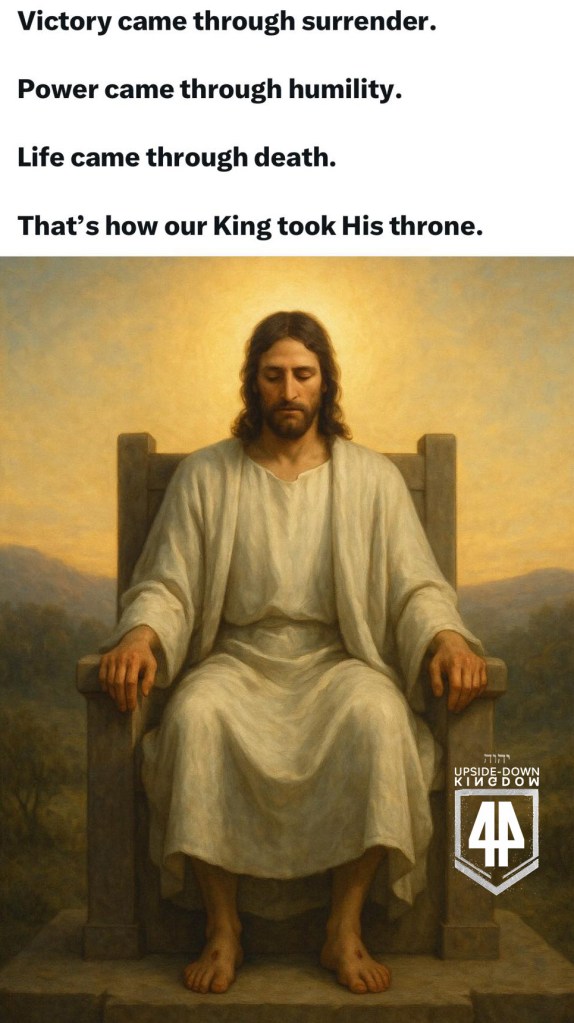
The power play of Calvinism is opposite to the under play of Jesus at the cross.

Every year at Easter I practically have an aneurism from all the poor (or I should say Calvinistic) theology from the pulpit and social media. So much of what is shared and taught from mainstream Christians is Calvinistic Reformed Theology, but usually the person sharing has no idea, and most of them don’t realize just how reformed their language is. A friend posted this image over Easter, and it got me thinking about it. I agree with him that Calvinism is based on ideas that seem opposite to the humility of Jesus to the cross. For instance, as he points out, Calvinism sees sovereignty through or by control, victory needing irresistibility, and salvation as something predetermined and unilateral.

  • Jesus emphasized victory through turning the other cheek or extreme surrender, this is referred to theologically as displaying “power under.” Calvinism is prefaced on the idea that God’s power is best shown through assertive dominance and total “power over.” Jesus’ life shows humility revealing that God doesn’t need to coerce to reign.
  • The very heart of Calvinism and its so-called “glory of God” is often defined by control, while the cross redefines glory as self-emptying love.
  • Jesus’ life through death shows that the cross was about love, restoration, and healing through self-sacrificial grace. Calvinism displays the cross as a legal hostage exchange but somehow Jesus gets away without actually paying anything and not having to serve any penal sentence. Calvinism frames this as if Jesus gives his life but then He somehow gets it back. They say it is such a great exchange but is really? 1 life for all of humanity? Wouldn’t anyone make that exchange if it were true. I think it greatly devalues what Jesus does through the cross. That sort of sounds like what we define as the world’s sense of trickery or thievery not honest sacrificial grace. This kind of purchase sounds more like a back-alley exchange than a picture of truth and unfailing love. Calvinism robs the beauty of Jesus’ mission.
  • Calvinism frames God as planning from the beginning of time to sacrifice Jesus as a debt to be paid. Jesus (who I will remind you is God in the Trinity) asks his father if there is any other way. This shows God uses what the world did to Jesus for unthinkable victory, He didn’t orchestrate it. To this note, some would say that Calvinism frames God as a “cosmic child abuser.”
  • From the beginning pages of the Bible God’s nature is described by His own decree as “merciful and gracious, slow to anger, and abounding in steadfast love [hesed] and faithful” Yet through the cross, Calvinism defines God by pouring out His wrath on His son, turning His face on Jesus as the cross, and the need to make a deal with the Devil. These seem at odds.
  • Calvinism communicates that Jesus was stricken by God at the cross and that God left Jesus at the cross turning His back on Him, a better theology shows God in perfect unity with the son as 2 Cor 5:19 assures us that God was in Christ reconciling the world to himself. God was pleased to heal Him. By Healing His son, raising Him from the dead He accomplishes something great, He heals the nations.