
A Review of Lance Ford, Rob Wegner, and Alan Hirsch, The Starfish and the Spirit: Unleashing the Leadership Potential of Churches and Organizations
There is no shortage of contemporary Christian literature attempting to diagnose what has gone wrong with the Western church. This morning my good church planting missionary friend Zach gave me this book, so I spent a couple hours reading it then decided to share it with the world. As an organic church pastor, I found much of this book aligned with my heart. Some of it focuses on declining attendance, some on leadership failure, some on cultural irrelevance, and an increasing amount on what is commonly described as a “discipleship crisis.” Zondervan, IVP, Baker, Eerdmans, and other major Christian publishers have contributed important works to this conversation from substantially different theological and ecclesiological perspectives. Peter Scazzero, for example, has argued that much of contemporary evangelicalism produces what he calls “shallow discipleship,” while Bobby Harrington and others have attempted to recover intentional, relational, reproducible disciple-making practices.¹ Within the missional conversation, J. R. Woodward and Dan White Jr.’s The Church as Movement has similarly argued that church planting and ecclesial renewal must move beneath the public gathering to the slower work of discipleship, community formation, and mission.²
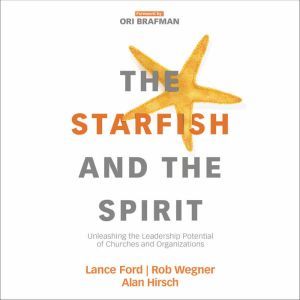
The Starfish and the Spirit, by Lance Ford, Rob Wegner, and Alan Hirsch, belongs within this larger conversation, but I think it presses the question further. The problem is not merely that churches need better discipleship programs. The deeper issue may be that much of what we have constructed as “church” is organizationally predisposed toward producing spectators, consumers, and dependents rather than mature disciples capable of making other disciples.
That distinction is one of the reasons I enjoyed this book so much.
Rather than attempting a chapter-by-chapter summary, I want to highlight several ideas that particularly stood out to me. There is considerably more here than can be addressed in a short review. The book moves through leadership, organizational structure, multiplication, self-management, disciple-making environments, ecclesial ecosystems, collective intelligence, mutual submission, and conflict resolution. What follows, therefore, is less a synopsis than a theological engagement with several themes that I believe deserve serious consideration.
Jesus Made Disciples
One of the convictions that has increasingly shaped my own ecclesiology is surprisingly simple: Jesus appears to have been considerably more interested in making disciples than in producing converts.
That statement requires some qualification. Jesus certainly announces good news. The Synoptic tradition introduces his public ministry with proclamation: “The time is fulfilled, and the kingdom of God has come near; repent and believe in the gospel” (Mark 1:15). The verb kēryssō and the noun euangelion are unquestionably important to the New Testament witness. Evangelistic proclamation is not an unfortunate later addition to Christianity.
Yet proclamation in the ministry of Jesus is consistently ordered toward allegiance, apprenticeship, and participation.
Immediately following Mark 1:15, Jesus does not establish an evangelistic institution. He calls people: “Follow me” (deute opisō mou; Mark 1:17). The announcement of the kingdom produces a community of apprentices who learn the way of the kingdom by accompanying its king.
This distinction becomes even clearer in Matthew’s conclusion. The so-called Great Commission does not grammatically center upon “go.” The controlling imperative of Matthew 28:19 is mathēteusate—“make disciples.” The participles surrounding it—going, baptizing, and teaching—describe dimensions of that disciple-making vocation. And what Jesus commands them to teach is not simply information about himself but obedience to “everything I have commanded you” (Matt 28:20).³
The mission is therefore not exhausted by getting someone to assent to a message about Jesus. The mission is the formation of a people who learn to live the life Jesus taught and embodied.
Luke offers essentially the same pattern in narrative form. Jesus gathers the Twelve “that they might be with him and that he might send them out” (Mark 3:14). They observe, participate, misunderstand, fail, receive correction, are sent, return, reflect, and are sent again. The process is intensely relational. Discipleship happens along roads, around tables, in homes, on boats, in conflict, in failure, and in mission. Long before Christianity possessed seminaries, sanctuaries, denominational headquarters, publishing houses, or carefully constructed church programs, it possessed people learning the way of Jesus together.
That observation provides an important theological doorway into The Starfish and the Spirit.
From Spider to Starfish
The controlling metaphor of the book comes from Ori Brafman and Rod Beckstrom’s The Starfish and the Spider. Ford, Wegner, and Hirsch appropriate the distinction for ecclesiology. A spider represents a highly centralized organization. Its essential functions converge in a central head; remove the head and the organism dies. A starfish functions differently. Its life is distributed throughout the organism, giving it a remarkable capacity for regeneration.
The authors use this distinction to expose something many church leaders intuitively recognize: Western churches frequently concentrate extraordinary amounts of ecclesial responsibility in extraordinarily few people.
The pastor becomes preacher, theologian, visionary, counselor, organizational strategist, spiritual authority, conflict manager, fundraiser, teacher, evangelist, and institutional representative. The congregation gradually learns that ministry is something performed primarily by professionals, while the professionals gradually become exhausted from performing ministry on behalf of everybody else.
The authors’ alternative is not organizational anarchy. That point matters. Their argument is more nuanced than simply “hierarchy bad; decentralization good.” They explicitly allow for hybrid organizational forms and acknowledge the necessity of accountability and appropriate structure. Their concern is the location and distribution of power. Exponential’s description of the book captures this well: leaders become curators of a community on mission rather than the source of certainty and initiative for every ministry activity.
This seems to me remarkably consonant with Ephesians 4:11–16.
The apostles, prophets, evangelists, shepherds, and teachers are given not primarily to perform the ministry, but pros ton katartismon tōn hagiōn eis ergon diakonias—for the equipping of the saints for the work of ministry (Eph 4:12). Whatever conclusions one reaches concerning the contemporary function of the fivefold ministries, Paul’s underlying ecclesiology is difficult to miss. Leadership exists to cultivate the capacity of the body. The body ministers. The leaders equip the body to minister. When leadership performs everything important while the congregation observes, the church has not merely developed an inefficient organizational structure. It may have inverted Paul’s ecclesiology.
Organic Does Not Mean Disorganized
This is another aspect of the book that I particularly appreciated. “Organic church” can become a romantic phrase. It can imply that structure itself is the problem, as though the earliest Christian communities possessed no recognizable leadership, boundaries, discipline, authority, or organization. The New Testament does not support such an interpretation. Paul appoints elders (Acts 14:23). Titus is instructed to establish elders in the communities of Crete (Titus 1:5). Material resources are collected and administered (1 Cor 16:1–4). Conflict is adjudicated (Acts 15). False teaching is confronted. Communities maintain recognizable practices of baptism, Eucharist, hospitality, discipline, teaching, and mutual care. The alternative to institutionalism is therefore not institutional incompetence.
The authors instead envision what Alan Hirsch calls a “chaordic” organization—a deliberate balance of sufficient order to maintain stability and sufficient openness to allow creativity, adaptation, and multiplication. The language is organizational, but the theological instinct behind it is important. Structure should serve life rather than requiring life to serve the structure. That distinction may be among the most useful contributions of the book. The question is not whether a church has organization. Every enduring human community develops organization. The more significant question is whether the organization exists to facilitate the mission of the people or whether the people gradually come to exist to maintain the organization. Those are not the same thing.
Multiplication Changes the Measurement
The starfish metaphor becomes especially powerful when Ford, Wegner, and Hirsch turn toward multiplication. A starfish does not merely survive decentralization; it possesses the capacity to reproduce. Accordingly, the book moves from multiplying disciples to multiplying leaders, microchurches, hubs, and ultimately networks. This is where the book intersects significantly with Hirsch’s larger body of work.
Hirsch has spent decades arguing that movemental Christianity is not something imported into the church from contemporary organizational theory but a latent capacity already embedded within the people of God. His influential The Forgotten Ways described six elements of what he called missional DNA (mDNA): Jesus is Lord, disciple making, missional-incarnational impulse, apostolic environment, organic systems, and communitas.⁴ The Starfish and the Spirit brings much of that earlier movemental theology into direct conversation with organizational structure.
Hirsch’s connection with 100Movements is also worth noting here. He is a founder of 100Movements, and the organization describes its publishing work as intentionally oriented toward paradigm change, multiplication, mission, and “movemental Christianity.” In other words, The Starfish and the Spirit should not be read as an isolated experiment. It represents a larger stream of missional ecclesiology that Hirsch has been developing across works such as The Forgotten Ways, The Permanent Revolution, 5Q, and related movemental projects. I find this particularly compelling because multiplication forces us to reconsider what we measure.
Churches naturally count attendance. Attendance is visible, comparatively easy to quantify, and not entirely meaningless. The book of Acts occasionally gives numbers precisely because numerical growth can indicate something significant (Acts 2:41; 4:4). But attendance alone tells us remarkably little about discipleship. Five thousand people attending a gathering may represent extraordinary kingdom fruit. It may also represent five thousand religious consumers gathered around the gifts of a handful of professionals. The number itself cannot tell us which.
A more revealing set of measurements concerns reproduction: Are disciples making disciples? Are leaders producing leaders who do not remain dependent upon them? Are communities capable of functioning without the constant presence of the charismatic personality who began them? Are people becoming sufficiently mature that ministry naturally expands beyond the centralized institution? The Pauline letters repeatedly assume precisely this reproductive logic. Paul entrusts the gospel to Timothy, who is to entrust it “to faithful people who will be able to teach others also” (2 Tim 2:2). There are multiple generations of transmission contained in that single sentence.
Paul → Timothy → faithful people → others. That is movement.
A Helpful Place within the Contemporary Discipleship Conversation
One reason I would recommend The Starfish and the Spirit is that it complements several important streams of contemporary evangelical ecclesiology without merely reproducing them. Scazzero’s Emotionally Healthy Discipleship, published by Zondervan, correctly emphasizes that churches can maintain impressive ministries while producing spiritually and emotionally immature people. Zondervan itself summarizes Scazzero’s concern as a culture of “shallow discipleship” incapable of producing deeply transformed disciples. Harrington and Patrick’s The Disciple Maker’s Handbook, also from Zondervan, approaches the problem more explicitly through intentional disciple-making relationships and multiplication.
Perhaps the closest conversation partner, however, is Woodward and White’s IVP volume The Church as Movement. Its structure—distributing, discipling, designing, and doing—likewise insists that genuine ecclesial movement depends upon discipleship, community formation, polycentric leadership, and incarnational mission rather than simply successful public gatherings. Hirsch appropriately wrote the foreword to that volume. The Starfish and the Spirit adds something valuable to this conversation because it focuses attention not only on what discipleship should accomplish but upon the organizational systems that either permit or inhibit it. A church can preach discipleship while structurally producing dependence. It can preach the priesthood of all believers while functionally constructing a clerical caste. It can tell people that everyone has gifts while designing virtually every important gathering around the gifts of three people on a platform. It can preach multiplication while rewarding accumulation. That tension deserves considerably more attention than it normally receives.
The Church as an Ecosystem
Perhaps this is ultimately what I appreciated most about the book. The church envisioned here is less like a religious corporation dispensing spiritual goods and services and more like an ecosystem in which disciples, gifts, relationships, ministries, and communities can emerge and reproduce. That is not a rejection of preaching, gathered worship, theological education, pastoral leadership, or institutional structure. Nor should the starfish metaphor be absolutized. Every organizational metaphor eventually breaks down, and ecclesiology must ultimately emerge from Scripture rather than biology or management theory. Nevertheless, metaphors can expose realities we have ceased to notice. The spider exposes the fragility of churches constructed around centralized personalities. The starfish exposes the possibility of communities whose spiritual life is distributed throughout the body. And that brings us back to Jesus.
Jesus could have constructed his ministry around the permanent expansion of his own platform. Instead, he repeatedly gave ministry away. He sent the Twelve (Mark 6:7–13). He sent the seventy-two (Luke 10:1–20). He allowed disciples to preach, heal, baptize, announce the kingdom, and eventually carry the mission beyond his immediate geographical presence. The astonishing movement of Acts is possible precisely because Jesus did not create disciples who could function only while standing beside him. He formed people who could be sent. That may be one of the simplest tests of our ecclesiology.
A mature church does not merely gather people well. It forms people who can be sent well. It does not merely attract disciples to gifted leaders; it equips disciples to become mature participants in the mission of God. And it does not measure success solely by how many people remain gathered around its center, but also by how much kingdom life is capable of flourishing beyond it.
Ford, Wegner, and Hirsch have given the church a helpful vocabulary for thinking about that transition. The Starfish and the Spirit will not answer every ecclesiological question, nor should an organizational metaphor be asked to do so. But it succeeds at something perhaps more valuable: it exposes assumptions about leadership, power, discipleship, and structure that many of us have inherited without realizing we inherited them.
For pastors and leaders already questioning highly centralized models of church, much of this book will feel familiar—but it gives language and structure to those instincts. For those working within traditional congregational structures, the book need not be received as an argument for dismantling everything. In fact, the authors explicitly resist such a simplistic conclusion. It can instead become an invitation to ask where ministry can be released, where leadership can be multiplied, where control can give way to trust, and where structures can be redesigned around the formation of disciples rather than the maintenance of programs.
There is far more in The Starfish and the Spirit than I have touched upon here. Its discussions of light-load leadership, organic hierarchy, self-management, trust, accountability, disciple-making environments, mutual submission, and collective intelligence deserve their own treatment. But the larger contribution is clear enough. The church does not need fewer leaders. It needs more people equipped to lead. It does not need less theology. It needs theology embodied in communities capable of reproducing the life and way of Jesus. And it does not need to abandon structure. It needs structures that serve the mission Jesus actually gave us: make disciples. That is why I found The Starfish and the Spirit worth reading.

Notes
- Peter Scazzero, Emotionally Healthy Discipleship: Moving from Shallow Christianity to Deep Transformation (Grand Rapids: Zondervan, 2021) & Bobby Harrington and Josh Robert Patrick, The Disciple Maker’s Handbook: Seven Elements of a Discipleship Lifestyle (Grand Rapids: Zondervan, 2017).
- J. R. Woodward and Dan White Jr., The Church as Movement: Starting and Sustaining Missional-Incarnational Communities (Downers Grove, IL: IVP Books, 2016).
- On the syntax of Matt 28:19–20, mathēteusate is the finite imperative, while poreuthentes, baptizontes, and didaskontes function participially in relation to the command to make disciples. The grammatical observation should not be overstated—as though “going” were unimportant—but the construction nevertheless places disciple making at the grammatical center of the commission.
- Alan Hirsch, The Forgotten Ways: Reactivating Apostolic Movements, 2nd ed. (Grand Rapids: Brazos, 2016). Hirsch’s six elements of mDNA provide much of the conceptual background for the movemental ecclesiology developed with Ford and Wegner.
- Lance Ford, Rob Wegner, and Alan Hirsch, The Starfish and the Spirit: Unleashing the Leadership Potential of Churches and Organizations (Exponential Resources, 2021), esp. 1–19, 43–73, 91–153, 267–93.

