When the Soul Is Cast Down

-Reading Anxiety and Depression Through the Textures of Scripture

The repeated cry of Psalms 42–43, “Why are you cast down, O my soul?” is not merely a poetic flourish. It is a theological diagnosis of the disoriented human person before God. The psalmist does not present emotional suffering as an embarrassment to faith, nor does he resolve anguish by suppressing it beneath religious language. Instead, he speaks directly to his own nephesh, the whole embodied self, and names the interior collapse that has overtaken him. This refrain, repeated three times in Psalm 42:5, Psalm 42:11, and Psalm 43:5, becomes the interpretive spine of the text. The soul is not serenely contemplating God from a place of spiritual stability. The soul is bowed low, restless, thirsty, displaced, remembering, grieving, hoping, and arguing itself back toward God.

This matters because contemporary Christian communities often lack a sufficiently biblical grammar for anxiety and depression. Some accounts over-spiritualize emotional suffering, reducing depression to unbelief or anxiety to disobedience. Other accounts over-materialize it, speaking only in clinical or neurological categories while neglecting the covenantal, communal, and theological dimensions of human anguish. Scripture refuses both reductions. The biblical witness understands the human person as an integrated unity of body, breath, desire, memory, relational belonging, and covenant vocation. In Hebraic thought, one does not “have” a soul as an inner religious compartment; one is a living nephesh before God.¹

Depression often lives in the past, in what has happened, what has been lost, what cannot be undone, and what remains unresolved. Anxiety often lives in the future, in what may happen, what cannot be controlled, and what the mind attempts to master before it arrives.

This distinction is pastorally useful, but it must remain humble rather than totalizing. Some depression arises from grief, exhaustion, trauma, postpartum realities, neurological conditions, or causes that cannot be named. Some anxiety is not future-oriented in any obvious way but emerges from trauma, panic, or bodily dysregulation. Scripture gives us categories without giving us simplistic formulas. The thesis of this article is that Psalms 42–43 provide a biblical grammar for the cast-down soul, one that can hold together lament, embodied suffering, covenant memory, divine presence, and communal healing. Anxiety and depression are not treated in Scripture primarily as abstract psychological states, nor are they flattened into moral failures. They are textured realities of creaturely life before God. They are experiences of the whole person under weight. They require not only truth but presence, not only exhortation but care, not only prayer but often sleep, food, confession, companionship, counsel, and embodied mercy.

The Hebrew refrain at the center of Psalms 42–43 begins with the question mah-tištôḥăḥî napšî, “Why are you cast down, O my soul?” The verb šāḥaḥ carries the sense of being bowed down, brought low, bent over, or collapsed beneath pressure.² This is not the language of mild discouragement. It is bodily language. The psalmist experiences sorrow as weight. The soul is pressed downward. The inner life has taken a posture. In Hebrew anthropology, emotional realities are regularly described in bodily terms because the human person is not divided into modern compartments of “mental,” “physical,” and “spiritual.” Bones waste away under guilt. The heart melts under fear. The throat dries in lament. The eyes fail from weeping. The body becomes the theater of the soul’s distress.

The second term that must be handled carefully is nephesh. English readers often hear “soul” through later dualistic assumptions, as though the psalmist were addressing an immaterial part of himself distinct from the body. But nephesh in the Hebrew Bible most often refers to the whole living person, the self as animated, desiring, vulnerable, embodied life.³ The nephesh thirsts for God in Psalm 42:2, but elsewhere it hungers, faints, blesses, longs, sins, and dies. The psalmist is therefore not speaking to a detachable spiritual essence. He is confronting his whole self before God.

The second half of the refrain asks, “Why are you in turmoil within me?” The Hebrew verb hāmâ evokes roaring, agitation, growling, commotion, or deep internal disturbance.⁴ The image is almost acoustic. The soul is noisy within him. This is significant because anxiety and depression often do not feel like quiet sadness. They can feel like inner turbulence. The mind roars. Memory roars. Fear roars. The future roars. The psalmist’s interior world is not simply heavy; it is unsettled (a return to chaos waters.) This helps explain the emotional architecture of Psalm 42. The psalm begins, “As a deer pants for streams of water, so pants my soul for you, O God.” This image is often domesticated into devotional sweetness, but the Hebrew picture is more desperate. The deer is not enjoying a quiet stream. It is panting because it lacks water (the satire of feelings of being hunted). The psalmist’s longing for God arises from deprivation. He is spiritually thirsty, but not in a sentimental way. His tears have become his food “day and night” while others ask, “Where is your God?” The wound is not only emotional but theological. His suffering is intensified by the apparent absence of the God whose presence he seeks.

The geographical references in Psalm 42:6 deepen the sense of displacement: “from the land of Jordan and of Hermon, from Mount Mizar.” The psalmist remembers God from a place away from Zion. In an Ancient Near Eastern world, temple geography mattered profoundly. Temples were understood as sacred centers, meeting points of heaven and earth, places where divine presence was enthroned and ordered worship sustained the world.⁵ Israel’s temple theology must not be collapsed into pagan sacred-space ideology, yet the broader cultural context helps us feel the weight of the psalmist’s loss. Distance from the sanctuary is not merely inconvenience. It is disorientation.

This is why memory becomes both gift and wound in Psalm 42:4: “These things I remember, as I pour out my soul.” Memory in lament is not neutral recollection. It is the painful act of bringing the past into speech before God. The psalmist remembers leading the procession to the house of God with glad shouts and songs of praise. That memory intensifies his present grief. Here we begin to see why depression often lives in the past. The past can become a sacred ache. It may be filled with regret, loss, trauma, longing, or even holy nostalgia for a time when God felt nearer than He does now.

Depression often lives in the past. This is not a clinical definition, but it is frequently a pastoral reality. The depressed soul often carries what has already happened: what one did, what was done to one, what was lost, what cannot be repaired, what cannot be relived, what remains unresolved. Scripture names this in multiple registers. Sometimes depression is tied to guilt, as in Psalm 32. Sometimes it is tied to grief, as in Hannah and Naomi. Sometimes it is exhaustion after spiritual conflict, as in Elijah. Sometimes it is unexplained suffering, as in Job.

Psalm 32 gives one of the most embodied depictions of hidden guilt in Scripture. David says, “When I kept silent, my bones wasted away through my groaning all day long” (Ps 32:3). The language is not merely metaphorical ornamentation. In Hebrew thought, concealed sin distorts the whole person. Silence becomes bodily decay. The past, when unconfessed, colonizes the present. David’s healing begins not by self-punishment but by disclosure: “I acknowledged my sin to you.” The movement is from concealment to confession, from compression to speech, from hiddenness to relational repair.

Yet Scripture carefully refuses to make all depression about guilt. Elijah’s collapse in 1 Kings 19 comes after Mount Carmel, after prophetic victory, after courage, after fire from heaven. He is not portrayed primarily as rebellious but as exhausted, afraid, isolated, and depleted. Under the broom tree, he asks that he might die: “It is enough; now, O LORD, take away my life” (1 Kgs 19:4). God’s first response is not a lecture. It is food and sleep. Before Elijah receives theological correction, he receives embodied mercy. This is a crucial biblical counseling insight. Sometimes the most spiritual thing a collapsing person can do is eat, sleep, and receive care.

The lie Elijah believes is also central: “I, even I only, am left” (1 Kgs 19:10). Depression often lies about aloneness. It narrows the field of vision until the sufferer can no longer perceive the hidden remnant of grace. God’s answer is not merely doctrinal. It is relational and communal: there are seven thousand who have not bowed the knee to Baal. Elijah’s despair is not mocked, but neither is its interpretation of reality allowed to stand unchallenged. The cast-down soul may be telling the truth about pain while lying about isolation.

Hannah’s grief in 1 Samuel 1 adds another texture. She is “bitter of soul” and prays to the LORD while weeping bitterly. Her anguish is tied to barrenness, shame, rivalry, and social vulnerability. The text does not reduce her sorrow to unbelief. In fact, her grief becomes the very place of prayer. Hannah pours out her nephesh before the Lord. She does not bypass sorrow; she brings sorrow into covenant speech. Her prayer becomes a model of holy disclosure. – DO NOT MISS THIS!

Job presses the matter further. Job’s suffering is neither explained by personal sin nor resolved through easy theological accounting. He curses the day of his birth, laments existence, protests God’s silence, and refuses the shallow counsel of friends who insist suffering must have a simple moral cause. Job is perhaps Scripture’s strongest protest against reductionistic counseling. His friends speak many true things wrongly because they speak without discernment, without compassion, and without reverence for the mystery of suffering. Their theology cannot make room for unexplained pain.

If depression often lives in what has already happened, anxiety often lives in what has not yet happened. Anxiety attempts to inhabit the future before grace is given for it. It asks the creature to carry omniscience, sovereignty, and control. This is why Jesus’ teaching in Matthew 6 is so psychologically and theologically incisive. “Which of you by being anxious can add a single hour to his span of life?” (Matt 6:27). Jesus is not merely scolding worry. He is exposing its futility. Anxiety promises control but cannot deliver it. It borrows suffering from tomorrow and spends it today.

The Greek verb often translated “be anxious” is merimnaō, related to the idea of being divided or pulled in different directions.⁶ This does not mean every experience of anxiety is sinful, nor does it mean bodily panic can be reduced to conscious distrust. But the term does capture the interior fragmentation of worry. Anxiety divides attention. It scatters the self across imagined futures. It makes the soul live in many possible tomorrows at once, none of which have yet been entrusted to God in the present.

Luke 10:41 gives a particularly tender example. Jesus tells Martha, “Martha, Martha, you are anxious and troubled about many things.” The doubled name is not harsh rebuke but relational address. Jesus sees her agitation, names it, and redirects her. Martha’s anxiety is not treated as a reason for rejection. It becomes an invitation into reordering. Her problem is not that she serves; her problem is that her service has become fragmented by worry.

First Peter 5:7 also belongs here: “casting all your anxieties on him, because he cares for you.” The participle “casting” evokes active transfer. Anxiety is not merely analyzed; it is thrown upon God. Yet the reason given is not raw divine power but divine care. The text does not say, “Cast your anxieties upon him because he is in control,” though that is true. It says, “because he cares for you.” Biblical trust is not surrender to an abstract sovereignty but entrustment to covenant love.

Shame says, “You are the problem,” while conviction says, “There is a problem, and there is a way through.” This distinction deserves theological development. Shame attacks identity. Conviction addresses reality. Shame isolates. Conviction summons. Shame collapses the self inward. Conviction opens the self toward repentance, repair, and restoration.

II Corinthians 7:10 is essential: “Godly grief produces repentance leading to salvation without regret, whereas worldly grief produces death.” Paul does not deny grief. He distinguishes between griefs. There is a sorrow that leads toward God and a sorrow that curves inward toward destruction. Judas and Peter embody this contrast. Both fail Jesus grievously. Both experience sorrow. But Judas carries his failure into isolation and death, while Peter is restored through encounter, confession, and commission. The difference is not that Peter’s sin was minor. The difference is where the sorrow went.

Romans 8:1 must therefore stand near any Christian theology of emotional suffering: “There is therefore now no condemnation for those who are in Christ Jesus.” This is not sentimental reassurance. It is forensic, covenantal, and pastoral. Condemnation has been answered in Christ. The suffering believer may still experience conviction, grief, remorse, and discipline, but condemnation is no longer the voice of God. Any pastoral approach that intensifies shame in the name of holiness has failed to distinguish accusation from the Spirit’s restorative work.

To Gethsemane. In Matthew 26:38, Jesus says, “My soul is very sorrowful, even to death.” The Greek phrase perilypos estin hē psychē mou heōs thanatou expresses an extremity of sorrow that surrounds and overwhelms. Jesus does not merely observe human anguish from above; He enters it. The language echoes the psalmic tradition of the afflicted soul and places Christ within Israel’s grammar of lament. This matters christologically and pastorally. Jesus’ sorrow does not indicate failure of faith. In Gethsemane, perfect trust and overwhelming distress coexist. He prays, He grieves, He seeks companionship, He sweats under the weight of what lies before Him, and He entrusts Himself to the Father. Therefore, the suffering believer is not less like Jesus because sorrow is present. In certain moments, sorrow may be one of the places where communion with the suffering Christ becomes most deeply known.

The first “not good” in Scripture is not sin but solitude: “It is not good that the man should be alone” (Gen 2:18). This must be taken seriously in any biblical theology of emotional suffering. Human beings are not created for isolated self-management. The modern Western ideal of the autonomous self is foreign to the biblical imagination. We are formed in relation, wounded in relation, and often healed in relation. Galatians 6:2 commands believers to “bear one another’s burdens, and so fulfill the law of Christ.” James 5:16 connects confession, prayer, and healing: “Confess your sins to one another and pray for one another, that you may be healed.” These texts do not replace Christ with community; they show how Christ ministers through His body. The church becomes a burden-bearing people because the Messiah has borne the weight of the world.

We all still have one foot in the world. Professional counseling, medical care, and at times medication need not be viewed as threats to faith. The brain is an organ. The nervous system is part of embodied creatureliness. If Hebrew anthropology refuses to divide the person into isolated compartments, then Christian care must also refuse false divisions. Prayer and therapy are not enemies. Pastoral care and medical wisdom are not competitors. The cast-down soul often needs Scripture, presence, confession, nourishment, sleep, community, and professional help. This is not a failure of spirituality. It is an acknowledgment that human beings are dust, breath, body, and beloved. It is utilizing all of God’s provisional care.

The repeated refrain of Psalms 42–43 never asks us to pretend the darkness is not real. “Why are you cast down, O my soul?” is not the language of denial. It is the language of honesty. Scripture gives us permission to tell the truth about our interior world without shame. The psalmist does not hide his tears, his exhaustion, his confusion, or his questions. He brings them into the presence of God. Perhaps this is one of the first acts of healing for the cast-down soul: to stop pretending and begin speaking honestly before the Lord.

If you find yourself struggling beneath the weight of depression, hear this clearly: you are not weak, forgotten, broken beyond repair, or spiritually defective. You are human. You stand in the long company of saints who knew what it meant to walk through deep waters. Elijah sat beneath the broom tree and wanted to give up. Hannah wept bitterly before the Lord. David confessed nights where tears became food. Job sat in ash heaps asking questions no one could answer. Martha spun beneath the weight of anxiety. Even Jesus Himself entered Gethsemane sorrowful unto death. The presence of emotional struggle is not evidence that God has abandoned you. In many ways, it may be evidence that you are standing in profoundly biblical territory.

The enemy often speaks in extremes. Depression whispers that nothing will ever change. Anxiety whispers that disaster waits around every corner. Shame whispers that you are alone, misunderstood, and somehow uniquely damaged. Yet Scripture repeatedly confronts those lies with covenant truth. Elijah thought he alone remained, yet God revealed an unseen remnant. David thought silence could protect him, yet healing only came when what was hidden came into the light. Peter thought failure had defined him forever, yet resurrection breakfast with Jesus rewrote his story. The cast-down soul rarely sees clearly in the middle of the valley. This is why we need the voice of God, the presence of community, and the reminder that feelings are real but not always final. The psalmist does something deeply practical in the midst of his anguish: he speaks back to his soul. “Hope in God, for I shall again praise Him.” Notice the honesty and the expectation held together. He does not say, I feel hopeful right now. He says, I shall again praise Him. This is not denial; it is defiant trust. Biblical hope is not pretending the night is short. It is believing morning is still coming.

For some, the Spirit-led advance in this season may be deeply practical. Perhaps victory looks like finally telling someone the truth instead of carrying the burden alone. Perhaps it means texting a trusted friend, counselor, pastor, or spouse and saying, “I am not doing well.” Perhaps it means receiving professional help without shame. Perhaps it means sleeping, eating, resting, or allowing yourself to stop carrying what God never asked you to hold. Elijah got food before theology. Sometimes healing begins with very ordinary obedience.

For others, the Spirit may be inviting you into practices of holy resistance. When anxiety begins spinning tomorrow’s fears, return to what is actually in front of you today. Name the fear specifically and hand it to God aloud if necessary. When depression pulls you backward into regret, remember that the cross remains the only mechanism in the universe powerful enough to redeem the past. You do not have to carry a burden that Jesus already won victory over. Where shame says, “You are finished,” the Gospel says, “There is still resurrection.”

There are moments when spiritual warfare looks less like dramatic victory and more like quiet perseverance. Getting out of bed becomes warfare. Showing up to church becomes warfare. Answering the text, taking the walk, saying the prayer, opening the Bible, making the counseling appointment, receiving communion, asking for prayer, choosing not to isolate—these things are not small. They are holy acts of resistance. The Kingdom of God often advances one faithful step at a time.

And if today all you have is six words, let them be the prayer of the weary soul: “Search me, O God, and know.” When language fails, the Spirit intercedes (Rom. 8:26). When strength fades, a bruised reed He will not break, and a smoldering wick He will not extinguish (Isa. 42:3). The Shepherd does not despise struggling sheep. He moves toward them.

The dark night may be real, but so is the dawn. The past is not beyond redemption. The future is not outside His care. And even here, in this moment, with a soul perhaps still trembling and weary, Christ remains near. The cast-down soul is not abandoned. Hope may feel distant, but it is not absent. Hold on. Speak to your soul. Let others carry the burden with you. And trust that the God who met Elijah under the tree, Hannah in her tears, David in the cave, Peter after failure, and Jesus in Gethsemane is still meeting His people today.

Endnotes

  1. John H. Walton, Ancient Near Eastern Thought and the Old Testament: Introducing the Conceptual World of the Hebrew Bible, 2nd ed. (Grand Rapids: Baker Academic, 2018), 209.
  2. Ludwig Koehler and Walter Baumgartner, The Hebrew and Aramaic Lexicon of the Old Testament, trans. M. E. J. Richardson (Leiden: Brill, 2001), 1458.
  3. Hans Walter Wolff, Anthropology of the Old Testament, trans. Margaret Kohl (Philadelphia: Fortress, 1974), 10.
  4. Francis Brown, S. R. Driver, and Charles A. Briggs, The Brown-Driver-Briggs Hebrew and English Lexicon (Peabody, MA: Hendrickson, 1996), 242.
  5. John H. Walton, Ancient Near Eastern Thought and the Old Testament, 118.
  6. Frederick W. Danker, ed., A Greek-English Lexicon of the New Testament and Other Early Christian Literature, 3rd ed. (Chicago: University of Chicago Press, 2000), 632.
  7. Walter Brueggemann, The Message of the Psalms: A Theological Commentary (Minneapolis: Augsburg, 1984), 57.
  8. Walter Brueggemann, The Psalms and the Life of Faith, ed. Patrick D. Miller (Minneapolis: Fortress, 1995), 102.
  9. John Goldingay, Psalms, Volume 2: Psalms 42–89 (Grand Rapids: Baker Academic, 2007), 29.
  10. James L. Mays, Psalms (Louisville: John Knox, 1994), 177.
  11. J. Clinton McCann Jr., “The Book of Psalms,” in The New Interpreter’s Bible, vol. 4 (Nashville: Abingdon, 1996), 812.
  12. Claus Westermann, Praise and Lament in the Psalms, trans. Keith R. Crim and Richard N. Soulen (Atlanta: John Knox, 1981), 169.
  13. Patrick D. Miller, They Cried to the Lord: The Form and Theology of Biblical Prayer (Minneapolis: Fortress, 1994), 65.
  14. John Goldingay, Old Testament Theology, Volume 2: Israel’s Faith (Downers Grove, IL: IVP Academic, 2006), 601.
  15. Tremper Longman III, How to Read the Psalms (Downers Grove, IL: InterVarsity, 1988), 26.
  16. Ellen F. Davis, Getting Involved with God: Rediscovering the Old Testament (Lanham, MD: Cowley, 2001), 12.
  17. Terence E. Fretheim, The Suffering of God: An Old Testament Perspective (Philadelphia: Fortress, 1984), 149.
  18. Abraham J. Heschel, The Prophets (New York: Harper & Row, 1962), 16.
  19. Michael J. Gorman, Cruciformity: Paul’s Narrative Spirituality of the Cross (Grand Rapids: Eerdmans, 2001), 75.
  20. N. T. Wright, Jesus and the Victory of God (Minneapolis: Fortress, 1996), 599.
  21. Scot McKnight, The King Jesus Gospel (Grand Rapids: Zondervan, 2011), 46.
  22. Dietrich Bonhoeffer, Life Together, trans. John W. Doberstein (New York: Harper & Row, 1954), 112.
  23. Curt Thompson, The Soul of Shame: Retelling the Stories We Believe About Ourselves (Downers Grove, IL: IVP, 2015), 23.
  24. Andrew Root, The Promise of Despair: The Way of the Cross as the Way of the Church (Nashville: Abingdon, 2010), 41.

Waters Above, Waters Below: An Exegetical Study of Water in the Bible

Water is one of Scripture’s most elastic and theologically charged images. In the Bible it is never merely “background.” It is creation material, boundary marker, threat, judgment, mercy, provision, cleansing, wisdom, Spirit, and eschatological gift. The biblical writers return to water again and again because water sits at the intersection of life and death. It nourishes fields and fills wells, but it also swallows armies and returns ordered creation to chaos. The result is a motif that cannot be flattened into one meaning. Water in the Bible is polyvalent, but it is not random. Across the canon, the motif develops in discernible patterns: waters of chaos, waters restrained, waters crossed, waters provided, waters purifying, and finally waters transformed into the river of life.[1]

A faithful reading should resist both sentimental reduction and wooden literalism. In the Hebrew Bible especially, water is bound to ancient cosmology, covenant memory, liturgical imagination, and temple symbolism. It also sits inside the shared symbolic world of the ancient Near East, where primeval waters often represented the unstable deep from which ordered life had to emerge.[2] Yet Israel’s Scriptures repeatedly subvert that wider world. Genesis does not portray YHWH as one deity among others struggling against an equal rival. The deep is there, but it is already under God’s sovereign presence. The Spirit hovers. The word speaks. Chaos is not God’s competitor. It is raw material beneath divine rule.[3]

Genesis 1 begins with darkness over “the deep,” tehom (תְּהוֹם), and the Spirit of God hovering over the waters.[4] Much has been written about the relation between tehom and older ANE watery imagery. At minimum, the comparison helps us see the conceptual world in which Israel spoke about cosmic waters. Mesopotamian and West Semitic traditions often imagined a primordial watery reality, sometimes personified, from which ordered space emerged.[5] The biblical text participates in that larger symbolic world while sharply refusing mythic dualism. There is no theogony in Genesis 1, no divine combat scene, and no uncertainty about the outcome. God does not become sovereign by defeating the waters. He is sovereign before the first fiat.[6]

This matters because Genesis frames creation first as an act of distinction and boundary. The waters are separated, the sea is gathered, dry land appears, and only then do fertility and habitation flourish.[7] The logic is profoundly theological. To create is not only to make matter but to assign place, limit, and vocation. Water is thus linked to the question of order. When it remains unbounded, it threatens inhabitable life; when it is bounded by the Creator, it becomes the condition for fruitfulness.[8] The ANE background sharpens this point. In surrounding cultures, the cosmic sea could signal the unstable margin of reality. In Genesis, those same cosmic associations are absorbed into a monotheistic confession: the waters are not divine, not ultimate, and not free to transgress the speech of God unless he permits it.[9]

The imagery of “waters above” and “waters below” also belongs within that ancient cosmological frame. Psalm 148 can still summon “the waters above the heavens” to praise YHWH because the biblical writers share, at the level of phenomenological cosmology, the older picture of a structured world with waters above the firmament and seas below the land.[10] The interpreter must let the text inhabit its own symbolic universe before domesticating it into modern meteorology.[11] The point is not whether Israel possessed modern hydrology. The point is that Israel confessed the God who rules every level of the cosmos as they understood it. The upper waters, lower waters, springs, seas, rivers, and rains all belong to his kingship.[12]

Because water is tied to primordial disorder, the flood becomes more than punishment. It is de-creation. Genesis 7 does not merely say that it rained a lot. The “fountains of the great deep” burst forth and the windows of heaven open, as if the separations of Genesis 1 are reversed.[13] Ordered space collapses back toward the watery abyss. This is why flood language in Scripture often carries more than historical memory; it becomes a grammar of undoing. When human violence fills the earth, creation itself seems to retreat toward the deep.[14]

Second Temple literature extends this line of thought. Jubilees retells the flood with intensified cosmic structure, speaking of the opening of the floodgates of heaven and the mouths of the great deep until the whole world is filled with water.[15] 1 Enoch likewise uses abyss imagery to describe terrifying zones of divine judgment and cosmic disorder.[16] These texts do not invent the symbolism; they amplify what is already present in Genesis. The deep is not neutral. It is a place where God’s judgment is revealed against corruption and rebellion.[17]

This also helps explain why drowning imagery in the Psalms can function as more than a metaphor for personal distress. When the psalmist cries, “the waters have come up to my neck,” or asks not to be swallowed by the deep, he is not merely describing emotional overload.[18] He is speaking from within Israel’s symbolic world, where water can signify the collapse of stable life into the anti-world of chaos, shame, abandonment, and death.[19] In Psalm 69, the drowning image is existential, yes, but it is existential because it is cosmological first. To be overwhelmed by the waters is to feel creation itself coming apart around you.[20]

If Genesis and the flood establish water as a symbol of chaos, the exodus reveals another crucial pattern: God saves not only from the waters but through them. Israel’s crossing of the sea is a new creation event. Waters divide. Dry land appears. A people emerges alive on the other side while the imperial power that sought to unmake them is swallowed by the same waters.[21] The sea is thus double-sided. For Pharaoh it is judgment; for Israel it is deliverance. The same element that destroys the oppressor becomes the corridor of covenant freedom for the oppressed.[22]

The prophets and poets draw deeply on this memory. Isaiah can speak of YHWH making a path through the sea and link that memory to future redemption.[23] Psalm 74 and Isaiah 51 also connect watery chaos with dragon imagery, presenting YHWH as the one who masters the sea and breaks the heads of the monsters.[24] These texts do not simply repeat Canaanite combat myths; they repurpose chaotic-sea language to proclaim YHWH’s unrivaled kingship in history. Pharaoh can be described as a dragon in the Nile because empire itself becomes a historical embodiment of the chaotic waters.[25]

In Scripture, chaos is not always private. Sometimes it is political. Sometimes the waters are imperial. Sometimes the flood comes with chariots, brick quotas, propaganda, and bloodshed. Water imagery can therefore operate as anti-empire theology. The God who set limits on the sea is the same God who sets limits on the kingdoms that exalt themselves.[26]

Yet Scripture does not leave water primarily in the register of danger. In the patriarchal narratives, water often appears as the means by which covenant life is sustained in a hostile land. Wells matter because survival matters. Hagar and Ishmael are preserved when God opens Hagar’s eyes to a well in the wilderness.[27] Isaac’s servants find “living water” (mayim chayyim) and their dispute over wells becomes a narrative about conflict, inheritance, and finally divine spaciousness at Rehoboth.[28] Water here is not abstract spirituality. It is the concrete mercy of God in dry places.

That phrase, mayim chayyim, becomes especially important. In its immediate setting it refers to fresh, flowing water rather than stagnant water.[29] But as the canon unfolds, “living water” becomes a bridge image linking practical sustenance, ritual purity, wisdom, and divine presence. The symbolic development works precisely because the physical referent is so vital. Israel does not spiritualize water by abandoning materiality. It moves from material necessity to theological depth.[30]

Pay attention to these patterns: creation waters, wilderness water, patriarchal wells, and later prophetic and wisdom texts belong to one thick symbolic network.[31] Water is often the site where sight itself is restored. Hagar sees the well only after God opens her eyes. That detail deserves more attention than it usually gets. In the Bible, access to life-giving water is often a matter of revelation as much as geography.[32]

Water in the Hebrew Bible is also priestly. Ritual washings, laver imagery, and purity regulations locate water within Israel’s liturgical life.[33] To modern readers, this can seem merely hygienic or ceremonial, but the logic is more profound. Water mediates re-entry into ordered sacred space. If impurity symbolizes a breach, then washing dramatizes restoration. The priestly use of water is thus deeply creational: it marks a return from disorder to fitness for proximity.[34]

This priestly and temple dimension becomes even clearer in later texts. Ezekiel’s temple vision culminates in water flowing from the sanctuary, deepening as it moves, healing the Dead Sea and turning barrenness into life.[35] The image is extraordinary. Water no longer merely supports the sanctuary from outside; it proceeds from the sanctuary as restorative force. Temple and Eden converge. The source of holy presence becomes the source of renewed creation.[36]

Second Temple texts carry this symbolism forward in ways that illuminate the New Testament. Ben Sira associates wisdom and Torah with river imagery, comparing her abundance to the great rivers and presenting instruction as a kind of overflowing life-source.[37] Qumran literature intensifies the purification imagery by pairing washing with the Spirit and truth. The Community Rule can speak of being cleansed by “the Spirit of truth” like waters of purification, signaling that mere external washing without covenant fidelity is insufficient.[38] Archaeological and textual evidence from Qumran also shows that natural water and ritual baths were central to the community’s life, reinforcing the overlap between purity practice and theological identity.[39]

This is one reason John’s baptism lands with such force in the Gospels. It emerges in a Jewish world already saturated with water symbolism: creation, exodus, wilderness, purification, repentance, and eschatological expectation.[40] John is not inventing the importance of water. He is staging Israel’s need for new passage, new cleansing, and new readiness for the kingdom.[41]

The biblical tradition also links water to instruction. Isaiah 55’s invitation, “Come, everyone who thirsts, come to the waters,” is not only about refreshment but about covenant hearing and reception of God’s word.[42] Sirach portrays wisdom as flowing like rivers, and later Jewish tradition repeatedly compares Torah to water because both descend, both purify, both sustain life, and both are available to the thirsty.[43] Some of the material gathered on Sefaria makes this rabbinic instinct explicit: as water revives, Torah revives; as water purifies, Torah purifies.[44]

Water is not only a private devotional symbol; it is tied to obedience, lament, cleansing, and communal life before God.[45] Psalm 119’s streams of water from the eyes are not generic sadness but grief over Torah violation.[46] Tears themselves become a kind of moral water, a protest against disorder in the covenant world. There is something deeply shepherding here. In Scripture, holy grief is not emotional excess. It is fidelity feeling the fracture of creation.[47]

By the time we come to the New Testament, the water motif is already richly layered. Jesus enters that symbolic world and gathers its threads into himself. He is baptized in the Jordan, walks on the sea, stills the storm, offers living water to the Samaritan woman, speaks of rivers flowing from within believers, and stands within the tradition that identifies divine wisdom and Torah as life-giving provision.[48]

John 4 is especially important. Jesus does not dismiss physical water; he uses the well, the woman, and the thirst of Samaria to reveal a deeper source.[49] The Bible Project’s observation that the passage also carries nuptial overtones is compelling, especially when read against biblical well-scenes and covenant imagery.[50] The one who asks for water is the true bridegroom offering the life of the age to come. In John 7, that offer is explicitly linked to the Spirit.[51] Living water is no longer simply fresh spring water or even wisdom instruction; it is the life of God communicated through the Messiah and the Spirit.

Even Jesus’ mastery of the sea should be read in canonical context. He does not merely perform power. He treads upon what earlier texts associated with the untamed deep.[52] The One through whom all things were made stands over the waters that once threatened the world. In him, the old symbolism reaches its christological center.[53]

The biblical story ends not with the abolition of water but with its transfiguration. Revelation can say that “the sea was no more,” which in context signals the end of chaos, death, and threat rather than a simple hydrological claim.[54] At the same time, Revelation 22 presents the river of the water of life flowing from the throne of God and of the Lamb.[55] What began as the deep over which the Spirit hovered ends as a river proceeding from the divine throne. The canonical arc is remarkable: chaotic waters are not merely suppressed; life-giving waters are finally universalized.

Second Temple apocalyptic literature helps us feel the force of that transformation. In 4 Ezra the sea can still symbolize the realm from which terrifying empire rises.[56] In Revelation, by contrast, the final city has no need to fear such a sea. The anti-creation element is gone, but the life-giving element remains and expands. The Bible’s final water image is neither flood nor abyss but river, healing, and abundance.[57]

A pastoral reading of water in Scripture must hold both edges together. Water is not sentimental in the Bible. It can drown, judge, and unmake. But neither is it merely threatening. It cleanses, feeds, opens barren futures, and flows from the sanctuary of God into a dead world. In a canonical sense, water becomes one of the Bible’s clearest witnesses to the pattern of creation, fall, redemption, and new creation.

That means many of us misread our lives when we assume the presence of “deep waters” means God has abandoned us. In Scripture, God often does his most decisive work at the edge of the sea, at the mouth of the well, in the wilderness without water, or in the river one must cross. He is the God who orders the deep, divides the sea, opens eyes to wells, washes the unclean, and finally gives the water of life without price.[58]

The set-apart task, then, is not to deny the chaos of the waters but to teach the saints to recognize the One who still hovers over them.


  1. For the broad biblical pattern of water as chaos, salvation, and baptismal imagery, see BibleProject, “Chaotic Waters,” June 25, 2018; BibleProject, “Crossing the Chaotic Waters,” April 16, 2018; and BibleProject, “Chaotic Waters and Baptism,” April 23, 2018.
  2. On cosmic waters and ANE cosmology, see “Ancient Near Eastern Cosmology,” especially the sections on the upper waters, firmament, and separation of heaven and earth.
  3. On Genesis’ presentation of chaotic waters as uncreation under God’s rule, see BibleProject, “Chaotic Waters”; and Ryan Lu, The Deification and Demonization of Tĕhôm, chap. 1.
  4. On tehom and Genesis 1:2, see Sefaria’s presentation of Genesis 1:6–12 and the discussion of watery deep in intertextual comparison with Jubilees.
  5. For ANE parallels involving primordial waters, the cosmic ocean, and later Babylonian imagery, see “Ancient Near Eastern Cosmology” and the Brill essay “A Short History of the Waters Above.”
  6. On the absence of divine combat in Genesis 1 and the text’s monotheistic subversion of mythic patterns, see BibleProject, “A Mountain Rising From the Chaos Waters,” Nov. 4, 2024; and BioLogos, “Deep Space and the Dome of Heaven,” Jan. 13, 2016.
  7. Genesis 1:6–12 in Sefaria explicitly presents creation through separation, gathering, and the appearance of dry land.
  8. BibleProject, “Rivers Flowing Upward,” June 14, 2021, highlights how God transforms the chaos waters into waters full of life potential in Genesis 1–2.
  9. On the firmament as a boundary containing upper waters, see “Firmament”; and BioLogos, “What Are the Waters Above the Firmament?” Feb. 6, 2026.
  10. For the persistence of the “waters above” motif in biblical cosmology, see Skip Moen, “In Its Cultural Context,” Dec. 24, 2014.
  11. Ibid. Moen explicitly argues that Psalm 148’s “waters above the heavens” should be read in ancient cosmological context rather than translated into modern meteorological categories.
  12. On the layered cosmos and divine rule over all realms, see “Ancient Near Eastern Cosmology”; and “Biblical Cosmology.”
  13. On the flood as a reversal of Genesis 1’s separations, see BibleProject, “Why Did God Flood the World?” Nov. 12, 2019.
  14. Ibid.; see also BibleProject, “Crossing the Chaotic Waters.”
  15. Book of Jubilees 5, on the opening of the floodgates of heaven and the fountains of the great deep.
  16. On abyss imagery in 1 Enoch, see The Book of Enoch, CCEL edition; and Britannica, “First Book of Enoch.”
  17. On Enoch and Jubilees as Second Temple witnesses to amplified cosmic and judgment imagery, see Britannica, “The Book of Enoch”; and Britannica, “Dead Sea Scrolls: The Scrolls in Context.”
  18. Skip Moen, “Death by Drowning,” Nov. 17, 2023; and “Let Me Reiterate,” Nov. 28, 2023.
  19. On the deep in biblical lament and its relation to chaos, see Lu, The Deification and Demonization of Tĕhôm; and BibleProject, “Chaotic Waters.”
  20. Moen, “Death by Drowning”; Moen, “Let Me Reiterate.”
  21. BibleProject, “Crossing the Chaotic Waters,” explains the Red Sea crossing as a re-creation moment in which waters divide and dry land appears.
  22. On the same waters saving Israel and judging Egypt, see BibleProject, “Chaotic Waters and Baptism.”
  23. Isaiah’s reuse of exodus-through-water imagery is summarized in BibleProject, “Chaotic Waters and Baptism.”
  24. On dragon and chaos-sea imagery in biblical poetry, see BibleProject, “Dragons in the Bible.”
  25. Ibid. The resource explicitly notes how the biblical authors apply dragon imagery to violent rulers such as Pharaoh.
  26. On sea imagery and empire in apocalyptic and prophetic traditions, see BibleProject, “Dragons in the Bible”; and “Biblical Cosmology.”
  27. Genesis 21:14–20 in Sefaria presents Hagar’s wilderness crisis and God’s opening of her eyes to a well.
  28. Genesis 26:18–22 in Sefaria records Isaac’s rediscovered wells, the finding of “living water,” and the naming of Rehoboth.
  29. On “living water” as fresh, flowing water in the Hebrew Bible and Jewish tradition, see Sefaria sheet “Mayim, Mayim! Ten Wet Jewish Texts.”
  30. For the canonical development of “living water” into later theological usage, compare Genesis well texts in Sefaria with John material in BibleProject, “Jesus Offers Living Water and… Marriage?”
  31. Sefaria Voices sheet, “Water in the Hebrew Bible,” gathers creation, wilderness, and well passages into a sustained interpretive arc.
  32. Genesis 21:19 emphasizes that Hagar sees the well only after God opens her eyes.
  33. On ritual water and Jewish purification practice in the Second Temple world, see “Dead Sea Scrolls Overview,” especially the discussion of Qumran’s water system and mikva’ot.
  34. On water and purification in the Qumran context, see BYU, “From the Dead Sea Scrolls (1QS),” and the Diva-Portal study on 1QS.
  35. Ezekiel’s temple-river imagery is a standard backdrop for later living-water theology; for a concise intertextual treatment, see BibleProject, “Why Water Matters in the Bible.”
  36. On temple, Eden, and life-giving waters in biblical cosmology, see BibleProject, “Rivers Flowing Upward”; and “The Symbolism of Mountains in the Bible.”
  37. Sirach 24 compares wisdom to the great rivers and speaks of instruction in watery terms. See USCCB, Sirach 24; and BibleGateway, Sirach 24 RSV.
  38. On 1QS’s language of the Spirit of truth and waters of purification, see Brill, “The Notion of the Spirit in the Dead Sea Scrolls”; and Diva-Portal, A Synchronic Approach to the Serek ha-Yahad.
  39. On water installations and natural water requirements at Qumran, see “Dead Sea Scrolls Overview.”
  40. On John’s immersion as a Jewish purification practice with moral and eschatological force, see Journal for the Study of the New Testament, “John’s Immersions: Ritual Purification, but from What?” Sept. 26, 2024.
  41. On John’s proximity to wilderness and Qumran-like symbolism, see “John the Baptist, Qumran and the Voice in the Wilderness.”
  42. On Isaiah 55’s invitation as covenantal and not merely physical, see the broader Jewish scriptural tradition comparing Torah and water in Sefaria’s “Mayim, Mayim!” sheet.
  43. Sirach 24 and later Jewish sources explicitly compare wisdom and Torah to rivers and life-giving water.
  44. Sefaria, “Water, Source of Life,” preserves rabbinic analogies between water and Torah, including purification, life, and divine speech.
  45. Skip Moen repeatedly reads water language through Torah, lament, and Hebraic covenant consciousness; see “Continental Divide,” “Let Me Reiterate,” and “Death by Drowning.”
  46. Moen, “Continental Divide,” on Psalm 119:136 and the moral force of tear imagery tied to lawlessness.
  47. Ibid.
  48. On Jesus’ living-water discourse and its relation to Spirit and biblical imagery, see BibleProject, “Jesus Offers Living Water and… Marriage?” and the YouTube summary “Water in the Bible—What Does Water Represent in the Bible.”
  49. BibleProject, “Jesus Offers Living Water and… Marriage?” explicitly frames John 4 within the biblical story of water and covenant life.
  50. Ibid.
  51. On living water as Spirit in Johannine theology, see BibleProject, “Jesus Offers Living Water and… Marriage?” and the YouTube overview “The Symbolism of Water in the Bible: Deep Dive into Biblical Imagery.”
  52. On sea imagery as chaos and Jesus’ authority over it in light of the biblical motif, see BibleProject, “Chaotic Waters”; and “Crossing the Chaotic Waters.”
  53. Ibid.
  54. On “the sea was no more” as theological imagery tied to the end of chaos, see “Biblical Cosmology”; and BibleProject, “Dragons in the Bible.”
  55. On the river of life flowing from the throne as the Bible’s final water image, compare Revelation’s canonical pattern summarized in BibleProject’s water resources.
  56. Britannica dates the central portion of 4 Ezra to around AD 100, and the text famously depicts a terrifying kingdom rising from the sea. See Britannica, “Second Book of Esdras”; and 4 Ezra at Pseudepigrapha.com.
  57. On the contrast between apocalyptic sea-threat and final life-river, compare 4 Ezra’s sea-beast imagery with Revelation’s river-of-life pattern summarized in BibleProject resources.
  58. For the canonical movement from thirst to gift, chaos to life, and exile to restoration, see Sefaria’s “Water in the Hebrew Bible,” BibleProject’s water resources, and the user-provided article “Biblical Meaning of Water: 7 Symbolic Interpretations Explored.”

Alter, Robert. The Hebrew Bible: A Translation with Commentary. 3 vols. New York: W. W. Norton, 2019.

Arnold, Bill T., and Brent A. Strawn, eds. The World around the Old Testament: The People and Places of the Ancient Near East. Grand Rapids: Baker Academic, 2016.

Beale, G. K. The Temple and the Church’s Mission: A Biblical Theology of the Dwelling Place of God. Downers Grove, IL: InterVarsity Press, 2004.

Brodie, Thomas L. Genesis as Dialogue: A Literary, Historical, and Theological Commentary. Oxford: Oxford University Press, 2001.

Collins, John J. Between Athens and Jerusalem: Jewish Identity in the Hellenistic Diaspora. 2nd ed. Grand Rapids: Eerdmans, 2000.

Collins, John J. The Apocalyptic Imagination: An Introduction to Jewish Apocalyptic Literature. 3rd ed. Grand Rapids: Eerdmans, 2016.

Day, John. God’s Conflict with the Dragon and the Sea: Echoes of a Canaanite Myth in the Old Testament. Cambridge: Cambridge University Press, 1985.

Fishbane, Michael. Biblical Interpretation in Ancient Israel. Oxford: Clarendon Press, 1985.

Gunkel, Hermann. Creation and Chaos in the Primeval Era and the Eschaton: A Religio-Historical Study of Genesis 1 and Revelation 12. Translated by K. William Whitney Jr. Grand Rapids: Eerdmans, 2006.

Heiser, Michael S. The Unseen Realm: Recovering the Supernatural Worldview of the Bible. Bellingham, WA: Lexham Press, 2015.

Himmelfarb, Martha. Tours of Hell: An Apocalyptic Form in Jewish and Christian Literature. Philadelphia: University of Pennsylvania Press, 1983.

Hundley, Michael B. Gods in Dwellings: Temples and Divine Presence in the Ancient Near East. Atlanta: Society of Biblical Literature, 2013.

Keel, Othmar. The Symbolism of the Biblical World: Ancient Near Eastern Iconography and the Book of Psalms. Translated by Timothy J. Hallett. Winona Lake, IN: Eisenbrauns, 1997.

Kraus, Hans-Joachim. Psalms 1–59. Translated by Hilton C. Oswald. Minneapolis: Fortress Press, 1993.

Kraus, Hans-Joachim. Psalms 60–150. Translated by Hilton C. Oswald. Minneapolis: Fortress Press, 1993.

Levenson, Jon D. Creation and the Persistence of Evil: The Jewish Drama of Divine Omnipotence. Princeton: Princeton University Press, 1988.

Longman, Tremper III. Genesis. Story of God Bible Commentary. Grand Rapids: Zondervan, 2016.

Mathews, Kenneth A. Genesis 1–11:26. New American Commentary 1A. Nashville: B&H, 1996.

Midrash Rabbah. Genesis Rabbah. Translated by H. Freedman and Maurice Simon. London: Soncino, 1939.

Milgrom, Jacob. Leviticus 1–16: A New Translation with Introduction and Commentary. Anchor Bible 3. New York: Doubleday, 1991.

Moberly, R. W. L. The Theology of the Book of Genesis. Cambridge: Cambridge University Press, 2009.

Newsom, Carol A. The Self as Symbolic Space: Constructing Identity and Community at Qumran. Leiden: Brill, 2004.

Nickelsburg, George W. E. 1 Enoch 1: A Commentary on the Book of 1 Enoch, Chapters 1–36; 81–108. Hermeneia. Minneapolis: Fortress Press, 2001.

Nickelsburg, George W. E., and James C. VanderKam. 1 Enoch 2: A Commentary on the Book of 1 Enoch, Chapters 37–82. Hermeneia. Minneapolis: Fortress Press, 2012.

Reed, Annette Yoshiko. Fallen Angels and the History of Judaism and Christianity: The Reception of Enochic Literature. Cambridge: Cambridge University Press, 2005.

Smith, Mark S. The Origins of Biblical Monotheism: Israel’s Polytheistic Background and the Ugaritic Texts. Oxford: Oxford University Press, 2001.

Smith, Mark S. The Priestly Vision of Genesis 1. Minneapolis: Fortress Press, 2010.

Sparks, Kenton L. Ancient Texts for the Study of the Hebrew Bible: A Guide to the Background Literature. Peabody, MA: Hendrickson, 2005.

Stuckenbruck, Loren T. 1 Enoch 91–108. Commentaries on Early Jewish Literature. Berlin: de Gruyter, 2007.

Sweeney, Marvin A. I & II Kings: A Commentary. Old Testament Library. Louisville: Westminster John Knox, 2007.

The Old Testament Pseudepigrapha. Edited by James H. Charlesworth. 2 vols. Garden City, NY: Doubleday, 1983–1985.

VanderKam, James C. Jubilees. 2 vols. Hermeneia. Minneapolis: Fortress Press, 2018.

VanderKam, James C. The Book of Jubilees. Guides to Apocrypha and Pseudepigrapha. Sheffield: Sheffield Academic Press, 2001.

Walton, John H. Ancient Near Eastern Thought and the Old Testament: Introducing the Conceptual World of the Hebrew Bible. 2nd ed. Grand Rapids: Baker Academic, 2018.

Walton, John H. The Lost World of Genesis One: Ancient Cosmology and the Origins Debate. Downers Grove, IL: InterVarsity Press, 2009.

Walton, John H., and Tremper Longman III. The Lost World of the Flood: Mythology, Theology, and the Deluge Debate. Downers Grove, IL: InterVarsity Press, 2018.

Wenham, Gordon J. Genesis 1–15. Word Biblical Commentary 1. Grand Rapids: Zondervan, 1987.

Wright, N. T. John for Everyone, Part 1: Chapters 1–10. 2nd ed. Louisville: Westminster John Knox, 2004.

Red Moons, Red Heifers, and the Temptation to Weaponize Jesus

Apocalyptic Anxiety, Prophetic Imagination, and Faithful Christian Eschatology

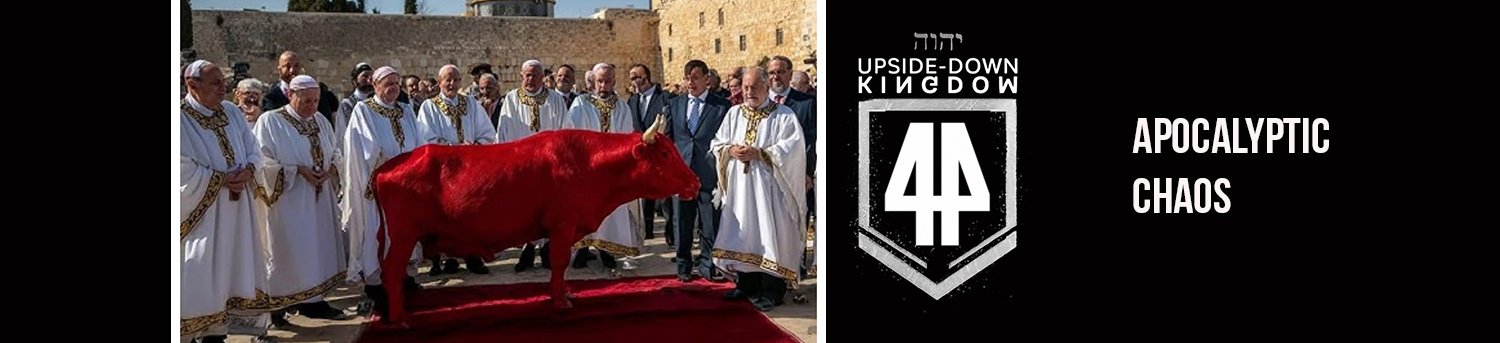
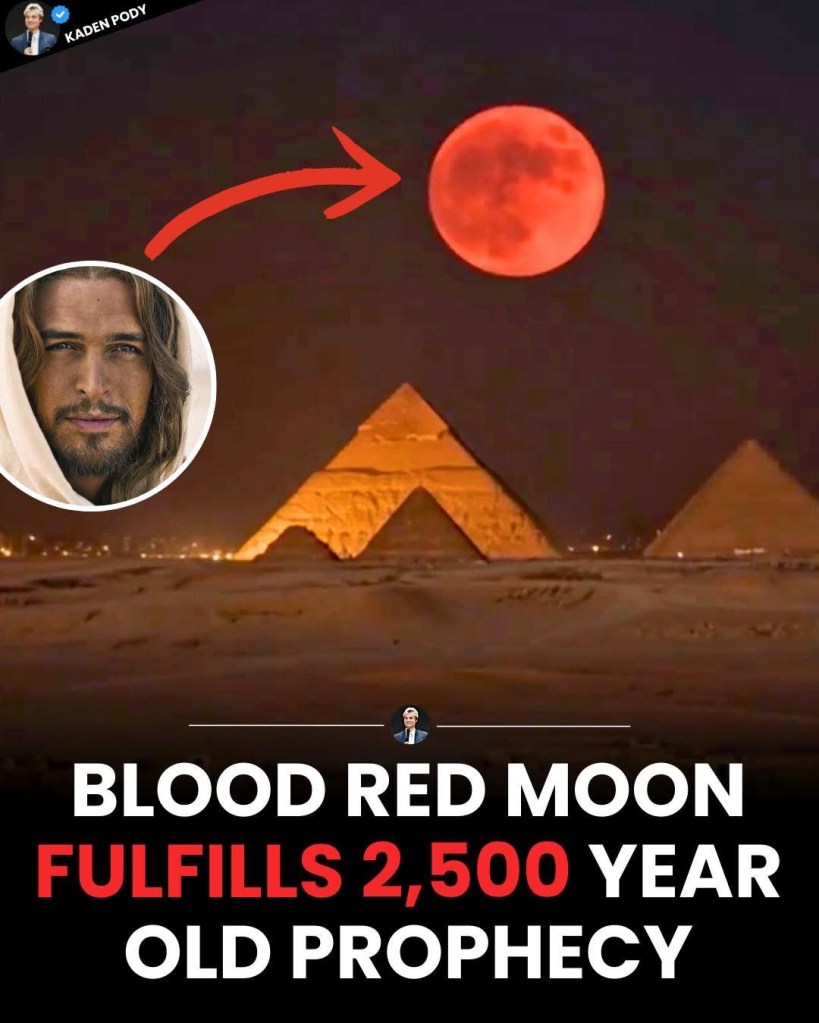
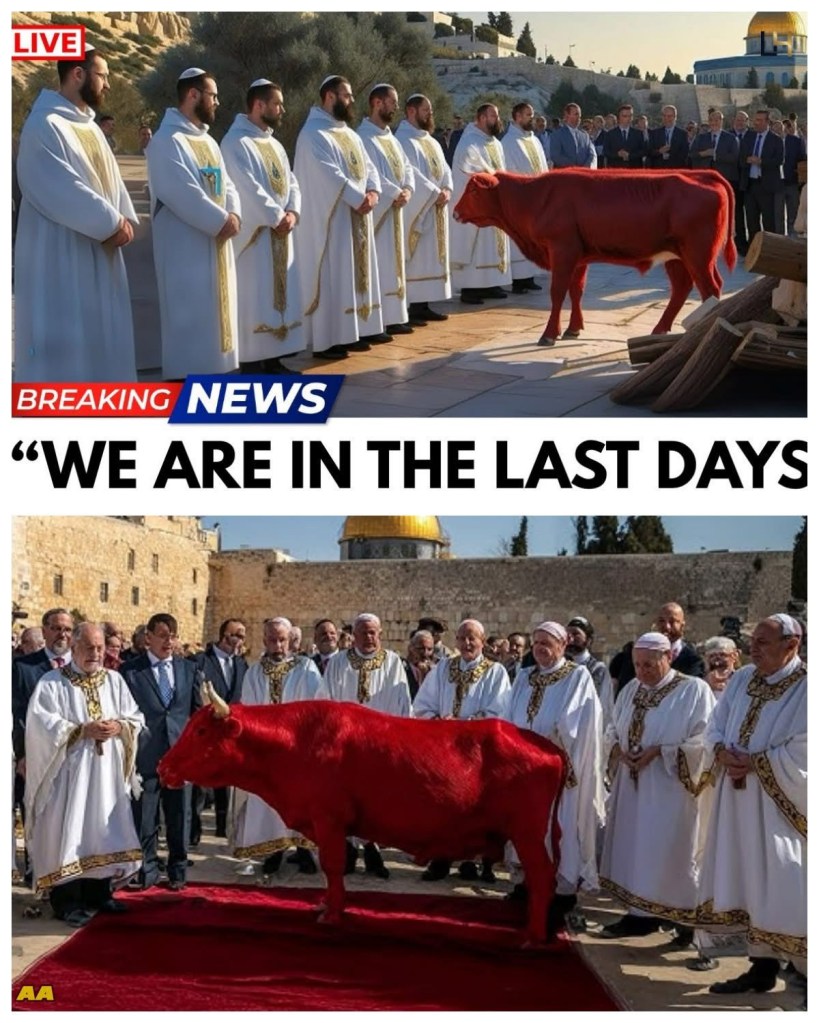
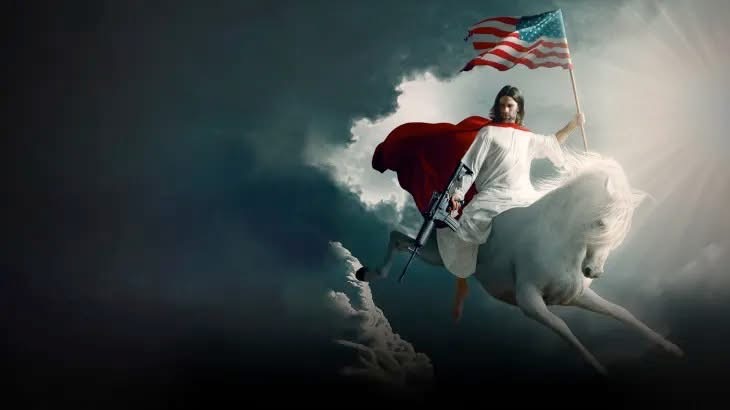
In every generation, the people of God have wrestled with headlines, celestial events, wars, and rumors of wars. In our moment, images of blood-red moons, renewed interest in the red heifer ritual, Purim framed through geopolitical conflict, and even portrayals of a militarized Jesus circulate rapidly across Christian media. These phenomena are frequently interpreted as decisive indicators that “we are in the last days.”

As followers of Christ committed to careful biblical theology, we must ask: What is faithful eschatological attentiveness, and what drifts toward speculation? How do we distinguish biblical prophecy from patterns that more closely resemble divination? And how do we guard against subtly weaponizing Jesus in the service of national or ideological agendas?

This essay proposes that much contemporary apocalyptic rhetoric conflates symbolic prophetic language with predictive sign-reading, misapplies temple typology, and risks distorting the cruciform nature of Christ’s kingship. I ask you to consider a better theology, one that is deeply rooted, Christ-centered eschatology that cultivates hope without hysteria.


The phrase “the moon will be turned to blood” appears in Joel 2:31 and is echoed in Acts 2:20 and Revelation 6:12.¹ Yet within prophetic and apocalyptic literature, such imagery functions symbolically to describe covenantal upheaval and divine intervention, not necessarily astronomical forecasting.²

When Peter cites Joel at Pentecost (Acts 2:16–21), he interprets the prophecy as fulfilled in the outpouring of the Spirit.³ The early church did not await literal lunar phenomena; they recognized that the decisive turning point in redemptive history had already occurred in Christ’s death, resurrection, and exaltation.⁴

Scholars such as John Walton remind us that in the Ancient Near East, celestial events were commonly interpreted as omens.⁵ Israel’s Torah, however, explicitly forbids divinatory practices tied to signs and portents (Deut 18:10–14).⁶ When modern Christians assign predictive significance to eclipses in ways that mirror ancient omen-reading, the hermeneutical posture begins to resemble the very practices Scripture warns against.⁷

Apocalyptic imagery unveils theological realities—it does not invite astrological decoding.


The red heifer ritual of Numbers 19 concerns purification under the Mosaic covenant.⁸ Contemporary movements anticipating a Third Temple sometimes treat the reintroduction of this ritual as a necessary eschatological trigger.⁹

Yet the New Testament consistently reinterprets temple theology christologically. Jesus declares himself the true temple (John 2:19–21).¹⁰ Paul extends temple identity to the gathered people of God (1 Cor 3:16).¹¹ The epistle to the Hebrews insists that Christ’s priestly work is once-for-all and surpasses the sacrificial system (Heb 9–10).¹²

To frame renewed animal sacrifice as a prophetic necessity risks implying insufficiency in Christ’s atoning work.¹³ As Steve Gregg has argued in his engagement with Revelation’s various interpretive frameworks, much apocalyptic expectation misunderstands the covenantal transition already accomplished in the first century.¹⁴

Looking for a rebuilding of the Temple is a slap in the face to Jesus; it is essentially saying you don’t believe He was enough.

The trajectory of Scripture moves from shadow to substance—not from substance back to shadow.


The book of Esther recounts Jewish survival within imperial Persia and culminates in the celebration of Purim (Esth 9).¹⁵ It is a narrative of providence and covenant preservation—not a blueprint for Christian militarization.

Revelation 19 portrays Christ as a rider on a white horse, yet the sword proceeds from his mouth—symbolizing the power of his word.¹⁶ Earlier, Revelation presents the conquering Messiah as the slain Lamb (Rev 5:6).¹⁷ The Lamb’s victory comes through self-giving sacrifice.

Shane J. Wood argues that Revelation functions as an unveiling of how empire masquerades as ultimate power while the Lamb redefines kingship through suffering love.¹⁸ The book calls believers to faithful witness, not violent triumphalism.¹⁹

When Jesus is draped in national symbolism or framed primarily as a military figure aligned with geopolitical agendas, the church risks conflating the kingdom of God with earthly power structures—precisely the confusion Revelation critiques.²⁰

The Lamb conquers not by coercion, but by cruciform allegiance.


Biblical prophecy is covenant proclamation rooted in God’s revealed purposes.²¹ Divination, by contrast, seeks hidden knowledge through decoding signs, omens, or speculative patterns.²²

Jeremiah warns against prophets who speak “visions of their own minds” (Jer 23:16).²³ Ezekiel rebukes those who practice “lying divination” (Ezek 13:6–9).²⁴ Jesus himself cautions his disciples against alarmism: “See that you are not alarmed” (Matt 24:6).²⁵

The apostolic exhortation is vigilance without panic (1 Thess 5:1–8).²⁶ When Christian rhetoric becomes dominated by chronological speculation tied to celestial events or ritual developments, it begins to mirror the divinatory impulse Scripture explicitly forbids.²⁷

True prophecy deepens faithfulness. Divination fuels anxiety.


Christian eschatology has long been described as “already and not yet.”²⁸ Christ has decisively inaugurated the kingdom, yet its fullness awaits consummation.

Wood’s “thin veil” metaphor captures apocalyptic literature’s purpose: heaven’s perspective breaks into earthly history, revealing who truly reigns.²⁹ Revelation is not primarily a timetable but a theological unveiling of allegiance, empire, and worship.³⁰

Thus, blood moons need not provoke fear. Red heifers need not signal regression. Wars and rumors of wars do not require sacralized nationalism. The church’s vocation remains steadfast: faithful witness shaped by the Lamb.³¹

Peter reminds believers that they are a holy nation—not defined by geopolitical boundaries, but by covenant identity in Christ (1 Pet 2:9–12).³²

Our eschatological posture is hopeful watchfulness grounded in the finished work of Jesus.


The final word of Revelation is not dread but invitation: “The Spirit and the Bride say, ‘Come’” (Rev 22:17).³³

Apocalyptic texts unveil hope, not panic. They expose empire, not empower it. They center the Lamb, not lunar cycles.

To remain faithful in an age of apocalyptic noise is not to disengage from current events, but to interpret them through the crucified and risen Christ. We do not decode eclipses; we embody the kingdom. We do not weaponize Jesus; we witness to him.

In a world prone to sensationalism, the church’s steadiness becomes its testimony.


Footnotes

  1. Joel 2:31; Acts 2:20; Rev 6:12.
  2. G. K. Beale, The Book of Revelation.
  3. Acts 2:16–21.
  4. Richard Bauckham, The Theology of the Book of Revelation.
  5. John H. Walton, Ancient Near Eastern Thought and the Old Testament.
  6. Deut 18:10–14.
  7. Michael S. Heiser, The Unseen Realm.
  8. Num 19.
  9. Randall Price, The Temple and Bible Prophecy.
  10. John 2:19–21.
  11. 1 Cor 3:16.
  12. Heb 9–10.
  13. David Peterson, Hebrews and Perfection.
  14. Steve Gregg, Revelation: Four Views.
  15. Esth 9.
  16. Rev 19:15.
  17. Rev 5:6.
  18. Shane J. Wood, Thinning the Veil.
  19. Rev 12:11.
  20. Rev 13; Bauckham.
  21. Walter Brueggemann, The Prophetic Imagination.
  22. Deut 18:10–14.
  23. Jer 23:16.
  24. Ezek 13:6–9.
  25. Matt 24:6.
  26. 1 Thess 5:1–8.
  27. Heiser, The Unseen Realm.
  28. George Eldon Ladd, The Presence of the Future.
  29. Wood, Thinning the Veil.
  30. Eugene H. Peterson, Reversed Thunder.
  31. Rev 12:11.
  32. 1 Pet 2:9–12.
  33. Rev 22:17.

Bibliography

Bauckham, Richard. The Theology of the Book of Revelation. Cambridge: Cambridge University Press.

Beale, G. K. The Book of Revelation. New International Greek Testament Commentary. Grand Rapids: Eerdmans.

Brueggemann, Walter. The Prophetic Imagination. 2nd ed. Minneapolis: Fortress Press.

Gregg, Steve. Revelation: Four Views. Nashville: Thomas Nelson.

Heiser, Michael S. The Unseen Realm: Recovering the Supernatural Worldview of the Bible. Bellingham, WA: Lexham Press.

Ladd, George Eldon. The Presence of the Future. Grand Rapids: Eerdmans.

Peterson, David. Hebrews and Perfection. Cambridge: Cambridge University Press.

Peterson, Eugene H. Reversed Thunder: The Revelation of John and the Praying Imagination. San Francisco: HarperCollins.

Price, Randall. The Temple and Bible Prophecy. Eugene, OR: Harvest House.

Walton, John H. Ancient Near Eastern Thought and the Old Testament. Grand Rapids: Baker Academic.

Wood, Shane J. Thinning the Veil: Revelation and the Kingdom of Heaven. Cincinnati: Standard Publishing.