Apocalyptic Anxiety, Prophetic Imagination, and Faithful Christian Eschatology
Introduction: Living Faithfully in an Age of Apocalyptic Noise
In every generation, the people of God have wrestled with headlines, celestial events, wars, and rumors of wars. In our moment, images of blood-red moons, renewed interest in the red heifer ritual, Purim framed through geopolitical conflict, and even portrayals of a militarized Jesus circulate rapidly across Christian media. These phenomena are frequently interpreted as decisive indicators that “we are in the last days.”
As followers of Christ committed to careful biblical theology, we must ask: What is faithful eschatological attentiveness, and what drifts toward speculation? How do we distinguish biblical prophecy from patterns that more closely resemble divination? And how do we guard against subtly weaponizing Jesus in the service of national or ideological agendas?
This essay proposes that much contemporary apocalyptic rhetoric conflates symbolic prophetic language with predictive sign-reading, misapplies temple typology, and risks distorting the cruciform nature of Christ’s kingship. I ask you to consider a better theology, one that is deeply rooted, Christ-centered eschatology that cultivates hope without hysteria.
Cosmic Imagery and the Language of Blood Moons
The phrase “the moon will be turned to blood” appears in Joel 2:31 and is echoed in Acts 2:20 and Revelation 6:12.¹ Yet within prophetic and apocalyptic literature, such imagery functions symbolically to describe covenantal upheaval and divine intervention, not necessarily astronomical forecasting.²
When Peter cites Joel at Pentecost (Acts 2:16–21), he interprets the prophecy as fulfilled in the outpouring of the Spirit.³ The early church did not await literal lunar phenomena; they recognized that the decisive turning point in redemptive history had already occurred in Christ’s death, resurrection, and exaltation.⁴
Scholars such as John Walton remind us that in the Ancient Near East, celestial events were commonly interpreted as omens.⁵ Israel’s Torah, however, explicitly forbids divinatory practices tied to signs and portents (Deut 18:10–14).⁶ When modern Christians assign predictive significance to eclipses in ways that mirror ancient omen-reading, the hermeneutical posture begins to resemble the very practices Scripture warns against.⁷
Apocalyptic imagery unveils theological realities—it does not invite astrological decoding.
Red Heifers, Temple Expectation, and the Finality of Christ
The red heifer ritual of Numbers 19 concerns purification under the Mosaic covenant.⁸ Contemporary movements anticipating a Third Temple sometimes treat the reintroduction of this ritual as a necessary eschatological trigger.⁹
Yet the New Testament consistently reinterprets temple theology christologically. Jesus declares himself the true temple (John 2:19–21).¹⁰ Paul extends temple identity to the gathered people of God (1 Cor 3:16).¹¹ The epistle to the Hebrews insists that Christ’s priestly work is once-for-all and surpasses the sacrificial system (Heb 9–10).¹²
To frame renewed animal sacrifice as a prophetic necessity risks implying insufficiency in Christ’s atoning work.¹³ As Steve Gregg has argued in his engagement with Revelation’s various interpretive frameworks, much apocalyptic expectation misunderstands the covenantal transition already accomplished in the first century.¹⁴
Looking for a rebuilding of the Temple is a slap in the face to Jesus; it is essentially saying you don’t believe He was enough.
The trajectory of Scripture moves from shadow to substance—not from substance back to shadow.
Purim, Empire, and the Danger of Weaponizing Jesus
The book of Esther recounts Jewish survival within imperial Persia and culminates in the celebration of Purim (Esth 9).¹⁵ It is a narrative of providence and covenant preservation—not a blueprint for Christian militarization.
Revelation 19 portrays Christ as a rider on a white horse, yet the sword proceeds from his mouth—symbolizing the power of his word.¹⁶ Earlier, Revelation presents the conquering Messiah as the slain Lamb (Rev 5:6).¹⁷ The Lamb’s victory comes through self-giving sacrifice.
Shane J. Wood argues that Revelation functions as an unveiling of how empire masquerades as ultimate power while the Lamb redefines kingship through suffering love.¹⁸ The book calls believers to faithful witness, not violent triumphalism.¹⁹
When Jesus is draped in national symbolism or framed primarily as a military figure aligned with geopolitical agendas, the church risks conflating the kingdom of God with earthly power structures—precisely the confusion Revelation critiques.²⁰
The Lamb conquers not by coercion, but by cruciform allegiance.
Prophecy and Divination: A Crucial Distinction
Biblical prophecy is covenant proclamation rooted in God’s revealed purposes.²¹ Divination, by contrast, seeks hidden knowledge through decoding signs, omens, or speculative patterns.²²
Jeremiah warns against prophets who speak “visions of their own minds” (Jer 23:16).²³ Ezekiel rebukes those who practice “lying divination” (Ezek 13:6–9).²⁴ Jesus himself cautions his disciples against alarmism: “See that you are not alarmed” (Matt 24:6).²⁵
The apostolic exhortation is vigilance without panic (1 Thess 5:1–8).²⁶ When Christian rhetoric becomes dominated by chronological speculation tied to celestial events or ritual developments, it begins to mirror the divinatory impulse Scripture explicitly forbids.²⁷
Eschatology as Unveiling: Living in the Already and Not Yet
Christian eschatology has long been described as “already and not yet.”²⁸ Christ has decisively inaugurated the kingdom, yet its fullness awaits consummation.
Wood’s “thin veil” metaphor captures apocalyptic literature’s purpose: heaven’s perspective breaks into earthly history, revealing who truly reigns.²⁹ Revelation is not primarily a timetable but a theological unveiling of allegiance, empire, and worship.³⁰
Thus, blood moons need not provoke fear. Red heifers need not signal regression. Wars and rumors of wars do not require sacralized nationalism. The church’s vocation remains steadfast: faithful witness shaped by the Lamb.³¹
Peter reminds believers that they are a holy nation—not defined by geopolitical boundaries, but by covenant identity in Christ (1 Pet 2:9–12).³²
Our eschatological posture is hopeful watchfulness grounded in the finished work of Jesus.
Conclusion: Hope Without Hysteria
The final word of Revelation is not dread but invitation: “The Spirit and the Bride say, ‘Come’” (Rev 22:17).³³
Apocalyptic texts unveil hope, not panic. They expose empire, not empower it. They center the Lamb, not lunar cycles.
To remain faithful in an age of apocalyptic noise is not to disengage from current events, but to interpret them through the crucified and risen Christ. We do not decode eclipses; we embody the kingdom. We do not weaponize Jesus; we witness to him.
In a world prone to sensationalism, the church’s steadiness becomes its testimony.
Footnotes
Joel 2:31; Acts 2:20; Rev 6:12.
G. K. Beale, The Book of Revelation.
Acts 2:16–21.
Richard Bauckham, The Theology of the Book of Revelation.
John H. Walton, Ancient Near Eastern Thought and the Old Testament.
Deut 18:10–14.
Michael S. Heiser, The Unseen Realm.
Num 19.
Randall Price, The Temple and Bible Prophecy.
John 2:19–21.
1 Cor 3:16.
Heb 9–10.
David Peterson, Hebrews and Perfection.
Steve Gregg, Revelation: Four Views.
Esth 9.
Rev 19:15.
Rev 5:6.
Shane J. Wood, Thinning the Veil.
Rev 12:11.
Rev 13; Bauckham.
Walter Brueggemann, The Prophetic Imagination.
Deut 18:10–14.
Jer 23:16.
Ezek 13:6–9.
Matt 24:6.
1 Thess 5:1–8.
Heiser, The Unseen Realm.
George Eldon Ladd, The Presence of the Future.
Wood, Thinning the Veil.
Eugene H. Peterson, Reversed Thunder.
Rev 12:11.
1 Pet 2:9–12.
Rev 22:17.
Bibliography
Bauckham, Richard. The Theology of the Book of Revelation. Cambridge: Cambridge University Press.
Beale, G. K. The Book of Revelation. New International Greek Testament Commentary. Grand Rapids: Eerdmans.
Brueggemann, Walter. The Prophetic Imagination. 2nd ed. Minneapolis: Fortress Press.
Gregg, Steve. Revelation: Four Views. Nashville: Thomas Nelson.
Heiser, Michael S. The Unseen Realm: Recovering the Supernatural Worldview of the Bible. Bellingham, WA: Lexham Press.
Ladd, George Eldon. The Presence of the Future. Grand Rapids: Eerdmans.
Peterson, David. Hebrews and Perfection. Cambridge: Cambridge University Press.
Peterson, Eugene H. Reversed Thunder: The Revelation of John and the Praying Imagination. San Francisco: HarperCollins.
Price, Randall. The Temple and Bible Prophecy. Eugene, OR: Harvest House.
Walton, John H. Ancient Near Eastern Thought and the Old Testament. Grand Rapids: Baker Academic.
Wood, Shane J. Thinning the Veil: Revelation and the Kingdom of Heaven. Cincinnati: Standard Publishing.
Q: I have a question regarding Israel. Would Israelites still be considered God’s chosen people or would that have changed with Jesus’s atoning works?
Yes, Israel was (and is) called God’s chosen people in Scripture—but what that means and how we understand it after Jesus is really important to clarify.
When God called Israel His “chosen people” in the Old Testament, it wasn’t primarily a statement about salvation. Rather, Israel was chosen (commissioned) for a vocation—to be a light to the nations (see Exodus 19:5–6; Deuteronomy 7:6; Isaiah 49:6). (You might see this as a regaining of the nations if you follow a Deuteronomy 32 worldview.) God gave them the Law (Torah), the covenants, and the promises, not as an end in themselves, but so that through them, the nations of the world would come to know and worship Yahweh. Paul puts it like this in Romans 3:2—that the Jews were entrusted with the oracles of God. In a sense, this was the calling of Adam and Eve and when they fall short, God commissions Israel in the same calling, nation that would be called commissioned as a holy royal priesthood to represent Yahweh to the rest of the fallen world.
But Israel consistently struggled to live out this calling. From nearly the beginning of the story the nation failed to honor Yahweh (golden calf incident) and instead of the entire nation (all 12 tribes) representing the Lord as priests, God adapted the plan and then called just the Levites to be His representatives as priests first to Israel in hopes of then commissioning the entire nation of Israel to the original plan and act as ambassadors of Yahweh. The Old Testament tells a story of covenant, failure, judgment, and hope for restoration. Israel continued to falter. They gave up their theocracy of one God – Yahweh to choose to be led by an earthly king. They drifted farther and farther from the plan until God finally hands them over to their own demise, the exile was a key turning point. Even after the return of the exile to Jerusalem, most scholars believe Israel never returned to the LORD. God longed for Israel to return to the true redemption and the coming of God’s kingdom. Unfortunately, Israel continued to fall short and not seem to live out their calling or commissioning.
Jesus enters the narrative with a similar mission. He doesn’t reject Israel’s story—He steps into it. He comes first to “the lost sheep of Israel” (Matt. 15:24), calling them back to their original vocation. He chooses twelve disciples, clearly symbolizing a reconstitution of the twelve tribes of Israel. This is not incidental—it’s Jesus claiming to be the one who restores and redefines Israel around Himself.
And here’s the key: Jesus is the faithful Israelite. He does what Israel failed to do. He keeps the covenant perfectly, walks in radical obedience, and fulfills Israel’s mission. He is the true Israel (see Matthew 2:15 where Hosea’s words originally spoken about Israel—”out of Egypt I called my son”—are applied to Jesus).
This is why Paul will later say in Galatians 3:16 that the promises were given not to “seeds” (plural) but to one “seed,” who is Christ. In other words, the inheritance of Israel is fulfilled in Jesus—and only those who are “in Him” share in that inheritance. That phrase—”in Christ”—is the dominant identity marker for believers in the New Testament. If Jesus is the true Israel, then those united to Him (Jew or Gentile) are the true people of God.
This point becomes even clearer when we revisit God’s original promise to Abraham in Genesis 12:3: “I will bless those who bless you, and whoever curses you I will curse.” This statement is often lifted out of its covenantal context and applied to modern nations or political support for Israel. However, the Hebrew grammar and narrative context show that the promise was made to Abram himself (the singular “you” in Hebrew, ʾotkha), not to a future geopolitical nation. God’s intention was not to privilege one ethnic group above all others but to initiate a redemptive mission through one man and his descendants—a mission that would culminate in Christ. The blessing is vocational, not nationalistic. Abram is chosen in order to be a blessing, that through him “all the families of the earth will be blessed.”
The apostle Paul interprets this precisely in Galatians 3:16, identifying the “seed” (zeraʿ) of Abraham as Christ Himself. This means that the covenant promise—“I will bless those who bless you”—finds its ultimate fulfillment in Jesus. The “you” now applies to Abraham’s true heir, the Messiah. Those who bless Him—who honor, trust, and align themselves with Jesus—receive the blessing of God; those who reject Him cut themselves off from that blessing. In this way, the Abrahamic covenant points forward to Christ as the locus of divine favor. To bless Abraham’s seed is to embrace the redemptive mission of God revealed in Jesus, and through faith in Him, we become participants in that same blessing.
Paul says Abraham was justified before circumcision (Rom. 4), showing that faith, not ethnicity, is the marker of God’s covenant people. He adds in Romans 2:28–29 that a true Jew is one inwardly, whose heart is circumcised by the Spirit. And in Galatians 3:28 he writes: “There is neither Jew nor Greek… you are all one in Christ Jesus.”
Ephesians 2 expands this beautifully. Paul says that Jesus has broken down the dividing wall and made one new humanity—no longer Jew and Gentile, but one body. Peter echoes this in 1 Peter 2, where he applies all the covenant titles once reserved for Israel (royal priesthood, holy nation, people of God) to the church made up of both Jews and Gentiles.
Paul also uses the metaphor of an olive tree in Romans 11: some natural branches (ethnic Israelites) were broken off because of unbelief, and wild branches (Gentiles) were grafted in. But it’s one tree. There aren’t two peoples of God. There is one new covenant community—those who are in Christ. It’s not about replacing Israel, but about fulfillment—where Jews and Gentiles together form the one people of God in Christ.
This helps clarify what Paul means in Romans 11:26 when he says, “all Israel will be saved.” We don’t believe he’s referring to a future mass conversion of ethnic Jews or suggesting two separate salvation paths. Rather, he’s speaking of the fullness of God’s people: both believing Jews and Gentiles who are part of the one tree through faith in the Messiah. This fits with Paul’s logic throughout Romans and with his statement in Galatians 6:16 that the church is “the Israel of God.”
God has always worked through covenants—and those covenants are centered on trust and faithfulness, not ethnicity alone. From the beginning, covenant relationship with God required loyal love. Even under the Mosaic covenant, Israel’s inclusion was contingent on obedience and faithfulness to Yahweh (Deut 28). Being born into Israel didn’t guarantee blessing—relationship and trust did. (Israelites were never automatically “saved.”) If there was any sense of salvation in the Old Testament it would be under the same “qualifications” as in the New Testament. What God was asking and promising for the faithful doesn’t change from the Old Covenants to the New Covenant.
The New Testament affirms this. While many modern Jews are physical descendants of Abraham, Paul is clear that physical descent is not enough. In Romans 9:6–8, he writes:
“For they are not all Israel who are descended from Israel; nor are they all children because they are Abraham’s descendants… it is not the children of the flesh who are children of God, but the children of the promise.”
Paul emphasizes that covenant identity is now grounded in faith—just as it was with Abraham. As he puts it in Galatians 3:7:
“Understand, then, that those who have faith are children of Abraham.”
So when we speak of the “people of God” today, we are not referring to a physical nation-state or ethnic group. We are speaking of those “in Christ”—those joined to the faithful Israelite, Jesus.
The modern nation-state of Israel is not the covenant people of the Bible. -If this is a new consideration for you, you might consider reading this article. Most of its citizens do not follow the Mosaic covenant, and the majority have rejected Jesus as Messiah. According to the New Testament, that places them outside of the renewed covenant family—not because of their ancestry, but because God’s covenant has always been about faith.
This doesn’t mean God has abandoned ethnic Jews. Paul says in Romans 11 that he hopes some of his fellow Jews will be provoked to faith. And many Messianic Jews (Jewish believers in Jesus) are part of the body of Christ. But the boundary marker is no longer ethnicity or Torah observance—it is faith in Jesus.
All of this leads us to say: the true Israel (or Israelite) is Jesus. And those “in Him,” whether Jew or Gentile, are heirs to the promises, the calling, and the covenant. God is not partial (and never has been, even with Israel as many gentiles were welcome to join them, a mixed multitude – Hebrew and gentile – left Egypt in the Exodus becoming “Israel”, and some even found themselves in the lineage of Christ Himself) —He welcomes all who come to Him through Christ.
We also need to think about our family in Christ as those that are allegiant to the New Covenant calling rather than those that are nationalistically / inter-nationalistically aligned with groups that subtly “claim to be allied with God” but are not living out the Way of Jesus or bearing fruit for the Kingdom of Christ. There is only one kingdom of Christ, and you can’t serve two masters. For generations many have claimed to be part of Israel or want to be somehow grafted into salvation but haven’t followed the devotion that God has desired and look nothing like Jesus or act in a way worthy of bearing His image. Jesus seemed to paint this picture vividly and make this very clear in the sermon on the Mount (Matthew 5-7).
This is not replacement theology.1 God has not rejected Israel and replaced her with or even outside of the church. Rather, the church is the fulfillment of Israel’s story (and Adam and Eve’s story for that matter) —expanded to include all nations through union with Jesus, the faithful Israelite, this was the plan of redemption that “all nations”, or everyone was offerred from the beginning.The promises of God have not been scrapped or reassigned; they find their “yes and amen” in Christ (2 Corinthians 1:20). The covenant people of God have always been marked by faith and loyalty to Him—and in the new covenant, that means allegiance and devotion to Yahweh through Jesus accepting and claiming that victory and receiving the gift of the Holy Spirit as a sign of the holy royal priesthood. Jew and Gentile together form the one new man, the reconstituted people of God.
written by Will Ryan Th.D. and Matt Mouzakis Th.D.
Replacement theology, doctrine holding that Christians have replaced the Jewish people as the chosen people of God or as the heirs of the divine-human covenant described in the Hebrew Bible. The theology is also referred to as supersessionism, in which Christianity is thought to have superseded Judaism. It is closely related to fulfillment theology, which holds that Christianity has fulfilled the divine promises signaled in the Hebrew Bible. These ideas appear to be suggested in some of the earliest Christian texts, such as writings of St. Paul the Apostle, and subsequent Christian theologians have strengthened the opposition of Judaism and Christianity in ways that have informed relations between Christians and Jews. In the 20th century many Christian theologians and even church doctrines replaced replacement theology with more-nuanced or inclusive models that support more-amicable interreligious relations.
I bet you have become accustomed to Christians describing Jesus on the cross with phrases like “purchased” or “paid” describing salvation. That through Christ on the cross, salvation was “bought” or “paid in full.” First, to be clear I don’t think the terminology is horrible, this conversation doesn’t mean much to me and I am certainly not “going to war” over anything in this conversation! I believe that as a light metaphor that this kind of phrase can have some truth to it, we make references all the time in day-to-day life with this sort of linguistic analogy. For instance, my son Will was playing soccer the other night in a recreational game on astroturf and made a heralding dive to strike the ball into the goal. After the game I noticed the giant carpet burn on his knee and saif to him, well you certainly paid for that one, but what a shot! No one really thinks that He actually paid money, that would be absurd; we simply mean that there is a cost associated. That is what the Bible means when it talks about what Jesus did at the cross. Yet too many people have turned a simple biblical metaphor into a theological doctrine, and I find it problematic.
There are better ways to communicate what Christ did for us on the cross than using descriptions like paid for or purchased. This gets into atonement theories (x44 has made several videos on this subject) and if you are reformed you might think this language is “correct”; but if you’re not reformed or a Calvinist, you might want to consider a better formation for your cross theology. Let me walk you through some things towards a better consideration.
WHERE DO WE SEE THESE PHRASES IN THE BIBLE?
Twice the apostle Paul informed believers at Corinth, “You were bought with a price.” In 1 Corinthians 6, Paul was making a passionate appeal against sexual immorality. He concluded his argument, stating, “Or do you not know that your body is a temple of the Holy Spirit within you, whom you have from God? You are not your own, for you were bought with a price. So glorify God in your body” (1 Corinthians 6:19–20, ESV). I quoted the ESV (which is a reformed translation if you didn’t know). 1 Peter 1:18–19 says,“For you know that God paid a ransom to save you from the empty life you inherited from your ancestors. And it was not paid with mere gold or silver, which lose their value. It was the precious blood of Christ, the sinless, spotless Lamb of God” (NLT). We also have Jesus Himself saying that He came to give His life as a ransom for us (Matthew 20:28). We now belong to Him according to 1 Corinthians 7:22. Paul repeated this teaching in 1 Corinthians 7:23, notice however, the emphasis on spiritual freedom: “You were bought at a price; do not become slaves of human beings.” Believers are set free from the dominion of the world or sin through the death of Christ (Galatians 1:4). In this way you might say that spiritual freedom comes at the “price” of Christ’s sacrificial death on the cross (1 Peter 2:24). Consequently, since we now belong to Christ, we must not let ourselves come under the control of other humans, Satan, principalities, or the world… we are or should completely be given to Jesus. 1 That is what we all can agree on right? I mean it is right out of the bible! So, there you have it. The Bible specifically uses words like ransom, paid, bought, price etc… So, I bet you are wondering why do I have issues with phrasing it that way?
RANSOM SHOULD BE VIEWED AS AN EXODUS MOTIF
In biblical theology, the concept of “ransom” is deeply intertwined with the themes of deliverance and salvation. The term “ransom” according to antiquity refers to the “price paid” to secure the release of someone from bondage or captivity. In general describing what Jesus accomplished through the cross this way is known as the ransom which theory teaches that the death of Christ was a ransom sacrifice, usually said to have been paid to Satan, in satisfaction for the bondage and debt on the souls of humanity as a result of inherited sin.2 Well as you might have perceived,
In the Old Testament, the Hebrew word “kopher” is often used to denote a ransom, particularly in the context of redeeming a person or property.3 For example, Exodus 21:30 discusses the payment of a ransom for the life of a person who has been sentenced to death: “If payment is demanded of him, he may redeem his life by paying the full amount demanded of him.” So there is a Hebraic understanding of transactional payment biblically that is associated with the term ransom, but the problem with thinking that way is that what Jesus does for us on the cross intentionally came with no strings attached, it is a free gift of Grace. What Christ did on the cross was a backwards kingdom dynamic, it was opposite of the world’s expectations. In other words, there wasn’t a physical price paid. This is very important. In the Exodus did Moses pay Pharaoh? Did God pay the spiritual powers he was warring against? NO. There was no payment made. The exodus foreshadows the cross and in the same way there wasn’t a payment made. Jesus didn’t have to pay off God and God didn’t pay Satan. Are you following me? So, phrase it this way is actually poor theology and nearly the opposite idea of what the text portrayed in the exodus and through the cross. Talking about inherited sin or original sin is one of the pillars of Calvinism and thus those that hold to a “ransom” theory are typically reformed. If you aren’t familiar with this conversation this video series will help. Although I do believe in a ransom motif in the exodus and through Jesus at the cross, I do not think framing it as transactional is good theology.
ETYMOLOGY
The definition of the word “ransom” has changed over time. At the time the New Testament was written before the end of the first century, it referred to the practice of capturing individuals and demanding their release, particularly in ancient times. In the ancient world it was almost never ties to money, it was based on threats of power and ruling.4 In this sense, Exodus portrays the ransom of the Hebrews quite well. But I certainly won’t deny that at times money was involved; but the emphasis should always be on freedom motive not the payment motive. When you really dive into this what you find is that in the ancient world ransom was relational. You demanded ransom because it was the right thing. It was to put your foot down and demand that an injustice be reconciled. In the Middle Ages and Reformation, the term evolved to usually describe payments made for the release of hostages, and it has also been used figuratively to describe any exorbitant payment or price demanded for something. The definition has certainly changed over time to be described less relational and has become more transactional. The biblical authors definition was relational not transactional, yet we have come to interpret it through our own modern lens as transactional.
Ransom in scripture should always be interpreted as a release of slaves giving freedom. This fits every context of verses that we see the word used in from Micah 6:4 to Isaiah 43:3. Isaiah 52:3 is very clear on this. God says he sold Israel for nothing, and they shall be ransomed/redeemed without payment. Isaiah 45:13 echoes the same thoughts. The point is that the word ransom biblically shouldn’t be used in a substitutionary sense. NT Wright and even the reformed scholar Leon Morris have made this clear. 5
The Greek helps us out here. ὑπέρ Huper (for) means for a benefit. That is what is used in nearly every context of Jesus giving up his life. Not anti (for) which would be in the place of or an exchange.
TRANSACTIONAL PROBLEMS
When you try to frame the work of the cross as needing to buy someone out, it creates a transactional dynamic that isn’t part of grace and isn’t biblical. Now again, there are some elements that are transactional and that is why this is complicated and often misunderstood. Grace itself is a free gift, yet there is a benefactor understanding of reciprocity. When you give a gift there is no expectation for a payment, you freely give it. Yet in relationships of any kind there are some expectations. In the circle of Grace when Christ gave his life for you, the reciprocity is that you in turn give your life to him.6 But that didn’t actually cost money, there was no buyout, but there was a cost. When we think about Jesus transactionally it muddies the water. I am sure you have been told your whole life that everything costs something, or that if you want something that is worth anything it is going to cost you. In this regard, giving your life to Christ from a worldly sense will cost you everything, your life itself. But Jesus isn’t selling anything. When we frame grace as transactional it leaves us thinking what are we going to get out of Jesus or Christianity. What do we get from the deal? It points you in the wrong direction. With Jesus we don’t get, we give… Job was righteous because he had no expectations.7
WHAT IS THE COST?
To use transactional language cheapens the work of Jesus through the cross. God wasn’t negotiating with terrorists in the Exodus. He obliterated the spiritual powers at war. The exchange was allegiance, freedom, and liberation… no money was exchanged. But was there a cost? The Egyptian “world” certainly suffered. At the cross Jesus gave his life and it was brutal. But that shouldn’t be the emphasis of what Jesus did. In fact, it really shouldn’t be emphasized at all. Sometimes I don’t even like to use the word cross when describing Jesus. For instance, I prefer to say the work of Jesus not the work of the cross. The cross didn’t accomplish anything, Jesus did everything. The cross itself is a picture of barbaric humanity not the generous grace of Jesus, that should better be framed precisely through Christ himself. Yet I still think there is a place for the image of the cross. People should view it as the method to which Jesus did accomplish many things enabling complete life and freedom in Him.
What happened at the cross to Jesus was a result of religious hierarchy. The Jewish religious leaders tied into to the government corruption of the day essentially crucified Jesus. Did Jesus willfully “give his life?” Well, let’s not forget that he prayed for the cup to be passed. If there could have been another way through the father Jesus would have opted for it. Again, this is important in the text. What happened at the cross was brutal and unjust. Jesus turned the other cheek all the way to the grave. It is a picture of complete sacrifice and humility. But it shouldn’t be viewed theologically as transactional. We don’t know exactly why God allowed or used the cross to accomplish the victories that he did, but the fact is that is the way it unfolds. The ransom analogy should be viewed as redemption and freedom not monetary exchange. To view the cross as some kind of economic exchange isn’t accurate. God wasn’t paying or even appeasing Satan and Jesus wasn’t paying or appeasing God the father. Are you following? The trinity wasn’t broken at the cross.
When we try to make the cross transactional it is actually counter to what Jesus offered, the free gift of salivation. We in a sense turn love into a product to be sold or traded. Jesus didn’t give his life to make a deal. It wasn’t a purchase plan, or a payment plan, it was sacrificial grace with no strings attached.
It really becomes “cheap” when you frame it as a payment. For instance, what you are saying is that Jesus then gave his life to “buy” all of the lives who would “accept” him for all of time. That sounds good but think about it for a second. How much is Christ’s life really worth if you are exchanging it for all who believe for all of time, millions, maybe billions? It is actually devaluing him. Who wouldn’t make “that deal” if that is all it was. If I had the power and said to you – if you allow me to crucify you it would buy 10 people you deeply care about eternal salvation, I bet, you would do it. I would. Then if you say not just 10 but EVERYONE who believes it really makes it cheap doesn’t it? What Christ did on the cross shouldn’t be cheapened transactionally. It wasn’t a buy it program. The funny thing about atonement “theories” is that we aren’t actually told in the Bible exactly what Jesus accomplishes through the cross. That is why they are called theories. But let’s not devalue the life of Christ as we theorize. Jesus accomplishes so much through the death, resurrection, and ascension, we don’t need to cheapen it or make it into something it didn’t biblically portray.
PSA
Why did Jesus have to die on a cross? That is the grand question. The Bible actually doesn’t precisely answer this question. Perhaps that is some of the mystery of the gospel. A common view in Western Evangelicalism of what happened on the cross is this: humans have sinned and God must punish sinners by venting his wrath, but thankfully, because he loves us, Jesus went to the cross and was murdered in our place to pay our debt, so that God can forgive our sins and we can go to heaven when we die. This idea of how the cross works is called the “Penal Substitution Theory” of the atonement.8 The Penal Substitution Theory has not been the most common view throughout all of church history, nor is it the most common view of the worldwide church today. So while Penal Substitution Theory may be the majority view in modern, Western theology, the Church must wake up and realize that such a view is partially modeled after paganism, often mischaracterizes God, ultimately does not take sin seriously, and leaves out what actually happened on the cross.
THE COSMIC DEBT COLLECTOR?
The Penal Substitution Theory and purchase, debt language basically depicts God as a debt collector who must collect before he can forgive. Despite the fact that Scripture tells us that love keeps no record of wrongs (1 Corinthians 13:5), this theory states that Jesus must pay our debt to the Father (or in some cases Satan). The idea that God is merciful and forgiving, while also defining justice as demanding payment of debt don’t work together, they are at odds philosophically and ontologically. If there is a debt that is paid, then the debt is never forgiven at all. Sin is not forgiven on the cross in the Penal Substitution Theory; it is just paid off. We would never then be able to be washed truly clean. But what becomes even more problematic in thinking this way is that the only way in which God could be seen as merciful in paying the debt for mankind’s sin by killing Jesus. Let’s be clear God didn’t kill Jesus; he allowed Jesus to be killed and in a “Narnian like story” was a “way maker” to regain the keys of death. This is best framed through a Christus Victor form of atonement, but I also wouldn’t limit the work of the cross to a single view. Scot McKnight has a great book, A Community Called Atonement that is worth reading.9
Christ’s justice is restorative, not retributive. God doesn’t need anyone to pay off debt in order to forgive. God can just simply forgive. That’s what forgiveness is! Forgiveness is not receiving payment for a debt; forgiveness is the gracious cancellation of debt. There is no payment in forgiveness. That is what makes forgiveness mean anything. I have said it many times, but if you are a Calvinist, you can’t truly believe in biblical forgiveness; in the same way a Calvinist struggles to believe in any kind supplication kind of prayer as they don’t believe God works that way. I get that the reformed camp has their own way of explaining how this works, but it seems like a good deal of theological gymnastics.
JESUS AS OUR SUBSTITUTE?
Along with these misnomers you also may hear people say that Jesus died as our substitute or in our place. That isn’t the intention of this article but let me touch on it briefly since it is closely ties into our conversation. Often PSA advocates might say something like, Jesus was being punished by God for our sins and that what Jesus suffered in torture and crucifixion which is then essentially what every person deserves. That doesn’t really make any sense. Do you deserve to be tortured forever? This makes grace transactional again… accept it or be tortured forever? (Another strong claim for annihilation vs ECT but again, another discussion.) How is it true that every person deserves to be tortured to death? This sounds monstrous to me, not fitting the Exodus 34 self-description of God. Furthermore, if Jesus truly would have died in our place and gotten what we deserved according to PSA shouldn’t he then go to hell eternally according to their own reformed theology? The theory doesn’t hold up. Jesus died on a cross outside Jerusalem at the hand of the Romans (Matthew 27; Mark 15; Luke 23; John 19). None of us faced that death. He did not take our place on a cross, we didn’t deserve that and some would argue that he didn’t either, although Jesus was certainly “guilty” of not being allegiant to Roman authority.
LEVITICUS 16 AND THE SCAPEGOAT
If you have made it this far you likely know or have some knowledge of the foreshadowing of the sacrificial system to also be a picture of some of the thigs Jesus would become and accomplish. If you need to brush up, read the second part of this article first. 10 Two goats are selected for Israel: The sin offering goat and the goat that will “bear the sin”. Lots are cast to see which goat fulfills which role. Jesus actually embodies both at times. The second goat the scapegoat, or the azazel would carry away the sin of the camp into the wilderness. To be clear it is a picture, or a mosaic. Jesus will accomplish what the goat never could. The goat is a picture of simply transferring sin out of the camp, Jesus actually removes it completely. In theology this is called Expiation which means that the barrier lies outside of God, within humankind and/or a stain they leave on the world (sacred space), it is often interpreted as an action aimed at removing sin. To cover, wipe, or to purge sin. Where I believe some theology gets off is when you interpret this story as a propitiation view (punishment). The goat bears the sin and wrath. I don’t think this a great interpretation, but I have gotten significantly into that in videos and other articles. I don’t want to get too far into this here, but propitiation doesn’t really fit (work) for a number of reasons. Fopr instance if the goat was bearing the sin (carrying) it could not be a sacrifice because God only gets spotless pure animals (what does that do for your New Testament theology of the cross if Jesus was imputed our sin?) In Leviticus 16, the Hebraic sacrificial system, we have the first goat as the purification offering which is given to cleanse the temple objects. Blood is not applied to anyone. The scapegoat is sent to Azazel. So, sin, the forces of death, are removed from the camp. This connects God is rescuing his people from the forces of death. (Again it is an Exodus motif of freedom.) Neither of these goats are punished. It’s about expelling or purging God’s space (so Expiation!) The first goat (the one that dies) is more about cleaning the throne room of the stain of sin. The scapegoat doesn’t get killed. This is all about resetting sacred space (getting back to Eden).
To be frank, all of this comes off as weird to us. But God often meets people where they are at within their unique cultural dynamic. All Ancient Near Eastern cultures (including ones that existed before the Hebrews) killed animals, and sometimes humans, to appease the gods. Animal sacrifice is undebatably pagan. Yes, the God of the Bible used this pagan ritual to teach his people something new but it was always just a step in the process to get them away from it. It is really important to note that God never needed sacrifices in order to forgive. Why is this important? The Penal Substitution Theory ignores all this and says that God the Father still demands blood in order to take away sins.11
Leviticus 16 and the story of the scapegoat has some substitutionary aspects. I certainly do not deny that there are pictures of Jesus as our substitute. There is a difference between PSA and simple metaphor of substitution. Whenever you are understanding of substitution wanders into the camp of God’s wrath needing to be satisfied buy killing something I have a problem with that. The sacrificial system needs to be interpreted in light of restorative relationship being reconciled and the theme of redemption. I think when you start trying to understand this as imputation and especially double imputation, you’re getting off track and outside the picture that God has given us for what Jesus accomplishes through the cross, resurrection, and ascension. Again, if we take on this sort of reformed kind of thinking we are having to do some theological gymnastics to make it all work that seem unnatural to the message and mission of Jesus.
CONCLUSION
Payment language should paint a picture about the costliness of Jesus’ life and not about who receives the payment. So Jesus could “pay it all” by living in total surrender even unto death. We regularly use this analogy of “paid” as total dedication with soldiers who “paid the price for our freedom” in giving up their life in battle. In the same way, they literally did not “pay off” anyone or take anyone’s place. Instead, they died for a benefit to others and gave all they had. That is the way scripture also poses it the few times we see this sort of language used as I displayed in the opening paragraphs, but for some reason when it comes to the cross, PSA and reformed theology (which sometimes then becomes non reformed people using the same language) resorts to Jesus paying off God.
Since a lot of us like digging deeper, it could also help to point out how this “paid” language can sound like old pagan religion, where people had to pay off the gods with sacrifices. The gospel is the opposite of that. God comes to us first and makes things right. It makes sense to name PSA as the view most tied to “paid it all” language and explain why it does not match the whole story of Scripture. If we use the wider range of Bible images instead of locking into just one, we can talk about the cross in a way that shows God’s love and His plan to restore all things. Ending with a simple example of how this shift in language could change the way we pray, teach, or share the gospel would make it hit home even more for me.
I know you have heard these terms your whole life and might believe them to be the gospel, but that isn’t Biblical. Did Jesus pay for what we have in Him? You don’t need to say that any of this was “bought” or “paid for.” Perhaps you can say that as Paul does sometimes (arguably) as I started out this conversation. The intention of scripture using bought/paid/substitution language should be seen as a light metaphor not doctrine. All of scripture points towards the work of the cross as redemptive not transactional. Grace is free. Do you believe that? The exodus motif is Biblical, but the price attached to it isn’t. Yes, there was a process and sometimes we call this a “cost” as I Cor, 6 may frame it (although if you read it in Greek, you will read it differently that the ESV translates.) The cross Jesus Christ conquered all the powers of evil and ushered in the reign of God and the rule of the kingdom of heaven.12 What Christ offers is a return to Eden and then some. Freedom in him is restored. He sends his Spirit at Pentecost and now we are restored to our vocation as image bearers and are now his living temples showering the physical manifestation of Jesus’ sacrificial love. It is transactional, it isn’t retributive… it is free and restorative to all who want to return to their identity and partnership in Jesus. You were made for this!
This article was written by Dr. Will Ryan with special thanks to those that participated in the think tank: Dr. Matt Mouzakis, Dr. Steve Cassell, Paul Lazzaroni, and Justin Miller. Also special thanks to our friends at Rival Nation who you may have noticed I quoted several times. Please note that not all of the think tank contributors may take on the exact same thoughts of the article.
Scot McKnight: What is unobserved by the substitutionary theory advocates is that the ransom cannot be a substitute, as we might find in theologically sophisticated language: where death is for death, and penal judgment is for penal judgment. Here we have a mixing of descriptions: a ransom for slaves. Jesus, in Mark’s language, does not become a slave for other slaves. He is a ransom for those who are enslaved. The difference ought to be given careful attention. To be a substitute the ransom price would have to take the place of another ransom price or a slave for another slave, but that is not what is involved here…The ransom does not become a substitute so much as the liberating price.… The ransom, in this case, is not that Jesus “substitutes for his followers as a ransom” but that he ransoms by being the price paid in order to rescue his followers from that hostile power. The notion is one of being Savior, not substitution. The best translation would be that Jesus is a “ransom for the benefit of many.”
Leon Morris: In the New Testament there is never any hint of a recipient of the ransom. In other words, we must understand redemption as a useful metaphor which enables us to see some aspects of Christ’s great saving work with clarity but which is not an exact description of the whole process of salvation. We must not press it beyond what the New Testament tells us about it. To look for a recipient of the ransom is illegitimate.” Morris, The Atonement, 129 ↩︎
The theory pits the Father against the Son even though in nature they should be, and are, eternally the same (Matthew 11:27; John 1:18; 4:34; 5:19-20; 6:38, 46; 8:28; 10:29; 12:49; Colossians 2:9; Hebrews 13:8). The Penal Substitution Theory fractures the Trinity and makes God schizophrenic. We are commanded to forgive like God forgives (Ephesians 4:32). But if we choose to forgive like Jesus then forgiveness will precede repentance (Matthew 9:2; 18:22; Luke 23:34; John 8:11; 20:19-23). However, if we choose to forgive like the father (according to PST), we will only forgive those that show repentance, or after they make a payment of some kind. This clearly creates an unnecessary problem. How and why would God need a blood sacrifice before he could love what he had created? Is God that needy, unfree, unloving, rule-bound, and unable to forgive? Once you say it, you see it creates a nonsensical theological notion that is very hard to defend. Thankfully we see this isn’t God’s character. Jesus shows us what God is like, and Jesus says that our perfect heavenly Father displays perfection as pure mercy (Matthew 5:48, Luke 6:36). ↩︎
When I was in High school attending a rather large evangelical free church, we had some missionaries come in to train us on street evangelism. The idea was to memorize a step plan for salvation that we could easily regurgitate on the streets. The core of it was based on convincing someone that according to Adams sin we had been separated from God and that only by professing with our mouth and praying the sinner’s prayer could we escape eternal torment and damnation. As there is arguably some truth to that statement, the presentation not only created some terrible theological implications of the gospel message (both to those presenting and those being presented to) but also wasn’t necessarily the best Biblical framework. Of course, as “good” kids we all just went along with it, at least initially. As you can imagine this led to some really awkward conversations in the street and left several students wondering if this is what Christianity is all about whether they really wanted to be part of it. The following year a different but similar group came essentially “training” us to try to do the same thing evangelizing our hometown. But then something happened, this time (likely based on their previous poor experience) several of the students started to transparently challenge the process. I remember it almost as if it was the enslaved rebels of Star Wars questioning the empirical ideals. Questions like, “where does it actually say this in the Bible?” and “Do you really think this is the action that the text had in mind when it was written?” Another student said, “I don’t think I want anything to do with a plan like this, I didn’t come to Jesus to force my friends into submission.” I could go on and on. The training group couldn’t really answer them with any kind of logical explanations, and I was quite disheartened by the whole thing. The night resulted in half the youth group leaving early bailing on street evangelism to go out for ice cream; while the other half (some likely afraid of their parent’s repercussions if they left) continued with the group to evangelize. I am sure there was a small percentage of the “good” kids that convinced themselves this was what good Christian kids should do. I was also skeptical of Billy Graham “crusades” as a kid. And before I continue, I want to say that even though I still don’t entirely agree with these crusades and this kind of step plan evangelistic plans I do believe God uses it in powerful ways. I know many that came to faith this way and then over the course of time found a better theology. But my heart desires to say, let’s start with a better theology!
This youth group interaction was a monumental occurrence in my life that made me start questioning why Christians do what they do and whether the Bible actually said things like the church traditionally claimed. Instead of driving me away from Christianity, as some thought questioning the faith would do, it drove me towards a lifelong beautiful “expedition” towards understanding the incredible word of God and His nature. I don’t know of anyone who has had such joy in the journey. This is my love language, and I pray that it becomes yours.
UNDERSTANDING THE PROBLEMS WITH FRAMING SEPERATION FROM GOD THEOLOGY
The central question for your consideration is does the Bible actually say and teach what we have so often regurgitated that “sin has separated us from God?” I will start by saying any time you here a doctrine and you can’t find one verse that clearly states what the doctrine is attempting to “make the gospel say,” the best advice might be to run. If the intent of God was to give us some crafty 4 step plan of salvation wouldn’t that be clearly laid out somewhere in the text? Yet in the “ROMANS ROAD” plan of salvation we have to jump all over Romans back and forth to try to understand the so called laid out plan. Similarly, if a doctrine states something simply in one sentence such as “sin separates us from God” shouldn’t the Bible also state it similarly if it is true? That would make sense. Yet something as engrained in our head such as the statement, “sin separates us from God” doesn’t ever seem to be stated that way anywhere in the text. We deduce it. That doesn’t make it wrong or untrue, it just raises some hermeneutic red flags that should cause you the need or desire to examine it.
What verses then tell us that we are separated from God by Sin?1 Here are the best ones coming straight from those that hold this type of framework:
Are there others? Well, if you think these are a stretch, the others that people claim support separation you’re going to have an even harder time with. These are the closest verses that the Bible has that state we are separated from God by our sin. If you google the question the first link will be “100 verses by open Bible Info”. I will say that almost none of them actually state we are separated from God2, but such a simple search certainly shows that someone thinks or has been traditionally conditioned to tell us that.3
The only verse above that actually comes close to simply stating that sin has separated us from God is Isaiah 59:2. At first reading I can see this, however when you start applying textures of interpretation you see the verse differently. Basic laws of any hermeneutic design say, don’t ever make a doctrine off of one verse. In other words, if there is only one verse that seems to say something that can’t be found elsewhere in the pages of the Bible it likely doesn’t say what you mean what you think. If it did there would be supporting verses. SO then theologically you should be asking the question, if this verse seems to say this, but there isn’t another verse that says it, could there be a different meaning for this text? This kind of thinking leads to a better or more faithful interpretation and overall agreement in your theological lens. John Walton interprets Isaiah 59 as highlighting the necessity of a savior due to humanity’s iniquities and moral failures, yep, we need that!4 The Hebrew word used here that is interpreted as the English word “separated” is בָּדל (badal.) It is the same word used in Genesis one in the creation narrative used to describe the separation of the light, and water, day and night. Notice in these cases it isn’t a chasm that separates those things, and it is part of God’s order. In fact, the truth is that it is opposite to that way of thinking, day touches night beautifully. It is the most beautiful part of the day that we call sunrise and sunset. Where the land meets water is a beach! We all LOVE the beach. We want to dwell in beaches. We vacation on beaches. Do you see my point? To frame this word as division or a chasm that can’t be overcome isn’t Biblical. Sometimes beauty comes when the peace meets the chaos and that is often where God dwells in scripture. The Biblical picture is actually a “slice of heaven”, the most beautiful thing the world has seen. CS Lewis spent a great deal of time dwelling on this concept.5 Do you see what I am saying? Badal also is a form of setting something apart. You know the other Hebrew word that is used to say that? Kadosh – Holy. The context of Isaiah 59 is actually a word play in the form of a contranym. So yes, in one sense God is holy and sin is the opposite of Holiness, but God isn’t separated from us by that, He actually dwells close to it. The other problem with framing God so far away is that it is giving sin way too much power over you. I am not willing to give sin that kind of leverage or title in my life. God finds people in some of the darkest places. When you run away you think you are far from Him, but the Biblical truth is that God is right there for you. If you truly believe in the omnipresent of God than you have to take this theological perspective. To say there is a chasm between a person sinning and God doesn’t agree with the doctrine of omnipresence.
Furthermore, Isaiah 56 is a prophetic indictment to a people immersed in injustice, oppression, and violence. The “separation” here isn’t God walking away. It’s people who have closed their ears to God’s voice. It’s spiritual disconnection, not divine abandonment. There’s a difference between feeling distant from God and God actually being distant. God never leaves.6
Secondly, once we give our life to Jesus, sin doesn’t simply disappear. According to most plans of salvation logically that is what would make sense. If we are separated by God and we say the magic words than sin is no longer in our lives (the chasm would logically be bridged never to be empty again) but if sin truly separates, then it creates a theology that logically would mean that we would continually be in need of repetitive salvation prayers to bridge this gap over and over. We know that isn’t the case. It creates a poor theological framework. What is true is that we can make a heart and mind choice to live for Him and even though we are still in part of the earthly physical world we are free from the endearing result of sin which is death both in the physical life and eternally. That is grace. To actually believe in this great chasm, minimizes or does away with a Biblical concept of covenant grace. So, to frame sin as a separation from God logically and ontologically doesn’t make sense or follow the premise of the biblical story of God’s redemption of us. It misses the mark.
Furthermore, saying that sin has separated us from God frames the character of God in a way that doesn’t agree with the Bible. It leads us to thinks that from birth we naturally were being judged by the sin of those before us. Yet the Bible is clear that we are only responsible before the Lord for our own actions and not the actions of others. Yes, we are affected by others (perhaps even for generations) but that is slightly different. Affected and responsibility or having to earn something as a result of someone else’s past are different issues. This gets more into the original sin conversation than it does sin separation; but the two are certainly connected. If you haven’t watched or listened to the x44 series on original sin you should do that. Saying that we are always separated from God by sin assumes that when we “sin” God must turn his face or step away from us. That is not true. The overarching message of the Bible is that God does not leave us or forsake us. I wrote an article on this. Do you believe the nature of God gets angry and wrathful when you sin. Do you think God wants to smite you because you sin? That sounds monstrous doesn’t it, yet many peoples theology believes that. Yet God’s love for us couldn’t be more opposite of thinking that way. When we sin, God more than anything, grieves for us and wants to draw us closer to Him into His hand of providence. When we continue to sin God will eventually open his hand of protection and allow us to reap what we have sown. This is actually a more Biblical definition of wrath. We get what we had coming, God no longer protects. (Israel in exile is the archetypical picture of this, but God has always desired and welcomed them back with open arms, thus the prodigal son story and many more. There is no separation or barrier from God’s perspective.) When we think that God is separated from us by sin, we begin to believe that God loves us when we do good and leaves us when we don’t. Or perhaps we think that when we are in devotion to Him, He blesses us and when we are separated by sin He is done with us and can no longer use us for the kingdom. Those in the book of Job asked this question as a retribution principle and God was clear to answer at the end of the story that that is not His character. We have a series on that too. I am glad that isn’t the case. No one would have ever been used by God. Does God just leave us the second we screw up?
DOES SEPARATION OF GOD CHANGE AT THE CROSS?
This is a great question. If you are following along and thinking through the texts, you might realize that in the Old Covenant there seem to be examples of separation from God even though the text never really says it so simply. (As I previously made the point, it could be deduced from the text.) Romans 8 seems to support a notion that in the Old Covenant before the cross we were separated from God. That could be why the cloud came and went from Israel’s trail. It could also show the veil between the holy of holies and the need for a priest. But then when Christ comes as our once and for all great high priest and the veil is torn at the cross, we become the temple of the holy spirit to which the separation is broken. In this sense there MIGHT have been a separation between God and the people in the Old Testament but Jesus (not necessarily the cross itself) removed any sense of being separated. The only problem with holding a view that there was separation in the Old Testament is that the text never actually says it. If the text really intended us to take away that notion wouldn’t one of the 39 books clearly state that? Yet they don’t, it has to be deduced which then makes it a theology of humankind. That should always be problematic to your theology and possibly a dangerous place to dwell. Another great question that then follows suite would be, “Is there a separation for the unbeliever?” I don’t think so. If you take the view that in the OT there was a separation between God and humanity it would be with everyone, not just unbelievers. The cloud and the veil support that theology. If that foreshadows the NT then it would take on the same ideology. Neither believer nor unbeliever are separated then. They are all close to God, God is never far off. This may sound different than what you have always been told but there isn’t anything that would disagree with it; in fact, it takes on a far better lens of agreement within all the texts. I can’t think of one verse that would actually make this a difficult view to hold.
PERHAPS IT SEEMS LIKE THERE IS A SEPARATION BY SIN
Even though the Bible doesn’t seem to have the framework or state specifically that we are separated from God by sin wouldn’t that make sense. We have certainly always been told that -right? But since the Bible doesn’t say it, we would be left to deduce it. Is that faithful hermeneutics? Well, it can be, if you believe in systematic theology, you are already doing that sort of thing regularly. But Biblical theology questions those practices. In one sense it seems to follow logic that in a relationship if one side falls out of love or becomes distanced you might say they feel are even separated. We say that in broken marriages that grow apart all the time without micro analyzing it. But that doesn’t work biblically with God as one side of the relationship. We are told and shown this multiple times in the Bible. Jesus is the bride of Christ and even though the groom (sometimes viewed as Israel in the OT) was unfaithful, the bride remains completely faithful and therefore is not separated. The separation came from Israel creating a reason to be distanced but God Himself still never leaves or forsakes them in covenant love. Some would say God divorces Israel but that leaves some deep theological problems that need to be sorted if you go that way. The more accurate Biblical mosaic and unending motif of redemption is that despite the unfaithfulness of Israel God is near with open arms. To this design, even though someone distances themselves from God, (and in our human broken relationships) the same is not true of the character of God. God never distances himself from the lost, the divergent saved, the broken, the lost, or the unfaithful… God is always near (which is what the doctrine of omnipresence means, which is also a theology of humanity as long as we are making the statement.) It is important to have consistent theology. I have said many times that the reformed perspective of believing God is omnipresent and also believing that we can be separated from God doesn’t follow a logical pattern. The two views are at odds; they can’t both hold true. If you feel or sense that God is far away or you have severed your relationship, that is what you feel, but the reality and major thematic covenantal truth is that God hasn’t left you. This is true as a believer or unbeliever. God is always near; there is not a chasm between you and God.
UNDERSTANDING THE BIBLICAL TRUTH AND THE BETTER THEOLOGY
The Bible never once states that we are separated from God by sin, but it states over and over that nothing can separate us from God. And Jesus solidifies this regularly if there were any doubt.
Romans 8:38-39: “For I am sure that neither death nor life, nor angels nor rulers, nor things present nor things to come, nor powers, nor height nor depth, nor anything else in all creation, will be able to separate us from the love of God in Christ Jesus our Lord.”
Something tells me you have sang loud “NOTHING CAN SEPRATE US” in the Your Love Never Fails song by Chris Quilala of Jesus Culture. Remember that? We sing it so confidently but then believe sin has formed a chasm? How does that work? You can’t sing a song like this and still theologically think that way.
Some say God can’t be in the presence of Evil. That isn’t true either. God clearly sees evil. He is involved, engaged, and working redemption in real time and space. The idea that God literally can’t be near sin is a misreading of the text, and a dangerous concept or doctrine.7
Jesus makes all things clear
Jesus shows us that God wasn’t separated from the sinful, that His heart was moved towards a deeper connection with those in sin than perhaps anyone else. Think about the relationship that Christ had with those in sin. How can you be separated and be in deep relationship at the same time? You can’t. Those two things are opposites. Yet Jesus had deep relationships and was NOT separated by sin to those dwelling in it. He drew a line on the ground for the woman in adultery turning back those who took offense, He touched and healed the unclean before they claimed any relationship with the father. He loved them before they had any semblance of knowing Him. He routinely shared a table with sinners and invited them to be in His sacred space. In other words, he didn’t build chasms between Himself and the sinful, rather He walked hand and hand with them shepherding them to Him. He entreated those that were immersed even drowning in their sin. That doesn’t sound like a cliff of separation to me. It sounds the opposite. It sounds and looks like relational love.
“Come to me, all who are weary and burdened…” (Matt. 11:28)
And when Jesus went to the cross, He entered fully into the consequence and depth of human sin, not to separate us from God, but to reveal how far God was willing to go to stay with us.8
CONSIDERING SIN
This article isn’t meant to diminish sin. Sin is the opposite of God, but as I have made the case isn’t impenetrable. Sin is infectious, it hurts, it cuts, it wounds, it severs, it destroys and requires spiritual healing. Make no doubt there. Continually giving into sin is the road to death both physically in this life now and also to come in an eschatological sense (already not yet). Sin masks our identity in Christ and creates worldly thoughts of shame, pride, fear, insecurity, hurt, doubt, trauma, and so much more. Sin hurts not only you but those in relationship and covenant with you. Sin can severe your ability to walk in the spiritual prosperity that God has for you. Sin inhibits the freedom that God gives. Sin is the opposite of the peace that God manifests in us. Jesus came to take away the sin of the world. I am in no way diminishing the effects of sin on this world.
Dr. Matt and I are writing a book on this, so I am going to keep the more theological section here brief, but I also feel like it needs to be shown in this article. The effect of Jesus’s death concerning humanity’s sins in 1 John (specifically but also every other reference) is to cleanse (kathatizo), or to remove (airo) sin, not to appease or satisfy. Thus, Jesus’ death as an “atoning sacrifice” functions as an expiation of sin and not the propitiation of God. This is exactly what is happening in the Day of Atonement, and it is the image John is using in the entirety of 1 John. There is not one image of God needing to be appeased in 1 John to forgive sin or cleanse.
What does “for our sins” mean? “For” can have many meanings. But Greek is specific whereas English is not. There are 4 words with 4 distinct meanings (with some minor overlap) in Greek for “for”:
Anti: this for that (substitution or exchange)
Eye for (anti) an eye, tooth for (anti) a tooth (Matt 5:38)
“Do not repay anyone evil [in exchange] for (anti) evil” (Rom 12:17)
Dia: Because of or on account of; from
one agent acting against another agent or on behalf of another
Peri: Concerning, about (sometimes overlaps with Dia)
Conveying general information about something
Huper:in some entity’s interest: for, on behalf of, for the sake of,
the moving cause or reason: because of, for the sake of, for.
In 1 John 4:10 and 2:2 we see peri being used for “for”, besides Mark 10:45 (anti “this for that”- substitution or exchange)9 all of the other New Testament uses of “died for us”, “died for me”, and “died for our sins” and its cognates are huper -about a benefit, or as the Creed above said, “on our behalf”.10 I’m not saying that Jesus did not do something in our place (although I would be careful with using the term substitution doctrinally) but he did this on our behalf- for a benefit or to rescue us (but not from the Father).
Those 3 verses (Romans 3:25, 1 John 2:2, 1 John 4:10) are all of the references to “propitiation” in the NT. Hebrews 2:17 also uses a variation of this word and in context is about what the high priest does with the purification offering on the Day of Atonement. We’ve seen that all these mean expiations or show Jesus as the “mercy seat” when interpreted in the proper context of the Day of Atonement.
We do not see that the scapegoat or the purification offering had to be killed to propitiate God’s wrath. To interpret these in this way is going beyond the text and meaning of the Day of Atonement shadow. In other word’s framing the text that was is reading into it, it isn’t a faithful hermeneutic. The primary question about the Day of Atonement goats is whether God is being acted upon (changed?) or is sin being acted upon. As we saw with expiation, sin is the force being acted upon. But with propitiation, God is being acted upon. Yet, the noun’s use in the New Testament is about Jesus being the place where we connect with God because of his High Priestly and expiating function. This makes sense of Paul’s most popular phrase for salvation: “In Him”- Jesus is where (the place- Mercy Seat) we meet with God.
There are plenty of other corresponding verses that all agree with this methodology such as Leviticus 16; Romans 3:21-26, 1 John 2:2, 1 John 4:10; Heb 13:11-12; Matt 27:28-31; Heb 9:14-28; Heb 10:8-17; 1 John 3:5-8; John 1:29; Col 2:14; 2 Cor 5:21.
HOW DOES THIS AFFECT YOU?
If you believe sin separates you from God, then every time you fall short or miss the mark, you’ll think or believe that God’s love has left or betrayed you or has turned His face from you. That is such a poor image of God’s character and against everything the Bible says about His great redemption story. It is counter to almost every thematic motif in the Bible. Have you been harboring the lie that keeps you from experiencing what God wants most for you? Are you wallowing in your mess because you haven’t claimed redemption? God is always with you.
God’s grace for your sin is stronger than your worst nightmare or anything the world can dish out.
In the image of the Exodus there was actually no substitution or exchange but that Jesus’ life was costly and his death and blood saves us from Death. Also see https://www.youtube.com/watch?v=nRSqtE13v5k for a full word study on “For us” and all its uses in the NT. ↩︎
Some of the most prominent sacrificial “For Us” verses in the NT that use huper (not anti): Rom 5:6-8; 1 Cor 15:3-5; 2 Cor 15:14-15; Gal 1:3-4; Gal 2:20; Eph 5:1-2; 1 Thes 5: 9-10; Titus 2:11-14; Heb 2:9-11. ↩︎
How the church creates a treadmill that exhausts disciples instead of shepherding in peace
There’s a certain kind of Christian exhaustion that doesn’t come from the world, It comes from the church. Maybe you have experienced this. I have been a part of several church plants. The first one was in a local HS and was “church out of a truck.” It took 3 hours to setup and a couple hours to break down. It stole our best energy that should have been used for shepherding. I vowed to never do that again. Or maybe you started attending a church and wondered “what is next?” or tasked the staff “how do I get to know people deeper here?” and were answered with something to the shape of, “start serving!” At times the kingdom does require tribulation, toil, and simply work; but it shouldn’t send mixed messages with the primary pursuit of the church to shepherd.
I call it the church hustle.
It’s what happens when discipleship becomes a to-do list. When spiritual growth gets measured by the offering plate, perfect attendance, your service record, or how many books you’ve read or podcasts you have listened to and reported back to your pastor this year. Barna says this is the number one reason people don’t trust churches.1
It’s the creeping pressure that says: If I just try harder, God will finally be pleased with me.
have you experienced this feeling? A subtle uncertainty that your church wants more of your assets when you are just hoping to be shepherded? We rarely say it that plainly. But we’ve felt it. The unspoken message: You’re not quite there yet… but maybe if you pray more, serve more, repent better, or climb the next ladder, you’ll get there. Is that the message the church is sending?
Spiritual Capitalism in Disguise
Richard Rohr (you might remember him from our liminal spaces post) recently named this dynamic with piercing clarity. He calls it “spiritual capitalism”, the belief that we can somehow earn our way to spiritual success.2Spiritual Capitalism has shaped American churches, political movements, and personal financial strategies. It views free-market capitalism as divinely sanctioned and tells people that if they work hard, give enough, and believe enough, wealth and deeper spiritual alignment will follow.3
This kind of thinking is far from the texture of shepherding in the Bible. It creates a theology of pressure. A treadmill masked as discipleship and will burn out our body dynamics with things that have very little kingdom methodology.
How the Hustle Gets Into Us
We’ve spiritualized the very mindset Jesus came to free us from.4 We say we believe in grace, but we measure ourselves by performance. We don’t view grace as a reciprocal unending gift to be accepted and returned in the way we live out the love of Jesus. We talk about love, but we form people through fear. We preach mercy, but we disciple for control.
Have you experienced this, pressure confused with passion, and metrics confused with maturity. I’ve seen people carry deep shame for not living up to standards God never asked them to meet and it is devastating to people’s spiritual identity and the mission of the church.
And even now, in a much healthier rhythm, I still catch myself slipping into hustle-mode, believing that if I don’t produce enough, lead well enough, or fix everything around me, I’m somehow less worthy.
This isn’t the way of Jesus.
NOTE: There is of course a need to live out Jesus in your gifts and that includes serving in a church context. We need that and we need it in a better context for shepherding and discipleship.
Jesus Didn’t Hustle
The life of Christ was many things, urgent at times, disruptive often. but never frenzied.5 He lived in a sacred sense of shalom. Never performative. Jesus didn’t hustle His way to holiness.6 He moved at the speed of Love.
When He invites us to “take my yoke upon you… and you will find rest for your souls,” He isn’t calling us to a hustle. He’s offering us a different kind of shepherding, one marked by humility, mercy, and presence. Follow this link for more on that kind of leading.
But so many churches, while preaching grace, disciple people in fear.
We build cultures where burnout is seen as faithfulness.
We equate spiritual growth with spiritual productivity.
We tell people God loves them… and then hand them a list to prove it.
No wonder people are walking away.
The Myth of Perfection
Rohr also names the damage done by misreading Matthew 5:48: “Be perfect, as your heavenly Father is perfect.” We turned that into a mandate for moral flawlessness instead of what it really is: a call to boundless love.7
Perfection, in Jesus’ language, isn’t about never messing up. It’s about expanding love beyond what seems reasonable, even to enemies. It’s about letting God’s perfection flow through us, not manufacturing it ourselves.8
But we turned it into a weight. And people carried it until they broke.
If you’ve been hustling, hear me clearly: You can stop.
You don’t have to climb your way into God’s love. You don’t have to earn your way into grace. You don’t have to be perfect to be held.
The church doesn’t need more hustlers. It needs more people who are learning to rest in grace and be formed by love.
You can step off the treadmill. You can fall into mercy. You can breathe again.9
What Formation Could Be
Spiritual formation isn’t about spiritual accomplishment. It’s not about reaching a higher rung. It’s about becoming more open, more surrendered, more grounded in your belovedness. More transparent before God and those you are in covenant with.10
It looks like…
Slowing down enough to hear the voice of Love again.
Releasing shame-based religion for grace-centered transformation.
Letting prayer become presence, not performance.
Trusting that you are loved, not because you got it right, but because you belong to a God who is endlessly merciful.
Reflection Questions
Where have you felt pressure to perform spiritually?
How has the church hustle shaped your view of God, or yourself?
What would it look like to embrace a formation rooted in grace, not effort?
Where might Jesus be saying, “You can stop striving… and come rest”?
If you’ve been caught in the hustle, you’re not alone. And you’re not a failure. You’re tired. And grace is calling. Come down from the ladder. There’s nothing to prove. There’s only Love, waiting to catch you.
This Article was written by Dr. Will Ryan and Paul Dazet.
If you read my article earlier this month on Demons, you will know that I lean somewhere close to Walton in my views of demonology but still gravitate towards a “fall” of spiritual beings, which Walton would not describe in that sense. Walton points out that the bible doesn’t specifically use the word “fall” and Adam and Eve don’t actually “fall” in the sense of being cast out or demoted. I think he has made some great points to this regard, and I completely agree. In our original sin x44 series we brought out many of these points. He would then make the point that the bible actually never says that any of the spiritual being’s “fall” either. In my mind that one is a bit more controversial and where I slightly see things differently. I see a Deuteronomy 32 (Heiser) worldview in a sense of several other “falls” primarily concerned with spiritual beings which also involves human beings.
As a precursor to this conversation, I don’t necessarily like the term “fall” to describe Adam and Eve (as well as the serpent’s) banishment from the garden for many reasons, but I get the terminology traditionally applied. I do however see spiritual beings “falling” in the sense that they were created by the hand of God and are no longer aligned with Him in the heavenly cosmos. Therefore, I am ok with calling this a “dual fall” as people traditionally would understand it, to describe the free will intention of being’s pursuit away from God. In this sense we might think of it as God being high in the heavens, and the things of the world being low in an earthly realm. You might even describe a third realm as something associated with an underworld. In that sense, I am fine using the traditional term “fall” to describe what has happened to distance beings further from God’s sacred space. Even Walton titles a chapter “the fall” in his latest book simply because people know what we are referring to when we use the term.
DECONSTRUCTION: The Bible mentions Satan and spiritual beings, but it doesn’t actually give us much, and we likely conclude that we simply don’t have all those answers here. We don’t know what all the spiritual beings are, where they are now, and what has happened and will happen to them. We don’t have that story. What we do have is a different story about God’s covenant love to us that includes a few interesting things about spiritual beings along the way. What does the Bible give us in order to influence or make a faithful deduction from? We have a story of God’s unyielding covenant plan for us, the rest might be cloaked. 1
It is a fantastic read. One of my all-time favorites.
To be clear, the book explores a lot of areas that I don’t address here. This article is meant to address one part of the book, – the fall, which has been a personal interest of mine most of my life. In our interview we also approach theses subject matters:
Genesis 1: order and function
Previous material overview
New explorations in the first creation account
What is each day about?
Image of God- what is it about?
Creation out of nothing?
Genesis 1: Cosmic temple and rest
Previous material overview
Spreading order vs Spreading sacred space
Ruling vs relaxing on the 7th day
7 day inauguration?
Literary vs. Chronology
what does this means for human priesthood?
Genesis 2: The Garden and Trees
Previous material overview
Should we consider the garden to be a pristine paradise?
Should we think that we are headed back to eden (Revelation does have some parallels to the Gen 2 account)
Genesis 2: Adam and Eve
Previous material overview
Nakedness and the clothing of flesh
What does it mean that they are archetypes? Does this mean they were not “real”?
Humans created immortal?
Were they “perfect”?
Genesis 3: The Fall
Previous material overview
Serpent- How should we understand his role?
Death before the fall?
Is the origin of sin the focus of Gen 3? Are Adam and Eve being punished for sin?
Romans 5- How is Paul using the Gen 3 account there?
Genesis 3: The Pronouncement
What is going on in Gen 3:16?
Should we consider it messianic?
Why the guardian with the sword?
Genesis and science (we actually didn’t get into this because we have discussed it with him several other times in other interviews.)
Previous material overview
What are some of your new explorations in this area?
Is the Bible compatible with evolutionary models (godless models)?
If I have learned one thing from John over the years, it is to approach the interpretation of scripture more faithfully. This one is a lifelong endeavor of joy, and I am still learning! He starts out his latest work similar to his other works giving a methodology to his study, but in this case, he denotes over 50 pages to it rather than just a few. I won’t do that here (but I love what he does in the book to teach a better framework before he launches into it.), I do think we need to set the table slightly here before we start this discussion as well. Some think Walton is controversial. I don’t. As you read this article you are going to find that I nearly completely agree with him, especially in a purely exegetical sense, however – I desire to make more ontological, philosophical, and theological deductions than he might be willing to do. I will say that I think those that find him controversial fall into three camps. 1.) They want to be traditional and feel they are “standing strong.” I don’t have a lot of room for this take on the Bible. Essentially it is those that are willing to put tradition over the exegesis of the text. 2.) You don’t really have sound hermeneutics; you don’t understand the parameters. I think there is a good deal of this. People that don’t have sound framework or a good theological lens of the Bible. They don’t have the Bible in harmony. 3.) They just want a debate. I have some good friends in apologetics but honestly, I can’t stand the hierarchical “want to prove something” debating within primarily the evangelical circles. I think we need to get back to the edification of the church through a positive Mars Hill style teaching. Walton is very good here. I think there are 2-3 theologians that are ahead of their time that we will be reading in 100 years (such as we do with CS Lewis) and Walton might very well be the best we have.
Genesis 3 and the fall is difficult to interpret for many reasons. One of which is because you first might need to interpret Genesis 1 & 2 and decide whether you land in the recursive or sequential camp, believe it or not there will be implications along the way. It is also quite interesting because we have the Adam and Eve narrative in Genesis 3 and from that point on, we never hear anything else about it in the rest of the OT, and barely in the new. Chapter 3 is also sometimes interpreted under a poetic lens which might belong to a speculative type of wisdom literature that questions the paradoxes and harsh realities of life. This characterization is determined by the narrative’s format, settings, and the plot. The form of Genesis 3 is also shaped by its vocabulary, making use of various puns and double entendres.2 Furthermore, the Hebrew of a few words really does matter, and I would argue that we can’t arrive at an exact meaning for many reasons. The serpent, is identified in Genesis 3:1 as an animal that was more crafty than any other animal made by God.3 The Hebrew arum עָר֔וּם (Gen 3:1), is traditionally translated “crafty/shrewd” but could be connected linguistically with Genesis 2:25 עָרוֹם (arom) sharing the same root word.4 In this sense, traditionally the text has been read with a connotation of mental “nakedness” (innocence), yielding a more direct antonym for “shrewd” and heightening the irony. Then to complicate matters further, you have the realization that these words in the older Hebrew had no vowel signs which could render them to be understood slightly differently. Some might say this becomes a study of Philology. The Masoretic Texts and LXX are useful to fix meanings of terms and expressions, but they also are not the Gospel. I spend a lot of time describing contranym language in the ancient texts in blogs here so if you are a regular x44 watcher/reader, you will be tracking. Finally, if we are reading the narrative as if it intended to primarily communicate the origin of sin, I would question your doctrinal premises. All this said, I still believe we can come to a faithful “take away” of the text.
The serpent as the challenger
Was the spiritual being (serpent) in the Garden of Eden Satan? Of course, tradition and extra biblical sources tell us that, but do we really get that from the pages of scripture? The Bible doesn’t give us that in the same regard that it doesn’t tell us that the challenger in Job is Satan. If you believe either of those it would be a deduction from somewhere else, the text itself doesn’t render those takeaways. Walton calls the serpent a chaos creature that he doesn’t frame as evil. He says, “The serpent never suggests that they should eat the fruit, though by questioning what reasons they have for not doings so, it leads them (Adam and Eve) in that Direction… (the serpent) serves in the role of catalyst. It should not be identified as a tempter, nor should it should not be considered inherently evil. Certainly, it should not be seen as an evil force already in the world. “5 So, I agree with most of what Walton says here. We have a conundrum that has to be addressed. We both agree for numerous reasons that the serpent can’t be evil and be in the garden. I will spend more time on this later, but in my opinion, allowing an “evil” snake in a sacred garden wouldn’t align with God’s order. This leaves three options. The first is Walton’s option – It isn’t evil it is just a chaos “monster.” The second option would be understanding it as dual fall happening together (my view) – the serpent is falling as he is “tempting” Adam and Eve. The third view is the traditional view which doesn’t work in my opinion (but I will spend some time on it further on) – The snake is already evil and somehow gains access to the garden. As we explore these three options, the question hinging on this then is, “was the snake displaying sinful (The Greek term for sin “hamartano” (ἁμαρτάνω) – “to miss the mark”) or evil action? I agree that Adam and Eve are to blame for their own decisions (neither I, nor Walton, or Heiser would agree with any theory close to original sin or total depravity here, we are only responsible for our own actions). Is the snake also acting in free will in a way that (using the Bible’s own definition) – would be missing the mark for a free will thinking spiritual being? I would say traditionally the snake has always been portrayed as cunning and I would agree. It is also interesting (but I agree with Walton, we aren’t given an exegetical answer here) that the snake is portrayed as a challenger which is also representative of the challenger in the book of job. The question that will define this is whether or we can interpret the text to indicate that the free will serpent had “evil” intention.
The Challenger of Job
X44 did a long video series on the book of Job. Is the challenger of Job a.) the Satan of the NT and/or b.) the same spiritual being as the snake in the garden? We don’t know the answer to this directly from scripture. We know that the “challenger” of job is seemingly involved at a divine court or council meeting6, but the genre7 of the text would also come into play, as well as the timing as we make an educated assessment.
The language of the Book of Job, combining post Babylonian Hebrew and Aramaic influences, indicates it was composed during the Persian period (540–330 BCE), with the poet using Hebrew in a learned, literary manner.8 Although controversial, the story of Job could take place much much earlier and be handed down orally over generations. If you haven’t learned this yet, our lens of theology on a particular subject is influenced by other personal views of theology in regard to other subjects. Our theology needs to fit from one framework to another and be in harmony. The difficulty with rendering the challenger of Job as the NT Satan figure is that either has him in cahoots with God after the garden (which most people can’t -and rightly shouldn’t -theologically accept according to the order and character of God). Or that leaves you either saying it simply isn’t Satan, or we don’t know (certainly seems like the simplest choice without much in stake), or it is Satan, and the story takes place before the garden banishment, which you might be surprised to hear is my view. I go with the simple we don’t know here but also would suggest that if we are going to start guessing I lean towards the challenger of Job as the NT Satan figure. But this becomes very complicated.
Adam was the first man, but the Bible doesn’t say Eve was the first woman, in fact quite contrary, it says there were no other suitable partners. I am sure you have also heard stories of a first spirit wife named Lilith. The implication is there were other woman and thus other people. In other words, we have the story of Adam and Eve in the mountain high cosmic temple garden (that I believe were functioning as the first priests) but you also have the rest of humanity in lower earth (notice the Tolkien language). At first you will challenge me on this, but the more you think about it the more you are going to find that theologically the view makes the most reconciliation or harmony of the texts. This view then would have the challenger of job playing a role in the divine council, then doing something similar in the garden. This is when you could still reconcile Walton’s view. The challenger might not be inherently evil, but just positionally fulfilling his role or function in the divine council as a challenger and do so in the garden similarly to what he did in the book of Job. But I have to “question that,” there are too many things that don’t align.
The Challenger (serpent) in the garden missed the mark
I believe the serpent “falls” in the garden which then sets the tone for the other spiritual beings to follow suit.
Genesis 3:2-4: And the woman said unto the serpent, We may eat of the fruit of the trees of the garden: But of the fruit of the tree which is in the midst of the garden, God hath said, Ye shall not eat of it, neither shall ye touch it, lest ye die. And the serpent said unto the woman, Ye shall not surely die: For God doth know that in the day ye eat thereof, then your eyes shall be opened, and ye shall be as gods, knowing good and evil.
I am going to land more traditionally lining up with the way people have thought about this text largely over the last 3000+ years. In Genesis 3:4, the serpent’s statement, “Ye shall not surely die,” plainly read seems like an act of deception. This declaration directly contradicts God’s warning, suggesting that disobedience would not lead to death, which sets the stage for Eve’s disobedience and the subsequent “fall” from a life-giving provisional hand and tree of grace. The serpent’s words create doubt and lead to Eve’s temptation. I would say that this is where the serpent crosses the line and thus “falls.” If you have deconstructed enough to still be with me, then continue the line of logic – the snake whose vocation was to challenge is then kicked out of the garden, but the Bible doesn’t say this again, it has to be deduced (but that’s ok, that is part of theology). However, don’t get me wrong, the banishment was similar to Adam and Eve’s. I don’t see the snake actually losing his function completely because he was off the mark, neither did Adam and Eve as Walton points out. I see the “fall” in both cases then happening as archetype’s of what is to come. Both the snake and Adam and Eve make their own choices to be separated. The garden story then simply describes the beginning of “the fall” or the handing over to their decisions/desires, both of which are to seize wisdom for themselves and become like God.9 Could the job story be chronologically slightly after this? Maybe but it doesn’t fit the “fall” narrative as well. I see the deception of the snake being met with perhaps a demotion of the heavenlies (cast down to lower earth to crawl on its belly.) The snake is clearly cursed. This movement by God then has the snake feeling like he was wrongly demoted (as he might argue he was just playing his kingdom given role of a challenger) and eventually aligns other spiritual beings that follow him “down” likely becoming his “minions.” (Although I will admit, this notion is lacking exegetically as well, I will get to that.) From there perhaps the challenger of job and serpent seems to arise as the leader of the cosmic bad guys in the second temple period and New Testament. Nearly all of the intertestamental apocalypse literature seems to point this way. If they had that in mind, perhaps we should too, but it also doesn’t make it true. Of course, your view of inerrancy and the canon is going to influence thoughts here as well as you make your own decisions.
Do we get the answer in Hebrew? That is a great question, and it is really complicated. As I described in the inro the Hebrew is rather difficult to make any kind of deduction from in my opinion. Is there any semantic link or word play going on with nakedness or a sense of transparency? Could you interpret in Gen 2:25, as an adjective (in a ‘static’ mode) ‘naked’ – without a veil (seen differently from many other beasts that are covered or veiled by hair, bristle, quills, spines, plates)? In this sense it could be explained that the Serpent (spiritual being) claimed to be a “being without a (mental) veil”, and capable, too – in this state – to help others to remove the “veil from their mind’s eyes”. Of course that denotes ill intentions. And in this capacity the Serpent presented himself to Eve, claiming to be a revealer to her, since her ‘closed eyes’ were not capable to ‘see’ (Gen 3:5, 7). In the matter we are discussing (orumim/orum) we are facing with a kind of ‘semantic oscillation’, where two terms could be derived by the same conceptual root.
It is true that the Hebrew word and phrasing could be interpreted without a negative or evil intention – “missing the mark” connotation. For instance, in the ten times the word arum was used in the book of Proverbs, it pointed towards a positive attribute. To be arum was a good thing, and it was always directly compared to a naive (peh’ti) person or a fool (eh’wil). You could say that if we take the Proverb’s use of the word arum and apply it to the Genesis account, we can see that the snake was the crafty prudent character and humanity was the fool. To take this notion one step further, this specific root can only be found (arguably) in a negative connotation in one other place in the Bible, Job 5:12. In other words out of 11 occurrences 9 seem positive and two could be interpreted as negative. I always found it interesting that Jesus took the concept of the shrewd serpent and applied it to his own disciples in Matthew 10:16-20. So coming back to the text, I would argue that the word arum could go either way here, so then we go back to textures of interpretation – what does the context give us? Do we get the answer in 3:14:
14 So the Lord God said to the serpent, “Because you have done this,
“Cursed are you above all livestock and all wild animals! You will crawl on your belly and you will eat dust all the days of your life.
As I allude to earlier, the use of the word “curse” is key here. Many have made the point that God doesn’t curse Adam and Eve, but the serpent is cursed by God. What does that tell you? We don’t have that answer but I have to say the text certainly infers something negative in the curse. I have a difficult time reading this (even after much deconstruction and unbiased training) to read it without a negative connotation. (i.e. does God curse chaos monsters?)
Could a fallen or “evil” Satan exist in the garden?
Okay, what about the traditional view—could this have been an evil (already fallen) Satan who showed up in the garden to tempt Eve? There are a number of problems with this that I am not convinced can be reconciled within a solid hermeneutical approach to the text. Perhaps the only way this works in a traditional sense would be to say that the serpent was created good but fell before the garden story. Some literalists lean toward this view, suggesting that Satan was essentially “possessing” a snake. Therefore, when it ‘spoke’—which you might argue a snake cannot do—it was Satan speaking through it as an already fallen, evil being.
The difficulty, then, is how does an evil snake get into a sacred garden? God’s order seems to be disrupted, but the question is whether this could be possible. Everything in the garden was good, except Satan, and perhaps the (could you say) “evil” of the Tree of the Knowledge of Good and Evil. In this view, God did not create evil; evil is the very antithesis of God. But regardless of one’s view, there is a fruit in the garden referred to as “evil.” That seems to imply some conception of evil existing in the garden.
Now, we need to address the translation issue here. The Hebrew word for “evil” in Genesis is ra’ (רַע). However, ra’ does not inherently mean “evil” in the sense of a malevolent force or being. It is more accurately translated as “bad,” “disorder,” or “calamity.” The concept of “evil” as a metaphysical, moral entity distinct from God is not necessarily what is being communicated here. Instead, ra’ can refer to anything that is not aligned with tov (goodness/order), but it is not necessarily the ontological evil that later Christian theology would define.
In the context of the garden, the focus is on “the knowledge of good (tov) and ra’.” The emphasis is not on the intrinsic evil of the tree but on the human choice to engage with ra’—to experience and define for themselves what is good and what is not. It’s about autonomy, the desire to determine what is good and what is bad apart from God’s established order.
We see the consequences of choosing ra’ in Genesis 6:5, where it says, “The LORD saw that the wickedness (ra’) of man was great in the earth, and that every intention of the thoughts of his heart was only evil (ra’) continually.” The ra’ in Genesis 6:5 is not some inherent, ontological evil but the chaotic, disordered state that humanity descended into after choosing ra’ in the garden. It is a natural progression—a consequence of rejecting tov and embracing autonomy.
In Romans 1:24-28, Paul describes a similar dynamic, where God “hands them over” to their desires. God is not directly causing evil but allowing humanity to experience the consequences of choosing ra’ over tov. In this way, God’s “wrath” is not active punishment but a passive allowance for people to reap the consequences of their choices. This same dynamic is at play in the garden. God is not bringing evil into the garden; rather, He is allowing Adam and Eve the freedom to choose, to step outside of His tov order, and thus enter a state of ra’.
For instance, in Isaiah 45:7, God says, “I form the light and create darkness; I make peace and create calamity (ra’).” Here, ra’ is not moral evil but calamity or disorder brought as a consequence. And “make” and “create” are two different words in hebrew where God makes shalom and “orders” (br’) ra’. Similarly, in Amos 3:6, it says, “When disaster (ra’) comes to a city, has not the LORD caused it?” Again, the emphasis is not on moral evil but on God allowing or ordaining calamity as a form of judgment or consequence.
Therefore, the ra’ in the garden is not an ontological evil but the potential for chaos, disorder, and calamity—a choice that leads to a state of ra’, as seen in Genesis 6:5. When humanity chooses to step outside of God’s good order, what remains is ra’—a state of disorder and chaos. This is not about a fallen Satan bringing ontological evil into a sacred space but about humanity’s choice to step outside of God’s established order and thus bring ra’ into God’s good creation.
Thus, the serpent, then, functions as a tempter, not a cosmic evil being, leading humanity to embrace ra’ as the absence of tov, aligning with the pattern seen throughout the biblical narrative of God “handing them over” to the consequences of their choices. This interpretation avoids the theological problem of making God the author of evil while still accounting for the serpent’s role in the narrative.
But getting back to the traditional view and consideration of it; through the snake, if you can reconcile evil being allowed in the sacred garden then perhaps Satan falling early (possibly before the creation) and showing up in the garden can work for you. But again, the traditional interpretation hinges on the assumption that the serpent represents a pre-fallen Satan who is already evil. However, as discussed earlier, the Hebrew concept of ra’ is not inherently “evil” as in a cosmic, malevolent force. It is more accurately understood as disorder, calamity, or badness—essentially a deviation from tov (goodness/order). This nuance becomes crucial when considering the nature of the serpent and the so-called “evil” present in the garden.
If we accept that ra’ in Genesis does not inherently indicate a cosmic evil but rather the potential for disorder and chaos, then the serpent may not be some intrinsically evil being but rather a creature operating within the framework of ra’—a tempter, yes, but not a pre-fallen Satan in the classic sense. The text itself does not state that the serpent was Satan, nor that Satan was a fallen being at this point.
Satan put the words in Eve’s mind that caused or gave way for her to make a decision to disobey God’s command. That warranted banishment by God to both Eve and the snake, who traditionally is viewed as Satan, an instrument of evil. But here, we run into further problems. If we adopt the traditional view that Satan had already fallen, we are left with the question of how a fallen, evil being could be allowed into the sacred garden—a space characterized by the presence of God’s tov order.
Some might say that God “allows” Satan into the Garden similar to the book of Job, which could be seen as a test for Adam and Eve, giving them the choice to obey God’s command or succumb to temptation. Yet, in the Job narrative, Satan is depicted as a member of the divine council (Job 1:6-12), not a pre-fallen being operating as an evil entity. The Satan figure in Job is portrayed more as an accuser or tester, not the cosmic evil adversary developed in later Christian theology. Thus, to read Genesis 3 through the Job lens is problematic and potentially anachronistic.
I don’t see God operating with the enemy this way. To me, seeing God negotiating with the enemy is theologically problematic. If God is negotiating with a pre-fallen Satan to test humanity, this casts God in a complicit role in the introduction of ra’ (disorder) into the sacred space, making Him a participant in the very disorder He is meant to oppose.
Others wonder if by presenting the choice between obedience and disobedience, God established a framework for humans to exercise their moral agency or responsibility. But this still has God and Satan in cahoots. From a theological standpoint, some Reformed and Calvinist traditions suggest that God’s sovereignty encompasses even the activities of Satan, allowing Satan to enter the Garden as part of a divine test. However, this framework positions God as the author of evil, effectively undermining the character of God as wholly good and holy.
This interpretation also fails to account for the consistent biblical narrative that God is not the author of ra’ but rather the one who brings order from chaos (Genesis 1:1-3). To frame Satan as an already fallen being actively working with God in the garden disrupts this order and introduces theological inconsistencies.
All of this has us asking, did God “allow” a “fallen” Satan to tempt his sacred image bearers? Well, God certainly allows us to be tempted, as is clear in the New Testament (e.g., Matthew 4:1; 1 Corinthians 10:13). But the context of Genesis 3 has a different feel. The serpent is depicted as a cunning creature, not as a cosmic enemy of God. There is no explicit indication that this serpent is Satan or that it is a fallen being acting in opposition to God’s order.
I am not sure the best theological plan has sacred space invaded by literally the most evil entity the world has ever known and God seemingly working with Him. Everything we read in the New Testament is contrary to this. Satan is depicted as the “god of this world” (2 Corinthians 4:4), the “accuser of the brethren” (Revelation 12:10), and a “roaring lion” seeking to devour (1 Peter 5:8)—but these depictions are framed in a post-fall, post-Genesis context. The New Testament portrays Satan as having already been cast down, not as an evil entity roaming freely in God’s sacred space.
Did Satan’s place with God change later in the Old Testament? Could the “fall” have even been later when the extra-biblical material got so apocalyptic? Possibly. This is an option for a later fall, but again, it goes against the traditional view of an already evil, pre-fallen Satan in the Garden.
The real issue here is that the traditional view seems to require theological gymnastics that complicate the narrative and obscure the focus of Genesis 3. The narrative seems more concerned with humanity’s choice to step outside of God’s tov order and embrace ra’, not with the cosmic conflict between God and a fallen Satan. Therefore, to frame the serpent as an already fallen Satan may be to import later theological constructs into the Genesis text, rather than allowing the text to speak for itself within its own ancient Near Eastern context.
When did Satan “Fall”
As we continue our last set of questions we then start to ask, when exactly did Satan and the other spirits fall? Before creation, during early Genesis, towards the end of the OT, or are they continuing to fall until the day of judgment? One of the more enigmatic verses in the Gospel of Luke, Jesus tells his disciples, “I saw Satan fall like lightning from heaven” -Luke 10:18. Hesier points out, perhaps the most common interpretation is that Jesus is seeing or remembering the original fall of Satan. This option makes little sense in context. Prior to the statement, Jesus had sent out the disciples to heal and preach that the kingdom of God had drawn near to them (Luke 10:1–9). They return amazed and excited by the fact that demons were subject to them in the name of Jesus (10:17). Jesus then says, “I saw Satan fall like lightning from heaven.”10 Personally, I view this as an already not yet. It was a Christus Victor, at the cross, CS Lewis style regaining the keys over death victory. In this sense I think the words “like lightning from heaven” was a very clever word play of double proportion that Jesus seems quite well known for. The language style used by Luke (“I saw”) was apocalyptic in prophetic visions, especially in the book of Daniel (Dan 4:10; 7:2, 4, 6–7, 9, 11, 13, 21). But I also don’t see the final culmination of this until the second coming of Christ. Therefore, I see it as past (Satan falling seems to be how everyone else in that generation would have interpreted it) and yet to come. This fits my theology well in first understanding how the intended audience would have interpreted it, then applying it to the modern day “see it all” lens that we have for everything biblical. To sum it up, I agree with Walton that the Bible never actually describes or concretely gives us the details of a fall, but I think it is a logical and theological deduction. This conclusion seems obvious, since the New Testament identifies the serpent as Satan or the devil (Rev 12:9). The implication of seeing Eden through ancient Near Eastern eyes is that God was not the only divine being. God had created humankind as his imagers and tasked them with bringing the rest of the world outside Eden under control—in effect, expanding Eden through the rest of creation. God’s will was disrupted when an external supernatural tempter (I think challenger is a better word), acting (cunningly) autonomously against God’s wishes, succeeded in deceiving Eve.11
Satan in Ezekiel 28 & Isaiah 14
Ezekiel 28:1-19 and Isaiah 14:12-15 are pivotal passages often cited to support the traditional view that Satan was already a fallen, evil being by the time he appears in the garden of Eden. However, a closer examination of these texts, along with a more nuanced understanding of the Hebrew language and ancient Near Eastern context, suggests a different narrative. Rather than depicting a pre-creation fall of Satan, these texts situate the divine rebel’s fall within the context of pride and hubris connected to earthly rulers and their supernatural counterparts.
Both Ezekiel 28 and Isaiah 14 are structured as mashal, a Hebrew term meaning a “comparative story” or “taunt.” The prophets are not merely describing historical kings but using these figures as representative echoes of the original deceiver in Eden. In both cases, the kings of Tyre and Babylon embody the characteristics and trajectory of the divine rebel in Genesis 3.
Isaiah 14:4 explicitly introduces the passage as a mashal against the king of Babylon. The text reads:
“You will take up this taunt (mashal) against the king of Babylon” (Isa 14:4).
The prophet is comparing the king’s pride and downfall to that of a celestial being who sought to elevate himself above the stars of God—a clear echo of the serpent’s desire to corrupt humanity’s allegiance to God in Genesis 3. This heavenly being in Isaiah 14 is depicted as seeking to ascend the divine council, placing himself above the other divine beings, only to be cast down to the earth (erets), the realm of the dead.
Similarly, in Ezekiel 28, the prophet uses the king of Tyre as a comparative figure. The king, adorned with precious stones and positioned as a guardian cherub, is described as being in Eden, the garden of God. The language is strikingly similar to descriptions of divine beings in other ancient Near Eastern texts, portraying this being as resplendent, powerful, and shining—an image associated with the divine council.
“You were in Eden, the garden of God;
every precious stone was your covering…
You were an anointed guardian cherub.
I placed you; you were on the holy mountain of God;
in the midst of the stones of fire you walked.” (Ezekiel 28:13-14)
The king’s pride and hubris are directly connected to the serpent’s role in Genesis 3, echoing the desire to elevate oneself above one’s appointed station, leading to downfall.
The kings of Tyre and Babylon, like the serpent and the first humans in Eden, chose ra’ over tov, disorder over divine order. The Hebrew word ra’ is frequently translated as “evil,” but its primary meaning is closer to “bad,” “disorder,” or “calamity.” In the garden narrative, Adam and Eve’s choice to eat from the Tree of the Knowledge of Good and Evil (tov and ra’) was not a choice between moral opposites but between divine order and chaos.
The same choice is portrayed in Ezekiel 28 and Isaiah 14. The king of Tyre’s exaltation to divine heights and his subsequent casting down is framed as a choice to pursue self-exaltation (ra’) over alignment with God’s order (tov). This choice mirrors the serpent’s enticement of Eve—to become “like gods,” knowing good and evil, a pursuit of autonomy apart from God’s appointed order.
In Isaiah 14, the king of Babylon is likened to helel ben shachar, the morning star. This term, later translated as Lucifer in the Latin Vulgate, refers to Venus, the celestial body that rises brilliantly in the morning but is quickly overtaken by the sun, symbolizing a being who seeks to ascend but is inevitably cast down.
“How you have fallen from heaven,
O morning star, son of dawn!
You have been cast down to the earth,
you who once laid low the nations!” (Isaiah 14:12)
The imagery here is not about Satan being named “Lucifer” but about the hubristic attempt to ascend to divine status, only to be brought low. The term Lucifer became associated with Satan through later Christian tradition, but the original context is a mashal, a comparative story about a celestial being seeking to usurp divine authority—a theme that resonates with the serpent’s ambition in Eden.
Adam and the Divine Rebel
Heiser’s critique of the Adam view is that it misreads the prophetic texts. In Genesis 3, Adam is not depicted as attempting to ascend to the divine council or exalt himself above the stars of God. Instead, he passively follows Eve in choosing ra’ over tov, effectively failing to uphold his divine vocation as an image-bearer.
In contrast, the divine rebel in Isaiah 14 and Ezekiel 28 is characterized by active rebellion, pride, and the desire to ascend the divine council and claim divinity. The imagery of ascending to the mount of assembly (Isa 14:13) and walking among the fiery stones (Ezek 28:14) places this figure within the divine council, a realm Adam was never said to inhabit (though Eden was a mountain top garden- a divine council place).
The Rebel Spiritual Being and the Garden
In both prophetic texts, the hubris of thedivine rebel is the central theme. The king of Babylon, likened to the morning star, seeks to usurp divine authority, echoing the serpent’s enticement in Eden:
“You said in your heart,
‘I will ascend to heaven;
I will raise my throne above the stars of God;
I will sit enthroned on the mount of assembly…
I will make myself like the Most High.’” (Isaiah 14:13-14)
This language mirrors the serpent’s enticement in Genesis 3:5, “You will be like gods.” The serpent’s offer was a lure to ascend beyond one’s station, to acquire wisdom apart from God’s ordained order. Thus, the divine rebel in Isaiah 14 and Ezekiel 28 is not Adam, but a divine being who, like Adam, chose ra’ over tov—autonomy over submission, chaos over divine order.
By framing Ezekiel 28 and Isaiah 14 as mashal, the prophets are not merely recounting historical events but drawing a comparative picture that connects the fall of earthly kings to the original divine rebel in Eden. The king of Tyre and the king of Babylon are embodying the traits of the serpent in Eden—choosing pride, self-exaltation, and rebellion against divine order.
This comparative approach underscores the consistency in biblical narrative. The fall in Eden was not an isolated event but part of a broader pattern of rebellion against divine order, echoing through earthly rulers and spiritual beings alike. The kings in Ezekiel and Isaiah are thus depicted as archetypes of the original deceiver, figures who, like the serpent, seek to exalt themselves above their appointed stations and are cast down as a consequence.
In this light, the prophetic use of mashal reinforces the connection between the garden narrative and the broader Deuteronomy 32 worldview, where human and spiritual rebellions are intertwined, illustrating how earthly kings align themselves with the fallen powers and perpetuate the same cycle of pride and destruction initiated in Eden.12
Does Revelation 12 talk about the fall of Satan and one-third of the Spiritual Beings?
In the Deuteronomy 32 worldview, we observe a series of pivotal dual falls involving both divine and human agents: the fall in Eden (Genesis 3), the transgressions of the sons of God in Genesis 6, and the divine disinheritance at Babel (Deuteronomy 32:8-9; Psalm 82). The question then arises: Is Revelation 12 depicting a fourth fall involving Satan and a third of the angels?
Many interpreters have traditionally viewed Revelation 12 as depicting a primordial rebellion occurring in Genesis 3, where Satan is thought to have taken a third of the angels with him in his fall. However, a close reading of the text reveals a different timing and context for the event. Rather than referring to an ancient, Edenic fall, Revelation 12 situates the conflict within the context of Christ’s first advent, aligning it with the incarnation, resurrection, and ascension of the Messiah.
The passage begins with the imagery of a woman clothed with the sun, representing Israel, giving birth to a male child “who is to rule all the nations with a rod of iron” (Rev. 12:5). This is a direct allusion to the messianic prophecy of Psalm 2:8–9, a prophecy that concerns Christ’s rulership rather than a primeval angelic rebellion. The child is “caught up to God and to His throne,” an unmistakable reference to the ascension, not to any event in Eden.
Michael Heiser critiques the traditional interpretation, noting that there is no scriptural basis for locating Satan’s fall in Genesis 3. He writes:
“There isn’t a single verse in the entirety of Scripture that tells us (a) the original rebel sinned before the episode of Genesis 3, or (b) a third of the angels also fell either before humanity’s fall or at the time of that fall.” 13
Heiser further emphasizes that the timing of the conflict involving the third of the stars in Revelation 12 is explicitly linked to the incarnation and exaltation of Christ. This interpretation aligns with Daniel 8:10, where the stars represent faithful members of Israel and their suffering under hostile powers, rather than fallen angels.
Revelation 12:7–9 describes a heavenly conflict in which Michael and his angels expel the dragon and his host from heaven. This event is framed by the birth and exaltation of the Messiah, not by the events of Eden. John explicitly identifies the dragon as “that ancient serpent, who is called the devil and Satan” (Rev. 12:9), but he does not associate the casting down of the third of the stars with Genesis 3.
The chronological markers are unmistakable. The casting down of a third of the stars is connected directly to the birth, death, and ascension of Christ—not to a rebellion in Eden. Beale notes that the defeat of the dragon occurs through Christ’s resurrection and ascension, aligning this passage with the inauguration of the kingdom of God and the consequent expulsion of Satan and his host. 14
Moreover, Revelation 12:13–17 continues the narrative by focusing on the dragon’s pursuit of the woman and her offspring—those who “keep the commandments of God and hold to the testimony of Jesus” (v. 17). This further confirms the eschatological focus of the passage, centering on the Messiah’s mission and the ongoing conflict between Satan and the church rather than a primordial fall.
Thus, interpreting Revelation 12 as a description of a fall of angels in Genesis 3 is a misreading of the text. Instead, the passage situates the conflict firmly in the context of the first advent of Christ, emphasizing Satan’s defeat through the Messiah’s resurrection and enthronement—a defeat that inaugurates the kingdom of God and the dragon’s intensified assault on the followers of Christ. This view not only aligns with the internal chronology of Revelation but also maintains consistency with the broader Deuteronomy 32 worldview, where divine and human rebellions are framed within specific historical and eschatological contexts rather than a single, primeval fall.
So back to our options. Did Satan fall before creation? I don’t think so, it doesn’t make sense in the garden “fall” narrative. By the intertestamental period and the tempting of Jesus we clearly have a “fallen” Satan. We also have a D32 fallen world problem early in Genesis that seems impacted by “fallen” spiritual beings and likely Satan rising as the cosmic leader of the evil “fallen” spiritual forces by the NT; therefore, as I have made the case for – the clearest choice theologically lining up with the rest of the lens of the Bible is for a dual fall in the garden.
The other “fallen” spiritual beings
So, then what about the rest of them? Back to my article on demonology. We don’t really have clear answers here either. The NT certainly talks about demons. I will admit there isn’t much if anything biblically that ties Satan specifically to other “fallen” spiritual beings. Revelation 20:10 is our best and possibly only source: “And the great dragon was thrown down, that ancient serpent, who is called the devil and Satan, the deceiver of the whole world—he was thrown down to the earth, and his angels were thrown down with him.” We also have Matthew 12:24 and Luke 11:15 also refer to Satan as the prince of demons, but that also could be interpreted a couple of different ways. But there is an inference I believe towards Satan being the leader of the cosmic fallen spirits at least by the time of the cross.
Conclusion
After working through all the options, I think you either need to sit back and agree with Walton that the Bible just doesn’t give us the answers. And I agree with Him. That is all we can concretely take away or say. If you decide to jump on the deducing train, you are going to have a wild ride, but hopefully I have given you some good framework for making a better theological choice.
This article was Written by Dr. Will Ryan and Dr. Matt Mouzakis based in part on the foundational research of our latest book, PRINCIPALITIES, POWERS, AND ALLEGIANCES: Interpreting Romans 13:1-7, 1 Peter 2:13-17, and Revelation 13 within a Deuteronomy 32 Worldview and research from our good friends Dr. John Walton, and the late Dr. Michael Heiser to whom we are both in deep gratitude towards.
WORKS CITED AND NOTES:
A good friend of mine likes to remind me of the traditional difference between deducing and deducting. Traditionally these words are rendered differently. “Deduce” refers to the process of reaching a logical conclusion or inference based on available information or evidence. Deduce is a transitive verb, related words are deduces, deduced, deducing, deductive, deductively and the noun form, deduction. It involves using reasoning or logical thinking to arrive at a particular deduction. “Deduct” means to subtract or take away an amount or value from a total. Deduct is a transitive verb, which is a verb that takes an object. Related words are deducts, deducted, deducting and the noun form deduction. Either can take the form of “deduction”. However, ARTHUR F. HOLMES made the point to the Evangelical Theological Society in his text, ORDINARY LANGUAGE ANALYSIS AND THEOLOGICAL METHOD that the terms become increasingly complicated in modern English, and specifically within theological applications, “deduct” finds a place in most biblical conversation, as exegetically you come to what the text offers to which you can deduce something logically, but then as you apply it towards modern application (such as life) you are making a “take away from the text” statement which could be more accurately described as something “deducted.” Holmes and many others since them have continued to make the point that in proper English “deduct” doesn’t simply apply to math but also theology. Languages evolve and take on different nuances. Induction is another conversation. ↩︎
The Hebraic Roots Bible’s footnote on Gen 3:1 states (bold is mine): “The word for ‘naked’ in verse 25 [of chapter 1] and the word for ‘cunning’ are derived from the same root word in Hebrew.” ↩︎
Edward L. Greenstein (2019). Job: A New Translation. Yale University Press. p. xxvii. ISBN9780300163766. Determining the time and place of the book’s composition is bound up with the nature of the book’s language. The Hebrew prose of the frame tale, notwithstanding many classic features, shows that it was composed in the post-Babylonian era (after 540 BC). The poetic core of the book is written in a highly literate and literary Hebrew, the eccentricities and occasional clumsiness of which suggest that Hebrew was a learned and not native language of the poet. The numerous words and grammatical shadings of Aramaic spread throughout the mainly Hebrew text of Job make a setting in the Persian era (approximately 540-330) fairly certain, for it was only in that period that Aramaic became a major language throughout the Levant. The poet depends on an audience that will pick up on subtle signs of Aramaic.↩︎
Every year at Easter I practically have an aneurism from all the poor (or I should say Calvinistic) theology from the pulpit and social media. So much of what is shared and taught from mainstream Christians is Calvinistic Reformed Theology, but usually the person sharing has no idea, and most of them don’t realize just how reformed their language is. A friend posted this image over Easter, and it got me thinking about it. I agree with him that Calvinism is based on ideas that seem opposite to the humility of Jesus to the cross. For instance, as he points out, Calvinism sees sovereignty through or by control, victory needing irresistibility, and salvation as something predetermined and unilateral.
Here are some things that show Christ’s atoning work through the death, resurrection, and ascension as being very opposite of Calvinistic rhetoric, both TULIP and PSA (or ransom theories.)
Jesus emphasized victory through turning the other cheek or extreme surrender, this is referred to theologically as displaying “power under.” Calvinism is prefaced on the idea that God’s power is best shown through assertive dominance and total “power over.” Jesus’ life shows humility revealing that God doesn’t need to coerce to reign.
The very heart of Calvinism and its so-called “glory of God” is often defined by control, while the cross redefines glory as self-emptying love.
Jesus’ life through death shows that the cross was about love, restoration, and healing through self-sacrificial grace. Calvinism displays the cross as a legal hostage exchange but somehow Jesus gets away without actually paying anything and not having to serve any penal sentence. Calvinism frames this as if Jesus gives his life but then He somehow gets it back. They say it is such a great exchange but is really? 1 life for all of humanity? Wouldn’t anyone make that exchange if it were true. I think it greatly devalues what Jesus does through the cross. That sort of sounds like what we define as the world’s sense of trickery or thievery not honest sacrificial grace. This kind of purchase sounds more like a back-alley exchange than a picture of truth and unfailing love. Calvinism robs the beauty of Jesus’ mission.
Calvinism frames God as planning from the beginning of time to sacrifice Jesus as a debt to be paid. Jesus (who I will remind you is God in the Trinity) asks his father if there is any other way. This shows God uses what the world did to Jesus for unthinkable victory, He didn’t orchestrate it. To this note, some would say that Calvinism frames God as a “cosmic child abuser.”
From the beginning pages of the Bible God’s nature is described by His own decree as “merciful and gracious, slow to anger, and abounding in steadfast love [hesed] and faithful” Yet through the cross, Calvinism defines God by pouring out His wrath on His son, turning His face on Jesus as the cross, and the need to make a deal with the Devil. These seem at odds.
Calvinism communicates that Jesus was stricken by God at the cross and that God left Jesus at the cross turning His back on Him, a better theology shows God in perfect unity with the son as 2 Cor 5:19 assures us that God was in Christ reconciling the world to himself. God was pleased to heal Him. By Healing His son, raising Him from the dead He accomplishes something great, He heals the nations.
Jesus is enthroned by humility and exhibits His power under; Calvinism is defined by coercion and control over.
Calvinism presses down to restrict, dominate, control, and subdue, while Jesus shows us how to humbly serve -even to death. Calvinism demeans, Jesus empowers; Calvinism controls, Jesus frees; Calvinism functions in superiority, Jesus functions in humility. The heart of Calvinism is rooted in pride exerting power over, but the heart of Christ exerts humility and calls for power under.
The Passover elements symbolize God’s character and retell the story of our liberation from the forces of the fallen world.
Passover is a beautiful and highly symbolic celebration. More than any other festival (right or wrong), it has been at the heart of the universal Jewish experience, helping to form the core of spiritual identity and pointing inexorably toward the hope of Israel’s salvation.1
Each year the date of Passover slightly changes on the Gregorian calendar. The Haggadah (Hebrew: הַגָּדָה, “telling”; plural: Haggadot) is a foundational Jewish text that sets forth the order of the Passover Seder. According to post second temple Jewish practice, reading the Haggadah at the Seder table fulfills the mitzvah incumbent on every Jew to recount the Egyptian Exodus story to their children on the first night of Passover.2 You may or may not want to partake in it considering that! (More on that at the end of the article.) As I have previously written, the Passover teaching is intrinsically intended to be simple enough for children, and if you were raised with it each year hearing the story and going through this motion, you would think that, even though it may actually seem complex to a non-Torah observant evangelical. The seder dinner is based on Passover and Passover was the simple feast of the seven. But since the other feasts are now not typically observed sometimes the seder dinner becomes more complex attempting to try to make the Passover feast encompass the content of all the feasts. This is a bit unfortunate. The Passover is aimed at families considering a personal commitment to Yahweh’s covenant offered to them. I am going to write this from an already/now perspective giving you the historical symbolism impacted already by the work of Jesus through His death, resurrection and ascension as it relates to us today. Lastly, if you haven’t read this article, please do so first. 3 Personally, I am always amazed walking through a seder dinner how everything so richly points to Jesus yet so many of those that partake refuse Him.
Much of the seder dinner is based on tradition not the Bible. This is a biblical struggle. You also have the issue that second temple Judaism made a lot of rules which is what Jesus spoke very harshly against – That is actually what the temple cleansing was about in large part. So, I have crafted a presentation based on a better understanding and education. What do we take away and what do we leave behind? Below is the typical Seder order, however – I don’t really think a lot of the traditional seder is scriptural and thus think some of it could and should be left out. I think a better aim of the seder is to teach the symbolism of the Old Testament as it may relate to the Messiah which is what I aim at here. I also would not get caught up in needing to do things exactly as they are scripted. The was never the heart of the text or the biblical intent of reembrace of Passover. The seder should be light, fun, and simple. Made for children! The remembrance of Passover to the people of Israel in many ways was a foreshadow to the remembrance of communion in the New covenant.
The original intent of early Passover was to pass on to your children orally what is important and “SETS APART” your family. IT was not only a time for the stories of God’s covenant faithfulness but also brought a sense of spring cleaning spiritually to begin your year on track with the LORD. This is a great thing. I would encourage you to partake with your family in a similar sense. Maybe you tell the story of “passing over” or maybe you spiritually just use the meal to discuss Jesus over everything for your family and how important that is “YEAR after YEAR for you and your family.
Order of the Seder
Name
Meaning
KADDESH
Kiddush (1st cup of Wine)
URECHATZ
Wash hands, before eating Karpas
KARPAS
Eat parsley dipped in salt water
YACHATZ
Break the middle matzah – hide the Afikoman
MAGGID
The telling of the story of Passover (2nd cup of Wine)
RACHTZAH
Wash hands before the meal
MOTZI
Blessing for “Who brings forth”, over matzah
MATZAH
Blessing over matzah
MAROR
Blessing for the eating of bitter herbs
KORECH
Eat matzah with bitter herbs & charoset
SHULCHAN ORECH
Passover Dinner
TZAFUN
Eat the Afikomen
BARECH
Blessings after the meal (3rd and 4th cups of Wine)
HALLEL
Recite the Hallel, Psalm of praise
NIRTZAH
Next year in Jerusalem – conclusion of the Seder
Song of Rejoicing
Song of Rejoicing (technically, this is after Seder)
LIGHT THE CANDLES: Light is a symbol of God’s presence. Lighting candles during holidays and on Shabbat remind us that God is our light.
Traditionally a woman would light the candles and begin the chant. But you can make a joke that perhaps a manchild or manwoman will do, in Hebrew the word for Man or husband is a contranym and can mean a a man of valor, champion, expert, counselor or great hunter, but it can also find an opposite meaning such as manchild or woman like man, oppressor, adulterer, or general offender. That’s why for centuries the idiom has shown woman rolling their eyes and saying “eeeesh” when a man does something childlike. אִישׁ Transliteration: iysh Pronunciation: eesh
The Haggadah means “the telling” and has been passed over generation to generation for thousands of years. But again, I would not emphasize that as I believe it might be grounds to be “off course” for a Jesus follower. You could begin with reading Matthew 5:17-20.
LEADER:God is holy, and we cannot enter His presence with sin. He established the sacrificial system to cleanse us of our sin. Yeshua is the ultimate sacrifice, so we can be in God’s presence. May we all be sanctified through the blood of the Lamb, Yeshua.
Blessed are you, O Lord our God, King of the Universe, who has sanctified us by your commandments, and has commanded us to kindle the festival lights. Amen.
Bondage and Exodus
Hebrew Scriptures: Exodus 12:24–27. The nation of Israel is commanded to celebrate the Passover as a yearly ordinance to remember how God has dealt faithfully with them and preserved them. The emphasis is that they will individually be covenant keepers and that that notion leads their families and becomes communal to the larger context of the body [of Christ]. This is the foreshadow of New Covenant communion as we remember how Jesus fulfilled what was started here.
New Testament: John 8:36. Believers in Jesus recognize that God has extended salvation to all nations; through the salvific power of Yeshua’s blood, we are set free from the bondage of sin. Jesus is the Redeemer of humanity. (“All nations” is really a remembrance of the Feast of Tabernacles but as I mentioned earlier gets thrown in the pot with a seder dinner as the other feasts are slowly forgotten.) This starts with a personal covenant commission that we are the personal manifestation of the hands and feet of Jesus to regain ourselves, our families, our church body, and eventually the nations, but Passover emphasizes the aspect of personal reflection. The other feasts emphasized some of the other things, but because in our modern age the Passover is likely the only feast still exercised all of these things in the other feasts may be emphasized.
The Ceremonial Cups
Hebrew Scriptures: The original Passover makes no mention of a cup. Yet throughout the Hebrew Scriptures, the cup is often used as a symbol of both God’s covenant and provision.
Rabbinic Tradition: The four cups represent the four phrases in Exodus 6:6–7: “I will bring you out”; “I will deliver you”; “I will redeem you”; “I will take you to be my people.” First is the Kiddish Cup (the Cup of Sanctification), followed by the Cup of Plagues, the Cup of Redemption, and lastly, the Cup of Hallel (the Cup of Praise). The Mishnah, instructs those celebrating to drink from the cup four times during the Passover seder (Pesahim 10:1).
New Testament: At the Last Supper, Jesus raised the cup before the supper (Luke 22:17–18), and the cup after the supper (the Cup of Redemption), when he said, “This cup that is poured out for you is the new covenant in my blood” (Luke 22:20). This is the covenant promised to us by God when He said He would establish a new covenant with His people (Jeremiah 32:38–40). Paul tells us that the communion cup represents the blood of Messiah (1 Corinthians 10:16). The Hallel Psalms sung during the Cup of Hallel were likely sung by the disciples after dinner. Read more about the Passover cups and their significance in the Last Supper.
Jesus declared that this new covenant would be poured from the cup of salvation in His blood. The cup of redemption stood for more than the Hebrews’ escape from Egypt; it stood for the plan and purpose of God for all the ages. Judgment and salvation, wrath (impeding in 70AD) and redemption are brought together in the mystery of one cup, explained by the Messiah in that upper room. Jesus was not speaking of the cup in a purely symbolic manner. He was describing events that would soon occur in His own life. He also reflected this the day before at the triumphal entry when he wept.
Please fill your cup. Let us lift our cups, the Cup of Sanctification, and bless the Lord for His abundant giving.
Ba-rukh a-tah A-do-nai E-lo-hey-nu Me-lekh ha-‘o-lam bo-rey pri ha-ga-fen.
Blessed are you, O Lord our God, Ruler of the Universe, who creates the fruit of the vine.
(Drink the first cup of wine.)
READER:(Psalm 24:1-6)
[1] The earth is the LORD’s, and everything in it, the world, and all who live in it; [2] for he founded it upon the seas and established it upon the waters. [3] Who may ascend the hill of the LORD? Who may stand in his holy place? [4] He who has clean hands and a pure heart, who does not lift up his soul to an idol or swear by what is false. [5] He will receive blessing from the LORD and vindication from God his Savior. [6] Such is the generation of those who seek him, who seek your face, O God of Jacob.
Blessed are you, O Lord our God, King of the Universe, who has sanctified us by your commandments, and has commanded us to wash our hands.
LEADER:We will take the parsley, called kar-pas and we will dip it into the salt water. We do this to symbolize the tears and pain of the Israelites. After the following prayer, take the parsley and dip it into the salt water and remember that even though we have painful circumstances in our lives, we will always have the hope of God to free us from our tribulations.
Hebrew Scriptures:Karpas (Hebrew: כַּרְפַּס) refers to the vegetable, usually parsley or celery, that is dipped in liquid and eaten. The karpas do not appear in the early celebrations of Passover. So do you even want to do this? Maybe maybe not. Perhaps use it to emphasize a conversation on balance. The greens represent life. But before we eat them, we dip them into salt water, representing the tears of life. The karpas are dipped in salt water to represent and remind us that the lives of the Israelite slaves were immersed in tears. By dipping, we are also reminded that a life without redemption is a life drowned in tears. This message still takes on Biblical messages. You could ask your family where similar messages are later found in the text.
Ba-rukh a-tah A-do-nai E-lo-hey-nu Me-lekh ha-‘o-lam b-orey pri ha-‘a-da-mah.
Blesssed are you, O Lord our God, Ruler of the Universe, who creates the fruit of the earth.
(Dip the parsley in the salt water twice, then eat it.)
LEADER: (Take three matzohs and put them in the matzoh pouch, one per section.)
Take your matzah pouch (a napkin works fine) and three slices of matzah and put one matzah in each section. In a moment we will break the middle one.
Matzah – The Unleavened Bread
Hebrew Scriptures: The “unleavened bread” is the last of the three items commanded for the Passover in Exodus 12:8, typically called matzah.
Rabbinic Tradition: The unleavened bread recalls the haste with which the Israelites fled Egypt. The impending Egyptian army did not allow Israel to wait for their bread to rise. We recall the escape from Egypt for the seven days of Passover as it is traditional to abstain from leaven.
New Testament: Jesus equates the matzah with his body at the Last Supper with his disciples (Luke 22:19). He broke the bread and distributed it to his disciples saying, “This is my body, which is [broken] for you” (1 Corinthians 11:24). Today, matzah is often used as a communion element to remember Jesus’ sacrifice. The matzah is meant to remind us that Yeshua’s body was broken. Interestingly, the modern way of producing matzah causes it to be striped and pierced. Some Jewish believers see this as a kind of “visual midrash” that reminds us that the Messiah’s body was “striped” (Isaiah 53:5, KJV) and “pierced” (Zechariah 12:10; Revelation 1:7). Matzah has always been made with holes and stripes. It still gets me that traditional Jews don’t see Jesus every time they pick up one of these crackers. How can you miss what is right before your eyes?
Further, just as leaven causes bread to rise, sin puffs us up. At Passover, we remove all leaven from our homes, not only in memory of the haste with which we departed Egypt, but also as a symbol of removing sin from our lives. The apostle Paul charges us to: “Cleanse out the old leaven that you may be a new lump, as you really are unleavened. For Christ, our Passover lamb, has been sacrificed” (1 Corinthians 5:7). Passover is the first of the festivals and seen as spiritual spring cleaning. Jesus’ mission was all about sacrificial humility. The triumphant entry and resurrection where the greatest display of humility in History. I urge you to take on this same attitude of Christ. (Phil 2:5-11)
The three matzahs represent the patriarchs: Abraham, Isaac, and Jacob. However, why would we break the matzah representing Isaac? Abraham offered his son Isaac at the a-ke-dat Yitz-chak,the binding of Isaac, but Isaac was not broken. *This is complex, I don’t suggest bringing this up unless you’re going to do it justice to the nature of God. This article will help. Another explanation offered is that the three matzahs represent God, Israel and the Jewish people. Again, why break the matzah representing Israel and that one only? The broken piece is called “the bread of affliction.”
*NOTE: There are several portions of scripture that are problematic especially to our modern lens of interpretation. Typically, I would say that it’s better not to approach these subjects unless you can spend the time needed to “do them justice” in the eyes of God. Quickly sharing things out of context can be hard for people to understand the character of God. Especially for pastors, my recommendation is to not briefly mention these controversial stories and situations of the Bible in passing; but to come back to them and teach them well. The stories so dark or strange or uncomfortable such as Sodom and Gomorrah, or the Deborah story of the woman pounding a tent stake through the “bad” general’s head. From the world-wide genocide found in the story of Noah to the Canaan genocide mandate commanded of the ancient Israelites, the Bible contains stories that some people feel present God as vindictive and violent. These deserve a better contextual teaching and are probably best not mentioned and then quickly moved on from. IN fact, the story of a gruesome cross is one of them.
With this thought in mind, the story of our fall into sin and eventual redemption wasn’t highlighted by pretty songs and peaceful prayers. It climaxed with an ugly death on the cross and a miraculous resurrection.
Continuing with the seder, The Hebrew scriptures say Adonai e-chad u-sheh-mo e-chad, “The Lord is One and His Name is One.”
The word e-chad carries with it the concept of some sort of plural aspect. Also, the Hebrew scriptures refer to God as Elohim, a plural form.Perhaps the three ma-tzot hint at the triune nature of God–a single indivisible spirit who manifests to us as our Father, and as Yeshua, the Mashiach, the living Torah, the Word of God and Son of God, and also as Ruach HaKodesh, the Holy Spirit of God. Perhaps the middle matzah is broken to remind us of what Yeshua, the Bread of Life, endured to be our ki-pur-ah, the sacrifice that atoned for our sins.
(Remove and break the middle matzah in two relatively equal pieces.)
We now break the middle piece, the bread of affliction. We will eat one half and the other half is called the a-fi-ko-men, [ah-fee-KOH-men] the dessert.
NOTE ON BREAD: By the way Jewish Dessert breads (kashrut) are kind of a thing! You might want to get some really good ones for this! To set the record straight, the here is what the Bible actually says about unleavened bread, anything other than this is “later rabbinical legalism” in my opinion. During the Passover, the Israelites ate unleavened bread to commemorate their hasty departure from Egypt, symbolizing purity and readiness for God’s deliverance (Exodus 12:17–20; Deuteronomy 16:3). Leaven, symbolizing sin, was prohibited in offerings to the Lord (Leviticus 2:11), emphasizing the need for purity in worship. In the New Testament, leaven represents sin’s pervasive influence and corruption (Galatians 5:9), illustrating how sin affects individuals and communities. Removing leaven symbolizes removing sin from one’s life, reflecting a call to moral and spiritual purity (1 Corinthians 5:7–8).4
(Wrap the afikomen in a cloth or put it in the afikomen pouch.)
I will hide the afikomen and later the children can try to find it to return it for a reward.
Afikoman (Mishnaic Hebrew: אֲפִיקִימוֹן ʾăpîqîmôn; meaning “that which comes after” or “dessert”)5, the second (middle) piece of unleavened bread (the afikomen) is taken from the matzah tosh (special pouch with three compartments for each of the three pieces of matzah) during the Seder. The matzah is removed and broken, and then the broken piece is wrapped in the cloth and becomes the afikomen that is hidden from view. It is essentially broken and tucked away until dessert.
The afikomen was not part of the original Passover described in the Old Testament. You could avoid it, or you could share that. While the traditional meaning of afikomen is “dessert,” afikomen is actually a Greek word meaning the “coming one,” and is a clear reference to the Messiah.6 As believers in Jesus, we know that our Messiah’s sinless body was “broken” in death, wrapped in a cloth, hidden in burial, and then brought back by the power of God.
READER:[4] Hear, O Israel: The LORD our God, the LORD is one. [5] Love the LORD your God with all your heart and with all your soul and with all your strength. [6] These commandments that I give you today are to be upon your hearts. [7] Impress them on your children. Talk about them when you sit at home and when you walk along the road, when you lie down and when you get up. [8] Tie them as symbols on your hands and bind them on your foreheads. [9] Write them on the doorframes of your houses and on your gates. (Deuteronomy 6:4-9)
READER:[20] In the future, when your son asks you, “What is the meaning of the stipulations, decrees and laws the LORD our God has commanded you?” [21] tell him: “We were slaves of Pharaoh in Egypt, but the LORD brought us out of Egypt with a mighty hand. [22] Before our eyes the LORD sent miraculous signs and wonders–great and terrible–upon Egypt and Pharaoh and his whole household. [23] But he brought us out from there to bring us in and give us the land that he promised on oath to our forefathers. [24] The LORD commanded us to obey all these decrees and to fear the LORD our God, so that we might always prosper and be kept alive, as is the case today. [25] And if we are careful to obey all this law before the LORD our God, as he has commanded us, that will be our righteousness.” (Deuteronomy 6:20-25)
READER:[26] And when your children ask you, “What does this ceremony mean to you?” [27] then tell them, “It is the Passover sacrifice to the LORD, who passed over the houses of the Israelites in Egypt and spared our homes when he struck down the Egyptians.” (Exodus 12:26-27)
LEADER: Let us fill our cups a second time. A full cup is a sign of joy and on this night we are filled with joy in remembrance of God’s mighty deliverance. We must also remember the great sacrifice at which redemption was ransomed. Lives were sacrificed to bring the Israelites out of the bondage of Egypt. (This might be a good opportunity to talk about the biblical definition of Ransom as compared to what “ransom theories” attempt to turn it into.) Will Hess’ book Crushing the Great Serpent: Did God Punish Jesus? will help you greatly with this discussion.7
LEADER: PASSOVER: It is God that we honor in remembering that He passed over the houses of the children of Israel in Egypt when He struck the Egyptians. (Lifting the shank bone of a lamb) The shank bone reminds us of the lamb whose blood marked the doors of the Israelites. We read in Exodus that the lamb was to be without defect, brought into the household and cared for. It was then at twilight, the fourteenth day of the month, that the Israelites were to slaughter the lamb and put the blood on the sides and tops of the doorframes. God gave His people instructions that only through obedience would they be spared from the angel of death. Isaiah told of the coming Messiah, that He would be led like a lamb to the slaughter. We know that Yeshua was our final blood atonement so that we would be freed from the bondage of sin and we would be passed over from death. “Worthy is the Lamb, who was slain, to receive power and wealth and wisdom and strength and honor and glory and praise!” (Revelation 5:12)
LEADER:MATZAH (Lifting the other half of the Middle Matzah): Why do we eat this unleavened bread? The dough did not have time to rise before God revealed Himself to them and redeem them. As it is written: With the dough they had brought from Egypt, they baked cakes of unleavened bread. The dough was without yeast because they had been driven out of Egypt and did not have time to prepare food for themselves. (Exodus 12:39)
LEADER:MAROR (Lifting the Bitter Herb): Why do we eat bitter herb? We eat bitter herb because of the hardship that the Israelites had to bear. As it is written: They made their lives bitter with hard labor in brick and mortar and with all kinds of work in the fields; in all their hard labor the Egyptians used them ruthlessly. (Exodus 1:14)
The Maror
Hebrew Scriptures:Maror (Hebrew: מָרוֹר mārōr) are the bitter herbs eaten at the Passover Seder in keeping with the biblical commandment “with bitter herbs they shall eat it.” (Exodus 12:8).8
Rabbinic Tradition: The maror represents the bitterness of Egyptian slavery. Each Passover, as we eat the maror, we remember the toil and burden of slavery that our ancestors endured. The natural reaction to eating the bitter herbs (usually fresh ground horseradish) is to cry, which is a physical reminder of the sadness of life without redemption.
New Testament: In John 13:26 at the Last Supper, Jesus says, “‘He it is, to whom I shall give a sop, when I have dipped it.’ And when he had dipped the sop, he gave it to Judas Iscariot, the son of Simon” (King James Version). While this is often translated as the unleavened bread that is dipped, it could also be the bitter herbs, since after the first cup, the Passover ceremony commences with bitter herbs dipped into a vinegar sop (karpas). But this seems like a stretch. This is actually one of the reasons who I believe the LAST SUPPER was not a Passover meal. Jesus was a VERY observant Jew. If this was a Passover meal you would think that at least one of the synoptics would have mentioned it or recorded it that way. Passover is mentioned 29 times in 27 verses in the New Testament but never once at any mention of the Last Supper.
LEADER: (Lifting the egg) The egg has also been added to the Seder. It is called kha-hi-hah, a name signifying the special holiday offering. The egg was added during the Babylonian period. The egg does not have a great significance in the Seder other than reminding us of our Jewish heritage and the many obstacles that have been overcome throughout the years. NOTE: Some Christians will identify with a since of Dispensational Zionism and Israel here, I don’t.
The Beitzah
Hebrew Scriptures: The “roasted egg” (beitzah) does not appear in the Hebrew Scriptures as it remembers the destruction of the Temple. Beitza (Hebrew: ביצה) (literally “egg”, named after the first word) is a tractate in SederMo’ed, dealing with the laws of Yom Tov (holidays). 9
Rabbinic Tradition: The beitzah represents the renewal of life. Unconsumed, it represents the discontinued korban chagigah (“festival sacrifice”) that was offered at the Temple in Jerusalem. The egg evokes the idea of mourning over the destruction of the Temple and our inability to offer sacrifices at Pesach. However, (this doesn’t make much sense to me) in contemporary Judaism, the beitzah is consumed at the contemporary Seder as an “appetizer,” and is dipped in salt water to symbolically grieve the destruction of the Temple. So are we going to eat the egg? Hmmmm
The traditional Jewish problem: With no Temple, no altar, and no sacrifice, how is it possible to atone for sins? The rabbis say that forgiveness from sin is obtained through repentance, prayer, and good deeds. But the Law of Moses states that atonement must be made through blood, and our good deeds can’t save us. Of course, if you believe is Jesus, you see Him and the sacrifice at the cross as the once and for all atoning work. But you might just want to leave the egg out. What I have done is sometimes leave a few of the eggs “raw not hard boiled” and let someone bight into it to which I can have a conversation pertaining to the problem of the egg discussion in the seder!
The Charoseth
Hebrew Scriptures: Charoset is a sweet, dark-colored mixture of finely chopped fruits and nuts.10 According to the Talmud, its color and texture are meant to recall mortar (or mud used to make adobe bricks), which the Israelites used when they were enslaved in Ancient Egypt, as mentioned in Tractate Pesahim 116a of the Talmud. The charoseth is not specifically mentioned in the Old Testament. The symbolism might be that even the most difficult circumstances of our lives are sweetened by the promise of future redemption.11 But if you’re going to leave anything out this is the first thing I would cut.
LEADER:And now we bless our second cup of wine, the cup of plagues.
ALL:Ba-rukh a-tah A-do-nai E-lo-hey-nu Me-lekh ha-‘o-lam bo-rey pri ha-ga-fen. Blesssed are you, O Lord our God, Ruler of the Universe, who created the fruit of the vine.
(Drink the second cup of wine.)
LEADER:Let us now eat and remember the grace, mercy and love that God has for each of us, for He sent Yeshua, our Messiah, to be our Passover Lamb. We too, like the Israelites released from the bondage of slavery, can be saved from the bondage of sin.
The Lamb
Hebrew Scriptures: Exodus 12:5, 8, 46. The lamb is one of the three items to be eaten at the Passover meal. In the original Passover in Egypt, the entire lamb was central to the observance. The Israelites took the lamb, sacrificed it, placed the blood of the sacrifice on the doorposts of their homes, and then ate the lamb as their main course. At the first Passover, the angel of death “passed over” the homes marked by the blood of the lamb during the final plague.
The word used today for the lamb “shankbone,” zeroa12, is used not only to remind us of the Passover lamb but also as a symbol of God’s “outstretched arm” with which He delivered us from Egypt (Exodus 6:6). The same word (zeroa) is used to pose a question in Isaiah 53, a key Messianic prophecy: “Who has believed what he has heard from us? And to whom has the [zeroa] [in English ‘arm’] of the LORD been revealed?” (v. 1). Then Isaiah continues in verse 2, “For he …” (seemingly now speaking of the arm as a person). Isaiah then goes on to describe the servant who would suffer and die for the sin of his people “like a lamb that is led to the slaughter” (v. 7).
New Testament: Jesus is understood to be the Passover Lamb who was slaughtered to take away the sins of the world (1 Corinthians 5:7). John the Baptist affirmed this when he saw Jesus and said of him, “Behold, the Lamb of God, who takes away the sin of the world!” (John 1:29).
(Eat the broken half-Matzah with Maror and Charoset.)
LEADER: (Lifting the afikomen) We will now eat the afikomen, the dessert. The taste of the afikomen should linger in our mouths. It is about the afikomen that Yeshua said “This is my body given for you; do this in remembrance of me.” (Luke 22:19) The Passover can not be completed without the afikomen, nor can our redemption be complete without Yeshua, the Bread of Life, our Messiah!
ALL:Ba-rukh A-tah A-do-nai El-o-hey-nu Me-lekh ha-‘o-lam ha-mo-tzi le-khem min ha-‘a-retz. Blessed are You, O Lord our God, King of the Universe, who brings forth bread from the earth.
(All eat the Afikoman)
LEADER:Let us fill our cups for the third time this evening. (Lifting the cup) This is the Cup of Redemption, symbolizing the blood of the Passover Lamb. It was the cup “after supper”, which Yeshua identified himself — “This cup is the new covenant in my blood, which is poured out for you.” (Luke 22:20)
ALL:Ba-rukh A-tah A-do-nai E-lo-hey-nu Me-lekh ha-‘o-lam bo-rey pri ha-ga-fen. Blesssed are you, O Lord our God, Ruler of the Universe, who created the fruit of the vine.
(Drink the third cup of wine.)
LEADER: (Lifting the extra cup for Elijah) The theme of this part of the Haggadah before the meal was the redemption of the Israelites from Egypt. In keeping with tradition, we now move to the Messianic redemption. (The 4th cup)
LEADER:Let us fill our cups, the Cup of Praise and give thanks to God!
Ba-rukh A-tah A-do-nai E-lo-he-ynu Me-lekh ha-‘o-lam bo-rey pri ha-ga-fen.
Blessed are you, O Lord our God, Ruler of the Universe, who created the fruit of the vine.
(Drink the fourth cup of wine.)
LEADER:(Can read Psalm 136)
LEADER:[12] Therefore, since we have such a hope, we are very bold. [13] We are not like Moses, who would put a veil over his face to keep the Israelites from gazing at it while the radiance was fading away. [14] But their minds were made dull, for to this day the same veil remains when the old covenant is read. It has not been removed, because only in Christ is it taken away. [15] Even to this day when Moses is read, a veil covers their hearts. [16] But whenever anyone turns to the Lord, the veil is taken away. [17] Now the Lord is the Spirit, and where the Spirit of the Lord is, there is freedom. [18] And we, who with unveiled faces all reflect the Lord’s glory, are being transformed into his likeness with ever-increasing glory, which comes from the Lord, who is the Spirit. (2 Corinthians 3:12-18)
LEADER:We have now finished our Passover Seder. We are all called to live the Sh’ema — to love the Lord our God with all our heart, soul and might, and to treat others with kindness. Seek a relationship with God, not a “religion”.
It is fun here to memorize the Aaronic priestly blessing13 in Hebrew and chant or sing it over the people at the table. You could start with having a kid blow a shofar and use a tallit over your head as you commission your family for the year.
WRITERS BEWARE:
Now that we have approached the end of this post. (I am glad you made it.) I want to finish by saying that I have actually only participated in a few seder dinners throughout my life. I thought that might surprise you after just reading this. As with anything, there is some good to be gleaned but also some concern and things to be aware of or even avoid.
Balance
The Hebrew Roots movement should concern you. But that isn’t what this post is about. Neither is it about Talmudic Judaism, which should also concern you. Even second Temple late Rabbinical Judaism was largely what Jesus was cleansing the temple of and should concern you. So, my emphasis in anything but particularly the conversation at hand, a Seder dinner, is to stay Biblical. Stick with the text. As you just read my hesitancy in celebrating a Seder dinner is much of it has left the context of scripture and joined “tradition.” It was actually difficult to write all of the NON-Biblical parts of this dinner. Personally, I think they are best avoided, but I still have a place for the biblical aspects of the seder dinner. It is not the authentic Judaism of Moses, Abraham, or the Old Testament prophets. Instead, it represents a later development that might lack elements of the priesthood, temple, and sacrifices central to Abrahamic and Mosaic faith.
I am always careful in devotion toward the Lord to stay balanced on the Word of the Lord. The evolution of commentary is beneficial yet also scary. “I have the right to do anything,” you say—but not everything is beneficial. “I have the right to do anything”—but not everything is constructive. Syncretism, which is a blending of what is true and elements of what we have added should always be a concern.
My hesitancy with the seder dinner is similar to my feelings concerning most modern religious practice. Does it conflate the truth of the gospel? In regard to the seder dinner, I would consider it much like any other theological construct formed after the early church. There may be a need to glean. After the destruction of the Second Temple in 70 AD, the biblical Passover could no longer be observed as prescribed. Without a temple, priesthood, or altar, the sacrificial system ceased. In response, Jewish leaders developed Rabbinic Judaism, a new framework based on oral traditions later codified in the Mishnah (c. 200 AD) and Talmud (c. 500 AD).14 This tradition reimagined Passover as the Seder, a ritual meal with symbolic foods, prayers, and readings, centered on the Haggadah, a text outlining the order of the service. The earliest Haggadah texts date to the 2nd–3rd centuries AD, reflecting a post-temple adaptation designed to preserve Jewish identity in the absence of sacrifice.15
As I have shown above, much of the seder points to Jesus, but some of the roots don’t. I will remind you that Jesus was an observant Jew and commanded us to follow His examples. After the destruction of the Temple much of the Christian community (Paul) remained observant. There were Jews that were Messianic and Jews that weren’t and they continued to practice in similar ways.
To simply say we shouldn’t partake may be a double standard. As I mentioned, remembering Passover in Israel is a foreshadow to communion in the New Covenant. The disposable cups and tiny crackers are hardly adequate of what communion means before the lord (and when was the last time you washed someone’s feet); quite frankly this minimal “remembrance” might even be offensive to Jesus. Christians didn’t start practicing communion as a quick cup of juice and bite of bread distinct act of worship in the church service until 1891.16 Let that sink in for a minute. Most Christians aren’t going to have a problem with quickly partaking every week before they run off to worship the football game because they are embracing the good. God honors steps of goodness towards Him, but we still need to be careful here and teach scriptural truths. Seder is similar. In fact, a Biblical Seder is likely a better “do this in remembrance” than passing tiny cups will ever be. Just because it isn’t practiced as well as it could be (and is sometimes misused) doesn’t mean a Christian should just simply not do it.
Jesus followers need to seek some balance within the world they live in and the manner that Christianity has evolved to a modern world. Live redeemed as a recreated spiritual being whose place is now not of this world. But as long as you live in the physical world, you’re going to need a balancing act. The Seder like so many other religious traditions is a product of a religious system that emerged after Christ’s fulfillment. Should you partake? That is up to you and your family. I have found that I want to celebrate what is good, that which is TOV, and in my sanctification process, I begin to leave behind what is constructed of the world. I personally have found fruit and redemptive work in teaching a “better” Seder. Maybe you will too, or maybe in your season it is best to leave it alone. Both might be good options or relevant to your situation and season. Only you can decide. And what was meant to be simple has become complex.
Conclusion
Passover is not a stand-alone example of God’s redemptive power. God has continually and faithfully delivered His people. The Passover symbols remind us of God’s continued presence with us and the hope we have in Messiah.
ENDNOTES
This article has been adapted by permission from my good friends at JEWS FOR JESUS. When I attended Moody Bible Institiute in the early 1990’s MBI was one of the centers for Jews for Jesus and I enjoyed a rich friendship with their ministry.
So spelled and vocalized in de Rossi 138 (Parma A) and Kaufmann A50; also spelled אפיקמון in the Cambridge manuscript and by Joseph Ashkenazi↩︎
Traditionally, the word is explained as “dessert” or “that which comes later.” The late Jewish scholar David Daube, professor of law at the University of California, Berkeley, and others have more recently defended the explanation that it is derived from the Greek afikomenos, “the coming one.” See David Daube, Collected Works of David Daube, vol. 2, New Testament Judaism, ed. Calum Carmichael (Berkeley: The Robbins Collection, 1992), 425; Deborah Bleicher Carmichael, “David Daube on the Eucharist and the Passover Seder,” Journal for the Study of the New Testament 42 (1991), 45–67. ↩︎
One of the most well-known Evangelical Seminaries in the world has agreed to be acquired by a Canadian university and move to British Columbia, the school’s leaders announced Tuesday. The move comes after years of financial and theological struggles resulting in declining attendance at Trinity Evangelical Divinity School—known as TEDS—an Evangelical Free Church Seminary. [1]
To those that are in the theology world, this announcement comes as no surprise. Over the last 10 years Trinity (TEDS) and the Evangelical Free Church of America has moved towards a reformed bend in their theology which I and many others would say continues to be the source of their demise. [2]
The Baptist convention is also unfortunately figuring this out over the last few years. [3] Reformed theology leads to Calvinism and those that understand the dilemmas involved with accepting the tenets of these views arguably can’t reconcile them with a Biblical character of God. [4] Many educated young people have walked away from Christianity altogether not being able to reconcile the nature of a loving God with these theological views. This is particularly unfortunate to the rest of the non-reformed world because it is an identifier that those leaving the faith didn’t comprehend that there were several other constructs of Christianity besides reformed theology. [5] According to Barna, less than 31% of all Christians in the US consider their theology to have some kind of reformed perspective (TULIP), yet reformed theology attempts to convince the rest of the world that their view is the only Biblical view. [6] This notion is killing evangelical Christianity and making people walk away from Jesus. We need to do better.
There are several reasons why reformed theology has been identified as a less Biblical interpretation of the scripture. [7] Along with not reconciling the Biblical character of God in core views of the belief such as Penal Substitutionary Atonement and hardline views of eternal conscious torment there are many other objections. [8] Calvinistic soteriology can lead to a misapplication of scripture and a misunderstanding of its storyline, such as predestination as an example of a concept that is not clearly supported by scripture. Perhaps the bigger problem is trying to position the Bible to say what you want it to say rather than exegetically and faithfully reading it for all it is worth. [9] The doctrine of total depravity and/or original sin which states that humans are inherently sinful and incapable of choosing God, can be seen as a denigration of human nature and a disincentive for personal responsibility. [10] Other critics argue that Reformed theology confuses the gospel of grace by bringing the law into sanctification and hedging on eternal security. [11]
Over the last 10 years I have watched other respected graduates of TEDS also become concerned such as the esteemed New Testament scholar Scot McKnight. [12]
Graduates of TEDS include the disgraced evangelist Ravi Zacharias, Christian television host John Ankerberg, and Collin Hansen, editor-in-chief of The Gospel Coalition. Longtime professor Don Carson also was one of the founders of The Gospel Coalition (a reformed organization), helping launch the so-called Young, Restless and Reformed movement that led to a Calvinist revival among evangelicals, but is now seeing a great demise. [13]
In the end, the theology of the reformation is quite problematic and rather unbiblical by most scholars’ opinions. [14] Since the 1980s the reformed movement has thrived through the support of great rhetorical spokesman such as the convincing late RC Sproul; but the world isn’t buying it anymore. For the first 1800 years of Christianity those ideas were unfounded, and of late, generations x,z, and millennials aren’t buying it either.
Most Christians today aren’t accepting the spoon-fed dogma; we need the text to exegetically be in harmony with the overall lens of the Bible. We demand a better Biblical theology. And that is a very good thing! As the average Christians become scholars, they need to be taught better theology in the church from the pulpit, or they are simply going to leave the church to find a better way. The next generation isn’t going to just take “the pastor’s word for it” anymore, they are done with being duped by those they thought they trusted in the name of religion. If we can learn anything from the demise of one of the largest evangelical seminaries in the world this should be the point, we take away. Expedition 44 has long sense been a source of truth examining the overall lens of the Bible and how it should be viewed in harmony. The Kings Commision School of Divinity (https://tkc.education/) and several other great institutions such as AWKNG (Heiser’s School), The Bible Project. (Tim Mackie’s School), Eternity Bible College (Francis Chan’s School), Dr. Jordan B. Peterson’s Peterson Academy and other similar institutions have changed the way that students engage. Did you notice what all of these schools have in common? They aren’t reformed! Out with the old (well newer -old reformational thinking), and in with the new.
Engage with the text. Dive in. Don’t merely be spoon fed. This is the core of the great commission – A deeper discipleship individually and communally.
DISCLAIMER: I am just going to warn you; this post is going to be all over the place. Squirrel – ADD post? But if you know me at all you likely are used to this sort of thing and might even still “love” it. Either way, hang in there, it all comes together in the end.
If you have been around Christianity for much time at all you have probably seen a ceremonial ram’s horn or shofar and wondered what it meant. I’ll admit, the average Christian is confused about the Old Covenant and what from it might still be relevant to them. In fact, most Christians don’t really know what to do with or what to make of anything “Torah” related. To most modern Christians, “relics” left over from the ancient world just seem a bit weird when brought back into modern Christianity. [1] However, I believe the still serve a great purpose.
SHOULD CHRISTIANS STILL OBSERVE TORAH?
Is there a place for these things (relics) or even the “Torah as law” to modern Christianity? I could spend pages making great arguments to several different views, but I will just leave you with a couple sentences that summarize my basic thoughts. Are you asking the right question? First, Jesus followed the Torah to the fullest extent, and we are to be like Jesus. Second, if the Scriptures show that Paul, an apostle personally trained by Jesus, was still Torah observant some 25 years after his conversion (and the adoption of the New Covenant) doesn’t that mean something? Yet on the flip side, Jesus’ death and resurrection clearly released us from the law, it came right from Paul’s mouth himself and not just once but three times in Galatians, Romans, and Ephesians. Sounds like something important enough to state 3x over. Is Paul confused? Nope. So, then we have other things to consider. The Torah was essentially a stop gap to keep people of Yahweh righteous and on track until the Messiah could reconcile things left undone within the Old Covenant. It was given to “better” keep people on track. Couldn’t we still use that today? The weird thing is Torah (law) could never fully be followed; the goal was to simply follow it the best you could. Some would even say it was similar to a speed limit today. It was to be “loosely” followed. It was more about the heart. But if God gave it as a “recipe” to stay in devotion to God before the cross it might still, at the very least, be a good idea or practice for us today.
THE SYMBOLS OF THE TORAH
The Shofar is just one of the many symbols of the Torah. Christianity has several symbols and the one you likely understand the most in the New Covenant is the cup and the bread of communion. It is a symbol that should remind you of a great deal of what you believe. It is a remez. Remez is a Hebrew word that means “hint” or “suggestion.” In the context of the Bible, remez refers to a teaching technique where a word or phrase hints at something more profound, often pointing to a larger scriptural context such as an entire teaching. Jesus used this a lot. Think of it as saying a word that brings foundation to many things that would be basic to the belief you’re addressing that encapsules all things to be considered. You might think of a shofar the same way, a basic remez of covenant. Here are a couple of the verses that talk about the shofar that I want to make note of and consider.
Also seven priests shall carry seven trumpets of rams’ horns in front of the ark; then on the seventh day you shall march around the city seven times, and the priests shall blow the trumpets. Joshua 6:4 NASB
How blessed are the people who know the joyful sound! O Lord, they walk in the light of Your countenance. Psalm 89:15 NASB
What is the cry of the shofar? It is the sound of sanity in a world gone mad. God enters the tragic nothingness of human life and proclaims unity (covenant) with Him in the Torah, which is not, by the way, simply the list of 613 commands. The Torah is the narrative of all these men and women who encounter the abyss, who tread the path of annihilation and meaninglessness but still find a God who cares. Hear the shofar and rejoice. [2] The shofar should be a symbol that reminds (remez) you of covenant faithfulness both old and new. Why we have decided to regularly practice communion but have mostly put aside other reminders of our covenant such as foot washing and the shofar (and possibly others) are beyond me. Too many have forgotten the shofar, and I think we would do well to bring it back.
BAD GRAMMAR MYSTERY
Joshua 6:4 is interesting, as it is a grammatical nightmare. There are a few places in the Old Testament where we find what appears to be poor Hebrew grammar, albeit mostly strategic, and this is one of them. I don’t want to get off here, but it is interesting so I will take a moment – The numeral 7 in Hebrew is the word shiva. Almost all Hebrew nouns have a gender form, in this case, the masculine form ends in the letter chet; the feminine form ends in ayin. In most cases, according to Hebrew grammar, the ending of the numeral matches the gender of the modified noun. So, if the noun (like trumpets or day or times) is masculine, the numeral is masculine; if the noun is feminine, the numeral is feminine. Thats just basic Hebrew grammar. But in this verse, it is different. It resembles someone that doesn’t know English trying to say a sentence where the pronouns don’t line up. The word for “seven” is feminine, but the plural noun has a masculine ending, similarly, the word for “day” is yom, a masculine term, but the term for “seventh” is in the feminine form. essentially “seven times,” is all mixed. “Times” is paʿamim, the plural of paʿam, a masculine noun. But here the word for “seven” is feminine. It looks like a hot mess. As I mentioned before, we have seen this in other places in the Bible such as Joshua 1:8 and Genesis 1:26 and both do the same thing, but it becomes a recognizable word play. The problem is that this one is a mystery to everyone. It doesn’t seem to make sense. What do we do with it? I don’t know. It is very strange singular instance – perhaps a mystery. Hidden code, deeper meaning, scribal mistake (highly doubtful.) I have a notion, but I am going to keep it to myself. You will have to figure out your own solution.
ABOUT THE SHOFAR
The shofar is blown in synagogue services on Rosh Hashanah and at the end of Yom Kippur; it is also blown every weekday morning in the month of Elul running up to Rosh Hashanah. [3] Shofars come in a variety of sizes and shapes, depending on the choice of animal and level of finish. [4] The first instance we have is in Exodus 19, the blast of a shofar emanating from the thick cloud on Mount Sinai makes the Israelites tremble in awe. The shofar was used to announce the new moon [5] and the Jubilee year. [6] The first day of Tishrei (now known as Rosh Hashana) is termed a “memorial of blowing”, [7] or “day of blowing”, [8] the shofar. Shofars were used for signifying the start of a war. [9] They were also employed in processions [10]as musical accompaniment, [11] and were inserted into the temple orchestra by David. [12] According to the Talmud, a shofar may be made from the horn of any animal from the Bovidae family except that of a cow, [13] although a ram is preferable. [14] The one who blows (or “blasts” or “sounds”) the shofar is termed the ba’al tokeah or ba’al tekiah (lit. “master of the blast”). Being a ba’al tekiah is an honor as He represents the covenant community of the Lord.
MEANINGS OF THE SHOFAR
As, I mention earlier, the shofar is a symbol of remez that should remind people of many Biblical things. In biblical times it was a reminded of covenant with Yahweh. If I had to pick one definition that is what I would go with. But it symbolizes a lot more than that. The Shofar has been sounded as a sign of victory and celebration from battles of ancient antiquity to modernity. For instance, Jewish elders were photographed blowing multiple shofars after hearing that the Nazis surrendered on 8 May 1945. Because of its inherent ties to the Biblical Days of Repentance and the inspiration that comes along with hearing its piercing blasts, the shofar is also blown during prayer services called during times of communal distress. [15] On Yom Kippur, jubilee years, and New Year’s Day the shofar is often sounded. At times of victory the shofar is sounded. At special days such as to announce sacrifice, the shofar is sounded. The shofar was commonly taken out to war so the troops would know when a battle would begin. The person who would blow the shofar would call out to the troops from atop a hill. All of the troops were able to hear the call of the shofar from their position because of its distinct sound. As you see, it carries varied meaning. Once my son blew it in the middle of the day and naturally our entire family congregated to the living room, asking what was happening. In Bible times, that was the natural response… something was happening, and it had to do with Yahweh!
The shofar has always been a sign & symbol of those in covenant community with Yahweh. It has also been a sound that signifies an alignment with Him. It may be seen as a symbol or representation of desire, recognition, or praise from humanity to our covenant father.
Hebrew: יום תרועה, lit. ‘yom teruˁah’, Numbers 29:1
Joshua 6:4; Judges 3:27; 7:16, 20
2 Samuel 6:15; 1 Chronicles 15:28
Psalm 98:6; compare Psalm 47:5
Psalm 150:3
Rosh Hashanah, 26a. Although Maimonides ruled differently (Mishneh Torah Hilchot Shofar 1:1: “…the shofar with which they make the blast, whether on Rosh Hashanah or the Yovel, is the curved horn of sheep. Now all [other] horns are invalid, except the horn of a sheep…”), the custom of Israel was to make use of other horns, and not only that of the ram (the male sheep). Some would use the horn of the wild goat (Walia ibex) on Rosh Hashanah, while others made use of the long, spiraling horn of the kudu antelope because of its deep, reverberating sound. Compare the teaching of Rabbi Isaac b. Judah ibn Giat, who wrote: “All shofars are valid, excepting that of a cow since it is a [solid] horn. Said Rabbi Levi: ‘The shofar of Rosh Hashanah and of Yom Kippurim are curved, while those of the entire year are straight, and thus is the Halacha.’ Why is it that they blow with a shofar of a ram on Rosh Hashanah? Said the Holy One, blessed be He: ‘Blow before me the shofar of a ram so that I might remember on your behalf the binding of Isaac the son of Abraham, and I impute it over you as if you had bound yourselves before me.’…” (Rabbi Isaac ibn Giat, Sefer Shaarei Simchah (Me’ah She’arim), vol. 1, Firta 1861, p. 32 [Hebrew])

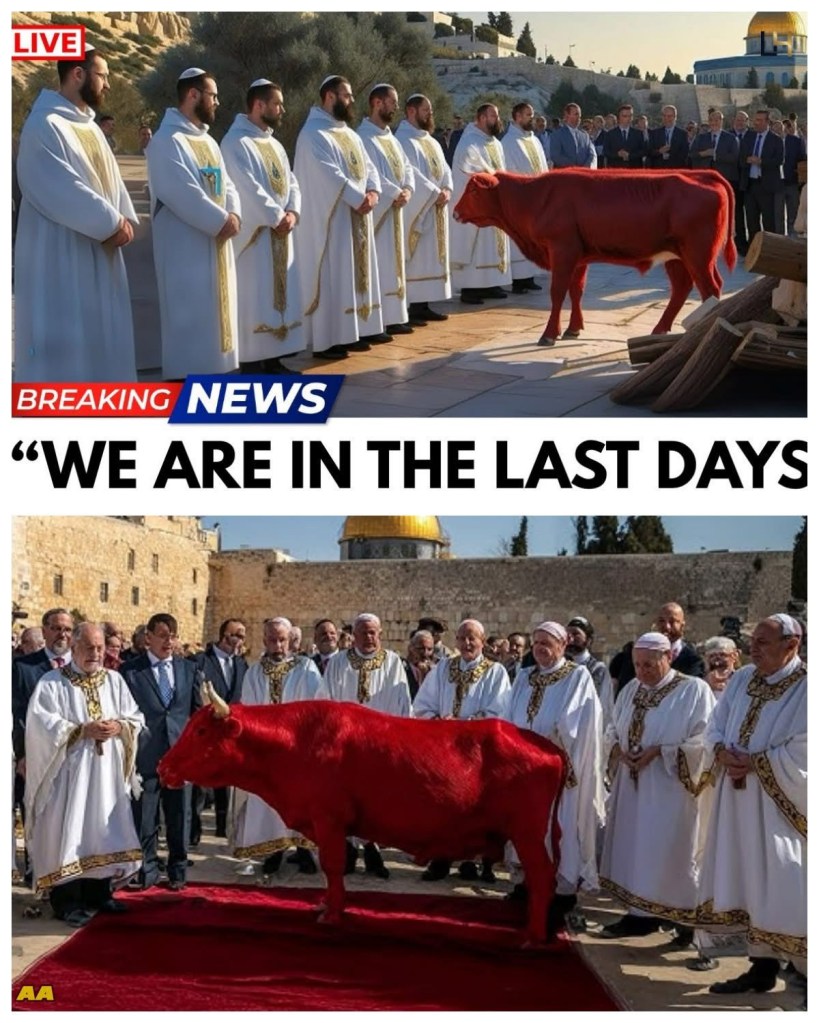





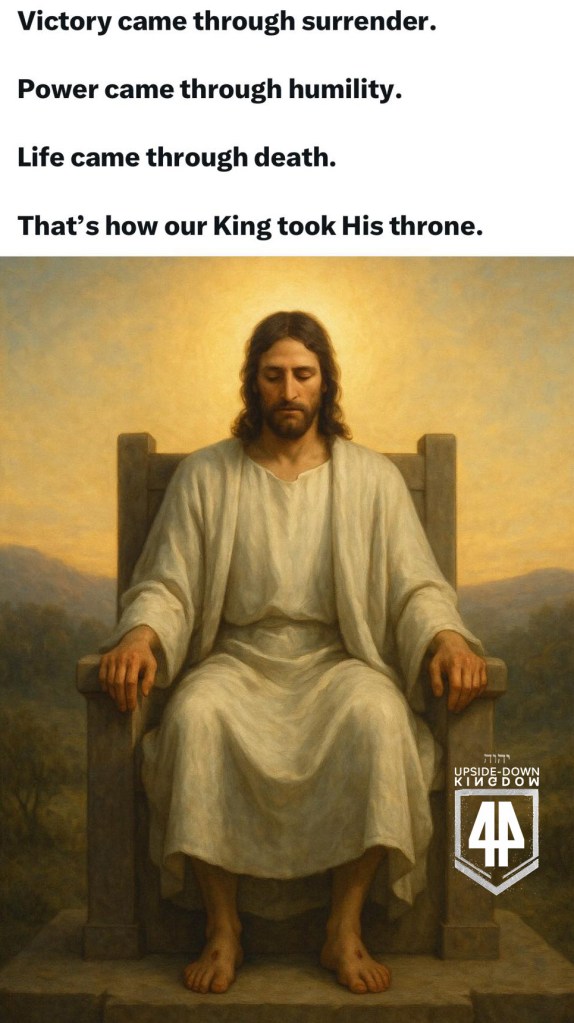






 EXPEDITION 44