The Mercy of God and the Death of the Innocent

Among the most difficult theological questions in Scripture is the apparent tension between the revealed character of YHWH and the repeated biblical accounts of divine judgment involving the destruction of entire populations, including children and others who bear no identifiable personal responsibility for the offenses being judged. Throughout Scripture, God is revealed as compassionate, merciful, patient, covenantally faithful, and committed to the restoration of his creation. Yet the same biblical canon contains accounts in which God not only permits catastrophic loss of life but is explicitly presented as its initiating agent. These narratives include the destruction of humanity in the flood (Gen 6–9), the annihilation of Sodom and Gomorrah (Gen 19), the death of Egypt’s firstborn (Exod 12), the destruction of households associated with Korah’s rebellion (Num 16), the conquest of Jericho (Josh 6), the command to destroy the Amalekites, including infants and nursing children (1 Sam 15:3), and the death of David’s infant son following the king’s transgression (2 Sam 12:15–18). Taken together, these accounts present something considerably more difficult than an isolated passage requiring historical clarification. They raise a sustained theological problem concerning the relationship between divine sovereignty, human innocence, covenant judgment, and the very nature of God.

The difficulty becomes especially pronounced when these narratives are read alongside YHWH’s self-revelation in Exodus 34:6–7. Following Israel’s rebellion with the golden calf, God reveals himself to Moses as רַחוּם וְחַנּוּן (raḥûm weḥannûn), compassionate and gracious; אֶרֶךְ אַפַּיִם (ʾerekh ʾappayim), slow to anger; and רַב־חֶסֶד וֶאֱמֶת (rav-ḥesed weʾemet), abounding in covenant loyalty and faithfulness. The language is not incidental. It becomes one of the most frequently recalled confessions of God’s character in Israel’s theological memory, appearing in various forms throughout Numbers 14:18, Nehemiah 9:17, Psalms 86:15 and 103:8, Joel 2:13, and Jonah 4:2. The Hebrew raḥûm, associated with the verbal root רחם (rḥm), carries the semantic field of compassion and deep tenderness, while ḥesed communicates enduring loyalty expressed through covenantal relationship. These qualities are not merely occasional divine behaviors; they belong to Israel’s foundational confession concerning who YHWH is.[1]

The same confession, however, includes the difficult declaration that God does not simply leave guilt unaddressed and that the consequences of ancestral iniquity may extend into subsequent generations. Exodus 34:7 employs the expression פֹּקֵד עֲוֹן אָבוֹת עַל־בָּנִים (poqed ʿawon ʾavot ʿal-banim), conventionally understood as visiting the iniquity of fathers upon children. The verb paqad can denote attending to, overseeing, reckoning with, or bringing an account into consideration. The text therefore holds divine mercy and intergenerational accountability together, but it does not explicitly explain why morally innocent children would be subjected to death because of the failures of their parents. Indeed, the problem intensifies when we encounter Deuteronomy 24:16, which expressly prohibits putting children to death for their fathers’ sins, and Ezekiel 18:20, which declares that a child shall not bear the iniquity of the parent. These texts cannot simply be dismissed as unrelated legal technicalities. They reveal that personal responsibility is itself a concern of covenant justice. While Deuteronomy addresses human judicial conduct and does not directly legislate divine action, it raises an unavoidable question: how are we to understand the moral consistency of the God who commands justice among his people when biblical narratives attribute to that same God the destruction of persons who appear innocent of the offenses being punished?

Numbers 16 illustrates this tension with particular clarity. When Moses confronts the rebellion of Korah, Dathan, and Abiram, the narrative places the wives, sons, and little children of Dathan and Abiram at the entrances of their tents (Num 16:27). The Hebrew טַפָּם (ṭappām) refers to their little ones or dependents, emphasizing individuals who cannot reasonably be assumed to share the informed culpability of the rebellious leaders. Shortly afterward, the earth opens and swallows the households. Moses himself had already raised the moral question when he and Aaron appealed to God: would the sin of one man provoke divine anger against the entire congregation (Num 16:22)? The narrative then describes a judgment that appears to reach beyond the guilty. Numbers 26:11 subsequently clarifies that Korah’s sons did not die, an important qualification to any overly comprehensive reading of the destruction, but it does not establish that the children of Dathan and Abiram survived. The theological question remains whether the death of innocent dependents can properly be identified as an expression of the compassionate character revealed in Exodus 34.[2]

This difficulty is not overcome by distinguishing the God of the Hebrew Scriptures from the God revealed in Jesus Christ. Such a distinction would be foreign to the theological claims of the New Testament. Jesus identifies himself with the mission and purposes of Israel’s God, while the apostolic writings present him as the definitive revelation of the Father. Hebrews 1:1–3 describes the Son as the exact representation of God’s being, and John 1:18 presents the Son as the one who makes the unseen Father known. Jesus’ declaration in John 14:9, that whoever has seen him has seen the Father, places considerable interpretive weight upon his life and ministry. His treatment of enemies, children, outsiders, sinners, and the religiously excluded must therefore inform Christian reflection upon divine character. Jesus welcomes little children, commands love for enemies, rebukes disciples who wish to summon destructive fire upon a Samaritan village, and prays for those responsible for his execution (Luke 9:51–56; 18:15–17; 23:34). Nevertheless, the New Testament also preserves stern warnings of judgment, including sayings attributed to Jesus himself. A Christological hermeneutic cannot resolve the difficulty merely by identifying violence with the Old Testament and mercy with the New. The theological task is to understand how judgment and mercy coexist within the revelation of the one God whose character is made known in Christ.

This has long been, in my personal estimation, the most difficult theological problem to reconcile in the biblical canon. The problem is not primarily the existence of divine judgment. A God who never confronted evil, oppression, or covenant unfaithfulness could hardly be described as just. Rather, the difficulty concerns the destruction of those who are not themselves morally accountable for the rebellion being judged. A newborn Egyptian firstborn cannot meaningfully be assigned Pharaoh’s culpability. An Amalekite nursing infant cannot be treated as an informed participant in generations of hostility against Israel. David’s child cannot reasonably be held responsible for the king’s adultery and orchestration of Uriah’s death. The seriousness of human sin does not settle the question of the innocence of those who suffer because of it. Nor does a future benefit automatically establish the moral legitimacy of an earlier harm.

One may affirm that Scripture is coherent in its ultimate theological witness without claiming that every text is immediately reconcilable at the level of surface description. The challenge, then, is not to announce a contradiction within Scripture and abandon the question, nor to force the texts into agreement through assertions that leave their moral implications unexplored. It is to investigate whether the biblical canon itself provides categories for understanding divine judgment within a larger redemptive horizon. Traditional Christian theology has offered several important explanations, many of which preserve genuine biblical truths. Three approaches in particular deserve careful consideration. Yet, in my estimation, each leaves an unresolved difficulty and can require considerable theological maneuvering to reconcile the destruction of innocent people with God’s confessed compassion. I wish to explore another possibility, rooted in ancient Jewish understandings of death, the intermediate state, Christ’s proclamation to the dead, and the possibility that divine judgment, even when involving physical death, does not necessarily represent God’s final disposition toward those who perish.

The first traditional explanation appeals to the absolute sovereignty of God as creator and sustainer of life. Since life originates in God and remains dependent upon his sustaining will, God possesses authority over its beginning and termination in a manner that human beings do not. Deuteronomy 32:39 declares that YHWH kills and makes alive, wounds and heals, while 1 Samuel 2:6 similarly attributes both death and life to divine agency. Job’s confession that YHWH gives and takes away is frequently invoked to emphasize creaturely dependence upon divine providence. Within classical Christian theology, this account has often been developed through the distinction between divine authority over life and the moral limitations imposed upon human creatures. Human beings may not take innocent life because they do not possess unrestricted sovereignty over another person’s existence. God, however, as the giver of life, is understood to possess an authority that transcends ordinary human jurisdiction.[3]

There is considerable theological force in this argument. Any serious doctrine of creation must acknowledge that humanity does not exist autonomously and that divine authority cannot simply be reduced to human categories of legal ownership or moral jurisdiction. Yet sovereignty, by itself, establishes authority rather than demonstrating the goodness of a particular exercise of authority. The question is not whether God has the power to terminate physical life but why terminating the life of an innocent child would constitute an expression of divine justice or compassion. To argue that an action is morally good solely because God performs it risks making divine goodness indistinguishable from unrestricted power. Scripture, however, repeatedly invites reflection upon God’s actions according to recognizably moral categories. Abraham’s question in Genesis 18:25—whether the Judge of all the earth will do justice—presupposes that divine judgment is meaningfully connected to justice rather than exempt from its evaluation. Moses’ intercession in Numbers 16:22 similarly appeals to the apparent injustice of indiscriminate destruction.

A more developed doctrine of sovereignty therefore needs to distinguish between God’s rightful authority over human life, his moral purposes in the exercise of that authority, and the particular means through which his judgment is accomplished. Without these distinctions, the argument effectively becomes that God is necessarily just even where the reasons for his action remain inaccessible. Such an appeal may be consistent with certain understandings of providence, but it does not fully reconcile the moral tension. It relocates the tension into an assertion of unknowable divine prerogative. Moreover, the God revealed in Exodus 34 is not described merely as sovereign but as compassionate, patient, and faithful. A sufficient theological account must explain how sovereignty is exercised in accordance with those attributes rather than treating sovereignty as an answer that renders further moral inquiry unnecessary.

The second traditional explanation appeals to the corporate character of ancient Israelite society and the broader ancient Near Eastern understanding of household, kinship, and covenant identity. In this worldview, moral action was rarely conceived as affecting only the isolated individual. The Hebrew בַּיִת (bayit), meaning house or household, could encompass children, extended relatives, servants, possessions, and successive generations. The behavior of a household’s representative could affect the social, economic, political, and religious welfare of the entire group. Biblical narratives frequently operate within this corporate framework, particularly where rebellion threatens covenant identity or communal holiness. The account of Achan in Joshua 7, the destruction of the households in Numbers 16, and the judgment upon Egypt’s firstborn all reflect, in different ways, the collective dimensions of ancient covenant life. Such accounts should not be interpreted as though they were written within the individualistic moral assumptions of modern Western society.[4]

Corporate solidarity, however, describes the social framework within which the narratives operate; it does not independently demonstrate the moral legitimacy of every consequence experienced by members of the group. There is a meaningful distinction between recognizing that children suffer because of their parents’ decisions and affirming that those children deserve punishment for decisions they did not make. Indeed, the Torah itself complicates a simplistic corporate model. Deuteronomy 24:16 rejects substituting one generation for another in judicial execution, while Ezekiel 18 challenges the assumption that ancestral wrongdoing establishes the guilt of descendants. Jeremiah 31:29–30 similarly anticipates an understanding of responsibility in which individuals answer for their own wrongdoing. These texts need not eliminate every form of corporate consequence to establish the important principle that inherited consequences and inherited moral culpability are not synonymous.

The problem is particularly apparent where the narrative depicts God as directly initiating destruction rather than merely allowing a community to experience the foreseeable consequences of collective decisions. Children may suffer famine because of a king’s policies, but the moral question becomes more difficult when the text portrays God as intentionally destroying those children as part of judgment upon the king. The claim that the household constituted a single covenantal unit helps us understand why an ancient narrator might describe the event corporately. It does not explain why the God who prohibits the judicial execution of children for parental wrongdoing would enact a judgment involving their deaths. Corporate solidarity remains an indispensable historical consideration, but it cannot function as a complete theological reconciliation.

A third approach locates the difficulty in the historical and literary character of biblical revelation. Ancient Near Eastern literature often attributed political, military, and natural events to divine agency, interpreting national victories and catastrophes through the theological assumptions of the communities preserving those traditions. Accounts of conquest could also employ sweeping destruction formulas, describing the elimination of entire populations in language that did not always correspond to literal demographic annihilation. Biblical texts participate in this literary environment while also revising its theological assumptions. The apparent tension between Joshua’s descriptions of comprehensive conquest and Judges’ accounts of surviving Canaanite populations illustrates why ancient victory rhetoric requires careful examination. Likewise, Numbers 16 displays literary complexities concerning the interwoven accounts of Korah and the Reubenite rebels, while Numbers 26:11 explicitly preserves the survival of Korah’s sons.[5]

This approach becomes more theologically significant when combined with progressive revelation. It proposes that divine revelation was received, narrated, and interpreted within the developing historical understanding of Israel, culminating in the revelation of God through Jesus Christ. The differing attributions of David’s census in 2 Samuel 24:1 and 1 Chronicles 21:1 provide a particularly interesting example: the former attributes the incitement to YHWH, while the latter attributes it to Satan. This difference does not necessarily establish that the earlier author was mistaken, since traditions of primary and secondary causation provide another plausible explanation. Nevertheless, it demonstrates that biblical texts may describe divine agency through differing theological perspectives. A Christocentric approach can therefore distinguish the inspired theological significance of a narrative from the assumption that every ancient description of divine causality constitutes an exhaustive explanation of God’s involvement.

The limitation is that this solution becomes increasingly difficult when applied universally to the biblical accounts of destructive judgment. We are not dealing with a single disputed metaphor or one ambiguous historical tradition. Across multiple literary genres and historical settings, Scripture repeatedly and explicitly associates YHWH with catastrophic destruction. To claim that these attributions consistently reflect inadequate ancient understandings of God places a considerable burden upon the doctrine of inspiration and upon the reliability of the narratives themselves. Literary conventions can help explain the language of total destruction but cannot be used indiscriminately to deny the deaths of children who are explicitly included within the accounts. Nor can progressive revelation become a convenient mechanism for rejecting every earlier text that challenges a preferred theological formulation. Although this model has substantial interpretive value, I remain unconvinced that it adequately resolves the cumulative moral problem. It may explain how the texts were written without fully addressing what their testimony implies about divine character.

An alternative approach begins not by diminishing divine agency in the judgment narratives but by questioning whether physical death represents the termination of God’s redemptive dealings with those who die. Much traditional discussion assumes that the destruction of a person within a biblical judgment constitutes that individual’s final encounter with divine justice, or at least fixes irreversibly the person’s eternal condition. Yet this assumption deserves examination. The Hebrew Scriptures, Second Temple Jewish literature, and early Christian writings preserve an extensive range of traditions concerning the realm of the dead, the intermediate condition of departed persons, future resurrection, judgment beyond physical death, and the possibility of divine activity among those who have already died. Although these traditions do not establish a uniform doctrine of postmortem repentance, they provide a conceptual framework in which death and final judgment need not be understood as identical events.

The importance of this distinction becomes apparent when we return to the innocent victims of divine judgment. If physical death ends the possibility of any further encounter with divine grace, then the death of an innocent child appears not only tragic but potentially an irreversible exclusion from the fulfillment of that child’s created purpose. If, however, the dead remain within God’s redemptive horizon and await a resurrection in which justice, restoration, and reconciliation may yet be realized, the theological implications change considerably. A child killed during the destruction of Jericho or in the judgment upon Egypt would not necessarily have been rejected by God, even if the narrative attributes the catastrophe to divine judgment. This does not establish that the child’s death was morally necessary or justified. It does, however, challenge the assumption that temporal destruction and eternal condemnation must be understood as inseparable.

Such a proposal must avoid confusing three distinct claims. The first is that the dead exist in an intermediate condition before final resurrection and judgment. The second is that God may act redemptively toward persons in that condition, including through proclamation, revelation, or purification. The third is that all persons will eventually respond positively and experience complete reconciliation. The first has substantial support within Jewish and Christian eschatological traditions. The second is more contested but possesses important textual and historical witnesses. The third constitutes the much larger claim associated with universal reconciliation and remains a disputed question within Christian theology. My proposal does not depend initially upon affirming all three. It begins by asking whether the first two provide a more adequate framework for approaching the deaths of those who appear innocent within the biblical judgment narratives.

The principal Hebrew designation for the realm of the dead is שְׁאוֹל (šĕʾôl), usually transliterated Sheol. Within the Hebrew Scriptures, Sheol is not consistently presented as the equivalent of later Christian conceptions of hell. It is the domain associated with the dead, the grave, darkness, silence, and separation from ordinary participation in earthly life. Jacob anticipates descending to Sheol in grief over Joseph (Gen 37:35), while Job describes Sheol as a place to which human beings descend irrespective of their earthly prosperity or suffering (Job 3:11–19; 7:9). Psalm 88 presents the realm of the dead as a place of profound darkness and abandonment, whereas Psalm 139:8 strikingly declares that even Sheol lies within the reach of God’s presence. These portrayals do not amount to a developed doctrine of the afterlife, but they resist the assumption that physical death necessarily constitutes a final judicial verdict concerning eternal destiny.[6]

The ancient Israelite conception of the person is also important. The Hebrew נֶפֶשׁ (nepeš) generally denotes a living being, life, or the person understood as a whole, rather than functioning consistently as the Greek philosophical concept of an independently immortal soul. Likewise, רוּחַ (rûaḥ) can refer to breath, wind, spirit, or the life-giving activity associated with God. Biblical anthropology is therefore not adequately summarized through a rigid separation between an immortal soul and a disposable material body. Resurrection, especially as it develops in later biblical literature, concerns the vindication and restoration of embodied human existence. Daniel 12:2 is particularly significant because it anticipates the awakening of those who sleep in the dust, some to everlasting life and others to shame and contempt. Isaiah 26:19 similarly expresses the hope that the dead shall live and rise. These passages establish that death does not necessarily exhaust the possibility of future divine judgment or restoration.

The idea of an intermediate condition becomes more developed in Second Temple Jewish literature. First Enoch 22 presents a visionary account of the souls of the dead gathered within distinct compartments while awaiting an appointed day of judgment. The angel Raphael explains that these places have been prepared to receive the dead until the great judgment. Particularly notable is the portrayal of Abel, whose spirit continues to appeal for justice after his murder. Here the dead are not simply absent from divine concern. Their condition remains connected to unresolved justice, and their final disposition lies in the future. However, this passage should not be overstated. First Enoch 22 does not clearly teach universal postmortem repentance; indeed, its different compartments include severe expectations for the wicked. Its significance for the present argument is more limited but still substantial: death and final judgment are differentiated, and the dead await an eschatological resolution beyond their earthly circumstances.[7]

A related but somewhat different picture appears in 4 Ezra 7:75–101, a Jewish apocalypse written in the aftermath of the destruction of Jerusalem. The text describes the experiences of departed spirits before the final renewal of creation, distinguishing the condition of the righteous from that of the wicked. The dead are conscious of their moral history and of the judgment that awaits them. Yet this witness also exposes a significant obstacle to any easy doctrine of a second opportunity, since 4 Ezra 7:82 expressly describes the wicked as unable to repent in order to obtain life after death. This evidence is important because Second Temple Judaism was not theologically uniform. Some Jewish traditions imagined an intermediate realm in which the dead awaited judgment, while others strongly emphasized the irreversible consequences of earthly decisions. An appeal to Jewish eschatology must therefore acknowledge diversity rather than treating the entire period as though it possessed a single, established doctrine of postmortem conversion.[8]

The parable of the rich man and Lazarus in Luke 16:19–31 reflects this larger world of Jewish eschatological imagination. The dead are depicted as conscious, differentiated in their circumstances, and awaiting a larger eschatological fulfillment. Lazarus rests in Abraham’s bosom, while the rich man experiences anguish in Hades. The Greek ᾅδης (hadēs), regularly used in the Septuagint for Hebrew Sheol, designates the realm of the dead and does not necessarily carry every later theological association attached to the English term hell. The narrative also describes a great chasm separating the two conditions, a detail that must be taken seriously by any proposal concerning postmortem repentance. Whether this parable should be interpreted as a literal geography of the intermediate state remains disputed; its primary rhetorical concern is the reversal of earthly status and the responsibility to heed Moses and the prophets. Nevertheless, it confirms that Jesus could employ a recognizable Jewish conceptual framework in which death did not immediately eliminate consciousness, moral differentiation, or expectation.

The Christian confession that Jesus descended to the dead introduces a potentially decisive development. Within early Christian theology, the death and resurrection of Jesus were not merely events occurring among the living but constituted a victory extending into the realm of death itself. The Apostles’ Creed eventually articulated this conviction through the confession that Christ descended to the dead, traditionally expressed in Latin as descendit ad inferos. This formulation should not automatically be equated with the claim that Jesus entered the place of final condemnation or suffered additional punishment there. Rather, in important strands of historic Christian interpretation, the descent signifies that Christ truly entered the condition of the departed and that his redemptive victory extends beyond the boundaries of earthly life. The precise nature of that descent, its beneficiaries, and the content of Christ’s activity there have been debated throughout Christian history.[9]

First Peter 3:18–20 is central to the discussion. Following the statement that Christ suffered for sins, the righteous for the unrighteous, the author declares that Christ was put to death in the flesh but made alive in the spirit, ἐν ᾧ καὶ τοῖς ἐν φυλακῇ πνεύμασιν πορευθεὶς ἐκήρυξεν (en hō kai tois en phylakē pneumasin poreutheis ekēryxen), commonly rendered as a proclamation made to the spirits in prison. The verb κηρύσσω (kēryssō) means to proclaim or herald and does not by itself establish that the message offered repentance or salvation. The reference to the days of Noah is especially intriguing because it connects Christ’s proclamation to one of the most devastating accounts of corporate destruction in the Hebrew Scriptures. If the imprisoned spirits are interpreted as deceased human beings from the flood generation, the text would appear to demonstrate that those who experienced catastrophic judgment were not thereby beyond the reach of Christ’s proclamation.

There are, however, substantial interpretive disagreements. Some understand the spirits as the rebellious heavenly beings associated with Genesis 6 and the Watchers traditions preserved in First Enoch 6–15. In this interpretation, Christ announces his victory over imprisoned cosmic powers rather than extending salvation to deceased human beings. Others understand Christ to have preached through Noah to people who were alive before the flood but are now described as imprisoned spirits. A third interpretation, prominent in portions of early Christian tradition, understands the passage as Christ’s proclamation to the human dead during his descent. These possibilities cannot be collapsed into a single uncontroversial reading. The Enochic context provides strong support for the angelic interpretation, while the broader history of interpretation demonstrates that a proclamation to the human dead was an early and influential Christian understanding.[10]

First Peter 4:6 presents an equally important and perhaps more promising passage: εἰς τοῦτο γὰρ καὶ νεκροῖς εὐηγγελίσθη (eis touto gar kai nekrois euēngelisthē), commonly translated, “For this reason the gospel was preached even to the dead.” Unlike the verb employed in 3:19, εὐαγγελίζομαι (euangelizomai) explicitly denotes the proclamation of good news. The passage continues by describing a purpose in which people, though judged according to human standards in the flesh, might live according to God in the spirit. The central disagreement concerns whether the recipients were already dead when the gospel was proclaimed or whether they heard the gospel during earthly life and subsequently died. David Horrell has argued that the former interpretation remains more defensible than many modern commentators acknowledge. If so, the passage provides meaningful textual grounds for investigating the possibility that the redemptive proclamation of Christ reaches beyond physical death.[11]

The importance of this possibility should not be minimized, particularly when considering the flood narrative. If those who died during Noah’s generation remained subjects of divine concern and encountered the proclamation of Christ, then their physical destruction did not necessarily constitute God’s final word concerning them. A judgment that terminated their historical existence could still be followed by an opportunity to encounter divine truth. Such an interpretation would not establish that all responded favorably, nor would it demonstrate that the deaths themselves were morally justified. Nevertheless, it would significantly modify the assumption that divine destruction and eternal exclusion must coincide. The God revealed as compassionate in Exodus 34 might continue to extend mercy even beyond the temporal judgments attributed to him within Israel’s historical narratives.

Jesus’ exchange with the repentant criminal in Luke 23:39–43 provides another important dimension. As one of the crucified men appeals to Jesus to remember him when he comes into his kingdom, Jesus responds that the man will be with him in paradise. The Greek παράδεισος (paradeisos) derives from an older Iranian term associated with an enclosed garden or park and appears in the Greek Scriptures in connection with garden imagery, particularly Eden. Within Jewish and early Christian eschatological discourse, paradise could designate a place or condition of blessedness associated with the righteous dead and the anticipated renewal of creation. Jesus’ promise therefore suggests fellowship with him beyond the immediate event of physical death, even though the thief will not live to participate in the earthly ministry of the emerging church.

This passage is commonly joined with the traditions of Abraham’s bosom and Christ’s descent to suggest that the righteous dead awaited the fulfillment of redemption within a blessed intermediate condition. Such an association is theologically plausible, though the relevant texts do not explicitly identify paradise and Abraham’s bosom as identical locations. Nor does Luke 23 independently demonstrate that the thief descended with Jesus into precisely the same realm described in 1 Peter 3. The account primarily establishes that the thief’s death does not prevent his participation in the saving presence of Jesus. The familiar debate concerning the placement of the comma in Jesus’ statement also deserves mention, since the earliest Greek manuscripts did not contain modern punctuation. The conventional reading attaches “today” to Jesus’ promise of companionship, and this remains the most natural reading in the immediate Lukan context, although alternative punctuation has been proposed.

The broader theological implication concerns the ability of Christ’s presence to transcend physical death. If the thief can enter into communion with Christ beyond the grave, and if Christ’s descent involves the proclamation of divine victory or good news among the dead, then the intermediate state may need to be understood not merely as passive waiting but as a domain reached by the Messiah’s redemptive accomplishment. This is compatible with the historic Christian confession of Christ’s descent, but a crucial distinction must be retained: the descent of Christ to liberate the righteous dead is a historically orthodox Christian teaching; the assertion that all deceased persons receive a new opportunity for repentance is a further, disputed theological proposal. The Roman Catholic Catechism, for example, explicitly affirms Christ’s descent to the realm of the dead while distinguishing his liberation of the righteous from the deliverance of the damned. It therefore supports the larger doctrine of Christ’s activity among the dead without endorsing an unrestricted postmortem offer of salvation.[12]

This distinction is essential for the argument. It would be historically inaccurate to describe universal postmortem conversion as the established orthodox doctrine of the early church. Yet it would be equally inaccurate to suggest that Christian tradition uniformly imagined death as a boundary beyond which Christ exercised no further redemptive activity. The descent tradition stands as an important witness that the victory of Jesus extends into the realm of those who died before his historical ministry. The question is whether this reality should be understood as an exceptional event associated with the transition between the covenants or as the disclosure of something enduring about the redemptive character of God.

A further dimension emerges from Jewish practices associated with the remembrance of the dead and the expectation of resurrection. The clearest pre-Christian Jewish textual witness to prayer on behalf of the dead appears in 2 Maccabees 12:38–46. Following a battle in which Jewish soldiers were killed, Judas Maccabeus and his companions discovered forbidden objects associated with idolatry among the possessions of the fallen. The community prayed that the offense might be forgiven, and Judas collected funds to provide an offering at Jerusalem. The narrator explicitly connects this action to the expectation of resurrection, arguing that prayer for the dead would be meaningless if the fallen were not expected to rise again. This is a remarkable witness to the conviction that the moral and eschatological condition of the deceased remained within the concern of the living covenant community.[13]

The historical setting needs to be understood accurately. The passage describes a collection for a purification offering in Jerusalem, not the construction of individual altars over the graves of the dead. Although burial sites, memorial practices, and care for ancestors were known throughout the ancient Near East, the Hebrew Bible does not establish a normative system of erecting altars to pray deceased Israelites into reconciliation. Indeed, the Torah sharply restricts ritual engagement with the dead, particularly where necromancy and the consultation of departed spirits are concerned (Deut 18:10–12). The intercession described in 2 Maccabees belongs to a different category from the forbidden attempt to obtain information or power from the dead. Its theological concern is that those who have died remain persons for whom forgiveness and future resurrection are meaningful realities.

The canonical status of 2 Maccabees differs among Christian traditions. It is received as Scripture in Roman Catholic and Eastern Orthodox contexts, while most Protestant traditions classify it among the Apocrypha rather than the canonical books of the Old Testament. Regardless of one’s canonical commitments, the account provides important evidence for the theological imagination of Second Temple Judaism. It also became significant for later Christian discussions of prayer for the dead, purification, and the intermediate state. The Catholic doctrine of purgatory should not simply be identified with universal reconciliation or an unrestricted second chance after death. Within Catholic theology, purgatory concerns the purification of those already destined for salvation, not a general postmortem conversion of the finally unrepentant. Nevertheless, the practice of praying for the dead reflects the broader conviction that the departed are not beyond God’s concern and that the living community continues to participate in hope for their eschatological well-being.

The language of reconciliation provides an important theological framework for interpreting such practices. If persons who died in sin may still be objects of prayer, and if the efficacy of those prayers is associated with future resurrection, then the community’s relationship to the dead is not defined exclusively by the finality of earthly circumstances. They remain brothers, sisters, ancestors, and members of a history that God has not yet fully brought to completion. This does not establish that every deceased person can repent after death, but it demonstrates that portions of Jewish and Christian tradition have refused to regard the boundary of physical death as the termination of every meaningful relationship between the departed and God’s redemptive purposes.

Any account of postmortem restoration must also consider whether divine judgment is fundamentally retributive, corrective, restorative, or some combination of these. The Hebrew Scriptures employ a variety of metaphors for judgment, including fire, refining, cleansing, and purification. Malachi 3:2–3 describes YHWH as a refiner’s fire and fullers’ soap, purifying the descendants of Levi so that their offerings may once again be acceptable. Isaiah 1:25 similarly depicts divine action as the removal of dross, while Isaiah 4:4 associates cleansing with a spirit of judgment and burning. These passages reveal an important biblical pattern: the purpose of divine judgment may be the removal of impurity rather than the annihilation of the person or community undergoing purification. Judgment, in such contexts, serves covenant restoration.

This restorative dimension is also reflected in texts concerning the nations. Isaiah 19:22 declares that YHWH will strike Egypt, striking and healing, and that the Egyptians will return to YHWH, who will respond to their pleas and heal them. The Hebrew pairing of נָגַף (nāgap, to strike) and רָפָא (rāpāʾ, to heal) is theologically arresting. Egypt, the nation associated with Israel’s oppression and the death of the firstborn, is nevertheless imagined as a people capable of returning to YHWH and receiving divine healing. Isaiah 19:23–25 extends the vision further, presenting Egypt and Assyria alongside Israel within an extraordinary oracle of blessing. Such passages make it difficult to regard national judgment as necessarily synonymous with irrevocable national rejection. The prophetic imagination is capable of envisioning the restoration of peoples previously subjected to divine destruction or condemnation.

Hosea 11:8–9 likewise portrays YHWH’s compassion in striking tension with impending judgment. God’s heart recoils at the prospect of delivering Ephraim to destruction, and the declaration that God is divine rather than human becomes the reason for restraint rather than a justification for unlimited wrath. Lamentations 3:31–33 similarly declares that the Lord will not reject forever and that affliction does not arise willingly from his heart. The Hebrew expression מִלִּבּוֹ (millibbô), literally “from his heart,” is particularly significant. The passage acknowledges divine affliction while distinguishing it from God’s fundamental disposition toward his people. Although these texts concern particular covenant communities and should not automatically be universalized to every human being, they establish a genuine prophetic pattern in which judgment is situated within a larger movement toward compassion, healing, and restoration.

The New Testament expands this imagery through its account of judgment by fire. First Corinthians 3:13–15 describes the testing of human works, some of which are consumed while the person is saved through fire. Paul is addressing the work of Christian builders and ministers, so the passage should not be treated as a direct exposition of universal postmortem purification. Nevertheless, it demonstrates that destructive fire and personal salvation are not necessarily mutually exclusive theological categories. Hebrews 12:5–11 likewise portrays divine discipline as ordered toward holiness, though its immediate concern is God’s formation of his children during their earthly lives. These passages provide conceptual resources for distinguishing the destruction of what is evil from the ultimate destruction of those in whom evil has taken root.

A significant historical development of this understanding appears in the theology of Gregory of Nyssa. In his reflections on the soul, resurrection, freedom, and the final restoration of creation, Gregory develops a conception of purification in which evil is removed so that the created person may be restored toward the goodness for which humanity was intended. His thought participates in a larger early Christian discussion concerning ἀποκατάστασις (apokatastasis), or restoration, associated also with Origen and later theological debates. The precise relationship between Gregory’s thought and modern universalism requires careful qualification, but his work demonstrates that the relationship between judgment, purification, and ultimate restoration was a serious concern within patristic theology rather than merely a modern attempt to soften difficult biblical texts.[14]

The moral implications for the present discussion are significant. If judgment is understood as restorative rather than exclusively retaliatory, then those who die under divine judgment may not necessarily be understood as permanently excluded from the possibility of communion with God. Yet an essential distinction must again be maintained concerning innocent children. A child killed as part of a corporate judgment does not require purification from the guilt of a rebellion in which the child did not participate. Any account of restoration must therefore recognize the difference between the correction of genuine moral evil and the healing of innocent persons who suffered through the actions of others. The former may involve repentance and refinement; the latter requires vindication, resurrection, and the restoration of a life prematurely interrupted. A theology that subjects innocent children to punitive purification for ancestral offenses would merely recreate the original moral problem in the afterlife.

The possibility that God’s redemptive activity continues beyond physical death naturally leads to the larger question of universal reconciliation. Within Christian theology, this view is often called universal reconciliation, Christian universalism, or, in certain historical contexts, apokatastasis. Although these expressions are not always interchangeable, they share an interest in whether God’s ultimate victory over evil includes the eventual restoration of every human person. This differs from the narrower claim that Christ proclaimed good news to some of the pre-Christian dead. Universal reconciliation proposes that divine judgment, however severe, does not finally defeat God’s restorative purposes and that the consummation of redemption results in the reconciliation of all persons to God.

Several Pauline passages provide significant material for this discussion. Romans 5:18–19 establishes a sweeping correspondence between Adam’s trespass and Christ’s righteous act. The Greek expression εἰς πάντας ἀνθρώπους (eis pantas anthrōpous), “to all human beings,” appears within Paul’s contrast between condemnation through Adam and justification leading to life through Christ. Universalist interpreters emphasize the parallel scope of these statements, arguing that the redemptive work of Christ is presented as no less comprehensive than the consequences of Adam’s transgression. Other interpreters maintain that the universal language describes the extent or availability of Christ’s saving accomplishment without necessarily asserting the salvation of every individual. The interpretive question concerns whether Paul’s parallelism implies an identical final population on both sides or whether the broader argument introduces distinctions concerning those who receive the gift of grace.

First Corinthians 15:22–28 offers a related but distinct argument. Paul declares that as all die in Adam, so all will be made alive in Christ, before describing the defeat of every opposing rule and authority and the destruction of death itself. The eschatological culmination occurs when the Son subjects all things to the Father so that God may be πάντα ἐν πᾶσιν (panta en pasin), “all in all.” The Greek vocabulary is expansive, although interpreters debate whether being made alive in Christ refers to universal resurrection or universal salvific participation. It is also necessary to distinguish the subjection of hostile powers from their reconciliation. Yet the passage unquestionably places the destruction of death within the larger accomplishment of Christ’s reign. Death is not presented as God’s final victory over humanity but as the last enemy overcome by the Messiah.

Colossians 1:19–20 may provide an even more direct theological statement concerning the scope of reconciliation. The text declares God’s purpose to reconcile τὰ πάντα (ta panta), “all things,” through Christ, making peace through the blood of his cross, whether things on earth or things in heaven. The verb ἀποκαταλλάσσω (apokatallassō) denotes reconciliation, and the cosmic scope of Paul’s language has generated considerable discussion regarding whether the final renewal encompasses the restoration of every rational creature or the comprehensive ordering of creation under Christ’s victorious lordship. Philippians 2:9–11 likewise anticipates every knee bowing and every tongue confessing the lordship of Jesus Christ, echoing Isaiah 45:23. The confession may be understood as willing worship or as universal acknowledgment of divine sovereignty, depending upon the interpreter’s broader theological commitments. Acts 3:21 adds the expression χρόνων ἀποκαταστάσεως πάντων (chronōn apokatastaseōs pantōn), referring to the times of restoration of all things spoken through the prophets. In context, this concerns the promised restoration of God’s purposes; whether it includes the eventual salvation of every individual is debated.

The universalist reading must also account for passages that appear to establish the possibility of definitive exclusion or destruction. Matthew 25:46 contrasts eternal punishment with eternal life, employing αἰώνιος (aiōnios) in both expressions. The word is related to αἰών (aiōn), meaning an age, but its contextual usage can express enduring or everlasting duration. It is therefore linguistically inadequate simply to assert that aiōnios always means temporary or age-limited. Second Thessalonians 1:9 speaks of everlasting destruction, while Revelation 20:11–15 portrays a final judgment involving the lake of fire and the second death. Hebrews 9:27 describes death followed by judgment, a sequence that provides little direct support for an unrestricted series of postmortem opportunities. These texts constitute substantial challenges to universal reconciliation and cannot be dismissed merely by appealing to divine love.

The most important issue for this proposal is therefore not simply whether Jesus descended to the dead, but whether the redemptive significance of that descent extends beyond those who died before his historical incarnation. Within traditional Christian interpretation, the descent is frequently understood as the liberation of the righteous who awaited the fulfillment of God’s promises. This raises an important historical distinction. Those who lived before the death and resurrection of Christ could not have responded to the gospel in precisely the same historical circumstances as those who encountered its proclamation afterward. The descent tradition thus provides a theological account of how Christ’s saving accomplishment reaches backward into human history. But does the same redemptive logic reach forward to those who die after the resurrection without having adequately encountered, understood, or responded to the Christ and His gospel?

The question is sharpened by the universal scope of Christ’s work. If his death and resurrection constitute the decisive defeat of sin, death, and the hostile powers, it is reasonable to ask whether the boundaries of physical existence restrict the reach of that victory. Romans 8:38–39 insists that neither death nor life can separate believers from the love of God in Christ Jesus, although the immediate promise concerns those already participating in that relationship. Revelation 1:18 presents the risen Jesus as possessing the keys of Death and Hades. The imagery communicates authority over the realm that previously held humanity captive. Yet authority over death does not, by itself, establish that every person within that realm will eventually experience reconciliation.

One theological possibility is that the descent of Christ discloses something enduring about God’s relationship to the dead: that judgment is not necessarily the cessation of divine address, and that the revelation of Christ may reach persons whose earthly lives ended before they possessed a meaningful opportunity to respond. Such a possibility is especially relevant to the innocent victims of biblical catastrophe, including infants and young children whose developmental condition renders the categories of conscious rebellion, repentance, and informed covenant allegiance inapplicable. In their case, the central issue is not necessarily a second opportunity for repentance but the fulfillment of a created destiny that earthly death prevented them from experiencing. Any coherent account must preserve the distinction between those who knowingly resist the good and those whose lives end before such a response is possible.

A further question concerns the scope of divine knowledge and human freedom. If God desires all people to be saved and to come to the knowledge of the truth, as 1 Timothy 2:4 declares, does the divine provision of saving grace necessarily cease at the moment of physical death? Conversely, if Scripture warns that judgment follows death, what grounds exist for asserting that opportunities for repentance remain available afterward? Neither question can be answered merely through an appeal to sovereignty. A robust theological account must explain how God’s desire for reconciliation, the reality of human response, the seriousness of evil, and the finality of eschatological judgment belong together. The possibility of postmortem proclamation should not be employed to diminish the urgency of discipleship, repentance, reconciliation, or participation in the kingdom of God during earthly life.

This brings the discussion back to the destruction of the innocent. Suppose the narratives of the flood, the Egyptian firstborn, Jericho, Amalek, and Numbers 16 describe genuine historical acts of divine judgment. Suppose also that those who perished were not universally or individually guilty of the offenses that precipitated the judgments. If the dead remain within the possibility of divine restoration, then physical destruction and final condemnation need not be identified. Those who died might yet encounter the righteous judgment and reconciling presence of Christ. For morally guilty persons, this could involve exposure, repentance, and transformation. For innocent victims, it would involve vindication, healing, and resurrection. Yet the possibility of such an outcome does not demonstrate that the initial deaths were necessary, proportionate, or morally justified. Any eventual reconciliation would need to address the original harm rather than merely render it insignificant.

The emerging theological proposal, then, is neither a denial of the biblical judgments nor an unqualified endorsement of universalism. It is an investigation into whether the biblical distinction between death and final judgment, the Second Temple expectation of an intermediate state, the Christian confession of Christ’s descent, and the possibility of eschatological restoration provide a more coherent framework for understanding divine violence. The central question remains whether temporal judgment can be distinguished from ultimate divine intention without weakening the moral force of the suffering described in the narratives. If God’s ultimate purpose is reconciliation, how does that purpose govern our understanding of judgments that appear to destroy the innocent? And if Christ’s victory reaches into the realm of the dead, what theological grounds exist for limiting that victory to those who died before his resurrection?

These are questions that require further examination before a conclusion concerning divine violence and ultimate reconciliation can responsibly be drawn.

Perhaps the greatest challenge in wrestling with these passages is not whether we can develop a theological framework capable of explaining every difficult act attributed to God, but whether we can emerge from that examination with greater confidence in the character of the One we worship. I have spent much of my life studying Scripture, teaching theology, and seeking to understand the nature of God through the Hebrew Scriptures, the world of Second Temple Judaism, and the revelation of Jesus Christ. Yet few questions have challenged me more deeply than the apparent destruction of innocent lives within the biblical accounts of divine judgment. I remain convinced that we do neither Scripture nor the character of God any service when we attempt to resolve these difficulties with simplistic appeals to sovereignty or assertions that whatever God does must necessarily be good, regardless of whether we can recognize goodness in the action itself. Biblical faith invites something more substantial. Abraham appealed to the justice of God, Moses appealed to his mercy, and the prophets repeatedly called Israel to understand YHWH through his covenant faithfulness. Their confidence was not rooted in the absence of difficult questions but in the conviction that God’s character was worthy of their deepest trust.

What encourages me most is that the biblical story does not end in the grave, nor does it culminate in the triumph of judgment over mercy. It culminates in Jesus Christ, who entered our suffering, embraced our mortality, descended into death, and emerged victorious over the very enemy that has held humanity captive since Eden. Whatever conclusions we ultimately reach concerning the intermediate state, postmortem repentance, or universal reconciliation, we cannot overlook the extraordinary significance of a God who refuses to leave his creation abandoned to death. The resurrection declares that death does not possess the final authority over human existence. This is particularly meaningful when considering those whose lives were interrupted through violence, catastrophe, injustice, or circumstances beyond their control. If our theology leaves us imagining that the innocent have somehow slipped beyond the reach of God’s compassion, I believe we have not yet taken seriously enough the implications of the resurrection.

I find myself increasingly drawn to the possibility that God’s redemptive work is far more extensive than the boundaries we have traditionally placed around it. I remain cautiously hopeful concerning universal reconciliation, though not convinced that Scripture permits us to declare it an inevitable outcome. Nevertheless, I am deeply convinced that the God revealed in Jesus has not surrendered his commitment to justice, mercy, or the restoration of creation. His judgments must ultimately be understood within that larger purpose, even where we lack the information necessary to explain their particular historical expression. I cannot confidently tell someone why an innocent child died in the judgment upon Egypt, in the conquest of Jericho, or in the destruction described in Numbers 16. Nor am I willing to suggest that such a child deserved death simply because the narrative associates the event with divine judgment. What I can affirm is that the same biblical witness which confronts us with those troubling accounts also reveals a God who hears the cries of the oppressed, remembers the forgotten, defends the vulnerable, and ultimately defeats death through the resurrection of his Son.

This understanding has profound implications for the way we live. Our theology of judgment inevitably shapes our posture toward those we believe have failed, rebelled, or wandered from the purposes of God. If we imagine divine holiness primarily through destruction, we may begin to regard condemnation, exclusion, and punishment as the highest expressions of faithfulness. But when we understand holiness through the life of Jesus, we encounter a different pattern. Jesus does not minimize evil or deny the seriousness of sin. He confronts it relentlessly, yet he moves toward the sinner with the possibility of repentance, healing, and restoration. His response to human brokenness is neither indifference nor a sentimental dismissal of accountability. It is a costly and courageous commitment to reconciliation. If this is how God has made himself known, then those who claim to follow him should be recognized not by their eagerness to announce judgment but by their willingness to participate in the ministry of reconciliation.

For the church, this means that we must recover a confidence in the goodness of God that produces goodness within us. We should be the first to defend the innocent, protect children, pursue justice for the vulnerable, and resist every temptation to justify suffering simply because it can be incorporated into a theological system. We should approach those who are spiritually wounded with compassion rather than suspicion, those who have rebelled with a genuine invitation to return, and those who are grieving with the hope that no tragedy is beyond God’s capacity to redeem. This is not a diminished view of divine judgment. It is a conviction that judgment, properly understood, must never be detached from the righteous and compassionate character of the Judge. The God who calls his people to practice mishpat, love ḥesed, and walk humbly with him (Mic 6:8) cannot be honored by a theology that treats justice and mercy as opposing interests.

I also believe this conversation should produce a deeper humility concerning the eternal destiny of others. We are frequently more confident about the boundaries of God’s mercy than Scripture authorizes us to be. We sometimes speak as though we possess exhaustive knowledge of what occurs beyond death, who has received a sufficient opportunity to respond to God, and precisely how divine judgment will unfold in the age to come. Yet the apostolic witness repeatedly directs our attention away from human mastery of these mysteries and toward the faithfulness of Christ. Our responsibility is to proclaim the gospel, call people to repentance, embody the kingdom, and participate in God’s reconciling work here and now. We need not diminish the urgency of that calling in order to hope that God’s mercy extends further than our present understanding. Christian hope is not a substitute for discipleship; it is one of the reasons discipleship can be pursued with such confidence and joy.

Ultimately, I return to the confession of Exodus 34 with a deeper appreciation for its theological significance. When YHWH revealed himself to Moses as compassionate and gracious, slow to anger, and abounding in covenant faithfulness, he gave Israel something far more enduring than an abstract definition of divine goodness. He disclosed the character upon which an entire covenant relationship could be established. That revelation finds its fullest Christian expression in Jesus, who demonstrates what divine faithfulness looks like when confronted with human violence, betrayal, rejection, and death. The cross does not reveal a God reluctantly persuaded to become merciful. It reveals the costly depths of the mercy that has always belonged to him. The resurrection then declares that neither human evil nor death itself can ultimately overthrow God’s redemptive purposes.

I may never possess a completely satisfying explanation for every biblical account of the destruction of the innocent. I am increasingly comfortable acknowledging that limitation without surrendering my confidence in Scripture or the character of God. Theological maturity does not require us to defend every difficult passage with equal certainty. It requires us to remain faithful to what God has made known while continuing to wrestle with what we do not yet understand. And what God has made known most clearly in Jesus is that his heart is directed toward the healing of the broken, the recovery of the lost, the reconciliation of enemies, and the restoration of his creation.

My hope, therefore, rests not in my ability to explain every divine judgment but in the One who has conquered death. I trust that the Judge of all the earth will indeed do what is right, not because justice is whatever divine power declares it to be, but because righteousness, compassion, and covenant faithfulness belong to the very character of God. I cannot tell you with certainty how every innocent life lost within the biblical narratives will be accounted for in the age to come. But I can hope, with substantial biblical and theological reason, that not one of those lives is forgotten, that resurrection places them within the reach of God’s final justice, and that the mercy revealed in Jesus is more profound than our present understanding of judgment allows us to comprehend.

And perhaps that is where this difficult theological journey should leave us: not with diminished concern for justice, not with indifference toward judgment, and certainly not with an unwillingness to ask difficult questions, but with a renewed determination to become people who reflect the character of the God we confess. People who love mercy because God is merciful, who pursue reconciliation because Christ has reconciled us, who protect the vulnerable because every human life bears the dignity of God’s creation, and who refuse to surrender hope because the tomb is empty.

Until every mystery is brought into the light of God’s final restoration, we will continue to walk in the Way of Jesus, trusting that the compassion revealed in his life is not an exception to the Father’s character, but its clearest and most faithful expression.


[1] See Exod 34:6–7; Num 14:18; Neh 9:17; Ps 103:8; Joel 2:13; Jonah 4:2. For the Hebrew vocabulary, consult Ludwig Koehler, Walter Baumgartner, and Johann Jakob Stamm, The Hebrew and Aramaic Lexicon of the Old Testament, trans. and ed. M. E. J. Richardson, 2 vols. (Leiden: Brill, 2001), s.vv. רחם, חסד, פקד.

[2] Num 16:22, 27–33; 26:9–11. For the textual distinction between the deaths of the rebels and the survival of Korah’s descendants, see the broader discussion of Numbers 16–17 in Jacob Milgrom, Numbers, JPS Torah Commentary (Philadelphia: Jewish Publication Society, 1990). See also Baruch A. Levine, Numbers 1–20: A New Translation with Introduction and Commentary, AB 4A (New York: Doubleday, 1993).

[3] Deut 32:39; 1 Sam 2:6; Job 1:21. For classical discussions of divine providence and moral authority, see Thomas Aquinas, Summa Theologiae 1.22 and 2–2.64.5–6. Aquinas’s treatment should be distinguished from the simpler assertion that divine power alone establishes moral goodness.

[4] See Deut 24:16; Ezek 18:1–32; Jer 31:29–30. For the relationship between corporate identity, covenant responsibility, and Israelite legal traditions, see Moshe Weinfeld, Deuteronomy 1–11: A New Translation with Introduction and Commentary, AB 5 (New York: Doubleday, 1991), alongside the pertinent laws in Deuteronomy 24.

[5] Compare Josh 6–12 with Judg 1; 2 Sam 24:1 with 1 Chr 21:1. For the ancient Near Eastern context of conquest language, see K. Lawson Younger Jr., Ancient Conquest Accounts: A Study in Ancient Near Eastern and Biblical History Writing, JSOTSup 98 (Sheffield: JSOT Press, 1990).

[6] Gen 37:35; Job 3:11–19; Pss 88; 139:8; Isa 26:19; Dan 12:2. See Philip S. Johnston, Shades of Sheol: Death and Afterlife in the Old Testament (Downers Grove, IL: InterVarsity Press, 2002).

[7] 1 Enoch 22:1–14, especially 22:3–4 and the presentation of Abel’s appeal. See George W. E. Nickelsburg and James C. VanderKam, 1 Enoch: A New Translation (Minneapolis: Fortress, 2012). The existence of differentiated intermediate conditions should not be conflated with a doctrine of universal postmortem repentance.

[8] 4 Ezra 7:75–101, especially 7:82. For the text and historical context, see Michael E. Stone, Fourth Ezra: A Commentary on the Book of Fourth Ezra, Hermeneia (Minneapolis: Fortress, 1990).

[9] See 1 Pet 3:18–22; 4:6; Acts 2:27–31; Eph 4:8–10. For the historical development of the descent tradition, see J. N. D. Kelly, Early Christian Creeds, 3rd ed. (London: Longman, 1972). Not all of these biblical texts independently require the doctrine of a descent to the realm of the dead.

[10] Chad Pierce, Spirits and the Proclamation of Christ: 1 Peter 3:18–22 in Its Tradition-Historical and Literary Context, WUNT 2/305 (Tübingen: Mohr Siebeck, 2011). See also D. N. Campbell and Fika J. van Rensburg, “A History of the Interpretation of 1 Peter 3:18–22,” Acta Patristica et Byzantina 19 (2008): 73–96.

[11] David G. Horrell, “Who Are ‘The Dead’ and When Was the Gospel Preached to Them? The Interpretation of 1 Pet 4.6,” New Testament Studies 49 (2003): 70–89. https://doi.org/10.1017/S0028688503000055.

[12] Catechism of the Catholic Church §§632–37. The document affirms Christ’s descent to the realm of the dead and liberation of the righteous who preceded him but explicitly distinguishes this from delivering the damned.

[13] 2 Maccabees 12:38–46. See Jonathan A. Goldstein, II Maccabees: A New Translation with Introduction and Commentary, AB 41A (Garden City, NY: Doubleday, 1983). The passage describes prayers and funds for a purification offering at Jerusalem, not the erection of memorial altars over graves.

[14] Gregory of Nyssa, On the Soul and the Resurrection. See Ilaria L. E. Ramelli, “Gregory of Nyssa on the Soul (and the Restoration): From Plato to Origen,” in Exploring Gregory of Nyssa: Philosophical, Theological, and Historical Studies, ed. Anna Marmodoro and Neil B. McLynn (Oxford: Oxford University Press, 2018), 110–41.

Additional Sources

  • Eric A. Seibert, Disturbing Divine Behavior: Troubling Old Testament Images of God (Minneapolis: Fortress, 2009).
  • Christian Hofreiter, Making Sense of Old Testament Genocide: Christian Interpretations of Herem Passages (Oxford: Oxford University Press, 2018).
  • Thomas Talbott, The Inescapable Love of God, 2nd ed. (Eugene, OR: Cascade, 2014).
  • Robin A. Parry, The Evangelical Universalist, 2nd ed. (Eugene, OR: Cascade, 2012).
  • David Bentley Hart, That All Shall Be Saved: Heaven, Hell, and Universal Salvation (New Haven: Yale University Press, 2019).
  • Ilaria L. E. Ramelli, The Christian Doctrine of Apokatastasis: A Critical Assessment from the New Testament to Eriugena (Leiden: Brill, 2013).
  • Alan E. Bernstein, The Formation of Hell: Death and Retribution in the Ancient and Early Christian Worlds (Ithaca, NY: Cornell University Press, 1993).
Did Adam and Eve Speak Hebrew? A Concise Philological and Theological Reassessment

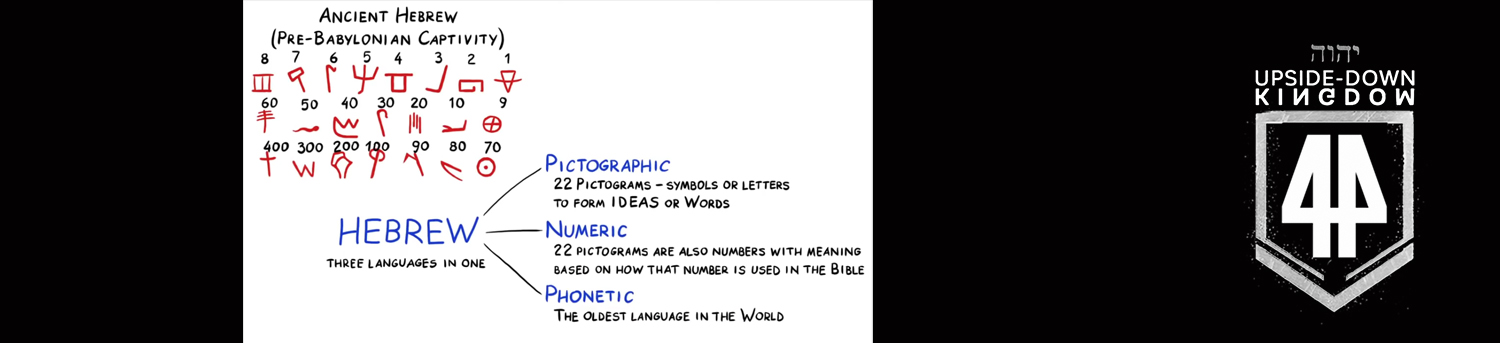
The question of whether Adam and Eve spoke Hebrew in the Eden narrative has persisted within both popular and academic discussions of early Genesis. While the biblical text depicts the first humans engaging in meaningful, structured speech, it does not explicitly identify the linguistic form of that speech. This study examines the question from a philological, literary, and theological perspective, arguing that while Hebrew wordplay in Genesis is theologically significant, it does not necessitate the conclusion that Hebrew was the primordial human language.


The Genesis narrative presents humanity as linguistically capable from the outset. In Genesis 2:19–20, Adam exercises dominion through naming the animals. Naming in the Ancient Near Eastern context is not merely descriptive but also ontological, reflecting authority and classification.

Genesis 11:1 later affirms that “the whole earth had one language and the same words,” indicating a primordial linguistic unity prior to the Babel event (Genesis 11:7–9). However, the text remains silent regarding the identity of this language.

One of the most common proposals is that Hebrew was the original language of humanity. This argument is typically grounded in the semantic transparency of key names in Genesis: Adam is connected to ground, and Eve to life. These connections create compelling literary and theological wordplay within the Hebrew text. However, the Book of Genesis was composed and transmitted in Hebrew, making it methodologically plausible that the inspired author employed Hebrew lexical connections to communicate theological truths to a Hebrew-speaking audience.

Alternative models include the possibility of a lost proto-human language, a unique Edenic language, or narrative accommodation where the Genesis author presents primordial events through the linguistic and conceptual framework of Hebrew.

The biblical text affirms that Adam and Eve used meaningful language, early humanity shared a unified language, and the specific identity of that language is not disclosed. The Hebrew hypothesis remains a reasonable inference but not an exegetical conclusion.

Discussion Questions

To what extent should Hebrew wordplay in Genesis be understood as literary theology rather than historical linguistic evidence?

How does the concept of naming in Genesis 2 reflect Ancient Near Eastern understandings of authority and ontology?

What hermeneutical risks arise when later linguistic forms are retrojected into primeval history?

How does Genesis 11 (Babel) inform our understanding of linguistic diversity in relation to divine sovereignty?

In what ways does the presence of language in Eden contribute to a doctrine of the image of God?

Bibliography

Alter, Robert. Genesis: Translation and Commentary. W.W. Norton, 1996.

Barr, James. The Semantics of Biblical Language. Oxford University Press, 1961.

Cassuto, Umberto. A Commentary on the Book of Genesis. Magnes Press, 1961.

Hamilton, Victor P. The Book of Genesis: Chapters 1–17. Eerdmans, 1990.

Heiser, Michael S. The Unseen Realm. Lexham Press, 2015.

Kidner, Derek. Genesis: An Introduction and Commentary. IVP, 1967.

Sailhamer, John H. The Pentateuch as Narrative. Zondervan, 1992.

Walton, John H. The Lost World of Genesis One. IVP Academic, 2009.

Wenham, Gordon J. Genesis 1–15. Word Biblical Commentary, 1987.

“Love Beyond Cards and Candy: A Biblical and Socio-Rhetorical Reflection on Valentine’s Day”

Every February 14 many Christians and non-Christians alike pause to celebrate love—often through candy, flowers, heart-shaped cards, and candlelight dinners. But beneath the commercial veneer lies a rich tapestry of history, cultural adaptation, and theological meaning that invites careful reflection for the church—one rooted not simply in sentiment, but in Scripture and the long witness of Christian faith.

1. The Historical Palimpsest of Valentine’s Day

Some scholars would identify at least three such figures known in martyrologies, with one tradition holding that a Roman priest named Valentine in the third century defied an imperial edict against Christian marriage to marry couples in secret—a testament to his defense of Christian marriage and pastoral courage.

By the fifth and sixth centuries, February 14 was established in the liturgical calendar as the feast of St. Valentine, though the medieval church did not associate this date with romantic love until much later. In time, festivals of courtly love and poetic traditions such as Chaucer’s Parliament of Fowls would fold romantic symbolism into the date long after its ecclesiastical origins ended.

It is essential sociologically to recognize that Valentine’s Day—as celebrated today—is a layered cultural artifact: part hagiographic remembrance, part medieval romance, part commercialized modern ritual. None of these layers originate in biblical revelation, yet all reflect ways humans seek to articulate love within their cultural context.

2. Scripture and the Semantics of Love

Most people are aware that the Bible does not mention Valentine’s Day; nowhere is it regarded as a holy day per se. Its absence places the observance in the category of Christian freedom described in Romans 14:5–6, where Paul writes that believers may regard certain days differently, and whether one observes them or not, it should be “in honor of the Lord.”

What Scripture does offer is a rich, nuanced theology of love. In biblical Greek there are multiple terms for love—agapé (self-giving, covenantal love), philia (brotherly affection), eros (romantic desire, depicted especially in Song of Songs), and storge (familial love). While eros itself does not appear in the New Testament theological lexicon, the Song of Songs—a book of the Hebrew Bible—celebrates sensual and relational love within the covenant of marriage.

The apostle Paul’s famous discourse in 1 Corinthians 13 reframes love as a moral and spiritual virtue defined not by transient feeling but by patient covenantal commitment, self-giving service, and endurance. Jesus Himself states the core of the law: to love God with all one’s heart and to love one’s neighbor as oneself (Mark 12:30–31).

This emphasis locates the core of biblical discourse not in romantic expression alone, but in covenantal fidelity, sacrificial love, and the self-giving love revealed supremely in Christ’s death and resurrection.

3. Early Church and the Appropriation of Culture

From a socio-rhetorical perspective, the early church was adept at incarnating its message within existing cultural frameworks without compromising its core message. The apostle Paul became “all things to all people” to win some to Christ (1 Corinthians 9:22).

Christian appropriation of certain dates or customs has always been contested. The church’s decision to commemorate saints and martyrs on specific feast days was not intended to canonize secular customs, but to sanctify memory in ways that pointed beyond worldly spectacle to Christ’s kingship and the communion of saints.

In this light, Valentine’s Day can serve as a cultural locus for Christians to articulate biblical love — not simply by embracing its commercial trappings uncritically, nor by rejecting all contact with culture out of fear of syncretism, but by discerning how Christ’s love reshapes human practices. As Paul counsels, “Test everything; hold fast to what is good.” (1 Thessalonians 5:21)

4. Theological Reframing: Love as Witness

Rather than delegating Valentine’s Day to either celebration or avoidance, Christians can use the occasion as an invitation to reflect on biblical love as witness—not only within marriage, but within the body of Christ and the broader world.

A socio-rhetorical reading invites us to see Valentine’s Day less as an externally mandated Christian feast and more as a rhetorical opportunity—a moment when society’s focus on love can be redirected toward the love that God enacts in Christ. Such love is measured not by roses and chocolates, but by the sacrificial gift of Christ and the mutual love of believers that testifies to His presence (John 13:35).

Conclusion: Love in Context

Valentine’s Day is not inherently Christian because it emerged from early church commemoration or medieval romantic tradition. Nor is it inherently pagan because of its layered history. It is imperatively a moment for Christians to practice discernment, to ask how the gospel reframes the season of love, and to embody sacrificial, covenantal love in ways that reflect God’s love for the world.

As we remember St. Valentine—a figure united by courage and fidelity to Christ—and reflect on the biblical narrative of love from Genesis to Revelation, may our practice of love be shaped by agapé above all else, rooted in Scripture and enacted in service.


Discussion Questions

  1. How does an awareness of the historical development of Valentine’s Day influence (or not) how we celebrate love as Christians?
  2. In what ways does the biblical concept of agapé challenge modern expressions of romantic love?
  3. How can Christians use cultural observances like Valentine’s Day as platforms for gospel witness without syncretizing their faith?
  4. What does Song of Songs teach us about the place of romantic love within God’s broader design for relationships?
  5. How might Paul’s teaching in Romans 14 apply to disagreements within the church over celebrating Valentine’s Day?

Bibliography

  • Armstrong Institute. “Valentine’s Day—in the Hebrew Bible?” (ArmstrongInstitute.org)
  • BibleInspire.com. “Valentine’s Day Biblical Meaning: What Christians Need to Know.”
  • “Valentine’s Day.” Wikipedia (overview of historical development).
  • Song of Songs. Wikipedia (literary and canonical context).

Marriage and Covenant Community – Conference Notes


Covenant and Community: Embracing Christ‑Centered Humility, Servanthood, and Shepherding in Christian Marriage

Christian marriage is fundamentally covenantal, reflecting the relationship between Christ and the Church (Eph 5:22‑33). In the Hebrew and Greek context, covenant implies lifelong commitment, mutual responsibility, and sacred binding under God’s authority.

  • Humility and Servanthood: Paul’s exhortation in Philippians 2:3–5 urges spouses to adopt Christ’s self-emptying attitude, prioritizing the other’s good above self-interest.
  • Shepherding as a Model: In biblical literature, shepherding denotes guidance, protection, nourishment, and restoration (Ps 23; John 10:11). Marriage partners can emulate this by actively nurturing, protecting, and guiding each other spiritually, emotionally, and relationally.

Marriage flourishes not in isolation but within covenantal community: local church, small groups, and peer accountability. Historically, the early Church emphasized mutual care (Acts 2:42–47), creating a model for today’s marital support systems.

Church Involvement

  • Regular participation in worship and fellowship fosters spiritual anchoring.
  • Pastors and elders provide shepherding guidance, biblical correction, and referrals for counseling.

Small Groups and Peer Accountability

  • Small groups provide safe venues for transparency, prayer, and reflection.
  • Peer couples or mentors offer practical examples of servanthood in marriage and reinforce accountability in communication, conflict resolution, and spiritual disciplines.

Biblical counseling integrates Scripture and the gospel into practical problem-solving, helping couples navigate conflict, manage sin patterns, and restore relational harmony.

  • Focuses on repentance, forgiveness, and transformation in the image of Christ.
  • Early intervention preserves relational health before destructive patterns become entrenched.

Practical Applications:

  • One-on-one pastoral counseling
  • Certified Christian counselors specializing in marriage
  • Retreats or workshops on communication and conflict management

Intercessory Practices

  • Joint prayer invites the Holy Spirit to guide decision-making, soften hearts, and cultivate humility.
  • Scripture memorization, meditation, and fasting reinforce spiritual alignment.

Spirit-Led Conflict Resolution

  • Couples can discern God’s will for reconciliation, modeling forgiveness and empathy as Christ taught (Col 3:12–14).
  • Servant leadership in marriage is both practical and spiritual, combining action with prayerful dependence on God.

Communication in marriage is not merely transactional—it is transformational, reflecting Christ’s humility.

  • Fighting for Your Marriage emphasizes conflict resolution strategies rooted in respect, patience, and listening.
  • How a Husband/Wife Speaks stresses intentionality in speech, using communication to build up rather than tear down, mirroring Christ’s example.

Practical approaches include:

  • Structured weekly check-ins
  • Active listening exercises
  • Conflict-resolution frameworks emphasizing reconciliation over “winning”

Shared Devotionals and Media

  • Marriage-specific devotionals guide couples to meditate on humility, forgiveness, and servant love.
  • Podcasts and online teachings reinforce biblical insights in accessible formats.

Reading and Study

  • Joint Bible study encourages deeper understanding of covenantal dynamics, gender roles, and servant leadership.
  • Couples can reflect on discussion prompts to integrate theology into lived experience.

Christian marriage is a discipleship journey, where humility, servanthood, and shepherding become daily practices, not merely ideals. Covenant partners model Christ to each other and the broader community, transforming relational patterns through grace, accountability, and mutual spiritual growth.


  1. How does understanding marriage as a covenant with God shape the way spouses approach conflict and communication?
  2. In what ways can small groups or peer accountability circles serve as modern-day shepherds for marital health?
  3. How can couples integrate the Holy Spirit’s guidance in decision-making, prayer, and conflict resolution?
  4. Reflect on practical examples of servant leadership in your marriage—what patterns of humility and care can be strengthened?
  5. How do devotional readings, podcasts, and other media resources complement the biblical counseling process in fostering a Christ-centered marriage?

  • Chapman, Gary. Fighting for Your Marriage: Positive Steps for Preventing Divorce and Building a Lasting Love. Moody Publishers, 2013.
  • Chapman, Gary, and Kimberly Miller. How a Husband Speaks: Leading and Loving Your Wife Through Godly Communication (How They Speak). Moody Publishers, 2020.
  • Chapman, Gary, and Kimberly Miller. How a Wife Speaks: Loving Your Husband Well Through Godly Communication (How They Speak). Moody Publishers, 2020.
  • Chapman, Gary. It Begins with You: The 9 Hard Truths About Love That Will Change Your Life. Tyndale House Publishers, 2017.
  • Kaiser, Walter C., Jr. The Promise-Plan of God: A Biblical Theology of the Old and New Testaments. Zondervan, 2008.
  • Scazzero, Pete. Emotionally Healthy Spirituality: Unleashing the Power of Transforming Your Inner Life. Zondervan, 2010.
  • Wright, N. T. Paul for Everyone: The Prison Letters (Ephesians, Philippians, Colossians, Philemon). SPCK, 2002.

  • Sacred Marriage: What If God Designed Marriage to Make Us Holy More Than to Make Us Happy – Gary Thomas
  • Marriage and the Mystery of the Gospel – Ray Ortlund
  • The Meaning of Marriage – Timothy Keller
  • Small group guides on Christian marriage from Focus on the Family or The Navigators
  • Podcasts: The Art of Marriage, MarriageToday, and Focus on the Family Marriage Podcast

“The Three Heavenly Visitors in Genesis 18: A Divine Council Theophany?”

Introduction

Genesis 18 presents a unique and theologically charged encounter in the Hebrew Bible: Abraham is approached by three visitors whom the narrator initially introduces with the divine name YHWH (the LORD) and later identifies as “men” (Heb. ’anashim). The narrative blurs the categories of divine presence and angelic messengers, generating interpretive complexity that has occupied Jewish and Christian interpreters alike. The episode has been variously read as a test of Abraham’s hospitality, a Christophany (pre-incarnate Christ), or as an example of divine council imagery, where heavenly beings function as God’s agents in the cosmos.

The divine council concept — an assembly of heavenly beings under the sovereignty of the one God — is widely discussed in biblical scholarship (e.g., Psalm 82; Job 1–2; 1 Kings 22:19) and has been popularized in recent years by scholars such as Michael S. Heiser. It provides a framework for reading passages that feature interactions between humans and multiple divine or semi-divine figures without undermining monotheism.

In this article, I argue that three main features of Genesis 18 support interpreting the visitors as divine council / spiritual beings whose presence reflects a partial or mediated theophany — a visible manifestation of the divine.


1. Narrative Identification: YHWH’s Presence and Angelic Agency

A compelling reason to view the visitors as more than ordinary humans lies in the narrator’s framing. The episode opens with the statement: “The LORD appeared to Abraham…” (Heb. vay-yēra’ YHWH), immediately associating the visit with a divine theophany. Yet Abraham sees three men (Genesis 18:1–2), and later two of these continue on to Sodom where they are explicitly called angels (mal’akim) in Genesis 19:1.

This interplay — singular divine presence and plural visitors — invites careful interpretation. One scholarly option is that one visitor functions as the theophanic presence of YHWH, while the other two represent heavenly agents operating within God’s divine court. The text makes this distinction narratively: the LORD speaks covenantal promises (e.g., the birth of Isaac) through one figure, while the others carry out a related mission (going on to Sodom to investigate its wickedness).

In broader divine council imagery, heavenly messengers are often depicted as “standing in the presence of YHWH” or “coming from the assembly of the holy ones” — reflecting a hierarchical divine order in which God presides but heavenly beings act as His representatives. The Job 1–2 and 1 Kings 22 scenes illustrate this pattern in other texts.

Thus, the narrative structure — singular divine announcement and plural agents — coheres with a council model wherein God interacts with humanity through a cohort of spiritual beings rather than appearing directly in full divine essence. This feeds into a mediated theophany: God is present and speaks through a heavenly agent while supported by others.


2. Theophany and “Visible Gods” in Ancient Israelite Context

A second argument arises from ancient Near Eastern and Israelite perceptions of heavenly beings. In the wider Ancient Near East, divine assemblies — councils of gods — were a common motif in narrative and ritual texts. Israelite religion, while monotheistic in its affirmation of YHWH as the supreme God, nevertheless shows evidence of a heavenly host or divine council assembly through passages that portray heavenly beings in council or in service to God. Psalm 82’s “God stands in the divine assembly” imagery suggests that Israelite tradition could conceive of spiritual beings subordinate to Yahweh but active in the divine realm.

Scholars like Michael Heiser and others have argued that such divine council imagery underlies many biblical narratives — not as evidence of polytheism, but as part of a biblical supernatural worldview in which God’s rule over cosmic order is mediated by spiritual beings. These beings can interact with the human sphere while remaining subordinate to Yahweh’s authority.

In this light, the three “men” of Genesis 18 resemble members of the divine council or heavenly host coming to execute God’s will: announcing covenantal blessing and assessing impending judgment. Their behavior — eating food, communicating with Abraham, and then departing — mirrors other divine council appearances where demons or angels take on human form in narrative. This fits more naturally with cosmic hierarchical imagery than with a purely anthropomorphic deity walking about in ordinary human guise.


3. Theophany Features: Speech, Authority, and Human Response

Finally, the theophanic qualities of the encounter support reading the visitors as divine or heavenly figures rather than mere mortals. Key elements include:

  1. Divine Speech and Promise: One visitor speaks as YHWH, using Yahweh’s own name and authority in promising a son to Abraham and Sarah — a hallmark of divine speech rather than angelic proclamation alone.
  2. Human Worship and Interaction: Abraham’s actions — bowing, addressing them in the singular as “my lord,” and engaging in covenant dialogue — reflect recognition of divine presence, not merely polite reception of guests.
  3. Discrepancy Between Appearance and Ontology: The visitors appear as ordinary humans but are operationally supernatural. Two are later identified as angels in Sodom, while the third remains as Yahweh’s representative in dialogue with Abraham. This layered identity — human-like appearance, divine speech, and angelic mission — is consistent with other biblical theophanies where God appears in human form (e.g., to Manoah’s parents in Judges 13).

These features suggest a mediated theophany: God reveals Himself in a way that humans can encounter (visible visitors) while maintaining divine otherness. The narrative’s emphasis on hospitality, promise, and accountability underscores the encounter’s theological gravity, not merely its moral exemplarity.


Conclusion

Genesis 18’s three visitors resist simple categorization as either mundane travelers or strictly anthropomorphic God. Instead, multiple narrative and theological signals point to an interaction with divine or heavenly figures that function within a divine council motif:

  1. The text’s framing blends YHWH’s presence with angelic agency, matching divine council hierarchies.
  2. Ancient Israelite and Ancient Near Eastern contexts include heavenly hosts and councils under God’s sovereignty.
  3. Theophany features — authoritative speech, human reverence, and heavenly mission — reflect mediated divine encounter.

Thus, reading these visitors as divine council beings who participate in God’s cosmic governance and interact with Abraham offers a cohesive interpretive lens. It respects textual complexity, aligns with broader biblical imagery, and highlights the significance of this pivotal covenantal moment.

Selected Bibliography

Primary Text

  • The Holy Bible, Genesis 18–19 (Hebrew text and major English translations)

Articles and Online Resources

Secondary Scholarly Works

  • Heiser, Michael S. The Unseen Realm: Recovering the Supernatural Worldview of the Bible. Bellingham, WA: Lexham Press, 2015.
  • Walton, John H. The Lost World of the Old Testament: Ancient Israelite Cosmology and the Origins Debate. Downers Grove, IL: IVP Academic, 2018.
  • Sommer, Benjamin D. The Bodies of God and the World of Ancient Israel. Cambridge: Cambridge University Press, 2009.
  • Smith, Mark S. The Origins of Biblical Monotheism: Israel’s Polytheistic Background and the Ugaritic Texts. Oxford: Oxford University Press, 2001.
  • Collins, C. John. Genesis 1–4: A Linguistic, Literary, and Theological Commentary. Phillipsburg, NJ: P&R Publishing, 2006 (esp. methodological notes on divine appearance).
  • Arnold, Bill T. Introduction to the Old Testament. Cambridge: Cambridge University Press, 2014 (sections on divine messengers and theophany).

Small Group Study Questions (Genesis 18)

Theological Implications
If the visitors are understood as divine council beings participating in a mediated theophany, how does this affect our understanding of God’s sovereignty, judgment (Genesis 18–19), and covenant faithfulness?

Textual Observation
Genesis 18:1 states that “the LORD appeared to Abraham,” yet Abraham sees three men. How does this tension between divine identification and human appearance shape your reading of the passage?

Divine Council Framework
Other biblical texts (e.g., Job 1–2; Psalm 82; 1 Kings 22) portray God presiding over heavenly beings. How might those passages help us understand the role of the three visitors in Genesis 18?

Theophany and Mediation
Why might God choose to appear through human-like figures or heavenly messengers rather than in an unmediated form? What does this suggest about God’s desire for relationship and accessibility?

Hospitality and Revelation
Abraham shows hospitality before fully understanding who his guests are. What connection does Genesis 18 make between faithful hospitality and divine revelation?

Healing Before Fruitfulness: Joseph’s Sons and a Theology of Restoration

The Joseph narrative (Gen. 37–50) presents one of the Hebrew Bible’s most sustained reflections on suffering, providence, and restoration. Betrayed by his brothers and sold into slavery, Joseph experiences prolonged affliction through servitude, false accusation, and imprisonment before his elevation to authority in Egypt. This narrative arc is not merely biographical but theological, portraying divine sovereignty at work within, rather than apart from, human injustice.

A critical but often underexamined moment occurs prior to Joseph’s reconciliation with his brothers: the naming of his sons, Manasseh and Ephraim (Gen. 41:50–52). In the Hebrew Bible, naming frequently functions as a theological interpretation of lived experience, encoding meaning, memory, and confession. The narrator’s explicit preservation of Joseph’s naming explanations signals their interpretive importance.

Joseph names his firstborn Manasseh (מְנַשֶּׁה), declaring, “For God has made me forget (nashani) all my hardship and all my father’s house” (Gen. 41:51). The Hebrew root נשה (nashah), often translated “to forget,” does not imply amnesia or repression. Rather, within biblical and rabbinic usage, it conveys release from the dominating power of memory. Joseph’s past is not erased; it is rendered non-determinative. Rabbinic commentators emphasize that Joseph continues to remember his family and heritage, indicating that “forgetting” here refers to healing rather than denial.¹ This is a foreshadowing of a later theme of God holding no record of wrongs as an indicator of the way that His followers should also live.

Joseph’s second son is named Ephraim (אֶפְרָיִם), derived from the root פרה (parah, “to be fruitful”), accompanied by the declaration, “For God has made me fruitful in the land of my affliction” (Gen. 41:52). Notably, Egypt is still described as ’erets ‘onyi—“the land of my suffering.” Fruitfulness does not follow removal from affliction but emerges within it. The text thus resists any simplistic theology in which blessing is contingent upon the absence of suffering. It is a direct correlation to the Yahweh identifying Himself differently from the “other” ancient “gods” that functioned solely on the retribution principle.

The sequence of these names is theologically decisive. Healing (Manasseh) precedes fruitfulness (Ephraim), and both occur prior to forgiveness and reconciliation with Joseph’s brothers (Gen. 42–45). The narrative therefore distinguishes between inner restoration and relational restoration. While reconciliation ultimately requires repentance, truth-telling, and transformation on the part of the offenders, healing is portrayed as a divine act that does not depend upon the moral readiness of others. God’s restorative work in Joseph begins while the relational rupture remains unresolved.

This narrative logic challenges the assumption that closure or apology is a prerequisite for healing. Joseph’s story suggests instead that divine healing reorders the self, freeing one from the formative power of trauma and making space for generativity. Reconciliation, when it comes, is no longer a desperate need but a fruit of a healed identity.

Canonical Resonances: New Testament and Revelation

This pattern—healing preceding fruitfulness and reconciliation—finds resonance within the New Testament. Jesus’ invitation in Matthew 11:28 (“Come to me… and I will give you rest”) addresses interior restoration prior to the resolution of external conflict. Likewise, Paul’s theology of suffering in Romans 5:3–5 traces a movement from affliction to endurance, character, and hope—an internal transformation that precedes eschatological vindication.

In Revelation, similar logic governs the experience of the faithful. The saints are depicted as conquering (nikaō) not by escaping suffering but by faithful endurance within it (Rev. 12:11). The promises to the churches repeatedly emphasize fruitfulness, reigning, and restored vocation as outcomes of perseverance rather than prerequisites for divine favor (Rev. 2–3). Healing, symbolized by access to the tree of life and the wiping away of tears (Rev. 22:1–5; 21:4), is ultimately God’s work, accomplished even while injustice and opposition persist.

Within this broader canonical framework, Manasseh and Ephraim function as typological witnesses to a theology of restoration in which God heals before resolving every relational or historical wrong.

Healing is not the end of the story, but it is the condition that makes genuine fruitfulness—and ultimately reconciliation—possible.

Second Temple Jewish Parallels: Healing, Memory, and Fruitfulness in Exile

Second Temple Jewish literature provides important conceptual parallels to the pattern evident in Joseph’s naming of Manasseh and Ephraim, particularly with respect to memory, healing, and divine fruitfulness amid unresolved exile. These texts frequently wrestle with the problem of how God restores individuals and communities before historical or political reconciliation is complete.

In several Second Temple sources, remembering and forgetting function not as opposites but as theological tensions. Sirach, for example, acknowledges that past wounds are neither erased nor ignored, yet insists that wisdom enables one to live fruitfully without being governed by injury (Sir. 30:21–25). Here, healing is portrayed as an interior reordering that precedes external change—a conceptual parallel to Manasseh’s role as release from suffering’s formative power.

Similarly, the Wisdom of Solomon frames affliction as the context in which divine fruitfulness is cultivated rather than negated. The righteous are described as disciplined through suffering so that they might bear enduring fruit (Wis. 3:1–9), a logic that closely mirrors Ephraim’s naming as fruitfulness within the land of affliction. Vindication is future-oriented, but transformation occurs in the present.

The Dead Sea Scrolls further reinforce this pattern. In the Hodayot (Thanksgiving Hymns), the speaker repeatedly testifies to divine healing and restoration of the inner person while remaining socially marginalized and eschatologically unresolved (1QHᵃ). Healing precedes deliverance; identity is stabilized by God before historical redemption is realized. This reflects a theology in which God’s restorative work is not delayed until covenantal enemies are defeated or exile is reversed.

Of particular relevance is the Second Temple preoccupation with Joseph as a paradigmatic righteous sufferer. In works such as Joseph and Aseneth and later expansions of the Joseph tradition, Joseph is portrayed as morally transformed and divinely favored long before reconciliation with his brothers occurs. His interior faithfulness and divine blessing function independently of familial restoration, reinforcing the distinction between personal healing and relational reconciliation.

Moreover, Second Temple Israel broadly understood exile as an ongoing condition—even after the return from Babylon. Healing and fruitfulness were therefore conceptualized as provisional, anticipatory realities rather than final resolutions. This framework illuminates the theological significance of Manasseh and Ephraim: Joseph embodies a form of restored life that flourishes prior to—and apart from—the full repair of covenantal relationships.

Within this Second Temple horizon, Joseph’s sons function not merely as narrative details but as symbolic markers of how God restores the faithful amid incomplete redemption. Healing reorients memory; fruitfulness establishes vocation; reconciliation, when it comes, is a subsequent and contingent grace rather than the precondition of wholeness.

Conclusion

Joseph’s story reminds us that God’s work in our lives is often deeper—and earlier—than we expect. Long before reconciliation arrived, long before the family wounds were reopened and named, God had already begun healing Joseph’s heart. Manasseh testifies that God can loosen the grip of pain that once defined us. Ephraim bears witness that fruitfulness can emerge even in places we would never choose.

This matters for us because many of us are waiting. Waiting for an apology. Waiting for understanding. Waiting for relationships to be repaired. Joseph’s life gently but firmly tells us that healing does not have to wait. God is not constrained by unfinished stories or unresolved conflict. He is able to restore the inner life even when the outer circumstances remain broken.

That does not diminish the value of forgiveness or reconciliation—Scripture still calls us toward both. But it does free us from believing that our wholeness depends on someone else’s repentance. Healing is God’s gift, not the reward of closure.

So the invitation is simple and hopeful: bring the wound to God. Let Him name it, tend it, and release its power over you. Fruitfulness will come in time. But healing, as Joseph’s sons remind us, can begin now—even before the story is finished.


Footnote-Style References

  1. Rabbinic tradition: See Genesis Rabbah 91:1, which emphasizes that Joseph’s “forgetting” does not negate memory of his father or covenantal identity, but reflects relief from suffering’s grip.
  2. Lexical: Ludwig Koehler and Walter Baumgartner, The Hebrew and Aramaic Lexicon of the Old Testament (HALOT), s.v. “נשה,” noting semantic range including release and neglect rather than cognitive loss.
  3. Narrative theology: Walter Brueggemann, Genesis (Interpretation Commentary; Louisville: Westminster John Knox, 1982), 331–334.
  4. Suffering and fruitfulness: Nahum M. Sarna, Genesis (JPS Torah Commentary; Philadelphia: JPS, 1989), 286–288.
  5. Naming as theological act: Robert Alter, The Art of Biblical Narrative (New York: Basic Books, 2011), 47–62.
  6. Canonical resonance: Richard Bauckham, The Theology of the Book of Revelation (Cambridge: CUP, 1993), 84–102.
  7. Sirach: Ben Sira 30:21–25; see Michael W. Duggan, Sirach (New Collegeville Bible Commentary; Liturgical Press, 2016).
  8. Wisdom of Solomon: Wis. 3:1–9; see John J. Collins, Jewish Wisdom in the Hellenistic Age (Westminster John Knox, 1997).
  9. Dead Sea Scrolls: Hodayot (1QHᵃ); see Carol A. Newsom, The Self as Symbolic Space (Brill, 2004).
  10. Joseph traditions: Joseph and Aseneth; see Ross Shepard Kraemer, When Aseneth Met Joseph (Oxford University Press, 1998).
  11. Exile as ongoing condition: N. T. Wright, The New Testament and the People of God (Fortress, 1992), 268–272 (used here for Second Temple Jewish worldview rather than NT theology).

Signs of Covenant Faithfulness

At the heart of covenant faithfulness is trust in God Himself. Abraham “believed the LORD, and He credited it to him as righteousness” (Gen 15:6). This pattern carries through Scripture: covenant faithfulness begins not with works, but with confident reliance on God’s promises (Hab 2:4; Rom 1:17).


Obedience is not the covenant’s foundation but its fruit. Israel was called to walk in God’s ways because they already belonged to Him (Exod 19:4–6; Deut 6:4–6). Jesus echoes this covenant logic: “If you love Me, you will keep My commandments” (John 14:15). Faithfulness is lived out through responsive obedience.


The Sabbath functions as a covenant sign of communion, trust and faithfulness (Exod 31:12–17). By resting, Israel confessed that their life and provision came from God, not their own labor. Sabbath-keeping embodied faith in God’s sustaining care and faithfulness.

At first glance, practices such as circumcision, foot washing, baptism, and communion can feel foreign—even uncomfortable—to modern readers. Yet within the biblical story, they are deeply connected. Each functions as an embodied sign through which God teaches His people what covenant faithfulness, belonging, and transformation look like.

In the Old Testament, circumcision served as the covenant sign given to Abraham and his descendants (Gen 17:9–14). It marked the body and permanently reminded Israel that their identity and future depended entirely on God’s promise. It was not merely a ritual act, but a visible declaration that God creates life where human ability fails.

Foot washing appears in the Old Testament as an act of hospitality, humility, and purification (Gen 18:4; 19:2; 1 Sam 25:41). In a dusty world, washing another’s feet signaled welcome and relational submission. This cultural practice laid the groundwork for its deeper theological meaning in the New Testament.

Baptism emerges in continuity with Old Testament washing rites that symbolized cleansing and renewal (Exod 29:4; Lev 16:4; Ezek 36:25). These washings pointed forward to a more complete purification—one not merely of the body, but of the heart. In the New Testament, baptism becomes the covenant sign of union with Christ, symbolizing death to the old life and resurrection into new life (Rom 6:3–4).

Communion, like circumcision, is a covenant meal. It echoes the Passover, where Israel remembered God’s saving act through a shared, embodied practice (Exod 12). Jesus reframes this meal around Himself, declaring the bread and cup to be His body and blood—the means by which the New Covenant is established (Luke 22:19–20). Communion continually reorients the Church around Christ’s sacrificial faithfulness.

Foot washing reaches its theological climax when Jesus washes His disciples’ feet (John 13:1–17). In this act, Jesus unites cleansing, humility, and love. He demonstrates that covenant belonging in the New Testament is marked not by dominance or status, but by self-giving service. The act does not replace baptism or communion but interprets them: those who have been cleansed by Christ are called to live cleansed lives marked by humble love.

Together, these practices reveal a consistent biblical pattern. God teaches spiritual truths through physical actions. Covenant faithfulness is not abstract; it is embodied. Circumcision marked God’s people as recipients of divine promise. Washings prepared them for holy presence. Baptism unites believers to Christ’s death and resurrection. Communion sustains them through continual remembrance and participation in Christ’s life.

What seems strange to modern culture is, in Scripture, profoundly intentional. From Genesis to the Gospels, God forms His people through signs that engage the body, the community, and the memory—shaping not only what they believe, but how they live.

Communion functions in the New Covenant in ways that closely parallel how circumcision functioned in the Old Covenant. In the Old Testament, circumcision was the covenant sign given to Abraham and his household (Gen 17:9–14). It did not create the covenant; rather, it marked those who belonged to it. Circumcision identified a person as part of God’s covenant people and continually pointed back to God’s promise to bring life where human ability had failed.

Similarly, communion does not establish the New Covenant but bears witness to it. At the Last Supper, Jesus identified the cup as “the new covenant in My blood” (Luke 22:20). Each time believers participate in the Lord’s Supper, they are visibly and repeatedly reminded that their life with God is grounded not in their own faithfulness, but in Christ’s sacrificial death.

Both circumcision and communion are physical, embodied signs of spiritual realities. Circumcision marked the body and permanently reminded Israel that their existence depended on God’s miraculous promise. Communion involves tangible elements—bread and wine—that engage the body and senses, proclaiming that the Church’s life flows from Christ’s broken body and shed blood (1 Cor 11:26).

Both signs are also communal and covenantal, not merely private. Circumcision incorporated individuals into a covenant people, shaping their identity and responsibilities. In the same way, communion is a shared meal that proclaims unity in Christ’s body (1 Cor 10:16–17). Participation affirms belonging to the covenant community and submission to its Lord.

Finally, both signs call for faithful response and self-examination. Circumcision without covenant loyalty was condemned by the prophets (Jer 4:4). Likewise, Paul warns against receiving communion in an unworthy manner, detached from repentance and love for the body of Christ (1 Cor 11:27–29). In both cases, the sign points beyond itself to a life of faithful trust and obedience.

In short, circumcision marked Israel as a people created by God’s promise, while communion continually re-centers the Church on the saving work of Christ. Different signs, same covenant logic: God gives a visible marker to remind His people who they are, how they were redeemed, and upon whom their life depends.

Circumcision appears nearly one hundred times in Scripture and plays an important role in both Old and New Testament theology (Rom 4:9–12; Gal 2:1–12; 5:1–10). At first glance, this emphasis can seem strange. Yet Scripture treats circumcision as a serious theological symbol, not a mere cultural practice.

In Genesis 17, circumcision is given as the sign of God’s covenant with Abraham. However, it was not unique to Israel. Many peoples in the ancient Near East practiced circumcision, including Israel’s neighbors (Jer 9:25–26), as well as cultures in Egypt, Syria, and Phoenicia. Historical and archaeological evidence shows that circumcision existed long before Israel emerged as a nation. This suggests that circumcision alone did not set Israel apart from surrounding nations.

What made circumcision distinctive was not the act itself, but the promise attached to it. When God commanded Abraham to be circumcised, Abraham was beyond the age of fathering children, and Sarah was past childbearing years (Gen 18:11). Yet God promised that through Sarah, Abraham would have an innumerable offspring (Gen 17:21; 18:14). The covenant, therefore, depended entirely on God’s miraculous intervention.

Circumcision marked the household of Abraham as participants in a promise that could only be fulfilled by God. At the time, the meaning of this sign may not have been fully clear. Its significance became evident when Isaac was born. That birth confirmed that Israel’s existence was not the result of human strength, but of divine faithfulness.

From that moment on, circumcision served as a lasting reminder that Israel owed its life to the Lord. It pointed back to the miracle that brought the people into being and continually reinforced their dependence on God’s covenant grace.

In the New Testament, circumcision no longer defines membership in God’s people. As Paul teaches, belonging to God’s family is no longer marked by a physical sign, but by faith in Christ (Gal 5:6). Paul even links circumcision to baptism (Col 2:10–12), showing that both are covenant signs grounded in faith. In Christ, God’s people—men and women alike—are marked not by the body, but by trust in the saving work of God.

Biblical covenant faithfulness is God’s work of creating and sustaining a people through promise, and the faithful response of that people lived out in embodied trust and obedience. From the Old Testament to the New, God marks His covenant not merely with ideas, but with visible, physical signs—circumcision, washings, baptism, and communion—that remind His people that their life comes from Him alone. These signs do not create the covenant; they testify to it, pointing beyond themselves to God’s saving action. Covenant faithfulness, therefore, is trusting God’s promise, receiving His cleansing and provision, remembering His saving work, and living humbly and obediently as His redeemed people.

GENESIS 17 AND THE COVENANT

From the beginning, Scripture uses marriage as a central metaphor for the deep intimacy God desires with His people. It is the closest human image of the nearness and unity God longs to share with us. This is why Christ describes the church as His bride, expressing His desire for a relationship with His body. Throughout the Old Testament, God continually pursues His people, making a way back to them even when they break covenant. The central theme of the entire narrative of the Bible is God’s desire to intimately dwell with us.

Many can recall moments in their marriage when everything seemed perfectly aligned—when joy was intense and love felt effortless. Those moments are gifts, brief glimpses of heaven touching earth. They reflect, in part, the kind of covenantal intimacy God desires with His people and with a husband and wife together: a union strengthened as a cord of three strands, bound by God Himself.

As I write, my wife and children are on a mission trip, and I’m home alone for the first time in nearly 25 years of marriage. It feels strange. There are some benefits—quiet, a clean house, no hectic evenings or morning routines—but the house feels empty. I miss my family. With extra time on my hands, I find myself remembering the best moments of our life together. Even in the hard times, we shared joy. I don’t know how I will handle empty nesting when that day comes, but this short season alone has helped me re-gather what is most dear.

I think every marriage could benefit from that kind of intentional pause. As my time apart grows, I’m becoming more purposeful in praying for them, thinking about what I want to emphasize when they return and what truly defines our family. I’m asking: What is God doing in our lives, and where have we missed His plan?

In Genesis 17, God renames Abram and Sarai as Abraham and Sarah, marking a defining moment in the covenant. These name changes are not merely symbolic but carry deep theological, linguistic, and cultural meaning. While Abraham’s renaming often receives greater attention, Sarah’s change is equally significant, affirming her essential role as matriarch within God’s covenant promises.

The name אַבְרָם (Avram) means “exalted father.” In Genesis 17:5, God changes his name to אַבְרָהָם (Avraham), meaning “father of a multitude,” expanding his identity to encompass many nations. This shift highlights the covenant’s widened scope.

I realize most of my readers will not know Hebrew but look closely at the differences in the Hebrew spelling. The added letter ה (he) is significant. It appears in God’s name Yahweh (יהוה), symbolizing divine presence and creative power. Its inclusion marks God’s direct involvement in Abraham’s calling and, in Hebraic tradition, echoes the five books of the Torah, linking Abraham to God’s covenantal law. Even the sound of the name changes: the sharp ending of Avram gives way to the openness of Avraham, reflecting his transformation from a local patriarch into a figure of global promise. The same change happens with Sarai. The names שָׂרָי (Sarai) and שָׂרָה (Sarah) share the root שָׂר (sar), meaning “ruler” or “princess,” and both convey strength and authority. Sarai likely means “my princess,” with the possessive ending tying her role closely to Abraham’s household. Sarah, without that ending, signals a broader calling. Like Abraham, Sarah receives the letter ה (he), associating her name with God’s blessing and promise. Her renaming reveals her identity not merely as Abraham’s wife but as a matriarch of nations and kings. The shift from י (yod) to ה (he) reflects this expansion—from a limited, familial role to a universal one—while the softer sound of Sarah mirrors the widening scope of her influence. Essentially, both names are changed by simply adding the Hebrew letter that signifies God Himself residing in them.

Today we have the advantage of seeing the Bible in its full narrative, but Abraham and Sarah did not. They did not fully understand God’s unfolding plan, which is why Scripture highlights their remarkable faith. Genesis 17 is one of the earliest indications of God’s desire to dwell within His people. In a powerful way, the name changes of Abraham and Sarah symbolize God’s presence being placed within them.

Yet the story is not complete without Jesus. Regardless of which atonement theory one holds, we all agree that Christ’s death, resurrection, ascension, enthronement, and the sending of the Spirit are essential to fulfill what began with that simple name change. In Christ, we see the ultimate fulfillment of God dwelling in us—not merely as a promise, but as a reality.

This is why the New Testament speaks so clearly about being “dead to self” and alive in Christ. Paul writes that our old self was crucified with Him so that sin might be rendered powerless (Romans 6:4–7). We are called to put off the old self and put on the new, created to be like God in true righteousness and holiness (Ephesians 4:22–24). “I have been crucified with Christ,” Paul declares, “and it is no longer I who live, but Christ lives in me” (Galatians 2:20). This transformation is not merely moral improvement but a radical renewal: we are no longer conformed to the world but transformed by the renewing of our minds (Colossians 3:10). Indeed, “if anyone is in Christ, he is a new creation; the old has passed away” (2 Corinthians 5:17).

These passages show that the promise of God dwelling within us, first hinted at in Abraham and Sarah’s name changes, finds its full expression in Christ—where the old self is crucified and the new self is born. Perhaps today you need to consider inserting the ה into your names together!

He (pronounced in English as hey) ה is the fifth letter of the Hebrew alphabet. The letter ה (he) is formed from a ד (dalet) and a י (yud). The dalet, composed of horizontal and vertical lines, represents the physical world—its breadth and height, material space and structure. The yud, the small detached element, symbolizes God and the spiritual realm. Together, they form the heh, expressing the union of the material and the divine. In this way, God calls those in whom He dwells to sanctify the physical world by filling it with spirituality and Godliness. We are His ambassadors, sent to reclaim creation and restore the holiness lost when humanity left Eden.

The top horizontal line of the ה represents thought and points toward equality. From the beginning, God’s design for male and female reflects this equality, though it was fractured at the Fall. Still, we are called to restore God’s ideal. In the future renewed creation, equality and righteousness will be fully realized. Yet the horizontal line that unites Abraham and Sarah may suggest that God’s ideal can begin to take shape even now, sooner than we often expect. God’s ideal plan is for a husband and wife to edify one another in unison.

The debate between complementarianism and egalitarianism often depends on how key biblical passages are interpreted. Some verses emphasize equality in creation, while others appear to assign distinct roles for men and women in the church. Commonly cited texts include Genesis 1:27, Galatians 3:28, 1 Timothy 2:11–15, and 1 Corinthians 14. I will revisit some of these later, but regardless of where you land, I believe we can agree that when we humbly live out our callings with God at the center, the debate becomes less crucial, and the outcomes are remarkably similar. These passages are frequently used by both sides, but their meaning depends heavily on context, audience, and intended purpose. Evaluating them requires careful consideration of the broader biblical narrative.

So much of this conversation can be seen in the Hebrew Grammar of this passage. In the ה, the shorter, detached left leg represents action. Its separation highlights the difficulty of translating right thoughts and words into deeds. The gap reminds us that action requires effort and intention. Without action, thought and speech remain incomplete—leaving only the dalet, symbolizing spiritual emptiness.

As the fifth letter of the Hebrew alphabet, ה has traditionally been linked to the five levels of the soul—nefesh, ruach, neshamah, chayah, and yechidah. In Hebrew thought, these elements tend to represent who a person “really” is. The fifth tier, yechidah, signifies union and represents the deepest part of the soul. This level is often described as the pintele Yid, the indestructible divine spark within every image bearer. It is a spark that can never be extinguished or corrupted, and it remains the eternal bond that unites us with God. The pintele Yid is also the source of mesirat nefesh, or self-sacrifice. When Christ takes up dwelling in us, we should take on Christ’s sense of humble self-sacrifice (Romans 12:1). The bond between a Christian and God is intrinsic and unbreakable, anchored in the pintele Yid.

Her first name Sarai in Hebrew (שָׂרַי, “my princess”), meant princess and could have denoted her as an Egyptian princess which Gen 12:11-20 might allude to; but later she is *renamed by the Lord because of her faith as Sarah (שָׂרָה, which also meant “princess”, but is slightly different. In Hebrew text also has a number correlation and often means something. This is a form of numerology. Regarding Sarah’s name change, the Yod (whose numerical value is 10) was “taken” from Sarai and divided into two Heys (whose numerical value is 5). Half was given (by God) to form the name Sarah and the other half was given to form the name Abraham (from Abram). The implication was that she was already “whole” or “complete” which later is described by Jesus as “perfection” being what believers can attain to in the way they are made new in Christ. In this thinking, Abraham was not complete and needed something from her to be returned to the complete or equal state. There is a sense of “reversing hermon” going on here if you speak that language. It is a reverse of the God taking something from Adam to make Eve; for Abraham to be reinstated, Sarah would have to give something from herself. That is why if you don’t read this in Hebrew you can’t truly understand the implications of Hebrews 11 and why Sarah is actually considered “THE” true heroine of faith (Heb. 11:11) and Abraham isn’t mentioned. Is your mind blown yet? Essentially, at this point in the Timeline what God was attempting to accomplish in Sarah was to re-establish the royal priesthood that had been lost in the fall. Perhaps she thought Issac was the one that would bring life, and perhaps that was God’s plan that men then continued to mess up. The woman began the fall, but man has sustained it. Together in covenant relationship through a strand of three cords we can restore it, but will we get there and when?

(The above paragraph is an excerpt from an earlier x44 post. If you haven’t read the PART 1 and 2 of the Expedition 44 posts of the Akedah or binding of Isaac, you may want to read those posts. You can find them using the search bar to the upper right of this post.)

The renaming of Abraham and Sarah reveals them as equal partners in God’s covenant. Although Abraham often receives greater attention, Genesis 17 clearly affirms Sarah’s central role. God’s promise that she would be “a mother of nations” and that “kings of peoples shall come from her” parallels Abraham’s calling, showing that she fully shares in the covenant. Both receiving the letter ה underscores their shared participation in God’s blessing and purpose.

This shared status challenges ancient cultural norms that minimized women’s significance. By renaming Sarah and granting her covenantal promises, God elevates her beyond the domestic sphere. Her name, “princess” (שָׂרָה), signals real authority—later demonstrated in decisive moments such as the sending away of Hagar and Ishmael (Gen 21:10–12).

Sarah’s renaming is especially powerful because she was barren (Genesis 11:30). In her time, not having children was a source of shame, but God turns her from an outsider to a mother of nations. Her laughter in Genesis 18:12, often considered doubt, can also show her surprise at God’s bold promise—a barren woman giving birth to kings. This shows how God picks unlikely people, like Moses or David, to do great things.

Sarah’s influence goes beyond Israel. In Galatians 4:22–31, Paul calls her the mother of the “children of promise,” contrasting her with Hagar. In 1 Peter 3:6, she’s a model of faith. Her name, שָׂרָה, becomes a symbol of strength and hope. Some would even deduce from these passages that she might even be credited with greater faith than Abraham.

There are many deeper details in this text that I won’t address here, but the central theme from Genesis to Revelation is clear: God desires to dwell within us. He wants our marriages to be holy and intimate, reflecting—but never fully replacing—our deepest union with Him. What would a marriage look like if the distractions and compromises of the world were set aside, and a couple pursued the purpose God always intended for them? This is the heart of what it means to be in Covenant with the almighty God. That we may be fully devoted to image Him as He resides in us. And your marriage partner is God’s gift of grace to this plan.

Is Israel Still God’s Chosen people?

Yes, Israel was (and is) called God’s chosen people in Scripture—but what that means and how we understand it after Jesus is really important to clarify.

When God called Israel His “chosen people” in the Old Testament, it wasn’t primarily a statement about salvation. Rather, Israel was chosen (commissioned) for a vocation—to be a light to the nations (see Exodus 19:5–6; Deuteronomy 7:6; Isaiah 49:6). (You might see this as a regaining of the nations if you follow a Deuteronomy 32 worldview.) God gave them the Law (Torah), the covenants, and the promises, not as an end in themselves, but so that through them, the nations of the world would come to know and worship Yahweh. Paul puts it like this in Romans 3:2—that the Jews were entrusted with the oracles of God. In a sense, this was the calling of Adam and Eve and when they fall short, God commissions Israel in the same calling, nation that would be called commissioned as a holy royal priesthood to represent Yahweh to the rest of the fallen world.

But Israel consistently struggled to live out this calling. From nearly the beginning of the story the nation failed to honor Yahweh (golden calf incident) and instead of the entire nation (all 12 tribes) representing the Lord as priests, God adapted the plan and then called just the Levites to be His representatives as priests first to Israel in hopes of then commissioning the entire nation of Israel to the original plan and act as ambassadors of Yahweh. The Old Testament tells a story of covenant, failure, judgment, and hope for restoration. Israel continued to falter. They gave up their theocracy of one God – Yahweh to choose to be led by an earthly king. They drifted farther and farther from the plan until God finally hands them over to their own demise, the exile was a key turning point. Even after the return of the exile to Jerusalem, most scholars believe Israel never returned to the LORD. God longed for Israel to return to the true redemption and the coming of God’s kingdom. Unfortunately, Israel continued to fall short and not seem to live out their calling or commissioning.

Jesus enters the narrative with a similar mission. He doesn’t reject Israel’s story—He steps into it. He comes first to “the lost sheep of Israel” (Matt. 15:24), calling them back to their original vocation. He chooses twelve disciples, clearly symbolizing a reconstitution of the twelve tribes of Israel. This is not incidental—it’s Jesus claiming to be the one who restores and redefines Israel around Himself.

And here’s the key: Jesus is the faithful Israelite. He does what Israel failed to do. He keeps the covenant perfectly, walks in radical obedience, and fulfills Israel’s mission. He is the true Israel (see Matthew 2:15 where Hosea’s words originally spoken about Israel—”out of Egypt I called my son”—are applied to Jesus).

This is why Paul will later say in Galatians 3:16 that the promises were given not to “seeds” (plural) but to one “seed,” who is Christ. In other words, the inheritance of Israel is fulfilled in Jesus—and only those who are “in Him” share in that inheritance. That phrase—”in Christ”—is the dominant identity marker for believers in the New Testament. If Jesus is the true Israel, then those united to Him (Jew or Gentile) are the true people of God.

This point becomes even clearer when we revisit God’s original promise to Abraham in Genesis 12:3: “I will bless those who bless you, and whoever curses you I will curse.” This statement is often lifted out of its covenantal context and applied to modern nations or political support for Israel. However, the Hebrew grammar and narrative context show that the promise was made to Abram himself (the singular “you” in Hebrew, ʾotkha), not to a future geopolitical nation. God’s intention was not to privilege one ethnic group above all others but to initiate a redemptive mission through one man and his descendants—a mission that would culminate in Christ. The blessing is vocational, not nationalistic. Abram is chosen in order to be a blessing, that through him “all the families of the earth will be blessed.”

The apostle Paul interprets this precisely in Galatians 3:16, identifying the “seed” (zeraʿ) of Abraham as Christ Himself. This means that the covenant promise—“I will bless those who bless you”—finds its ultimate fulfillment in Jesus. The “you” now applies to Abraham’s true heir, the Messiah. Those who bless Him—who honor, trust, and align themselves with Jesus—receive the blessing of God; those who reject Him cut themselves off from that blessing. In this way, the Abrahamic covenant points forward to Christ as the locus of divine favor. To bless Abraham’s seed is to embrace the redemptive mission of God revealed in Jesus, and through faith in Him, we become participants in that same blessing.

Paul says Abraham was justified before circumcision (Rom. 4), showing that faith, not ethnicity, is the marker of God’s covenant people. He adds in Romans 2:28–29 that a true Jew is one inwardly, whose heart is circumcised by the Spirit. And in Galatians 3:28 he writes: “There is neither Jew nor Greek… you are all one in Christ Jesus.”

Ephesians 2 expands this beautifully. Paul says that Jesus has broken down the dividing wall and made one new humanity—no longer Jew and Gentile, but one body. Peter echoes this in 1 Peter 2, where he applies all the covenant titles once reserved for Israel (royal priesthood, holy nation, people of God) to the church made up of both Jews and Gentiles.

Paul also uses the metaphor of an olive tree in Romans 11: some natural branches (ethnic Israelites) were broken off because of unbelief, and wild branches (Gentiles) were grafted in. But it’s one tree. There aren’t two peoples of God. There is one new covenant community—those who are in Christ. It’s not about replacing Israel, but about fulfillment—where Jews and Gentiles together form the one people of God in Christ.

This helps clarify what Paul means in Romans 11:26 when he says, “all Israel will be saved.” We don’t believe he’s referring to a future mass conversion of ethnic Jews or suggesting two separate salvation paths. Rather, he’s speaking of the fullness of God’s people: both believing Jews and Gentiles who are part of the one tree through faith in the Messiah. This fits with Paul’s logic throughout Romans and with his statement in Galatians 6:16 that the church is “the Israel of God.”

God has always worked through covenants—and those covenants are centered on trust and faithfulness, not ethnicity alone. From the beginning, covenant relationship with God required loyal love. Even under the Mosaic covenant, Israel’s inclusion was contingent on obedience and faithfulness to Yahweh (Deut 28). Being born into Israel didn’t guarantee blessing—relationship and trust did. (Israelites were never automatically “saved.”) If there was any sense of salvation in the Old Testament it would be under the same “qualifications” as in the New Testament. What God was asking and promising for the faithful doesn’t change from the Old Covenants to the New Covenant.

The New Testament affirms this. While many modern Jews are physical descendants of Abraham, Paul is clear that physical descent is not enough. In Romans 9:6–8, he writes:

Paul emphasizes that covenant identity is now grounded in faith—just as it was with Abraham. As he puts it in Galatians 3:7:

So when we speak of the “people of God” today, we are not referring to a physical nation-state or ethnic group. We are speaking of those “in Christ”—those joined to the faithful Israelite, Jesus.

The modern nation-state of Israel is not the covenant people of the Bible. -If this is a new consideration for you, you might consider reading this article. Most of its citizens do not follow the Mosaic covenant, and the majority have rejected Jesus as Messiah. According to the New Testament, that places them outside of the renewed covenant family—not because of their ancestry, but because God’s covenant has always been about faith.

This doesn’t mean God has abandoned ethnic Jews. Paul says in Romans 11 that he hopes some of his fellow Jews will be provoked to faith. And many Messianic Jews (Jewish believers in Jesus) are part of the body of Christ. But the boundary marker is no longer ethnicity or Torah observance—it is faith in Jesus.

All of this leads us to say: the true Israel (or Israelite) is Jesus. And those “in Him,” whether Jew or Gentile, are heirs to the promises, the calling, and the covenant. God is not partial (and never has been, even with Israel as many gentiles were welcome to join them, a mixed multitude – Hebrew and gentile – left Egypt in the Exodus becoming “Israel”, and some even found themselves in the lineage of Christ Himself) —He welcomes all who come to Him through Christ.

We also need to think about our family in Christ as those that are allegiant to the New Covenant calling rather than those that are nationalistically / inter-nationalistically aligned with groups that subtly “claim to be allied with God” but are not living out the Way of Jesus or bearing fruit for the Kingdom of Christ. There is only one kingdom of Christ, and you can’t serve two masters. For generations many have claimed to be part of Israel or want to be somehow grafted into salvation but haven’t followed the devotion that God has desired and look nothing like Jesus or act in a way worthy of bearing His image. Jesus seemed to paint this picture vividly and make this very clear in the sermon on the Mount (Matthew 5-7).

This is not replacement theology.1 God has not rejected Israel and replaced her with or even outside of the church. Rather, the church is the fulfillment of Israel’s story (and Adam and Eve’s story for that matter) —expanded to include all nations through union with Jesus, the faithful Israelite, this was the plan of redemption that “all nations”, or everyone was offerred from the beginning. The promises of God have not been scrapped or reassigned; they find their “yes and amen” in Christ (2 Corinthians 1:20). The covenant people of God have always been marked by faith and loyalty to Him—and in the new covenant, that means allegiance and devotion to Yahweh through Jesus accepting and claiming that victory and receiving the gift of the Holy Spirit as a sign of the holy royal priesthood. Jew and Gentile together form the one new man, the reconstituted people of God.

  1. Replacement theology, doctrine holding that Christians have replaced the Jewish people as the chosen people of God or as the heirs of the divine-human covenant described in the Hebrew Bible. The theology is also referred to as supersessionism, in which Christianity is thought to have superseded Judaism. It is closely related to fulfillment theology, which holds that Christianity has fulfilled the divine promises signaled in the Hebrew Bible. These ideas appear to be suggested in some of the earliest Christian texts, such as writings of St. Paul the Apostle, and subsequent Christian theologians have strengthened the opposition of Judaism and Christianity in ways that have informed relations between Christians and Jews. In the 20th century many Christian theologians and even church doctrines replaced replacement theology with more-nuanced or inclusive models that support more-amicable interreligious relations.

    https://www.britannica.com/topic/Replacement-theology ↩︎

The Journey… here and now (TAKE 2)

Whenever I read Ecclesiastes, I can’t help but to start humming “Turn! Turn! Turn! (To Everything There Is a Season)”, a song written by Pete Seeger in the late 1950s. The lyrics are adapted nearly word-for-word from the English King James Version of Ecclesiastes 3:1-8. In the U.S., the song holds distinction as the number one hit with the oldest lyrics. I sometimes Joke that Seeger got more people to memorize scripture than any pastor in history. However, you remember it, at some point you have likely contemplated the questions it raises. Although I am sure you have hummed the tune, too many people go through life without ever stopping to “really” ponder a very simple question, “what connection do you have to Jesus and His kingdom and what should that mean to you in this life?” That is the question Ecclesiastes raises to their audience and is as relevant 2500 years later, today – as it was the day it was written.

I am often perplexed by busy western culture people. There seems to be a conundrum of life that might have us too busy to simply stop and think through life or perhaps enable those thoughts into life-change. Those that have learned to stop and smell the roses have often been met with innumerable blessing. Different people react to different things and perhaps for you it is a song, or a movie, a passing of a loved one, or tragedy that has challenged you to stop and consider some of the more philosophical questions of life and reconsider what means most to us.

Mircea Eliade was a Romanian philosopher, and professor at the University of Chicago who became one of the most influential scholars of religion of the 20th century and interpreter of religious experience, he established paradigms in religious studies that persist to this day. He helped us recognize the “myth of eternal return” in the ancient world. The idea that every culture has had some kind of circle of life (as Disney later adopted it). From the Aztecs 27,000 year cycle, to the Hebraic 50 years of Jubilee year, including every seven years a sabbatical year, most cultures have recognized some cycle of life. In our culture New Years is a day of rethinking the past and taking on a resolution to do better in the coming year. In some way shape or form, I think everyone has considered the notion of re-examining their life cycles with the hopes to take action to a better way of life.

There is a relational connection of words in the New Testament that are translated as belief, faith, and hope, and what they all have in common is the notion of reliance, confidence, and trust. It is trust that puts you in contact with God so you can draw upon his unlimited and inexhaustible character. Unfortunately, many folks have their faith lined up in such a way that they do not need to rely on God. They do not need to trust God. They have a proper faith in terms of what they need to believe to go to heaven when they die, but they hope that God is never going to put them in a position of needing to actually trust him before they go there. It is this sort of “grappling” or “wrestling” in our faith that often brings us to a better sense of life.

Jon Gibson has uncovered something beautifully for us. As we reflect, remember, resolve and contemplate things more significant in this life, I am betting that we have seen seasons and have hopefully travelled to a better place of life through these journeys. But perhaps the best is yet to come for you. Perhaps there is something more going on in this life. Maybe there is a sense of orchestration in the ordinary that has led us to beautiful places even in the messiness or busyness of our modern life cycles. Most of us wouldn’t choose the courses of our past but we also wouldn’t choose to remove them from our lives. That seems to be an ontological fact of existence that we have in common. We are on a sentient journey. Jon tells story after story that you will find yourself not only deeply engaged with, but then turning your thoughts inward to consider your own journey and be shepherded to a better understanding of God’s majestic and far-reaching love, grace, and compassion.

What about you? Have you ever wondered about the greater questions of your faith? What about relationship dynamics and how they are influenced by God? Have you thought about legacy and the little things that point to the greater aspects of your spiritual person? What about taking the time to work through some if these thoughts, a mind retreat that engages action. In the big picture, if you are part of God’s family, we are all part of a return to Eden. But maybe that is less about heaven and more about your choices today. There is still time for God to being Heaven to earth through you. I think you will find that this book might be just what you need to start moving towards these feelings in your life.

I pray that in the pages of this masterful piece that you will find peace, comfort, and a sense of direction in the fact that somehow God is working out His plan within the pages of your life journey.  Behind it all is His invisible hand. That’s comforting. Perhaps in the tears and fears, joy and grief, success and failure, helping and hurting; we will understand the immense love that Jon has so beautifully given us through his connections to Jesus. I pray that on this journey you may be captivated by these seasons and find a sense of peace but also action.

 “The more beauty of God you capture today in your heart today, the greater the beauty you will find in your next season.”  Don’t cast your seasons to the wind until you have grabbed hold of its beauty and set it in your heart for eternity.

Dr. Will Ryan

President of the King’s Commission School of Divinity

_____________________________________________

This article is intended to be a catalyst to Jon Gibson’s book “HERE AND NOW” to be released in 2026.

For the more “scholarly “academic” version of this article CLICK HERE.