A Pastoral Summary: The Atonement as Relational Victory
For many Christians, the cross has traditionally been explained using transactional language. We often hear that Jesus “paid our debt,” “bought us back,” or “settled the account” for our sin. Sometimes this language even drifts into the idea that some kind of deal had to be struck between God and Satan, as though humanity had been legally claimed by the enemy and Christ’s death functioned as the payment that secured our release. While these ideas have circulated widely in Christian teaching, they are not actually grounded in the biblical text. The Scriptures never describe the cross as a financial transaction between God and Satan, nor do they suggest that forgiveness required some kind of negotiated payment before God could extend mercy to humanity.
“The world operates through transactions, but the kingdom of God moves through relational covenant interactions.”
Much of this transactional language became especially prominent within Western Christian theology and has been reinforced in certain streams of Christian teaching, particularly within Reformed theology. In these frameworks, the cross is often framed as the place where Jesus paid the penalty for human sin so that God could justly forgive those who believe. While this language has shaped the way many Christians understand the gospel, it raises an important question: does the Bible itself consistently describe the cross in these transactional terms?
When we step back and examine Scripture more carefully, the picture becomes more complex. One of the clearest indications that the cross cannot simply be understood as a payment mechanism is the fact that God forgave people long before the crucifixion. Throughout the Old Testament, God repeatedly forgives His people because of His mercy, covenant love, and faithfulness. David declares, “Blessed is the one whose transgression is forgiven” (Psalm 32), and the prophets frequently speak of God removing sin and restoring His people. These acts of forgiveness occur centuries before Jesus’ death. If forgiveness was already being extended by God prior to the cross, then the cross cannot be understood as the event that finally made forgiveness possible.
The same observation can be made regarding the gift of life. God is consistently portrayed throughout Scripture as the sovereign giver of life. Eternal life ultimately flows from God’s character and His desire to restore creation. While the cross and resurrection stand at the center of God’s redemptive work, the Bible does not suggest that God was unable to grant life until a transaction occurred. The cross reveals and accomplishes something decisive in God’s plan of restoration, but it is not presented as a legal payment (between God and Jesus, or worse, between God and Satan) that suddenly made divine generosity possible.
This is where the New Testament’s description of the cross becomes especially important. When the apostles speak about the work of Christ, they most often describe it using language that is relational, restorative, and victorious rather than transactional. The cross is the place where Christ confronts the powers of sin and death, reconciles humanity to God, and inaugurates the renewal of creation. Rather than focusing on an exchange of payment, the New Testament emphasizes themes such as reconciliation, liberation, purification, and new creation.
Framing the cross transactionally actually creates significant theological and exegetical difficulties. If the cross must function as a payment in order for forgiveness to occur, then numerous biblical passages describing God’s prior forgiveness become difficult to explain. Likewise, the sacrificial language of the Old Testament—centered on purification and restoration—becomes misinterpreted as economic exchange. The transactional model can also distort key New Testament terms such as “ransom,” “redemption,” and “atonement,” which in their original contexts frequently describe liberation from bondage or the restoration of relationship rather than financial payment. When these texts are forced into a commercial framework, the broader narrative logic of Scripture becomes strained and important theological themes are overshadowed.
None of this diminishes the significance of the cross. On the contrary, it helps us see its meaning more clearly. The cross represents the decisive moment in which God, in Christ, enters fully into the depths of human suffering and death in order to overcome them. Through the cross and resurrection, the powers that enslave humanity are defeated, death itself is overturned, and the path to restored communion with God is opened.
There was unquestionably a profound cost in what Jesus did. The cross reveals the depth of divine love and the willingness of Christ to bear the full weight of human brokenness. Yet this cost should not be confused with a transactional payment. The cost belongs to God’s self-giving love, not to a required exchange that humanity somehow owed.
Understanding the cross relationally rather than transactionally also preserves the radical nature of grace. When the gospel is framed as a transaction, it can subtly suggest that salvation operates according to an economy of debt and repayment. In that framework, the Christian life can begin to feel like an attempt to pay God back for what Jesus has done. But the New Testament consistently presents salvation as a gift—freely given by God and received through faith.
There is certainly a covenantal response to this gift. Those who encounter the grace of God are invited into a life of faithfulness, trust, and transformation. But this response is not repayment. It is the natural expression of restored relationship.
In the end, the cross is not the story of a transaction that settles an account. It is the story of God’s love breaking into the world, defeating the powers of sin and death, and restoring humanity to communion with Himself. Christ did not die in order to balance a ledger. He died to rescue, renew, and reconcile creation.
And because of that, the grace we receive is not something we owe back. It is something we are invited to live within.
DISCUSS THIS TOPIC
How have you most often heard the cross explained in Christian teaching?
Was it described more in transactional terms (payment, debt, penalty) or relational terms (restoration, reconciliation, victory)?
Why do you think transactional language about the cross has become so common in Christian theology, especially in Western traditions?
What difference does it make theologically if forgiveness was already happening in Scripture before the cross?
How does this shape the way we understand what Jesus accomplished?
The New Testament often describes salvation using relational language like reconciliation, adoption, and new creation.
Which of these images helps you understand the work of Christ most clearly, and why?
If the cross is primarily about God restoring relationship and defeating the powers of sin and death, how might that reshape the way we think about grace, faith, and the Christian life?
ACADEMIC ABSTRACT: Reconsidering the Cross Beyond Transactional Categories
Western Christian theology has often interpreted the atonement through juridical and transactional categories, describing the cross in terms of debt, payment, or penal substitution. While these frameworks have shaped much theological reflection since the medieval period, the narrative structure and conceptual vocabulary of Scripture suggest a different emphasis. This article argues that the biblical witness more consistently presents the work of Christ as the decisive act through which God restores covenant relationship and liberates humanity from enslaving powers. Through examination of the sacrificial theology of the Hebrew Scriptures, lexical analysis of key Greek terms associated with redemption, and reconsideration of texts often interpreted transactionally—particularly Romans 3 and Isaiah 53—this study proposes that the atonement is best understood within a relational and participatory framework. Engagement with patristic theology further demonstrates that early Christian writers emphasized victory over death and restoration of humanity rather than payment or penal substitution. When placed within the broader narrative arc of Scripture—from Eden to new creation—the cross emerges as the climactic act through which God defeats the powers of sin and death and restores humanity to communion with Himself.
Introduction
The doctrine of the atonement lies at the center of Christian theology. Yet the conceptual frameworks through which the cross has been interpreted have varied significantly across the history of the church. Within much of Western theology, particularly since the medieval period, the atonement has frequently been explained through juridical and transactional categories. The cross has been described in terms of debt, satisfaction, and penal substitution, suggesting that Christ’s death functions as the necessary payment required to satisfy divine justice.¹
While such models have exercised considerable influence, they do not necessarily represent the dominant conceptual framework of the biblical narrative. Increasingly, biblical scholars have argued that the New Testament presents the work of Christ primarily as God’s decisive act of covenant restoration and cosmic liberation rather than the settlement of a legal account.²
This perspective aligns with what Gustaf Aulén famously described as Christus Victor, the interpretation that the cross represents the moment in which God confronts and defeats the powers that enslave humanity.³ Within this framework, the atonement is fundamentally relational: the restoration of communion between God and humanity accomplished through Christ’s victory over sin, death, and the hostile spiritual powers.
This article argues that when the atonement is examined within the narrative and cosmological framework of Scripture, the cross emerges not primarily as a transaction but as the climactic act of divine love through which God restores creation and reconciles humanity to Himself.
The Human Condition: Alienation and Dominion
The biblical narrative portrays humanity’s fundamental problem not merely as legal guilt but as alienation from God and subjection to destructive powers.
Genesis introduces this condition through humanity’s expulsion from Eden (Gen 3:23–24). The central consequence of sin is exile from the presence of God and the entrance of death into human existence.
Paul expands this understanding by describing sin and death as reigning powers. In Romans 5:12–14, sin enters the world through Adam and death spreads to all humanity. Sin functions not merely as individual wrongdoing but as a dominion under which humanity lives.⁴
Similarly, Ephesians 2:1–3 describes humanity as living under the authority of “the ruler of the power of the air.” Such language reflects a cosmological worldview in which spiritual forces shape human life and social structures.
Recent scholarship has highlighted the importance of the Deuteronomy 32 worldview, in which the nations are described as being placed under spiritual rulers while Israel remains under Yahweh’s direct authority.⁵ This cosmological background provides an important interpretive context for New Testament discussions of “principalities and powers.”
Within this narrative framework, humanity’s fundamental problem is not merely guilt but enslavement and estrangement. Consequently, the work of Christ addresses both the restoration of relationship with God and the defeat of the powers that sustain humanity’s alienation.
Sacrifice in the Hebrew Scriptures
Transactional interpretations of the atonement often assume that the sacrificial system of the Hebrew Scriptures operates according to payment logic. However, the language and ritual context of sacrifice suggest a different conceptual framework.
The primary Hebrew verb associated with atonement is כפר (kāphar). While often translated “to atone,” the term more broadly signifies to cleanse, purge, or wipe away impurity.⁶ Within Israel’s cultic system, sin is understood as a contaminating force that threatens the holiness of the sanctuary and disrupts the relationship between God and the community.
The Day of Atonement ritual described in Leviticus 16 illustrates this logic clearly. The high priest performs purification rites for the sanctuary and the people, symbolically removing impurity from Israel. The purpose of the ritual is not the payment of a debt but the restoration of covenantal proximity between God and His people.
Jacob Milgrom’s extensive study of Leviticus demonstrates that sacrificial rituals function primarily to purge the sanctuary of pollution caused by human sin rather than to appease divine wrath through payment.⁷
Thus the sacrificial system of the Hebrew Scriptures is fundamentally concerned with restoring relational communion between God and His people.
Greek Lexical Analysis of Atonement Language
The vocabulary used in the New Testament further supports a relational rather than transactional understanding of the atonement.
Hilastērion (ἱλαστήριον)
Romans 3:25 describes Christ as ἱλαστήριον (hilastērion). While sometimes translated “propitiation,” the term most directly refers to the mercy seat of the Ark of the Covenant—the place where the high priest performed the Day of Atonement ritual.⁸
The imagery therefore evokes temple purification and divine presence rather than economic payment.
Lytron (λύτρον)
The Greek term λύτρον (lytron), used in Mark 10:45, refers broadly to liberation from captivity. In Jewish and Greco-Roman contexts, the term often functions metaphorically for deliverance rather than literal financial exchange.⁹
Thus the emphasis lies on release from bondage rather than payment to a specific recipient.
Apolutrōsis (ἀπολύτρωσις)
Another important term is ἀπολύτρωσις (apolutrōsis), often translated “redemption.” The word combines lytron with the prefix apo, emphasizing release or liberation.
Paul uses this term to describe the liberation of humanity from the powers of sin and death (Rom 8:23; Eph 1:7).¹⁰
Katallagē (καταλλαγή)
Paul’s preferred term for the result of Christ’s work is καταλλαγή (katallagē), meaning reconciliation (Rom 5:11; 2 Cor 5:18–19). The word describes the restoration of relationship after estrangement.¹¹
This relational language stands at the center of Paul’s theology of the cross.
Reconsidering Penal Substitution in Romans 3 and Isaiah 53
Two passages frequently cited in support of penal substitutionary interpretations are Romans 3:21–26 and Isaiah 53.
In Romans 3, Paul describes Christ as the hilastērion, evoking the mercy seat of the temple. The imagery points toward purification and restored access to God rather than the satisfaction of divine punishment. N. T. Wright argues that the passage primarily reveals God’s covenant faithfulness rather than a mechanism of penal substitution.¹²
Similarly, Isaiah 53 describes the suffering servant bearing the consequences of the people’s rebellion. Yet the passage emphasizes healing and restoration: “by his wounds we are healed” (Isa 53:5). The servant’s suffering results in the restoration and justification of the many (Isa 53:11), suggesting a restorative rather than strictly punitive framework.
While substitutionary elements are arguably present (two voices), the text does not explicitly frame the servant’s suffering as the satisfaction of divine wrath but rather as the means through which God restores His people.¹³
Patristic Theology and the Atonement
Early Christian theologians overwhelmingly interpreted the atonement through themes of victory, restoration, and participation.
Irenaeus articulated the doctrine of recapitulation, arguing that Christ retraced the steps of humanity in order to restore what had been lost in Adam.¹⁴
Athanasius emphasized that Christ’s incarnation culminates in the defeat of death and the restoration of humanity’s participation in divine life.¹⁵
Gregory of Nyssa described the cross as the moment in which Christ enters the realm of death in order to defeat it from within.¹⁶
These patristic perspectives closely align with the New Testament emphasis on liberation and relational restoration.
Atonement within the Narrative of New Creation
When interpreted within the broader narrative of Scripture, the atonement appears as the decisive turning point in God’s restorative mission for creation.
Humanity’s exile from Eden establishes the central problem of the biblical story: separation from God’s presence. The temple functions as a partial restoration of this communion, yet the prophets anticipate a more complete renewal.
The New Testament presents Jesus as the fulfillment of this expectation. John describes the incarnation using temple language: “The Word became flesh and dwelt among us” (John 1:14).
The resurrection inaugurates the renewal of creation. Paul describes Christ as the “firstborn from the dead” (Col 1:18), signaling the beginning of a new humanity.¹⁷
The biblical narrative culminates in the vision of Revelation 21:3: “Behold, the dwelling place of God is with humanity.”
Conclusion
When interpreted within the narrative and cosmological framework of Scripture, the atonement emerges as God’s decisive act of relational restoration and cosmic victory.
The cross represents the moment in which divine love confronts and defeats the powers of sin and death. Through Christ’s self-giving act, humanity’s exile is reversed, the powers of death are overthrown, and the renewal of creation begins.
The biblical vision of atonement therefore invites a shift away from transactional frameworks toward a more holistic understanding in which the cross is the victorious and relational act through which God reconciles the world to Himself and inaugurates new creation.
Footnotes
Anselm, Cur Deus Homo.
N. T. Wright, The Day the Revolution Began.
Gustaf Aulén, Christus Victor.
James D. G. Dunn, Romans 1–8.
Michael S. Heiser, The Unseen Realm.
William L. Holladay, Concise Hebrew and Aramaic Lexicon.
Jacob Milgrom, Leviticus 1–16.
Leon Morris, The Apostolic Preaching of the Cross.
R. T. France, The Gospel of Mark.
Gordon Fee, Pauline Christology.
Michael J. Gorman, Apostle of the Crucified Lord.
N. T. Wright, The Day the Revolution Began.
John Goldingay, The Message of Isaiah 40–55.
Irenaeus, Against Heresies.
Athanasius, On the Incarnation.
Gregory of Nyssa, The Great Catechism.
Richard Bauckham, The Theology of the Book of Revelation.
Bibliography
Aulén, Gustaf. Christus Victor. Bates, Matthew W. Salvation by Allegiance Alone. Bauckham, Richard. The Theology of the Book of Revelation. Fee, Gordon. Pauline Christology. France, R. T. The Gospel of Mark. Goldingay, John. The Message of Isaiah 40–55. Gorman, Michael J. Apostle of the Crucified Lord. Heiser, Michael S. The Unseen Realm. Milgrom, Jacob. Leviticus 1–16. McKnight, Scot. A Community Called Atonement. Morris, Leon. The Apostolic Preaching of the Cross. Rutledge, Fleming. The Crucifixion. Wright, N. T. The Day the Revolution Began.
Few areas of Christian theology generate as much fascination, disagreement, and interpretive diversity as eschatology. Within modern evangelicalism, interpretations of the “end times” have often been shaped not only by biblical exegesis but also by theological systems, popular literature, and attempts to correlate prophetic texts with contemporary geopolitical events.1 While such efforts have captured the imagination of many believers, they have also contributed to a landscape in which competing frameworks—often built upon different assumptions about Israel, the church, the kingdom of God, and the book of Revelation—stand in tension with one another.
This study seeks to approach the subject from a historically and textually grounded perspective. Rather than attempting to predict specific future events or construct a speculative prophetic timetable, the goal is to examine the biblical texts within their literary, historical, and theological contexts. Such an approach reflects a growing emphasis among contemporary New Testament scholars who argue that apocalyptic literature, particularly the book of Revelation, must first be understood within the symbolic world and historical circumstances of the early Christian communities to which it was addressed.2
In doing so, it becomes necessary to acknowledge the major interpretive frameworks that have shaped modern discussions of eschatology. Dispensational premillennialism—particularly in its twentieth-century popular forms—has strongly influenced evangelical expectations regarding a future rapture, tribulation, and restoration of national Israel.3 Yet other traditions within Christian theology, including historic premillennialism, amillennialism, and postmillennialism, offer different readings of the kingdom of God, the millennium, and the relationship between Israel and the church.4 Comparative analyses of these frameworks often begin with questions regarding the timing of tribulation and the millennium, though these categories alone do not resolve the deeper theological issues involved.5
The perspective explored in this article is broadly non-dispensational. While dispensational interpretations have played a significant role in shaping contemporary evangelical eschatology, many scholars question the sharp theological distinction often drawn between Israel and the church within that framework.6 Instead, increasing attention has been given to readings that emphasize the continuity of God’s covenantal purposes across both Testaments and that interpret Revelation primarily as a theological and pastoral document written to encourage faithfulness amid persecution rather than as a detailed chronological map of future world events.7
The purpose of this study, therefore, is not to dismiss alternative perspectives but to examine them carefully while proposing a reading of biblical eschatology that takes seriously the historical setting of the New Testament, the literary character of apocalyptic literature, and the broader narrative of Scripture. By exploring themes such as the present reign of Christ, the role of Israel in redemptive history, and the theological message of Revelation, this article aims to contribute to a more historically informed and theologically coherent understanding of Christian hope.
Israel, Covenant, and the Roots of the Eschatological Question
Any serious discussion of Christian eschatology must begin with the question of Israel. The various modern debates regarding tribulation, the millennium, and the future of the world are ultimately rooted in deeper theological questions concerning the role of Israel within the unfolding narrative of Scripture. How one understands Israel’s covenant identity, the nature of God’s promises to that covenant people, and the relationship between Israel and the messianic community established through Jesus significantly shapes one’s interpretation of prophetic literature and the book of Revelation.8
The biblical narrative opens with a theological vision in which humanity is created in the image of God and commissioned to represent divine rule within creation (Gen. 1:26–28).9 In this sense, humanity functions as a royal-priestly community tasked with mediating God’s presence and governance within the created order. The disruption of this vocation through human rebellion in Genesis 3 introduces alienation from God and disorder within creation, setting in motion the redemptive trajectory that unfolds throughout the remainder of Scripture.10
Within this unfolding narrative, God elects Israel as a covenant people through whom his redemptive purposes for the world will be advanced (Gen. 12:1–3). Israel’s election is therefore missional rather than merely ethnic; it serves as the means through which God intends to restore blessing to the nations.11 The Abrahamic and Mosaic covenants frame Israel’s identity as a people called to covenant fidelity, living in devotion to Yahweh and embodying his character among the nations with the hope of regathering the nations.
This dynamic may also be illuminated through what some scholars have described as a Deuteronomy 32 worldview. In Deuteronomy 32:8–9, the Song of Moses describes a moment in which the Most High “divided the nations” and fixed their boundaries according to the number of the sons of God, while Israel remained Yahweh’s own allotted portion. Many interpreters understand this text—particularly in light of the textual tradition preserved in the Dead Sea Scrolls and the Septuagint—to reflect the biblical memory of the dispersion of the nations in Genesis 10–11 and the subsequent ordering of the nations under divine authority.12 Within this framework, the table of seventy nations in Genesis 10 functions not merely as a genealogical record but as a theological map of the world that has fallen under fragmented rule following the rebellion at Babel.13 The call of Abraham in Genesis 12, and the formation of Israel as a covenant people, therefore mark the beginning of God’s redemptive strategy to reclaim the nations that had been scattered. This trajectory reaches a significant moment in Acts 2, where the outpouring of the Spirit at Pentecost gathers representatives of many nations and languages, symbolically reversing the fragmentation of Babel and signaling the beginning of the restoration of the nations through the reign of the Messiah.14
Yet the Old Testament repeatedly portrays Israel’s struggle to maintain this covenantal faithfulness. One of the most significant moments in this trajectory occurs in 1 Samuel 8, when Israel demands a human king “like the nations,” thereby signaling a tension between divine kingship and human political authority.15 Although the monarchy becomes integrated into Israel’s story—particularly through the Davidic covenant—the historical and prophetic books portray a gradual decline in covenant fidelity among both rulers and people.
It is within this context that the prophetic literature frequently employs conditional language regarding Israel’s future. Passages such as Jeremiah 17:27 and Jeremiah 22:3–9 illustrate a recurring covenant pattern in which divine promises are intertwined with calls for covenant loyalty. Blessing and stability are promised if Israel practices justice and remains faithful to Yahweh, while judgment and exile follow persistent covenant violation.16 These texts complicate modern theological attempts to rigidly divide biblical covenants into “conditional” and “unconditional” categories. While God’s covenant purposes remain grounded in divine faithfulness, the lived participation of Israel within those promises is consistently framed in relational and covenantal terms.
The Torah itself reflects this relational structure. Covenant identity is not presented merely as an ethnic designation but as a commitment to covenant loyalty expressed through obedience and devotion to Yahweh. This dynamic explains why the Old Testament occasionally depicts non-Israelites being incorporated into Israel’s covenant community when they align themselves with Israel’s God, as seen in figures such as Rahab and Ruth.17 Membership in the covenant people therefore includes both genealogical and theological dimensions.
By the time the narrative reaches the New Testament, the language of Israel is not abandoned but reframed around the person and mission of Jesus the Messiah. Early Christian writers present Jesus as the one in whom the story of Israel reaches its intended fulfillment—the faithful representative who embodies Israel’s vocation and brings the covenant promises to completion.18 Within this framework, the expansion of the covenant community to include Gentiles does not represent a replacement of Israel but the gathering of a renewed covenant people united by allegiance to Israel’s Messiah. Paul’s metaphor of grafting in Romans 11 reflects this understanding, portraying Gentile believers as incorporated into the existing covenant people rather than forming an entirely separate entity.19
Central to this theological development is the conviction that Jesus’ death, resurrection, and ascension inaugurate the long-awaited reign of the Messiah. The New Testament repeatedly depicts the exaltation of Christ as his enthronement at the right hand of God, drawing upon royal imagery rooted in the Davidic promises and in texts such as Psalm 110.20 In apostolic proclamation, particularly in Acts 2, Jesus’ ascension is interpreted as the moment in which he assumes the messianic throne promised to David.21 From this perspective, the reign of the Messiah is not postponed to a distant future but begins with the exaltation of the risen Christ.
Consequently, the question of Israel within eschatology becomes inseparable from the question of how the messianic kingdom inaugurated through Jesus relates to the covenant promises given throughout the Hebrew Scriptures. Interpretations diverge significantly at this point. Some theological systems anticipate a future geopolitical restoration of national Israel as a central feature of the end times, while others understand the promises to Israel as finding their fulfillment within the messianic community gathered around the reign of Christ.22 The way one resolves this question inevitably shapes one’s reading of prophetic texts, the structure of biblical eschatology, and the interpretation of Revelation itself.
Understanding Dispensational Approaches to the End Times
Before evaluating dispensational interpretations of Israel and the church, it is important to briefly outline the framework itself. Dispensationalism emerged in the nineteenth century through the work of John Nelson Darby and was later popularized in North America through the Scofield Reference Bible and subsequent evangelical teaching traditions.23 At its core, dispensational theology divides redemptive history into a series of administrative eras, or “dispensations,” in which God relates to humanity through different covenantal arrangements. Within this system, a central theological distinction is maintained between ethnic Israel and the church. Israel is understood as the recipient of specific national and territorial promises that remain to be fulfilled in a future earthly kingdom, while the church is viewed as a distinct spiritual community temporarily occupying the present age.24
Within dispensational eschatology, much of the discussion revolves around the interpretation of the millennium described in Revelation 20 and the timing of key events associated with Christ’s return. Several major millennial frameworks have emerged in Christian theology. Premillennialism holds that Christ will return prior to the thousand-year reign described in Revelation 20, establishing a literal earthly kingdom. Postmillennialism interprets the millennium as a period of gospel expansion and cultural transformation that precedes Christ’s return. Amillennialism, by contrast, interprets the millennium symbolically, understanding the reign of Christ as presently realized through his exaltation and the life of the church rather than as a future political kingdom.25
Dispensational theology generally adopts a particular form of premillennialism that includes additional features such as a future tribulation period, the restoration of national Israel, and often a distinction between the rapture of the church and the visible return of Christ. Yet each of these interpretive models faces certain challenges when attempting to synthesize the diverse prophetic imagery found throughout Scripture. Premillennial approaches must wrestle with the highly symbolic nature of apocalyptic literature and the question of how literally such imagery should be interpreted. Postmillennialism faces historical questions regarding the trajectory of human history and the persistence of evil prior to the consummation of the kingdom. Amillennial interpretations must carefully articulate how symbolic readings of Revelation correspond with the broader biblical narrative concerning the future renewal of creation.26
While these frameworks provide helpful categories for organizing discussion, many scholars argue that the deeper theological questions cannot be resolved simply by arranging events along a chronological timeline. The interpretive difficulty often arises because apocalyptic literature—particularly the book of Revelation—communicates through symbolism, imagery, and theological vision rather than through straightforward predictive chronology.27 When Revelation is approached primarily as a coded sequence of future geopolitical events, interpreters frequently find themselves attempting to force symbolic imagery into rigid historical scenarios. This tendency has contributed to the proliferation of complex prophetic charts, speculative interpretations, and competing theories that often generate confusion rather than clarity.
For this reason, many contemporary scholars suggest that the primary weakness of dispensational frameworks lies not merely in their millennial timelines but in the interpretive assumptions that guide them. By insisting on a strict separation between Israel and the church and by reading apocalyptic imagery in an overly literalized manner, dispensational interpretations can sometimes obscure the broader theological message of Revelation. Instead of functioning as a pastoral and prophetic vision intended to encourage faithful witness under the reign of the risen Christ, the book is frequently transformed into a detailed forecast of future world events.28
Consequently, the question facing interpreters is not simply which millennial model best fits a prophetic timetable, but whether the underlying framework adequately accounts for the narrative unity of Scripture, the fulfillment of Israel’s story in the Messiah, and the symbolic nature of apocalyptic literature. It is precisely at this point that many scholars begin to question whether dispensational categories provide the most coherent lens through which to read the relationship between Israel, the church, and the book of Revelation.
Daniel’s Prophetic Timeline and the Question of A.D. 70
A helpful way to visualize the interpretive issue surrounding biblical timelines can be seen in the prophetic structure of the book of Daniel. Daniel’s visions—particularly the seventy weeks prophecy in Daniel 9:24–27—present a remarkably structured chronological framework that many scholars understand as culminating in the events surrounding the destruction of Jerusalem and the temple in A.D. 70.29 Within this framework, Daniel’s symbolic chronology functions as a theological map of Israel’s history moving toward the climactic arrival of the Messiah and the judgment associated with the end of the temple-centered order.30 The prophetic timeline in Daniel is therefore closely tied to the historical trajectory of Israel leading into the first century.
Dispensational systems, however, frequently attempt to extend this same chronological structure into the distant future by introducing a prolonged “gap” between the sixty-ninth and seventieth weeks of Daniel’s prophecy. In this reading, the final week is relocated to a future tribulation period that remains disconnected from the historical context in which Daniel’s prophecy originally functioned. Yet many scholars argue that the biblical text itself provides no explicit indication of such an extended chronological interruption.31 Rather, the prophetic structure appears to move toward the climactic events surrounding the first-century culmination of Israel’s covenantal history.
The result is that while the biblical narrative provides remarkably detailed chronological symbolism leading up to the destruction of Jerusalem in A.D. 70, the New Testament does not offer a comparable prophetic timeline extending beyond that event. Attempts to construct such frameworks often rely on speculative reconstructions that go beyond the explicit structure provided by the biblical text itself. For this reason, many interpreters suggest that the prophetic precision found in Daniel should be understood as historically anchored in the culmination of Israel’s temple era rather than as a template for mapping distant future events.
For readers who would like to see a visual explanation of this interpretive issue, the following lecture provides a concise overview of how Daniel’s prophetic timeline functions within the biblical narrative:
Interpreting Apocalyptic Texts: Genre, Symbolism, and the Limits of Speculation
A central challenge in discussions of eschatology lies not simply in the interpretation of specific passages but in recognizing the literary genres through which those passages communicate their message. Much of the biblical material associated with the “end times” emerges from the tradition of apocalyptic literature, a genre that developed prominently within Second Temple Judaism and is characterized by symbolic imagery, visionary narratives, and theological depictions of cosmic conflict.32 Books such as Daniel and Revelation employ vivid metaphors, numerical symbolism, and highly stylized visions not primarily to construct chronological timetables but to reveal theological truths about God’s sovereignty, judgment, and the ultimate vindication of his people.
Because apocalyptic literature communicates through symbolic imagery rather than straightforward narrative description, careful attention must be given to its literary conventions. Interpreters who approach these texts as if they function like historical prose or predictive journalism often risk imposing a level of literal precision that the genre itself does not intend to convey.33 The beasts of Daniel and Revelation, the cosmic disturbances described in prophetic discourse, and the numerological patterns present throughout these texts frequently draw upon symbolic traditions rooted in the Hebrew Scriptures. Rather than referring directly to modern geopolitical events, these images function as theological symbols that depict the conflict between the kingdom of God and the forces of human empire.34
This principle becomes particularly important when examining passages that are often cited in discussions of the so-called “rapture.” One of the most frequently referenced texts is 1 Thessalonians 4:16–17, where Paul describes believers being “caught up” (ἁρπάζω, harpazō) to meet the Lord in the air. While this passage is sometimes interpreted as describing a secret removal of the church from the earth prior to a tribulation period, many scholars note that the imagery closely resembles the ancient practice of citizens going out to greet a visiting king or dignitary and escorting him back into the city.35 In this sense, the language may be better understood as depicting the public arrival of Christ and the participation of believers in his royal procession rather than a departure from the world altogether.
When apocalyptic imagery and pastoral exhortation are instead treated as components of a detailed prophetic timeline, interpretive difficulties quickly arise. Attempts to harmonize symbolic visions across multiple biblical books can lead to increasingly complex systems that rely on speculative connections between texts separated by centuries and written for very different historical audiences.36 This dynamic has often contributed to theological frameworks in which the imagery of Revelation becomes detached from its first-century context and transformed into a predictive chart of future geopolitical events.
For this reason, many contemporary interpreters argue that the most responsible approach to eschatological texts begins with genre sensitivity and historical context. Recognizing the symbolic nature of apocalyptic literature does not diminish its authority; rather, it allows the text to communicate its theological message as it was intended. The visions of Revelation are therefore best understood as prophetic and pastoral revelations designed to encourage faithfulness among believers living within the pressures of imperial power, reminding them that the risen Christ already reigns and that the ultimate victory of God’s kingdom is assured.37
When this genre-sensitive approach is maintained, many of the speculative debates surrounding prophetic timelines lose their central importance. The focus of biblical eschatology shifts away from deciphering hidden codes about the future and toward the theological hope that stands at the heart of the New Testament: the reign of the risen Messiah and the eventual renewal of creation under his lordship.
The Literary Structure of Revelation: Recapitulation Rather Than Timeline
A further interpretive challenge in reading the book of Revelation concerns how the visions within the text are structured. Many modern interpretations—particularly those influenced by dispensational frameworks—tend to read Revelation as a strict chronological timeline, assuming that the seals, trumpets, and bowls represent a sequential series of future events unfolding one after another. Yet a growing number of scholars argue that the literary structure of Revelation is better understood through the principle of recapitulation, in which the same period of history is described multiple times through different symbolic visions.38 In this view, the cycles of seals (Rev. 6–8), trumpets (Rev. 8–11), and bowls (Rev. 15–16) do not represent successive disasters but rather parallel portrayals of the ongoing conflict between the kingdom of God and the forces of evil.
This pattern is consistent with the broader conventions of apocalyptic literature, where visionary sequences often revisit the same events from different perspectives in order to emphasize theological meaning rather than chronological precision.39 Similar narrative patterns appear in the book of Daniel, where successive visions describe the rise and fall of kingdoms using different symbolic imagery while referring to the same historical realities. The book of Revelation appears to adopt this same literary strategy, presenting multiple visionary cycles that progressively intensify the depiction of divine judgment and redemption.
Understanding this recapitulating structure helps explain why several visions appear to culminate in scenes that resemble the final judgment or the end of the age, even though additional visions follow afterward. For example, both the seventh trumpet and the final bowl judgments appear to describe cosmic upheaval associated with the completion of God’s purposes (Rev. 11:15–19; 16:17–21).40 Rather than indicating multiple “ends of the world,” these repeated climactic scenes suggest that Revelation is retelling the same ultimate victory of God from different vantage points.
Recognizing this literary pattern also helps guard against the tendency to construct elaborate prophetic timelines from symbolic imagery. When the book is read as a recapitulating series of visions rather than a linear chronological sequence, the focus shifts away from predicting specific future events and toward understanding the theological message of the text: the assurance that despite the recurring conflicts of history, the Lamb who was slain ultimately reigns over the powers of the world.41 The purpose of Revelation, therefore, is not to provide a detailed prophetic calendar but to reveal the deeper spiritual reality behind the struggles faced by God’s people and to encourage faithful endurance in every generation.
Rethinking the Antichrist, the Beast, and the Nature of Tribulation
Within many popular dispensational frameworks, certain figures described in apocalyptic texts—particularly the Antichrist, the Beast, and the Great Tribulation—are often interpreted as singular future events or individuals who will appear at the very end of history. While such readings have become widespread in modern evangelical culture, they are not necessarily the most consistent interpretation when the relevant passages are examined within their historical and literary contexts. A careful reading of the New Testament suggests that these concepts may function less as predictions of a single future individual and more as theological descriptions of recurring patterns of opposition to God’s reign.
The term “antichrist” itself appears only in the Johannine epistles and not in the book of Revelation. Significantly, the language used in these passages already suggests a broader category rather than a single end-time figure. First John states plainly: “you have heard that antichrist is coming, so now many antichrists have come” (1 John 2:18).42 In this context, the term refers to individuals or movements that deny the identity and mission of Jesus as the Messiah. The emphasis, therefore, is not on identifying a single future ruler but on recognizing a recurring pattern of ideological and spiritual opposition to Christ throughout history.
Similarly, the figure of the Beast in Revelation is best interpreted within the symbolic framework of apocalyptic literature. The imagery of monstrous beasts already appears in Daniel 7, where the beasts represent successive empires that oppose the purposes of God.43 Revelation appears to draw heavily upon this earlier imagery, suggesting that the Beast functions as a symbolic representation of imperial power that demands allegiance in opposition to God’s kingdom. Many scholars therefore see a clear historical reference to the Roman imperial system, particularly during the period of persecution faced by early Christians.44 Within this context, the notorious number 666 may function as a cryptic reference to the Roman emperor Nero through a practice known as gematria, in which letters correspond to numerical values.45 While Nero may represent the most immediate historical embodiment of this imagery, the symbolism of the Beast also transcends any single ruler, representing political systems and powers that continually seek to rival divine authority.
A similar interpretive principle applies to the concept of tribulation. Within some modern frameworks, the “Great Tribulation” is treated as a distinct future seven-year period preceding the return of Christ. Yet the New Testament frequently portrays tribulation as a recurring feature of the Christian experience rather than as a single isolated event. Jesus himself tells his followers, “In the world you will have tribulation” (John 16:33), and the early church repeatedly experiences suffering, persecution, and hardship throughout the book of Acts and the epistles.46 In this sense, tribulation is not confined to a single moment in the distant future but characterizes the ongoing tension between the kingdom of God and the powers of the world across history.
These observations point toward a broader issue in the interpretation of biblical prophecy. In the modern imagination, prophecy is often treated as though it functions like a predictive map of distant future events. Yet within the biblical tradition, prophets were not primarily fortune-tellers attempting to decode future timelines. Rather, they were individuals who understood the character and purposes of God and who spoke into their present historical circumstances with theological clarity.47 Their role was not to provide a kind of divine “crystal ball” but to interpret history through the lens of God’s covenant faithfulness and to call God’s people back to faithful obedience.
Indeed, the attempt to access hidden knowledge about the future through mystical or predictive techniques is explicitly condemned within the biblical tradition as divination (Deut. 18:10–12). Biblical prophecy therefore operates in a fundamentally different mode. Instead of offering secret knowledge about distant events, it reveals how God’s character and covenant purposes are unfolding within history. When apocalyptic imagery is forced into rigid predictive frameworks, interpreters may unintentionally shift toward the very type of speculative future-seeking that the biblical tradition itself warns against.
For this reason, many contemporary scholars emphasize that the symbolic figures of Revelation—the Antichrist, the Beast, and the experience of tribulation—should be understood as theological patterns that recur wherever human power seeks to rival the authority of God. Rather than encouraging believers to scan the horizon for a single future villain or catastrophic moment, the book of Revelation calls its readers to faithful endurance in every age, reminding them that the risen Christ ultimately reigns over the forces of history.48
Considering Preterist Readings of Biblical Prophecy
As interpreters wrestle with the difficulties of dispensational timelines and overly literalized readings of apocalyptic imagery, many have turned toward preterist interpretations of biblical prophecy. The term preterist comes from the Latin praeter, meaning “past,” and refers broadly to approaches that understand many prophetic passages—particularly those in the Gospels, Daniel, and Revelation—as referring primarily to events that occurred in the first century, especially the destruction of Jerusalem and the temple in A.D. 70.49 Within this general category, however, there are important distinctions that must be carefully considered.
Full preterism argues that nearly all eschatological prophecies—including the return of Christ, the resurrection of the dead, and the final judgment—were fulfilled in a spiritual or symbolic sense in the first century. In this reading, events surrounding the Jewish–Roman War and the destruction of Jerusalem represent the climactic fulfillment of New Testament eschatology. While this view attempts to take seriously the numerous time-indicators in the New Testament that speak of events occurring “soon” or within the lifetime of the original audience (e.g., Matt. 24:34; Rev. 1:1), many theologians have raised concerns that full preterism risks collapsing central elements of Christian hope—particularly the bodily resurrection and the final renewal of creation—into purely symbolic realities.50 For this reason, full preterism remains a minority position and is often regarded by many scholars as extending its conclusions beyond what the biblical text can sustain.
At the same time, the historical events of the first century raise questions that make it difficult to ignore the relevance of that period for understanding New Testament prophecy. The catastrophic destruction of Jerusalem in A.D. 70 marked the end of the temple-centered system that had defined Israel’s religious life for centuries. Contemporary historical accounts, particularly those recorded by the Jewish historian Josephus, describe the immense suffering and upheaval that accompanied the Roman siege.51 Stories from the same historical period—including the dramatic events surrounding the fall of Masada, where nearly nine hundred Jewish rebels are said to have died before Roman forces captured the fortress—have occasionally prompted theological reflection about how God’s people experienced those moments of crisis.52 While such historical episodes cannot be used as definitive proof of particular prophetic fulfillments, they do highlight the extraordinary historical context in which the early Christian movement understood the words of Jesus concerning Jerusalem’s impending judgment.
For many interpreters, these observations make partial preterism an attractive middle position. Partial preterism maintains that many prophetic passages—especially those relating to the destruction of Jerusalem and the collapse of the temple system—were indeed fulfilled in the first century. However, it also affirms that the ultimate return of Christ, the resurrection of the dead, and the final renewal of creation remain future realities.53 In this framework, the events surrounding A.D. 70 represent a decisive turning point in redemptive history and a powerful validation of Jesus’ prophetic warnings, while still preserving the forward-looking hope that lies at the heart of Christian eschatology.
Such an approach aligns with a growing number of scholars who argue that the New Testament frequently speaks into the immediate historical circumstances of the early church while simultaneously pointing toward the ultimate consummation of God’s kingdom. The prophetic language of the New Testament therefore often contains both historical immediacy and eschatological horizon, addressing events relevant to the first-century audience while also sustaining the church’s ongoing expectation of Christ’s return.54
For these reasons, it may be unhelpful to rigidly align with any single eschatological label. Terms such as dispensationalism, preterism, amillennialism, or postmillennialism often function as interpretive shorthand rather than comprehensive explanations of the biblical narrative. While each framework contributes important insights, none entirely captures the full complexity of the scriptural witness. What matters most is allowing the biblical texts to speak within their historical, literary, and theological contexts, recognizing both the profound significance of the first-century events surrounding Jerusalem and the continuing hope that Christians place in the final return of Christ and the renewal of all things.
Revelation as Anti-Empire Literature
Another important dimension of Revelation that has gained significant attention in modern scholarship is its function as prophetic resistance literature directed against imperial power, particularly the Roman Empire of the first century. Rather than presenting a coded prediction of distant geopolitical events, many scholars argue that Revelation addresses the immediate pressures faced by early Christians living within a world shaped by Roman imperial ideology. In the Roman world, the emperor was often portrayed as a divine ruler who brought peace and salvation to the empire, and public loyalty to the emperor was expressed through civic rituals, economic participation, and occasional acts of emperor worship.55 Against this backdrop, the imagery of Revelation—particularly its portrayal of the Beast and Babylon—functions as a theological critique of empire. Babylon, described as a seductive yet oppressive power dominating the nations, is widely understood to symbolize Rome and the economic and political systems that sustained its authority.56 The book’s vivid symbolism therefore exposes the moral and spiritual dangers of imperial power that demands ultimate allegiance from humanity. By portraying Rome as a beastly empire in contrast to the true kingship of Christ, Revelation calls believers to resist assimilation into imperial ideology and instead remain faithful to the Lamb, even in the face of persecution or social marginalization.57 In this sense, Revelation is less a speculative map of future world events and more a prophetic unveiling of how political and economic powers can become idolatrous when they claim authority that belongs only to God. The message of the book, therefore, is not fear of the future but faithful resistance in the present, reminding the church that the risen Christ—not any earthly empire—is the true ruler of the world.
This imperial critique also highlights a deeper theological tension that runs throughout Scripture: the question of ultimate allegiance. The kingdoms of the world regularly present themselves as rival claimants to authority, offering security, identity, and prosperity in exchange for loyalty. Revelation exposes this dynamic by portraying empire as a competing kingdom demanding devotion that properly belongs to God alone. In this sense, the challenge facing the early church was not merely political oppression but a spiritual conflict over loyalty—whether believers would give their allegiance to Caesar or remain faithful to the Lamb. The teaching of Jesus himself echoes this tension, warning that “no one can serve two masters” (Matt. 6:24). The vision of Revelation therefore calls the church to recognize that every empire ultimately functions as a rival nation competing for the loyalty of humanity. Christians are summoned to a different kind of citizenship—one grounded not in the power structures of earthly kingdoms but in the reign of King Jesus, whose authority transcends all national, political, and economic systems.
Israel, the Temple, and the Fulfillment of the Messianic Kingdom
A significant feature of many dispensational frameworks is the expectation that the end times will involve the rebuilding of a third temple in Jerusalem, the restoration of national Israel as the central locus of God’s activity, and the reestablishment of sacrificial worship within that temple. These expectations are often tied to interpretations of prophetic passages in Daniel, Ezekiel, and Revelation. Yet when these texts are read in light of the New Testament’s theological development, serious questions arise regarding whether such expectations align with the trajectory of the biblical narrative.
One of the most striking shifts in the New Testament concerns the theological redefinition of the temple. In the Gospels, Jesus himself reorients the meaning of the temple by identifying his own body as the true dwelling place of God (John 2:19–21).58 The temple in Jerusalem, once understood as the central location of God’s presence among his people, becomes a sign pointing forward to the incarnate presence of God in Christ. Following the resurrection and ascension of Jesus, this theological movement continues as the New Testament describes the community of believers as the new temple in which God’s Spirit dwells. Paul writes that the church collectively constitutes “God’s temple” and that the Holy Spirit now resides within that community (1 Cor. 3:16–17; Eph. 2:19–22).59
Within this framework, the expectation of a restored temple-centered sacrificial system becomes theologically difficult to reconcile with the New Testament’s presentation of Christ’s completed atoning work. The epistle to the Hebrews repeatedly emphasizes that Jesus’ sacrificial offering is both final and sufficient, rendering the earlier sacrificial system obsolete (Heb. 9:11–14; 10:11–18).60For this reason, many interpreters argue that anticipating a renewed temple with sacrificial practices would represent not a fulfillment of the New Testament vision but a regression to a form of worship that the New Testament itself declares fulfilled in Christ.
Closely related to this issue is the question of Israel’s role within the messianic community. Dispensational interpretations frequently maintain a sharp distinction between Israel and the church, suggesting that God’s promises to Israel remain to be fulfilled through a future national restoration centered in the land of Israel. Yet the New Testament often presents a more integrated picture of God’s covenant people. In passages such as Romans 11, Paul describes Gentile believers as being grafted into the existing covenant tree of Israel, indicating continuity rather than separation between Israel and the multinational community formed through faith in Christ.61 The language of covenant identity is therefore expanded rather than replaced, encompassing all who participate in the messianic faithfulness revealed in Jesus.
This perspective reflects the broader New Testament conviction that the promises given to Israel ultimately find their fulfillment in the Messiah himself. The apostolic writings consistently portray Jesus as the culmination of Israel’s story and the one through whom God’s covenant purposes are extended to the nations (Gal. 3:26–29).62 In this sense, the people of God are defined not primarily by ethnic or territorial boundaries but by allegiance to the risen Messiah. The community gathered around Christ therefore represents the continuation and expansion of Israel’s covenant identity rather than its replacement.
These theological developments also call into question the assumption that the final consummation of God’s kingdom must necessarily involve a geopolitical restoration centered in the modern nation-state of Israel. While the New Testament may affirm the ongoing significance of Israel within the story of redemption, it simultaneously emphasizes that the reign of the Messiah transcends geographic boundaries. The kingdom inaugurated through Jesus is presented as a universal reality extending to all nations rather than as a localized political kingdom limited to a specific territory.63
Consequently, the central focus of Christian eschatological hope is not the reconstruction of a temple or the reestablishment of a national kingdom but the return of the risen Christ himself. Jesus repeatedly teaches that the timing of this event remains unknown to humanity, emphasizing that “about that day and hour no one knows” (Matt. 24:36).64 The posture encouraged by the New Testament is therefore one of faithful readiness rather than speculative prediction.
In this light, the expectation of Christ’s return should not be tied to the necessity of specific geopolitical developments or architectural projects in Jerusalem. While it remains possible that future events involving Israel may play a role within God’s unfolding purposes, the New Testament does not present such developments as prerequisites for the return of Christ. Instead, the emphasis remains firmly fixed on the person of Jesus himself—the enthroned Messiah whose kingdom already extends across the nations and whose ultimate return will bring the renewal of all things.
The Church as Bride: Faithful Expectation and the Renewal of Creation
If the preceding discussion cautions against speculative timelines and rigid eschatological systems, the New Testament ultimately directs the church toward a different posture—one of faithful expectation. The central image used to describe this posture is the relationship between Christ and his bride, the church. Throughout the New Testament, the people of God are portrayed as those who await the return of the Messiah not through anxious calculation of prophetic events but through lives marked by devotion, perseverance, and faithful witness.65 The imagery culminates in Revelation, where the final vision of Scripture depicts the union of Christ and his people within the renewed creation: “Blessed are those who are invited to the marriage supper of the Lamb” (Rev. 19:9).
This posture reflects what many theologians describe as the “already and not yet” character of the kingdom of God. Through the death, resurrection, and ascension of Jesus, the reign of the Messiah has already been inaugurated. Christ is presently enthroned at the right hand of the Father, exercising authority over heaven and earth.66 Yet the full manifestation of that reign—the complete restoration of creation and the final defeat of evil—remains a future reality. The New Testament therefore portrays the present age as a period in which the kingdom has begun but has not yet reached its ultimate consummation.
Within this framework, the mission of the church takes on profound significance. The people of God are not passive observers waiting for the end of history; they are participants in God’s ongoing work of renewal within the world. The biblical story that began in Genesis with humanity’s vocation to cultivate and steward creation continues through the church’s participation in the kingdom inaugurated by Christ.67 Believers become, in a very real sense, the embodied presence of Christ within the world—living signs of the coming renewal of creation.
This vision is captured powerfully in the language of partnership that runs throughout Scripture. Humanity was originally created to reflect God’s image and to steward the earth in communion with him (Gen. 1:26–28). The redemptive work of Christ does not abolish this vocation but restores and deepens it. Through the Spirit, the church becomes a community that participates in God’s ongoing work of reclaiming the world—anticipating the future renewal of creation by embodying the life of the kingdom in the present.68
Some theologians have described this calling in terms of the beauty of the believing community. The church is meant to function as a visible sign of the kingdom—a community whose life together reflects the character of Christ and draws others into the transforming reality of God’s grace.69 In this sense, Christian mission is not merely the transmission of doctrinal propositions but the cultivation of a community whose shared life reveals the beauty of God’s kingdom.
The culmination of this story, however, extends beyond a simple return to Eden. The biblical vision of the future is not merely a restoration of the original garden but the emergence of a renewed heaven and earth in which God’s presence fills the entirety of creation (Rev. 21–22). The imagery of the New Jerusalem suggests that the story moves not backward toward a primitive beginning but forward toward a transformed creation where the purposes of God for humanity are fully realized.70What began as a garden becomes a renewed cosmos in which heaven and earth are finally united.
In this light, the church’s task in the present age becomes clearer. Rather than anxiously attempting to decode prophetic timelines, the people of God are called to live faithfully within the story that has already begun through the resurrection of Jesus. The church waits not with fear but with hope, not with speculation but with devotion. As the bride awaiting the return of her king, the community of believers lives in faithful anticipation—participating even now in the work of renewal that will one day be completed when Christ returns and all things are made new.
Conclusion: Bringing the Kingdom from Heaven to Earth
The aim of this exploration has not been to construct a rigid eschatological system or to settle every interpretive debate surrounding the end times. Scripture itself resists such reduction. Rather, the biblical witness consistently directs the church away from speculative timelines and toward a posture of faithful anticipation grounded in the reign of the risen Christ. The New Testament proclaims that Jesus has already been enthroned as king through his death, resurrection, and ascension, inaugurating the kingdom of God within history.71 Yet it also affirms that the full restoration of creation—the ultimate reconciliation of heaven and earth—remains a future reality toward which the entire biblical narrative moves.
This tension between fulfillment and anticipation is often described as the “already and not yet” of the kingdom. Christ reigns now, and his kingdom is already present wherever his authority is acknowledged and embodied. At the same time, the world still groans for the day when that reign will be fully revealed and all creation will be renewed.72 Within this unfolding story, the church occupies a profoundly meaningful role. The people of God are not passive observers waiting for history to conclude; they are participants in the ongoing work of God’s kingdom, serving as visible witnesses to the reign of Christ within the present world.
In this sense, the church becomes the place where heaven begins to touch earth. Through the presence of the Holy Spirit, believers embody the character of the kingdom in tangible ways—through justice, mercy, reconciliation, and sacrificial love. The prayer Jesus taught his disciples captures this vision clearly: “Your kingdom come, your will be done, on earth as it is in heaven” (Matt. 6:10). The mission of the church is therefore not merely to wait for heaven but to participate in the movement of heaven coming to earth through lives that reflect the authority and beauty of King Jesus.73
The final chapters of Revelation reveal that the culmination of God’s story is not an escape from creation but its transformation. John’s vision depicts the New Jerusalem descending from heaven, symbolizing the union of the divine and human realms under the reign of God (Rev. 21:1–3). The biblical story thus moves forward toward a renewed heaven and earth where the presence of God fills all things. What began in the garden of Eden culminates not simply in a return to that garden but in the emergence of a restored creation where the purposes of God for humanity are fully realized.74
This vision reshapes how Christians live in the present. The church exists as the foretaste of the coming kingdom, a community whose life together reveals the beauty of God’s reign and invites the world to participate in it. Through acts of faithfulness, compassion, and creative stewardship, believers participate in the restoration of the world that God has begun through Christ. The vocation first given to humanity—to cultivate and steward creation as God’s image-bearers—is restored and deepened through the work of the Spirit within the church.
The end of the biblical story, therefore, is not one of fear or catastrophe but of joyful anticipation. The people of God await the return of their king as a bride awaiting her bridegroom. History moves steadily toward the great wedding feast of the Lamb, where heaven and earth will be fully united and the reign of Christ will be revealed in its fullness.75 Until that day, the church lives faithfully within the story—participating even now in the movement of the kingdom as the life of heaven continues to break into the world through the people of God.
Christian hope, then, is not centered on escaping the world but on witnessing its renewal. The church lives between resurrection and restoration, between the enthronement of Christ and the day when every corner of creation will reflect his glory. And in that space, the people of God continue their calling—bringing the life of the kingdom from heaven to earth as living reflections of the reign of Jesus.
Scot McKnight — accessible but academically informed interpretation of Revelation’s theology. ↩︎
G. K. Beale — major scholarly commentary emphasizing symbolic and Old Testament background. ↩︎
Anthony A. Hoekema — influential amillennial treatment of eschatology. ↩︎
Richard Bauckham, The Theology of the Book of Revelation (Cambridge: Cambridge University Press, 1993), 7–12. ↩︎
G. K. Beale, A New Testament Biblical Theology: The Unfolding of the Old Testament in the New (Grand Rapids: Baker Academic, 2011), 81–96. ↩︎
N. T. Wright, Paul and the Faithfulness of God (Minneapolis: Fortress Press, 2013), 789–798. ↩︎
Christopher J. H. Wright, The Mission of God: Unlocking the Bible’s Grand Narrative (Downers Grove, IL: IVP Academic, 2006), 193–205. ↩︎
Michael S. Heiser, The Unseen Realm: Recovering the Supernatural Worldview of the Bible (Bellingham, WA: Lexham Press, 2015), 113–123; Patrick D. Miller, Deuteronomy (Louisville: Westminster John Knox, 1990), 267–270. ↩︎
G. K. Beale, A New Testament Biblical Theology: The Unfolding of the Old Testament in the New (Grand Rapids: Baker Academic, 2011), 192–199; Christopher J. H. Wright, The Mission of God (Downers Grove, IL: IVP Academic, 2006), 199–207. ↩︎
Craig S. Keener, Acts: An Exegetical Commentary, vol. 1 (Grand Rapids: Baker Academic, 2012), 789–801; N. T. Wright, Acts for Everyone, Part 1 (Louisville: Westminster John Knox, 2008), 22–27. ↩︎
Walter Brueggemann, First and Second Samuel (Louisville: Westminster John Knox Press, 1990), 60–65. ↩︎
John Goldingay, Old Testament Theology: Israel’s Faith, vol. 2 (Downers Grove, IL: IVP Academic, 2006), 406–414. ↩︎
Daniel I. Block, The Gospel according to Moses: Theological and Ethical Reflections on the Book of Deuteronomy (Eugene, OR: Cascade Books, 2012), 53–60. ↩︎
Scot McKnight, Revelation for the Rest of Us (Grand Rapids: Zondervan Academic, 2023), 21–28.Scot McKnight, Revelation for the Rest of Us (Grand Rapids: Zondervan Academic, 2023), 21–28. ↩︎
N. T. Wright, Paul and the Faithfulness of God, 1235–1244. ↩︎
George Eldon Ladd, A Theology of the New Testament, rev. ed. (Grand Rapids: Eerdmans, 1993), 314–318. ↩︎
Craig S. Keener, Acts: An Exegetical Commentary, vol. 1 (Grand Rapids: Baker Academic, 2012), 946–952 ↩︎
Steve Gregg, Revelation: Four Views, 2nd ed. (Nashville: Thomas Nelson, 2013), 17–33. ↩︎
Craig A. Blaising and Darrell L. Bock, Progressive Dispensationalism (Grand Rapids: Baker Academic, 1993), 9–24. ↩︎
Michael J. Vlach, Dispensationalism: Essential Beliefs and Common Myths (Los Angeles: Theological Studies Press, 2008), 27–39. ↩︎
George Eldon Ladd, The Presence of the Future (Grand Rapids: Eerdmans, 1974), 17–40; Anthony A. Hoekema, The Bible and the Future (Grand Rapids: Eerdmans, 1979), 173–201. ↩︎
Steve Gregg, Revelation: Four Views, 2nd ed. (Nashville: Thomas Nelson, 2013), 17–54. ↩︎
Richard Bauckham, The Theology of the Book of Revelation (Cambridge: Cambridge University Press, 1993), 1–17. ↩︎
Scot McKnight, Revelation for the Rest of Us (Grand Rapids: Zondervan Academic, 2023), 9–18. ↩︎
John J. Collins, Daniel: A Commentary on the Book of Daniel (Minneapolis: Fortress Press, 1993), 349–361 ↩︎
N. T. Wright, Jesus and the Victory of God (Minneapolis: Fortress Press, 1996), 339–368. ↩︎
G. K. Beale, A New Testament Biblical Theology (Grand Rapids: Baker Academic, 2011), 131–140; Craig S. Keener, The IVP Bible Background Commentary: New Testament, 2nd ed. (Downers Grove, IL: IVP Academic, 2014), 447–449. ↩︎
John J. Collins, The Apocalyptic Imagination: An Introduction to Jewish Apocalyptic Literature, 3rd ed. (Grand Rapids: Eerdmans, 2016), 5–12. ↩︎
Richard Bauckham, The Theology of the Book of Revelation (Cambridge: Cambridge University Press, 1993), 6–12. ↩︎
G. K. Beale, The Book of Revelation: A Commentary on the Greek Text (Grand Rapids: Eerdmans, 1999), 48–56. ↩︎
N. T. Wright, Surprised by Hope (New York: HarperOne, 2008), 132–135; Gordon D. Fee, The First and Second Letters to the Thessalonians (Grand Rapids: Eerdmans, 2009), 178–181. ↩︎
Craig R. Koester, Revelation and the End of All Things, 2nd ed. (Grand Rapids: Eerdmans, 2018), 25–33. ↩︎
Scot McKnight, Revelation for the Rest of Us (Grand Rapids: Zondervan Academic, 2023), 14–22. ↩︎
G. K. Beale, The Book of Revelation: A Commentary on the Greek Text (Grand Rapids: Eerdmans, 1999), 115–119. ↩︎
John J. Collins, The Apocalyptic Imagination: An Introduction to Jewish Apocalyptic Literature, 3rd ed. (Grand Rapids: Eerdmans, 2016), 8–12. ↩︎
Grant R. Osborne, Revelation (Grand Rapids: Baker Academic, 2002), 403–407. ↩︎
Richard Bauckham, The Theology of the Book of Revelation (Cambridge: Cambridge University Press, 1993), 7–10. ↩︎
Raymond E. Brown, The Epistles of John (New York: Doubleday, 1982), 332–336. ↩︎
John J. Collins, Daniel: A Commentary on the Book of Daniel (Minneapolis: Fortress Press, 1993), 277–283 ↩︎
Richard Bauckham, The Theology of the Book of Revelation (Cambridge: Cambridge University Press, 1993), 35–42. ↩︎
Craig R. Koester, Revelation and the End of All Things, 2nd ed. (Grand Rapids: Eerdmans, 2018), 123–128. ↩︎
George Eldon Ladd, The Presence of the Future (Grand Rapids: Eerdmans, 1974), 325–331. ↩︎
Walter Brueggemann, The Prophetic Imagination, 2nd ed. (Minneapolis: Fortress Press, 2001), 3–19. ↩︎
Scot McKnight, Revelation for the Rest of Us (Grand Rapids: Zondervan Academic, 2023), 87–96. ↩︎
Steve Gregg, Revelation: Four Views, 2nd ed. (Nashville: Thomas Nelson, 2013), 54–67. ↩︎
Kenneth L. Gentry Jr., Before Jerusalem Fell: Dating the Book of Revelation (Powder Springs, GA: American Vision, 1998), 33–45; Craig R. Koester, Revelation and the End of All Things, 2nd ed. (Grand Rapids: Eerdmans, 2018), 34–38. ↩︎
Flavius Josephus, The Jewish War, trans. G. A. Williamson (London: Penguin Classics, 1981), 5.1–5.13. ↩︎
Jodi Magness, Masada: From Jewish Revolt to Modern Myth (Princeton: Princeton University Press, 2019), 115–128. ↩︎
R. C. Sproul, The Last Days according to Jesus (Grand Rapids: Baker Books, 1998), 158–174. ↩︎
N. T. Wright, Jesus and the Victory of God (Minneapolis: Fortress Press, 1996), 339–368. ↩︎
Craig R. Koester, Revelation and the End of All Things, 2nd ed. (Grand Rapids: Eerdmans, 2018), 89–96. ↩︎
Richard Bauckham, The Theology of the Book of Revelation (Cambridge: Cambridge University Press, 1993), 35–43. ↩︎
Shane J. Wood, Thinning the Veil: Revelation and the Kingdom of Heaven (Joplin, MO: College Press, 2013), 111–119. ↩︎
Craig R. Koester, The Dwelling of God: The Tabernacle in the Old Testament, Intertestamental Jewish Literature, and the New Testament (Washington, DC: Catholic Biblical Association, 1989), 139–145. ↩︎
G. K. Beale, The Temple and the Church’s Mission (Downers Grove, IL: IVP Academic, 2004), 195–210. ↩︎
David M. Moffitt, Atonement and the Logic of Resurrection in the Epistle to the Hebrews (Leiden: Brill, 2011), 215–228. ↩︎
N. T. Wright, Paul and the Faithfulness of God (Minneapolis: Fortress Press, 2013), 1235–1248. ↩︎
Richard B. Hays, Echoes of Scripture in the Letters of Paul (New Haven: Yale University Press, 1989), 84–98. ↩︎
George Eldon Ladd, A Theology of the New Testament, rev. ed. (Grand Rapids: Eerdmans, 1993), 111–119. ↩︎
R. T. France, The Gospel of Matthew (Grand Rapids: Eerdmans, 2007), 932–934. ↩︎
Richard Bauckham, The Theology of the Book of Revelation (Cambridge: Cambridge University Press, 1993), 129–136. ↩︎
George Eldon Ladd, The Presence of the Future (Grand Rapids: Eerdmans, 1974), 218–224. ↩︎
G. K. Beale, A New Testament Biblical Theology (Grand Rapids: Baker Academic, 2011), 744–756. ↩︎
Shane J. Wood, Thinning the Veil (Joplin, MO: College Press, 2013), 181–189. ↩︎
Brian Zahnd, Beauty Will Save the World (Colorado Springs: David C. Cook, 2012), 57–74. ↩︎
N. T. Wright, Surprised by Hope (New York: HarperOne, 2008), 104–115. ↩︎
George Eldon Ladd, A Theology of the New Testament, rev. ed. (Grand Rapids: Eerdmans, 1993), 111–119 ↩︎
N. T. Wright, Surprised by Hope (New York: HarperOne, 2008), 104–115. ↩︎
Shane J. Wood, Thinning the Veil (Joplin, MO: College Press, 2013), 181–189. ↩︎
G. K. Beale, A New Testament Biblical Theology (Grand Rapids: Baker Academic, 2011), 744–756. ↩︎
Richard Bauckham, The Theology of the Book of Revelation (Cambridge: Cambridge University Press, 1993), 132–139. ↩︎
The proposed TOV Community Gathering Barn is conceived as an 80’ x 160’ multi-functional structure that harmoniously integrates worship, fellowship, recreation, and sacramental life within a cohesive architectural expression. The west wing houses a full gymnasium (approximately 84’ x 50’) designed for athletics, large gatherings, and flexible programming, with an adjacent dedicated workout room for strength and conditioning. Centrally positioned, a warm hospitality zone anchors the building, featuring a kitchenette, masonry fireplace, and an elongated communal table that fosters shared meals and covenantal fellowship. An aircraft-style hangar door forms a dramatic transitional threshold, opening the primary gathering hall into a covered open-air pavilion that extends toward the landscape, allowing interior activities to fluidly expand outdoors. The eastward orientation frames a landscaped baptismal pond, complete with natural stone edging, cascading waterfalls, and a fountain element—establishing a contemplative focal point and sacramental setting. Architecturally, the structure evokes a refined rustic barn aesthetic, articulated with timber framing, metal roofing, and a greenhouse-inspired glazed façade at the front elevation to maximize daylight and visual connection to the water. A classic church-style steeple crowns the ridgeline, subtly signaling the building’s spiritual identity while maintaining its agrarian warmth and community-centered character.
As we prayerfully move toward realization, we are also considering the opportunity for a lead donor or family to partner with us in a foundational way. In gratitude for such generosity, the building would be named in honor of that donor, creating a lasting legacy that reflects shared vision, covenantal investment, and kingdom-minded stewardship. This would not simply be a naming recognition, but a testimony to those who believed in cultivating sacred space for worship, fellowship, formation, and the life of the TOV community for generations to come.
TOV Community Expansion & Development Plan
Vision Overview
The TOV Community is entering a strategic season of expansion. With over 30 acres of fully owned land and an existing barn facility already paid in full, we are positioned to steward the next phase of growth. Our vision is to acquire the adjacent 36-acre parcel and develop a purpose-built gathering space that will serve worship, theological formation, arts, discipleship, and community life for generations.
This expansion is not merely structural—it is mission-centered. The new facility will become a regional hub for worship gatherings, The King’s Commission Seminary, church partnerships, Bible studies, retreats, conferences, and artistic expression rooted in Kingdom theology.
Phase I: Land Acquisition
Objective: Purchase the adjacent 36-acre property Estimated Cost: $750,000
Acquiring this land ensures long-term sustainability, preserves the natural beauty surrounding the campus, and provides the proper setting for the new gathering structure and baptismal pond. The additional acreage will also allow for:
Proper site placement of the 80’ x 160’ facility
Construction of a landscaped baptismal pond with waterfall features
Parking accommodations for approximately 300 vehicles
Outdoor worship and retreat spaces
Future expansion potential
This acquisition secures both mission alignment and environmental stewardship.
Phase II: Facility Construction
Objective: Construct a multi-use commercial gathering facility Estimated Cost: $1,250,000
The proposed rustic barn-style structure will include:
A full gymnasium (84’ x 50’) for athletics, conferences, and large gatherings
Dedicated workout room
Hospitality space with kitchenette and fireplace
Long communal table area for fellowship
Aircraft-style hangar door opening to a covered open-air pavilion
Greenhouse-style front façade overlooking the baptismal pond
The total projected building cost reflects commercial construction standards, utilities, infrastructure, and code compliance.
Importantly, several contractors have already committed to contributing materials and labor at no cost, significantly reducing projected expenses and demonstrating strong community buy-in.
Financial Summary
Land Acquisition: $750,000
Building Construction: $1,250,000
Total Campaign Goal: $2,000,000
This campaign will be structured in tiers, allowing for:
Lead naming donor opportunities
Major gift recognition
Legacy sponsorships
Community-level participation
Community & Kingdom Impact
This facility will serve:
Weekly worship gatherings
The King’s Commission Seminary coursework and intensives
Regional church partnerships
Bible studies and discipleship groups
Conferences and arts events
Youth gatherings and leadership development
Baptisms and covenant celebrations
With capacity parking for approximately 300 vehicles, the site is designed for regional draw while maintaining a peaceful rural atmosphere.
Strategic Position
We begin this campaign from a place of strength:
30+ acres fully owned
Existing barn facility debt-free
Contractor partnerships secured
Strong and growing community base
Clear multi-ministry usage plan
This expansion represents stewardship, not speculation. It builds upon established momentum and positions TOV as a lasting center for theological depth, spiritual formation, and community life.
Conclusion
We move forward with confidence not in our own strength, but in faithful stewardship and the provision of God. From the very beginning, this land has been sustained without debt, and it is our conviction that this next chapter will unfold in the same spirit of trust and obedience. We believe the Lord will provide what is needed—through generous hearts, shared vision, and covenant partnership—so that this space may be established without financial burden and without compromising long-term mission health.
Our prayer is not simply for a building, but for fruit—lasting fruit in our community. We envision lives transformed through worship, leaders formed through theological training, families strengthened in covenant, churches unified in partnership, and baptisms that mark generations. As we steward what has already been entrusted to us, we trust that God will multiply it for His purposes, establishing a place where truth, beauty, and goodness flourish for years to come.
Apocalyptic Anxiety, Prophetic Imagination, and Faithful Christian Eschatology
Introduction: Living Faithfully in an Age of Apocalyptic Noise
In every generation, the people of God have wrestled with headlines, celestial events, wars, and rumors of wars. In our moment, images of blood-red moons, renewed interest in the red heifer ritual, Purim framed through geopolitical conflict, and even portrayals of a militarized Jesus circulate rapidly across Christian media. These phenomena are frequently interpreted as decisive indicators that “we are in the last days.”
As followers of Christ committed to careful biblical theology, we must ask: What is faithful eschatological attentiveness, and what drifts toward speculation? How do we distinguish biblical prophecy from patterns that more closely resemble divination? And how do we guard against subtly weaponizing Jesus in the service of national or ideological agendas?
This essay proposes that much contemporary apocalyptic rhetoric conflates symbolic prophetic language with predictive sign-reading, misapplies temple typology, and risks distorting the cruciform nature of Christ’s kingship. I ask you to consider a better theology, one that is deeply rooted, Christ-centered eschatology that cultivates hope without hysteria.
Cosmic Imagery and the Language of Blood Moons
The phrase “the moon will be turned to blood” appears in Joel 2:31 and is echoed in Acts 2:20 and Revelation 6:12.¹ Yet within prophetic and apocalyptic literature, such imagery functions symbolically to describe covenantal upheaval and divine intervention, not necessarily astronomical forecasting.²
When Peter cites Joel at Pentecost (Acts 2:16–21), he interprets the prophecy as fulfilled in the outpouring of the Spirit.³ The early church did not await literal lunar phenomena; they recognized that the decisive turning point in redemptive history had already occurred in Christ’s death, resurrection, and exaltation.⁴
Scholars such as John Walton remind us that in the Ancient Near East, celestial events were commonly interpreted as omens.⁵ Israel’s Torah, however, explicitly forbids divinatory practices tied to signs and portents (Deut 18:10–14).⁶ When modern Christians assign predictive significance to eclipses in ways that mirror ancient omen-reading, the hermeneutical posture begins to resemble the very practices Scripture warns against.⁷
Apocalyptic imagery unveils theological realities—it does not invite astrological decoding.
Red Heifers, Temple Expectation, and the Finality of Christ
The red heifer ritual of Numbers 19 concerns purification under the Mosaic covenant.⁸ Contemporary movements anticipating a Third Temple sometimes treat the reintroduction of this ritual as a necessary eschatological trigger.⁹
Yet the New Testament consistently reinterprets temple theology christologically. Jesus declares himself the true temple (John 2:19–21).¹⁰ Paul extends temple identity to the gathered people of God (1 Cor 3:16).¹¹ The epistle to the Hebrews insists that Christ’s priestly work is once-for-all and surpasses the sacrificial system (Heb 9–10).¹²
To frame renewed animal sacrifice as a prophetic necessity risks implying insufficiency in Christ’s atoning work.¹³ As Steve Gregg has argued in his engagement with Revelation’s various interpretive frameworks, much apocalyptic expectation misunderstands the covenantal transition already accomplished in the first century.¹⁴
Looking for a rebuilding of the Temple is a slap in the face to Jesus; it is essentially saying you don’t believe He was enough.
The trajectory of Scripture moves from shadow to substance—not from substance back to shadow.
Purim, Empire, and the Danger of Weaponizing Jesus
The book of Esther recounts Jewish survival within imperial Persia and culminates in the celebration of Purim (Esth 9).¹⁵ It is a narrative of providence and covenant preservation—not a blueprint for Christian militarization.
Revelation 19 portrays Christ as a rider on a white horse, yet the sword proceeds from his mouth—symbolizing the power of his word.¹⁶ Earlier, Revelation presents the conquering Messiah as the slain Lamb (Rev 5:6).¹⁷ The Lamb’s victory comes through self-giving sacrifice.
Shane J. Wood argues that Revelation functions as an unveiling of how empire masquerades as ultimate power while the Lamb redefines kingship through suffering love.¹⁸ The book calls believers to faithful witness, not violent triumphalism.¹⁹
When Jesus is draped in national symbolism or framed primarily as a military figure aligned with geopolitical agendas, the church risks conflating the kingdom of God with earthly power structures—precisely the confusion Revelation critiques.²⁰
The Lamb conquers not by coercion, but by cruciform allegiance.
Prophecy and Divination: A Crucial Distinction
Biblical prophecy is covenant proclamation rooted in God’s revealed purposes.²¹ Divination, by contrast, seeks hidden knowledge through decoding signs, omens, or speculative patterns.²²
Jeremiah warns against prophets who speak “visions of their own minds” (Jer 23:16).²³ Ezekiel rebukes those who practice “lying divination” (Ezek 13:6–9).²⁴ Jesus himself cautions his disciples against alarmism: “See that you are not alarmed” (Matt 24:6).²⁵
The apostolic exhortation is vigilance without panic (1 Thess 5:1–8).²⁶ When Christian rhetoric becomes dominated by chronological speculation tied to celestial events or ritual developments, it begins to mirror the divinatory impulse Scripture explicitly forbids.²⁷
Eschatology as Unveiling: Living in the Already and Not Yet
Christian eschatology has long been described as “already and not yet.”²⁸ Christ has decisively inaugurated the kingdom, yet its fullness awaits consummation.
Wood’s “thin veil” metaphor captures apocalyptic literature’s purpose: heaven’s perspective breaks into earthly history, revealing who truly reigns.²⁹ Revelation is not primarily a timetable but a theological unveiling of allegiance, empire, and worship.³⁰
Thus, blood moons need not provoke fear. Red heifers need not signal regression. Wars and rumors of wars do not require sacralized nationalism. The church’s vocation remains steadfast: faithful witness shaped by the Lamb.³¹
Peter reminds believers that they are a holy nation—not defined by geopolitical boundaries, but by covenant identity in Christ (1 Pet 2:9–12).³²
Our eschatological posture is hopeful watchfulness grounded in the finished work of Jesus.
Conclusion: Hope Without Hysteria
The final word of Revelation is not dread but invitation: “The Spirit and the Bride say, ‘Come’” (Rev 22:17).³³
Apocalyptic texts unveil hope, not panic. They expose empire, not empower it. They center the Lamb, not lunar cycles.
To remain faithful in an age of apocalyptic noise is not to disengage from current events, but to interpret them through the crucified and risen Christ. We do not decode eclipses; we embody the kingdom. We do not weaponize Jesus; we witness to him.
In a world prone to sensationalism, the church’s steadiness becomes its testimony.
Footnotes
Joel 2:31; Acts 2:20; Rev 6:12.
G. K. Beale, The Book of Revelation.
Acts 2:16–21.
Richard Bauckham, The Theology of the Book of Revelation.
John H. Walton, Ancient Near Eastern Thought and the Old Testament.
Deut 18:10–14.
Michael S. Heiser, The Unseen Realm.
Num 19.
Randall Price, The Temple and Bible Prophecy.
John 2:19–21.
1 Cor 3:16.
Heb 9–10.
David Peterson, Hebrews and Perfection.
Steve Gregg, Revelation: Four Views.
Esth 9.
Rev 19:15.
Rev 5:6.
Shane J. Wood, Thinning the Veil.
Rev 12:11.
Rev 13; Bauckham.
Walter Brueggemann, The Prophetic Imagination.
Deut 18:10–14.
Jer 23:16.
Ezek 13:6–9.
Matt 24:6.
1 Thess 5:1–8.
Heiser, The Unseen Realm.
George Eldon Ladd, The Presence of the Future.
Wood, Thinning the Veil.
Eugene H. Peterson, Reversed Thunder.
Rev 12:11.
1 Pet 2:9–12.
Rev 22:17.
Bibliography
Bauckham, Richard. The Theology of the Book of Revelation. Cambridge: Cambridge University Press.
Beale, G. K. The Book of Revelation. New International Greek Testament Commentary. Grand Rapids: Eerdmans.
Brueggemann, Walter. The Prophetic Imagination. 2nd ed. Minneapolis: Fortress Press.
Gregg, Steve. Revelation: Four Views. Nashville: Thomas Nelson.
Heiser, Michael S. The Unseen Realm: Recovering the Supernatural Worldview of the Bible. Bellingham, WA: Lexham Press.
Ladd, George Eldon. The Presence of the Future. Grand Rapids: Eerdmans.
Peterson, David. Hebrews and Perfection. Cambridge: Cambridge University Press.
Peterson, Eugene H. Reversed Thunder: The Revelation of John and the Praying Imagination. San Francisco: HarperCollins.
Price, Randall. The Temple and Bible Prophecy. Eugene, OR: Harvest House.
Walton, John H. Ancient Near Eastern Thought and the Old Testament. Grand Rapids: Baker Academic.
Wood, Shane J. Thinning the Veil: Revelation and the Kingdom of Heaven. Cincinnati: Standard Publishing.
It is a genuine privilege to revisit Tremper Longman III’s Ecclesiastes in its second edition within the New International Commentary on the Old Testament series. For decades, NICOT has represented one of the finest examples of evangelical scholarship—philologically rigorous, critically engaged, and canonically attentive. Under the editorial oversight of Bill T. Arnold, the series continues to maintain a delicate but necessary balance between confessional commitments and critical inquiry. Eerdmans has likewise served both academy and Church by publishing works that resist reductionism while encouraging theological depth. For many scholars and pastors alike, NICOT volumes have functioned not merely as reference works but as intellectual companions in the discipline of careful reading.
Longman’s central thesis remains consistent with his first edition: Qohelet is presented as a largely negative voice whose skeptical perspective is ultimately corrected by the orthodox affirmation of the epilogue (12:9–14). The second edition refines this argument through clearer engagement with intervening scholarship and a more textured treatment of rhetorical strategy. The interpretive crux remains the function of the epilogue—whether it serves as corrective, canonical framing, or integrative conclusion.
The Epilogue: Corrective or Canonical Frame?
Longman argues that the epilogue represents an authoritative theological evaluation of Qohelet’s discourse, redirecting the reader toward covenantal fidelity and “fear of God.”¹ This position has long distinguished him from interpreters who see the epilogue as harmonizing rather than correcting Qohelet’s voice.
Michael V. Fox, for example, resists the notion that Qohelet’s speech is fundamentally heterodox. Fox argues that the book presents a coherent philosophical position in which “absurdity” (hebel) reflects the structural incongruity between deed and consequence in human experience.² For Fox, the epilogue does not overturn Qohelet but rather affirms his epistemological realism within Israel’s faith. Similarly, C. L. Seow reads Ecclesiastes as “orthodox skepticism”—a faithful wrestling within covenantal parameters rather than a voice in need of correction.³
Longman’s reading is more sharply dialectical. He contends that Qohelet’s pessimistic conclusions, particularly regarding divine justice and retribution, must be evaluated through the theological lens supplied at the book’s conclusion.⁴ This interpretation has the virtue of canonical coherence and pastoral clarity. Yet some scholars may question whether it underestimates the literary unity of Qohelet’s voice. As Craig Bartholomew notes, the tension within Ecclesiastes may function pedagogically rather than polemically, inviting readers into wisdom through unresolved dissonance.⁵
The question, then, is not merely theological but literary: Does the narrator present Qohelet as a foil or as a faithful—if probing—sage? Longman’s case is well-argued, but the alternative integrative reading remains a significant conversation partner.
Hebel and the Texture of Enigma
Longman’s treatment of hebel as “enigmatic” rather than simply “vanity” or “meaninglessness” remains one of the commentary’s strengths. He resists existentialist reductions that treat Qohelet as proto-nihilist and instead situates hebel within the epistemological limitations of human creatures before a sovereign God.⁶
Yet here again interpretive diversity emerges. Fox famously rendered hebel as “absurd,” emphasizing structural injustice and incongruity.⁷ Seow prefers “ephemeral,” highlighting transience more than philosophical frustration.⁸ Each semantic proposal carries theological freight. Longman’s “enigmatic” foregrounds mystery and divine inscrutability, subtly reinforcing his canonical-theological reading.
One might ask whether Longman’s theological commitments predispose him toward a less radical construal of Qohelet’s critique. Does the interpretive category of “enigma” sufficiently capture the existential sharpness of passages like 4:1–3 or 9:2–3? While Longman does not blunt these texts, his framework arguably softens their destabilizing force by anticipating correction.
ANE Context and Wisdom Traditions
A notable strength of the second edition is Longman’s attentiveness to Ancient Near Eastern wisdom traditions. He situates Ecclesiastes alongside Mesopotamian and Egyptian reflections on injustice, divine silence, and human limitation. This comparative work prevents anachronistic readings and reinforces the text’s participation in a broader wisdom discourse.⁹
Yet Longman carefully maintains Israel’s theological distinctiveness. Unlike ANE laments that drift toward resignation or polytheistic fatalism, Ecclesiastes retains covenantal monotheism as its horizon. Here Longman aligns with scholars who emphasize continuity without collapsing distinctiveness.
Some, however, may argue that Qohelet’s skepticism presses more sharply against traditional retribution theology than Longman allows. Fox and others contend that Ecclesiastes represents a substantive critique of classical wisdom theology (e.g., Prov 10–29), not merely a rhetorical testing of its boundaries.¹⁰ If so, the book may function less as correction of skepticism and more as internal reformulation of wisdom’s theological grammar.
Hermeneutical Texture and Literary Coherence
Longman’s literary sensitivity deserves commendation. His attention to inclusio (1:2; 12:8), structural framing, and rhetorical escalation demonstrates methodological discipline. He reads the “carpe diem” texts not as escapism but as grateful reception of divine gift within epistemic limitation.¹¹ This is pastorally and theologically compelling.
Still, interpreters differ on whether these passages function as concessions to despair or as positive theological affirmations. Seow sees them as moments of genuine theological clarity within Qohelet’s discourse rather than temporary relief.¹² The distinction may seem subtle, but it shapes the book’s overall tone—oscillating resignation or grounded gratitude.
Conclusion
Longman’s second edition remains a mature and carefully reasoned contribution to Ecclesiastes studies. It models evangelical scholarship that is neither defensive nor dismissive of critical engagement. While alternative readings—particularly those of Fox, Seow, and Bartholomew—invite continued debate over the epilogue’s function and the coherence of Qohelet’s voice, Longman’s interpretive architecture is exegetically responsible and theologically attentive.
If the enduring value of a commentary lies not in eliminating interpretive tension but in clarifying its contours, then Longman has succeeded. His work remains indispensable for scholars and pastors who seek to wrestle faithfully with one of Scripture’s most unsettling and profound books.
A theological–exegetical reflection on the U.S. attack on Iran in light of divine judgment and the cruciform way of Jesus
Introduction: the moral dissonance of sanctified violence
There are moments when the Christian conscience recoils—not from the reality of evil, but from the way in which violence is celebrated as though it were synonymous with righteousness. (Weaponizing Christianity.) When political leaders invoke God to justify military action, and segments of the church respond with eager affirmation, a deep theological dissonance emerges. The instincts of the New Testament—enemy love, cruciform humility, reconciliation—seem to stand in sharp tension with the rhetoric of domination and national triumph.
Recent reports of a U.S.–Israel strike on Iran, described as a preemptive response to perceived nuclear threat and followed by rapid escalation and global concern, have once again brought these tensions to the surface.¹–⁵ Some Christian voices have interpreted such actions as necessary measures against profound evil; others have expressed grief, lament, and unease, particularly in light of reports of civilian casualties and the language of totalizing force.
How does the biblical witness—especially when read through the lens of Jesus Christ—shape Christian moral reflection on violence, judgment, and national power? While Scripture clearly affirms that God judges evil, it simultaneously reveals that the kingdom inaugurated by Jesus redefines how God’s people participate in confronting that evil.
Divine judgment and the reality of evil in the Old Testament
The Hebrew Scriptures do not minimize the severity of evil. In fact, they often portray it as systemic, violent, and corrosive to creation itself. The Flood narrative in Genesis 6–9 provides the earliest canonical example. Humanity’s corruption is not framed as private moral failure alone but as a saturation of violence that fills the earth.⁶ The deluge functions as an act of de-creation—waters returning the world to primordial chaos—followed by a re-creation under covenant. Yet the story does not culminate in triumphalist destruction; rather, God binds himself to the preservation of the world despite humanity’s continued inclination toward evil.⁷ Divine judgment is therefore real, but it is restrained by divine mercy.
The destruction of Sodom and Gomorrah (Genesis 18–19) further illustrates this tension. The narrative is framed judicially: God responds to a “cry” of injustice, investigates, and renders judgment.⁸ Abraham’s intercession reveals a profound theological principle—God’s justice is not arbitrary but accountable to the standard of righteousness itself: “Shall not the Judge of all the earth do what is right?” Later prophetic reflection identifies Sodom’s sin not only in sexual immorality but in arrogance, oppression, and neglect of the vulnerable.¹⁰ The text therefore portrays divine judgment as morally responsive and relationally grounded.
Perhaps the most contested passages concern the judgment of the Canaanite nations (Deuteronomy 7; 20; Leviticus 18). These texts must be approached with several exegetical controls. First, the judgment is delayed; Genesis 15:16 indicates that the iniquity of these nations must reach its full measure before action is taken.¹¹ Second, the commands are bound to Israel’s unique covenant vocation and are not offered as a transferable model for other nations. Third, the rationale centers on moral pollution and systemic corruption that threatens covenantal identity.¹² Finally, the prophetic tradition later subjects Israel itself to judgment when it mirrors the very practices it was commanded to resist. The logic of these texts therefore underscores divine justice and impartiality, not nationalistic license.
A necessary counterbalance appears in the story of Nineveh. The Assyrian empire, notorious for violence and oppression, repents at Jonah’s proclamation and is spared divine judgment.¹⁴ The narrative exposes the human desire for retribution and God’s surprising inclination toward mercy. Judgment and compassion remain intertwined throughout the canon.
The Christological re-centering of judgment and power
The decisive interpretive key for Christian theology is the person of Jesus Christ. In him, divine justice and mercy converge in a way that reframes how God’s people engage with the world. Jesus’ teaching consistently rejects retaliation and commands love for enemies.¹⁵ When violence is employed in his defense, he rebukes it, insisting that the kingdom of God does not advance by the sword.¹⁶ Leadership is redefined as servanthood rather than domination.¹⁷
The apostolic witness extends this vision. Believers are instructed not to repay evil with evil but to overcome evil with good, entrusting judgment to God.¹⁸ The apocalyptic vision of Revelation portrays victory not through imperial conquest but through the Lamb who was slain; the faithful participate in this victory through witness and endurance rather than coercion.¹⁹ The New Testament therefore does not deny the reality of judgment but relocates the people of God within a cruciform mode of participation in God’s redemptive purposes.
Theologically, this shift is profound. The people of God are no longer a territorial nation executing covenantal warfare but a transnational body whose identity is rooted in Christ. Their allegiance is not to any single nation but to the kingdom of God, and their political ethic is shaped by the character of Jesus.
Rival nations and the temptation to sacralize power
Throughout history, the church has wrestled with the temptation to align itself uncritically with national power. Political leaders frequently invoke religious language to frame military action as righteous or divinely sanctioned. Such rhetoric can subtly shift Christian allegiance from Christ to nation, transforming the gospel into a tool of civil religion.
The New Testament offers a sober warning. While governing authorities are recognized as part of God’s providential order, they remain subject to moral evaluation and can become beastly when they demand ultimate allegiance or justify violence without accountability.²⁴ The prophetic tradition consistently resists the sacralization of political power, calling rulers to justice while reminding them that they are not God.
To claim divine sanction for national violence without humility, repentance, and moral scrutiny risks assuming a prerogative that belongs to God alone. It is, in a theological sense, an attempt to “play God”—to take into human hands the authority to determine ultimate judgment and righteousness.
Confronting extreme evil: justice, children, and the limits of force
The presence of genuine evil complicates Christian ethics. Few would deny that some regimes or movements perpetrate grave injustice and violence. The question is how such evil is to be confronted in a manner consistent with the character of God as revealed in Christ.
Within Christian tradition, two primary ethical frameworks have emerged. The just war tradition argues that force may be tragically necessary to restrain greater evil, provided strict criteria are met, including proportionality and the protection of noncombatants. The nonviolent or pacifist tradition, represented by voices such as Brian Zahnd, Greg Boyd, and others, contends that the cross reveals a fundamentally different mode of confronting evil—one that refuses to replicate violence even in the pursuit of justice.²⁶,²⁷
Both traditions converge on a crucial point: the lives of civilians, particularly children, are not expendable. They are bearers of the image of God. The loss of innocent life therefore demands lament, repentance, and sober moral reflection. It cannot be dismissed as collateral damage without eroding the theological foundation of human dignity.
When Christians align themselves uncritically with national violence, they risk becoming more shaped by empire than by the kingdom of God. The church must resist the formation of its imagination by the narratives of power and instead be shaped by the story of the crucified and risen Christ.
The cruciform witness of the Church in a violent world
The biblical narrative does not offer simplistic answers to the problem of violence. It affirms that God judges evil and that injustice must be confronted. Yet it also reveals that the definitive expression of God’s power is the cross—a power that absorbs violence rather than perpetuating it.
The vocation of the church, therefore, is not to wield the sword of the state but to bear witness to the kingdom of God. This witness includes speaking truth about injustice, advocating for the vulnerable, resisting idolatrous nationalism, and embodying the love of enemies. It is a witness that refuses to dehumanize even those who commit evil, recognizing that all people remain objects of God’s redemptive desire.
In the face of geopolitical conflict, the central question for Christians is not simply whether a particular action is strategically justified but whether their response reflects the character of Christ. Does it cultivate humility, compassion, and a longing for reconciliation, or does it mirror the pride and hostility of rival nations? Does it affirm the dignity of all persons, or does it reduce them to enemies to be eliminated?
The New Testament’s answer is clear: the people of God are called to a different way. Their ultimate allegiance is to the kingdom of Jesus. Their ethics are shaped by the cross. Their hope rests not in military victory but in the final renewal of all things under Christ’s lordship.
In a world marked by profound evil and suffering, such a witness may appear weak. Yet within the logic of the gospel, this weakness is the very power of God—the power that overcomes evil not by destroying enemies but by transforming them.
Footnotes
Reuters, “Iranian leader Khamenei killed in strikes, Israel says,” Feb 28, 2026.
Associated Press, “Russia condemns US-Israel strikes on Iran as ‘unprovoked act of armed aggression’,” Feb 28, 2026.
The Guardian, “US and Israel strike Iran as Netanyahu says ‘many signs’ Khamenei ‘no longer alive’,” Feb 28, 2026.
PBS NewsHour, “What to know about the U.S.-Israel attacks on Iran,” Feb 28, 2026.
Council on Foreign Relations, “Gauging the Impact of Massive U.S.-Israeli Strikes on Iran,” Feb 28, 2026.
Genesis 6:5–13.
Genesis 8:21–22; 9:8–17.
Genesis 18:16–33.
Genesis 19.
Ezekiel 16:49–50.
Genesis 15:13–16.
Leviticus 18:24–30.
Deuteronomy 7; 20.
Jonah 3–4.
Matthew 5:38–48.
Matthew 26:52–54.
Mark 10:42–45.
Romans 12:17–21.
Revelation 5:5–10; 12:11.
Brian Zahnd, A Farewell to Mars (Cascade, 2014).
Brian Zahnd, Sinners in the Hands of a Loving God (WaterBrook, 2017).
Greg Boyd, The Myth of a Christian Nation (Zondervan, 2005).
Steve Gregg, Revelation: Four Views (Thomas Nelson, 2013).
Oliver O’Donovan, The Desire of the Nations (Cambridge University Press, 1996).
Stanley Hauerwas, The Peaceable Kingdom (Notre Dame, 1983).
Glen Stassen and David Gushee, Kingdom Ethics (IVP Academic, 2003).
John Howard Yoder, The Politics of Jesus (Eerdmans, 1994).
N. T. Wright, Jesus and the Victory of God (Fortress, 1996).
Christopher J. H. Wright, Old Testament Ethics for the People of God (IVP, 2004).
Miroslav Volf, Exclusion and Embrace (Abingdon, 1996).
Augustine, City of God, trans. Henry Bettenson (Penguin, 2003).
This article reexamines biblical giving through a layered hermeneutic integrating Ancient Near Eastern (ANE) backgrounds, canonical development, and socio-rhetorical dynamics. It argues that Old Testament tithing is best understood as an agrarian, land-based covenant economy oriented toward cultic support, communal joy, and social justice, while the New Testament reframes giving as voluntary, grace-participation in the self-giving life of Christ. In view of the frequent modern reduction of giving to a universal ten-percent monetary rule, this study proposes a covenantal-theological synthesis that preserves continuity of generosity while respecting covenantal discontinuity between Torah’s land legislation and the church’s Spirit-formed koinonia.
Introduction: Covenant Economy and the Problem of Reductionism
In many contemporary ecclesial contexts, “tithing” is presented as a universal and binding financial obligation. The rhetoric often appeals to Malachi 3, to Abraham’s “tenth,” or to generalized claims that “God’s people have always tithed.” Yet the biblical data, read in its literary, historical, and canonical contours, resists simplistic transposition of Israel’s agrarian tithe system into a New Covenant monetary rule. A more adequate account begins with covenantal ontology: the God of Israel is not merely a recipient of gifts but the divine king who claims ownership of land, produce, and people, and who orders social life around worship, justice, and joy.[1] Within the broader ANE world, kings could present themselves as shepherds who secure “abundance and plenty” for their peoples, a political-theological claim that legitimized tribute and taxation.[2] Israel’s Scriptures adopt the grammar of kingship but relocate ultimate provision in Yahweh rather than human sovereigns. Consequently, giving functions as enacted confession—an economic doxology—signaling allegiance, gratitude, and covenant participation.[3] The aim of this article is not to diminish giving, but to clarify its biblical shape: from voluntary patriarchal gratitude, to a multi-tithe agrarian system in Torah, to prophetic critique of unjust worship, to the New Testament’s grace-driven generosity and Spirit-formed sharing.
Method: Layered Exegesis, ANE Context, and Socio-Rhetorical Reading
This study employs a layered reading strategy. First, it engages close exegesis of key passages (Genesis 14; Genesis 28; Numbers 18; Deuteronomy 14; Malachi 3; Matthew 23; Luke 18; Acts 2–4; 1 Corinthians 9; 2 Corinthians 8–9), attending to literary context, lexical features, and covenant location. Second, it draws on ANE comparative backgrounds—particularly royal ideology and covenantal sanction patterns—to illuminate how Israel’s practices both resemble and subvert common cultural forms.[4] Third, it uses socio-rhetorical analysis to account for identity formation (e.g., Pharisaic boundary marking) and patronage dynamics in Greco-Roman settings, especially as they bear upon Pauline fundraising and ministerial support.[5] Finally, it synthesizes findings within a canonical theology framework, reading Torah, Prophets, and New Testament as a coherent yet developmentally textured witness to God’s economy.
Tithing Before the Mosaic Law: Narrative Acts, Not Normative Statutes
The earliest references to giving a “tenth” occur in narratives, not in legal codes. In Genesis 14:17–20, Abram gives “a tenth of all” to Melchizedek after military victory. The text presents no divine command; the giving is narrated as response to blessing and deliverance. Within an ANE milieu, a “tenth” could function as a conventional tribute portion from spoils, offered to a deity or priestly intermediary as acknowledgment of victory and protection.[6] Yet the pericope also subverts the patronage economy: Abram refuses the king of Sodom’s wealth (Gen 14:22–24), thereby rejecting a rival claim on his allegiance. The tithe, then, is not merely gratitude but a public act of economic allegiance to Yahweh.[7] Genesis 28:20–22 similarly depicts Jacob’s vow to give a tenth of what God provides. Again, the structure is promissory and conditional, reflecting vow patterns rather than legislated obligation.[8] These pre-Torah instances establish a proto-pattern: giving is responsive, voluntary, and tied to significant divine encounters. They do not, by themselves, define a universal percentage requirement.
The Mosaic Tithe System: Agrarian, Land-Based, and Multi-Textured
The Torah’s tithe legislation must be read within Israel’s land theology. The tithe is “holy to the LORD” (Lev 27:30), and the Sabbath/Jubilee logic of Leviticus 25 underscores Yahweh’s claim: “the land is mine.” In this covenant economy, Israel functions as tenant steward; giving returns what already belongs to Yahweh and redistributes surplus toward cultic mediation, communal worship, and social care.[9] Scholarly treatments recognize that “tithing” in Torah is not a monolith. Rather, multiple tithes and giving mechanisms appear across legal corpora, including support for Levites, festival rejoicing, and periodic provision for the poor.[10] The following subsections examine these layers.
The Levitical Tithe: Cultic Support and the Theology of Inheritance (Num 18; Lev 27)
Numbers 18:21–24 assigns “all the tithe in Israel” to the Levites “in return for their service” at the tent of meeting. The Levites’ lack of land inheritance means Yahweh is their inheritance, and the tithe becomes their sustenance. This arrangement is not merely pragmatic; it embodies a theological pedagogy: Israel’s life is ordered around worship, and the community sustains those devoted to sacred service.[11] Moreover, Numbers 18:25–28 requires the Levites to offer a “tithe of the tithe,” signaling that even recipients remain givers and that the system is ultimately oriented toward Yahweh.[12] Critically, the materials specify produce and livestock, not wages, as the primary objects of the tithe (Lev 27:30–33). Any translation into cash is procedural (e.g., redemption valuation) rather than conceptual; the native world is agrarian. This matters for contemporary application: the Levitical tithe presumes tribal land allotment, a centralized cult, and a hereditary priestly service.
The Festival Tithe: Rejoicing Before Yahweh as Sacramental Pedagogy (Deut 14:22–27)
Deuteronomy 14:22–27 commands Israel to tithe produce annually and to “eat in the presence of the LORD” at the chosen place. The purpose is explicit: “so that you may learn to fear the LORD your God always” (v. 23). The tithe here is not primarily transferred away; it is consumed in covenant communion. This is a striking reconfiguration of “tribute” logic: rather than feeding a palace, Israel’s giving culminates in shared joy before the divine king.[13] The permission to convert goods into money for travel (vv. 24–26) is often misread as proof that the tithe was “money.” In context, money is a transport medium; the telos remains celebratory consumption—oxen, sheep, wine, or strong drink—before Yahweh. As Deuteronomy frames it, the economy of giving is an economy of worshipful rejoicing.
The Triennial (Storehouse) Tithe: Local Provision for the Vulnerable (Deut 14:28–29)
Deuteronomy 14:28–29 introduces a periodic tithe stored “in your town” so that the Levite, the sojourner, the orphan, and the widow may “eat and be satisfied.” This is covenant welfare embedded in worship. The marginalized triad recurs across Torah’s justice legislation, indicating that care for the vulnerable is not an optional charitable add-on but a constitutive dimension of covenant faithfulness.[14] Consequently, Malachi 3’s accusation of “robbing God” in “tithes and offerings” must be read alongside Malachi 3:5’s indictment of oppressing the wage earner, widow, orphan, and sojourner. The prophetic lawsuit targets systemic covenant breach: to withhold the tithe is to fracture the covenantal distribution system God designed to protect the vulnerable.[15]
The Royal Tithe: Extractive Kingship as Theological Warning (1 Sam 8:14–17)
In 1 Samuel 8, Samuel warns that a human king will “take” the best fields and a “tenth” of produce and flocks. The rhetoric is repetitive and escalating (“he will take … he will take”), portraying monarchy as extractive. This “tenth” is not commanded by Yahweh but predicted as a cost of rejecting Yahweh’s kingship. The passage therefore cautions interpreters against treating every biblical “tenth” as divinely endorsed giving. Some “tithes” are taxes—symptoms of misdirected allegiance.[16]
Prophetic Reframing: Worship Without Justice as Covenant Betrayal
Prophetic literature repeatedly challenges the assumption that ritual precision equals covenant fidelity. Isaiah 1 and Amos 5 critique sacrificial worship divorced from justice; Micah 6:6–8 relativizes offerings in favor of doing justice, loving covenant loyalty (ḥesed), and walking humbly with God. These texts are not anti-worship but anti-hypocrisy: they expose how religious giving can become a substitute for covenant obedience.[17] This prophetic trajectory informs Jesus’ later critique of Pharisaic tithing. It also reinforces that Malachi’s storehouse rhetoric is covenantal and communal, not a timeless fundraising script.
Second Temple Intensification and Jewish Legal Developments
By the Second Temple period, tithing practices were elaborated within halakhic discourse and could be extended to minor produce, even herbs. Such expansions functioned as identity boundary markers—visible enactments of righteousness and group belonging. The Mishnah preserves detailed tithe discussions, reflecting an intensified concern for purity, precision, and faithful observance.[18] Jewish summaries of ma‘aser emphasize that multiple tithes existed (first tithe, second tithe, and poor tithe) and that the second tithe could be redeemed for money to facilitate consumption in Jerusalem.[19] This confirms the land- and produce-based core of the system, while also showing how practical adaptations developed over time.
Tithing in the New Testament: Two Mentions, Both Pre-Cross and Polemical
The New Testament explicitly mentions tithing only twice. In Matthew 23:23, Jesus rebukes scribes and Pharisees who tithe mint, dill, and cumin while neglecting “the weightier matters of the law: justice and mercy and faithfulness.” The critique does not deny Torah’s tithe requirement for Jews under the covenant; rather, it reorders priorities in line with the prophets.[20] In Luke 18:12, tithing appears as part of a Pharisee’s self-justifying résumé, contrasted with the tax collector’s humility. The point is theological anthropology: tithing cannot establish righteousness.[21] Notably, when the Jerusalem Council addresses Gentile inclusion (Acts 15), it does not impose tithing, suggesting that Torah’s land-based tithe system is not transferred as a universal church law.[22]
The New Covenant Ethic of Giving: Grace, Participation, and Communal Care
In Acts 2:44–45 and 4:32–35, believers hold possessions at the disposal of the community, selling property to meet needs. The language of “having all things in common” (koina) is not coercive state redistribution but Spirit-formed koinonia—an identity practice grounded in shared allegiance to the risen Christ.[23] Scholars emphasize that the narrative portrays voluntary generosity and need-oriented distribution, not abolition of private ownership.[24] Paul’s fundraising for Jerusalem (1 Cor 16:1–4; 2 Cor 8–9) supplies the most explicit New Testament teaching on giving. The collection is organized, regular, and proportional (“as he may prosper”), yet not mandated by percentage. Its theological ground is grace: “you know the grace (charis) of our Lord Jesus Christ … though he was rich, yet for your sake he became poor” (2 Cor 8:9). Giving becomes participation in Christ’s self-giving.[25] The Macedonians exemplify the pattern: they “first gave themselves to the Lord” and then gave materially “of their own accord” (2 Cor 8:5). Thus, New Covenant giving is not primarily a rule but a transformed self—a firstfruits people offering life to God.
Supporting Ministry and Avoiding Commodification: Paul, Patronage, and Gospel Freedom
The New Testament affirms that those who proclaim the gospel may receive material support (1 Cor 9:11–14), and that elders who lead well are worthy of “double honor” (1 Tim 5:17–18). Yet Paul frequently refuses support in particular contexts to avoid hindering the gospel. In Greco-Roman patronage systems, financial support could imply obligations, status hierarchy, and rhetorical control.[26] Paul’s refusal of patronage in Corinth can therefore be read socio-rhetorically as resistance to commodifying the gospel and to being positioned as a client of wealthy benefactors.[27] This yields a balanced conclusion: the church may support ministers, but ministerial support must not become a mechanism for buying influence, securing loyalty, or marketing spiritual goods.
Firstfruits Reimagined: From Portion to Personhood
Firstfruits language shifts in the New Testament toward eschatological identity. Christ is “firstfruits” of resurrection (1 Cor 15:20), and believers are described as firstfruits of new creation (Jas 1:18). This reorientation supports a theological move from “a tenth of produce” to “the whole self” as offering (Rom 12:1). The logic is not that material giving disappears, but that it is subsumed under comprehensive devotion: everything belongs to God, and resources are stewarded for the kingdom.[28]
Money, Idolatry, and Allegiance
Jesus’ teaching that one cannot serve God and Mammon (Matt 6:24) personifies wealth as rival lordship. Paul warns that love of money (philargyria) is a root of many evils (1 Tim 6:10) and frames greed as idolatry (Col 3:5). These texts locate the problem not in money’s existence but in money’s power to capture allegiance and shape identity. In this light, giving functions as liturgical resistance: it re-trains desire, loosens Mammon’s grip, and reorients life toward God’s kingdom.[29]
Conclusion: From Tithe to Kingdom Generosity
The canonical movement is clear: patriarchal giving appears as voluntary gratitude; Torah tithing is a multi-layered agrarian covenant economy ordered toward worship, celebration, and justice; prophets expose the emptiness of giving divorced from covenant obedience; Jesus re-prioritizes the weightier matters; and the New Testament reframes giving as grace-driven participation in Christ and Spirit-formed communal care. Therefore, the church should avoid flattening this trajectory into a universal ten-percent monetary rule. Instead, it should cultivate a firstfruits people: generous, just, joyful, and free—offering the whole self to God and stewarding resources for the flourishing of the community and the vulnerable.
Written by Will Ryan Th.D. and Matt Mouzakis Th.D.
Bibliography
Arnold, Clinton E. Colossians. ZECNT. Grand Rapids: Zondervan, 2012.
Barnett, Paul. The Second Epistle to the Corinthians. NICNT. Grand Rapids: Eerdmans, 1997.
Block, Daniel I. Deuteronomy. NIVAC. Grand Rapids: Zondervan, 2012.
Brueggemann, Walter. The Land: Place as Gift, Promise, and Challenge in Biblical Faith. 2nd ed. Minneapolis: Fortress, 2002.
Cohen, Shaye J. D. From the Maccabees to the Mishnah. 2nd ed. Louisville: Westminster John Knox, 2006.
deSilva, David A. Honor, Patronage, Kinship and Purity: Unlocking New Testament Culture. Downers Grove, IL: IVP Academic, 2000.
Fee, Gordon D. Pauline Christology: An Exegetical-Theological Study. Peabody, MA: Hendrickson, 2007.
Fee, Gordon D. God’s Empowering Presence: The Holy Spirit in the Letters of Paul. Peabody, MA: Hendrickson, 1994.
Goldingay, John. Old Testament Theology. 3 vols. Downers Grove, IL: IVP Academic, 2003–2009.
Harris, Murray J. The Second Epistle to the Corinthians. NIGTC. Grand Rapids: Eerdmans, 2005.
Heiser, Michael S. The Unseen Realm: Recovering the Supernatural Worldview of the Bible. Bellingham, WA: Lexham, 2015.
Heiser, Michael S. Reversing Hermon: Enoch, the Watchers & the Forgotten Mission of Jesus Christ. Crane, MO: Defender, 2017.
Hays, Richard B. The Moral Vision of the New Testament. San Francisco: Harper, 1996.
Johnson, Luke Timothy. The Acts of the Apostles. Sacra Pagina. Collegeville, MN: Liturgical Press, 1992.
Kitchen, K. A. On the Reliability of the Old Testament. Grand Rapids: Eerdmans, 2003.
Köstenberger, Andreas J. 1–2 Timothy and Titus. BECNT. Grand Rapids: Baker Academic, 2017.
Longman III, Tremper. How to Read Genesis. Downers Grove, IL: IVP Academic, 2005.
Longman III, Tremper, and Raymond B. Dillard. An Introduction to the Old Testament. 2nd ed. Grand Rapids: Zondervan, 2006.
McCarthy, Dennis J. Treaty and Covenant: A Study in Form in the Ancient Oriental Documents and in the Old Testament. 2nd ed. Rome: Biblical Institute Press, 1981.
Meeks, Wayne A. The First Urban Christians: The Social World of the Apostle Paul. 2nd ed. New Haven: Yale University Press, 2003.
Milgrom, Jacob. Leviticus 23–27. AB 3B. New York: Doubleday, 2001.
Moo, Douglas J. The Epistle to the Romans. 2nd ed. NICNT. Grand Rapids: Eerdmans, 2018.
Neusner, Jacob. The Mishnah: A New Translation. New Haven: Yale University Press, 1988.
Stuart, Douglas. Malachi. WBC 31. Dallas: Word, 1998.
Thiselton, Anthony C. The First Epistle to the Corinthians. NIGTC. Grand Rapids: Eerdmans, 2000.
Walton, John H. Ancient Near Eastern Thought and the Old Testament: Introducing the Conceptual World of the Hebrew Bible. 2nd ed. Grand Rapids: Baker Academic, 2018.
Walton, John H. The Lost World of Genesis One. Downers Grove, IL: IVP Academic, 2009.
Witherington III, Ben. Jesus and Money: A Guide for Times of Financial Crisis. Grand Rapids: Baker Academic, 2010.
Wright, Christopher J. H. Old Testament Ethics for the People of God. Downers Grove, IL: IVP Academic, 2004.
Wright, N. T. Paul and the Faithfulness of God. 2 vols. Minneapolis: Fortress, 2013.
Footnotes
1. Walton, Ancient Near Eastern Thought, 25–34.
2. See the prologue’s “shepherd” ideology in standard translations of the Code of Hammurabi; cf. Roth, Law Collections from Mesopotamia and Asia Minor, 71–72.
3. On giving as enacted allegiance and worship in biblical economy, see Wright, Old Testament Ethics, 182–94.
4. Walton, Ancient Near Eastern Thought, 13–24; McCarthy, Treaty and Covenant, 13–22.
5. deSilva, Honor, Patronage, Kinship and Purity, 95–141.
6. Longman and Dillard, Introduction to the Old Testament, 62–65; Walton, Ancient Near Eastern Thought, 281–87.
7. Longman, How to Read Genesis, 135–39; cf. Heiser, Unseen Realm, 105–13 (on Melchizedek/Divine Council framing).
8. On vow forms and conditional piety patterns, see Walton, Ancient Near Eastern Thought, 102–06.
9. Wright, Old Testament Ethics, 187–90; Brueggemann, The Land, 169–79.
I have never cared much for politics—or, frankly, for either of the personalities involved in the Tucker Carlson–Mike Huckabee exchange. But I am interested in what their conversation exposes at a deeper level: the ease with which modern political arguments recruit Scripture, and the interpretive assumptions that often go unexamined when “the Bible says…” becomes a stand-in for careful exegesis.
In the exchange, Huckabee spoke as though Genesis 15:18 functions as a present-tense title deed—stretching from “the river of Egypt” to “the Euphrates”—while Carlson challenged the leap from an ancient covenant text to modern entitlement: if that’s the standard, why are borders negotiable, who counts as a rightful heir, and how does any of this become a binding obligation for Christians today? Beneath the soundbites is a question that actually matters: are we reading the biblical text on its own terms, in its Ancient Near Eastern and canonical context, or are we using it to baptize conclusions we already prefer?
This article takes Carlson’s line of questioning as an opportunity for theological and exegetical clarity rather than partisan reaction. My aim is not a political manifesto, but a canonical inquiry into what “Israel” means in the Bible’s own grammar—and what changes when Israel’s story reaches its climax in Jesus the Messiah. I will argue that modern Israel is not identical to covenant Israel in the sense that governs Christian obligation; that land-promise texts cannot be severed from Torah’s covenantal sanctions and the prophets’ ethical indictments; and that the New Testament’s Christological redefinition of the people of God relocates covenant identity from ethnicity and territory to union with Christ. On that basis, Christians should resist treating unconditional support for the modern State of Israel as a biblical mandate, while still rejecting antisemitism, refusing the dehumanization of Palestinians, and pursuing a kingdom ethic of truth, justice, and peacemaking for all image-bearers in the land.
1. The presenting controversy: a text, a nation-state, and the temptation to baptize policy
In his filmed exchange with U.S. Ambassador Mike Huckabee, Tucker Carlson pressed a question that many American Christians have often assumed rather than exegeted: when Genesis describes land promised to Abram’s descendants “from the river of Egypt…to the great river, the Euphrates,” what exactly is being claimed—and how (if at all) does that claim translate into modern geopolitical obligations? In the interview transcript, Carlson repeatedly returns to the logic of appeal: if “God gave this land to this people,” then what land, and which people, and on what principled basis should modern states underwrite that claim?
The exchange became headline news precisely because the “Bible as real-estate deed” framing is not merely an internal church dispute; it can be invoked to justify maximalist territorial imagination. Associated Press reported that Huckabee responded to Carlson’s “Nile to Euphrates” framing with, “It would be fine if they took it all,” even while adding that Israel was not currently seeking that expansion. This is exactly the kind of moment where Christian theological speech must slow down: not to evade political realities, but to avoid treating Scripture as a rhetorical accelerant.
What follows is an academic-style theological argument—biblically grounded, historically attentive, and hermeneutically explicit—contending that (1) modern Israel is not “biblical Israel” in the covenantal sense that matters for Christian identity and obligation, and (2) the New Testament does not authorize a blanket Christian duty to support the modern nation-state of Israel as a theological absolute, even while (3) Christians remain morally bound to oppose antisemitism, to pursue justice and mercy for all image-bearers in the land (Jewish and Palestinian alike), and to pray for peace.
2. Method: what “biblical Israel” means (and what it does not mean)
A responsible theological reading begins by distinguishing at least four “Israels,” which are too often collapsed:
Israel as an ethnos (a people group with genealogical continuity).
Israel as a covenant polity constituted at Sinai (and held accountable to Torah).
Israel as a landed theocratic project under Yahweh’s kingship (and later monarchic compromise).
Israel as an eschatological people reconstituted in and around the Messiah in the New Covenant.
Much popular Christian Zionism treats #1 and #2 as if they are stable across redemptive history and then maps them directly onto #3 in modern political form. But the Bible itself complicates every step of that move.
Chosen” in the Hebrew Bible is not primarily a synonym for “saved” but a vocation—a commissioned role “to be a light to the nations.” That vocational election is real. Yet vocation can be resisted, judged, exiled, and reconfigured within God’s larger redemptive purpose (a theme threaded through the prophets and then re-read christologically in the New Testament).
In short: the Bible itself does not permit a simplistic, trans-historical equivalence between “Israel” in Genesis, “Israel” in Deuteronomy, “Israel” in Second Temple politics, and “Israel” as a twentieth-century nation-state. That does not mean Jewish continuity is unreal. It means that covenant categories are not identical to modern nation-state categories—and Christian ethics cannot pretend they are.
3. The Abrahamic texts in their Ancient Near Eastern texture: promise, sign, and the grammar of gift
3.1 Genesis 12:1–3 is not a blank-check for foreign policy
The most common “Christian pro-Israel” proof-text in the American imagination is Genesis 12:3 (“I will bless those who bless you…”). But three exegetical observations matter.
First, the “you” addressed is Abram, not “Israel” as a later national polity. Second, the promise culminates in a universal horizon: “in you all the families of the earth shall be blessed.” Third, the New Testament repeatedly reads Abraham’s promise Christologically—not as an everlasting political entitlement but as a redemptive trajectory that reaches its telos in the Messiah and then spills outward to the nations. The “seed” is ultimately Christ and that union “in Christ” becomes the decisive identity marker.
Even many evangelical defenses of “bless Israel” concede the text is not reducible to modern state patronage.
3.2 Genesis 15:18 and the “Nile to Euphrates” claim: what is being promised?
Carlson’s pressure point is Genesis 15: if the land boundary is maximal, why are modern borders “shrunk,” and if the right is covenantal, why not identify rightful heirs by lineage or conversion status? Whatever one thinks of Carlson’s rhetoric, his question exposes a weakness in the “Bible as title deed” argument: it often wants the authority of literalism without the cost of literalism.
But the biblical narrative itself supplies the missing complexity.
Genesis 15 is divine promise framed by covenant ritual. The “cutting” scene belongs to a broader Ancient Near Eastern world of covenant-making and self-maledictory symbolism (the “may it be to me as to these pieces” logic). The point is not that Abram receives a modern cartographic deed; it is that Yahweh binds himself to a promissory path that will unfold through judgment, deliverance, and covenant schooling.
The Pentateuch itself embeds conditionality alongside gift. Deuteronomy’s covenant structure makes clear that land “rest” and land “retention” are tethered to fidelity; exile is not a surprise glitch but a stipulated covenant outcome (Deut 28–30). The gift is real; the possession is morally charged.
The boundary language functions typologically and theologically. “From Wadi Egypt to the Euphrates” becomes a way of expressing fullness and security under Yahweh’s reign—yet the historical narratives show fluctuating control, partial possession, and continual threat. Even in the so-called “golden age,” the biblical writers do not present Israel as a simple imperial machine but as a morally accountable people whose kings can be indicted by prophetic speech.
This is why proof-texting Genesis 15 to justify “it would be fine if they took it all” is not exegesis; it is ideological ventriloquism.
4. “Fulfilled” land, fractured obedience: Joshua, Kings, and the prophets against naïve maximalism
A major interpretive fault-line is whether the land promise is (a) already fulfilled in Israel’s early history and then refigured in Christ, or (b) postponed into a future political restoration.
Those who argue (a) often appeal to texts like Joshua 21:43–45 (“the LORD gave to Israel all the land…not one word…failed”), while dispensational writers contest that conclusion by insisting the promise requires fuller geographical realization. The point here is not to adjudicate every sub-debate, but to notice what the canonical shape presses on us:
The Deuteronomistic history (Joshua–Kings) depicts land as covenant theater: blessing and curse play out in real time; kings can lose the plot; exile arrives as covenant consequence.
The prophets do not treat land as an unconditional permanent possession immune to ethics. They treat it as a stage upon which injustice can bring expulsion (cf. Amos; Jeremiah; Ezekiel).
So even if one holds that future restoration themes remain (a debated question), the prophetic corpus blocks the move from “promise” to “unconditional endorsement of any state behavior.” The Bible does not give Israel a moral “get out of judgment free” card; it gives Israel more accountability.
5. The New Testament’s reconfiguration: Jesus as faithful Israel, and the people defined “in him”
The New Testament does not merely add Jesus onto Israel’s story; it claims that Jesus fulfills Israel’s vocation and embodies Israel’s identity as the faithful covenant keeper. Matthew’s application of Hosea (“out of Egypt I called my son”) to Jesus and Paul’s emphasis that the inheritance is shared only “in Christ.”
That is not “replacement theology” in the crude sense of “God discards Jews.” It is a christological claim about where covenant identity is now located: in the Messiah and those united to him by faith.
Several New Testament moves matter for the present debate:
The redefinition of kinship and peoplehood. Jesus relativizes bloodline as the defining marker of belonging (e.g., “Who are my mother and my brothers?”). Paul can say “not all who are descended from Israel belong to Israel” (Rom 9:6), and he can describe Gentiles being “grafted in” to the covenantal olive tree (Rom 11). The people of God become a multi-ethnic body whose unity is cruciform rather than nationalistic.
The relocation of “promised land” hope into eschatological new creation. The Expedition44 “Israel & the Jesus Kingdom” essay argues that the New Covenant’s “promised land” is fundamentally eschatological—recreated heavens and earth—rather than a mandate for a modern territorial project, and that Christian allegiance is primarily to the kingdom of Jesus.
The ethic of the kingdom as interpretive control. The Sermon on the Mount is not an optional “private spirituality” track; it is the Messiah’s charter for his people. If one tries to use Scripture to underwrite policies that produce indiscriminate harm or permanent domination, that reading must be confronted by the Messiah’s own ethic.
This is the theological center of gravity: Christian Scripture culminates not in land expansion but in a crucified and risen Messiah who forms a trans-national people and teaches them to love enemies.
6. Why many Christians do argue for continuing “biblical support” of modern Israel—and what to do with those arguments
To be fair and academically responsible, we should state the strongest versions of the Christian pro-Israel claims.
6.1 Argument from covenant permanence (“forever” language)
Many argue that because covenants are described as “everlasting,” the land promise must remain politically operative. Dispensational systems tend to separate “Israel” and “Church” as distinct peoples with distinct destinies, thereby preserving a future national role for ethnic Israel.
Response: “Forever” in covenant idiom must be read within canonical and covenantal context: the same covenant documents specify exile as consequence; prophetic judgments speak of being “not my people” in covenant rupture (Hos 1:9–11). A dispensational attempt to preserve unconditionality by sidelining covenant sanctions does violence to the Torah’s own logic. (Even writers sympathetic to Israel-church distinction acknowledge Hosea’s “not my people” language as covenantal crisis.)
6.2 Argument from Genesis 12:3 (“bless those who bless you”)
Many popular teachers treat this as a timeless mechanism: bless modern Israel materially/militarily and you will be blessed.
Response: The Abrahamic promise is read by the New Testament as culminating in Christ and opening to the nations; “blessing” cannot be reduced to state patronage. Even within evangelical discussions, careful treatments note that Genesis 12 is addressed to Abram and that “Israel” is not in view as a modern polity.
6.3 Argument from prophecy fulfillment (1948 as “sign”)
Some interpret the modern state’s founding (1948) as prophetic fulfillment and therefore as a theological anchor for Christian support.
Response: Even if one grants “providential significance,” providence is not identical to covenant mandate. Moreover, the New Testament regularly treats “sign” language as Christ-centered; political events cannot simply be baptized as eschatological necessity without robust textual argument. Steve Gregg’s approach—evaluate the modern state biblically and be wary of dispensational narratives—pushes against the “1948 = automatic theology” reflex.
6.4 Argument from “apostolic concern for Israel” (Rom 9–11)
Some argue Paul’s anguish and hope for Israel implies a continuing special status requiring Christian political alignment.
Response: Paul’s concern is evangelistic and doxological, not a directive for modern foreign policy. Romans 9–11 is about God’s fidelity and the mystery of unbelief and mercy—not a command to underwrite a state.
7. Why unconditional Christian support for modern Israel is not biblically required (and is often theologically confused)
Pulling the threads together, there are several main biblical reasons a Christian is not obligated—as a matter of theological necessity—to support the modern state of Israel “in general” or “no matter what.”
7.1 Category error: covenant people ≠ modern nation-state
“The modern nation-state of Israel is not the covenant people of the Bible,” because covenant membership is now defined by faith in the Messiah rather than ethnicity or passport status.
That doesn’t settle every question about Jewish identity or God’s providence, but it does block the simplistic move: “Bible says Israel → therefore Christians must support modern Israel.”
7.2 Canonical ethic: God’s promises never authorize injustice
The Hebrew Bible constantly holds Israel accountable for injustice; the prophets do not hesitate to indict Israel more severely because of her calling. Therefore it is hermeneutically incoherent to say, “because of promise, Israel gets unconditional endorsement.” Promise does not erase prophetic ethics; it intensifies them.
7.3 Christological control: the telos is Messiah and new creation, not territorial maximalism
Even within your own framework, the “promised land” is ultimately eschatological, and the kingdom’s geography is the renewed creation—not a modern territorial ideology.
7.4 Political theology: the New Covenant does not create sacral nation-states
The church is not a nation-state; it is a trans-national body. When Christians treat any state as if it carries covenant holiness, they risk reintroducing a form of sacral nationalism the New Testament consistently relativizes.
7.5 Moral realism: “Israel’s policies” cannot be the basis for blanket theology (and the abortion claim is not decisive)
To be totally transparent, some Christians support reasons to not support Israel such as “they support abortion” and “they largely aren’t Christians.” Even if those claims were uniformly true (they are more complex than social media summaries), they still wouldn’t function as the primary argument, because Christian theology does not grant blanket moral endorsement to any state based on religious purity tests. Still, it is fair to note that Israel’s legal framework includes state-regulated access to abortion through termination committees. The deeper point, though, is this: Christian foreign policy ethics should be grounded in justice, the protection of the vulnerable, truthful speech, and peacemaking—rather than a mythic covenant entitlement narrative.
8. Returning to Carlson’s central challenge: “blood,” conversion, and the instability of ethno-theological politics
Carlson’s sharpest theological question in the interview is not about ancient boundaries but about the moral logic of an ethnic land-claim. He presses: if the right is covenantal and genealogical, why not genetic testing? How does conversion (to Judaism or to Christianity) affect right of return? Huckabee appears to oscillate between “biblical/ethnic/historical” claims and pragmatic border talk, but Carlson’s critique lands: a nation-state founded on ethnic criteria invites moral confusion when theologized as divine decree.
From a New Testament perspective, this critique is theologically fruitful: the Messiah’s people are not determined by DNA but by covenantal faithfulness expressed as allegiance to Jesus. “In Christ” is the dominant boundary marker and that blessing is tied to honoring the Messiah rather than underwriting national projects.
Thus, ironically, Carlson’s “America First” skepticism can function as a negative aid to Christian exegesis: it exposes how quickly Christians can drift into a quasi-biblical ethno-politics that the apostolic writings resist.
9. Constructive conclusion: what Christians can say (and do) without making Scripture a weapon
Reject antisemitism categorically. Jewish people are not “the problem,” and Christian history contains grievous sins against Jews.
Refuse to sacralize any state. No modern nation bears covenant holiness.
Read land, people, and promise through the Messiah. If Jesus is the faithful Israelite, then the story’s center is him, and the people are those “in him.”
Seek justice and peace for all who dwell in the land. Christian ethics does not permit indifference toward Palestinian suffering or Jewish fear; both must be taken with full seriousness.
Advocate principled, conditional political reasoning. If one supports Israel politically, it should be on the same moral grounds one uses for any state: proportionality, protection of noncombatants, truthful diplomacy, restraint, and the pursuit of genuine peace—not “because Genesis.” If one withholds support, it should likewise be principled, not tribal.
The primary allegiance of the Christ-follower is to the Jesus Kingdom, and the church must resist being “yoked” to worldly power projects that distort the kingdom’s witness.
Conclusion
The Carlson–Huckabee exchange ultimately exposes not a political dilemma, but a hermeneutical one. When the biblical text is read within its Ancient Near Eastern covenant context and through the New Testament’s Christological fulfillment, it becomes clear that Scripture does not grant modern nation-states a standing theological entitlement. The covenant promises to Israel find their telos in the Messiah, and the people of God are now defined by union with Him rather than by ethnicity, geography, or political sovereignty.
For that reason, Christians are not biblically obligated to offer unconditional support to the modern State of Israel as if such support were a covenantal requirement. Our allegiance is not to any geopolitical entity but to Jesus Christ, the true Israel and King of the kingdom that transcends every border. From that allegiance flows a consistent ethic: we reject antisemitism, we refuse to dehumanize Palestinians, and we pursue justice, truth, and peace for all who dwell in the land.
In the end, the question is not whether Christians will take a political side, but whether we will read Scripture faithfully and embody the kingdom it proclaims.
DISCUSSION QUESTIONS
1. Covenant, Land, and Conditionality
How should the land promises in Genesis (e.g., Gen 12; 15; 17) be interpreted in light of the covenantal conditions articulated in Deuteronomy 28–30 and the prophetic indictments that led to exile?
In what sense are the promises “everlasting,” and in what sense are they historically administered under covenant fidelity?
Does the canonical shape of the Old Testament itself invite a non-literal or typological expansion of the land promise?
2. The Reconfiguration of Israel in the New Testament
To what extent do New Testament texts (e.g., Rom 9–11; Gal 3; Eph 2; 1 Pet 2:9–10) redefine the identity of Israel around Christ and the Church?
Do these passages suggest continuity, replacement, fulfillment, or expansion?
How should one evaluate the claim that “not all Israel is Israel” (Rom 9:6) in relation to modern ethnic or national identity?
3. Hermeneutics and Political Theology
What hermeneutical principles should govern the use of biblical texts in modern geopolitical discussions, such as those raised in the Carlson–Huckabee exchange?
Is it legitimate to apply ANE covenant language directly to contemporary nation-states?
What criteria distinguish faithful theological application from ideological proof-texting?
4. Christological Fulfillment and the Kingdom of God
How does the New Testament presentation of Jesus as the fulfillment of Israel’s vocation (e.g., Matt 2; John 15; Heb 11) reshape the theological significance of land, peoplehood, and covenant identity?
In what sense is the “promised land” reinterpreted as new creation (Matt 5:5; Rom 4:13)?
What implications does this have for Christian allegiance and identity in a global, multi-ethnic Church?
5. Ethics, Justice, and Christian Responsibility Today
If Christians are not biblically mandated to support the modern State of Israel unconditionally, what ethical framework should guide their posture toward Israel, Palestine, and the broader Middle East?
How should biblical themes of justice, mercy, and reconciliation (e.g., Mic 6:8; Matt 5–7; 2 Cor 5:18–20) inform Christian political engagement?
What does it look like to reject both antisemitism and anti-Palestinian dehumanization while maintaining fidelity to the gospel?
Note: Because this is formatted for a blog post rather than a print journal, some citations are consolidated (multiple works per note) to keep the apparatus readable despite the 140 citations.
“Mike Huckabee’s Interview @ Tucker Carlson Show (Transcript),” The Singju Post, February 20, 2026.
Sam Mednick and Samy Magdy, “US ambassador causes uproar by claiming Israel has a right to much of the Middle East,” Associated Press, February 21, 2026.
Expedition44, “Is Israel Still God’s Chosen people?” October 16, 2025.
Expedition44, “Israel & the Jesus Kingdom,” October 29, 2023.
Steve Gregg, “The Modern State of Israel” (lecture summary), OpenTheo.
Steve Gregg, “What Are We to Make of Israel?” (series index/summary), OpenTheo.
The Narrow Path, “Topical Lectures: Israel—What Are We to Make of Israel (12 Lectures).”
Aaron Sobczak, “No, Christians shouldn’t give unconditional support to Israel,” Libertarian Christian Institute, January 27, 2025.
“Rethinking Support for Israel: A Biblical Approach Beyond Politics,” Bible Mysteries Podcast (blog), n.d.
Brian Collins, “Kevin T. Bauder, ‘Israel and the Church: Is There Really a Difference,’ in Dispensationalism Revisited,” Exegesis and Theology, June 14, 2024.
Ministry of Health (Israel), “Induced Abortion,” government information page.
State of Israel, gov.il, “Apply to Terminate a Pregnancy (Induced Abortion).”
One for Israel, “What Does it Mean to Bless Israel According to Genesis 12…,” July 17, 2024.
“At the roots of evangelical Christians’ support for Israel,” Le Monde, April 11, 2024.
“Evangelicals’ support for Israel is dropping…,” Washington Post, January 3, 2026.
Matthew 18, Covenant Community, and the Formation of a Restorative Church
Introduction: Reconciliation as the Shape of the Kingdom
The New Testament vision of the church is not merely a collection of forgiven individuals but a reconciled community whose shared life embodies the reconciling work of Christ. Paul’s language is unmistakable: God “gave us the ministry of reconciliation” (2 Cor 5:18), and through Christ has “broken down the dividing wall of hostility” to create one new humanity (Eph 2:14–16).
Reconciliation is not an optional ethic of the kingdom—it is its very form.
Within this theological horizon, Matthew 18:15–20 stands as one of the most concentrated teachings on the internal life of the messianic community. Yet it is frequently reduced to a procedural manual for church discipline. Such a reduction obscures the depth of Jesus’ instruction, which is rooted in covenantal ethics, Second Temple communal practice, and a profoundly pastoral vision of restoration.
To read Matthew 18 faithfully is to read it as a call to become a people who actively shepherd one another from relational dissonance into covenant harmony—a people whose life together sounds like a symphony of grace.
I. Covenant Consciousness and the Social World of Matthew 18
First-century Jewish identity was fundamentally corporate. Individuals existed within networks of kinship, covenant, and communal obligation. The holiness code of Leviticus provides a direct conceptual background for Jesus’ teaching:
“You shall not hate your brother in your heart, but you shall surely rebuke your neighbor, lest you incur sin because of him” (Lev 19:17).
Here rebuke is not a violation of love; it is an expression of it. To refuse to confront wrongdoing is to allow estrangement to deepen and covenant fidelity to fracture.¹
Matthew’s Gospel reflects this same covenant consciousness. The term ekklesia in Matthew 18:17 does not refer to an institutional church in the later sense, but to the gathered covenant assembly of the Messiah’s people—ALL OF ISRAEL renewed and reconstituted around Jesus.²
Second Temple Jewish sources confirm that graded processes of confrontation and restoration were normative. The Qumran community’s Rule (1QS 5–7) describes private admonition, then small-group adjudication, and finally communal involvement.³ Jesus’ instructions mirror this pattern but transform it with a distinctly messianic emphasis: every stage is oriented toward restoration rather than exclusion.
II. ἁμαρτάνω (hamartanō): Sin as Relational Dissonance
The teaching begins with a condition: “If your brother sins against you…” (Matt 18:15). The verb ἁμαρτάνω (hamartanō) is typically rendered “to sin,” yet its semantic range in Greek and in its Hebrew conceptual background (ḥāṭāʾ) includes the idea of missing alignment with covenant fidelity.⁴
Within Israel’s Scriptures, sin is never merely private wrongdoing; it is a rupture of relational and communal shalom. Thus, the issue in Matthew 18 is not limited to overt moral transgression. It includes any action or interaction that creates relational misalignment within the covenant body—whether through clear offense, misunderstanding, or failure of communication.
R. T. France notes that Matthew intentionally leaves the type of offense unspecified, suggesting that Jesus envisions a wide range of relational breaches.⁵ The concern is not legal classification but relational restoration.
This insight reframes the entire passage. The question is not simply, “Has someone committed a punishable offense?” but “Has the harmony of the body been disrupted?”
III. Edification and Positive Shepherding: A Covenant Response to Offense
At this point, the Hebraic mindset of covenant interpretation becomes essential. In contrast to modern Western assumptions that prioritize individual rights and subjective offense, covenant communities are called to interpret one another’s actions through a posture of edification and charitable discernment.
This reflects what we have articulated pastorally as positive shepherding—the deliberate choice to interpret others’ actions in the most life-giving trajectory possible, refusing to default to suspicion or accusation. Such a posture is not naïve; it is covenantal.
It seeks clarity before judgment and restoration before division.
In this light, Jesus’ first instruction—“go and tell him his fault between you and him alone”—is not an act of confrontation driven by grievance. It is an act of shepherding love that seeks to re-tune the relationship before it fractures further.
John Nolland observes that this private approach protects the offender from unnecessary shame in an honor–shame culture while also guarding the community from gossip and factionalism.⁶ It is a deeply pastoral act: truth spoken in love for the sake of restoration.
IV. From Dissonance to Harmony: συμφωνέω (symphoneō)
The passage culminates with the striking promise:
“If two of you agree (συμφωνήσωσιν) on earth about anything they ask, it will be done for them by my Father in heaven” (Matt 18:19).
The verb συμφωνέω (symphoneō) literally means “to sound together,” from which we derive the word symphony.⁷ The image is not juridical but musical—distinct voices brought into relational harmony.
This is the telos of Matthew 18. The goal is not merely to resolve conflict but to restore relational resonance within the body of Christ.
Our theological emphasis on edification illuminates this movement. Edification is not mere encouragement; it is the active building up of others into maturity and unity through life-giving speech and covenantal care. In this sense, edification becomes the pastoral bridge from hamartanō (relational misalignment) to symphoneō (relational harmony).
Thus, Matthew 18 can be read as a discipleship pathway:
Recognize relational dissonance (hamartanō)
Pursue restoration through shepherding love
Invite communal discernment when necessary
Arrive at relational harmony (symphoneō) under Christ’s lordship
Where such harmony exists, Jesus promises His presence: “For where two or three are gathered in my name, there am I among them” (Matt 18:20). This is not a general statement about small gatherings but a declaration about the presence of Christ in reconciled community.⁸
V. Binding and Loosing: Authority Under Christ
Jesus’ language of “binding and loosing” (Matt 18:18) draws directly from Jewish legal discourse, where rabbis used these terms to describe authoritative rulings concerning what was permitted or prohibited in covenant life.⁹
By entrusting this authority to the gathered community, Jesus grants the church a profound responsibility: to discern, under His lordship, how the life of the kingdom is to be embodied in concrete situations.
Yet this authority is not autonomous. It is exercised within the bounds of Jesus’ teaching, the witness of Scripture, and the guidance of the Spirit. Craig Blomberg emphasizes that the church’s authority is derivative—it reflects heaven’s will rather than creating it.¹⁰
Thus, the process of Matthew 18 is not juridical in the modern sense; it is pastoral, covenantal, and Spirit-guided, aiming to align earthly relationships with heavenly realities.
VI. The Final Step: Reframing “Gentile and Tax Collector”
The final stage—treating the unrepentant individual “as a Gentile and a tax collector” (Matt 18:17)—must be read in light of Jesus’ own ministry. Jesus did not avoid Gentiles and tax collectors; He pursued them, ate with them, and called them into restored fellowship.
Therefore, this step does not authorize hostility or abandonment. It acknowledges a broken state of fellowship while maintaining a posture of ongoing invitation to repentance and restoration. Dale Allison notes that the text assumes the continued possibility of repentance even after exclusion.¹¹
Thus, even in its most severe form, Matthew 18 remains oriented toward redemptive hope.
VII. The Shepherd’s Burden: Forming a Culture of Restoration
For pastors and leaders, Matthew 18 is both a gift and a weight. It calls for the cultivation of a community in which:
Sin is taken seriously without being weaponized
Confrontation is practiced in humility and love
Accountability is understood as covenant care
Unity is pursued without compromising holiness
Irwyn Ince describes such a church as a “beautiful community,” one that displays the reconciling power of the gospel precisely in its diversity and its conflicts.¹²
Such a culture does not arise naturally. It must be formed intentionally through teaching, modeling, and the consistent practice of edification, repentance, and forgiveness.
It requires a reorientation of vision—seeing one another not as adversaries but as brothers and sisters for whom Christ died and in whom the Spirit dwells.
It takes confrontation and brokenness and transforms the situations into intimacy through Grace.It moves people from transactional love into relational love.
VIII. Living the Symphony: A Discipleship Vision
To embody Matthew 18 is to embrace a cruciform way of life. It calls believers to lay down pride, resist self-protection, and move toward one another in humility.
It calls the offended to become shepherds, the offender to become a penitent, and the community to become a place of healing.
Such a life is costly, yet it is precisely this life that reveals the presence of Christ among His people. As Dietrich Bonhoeffer reminds us, the Christian needs another Christian “for the sake of Jesus Christ.”¹³ Matthew 18 gives concrete form to that need.
In a fractured world, a reconciled church becomes a living apologetic—a visible sign that the kingdom of God has broken into history.
Conclusion: The Church as a Symphony of Grace
Matthew 18 does not merely provide a process for handling conflict; it offers a vision of a people who live in relational harmony under the lordship of Christ.
It calls the church to become a symphony of grace—a community where dissonance is not ignored but shepherded into harmony, where sin is confronted but always for the sake of restoration, and where unity is guarded as a sacred trust.
IT STARTS WITH ME
Where such a community exists, Christ is present. Where reconciliation is practiced, the gospel is proclaimed. Where harmony is restored, the kingdom is revealed.
Discussion Questions
How does understanding hamartanō as relational and covenantal misalignment reshape our approach to conflict in the church?
In what ways does the concept of symphoneō challenge individualistic approaches to unity, prayer, and decision-making?
How can a culture of “positive shepherding” and edification transform the way offenses are interpreted and addressed within a congregation?
What safeguards are necessary to ensure that the authority of “binding and loosing” is exercised faithfully and not abusively?
What concrete practices can your community adopt to move from relational dissonance to genuine covenant harmony?
Bibliography
Allison, Dale C. Matthew: A Shorter Commentary. London: T&T Clark, 2004. Blomberg, Craig L. Matthew. NAC. Nashville: B&H, 1992. Bonhoeffer, Dietrich. Life Together. New York: Harper & Row, 1954. Davies, W. D., and Dale C. Allison. A Critical and Exegetical Commentary on the Gospel According to Saint Matthew. Vol. 2. Edinburgh: T&T Clark, 1991. France, R. T. The Gospel of Matthew. NICNT. Grand Rapids: Eerdmans, 2007. Ince, Irwyn L. The Beautiful Community: Unity, Diversity, and the Church at Its Best. Downers Grove: IVP, 2020. Keener, Craig S. The Gospel of Matthew: A Socio-Rhetorical Commentary. Grand Rapids: Eerdmans, 2009. Luz, Ulrich. Matthew 8–20. Hermeneia. Minneapolis: Fortress, 2001. Moen, Skip. “Four-Part Harmony.” https://skipmoen.com/2014/02/four-part-harmony/. Nolland, John. The Gospel of Matthew. NIGTC. Grand Rapids: Eerdmans, 2005. Wright, N. T. Matthew for Everyone. Louisville: Westminster John Knox, 2004. Choi, Ray. “Binding and Loosing.” https://raychoi.org/2025/05/13/binding-and-loosing/. AOR Hope. “Misapplications of Matthew 18:15–20.” https://www.aorhope.org/post/misapplications-of-matthew-18-15-20. Courtier, Dean. “Restoring Relationships the Biblical Way.” SermonCentral. Bible Remnant. “Matthew 18 Commentary.” https://bible-remnant.com/new-testament-bible-books/matthew/chapter-18/.
Footnotes
Lev 19:17; cf. Craig S. Keener, Matthew, 452–455.
Ulrich Luz, Matthew 8–20 (Minneapolis: Fortress, 2001), 430–435.
1QS 5–7; cf. Davies and Allison, Matthew, 782–790.
BDAG, s.v. “ἁμαρτάνω.”
R. T. France, The Gospel of Matthew (Grand Rapids: Eerdmans, 2007), 690.
John Nolland, The Gospel of Matthew (Grand Rapids: Eerdmans, 2005), 748.
BDAG, s.v. “συμφωνέω.”
Craig S. Keener, Matthew, 456–458.
Davies and Allison, Matthew, 787–790.
Craig L. Blomberg, Matthew (Nashville: B&H, 1992), 278–280.
Dale C. Allison, Matthew, 314.
Irwyn L. Ince, The Beautiful Community (Downers Grove: IVP, 2020), 45–62.
Dietrich Bonhoeffer, Life Together (New York: Harper & Row, 1954), 23–26.
Angel of YHWH, Theophany, and Divine Council Motifs within an Ancient Near Eastern Context
Introduction
The question of whether the pre-incarnate Christ may be discerned within Israel’s Scriptures has occupied interpreters from the patristic period to the present. Classical Christian theology affirmed that the Son participates in divine self-revelation prior to the incarnation (cf. John 1:1–18; Col 1:15–17), while modern historical-critical approaches have urged caution against retrojecting later doctrinal developments onto earlier texts. The task, therefore, is not to force an anachronistic Christology onto the Hebrew Bible, but to ask whether its textual and theological patterns provide conceptual space for such a reading within a canonical and intertextual framework.
This study proposes that a constellation of phenomena—especially the figure of the malʾakh YHWH (“Angel of YHWH”), embodied theophanies, and divine council imagery—generated a conceptual grammar within Israelite religion that later Jewish and early Christian interpreters could develop into more explicit mediatorial or Logos-theologies. This is not advanced as a historical-critical certainty that “Jesus is explicitly present” in the Old Testament, but as a theologically and textually plausible reading grounded in the layered development of Scripture and its reception.
The Angel of YHWH and the Problem of Divine Agency
The figure designated as מַלְאַךְ יְהוָה (malʾakh YHWH) presents a persistent exegetical puzzle. While the term malʾakh ordinarily denotes a messenger, a number of passages collapse the distinction between messenger and sender in ways that exceed normal ANE emissary conventions.
In Genesis 16:7–13, the Angel of YHWH speaks to Hagar and is subsequently identified as YHWH himself: “So she called the name of YHWH who spoke to her, ‘You are El-roi.’”¹ The narrative neither corrects nor qualifies this identification. Similarly, in Exodus 3:2–6, the narrative begins with the Angel of YHWH appearing in the bush but quickly shifts to YHWH speaking directly, with Moses instructed to remove his sandals before the divine presence.²
Scholars have described this phenomenon as a form of “hypostatic agency”, in which the agent embodies the authority and presence of the sender.³ Yet, as Benjamin Sommer has argued, Israel’s theology also permitted a more fluid conception of divine embodiment, in which “God could be present in multiple bodies or forms simultaneously without compromising divine unity.”⁴
Within an ANE framework, royal emissaries could speak in the voice of the king; however, the biblical texts frequently intensify this pattern by attributing worship, divine titles, and covenantal authority directly to the Angel. As Margaret Barker notes, “the Great Angel traditions of Israel present a figure who is both distinct from and identified with YHWH.”⁵ This ambiguity creates a conceptual tension that later Jewish and Christian theology sought to articulate more precisely.
Theophany and Embodied Divine Presence
Closely related to the Angel of YHWH are theophanic narratives in which YHWH appears in visible, localized, and at times anthropomorphic form. Genesis 18 depicts YHWH appearing to Abraham as one among three visitors, yet speaking with singular divine authority.⁶ Exodus 24:9–11 describes Moses and the elders seeing “the God of Israel,” while Exodus 33:20 insists that no one may see God and live. Such tensions suggest differentiated modes of divine visibility rather than contradiction.
The Hebrew concept of כָּבוֹד (kābôd, “glory”) often denotes this visible manifestation. The Septuagint renders this as δόξα (doxa), a term later applied christologically in John 1:14. As Richard Bauckham observes, the New Testament’s claim that Jesus reveals the divine glory is not an innovation ex nihilo but a development rooted in Israel’s traditions of visible divine presence.⁷
From a Second Temple perspective, such manifestations were increasingly conceptualized through intermediary categories. Philo of Alexandria, for instance, describes the Logos as the “image of God” and mediator of divine revelation.⁸ While Philo’s framework is Hellenistic, it demonstrates that Jewish thought of the period could accommodate distinctions within divine manifestation without abandoning monotheism.
Divine Council Motifs and Plurality within Divine Identity
The Hebrew Bible contains a number of passages that reflect a divine council worldview. Genesis 1:26 (“Let us make humanity in our image”), Psalm 82 (“God stands in the council of El”), and 1 Kings 22:19 all depict YHWH in the midst of a heavenly assembly.
Such imagery parallels ANE conceptions of a high god presiding over a council of lesser divine beings, yet Israelite texts reconfigure this structure within a strict monotheistic framework. Mark S. Smith notes that Israelite religion exhibits “a monotheistic theology articulated through the language of an earlier polytheistic cultural matrix.”⁹
Within Second Temple Judaism, this conceptual framework expanded into discussions of exalted mediatorial figures—Wisdom (Prov 8), the Memra of the Targums, and angelic vice-regents such as Metatron. Alan Segal’s seminal study Two Powers in Heaven demonstrates that some strands of early Judaism entertained a “principal angelic figure who bore the divine name and exercised divine authority.”¹⁰
Early Christian Christology emerged within this environment. Larry Hurtado argues that devotion to Jesus as Kyrios represents “a mutation within Jewish monotheism,” rather than a departure from it.¹¹ The identification of Jesus with the divine name and functions attributed to YHWH suggests that early Christians interpreted him within these pre-existing categories of divine mediation.
Linguistic Considerations: Hebrew and Greek
The linguistic texture of the biblical text reinforces these theological dynamics. In Exodus 23:20–23, YHWH promises to send an angel “in whom is my Name.” The Hebrew phrase שְׁמִי בְּקִרְבּוֹ (šĕmî bĕqirbô) implies not merely delegated authority but a sharing in divine identity.¹²
The Septuagint’s translation of YHWH as κύριος (kyrios) provided the linguistic bridge by which early Christians could confess Jesus as Lord while drawing directly on Israel’s Scriptures. As Bauckham argues, the application of kyrios to Jesus places him “within the unique identity of the one God of Israel.”¹³
Similarly, the New Testament’s use of λόγος (logos) in John 1 reflects both Jewish Wisdom traditions and Hellenistic philosophical vocabulary. James Dunn notes that the Logos Christology of John should be understood as “a re-expression of earlier Jewish ways of speaking about God’s self-expression in creation and revelation.”¹⁴
Patristic Reception: Early Christian Readings of Old Testament Theophanies
The early Church Fathers frequently interpreted Old Testament theophanies as manifestations of the pre-incarnate Christ. Justin Martyr argued that “the Word of God… appeared to Moses and to the other prophets in the form of fire and of an angel.”¹⁵ Irenaeus likewise maintained that “the Son, being present with his own handiwork from the beginning, revealed the Father to all.”¹⁶
These readings were not mere allegorical impositions but attempts to reconcile the scriptural witness to an unseen Father with narratives in which God is seen and heard. The Son, as Logos, became the mediating presence through whom God was encountered.
Modern scholarship may question the historical-critical validity of these interpretations, yet they testify to how early Christian communities—closer in time and culture to the biblical texts—understood the patterns of divine manifestation within Israel’s Scriptures.
Hermeneutical Synthesis
A responsible approach must hold together multiple interpretive layers:
First, the historical-critical layer situates each text within its ANE context and Israelite theology. Second, the Second Temple interpretive layer demonstrates how these texts were reread within Jewish traditions of divine mediation. Third, the early Christian layer reads these traditions christologically in light of the resurrection.
Rather than collapsing these perspectives into a single claim, a layered hermeneutic allows for both historical integrity and theological continuity. The Old Testament need not explicitly articulate Nicene Christology in order to provide the conceptual resources from which it later emerged.
Conclusion
The Angel of YHWH, theophanic manifestations, and divine council imagery together form a constellation of motifs that complicate any overly rigid conception of divine singularity in Israel’s Scriptures. While these texts do not explicitly identify Jesus of Nazareth, they generate a theological and linguistic framework in which early Christians plausibly discerned the presence of the pre-incarnate Logos.
To read these passages christologically is therefore not to impose a foreign structure upon them, but to participate in an interpretive trajectory already present within Second Temple Judaism and early Christianity. Yet such readings must be offered with appropriate humility, recognizing the distinction between theological interpretation and historical demonstration.
Footnotes
Gen 16:13.
Exod 3:2–6.
John H. Walton, Ancient Near Eastern Thought and the Old Testament (Grand Rapids: Baker Academic, 2006), 114–18.
Benjamin D. Sommer, The Bodies of God and the World of Ancient Israel (Cambridge: Cambridge University Press, 2009), 12–18.
Margaret Barker, The Great Angel (Louisville: Westminster John Knox, 1992), 23.
Gen 18:1–3.
Richard Bauckham, Jesus and the God of Israel (Grand Rapids: Eerdmans, 2008), 239–45.
Philo, On Dreams 1.215.
Mark S. Smith, The Origins of Biblical Monotheism (Oxford: Oxford University Press, 2001), 32.
Alan F. Segal, Two Powers in Heaven (Leiden: Brill, 1977), 159–81.
Larry W. Hurtado, Lord Jesus Christ (Grand Rapids: Eerdmans, 2003), 98–110.
Exod 23:21.
Bauckham, Jesus and the God of Israel, 182–87.
James D. G. Dunn, Christology in the Making (Grand Rapids: Eerdmans, 1996), 213.
Justin Martyr, Dialogue with Trypho 60.
Irenaeus, Against Heresies 4.20.7.
Suggested Discussion Questions
How does the figure of the Angel of YHWH challenge or reinforce classical monotheism in ancient Israel?
In what ways do ANE divine council motifs inform our reading of Genesis 1:26 and Psalm 82?
What are the risks and benefits of reading Old Testament theophanies christologically?
How does the Septuagint’s translation of YHWH as kyrios shape early Christian theology?
Can a layered hermeneutic preserve both historical-critical integrity and theological interpretation?
Bibliography
Primary Sources and Ancient Texts
The Hebrew Bible / Old Testament (BHS; BHQ editions)
Septuagint (LXX). Edited by Alfred Rahlfs and Robert Hanhart.
The Dead Sea Scrolls Bible. Translated by Martin Abegg, Peter Flint, and Eugene Ulrich.
The Apostolic Fathers. Edited by Michael W. Holmes.
Justin Martyr. Dialogue with Trypho.
Philo of Alexandria. On the Creation; Allegorical Interpretation.
Josephus. Antiquities of the Jews.
Targum Onkelos and Targum Neofiti (for Memra traditions)
Ugaritic Texts (KTU 1.1–1.6 Baal Cycle)
Old Testament Theology and ANE Context
Walton, John H. Ancient Near Eastern Thought and the Old Testament. Grand Rapids: Baker Academic, 2006.
Walton, John H., and J. Harvey Walton. The Lost World of Genesis One. Downers Grove: IVP Academic, 2009.
Walton, John H. The Lost World of the Israelite Conquest. Downers Grove: IVP Academic, 2017.
Smith, Mark S. The Origins of Biblical Monotheism. Oxford: Oxford University Press, 2001.
Smith, Mark S. The Early History of God. Grand Rapids: Eerdmans, 2002.
Day, John. Yahweh and the Gods and Goddesses of Canaan. Sheffield: Sheffield Academic Press, 2000.
Miller, Patrick D. The Divine Warrior in Early Israel. Cambridge: Harvard University Press, 1973.
Keel, Othmar, and Christoph Uehlinger. Gods, Goddesses, and Images of God in Ancient Israel. Minneapolis: Fortress, 1998.
Hallo, William W., and K. Lawson Younger Jr., eds. The Context of Scripture. Leiden: Brill, 1997–2002.
Divine Council and Heavenly Mediators
Heiser, Michael S. The Unseen Realm. Bellingham, WA: Lexham, 2015.
Heiser, Michael S. Angels: What the Bible Really Says About God’s Heavenly Host. Bellingham: Lexham, 2018.
Parker, Simon B. Ugaritic Narrative Poetry. Atlanta: SBL Press, 1997.
Cook, John J. The Interpretation of the Old Testament in Greco-Roman Paganism. Tübingen: Mohr Siebeck, 2004.
Segal, Alan F. Two Powers in Heaven. Leiden: Brill, 1977.
Fletcher-Louis, Crispin H. T. All the Glory of Adam. Leiden: Brill, 2002.
Mach, Michael. Angels in Early Judaism. Berlin: de Gruyter, 1992.
Angel of YHWH and Theophany Studies
Sommer, Benjamin D. The Bodies of God and the World of Ancient Israel. Cambridge: Cambridge University Press, 2009.
Meier, John P. “Angel of the Lord.” Anchor Bible Dictionary 1:248–53.
Haggai, Mazor. “The Messenger of YHWH.” Vetus Testamentum 63 (2013): 1–16.
Levenson, Jon D. Sinai and Zion. Minneapolis: Fortress Press, 1985.
Cross, Frank Moore. Canaanite Myth and Hebrew Epic. Cambridge: Harvard University Press, 1973.
Barker, Margaret. The Great Angel: A Study of Israel’s Second God. Louisville: Westminster John Knox, 1992.
Kugel, James L. The God of Old: Inside the Lost World of the Bible. New York: Free Press, 2003.
Second Temple Judaism and Intermediary Figures
Segal, Alan F. Two Powers in Heaven. Leiden: Brill, 1977.
Fletcher-Louis, Crispin. Jesus Monotheism Volume 1. Eugene: Cascade, 2015.
Stuckenbruck, Loren T. Angel Veneration and Christology. Tübingen: Mohr Siebeck, 1995.
Orlov, Andrei. The Enoch-Metatron Tradition. Tübingen: Mohr Siebeck, 2005.
Nickelsburg, George W. E. Jewish Literature between the Bible and the Mishnah. Minneapolis: Fortress, 2005.
Collins, John J. Apocalyptic Imagination. Grand Rapids: Eerdmans, 2016.
New Testament Christology and Divine Identity
Bauckham, Richard. Jesus and the God of Israel. Grand Rapids: Eerdmans, 2008.
Hurtado, Larry W. Lord Jesus Christ. Grand Rapids: Eerdmans, 2003.
Hurtado, Larry W. One God, One Lord. London: T&T Clark, 1988.
Dunn, James D. G. Christology in the Making. Grand Rapids: Eerdmans, 1996.
Wright, N. T. The Resurrection of the Son of God. Minneapolis: Fortress, 2003.
Bird, Michael F. Jesus the Eternal Son. Grand Rapids: Eerdmans, 2017.
McGrath, James F. The Only True God. Urbana: University of Illinois Press, 2009.
Logos Theology and Jewish Wisdom Traditions
Philo of Alexandria. On Dreams; On the Confusion of Tongues.
Winston, David. Logos and Mystical Theology in Philo of Alexandria. Cincinnati: Hebrew Union College, 1985.
Boyarin, Daniel. The Jewish Gospels. New York: New Press, 2012.
Dunn, James D. G. Christology in the Making, esp. Wisdom Christology sections.
Witherington, Ben. Jesus the Sage. Minneapolis: Fortress, 1994.
Patristic and Early Christian Interpretation
Justin Martyr. Dialogue with Trypho.
Irenaeus. Against Heresies.
Tertullian. Against Praxeas.
Origen. On First Principles.
Athanasius. On the Incarnation.
Ayres, Lewis. Nicaea and Its Legacy. Oxford: Oxford University Press, 2004.
Hebrew and Greek Linguistic Resources
Brown, Francis, S. R. Driver, and Charles Briggs. Hebrew and English Lexicon of the Old Testament (BDB).
Koehler, Ludwig, and Walter Baumgartner. HALOT.
Louw, Johannes P., and Eugene Nida. Greek-English Lexicon of the New Testament.
Kittel, Gerhard, ed. Theological Dictionary of the New Testament (TDNT).
Botterweck, G. Johannes, and Helmer Ringgren. Theological Dictionary of the Old Testament (TDOT).
Hermeneutics and Method
Childs, Brevard S. Biblical Theology of the Old and New Testaments. Minneapolis: Fortress, 1992.
Goldingay, John. Old Testament Theology. Downers Grove: IVP Academic, 2003–2009.
Vanhoozer, Kevin J. The Drama of Doctrine. Louisville: Westminster John Knox, 2005.
Hays, Richard B. Echoes of Scripture in the Gospels. Waco: Baylor University Press, 2016.
Wright, N. T. Scripture and the Authority of God. New York: HarperOne, 2013.

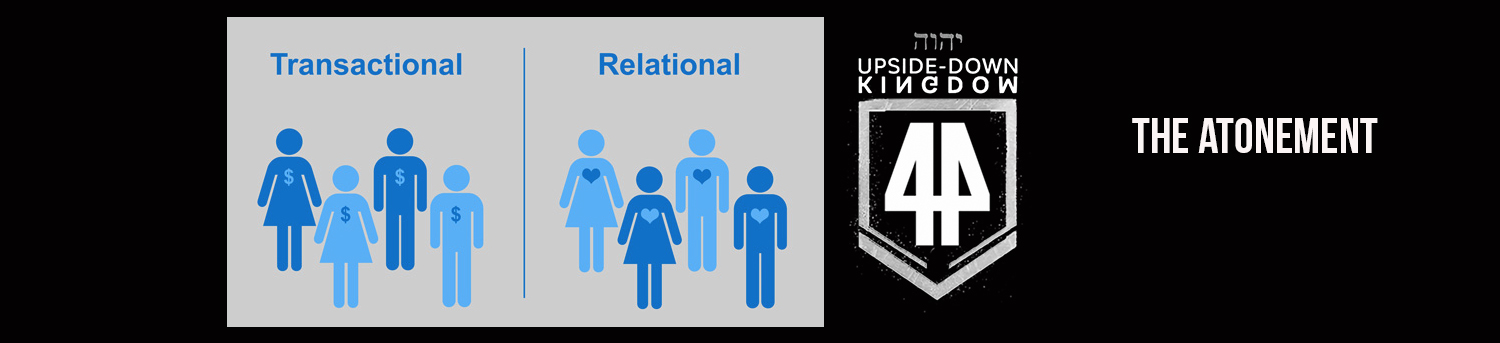


















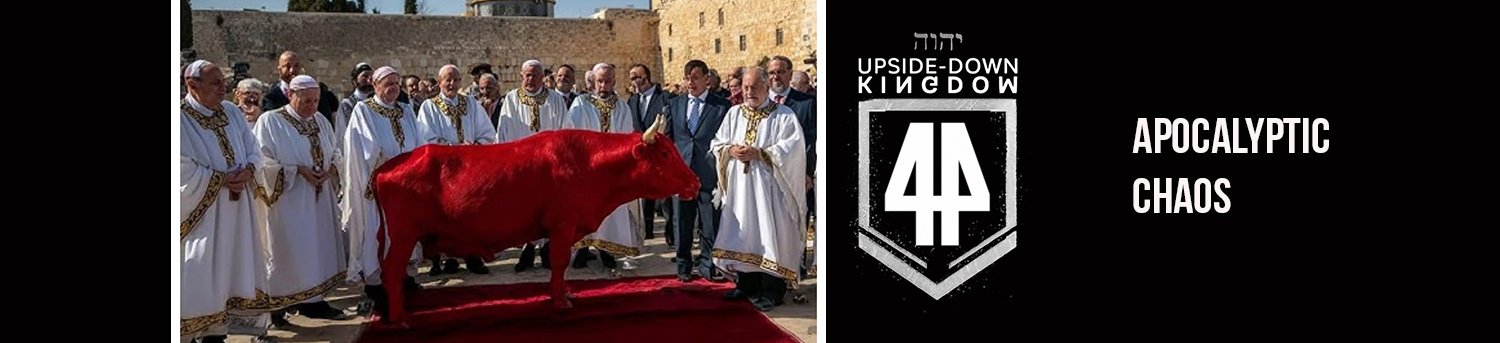

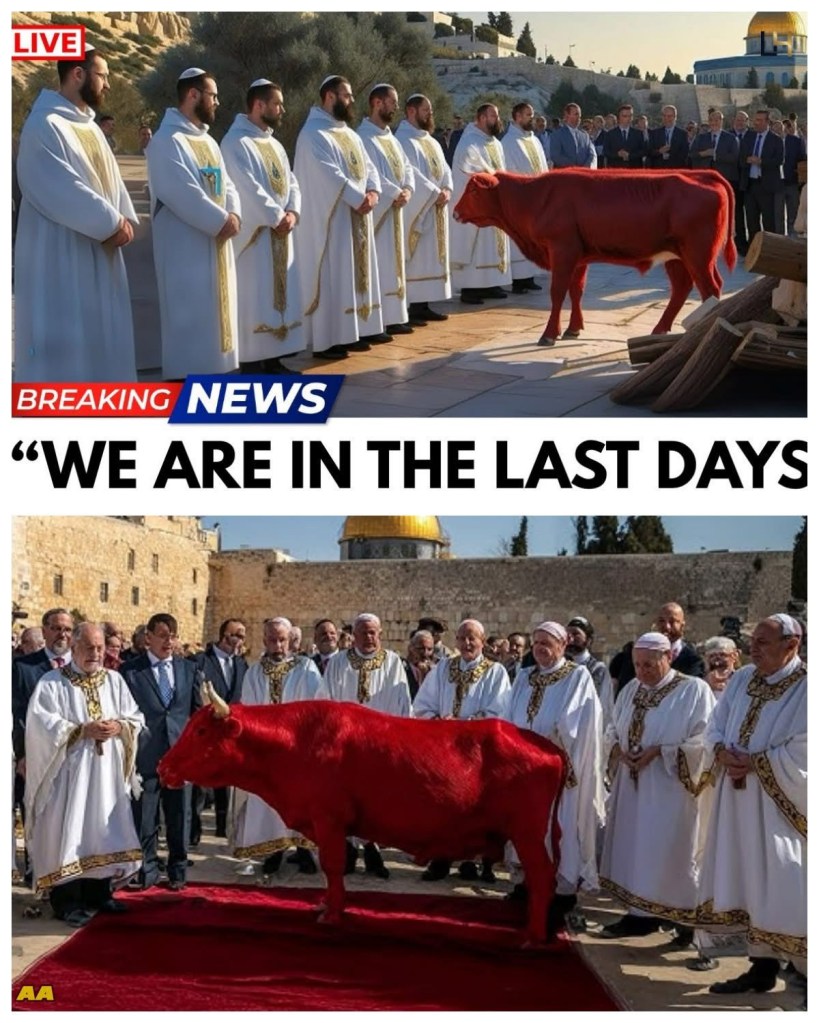








 EXPEDITION 44