“The Abomination of desolation” is a phrase from the Book of Daniel describing the Greek (Seleucid Empire) king Antiochus IV Epiphanes that desecrated the Second Temple by erecting an altar to Zeus and sacrificing swine, an unclean animal according to Jewish law, on the altar in 167 BC. [1] Partially in response, the Jewish Maccabees went to war (revolt) with the Seleucid Empire and in 164 BC, the Maccabees captured Jerusalem. [2] The subsequent cleansing of the temple and rededication of the altar on 25 Kislev is the source of the festival of Hanukkah. [3] In doing so they paraded through the town displaying their pomp and splendor over their enemies. The Hasmonean dynasty then survived 103 years before yielding to the Herodian dynasty in 37 BC. From that year on, at the beginning of Passover (the day the Jews believed Yahweh gave them freedom) the Roman governor of Judea, would march into the city from the West (THROUGH THE “GREAT” GATE) with full military might on a mighty war horse. His parade was a show of force to remind the people of Jerusalem that Rome was in charge, and every magistrate wanted to be treated like a god. [4]
But here we have Jesus coming through the East Gate. That is the lowly gate that shepherds of animals used. This is where the Passover lambs would have been ushered in later this week. It is readily seen that Jesus’ triumph is very different from the Maccabees; Jesus wields the cross, not the sword, as His triumphal weapon, just as his regality is ensconced upon a lowly donkey rather than a mighty warhorse.
The Maccabees were aimed at liberating Jews from the oppressive nations, focused upon the pollution of the temple by the Greeks but Jesus would be setting the table that the nations might be regained through a different kind of spiritual cleansing.
The triumphal entry of Jesus into Jerusalem, continues to take on a similar image of palms and laudatory praise, echoing the entry of the Maccabees into Jerusalem following their triumph over the Seleucids. [5] The Maccabees entered Jerusalem “with a chorus of praise and the waving of palm branches” [6]. All of this, of course, in the context of a grand temple cleansing – just as Jesus’ entry will be followed by a temple cleansing of His own the day following His triumphal entry. In Antiquity, the palm is one of the trees identified as the Sacred Tree connecting heaven, represented by the crown of the tree, and earth, the base of the trunk. [7] The palm became so closely associated with victory in ancient Roman culture that the Latin word palma could be used as a metonym for “victory” and was a sign of any kind of victory or redemption of a people. [8] They connected the “gods” with victory.
Why a donkey and the coats thing? Well, they both are tied to royal procession. This is a story of the contranyms of the kingdom of Jesus. In 2 Kings 9:13, a man named Jehu is anointed king of Israel and his supporters spread their cloaks on his path, shouting “Jehu is king!” This becomes a regular act from that point forward. In the ancient Middle Eastern world, leaders rode horses if they rode to war, but donkeys came in peace. In 1 Kings 1:33, it mentions Solomon riding a donkey on the day he was recognized as the new king of Israel.
By some estimates, a population of perhaps a few hundred thousand could swell to 2-3 million during Passover. This helps explain several dynamics, most notably why the city’s leadership (both the Romans and the temple establishment) might be more on edge. [9]
FULFILLMENT OF SCRIPTURE
Jesus’ dramatic entry into Jerusalem is included in all four of the canonical Gospels but it varies slightly leaving us the need to harmonize the gospels. In Matthew, quotes Zechariah 9:9, which says:
Rejoice greatly, O daughter Zion! Shout aloud, O daughter Jerusalem! See, your king comes to you; triumphant and victorious is he, humble and riding on a donkey, on a colt, the foal of a donkey.
This is a scratch my head moment theologically and my take on this may challenge your views of inspiration. Was Jesus engineering the fulfillment of scripture? Was Matthew doing a bit “too much” to try to align with a well-known scriptural prophecy? I do not often align with Bart Ehrman, but in this case, I do as he notes, “Hebrew poetry was often organized conceptually rather than by rhyme scheme. This was the case for the poem from Zechariah, in which the idea in the penultimate line is repeated in the last line with different words. Because the author of Matthew doesn’t understand this, he interprets the verse as saying that the king will ride both on a donkey and a colt, which is what he has Jesus do. He doesn’t explain the gymnastics one would have to do to straddle two animals this way, but our imaginations can fill in the details.” [10] So is that what Jesus did? He straddled two animals to fulfill scripture. It seems that way, but who knows, maybe one was good for Jesus.*
*(On a side note, I often like to point out that we have the best tools of any time in History to best interpret scripture. Everything is at our fingertips. We often see the disciples not understanding Jesus and today we have the whole lens of scripture which they didn’t have, linguistic tools for the Biblical languages they wouldn’t even know how to dream of, and hundreds of commentaries from the best scholars the world has known. We “should” understand far better than they did when it comes to seeing things like this.)
But there is something else that I want to point out here of more significance. Matthew 21:5 quotes Zechariah but leaves out one line, “triumphant and victorious is he.” Isn’t that interesting? It should continue to point you towards the backward kingdom dynamics of Jesus as power under not over. This was quite strategic.
Luke and Mark’s narratives give very similar versions of the story, compared to Matthew’s (though without the two animals). However, in both Mark and Luke (but not Matthew), after his triumphal entry, Jesus goes to the Temple and looks around before leaving and going out to Bethany. This is interesting because in all three Synoptic Gospels, Jesus’ next action will be to cleanse the Temple which I am sure you have made the connection to mirroring the history of the Maccabees above. Why the second cleansing? Who was Jesus’ worst enemy? It surprisingly wasn’t Rome; it was the Jewish religious leaders. Consider the need for Jesus to cleanse the “religion” that “defiled” the temple. When you sit back and consider this, Jesus might be making quite a statement. Is He making the point that what the pharisees have done in the temple is as defiling to His father as the abomination of Desolation? So, then you would ask the question is the desolation of religion connected with what they are sowing and will be reaped in 70AD. Are we reading too much into the textual analogy to the Maccabees? Is this a faithful to the text interpretation? Jesus is known for how he regularly crafts inference. Furthermore, we only read Jesus weeping twice and this is one of them. Which one is He weeping over? The context definitely fits the ensuing destruction of 70AD but perhaps both are at liberty within the textures of interpretation.
As Jesus approached Jerusalem, He was acutely aware of the city’s impending destruction and the spiritual blindness of its inhabitants. This event takes place shortly after the crowd had joyfully welcomed Him as the Messiah, laying down palm branches and cloaks in His path. Despite the outward celebration, Jesus knew that the hearts of many were far from understanding His true mission. [11]
Hosanna
Psalm 118:25 says, “Save us (Hosanna), we beseech you, O Lord!” In one sense, the crowd is asking Jesus to save them. In another parallel sense, it’s calling him “savior.” Perhaps both. The strange thing is that the greater portion of the crowd doesn’t seem to have the mind of Christ. That is one of the reasons why Jesus weeps later. They are looking for a war monger savior to meet Herod on the streets and victoriously and triumphantly overcome Rome. You better believe they wanted Jesus to call down the angels of war or open the earth and swallow the Roman army. I am sure fire from heaven would have appeased them too. But that wasn’t the way of Jesus. Some believe that’s why a few days later perhaps the same crowd will be saying, “Crucify Him or take Him away” Others believe the same people weren’t in that “kangaroo courtroom” and it didn’t really matter.
Most of the people were just looking for a show while they were in town and Jesus probably also wept because he wasn’t into that, and He still isn’t.
The next thing they chant – “Blessed is the one who comes in the name of the Lord!” – is also from Psalm 118, this time verse 26. Luke has the crowds say “Blessed is the King who comes in the name of the Lord! Peace in heaven and glory in the highest!” This accords both with Jesus as king and agrees with Luke 2:14, which John also says, and with what the angels proclaim to the shepherds when they announce Jesus’ birth: “Glory to God in the highest heaven, and peace on earth to those with whom he is pleased!” But what is interesting is the rest of Psalm 118. If you have never read it, well that may influence your thoughts a bit on this.
Hosanna meant they were looking for savior. “It is, however, possible that in the case of someone like Judas, if he had previously been a political zealot, that this entry signaled to him that Jesus would perhaps take over things in Jerusalem, and the cleansing of the temple (Matthew 21:12–13) might well have been interpreted as a symbolic gesture suggesting Jesus would clean house. But then when Jesus reiterates, he came to die, not to start a coup, this must have crushed the hopes of anyone with zealot inclinations about kicking out the Romans. Perhaps that is why Judas does what he does at the end of the week.” [12]
WHAT IS THE TRIUMPHANT ENTRY?
In their book The Last Week: What the Gospels Really Teach About Jesus’s Final Days in Jerusalem, John Dominic Crossan and Marcus Borg write “What we often call the triumphal entry was actually an anti-imperial, anti-triumphal one, a deliberate lampoon of the conquering emperor entering a city on horseback through gates opened in abject submission.” [13]
Ian Paul Says it like this, “This is a different kind of king to any you’ve met before. And the reason for that is that the journey up to Jerusalem is not a journey to power and glory, but (as Paul makes very clear in Phil 2.5–11) it is a journey down in obedience to death. Jesus does not come to conquer the city; he comes to be conquered, and in this great reversal to win an even more profound victory. This is why he brings peace: he has turned us from enemies of God to friends through his death. This is why he brings praise and joy: because his death and resurrection have dealt with the things which separate us from God and from one another. This is the power he offers: power to know forgiveness and peace of mind.” [14]
There is a lot going on here. Jesus is acting out the prophecies that the people recognize as pointing to a Messiah, but the prophecy seems to change. Perhaps the prophets read a bit too far into the vision they were given or maybe the failures of the religious Jews changed the conditional covenant offered. Your overall theology for the lens of scripture is going to influence your thoughts here.
The Triumphal entry is CERTAINLY the coronation of the coming king and His kingdom. But it’s also a picture of the rest of the world being so far away from the heart and kingdom that Jesus was offering, and perhaps quite a statement about how far the religion of His day has turned from the Kingdom that He is ushering in.
Lust, Johan (2001). “Cult and Sacrifice in Daniel. The Tamid and the Abomination of Desolation”. In Collins, John Joseph; Flint, Peter W. (eds.). The Book of Daniel: Composition and Reception. Vol. 2. BRILL.
Doran, Robert (2016). “Resistance and Revolt. The Case of the Maccabees.”. In Collins, John J.; Manning, J. G. (eds.). Revolt and Resistance in the Ancient Classical World and the Near East: In the Crucible of Empire. Brill. pp. 175–178, 186–187.
Josephus: The Essential Works, copyright 1994. Kregal Publications Grand Rapids, MI 49501.
I have written a trifecta of posts on edification recently: POST 1POST 2POST 3
One of the basic tenets of our faith walk is work. Work was intended to be a beautiful relational covenant between us and the LORD. At the fall in the garden it turned to toil and Christ set the standard to redeem and reconcile it back to Him through work itself. Through our free will choices we are offered to work back into covenant with Him. The reciprocal dance of grace I describe in my book This is the way to covenant community describes some of the mindset that it takes to return to this circle of grace.
In the edification texts Philippians 2:12 becomes paramount: work out your own salvation with fear and trembling.What does that mean? Let’s put the fear and trembling on the shelf for a minute and focus on the work.
In Greek the word is ergon (noun) and ergazomai (verb). That is where we get our English word ergonomics from. Work ethic is a belief that work and diligence have a moral benefit and an inherent ability, virtue or value to strengthen character and individual abilities.[1] Desire or determination to work serves as the foundation for values centered on the importance of work or industrious work. Social ingrainment of this value is considered to enhance character through hard work that is respective to an individual’s field of work.[2]
We have the ability to shape in some ways who we are by our work.
In ancient Greece, work was seen as a burden, and their term for it, ponos, shared its root with the Latin word poena, signifying sorrow. In Hebrew, work was associated with toil, representing the laborious act of extracting sustenance from the challenging earth.[3][4]
I will challenge you with a lens you may have ever considered though. In our world, “work” always leads back to the father. God introduced us to work, and God’s handiwork is seen in every aspect of creation. But too often we forget that God’s covenant is still at work in every moment and every detail of His Creation (John 5:17). Since work is an extension of the active God, there is no discrepancy between “faith” and “works.” [5] One is simply a reflection of the other. “Work” was intended to be lived out in a sense of the Hebrew avodah, the harmony of partnered effort, service and worship. If your work isn’t working to return to avodah then it is void and leads only to toilsome emptiness.
So what does it mean to work this out? We can’t work for our salvation, but we can work from it. We aren’t saved by our good works (Eph. 2:8-9), but we are saved for good works (Eph. 2:10). This is the sense in which Paul uses the term. Salvation is spoken of in multiple senses in the NT: justification, sanctification, and glorification. [6] It is ongoing, a journey, an expedition that you aren’t saved from but are saved for. It isn’t a line on the sand to attain to. Your work is God’s calling to you to demonstrate His sovereignty in your life, His character in your actions, His holiness in your choices. You are the manifestation of his image. So, work it out carefully. It isn’t a get fit quick scheme, it is a recipe for life.
What about the fear and trembling part? Well, the reformed camp wants to see wrath here. Something like Chaim Bentorah describes as -“At first reading, it seems we are to serve the Lord with fear, that is we must be cautious and very careful because if we blow it, God will crush us with His thumb.” [7] I don’t see that and neither does he. What I can say for sure is that this isn’t a phrase to make you constantly earn your keep in the kingdom or sit around trying to determine once saved always saved theology. If you stuck there, my best advice would be to move forward. In theology whenever one text doesn’t seem to be clear the general rule is to ask what other similar texts say. This should lead to textual agreement.
I can’t say it any better, so here is where Chaim takes us: Psalms 2:11: “Serve the LORD with fear, and rejoice with trembling (Ra’ad).”
To fear God is to show respect for His position and the role He plays as the creator of the Universe. So we serve the Lord in recognition of his position as God. Sometimes we take our service for God lightly, like it is a favor for an old buddy. When we serve God we must always keep in mind His position as the creator of the universe and if he asks some service from us, it is an honor and a privilege and a service we take very seriously, with all our hearts. To be chosen to serve the God of the universe should bring us joy and cause us to tremble. Is that to tremble with fear. Maybe, we do not want to fail the God we love so we fear we will not live up to the job. But you know that word ra’ad is a trembling alright but it may not have to be fear. The idea behind ra’ad is losing control. If you lose control of your body, it may tremble. But there are other forms of losing control. Ra’ad can be losing control of your will, that is giving control of your will to God. Thus if you serve the Lord out of respect for His office as God you will rejoice for you need not fear failure if you are yielding your will and strength to Him, that is giving Him complete control over the task you are performing for Him.
When you think about trembling in this context it is beautiful. It is the sense you get when you work out a muscle so much that it begins to tremble. It’s that hurt that feels so good because it means your there! Have you ever felt that in your covenant circles? What it feels like to pour into people in your life so hard that it results in trembling before the lord? Have you ever felt the radiance of the sovereign Jesus shining down on you so brightly that you could just simply stand back and take in the moment? Thats the kind of work that returns us to Eden and beyond.
The goal of gathering information on this topic is that it might be activated and transformed continually to you. “Do or do not. There is no try” [1] You are a minister of the order of the holy royal priesthood, and your primary congregation is your spouse and family. “Many of the truths that we cling to depend on our point of view.” [2] In a marriage you always think your perspective is correct, yet if you are in a covenant relationship your spouse, your primary covenant relationship is based on the Lord [first]. Therefore, the Holy Spirit is commissioned through your spouse to give you the gift of a divine perspective when you aren’t able to see clearly yourself. There are a lot of repercussions today of the modern church not understanding ancient covenant language that have affected our marriages, family, and the body of Christ. I think we need a return to covenant faithfulness, and it starts with each of us in covenant relationship before the Lord, then to our marriage, families and unto the ends of the earth by discipleship.
“You are worthy, our Lord and God, to receive glory and honor and power, for you created all things, and by your will they were created and have their being.” Revelation 4:11
“In the ultimate sense, your marriage has nothing to do with your spouse. It has everything to do with your relationship to Jesus Christ” (279). [3]
Ecclesiastes 4:9-12 states that two are better than one, as they can help each other and share the rewards of their labor. If one falls, the other can lift them up, but woe to the person who is alone when they fall.
Let all that you do be done in love. 1 Corinthians 16:14
Your marriage first has to be grounded individually in the love of Christ and then reflected towards your spouse. The word love in our culture is overworked and overlooked. An overworked word loses its meaning. An overlooked word has no meaning at all.
Love in the OT is a spontaneous feeling which impels to self-giving, to grasping that which causes it, or to pleasurable activity. It involves the inner person. Since it has a sexual basis, it is directed supremely to persons; love for things or acts has a metaphorical aspect. God’s love is correlative to his personal nature, and love for God is love first for his person and only then for his word or law. Yet even in the extended sense love has an element of fervor or passion except in the case of lesser objects. In the secular sphere love is for husband or wife, parents or children, friends, masters, servants, and social groups. This use is more common than the religious use and may thus be taken as the basis of interpretation. [4]
Does this come as a surprise that the Hebrew ahavah and its Greek correlate agape both have sexual roots? Consider for a moment that YHVH uses marriage and adultery as the paradigm examples of covenant relationship with Him. It’s all about intimacy, ecstasy, bliss, jubilation and euphoria. It should be the ultimate metaphor of Joy. Sex is likely the closest slice (or foreshadow) of heaven we will ever get, especially if it is performed in the light that God intended. I give “rapture” theology a hard time, but maybe we have similarly victimized agape by turning it into a set of proxy principles, a way of feeling religious virtue without ever taking off our clothes. Arm’s-length intimacy isn’t found in Scripture. We have learned to view love in an incomplete form, and anything outside of Christ is incomplete.
The primary word for love in Hebrew is ahavah (אַהֲבָה). Ahavah conveys both human and divine love. It appears in a range of contexts, from romantic love (e.g., Jacob’s love for Rachel in Genesis 29:20) to the covenantal love between God and His people (e.g., Deuteronomy 7:7–8). Ahavah emphasizes action and commitment. This is evident in Deuteronomy 6:5: “Love the LORD your God with all your heart, with all your soul, and with all your strength.” Here, ahavah signifies an all-encompassing devotion rooted in faithfulness and obedience. [5]
Another significant Hebrew term is chesed (חֶסֶד), often translated as “loving-kindness” or “steadfast love.” While not synonymous with ahavah, chesed communicates God’s covenantal loyalty and mercy, such as in Psalm 136, where the refrain declares, “His steadfast love endures forever.”
Together, ahavah and chesed demonstrate a love that is both relational and enduring. [6]
In covenant marriage, this multifaceted understanding of love calls for a life of devotion, selflessness, and community. By living out this love, we participate in the divine mission of bringing healing and reconciliation into our marriage, our families, and through discipleship, to the end of the broken world.
“[It is] a central scriptural teaching…that wherever anything wrong exists in the world, anything we experience as anti-normative, evil, distorted, or sick, there we meet the perversion of God’s good creation. It is one of the unique and distinctive features of the Bible’s teaching on the human situation that all evil and perversity in the world is ultimately the result of humanity’s fall, of its refusal to live according to the good ordinances of God’s creation. Human disobedience and guilt lie in the last analysis at the root of all the troubles on earth.” [7]
Consider now how frequentlyidolatry and sexual immorality appear in tandem throughout the biblical narrative (see Exodus 32, Isaiah 57:7-8, Hosea 4:12-14, 1 Corinthians 6:9-11, Galatians 5:19-21, Ephesians 5:5, Colossians 3:5, Revelation 2:14, 20, 21:25).
“The link between idolatry and sexual immorality is established by the frequent use of ‘prostituting themselves’ or ‘adultery’ to describe Hebrew idolatry [in the Old Testament]. Israel’s unfaithfulness to God was not only a form of spiritual prostitution or adultery, but it also led to the physical acts themselves.” [8]
Sexual sin is merely a symptom of something else. Everything is turned upside down—splintered, deformed, and henceforth, death-dealing to our spirituality. The Greek pornea primary definition is adultery, but it has a secondary meaning of idolatry. It was connected to sexual practices involved in pagan worship. Among pagans, temple prostitutes and group orgies were a reality. The prophets Jeremiah and Ezekiel also employ this metaphor. Jeremiah 3:6-9 describes Israel’s idolatry as harlotry:
“During the reign of King Josiah, the LORD said to me, ‘Have you seen what faithless Israel has done? She has gone up on every high hill and under every green tree to prostitute herself there.’ … ‘Because Israel’s immorality mattered so little to her, she defiled the land and committed adultery with stone and wood.'”
Similarly, Ezekiel 16 and 23 provide graphic depictions of Israel’s idolatry as adulterous behavior, emphasizing the betrayal of the covenant relationship.
The book of James further reinforces this concept by addressing the divided loyalties of believers.
James 4:4 states, “You adulteresses! Do you not know that friendship with the world is hostility toward God? Therefore, whoever chooses to be a friend of the world renders himself an enemy of God.”
Here, the language of adultery is used to describe the spiritual unfaithfulness of aligning with worldly values over God’s commandments.
Throughout Scripture, idolatry is depicted as spiritual adultery which serves as a powerful reminder of the exclusive devotion God demands from His people. It highlights the seriousness of idolatry, not merely as a breach of religious practice but as a profound betrayal of the intimate relationship God desires with His followers. [9]
Covenant and replacement Theology
This is not really a post on a particular theology, I don’t really subscribe to much of any boxes to check in that regard, but since you might be wondering, I will expound here briefly. It then becomes very interesting that many scholars would say that God eventually “divorces” Israel for her unfaithfulness paving the way for the New Covenant for all to be grafted into the “body of Christ,” the “church” as the “new” bride of Christ. Although this is the heart of replacement theology and often argued (to may take the simple analogy too far), it is hard to deny that in a basic sense God has severed His relationship with unfaithful Israel and offered it to all who will accept Him. Where “replacement Theology” might be perceived as a bit “off” here is when you come to the realization that God’s plan through the Abrahamic Covenant was to redeem or reconcile all the nations. Israel would simply be that catalyst, and when they failed to follow through in their covenant mission, God simply adapted a plan for “all” to return to Him. However, this is splitting hairs as the plan of covenant relationship was always for those that made a personal decision and were willing to enter into allegiant obedience with Him. The offering simply started with all of Israel being chosen to receive a special favor of redemption through the Exodus to begin that process. to some regard special privilege as a nation was given to Israel as a whole but not to the extent of some magic tractor beam that some have made it out to sound like. The covenant relationship that God offers to anyone, Israel or those under the New Covenant was always prefaced by the need to enter into obedient relationship with Him. In that sense what God was looking for never changed from the former covenants to the New Covenant.
Love in Covenant Relationships
Covenant relationships form the backbone of many biblical narratives, embodying a commitment that goes beyond mere agreements to encompass mutual devotion and loyalty. These relationships, often likened to the bond between God and His people, reflect a profound level of trust and dedication. Within the context of marriage, the covenant relationship symbolizes a lifelong promise, where love is not merely an emotion but a steadfast commitment to uphold the precepts of the Lord as mosaic picture of sacrificial love and the essence of the Love of Jesus towards another. In a covenant relationship, love has always been characterized by unwavering faithfulness.
Therefore, we are ambassadors for Christ, as though God were entreating through us; we beg you on behalf of Christ, be reconciled to God. 2 Corinthians 5:20
God’s covenant relationship with us is a metaphor of marital faithfulness. It’s not just about sexual fidelity but sex has a very big role to play in this metaphor, so much so that idolatry is viewed in sexual terms. We see this again when Paul chooses the Greek term katallasso as the verb about returning to the Lord. Katallasso means “to reconcile,” and is used in 1 Corinthians 7:11 about marriage reconciliation. This Greek verb is the verb for marriage counseling. It is the goal and the means by which estranged couples reunite. And if Paul uses this verb as the actions required of broken marriages, how much more applicable is it when it comes to broken fellowship with the Great Lover His church. Pagans convert. Jews return. This message isn’t just for the married, it is also to those that have lost their covenant. Paul is reaching out to those who were once part of the fellowship but now don’t live like it. This can be seen as directed towards Israel, but also anyone else who has strayed. Their error is divorcing God. They knew God but they chose to live for their own agendas. Perhaps today in our modern religious circles there are a lot more who need to be reconciled than we thought. Perhaps the most important function of the “church” is “divorce counseling” with those who thought marriage to God only meant signing the contract. We have learned to treat this covenant like a contract of the world not a spiritual covenant. I have always had a hard time with evangelical crusades that emphasize the salvific concentration without the follow-up of deeper discipleship. It resembles a one-night stand kind of theology rather than a lifetime of faithful commitment.
For believers, covenant faithfulness involves a response to God’s steadfast love through obedience, worship, and devotion. The call to faithfulness is echoed in 1 Corinthians 4:2, “Now it is required of stewards that they be found faithful.” Christians are encouraged to live in a manner worthy of the calling they have received, reflecting God’s faithfulness in their relationships and commitments. When we fail to live intimately in the covenant that God offers to us it is describes with the same words as adultery and idolatry. In this sense casual Christianity equates with grounds for spiritual divorce. (I never knew you.) Yet God is pictured as a faithful partner that is always asking the unfaithful one to come back into lost devotion.
The Book of Hebrews exhorts believers to hold fast to their hope without wavering, for “He who promised is faithful” (Hebrews 10:23). This assurance of God’s faithfulness provides the foundation for a life of trust and perseverance in the covenant marriage and the Christian journey. That is the heart of the covenant. That we might be completely undivided to this journey of covenant faithfulness to the Lord and then to our spouse, our families, and unto the end of the world to those that are endeared together in this commissional calling. It is a return to Eden and beyond.
SPECIAL THANKS TO Krista Bensheimer and Steve and Kay Cassell who contributed to the article.
Master Yoda – Star Wars Episode V: The Empire Strikes Back, George Lucas
Master Yoda – Star Wars: Episode VI: Return of the Jedi, George Lucas
Love & Respect: The Love She Most Desires, The Respect He Desperately Needs. Emerson Eggerichs. Nashville, TN: Nelson, Thomas Inc., 2004.
Kittel, G., Friedrich, G., & Bromiley, G. W. (1985). Theological Dictionary of the New Testament. Grand Rapids, MI: W.B. Eerdmans.
Etymological Dictionary of Biblical Hebrew: Based on the Commentaries of Samson Raphael Hirsch
^IBID
Albert M. Wolters, Creation Regained: Biblical Basics for a Reformational Worldview, p. 46
Dennis P. Hollinger, The Meaning of Sex: Christian Ethics and the Moral Life
Today was a life milestone. I visited the home of the Dead Sea Scrolls. I have dreamed of this since I was young. As I would love to tell you everything I know about them, I think I will keep this to a brief introduction.
The Dead Sea Scrolls, also called the Qumran Caves Scrolls, are a set of ancient Jewish manuscripts (some original biblical texts) from the Second Temple period. They were discovered over a period of 10 years, between 1946 and 1956, at the Qumran Caves near Ein Feshkha in the West Bank, on the northern shore of the Dead Sea. These date back to the third century BCE.[1]
The Shrine of the Book was built as a repository for the first seven scrolls discovered at Qumran in 1947. The unique white dome embodies the lids of the jars in which the first scrolls were found. This symbolic building, a kind of sanctuary intended to express profound spiritual meaning, is considered an international landmark of modern architecture. Designed by American Jewish architects Armand P. Bartos and Frederic J. Kiesler, it was dedicated in an impressive ceremony on April 20, 1965.
The contrast between the white dome and the black wall alongside it alludes to the tension evident in the scrolls between the spiritual world of the “Sons of Light” (as the Judean Desert sectarians called themselves) and the “Sons of Darkness” (the sect’s enemies). The corridor leading into the Shrine resembles a cave, recalling the site where the ancient manuscripts were discovered. [12]
2017 marks the 70th anniversary of the discovery of the Dead Sea Scrolls. Long story short, in late 1947 a young Bedouin boy tossed a stone into a cave, heard the clink of breaking pottery, and would later scramble in to find the tattered remains of ancient scrolls from the centuries leading up to and after the Common Era. If this modern story of ancient discoveries is new to you, you’ve got to ask a very important question. Why does any of this matter today?
These are the oldest Biblical manuscripts that we have and therefore have made us consider the texts of our later translations of the Bible. [2] Today I visited the Shrine of the Book Museum in Jerusalem where the Dead Sea Scrolls and fragments are located and are now mostly the property and heritage of Judaism.[4] There are 981 different manuscripts (discovered in 1946/1947 and in 1956) from 11 caves,[5] in Qumran in the eastern Judaean Desert in the West Bank.[6] Archaeologists have long associated the scrolls with the ancient Jewish sect known as the Essenes, although some recent interpretations have challenged this connection and argue that priests in Jerusalem or other unknown Jewish groups wrote the scrolls.[7][8]
Most of the scrolls are in Hebrew, with some written in Aramaic and Greek.[9] The texts are written on parchment, some on papyrus, and one on copper.[10] The scrolls cover a wide range of topics and genres. The biblical scrolls include texts from every book of the Old Testament, with the possible exception of Esther. Other scrolls are Jewish sectarian writings, administrative documents, deeds of sale, and even divorce and marriage records. Despite the name, the majority of the scrolls are preserved as fragments, small scraps of what were once larger scrolls and documents. While some scrolls are several feet long, many smaller fragments are no larger than a fingertip. To date, more than 25,000 fragments have been discovered, and extensive work has gone into combining, preserving, translating, and studying these various fragments.[11]
The Dead Sea Scrolls shed light on the period between Alexander the Great’s conquest of Palestine in 332 BCE through the Great Revolt, which ended in 73 CE, with an emphasis on the period from the Maccabean Revolt (168–164 BCE) through the turn of the century. However, in order to fully comprehend the Qumran sect, the reasons for its establishment, and its unique character, one must study Judaism and Jews in the Second Temple Period. It is essential to understand the political realities, external influences, and theology of the time. The Second Temple period, or Second Commonwealth, began in 538 BCE with a declaration by Cyrus the Great, king of Persia and Media, that the Jews could return to the Land of Israel and rebuild their Temple. The Temple and the city of Jerusalem were rebuilt by the year 515 BCE, and, in contrast to the First Commonwealth, the high priest became the secular as well as religious authority. This system of government lasted into the Hasmonean period and became an object of protest in the Dead Sea Scrolls, as well as in other literature of the period. [13]
The scrolls gave historians great insight into the ancient forms of these languages, and they also changed the way scholars studied the Old Testament. For example, the scroll with the most complete version of the book of Psalms had about 40 psalms, including three that were previously unknown. One of these unknown psalms was a “plea for deliverance,” which made note of “evil incarnation.” The Dead Sea Scrolls provide evidence of the diversity of religious thought in early Judaism and the Hebrew Bible’s text development. They revealed the psalms were once sequenced in a different order. This was interesting to scholars because the texts had long been so uniform, and seeing flexibility with the wording and organization was stunning. Few people, however, were able to read and analyze the texts. The Dead Sea Scrolls were long hidden away until they were “liberated” in the 1990s. [14] Later that year, the Biblical Archaeology Society was able to publish the “Facsimile Edition of the Dead Sea Scrolls”, after an intervention of the Israeli government and the IAA.[15] In 1991 Emanuel Tov was appointed as the chairman of the Dead Sea Scrolls Foundation, and publication of the scrolls followed in the same year. Researchers at Hebrew Union College in Cincinnati, Ohio, Ben Zion Wacholder and Martin Abegg, announced the creation of a computer program that used previously published scrolls to reconstruct the unpublished texts.[16] Officials at the Huntington Library in San Marino, California, led by head librarian William Andrew Moffett, announced that they would allow researchers unrestricted access to the library’s complete set of photographs of the scrolls. In the fall of that year, Wacholder published 17 documents that had been reconstructed in 1988 from a concordance and had come into the hands of scholars outside of the international team; in the same month, there occurred the discovery and publication of a complete set of facsimiles of the Cave 4 materials at the Huntington Library. Thereafter, the officials of the IAA agreed to lift their long-standing restrictions on the use of the scrolls.[17]
If you keep a close eye on the footnotes of your Bible, you’ll see a number of places where the words of modern translations are different than those read by your parents or grandparents. One of the reasons for this is that we know more about ancient scribal culture and have access to hoards more biblical manuscripts today than we ever have. This means the textual foundation under the hood of most any contemporary translation is better than it has ever been. Whether you’re a fan of the NIV, NRSV, ESV, or ABC-123, each new edition involves incremental change to the actual words on the page.
But this sword cuts in both directions. While we have far more evidence to work with, if the Scrolls taught us anything about Old Testament scripture, it is generally true that the older the manuscripts the more varied they become. Simply put: human scribes were not photocopiers and no two manuscripts are the same. Scribes copied texts but also interpreted them. That was their job. It wasn’t trickery or introducing error at every turn. This often resulted in slow growth of biblical texts with manuscripts having relatively modest variations in content. A word here, a phrase there, and in some cases, more than one edition of a book circulated. To many modern readers, this might sound like a major problem. I’d rather see it as an opportunity. An opportunity for artful restoration of a text that is both ancient and sacred. Let me show you what I mean.
I really like the way RELEVANT handles this:
Have you ever been reading the Old Testament and then, wham!, some guy shows up in the story and starts gouging out people’s eyeballs? I have, very alarming. (Gotta love the Old Testament though, so old school!) Of course, I’m talking about the incident that plays out in 1 Samuel 10-11, just after Saul became Israel’s first king. In most ancient manuscripts and modern Bible translations, chapter 10 ends with a statement of a small group uttering lack of confidence in Saul’s ability to defeat the Ammonites (1 Sam 10:27). Chapter 11 then opens with the sudden introduction of an Ammonite king named Nahash, who insists on only making a treating with the Israelites so long as he can gouge out each and all’s right eyeball (1 Sam 11:1-2). Not only is this a bad deal, its super confusing in the context of the narrative. Why? Something is missing.
At least seven copies of the book of Samuel were found among the Dead Sea Scrolls. One of these, known as 4QSamuala, just happens to be the oldest known manuscript of the book in existence (dated to around 50-25 BCE). In this version of the text, we find a full paragraph tucked in between the end of chapter 10 and beginning of chapter 11. The translation of this Dead Sea Scroll reads as follows:[Na]hash king of the [A]mmonites oppressed the Gadites and the Reubenites viciously. He put out the right [ey]e of a[ll] of them and brought fe[ar and trembling] on [Is]rael. Not one of the Israelites in the region be[yond the Jordan] remained [whose] right eye Naha[sh king of] the Ammonites did n[ot pu]t out, except seven thousand men [who escaped from] the Ammonites and went to [Ja]besh-gilead.
What we have here is essentially a cut scene seemingly lost in the generations of copying all other biblical manuscripts. From this content, we learn who this Nahash figure is and why he had the sadistic penchant for collecting eyeballs. Incidentally, the ancient Jewish historian Josephus also seems to have been aware or this detail as he hints at it in his own retelling of Saul’s life (Antiquities 6.5.1). This is the single largest difference discovered when the biblical Dead Sea Scrolls were compared with all previously known witness to the Old Testament. The spectrum of other variations revealed by the scrolls ranges from the spelling of terms, to added/omitted words, or even sentences. While many common Bible translations have dabbled in the Dead Sea Scrolls and included new readings, to date the NRSV is the only one bold enough to integrate the reading described here in 1 Samuel.
The Dead Sea Scrolls are important for a number of reasons. First, they shed light on an otherwise known Jewish group. Actually, the people who wrote the Scrolls never refer to themselves as Jews. They are intriguingly vague about their identity. Second, the Scrolls indicate that certain books of the Bible were more popular than others, a conclusion we could draw similarly from the New Testament quotations of the Old Testament. Third, the use of the Old Testament as an authoritative source for biblical interpretation and personal and community life matches material from the New Testament as well. Finally, the discovery of the Dead Sea Scrolls allows us to access Old Testament manuscripts more than 1,000 years older than we previously possessed. Before the discovery of the Scrolls, the oldest complete manuscript of any Old Testament book dated to the 10th century A.D. To be clear, if Moses wrote the Pentateuch in circa 1400 B.C., then our earliest copy of his complete work in Hebrew dated 2,400 years after it was written! It is with justification that the Dead Sea Scrolls are considered by many the most important biblical archaeological discovery of all time.[19]
WORKS CITED:
“The Digital Dead Sea Scrolls: Nature and Significance”. Israel Museum Jerusalem. Retrieved 4 November 2023.
Lash, Mordechay; Goldstein, Yossi; Shai, Itzhaq (2020). “Underground-Archaeological Research in the West Bank, 1947–1968: Management, Complexity, and Israeli Involvement”. Bulletin of the History of Archaeology.
Duhaime, Bernard; Labadie, Camille (2020). “Intersections and Cultural Exchange: Archaeology, Culture, International Law and the Legal Travels of the Dead Sea Scrolls”. Canada’s Public Diplomacy. Palgrave Macmillan Series in Global Public Diplomacy. Cham: Springer International Publishing. p. 146
“Hebrew University Archaeologists Find 12th Dead Sea Scrolls Cave”. The Hebrew University of Jerusalem. Archived from the original on 2 June 2017.
Donahue, Michelle Z. (10 February 2017). “New Dead Sea Scroll Find May Help Detect Forgeries”. nationalgeographic.com. Archived from the original on 15 June 2018.
Ofri, Ilani (13 March 2009). “Scholar: The Essenes, Dead Sea Scroll ‘authors,’ never existed”. Ha’aretz. Archived from the original on 6 January 2018.
Golb, Norman (5 June 2009). “On the Jerusalem Origin of the Dead Sea Scrolls” (PDF). University of Chicago Oriental Institute. Archived (PDF) from the original on 10 June 2010.
Vermes, Geza (1977). The Dead Sea Scrolls. Qumran in Perspective. London: Collins. p. 15.
McCarthy, Rory (27 August 2008). “From papyrus to cyberspace”. The Guardian. Archived from the original on 22 December 2016.
“Copies of Dead Sea Scrolls To Go Public – Release Would End Scholars’ Dispute'”. The Seattle Times. 22 September 1991. Archived from the original on 21 October 2013
HUC-JIR Mourns Dr. Ben Zion Wacholder, Hebrew Union College – Jewish Institute of Religion, 31 March 2011, archived from the original on 18 November 2015
“Dead Sea Scrolls”. Encyclopædia Britannica. Archived from the original on 12 April 2009.
I want to talk about what is meant by God’s order, but before I do that, I want to guide you through a brief exegetical teaching through the text. When you hear the word order in relation to a biblical sense we have been conditioned to think about creation, law, hierarchy in the church and marriage, and perhaps even church discipline. Although it encompasses those things, I find it unfortunate that we start there, and therefore I feel we might need some deconstruction to get to good.
In the morning, O Lord, You will hear my voice; in the morning I will order my prayer to You and eagerly watch. Psalm 5:3 NASB
As I begin to read this in Hebrew the first thing that I notice in contrast to most English translations is the phrase “My prayer” is not found in the text. It isn’t a bad translation as I get the context leans that way but in Hebrew the verse better reads, “I will order toward you” which emphasizes a slightly different posture. Interesting the word prayer isn’t really there, perhaps a NT implication or even insertion. Prayer in the OT was a bit different than the way we understand it today. It was communal and far less personal (unless God appeared to you in a bush and orally spoke directly to you), after Jesus ascends to the throne and sends the Spirit to dwell in us and intercede, the biblical concept of prayer takes on a different form than what it had been considered over the last 2000 years or more. The way people thought of “prayer” in the OT may or may not be accurate. Are we just reading what they thought prayer was supposed to be perhaps based on what they knew of their former deities? Is this something that they got a bit off track with and Jesus sought to adjust or shed new light on? Perhaps, but perhaps not. Maybe our prayer should take a cue from the OT notions. When we read this verse in Hebrew form, we see that David isn’t talking about ritualistic prayer, or is he? He isn’t necessarily folding his hands and closing his eyes – but he is sort of. He is making a statement that if his life is in alignment with what is of God – TOV (creation order language), then he expects God to acknowledge and “DO THINGS” on his behalf. This may tie into the never-ending OT grappling over whether God was retributive or not, but it certainly had the trajectory of demonstrating the idea of devotion in connection to intimacy with the Lord. This connection over the years will then be attributed to the conjecture of relationship with the father in prayer. Some prayer is communal and some is personal.
Different people interact with God differently and perhaps in different seasons. Some say they don’t hear God and others act like God never stops screaming in their ear. How can the voice of God differ from person to person? Is it based on the posture of the heart, covenant faithfulness, gifting, seasons, understanding, choice, some sort of prejudice, or something completely different that is higher than our understanding? I believe that God is just that dynamic. I don’t know why He communicates differently to people and what it might be based on; I don’t always have the eyes of God. I believe Him to be Sovereign and know significantly more than we do in a much more complex grid. I am convinced that there are many things that influence this covenant relationship at a cosmic level. It is far bigger than simply me, and to think of my relationship with God (the creator of the universe) as doating on my every thought seems like a selfish notion. Does that view minimize a personal relationship or exemplify it?
God’s order is described in everything naturally defined by Yahweh and described generally as what is good (TOV). This is creation, the waters, the counting of the ark, the building of the temple, the pieces of firewood set in order for a sacrificial fire, showbread set out in two rows of six cakes on the gold table (Lev 24:8); seven altars set up by the pagan mantic Balaam (Num 23:4); stalks of flax arranged by Rahab for hiding the spies (Josh 2:6); a table prepared for dining (Ps 23:5; Isa 21:5); words produced for speaking (Job 32:14); a legal case developed for presentation (Job 13:18); etc. In II Sam 23:5 David exults in the covenant granted him by Yahweh, “for he has made with me an everlasting covenant, / ordered (ʿărûkâ) in all things and secure.[1] We see God’s order in many ways, but the common thread that binds seems to be that it is given as a framework for our devotion to Him. This intimate devotion that is often described as reading or memorizing scripture, devotional repetition, standards of practice and living, and so much more are all described as what it means to be defined as SET APART. That we are defined and claimed as part of God’s order not the chaos of the world.
What defines this? Covenant. Covenant is the secure, accessible, and recognizable attribute of everything good that God offers to us. It is the basis of all of our interaction with the LORD. Without covenant we are detached or separated from the creator and his ways. When David chooses every morning to be in order, he is making a statement about the balance of life and the posture of the heart. The Hebrew term בְּרִית bĕriyth for “covenant” is from a root with the sense of “cutting”, because pacts or covenants were made by passing between cut pieces of flesh of an animal sacrifice.[2] It meant something deep.
The New Covenant is a biblical interpretation originally derived from a phrase in the Book of Jeremiah and often thought of as an eschatological world to come related to the biblical concept of the Kingdom of God. Generally, Christians believe that the New Covenant was instituted at the Last Supper as part of the Eucharist, which in the Gospel of John includes the New Commandment.[3] A connection between the Blood of Christ and the New Covenant is portrayed with the saying: “this cup that is poured out for you is the new covenant in my blood”. Jesus is therefore the mediator of this New Covenant, and that his blood, shed is the required blood of the covenant. This is true looking back in both testaments and can be seen in all of the biblical covenants of the bible.
In the Christian context, this New Covenant is associated with the word ‘testament‘ in the sense of a ‘will left after the death of a person (Latin testamentum),[4] the original Greek word used in Scripture being diatheke (διαθήκη) which in the Greek context meant ‘will (left after death)’ but is also a word play having a dual meaning of ‘covenant, alliance’.[5] This notion implies a reinterpreted view of the Old Testament covenant as possessing characteristics of a ‘will left after death’ placing the old covenant, brit (בְּרִית) into a new application of understanding as revealed by the death, resurrection, ascension, and throning of CHRIST THE KING, JESUS. All things will forever connect at the covenants and be defined by the atoning accomplishments that transform into a covenant of eternity.
Order today might be better understood as a continually evolving algorithm based on the posture of your covenant faithfulness which, as I have described, is defined by many facets of devotion. Some may hear the audible voice of God more clearly while others simply see Him in every image. The revelation of God to us isn’t in a form of hierarchy. One form of transcendence doesn’t trump another. Who are we to judge anyway. But I do know that most of Christianity seems to be off course here. Rather than coming to the LORD as the cosmic wish granting genie in a bottle, let’s get back to biblical roots and think more covenantal and devotional based on the order that God modeled for us.
[1] Harris, R. L., Archer, G. L., Jr., & Waltke, B. K. (Eds.). (1999). Theological Wordbook of the Old Testament (electronic ed., p. 696). Chicago: Moody Press.
[2]Strong’s Concordance (1890).
[3] “Comparison of the two covenants mediated by Moses and the two covenants mediated by Jesus”. 25 September 2022. Archived from the original on 2022-09-28. Retrieved 2023-01-29.
Wait what? All that in the one word? -I don’t think so!
Just about every day I scroll through a “BIBLE” meme on Facebook that makes me cringe. I used to comment but I no longer do largely because I think sometimes people don’t interpret the comments as useful, or teaching better theology but as some kind of self-promotion, or “I think I am better than you” type of thing. I think that is unfortunate. I believe part of shepherding and discipleship is a Mars Hill or rabbinical teaching method of being open to constantly learning and working through a better understanding of the test with the giftings of those around you. To keep each other Biblically sharp and accountable to be faithful to the text. Letting people get really loose with the text has led to alot of bad theology and ditch diving. I believe the Bible greatly encouraged textual exploration together within the body. That is what the body of Christ is supposed to do. I have 40 years of deeply studying the Bible under my belt and God has gifted me with a certain learned spiritual intuition of exegesis. I hope it comes as a gift to those that have a learning posture towards the scripture. To those more interested in fighting or finger pointing, or making internet dumpster fires, I am not interested.
THE MEME:
At first glance this probably looks pretty neat. It’s challenging, it looks at the original language rather than an English glossed translation, it comes off as going deeper. So, what’s the problem? Well, it isn’t faithful.
A faithful translation means you let the text speak for the text. You don’t read your own desire into the text. This commonly referred to as good exegesis.
In this case, here are some issues:
One word? Sort of. The text is Genesis 3:9. Start by typing that into a browser followed by the word interlinear. The first link will be the Bible Hub, click it. The word is ’ay·yek·kāh and you will see the [are] is in parentheses. It technically isn’t in the text but linguistically it is- but it is understood such as an understood “YOU” in English. Click the word and you are going to find there is only one occurrence of this “word” or conjunction of words in the Bible. This is called a Hapax Legomenon. The basic hermeneutical law or idea of any Hapax Legomenon is because it is rare don’t read too much into it. See if you can find how it is used outside of the Bible to give you a better understanding of how the text uses it. But in this case, it isn’t a “TRUE” Hapax Legomenon in the sense that if you click the root word above which is Strong’s 335 you will see the root is “ay” in Hebrew which occurs 36 times in the Old Testament. We have a pretty good idea of what it means! There are some words or phrases in the Bible where we don’t even have the root anywhere else and that is a better example of a Hapax Legomenon, but they are both technically considered Hapax Legomenon’s. This one we can see essentially means “where or how” which makes sense in the English translation “where are you?” I would encourage you to read the usage and cultural notes below the word. These are theologically very basic and at times arguable, but still give you a better start. In this case it notes that the word can come with distress or lament. Seems true to this text! It also notes that this particular word is often noted of spiritual locations within the cosmos. Again, true to the text. Most of the time these notes don’t get too controversial and are written by well noted scholars. This is sort of important because there are other similar words in Hebrew that could have been used without a sometimes-spiritual emphasis. We see this importance in Deuteronomy 32 when the text asks “Where are there gods.” It is also used in 1 Samuel 9:18 in regard to the SEER. It is used in 2 Samuel 15:2 in regard to the city which is interesting and could be signified as one of the reasons I believe in ancient times cities were gatherings of fallen spiritual beings and people aligned to their ways and rival to Yahweh. In Job 2 it is used to ask where “the satan” came from. The problem is (as you can see to the column on the right of all the verses using this Hebrew root) there are at least a few texts that don’t seem to take on “spiritual spatial” significance, it just means where? So that tells us we can’t read too much into a sense of cosmic space every time we see the word used. Hermeneutically it may or may not have spiritual bearing. Therefore, we have to determine from the rest of the text whether it does or not. In other words, we don’t have the “RIGHT” to attribute a spiritual significance to the simple text “where” unless something in the rest of the text gives it to us for certain. If the text doesn’t grant it, then we have to determine if we the ability to say it could go that way, but we don’t know for sure. It may or may not have spiritual spatial implications. In this text we already know they are in Eden, so the context gives us the sacred space.
To say that it is one word is accurate (I would have said the same thing), but it’s a bit complicated as in Hebrew bits of different words form one word. This is actually really helpful in determining what one word can mean because we can break the word up and study the microcosm of it. In this case you would think all the things the author of that post says the word means would be great if the word could have been textually broken up that way. The problem in this case is it doesn’t say all those things. We get “where” which (as we already noted) may or likely implies a spiritual search-find. You could take away from the text exegetically that God is “searching us out” or “looking for us” or perhaps even noting that the space is spiritual as I already alluded to. All of those things could be good exegesis. That is what the text gives us. Next, we have the understood {ARE}. We don’t really get anything magical from that. Then we have “you” essentially as formed into the singular word. There is really not much to exegete there either. He is talking to a certain person. DO we have the right to insert our name here? Well, the genre of this text is a historical narrative. Simply telling the story. So no, we don’t really have the right to insert our name. Because God was seeking out Adam in the garden doesn’t give us the textual ability to say He searches us out the same. He may or may not, but the text doesn’t give us that warrant. So here you see the author of the meme breaking some huge theological and hermeneutical laws. He takes a text that isn’t about him and tries to make it about him or us. This is called reading into the text. Using the Bible to twist it into saying what you want it to say without the merit of the text giving you that. Now could it mean that later God will act the same towards you? Yeah, later the text may do that but here it doesn’t. However, if you read the text doing that for others in the story over and over and over you might come to an ontological conclusion that if there are 26 examples of God acting this way in the narrative, we have then maybe he acts this way towards me too! (But to be clear, the text still wouldn’t give us that for certain.) Sometimes people take a lot of latitude to say the scripture means something that the text never gave or intended to give. That seems to be the case here. It simply isn’t good theology or maybe even theology at all. It is saying the Bible says something in a text that doesn’t say that.
“God’s first words after the fall” – We don’t know this either. The Bible doesn’t give us the full account. There may have been other words. Perhaps these are the first words in the Bible after the fall. But making the statement that the author makes in the way that he does isn’t true. Does this seem nitpicky? Maybe but there is a difference, and it matters in biblical interpretation and textual criticism.
This is classic for someone trying to make a doctrine or in the authors words, “a whole theology” over something the text doesn’t say. The text says nothing of the lost. Was Adam lost? We aren’t told that he was. Was he asking for a confession. Later scripture tells us that when we sin, we need to confess, but that isn’t in the text here. What about restoration and redemption? Well, everyone knows God wants restoration and redemption, right? But this text doesn’t go here either. Are you following me? There are texts that talk about redemption and restoration but not this one. In fact, maybe the opposite. This text leads to exile from the garden, that is the opposite of restoration. So what it does tell us is exile may come before restorative acts. That could be a more faithful takeaway than what the author of the meme comes up with. The author improperly says the text means something that isn’t given to us. It is as if the author is trying to write his own Bible and proof text the word to say what he wants it to say. The real problem is that we are saying the word says something that it isn’t. Maybe other places say that, but a better hermeneutic is to only exegete what the text says. Don’t add or fill in anything. There is no context for the takeaways the author asserts over the text.
CONCLUSION
A Faithful reading of the text means we only take away what the text gives us. We can’t read anything else into it. I can’t tell you how many times in a sermon I hear a pastor say “the Bible says this” and goes on to quote a verse that doesn’t say anything close to what the pastor says it said. In many cases we have become all too comfortable with accepting things like this, and it has led to a lot of bad consequences. It seems there are so many people are using the Bible for their own gain saying what they want it to ay and that is unfaithful to the text.
NOTE; The Bible Hub is free, easily accessible and works well. LOGOS is better but is $$$.
Expedition 44 founders, Dr. Matt and Dr. Ryan have a book coming out in 2025 entitled Principalities, Powers, and Allegiances which deals in large part with the interpretation of Romans 13. Its rather scholarly so let me give an overview in fairly plain words. If you want to work through 1300 references and do your due diligence on the subject, well then, you will need to wait for the 300-page book!
As we approach texts such as Romans 13, theologians categorize them in two ways- submission and conflict. The submission texts of Romans 13:1-7 and 1 Peter 2:13-17 use the language of submission or subjection to authorities and have been used to frame a potentially positive view of the government and kingdom structures in the world. Though we show in our book that not all interpret these texts in that manner. Runge summarizes this submission approach to these texts saying,
Paul’s rationale for obedience has nothing to do with the rulers’ godliness, competence, or any other qualification. Instead, his call for submission to their authority is grounded in God’s authority. The only authorities that exist are the ones whom God has placed there, according to His sovereign plan… Although Paul is silent regarding unjust rulers, Peter is not. Peter describes an example of subjecting oneself to a master even if he is unjust (1 Pet 2:18–19). He takes the position that even in the face of unjust authority, it is still better to submit.[1]
The conflict text we examine in our forthcoming book is Revelation 13 and is often based on anti-imperial sentiments. The thrust to the interpretation of this text is based on which theological school one lands in when approaching the letter of Revelation. If one places this as purely future events then it has little bearing on how one views government in the present, especially if the church will be “raptured” at the time of the “Beast’s Government”: a “revived Roman empire,” according to some futurist interpretations.[2] (Namely dispensationalism views such as the popular pre-tribulation view.) Other approaches to this passage see this as something from the past yet can be applied to all believers of all times within the view that the Bible was written for us but not to us. In that perspective, it was written to seven churches in Asia Minor in the first century as the primary audience and it must have meant something for them in the first century context of the Roman empire and the emperor cult. Putting it purely in the future removes those churches from the context because they are purely an allegory of church history eras.[3]
For this article, we will only be looking at Romans 13, but I would be remise if I didn’t point out it’s context and relationship to other similar texts within the lens of scripture.
CONTEXT OF ROMANS 13
Whenever you dive into exegesis context is king (well actually Jesus is king, but you know what I mean!) As I indicate above, we need to first determine who was the intended audience and how would they have taken the text, epistle, message, or letter. Once you figure that out than “maybe” you can apply it to your own situation. (This hermeneutic is often referred to as textures of interpretation.) Romans was likely written while Paul was staying in the house of Gaius in Corinth. The epistle was probably transcribed by Paul’s amanuensis Tertius and is dated AD late 55 to early 57. We are told in certain textual variants including subscripts explicitly mentioning Romans 16 that it was delivered by Phoebe who was a Deacon. This letter likely would have been distributed in a similar fashion to the rest of the NT letters in a teaching / preaching style by the one making the delivery to a circuit of communities. Phoebe lived in Cenchreae, a port town near the city of Corinth. Corinth was where Paul was staying when he wrote the letter to the Romans.
It is important to remember that Romans was written before Paul went to prison and many scholars believe it to have been that catalyst that sent him that way with language very much asserting authority to King Jesus which was deemed as rival to the emperor of Rome. Romans is written at the End of Claudius’ edict after he evicted Jews or Jewish leaders in 49 AD. In 54 AD Claudius dies and Nero takes the throne asserting his uncle Claudius to be an “idiotes” and welcomed back everyone to Rome. This would seem to be a very political move to boost popularity towards his goal of building the empire, rather than a direct support towards Christians. We would assert this by seeing that within a few short years he begins to persecute Christians throwing lavish garden parties that are lit by the ambience of Christians dipped in tar and set on fire. Josephus would go on to note “in the name of Christus” as coding that led to disturbances between Nero and Christianity. Although some of the Epistle of Romans seems to almost carry a secret code as to not bring imminent wrath from Nero, it still clearly states that Jesus is king (and not Nero) flying directly in the face of the empire. I don’t think anyone would argue that it was enough to have gotten Paul on the Roman radar to be in trouble as he had been sent to prison because he was accused by the governor of Syria of acts of violence in 52 AD. We get no record of Paul doing anything violent, but opposing Rome by your speech was often treated as treason and dealt with in the same sense as violent rebellions. Make no mistake, he was viewed as an insurgent by Roman authorities on multiple occasions.
There is also a power shift in the church transitioning from Jew and Gentile creating the context of the struggle of the book of Romans. The theme of the strong and weak is perhaps viewed as Paul’s main mission in Rome to live out the gospel of unity. Paul has a greater vision and is preparing for His mission to Spain asking them to live in unity as he starts to take the gospel to the end of the earths. His message takes on the persona of, “If we can’t get it right here how are we going to go to reach the people at the ends of the earth?“
ROMANS 1:1-4 starts right out by saying JESUS IS KING (JESUS IS LORD CAESAR IS NOT) stating that Paul is a Bondservant of Christ (the king, the anointed one). This is first century “doulos” language setting apart Paul as a willing “slave” for the gospel. It is important to note that these would certainly have been interpreted as “anti” words in regard to a Roman national political kingdom. The text uses the term “son of God” which is a title for caesar as well as “curios” as the title for Lord demanded as a “self-title” by the emperor.
When you approach this book from a Deuteronomy 32 worldview, Romans 1:21-23 frames humans as image bearers that rejected God and results in God handing them over to their own desires or consequences (which is the biblical definition of God’s wrath.) In a similar understanding, Yahweh appoints Elohim over each nation to be cultivated by a spiritual being and that spiritual being essentially “falls” as they allow themselves to be worshipped in the place of Yahweh. They “take the praise” and become another god before Yahweh and become the “household” image if idolatry. Humanity rejects God and God hands the people and the fallen spiritual being over to the “world” and those principalities. The Romans text uses the Greek word paradidomi which specifically draws on the fact that they were handed over to “sin and death” which are seen as demonic “powers” that the world serves. Romans then makes the assertion that because we serve KING JESUS, we are no longer to be slaves to these demonic forces. The author of Romans then projects Nero as aligned with the demonic forces and those that stand with Jesus as RIVAL to those powers in their own kingdom of Jesus. This is partly where we get the idea of re-vival – we are working against the “rival” world (those not in allegiant faith to Jesus) to take back what was lost and reclaim them solely for JESUS and His kingdom.
It is also important to understand the basic outline of Romans:
ROMANS 1-4 is one literary unit – Christ is King, and Jesus makes a way for everyone to Him
ROMANS 5-8 We are slaves to sin and can be set free and delivered into becoming part of Christ’s kingdom (EXODUS MOTIF)
Romans 6 Baptism – the RED SEA is seen as a victory over the spiritual beings that seek to enslave us to the powers, principalities, and kingdoms of this earth
Romans 7 is the Law (Jew / Gentiles see differently but need unity, they are part of the same Jesus kingdom and need to be in spiritual alignment)
Romans 8 Restoring the promise land and framing a return to Edenic thinking
Romans 9-11 goes into Jewish ancestry matters which may not mean much to us today, but was crucial to the grafting of the new covenant kingdom church (ALL ISRAEL)
Romans 12-16 one literary unity tied into together. As basic as it sounds, hermeneutically we shouldn’t read Romans 13 without 12 first; and certainly, shouldn’t be forming doctrines based on one line pull phrases. According to Hermeneutic laws, we need to read Romans 12 with 13. Romans 12 serves as a pre-context to everything established in chapter 13.
The basis of ROMANS 12 is to be a Living sacrifice; don’t be conformed to the world but be transformed to the way of Christ and unified in His kingdom. At the end of the chapter Paul basically summarizes the sermon on the mount. This is the Jesus Manifesto and charge to live for CHRIST ALONE. This is “love in action” verbiage aimed straight at the church. It answers the question of “How does the church deal with those outsides of the church or in the rival empire?” It is exilic language reminiscent of Jeremiah 29.
THERE IS A LEGITIMATE QUESTION AS TO THE PRIMARY TARGET OF ROM 12-13
There is obviously some empirical language as I described with the opening words of Romans directly and emphatically targeting CAESAR himself, but much of this is also likely aimed at local government. The target doesn’t really matter much IMO, other than the impact of those desiring theologically to apply the text to local and/or national government. There is an argument for 2 voices, but I lean towards local authority. I might even say that in the end where I land is that the text is a call for discipleship under the way of Jesus. There may or may not be two voices but if you arrive where I have, it doesn’t really matter. Romans isn’t seeking to give us a full theology of the state or federal government. Some want to revolt, and others are deciding if they should pay the local dues or not, Paul is more concerned about the overall picture or the way of Jesus.
Rome had smaller government entities entrusted to local magistrates and each city would try to “outdo” the next in their adulterated loyalty displays to the emperor. As we read between the lines, (which again was likely necessary in the dispersing of this letter), we get the idea that Christians weren’t to participate in these sorts of things. They likely were encouraged by those in the church (right or wrong) to stop paying “taxes” or “dues” that supported the local corrupt tax collectors and the near worship of the emperor. This was largely because these dues for civic upkeep often went directly to the neighborhood shrine that honored (worshipped) the emperor and/or local gods. When Christians refused to participate it was seen as unpatriotic to ROME and the emperor. However, it was clear that most Christians weren’t “not paying dues” as a direct act of anarchy or rebellion, but rather the simple fact that their allegiance was simply to a different King. Christians often believed they were called to live in the shadow of the empire but not by the ways of the empire.
N. T. Wright [4] notes that Romans is:
…neither a systematic theology nor a summary of Paul’s lifework, but it is by common consent his masterpiece. It dwarfs most of his other writings, an Alpine peak towering over hills and villages. Not all onlookers have viewed it in the same light or from the same angle, and their snapshots and paintings of it are sometimes remarkably unalike. Not all climbers have taken the same route up its sheer sides, and there is frequent disagreement on the best approach. What nobody doubts is that we are here dealing with a work of massive substance, presenting a formidable intellectual challenge while offering a breathtaking theological and spiritual vision.
Textually, Romans 13:1–7 is a fragment dealing with obedience to earthly powers is considered by some, for example James Kallas,[5] to be an interpolation.[6] Even Paul Tillich (who is known for His excellent book on systematic theology that I don’t agree with), along with the great majority of evangelical scholars, accepts the historical authenticity of Romans 13:1–7, but claims it has been misinterpreted by churches with an anti-revolutionary bias:
One of the many politico-theological abuses of biblical statements is the understanding of Paul’s words [Romans 13:1–7] as justifying the anti-revolutionary bias of some churches, particularly the Lutheran. But neither these words nor any other New Testament statement deals with the methods of gaining political power. In Romans, Paul is addressing eschatological enthusiasts, not a revolutionary political movement.[7]
CHIASTIC PATTERN
It may not come as a surprise to most, but the book of Romans contains several chiastic patterns in order to aid its readers in the learning of the most important message of all time: The good news of Jesus Christ. Chiasmus is an inverted parallelism; it presents a series of words or ideas followed by a second presentation of similar words or ideas, but in reverse order. The Old Testament has hundreds of chiasms (the book of Isaiah alone has more than one hundred), varying in length from four lines to entire chapters. The most obvious sense of this might simply be referring to the outline above to which the beginning chapters and end chapters are both to be seen as bookends of the literary unit. On the surface this chiasm may not seem very profound, but it actually teaches an important truth about family togetherness—and about families centering themselves in the temple. However, it isn’t always clear why the author wrote in chiasmus and how our interpretation should or might be influenced by the literary device. Perhaps the repetition of words in balanced, symmetrical structures encourages and enhances learning and memorization. Also, repetition of key points or themes emphasizes the crux of a prophetic message. Finally, chiasmus encourages reading of important texts by making them aesthetically pleasing to the reader. Could a word have been chosen over another because of rhythmic value? Perhaps. Could an emphasis be understood as a contranym or need for repetition? Perhaps. All of these things should go into your textual criticism as a texture of interpretation for faithful understanding and application. Here is the chiastic structure of our text as the larger sections and smaller sections follow this style. I will leave interpretive deductions to you. It would certainly help to read this in Greek if you are able.
ROMANS 13:1-2
It is interesting that Romans 13 comes right out referring to governing authorities as those who have power over you. The transliteration gloss of our English word “authority” is the Greek “exousia” which I want to point out is Paul’s word for the fallen spiritual beings, the principalities and powers, or what we more modernly refer to as demons. Of course, the phrase takes on other dimensions in other parts of scripture, but here I would argue for a Hebraic use of the terminology. Essentially, he is calling the kingdoms of the world, their governments and magistrates that rule over everyone demonic. (Dionysius Halicarnassus 8, 44; 11, 32 also suggests this). I Corinthians 2 uses this same language under the same pretenses. The Authority is God’s. “let us be subject” is the Greek hupotassó from which tasso takes on a passive tense and comes from a military “filing” or order. In other words, our God is in order over the rulers but isn’t putting a stamp of approval on their actions. It is similar to a librarian ordering books (you might even say having power over their ability to influence) but not by being the author of all of them. In the same way, God hands over nations to be managed by the spiritual beings or sons of God which eventually continues through their falling away but God isn’t morally approving anything that they have done, God lines them up or simply uses them by divine purpose in many ways regardless of their proclivity towards Him. Perhaps we need to identify this as a tool that God allows and possibly uses but not “ordains”; or perhaps we just need to “leave it alone” with the understanding that His ways are higher than ours and are quite dynamic. God used Babylon to punish pagan nations, but obviously the way that Babylon does this isn’t natively of GOD. God isn’t aligned in it (and we shouldn’t be either.) God allows them, but doesn’t set them into place. That isn’t his character. We are reminded of this by Hosea 8:4 -“They [Israel] have set up kings but not by me.” What Romans is asserting is that all authority is from God and this bold statement was certainly viewed as undermining Caesar’s power. Paul was boldly proclaiming that Caesar HAS NO REAL AUTHORITY. God is the one with power not Caesar. We are reminded of this order as it very much takes on Genesis 1:1 language and therefore suggest a theological consistent view over the lens of scripture.
BE SUBJECT AND RESIST is a word play in Greek. Both words, hypotassesthō and antitassomenosare Hapax legomenon’s (which I state for your consideration). They are in the perfect active participle which means they are past and coming into future. We are certainly charged with an overtone to not be a poor witness or ambassadors of Jesus (and to protect the witness of the kingdom community).
Submit here is again hupotasso. To be clear it doesn’t mean to “obey.” It means to voluntarily yield or put in a line (words of order). Ephesians 5 says submit to one another out of reverence to Christ. 1 Peter suggests that submission was for GOD’s sake. Paul could have used the Greek work hupakouó which was the more common word to “OBEY”, but he doesn’t, instead he uses a word for submit. Paul reserves the word “OBEY” for GOD ALONE.
We may need to take into consideration the context of Romans 12 from the beginning. There are Christians mixed with Jews and Zealots trying to fight to take back Jerusalem by robbing temples and all kinds of crazy stuff. Paul in Romans 2 seems to be speaking against this. Don’t cause trouble, be self-sacrificial as Jesus was on the cross. You overcome by winning them over through LOVE. Perhaps the Christians (Jews and gentiles) in Rome were looking back on their brethren starting to get a bit “crazy” or “un-Ruly” in Jerusalem wondering if they should follow suit and Paul seems to starkly say “no.”
I need to also point out the contranym language that could be influenced by the chiastic structure but maybe not. Lots of people in the Bible are disobeying the government in the name of God. Mary and Joseph flee disobeying Herod, in Acts 9 and in II Corinthians 11 Paul seems to be boasting about disobeying the government on multiple occasions (although this can be argued.) But to be clear, we don’t get the fight back language from Paul. If you think scripture suggests or is telling you to fight back or take a stand politically elsewhere in the Bible you are welcome to try to deduct that, but hermeneutically this passage (and all of Romans) textually doesn’t give you that. That wasn’t Paul’s view, even in the midst of revolt and anarchy at the time this was written. It would have been very easy for him to suggest such a thing or action of that nature if that was his intention, but it simply isn’t there. Not many years later, the Christian zealots go to war against Rome which even included the ESSENES, some of whom seemed to be very pacifistic (and likely listened to Paul’s words here) while others were literally preparing for war wanting God to send down hellfire and brimstone and legions of angels against the Romans which obviously God didn’t do. He didn’t do it at the cross, why would people think he would do it now? Seems like 2000 years later people are still thinking that way despite the words of both Jesus and Paul. (And I own a gun range, so I sort of wish that’s the way Jesus operated, but He doesn’t. That sword in the book of Revelation isn’t what you want it to be!)
In Peter, (which our book really gets into) he says they’re appointed to praise good deeds and punish evil deeds. In other words, political rulers might or might not uphold righteousness or justice, but it isn’t within God’s direct hand. When people wrong other people, the government should punish them, but God’s retributive justice isn’t on the line.
ROMANS 13:3-5
Allegiance to Christ might look like opposition to the world. Acts 5 says we must obey Christ; in other words, we are living this denial of the world out because of our submission to Christ, not simply because we want to be rebellious towards the world. This looks like a community next to or within Babylon but as a light showing a better more beautiful way. We are active in our love for our enemies and praising those who persecute them, this is the main thrust of what it means to be a prophetic witness.
Perhaps the term “BEARING THE SWORD” in our age derails people. For instance, Wayne Grudem who is a statist says, “sword in the hands of a good government is God’s designated weapon to defeat evil doers.” On the other hand, Preston Sprinkle says, “Using Romans 13:3 isn’t to be used as God’s way of ruling the world is out of context for a warfare policy or policing nations of the world. This isn’t a chapter on How God rules the world.” I would tend to personally to say that exegetically Sprinkle is significantly more faithful to the text here. I see God allowing the sword to be used by a government but not charging or designating it.
The sword was not about capital punishment in Romans or Revelation and to make such conclusions would be require a good amount of theological gymnastics. We simply don’t have grounds to go that way within the text. I am aware that some have tried to make this point by saying things such as pointing out that criminals were typically executed by beheading with a sword (crucifixion was reserved for the worst criminals of the lowest classes); but it is a stretch to things that the exegesis of the text suggests this (whether you think the Bible suggests this theology in other places or not.) Brian Zahnd has an excellent POST on this and is a quick read.
There is also a consideration that the sword (Greek machaira) could be coded for first century language referring to the local magistrate or tax police. The Greek word means judicial authority. We have to remember this is an HONOR/SHAME society (not guilty innocent society as we are in the West). It is also worth exploring the term used for governing authorities sometimes translated as “minister of God for your good.” The Greek is diakonos and is used by Paul referring to those using their gifts in the church. But the word itself doesn’t seem to take on good or evil, consider more like a chaos monster. It is a device that can go either way. (It isn’t the fork that makes people fat.) If we parse the word into the Hebrew equivalent, we find that OT pagan nations are referred to by the same Hebrew word. In Isaiah 44 it is used to describe the king of Persia. In Jeremiah 27 and 43 it is said of Nebuchadnezzar and in Isaiah 10 it describes the nation of Assyria. These are PAGAN DICTATORS. God uses them as instruments of his hand, but God doesn’t approve of their measures and certainly hasn’t “commissioned,” “anointed,” or “ordained” them. I will also remind you that ministers aren’t always good guys. Sometimes they are evil. So, at the very least we have no grounds to use this verse to defend entanglement of the state.God’s way was theocracy which resulted in a KING JESUS covenant and kingdom. Man’s ways were to establish kings and rulers in the place of what God says is His.
“When Paul adds the thought that these people are appointed by God to their position of authority, he simply cannot have in mind the empire or the hierarchy of government. Interpreting his words in that way would require us to set aside everything we know about the Tanakh’s treatment of evil or idolatrous rulers. How can we imagine that Paul ignores the stories of Daniel and the Israelites in captivity, or the verdicts God ascribes to many of the kings of Israel? Is Paul asserting that God’s judgment on these men in power is misplaced? Are we ready to endorse them as God’s choices for leadership when God Himself describes them as wicked?” – Mark Nanos, The Mystery of Romans (Fortress Press, 1996).
The Greek word used for sword is machairan and is the equivalent of the Hebrew word used to describe the knife used in circumcision (Joshua 5:2), the sacrificial knife used in the offering of Isaac (Genesis 22:6) and a small dagger (Judges 3:16). It is not the Greek word used to describe the typical military sword of the Roman soldiers. Furthermore, this term is used symbolically for a sign of judicial authority in Roman law which would make the understanding of local authorities or magistrates more fitting. As I suggested earlier, Paul may be using the word as a metaphor for disciplinary action of the synagogue authorities.
ROMANS 13:5
Subjection is usually glossed as yielding or submitting because of conscious sake. Peter uses this as a synonym of allegiance to God’s kingdoms as loyalty language, it is a life aligned towards God. Peter says we are allegiant to a different king so live at peace! The word conscience in 13:5 is the same word used for allegiance in 1 Peter 3.
ROMANS 13:6-7
We see the word for servants/ministers again and I will remind you to interpret as tools of God, not positive or negative. Taxes here seems to be a general toll tax for goods. It is likely linked to the local magistrate or community and perhaps in alignment with the enshrined idolatry towards the gods or emperor. Give unto Caesar what is Caesar’s and to God what is God. There is an argument that all of money is the world’s here, but that’s a different article. Sticking to the immediate text we can deduct that we are to give yourself wholly to God, this is a hyper link (remez) to what Jesus said regularly. We fear God alone. Honor all people in the image of God.
The government is simply a tool that God may use; as in the OT when He used pagan nations as a tool. (Think of it as a stop gap until we are completely reconciled to new life in Him.) Furthermore, God does not set up or pick leaders of the world. Hosea and 1 Samuel 8 explicitly say this. He actually sees it as a rejection of Himself. “Render” is a hyperlink to render unto Caesar which is about giving Cesar his stupid coin, but you belong to God. His image is on you. Romans13:8 pretty much defeats a nationalist reading of Rom 13. If a Christian wants to do and enforce most of the things in those seven verses.
Christians subvert in love not rebellion.
Theologian Greg Boyd notes:
It was never God’s goal to have humans rule other people. Governments are God’s concession to human sin. They are now a practical necessity in the world, and God uses them to further his purposes (Rom. 13:1-6). But this doesn’t mean that God approves of them … The Kingdom of God, on the other hand, is based on people trusting God as their sole ruler. Kingdom people are therefore to place no more trust or confidence in governments than Jesus did – which is none. If a government’s laws happen to be consistent with the rule of God, we obey them. If they’re not, we follow the example of Jesus and disobey them (cf. Ac. 5:39). But either way, it’s clear that our behavior isn’t dictated by what government says, but by what God says.
DISCIPLESHIP & SHEPHERDING
The application of this project and or any other endeavor for the church should be seen primarily in the distinctness of the kingdom of God. This is a foundational aspect of discipleship. What should be gleaned from our exploration of the biblical narrative is that God’s people are to be disentangled from the world and live in the way of Jesus- as a prophetic witness to the world in the way of the faithful witness.
When the Deuteronomy 32 Worldview is applied to political discipleship and allegiances it should deemphasize political involvement and national allegiances with the world and promote deeper wholehearted devotion to the true king- Jesus. This does not deter from our commitment to love our neighbors outside the church. The kingdom is seen as a light to the nations, living in the way of the king and by the law of the king. It is called to be distinct but not removed – being “Exiles in Babylon” working by the Spirit to re inherit the disinherited people of the nations. This narrative approach sees the Edenic bookends of the Bible as the ideal. In the beginning we saw humanity as kings and priests in Eden and we see the same picture at the end of the Bible when heaven comes to earth after Babylon and the Powers are destroyed.
Although there are numerous passages on discipleship and shepherding, Matthew 28 and the great commission seems to always be the one used to promote such a thing, and rightly so. Perhaps one of my pet peeves is when people misquote the text to say that we are called to “disciple the nations.” Perhaps it is a matter of mincing words, but the text of the great commission is about discipling people not kingdoms (ethnos not bassilas.) People of all tongues and tribes specifically. This isn’t talking about their systems, empires, or borders; it means people. To interpret ethnos as nation states is a hermeneutical gross misinterpretation and unfaithful to the text.
CONCLUSION
Since the beginning of time the Bible tells us we are caught in a spiritual war within the cosmos and we are the central figures of the battle, the segullah (God’s set apart). Perhaps spiritual warfare looks different today than during the freeing of the Israelites in Egypt, but perhaps not.
God’s intimate and vivacious pursuit to walk or have intimate relationship with us is tied closely to His character and thus never changes. God’s pursuit to have intimate communion with us is stronger and closer than ever before.
We are designed in the image of God and thus we are designed to bring forth life in everything that we do, yet if we are not allowing God to do the work beginning on the inside of our minds and hearts, lasting fruit cannot be produced.
The sin of Adam and Eve separated humanity from the tree of life but God is still offering the relationship that He had with them in Eden and actually desires a better way, not to just occasionally walk with you as He did with Adam and Eve in Eden, but through Jesus now offers even more, He wants to never leave you, to continually reside in your heart as you become His temple being the very physical manifestation of the presence of God to those you interact with. Yes, the world has been taken over by evil, but you represent light and have the power to make the presence that you fill sacred to make what is broken healed. You are the source of God to renew the Earth. You no longer live under a curse, but the power of the LORD is in you. Choose this day to no longer live in sin and dwell richly in the presence of the LORD. (1 Jn 3:6-9, 1 Jn 5:18, Rom 8:11, Gal 2:20, Col 1:27, I Peter 2:8-9, Eph 3:17, 2 Thess 1:10, 2 Cor 5:17.)
_________________________________________
Written in first person by Dr. Will Ryan with the research and auspice of Dr. Matt Mouzakis
1. Steven E. Runge, High Definition Commentary: Romans (Bellingham, WA: Lexham Press, 2014), 227; 230
2. Gregg, Steve, Revelation: Four Views Commentary, (Nashville, Thomas Nelson, 2013), 335
3. See Harold Hunter, Revelation, (Evansville, IN, Trinity Press, 2002), 13 as an example.
4. Leander E. Keck and others, eds., The New Interpreter’s Bible: A Commentary in Twelve Volumes (Nashville: Abingdon Press, 2002) 395
5. Romans 13:1–7 an Interpolation? — The Sword and the Ploughshare”. April 24, 2014. Archived from the original on April 24, 2014.
6. “Review of the book Paul and Empire – Religion and Power in Roman Imperial Society (Edited by Richard A. Horsley)”. Archived from the original on April 20, 2013. Retrieved November 1, 2012.
7. Paul Tillich, Systematic Theology, volume 3 (University of Chicago Press: 1963), p. 389.
Baptism, then, is not what produces salvation. It “saves” in that it reflects a heart decision: a pledge of loyalty to the risen Savior. In effect, baptism in New Testament theology is a loyalty oath, a public avowal of who is on the Lord’s side in the cosmic war between good and evil.
Michael Heiser, The Unseen Realm
Baptism is important. In many ways, I think it is the purest example still intact today of what it meant to make an allegiant statement as they did in Jesus’ day. I am often asked what do you say when you baptize someone? People question as if there is some kind of magical phrase or potion that comes with Baptism. It probably won’t surprise you that I don’t really like the usual repetition of words that often come with baptismal “services”. You have probably heard a pastor proclaim something like, “in obedience to our Lord and Savior Jesus Christ, and upon your profession of faith, I baptize you in the name of the Father, Son, and Holy Spirit. Amen.” It’s not that I have a big problem with these words, but my issue is more that the repetition of liturgy from scripture today probably wasn’t really what the authors had in mind here and in other similar situations such as the Lord’s prayer. But that doesn’t make it wrong to do so either. The words of baptism are important whether you see the act as a sacrament or more of an allegiant profession of faith. Nearly everyone sees baptism as an outward sign of a decision that has happened in the head and the heart. It’s the best picture of Biblical 1st century allegiance still found within our modern western culture.
“Do you not know that all of us who have been baptized into Christ Jesus were baptized into his death? We were buried therefore with him by baptism into death, in order that, just as Christ was raised from the dead by the glory of the Father, we too might walk in newness of life.” Romans 6:3-4 ESV
We usually think of life at baptism, not death. We want to think joy and often in western thinking death is not joyous, but Paul’s culture (yes, I continue to arguably allude that Paul wrote Romans or at least had it penned) didn’t think like this. Death was often honorably esteemed and eventually everyone would die.
So why does Paul choose to use the phrase baptized into death? We need to consider how first century followers viewed baptism. Within Judaism, but also other religions baptism was a standard practice of renewal or cleansing.
Without venturing too far into this, baptism in the New Testament signifies an allegiant lifelong commitment (purification) similar to what God asked of Abraham in the covenant of circumcision. There are several connections that are important there.
At the time when this was written, the Greek term (which we transliterate “baptism”) was also a verb used to describe violent acts like drowning. We also see this similar usage in Luke 12:50 and several other places in the Bible. The author wants the reader to consider complete (possibly even violent) death of the old life. All that a person was, any influences you may have been under, any oaths of allegiance, and claims to who you were, even to the point of what you might have been completely immersed (water drowning metaphor) into that kind of living (antinomianism). Paul says it is now dead, all of it.
That’s why when Jesus says the centurion in Matthew 8 has more faith than anyone else (I have not found anyone in Israel with such great faith) it was likely a death sentence, and the centurion was ready for that. He literally was ready to give up his oath of allegiance and life spiritually, but also physically. (That would have been the natural consequence for a centurion that placed their allegiance to anyone other than the emperor.)
When we choose to bury all that was us, we in turn accept new life in Christ pledging the reciprocal dance of grace. I have used this expression several times in the book. [The Roman writer] Seneca explains the image of three dancing connected by grace: a benefit ‘passing from hand to hand nevertheless returns to the giver; the beauty of the whole is destroyed if the course is anywhere broken’ (Seneca, [De Beneficiis, meaning “On Favors”] 1.3.3-4). The “three graces” picture visually represented how grace was understood to function in the first century Greco-Roman world in which Paul wrote. Grace (charis) originated with a generous giver usually thought of as the Benefactor. Often the Benefector was introduced to one in need by a mediator. The gift was then accepted by the recipient (client) who in his or her thankfulness and gratitude in turn extended the gift (grace) to others, and this in turn benefited the original giver. The recipient in many ways became a representative of the Benefactor to those in the Benefactors society. Coaching or mentoring towards what the Benefactor desired was often nurtured through the mediator to the recipient. It became a continual relationship between the three entities. In this unbroken circle, everyone was understood to benefit. In this sense, God works through Christ in us as we freely receive the gift and continue to give all of it to others as they are then introduced in the same way through the mediator to the father. Everything is freely given.
We often use the word “adopted” when describing our new relationship in Him. In the Greco Roman Empire adopted beings could not be disowned as natural born children could be. When you were “adopted in” you were guaranteed the new life promised to you by those that gave the pledge to adopt. You were an heir that could not be passed over in terms of inheritance. It was a new covenant that was cut for you. It was a free will reciprocal agreement even though it seemed like the party adopting had everything to lose and nothing to gain; but as we all know with children that isn’t the case. The blessing is reciprocal.
Baptism is a confirmation to lifelong allegiant faith, a way of life given to king Jesus. An entrance into a beautiful, joyful, reciprocal dance of grace but starts by putting to death “all” that you were. You are no longer your own but His, a new creation by which your very life is an image of His whom you belong. He is in you and your life is a temple that bears His name. Your very essence is to bear the light of Jesus and extend that gift to others. This is not of yourself but only in the grace of our Lord and Savior Jesus Christ.
In life you are now set apart to serve. The Hebrew word ‘abad (עבד) can be translated as “to work,” “to serve,” or “to worship.” This is the word that is used to describe the original mission for humankind.
In essence, through baptism, we return to our cosmic calling. In faith, we worship as we serve. All that we are, we are in Christ.
I remember one time when I was young, my father took me to hear a great lecturer on the Shroud of Turin. The gentlemen that was giving the lecture had a Ph.D. in something and came off as very intelligent. It was one of the first times in my young life I ever heard someone speak with this kind of wisdom or understanding. I remember thinking, “maybe someday.” Well perhaps I have arrived, perhaps not. Some people know that the Biblical names we say in English aren’t really accurate. They aren’t the way they would have been pronounced in Hebrew or Greek they are the English versions of the words. For instance, in this lecture the scholar kept saying, “Yeshayahu.” I asked my dad what that meant and He whispered, “Hebrew for Isaiah.” Little did I know this would end up turning into a significant part of my life path.
Biblical Hebrew (or classical Hebrew) was an ancient language that some say emerged in the 10th century B.C (or 1,000 B.C.) and perhaps earlier. Some believe it was the primary language given by God. During the Roman Period Biblical Hebrew “evolved” beyond recognition. The Jewish Diaspora (or spreading of the Jews) changed the pronunciations to be unrecognizable in many ways. Languages got mixed & new dialects were made. Eventually Biblical Hebrew got so minced that it was unrecognizable and basically “died.” But it’s even more complicated, Jeff Benner addresses the issue like this,
“The Hebrew texts of the Bible were originally written with only the 22 letters of the Hebrew alphabet, which only represent consonantal sounds. As no vowel sounds were originally included in the text, they had to be memorized. As you can imagine with the Diaspora and passing on of the language orally in through different dialect and slang things became very difficult to know exactly what words were what. Around the 10th Century AD, a group of Jewish scribes called Masorites, created a system of dots and dashes, called nikkudot or vowel pointings and added these to the hebrew text. These vowel pointings served to supply the vowel sounds to the text in order to codify the pronunciation. The Masorites also included notes in the margins of the text. Prior to the discovery of the Dead Sea Scrolls, the oldest Hebrew manuscript known to exist is the Masoretic text called the Aleppo Codex which was written in 826 A.D. This text is considered the most authoritative Hebrew manuscript and all future editions are based on this text.”
But the problem therein lies that by 826 A.D. most scholars would believe we had already lost the core of what Biblical Hebrew once was. Are you starting to see the issues?
Hebrew experienced a revival in the 19th century – and there was a push to bring back the Hebrew language, what we know was “Modern Hebrew” came as a result.
This was part of the Zionist Movement, or National Revival Movement to create a state/home for Jews and was an instrumental part of dispensationalism. During this movement, Eliezer Ben-Yehuda, a lexicographer (dictionary writer/editor), prepared the first modern Hebrew dictionary. With the new dictionary, people started using Hebrew again and speaking 1 language. Because of the influence of European languages (remember, the Jewish Diaspora and evolving mentioned above?), Hebrew changed as a language. By the medieval period, we know of three main oral reading traditions: Babylonian, Palestinian, and Tiberian. Numerous medieval biblical manuscripts have survived representing these oral reading traditions with different vocalization sign systems.
(SOURCE: A comprehensive description of Babylonian vocalization is presented by Yisrael Yeivin The Hebrew Language Tradition as Reflected in the Babylonian Vocalization -Jerusalem: The Academy of the Hebrew Language, 1985).
Modern Hebrew and Biblical Hebrew are different. For instance, the basic word for “I” changed, and words from outside languages came into modern Hebrew, essentially, a Biblical Hebrew “speaker” wouldn’t understand a Modern one and vice versa. In this way a someone that knows modern Hebrew often cannot really easily read the Hebrew Bible. They are “that” different. Because of these things and several others, there is a good bit of “acceptable” linguistic variation. Biblical Hebrew has been hard to track for many reasons.
Mark Ward sheds some light into this, “In New Testament times, the disciples were noted as Galileans, probably indeed because of their accents. What was the “right” way back then to pronounce Kiriath Jearim? And was it FIL-uh-steen or fuh-LISS-teen—or something else entirely? Who can know? I’m not saying we can’t know anything about ancient pronunciation of Hebrew and Greek words; I’m saying it cannot serve as the standard for how you pronounce names in the Bible today. Take that impossible pressure off of you.”
We simply “do not know” and because of this, some scholars have gone to great lengths to try to show why one pronunciation or another may be better, but we are so far removed and there are so many complications to this argument that instead of the scholarly community getting particular about all the various possible pronunciations, for the most part, there is a loose grace that comes with the ground. In Hebrew thought, there is never really an absolute “correct” way of seeing something anyway. The ONLY correct “view” is God’s view, and no one has those exact eyes.
So now, you will better understand how TOV specifically gets interesting.
Most people reading this know that Tov is the Biblical Hebrew word that describes God’s handiwork as “good” [tov]. The Hebrew word tov would best be translated as the word “functional” in terms of God’s order (algorithm may be a better modern word to describe what God does here in regard to devotion) in contrast to this word is the Hebrew word “ra”. These two words, tov and ra are used for the tree of the knowledge of “good” and “evil”. While “ra” is often translated as evil it is best translated as “dysfunctional” or “chaotic”. In the Bible we see narratives such as good-evil, tov-ra, order-disorder, function-disfunction, peace-chaos and so on and so forth, and they all describe the contrast of everything that becomes rival to the ways of the Lord.
Tov becomes a one word Idiom to describe all things as intended by God with the idea of a journey to being what you were fully designed to be from the eyes of God both in a sense of your person and the community that represents God.
In Ancient or Paleo Hebrew each character makes a picture that has a loose description of its intention. The above from “strongs” will help you understand this ancient Hebraic idea.
You might notice if you look up the word “good” that different sources or commentators handle meanings and even the pronunciation of the word slightly differently. This just goes back to the idea above that we really do not know what the original word exactly sounded like and many different scholars have suggested differences of opinion and research.
Transliteration takes the letters from one language (in this case, Hebrew) and puts them into another while trying to preserve pronunciation as best as possible. This presents challenges when languages like Hebrew have different sounds than English and have changed immensely over time. For example, one of the sounds in Hebrew that’s hard to carry over in English is the kh sound. It appears in words like chesed (steadfast love, lovingkindness) and sounds like phlegm coming out the back of the throat.
You may see the word TOV written by some commentators as “tobe” where as others may suggest “towb” or somethings different. Sometimes this is a variation in vocabulary and tense but most often it isn’t. In Hebrew the V, W, and B English sounds are very close.
____________________
HOW TO PRONOUNCE TOV: So specifically, when we pronounce TOV, scholars can agree on a few things; in Hebrew you emphasize a strong syllable, and in this word, it is at the beginning. T and O are strong and for the most part are pronounced like “TOE” in English. (However, this is complicated because in modern Hebrew this O often can take on an “A” sound. You might be familiar with this when people say, Mozel TAV with a long A sound rather than Mozel TOV with a short O sound.) Then when you get to the end of the word TOV (particularly in Biblical Hebrew), the emphasis almost fades to nothing. You end with a nearly slurred WVB sound in English. Therefore, TOwvb may be the closest thing (transliteration) you would understand in English (but don’t give to much emphasis to any of the “w” “v” or “b” sound, they should softly fade together.) It comes off as a strong “Toe” with a fading wvb sound. All that said, TAV, TOWB, TOBE, TOVE, TOV and likely other ways of saying it, are all “acceptable” especially when spoken in English! As I alluded to above, only God knows.




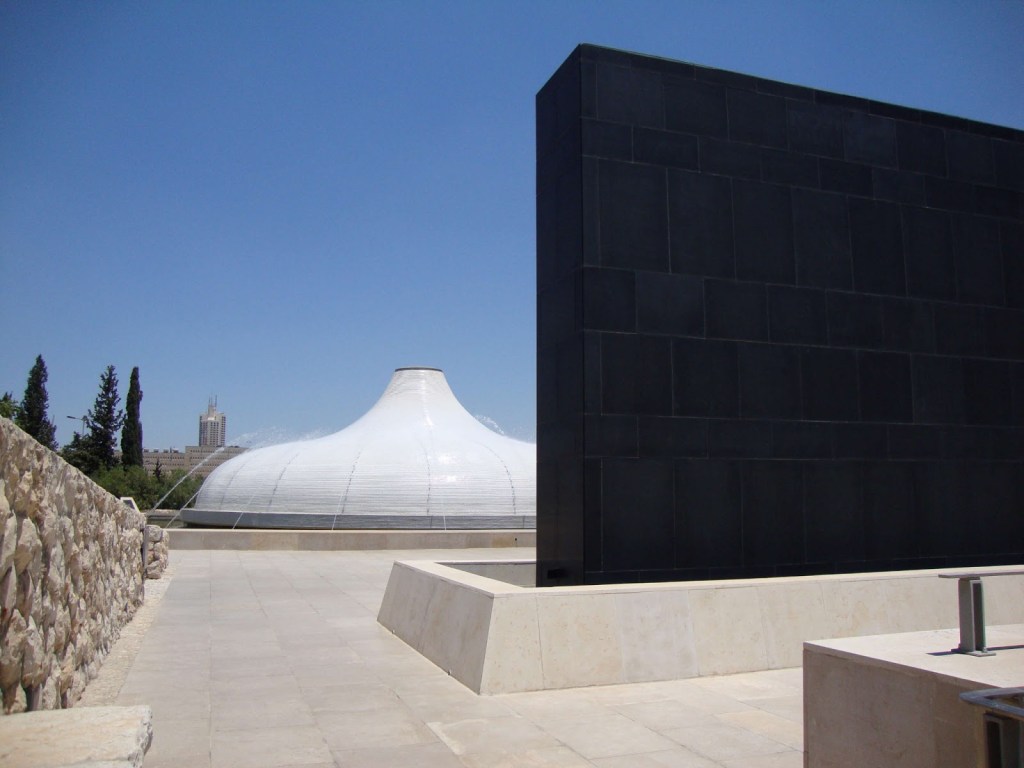



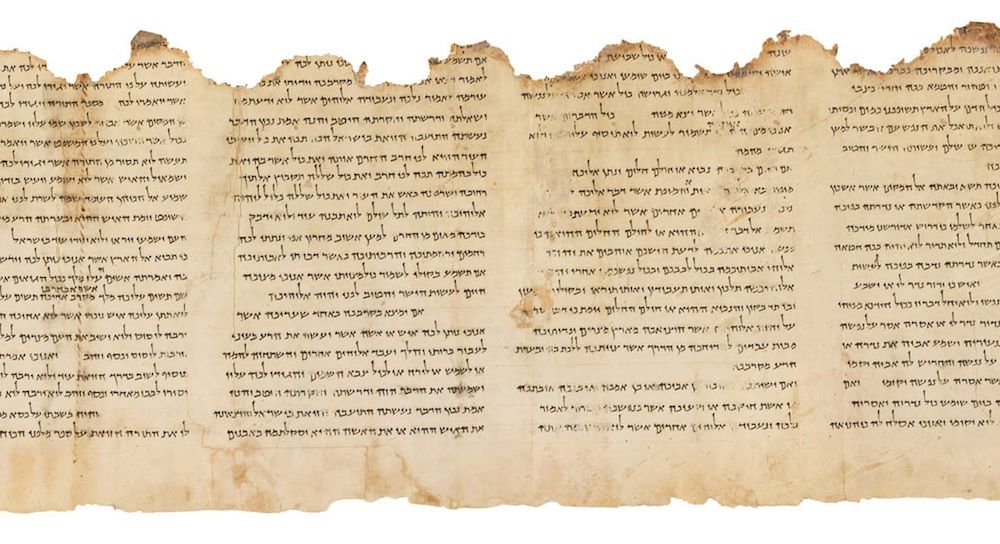

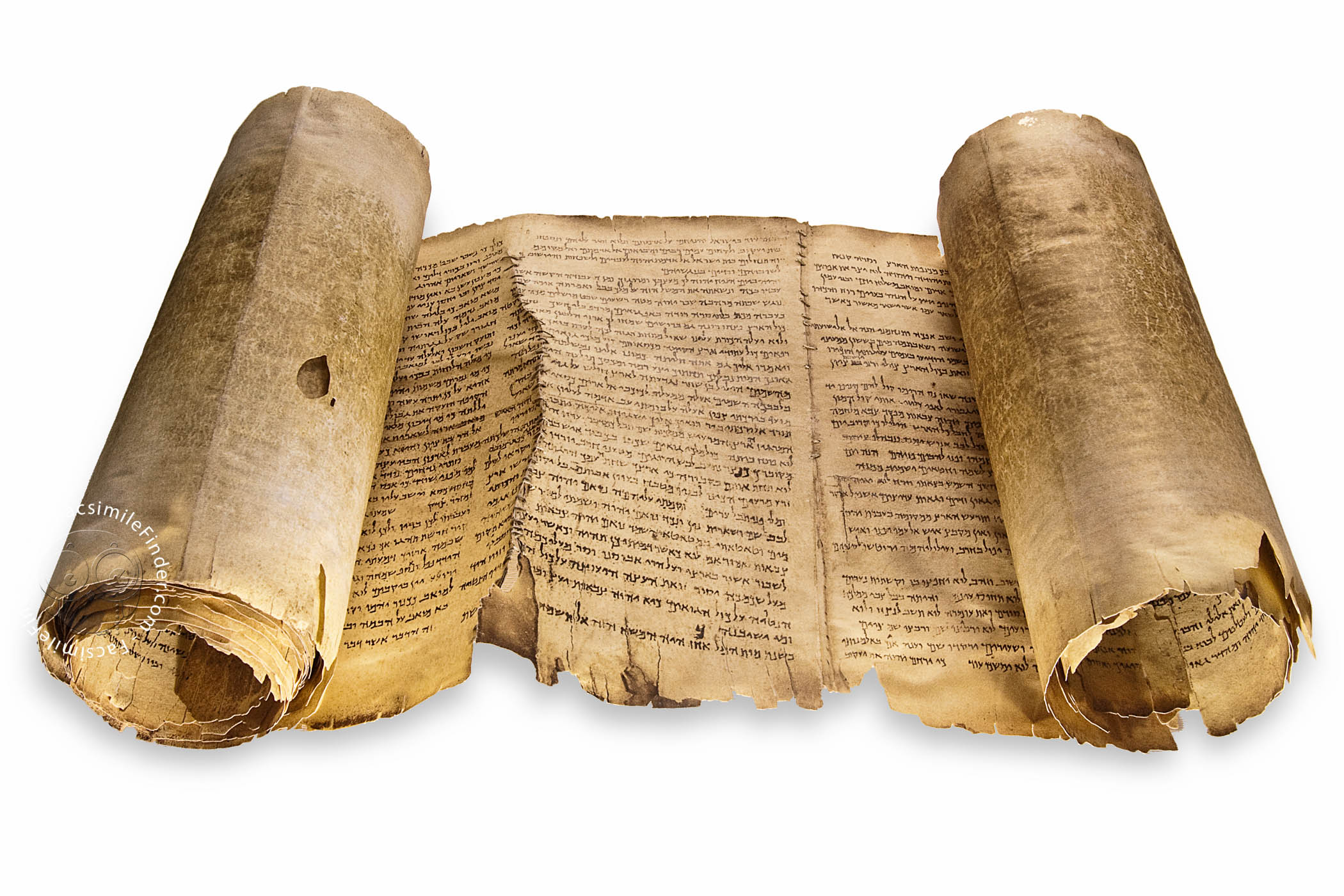

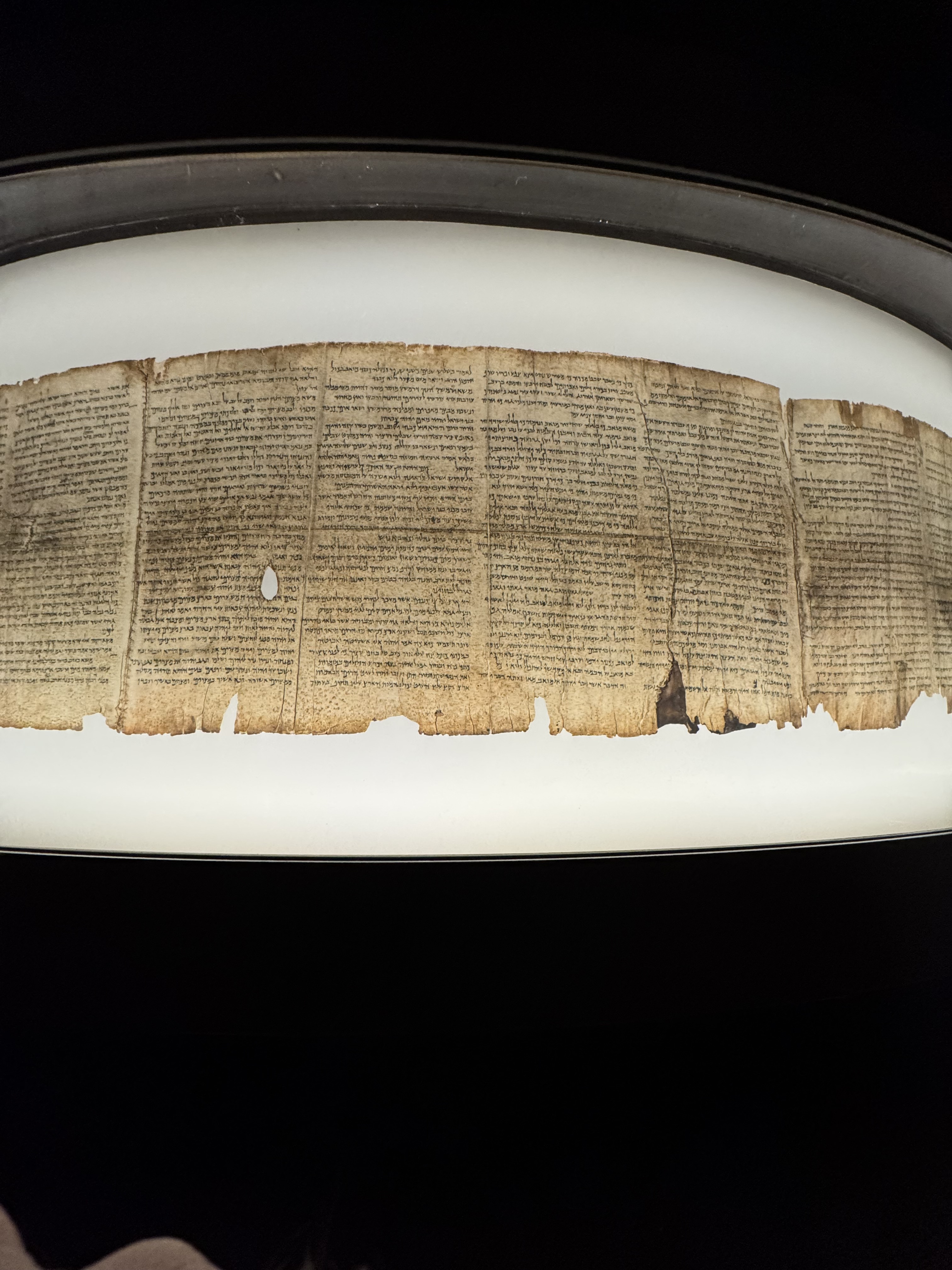


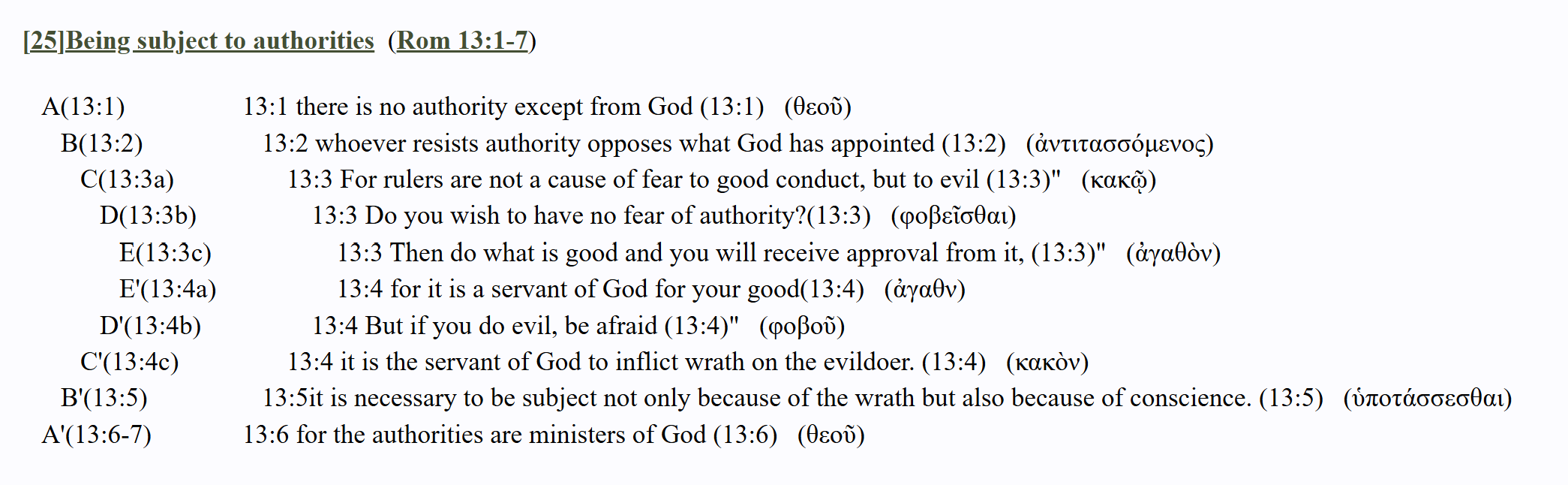




 EXPEDITION 44