Nicodemus – regenerated from above?

Nicodemus heard Jesus say that a man must be “born from above” if he is to be a son of God.  He asked, “How can I make this happen?” He just wanted the steps but didn’t want the “why.” Sounds like our Christian culture today – Just get in the water, and maybe that’s not all bad! But it’s not about what you can do, it’s about what God will do.  In a very eloquent and rhythmic fashion Jesus answers Nicodemus with the words gennēthēnai anōthen. The witty inference is that we must be born from above regenerated by the Spirit. The answer to the real question, why must a man be born from above, is far more important than the how.  God knows how.  What we need to know is why.

I studied philosophy first which led me to a better theology. I don’t believe we are simply a product of our environment, nor do I believe in the Calvinist sense that God has predetermined all things and is the grand puppet master.

Jesus’ answer shares an entire “remez” of theology. I’ll give you the short version. God separated the water and created man in His image within His order. Man fails and falls numerous times, and God does a “reset” with His newly chosen people coming out of Egypt and through the redemptive waters of the red sea, they are “baptized” as a nation and become a “new” people. Those originally created by the direct hand of God were referred to in Genesis as the Bene Ha Elohim. Fast forward to Jesus when we are now “reborn from above”, we take on the same terminology. We are now directly created by the hand of God and are a new royal priesthood set apart as ambassadors for a new kingdom. Jesus Himself was an example – image – foreshadow – archetype of this. As He was born of a virgin, His creation or re-creation to earth in the form of a “second Adam”, was directly by the hand of God. In a similar fashion, all of us now “born from above,” have entered into completely new life with God. The old person is dead.

When Jesus answers Nicodemus He says that we are at a total start over through Him.  Nicodemus is a Pharisee and a member of the Sanhedrin who is drawn to hear Jesus’s teachings. As is the case with Lazarus, Nicodemus is not mentioned in the synoptic Gospels and is mentioned only by John. [1] This famous encounter is contextually set before John 3:16, you might consider that. Most Biblical scholars have identified the Nicodemus of the New Testament with a 1st-century historic Nicodemus Ben Gurion, which would have him being a key figure 40 years later in the First Jewish Roman War. [2]

He was a wealthy and popular holy man reputed to later have had miraculous powers, which some would say was a sign that God was with Him. [3] In the account in John we aren’t given the whole picture or all the details. In fact, we seem to get the opposite idea. Jesus tells Nicodemus to leave the world at the beach and he seemingly can’t do that. He comes to Jesus in secret in the night because He is afraid of what His pharisee friends will think if he is aligned with Jesus, yet he says that many of them believe and uses the title Rabbi with Jesus out of honor and respect.

Nicodemus is mentioned in three places in the Gospel of John. This is the first encounter. The second is four chapters later when he reminds his colleagues in the Sanhedrin that the law requires that a person be heard before being judged. He seems to be a friend of Jesus or possibly advocating for Him. The third and final encounter is in John 19 when Nicodemus appears after Jesus’s crucifixion to provide the customary spices for anointing the dead and assists Joseph of Arimathea in preparing the body of Jesus for burial. Some believe this is a sign of conviction. Nicodemus brought a mixture of myrrh and aloes—about 100 Roman pounds (33 kilograms, or 73 lb). Nicodemus must have been a man of means; in his book Jesus of Nazareth: Holy Week, Pope Benedict XVI observes that, “The quantity of the balm is extraordinary and exceeds all normal proportions. This is a royal burial.”[5] If you take the notion that He was the notable Nicodemus Ben Gurion, then it means that over the next 40 years he would lead many to a “born again” notion and eventually be considered a saint within orthodoxy for his actions. But we also may want to question “that notion,” and we likely should.

The decision for Nicodemus wasn’t easy. Brian Zahnd shares, “Undoubtedly, he was raised in a Pharisee household, educated in the Pharisee school of Jewish thought from a child and placed on a course that would inevitably make him what he became. But now Jesus was challenging him to make a choice that would fundamentally alter his self. To make the choice to rethink everything. To start over. To radically change his dominant paradigm; instead of viewing the kingdom of God through the paradigm of the Pharisees, to view the kingdom of God through the new paradigm of Jesus. No easy task.” [6]

Jesus’ words to Nicodemus were life changing. We don’t know if Nicodemus ever “got there.” The orthodox church would say he did, Nicodemus is venerated as a saint in Eastern and Oriental Orthodoxy and in Catholicism. The Eastern Orthodox and Byzantine Catholic Churches commemorate him on the Sunday of the Holy Myrrhbearers, which is celebrated on the Third Sunday of Pascha (i.e., the second Sunday after Easter).[7] But from my perspective, the text nor history gives us the confirmed answer. Jesus’ words were hard. Leave it all at the Beach and start over. Rethink. Everything.

A spiritual re-birth meant a new and/or total spiritual re-learning. A new start. Discipleship. Could he do that? Did he do that the next 40 years? Perhaps. Or perhaps he was still “off” as he might have led thousands to their death in 70AD and completely missed the “WHY” of Jesus. The world (and Christians) often puts those “types” on a pedestal. We nearly “worship” those that are very opposite to the ways and words of Jesus. Maybe he got the fame his heart was postured towards but never could die to himself as Jesus challenged him to do; or maybe He did as His “saint hood” would later venerate. Only God knows.

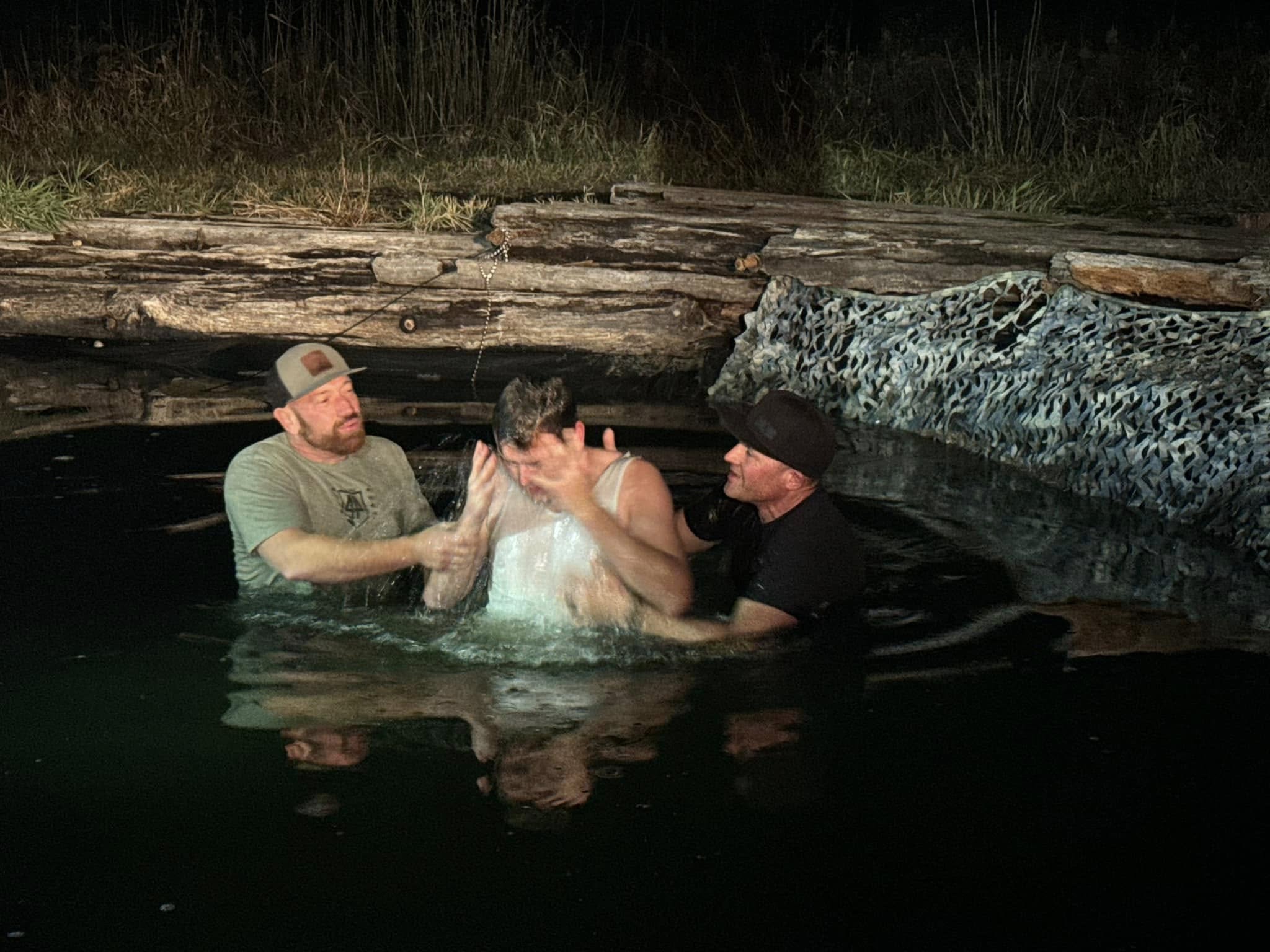
What about you. The call wasn’t to simply make a decision to get on your knees in tank of water as the lights and lasers dazzle everyone to chalk up another bar of statistics for the year of tallied success. It was to enter total discipleship. The first step is a proclamation of the heart to total faithful allegiance in Jesus by getting in the water, the second step should be towards a changed life of discipleship. I pray the lasers and lights lead that way! That was always the calling of Jesus. Leave it all on the beach.

This article is dedicated to my good friend and disciple Paul Lazzaroni as he is shepherding so many others to walk this journey well. Love you and proud of you, my friend. -Halak

x44 has an old but good video on Nicodemus here:

  1. Driscoll, James F. (1911). “Nicodemus” . In Herbermann, Charles (ed.). Catholic Encyclopedia. Vol. 11. New York: Robert Appleton Company.
  2. Reid, George J. (1907). “Acta Pilati” . In Herbermann, Charles (ed.). Catholic Encyclopedia. Vol. 1. New York: Robert Appleton Company. p. 111.
  3. ee, for instance:

  4. Flusser, David (16 December 2013). “Character Profiles: Gamaliel and Nicodemus”. Jerusalem Perspective.
  5. Burke, Daniel (17 March 2013). “Nicodemus, The Mystery Man of Holy Week”. The Washington Post. Religious News Service. Archived from the original on 14 May 2023.

  6. https://brianzahnd.com/tag/nicodemus/

  7. Holy Greek Orthodox Church of Saint Paraskevi, Saint Barbara, Saint John the Merciful & Our Mother of Consolation. St Albans, Melbourne: Greek Orthodox Archdiocese of Australia. Archived from the original on 20 March 2023.

Today is 50

I have had a blessed life.

I grew up in an incredible home. Had one of the best relationships with my parents (particularly my dad) a kid could ever hope for. Was grounded in my faith from an early age and have been humbled by what God has allowed me to be part of for his kingdom.

  • God has blessed me beyond comprehension with an amazing Godly woman and an incredible family that is wholly devoted to Him
  • God used my life as part of teams that have planted several great successful churches
  • God used me to personally shepherd and disciple over 100 people
  • By the Grace of God, I was used to rebuild a seminary (as the president) to over 400% growth in 2 years and build over 30 new courses with kingdom partners
  • By the Grace of God, I have founded a YouTube channel with 130,000 subscribers
  • By the Grace of God, I have written numerous Theology books and hold a Th.D.
  • Together we built a photography company nominated Wisconsin’s best photographers over 15 times
  • Together we have seen more than 30 countries
  • I was able to compete in professional soccer in Europe, adventure races, marathons, various skiing races and competitions, and firearms various disciplines

Whatever I have touched God has prospered. Thank you Yahweh.

I have spent a great deal of my life studying the Bible and as I look back listing all the things above, it seems like vanity; I am tempted to agree with Solomon as he started out Ecclesiastes, “Futility of futilities! All is futility.” Yet in the same breath, I feel I have journeyed well before the LORD. Transparently I could have done much better. There have been bumps, bruises, and hardship at times, but also unending joy. There are stands I made that I wish in hindsight I would have instead turned the other cheek and walked away from; and there were times when I walked away, and I wished I would have been more persistent to stay the course. But regardless of my choices the LORD has given grace and continued to cover me with his providential hand.

The Qohelet writes a dispassionate assessment of human existence, concluding that nothing really matters much over the course of eternity. However, I am not sure I agree with the teacher said to be the wisest of all men. But that is the mystery of and the contranym of Solomon – the Wisest man who lived the “least wisest” life. But maybe that is exactly what we are supposed to read out of the wayward narrative, perhaps the most discouraging book in the Bible.

As Heschel would say, I need something that carries me out of the empirical somnambulist.  That something is the Hebrew integration of ritual with faith. I have become a partaker in OUR redemption from exile. Today as I reflect back, I couldn’t be more satisfied with the course I have chosen, yes there were some rough moments and there will continue to be. The exodus began with Abraham, and it won’t end for many generations of faithful followers until the kingdom of God is established on earth. You and I are in that traveling community, the ones who are in the great waiting. But we are standing still, we are in motion, “exodusing,” leaving behind what interferes with the intended journey on a pathway that despite some tribulation culminates with joy. Thank you, Lord, for a beautiful plan.

I was born in 1974. I am 2 here in 1976. My dad was a preacher in Indiana, Iowa, and New Mexico for most of my life as a child. I remember the church memories the most. Hunting for rattle snakes, riding horses, building legos, fishing (my dad was a pro bass fisherman), and drinking from the garden hose with my faithful dog brandy.

This is a few years later in 1980 with my two favorite people that have now been gone for quite some time but are also still with me every day. I sure loved my dad and my grandpa… and there is that dog! At least her rear end! She went everywhere with me.

We moved from South Haven Indiana to Lake Geneva in the late 1980’s for my parents to start the JH at Faith Christian School. I am number 22 (ironically if you know the ontology of 44). I didn’t really like basketball, I was a soccer kid, but it was good for me eventually being part of 2 state championships as the starting point guard all 4 years of high school. All those years of my dad playing 1-1 games with me in the driveway paid off I guess.

I knew God was calling me, so I went to Moody in 1993 where I studied Biblical theology under Dr. John Walton. I played soccer for the Chicago kickers which gave way to the MLS Chicago Fire who I had the privilege of practicing regularly with in their first couple of years as they won the championship. I also was able to play soccer in Wales for Conway United. In 1997 I graduated early and enrolled at the UW to study Curriculum and Instruction (the first of many advanced degrees) and took a job teaching at Faith Christian School with my parents! I also started back 180 while I was there which was a college ministry at Calvary Community Church and began to be mentored by Dr. Howard Matson where I also was shepherded by his good friend Dr. DA Carson.

I bought our first house just before we were married. I transitioned from Calvary to be a part of the team that started Lakeland Community Church and have such fond memories of those early ministry days. After a few years, I switched gears and helped found the River Church. I continued studies at the UW eventually rekindling my relationship with Keith N. Schoville who served as the chairman of the UW CANES department. He was also the president of the Near East Archaeological Society and professor emeritus at the University of Wisconsin–Madison. I became friend with Dr. Michael Heiser and acquaintances with Dr. Tim Mackie (currently of the Bible project) as I pursued a Ph.D.

In 2001 I met Krista. I was (and continue to be) good friends with the Mielke family and had little Karli ask Krista out for me to our first date! She said yes and we were married a few short months later.

She rocked my world and still does nearly 25 years later. I called my dad on the way home from my first date and told him this is the woman I would marry. We continued to pursue Jesus together and travel the world on missions.

We got a puppy the same year we got married and named her Charlet Moser after an Ice Climbing company. We sent her away to hunting school and visited her on the weekends for 2 months. She became one of the greatest hunters I have ever seen. We would take here to the boundary waters and she refused to get in the canoe and swam 20-30 miles a day next to us.

Lots of great trips to Alaska and many other adventures with great friends in this era. Great skiing memories!

In 2005 we welcomed Ty! The doctors said he wouldn’t make it. He was in the NICU for 6 weeks and was lived to be soooo healthy and full of life. He was a miracle baby. But a few days after he was born, we unexpectantly lost my father. It was the hardest time in our life, Somehow, we managed smiles in this photo taken shortly after when Ty came home to us. Praise God.

In 2008 Will was born! Ty was so happy to have a little brother! But it wasn’t long before Ty’s perfect rows of trains were being destroyed by “baby Destro” as Will became affectionately known as by his big brother.

Skiing has always been a big part of my life. I competed in college in the FIS Freestyle World Cup – Moguls & Aerials as well as the Bud Mogul Tour. I also got to be part of the World Extreme Ski Championships (WESC) in Alaska’s Wasatch Mountains where I met Doug Coombs (now passed) and Glen Plake who I still 4 wheel with occasionally. Krista and I spent nearly every night skiing with Andy and Abbey at the Grand Geneva.

The early years of kids were so fun. Krista and I continued to travel, make great friendships, coach, and be immersed into all kinds of ministry together.

This is the “boys trip” to ALASKA with George, Russ, Sonny, and Ty in 2009 (The trip my dad always wanted to take.)

Kade came to us at the end of 2009 making life oh so sweet! The Ideal Impressions team (as I have been a tent maker in ministry most of my life out of biblical conviction) was growing and ministry at the River was flourishing.

Ahhhhh the trip to Greece!

Reid was born in 2011 completing the family (but also making family photo shoots very challenging!!! (love this little kiss though!) The River was super great, I started competing in off road Rock Crawling events, and life was in full swing!

Reid was in the NICU for many weeks (and was also a miracle baby) and came home completely healthy. Praise Jesus!

Will Went to the Boundary waters in 2012 on his 3 year old trip.

Kade Would go to Moab on his three year old trip in 2013, & I started building hard core Jeeps and lost all my hair that year!

This was a great era in life! So many great family adventures!

2013-2014 images

Reid’s three year old trip to California with my great life friend Troy!

2015 – Grandma turned 90! WOW Also shot the 2nd biggest dear in WI to date, the 61 point buck that year!

In 2016 we lost a legend. My Grandpa was one of the best! I built my first comp buggy that year too. We also started attending Mt Zion Church in 2016.

2017 was a big year in many ways. I finished my Doctoral Degree and started working with Covenant Theological Seminary teaching Ancient Near East Studies. I also started “EXPEDITION 44” as a passion pursuit not knowing what it might turn into. We opened the Range. Krista lost her mom to ALS this year.

2018 – I started the Expedition 44 YouTube Channel this year and hit 10K subscribers in the first year!

2019 Matt came on board to x44 and we hit 50,000 subscribers later that year. My wife and I coached Soccer at Mt Zion

2020-2025 has been unreal. In many ways I don’t think it could be much better. Over these years I became the Head of Theology at Covenant Theological Seminiary and eventually the President. Ideal Impressions and White River Field and Freedom thrived, Expedition 44 jumped to over 130,000 subscribers. I wrote several books including the This is the way Series. I built a lot of off-road project vehicles; we started Range nights and eventually TOV. God has certainly blessed our family. Today I consider where we have been and what God has for the next chapter. The boys won various soccer tournaments including the WI Badger State Games, and Ty went to state in track two years in a row and received a full scholarship to Wisconsin Lutheran college just 3 turns and 36 minutes away!

50 in Hebraic thinking is the year of jubilee — yovel in Hebrew — following seven cycles of seven-year shmita, or sabbatical. To another favored 50! Thank you to my best friends and family. Shalom

King David and Donald Trump? Maybe more than you realize, but that’s not good for anyone!

If you haven’t read this article on King David, Start here.

There is a lot about this popular 2024 post-election MEME that doesn’t sit well with me.

To be clear, I do think David had a heart postured after the Lord in his youth before he became king. I LOVE young David and the writings of his heart. They are some of my favorite parts of the Bible and have motivated me to be more holy than likely any other texts in the Bible. I do believe he was one that God intended to use to return all of Israel and eventually the world to be reconciled back to Yahweh. David seemed to have a heart postured towards the Lord in his early days, but the power, the lust, the flesh and the pride of life not only led him way, but likely all of Israel away from the LORD. David was “chosen” by God to be His tool to bring redemption back but accomplished the opposite.

As I have made the statement previously, I do not feel that a faithful reading of the Hebrew in 1 Sam 13:14 says that “David had a heart after God’s own heart” per the usual interpretation. John Walton convinced me that the expression doesn’t describe the inclination of the king but describes the sovereign choice of God. The claim is not that David pursues the heart of God as a spiritually mature person rather than pursuing his own ends; instead, David is the man that God has pursued with his own criteria in mind rather than Saul, who was someone who met the criteria of the people. It is a statement about God’s sovereignty, not about David’s spirituality or piety. John Walton has alluded then that it is therefore not something that we can aspire to in our own lives, and I would agree. Eventually David becomes the very image of Israel, fallen and completely idolatrous. To most theologians he is the Biblical archetype of the one who was intended by God to bring Israel back to Yahweh yet accomplished the exact opposite and led Israel away from God towards utter sinfulness and idolatry giving weight to the powers and principalities that had overtaken the rest of the ancient world at that time.

David, when confronted with sin does sometimes seem authentically repentant (Psalm 51; 2 Sam 12:13-20), but then often continues to go on sinning. That isn’t the fruit of a truly repentant heart. In most cases if someone committed murder and said they repented but then goes on to do it again, I think we would come to the conclusion they didn’t genuinely repent when they said they did. Which seems actually worse; to put on a show of repentance (in the name of the LORD) but not really have a heart of repentance. It’s just an act.

Scholars debate whether David’s destructive actions represent justice or unnecessary power mongerering. Did he feel “commissioned by God” in his somewhat empirical pursuit that started with Canaan or did this become a push for personal power and fame? Some argue David was playing the part of God’s hand of retributive justice, others criticize David for excessive continual violence opposite to that which God had sanctioned. Either way, much of it seemed contrary to God’s ways. Some try to justify the actions saying it was simply the culture, but I don’t see that theologically, as it seemed quite contrary to the character of God and what He had given them in the law. It seems David was doing what David wanted, not what Yahweh wanted. David’s kingship paints a picture of a powerful warlord who engaged in much bloodshed to establish and maintain control of the kingdom of Israel.

  • Goliath 1 Samuel 17:49-51
  • Goliaths Brothers. David chose five smooth stones because Goliath had four brothers based on 2 Samuel 21:15–22. That passage lists four very large Philistines who were related to Goliath in some way: Ishbi-benob, Saph, Goliath, and an unnamed giant with six fingers on each hand and six toes on each foot. “These four were born to the giant in Gath, and they fell by the hand of David and by the hand of his servants” (2 Samuel 21:22).
  • When David heard the news about Saul and Jonathan’s deaths from an Amalekite messenger, he had the man executed (2 Samuel 1:1-16).
  • Baanah and Rechab presented Ish-Bosheth’s head to David hoping for a reward. However, David ordered them killed.
  • After becoming king, David executed seven of Saul’s sons. (2 Samuel 21:1-14)

There are some tell tale signs of David’s movement away from God, this will surprise many, but David had served as a mercenary soldier for the Philistine king of Gath (see 1 Samuel 27:2-4), it took seven years of fighting for David (who had been anointed King of Judah) to defeat Saul’s son Ishbosheth and establish the United Monarchy of Israel and Judah in c.1004 BC (see 2 Samuel 2:8-11, 3:1-39 & 4:1-12). David quickly consolidated his position by capturing the Canaanite city of Jebus (Jerusalem) and establishes his new capital there, the City of David (2 Samuel 5:6-10). Having agreed on an alliance with the Phoenician king of Tyre (see 2 Samuel 5:11), David was able to turn against his former patrons, the Philistines, and defeat them in the Valley of Rephaim (see 2 Samuel 5:17-2). Over the next few years, David succeeded in completely subjugating the Philistines and taking control of the southern coastal plain cities of Gaza, Gath, Ashkelon, Ashdod and Ekron (see 2 Samuel 8:1). Any red flags yet?

As I mention earlier, David’s son, Solomon, seemed to follow closely in David’s ways (or be used by him) and was able to complete the downfall of the Philistines by negotiating a dynastic marriage with the Egyptian pharaoh Haremheb’s daughter in c.970BC (see 1 Kings 3:1) and taking on the role of Egypt’s former ally. By building a chariot city at Gezer to defend the trading route from Egypt to Syria and Mesopotamia he was able to secure the support and protection of Egypt – one of the ‘superpowers’ of his day (see 1 Kings 10.26-27). Any other red flags?

Meanwhile, David had turned his attention to the northern frontier, and in an amazing series of military campaigns beyond the River Jordan, succeeded in defeating the people of Moab, the Arameans of Damascus, the Syrian King of Zobah, and the Edomites in the Valley of Salt (near the Dead Sea) (2 Samuel 8:1-14). In just under thirty years, David had succeeded in transforming a small kingdom in the central highlands of Judaea into a major empire stretching from the border of Egypt to the lowlands of Mesopotamia. In the process did he trade God’s kingdom for a personal pursuit of power and fame?

As you can see, this is a lot of bloodshed. 30 years of continual bloodshed. There is a good deal of deceit and lies between rulers and intermarriage. Idolatry was rampant. He named a city after himself and countless other things that seem to point back qualities that are rival to Yahweh, not in alignment with God but rather self serving initiatives.

Well into this bloodbath we read the story of Bathsheba in 2 Sam 11:1-27 during the siege of Rabbah (Amman) in c.997BC. I have made the statement a few times that I wouldn’t leave my kids alone in the same room with the “David of latter life” and this story is one of the reasons why. By 2 Samuel 5 God seems to still be with him, but within a few short chapters (2 Samuel 12) the LORD was not pleased with David because of his sin and neglect for God’s holiness and sends the prophet Nathan to confront him. You may have never considered the whole “Bathsheba problem.” As we examine the details, we see that it is actually sexual abuse of power, in other words, rape. Neither the text nor the context supports the conclusion that it was an affair between two consenting adults. People who think Bathsheba seduced David by bathing outside his window may not realize the Hebrew verb rachats, used for Bathsheba’s action here (2 Samuel 11:2), literally means “wash” which is how it is translated elsewhere in this narrative (2 Sam. 11:8; 12:20). There is no reason to assume that Bathsheba was naked, or that she was aware that the king, who should have been with his army, would have been watching from his rooftop like a peeping Tom (2 Sam. 11:1-2). This “kingly” act was common in other cultures where evil ran rampant. It was a fatal sign that David was leading Israel to be more like the fallen pagan-evil nations around them than the “set apart under Yahweh nation” that was called to be holy unto the LORD. It was detestable to the LORD at many different levels.

David’s rape-adultery and murder is described biblically as “despising the word of God by doing what is evil,” and “total contempt for the Lord,” (2 Samuel 12:7-9). David’s rape-adultery, murder, and abuse of power was not rewarded by God with more power. It actually resulted in many consequences such as division and violence in his family and those he was leading. Also, it resulted in a child dying, and his denial to build the temple. God is no longer with him.

The consequences of David’s sin are lasting and far-reaching. From Rape and incest with Amnon and Tamar, to the murder of Amnon by Absalom for the rape of his sister, the war among the Israelites leading to David fleeing Jerusalem in shame for fear of his life from his own son. We watch the downward spiral as eventually David is part of an illegitimate census that seemingly stirs the anger of the Lord against the Israelites and seventy thousand Israelites die from a pestilence allowed (and perhaps caused) by the LORD. David was a violent man in a violent world, a polygamist, an adulterer, and a murderer. There just isn’t any way to avoid seeing that if we read and believe the Bible. The progression in David’s sin reveals a callousing of his heart.

It has always seemed strange to me that the mainstream church doesn’t want to read the text as it is both plainly and deeply read here. It is as if they are covering him up and putting him on a pedestal. This is in part why the modern evangelical church has trust issues. Doing this seems so contrary to the character of God – attempting to cover up continued evil acts and promote David into something that God approves of. That isn’t the intention of the text nor a faithful rendering of it.

As in the wilderness the cloud signified the Spirit of the Lord coming and going, we see that after Israel went on a bloodthirsty empirical pursuit led by King David, the spirit of the LORD is no longer with them which Nathan warned. One way to see this is to harmonize the Psalms. A theologically daunting task is to figure out when David wrote the Psalms. When you do this and carefully read them, I will challenge you to discover that after the encounter with Bathsheba the Lord was no longer with him, or perhaps looking onto him with favor. There are times we read from David’s perspective of crying out to the Lord, but it comes from a sort of tone of a drunk alcoholic asking why their friends have left them, which is likely exactly what it is. David wrote 73 of the 150 Psalms in the Bible, and carefully studying the ones he wrote and the dating of them will help you see what I propose in terms of his downward spiral taking Israel down with him in terms of a spiritual nation.

After the death of Absolom if you harmonize the scriptural narrative (2 Samuel, 1 Kings, and 1 Chronicles) with the Psalms this is what we find. Remember a great part of theology is in determining the narrative. What are the voices? What is simply the story given for our interpretation and where is God in it. What do we read as being the thoughts of the characters involved, verses how God may have viewed the ongoings. That is as much for our interpretation as the red letters are, but the red letters are decisively clearer. Too many people read the entire Bible as a “thus saith the Lord” statement rather than understanding the literary narrative as it is presented. Not understanding the voices in the text has led many towards poor theology. It is vital for literary scholarship to apply literary criticism and textures of interpretative law to the narratives of the Bible for faithful reading.

2Sam 21 Famine and Gibeonites → Ps 29, 65
Last war with Philistines → Ps 36
2Sam 22 Song of deliverance → Ps 18, 144
2Sam 24 David dedicates Temple → Ps 30, 33, 131 (32)
1Kings 1 Solomon anointed King → Ps 47
1Chr 28 David‘s address → Ps 145
Concerning building Temple → Ps 104, 133, 86
1Chr 29 David‘s Thanksgiving Prayer → Ps 72
2Sam 23 David‘s last words → Ps 37 (138)

If you care to dive in deeper, Don Stewart and Blue Letter Bible have a rather deep post on this here. As I don’t agree with BLB on several topics, I do respect their mission and believe they are doing good things. I think what they have given us here is a worthy tool.

Again, I will challenge you to read the narrative. Where is God in it? He isn’t there any longer. The spirit has left the encampment.

We are not called to celebrate or try to “be like David” or even celebrate those who act like him, we are called to be like Jesus. And yes, Jesus works through fallen people but usually the ones on the road to transparent sanctification, not the ones that continue to live in sin. David’s story is a man who started out well and did not end well. He still carried a warring and vengeful spirit into the grave. From His kingship to death, we have a person that possibly had a chance to do more for God than any other person yet failed miserably accomplishing the near opposite leading Israel into idolatry that would give way to a return to slavery in exile. On his death bed he asked Solomon to kill Shimei, who confronted David on his bloodshed and abuse of power. (1 King 2:9, 2 Sam 16:8).

However, this isn’t all negative. I like the way the Bible project frame’s the early life of David. Jesus saw his role as Israel’s messiah was to patiently wait for God to exalt him as king, just like David waited. He anticipated persecution from his own people would come, just as it did for David. The stories about David provided the template of Jesus’ messianic vocation, and they epitomized the upside-down value system of God’s kingdom that Jesus was always talking about. It’s a kingdom where the poor and persecuted are the most exalted, and the powerless are God’s chosen ones (go and re-read the famous beatitudes in Matthew 5:1-7 and think about them in light of the story of David). When Jesus read the stories of David, it wasn’t to learn interesting facts about Israel’s history. Like the prophets, Jesus read His Bible as a prophetic history that was pointing towards the future hope of the messianic Kingdom of God. These stories about David were designed to foster that very hope, in Jesus’ day, and in our own.

Dr. Will Ryan and Dr. Matt Mouzakis.

Separated from God?

What does it mean to truly be Separated from God?

The idea or doctrine of separation from God is often misunderstood within current evangelical Christianity. Make no mistake, humanity continues to make choices to be separated from God, but I would venture to say most Christians have an inaccurate view of this separation. Adam and Eve’s sin separated them from the life that the tree gave but it didn’t necessarily separate them from God. At that moment death was passed on, but not their original sin. And to be clear fellowship with God was also not lost as you often hear! That is the continual message of God to His people. He still desires to walk with them. If you remember in the garden, He didn’t walk with them 100% of the time (Genesis 3 alludes to this.) It is true that Adam and Eve were “removed” from the garden, which was God’s domain; and then placed or led back down to lower or common earth and guards were placed at the entrance as to not allow them back into Eden.

In a basic sense humanity at that moment was separated from God. If my kids are fighting, I separate them (and often relocate them) but that doesn’t mean that my intent is to sever the relationship, I am merely changing their space. After the fall what changed is that from this point on God would have to go to people and meet the people where they were, rather than the people naturally dwelling in God’s sacred space -Eden. Metaphorically, instead of my kids playing in my room I have to go visit them in their room. In this sense there was a type of “separation” but not inability. Perhaps it would make the relationship more difficult but, but the intent certainly was not to sever, quite the opposite actually. This understanding is important when forming your “separation theology” and your basis for understanding the character of God to Humanity.

Similarly, after the fall, to Israel He was a cloud and “walked” with them similar to the way that he walked with Adam and Eve in the garden, that aspect of their relationship to God wasn’t lost, it was always offered and up to humanity to accept or reject. The intent and purpose that God started in the Garden to walk with his royal priesthood didn’t change after the fall, it just “distanced” the plan.

One thing that is very important that few have come to realize is that today, through Jesus we are actually better off or closer is distance or proximity than Adam and Eve were in this sense of walking with God, this is the heart of the new covenant -we have His Spirit residing in us continually as we are His temple. Jesus not only returned us to what we had in Eden but perfected it. Does He come and go such as described in Genesis 3? No, He is always with us, we are promised that time and time again as the core of who and what His Spirit offers to us. We may receive a fresh anointing (and that may be up to your theology here); but make no mistake, He never leaves us. I am not really even comfortable saying that we are or were temporarily separated from God as I truly see the Spirit continually meeting the most broken people in the most broken places. (I will remind you that after the fall God still sent his presence to reside with people.) Today, God and His spirit are continually available to us, but we also still have to make the cognitive choice to enter into that walk. That’s always been the choice of humanity -choose to walk with God or choose to be separated (live divided or rival) from Him. That is the core of our free will. Adam and Eve’s banishment from the garden did a lot of things theologically, but to say that it separated (severed) us from the presence of God, as a lot of doctrines would understand it -seems to be theologically inaccurate. The offer from God to continue fellowship with Him strongly continued after the garden. In fact, that may actually be the central theme of all of scripture!!! One of the main character attributes of God is the desire to continue walking with everyone that would enter into a covenant with Him. He would continue to be faithful to that relationship when others would be unfaithful.

Separation from God is theologically defined as “Hell”. One of the issues that people have a hard time understanding is that our English translations use only one word for “hell” when there are several words that described slightly different contexts of what our one word meant in both the Old Testament and the New Testament in Hebrew and Greek. The great majority of the time we see the English word Hell translated in our Bibles it is the Geek word “Gehenna” describing more of a loose “hell on earth” separation from God. Gehenna was an actual place in the ancient world. The Valley of HinnomGehinnom or Gehenna is a historic valley surrounding Jerusalem from the west and southwest that has acquired various theological connotations, including as a place of divine punishment, in Jewish eschatology. The term Gehenna in the first century was regularly used as an idiom for something like “the other side of the tracks” (Matthew 5, 10, 18, 23 as well as Mark 9 and other places). in this way when the word hell was used it had a metaphorical sense similar to what we might say as “life is hell.” But I also would say we have to be careful here as the implication was that these places were thought of as being “far from God” but that isn’t necessarily accurate. Jesus actually spent a good deal of time in these darker places. In other words, the world would say that God may be separated from these places but God, especially through His son doesn’t seem to be bound by any kind of separation to them. In this sense as I express early, Jesus regularly met people in “their hell.”

There is also a parallel to this way of thinking in most of the early church creeds in the understanding that after Jesus’ crucifixion he descended into the depths to “meet people in their hell” and possibly regain the lost keys of life and offer them to those in that place that was formerly “separated from Him. I would venture to say that Jesus’ theology would be consistent having the same or very similar requirements to these “souls” that we are given in the rest of the scripture and particularly the new covenant. Interesting to think that a large part of Jesus’ mission was to again offer this kind of relational life in the afterworld to those that seemingly rejected it (or had never had the chance perhaps) to now accept that relationship.

In some cases (similar to those listed above) and in the OT, the realm of the dead is the Hebrew word sheol often translated as hell. The New Testament Greek equivalent to sheol is hades. In the New Testament, this is only found a few times such as in Matt 16 when the “gates of Hades” was used as a colloquial Jewish phrase for death and a reference of the fallen spiritual beings in a Deuteronomy 32 worldview sense. Surprisingly, the least used term for Hell in the Bible is the one most people think of the most “as hell”, and is translated as the lake of fire, mentioned only in Revelation 19:20 and 20:10, 14-15, and takes on the traditional view of the “final hell”, for what seems to be the destiny of both fallen spiritual beings (to which it was created by original intent) and human beings that have not chosen to accept and live for God – this is an eschatological state of judgement.

However, in some way, all the translated types of hell seem to describe a condition of being separated from God.

In conclusion, traditionally we have misinterpreted separation to be something that was put between us and our relationship with God in Eden, yet the Bible doesn’t say that. God’s intimate and vivacious pursuit to walk or have intimate relationship with us is tied closely to His character and thus never changes. Through Jesus we are actually closer in proximity to Have His spirit in our Hearts than what was first given at Eden. God’s pursuit to have intimate communion with us is stronger and closer than ever before.

Renouncing the World for sole allegiance to Jesus and His Kingdom

“So therefore, any one of you who does not renounce all that he has, cannot be my disciple.” – Luke 14:33

If you know me at all, you know that I am an “ALL IN” guy for the Kingdom who believes we shouldn’t be holding anything back for Jesus. Luke 14 calls us to be rival to anything that opposes Jesus, but with the context that even our enemies might be won over to Him.

“RENOUNCE ALL” – Jesus had some “HARD SAYINGS” but this one might take the cake! Today in our American Christianity or churchianity paradigm we seem to just simply ignore this one! This flies in the face of health and wealth prosperity preaching seeming to identify that perhaps Christians should sell everything (Christ’s words to the rich young ruler and the Acts 2 mindset) and live as paupers for the kingdom. And to be clear, I do think it takes on that tone.

But let’s take a closer look, in Greek the phrase is ouk apotassetai, which literally would be to “not place in order from”. What’s very interesting to me is in the New Testament every single time the verb apostasso is used it is in the middle voice. I would venture to say this is the only treatment of a verb this way in the entire text. It is very rare and unusual, so it makes me take special interest and ask why? When we say to “not renounce” something then, it takes a sense of “to place in order away from myself”. Understanding the literal translation of the Greek phrase means that when we read paying attention to the grammar of the Greek language you come out understanding that the mindset is to restructure or reorder, we give up chaos for order to come to proper balance in the kingdom. A life of shalom. So, if I had to translate the middle voice thought into this (as some translations like NT Wright’s have attempted) it might better read, “No one can be my disciple who does not take up the proper priorities in terms of possessions for Godly order over the world’s chaos.” Of course that doesn’t read well! Furthermore, the middle voice almost always implies that Christ is taking the action for us, that it is something out of your control once you come to the posture called for, usually devotion but in this case is actually a step more than that -it leans towards the harder definition of Jesus into discipleship. (What seems to follow the progression of fan > follower > disciple.)

If you don’t take on the posture of Jesus with your worldly things you can’t possibly enter into Jesus’ definition of discipleship. They must be renounced or completely re-ordered. So, the takeaway is what you can’t do is keep the prioritization of the world and still attest to be on the track to discipleship.

Everything is His and if you attest to be “all in”, than nothing should be your own. That’s why tithing in the New Covenant is a hard conversation. Tithing along with the Torah in the Old Testament was to be a stop gap until all things could be reconciled by Jesus. Now that “WE” have Jesus everything is His. If your on track your not thinking Tithe or Torah your thinking everything! (YOUR LIFE) Nothing is your stuff or your time. And the path to sanctification is more of Him and His kingdom ways and less of your world ways. A complete transformation that finishes eschatologically (but in que on this world) with you being made completely into the image of Jesus.

You don’t need to “create time or space” for Jesus if all of your time and space is for Jesus. You no longer have claim to anything of the world, YOU HAVE RENOUNCED THAT NOTION!

If you catch yourself beginning to collect things for your earthly storehouse that has no place for kingdom endeavors your posture for the kingdom is out of balance. You are mis-stepping the path of discipleship. The text says anyone off course can’t be my disciple. Do you want to be a disciple? Are you willing to come to a complete posture before the Lord to enter this covenant? Are you willing to “give up” everything to be a disciple?

One reason generations are disengaging from the church is because of the mixed messages the church has sent for years. Many people have become disillusioned with the division in the American church and one of the reasons is because we’ve exchanged a biblical gospel that exalts Jesus above everything in the world for an American (progressive) gospel that prostitutes Jesus for the sake of comfort, control, power, politics and prosperity in this world. I’m compelled to pray, God, we want to renounce it all. I pray that we don’t settle as disciples of Christ. I pray that we might be in absolute devotion to Jesus’ deeper covenant relationship both in this life and eschatologically in the coming kingdom.

In the last 10 years there have been several books written that speak to this:

  • Will Ryan – This is the Way (Series)
  • Boyd – The Myth of a Christian Nation
  • Zahnd – Postcards from Babylon
  • Bates – Salvation By Allegiance Alone 
  • Sprinkle – Exiles: The Church in the Shadow of Empire (Church in the Shadow of Empire)
  • Wright & Bird – Jesus and the Powers: Christian Political Witness in an Age of Totalitarian Terror and Dysfunctional Democracies
  • Platt – Don’t Hold Back: Leaving Behind the American Gospel to Follow Jesus Fully 
  • But before all of these there was a classic called – Persecution in the Early Church, A Chapter on the History of Renunciation, by Herbert B. Workman, in 1906

The opening pages of the New Covenant declared this same philosophy by Holy Cannon. John the Baptist was the precursory proclaimer of this truth as ‘the voice of one crying in the wilderness, prepare the Way of the Lord’. The explosive scene that his ministry encapsulated could be summarized by the title we all know him by: The Baptiser.

Matthew 3:1-3

In those days John the Baptist came, preaching in the wilderness of Judea and saying, “Repent, for the kingdom of heaven is near.” This is he who was spoken of through the prophet Isaiah:

This message was approved by Heaven through the institution of baptism as an expression of forsaking all other allegiant positions as a returning to the One True and Living God. His message was demonstrated by a public display of that newfound loyalty through the waters of baptism signifying a washing away of the old for the embracing of the new. This message spread like wildfire among the religious Jews and even impacted the gentile population in their midst.

In keeping with the divine purposes of his message, he adamantly declared that those wishing to embrace this new allegiant life (the path to discipleship) MUST renounce all other places of faith and fully submit to the Kingdom life.

A requirement for John was the ‘produced fruit’ consistent with a changed heart. John was not looking for new FaceBook subscribers, or popularity in his ministry… the purpose was to transform lives. This was accomplished through radical, immediate, and noticeable lifestyle reflections consistent with true, sincere, and authentic repentance. What John was doing, and ultimately what Jesus declared in His Gospel, would find direct and deadly conflict with the hierarchy of Judaism and the control of the Roman system. So deadly in fact, both John and Jesus were martyred for their unified message.

In a life application aspect what John was requiring was real, daily change. The tax collectors were told to stop their extortion. The soldiers were commanded to treat others with respect and to cease being bullies for personal gain. The religious were charged with throwing away their masks of self-righteousness and hypocrisy and embracing a non-legalistic view of worship.

For us today, this message should still resonate as loudly and powerfully. What should we cast aside for the throne of Jesus in our soul to be unchallenged? Where in our hearts, attitudes, finances, relationships, and time are we being prodded by this message of complete allegiance do we find the world challenging the supremacy of Christ?

______________________________________________________________

During the first few centuries a great conflict arose between Rome and those obedient to Yahweh. By Roman theory, the national state was the one sole society that must engross (take up, control) every interest of its residents: religion, social, political and humanitarian. In other words, the state should be the supreme authority in one’s life. Romans wanted Christians to take their part as loyal citizens of the empire, discharging the dues, performing the obligations of a citizen, displaying complete loyalty. The Christian replied, “We worship no other.”

Under Rome, all new “societies” were required to obtain a charter or permission from the emperor or from the senate. If the group was not granted permission under the state, they were considered “rival” to the state. The extreme penalty was treason, punishable by death. Christians were not persecuted because of their creed, but because of the absoluteness of the Christian faith. 


To say that Jesus is Lord was a statement against the empire. “No King but Jesus” became the rallying cry of the true believer and also the last words of many persecuted and martyred Christians.

The Jewish–Roman wars were a series of large-scale revolts by the Jews (and / or Christians) of Judaea and the Eastern Mediterranean against the Roman Empire between 66 and 135 CE. [1] These wars were in large part over the “kingship” of the peoples. Could Rome demand sole authority? Although the Diaspora of the Jews started many years before this, the Jewish–Roman wars had a devastating impact on the Jewish people, transforming them from a major population in the Eastern Mediterranean into a dispersed and persecuted minority. [2] Most scholars would consider this charge of Jews and Christians to not give allegiance to Rome over God and / or Jesus as the major distinguishing feature of what defined an all-in follower of God or Jesus. The First Jewish-Roman War culminated in the destruction of Jerusalem and other towns and villages in Judaea, resulting in significant loss of life and a considerable segment of the population being uprooted or displaced. Those who remained were stripped of any form of political autonomy. Subsequently, the brutal suppression of the Bar Kokhba revolt resulted in even more severe consequences. Judea witnessed a significant depopulation, as many Jews were killed, expelled, or sold into slavery. [4]

Jews were banned from residing in the vicinity of Jerusalem, after the central worship site of Second Temple Judaism, the Second Temple in Jerusalem, was destroyed by Titus’s troops in 70 CE. [5] The destruction of the Temple led to a transformation in Jewish religious practices, emphasizing prayer, Torah study, and communal gatherings in synagogues outside of Jerusalem. This pivotal shift laid the foundation for the emergence of Rabbinic Judaism, which has been the dominant form of Judaism since late antiquity, after the codification of the Babylonian Talmud. [6] But this also gave way to the rise or continuation of Christianity. As Rabbinical Judaism spiraled down, Christianity rose up taking on many of the same “anti-empirical” thoughts towards the ruling over them and their religion by Rome. Perhaps more than before Christians were now vowing allegiance to Jesus over any other form of worldly government. Persecution has always had a purifying effect on the true people of God.

By the third century, emperors were realizing that the Church was not a mere body of anarchists to be rooted out wherever necessary. The Church was fast becoming a rival organization of growing strength and power. The aggressiveness of Christ’s followers was viewed by Rome as a very real threat to their worldwide domination.

By the middle of the third century, the more energetic rulers organized efforts to crush out the Church by the use of all the resources of the state. The police measures taken at Antonines (Roman Emperors who ruled between 138 and 180: Antoninus Pius and Marcus Aurelius) gave place to a civil war without quarter (mercy offered). But, unlike all other civil wars, only one side was armed. Strange to say, this was the side that was ultimately defeated. On the one hand were the immense resources of the Empire, centralized in one supreme will. On the other side was the PASSIVE RESISTANCE OF CHRIST’S FOLLOWERS, making the state’s massive recourses useless. The Christians were a peculiar people, with peculiar views of their own. They wore no distinctive garb (clothing: outward appearance) in the world, yet they were definitely not of the world. “We are supposed to live aloof from crowds,” said Tertullian, an early Church leader. [7] Their opponents phrased the matter differently. They are “a people who separate themselves and break away from the rest of mankind.”

The pacifistic early church Christians seem to have gotten Jesus words a bit “more right” compared to the war mongers of 70 AD. It was hard to find an occupation in which the Christian could engage without compromising with idolatry. Some said that if they did not compromise, they would be cut off from every means of livelihood. Tertullian replied that, “faith must despise starvation as much as it despises death.” [8] But the more the Christians prospered, the more their neighbors “hated them” or perhaps “grew envious of them.” The Christians professed, “nothing was more alien to them than politics.” [9]

In practice, Christianity and the Empire proved fundamentally antagonistic. They were rivals in conception and method. Each claimed to be a kingdom of universal sway; each created a Church of universal obligation, each demanded absolute loyalty to its supreme lord. Between Caesar and Christ there could be no compromise. [10]

BART D. EHRMAN

Persecution was the direct outcome of the Christian doctrine of RENUNCIATION. To renounce meant to disown, reject and disclaim. The early Christians were renouncing their allegiance to the Roman Empire and denying any connection to it. In other words, the Christian ceased to be his own master, ceased to have his old environment, ceased to hold his old connections with the state. In everything, he became the bond-servant to Jesus Christ. In everything he owed his supreme allegiance and fealty (loyalty) to the new empire with Jesus Christ as Head. “We engage in these conflicts as men whose very lives are not our own… We have no master but God,” said Tertullian. [11]

Scriptures for further study and consideration:

_____________________________________________________________________

Written by Dr. Will Ryan and Dr. Steve Cassell

Works Cited:

  1. Bloom, J.J. 2010 The Jewish Revolts Against Rome, A.D. 66–135: A Military Analysis. McFarland.
  2. Hitti, Philip K. (2002). Hitti, P. K. Gorgias Press. ISBN 9781931956604. Archived from the original on 15 April 2021. Retrieved 28 July 2022.
  3. Schwartz, Seth (2014). The ancient Jews from Alexander to Muhammad. Cambridge. pp. 85–86. ISBN 978-1-107-04127-1. OCLC 863044259.
  4. Taylor, J. E. (15 November 2012). The Essenes, the Scrolls, and the Dead Sea. Oxford University Press.
  5. Armstrong (2011). Jerusalem: One City, Three Faiths. p. 163.
  6. Karesh, Sara E. (2006). Encyclopedia of Judaism.
  7.  Harrison, Peter (June 2017). “‘I Believe Because it is Absurd’: The Enlightenment Invention of Tertullian’s Credo”. Church History.
  8. Gonzáles, Justo L. (2010). “The Early Church to the Dawn of the Reformation”. The Story of Christianity. Vol. 1. New York: HarperCollins Publishers. 
  9. This translation was created in conjunction with the Patristics Project at Faulkner University.
  10. Bart D. Ehrman is the author of The Triumph of Christianity and the author or editor of more than 30 books, including the New York Times bestsellers Misquoting Jesus and How Jesus Became God. Ehrman is a professor of religious studies at the University of North Carolina, Chapel Hill, and a leading authority on the New Testament and the history of early Christianity.
  11. Tertullian: Douglas Powell, Tertullianists and Cataphrygians, Vigiliae Christianae 29 (1975)

The Posture of the Heart – With John Walton

I have come to cringe when people say things like, God is only concerned about your heart. Or perhaps using the semi-excusive example of David having a “heart after God” all the while being a murderer and adulterer (which clearly doesn’t match up with the character of God). I likely wouldn’t let my kids hang out with him. Clearly so many scriptures continue to share how important it is to have a heart for God, and I would fully agree, even though I view complete devotion as so much more than just the motives of the heart.

  1. Matthew 6:21: “For where your treasure is, there your heart will be also.”
  2. Proverbs 3:5: “Trust in the LORD with all your heart and lean not on your own understanding.”
  3. Proverbs 4:23: “Above all else, guard your heart, for everything you do flows from it.”
  4. Romans 12:2: “Do not conform to the pattern of this world but be transformed by the renewing of your mind.” (a quick word study of “nous” will link the heart and mind)
  5. Proverbs 23:26: “My son, give me your heart and let your eyes delight in my ways.”
  6. Psalms 51:10: “Create in me a pure heart, O God, and renew a steadfast spirit within me.”
  7. Psalms 73:26: “My flesh and my heart may fail, but God is the strength of my heart and my portion forever.”
  8. Philippians 4:7: “And the peace of God, which transcends all understanding, will guard your hearts and your minds in Christ Jesus.”

John Walton has been a good friend and lifelong mentor to me that started back when I was a freshman at Moody Bible Institute in 1993, and I asked for his thoughts on the subject as I continue to wrestle through them. We went back and forth working through some things that have influenced my opinion in this conversation. I will indicate his words in our private conversation using quotation and suggest articles for further study.

To start with, I might even suggest, as I allude to in nearly every article, that we might need to rethink a few things according to a better hermeneutic towards the exegesis of the text rather than popular opinion or tradition. John recently wrote a book entitled Wisdom for Faithful Reading that I would suggest starting with. John suggests that the popular text for David having a heart after God’s heart is usually misinterpreted. In 1 Sam 13:14 the expression used there is used elsewhere in the OT (as well as often in the ANE) not to describe the inclinations of the king (one who pursues knowledge and relationship with the God), but to describe the sovereign choice of the deity (who for his own reasons has chosen the king to rule). So, the claim is not that David pursues the heart of God as a spiritually mature person rather than pursuing his own ends; instead, David is the man that God has pursued with his own criteria in mind rather than Saul, who was someone who met the criteria of the people. It is a statement about God’s sovereignty, not about David’s spirituality or piety. It is therefore not something that we can aspire to in our own lives. He has written an excellent article on this topic here.

It was interesting that in the Old Testament a great amount of wealth was used to construct the temple and tabernacle (it is somewhat ambiguous as to whether this was God’s asking or solely the doing of the people in an effort to worship God similar to the way the rest of the world honored and appeased the gods). This wealth has no value to God, but the gold meant something to them. The gracious donation or perhaps giving it up was possibly viewed as an outward sign of the internal heart. John would say that “We honor God with our extravagance in giving that which is of value to us. God does not need what we give.” (But seems to be honored by the giving through a pure and undefiled heart.)

John continues, “we can also see a similar picture of this heart in giving when Jesus responded to Judas’ expressed concern for the poor in the context of Jesus’ feet being anointed. Yes, the money could have gone to the poor, but expressing the worthiness of Jesus through the extravagant expenditure with no return was considered not only legitimate, but commendable.”

Today I often wonder whether God smiles at megachurch budgets and building campaigns that resemble much of the world in the name of Jesus. The scripture would suggest that the answers might lie in the motive of the heart rather than on the extravagance of the expenditure. “God smiled on the extravagance of the woman who anointed his feet with oil, and, since he called for great extravagance in the Tabernacle and Temple, I assume he smiled on those projects, but only to the degree that they were carried out with his honor in mind, not their own.” We could also take into account the widow’s mite or the widow’s offering as presented in the Synoptic Gospels (Mark 12:41–44, Luke 21:1–4) Jesus clearly “smiled on” her and commended her sacrifice—an issue of the heart and extravagant even in its lack of relative worth.

Often it seems that what might at one time be a pure motive becomes defiled and abhorrent to the Lord. Some might say that the golden calf was fashioned as an emblem animal or medium to God or possibly a pedestal for the Lord to be invited to come down and dwell amongst the Israelites. However, God is still displeased as John explains that this was a violation of the second commandment. In a similar way the Tower of Babel may have started out as an invitation for God to dwell with the people (which seems to be God’s desire – tabernacling with His people); but then becomes defiled also by the disobedience of the hearts. (Read more about Babel from John’s account.)

John would share that the medium is the message, but motives can corrupt the medium (heart). Yet, any given medium may be used well or badly by different people at different times. Jesus gives an example as he criticizes how the temple is being used (casting out moneychangers) revealing their impure motives yet affirming the value of the temple when rightly perceived (as His father’s house.)

Often, I wonder about the progression to which we allow the defiling of our heart’s original pure intentions. Some things have the original intent of honoring the Lord but quickly become an extravagance that only serves our own egos or only seeks to oblige God.

Spending in the name of God is hard to figure out sometimes. I have so many questions for God, was the church ever intended to be the religious bank it has become? (Acts seems to suggest people directly giving to the needs of the body not the church acting as the collection agency, but there are several passages that may speak otherwise.) What does He think of a modern church budget that is 50% or even 95% salaries and mortgage? Why isn’t the church caring for widows, the poor, and the broken? (Our “evil” government seems to do this much better than the global church.) We are told to not have judgmental hearts, but to test these things by the spirit and know them by their fruit. One of my good friends leads a church in a lower income area and runs out of seats every Sunday, has leaky roofs over kid’s heads, and can hardly pay the measly mortgage every month while the megachurch the next town over is spending 75K on new LED screens and smoke machines every other year with a tech budget that is 10x more than the net worth of my friend’s entire organization. What would God say?

Sometimes it is hard to see whether the extravagance happening around us in the name of the Lord is an outward sign of a great heart, or an idolatrous tower. Sorry, no “answers” today… just a rambling of my heart!

More on my good friend John Walton.

“setapart” -The TOV- Community Calling

People often ask what Expedition 44 is and I think I answer the question differently every time someone asks (you can read in its entirety what expedition 44 means here.) I believe the answer is similar to the way Paul expresses the attaining of knowledge through scripture leading to personal intimacy with God as the mystery of the Gospel in Colossians 1. As there isn’t just one way of expressing the deepness of the gospel; similarly, there isn’t simply one explanation of what Expedition 44 means. The simple phrase “expedition 44” is an idiom that represents the entire essence of the journey of sanctification to become truly set apart from the world and fully given unto the LORD. This expressions also points to everything that God gave and is reclaiming that is described as “TOV” or good.

In devout traditional and Messianic Judaism, for generations they have been committed to readings of the Bible daily as a way to train their children to hand down the precepts of holy living but also as a way to continually live wholly committed to the Lord each day. The word parashat (which means portion -a shortened form of Parashat HaShavua) describes the section of scripture that is to be read each day in traditional and messianic devout Judaic circles. In this way the Bible is perhaps mapped out such as a curriculum scope and sequence would be for teaching your family how to live for the LORD.

Today many traditional and Messianic Jews follow a daily reading in their personal lives, but their are still regular and daily public readings in many communities. “Torah Reading” often referred Biblically to the ceremony of removing the scroll (or scrolls) from the Torah ark, chanting the appropriate excerpt with special cantillation (trope), and returning the scroll(s) to the ark. It is also commonly called “laining” (which means “to read”).[1] Regular public reading of the Torah was introduced by Ezra the Scribe after the return of the Judean exiles from the Babylonian captivity (c. 537 BCE), as described in the Book of Nehemiah.[2] In the modern era, Orthodox and some Messianic Jews practice Torah reading according to a set procedure almost unchanged since the Talmudic era.[3]

Every once in a while, there is a pattern to which evangelical Christians get back into traditional OT or Jewish Hebraic customs. Everyone probably knows someone that has done this, and churches often lead similarly by doing seder dinners, or partaking in some of the other OT initiatives. There seems to be a regular debate in Evangelical Christianity as to whether Christians may benefit from such observance. For me it was attending Moody Bible Institute in the 1990’s when it was the center training for Jews for Jesus. I became aware of the reason the devotion to Torah pointed people towards the Lord in regular reminders of living holy. In this way the law might be seen as a guidepost to keep people on tract until the Messiah would reconcile all things through His atoning work and once again offer intimacy to unblemished relationships to walk with the father as had been lost in Eden. This path is called sanctification and leads to a renewed eschatological heaven and earth and re-instated Eden like kingdom both in this life and into the next. But it isn’t so much about the distant future as it is about living out each and every day for the Lord, the here and the now of devotion unto the LORD.

Today some wonder if we as modern Christians would be better off spiritually in devotion unto the LORD returning to the way of the Torah; I and many others feel that particularly evangelical Western Christianity would seem to be far better off returning to the prescription of Torah in seeking devotion to God than simply believing that we no longer need to exercise or are bound to any of the Old Testament ways of pursuing sanctification. In many ways we have failed to live out our NT calling as those given to a holy royal priesthood far worse than the ancient Israelites that God handed over to exile that didn’t have the revelation of the Messiah or the New Testament.

To be clear, once Jesus came and commissioned us to be disciples, the mission was to leave everything of the world on the beach and completely follow Him. This was a returning to our original intent in the garden to walk (halach) daily in intimacy with the Lord. Our daily devotion or (work) would be to keep and cultivate what had been given. Today through Christ we are commissioned back to the original Edenic calling as a set apart royal priesthood whose mission should be to walk in devotion unto the Lord keeping and cultivating or reclaiming what was lost or defiled and giving it new life and purpose in the Jesus Kingdom. But some have deducted that we don’t simply not meet this description, but we even seem “less devout” than those under the Law that were handed over to their sinful premonitions and experienced exile. Where does that “put us” 2000 years later?

Expedition 44 is about not only returning to perhaps practicing some of the ancient ways to get “back on track”, but to then fulfill our New Exodus calling to return to an “ALL IN” or “SETAPART” way of I Peter 1:9 commissioned living as those claiming and living out the life that Jesus offered to us as disciples.

This year the Parashat Emor is the 31st weekly Torah portion in the annual Jewish cycle of Torah reading or to be read on 8 May 2024 / 10 Iyyar 5784. As I shared earlier, parashat simply means portion and “Emor” means to say or speak over. You hear parts of this in evangelical Christianity (particularly in charismatic circles) today by speaking into or over someone as a statement of faith or belief. This is sometimes associated with the “word of faith” movement. There are many modern suggestions to this such as the recent song by Charity Gayle – I Speak Jesus. We often speak “Jesus” into or over others believing the words of the Spirit will manifest. Last week at TOV we did this over our children.

The “emor” text is found most specifically in Leviticus 21, but there are many texts that also support this such as Ezekiel 44. (The 44 is not a coincidence but that’s a longer explanation). In Hebrew a complete text is often defined by the first word such as in the Shema – “hear”… this text is similarly is “speak”… emor el-haKohenim benei Aharon, “say to the priests, the sons of Aaron…” The text then goes on to give instruction on several things such as service in the tabernacle, prohibition of pagan nations, and lots of specific kehen (priestly) requirements. The charge of Leviticus 21 is for the Kohen (priests) to lead the way for a nation of people that are to be set apart from the world unto the LORD.

To be specific, much of the text is specifically towards Aaron’s descendants. There are three “classes” within the structure of Jewish society: the Kohen, the Levi and the Israelite. The Kohanim are the physical descendants of Aaron and would offer sacrifices and one of which would function as the high priest. Contrary to most people’s understanding, the other descendants of Levi were assigned to other roles of the temple service (maintenance related – call them the custodians of the temple, notice the foreshadow of Christ type humility, -they served the people). The Kohanim, then, are a subset of the Tribe of Levi.

Some have wondered why the Kohanim were “set apart” in this way from the other Levites. The Bible doesn’t really give us the answer, but oral and rabbinical tradition says they refused to contribute gold or partake in the sin of the Golden Calf and were so zealous for the LORD that they slew 3,000 of the instigators of the rebellion. (The golden calf likely started off as being a pedestal inviting Yahweh to ascend to as a throne but eventually became worshipped by the people and likely some of the Levitival priests instead of Yahweh Himself. This is what actually became the sin, not the building of the calf.) Previously, it was also said that the Levites continued the practice of circumcision while in Egypt, when the other tribes of Israel had abandoned the practice. Perhaps after the golden calf account the kohanim were set apart as those that were undefiled and would “make a way” or “make right” or represent the people before Yahweh. They functioned as the remnant that represented God to the people and the people to God.

That was actually the calling to “all Israel”, but they failed immediately and thus only a small percentage lived out the calling. You may remember God in Deuteronomy 9:13-14, God saying to Moses, “Let me alone that I may destroy them.” Israel failed God very early in the story and continued to do so over and over. Today according to I Peter we are all charged with this royal calling of priesthood. That’s what x44 is all about.

Kiddush HaShem (“sanctifying the Name,”) means that we honor the Name of the LORD by giving up our lives to and for Him. Christ is our example of complete sacrificial humility painting the picture of how then we are asked to be image bearers as living sacrifices. Kiddush HaShem (“sanctifying the Name,”) means that we honor the Name of the LORD by giving up our lives. We die to ourselves that we may receive full life in Jesus.

To the ancient Hebrew, when Shadrach, Meshach, and Abednego were faced with the fiery furnace of Nebuchadnezzar’s design, they did not presume that the LORD would perform a miracle for them, but fully expected to give up their lives for the sake of kiddush HaShem in Daniel 3; but God does something more, He offers life where death was presumed. This foreshadows the NT when Jesus leads us in a “new exodus” to give up our lives (lay them down) and accept new life in and through Him. This new life takes us back and reinstates us to the original priestly calling of Eden. To be a “living sacrifice” wholly and completely given to the Lord.

The second part of the parashah lists the eight main mo’edim which are the appointed times of the Jewish calendar where families are “set apart” in what is referred to as mikra’ei kodesh or “times in which holiness is proclaimed” (Lev. 23:2). These are the yamim tovim, in English we simply refer to these as Jewish Holidays.

  • The Sabbath – weekly observance and day of rest where your family comes together with Yahweh.
  • Pesach also called “Passover.”
  • Unleavened Bread.
  • Firstfruits also called Reishit Katzir.
  • Shavuot also called “Pentecost” or “Weeks.”
  • Yom Teru’ah also called “Rosh Hashanah.”
  • Yom Kippur also called the “Day of Atonement.”
  • Sukkot also called “Tabernacles” or “Booths.”

These were intended to bring your family out of the world “back” to being set apart before the LORD. Can you imagine life as a Christian today if we set aside from Friday night until Saturday night to simply do nothing but promote Jesus in our families? And then strategically planned 7 “vacations” a year with the sole plan of living each day as best we can in accordance to what God has given us. Christianity might be viewed differently. But the reality of this is that we were even called to more than that in the Great Commission of Jesus to discipleship.

When Christ calls disciples, the intention wasn’t just to be called back to God once a week and 7 times a year; but was even more, to never return to the world. You don’t need 7 times a year or even a special day weekly to be reminded to get out of the world if you never return to the world. Therefore, the new exodus was to completely be set apart, more than what the law called for! So fast forward to Jesus and the great commission to be and make disciples – modern Western Christianity seems to be waaaay off the mark. Therefore, some would assert that we as 21st century Christians may need to return to the ancient ways (first fruits thinking of the law) to get back on track and then eventually we can live completely set apart as Jesus’ disciples into the new royal priesthood calling reclaiming what was lost into the New Kingdom.

  1.  “Leyenen”. Yiddish Word of the WeekLeyenen is the popular term for the public reading of sections of the Torah and megiles […] on Shabes and holidays. […] a designated member of the community (the leyener) who would have to spend time memorising the proper way to read the text
  2.  “8”, Nehemiah, Tanakh, Mechon Mamre.
  3. ^ The exceptions being that most communities (except for Yemenites) ceased in the early Middle Ages to translate the Torah reading into Aramaic as was done in Talmudic times. In addition, in Talmudic times, the one receiving an Aliyah would read his own portion, but most communities today have an institution of a Baal keriah who reads on behalf of all of those receiving Aliyot.

Exegesis VS Eisegesis and Mark 8:15

“Watch out—beware of the yeast of the Pharisees and the yeast of Herod.” 

One of my gifts is tearing into the text. I have spent a lifetime looking at the Word of God and learning to explore everything the text has to offer. I typically prefer a socio-rhetorical “textured” approach of exegesis, if you aren’t familiar with this term Vernon K. Robbins book, “Exploring the Texture of Texts” [1] or Fee and Stuart’s “How to read the Bible for all it’s worth” [2] are both great places to start.

Eisegesis and exegesis are two different styles of interpreting the Bible. “Eisegesis” lately has almost turned into a bad word within theology while “exegesis” has become the cool thing! There is a place for both.

Exegesis is a method of interpreting the Bible that focuses on drawing meaning from the text itself, using a succinct method of interpretation such as historical, cultural, and literary context to understand the author’s intended meaning and the mindset towards the intended audience. (That is the textured approach I describe above).

A good Eisegesis, on the other hand, is taking the text or Biblical subject matter (often topical), considering the exegesis of appropriate texts and applying a commentary or insight to the teaching based on one’s own ideas, beliefs, doctrines, and theology. Unfortunately, most Eisegesis is not “good” eisegesis as most commonly they forget to start with an exegesis – it can be a person’s commentary without due diligence to the text. I have often said when you take the TEXT out of its CONTEXT all you have left is a CON. The result is often simply making out the word of God to say whatever the person wants it to say or fits their agenda and is sometimes referred to as “proof-texting.”

While exegesis is considered the more academically valid approach to interpreting the Bible, eisegesis is valuable to bring an application to the audience in the present tense setting. In certain instances, the minister may need to make the text more potentially relevant to their congregation by drawing parallels between the biblical text and the current cultural, social, or (possibly) political environments and perspectives. (Based on the exegesis of the text, how does this subject or topic apply to us and our current environment.) This subject matter is debatable as most scholars have very little room for eisegesis and conversely some pastors have never truly learned to exegete the text but might be masters of eisegesis while walking a slippery line of possibly proof-texting.

Every good exegesis starts with the original language.

+ Watch out is one word in Greek, which is horate or ‘orate in Greek. This is one situation where it helps to know a little Greek. When I read this, I first take note of the use of the root word ‘orate.  It means “beware.” But what I first recognize (that you might not uncover in an interlinear) is that it isn’t a regularly used word to describe “beware”. Jesus could have used the most common word prosécho̱ which means watch, watch out, notice, look after, look out, or perhaps fylássomai apó, or na fovásai. In fact, if you were to just simply go to google and type in “what is the Greek word for beware” you wouldn’t find the word ‘orate at all. It was a very rare choice within the language and quite strategic. It’s a strong appeal for intense scrutiny. Jesus uses this term several times in a sense of extreme warning such as in Luke 12:15 to be on your guard. When a strong word is used it usually carries strong implications. So, I am going to be looking further in the verse to find these pointers. One more thing to note, the sentence starts out with the word, in Greek the first word often emphasizes the subject matter, it is a way of getting your mind to focus on what’s important or telling you what not to miss here. In some ways it resembles an exclamation point in English.

+ The next word is “take heed” which is the single word / verb blepó. This is similar to the first word and is the use of Hebraic reiteration. In other words, He isn’t just using ‘orate – the strongest word for beware, but then even reiterates the idea! This is a form of artistic emphasis. This is the same word used in Matthew 11:4 for hear “and see.” It is also used and translated by the NASB and most frequently in all capitals letters to show enunciation in Mark 8:18 “DO YOU NOT SEE? The emphasis of linking ‘orate with blepó is the strongest language found in the New Testament and comes right from the lips of Jesus. Do I have your attention yet?

+ The next word we come to is likely the heart of his message and in English we read the word “leaven.” In Greek the word is zumé. Jesus often uses words with multiple meanings and that is what is happening here. In the first century they didn’t have the medical understanding we have today. Bread was important to Jesus (bread of life, bread and water etc.). At every level people understood that leaven was used to make bread rise and often gave way to a better taste ( i.e. giving into something that felt good), the connotation was that it is simply part of most people’s lives (but took on some negative implication). Jews didn’t partake in “rising bread” during Passover – they didn’t use leaven. This was a commitment to being set apart and undefiled. You see leaven is actually yeast and yeasts are technically an infection. Yeasts are eukaryotic, single-celled microorganisms classified as members of the fungus kingdom. Yeast converts carbohydrates to carbon dioxide and alcohols through the process of fermentation. The products of this reaction have been used in baking and the production of alcoholic beverages for thousands of years. [3]

As an example of eisegesis, let me expound on a cultural dynamic to this text. In the first century when you got an infection it was serious. It could end up leading to a slow painful death. Life was pictured by bread but also by the blood. I won’t let your minds wonder too far but yeast infected the blood and they knew that they were familiar with that understanding and the words of Jesus to infer this. There is also a meaning to be found in the way that the leaven of bread or the bumps of an infection rise up on your skin. There could be an implication of alcohol too, that a little soon turns into too much and leads to sin.

As you can see, a good eisegesis should lead you full circle back to agreement of the exegesis of the text. You can see that here agreeing with my eisegesis as Strong’s suggests:

2219 zýmē – leaven (yeast); (figuratively) the spreading influence of what is typically concealed (but still very dramatic). Leaven is generally a symbol of the spreading nature of evil but note the exception at Lk 13:20:21 (parallel Mt 13:32,33).” In the first century, infection often could lead to a slow grueling death that not only affected you but would require care givers to look after you. It was thought of as a selfish accusation of not caring about the ramifications of your actions. Alcoholism in the first century often took on the same selfish persona.

https://biblehub.com/greek/2219.htm [4]

I don’t want to get too sidetracked on unleavened bread, but as an example of continued eisegesis I also want you to completely understand the reasoning and implications. You will notice that a good eisegesis still takes into account the exegesis of other scriptures within the lens of your topic. The Israelites were to eat the Passover lamb “with unleavened bread” (Ex.12:8). They also were to remove all leaven from their homes and eat unleavened bread for an additional seven days: “On the first day you shall remove leaven from your hous-es. For whoever eats leavened bread from the first day until the seventh day, that person shall be cut off from Israel” (v. 15). Traditionally there is also a sense that he Jewish people “came out of the land of Egypt in haste” (Dt. 16:3) and had no time to wait for their bread to rise. So the Passover holiday commemorates the Exodus with unleavened bread. To be clear, unleavened bread is only avoided for these 8 days around Passover. But simply because God doesn’t forbid it the rest of the time didn’t mean that it was “good” or tov or recommended. There are different theological takes on this. Some would say it was “allowed” or “acceptable”, others would say that God set the “ideal” and that partaking of at any time was frowned on, while some arrive at everything in moderation. Interesting how this conversation ties very similarly into a modern discussion of Christians and alcohol.

In most cases, the eisegesis will result in a relevant modern cultural message very similar to the exegesis of the text to its original intended audience. In this case, however, you cut it, leaven is associated with sin. Jesus wanted His followers to be different. He wanted them to be holy. The apostle Paul wrote, “Do you not know that a little leaven leavens the whole lump?” (1 Cor. 5:6). A tiny bit of yeast can produce two large loaves of bread. Leaven permeates the other ingredients, begins to ferment, and expands. Sin is similar. It begins small, like a little germ or infection, then grows bigger and bigger. In many cases, it can totally overtake an individual. God required His people to eat unleavened bread for eight days to remind them that they were to be separate from the world, set apart from sin, debt, and transgression. God had redeemed them from bondage in Egypt and wants you to live redeemed and sanctified -free from the bondage of the world. This is the exodus motif we read of repeatedly in the Bible and is why Jesus sets the path for what is called a “New Exodus.” It was a continual (in your face every day) reminder that they were to be given solely to God and that their kingdom is that of Jesus not of the world.

Do you see the circular connection between a good exegesis and eisegesis?

+ Then we are told that the leaven picture connects to the “pharisees.” This is where your theology connects to the entire lens. What have you learned elsewhere in your exegesis? This is archetype language. An archetype is an example of something. Abraham is an archetype of great faith, Job righteousness, and here Jesus identifies the pharisees, a group that should be the best of Godly people because of their religious knowledge as actually being possibly the worst; or the archetypical example of people that personify sin. This is contranym language. They should be the most holy, yet by allowing their sin to take root and grow they have become the worst; people that claim God yet do not know Him. They were “puffed up” people. The were full of pride. Pharisee” is derived from the Aramaic term, peras (“to divide and separate”). This literally refers to a “separatist“; hence, a Pharisee was supposed to be someone “separated from sin“; but Jesus is actually saying they are the worst of the sinners, don’t let yourself slip into that kind of sin. According to Josephus [5] they numbered more than 6,000. They were bitter enemies of Jesus and his cause; and were in turn severely rebuked by him for their avarice, ambition, hollow reliance on outward works, and affectation of piety in order to gain notoriety: Matthew 3:7; Matthew 5:20; Matthew 7:29.

An important part of both exegesis and eisegesis is asking then, how do these connect and what can I take away and apply to myself?

Lastly, we have Herod. This one is harder, you can’t just pull up an interlinear and find the answer -we actually have to think about it and possibly to some research (perhaps more eisegesis). What was Jesus saying by tying in Herod? Herod Antipas was the son of King Herod who executed all the children in Bethlehem as you might remember from the Christmas story timeline. He did this to find Jesus and put Him to death. Consider this for a minute. Herod was fanatical about power; he had his own children killed in order to preserve his throne.  This Herod was the one who imprisoned John the Baptist. You probably remember that John spoke out against him because Herod stole his brother’s wife and was living in adultery.  John called him out for the sin rising in his life that was generally kept secret “under the covers” or “in the darkness” we often say. But John exposed his private sin and brought it to the light of the public. What Jesus is saying is that Herod let leaven creep into his life and became a terrible person as a continual result (another archetype of the most sinful of people). This is a stark warning to not act on letting sin seep into the darker places of your life thinking that no one knows about them. God sees people for who they are from the inside. This becomes a very intelligent word play as the sexual ramifications also affect the blood which lead to life or death.

In the end the simple phrase speaks volumes. In Hebraic terms this is referred to as a technique that was later called remez. It was eloquent for rabbis in teaching to use part of a Scripture passage or an idiom in a discussion, assuming that their audience’s knowledge of the Bible would allow them to deduce for themselves the fuller meaning of the teaching. Jesus, who possessed a brilliant understanding of Scripture and strong teaching skills, used this method often.

Lastly, asking the hard questions is important. Have I been biased based on anything? Are there other considerations that I have left out? In this case, you may know that I don’t like politics! I don’t have alot of room for this thought but if I am truly going to be unbiased, I need to consider every aspect. In this case part of my exegesis and eisegesis is going to be phoning a friend. My good friend Steve Cassell is “in” the middle of the Christian political world. I asked him to comment on what the political ramifications might imply from this text today.

In our modern context, how would Jesus’ warning about the leaven of Herod be in view today? I acknowledge the tenuousness of this topic because of how polarizing and offensive any political commentary can be in today’s modern and delicate version of Christianity. Yet the weightiness of the Master’s warning cannot be neglected by us who hold vigorously to the Truth as a remnant people.

In Jesus’ day, Herod also represented the chief political figure of the established governmental system that affected every person’s life. Politics touches us all whether we want it or not. Even within the Jewish system, there was a large segment of confessing ‘Herodians’ (Mk 3:6, 12:13, Mt 22:16) who were those who believed that part of the spiritual ‘reformation’ of their culture was to be done through supporting political systems. How parallel for progressives today. One of the present-day dangers of the ‘leaven of Herod’ is those wrongly, yet likely well-intended, believers who fervently adhere to thinking that a righteous government will somehow bear the fruit of righteous people. That potential is reserved ONLY for the King and His Kingdom to produce. It is a subtle trap that has caught and bloated vast swaths of Americans today and it is in danger of leavening the whole lump of the Body of Christ which is the loaf that was baked in the fire and oil of the atonement and Holy Spirit. 

-Dr. Steve Cassell

This is just an example of a very simple text but is serves to give you a better idea of what the text should mean to us today. It also may give you an idea of what you should be getting out of a text and how much room you have for application to yourself or current environment.

  1. Vernon K. Robbins. Exploring the Texture of Texts: A Guide to Socio-Rhetorical Interpretation. Valley Forge, Pennsylvania: Trinity Press International, 1996.
  2. Gordon Fee and Douglas Stuart, How to Read the Bible for All It’s Worth (Zondervan, 1981; 2014 reprint) 
  3. Legras JL, Merdinoglu D, Cornuet JM, Karst F (2007). “Bread, beer and wine: Saccharomyces cerevisiae diversity reflects human history”
  4. https://biblehub.com/greek/2219.htm
  5. Josephus (Antiquities 17, 2, 4) 

The Feast of Jesus (Christmas)

Yesterday my family joined our extended Jesus family at Beloved Church in Lena for Christmas Eve Service. Dr. Steve Cassell at one point emphasized the importance of food at Christmas making an allusion to the gathering around food being a central theme of the word, yet eating too much, gluttony can be a sin. As with many things in the scripture and taught be Jesus, the table represents something that can be the source of sin (worldly pleasure) or the source of great joy (heavenly pleasure). I encourage you to shepherd people humbly to Joy this Christmas, bring heaven to earth. Let the Table lead you to Joy.

If you have ever experienced a seder meal, you likely realize a lot of the connections of Jesus and the meal. As this article will not be exhaustive as there are several great books on this subject, I would like to point out something you may not have considered that hinges around the image of the table and the invitation of Jesus.

Jesus offers himself, a ravenous feast. The Hebrew word ‘akal takes on the idea of complete consumption, licking the plate clean -the Levitical meal, the holy fire that consumes the sacrifice.  A word fit for a Christmas meal that reaches back through the ages to father Jacob as Isaiah 58:14 suggests.  So, what is it that Jesus offers at the table to his disciples or to us today? What was the central message of the table? What do we devour in this feast?

Jesus offers an inheritance through complete devotion. Unfortunately, this word (inheritance) means something different to us than it did in the times of Jesus. It is associated today with money and likely brings to mind family bickering (Jesus wanted little to do with the money of the world). Today it means what we get when someone dies. At the time of Christ the inheritance was celebrated and handed down during your life not as a result of death. Jesus didn’t have that in mind, although death was a part of the plan, the big picture was quite the opposite, Jesus offered himself as the nakhalah, the portion given you by legacy that can’t be bought or earned, passed down to you as a member of the family that you were adopted into, your greatest gift that would in turn be completely consumed in your life mission to offer the same legacy to others through devotion at the table through your life. Jesus offers himself primarily to us as life here and now. In theology we call this the primary message. Jesus offered himself that we may have life (as we die to ourselves in humility) and exceeding joy here and now, the bonus is heaven and the recreated earth to come. “Heaven” (pie in the sky thinking) was never meant to be the primary message, yet so many Christians today haven’t grasped the joy offered through Jesus here on this earth, they diminish this feast of Jesus to simply be something to come.

Yes, in this life we will have tribulation and trials, but the plan for you is to feast, to experience great joy, to be part of the great celebration that is unending, to claim the redeemed, sanctified life to its fullest in abundance through Him. You are a royal priest that is grafted into Eden. In Numbers 18:20 God is passing around the inheritance and the inheritance is Himself. Feast yourself on God.  We are finally home, back at the Garden when He gave the very first command, ‘akol tokel, literally, “in feasting you shall feast” (Genesis 2:15). 

Unfortunately for many life doesn’t feel like this and Christmas is difficult, (and don’t get me started on the pagan rituals etc…) If you aren’t living in the joy that Jesus offers, I would encourage you to make changes to move that way in the new year. Surround yourself with a tribe that is devoted to Jesus and living lives that are completely fulfilled and feast on Him. Dive into the Word that leads to Eden. Spend less time doing what the world says you should do and more time seeking the joy that Jesus intended for you here and now and yet to come. Cut off unhealthy relationships and actions and surround yourself with those that thrive in the kingdom of Jesus doing things that represent the Joy of the King. Don’t buy into the ways of the world, get out, run to Jesus and don’t look back.

Consider this year as you come to the Christmas table, to make this resolution for you and your family. Feast on the glory and wonder and love of God, feasting on His provision and plan, feasting on the day our return to the Kingdom was sealed.  This is the Redemption Feast, and it isn’t nearly as much about the birth as it is about the victorious plan that was won at the cross and ascension of our Lord.

Eat!  Rejoice!  And sing with the angels, “Peace on earth and good Will (food?) for men.”