In The Sabbath Gospel, G. P. Wagenfuhr and Amy Erickson offer a constructive and, at points, disruptive proposal: that Sabbath is not merely an ethical category within Scripture but the hermeneutical and ontological center of the gospel itself. Their work situates Sabbath within a broader narrative framework that reorders time, reframes divine sovereignty, and reconfigures the nature of salvation. In doing so, they join a growing chorus of scholars who resist reductionist soteriologies and seek to recover the relational, covenantal, and cosmic dimensions of biblical theology.¹
The volume is ambitious. It attempts to relocate theological discourse away from abstract metaphysical starting points and toward the lived, narrative reality of God’s engagement with creation. The authors’ central contention—that Scripture presents a “Sabbath gospel” in contrast to humanly constructed “gospels of rest”—places their work in conversation with Walter Brueggemann’s socio-theological readings of Sabbath, John Walton’s functional ontology of creation, and Gregory Boyd’s cruciform account of divine action.²
Time, Narrative, and the Two Ages
Wagenfuhr and Erickson’s framing of Scripture as a “tale of two times” is one of the book’s most generative contributions. Time, they argue, is not a neutral container but a theologically charged medium shaped by competing sovereignties.³ This resonates strongly with Second Temple Jewish conceptions of “this age” and “the age to come,” as well as with Pauline apocalyptic categories in which time itself is enslaved under hostile powers.⁴
Their claim that time is qualitative rather than merely quantitative aligns with Brueggemann’s insistence that Israel’s calendar reflects a counter-imagination to imperial temporality, particularly in its resistance to endless production and accumulation.⁵ Likewise, their emphasis on time as relational and formative finds support in biblical narrative theology, where identity is shaped not by abstraction but by participation in God’s story.⁶
The authors’ reading of Genesis 1–11 through this lens is particularly compelling. They interpret the movement from Eden to Babel as a transition from divinely ordered time to humanly constructed temporality, a shift marked by increasing autonomy and fragmentation.⁷ This trajectory mirrors Walton’s argument that Genesis is concerned with functional order and sacred space, suggesting that Babel represents not merely disobedience but a misdirected attempt to establish sacred order apart from God’s presence.⁸
Babel, Empire, and the Illusion of Unity
The treatment of Babel stands as one of the book’s strongest exegetical and theological achievements. Rather than reducing the narrative to moralism, Wagenfuhr and Erickson situate it within a broader ANE context of temple-building, cosmic geography, and political consolidation.⁹ The tower is not simply a monument but a symbolic center of power, an attempt to mediate divine presence through human construction.¹⁰
This reading aligns with ancient Near Eastern evidence regarding ziggurats as cosmic axes and with Mircea Eliade’s observations concerning sacred space as the “navel of the world.”¹¹ Yet the authors extend this insight by framing Babel as an archetype of empire—an enduring pattern in which human societies seek unity through uniformity and control.¹²
Here the influence of Jacques Ellul is evident, particularly in the critique of technological and political systems that claim autonomy and inevitability.¹³ The authors’ suggestion that modern appeals to diversity can function as mechanisms of homogenization is both provocative and worthy of further exploration.¹⁴
Importantly, God’s response to Babel is interpreted not as arbitrary punishment but as a redemptive disruption of false unity. The confusion of languages introduces diversity as a safeguard against totalizing systems, anticipating the reconciled plurality of Pentecost.¹⁵ This reading coheres with Acts 2, where linguistic diversity is not abolished but transformed into a medium of communion.¹⁶
Sabbath as Gift and Gospel
At the heart of the book lies its redefinition of the gospel. Against what the authors describe as the “dream-home gospel”—the human impulse to construct environments of stability and control—they present Sabbath as a gift that cannot be produced or possessed.¹⁷ This reframing challenges both secular and ecclesial assumptions, calling into question the ways in which Christian practice can mirror the very systems it seeks to resist.
This emphasis on gift resonates with the broader biblical theme of grace as unmerited favor, as well as with theological traditions that emphasize participation over transaction.¹⁸ The authors’ insistence that the gospel reforms desire rather than merely behavior echoes Augustine’s account of disordered loves and aligns with contemporary discussions of formation and discipleship.¹⁹
Moreover, their portrayal of Sabbath as liberation from systems of exploitation reflects Brueggemann’s characterization of Sabbath as an act of resistance against Pharaoh-like economies.²⁰ In this sense, Sabbath becomes not only a theological concept but a political and social reality, challenging structures that perpetuate inequality and oppression.
Sin as Power and Household
The book’s hamartiology further strengthens its argument. By framing sin as a power that organizes entire “households” of existence, Wagenfuhr and Erickson move beyond individualistic accounts and recover a more holistic biblical perspective.²¹ This approach finds strong support in Pauline theology, where sin is depicted as a reigning force that enslaves humanity.²²
Their description of sin as an economy of death, exploitation, and corruption aligns with Second Temple Jewish literature and with modern theological accounts of systemic evil.²³ It also provides a coherent framework for understanding the relationship between personal sin and structural injustice, a connection often neglected in traditional theology.
Hesed and the Reorientation of Theology
Perhaps the most controversial aspect of the work is its critique of classical theological starting points, particularly the emphasis on aseity. Wagenfuhr and Erickson argue that Scripture does not begin with abstract descriptions of God’s essence but with covenantal relationship, encapsulated in the concept of hesed.²⁴
This claim is not without merit. The Hebrew Bible consistently portrays God in terms of faithful action within history, and the repeated covenant formula underscores the relational nature of divine identity.²⁵ Their reading of Exodus 3:14 as a statement of reliability rather than metaphysical being is provocative and finds some support in narrative interpretations of the text.²⁶
Nevertheless, their critique risks oversimplifying the theological tradition. Classical doctrines of divine attributes were developed not to replace relational theology but to articulate it within a coherent metaphysical framework.²⁷ As scholars such as N. T. Wright have argued, the task is not to abandon ontology but to integrate it within the biblical narrative.²⁸
Sovereignty, History, and Divine Action
The authors’ treatment of divine sovereignty reflects a desire to avoid determinism and to preserve the integrity of human agency. Their depiction of God as “invading” history with Sabbath suggests a dynamic interaction between divine and human action.²⁹
While this approach has pastoral and theological appeal, it raises questions regarding the nature of providence and the extent of divine control. The tension between sovereignty and freedom remains unresolved, and further engagement with classical and contemporary discussions would strengthen the argument.³⁰
Christological and Eschatological Considerations
Although Christ is present throughout the work, the book’s primary focus remains on structural and thematic elements. A more explicit integration of Christology would enhance the authors’ proposal, particularly in relation to:
the cross as the dismantling of Babel-like systems
the resurrection as the inauguration of Sabbath rest
the Spirit as the agent of Sabbath participation
These themes are implicit but could be developed more fully in dialogue with New Testament scholarship.³¹
Conclusion
The Sabbath Gospel represents a significant contribution to contemporary theological discourse. Its strengths lie in its:
narrative coherence
exegetical depth
and willingness to challenge entrenched assumptions
By centering Sabbath within the gospel, Wagenfuhr and Erickson invite readers to reconsider not only their theology but their way of life. Their work calls the church to embody a form of existence that resists the logic of Babel and participates in the rest of God.
In an age marked by restlessness, fragmentation, and control, this vision is both timely and necessary. It reminds us that the gospel is not a system to be mastered but a gift to be received—a Sabbath into which we are invited to dwell.
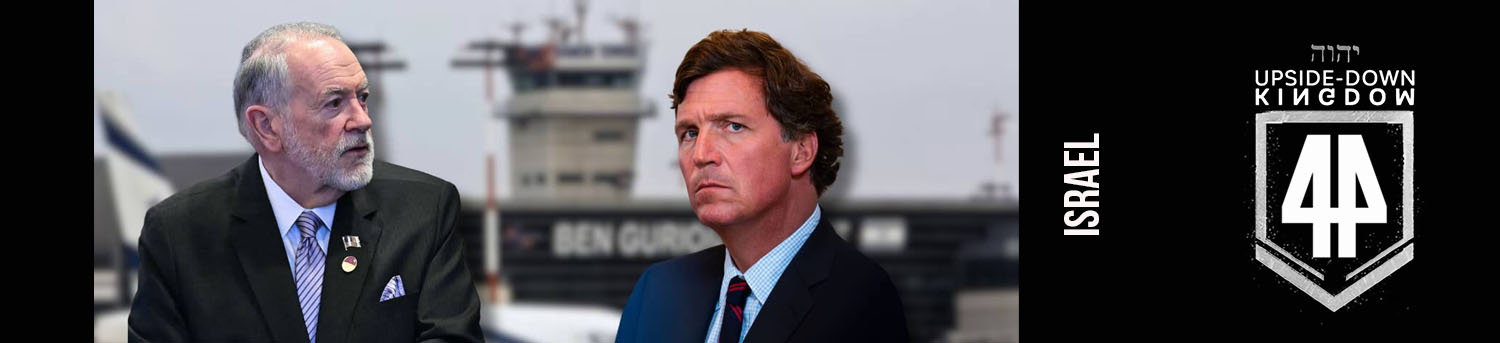
I have never cared much for politics—or, frankly, for either of the personalities involved in the Tucker Carlson–Mike Huckabee exchange. But I am interested in what their conversation exposes at a deeper level: the ease with which modern political arguments recruit Scripture, and the interpretive assumptions that often go unexamined when “the Bible says…” becomes a stand-in for careful exegesis.
In the exchange, Huckabee spoke as though Genesis 15:18 functions as a present-tense title deed—stretching from “the river of Egypt” to “the Euphrates”—while Carlson challenged the leap from an ancient covenant text to modern entitlement: if that’s the standard, why are borders negotiable, who counts as a rightful heir, and how does any of this become a binding obligation for Christians today? Beneath the soundbites is a question that actually matters: are we reading the biblical text on its own terms, in its Ancient Near Eastern and canonical context, or are we using it to baptize conclusions we already prefer?
This article takes Carlson’s line of questioning as an opportunity for theological and exegetical clarity rather than partisan reaction. My aim is not a political manifesto, but a canonical inquiry into what “Israel” means in the Bible’s own grammar—and what changes when Israel’s story reaches its climax in Jesus the Messiah. I will argue that modern Israel is not identical to covenant Israel in the sense that governs Christian obligation; that land-promise texts cannot be severed from Torah’s covenantal sanctions and the prophets’ ethical indictments; and that the New Testament’s Christological redefinition of the people of God relocates covenant identity from ethnicity and territory to union with Christ. On that basis, Christians should resist treating unconditional support for the modern State of Israel as a biblical mandate, while still rejecting antisemitism, refusing the dehumanization of Palestinians, and pursuing a kingdom ethic of truth, justice, and peacemaking for all image-bearers in the land.
1. The presenting controversy: a text, a nation-state, and the temptation to baptize policy
In his filmed exchange with U.S. Ambassador Mike Huckabee, Tucker Carlson pressed a question that many American Christians have often assumed rather than exegeted: when Genesis describes land promised to Abram’s descendants “from the river of Egypt…to the great river, the Euphrates,” what exactly is being claimed—and how (if at all) does that claim translate into modern geopolitical obligations? In the interview transcript, Carlson repeatedly returns to the logic of appeal: if “God gave this land to this people,” then what land, and which people, and on what principled basis should modern states underwrite that claim?
The exchange became headline news precisely because the “Bible as real-estate deed” framing is not merely an internal church dispute; it can be invoked to justify maximalist territorial imagination. Associated Press reported that Huckabee responded to Carlson’s “Nile to Euphrates” framing with, “It would be fine if they took it all,” even while adding that Israel was not currently seeking that expansion. This is exactly the kind of moment where Christian theological speech must slow down: not to evade political realities, but to avoid treating Scripture as a rhetorical accelerant.
What follows is an academic-style theological argument—biblically grounded, historically attentive, and hermeneutically explicit—contending that (1) modern Israel is not “biblical Israel” in the covenantal sense that matters for Christian identity and obligation, and (2) the New Testament does not authorize a blanket Christian duty to support the modern nation-state of Israel as a theological absolute, even while (3) Christians remain morally bound to oppose antisemitism, to pursue justice and mercy for all image-bearers in the land (Jewish and Palestinian alike), and to pray for peace.
2. Method: what “biblical Israel” means (and what it does not mean)
A responsible theological reading begins by distinguishing at least four “Israels,” which are too often collapsed:
Israel as an ethnos (a people group with genealogical continuity).
Israel as a covenant polity constituted at Sinai (and held accountable to Torah).
Israel as a landed theocratic project under Yahweh’s kingship (and later monarchic compromise).
Israel as an eschatological people reconstituted in and around the Messiah in the New Covenant.
Much popular Christian Zionism treats #1 and #2 as if they are stable across redemptive history and then maps them directly onto #3 in modern political form. But the Bible itself complicates every step of that move.
Chosen” in the Hebrew Bible is not primarily a synonym for “saved” but a vocation—a commissioned role “to be a light to the nations.” That vocational election is real. Yet vocation can be resisted, judged, exiled, and reconfigured within God’s larger redemptive purpose (a theme threaded through the prophets and then re-read christologically in the New Testament).
In short: the Bible itself does not permit a simplistic, trans-historical equivalence between “Israel” in Genesis, “Israel” in Deuteronomy, “Israel” in Second Temple politics, and “Israel” as a twentieth-century nation-state. That does not mean Jewish continuity is unreal. It means that covenant categories are not identical to modern nation-state categories—and Christian ethics cannot pretend they are.
3. The Abrahamic texts in their Ancient Near Eastern texture: promise, sign, and the grammar of gift
3.1 Genesis 12:1–3 is not a blank-check for foreign policy
The most common “Christian pro-Israel” proof-text in the American imagination is Genesis 12:3 (“I will bless those who bless you…”). But three exegetical observations matter.
First, the “you” addressed is Abram, not “Israel” as a later national polity. Second, the promise culminates in a universal horizon: “in you all the families of the earth shall be blessed.” Third, the New Testament repeatedly reads Abraham’s promise Christologically—not as an everlasting political entitlement but as a redemptive trajectory that reaches its telos in the Messiah and then spills outward to the nations. The “seed” is ultimately Christ and that union “in Christ” becomes the decisive identity marker.
Even many evangelical defenses of “bless Israel” concede the text is not reducible to modern state patronage.
3.2 Genesis 15:18 and the “Nile to Euphrates” claim: what is being promised?
Carlson’s pressure point is Genesis 15: if the land boundary is maximal, why are modern borders “shrunk,” and if the right is covenantal, why not identify rightful heirs by lineage or conversion status? Whatever one thinks of Carlson’s rhetoric, his question exposes a weakness in the “Bible as title deed” argument: it often wants the authority of literalism without the cost of literalism.
But the biblical narrative itself supplies the missing complexity.
Genesis 15 is divine promise framed by covenant ritual. The “cutting” scene belongs to a broader Ancient Near Eastern world of covenant-making and self-maledictory symbolism (the “may it be to me as to these pieces” logic). The point is not that Abram receives a modern cartographic deed; it is that Yahweh binds himself to a promissory path that will unfold through judgment, deliverance, and covenant schooling.
The Pentateuch itself embeds conditionality alongside gift. Deuteronomy’s covenant structure makes clear that land “rest” and land “retention” are tethered to fidelity; exile is not a surprise glitch but a stipulated covenant outcome (Deut 28–30). The gift is real; the possession is morally charged.
The boundary language functions typologically and theologically. “From Wadi Egypt to the Euphrates” becomes a way of expressing fullness and security under Yahweh’s reign—yet the historical narratives show fluctuating control, partial possession, and continual threat. Even in the so-called “golden age,” the biblical writers do not present Israel as a simple imperial machine but as a morally accountable people whose kings can be indicted by prophetic speech.
This is why proof-texting Genesis 15 to justify “it would be fine if they took it all” is not exegesis; it is ideological ventriloquism.
4. “Fulfilled” land, fractured obedience: Joshua, Kings, and the prophets against naïve maximalism
A major interpretive fault-line is whether the land promise is (a) already fulfilled in Israel’s early history and then refigured in Christ, or (b) postponed into a future political restoration.
Those who argue (a) often appeal to texts like Joshua 21:43–45 (“the LORD gave to Israel all the land…not one word…failed”), while dispensational writers contest that conclusion by insisting the promise requires fuller geographical realization. The point here is not to adjudicate every sub-debate, but to notice what the canonical shape presses on us:
The Deuteronomistic history (Joshua–Kings) depicts land as covenant theater: blessing and curse play out in real time; kings can lose the plot; exile arrives as covenant consequence.
The prophets do not treat land as an unconditional permanent possession immune to ethics. They treat it as a stage upon which injustice can bring expulsion (cf. Amos; Jeremiah; Ezekiel).
So even if one holds that future restoration themes remain (a debated question), the prophetic corpus blocks the move from “promise” to “unconditional endorsement of any state behavior.” The Bible does not give Israel a moral “get out of judgment free” card; it gives Israel more accountability.
5. The New Testament’s reconfiguration: Jesus as faithful Israel, and the people defined “in him”
The New Testament does not merely add Jesus onto Israel’s story; it claims that Jesus fulfills Israel’s vocation and embodies Israel’s identity as the faithful covenant keeper. Matthew’s application of Hosea (“out of Egypt I called my son”) to Jesus and Paul’s emphasis that the inheritance is shared only “in Christ.”
That is not “replacement theology” in the crude sense of “God discards Jews.” It is a christological claim about where covenant identity is now located: in the Messiah and those united to him by faith.
Several New Testament moves matter for the present debate:
The redefinition of kinship and peoplehood. Jesus relativizes bloodline as the defining marker of belonging (e.g., “Who are my mother and my brothers?”). Paul can say “not all who are descended from Israel belong to Israel” (Rom 9:6), and he can describe Gentiles being “grafted in” to the covenantal olive tree (Rom 11). The people of God become a multi-ethnic body whose unity is cruciform rather than nationalistic.
The relocation of “promised land” hope into eschatological new creation. The Expedition44 “Israel & the Jesus Kingdom” essay argues that the New Covenant’s “promised land” is fundamentally eschatological—recreated heavens and earth—rather than a mandate for a modern territorial project, and that Christian allegiance is primarily to the kingdom of Jesus.
The ethic of the kingdom as interpretive control. The Sermon on the Mount is not an optional “private spirituality” track; it is the Messiah’s charter for his people. If one tries to use Scripture to underwrite policies that produce indiscriminate harm or permanent domination, that reading must be confronted by the Messiah’s own ethic.
This is the theological center of gravity: Christian Scripture culminates not in land expansion but in a crucified and risen Messiah who forms a trans-national people and teaches them to love enemies.
6. Why many Christians do argue for continuing “biblical support” of modern Israel—and what to do with those arguments
To be fair and academically responsible, we should state the strongest versions of the Christian pro-Israel claims.
6.1 Argument from covenant permanence (“forever” language)
Many argue that because covenants are described as “everlasting,” the land promise must remain politically operative. Dispensational systems tend to separate “Israel” and “Church” as distinct peoples with distinct destinies, thereby preserving a future national role for ethnic Israel.
Response: “Forever” in covenant idiom must be read within canonical and covenantal context: the same covenant documents specify exile as consequence; prophetic judgments speak of being “not my people” in covenant rupture (Hos 1:9–11). A dispensational attempt to preserve unconditionality by sidelining covenant sanctions does violence to the Torah’s own logic. (Even writers sympathetic to Israel-church distinction acknowledge Hosea’s “not my people” language as covenantal crisis.)
6.2 Argument from Genesis 12:3 (“bless those who bless you”)
Many popular teachers treat this as a timeless mechanism: bless modern Israel materially/militarily and you will be blessed.
Response: The Abrahamic promise is read by the New Testament as culminating in Christ and opening to the nations; “blessing” cannot be reduced to state patronage. Even within evangelical discussions, careful treatments note that Genesis 12 is addressed to Abram and that “Israel” is not in view as a modern polity.
6.3 Argument from prophecy fulfillment (1948 as “sign”)
Some interpret the modern state’s founding (1948) as prophetic fulfillment and therefore as a theological anchor for Christian support.
Response: Even if one grants “providential significance,” providence is not identical to covenant mandate. Moreover, the New Testament regularly treats “sign” language as Christ-centered; political events cannot simply be baptized as eschatological necessity without robust textual argument. Steve Gregg’s approach—evaluate the modern state biblically and be wary of dispensational narratives—pushes against the “1948 = automatic theology” reflex.
6.4 Argument from “apostolic concern for Israel” (Rom 9–11)
Some argue Paul’s anguish and hope for Israel implies a continuing special status requiring Christian political alignment.
Response: Paul’s concern is evangelistic and doxological, not a directive for modern foreign policy. Romans 9–11 is about God’s fidelity and the mystery of unbelief and mercy—not a command to underwrite a state.
7. Why unconditional Christian support for modern Israel is not biblically required (and is often theologically confused)
Pulling the threads together, there are several main biblical reasons a Christian is not obligated—as a matter of theological necessity—to support the modern state of Israel “in general” or “no matter what.”
7.1 Category error: covenant people ≠ modern nation-state
“The modern nation-state of Israel is not the covenant people of the Bible,” because covenant membership is now defined by faith in the Messiah rather than ethnicity or passport status.
That doesn’t settle every question about Jewish identity or God’s providence, but it does block the simplistic move: “Bible says Israel → therefore Christians must support modern Israel.”
7.2 Canonical ethic: God’s promises never authorize injustice
The Hebrew Bible constantly holds Israel accountable for injustice; the prophets do not hesitate to indict Israel more severely because of her calling. Therefore it is hermeneutically incoherent to say, “because of promise, Israel gets unconditional endorsement.” Promise does not erase prophetic ethics; it intensifies them.
7.3 Christological control: the telos is Messiah and new creation, not territorial maximalism
Even within your own framework, the “promised land” is ultimately eschatological, and the kingdom’s geography is the renewed creation—not a modern territorial ideology.
7.4 Political theology: the New Covenant does not create sacral nation-states
The church is not a nation-state; it is a trans-national body. When Christians treat any state as if it carries covenant holiness, they risk reintroducing a form of sacral nationalism the New Testament consistently relativizes.
7.5 Moral realism: “Israel’s policies” cannot be the basis for blanket theology (and the abortion claim is not decisive)
To be totally transparent, some Christians support reasons to not support Israel such as “they support abortion” and “they largely aren’t Christians.” Even if those claims were uniformly true (they are more complex than social media summaries), they still wouldn’t function as the primary argument, because Christian theology does not grant blanket moral endorsement to any state based on religious purity tests. Still, it is fair to note that Israel’s legal framework includes state-regulated access to abortion through termination committees. The deeper point, though, is this: Christian foreign policy ethics should be grounded in justice, the protection of the vulnerable, truthful speech, and peacemaking—rather than a mythic covenant entitlement narrative.
8. Returning to Carlson’s central challenge: “blood,” conversion, and the instability of ethno-theological politics
Carlson’s sharpest theological question in the interview is not about ancient boundaries but about the moral logic of an ethnic land-claim. He presses: if the right is covenantal and genealogical, why not genetic testing? How does conversion (to Judaism or to Christianity) affect right of return? Huckabee appears to oscillate between “biblical/ethnic/historical” claims and pragmatic border talk, but Carlson’s critique lands: a nation-state founded on ethnic criteria invites moral confusion when theologized as divine decree.
From a New Testament perspective, this critique is theologically fruitful: the Messiah’s people are not determined by DNA but by covenantal faithfulness expressed as allegiance to Jesus. “In Christ” is the dominant boundary marker and that blessing is tied to honoring the Messiah rather than underwriting national projects.
Thus, ironically, Carlson’s “America First” skepticism can function as a negative aid to Christian exegesis: it exposes how quickly Christians can drift into a quasi-biblical ethno-politics that the apostolic writings resist.
9. Constructive conclusion: what Christians can say (and do) without making Scripture a weapon
Reject antisemitism categorically. Jewish people are not “the problem,” and Christian history contains grievous sins against Jews.
Refuse to sacralize any state. No modern nation bears covenant holiness.
Read land, people, and promise through the Messiah. If Jesus is the faithful Israelite, then the story’s center is him, and the people are those “in him.”
Seek justice and peace for all who dwell in the land. Christian ethics does not permit indifference toward Palestinian suffering or Jewish fear; both must be taken with full seriousness.
Advocate principled, conditional political reasoning. If one supports Israel politically, it should be on the same moral grounds one uses for any state: proportionality, protection of noncombatants, truthful diplomacy, restraint, and the pursuit of genuine peace—not “because Genesis.” If one withholds support, it should likewise be principled, not tribal.
The primary allegiance of the Christ-follower is to the Jesus Kingdom, and the church must resist being “yoked” to worldly power projects that distort the kingdom’s witness.
Conclusion
The Carlson–Huckabee exchange ultimately exposes not a political dilemma, but a hermeneutical one. When the biblical text is read within its Ancient Near Eastern covenant context and through the New Testament’s Christological fulfillment, it becomes clear that Scripture does not grant modern nation-states a standing theological entitlement. The covenant promises to Israel find their telos in the Messiah, and the people of God are now defined by union with Him rather than by ethnicity, geography, or political sovereignty.
For that reason, Christians are not biblically obligated to offer unconditional support to the modern State of Israel as if such support were a covenantal requirement. Our allegiance is not to any geopolitical entity but to Jesus Christ, the true Israel and King of the kingdom that transcends every border. From that allegiance flows a consistent ethic: we reject antisemitism, we refuse to dehumanize Palestinians, and we pursue justice, truth, and peace for all who dwell in the land.
In the end, the question is not whether Christians will take a political side, but whether we will read Scripture faithfully and embody the kingdom it proclaims.
DISCUSSION QUESTIONS
1. Covenant, Land, and Conditionality
How should the land promises in Genesis (e.g., Gen 12; 15; 17) be interpreted in light of the covenantal conditions articulated in Deuteronomy 28–30 and the prophetic indictments that led to exile?
In what sense are the promises “everlasting,” and in what sense are they historically administered under covenant fidelity?
Does the canonical shape of the Old Testament itself invite a non-literal or typological expansion of the land promise?
2. The Reconfiguration of Israel in the New Testament
To what extent do New Testament texts (e.g., Rom 9–11; Gal 3; Eph 2; 1 Pet 2:9–10) redefine the identity of Israel around Christ and the Church?
Do these passages suggest continuity, replacement, fulfillment, or expansion?
How should one evaluate the claim that “not all Israel is Israel” (Rom 9:6) in relation to modern ethnic or national identity?
3. Hermeneutics and Political Theology
What hermeneutical principles should govern the use of biblical texts in modern geopolitical discussions, such as those raised in the Carlson–Huckabee exchange?
Is it legitimate to apply ANE covenant language directly to contemporary nation-states?
What criteria distinguish faithful theological application from ideological proof-texting?
4. Christological Fulfillment and the Kingdom of God
How does the New Testament presentation of Jesus as the fulfillment of Israel’s vocation (e.g., Matt 2; John 15; Heb 11) reshape the theological significance of land, peoplehood, and covenant identity?
In what sense is the “promised land” reinterpreted as new creation (Matt 5:5; Rom 4:13)?
What implications does this have for Christian allegiance and identity in a global, multi-ethnic Church?
5. Ethics, Justice, and Christian Responsibility Today
If Christians are not biblically mandated to support the modern State of Israel unconditionally, what ethical framework should guide their posture toward Israel, Palestine, and the broader Middle East?
How should biblical themes of justice, mercy, and reconciliation (e.g., Mic 6:8; Matt 5–7; 2 Cor 5:18–20) inform Christian political engagement?
What does it look like to reject both antisemitism and anti-Palestinian dehumanization while maintaining fidelity to the gospel?
Note: Because this is formatted for a blog post rather than a print journal, some citations are consolidated (multiple works per note) to keep the apparatus readable despite the 140 citations.
“Mike Huckabee’s Interview @ Tucker Carlson Show (Transcript),” The Singju Post, February 20, 2026.
Sam Mednick and Samy Magdy, “US ambassador causes uproar by claiming Israel has a right to much of the Middle East,” Associated Press, February 21, 2026.
Expedition44, “Is Israel Still God’s Chosen people?” October 16, 2025.
Expedition44, “Israel & the Jesus Kingdom,” October 29, 2023.
Steve Gregg, “The Modern State of Israel” (lecture summary), OpenTheo.
Steve Gregg, “What Are We to Make of Israel?” (series index/summary), OpenTheo.
The Narrow Path, “Topical Lectures: Israel—What Are We to Make of Israel (12 Lectures).”
Aaron Sobczak, “No, Christians shouldn’t give unconditional support to Israel,” Libertarian Christian Institute, January 27, 2025.
“Rethinking Support for Israel: A Biblical Approach Beyond Politics,” Bible Mysteries Podcast (blog), n.d.
Brian Collins, “Kevin T. Bauder, ‘Israel and the Church: Is There Really a Difference,’ in Dispensationalism Revisited,” Exegesis and Theology, June 14, 2024.
Ministry of Health (Israel), “Induced Abortion,” government information page.
State of Israel, gov.il, “Apply to Terminate a Pregnancy (Induced Abortion).”
One for Israel, “What Does it Mean to Bless Israel According to Genesis 12…,” July 17, 2024.
“At the roots of evangelical Christians’ support for Israel,” Le Monde, April 11, 2024.
“Evangelicals’ support for Israel is dropping…,” Washington Post, January 3, 2026.
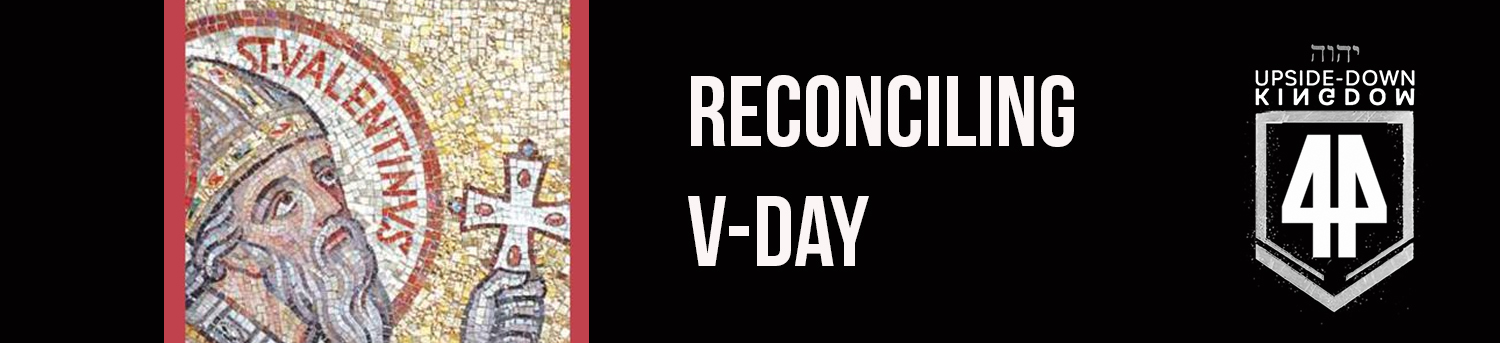
Every February 14 many Christians and non-Christians alike pause to celebrate love—often through candy, flowers, heart-shaped cards, and candlelight dinners. But beneath the commercial veneer lies a rich tapestry of history, cultural adaptation, and theological meaning that invites careful reflection for the church—one rooted not simply in sentiment, but in Scripture and the long witness of Christian faith.
1. The Historical Palimpsest of Valentine’s Day
Some scholars would identify at least three such figures known in martyrologies, with one tradition holding that a Roman priest named Valentine in the third century defied an imperial edict against Christian marriage to marry couples in secret—a testament to his defense of Christian marriage and pastoral courage.
By the fifth and sixth centuries, February 14 was established in the liturgical calendar as the feast of St. Valentine, though the medieval church did not associate this date with romantic love until much later. In time, festivals of courtly love and poetic traditions such as Chaucer’s Parliament of Fowls would fold romantic symbolism into the date long after its ecclesiastical origins ended.
It is essential sociologically to recognize that Valentine’s Day—as celebrated today—is a layered cultural artifact: part hagiographic remembrance, part medieval romance, part commercialized modern ritual. None of these layers originate in biblical revelation, yet all reflect ways humans seek to articulate love within their cultural context.
2. Scripture and the Semantics of Love
Most people are aware that the Bible does not mention Valentine’s Day; nowhere is it regarded as a holy day per se. Its absence places the observance in the category of Christian freedom described in Romans 14:5–6, where Paul writes that believers may regard certain days differently, and whether one observes them or not, it should be “in honor of the Lord.”
What Scripture does offer is a rich, nuanced theology of love. In biblical Greek there are multiple terms for love—agapé (self-giving, covenantal love), philia (brotherly affection), eros (romantic desire, depicted especially in Song of Songs), and storge (familial love). While eros itself does not appear in the New Testament theological lexicon, the Song of Songs—a book of the Hebrew Bible—celebrates sensual and relational love within the covenant of marriage.
The apostle Paul’s famous discourse in 1 Corinthians 13 reframes love as a moral and spiritual virtue defined not by transient feeling but by patient covenantal commitment, self-giving service, and endurance. Jesus Himself states the core of the law: to love God with all one’s heart and to love one’s neighbor as oneself (Mark 12:30–31).
This emphasis locates the core of biblical discourse not in romantic expression alone, but in covenantal fidelity, sacrificial love, and the self-giving love revealed supremely in Christ’s death and resurrection.
3. Early Church and the Appropriation of Culture
From a socio-rhetorical perspective, the early church was adept at incarnating its message within existing cultural frameworks without compromising its core message. The apostle Paul became “all things to all people” to win some to Christ (1 Corinthians 9:22).
Christian appropriation of certain dates or customs has always been contested. The church’s decision to commemorate saints and martyrs on specific feast days was not intended to canonize secular customs, but to sanctify memory in ways that pointed beyond worldly spectacle to Christ’s kingship and the communion of saints.
In this light, Valentine’s Day can serve as a cultural locus for Christians to articulate biblical love — not simply by embracing its commercial trappings uncritically, nor by rejecting all contact with culture out of fear of syncretism, but by discerning how Christ’s love reshapes human practices. As Paul counsels, “Test everything; hold fast to what is good.” (1 Thessalonians 5:21)
4. Theological Reframing: Love as Witness
Rather than delegating Valentine’s Day to either celebration or avoidance, Christians can use the occasion as an invitation to reflect on biblical love as witness—not only within marriage, but within the body of Christ and the broader world.
A socio-rhetorical reading invites us to see Valentine’s Day less as an externally mandated Christian feast and more as a rhetorical opportunity—a moment when society’s focus on love can be redirected toward the love that God enacts in Christ. Such love is measured not by roses and chocolates, but by the sacrificial gift of Christ and the mutual love of believers that testifies to His presence (John 13:35).
Conclusion: Love in Context
Valentine’s Day is not inherently Christian because it emerged from early church commemoration or medieval romantic tradition. Nor is it inherently pagan because of its layered history. It is imperatively a moment for Christians to practice discernment, to ask how the gospel reframes the season of love, and to embody sacrificial, covenantal love in ways that reflect God’s love for the world.
As we remember St. Valentine—a figure united by courage and fidelity to Christ—and reflect on the biblical narrative of love from Genesis to Revelation, may our practice of love be shaped by agapé above all else, rooted in Scripture and enacted in service.
Discussion Questions
How does an awareness of the historical development of Valentine’s Day influence (or not) how we celebrate love as Christians?
In what ways does the biblical concept of agapé challenge modern expressions of romantic love?
How can Christians use cultural observances like Valentine’s Day as platforms for gospel witness without syncretizing their faith?
What does Song of Songs teach us about the place of romantic love within God’s broader design for relationships?
How might Paul’s teaching in Romans 14 apply to disagreements within the church over celebrating Valentine’s Day?
Bibliography
Armstrong Institute. “Valentine’s Day—in the Hebrew Bible?” (ArmstrongInstitute.org)
BibleInspire.com. “Valentine’s Day Biblical Meaning: What Christians Need to Know.”
“Valentine’s Day.” Wikipedia (overview of historical development).
Song of Songs. Wikipedia (literary and canonical context).
I have written a trifecta of posts on edification recently: POST 1POST 2POST 3
One of the basic tenets of our faith walk is work. Work was intended to be a beautiful relational covenant between us and the LORD. At the fall in the garden it turned to toil and Christ set the standard to redeem and reconcile it back to Him through work itself. Through our free will choices we are offered to work back into covenant with Him. The reciprocal dance of grace I describe in my book This is the way to covenant community describes some of the mindset that it takes to return to this circle of grace.
In the edification texts Philippians 2:12 becomes paramount: work out your own salvation with fear and trembling.What does that mean? Let’s put the fear and trembling on the shelf for a minute and focus on the work.
In Greek the word is ergon (noun) and ergazomai (verb). That is where we get our English word ergonomics from. Work ethic is a belief that work and diligence have a moral benefit and an inherent ability, virtue or value to strengthen character and individual abilities.[1] Desire or determination to work serves as the foundation for values centered on the importance of work or industrious work. Social ingrainment of this value is considered to enhance character through hard work that is respective to an individual’s field of work.[2]
We have the ability to shape in some ways who we are by our work.
In ancient Greece, work was seen as a burden, and their term for it, ponos, shared its root with the Latin word poena, signifying sorrow. In Hebrew, work was associated with toil, representing the laborious act of extracting sustenance from the challenging earth.[3][4]
I will challenge you with a lens you may have ever considered though. In our world, “work” always leads back to the father. God introduced us to work, and God’s handiwork is seen in every aspect of creation. But too often we forget that God’s covenant is still at work in every moment and every detail of His Creation (John 5:17). Since work is an extension of the active God, there is no discrepancy between “faith” and “works.” [5] One is simply a reflection of the other. “Work” was intended to be lived out in a sense of the Hebrew avodah, the harmony of partnered effort, service and worship. If your work isn’t working to return to avodah then it is void and leads only to toilsome emptiness.
So what does it mean to work this out? We can’t work for our salvation, but we can work from it. We aren’t saved by our good works (Eph. 2:8-9), but we are saved for good works (Eph. 2:10). This is the sense in which Paul uses the term. Salvation is spoken of in multiple senses in the NT: justification, sanctification, and glorification. [6] It is ongoing, a journey, an expedition that you aren’t saved from but are saved for. It isn’t a line on the sand to attain to. Your work is God’s calling to you to demonstrate His sovereignty in your life, His character in your actions, His holiness in your choices. You are the manifestation of his image. So, work it out carefully. It isn’t a get fit quick scheme, it is a recipe for life.
What about the fear and trembling part? Well, the reformed camp wants to see wrath here. Something like Chaim Bentorah describes as -“At first reading, it seems we are to serve the Lord with fear, that is we must be cautious and very careful because if we blow it, God will crush us with His thumb.” [7] I don’t see that and neither does he. What I can say for sure is that this isn’t a phrase to make you constantly earn your keep in the kingdom or sit around trying to determine once saved always saved theology. If you stuck there, my best advice would be to move forward. In theology whenever one text doesn’t seem to be clear the general rule is to ask what other similar texts say. This should lead to textual agreement.
I can’t say it any better, so here is where Chaim takes us: Psalms 2:11: “Serve the LORD with fear, and rejoice with trembling (Ra’ad).”
To fear God is to show respect for His position and the role He plays as the creator of the Universe. So we serve the Lord in recognition of his position as God. Sometimes we take our service for God lightly, like it is a favor for an old buddy. When we serve God we must always keep in mind His position as the creator of the universe and if he asks some service from us, it is an honor and a privilege and a service we take very seriously, with all our hearts. To be chosen to serve the God of the universe should bring us joy and cause us to tremble. Is that to tremble with fear. Maybe, we do not want to fail the God we love so we fear we will not live up to the job. But you know that word ra’ad is a trembling alright but it may not have to be fear. The idea behind ra’ad is losing control. If you lose control of your body, it may tremble. But there are other forms of losing control. Ra’ad can be losing control of your will, that is giving control of your will to God. Thus if you serve the Lord out of respect for His office as God you will rejoice for you need not fear failure if you are yielding your will and strength to Him, that is giving Him complete control over the task you are performing for Him.
When you think about trembling in this context it is beautiful. It is the sense you get when you work out a muscle so much that it begins to tremble. It’s that hurt that feels so good because it means your there! Have you ever felt that in your covenant circles? What it feels like to pour into people in your life so hard that it results in trembling before the lord? Have you ever felt the radiance of the sovereign Jesus shining down on you so brightly that you could just simply stand back and take in the moment? Thats the kind of work that returns us to Eden and beyond.
I want to talk about what is meant by God’s order, but before I do that, I want to guide you through a brief exegetical teaching through the text. When you hear the word order in relation to a biblical sense we have been conditioned to think about creation, law, hierarchy in the church and marriage, and perhaps even church discipline. Although it encompasses those things, I find it unfortunate that we start there, and therefore I feel we might need some deconstruction to get to good.
In the morning, O Lord, You will hear my voice; in the morning I will order my prayer to You and eagerly watch. Psalm 5:3 NASB
As I begin to read this in Hebrew the first thing that I notice in contrast to most English translations is the phrase “My prayer” is not found in the text. It isn’t a bad translation as I get the context leans that way but in Hebrew the verse better reads, “I will order toward you” which emphasizes a slightly different posture. Interesting the word prayer isn’t really there, perhaps a NT implication or even insertion. Prayer in the OT was a bit different than the way we understand it today. It was communal and far less personal (unless God appeared to you in a bush and orally spoke directly to you), after Jesus ascends to the throne and sends the Spirit to dwell in us and intercede, the biblical concept of prayer takes on a different form than what it had been considered over the last 2000 years or more. The way people thought of “prayer” in the OT may or may not be accurate. Are we just reading what they thought prayer was supposed to be perhaps based on what they knew of their former deities? Is this something that they got a bit off track with and Jesus sought to adjust or shed new light on? Perhaps, but perhaps not. Maybe our prayer should take a cue from the OT notions. When we read this verse in Hebrew form, we see that David isn’t talking about ritualistic prayer, or is he? He isn’t necessarily folding his hands and closing his eyes – but he is sort of. He is making a statement that if his life is in alignment with what is of God – TOV (creation order language), then he expects God to acknowledge and “DO THINGS” on his behalf. This may tie into the never-ending OT grappling over whether God was retributive or not, but it certainly had the trajectory of demonstrating the idea of devotion in connection to intimacy with the Lord. This connection over the years will then be attributed to the conjecture of relationship with the father in prayer. Some prayer is communal and some is personal.
Different people interact with God differently and perhaps in different seasons. Some say they don’t hear God and others act like God never stops screaming in their ear. How can the voice of God differ from person to person? Is it based on the posture of the heart, covenant faithfulness, gifting, seasons, understanding, choice, some sort of prejudice, or something completely different that is higher than our understanding? I believe that God is just that dynamic. I don’t know why He communicates differently to people and what it might be based on; I don’t always have the eyes of God. I believe Him to be Sovereign and know significantly more than we do in a much more complex grid. I am convinced that there are many things that influence this covenant relationship at a cosmic level. It is far bigger than simply me, and to think of my relationship with God (the creator of the universe) as doating on my every thought seems like a selfish notion. Does that view minimize a personal relationship or exemplify it?
God’s order is described in everything naturally defined by Yahweh and described generally as what is good (TOV). This is creation, the waters, the counting of the ark, the building of the temple, the pieces of firewood set in order for a sacrificial fire, showbread set out in two rows of six cakes on the gold table (Lev 24:8); seven altars set up by the pagan mantic Balaam (Num 23:4); stalks of flax arranged by Rahab for hiding the spies (Josh 2:6); a table prepared for dining (Ps 23:5; Isa 21:5); words produced for speaking (Job 32:14); a legal case developed for presentation (Job 13:18); etc. In II Sam 23:5 David exults in the covenant granted him by Yahweh, “for he has made with me an everlasting covenant, / ordered (ʿărûkâ) in all things and secure.[1] We see God’s order in many ways, but the common thread that binds seems to be that it is given as a framework for our devotion to Him. This intimate devotion that is often described as reading or memorizing scripture, devotional repetition, standards of practice and living, and so much more are all described as what it means to be defined as SET APART. That we are defined and claimed as part of God’s order not the chaos of the world.
What defines this? Covenant. Covenant is the secure, accessible, and recognizable attribute of everything good that God offers to us. It is the basis of all of our interaction with the LORD. Without covenant we are detached or separated from the creator and his ways. When David chooses every morning to be in order, he is making a statement about the balance of life and the posture of the heart. The Hebrew term בְּרִית bĕriyth for “covenant” is from a root with the sense of “cutting”, because pacts or covenants were made by passing between cut pieces of flesh of an animal sacrifice.[2] It meant something deep.
The New Covenant is a biblical interpretation originally derived from a phrase in the Book of Jeremiah and often thought of as an eschatological world to come related to the biblical concept of the Kingdom of God. Generally, Christians believe that the New Covenant was instituted at the Last Supper as part of the Eucharist, which in the Gospel of John includes the New Commandment.[3] A connection between the Blood of Christ and the New Covenant is portrayed with the saying: “this cup that is poured out for you is the new covenant in my blood”. Jesus is therefore the mediator of this New Covenant, and that his blood, shed is the required blood of the covenant. This is true looking back in both testaments and can be seen in all of the biblical covenants of the bible.
In the Christian context, this New Covenant is associated with the word ‘testament‘ in the sense of a ‘will left after the death of a person (Latin testamentum),[4] the original Greek word used in Scripture being diatheke (διαθήκη) which in the Greek context meant ‘will (left after death)’ but is also a word play having a dual meaning of ‘covenant, alliance’.[5] This notion implies a reinterpreted view of the Old Testament covenant as possessing characteristics of a ‘will left after death’ placing the old covenant, brit (בְּרִית) into a new application of understanding as revealed by the death, resurrection, ascension, and throning of CHRIST THE KING, JESUS. All things will forever connect at the covenants and be defined by the atoning accomplishments that transform into a covenant of eternity.
Order today might be better understood as a continually evolving algorithm based on the posture of your covenant faithfulness which, as I have described, is defined by many facets of devotion. Some may hear the audible voice of God more clearly while others simply see Him in every image. The revelation of God to us isn’t in a form of hierarchy. One form of transcendence doesn’t trump another. Who are we to judge anyway. But I do know that most of Christianity seems to be off course here. Rather than coming to the LORD as the cosmic wish granting genie in a bottle, let’s get back to biblical roots and think more covenantal and devotional based on the order that God modeled for us.
[1] Harris, R. L., Archer, G. L., Jr., & Waltke, B. K. (Eds.). (1999). Theological Wordbook of the Old Testament (electronic ed., p. 696). Chicago: Moody Press.
[2]Strong’s Concordance (1890).
[3] “Comparison of the two covenants mediated by Moses and the two covenants mediated by Jesus”. 25 September 2022. Archived from the original on 2022-09-28. Retrieved 2023-01-29.






 EXPEDITION 44