You have been told your entire life that good Christians should “do their job” and vote. That is the mainstream evangelical Christian view. However, everyone knows “that guy” who seems to be a great Jesus follower and has either totally politically checked out to go live like a monk or perhaps has just convinced himself that the way of the cross isn’t to become “overly” politically aligned as a Christian. To most in the first category the second two positions may also seem “un-Christian.” Nilay Saiya in his global politics of Jesus [1] describes these three positions as the Patriot position or Christianism believing it is your biblical responsibility to vote (7 mountain mandate type of thinking), the second position he describes as the pietists position or detachment such as the first century Essene community; and the last being that of the prophetic witness position describing more of an exilic position of speaking truth passively as a witness. Perhaps there is a time, a calling, or season for all three in your life dependent on each specific situation and your personal position, but as with most issues pertaining to our modern lives, the word of God is not silent here. Let’s see what it says.
Global Christianity – What we all agree on
As with all x44 articles the intended audience here is those that are “all in” for Jesus. For the most part here is what the all in community agrees on. Jesus inaugurated a new kingdom and set apart nation. There is nothing that Jesus talked about. After his resurrection and victory over death on the cross, Jesus assumed the throne in the heavens and sent His spirit to dwell in us. This kingdom is here and now as well as described as coming (eschatologically.) To be clear, the Bible treats this kingdom as a rival kingdom to the other kingdoms of the world using phrases like, “you can’t serve two masters.” The definition given of those that are not in alignment with this ideology is that of “an enemy” to His kingdom even describing some that claim to be His followers as lukewarm unequivocally stating that “He never knew you,” which seemingly describes those that do not follow his commands to leave their formal world behind and live in complete devotion to Him. As strange or counter cultural as it may be, the hope of this kingdom is that the “enemies” might be reconciled by these “good neighbors faithful to Jesus” and eventually won over and shepherded into obedience into the Jesus kingdom. We are told eschatologically that Jesus will eventually wipe away all the other kingdoms of the world. In this nation Christ alone is King.
To those in the original intended first century audience this word certainly would have been received as traitorous and blasphemy towards the Roman empire and the emperor, which is (in part), why Jesus was crucified and explains the sign over his head. Nevertheless, entering into the Kingdom and coming into belief in and agreement with the terms of the king is how salvation is achieved. The Bible describes this decision of our heart and mind as being born into new life, we are then dead to our old ways. We gain citizenship to this new kingdom (Phil 3:20) and should no longer desire or pursue our former life. We are dead to it in every way. We willingly and full accept the call then to function as ambassadors of the new kingdom towards those still dying in the old rival kingdoms of the world as we now happily exist as foreigners or exiles dwelling in our former broken world which scripture describes to be ruled by Satan. The Jesus kingdom is characterized and embodied by those who serve others not themselves, those with the desire to love their enemies and turn the other cheek in grace and mercy shepherding and winning them over them to a better more beautiful way of life. As ambassadors to the pagan nations, we are the physical manifestation of Jesus to our world. In this way, Christians are called to pledge their allegiance to God and his Kingdom, not to any worldly nation, government, political party, flag, or ideology. One of the main tasks of a Christian is to live set-apart which means separated. Separated from what? The world. To live wholly devoted and undefiled for Jesus.
Of course, 2000 years later some circumstances might complicate, cloud, or entangle your thinking. Paul was a part of three kingdoms, he maintained Jewish citizenship, Roman citizenship and was certainly fully devoted primarily to the Kesus kingdom. Most Jesus followers didn’t have a “vote” in Rome; yet today our Rival nation asks us what we think by casting a vote. It is actually pretty amazing that the evil empire allows Christians a vote. In many ways every decision you make is a “vote” of some sort.
Patriotism doesn’t necessarily mean you love the evil satanic ongoings of our government and Washington DC, although it certainly can and often does; but the better idea is that you love the people of the nation and the soil by which it is represented. Godly presence means that the land you inhabit became sacred space unto the Lord. Eventually all the land and world will be won back for the Lord and consecrated back to Him. Do we start now? Isn’t that what we are supposed to be doing?
The enemy is willing to give you a “place” at his table, should you take it? Would Jesus have eaten at that table? Obviously, peoples answer to these questions, even based on scripture and interpretation will vary. Jesus “entertained” the table but not the rival kingdom.
Christian Patriotism
As much as this is the mainstream view and what most Americans believe the Bible teaches, the exegetical “proof” (IMHO) is slim if there at all. However, those that believe that the Bible aligns with casting a vote for your government make a rather convincing philosophical argument. Some of the founding fathers truly believed and sought after creating a platform of government in America by which Godly principles and Godly men could lead our country. Charles Finney, John Adams, John Jay, and Samuel Adams are amongst my favorites that I truly believe were “all in” seekers of the Jesus kingdom, but my verdict is out on the other 55 people in that “boarded up” room. If you haven’t listened to our Expedition 44 interview with Michael Gaddy, I would encourage you to give it a listen. In one regard you might not care what the founding fathers said or thought or might believe that only 4-5 of the founding fathers were postured towards the kingdom. What they say isn’t God’s voice to you and therefore you might think is largely irrelevant to you. But that view might seem to take on a selfishly driven perspective of historical learning.
There are a few ideas in the Bible that might promote such a dual citizenship. Matthew 22:37-40 tells us to Love God and our neighbor. If we truly want the best for our neighbor, wouldn’t we exercise our influence against the evil atrocities of the world and government? But if your already not a great neighbor and you use this passage to justify voting as helping your neighbor then you have some “order issues” or might be guilty of doing something you are accusing others of (ie being a hypocrite and we all know that isn’t helping the body of Christ with their “image”.)
Others might cite Romans 13:8 or I Tim 2:1-4 or even Gal 6 as having influence in our world. The New Testament is filled with examples of Godly people who do not obey the government. As there is a conversation of the narrative and the authors personal opinion coming out in their writings. The bible makes it very clear to follow Jesus first and foremost. Paul himself, the author of the letter to the Romans, disobeyed the government on numerous occasions. Paul uses the word ‘hypotassō,’ which gets translated as “subject.” Paul could have used the word ‘hypakouō’ which means ‘obey,’ but he doesn’t. This difference in words is important.
One of the problems with this view is political corruption. Does your vote even matter? Personally, probably not, but collectively -Yes (is hard to argue). Much of the Biblical theme dwells on the communal body of Christ making a kingdom difference in the world we live in.
Piety / Detachment
When you start asking questions like, whose table are you eating from, or whose flag are you flying, or who are you “in bed with,” you might understand the current political problems of potentially aligning with any system of the world. You also might find an issue with casting a vote for someone you don’t think is a good person, or should we be voting for anyone that isn’t directly part of the Jesus kingdom? (But then the issue comes that if you think this way then no Christian would ever be in a place to vote.) Are you voting for the lesser of two evils – well then, you’re still voting for evil? How does that work as a Christian? There are many Biblical reasons why some have decided to simply not be “aligned” with any system of the world and remain “checked out” of that world and only interested in the happenings of the Jesus Kingdom. The Essenes were an entire first century culture that chose to go this way. Some conservative Baptists also have made choices like this. Most of the prophets were aligned this way and John the Baptist seems to also be described in a similar historical context. Rather than get wrapped up in the ways of the world and their ongoings maybe it would just be better to exit that arena and completely focus all of your time treasure and talent on the kingdom of Jesus? Sounds sort of Biblical, doesn’t it?
Prophetic Witness
This seems to be where Jesus hung out. Tends be personified by a pacifistic voice. It finds its basis by taking exilic language and applying the “babylon” thinking to the context of our current situation.
Jer 29 4 Thus says the Lord of hosts, the God of Israel, to all who were carried away captive, whom I have caused to be carried away from Jerusalem to Babylon: 5 Build houses and dwell in them; plant gardens and eat their fruit. 6 Take wives and beget sons and daughters; and take wives for your sons and give your daughters to husbands, so that they may bear sons and daughters—that you may be increased there, and not diminished. 7 And seek the peace of the city where I have caused you to be carried away captive, and pray to the Lord for it; for in its peace you will have peace.
Beginning with Moses, God appoints several figures to act as Prophets. Walter Bruggemann, asserts that the task of the prophetic is to nurture, nourish, and evoke a consciousness and perception alternative to the consciousness and perception of the dominant culture around us. Prophets speak truth to power—yes, but they are also there to remind the people of God who they are and to speak as one of the Spirit. [2] As Christians we have been commissioned to make disciples, not political leaders. We have sacrificed our witness at the altar of power. We are Kingdom people— Kingdom of God. We are not empire people.
THE WRAP UP
I echo the call of Bryan Zhand: The entire creation is groaning for the Sons and Daughters of God to reveal themselves (Romans 8:19). [3] Some would argue that we can’t escape the “politics” of the world around us, and maybe we shouldn’t be trying to. Our politics (if any) must understand the Kingdom of God first and the politics of Jesus is our platform. As I began stating, the body of Christ has many dynamics. Those that are part of the same body read and interpret the same text differently. They see the ongoings of the world and the way Jesus interests through different lenses. Time and situations are constantly shifting. What you couldn’t or wouldn’t consider or justify last year you might this. We should all be in a state of rethinking and reconsidering truly what Jesus would do in each and every situation. Edification is sometimes supporting your brothers and sisters in Christ when you might not fully get them. Seasons change, people change, but God’s character is unchanging, and his ways are always faithful to us despite our broken ways.
The idea or doctrine of separation from God is often misunderstood within current evangelical Christianity. Make no mistake, humanity continues to make choices to be separated from God, but I would venture to say most Christians have an inaccurate view of this separation. Adam and Eve’s sin separated them from the life that the tree gave but it didn’t necessarily separate them from God. At that moment death was passed on, but not their original sin. And to be clear fellowship with God was also not lost as you often hear! That is the continual message of God to His people. He still desires to walk with them. If you remember in the garden, He didn’t walk with them 100% of the time (Genesis 3 alludes to this.) It is true that Adam and Eve were “removed” from the garden, which was God’s domain; and then placed or led back down to lower or common earth and guards were placed at the entrance as to not allow them back into Eden.
In a basic sense humanity at that moment was separated from God. If my kids are fighting, I separate them (and often relocate them) but that doesn’t mean that my intent is to sever the relationship, I am merely changing their space. After the fall what changed is that from this point on God would have to go to people and meet the people where they were, rather than the people naturally dwelling in God’s sacred space -Eden. Metaphorically, instead of my kids playing in my room I have to go visit them in their room. In this sense there was a type of “separation” but not inability. Perhaps it would make the relationship more difficult but, but the intent certainly was not to sever, quite the opposite actually. This understanding is important when forming your “separation theology” and your basis for understanding the character of God to Humanity.
Similarly, after the fall, to Israel He was a cloud and “walked” with them similar to the way that he walked with Adam and Eve in the garden, that aspect of their relationship to God wasn’t lost, it was always offered and up to humanity to accept or reject. The intent and purpose that God started in the Garden to walk with his royal priesthood didn’t change after the fall, it just “distanced” the plan.
One thing that is very important that few have come to realize is that today, through Jesus we are actually better off or closer is distance or proximity than Adam and Eve were in this sense of walking with God, this is the heart of the new covenant -we have His Spirit residing in us continually as we are His temple. Jesus not only returned us to what we had in Eden but perfected it. Does He come and go such as described in Genesis 3? No, He is always with us, we are promised that time and time again as the core of who and what His Spirit offers to us. We may receive a fresh anointing (and that may be up to your theology here); but make no mistake, He never leaves us. I am not really even comfortable saying that we are or were temporarily separated from God as I truly see the Spirit continually meeting the most broken people in the most broken places. (I will remind you that after the fall God still sent his presence to reside with people.) Today, God and His spirit are continually available to us, but we also still have to make the cognitive choice to enter into that walk. That’s always been the choice of humanity -choose to walk with God or choose to be separated (live divided or rival) from Him. That is the core of our free will. Adam and Eve’s banishment from the garden did a lot of things theologically, but to say that it separated (severed) us from the presence of God, as a lot of doctrines would understand it -seems to be theologically inaccurate. The offer from God to continue fellowship with Him strongly continued after the garden. In fact, that may actually be the central theme of all of scripture!!! One of the main character attributes of God is the desire to continue walking with everyone that would enter into a covenant with Him. He would continue to be faithful to that relationship when others would be unfaithful.
Separation from God is theologically defined as “Hell”. One of the issues that people have a hard time understanding is that our English translations use only one word for “hell” when there are several words that described slightly different contexts of what our one word meant in both the Old Testament and the New Testament in Hebrew and Greek. The great majority of the time we see the English word Hell translated in our Bibles it is the Geek word “Gehenna” describing more of a loose “hell on earth” separation from God. Gehenna was an actual place in the ancient world. The Valley of Hinnom, Gehinnom or Gehenna is a historic valley surrounding Jerusalem from the west and southwest that has acquired various theological connotations, including as a place of divine punishment, in Jewish eschatology. The term Gehenna in the first century was regularly used as an idiom for something like “the other side of the tracks” (Matthew 5, 10, 18, 23 as well as Mark 9 and other places). in this way when the word hell was used it had a metaphorical sense similar to what we might say as “life is hell.” But I also would say we have to be careful here as the implication was that these places were thought of as being “far from God” but that isn’t necessarily accurate. Jesus actually spent a good deal of time in these darker places. In other words, the world would say that God may be separated from these places but God, especially through His son doesn’t seem to be bound by any kind of separation to them. In this sense as I express early, Jesus regularly met people in “their hell.”
There is also a parallel to this way of thinking in most of the early church creeds in the understanding that after Jesus’ crucifixion he descended into the depths to “meet people in their hell” and possibly regain the lost keys of life and offer them to those in that place that was formerly “separated from Him. I would venture to say that Jesus’ theology would be consistent having the same or very similar requirements to these “souls” that we are given in the rest of the scripture and particularly the new covenant. Interesting to think that a large part of Jesus’ mission was to again offer this kind of relational life in the afterworld to those that seemingly rejected it (or had never had the chance perhaps) to now accept that relationship.
In some cases (similar to those listed above) and in the OT, the realm of the dead is the Hebrew word sheol often translated as hell. The New Testament Greek equivalent to sheol is hades. In the New Testament, this is only found a few times such as in Matt 16 when the “gates of Hades” was used as a colloquial Jewish phrase for death and a reference of the fallen spiritual beings in a Deuteronomy 32 worldview sense. Surprisingly, the least used term for Hell in the Bible is the one most people think of the most “as hell”, and is translated as the lake of fire, mentioned only in Revelation 19:20 and 20:10, 14-15, and takes on the traditional view of the “final hell”, for what seems to be the destiny of both fallen spiritual beings (to which it was created by original intent) and human beings that have not chosen to accept and live for God – this is an eschatological state of judgement.
However, in some way, all the translated types of hell seem to describe a condition of being separated from God.
In conclusion, traditionally we have misinterpreted separation to be something that was put between us and our relationship with God in Eden, yet the Bible doesn’t say that. God’s intimate and vivacious pursuit to walk or have intimate relationship with us is tied closely to His character and thus never changes. Through Jesus we are actually closer in proximity to Have His spirit in our Hearts than what was first given at Eden. God’s pursuit to have intimate communion with us is stronger and closer than ever before.
If you grew up in modern evangelical circles, I am sure you were raised in church hearing something like,
Because of the sin of Adam and Eve, you and I now live personally separated from the tree of life and from the presence of God. The whole human race at that moment was flung into the downward spiral of the curse of man and God’s wrath, the weight of their sin and God’s judgement fell on them and therefore continues to fall on us as if we also made the cognitive choice that Adam and Eve made.
Many x44 people have gone through a bit of an exegetical deconstruction of what they have always been told that the Bible says finding out that what they have traditionally been fed and believed likely isn’t the nature of God or what the Bible actually says. Renovation is needed and usually bears fruit and opens the thresholds towards devotion to the Lord. As I agree with a good part of the statements above, I believe such similar statements to be misleading and stunt a person’s road to sanctification. First much of this way of thinking is tied to the pillars of Calvinism. I will mostly quote from R.C. Sproul who is commonly known as the best Theologian to hold to and explain Reformed theology and Calvinism. To be clear I have read every article and book I source completely. My library has as many books defending Calvinism (and likely more), than I own from the free will camps. Before Sproul passed, I knew him personally and greatly respected him and agreed theologically with him in some capacities (such as partial preterism) but unfortunately feel that he was way off on becoming the popular spokesperson for Calvinism. This article is intended to be a “quicker” read, if you are interested in diving into this conversation, I would suggest the X44 Original Sin series here.
To be clear, thinking that every person is somehow under spell handed down to them generation after generation by reformed circles camps own definition is called Total depravity (also called radical corruption and is foundationally tied to the concept of original sin)[1] and asserts that as a consequence of the fall of man into sin, every person is enslaved to sin. People are not by nature inclined to love God, but rather to serve their own interests and to reject the rule of God. Thus, all people by their own faculties are morally unable to choose to trust God for their salvation and be saved (the term “total” in this context refers to sin affecting every part of a person, not that every person is as evil as they could be).[2] This doctrine is derived from Calvin’s interpretation of Augustine’s explanation about Original Sin.[3] The singular scripture that is used for this is:
“Sin entered the world through one man, and death through sin, and in this way death came to all men, because all sinned” (Romans 5:12).
We also have an entire x44 series on Atonement and get into regularly why the way the reformed camps use this verse singularly (along with a few others) is neither exegetical nor follows the laws of hermeneutics. Notice that it was death that passed (separated now from the sustaining Tree of Life) or came upon all, not Adam’s personal disobedience. But to remind you of a few basics, Romans 5 needs to be read in context, not simply plucking one verse out to make a doctrine out of it. Scripture seems to teach that sin itself is not inherited (although the consequences for Israel often stretched to 4 generations): “[T]he son shall not bear the iniquity of the father” (Eze. 18:20). Everyone is responsible for their own conduct (Rom. 14:12). Sinfulness often begins in one’s youth (Gen. 8:21; Jer. 3:25). Children must reach a level of maturity before they are able to choose good and evil (Isa. 7:15, 16). Little children are held up as models for those who seek the kingdom (Matt. 18:3; 19:14). The human spirit is not inherited from one’s parents; it is given by God (Ecc. 12:7; Heb. 12:9).
In our YouTube video ORIGINAL SIN series we addressed how Original Sin (the pre-cursor to Calvinistic doctrines) is not Biblical or Ancient.
The first 400 years of the Church did not believe this.
There is zero evidence that Judaism ever believed this. Modern Messianic Jews do not believe this.
Augustine was the inventor of this doctrine in the 5th century and much of it was due to his importation of his pagan background into Christianity and lack of the knowledge of the Greek language.
NONE OF THESE EARLY CHURCH FATHERS AFFIRMED THIS: Clement, the Didache, Athanasius, Irenaeus, Ignatius, or Justin Martyr
The doctrine came into the church through Augustine of Hippo (396-440 CE) and the doctrine was originally called Concupiscence. Augustine could only read Latin, not Greek, or Hebrew. Augustine came to original sin by reading Romans 5:12 in a bad Latin translation. The original Greek would read: “Therefore, just as sin came into the world through one man, and death came through sin, and so death spread to all because all have sinned” Yet his Latin translation said, “all have sinned in Him (Adam)”. Where the Greek says that death has spread to all because all (each) have sinned.
Concupiscence
Concupiscence, according to Augustine, relates to Adam’s sin being transferred through sexual reproduction.
Its root definition is a base sexual desire. We get our word concubine from this.
He believed that through this all men are born with their will, body, and mind corrupt, and this is transmitted sexually. They inherited the sin through the sexual act leading to birth.
He taught that Jesus had to be born of a virgin because he connected this to the sexual act. Therefore, the virgin birth spared Jesus from a sinful nature.
I affirm the virgin birth but Isaiah said this is a “SIGN” and has nothing to do with original sin.
God’s first command to humans to be fruitful and multiply. If sex is in itself a sinful act as reformed theology says than God would be commanding humans to sin.
We also get the doctrine of infant depravity from this, and Pastors today even keep this bad doctrine going:
John MacArthur said, “At no point is a man’s depravity more manifest than in the procreative act…by what he creates. Whatever comes from the loins of man is wicked.”
Augustine of Hippo said, “The only innocent feature in babies is the weakness of their frames; the minds of infants are far from innocent.”
One issue with teaching that sin is inherited is that it means God is then judging you for someone else’s action. That obviously isn’t scriptural. Thinking this way holds you back. In Christ we have life -not death. Once we accept this life here and now and eschatologically to come, we are called and charged to live in holiness separated from any ties of sin. That is what it means to live a life in Sanctification.
FROM HERE I WANT TO SHOW THE PROGRESSION INTO 5PT CALVINISM, but if you already know that, skip down to the next similar starred divider to continue reading:
The next problem with thinking we are bound to the sin ascribed to us that it would mean that we are also then unconditionally elected (also called sovereign election)[4] which asserts that God has chosen from eternity those whom he will bring to himself not based on foreseen virtue, merit, or faith in those people; rather, his choice is unconditionally grounded in his mercy alone. Some may argue the connection, but if you believe you came into this world already doomed by someone that came before you then you believe at least some part of the decision has been made for you. I do believe in the corruption of the fallen world, but we are called to be delivered and live in freedom. The effects of the death that came in through Adam are not or do not have to be continual towards you. You are only responsible for your choices in terms of life with Jesus. With this you also venture into a very similar doctrine called limited atonement (also called definite atonement)[5] asserts that Jesus’s substitutionary atonement was definite and certain in its purpose and in what it accomplished. This implies that only the sins of the elect were atoned for by Jesus’s death. This is cosmic lottery language. I can’t find anything in the Bible that goes this way and neither could the early church. These are all modern “inventions” that came from the Reformation.
Thinking this way is also tied to the idea of irresistible grace (also called effectual grace)[6] which asserts that the saving grace of God is effectually applied to those whom he has determined to save (that is, the elect) and overcomes their resistance to obeying the call of the gospel, bringing them to a saving faith. Essentially this believes that God created robots and determined their ways before time. It completely discounts the many passages that clearly teach free will. It leaves reformed theologians having to do all kinds of theological gymnastics with verses about free will.
Finally thinking that you are responsible for the sins of the ones that came before you is also ties to a Calvinist doctrine called the perseverance of the saints (also called preservation of the saints;[7] the “saints” being those whom God has predestined to salvation) asserts that since God is sovereign and his will cannot be frustrated by humans or anything else, those whom God has called into communion with himself will continue in faith until the end. Those who apparently fall away either never had true faith to begin with (1 John 2:19), or, if they are saved but not presently walking in the Spirit, they will be divinely chastened (Hebrews 12:5–11) and will repent (1 John 3:6–9).[8]Most people refer to this as once saved always saved. But in this case, if you believe that sins were tied to you at birth, your theology if it is consistent would also then get to the place of believing that everything was set before you and if that is the case, to be consistent if you were intended by a sovereign God to be saved then how could you lose that? The problem again goes back to the fact that the Bible continually teaches that we are responsible for the decisions we make and even though when we make and allegiant confession our past is made clean, we continue to be held responsible by a just God for decisions thereafter. You can’t make a onetime proclamation and go on living in sin and expect to be saved. The proclamation of life in Christ is ongoing. Ot is a journey, an expedition. This is why I have said many times, if you are going to take on any form of reformed theology it should be one or all of them. Perhaps the worst theology is those that try to adhere to a few points of Calvinism but not all of them.
Here is a better way of thinking about original sin rather than falling into Calvinist doctrines such as the above… (these are borrowed and slightly reworded from my good friend Greg Boyd at reknew.org.
1) I do think it is theoretically possible for an individual to live a sinless life, you do too if you truly believe in the complete humanity of Jesus! Yet, this isn’t inconsistent with admitting that everyone will inevitably sin. Think of it like this. Every car crash (let us assume) is preventable, if only drivers were more careful. Hence, it is theoretically possible that there will be no car crashes anywhere on the earth today — or this month — or this year — or ever. But it is certain there will be car crashes, for which drivers are responsible. The thing is, statistical certainty doesn’t negate individual responsibility. We are responsible for every sin we commit, -we didn’t need to do it. We could have done otherwise. It’s theoretically possible to go the rest of our lives without sinning. Yet, it’s certain that, over our lifetime of decisions, we will sin. I believe most evangelical American Christians are far from this, but we don’t have to be. The worldly entanglement has led way to daily sins. But I do believe we were called and created and expected to do better before the Lord.
2) I see “original sin” as mostly being born into a screwed-up world that is oppressed with fallen powers. This doesn’t make us sin nor are we responsible for the sins before us that contributed to it. Yet, it does render it certain that we will eventually sin (see above). This is, in part, why we need a savior. To be clear one we are dead to our old selves we should not continue to live in sin or the slavery of the world. Paul makes this exceedingly clear.
3) Finally, it is important that we not think about this only in individualistic terms. From a biblical perspective (and now, with much confirmation from science), the human community is, in a sense, one person, extending back to Adam. We were made to live, disciple, and be discipled in the community of those that walk with Jesus. We influence each other, and are responsible, in varying degrees, for one another. So we have collectively gotten ourselves into a situation where we can’t avoid sin, and the responsibility is shared by all of us. This is what Paul means when he says we were in Adam. Yet, we are now placed in Christ — all of us (I Cor. 15:22; Rom 5:14-20). It’s just that we all (including believers) tend to see ourselves and our world as though we were yet in Adam. Transitioning from Adam-thought to Christ-thought is what discipleship is all about. One of my biggest grumbles with evangelical modern church is we don’t disciple to live devotionally to the LORD in communion with the perseverance of the saints.
Getting back to where we started, Adam and Eve’s sin separated them from the life that the tree gave but it didn’t necessarily separate them from God. I have an article on this here.
That is the continual message of God to His people. He still desires to walk with them. God does not remain separated from us, He is always with us, we are promised that time and time again. We may receive a fresh anointing (and that may be up to your theology here); but make no mistake, He never leaves us.
We don’t have to live in depravity or a downward spiral. That is another huge theme of the Bible! God has more for you! Claim him, get into the word, be surrounded with the community of saints, and live and walk with Him every hour of every day! Refuse the world and all that it offers. You were purposed for more! Don’t let Satan sell yourself short! Claim victory and live in perseverance walking with the LORD and those that walk with Him. Seek discipleship and disciple! Live out your kingdom destiny!
God’s wrath in scripture is the handing over of his unrepentant sinful people to what they have coming or what they have earned. It is removing the providential hand from their lives. The weight of your sin and consequences of your decisions are real but you don’t need to and shouldn’t dwell there! Don’t dwell in your sin. Get redeemed! God offers you healing and freedom here and now! Step into it, believe it and live it. You are no longer to be bound to your flesh or former ways of the world. Step into it and live it!
let me articulate a better view:
The sin of Adam and Eve separated humanity from the tree of life but God is still offering the relationship that He had with them in Eden and actually desires a better way, not to just occasionally walk with you as He did with Adam and Eve in Eden, but through Jesus now offers even more, He wants to never leave you, to continually reside in your heart as you become His temple being the very physical manifestation of the presence of God to those you interact with. Yes, the world has been taken over by evil, but you represent light and have the power to make the presence that you fill sacred to make what is broken healed. You are the source of God to renew the Earth. You no longer live under a curse, but the power of the LORD is in you. Choose this day to no longer live in sin and dwell richly in the presence of the LORD. 1 Jn 3:6-9, 1 Jn 5:18, Rom 8:11, Gal 2:20, Col 1:27, I Peter 2:8-9, Eph 3:17, 2 Thess 1:10, 2 Cor 5:17, and so many more passages make all of these things abundantly clear.
Sproul, R. C. (March 25, 2017). “TULIP and Reformed Theology: Total Depravity”. Ligonier Ministries. Archived from the original on August 5, 2021. Retrieved August 5, 2021. I like to replace the term total depravity with my favorite designation, which is radical corruption. Ironically, the word radical has its roots in the Latin word for “root,” which is radix, and it can be translated root or core.
^ Steele, David; Thomas, Curtis (1963). The Five Points of Calvinism Defined, Defended, Documented. P&R. p. 25. ISBN978-0-87552-444-3. The adjective ‘total’ does not mean that each sinner is as totally or completely corrupt in his actions and thoughts as it is possible for him to be. Instead, the word ‘total’ is used to indicate that the “whole” of man’s being has been affected by sin.
Sproul, R. C. (April 1, 2017). “TULIP and Reformed Theology: Unconditional Election”. Ligonier Ministries. Archived from the original on August 5, 2021. Retrieved August 5, 2021. Unconditional election is another term that I think can be a bit misleading, so I prefer to use the term sovereign election.
Sproul, R. C. (April 8, 2017). “TULIP and Reformed Theology: Limited Atonement”. Ligonier Ministries. Archived from the original on August 5, 2021. Retrieved August 5, 2021. I prefer not to use the term limited atonement because it is misleading. I rather speak of definite redemption or definite atonement, which communicates that God the Father designed the work of redemption specifically with a view to providing salvation for the elect, and that Christ died for His sheep and laid down His life for those the Father had given to Him.
Sproul, R. C. (April 15, 2017). “TULIP and Reformed Theology: Irresistible Grace”. Ligonier Ministries. Archived from the original on August 5, 2021. Retrieved August 5, 2021. I have a little bit of a problem using the term irresistible grace, not because I don’t believe this classical doctrine, but because it is misleading to many people. Therefore, I prefer the term effectual grace, because the irresistible grace of God effects what God intends it to effect.
Sproul, R. C. (April 22, 2017). “TULIP and Reformed Theology: Perseverance of the Saints”. Ligonier Ministries. Archived from the original on August 5, 2021. Retrieved August 5, 2021. I think this little catchphrase, perseverance of the saints, is dangerously misleading. It suggests that the perseverance is something that we do, perhaps in and of ourselves. … So I prefer the term the preservation of the saints, because the process by which we are kept in a state of grace is something that is accomplished by God.
This article is a 20-minute read. The YouTube version of the discussion is at the Bottom of the page and is an 80-minute listen.
Human beings- We are the most incredibly unique, wildly powerful and intelligent beings ever created but also make some of the most awful decisions, repeatedly, on a regular basis.
The Bible is beautifully simplistic and at the same time houses unsearchable depths of God’s wisdom and goodness.
Of course, the Bible says a lot, everything we need, but there is also quite a bit that it doesn’t simply say. We know very little of what Jesus’s life was like for the better part of three decades, however through extrabiblical material such as historical research of that period, calendars, Jewish and rabbinical practices, and harmonizing the gospel narratives, we can gather much about his life that was not said in the pages of scripture. What we do know is that as soon as Jesus walked in obedience through baptism, he was led by the spirit of God into the wilderness.
Matthew 4:1. “Then Jesus was led by the Spirit into the wilderness to be tempted by the devil.”
The humanity of Jesus is certain, but often eludes us, most of us struggle to fast for one full day, let alone a 40 day and 40-night stint. Utter depletion was upon Jesus, and then came the tempting by ha-satan, and testing by God. What follows is three questions and three rebuttals. The result is Satan fleeing and spiritual beings ministering to Jesus. Although the Bible doesn’t say it, clearly there had been some equipping in Jesus’s life.
and said to Him, “If You are the Son of God, throw Yourself down; for it is written, ‘He will command His angels concerning You’; and ‘On their hands they will bear You up, so that You will not strike Your foot against a stone.’” Matthew 4:6 NASB
Ha-satan misquotes Psalm 91. Yet Jesus doesn’t correct him and simply notes that this is a test of YHWH and infers that to accept this challenge would be forbidden. The fault is in the demanding of Humans of God. God is not the captive genie of my three magical wishes. Jesus makes this clear yet so many Christians today pray in a way that is rival to what Jesus states here. We make demands of God.
“Throw yourself from the Temple” has several other eye raising implications. Some have a hard time asking God for anything personally as it seems to be at odds with really believing in the will of God and the way that God weaves everything to serve His purposes. Can we demand without the eyes to see such things? Do our demands circumvent His intentions? Sometimes in the Bible, such as with Moses we see God heeding the requests of man and altering what would seem to be His better will. But should we really ask God of that. Does asking God to be a way maker mean asking Him to come to our desires rather than posturing ourselves to simply come to His? Do we not throw ourselves from the Temple rather than throw ourselves on His mercy and sovereignty?
Regardless of where your theology lands, there is much going on behind the scenes of Jesus’s interaction with the challenger and it parallels a story in the Old Testament. Most of us know the story of the exile from slavery out of Egypt and through the Red Sea, but often what’s overlooked is also what the Israelites overlooked in the wilderness. We know that both the Israelites and Jesus had just come out of the water before heading into the wilderness. In the Bible, water often signifies chaos. In the beginning, when the spirit of God was hovering over the waters of the deep, the gives us a description of what life, before God interacts with it can look dark, uncontrolled, violent, and unpredictable. As God brings forth land, we first see the life breathing characteristic of the creator of the cosmos.
In the same way, a believers baptism signifies the reaction to an interaction with a life breathing God. They are lowered into the chaotic waters of life for the last time and are risen into a brand-new life.
The hope and promise of a new life are exactly what Israel stepped in to when they stepped out of the Red Sea. The final ascent up the shores on to free land for the first time began the echo of Psalm 136:12 with a mighty hand and outstretched arm; His love endures forever. Just like baptism, this step into their new life was simply the beginning. It was the beginning of a new way of doing things thus signifying the importance of being trained and equipped to withstand the seemingly impossible giants that stood in the way of the final journey to the promised land.
A voice is calling, “Clear the way for the Lord in the wilderness; Make smooth in the desert a highway for our God. Isaiah 40:3 NASB
There is one more connection between wilderness and water. In a D32 consideration, God is at war with other fallen spiritual beings and their slave masters, eventually overthrowing them with the greatest symbol of substitutionary sacrifice being Jesus as the Passover Lamb. At first glance the “horse and the rifer thrown into the sea” it would seem that the slavemasters are completely annihilated, and the earthly force is, but it would seem that the spiritual ones connected with the gods they formerly and will continue to serve will somehow find their way back into the Israelite camp. perhaps this is partially a sign of their continual grumbling and demanding that God do what they want and insisting that it is His fault that they are in such a terrible mess. Are you starting to see the connection of the fallen spiritual beings influencing humanity to make demands of God? This isn’t simply grumbling but a severe violation of the first (and greatest) commandment.
The wilderness becomes God’s classroom in obedience and allegiant devotion to God. In many ways today it still is.
The wilderness is harsh and uncontrollable. We want to live in places where we are in control, so we build cities. That is why cities in the Bible are associated with RA not TOV. We don’t like the testing and trying of the spiritual beings in our lives, so we bulldoze the wilderness and build concrete jungles instead. Unfortunately, that becomes a sign of the RA over the TOV. Humankind actually seems to have very little control and when they think they do it is typically a sign they have been manipulated by the RA of life. We feed our self-delusional fantasy that we are self-sufficient as we are duped by the aggressors.
The wilderness is God’s sacred place, what is left of the earth as He created it. When we attempt to reconstruct it in our image, we lose a connectivity to God and His sacred space. For Israel, the wilderness gave the Word of the Lord, the light and cloud they followed, the learning of grace and mercy, and unending provisions. They learned to heal and worship. They learned to trust and seek. If you have never met God in the wild and untamed placed of His sacred devotion you are likely missing what He has always desired to give to you. Perhaps when we dwell within the city limits, we need to remember to be a wilderness witness. Or maybe we just weren’t intended to live in the concrete jungle and trying to do so could actually be rival to God’s design.
We are in desperate need to be trained and equipped to withstand the seemingly impossible giants that may stand in the way of our journey through this life. If we move too quick, we can miss an important element of God’s character displayed in Matthew 4.
“Then Jesus was led by the Spirit into the wilderness to be tempted by the devil.”
The word tempted is the Greek word peirazó. to make proof of, to attempt, test, tempt, but here it is used in the negative sense, a RA sense.
James 1:2-4. My brothers and sisters] consider it nothing but joy when you fall into all sorts of trials, because you know that the testing of your faith produces endurance. And let endurance have its perfect effect, so that you will be perfect and complete, not deficient in anything. (NET)
Conversely, in this passage, the Greek word for trials is dokimion, meaning- a testing or what is found approved. This testing, or a process or being made complete by the testing of our faith, is very good or Tov.
Both words in this form have significantly similar meanings, however the word tempted in Matthew 4 is in the negative form, or Ra (peirazō) meaning “tempt” by means of luring. This is not a character trait of God. Later in his letter, James 1:13 states “When tempted, no one should say, “God is tempting me.” For God cannot be tempted by evil, nor does he tempt anyone.” Although God will not tempt, he still can use the corrupt schemes of the evil forces as way to test our character. This again is a parallel to God seemingly handing Job over to the fallen spiritual beings (sons of God) for the testing of his character to be found worthy of righteousness and faithfulness to YHWH.
James uses a rare Greek verb, peirázō, meaning “to try, to test.” God does not test anyone with evil. It’s not simply a matter of testing. It’s a matter of attempting to persuade someone to do something evil (and, of course, God is the one who determines what is good and what is evil).
How often they rebelled against Him in the wilderness and grieved Him in the desert! Again and again they tempted God, and pained the Holy One of Israel. Psalm 78:40-41 NASB
Asaph uses the Hebrew verb nāsâ, which means “to put to the test, to try, to prove, to assay.” In other words, they didn’t ask God to do something wicked. They simply acted as if He weren’t God. God doesn’t test us with evil, but we often attempt to test Him, and in so doing, we engage in evil as a means of assaying Him. We disconnect while He attempts to reconnect. This is the exact opposite of what our design and destiny is.
When Israel came out of a 400 plus year stay in RA-Egypt, this nation of people needed to be taught how to do things the way of God’s kingdom. Had the Levitical law been lived out according to its intention, this nation of people would have had such profound impact, other nations would have not helped but take notice and be drawn in to such a beautiful culture. They would have renewed the earth. They were meant to grow grapes as big as their heads that their world would have travelled great distances to partake in. This is the lost “analogy” of what it meant to bear fruit. To have fruit that the entire world sought after and desired. And what could be better than that? Well a fruit that was naturally given and produced by God, it didn’t require any toil. This is the mosaic of what a gift from God was intended to be in our lives… the epitome of what it meant to bear fruit in His kingdom. We were the possessors and recipients of a bountiful harvest that required little if anything from us with enormous blessings.
A contranym is when one word can have two different meanings. Although today we don’t use the word kingdom in our everyday language, we often operate under the ruling of many kingdoms. Our nation is often viewed as a kingdom, if not the strongest kingdom of all kingdoms in the eyes of many. We tend to create our own mini kingdoms either by our nationalities, our blood lines, or even our homesteads. The time we spend investing in these areas can certainly look like worship or idolatry, but what trips us up is our tendency to build vertically (like a city). God has a kingdom which cannot be shaken regardless of our efforts to rebel against it or the attempts of the dark evil forces to lure us away from him. The way God’s kingdom operates is contrary to the ways of the world. God’s kingdom is horizontal, signifying the gift and purpose of diversity amongst all the people. No one person is better or higher in stature, but all created equal although incredibly different. There is but one king amongst a sea of brethren. God’s kingdom is built solely on the foundation of love that never ceases to bring forth life. To this day, our universe is constantly expanding. New stars are being born and galaxies discovered. If we can see through the mess of our daily lives, we can also see new life being formed each day around us. God never stops producing and expanding. This is what you and I were made to do. This is our purpose as the church. We were created by THE life source, the author and perfector of life, the well that never runs dry, but God is also aware of the effect that the kingdoms of this world can have on our nephesh. Although we don’t use the word nephesh in our daily language, contextually here it is important. Although Hebraically nephesh is defined as our soul, we often think of our soul as a separate part of the entire whole of who we are. Our nephesh is every part of who we are down to the deepest part of our composition. Our nephesh is all encompassing and when we bow down to kingdoms of this world, or in the case of the Israelites who had been under to rule of a tyrannical system for over 400 years, it takes reconstruction upon one’s nephesh to learn once again or for the first time the SOP or standard operating practices of God’s kingdom.
According to scripture, the wilderness can often produce the greatest bounty of fruit within our lives. As the kingdom of world tells us to gather from around us to store up treasures in our barns, Jesus continues to teach and to guide us to the truth that true life can only be generated from the inside out. He uses examples of that of a mustard seed. He gave them another parable:
“The kingdom of heaven is like a mustard seed that a man took and sowed in his field. It is the smallest of all the seeds, but when it has grown it is the greatest garden plant and becomes a tree, so that the wild birds] come and nest in its branches.” Matthew 13:31-33
The wilderness is what’s considered a liminal space. Liminal is translated as threshold as in the threshold of a doorway. It’s a space that is not quite outside yet not fully inside either. It’s a transition point. It’s the place where we know we are not where we used to be, but we are not yet where we are intended to go. Our tendency is to view these times in life in a negative context, however in God’s kingdom, what can only be produced through tastings in the wilderness has the potential to produce the highest dividend in our lives, yet we see it through a negative lens and put our best foot forward to get out of the spaces and seasons of life as quickly as possible. Many of us are praying for breakthrough in areas of our lives, but at the same time we are not willing to allow God to teach us what the breakthrough may look like and how to get there. These liminal spaces will force us quickly to realize how much control we still desire of our own lives and see clearly the personal kingdom we’ve created.
We know there’s much about Jesus’s life that we are unaware of, but what we do know is that directly out of baptism he was led by the spirit of God into the wilderness to be tempted by the devil. At the end of this wilderness season, immediately angels came to minister to him. Matthew 4:11. This opens up the door profound displays of the goodness of God’s kingdom displayed through the life of Jesus. In fact, John said this
“Jesus did many other things as well. If every one of them were written down, I suppose that even the whole world would not have room for the books that would be written.” Yet, God has an even bigger plan for the whole of humanity operating through the Kingdom of God. Jesus is recorded saying this in John 14:12. “Very truly I tell you, whoever believes in me will do the works I have been doing, and they will do even greater things than these, because I am going to the Father.”
The only pathway for us to experience this type of life, a land truly flowing with milk and honey from the core of who we are, is to be built up, equipped and empowered by God in liminal spaces. The world calls the wilderness Ra. The Israelites did too. They had everything they needed to survive and were on a journey to thrive, but still found themselves not just complaining, but being so caught up in only what they knew that they didn’t have the faith to trust God with what they don’t know.
“That night all the members of the community raised their voices and wept aloud. All the Israelites grumbled against Moses and Aaron, and the whole assembly said to them, “If only we had died in Egypt! Or in this wilderness! Why is the Lord bringing us to this land only to let us fall by the sword? Our wives and children will be taken as plunder. Wouldn’t it be better for us to go back to Egypt?”
Richard Rohr calls “liminal space”—a particular spiritual position where human beings hate to be, but where the biblical God is always leading them. Many of the greatest stories are messages of stepping positiviely out of liminal space. Abraham, Joseph, David, Jonah, Ruth, Mary and so many others.
Let us not be so quick to judge the lack of faith and the desire to control of that of the Israelites. This is us, too. We have bought in to the lie that these wilderness seasons of life, surrendered to God, cannot produce far greater than what we could ask or imagine. We are all too familiar with liminal spaces. We can be in multiple wilderness seasons at the same time, or around the corner from another one. Eschatologically, we are in a liminal space. Jesus has defeated the forces of darkness and provided for us a pathway to exceptional life, but we are still waiting his return, and a culmination of all things made right. The question becomes whether we as the bride of Christ are willing to receive from this wilderness season the chiseling, purifying, and equipping that is necessary to present ourselves as a spotless bride.
“so that he might present the church to himself in splendor, without spot or wrinkle or any such thing, that she might be holy and without blemish.” Ephesians 5:27.
Maybe today, we don’t necessarily seek to create wilderness seasons or find the liminal spaces, but in humility we can begin to see the power within them. Most of us are somewhat lofty in our thinking, even if we think poorly of ourselves. We still allow the Ra to have more say over our lives and the lives of others than the Tov that God has for us. Exquisite goodness was on the other side of this forming season for the Israelites, yet they threw it all away for the slavery that was familiar to them.
We are designed in the image of God and thus we are designed to bring forth life in everything that we do, yet if we are not allowing God to do the work beginning on the inside of our minds and hearts, lasting fruit cannot be produced.
“I am the true vine, and my Father is the gardener. He cuts off every branch in me that bears no fruit, while every branch that does bear fruit he prunes[a] so that it will be even more fruitful.
You are designed to bring forth fruit and bring it abundantly. Be the one today who considers it pure joy when you face a trial of many kinds, believing that the testing, the equipping, the chiseling, the forming by the hand of God, can produce a steadfastness within us that leads to complete wholeness and maturity, unshakable by the feeble attempts of a broken world.
Written by Dr. Will Ryan with Special Guest Paul Lazzaroni
First day of school! My wife is teaching English at Faith Christian School this year. Funny how I couldn’t stand English class in high school, but now I spend the better part of my life translating Hebrew! I think God has a sense of humor!
But blessed is the one who trusts in the LORD, whose confidence is in him. Jeremiah 17:7 NASB
In Hebrew this reads more literally, “Blessed the man who trusts in the Lord and the Lord his trust.”
The second part of the sentence uses the same verbal root (bāṭaḥ) as a noun (mibṭaḥ). This is very poetic in Hebrew, but we miss it in English.
There is also something to note in the Hebrew verb hāyâ, the verb for “to be, become, exist, happen.” In English we might translate this as “is,” but the action (verb) is converted to a condition (noun) here so unlike the simple word “is” in English, the Hebrew draws us into a deeper consideration of the usage.
Trusting produces trust.
This is typical Hebraic thought and a mirror of the circular covenantal relationship. It is the same principle we see in Psalm 37:4 – that when we practice what our heart posture should be towards things of the Lord, God then circularly transforms that into joy or it becomes the desire of our heart. I do in order to become, “the Lord becomes my trust” and my delight.
“This hope in God is not a sort of querulous wishing, but a confident expectation. Unlike the pagan religions where unremitted anxiety was the rule, the Hebrew religion knew a God whose chief characteristic was faithfulness and trustworthiness.”[1]
“Perhaps the place where the central issues revolving around bāṭaḥ are seen most clearly in a brief compass is II Kgs 18 and 19 where the Assyrian Rabshakeh challenges the worth of Hezekiah’s trust in God and where that trust is fully vindicated.”[2]
[1] Oswalt, J. N. (1999). 233 בָּטַח. R. L. Harris, G. L. Archer Jr., & B. K. Waltke (Eds.), Theological Wordbook of the Old Testament (electronic ed., p. 102). Chicago: Moody Press.
When we speak from a Deuteronomy 32 worldview it means that we believe some of those originally created by the hand of God (Spiritual beings – angels – demons – and the first humanity) decided to mirror (image, imagine, worship) themselves rather than God. In doing so, the biblical word that best describes what happens to them and the world is the term fall (or falling away). Here is the prime example of that process as Isaiah references the specific fall of the one we often incorrectly refer to as ‘Lucifer’ [1], the archetype of all the fallen beings (later referred to as Satan in the New Testament.)
This article is a 15 minute read.
Isaiah 14
12 How you have fallen from heaven, O morning star, son of the dawn! You have been cut down to the ground, O destroyer of nations. 13 You said in your heart: “I will ascend to the heavens; I will raise my throne above the stars of God. I will sit on the mount of assembly, in the far reaches of the north. 14 I will ascend above the tops of the clouds; I will make myself like the Most High.”
Please take note that one of the compelling reasons or causes of this annotated fall was the desire to ‘make myself like the Most High.” If you have heard good messaging from an authentic spiritual leader, then this is exactly what we have all been taught to do. We should passionately crave to be ‘Image Bearers, Imagers’ (Gen 2) and ‘Imitators’ (mimétés in Greek, which is the root of our English word ‘mimic’ in Eph 5:1). So why was this so devastating for Lucifer, and by repercussion, all of humanity yet unborn?
For the cause of brevity, and to give the answer in simplicity… Lucifer did it the wrong way.
Desiring to be ‘like’ God is a Godly (God-like) goal that we are asked repeatedly to embrace. BUT… doing it by His grace and under the leading of His Spirit is a necessary component of the calling. What Satan, the other fallen spiritual beings, and ultimately Adam & Eve did that precipitated their ‘falling away’ was that they all pursued their objective from pride, self-will, and an arrogant belief that they could ascend to that place WITHOUT the Father’s tutelage. Does this not sound familiar to today’s humanistic messaging where everyone is ‘awesome’ and can do/be anything they want with enough self-confidence, self-belief, or self-motivation? (It is also what happens at Babel at a later “fall.”)
The goal of our faith is allowing God’s grace to transform you into the image of God… Good (TOV) and Godly! The opposite (or complete rival) to this dynamic is to desire to promote yourself instead of God. This is the definition of falling away (which some call apostacy.) Trying to conform God into your image version and then working with your own strength towards it is called Idolatry.
Most people are familiar with the term fall to describe the garden serpent tempting Eve and the banishment from Eden, but that isn’t the only fall, it was simply the first fall that was characterized as self-promotion in place of Godly worship (as I believe we are reading the narrative of a dual fall – not simply humankind falling but also the serpent figure likely being the first of the angelic beings that falls or is falling at the same time.) From there, “falling away” becomes a central theme to the entire narrative of the scripture describing the cosmic battle for humankind for either good (TOV) or evil (RA); which is defined by those that are rescued and come to saving faith and those that choose of their own will to remain in the fallen world attempting to elevate themselves.
The Flood and Babel will immediately be pictures of the perpetual falling away and give specific descriptions of how humanity will be deceived, enslaved, and perhaps destroyed resulting in the consequences of their self-will influenced by giving into the desires of the world and all that dwell within that kingdom (RA). This theme continues with the falling away of Israel (representing the remnant people of God, the Ekklesia of the Old Covenant), and even religion itself by the time of Jesus being described as having become less like the ways of Yahweh instead of more like Him. The religious leaders of the day were the rivals of God’s son Jesus. When Jesus comes and gives revelation to a “new Covenant” through His Kingdom Gospel we are given the power to overcome and triumph over the world and its fallen powers (principalities, rulers, authorities, enslavements). The power to do so comes through His death, resurrection, and ascension as He claims the heavenly throne, regains the keys to life, and sends His Spirit to walk with everyone who allegiantly follows His ways. Returning to this walk is a return to what was established in Eden and will be eschatologically reconciled as “complete” through Jesus in a recreated heaven and earth. In His kingdom, the way to achieve Godliness is through submission, humility, and faithful loyalty.
In the New Testament narrative outlined by the Epistles, we are told the spiritual beings have been bound but are still present and perhaps are still even falling until the last days of the second coming of Christ. In Revelation 12 we get an implication that 1/3 of the spiritual beings will fall and some consider that to have been a statement taking place from the garden to the tower of Babel; but the context is the incarnation which imply that spiritual beings may continue to be falling away. [2] This would explain certain language: (In fact I usually tell people that are new to a Deuteronomy 32 view, that once you understand the text this way, many of the scriptures that didn’t make sense to you now have clarity.)
Proverbs 27:20 “Sheol and Abaddon are never satisfied; so the eyes of man are never satisfied.
Proverbs 30:15-16 “The leech has two daughters: Give and Give. There are three things that are never satisfied, four that never say, ‘Enough!’: Sheol, the barren womb, land never satisfied with water, and fire that never says, ‘Enough!’
As a result of these falls, even though believers know (theologically and eschatologically) they are victorious over the fallen, there is an ongoing struggle (battle) over them in the real-life application. This struggle is characterized by rejecting or ignoring the authority of God in their lives. The result of removing the fear of God is arrogance and pride that leads to the desolation of the world and most things in it. When Jesus came and offered victory, I believe it was to once and for all gain victory over the continual falls and reverse the trajectory for His remnant people; yet 2000 years later we seem to be just as “fallen” or rejecting of God’s ways as those that didn’t have the WORD and the SPIRIT to guide them.
Has Evil won? Absolutely not.
Romans 6:1-4
What then shall we say? Shall we continue in sin so that grace may increase? Certainly not! How can we who died to sin live in it any longer? Or aren’t you aware that all of us who were baptized into Christ Jesus were baptized into His death? We were therefore buried with Him through baptism into death, in order that, just as Christ was raised from the dead through the glory of the Father, we too may walk in newness of life.
The world will be renewed, and we are the manifestation of Jesus physically to bring that transformation to the broken fallen world. Even though we live victorious as believers we still contend with the powers of darkness in a real and everyday manner.
Romans 8:20-21
For the creation was subjected to futility, not by its own will, but because of the One who subjected it, in hope that the creation itself will be set free from its bondage to decay and brought into the glorious freedom of the children of God.
Inner spiritual awareness is the true character of a sincere relationship with God and therefore assumes certain epistemological [3] conditions.
THE POWER OF DECEPTION
1. Humankind is generally and deliberately unaware of the giant chasm created by their ongoing sins because the church, and culture as a whole, have been deceived by the fallen powers and principalities and/or the evil one and the world.
1 John 2:15-16 “Do not love the world or anything in the world. If anyone loves the world, the love of the Father is not in him. For all that is in the world— the desires of the flesh, the desires of the eyes, and the pride of life— is not from the Father but from the world.”
2. The great majority of the church has been deceived to believe misguided theology such as but not limited to “Jesus paid the entry fee for Heaven” and perhaps “some won the cosmic lottery, and some didn’t” -that their lives “Here and Now” in Jesus aren’t as important as their escapist theories of Heaven.
Hebrews 10:36-39 “You need to persevere, so that after you have done the will of God, you will receive what He has promised. But we are not of those who shrink back and are destroyed, but of those who have faith and preserve their souls.
3. We no longer believe that God will hold us accountable for the small things, the everyday falling away of life. This brings on a domino effect that continues to separate us further from the will from God.
Galatians 6:7-8 “Do not be deceived: God is not to be mocked. Whatever a man sows, he will reap in return. The one who sows to please his flesh, from the flesh will reap destruction; but the one who sows to please the Spirit, from the Spirit will reap eternal life.”
4. The world deceives us – this is the job of the yetzer ha’ra. Self-deception holds us captive to a theology of feelings rather than a standard of holiness.
James 1:22 “Be doers of the word, and not hearers only. Otherwise, you are deceiving yourselves.”
5. The measure of true spirituality has become my inward feelings, not my outward actions. Shepherding of the 1-3-12-70 along with intimate discipleship to completely leave the world at the beach and walk wholly in the LORD has been completely rejected by the modern evangelical church. In other word, Jesus’ primary message and commission is no longer relevant to the greater modern church. The carnality of the world has won them over.
There is a great omission in our Great Commission…
Matthew 28:18b-20 “All authority in heaven and on earth has been given to Me. Therefore go and make disciples of all nations, baptizing them in the name of the Father, and of the Son, and of the Holy Spirit, and teaching them to obey all that I have commanded you. And surely I am with you always, even to the end of the age.”
6. The mainline Jesus communities have nearly removed the external standard of obedience to God’s WORD, and we are largely incapable of measuring our real spiritual condition. We have become blinded.
Colossians 2:8 “See to it that no one takes you captive through philosophy and empty deception, which are based on human tradition and the spiritual forces of the world rather than on Christ.”
THE CONSEQUENCES OF SELF WILL
The thief comes only to steal and kill and destroy; I came that they may have life, and have it abundantly. John 10:10 NASB
Abundantly – ‘Perisseuo’, (in this verse ‘perisson’), means ‘to be present overabundantly or to excess,’ censoriously ‘to be superfluous,’ and of persons ‘to be superior or superabounding.’ Transitively the sense is ‘to make overrich,’ ‘to provide superabundantly.’”[4] Paul doesn’t help us much here either by simply adding hyperbole hyperperisseuo, hyperekperissou, hyperekperissos… the ‘hyper’ adding a superlative to an already over-the-top term.
Has the church also lost the idea of life in Jesus to the abundance? The reason is we have continually, over and over in a habitual manner, given into the yetzer Hara- the ways of the world, our self-will influenced by the fallen and the falling. Jesus didn’t intend for us to continue to live this way. It is even not uncommon to hear in Christian circles the excuses and justification for adopting this broken belief system:
“Welp… I’m only human ya know!”
“I know I am way short of where I should be but I am better than yesterday… or better than so-and-so…”
“We are all just sinners who sin!”
“Nobody’s perfect!”
“You should give yourself permission to fail…”
1 Corinthians 6:11 “And that is what some of you were. But you were washed, you were sanctified, you were justified, in the name of the Lord Jesus Christ and by the Spirit of our God.”
Ephesians 2:4-6 “But because of His great love for us, God, who is rich in mercy, made us alive with Christ even when we were dead in our trespasses. It is by grace you have been saved! And God raised us up with Christ and seated us with Him in the heavenly realms in Christ Jesus”
THE RESULTS OF NOT LIVING OUT YOUR SPIRITUAL DESTINY
“When one does not have a Divine Purpose then any ole’ purpose will do…” -Steve
Ephesians 5:17 “Therefore do not be foolish, but understand what the Lord’s will is.”
Hosea 4:6 “My people are destroyed for lack of knowledge. Because you have rejected knowledge, I will also reject you as My priests. Since you have forgotten the law of your God, I will also forget your children.”
A common position for many modern believers to adopt is the ‘ I did not know any better” mantra that has become pervasive in the world. And there is a certain level of mercy and even immunity granted by God for genuine ignorance. Yet it is unlikely that those excuses will hold water with the advent of our current ‘information age’ and the near-infinite accessibility of the scriptures. Additionally, there are THOUSANDS of hours of good, solid, spirit-led teaching available for a true seeker to engage with.
There was a time when God ‘winked’ at humanity’s state of blindness and ignorance. In the verse from Hosea above, the stipulation for ‘being destroyed’ by ignorance was tied directly to, “Because you have rejected knowledge”. A Divine Destiny today is potentially more achievable than in any other era in modern humanity.
Acts 17:30 KJV “And the times of this ignorance God winked at; but now commandeth all men every where to repent”
Repentance is relegated to the status of something like a cussword in our progressive culture. In the pursuit of endless affirmant and positive feelings, we have forgotten the higher callings of repentance, submission, and pure obedience. This has caused many to adopt a ‘follow your heart’ or ‘just find a good career’ attitude towards the term ‘destiny’. This is to our spiritual detriment, beloved family of God. We were specifically created (Eph 2:10 – workmanship = ‘poiéma’ [where our English ‘poem’ is derived] ‘that which has been made of the hands of God as creator’.) for ‘such a time as this’ for a divine purpose that is of divine importance.
To repent means to turn the center of our ‘yetzer’ (soul, driving force, heart, will, plan, imagination) back around towards God and His will. This is the beginning of the process for a believer to walk out their Divine Destiny. When our ‘hearts’ (nephesh, yetzer) have been properly aligned with the heart of God then what is important to Him becomes our passion, and what is unimportant to Him and His Kingdom becomes reproachable to us.
Matthew 6:31-33 “Therefore do not worry, saying, ‘What shall we eat?’ or ‘What shall we drink?’ or ‘What shall we wear?’ For the Gentiles strive after all these things, and your heavenly Father knows that you need them. But seek first the kingdom of God and His righteousness, and all these things will be added unto you.”
First means first.
How do you start the process of finding and walking out your Divine Destiny:
When your heart has been purified and sanctified by the washing of the water of the Word and the living waters of the Spirit you will find that your priorties become sacred and holy.
What does your spirit love… what does it hate? Your purpose is likely engaged with both.
If you did not have to ‘worry’ about ‘making a living’ what would you do with God’s grace?
Ways to measure where you are on that Divine path:
What are you doing with your time? Be honest with yourself and take good inventory.
What are you doing with your affections? If it is about comfort, entertainment, hobbies, wrong people… then something is out of alignment.
What are you doing with your money? If it is consumed by bills or selfish goals it is not being used as a Kingdom asset the way God desires.
Matthew 6:21 “For where your treasure is, there your heart will be also.”
These are hard truths that many will reject or react negatively to… but Godly heroes will do the hard thing. We would not pen these words to you and for you if we did not confidently believe that you could be victorious and successful in the callings of God. The community that surrounds you now (TOV, Beloved), is part of God’s ordained way of empowering you for this abundant life and high calling. Utilize these Divine assets and see the blessings of God manifest in your life and family. The upward trajectory that reverses the fall of this gravity-infested cosmos is readily and powerfully within our grasp… the Kingdom of God is in your hand!
Written by Dr. Will Ryan and Dr. Steve Cassell
[1] As a name for the Devil or Satan, the more common name in English, “Lucifer” does not occur in the original languages of the Bible; it is in neither the Hebrew text nor the Greek text. In my opinion, it is an unfortunate translation of the KJV (and of John Wycliffe) here in Isa 14:12 which most modern versions do not have. The Hebrew word in Isa 14:12 is “helel” (הֵילֵל), meaning, “shining one”, from the root word, “halal” meaning, “to shine”. The word was used to describe Venus, the morning (or evening) star (actually a planet!), but which easily outshines Sirius. The complete phrase in the Hebrew is “helel ben-shachar” (הֵילֵ֣ל בֶּן־שָׁ֑חַר) meaning “Venus, son of the morning”, or, “Morning star, son of the morning”. The Septuagint (in Greek) translated the word, “heosphoros” which means, “Morning star”. This translation is correct. The Latin Vulgate (Jerome 400 AD) translated the word, “lucifer” meaning “light bearer”. This translation is arguably correct – for Latin. It is apparent that the KJV translators struggled with the Hebrew and transliterated the Latin word instead of translating it. John Wycliffe (who translated from the Latin and knew no Greek or Hebrew) also appears to have been flummoxed as he left the word untranslated. They appear to ignore the fact that the same word appears elsewhere in the Latin Bible describing other things. (2 Peter 1:19, Job 11:17, 38:32, Ps 110:3) It is only in the later English Christian tradition that “Lucifer” became a proper noun referring to the Devil before his fall, which the Hebrew does not do. The original spiritual beings were considered luminaries in the classical ancient near eastern cultures and to that regard, this passage would have been interpreted as the falling of the cosmic evil leader we refer to as “THE SATAN” figure but the intended audience certainly would not have called that entity by the name of lucifer. We have to be careful with interpreting Satan as “lucifer” because Jesus also is described similarly as the morning star in Revelation 2. To be clear the term is best understood in Hebrew as a luminary or spiritual being; in that context the given name lucifer could actually be applied to Jesus as much as or in the same way as it is applied towards Satan. To be clear perhaps both spiritual beings were seen as “leaders” or the spiritual beings who “shined brighter” than the others. One fell away and one is seated on the heavenly throne. Therefore, Lucifer often referred to as a proper name for Satan as per popular culture in not the best name or title for the one we call Satan in terms of biblical study. Follow this article for more:
[2] “SATAN REBELLED BEFORE THE CREATION OF HUMANKIND AND TOOK A THIRD OF THE ANGELS WITH HIM.”
This is an excellent example of how a Christian tradition can become doctrine. There isn’t a single verse in the entirety of Scripture that tells us (a) the original rebel sinned before the episode of Genesis 3, or (b) a third of the angels also fell either before humanity’s fall or at the time of that fall. There is only one passage that mentions a “third” of the angels (presumably) and Satan/the serpent in tandem (Rev 12:1–9):
1 And a great sign appeared in heaven: a woman clothed with the sun, with the moon under her feet, and on her head a crown of twelve stars. 2 She was pregnant and was crying out in birth pains and the agony of giving birth. 3 And another sign appeared in heaven: behold, a great red dragon, with seven heads and ten horns, and on his heads seven diadems. 4 His tail swept down a third of the stars of heaven and cast them to the earth. And the dragon stood before the woman who was about to give birth, so that when she bore her child he might devour it. 5 She gave birth to a male child, one who is to rule all the nations with a rod of iron, but her child was caught up to God and to his throne, 6 and the woman fled into the wilderness, where she has a place prepared by God, in which she is to be nourished for 1,260 days.
7 Now war arose in heaven, Michael and his angels fighting against the dragon. And the dragon and his angels fought back, 8 but he was defeated, and there was no longer any place for them in heaven. 9 And the great dragon was thrown down, that ancient serpent, who is called the devil and Satan, the deceiver of the whole world—he was thrown down to the earth, and his angels were thrown down with him.
I say that this passage is “presumably” about one-third of God’s heavenly host being fallen because it is not clear that the “third of the stars” swept down by the dragon (serpent/Satan) refers to the angels who already are assisting the devil. It could well be that the one-third are good angels who have been defeated by the dragon. There are good reasons to take that position, namely, that Revelation 12:4 appears to be the fulfillment of Daniel 8:10. For the purposes of this discussion, though, we will presume that this third refers to evil supernatural agents in league with Satan.
The passage is clear that the timing of this conflict involving a third of the angels occurred in conjunction with the first coming of the Messiah:
And the dragon stood before the woman who was about to give birth, so that when she bore her child he might devour it. She gave birth to a male child, one who is to rule all the nations with a rod of iron, but her child was caught up to God and to his throne. (Rev 12:4–5) The birth of the Messiah is clearly in view, as Revelation 12:5 points readers to the messianic theme of Psalm 2:8–9:
Ask of me, and I will make the nations your heritage, and the ends of the earth your possession.
You shall break them with a rod of iron
and dash them in pieces like a potter’s vessel.
The reference to the child born to rule the nations as being “caught up to God and to his throne” is an explicit reference to the resurrection and ascension—the key events that result in the defeat of Satan and the inauguration of the kingdom of God on earth. Scores of scholars recognize this point. Beale is representative:
The destiny of the Christ-child is described in an allusion to Ps. 2:7–9, which prophesies that God’s Son will defeat all worldly enemies and then be enthroned as ruler over the earth. In fact, Christ is referred to as a “male son” to show that he is the initial fulfillment of the Psalm, which is the decisive event for the successful growth of the church. The last clause, referring to Christ’s ascent, implies that the Ps. 2:7–9 prophecy about God’s messianic Son has begun to be fulfilled.… In context, this initial fulfillment means that, as in ancient times, so again the dragon has been defeated. This time the defeat has occurred through the resurrection and ascent of Christ.
The first advent context continues into Revelation 12:13–17:
13 And when the dragon saw that he had been thrown down to the earth, he pursued the woman who had given birth to the male child. 14 But the woman was given the two wings of the great eagle so that she might fly from the serpent into the wilderness, to the place where she is to be nourished for a time, and times, and half a time. 15 The serpent poured water like a river out of his mouth after the woman, to sweep her away with a flood. 16 But the earth came to the help of the woman, and the earth opened its mouth and swallowed the river that the dragon had poured from his mouth. 17 Then the dragon became furious with the woman and went off to make war on the rest of her offspring, on those who keep the commandments of God and hold to the testimony of Jesus. And he stood on the sand of the sea.
The wording of verse 17 is as clear an association of the vision to the first coming of Jesus as the earlier citation of Psalm 2: “Then the dragon became furious with the woman and went off to make war on the rest of her offspring, on those who keep the commandments of God and hold to the testimony of Jesus.” This simply cannot be construed as describing a primeval rebellion prior to the creation of humanity in Eden. Since there is no other passage in the Bible that uses the “third” language in conjunction with a satanic conflict, the idea that Satan and one-third of the angels rebelled at that time is a traditional myth.
Michael S. Heiser, Demons: What the Bible Really Says about the Powers of Darkness (Bellingham, WA: Lexham Press, 2020), 243–245.
[3] “Epistemological” – Philosophy. Relating to the theory of knowledge, especially with regard to its methods, validity, and scope, and the distinction between justified belief and opinion.
[4] Kittel, G., Friedrich, G., & Bromiley, G. W. (1985). Theological Dictionary of the New Testament (p. 828). Grand Rapids, MI: W.B. Eerdmans.
or you are all sons of light and sons of day 1 Thessalonians 5:5
Last night at TOV Matt and Audrey from “Eden to Eden” led us in an amazing praise and worship set followed by Matt and I talking about Light. My dear friend and pastor Craig Lott then went on to share a testimony. TOV was powerful and life changing last night and I pray that many receive and walk differently today.
The Greek word for light is phos. We get English words from this such as photograph and photosynthesis. Spiritually we often talk about salvation experiences in terms of bringing people out of darkness into the light when they receive Jesus. One of my life “gripes” is that this seems to be the thrust of the evangelical church today and we sort of missed the true message of the “light” of the gospel if that is all we are accomplishing. That isn’t a very good image of discipleship.
I have been into photography my entire life. My uncle was a professional photographer and gave me a Nikon F2 when I was in 7th grade. I started shooting a lot of film and spent half my life in the dark room being enamored by the power of light. As a photographer I am simply given light and what I do with the light in terms of the subject is up to me. Great photographers understand how the relationship between the subject and the light. I have spent my life mastering this both behind the camera and behind the word of the Lord; and I don’t believe I am done with either yet. I am a disciple.
The early Greeks saw the divine structure of the world in terms of light and dark. Most of their deductions led them farther away from God than closer to Him, but that is the story of a fallen world. Humankind continually takes something that God intended for good (TOV) and decimates it. In some ways that is what has happened to the idea of bringing people into the light.
When Jesus and the biblical authors talk about bringing people into the light they didn’t mean just barely. They meant lifelong immersion.
There is a good reason why God first creates light. Light has no ontological priority. It doesn’t exist until God calls it into existence. All of the ancient cults worshipped some form of distorted light -the sun, moon and stars. In a Deuteronomy 32 worldview that was the primary falling away. All of the luminaries, that is -those created as heavenly beings, “fall” and become worshipped themselves in the place of Yahweh rather than being a light that pointed or mirrored Yahweh. Make no mistake, all the philosophy of “illumination” that doesn’t begin and end with the lifelong journey of completeness that Jesus calls us into, is still in the dark.Light belongs to God.
For you were formerly darkness, but now you are light in the Lord; walk as children of light Ephesians 5:8
In Greek, this reads gar pote skotos, nun de phos en Kyrio (literally, “for then darkness, and now light in Lord”). Even though his words are certainly Greek, the syntax is Hebrew. You were darkness. Darkness isn’t merely a description of your state, it was the essence of your being. Remove the darkness and there would be nothing left. Before we were rescued, we were black holes in the world, pulling creation into the emptiness within us.
Let me explain this in metaphorical terms of a photograph. I can’t take a photo of a subject in total darkness. It simply doesn’t work. Thats what a “photo” is – the light creating an impression. But even if I introduce the subject I am photographing into a little bit of light, I am now able to “photograph it”, but just adding a small amount of light still makes a muddy yucky image. Yes, it is a “new” or original image, but its gray and murky. Yea the subject might think, “wow, a photo of me in my new light, this is the best I have ever looked!” but they don’t see or know what really good light looks like. There may even be a sense of beauty to that first dimly lit image. It could even win some abstract art contest at your county fair, but it leaves a lot to be desired to those that have a trained photographic eye. Over the years I have learned to be a master of natural light in photography in the same way that I have grown into the light spiritually. People look at some of my photographs on a wedding say and often say, “I have never seen such a beautiful image.” That is what we should desire of our image before the Lord. Yet many of us are very complacent to remain in the murky gray thinking our leaves in the light look really good. In Jesus’s image, they have a way to go! He invites you into a journey to find better beauty. The beauty is intrinsically there, but the revealing process is going to take some mastering.
Make Your face shine upon Your servant; save me in Your kindness. Psalm 31:16 (ISR translation)
Matt and Audrey’s song writing endeavors are described as “Eden to Eden.” The infinity symbol symbolizes a never-ending pursuit or journey to walk in the Light of Jesus.
No matter where you turn in the Scriptures, you are never far from Genesis. The beginning is the end. The cosmic Garden is the destination. The original light of creation (ye-hi ‘or) is the same light David wishes to fall on him. The very light that separates order from chaos, long before night and day were regulated by the sun and moon. “Bring Your light, the light that belongs to the order You established, into my life, O Lord.”
The Hebrew in this text is ha-ee-ra (shine, give light, make light, become light). It is ongoing theme of the scripture that many Hebrew idioms come from. Wisdom lights up the face (Ecclesiastes 8:1). God’s word brings light to the eyes (Ezra 9:8). The Lord’s face shines on His people (Numbers 6:25). The presence of the Lord causes the earth to shine (Ezekiel 43:2).
The light of God’s face is the light that saves but more importantly is the light that leads towards the implored road to become masterfully like Jesus. The road back to the upward trajectory of Eden and eventually re renewed heaven and earth. In this Hebrew idiom, to experience God’s light isn’t simply to be rescued and brought into intimate shepherding. Your saved so that you can be shepherded in the light.
Do you know what it means to truly walk in His light day in and day out, to become a master of light?
Last night Craig Lott shared his testimony. It would have been easy to be emotionally moved to compassion and miss his primary message so let me repeat it. He lost his wife three weeks ago today unexpectantly. When something like this happens, you don’t care about things you used to care about. The light focuses you on what really matters and means something. Too many of us are REALLY entangled. Yea we may be in the light but not living a life completely given to Jesus. Hopefully you don’t need to lose your wife to see this message. Craig’s testimony challenged us to walk in what matters. Don’t live in the mucked-up worldliness of this carnal X-ian culture; but truly find and live in the light of Christ as if your world had just been reconciled to the only things that really matter.
The Word of the Lord is light to those who follow it. Those who are devotional to God dwell in the light. Light becomes the symbol for openness, harmony, community, freedom, redemption and Hessed Life.
Perhaps you have heard the term, “Cosmic Geography”; through excellent works like “The Unseen Realm,” much of Christianity has been impacted and even changed through the restoration of a legitimately or “real” supernatural context for all of scripture. Yet many of these revelations were never translated into an application for modern ministry and spiritual warfare. I was enthralled the first time I learned that Naaman the leper was actually of sound mind when he requested dirt from the prophet as a normal transactional aspect of ancient near eastern culture.
The term cosmography is the protoscience of understanding and organizing the thoughts and general features of the cosmos, heaven and earth and the spiritual and physical universe. [1] Simply put, “Cosmic Geography” means that the dirt on our planet is very important to the spiritual entities and their realm. This is also an ancient worldview that likely all the living people possessed in biblical times. The people of that era would have considered this thinking normative. We have advanced so far in modernity that we have drastically, and detrimentally, drifted from this important premise.
For the purpose of clarity, let us refresh ourselves to the historic account. I will skip around for brevity.
2 Kings 5
Vs 1 Now Naaman, the commander of the army of the king of Aram, was a great man in his master’s sight and highly regarded, for through him the LORD had given victory to Aram. And he was a mighty man of valor, but he was a leper.
Naaman the Aramean (Hebrew: נַעֲמָן, lit. ‘pleasantness’) was a commander of the armies of Hadadezer, the king of Aram-Damascus, in the time of Jehoram, King of Northern Israel (Samaria) [2]. He was a military figure for the Arameans who had been successfully raiding the Israelites and on one of these raids, Naaman gained a young Jewish slave girl for his household. With unimaginable virtue, this young slave girl lamented for Naamans sickness affected life and made the comment, “If only my master would go to the prophet who is in Samaria, he would cure him of his leprosy.” (Vs 3b)
Naaman went through all the politically necessary hoops to go to the prophet (Elisha) and pursue his miraculous healing. Elisha told Naaman to dip in the Jordan River seven times (baptism? allegiant declaration?) and the requested miraculous healing would manifest.
Vss 14-15 So Naaman went down and dipped himself in the Jordan seven times, according to the word of the man of God, and his flesh was restored and became like that of a little child, and he was clean. Then Naaman and all his attendants went back to the man of God, stood before him, and declared, “Now I know for sure that there is no God in all the earth except in Israel. So please accept a gift from your servant.”
Elisha refused the gift but did allow Naaman a granted request that seemed like a standard practice of the day.
Vss 17b-19a “Please let me, your servant, be given as much soil as a pair of mules can carry. For your servant will never again make a burnt offering or a sacrifice to any other god but the LORD. 18Yet may the LORD forgive your servant this one thing: When my master goes into the temple of Rimmon to worship there, and he leans on my arm, and I bow down in the temple of Rimmon, may the LORD forgive your servant in this matter.” “Go in peace,” said Elisha.
As you dive in, I think you will see the “Cosmic Geography” applicationand connections for much of the Old Testament context. But what about the New Covenant outlined in the Christian part of scripture?
In the begenning… the Genesis creation story, am I the only one who ever wondered why God chose our building blocks to be dirt? Adam was created in the most sacred place on earth, the cosmic mountain/garden of Eden. That was the most sacred physical environment that existed, and the dirt there was the most sacred dirt ever. The substance being formed of sacred material from a sacred place was divine wisdom in supernatural action.
Our substance could’ve been anything in the hands of the creator, but He chose our cosmology would be based in the foundation, the building blocks of the earth itself. We are earthlings, of planet earth, made from earth, made by the Creator of earth, to be the sacred part (remnant) of the Earth. This would also coincide with the curse that was laid upon the Nahash (serpent).
Genesis 3:14
So the LORD God said to the serpent: “Because you have done this, cursed are you above all livestock and every beast of the field! On your belly will you go, and dust you will eat, all the days of your life.
If it’s weird, it’s important. Why was our cosmic enemy cursed to crawl in the dust, and eat dust? I would conjecture that the answer revolves around a cosmic reality that the dust of humanity was meant to be much more than what the old preacher says at the gravesite… “Ashes to ashes dust to dust”
We were created to be a sacred people (royal priesthood) living in sacred space (cosmic paradise mountain of Yahweh) so of course we would be the culmination of that sacred place (dust) and that sacred function (the Ruach breath/Spirit of life making us of the same substance of God) living eternally feeding on the Tree of Life. But the serpent eternally adjusted our trajectory into the first fall of mankind and because our dirt became defiled, we were now required to leave the sacred space, and the sacred dirt of our creation transformed into dirt -dirt. Plain ole’ dirt.
This makes much more sense when applied to the curse that the Nahash (serpent, cosmic enemy, the satan, the devil) would now be a ‘dirt eater’ for the rest of his miserable life. We were the dirt he was going to live off of like a leech sucking the life of its host, so our enemy was a spiritual parasite consuming our dirt.
Here are a few more to ponder:
There was a “rock” that followed the Children of Israel through their wilderness journey… why a rock? Was it a pet rock (in jest)? Of all the illustrations that were possible, this seems weird. But it is not if you consider that rock or stone is a geological type of dirt but it is solidly formed and unchangeable. This is why that ‘rock’ was called Christ (1 Cor 10:4) and they drank from it because it was life-giving (water = life in a desert). The rock was spiritual (life) dirt (stone) making it a type-and-shadow of a New Testament reality.
In the Song of Moses in Exodus 15, we see this in verse 12, “You stretched out Your right hand, and the earth swallowed them up.” The actual account contains the Red (Reed) Sea as the swallowing agent, so why the reference to ‘earth’ here? I would submit that it was another example of the Cosmic Geography being alluded to. The dirt (earth) was going to swallow the enemies of God in a great victory on the eschatological ‘Day of the Lord’ that apocalyptic literature infers.
In another astounding example, Moses used this doctrine to ‘prove’ that an act of judgment was direct divine interaction during the rebellion of Korah:
But if the LORD brings about something unprecedented, and the earth opens its mouth and swallows them and all that belongs to them so that they go down alive into Sheol, then you will know that these men have treated the LORD with contempt.”(Numbers 16:30)
The famous response of God to the passionate prayer of Solomon at the Temple dedication:
“I have heard your prayer and have chosen this place for Myself as a house of sacrifice. If I close the sky so there is no rain, or if I command the locust to devour the land, or if I send a plague among My people, and if My people who are called by My name humble themselves and pray and seek My face and turn from their wicked ways, then I will hear from heaven, forgive their sin, and heal their land. (2 Chronicles 7:12b-14)
In verse 14 the term ‘land’ is ‘erets’ in Hebrew which is the Genesis 1:1 and 1:2 term ‘Earth’. It is Cosmic Geography being referenced again.
Abraham, the father of faith and the progenitor of the messianic lineage was specifically told by God that his offspring would be like the ‘sand on the seashore’:
I will surely bless you, and I will multiply your descendants like the stars in the sky and the sand on the seashore. Your descendants will possess the gates of their enemies. (Genesis 22:17)
We could go on but let us get to the fun stuff… the New Testament references that I believe are lost to our modern theology.
Here are a few verses that all of you have memorized…
John 3:3-10
Jesus replied, “Truly, truly, I tell you, no one can see the kingdom of God unless he is born again.”
“How can a man be born when he is old?” Nicodemus asked. “Can he enter his mother’s womb a second time to be born?”
Jesus answered, “Truly, truly, I tell you, no one can enter the kingdom of God unless he is born of water and the Spirit. Flesh is born of flesh, but spirit is born of the Spirit. Do not be amazed that I said, ‘You must be born again.’ The wind blows where it wishes. You hear its sound, but you do not know where it comes from or where it is going. So it is with everyone born of the Spirit.”
“How can this be?” Nicodemus asked. “You are Israel’s teacher,” said Jesus, “and you do not understand these things?
If we look at this first through a Deuteronomy 32 worldview and apply Cosmic Geography, then the rebuke of Nicodemus by Jesus for his lack of understanding makes much more sense. If you were like me, you would have likely wondered why Jesus insulted Nicodemus’ lack of revelation so quickly in this discourse. If we look at that rebuke through the lens of Cosmic Geography then it makes sense that a scholar of Jesus’ day would have known that there would be a redemptive need of the actual cosmology of mankind to fulfill the framework of reclaiming sacred space. The ‘born again’ experience returns humanity to the sacred space, the holy place, of the cosmic geography that we were created to be. We become ‘new dirt’ through the work of the Spirit and thereby become the new sacred space where Yahweh can abide with humanity in holiness and completeness.
Although there is no clear source of information about Nicodemus outside the Gospel of John, Ochser and Kohler, writing in The Jewish Encyclopedia in 1905, [3] identify him with Nicodemus ben Gurion, mentioned in the Talmud as a wealthy and popular holy man reputed to have had miraculous powers. [4] Some 21st-century historians make the same connection. This would connect to a Deuteronomy 32 cosmic view of the spiritual realm. Nicodemus did not grasp that Jesus had come to change the very DNA of humanity to reclaim us as His Cosmic Geography where He would eternally abide. He will never leave nor forsake that sacred space, He will walk in them and live in them forever, He will ‘pitch His tent’ (tabernacle) in that dirt and never pull up stakes.
I would also stipulate that the reality of cosmic, geography, revolving around the new birth, so sarcastically annotated by Jesus to Nicodemus was something that was deeply rooted in all of the New Testament writers. Please take a minute and go on a scriptural journey with me as we look at these verses in this different light of human Cosmic Geography.
2 Corinthians 4:7 NASB
But we have this treasure in earthen containers, so that the extraordinary greatness of the power will be of God and not from ourselves
How is it possible for ‘dirt’ containers to contain the ‘extraordinary greatness of the power’ of God? It is not! Unless we are a new, better, sacred kind of dirt that was made for God to live on.
Matthew 5:13
You are the salt of the earth. But if the salt loses its savor, how can it be made salty again? It is no longer good for anything, except to be thrown out and trampled by men.
Salt is considered an ‘essential mineral’ because all life is dependent upon possessing it. In a Cosmic Geography application, it would make rational sense that Jesus would connote that we, the recipients of the new life He was offering, the born-again life, would literally be the living part of the Earth. The new dirt that gives essential life.
John 9:6-7
When Jesus had said this, He spit on the ground, made some mud, and applied it to the man’s eyes. Then He told him, “Go, wash in the Pool of Siloam” (which means “Sent”). So the man went and washed, and came back seeing.
Jesus is THE life, there is no life without His life. He spit of regular dirt, and the dirt became supernatural dirt that healed a blind man. This new kind of dirt that we are to be is the substance of this world mixed with the life of God. In the world but not of the world. Jesus was illustrating that the dirt He would make would heal the physically and spiritually blind by being a new kind of dirt covering and healing broken places.
Luke 8:15
But the seeds on good soil are those with a noble and good heart, who hear the word, cling to it, and by persevering produce a crop.
The Parable of the Sower is the granddaddy of all parables. It is not ‘A’ parable it is ‘THE’ parable. We learn through the Physician’s account that Jesus said that the dirt was the human heart and the seed was the Logos of God that contained the Kingdom of God/Heaven. When the normal, defiled, fallen dirt of humanity is infused with the Logos of God then that dirt becomes the place where the Kingdom grows from. When Jesus, Who is the Logos (John 1:1) is planted into a regular dirt heart, that dirt becomes supernaturally capable of Heavenly production that it was previously incapable of. The seed of Jesus changes our dirt into the Cosmic Geography that Heaven springs from.
Luke 4:13
When the devil had finished every temptation, he left Him until an opportune time.
In keeping with the Genesis account of the Nacash consuming the dust of humanity we can look at the temptation of Christ in the wilderness under a different lens. Jesus was the one and only dust that the serpent could not consume. Jesus was already a special kind of dirt because of His incarnation and virgin birth, but we see here that He was also unique in the aspect that He could not be consumed by the cursed snake. His dirt was Consim Territory that the enemy could not slither into and eat. When you and I are born again, we take on the same substance as Christ (Colossians 2:9-10) and therefore become unconsumabale dust in the same way.
Luke 9:5
“If anyone does not welcome you, shake the dust off your feet when you leave that town, as a testimony against them.”
We are now the new dirt of the new birth becoming the sacred space where God and His Good News emanate from. As we tread through this dusty earth we are to encounter other dirt creatures and effect change into their composition. Jesus was teaching His peeps here that if those people would not receive the message (seed) into their dirt then we are to knock the unchanged dirt off of our changed dirt because the two are incompatible. Only sacred items can be in sacred space. There is no room for ‘common’ or unholiness on Holy Ground (just ask Moses and Joshua). There is no mixing of the sacred with the un-sacred, it must be knocked off and returned to the unredeemed ground outside of Yahweh’s Cosmic Geography.
John 13:3-5
Jesus knew that the Father had delivered all things into His hands, and that He had come from God and was returning to God. So He got up from the supper, laid aside His outer garments, and wrapped a towel around His waist. After that, He poured water into a basin and began to wash the disciples’ feet and dry them with the towel that was around Him.
Jesus KNEW that His hands held the future of humanity and chose to illustrate the redemption of humanity’s dirt by washing the dirties place of His disciples… the dusty feet. This is no accident that Jesus used this illustration to exemplify this notion of a new Cosmic Geography being the new people of God, His Ekklesia. Jesus removed the old, sinful, and cursed dirt from His people so that their dirt became sanctified and sacred fit for sacred use. This was not just a cool way to show His guys how the Last Supper is supposed to be celebrated, there was a Cosmic reality taking place in that upper room on that last evening together. Jesus was literally creating sacred ground with His hand and His breath on that holy night.
Those Divine hands are still making sacred ground every day in any human dirt-bag that humbly and submissively comes to Him. We offer ourselves as a human sacrifice, He takes that dirt offering and adds His divine life to it in the new creation of a New Creation of Cosmic Geography in sacred space made from a different kind of dirt.
Weinberg, Steven (1972). Gravitation and Cosmology: Principles and Applications of the General Theory of Relativity. Wiley. pp. 407–463. ISBN 978-0-471-92567-5.
“God Loves Naaman”. Word Journey. 29 August 2008. Archived from the original on 8 September 2008. Retrieved 7 September 2008.
Safrai, Zeev (2005). “Nakdimon b. Guryon: A Galilean Aristocrat in Jerusalem”. In Jack Pastor; Menachem Mor (eds.). The Beginnings of Christianity. Jerusalem: Yad Ben-Zvi Press. pp. 297–314. ISBN 978-9652171511.
Bauckham, Richard (1996). “Nicodemus and the Gurion Family”. The Journal of Theological Studies. 47 (1): 1–37. doi:10.1093/jts/47.1.1. ISSN 0022-5185. JSTOR 23966458.
If you’re into theology at all, you may hear someone use the term “Deuteronomy 32” worldview, this conversation often refers to subjects such as the divine council, the falls, and spiritual beings. The main source for such theology within the last 10 years is The Unseen Realm: Recovering the Supernatural Worldview of the Biblewritten by Michael S. Heiser. I was in the Department of Classical and Ancient Near Eastern Studies Ph.D. program at UW Madison, where Heiser and Tim Mackie from the Bible project also attended a few years before I did. If you google “Deuteronomy 32 worldview,” you will likely find our Expedition 44 videos on the subject. Matt Mouzakis and I (from Expedition 44) have also written a rather scholarly book on the subject which is being published by Wipf and Stock Publishers and is to be released next year.
This article is a 45-minute read.
Understanding the cosmic issues
In the beginning, everything was created by Yahweh, and it was good (Tov), humans being very Tov, but it was not complete. Humankind was given an opportunity as divine representatives to continue the good work God had begun with Him in a divine partnership. Unfortunately, the covenants established by God with those He loved both in the spiritual and physical cosmos were broken. The Bible is the story of God’s enduring faithfulness to return to “TOV” and the Edenic like plan with his creation despite their rebellion and continual “falling away” from Him. This “falling away” is best explained (IMHO) by what is called a Deuteronomy 32 worldview. Deuteronomy is a book that in many ways shows a structure laying out the plan for God to partner with humanity and return to the order that was lost. God established order that was TOV and was then lost through the falling away. The fallen spiritual beings reinstated chaos or what is RA (the Hebrew word for evil or things contrary to God’s plans), while God’s ways were order through TOV. Chaos is described as the space that existed before God interacted with it at the beginning of creation. It was a space void of his life-breathing presence. When God interacted with it, he brought forth life and order. The opposite of God’s presence is chaos or RA (evil)”. To be clear the term chaos isn’t evil in of itself, it is just wild or out of line; it simply has the ability to be used by the evil (ra) forces. For instance, Job refers to the leviathan as a chaos monster of the world that can bring on destruction but in of itself is not necessarily evil. Humanity could be considered similar; in that they begin or start out as neutral (or if you subscribe to the 5 pillars of Calvinism you would believe they are born completely defiled by total depravity) and must decide whom they will serve. Will they follow Yahweh or the world?
There is a battle between the world’s ways and God’s. RA vs. TOV. Deuteronomy was a plan to return to TOV, but Israel failed, and the plan and pages deepened.
This dual world falling away, sometimes described as a rebellion or apostacy, describes the free will decision that humanity repeatedly makes (and/or perhaps also described as their depravity) and spiritual beings made to position themselves away or separated from God. (One of the reasons I subscribe to free will and each person making decisions away from God rather than total depravity is based on the similarity of the spiritual beings falling away. The spiritual beings seem to make cognitive decisions to fall away and foreshadow that of humanity. I believe both the spiritual beings and humankind choose individually to follow or not follow God. The consistent hermeneutic between the falling away of the spiritual beings and mankind does not seem consistent with a “born or created that way” theology of total depravity. Neither beings were created against God, they both have to make decisions away from Him to fall and for Him to join Him.) Although offered partnership in allegiant covenant relationship, they chose RA over TOV, the world over God. We will see that God therefore disinherited the nations after babel meaning He “allowed” their choice of separateness to be granted to them. Despite the falling away of the spiritual entities, the overall plan of “inheriting” the whole earth still existed and thus gave this opportunity to Israel and humankind.
Chaim Bentorah has regularly pointed out that everything God created He declared that it was good. But he did not declare man to be good until he created a woman to be his help meet. Note it says help meet, not help mate. The word in Hebrew is ‘azar (helper) kenegedo (one before or one who helps to see or understand). In other words, a woman was created to stand before a man to help him see or understand God. The word good in Hebrew is tov which means to be in biblical harmony with something or someone.
I may be the first one to hold or introduce this view, but those created directly by the hand of God are referred to as “Sons of God” throughout the Bible. Sons of God(Biblical Hebrew: בְנֵי־הָאֱלֹהִים, Bənē hāʾĔlōhīm,[1] literally: “the sons of Elohim”[2]) is a phrase used in the Old Testament and in Christian Apocrypha. However, the Bible doesn’t just come out and say that it is a definition of those created directly by the hand of God, you have to interpolate this concept or backread it. In most Biblical cases the term Sons of God is gender neutral according to the grammar. The Bible grammatically both in the original languages and English presents a masculine point of view throughout, so it can be confusing to determine where women fit or how/when they are included in the intended audience. Historically and grammatically, masculine pronouns have been used as a gender-neutral pronoun option, but that doesn’t necessarily mean that every passage in the Bible that uses a masculine pronoun refers to both men and women. As with any book, the clues to gender inclusivity within the Bible are found within the surrounding context. Good hermeneutics and the wisdom of the Holy Spirit help us to accurately interpret the Bible and the intended audience of specific passages. Being an egalitarian theologically I personally lean toward the great majority of passages being intended for all humankind.
The first mention of “sons of God” in the Hebrew Bible occurs at Genesis 6:1–4.
1 And it came to pass, when men began to multiply on the face of the earth, and daughters were born unto them, 2 That the sons of God saw the daughters of men that they were fair; and they took them wives of all which they chose. 3 And the LORD said, My spirit shall not always strive with man, for that he also is flesh: yet his days shall be an hundred and twenty years. 4 There were giants in the earth in those days; and also after that, when the sons of God came in unto the daughters of men, and they bare children to them, the same became mighty men which were of old, men of renown.
At first take, upon reading the term in Hebrew, you may think that “sons of God” has a negative connotation and many have made that mistake similar to the way that chaos may be misunderstood as evil. However, we are introduced to entities scripture will later theologically refer to as “sons of God” much earlier in the text. I would argue that the original “angelic” beings created by God, the first humans, Adam and Eve are or would take on this title. Later in the New Testament, as I will get to, those recreated as new beings making a profession of faith to follow Jesus under the new covenant are also recognized within the same terminology to be understood as being “newly created” by the magnificent works and direct hand of God. Two Greek words are translated in the New Testament as “son,” teknon and huios, both words indicating sonship by parentage, one by physical descent, and the latter from the sense of adoption, which was relevant in both cases to the intended audience. Humankind become sons of God in the regenerative and adoptive sense by the acceptance of Jesus Christ as Lord and Saviour (John 1:12; Galatians 3:26). (To be clear
All of the earliest textual sources interpret the “sons of God” as spiritual beings (a better term than angelic beings although both terms seem to have a place). References are found in the Enochian literature, the Dead Sea Scrolls (specifically the Genesis Apocryphon, the Damascus Document, 4Q180), Jubilees, the Testament of Reuben, 2 Baruch, Josephus, and the book of Jude (compare with 2 Peter 2). But to be clear, the only two identical occurrences of bene ha elohim in the Hebrew Bible are found in Job 1:6 and 2:1.
Claus Westermann claims that the text of Genesis 6 is based on an Ugaritic urtext. In Ugaritic, a cognate phrase is bn ‘il as referenced in the Ugaritic Baal Cycle.[4] The phrase bn ilm (“sons of the gods”) is also attested in Ugaritic texts as is the phrase phr bn ilm (“assembly of the sons of the gods”).[5] This will be in agreement with our views on the divine council as the article continues.
Some newer translations use the word “angel” in place of the more ancient term “sons of God” such as the Septuagint , the Codex Vaticanus, Codex Alexandrinus, and many English versions. However, the term “angel” isn’t the best term in my opinion to use interchangeably with “sons of God. Some directly created by the hand of God were not spiritual beings in the Old Testament and we do not usually refer to one that has made a commitment to God and by Christian definition has been reclaimed, as a spiritual being as long as they are on the earth (yet they still biblically assume the title of “sons of God.”) Therefore, to be the most theologically correct, I would suggest the term “Sons of God” simply mean those that are directly created or (in a New Covenant sense) recreated by the hand of God. Spiritual beings would then be the best term for those that are celestial or spirit entities rather than human. Perhaps you could use the term “angel” for a Godly spiritual being and “demon” for a fallen spiritual being.
Getting back to Genesis 6, the first mention of the term “sons of God” in the Bible, early church fathers and Christian writers such as Justin Martyr, Eusebius, Clement of Alexandria, Origen, and Commodianus also believed that the “sons of God” in Genesis 6:1–4 were fallen Spiritual beings who engaged in unnatural union with human women, resulting in the begetting of the Nephilim.[6] But in every case, I have seen, they also take on a larger scope of the term to include other definitions ascribed above within the narrative.
Before I move on, I need to address why “sons of Israel” is a poor interpretation in case you’re wondering. “sons of Israel” is used in a fair number of English translations. This mainly comes from the Masoretic Text which does not say “sons of God” but “sons of Israel” however in 4Q37 the term “sons of God” is used.[7] This is probably the root reading for the translation we see in the Septuagint as well. English translations based on the traditional Hebrew text of the Old Testament read “sons of Israel.” The phrase “sons of God” is found in the Dead Sea Scrolls which are much older than the traditional “received” texts. This conversation is going to be important to our upcoming section on the division of the nations at the Tower of Babel (Gen 11:1–9) which is connected to the Table of Nations of Gen 10, which directly precedes it. “The Table of Nations catalogs 70 nations but does not include Israel. Why? Because Israel did not exist at the time of the Babel event. This makes the reference to “sons of Israel” in Deuteronomy 32:8 illogical and unsustainable: “sons of God” was most likely changed to “sons of Israel” sometime after the Jewish community—in response to the new Christian church and its use of the Septuagint—“standardized” the Hebrew text in the second century AD.” [8]
Understanding the Fall(s) of Mankind
Most Christians refer to “the Fall” as the Garden of Eden when Adam and Eve give into temptation and is exiled from Eden. However, there are several “falls” in the Biblical Narrative to the extent that “falling” becomes a major theme of the entire Biblical text. In the Biblical account of the Edenic fall we are likely reading a dual fall, the fall of humanity as well as the spiritual being’s initial fall. I say this because had the serpent already “sinned” it most likely would not have been in Eden. “It’s important to note that the garden is described as a pure and undefiled sacred space where God exists with His pure and undefiled, Tov, creation.
The serpent and Humanity thus are dually falling as we read the story. The serpent is likely the one that rises as the leader of the fallen powers and principalities we describe as Satan in the New Testament. This is the act that begins the fall that seemingly results in 1/3 of all the angelic beings as we might arguably deduct from Revelation 12:3–4. This initial falling of spiritual beings is going to influence the choice by Yahweh to destroy the world with a flood and very much come full circle again as part of the story of Babel. The continuing fall of Spiritual beings goes on throughout the Biblical Text to be described as a war in heaven between Yahweh’s forces against those led by Satan and “the dragon”, identified as the devil or Satan, who was thrown down to the earth. Revelation’s war in Heaven is related to the idea of fallen angels, and possible parallels have been proposed in the Dead Sea Scrolls. As I have noted in many other articles, my view on revelation as a partial preterist is that most of it describes the spiritual state as to have already happened or be happening and much less about the end times than some people make it out to be. The first two chapters and the last two chapter of the Bible describe the Edenic plan lost and regained, all of the pages in between show what was lost to be regained. In a thematic sense these “middle pages” of the Bible describe the struggle over God’s treasured people. Exodus 19:4-6a describes this:
“You yourselves have seen what I did to the Egyptians, and how I carried you on eagles’ wings, and brought you to Myself. Now then, if you will indeed obey My voice and keep My covenant, then you shall be My own possession [s’gullah or segullah] among all the peoples, for all the earth is Mine; and you shall be to Me a kingdom of priests and a holy nation.”
If the people kept His covenant and obeyed His voice, they would be His own special possession amongst all the people… a holy, set-apart, nation, a royal priesthood described in the Old Testament and later the New Testament as recreated “sons of God.” In the Old Testament this theme is what the fallen spiritual beings are at war for; that they might “win over” humanity rather than Yahweh. Every time Humanity as a whole fail and is given over to “Satan” or the fallen powers and principalities it is described as a “fall” or as people that have “fallen away” from God. In this sense Israel becomes a picture of one that was set apart but fell. Today we are living in a world that is marred by the various rebellions and falls, but as Christians we are also in the upward trajectory of Jesus’ resurrection and ascension which by His atonement gives way to victory for those that accept Him and live in devotion as a New Covenant Set Apart Royal Priesthood. We are the agents of reconciliation. As New Testament priests we present God to the people and the people to God.
This also helps give us some understanding of the theological battle between the nation of Israel today still being considered as God’s “chosen nation;” or the understanding that Israel was, in the same way Adam and Eve were given the opportunity to represent God and his Kingdom, to the world (but failed). Heiser alluded to this in his book I Dare You Not to Bore Me with The Bible in saying “God, of course, doesn’t need to be protected by a zealous scribe or anyone else. Israel’s doctrine was that Yahweh was unique and above all other divine beings (Psa 29:1; 89:5–7). In a severe judgment, the nations at Babel were disinherited by Yahweh and given over to the administration of other gods (Deut 4:19–20; 32:8), whose actions would be judged by the God of Israel (Psa 82:1, 6). This paved the way for God to create a new people, Israel, in the very next chapter of Genesis. And ironically, it was through Abraham’s seed that the disinherited nations would be reclaimed (Gen 12:1–3).
Understanding the Fallen Spiritual Beings
Growing up as a kid, I am sure you read the Old Testament “gods” to be a figurative representation of ancient people’s imaginations. At some point though, you probably wondered, were these “real gods” and where did they come from? At a very basic level, you probably understand those that represent Yahweh to be angels and those that represent the fallen principalities to be demons. There are several books that go into this in detail with varying views but let me share with you a more concise biblical understanding. Starting with Eden, the serpent falls and likely becomes the leader of the fallen, whom we refer to as Satan, but we actually aren’t given that in the text; we have to come up with it by our own deduction. From that moment, many spiritual beings begin to fall. We also don’t have all the details of this. The main narrative of the Bible is to tell of God’s redemption plan for us, and we don’t have all the chronicles of the rest of the story as it is connected. We get bits and pieces of it, but the Bible hasn’t given us all of the side stories that accompany the main narrative.
The Torah uses the Hebrew terms מלאך אלהים (mal’āk̠ ‘ĕlōhîm; “messenger of God”), מלאך יהוה (mal’āk̠ Yahweh; “messenger of the Lord”), בני אלהים (bənē ‘ĕlōhîm; “sons of God”) and הקודשים (haqqôd̠əšîm; “the holy ones”) to refer to beings traditionally interpreted as Yahweh’s principalities. Examples of a supernatural messengers are the “Malak YHWH”, who are either a messenger from God, or possibly an aspect of God himself (such as the logos),[9] or God himself as the “theophanic angel.”[10]
At any rate, we get the idea that some of the Spiritual beings were fallen and in Genesis 6 they perhaps intermarry. Genesis 6 leads into the story of the flood (Genesis 6:9–9:17), as God saw that “the wickedness of man was great” and that “the earth was filled with violence.” God therefore decided to send a flood to wipe out humanity (Genesis 6:5, 11). The earth “being filled with violence” is a direct correlation to the result of God allowing mankind to choose between Tov and Ra. Interestingly, it’s relevant to understand that the waters of the flood were a source of chaos. The people who were creating violent chaos were ultimately given over into the same chaos that existed before the creation of His good order. In the same way that we understand baptism today as a representation into a new way of life apart from our old chaotic existence, the flood account was a rebirth headed by Noah and his family. There is a connection between water, life and death that holds implication in the physical and spiritual realms.
We don’t know what God was thinking in terms of the flood and your thoughts are going to be influenced by your theology on omnipotence and omniscience. It seems that God used the flood as a reset from the evil that overcame the world due to the fallen spiritual beings. One might think that would take care of the problem but then a few chapters later we get to Babel which is also largely about fallen spiritual beings and the quickly corrupted world. If you follow Expedition 44 closely you will find that there are well respected differences in this area. For instance, Heiser and Walton (whom I hold both in very high regard) have both written great books on the subject and differ significantly. I think both make some great points.
Deuteronomy 4:19–20 and 32:8–9 represent two sides of the same coin. In Deuteronomy 32:8–9, God apportions the nations to the sons of God; here, however, God allots the gods to the nations. We have to wonder what exactly is going on. It seems that spiritual beings (perhaps largely those of the divine council) were put in charge of different nations and the nations began to worship the spiritual beings as or over Yahweh Himself and the beings essentially “fell” accepting that form of idolatrous worship. God then disinherited the nations and the fallen spiritual beings and would make a new nation (Israel) who were to be Yahweh’s chosen ones that would reclaim the earth for Yahweh. Israelites, in other words, believed that Yahweh, their own supreme, unique God, sentenced the nations and their gods to each other. At Babel, God, like a father dismissing and disinheriting his children, judges all the nations for their disobedience (Gen 11:1–9). Then, in the very next chapter, He calls Abraham (Gen 12:1–3), effectively starting over in creating an earthly human family for Himself. These other gods, which Deut 32:8 refers to as “the sons of God,” were members of Yahweh’s heavenly host. Scripture elsewhere condemns both the members of the nations and their gods for disloyalty and corruption (Psa 82).
This section in large part is paraphrased from Dr. Michael Heiser
Understanding the cosmic geography
The concept of cosmic geography is also important as everything under Yahweh was intended to be sacred and holy. The territory of other nations, according to Yahweh’s decree, belonged to other gods. You may consider something along the lines of God endowing each nation to a spiritual being and then we get the sense that all of those spiritual beings end up falling. Everything except Israel is lost. They are seemingly the only hope for the redemption of the fallen world. Israel then also fails but God makes a way through His Son. This lens of falling spiritual beings continues into the New Testament as corrupt gods both populate and control certain geographical regions such as Bashan. You might recall the story within the later named Cesarea-Philippi which was a center of Ba’al & Pan worship. Mt Hermon stood high in the background. Stories within the Israeli literature linked Ba’al with the evil dead, and with the underworld. Calling the place the gates of hell. In the book of Enoch the fallen angels were reputed to have arrived on Earth on Mt Hermon, and the entire region was considered cursed with evil. Mk 5:1-10 Mt 8:28-34 Lk 8:26-39 also tell strange stories of the underworld. If you haven’t read this post you might consider. Jesus basically attacked what were called the gates of hell and the rock mentioned at that time was Mt Hermon not Peter himself. AND the same mountain was the place of Jesus’ transfiguration further facing down those evil forces.
Paul used geographical terminology such as principalities, rulers, thrones, authorities, powers, dominions (Eph 6:12). In Acts 2, God begins to reclaim all the nations for Himself. It is interesting to compare the table of nations from the Old Testament to the new, both show the 70 lost that were to be regained after Pentecost and the sending of the Spirit. This may also convince you to take a closer look at Paul’s statement earlier in Ephesians 3:10 when he states “His intent was that now, through the church, the manifold wisdom of God should be made known to the rulers and authorities in the heavenly realms,” only to say let’s not underestimate what God wants to or can collectively do through a multifaceted representation of his love and power through his bride, the church.
In many ways, once you take on a Deuteronomy 32 worldview, much of the scriptures you didn’t understand in the New Testament now make sense; you will see them with a new clarity. In the New Covenant our bodies are the sacred cosmic temple that should define set apart space and ground with every step.
Understanding the Divine Council
This might surprise you, but the idea of Yahweh’s “divine council” is in all of the pages of Ancient Near Eastern History. Sumerian, Akkadian, Old Babylonian, Egyptian, Babylonian, and of course the Bible all share this common view.[11] Psalm 82 states “God stands in the divine assembly; He judges among the gods (אֱלֹהִ֔ים elohim). The Hebrew is “beqerev elohim”, “in the midst of gods”, and the word “qerev” if it were in the plural would mean “internal organs”[12]). In an ancient sense the internal organs were what gave life, they just didn’t understand exactly how they worked. Essentially in the same way they understood the organs of their body to give life but not know exactly how they worked, they felt the same way about this divine council. Later in this Psalm, the word “gods” is used (in the KJV): Psalm 82:6 – “I have said, Ye [are] gods; and all of you [are] children of the most High.” Instead of “gods”, another version has “godlike beings”,[13] but here again, the word is elohim/elohiym (Strong’s H430). This passage is quoted in the New Testament in John 10:34. In this way, the term “gods” seems to imply the understanding of a heavenly host that functions as a council to the MOST HIGH of them.
I Kings 22:19 describes Yahweh seated among “the whole host of heaven.” The first two chapters of the Book of Job describe the “sons of God” assembling in the presence of Yahweh, the “multitudes of heaven.” The Divine council and the challenger in Job should make a serious Bible reader ask some questions and work to reconcile their overall lens regarding how God was thought of within the early days of the Bible. I am sure this will be a new consideration for some readers, but although the book of Job was not penned until many years later, it likely describes a story that took place not long after creation and some may even argue before the fall as to align the challenger figure of Job and the serpent of the first fall as both likely being the same cosmic leader of the fallen world that the New Testament calls Satan. But as I alluded to earlier, fallen spiritual beings would likely have not been welcome in the presence of Yahweh (in a heavenly or Edenic setting) so it creates some interesting things to work through. To take this view (which I will say presumably would then explain some difficulties with more traditional perspectives of early Genesis), you would also have to accept the view that Adam was the first man created in and dwelling in the “upper” garden of Eden while other humans were on “lower” earth (using Tolkien style language). Thus, since Genesis 2:20 tells us that since “no suitable helper was found” Eve was created. This may imply there were other women, but they weren’t suitable for Adam. Most scholars strongly agree Adam was the first man, but the Bible doesn’t directly say that Eve was the first woman which would allow for the story of Job to be inserted into a Biblical timeline while Adam was alive. In both garden and job Narratives it would better explain why a “Satan figure” could have been in holy space. In the same way some see Song of Songs to be in some part a story of Adam and Eve which in a similar way would explain some theological difficulties of that story (namely how they seem to be sexually involved before marriage which later is against Torah law). Many scholars would agree that that Adam and Job lived 56 years contemporaneously which also supports the above minor view. Finally, seeing the divine council starting to fall early in the story also explains why God’s plan with Israel would be to reinstate them as a royal priesthood to partner with him in ruling over the earth after or during the time it is being reclaimed. The divine council would have failed, and God is looking to re-establish a ruling partnership with His newer creation of humankind, Israel.
It is interesting that we do not read the Edenic language from the creation of Adam and Eve again until Israel is recreated and instructed as priests in Leviticus 16. Israel’s temple was the place where the priest experienced God’s unique presence, and Eden was the place where Adam walked and talked with God. The same Hebrew verbal form (stem) mithallek used for God’s ‘walking back and forth’ in the Garden (Gen. 3:8), also describes God’s presence in the tabernacle (Lev. 26:12; Deut. 23:14 [15]; 2 Sam. 7:6-7).[14]
Genesis 2:15 says God placed Adam in the Garden ‘to cultivate [i.e., work] it and to keep it’. The two Hebrew words for ‘cultivate and keep’ are usually translated ‘serve and guard [or keep]’ elsewhere in the Old Testament. When these two words occur together in the Old Testament (within an approximately 15-word range), they refer either to Israelites ‘serving’ God and ‘guarding [keeping]’ God’s word …or to priests who ‘keep’ the ‘service’ (or ‘charge’) of the tabernacle (see Num. 3:7-8; 8:25-26; 18:5-6; 1 Chr. 23:32; Ezek. 44:14). These are “jobs” that spiritual beings once were entrusted two but now are roles given to humanity.
Although we aren’t given more on the heavenly rebellion, some have wondered if God choosing humanity might have triggered the jealous falling away of the heavenlies or if God created humankind because of the Heavenly falling away. These are questions that the Bible doesn’t give us the answers to but much of theology it to determine what might be the best answers with the information we have been given and I also would asset is one of the dynamics of deeper discipleship to understand the Word of God and His ways.
In Genesis 1:36 we read, “Then God said, Let us make mankind in our image.” Many “back read” this to be the trinity, but perhaps a better hermeneutic would be to understand it as a divine council.
Looking back at the Biblical story, we see two “realms” or “environments.” Initially the Divine council would function in a partnership with God helping Him “rule” the world he creates. When relationship is broken and the council seems to “fall” it is offered to humankind to fulfill this plan in the return to Eden.
Understanding the Tower of Babel
I recently wrote an article with John Walton that alludes to some thoughts on the Tower of Babel. As I mentioned earlier, Walton and Heiser have somewhat opposing views on this subject. You will notice that my view holds parts of both of their views. It is a bit of a hybrid. Here is the link to the article with Walton.
The Tower of Babel episode is key to understanding the thematic view of the fallen world and why it needs to be reclaimed in the name of Jesus. The term Babylon has come to have a connotation of those far from God or rival to Him. In Genesis 11 we read that it was at Babylon where people sought to “make a name (shem) for themselves” by building a tower that reached to the heavens, the realm of the “gods.” In verse 7 we see there is a “plural exhortation” similar to that of Genesis 1:26 (mentioned above). The verse has Yahweh proclaiming, “Let us go down and confuse their language.” But you will also notice that the plural announcement is followed by the singular action which denotes authority of Yahweh: “So Yahweh scattered them” (11:8). As I mentioned earlier, we don’t “see,” “get,” or “read” the entire story here either. But later in Deuteronomy 32:8–9 we get another piece of the puzzle.
When the Most High gave to the nations their inheritance, when He divided mankind, he fixed the borders of the peoples according to the number of the sons of God. 9 But the LORD’s portion is his people, Jacob his allotted heritage.
As I imply earlier, the term “most high” in itself also denotes a Deuteronomy 32 Worldview. Elyon or El Elyon (Hebrew: אֵל עֶלְיוֹן ʼĒl ʻElyōn), is an epithet that appears several times throughout the Bible as one of the names of Yahweh. ʾĒl ʿElyōn is usually rendered in English as “God Most High”, and similarly in the Septuagint as ὁ Θεός ὁ ὕψιστος (“God the highest”). Most evangelical scholar agree that ʽElyōn is simply Yahweh, having given the other nations to other spiritual beings, ʽElyōn now takes Israel for himself under the name of the Tetragrammaton Yahweh.
Deuteronomy 32:8–9 therefore describes how Yahweh’s dispersal of the nations at Babel resulted in his disinheriting those nations as his people. This is the Old Testament equivalent of Romans 1:18–25, a familiar passage wherein God “gave [humankind] over” to their persistent rebellion. The statement in Deuteronomy 32:9 that “the LORD’s [i.e., Yahweh’s] portion is his people, Jacob his allotted heritage” tips us off that a contrast in affection and ownership is intended. Yahweh in effect decided that the people of the world’s nations were no longer going to be in relationship to him. He would begin anew. He would enter into covenant relationship with a new people that did not yet exist: Israel.
The text seems to suggest that what was created as good (TOV) by God had been lost. Since we don’t have that part of the story, we can only make deductions of how and what was lost.
The story of the Old Testament is about Israel versus the disinherited nations, and Yahweh versus the corrupt, rebel, elohim of those nations. Babel is a result of an entire people group believing their way was best, creating the term of what we know of as Imperialism, meaning to implement control over an entire people group or nation what we advocate as believing the right or only way to do something. This is the exact opposite result of holding fast to a covenant commitment to the creator himself.
Walton leaves us with this thought, “The problem was not that they wanted to make a name for themselves. The problem was that they were exploiting a relationship with God to do so. And that is something with which we might be able to identify. Constructing sacred spaces should be motivated by wanting to make God’s name great, not by wanting to make our name great. How many of our great endeavors in the church—our programs, our building projects, our far-reaching podcasts, our great crowds of people—are focused on our glory and success rather than God’s?”
“It is not to angels that he has subjected the world to come, about which we are speaking. But there is a place where someone has testified: “What is man that you are mindful of him, the son of man that you care for him? You made him a little lower than the angels; you crowned him with glory and honor and put everything under his feet.” In putting everything under him, God left nothing that is not subject to him. Yet at present we do not see everything subject to him” (Hebrews 2:5-8)
“What is man that you are mindful of him, the son of man that you care for him? You made him a little lower than the heavenly beings and crowned him with glory and honor. You made him ruler over the works of your hands; you put everything under his feet” (Psalm 8:4-6)
There are many atonement theories. x44 has an entire series on this. Perhaps all or most of them have a place, but I think the main part of atonement is to understand that through the death, burial, resurrection, and ascension to His throne; Jesus gained victory over the principalities. There were other accomplishments through Jesus at the cross, but this seems to be the primary directive. It gave the ability that we may be called “sons of God.” Through Christ Yahweh would begin to regain the world -what was lost in Eden, before the flood, at Babel, and through Israel’s failure to fulfill their calling.
Jesus became the second Adam. He became mankind’s representative before God just as Adam had been initially.
“Consequently, just as the result of one trespass was condemnation for all men, so also the result of one act of righteousness was justification that brings life for all men. For just as through the disobedience of the one man the many were made sinners, so also through the obedience of the one man the many will be made righteous” (Romans 5:18-19).
We then became the royal priesthood to reclaim what was lost for God through the power of Jesus. We are ambassadors, image bearers, with Christ in us to reclaim a lost and broken world. Colossians 1:6, John 1:3, Psalm 33:6 bring context around the entire design to “be good” and transition in partnership to “very good.”
“Then Jesus came to them and said, “All authority in heaven and on earth has been given to me. Therefore go and make disciples of all nations, baptizing them in the name of the Father and of the Son and of the Holy Spirit, and teaching them to obey everything I have commanded you. And surely I am with you always, to the very end of the age” (Matthew 28:18-20).
Understanding your mission within a D32 Worldview
Since the beginning of time the Bible tells us we are caught in a spiritual war within the cosmos and we are the central figures of the battle, the segullah. Perhaps spiritual warfare looks different today than during the freeing of the Israelites in Egypt, but perhaps not.
As I allude to earlier, you will gain a different lens when understanding scripture through this worldview. I will venture to say it will give you an understanding to the text you didn’t have. It creates less theological gymnastics and follows a better hermeneutic. It is simply better theology.
Perhaps seeing the plan through this lens changes the picture for you. knowing this information, how then should I live? As believers we now have authority on earth and in the name of Jesus can have power over the fallen spiritual beings as we partner with everything TOV and are supported by the heavenly hosts. The kingdom of Satan has been broken (Colossians 2:14-15) and we have been raised and seated with Christ Jesus (Ephesians 2:6). Now we are co-heirs with Him (Romans 8:17). In this sense, Christ became the ultimate mediator—reconciling every nation to God. Victory has been claimed and we now are the agents to regain the world through the name and power of Jesus. A return to TOV.
We are on an upward trajectory in Jesus! We have everything we need to live completely redeemed, sanctified, set apart lives! You no longer need to be entangled to a fallen chaotic world. Make decisions to break those strongholds in the name of Jesus and put the ways of the world behind you. Don’t look back and pursue the king with every strand of your being; your time, treasure, and talent as a complete living sacrifice for Jesus and those that need Him.
Special Thanks to my good friend Paul Lazzaroni who made a significant investment in this article. I thank God for your continued walk.
Douglas, Tenney & Silva 2011, p. 1384
The lexical item in Hebrew: אלהים, ĕlōhîm, means “God” but uses the Hebrew plural morpheme -im. Although ʼĕlōhîm is plural in form, it is understood in the singular sense. Therefore, the English translation is “God” rather than “Gods”.
C. Westermann, Genesis, BKAT 1/3. (Neukirchen-Vluyn: Neukirchener Verlag, 1982), 42
Mark S. Smith The Ugaritic Baal cycle 1994 p249 “all the divine sons” (or “all the sons of God”). ESA sources may support this point.”
G. Johannes Botterweck, Helmer Ringgren Theological dictionary of the Old Testament 2000 p130
IBID Douglas, Tenney & Silva 2011, p. 1384
“Biblical Dead Sea Scrolls – 4Q37 Deuteronomy”. dssenglishbible.com. Retrieved 2019-03-17.
Heiser, The Unseen Realm
Frederick Copleston, A History of Philosophy, Volume 1, Continuum, 2003, p. 460.
Francis Brown, S. R. Driver, and Charles A. Briggs, eds.: A Hebrew and English Lexicon of the Old Testament, p. 521″. Retrieved 30 July 2012.
Sakenfeld, Katharine ed., “The New Interpreter’s Dictionary of the Bible” Volume 2, pg 145, Abingdon Press, Nashville.
godlike beings, in JPS 1917″. Retrieved 18 March 2013.
G. K. Beale, The Temple and the Church’s Mission: A biblical theology of the dwelling place of God [Downers Grove, IL: InterVarsity Press; 2004], p. 66
“So therefore, any one of you who does not renounce all that he has, cannot be my disciple.” – Luke 14:33
If you know me at all, you know that I am an “ALL IN” guy for the Kingdom who believes we shouldn’t be holding anything back for Jesus. Luke 14 calls us to be rival to anything that opposes Jesus, but with the context that even our enemies might be won over to Him.
“RENOUNCE ALL” – Jesus had some “HARD SAYINGS” but this one might take the cake! Today in our American Christianity or churchianity paradigm we seem to just simply ignore this one! This flies in the face of health and wealth prosperity preaching seeming to identify that perhaps Christians should sell everything (Christ’s words to the rich young ruler and the Acts 2 mindset) and live as paupers for the kingdom. And to be clear, I do think it takes on that tone.
But let’s take a closer look, in Greek the phrase is ouk apotassetai, which literally would be to “not place in order from”. What’s very interesting to me is in the New Testament every single time the verb apostasso is used it is in the middle voice. I would venture to say this is the only treatment of a verb this way in the entire text. It is very rare and unusual, so it makes me take special interest and ask why? When we say to “not renounce” something then, it takes a sense of “to place in order away from myself”. Understanding the literal translation of the Greek phrase means that when we read paying attention to the grammar of the Greek language you come out understanding that the mindset is to restructure or reorder, we give up chaos for order to come to proper balance in the kingdom. A life of shalom. So, if I had to translate the middle voice thought into this (as some translations like NT Wright’s have attempted) it might better read, “No one can be my disciple who does not take up the proper priorities in terms of possessions for Godly order over the world’s chaos.” Of course that doesn’t read well! Furthermore, the middle voice almost always implies that Christ is taking the action for us, that it is something out of your control once you come to the posture called for, usually devotion but in this case is actually a step more than that -it leans towards the harder definition of Jesus into discipleship. (What seems to follow the progression of fan > follower > disciple.)
If you don’t take on the posture of Jesus with your worldly things you can’t possibly enter into Jesus’ definition of discipleship. They must be renounced or completely re-ordered. So, the takeaway is what you can’t do is keep the prioritization of the world and still attest to be on the track to discipleship.
Everything is His and if you attest to be “all in”, than nothing should be your own. That’s why tithing in the New Covenant is a hard conversation. Tithing along with the Torah in the Old Testament was to be a stop gap until all things could be reconciled by Jesus. Now that “WE” have Jesus everything is His. If your on track your not thinking Tithe or Torah your thinking everything! (YOUR LIFE) Nothing is your stuff or your time. And the path to sanctification is more of Him and His kingdom ways and less of your world ways. A complete transformation that finishes eschatologically (but in que on this world) with you being made completely into the image of Jesus.
You don’t need to “create time or space” for Jesus if all of your time and space is for Jesus. You no longer have claim to anything of the world, YOU HAVE RENOUNCED THAT NOTION!
If you catch yourself beginning to collect things for your earthly storehouse that has no place for kingdom endeavors your posture for the kingdom is out of balance. You are mis-stepping the path of discipleship. The text says anyone off course can’t be my disciple. Do you want to be a disciple? Are you willing to come to a complete posture before the Lord to enter this covenant? Are you willing to “give up” everything to be a disciple?
One reason generations are disengaging from the church is because of the mixed messages the church has sent for years. Many people have become disillusioned with the division in the American church and one of the reasons is because we’ve exchanged a biblical gospel that exalts Jesus above everything in the world for an American (progressive) gospel that prostitutes Jesus for the sake of comfort, control, power, politics and prosperity in this world. I’m compelled to pray, God, we want to renounce it all. I pray that we don’t settle as disciples of Christ. I pray that we might be in absolute devotion to Jesus’ deeper covenant relationship both in this life and eschatologically in the coming kingdom.
In the last 10 years there have been several books written that speak to this:
Will Ryan – This is the Way (Series)
Boyd – The Myth of a Christian Nation
Zahnd – Postcards from Babylon
Bates – Salvation By Allegiance Alone
Sprinkle – Exiles: The Church in the Shadow of Empire (Church in the Shadow of Empire)
Wright & Bird – Jesus and the Powers: Christian Political Witness in an Age of Totalitarian Terror and Dysfunctional Democracies
Platt – Don’t Hold Back: Leaving Behind the American Gospel to Follow Jesus Fully
But before all of these there was a classic called – Persecution in the Early Church, A Chapter on the History of Renunciation, by Herbert B. Workman, in 1906
The opening pages of the New Covenant declared this same philosophy by Holy Cannon. John the Baptist was the precursory proclaimer of this truth as ‘the voice of one crying in the wilderness, prepare the Way of the Lord’. The explosive scene that his ministry encapsulated could be summarized by the title we all know him by: The Baptiser.
Matthew 3:1-3
In those days John the Baptist came, preaching in the wilderness of Judea and saying, “Repent, for the kingdom of heaven is near.” This is he who was spoken of through the prophet Isaiah:
“A voice of one calling in the wilderness,
‘Prepare the way for the Lord,
make straight paths for Him.’”
This message was approved by Heaven through the institution of baptism as an expression of forsaking all other allegiant positions as a returning to the One True and Living God. His message was demonstrated by a public display of that newfound loyalty through the waters of baptism signifying a washing away of the old for the embracing of the new. This message spread like wildfire among the religious Jews and even impacted the gentile population in their midst.
Vss 5:6 “People went out to him from Jerusalem and all Judea and the whole region around the Jordan. Confessing their sins, they were baptized by him in the Jordan River.”
In keeping with the divine purposes of his message, he adamantly declared that those wishing to embrace this new allegiant life (the path to discipleship) MUST renounce all other places of faith and fully submit to the Kingdom life.
Vss 7-8 “But when John saw many of the Pharisees and Sadducees coming to his place of baptism, he said to them, ‘You brood of vipers, who warned you to flee from the coming wrath? Produce fruit, then, in keeping with repentance.’”
A requirement for John was the ‘produced fruit’ consistent with a changed heart. John was not looking for new FaceBook subscribers, or popularity in his ministry… the purpose was to transform lives. This was accomplished through radical, immediate, and noticeable lifestyle reflections consistent with true, sincere, and authentic repentance. What John was doing, and ultimately what Jesus declared in His Gospel, would find direct and deadly conflict with the hierarchy of Judaism and the control of the Roman system. So deadly in fact, both John and Jesus were martyred for their unified message.
In a life application aspect what John was requiring was real, daily change. The tax collectors were told to stop their extortion. The soldiers were commanded to treat others with respect and to cease being bullies for personal gain. The religious were charged with throwing away their masks of self-righteousness and hypocrisy and embracing a non-legalistic view of worship.
For us today, this message should still resonate as loudly and powerfully. What should we cast aside for the throne of Jesus in our soul to be unchallenged? Where in our hearts, attitudes, finances, relationships, and time are we being prodded by this message of complete allegiance do we find the world challenging the supremacy of Christ?
During the first few centuries a great conflict arose between Rome and those obedient to Yahweh. By Roman theory, the national state was the one sole society that must engross (take up, control) every interest of its residents: religion, social, political and humanitarian. In other words, the state should be the supreme authority in one’s life. Romans wanted Christians to take their part as loyal citizens of the empire, discharging the dues, performing the obligations of a citizen, displaying complete loyalty. The Christian replied, “We worship no other.”
Under Rome, all new “societies” were required to obtain a charter or permission from the emperor or from the senate. If the group was not granted permission under the state, they were considered “rival” to the state. The extreme penalty was treason, punishable by death. Christians were not persecuted because of their creed, but because of the absoluteness of the Christian faith.
To say that Jesus is Lord was a statement against the empire. “No King but Jesus” became the rallying cry of the true believer and also the last words of many persecuted and martyred Christians.
The Jewish–Roman wars were a series of large-scale revolts by the Jews (and / or Christians) of Judaea and the Eastern Mediterranean against the Roman Empire between 66 and 135 CE. [1] These wars were in large part over the “kingship” of the peoples. Could Rome demand sole authority? Although the Diaspora of the Jews started many years before this, the Jewish–Roman wars had a devastating impact on the Jewish people, transforming them from a major population in the Eastern Mediterranean into a dispersed and persecuted minority. [2] Most scholars would consider this charge of Jews and Christians to not give allegiance to Rome over God and / or Jesus as the major distinguishing feature of what defined an all-in follower of God or Jesus. The First Jewish-Roman War culminated in the destruction of Jerusalem and other towns and villages in Judaea, resulting in significant loss of life and a considerable segment of the population being uprooted or displaced. Those who remained were stripped of any form of political autonomy. Subsequently, the brutal suppression of the Bar Kokhba revolt resulted in even more severe consequences. Judea witnessed a significant depopulation, as many Jews were killed, expelled, or sold into slavery. [4]
Jews were banned from residing in the vicinity of Jerusalem, after the central worship site of Second Temple Judaism, the Second Temple in Jerusalem, was destroyed by Titus’s troops in 70 CE. [5] The destruction of the Temple led to a transformation in Jewish religious practices, emphasizing prayer, Torah study, and communal gatherings in synagogues outside of Jerusalem. This pivotal shift laid the foundation for the emergence of Rabbinic Judaism, which has been the dominant form of Judaism since late antiquity, after the codification of the Babylonian Talmud. [6] But this also gave way to the rise or continuation of Christianity. As Rabbinical Judaism spiraled down, Christianity rose up taking on many of the same “anti-empirical” thoughts towards the ruling over them and their religion by Rome. Perhaps more than before Christians were now vowing allegiance to Jesus over any other form of worldly government. Persecution has always had a purifying effect on the true people of God.
By the third century, emperors were realizing that the Church was not a mere body of anarchists to be rooted out wherever necessary. The Church was fast becoming a rival organization of growing strength and power. The aggressiveness of Christ’s followers was viewed by Rome as a very real threat to their worldwide domination.
By the middle of the third century, the more energetic rulers organized efforts to crush out the Church by the use of all the resources of the state. The police measures taken at Antonines (Roman Emperors who ruled between 138 and 180: Antoninus Pius and Marcus Aurelius) gave place to a civil war without quarter (mercy offered). But, unlike all other civil wars, only one side was armed. Strange to say, this was the side that was ultimately defeated. On the one hand were the immense resources of the Empire, centralized in one supreme will. On the other side was the PASSIVE RESISTANCE OF CHRIST’S FOLLOWERS, making the state’s massive recourses useless. The Christians were a peculiar people, with peculiar views of their own. They wore no distinctive garb (clothing: outward appearance)in the world, yet they were definitely not of the world. “We are supposed to live aloof from crowds,” said Tertullian, an early Church leader. [7] Their opponents phrased the matter differently. They are “a people who separate themselves and break away from the rest of mankind.”
The pacifistic early church Christians seem to have gotten Jesus words a bit “more right” compared to the war mongers of 70 AD. It was hard to find an occupation in which the Christian could engage without compromising with idolatry. Some said that if they did not compromise, they would be cut off from every means of livelihood. Tertullian replied that, “faith must despise starvation as much as it despises death.” [8] But the more the Christians prospered, the more their neighbors “hated them” or perhaps “grew envious of them.” The Christians professed, “nothing was more alien to them than politics.” [9]
In practice, Christianity and the Empire proved fundamentally antagonistic. They were rivals in conception and method. Each claimed to be a kingdom of universal sway; each created a Church of universal obligation, each demanded absolute loyalty to its supreme lord. Between Caesar and Christ there could be no compromise. [10]
BART D. EHRMAN
Persecution was the direct outcome of the Christian doctrine of RENUNCIATION. To renounce meant to disown, reject and disclaim. The early Christians were renouncing their allegiance to the Roman Empire and denying any connection to it. In other words, the Christian ceased to be his own master, ceased to have his old environment, ceased to hold his old connections with the state. In everything, he became the bond-servant to Jesus Christ. In everything he owed his supreme allegiance and fealty (loyalty) to the new empire with Jesus Christ as Head. “We engage in these conflicts as men whose very lives are not our own… We have no master but God,” said Tertullian. [11]
Scriptures for further study and consideration:
Luke 3:3-17
3 He went into all the region around the Jordan, preaching a baptism of repentance for the forgiveness of sins (noun),
4 as it is written in the book of the words of Isaiah the prophet:
“A voice of one calling in the wilderness, ‘Prepare the way for the Lord, make straight paths for Him.
5 Every valley shall be filled in, and every mountain and hill made low.
The crooked ways shall be made straight, and the rough ways smooth.
6 And all humanity will see God’s salvation.’”
7 Then John said to the crowds coming out to be baptized by him, “You brood of vipers, who warned you to flee from the coming wrath?
8 Produce (Aorist Imperative Active) fruit, then, in keeping with (accusative adjective of ‘fruits’ meaning ‘worthy, suitable, deserving, matching value) repentance (metanoias). And do not begin to say to yourselves, ‘We have Abraham as our father.’ For I tell you that out of these stones God can raise up children for Abraham.
9 The axe lies ready at the root of the trees, and every tree that does not produce good fruit will be cut down and thrown into the fire.”
10 The crowds asked him, “What then should we do?”
11 John replied, “Whoever has two tunics should share with him who has none, and whoever has food should do the same.”
12 Even tax collectors came to be baptized. “Teacher,” they asked, “what should we do?”
13 “Collect no more than you are authorized,” he answered.
14 Then some soldiers asked him, “And what should we do?” “Do not take money by force or false accusation,” he said. “Be content with your wages.”
15 The people were waiting expectantly and were all wondering in their hearts if John could be the Christ.
16 John answered all of them: “I baptize you with water, but One more powerful than I will come, the straps of whose sandals I am not worthy to untie. He will baptize you with the Holy Spirit and with fire.
17 His winnowing fork is in His hand to clear His threshing floor and to gather the wheat into His barn; but He will burn up the chaff with unquenchable fire.”
Acts 8:26-38
26 Now an angel of the Lord said to Philip, “Get up and go south to the desert road that goes down from Jerusalem to Gaza.”
27 So he started out, and on his way he met an Ethiopian eunuch, a court official in charge of the entire treasury of Candace, queen of the Ethiopians. He had gone to Jerusalem to worship,
28 and on his return was sitting in his chariot reading Isaiah the prophet.
29 The Spirit said to Philip, “Go over to that chariot and stay by it.”
30 So Philip ran up and heard the man reading Isaiah the prophet. “Do you understand what you are reading?” Philip asked.
31 “How can I,” he said, “unless someone guides me?” And he invited Philip to come up and sit with him.
32 The eunuch was reading this passage of Scripture:
“He was led like a sheep to the slaughter, and as a lamb before the shearer is silent, so He did not open His mouth.
33 In His humiliation He was deprived of justice. Who can recount His descendants? For His life was removed from the earth.”
34 “Tell me,” said the eunuch, “who is the prophet talking about, himself or someone else?”
35 Then Philip began with this very Scripture and told him the good news about Jesus.
36 As they traveled along the road and came to some water, the eunuch said, “Look, here is water! What is there to prevent me from being baptized?”
38 And he gave orders to stop the chariot. Then both Philip and the eunuch went down into the water, and Philip baptized him.
1 Peter 3:18-22
18 For Christ also suffered for sins once for all, the righteous for the unrighteous, to bring you to God. He was put to death in the body but made alive in the Spirit,
19 in whom He also went and preached to the spirits in prison
20 who disobeyed long ago when God waited patiently in the days of Noah while the ark was being built.
In the ark a few people, only eight souls, were saved through water.
21 And this water symbolizes the baptism that now saves you also— not the removal of dirt from the body, but the pledge of a clear conscience toward God— through the resurrection of Jesus Christ,
22 who has gone into heaven and is at the right hand of God, with angels, authorities, and powers subject to Him.
Romans 6:1-7
1 What then shall we say? Shall we continue in sin so that grace may increase?
2 Certainly not! How can we who died to sin live in it any longer?
3 Or aren’t you aware that all of us who were baptized into Christ Jesus were baptized into His death?
4 We were therefore buried with Him through baptism into death, in order that, just as Christ was raised from the dead through the glory of the Father, we too may walk in newness of life.
5 For if we have been united with Him like this in His death, we will certainly also be united with Him in His resurrection.
6 We know that our old self was crucified with Him so that the body of sin might be rendered powerless, that we should no longer be slaves to sin.
7 For anyone who has died has been freed from sin.
Bloom, J.J. 2010 The Jewish Revolts Against Rome, A.D. 66–135: A Military Analysis. McFarland.
Hitti, Philip K. (2002). Hitti, P. K. Gorgias Press. ISBN 9781931956604. Archived from the original on 15 April 2021. Retrieved 28 July 2022.
Schwartz, Seth (2014). The ancient Jews from Alexander to Muhammad. Cambridge. pp. 85–86. ISBN 978-1-107-04127-1. OCLC 863044259.
Taylor, J. E. (15 November 2012). The Essenes, the Scrolls, and the Dead Sea. Oxford University Press.
Armstrong (2011). Jerusalem: One City, Three Faiths. p. 163.
Karesh, Sara E. (2006). Encyclopedia of Judaism.
Harrison, Peter (June 2017). “‘I Believe Because it is Absurd’: The Enlightenment Invention of Tertullian’s Credo”. Church History.
Gonzáles, Justo L. (2010). “The Early Church to the Dawn of the Reformation”. The Story of Christianity. Vol. 1. New York: HarperCollins Publishers.
This translation was created in conjunction with the Patristics Project at Faulkner University.
Bart D. Ehrman is the author of The Triumph of Christianity and the author or editor of more than 30 books, including the New York Times bestsellers Misquoting Jesus and How Jesus Became God. Ehrman is a professor of religious studies at the University of North Carolina, Chapel Hill, and a leading authority on the New Testament and the history of early Christianity.
Tertullian: Douglas Powell, Tertullianists and Cataphrygians, Vigiliae Christianae 29 (1975)
















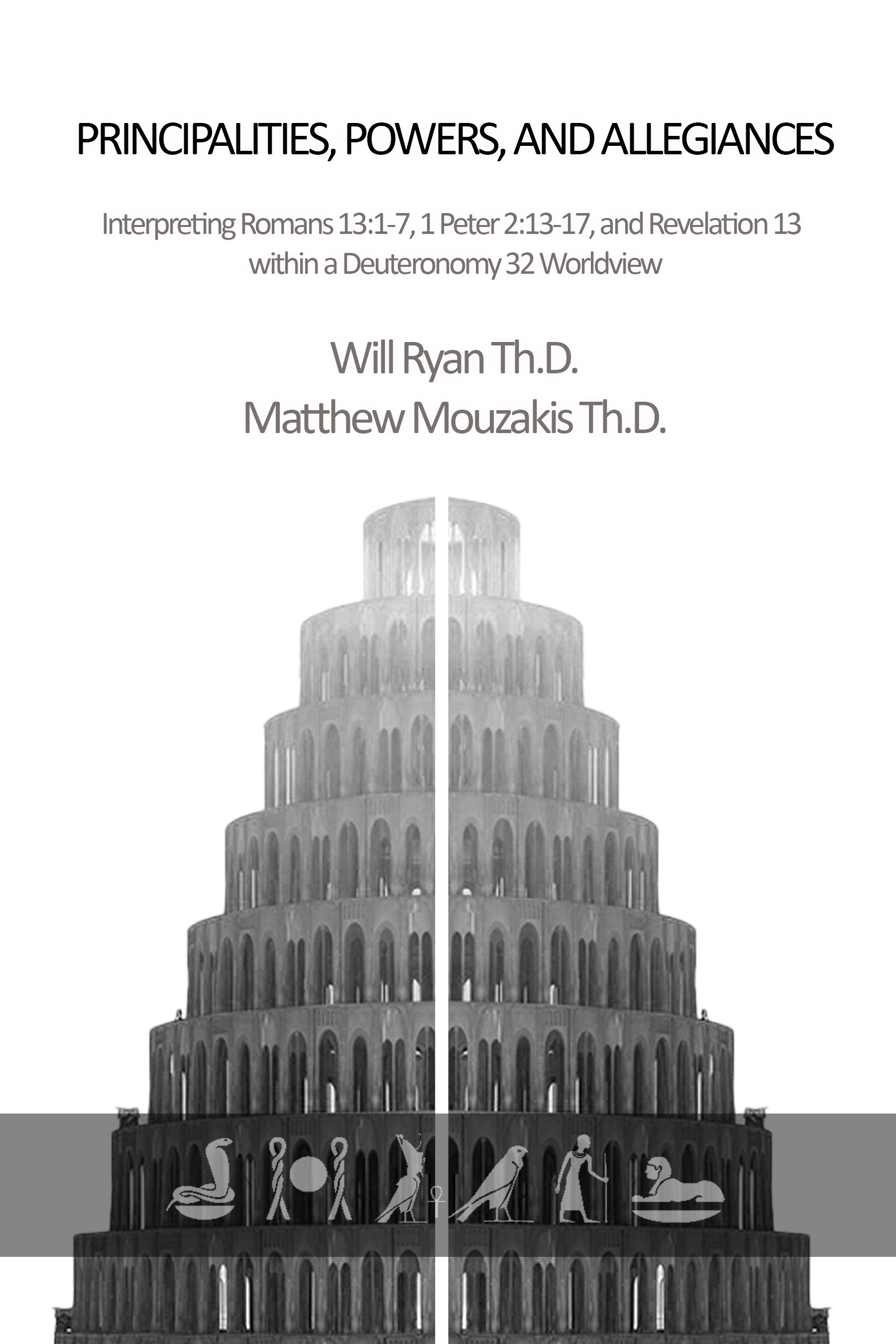

 EXPEDITION 44