Rethinking Christian Eschatology: Reading the NT/OT Witness in Context

Few areas of Christian theology generate as much fascination, disagreement, and interpretive diversity as eschatology. Within modern evangelicalism, interpretations of the “end times” have often been shaped not only by biblical exegesis but also by theological systems, popular literature, and attempts to correlate prophetic texts with contemporary geopolitical events.1 While such efforts have captured the imagination of many believers, they have also contributed to a landscape in which competing frameworks—often built upon different assumptions about Israel, the church, the kingdom of God, and the book of Revelation—stand in tension with one another.

This study seeks to approach the subject from a historically and textually grounded perspective. Rather than attempting to predict specific future events or construct a speculative prophetic timetable, the goal is to examine the biblical texts within their literary, historical, and theological contexts. Such an approach reflects a growing emphasis among contemporary New Testament scholars who argue that apocalyptic literature, particularly the book of Revelation, must first be understood within the symbolic world and historical circumstances of the early Christian communities to which it was addressed.2

In doing so, it becomes necessary to acknowledge the major interpretive frameworks that have shaped modern discussions of eschatology. Dispensational premillennialism—particularly in its twentieth-century popular forms—has strongly influenced evangelical expectations regarding a future rapture, tribulation, and restoration of national Israel.3 Yet other traditions within Christian theology, including historic premillennialism, amillennialism, and postmillennialism, offer different readings of the kingdom of God, the millennium, and the relationship between Israel and the church.4 Comparative analyses of these frameworks often begin with questions regarding the timing of tribulation and the millennium, though these categories alone do not resolve the deeper theological issues involved.5

The perspective explored in this article is broadly non-dispensational. While dispensational interpretations have played a significant role in shaping contemporary evangelical eschatology, many scholars question the sharp theological distinction often drawn between Israel and the church within that framework.6 Instead, increasing attention has been given to readings that emphasize the continuity of God’s covenantal purposes across both Testaments and that interpret Revelation primarily as a theological and pastoral document written to encourage faithfulness amid persecution rather than as a detailed chronological map of future world events.7

The purpose of this study, therefore, is not to dismiss alternative perspectives but to examine them carefully while proposing a reading of biblical eschatology that takes seriously the historical setting of the New Testament, the literary character of apocalyptic literature, and the broader narrative of Scripture. By exploring themes such as the present reign of Christ, the role of Israel in redemptive history, and the theological message of Revelation, this article aims to contribute to a more historically informed and theologically coherent understanding of Christian hope.

Any serious discussion of Christian eschatology must begin with the question of Israel. The various modern debates regarding tribulation, the millennium, and the future of the world are ultimately rooted in deeper theological questions concerning the role of Israel within the unfolding narrative of Scripture. How one understands Israel’s covenant identity, the nature of God’s promises to that covenant people, and the relationship between Israel and the messianic community established through Jesus significantly shapes one’s interpretation of prophetic literature and the book of Revelation.8

The biblical narrative opens with a theological vision in which humanity is created in the image of God and commissioned to represent divine rule within creation (Gen. 1:26–28).9 In this sense, humanity functions as a royal-priestly community tasked with mediating God’s presence and governance within the created order. The disruption of this vocation through human rebellion in Genesis 3 introduces alienation from God and disorder within creation, setting in motion the redemptive trajectory that unfolds throughout the remainder of Scripture.10

Within this unfolding narrative, God elects Israel as a covenant people through whom his redemptive purposes for the world will be advanced (Gen. 12:1–3). Israel’s election is therefore missional rather than merely ethnic; it serves as the means through which God intends to restore blessing to the nations.11 The Abrahamic and Mosaic covenants frame Israel’s identity as a people called to covenant fidelity, living in devotion to Yahweh and embodying his character among the nations with the hope of regathering the nations.

This dynamic may also be illuminated through what some scholars have described as a Deuteronomy 32 worldview. In Deuteronomy 32:8–9, the Song of Moses describes a moment in which the Most High “divided the nations” and fixed their boundaries according to the number of the sons of God, while Israel remained Yahweh’s own allotted portion. Many interpreters understand this text—particularly in light of the textual tradition preserved in the Dead Sea Scrolls and the Septuagint—to reflect the biblical memory of the dispersion of the nations in Genesis 10–11 and the subsequent ordering of the nations under divine authority.12 Within this framework, the table of seventy nations in Genesis 10 functions not merely as a genealogical record but as a theological map of the world that has fallen under fragmented rule following the rebellion at Babel.13 The call of Abraham in Genesis 12, and the formation of Israel as a covenant people, therefore mark the beginning of God’s redemptive strategy to reclaim the nations that had been scattered. This trajectory reaches a significant moment in Acts 2, where the outpouring of the Spirit at Pentecost gathers representatives of many nations and languages, symbolically reversing the fragmentation of Babel and signaling the beginning of the restoration of the nations through the reign of the Messiah.14

Yet the Old Testament repeatedly portrays Israel’s struggle to maintain this covenantal faithfulness. One of the most significant moments in this trajectory occurs in 1 Samuel 8, when Israel demands a human king “like the nations,” thereby signaling a tension between divine kingship and human political authority.15 Although the monarchy becomes integrated into Israel’s story—particularly through the Davidic covenant—the historical and prophetic books portray a gradual decline in covenant fidelity among both rulers and people.

It is within this context that the prophetic literature frequently employs conditional language regarding Israel’s future. Passages such as Jeremiah 17:27 and Jeremiah 22:3–9 illustrate a recurring covenant pattern in which divine promises are intertwined with calls for covenant loyalty. Blessing and stability are promised if Israel practices justice and remains faithful to Yahweh, while judgment and exile follow persistent covenant violation.16 These texts complicate modern theological attempts to rigidly divide biblical covenants into “conditional” and “unconditional” categories. While God’s covenant purposes remain grounded in divine faithfulness, the lived participation of Israel within those promises is consistently framed in relational and covenantal terms.

The Torah itself reflects this relational structure. Covenant identity is not presented merely as an ethnic designation but as a commitment to covenant loyalty expressed through obedience and devotion to Yahweh. This dynamic explains why the Old Testament occasionally depicts non-Israelites being incorporated into Israel’s covenant community when they align themselves with Israel’s God, as seen in figures such as Rahab and Ruth.17 Membership in the covenant people therefore includes both genealogical and theological dimensions.

By the time the narrative reaches the New Testament, the language of Israel is not abandoned but reframed around the person and mission of Jesus the Messiah. Early Christian writers present Jesus as the one in whom the story of Israel reaches its intended fulfillment—the faithful representative who embodies Israel’s vocation and brings the covenant promises to completion.18 Within this framework, the expansion of the covenant community to include Gentiles does not represent a replacement of Israel but the gathering of a renewed covenant people united by allegiance to Israel’s Messiah. Paul’s metaphor of grafting in Romans 11 reflects this understanding, portraying Gentile believers as incorporated into the existing covenant people rather than forming an entirely separate entity.19

Central to this theological development is the conviction that Jesus’ death, resurrection, and ascension inaugurate the long-awaited reign of the Messiah. The New Testament repeatedly depicts the exaltation of Christ as his enthronement at the right hand of God, drawing upon royal imagery rooted in the Davidic promises and in texts such as Psalm 110.20 In apostolic proclamation, particularly in Acts 2, Jesus’ ascension is interpreted as the moment in which he assumes the messianic throne promised to David.21 From this perspective, the reign of the Messiah is not postponed to a distant future but begins with the exaltation of the risen Christ.

Consequently, the question of Israel within eschatology becomes inseparable from the question of how the messianic kingdom inaugurated through Jesus relates to the covenant promises given throughout the Hebrew Scriptures. Interpretations diverge significantly at this point. Some theological systems anticipate a future geopolitical restoration of national Israel as a central feature of the end times, while others understand the promises to Israel as finding their fulfillment within the messianic community gathered around the reign of Christ.22 The way one resolves this question inevitably shapes one’s reading of prophetic texts, the structure of biblical eschatology, and the interpretation of Revelation itself.

Before evaluating dispensational interpretations of Israel and the church, it is important to briefly outline the framework itself. Dispensationalism emerged in the nineteenth century through the work of John Nelson Darby and was later popularized in North America through the Scofield Reference Bible and subsequent evangelical teaching traditions.23 At its core, dispensational theology divides redemptive history into a series of administrative eras, or “dispensations,” in which God relates to humanity through different covenantal arrangements. Within this system, a central theological distinction is maintained between ethnic Israel and the church. Israel is understood as the recipient of specific national and territorial promises that remain to be fulfilled in a future earthly kingdom, while the church is viewed as a distinct spiritual community temporarily occupying the present age.24

Within dispensational eschatology, much of the discussion revolves around the interpretation of the millennium described in Revelation 20 and the timing of key events associated with Christ’s return. Several major millennial frameworks have emerged in Christian theology. Premillennialism holds that Christ will return prior to the thousand-year reign described in Revelation 20, establishing a literal earthly kingdom. Postmillennialism interprets the millennium as a period of gospel expansion and cultural transformation that precedes Christ’s return. Amillennialism, by contrast, interprets the millennium symbolically, understanding the reign of Christ as presently realized through his exaltation and the life of the church rather than as a future political kingdom.25

Dispensational theology generally adopts a particular form of premillennialism that includes additional features such as a future tribulation period, the restoration of national Israel, and often a distinction between the rapture of the church and the visible return of Christ. Yet each of these interpretive models faces certain challenges when attempting to synthesize the diverse prophetic imagery found throughout Scripture. Premillennial approaches must wrestle with the highly symbolic nature of apocalyptic literature and the question of how literally such imagery should be interpreted. Postmillennialism faces historical questions regarding the trajectory of human history and the persistence of evil prior to the consummation of the kingdom. Amillennial interpretations must carefully articulate how symbolic readings of Revelation correspond with the broader biblical narrative concerning the future renewal of creation.26

While these frameworks provide helpful categories for organizing discussion, many scholars argue that the deeper theological questions cannot be resolved simply by arranging events along a chronological timeline. The interpretive difficulty often arises because apocalyptic literature—particularly the book of Revelation—communicates through symbolism, imagery, and theological vision rather than through straightforward predictive chronology.27 When Revelation is approached primarily as a coded sequence of future geopolitical events, interpreters frequently find themselves attempting to force symbolic imagery into rigid historical scenarios. This tendency has contributed to the proliferation of complex prophetic charts, speculative interpretations, and competing theories that often generate confusion rather than clarity.

For this reason, many contemporary scholars suggest that the primary weakness of dispensational frameworks lies not merely in their millennial timelines but in the interpretive assumptions that guide them. By insisting on a strict separation between Israel and the church and by reading apocalyptic imagery in an overly literalized manner, dispensational interpretations can sometimes obscure the broader theological message of Revelation. Instead of functioning as a pastoral and prophetic vision intended to encourage faithful witness under the reign of the risen Christ, the book is frequently transformed into a detailed forecast of future world events.28

Consequently, the question facing interpreters is not simply which millennial model best fits a prophetic timetable, but whether the underlying framework adequately accounts for the narrative unity of Scripture, the fulfillment of Israel’s story in the Messiah, and the symbolic nature of apocalyptic literature. It is precisely at this point that many scholars begin to question whether dispensational categories provide the most coherent lens through which to read the relationship between Israel, the church, and the book of Revelation.

A helpful way to visualize the interpretive issue surrounding biblical timelines can be seen in the prophetic structure of the book of Daniel. Daniel’s visions—particularly the seventy weeks prophecy in Daniel 9:24–27—present a remarkably structured chronological framework that many scholars understand as culminating in the events surrounding the destruction of Jerusalem and the temple in A.D. 70.29 Within this framework, Daniel’s symbolic chronology functions as a theological map of Israel’s history moving toward the climactic arrival of the Messiah and the judgment associated with the end of the temple-centered order.30 The prophetic timeline in Daniel is therefore closely tied to the historical trajectory of Israel leading into the first century.

Dispensational systems, however, frequently attempt to extend this same chronological structure into the distant future by introducing a prolonged “gap” between the sixty-ninth and seventieth weeks of Daniel’s prophecy. In this reading, the final week is relocated to a future tribulation period that remains disconnected from the historical context in which Daniel’s prophecy originally functioned. Yet many scholars argue that the biblical text itself provides no explicit indication of such an extended chronological interruption.31 Rather, the prophetic structure appears to move toward the climactic events surrounding the first-century culmination of Israel’s covenantal history.

The result is that while the biblical narrative provides remarkably detailed chronological symbolism leading up to the destruction of Jerusalem in A.D. 70, the New Testament does not offer a comparable prophetic timeline extending beyond that event. Attempts to construct such frameworks often rely on speculative reconstructions that go beyond the explicit structure provided by the biblical text itself. For this reason, many interpreters suggest that the prophetic precision found in Daniel should be understood as historically anchored in the culmination of Israel’s temple era rather than as a template for mapping distant future events.

For readers who would like to see a visual explanation of this interpretive issue, the following lecture provides a concise overview of how Daniel’s prophetic timeline functions within the biblical narrative:

Video Overview:
https://www.youtube.com/watch?v=Slrdreu2bdM

A central challenge in discussions of eschatology lies not simply in the interpretation of specific passages but in recognizing the literary genres through which those passages communicate their message. Much of the biblical material associated with the “end times” emerges from the tradition of apocalyptic literature, a genre that developed prominently within Second Temple Judaism and is characterized by symbolic imagery, visionary narratives, and theological depictions of cosmic conflict.32 Books such as Daniel and Revelation employ vivid metaphors, numerical symbolism, and highly stylized visions not primarily to construct chronological timetables but to reveal theological truths about God’s sovereignty, judgment, and the ultimate vindication of his people.

Because apocalyptic literature communicates through symbolic imagery rather than straightforward narrative description, careful attention must be given to its literary conventions. Interpreters who approach these texts as if they function like historical prose or predictive journalism often risk imposing a level of literal precision that the genre itself does not intend to convey.33 The beasts of Daniel and Revelation, the cosmic disturbances described in prophetic discourse, and the numerological patterns present throughout these texts frequently draw upon symbolic traditions rooted in the Hebrew Scriptures. Rather than referring directly to modern geopolitical events, these images function as theological symbols that depict the conflict between the kingdom of God and the forces of human empire.34

This principle becomes particularly important when examining passages that are often cited in discussions of the so-called “rapture.” One of the most frequently referenced texts is 1 Thessalonians 4:16–17, where Paul describes believers being “caught up” (ἁρπάζω, harpazō) to meet the Lord in the air. While this passage is sometimes interpreted as describing a secret removal of the church from the earth prior to a tribulation period, many scholars note that the imagery closely resembles the ancient practice of citizens going out to greet a visiting king or dignitary and escorting him back into the city.35 In this sense, the language may be better understood as depicting the public arrival of Christ and the participation of believers in his royal procession rather than a departure from the world altogether.

When apocalyptic imagery and pastoral exhortation are instead treated as components of a detailed prophetic timeline, interpretive difficulties quickly arise. Attempts to harmonize symbolic visions across multiple biblical books can lead to increasingly complex systems that rely on speculative connections between texts separated by centuries and written for very different historical audiences.36 This dynamic has often contributed to theological frameworks in which the imagery of Revelation becomes detached from its first-century context and transformed into a predictive chart of future geopolitical events.

For this reason, many contemporary interpreters argue that the most responsible approach to eschatological texts begins with genre sensitivity and historical context. Recognizing the symbolic nature of apocalyptic literature does not diminish its authority; rather, it allows the text to communicate its theological message as it was intended. The visions of Revelation are therefore best understood as prophetic and pastoral revelations designed to encourage faithfulness among believers living within the pressures of imperial power, reminding them that the risen Christ already reigns and that the ultimate victory of God’s kingdom is assured.37

When this genre-sensitive approach is maintained, many of the speculative debates surrounding prophetic timelines lose their central importance. The focus of biblical eschatology shifts away from deciphering hidden codes about the future and toward the theological hope that stands at the heart of the New Testament: the reign of the risen Messiah and the eventual renewal of creation under his lordship.

A further interpretive challenge in reading the book of Revelation concerns how the visions within the text are structured. Many modern interpretations—particularly those influenced by dispensational frameworks—tend to read Revelation as a strict chronological timeline, assuming that the seals, trumpets, and bowls represent a sequential series of future events unfolding one after another. Yet a growing number of scholars argue that the literary structure of Revelation is better understood through the principle of recapitulation, in which the same period of history is described multiple times through different symbolic visions.38 In this view, the cycles of seals (Rev. 6–8), trumpets (Rev. 8–11), and bowls (Rev. 15–16) do not represent successive disasters but rather parallel portrayals of the ongoing conflict between the kingdom of God and the forces of evil.

This pattern is consistent with the broader conventions of apocalyptic literature, where visionary sequences often revisit the same events from different perspectives in order to emphasize theological meaning rather than chronological precision.39 Similar narrative patterns appear in the book of Daniel, where successive visions describe the rise and fall of kingdoms using different symbolic imagery while referring to the same historical realities. The book of Revelation appears to adopt this same literary strategy, presenting multiple visionary cycles that progressively intensify the depiction of divine judgment and redemption.

Understanding this recapitulating structure helps explain why several visions appear to culminate in scenes that resemble the final judgment or the end of the age, even though additional visions follow afterward. For example, both the seventh trumpet and the final bowl judgments appear to describe cosmic upheaval associated with the completion of God’s purposes (Rev. 11:15–19; 16:17–21).40 Rather than indicating multiple “ends of the world,” these repeated climactic scenes suggest that Revelation is retelling the same ultimate victory of God from different vantage points.

Recognizing this literary pattern also helps guard against the tendency to construct elaborate prophetic timelines from symbolic imagery. When the book is read as a recapitulating series of visions rather than a linear chronological sequence, the focus shifts away from predicting specific future events and toward understanding the theological message of the text: the assurance that despite the recurring conflicts of history, the Lamb who was slain ultimately reigns over the powers of the world.41 The purpose of Revelation, therefore, is not to provide a detailed prophetic calendar but to reveal the deeper spiritual reality behind the struggles faced by God’s people and to encourage faithful endurance in every generation.

Within many popular dispensational frameworks, certain figures described in apocalyptic texts—particularly the Antichrist, the Beast, and the Great Tribulation—are often interpreted as singular future events or individuals who will appear at the very end of history. While such readings have become widespread in modern evangelical culture, they are not necessarily the most consistent interpretation when the relevant passages are examined within their historical and literary contexts. A careful reading of the New Testament suggests that these concepts may function less as predictions of a single future individual and more as theological descriptions of recurring patterns of opposition to God’s reign.

The term “antichrist” itself appears only in the Johannine epistles and not in the book of Revelation. Significantly, the language used in these passages already suggests a broader category rather than a single end-time figure. First John states plainly: “you have heard that antichrist is coming, so now many antichrists have come” (1 John 2:18).42 In this context, the term refers to individuals or movements that deny the identity and mission of Jesus as the Messiah. The emphasis, therefore, is not on identifying a single future ruler but on recognizing a recurring pattern of ideological and spiritual opposition to Christ throughout history.

Similarly, the figure of the Beast in Revelation is best interpreted within the symbolic framework of apocalyptic literature. The imagery of monstrous beasts already appears in Daniel 7, where the beasts represent successive empires that oppose the purposes of God.43 Revelation appears to draw heavily upon this earlier imagery, suggesting that the Beast functions as a symbolic representation of imperial power that demands allegiance in opposition to God’s kingdom. Many scholars therefore see a clear historical reference to the Roman imperial system, particularly during the period of persecution faced by early Christians.44 Within this context, the notorious number 666 may function as a cryptic reference to the Roman emperor Nero through a practice known as gematria, in which letters correspond to numerical values.45 While Nero may represent the most immediate historical embodiment of this imagery, the symbolism of the Beast also transcends any single ruler, representing political systems and powers that continually seek to rival divine authority.

A similar interpretive principle applies to the concept of tribulation. Within some modern frameworks, the “Great Tribulation” is treated as a distinct future seven-year period preceding the return of Christ. Yet the New Testament frequently portrays tribulation as a recurring feature of the Christian experience rather than as a single isolated event. Jesus himself tells his followers, “In the world you will have tribulation” (John 16:33), and the early church repeatedly experiences suffering, persecution, and hardship throughout the book of Acts and the epistles.46 In this sense, tribulation is not confined to a single moment in the distant future but characterizes the ongoing tension between the kingdom of God and the powers of the world across history.

These observations point toward a broader issue in the interpretation of biblical prophecy. In the modern imagination, prophecy is often treated as though it functions like a predictive map of distant future events. Yet within the biblical tradition, prophets were not primarily fortune-tellers attempting to decode future timelines. Rather, they were individuals who understood the character and purposes of God and who spoke into their present historical circumstances with theological clarity.47 Their role was not to provide a kind of divine “crystal ball” but to interpret history through the lens of God’s covenant faithfulness and to call God’s people back to faithful obedience.

Indeed, the attempt to access hidden knowledge about the future through mystical or predictive techniques is explicitly condemned within the biblical tradition as divination (Deut. 18:10–12). Biblical prophecy therefore operates in a fundamentally different mode. Instead of offering secret knowledge about distant events, it reveals how God’s character and covenant purposes are unfolding within history. When apocalyptic imagery is forced into rigid predictive frameworks, interpreters may unintentionally shift toward the very type of speculative future-seeking that the biblical tradition itself warns against.

For this reason, many contemporary scholars emphasize that the symbolic figures of Revelation—the Antichrist, the Beast, and the experience of tribulation—should be understood as theological patterns that recur wherever human power seeks to rival the authority of God. Rather than encouraging believers to scan the horizon for a single future villain or catastrophic moment, the book of Revelation calls its readers to faithful endurance in every age, reminding them that the risen Christ ultimately reigns over the forces of history.48

As interpreters wrestle with the difficulties of dispensational timelines and overly literalized readings of apocalyptic imagery, many have turned toward preterist interpretations of biblical prophecy. The term preterist comes from the Latin praeter, meaning “past,” and refers broadly to approaches that understand many prophetic passages—particularly those in the Gospels, Daniel, and Revelation—as referring primarily to events that occurred in the first century, especially the destruction of Jerusalem and the temple in A.D. 70.49 Within this general category, however, there are important distinctions that must be carefully considered.

Full preterism argues that nearly all eschatological prophecies—including the return of Christ, the resurrection of the dead, and the final judgment—were fulfilled in a spiritual or symbolic sense in the first century. In this reading, events surrounding the Jewish–Roman War and the destruction of Jerusalem represent the climactic fulfillment of New Testament eschatology. While this view attempts to take seriously the numerous time-indicators in the New Testament that speak of events occurring “soon” or within the lifetime of the original audience (e.g., Matt. 24:34; Rev. 1:1), many theologians have raised concerns that full preterism risks collapsing central elements of Christian hope—particularly the bodily resurrection and the final renewal of creation—into purely symbolic realities.50 For this reason, full preterism remains a minority position and is often regarded by many scholars as extending its conclusions beyond what the biblical text can sustain.

At the same time, the historical events of the first century raise questions that make it difficult to ignore the relevance of that period for understanding New Testament prophecy. The catastrophic destruction of Jerusalem in A.D. 70 marked the end of the temple-centered system that had defined Israel’s religious life for centuries. Contemporary historical accounts, particularly those recorded by the Jewish historian Josephus, describe the immense suffering and upheaval that accompanied the Roman siege.51 Stories from the same historical period—including the dramatic events surrounding the fall of Masada, where nearly nine hundred Jewish rebels are said to have died before Roman forces captured the fortress—have occasionally prompted theological reflection about how God’s people experienced those moments of crisis.52 While such historical episodes cannot be used as definitive proof of particular prophetic fulfillments, they do highlight the extraordinary historical context in which the early Christian movement understood the words of Jesus concerning Jerusalem’s impending judgment.

For many interpreters, these observations make partial preterism an attractive middle position. Partial preterism maintains that many prophetic passages—especially those relating to the destruction of Jerusalem and the collapse of the temple system—were indeed fulfilled in the first century. However, it also affirms that the ultimate return of Christ, the resurrection of the dead, and the final renewal of creation remain future realities.53 In this framework, the events surrounding A.D. 70 represent a decisive turning point in redemptive history and a powerful validation of Jesus’ prophetic warnings, while still preserving the forward-looking hope that lies at the heart of Christian eschatology.

Such an approach aligns with a growing number of scholars who argue that the New Testament frequently speaks into the immediate historical circumstances of the early church while simultaneously pointing toward the ultimate consummation of God’s kingdom. The prophetic language of the New Testament therefore often contains both historical immediacy and eschatological horizon, addressing events relevant to the first-century audience while also sustaining the church’s ongoing expectation of Christ’s return.54

For these reasons, it may be unhelpful to rigidly align with any single eschatological label. Terms such as dispensationalism, preterism, amillennialism, or postmillennialism often function as interpretive shorthand rather than comprehensive explanations of the biblical narrative. While each framework contributes important insights, none entirely captures the full complexity of the scriptural witness. What matters most is allowing the biblical texts to speak within their historical, literary, and theological contexts, recognizing both the profound significance of the first-century events surrounding Jerusalem and the continuing hope that Christians place in the final return of Christ and the renewal of all things.

Another important dimension of Revelation that has gained significant attention in modern scholarship is its function as prophetic resistance literature directed against imperial power, particularly the Roman Empire of the first century. Rather than presenting a coded prediction of distant geopolitical events, many scholars argue that Revelation addresses the immediate pressures faced by early Christians living within a world shaped by Roman imperial ideology. In the Roman world, the emperor was often portrayed as a divine ruler who brought peace and salvation to the empire, and public loyalty to the emperor was expressed through civic rituals, economic participation, and occasional acts of emperor worship.55 Against this backdrop, the imagery of Revelation—particularly its portrayal of the Beast and Babylon—functions as a theological critique of empire. Babylon, described as a seductive yet oppressive power dominating the nations, is widely understood to symbolize Rome and the economic and political systems that sustained its authority.56 The book’s vivid symbolism therefore exposes the moral and spiritual dangers of imperial power that demands ultimate allegiance from humanity. By portraying Rome as a beastly empire in contrast to the true kingship of Christ, Revelation calls believers to resist assimilation into imperial ideology and instead remain faithful to the Lamb, even in the face of persecution or social marginalization.57 In this sense, Revelation is less a speculative map of future world events and more a prophetic unveiling of how political and economic powers can become idolatrous when they claim authority that belongs only to God. The message of the book, therefore, is not fear of the future but faithful resistance in the present, reminding the church that the risen Christ—not any earthly empire—is the true ruler of the world.

This imperial critique also highlights a deeper theological tension that runs throughout Scripture: the question of ultimate allegiance. The kingdoms of the world regularly present themselves as rival claimants to authority, offering security, identity, and prosperity in exchange for loyalty. Revelation exposes this dynamic by portraying empire as a competing kingdom demanding devotion that properly belongs to God alone. In this sense, the challenge facing the early church was not merely political oppression but a spiritual conflict over loyalty—whether believers would give their allegiance to Caesar or remain faithful to the Lamb. The teaching of Jesus himself echoes this tension, warning that “no one can serve two masters” (Matt. 6:24). The vision of Revelation therefore calls the church to recognize that every empire ultimately functions as a rival nation competing for the loyalty of humanity. Christians are summoned to a different kind of citizenship—one grounded not in the power structures of earthly kingdoms but in the reign of King Jesus, whose authority transcends all national, political, and economic systems.

A significant feature of many dispensational frameworks is the expectation that the end times will involve the rebuilding of a third temple in Jerusalem, the restoration of national Israel as the central locus of God’s activity, and the reestablishment of sacrificial worship within that temple. These expectations are often tied to interpretations of prophetic passages in Daniel, Ezekiel, and Revelation. Yet when these texts are read in light of the New Testament’s theological development, serious questions arise regarding whether such expectations align with the trajectory of the biblical narrative.

One of the most striking shifts in the New Testament concerns the theological redefinition of the temple. In the Gospels, Jesus himself reorients the meaning of the temple by identifying his own body as the true dwelling place of God (John 2:19–21).58 The temple in Jerusalem, once understood as the central location of God’s presence among his people, becomes a sign pointing forward to the incarnate presence of God in Christ. Following the resurrection and ascension of Jesus, this theological movement continues as the New Testament describes the community of believers as the new temple in which God’s Spirit dwells. Paul writes that the church collectively constitutes “God’s temple” and that the Holy Spirit now resides within that community (1 Cor. 3:16–17; Eph. 2:19–22).59

Within this framework, the expectation of a restored temple-centered sacrificial system becomes theologically difficult to reconcile with the New Testament’s presentation of Christ’s completed atoning work. The epistle to the Hebrews repeatedly emphasizes that Jesus’ sacrificial offering is both final and sufficient, rendering the earlier sacrificial system obsolete (Heb. 9:11–14; 10:11–18).60 For this reason, many interpreters argue that anticipating a renewed temple with sacrificial practices would represent not a fulfillment of the New Testament vision but a regression to a form of worship that the New Testament itself declares fulfilled in Christ.

Closely related to this issue is the question of Israel’s role within the messianic community. Dispensational interpretations frequently maintain a sharp distinction between Israel and the church, suggesting that God’s promises to Israel remain to be fulfilled through a future national restoration centered in the land of Israel. Yet the New Testament often presents a more integrated picture of God’s covenant people. In passages such as Romans 11, Paul describes Gentile believers as being grafted into the existing covenant tree of Israel, indicating continuity rather than separation between Israel and the multinational community formed through faith in Christ.61 The language of covenant identity is therefore expanded rather than replaced, encompassing all who participate in the messianic faithfulness revealed in Jesus.

This perspective reflects the broader New Testament conviction that the promises given to Israel ultimately find their fulfillment in the Messiah himself. The apostolic writings consistently portray Jesus as the culmination of Israel’s story and the one through whom God’s covenant purposes are extended to the nations (Gal. 3:26–29).62 In this sense, the people of God are defined not primarily by ethnic or territorial boundaries but by allegiance to the risen Messiah. The community gathered around Christ therefore represents the continuation and expansion of Israel’s covenant identity rather than its replacement.

These theological developments also call into question the assumption that the final consummation of God’s kingdom must necessarily involve a geopolitical restoration centered in the modern nation-state of Israel. While the New Testament may affirm the ongoing significance of Israel within the story of redemption, it simultaneously emphasizes that the reign of the Messiah transcends geographic boundaries. The kingdom inaugurated through Jesus is presented as a universal reality extending to all nations rather than as a localized political kingdom limited to a specific territory.63

Consequently, the central focus of Christian eschatological hope is not the reconstruction of a temple or the reestablishment of a national kingdom but the return of the risen Christ himself. Jesus repeatedly teaches that the timing of this event remains unknown to humanity, emphasizing that “about that day and hour no one knows” (Matt. 24:36).64 The posture encouraged by the New Testament is therefore one of faithful readiness rather than speculative prediction.

In this light, the expectation of Christ’s return should not be tied to the necessity of specific geopolitical developments or architectural projects in Jerusalem. While it remains possible that future events involving Israel may play a role within God’s unfolding purposes, the New Testament does not present such developments as prerequisites for the return of Christ. Instead, the emphasis remains firmly fixed on the person of Jesus himself—the enthroned Messiah whose kingdom already extends across the nations and whose ultimate return will bring the renewal of all things.

If the preceding discussion cautions against speculative timelines and rigid eschatological systems, the New Testament ultimately directs the church toward a different posture—one of faithful expectation. The central image used to describe this posture is the relationship between Christ and his bride, the church. Throughout the New Testament, the people of God are portrayed as those who await the return of the Messiah not through anxious calculation of prophetic events but through lives marked by devotion, perseverance, and faithful witness.65 The imagery culminates in Revelation, where the final vision of Scripture depicts the union of Christ and his people within the renewed creation: “Blessed are those who are invited to the marriage supper of the Lamb” (Rev. 19:9).

This posture reflects what many theologians describe as the “already and not yet” character of the kingdom of God. Through the death, resurrection, and ascension of Jesus, the reign of the Messiah has already been inaugurated. Christ is presently enthroned at the right hand of the Father, exercising authority over heaven and earth.66 Yet the full manifestation of that reign—the complete restoration of creation and the final defeat of evil—remains a future reality. The New Testament therefore portrays the present age as a period in which the kingdom has begun but has not yet reached its ultimate consummation.

Within this framework, the mission of the church takes on profound significance. The people of God are not passive observers waiting for the end of history; they are participants in God’s ongoing work of renewal within the world. The biblical story that began in Genesis with humanity’s vocation to cultivate and steward creation continues through the church’s participation in the kingdom inaugurated by Christ.67 Believers become, in a very real sense, the embodied presence of Christ within the world—living signs of the coming renewal of creation.

This vision is captured powerfully in the language of partnership that runs throughout Scripture. Humanity was originally created to reflect God’s image and to steward the earth in communion with him (Gen. 1:26–28). The redemptive work of Christ does not abolish this vocation but restores and deepens it. Through the Spirit, the church becomes a community that participates in God’s ongoing work of reclaiming the world—anticipating the future renewal of creation by embodying the life of the kingdom in the present.68

Some theologians have described this calling in terms of the beauty of the believing community. The church is meant to function as a visible sign of the kingdom—a community whose life together reflects the character of Christ and draws others into the transforming reality of God’s grace.69 In this sense, Christian mission is not merely the transmission of doctrinal propositions but the cultivation of a community whose shared life reveals the beauty of God’s kingdom.

The culmination of this story, however, extends beyond a simple return to Eden. The biblical vision of the future is not merely a restoration of the original garden but the emergence of a renewed heaven and earth in which God’s presence fills the entirety of creation (Rev. 21–22). The imagery of the New Jerusalem suggests that the story moves not backward toward a primitive beginning but forward toward a transformed creation where the purposes of God for humanity are fully realized.70 What began as a garden becomes a renewed cosmos in which heaven and earth are finally united.

In this light, the church’s task in the present age becomes clearer. Rather than anxiously attempting to decode prophetic timelines, the people of God are called to live faithfully within the story that has already begun through the resurrection of Jesus. The church waits not with fear but with hope, not with speculation but with devotion. As the bride awaiting the return of her king, the community of believers lives in faithful anticipation—participating even now in the work of renewal that will one day be completed when Christ returns and all things are made new.

The aim of this exploration has not been to construct a rigid eschatological system or to settle every interpretive debate surrounding the end times. Scripture itself resists such reduction. Rather, the biblical witness consistently directs the church away from speculative timelines and toward a posture of faithful anticipation grounded in the reign of the risen Christ. The New Testament proclaims that Jesus has already been enthroned as king through his death, resurrection, and ascension, inaugurating the kingdom of God within history.71 Yet it also affirms that the full restoration of creation—the ultimate reconciliation of heaven and earth—remains a future reality toward which the entire biblical narrative moves.

This tension between fulfillment and anticipation is often described as the “already and not yet” of the kingdom. Christ reigns now, and his kingdom is already present wherever his authority is acknowledged and embodied. At the same time, the world still groans for the day when that reign will be fully revealed and all creation will be renewed.72 Within this unfolding story, the church occupies a profoundly meaningful role. The people of God are not passive observers waiting for history to conclude; they are participants in the ongoing work of God’s kingdom, serving as visible witnesses to the reign of Christ within the present world.

In this sense, the church becomes the place where heaven begins to touch earth. Through the presence of the Holy Spirit, believers embody the character of the kingdom in tangible ways—through justice, mercy, reconciliation, and sacrificial love. The prayer Jesus taught his disciples captures this vision clearly: “Your kingdom come, your will be done, on earth as it is in heaven” (Matt. 6:10). The mission of the church is therefore not merely to wait for heaven but to participate in the movement of heaven coming to earth through lives that reflect the authority and beauty of King Jesus.73

The final chapters of Revelation reveal that the culmination of God’s story is not an escape from creation but its transformation. John’s vision depicts the New Jerusalem descending from heaven, symbolizing the union of the divine and human realms under the reign of God (Rev. 21:1–3). The biblical story thus moves forward toward a renewed heaven and earth where the presence of God fills all things. What began in the garden of Eden culminates not simply in a return to that garden but in the emergence of a restored creation where the purposes of God for humanity are fully realized.74

This vision reshapes how Christians live in the present. The church exists as the foretaste of the coming kingdom, a community whose life together reveals the beauty of God’s reign and invites the world to participate in it. Through acts of faithfulness, compassion, and creative stewardship, believers participate in the restoration of the world that God has begun through Christ. The vocation first given to humanity—to cultivate and steward creation as God’s image-bearers—is restored and deepened through the work of the Spirit within the church.

The end of the biblical story, therefore, is not one of fear or catastrophe but of joyful anticipation. The people of God await the return of their king as a bride awaiting her bridegroom. History moves steadily toward the great wedding feast of the Lamb, where heaven and earth will be fully united and the reign of Christ will be revealed in its fullness.75 Until that day, the church lives faithfully within the story—participating even now in the movement of the kingdom as the life of heaven continues to break into the world through the people of God.

Christian hope, then, is not centered on escaping the world but on witnessing its renewal. The church lives between resurrection and restoration, between the enthronement of Christ and the day when every corner of creation will reflect his glory. And in that space, the people of God continue their calling—bringing the life of the kingdom from heaven to earth as living reflections of the reign of Jesus.

NEXT STEPS: https://youtube.com/playlist?list=PLqaMIwzEBwbMYak8X3da28QtOwC5j3wkF&si=sQsKEgEuCx-CgQP8

  1. N. T. Wright — Wright critiques popular evangelical end-times speculation and reframes Christian hope in resurrection and new creation. ↩︎
  2. Craig R. Koester — a respected scholarly treatment of Revelation’s historical and literary context. ↩︎
  3. John F. Walvoord — classic dispensational argument for premillennialism. ↩︎
  4. George Eldon Ladd — historic premillennial perspective emphasizing inaugurated eschatology. ↩︎
  5. Scot McKnight — accessible but academically informed interpretation of Revelation’s theology. ↩︎
  6. G. K. Beale — major scholarly commentary emphasizing symbolic and Old Testament background. ↩︎
  7. Anthony A. Hoekema — influential amillennial treatment of eschatology. ↩︎
  8. Richard Bauckham, The Theology of the Book of Revelation (Cambridge: Cambridge University Press, 1993), 7–12. ↩︎
  9. G. K. Beale, A New Testament Biblical Theology: The Unfolding of the Old Testament in the New (Grand Rapids: Baker Academic, 2011), 81–96. ↩︎
  10. N. T. Wright, Paul and the Faithfulness of God (Minneapolis: Fortress Press, 2013), 789–798. ↩︎
  11. Christopher J. H. Wright, The Mission of God: Unlocking the Bible’s Grand Narrative (Downers Grove, IL: IVP Academic, 2006), 193–205. ↩︎
  12. Michael S. Heiser, The Unseen Realm: Recovering the Supernatural Worldview of the Bible (Bellingham, WA: Lexham Press, 2015), 113–123; Patrick D. Miller, Deuteronomy (Louisville: Westminster John Knox, 1990), 267–270. ↩︎
  13. G. K. Beale, A New Testament Biblical Theology: The Unfolding of the Old Testament in the New (Grand Rapids: Baker Academic, 2011), 192–199; Christopher J. H. Wright, The Mission of God (Downers Grove, IL: IVP Academic, 2006), 199–207. ↩︎
  14. Craig S. Keener, Acts: An Exegetical Commentary, vol. 1 (Grand Rapids: Baker Academic, 2012), 789–801; N. T. Wright, Acts for Everyone, Part 1 (Louisville: Westminster John Knox, 2008), 22–27. ↩︎
  15. Walter Brueggemann, First and Second Samuel (Louisville: Westminster John Knox Press, 1990), 60–65. ↩︎
  16. John Goldingay, Old Testament Theology: Israel’s Faith, vol. 2 (Downers Grove, IL: IVP Academic, 2006), 406–414. ↩︎
  17. Daniel I. Block, The Gospel according to Moses: Theological and Ethical Reflections on the Book of Deuteronomy (Eugene, OR: Cascade Books, 2012), 53–60. ↩︎
  18. Scot McKnight, Revelation for the Rest of Us (Grand Rapids: Zondervan Academic, 2023), 21–28.Scot McKnight, Revelation for the Rest of Us (Grand Rapids: Zondervan Academic, 2023), 21–28. ↩︎
  19. N. T. Wright, Paul and the Faithfulness of God, 1235–1244. ↩︎
  20. George Eldon Ladd, A Theology of the New Testament, rev. ed. (Grand Rapids: Eerdmans, 1993), 314–318. ↩︎
  21. Craig S. Keener, Acts: An Exegetical Commentary, vol. 1 (Grand Rapids: Baker Academic, 2012), 946–952 ↩︎
  22. Steve Gregg, Revelation: Four Views, 2nd ed. (Nashville: Thomas Nelson, 2013), 17–33. ↩︎
  23. Craig A. Blaising and Darrell L. Bock, Progressive Dispensationalism (Grand Rapids: Baker Academic, 1993), 9–24. ↩︎
  24. Michael J. Vlach, Dispensationalism: Essential Beliefs and Common Myths (Los Angeles: Theological Studies Press, 2008), 27–39. ↩︎
  25. George Eldon Ladd, The Presence of the Future (Grand Rapids: Eerdmans, 1974), 17–40; Anthony A. Hoekema, The Bible and the Future (Grand Rapids: Eerdmans, 1979), 173–201. ↩︎
  26. Steve Gregg, Revelation: Four Views, 2nd ed. (Nashville: Thomas Nelson, 2013), 17–54. ↩︎
  27. Richard Bauckham, The Theology of the Book of Revelation (Cambridge: Cambridge University Press, 1993), 1–17. ↩︎
  28. Scot McKnight, Revelation for the Rest of Us (Grand Rapids: Zondervan Academic, 2023), 9–18. ↩︎
  29. John J. Collins, Daniel: A Commentary on the Book of Daniel (Minneapolis: Fortress Press, 1993), 349–361 ↩︎
  30. N. T. Wright, Jesus and the Victory of God (Minneapolis: Fortress Press, 1996), 339–368. ↩︎
  31. G. K. Beale, A New Testament Biblical Theology (Grand Rapids: Baker Academic, 2011), 131–140; Craig S. Keener, The IVP Bible Background Commentary: New Testament, 2nd ed. (Downers Grove, IL: IVP Academic, 2014), 447–449. ↩︎
  32. John J. Collins, The Apocalyptic Imagination: An Introduction to Jewish Apocalyptic Literature, 3rd ed. (Grand Rapids: Eerdmans, 2016), 5–12. ↩︎
  33. Richard Bauckham, The Theology of the Book of Revelation (Cambridge: Cambridge University Press, 1993), 6–12. ↩︎
  34. G. K. Beale, The Book of Revelation: A Commentary on the Greek Text (Grand Rapids: Eerdmans, 1999), 48–56. ↩︎
  35. N. T. Wright, Surprised by Hope (New York: HarperOne, 2008), 132–135; Gordon D. Fee, The First and Second Letters to the Thessalonians (Grand Rapids: Eerdmans, 2009), 178–181. ↩︎
  36. Craig R. Koester, Revelation and the End of All Things, 2nd ed. (Grand Rapids: Eerdmans, 2018), 25–33. ↩︎
  37. Scot McKnight, Revelation for the Rest of Us (Grand Rapids: Zondervan Academic, 2023), 14–22. ↩︎
  38. G. K. Beale, The Book of Revelation: A Commentary on the Greek Text (Grand Rapids: Eerdmans, 1999), 115–119. ↩︎
  39. John J. Collins, The Apocalyptic Imagination: An Introduction to Jewish Apocalyptic Literature, 3rd ed. (Grand Rapids: Eerdmans, 2016), 8–12. ↩︎
  40. Grant R. Osborne, Revelation (Grand Rapids: Baker Academic, 2002), 403–407. ↩︎
  41. Richard Bauckham, The Theology of the Book of Revelation (Cambridge: Cambridge University Press, 1993), 7–10. ↩︎
  42. Raymond E. Brown, The Epistles of John (New York: Doubleday, 1982), 332–336. ↩︎
  43. John J. Collins, Daniel: A Commentary on the Book of Daniel (Minneapolis: Fortress Press, 1993), 277–283 ↩︎
  44. Richard Bauckham, The Theology of the Book of Revelation (Cambridge: Cambridge University Press, 1993), 35–42. ↩︎
  45. Craig R. Koester, Revelation and the End of All Things, 2nd ed. (Grand Rapids: Eerdmans, 2018), 123–128. ↩︎
  46. George Eldon Ladd, The Presence of the Future (Grand Rapids: Eerdmans, 1974), 325–331. ↩︎
  47. Walter Brueggemann, The Prophetic Imagination, 2nd ed. (Minneapolis: Fortress Press, 2001), 3–19. ↩︎
  48. Scot McKnight, Revelation for the Rest of Us (Grand Rapids: Zondervan Academic, 2023), 87–96. ↩︎
  49. Steve Gregg, Revelation: Four Views, 2nd ed. (Nashville: Thomas Nelson, 2013), 54–67. ↩︎
  50. Kenneth L. Gentry Jr., Before Jerusalem Fell: Dating the Book of Revelation (Powder Springs, GA: American Vision, 1998), 33–45; Craig R. Koester, Revelation and the End of All Things, 2nd ed. (Grand Rapids: Eerdmans, 2018), 34–38. ↩︎
  51. Flavius Josephus, The Jewish War, trans. G. A. Williamson (London: Penguin Classics, 1981), 5.1–5.13. ↩︎
  52. Jodi Magness, Masada: From Jewish Revolt to Modern Myth (Princeton: Princeton University Press, 2019), 115–128. ↩︎
  53. R. C. Sproul, The Last Days according to Jesus (Grand Rapids: Baker Books, 1998), 158–174. ↩︎
  54. N. T. Wright, Jesus and the Victory of God (Minneapolis: Fortress Press, 1996), 339–368. ↩︎
  55. Craig R. Koester, Revelation and the End of All Things, 2nd ed. (Grand Rapids: Eerdmans, 2018), 89–96. ↩︎
  56. Richard Bauckham, The Theology of the Book of Revelation (Cambridge: Cambridge University Press, 1993), 35–43. ↩︎
  57. Shane J. Wood, Thinning the Veil: Revelation and the Kingdom of Heaven (Joplin, MO: College Press, 2013), 111–119. ↩︎
  58. Craig R. Koester, The Dwelling of God: The Tabernacle in the Old Testament, Intertestamental Jewish Literature, and the New Testament (Washington, DC: Catholic Biblical Association, 1989), 139–145. ↩︎
  59. G. K. Beale, The Temple and the Church’s Mission (Downers Grove, IL: IVP Academic, 2004), 195–210. ↩︎
  60. David M. Moffitt, Atonement and the Logic of Resurrection in the Epistle to the Hebrews (Leiden: Brill, 2011), 215–228. ↩︎
  61. N. T. Wright, Paul and the Faithfulness of God (Minneapolis: Fortress Press, 2013), 1235–1248. ↩︎
  62. Richard B. Hays, Echoes of Scripture in the Letters of Paul (New Haven: Yale University Press, 1989), 84–98. ↩︎
  63. George Eldon Ladd, A Theology of the New Testament, rev. ed. (Grand Rapids: Eerdmans, 1993), 111–119. ↩︎
  64. R. T. France, The Gospel of Matthew (Grand Rapids: Eerdmans, 2007), 932–934. ↩︎
  65. Richard Bauckham, The Theology of the Book of Revelation (Cambridge: Cambridge University Press, 1993), 129–136. ↩︎
  66. George Eldon Ladd, The Presence of the Future (Grand Rapids: Eerdmans, 1974), 218–224. ↩︎
  67. G. K. Beale, A New Testament Biblical Theology (Grand Rapids: Baker Academic, 2011), 744–756. ↩︎
  68. Shane J. Wood, Thinning the Veil (Joplin, MO: College Press, 2013), 181–189. ↩︎
  69. Brian Zahnd, Beauty Will Save the World (Colorado Springs: David C. Cook, 2012), 57–74. ↩︎
  70. N. T. Wright, Surprised by Hope (New York: HarperOne, 2008), 104–115. ↩︎
  71. George Eldon Ladd, A Theology of the New Testament, rev. ed. (Grand Rapids: Eerdmans, 1993), 111–119 ↩︎
  72. N. T. Wright, Surprised by Hope (New York: HarperOne, 2008), 104–115. ↩︎
  73. Shane J. Wood, Thinning the Veil (Joplin, MO: College Press, 2013), 181–189. ↩︎
  74. G. K. Beale, A New Testament Biblical Theology (Grand Rapids: Baker Academic, 2011), 744–756. ↩︎
  75. Richard Bauckham, The Theology of the Book of Revelation (Cambridge: Cambridge University Press, 1993), 132–139. ↩︎

Red Moons, Red Heifers, and the Temptation to Weaponize Jesus

Apocalyptic Anxiety, Prophetic Imagination, and Faithful Christian Eschatology

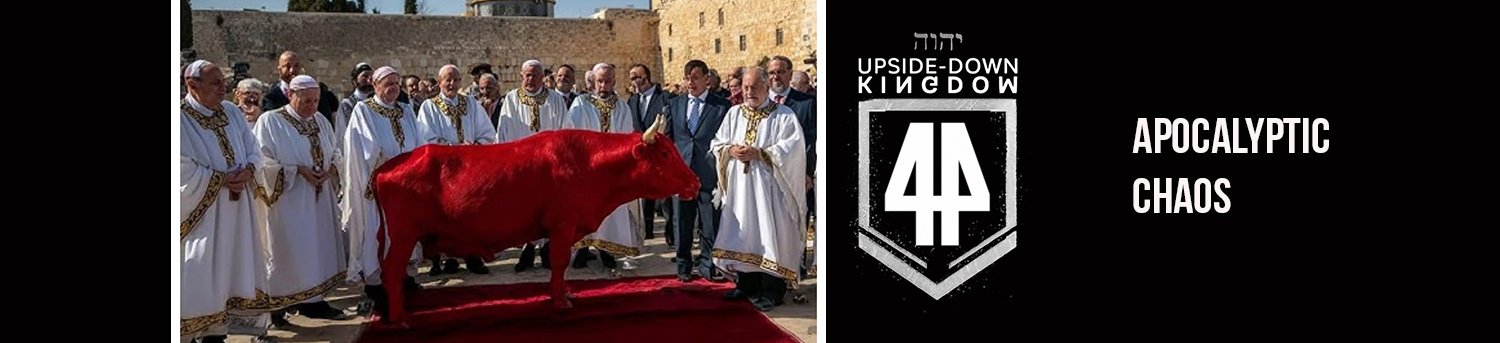
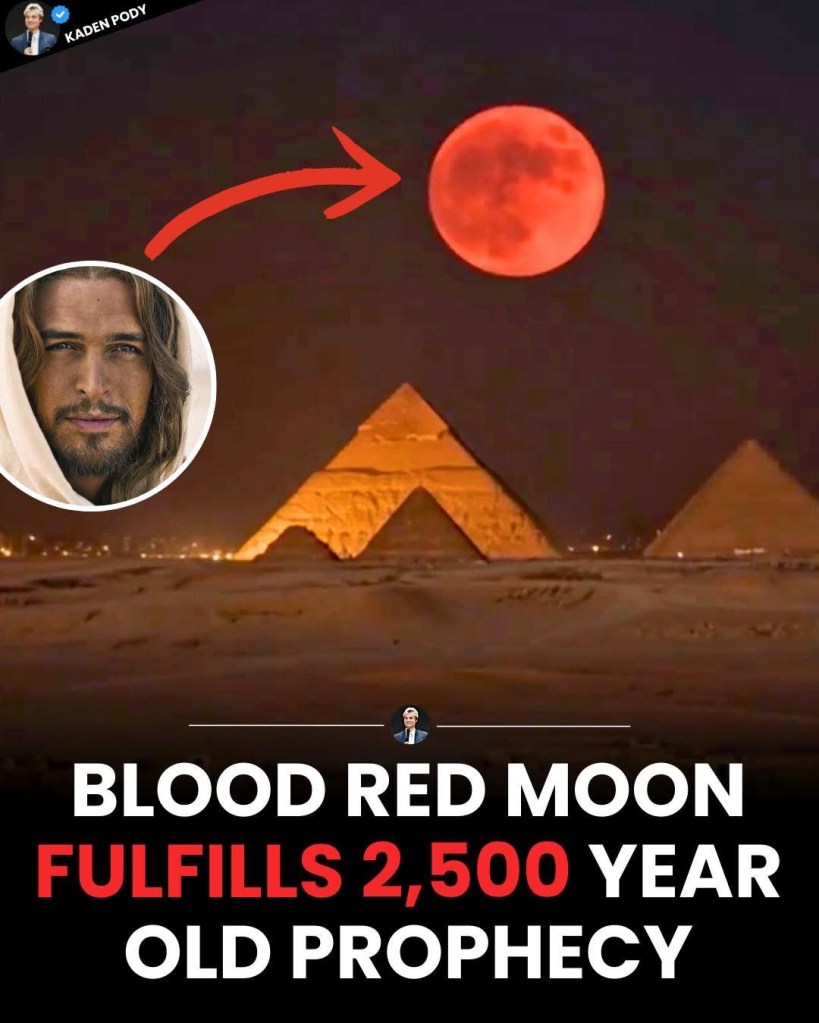
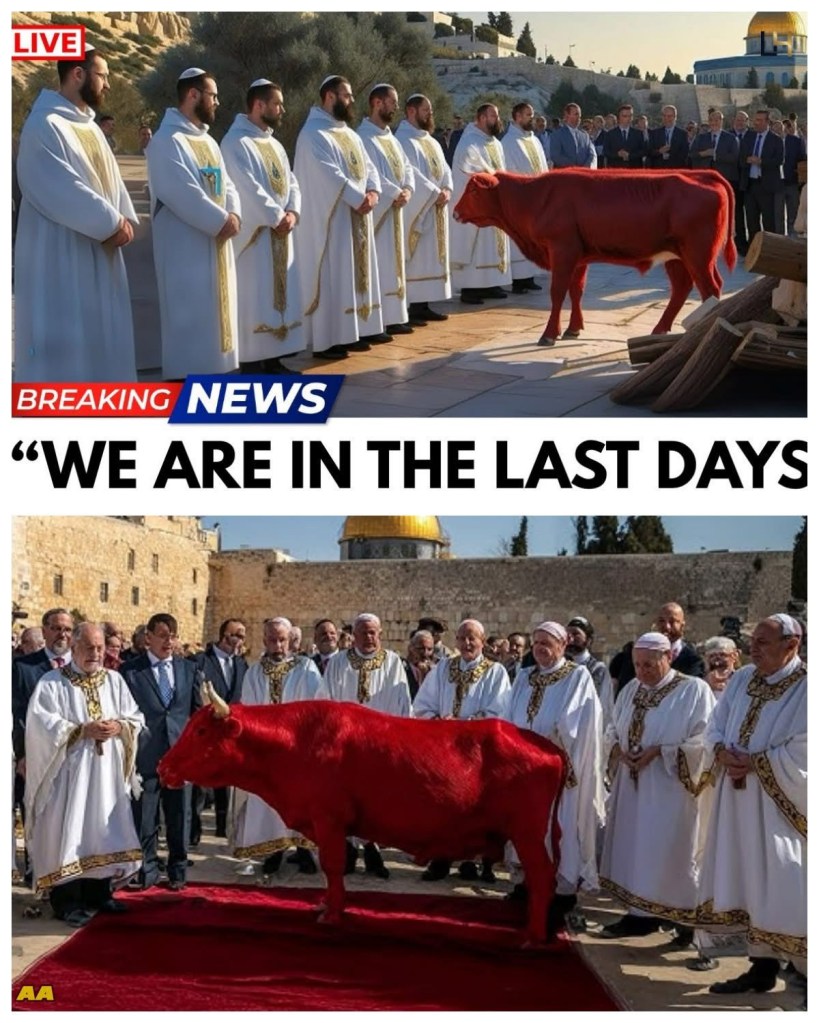
In every generation, the people of God have wrestled with headlines, celestial events, wars, and rumors of wars. In our moment, images of blood-red moons, renewed interest in the red heifer ritual, Purim framed through geopolitical conflict, and even portrayals of a militarized Jesus circulate rapidly across Christian media. These phenomena are frequently interpreted as decisive indicators that “we are in the last days.”

As followers of Christ committed to careful biblical theology, we must ask: What is faithful eschatological attentiveness, and what drifts toward speculation? How do we distinguish biblical prophecy from patterns that more closely resemble divination? And how do we guard against subtly weaponizing Jesus in the service of national or ideological agendas?

This essay proposes that much contemporary apocalyptic rhetoric conflates symbolic prophetic language with predictive sign-reading, misapplies temple typology, and risks distorting the cruciform nature of Christ’s kingship. I ask you to consider a better theology, one that is deeply rooted, Christ-centered eschatology that cultivates hope without hysteria.


The phrase “the moon will be turned to blood” appears in Joel 2:31 and is echoed in Acts 2:20 and Revelation 6:12.¹ Yet within prophetic and apocalyptic literature, such imagery functions symbolically to describe covenantal upheaval and divine intervention, not necessarily astronomical forecasting.²

When Peter cites Joel at Pentecost (Acts 2:16–21), he interprets the prophecy as fulfilled in the outpouring of the Spirit.³ The early church did not await literal lunar phenomena; they recognized that the decisive turning point in redemptive history had already occurred in Christ’s death, resurrection, and exaltation.⁴

Scholars such as John Walton remind us that in the Ancient Near East, celestial events were commonly interpreted as omens.⁵ Israel’s Torah, however, explicitly forbids divinatory practices tied to signs and portents (Deut 18:10–14).⁶ When modern Christians assign predictive significance to eclipses in ways that mirror ancient omen-reading, the hermeneutical posture begins to resemble the very practices Scripture warns against.⁷

Apocalyptic imagery unveils theological realities—it does not invite astrological decoding.


The red heifer ritual of Numbers 19 concerns purification under the Mosaic covenant.⁸ Contemporary movements anticipating a Third Temple sometimes treat the reintroduction of this ritual as a necessary eschatological trigger.⁹

Yet the New Testament consistently reinterprets temple theology christologically. Jesus declares himself the true temple (John 2:19–21).¹⁰ Paul extends temple identity to the gathered people of God (1 Cor 3:16).¹¹ The epistle to the Hebrews insists that Christ’s priestly work is once-for-all and surpasses the sacrificial system (Heb 9–10).¹²

To frame renewed animal sacrifice as a prophetic necessity risks implying insufficiency in Christ’s atoning work.¹³ As Steve Gregg has argued in his engagement with Revelation’s various interpretive frameworks, much apocalyptic expectation misunderstands the covenantal transition already accomplished in the first century.¹⁴

Looking for a rebuilding of the Temple is a slap in the face to Jesus; it is essentially saying you don’t believe He was enough.

The trajectory of Scripture moves from shadow to substance—not from substance back to shadow.


The book of Esther recounts Jewish survival within imperial Persia and culminates in the celebration of Purim (Esth 9).¹⁵ It is a narrative of providence and covenant preservation—not a blueprint for Christian militarization.

Revelation 19 portrays Christ as a rider on a white horse, yet the sword proceeds from his mouth—symbolizing the power of his word.¹⁶ Earlier, Revelation presents the conquering Messiah as the slain Lamb (Rev 5:6).¹⁷ The Lamb’s victory comes through self-giving sacrifice.

Shane J. Wood argues that Revelation functions as an unveiling of how empire masquerades as ultimate power while the Lamb redefines kingship through suffering love.¹⁸ The book calls believers to faithful witness, not violent triumphalism.¹⁹

When Jesus is draped in national symbolism or framed primarily as a military figure aligned with geopolitical agendas, the church risks conflating the kingdom of God with earthly power structures—precisely the confusion Revelation critiques.²⁰

The Lamb conquers not by coercion, but by cruciform allegiance.


Biblical prophecy is covenant proclamation rooted in God’s revealed purposes.²¹ Divination, by contrast, seeks hidden knowledge through decoding signs, omens, or speculative patterns.²²

Jeremiah warns against prophets who speak “visions of their own minds” (Jer 23:16).²³ Ezekiel rebukes those who practice “lying divination” (Ezek 13:6–9).²⁴ Jesus himself cautions his disciples against alarmism: “See that you are not alarmed” (Matt 24:6).²⁵

The apostolic exhortation is vigilance without panic (1 Thess 5:1–8).²⁶ When Christian rhetoric becomes dominated by chronological speculation tied to celestial events or ritual developments, it begins to mirror the divinatory impulse Scripture explicitly forbids.²⁷

True prophecy deepens faithfulness. Divination fuels anxiety.


Christian eschatology has long been described as “already and not yet.”²⁸ Christ has decisively inaugurated the kingdom, yet its fullness awaits consummation.

Wood’s “thin veil” metaphor captures apocalyptic literature’s purpose: heaven’s perspective breaks into earthly history, revealing who truly reigns.²⁹ Revelation is not primarily a timetable but a theological unveiling of allegiance, empire, and worship.³⁰

Thus, blood moons need not provoke fear. Red heifers need not signal regression. Wars and rumors of wars do not require sacralized nationalism. The church’s vocation remains steadfast: faithful witness shaped by the Lamb.³¹

Peter reminds believers that they are a holy nation—not defined by geopolitical boundaries, but by covenant identity in Christ (1 Pet 2:9–12).³²

Our eschatological posture is hopeful watchfulness grounded in the finished work of Jesus.


The final word of Revelation is not dread but invitation: “The Spirit and the Bride say, ‘Come’” (Rev 22:17).³³

Apocalyptic texts unveil hope, not panic. They expose empire, not empower it. They center the Lamb, not lunar cycles.

To remain faithful in an age of apocalyptic noise is not to disengage from current events, but to interpret them through the crucified and risen Christ. We do not decode eclipses; we embody the kingdom. We do not weaponize Jesus; we witness to him.

In a world prone to sensationalism, the church’s steadiness becomes its testimony.


Footnotes

  1. Joel 2:31; Acts 2:20; Rev 6:12.
  2. G. K. Beale, The Book of Revelation.
  3. Acts 2:16–21.
  4. Richard Bauckham, The Theology of the Book of Revelation.
  5. John H. Walton, Ancient Near Eastern Thought and the Old Testament.
  6. Deut 18:10–14.
  7. Michael S. Heiser, The Unseen Realm.
  8. Num 19.
  9. Randall Price, The Temple and Bible Prophecy.
  10. John 2:19–21.
  11. 1 Cor 3:16.
  12. Heb 9–10.
  13. David Peterson, Hebrews and Perfection.
  14. Steve Gregg, Revelation: Four Views.
  15. Esth 9.
  16. Rev 19:15.
  17. Rev 5:6.
  18. Shane J. Wood, Thinning the Veil.
  19. Rev 12:11.
  20. Rev 13; Bauckham.
  21. Walter Brueggemann, The Prophetic Imagination.
  22. Deut 18:10–14.
  23. Jer 23:16.
  24. Ezek 13:6–9.
  25. Matt 24:6.
  26. 1 Thess 5:1–8.
  27. Heiser, The Unseen Realm.
  28. George Eldon Ladd, The Presence of the Future.
  29. Wood, Thinning the Veil.
  30. Eugene H. Peterson, Reversed Thunder.
  31. Rev 12:11.
  32. 1 Pet 2:9–12.
  33. Rev 22:17.

Bibliography

Bauckham, Richard. The Theology of the Book of Revelation. Cambridge: Cambridge University Press.

Beale, G. K. The Book of Revelation. New International Greek Testament Commentary. Grand Rapids: Eerdmans.

Brueggemann, Walter. The Prophetic Imagination. 2nd ed. Minneapolis: Fortress Press.

Gregg, Steve. Revelation: Four Views. Nashville: Thomas Nelson.

Heiser, Michael S. The Unseen Realm: Recovering the Supernatural Worldview of the Bible. Bellingham, WA: Lexham Press.

Ladd, George Eldon. The Presence of the Future. Grand Rapids: Eerdmans.

Peterson, David. Hebrews and Perfection. Cambridge: Cambridge University Press.

Peterson, Eugene H. Reversed Thunder: The Revelation of John and the Praying Imagination. San Francisco: HarperCollins.

Price, Randall. The Temple and Bible Prophecy. Eugene, OR: Harvest House.

Walton, John H. Ancient Near Eastern Thought and the Old Testament. Grand Rapids: Baker Academic.

Wood, Shane J. Thinning the Veil: Revelation and the Kingdom of Heaven. Cincinnati: Standard Publishing.