Amy Peeler’s Ordinary Time, within the Fullness of Time series, stands as a deeply pastoral yet theologically substantive contribution to contemporary liturgical theology. In an ecclesial landscape often driven by immediacy, spectacle, and eschatological anxiety, Peeler offers a quiet but profound corrective. She invites the church to recover a theology of time in which the so-called “ordinary” becomes the primary locus of divine formation.¹ This work is, in many respects, a gift to the church. It is careful, attentive, and richly textured. It demonstrates an awareness of Scripture, tradition, and lived ecclesial practice. Yet it is also a work that invites further theological deepening, particularly in areas of eschatology, mission, and apocalyptic framing. within a broader theological framework.
Peeler’s introduction establishes her central thesis: the ordinary rhythms of life are not spiritually secondary but are the very means by which God forms his people.² This claim resonates with the broader biblical narrative, wherein divine activity is often embedded within repetition and obscurity rather than dramatic interruption.³ Her reflection on the unrecorded days of Jesus is particularly compelling.⁴ The Gospels, while selective, imply a fullness of lived experience that is not captured in narrative detail. This aligns with a robust incarnational theology in which the entirety of Christ’s life—not merely his climactic acts—is redemptively significant.⁵ Theologically, this positions Ordinary Time as a space of reflection and integration. Growth occurs not only in moments of revelation but in the sustained meditation upon them.⁶ This insight is deeply consonant with Pauline notions of transformation, where believers are “renewed” over time into the image of Christ.⁷
Strength: A compelling integration of Christology and spiritual formation.⁸
Chapter 1: Green – Identity and Growth in Christ
Peeler’s “Green” chapter is one of the strongest in the volume. Her use of natural imagery—particularly the discussion of chlorophyll and hidden color—serves as a powerful metaphor for Christian identity.⁹ Her treatment of Galatians 3:27, being “clothed with Christ,” is both exegetically sound and pastorally rich.¹⁰ She avoids reductionism by holding together unity and diversity. In Christ, believers do not lose their particularity but are brought into its proper telos.¹¹ This resonates strongly with patristic theology, particularly Irenaeus’ vision of humanity fully alive in God.¹² It also aligns with contemporary theological anthropology that emphasizes participation rather than mere imputation.¹³ Her discussion of slavery is particularly noteworthy. By distinguishing between created identity (male/female, Jew/Gentile) and fallen structures (slavery), she maintains a robust doctrine of creation while offering a theological critique of oppressive systems.¹⁴
Rich metaphorical theology grounded in Scripture and tradition.¹⁵
Chapter 2: Bold – The Magnificat and Prophetic Proclamation
The “Bold” chapter offers a striking and, at times, unexpected theological depth. Peeler’s treatment of Mary and the Magnificat is particularly commendable. She resists both sentimentalism and neglect, instead presenting Mary as a figure of bold, Spirit-empowered proclamation.¹⁶ Her reading of the Magnificat as a declaration of divine reversal aligns with Lukan theology, where God consistently overturns systems of power.¹⁷ This is not merely personal piety but socio-theological proclamation.¹⁸ Peeler’s reflection that unity is not always achieved through silence but sometimes through boldness is both pastorally and theologically significant.¹⁹ It reflects a nuanced understanding of ecclesial life that avoids both divisiveness and superficial harmony.
A balanced and theologically rich Marian framework.²⁰
Chapter 3: Triune – Theological Center and Liturgical Formation
Peeler’s treatment of the Trinity is orthodox, accessible, and pastorally grounded. She rightly emphasizes that the doctrine arises from divine self-revelation rather than speculative reasoning.²¹ Her insistence that the Trinity is not an abstract puzzle but the source of Christian life is a crucial corrective in contemporary theology.²² The integration of Trinitarian prayer throughout the liturgical life of the church reinforces the participatory nature of doctrine.²³ Her use of light imagery is particularly effective, echoing both biblical and patristic traditions.²⁴
Faithful and accessible articulation of Trinitarian theology.²⁵
Chapter 4: Feast – Eucharist and Participation
Peeler’s treatment of the Eucharist as central to Ordinary Time is both fitting and necessary. The Lord’s Supper is not merely a ritual but a participatory act in the life of Christ.²⁶ Her emphasis on repetition as formative aligns with sacramental theology that understands participation as transformative.²⁷ The Eucharist becomes the rhythm through which the ordinary is continually reoriented toward the divine.²⁸
Strong sacramental theology rooted in participation.²⁹
Chapters 5–7: Image, Trust, Gratitude – Formation Through Narrative
These chapters collectively explore biblical narratives as formative texts for Ordinary Time. Peeler demonstrates a keen awareness of the pedagogical function of Scripture.³⁰ Her emphasis on trust and gratitude reflects a theology of response, where believers participate in God’s work through faithful living.³¹
Integration of narrative theology and spiritual formation.³²
Conclusion: Christ the King and Telos of Time
Peeler concludes with a Christological vision that frames Ordinary Time within the broader arc of the church year.³³ This is a fitting conclusion, reminding readers that formation is always oriented toward the reign of Christ.³⁴
Strong Christological framing.³⁵
Final Assessment
Amy Peeler’s Ordinary Time is a remarkable work. It is deeply pastoral, theologically attentive, and liturgically grounded. It calls the church to recover a vision of formation that is patient, communal, and Christ-centered.³⁶ This is a work to be read, taught, and lived. It is a reminder that God’s most profound work is often done not in the extraordinary, but in the faithful repetition of ordinary days.³⁷ For this, we give thanks. And for Amy Peeler, whose careful and faithful work serves the church so well, we offer both gratitude and encouragement.
NOTES
Amy Peeler, Ordinary Time (Downers Grove: IVP Academic, 2025), 3–5.
Esau McCaulley, “Series Preface,” in The Fullness of Time
John H. Walton, Ancient Near Eastern Thought and the Old Testament (Grand Rapids: Baker, 2006)
Peeler, Ordinary Time, 3.
N. T. Wright, Jesus and the Victory of God (Minneapolis: Fortress, 1996)
Michael J. Gorman, Becoming the Gospel (Grand Rapids: Eerdmans, 2015)
The introduction could further situate this claim within an explicit new creation framework, emphasizing that ordinary time is not merely reflective but eschatologically charged. Richard B. Hays, Echoes of Scripture in the Gospels (Waco: Baylor, 2016), 12–19.
Peeler, Ordinary Time, 20–22.
BDAG, s.v. “ἐνδύω.”
Gorman, Inhabiting the Cruciform God (Grand Rapids: Eerdmans, 2009)
Irenaeus, Against Heresies
James K. A. Smith, Desiring the Kingdom (Grand Rapids: Baker, 2009)
Peeler, Ordinary Time, 26–27.
Greater engagement with Second Temple Jewish identity categories and socio-historical context would strengthen the exegetical depth. Craig Keener, Galatians (Cambridge: Cambridge, 2019), 210–230.
Peeler, Ordinary Time, 36–37.
Joel B. Green, The Gospel of Luke (Grand Rapids: Eerdmans, 1997)
N. T. Wright, Luke for Everyone (Louisville: Westminster John Knox, 2004)
Peeler, Ordinary Time, 37.
This chapter would benefit from deeper engagement with anti-imperial readings of Luke-Acts, particularly in light of Roman imperial ideology. Warren Carter, The Roman Empire and the New Testament (Nashville: Abingdon, 2006), 75–98.
Peeler, Ordinary Time, 43.
Fred Sanders, The Deep Things of God (Wheaton: Crossway, 2010)
Catherine Mowry LaCugna, God for Us (San Francisco: Harper, 1991)
Augustine, De Trinitate.
Greater engagement with participatory and relational ontologies—particularly in light of divine communion—would deepen the theological implications John Zizioulas, Being as Communion (Crestwood: SVS Press, 1985), 40–65.
Alexander Schmemann, For the Life of the World (Crestwood: SVS, 1973)
Smith, Desiring the Kingdom
Gorman, Apostle of the Crucified Lord (Grand Rapids: Eerdmans, 2004)
A deeper engagement with early church Eucharistic theology and its eschatological dimensions would enrich the discussion. Ignatius of Antioch, Letter to the Smyrnaeans 6–7.
Peeler, Ordinary Time, 16–17.
Walter Brueggemann, Theology of the Old Testament (Minneapolis: Fortress, 1997)
Greater engagement with ANE context and narrative-critical methods would strengthen interpretive depth. Walton, ANE Thought, 90–110.
Peeler, Ordinary Time, 129.
N. T. Wright, Surprised by Hope (New York: Harper, 2008)
A more explicit articulation of new creation and eschatological fulfillment would provide greater theological closure. G. K. Beale, A New Testament Biblical Theology (Grand Rapids: Baker, 2011), 900–915.
Gorman, Becoming the Gospel
Eugene Peterson, A Long Obedience in the Same Direction (Downers Grove: IVP, 2000)
Apocalyptic Anxiety, Prophetic Imagination, and Faithful Christian Eschatology
Introduction: Living Faithfully in an Age of Apocalyptic Noise
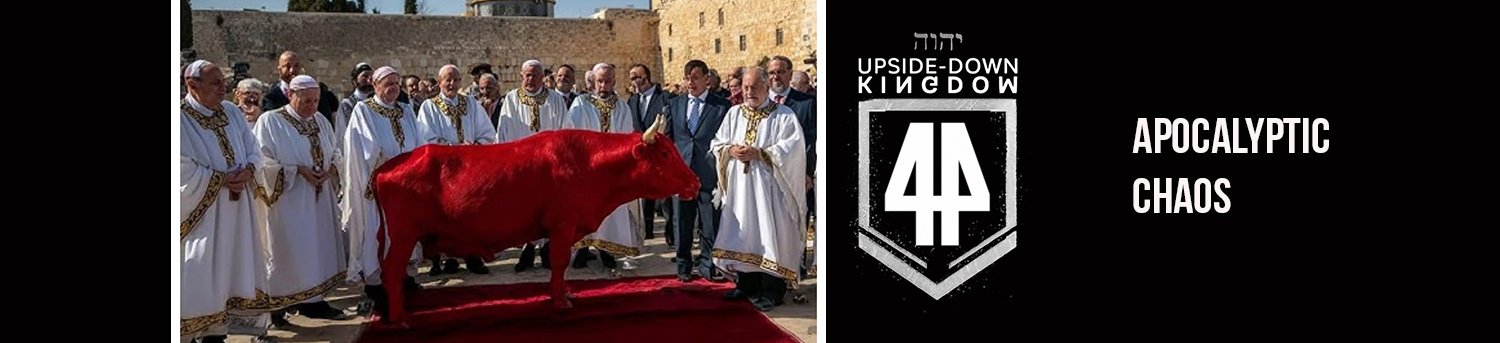
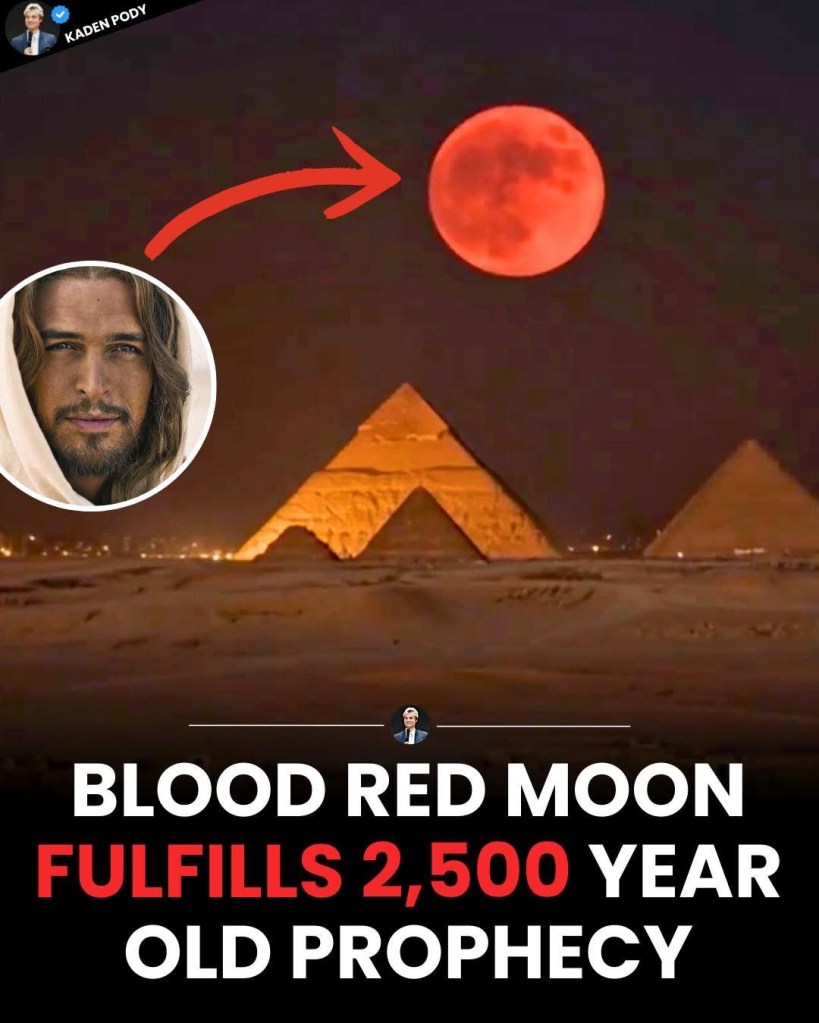
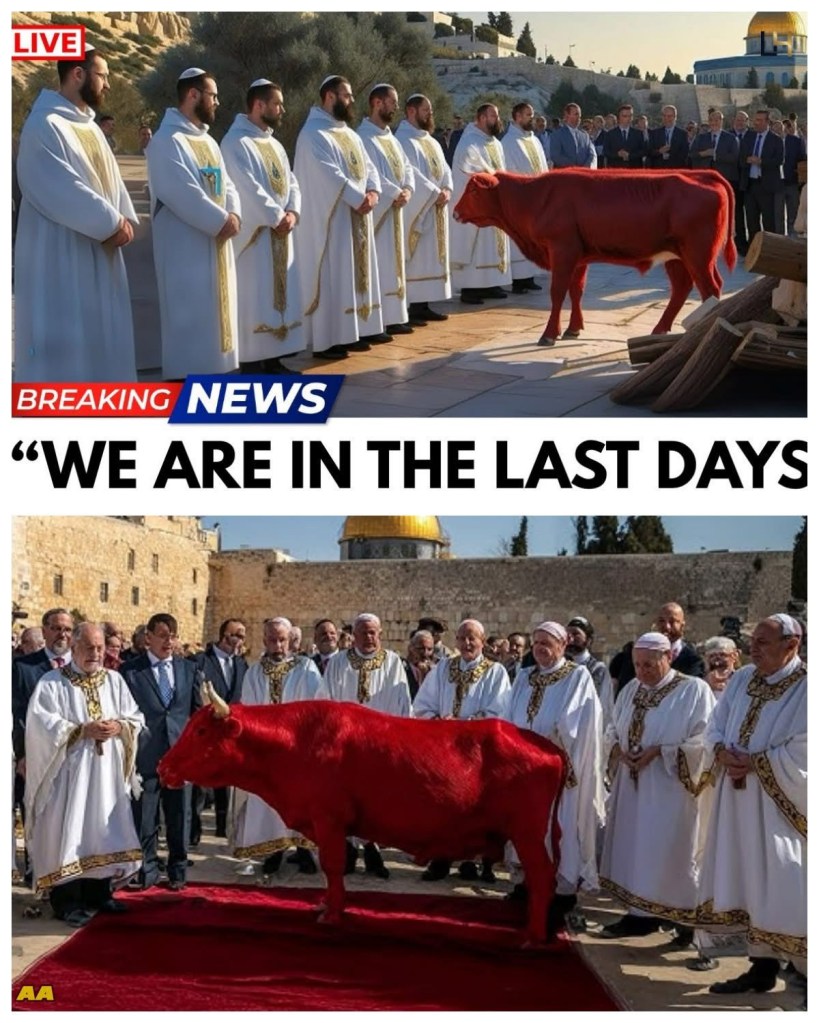
In every generation, the people of God have wrestled with headlines, celestial events, wars, and rumors of wars. In our moment, images of blood-red moons, renewed interest in the red heifer ritual, Purim framed through geopolitical conflict, and even portrayals of a militarized Jesus circulate rapidly across Christian media. These phenomena are frequently interpreted as decisive indicators that “we are in the last days.”
As followers of Christ committed to careful biblical theology, we must ask: What is faithful eschatological attentiveness, and what drifts toward speculation? How do we distinguish biblical prophecy from patterns that more closely resemble divination? And how do we guard against subtly weaponizing Jesus in the service of national or ideological agendas?
This essay proposes that much contemporary apocalyptic rhetoric conflates symbolic prophetic language with predictive sign-reading, misapplies temple typology, and risks distorting the cruciform nature of Christ’s kingship. I ask you to consider a better theology, one that is deeply rooted, Christ-centered eschatology that cultivates hope without hysteria.
Cosmic Imagery and the Language of Blood Moons
The phrase “the moon will be turned to blood” appears in Joel 2:31 and is echoed in Acts 2:20 and Revelation 6:12.¹ Yet within prophetic and apocalyptic literature, such imagery functions symbolically to describe covenantal upheaval and divine intervention, not necessarily astronomical forecasting.²
When Peter cites Joel at Pentecost (Acts 2:16–21), he interprets the prophecy as fulfilled in the outpouring of the Spirit.³ The early church did not await literal lunar phenomena; they recognized that the decisive turning point in redemptive history had already occurred in Christ’s death, resurrection, and exaltation.⁴
Scholars such as John Walton remind us that in the Ancient Near East, celestial events were commonly interpreted as omens.⁵ Israel’s Torah, however, explicitly forbids divinatory practices tied to signs and portents (Deut 18:10–14).⁶ When modern Christians assign predictive significance to eclipses in ways that mirror ancient omen-reading, the hermeneutical posture begins to resemble the very practices Scripture warns against.⁷
Apocalyptic imagery unveils theological realities—it does not invite astrological decoding.
Red Heifers, Temple Expectation, and the Finality of Christ
The red heifer ritual of Numbers 19 concerns purification under the Mosaic covenant.⁸ Contemporary movements anticipating a Third Temple sometimes treat the reintroduction of this ritual as a necessary eschatological trigger.⁹
Yet the New Testament consistently reinterprets temple theology christologically. Jesus declares himself the true temple (John 2:19–21).¹⁰ Paul extends temple identity to the gathered people of God (1 Cor 3:16).¹¹ The epistle to the Hebrews insists that Christ’s priestly work is once-for-all and surpasses the sacrificial system (Heb 9–10).¹²
To frame renewed animal sacrifice as a prophetic necessity risks implying insufficiency in Christ’s atoning work.¹³ As Steve Gregg has argued in his engagement with Revelation’s various interpretive frameworks, much apocalyptic expectation misunderstands the covenantal transition already accomplished in the first century.¹⁴
Looking for a rebuilding of the Temple is a slap in the face to Jesus; it is essentially saying you don’t believe He was enough.
The trajectory of Scripture moves from shadow to substance—not from substance back to shadow.
Purim, Empire, and the Danger of Weaponizing Jesus
The book of Esther recounts Jewish survival within imperial Persia and culminates in the celebration of Purim (Esth 9).¹⁵ It is a narrative of providence and covenant preservation—not a blueprint for Christian militarization.
Revelation 19 portrays Christ as a rider on a white horse, yet the sword proceeds from his mouth—symbolizing the power of his word.¹⁶ Earlier, Revelation presents the conquering Messiah as the slain Lamb (Rev 5:6).¹⁷ The Lamb’s victory comes through self-giving sacrifice.
Shane J. Wood argues that Revelation functions as an unveiling of how empire masquerades as ultimate power while the Lamb redefines kingship through suffering love.¹⁸ The book calls believers to faithful witness, not violent triumphalism.¹⁹
When Jesus is draped in national symbolism or framed primarily as a military figure aligned with geopolitical agendas, the church risks conflating the kingdom of God with earthly power structures—precisely the confusion Revelation critiques.²⁰
The Lamb conquers not by coercion, but by cruciform allegiance.
Prophecy and Divination: A Crucial Distinction
Biblical prophecy is covenant proclamation rooted in God’s revealed purposes.²¹ Divination, by contrast, seeks hidden knowledge through decoding signs, omens, or speculative patterns.²²
Jeremiah warns against prophets who speak “visions of their own minds” (Jer 23:16).²³ Ezekiel rebukes those who practice “lying divination” (Ezek 13:6–9).²⁴ Jesus himself cautions his disciples against alarmism: “See that you are not alarmed” (Matt 24:6).²⁵
The apostolic exhortation is vigilance without panic (1 Thess 5:1–8).²⁶ When Christian rhetoric becomes dominated by chronological speculation tied to celestial events or ritual developments, it begins to mirror the divinatory impulse Scripture explicitly forbids.²⁷
Eschatology as Unveiling: Living in the Already and Not Yet
Christian eschatology has long been described as “already and not yet.”²⁸ Christ has decisively inaugurated the kingdom, yet its fullness awaits consummation.
Wood’s “thin veil” metaphor captures apocalyptic literature’s purpose: heaven’s perspective breaks into earthly history, revealing who truly reigns.²⁹ Revelation is not primarily a timetable but a theological unveiling of allegiance, empire, and worship.³⁰
Thus, blood moons need not provoke fear. Red heifers need not signal regression. Wars and rumors of wars do not require sacralized nationalism. The church’s vocation remains steadfast: faithful witness shaped by the Lamb.³¹
Peter reminds believers that they are a holy nation—not defined by geopolitical boundaries, but by covenant identity in Christ (1 Pet 2:9–12).³²
Our eschatological posture is hopeful watchfulness grounded in the finished work of Jesus.
Conclusion: Hope Without Hysteria
The final word of Revelation is not dread but invitation: “The Spirit and the Bride say, ‘Come’” (Rev 22:17).³³
Apocalyptic texts unveil hope, not panic. They expose empire, not empower it. They center the Lamb, not lunar cycles.
To remain faithful in an age of apocalyptic noise is not to disengage from current events, but to interpret them through the crucified and risen Christ. We do not decode eclipses; we embody the kingdom. We do not weaponize Jesus; we witness to him.
In a world prone to sensationalism, the church’s steadiness becomes its testimony.
Footnotes
Joel 2:31; Acts 2:20; Rev 6:12.
G. K. Beale, The Book of Revelation.
Acts 2:16–21.
Richard Bauckham, The Theology of the Book of Revelation.
John H. Walton, Ancient Near Eastern Thought and the Old Testament.
Deut 18:10–14.
Michael S. Heiser, The Unseen Realm.
Num 19.
Randall Price, The Temple and Bible Prophecy.
John 2:19–21.
1 Cor 3:16.
Heb 9–10.
David Peterson, Hebrews and Perfection.
Steve Gregg, Revelation: Four Views.
Esth 9.
Rev 19:15.
Rev 5:6.
Shane J. Wood, Thinning the Veil.
Rev 12:11.
Rev 13; Bauckham.
Walter Brueggemann, The Prophetic Imagination.
Deut 18:10–14.
Jer 23:16.
Ezek 13:6–9.
Matt 24:6.
1 Thess 5:1–8.
Heiser, The Unseen Realm.
George Eldon Ladd, The Presence of the Future.
Wood, Thinning the Veil.
Eugene H. Peterson, Reversed Thunder.
Rev 12:11.
1 Pet 2:9–12.
Rev 22:17.
Bibliography
Bauckham, Richard. The Theology of the Book of Revelation. Cambridge: Cambridge University Press.
Beale, G. K. The Book of Revelation. New International Greek Testament Commentary. Grand Rapids: Eerdmans.
Brueggemann, Walter. The Prophetic Imagination. 2nd ed. Minneapolis: Fortress Press.
Gregg, Steve. Revelation: Four Views. Nashville: Thomas Nelson.
Heiser, Michael S. The Unseen Realm: Recovering the Supernatural Worldview of the Bible. Bellingham, WA: Lexham Press.
Ladd, George Eldon. The Presence of the Future. Grand Rapids: Eerdmans.
Peterson, David. Hebrews and Perfection. Cambridge: Cambridge University Press.
Peterson, Eugene H. Reversed Thunder: The Revelation of John and the Praying Imagination. San Francisco: HarperCollins.
Price, Randall. The Temple and Bible Prophecy. Eugene, OR: Harvest House.
Walton, John H. Ancient Near Eastern Thought and the Old Testament. Grand Rapids: Baker Academic.
Wood, Shane J. Thinning the Veil: Revelation and the Kingdom of Heaven. Cincinnati: Standard Publishing.
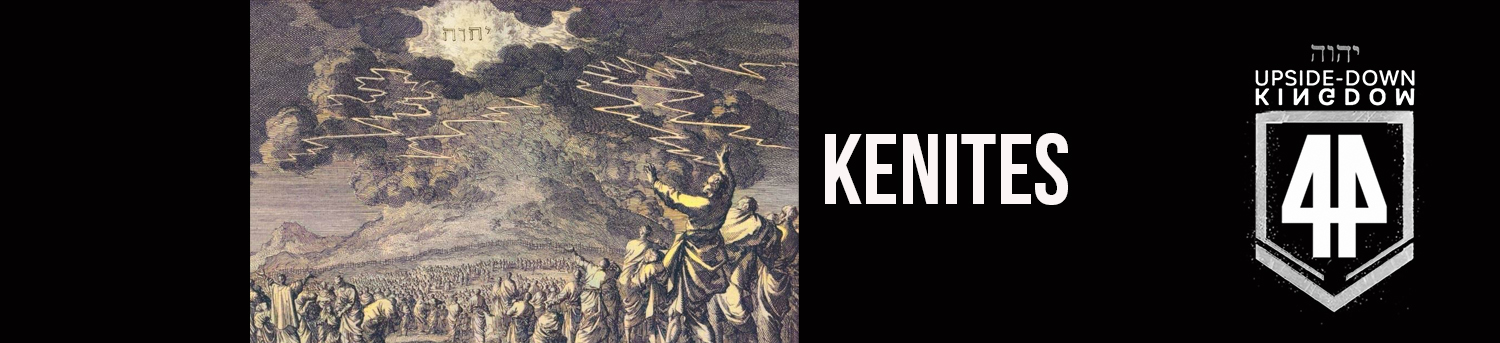
The wilderness traditions of Moses are often read as a story of isolation—forty years in obscurity before the divine call. Yet the biblical text itself refuses such a solitary picture. Moses’ exile in Midian is embedded in a network of kinship, priesthood, and tribal alliances centered on a people known as the Kenites. Their presence lingers quietly but persistently throughout the Pentateuch and into the historical books, raising a question that has become increasingly difficult to ignore: to what extent did Israel’s earliest encounter with Yahweh occur within the social and religious world of the Kenites and Midianites?
The purpose of this study is not to advance a simplistic version of the so-called “Kenite hypothesis,” nor to diminish the distinctiveness of Israel’s covenantal revelation, but to situate Moses’ wilderness experience within its Ancient Near Eastern (ANE) social and religious environment. When this context is taken seriously—together with the linguistic texture of the Hebrew text and the witness of extra-biblical sources—a more textured portrait emerges: Moses as a liminal figure formed at the intersection of Egyptian royal culture and Kenite priestly wilderness tradition, and Israel as a people whose earliest articulation of Yahweh-faith was shaped, at least in part, within that southern world.
Exile, Marriage, and Covenant Incorporation
The narrative of Exodus 2 presents Moses as a fugitive who finds refuge in Midian, where he is welcomed into the household of a priestly figure identified variously as Reuel, Jethro, or Hobab. The text’s multiplicity of names has generated no small amount of discussion, but before turning to those issues it is worth observing the basic social structure at work. In the ANE, asylum was rarely granted to unattached individuals; it was secured through incorporation into a household or clan, often by marriage. Moses’ union with Zipporah therefore functions as a covenantal incorporation into a priestly lineage rather than a mere romantic development. His naming of his son Gershom—“I have been a sojourner there”—captures the liminal legal status of a ger, a resident alien under the protection of a host clan.¹
Such arrangements are well attested in comparative ANE materials, where kinship terminology often serves as a vehicle for treaty relationships. The language of “father,” “brother,” and “son” in Hittite and Mari texts frequently marks political alliance rather than strict biological descent.² Within this framework, Moses’ relationship to Jethro/Hobab should be read not only as familial but also as covenantal and diplomatic, binding Moses—and eventually Israel—to a southern nomadic network.
Kenite and Midianite: Layers of Identity in the Southern Levant
The biblical tradition terminology alternates between describing Moses’ in-laws as Midianites (Exod 3:1; Num 10:29) and as Kenites (Judg 1:16; 4:11). Rather than forcing a rigid distinction, most modern scholarship understands these terms as overlapping identity markers. The Kenites appear to have been a clan or subgroup associated with the broader Midianite confederation, inhabiting the Negev and the Transjordanian south.³
Such fluidity is characteristic of nomadic and semi-nomadic societies in the Late Bronze and Iron Age Levant, where tribal identity was multi-layered—geographical, genealogical, and occupational. Egyptian New Kingdom texts refer to nomadic groups called the Shasu, some of whom are designated “Shasu of Yhw,” locating a group bearing the divine name Yhw in precisely the southern region (Edom/Midian) associated with the Kenites.⁴ While the precise relationship between these Shasu groups and the biblical Kenites remains debated, the geographic convergence is striking and provides a plausible extra-biblical backdrop for early Yahwistic devotion in the south.
Genealogy, Language, and the Problem of “Father-in-Law”
The identity of Moses’ father-in-law is further complicated by the Hebrew terminology itself. The consonantal Hebrew root חתן (ḥtn) is semantically flexible and can denote a range of affinal relationships—“father-in-law,” “son-in-law,” or more broadly “in-law/relative by marriage.” The distinction between ḥōtēn (traditionally “father-in-law”) and ḥātān (“bridegroom/son-in-law”) is supplied by later vocalization and is not present in the earliest consonantal text. This ambiguity is not merely theoretical; it directly affects how we read several key passages.
For example, Exodus 3:1 introduces Jethro as:
“Moses was keeping the flock of Jethro his ḥōtēn, the priest of Midian.”
Here the Masoretic pointing reads ḥōtēn (“father-in-law”), but the consonantal text permits the broader sense “relative by marriage.” The same form appears again in Exodus 4:18 and Exodus 18:1, where Jethro is consistently identified as Moses’ ḥōtēn.
However, Numbers 10:29 complicates matters. There we read:
“Moses said to Hobab son of Reuel the Midianite, Moses’ ḥōtēn…”
If the Masoretic pointing is followed, Hobab is identified as Moses’ father-in-law, yet Exodus 2:18 and 3:1 have already identified Reuel/Jethro in that role. The simplest resolution—recognized by many modern commentators—is that the underlying consonantal term here may refer more broadly to an affinal relation, allowing Hobab to be understood as Moses’ brother-in-law (i.e., Zipporah’s brother) rather than his father-in-law.¹
The ambiguity is compounded in Judges 4:11, where Hobab is again called:
“Hobab the Kenite, the ḥōtēn of Moses…”
Here the term again appears, and once more the precise relationship depends on whether one insists on the narrow sense “father-in-law” or allows the wider semantic range “in-law/kinsman by marriage.”
These overlapping identifications—Jethro/Reuel as ḥōtēn (Exod 3:1; 18:1) and Hobab as ḥōtēn (Num 10:29; Judg 4:11)—are not best resolved by forcing a contradiction, but by recognizing that the Hebrew root חתן functions as a kinship term within a covenantal framework, not a strictly biological descriptor in the modern sense.
This broader usage is consistent with wider ANE patterns in which kinship language regularly functions in diplomatic and covenantal contexts. In treaty texts from Mari, Alalakh, and Hatti, terms such as “father,” “brother,” and “son” are used to express political alliance, loyalty, and obligation rather than literal descent.² Within such a conceptual world, to call Jethro or Hobab Moses’ ḥtn is to locate them within a network of covenantal kinship obligations created through marriage and alliance.
This helps explain why the Kenites are later treated as permanent covenant allies of Israel. In Judges 1:16, the “descendants of the Kenite, Moses’ ḥōtēn,” accompany Judah into the Negev, and in 1 Samuel 15:6 Saul spares the Kenites explicitly “because you showed kindness to all the people of Israel when they came up out of Egypt.” The language of “kindness” (ḥesed) in that context carries covenantal overtones, suggesting that the earlier affinal bond had matured into a recognized inter-tribal covenant relationship.
Accordingly, the genealogical language surrounding Moses’ in-laws should not be read narrowly as an attempt to preserve precise biological lineage. Rather, it signals the formation of a durable covenantal bond between Moses’ household and a southern priestly clan—one that is remembered and honored in Israel’s later historical traditions.
“You Shall Be Our Eyes”: Wilderness Knowledge and Israel’s Dependence
The practical dimension of this relationship surfaces explicitly in Numbers 10:29–32, where Moses entreats Hobab to accompany Israel through the wilderness: “You shall be our eyes.” This is not rhetorical flourish. Survival in the Sinai and Negev required intimate knowledge of water sources, seasonal grazing patterns, and safe routes through contested tribal territories. Archaeological and ethnographic studies of pastoral nomadism confirm that such knowledge was typically preserved within specific clans and transmitted across generations.⁶
The Kenites, therefore, were not incidental companions but indispensable guides whose expertise enabled Israel’s passage. Their later settlement alongside Judah (Judg 1:16) and their protection in Saul’s campaign against Amalek (1 Sam 15:6) attest to a long-standing covenantal relationship rooted in this wilderness partnership.
Jethro the Priest and the Question of Early Yahwism
Perhaps the most theologically significant dimension of the Kenite connection emerges in Exodus 18. Jethro is introduced explicitly as a “priest of Midian” (כֹּהֵן מִדְיָן, kōhēn Midyān), yet his actions throughout the narrative suggest that his priesthood is not merely generic or polytheistic in orientation. Upon hearing of Israel’s deliverance, Jethro blesses Yahweh by name:
“Blessed be Yahweh, who has delivered you… Now I know that Yahweh is greater than all the gods” (Exod 18:10–11).
He then offers burnt offerings and sacrifices to Yahweh, and presides over a covenantal meal in which Aaron and the elders of Israel participate before God (Exod 18:12). Significantly, the narrative does not present Jethro as undergoing conversion or instruction in Yahweh worship. Rather, he appears as a recognized priestly mediator who already possesses knowledge of Yahweh and responds to His acts with liturgical competence and theological clarity.
This observation has led many scholars to reconsider the geographical and cultural origins of Yahwistic devotion, particularly in light of poetic biblical traditions that consistently associate Yahweh’s earliest manifestation with the southern regions of Edom, Seir, Paran, and Teman:
“Yahweh came from Sinai, and dawned from Seir upon us; he shone forth from Mount Paran” (Deut 33:2)
“O Yahweh, when you went out from Seir… the earth trembled” (Judg 5:4–5)
“God came from Teman, and the Holy One from Mount Paran” (Hab 3:3)
These texts do not depict Yahweh as emerging from the land of Canaan or the Nile Delta, but rather from the southern wilderness zone stretching from Edom into northwest Arabia, precisely the region associated with Midianite and Kenite groups.
The “Shasu of Yhw” in Egyptian Texts
This southern localization finds intriguing resonance in Egyptian New Kingdom inscriptions that reference nomadic peoples known as the Shasu (šꜣsw), a term used broadly for semi-nomadic pastoralists inhabiting the Transjordan, Negev, and southern Levant.
In inscriptions from the reigns of Amenhotep III (14th century BCE) and later Ramesses II, Egyptian topographical lists mention a group designated as:
“tꜣ šꜣsw yhwꜣ” — “the land of the Shasu of Yhw”
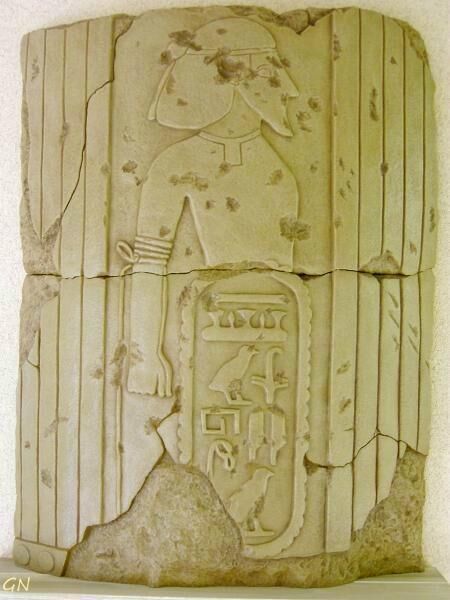
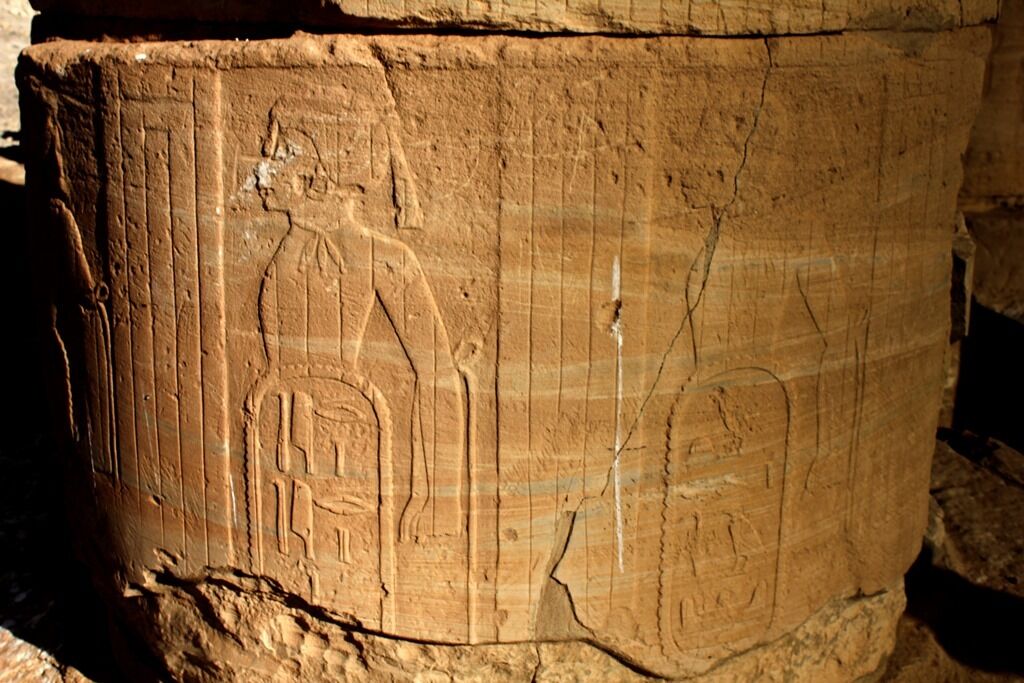
These inscriptions are preserved in temple reliefs at Soleb and Amarah-West in Nubia.¹ The toponym Yhw (often vocalized Yahu or Yahweh) is widely regarded by many scholars as the earliest extra-biblical reference to the divine name Yahweh, associated not with settled Canaanite city-states but with nomadic groups in the southern Transjordan/Edom region.²
While the precise phonetic equivalence between Yhw and the tetragrammaton (YHWH) cannot be proven with absolute certainty, the convergence of:
the geographic location (Edom/Midian region),
the nomadic tribal context (Shasu pastoralists), and
the phonetic similarity to Yahweh
has led many historians of religion (e.g., Cross, Albright, Smith) to regard the Shasu references as highly suggestive evidence for a southern origin or early center of Yahweh devotion.
Soleb Temple cartouche referring to tꜣ šꜣsw yhwꜣ (“the land of the Shasu of Yhw”), reign of Amenhotep III (14th century BCE), Nubia (modern Sudan). The inscription appears within a topographical list of foreign peoples, represented as bound captives and labeled with their territorial or tribal names.
Midian, Kenites, and the Transmission of Yahwism
When the biblical data and Egyptian inscriptions are read together, a coherent historical-theological picture begins to emerge. Moses encounters Yahweh in the land of Midian (Exod 3:1), at “the mountain of God,” before Sinai becomes Israel’s covenantal center. His father-in-law Jethro is a priest operating within that same southern milieu and demonstrates familiarity with Yahweh’s identity and character. The poetic traditions remember Yahweh as advancing from Seir, Paran, and Teman—regions overlapping with Midianite and Kenite territory. And Egyptian inscriptions independently attest to a nomadic group in that region associated with a deity named Yhw.
Taken together, these data points suggest that the Sinai revelation did not occur in a theological vacuum, but within a broader southern Yahwistic milieu in which the divine name and worship of Yahweh were already known among certain nomadic groups.
It is important, however, to avoid reductionistic conclusions. The biblical narrative does not portray Israel as merely “borrowing” a deity from the Kenites or Midianites. Rather, it presents Moses’ encounter with Yahweh as a decisive revelatory event that brings clarity, covenantal structure, and universal scope to a name and reality that may already have been known in fragmentary or localized form.
In this sense, Jethro and the Kenite/Midianite milieu function not as the source of Israel’s faith, but as a providential bridge—a relational and cultural context through which Moses is introduced to the divine name and through which Yahweh begins to reveal Himself more fully in redemptive history.
Theological Implications
This reading has several important theological implications. First, it underscores that God’s self-disclosure often occurs within real historical and cultural networks, rather than in isolation from them. Second, it highlights the presence of non-Israelite witnesses to Yahweh prior to Sinai, anticipating the later biblical theme of the nations coming to recognize Israel’s God. And third, it deepens our understanding of Moses himself as a figure shaped by both Egyptian formation and Kenite-Midianite priestly tradition, standing at the intersection of worlds as the mediator of covenant revelation.
In this light, Exodus 18 is not a peripheral narrative but a theological window into the pre-Sinai knowledge of Yahweh—a moment in which the priest of Midian and the elders of Israel sit together before God, acknowledging a divine reality that transcends ethnic and geographic boundaries even as it becomes covenantally focused in Israel.
Covenant Beyond Ethnicity: The Kenites as Early Yahwists
The presence of the Kenites in Israel’s story illustrates a recurring biblical theme: covenant identity is not reducible to biological descent. From the “mixed multitude” of Exodus 12:38 to Rahab and Ruth, the Old Testament consistently portrays Yahweh’s people as covenantally rather than ethnically defined. The Kenites stand among the earliest examples of this phenomenon—non-Israelite Yahwists who become enduring partners in Israel’s history.
This pattern does not dilute Israel’s calling; it clarifies it. Israel is chosen not as an end in itself but as a people through whom the knowledge of Yahweh extends outward. The Kenites, in turn, embody the inverse movement: outsiders drawn into covenant participation through allegiance to Israel’s God.
Moses as a Figure Formed Between Worlds
Moses emerges from this narrative as a figure uniquely formed by two worlds. Educated in the court of Egypt and tempered in the tents of Midian, he embodies both imperial literacy and nomadic wisdom. His judicial reforms in Exodus 18—prompted by Jethro’s counsel—reflect an administrative model resonant with ANE practices, yet adapted to Israel’s covenantal life.
Theologically, Moses stands at the intersection of traditions: he encounters Yahweh in Midianite territory, receives the covenant at Sinai, and leads a people whose identity is forged through both divine revelation and wilderness dependence. His leadership is thus not the product of isolation but of relational formation, shaped decisively by his Kenite hosts.
Conclusion
The Kenites occupy a subtle but indispensable place in the biblical narrative of origins. Through kinship alliance, priestly mediation, and wilderness expertise, they participate in the formation of Israel’s earliest experience of Yahweh. Whether one adopts a strong or modest version of the Kenite hypothesis, the convergence of biblical, linguistic, and extra-biblical evidence points in a single direction: Israel’s encounter with Yahweh is deeply intertwined with the southern nomadic world of Midian and the Kenites.
This recognition invites a broader theological reflection. Divine revelation, in the biblical witness, often emerges not in isolation but in the intersections of cultures, peoples, and relationships. The story of Moses and the Kenites reminds us that God’s purposes are frequently mediated through unexpected partners—and that the wilderness, far from being a place of absence, is a place where covenant is forged in the company of others.
Footnotes
On the social status of the ger and its ANE parallels, see K. A. Kitchen, On the Reliability of the Old Testament (Grand Rapids: Eerdmans, 2003), 328–32.
Dennis J. McCarthy, Treaty and Covenant (Rome: Biblical Institute Press, 1978), 56–72; cf. K. A. Kitchen, On the Reliability of the Old Testament, 283–90.
Nadav Na’aman, “The Kenites and the Origin of the Yahwistic Cult,” Biblical Archaeology Review and subsequent studies; see also M. E. Mondriaan, “The Kenites in the Old Testament Tradition,” Old Testament Essays 24 (2011).
Donald B. Redford, Egypt, Canaan, and Israel in Ancient Times (Princeton: Princeton University Press, 1992), 273–74.
HALOT, s.v. חתן; Tikva Frymer-Kensky, “The Tribes of Israel and Their Territories,” and TheTorah.com, “Moses’ Father-in-Law: Kenite or Midianite?”
James K. Hoffmeier, Ancient Israel in Sinai (Oxford: Oxford University Press, 2005), 112–35.
Frank Moore Cross, Canaanite Myth and Hebrew Epic (Cambridge: Harvard University Press, 1973), 60–75; Patrick D. Miller, The Religion of Ancient Israel (Louisville: Westminster John Knox, 2000), 59–64.
Donald B. Redford, Egypt, Canaan, and Israel in Ancient Times, 273–74; Kenneth A. Kitchen, Ramesside Inscriptions (Oxford: Blackwell, 1975–90).
Frank Moore Cross, Canaanite Myth and Hebrew Epic, 60–75; Mark S. Smith, The Early History of God (Grand Rapids: Eerdmans, 2002), 32–41; William F. Albright, Yahweh and the Gods of Canaan (Garden City: Doubleday, 1968), 191–210.
Mark S. Smith, The Early History of God, 40–48; James K. Hoffmeier, Ancient Israel in Sinai, 143–52.
Primary Texts and Ancient Sources
Cross, Frank Moore, ed. Canaanite Myth and Hebrew Epic: Essays in the History of the Religion of Israel. Cambridge: Harvard University Press, 1973.
Kitchen, Kenneth A., ed. Ramesside Inscriptions: Historical and Biographical. Oxford: Blackwell, 1975–1990.
Redford, Donald B. Egypt, Canaan, and Israel in Ancient Times. Princeton: Princeton University Press, 1992.
Sparks, Kenton L., ed. Ancient Texts for the Study of the Hebrew Bible. Peabody, MA: Hendrickson, 2005.
Hallo, William W., and K. Lawson Younger Jr., eds. The Context of Scripture. 3 vols. Leiden: Brill, 1997–2002.
Kenites, Midianites, and Southern Yahwism
Na’aman, Nadav. “The Kenites and the Origin of the Yahwistic Cult.” Biblical Archaeology Review and subsequent studies.
Mondriaan, M. E. “The Kenites in the Old Testament Tradition.” Old Testament Essays 24 (2011): 455–473.
Albright, William F. Yahweh and the Gods of Canaan: A Historical Analysis of Two Contrasting Faiths. Garden City: Doubleday, 1968.
Cross, Frank Moore. Canaanite Myth and Hebrew Epic.
Smith, Mark S. The Early History of God: Yahweh and the Other Deities in Ancient Israel. 2nd ed. Grand Rapids: Eerdmans, 2002.
Van der Toorn, Karel. Family Religion in Babylonia, Syria, and Israel. Leiden: Brill, 1996.
Fleming, Daniel E. The Legacy of Israel in Judah’s Bible: History, Politics, and the Reinscribing of Tradition. Cambridge: Cambridge University Press, 2012.
Exodus Traditions, Sinai, and the Wilderness
Hoffmeier, James K. Ancient Israel in Sinai: The Evidence for the Authenticity of the Wilderness Tradition. Oxford: Oxford University Press, 2005.
Kitchen, K. A. On the Reliability of the Old Testament. Grand Rapids: Eerdmans, 2003.
Propp, William H. C. Exodus 1–18. Anchor Yale Bible. New Haven: Yale University Press, 1999.
Durham, John I. Exodus. Word Biblical Commentary. Dallas: Word, 1987.
Childs, Brevard S. The Book of Exodus: A Critical, Theological Commentary. Louisville: Westminster John Knox, 1974.
Sarna, Nahum M. Exploring Exodus. New York: Schocken, 1996.
ANE Treaty, Kinship, and Covenant Language
McCarthy, Dennis J. Treaty and Covenant: A Study in Form in the Ancient Oriental Documents and in the Old Testament. Rome: Biblical Institute Press, 1978.
Kitchen, K. A., and Paul J. N. Lawrence. Treaty, Law and Covenant in the Ancient Near East. Wiesbaden: Harrassowitz, 2012.
Mendenhall, George E., and Gary A. Herion. “Covenant.” In Anchor Bible Dictionary.
Younger, K. Lawson Jr. Ancient Conquest Accounts: A Study in Ancient Near Eastern and Biblical History Writing. Sheffield: JSOT Press, 1990.
Hebrew Linguistics and Lexical Studies
Koehler, Ludwig, and Walter Baumgartner. The Hebrew and Aramaic Lexicon of the Old Testament (HALOT). Leiden: Brill, 1994–2000.
Jenni, Ernst, and Claus Westermann. Theological Lexicon of the Old Testament (TLOT). Peabody, MA: Hendrickson, 1997.
Frymer-Kensky, Tikva. “The Tribes of Israel and Their Territories.”
Huehnergard, John. A Grammar of Akkadian. Atlanta: Scholars Press, 1997.
Egyptology and the Shasu / Yhw Inscriptions
Redford, Donald B. Egypt, Canaan, and Israel in Ancient Times.
Giveon, Raphael. Les Bédouins Shosou des documents égyptiens. Leiden: Brill, 1971.
Astour, Michael C. “Yahweh in Egyptian Topographical Lists.” In Festschrift Elmar Edel.
Kitchen, Kenneth A. Ramesside Inscriptions.
Leclant, Jean. Studies on Soleb Temple Inscriptions.
History of Israelite Religion and Yahwism
Smith, Mark S. The Origins of Biblical Monotheism. Oxford: Oxford University Press, 2001.
Day, John. Yahweh and the Gods and Goddesses of Canaan. Sheffield: Sheffield Academic Press, 2002.
Miller, Patrick D. The Religion of Ancient Israel. Louisville: Westminster John Knox, 2000.
Albertz, Rainer. A History of Israelite Religion in the Old Testament Period. Louisville: Westminster John Knox, 1994.
Mettinger, Tryggve N. D. No Graven Image? Israelite Aniconism in Its Ancient Near Eastern Context. Stockholm: Almqvist & Wiksell, 1995.
Theological and Canonical Reflection
Wright, N. T. The New Testament and the People of God. Minneapolis: Fortress, 1992.
Rebuilding Covenant Love: Humility, Servanthood, and the Healing of a Broken Christian Marriage
Prayer as a Catalyst for Healing and Restoration in Marriage
Prayer is foundational for the healing and restoration of a marriage because it invites the presence and transformative power of God into the relational space. Through prayer, spouses can confess their own shortcomings, seek forgiveness, and intercede for one another, fostering humility and dependence on the Holy Spirit rather than relying solely on human effort. Prayer aligns hearts with God’s will, softens pride, and cultivates empathy, enabling couples to approach conflict with grace and patience. Applicable practices include joint prayer times, where couples speak aloud their needs and blessings for each other; silent intercessory prayer, focusing on God’s intervention in challenging areas; and praying Scripture over the marriage, such as Ephesians 4:2–3 or 1 Corinthians 13, which reinforces covenantal love and unity. Regular, intentional prayer not only strengthens the spiritual bond but also provides a safe, sacred rhythm for ongoing restoration and emotional reconciliation. In this sense, every aspect of healing and restoration should be bathed in prayer. Welcome others to also faithfully intercede for your marriage in prayer.
I. Marriage as Covenant: The Theological Foundation of Restoration
Christian marriage is not sustained by sentiment but by covenant. Scripture consistently frames marriage within the moral architecture of covenant fidelity (בְּרִית, berît), a binding relational oath rooted in loyal love (ḥesed). Malachi 2:14 explicitly calls marriage a “covenant” before God, invoking not merely a private contract but a sacred, witnessed union accountable to Yahweh.
As Christopher J. H. Wright argues, Old Testament ethics are covenantal at their core; relational faithfulness mirrors God’s own covenant loyalty to Israel. Marriage, therefore, is a lived parable of divine fidelity. Daniel Block similarly demonstrates that in ancient Israel marriage was embedded within kinship structures of honor, obligation, and permanence—not fragile romantic individualism.
In the New Testament, Paul intensifies this covenantal vision in Ephesians 5:21–33. Marriage reflects the mystērion—the profound mystery—of Christ and the church. The call to “submit to one another” (5:21) precedes and frames all marital exhortation. Christ’s love is defined by kenosis (Phil 2:5–11): self-emptying humility, not self-assertion.
Thus, when trust is shattered, healing must begin not with techniques but with identity: Who are we in Christ? Marriage recovery is not merely emotional repair; it is covenant renewal grounded in Christ-centered humility.
II. The Roots of Marital Rupture: Mistrust, Bitterness, and Record-Keeping
When relationships fracture, three corrosive dynamics often emerge:
1. Mistrust
Trust is the fruit of consistent covenant faithfulness. When vows are violated—whether through betrayal, deception, neglect, or emotional withdrawal—security collapses.
2. Bitterness (pikria)
Hebrews 12:15 warns of a “root of bitterness” that defiles many. Bitterness is unresolved moral injury. It grows when pain is rehearsed without reconciliation.
3. Record-Keeping
Paul’s description of love in 1 Corinthians 13:5 states that love “keeps no record of wrongs.” The Greek logizetai is an accounting term—love does not maintain a ledger. Yet wounded spouses often mentally catalogue offenses, weaponizing history during conflict.
Gary Thomas rightly suggests in Sacred Marriage that conflict often exposes our uncrucified self rather than merely our spouse’s faults. Hurt becomes a mirror revealing pride, fear, entitlement, and unmet expectations.
III. Christ-Centered Identity: The Path of Humility and Servanthood
Marriage restoration requires a return to Christ-shaped identity:
A. Embrace Kenotic Humility
Philippians 2 calls believers to adopt the mind of Christ—voluntary self-lowering for the good of another. This does not excuse sin, but it reshapes posture. The question shifts from:
“How do I win?” to
“How do I love like Christ?”
B. Reframe Marriage as Sanctification
Gary Thomas provocatively asks: What if God designed marriage to make us holy more than happy? Viewing conflict through a sanctification lens reframes pain as spiritual formation.
C. Love and Respect Dynamics
Emerson Eggerichs’ work highlights cyclical breakdowns: a wife feels unloved; a husband feels disrespected. Though simplified at times, the model recognizes that emotional deprivation fuels defensiveness. Healing requires intentional counter-movement: offering love when one feels disrespected; offering respect when one feels unloved.
IV. Practical Steps for Rebuilding Trust and Healing
Below are structured, hands-on pathways toward reconciliation.
1. Structured Confession and Repentance
Healing begins with specific confession, not vague apologies.
Practical Exercise: The Ownership Conversation
Each spouse writes down:
Specific actions they regret.
The impact those actions had.
What repentance will look like behaviorally.
Use language like: “I was wrong when I ___. It harmed you by ___. I commit to ___.”
True repentance includes measurable change. Trust rebuilds through observable consistency over time.
2. Establish a “No Ledger” Covenant
Agree together:
We will not weaponize past forgiven offenses.
If an issue resurfaces, we will address current behavior rather than resurrecting history.
Practical Tool: Create a symbolic act—shred written grievances after forgiveness prayer. Tangible rituals reinforce spiritual decisions.
3. Rebuild Emotional Safety Through Predictability
Trust is rebuilt through small, repeated faithfulness.
Weekly Faithfulness Practices:
30-minute undistracted check-in. Marriage Summits.
Shared prayer.
Calendar transparency.
Financial openness.
Trust grows through consistency, not intensity.
4. Relearn Each Other’s Love Languages (Chapman)
Pain often obscures how each spouse experiences love.
Hands-On Exercise:
Identify primary and secondary love languages.
Commit to one intentional expression daily for 30 days.
Journal perceived impact.
This cultivates attentiveness and retrains affection.
5. Practice Servant Posture in Conflict
Before difficult conversations:
Pray individually: “Lord, reveal my pride.”
Ask: “What is my contribution to this tension?”
Conflict Guidelines:
No interrupting.
Reflect back what you heard.
Validate feelings before responding.
Address one issue at a time.
6. Replace Bitterness with Lament and Intercession
Bitterness thrives when pain has no outlet.
Spiritual Practice:
Write a lament psalm regarding marital hurt.
Pray it aloud together.
Transition from lament to intercession for your spouse’s spiritual flourishing.
Intercession transforms posture from adversary to advocate.
7. Create a Shared Mission (Chan)
Francis and Lisa Chan emphasize eternal purpose. Couples stuck in bitterness often become inward-focused.
Restoration Strategy:
Identify a shared ministry or service opportunity.
Pray for neighbors together.
Serve in church or community jointly.
Shared mission realigns marriage around something larger than conflict.
8. Establish Boundaries for Severe Breaches
In cases of betrayal (infidelity, addiction, deception):
Full transparency (devices, accounts).
Professional Christian counseling.
Accountability structures.
Clear recovery milestones.
Forgiveness does not eliminate wisdom. Covenant restoration includes rebuilding integrity.
Be concrete (“I appreciated how you handled the kids calmly tonight”).
10. Renew Covenant Vows
Once meaningful progress has occurred:
Write personal covenant statements.
Include commitments to humility and servanthood.
Read them privately or before trusted witnesses.
Ritual reinforces renewal.
V. The Deep Love of Christ as Model and Motivation
Ephesians 5 grounds marital love in Christ’s self-giving love that “gave himself up.” Christ loved at cost to himself. He forgave while bearing wounds.
Yet Christ’s love is not naïve—it is holy, covenantal, and transformative. He restores dignity while calling sinners into new obedience.
A restored marriage reflects:
Grace without denial.
Forgiveness without amnesia of wisdom.
Trust rebuilt through embodied faithfulness.
Servanthood shaped by cross-bearing love.
VI. Pastoral Exhortation
Rebuilding from severed trust is slow. It requires:
Patience measured in months and years.
Repentance deeper than apology.
Humility stronger than pride.
Grace rooted in the gospel.
Christian marriage is not sustained by compatibility but by cruciform love.
When two spouses embrace Christ-centered identity—dying to self, serving one another, forgiving as they have been forgiven—they participate in a living testimony of covenant redemption.
Your marriage can become a sanctuary of restored trust not because you are flawless, but because Christ is faithful.
Discussion Questions
Covenant and Identity: How does understanding marriage as a covenant (berît) rather than a contract influence the way we approach forgiveness and restoration after a breach of trust? How can this shape daily attitudes in marriage?
Bitterness and Records of Wrong: Hebrews 12:15 warns against the “root of bitterness,” and 1 Corinthians 13:5 instructs that love “keeps no record of wrongs.” What practical steps can a couple take to release past hurts while maintaining healthy boundaries?
Christ-Centered Humility: How does embracing Christ’s example of self-emptying love (kenosis) practically change the way we engage in conflict and repair trust in marriage? Are there areas where pride still hinders reconciliation?
Love Languages and Respect: Drawing from Gary Chapman and Emerson Eggerichs, how can identifying each other’s primary love language and needs for respect contribute to rebuilding emotional safety and intimacy after relational damage?
Shared Mission and Spiritual Formation: Francis and Lisa Chan emphasize eternal purpose in marriage. How can pursuing a shared mission or ministry help couples move beyond personal hurt toward mutual growth and sanctification?
Bibliography
Block, Daniel I. “Marriage and Family in Ancient Israel.” In Marriage and Family in the Biblical World, edited by Ken M. Campbell, 33–102. Downers Grove, IL: IVP Academic, 2003.
Chapman, Gary. The 5 Love Languages: The Secret to Love That Lasts. Chicago: Northfield Publishing, 2015.
Chan, Francis, and Lisa Chan. You and Me Forever: Marriage in Light of Eternity. Colorado Springs: Claire Love Publishing, 2014.
Eggerichs, Emerson. Love & Respect: The Love She Most Desires; The Respect He Desperately Needs. Nashville: Thomas Nelson, 2004.
Thomas, Gary. Sacred Marriage: What If God Designed Marriage to Make Us Holy More Than to Make Us Happy? Grand Rapids: Zondervan, 2000.
Wright, Christopher J. H. Old Testament Ethics for the People of God. Downers Grove, IL: IVP Academic, 2004.
Recommended Further Reading
Tripp, Paul David. What Did You Expect? Redeeming the Realities of Marriage. Wheaton, IL: Crossway, 2009. (Focus on gospel-centered marriage in daily life.)
Yancey, Philip. What’s So Amazing About Grace? Grand Rapids: Zondervan, 1997. (Helpful for understanding forgiveness and mercy in relational contexts.)
Keller, Timothy. The Meaning of Marriage: Facing the Complexities of Commitment with the Wisdom of God. New York: Dutton, 2011. (Biblically rooted, culturally aware.)
Powlison, David. Speaking Truth in Love: Counsel in Community. Phillipsburg, NJ: P&R, 2005. (Counseling-focused, with insight into relational restoration.)
Sandberg, Paul. Rebuilding Trust in Marriage. Wheaton, IL: Crossway, 2016. (Practical, step-by-step guidance for recovery after betrayal.)
When I was in High school attending a rather large evangelical free church, we had some missionaries come in to train us on street evangelism. The idea was to memorize a step plan for salvation that we could easily regurgitate on the streets. The core of it was based on convincing someone that according to Adams sin we had been separated from God and that only by professing with our mouth and praying the sinner’s prayer could we escape eternal torment and damnation. As there is arguably some truth to that statement, the presentation not only created some terrible theological implications of the gospel message (both to those presenting and those being presented to) but also wasn’t necessarily the best Biblical framework. Of course, as “good” kids we all just went along with it, at least initially. As you can imagine this led to some really awkward conversations in the street and left several students wondering if this is what Christianity is all about whether they really wanted to be part of it. The following year a different but similar group came essentially “training” us to try to do the same thing evangelizing our hometown. But then something happened, this time (likely based on their previous poor experience) several of the students started to transparently challenge the process. I remember it almost as if it was the enslaved rebels of Star Wars questioning the empirical ideals. Questions like, “where does it actually say this in the Bible?” and “Do you really think this is the action that the text had in mind when it was written?” Another student said, “I don’t think I want anything to do with a plan like this, I didn’t come to Jesus to force my friends into submission.” I could go on and on. The training group couldn’t really answer them with any kind of logical explanations, and I was quite disheartened by the whole thing. The night resulted in half the youth group leaving early bailing on street evangelism to go out for ice cream; while the other half (some likely afraid of their parent’s repercussions if they left) continued with the group to evangelize. I am sure there was a small percentage of the “good” kids that convinced themselves this was what good Christian kids should do. I was also skeptical of Billy Graham “crusades” as a kid. And before I continue, I want to say that even though I still don’t entirely agree with these crusades and this kind of step plan evangelistic plans I do believe God uses it in powerful ways. I know many that came to faith this way and then over the course of time found a better theology. But my heart desires to say, let’s start with a better theology!
This youth group interaction was a monumental occurrence in my life that made me start questioning why Christians do what they do and whether the Bible actually said things like the church traditionally claimed. Instead of driving me away from Christianity, as some thought questioning the faith would do, it drove me towards a lifelong beautiful “expedition” towards understanding the incredible word of God and His nature. I don’t know of anyone who has had such joy in the journey. This is my love language, and I pray that it becomes yours.
UNDERSTANDING THE PROBLEMS WITH FRAMING SEPERATION FROM GOD THEOLOGY
The central question for your consideration is does the Bible actually say and teach what we have so often regurgitated that “sin has separated us from God?” I will start by saying any time you here a doctrine and you can’t find one verse that clearly states what the doctrine is attempting to “make the gospel say,” the best advice might be to run. If the intent of God was to give us some crafty 4 step plan of salvation wouldn’t that be clearly laid out somewhere in the text? Yet in the “ROMANS ROAD” plan of salvation we have to jump all over Romans back and forth to try to understand the so called laid out plan. Similarly, if a doctrine states something simply in one sentence such as “sin separates us from God” shouldn’t the Bible also state it similarly if it is true? That would make sense. Yet something as engrained in our head such as the statement, “sin separates us from God” doesn’t ever seem to be stated that way anywhere in the text. We deduce it. That doesn’t make it wrong or untrue, it just raises some hermeneutic red flags that should cause you the need or desire to examine it.
What verses then tell us that we are separated from God by Sin?1 Here are the best ones coming straight from those that hold this type of framework:
Are there others? Well, if you think these are a stretch, the others that people claim support separation you’re going to have an even harder time with. These are the closest verses that the Bible has that state we are separated from God by our sin. If you google the question the first link will be “100 verses by open Bible Info”. I will say that almost none of them actually state we are separated from God2, but such a simple search certainly shows that someone thinks or has been traditionally conditioned to tell us that.3
The only verse above that actually comes close to simply stating that sin has separated us from God is Isaiah 59:2. At first reading I can see this, however when you start applying textures of interpretation you see the verse differently. Basic laws of any hermeneutic design say, don’t ever make a doctrine off of one verse. In other words, if there is only one verse that seems to say something that can’t be found elsewhere in the pages of the Bible it likely doesn’t say what you mean what you think. If it did there would be supporting verses. SO then theologically you should be asking the question, if this verse seems to say this, but there isn’t another verse that says it, could there be a different meaning for this text? This kind of thinking leads to a better or more faithful interpretation and overall agreement in your theological lens. John Walton interprets Isaiah 59 as highlighting the necessity of a savior due to humanity’s iniquities and moral failures, yep, we need that!4 The Hebrew word used here that is interpreted as the English word “separated” is בָּדל (badal.) It is the same word used in Genesis one in the creation narrative used to describe the separation of the light, and water, day and night. Notice in these cases it isn’t a chasm that separates those things, and it is part of God’s order. In fact, the truth is that it is opposite to that way of thinking, day touches night beautifully. It is the most beautiful part of the day that we call sunrise and sunset. Where the land meets water is a beach! We all LOVE the beach. We want to dwell in beaches. We vacation on beaches. Do you see my point? To frame this word as division or a chasm that can’t be overcome isn’t Biblical. Sometimes beauty comes when the peace meets the chaos and that is often where God dwells in scripture. The Biblical picture is actually a “slice of heaven”, the most beautiful thing the world has seen. CS Lewis spent a great deal of time dwelling on this concept.5 Do you see what I am saying? Badal also is a form of setting something apart. You know the other Hebrew word that is used to say that? Kadosh – Holy. The context of Isaiah 59 is actually a word play in the form of a contranym. So yes, in one sense God is holy and sin is the opposite of Holiness, but God isn’t separated from us by that, He actually dwells close to it. The other problem with framing God so far away is that it is giving sin way too much power over you. I am not willing to give sin that kind of leverage or title in my life. God finds people in some of the darkest places. When you run away you think you are far from Him, but the Biblical truth is that God is right there for you. If you truly believe in the omnipresent of God than you have to take this theological perspective. To say there is a chasm between a person sinning and God doesn’t agree with the doctrine of omnipresence.
Furthermore, Isaiah 56 is a prophetic indictment to a people immersed in injustice, oppression, and violence. The “separation” here isn’t God walking away. It’s people who have closed their ears to God’s voice. It’s spiritual disconnection, not divine abandonment. There’s a difference between feeling distant from God and God actually being distant. God never leaves.6
Secondly, once we give our life to Jesus, sin doesn’t simply disappear. According to most plans of salvation logically that is what would make sense. If we are separated by God and we say the magic words than sin is no longer in our lives (the chasm would logically be bridged never to be empty again) but if sin truly separates, then it creates a theology that logically would mean that we would continually be in need of repetitive salvation prayers to bridge this gap over and over. We know that isn’t the case. It creates a poor theological framework. What is true is that we can make a heart and mind choice to live for Him and even though we are still in part of the earthly physical world we are free from the endearing result of sin which is death both in the physical life and eternally. That is grace. To actually believe in this great chasm, minimizes or does away with a Biblical concept of covenant grace. So, to frame sin as a separation from God logically and ontologically doesn’t make sense or follow the premise of the biblical story of God’s redemption of us. It misses the mark.
Furthermore, saying that sin has separated us from God frames the character of God in a way that doesn’t agree with the Bible. It leads us to thinks that from birth we naturally were being judged by the sin of those before us. Yet the Bible is clear that we are only responsible before the Lord for our own actions and not the actions of others. Yes, we are affected by others (perhaps even for generations) but that is slightly different. Affected and responsibility or having to earn something as a result of someone else’s past are different issues. This gets more into the original sin conversation than it does sin separation; but the two are certainly connected. If you haven’t watched or listened to the x44 series on original sin you should do that. Saying that we are always separated from God by sin assumes that when we “sin” God must turn his face or step away from us. That is not true. The overarching message of the Bible is that God does not leave us or forsake us. I wrote an article on this. Do you believe the nature of God gets angry and wrathful when you sin. Do you think God wants to smite you because you sin? That sounds monstrous doesn’t it, yet many peoples theology believes that. Yet God’s love for us couldn’t be more opposite of thinking that way. When we sin, God more than anything, grieves for us and wants to draw us closer to Him into His hand of providence. When we continue to sin God will eventually open his hand of protection and allow us to reap what we have sown. This is actually a more Biblical definition of wrath. We get what we had coming, God no longer protects. (Israel in exile is the archetypical picture of this, but God has always desired and welcomed them back with open arms, thus the prodigal son story and many more. There is no separation or barrier from God’s perspective.) When we think that God is separated from us by sin, we begin to believe that God loves us when we do good and leaves us when we don’t. Or perhaps we think that when we are in devotion to Him, He blesses us and when we are separated by sin He is done with us and can no longer use us for the kingdom. Those in the book of Job asked this question as a retribution principle and God was clear to answer at the end of the story that that is not His character. We have a series on that too. I am glad that isn’t the case. No one would have ever been used by God. Does God just leave us the second we screw up?
DOES SEPARATION OF GOD CHANGE AT THE CROSS?
This is a great question. If you are following along and thinking through the texts, you might realize that in the Old Covenant there seem to be examples of separation from God even though the text never really says it so simply. (As I previously made the point, it could be deduced from the text.) Romans 8 seems to support a notion that in the Old Covenant before the cross we were separated from God. That could be why the cloud came and went from Israel’s trail. It could also show the veil between the holy of holies and the need for a priest. But then when Christ comes as our once and for all great high priest and the veil is torn at the cross, we become the temple of the holy spirit to which the separation is broken. In this sense there MIGHT have been a separation between God and the people in the Old Testament but Jesus (not necessarily the cross itself) removed any sense of being separated. The only problem with holding a view that there was separation in the Old Testament is that the text never actually says it. If the text really intended us to take away that notion wouldn’t one of the 39 books clearly state that? Yet they don’t, it has to be deduced which then makes it a theology of humankind. That should always be problematic to your theology and possibly a dangerous place to dwell. Another great question that then follows suite would be, “Is there a separation for the unbeliever?” I don’t think so. If you take the view that in the OT there was a separation between God and humanity it would be with everyone, not just unbelievers. The cloud and the veil support that theology. If that foreshadows the NT then it would take on the same ideology. Neither believer nor unbeliever are separated then. They are all close to God, God is never far off. This may sound different than what you have always been told but there isn’t anything that would disagree with it; in fact, it takes on a far better lens of agreement within all the texts. I can’t think of one verse that would actually make this a difficult view to hold.
PERHAPS IT SEEMS LIKE THERE IS A SEPARATION BY SIN
Even though the Bible doesn’t seem to have the framework or state specifically that we are separated from God by sin wouldn’t that make sense. We have certainly always been told that -right? But since the Bible doesn’t say it, we would be left to deduce it. Is that faithful hermeneutics? Well, it can be, if you believe in systematic theology, you are already doing that sort of thing regularly. But Biblical theology questions those practices. In one sense it seems to follow logic that in a relationship if one side falls out of love or becomes distanced you might say they feel are even separated. We say that in broken marriages that grow apart all the time without micro analyzing it. But that doesn’t work biblically with God as one side of the relationship. We are told and shown this multiple times in the Bible. Jesus is the bride of Christ and even though the groom (sometimes viewed as Israel in the OT) was unfaithful, the bride remains completely faithful and therefore is not separated. The separation came from Israel creating a reason to be distanced but God Himself still never leaves or forsakes them in covenant love. Some would say God divorces Israel but that leaves some deep theological problems that need to be sorted if you go that way. The more accurate Biblical mosaic and unending motif of redemption is that despite the unfaithfulness of Israel God is near with open arms. To this design, even though someone distances themselves from God, (and in our human broken relationships) the same is not true of the character of God. God never distances himself from the lost, the divergent saved, the broken, the lost, or the unfaithful… God is always near (which is what the doctrine of omnipresence means, which is also a theology of humanity as long as we are making the statement.) It is important to have consistent theology. I have said many times that the reformed perspective of believing God is omnipresent and also believing that we can be separated from God doesn’t follow a logical pattern. The two views are at odds; they can’t both hold true. If you feel or sense that God is far away or you have severed your relationship, that is what you feel, but the reality and major thematic covenantal truth is that God hasn’t left you. This is true as a believer or unbeliever. God is always near; there is not a chasm between you and God.
UNDERSTANDING THE BIBLICAL TRUTH AND THE BETTER THEOLOGY
The Bible never once states that we are separated from God by sin, but it states over and over that nothing can separate us from God. And Jesus solidifies this regularly if there were any doubt.
Romans 8:38-39: “For I am sure that neither death nor life, nor angels nor rulers, nor things present nor things to come, nor powers, nor height nor depth, nor anything else in all creation, will be able to separate us from the love of God in Christ Jesus our Lord.”
Something tells me you have sang loud “NOTHING CAN SEPRATE US” in the Your Love Never Fails song by Chris Quilala of Jesus Culture. Remember that? We sing it so confidently but then believe sin has formed a chasm? How does that work? You can’t sing a song like this and still theologically think that way.
Some say God can’t be in the presence of Evil. That isn’t true either. God clearly sees evil. He is involved, engaged, and working redemption in real time and space. The idea that God literally can’t be near sin is a misreading of the text, and a dangerous concept or doctrine.7
Jesus makes all things clear
Jesus shows us that God wasn’t separated from the sinful, that His heart was moved towards a deeper connection with those in sin than perhaps anyone else. Think about the relationship that Christ had with those in sin. How can you be separated and be in deep relationship at the same time? You can’t. Those two things are opposites. Yet Jesus had deep relationships and was NOT separated by sin to those dwelling in it. He drew a line on the ground for the woman in adultery turning back those who took offense, He touched and healed the unclean before they claimed any relationship with the father. He loved them before they had any semblance of knowing Him. He routinely shared a table with sinners and invited them to be in His sacred space. In other words, he didn’t build chasms between Himself and the sinful, rather He walked hand and hand with them shepherding them to Him. He entreated those that were immersed even drowning in their sin. That doesn’t sound like a cliff of separation to me. It sounds the opposite. It sounds and looks like relational love.
“Come to me, all who are weary and burdened…” (Matt. 11:28)
And when Jesus went to the cross, He entered fully into the consequence and depth of human sin, not to separate us from God, but to reveal how far God was willing to go to stay with us.8
CONSIDERING SIN
This article isn’t meant to diminish sin. Sin is the opposite of God, but as I have made the case isn’t impenetrable. Sin is infectious, it hurts, it cuts, it wounds, it severs, it destroys and requires spiritual healing. Make no doubt there. Continually giving into sin is the road to death both physically in this life now and also to come in an eschatological sense (already not yet). Sin masks our identity in Christ and creates worldly thoughts of shame, pride, fear, insecurity, hurt, doubt, trauma, and so much more. Sin hurts not only you but those in relationship and covenant with you. Sin can severe your ability to walk in the spiritual prosperity that God has for you. Sin inhibits the freedom that God gives. Sin is the opposite of the peace that God manifests in us. Jesus came to take away the sin of the world. I am in no way diminishing the effects of sin on this world.
Dr. Matt and I are writing a book on this, so I am going to keep the more theological section here brief, but I also feel like it needs to be shown in this article. The effect of Jesus’s death concerning humanity’s sins in 1 John (specifically but also every other reference) is to cleanse (kathatizo), or to remove (airo) sin, not to appease or satisfy. Thus, Jesus’ death as an “atoning sacrifice” functions as an expiation of sin and not the propitiation of God. This is exactly what is happening in the Day of Atonement, and it is the image John is using in the entirety of 1 John. There is not one image of God needing to be appeased in 1 John to forgive sin or cleanse.
What does “for our sins” mean? “For” can have many meanings. But Greek is specific whereas English is not. There are 4 words with 4 distinct meanings (with some minor overlap) in Greek for “for”:
Anti: this for that (substitution or exchange)
Eye for (anti) an eye, tooth for (anti) a tooth (Matt 5:38)
“Do not repay anyone evil [in exchange] for (anti) evil” (Rom 12:17)
Dia: Because of or on account of; from
one agent acting against another agent or on behalf of another
Peri: Concerning, about (sometimes overlaps with Dia)
Conveying general information about something
Huper:in some entity’s interest: for, on behalf of, for the sake of,
the moving cause or reason: because of, for the sake of, for.
In 1 John 4:10 and 2:2 we see peri being used for “for”, besides Mark 10:45 (anti “this for that”- substitution or exchange)9 all of the other New Testament uses of “died for us”, “died for me”, and “died for our sins” and its cognates are huper -about a benefit, or as the Creed above said, “on our behalf”.10 I’m not saying that Jesus did not do something in our place (although I would be careful with using the term substitution doctrinally) but he did this on our behalf- for a benefit or to rescue us (but not from the Father).
Those 3 verses (Romans 3:25, 1 John 2:2, 1 John 4:10) are all of the references to “propitiation” in the NT. Hebrews 2:17 also uses a variation of this word and in context is about what the high priest does with the purification offering on the Day of Atonement. We’ve seen that all these mean expiations or show Jesus as the “mercy seat” when interpreted in the proper context of the Day of Atonement.
We do not see that the scapegoat or the purification offering had to be killed to propitiate God’s wrath. To interpret these in this way is going beyond the text and meaning of the Day of Atonement shadow. In other word’s framing the text that was is reading into it, it isn’t a faithful hermeneutic. The primary question about the Day of Atonement goats is whether God is being acted upon (changed?) or is sin being acted upon. As we saw with expiation, sin is the force being acted upon. But with propitiation, God is being acted upon. Yet, the noun’s use in the New Testament is about Jesus being the place where we connect with God because of his High Priestly and expiating function. This makes sense of Paul’s most popular phrase for salvation: “In Him”- Jesus is where (the place- Mercy Seat) we meet with God.
There are plenty of other corresponding verses that all agree with this methodology such as Leviticus 16; Romans 3:21-26, 1 John 2:2, 1 John 4:10; Heb 13:11-12; Matt 27:28-31; Heb 9:14-28; Heb 10:8-17; 1 John 3:5-8; John 1:29; Col 2:14; 2 Cor 5:21.
HOW DOES THIS AFFECT YOU?
If you believe sin separates you from God, then every time you fall short or miss the mark, you’ll think or believe that God’s love has left or betrayed you or has turned His face from you. That is such a poor image of God’s character and against everything the Bible says about His great redemption story. It is counter to almost every thematic motif in the Bible. Have you been harboring the lie that keeps you from experiencing what God wants most for you? Are you wallowing in your mess because you haven’t claimed redemption? God is always with you.
God’s grace for your sin is stronger than your worst nightmare or anything the world can dish out.
In the image of the Exodus there was actually no substitution or exchange but that Jesus’ life was costly and his death and blood saves us from Death. Also see https://www.youtube.com/watch?v=nRSqtE13v5k for a full word study on “For us” and all its uses in the NT. ↩︎
Some of the most prominent sacrificial “For Us” verses in the NT that use huper (not anti): Rom 5:6-8; 1 Cor 15:3-5; 2 Cor 15:14-15; Gal 1:3-4; Gal 2:20; Eph 5:1-2; 1 Thes 5: 9-10; Titus 2:11-14; Heb 2:9-11. ↩︎







 EXPEDITION 44