Jesus Paid it all?!

I bet you have become accustomed to Christians describing Jesus on the cross with phrases like “purchased” or “paid” describing salvation. That through Christ on the cross, salvation was “bought” or “paid in full.” First, to be clear I don’t think the terminology is horrible, this conversation doesn’t mean much to me and I am certainly not “going to war” over anything in this conversation! I believe that as a light metaphor that this kind of phrase can have some truth to it, we make references all the time in day-to-day life with this sort of linguistic analogy. For instance, my son Will was playing soccer the other night in a recreational game on astroturf and made a heralding dive to strike the ball into the goal. After the game I noticed the giant carpet burn on his knee and saif to him, well you certainly paid for that one, but what a shot! No one really thinks that He actually paid money, that would be absurd; we simply mean that there is a cost associated. That is what the Bible means when it talks about what Jesus did at the cross. Yet too many people have turned a simple biblical metaphor into a theological doctrine, and I find it problematic.

There are better ways to communicate what Christ did for us on the cross than using descriptions like paid for or purchased. This gets into atonement theories (x44 has made several videos on this subject) and if you are reformed you might think this language is “correct”; but if you’re not reformed or a Calvinist, you might want to consider a better formation for your cross theology. Let me walk you through some things towards a better consideration.

Twice the apostle Paul informed believers at Corinth, “You were bought with a price.” In 1 Corinthians 6, Paul was making a passionate appeal against sexual immorality. He concluded his argument, stating, “Or do you not know that your body is a temple of the Holy Spirit within you, whom you have from God? You are not your own, for you were bought with a price. So glorify God in your body” (1 Corinthians 6:19–20, ESV). I quoted the ESV (which is a reformed translation if you didn’t know).  1 Peter 1:18–19 says,“For you know that God paid a ransom to save you from the empty life you inherited from your ancestors. And it was not paid with mere gold or silver, which lose their value. It was the precious blood of Christ, the sinless, spotless Lamb of God” (NLT). We also have Jesus Himself saying that He came to give His life as a ransom for us (Matthew 20:28). We now belong to Him according to 1 Corinthians 7:22. Paul repeated this teaching in 1 Corinthians 7:23, notice however, the emphasis on spiritual freedom: “You were bought at a price; do not become slaves of human beings.” Believers are set free from the dominion of the world or sin through the death of Christ (Galatians 1:4). In this way you might say that spiritual freedom comes at the “price” of Christ’s sacrificial death on the cross (1 Peter 2:24). Consequently, since we now belong to Christ, we must not let ourselves come under the control of other humans, Satan, principalities, or the world… we are or should completely be given to Jesus. 1 That is what we all can agree on right? I mean it is right out of the bible! So, there you have it. The Bible specifically uses words like ransom, paid, bought, price etc… So, I bet you are wondering why do I have issues with phrasing it that way?

In biblical theology, the concept of “ransom” is deeply intertwined with the themes of deliverance and salvation. The term “ransom” according to antiquity refers to the “price paid” to secure the release of someone from bondage or captivity. In general describing what Jesus accomplished through the cross this way is known as the ransom which theory teaches that the death of Christ was a ransom sacrifice, usually said to have been paid to Satan, in satisfaction for the bondage and debt on the souls of humanity as a result of inherited sin.2 Well as you might have perceived,

In the Old Testament, the Hebrew word “kopher” is often used to denote a ransom, particularly in the context of redeeming a person or property.3 For example, Exodus 21:30 discusses the payment of a ransom for the life of a person who has been sentenced to death: “If payment is demanded of him, he may redeem his life by paying the full amount demanded of him.” So there is a Hebraic understanding of transactional payment biblically that is associated with the term ransom, but the problem with thinking that way is that what Jesus does for us on the cross intentionally came with no strings attached, it is a free gift of Grace. What Christ did on the cross was a backwards kingdom dynamic, it was opposite of the world’s expectations. In other words, there wasn’t a physical price paid. This is very important. In the Exodus did Moses pay Pharaoh? Did God pay the spiritual powers he was warring against? NO. There was no payment made. The exodus foreshadows the cross and in the same way there wasn’t a payment made. Jesus didn’t have to pay off God and God didn’t pay Satan. Are you following me? So, phrase it this way is actually poor theology and nearly the opposite idea of what the text portrayed in the exodus and through the cross. Talking about inherited sin or original sin is one of the pillars of Calvinism and thus those that hold to a “ransom” theory are typically reformed. If you aren’t familiar with this conversation this video series will help. Although I do believe in a ransom motif in the exodus and through Jesus at the cross, I do not think framing it as transactional is good theology.

The definition of the word “ransom” has changed over time. At the time the New Testament was written before the end of the first century, it referred to the practice of capturing individuals and demanding their release, particularly in ancient times. In the ancient world it was almost never ties to money, it was based on threats of power and ruling.4 In this sense, Exodus portrays the ransom of the Hebrews quite well. But I certainly won’t deny that at times money was involved; but the emphasis should always be on freedom motive not the payment motive. When you really dive into this what you find is that in the ancient world ransom was relational. You demanded ransom because it was the right thing. It was to put your foot down and demand that an injustice be reconciled. In the Middle Ages and Reformation, the term evolved to usually describe payments made for the release of hostages, and it has also been used figuratively to describe any exorbitant payment or price demanded for something. The definition has certainly changed over time to be described less relational and has become more transactional. The biblical authors definition was relational not transactional, yet we have come to interpret it through our own modern lens as transactional.

Ransom in scripture should always be interpreted as a release of slaves giving freedom. This fits every context of verses that we see the word used in from Micah 6:4 to Isaiah 43:3. Isaiah 52:3 is very clear on this. God says he sold Israel for nothing, and they shall be ransomed/redeemed without payment. Isaiah 45:13 echoes the same thoughts. The point is that the word ransom biblically shouldn’t be used in a substitutionary sense. NT Wright and even the reformed scholar Leon Morris have made this clear. 5

The Greek helps us out here. ὑπέρ Huper (for) means for a benefit. That is what is used in nearly every context of Jesus giving up his life. Not anti (for) which would be in the place of or an exchange. 

When you try to frame the work of the cross as needing to buy someone out, it creates a transactional dynamic that isn’t part of grace and isn’t biblical. Now again, there are some elements that are transactional and that is why this is complicated and often misunderstood. Grace itself is a free gift, yet there is a benefactor understanding of reciprocity. When you give a gift there is no expectation for a payment, you freely give it. Yet in relationships of any kind there are some expectations. In the circle of Grace when Christ gave his life for you, the reciprocity is that you in turn give your life to him.6 But that didn’t actually cost money, there was no buyout, but there was a cost. When we think about Jesus transactionally it muddies the water. I am sure you have been told your whole life that everything costs something, or that if you want something that is worth anything it is going to cost you. In this regard, giving your life to Christ from a worldly sense will cost you everything, your life itself. But Jesus isn’t selling anything. When we frame grace as transactional it leaves us thinking what are we going to get out of Jesus or Christianity. What do we get from the deal? It points you in the wrong direction. With Jesus we don’t get, we give… Job was righteous because he had no expectations.7

To use transactional language cheapens the work of Jesus through the cross. God wasn’t negotiating with terrorists in the Exodus. He obliterated the spiritual powers at war. The exchange was allegiance, freedom, and liberation… no money was exchanged. But was there a cost? The Egyptian “world” certainly suffered. At the cross Jesus gave his life and it was brutal. But that shouldn’t be the emphasis of what Jesus did. In fact, it really shouldn’t be emphasized at all. Sometimes I don’t even like to use the word cross when describing Jesus. For instance, I prefer to say the work of Jesus not the work of the cross. The cross didn’t accomplish anything, Jesus did everything. The cross itself is a picture of barbaric humanity not the generous grace of Jesus, that should better be framed precisely through Christ himself. Yet I still think there is a place for the image of the cross. People should view it as the method to which Jesus did accomplish many things enabling complete life and freedom in Him.

What happened at the cross to Jesus was a result of religious hierarchy. The Jewish religious leaders tied into to the government corruption of the day essentially crucified Jesus. Did Jesus willfully “give his life?” Well, let’s not forget that he prayed for the cup to be passed. If there could have been another way through the father Jesus would have opted for it. Again, this is important in the text. What happened at the cross was brutal and unjust. Jesus turned the other cheek all the way to the grave. It is a picture of complete sacrifice and humility. But it shouldn’t be viewed theologically as transactional. We don’t know exactly why God allowed or used the cross to accomplish the victories that he did, but the fact is that is the way it unfolds. The ransom analogy should be viewed as redemption and freedom not monetary exchange. To view the cross as some kind of economic exchange isn’t accurate. God wasn’t paying or even appeasing Satan and Jesus wasn’t paying or appeasing God the father. Are you following? The trinity wasn’t broken at the cross.

It really becomes “cheap” when you frame it as a payment. For instance, what you are saying is that Jesus then gave his life to “buy” all of the lives who would “accept” him for all of time. That sounds good but think about it for a second. How much is Christ’s life really worth if you are exchanging it for all who believe for all of time, millions, maybe billions? It is actually devaluing him. Who wouldn’t make “that deal” if that is all it was. If I had the power and said to you – if you allow me to crucify you it would buy 10 people you deeply care about eternal salvation, I bet, you would do it. I would. Then if you say not just 10 but EVERYONE who believes it really makes it cheap doesn’t it? What Christ did on the cross shouldn’t be cheapened transactionally. It wasn’t a buy it program. The funny thing about atonement “theories” is that we aren’t actually told in the Bible exactly what Jesus accomplishes through the cross. That is why they are called theories. But let’s not devalue the life of Christ as we theorize. Jesus accomplishes so much through the death, resurrection, and ascension, we don’t need to cheapen it or make it into something it didn’t biblically portray.

Why did Jesus have to die on a cross? That is the grand question. The Bible actually doesn’t precisely answer this question. Perhaps that is some of the mystery of the gospel. A common view in Western Evangelicalism of what happened on the cross is this: humans have sinned and God must punish sinners by venting his wrath, but thankfully, because he loves us, Jesus went to the cross and was murdered in our place to pay our debt, so that God can forgive our sins and we can go to heaven when we die. This idea of how the cross works is called the “Penal Substitution Theory” of the atonement.8 The Penal Substitution Theory has not been the most common view throughout all of church history, nor is it the most common view of the worldwide church today. So while Penal Substitution Theory may be the majority view in modern, Western theology, the Church must wake up and realize that such a view is partially modeled after paganism, often mischaracterizes God, ultimately does not take sin seriously, and leaves out what actually happened on the cross.

The Penal Substitution Theory and purchase, debt language basically depicts God as a debt collector who must collect before he can forgive. Despite the fact that Scripture tells us that love keeps no record of wrongs (1 Corinthians 13:5), this theory states that Jesus must pay our debt to the Father (or in some cases Satan). The idea that God is merciful and forgiving, while also defining justice as demanding payment of debt don’t work together, they are at odds philosophically and ontologically. If there is a debt that is paid, then the debt is never forgiven at all. Sin is not forgiven on the cross in the Penal Substitution Theory; it is just paid off. We would never then be able to be washed truly clean. But what becomes even more problematic in thinking this way is that the only way in which God could be seen as merciful in paying the debt for mankind’s sin by killing Jesus. Let’s be clear God didn’t kill Jesus; he allowed Jesus to be killed and in a “Narnian like story” was a “way maker” to regain the keys of death. This is best framed through a Christus Victor form of atonement, but I also wouldn’t limit the work of the cross to a single view. Scot McKnight has a great book, A Community Called Atonement that is worth reading.9

Christ’s justice is restorative, not retributive. God doesn’t need anyone to pay off debt in order to forgive. God can just simply forgive. That’s what forgiveness is! Forgiveness is not receiving payment for a debt; forgiveness is the gracious cancellation of debt. There is no payment in forgiveness. That is what makes forgiveness mean anything. I have said it many times, but if you are a Calvinist, you can’t truly believe in biblical forgiveness; in the same way a Calvinist struggles to believe in any kind supplication kind of prayer as they don’t believe God works that way. I get that the reformed camp has their own way of explaining how this works, but it seems like a good deal of theological gymnastics.

Along with these misnomers you also may hear people say that Jesus died as our substitute or in our place. That isn’t the intention of this article but let me touch on it briefly since it is closely ties into our conversation. Often PSA advocates might say something like, Jesus was being punished by God for our sins and that what Jesus suffered in torture and crucifixion which is then essentially what every person deserves. That doesn’t really make any sense. Do you deserve to be tortured forever? This makes grace transactional again… accept it or be tortured forever? (Another strong claim for annihilation vs ECT but again, another discussion.) How is it true that every person deserves to be tortured to death? This sounds monstrous to me, not fitting the Exodus 34 self-description of God. Furthermore, if Jesus truly would have died in our place and gotten what we deserved according to PSA shouldn’t he then go to hell eternally according to their own reformed theology? The theory doesn’t hold up. Jesus died on a cross outside Jerusalem at the hand of the Romans (Matthew 27; Mark 15; Luke 23; John 19). None of us faced that death. He did not take our place on a cross, we didn’t deserve that and some would argue that he didn’t either, although Jesus was certainly “guilty” of not being allegiant to Roman authority.

If you have made it this far you likely know or have some knowledge of the foreshadowing of the sacrificial system to also be a picture of some of the thigs Jesus would become and accomplish. If you need to brush up, read the second part of this article first. 10 Two goats are selected for Israel: The sin offering goat and the goat that will “bear the sin”. Lots are cast to see which goat fulfills which role. Jesus actually embodies both at times. The second goat the scapegoat, or the azazel would carry away the sin of the camp into the wilderness. To be clear it is a picture, or a mosaic. Jesus will accomplish what the goat never could. The goat is a picture of simply transferring sin out of the camp, Jesus actually removes it completely. In theology this is called Expiation which means that the barrier lies outside of God, within humankind and/or a stain they leave on the world (sacred space), it is often interpreted as an action aimed at removing sin. To cover, wipe, or to purge sin. Where I believe some theology gets off is when you interpret this story as a propitiation view (punishment). The goat bears the sin and wrath. I don’t think this a great interpretation, but I have gotten significantly into that in videos and other articles. I don’t want to get too far into this here, but propitiation doesn’t really fit (work) for a number of reasons. Fopr instance if the goat was bearing the sin (carrying) it could not be a sacrifice because God only gets spotless pure animals (what does that do for your New Testament theology of the cross if Jesus was imputed our sin?) In Leviticus 16, the Hebraic sacrificial system, we have the first goat as the purification offering which is given to cleanse the temple objects. Blood is not applied to anyone. The scapegoat is sent to Azazel. So, sin, the forces of death, are removed from the camp. This connects God is rescuing his people from the forces of death. (Again it is an Exodus motif of freedom.) Neither of these goats are punished. It’s about expelling or purging God’s space (so Expiation!) The first goat (the one that dies) is more about cleaning the throne room of the stain of sin. The scapegoat doesn’t get killed. This is all about resetting sacred space (getting back to Eden).

To be frank, all of this comes off as weird to us. But God often meets people where they are at within their unique cultural dynamic. All Ancient Near Eastern cultures (including ones that existed before the Hebrews) killed animals, and sometimes humans, to appease the gods. Animal sacrifice is undebatably pagan. Yes, the God of the Bible used this pagan ritual to teach his people something new but it was always just a step in the process to get them away from it. It is really important to note that God never needed sacrifices in order to forgive. Why is this important? The Penal Substitution Theory ignores all this and says that God the Father still demands blood in order to take away sins.11

Leviticus 16 and the story of the scapegoat has some substitutionary aspects. I certainly do not deny that there are pictures of Jesus as our substitute. There is a difference between PSA and simple metaphor of substitution. Whenever you are understanding of substitution wanders into the camp of God’s wrath needing to be satisfied buy killing something I have a problem with that. The sacrificial system needs to be interpreted in light of restorative relationship being reconciled and the theme of redemption. I think when you start trying to understand this as imputation and especially double imputation, you’re getting off track and outside the picture that God has given us for what Jesus accomplishes through the cross, resurrection, and ascension. Again, if we take on this sort of reformed kind of thinking we are having to do some theological gymnastics to make it all work that seem unnatural to the message and mission of Jesus.

Payment language should paint a picture about the costliness of Jesus’ life and not about who receives the payment. So Jesus could “pay it all” by living in total surrender even unto death. We regularly use this analogy of “paid” as total dedication with soldiers who “paid the price for our freedom” in giving up their life in battle. In the same way, they literally did not “pay off” anyone or take anyone’s place. Instead, they died for a benefit to others and gave all they had. That is the way scripture also poses it the few times we see this sort of language used as I displayed in the opening paragraphs, but for some reason when it comes to the cross, PSA and reformed theology (which sometimes then becomes non reformed people using the same language) resorts to Jesus paying off God.

Since a lot of us like digging deeper, it could also help to point out how this “paid” language can sound like old pagan religion, where people had to pay off the gods with sacrifices. The gospel is the opposite of that. God comes to us first and makes things right. It makes sense to name PSA as the view most tied to “paid it all” language and explain why it does not match the whole story of Scripture. If we use the wider range of Bible images instead of locking into just one, we can talk about the cross in a way that shows God’s love and His plan to restore all things. Ending with a simple example of how this shift in language could change the way we pray, teach, or share the gospel would make it hit home even more for me.

I know you have heard these terms your whole life and might believe them to be the gospel, but that isn’t Biblical. Did Jesus pay for what we have in Him? You don’t need to say that any of this was “bought” or “paid for.” Perhaps you can say that as Paul does sometimes (arguably) as I started out this conversation. The intention of scripture using bought/paid/substitution language should be seen as a light metaphor not doctrine. All of scripture points towards the work of the cross as redemptive not transactional. Grace is free. Do you believe that? The exodus motif is Biblical, but the price attached to it isn’t. Yes, there was a process and sometimes we call this a “cost” as I Cor, 6 may frame it (although if you read it in Greek, you will read it differently that the ESV translates.) The cross Jesus Christ conquered all the powers of evil and ushered in the reign of God and the rule of the kingdom of heaven.12 What Christ offers is a return to Eden and then some. Freedom in him is restored. He sends his Spirit at Pentecost and now we are restored to our vocation as image bearers and are now his living temples showering the physical manifestation of Jesus’ sacrificial love. It is transactional, it isn’t retributive… it is free and restorative to all who want to return to their identity and partnership in Jesus. You were made for this!

  1. https://www.gotquestions.org/bought-with-a-price.html ↩︎
  2. Collins, Robin (1995), Understanding Atonement: A New and Orthodox Theory, Grantham: Messiah College ↩︎
  3. https://biblehub.com/topical/r/ransom_and_redemption.htm ↩︎
  4. https://etymologyworld.com/item/ransom ↩︎
  5. Scot McKnight: What is unobserved by the substitutionary theory advocates is that the ransom cannot be a substitute, as we might find in theologically sophisticated language: where death is for death, and penal judgment is for penal judgment. Here we have a mixing of descriptions: a ransom for slaves. Jesus, in Mark’s language, does not become a slave for other slaves. He is a ransom for those who are enslaved. The difference ought to be given careful attention. To be a substitute the ransom price would have to take the place of another ransom price or a slave for another slave, but that is not what is involved here…The ransom does not become a substitute so much as the liberating price.… The ransom, in this case, is not that Jesus “substitutes for his followers as a ransom” but that he ransoms by being the price paid in order to rescue his followers from that hostile power. The notion is one of being Savior, not substitution. The best translation would be that Jesus is a “ransom for the benefit of many.”
     
    Leon Morris: In the New Testament there is never any hint of a recipient of the ransom. In other words, we must understand redemption as a useful metaphor which enables us to see some aspects of Christ’s great saving work with clarity but which is not an exact description of the whole process of salvation. We must not press it beyond what the New Testament tells us about it. To look for a recipient of the ransom is illegitimate.” Morris, The Atonement, 129 ↩︎
  6. https://www.amazon.com/This-Way-Redefining-Biblical-Covenant/dp/1633572390 ↩︎
  7. https://biblicalelearning.org/wp-content/uploads/2025/01/Walton_Job_Session18.pdf ↩︎
  8. https://www.rivalnations.org/god-didnt-kill-jesus/. ↩︎
  9. https://www.bookey.app/book/a-community-called-atonement ↩︎
  10. https://expedition44.com/2024/12/30/the-new-year-jewish-roots/ ↩︎
  11. The theory pits the Father against the Son even though in nature they should be, and are, eternally the same (Matthew 11:27; John 1:18; 4:34; 5:19-20; 6:38, 46; 8:28; 10:29; 12:49; Colossians 2:9; Hebrews 13:8). The Penal Substitution Theory fractures the Trinity and makes God schizophrenic. We are commanded to forgive like God forgives (Ephesians 4:32). But if we choose to forgive like Jesus then forgiveness will precede repentance (Matthew 9:2; 18:22; Luke 23:34; John 8:11; 20:19-23). However, if we choose to forgive like the father (according to PST), we will only forgive those that show repentance, or after they make a payment of some kind. This clearly creates an unnecessary problem. How and why would God need a blood sacrifice before he could love what he had created? Is God that needy, unfree, unloving, rule-bound, and unable to forgive? Once you say it, you see it creates a nonsensical theological notion that is very hard to defend. Thankfully we see this isn’t God’s character. Jesus shows us what God is like, and Jesus says that our perfect heavenly Father displays perfection as pure mercy (Matthew 5:48, Luke 6:36). ↩︎
  12. https://www.amazon.com/Wood-Between-Worlds-Poetic-Theology/dp/151400562X ↩︎

DOES SIN SEPERATE US | FROM GOD?

When I was in High school attending a rather large evangelical free church, we had some missionaries come in to train us on street evangelism. The idea was to memorize a step plan for salvation that we could easily regurgitate on the streets. The core of it was based on convincing someone that according to Adams sin we had been separated from God and that only by professing with our mouth and praying the sinner’s prayer could we escape eternal torment and damnation. As there is arguably some truth to that statement, the presentation not only created some terrible theological implications of the gospel message (both to those presenting and those being presented to) but also wasn’t necessarily the best Biblical framework. Of course, as “good” kids we all just went along with it, at least initially. As you can imagine this led to some really awkward conversations in the street and left several students wondering if this is what Christianity is all about whether they really wanted to be part of it. The following year a different but similar group came essentially “training” us to try to do the same thing evangelizing our hometown. But then something happened, this time (likely based on their previous poor experience) several of the students started to transparently challenge the process. I remember it almost as if it was the enslaved rebels of Star Wars questioning the empirical ideals. Questions like, “where does it actually say this in the Bible?” and “Do you really think this is the action that the text had in mind when it was written?” Another student said, “I don’t think I want anything to do with a plan like this, I didn’t come to Jesus to force my friends into submission.” I could go on and on. The training group couldn’t really answer them with any kind of logical explanations, and I was quite disheartened by the whole thing. The night resulted in half the youth group leaving early bailing on street evangelism to go out for ice cream; while the other half (some likely afraid of their parent’s repercussions if they left) continued with the group to evangelize. I am sure there was a small percentage of the “good” kids that convinced themselves this was what good Christian kids should do. I was also skeptical of Billy Graham “crusades” as a kid. And before I continue, I want to say that even though I still don’t entirely agree with these crusades and this kind of step plan evangelistic plans I do believe God uses it in powerful ways. I know many that came to faith this way and then over the course of time found a better theology. But my heart desires to say, let’s start with a better theology!

This youth group interaction was a monumental occurrence in my life that made me start questioning why Christians do what they do and whether the Bible actually said things like the church traditionally claimed. Instead of driving me away from Christianity, as some thought questioning the faith would do, it drove me towards a lifelong beautiful “expedition” towards understanding the incredible word of God and His nature. I don’t know of anyone who has had such joy in the journey. This is my love language, and I pray that it becomes yours.

The central question for your consideration is does the Bible actually say and teach what we have so often regurgitated that “sin has separated us from God?” I will start by saying any time you here a doctrine and you can’t find one verse that clearly states what the doctrine is attempting to “make the gospel say,” the best advice might be to run. If the intent of God was to give us some crafty 4 step plan of salvation wouldn’t that be clearly laid out somewhere in the text? Yet in the “ROMANS ROAD” plan of salvation we have to jump all over Romans back and forth to try to understand the so called laid out plan. Similarly, if a doctrine states something simply in one sentence such as “sin separates us from God” shouldn’t the Bible also state it similarly if it is true? That would make sense. Yet something as engrained in our head such as the statement, “sin separates us from God” doesn’t ever seem to be stated that way anywhere in the text. We deduce it. That doesn’t make it wrong or untrue, it just raises some hermeneutic red flags that should cause you the need or desire to examine it.

What verses then tell us that we are separated from God by Sin?1 Here are the best ones coming straight from those that hold this type of framework:

Are there others? Well, if you think these are a stretch, the others that people claim support separation you’re going to have an even harder time with. These are the closest verses that the Bible has that state we are separated from God by our sin. If you google the question the first link will be “100 verses by open Bible Info”. I will say that almost none of them actually state we are separated from God2, but such a simple search certainly shows that someone thinks or has been traditionally conditioned to tell us that.3

The only verse above that actually comes close to simply stating that sin has separated us from God is Isaiah 59:2. At first reading I can see this, however when you start applying textures of interpretation you see the verse differently. Basic laws of any hermeneutic design say, don’t ever make a doctrine off of one verse. In other words, if there is only one verse that seems to say something that can’t be found elsewhere in the pages of the Bible it likely doesn’t say what you mean what you think. If it did there would be supporting verses. SO then theologically you should be asking the question, if this verse seems to say this, but there isn’t another verse that says it, could there be a different meaning for this text? This kind of thinking leads to a better or more faithful interpretation and overall agreement in your theological lens. John Walton interprets Isaiah 59 as highlighting the necessity of a savior due to humanity’s iniquities and moral failures, yep, we need that!4 The Hebrew word used here that is interpreted as the English word “separated” is  בָּדל (badal.) It is the same word used in Genesis one in the creation narrative used to describe the separation of the light, and water, day and night. Notice in these cases it isn’t a chasm that separates those things, and it is part of God’s order. In fact, the truth is that it is opposite to that way of thinking, day touches night beautifully. It is the most beautiful part of the day that we call sunrise and sunset. Where the land meets water is a beach! We all LOVE the beach. We want to dwell in beaches. We vacation on beaches. Do you see my point? To frame this word as division or a chasm that can’t be overcome isn’t Biblical. Sometimes beauty comes when the peace meets the chaos and that is often where God dwells in scripture. The Biblical picture is actually a “slice of heaven”, the most beautiful thing the world has seen. CS Lewis spent a great deal of time dwelling on this concept.5 Do you see what I am saying? Badal also is a form of setting something apart. You know the other Hebrew word that is used to say that? Kadosh – Holy. The context of Isaiah 59 is actually a word play in the form of a contranym. So yes, in one sense God is holy and sin is the opposite of Holiness, but God isn’t separated from us by that, He actually dwells close to it. The other problem with framing God so far away is that it is giving sin way too much power over you. I am not willing to give sin that kind of leverage or title in my life. God finds people in some of the darkest places. When you run away you think you are far from Him, but the Biblical truth is that God is right there for you. If you truly believe in the omnipresent of God than you have to take this theological perspective. To say there is a chasm between a person sinning and God doesn’t agree with the doctrine of omnipresence.

Furthermore, Isaiah 56 is a prophetic indictment to a people immersed in injustice, oppression, and violence. The “separation” here isn’t God walking away. It’s people who have closed their ears to God’s voice. It’s spiritual disconnection, not divine abandonment. There’s a difference between feeling distant from God and God actually being distant. God never leaves.6

Secondly, once we give our life to Jesus, sin doesn’t simply disappear. According to most plans of salvation logically that is what would make sense. If we are separated by God and we say the magic words than sin is no longer in our lives (the chasm would logically be bridged never to be empty again) but if sin truly separates, then it creates a theology that logically would mean that we would continually be in need of repetitive salvation prayers to bridge this gap over and over. We know that isn’t the case. It creates a poor theological framework. What is true is that we can make a heart and mind choice to live for Him and even though we are still in part of the earthly physical world we are free from the endearing result of sin which is death both in the physical life and eternally. That is grace. To actually believe in this great chasm, minimizes or does away with a Biblical concept of covenant grace. So, to frame sin as a separation from God logically and ontologically doesn’t make sense or follow the premise of the biblical story of God’s redemption of us. It misses the mark.

Furthermore, saying that sin has separated us from God frames the character of God in a way that doesn’t agree with the Bible. It leads us to thinks that from birth we naturally were being judged by the sin of those before us. Yet the Bible is clear that we are only responsible before the Lord for our own actions and not the actions of others. Yes, we are affected by others (perhaps even for generations) but that is slightly different. Affected and responsibility or having to earn something as a result of someone else’s past are different issues. This gets more into the original sin conversation than it does sin separation; but the two are certainly connected. If you haven’t watched or listened to the x44 series on original sin you should do that. Saying that we are always separated from God by sin assumes that when we “sin” God must turn his face or step away from us. That is not true. The overarching message of the Bible is that God does not leave us or forsake us. I wrote an article on this. Do you believe the nature of God gets angry and wrathful when you sin. Do you think God wants to smite you because you sin? That sounds monstrous doesn’t it, yet many peoples theology believes that. Yet God’s love for us couldn’t be more opposite of thinking that way. When we sin, God more than anything, grieves for us and wants to draw us closer to Him into His hand of providence. When we continue to sin God will eventually open his hand of protection and allow us to reap what we have sown. This is actually a more Biblical definition of wrath. We get what we had coming, God no longer protects. (Israel in exile is the archetypical picture of this, but God has always desired and welcomed them back with open arms, thus the prodigal son story and many more. There is no separation or barrier from God’s perspective.) When we think that God is separated from us by sin, we begin to believe that God loves us when we do good and leaves us when we don’t. Or perhaps we think that when we are in devotion to Him, He blesses us and when we are separated by sin He is done with us and can no longer use us for the kingdom. Those in the book of Job asked this question as a retribution principle and God was clear to answer at the end of the story that that is not His character. We have a series on that too. I am glad that isn’t the case. No one would have ever been used by God. Does God just leave us the second we screw up?

This is a great question. If you are following along and thinking through the texts, you might realize that in the Old Covenant there seem to be examples of separation from God even though the text never really says it so simply. (As I previously made the point, it could be deduced from the text.) Romans 8 seems to support a notion that in the Old Covenant before the cross we were separated from God. That could be why the cloud came and went from Israel’s trail. It could also show the veil between the holy of holies and the need for a priest. But then when Christ comes as our once and for all great high priest and the veil is torn at the cross, we become the temple of the holy spirit to which the separation is broken. In this sense there MIGHT have been a separation between God and the people in the Old Testament but Jesus (not necessarily the cross itself) removed any sense of being separated. The only problem with holding a view that there was separation in the Old Testament is that the text never actually says it. If the text really intended us to take away that notion wouldn’t one of the 39 books clearly state that? Yet they don’t, it has to be deduced which then makes it a theology of humankind. That should always be problematic to your theology and possibly a dangerous place to dwell. Another great question that then follows suite would be, “Is there a separation for the unbeliever?” I don’t think so. If you take the view that in the OT there was a separation between God and humanity it would be with everyone, not just unbelievers. The cloud and the veil support that theology. If that foreshadows the NT then it would take on the same ideology. Neither believer nor unbeliever are separated then. They are all close to God, God is never far off. This may sound different than what you have always been told but there isn’t anything that would disagree with it; in fact, it takes on a far better lens of agreement within all the texts. I can’t think of one verse that would actually make this a difficult view to hold.

Even though the Bible doesn’t seem to have the framework or state specifically that we are separated from God by sin wouldn’t that make sense. We have certainly always been told that -right? But since the Bible doesn’t say it, we would be left to deduce it. Is that faithful hermeneutics? Well, it can be, if you believe in systematic theology, you are already doing that sort of thing regularly. But Biblical theology questions those practices. In one sense it seems to follow logic that in a relationship if one side falls out of love or becomes distanced you might say they feel are even separated. We say that in broken marriages that grow apart all the time without micro analyzing it. But that doesn’t work biblically with God as one side of the relationship. We are told and shown this multiple times in the Bible. Jesus is the bride of Christ and even though the groom (sometimes viewed as Israel in the OT) was unfaithful, the bride remains completely faithful and therefore is not separated. The separation came from Israel creating a reason to be distanced but God Himself still never leaves or forsakes them in covenant love. Some would say God divorces Israel but that leaves some deep theological problems that need to be sorted if you go that way. The more accurate Biblical mosaic and unending motif of redemption is that despite the unfaithfulness of Israel God is near with open arms. To this design, even though someone distances themselves from God, (and in our human broken relationships) the same is not true of the character of God. God never distances himself from the lost, the divergent saved, the broken, the lost, or the unfaithful… God is always near (which is what the doctrine of omnipresence means, which is also a theology of humanity as long as we are making the statement.) It is important to have consistent theology. I have said many times that the reformed perspective of believing God is omnipresent and also believing that we can be separated from God doesn’t follow a logical pattern. The two views are at odds; they can’t both hold true. If you feel or sense that God is far away or you have severed your relationship, that is what you feel, but the reality and major thematic covenantal truth is that God hasn’t left you. This is true as a believer or unbeliever. God is always near; there is not a chasm between you and God.

The Bible never once states that we are separated from God by sin, but it states over and over that nothing can separate us from God. And Jesus solidifies this regularly if there were any doubt.


Some say God can’t be in the presence of Evil. That isn’t true either. God clearly sees evil. He is involvedengaged, and working redemption in real time and space. The idea that God literally can’t be near sin is a misreading of the text, and a dangerous concept or doctrine.7


Jesus shows us that God wasn’t separated from the sinful, that His heart was moved towards a deeper connection with those in sin than perhaps anyone else. Think about the relationship that Christ had with those in sin. How can you be separated and be in deep relationship at the same time? You can’t. Those two things are opposites. Yet Jesus had deep relationships and was NOT separated by sin to those dwelling in it. He drew a line on the ground for the woman in adultery turning back those who took offense, He touched and healed the unclean before they claimed any relationship with the father. He loved them before they had any semblance of knowing Him. He routinely shared a table with sinners and invited them to be in His sacred space. In other words, he didn’t build chasms between Himself and the sinful, rather He walked hand and hand with them shepherding them to Him. He entreated those that were immersed even drowning in their sin. That doesn’t sound like a cliff of separation to me. It sounds the opposite. It sounds and looks like relational love.

And when Jesus went to the cross, He entered fully into the consequence and depth of human sin, not to separate us from God, but to reveal how far God was willing to go to stay with us.8


This article isn’t meant to diminish sin. Sin is the opposite of God, but as I have made the case isn’t impenetrable. Sin is infectious, it hurts, it cuts, it wounds, it severs, it destroys and requires spiritual healing. Make no doubt there. Continually giving into sin is the road to death both physically in this life now and also to come in an eschatological sense (already not yet). Sin masks our identity in Christ and creates worldly thoughts of shame, pride, fear, insecurity, hurt, doubt, trauma, and so much more. Sin hurts not only you but those in relationship and covenant with you. Sin can severe your ability to walk in the spiritual prosperity that God has for you. Sin inhibits the freedom that God gives. Sin is the opposite of the peace that God manifests in us. Jesus came to take away the sin of the world. I am in no way diminishing the effects of sin on this world.

Dr. Matt and I are writing a book on this, so I am going to keep the more theological section here brief, but I also feel like it needs to be shown in this article. The effect of Jesus’s death concerning humanity’s sins in 1 John (specifically but also every other reference) is to cleanse (kathatizo), or to remove (airo) sin, not to appease or satisfy. Thus, Jesus’ death as an “atoning sacrifice” functions as an expiation of sin and not the propitiation of God. This is exactly what is happening in the Day of Atonement, and it is the image John is using in the entirety of 1 John. There is not one image of God needing to be appeased in 1 John to forgive sin or cleanse.

What does “for our sins” mean? “For” can have many meanings. But Greek is specific whereas English is not. There are 4 words with 4 distinct meanings (with some minor overlap) in Greek for “for”:

  • Anti: this for that (substitution or exchange)
    • Eye for (anti) an eye, tooth for (anti) a tooth (Matt 5:38)
    • “Do not repay anyone evil [in exchange] for (anti) evil” (Rom 12:17)
  • Dia: Because of or on account of; from
    • one agent acting against another agent or on behalf of another 
  • Peri: Concerning, about (sometimes overlaps with Dia)
    • Conveying general information about something
  • Huper:  in some entity’s interest: for, on behalf of, for the sake of,
    • the moving cause or reason: because of, for the sake of, for.

In 1 John 4:10 and 2:2 we see peri being used for “for”, besides Mark 10:45 (anti “this for that”- substitution or exchange)9 all of the other New Testament uses of “died for us”, “died for me”, and “died for our sins” and its cognates are huper -about a benefit, or as the Creed above said, “on our behalf”.10 I’m not saying that Jesus did not do something in our place (although I would be careful with using the term substitution doctrinally) but he did this on our behalf- for a benefit or to rescue us (but not from the Father). 

Those 3 verses (Romans 3:25, 1 John 2:2, 1 John 4:10) are all of the references to “propitiation” in the NT. Hebrews 2:17 also uses a variation of this word and in context is about what the high priest does with the purification offering on the Day of Atonement. We’ve seen that all these mean expiations or show Jesus as the “mercy seat” when interpreted in the proper context of the Day of Atonement. 

We do not see that the scapegoat or the purification offering had to be killed to propitiate God’s wrath. To interpret these in this way is going beyond the text and meaning of the Day of Atonement shadow. In other word’s framing the text that was is reading into it, it isn’t a faithful hermeneutic. The primary question about the Day of Atonement goats is whether God is being acted upon (changed?) or is sin being acted upon. As we saw with expiation, sin is the force being acted upon. But with propitiation, God is being acted upon. Yet, the noun’s use in the New Testament is about Jesus being the place where we connect with God because of his High Priestly and expiating function. This makes sense of Paul’s most popular phrase for salvation: “In Him”- Jesus is where (the place- Mercy Seat) we meet with God. 

There are plenty of other corresponding verses that all agree with this methodology such as Leviticus 16; Romans 3:21-26, 1 John 2:2, 1 John 4:10; Heb 13:11-12; Matt 27:28-31; Heb 9:14-28; Heb 10:8-17; 1 John 3:5-8; John 1:29; Col 2:14; 2 Cor 5:21.


If you believe sin separates you from God, then every time you fall short or miss the mark, you’ll think or believe that God’s love has left or betrayed you or has turned His face from you. That is such a poor image of God’s character and against everything the Bible says about His great redemption story. It is counter to almost every thematic motif in the Bible. Have you been harboring the lie that keeps you from experiencing what God wants most for you? Are you wallowing in your mess because you haven’t claimed redemption? God is always with you.

God’s grace for your sin is stronger than your worst nightmare or anything the world can dish out.


Jesus didn’t come to make God love us.
He came to show us that God already did.

Sin is real. It has consequences. It can numb us, isolate us, distort our vision.
But it can’t separate us from God.

The cross is not a bridge to a distant God.
It’s the place where God meets us in the depths of our brokenness
And says, “I’m not going anywhere.”

Jesus is not your lifeline back to God.
Jesus is God – reaching, rescuing, embracing.
Always has been.
Always will be.


  1. https://www.gotquestions.org/plan-of-salvation.html ↩︎
  2. https://bible.org/article/gods-plan-salvation ↩︎
  3. https://www.openbible.info/topics/sin_separates_us_from_god ↩︎
  4. https://bible.ca/ef/expository-isaiah-59.htm ↩︎
  5. Carpenter, Humphrey (2006) [1978]. The Inklings of Oxford: C. S. Lewis, J. R. R. Tolkien, and Their Friends. HarperCollins. ISBN 978-0-00-774869-3. ↩︎
  6. https://pauldazet.substack.com/p/sin-doesnt-separate-us-from-god ↩︎
  7. IBID ↩︎
  8. IBID ↩︎
  9. In the image of the Exodus there was actually no substitution or exchange but that Jesus’ life was costly and his death and blood saves us from Death. Also see https://www.youtube.com/watch?v=nRSqtE13v5k for a full word study on “For us” and all its uses in the NT. ↩︎
  10. Some of the most prominent sacrificial “For Us” verses in the NT that use huper (not anti): Rom 5:6-8; 1 Cor 15:3-5; 2 Cor 15:14-15; Gal 1:3-4; Gal 2:20; Eph 5:1-2; 1 Thes 5: 9-10; Titus 2:11-14; Heb 2:9-11. ↩︎
  11. IBID ↩︎

JUSTICE

Justice and Righteousness – In a sense of Old Testament sovereignty, YHWH exhibited himself differently than the other “gods” the people of Israel were formerly aware of in Egypt. YHWH was concerned with a covenant partnership between Him and His chosen people that would be his ambassadors, and it was much established on the notion of two things – Justice and Righteousness. The Hebrew for righteousness is the word ṣedeq which typically takes a gloss of an ethical, moral standard based on the nature and will of God. In other words, the Lord is righteous.1 Justice is the word mišpāṭ. It is the divine governance of the created order. The way that God intended things to operate and called – TOV.

You may remember that the  priestly breastplate or breastpiece of judgment (Hebrew: חֹשֶׁן ḥōšen) was a sacred breastplate worn by the High Priest of the Israelites, according to the Book of Exodus. In the biblical account, the breastplate is termed the breastplate of judgment (Hebrew: חֹשֶׁן מִשְׁפָּט ḥōšen mišpāṭ – Exodus 28:15), because the Urim and Thummim (Hebrew: הָאוּרִים וְהַתֻּמִּים hāʾūrīm wəhattummīm) were placed upon it (Exodus 28:30). These elements of the breastplate are said in the Exodus verse to carry the judgment (Hebrew: מִשְׁפָּט mišpāṭ) of God concerning the Israelites at all times. According to the Talmud, the wearing of the Hoshen atoned for the sin of errors in judgment on the part of the Children of Israel. 2 So as you can see, justice was a theme tied carefully into the way that the priest represented God to the people and the people to God and “justice” played an important measure.

Mišpāṭ is to cooperate with God in bringing His order to the world.  It is to extend the Garden to the rest of creation, a task, by the way, that was given as the Prime Directive in the Genesis account.  “Let Us make mankind in Our image, according to Our likeness; and let them rule over the fish of the sea and over the birds of the sky and over the livestock and over all the earth, and over every crawling thing that crawls on the earth.”  “Rule over” does not mean exploit.  It means to care for, to tend to, to cultivate, to nourish, to protect—it means precisely what God does and would do with His own creation.  Insofar as you bring God’s “rule” into your world, you do mišpāṭ.  Notice please that this is active involvement, not theoretical or passive contemplation of engagement.3

Exodus 34:6-7 is the key text that you are likely tired of me regurgitating. God is benevolent, compassionate, gracious, slow to anger, full of ḥesed (no English equivalent), truthful, preserving ḥesed for generations, forgiving, providing oversight; and in these features partners with us as his treasured possessions in covenant order. TOV has a good deal to play into this. In Genesis we see God using his “priests” to continue to cultivate God’s sense of order and do good. The Torah then becomes the handbook of life until Jesus comes. Living in justice and righteousness means living in devotion to the will of God committed to being a complete representative of the Creator as much as humanly possible.  The first century word for that is “agent,” and Yeshua is a full expression of what that means; He becomes the fulfillment of identity and purpose based on justice and righteousness.

There is also a sense of communal justice in the Bible, particularly for Israel.

  1. Retributive/Recompense
    This mode of justice is like the punishment/reward system in a court of law, ensuring there is recompense, repayment, or acquittal for just or unjust behavior. If you steal five dollars, you have to pay back five dollars. If you’re wrongly accused of stealing five dollars, you should not have to pay, and you should even be repaid for the trouble of being accused. Deuteronomy 25:1 – If there is a dispute between men and they go to court (lit. to the mishpat, place of justice), and the judges (Heb. shophetim) decide their case, and they declare the innocent to be in the right, and they will declare the guilty to be in the wrong.
  2. Restorative
    This mode of justice is about making sure that everyone in the community is treated fairly and given what they are due. It’s about granting people rights by changing unjust practices or laws. For example, in Deuteronomy 18:1-3, the Levites didn’t inherit land because they served all the tribes by working in the temple. And so, the other tribes were to give a tithe (one tenth) of their produce as offerings in the temple. This temple tax is called the Levites’ mishpat (“their right,” see also Deut. 21:17 “right of the firstborn”). In Israel, there was another group in their society who had unique mishpat: the quartet of the vulnerable, meaning the widow, orphan, immigrant, and the poor.

The first words: “That which is altogether just” are just two words in the Hebrew “tsedeq tsedeq.”  The same word is repeated twice.  In Semitic languages when a word is repeated it usually indicates that the word is to be intensified or emphasized. 5

We don’t live under communal Israel and their laws though. So, what do we make of all this? I want to finish with a sense of deconstructing our modern views and what we want justice to be based on our desires of God for our life and world as compared to what the Bible presents it as. Christians demand justice so much today. People who have been offended, abused, victims of racism, etc.  They are all crying for justice. Certain politicians have been accused of sexual harassment and the victims are demanding justice.  What do they want? They want to see that person punished, resign from office, put in jail.  What is it that they saying?  The victim wants to see the perpetrator suffer as they suffered.  They want fairness, eye for an eye, tooth for a tooth. Is that what God is talking about as a condition to inherit what God has given you? 6  

We know this wasn’t the way of Jesus. In Matthew 5:38-39 Jesus is clear not to repay evil for evil or as it says in Deuteronomy 16:20; “tsedeq tsedeq” which could be rendered as “just justice.” 7 There is indeed the need for justice, and we should pursue justice, but we must pursue a just justice, and that isn’t ours to address but God’s and God alone. In other words, justice isn’t for you… let it go and let the Lord heal. Perhaps occasionally we are part of the agents of that justice, but more often not.

Notice that God’s judgment is in the positive. It’s not brimstone and fire. He judges with equity; He judges in righteousness and in His faithfulness. He judges to SAVE the humble of the earth. Interesting that we often associate God’s judgement with God’s wrath. It is a common human desire to let God handle our enemies with vengeance. Sometimes life doesn’t seem fair when horrible people seem to have great success in life. We want God to judge the wicked in anger. Vengeance is a powerful human desire. But the answer to vengeance is vindication, not judgement. “Vengeance is mine, says the Lord… for YHWH will vindicate His people” (paraphrased from Deut. 32:35-36). To vindicate (God acting in judgement) is a completely different word in the Hebrew language: יָדִ֣ין (yadin).

Covenantal commitment is a flowing stream, this Biblical understanding of justice should inspire us to not only critique the world as it is, but to align ourselves with that which is Godly in the universe, working towards the day when all human beings are nurtured, respected, and be reclaimed to the identify that God has purposed them for.

Ironically, perhaps your need for retributive justice around you is exactly what is holding you back from the kind of relentless covenant partnership that God has destined you for. Perhaps today is the day you simply let God be the judge. Let God be the agent of restoration and use you as His hands and feet to physically manifest grace, love, compassion, and mercy which means healing.

  1. Stigers, H. G. (1999). 1879 צָדֵק. In R. L. Harris, G. L. Archer Jr., & B. K. Waltke (Eds.), Theological Wordbook of the Old Testament(electronic ed., p. 752). Moody Press. ↩︎
  2. Zevachim (Hebrew: זְבָחִים; lit. “Sacrifices”) is the first tractate of Seder Kodashim (“Holy Things”) of the Mishnah, the Talmud and the Tosefta. This tractate discusses the topics related to the sacrificial system of the Temple in Jerusalem, namely the laws for animal and bird offerings, and the conditions which make them acceptable or not, as specified in the Torah, primarily in the book of Leviticus (Lev 1:2 and on). The tractate has fourteen chapters divided into 101 mishnayot, or paragraphs. There is a Gemara – rabbinical commentary and analysis – for this tractate in the Babylonian Talmud, and no Gemara in the Jerusalem Talmud. ↩︎
  3. @Hebrewwordstudy ↩︎
  4. https://bibleproject.com/videos/justice/ ↩︎
  5. Owens, Jonathan (2013). The Oxford Handbook of Arabic Linguistics. Oxford University Press. ISBN 978-0199344093. ↩︎
  6. https://www.chaimbentorah.com/2021/09/hebrew-word-study-just-justice-tsedeq-tsedeq-%d7%a6%d7%93%d7%a7-%d7%a6%d7%93%d7%a7/ ↩︎
  7. https://hebrewwordlessons.com/2017/11/05/justicejudgement-its-not-about-vengeance-its-about-love/ ↩︎

the Sheep’s Gate Jerusalem

Today was our first full day in Jerusalem and we pretty much covered the entire Old Jerusalem. It was overwhelming but perhaps one of the best days of my life. Our tour guide was an Atheist which I actually quite enjoyed hearing his take on things (that might be a future post). So much of the Jerusalem experience sounds like, “they think this may have been,” or “according to tradition.” I guess that is expected but of course it left me longing to want to stand where Jesus stood for certain. That may be impossible seeing that things have been “excavated” several times over the last 2000 years, and they have continued to build over the last structures raising the “mount” about 40 feet from what it was during the time of Christ. I think there is good evidence for the trial location being at about the same elevation thanks to recent archeology and perhaps the crucifixion site at Golgotha which is covered by a church but shows the mountain top. The temple dome is also covered and completely inaccessible to Christians as the Islamic Mosque covers it. But the location that came to life for me was the Sheep’s gate.

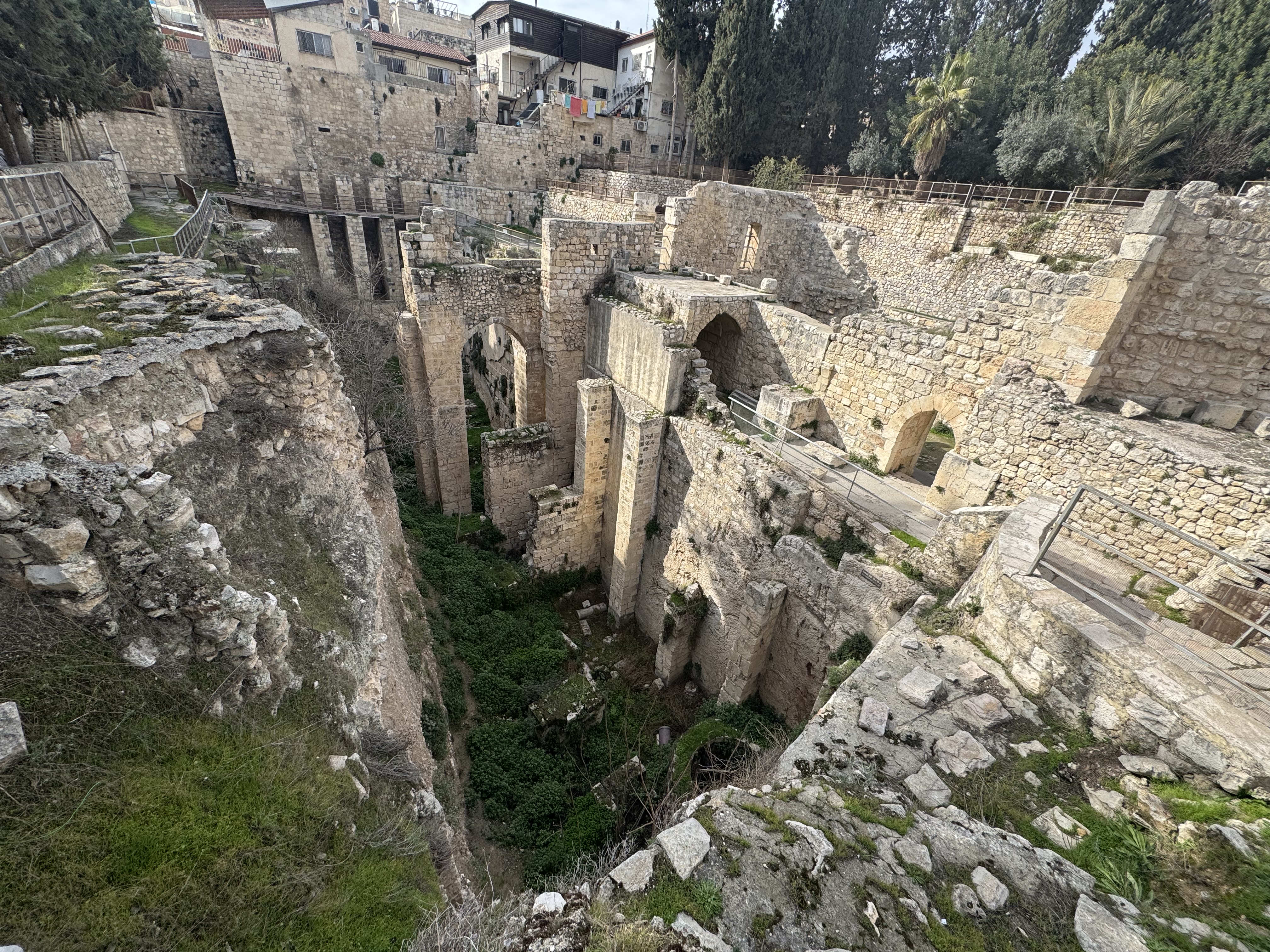
In John 5 we find Jesus, the great physician, engaged with a man who is physically unwell. The Pool of Bethesda is referred to in John 5:2 when Jesus heals a paralyzed man at a pool of water in Jerusalem, described as being near the Sheep Gate and surrounded by five covered colonnades or porticoes. I saw this today and it came to life. (It is also sometimes referred to as Bethzatha) [1] and is now established in the current Muslim Quarter of the city, near the Church of St. Anne, which was excavated in the late 19th century.

The name of the pool in Hebrew is Beth hesda (בית חסד/חסדא) which is a bit ambiguous and could mean “house of mercy”[2] or “house of grace” likely due to the invalids waiting to be healed.[3][4][5]IN Greek it reads Βηθεσδά (Bethesda),[7] appearing in manuscripts of the Gospel of John, include Βηθζαθά[8] (Beth-zatha = בית חדתא[9]) as a derivative of Bezetha, and Bethsaida (not to be confused with Bethsaida, a town in Galilee), although the latter is considered to be a metathetical corruption by Biblical scholars.[10] Franz Delitzsch suggests this is a Mishnaic Hebrew loanword from the Greek estiv/estava, that appropriately referred to stoa (στοά).[11] That would seem to fit here. As I mentioned earlier, when you visit this in person you are looking down into a deep hole. This is because over 2000 years nearly 40 feet of fill has been added to nearly the entire Temple mount. Until the 19th century, there was no conception for the existence of such a pool. The Pool of Bethesda almost took on a mystical or magical persona similar to the fabled fountain of youth. However, Conrad Schick in 1872 was permitted to conduct research on the Temple Mount, which was generally off limits to non-Muslims.[12] He discovered a large tank situated about 100 feet (30 m) north-west of St. Anne’s Church, which he contended was the Pool of Bethesda. Further archaeological excavation in the area, in 1964, uncovered the remains of the Byzantine and Crusader churches, Hadrian’s Temple of Asclepius and Serapis, and the small healing pools of an Asclepeion, the second of the two large pools, and the dam between them.[13] It was discovered that the Byzantine church had been built in the very heart of Hadrian’s temple and contained the healing pools.[14] Essentially, when you see this in person as it was excavated, it comes to life. You see the gentle steps for the inflicted, and the way around them. You see how it was likely off the beaten bath and in the bad part of town.

“Jesus is making his way through the crowd at the Sheep Gate in Jerusalem. To do so he has to pass by a pool. Today, just like every day, it is surrounded by those who cling to life by a thread of hope. Legend says that this pool sometimes becomes the channel of God’s grace. Legend has it that the first one to enter the water after an angel stirs it up will be cured. So the square is full. There are blind, lame, diseased, dumb, paralytics, amputees. The vestiges of an occupied society. The outcasts, the homeless, the beggars. All there waiting for a chance at new life, to be freed of their special form of imprisonment.”[6]

So, what exactly took place? We aren’t given much of his spiritual state, but he seems to have some faith. Jesus asks a pointed question: “Do you want to get well?” (v 6 NIV). As we take a deeper look at this scene in scripture, we might find Jesus challenging our own situations with that question. The passage points us toward considering the areas in our lives where we are seeking healing from the Lord.

If you have any Bible other than the King James Version you will notice that Verse 4 is missing. Perhaps you have a footnote. I always thought the fact that the NIV has 49 blank verses was very interesting and certainly should challenge your thoughts on inerrancy and what that means. There are over 3000 Greek manuscripts and fragments of the New Testament of varying age. Each one was hand copied, which leaves room for mistakes and even practical decisions of what to do with what the previous copyist has done. John 5:4 is one of the verses in contention, as the addition or subtraction from your translation does carry some interesting implications worth exploring, IMHO it doesn’t change the primary narrative.

The verse or perhaps note in your Bible does help to explain the context of the story and the people involved. They believed in a rather superstitious way that from time to time when the water was troubled (it would rise rapidly and then sink again) that this was caused by an angel who visited the pool, and the first person who got into it when it was so moved would be healed. This is akin to what is found in many parts of the world today. Lourdes, in southern France, has a spa which many believe has healing capacities. The shrine of Guadalupe, in Mexico City, has thousands of crutches stacked along its walls where people have been healed in this special place where they thought they could receive a blessing from God. I spent many summers in Ecuador and there were several pools that took on the same notion. In many historical cases people have been unarguably healed.

Of course, Bethesda, and most of the others mentioned are all intermittent springs, thus explaining the rising and falling water lines, but also may give relevance to people’s notions of healing waters coming from the natural earth. As you can imagine the theories vary. Perhaps most of these healings around the world and throughout history can be explained psychologically. When people believe they are going to be healed, and they are in a place where healings supposedly occur, and they do the expected thing, many of them are “healed.” So much of the human process is psychological and/or spiritual. Thus, the pool at Bethesda had established a reputation as a place where people could be healed. Would you call this then a natural or supernatural occurrence? Yes?! Perhaps? Well, that may depend on your theology!

I used to think that this man at the pool at Bethesda had lain there for 38 years. But the text does not say that; it says he had been ill for 38 years. Scripture likely would have identified him as a “lame” man (or a cripple) had that been the case, but we get more of the description that he is weak, feeble, and unable to stand, probably because of some wasting disease; perhaps what we refer to in modern day language as cancer, tuberculosis, or multiple sclerosis.  

The story picks up early in Jesus’ ministry where He is being followed by a crowd at the Sheep Gate in Jerusalem. He approaches the pool where there are blind, lame, diseased, dumb, paralytics, amputees all hoping to be healed. I am sure this was a mosaic of the fallen world. I am sure the stench in the air would have tipped you off to this. Jesus seemed to have a heart for this kind of place and people. There is a certain simplicity that Jesus masters in cutting to the chase. If you have never picked up on this, Jesus always seems to be direct in a sense of what we might think of as “making time or space for something”; but the fact was his expediency commanded the sole work of the father. In other words, that’s the only “time” He kept.

The question was direct and quite simple, “Do you want to get well?” I am sure some wondered if he was making fun of the man, as the question may have seemed quite rhetorical. If the man is here at the pool, then of course he wants to get well- why else would he be here on the “other side of the tracks”?

What is interesting is that the paralytic doesn’t exactly answer the question that Jesus asks. His response is, “Sir, I can’t get to the pool fast enough. I have no one to help me and before I get there, someone else is always first”. I find this pretty common. We are stuck in our world’s way of thinking; our paradigm isn’t that of the ways or mind of Jesus.

But Jesus isn’t actually asking him if he “wants” or “desires” to be healed, (that would be rude), He is actually asking him if he is willing. There is a difference. I get tired of completely “free” and/or “unmerited” grace language in the American evangelical church. I will get there…

I often read the Biblical texts in Greek and Hebrew and when I get to this part, something jumps out at me that you wouldn’t know from the English translations. The Greek word He uses is “thelo”. This is an unusual choice of words for “willingness”. The Greek word “boulomai” is the more common word for such a question of will or desire. But “thelo” carries a stronger connotation which also likely created a bit of a wordplay in Aramaic. Jesus isn’t asking if he has a desire to be healed, he is asking if he is willing to do what is needed to experience this. It is a bit of a word play because the man responds that he can’t do this alone; and that is true – HE NEEDS JESUS. But he doesn’t actually realize what he “needs.” Does he realize healing comes from Jesus not the pool, does he understand that Jesus is asking if he is willing to enter into what may be an agreement or covenant as a result of the offered healing? It isn’t really a deal or a contract but has some ramifications similar. By modern English-American understanding perhaps we call this “strings attached.” There is an expectation to the action and an expected response to such a gift.

Jesus is asking, “Are you willing to do what it takes to be generated whole?” Often in English we need more than one word to express the singular joined words of the Hebrew and Greek languages. This is why translation is difficult and gets into literal word versus thought for thought arguments. In this case “be” is often short for become and functions the same way in Greek. It is also why I would say the better translation would uses the phrase “be generated.” It is one of the rare Greek words that actually carries over into English knowledge as the transliteration is “genesis” which in English shares the same root notion as the word generated. In other words, do you want to start over to be made whole? This healing experience in many ways is what each of us is confronted with, it is the takeaway from the text, what does complete healing look like for you?

Jesus is asking then if He wants to “commit” to a new life. We say that all the time without thinking of the implications of what commitment means. Again, I am sure he doesn’t understand the question and we have the advantage of reading the entire Biblical narrative backwards or inside out to gain a better understanding. Did you know that this same Greek word carries the connotation linguistically of being “sound or good (TOV)?” (The creation story reminds us of this.) Another way we say this is “to be healthy.” You may be familiar with the term “shalom” which is so important to the balance of life and healthy physical and spiritual living. It embraces the whole person, physical and spiritual. It is far reaching in the kingdom.

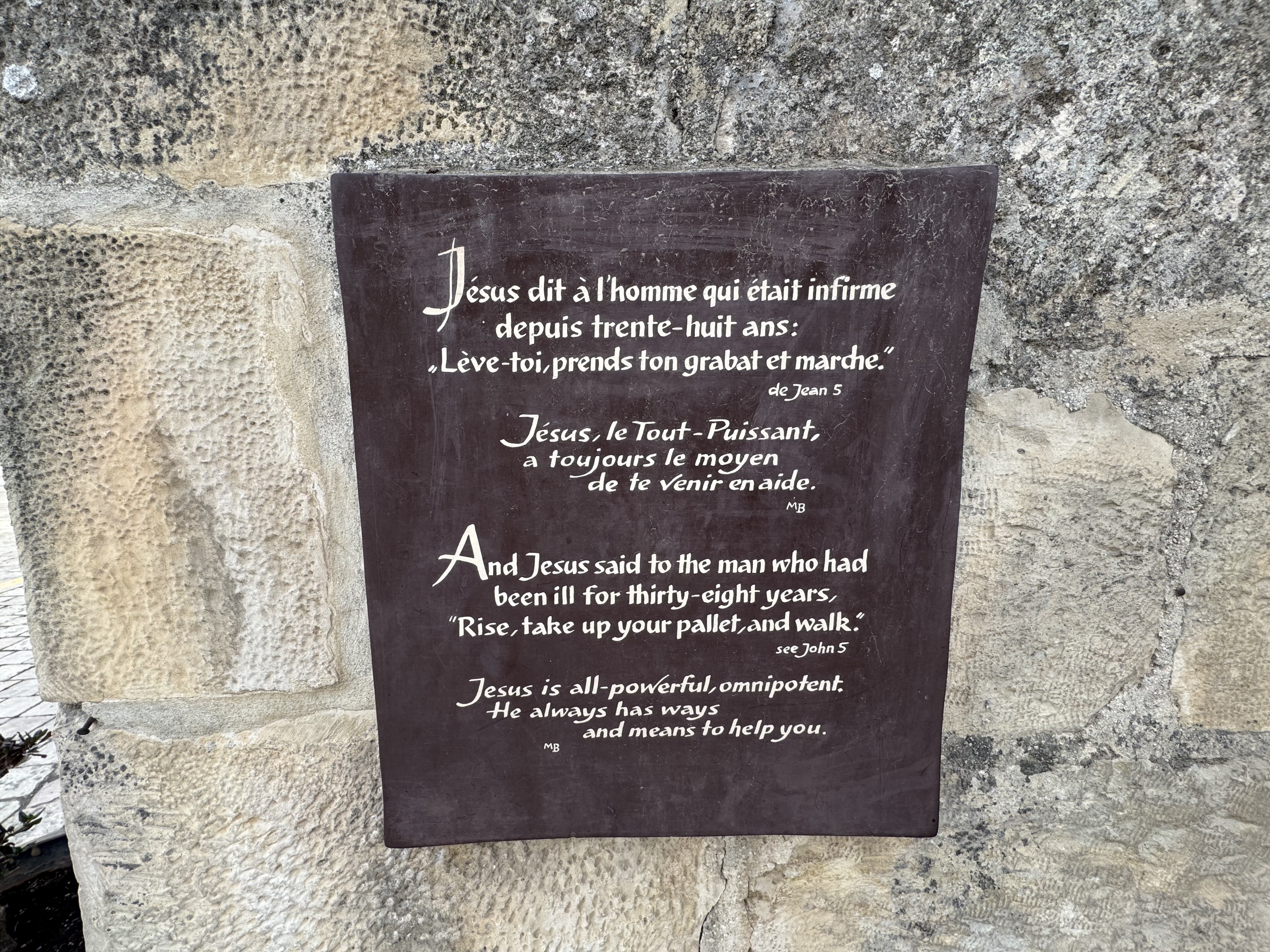
That brings me to the reflective action of this message. Just how ready are we to do whatever is required to begin our own rebirth or regeneration? The man in the story says he needs Jesus and I love the poetic inability. Over and over in the scripture we see that Jesus is looking for a first step and offers for people to simply “Trust Him”. He is asking for first steps of devotion, to follow through right now. He is here, now, in this moment, to help. Take the action of your desire and . . . “Rise up and walk.” Do you see that this is an invitation to all of us?

The reaction on that day would have never been forgotten. The lame man of thirty-eight years stands up and walks. But don’t miss the real miracle- the poetic voice of the story, that without asking, without even knowing or imagining, God visits this victim of the world and asks him to be reimagined for His kingdom. God initiates. God searches. God authors the contact, but our response is important and vital. It is Jesus’ intention to bring this man to wholeness before the paralytic even knows Jesus is there. That is the desire that he has offered and presented to all of us. God cares nothing about your ability. God cares about motivation and action in the midst of inability. Will you complete the covenant gift presented to you?

Maybe the man believed he could be healed, and he wanted to be healed. Maybe this is a story of faith, or maybe it is just a story of what God is offering to anyone, regardless of your faith or even understanding or desire within His kingdom. Perhaps that comes later as a result of enduring devotion and faithfulness. It is absolutely, imperative that you believe Jesus can and does desire to heal you.

Jesus heals in many ways, instantaneously, in a process, and when we see Him face to face. I don’t know what the kingdom sequence or order of why and when is, but I know that He does this, and He will do it completely.

Many of us received initially what was offered (and all of these were miraculous encounters); but perhaps we haven’t completed the circle of the gifted grace. Perhaps we left the covenant on the table. There are “strings attached” that are called devotion, and this devotion is what leads to the preeminent calling of scripture which is to be an “ALL IN” disciple of Jesus. The story wasn’t written with just the expectation to become fans or even simple followers, it was written that we may “become generated” disciples completely whole (and healed) in Jesus. Most American Christians certainly do not fulfill the calling of Biblical discipleship. Yes, it is a free gift of grace, but that gift was given to be regifted or regenerated and show (or display to the world as an image of Jesus in each of us) the way to the new complete life God has intended for you. I feel like many Christians have been quick to take the “free gift” but haven’t followed through with the covenant aspects of the kingdom. We don’t bear the fruit that outwardly proclaims the complete healing inside. Perhaps you’re wondering what you’re missing. I find the answer usually lies in discipleship and devotion. God wants all of us. Thats is what a disciple “works” towards. What does that covenant life look like for you and your family? What does this kind of discipleship look like in your own life and in the lives of those that you are regenerated to impact?

NOTE: If this is the first you have read of such a notion of reciprocal grace I would point you to consider this article: https://expedition44.com/2024/06/23/baptism/

WORKS CITED: 

  1. John 5:2: Contemporary English Version
  2. Easton’s Bible Dictionary.
  3. “Bethsaida (the pool)”. Catholic Encyclopedia.
  4. International Standard Bible Encyclopedia (1995), on sheep gate and on sheep market.
  5. D. A. Carson, The Gospel according to John (1991), p. 241.
  6. https://skipmoen.com/2009/02/do-you-want-to-be-well/
  7. Textus Receptus.
  8. Tischendorf and WH.
  9. Revised Standard Version marginal note to John 5:2.
  10. “Bethsaida”. newadvent.org. Retrieved 6 October 2010.
  11. Delitzsch, F. 1856. “Talmudische Studien, X. Bethesda”, Zeitschrift für die gesamte lutherische Theologie und Kirche.
  12. August Strobel, Conrad Schick: ein Leben für Jerusalem; Zeugnisse über einen erkannten Auftrag, Fürth: Flacius-Verlag, 1988, p. 44. ISBN 3-924022-18-6
  13. https://en.wikipedia.org/wiki/Pool_of_Bethesda#cite_note-Rex-18
  14. https://en.wikipedia.org/wiki/Pool_of_Bethesda#cite_note-Wahlde2006-17

BAPTISM

Baptism, then, is not what produces salvation. It “saves” in that it reflects a heart decision: a pledge of loyalty to the risen Savior. In effect, baptism in New Testament theology is a loyalty oath, a public avowal of who is on the Lord’s side in the cosmic war between good and evil.

Michael Heiser, The Unseen Realm

Baptism is important. In many ways, I think it is the purest example still intact today of what it meant to make an allegiant statement as they did in Jesus’ day. I am often asked what do you say when you baptize someone? People question as if there is some kind of magical phrase or potion that comes with Baptism. It probably won’t surprise you that I don’t really like the usual repetition of words that often come with baptismal “services”. You have probably heard a pastor proclaim something like, “in obedience to our Lord and Savior Jesus Christ, and upon your profession of faith, I baptize you in the name of the Father, Son, and Holy Spirit. Amen.” It’s not that I have a big problem with these words, but my issue is more that the repetition of liturgy from scripture today probably wasn’t really what the authors had in mind here and in other similar situations such as the Lord’s prayer. But that doesn’t make it wrong to do so either. The words of baptism are important whether you see the act as a sacrament or more of an allegiant profession of faith. Nearly everyone sees baptism as an outward sign of a decision that has happened in the head and the heart. It’s the best picture of Biblical 1st century allegiance still found within our modern western culture.

“Do you not know that all of us who have been baptized into Christ Jesus were baptized into his death? We were buried therefore with him by baptism into death, in order that, just as Christ was raised from the dead by the glory of the Father, we too might walk in newness of life.” Romans 6:3-4 ESV

We usually think of life at baptism, not death. We want to think joy and often in western thinking death is not joyous, but Paul’s culture (yes, I continue to arguably allude that Paul wrote Romans or at least had it penned) didn’t think like this. Death was often honorably esteemed and eventually everyone would die.

So why does Paul choose to use the phrase baptized into death? We need to consider how first century followers viewed baptism. Within Judaism, but also other religions baptism was a standard practice of renewal or cleansing.

Without venturing too far into this, baptism in the New Testament signifies an allegiant lifelong commitment (purification) similar to what God asked of Abraham in the covenant of circumcision. There are several connections that are important there.

At the time when this was written, the Greek term (which we transliterate “baptism”) was also a verb used to describe violent acts like drowning. We also see this similar usage in Luke 12:50 and several other places in the Bible. The author wants the reader to consider complete (possibly even violent) death of the old life. All that a person was, any influences you may have been under, any oaths of allegiance, and claims to who you were, even to the point of what you might have been completely immersed (water drowning metaphor) into that kind of living (antinomianism). Paul says it is now dead, all of it.

That’s why when Jesus says the centurion in Matthew 8 has more faith than anyone else (I have not found anyone in Israel with such great faith) it was likely a death sentence, and the centurion was ready for that. He literally was ready to give up his oath of allegiance and life spiritually, but also physically. (That would have been the natural consequence for a centurion that placed their allegiance to anyone other than the emperor.)

When we choose to bury all that was us, we in turn accept new life in Christ pledging the reciprocal dance of grace. I have used this expression several times in the book. [The Roman writer] Seneca explains the image of three dancing connected by grace: a benefit ‘passing from hand to hand nevertheless returns to the giver; the beauty of the whole is destroyed if the course is anywhere broken’ (Seneca, [De Beneficiis, meaning “On Favors”] 1.3.3-4). The “three graces” picture visually represented how grace was understood to function in the first century Greco-Roman world in which Paul wrote. Grace (charis) originated with a generous giver usually thought of as the Benefactor. Often the Benefector was introduced to one in need by a mediator. The gift was then accepted by the recipient (client) who in his or her thankfulness and gratitude in turn extended the gift (grace) to others, and this in turn benefited the original giver. The recipient in many ways became a representative of the Benefactor to those in the Benefactors society. Coaching or mentoring towards what the Benefactor desired was often nurtured through the mediator to the recipient. It became a continual relationship between the three entities. In this unbroken circle, everyone was understood to benefit. In this sense, God works through Christ in us as we freely receive the gift and continue to give all of it to others as they are then introduced in the same way through the mediator to the father. Everything is freely given.

We often use the word “adopted” when describing our new relationship in Him. In the Greco Roman Empire adopted beings could not be disowned as natural born children could be. When you were “adopted in” you were guaranteed the new life promised to you by those that gave the pledge to adopt. You were an heir that could not be passed over in terms of inheritance. It was a new covenant that was cut for you. It was a free will reciprocal agreement even though it seemed like the party adopting had everything to lose and nothing to gain; but as we all know with children that isn’t the case. The blessing is reciprocal.

Baptism is a confirmation to lifelong allegiant faith, a way of life given to king Jesus. An entrance into a beautiful, joyful, reciprocal dance of grace but starts by putting to death “all” that you were. You are no longer your own but His, a new creation by which your very life is an image of His whom you belong. He is in you and your life is a temple that bears His name. Your very essence is to bear the light of Jesus and extend that gift to others. This is not of yourself but only in the grace of our Lord and Savior Jesus Christ.

In life you are now set apart to serve. The Hebrew word ‘abad (עבד) can be translated as “to work,” “to serve,” or “to worship.” This is the word that is used to describe the original mission for humankind.

In essence, through baptism, we return to our cosmic calling. In faith, we worship as we serve. All that we are, we are in Christ.

This article is an excerpt (Chapter 9) from Dr. Will Ryan’s book, This is the Way to Covenant Community.

Want Even More? Dive in here: