I grew up in an incredible home. Had one of the best relationships with my parents (particularly my dad) a kid could ever hope for. Was grounded in my faith from an early age and have been humbled by what God has allowed me to be part of for his kingdom.
God has blessed me beyond comprehension with an amazing Godly woman and an incredible family that is wholly devoted to Him
God used my life as part of teams that have planted several great successful churches
God used me to personally shepherd and disciple over 100 people
By the Grace of God, I was used to rebuild a seminary (as the president) to over 400% growth in 2 years and build over 30 new courses with kingdom partners
By the Grace of God, I have founded a YouTube channel with 130,000 subscribers
By the Grace of God, I have written numerous Theology books and hold a Th.D.
Together we built a photography company nominated Wisconsin’s best photographers over 15 times
Together we have seen more than 30 countries
I was able to compete in professional soccer in Europe, adventure races, marathons, various skiing races and competitions, and firearms various disciplines
Whatever I have touched God has prospered. Thank you Yahweh.
I have spent a great deal of my life studying the Bible and as I look back listing all the things above, it seems like vanity; I am tempted to agree with Solomon as he started out Ecclesiastes, “Futility of futilities! All is futility.” Yet in the same breath, I feel I have journeyed well before the LORD. Transparently I could have done much better. There have been bumps, bruises, and hardship at times, but also unending joy. There are stands I made that I wish in hindsight I would have instead turned the other cheek and walked away from; and there were times when I walked away, and I wished I would have been more persistent to stay the course. But regardless of my choices the LORD has given grace and continued to cover me with his providential hand.
The Qohelet writes a dispassionate assessment of human existence, concluding that nothing really matters much over the course of eternity. However, I am not sure I agree with the teacher said to be the wisest of all men. But that is the mystery of and the contranym of Solomon – the Wisest man who lived the “least wisest” life. But maybe that is exactly what we are supposed to read out of the wayward narrative, perhaps the most discouraging book in the Bible.
As Heschel would say, I need something that carries me out of the empirical somnambulist. That something is the Hebrew integration of ritual with faith. I have become a partaker in OUR redemption from exile. Today as I reflect back, I couldn’t be more satisfied with the course I have chosen, yes there were some rough moments and there will continue to be. The exodus began with Abraham, and it won’t end for many generations of faithful followers until the kingdom of God is established on earth. You and I are in that traveling community, the ones who are in the great waiting. But we are standing still, we are in motion, “exodusing,” leaving behind what interferes with the intended journey on a pathway that despite some tribulation culminates with joy. Thank you, Lord, for a beautiful plan.
I was born in 1974. I am 2 here in 1976. My dad was a preacher in Indiana, Iowa, and New Mexico for most of my life as a child. I remember the church memories the most. Hunting for rattle snakes, riding horses, building legos, fishing (my dad was a pro bass fisherman), and drinking from the garden hose with my faithful dog brandy.
This is a few years later in 1980 with my two favorite people that have now been gone for quite some time but are also still with me every day. I sure loved my dad and my grandpa… and there is that dog! At least her rear end! She went everywhere with me.
We moved from South Haven Indiana to Lake Geneva in the late 1980’s for my parents to start the JH at Faith Christian School. I am number 22 (ironically if you know the ontology of 44). I didn’t really like basketball, I was a soccer kid, but it was good for me eventually being part of 2 state championships as the starting point guard all 4 years of high school. All those years of my dad playing 1-1 games with me in the driveway paid off I guess.
I knew God was calling me, so I went to Moody in 1993 where I studied Biblical theology under Dr. John Walton. I played soccer for the Chicago kickers which gave way to the MLS Chicago Fire who I had the privilege of practicing regularly with in their first couple of years as they won the championship. I also was able to play soccer in Wales for Conway United. In 1997 I graduated early and enrolled at the UW to study Curriculum and Instruction (the first of many advanced degrees) and took a job teaching at Faith Christian School with my parents! I also started back 180 while I was there which was a college ministry at Calvary Community Church and began to be mentored by Dr. Howard Matson where I also was shepherded by his good friend Dr. DA Carson.
I bought our first house just before we were married. I transitioned from Calvary to be a part of the team that started Lakeland Community Church and have such fond memories of those early ministry days. After a few years, I switched gears and helped found the River Church. I continued studies at the UW eventually rekindling my relationship with Keith N. Schoville who served as the chairman of the UW CANES department. He was also the president of the Near East Archaeological Society and professor emeritus at the University of Wisconsin–Madison. I became friend with Dr. Michael Heiser and acquaintances with Dr. Tim Mackie (currently of the Bible project) as I pursued a Ph.D.
SANYO DIGITAL CAMERA
In 2001 I met Krista. I was (and continue to be) good friends with the Mielke family and had little Karli ask Krista out for me to our first date! She said yes and we were married a few short months later.
She rocked my world and still does nearly 25 years later. I called my dad on the way home from my first date and told him this is the woman I would marry. We continued to pursue Jesus together and travel the world on missions.
We got a puppy the same year we got married and named her Charlet Moser after an Ice Climbing company. We sent her away to hunting school and visited her on the weekends for 2 months. She became one of the greatest hunters I have ever seen. We would take here to the boundary waters and she refused to get in the canoe and swam 20-30 miles a day next to us.
Lots of great trips to Alaska and many other adventures with great friends in this era. Great skiing memories!
In 2005 we welcomed Ty! The doctors said he wouldn’t make it. He was in the NICU for 6 weeks and was lived to be soooo healthy and full of life. He was a miracle baby. But a few days after he was born, we unexpectantly lost my father. It was the hardest time in our life, Somehow, we managed smiles in this photo taken shortly after when Ty came home to us. Praise God.
In 2008 Will was born! Ty was so happy to have a little brother! But it wasn’t long before Ty’s perfect rows of trains were being destroyed by “baby Destro” as Will became affectionately known as by his big brother.
Skiing has always been a big part of my life. I competed in college in the FIS Freestyle World Cup – Moguls & Aerials as well as the Bud Mogul Tour. I also got to be part of the World Extreme Ski Championships (WESC) in Alaska’s Wasatch Mountains where I met Doug Coombs (now passed) and Glen Plake who I still 4 wheel with occasionally. Krista and I spent nearly every night skiing with Andy and Abbey at the Grand Geneva.
The early years of kids were so fun. Krista and I continued to travel, make great friendships, coach, and be immersed into all kinds of ministry together.
This is the “boys trip” to ALASKA with George, Russ, Sonny, and Ty in 2009 (The trip my dad always wanted to take.)
Kade came to us at the end of 2009 making life oh so sweet! The Ideal Impressions team (as I have been a tent maker in ministry most of my life out of biblical conviction) was growing and ministry at the River was flourishing.
Ahhhhh the trip to Greece!
Reid was born in 2011 completing the family (but also making family photo shoots very challenging!!! (love this little kiss though!) The River was super great, I started competing in off road Rock Crawling events, and life was in full swing!
Reid was in the NICU for many weeks (and was also a miracle baby) and came home completely healthy. Praise Jesus!
Will Went to the Boundary waters in 2012 on his 3 year old trip.
Kade Would go to Moab on his three year old trip in 2013, & I started building hard core Jeeps and lost all my hair that year!
This was a great era in life! So many great family adventures!
2013-2014 images
Reid’s three year old trip to California with my great life friend Troy!
2015 – Grandma turned 90! WOW Also shot the 2nd biggest dear in WI to date, the 61 point buck that year!
In 2016 we lost a legend. My Grandpa was one of the best! I built my first comp buggy that year too. We also started attending Mt Zion Church in 2016.
2017 was a big year in many ways. I finished my Doctoral Degree and started working with Covenant Theological Seminary teaching Ancient Near East Studies. I also started “EXPEDITION 44” as a passion pursuit not knowing what it might turn into. We opened the Range. Krista lost her mom to ALS this year.
2018 – I started the Expedition 44 YouTube Channel this year and hit 10K subscribers in the first year!
2019 Matt came on board to x44 and we hit 50,000 subscribers later that year. My wife and I coached Soccer at Mt Zion
2020-2025 has been unreal. In many ways I don’t think it could be much better. Over these years I became the Head of Theology at Covenant Theological Seminiary and eventually the President. Ideal Impressions and White River Field and Freedom thrived, Expedition 44 jumped to over 130,000 subscribers. I wrote several books including the This is the way Series. I built a lot of off-road project vehicles; we started Range nights and eventually TOV. God has certainly blessed our family. Today I consider where we have been and what God has for the next chapter. The boys won various soccer tournaments including the WI Badger State Games, and Ty went to state in track two years in a row and received a full scholarship to Wisconsin Lutheran college just 3 turns and 36 minutes away!
50 in Hebraic thinking is the year of jubilee — yovel in Hebrew — following seven cycles of seven-year shmita, or sabbatical. To another favored 50! Thank you to my best friends and family. Shalom
You have been told your entire life that good Christians should “do their job” and vote. That is the mainstream evangelical Christian view. However, everyone knows “that guy” who seems to be a great Jesus follower and has either totally politically checked out to go live like a monk or perhaps has just convinced himself that the way of the cross isn’t to become “overly” politically aligned as a Christian. To most in the first category the second two positions may also seem “un-Christian.” Nilay Saiya in his global politics of Jesus [1] describes these three positions as the Patriot position or Christianism believing it is your biblical responsibility to vote (7 mountain mandate type of thinking), the second position he describes as the pietists position or detachment such as the first century Essene community; and the last being that of the prophetic witness position describing more of an exilic position of speaking truth passively as a witness. Perhaps there is a time, a calling, or season for all three in your life dependent on each specific situation and your personal position, but as with most issues pertaining to our modern lives, the word of God is not silent here. Let’s see what it says.
Global Christianity – What we all agree on
As with all x44 articles the intended audience here is those that are “all in” for Jesus. For the most part here is what the all in community agrees on. Jesus inaugurated a new kingdom and set apart nation. There is nothing that Jesus talked about. After his resurrection and victory over death on the cross, Jesus assumed the throne in the heavens and sent His spirit to dwell in us. This kingdom is here and now as well as described as coming (eschatologically.) To be clear, the Bible treats this kingdom as a rival kingdom to the other kingdoms of the world using phrases like, “you can’t serve two masters.” The definition given of those that are not in alignment with this ideology is that of “an enemy” to His kingdom even describing some that claim to be His followers as lukewarm unequivocally stating that “He never knew you,” which seemingly describes those that do not follow his commands to leave their formal world behind and live in complete devotion to Him. As strange or counter cultural as it may be, the hope of this kingdom is that the “enemies” might be reconciled by these “good neighbors faithful to Jesus” and eventually won over and shepherded into obedience into the Jesus kingdom. We are told eschatologically that Jesus will eventually wipe away all the other kingdoms of the world. In this nation Christ alone is King.
To those in the original intended first century audience this word certainly would have been received as traitorous and blasphemy towards the Roman empire and the emperor, which is (in part), why Jesus was crucified and explains the sign over his head. Nevertheless, entering into the Kingdom and coming into belief in and agreement with the terms of the king is how salvation is achieved. The Bible describes this decision of our heart and mind as being born into new life, we are then dead to our old ways. We gain citizenship to this new kingdom (Phil 3:20) and should no longer desire or pursue our former life. We are dead to it in every way. We willingly and full accept the call then to function as ambassadors of the new kingdom towards those still dying in the old rival kingdoms of the world as we now happily exist as foreigners or exiles dwelling in our former broken world which scripture describes to be ruled by Satan. The Jesus kingdom is characterized and embodied by those who serve others not themselves, those with the desire to love their enemies and turn the other cheek in grace and mercy shepherding and winning them over them to a better more beautiful way of life. As ambassadors to the pagan nations, we are the physical manifestation of Jesus to our world. In this way, Christians are called to pledge their allegiance to God and his Kingdom, not to any worldly nation, government, political party, flag, or ideology. One of the main tasks of a Christian is to live set-apart which means separated. Separated from what? The world. To live wholly devoted and undefiled for Jesus.
Of course, 2000 years later some circumstances might complicate, cloud, or entangle your thinking. Paul was a part of three kingdoms, he maintained Jewish citizenship, Roman citizenship and was certainly fully devoted primarily to the Kesus kingdom. Most Jesus followers didn’t have a “vote” in Rome; yet today our Rival nation asks us what we think by casting a vote. It is actually pretty amazing that the evil empire allows Christians a vote. In many ways every decision you make is a “vote” of some sort.
Patriotism doesn’t necessarily mean you love the evil satanic ongoings of our government and Washington DC, although it certainly can and often does; but the better idea is that you love the people of the nation and the soil by which it is represented. Godly presence means that the land you inhabit became sacred space unto the Lord. Eventually all the land and world will be won back for the Lord and consecrated back to Him. Do we start now? Isn’t that what we are supposed to be doing?
The enemy is willing to give you a “place” at his table, should you take it? Would Jesus have eaten at that table? Obviously, peoples answer to these questions, even based on scripture and interpretation will vary. Jesus “entertained” the table but not the rival kingdom.
Christian Patriotism
As much as this is the mainstream view and what most Americans believe the Bible teaches, the exegetical “proof” (IMHO) is slim if there at all. However, those that believe that the Bible aligns with casting a vote for your government make a rather convincing philosophical argument. Some of the founding fathers truly believed and sought after creating a platform of government in America by which Godly principles and Godly men could lead our country. Charles Finney, John Adams, John Jay, and Samuel Adams are amongst my favorites that I truly believe were “all in” seekers of the Jesus kingdom, but my verdict is out on the other 55 people in that “boarded up” room. If you haven’t listened to our Expedition 44 interview with Michael Gaddy, I would encourage you to give it a listen. In one regard you might not care what the founding fathers said or thought or might believe that only 4-5 of the founding fathers were postured towards the kingdom. What they say isn’t God’s voice to you and therefore you might think is largely irrelevant to you. But that view might seem to take on a selfishly driven perspective of historical learning.
There are a few ideas in the Bible that might promote such a dual citizenship. Matthew 22:37-40 tells us to Love God and our neighbor. If we truly want the best for our neighbor, wouldn’t we exercise our influence against the evil atrocities of the world and government? But if your already not a great neighbor and you use this passage to justify voting as helping your neighbor then you have some “order issues” or might be guilty of doing something you are accusing others of (ie being a hypocrite and we all know that isn’t helping the body of Christ with their “image”.)
Others might cite Romans 13:8 or I Tim 2:1-4 or even Gal 6 as having influence in our world. The New Testament is filled with examples of Godly people who do not obey the government. As there is a conversation of the narrative and the authors personal opinion coming out in their writings. The bible makes it very clear to follow Jesus first and foremost. Paul himself, the author of the letter to the Romans, disobeyed the government on numerous occasions. Paul uses the word ‘hypotassō,’ which gets translated as “subject.” Paul could have used the word ‘hypakouō’ which means ‘obey,’ but he doesn’t. This difference in words is important.
One of the problems with this view is political corruption. Does your vote even matter? Personally, probably not, but collectively -Yes (is hard to argue). Much of the Biblical theme dwells on the communal body of Christ making a kingdom difference in the world we live in.
Piety / Detachment
When you start asking questions like, whose table are you eating from, or whose flag are you flying, or who are you “in bed with,” you might understand the current political problems of potentially aligning with any system of the world. You also might find an issue with casting a vote for someone you don’t think is a good person, or should we be voting for anyone that isn’t directly part of the Jesus kingdom? (But then the issue comes that if you think this way then no Christian would ever be in a place to vote.) Are you voting for the lesser of two evils – well then, you’re still voting for evil? How does that work as a Christian? There are many Biblical reasons why some have decided to simply not be “aligned” with any system of the world and remain “checked out” of that world and only interested in the happenings of the Jesus Kingdom. The Essenes were an entire first century culture that chose to go this way. Some conservative Baptists also have made choices like this. Most of the prophets were aligned this way and John the Baptist seems to also be described in a similar historical context. Rather than get wrapped up in the ways of the world and their ongoings maybe it would just be better to exit that arena and completely focus all of your time treasure and talent on the kingdom of Jesus? Sounds sort of Biblical, doesn’t it?
Prophetic Witness
This seems to be where Jesus hung out. Tends be personified by a pacifistic voice. It finds its basis by taking exilic language and applying the “babylon” thinking to the context of our current situation.
Jer 29 4 Thus says the Lord of hosts, the God of Israel, to all who were carried away captive, whom I have caused to be carried away from Jerusalem to Babylon: 5 Build houses and dwell in them; plant gardens and eat their fruit. 6 Take wives and beget sons and daughters; and take wives for your sons and give your daughters to husbands, so that they may bear sons and daughters—that you may be increased there, and not diminished. 7 And seek the peace of the city where I have caused you to be carried away captive, and pray to the Lord for it; for in its peace you will have peace.
Beginning with Moses, God appoints several figures to act as Prophets. Walter Bruggemann, asserts that the task of the prophetic is to nurture, nourish, and evoke a consciousness and perception alternative to the consciousness and perception of the dominant culture around us. Prophets speak truth to power—yes, but they are also there to remind the people of God who they are and to speak as one of the Spirit. [2] As Christians we have been commissioned to make disciples, not political leaders. We have sacrificed our witness at the altar of power. We are Kingdom people— Kingdom of God. We are not empire people.
THE WRAP UP
I echo the call of Bryan Zhand: The entire creation is groaning for the Sons and Daughters of God to reveal themselves (Romans 8:19). [3] Some would argue that we can’t escape the “politics” of the world around us, and maybe we shouldn’t be trying to. Our politics (if any) must understand the Kingdom of God first and the politics of Jesus is our platform. As I began stating, the body of Christ has many dynamics. Those that are part of the same body read and interpret the same text differently. They see the ongoings of the world and the way Jesus interests through different lenses. Time and situations are constantly shifting. What you couldn’t or wouldn’t consider or justify last year you might this. We should all be in a state of rethinking and reconsidering truly what Jesus would do in each and every situation. Edification is sometimes supporting your brothers and sisters in Christ when you might not fully get them. Seasons change, people change, but God’s character is unchanging, and his ways are always faithful to us despite our broken ways.
“So therefore, any one of you who does not renounce all that he has, cannot be my disciple.” – Luke 14:33
If you know me at all, you know that I am an “ALL IN” guy for the Kingdom who believes we shouldn’t be holding anything back for Jesus. Luke 14 calls us to be rival to anything that opposes Jesus, but with the context that even our enemies might be won over to Him.
“RENOUNCE ALL” – Jesus had some “HARD SAYINGS” but this one might take the cake! Today in our American Christianity or churchianity paradigm we seem to just simply ignore this one! This flies in the face of health and wealth prosperity preaching seeming to identify that perhaps Christians should sell everything (Christ’s words to the rich young ruler and the Acts 2 mindset) and live as paupers for the kingdom. And to be clear, I do think it takes on that tone.
But let’s take a closer look, in Greek the phrase is ouk apotassetai, which literally would be to “not place in order from”. What’s very interesting to me is in the New Testament every single time the verb apostasso is used it is in the middle voice. I would venture to say this is the only treatment of a verb this way in the entire text. It is very rare and unusual, so it makes me take special interest and ask why? When we say to “not renounce” something then, it takes a sense of “to place in order away from myself”. Understanding the literal translation of the Greek phrase means that when we read paying attention to the grammar of the Greek language you come out understanding that the mindset is to restructure or reorder, we give up chaos for order to come to proper balance in the kingdom. A life of shalom. So, if I had to translate the middle voice thought into this (as some translations like NT Wright’s have attempted) it might better read, “No one can be my disciple who does not take up the proper priorities in terms of possessions for Godly order over the world’s chaos.” Of course that doesn’t read well! Furthermore, the middle voice almost always implies that Christ is taking the action for us, that it is something out of your control once you come to the posture called for, usually devotion but in this case is actually a step more than that -it leans towards the harder definition of Jesus into discipleship. (What seems to follow the progression of fan > follower > disciple.)
If you don’t take on the posture of Jesus with your worldly things you can’t possibly enter into Jesus’ definition of discipleship. They must be renounced or completely re-ordered. So, the takeaway is what you can’t do is keep the prioritization of the world and still attest to be on the track to discipleship.
Everything is His and if you attest to be “all in”, than nothing should be your own. That’s why tithing in the New Covenant is a hard conversation. Tithing along with the Torah in the Old Testament was to be a stop gap until all things could be reconciled by Jesus. Now that “WE” have Jesus everything is His. If your on track your not thinking Tithe or Torah your thinking everything! (YOUR LIFE) Nothing is your stuff or your time. And the path to sanctification is more of Him and His kingdom ways and less of your world ways. A complete transformation that finishes eschatologically (but in que on this world) with you being made completely into the image of Jesus.
You don’t need to “create time or space” for Jesus if all of your time and space is for Jesus. You no longer have claim to anything of the world, YOU HAVE RENOUNCED THAT NOTION!
If you catch yourself beginning to collect things for your earthly storehouse that has no place for kingdom endeavors your posture for the kingdom is out of balance. You are mis-stepping the path of discipleship. The text says anyone off course can’t be my disciple. Do you want to be a disciple? Are you willing to come to a complete posture before the Lord to enter this covenant? Are you willing to “give up” everything to be a disciple?
One reason generations are disengaging from the church is because of the mixed messages the church has sent for years. Many people have become disillusioned with the division in the American church and one of the reasons is because we’ve exchanged a biblical gospel that exalts Jesus above everything in the world for an American (progressive) gospel that prostitutes Jesus for the sake of comfort, control, power, politics and prosperity in this world. I’m compelled to pray, God, we want to renounce it all. I pray that we don’t settle as disciples of Christ. I pray that we might be in absolute devotion to Jesus’ deeper covenant relationship both in this life and eschatologically in the coming kingdom.
In the last 10 years there have been several books written that speak to this:
Will Ryan – This is the Way (Series)
Boyd – The Myth of a Christian Nation
Zahnd – Postcards from Babylon
Bates – Salvation By Allegiance Alone
Sprinkle – Exiles: The Church in the Shadow of Empire (Church in the Shadow of Empire)
Wright & Bird – Jesus and the Powers: Christian Political Witness in an Age of Totalitarian Terror and Dysfunctional Democracies
Platt – Don’t Hold Back: Leaving Behind the American Gospel to Follow Jesus Fully
But before all of these there was a classic called – Persecution in the Early Church, A Chapter on the History of Renunciation, by Herbert B. Workman, in 1906
The opening pages of the New Covenant declared this same philosophy by Holy Cannon. John the Baptist was the precursory proclaimer of this truth as ‘the voice of one crying in the wilderness, prepare the Way of the Lord’. The explosive scene that his ministry encapsulated could be summarized by the title we all know him by: The Baptiser.
Matthew 3:1-3
In those days John the Baptist came, preaching in the wilderness of Judea and saying, “Repent, for the kingdom of heaven is near.” This is he who was spoken of through the prophet Isaiah:
“A voice of one calling in the wilderness,
‘Prepare the way for the Lord,
make straight paths for Him.’”
This message was approved by Heaven through the institution of baptism as an expression of forsaking all other allegiant positions as a returning to the One True and Living God. His message was demonstrated by a public display of that newfound loyalty through the waters of baptism signifying a washing away of the old for the embracing of the new. This message spread like wildfire among the religious Jews and even impacted the gentile population in their midst.
Vss 5:6 “People went out to him from Jerusalem and all Judea and the whole region around the Jordan. Confessing their sins, they were baptized by him in the Jordan River.”
In keeping with the divine purposes of his message, he adamantly declared that those wishing to embrace this new allegiant life (the path to discipleship) MUST renounce all other places of faith and fully submit to the Kingdom life.
Vss 7-8 “But when John saw many of the Pharisees and Sadducees coming to his place of baptism, he said to them, ‘You brood of vipers, who warned you to flee from the coming wrath? Produce fruit, then, in keeping with repentance.’”
A requirement for John was the ‘produced fruit’ consistent with a changed heart. John was not looking for new FaceBook subscribers, or popularity in his ministry… the purpose was to transform lives. This was accomplished through radical, immediate, and noticeable lifestyle reflections consistent with true, sincere, and authentic repentance. What John was doing, and ultimately what Jesus declared in His Gospel, would find direct and deadly conflict with the hierarchy of Judaism and the control of the Roman system. So deadly in fact, both John and Jesus were martyred for their unified message.
In a life application aspect what John was requiring was real, daily change. The tax collectors were told to stop their extortion. The soldiers were commanded to treat others with respect and to cease being bullies for personal gain. The religious were charged with throwing away their masks of self-righteousness and hypocrisy and embracing a non-legalistic view of worship.
For us today, this message should still resonate as loudly and powerfully. What should we cast aside for the throne of Jesus in our soul to be unchallenged? Where in our hearts, attitudes, finances, relationships, and time are we being prodded by this message of complete allegiance do we find the world challenging the supremacy of Christ?
During the first few centuries a great conflict arose between Rome and those obedient to Yahweh. By Roman theory, the national state was the one sole society that must engross (take up, control) every interest of its residents: religion, social, political and humanitarian. In other words, the state should be the supreme authority in one’s life. Romans wanted Christians to take their part as loyal citizens of the empire, discharging the dues, performing the obligations of a citizen, displaying complete loyalty. The Christian replied, “We worship no other.”
Under Rome, all new “societies” were required to obtain a charter or permission from the emperor or from the senate. If the group was not granted permission under the state, they were considered “rival” to the state. The extreme penalty was treason, punishable by death. Christians were not persecuted because of their creed, but because of the absoluteness of the Christian faith.
To say that Jesus is Lord was a statement against the empire. “No King but Jesus” became the rallying cry of the true believer and also the last words of many persecuted and martyred Christians.
The Jewish–Roman wars were a series of large-scale revolts by the Jews (and / or Christians) of Judaea and the Eastern Mediterranean against the Roman Empire between 66 and 135 CE. [1] These wars were in large part over the “kingship” of the peoples. Could Rome demand sole authority? Although the Diaspora of the Jews started many years before this, the Jewish–Roman wars had a devastating impact on the Jewish people, transforming them from a major population in the Eastern Mediterranean into a dispersed and persecuted minority. [2] Most scholars would consider this charge of Jews and Christians to not give allegiance to Rome over God and / or Jesus as the major distinguishing feature of what defined an all-in follower of God or Jesus. The First Jewish-Roman War culminated in the destruction of Jerusalem and other towns and villages in Judaea, resulting in significant loss of life and a considerable segment of the population being uprooted or displaced. Those who remained were stripped of any form of political autonomy. Subsequently, the brutal suppression of the Bar Kokhba revolt resulted in even more severe consequences. Judea witnessed a significant depopulation, as many Jews were killed, expelled, or sold into slavery. [4]
Jews were banned from residing in the vicinity of Jerusalem, after the central worship site of Second Temple Judaism, the Second Temple in Jerusalem, was destroyed by Titus’s troops in 70 CE. [5] The destruction of the Temple led to a transformation in Jewish religious practices, emphasizing prayer, Torah study, and communal gatherings in synagogues outside of Jerusalem. This pivotal shift laid the foundation for the emergence of Rabbinic Judaism, which has been the dominant form of Judaism since late antiquity, after the codification of the Babylonian Talmud. [6] But this also gave way to the rise or continuation of Christianity. As Rabbinical Judaism spiraled down, Christianity rose up taking on many of the same “anti-empirical” thoughts towards the ruling over them and their religion by Rome. Perhaps more than before Christians were now vowing allegiance to Jesus over any other form of worldly government. Persecution has always had a purifying effect on the true people of God.
By the third century, emperors were realizing that the Church was not a mere body of anarchists to be rooted out wherever necessary. The Church was fast becoming a rival organization of growing strength and power. The aggressiveness of Christ’s followers was viewed by Rome as a very real threat to their worldwide domination.
By the middle of the third century, the more energetic rulers organized efforts to crush out the Church by the use of all the resources of the state. The police measures taken at Antonines (Roman Emperors who ruled between 138 and 180: Antoninus Pius and Marcus Aurelius) gave place to a civil war without quarter (mercy offered). But, unlike all other civil wars, only one side was armed. Strange to say, this was the side that was ultimately defeated. On the one hand were the immense resources of the Empire, centralized in one supreme will. On the other side was the PASSIVE RESISTANCE OF CHRIST’S FOLLOWERS, making the state’s massive recourses useless. The Christians were a peculiar people, with peculiar views of their own. They wore no distinctive garb (clothing: outward appearance)in the world, yet they were definitely not of the world. “We are supposed to live aloof from crowds,” said Tertullian, an early Church leader. [7] Their opponents phrased the matter differently. They are “a people who separate themselves and break away from the rest of mankind.”
The pacifistic early church Christians seem to have gotten Jesus words a bit “more right” compared to the war mongers of 70 AD. It was hard to find an occupation in which the Christian could engage without compromising with idolatry. Some said that if they did not compromise, they would be cut off from every means of livelihood. Tertullian replied that, “faith must despise starvation as much as it despises death.” [8] But the more the Christians prospered, the more their neighbors “hated them” or perhaps “grew envious of them.” The Christians professed, “nothing was more alien to them than politics.” [9]
In practice, Christianity and the Empire proved fundamentally antagonistic. They were rivals in conception and method. Each claimed to be a kingdom of universal sway; each created a Church of universal obligation, each demanded absolute loyalty to its supreme lord. Between Caesar and Christ there could be no compromise. [10]
BART D. EHRMAN
Persecution was the direct outcome of the Christian doctrine of RENUNCIATION. To renounce meant to disown, reject and disclaim. The early Christians were renouncing their allegiance to the Roman Empire and denying any connection to it. In other words, the Christian ceased to be his own master, ceased to have his old environment, ceased to hold his old connections with the state. In everything, he became the bond-servant to Jesus Christ. In everything he owed his supreme allegiance and fealty (loyalty) to the new empire with Jesus Christ as Head. “We engage in these conflicts as men whose very lives are not our own… We have no master but God,” said Tertullian. [11]
Scriptures for further study and consideration:
Luke 3:3-17
3 He went into all the region around the Jordan, preaching a baptism of repentance for the forgiveness of sins (noun),
4 as it is written in the book of the words of Isaiah the prophet:
“A voice of one calling in the wilderness, ‘Prepare the way for the Lord, make straight paths for Him.
5 Every valley shall be filled in, and every mountain and hill made low.
The crooked ways shall be made straight, and the rough ways smooth.
6 And all humanity will see God’s salvation.’”
7 Then John said to the crowds coming out to be baptized by him, “You brood of vipers, who warned you to flee from the coming wrath?
8 Produce (Aorist Imperative Active) fruit, then, in keeping with (accusative adjective of ‘fruits’ meaning ‘worthy, suitable, deserving, matching value) repentance (metanoias). And do not begin to say to yourselves, ‘We have Abraham as our father.’ For I tell you that out of these stones God can raise up children for Abraham.
9 The axe lies ready at the root of the trees, and every tree that does not produce good fruit will be cut down and thrown into the fire.”
10 The crowds asked him, “What then should we do?”
11 John replied, “Whoever has two tunics should share with him who has none, and whoever has food should do the same.”
12 Even tax collectors came to be baptized. “Teacher,” they asked, “what should we do?”
13 “Collect no more than you are authorized,” he answered.
14 Then some soldiers asked him, “And what should we do?” “Do not take money by force or false accusation,” he said. “Be content with your wages.”
15 The people were waiting expectantly and were all wondering in their hearts if John could be the Christ.
16 John answered all of them: “I baptize you with water, but One more powerful than I will come, the straps of whose sandals I am not worthy to untie. He will baptize you with the Holy Spirit and with fire.
17 His winnowing fork is in His hand to clear His threshing floor and to gather the wheat into His barn; but He will burn up the chaff with unquenchable fire.”
Acts 8:26-38
26 Now an angel of the Lord said to Philip, “Get up and go south to the desert road that goes down from Jerusalem to Gaza.”
27 So he started out, and on his way he met an Ethiopian eunuch, a court official in charge of the entire treasury of Candace, queen of the Ethiopians. He had gone to Jerusalem to worship,
28 and on his return was sitting in his chariot reading Isaiah the prophet.
29 The Spirit said to Philip, “Go over to that chariot and stay by it.”
30 So Philip ran up and heard the man reading Isaiah the prophet. “Do you understand what you are reading?” Philip asked.
31 “How can I,” he said, “unless someone guides me?” And he invited Philip to come up and sit with him.
32 The eunuch was reading this passage of Scripture:
“He was led like a sheep to the slaughter, and as a lamb before the shearer is silent, so He did not open His mouth.
33 In His humiliation He was deprived of justice. Who can recount His descendants? For His life was removed from the earth.”
34 “Tell me,” said the eunuch, “who is the prophet talking about, himself or someone else?”
35 Then Philip began with this very Scripture and told him the good news about Jesus.
36 As they traveled along the road and came to some water, the eunuch said, “Look, here is water! What is there to prevent me from being baptized?”
38 And he gave orders to stop the chariot. Then both Philip and the eunuch went down into the water, and Philip baptized him.
1 Peter 3:18-22
18 For Christ also suffered for sins once for all, the righteous for the unrighteous, to bring you to God. He was put to death in the body but made alive in the Spirit,
19 in whom He also went and preached to the spirits in prison
20 who disobeyed long ago when God waited patiently in the days of Noah while the ark was being built.
In the ark a few people, only eight souls, were saved through water.
21 And this water symbolizes the baptism that now saves you also— not the removal of dirt from the body, but the pledge of a clear conscience toward God— through the resurrection of Jesus Christ,
22 who has gone into heaven and is at the right hand of God, with angels, authorities, and powers subject to Him.
Romans 6:1-7
1 What then shall we say? Shall we continue in sin so that grace may increase?
2 Certainly not! How can we who died to sin live in it any longer?
3 Or aren’t you aware that all of us who were baptized into Christ Jesus were baptized into His death?
4 We were therefore buried with Him through baptism into death, in order that, just as Christ was raised from the dead through the glory of the Father, we too may walk in newness of life.
5 For if we have been united with Him like this in His death, we will certainly also be united with Him in His resurrection.
6 We know that our old self was crucified with Him so that the body of sin might be rendered powerless, that we should no longer be slaves to sin.
7 For anyone who has died has been freed from sin.
Bloom, J.J. 2010 The Jewish Revolts Against Rome, A.D. 66–135: A Military Analysis. McFarland.
Hitti, Philip K. (2002). Hitti, P. K. Gorgias Press. ISBN 9781931956604. Archived from the original on 15 April 2021. Retrieved 28 July 2022.
Schwartz, Seth (2014). The ancient Jews from Alexander to Muhammad. Cambridge. pp. 85–86. ISBN 978-1-107-04127-1. OCLC 863044259.
Taylor, J. E. (15 November 2012). The Essenes, the Scrolls, and the Dead Sea. Oxford University Press.
Armstrong (2011). Jerusalem: One City, Three Faiths. p. 163.
Karesh, Sara E. (2006). Encyclopedia of Judaism.
Harrison, Peter (June 2017). “‘I Believe Because it is Absurd’: The Enlightenment Invention of Tertullian’s Credo”. Church History.
Gonzáles, Justo L. (2010). “The Early Church to the Dawn of the Reformation”. The Story of Christianity. Vol. 1. New York: HarperCollins Publishers.
This translation was created in conjunction with the Patristics Project at Faulkner University.
Bart D. Ehrman is the author of The Triumph of Christianity and the author or editor of more than 30 books, including the New York Times bestsellers Misquoting Jesus and How Jesus Became God. Ehrman is a professor of religious studies at the University of North Carolina, Chapel Hill, and a leading authority on the New Testament and the history of early Christianity.
Tertullian: Douglas Powell, Tertullianists and Cataphrygians, Vigiliae Christianae 29 (1975)
Baptism, then, is not what produces salvation. It “saves” in that it reflects a heart decision: a pledge of loyalty to the risen Savior. In effect, baptism in New Testament theology is a loyalty oath, a public avowal of who is on the Lord’s side in the cosmic war between good and evil.
Michael Heiser, The Unseen Realm
Baptism is important. In many ways, I think it is the purest example still intact today of what it meant to make an allegiant statement as they did in Jesus’ day. I am often asked what do you say when you baptize someone? People question as if there is some kind of magical phrase or potion that comes with Baptism. It probably won’t surprise you that I don’t really like the usual repetition of words that often come with baptismal “services”. You have probably heard a pastor proclaim something like, “in obedience to our Lord and Savior Jesus Christ, and upon your profession of faith, I baptize you in the name of the Father, Son, and Holy Spirit. Amen.” It’s not that I have a big problem with these words, but my issue is more that the repetition of liturgy from scripture today probably wasn’t really what the authors had in mind here and in other similar situations such as the Lord’s prayer. But that doesn’t make it wrong to do so either. The words of baptism are important whether you see the act as a sacrament or more of an allegiant profession of faith. Nearly everyone sees baptism as an outward sign of a decision that has happened in the head and the heart. It’s the best picture of Biblical 1st century allegiance still found within our modern western culture.
“Do you not know that all of us who have been baptized into Christ Jesus were baptized into his death? We were buried therefore with him by baptism into death, in order that, just as Christ was raised from the dead by the glory of the Father, we too might walk in newness of life.” Romans 6:3-4 ESV
We usually think of life at baptism, not death. We want to think joy and often in western thinking death is not joyous, but Paul’s culture (yes, I continue to arguably allude that Paul wrote Romans or at least had it penned) didn’t think like this. Death was often honorably esteemed and eventually everyone would die.
So why does Paul choose to use the phrase baptized into death? We need to consider how first century followers viewed baptism. Within Judaism, but also other religions baptism was a standard practice of renewal or cleansing.
Without venturing too far into this, baptism in the New Testament signifies an allegiant lifelong commitment (purification) similar to what God asked of Abraham in the covenant of circumcision. There are several connections that are important there.
At the time when this was written, the Greek term (which we transliterate “baptism”) was also a verb used to describe violent acts like drowning. We also see this similar usage in Luke 12:50 and several other places in the Bible. The author wants the reader to consider complete (possibly even violent) death of the old life. All that a person was, any influences you may have been under, any oaths of allegiance, and claims to who you were, even to the point of what you might have been completely immersed (water drowning metaphor) into that kind of living (antinomianism). Paul says it is now dead, all of it.
That’s why when Jesus says the centurion in Matthew 8 has more faith than anyone else (I have not found anyone in Israel with such great faith) it was likely a death sentence, and the centurion was ready for that. He literally was ready to give up his oath of allegiance and life spiritually, but also physically. (That would have been the natural consequence for a centurion that placed their allegiance to anyone other than the emperor.)
When we choose to bury all that was us, we in turn accept new life in Christ pledging the reciprocal dance of grace. I have used this expression several times in the book. [The Roman writer] Seneca explains the image of three dancing connected by grace: a benefit ‘passing from hand to hand nevertheless returns to the giver; the beauty of the whole is destroyed if the course is anywhere broken’ (Seneca, [De Beneficiis, meaning “On Favors”] 1.3.3-4). The “three graces” picture visually represented how grace was understood to function in the first century Greco-Roman world in which Paul wrote. Grace (charis) originated with a generous giver usually thought of as the Benefactor. Often the Benefector was introduced to one in need by a mediator. The gift was then accepted by the recipient (client) who in his or her thankfulness and gratitude in turn extended the gift (grace) to others, and this in turn benefited the original giver. The recipient in many ways became a representative of the Benefactor to those in the Benefactors society. Coaching or mentoring towards what the Benefactor desired was often nurtured through the mediator to the recipient. It became a continual relationship between the three entities. In this unbroken circle, everyone was understood to benefit. In this sense, God works through Christ in us as we freely receive the gift and continue to give all of it to others as they are then introduced in the same way through the mediator to the father. Everything is freely given.
We often use the word “adopted” when describing our new relationship in Him. In the Greco Roman Empire adopted beings could not be disowned as natural born children could be. When you were “adopted in” you were guaranteed the new life promised to you by those that gave the pledge to adopt. You were an heir that could not be passed over in terms of inheritance. It was a new covenant that was cut for you. It was a free will reciprocal agreement even though it seemed like the party adopting had everything to lose and nothing to gain; but as we all know with children that isn’t the case. The blessing is reciprocal.
Baptism is a confirmation to lifelong allegiant faith, a way of life given to king Jesus. An entrance into a beautiful, joyful, reciprocal dance of grace but starts by putting to death “all” that you were. You are no longer your own but His, a new creation by which your very life is an image of His whom you belong. He is in you and your life is a temple that bears His name. Your very essence is to bear the light of Jesus and extend that gift to others. This is not of yourself but only in the grace of our Lord and Savior Jesus Christ.
In life you are now set apart to serve. The Hebrew word ‘abad (עבד) can be translated as “to work,” “to serve,” or “to worship.” This is the word that is used to describe the original mission for humankind.
In essence, through baptism, we return to our cosmic calling. In faith, we worship as we serve. All that we are, we are in Christ.
I have come to cringe when people say things like, God is only concerned about your heart. Or perhaps using the semi-excusive example of David having a “heart after God” all the while being a murderer and adulterer (which clearly doesn’t match up with the character of God). I likely wouldn’t let my kids hang out with him. Clearly so many scriptures continue to share how important it is to have a heart for God, and I would fully agree, even though I view complete devotion as so much more than just the motives of the heart.
Matthew 6:21: “For where your treasure is, there your heart will be also.”
Proverbs 3:5: “Trust in the LORD with all your heart and lean not on your own understanding.”
Proverbs 4:23: “Above all else, guard your heart, for everything you do flows from it.”
Romans 12:2: “Do not conform to the pattern of this world but be transformed by the renewing of your mind.” (a quick word study of “nous” will link the heart and mind)
Proverbs 23:26: “My son, give me your heart and let your eyes delight in my ways.”
Psalms 51:10: “Create in me a pure heart, O God, and renew a steadfast spirit within me.”
Psalms 73:26: “My flesh and my heart may fail, but God is the strength of my heart and my portion forever.”
Philippians 4:7: “And the peace of God, which transcends all understanding, will guard your hearts and your minds in Christ Jesus.”
John Walton has been a good friend and lifelong mentor to me that started back when I was a freshman at Moody Bible Institute in 1993, and I asked for his thoughts on the subject as I continue to wrestle through them. We went back and forth working through some things that have influenced my opinion in this conversation. I will indicate his words in our private conversation using quotation and suggest articles for further study.
To start with, I might even suggest, as I allude to in nearly every article, that we might need to rethink a few things according to a better hermeneutic towards the exegesis of the text rather than popular opinion or tradition. John recently wrote a book entitled Wisdom for Faithful Reading that I would suggest starting with. John suggests that the popular text for David having a heart after God’s heart is usually misinterpreted. In 1 Sam 13:14 the expression used there is used elsewhere in the OT (as well as often in the ANE) not to describe the inclinations of the king (one who pursues knowledge and relationship with the God), but to describe the sovereign choice of the deity (who for his own reasons has chosen the king to rule). So, the claim is not that David pursues the heart of God as a spiritually mature person rather than pursuing his own ends; instead, David is the man that God has pursued with his own criteria in mind rather than Saul, who was someone who met the criteria of the people. It is a statement about God’s sovereignty, not about David’s spirituality or piety. It is therefore not something that we can aspire to in our own lives. He has written an excellent article on this topic here.
It was interesting that in the Old Testament a great amount of wealth was used to construct the temple and tabernacle (it is somewhat ambiguous as to whether this was God’s asking or solely the doing of the people in an effort to worship God similar to the way the rest of the world honored and appeased the gods). This wealth has no value to God, but the gold meant something to them. The gracious donation or perhaps giving it up was possibly viewed as an outward sign of the internal heart. John would say that “We honor God with our extravagance in giving that which is of value to us. God does not need what we give.” (But seems to be honored by the giving through a pure and undefiled heart.)
John continues, “we can also see a similar picture of this heart in giving when Jesus responded to Judas’ expressed concern for the poor in the context of Jesus’ feet being anointed. Yes, the money could have gone to the poor, but expressing the worthiness of Jesus through the extravagant expenditure with no return was considered not only legitimate, but commendable.”
Today I often wonder whether God smiles at megachurch budgets and building campaigns that resemble much of the world in the name of Jesus. The scripture would suggest that the answers might lie in the motive of the heart rather than on the extravagance of the expenditure. “God smiled on the extravagance of the woman who anointed his feet with oil, and, since he called for great extravagance in the Tabernacle and Temple, I assume he smiled on those projects, but only to the degree that they were carried out with his honor in mind, not their own.” We could also take into account the widow’s mite or the widow’s offering as presented in the Synoptic Gospels (Mark 12:41–44, Luke 21:1–4) Jesus clearly “smiled on” her and commended her sacrifice—an issue of the heart and extravagant even in its lack of relative worth.
Often it seems that what might at one time be a pure motive becomes defiled and abhorrent to the Lord. Some might say that the golden calf was fashioned as an emblem animal or medium to God or possibly a pedestal for the Lord to be invited to come down and dwell amongst the Israelites. However, God is still displeased as John explains that this was a violation of the second commandment. In a similar way the Tower of Babel may have started out as an invitation for God to dwell with the people (which seems to be God’s desire – tabernacling with His people); but then becomes defiled also by the disobedience of the hearts. (Read more about Babel from John’s account.)
John would share that the medium is the message, but motives can corrupt the medium (heart). Yet, any given medium may be used well or badly by different people at different times. Jesus gives an example as he criticizes how the temple is being used (casting out moneychangers) revealing their impure motives yet affirming the value of the temple when rightly perceived (as His father’s house.)
Often, I wonder about the progression to which we allow the defiling of our heart’s original pure intentions. Some things have the original intent of honoring the Lord but quickly become an extravagance that only serves our own egos or only seeks to oblige God.
Spending in the name of God is hard to figure out sometimes. I have so many questions for God, was the church ever intended to be the religious bank it has become? (Acts seems to suggest people directly giving to the needs of the body not the church acting as the collection agency, but there are several passages that may speak otherwise.) What does He think of a modern church budget that is 50% or even 95% salaries and mortgage? Why isn’t the church caring for widows, the poor, and the broken? (Our “evil” government seems to do this much better than the global church.) We are told to not have judgmental hearts, but to test these things by the spirit and know them by their fruit. One of my good friends leads a church in a lower income area and runs out of seats every Sunday, has leaky roofs over kid’s heads, and can hardly pay the measly mortgage every month while the megachurch the next town over is spending 75K on new LED screens and smoke machines every other year with a tech budget that is 10x more than the net worth of my friend’s entire organization. What would God say?
Sometimes it is hard to see whether the extravagance happening around us in the name of the Lord is an outward sign of a great heart, or an idolatrous tower. Sorry, no “answers” today… just a rambling of my heart!
Marriage is a covenant relationship instituted by the Lord. The term covenant in Hebrew (berith) has a literal meaning of ‘a cut where blood flows’ and is used to accurately portray the strongest of all possible relationship structures we could divinely engage in. This word and concept is one of the largest hermeneutics in scripture and is a necessary component for true revelation of the scriptures, the nature of God, and our new life in Christ Jesus and the basis for all relationships.
Written by Dr. Steve Cassell and edited by Dr. Will Ryan
When I was younger I was entangled with the ‘thug’ or ‘gang’ life because, well, I was stupid. I can almost hear the diverse reactions to that revelation among the readership… from guffaws, to eye-rolls, and possibly a few raised eyebrows of shock. Nevertheless, it is an accurate historical reality. The main compelling factor propelling me in that direction was the deep longing of my heart for a real, committed relationship. One of the first things I learned about gang life was the mantra, “Blood in, blood out”. This just simply meant that you were required to shed blood (your own in a self-sacrificial activity like gang-banging in another gang’s territory that would likely get you thrashed or even killed) or the shedding of innocent blood in an armed robbery or potentially a murder. There was no way into the gang without bloodshed. Once you were in, there was no way out without bloodshed. This mostly meant that you were going to die if you ever wanted out, but in some instances, the exiting member would be ‘allowed’ to go through a gauntlet-style beating that would usually hospitalize them and complicate their health for the remainder of their life. I know it sounds barbaric, but I was desperate for authentic relationships. Ultimately (by the enormous grace of God) I chose a different path which mostly had to do with a God-sent gift sashaying into my cosmos by the name of Kay… who is now my covenant bride. We are most definitely committed unto the blood of self-sacrifice to one another without hesitation or consideration.
Suppose you, our reader, are married or intend to enter into the sacred and divine institution of a marriage covenant at some point in the future. In that case, these words must have a powerful resonation in your soul (nephesh, psyche). I have been doing full or part-time ministry for almost thirty years and the degradation of the covenantal aspect of marriage has been nearly destroyed by our ever-darkening world and the decay of basic humanity as we are propagandized into some animalistic attitudes towards relationships and society.
When a couple is joined in Holy Matrimony the vow is something akin to:
“I swear to honor and love you;
In riches and in poverty,
In sickness and in health,
For the better or the worse,
Until death do we part,
So help me God.”
Those are not just words… they are a covenant vow unto another person sworn in the presence of and under the submission to our Great God. In actuality, in antiquity, this was a “blood in, blood out” solemn oath giving God (and the gathered witnesses) the right to punish, even unto the shedding of blood, either participant if they violate that covenant vow. God’s perfect intention in marriage was ‘blood in’ (the blood of the hymen on the wedding night) and ‘blood out’ which was the ‘until death do we part’ provision.
The first thing we, as the image-bearers of God to a broken mirror of the world, need to embrace is doing our marriages the way God says, not the way culture or our fickle emotions scream. If that is a place you dare to transverse with Doc Ryan and I, then I double-dog-dare you to read on…
Glad you are here this far!
Since you have determined to do the hard thing and stay in this message to this point, firstly I want to applaud you for being willing to be a hero (heroes do hard things) and also warn you that you will be shunned as a rarity in our modern world. But consider that God loves to use heroes and rare people to do great things.
______________________________________________
“You shall fear the LORD your God; you shall serve Him and cling to Him, and you shall swear by His name.” Deuteronomy 10:20
Throughout the Bible God uses the relationship of Marriage to give us an earthly or physical example of our relationship to God and others. You don’t have to be married to glean from this discussion. God positions himself as the forever faith pursuer, the lover that will never leave us despite our shortcomings and continual failure and perhaps even unfaithfulness. Love, compassion, grace, mercy, and forgiveness are just a snapshot of this unending example to us. The Hebrew verb for cling is davaq and is the word used for glue. The implication is longevity, reliability, and consistency in faithful commitment.
What’s important is this: a husband is to cling to his wife in the same way that we are to cling to God. There are several other verses in the Bible that portray the same analogy. In each one, God is represented by the woman, not the man; the scriptures seem to imply a reciprocal role of equality that compliments the relationship by each person’s gifts. A reciprocal circle of grace accepted and freely returned.
The example of covenant relationship is not only exhibited or modeled in the biblical marriage through scripture, but then serves in many ways as an archetype of our relationship with God and between others merging the gap between heaven and earth. We see a glimmer or foreshadow of what all relationships will be in an eschatological sense in a recreated heaven and earth to come. A return to Eden. – Will Ryan Th.D.
______________________________________________
Every relationship is regularly challenged by conflict. There is an undeniable truth to this statement: “Familiarity breeds contempt”. It is true in many Christians relating to their relationship with God and also true in human relationships. The time of Jesus’ life and ministry was regularly hindered by the masses of people who could not reconcile the idea of Jesus being all human and all God at the same time. The majority of people in His time rejected Him because they justified their devaluation of Him based upon His humanity.
John 8:48-53 ESV
The Jews answered him, “Are we not right in saying that you are a Samaritan and have a demon?” Jesus answered, “I do not have a demon, but I honor my Father, and you dishonor me. Yet I do not seek my own glory; there is One who seeks it, and he is the judge. Truly, truly, I say to you, if anyone keeps my word, he will never see death.” The Jews said to him, “Now we know that you have a demon! Abraham died, as did the prophets, yet you say, ‘If anyone keeps my word, he will never taste death.’ Are you greater than our father Abraham, who died? And the prophets died! Who do you make yourself out to be?”
Due to the conflict these religious hypocrites could not reconcile they all missed out on the greatest blessing, the greatest gift, and the greatest possible salvation that would give them the greatest life ever. Conflict steals away the blessings of God from one’s life. As people of the Kingdom of our God, we need to walk out a better way of dealing with ‘conflict and resolve’.
Luke 17:1 NKJV
Then He said to the disciples, “It is impossible that no offenses should come, but woe to him through whom they do come!
Knowing it is impossible to do life without having conflict, we should be desirous to navigate this territory supernaturally. To begin that process we first need to answer the question: “Where do conflicts come from?”
In my attempt at brevity, I am going to only give you the ‘big two’.
Pride (me first, my wants, my ways, my control)
Lack of Understanding (comprehension of your covenant partner)
Let us take up arms against the first evil monster hungry to devour us as its prey… Pride.
Pride has two main expressions. The first we are all mostly familiar with is the overt me-istic, I-centric expression that displays itself in self-aggrandizing, self-focused, self-concerned, self-serving, and narcissistic type attitudes that usually turn our guts when we are confronted with it. Sadly, our culture today has turned pride into an object of worship (by abominable parades and a month-long holiday celebrating perversity). But the scriptures and the life of Christ make it uber clear that pride is an evil foe of everything good and right.
James 4:5-10 ESV
Or do you suppose it is to no purpose that the Scripture says, “He yearns jealously over the spirit that he has made to dwell in us”? But he gives more grace. Therefore it says, “God opposes the proud but gives grace to the humble.” Submit yourselves therefore to God. Resist the devil, and he will flee from you. Draw near to God, and he will draw near to you. Cleanse your hands, you sinners, and purify your hearts, you double-minded. Be wretched and mourn and weep. Let your laughter be turned to mourning and your joy to gloom. Humble yourselves before the Lord, and he will exalt you.”
These statements are echoed by Peter (1 Peter 5:5-7) and quoted from the wisdom of Proverbs (3:34). The stories of narcissistic pride destroying people in the scriptures are on nearly every page from the fall of the divine couple, Adam and Eve looking for their own way into the life of God, to the fall of the divine being ‘Lucifer’ into the wretched Satan as the arch-enemy of God and man, to the mind-numbing ignorance of David’s adulterous murder account of self-gratification resulting in a dead baby and a civil war, to the sadness of Judas selling Jesus for a pittance of silver coins.
A lesser-known expression of pride has the same dangers but is a bit more subtle. This is the prideful attitude of self-debasing words, actions, or identity. A person who operates in insecurity, low self-imaging, fearful social interactions, sheepish or shy behaviors, and isolation as an introvert is equally operating in pride. There are just at the other end of the spectrum. I illustrate it this way:
PR-I-DE.
Anything that has “I” in the center is pride. Whether it takes the form of PR-omoting the “I” or in the DE-basing of “I”… both are “I” in the center. Covenant is a commitment to lay down your “I” for another as Christ exemplified. The definitive aspect of what separates covenant from contractural- or performance-based relationships is the self-sacrificial commitment. In a secular performance-based contract of marriage, the normal interaction will be, “You do this for me and I will do that for you”. That is basically a business transaction where we are ‘purchasing’ the affection or performance of our spouse. The Bible has a word for this type of faux marriage: concubine.
Proverbs 13:10a KJV
Only by pride cometh contention
Only… that is a big word. The cause of any and all contention is pride. Yikes!
When I counsel marriages in this the most normal response is, “No way!” Most folks do not think the contention in their marriage is their fault… it has to be that OTHER person. The scriptures argue that it takes two to tango, and it would behoove us to agree with the scriptures.
James 3:16 Aramaic Bible in Plain English
For where there is envy and contention there is also chaos and every evil thing.
I often refer to this as the ‘other’ 3:16 verse that is WAY less memorized. John 3:16 makes us have warm fuzzies, James 3:16 makes us angry… Jesus said the truth will make you free (John 8:32) but in my experience, before the truth liberates you it tends to make you REALLY mad. Pride is the ONLY root of ALL contention. Where there is contention there is chaos and EVERY evil thing. (Think about that for a second… EVERY evil thing… like sickness, abuse, poverty, anger, oppression, depression, sin…) Does that statement illustrate any of the areas of your marriage?
The second cause of conflict in our covenant relationships is a lack of understanding. You do not know what you do not know. When we do not understand, the natural human response is to assume, analyze, or project our own opinions into the circumstances or motives. “I know why you did that! It is because you think I am stupid!” “No… no, I do not think you are stupid… I just wanted to do something nice for you.”
One of the most precarious places we can attempt to transverse is thinking we know another person’s motives. Kay and I have established a ‘rule’ that we are not allowed to assume one another’s emotions, intentions, or motives. It has actually affected the overall culture of Beloved Church because we have adopted the statement, “That person is blankety-blank at me right now.” What we mean by that is we recognize that something is going on in their heart but we will not speculate in arrogance as to what it is exactly. It requires communication, honesty, courage to be transparent, and a relational commitment to sincerely listen to one another.
But spiritual and covenantal ‘understanding’ is much larger than just a psychologically invented, and sociologically driven ‘model’ of interpersonal communication tactics. That is worldly, and frankly, arrogant as well.
Proverbs 11:2 BSB
When pride comes, disgrace follows, but with humility comes wisdom.
The divine weapon against pride is humility. Humility is the most virtuous character that is the most shunned and avoided in all of Christianity. The more humble we engage in relationships with one another the more fruitful, intimate, and unified they will ultimately be. Humility is a necessary component to spiritually based relationships, as in marriage covenants, because without humility true communication cannot exist.
1 Corinthians 2:11 BSB For who among men knows the thoughts of man except his own spirit within him? So too, no one knows the thoughts of God except the Spirit of God.
If you look closely at that text you will see an eternal principle being expressed: it is only by the Spirit that any one of us can understand the heart. That means our own heart as well as the heart of our covenant spouse. Humility is required to embrace a principle like that because human wisdom and psychological analysis will defiantly argue that our cognitive functions are primitive chemical processes as a derivative of whatever emotion or disposition we randomly are being controlled by. No, Beloved reader. We were created much more complex than science has the capacity to embrace. ONLY by the Spirit of God can we rightly and effectively navigate the deep waters of each other’s souls.
Proverbs 20:5 BSB
The intentions of a man’s heart are deep waters, but a man of understanding draws them out.
When the Bible declares that something is deep, you can bet your bottom dollar it is DEEP. Notice though, that the way to draw that sweet cool water that is in that deep well out is through the ‘bucket’ of understanding. There is much strength and determined effort involved with lowering a bucket on a rope into a deep well and then, hand-over-hand, lifting that heavy bucket back up for the reward of a refreshing drink. The Spirit of God is Who gives us the ability (grace) to ‘understand’ each other in an accurate way. This should convince us of the great importance of knowing each other through the Spirit and not only by the flesh (or psychologically analyzed personalities).
2 Corinthians 5:16
So from now on we regard no one according to the flesh. Although we once regarded Christ in this way, we do so no longer.
Our regard for one another needs to be of a spiritual valuation, not a carnal or natural one. This is only possible by intimacy with the Spirit where we are humbly submitted to allowing God to help us ‘understand’ our mate. This imperative to comprehend our spouse goes much further than just having a happy marriage.
1 Peter 3:7 ESV
Likewise, husbands, live with your wives in an understanding way, showing honor to the woman as the weaker vessel, since they are heirs with you of the grace of life, so that your prayers may not be hindered.
The commitment to live with one another without contention, in humility, and submitted to the intimacy that can only come through the Spirit is necessary for our overall spiritual/soulical health beyond just our marital well-being. This verse says plainly that your prayer life will be hindered if this is not engaged in properly. You can search the scriptures and you will not find another place that declares a more direct reason for hindered prayers. That should impress upon us the needful resolve to guard our marriages voraciously, in these ways.
Doc Ryan and I are deeply invested in the covenantal realm for the body of Christ, especially in the arena of the marriage covenant. This is why we have penned this teaching together and sacrificed our time and energy to sow into your lives. We pray that your life is impacted and blessed by these words are truths to the degree that they inspire true repentance and change in whatever places your Good Father and your covenant community is shepherding you into.
Have you ever noticed that the very first occurrence of the word “LOVE” in scripture refers to Abraham’s passion for His son Isaac? The word is used to first describe the long-awaited child of Sarah. But does that feeling change over time? In our previous post (PART 1) we wrestled with Abraham’s “love” for Isaac and noted the hardships that came into the picture. Perhaps this love was perpetrated more from Sarah than Abraham. In Hebrew the first word of a sentence often serves as a guidepost of the main thought. In the same way an “idea” might be introduced in such a way to show significance. It could be that the word “LOVE” is first used as contronym form. This is often found in Hebraic writing forms as an emphasis of the opposite strengths. I have written a good deal about Hebraic contronyms. In this case we might be introduced to the story using the word “LOVE” for the first time to stress what God’s “love” shown in His character looks like next to the “broken love” of the world.
This is the story of archetype faith, indeed, it was this very hope in God’s promise that moved God to rename Abram to Abraham, and Sarai to Sarah. But who was the real Archetype of Faith?
In Jewish tradition, the drama of the sacrifice of Abraham’s beloved son is called the Akedah (עֲקֵדָה, “binding”), which as we have pointed out is traditionally regarded as the supreme test of Abraham’s obedience and faith. The blast of the shofar is intended to remind us of God’s gracious atonement provided through the substitutionary sacrifice of the lamb (as well as to “drown out” the voice of the accuser). In this way, the Akedah represents the truth of the Gospel, and how God’s attribute of justice was “overcome” by His attribute of compassion (Psalm 85:10). We see some truth to these traditional interpretations of atonement but also have pointed out that there is much more to be considered; not to mention some theological problems with the traditional views having to do with substitutionary atonement and “power over” retributive justice problems.
One aspect that is often overlooked is Sarah. Perhaps she is in many regards a better archetype of faith, or dare we even say role model of faith, than Abraham was. It is no secret that Expedition 44 believes in the return to the ideals of Eden. In this way, we see the dual covenant partnership of men and women, husband and wife, and as equal ambassadors of the royal priesthood that we were set apart to be. Today, as we celebrate mothers, we want to take a deeper look at the life of Sarah in this story.
“After these things…” We always want to build on the context of the our previous posts (PART 1) discussion. The story of the offering of Isaac, Abraham’s “promised seed,” begins with the statement, “After these things God tested Abraham…” (Gen. 22:1). The phrase, “after these things” (וַיְהִי אַחַר הַדְּבָרִים הָאֵלֶּה) in Hebrew connects to the next image that “Abraham planted a tamarisk tree in Beersheba and called there on the name of the LORD, the Everlasting God. And Abraham sojourned many days in the land of the Philistines” (Gen. 21:33-34). The Tamarisk tree here recalls the tree of life that is figuratively being restored in hopes of bringing back order that was lost. This is a sign from early on that Abraham believed that God was making a way to return to the Edenic plan that was lost; which in some part meant a return to the equality of the royal priesthood. This is “reverse the curse” language and imagery.
———
Sarah gave birth to Isaac when she was 91 years old (Gen. 17:17, 21), and she later died when Isaac was 36 years old, at the age 127 (Gen. 23:1). The Bible doesn’t give us the cause of death, but the midrash Tanchuma says that Sarah “died from shock.” Jewish tradition states that her soul departed from her. Genesis 23:2 says “And Abraham came to mourn for Sarah and to cry for her.” When we read this in Hebrew, we find something the English doesn’t reveal, the text of the phrase “and to cry for her” (וְלִבְכּתָה) is written with a diminutive letter Kaf, which scholars ascribe as Abraham’s mourning for his deceased wife to have been restrained. Could Abraham have believed in faith that God would raise her from the dead, does Hebrews 11 suggest this? Or is there another reason for restraint?
Have you ever considered that it is Sarah, not Isaac who was actually the sacrificed of the Akedah? Some have even suggested that Sarah prayed to God: “Let me die for my son; let me die in place of my son…” Could Sarah’s love have been so great it brought Isaac back to life from the dead? Various sages wonder why Sarah lived only 127 years while Abraham lived to be 175, that is, 48 years more. Perhaps it is ironic that Sarah’s years amounted to the number of years Abraham lived as ha-Ivri (הָעִבְרִי), in Hebraic thought this is a term that identifies his relationship to the one true God (some might describe this as being saved). Since Abraham was 48 years old when he came to believe, and a convert is regarded as a newborn, then Abraham lived (as a believer) exactly 127 years, precisely as long as did Sarah. There are some implications on Calvinism as she is often regarded as walking in faith from birth, but that is another post.
Essentially, we are given then from the text that Sarah walked in Faith all of her days and Abraham did not, but matched her days in faith as a sign of the “return” to the equality of the tree as to the Royal Priesthood as it was intended in Eden.
———
In Jewish tradition Sarah is one of four most beautiful women who ever lived (both inwardly and outwardly.) Agree with it or not, the Rabbis asserted that by the time she gave birth to Isaac, she was regarded as virtually sinless (Bereshit Rabbah 58:1). The Talmud (Megillah 14a) explains that Iscah was another name for Sarah (Gen. 11:29), meaning “to gaze.” The Hebrew word for face is “panim” (פָּנִים) and is written the same way as the Hebrew word for inside, “penim” (פְּנִים), suggesting that Sarah’s beauty was both external and internal. You may be aware that Sarah is described often as the first prophetess. This comes in part from a word play in Hebrew as people enjoyed “gazing upon her beauty” her real beauty was that she had the ability to “gaze” into the heavens; later this is what prophets described as “seers” who had the ability to see more clearly or perhaps even from the eyes of God. We believe this is still a spiritual gift that some might describe as a spiritual sense; we also believe that when you have the Holy Spirit in you, you have this sense. Like every spiritual gift some have it more than others. Some scholars would argue that Sarah could have been different in that she may have been born with this sense or gift in a mature state.
Her first name Sarai in Hebrew (שָׂרַי, “my princess”), meant princess and could have denoted her as an Egyptian princess which Gen 12:11-20 might allude to; but later she is *renamed by the Lord because of her faith as Sarah (שָׂרָה, which also meant “princess”, but is slightly different. In Hebrew text also has a number correlation and often means something. This is a form of numerology. Regarding Sarah’s name change, the Yod (whose numerical value is 10) was “taken” from Sarai and divided into two Heys (whose numerical value is 5). Half was given (by God) to form the name Sarah and the other half was given to form the name Abraham (from Abram). The implication was that she was already “whole” or “complete” which later is described by Jesus as “perfection” being what believers can attain to in the way they are made new in Christ. In this thinking, Abraham was not complete and needed something from her to be returned to the complete or equal state. There is a sense of “reversing hermon” going on here if you speak that language. It is a reverse of the God taking something from Adam to make Eve; for Abraham to be reinstated, Sarah would have to give something from herself. That is why if you don’t read this in Hebrew you can’t truly understand the implications of Hebrews 11 and why Sarah is actually considered “THE” true heroine of faith (Heb. 11:11) and Abraham isn’t mentioned. Is your mind blown yet? Essentially, at this point in the Timeline what God was attempting to accomplish in Sarah was to re-establish the royal priesthood that had been lost in the fall. Perhaps she thought Issac was the one that would bring life, and perhaps that was God’s plan that men then continued to mess up. The woman began the fall, but man has sustained it. Together in covenant relationship through a strand of three cords we can restore it, but will we get there and when?
[NOTE: Some believe our spiritual names exist before time itself and that God simply reveals them to us, not necessarily renaming us as we are “His” from inception. some have concluded that this is part of the world taking us and then God reclaiming us.]
The Midrash states a divine presence such as a cloud, hovered over her tent, as a foreshadow of the cloud that walked with Israel in the desert. Many scholars have alluded that Sarah was without a doubt an equal to Abraham, and perhaps even more in tune with God. You might remember that when Sarah sent Ishmael away Abraham was unsure, and God had to tell him to listen to her voice in Genesis 21:12. Remember when Abraham lied about here saying, “She is my sister.” Then Abimelek king of Gerar sent for Sarah and took her. Then the Angel told Abraham not to worry because she was surrounded by a divine presence.
There is one last thing that needs to be mentioned. Sarah represents the “life” of Abraham. As I mentioned, Abraham outlives her by 48 years. But did you ever notice that this seems to be the end of the narrative voice for Abraham in the Bible? When Sarah dies, He might as well die; and perhaps He does in God’s eyes. When you read carefully you find that even though we continue to “know” or “be told” more of Abraham’s story there is no further dialogue recorded between God and Abraham after Sarah’s death. It is also pretty crazy that the last story we have of Abraham which is seeking a wife for Isaac is noted as the result of Sarah’s will for her son. She was also the first person to be buried in the Promised land; you might even say she was the seed of what was to become the set apart nation. I often wonder what the world would look like today if this would have come to fruition. If the Seed would have given way to the Royal Priesthood and Israel would have represented God and reclaimed the rest of the world bringing us back to Edenic life of walking with the Lord.
“And he passed in front of Moses, proclaiming, The LORD, the Lord, the compassionate and gracious God, slow to anger, abounding in love and faithfulness, maintaining love to thousands, and forgiving wickedness, rebellion and sin. Yet he does not leave the guilty unpunished; he punishes the children and their children for the sin of the parents to the third and fourth generation.” Exodus 34:6-7
It has been said that behind every great man is a greater woman. It certainly seems that this was true in this story, and I can certainly say that about both of our wives! I believe that naturally mothers possess a closer natural connection to life and God as Exodus 34 describes Him. In many ways it seems like even though Eve may have taken an apple, men have in many ways continued and “LEAD” the march of the downward spiral of this earth. Today I want to celebrate motherhood and the innate compassion of the female. I believe Sarah towered over Abraham in the spiritual realms and today I believe in the upside-down kingdom; that even though women have been repressed in so many ways, they are the ones that continue to gently shepherd and disciple the church from the quiet – which is the preeminent calling of the kingdom. It is always interesting to me that most Men (even in an ultra-progressive world) won’t demand to not work 4o hours a week or more and stay home to shepherd children; yet in many ways Biblical women have demanded that their children be shepherded by their Godly principle rather than take a chance with handing them over to the discipleship of the world. It seems that a lot of the women in our lives have been given better eyes to see such as was embodied by the story of Sarah. Today, and I pray every day to come, we embrace, cherish, and hold high the great women of faith in our lives.
Eschet Chayil – This post is dedicated to our wives and the amazing women of TOV faith.
Yesterday my family joined our extended Jesus family at Beloved Church in Lena for Christmas Eve Service. Dr. Steve Cassell at one point emphasized the importance of food at Christmas making an allusion to the gathering around food being a central theme of the word, yet eating too much, gluttony can be a sin. As with many things in the scripture and taught be Jesus, the table represents something that can be the source of sin (worldly pleasure) or the source of great joy (heavenly pleasure). I encourage you to shepherd people humbly to Joy this Christmas, bring heaven to earth. Let the Table lead you to Joy.
If you have ever experienced a seder meal, you likely realize a lot of the connections of Jesus and the meal. As this article will not be exhaustive as there are several great books on this subject, I would like to point out something you may not have considered that hinges around the image of the table and the invitation of Jesus.
Jesus offers himself, a ravenous feast. The Hebrew word ‘akal takes on the idea of complete consumption, licking the plate clean -the Levitical meal, the holy fire that consumes the sacrifice. A word fit for a Christmas meal that reaches back through the ages to father Jacob as Isaiah 58:14 suggests. So, what is it that Jesus offers at the table to his disciples or to us today? What was the central message of the table? What do we devour in this feast?
Jesus offers an inheritance through complete devotion. Unfortunately, this word (inheritance) means something different to us than it did in the times of Jesus. It is associated today with money and likely brings to mind family bickering (Jesus wanted little to do with the money of the world). Today it means what we get when someone dies. At the time of Christ the inheritance was celebrated and handed down during your life not as a result of death. Jesus didn’t have that in mind, although death was a part of the plan, the big picture was quite the opposite, Jesus offered himself as the nakhalah, the portion given you by legacy that can’t be bought or earned, passed down to you as a member of the family that you were adopted into, your greatest gift that would in turn be completely consumed in your life mission to offer the same legacy to others through devotion at the table through your life. Jesus offers himself primarily to us as life here and now. In theology we call this the primary message. Jesus offered himself that we may have life (as we die to ourselves in humility) and exceeding joy here and now, the bonus is heaven and the recreated earth to come. “Heaven” (pie in the sky thinking) was never meant to be the primary message, yet so many Christians today haven’t grasped the joy offered through Jesus here on this earth, they diminish this feast of Jesus to simply be something to come.
Yes, in this life we will have tribulation and trials, but the plan for you is to feast, to experience great joy, to be part of the great celebration that is unending, to claim the redeemed, sanctified life to its fullest in abundance through Him. You are a royal priest that is grafted into Eden. In Numbers 18:20 God is passing around the inheritance and the inheritance is Himself. Feast yourself on God. We are finally home, back at the Garden when He gave the very first command, ‘akol tokel, literally, “in feasting you shall feast” (Genesis 2:15).
Unfortunately for many life doesn’t feel like this and Christmas is difficult, (and don’t get me started on the pagan rituals etc…) If you aren’t living in the joy that Jesus offers, I would encourage you to make changes to move that way in the new year. Surround yourself with a tribe that is devoted to Jesus and living lives that are completely fulfilled and feast on Him. Dive into the Word that leads to Eden. Spend less time doing what the world says you should do and more time seeking the joy that Jesus intended for you here and now and yet to come. Cut off unhealthy relationships and actions and surround yourself with those that thrive in the kingdom of Jesus doing things that represent the Joy of the King. Don’t buy into the ways of the world, get out, run to Jesus and don’t look back.
Consider this year as you come to the Christmas table, to make this resolution for you and your family. Feast on the glory and wonder and love of God, feasting on His provision and plan, feasting on the day our return to the Kingdom was sealed. This is the Redemption Feast, and it isn’t nearly as much about the birth as it is about the victorious plan that was won at the cross and ascension of our Lord.
Eat! Rejoice! And sing with the angels, “Peace on earth and good Will (food?) for men.”






































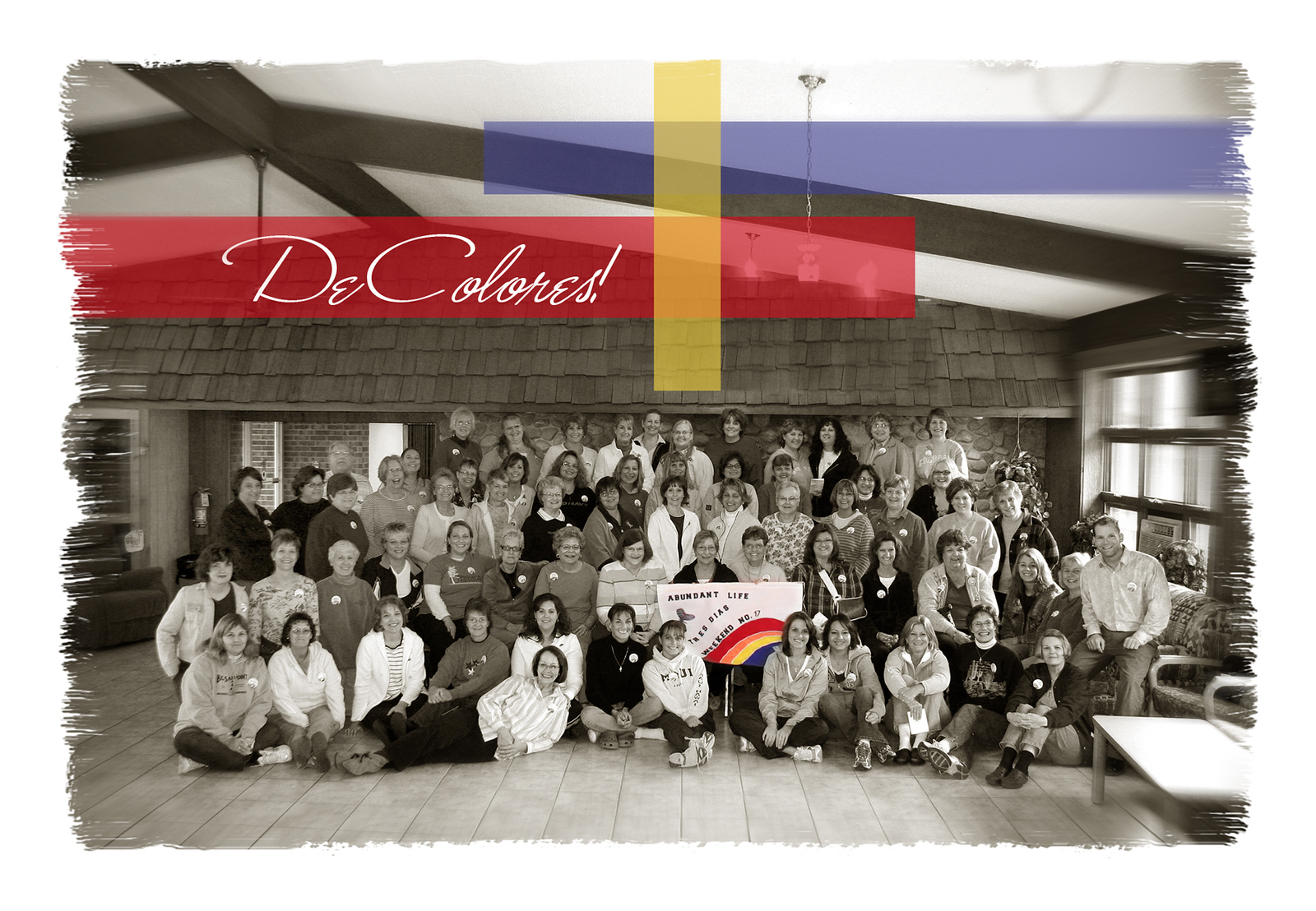
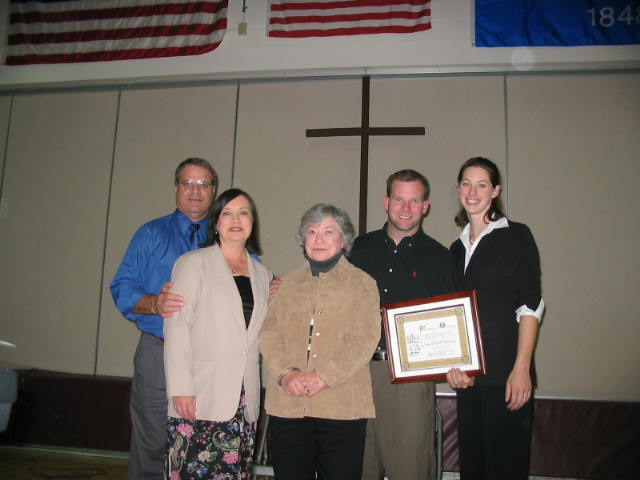
















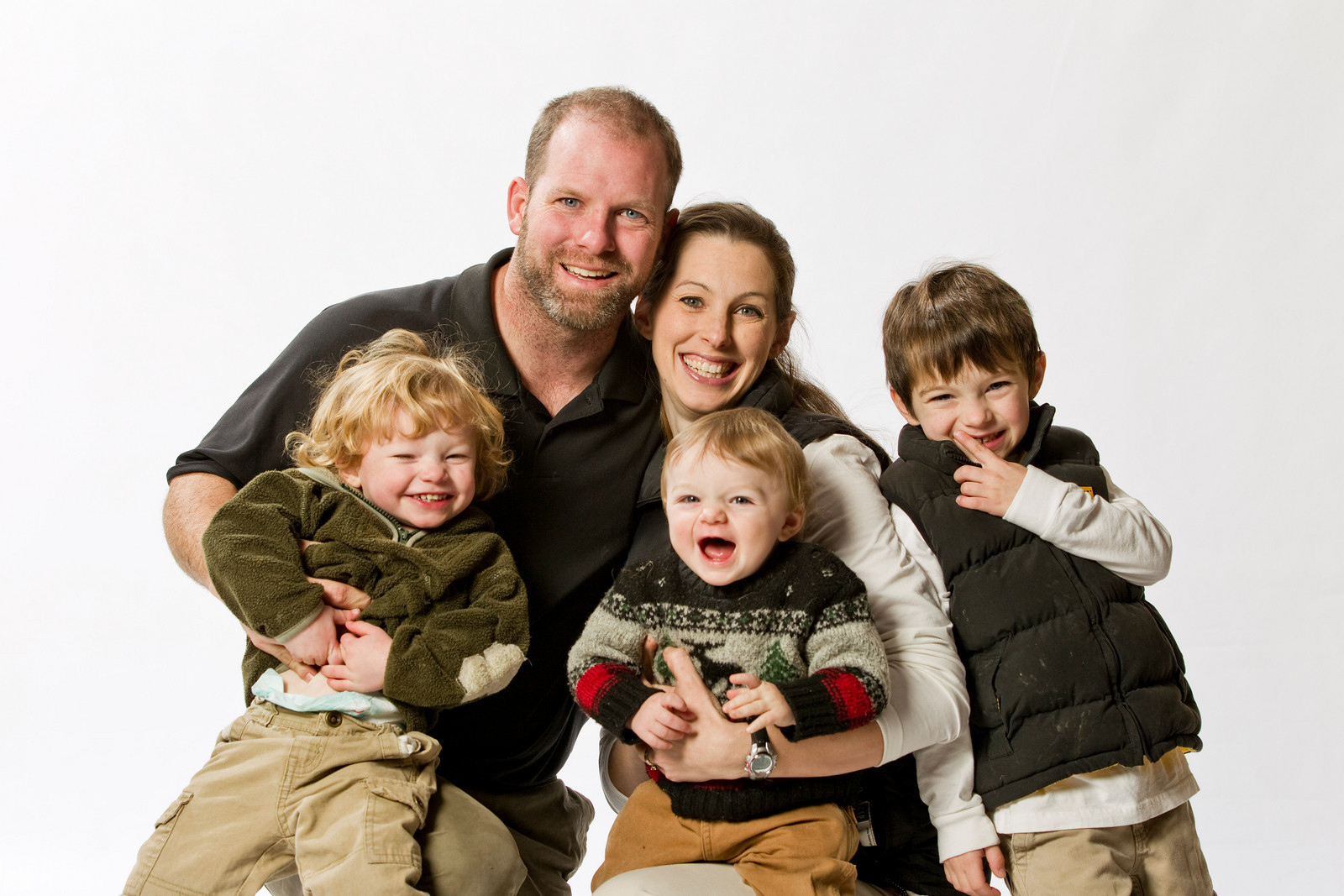









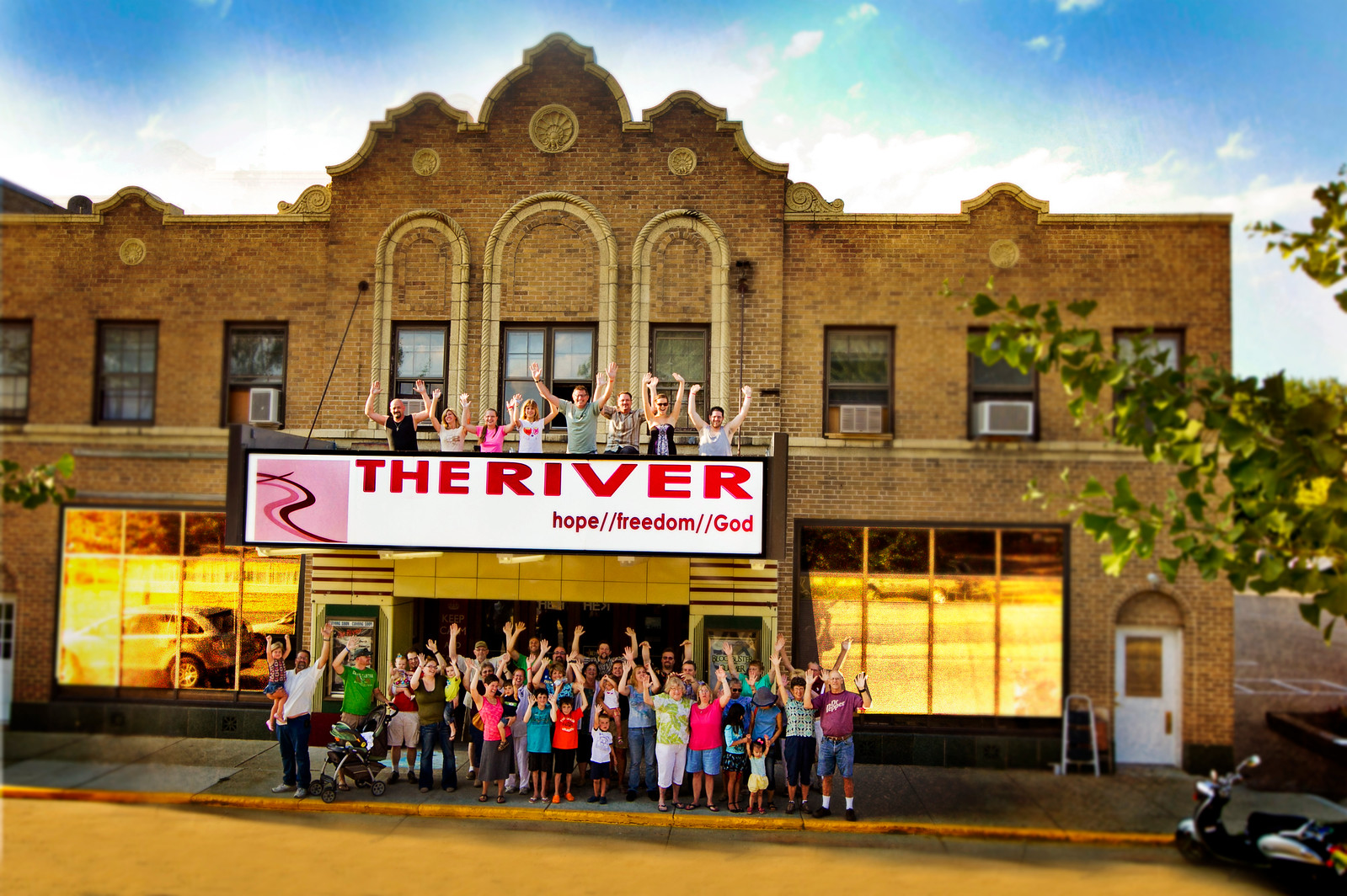














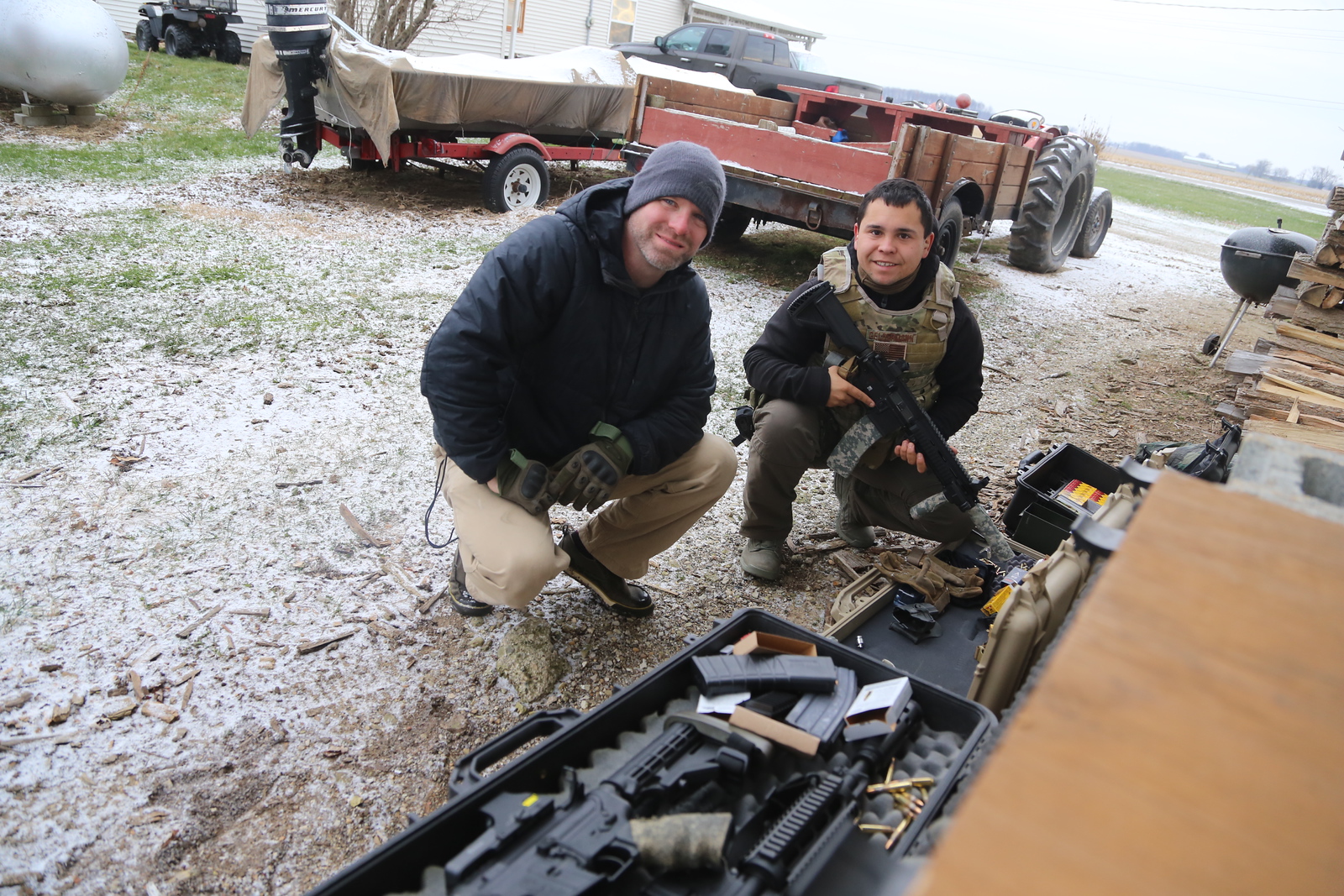










































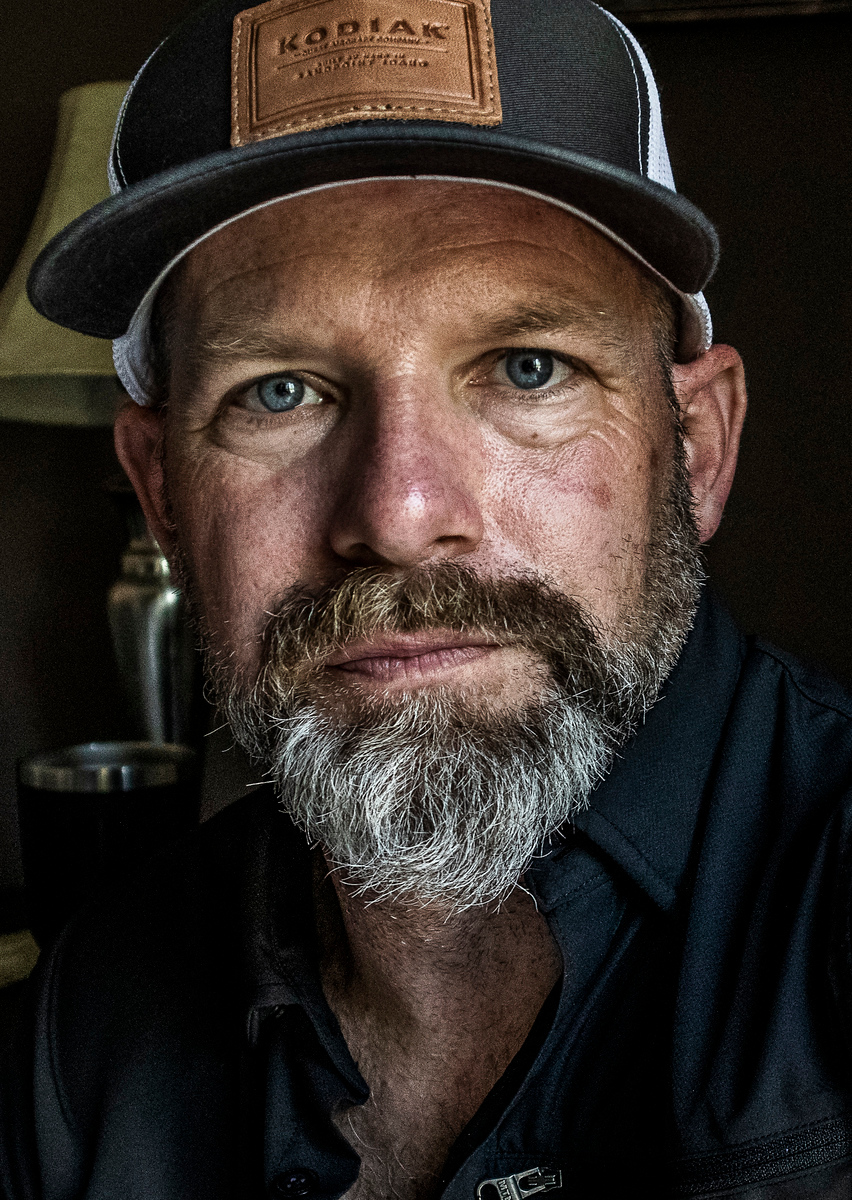








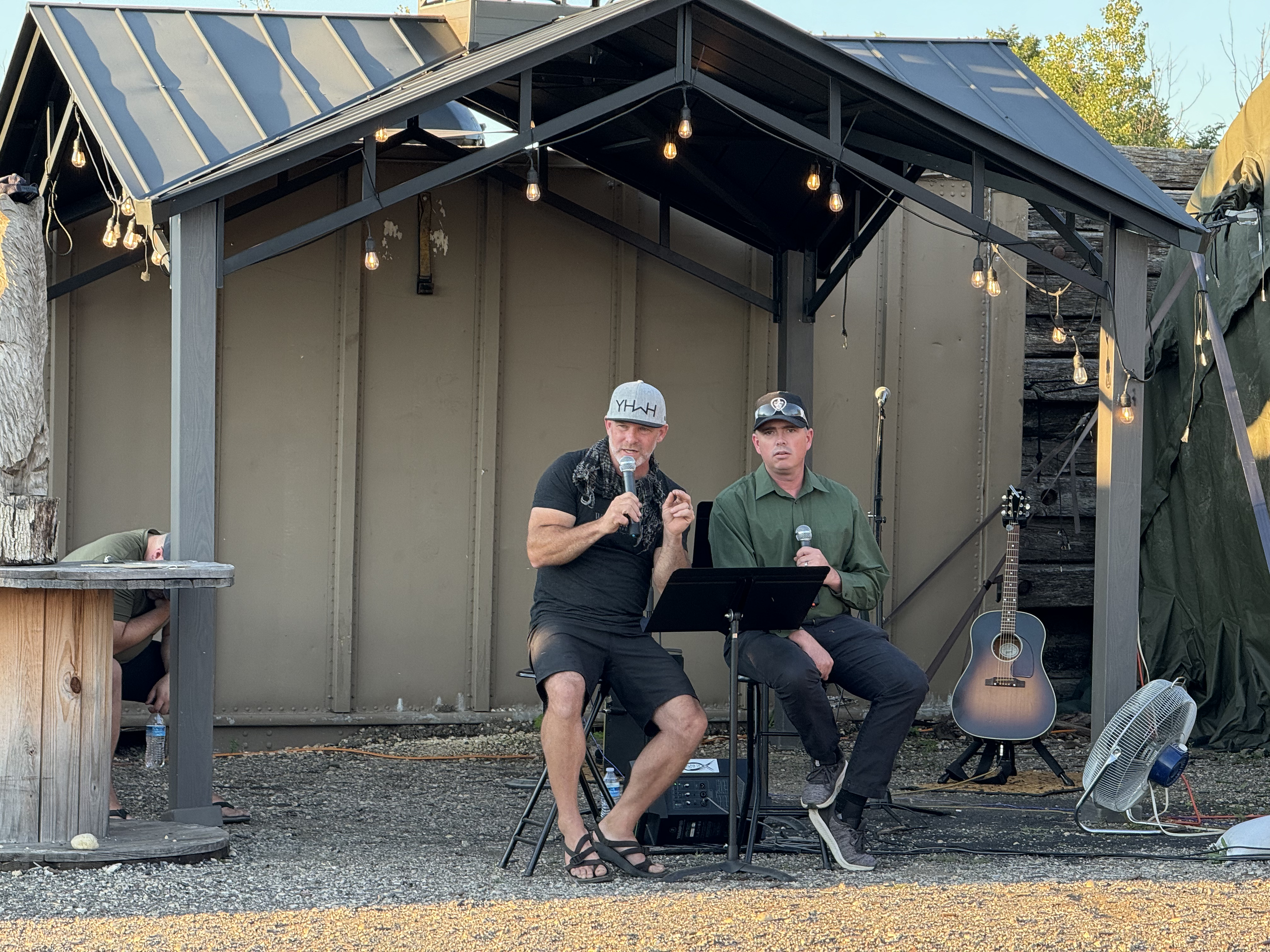






























 EXPEDITION 44