From the beginning, Scripture uses marriage as a central metaphor for the deep intimacy God desires with His people. It is the closest human image of the nearness and unity God longs to share with us. This is why Christ describes the church as His bride, expressing His desire for a relationship with His body. Throughout the Old Testament, God continually pursues His people, making a way back to them even when they break covenant. The central theme of the entire narrative of the Bible is God’s desire to intimately dwell with us.
Many can recall moments in their marriage when everything seemed perfectly aligned—when joy was intense and love felt effortless. Those moments are gifts, brief glimpses of heaven touching earth. They reflect, in part, the kind of covenantal intimacy God desires with His people and with a husband and wife together: a union strengthened as a cord of three strands, bound by God Himself.
As I write, my wife and children are on a mission trip, and I’m home alone for the first time in nearly 25 years of marriage. It feels strange. There are some benefits—quiet, a clean house, no hectic evenings or morning routines—but the house feels empty. I miss my family. With extra time on my hands, I find myself remembering the best moments of our life together. Even in the hard times, we shared joy. I don’t know how I will handle empty nesting when that day comes, but this short season alone has helped me re-gather what is most dear.
I think every marriage could benefit from that kind of intentional pause. As my time apart grows, I’m becoming more purposeful in praying for them, thinking about what I want to emphasize when they return and what truly defines our family. I’m asking: What is God doing in our lives, and where have we missed His plan?
In Genesis 17, God renames Abram and Sarai as Abraham and Sarah, marking a defining moment in the covenant. These name changes are not merely symbolic but carry deep theological, linguistic, and cultural meaning. While Abraham’s renaming often receives greater attention, Sarah’s change is equally significant, affirming her essential role as matriarch within God’s covenant promises.
The name אַבְרָם (Avram) means “exalted father.” In Genesis 17:5, God changes his name to אַבְרָהָם (Avraham), meaning “father of a multitude,” expanding his identity to encompass many nations. This shift highlights the covenant’s widened scope.
I realize most of my readers will not know Hebrew but look closely at the differences in the Hebrew spelling. The added letter ה (he) is significant. It appears in God’s name Yahweh (יהוה), symbolizing divine presence and creative power. Its inclusion marks God’s direct involvement in Abraham’s calling and, in Hebraic tradition, echoes the five books of the Torah, linking Abraham to God’s covenantal law. Even the sound of the name changes: the sharp ending of Avram gives way to the openness of Avraham, reflecting his transformation from a local patriarch into a figure of global promise. The same change happens with Sarai. The names שָׂרָי (Sarai) and שָׂרָה (Sarah) share the root שָׂר (sar), meaning “ruler” or “princess,” and both convey strength and authority. Sarai likely means “my princess,” with the possessive ending tying her role closely to Abraham’s household. Sarah, without that ending, signals a broader calling. Like Abraham, Sarah receives the letter ה (he), associating her name with God’s blessing and promise. Her renaming reveals her identity not merely as Abraham’s wife but as a matriarch of nations and kings. The shift from י (yod) to ה (he) reflects this expansion—from a limited, familial role to a universal one—while the softer sound of Sarah mirrors the widening scope of her influence. Essentially, both names are changed by simply adding the Hebrew letter that signifies God Himself residing in them.
Today we have the advantage of seeing the Bible in its full narrative, but Abraham and Sarah did not. They did not fully understand God’s unfolding plan, which is why Scripture highlights their remarkable faith. Genesis 17 is one of the earliest indications of God’s desire to dwell within His people. In a powerful way, the name changes of Abraham and Sarah symbolize God’s presence being placed within them.
Yet the story is not complete without Jesus. Regardless of which atonement theory one holds, we all agree that Christ’s death, resurrection, ascension, enthronement, and the sending of the Spirit are essential to fulfill what began with that simple name change. In Christ, we see the ultimate fulfillment of God dwelling in us—not merely as a promise, but as a reality.
This is why the New Testament speaks so clearly about being “dead to self” and alive in Christ. Paul writes that our old self was crucified with Him so that sin might be rendered powerless (Romans 6:4–7). We are called to put off the old self and put on the new, created to be like God in true righteousness and holiness (Ephesians 4:22–24). “I have been crucified with Christ,” Paul declares, “and it is no longer I who live, but Christ lives in me” (Galatians 2:20). This transformation is not merely moral improvement but a radical renewal: we are no longer conformed to the world but transformed by the renewing of our minds (Colossians 3:10). Indeed, “if anyone is in Christ, he is a new creation; the old has passed away” (2 Corinthians 5:17).
These passages show that the promise of God dwelling within us, first hinted at in Abraham and Sarah’s name changes, finds its full expression in Christ—where the old self is crucified and the new self is born. Perhaps today you need to consider inserting the ה into your names together!
He (pronounced in English as hey) ה is the fifth letter of the Hebrew alphabet. The letter ה (he) is formed from a ד (dalet) and a י (yud). The dalet, composed of horizontal and vertical lines, represents the physical world—its breadth and height, material space and structure. The yud, the small detached element, symbolizes God and the spiritual realm. Together, they form the heh, expressing the union of the material and the divine. In this way, God calls those in whom He dwells to sanctify the physical world by filling it with spirituality and Godliness. We are His ambassadors, sent to reclaim creation and restore the holiness lost when humanity left Eden.
The top horizontal line of the ה represents thought and points toward equality. From the beginning, God’s design for male and female reflects this equality, though it was fractured at the Fall. Still, we are called to restore God’s ideal. In the future renewed creation, equality and righteousness will be fully realized. Yet the horizontal line that unites Abraham and Sarah may suggest that God’s ideal can begin to take shape even now, sooner than we often expect. God’s ideal plan is for a husband and wife to edify one another in unison.
The debate between complementarianism and egalitarianism often depends on how key biblical passages are interpreted. Some verses emphasize equality in creation, while others appear to assign distinct roles for men and women in the church. Commonly cited texts include Genesis 1:27, Galatians 3:28, 1 Timothy 2:11–15, and 1 Corinthians 14. I will revisit some of these later, but regardless of where you land, I believe we can agree that when we humbly live out our callings with God at the center, the debate becomes less crucial, and the outcomes are remarkably similar. These passages are frequently used by both sides, but their meaning depends heavily on context, audience, and intended purpose. Evaluating them requires careful consideration of the broader biblical narrative.
So much of this conversation can be seen in the Hebrew Grammar of this passage. In the ה, the shorter, detached left leg represents action. Its separation highlights the difficulty of translating right thoughts and words into deeds. The gap reminds us that action requires effort and intention. Without action, thought and speech remain incomplete—leaving only the dalet, symbolizing spiritual emptiness.
As the fifth letter of the Hebrew alphabet, ה has traditionally been linked to the five levels of the soul—nefesh, ruach, neshamah, chayah, and yechidah. In Hebrew thought, these elements tend to represent who a person “really” is. The fifth tier, yechidah, signifies union and represents the deepest part of the soul. This level is often described as the pintele Yid, the indestructible divine spark within every image bearer. It is a spark that can never be extinguished or corrupted, and it remains the eternal bond that unites us with God. The pintele Yid is also the source of mesirat nefesh, or self-sacrifice. When Christ takes up dwelling in us, we should take on Christ’s sense of humble self-sacrifice (Romans 12:1). The bond between a Christian and God is intrinsic and unbreakable, anchored in the pintele Yid.
Her first name Sarai in Hebrew (שָׂרַי, “my princess”), meant princess and could have denoted her as an Egyptian princess which Gen 12:11-20 might allude to; but later she is *renamed by the Lord because of her faith as Sarah (שָׂרָה, which also meant “princess”, but is slightly different. In Hebrew text also has a number correlation and often means something. This is a form of numerology. Regarding Sarah’s name change, the Yod (whose numerical value is 10) was “taken” from Sarai and divided into two Heys (whose numerical value is 5). Half was given (by God) to form the name Sarah and the other half was given to form the name Abraham (from Abram). The implication was that she was already “whole” or “complete” which later is described by Jesus as “perfection” being what believers can attain to in the way they are made new in Christ. In this thinking, Abraham was not complete and needed something from her to be returned to the complete or equal state. There is a sense of “reversing hermon” going on here if you speak that language. It is a reverse of the God taking something from Adam to make Eve; for Abraham to be reinstated, Sarah would have to give something from herself. That is why if you don’t read this in Hebrew you can’t truly understand the implications of Hebrews 11 and why Sarah is actually considered “THE” true heroine of faith (Heb. 11:11) and Abraham isn’t mentioned. Is your mind blown yet? Essentially, at this point in the Timeline what God was attempting to accomplish in Sarah was to re-establish the royal priesthood that had been lost in the fall. Perhaps she thought Issac was the one that would bring life, and perhaps that was God’s plan that men then continued to mess up. The woman began the fall, but man has sustained it. Together in covenant relationship through a strand of three cords we can restore it, but will we get there and when?
(The above paragraph is an excerpt from an earlier x44 post. If you haven’t read the PART 1 and 2 of the Expedition 44 posts of the Akedah or binding of Isaac, you may want to read those posts. You can find them using the search bar to the upper right of this post.)
The renaming of Abraham and Sarah reveals them as equal partners in God’s covenant. Although Abraham often receives greater attention, Genesis 17 clearly affirms Sarah’s central role. God’s promise that she would be “a mother of nations” and that “kings of peoples shall come from her” parallels Abraham’s calling, showing that she fully shares in the covenant. Both receiving the letter ה underscores their shared participation in God’s blessing and purpose.
This shared status challenges ancient cultural norms that minimized women’s significance. By renaming Sarah and granting her covenantal promises, God elevates her beyond the domestic sphere. Her name, “princess” (שָׂרָה), signals real authority—later demonstrated in decisive moments such as the sending away of Hagar and Ishmael (Gen 21:10–12).
Sarah’s renaming is especially powerful because she was barren (Genesis 11:30). In her time, not having children was a source of shame, but God turns her from an outsider to a mother of nations. Her laughter in Genesis 18:12, often considered doubt, can also show her surprise at God’s bold promise—a barren woman giving birth to kings. This shows how God picks unlikely people, like Moses or David, to do great things.
Sarah’s influence goes beyond Israel. In Galatians 4:22–31, Paul calls her the mother of the “children of promise,” contrasting her with Hagar. In 1 Peter 3:6, she’s a model of faith. Her name, שָׂרָה, becomes a symbol of strength and hope. Some would even deduce from these passages that she might even be credited with greater faith than Abraham.
There are many deeper details in this text that I won’t address here, but the central theme from Genesis to Revelation is clear: God desires to dwell within us. He wants our marriages to be holy and intimate, reflecting—but never fully replacing—our deepest union with Him. What would a marriage look like if the distractions and compromises of the world were set aside, and a couple pursued the purpose God always intended for them? This is the heart of what it means to be in Covenant with the almighty God. That we may be fully devoted to image Him as He resides in us. And your marriage partner is God’s gift of grace to this plan.
I had the honor of writing the foreword for this book. I have written the forewords for over a dozen books in the last few years, but this one was different. I was given a pre-release copy to read and make “theological suggestions” and ended up falling in love with it. It is the only book I have ever approached the author and “asked” for consideration to write the foreword for. I truly believe this book will profoundly change your life.
I write a good amount of book reviews, and I decided that I am simply going to be a cheerleader from the sidelines on this review. Not because I don’t want to dive into every discussion, but because I truly want to not determine the course of impact this book will have on you. I believe it touches everyone slightly differently. So rather than tell you precisely what I think is best about it, or how it impacted me or should impact you – I just want to convince you that you need to read it and leave it up to the Holy Spirit to determine the impact it will have on your life.
This is a masterpiece. Digestible and easily applicable, no matter what your situation is, or what stage of life you are in. It is a reflective and deeply personal journey. Have you wondered if your course is slightly off? Are you really living the meaningful fulfilling life that God desires and intended for you? Jon has a way of getting to the root of the most personal topics and providing concrete, approachable ways to address them. He also has a gift for framing things in ways you would never think of but draws the reader into the sacred places and beautiful moments of their lives. The very introspective, passionate, & compassionate author will give you much to reflect on in your physical and spiritual relationships and life perspectives. This is a very easy and enlightening book to read and extremely practical on how to hear the voice of God for the situations you are facing now and to seek God’s face for his plans for your future. One of the strengths of the book is its clarity and simplicity in presenting profound spiritual truths. Jon emphasizes that everyone has a purpose in life, which is ultimately found in a personal relationship with God that dives into practical and inspirational stories painting great mosaics of what it means and looks like to find the love, grace, compassion and mercy of the father in everyday interactions. Have you experienced God moving with you in real time?
The church needs this book. Buy a copy for yourself and a friend.
Q: I have a question regarding Israel. Would Israelites still be considered God’s chosen people or would that have changed with Jesus’s atoning works?
Yes, Israel was (and is) called God’s chosen people in Scripture—but what that means and how we understand it after Jesus is really important to clarify.
When God called Israel His “chosen people” in the Old Testament, it wasn’t primarily a statement about salvation. Rather, Israel was chosen (commissioned) for a vocation—to be a light to the nations (see Exodus 19:5–6; Deuteronomy 7:6; Isaiah 49:6). (You might see this as a regaining of the nations if you follow a Deuteronomy 32 worldview.) God gave them the Law (Torah), the covenants, and the promises, not as an end in themselves, but so that through them, the nations of the world would come to know and worship Yahweh. Paul puts it like this in Romans 3:2—that the Jews were entrusted with the oracles of God. In a sense, this was the calling of Adam and Eve and when they fall short, God commissions Israel in the same calling, nation that would be called commissioned as a holy royal priesthood to represent Yahweh to the rest of the fallen world.
But Israel consistently struggled to live out this calling. From nearly the beginning of the story the nation failed to honor Yahweh (golden calf incident) and instead of the entire nation (all 12 tribes) representing the Lord as priests, God adapted the plan and then called just the Levites to be His representatives as priests first to Israel in hopes of then commissioning the entire nation of Israel to the original plan and act as ambassadors of Yahweh. The Old Testament tells a story of covenant, failure, judgment, and hope for restoration. Israel continued to falter. They gave up their theocracy of one God – Yahweh to choose to be led by an earthly king. They drifted farther and farther from the plan until God finally hands them over to their own demise, the exile was a key turning point. Even after the return of the exile to Jerusalem, most scholars believe Israel never returned to the LORD. God longed for Israel to return to the true redemption and the coming of God’s kingdom. Unfortunately, Israel continued to fall short and not seem to live out their calling or commissioning.
Jesus enters the narrative with a similar mission. He doesn’t reject Israel’s story—He steps into it. He comes first to “the lost sheep of Israel” (Matt. 15:24), calling them back to their original vocation. He chooses twelve disciples, clearly symbolizing a reconstitution of the twelve tribes of Israel. This is not incidental—it’s Jesus claiming to be the one who restores and redefines Israel around Himself.
And here’s the key: Jesus is the faithful Israelite. He does what Israel failed to do. He keeps the covenant perfectly, walks in radical obedience, and fulfills Israel’s mission. He is the true Israel (see Matthew 2:15 where Hosea’s words originally spoken about Israel—”out of Egypt I called my son”—are applied to Jesus).
This is why Paul will later say in Galatians 3:16 that the promises were given not to “seeds” (plural) but to one “seed,” who is Christ. In other words, the inheritance of Israel is fulfilled in Jesus—and only those who are “in Him” share in that inheritance. That phrase—”in Christ”—is the dominant identity marker for believers in the New Testament. If Jesus is the true Israel, then those united to Him (Jew or Gentile) are the true people of God.
This point becomes even clearer when we revisit God’s original promise to Abraham in Genesis 12:3: “I will bless those who bless you, and whoever curses you I will curse.” This statement is often lifted out of its covenantal context and applied to modern nations or political support for Israel. However, the Hebrew grammar and narrative context show that the promise was made to Abram himself (the singular “you” in Hebrew, ʾotkha), not to a future geopolitical nation. God’s intention was not to privilege one ethnic group above all others but to initiate a redemptive mission through one man and his descendants—a mission that would culminate in Christ. The blessing is vocational, not nationalistic. Abram is chosen in order to be a blessing, that through him “all the families of the earth will be blessed.”
The apostle Paul interprets this precisely in Galatians 3:16, identifying the “seed” (zeraʿ) of Abraham as Christ Himself. This means that the covenant promise—“I will bless those who bless you”—finds its ultimate fulfillment in Jesus. The “you” now applies to Abraham’s true heir, the Messiah. Those who bless Him—who honor, trust, and align themselves with Jesus—receive the blessing of God; those who reject Him cut themselves off from that blessing. In this way, the Abrahamic covenant points forward to Christ as the locus of divine favor. To bless Abraham’s seed is to embrace the redemptive mission of God revealed in Jesus, and through faith in Him, we become participants in that same blessing.
Paul says Abraham was justified before circumcision (Rom. 4), showing that faith, not ethnicity, is the marker of God’s covenant people. He adds in Romans 2:28–29 that a true Jew is one inwardly, whose heart is circumcised by the Spirit. And in Galatians 3:28 he writes: “There is neither Jew nor Greek… you are all one in Christ Jesus.”
Ephesians 2 expands this beautifully. Paul says that Jesus has broken down the dividing wall and made one new humanity—no longer Jew and Gentile, but one body. Peter echoes this in 1 Peter 2, where he applies all the covenant titles once reserved for Israel (royal priesthood, holy nation, people of God) to the church made up of both Jews and Gentiles.
Paul also uses the metaphor of an olive tree in Romans 11: some natural branches (ethnic Israelites) were broken off because of unbelief, and wild branches (Gentiles) were grafted in. But it’s one tree. There aren’t two peoples of God. There is one new covenant community—those who are in Christ. It’s not about replacing Israel, but about fulfillment—where Jews and Gentiles together form the one people of God in Christ.
This helps clarify what Paul means in Romans 11:26 when he says, “all Israel will be saved.” We don’t believe he’s referring to a future mass conversion of ethnic Jews or suggesting two separate salvation paths. Rather, he’s speaking of the fullness of God’s people: both believing Jews and Gentiles who are part of the one tree through faith in the Messiah. This fits with Paul’s logic throughout Romans and with his statement in Galatians 6:16 that the church is “the Israel of God.”
God has always worked through covenants—and those covenants are centered on trust and faithfulness, not ethnicity alone. From the beginning, covenant relationship with God required loyal love. Even under the Mosaic covenant, Israel’s inclusion was contingent on obedience and faithfulness to Yahweh (Deut 28). Being born into Israel didn’t guarantee blessing—relationship and trust did. (Israelites were never automatically “saved.”) If there was any sense of salvation in the Old Testament it would be under the same “qualifications” as in the New Testament. What God was asking and promising for the faithful doesn’t change from the Old Covenants to the New Covenant.
The New Testament affirms this. While many modern Jews are physical descendants of Abraham, Paul is clear that physical descent is not enough. In Romans 9:6–8, he writes:
“For they are not all Israel who are descended from Israel; nor are they all children because they are Abraham’s descendants… it is not the children of the flesh who are children of God, but the children of the promise.”
Paul emphasizes that covenant identity is now grounded in faith—just as it was with Abraham. As he puts it in Galatians 3:7:
“Understand, then, that those who have faith are children of Abraham.”
So when we speak of the “people of God” today, we are not referring to a physical nation-state or ethnic group. We are speaking of those “in Christ”—those joined to the faithful Israelite, Jesus.
The modern nation-state of Israel is not the covenant people of the Bible. -If this is a new consideration for you, you might consider reading this article. Most of its citizens do not follow the Mosaic covenant, and the majority have rejected Jesus as Messiah. According to the New Testament, that places them outside of the renewed covenant family—not because of their ancestry, but because God’s covenant has always been about faith.
This doesn’t mean God has abandoned ethnic Jews. Paul says in Romans 11 that he hopes some of his fellow Jews will be provoked to faith. And many Messianic Jews (Jewish believers in Jesus) are part of the body of Christ. But the boundary marker is no longer ethnicity or Torah observance—it is faith in Jesus.
All of this leads us to say: the true Israel (or Israelite) is Jesus. And those “in Him,” whether Jew or Gentile, are heirs to the promises, the calling, and the covenant. God is not partial (and never has been, even with Israel as many gentiles were welcome to join them, a mixed multitude – Hebrew and gentile – left Egypt in the Exodus becoming “Israel”, and some even found themselves in the lineage of Christ Himself) —He welcomes all who come to Him through Christ.
We also need to think about our family in Christ as those that are allegiant to the New Covenant calling rather than those that are nationalistically / inter-nationalistically aligned with groups that subtly “claim to be allied with God” but are not living out the Way of Jesus or bearing fruit for the Kingdom of Christ. There is only one kingdom of Christ, and you can’t serve two masters. For generations many have claimed to be part of Israel or want to be somehow grafted into salvation but haven’t followed the devotion that God has desired and look nothing like Jesus or act in a way worthy of bearing His image. Jesus seemed to paint this picture vividly and make this very clear in the sermon on the Mount (Matthew 5-7).
This is not replacement theology.1 God has not rejected Israel and replaced her with or even outside of the church. Rather, the church is the fulfillment of Israel’s story (and Adam and Eve’s story for that matter) —expanded to include all nations through union with Jesus, the faithful Israelite, this was the plan of redemption that “all nations”, or everyone was offerred from the beginning.The promises of God have not been scrapped or reassigned; they find their “yes and amen” in Christ (2 Corinthians 1:20). The covenant people of God have always been marked by faith and loyalty to Him—and in the new covenant, that means allegiance and devotion to Yahweh through Jesus accepting and claiming that victory and receiving the gift of the Holy Spirit as a sign of the holy royal priesthood. Jew and Gentile together form the one new man, the reconstituted people of God.
written by Will Ryan Th.D. and Matt Mouzakis Th.D.
Replacement theology, doctrine holding that Christians have replaced the Jewish people as the chosen people of God or as the heirs of the divine-human covenant described in the Hebrew Bible. The theology is also referred to as supersessionism, in which Christianity is thought to have superseded Judaism. It is closely related to fulfillment theology, which holds that Christianity has fulfilled the divine promises signaled in the Hebrew Bible. These ideas appear to be suggested in some of the earliest Christian texts, such as writings of St. Paul the Apostle, and subsequent Christian theologians have strengthened the opposition of Judaism and Christianity in ways that have informed relations between Christians and Jews. In the 20th century many Christian theologians and even church doctrines replaced replacement theology with more-nuanced or inclusive models that support more-amicable interreligious relations.
When you harmonize the gospels, you likely come to the conclusion that Jesus called the disciples 3x. The last time He gets very specific and asks them to leave everything on the beach, don’t look back, stay with Me completely and “walk” completely with Me. In our modern Western world this first century calling to discipleship seems almost impossible. I have spent my whole life challenging myself and other people to this level of discipleship, and I am just about convinced that in modern America people just aren’t willing. I have found one exception… seminary training. Unfortunately, this isn’t the case with all seminary experiences but at The King’s Commission (TKC) we believe that this is the closest pathway to what first century discipleship under Jesus would have looked like. Study daily, be mentored, read, listen, discuss, dive deep into a community that is likeminded to experience the full breadth (completeness) of Jesus and the Church.
What a time it must have been, when Jesus shared his words and heart with his disciples (students) for the three years of his earthly ministry! They saw his compassionate healings, marveled at his miraculous power, listened to his word, saw his glory (Matt. 17:1-13), were humbled by his servant-leadership (Matt. 20:25-28, John 13:1-20). We believe you can still experience that same feeling with Jesus through TKC.
Seminary is something similar to those three years with Jesus. In many ways, of course, it is different. Jesus didn’t need to teach his disciples how to read Hebrew and Greek. He didn’t need to teach them post-canonical church history, because at the time there wasn’t any. And although he didn’t give letter grades, he regularly evaluated their progress. TKC has sought to stay as true to this dynamic model as possible.
Discipleship is about commitment, not to a program or a pattern but to the person of Jesus Christ.
Perhaps one of the Western world modern challenges we face is to see seminary throughout the context of discipleship rather than simply education. Seminary is more than academic training; it is a spiritual journey. The Latin “seminarium” or “seedbed”—captures the deeper purpose: cultivating hearts that bear spiritual fruit. Seminary, properly pursued, fosters a “taproot” in believers—vertical depth before horizontal spread—so lives become steadier, more rooted, and more fruit-bearing.
A testimony from one of the students that Dr. Ryan has discipled and now is regularly involved with in local church ministry, Paul Lazzaroni:
My own seminary experience (Paul) shifted my perspective. The draw to a deeper understanding of the scriptures came simply from a hunger to know Christ more. After a previous failed attempt at a well-known Bible College, 7 years later I was invited to apply at seminary. It wasn’t until I handed in some of my first course work that my understanding of seminary began to shift from simply retaining information to spiritual transformation. My advisor challenged me not just to retain facts but to articulate why I believed what I believed. That invitation to integrate intellect and devotion opened a deeper adoration for Christ. Many Western educational systems emphasize information retention; seminary (like Hebraic Torah study) invites transformation, not mere accumulation of facts.
For me, this wasn’t just a different way of seeing education, this was a journey down a path that the early disciples took with Jesus.
Hebraic culture treated study as a spiritual discipline linked to life and covenant faithfulness. Torah study functioned as devotion and formation, shaping how people lived before the LORD. From Eden through Sinai to Jesus, Scripture consistently calls for faithful allegiance expressed in obedience and transformed hearts. The word seminary itself is not nearly as old as the scriptures, but the heart behind the journey through seminary ties directly into the first and greatest commandment of Jesus “Love the Lord your God with all your heart and with all your soul and with all your mind.’ Mat 22:37
The word seminary (seminarium) means “seed bed”. Even our word semen finds its origins here. Semen without an egg to fertilize is a source of life that is seeking a host. Humankind is designed to replicate the source of life that heals, that restores, and that multiplies that which gives life, but the spirit of God needs a seed bed and Jesus himself consistently goes back to talking about the heart of the matter as though this is the seed bed of the human being.
Paul’s example in the New Testament reinforces this same type of spiritual journey. Despite his rigorous education as Saul, his encounter with Christ began a multi-year (14) process of spiritual formation (Acts 9; Galatians 1). Conversion was a beginning that required unlearning, relearning, and sustained growth. Seminary can be that structured season of deepening, where encounter and study mature into faithful living.
Over centuries, what ought to be a life-changing journey of spiritual study has sometimes become a path to prestige, income, or institutional advancement. From the establishment of the early church, there has been a slow evolution away from this type of devotion towards educational advancement. In the 15th and 16thcentury, the church experienced a large pivot deeper into the intellectual moving further away from the spiritual journey. This pivot began with a bold, spirit led move by Martin Luther to stand up against the hierarchical system that the Catholic Church had established, however much of what we still experience today is a war of the minds. The downfall of humanity began when we attempted to reason through all the things of life without the spirit of God. In doing so, we give up is the divine journey with Jesus himself as the teacher. When theological training serves personal gain rather than formation, the church loses its capacity to cultivate compassionate, faithful leaders—gardeners rather than dictators. Seminary must resist reducing theology to a résumé item; it should invite humility, compassion, and a lifelong devotion to learning and obedience.
For those of us who have had simply one encounter with Jesus, we know that it was a profound spiritual moment. My prayer would be that there was a flame that was lit. If you have yet to do so, seek out the fan that ignites that flame. Over the centuries, what was meant to be the most incredible journey of our lives by means of study, has transformed into hierarchical astuteness for the advancement of primarily worldly pursuits. This transformation of higher education has led to the creation of many learning systems that operate without spiritual context and in my opinion simultaneously void the presence and power of the spirit of God.
If seminary is understood as a seedbed for spiritual formation, it belongs to any disciple who wants to deepen devotion, understanding, and faithful practice—not only to those who pursue clerical office. It equips Christians to study Scripture faithfully (hermeneutics and exegesis), to integrate head and heart, and to live a long-haul obedience that reflects covenant faithfulness. This is the direct invitation from Jesus, the ancient of days, the word become flesh, the author and perfecter of life. Let us not waste our eternal invitation to follow in the dust of him. I pray the path of Yahweh draws many into this kind of lifelong study and devotion.
There is a time for everything, and a season for every activity under the heavens: Ecclesiastes 3:1 NIV
Whenever I read Ecclesiastes, I can’t help but to start humming “Turn! Turn! Turn! (To Everything There Is a Season)”, a song written by Pete Seeger in the late 1950s. The lyrics are adapted nearly word-for-word from the English King James Version of Ecclesiastes 3:1-8. In the U.S., the song holds distinction as the number one hit with the oldest lyrics. I sometimes Joke that Seeger got more people to memorize scripture than any pastor in history. However, you remember it, at some point you have likely contemplated the questions it raises. Although I am sure you have hummed the tune, too many people go through life without ever stopping to “really” ponder a very simple question, “what connection do you have to Jesus and His kingdom and what should that mean to you in this life?” That is the question Ecclesiastes raises to their audience and is as relevant 2500 years later, today – as it was the day it was written.
I am often perplexed by busy western culture people. There seems to be a conundrum of life that might have us too busy to simply stop and think through life or perhaps enable those thoughts into life-change. Those that have learned to stop and smell the roses have often been met with innumerable blessing. Different people react to different things and perhaps for you it is a song, or a movie, a passing of a loved one, or tragedy that has challenged you to stop and consider some of the more philosophical questions of life and reconsider what means most to us.
Mircea Eliade was a Romanian philosopher, and professor at the University of Chicago who became one of the most influential scholars of religion of the 20th century and interpreter of religious experience, he established paradigms in religious studies that persist to this day. He helped us recognize the “myth of eternal return” in the ancient world. The idea that every culture has had some kind of circle of life (as Disney later adopted it). From the Aztecs 27,000 year cycle, to the Hebraic 50 years of Jubilee year, including every seven years a sabbatical year, most cultures have recognized some cycle of life. In our culture New Years is a day of rethinking the past and taking on a resolution to do better in the coming year. In some way shape or form, I think everyone has considered the notion of re-examining their life cycles with the hopes to take action to a better way of life.
There is a relational connection of words in the New Testament that are translated as belief, faith, and hope, and what they all have in common is the notion of reliance, confidence, and trust. It is trust that puts you in contact with God so you can draw upon his unlimited and inexhaustible character. Unfortunately, many folks have their faith lined up in such a way that they do not need to rely on God. They do not need to trust God. They have a proper faith in terms of what they need to believe to go to heaven when they die, but they hope that God is never going to put them in a position of needing to actually trust him before they go there. It is this sort of “grappling” or “wrestling” in our faith that often brings us to a better sense of life.
Jon Gibson has uncovered something beautifully for us. As we reflect, remember, resolve and contemplate things more significant in this life, I am betting that we have seen seasons and have hopefully travelled to a better place of life through these journeys. But perhaps the best is yet to come for you. Perhaps there is something more going on in this life. Maybe there is a sense of orchestration in the ordinary that has led us to beautiful places even in the messiness or busyness of our modern life cycles. Most of us wouldn’t choose the courses of our past but we also wouldn’t choose to remove them from our lives. That seems to be an ontological fact of existence that we have in common. We are on a sentient journey. Jon tells story after story that you will find yourself not only deeply engaged with, but then turning your thoughts inward to consider your own journey and be shepherded to a better understanding of God’s majestic and far-reaching love, grace, and compassion.
What about you? Have you ever wondered about the greater questions of your faith? What about relationship dynamics and how they are influenced by God? Have you thought about legacy and the little things that point to the greater aspects of your spiritual person? What about taking the time to work through some if these thoughts, a mind retreat that engages action. In the big picture, if you are part of God’s family, we are all part of a return to Eden. But maybe that is less about heaven and more about your choices today. There is still time for God to being Heaven to earth through you. I think you will find that this book might be just what you need to start moving towards these feelings in your life.
I pray that in the pages of this masterful piece that you will find peace, comfort, and a sense of direction in the fact that somehow God is working out His plan within the pages of your life journey. Behind it all is His invisible hand. That’s comforting. Perhaps in the tears and fears, joy and grief, success and failure, helping and hurting; we will understand the immense love that Jon has so beautifully given us through his connections to Jesus. I pray that on this journey you may be captivated by these seasons and find a sense of peace but also action.
“The more beauty of God you capture today in your heart today, the greater the beauty you will find in your next season.” Don’t cast your seasons to the wind until you have grabbed hold of its beauty and set it in your heart for eternity.
Dr. Will Ryan
President of the King’s Commission School of Divinity
_____________________________________________
This article is intended to be a catalyst to Jon Gibson’s book “HERE AND NOW” to be released in 2026.
For the more “scholarly “academic” version of this article CLICK HERE.
What does it look like to give all of yourself to Jesus?
Hebrews 13:5 – Let your way of life be free from the love of money, being content with what you have, for He Himself has said, “I will never desert you, nor will I ever forsake you.”
DISCUSSION QUESTION: How much do you give to the Lord?
In the classic Old Testament Hebraic mindset the answer should be, “all that you have been given.” In other words, everything is the Lord’s and should be given back to Him. You have simply been entrusted to the “assets” of the kingdom for a short time. This is the circular dance of grace. (Patronage and Reciprocity: The Context of Grace in the New Testament by David A. DeSilva)
DISCUSSION QUESTION: If anyone from the group understands the dance of grace based on patronage please explain it to your group. This can be found in my book “This is the way to covenant community” on Page 161.
In our western thinking this is likely where we get the original audience’s interpretation of Biblical giving wrong… thinking that God just requires a tithe (confused with OT passages), or that there are no strings attached to Grace.
Grace is free but it also might have some strings attached. To be clear, Grace is totally free, but if you’re going to follow the Lord then you should follow the Lord with all that you are and have been given and freely give back all that you are and have been endowed with- which to some sounds like attached strings.
To most Americans the idea that God wants everything doesn’t sit very well. What would alter calls sound like if we told people the whole story before we asked them to put their hand up! It even becomes more uncomfortable as Christian Americans when you ask somebody if they love money. Nearly every American does. Christian Americans are in a little bit of a wrestling match because they want to proclaim that they don’t love money; yet the giant mortgages, lifelong debt, and working around the clock every week say otherwise. It sure looks like we all love money, and that’s actually the implication of I Timothy 6:10.
The word “love of money” is philarguros, literally, “a friend of silver.” This is a Greek verb that was used in the scriptural context to describe brothers and sisters of one body (which we like to call the church in present day language -that’s up for argument though.) Today, it would seem that money is root of more church problems and family dynamics than anything else I can think of. That’s why TOV doesn’t want much to do with it. It didn’t seem like Jesus wanted much to do with money and His version of first century “church” didn’t either. Have you ever considered the idea that Judas was the money keeper and the one-time Jesus was asked to pay for something it didn’t come from that bag, but from coins out of a fish his Father provided? What could that imply? Jesus didn’t own a church building but occasionally visited the temple which He does refer to as His father’s house.
Essentially the Hebraic way of living is that your complete life is a gift. This gift is a reciprocal dance mirroring what God has given you. Total humility, complete giving back of what you have been given, and utter devotion to your Father.
In the hands of the follower of the Way, contentment is a sign of trust in the grace and mercy of God. From the biblical point of view, the only reason a man or woman can entertain contentment is because God is good. His provision is sufficient. Greed leads away from Him and towards the love of things of the world separating us from the Love of Christ.
Is the love of money or money itself the root of evil? I don’t really think it matters… what matters is that God wants all of us to mirror all of what God has given us. And from the biblical authors mindset money had very little to do with any of that kind of thinking. It is the posture of the heart.
DISCUSSION QUESTION: How does God view your money? Does He even want it? Is the Money the World’s? But don’t we need money? Is it a “necessary evil?” of the world? How does it belong in a Jesus kingdom?
DISCUSSION QUESTION: We often say, TOV isn’t looking for a tithe. Discuss why a more Biblical perspective isn’t centered around “money or serving” but on deeper devotion of your “whole” person.
TOV ACTION NEEDS FOR YOUR DISCUSSION:
BECOME A MONTHLY “PATRON” PARTNER – Discuss how this mindset is different than a tithe
Sometimes we don’t give much to the donation boxes and it is hard to bless people when need arises. We want to bless generously. Consider gifting monthly so that we can buy people groceries, feed the hungry & homeless, and take a financial strain off a family for a season. There aren’t any tov salaries, mortgage payments or utilities to pay… all of your giving goes right to an ACTS 2 need. Together we can make a better kingdom investment. Right now We want to buy a car for another anonymous family and need $2500 that we don’t have.
We need car donations; we have a mechanic that will fix things. And we can give away these cars or sell them on the marketplace. If you know of someone selling a car ask them to donate it.
Giving: You don’t need to “make time or space” for God if all of your time, treasure and talents (sacred space) are His. In the same regard, you don’t need to consider giving a percentage of your financial resources if you are of the mindset that it is all His and you are merely the Spirit led steward of it.
Some have chosen to underwrite the few costs we have as “patron” partners. If you would like to dedicate a regular monthly amount, please do so here:
Wow! This is awesome! We are super excited for you! The heavens are rejoicing! You just made a decision to welcome Jesus as your King, and the Bibe says, He is LORD of your life now! That might sound a bit strange to you in our modern culture using terminology that is thousands of years old, but the meaning of who and what Jesus does in our lives for those that follow Him hasn’t changed. Making a decision to follow Him is the first step, the next step is to make that a public confession to the world. We do this through baptism. Baptism is an outward sign of the inner decision and declaration you have made to faithfully follow Jesus. Your local church would love to help guide you through this step. I would suggest looking for a solid non-denominational or mainstream denomination church. Hopefully that church was part of the process where you already decided to follow Jesus. Your pastor would love to talk you through this! We are praying for new confidence in your identity as you begin to walk boldly in the power and presence of Jesus who is in you. WE DECLARE FREEDOM!
From there we encourage you to start deepening your relationship with Jesus and His word (the Bible), this is usually “shepherded” by the body of Christ we call the church. This is actually the main thrust of the message of the Bible, to live in fellowship together in devotion to the Lord. The Bible describes it like this, “As you therefore have received Christ Jesus the Lord, so walk in Him.” Colossians 2:6. Walking is a metaphor for intimate relationship. To better help you understand this idea, and the path that you are entering, read the beginning of this post right now, it is short, and sweet, and can be read in a couple of minutes.
Ok so now you might have a better idea of the way that God loves you and wants to have a deep relationship with you gathered around the community of Jesus. Together we represent the presence of Jesus to the world.
Next you should get into the word of God, the Bible!
Somehow you found your way here to Expedition 44. Expedition 44 is known for super deep theological Bible studies geared towards seminary students. You are certainly welcome to read all the articles here and watch videos, but it might be over your head right now… (but I guarantee we have videos and articles that will answer your TOUGH questions about God and Christianity if you have that need or desire. Just use the search bar to the right.) The good news is the basic message of Jesus is pretty simple! You have a lot to look forward to and it won’t take you long to get there! That is the best thing about this walk, it is super exciting and before you know it, you will be filled with joy & surrounded by a great community on your way to a transformed life getting to know Jesus. This process begins by joining a small group at your local church and a Bible study where people get transparent and are welcoming. Make a commitment ty to attend church regularly being immersed in whatever “events” they are offering. Next, the Bible Project is an awesome organization that is known for great theology through simple animated videos that everyone from children to adults can glean from. They are my favorite online site. This is a great resource to start learning about the Bible and its truths.
Make some time and start a prayer life! We are all really busy to be sure, but the addition of walking with Jesus to an already full schedule can be one of the largest obstacles to overcome in a new faith journey. We’ve got two suggestions that can really help. 1. Be intentional. Make a plan to set aside time in your schedule to meet with God. 2. Get practical. In the time you set aside, make use of tools to help you connect with God. In the church we have often called these “spiritual practices”. Find a Bible reading plan to work through perhaps on the Bible app. (The Bible project – above, also has a plan for this.) Learn to listen and speak with God through prayer. Setting aside time in and of itself is a spiritual practice called “sabbath” which helps us overturn the oppressive “busyness” in our lives in order to make way (sacred space) for Christ’s new rule and reign in a partnership with us. Through this you will start finding a new destiny and fulfillment for your life centered in Jesus.
The faith walk is exciting, fulfilling, and offers a lot of transformative qualities for your life, but Romans 12:12 reminds us to “Rejoice in hope, be patient in tribulation, be constant in prayer.” In the years to come you will experience some spiritual highs and lows. But remember that God promises to be with you, He asks for one step at a time towards Him. You will still “Miss the mark” occasionally, but that DOESN’T invalidate the commitment and growth we’ve already experienced. Some areas in our lives are a long triathlon, not a sprint. When you asked Jesus to come into your life, He actually does that! His spirit is now indwelling you and will act as a spiritual helper with you. Romans 8:26 reminds us that the Spirit helps us in our weakness. Even when we do not know what to pray the Spirit Himself intercedes for us!
Maybe you are in a season of healing. Sometimes in Jesus this is miraculous and immediate, but sometimes it is a steady course. We wouldn’t go into a rehab where someone has had a decades long addiction, and when they come to Jesus, expect them to never struggle. If you stumble, let your pastor and/or discipleship partner know, and they will lovingly help you back up and continue the path before you hand in hand. That is what community in Jesus looks like. Jesus us here for you and the church is the physical hands and feet of Him in our lives.
Okay anything else? Here are some next steps for people that think more analytically…
Find a local church and introduce yourself to the host people or pastors letting them know you want to get involved and take the next steps of discipleship (this is an important word to use with them.)
Find a friend to help you walk through this. I would suggest entering into a relationship with someone that can help you on a weekly basis. A scheduled cup of coffee each week, phone calls and text messages are great! This helps you stay on track! If you don’t have a person like this, ask your pastor to help!
Build a solid foundation. Get in the word every day. The paragraph above will be great for you!
Next, start building Godly relationships. The community of Jesus is important and central to the faith journey. You don’t necessarily have to leave your old friends; but in some cases, you might consider particularly if they aren’t good influences in your life, each person’s situation is unique. We want to encourage you to start walking with people that will edify or build you up in your faith and are on a similar trajectory with Jesus. This decision should be an awesome new launch or maybe restart for your life. We hope you never look back!
Be discipled and start discipling! I bet your thinking wait how can I disciple? I don’t even know what that means yet! Just tell your story! Tell your family, your friends and those you’re meeting at church. Give a testimony as to what God is doing in you.
Start praying! Don’t know how? We can help, but it’s pretty simple! Just start talking to Jesus! He hears and you will be surprised at all the ways that He answers back!
Attend a three day renewal weekend. Ask us how!
If you need help, don’t be afraid to reach out to your local church. If you aren’t sure about any of this text us! We will help you! 2629031887 -Dr. Ryan or 2623524938 -Pastor Josh
This post was written by Dr. Will Ryan of the Tov Community with special thanks from a think tank of other contributors such as:
The most important story in history is the story of Jesus. Perhaps the most unique aspect of this story is that it has the power to significantly impact every person from the beginning of time until the end yet is also so counter cultural to humankind in the same timeless way. Very few Christians really understand the cross, the resurrection, and the ascension dynamics of the story even though they would all claim to have given their life to what it represents. That is strange to me. The other strange thing is that very few Christians can answer the question, “why did Jesus die on the cross for us?” or perhaps, “what did it accomplish?” This is called the atoning works of Christ and I will admit, it can be very simple, yet also complex. Expedition 44 did a 17 part series on the subject. My goal today is to spend a few minutes honing in on the topic as it relates to the Holy week. If you haven’t read the post on Passover and Palm Sunday, you should start there first.
You might also know that I have written on this topic similarly before, here are a couple of posts that have a similar target but discuss Easter from a different pathway than today’s post.
To fully understand the works of Christ at the cross we have to start with the Old Testament, there are seven major feasts within the year —four in the spring, three in the fall.1 They all have a couple of different names that throughout the scripture describe the same feast.
1. Pesach (Passover), Mar-Apr
2. Feast of Unleavened Bread*, Mar-Apr
3. Feast of First Fruits, Mar-Apr, May-June
4. Feast of Weeks* (Shavuot or Pentecost), May-June
5. Feast of Trumpets (Rosh Hashanah), Sept-Oct
6. Yom Kippur (Day of Atonement), Sept-Oct
7. Feast of Tabernacles* (Sukkot or Feast of Booths), Sept-Oct
NOTE: *All of them are important and have symbolic ramifications for Christ and the church, but I want to highlight the three times a year the festival dealt with what came between God and His people, Covenant Reconciliation.
Atonement was for the communal body of Israel, the church, and Christ
Tabernacles is about regaining the 70 nations
Passover
Passover is meant to be pretty simple… it symbolizes a basic sense of salvation and freedom. Israelites applied the Passover lamb’s blood to the doorpost and lintel of their house. This blood was a very simple picture of blood that covered or atoned the door as a symbol to mark those that would be passed over by the grace of Yahweh. After the initial Passover of the Exodus, God’s people would remember Biblical Passover by celebrating in each home in the springtime. With a personal family sacrifice of as close to an unblemished lamb as the family could provide. In fact, the intention of the celebration of this feast is so simple that traditionally seder meals are primarily centered around educating the children of what should be of utmost importance to the family – their covenant devotion to the LORD. Sometimes I think we actually do a disservice when we attempt to bring more into the story than needed. God’s message has always started out with a very basic and simple message that can be understood by anyone.
The Feast of Tabernacles
After Noah’s flood, the ‘table of nations‘ in Genesis chapter 10 includes the 70 patriarchs who became the fathers of modern nations.3 But there is a lot more going on than this. If you prescribe to a Deuteronomy 32 worldview it gives a greater depth of understanding to why God wanted Israel to function as his ambassadors to regather the 70 nations that were essentially lost. Matt and I just wrote a book on this entitled. PRINCIPALITIES, POWERS, AND ALLEGIANCES: Interpreting Romans 13:1-7, 1 Peter 2:13-17, and Revelation 13 within a Deuteronomy 32 Worldview. Essentially at the tower of babel the nations are spread out and eventually lost, or turn against Yahweh. They will eventually need to be regathered, and God’s initial plan was for Israel to be the agents of reconciliation. This is why, during the week-long feast of Tabernacles, 70 bulls were sacrificed. Tabernacles is about God one day reconciling all nations back to Himself through his faithful people. Has that happened? Already but NOT YET. The ability came completely through the cross, but now as all of Israel, [we] are now the holy royal priesthood that is commissioned with this task. Even though we have been given everything we need delivered by Jesus through His death, resurrection, ascensions, throning and sending of the spirit to dwell in us His new Temple to the world; it is certainly an unfinished work in progress.
The Bible is set for everyone to glean from; the basic story is simple yet there is another level of complexity that is unrivaled by any other work or religion. This is called the mystery of the gospel – Passover is simple (thief on the cross simple), atonement is complex.
Atonement
Leviticus 16 is about the Day of Atonement, and the yearly remembrance of the people of Israel -Yom Kippur. The plan for Israel was that every person should return to their intended “out of Egypt” anointed priestly calling…. But that never happened. That whole golden calf thing two weeks into the plan sort of changed the everything… MOSES ACTUALLY SWAYS THE HEART OF GOD HERE – But one of the results of such failure was that rather than an entire nation of priests, we then end up with just one person functioning in this capacity. Israel had one high priest, a person who speaks on behalf of the people. And represents God to the people. God would start with Aaron and hope to eventually redeem the entire nation and then the world through them. GOD SAID THAT THE PEOPLE NEED TO BECOME PURE– SET APART “HOLY LIKE I AM HOLY“.
Covenant Love
God’s original plan seems to indicate that they would come out of Israel, be given the law and the land immediately while God provided a means of sustenance that would be “grapes as big as their heads” that required nearly no “work” from the people of Israel and would result in large financial desire from the rest of the world drawing people from everywhere to the promised land’s beauty flowing with milk and honey and the innate beauty of the people of the Lord. This would allow the people of the Lord to return to a life of less toil and walk beautifully with each other as they learn to keep and cultivate again giving way to a devotion of love in Yahweh and for the world. This would be the main directive of how the world would be regrafted. People would see the beauty, taste that it was good, and desire to have what the people of the Lord had. (You should start noticing how food ties into the picture of the goodness of God.) Yet what happens is nearly the opposite picture of this. Rather than walk beautifully with Yahweh the walk in the wilderness, rather than feast, they east manna. Israel continually breaks covenant, doesn’t ever possess the intended land, and resembles an image of utter brokenness rather than beauty. Even the world views them as ugly. Yet the Lord still sees their inner beauty and never loses His desire for them as His bride.
Yom Kippur is about purification and holiness before the Lord. It is about the path to holiness.
Take a second and READ LEV 16 – Spiritual Spring cleaning.
Yom Kippur, the day of atonement acts a bit like a spiritual spring cleaning. It is a yearly communal return to what they should be doing – returning to their destiny, their intended vocation to be Holy and represent the Lord as a combined people. Every part of the day is a reminder as to the character of Holiness in Yahweh with hopes of Israel following that picture or mosaic.
The priest purifies himself – The Bible gets real into this, it even talks about what kind of underwear he has to wear. There are two goats: and lots are cast over them.
Goat 1- is the purification offering, the basic intention is to cleanse the temple objects. But this is a bit of a reciprocal gift given back to God; it is Dance of Grace language. If you aren’t familiar with this concept, I would encourage you to understand the concept as I believe it is lost in our culture yet foundational to understanding God’s covenant love for us. My Book, This is the Way: Defining a Biblical Covenant Way of Life I clearly walk through the dance of Grace. We want to view grace as totally free, and it is in a basic sense, but as with any gift given, relationally there are expectations of reciprocity in friendship and covenant. Genuine love responds in an unbroken circle of devotion. That is what a wedding ring represents between a husband and wife which is our best picture and biblical analogy of what God’s covenant is extended to us as His people. I also want to point out that blood is not applied to anyone, it just cleanses the temple. The sacrificial goat is a gift that represents the people’s intent to live Holy before the Lord. If you don’t know why this is important, or why I would make this definitive statement, I would urge you to start with Heiser’s post on it.4
Goat 2 – The priest would take the cord used to lead the goats and put it on the head of the still live goat and essentially place the sins of communal Israel on it. The Laying on of hands is about setting something apart or consecrating it for a task. Tradition has it that the man appointed to the task would be a Gentile who had no connection with the people of Israel. No Jew would be crazy enough to want this job. There is some tradition surrounding the goat and a red (blood stained) cord. The Mishnah (Yoma 4:2, 6:8)5 says they would take a cord and it would be placed on the head of the goat and then use the cord to tie the curtain veil of the holy of holies.
The word for this second goat in Genesis isn’t the usual word in Hebrew for goat which is pronounced saw-eer but in English gets translated most often as the scapegoat. In Hebrew the word is ahzahzel. Ahzahzel literally means “taking away” in Hebrew. Ahzahzel is a picture of everything that the Israelite people have done that is contrary to Gods ways – The ways of the world. So, sin, the forces of death, are removed from the camp. God is rescuing his people from the forces of death. This is still Purification language. This is all about resetting sacred space (getting back to Eden).
THEOLOGY OF THE SCAPEGOAT
I need to take a moment and give you a better theology before we move on. You likely need to deconstruct a bit before you move on. Definitions are important here. You often here of the Substitution and Transfer of Sin being transferred to the second goat. Some of this is backread into the story and we usually take more liberty analogously then we probably should. The goat isn’t a substitute for anything. The sin simply needs to be removed from the camp. The goat doesn’t really serve as a substitute for anyone. Those that hold to a substitutionary view of atonement have the goat taking all the sins of the people, but this isn’t really a great analogy because the goat just goes back into the world, It isn’t sacrificed and it doesn’t truly get rid of the sin. It doesn’t really even cover the sins as it has no power to that. Jesus later will do what the goat can’t do which is to make atonement for the sins of the world and wash the slate clean. But this is still purification language. To make any more out of this become poor theology. You often here things like “you and I put Jesus on the cross” within substitution theories of atonement. That isn’t logical. In the same way that I didn’t eat the apple, I didn’t put Jesus on the cross. I don’t “NEED SALVATION” because I am a wretched person that inherited someone else’s guilt or original sin that doesn’t deserve to live or worse deserves to be tortured forever and ever. Sometimes this is even presented because I didn’t accept a free gift or something; even worse would be to frame it as if I didn’t win the cosmic lottery and now have to be tortured forever. That kind of logic is as corrupt as the world we live in. That certainly doesn’t match God’s own description of himself as loving and compassionate. It sounds like a monster god. There is a better theology. So many people have left the faith because this kind of Calvinistic theology doesn’t add up with the pages of the Bible. All of those are poor ways of considering the cross and toxic to the character of God and the plan of Jesus for your life. I need and want Jesus because I am broken and unholy. I need salvation because I desire what God offers through a covenant here and now and in the days to come. There is so much more to the beauty of what Jesus did for me through the cross, resurrection, and ascension. In one sense Jesus covers the sin that I can’t, He is THE mediator for me (and if we define that as a substitute than I get that); but viewing substitution as some kind of exchange with a terrorist or to position this as transactional with God simply doesn’t bear the heart of God. We can frame this better. Jesus would encourage us to think less about what we are saved from (annihilation – death) and more about what we are saved for here and now and into eternity.
Their is also a sense that the goat carries of the sin in a sense of removal and separation from God. Psalm 103:12 says, “As far as the east is from the west, so far has He removed our transgressions from us.” Interesting this is a pre-cross passage because at the point it was written I would not agree with the statement. at that point the goat was only a few miles out of the camp, not as far as the East is from the West. Often in scriptures we get the writers personal narrative, which in this case is David’s and sometimes His theology seems pretty far off. Was he writing prophetically? Perhaps.
Atonement and Reconciliation: The sending away of the live goat was an integral part of the atonement process, signifying reconciliation between God and His people. The removal of sin allowed for a restored relationship with God, highlighting His mercy and grace in providing a means for atonement.6
Lastly, there is obviously a foreshadowing of Christ’s Sacrifice: From a Christian perspective, the live goat serves as a foreshadowing of the ultimate atonement through Jesus Christ. Just as the scapegoat bore the sins of Israel, Christ bore the sins of humanity. Hebrews 9:28 reflects this fulfillment: “So also Christ was offered once to bear the sins of many; and He will appear a second time, not to bear sin, but to bring salvation to those who eagerly await Him.” To be clear Christ “bore” these sins, but I also want to say that we often get “off” by taking this too far. Christ’s work came at a great ransom in terms of an Exodus motif and once and for all declaring freedom; but similar to the Exodus there is no price and this is not transactional. Jesus wasn’t paying the father or Satan and to view it in this way would again be making a doctrine out of a very simple and basic scriptural analogy that was never the intention of the text, nor a faithful reading of it. Do we deserve the torture that Christ went through? (substitutionary atonement). “Unfortunately, this theory has held captive our vision of Jesus, making our view very limited and punitive. The commonly accepted atonement theory led to some serious misunderstandings of Jesus’ role and Christ’s eternal purpose, reaffirmed our narrow notion of retributive justice, and legitimated a notion of “good and necessary violence.” It implied that God the Father was petty, offended in the way that humans are, and unfree to love and forgive of God’s own volition. This is a very untrustworthy image of God which undercuts everything else.”7 If this is the first time you are reading this, I urge you to take on the view that instead of our substitute, Jesus functions as our representative ad then asks us to do the same for him. That is a better picture of the covenant circle formed. Brian Zahnd has some good framework for thinking better.8
THE SIGNIFICANCE OF THE CORD IS IN THE Binding (of Isaac)ʿAqēḏaṯ
The binding of Isaac is one of the most difficult stories in the Bible to reconcile. You better read this. 9 But as it pertains to this story, the actual binding is key to atonement because it references what is important to us. Matthew 18:18 connects here. What are you attached to more than the LORD? Are you entangled? The cord is a continual reminder that humanity is bound to the world. When Jesus comes, we are no longer bound to the world or the principalities. Somehow Jesus regains the keys over death. This basic concept is called a Christus Victor model of Atonement. As I think their is an element of truth to each of the atonement theories; I think we take most of them too far in making doctrines out of simple textual analogies. That isn’t the intention of the text in a faithful reading. Yet Christus Victor, a theory of atonement that emphasizes Christ’s victory over the powers of sin, death, and Satan is readily accepted by everyone. This view sees the cross and resurrection as triumphant events where Jesus conquers evil forces and liberates humanity from bondage. No one disagrees with this statement. Every other view of atonement seems to conflate the cross than simply supply a textual anology. I might recommend Scot McKnight’s book a community called atonement to start thinking better.10
There are two the triumphal entries. Every year at Passover Pilate, the governor of Judea, would march into the city from the West (THROUGH THE GREAT GATE) with full military might on a war horse. His parade was a show of force to remind the people of Jerusalem that Rome was in charge.
Jesus [LIKELY] came into Jerusalem at the exact same time from the EAST as the Passover lambs were brought in through one gate of the city, the FARM ENTRANCE -Jesus came in humbly riding on a donkey (which strangely was a sign of kingship that was offering peace not war) as he mourns over the state of his people. There are some other things going on, but I want you to key in on the Humility of Christ in this event. That is the main or primary intention of the texts. Power under rather than power over. The opposite of the world.
Then at the last supper… Jesus washes his disciples’ feet… even the feet of those how would deny him and betray him. Remember when Peter says, “you shall never wash my feet.” Jesus answered, “Unless I wash you, you have no part with me?” (JOHN 13:8) We seem to regularly celebrate the remembrance of communion but forget that in the same breath Jesus urges us to also regularly wash feet per 1 Corinthians 11:23-29. Interesting how modern Christianity seems to pick and choose what ways they are willing to follow Christ’s examples and commands.
Jesus then takes bread and breaks it saying that this is his body broken for them and takes the cup saying that this wine is the blood of the new covenant for the forgiveness of sins. This is a far bigger “remembrance” than what typically is the scope of our tiny cups and crackers at church. The intention was that it was to be remembered as a banquet that symbolized the feasts, and all of the richness of the covenant faith walk. What we were to remember was our covenant allegiance. To be clear the upper room was not a Passover dinner. I will go on to show you this, but you also might want to read this article which I agree with and is an excellent source slightly taking a different view on the same discussion.11
They progress to the garden on the Mount of Olives to pray… Jesus walked further into the garden where he knelt and fervently prayed Abba, Father, all things are possible for You. , Take this cup away from Me; “Father, not my will but thine will be done.” The word Abba is an Aramaic word that means “Father.” It was a common term that expressed affection and confidence and trust. Abba signifies the close, trusting intimate relationship of a father and his child.”12 However, let’s not get too carried away with the term Abba, there is nothing magical about it; it simply shows the confidence and trust that Jesus had for His father and is a picture of what we are to posture similarly toward our father.
Jesus returns to his disciples and while speaking with them a mob of temple guards13, and Jewish Religious Leaders arrive being led by Judas Iscariot. With a betrayer’s kiss Jesus is taken before the Sanhedrin and Caiaphas the High Priest in the middle of the night.
In the early morning a bruised, battered, and dehydrated Jesus who is exhausted from sleep deprivation is escorted across Jerusalem to Pontius Pilate. Pilate tries Jesus and finds no fault but when he hears he is Galilean he sends him to Herod. Herod and his men mock Jesus with great contempt and cloth him in a fancy robe and send him back to Pilate unpunished. Pilate ultimately tries Jesus again and condemns him to appease the Jewish leaders and in response to an inconsistent crowd or what our reformed friends like to call a kangaroo court.
Turn to John 19. Verse 15, When the text says, “the crowd shouted,” what did they shout? “Crucify him?” No, first they shout, “Take him away,” then they shout, “Crucify him!”
John uses the words “take away” in John 1:29 and Here. John is saying,Hey, by the way, there’s a connection. The author of Hebrews makes the same connection in Hebrews 10:11. Remember we are reading the translated Greek of the Hebrew and Aramaic they were actually speaking.
Verse 16, “Finally Pilate handed him over to them to be crucified.” Jesus is led outside of the camp, the city of Jerusalem, by Gentiles. The crowd chanting, take him away or likely, “ahzahzel, ahzahzel” and then a Roman Gentile leads him outside of the camp, Jerusalem.
Jesus was then flogged. The Roman floggings are unimaginably brutal they consisted of 39 lashes. Roman whip was a short whip with several heavy leather thongs. 14
The Roman soldiers then mockingly as a great joke proclaim Jesus is king. A robe is then thrown across his shoulders; a stick is placed into his hand to represent a scepter. As a final piece a crown is fashioned out of thorns and placed across his brow and pushed into his scalp causing a copious amount of bleeding and blood loss.15Remember the red on the head of the Lamb?
Next is the 650-yard journey from the fortress at Golgotha.16 We don’t know the exact path. The Stations of the Cross is a path in modern Jerusalem and a devotion in the Catholic Church that commemorates the events leading to the crucifixion of Jesus Christ. However, there are some controversies and debates about the content and authenticity of these stations. Some argue that they are based on Scripture, while others believe they include non-biblical events. To some this is misleading. I always prefer to just stick with scripture not man’s concoctions. A new word would later be invented to describe the worst pain the world had ever witnessed… the word excruciating.17
The crucifixion now begins. Simon is now ordered to place the crossbeam on the ground and Jesus is quickly thrown backwards onto the cross with his shoulders against the wood. The soldier drives a heavy square wrought iron 9” nails through the hands (I believe is most scripturally accurate) and deep into the wood.18
It was during this that he uttered the seven short sentences:
First he prays “Father forgive them they know not what they do”.
Next he turns to the penitent thief and says “Today you shall be with Me in Paradise”.
Sometime later Jesus notices the Apostle John and gives him a special assignment “Behold your mother,” He says and to his mother Mary “behold your son”.
As Jesus agony builds, with a loud voice He echoes the text from
And he cries out “Eli, Eli, lama sabachthani” “My God, My God, why have thou forsaken me?”
JESUS QUOTES PSALM 22
Jesus was quoting the first line of Psalm 22, which was an especially beloved psalm by the Jews of this time. All of the Jews looking on would know what was going on. Jesus often taught using Remez and this is no different.19 The Psalm begins with the psalmist believing that God has forsaken him. This is defined in the psalm by God’s silence, not his abandonment. There are two voices in Psalm 22. Unfortunately, this is pretty common in scripture, but people fail to follow the poet genre or even realize what is happening. Isaiah 53 echoes the same type of two voice narrative. We have one voice saying what they think and then another one later that speaks clarity. Sometimes in scripture we read a narrative and never get the clarifying second voice of God. This can be tricky. We often want to read every passage as “thus saith the Lord,” but we would be mistaken and lead to poor theology. I am so thankful for Job because we get the first voice thinking His friends are giving “GODLY” counsel but the at the end God (second voice) actually says none of that counsel is of me. This is similar to the way we should read Psalm 22 and Isaiah 53.
Next the psalm says “I am a worm”… in Hebrew this is the same word for scarlet. Jesus was covered in blood, scarlet, some see this as a picture of the suffering servant of Is 53. Continuing, this prophetic psalm states he was despised, bones out of joint (but not broken), hands and feet pierced, clothes divided by lots…
Jesus’ next statement from the cross is “I thirst” which is the middle verse of this psalm.
But in verse 19 it says that God actually is not far off in all of this! Verse 21 says God answers his cry!
Verse 24 says God does not abhor the afflicted (Jesus) and has not hidden his face and has heard the cry for help…. I want you to get this…. I do not believe that God has not forsaken or abandoned Jesus! The trinity isn’t split here. This isn’t God turning His back. As hard as it is to read and witness it is actually part of a beautiful redemptive plan. God didn’t turn his back and Jesus and He won’t turn His back on you.
This is a completely different story than what people wanted or were looking for. It seems backwards or upside down. Christ leading by humility not power. But that is the way of Jesus.
Jesus, though He is suffering, has His mind set on the victory at the end of this psalm. The saving deed that brings the reconciliation of God and the nations. Remember in the garden, the table of nations and the feast of tabernacles? “Not my will but yours be done.” Christ knew that dying was what it would take to win the victory and when he was arrested in the garden, He stated that he could call legions of angels to save him if he wanted to and God would send them… God was not forsaking Jesus.20
NOTE: I think there is a valid argument for the splitting of the trinity but I don’t personally think it is the best explanation. I do however greatly respect Greg Boyd who constructs it this way.21
The psalm concludes stating: 22:31 They will come and tell about his saving deeds; they will tell a future generation what he has accomplished. Jesus’ next statement on the cross… “It is finished” or “it is accomplished” referring to the concluding line of this psalm and the accomplishment of His saving deed.
2 Cor 5:19… assures us that God was in Christ reconciling the world to himself. The perspective of the crowd in IS 53:10 is that we perceived that he was stricken by God (that’s what the world thought.) But the true perspective was that God was pleased to heal Him. By Healing His son, raising Him from the dead He accomplishes something great, He heals the nations. God takes the first step in reclaiming the nations and through the sending of His spirit at Pentecost will now partner and entrust us to be his physical agents of reconciliation.
Then with one last surge of strength, he once again presses against the nail, straightens His legs, takes a deep breath, and utters His seventh and final cry: “Father into thy hands I commit my spirit”.
Jesus dies as the Passover lambs were being slaughtered as our Passover lamb of the new exodus delivering us from the Spiritual Powers and rescuing us from enslavement to Sin by defeating Sin in the flesh.
The cross is hard but it was necessary. It was brutal but it was freeing. Something happens at the cross that we can’t full understand. The captives are set free, the keys to death are regained, and there is a victory won in the cosmos that we may never fully understand. The RESURRECTION POWER IS BEAUTIFUL.
JESUS FULFILLS The Day of Atonement: The purification, the cleansing of sacred space, becomes the sacrifice and the scapegoat, and transfers himself to be the forever high priest.
JESUS FULFILLS The Passover lamb by dying for everyone giving us unending freedom and reinstating our place in partnership with him in the royal priesthood of believers. We will soon become the temple of the Holy Spirit.
JESUS FULFILLS The feast of Tabernacles so that the nations may be regathered unto Him by us, manifested as His hands and feet.
THE TEARING OF THE VEIL.
The tearing of the veil separating the Holy place and the Most Holy place happened simultaneously as the death of the Passover Lamb.Remember that cord that came from the head of the goat that then year after year tied the curtain at the holy of holies? The veil was torn, and the cord fell to the floor.
Fifty days after the resurrection of Jesus Christ from death and the grave, and ten days after He ascended up into heaven to sit at His throne, a great event took place, the equal of which the world has not witnessed since.22 This event is designated in the Bible as “the day of Pentecost” (Acts 2:1) when Jesus sends his spirit to indwell every believer finishing the Passover stover.
We are the Temple of the Holy Spirit
He transforms the body of each believer into the New Covenant temple of the Lord. There is no longer a need to travel to the temple because Hebrews tells us that we are the temple. In fact, to say that we want to build another temple implies we don’t trust or believe the work of Jesus at the cross and Pentecost commissioning a once and for all work in us. Therefore, to want to build another temple would be a slap in the face to the atoning work of Christ. Traditional Jews want to build another temple because they don’t see Christ as the Messiah and his finished work.
Hebrews 4:14 14 Therefore, since we have a great high priest who has ascended into heaven, Jesus the Son of God, let us hold firmly to the faith we profess.
The “CHOSEN” – Election & Foreknowledge
What does this mean? I Peter 2:9 makes it clear that we, ALL OF ISRAEL23 are a New Covenant Priesthood. You probably get royal, Heirs of the Christ. Alot of poor theology has been built on the word “chosen” as the elect here. The elect is Biblical. We can’t just remove it because we don’t like what reformed theology has done to the term election, particularly in an unconditional sense. Brian Zahnd gives us about the most simple understanding I have seen.24 Allow me to paraphrase. Calvinism makes the mistake of confusing the election of Israel for a vocation with the election of an individual for salvation. This is a tragic mistake fraught with enormous implications. Jesus Christ is God keeping covenant with the seed of Abraham. Jesus Christ meets the covenant obligations of both God and man in himself. All things are summed up in Jesus Christ. Election of one (for salvation) necessitates reprobation (election for damnation) of the other. I don’t think we need to go much farther. A sovereign God’s ways are higher than ours, but rational superiority is not the point of Isaiah 55. God’s ways embrace a mercy that we can’t imagine and don’t practice. If you follow Aristotle’s influence in Christian theology, you will convert Aristotle’s terminology to words like omniscient, omnipotent and omnipresent, but your god will also be immutable and impassible25 (you can look that one up). Can He see the future like a crystal ball? (That seems to be what the scripture warns as divination so I kind of doubt it. God’s character doesn’t go both ways unless you’re a Calvinist.) Does He see many options such as a marvel Dr. Strange superpower? It is fun to debate but we might never know the fulness of this until the heavens. Does he have the power to change the future? We see that He does throughout scripture, isn’t that partially what prayer is about? God’s order seems to be a bit of an algorithm based on the devotion to his precepts. Is it a retribution principle? At times it might function that way, but again, we will never have the un-adulterated eyes of God as long as we are on this earth. We are just asked to fully place our trust in him, not once but a complete sense of trust us never ending.
THE CALENDAR
The traditions sometimes get the calendar wrong. He was resurrected in three days and most likely died on Thursday not “GOOD FRIDAY.” as tradition has it.
Jesus’ last meal was Wednesday night, and he was crucified on Thursday, the 14th of the Hebrew month Nisan. The Passover meal itself was eaten Thursday night, at sundown, as the 15th of Nisan began. Jesus never ate that Passover meal. He had died at 3 p.m. on Thursday afternoon. (He was the Passover meal).
So, have you been lied to all your life about Good Friday? Probably, but not intentionally and this is still up for debate in my mind. Here is another consideration. Could Jesus have been crucified on Friday? It is truly hard to reconcile this view with the scripture, you’re going to run into a good deal of harmony problems. The primary problem with this is that Jesus said He would spend three days and three nights in the grave (Matt 12:40). Many historians rightfully point out that by Jewish reckoning, any portion of a day was considered the whole day, but this explanation still does not get us to three days and three nights. To take this view essentially has you saying that Matthew was wrong. I don’t think that is a good solution. There are other problems with that view, but honestly, I think that one should be enough for you to broaden your horizons and consider stepping away from traditional views if they aren’t accurate and explore more exegetical considerations. Below is what I think is the closest chart to try to see this through the lens of a traditional good Friday crucifixion, but as I have said, its problematic.
Jesus was crucified on Thursday not Friday
A better view for many reasons is that Christ dies on Thursday not Friday. As Jews know, the day of Passover itself is also a “Sabbath” or rest day — no matter what weekday it falls on. In the year 30 AD Friday, the 15th of the Jewish month Nisan was also a Sabbath — so two Sabbaths occurred back to back — Friday and Saturday. Matthew knows this as he says that the women who visited Jesus’ tomb came early Sunday morning “after the Sabbaths” (Matthew 28:1). I made this point earlier, but here is another post that thinks similarly that is also worth a read. From a chronological standpoint, it should be noted that the crucifixion took place on a Thursday, not a Friday, and that the year of the Crucifixion was 30 CE. That year can be calculated from Daniel’s Seventy Weeks prophecy, which requires that Jesus’ ministry began in 28 CE. Once the start of Jesus’ public ministry is confirmed as beginning in the year 28 CE, it is a simple matter of calculating the three Passovers mentioned in the Book of John, the first occurring in 28 CE, the second in 29 CE, and the third being the Passover of the Passion Week in 30 CE, to verify that the Crucifixion took place in 30 CE.26 This is not the time or place to get into this but there’s a lot of significance within the scripture of the two Sabbath‘s.27
ON THE THIRD DAY… Sunday (The first day of the week) Christ had risen!!!
LIFE APPLICATION
Okay, I don’t preach much. But if you know me at all, I am quite different from most theologians in that what drives me is ministry. I believe that my study and teaching is life changing and will deepen your covenant devotion to the Lord. I believe this. So, stick with me for a rare moment…
God knows about the junk. God knows about the addictions, the abortions, the affairs, He knows about the lying, the deception. He knows about all the ugly and He still calls you His royal chosen priesthood. Your worth is in Jesus, your value is in the resurrection, you are a royal holy chosen priesthood.
It’s freedom in Him forever. This picture God gives us—take that goat and send it out because it’s gone and it’s not coming back.
His death sets us free from death… Oh death where is your sting? You have been swallowed up in victory! … Humanity forsook God and lost access to life and our vocation, but God showed his love for us in this that while we were still sinners Christ died for us. He died upon a tree so that we could have access back to the tree of life. This life is found in Jesus… in the new covenant in his body and blood. His death is the new exodus that ends our exile and brings us back into the glory and relationship we were created for.
Everything we need was accomplished through the death, resurrection, ascension and sending of the spirit into us. We are the hands and feet of Jesus.
Jesus, help us to take up our cross daily and die to ourselves so that we can live for you, our King.
Affirm the person that Jesus is calling you to be right here right now, take the bread and the cup and be redeemed once and for all.
In the beginning God created the heavens and the earth. He created Man and Woman in his image and placed them in Eden to work and keep the garden. This space was where heaven and earth overlapped. Humanity was created to be priests in sacred space, to cultivate and keep creation and to dwell with God, living according to his wisdom, to be mediators between God and others—relating with God on behalf of other people and reflecting his character to others through love, compassion, generosity, and justice. To rule and reign, to keep and cultivate.
Psalm 8 calls this our glory.
Starting in Genesis, God enters a formal partnership He defines as covenant with those that choose Him in order to rescue his world. These divine-human partnerships drive the narrative forward until it reaches its climax in Jesus. To tell the story of God redeeming humanity through Jesus is to tell the whole story of God’s covenantal relationship with humans. Covenants define obligations and commitments, but they are different from a contract because they are relational and personal. The Bible uses an analogy marriage to show Christ as the bride of the church—a husband and wife choose to enter into a formal relationship, binding themselves to one another in lifelong faithfulness and devotion. They then work as partners to reach a common goal, like building a life or raising children together. [1]
Humanity made a decision (albeit they were influenced by the Nāḥāš – נחש) to usurp God’s authority and live by their own wisdom, forsaking their role as priests, eating from the forbidden tree instead of the tree of life. Now in exile from the presence of God, humanity must deal with the natural consequences of separation… death. Exile is death. Sin enters the world… missing the mark of our role as partnered priests, falling short of the glory we were intended for, our vocation. God’s intention from the beginning was to create a covenant partnership with us and even though we were banished from that walking path in the garden, God’s character itself, His nature is to continue to find a way to continue to offer walking in covenant with us; despite the brokenness that we create. He sometimes finds us in the darkest places.
God is gracious. The downward spiral continues with spiritual beings falling in Genesis 6, the unrighteous world of Noah and the flood, the rebellion at the tower of Babel; but despite all of this pain, God still has a rescue plan for humanity. HE IS THE WAY MAKER. He calls Abraham and makes a covenant with him that through his seed all nations would be reconciled to Him. God makes a covenant with Abraham’s descendants, Israel. He calls them to be a light to the nations, a kingdom of priests. He rescues them out from Egypt and from their gods. He delivers them by the blood of the lamb and leads them into a land of promise, sacred space to dwell again with God. The people reject God after all he has done for them…“give us a king so that we can be like the nations.” God consents. But the kingdom splits they disobey God again and break the covenant, again like Adam and Eve, God’s people, his priestly nation, are in exile. Scattered to the nations, outside of sacred space. After continually breaking the covenant, God hands the people over to the consequences of their sin, furthering their separation from sacred space. They continue to walk farther from Him than closer to Him and eventually even their religion seems far from the ways of the scripture or the father. There is a holy remnant, but they are few.
The covenant seems lost…
God Himself comes in the flesh not only to deliver his people but to end the exile of all humanity. To eliminate separation from God and restore his purposes, to get the Eden project back on track. God has come in the flesh to establish himself as king again and to heal his people from sin… God so loved the world that he GAVE his son.
Jesus’s crucifixion was a political execution and at the same time his enthronement as king of kings. CS Lewis also describes it as a great victory over the fallen spiritual beings that the entire cosmos might return to a beautiful Edenic-like place once and for all.
Thus, as Scripture portrays the matter, the foundational reason Christ appeared was “to destroy the works of the devil” (1 Jn 3:8), to disarm “the rulers and authorities” (Col 2:15), and to “destroy the one who has the power of death, that is, the devil” (Heb 2:14). The consequence of this victory is that he is seated on his rightful throne, the whole cosmos is liberated from a tyrannical and destructive ruler, humanity is delivered “from the power of darkness and transferred … into the kingdom of his beloved Son (Col 1:13), and all who accept it are thereby reinstated to the original position and responsibility of stewards of the creation that God had always intended for us.
Through the death and resurrection of Jesus Christ, God stripped Satan and all levels of demons of all their power (Col 2:15). Therefore Christ now reigns in the power of God far above all such demonic powers. Expressing the tension of the “already/not yet” that characterizes the entire NT, Paul can say that “all things” are already “under his feet,” (Eph 1:21-22) though the actual manifestation of this truth is yet in the future. But the central point remains: the work of the cross was about dethroning a cruel, illegitimate ruler and reinstating a loving, legitimate one: Jesus Christ. When Jesus Christ is reinstated, all who are aligned with his rule, all who are “in Christ,” all who are his “bride” and part of his “body,” are reinstated to their appropriate position of authority as well. In a word, we are saved because he is victorious. [2]
We are once again offered the fullness of his covenant promise, with the expectation of covenant devotion. Jesus gives us a commissioned calling to regain the nations in deep devotion to Him. We are now unhindered and partnered with the Holy Spirit, reinstated as ambassadors, the royal holy priesthood of believers to be the manifestation of His hands and feet to bring covenant love back to the world. A return to walking with Jesus as in Eden bringing Heaven to earth.
Taking these thoughts one step further… (and slightly different trajectory)
The idea of the priesthood of believers is both powerful and deeply ancient. That calling goes all the way back to the garden.
In the ancient Near East, kings were seen as the image of their gods—icons of divine authority, representing the rule and presence of deity on earth. Genesis radically reimagines this: every human being, not just royalty, is made in the image of God (tselem elohim). That image is not just about dignity—it’s about vocation. We were created to reflect God’s character, rule, and care into creation. We were meant to be royal priests in His cosmic temple.
Psalm 8 ties this together beautifully: “You have made them a little lower than the heavenly beings and crowned them with glory and honor. You made them rulers over the works of your hands…” (vv. 5–6). Image, glory, and dominion are all part of one vocation. To be made in God’s image is to be crowned with glory—kavod in Hebrew—weight, splendor, significance. In temple language, we were created to be living icons: not statues in a shrine, but animated reflections of God’s presence, mediating His glory to creation. That’s priesthood. This is also why the 10 commandments begin with having no gods before Him and no images — God already has an image, us.
But as Paul explains in Romans 1, humanity exchanged the glory of the incorruptible God for lesser images. We turned from our calling and became idolaters—reflecting creation instead of the Creator. In Romans 3:23, Paul summarizes it: “All have sinned and fall short of the glory of God.” That glory isn’t just moral perfection—it’s the vocation to image God. Sin isn’t merely lawbreaking; it’s a desecration of our identity as image-bearers. We were crowned with glory, but we gave it up.
And yet God didn’t abandon His plan. At Sinai, He told Israel, “You shall be to me a kingdom of priests and a holy nation” (Exodus 19:6). God wanted all of Israel to reflect His glory, bear His name, and serve as His priestly partners. But when the people shrank back in fear (Exodus 20:18–21), the priesthood was restricted to the tribe of Levi. Even so, God’s purpose remained unchanged.
The tabernacle—and later the temple—became a mini-Eden, decorated with garden imagery, where priests were commissioned to “work and keep” the sanctuary using the same Hebrew verbs (abad and shamar) given to Adam and Eve in Genesis 2:15. It was sacred space, designed to extend God’s presence into the world. But time and again, Israel failed to embody their calling.
Then Jesus came—the true Image (Colossians 1:15), the radiance of God’s glory (Hebrews 1:3), and the Great High Priest. He fulfills Israel’s vocation and Adam’s as well. Through His life, death, and resurrection, the fractured image is restored, the priesthood reconstituted, and the glory reclaimed. Peter echoes Sinai’s language when he says of the Church, “You are a chosen people, a royal priesthood…” (1 Peter 2:9). In Christ, we are crowned again with glory and sent back into the world as priests of the new creation.
That’s why Paul says in 2 Corinthians 3:18 that we are being “transformed from glory to glory into the image of Christ.” This transformation isn’t just about forgiveness—it’s restoration. Romans 8 picks up the same thread: those God foreknew, He also “predestined to be conformed to the image of His Son” (v. 29). This conformity is salvation’s goal. In verse 30, Paul completes the picture: “those He justified, He also glorified.” Glorification is not some distant afterthought—it is the return of the lost glory, the restoring of the cracked image, the final stage of God’s redemptive work.
Holiness isn’t about sinless moral performance—it’s about the Spirit restoring the image of God in us, reordering our loves, renewing our minds, and empowering us to live in union with Christ. We are being transformed to fully love God and neighbor—not in theory, but in Spirit-enabled action. Entire sanctification is not about perfection in the abstract—it’s about Christlikeness and love in practice.
And just like Eden was never meant to remain a private garden, our vocation was never meant to stay confined. God created the world tov—good, meaning functionally complete and equipped for purpose in Hebrew. Adam and Eve were called not just to tend Eden but to expand it—to take the beauty, goodness, and order of sacred space into the wild. That same mission is now ours. Through the Spirit, God partners with us to renew the world—to reflect His image, spread His goodness, and extend His kingdom.
Our priestly calling is not passive. We are to embody heaven on earth. That’s what Jesus taught us to pray: “Your kingdom come, your will be done, on earth as it is in heaven.” The Edenic vision isn’t behind us—it’s ahead of us, fulfilled in Christ and now unfolding through His body, the Church.
The world still needs priests—Spirit-filled image-bearers who don’t just talk about glory, but carry it in love.
Written by Dr. Will Ryan and Dr. Matt Mouzakis
The Bible Project
Adapted from Greg Boyd’s God at War, pages 240-246
“The Abomination of desolation” is a phrase from the Book of Daniel describing the Greek (Seleucid Empire) king Antiochus IV Epiphanes that desecrated the Second Temple by erecting an altar to Zeus and sacrificing swine, an unclean animal according to Jewish law, on the altar in 167 BC. [1] Partially in response, the Jewish Maccabees went to war (revolt) with the Seleucid Empire and in 164 BC, the Maccabees captured Jerusalem. [2] The subsequent cleansing of the temple and rededication of the altar on 25 Kislev is the source of the festival of Hanukkah. [3] In doing so they paraded through the town displaying their pomp and splendor over their enemies. The Hasmonean dynasty then survived 103 years before yielding to the Herodian dynasty in 37 BC. From that year on, at the beginning of Passover (the day the Jews believed Yahweh gave them freedom) the Roman governor of Judea, would march into the city from the West (THROUGH THE “GREAT” GATE) with full military might on a mighty war horse. His parade was a show of force to remind the people of Jerusalem that Rome was in charge, and every magistrate wanted to be treated like a god. [4]
But here we have Jesus coming through the East Gate. That is the lowly gate that shepherds of animals used. This is where the Passover lambs would have been ushered in later this week. It is readily seen that Jesus’ triumph is very different from the Maccabees; Jesus wields the cross, not the sword, as His triumphal weapon, just as his regality is ensconced upon a lowly donkey rather than a mighty warhorse.
The Maccabees were aimed at liberating Jews from the oppressive nations, focused upon the pollution of the temple by the Greeks but Jesus would be setting the table that the nations might be regained through a different kind of spiritual cleansing.
The triumphal entry of Jesus into Jerusalem, continues to take on a similar image of palms and laudatory praise, echoing the entry of the Maccabees into Jerusalem following their triumph over the Seleucids. [5] The Maccabees entered Jerusalem “with a chorus of praise and the waving of palm branches” [6]. All of this, of course, in the context of a grand temple cleansing – just as Jesus’ entry will be followed by a temple cleansing of His own the day following His triumphal entry. In Antiquity, the palm is one of the trees identified as the Sacred Tree connecting heaven, represented by the crown of the tree, and earth, the base of the trunk. [7] The palm became so closely associated with victory in ancient Roman culture that the Latin word palma could be used as a metonym for “victory” and was a sign of any kind of victory or redemption of a people. [8] They connected the “gods” with victory.
Why a donkey and the coats thing? Well, they both are tied to royal procession. This is a story of the contranyms of the kingdom of Jesus. In 2 Kings 9:13, a man named Jehu is anointed king of Israel and his supporters spread their cloaks on his path, shouting “Jehu is king!” This becomes a regular act from that point forward. In the ancient Middle Eastern world, leaders rode horses if they rode to war, but donkeys came in peace. In 1 Kings 1:33, it mentions Solomon riding a donkey on the day he was recognized as the new king of Israel.
By some estimates, a population of perhaps a few hundred thousand could swell to 2-3 million during Passover. This helps explain several dynamics, most notably why the city’s leadership (both the Romans and the temple establishment) might be more on edge. [9]
FULFILLMENT OF SCRIPTURE
Jesus’ dramatic entry into Jerusalem is included in all four of the canonical Gospels but it varies slightly leaving us the need to harmonize the gospels. In Matthew, quotes Zechariah 9:9, which says:
Rejoice greatly, O daughter Zion! Shout aloud, O daughter Jerusalem! See, your king comes to you; triumphant and victorious is he, humble and riding on a donkey, on a colt, the foal of a donkey.
This is a scratch my head moment theologically and my take on this may challenge your views of inspiration. Was Jesus engineering the fulfillment of scripture? Was Matthew doing a bit “too much” to try to align with a well-known scriptural prophecy? I do not often align with Bart Ehrman, but in this case, I do as he notes, “Hebrew poetry was often organized conceptually rather than by rhyme scheme. This was the case for the poem from Zechariah, in which the idea in the penultimate line is repeated in the last line with different words. Because the author of Matthew doesn’t understand this, he interprets the verse as saying that the king will ride both on a donkey and a colt, which is what he has Jesus do. He doesn’t explain the gymnastics one would have to do to straddle two animals this way, but our imaginations can fill in the details.” [10] So is that what Jesus did? He straddled two animals to fulfill scripture. It seems that way, but who knows, maybe one was good for Jesus.*
*(On a side note, I often like to point out that we have the best tools of any time in History to best interpret scripture. Everything is at our fingertips. We often see the disciples not understanding Jesus and today we have the whole lens of scripture which they didn’t have, linguistic tools for the Biblical languages they wouldn’t even know how to dream of, and hundreds of commentaries from the best scholars the world has known. We “should” understand far better than they did when it comes to seeing things like this.)
But there is something else that I want to point out here of more significance. Matthew 21:5 quotes Zechariah but leaves out one line, “triumphant and victorious is he.” Isn’t that interesting? It should continue to point you towards the backward kingdom dynamics of Jesus as power under not over. This was quite strategic.
Luke and Mark’s narratives give very similar versions of the story, compared to Matthew’s (though without the two animals). However, in both Mark and Luke (but not Matthew), after his triumphal entry, Jesus goes to the Temple and looks around before leaving and going out to Bethany. This is interesting because in all three Synoptic Gospels, Jesus’ next action will be to cleanse the Temple which I am sure you have made the connection to mirroring the history of the Maccabees above. Why the second cleansing? Who was Jesus’ worst enemy? It surprisingly wasn’t Rome; it was the Jewish religious leaders. Consider the need for Jesus to cleanse the “religion” that “defiled” the temple. When you sit back and consider this, Jesus might be making quite a statement. Is He making the point that what the pharisees have done in the temple is as defiling to His father as the abomination of Desolation? So, then you would ask the question is the desolation of religion connected with what they are sowing and will be reaped in 70AD. Are we reading too much into the textual analogy to the Maccabees? Is this a faithful to the text interpretation? Jesus is known for how he regularly crafts inference. Furthermore, we only read Jesus weeping twice and this is one of them. Which one is He weeping over? The context definitely fits the ensuing destruction of 70AD but perhaps both are at liberty within the textures of interpretation.
As Jesus approached Jerusalem, He was acutely aware of the city’s impending destruction and the spiritual blindness of its inhabitants. This event takes place shortly after the crowd had joyfully welcomed Him as the Messiah, laying down palm branches and cloaks in His path. Despite the outward celebration, Jesus knew that the hearts of many were far from understanding His true mission. [11]
Hosanna
Psalm 118:25 says, “Save us (Hosanna), we beseech you, O Lord!” In one sense, the crowd is asking Jesus to save them. In another parallel sense, it’s calling him “savior.” Perhaps both. The strange thing is that the greater portion of the crowd doesn’t seem to have the mind of Christ. That is one of the reasons why Jesus weeps later. They are looking for a war monger savior to meet Herod on the streets and victoriously and triumphantly overcome Rome. You better believe they wanted Jesus to call down the angels of war or open the earth and swallow the Roman army. I am sure fire from heaven would have appeased them too. But that wasn’t the way of Jesus. Some believe that’s why a few days later perhaps the same crowd will be saying, “Crucify Him or take Him away” Others believe the same people weren’t in that “kangaroo courtroom” and it didn’t really matter.
Most of the people were just looking for a show while they were in town and Jesus probably also wept because he wasn’t into that, and He still isn’t.
The next thing they chant – “Blessed is the one who comes in the name of the Lord!” – is also from Psalm 118, this time verse 26. Luke has the crowds say “Blessed is the King who comes in the name of the Lord! Peace in heaven and glory in the highest!” This accords both with Jesus as king and agrees with Luke 2:14, which John also says, and with what the angels proclaim to the shepherds when they announce Jesus’ birth: “Glory to God in the highest heaven, and peace on earth to those with whom he is pleased!” But what is interesting is the rest of Psalm 118. If you have never read it, well that may influence your thoughts a bit on this.
Hosanna meant they were looking for savior. “It is, however, possible that in the case of someone like Judas, if he had previously been a political zealot, that this entry signaled to him that Jesus would perhaps take over things in Jerusalem, and the cleansing of the temple (Matthew 21:12–13) might well have been interpreted as a symbolic gesture suggesting Jesus would clean house. But then when Jesus reiterates, he came to die, not to start a coup, this must have crushed the hopes of anyone with zealot inclinations about kicking out the Romans. Perhaps that is why Judas does what he does at the end of the week.” [12]
WHAT IS THE TRIUMPHANT ENTRY?
In their book The Last Week: What the Gospels Really Teach About Jesus’s Final Days in Jerusalem, John Dominic Crossan and Marcus Borg write “What we often call the triumphal entry was actually an anti-imperial, anti-triumphal one, a deliberate lampoon of the conquering emperor entering a city on horseback through gates opened in abject submission.” [13]
Ian Paul Says it like this, “This is a different kind of king to any you’ve met before. And the reason for that is that the journey up to Jerusalem is not a journey to power and glory, but (as Paul makes very clear in Phil 2.5–11) it is a journey down in obedience to death. Jesus does not come to conquer the city; he comes to be conquered, and in this great reversal to win an even more profound victory. This is why he brings peace: he has turned us from enemies of God to friends through his death. This is why he brings praise and joy: because his death and resurrection have dealt with the things which separate us from God and from one another. This is the power he offers: power to know forgiveness and peace of mind.” [14]
There is a lot going on here. Jesus is acting out the prophecies that the people recognize as pointing to a Messiah, but the prophecy seems to change. Perhaps the prophets read a bit too far into the vision they were given or maybe the failures of the religious Jews changed the conditional covenant offered. Your overall theology for the lens of scripture is going to influence your thoughts here.
The Triumphal entry is CERTAINLY the coronation of the coming king and His kingdom. But it’s also a picture of the rest of the world being so far away from the heart and kingdom that Jesus was offering, and perhaps quite a statement about how far the religion of His day has turned from the Kingdom that He is ushering in.
Lust, Johan (2001). “Cult and Sacrifice in Daniel. The Tamid and the Abomination of Desolation”. In Collins, John Joseph; Flint, Peter W. (eds.). The Book of Daniel: Composition and Reception. Vol. 2. BRILL.
Doran, Robert (2016). “Resistance and Revolt. The Case of the Maccabees.”. In Collins, John J.; Manning, J. G. (eds.). Revolt and Resistance in the Ancient Classical World and the Near East: In the Crucible of Empire. Brill. pp. 175–178, 186–187.
Josephus: The Essential Works, copyright 1994. Kregal Publications Grand Rapids, MI 49501.

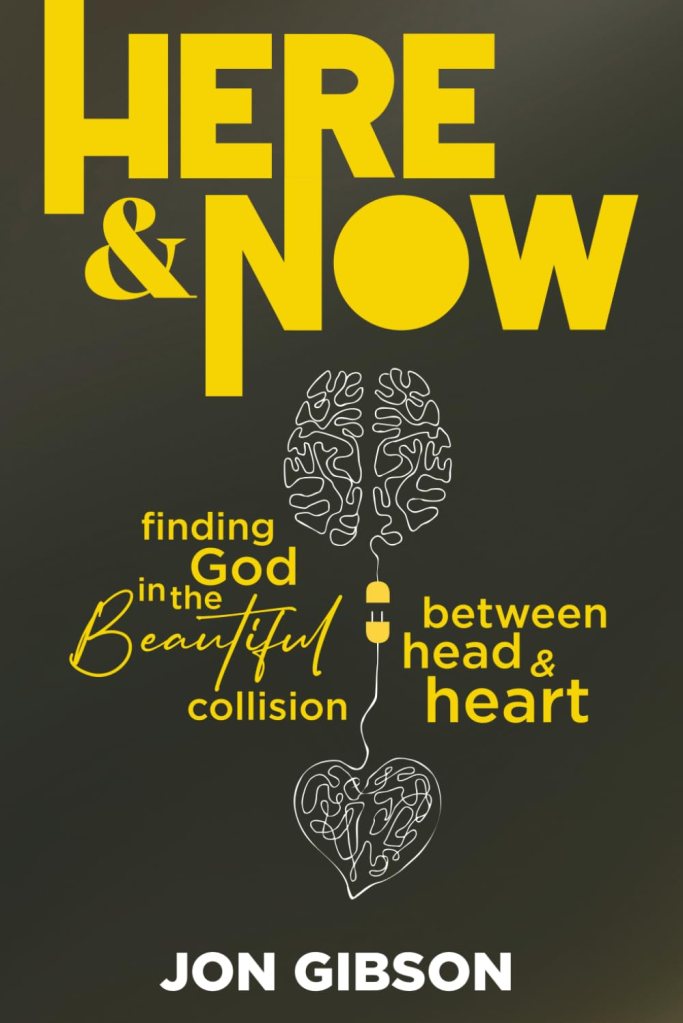








 EXPEDITION 44