STAR OF DAVID/REMPHAN

The Magen David or Star of David  (מָגֵן דָּוִד, lit. ’Shield of David‘) is a symbol generally recognized as representing both Jewish identity and Judaism.1 It may surprise you to learn that it has no Biblical roots. The earliest the hexagram can be found in a religious context is in the Leningrad Codex, a manuscript of the Hebrew Bible from 11th-century Cairo.2 It became representative of Zionism after it was chosen as the central symbol for a Jewish national flag at the First Zionist Congress in 1897.3 By the end of World War I, it was an internationally accepted symbol for the Jewish people, used on the gravestones of fallen Jewish soldiers. 4 Today, the star is the central symbol on the national flag of the State of Israel.
Unlike the menorah, the Lion of Judah, the shofar and the lulav, the hexagram was not originally a uniquely Jewish symbol.5 There are some early signs of the symbol,  in Israel, there is a stone bearing a hexagram from the arch of the 3rd–4th century Khirbet Shura synagogue in Galilee.6 It also appears on a temple on Bar Kokhba Revolt coinage which dates from 135 CE.7 You can also find a hexagram on the ancient synagogue at Capernaum.8
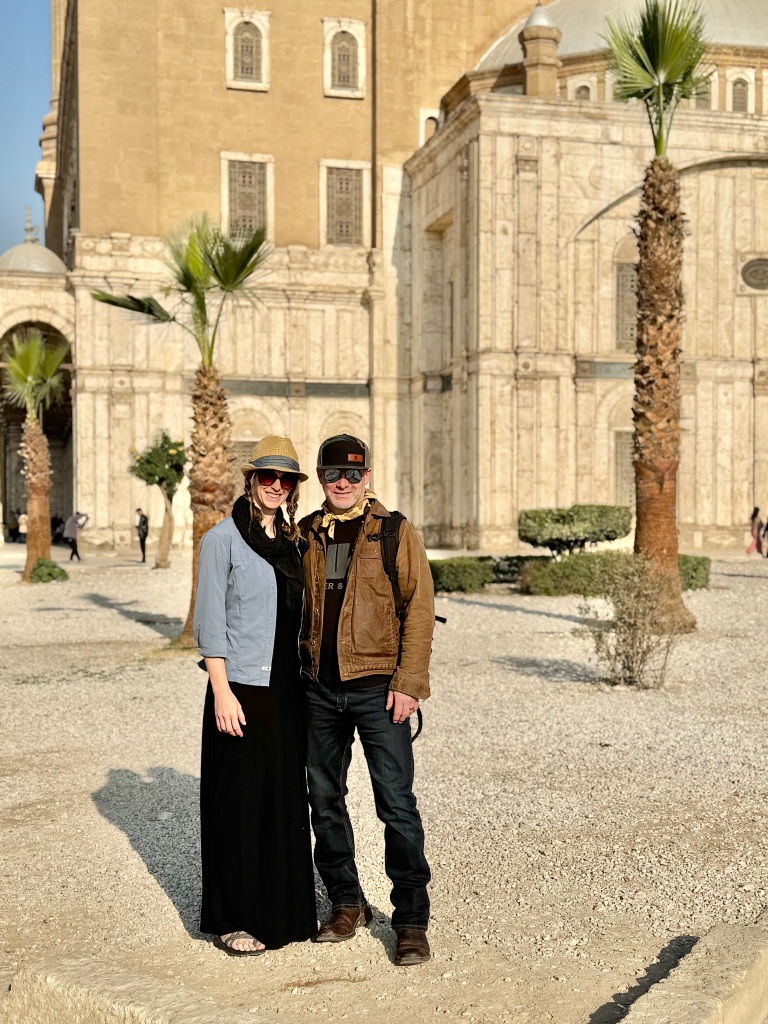
A hexagram has been noted on a Jewish tombstone in Italy and another arguably in Egypt 9 (that I viewed in person earlier this year), which both may date as early as the third century.10 The Jews of Apulia were noted for their scholarship in Kabbalah, which doesn’t sit well in most traditional and Messianic Jewish circles.11

Medieval Kabbalistic grimoires show hexagrams among the tables of segulot, but without identifying them as “Shield of David”.12


In the New Testament, Stephen condemns Jewish idolatry in Acts 7:3: “Ye took up the tabernacle of Moloch, and the star of your god Remphan, figures which ye made to worship them: and I will carry you away beyond Babylon.” Stephen is quoting word-for-word from Septuagint version of Amos 5:26-27.

According to some Biblical scholars, the name refers to the Hebrew Kiyyun or Chiun (Hebrew: כִּיּוּן), However, the words “Kiyyun” (“Chiun”) and “Remphan” are each hapax legomena,13 and the text is unclear as to whether they are common or proper nouns and could be a reference to the planet Saturn (which was also connected to Remphan.) The Masoretic Text reads Kiyyun (Chiun), while the Septuagint renders that name as Rephan. Acts 7:42 quotes the Greek form, showing how the prophetic word moved into the early church. Comparative linguistics links Kiyyun to the Assyrian Kayvân, a name for planet saturn. Ancient peoples called planets “wandering stars” and often built cults around a star god. In more modern history you will recognize these terms from Zoroastrianism.14 

To be clear the Bible just mentions a star, not 5 or 6 points or anything else. The context is about rebellion to the Lord, but a large part of this discussion would have involved symbols of idolatry which is Exodus 20:3-4 language. Furthermore, as I alluded to earlier, there are some Hebrew issues in the text that you may need to be work through. The Hebrew Kiyyun to the Assyrian Kayvân / Chuin or Kewan, was rendered in the Septuagint, as Ῥαιφάν [Raiphan]. Some try to argue that there was no ancient god named Remphan, but I don’t see merit in that argument.
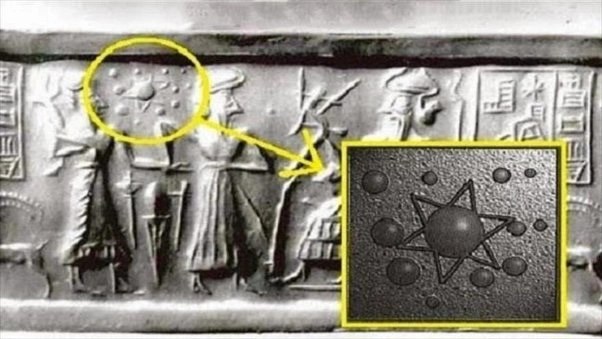
Others may say that the reference is the Star of Ninurta, which has eight points, not six points.15 But the truth of the matter is there are plenty of stars to be found in ancient culture and they didn’t seem to differentiate between 5,6,7 or 8 points; they all held the similar celestial imagery. For instance, I will remind you that in John’s vision of Revelation, Jesus has seven stars in his right hand. Jesus reveals the mystery: “The seven stars are the angels of the seven churches” (Rev 1:20). Thus, there are seven stars or seven angels (messengers) to God’s redeemed people. In this sense it is important to point out that star imagery itself should not necessarily be condemned, it can be viewed in scripture in both positive and negative light. Jesus is called the Morning Star in Revelation 22:26 but Satan is also referenced with a similar term in Isaiah 14:12.

Moloch, Chiun and Remphan are all associated with the star god, Saturn, whose symbol is most commonly viewed as a six pointed star formed by two triangles, but sometimes as an 8 sided star. Saturn was the supreme god of the Chaldeans. Mo, Chiun, Rephan, or Remphan, and Remphis, all are likely the same with the Serapis of the Egyptians, and the calf of the Israelites; and which idolatry was introduced on account of Joseph, who interpreted the dream of Pharaoh’s kine, and provided for the Egyptians in the years of plenty against the years of famine, and was worshipped under the ox with a bushel on his head.

There is also may be a D32 nephalim connection. Giants, with the Hebrews, were called “Rephaim”; and so Mo, who is here meant, is called “Rephan”, and with an epenthesis “Remphan”, because of his gigantic form; which some have concluded from the massy crown on his head, which, with the precious stones, weighed a talent of gold, which David took from thence, 2 Samuel 12:30 for not the then reigning king of the Ammonites, but Molech, or Milchom, their idol, is meant: this is generally thought to be the same with Chiun in Amos; but it does not stand in a place to answer to that; besides, that should not be left untranslated, it not being a proper name of an idol, but signifies a type or form; and the whole may be rendered thus, “but ye have borne the tabernacle of your king, and the type, or form of your images, the star of your god”; which version agrees with Stephens’s, who, from the Septuagint, adds the name of this their king, and their god Rephan, or Remphan.16 Early Hebrew writing easily could have interpreted Rephaim as Rephan. We see these slight textual subtleties all over early ancient transcripts.17 Rephan, very well could point directly to a connection with fallen spiritual beings revered in the ancient world as gods in a Genesis 6 context.

The Seal of Solomon or Ring of Solomon (חותם שלמה, Ḥotam Shlomo) is the legendary signet ring attributed to king Solomon in medieval mystical traditions, from which it developed in parallel within Jewish mysticism, Islamic mysticism and Western occultism. This story comes from the ancient non-canonical writing sometimes referred to as the “Testament of Solomon.” It is often depicted in the shape of either a hexagram or a pentagram. In mystic Jewish lore, the ring is variously described as having given Solomon the power to command the supernatural, including shedim and jinn, and also the ability to speak with animals. Most scholars would say that this is the predecessor to the Star of David.18

While several Biblical passages emphasize Solomon’s supernatural endowment of wisdom, they do not mention him receiving a ring to control demons. Instead, Scripture highlights Solomon’s extensive knowledge of natural phenomena (1 Kings 4:33) and the building of the Temple in Jerusalem (1 Kings 6). No biblical text describes him subjugating evil spirits via an object or talisman. The extra-biblical work called the “Testament of Solomon” is thought to have been compiled between the 1st and 5th centuries AD (well after the Old Testament period). This document is categorized by scholars as pseudepigraphical, meaning it circulates under Solomon’s name but is not recognized as authentic Scripture. In this story, Solomon purportedly receives a ring from an angel, which bears the name or seal of God and grants him authority over demons, enabling him to command them to assist in building the Temple.19

A legend of a magic ring with which the possessor could command demons was already current in the 1st century Josephus as well as the Tractate Gittin (fol. 68) of the Talmud which also has a story involving Solomon, Asmodeus, and a ring with the divine name engraved: Solomon gives the ring and a chain to one Benaiahu son of Jehoiada to catch the demon Ashmedai, to obtain the demon’s help to build the temple; Ashmedai later tricks Solomon into giving him the ring and swallows it.20

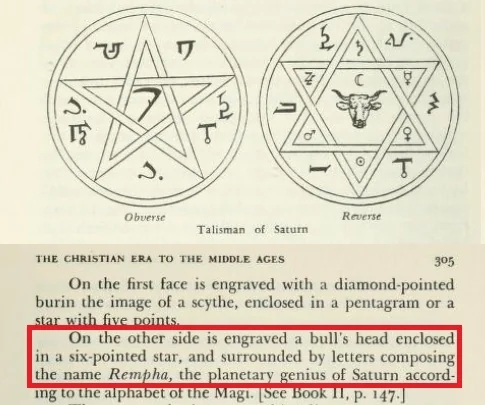
There is also a subtle connection by symbolism to the Magi. The Magi are popularly referred to as wise men and kings. The word magi is used in the original Greek text of the Gospel of Matthew. Magi will later be seen in the etymology of the English term magic. Daniel 2:48 will connect with the same words when describing “Elymas the sorcerer” in Acts 13:6–11. Biblically all of these things fall under divination. The image to the right became part of the Alphabet of the Magi much later in history.
Scripture consistently condemns divination. Deuteronomy 18:10-11 states, “Let no one be found among you…who practices divination, conjury, interprets omens, or sorcery.” This prohibition underscores that seeking information from sources other than God is forbidden. The Israelites were called to be distinct from other nations, which frequently turned to occult rituals for guidance.

Leviticus 19:26 also prohibits divination, reinforcing that God’s people must avoid methods used by pagan cultures. King Manasseh’s downfall exemplifies the tragic consequences of defying these commands: “He sacrificed his sons in the fire in the Valley of Hinnom, practiced sorcery, divination, and witchcraft…” (2 Chronicles 33:6). Through such narratives, the Bible highlights the spiritual dangers and moral corruption that accompany attempts to manipulate or predict the future by occult means.

Some may not like this analogy, but of late, it was a popular “western world” analogy to this conversation so I will mention it. You might consider the question, “Is the star of David rooted in idolatry and divination which was/is rival to Yahweh?” There is certainly an argument for that view. But many symbols both in and out of the Bible can go both ways. Foundationally, evil has always sought to take what is good and turn it to be a symbol of Evil. The Bible doesn’t really give us the whole story here, as that isn’t it’s primary intention. At least with the “taking back of the Rainbow”, there is a clear mention in the Bible. The roots of the rainbow representing something good and of God is not arguable. But with the 6-sided star we don’t necessarily have that. To most people if something has occult type of roots or even some strain of a negative connotation, we aren’t going to use the same symbol for our entity of good intention. When people and organizations do things like this it raises red flags, but it doesn’t make it wrong per se.

A good example is the Starbucks logo. The way it is used most recently seems simple. But when you dig into the history you scratch your head wondering why would a corporate coffee company “go there.” You have probably heard this, but most Christians would call the Starbucks logo downright “DEMONIC.” The image in the center of the Starbucks logo is not a mermaid. She’s actually a mythological Siren, a female creature that lured mariners to destruction by her sex appeal. Since coffee beans typically traveled overseas on large container ships, the founders decided to use a “seductive siren” logo that would lure coffee lovers to its stores. The original Starbucks logo was X rated, a bare-breasted, female Siren with two serpentine tails spread apart (a legs spread open sense.)

In an article published by Revealing Truth, it was claimed that the Starbucks logo also has sinister roots. By turning the original Starbucks logo upside down, you can see the image of satan. In 2014, Starbucks got into trouble after its employees were drawing satanic pentagrams and the number “666” in the foam of coffee.  

However, it is quite possible you visit Starbucks every day and look at the logo and can’t see anything evil in it anymore, and care very little about its dark history. As a Christian should you not support the organization because of its roots? I am not sure we should hold the organizations themselves and the people that represent them accountable for choices they specifically didn’t make. Isn’t that a Biblical theme? God isn’t judging you for the actions of others, just you. (I realize there are views within reformed theology that might see this differently.) There is an argument along these same lines with MONSTER energy Drink. I won’t get into that here. If you drink Monster or Starbucks, you shouldn’t have an issue with the Star of David, if you don’t – well than you might have an issue with the Star of David; but they are all slightly different to this analogy.

I do believe there is a perspective of seeing the good in things despite their dark past. Isn’t that the restorative nature of scripture? You can choose to let ancient bygones be bygones and see the beauty and peace that the star of David a new meaning and we can see it for what it has come to represent. Shouldn’t we all be hopeful that a dark symbol could find There may even be an element of interpretation not specifically declared in the Bible but theologically deduced. The Star of David and the pomegranate are deeply intertwined in Jewish tradition. The pomegranate is one of the seven species mentioned in Deuteronomy 8:8, symbolizing God’s blessings and the good deeds of the people. It is also associated with the Temple and High Priestly garments and is used during the Feasts of Shavuot and Sukkot.21 The pomegranate’s six petals form the Star of David, and its significance extends to kingship and the Messiah Those who see the Star of David as Biblical, see the pomegranate’s deep red color and the presence of seeds that symbolize blood pointing to Jesus. Together, these symbols can be seen as representative to the holiness of God, the good deeds of the people, and point towards Jesus.

  1. Jacob Newman; Gabriel Sivan; Avner Tomaschoff (1980). Judaism A–Z. World Zionist Organization. p. 116. ↩︎
  2.  Kittel, Rud; Alt, A; Eissfeldt, Otto; Kahle, Paul; Weil, Gerard E; Schenker, Adrian (1977). Biblia Hebraica StuttgartensiaISBN 9783438052186.
     (in Foreword by Gérard E. Weil). ↩︎
  3. “The Flag and the Emblem” (MFA). “The Star of David became the emblem of Zionist Jews everywhere. Non-Jews regarded it as representing not only the Zionist current in Judaism, but Jewry as a whole.” ↩︎
  4. Reuveni (2017). p. 43. ↩︎
  5. “The Flag and the Emblem” (MFA). “Unlike the menora (candelabrum), the Lion of Judah, the shofar (ram’s horn) and the lulav (palm frond), the Star of David was never a uniquely Jewish symbol.” ↩︎
  6. Star of David – Wikipedia ↩︎
  7. Plaut, W. Gunther (1991). The Magen David: How the six-pointed Star became an emblem for the Jewish People. Washington, D.C.: B’nai B’rith Books. pp. 26, 61–62. ISBN 0-910250-17-0. ↩︎
  8. “King Solomon-s Seal”, with credits Archived October 16, 2013, at the Wayback Machine Israeli Ministry of Foreign Affairs ↩︎
  9. The Egyptian officials accused the delegation of German archaeologists that has been working on the site’s reconstruction of engraving the Stars of David into the Shrine’s stone.  The engravings are found on a 3rd century B.C, temple located in Elephantine Island in Aswan. ↩︎
  10. Herbert M. Adler, JQR, vol. 14:111. Cited in “Magen David”Jewish Encyclopedia, retrieved May 28, 2010. ↩︎
  11. www.markfoster.net Archived July 22, 2011, at the Wayback Machine ↩︎
  12. Rabbi Blumenkrantz, “The Seder”, The Laws of Pesach: A Digest 2010: Chap. 9. See also: Archived March 17, 2016, at the Wayback Machine, retrieved May 28, 2010. ↩︎
  13. Horne, Thomas Hartwell. An Introduction to the Critical Study and Knowledge of the Holy Scriptures. Vol. 2. pp. 410ff. ↩︎
  14. “An Etymological Dictionary of Astronomy and Astrophysics – 1”dictionary.obspm.fr. Retrieved 2023-05-21. ↩︎
  15. Amar Annus, The God Ninurta in the Mythology and Royal Ideology of Ancient Mesopotamia, State Archives of Assyria Studies, Volume XIV Helsinki 2002. Pg. 104 ↩︎
  16. Gill’s Exposition of the Entire Bible ↩︎
  17. “Scholars seek Hebrew Bible’s original text – but was there one?”Jewish Telegraphic Agency. ↩︎
  18. Protectorat de la République Française au Maroc – Bulletin Officiel – (see page 838), 29th of November 1915, archived in July 2021 ↩︎
  19. https://biblehub.com/q/how_does_solomon_use_his_magic_ring.htm ↩︎
  20. JosephusAntiquitates Judaicae. ↩︎
  21. https://theancientbridge.com/2016/06/pomegranates-the-star-of-david-and-shavuot-aka-pentecost/ ↩︎

NATURAL ORDER

I want to talk about what is meant by God’s order, but before I do that, I want to guide you through a brief exegetical teaching through the text. When you hear the word order in relation to a biblical sense we have been conditioned to think about creation, law, hierarchy in the church and marriage, and perhaps even church discipline. Although it encompasses those things, I find it unfortunate that we start there, and therefore I feel we might need some deconstruction to get to good.

As I begin to read this in Hebrew the first thing that I notice in contrast to most English translations is the phrase “My prayer” is not found in the text. It isn’t a bad translation as I get the context leans that way but in Hebrew the verse better reads, “I will order toward you” which emphasizes a slightly different posture. Interesting the word prayer isn’t really there, perhaps a NT implication or even insertion. Prayer in the OT was a bit different than the way we understand it today. It was communal and far less personal (unless God appeared to you in a bush and orally spoke directly to you), after Jesus ascends to the throne and sends the Spirit to dwell in us and intercede, the biblical concept of prayer takes on a different form than what it had been considered over the last 2000 years or more. The way people thought of “prayer” in the OT may or may not be accurate. Are we just reading what they thought prayer was supposed to be perhaps based on what they knew of their former deities? Is this something that they got a bit off track with and Jesus sought to adjust or shed new light on? Perhaps, but perhaps not. Maybe our prayer should take a cue from the OT notions. When we read this verse in Hebrew form, we see that David isn’t talking about ritualistic prayer, or is he? He isn’t necessarily folding his hands and closing his eyes – but he is sort of. He is making a statement that if his life is in alignment with what is of God – TOV (creation order language), then he expects God to acknowledge and “DO THINGS” on his behalf. This may tie into the never-ending OT grappling over whether God was retributive or not, but it certainly had the trajectory of demonstrating the idea of devotion in connection to intimacy with the Lord. This connection over the years will then be attributed to the conjecture of relationship with the father in prayer. Some prayer is communal and some is personal.

Different people interact with God differently and perhaps in different seasons. Some say they don’t hear God and others act like God never stops screaming in their ear. How can the voice of God differ from person to person? Is it based on the posture of the heart, covenant faithfulness, gifting, seasons, understanding, choice, some sort of prejudice, or something completely different that is higher than our understanding? I believe that God is just that dynamic. I don’t know why He communicates differently to people and what it might be based on; I don’t always have the eyes of God. I believe Him to be Sovereign and know significantly more than we do in a much more complex grid. I am convinced that there are many things that influence this covenant relationship at a cosmic level. It is far bigger than simply me, and to think of my relationship with God (the creator of the universe) as doating on my every thought seems like a selfish notion. Does that view minimize a personal relationship or exemplify it?

God’s order is described in everything naturally defined by Yahweh and described generally as what is good (TOV). This is creation, the waters, the counting of the ark, the building of the temple, the pieces of firewood set in order for a sacrificial fire, showbread set out in two rows of six cakes on the gold table (Lev 24:8); seven altars set up by the pagan mantic Balaam (Num 23:4); stalks of flax arranged by Rahab for hiding the spies (Josh 2:6); a table prepared for dining (Ps 23:5; Isa 21:5); words produced for speaking (Job 32:14); a legal case developed for presentation (Job 13:18); etc. In II Sam 23:5 David exults in the covenant granted him by Yahweh, “for he has made with me an everlasting covenant, / ordered (ʿărûkâ) in all things and secure.[1] We see God’s order in many ways, but the common thread that binds seems to be that it is given as a framework for our devotion to Him. This intimate devotion that is often described as reading or memorizing scripture, devotional repetition, standards of practice and living, and so much more are all described as what it means to be defined as SET APART. That we are defined and claimed as part of God’s order not the chaos of the world.

What defines this? Covenant. Covenant is the secure, accessible, and recognizable attribute of everything good that God offers to us. It is the basis of all of our interaction with the LORD. Without covenant we are detached or separated from the creator and his ways. When David chooses every morning to be in order, he is making a statement about the balance of life and the posture of the heart. The Hebrew term בְּרִית bĕriyth for “covenant” is from a root with the sense of “cutting”, because pacts or covenants were made by passing between cut pieces of flesh of an animal sacrifice.[2] It meant something deep.

The New Covenant is a biblical interpretation originally derived from a phrase in the Book of Jeremiah and often thought of as an eschatological world to come related to the biblical concept of the Kingdom of God. Generally, Christians believe that the New Covenant was instituted at the Last Supper as part of the Eucharist, which in the Gospel of John includes the New Commandment.[3] A connection between the Blood of Christ and the New Covenant is portrayed with the saying: “this cup that is poured out for you is the new covenant in my blood”. Jesus is therefore the mediator of this New Covenant, and that his blood, shed is the required blood of the covenant. This is true looking back in both testaments and can be seen in all of the biblical covenants of the bible.

In the Christian context, this New Covenant is associated with the word ‘testament‘ in the sense of a ‘will left after the death of a person (Latin testamentum),[4] the original Greek word used in Scripture being diatheke (διαθήκη) which in the Greek context meant ‘will (left after death)’ but is also a word play having a dual meaning of ‘covenant, alliance’.[5] This notion implies a reinterpreted view of the Old Testament covenant as possessing characteristics of a ‘will left after death’ placing the old covenant, brit (בְּרִית) into a new application of understanding as revealed by the death, resurrection, ascension, and throning of CHRIST THE KING, JESUS. All things will forever connect at the covenants and be defined by the atoning accomplishments that transform into a covenant of eternity.

Order today might be better understood as a continually evolving algorithm based on the posture of your covenant faithfulness which, as I have described, is defined by many facets of devotion. Some may hear the audible voice of God more clearly while others simply see Him in every image. The revelation of God to us isn’t in a form of hierarchy. One form of transcendence doesn’t trump another. Who are we to judge anyway. But I do know that most of Christianity seems to be off course here. Rather than coming to the LORD as the cosmic wish granting genie in a bottle, let’s get back to biblical roots and think more covenantal and devotional based on the order that God modeled for us.

[1] Harris, R. L., Archer, G. L., Jr., & Waltke, B. K. (Eds.). (1999). Theological Wordbook of the Old Testament (electronic ed., p. 696). Chicago: Moody Press.

[2] Strong’s Concordance (1890).

[3] “Comparison of the two covenants mediated by Moses and the two covenants mediated by Jesus”. 25 September 2022. Archived from the original on 2022-09-28. Retrieved 2023-01-29.

[4]“testamentum: Latin Word Study Tool”. http://www.perseus.tufts.edu. Retrieved 2020-08-12.

[5] G1242 – diathēkē – Strong’s Greek Lexicon (KJV)”. Blue Letter Bible. Retrieved 2020-08-12.

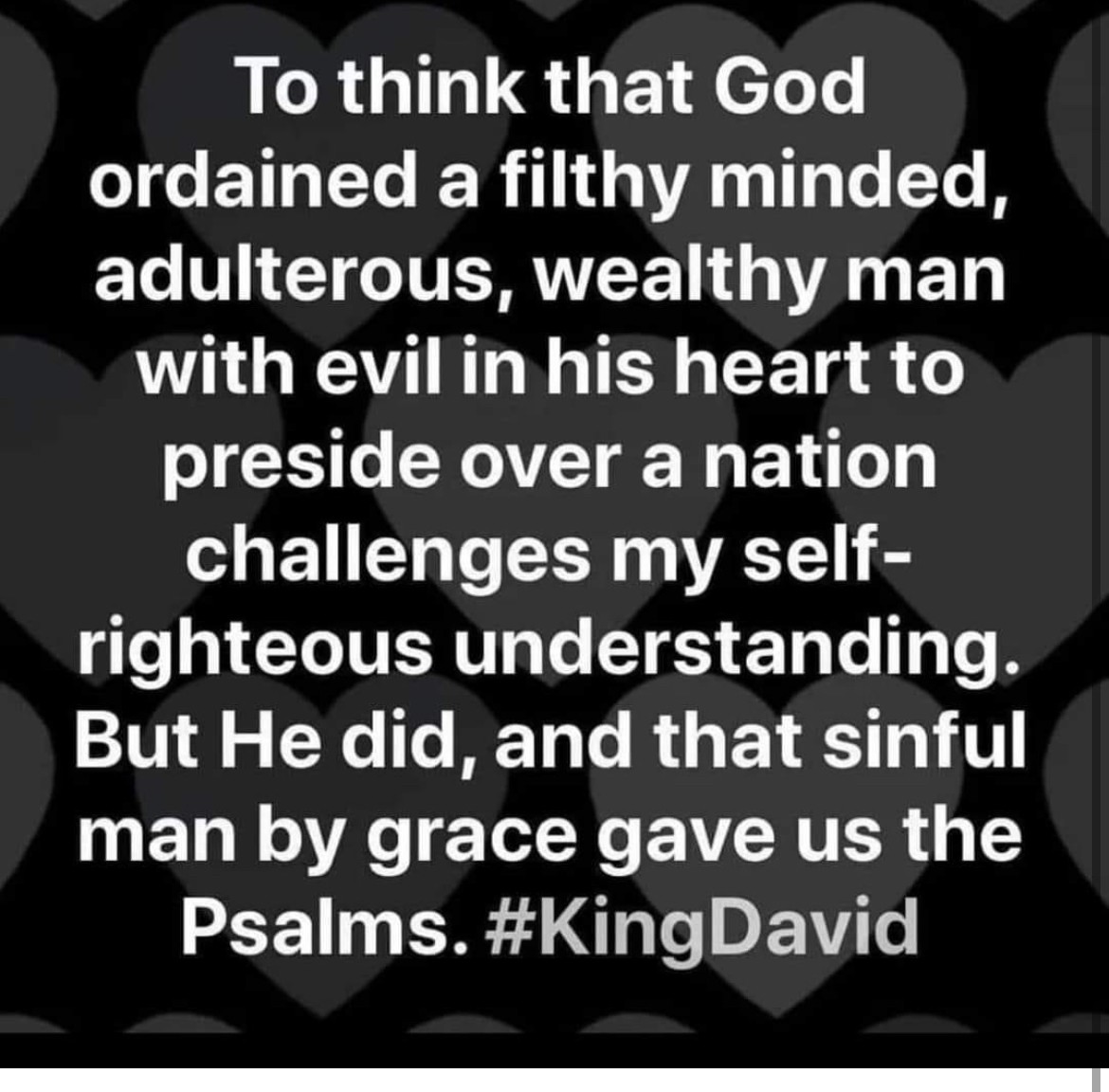
King David and Donald Trump? Maybe more than you realize, but that’s not good for anyone!

If you haven’t read this article on King David, Start here.

There is a lot about this popular 2024 post-election MEME that doesn’t sit well with me.

To be clear, I do think David had a heart postured after the Lord in his youth before he became king. I LOVE young David and the writings of his heart. They are some of my favorite parts of the Bible and have motivated me to be more holy than likely any other texts in the Bible. I do believe he was one that God intended to use to return all of Israel and eventually the world to be reconciled back to Yahweh. David seemed to have a heart postured towards the Lord in his early days, but the power, the lust, the flesh and the pride of life not only led him way, but likely all of Israel away from the LORD. David was “chosen” by God to be His tool to bring redemption back but accomplished the opposite.

As I have made the statement previously, I do not feel that a faithful reading of the Hebrew in 1 Sam 13:14 says that “David had a heart after God’s own heart” per the usual interpretation. John Walton convinced me that the expression doesn’t describe the inclination of the king but describes the sovereign choice of God. The claim is not that David pursues the heart of God as a spiritually mature person rather than pursuing his own ends; instead, David is the man that God has pursued with his own criteria in mind rather than Saul, who was someone who met the criteria of the people. It is a statement about God’s sovereignty, not about David’s spirituality or piety. John Walton has alluded then that it is therefore not something that we can aspire to in our own lives, and I would agree. Eventually David becomes the very image of Israel, fallen and completely idolatrous. To most theologians he is the Biblical archetype of the one who was intended by God to bring Israel back to Yahweh yet accomplished the exact opposite and led Israel away from God towards utter sinfulness and idolatry giving weight to the powers and principalities that had overtaken the rest of the ancient world at that time.

David, when confronted with sin does sometimes seem authentically repentant (Psalm 51; 2 Sam 12:13-20), but then often continues to go on sinning. That isn’t the fruit of a truly repentant heart. In most cases if someone committed murder and said they repented but then goes on to do it again, I think we would come to the conclusion they didn’t genuinely repent when they said they did. Which seems actually worse; to put on a show of repentance (in the name of the LORD) but not really have a heart of repentance. It’s just an act.

Scholars debate whether David’s destructive actions represent justice or unnecessary power mongerering. Did he feel “commissioned by God” in his somewhat empirical pursuit that started with Canaan or did this become a push for personal power and fame? Some argue David was playing the part of God’s hand of retributive justice, others criticize David for excessive continual violence opposite to that which God had sanctioned. Either way, much of it seemed contrary to God’s ways. Some try to justify the actions saying it was simply the culture, but I don’t see that theologically, as it seemed quite contrary to the character of God and what He had given them in the law. It seems David was doing what David wanted, not what Yahweh wanted. David’s kingship paints a picture of a powerful warlord who engaged in much bloodshed to establish and maintain control of the kingdom of Israel.

  • Goliath 1 Samuel 17:49-51
  • Goliaths Brothers. David chose five smooth stones because Goliath had four brothers based on 2 Samuel 21:15–22. That passage lists four very large Philistines who were related to Goliath in some way: Ishbi-benob, Saph, Goliath, and an unnamed giant with six fingers on each hand and six toes on each foot. “These four were born to the giant in Gath, and they fell by the hand of David and by the hand of his servants” (2 Samuel 21:22).
  • When David heard the news about Saul and Jonathan’s deaths from an Amalekite messenger, he had the man executed (2 Samuel 1:1-16).
  • Baanah and Rechab presented Ish-Bosheth’s head to David hoping for a reward. However, David ordered them killed.
  • After becoming king, David executed seven of Saul’s sons. (2 Samuel 21:1-14)

There are some tell tale signs of David’s movement away from God, this will surprise many, but David had served as a mercenary soldier for the Philistine king of Gath (see 1 Samuel 27:2-4), it took seven years of fighting for David (who had been anointed King of Judah) to defeat Saul’s son Ishbosheth and establish the United Monarchy of Israel and Judah in c.1004 BC (see 2 Samuel 2:8-11, 3:1-39 & 4:1-12). David quickly consolidated his position by capturing the Canaanite city of Jebus (Jerusalem) and establishes his new capital there, the City of David (2 Samuel 5:6-10). Having agreed on an alliance with the Phoenician king of Tyre (see 2 Samuel 5:11), David was able to turn against his former patrons, the Philistines, and defeat them in the Valley of Rephaim (see 2 Samuel 5:17-2). Over the next few years, David succeeded in completely subjugating the Philistines and taking control of the southern coastal plain cities of Gaza, Gath, Ashkelon, Ashdod and Ekron (see 2 Samuel 8:1). Any red flags yet?

As I mention earlier, David’s son, Solomon, seemed to follow closely in David’s ways (or be used by him) and was able to complete the downfall of the Philistines by negotiating a dynastic marriage with the Egyptian pharaoh Haremheb’s daughter in c.970BC (see 1 Kings 3:1) and taking on the role of Egypt’s former ally. By building a chariot city at Gezer to defend the trading route from Egypt to Syria and Mesopotamia he was able to secure the support and protection of Egypt – one of the ‘superpowers’ of his day (see 1 Kings 10.26-27). Any other red flags?

Meanwhile, David had turned his attention to the northern frontier, and in an amazing series of military campaigns beyond the River Jordan, succeeded in defeating the people of Moab, the Arameans of Damascus, the Syrian King of Zobah, and the Edomites in the Valley of Salt (near the Dead Sea) (2 Samuel 8:1-14). In just under thirty years, David had succeeded in transforming a small kingdom in the central highlands of Judaea into a major empire stretching from the border of Egypt to the lowlands of Mesopotamia. In the process did he trade God’s kingdom for a personal pursuit of power and fame?

As you can see, this is a lot of bloodshed. 30 years of continual bloodshed. There is a good deal of deceit and lies between rulers and intermarriage. Idolatry was rampant. He named a city after himself and countless other things that seem to point back qualities that are rival to Yahweh, not in alignment with God but rather self serving initiatives.

Well into this bloodbath we read the story of Bathsheba in 2 Sam 11:1-27 during the siege of Rabbah (Amman) in c.997BC. I have made the statement a few times that I wouldn’t leave my kids alone in the same room with the “David of latter life” and this story is one of the reasons why. By 2 Samuel 5 God seems to still be with him, but within a few short chapters (2 Samuel 12) the LORD was not pleased with David because of his sin and neglect for God’s holiness and sends the prophet Nathan to confront him. You may have never considered the whole “Bathsheba problem.” As we examine the details, we see that it is actually sexual abuse of power, in other words, rape. Neither the text nor the context supports the conclusion that it was an affair between two consenting adults. People who think Bathsheba seduced David by bathing outside his window may not realize the Hebrew verb rachats, used for Bathsheba’s action here (2 Samuel 11:2), literally means “wash” which is how it is translated elsewhere in this narrative (2 Sam. 11:8; 12:20). There is no reason to assume that Bathsheba was naked, or that she was aware that the king, who should have been with his army, would have been watching from his rooftop like a peeping Tom (2 Sam. 11:1-2). This “kingly” act was common in other cultures where evil ran rampant. It was a fatal sign that David was leading Israel to be more like the fallen pagan-evil nations around them than the “set apart under Yahweh nation” that was called to be holy unto the LORD. It was detestable to the LORD at many different levels.

David’s rape-adultery and murder is described biblically as “despising the word of God by doing what is evil,” and “total contempt for the Lord,” (2 Samuel 12:7-9). David’s rape-adultery, murder, and abuse of power was not rewarded by God with more power. It actually resulted in many consequences such as division and violence in his family and those he was leading. Also, it resulted in a child dying, and his denial to build the temple. God is no longer with him.

The consequences of David’s sin are lasting and far-reaching. From Rape and incest with Amnon and Tamar, to the murder of Amnon by Absalom for the rape of his sister, the war among the Israelites leading to David fleeing Jerusalem in shame for fear of his life from his own son. We watch the downward spiral as eventually David is part of an illegitimate census that seemingly stirs the anger of the Lord against the Israelites and seventy thousand Israelites die from a pestilence allowed (and perhaps caused) by the LORD. David was a violent man in a violent world, a polygamist, an adulterer, and a murderer. There just isn’t any way to avoid seeing that if we read and believe the Bible. The progression in David’s sin reveals a callousing of his heart.

It has always seemed strange to me that the mainstream church doesn’t want to read the text as it is both plainly and deeply read here. It is as if they are covering him up and putting him on a pedestal. This is in part why the modern evangelical church has trust issues. Doing this seems so contrary to the character of God – attempting to cover up continued evil acts and promote David into something that God approves of. That isn’t the intention of the text nor a faithful rendering of it.

As in the wilderness the cloud signified the Spirit of the Lord coming and going, we see that after Israel went on a bloodthirsty empirical pursuit led by King David, the spirit of the LORD is no longer with them which Nathan warned. One way to see this is to harmonize the Psalms. A theologically daunting task is to figure out when David wrote the Psalms. When you do this and carefully read them, I will challenge you to discover that after the encounter with Bathsheba the Lord was no longer with him, or perhaps looking onto him with favor. There are times we read from David’s perspective of crying out to the Lord, but it comes from a sort of tone of a drunk alcoholic asking why their friends have left them, which is likely exactly what it is. David wrote 73 of the 150 Psalms in the Bible, and carefully studying the ones he wrote and the dating of them will help you see what I propose in terms of his downward spiral taking Israel down with him in terms of a spiritual nation.

After the death of Absolom if you harmonize the scriptural narrative (2 Samuel, 1 Kings, and 1 Chronicles) with the Psalms this is what we find. Remember a great part of theology is in determining the narrative. What are the voices? What is simply the story given for our interpretation and where is God in it. What do we read as being the thoughts of the characters involved, verses how God may have viewed the ongoings. That is as much for our interpretation as the red letters are, but the red letters are decisively clearer. Too many people read the entire Bible as a “thus saith the Lord” statement rather than understanding the literary narrative as it is presented. Not understanding the voices in the text has led many towards poor theology. It is vital for literary scholarship to apply literary criticism and textures of interpretative law to the narratives of the Bible for faithful reading.

2Sam 21 Famine and Gibeonites → Ps 29, 65
Last war with Philistines → Ps 36
2Sam 22 Song of deliverance → Ps 18, 144
2Sam 24 David dedicates Temple → Ps 30, 33, 131 (32)
1Kings 1 Solomon anointed King → Ps 47
1Chr 28 David‘s address → Ps 145
Concerning building Temple → Ps 104, 133, 86
1Chr 29 David‘s Thanksgiving Prayer → Ps 72
2Sam 23 David‘s last words → Ps 37 (138)

If you care to dive in deeper, Don Stewart and Blue Letter Bible have a rather deep post on this here. As I don’t agree with BLB on several topics, I do respect their mission and believe they are doing good things. I think what they have given us here is a worthy tool.

Again, I will challenge you to read the narrative. Where is God in it? He isn’t there any longer. The spirit has left the encampment.

We are not called to celebrate or try to “be like David” or even celebrate those who act like him, we are called to be like Jesus. And yes, Jesus works through fallen people but usually the ones on the road to transparent sanctification, not the ones that continue to live in sin. David’s story is a man who started out well and did not end well. He still carried a warring and vengeful spirit into the grave. From His kingship to death, we have a person that possibly had a chance to do more for God than any other person yet failed miserably accomplishing the near opposite leading Israel into idolatry that would give way to a return to slavery in exile. On his death bed he asked Solomon to kill Shimei, who confronted David on his bloodshed and abuse of power. (1 King 2:9, 2 Sam 16:8).

However, this isn’t all negative. I like the way the Bible project frame’s the early life of David. Jesus saw his role as Israel’s messiah was to patiently wait for God to exalt him as king, just like David waited. He anticipated persecution from his own people would come, just as it did for David. The stories about David provided the template of Jesus’ messianic vocation, and they epitomized the upside-down value system of God’s kingdom that Jesus was always talking about. It’s a kingdom where the poor and persecuted are the most exalted, and the powerless are God’s chosen ones (go and re-read the famous beatitudes in Matthew 5:1-7 and think about them in light of the story of David). When Jesus read the stories of David, it wasn’t to learn interesting facts about Israel’s history. Like the prophets, Jesus read His Bible as a prophetic history that was pointing towards the future hope of the messianic Kingdom of God. These stories about David were designed to foster that very hope, in Jesus’ day, and in our own.

Dr. Will Ryan and Dr. Matt Mouzakis.

The Posture of the Heart – With John Walton

I have come to cringe when people say things like, God is only concerned about your heart. Or perhaps using the semi-excusive example of David having a “heart after God” all the while being a murderer and adulterer (which clearly doesn’t match up with the character of God). I likely wouldn’t let my kids hang out with him. Clearly so many scriptures continue to share how important it is to have a heart for God, and I would fully agree, even though I view complete devotion as so much more than just the motives of the heart.

  1. Matthew 6:21: “For where your treasure is, there your heart will be also.”
  2. Proverbs 3:5: “Trust in the LORD with all your heart and lean not on your own understanding.”
  3. Proverbs 4:23: “Above all else, guard your heart, for everything you do flows from it.”
  4. Romans 12:2: “Do not conform to the pattern of this world but be transformed by the renewing of your mind.” (a quick word study of “nous” will link the heart and mind)
  5. Proverbs 23:26: “My son, give me your heart and let your eyes delight in my ways.”
  6. Psalms 51:10: “Create in me a pure heart, O God, and renew a steadfast spirit within me.”
  7. Psalms 73:26: “My flesh and my heart may fail, but God is the strength of my heart and my portion forever.”
  8. Philippians 4:7: “And the peace of God, which transcends all understanding, will guard your hearts and your minds in Christ Jesus.”

John Walton has been a good friend and lifelong mentor to me that started back when I was a freshman at Moody Bible Institute in 1993, and I asked for his thoughts on the subject as I continue to wrestle through them. We went back and forth working through some things that have influenced my opinion in this conversation. I will indicate his words in our private conversation using quotation and suggest articles for further study.

To start with, I might even suggest, as I allude to in nearly every article, that we might need to rethink a few things according to a better hermeneutic towards the exegesis of the text rather than popular opinion or tradition. John recently wrote a book entitled Wisdom for Faithful Reading that I would suggest starting with. John suggests that the popular text for David having a heart after God’s heart is usually misinterpreted. In 1 Sam 13:14 the expression used there is used elsewhere in the OT (as well as often in the ANE) not to describe the inclinations of the king (one who pursues knowledge and relationship with the God), but to describe the sovereign choice of the deity (who for his own reasons has chosen the king to rule). So, the claim is not that David pursues the heart of God as a spiritually mature person rather than pursuing his own ends; instead, David is the man that God has pursued with his own criteria in mind rather than Saul, who was someone who met the criteria of the people. It is a statement about God’s sovereignty, not about David’s spirituality or piety. It is therefore not something that we can aspire to in our own lives. He has written an excellent article on this topic here.

It was interesting that in the Old Testament a great amount of wealth was used to construct the temple and tabernacle (it is somewhat ambiguous as to whether this was God’s asking or solely the doing of the people in an effort to worship God similar to the way the rest of the world honored and appeased the gods). This wealth has no value to God, but the gold meant something to them. The gracious donation or perhaps giving it up was possibly viewed as an outward sign of the internal heart. John would say that “We honor God with our extravagance in giving that which is of value to us. God does not need what we give.” (But seems to be honored by the giving through a pure and undefiled heart.)

John continues, “we can also see a similar picture of this heart in giving when Jesus responded to Judas’ expressed concern for the poor in the context of Jesus’ feet being anointed. Yes, the money could have gone to the poor, but expressing the worthiness of Jesus through the extravagant expenditure with no return was considered not only legitimate, but commendable.”

Today I often wonder whether God smiles at megachurch budgets and building campaigns that resemble much of the world in the name of Jesus. The scripture would suggest that the answers might lie in the motive of the heart rather than on the extravagance of the expenditure. “God smiled on the extravagance of the woman who anointed his feet with oil, and, since he called for great extravagance in the Tabernacle and Temple, I assume he smiled on those projects, but only to the degree that they were carried out with his honor in mind, not their own.” We could also take into account the widow’s mite or the widow’s offering as presented in the Synoptic Gospels (Mark 12:41–44, Luke 21:1–4) Jesus clearly “smiled on” her and commended her sacrifice—an issue of the heart and extravagant even in its lack of relative worth.

Often it seems that what might at one time be a pure motive becomes defiled and abhorrent to the Lord. Some might say that the golden calf was fashioned as an emblem animal or medium to God or possibly a pedestal for the Lord to be invited to come down and dwell amongst the Israelites. However, God is still displeased as John explains that this was a violation of the second commandment. In a similar way the Tower of Babel may have started out as an invitation for God to dwell with the people (which seems to be God’s desire – tabernacling with His people); but then becomes defiled also by the disobedience of the hearts. (Read more about Babel from John’s account.)

John would share that the medium is the message, but motives can corrupt the medium (heart). Yet, any given medium may be used well or badly by different people at different times. Jesus gives an example as he criticizes how the temple is being used (casting out moneychangers) revealing their impure motives yet affirming the value of the temple when rightly perceived (as His father’s house.)

Often, I wonder about the progression to which we allow the defiling of our heart’s original pure intentions. Some things have the original intent of honoring the Lord but quickly become an extravagance that only serves our own egos or only seeks to oblige God.

Spending in the name of God is hard to figure out sometimes. I have so many questions for God, was the church ever intended to be the religious bank it has become? (Acts seems to suggest people directly giving to the needs of the body not the church acting as the collection agency, but there are several passages that may speak otherwise.) What does He think of a modern church budget that is 50% or even 95% salaries and mortgage? Why isn’t the church caring for widows, the poor, and the broken? (Our “evil” government seems to do this much better than the global church.) We are told to not have judgmental hearts, but to test these things by the spirit and know them by their fruit. One of my good friends leads a church in a lower income area and runs out of seats every Sunday, has leaky roofs over kid’s heads, and can hardly pay the measly mortgage every month while the megachurch the next town over is spending 75K on new LED screens and smoke machines every other year with a tech budget that is 10x more than the net worth of my friend’s entire organization. What would God say?

Sometimes it is hard to see whether the extravagance happening around us in the name of the Lord is an outward sign of a great heart, or an idolatrous tower. Sorry, no “answers” today… just a rambling of my heart!

More on my good friend John Walton.