Q: I have a question regarding Israel. Would Israelites still be considered God’s chosen people or would that have changed with Jesus’s atoning works?
Yes, Israel was (and is) called God’s chosen people in Scripture—but what that means and how we understand it after Jesus is really important to clarify.
When God called Israel His “chosen people” in the Old Testament, it wasn’t primarily a statement about salvation. Rather, Israel was chosen (commissioned) for a vocation—to be a light to the nations (see Exodus 19:5–6; Deuteronomy 7:6; Isaiah 49:6). (You might see this as a regaining of the nations if you follow a Deuteronomy 32 worldview.) God gave them the Law (Torah), the covenants, and the promises, not as an end in themselves, but so that through them, the nations of the world would come to know and worship Yahweh. Paul puts it like this in Romans 3:2—that the Jews were entrusted with the oracles of God. In a sense, this was the calling of Adam and Eve and when they fall short, God commissions Israel in the same calling, nation that would be called commissioned as a holy royal priesthood to represent Yahweh to the rest of the fallen world.
But Israel consistently struggled to live out this calling. From nearly the beginning of the story the nation failed to honor Yahweh (golden calf incident) and instead of the entire nation (all 12 tribes) representing the Lord as priests, God adapted the plan and then called just the Levites to be His representatives as priests first to Israel in hopes of then commissioning the entire nation of Israel to the original plan and act as ambassadors of Yahweh. The Old Testament tells a story of covenant, failure, judgment, and hope for restoration. Israel continued to falter. They gave up their theocracy of one God – Yahweh to choose to be led by an earthly king. They drifted farther and farther from the plan until God finally hands them over to their own demise, the exile was a key turning point. Even after the return of the exile to Jerusalem, most scholars believe Israel never returned to the LORD. God longed for Israel to return to the true redemption and the coming of God’s kingdom. Unfortunately, Israel continued to fall short and not seem to live out their calling or commissioning.
Jesus enters the narrative with a similar mission. He doesn’t reject Israel’s story—He steps into it. He comes first to “the lost sheep of Israel” (Matt. 15:24), calling them back to their original vocation. He chooses twelve disciples, clearly symbolizing a reconstitution of the twelve tribes of Israel. This is not incidental—it’s Jesus claiming to be the one who restores and redefines Israel around Himself.
And here’s the key: Jesus is the faithful Israelite. He does what Israel failed to do. He keeps the covenant perfectly, walks in radical obedience, and fulfills Israel’s mission. He is the true Israel (see Matthew 2:15 where Hosea’s words originally spoken about Israel—”out of Egypt I called my son”—are applied to Jesus).
This is why Paul will later say in Galatians 3:16 that the promises were given not to “seeds” (plural) but to one “seed,” who is Christ. In other words, the inheritance of Israel is fulfilled in Jesus—and only those who are “in Him” share in that inheritance. That phrase—”in Christ”—is the dominant identity marker for believers in the New Testament. If Jesus is the true Israel, then those united to Him (Jew or Gentile) are the true people of God.
This point becomes even clearer when we revisit God’s original promise to Abraham in Genesis 12:3: “I will bless those who bless you, and whoever curses you I will curse.” This statement is often lifted out of its covenantal context and applied to modern nations or political support for Israel. However, the Hebrew grammar and narrative context show that the promise was made to Abram himself (the singular “you” in Hebrew, ʾotkha), not to a future geopolitical nation. God’s intention was not to privilege one ethnic group above all others but to initiate a redemptive mission through one man and his descendants—a mission that would culminate in Christ. The blessing is vocational, not nationalistic. Abram is chosen in order to be a blessing, that through him “all the families of the earth will be blessed.”
The apostle Paul interprets this precisely in Galatians 3:16, identifying the “seed” (zeraʿ) of Abraham as Christ Himself. This means that the covenant promise—“I will bless those who bless you”—finds its ultimate fulfillment in Jesus. The “you” now applies to Abraham’s true heir, the Messiah. Those who bless Him—who honor, trust, and align themselves with Jesus—receive the blessing of God; those who reject Him cut themselves off from that blessing. In this way, the Abrahamic covenant points forward to Christ as the locus of divine favor. To bless Abraham’s seed is to embrace the redemptive mission of God revealed in Jesus, and through faith in Him, we become participants in that same blessing.
Paul says Abraham was justified before circumcision (Rom. 4), showing that faith, not ethnicity, is the marker of God’s covenant people. He adds in Romans 2:28–29 that a true Jew is one inwardly, whose heart is circumcised by the Spirit. And in Galatians 3:28 he writes: “There is neither Jew nor Greek… you are all one in Christ Jesus.”
Ephesians 2 expands this beautifully. Paul says that Jesus has broken down the dividing wall and made one new humanity—no longer Jew and Gentile, but one body. Peter echoes this in 1 Peter 2, where he applies all the covenant titles once reserved for Israel (royal priesthood, holy nation, people of God) to the church made up of both Jews and Gentiles.
Paul also uses the metaphor of an olive tree in Romans 11: some natural branches (ethnic Israelites) were broken off because of unbelief, and wild branches (Gentiles) were grafted in. But it’s one tree. There aren’t two peoples of God. There is one new covenant community—those who are in Christ. It’s not about replacing Israel, but about fulfillment—where Jews and Gentiles together form the one people of God in Christ.
This helps clarify what Paul means in Romans 11:26 when he says, “all Israel will be saved.” We don’t believe he’s referring to a future mass conversion of ethnic Jews or suggesting two separate salvation paths. Rather, he’s speaking of the fullness of God’s people: both believing Jews and Gentiles who are part of the one tree through faith in the Messiah. This fits with Paul’s logic throughout Romans and with his statement in Galatians 6:16 that the church is “the Israel of God.”
God has always worked through covenants—and those covenants are centered on trust and faithfulness, not ethnicity alone. From the beginning, covenant relationship with God required loyal love. Even under the Mosaic covenant, Israel’s inclusion was contingent on obedience and faithfulness to Yahweh (Deut 28). Being born into Israel didn’t guarantee blessing—relationship and trust did. (Israelites were never automatically “saved.”) If there was any sense of salvation in the Old Testament it would be under the same “qualifications” as in the New Testament. What God was asking and promising for the faithful doesn’t change from the Old Covenants to the New Covenant.
The New Testament affirms this. While many modern Jews are physical descendants of Abraham, Paul is clear that physical descent is not enough. In Romans 9:6–8, he writes:
“For they are not all Israel who are descended from Israel; nor are they all children because they are Abraham’s descendants… it is not the children of the flesh who are children of God, but the children of the promise.”
Paul emphasizes that covenant identity is now grounded in faith—just as it was with Abraham. As he puts it in Galatians 3:7:
“Understand, then, that those who have faith are children of Abraham.”
So when we speak of the “people of God” today, we are not referring to a physical nation-state or ethnic group. We are speaking of those “in Christ”—those joined to the faithful Israelite, Jesus.
The modern nation-state of Israel is not the covenant people of the Bible. -If this is a new consideration for you, you might consider reading this article. Most of its citizens do not follow the Mosaic covenant, and the majority have rejected Jesus as Messiah. According to the New Testament, that places them outside of the renewed covenant family—not because of their ancestry, but because God’s covenant has always been about faith.
This doesn’t mean God has abandoned ethnic Jews. Paul says in Romans 11 that he hopes some of his fellow Jews will be provoked to faith. And many Messianic Jews (Jewish believers in Jesus) are part of the body of Christ. But the boundary marker is no longer ethnicity or Torah observance—it is faith in Jesus.
All of this leads us to say: the true Israel (or Israelite) is Jesus. And those “in Him,” whether Jew or Gentile, are heirs to the promises, the calling, and the covenant. God is not partial (and never has been, even with Israel as many gentiles were welcome to join them, a mixed multitude – Hebrew and gentile – left Egypt in the Exodus becoming “Israel”, and some even found themselves in the lineage of Christ Himself) —He welcomes all who come to Him through Christ.
We also need to think about our family in Christ as those that are allegiant to the New Covenant calling rather than those that are nationalistically / inter-nationalistically aligned with groups that subtly “claim to be allied with God” but are not living out the Way of Jesus or bearing fruit for the Kingdom of Christ. There is only one kingdom of Christ, and you can’t serve two masters. For generations many have claimed to be part of Israel or want to be somehow grafted into salvation but haven’t followed the devotion that God has desired and look nothing like Jesus or act in a way worthy of bearing His image. Jesus seemed to paint this picture vividly and make this very clear in the sermon on the Mount (Matthew 5-7).
This is not replacement theology.1 God has not rejected Israel and replaced her with or even outside of the church. Rather, the church is the fulfillment of Israel’s story (and Adam and Eve’s story for that matter) —expanded to include all nations through union with Jesus, the faithful Israelite, this was the plan of redemption that “all nations”, or everyone was offerred from the beginning.The promises of God have not been scrapped or reassigned; they find their “yes and amen” in Christ (2 Corinthians 1:20). The covenant people of God have always been marked by faith and loyalty to Him—and in the new covenant, that means allegiance and devotion to Yahweh through Jesus accepting and claiming that victory and receiving the gift of the Holy Spirit as a sign of the holy royal priesthood. Jew and Gentile together form the one new man, the reconstituted people of God.
written by Will Ryan Th.D. and Matt Mouzakis Th.D.
Replacement theology, doctrine holding that Christians have replaced the Jewish people as the chosen people of God or as the heirs of the divine-human covenant described in the Hebrew Bible. The theology is also referred to as supersessionism, in which Christianity is thought to have superseded Judaism. It is closely related to fulfillment theology, which holds that Christianity has fulfilled the divine promises signaled in the Hebrew Bible. These ideas appear to be suggested in some of the earliest Christian texts, such as writings of St. Paul the Apostle, and subsequent Christian theologians have strengthened the opposition of Judaism and Christianity in ways that have informed relations between Christians and Jews. In the 20th century many Christian theologians and even church doctrines replaced replacement theology with more-nuanced or inclusive models that support more-amicable interreligious relations.
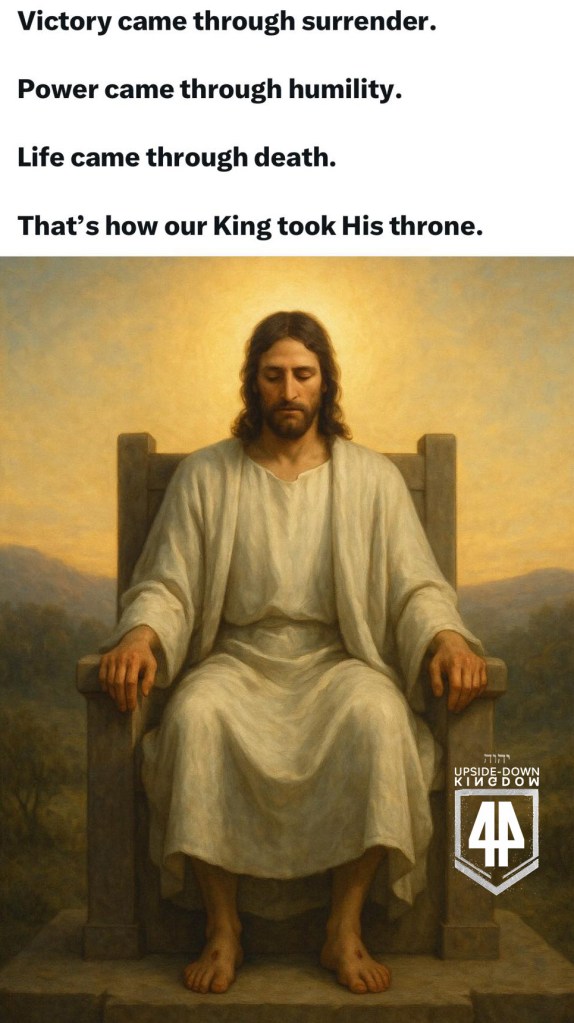
Every year at Easter I practically have an aneurism from all the poor (or I should say Calvinistic) theology from the pulpit and social media. So much of what is shared and taught from mainstream Christians is Calvinistic Reformed Theology, but usually the person sharing has no idea, and most of them don’t realize just how reformed their language is. A friend posted this image over Easter, and it got me thinking about it. I agree with him that Calvinism is based on ideas that seem opposite to the humility of Jesus to the cross. For instance, as he points out, Calvinism sees sovereignty through or by control, victory needing irresistibility, and salvation as something predetermined and unilateral.
Here are some things that show Christ’s atoning work through the death, resurrection, and ascension as being very opposite of Calvinistic rhetoric, both TULIP and PSA (or ransom theories.)
Jesus emphasized victory through turning the other cheek or extreme surrender, this is referred to theologically as displaying “power under.” Calvinism is prefaced on the idea that God’s power is best shown through assertive dominance and total “power over.” Jesus’ life shows humility revealing that God doesn’t need to coerce to reign.
The very heart of Calvinism and its so-called “glory of God” is often defined by control, while the cross redefines glory as self-emptying love.
Jesus’ life through death shows that the cross was about love, restoration, and healing through self-sacrificial grace. Calvinism displays the cross as a legal hostage exchange but somehow Jesus gets away without actually paying anything and not having to serve any penal sentence. Calvinism frames this as if Jesus gives his life but then He somehow gets it back. They say it is such a great exchange but is really? 1 life for all of humanity? Wouldn’t anyone make that exchange if it were true. I think it greatly devalues what Jesus does through the cross. That sort of sounds like what we define as the world’s sense of trickery or thievery not honest sacrificial grace. This kind of purchase sounds more like a back-alley exchange than a picture of truth and unfailing love. Calvinism robs the beauty of Jesus’ mission.
Calvinism frames God as planning from the beginning of time to sacrifice Jesus as a debt to be paid. Jesus (who I will remind you is God in the Trinity) asks his father if there is any other way. This shows God uses what the world did to Jesus for unthinkable victory, He didn’t orchestrate it. To this note, some would say that Calvinism frames God as a “cosmic child abuser.”
From the beginning pages of the Bible God’s nature is described by His own decree as “merciful and gracious, slow to anger, and abounding in steadfast love [hesed] and faithful” Yet through the cross, Calvinism defines God by pouring out His wrath on His son, turning His face on Jesus as the cross, and the need to make a deal with the Devil. These seem at odds.
Calvinism communicates that Jesus was stricken by God at the cross and that God left Jesus at the cross turning His back on Him, a better theology shows God in perfect unity with the son as 2 Cor 5:19 assures us that God was in Christ reconciling the world to himself. God was pleased to heal Him. By Healing His son, raising Him from the dead He accomplishes something great, He heals the nations.
Jesus is enthroned by humility and exhibits His power under; Calvinism is defined by coercion and control over.
Calvinism presses down to restrict, dominate, control, and subdue, while Jesus shows us how to humbly serve -even to death. Calvinism demeans, Jesus empowers; Calvinism controls, Jesus frees; Calvinism functions in superiority, Jesus functions in humility. The heart of Calvinism is rooted in pride exerting power over, but the heart of Christ exerts humility and calls for power under.
I have taught theology and religion in higher education for most of my life and what continually excites me is the continual innovation of theological interpretation. I have taken many years of Biblical language coursework which reflects in me now holding several related degrees, and I often joke that all my years of hard study could be traded for the simple innovation particularly of a good digital interlinear within the last 5 years. As an example, higher education within theology now attempts to better teach how to use linguistic interpretation tools (such as an online interlinear) rather than spending a lot of time actually teaching the language itself.
There are several factors that influence this conversation. In philosophical instruction deduction and induction give us a basis for understanding and learning attribution. Deduction as a construct does not bring forth knowledge any more than induction. [1] Dewey M. Beegle, for instance, opts for a priority of induction (Scripture, Tradition and Infallibility. Grand Rapids: Eerdmans, 1973, p. 16) and he chides the upholders of inerrancy for having permitted an Aristotelian scholastic method of deductive reasoning to obscure the phenomena of Scripture which, he feels, should have been the foundation on which inductive reasoning could have developed a truly biblical view. [2] Yet he has a place for both. Naturally an inductive study tends to be more exegetical in nature where several textures of interpretation come into play such as 1) inner texture, 2) intertexture, 3) social and cultural texture, 4) ideological texture, and 5) sa‐cred texture. [3] Deductive studies are usually eisegetical which is prompted by a topic, doctrine, or concept. [4] Logos Software specialists and Ben Ho would then deduct that “The deductive method of reasoning moves toward necessary conclusions derived from correct connections between premises premises which are all either given or assumed to be true. The inductive method of reasoning moves toward possible conclusions derived from hypothetical connections between premises (observations) which are selected from among all possible true premises (observations). [5]
Many of these things combined with a better modern world understanding of learning have helped scholars and teachers approach theology and the life applications of studying both biblically and systematically. Bloom’s Taxonomy, for instance, is a classification of the different objectives and skills that educators set for their students otherwise known as learning objectives. [6] Understanding learning styles and fine tuning a taxonomy tailored to theology such as I began explaining through the lens of linguistics has very much changed the shape and applications of religious texts academically and towards a spiritual life application.
It is quite intriguing for religion based on a text that is at most 3500 years old (in some cases) to still be the topic of several new theological revelations. [7] And I say this from historical texture rather than spiritual. I also find that as religious studies, biblical studies and both systematic and biblical theology are all closely related fields; the nature of the scientific approach can change immensely across the different threads. [8] I have found that as time flows different things impact the interest levels of students that you might not get in other humanities. Authorship seems more well read in a spiritual climate, practices, beliefs, and traditions [9] are often greater impacted by culture trends and larger organization input. On one hand the more systematic side of things tends to be objective and academic while the experiences, approaches, applications, and examinations [10] (discussed more often in a taxonomy conversation) often tend to be more of the spiritual nature and difficult to measure. There is also an anthropological, cultural, and sociological texture [11] that influence interpretation both at the level of the intended audience and to our current life application. These tend to carry more faith based or subjective assertations. All of these dynamics have the ability to deepen your understanding of the religion at hand but accomplish the feat in very different methodologies.
I say all of these things, to come to the conclusion that there has never been as exciting as a time in history to teach theology. Unlike the other humanities, this will have the power to change every facet of life as you know it. Your life will truly be transformed by the interpretation of the text.
Vernon K. Robbins. Exploring the Texture of Texts: A Guide to Socio-Rhetorical Interpretation. Valley Forge, Pennsylvania: Trinity Press International, 1996. ISBN 978-1-56338-183-6.
Carson, D. A. (2018). NIV, Biblical Theology Study Bible, eBook: Follow God’s Redemptive Plan as It Unfolds throughout Scripture. Grand Rapids, Michigan: Zondervan. ISBN9780310450436.
Garrett, James Leo (2014). Systematic Theology, Volume 1, Fourth Edition. Eugene, Oregon: Wipf and Stock Publishers. p. 20. ISBN9781498206594.
Andy Clark, David J Chalmers (January 1998). “The extended mind”. Analysis. 58 (1): 7–19. doi:10.1093/analys/58.1.7. JSTOR 3328150.; reprinted as: Andy Clark, David J Chalmers (2010). “Chapter 2: The extended mind”. In Richard Menary (ed.). The Extended Mind. MIT Press. pp. 27–42. ISBN 9780262014038.
One of the most well-known Evangelical Seminaries in the world has agreed to be acquired by a Canadian university and move to British Columbia, the school’s leaders announced Tuesday. The move comes after years of financial and theological struggles resulting in declining attendance at Trinity Evangelical Divinity School—known as TEDS—an Evangelical Free Church Seminary. [1]
To those that are in the theology world, this announcement comes as no surprise. Over the last 10 years Trinity (TEDS) and the Evangelical Free Church of America has moved towards a reformed bend in their theology which I and many others would say continues to be the source of their demise. [2]
The Baptist convention is also unfortunately figuring this out over the last few years. [3] Reformed theology leads to Calvinism and those that understand the dilemmas involved with accepting the tenets of these views arguably can’t reconcile them with a Biblical character of God. [4] Many educated young people have walked away from Christianity altogether not being able to reconcile the nature of a loving God with these theological views. This is particularly unfortunate to the rest of the non-reformed world because it is an identifier that those leaving the faith didn’t comprehend that there were several other constructs of Christianity besides reformed theology. [5] According to Barna, less than 31% of all Christians in the US consider their theology to have some kind of reformed perspective (TULIP), yet reformed theology attempts to convince the rest of the world that their view is the only Biblical view. [6] This notion is killing evangelical Christianity and making people walk away from Jesus. We need to do better.
There are several reasons why reformed theology has been identified as a less Biblical interpretation of the scripture. [7] Along with not reconciling the Biblical character of God in core views of the belief such as Penal Substitutionary Atonement and hardline views of eternal conscious torment there are many other objections. [8] Calvinistic soteriology can lead to a misapplication of scripture and a misunderstanding of its storyline, such as predestination as an example of a concept that is not clearly supported by scripture. Perhaps the bigger problem is trying to position the Bible to say what you want it to say rather than exegetically and faithfully reading it for all it is worth. [9] The doctrine of total depravity and/or original sin which states that humans are inherently sinful and incapable of choosing God, can be seen as a denigration of human nature and a disincentive for personal responsibility. [10] Other critics argue that Reformed theology confuses the gospel of grace by bringing the law into sanctification and hedging on eternal security. [11]
Over the last 10 years I have watched other respected graduates of TEDS also become concerned such as the esteemed New Testament scholar Scot McKnight. [12]
Graduates of TEDS include the disgraced evangelist Ravi Zacharias, Christian television host John Ankerberg, and Collin Hansen, editor-in-chief of The Gospel Coalition. Longtime professor Don Carson also was one of the founders of The Gospel Coalition (a reformed organization), helping launch the so-called Young, Restless and Reformed movement that led to a Calvinist revival among evangelicals, but is now seeing a great demise. [13]
In the end, the theology of the reformation is quite problematic and rather unbiblical by most scholars’ opinions. [14] Since the 1980s the reformed movement has thrived through the support of great rhetorical spokesman such as the convincing late RC Sproul; but the world isn’t buying it anymore. For the first 1800 years of Christianity those ideas were unfounded, and of late, generations x,z, and millennials aren’t buying it either.
Most Christians today aren’t accepting the spoon-fed dogma; we need the text to exegetically be in harmony with the overall lens of the Bible. We demand a better Biblical theology. And that is a very good thing! As the average Christians become scholars, they need to be taught better theology in the church from the pulpit, or they are simply going to leave the church to find a better way. The next generation isn’t going to just take “the pastor’s word for it” anymore, they are done with being duped by those they thought they trusted in the name of religion. If we can learn anything from the demise of one of the largest evangelical seminaries in the world this should be the point, we take away. Expedition 44 has long sense been a source of truth examining the overall lens of the Bible and how it should be viewed in harmony. The Kings Commision School of Divinity (https://tkc.education/) and several other great institutions such as AWKNG (Heiser’s School), The Bible Project. (Tim Mackie’s School), Eternity Bible College (Francis Chan’s School), Dr. Jordan B. Peterson’s Peterson Academy and other similar institutions have changed the way that students engage. Did you notice what all of these schools have in common? They aren’t reformed! Out with the old (well newer -old reformational thinking), and in with the new.
Engage with the text. Dive in. Don’t merely be spoon fed. This is the core of the great commission – A deeper discipleship individually and communally.
In Hebrew the word Berith is nearly always translated as the English word Covenant. What is the meaning of the word covenant in Biblical context? The word covenant according to more than 40 biblical authors spanning 1500 remains consistent. In most situations the word takes on a pledge or an alliance, coming from the Semitic root word barah which means to bind, to cut and to break (bread). You might raise an eyebrow at the inference of bread, but if you are a covenant keeper you will immediately go to the elements of communion as a symbol of covenant. The idea goes back thousands of years when “deals” or “agreements” were made over the breaking of bread, which meant sharing a meal together. Today in the Middle East you might still find such a ritual.
Chaim Bentorah reminds us that, “When David said in Psalms 23:5: “Thou preparest a table before me in the presence of mine enemies:” he was making a reference to reconciliation with his enemies for when you had a meal together it was to talk peace. Eating a meal together was an excellent opportunity to negotiate terms of a berith or covenant. It was also an excellent opportunity to off your enemy by slipping a little poison in his food. Thus, to share a meal with an enemy was the ultimate in a good will gesture. You were showing that you trusted this enemy’s intentions for peace enough that you would stake your life on it believing he would not poison you.” [1]
However, in other Middle East cultures we see pacts or covenants were made by passing between cut pieces of flesh of an animal sacrifice.[2] In the Old Testament, the English phrase “make a covenant” is most often a translation of the Hebrew kārat berît, which literally means “cut a covenant.”[3] The verb kārat means “cut off, cut down,”[4] and the noun berît means “covenant,”[5] similar in meaning to the words pact, compact, treaty, alliance, and league. While other Hebrew verbs are sometimes used with berît, such as qûm (“establish” or “confirm”) and nātan (“give”),[6] kārat occurs ninety times in the Hebrew Bible in reference to making covenants.[7]
In the Ancient Near East, it was common for two people to make a covenant by cutting animals in half, splitting the halves, and then walking in between the pieces to make an oath. By walking between the split animals, each person was swearing that if they broke their part of the agreement, they would meet the same end as the sacrificed animal. [8]
In evangelicalism, there is a lot of talk about conditional and unconditional covenants; however, when you really dive in, you are going to find that every covenant has an element of conditionalism to it. I will even say, there really is no such thing as an unconditional covenant. In the dance of Grace, every amazing action is met with a reciprocal and similar reaction. [9] Ben Witherington shares, “covenants while many were unilateral, were almost always conditional in nature. This is the very nature of a covenant with stipulations, which if they were not kept, the suzerain had obligated himself to enact the curse sanctions. Thereafter, it was up to the suzerain to decide whether even to do another covenant or not. Fortunately for us, the Biblical Suzerain, our God, has chosen to continue to re-up, either renewing (some of the OT covenants), or in the case of the new covenant, starting afresh with a new covenant, which promised to be more permanent.” [10] Witherington uses the terminology, “more permanent” to show that our English idea of “unconditional” leaves us a little short.
If your wondering about God and animal sacrifice. You are probably heading in the right direction. My Friend Greg Boyd has an excellent write up here. Animals were sacrificed not because God needed them to forgive people but because his people needed them to remember the death consequences of sin and to therefore repent when they’d broken covenant with God. God meets them in their broken culture of animal sacrifice and eventually turns it towards His good. Later in Israel’s history, when people began sacrificing animals without repenting in their hearts, the Lord told them (through prophets like Isaiah, Hosea and Amos) that he despised their sacrifices, for they are meaningless without a change in heart. [11]
But it is easy to miss the point by simply studying ancient near east culture. You see Yahweh didn’t want to simply be another god to Israel, or do what the other gods were doing. The other gods acted in mutual agreement they wanted something physical from the people. John Walton reminds us that, “Typically, both parties to a contract, treaty or similar legal agreement could expect to benefit from their commitment. It is not at all clear that the Biblical text wants its readers to believe that Yahweh will receive some benefit from this relationship with the Israelites that he would not otherwise be able to obtain. The text speaks of great benefit awaiting the Israelites for their consistent obedience to their covenantal obligations. For Yahweh’s part, his actions do not appear to be based in self-interest but in a willingness to be gracious and to extend freely his blessing.” [12]
So, what does God get out of it? A relationship with us. Sound underrated? Maybe. But it goes back to the dance of Grace I have written so much about in my series “this is the Way.” The story of the Bible is that for some reason, this is what God desires more than anything and will stop at nothing to come back into a free will love relationship with his created beings. It is incomprehensible to our broken minds. This is the standard of covenant that we are then asked to live out to others.
As you could study covenant to many different levels, what I am really leaning into is the fundamental Biblical theme that God wants to partner with us. In the garden God offers to walk intimately with his treasured possession to reign and rule, keep and cultivate reconciling all of His creation to His glory. That first covenant was quickly broken but it doesn’t stop God from being the way maker. The story of the Bible is God’s plan to not only bring back the intimacy between man and maker in the garden but even surpass it that we might bear His very image, and kingdom kinship completely reconciled and “then some” in a recreated heaven and earth.
This partnership wasn’t merely intended for a husband and wife, although that become the biblical metaphor for such an image, but for every biblical relationship. God’s plan was for all of his relationship to be in covenant together. What does this mean? I guess you will need to wait for part three.
Francis Brown, S. R. Driver, and Charles A. Briggs, The Brown-Driver-Briggs Hebrew and English Lexicon: With an Appendix Containing the Biblical Aramaic (Peabody, MA: Hendrickson Publishers, 2000), 503.
Brown, Driver, and Briggs, Hebrew and English Lexicon, 136.
Warren Baker and Eugene Carpenter, The Complete Word Study Dictionary: Old Testament (Chattanooga, TN: AMG Publishers, 2003), 166.
According to a search of the text of the Hebrew Bible in The Scriptures: CD-ROM Resource Edition 1.0.
See how “covenant” is italicized (added by translators) in 1 Samuel 11:2; 20:16; 1 Kings 8:9; 2 Chronicles 5:10; Nehemiah 9:38; and Isaiah 57:8.
Wait what? All that in the one word? -I don’t think so!
Just about every day I scroll through a “BIBLE” meme on Facebook that makes me cringe. I used to comment but I no longer do largely because I think sometimes people don’t interpret the comments as useful, or teaching better theology but as some kind of self-promotion, or “I think I am better than you” type of thing. I think that is unfortunate. I believe part of shepherding and discipleship is a Mars Hill or rabbinical teaching method of being open to constantly learning and working through a better understanding of the test with the giftings of those around you. To keep each other Biblically sharp and accountable to be faithful to the text. Letting people get really loose with the text has led to alot of bad theology and ditch diving. I believe the Bible greatly encouraged textual exploration together within the body. That is what the body of Christ is supposed to do. I have 40 years of deeply studying the Bible under my belt and God has gifted me with a certain learned spiritual intuition of exegesis. I hope it comes as a gift to those that have a learning posture towards the scripture. To those more interested in fighting or finger pointing, or making internet dumpster fires, I am not interested.
THE MEME:
At first glance this probably looks pretty neat. It’s challenging, it looks at the original language rather than an English glossed translation, it comes off as going deeper. So, what’s the problem? Well, it isn’t faithful.
A faithful translation means you let the text speak for the text. You don’t read your own desire into the text. This commonly referred to as good exegesis.
In this case, here are some issues:
One word? Sort of. The text is Genesis 3:9. Start by typing that into a browser followed by the word interlinear. The first link will be the Bible Hub, click it. The word is ’ay·yek·kāh and you will see the [are] is in parentheses. It technically isn’t in the text but linguistically it is- but it is understood such as an understood “YOU” in English. Click the word and you are going to find there is only one occurrence of this “word” or conjunction of words in the Bible. This is called a Hapax Legomenon. The basic hermeneutical law or idea of any Hapax Legomenon is because it is rare don’t read too much into it. See if you can find how it is used outside of the Bible to give you a better understanding of how the text uses it. But in this case, it isn’t a “TRUE” Hapax Legomenon in the sense that if you click the root word above which is Strong’s 335 you will see the root is “ay” in Hebrew which occurs 36 times in the Old Testament. We have a pretty good idea of what it means! There are some words or phrases in the Bible where we don’t even have the root anywhere else and that is a better example of a Hapax Legomenon, but they are both technically considered Hapax Legomenon’s. This one we can see essentially means “where or how” which makes sense in the English translation “where are you?” I would encourage you to read the usage and cultural notes below the word. These are theologically very basic and at times arguable, but still give you a better start. In this case it notes that the word can come with distress or lament. Seems true to this text! It also notes that this particular word is often noted of spiritual locations within the cosmos. Again, true to the text. Most of the time these notes don’t get too controversial and are written by well noted scholars. This is sort of important because there are other similar words in Hebrew that could have been used without a sometimes-spiritual emphasis. We see this importance in Deuteronomy 32 when the text asks “Where are there gods.” It is also used in 1 Samuel 9:18 in regard to the SEER. It is used in 2 Samuel 15:2 in regard to the city which is interesting and could be signified as one of the reasons I believe in ancient times cities were gatherings of fallen spiritual beings and people aligned to their ways and rival to Yahweh. In Job 2 it is used to ask where “the satan” came from. The problem is (as you can see to the column on the right of all the verses using this Hebrew root) there are at least a few texts that don’t seem to take on “spiritual spatial” significance, it just means where? So that tells us we can’t read too much into a sense of cosmic space every time we see the word used. Hermeneutically it may or may not have spiritual bearing. Therefore, we have to determine from the rest of the text whether it does or not. In other words, we don’t have the “RIGHT” to attribute a spiritual significance to the simple text “where” unless something in the rest of the text gives it to us for certain. If the text doesn’t grant it, then we have to determine if we the ability to say it could go that way, but we don’t know for sure. It may or may not have spiritual spatial implications. In this text we already know they are in Eden, so the context gives us the sacred space.
To say that it is one word is accurate (I would have said the same thing), but it’s a bit complicated as in Hebrew bits of different words form one word. This is actually really helpful in determining what one word can mean because we can break the word up and study the microcosm of it. In this case you would think all the things the author of that post says the word means would be great if the word could have been textually broken up that way. The problem in this case is it doesn’t say all those things. We get “where” which (as we already noted) may or likely implies a spiritual search-find. You could take away from the text exegetically that God is “searching us out” or “looking for us” or perhaps even noting that the space is spiritual as I already alluded to. All of those things could be good exegesis. That is what the text gives us. Next, we have the understood {ARE}. We don’t really get anything magical from that. Then we have “you” essentially as formed into the singular word. There is really not much to exegete there either. He is talking to a certain person. DO we have the right to insert our name here? Well, the genre of this text is a historical narrative. Simply telling the story. So no, we don’t really have the right to insert our name. Because God was seeking out Adam in the garden doesn’t give us the textual ability to say He searches us out the same. He may or may not, but the text doesn’t give us that warrant. So here you see the author of the meme breaking some huge theological and hermeneutical laws. He takes a text that isn’t about him and tries to make it about him or us. This is called reading into the text. Using the Bible to twist it into saying what you want it to say without the merit of the text giving you that. Now could it mean that later God will act the same towards you? Yeah, later the text may do that but here it doesn’t. However, if you read the text doing that for others in the story over and over and over you might come to an ontological conclusion that if there are 26 examples of God acting this way in the narrative, we have then maybe he acts this way towards me too! (But to be clear, the text still wouldn’t give us that for certain.) Sometimes people take a lot of latitude to say the scripture means something that the text never gave or intended to give. That seems to be the case here. It simply isn’t good theology or maybe even theology at all. It is saying the Bible says something in a text that doesn’t say that.
“God’s first words after the fall” – We don’t know this either. The Bible doesn’t give us the full account. There may have been other words. Perhaps these are the first words in the Bible after the fall. But making the statement that the author makes in the way that he does isn’t true. Does this seem nitpicky? Maybe but there is a difference, and it matters in biblical interpretation and textual criticism.
This is classic for someone trying to make a doctrine or in the authors words, “a whole theology” over something the text doesn’t say. The text says nothing of the lost. Was Adam lost? We aren’t told that he was. Was he asking for a confession. Later scripture tells us that when we sin, we need to confess, but that isn’t in the text here. What about restoration and redemption? Well, everyone knows God wants restoration and redemption, right? But this text doesn’t go here either. Are you following me? There are texts that talk about redemption and restoration but not this one. In fact, maybe the opposite. This text leads to exile from the garden, that is the opposite of restoration. So what it does tell us is exile may come before restorative acts. That could be a more faithful takeaway than what the author of the meme comes up with. The author improperly says the text means something that isn’t given to us. It is as if the author is trying to write his own Bible and proof text the word to say what he wants it to say. The real problem is that we are saying the word says something that it isn’t. Maybe other places say that, but a better hermeneutic is to only exegete what the text says. Don’t add or fill in anything. There is no context for the takeaways the author asserts over the text.
CONCLUSION
A Faithful reading of the text means we only take away what the text gives us. We can’t read anything else into it. I can’t tell you how many times in a sermon I hear a pastor say “the Bible says this” and goes on to quote a verse that doesn’t say anything close to what the pastor says it said. In many cases we have become all too comfortable with accepting things like this, and it has led to a lot of bad consequences. It seems there are so many people are using the Bible for their own gain saying what they want it to ay and that is unfaithful to the text.
NOTE; The Bible Hub is free, easily accessible and works well. LOGOS is better but is $$$.
If you grew up in modern evangelical circles, I am sure you were raised in church hearing something like,
Because of the sin of Adam and Eve, you and I now live personally separated from the tree of life and from the presence of God. The whole human race at that moment was flung into the downward spiral of the curse of man and God’s wrath, the weight of their sin and God’s judgement fell on them and therefore continues to fall on us as if we also made the cognitive choice that Adam and Eve made.
Many x44 people have gone through a bit of an exegetical deconstruction of what they have always been told that the Bible says finding out that what they have traditionally been fed and believed likely isn’t the nature of God or what the Bible actually says. Renovation is needed and usually bears fruit and opens the thresholds towards devotion to the Lord. As I agree with a good part of the statements above, I believe such similar statements to be misleading and stunt a person’s road to sanctification. First much of this way of thinking is tied to the pillars of Calvinism. I will mostly quote from R.C. Sproul who is commonly known as the best Theologian to hold to and explain Reformed theology and Calvinism. To be clear I have read every article and book I source completely. My library has as many books defending Calvinism (and likely more), than I own from the free will camps. Before Sproul passed, I knew him personally and greatly respected him and agreed theologically with him in some capacities (such as partial preterism) but unfortunately feel that he was way off on becoming the popular spokesperson for Calvinism. This article is intended to be a “quicker” read, if you are interested in diving into this conversation, I would suggest the X44 Original Sin series here.
To be clear, thinking that every person is somehow under spell handed down to them generation after generation by reformed circles camps own definition is called Total depravity (also called radical corruption and is foundationally tied to the concept of original sin)[1] and asserts that as a consequence of the fall of man into sin, every person is enslaved to sin. People are not by nature inclined to love God, but rather to serve their own interests and to reject the rule of God. Thus, all people by their own faculties are morally unable to choose to trust God for their salvation and be saved (the term “total” in this context refers to sin affecting every part of a person, not that every person is as evil as they could be).[2] This doctrine is derived from Calvin’s interpretation of Augustine’s explanation about Original Sin.[3] The singular scripture that is used for this is:
“Sin entered the world through one man, and death through sin, and in this way death came to all men, because all sinned” (Romans 5:12).
We also have an entire x44 series on Atonement and get into regularly why the way the reformed camps use this verse singularly (along with a few others) is neither exegetical nor follows the laws of hermeneutics. Notice that it was death that passed (separated now from the sustaining Tree of Life) or came upon all, not Adam’s personal disobedience. But to remind you of a few basics, Romans 5 needs to be read in context, not simply plucking one verse out to make a doctrine out of it. Scripture seems to teach that sin itself is not inherited (although the consequences for Israel often stretched to 4 generations): “[T]he son shall not bear the iniquity of the father” (Eze. 18:20). Everyone is responsible for their own conduct (Rom. 14:12). Sinfulness often begins in one’s youth (Gen. 8:21; Jer. 3:25). Children must reach a level of maturity before they are able to choose good and evil (Isa. 7:15, 16). Little children are held up as models for those who seek the kingdom (Matt. 18:3; 19:14). The human spirit is not inherited from one’s parents; it is given by God (Ecc. 12:7; Heb. 12:9).
In our YouTube video ORIGINAL SIN series we addressed how Original Sin (the pre-cursor to Calvinistic doctrines) is not Biblical or Ancient.
The first 400 years of the Church did not believe this.
There is zero evidence that Judaism ever believed this. Modern Messianic Jews do not believe this.
Augustine was the inventor of this doctrine in the 5th century and much of it was due to his importation of his pagan background into Christianity and lack of the knowledge of the Greek language.
NONE OF THESE EARLY CHURCH FATHERS AFFIRMED THIS: Clement, the Didache, Athanasius, Irenaeus, Ignatius, or Justin Martyr
The doctrine came into the church through Augustine of Hippo (396-440 CE) and the doctrine was originally called Concupiscence. Augustine could only read Latin, not Greek, or Hebrew. Augustine came to original sin by reading Romans 5:12 in a bad Latin translation. The original Greek would read: “Therefore, just as sin came into the world through one man, and death came through sin, and so death spread to all because all have sinned” Yet his Latin translation said, “all have sinned in Him (Adam)”. Where the Greek says that death has spread to all because all (each) have sinned.
Concupiscence
Concupiscence, according to Augustine, relates to Adam’s sin being transferred through sexual reproduction.
Its root definition is a base sexual desire. We get our word concubine from this.
He believed that through this all men are born with their will, body, and mind corrupt, and this is transmitted sexually. They inherited the sin through the sexual act leading to birth.
He taught that Jesus had to be born of a virgin because he connected this to the sexual act. Therefore, the virgin birth spared Jesus from a sinful nature.
I affirm the virgin birth but Isaiah said this is a “SIGN” and has nothing to do with original sin.
God’s first command to humans to be fruitful and multiply. If sex is in itself a sinful act as reformed theology says than God would be commanding humans to sin.
We also get the doctrine of infant depravity from this, and Pastors today even keep this bad doctrine going:
John MacArthur said, “At no point is a man’s depravity more manifest than in the procreative act…by what he creates. Whatever comes from the loins of man is wicked.”
Augustine of Hippo said, “The only innocent feature in babies is the weakness of their frames; the minds of infants are far from innocent.”
One issue with teaching that sin is inherited is that it means God is then judging you for someone else’s action. That obviously isn’t scriptural. Thinking this way holds you back. In Christ we have life -not death. Once we accept this life here and now and eschatologically to come, we are called and charged to live in holiness separated from any ties of sin. That is what it means to live a life in Sanctification.
FROM HERE I WANT TO SHOW THE PROGRESSION INTO 5PT CALVINISM, but if you already know that, skip down to the next similar starred divider to continue reading:
The next problem with thinking we are bound to the sin ascribed to us that it would mean that we are also then unconditionally elected (also called sovereign election)[4] which asserts that God has chosen from eternity those whom he will bring to himself not based on foreseen virtue, merit, or faith in those people; rather, his choice is unconditionally grounded in his mercy alone. Some may argue the connection, but if you believe you came into this world already doomed by someone that came before you then you believe at least some part of the decision has been made for you. I do believe in the corruption of the fallen world, but we are called to be delivered and live in freedom. The effects of the death that came in through Adam are not or do not have to be continual towards you. You are only responsible for your choices in terms of life with Jesus. With this you also venture into a very similar doctrine called limited atonement (also called definite atonement)[5] asserts that Jesus’s substitutionary atonement was definite and certain in its purpose and in what it accomplished. This implies that only the sins of the elect were atoned for by Jesus’s death. This is cosmic lottery language. I can’t find anything in the Bible that goes this way and neither could the early church. These are all modern “inventions” that came from the Reformation.
Thinking this way is also tied to the idea of irresistible grace (also called effectual grace)[6] which asserts that the saving grace of God is effectually applied to those whom he has determined to save (that is, the elect) and overcomes their resistance to obeying the call of the gospel, bringing them to a saving faith. Essentially this believes that God created robots and determined their ways before time. It completely discounts the many passages that clearly teach free will. It leaves reformed theologians having to do all kinds of theological gymnastics with verses about free will.
Finally thinking that you are responsible for the sins of the ones that came before you is also ties to a Calvinist doctrine called the perseverance of the saints (also called preservation of the saints;[7] the “saints” being those whom God has predestined to salvation) asserts that since God is sovereign and his will cannot be frustrated by humans or anything else, those whom God has called into communion with himself will continue in faith until the end. Those who apparently fall away either never had true faith to begin with (1 John 2:19), or, if they are saved but not presently walking in the Spirit, they will be divinely chastened (Hebrews 12:5–11) and will repent (1 John 3:6–9).[8]Most people refer to this as once saved always saved. But in this case, if you believe that sins were tied to you at birth, your theology if it is consistent would also then get to the place of believing that everything was set before you and if that is the case, to be consistent if you were intended by a sovereign God to be saved then how could you lose that? The problem again goes back to the fact that the Bible continually teaches that we are responsible for the decisions we make and even though when we make and allegiant confession our past is made clean, we continue to be held responsible by a just God for decisions thereafter. You can’t make a onetime proclamation and go on living in sin and expect to be saved. The proclamation of life in Christ is ongoing. Ot is a journey, an expedition. This is why I have said many times, if you are going to take on any form of reformed theology it should be one or all of them. Perhaps the worst theology is those that try to adhere to a few points of Calvinism but not all of them.
Here is a better way of thinking about original sin rather than falling into Calvinist doctrines such as the above… (these are borrowed and slightly reworded from my good friend Greg Boyd at reknew.org.
1) I do think it is theoretically possible for an individual to live a sinless life, you do too if you truly believe in the complete humanity of Jesus! Yet, this isn’t inconsistent with admitting that everyone will inevitably sin. Think of it like this. Every car crash (let us assume) is preventable, if only drivers were more careful. Hence, it is theoretically possible that there will be no car crashes anywhere on the earth today — or this month — or this year — or ever. But it is certain there will be car crashes, for which drivers are responsible. The thing is, statistical certainty doesn’t negate individual responsibility. We are responsible for every sin we commit, -we didn’t need to do it. We could have done otherwise. It’s theoretically possible to go the rest of our lives without sinning. Yet, it’s certain that, over our lifetime of decisions, we will sin. I believe most evangelical American Christians are far from this, but we don’t have to be. The worldly entanglement has led way to daily sins. But I do believe we were called and created and expected to do better before the Lord.
2) I see “original sin” as mostly being born into a screwed-up world that is oppressed with fallen powers. This doesn’t make us sin nor are we responsible for the sins before us that contributed to it. Yet, it does render it certain that we will eventually sin (see above). This is, in part, why we need a savior. To be clear one we are dead to our old selves we should not continue to live in sin or the slavery of the world. Paul makes this exceedingly clear.
3) Finally, it is important that we not think about this only in individualistic terms. From a biblical perspective (and now, with much confirmation from science), the human community is, in a sense, one person, extending back to Adam. We were made to live, disciple, and be discipled in the community of those that walk with Jesus. We influence each other, and are responsible, in varying degrees, for one another. So we have collectively gotten ourselves into a situation where we can’t avoid sin, and the responsibility is shared by all of us. This is what Paul means when he says we were in Adam. Yet, we are now placed in Christ — all of us (I Cor. 15:22; Rom 5:14-20). It’s just that we all (including believers) tend to see ourselves and our world as though we were yet in Adam. Transitioning from Adam-thought to Christ-thought is what discipleship is all about. One of my biggest grumbles with evangelical modern church is we don’t disciple to live devotionally to the LORD in communion with the perseverance of the saints.
Getting back to where we started, Adam and Eve’s sin separated them from the life that the tree gave but it didn’t necessarily separate them from God. I have an article on this here.
That is the continual message of God to His people. He still desires to walk with them. God does not remain separated from us, He is always with us, we are promised that time and time again. We may receive a fresh anointing (and that may be up to your theology here); but make no mistake, He never leaves us.
We don’t have to live in depravity or a downward spiral. That is another huge theme of the Bible! God has more for you! Claim him, get into the word, be surrounded with the community of saints, and live and walk with Him every hour of every day! Refuse the world and all that it offers. You were purposed for more! Don’t let Satan sell yourself short! Claim victory and live in perseverance walking with the LORD and those that walk with Him. Seek discipleship and disciple! Live out your kingdom destiny!
God’s wrath in scripture is the handing over of his unrepentant sinful people to what they have coming or what they have earned. It is removing the providential hand from their lives. The weight of your sin and consequences of your decisions are real but you don’t need to and shouldn’t dwell there! Don’t dwell in your sin. Get redeemed! God offers you healing and freedom here and now! Step into it, believe it and live it. You are no longer to be bound to your flesh or former ways of the world. Step into it and live it!
let me articulate a better view:
The sin of Adam and Eve separated humanity from the tree of life but God is still offering the relationship that He had with them in Eden and actually desires a better way, not to just occasionally walk with you as He did with Adam and Eve in Eden, but through Jesus now offers even more, He wants to never leave you, to continually reside in your heart as you become His temple being the very physical manifestation of the presence of God to those you interact with. Yes, the world has been taken over by evil, but you represent light and have the power to make the presence that you fill sacred to make what is broken healed. You are the source of God to renew the Earth. You no longer live under a curse, but the power of the LORD is in you. Choose this day to no longer live in sin and dwell richly in the presence of the LORD. 1 Jn 3:6-9, 1 Jn 5:18, Rom 8:11, Gal 2:20, Col 1:27, I Peter 2:8-9, Eph 3:17, 2 Thess 1:10, 2 Cor 5:17, and so many more passages make all of these things abundantly clear.
Sproul, R. C. (March 25, 2017). “TULIP and Reformed Theology: Total Depravity”. Ligonier Ministries. Archived from the original on August 5, 2021. Retrieved August 5, 2021. I like to replace the term total depravity with my favorite designation, which is radical corruption. Ironically, the word radical has its roots in the Latin word for “root,” which is radix, and it can be translated root or core.
^ Steele, David; Thomas, Curtis (1963). The Five Points of Calvinism Defined, Defended, Documented. P&R. p. 25. ISBN978-0-87552-444-3. The adjective ‘total’ does not mean that each sinner is as totally or completely corrupt in his actions and thoughts as it is possible for him to be. Instead, the word ‘total’ is used to indicate that the “whole” of man’s being has been affected by sin.
Sproul, R. C. (April 1, 2017). “TULIP and Reformed Theology: Unconditional Election”. Ligonier Ministries. Archived from the original on August 5, 2021. Retrieved August 5, 2021. Unconditional election is another term that I think can be a bit misleading, so I prefer to use the term sovereign election.
Sproul, R. C. (April 8, 2017). “TULIP and Reformed Theology: Limited Atonement”. Ligonier Ministries. Archived from the original on August 5, 2021. Retrieved August 5, 2021. I prefer not to use the term limited atonement because it is misleading. I rather speak of definite redemption or definite atonement, which communicates that God the Father designed the work of redemption specifically with a view to providing salvation for the elect, and that Christ died for His sheep and laid down His life for those the Father had given to Him.
Sproul, R. C. (April 15, 2017). “TULIP and Reformed Theology: Irresistible Grace”. Ligonier Ministries. Archived from the original on August 5, 2021. Retrieved August 5, 2021. I have a little bit of a problem using the term irresistible grace, not because I don’t believe this classical doctrine, but because it is misleading to many people. Therefore, I prefer the term effectual grace, because the irresistible grace of God effects what God intends it to effect.
Sproul, R. C. (April 22, 2017). “TULIP and Reformed Theology: Perseverance of the Saints”. Ligonier Ministries. Archived from the original on August 5, 2021. Retrieved August 5, 2021. I think this little catchphrase, perseverance of the saints, is dangerously misleading. It suggests that the perseverance is something that we do, perhaps in and of ourselves. … So I prefer the term the preservation of the saints, because the process by which we are kept in a state of grace is something that is accomplished by God.
In theology people are going to interpret passages differently...
This article has 7,330 words and will take most people 39 minutes to read.
My good friend Dr. Steve Cassell and I see 99.9% of theology very similarly. But occasionally we take slightly diverging views. I have said this before, but much of our relationship would look like an ongoing respectful healthy argument to most people. This may be described as a Mars Hill brotherhood. Perhaps you might say iron sharpening iron except that term is often used amongst disagreements which I do not think really summarizes our spiritual conversation. Steve and I have a healthy banter in which we work through all kinds of theologies going back and forth. Steve came from a word-of-faith background, and I came from a more traditional yet also spirit-filled background. Steve has been personally influenced by and is a regional representative for Andrew Womack Ministries International (AWMI.net). Both Steve and Andrew hold a minor view, not only recognizing that the cross brings spiritual healing (as nearly every Christian would confer) but also complete physical healing and health. Steve also sees the power to heal as similar to any other gift and I see it as possibly more of something God sets aside or “grants” to some extent; meaning you have it, or you don’t. Some people call this an anointing. Although this is another debated subject that you can read on here. In this case, I hold the mainstream view on healing and Steve holds a minor view.
Some of the minor views that we both hold would be to believe in conditionalism rather than the significantly more accepted view on ‘Hell’ of Eternal Conscious Torment. We also both see Heaven as an intermediate state with the final eschatological state or place for those with God as being a recreated Heaven and Earth (which most theologians I know would agree with, but your normal everyday church pew Christian doesn’t think this way.) We both do not hold a physical ‘rapture’ view of the ‘End Times’.
We also do not hold to any of the normal interpretations of the Calvinism TULIP. Most mainstream churches are going to agree with 2-3 Calvinist positions on this yet probably would not openly consider themselves Calvinist. We wouldn’t accept any of the TULIP views at least to the degree that a reformed church or Calvinist would present them. I could go all day on interpretations like this, but I think you get the point.
Today, I have invited Steve to join me in this article to explain and define our perhaps slight differences in terms of God’s healing power. To be clear we both believe and operate in faith for God’s healing power. Jesus said that believers will lay hands on the sick, and the sick will recover (Mark 16:18). (But our interpretations differ, will all sick recover or just some?) We both train the body of Christ so that they can do the work of the ministry in this area (Eph. 4:11-12). The day of the one-man show in the body of Christ needs to come to an end, and we are literally seeing that take place all around us in our respective opportunities of ministry. Steve and I experience firsthand miracles nearly every day that some people have never experienced (or even seen) once in their lifetime. In fact, we both expect God to do these things and in faith know that He does and will. In many ways we are expectant and in tune with the healing power of Jesus every hour of our lives. We experience nearly the same healing experiences day in and day out in the kingdom and yet explain the theology of what has taken place through different interpretive lenses. We both believe that everyone is called to heal in Jesus’ name and that in that sense it is a spiritual gift. Yet, I would believe that God chooses to empower some as anointed to truly have a more powerful version of this gift while others likely won’t get there. Perhaps that is a developed spiritual gift like any other, but some people seem to have it and others don’t.
This theological difference comes to fruition in varying ways. When someone comes to me and asks that we pray for healing for them or someone else I often feel the spirit telling me right away that they will be healed or that we need to simply pray for God’s will. If I feel the spirit telling me they are going to be healed then I simply declare it in Jesus’ name, and they are healed. I can probably count the times on one hand when this didn’t come to fruition and I can’t tell you why, but I am also not hung up on it. As you can imagine, this is confusing to people asking for me to heal them or simply pray for healing. “Why did Doc Ryan pray and heal one person and then the next person in line he simply shared perhaps a theology of trusting in the Lord, faith, timing, sovereignty, why God may not choose to intervene, or even ministry through brokenness?”
Dr. Steve on the other hand seems to strongly believe that if the person that comes to him has the faith to be healed, they will be (since he also leads by that faith.) In fact, sometimes I see Dr. Steve as being so set apart as God’s healing agent that perhaps God tips His hat to Dr. Steve and allows Steve to command healing even when that may not have been the plan of God. (Oh boy…. this just set off a bunch of peoples alerts on what they think of the sovereignty of God and changeability might or should be.) I would say this is very similar to those that we see in scripture that have the intimacy to wrestle with God and God actually has honored their requests and seemingly delayed or changed his mind as a result of empowering them to actually harness the manifestation of God’s power in them. You might recall in Exodus 32 when Moses pleaded with God so that he would not destroy the people he had saved. The Lord told Moses he would not take out his wrath on Israel. Moses immediately picked up the two stone tablets the Lord had given to him earlier, with the Ten Commandments on them, and returned them to his people. (you may want to look at this wording again) God may even endow His power and doesn’t necessarily keep track or intervene in every situation but allows the person to represent Him in this way. The disciples seem to have been given powers yet come back telling Jesus they couldn’t heal some. Jesus was even unable to heal at one point in Matthew 13 and Mark 6. So, what are all the dynamics of healing?
I have invited Steve to chime in on this article and have noted his comments in blue:
Hello Expedition 44 peeps! Dr. Steve here…
Doc Ryan is accurate in everything he has portrayed about our covenantal relationship and my beliefs. I am interjecting in this place and will do this periodically throughout the article to clarify or exegete my position. This is my first place to interrupt quickly. The first sentence of the last paragraph stating my faith for believing in a 100% manifestation for everyone who approaches me in faith (please note ‘IN FAITH’) comes from ‘watching’ the ministry of Jesus. There was never a time or a person who was turned away when they approached Him in humility and faith. It is a bit simplistic just to base a theology on a truth like that, but I tend to be a smidge more simple regarding actual interactive ministry. Theology is infinitely complex because the One we study (-ology, from the Greek ‘logos’) is infinitely complex. But the Gospel is simple and should remain that way. The way Jesus did the actual ministry (adding in the progressive developing aspects of the ekklesia and ecclesiology of the Epistles and Acts) is what I target as a carbon copy (same with Doc Ryan).
Hebrews 1:3a – ‘The Son is the radiance of God’s glory and the exact representation of His nature…’
Hebrews 13:8 – ‘Jesus Christ is the same yesterday and today and forever.’
We both Agree with Andrew Womack when he says, “One of the worst doctrines in the body of Christ is the belief that God controls everything that happens. Fundamentalists/Evangelical Christians believe that God either controls or allows everything and that Satan has to get His permission before he can do anything.” That’s a convenient theology because it absolves the individual of any personal responsibility. God’s will doesn’t automatically come to pass. We have to believe and cooperate with God to receive what He has provided and in some cases, “covenanted” for us.
But from there Steve and I slightly part ways. AWMI and Steve would continue…
___________________////___________________
Andrew’s theology regarding healing is often referred to as “the finished work of the cross.” Personally, I cringe at this simply because I never like to give merit to the cross. (IMHO, this is a Calvinist phrase usually tied into the doctrine of limited atonement, so we often don’t use this phrase.) Steve has actually changed his verbiage over the years to say, “the finished work of Jesus.” I don’t want to wear a crucifix or even entertain much observance of the cross because I want to focus on the resurrection and ascension that gave life. Yes, the cross was part of the plan, so this isn’t a huge problem for me, but I prefer to focus on the victory of the stories in Jesus -not dark places that were traveled on the way to victory. It is similar to someone sharing a testimony… don’t spend an hour on the muck that you lived in (sounding like you are almost bragging about it) and 5 minutes on the redemption, flip it around. There is a place for the cross but the focus of nearly all of the NT after the Gospel is on the resurrection and what that means for “salvation” and life in Christ here and now but also to come. I do realize that seeing a cross can point people to the victory of Jesus which is why I have a cross at the “range” where we have TOV and have for many years.
Steve here again… Doc Ryan is right again. I have adjusted my language due to the expansion of my revelation on the atonement. The aggregation of information and bringing in the vast matrix of typological precursors from the Old Testament sources has expanded how I understand the atonement to be. (To expand your understanding, see Expedition 44 series on ‘Atonement’ HERE.) Yet knowing that each facet of that atonement process was known, calculated, and used for human redemption is stronger in me today than before. I see that the stripes Jesus took for our healing (1 Peter 2:24) have an even stronger application knowing that Jesus’ atonement was sufficient in all areas, for all people, for all time.
___________________////___________________
With that let’s jump in, Healing is already an accomplished work according to I Peter 2:24,
“Who his own self bare our sins in his own body on the tree, that we, being dead to sins, should live unto righteousness: by whose stripes ye were healed.”
STEVE: The term ‘healed’ is in the simple past tense (aorist indicative passive). RYAN GREEK 101: The Aorist is used for past time and portrays perfective aspect (portraying the action as a bounded whole, or in summary fashion without reference to the way it unfolds in time). As a Passive tense, the subject is the patient of the verbal action: “he was eaten,” “they were killed.” Grammatically in this verse we both agree healing is an action that took place and happened once, the action itself (the cross) theologically doesn’t need to continue or happen again. What it “accomplished” is good for all of time.
The real question then is whether the implication is spiritual and/or physical healing. To this, Steve would say that Jesus isn’t healing people today— that “work” was accomplished 2,000 years ago in Jerusalem when He took those stripes on His back. He hasn’t, and won’t, receive any more stripes. People today only receive through faith what has already been accomplished by Jesus thousands of years ago. (To be clear I -Ryan agree with this in a sense of spiritual healing, we have everything we need, and we aren’t looking for any other continued work of Jesus to make healing possible.)
Andrew would continue, the Scriptures don’t tell us to pray for the sick, in the sense that we are powerless to minister healing to them. It’s just the opposite: Jesus told US to HEAL the sick (Matt. 10:1, 8; Luke 9:1, and 10:9). There’s a big difference between asking the Lord to heal people and healing them. Since Jesus is with us and will never leave me nor forsake us (Heb. 13:5), Steve would then assert that I can say with the Apostle Peter, “Such as I have give I thee” (Acts 3:6). ON the other hand, some would say that none of us has authority to heal a body, only the Creator does (Acts 3:12–13). I do not generally recommend articles from Desiring God as they tend to have a reformed bend to them, but in the spirit of reading another perspective, you might enjoy this post.
Steve here… There is a bit of a semantic point I must make. I (Steve) cannot heal anyone, ever. My confidence and power come from the designated authority granted unto me by the Great Commission and the infilling of the Holy Spirit which is where I parallel Peter’s ideology. I have the power because I have the Creator in me and His known will is to heal (Matt 8:3) congruent with His universal command to heal in the Commission. RYAN – Yes but we both agree that power is endowed to us. We are the hands and feet and physical manifestation of Jesus.
To continue, Andrew (and Steve) would say that this is what Peter said when he ministered to the lame man in Acts 3. Peter didn’t pray for this man. He didn’t say, “O God, we can do nothing without You. Please heal this man if it is Your will.” They would say and I would agree that it’s always God’s will to heal (3 John 2). We don’t ask and then wait and see. That’s not believing His Word. Instead of beggars, we need to become believers who, knowing God’s will, use our authority to heal. I believe that at least some of us (and all of us who claim Jesus to some extent) have this endowed gift from God or physical power given to us.
Steve again… I do not believe this to be a ‘some of us’ condition. The argument over the ‘have and have nots’ has raged in Christianity for far too long. I believe that there is no clergy and laity (a stale old power trip to repress the masses), no less anointed or more anointed (because when you have the Spirit of Christ you have ALL the anointing), no age limit (our children’s church sees healing all the time), and no gender category (my wife Kay is equally effective as I am). The language of ‘gift’ is usually where the disqualification seeps into one’s identity with the thought, “I just do not have that gift.” But if you were to exegete the word ‘gift’ you would see it is a derivative of ‘charis’ (grace). John tells us (John 1) that Jesus was the fullness of grace and truth. When you have Jesus you have the fullness of the Godhead in your Earthly existence and you are complete in Him (Col 2:9-10). RYAN: Steve says this really well!!! I agree, but obviously some gifts are matured and or used or even granted by God more than others.
So where do I/we slightly diverge? I would say a few things to clarify Andrew Womacks statements, and Steve actually agrees with almost everything I would assert here… We personally don’t (regularly) see through the eyes of God, although occasionally some gifted people can and do (seers). His ways are higher than ours. Hebraically it would be very selfish to think that we can request what we want “over” a God who knows more than I do. In other words, to assert that I know that healing is best in every situation is out of my pay grade. Yes, Jesus believes in healing and might endow that power to me but it also might not be in God’s “timing” or order. This could explain why sometimes God doesn’t seem to allow healing through those that were formerly given and proved to have had such things.
Steve here… My perspective is God wants people healed more than I ever could. God loves people more than I ever could. God wants people, all people, everywhere to call upon the name of the Lord for salvation (sōthēsetai, sozo) (Rom 10:13). I do not believe that God ‘wills’ some people for damnation and others for salvation and would see that known will to apply to a lesser form of ‘salvation’ in the manifestation of healing. If God loves every person enough to provide eternal salvation for them, surely His love would surpass the smaller expression of salvation in physical (or emotional) healing (Rom 8:11 and 8:32). RYAN: Well, this falls into the classic, God has the power and God has the desire so why aren’t all things and all people simply reconciled? They aren’t.
Some healing is eschatological in my view. God has created and continues to operate according to His order. We may think we know that, but I don’t think we always do. I think the ancient word order is the best way to say God’s “decisions” may be influenced by a plethora of other conditions. I see this more like the modern word algorithm. Many things come into play that may determine the will of God for any particular person or situation. There are several Biblical words for order and Jeff Benner helps us out with understanding them, but in this case, I would point you to consider the Hebrew root סדר, which again has the root דר (dar) within it. As an example, the verb סדר is found in Job 10:22; A land of darkness is like a darkness of death and without order, and the light is like darkness. This imagery is reminiscent of Genesis 1 where the heavens and the earth were in total darkness, a state of chaos. The creative power of God then “ordered” the world into a state of “order.” [1] Some things are just “above us” and I do not think we will understand them until we reach an eschatological time of understanding spiritually. I see us as watching that movie of our pasts with new eyes perhaps in heaven. My book This is the Way of Covenant Discipleship expounds on this more.
To continue both Andrew and Steve would say that they have prayed for thousands of people across the globe, and they have yet to see every person healed. It might be a problem in the heart of the one receiving prayer, or it might be something they don’t understand in regard to that particular person. But one thing they would exert or say they know for sure—it’s not God. – Personally, I would disagree. I think God’s order may be bigger than what Steve or Andrew see and believe. I also think a fallen world comes into play here. Some things are just broken and can’t be fixed this side of “death.”
Steve again… I agree with Doc Ryan that our cosmos is jacked up beyond repair in some places (human government, death, the Laws of Entropy) and is groaning with pain until the Sons of God releases it in the Eschatological Day of the Lord. (What a day that will be! Come Lord Jesus come!) But I would not classify healing here. I do not believe that what the forces of deception started through the nahash in the Garden of Eden are greater or stronger than what the Son of Man lifted up on the cross (John 3:14-15) redeemed. What Jesus accomplished in the Garden of Gethsemane is greater than what the snake did in the Garden of Eden. Jesus was the victor in the battle of the Gardens… Ryan – Amen!
___________________////___________________
An excursus on James 5:13-16: Healing, Illness, and Resurrection
Above we see that Andrew Womack says that we should not pray for the sick but simply heal them. James 5:13-16 seems to contradict this line of thought.
13 Is anyone among you suffering? Then he must pray. Is anyone cheerful? He is to sing praises. 14 Is anyone among you sick? Then he must call for the elders of the church and they are to pray over him, anointing him with oil in the name of the Lord; 15 and the prayer offered in faith willrestore the one who is sick, and the Lord will raise him up, and if he has committed sins, they will be forgiven him. 16 Therefore, confess your sins to one another, and pray for one another so that you may be healed. The effective prayer of a righteous man can accomplish much.
In this pericope, there are 2 separate words for “sick”. In verse 14 it is astheneo. this is a word used for sickness 18 times in the NT, and most of the LXX usage of the word is for someone who is feeble or sick. In this verse in James, the elders are asked to “pray” over him.
The second word translated as sick in verse 15 is kamonta. This word is not about illness but about being weary. In this context, it is weary from sin. So this could be sin that has led to sickness when you combine the two in the context and links back to “suffering” in verse 13 which leads off the passage.
The solution is prayer and confession in verse 16. Confession and forgiveness bring healing (is this physical healing or spiritual healing?) Now the question is about whether this is only about sin that has led to illness that has to be prayed for to bring healing or all illness? Isn’t all illness, disorder, and weariness a result of the Fall? So shouldn’t we pray for all of it?
God desires to bring about new creation in all of us! As Romans 8:19-25 states all of creation is waiting for the sons of God to be revealed and this revealing is communicated as healing through our resurrection (the redemption of our bodies). Paul explains elsewhere in 2 Corinthians 5 that this is a distinction between an earthy tent (our current body) versus a building from God (our resurrected bodies). Similarly, he speaks in 1 Corinthians 15:36 of the need to die to be resurrected because a seed does not produce life unless it dies. So if Jesus “purchased” full healing in this life what is the purpose of the resurrection of the body? If Jesus’ healing was the resurrection, why wouldn’t ours also be? Maybe the healing in this life is spiritual (and resuscitation of life), but actual true healing is in their resurrection.
Steve again… This is a place I will deviate from Doc Ryan a smidge as well. I teach in our covenant community (Beloved Church) that sickness and disease have been defeated through the atonement, but that does not assert that the aging process of time has been canceled. Just as one must fight for holiness against sin (which was FULLY defeated in the atonement) one must fight the temptation for sickness and disease attacking one’s flesh because it was equally defeated. Our enemy is a persistent cuss and will try and enslave us with the defeated force of sin and will equally try to kill us with the defeated forces of sickness, disease, strife, pride, and all the other tricks up his slimy sleeve.
___________________////___________________
The next issue that similarly we don’t see eye to on is healing through the atonement. It might be good to simply first read the AWMI statement on this here. I am going to be quoting several things from this post. [2] Andrew Wommack also has a more in-depth book on this subject called, “God Wants You Well”, and I would suggest reading it regardless of your view. (NOTE: I have more books on my bookshelf that I don’t agree with than I do, this is a good measure of truly searching for spiritual truth.) I also love AWMI and believe we can learn a great deal from them and as believers need to support His ministry; I just don’t see eye to eye on this one small part of his overall theology which has come to be what he is largely known for.
Andrew (AWMI) would say that Jesus has already “purchased” healing for us. In theology, this is referred to as the ransom theory of atonement. I believe in a ransom theory in terms of Jesus “freeing the slaves” in an exodus sense of freedom, but within most ransom theories of atonement (and specifically the way that AWMI often uses it) the statements bring connotations of purchasing or buying back something. I don’t see God needing to purchase anything back from Satan (as this would put Satan with equal authority to God or having divine “rights”), or Jesus needing to buy something from God for us (Jesus and the Father are one). Moses didn’t “pay” for the Israelites from Pharoah, he simply took back what some might say was rightfully His. This seems to be more of a spiritual war than what we would describe as a purchase agreement by most people’s standards. Some would argue that this is also an example of simply letting God fight all of our battles, as Jesus also seems to allude or suggest to His followers.
Continuing, AWMI would assert that in Matthew 8:17, it says that these healings that took place were the fulfillment of the prophecy spoken by Isaiah, “With his stripes we are healed.” Andrew would interpret that this was the fulfillment that ‘He Himself took our infirmities and bore our sicknesses’ essentially alluding to that being at the cross Jesus healed our physical sicknesses, hurts, and pains. Jesus healed people physically to fulfill the scripture that says we are healed by His stripes.
-Hermeneutically I can’t do that for several reasons. I would say that most Christians do this though. I wouldn’t assert that is what the text says, I would say that is personally eisegeting the text to say something that I wouldn’t naturally read into it. Some would say we don’t have the interpretive right to make those deductions from the text (We get into some of this in this post). But if we look at this verse in context it is before Jesus even went to the cross. The effects of the ministry of the servant brought healing (not just the death on the cross). Yes, there is spiritual healing, but I don’t see the text providing all physical healing. By this measure, it would seem that no one should ever physically die. That assumption that God’s healing at the cross not only gives everlasting spiritual life but everlasting physical life here on earth obviously isn’t the case.
Steve again… This is one of the places where I think theology can get in the way and overcomplicate a simple truth. In the first sixteen verses of Matthew 8, we see a leper healed (an impossible healing by Hebraic standards) specifically because Jesus expresses it is His will for healing. Then we have a disgusting uncircumcised gentile who should have no access to the God of the Jews but Jesus makes it clear He is atoning for ALL people by healing the centurion’s slave (Slave! Another disqualified person!) without question or stipulation. Next, we have Peter’s mother-in-law (I thought a Pope could not be married… hmmm…) who gets healed simply because she was in the same house as Jesus. A woman! A mother-in-law (yikes)! Without requesting! Hard to get away from the interpretation of anybody, anytime conclusion. Then, like a cherry on top, the next part of the narrative is verse 16: “When evening came, many who were demon-possessed were brought to Jesus, and He drove out the spirits with a word and healed all the sick.” They just brought the masses… sinners, unrighteous, rejects, sick-from-birth folks, demon-filled mentally ill peeps, and then like an exclamation point Matthew throws in the “ALL” word to just mess with his readers. It is not coincidental that after all that, Matthew specifically tells us why, under the unction of the Holy Spirit, all of these diverse types of healings were done: This was to fulfill what was spoken through the prophet Isaiah: “He took on our infirmities and carried our diseases.” This just seems too clear to miss Matthews’s doctrine of healing being stated, to me. Matthew seems to unabashedly call Jesus the Isaiah 53 suffering servant and part of His ministry was to defeat disease. The educated second-temple Jews reading this would have known the messianic profile that included authority over demonic beings would also include power over physical sickness/disease. RYAN: Jesus certainly had and has power of sickness and disease but when he was on earth, He didn’t seem to physically heal everyone he came in contact with, some were healed, and some weren’t. He was specific with some in healing and the woman who touched His cloak found this power but not everyone around Him or came to him was healed.
SCHOLARLY NOTE ON WHY ISAIAH 53 MAY BE A STRETCH: Using Isaiah 53 in this way as I alluded to is also hermeneutically not very acceptable by the measure of most scholars. Although I will say it is arguable. I will keep this brief, but the intended audience wouldn’t have read it this way. You have to backread this kind of messianic physical healing into the story. Several issues come into play here. Critical scholars are unified in thinking that this part of Isaiah (chs. 40-55) was not written by Isaiah of Jerusalem in the 8th century BCE, but by a different author in the mid-6th century BCE, after exile into Babylon. [3] It is to be remembered that the prophets of the Hebrew Bible are speaking to their own contexts and delivering a message for their own people to hear, about their own immediate futures… they aren’t telling fortunes, that was considered divination. There is a place for prophetical prediction but not as much as people entertain IMHO. The suffering servant here might have messianic implications but that can be problematic that not all of the personal attributes in IS 53 can describe Jesus. As an example, some of the things just aren’t true to Jesus. Many readers fail to consider the verb tenses in these passages. They do not indicate that someone will come along at a later time and suffer in the future, they are talking about past suffering. The Servant has already suffered – although he “will be” vindicated. Does this mean it ALSO can’t represent a future Messiah? Well to some hard-line scholars and methods of interpretation, the answer might be YES. For at least hundreds of years, Jews never interpreted this passage as referring to a future messiah. To be clear, I am not saying that it can’t have Messianic implications. But it is a very difficult passage and what I am saying, is that within the textures of interpretation, you never draw a major doctrine from a difficult passage that can’t be easily supported elsewhere. The problem is that seems to be exactly what AWMI has done with this passage.
I do agree with a lot of what Andrew says, I think his determination of the Greek word sozo is accurate, and I agree that “Healing is just as much a part of what Jesus came to accomplish in your life as forgiveness of sins.” I also agree when he says that “God is not the author of sickness in your life.” However, what I have a hard time with is his conclusion then that “God would not want you to live in sickness.” I believe some things on this earth are simply effects of a broken world. The ditch this digs is that AWMI seems to be teaching that if you have everything in spiritual order you will never be sick. So then when sickness comes you are continually questioning God on what is wrong with you or your faith, or your devotion, or your heart. You must not be experiencing healing because of your actions or lack of them. I don’t believe that. Some things are just a result of a broken world that eschatologically will eventually be healed in Jesus – but not everything will be healed here or now. We are in a state of transformation called sanctification, but Andrew would say that on earth is possible to attain that “complete” sanctification in physical healing and I would disagree – we physically die here on earth. To me, that seems pretty simple and evident and possibly even un-arguable.
Steve again… and I will dare to argue the inarguable just for a moment of healthy banter with Doc Ryan. I completely agree that we will die here on earth, and that is something that will happen to all of us. I would just argue the assumption that one must become sick, diseased, infirm, infected, and unhealthy to die. The New Testament makes a strong distinction between the death of an unbeliever and the ‘falling asleep’ of the believer. It is just personal conjecture to imply that God needs us to get eventually sick in order to die so that we can then have access to our resurrected (celestial) bodies. I believe that sickness is as much an enemy of God’s will in a person as sin is. Sin means to ‘miss the mark’ and being sick misses the mark of the creative intention of our bodies through the ‘very good’ (Gen 1:31) declaration of scripture… even science would capitulate to the truth that our bodies were designed to fight all sickness, disease and mutation. I love how God can make narcissistic scientists squirm with His infinite wisdom. RYAN – I wouldn’t see most sickness as associated or deemed as sin, but would also agree it can be a result of sin in your life.
Andrew says it is ‘false teaching’ to claim that “God is the One who causes people to die” or to say that God “puts sickness on you to humble you for some redemptive purpose and to perfect you through all this suffering” and I agree! I think that is a poor ditch that Calvinism and reformed theology continue to put people in. God is “TOV” His character doesn’t generally “DO” that people; although there may be situations where He may “USE” such things to His workings or divine order.
On the other hand, in his book, Andrew also asserts that the cross redeems believers from financial poverty. In 2 Cor 8:9, Paul says that Jesus became poor so that through his poverty believers might become rich. Wommack takes Paul literally here which I don’t agree with entirely although this is another conversation on the retribution principle and prosperity which I do somewhat see a place for. But here as it relates to this conversation, AWMI would say that Jesus’ death and resurrection provide for Christians ‘forgiveness of sins, healing, deliverance, and prosperity’ in this life (p. 20). The main issue with this kind of thinking as I have alluded to earlier is, if God intervenes for all believers to be completely well in this lifetime, why are so many seemingly devout believers that are not “well” or not rich?
Steve again, quickly… This is a slippery slope that can engulf some believers. We cannot and should not ever determine God’s will based on the experiences of some, and even the experiences of the masses. God always has had and will have a remnant of people who have experiences others do not and will not. Just because every believer does not experience peace, or joy, or forgiveness does not mean that they cannot. Prosperity and health are available to all, but not all will accept (or even know) that it is for them, just like other great and precious promises annotated throughout scripture.
___________________////___________________
To be clear here are specifically the things that I think Andrew’s theology on healing is a bit off:
He argues that illness and even death (p. 88) can be overcome in this age. I would say that is a poor hermeneutical claim. In fact, I might say that many verses seem to say the opposite, that God will swallow death and wipe away all tears after this life (Isa 25:8). I would also assert that this world is broken and is wasting away (2 Cor 4:16), and only at the coming of Jesus will we receive resurrection bodies (1 Cor 15:23). That’s why Paul says we are waiting for the redemption of our bodies (Rom 8:23). It seems clear that the Bible indicates that in this present physical world men are appointed by God to die (e.g., Ps 90; Heb 9:27). Wouldn’t Andrews theology have more people living physically forever or being taken up into the cloud or whirlwind without actually experiencing physical death? Wouldn’t we have at least a handful of people each one of us knows experiencing this? But we don’t.
Steve here… Andrew does not believe death as a whole is to be overcome in the age, just death that is contrary to God’s plan for a person, more specifically, premature or wrongfully caused death. Otherwise, the many commands (and Jesus’ examples) to raise the dead are nonsequiturs and unrighteous. Why make the command (not request) to ‘raise the dead’ if death was supposed to just be? RYAN – Raising the dead is a possibility within God’s will but not for everyone who is in God’s will.
Wommack argues that Christians are redeemed from sickness and poverty but not from persecution. I see tribulation as being very key to a person’s ongoing process of sanctification. I don’t think Jesus causes the hardship but uses it in a sense of refining us. It also is going to reflect back on the idea of the prosperity gospel. As I do believe that God desires for us to experience all of the Joy he offers, some of it may not be experienced physically here on earth. I would not say that Paul was prosperous by the world’s definition after his conversion encounter on the road. If persecution exists wouldn’t sickness be part of that? Wommack answers that God allows the persecution of Christians because he loves the persecutors and wants them to repent (pp. 76–77). But Luke 22:42 suggests another reason: Jesus understands that his crucifixion is the will of God. God did not want Jesus ‘well’—God allowed (and some will even say “willed” without necessarily taking on Calvinist notions,) Jesus physically dead in order to accomplish His great redemptive purposes (Isa 53:6; Rom 8:32; Luke 22:42; Acts 2:23; 4:27–28). If God in His wisdom allowed the suffering and death of his own Son, can he not allow suffering and sickness for the followers of His Son in order to accomplish his sovereign purposes? Andrew might argue a substitutional atonement theory here, that Christ took this on so that we wouldn’t have to; but I don’t think that is a good view. I think I can lightly agree to a metaphorical extent that Jesus’ death and resurrection served as a “substitute for us” but even thinking this way carries some implications that are hard to reconcile. I think Boyd can help us with this consideration. [4]
Steve again… I think this argument could be settled by the clear deviation of persecution and tribulation. Persecution that we are all universally subject to, and should even rejoice in when afflicted with, is a directed assault against us for the purpose of hindering or stopping the advancement of the Gospel or the Kingdom. Tribulation is the general agitation of life that affects the believer and unbeliever alike. A lost sinner can be tribulating because he is human, but they cannot be persecuted for righteousness sake. As ministers of reconciliation, we will suffer persecution and we are not redeemed from it because we were specifically PROMISED it by our Lord.
Finally, many Christians testify that much (or even most) of their growth in holiness has occurred through suffering (cf. Ps 119:67, 71). However according to Wommack, although someone may learn character-transforming lessons through illness, that was not God’s plan which would imply that God shouldn’t or wouldn’t allow or use it. I agree that I doubt it was his plan, but I do see God using it.
Steve again… I agree as well. God’s perfect plan is for us to learn everything through the Spirit and the scriptures, but because we miss the perfect all too often God has this loving and merciful backup plan of redeeming our mistakes into a beautiful and powerful lesson that is called a ‘testimony’.
___________________////___________________
Despite where you land here, I think it is important to understand that we need to live in unity as believers regarding the way we see healing work. One night at TOV, I said something to the extent of, “Regardless of your theology of healing, join with me in praying within the Will of God that this person may be healed.” The scripture seems to show that through prayer God’s will may be swayed towards the hearts of those that are intimate with Him. I think we can all pray for healing and/or just heal if we believe God works in us that way, but I also think it is important to realize that one person’s views on healing aren’t undeniably proven through scripture. There are different valid interpretations and we need to honor and respect people who may feel differently, uniting on what we can agree on.
Perhaps through His order, God has already taken into account these requests and has accounted for them in faith. As we will never truly know the answer to this debate on this side of heaven, we are charged to grow deeper as disciples and pray for such things. In the end, regardless of your thoughts, we all can agree that eventually every believer will be brought to complete healing in Jesus.
Steve here in finality… My love and unity with Doc Ryan is greater today than yesterday even as we have engaged in the polemics of this deep and vast subject. A major reason for that is we have determined our covenantal love and Christian honor for one another greatly exceeds our doctrinal differences. In our unity, we both agree that God heals and that we love people enough to want them to experience that blessing. In our humility, we will both adamantly assert that MANY folks do not get healed and we do not know why. Yet that does not dissuade us from pressing into the heart of God, it moreso invigorates us towards God, His heart, and His truth. Division is demonic, diversity is divine. We pray that is your conclusion as well. RYAN – Amen and well said brother!
This article was primarily written by Dr. Will Ryan, responded to and edited by Dr. Steve Cassell, and edited in part by Dr. Matt Mouzakis.
Calvinism and/or reformed theology (which some consider having traits of Calvinism but not all of it) has never been appealing to me. So this article may be better deemed, something like, “my issues with reformed theology” or “Why I am not reformed in my theology.” My father was in opposition to this kind of theology, the closest I ever got to it was when he begrudgingly allowed me to attend Moody Bible Insititute. Despite their ever-growing reformed bend, he supported my decision to attend. My dad was confident that he had equipped me with the foundational tools to explore the Bible for myself, and I will admit – he had given me a natural advantage of recognizing the slant of reformed theology from an early age. Many of my close friends are reformed and I first want to preface this article by saying my reformed and Calvinist friends are my brothers and sisters in Christ and are part of a God–honoring movement which has preached Christ, detested sin, acknowledged that God rules on His sovereign throne and proclaimed the glorious doctrine of justification by grace through faith according to the Scriptures. I am even sometimes jealous of how they have convinced the world that much of what their view teaches (PSA, Ransom and Debt theories of atonement, ETC [eternal conscious torment], and predestination to name a few) as simply what the Bible teaches. For instance, if you are using the Romans Road or some step plan of salvation to tell someone what they need to do to be saved, then you likely have taken on some Calvinistic ideology without even knowing it. The average Christian American naturally believes some reformed theology as part of their faith likely because they haven’t really ever dug into the “why and how” or had someone that shepherded them to openly seeing an alternate Biblical theology. Many casual church attenders and seminary students alike have not fully explored the ins and outs of reformed thinking or the alternatives to it. However, some have and have determined that this is their best interpretation. I have a good friend from Moody that is reformed that is extremely well educated and knows the ins and outs of theology and has a very good view of reformed theology. Personally, I gravitate towards either taking the “whole none yards” of Calvinism or none of it in terms of views that hold more water. The picking and choosing of some points but not others within Calvinism make the least sense to me, which frankly is where most American evangelical churches land.
Some have even left the faith because these reformed ways of thinking didn’t add up, and they thought this was their only option. Those that have left, lacked a better understanding of the Scriptures and theology (and therefore God Himself) & chose to walk away completely thinking it was their only option. There are many repercussions to thinking like a Calvinist and most of them don’t look a lot like Jesus. Calvinists have a reputation for wanting to fight in their theology. Sometimes this is phrased as “standing strong”, or “fighting for what they believe,” but many view Reformed theology as the traditional understanding of Christianity. I always like to remind people that my Free Will early church view is far older than theirs and would therefore be the more traditional or “conservative” view. At any rate, I invite you to peacefully consider perhaps a better theological view either way. I always want to encourage you to take your time. Major decisions in life and faith don’t and shouldn’t happen easily or quickly. Let the spirit move you to an unbiased truth towards whatever direction you land based on the spirit’s conviction and the word of the Lord.
I say this peacefully, but quite transparently, quite frankly if my choice was to believe in the God and doctrine of Calvinism or walk away, I am afraid I also may have chosen to walk away. Calvinism just doesn’t add up in my opinion and I will tell you why. Please do not take this as a personal rant against reformed theology. I just want to share from a perspective of spending the better part of my life into the exploration of the Bible and why I land on the free will side rather than the reformed side.
If this teaching is new to you, please dig in and give yourself a prayerful unbiased approach to seeking the truth before the Lord. Big decisions often need time and a receptive spirit. If you are hoping to change someone’s mind by sharing this article, be gentle, be open to their exploration, and shepherd their concerns and discussion. Also be open to their biblical point of view! It may take some time and the character of Jesus displayed in you.
I have many issues with Reformed and Calvinistic thinking. The problems run deep, seeping into nearly every biblical consideration, but my major issue looms in the idea that we are utterly depraved, and completely incapable beings, stuck in the miry muck to continually fail over and over again likes pigs in defilement (which I believe was literally and figurately Jesus’ message to us.) Thinking this way leads to doom and gloom ideology sending the trajectory of the spiritually reclaimed catapulting over and over again back into the wrong direction. Rather than claiming renewed life in Jesus and living in freedom and walking a road that leads to joy; reformed thinking requires you to keep desiring a deliverance over and over and never being capable of walking the Edenic life Jesus has planned for us on the earth and into the next spiritually. Reformed Theology essentially leaves you believing you are unable to claim what Jesus offers to you. Reformed thinking needs to keep adjusting what seems to be the clear and simple path of freedom and redemption to have to be continually re-examined in a faulty lens resulting in theological gymnastics. In short, my biggest issue with reformed thinking is that it doesn’t follow the path to freedom that is such a large biblical motif in the lens of the Bible from start to finish. It doesn’t fit with the nature of God to perpetually transform you into His image. God didn’t design us to remain in sin and defilement but gave us a plan to return to the beautiful Edenic life today and on a path to sanctification that leads to a completely renewed spiritual being and recreated heaven and earth. Jesus asks us to walk away from the depravity and claim new life in Him. The Tov life.
In the Bible the Exodus story becomes a recursive biblical theme. In this motif the foreshadow of deliverance was the marking of the doors and passing of death that led way to a cognitive free will choice to leave the former life and walk towards God. It was an individual making a choice by their free will to step out of bondage and ask for life. That offering of the gift of grace shows true in both the original exodus story, many exodus motifs throughout the pages of the Bible, and in the New Testament through Jesus in the “new exodus.” This is the reciprocal circle of grace. God offers the option to choose life, the people then responded by showing their actions to accept that plan for them (which was blood on the doorpost in the original story.) God, then accepting this, delivers them. From there they are asked by God to follow the Torah in devotion and be “all in” following the Lord and no longer living in the ways of their past. The completed circle is for God’s people to follow in complete devotion, which is viewed as a theocracy. But as we know, in the OT the Israelites chose man over God time and time again. They made repeated cognitive decisions that gave in to the yetzer ha ra rather than yetzer tov (Hebrew words describing the inclination towards desires, one evil, the other good.) Israels story shows that they needed deliverance over and over again, but God’s message to them was that he had already delivered them and now they needed to simply complete the reciprocal act of grace and live by His precepts and claim the image bearing role of the royal priesthood they were created for. Today this seems to be a microcosm of Free will thinking verses reformed theology. Free will believers claim Jesus and live redeemed lives believing they are capable and can walk in Jesus here and now in a beautiful picture of sanctification. Reformed theology seems to wallow in the muck of Israel not understanding the gift given, not believing that they were intended to fully bear the image of God both in this world and the next… they get hung up thinking the voices in their head and even the Bible itself tells them they can’t, they aren’t able. They seem very much to represent the religious hierarchy of Judaism that Jesus constantly was at odds with saying repeatedly that we can’t live in this kind of sanctification. Yet, Jesus over and over taught to not live in our mess; we are asked to live each day walking one step closer to the master. I believe we are all called to take the next step towards the master in discipleship answering the amazing gift, the circular dance of reciprocal grace given to us by Him and expected that we lead others as the hands and feet of Jesus in this same beautiful calling. In Jesus time and today the goal of claiming deliverance and coming to Him through devotion was described as leaving everything on the beach and completely walking in the dust of the rabbi… Life was not simply a repeated deliverance experience that you were stuck in or needed to happen over and over again to be redeemed. Christ’s death, resurrection, ascension, and sending of His spirit was enough once and for all, embrace it and never look back, run with Jesus! Claim your freedom and be all in, completely devoted to this life, here and now set apart to live an incredible sanctified life that truly bears the image of Jesus.
The message to you hasn’t changed…
See, I have set before you today life and prosperity, and death and adversity; in that I command you today to love the Lord your God, to walk in His ways and to keep His commandments and His statutes and His judgments, that you may live and multiply, and that the Lord your God may bless you in the land where you are entering to possess it. “But if your heart turns away and you will not obey, but are drawn away and worship other gods and serve them, I declare to you today that you shall surely perish.
DEUTERONOMY 30
NOTE: Unfortunately, most of this information has been collected by me in the form of everything from photocopies, notes for and from videos, sloppy quotes from videos and lectures, and who knows what else over the course of the last 20 years. Most of this message is in my head in near photographic form. This is likely the least scholarly post you will ever read from me in terms of giving credit where credit is due and possibly even nearing the line of plagiarism, although I certainly would not do that intentionally and have done my best to at least mention people’s names that I believe the content originated from. But please accept any apologies, and if you recognize anything as quoted, please let me know and I would gladly give credit. As I will do my best to keep this concise, I could likely write book upon book on several of the subjects at hand; this article will simply seek to establish a launching ground and give a basic premise for thought and theology.
Drryan@gocovenant.com
Here are some current “reformed” views you may be familiar with: (You also might be a Calvinist if you agree with most of what the following views represent.)
COVENANT: The Reformed tradition is largely represented (but not limited to) the Presbyterians, Lutherans, and Reformed Baptist denominations. Covenant theology (also known as covenantalism, federal theology, or federalism) is reformed. Just to be clear when I or any of my colleagues talk about keeping God’s covenants, we are NOT associating with reformed covenant theology. In the same regard, CTS (Covenant Theological Seminary) in general, also is on the other spectrum, or opposite of reformed theology, being of “Free Will” choice rather than that of a reformed covenant view. To this regard, institutions like CTS are holding to the word “covenant” for what it purely means in the bible and not what “man’s theologies” have turned it into. It is sort of like claiming the rainbow for the Biblical meaning, not what modern America has tried to make it represent. Unfortunately, there isn’t one word to describe the views that those hold that are on the other side or opposite of reformed views. Some would allude that anyone opposite of election theology would be on the “Free Will” side of theology, but again there just isn’t a singular good name for those that are “not in agreement with” reformed theology. I often say, “I have not been reformed” in my theology, meaning I side with the way Christians thought before and after Christ for thousands of years before the reformation changed their minds.
The majority of “spirit led” (charismatic) congregations are not reformed. You have probably picked up on this, but as you will find below, most of the tenets of reformed theology are viewed as “quenching the spirit” by the Pentecostal or charismatic bodies. However, this isn’t always the case, although I might argue that it should be in a better lens of theology. If you believe in the complete moving of the spirit, you are naturally going to lean towards a theology that is more in tune with a dynamic view of God’s workings. Some would say that Reformed theology limits the understanding of the spirit of God. This gets into a conversation on dispensationalism which also tends to most often tie into reformed ways of thinking.
The five solae of reformed theology are: (ANY “CHRIST ALONE” PHRASE IS A CALVINISTIC THING)
Sola Scriptura (“Scripture alone”): The Bible alone is our highest authority.
Sola Fide (“faith alone”): We are saved through faith alone in Jesus Christ.
Sola Gratia (“grace alone”): We are saved by the grace of God alone.
Solus Christus (“Christ alone”): Jesus Christ alone is our Lord, Savior, and King.
Soli Deo Gloria (“to the glory of God alone”): We live for the glory of God alone.
Systematic Theology (as adverse to Biblical Theology)
Systematic theology and biblical theology are two ways of studying the teachings of the Bible. Systematic theology tends to be reformed and organizes everything the Bible says on topics such as sin, Christ, and government. It seeks to present the entire scriptural teaching on certain specific truths, or doctrines, one at a time. Biblical theology is a way of reading the Bible as one story in narrative form and tends to be free will and spirit led. It seeks to understand the progressive unfolding of God’s special revelation throughout history, and how Scripture’s many human authors tell one story—about Christ—by one divine author.
POPULAR REFORMED INDIVIDUALS
Alistair Begg
John Calvin
D.A. Carson
Francis Chan
Matt Chandler
Ray Comfort
Jonathan Edwards
Louie Giglio
Wayne Grudem
Tim Keller
Erwin Lutzer
John MacArthur
J.I. Packer
John Piper
David Platt
R.C. Sproul
Charles Spurgeon
B.B. Warfield
Rick Warren
Paul Washer
James White
Augustine
Martin Luther
Joni Eareckson Tada
George Whitefield
Warren Wiersbe
To the same regard, here are some organizations and websites that you might be familiar with that also are regarded to have a Calvinistic bend to them:
The Gospel Coalition
9 Marks
Lifeway
Desiring God
Ligonier
Got Questions
Christianity.com (Found plenty of Calvinist articles and authors here)
Theopedia (as clearly seen in their post on free-will)
gty.org (John MacArthur’s Grace To You, a.k.a. “Grace To Few”)
Focus on the Family
Challies.com (Tim Challies)
Josh Harris (joshharris.com)
Bible.org
Crossway.org
carm.org (Matt Slick)
compellingtruth.org
moodymedia.org (Erwin Lutzer)
TULIP:
During the reformation people started believing that the human soul* was corrupt at or before birth and therefore tried to systematically make sense out of it (thus systematic theology emerged). As a result, these men had to develop a whole system of theology in order to attempt to be consistent. In order to make this system of beliefs easier to remember, they called it “TULIP”. Each letter of this word stands for one of their doctrines. The following are the basic teachings of “TULIP.” To be clear, all (or each and every one) of the points are Calvinism. As I have mentioned, some people that consider themselves to be reformed may only hold to some of these points. Personally, I would affirm that all of it is Calvinism, and I would not agree with any of the points as I will get to. Unfortunately, this article will not be exhaustive but seek as more of an introduction to thinking better. I will give you a starting place for Biblical consideration.
Most evangelical Christians would not consider themselves to be “Calvinists.” In many circles of Christianity this is a bad word. Yet TULIP shows the heart of Calvinistic thinking, and most evangelicals actually believe a good deal of it to be true. I agree that you can hold to part of these views (as I do) or maybe even believe a couple of them to be mostly true, but when you start agreeing with half of them or most of the facets of them you have to ask the questions, are you actually a Calvinist? Tongue and cheek I often say, “you might be a Calvinist if…” you agree with more than one of these tenets. There are 2-point Calvinists and 5-point Calvinists and they are both, or are all “Calvinists.” I would also argue that if your 1 point is the T which is the foundation to Calvinism, then yes, you are still a Calvinist! Therefore, reformed theology is the difference of essentially saying we only adhere to the parts of Calvinism that we want to.
* *the Hebrew word Nephesh is the best term, as the word soul has taken on a lot of platonic meanings that weren’t in sight biblically
Before I jump into my issues with Tulip, the acrostic that summarizes a particularly reformed understanding of salvation, I realize that I would likely not summarize their beliefs to their satisfaction, so please take a moment to read their own explanation of it so that you can truly approach this from an unbiased perspective. Here is a post from Ligonier which is a reformed Herald. Also, to their defense TULIP is intended to be directed towards the work of salvation, some of my issues with it below will no doubt venture past soteriology.
Total Depravity
“T” stands for Total Hereditary Depravity. This is the core belief of the TULIP doctrine. This is the belief that the human soul is born corrupt. As soon as a baby is conceived and/or born, according to this doctrine, it is in sin and in need of a redeemer. There are many arguments that show positively that the human soul is not sinful at birth but only when it commits sin. First of all, notice that God gives man his soul or Nephesh (Ecclesiastes 12:7; Zechariah 12:1). Can or would God give a man an evil soul? This would contradict James 1:17 which says that every good and perfect gift comes from God. God does not bring forth evil (Matthew 7:18). Furthermore, why would Jesus have said that the one had to become like a little child to enter into the kingdom of heaven (Matthew 18:1-3). Was he saying that one has to become sinful and depraved in order to go to heaven? Of course not!
Unconditional Election
This doctrine says that since man is born in such a sinful state, there is nothing that an individual can do in order to be saved. They say that salvation is solely the work of God, not man. After all, we are saved by grace and not works (Romans 3:24). Furthermore, they say that God chooses those who will be saved and those who will be lost. God’s Word is never going to contradict itself. Having said that; there are too many places that show that man must play a part in his salvation. Peter preached on Pentecost that those present must “save themselves” (Acts 2:40). Further, the Lord said that only those who “do” the will of the Father will see the kingdom of heaven (Matthew 7:21). The Bible teaches that we are going to be judged by our “works” on the last day (2 Corinthians 5:10; John 12:48; Ecclesiastes 12:13-14). If this Unconditional Election were true, there would not need to be a judgment, for God has already decided. We would essentially all be created as robots; how would that give glory to God? Finally, this doctrine makes God unjust because he would be condemning some having never given them a chance to serve him, even if they desired to do so.
Limited Atonement
Unconditional Election eventually led to the doctrine of Limited Atonement (one problem requiring a solution for another – thus what I mean by theological gymnastics). This is our “L” in the TULIP doctrine. This is simply the belief that Christ only died for those select few whom God had chosen. Thus, the atonement for sins given by his death was “limited”. First, the Bible says that Christ died for the ungodly (Romans 5:6). Limited Atonement says that He only died for the Godly or perhaps that Christ died also for elect sinners that God would then make Godly. John 3:16 tells us that God so loved the “world”. God did not only love a select few but all men (1 Timothy 2:4; 2 Peter 3:9). The words “FOR ALL” occur many times describing the gospel and all means all.
Irresistible Grace
“I” stands for the next doctrine to spring up called Irresistible Grace. This is the belief that the elect (those chosen by God) are going to be saved whether they desire to be or not. Joshua told us that we have the ability to choose whom we will serve (Joshua 24:15). Peter told those on Pentecost to save themselves (Acts 2:40). Irresistible grace is tractor beam Christianity.
Perseverance of the Saints
Finally, we come to the “P” which is Perseverance of the Saints. We often hear this doctrine called, “Once saved, always saved”. The Scriptures teach that man has the ability to choose whom he will serve and that his eternal soul will be judged on that choice. No one who believes in “Once saved, always saved” would deny that Paul was one of the “elect”. Yet when we read 1 Corinthians 9:27 we find that he constantly “worked” to stay in that saved condition. We can also look to Simon the Sorcerer (Acts 8) as one who was saved and then lost. Judas was another. He was given the ability to do miracles like the rest of the disciples (Matthew 10:1).
BREAKING DOWN THE ISSUES
ORIGINAL SIN
I am well aware that my issues with Calvinism go much deeper than simply the tulip. For instance, I don’t “only” have a problem with Total Depravity but also would not even embrace a reformed view of what is called simply “original sin.” We have a several part youtube series on this here. “Original Sin” is the doctrine which teaches that because of Adam and Eve’s sin we are all born guilty before God and that we inherit their guilt from birth. Sometimes we may refer to this as Original Guilt. This is also called Augustinian Anthropology or Augustinian Original Sin. In other word’s everything gets pinned on Adam. I believe the bible clearly teaches we are all responsible to God for our own actions and in some part, the communal action of the Christ’s bride the church.
With Original Sin and Total Depravity come some other “ditches” that you’re going to have to figure out if you go that way…
The immaculate conception of Mary was created as a work around to hold up original sin (how could Jesus be sinless if Mary had Original Sin/Guilt?)
The first 400 years of the Church did not believe this.
There is zero evidence that Judaism ever believed this. Modern Messianic Jews do not believe this.
The Eastern Orthodox church along with some Protestant denominations never adopted this view (Anabaptist and some Arminian Methodists and some Wesleyans).
Augustine was the inventor of this doctrine in the 5th century and much of it was due to his importation of his pagan background into Christianity and lack of the knowledge of the Greek language.
NONE OF THESE EARLY CHURCH FATHERS AFFIRMED THIS: Clement, the Didache, Athanasius, Irenaeus, Ignatius, or Justin Martyr
Augustine and Original Sin -The doctrine came into the church through Augustine of Hippo (396-440 CE) and the doctrine was originally called Concupiscence.
Augustine could only read Latin, not Greek, or Hebrew.
Augustine came to original sin by reading Romans 5:12 in a bad Latin translation.
The original Greek would read: “Therefore, just as sin came into the world through one man, and death came through sin, and so death spread to all because all have sinned”
Yet his Latin translation said, “all have sinned in Him (Adam)”. Where the Greek says that death has spread to all because all (each) have sinned.
Concupiscence
Concupiscence, according to Augustine, relates to Adam’s sin being transferred through sexual reproduction.
Its root definition is a base sexual desire. We get our word concubine from this.
He believed that through this all men are born with their will, body, and mind corrupt, and this is transmitted sexually. They inherited the sin through the sexual act leading to birth.
He taught that Jesus had to be born of a virgin because he connected this to the sexual act. Therefore, the virgin birth spared Jesus from a sinful nature.
I affirm the virgin birth but Isaiah said this is a “SIGN” and has nothing to do with original sin.
God’s first command to humans to be fruitful and multiply. If sex is in itself a sinful act as reformed theology says than God would be commanding humans to sin.
We also get the doctrine of infant depravity from this, and Pastors today even keep this bad doctrine going:
John MacArthur said, “At no point is a man’s depravity more manifest than in the procreative act…by what he creates. Whatever comes from the loins of man is wicked.”
Augustine of Hippo said, “The only innocent feature in babies is the weakness of their frames; the minds of infants are far from innocent.”
INFANT BAPTISM – babies began being baptized to wash away the guilt of original sin
Critical Race Theory
If Original sin is true and sin is transferrable and imputable no Christian should have an issue with Critical Race Theory which states that you are guilty of the original sins of America (Racism and slavery) even though you were not born yet and had no choice in your race. Yet CRT says that those born in certain demographics must atone for the sins of previous generations and they are just as guilty as the original offenders.
This is the same logic as the Doctrine of Original Sin in the Bible so if one affirms Original Sin you should also affirm CRT as it follows the same logic (yet I don’t know of any Reformed church that would align with CRT.)
Pro Life (Abortion issue)
In Original Sin even children are born guilty and under the wrath of God. Most Christians (reformed or not) are against abortion and are Pro-Life. But according to Original Sin God’s hatred is against these babies at birth (possibly unless or until baptized). His Grace can’t cover or won’t them or anyone else. We often talk about babies being innocent but according to original sin they are actually guilty and worthy of death according to this theology. The reformed disconnect then, is that if you believe babies are born as evil or against God, then ending their fetal life doesn’t pose as many problems for you (which is a problem.)
My first and last paragraph hit largely on this, but put simply, reformed theology says man is incapable of living as consumed by freedom, redemption, reconciliation, and joy in living for Jesus in their sanctification journey on this earth. It is a very limited view of Jesus’ work imo, they are looking largely for sanctification to in the life to come, which is often referred to as escapism. Calvin’s theology begins with the doctrine of “Total Depravity,” this idea of “original sin” is a theology of man and natively foreign to Scripture. Instead, Scripture teaches that sin is the result of willful disobedience to God (Hebrews 10:26; 1 John 3:4). Calvinism allows man to say, “Sin is not my fault. It is my ‘sinful nature.’” However, Scripture teaches that sin is our fault. Scripture teaches that man has freewill and is able to choose whom he will serve (Joshua 24:15) and that this devotion is what leads to intimacy with the father. Receive life and never turn back! Every opportunity can be a decision to honor the Lord with your heart mind and Nephesh.
CALVINISM & ARMINIASM
Now let’s be clear about something. All Christians believe in God’s sovereignty, providence, and the biblical term predestination. These are not concepts unique to Calvinism. Calvinism is a particular interpretation of them. There are obviously other interpretations, such as myself and the free will church. Armenians, for example, also believe in God’s sovereignty, providence and predestination. But they have a different interpretation of these biblical concepts than Calvinism’s. Arminian Theology and Calvinism share many similarities that I would oppose. The spiritual danger of TULIP Calvinism is in believing that God is not loving enough, not good enough, to save all. Do you really think that God’s character would allow himself having the ability to choose who will and won’t be saved, that it has nothing to do with Free will? Could I love a God who could rescue everyone but chose not to? Typical Armenians don’t believe that God is powerful enough, or sovereign enough, to save all. TULIP Calvinists don’t believe that God is good enough, or loving enough, to save all. Both are problems that I cannot “assume”take on or assume” in my understanding of God.
I Am a Christian
John Calvin was a man. Christians follow Jesus, isn’t a doctrine named after a man rival to the basic idea of following Jesus? Paul admonished the church in Corinth for following men, when they were saying, “I follow Paul” or, “I follow Apollos” (1 Corinthians 1:12; 3:4). Even if I agreed with Calvin on every theological point, which I do not, I still could not describe myself as a “Calvinist” because I want to follow Christ, and Him alone (to use their own words!) Similar to what Paul asked the Corinthians (1 Corinthians 1:13), I would ask those who are Calvinists, “Was [Calvin] crucified for you? Or were you baptized in the name of [Calvin]? I have a similar hangup to following “Calvin” as I would to a church that elevates the pastor to nearly “god” status. There isn’t a place for it in a Jesus only Theology.
The Church Was Predestined & WHY PRAY
“Predestined” is the Biblical word proorizó and takes on an idea of predetermination or something that is marked out beforehand. It is used in the New Testament six times in Acts 4:28, Romans 8:29&30, I Corinthians 2:7, and Ephesians 1:5&11 and every time the text doesn’t give us many clues as to exactly what it really means. Hermeneutically when this happens we need to seek what the rest of the bible and other similar words may have to say on the subject and perhaps even take a look at what the intended audience understood the text to have meant (such as extra biblical sources which were commentaries of the day). In this case, luckily the Old Testament is our “torah” for the New and has several allusions to what happened with God’s intentions at the beginning. Psalm 139:16 gives us more but is also one of the Calvinist proof texts, so let’s see what it says. I often find that most of reformed theology is based on English and Latin translations, not the language of the original manuscripts. Unfortunately, a “simple reading of the English” often doesn’t convey the best image of the original language. Perhaps our modern day or classic (unfortunately reformed) understanding of predestination needs to be adjusted. Does God know everything you will do before you are born, before you make a single choice? Does He know all men’s choices from eternity past? Does he actually cause every little thing that happens? And if He does (which is what Calvinism believes), and He never needs self-adjustment, then in what sense can we claim that we have free will—or, for that matter, how could anyone, including God, ever hold us accountable for any of our actions if they are all predestined? I could write 10 pages on this one.
In this case (as with most), the original language in my opinion settles the dispute in all the passages that I know of, nut lets take a hard look at the one the Calvinist community tends to emphasize. The literal Hebrew is, “in Your book all of them written the days formed [when] none of them.” The NASB reads, “the days that were ordained for me,” the words “for me” do not appear in Hebrew they are inserted into the English translation. Was this just simply trying to make it read better or is this inserted theology? I would say the later.
The first verb is a Ni’fal imperfect, usually designating an incomplete or reflexive passive voice. In other words, the writing isn’t finished. It’s still going on. That’s quite a bit different than the idea that it is all written in the book before you were born. This is just basic Hebrew, nothing complex. Thats one reason why any traditional Jew thinks the reformed idea of predestination is preposterous.
The second verb (“ordained”) also betrays theological bent (it isn’t an acceptable interpretation by any law of hermeneutic that I know of.) The verb is a Pu’al perfect, that is, an intensive completed action. We know the root, yāṣar, but it takes a theological assumption (you have to want to go this way to align with other preconceived doctrine – again theological gymnastics) to translate it as “ordained.” The basic meaning of this root is “to form,” “to fashion” in synonymous parallelism with bārāʾ “create.” It describes the function of the divine Potter forming man and beasts from the dust of the earth (Gen 2:7–8, 19). It occurs in association with bārāʾ “create” and ʿāśâ “make” in passages that refer to the creation of the universe (Isa 45:18), the earth itself (Jer 33:2), and the natural phenomena (Amos 4:13; Ps 95:5). See also Ps 33:15; 74:17; 94:9; Jer 10:16; 51:19; Zech 12:1). Most of this can be found in the Theological Wordbook of the Old Testament, one of my all-time favorite references and a great example that not everything that comes from seemingly reformed organizations is reformed, (i.e. Moody Press). (R. L. Harris, G. L. Archer, Jr. & B. K. Waltke, Ed.) (electronic ed.) (396). Chicago: Moody Press.)
The word also occurs in the sense of God’s framing or devising something in his mind. It is used of his preordained purposes (II Kgs 19:25; Isa 37:26; 46:11; Ps 139:16) as well as his current plans (Jer 18:11).
If the prepositional phrase, “for me,” isn’t in the original text, then how could this verse be enlisted as a proof of God’s foreordination of all human choices? Why couldn’t it simply be read that God knows what He plans to do before any human days are numbered? The translator’s addition of “for me” alters that entire direction of the text. I’ll get to the New Testament but let me first address something that connects here.
PRAYER: We see many times in the Bible that God in his omniscience can change his directions and does. (Moses pleading with God not to destroy Israel, Abraham saving Lot, Jonah and Ninevah etc…) His nature doesn’t change but His actions may which is ironically what make Him truly omnipotent. He is influenced by the very heart of man. His ability to adapt to the pleads of humanity is essentially His response to our devotion to Him in prayer. Predestination by Biblical definition seems to best mean there is an overall plan and God is dynamic enough to accomplish that plan despite the course of action and free will through his church (and perhaps individuals).
In other words, if you prescribe to Calvinism, why pray? If you believe God is immovable in every way, then why would you pray in terms of supplication? Yet we know the Bible speaks over and over of the ability to “ask God.”IF YOU TRULY BELIEVE IN PRAYER (at least the facets of supplicational prayer), IT IS GOING TO BE HARD TO BE A CALVINIST!
But lets get back to the Calvinistic idea of predestination. In this way of thinking, every individual has been predestined for salvation or condemnation. Man has nothing to do with receiving salvation; it is completely up to God whether an individual spends eternity in heaven or whatever your view of hell might be. It is basically a cosmic lottery! In the first chapter of Ephesians and the eighth chapter of Romans, Paul speaks of the idea of being “predestined.” Thus, the idea of predestination is a biblical concept. However, as I argue above, Calvin has confused the biblical definition. Paul wrote that God chose “before the foundation of the world” (Ephesians 1:4) to save a group of people (the church). Nowhere in Scripture do we read the Calvinistic idea that individuals were predestined for salvation or condemnation. Paul wrote, “he predestined us” (1:5) and, “we have obtained an inheritance, having been predestined” (1:11). Concerning predestination, Paul always speaks in the plural (a group), not singular (an individual). Second, if grace were “irresistible” it would make evangelism unnecessary. Why would missionaries need to go into all the world and preach the gospel (Matthew 28:19-20; Mark 16:15-16), if it was God who irresistibly and miraculously converted men? Why would Paul say, “I have become all things to all people, that by all means I might save some” (1 Corinthians 9:22). If Paul’s preaching and example had nothing to do with the conversion of souls, someone ought to have told Paul that!
Christians Can Fall From Grace
The Calvinists teach the doctrine of “Once Saved Always Saved.” To me, it seems that by simply logically considering the mass amounts of individuals that have seemingly met the biblical description of “one that is saved” yet later meet the description of one who isn’t, is overwhelming. The idea that if someone truly becomes a Christian, it is impossible for him to fall from grace seems nearly erroneous in real life, how could that possibly be? Yet, if you were to ask any Calvinist, “Can a person fall from grace?” Surely, the Calvinist would answer with a resounding, “No! There is no way a person can fall from grace.” Which baffles me, in light simple scriptures such as Galatians 5:4, “You are severed from Christ, you who would be justified by the law; you have fallen away from grace.” Jesus Himself taught that one could fall from grace, “If anyone does not abide in me he is thrown away like a branch and withers; and the branches are gathered, thrown into the fire, and burned” (John 15:6). Seems really cut and dry, if you are wrestling with this subject your real wrestling match is with the doctrine of Calvinism not the Bible!
If you take a once saved always saved view in light of the seemingly loads of people that leave the faith you have two options. Either God’s tractor beam miraculously draws them back to faith at some point before judgment. This could be entertained by an “apostle’s creed” understanding that Jesus while in the grave preached to degenerates giving them a final opportunity to accept Him. Perhaps this is a foreshadow to the New Covenant as well; but the difference is they didn’t have Jesus in the OT and in the NT we do. The other way this could work in a Calvinistic view is taking a higher level of the definition of salvation. I routinely say Judging salvation isn’t a line we should be drawing, that is for God and God alone. But that also would possibly address this matter. For instance, Jesus calls his followers all to become disciples and we get the idea that only about 70 of them existed at His death. This is defining a disciple by those that left everything at the beach (family included) and fully followed him. By this thinking, few will be saved, but it might settle the dispute of how some claim to be saved and fall away. In some reformed circles this influences theology that continually questions your salvation leading to multiple altar calls and baptisms, revivals and more. The are you “sure you are sure” way of thinking.
DRAWING
Calvinists love to talk about God drawing people to Him in defense of predestination. I affirm that Christ draws people to Him through His spirit, but some clearly refuse it. The Father’s “drawing” out of the world’s bondage by deliverance (which leads to salvation) and the devil’s stealing (which leads to damnation) are cosmic factors that work in conjunction with, but not in control of, the human volition. In other words, if a human heart is willing to submit, the Father will lead them to a saving faith relationship with Christ. The Father “draws” people (or not) in response to their hearts. Sometimes it seems like this is a continual process and sometimes the scripture seems to imply a limited window. It comes back to the problem of reformed theology and free will; reform theology essentially believes that no one truly makes their own decisions, that every decision was made for you by a supreme being. No one can refuse something that wasn’t ever offered to them.
IT (CALVINISM) IMPEDES DEEPER DISCIPLESHIP
If I am predetermined from the beginning, i.e.. part of the cosmic lottery, essentially a robot made to follow God or not, and nothing I think or will matters, (in fact, logically to this regard I am not really capable of even choosing…) Then why would I try to be a disciple? Yet Jesus frames discipleship as the pre-imminent call or reason to follow him. He continually asks us to make this choice to “FOLLOW HIM.” Calvinism minimizes the need to shepherd and disciple. This seems against Jesus’ teachings not in alignment with Jesus and His calling of us.
IN CONCLUSION
Greg Boyd really jumps into this in a reaction to a “hard to read it’s so bad” John Piper article.
Calvinism therefore teaches that God SPECIFICALLY WILLS every evil event in history as well as each person who will suffer eternally in hell (ETC.)
Calvinism teaches that God ordains every single evil thing that people do IN SUCH A WAY that God is all-holy for ordaining these evil acts while the people who do the evil acts God ordained them to do are sinful for doing them. This is the classic problem with evil.
Calvinism teaches that God has a “sovereign will” that ordains and delights in evil and a “moral will” that is revolted by the evil his “sovereign will” ordains. This is why I and others have claimed that God’s “moral will” must hate God’s “sovereign will” if Calvinism is in fact true.
Calvinism seems contrary to the nature of God and his plan for us. It seems rival, not in unison with God’s plan of sanctification offered to all who choose to enter into this allegiant relationship. Where does this leave you? Joshua asked the “over and over again” depraved Israelites to make a choice. Are you going to live in freedom or be stuck in your old ways? “Choose today” he said. God continues to obliterate the lines of disunity created by the severing what sin has caused. Calvinists want to redraw these lines.
Choosing to be stuck in your depravity is a choice that shows disunity resulting from the selfish, sinful choices freely chosen by man and not given to you by God. This “crutch” has been claimed as an excuse and perhaps the main issue for cultural and religious divisions since Eden. The challenge of Jesus’ teachings came to those who believed in the righteousness of their own spiritual heritage, that they can bear the Image of God and live in hope, reconciliation and freedom from their past, they are recreated holy ones and live in the power and Spirit of Jesus Himself.
I get that living this way was likely easier in the first century as a believer that was immersed in the “leave it at the beach” definition and living in a “circle the wagons” Jesus community. But the fact is the Amercian way of working 40 hours a week and acceptance of worldly bondage hasn’t changed the words of Jesus or the Bible. Have the ways of the world caused you to be in a continual spiritual dismal seemingly needing to be “rescued” over and over again? We often are what we allow, make more Godly decisions and choose to be more aligned with Jesus than the ways of this world.
The intrinsic beauty of any relationship is found in the heartfelt decision of a person in their nephesh to choose to be invested in that “Jesus” relationship. Of all the beauty found in the Garden of Eden, the choice Adam had to choose God and God to choose Adam is the pinnacle of the symphonic relationship offered to humanity. God made a choice to create mankind, God made a choice to create a space for mankind to exist and thrive, and God created us to have the meaning of our existence found in relationship to Him, but God in confidence of His own character allows the beauty of choice to be offered to His most prized creation. Even though Adam made the choice to allow sin to creep in, God also had an immediate plan for Adam and all of us to rejoin Him in the Edenic way of life. God offers this way of life 6000 years ago, He offered it to Israel, He offered in through Jesus and still offers it in modern worldly culture.
Perhaps I am conflating the process of sanctification and a Calvinist’s emphasis on Total depravity. Some Calvinists have found better definitions and better views. Within any paradigm there are good views and poor views and much of this article is taking face with the “more difficult” views of Calvinism. You can’t put everyone’s theology in the same box. I also would give some time to understanding that Calvinism could be correct in the eyes of the Lord. No one knows. I am waiting for the heavenly Mars Hill moment when all truth is given. Until then, as always; I and the crew at Expedition 44 have sought to best help you understand an exegetical approach to interpreting what God has for us.
That said, I will hold to my convictions that any of the points of Calvinism stain the gift and beauty of what Jesus offers freely to us in complete abundance. It also deeply affects our purpose for existing, working, and even our relationships with others. The spiritual implications of the death of Christ and his resurrection from the tomb sent an earthquake experienced not only on Earth, but in the spiritual realm through which humanity now has an opportunity to receive empowerment and restoration found deep in the fibers of their being. The covenant faithfulness God has been after has now been exemplified and found in Jesus Christ as a living example to humanity of the life and relationships were created for. We are living sacrifices whose very nature is not the embodiment of death, but life. We are the image of life in Jesus to its fullest!
If we believe God’s heart for humanity is that everyone come to repentance (2 Peter 3:9) it will never come from guilt, shame, or condemnation, (John 3:17), but from a people saturated with the same irresistible character traits of God himself. The ones who create life where there was death, the ones who foster peace where there is chaos, the ones who grow and build and create beauty.
God didn’t need mankind to continue what He created in the garden, but offered man an opportunity to partner with Him, devoted to His purposes. This was an incredible gift offered to Adam and that same gift is offered to us today through the blood of Jesus Christ. That’s a life worth living and a far cry from the ugliness and depravity of mankind depicted in Calvinism. Make a choice today to receive the full extent of liberation offered to you as a redeemed child of the Kingdom of God. Claim and live to the fullest image of Jesus here and now and to the glory of what is to come!
SPECIAL THANKS TO THOSE WHO CONTRIBUTED TO THIS ARTICLE: Dr. Matt Mouzakis, Dr. Steve Cassell, Dr. David Lunow, & Paul Lazzaroni
SOME BETTER RESOURCES:
https://soteriology101.com/ I like Flowers as he does a great job of refuting Calvinism but he is a provisionist which means he still affirms PSA and eternal security which I do not agree with, but still love so much about what my brother teaches.