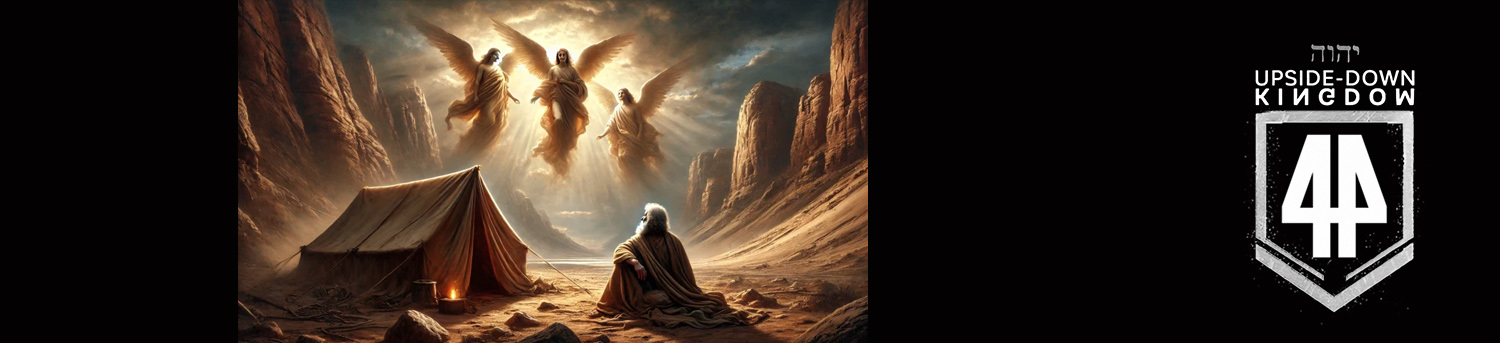
Genesis 18 presents a unique and theologically charged encounter in the Hebrew Bible: Abraham is approached by three visitors whom the narrator initially introduces with the divine name YHWH (the LORD) and later identifies as “men” (Heb. ’anashim). The narrative blurs the categories of divine presence and angelic messengers, generating interpretive complexity that has occupied Jewish and Christian interpreters alike. The episode has been variously read as a test of Abraham’s hospitality, a Christophany (pre-incarnate Christ), or as an example of divine council imagery, where heavenly beings function as God’s agents in the cosmos.
The divine council concept — an assembly of heavenly beings under the sovereignty of the one God — is widely discussed in biblical scholarship (e.g., Psalm 82; Job 1–2; 1 Kings 22:19) and has been popularized in recent years by scholars such as Michael S. Heiser. It provides a framework for reading passages that feature interactions between humans and multiple divine or semi-divine figures without undermining monotheism.
In this article, I argue that three main features of Genesis 18 support interpreting the visitors as divine council / spiritual beings whose presence reflects a partial or mediated theophany — a visible manifestation of the divine.
1. Narrative Identification: YHWH’s Presence and Angelic Agency
A compelling reason to view the visitors as more than ordinary humans lies in the narrator’s framing. The episode opens with the statement: “The LORD appeared to Abraham…” (Heb. vay-yēra’ YHWH), immediately associating the visit with a divine theophany. Yet Abraham sees three men (Genesis 18:1–2), and later two of these continue on to Sodom where they are explicitly called angels (mal’akim) in Genesis 19:1.
This interplay — singular divine presence and plural visitors — invites careful interpretation. One scholarly option is that one visitor functions as the theophanic presence of YHWH, while the other two represent heavenly agents operating within God’s divine court. The text makes this distinction narratively: the LORD speaks covenantal promises (e.g., the birth of Isaac) through one figure, while the others carry out a related mission (going on to Sodom to investigate its wickedness).
In broader divine council imagery, heavenly messengers are often depicted as “standing in the presence of YHWH” or “coming from the assembly of the holy ones” — reflecting a hierarchical divine order in which God presides but heavenly beings act as His representatives. The Job 1–2 and 1 Kings 22 scenes illustrate this pattern in other texts.
Thus, the narrative structure — singular divine announcement and plural agents — coheres with a council model wherein God interacts with humanity through a cohort of spiritual beings rather than appearing directly in full divine essence. This feeds into a mediated theophany: God is present and speaks through a heavenly agent while supported by others.
2. Theophany and “Visible Gods” in Ancient Israelite Context
A second argument arises from ancient Near Eastern and Israelite perceptions of heavenly beings. In the wider Ancient Near East, divine assemblies — councils of gods — were a common motif in narrative and ritual texts. Israelite religion, while monotheistic in its affirmation of YHWH as the supreme God, nevertheless shows evidence of a heavenly host or divine council assembly through passages that portray heavenly beings in council or in service to God. Psalm 82’s “God stands in the divine assembly” imagery suggests that Israelite tradition could conceive of spiritual beings subordinate to Yahweh but active in the divine realm.
Scholars like Michael Heiser and others have argued that such divine council imagery underlies many biblical narratives — not as evidence of polytheism, but as part of a biblical supernatural worldview in which God’s rule over cosmic order is mediated by spiritual beings. These beings can interact with the human sphere while remaining subordinate to Yahweh’s authority.
In this light, the three “men” of Genesis 18 resemble members of the divine council or heavenly host coming to execute God’s will: announcing covenantal blessing and assessing impending judgment. Their behavior — eating food, communicating with Abraham, and then departing — mirrors other divine council appearances where demons or angels take on human form in narrative. This fits more naturally with cosmic hierarchical imagery than with a purely anthropomorphic deity walking about in ordinary human guise.
3. Theophany Features: Speech, Authority, and Human Response
Finally, the theophanic qualities of the encounter support reading the visitors as divine or heavenly figures rather than mere mortals. Key elements include:
Divine Speech and Promise: One visitor speaks as YHWH, using Yahweh’s own name and authority in promising a son to Abraham and Sarah — a hallmark of divine speech rather than angelic proclamation alone.
Human Worship and Interaction: Abraham’s actions — bowing, addressing them in the singular as “my lord,” and engaging in covenant dialogue — reflect recognition of divine presence, not merely polite reception of guests.
Discrepancy Between Appearance and Ontology: The visitors appear as ordinary humans but are operationally supernatural. Two are later identified as angels in Sodom, while the third remains as Yahweh’s representative in dialogue with Abraham. This layered identity — human-like appearance, divine speech, and angelic mission — is consistent with other biblical theophanies where God appears in human form (e.g., to Manoah’s parents in Judges 13).
These features suggest a mediated theophany: God reveals Himself in a way that humans can encounter (visible visitors) while maintaining divine otherness. The narrative’s emphasis on hospitality, promise, and accountability underscores the encounter’s theological gravity, not merely its moral exemplarity.
Conclusion
Genesis 18’s three visitors resist simple categorization as either mundane travelers or strictly anthropomorphic God. Instead, multiple narrative and theological signals point to an interaction with divine or heavenly figures that function within a divine council motif:
The text’s framing blends YHWH’s presence with angelic agency, matching divine council hierarchies.
Ancient Israelite and Ancient Near Eastern contexts include heavenly hosts and councils under God’s sovereignty.
Theophany features — authoritative speech, human reverence, and heavenly mission — reflect mediated divine encounter.
Thus, reading these visitors as divine council beings who participate in God’s cosmic governance and interact with Abraham offers a cohesive interpretive lens. It respects textual complexity, aligns with broader biblical imagery, and highlights the significance of this pivotal covenantal moment.
Selected Bibliography
Primary Text
The Holy Bible, Genesis 18–19 (Hebrew text and major English translations)
Heiser, Michael S. (video / lecture material accessed via Bing link). Discussion on Genesis 18 and divine council imagery.
Secondary Scholarly Works
Heiser, Michael S. The Unseen Realm: Recovering the Supernatural Worldview of the Bible. Bellingham, WA: Lexham Press, 2015.
Walton, John H. The Lost World of the Old Testament: Ancient Israelite Cosmology and the Origins Debate. Downers Grove, IL: IVP Academic, 2018.
Sommer, Benjamin D. The Bodies of God and the World of Ancient Israel. Cambridge: Cambridge University Press, 2009.
Smith, Mark S. The Origins of Biblical Monotheism: Israel’s Polytheistic Background and the Ugaritic Texts. Oxford: Oxford University Press, 2001.
Collins, C. John. Genesis 1–4: A Linguistic, Literary, and Theological Commentary. Phillipsburg, NJ: P&R Publishing, 2006 (esp. methodological notes on divine appearance).
Arnold, Bill T. Introduction to the Old Testament. Cambridge: Cambridge University Press, 2014 (sections on divine messengers and theophany).
Small Group Study Questions (Genesis 18)
Theological Implications If the visitors are understood as divine council beings participating in a mediated theophany, how does this affect our understanding of God’s sovereignty, judgment (Genesis 18–19), and covenant faithfulness?
Textual Observation Genesis 18:1 states that “the LORD appeared to Abraham,” yet Abraham sees three men. How does this tension between divine identification and human appearance shape your reading of the passage?
Divine Council Framework Other biblical texts (e.g., Job 1–2; Psalm 82; 1 Kings 22) portray God presiding over heavenly beings. How might those passages help us understand the role of the three visitors in Genesis 18?
Theophany and Mediation Why might God choose to appear through human-like figures or heavenly messengers rather than in an unmediated form? What does this suggest about God’s desire for relationship and accessibility?
Hospitality and Revelation Abraham shows hospitality before fully understanding who his guests are. What connection does Genesis 18 make between faithful hospitality and divine revelation?
Many of my readers are aware that I would hold to a basic idea that God has partnered with other spiritual beings to manage his creation (and seeks to also partner with humanity) and that when we read the fall of Adam and Eve, we are also most likely reading the beginning of the fall of spiritual beings. The snake figure (Nāḥāš (נחש), Hebrew for “snake” which also later becomes associated with divination) likely would not have been in Eden had it already “fallen.” Eventually it would seem that most of the Spiritual beings that were assigned over the table of nations in Genesis 10 are worshipped as deities and also fall. If you aren’t familiar with this view, I would encourage you to start with this article or this video.
As my friends and I have been navigating Egypt this week, the concepts above have certainly been in my mind. I have been asked more times than I can count if I believe there was alien intervention to build the Pyramids.
Ancient astronauts (or ancient aliens) refers to a pseudoscientific set of beliefs[1] that hold that intelligent extraterrestrial beings (alien astronauts) visited Earth and made contact with humans in antiquity.[1] Proponents of the theory suggest that this contact influenced the development of modern cultures, technologies, religions, and human biology.[3] A common position is that deities from most (if not all) religions are extraterrestrial in origin, and that advanced technologies brought to Earth by ancient astronauts were interpreted as evidence of divine status by early humans.[4]
I have long been open to the perspective that some of these fallen spiritual beings were “high ranking” deities that served on the Divine Council of Yahweh and then fell to become “gods” worshipped by humanity as they “ruled” over them. This would explain the notion that Egyptian pharaohs described themselves as eternal beings and it is clear that they aligned themselves with the celestial (luminaries were known to be spiritual beings in the ancient world.) In Genesis 6 we read of fallen beings intermixing with women of earth and the Nephilim are produced. This reference to them is in Genesis 6:1–4, but the passage is ambiguous and the identity of the Nephilim is disputed.[5] According to Numbers 13:33, ten of the Twelve Spies report the existence of Nephilim in Canaan prior to its conquest by the Israelites.[6] A similar or identical Hebrew term, read as “Nephilim” by some scholars, or as the word “fallen” by others, appears in Ezekiel 32:27 and is also mentioned in the deuterocanonical books of Judith 16:6, Sirach 16:7, Baruch 3:26–28, and Wisdom 14:6.[7] These fallen beings of Genesis 6 would seem to then rise to high places within humanity such as a giant heralded philistine warrior or perhaps even greater esteem.
From the third century BC onwards, references are found in the Enochic literature, the Dead Sea Scrolls,[8] Jubilees, the Testament of Reuben, 2 Baruch, Josephus, and the Book of Jude (compare with 2 Peter 2). For example:1 Enoch 7 “And when the angels, the sons of heaven, beheld them, they became enamoured of them, saying to each other, Come, let us select for ourselves wives from the progeny of men, and let us beget children.” [9] Some Christian apologists, such as Tertullian and especially Lactantius, shared this opinion. Therefore, it is quite plausible to believe that the fallen spiritual beings became rulers of the physical world and possibly used “spiritual abilities or powers” to accomplish their means. To be clear I personally do not see this as a UFO picking up rocks and dropping them like a cosmic crane or tractor beam; but more of a supernatural control of the natural order such as we clearly see the “gods’ of Egypt demonstrating during the Exodus request and test by Moses.
But this still rises several questions. In Exodus 7:10–14, Pharaoh’s magicians are able to turn their staffs into snakes, although their snakes get eaten by Aaron’s. From where do they derive this supernatural power? Are there other gods that have some power, but Yahweh, the true God, has more? If Yahweh is more powerful, why does he allow the lesser gods to perform miracles at all? Is God truly omniscient over them? Or if there is only one God, does Yahweh perform miracles for believers of other gods? You have to ask yourself who was the intended audience of the text and what is the text primarily trying to communicate?
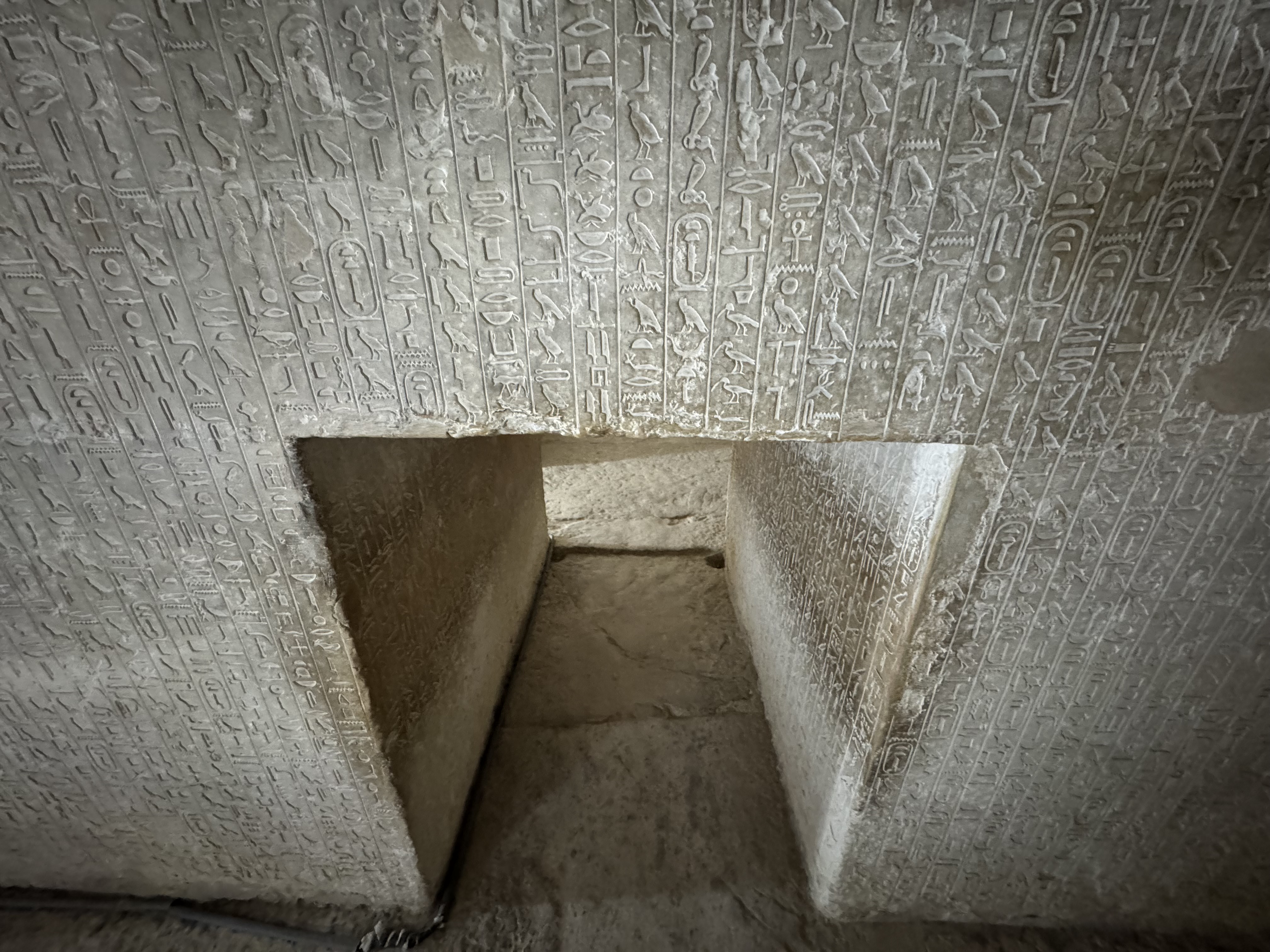
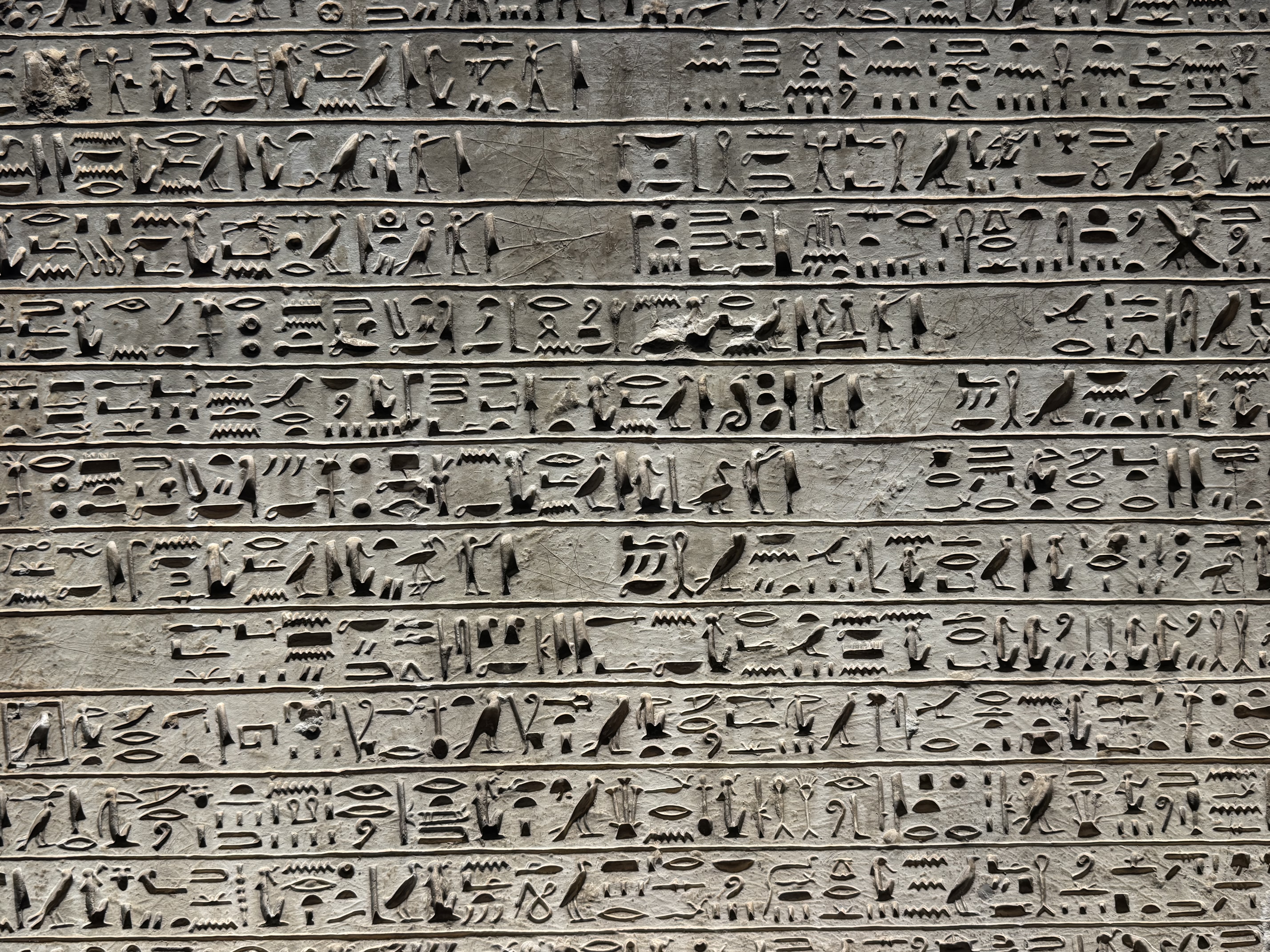
Seeing the museums in person have solidified the notion within my theology that the fallen spiritual beings were at the very least influencing humanity and most likley ruling over them with some supernatural ability. Not all of the Pharaohs were fallen spiritual beings, but they all seemed to esteem to be, and I am alluding that at least some of them were. Here are some signs: oblong heads*, the hieroglyphic of a saucer like objects used as the main preposition of the heiroglyphic language to describe movement (to, over above etc…), and near laser precision cut blocks out of a quarry from all sides. These are a few things (there are many more) that have me seeing that ancient astronauts, or more likely fallen spiritual beings, were interacting with Humanity and as I will propose, the historical timeline fits. The ancient Sumerian myth of Enûma Eliš, inscribed on cuneiform tablets and part of the Library of Ashurbanipal, says humankind was created to serve gods called the “Annunaki“. Hypothesis proponents believe that the Annunaki were aliens who came to Earth to mine gold for their own uses. According to the hypothesis proponents, the Annunaki realized mining gold was taking a toll on their race and then created or used the human race as slaves.[10] I would slightly disagree with those that hold to the “creation view” of it but the story seems to line up with the slavery of the pharaohs. Proponents contend that the evidence for ancient astronauts comes from documentary gaps in historical and archaeological records while citing archaeological artifacts that they believe, contrary to the mainstream explanations, are anachronistic and supposedly beyond the technical capabilities of the people who made them. These are sometimes referred to as “out-of-place artifacts”; and include artwork and legends which believers reinterpret to fit stories of extraterrestrial contact or technologies.[11] As I have been in Egypt researching some of these things I have very much found it to be true. The Egyptian timeline is often a mess. They were really good at recording victories but seem to also be decent at blotting things out of existence! We witnessed a lot of granite that had been etched clean to remove the past! Chuck Missler and Mark Eastman argue that modern UFOs carry the fallen angels, or offspring of fallen angels, and that “Noah’s genealogy was not tarnished by the intrusion of fallen angels. It seems that this adulteration of the human gene pool was a major problem on the planet earth”.[12] They make some interesting statements.
Some would say that Ezekial’s vision was one of UFO type objects. A detailed version of this hypothesis was described by Josef F. Blumrich in his book The Spaceships of Ezekiel (1974).[13] The characteristics of the Ark of the Covenant and the Urim and Thummim have been said to suggest high technology, perhaps from alien origins.[14]
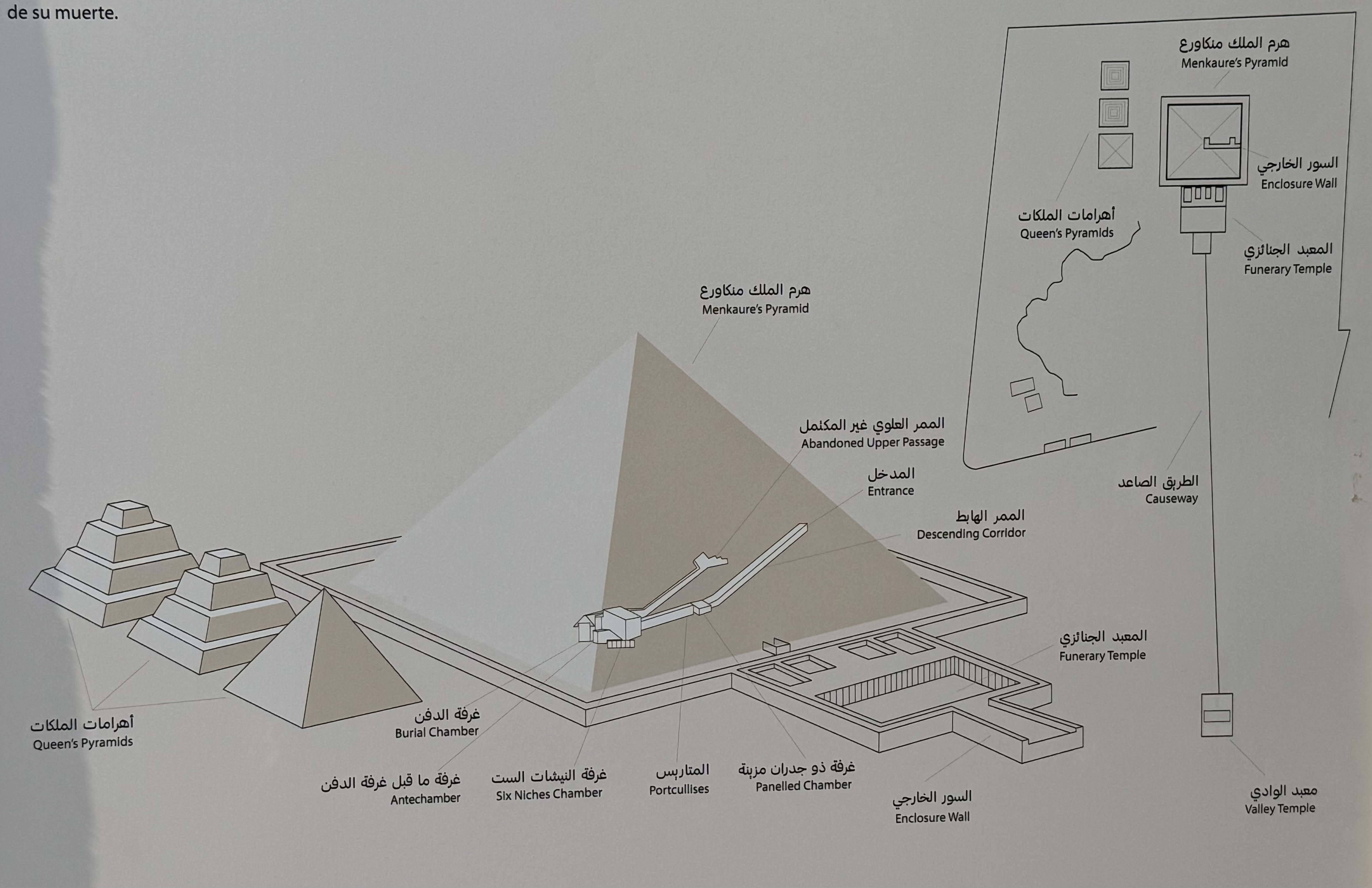
But to be clear, I don’t think that fallen spiritual beings snapped their fingers and pyramids were made. archaeological evidence demonstrates not only the long cultural trajectory of prehistoric Egypt but also the developmental processes the ancient Egyptians underwent.[15] Egyptian tombs began with important leaders of villages being buried in the bedrock and covered with mounds of earth. Eventually, the first pharaohs had tombs covered with single-story, mud-brick, square structures called mastabas. The stepped pyramid developed out of multiple mastabas being stacked on each one in one structure. This led to the construction of pharaoh Djoser’s Step Pyramid at Saqqara, which is known from records to have been built by the ancient Egyptian architect and advisor Imhotep.[16] It was pharaoh Sneferu who had his pyramid transitioned from a stepped to a true pyramid like the well-known pyramids of Giza.[17] A papyrus document like a logbook kept by an official called inspector Merer has also been discovered with records of the construction of the Great Pyramid.[18] I have seen too much this week to think that aliens just did this with a wave of a wand or even their ships!
And then there is the skull thing, among the ancient rulers depicted with elongated skulls are pharaoh Akhenaten and Nefertiti. To be clear this doesn’t necessarily mean there is alien intervention, but it certainly raises an eyebrow. The depiction of Akhenaten and his family with traits like elongated skulls, limbs, underdeveloped torsos, and gynecomastia in Amarna art is hypothesized to be the effect of a familial disease.[19] Marriage between family members, especially siblings, was common in ancient Egyptian royal families, elevating the risk of such disorders.[20] Studies on the remains of the ruling family of 18th Dynasty Egypt have found evidence of deformities and illnesses.[21] Proposed syndromes of Akhenaten include Loeys-Dietz syndrome, Marfan’s syndrome, Frohlich syndrome, and Antley-Bixler syndrome.[22] Akhenaten worshipped the sun disk god Aten and it is suggested that such worship could point to a disease that is alleviated by sunlight.[23] Weighing all of the options, spiritual being or cosmic cowboy intervention per Genesis 6 would seem to not only be viable, but a logical option.
Colloquial concepts of deities can turn into exaggerated extremism, especially when paganism is in the discussion. Corruption of language and corruption of minds seems to turn people into narrow minded symbionts. Egypt was worshiping these “gods” far before Abraham entered Egypt and taught the Egyptians concerning the religion of his God. Abraham was 100 years old when Isaac was born, Gen 21:5, 2066+100=2166. Abraham was born in 2166 BC. Abraham was 75 years old when he was called to leave Haran (Gen 12:4), 2166-75=2091. Abraham was called to leave Haran in 2091 BC. Today I visited the pyramids in/by Djoser which is credited the first Pyramid. He was the first or second king of the 3rd Dynasty (c. 2670–2650 BC) of the Old Kingdom of Egypt (c. 2686 – c. 2125 BC).[25] He is believed to have ruled for 19 years or, if the 19 years were biennial taxation years, 38 years.[26] He reigned long enough to allow the grandiose plan for his pyramid to be realized in his lifetime.[27]
My point is that spiritual beings seem to have influenced ancient Egypt far before Abraham began educating them on Yahweh. The Exodus would then be an establishment (perhaps even spiritual war) of the heavens identifying Yahweh as the greatest “god” as Israel claimed. Notice Yahweh simply says, Have no other gods before me. In Hebrew it would read as just that, the acknowledgment of other “gods” (or fallen spiritual beings.)
When we read the Exodus, we are reading the story of God re-establishing Himself to a lost world as the eternal cosmic KING of the universe and known world.
In early Egyptian writings it makes sense to see congruence or confluence of their concepts of deity. Originally Osiris may have been an Egyptian rendering of “Jehovah” having similar or identical meaning, in which case it would almost necessarily be true that He was present in the Divine council. The Papyrus of Ani and numerous other depictions of the Hall of Judgment mesh exceptionally well with Hebrew and Christian concepts of the Judgment and afterlife. (Interestingly the name of pestilent Egyptian pseudo-deity of the underworld, often called “Set” is lexically indistinguishable from a name pronounced “Satan” in modern tongues.) [23]
It might be an anachronism to say that Israelites believed that Egyptian deities were present in the divine council, but Israelites did teach the Egyptians about the God of Israel. Particularly in regard to Michael Heiser’s recent work, some people have made a point to question whether the Bible taught/represents polytheism. I think this comes down to definitions by which I have never cared for much. I don’t think you’re asking the right question if that is where your mind goes here. You might recall Deuteronomy 4:35, “YHWH is God; there is none else beside him” or Isaiah 44:6–8 which both seem to state Yahweh as the ONLY “god.” But in Exodus 15:11, after the Israelites escape slavery in Egypt, they sing, “Who is like you, O YHWH, among the gods [Elohim]?” At this point they think there are still other “REAL gods.” But what about the other verses that Yahweh seems to be speaking to them such as Deuteronomy 6:14: “Do not follow other gods, the gods of the peoples around you” or Deuteronomy 10:17, which says, “For YHWH your God is the God of gods, and Lord of lords, the great God, mighty and terrible, who does not regard people or take bribes.” In Psalm 95:3, it says, “YHWH is a great God, and a great king above all gods.” And in Exodus 12:12, it says, “On that night I will pass through the land of Egypt and smite every firstborn, both man and beast, and I will execute judgment against all the gods of Egypt. I am YHWH.” These verses seem conclusive that there are other gods which I have alluded to are fallen spiritual beings. SO then if you go back to Deuteronomy 4:35 and possibly others like it, you could interpret them as saying that to Israel God should be the ONLY deity in their life. The Hebrew and contextual position of the texts would also support this reading in every situation I know of.
CONCLUSION:
Did spiritual beings have a hand in ancient Egypt? I think the answer after reading the Bible and viewing ancient Egypt firsthand this week would be, “ABSOLUTELY!” The question is how much, and I will leave that for you to decide.
*A number of ancient cultures, such as the ancient Egyptians and some Native Americans, artificially lengthened the skulls of their children. Some ancient astronaut proponents propose that this was done to emulate extraterrestrial visitors, whom they saw as gods. [19]
WORKS CITED:
Lieb, Michael (1998), “The Psycho-pathology of the Bizarre”, Children of Ezekiel: Aliens, UFOs, the Crisis of Race, and the Advent of End Time, Durham, North Carolina and London: Duke University Press, pp. 51–54, 249–251, doi:10.2307/j.ctv11sn0vx.6, ISBN 978-0-8223-2137-8, OCLC 9354231
Hammer, Olav; Swartz, Karen (2021), “Ancient Aliens”, in Zeller, Ben (ed.), Handbook of UFO Religions, Brill Handbooks on Contemporary Religion, vol. 20, Leiden and Boston: Brill Publishers, pp. 151–177, doi:10.1163/9789004435537_008, ISBN 978-90-04-43437-0, ISSN 1874-6691, S2CID 243018663
May, Andrew (2016), Pseudoscience and Science Fiction (illustrated ed.), Heidelberg: Springer Verlag, p. 133, Bibcode:2017psf..book…..M, ISBN 978-3-319-42605-1
Vetterling-Braggin, Mary (1983), “The Ancient Astronaut Hypothesis: Science or Pseudoscience?”, in Grim, Patrick (ed.), Philosophy of Science and the Occult (1st ed.), Albany, New York: State University of New York Press, pp. 278–288, ISBN 978-0-87395-572-0, archived from the original on March 19, 2024, retrieved July 26, 2021
Encyclopedia Britannica. Retrieved February 2025.
Pentateuch. Jewish Publication Society. 1917.
Hendel, Ronald S. (1987). “Of demigods and the deluge: Toward an interpretation of Genesis 6:1–4”. Journal of Biblical Literature. 106 (1): 22. doi:10.2307/3260551. JSTOR 3260551.
Genesis Apocryphon. Damascus Document. 4Q180.
Kosior, Wojciech (2010). “Synowie bogów i córki człowieka. Kosmiczny ‘mezalians’ i jego efekty w Księdze Rodzaju 6:1–6” [The cosmic mis-alliance and its effects in Genesis 6:1–6]. Ex Nihilo: Periodyk Młodych Religioznawców (in Polish). 1 (3): 73–74.”English translation of “The cosmic mis-alliance and its effects in Genesis 6:1–6″”. Translated by Kalinowski, Daniel. 30 May 2011.
Mark, Joshua J. (May 4, 2018), “Enuma Elish – The Babylonian Epic of Creation – Full Text”, World History Encyclopedia
O’Hehir, Andrew (August 31, 2005), “Archaeology from the dark side”, Salon
Ancient Aliens, Series 2 Episode 7: Angels and Aliens
Josef F. Blumrich: The Spaceships of Ezekiel, Corgi Books, 1974.
AncientDimensions Mysteries: De-Coded: The Ark Of The Covenant, Farshores.org
Feder 2020: p. 226
Feder 2020: pp. 227–228
Feder 2020: p. 229
Tallet and Marouard 2014: pp. 8–10
Vesco, Renato; Childress, David Hatcher (1994), Man-made UFOs 1944–1994 : 50 years of suppression (1st ed.), Stelle, IL: AUP Publishers Network, ISBN 0932813232, OCLC 32056133
Retief and Cilliers 2011
Eshraghian and Loeys 2012: p. 661
Habicht and Henneberg 2015
Card 2018: p. 80
Wainwright, Gerald Averay (1938). The Sky-religion in Egypt: Its Antiquity and Effects. CUP Archive.
Shaw, Ian, ed. (2000). The Oxford History of Ancient Egypt. Oxford University Press. p. 480. ISBN 0-19-815034-2.
George Hart, Pharaohs, and Pyramids, A Guide Through Old Kingdom Egypt (London: The Herbert Press, 1991), 57–68.
Kathryn A. Bard, An Introduction to the Archaeology of Ancient Egypt (Oxford: Blackwell Publishing Ltd, 2008), 128–133.
This article is a 20-minute read. The YouTube version of the discussion is at the Bottom of the page and is an 80-minute listen.
Human beings- We are the most incredibly unique, wildly powerful and intelligent beings ever created but also make some of the most awful decisions, repeatedly, on a regular basis.
The Bible is beautifully simplistic and at the same time houses unsearchable depths of God’s wisdom and goodness.
Of course, the Bible says a lot, everything we need, but there is also quite a bit that it doesn’t simply say. We know very little of what Jesus’s life was like for the better part of three decades, however through extrabiblical material such as historical research of that period, calendars, Jewish and rabbinical practices, and harmonizing the gospel narratives, we can gather much about his life that was not said in the pages of scripture. What we do know is that as soon as Jesus walked in obedience through baptism, he was led by the spirit of God into the wilderness.
Matthew 4:1. “Then Jesus was led by the Spirit into the wilderness to be tempted by the devil.”
The humanity of Jesus is certain, but often eludes us, most of us struggle to fast for one full day, let alone a 40 day and 40-night stint. Utter depletion was upon Jesus, and then came the tempting by ha-satan, and testing by God. What follows is three questions and three rebuttals. The result is Satan fleeing and spiritual beings ministering to Jesus. Although the Bible doesn’t say it, clearly there had been some equipping in Jesus’s life.
and said to Him, “If You are the Son of God, throw Yourself down; for it is written, ‘He will command His angels concerning You’; and ‘On their hands they will bear You up, so that You will not strike Your foot against a stone.’” Matthew 4:6 NASB
Ha-satan misquotes Psalm 91. Yet Jesus doesn’t correct him and simply notes that this is a test of YHWH and infers that to accept this challenge would be forbidden. The fault is in the demanding of Humans of God. God is not the captive genie of my three magical wishes. Jesus makes this clear yet so many Christians today pray in a way that is rival to what Jesus states here. We make demands of God.
“Throw yourself from the Temple” has several other eye raising implications. Some have a hard time asking God for anything personally as it seems to be at odds with really believing in the will of God and the way that God weaves everything to serve His purposes. Can we demand without the eyes to see such things? Do our demands circumvent His intentions? Sometimes in the Bible, such as with Moses we see God heeding the requests of man and altering what would seem to be His better will. But should we really ask God of that. Does asking God to be a way maker mean asking Him to come to our desires rather than posturing ourselves to simply come to His? Do we not throw ourselves from the Temple rather than throw ourselves on His mercy and sovereignty?
Regardless of where your theology lands, there is much going on behind the scenes of Jesus’s interaction with the challenger and it parallels a story in the Old Testament. Most of us know the story of the exile from slavery out of Egypt and through the Red Sea, but often what’s overlooked is also what the Israelites overlooked in the wilderness. We know that both the Israelites and Jesus had just come out of the water before heading into the wilderness. In the Bible, water often signifies chaos. In the beginning, when the spirit of God was hovering over the waters of the deep, the gives us a description of what life, before God interacts with it can look dark, uncontrolled, violent, and unpredictable. As God brings forth land, we first see the life breathing characteristic of the creator of the cosmos.
In the same way, a believers baptism signifies the reaction to an interaction with a life breathing God. They are lowered into the chaotic waters of life for the last time and are risen into a brand-new life.
The hope and promise of a new life are exactly what Israel stepped in to when they stepped out of the Red Sea. The final ascent up the shores on to free land for the first time began the echo of Psalm 136:12 with a mighty hand and outstretched arm; His love endures forever. Just like baptism, this step into their new life was simply the beginning. It was the beginning of a new way of doing things thus signifying the importance of being trained and equipped to withstand the seemingly impossible giants that stood in the way of the final journey to the promised land.
A voice is calling, “Clear the way for the Lord in the wilderness; Make smooth in the desert a highway for our God. Isaiah 40:3 NASB
There is one more connection between wilderness and water. In a D32 consideration, God is at war with other fallen spiritual beings and their slave masters, eventually overthrowing them with the greatest symbol of substitutionary sacrifice being Jesus as the Passover Lamb. At first glance the “horse and the rifer thrown into the sea” it would seem that the slavemasters are completely annihilated, and the earthly force is, but it would seem that the spiritual ones connected with the gods they formerly and will continue to serve will somehow find their way back into the Israelite camp. perhaps this is partially a sign of their continual grumbling and demanding that God do what they want and insisting that it is His fault that they are in such a terrible mess. Are you starting to see the connection of the fallen spiritual beings influencing humanity to make demands of God? This isn’t simply grumbling but a severe violation of the first (and greatest) commandment.
The wilderness becomes God’s classroom in obedience and allegiant devotion to God. In many ways today it still is.
The wilderness is harsh and uncontrollable. We want to live in places where we are in control, so we build cities. That is why cities in the Bible are associated with RA not TOV. We don’t like the testing and trying of the spiritual beings in our lives, so we bulldoze the wilderness and build concrete jungles instead. Unfortunately, that becomes a sign of the RA over the TOV. Humankind actually seems to have very little control and when they think they do it is typically a sign they have been manipulated by the RA of life. We feed our self-delusional fantasy that we are self-sufficient as we are duped by the aggressors.
The wilderness is God’s sacred place, what is left of the earth as He created it. When we attempt to reconstruct it in our image, we lose a connectivity to God and His sacred space. For Israel, the wilderness gave the Word of the Lord, the light and cloud they followed, the learning of grace and mercy, and unending provisions. They learned to heal and worship. They learned to trust and seek. If you have never met God in the wild and untamed placed of His sacred devotion you are likely missing what He has always desired to give to you. Perhaps when we dwell within the city limits, we need to remember to be a wilderness witness. Or maybe we just weren’t intended to live in the concrete jungle and trying to do so could actually be rival to God’s design.
We are in desperate need to be trained and equipped to withstand the seemingly impossible giants that may stand in the way of our journey through this life. If we move too quick, we can miss an important element of God’s character displayed in Matthew 4.
“Then Jesus was led by the Spirit into the wilderness to be tempted by the devil.”
The word tempted is the Greek word peirazó. to make proof of, to attempt, test, tempt, but here it is used in the negative sense, a RA sense.
James 1:2-4. My brothers and sisters] consider it nothing but joy when you fall into all sorts of trials, because you know that the testing of your faith produces endurance. And let endurance have its perfect effect, so that you will be perfect and complete, not deficient in anything. (NET)
Conversely, in this passage, the Greek word for trials is dokimion, meaning- a testing or what is found approved. This testing, or a process or being made complete by the testing of our faith, is very good or Tov.
Both words in this form have significantly similar meanings, however the word tempted in Matthew 4 is in the negative form, or Ra (peirazō) meaning “tempt” by means of luring. This is not a character trait of God. Later in his letter, James 1:13 states “When tempted, no one should say, “God is tempting me.” For God cannot be tempted by evil, nor does he tempt anyone.” Although God will not tempt, he still can use the corrupt schemes of the evil forces as way to test our character. This again is a parallel to God seemingly handing Job over to the fallen spiritual beings (sons of God) for the testing of his character to be found worthy of righteousness and faithfulness to YHWH.
James uses a rare Greek verb, peirázō, meaning “to try, to test.” God does not test anyone with evil. It’s not simply a matter of testing. It’s a matter of attempting to persuade someone to do something evil (and, of course, God is the one who determines what is good and what is evil).
How often they rebelled against Him in the wilderness and grieved Him in the desert! Again and again they tempted God, and pained the Holy One of Israel. Psalm 78:40-41 NASB
Asaph uses the Hebrew verb nāsâ, which means “to put to the test, to try, to prove, to assay.” In other words, they didn’t ask God to do something wicked. They simply acted as if He weren’t God. God doesn’t test us with evil, but we often attempt to test Him, and in so doing, we engage in evil as a means of assaying Him. We disconnect while He attempts to reconnect. This is the exact opposite of what our design and destiny is.
When Israel came out of a 400 plus year stay in RA-Egypt, this nation of people needed to be taught how to do things the way of God’s kingdom. Had the Levitical law been lived out according to its intention, this nation of people would have had such profound impact, other nations would have not helped but take notice and be drawn in to such a beautiful culture. They would have renewed the earth. They were meant to grow grapes as big as their heads that their world would have travelled great distances to partake in. This is the lost “analogy” of what it meant to bear fruit. To have fruit that the entire world sought after and desired. And what could be better than that? Well a fruit that was naturally given and produced by God, it didn’t require any toil. This is the mosaic of what a gift from God was intended to be in our lives… the epitome of what it meant to bear fruit in His kingdom. We were the possessors and recipients of a bountiful harvest that required little if anything from us with enormous blessings.
A contranym is when one word can have two different meanings. Although today we don’t use the word kingdom in our everyday language, we often operate under the ruling of many kingdoms. Our nation is often viewed as a kingdom, if not the strongest kingdom of all kingdoms in the eyes of many. We tend to create our own mini kingdoms either by our nationalities, our blood lines, or even our homesteads. The time we spend investing in these areas can certainly look like worship or idolatry, but what trips us up is our tendency to build vertically (like a city). God has a kingdom which cannot be shaken regardless of our efforts to rebel against it or the attempts of the dark evil forces to lure us away from him. The way God’s kingdom operates is contrary to the ways of the world. God’s kingdom is horizontal, signifying the gift and purpose of diversity amongst all the people. No one person is better or higher in stature, but all created equal although incredibly different. There is but one king amongst a sea of brethren. God’s kingdom is built solely on the foundation of love that never ceases to bring forth life. To this day, our universe is constantly expanding. New stars are being born and galaxies discovered. If we can see through the mess of our daily lives, we can also see new life being formed each day around us. God never stops producing and expanding. This is what you and I were made to do. This is our purpose as the church. We were created by THE life source, the author and perfector of life, the well that never runs dry, but God is also aware of the effect that the kingdoms of this world can have on our nephesh. Although we don’t use the word nephesh in our daily language, contextually here it is important. Although Hebraically nephesh is defined as our soul, we often think of our soul as a separate part of the entire whole of who we are. Our nephesh is every part of who we are down to the deepest part of our composition. Our nephesh is all encompassing and when we bow down to kingdoms of this world, or in the case of the Israelites who had been under to rule of a tyrannical system for over 400 years, it takes reconstruction upon one’s nephesh to learn once again or for the first time the SOP or standard operating practices of God’s kingdom.
According to scripture, the wilderness can often produce the greatest bounty of fruit within our lives. As the kingdom of world tells us to gather from around us to store up treasures in our barns, Jesus continues to teach and to guide us to the truth that true life can only be generated from the inside out. He uses examples of that of a mustard seed. He gave them another parable:
“The kingdom of heaven is like a mustard seed that a man took and sowed in his field. It is the smallest of all the seeds, but when it has grown it is the greatest garden plant and becomes a tree, so that the wild birds] come and nest in its branches.” Matthew 13:31-33
The wilderness is what’s considered a liminal space. Liminal is translated as threshold as in the threshold of a doorway. It’s a space that is not quite outside yet not fully inside either. It’s a transition point. It’s the place where we know we are not where we used to be, but we are not yet where we are intended to go. Our tendency is to view these times in life in a negative context, however in God’s kingdom, what can only be produced through tastings in the wilderness has the potential to produce the highest dividend in our lives, yet we see it through a negative lens and put our best foot forward to get out of the spaces and seasons of life as quickly as possible. Many of us are praying for breakthrough in areas of our lives, but at the same time we are not willing to allow God to teach us what the breakthrough may look like and how to get there. These liminal spaces will force us quickly to realize how much control we still desire of our own lives and see clearly the personal kingdom we’ve created.
We know there’s much about Jesus’s life that we are unaware of, but what we do know is that directly out of baptism he was led by the spirit of God into the wilderness to be tempted by the devil. At the end of this wilderness season, immediately angels came to minister to him. Matthew 4:11. This opens up the door profound displays of the goodness of God’s kingdom displayed through the life of Jesus. In fact, John said this
“Jesus did many other things as well. If every one of them were written down, I suppose that even the whole world would not have room for the books that would be written.” Yet, God has an even bigger plan for the whole of humanity operating through the Kingdom of God. Jesus is recorded saying this in John 14:12. “Very truly I tell you, whoever believes in me will do the works I have been doing, and they will do even greater things than these, because I am going to the Father.”
The only pathway for us to experience this type of life, a land truly flowing with milk and honey from the core of who we are, is to be built up, equipped and empowered by God in liminal spaces. The world calls the wilderness Ra. The Israelites did too. They had everything they needed to survive and were on a journey to thrive, but still found themselves not just complaining, but being so caught up in only what they knew that they didn’t have the faith to trust God with what they don’t know.
“That night all the members of the community raised their voices and wept aloud. All the Israelites grumbled against Moses and Aaron, and the whole assembly said to them, “If only we had died in Egypt! Or in this wilderness! Why is the Lord bringing us to this land only to let us fall by the sword? Our wives and children will be taken as plunder. Wouldn’t it be better for us to go back to Egypt?”
Richard Rohr calls “liminal space”—a particular spiritual position where human beings hate to be, but where the biblical God is always leading them. Many of the greatest stories are messages of stepping positiviely out of liminal space. Abraham, Joseph, David, Jonah, Ruth, Mary and so many others.
Let us not be so quick to judge the lack of faith and the desire to control of that of the Israelites. This is us, too. We have bought in to the lie that these wilderness seasons of life, surrendered to God, cannot produce far greater than what we could ask or imagine. We are all too familiar with liminal spaces. We can be in multiple wilderness seasons at the same time, or around the corner from another one. Eschatologically, we are in a liminal space. Jesus has defeated the forces of darkness and provided for us a pathway to exceptional life, but we are still waiting his return, and a culmination of all things made right. The question becomes whether we as the bride of Christ are willing to receive from this wilderness season the chiseling, purifying, and equipping that is necessary to present ourselves as a spotless bride.
“so that he might present the church to himself in splendor, without spot or wrinkle or any such thing, that she might be holy and without blemish.” Ephesians 5:27.
Maybe today, we don’t necessarily seek to create wilderness seasons or find the liminal spaces, but in humility we can begin to see the power within them. Most of us are somewhat lofty in our thinking, even if we think poorly of ourselves. We still allow the Ra to have more say over our lives and the lives of others than the Tov that God has for us. Exquisite goodness was on the other side of this forming season for the Israelites, yet they threw it all away for the slavery that was familiar to them.
We are designed in the image of God and thus we are designed to bring forth life in everything that we do, yet if we are not allowing God to do the work beginning on the inside of our minds and hearts, lasting fruit cannot be produced.
“I am the true vine, and my Father is the gardener. He cuts off every branch in me that bears no fruit, while every branch that does bear fruit he prunes[a] so that it will be even more fruitful.
You are designed to bring forth fruit and bring it abundantly. Be the one today who considers it pure joy when you face a trial of many kinds, believing that the testing, the equipping, the chiseling, the forming by the hand of God, can produce a steadfastness within us that leads to complete wholeness and maturity, unshakable by the feeble attempts of a broken world.
Written by Dr. Will Ryan with Special Guest Paul Lazzaroni
When we speak from a Deuteronomy 32 worldview it means that we believe some of those originally created by the hand of God (Spiritual beings – angels – demons – and the first humanity) decided to mirror (image, imagine, worship) themselves rather than God. In doing so, the biblical word that best describes what happens to them and the world is the term fall (or falling away). Here is the prime example of that process as Isaiah references the specific fall of the one we often incorrectly refer to as ‘Lucifer’ [1], the archetype of all the fallen beings (later referred to as Satan in the New Testament.)
This article is a 15 minute read.
Isaiah 14
12 How you have fallen from heaven, O morning star, son of the dawn! You have been cut down to the ground, O destroyer of nations. 13 You said in your heart: “I will ascend to the heavens; I will raise my throne above the stars of God. I will sit on the mount of assembly, in the far reaches of the north. 14 I will ascend above the tops of the clouds; I will make myself like the Most High.”
Please take note that one of the compelling reasons or causes of this annotated fall was the desire to ‘make myself like the Most High.” If you have heard good messaging from an authentic spiritual leader, then this is exactly what we have all been taught to do. We should passionately crave to be ‘Image Bearers, Imagers’ (Gen 2) and ‘Imitators’ (mimétés in Greek, which is the root of our English word ‘mimic’ in Eph 5:1). So why was this so devastating for Lucifer, and by repercussion, all of humanity yet unborn?
For the cause of brevity, and to give the answer in simplicity… Lucifer did it the wrong way.
Desiring to be ‘like’ God is a Godly (God-like) goal that we are asked repeatedly to embrace. BUT… doing it by His grace and under the leading of His Spirit is a necessary component of the calling. What Satan, the other fallen spiritual beings, and ultimately Adam & Eve did that precipitated their ‘falling away’ was that they all pursued their objective from pride, self-will, and an arrogant belief that they could ascend to that place WITHOUT the Father’s tutelage. Does this not sound familiar to today’s humanistic messaging where everyone is ‘awesome’ and can do/be anything they want with enough self-confidence, self-belief, or self-motivation? (It is also what happens at Babel at a later “fall.”)
The goal of our faith is allowing God’s grace to transform you into the image of God… Good (TOV) and Godly! The opposite (or complete rival) to this dynamic is to desire to promote yourself instead of God. This is the definition of falling away (which some call apostacy.) Trying to conform God into your image version and then working with your own strength towards it is called Idolatry.
Most people are familiar with the term fall to describe the garden serpent tempting Eve and the banishment from Eden, but that isn’t the only fall, it was simply the first fall that was characterized as self-promotion in place of Godly worship (as I believe we are reading the narrative of a dual fall – not simply humankind falling but also the serpent figure likely being the first of the angelic beings that falls or is falling at the same time.) From there, “falling away” becomes a central theme to the entire narrative of the scripture describing the cosmic battle for humankind for either good (TOV) or evil (RA); which is defined by those that are rescued and come to saving faith and those that choose of their own will to remain in the fallen world attempting to elevate themselves.
The Flood and Babel will immediately be pictures of the perpetual falling away and give specific descriptions of how humanity will be deceived, enslaved, and perhaps destroyed resulting in the consequences of their self-will influenced by giving into the desires of the world and all that dwell within that kingdom (RA). This theme continues with the falling away of Israel (representing the remnant people of God, the Ekklesia of the Old Covenant), and even religion itself by the time of Jesus being described as having become less like the ways of Yahweh instead of more like Him. The religious leaders of the day were the rivals of God’s son Jesus. When Jesus comes and gives revelation to a “new Covenant” through His Kingdom Gospel we are given the power to overcome and triumph over the world and its fallen powers (principalities, rulers, authorities, enslavements). The power to do so comes through His death, resurrection, and ascension as He claims the heavenly throne, regains the keys to life, and sends His Spirit to walk with everyone who allegiantly follows His ways. Returning to this walk is a return to what was established in Eden and will be eschatologically reconciled as “complete” through Jesus in a recreated heaven and earth. In His kingdom, the way to achieve Godliness is through submission, humility, and faithful loyalty.
In the New Testament narrative outlined by the Epistles, we are told the spiritual beings have been bound but are still present and perhaps are still even falling until the last days of the second coming of Christ. In Revelation 12 we get an implication that 1/3 of the spiritual beings will fall and some consider that to have been a statement taking place from the garden to the tower of Babel; but the context is the incarnation which imply that spiritual beings may continue to be falling away. [2] This would explain certain language: (In fact I usually tell people that are new to a Deuteronomy 32 view, that once you understand the text this way, many of the scriptures that didn’t make sense to you now have clarity.)
Proverbs 27:20 “Sheol and Abaddon are never satisfied; so the eyes of man are never satisfied.
Proverbs 30:15-16 “The leech has two daughters: Give and Give. There are three things that are never satisfied, four that never say, ‘Enough!’: Sheol, the barren womb, land never satisfied with water, and fire that never says, ‘Enough!’
As a result of these falls, even though believers know (theologically and eschatologically) they are victorious over the fallen, there is an ongoing struggle (battle) over them in the real-life application. This struggle is characterized by rejecting or ignoring the authority of God in their lives. The result of removing the fear of God is arrogance and pride that leads to the desolation of the world and most things in it. When Jesus came and offered victory, I believe it was to once and for all gain victory over the continual falls and reverse the trajectory for His remnant people; yet 2000 years later we seem to be just as “fallen” or rejecting of God’s ways as those that didn’t have the WORD and the SPIRIT to guide them.
Has Evil won? Absolutely not.
Romans 6:1-4
What then shall we say? Shall we continue in sin so that grace may increase? Certainly not! How can we who died to sin live in it any longer? Or aren’t you aware that all of us who were baptized into Christ Jesus were baptized into His death? We were therefore buried with Him through baptism into death, in order that, just as Christ was raised from the dead through the glory of the Father, we too may walk in newness of life.
The world will be renewed, and we are the manifestation of Jesus physically to bring that transformation to the broken fallen world. Even though we live victorious as believers we still contend with the powers of darkness in a real and everyday manner.
Romans 8:20-21
For the creation was subjected to futility, not by its own will, but because of the One who subjected it, in hope that the creation itself will be set free from its bondage to decay and brought into the glorious freedom of the children of God.
Inner spiritual awareness is the true character of a sincere relationship with God and therefore assumes certain epistemological [3] conditions.
THE POWER OF DECEPTION
1. Humankind is generally and deliberately unaware of the giant chasm created by their ongoing sins because the church, and culture as a whole, have been deceived by the fallen powers and principalities and/or the evil one and the world.
1 John 2:15-16 “Do not love the world or anything in the world. If anyone loves the world, the love of the Father is not in him. For all that is in the world— the desires of the flesh, the desires of the eyes, and the pride of life— is not from the Father but from the world.”
2. The great majority of the church has been deceived to believe misguided theology such as but not limited to “Jesus paid the entry fee for Heaven” and perhaps “some won the cosmic lottery, and some didn’t” -that their lives “Here and Now” in Jesus aren’t as important as their escapist theories of Heaven.
Hebrews 10:36-39 “You need to persevere, so that after you have done the will of God, you will receive what He has promised. But we are not of those who shrink back and are destroyed, but of those who have faith and preserve their souls.
3. We no longer believe that God will hold us accountable for the small things, the everyday falling away of life. This brings on a domino effect that continues to separate us further from the will from God.
Galatians 6:7-8 “Do not be deceived: God is not to be mocked. Whatever a man sows, he will reap in return. The one who sows to please his flesh, from the flesh will reap destruction; but the one who sows to please the Spirit, from the Spirit will reap eternal life.”
4. The world deceives us – this is the job of the yetzer ha’ra. Self-deception holds us captive to a theology of feelings rather than a standard of holiness.
James 1:22 “Be doers of the word, and not hearers only. Otherwise, you are deceiving yourselves.”
5. The measure of true spirituality has become my inward feelings, not my outward actions. Shepherding of the 1-3-12-70 along with intimate discipleship to completely leave the world at the beach and walk wholly in the LORD has been completely rejected by the modern evangelical church. In other word, Jesus’ primary message and commission is no longer relevant to the greater modern church. The carnality of the world has won them over.
There is a great omission in our Great Commission…
Matthew 28:18b-20 “All authority in heaven and on earth has been given to Me. Therefore go and make disciples of all nations, baptizing them in the name of the Father, and of the Son, and of the Holy Spirit, and teaching them to obey all that I have commanded you. And surely I am with you always, even to the end of the age.”
6. The mainline Jesus communities have nearly removed the external standard of obedience to God’s WORD, and we are largely incapable of measuring our real spiritual condition. We have become blinded.
Colossians 2:8 “See to it that no one takes you captive through philosophy and empty deception, which are based on human tradition and the spiritual forces of the world rather than on Christ.”
THE CONSEQUENCES OF SELF WILL
The thief comes only to steal and kill and destroy; I came that they may have life, and have it abundantly. John 10:10 NASB
Abundantly – ‘Perisseuo’, (in this verse ‘perisson’), means ‘to be present overabundantly or to excess,’ censoriously ‘to be superfluous,’ and of persons ‘to be superior or superabounding.’ Transitively the sense is ‘to make overrich,’ ‘to provide superabundantly.’”[4] Paul doesn’t help us much here either by simply adding hyperbole hyperperisseuo, hyperekperissou, hyperekperissos… the ‘hyper’ adding a superlative to an already over-the-top term.
Has the church also lost the idea of life in Jesus to the abundance? The reason is we have continually, over and over in a habitual manner, given into the yetzer Hara- the ways of the world, our self-will influenced by the fallen and the falling. Jesus didn’t intend for us to continue to live this way. It is even not uncommon to hear in Christian circles the excuses and justification for adopting this broken belief system:
“Welp… I’m only human ya know!”
“I know I am way short of where I should be but I am better than yesterday… or better than so-and-so…”
“We are all just sinners who sin!”
“Nobody’s perfect!”
“You should give yourself permission to fail…”
1 Corinthians 6:11 “And that is what some of you were. But you were washed, you were sanctified, you were justified, in the name of the Lord Jesus Christ and by the Spirit of our God.”
Ephesians 2:4-6 “But because of His great love for us, God, who is rich in mercy, made us alive with Christ even when we were dead in our trespasses. It is by grace you have been saved! And God raised us up with Christ and seated us with Him in the heavenly realms in Christ Jesus”
THE RESULTS OF NOT LIVING OUT YOUR SPIRITUAL DESTINY
“When one does not have a Divine Purpose then any ole’ purpose will do…” -Steve
Ephesians 5:17 “Therefore do not be foolish, but understand what the Lord’s will is.”
Hosea 4:6 “My people are destroyed for lack of knowledge. Because you have rejected knowledge, I will also reject you as My priests. Since you have forgotten the law of your God, I will also forget your children.”
A common position for many modern believers to adopt is the ‘ I did not know any better” mantra that has become pervasive in the world. And there is a certain level of mercy and even immunity granted by God for genuine ignorance. Yet it is unlikely that those excuses will hold water with the advent of our current ‘information age’ and the near-infinite accessibility of the scriptures. Additionally, there are THOUSANDS of hours of good, solid, spirit-led teaching available for a true seeker to engage with.
There was a time when God ‘winked’ at humanity’s state of blindness and ignorance. In the verse from Hosea above, the stipulation for ‘being destroyed’ by ignorance was tied directly to, “Because you have rejected knowledge”. A Divine Destiny today is potentially more achievable than in any other era in modern humanity.
Acts 17:30 KJV “And the times of this ignorance God winked at; but now commandeth all men every where to repent”
Repentance is relegated to the status of something like a cussword in our progressive culture. In the pursuit of endless affirmant and positive feelings, we have forgotten the higher callings of repentance, submission, and pure obedience. This has caused many to adopt a ‘follow your heart’ or ‘just find a good career’ attitude towards the term ‘destiny’. This is to our spiritual detriment, beloved family of God. We were specifically created (Eph 2:10 – workmanship = ‘poiéma’ [where our English ‘poem’ is derived] ‘that which has been made of the hands of God as creator’.) for ‘such a time as this’ for a divine purpose that is of divine importance.
To repent means to turn the center of our ‘yetzer’ (soul, driving force, heart, will, plan, imagination) back around towards God and His will. This is the beginning of the process for a believer to walk out their Divine Destiny. When our ‘hearts’ (nephesh, yetzer) have been properly aligned with the heart of God then what is important to Him becomes our passion, and what is unimportant to Him and His Kingdom becomes reproachable to us.
Matthew 6:31-33 “Therefore do not worry, saying, ‘What shall we eat?’ or ‘What shall we drink?’ or ‘What shall we wear?’ For the Gentiles strive after all these things, and your heavenly Father knows that you need them. But seek first the kingdom of God and His righteousness, and all these things will be added unto you.”
First means first.
How do you start the process of finding and walking out your Divine Destiny:
When your heart has been purified and sanctified by the washing of the water of the Word and the living waters of the Spirit you will find that your priorties become sacred and holy.
What does your spirit love… what does it hate? Your purpose is likely engaged with both.
If you did not have to ‘worry’ about ‘making a living’ what would you do with God’s grace?
Ways to measure where you are on that Divine path:
What are you doing with your time? Be honest with yourself and take good inventory.
What are you doing with your affections? If it is about comfort, entertainment, hobbies, wrong people… then something is out of alignment.
What are you doing with your money? If it is consumed by bills or selfish goals it is not being used as a Kingdom asset the way God desires.
Matthew 6:21 “For where your treasure is, there your heart will be also.”
These are hard truths that many will reject or react negatively to… but Godly heroes will do the hard thing. We would not pen these words to you and for you if we did not confidently believe that you could be victorious and successful in the callings of God. The community that surrounds you now (TOV, Beloved), is part of God’s ordained way of empowering you for this abundant life and high calling. Utilize these Divine assets and see the blessings of God manifest in your life and family. The upward trajectory that reverses the fall of this gravity-infested cosmos is readily and powerfully within our grasp… the Kingdom of God is in your hand!
Written by Dr. Will Ryan and Dr. Steve Cassell
[1] As a name for the Devil or Satan, the more common name in English, “Lucifer” does not occur in the original languages of the Bible; it is in neither the Hebrew text nor the Greek text. In my opinion, it is an unfortunate translation of the KJV (and of John Wycliffe) here in Isa 14:12 which most modern versions do not have. The Hebrew word in Isa 14:12 is “helel” (הֵילֵל), meaning, “shining one”, from the root word, “halal” meaning, “to shine”. The word was used to describe Venus, the morning (or evening) star (actually a planet!), but which easily outshines Sirius. The complete phrase in the Hebrew is “helel ben-shachar” (הֵילֵ֣ל בֶּן־שָׁ֑חַר) meaning “Venus, son of the morning”, or, “Morning star, son of the morning”. The Septuagint (in Greek) translated the word, “heosphoros” which means, “Morning star”. This translation is correct. The Latin Vulgate (Jerome 400 AD) translated the word, “lucifer” meaning “light bearer”. This translation is arguably correct – for Latin. It is apparent that the KJV translators struggled with the Hebrew and transliterated the Latin word instead of translating it. John Wycliffe (who translated from the Latin and knew no Greek or Hebrew) also appears to have been flummoxed as he left the word untranslated. They appear to ignore the fact that the same word appears elsewhere in the Latin Bible describing other things. (2 Peter 1:19, Job 11:17, 38:32, Ps 110:3) It is only in the later English Christian tradition that “Lucifer” became a proper noun referring to the Devil before his fall, which the Hebrew does not do. The original spiritual beings were considered luminaries in the classical ancient near eastern cultures and to that regard, this passage would have been interpreted as the falling of the cosmic evil leader we refer to as “THE SATAN” figure but the intended audience certainly would not have called that entity by the name of lucifer. We have to be careful with interpreting Satan as “lucifer” because Jesus also is described similarly as the morning star in Revelation 2. To be clear the term is best understood in Hebrew as a luminary or spiritual being; in that context the given name lucifer could actually be applied to Jesus as much as or in the same way as it is applied towards Satan. To be clear perhaps both spiritual beings were seen as “leaders” or the spiritual beings who “shined brighter” than the others. One fell away and one is seated on the heavenly throne. Therefore, Lucifer often referred to as a proper name for Satan as per popular culture in not the best name or title for the one we call Satan in terms of biblical study. Follow this article for more:
[2] “SATAN REBELLED BEFORE THE CREATION OF HUMANKIND AND TOOK A THIRD OF THE ANGELS WITH HIM.”
This is an excellent example of how a Christian tradition can become doctrine. There isn’t a single verse in the entirety of Scripture that tells us (a) the original rebel sinned before the episode of Genesis 3, or (b) a third of the angels also fell either before humanity’s fall or at the time of that fall. There is only one passage that mentions a “third” of the angels (presumably) and Satan/the serpent in tandem (Rev 12:1–9):
1 And a great sign appeared in heaven: a woman clothed with the sun, with the moon under her feet, and on her head a crown of twelve stars. 2 She was pregnant and was crying out in birth pains and the agony of giving birth. 3 And another sign appeared in heaven: behold, a great red dragon, with seven heads and ten horns, and on his heads seven diadems. 4 His tail swept down a third of the stars of heaven and cast them to the earth. And the dragon stood before the woman who was about to give birth, so that when she bore her child he might devour it. 5 She gave birth to a male child, one who is to rule all the nations with a rod of iron, but her child was caught up to God and to his throne, 6 and the woman fled into the wilderness, where she has a place prepared by God, in which she is to be nourished for 1,260 days.
7 Now war arose in heaven, Michael and his angels fighting against the dragon. And the dragon and his angels fought back, 8 but he was defeated, and there was no longer any place for them in heaven. 9 And the great dragon was thrown down, that ancient serpent, who is called the devil and Satan, the deceiver of the whole world—he was thrown down to the earth, and his angels were thrown down with him.
I say that this passage is “presumably” about one-third of God’s heavenly host being fallen because it is not clear that the “third of the stars” swept down by the dragon (serpent/Satan) refers to the angels who already are assisting the devil. It could well be that the one-third are good angels who have been defeated by the dragon. There are good reasons to take that position, namely, that Revelation 12:4 appears to be the fulfillment of Daniel 8:10. For the purposes of this discussion, though, we will presume that this third refers to evil supernatural agents in league with Satan.
The passage is clear that the timing of this conflict involving a third of the angels occurred in conjunction with the first coming of the Messiah:
And the dragon stood before the woman who was about to give birth, so that when she bore her child he might devour it. She gave birth to a male child, one who is to rule all the nations with a rod of iron, but her child was caught up to God and to his throne. (Rev 12:4–5) The birth of the Messiah is clearly in view, as Revelation 12:5 points readers to the messianic theme of Psalm 2:8–9:
Ask of me, and I will make the nations your heritage, and the ends of the earth your possession.
You shall break them with a rod of iron
and dash them in pieces like a potter’s vessel.
The reference to the child born to rule the nations as being “caught up to God and to his throne” is an explicit reference to the resurrection and ascension—the key events that result in the defeat of Satan and the inauguration of the kingdom of God on earth. Scores of scholars recognize this point. Beale is representative:
The destiny of the Christ-child is described in an allusion to Ps. 2:7–9, which prophesies that God’s Son will defeat all worldly enemies and then be enthroned as ruler over the earth. In fact, Christ is referred to as a “male son” to show that he is the initial fulfillment of the Psalm, which is the decisive event for the successful growth of the church. The last clause, referring to Christ’s ascent, implies that the Ps. 2:7–9 prophecy about God’s messianic Son has begun to be fulfilled.… In context, this initial fulfillment means that, as in ancient times, so again the dragon has been defeated. This time the defeat has occurred through the resurrection and ascent of Christ.
The first advent context continues into Revelation 12:13–17:
13 And when the dragon saw that he had been thrown down to the earth, he pursued the woman who had given birth to the male child. 14 But the woman was given the two wings of the great eagle so that she might fly from the serpent into the wilderness, to the place where she is to be nourished for a time, and times, and half a time. 15 The serpent poured water like a river out of his mouth after the woman, to sweep her away with a flood. 16 But the earth came to the help of the woman, and the earth opened its mouth and swallowed the river that the dragon had poured from his mouth. 17 Then the dragon became furious with the woman and went off to make war on the rest of her offspring, on those who keep the commandments of God and hold to the testimony of Jesus. And he stood on the sand of the sea.
The wording of verse 17 is as clear an association of the vision to the first coming of Jesus as the earlier citation of Psalm 2: “Then the dragon became furious with the woman and went off to make war on the rest of her offspring, on those who keep the commandments of God and hold to the testimony of Jesus.” This simply cannot be construed as describing a primeval rebellion prior to the creation of humanity in Eden. Since there is no other passage in the Bible that uses the “third” language in conjunction with a satanic conflict, the idea that Satan and one-third of the angels rebelled at that time is a traditional myth.
Michael S. Heiser, Demons: What the Bible Really Says about the Powers of Darkness (Bellingham, WA: Lexham Press, 2020), 243–245.
[3] “Epistemological” – Philosophy. Relating to the theory of knowledge, especially with regard to its methods, validity, and scope, and the distinction between justified belief and opinion.
[4] Kittel, G., Friedrich, G., & Bromiley, G. W. (1985). Theological Dictionary of the New Testament (p. 828). Grand Rapids, MI: W.B. Eerdmans.











 EXPEDITION 44