Red Moons, Red Heifers, and the Temptation to Weaponize Jesus

Apocalyptic Anxiety, Prophetic Imagination, and Faithful Christian Eschatology
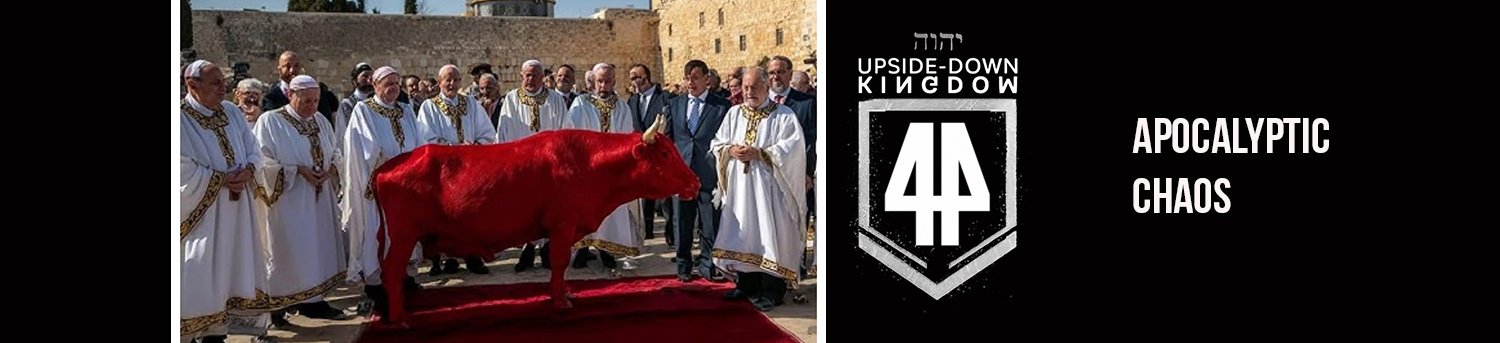
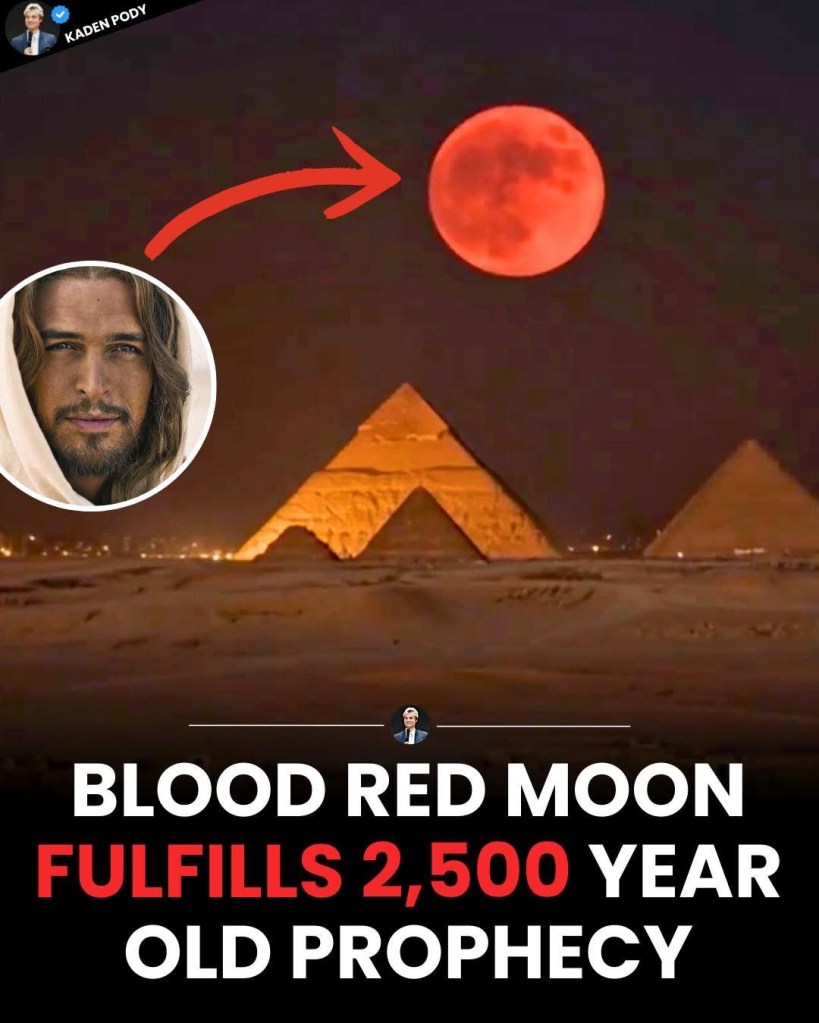
In every generation, the people of God have wrestled with headlines, celestial events, wars, and rumors of wars. In our moment, images of blood-red moons, renewed interest in the red heifer ritual, Purim framed through geopolitical conflict, and even portrayals of a militarized Jesus circulate rapidly across Christian media. These phenomena are frequently interpreted as decisive indicators that “we are in the last days.”

As followers of Christ committed to careful biblical theology, we must ask: What is faithful eschatological attentiveness, and what drifts toward speculation? How do we distinguish biblical prophecy from patterns that more closely resemble divination? And how do we guard against subtly weaponizing Jesus in the service of national or ideological agendas?

This essay proposes that much contemporary apocalyptic rhetoric conflates symbolic prophetic language with predictive sign-reading, misapplies temple typology, and risks distorting the cruciform nature of Christ’s kingship. I ask you to consider a better theology, one that is deeply rooted, Christ-centered eschatology that cultivates hope without hysteria.


The phrase “the moon will be turned to blood” appears in Joel 2:31 and is echoed in Acts 2:20 and Revelation 6:12.¹ Yet within prophetic and apocalyptic literature, such imagery functions symbolically to describe covenantal upheaval and divine intervention, not necessarily astronomical forecasting.²
When Peter cites Joel at Pentecost (Acts 2:16–21), he interprets the prophecy as fulfilled in the outpouring of the Spirit.³ The early church did not await literal lunar phenomena; they recognized that the decisive turning point in redemptive history had already occurred in Christ’s death, resurrection, and exaltation.⁴

Scholars such as John Walton remind us that in the Ancient Near East, celestial events were commonly interpreted as omens.⁵ Israel’s Torah, however, explicitly forbids divinatory practices tied to signs and portents (Deut 18:10–14).⁶ When modern Christians assign predictive significance to eclipses in ways that mirror ancient omen-reading, the hermeneutical posture begins to resemble the very practices Scripture warns against.⁷

Apocalyptic imagery unveils theological realities—it does not invite astrological decoding.


The red heifer ritual of Numbers 19 concerns purification under the Mosaic covenant.⁸ Contemporary movements anticipating a Third Temple sometimes treat the reintroduction of this ritual as a necessary eschatological trigger.⁹

Yet the New Testament consistently reinterprets temple theology christologically. Jesus declares himself the true temple (John 2:19–21).¹⁰ Paul extends temple identity to the gathered people of God (1 Cor 3:16).¹¹ The epistle to the Hebrews insists that Christ’s priestly work is once-for-all and surpasses the sacrificial system (Heb 9–10).¹²

To frame renewed animal sacrifice as a prophetic necessity risks implying insufficiency in Christ’s atoning work.¹³ As Steve Gregg has argued in his engagement with Revelation’s various interpretive frameworks, much apocalyptic expectation misunderstands the covenantal transition already accomplished in the first century.¹⁴
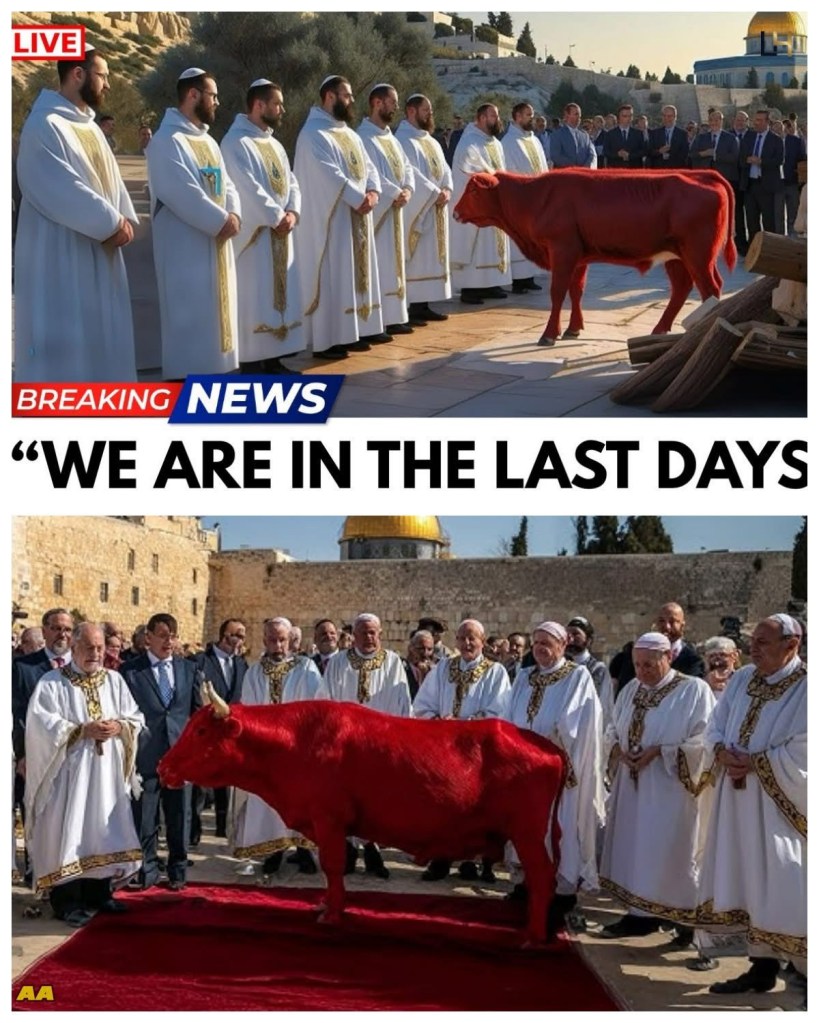
Looking for a rebuilding of the Temple is a slap in the face to Jesus; it is essentially saying you don’t believe He was enough.

The trajectory of Scripture moves from shadow to substance—not from substance back to shadow.


The book of Esther recounts Jewish survival within imperial Persia and culminates in the celebration of Purim (Esth 9).¹⁵ It is a narrative of providence and covenant preservation—not a blueprint for Christian militarization.
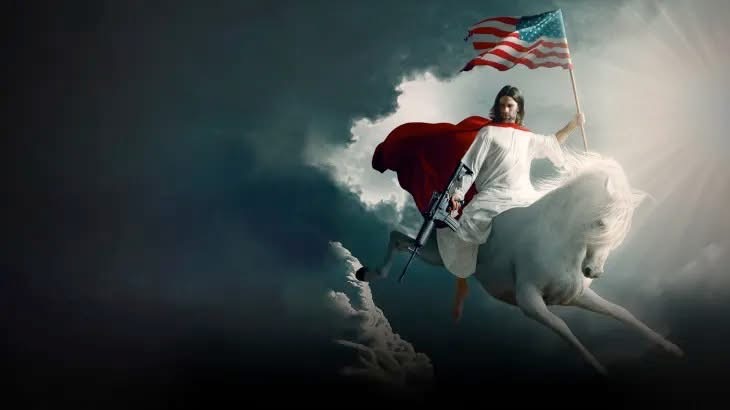
Revelation 19 portrays Christ as a rider on a white horse, yet the sword proceeds from his mouth—symbolizing the power of his word.¹⁶ Earlier, Revelation presents the conquering Messiah as the slain Lamb (Rev 5:6).¹⁷ The Lamb’s victory comes through self-giving sacrifice.

Shane J. Wood argues that Revelation functions as an unveiling of how empire masquerades as ultimate power while the Lamb redefines kingship through suffering love.¹⁸ The book calls believers to faithful witness, not violent triumphalism.¹⁹

When Jesus is draped in national symbolism or framed primarily as a military figure aligned with geopolitical agendas, the church risks conflating the kingdom of God with earthly power structures—precisely the confusion Revelation critiques.²⁰

The Lamb conquers not by coercion, but by cruciform allegiance.


Biblical prophecy is covenant proclamation rooted in God’s revealed purposes.²¹ Divination, by contrast, seeks hidden knowledge through decoding signs, omens, or speculative patterns.²²

Jeremiah warns against prophets who speak “visions of their own minds” (Jer 23:16).²³ Ezekiel rebukes those who practice “lying divination” (Ezek 13:6–9).²⁴ Jesus himself cautions his disciples against alarmism: “See that you are not alarmed” (Matt 24:6).²⁵

The apostolic exhortation is vigilance without panic (1 Thess 5:1–8).²⁶ When Christian rhetoric becomes dominated by chronological speculation tied to celestial events or ritual developments, it begins to mirror the divinatory impulse Scripture explicitly forbids.²⁷

True prophecy deepens faithfulness. Divination fuels anxiety.


Christian eschatology has long been described as “already and not yet.”²⁸ Christ has decisively inaugurated the kingdom, yet its fullness awaits consummation.

Wood’s “thin veil” metaphor captures apocalyptic literature’s purpose: heaven’s perspective breaks into earthly history, revealing who truly reigns.²⁹ Revelation is not primarily a timetable but a theological unveiling of allegiance, empire, and worship.³⁰

Thus, blood moons need not provoke fear. Red heifers need not signal regression. Wars and rumors of wars do not require sacralized nationalism. The church’s vocation remains steadfast: faithful witness shaped by the Lamb.³¹

Peter reminds believers that they are a holy nation—not defined by geopolitical boundaries, but by covenant identity in Christ (1 Pet 2:9–12).³²

Our eschatological posture is hopeful watchfulness grounded in the finished work of Jesus.


The final word of Revelation is not dread but invitation: “The Spirit and the Bride say, ‘Come’” (Rev 22:17).³³

Apocalyptic texts unveil hope, not panic. They expose empire, not empower it. They center the Lamb, not lunar cycles.

To remain faithful in an age of apocalyptic noise is not to disengage from current events, but to interpret them through the crucified and risen Christ. We do not decode eclipses; we embody the kingdom. We do not weaponize Jesus; we witness to him.

In a world prone to sensationalism, the church’s steadiness becomes its testimony.


Footnotes

  1. Joel 2:31; Acts 2:20; Rev 6:12.
  2. G. K. Beale, The Book of Revelation.
  3. Acts 2:16–21.
  4. Richard Bauckham, The Theology of the Book of Revelation.
  5. John H. Walton, Ancient Near Eastern Thought and the Old Testament.
  6. Deut 18:10–14.
  7. Michael S. Heiser, The Unseen Realm.
  8. Num 19.
  9. Randall Price, The Temple and Bible Prophecy.
  10. John 2:19–21.
  11. 1 Cor 3:16.
  12. Heb 9–10.
  13. David Peterson, Hebrews and Perfection.
  14. Steve Gregg, Revelation: Four Views.
  15. Esth 9.
  16. Rev 19:15.
  17. Rev 5:6.
  18. Shane J. Wood, Thinning the Veil.
  19. Rev 12:11.
  20. Rev 13; Bauckham.
  21. Walter Brueggemann, The Prophetic Imagination.
  22. Deut 18:10–14.
  23. Jer 23:16.
  24. Ezek 13:6–9.
  25. Matt 24:6.
  26. 1 Thess 5:1–8.
  27. Heiser, The Unseen Realm.
  28. George Eldon Ladd, The Presence of the Future.
  29. Wood, Thinning the Veil.
  30. Eugene H. Peterson, Reversed Thunder.
  31. Rev 12:11.
  32. 1 Pet 2:9–12.
  33. Rev 22:17.

Bibliography

Bauckham, Richard. The Theology of the Book of Revelation. Cambridge: Cambridge University Press.

Beale, G. K. The Book of Revelation. New International Greek Testament Commentary. Grand Rapids: Eerdmans.

Brueggemann, Walter. The Prophetic Imagination. 2nd ed. Minneapolis: Fortress Press.

Gregg, Steve. Revelation: Four Views. Nashville: Thomas Nelson.

Heiser, Michael S. The Unseen Realm: Recovering the Supernatural Worldview of the Bible. Bellingham, WA: Lexham Press.

Ladd, George Eldon. The Presence of the Future. Grand Rapids: Eerdmans.

Peterson, David. Hebrews and Perfection. Cambridge: Cambridge University Press.

Peterson, Eugene H. Reversed Thunder: The Revelation of John and the Praying Imagination. San Francisco: HarperCollins.

Price, Randall. The Temple and Bible Prophecy. Eugene, OR: Harvest House.

Walton, John H. Ancient Near Eastern Thought and the Old Testament. Grand Rapids: Baker Academic.

Wood, Shane J. Thinning the Veil: Revelation and the Kingdom of Heaven. Cincinnati: Standard Publishing.

PASSOVER PALM SUNDAY

“The Abomination of desolation” is a phrase from the Book of Daniel describing the Greek (Seleucid Empire) king Antiochus IV Epiphanes that desecrated the Second Temple by erecting an altar to Zeus and sacrificing swine, an unclean animal according to Jewish law, on the altar in 167 BC. [1] Partially in response, the Jewish Maccabees went to war (revolt) with the Seleucid Empire and in 164 BC, the Maccabees captured Jerusalem. [2] The subsequent cleansing of the temple and rededication of the altar on 25 Kislev is the source of the festival of Hanukkah. [3] In doing so they paraded through the town displaying their pomp and splendor over their enemies. The Hasmonean dynasty then survived 103 years before yielding to the Herodian dynasty in 37 BC. From that year on, at the beginning of Passover (the day the Jews believed Yahweh gave them freedom) the Roman governor of Judea, would march into the city from the West (THROUGH THE “GREAT” GATE) with full military might on a mighty war horse. His parade was a show of force to remind the people of Jerusalem that Rome was in charge, and every magistrate wanted to be treated like a god. [4]

But here we have Jesus coming through the East Gate. That is the lowly gate that shepherds of animals used. This is where the Passover lambs would have been ushered in later this week. It is readily seen that Jesus’ triumph is very different from the Maccabees; Jesus wields the cross, not the sword, as His triumphal weapon, just as his regality is ensconced upon a lowly donkey rather than a mighty warhorse.

The Maccabees were aimed at liberating Jews from the oppressive nations, focused upon the pollution of the temple by the Greeks but Jesus would be setting the table that the nations might be regained through a different kind of spiritual cleansing.

The triumphal entry of Jesus into Jerusalem, continues to take on a similar image of palms and laudatory praise, echoing the entry of the Maccabees into Jerusalem following their triumph over the Seleucids. [5] The Maccabees entered Jerusalem “with a chorus of praise and the waving of palm branches” [6]. All of this, of course, in the context of a grand temple cleansing – just as Jesus’ entry will be followed by a temple cleansing of His own the day following His triumphal entry. In Antiquity, the palm is one of the trees identified as the Sacred Tree connecting heaven, represented by the crown of the tree, and earth, the base of the trunk. [7] The palm became so closely associated with victory in ancient Roman culture that the Latin word palma could be used as a metonym for “victory” and was a sign of any kind of victory or redemption of a people. [8] They connected the “gods” with victory.

Why a donkey and the coats thing? Well, they both are tied to royal procession. This is a story of the contranyms of the kingdom of Jesus. In 2 Kings 9:13, a man named Jehu is anointed king of Israel and his supporters spread their cloaks on his path, shouting “Jehu is king!” This becomes a regular act from that point forward. In the ancient Middle Eastern world, leaders rode horses if they rode to war, but donkeys came in peace. In 1 Kings 1:33, it mentions Solomon riding a donkey on the day he was recognized as the new king of Israel.

By some estimates, a population of perhaps a few hundred thousand could swell to 2-3 million during Passover. This helps explain several dynamics, most notably why the city’s leadership (both the Romans and the temple establishment) might be more on edge. [9]

Jesus’ dramatic entry into Jerusalem is included in all four of the canonical Gospels but it varies slightly leaving us the need to harmonize the gospels. In Matthew, quotes Zechariah 9:9, which says:

Rejoice greatly, O daughter Zion!
Shout aloud, O daughter Jerusalem!
See, your king comes to you;
triumphant and victorious is he,
humble and riding on a donkey,
on a colt, the foal of a donkey.

This is a scratch my head moment theologically and my take on this may challenge your views of inspiration. Was Jesus engineering the fulfillment of scripture? Was Matthew doing a bit “too much” to try to align with a well-known scriptural prophecy? I do not often align with Bart Ehrman, but in this case, I do as he notes, “Hebrew poetry was often organized conceptually rather than by rhyme scheme. This was the case for the poem from Zechariah, in which the idea in the penultimate line is repeated in the last line with different words. Because the author of Matthew doesn’t understand this, he interprets the verse as saying that the king will ride both on a donkey and a colt, which is what he has Jesus do. He doesn’t explain the gymnastics one would have to do to straddle two animals this way, but our imaginations can fill in the details.” [10] So is that what Jesus did? He straddled two animals to fulfill scripture. It seems that way, but who knows, maybe one was good for Jesus.*

But there is something else that I want to point out here of more significance. Matthew 21:5 quotes Zechariah but leaves out one line, “triumphant and victorious is he.” Isn’t that interesting? It should continue to point you towards the backward kingdom dynamics of Jesus as power under not over. This was quite strategic.

Luke and Mark’s narratives give very similar versions of the story, compared to Matthew’s (though without the two animals). However, in both Mark and Luke (but not Matthew), after his triumphal entry, Jesus goes to the Temple and looks around before leaving and going out to Bethany. This is interesting because in all three Synoptic Gospels, Jesus’ next action will be to cleanse the Temple which I am sure you have made the connection to mirroring the history of the Maccabees above. Why the second cleansing? Who was Jesus’ worst enemy? It surprisingly wasn’t Rome; it was the Jewish religious leaders. Consider the need for Jesus to cleanse the “religion” that “defiled” the temple. When you sit back and consider this, Jesus might be making quite a statement. Is He making the point that what the pharisees have done in the temple is as defiling to His father as the abomination of Desolation? So, then you would ask the question is the desolation of religion connected with what they are sowing and will be reaped in 70AD. Are we reading too much into the textual analogy to the Maccabees? Is this a faithful to the text interpretation? Jesus is known for how he regularly crafts inference. Furthermore, we only read Jesus weeping twice and this is one of them. Which one is He weeping over? The context definitely fits the ensuing destruction of 70AD but perhaps both are at liberty within the textures of interpretation.

As Jesus approached Jerusalem, He was acutely aware of the city’s impending destruction and the spiritual blindness of its inhabitants. This event takes place shortly after the crowd had joyfully welcomed Him as the Messiah, laying down palm branches and cloaks in His path. Despite the outward celebration, Jesus knew that the hearts of many were far from understanding His true mission. [11]

Psalm 118:25 says, “Save us (Hosanna), we beseech you, O Lord!” In one sense, the crowd is asking Jesus to save them. In another parallel sense, it’s calling him “savior.” Perhaps both. The strange thing is that the greater portion of the crowd doesn’t seem to have the mind of Christ. That is one of the reasons why Jesus weeps later. They are looking for a war monger savior to meet Herod on the streets and victoriously and triumphantly overcome Rome. You better believe they wanted Jesus to call down the angels of war or open the earth and swallow the Roman army. I am sure fire from heaven would have appeased them too. But that wasn’t the way of Jesus. Some believe that’s why a few days later perhaps the same crowd will be saying, “Crucify Him or take Him away” Others believe the same people weren’t in that “kangaroo courtroom” and it didn’t really matter.

Most of the people were just looking for a show while they were in town and Jesus probably also wept because he wasn’t into that, and He still isn’t.

The next thing they chant – “Blessed is the one who comes in the name of the Lord!” – is also from Psalm 118, this time verse 26. Luke has the crowds say “Blessed is the King who comes in the name of the Lord! Peace in heaven and glory in the highest!” This accords both with Jesus as king and agrees with Luke 2:14, which John also says, and with what the angels proclaim to the shepherds when they announce Jesus’ birth: “Glory to God in the highest heaven, and peace on earth to those with whom he is pleased!” But what is interesting is the rest of Psalm 118. If you have never read it, well that may influence your thoughts a bit on this.

Hosanna meant they were looking for savior. “It is, however, possible that in the case of someone like Judas, if he had previously been a political zealot, that this entry signaled to him that Jesus would perhaps take over things in Jerusalem, and the cleansing of the temple (Matthew 21:12–13) might well have been interpreted as a symbolic gesture suggesting Jesus would clean house. But then when Jesus reiterates, he came to die, not to start a coup, this must have crushed the hopes of anyone with zealot inclinations about kicking out the Romans. Perhaps that is why Judas does what he does at the end of the week.” [12]

In their book The Last Week: What the Gospels Really Teach About Jesus’s Final Days in Jerusalem, John Dominic Crossan and Marcus Borg write “What we often call the triumphal entry was actually an anti-imperial, anti-triumphal one, a deliberate lampoon of the conquering emperor entering a city on horseback through gates opened in abject submission.” [13]

Ian Paul Says it like this, “This is a different kind of king to any you’ve met before. And the reason for that is that the journey up to Jerusalem is not a journey to power and glory, but (as Paul makes very clear in Phil 2.5–11) it is a journey down in obedience to death. Jesus does not come to conquer the city; he comes to be conquered, and in this great reversal to win an even more profound victory. This is why he brings peace: he has turned us from enemies of God to friends through his death. This is why he brings praise and joy: because his death and resurrection have dealt with the things which separate us from God and from one another. This is the power he offers: power to know forgiveness and peace of mind.” [14]

There is a lot going on here. Jesus is acting out the prophecies that the people recognize as pointing to a Messiah, but the prophecy seems to change. Perhaps the prophets read a bit too far into the vision they were given or maybe the failures of the religious Jews changed the conditional covenant offered. Your overall theology for the lens of scripture is going to influence your thoughts here.

  1. Lust, Johan (2001). “Cult and Sacrifice in Daniel. The Tamid and the Abomination of Desolation”. In Collins, John Joseph; Flint, Peter W. (eds.). The Book of Daniel: Composition and Reception. Vol. 2. BRILL. 
  2. https://biblehub.com/topical/t/the_desecration_of_the_temple.htm
  3.  Doran, Robert (2016). “Resistance and Revolt. The Case of the Maccabees.”. In Collins, John J.Manning, J. G. (eds.). Revolt and Resistance in the Ancient Classical World and the Near East: In the Crucible of Empire. Brill. pp. 175–178, 186–187. 
  4. Josephus: The Essential Works, copyright 1994. Kregal Publications Grand Rapids, MI 49501. 
  5. John’s wisdom : a commentary on the Fourth Gospel by Witherington, Ben, III, p. 221.
  6. 1 Macc 13.51
  7. Giovino, Mariana (2007). The Assyrian Sacred Tree: A History of Interpretations. Academic Press Fribourg Vandenhoeck and Ruprecht Göttingen. 
  8. Vioque, Guillermo Galán (2002). Martial, Book VII: A Commentary. Translated by J.J. Zoltowski. Brill.
  9. https://talmidimway.org/commentary/gospels/gb4/39-triumphal-entry/
  10. https://ehrmanblog.org/did-the-triumphal-entry-really-happen/
  11. https://seedbed.com/when-love-comes-to-town-jesus-triumphal-entry-a-study-of-matthew-21/
  12. https://biblehub.com/topical/j/jesus_weeps_over_jerusalem.htm
  13. https://www.amazon.com/Last-Week-Gospels-Really-Jerusalem/dp/0060872608
  14.  @psephizo