Waters Above, Waters Below: An Exegetical Study of Water in the Bible

Water is one of Scripture’s most elastic and theologically charged images. In the Bible it is never merely “background.” It is creation material, boundary marker, threat, judgment, mercy, provision, cleansing, wisdom, Spirit, and eschatological gift. The biblical writers return to water again and again because water sits at the intersection of life and death. It nourishes fields and fills wells, but it also swallows armies and returns ordered creation to chaos. The result is a motif that cannot be flattened into one meaning. Water in the Bible is polyvalent, but it is not random. Across the canon, the motif develops in discernible patterns: waters of chaos, waters restrained, waters crossed, waters provided, waters purifying, and finally waters transformed into the river of life.[1]

A faithful reading should resist both sentimental reduction and wooden literalism. In the Hebrew Bible especially, water is bound to ancient cosmology, covenant memory, liturgical imagination, and temple symbolism. It also sits inside the shared symbolic world of the ancient Near East, where primeval waters often represented the unstable deep from which ordered life had to emerge.[2] Yet Israel’s Scriptures repeatedly subvert that wider world. Genesis does not portray YHWH as one deity among others struggling against an equal rival. The deep is there, but it is already under God’s sovereign presence. The Spirit hovers. The word speaks. Chaos is not God’s competitor. It is raw material beneath divine rule.[3]
Genesis 1 begins with darkness over “the deep,” tehom (תְּהוֹם), and the Spirit of God hovering over the waters.[4] Much has been written about the relation between tehom and older ANE watery imagery. At minimum, the comparison helps us see the conceptual world in which Israel spoke about cosmic waters. Mesopotamian and West Semitic traditions often imagined a primordial watery reality, sometimes personified, from which ordered space emerged.[5] The biblical text participates in that larger symbolic world while sharply refusing mythic dualism. There is no theogony in Genesis 1, no divine combat scene, and no uncertainty about the outcome. God does not become sovereign by defeating the waters. He is sovereign before the first fiat.[6]

This matters because Genesis frames creation first as an act of distinction and boundary. The waters are separated, the sea is gathered, dry land appears, and only then do fertility and habitation flourish.[7] The logic is profoundly theological. To create is not only to make matter but to assign place, limit, and vocation. Water is thus linked to the question of order. When it remains unbounded, it threatens inhabitable life; when it is bounded by the Creator, it becomes the condition for fruitfulness.[8] The ANE background sharpens this point. In surrounding cultures, the cosmic sea could signal the unstable margin of reality. In Genesis, those same cosmic associations are absorbed into a monotheistic confession: the waters are not divine, not ultimate, and not free to transgress the speech of God unless he permits it.[9]

The imagery of “waters above” and “waters below” also belongs within that ancient cosmological frame. Psalm 148 can still summon “the waters above the heavens” to praise YHWH because the biblical writers share, at the level of phenomenological cosmology, the older picture of a structured world with waters above the firmament and seas below the land.[10] The interpreter must let the text inhabit its own symbolic universe before domesticating it into modern meteorology.[11] The point is not whether Israel possessed modern hydrology. The point is that Israel confessed the God who rules every level of the cosmos as they understood it. The upper waters, lower waters, springs, seas, rivers, and rains all belong to his kingship.[12]

Because water is tied to primordial disorder, the flood becomes more than punishment. It is de-creation. Genesis 7 does not merely say that it rained a lot. The “fountains of the great deep” burst forth and the windows of heaven open, as if the separations of Genesis 1 are reversed.[13] Ordered space collapses back toward the watery abyss. This is why flood language in Scripture often carries more than historical memory; it becomes a grammar of undoing. When human violence fills the earth, creation itself seems to retreat toward the deep.[14]

Second Temple literature extends this line of thought. Jubilees retells the flood with intensified cosmic structure, speaking of the opening of the floodgates of heaven and the mouths of the great deep until the whole world is filled with water.[15] 1 Enoch likewise uses abyss imagery to describe terrifying zones of divine judgment and cosmic disorder.[16] These texts do not invent the symbolism; they amplify what is already present in Genesis. The deep is not neutral. It is a place where God’s judgment is revealed against corruption and rebellion.[17]

This also helps explain why drowning imagery in the Psalms can function as more than a metaphor for personal distress. When the psalmist cries, “the waters have come up to my neck,” or asks not to be swallowed by the deep, he is not merely describing emotional overload.[18] He is speaking from within Israel’s symbolic world, where water can signify the collapse of stable life into the anti-world of chaos, shame, abandonment, and death.[19] In Psalm 69, the drowning image is existential, yes, but it is existential because it is cosmological first. To be overwhelmed by the waters is to feel creation itself coming apart around you.[20]

If Genesis and the flood establish water as a symbol of chaos, the exodus reveals another crucial pattern: God saves not only from the waters but through them. Israel’s crossing of the sea is a new creation event. Waters divide. Dry land appears. A people emerges alive on the other side while the imperial power that sought to unmake them is swallowed by the same waters.[21] The sea is thus double-sided. For Pharaoh it is judgment; for Israel it is deliverance. The same element that destroys the oppressor becomes the corridor of covenant freedom for the oppressed.[22]

The prophets and poets draw deeply on this memory. Isaiah can speak of YHWH making a path through the sea and link that memory to future redemption.[23] Psalm 74 and Isaiah 51 also connect watery chaos with dragon imagery, presenting YHWH as the one who masters the sea and breaks the heads of the monsters.[24] These texts do not simply repeat Canaanite combat myths; they repurpose chaotic-sea language to proclaim YHWH’s unrivaled kingship in history. Pharaoh can be described as a dragon in the Nile because empire itself becomes a historical embodiment of the chaotic waters.[25]

In Scripture, chaos is not always private. Sometimes it is political. Sometimes the waters are imperial. Sometimes the flood comes with chariots, brick quotas, propaganda, and bloodshed. Water imagery can therefore operate as anti-empire theology. The God who set limits on the sea is the same God who sets limits on the kingdoms that exalt themselves.[26]

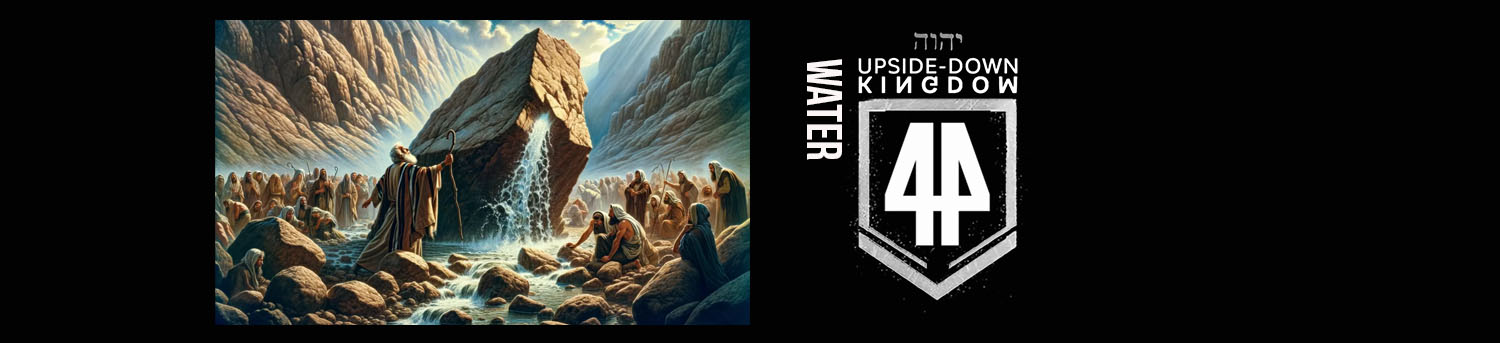
Yet Scripture does not leave water primarily in the register of danger. In the patriarchal narratives, water often appears as the means by which covenant life is sustained in a hostile land. Wells matter because survival matters. Hagar and Ishmael are preserved when God opens Hagar’s eyes to a well in the wilderness.[27] Isaac’s servants find “living water” (mayim chayyim) and their dispute over wells becomes a narrative about conflict, inheritance, and finally divine spaciousness at Rehoboth.[28] Water here is not abstract spirituality. It is the concrete mercy of God in dry places.

That phrase, mayim chayyim, becomes especially important. In its immediate setting it refers to fresh, flowing water rather than stagnant water.[29] But as the canon unfolds, “living water” becomes a bridge image linking practical sustenance, ritual purity, wisdom, and divine presence. The symbolic development works precisely because the physical referent is so vital. Israel does not spiritualize water by abandoning materiality. It moves from material necessity to theological depth.[30]

Pay attention to these patterns: creation waters, wilderness water, patriarchal wells, and later prophetic and wisdom texts belong to one thick symbolic network.[31] Water is often the site where sight itself is restored. Hagar sees the well only after God opens her eyes. That detail deserves more attention than it usually gets. In the Bible, access to life-giving water is often a matter of revelation as much as geography.[32]

Water in the Hebrew Bible is also priestly. Ritual washings, laver imagery, and purity regulations locate water within Israel’s liturgical life.[33] To modern readers, this can seem merely hygienic or ceremonial, but the logic is more profound. Water mediates re-entry into ordered sacred space. If impurity symbolizes a breach, then washing dramatizes restoration. The priestly use of water is thus deeply creational: it marks a return from disorder to fitness for proximity.[34]

This priestly and temple dimension becomes even clearer in later texts. Ezekiel’s temple vision culminates in water flowing from the sanctuary, deepening as it moves, healing the Dead Sea and turning barrenness into life.[35] The image is extraordinary. Water no longer merely supports the sanctuary from outside; it proceeds from the sanctuary as restorative force. Temple and Eden converge. The source of holy presence becomes the source of renewed creation.[36]

Second Temple texts carry this symbolism forward in ways that illuminate the New Testament. Ben Sira associates wisdom and Torah with river imagery, comparing her abundance to the great rivers and presenting instruction as a kind of overflowing life-source.[37] Qumran literature intensifies the purification imagery by pairing washing with the Spirit and truth. The Community Rule can speak of being cleansed by “the Spirit of truth” like waters of purification, signaling that mere external washing without covenant fidelity is insufficient.[38] Archaeological and textual evidence from Qumran also shows that natural water and ritual baths were central to the community’s life, reinforcing the overlap between purity practice and theological identity.[39]

This is one reason John’s baptism lands with such force in the Gospels. It emerges in a Jewish world already saturated with water symbolism: creation, exodus, wilderness, purification, repentance, and eschatological expectation.[40] John is not inventing the importance of water. He is staging Israel’s need for new passage, new cleansing, and new readiness for the kingdom.[41]

The biblical tradition also links water to instruction. Isaiah 55’s invitation, “Come, everyone who thirsts, come to the waters,” is not only about refreshment but about covenant hearing and reception of God’s word.[42] Sirach portrays wisdom as flowing like rivers, and later Jewish tradition repeatedly compares Torah to water because both descend, both purify, both sustain life, and both are available to the thirsty.[43] Some of the material gathered on Sefaria makes this rabbinic instinct explicit: as water revives, Torah revives; as water purifies, Torah purifies.[44]

Water is not only a private devotional symbol; it is tied to obedience, lament, cleansing, and communal life before God.[45] Psalm 119’s streams of water from the eyes are not generic sadness but grief over Torah violation.[46] Tears themselves become a kind of moral water, a protest against disorder in the covenant world. There is something deeply shepherding here. In Scripture, holy grief is not emotional excess. It is fidelity feeling the fracture of creation.[47]

By the time we come to the New Testament, the water motif is already richly layered. Jesus enters that symbolic world and gathers its threads into himself. He is baptized in the Jordan, walks on the sea, stills the storm, offers living water to the Samaritan woman, speaks of rivers flowing from within believers, and stands within the tradition that identifies divine wisdom and Torah as life-giving provision.[48]

John 4 is especially important. Jesus does not dismiss physical water; he uses the well, the woman, and the thirst of Samaria to reveal a deeper source.[49] The Bible Project’s observation that the passage also carries nuptial overtones is compelling, especially when read against biblical well-scenes and covenant imagery.[50] The one who asks for water is the true bridegroom offering the life of the age to come. In John 7, that offer is explicitly linked to the Spirit.[51] Living water is no longer simply fresh spring water or even wisdom instruction; it is the life of God communicated through the Messiah and the Spirit.

Even Jesus’ mastery of the sea should be read in canonical context. He does not merely perform power. He treads upon what earlier texts associated with the untamed deep.[52] The One through whom all things were made stands over the waters that once threatened the world. In him, the old symbolism reaches its christological center.[53]

The biblical story ends not with the abolition of water but with its transfiguration. Revelation can say that “the sea was no more,” which in context signals the end of chaos, death, and threat rather than a simple hydrological claim.[54] At the same time, Revelation 22 presents the river of the water of life flowing from the throne of God and of the Lamb.[55] What began as the deep over which the Spirit hovered ends as a river proceeding from the divine throne. The canonical arc is remarkable: chaotic waters are not merely suppressed; life-giving waters are finally universalized.

Second Temple apocalyptic literature helps us feel the force of that transformation. In 4 Ezra the sea can still symbolize the realm from which terrifying empire rises.[56] In Revelation, by contrast, the final city has no need to fear such a sea. The anti-creation element is gone, but the life-giving element remains and expands. The Bible’s final water image is neither flood nor abyss but river, healing, and abundance.[57]

A pastoral reading of water in Scripture must hold both edges together. Water is not sentimental in the Bible. It can drown, judge, and unmake. But neither is it merely threatening. It cleanses, feeds, opens barren futures, and flows from the sanctuary of God into a dead world. In a canonical sense, water becomes one of the Bible’s clearest witnesses to the pattern of creation, fall, redemption, and new creation.

That means many of us misread our lives when we assume the presence of “deep waters” means God has abandoned us. In Scripture, God often does his most decisive work at the edge of the sea, at the mouth of the well, in the wilderness without water, or in the river one must cross. He is the God who orders the deep, divides the sea, opens eyes to wells, washes the unclean, and finally gives the water of life without price.[58]

The set-apart task, then, is not to deny the chaos of the waters but to teach the saints to recognize the One who still hovers over them.


  1. For the broad biblical pattern of water as chaos, salvation, and baptismal imagery, see BibleProject, “Chaotic Waters,” June 25, 2018; BibleProject, “Crossing the Chaotic Waters,” April 16, 2018; and BibleProject, “Chaotic Waters and Baptism,” April 23, 2018.
  2. On cosmic waters and ANE cosmology, see “Ancient Near Eastern Cosmology,” especially the sections on the upper waters, firmament, and separation of heaven and earth.
  3. On Genesis’ presentation of chaotic waters as uncreation under God’s rule, see BibleProject, “Chaotic Waters”; and Ryan Lu, The Deification and Demonization of Tĕhôm, chap. 1.
  4. On tehom and Genesis 1:2, see Sefaria’s presentation of Genesis 1:6–12 and the discussion of watery deep in intertextual comparison with Jubilees.
  5. For ANE parallels involving primordial waters, the cosmic ocean, and later Babylonian imagery, see “Ancient Near Eastern Cosmology” and the Brill essay “A Short History of the Waters Above.”
  6. On the absence of divine combat in Genesis 1 and the text’s monotheistic subversion of mythic patterns, see BibleProject, “A Mountain Rising From the Chaos Waters,” Nov. 4, 2024; and BioLogos, “Deep Space and the Dome of Heaven,” Jan. 13, 2016.
  7. Genesis 1:6–12 in Sefaria explicitly presents creation through separation, gathering, and the appearance of dry land.
  8. BibleProject, “Rivers Flowing Upward,” June 14, 2021, highlights how God transforms the chaos waters into waters full of life potential in Genesis 1–2.
  9. On the firmament as a boundary containing upper waters, see “Firmament”; and BioLogos, “What Are the Waters Above the Firmament?” Feb. 6, 2026.
  10. For the persistence of the “waters above” motif in biblical cosmology, see Skip Moen, “In Its Cultural Context,” Dec. 24, 2014.
  11. Ibid. Moen explicitly argues that Psalm 148’s “waters above the heavens” should be read in ancient cosmological context rather than translated into modern meteorological categories.
  12. On the layered cosmos and divine rule over all realms, see “Ancient Near Eastern Cosmology”; and “Biblical Cosmology.”
  13. On the flood as a reversal of Genesis 1’s separations, see BibleProject, “Why Did God Flood the World?” Nov. 12, 2019.
  14. Ibid.; see also BibleProject, “Crossing the Chaotic Waters.”
  15. Book of Jubilees 5, on the opening of the floodgates of heaven and the fountains of the great deep.
  16. On abyss imagery in 1 Enoch, see The Book of Enoch, CCEL edition; and Britannica, “First Book of Enoch.”
  17. On Enoch and Jubilees as Second Temple witnesses to amplified cosmic and judgment imagery, see Britannica, “The Book of Enoch”; and Britannica, “Dead Sea Scrolls: The Scrolls in Context.”
  18. Skip Moen, “Death by Drowning,” Nov. 17, 2023; and “Let Me Reiterate,” Nov. 28, 2023.
  19. On the deep in biblical lament and its relation to chaos, see Lu, The Deification and Demonization of Tĕhôm; and BibleProject, “Chaotic Waters.”
  20. Moen, “Death by Drowning”; Moen, “Let Me Reiterate.”
  21. BibleProject, “Crossing the Chaotic Waters,” explains the Red Sea crossing as a re-creation moment in which waters divide and dry land appears.
  22. On the same waters saving Israel and judging Egypt, see BibleProject, “Chaotic Waters and Baptism.”
  23. Isaiah’s reuse of exodus-through-water imagery is summarized in BibleProject, “Chaotic Waters and Baptism.”
  24. On dragon and chaos-sea imagery in biblical poetry, see BibleProject, “Dragons in the Bible.”
  25. Ibid. The resource explicitly notes how the biblical authors apply dragon imagery to violent rulers such as Pharaoh.
  26. On sea imagery and empire in apocalyptic and prophetic traditions, see BibleProject, “Dragons in the Bible”; and “Biblical Cosmology.”
  27. Genesis 21:14–20 in Sefaria presents Hagar’s wilderness crisis and God’s opening of her eyes to a well.
  28. Genesis 26:18–22 in Sefaria records Isaac’s rediscovered wells, the finding of “living water,” and the naming of Rehoboth.
  29. On “living water” as fresh, flowing water in the Hebrew Bible and Jewish tradition, see Sefaria sheet “Mayim, Mayim! Ten Wet Jewish Texts.”
  30. For the canonical development of “living water” into later theological usage, compare Genesis well texts in Sefaria with John material in BibleProject, “Jesus Offers Living Water and… Marriage?”
  31. Sefaria Voices sheet, “Water in the Hebrew Bible,” gathers creation, wilderness, and well passages into a sustained interpretive arc.
  32. Genesis 21:19 emphasizes that Hagar sees the well only after God opens her eyes.
  33. On ritual water and Jewish purification practice in the Second Temple world, see “Dead Sea Scrolls Overview,” especially the discussion of Qumran’s water system and mikva’ot.
  34. On water and purification in the Qumran context, see BYU, “From the Dead Sea Scrolls (1QS),” and the Diva-Portal study on 1QS.
  35. Ezekiel’s temple-river imagery is a standard backdrop for later living-water theology; for a concise intertextual treatment, see BibleProject, “Why Water Matters in the Bible.”
  36. On temple, Eden, and life-giving waters in biblical cosmology, see BibleProject, “Rivers Flowing Upward”; and “The Symbolism of Mountains in the Bible.”
  37. Sirach 24 compares wisdom to the great rivers and speaks of instruction in watery terms. See USCCB, Sirach 24; and BibleGateway, Sirach 24 RSV.
  38. On 1QS’s language of the Spirit of truth and waters of purification, see Brill, “The Notion of the Spirit in the Dead Sea Scrolls”; and Diva-Portal, A Synchronic Approach to the Serek ha-Yahad.
  39. On water installations and natural water requirements at Qumran, see “Dead Sea Scrolls Overview.”
  40. On John’s immersion as a Jewish purification practice with moral and eschatological force, see Journal for the Study of the New Testament, “John’s Immersions: Ritual Purification, but from What?” Sept. 26, 2024.
  41. On John’s proximity to wilderness and Qumran-like symbolism, see “John the Baptist, Qumran and the Voice in the Wilderness.”
  42. On Isaiah 55’s invitation as covenantal and not merely physical, see the broader Jewish scriptural tradition comparing Torah and water in Sefaria’s “Mayim, Mayim!” sheet.
  43. Sirach 24 and later Jewish sources explicitly compare wisdom and Torah to rivers and life-giving water.
  44. Sefaria, “Water, Source of Life,” preserves rabbinic analogies between water and Torah, including purification, life, and divine speech.
  45. Skip Moen repeatedly reads water language through Torah, lament, and Hebraic covenant consciousness; see “Continental Divide,” “Let Me Reiterate,” and “Death by Drowning.”
  46. Moen, “Continental Divide,” on Psalm 119:136 and the moral force of tear imagery tied to lawlessness.
  47. Ibid.
  48. On Jesus’ living-water discourse and its relation to Spirit and biblical imagery, see BibleProject, “Jesus Offers Living Water and… Marriage?” and the YouTube summary “Water in the Bible—What Does Water Represent in the Bible.”
  49. BibleProject, “Jesus Offers Living Water and… Marriage?” explicitly frames John 4 within the biblical story of water and covenant life.
  50. Ibid.
  51. On living water as Spirit in Johannine theology, see BibleProject, “Jesus Offers Living Water and… Marriage?” and the YouTube overview “The Symbolism of Water in the Bible: Deep Dive into Biblical Imagery.”
  52. On sea imagery as chaos and Jesus’ authority over it in light of the biblical motif, see BibleProject, “Chaotic Waters”; and “Crossing the Chaotic Waters.”
  53. Ibid.
  54. On “the sea was no more” as theological imagery tied to the end of chaos, see “Biblical Cosmology”; and BibleProject, “Dragons in the Bible.”
  55. On the river of life flowing from the throne as the Bible’s final water image, compare Revelation’s canonical pattern summarized in BibleProject’s water resources.
  56. Britannica dates the central portion of 4 Ezra to around AD 100, and the text famously depicts a terrifying kingdom rising from the sea. See Britannica, “Second Book of Esdras”; and 4 Ezra at Pseudepigrapha.com.
  57. On the contrast between apocalyptic sea-threat and final life-river, compare 4 Ezra’s sea-beast imagery with Revelation’s river-of-life pattern summarized in BibleProject resources.
  58. For the canonical movement from thirst to gift, chaos to life, and exile to restoration, see Sefaria’s “Water in the Hebrew Bible,” BibleProject’s water resources, and the user-provided article “Biblical Meaning of Water: 7 Symbolic Interpretations Explored.”

Alter, Robert. The Hebrew Bible: A Translation with Commentary. 3 vols. New York: W. W. Norton, 2019.

Arnold, Bill T., and Brent A. Strawn, eds. The World around the Old Testament: The People and Places of the Ancient Near East. Grand Rapids: Baker Academic, 2016.

Beale, G. K. The Temple and the Church’s Mission: A Biblical Theology of the Dwelling Place of God. Downers Grove, IL: InterVarsity Press, 2004.

Brodie, Thomas L. Genesis as Dialogue: A Literary, Historical, and Theological Commentary. Oxford: Oxford University Press, 2001.

Collins, John J. Between Athens and Jerusalem: Jewish Identity in the Hellenistic Diaspora. 2nd ed. Grand Rapids: Eerdmans, 2000.

Collins, John J. The Apocalyptic Imagination: An Introduction to Jewish Apocalyptic Literature. 3rd ed. Grand Rapids: Eerdmans, 2016.

Day, John. God’s Conflict with the Dragon and the Sea: Echoes of a Canaanite Myth in the Old Testament. Cambridge: Cambridge University Press, 1985.

Fishbane, Michael. Biblical Interpretation in Ancient Israel. Oxford: Clarendon Press, 1985.

Gunkel, Hermann. Creation and Chaos in the Primeval Era and the Eschaton: A Religio-Historical Study of Genesis 1 and Revelation 12. Translated by K. William Whitney Jr. Grand Rapids: Eerdmans, 2006.

Heiser, Michael S. The Unseen Realm: Recovering the Supernatural Worldview of the Bible. Bellingham, WA: Lexham Press, 2015.

Himmelfarb, Martha. Tours of Hell: An Apocalyptic Form in Jewish and Christian Literature. Philadelphia: University of Pennsylvania Press, 1983.

Hundley, Michael B. Gods in Dwellings: Temples and Divine Presence in the Ancient Near East. Atlanta: Society of Biblical Literature, 2013.

Keel, Othmar. The Symbolism of the Biblical World: Ancient Near Eastern Iconography and the Book of Psalms. Translated by Timothy J. Hallett. Winona Lake, IN: Eisenbrauns, 1997.

Kraus, Hans-Joachim. Psalms 1–59. Translated by Hilton C. Oswald. Minneapolis: Fortress Press, 1993.

Kraus, Hans-Joachim. Psalms 60–150. Translated by Hilton C. Oswald. Minneapolis: Fortress Press, 1993.

Levenson, Jon D. Creation and the Persistence of Evil: The Jewish Drama of Divine Omnipotence. Princeton: Princeton University Press, 1988.

Longman, Tremper III. Genesis. Story of God Bible Commentary. Grand Rapids: Zondervan, 2016.

Mathews, Kenneth A. Genesis 1–11:26. New American Commentary 1A. Nashville: B&H, 1996.

Midrash Rabbah. Genesis Rabbah. Translated by H. Freedman and Maurice Simon. London: Soncino, 1939.

Milgrom, Jacob. Leviticus 1–16: A New Translation with Introduction and Commentary. Anchor Bible 3. New York: Doubleday, 1991.

Moberly, R. W. L. The Theology of the Book of Genesis. Cambridge: Cambridge University Press, 2009.

Newsom, Carol A. The Self as Symbolic Space: Constructing Identity and Community at Qumran. Leiden: Brill, 2004.

Nickelsburg, George W. E. 1 Enoch 1: A Commentary on the Book of 1 Enoch, Chapters 1–36; 81–108. Hermeneia. Minneapolis: Fortress Press, 2001.

Nickelsburg, George W. E., and James C. VanderKam. 1 Enoch 2: A Commentary on the Book of 1 Enoch, Chapters 37–82. Hermeneia. Minneapolis: Fortress Press, 2012.

Reed, Annette Yoshiko. Fallen Angels and the History of Judaism and Christianity: The Reception of Enochic Literature. Cambridge: Cambridge University Press, 2005.

Smith, Mark S. The Origins of Biblical Monotheism: Israel’s Polytheistic Background and the Ugaritic Texts. Oxford: Oxford University Press, 2001.

Smith, Mark S. The Priestly Vision of Genesis 1. Minneapolis: Fortress Press, 2010.

Sparks, Kenton L. Ancient Texts for the Study of the Hebrew Bible: A Guide to the Background Literature. Peabody, MA: Hendrickson, 2005.

Stuckenbruck, Loren T. 1 Enoch 91–108. Commentaries on Early Jewish Literature. Berlin: de Gruyter, 2007.

Sweeney, Marvin A. I & II Kings: A Commentary. Old Testament Library. Louisville: Westminster John Knox, 2007.

The Old Testament Pseudepigrapha. Edited by James H. Charlesworth. 2 vols. Garden City, NY: Doubleday, 1983–1985.

VanderKam, James C. Jubilees. 2 vols. Hermeneia. Minneapolis: Fortress Press, 2018.

VanderKam, James C. The Book of Jubilees. Guides to Apocrypha and Pseudepigrapha. Sheffield: Sheffield Academic Press, 2001.

Walton, John H. Ancient Near Eastern Thought and the Old Testament: Introducing the Conceptual World of the Hebrew Bible. 2nd ed. Grand Rapids: Baker Academic, 2018.

Walton, John H. The Lost World of Genesis One: Ancient Cosmology and the Origins Debate. Downers Grove, IL: InterVarsity Press, 2009.

Walton, John H., and Tremper Longman III. The Lost World of the Flood: Mythology, Theology, and the Deluge Debate. Downers Grove, IL: InterVarsity Press, 2018.

Wenham, Gordon J. Genesis 1–15. Word Biblical Commentary 1. Grand Rapids: Zondervan, 1987.

Wright, N. T. John for Everyone, Part 1: Chapters 1–10. 2nd ed. Louisville: Westminster John Knox, 2004.

Eden as Cosmic Temple, Cosmic Rebellion, and the Reversal of the Curse

The opening chapters of Genesis have traditionally been interpreted primarily as a narrative describing the origin of humanity and the fall of Adam and Eve. While this reading is not incorrect, it may be incomplete. Increasingly, scholars have recognized that Genesis 1–11 presents a much broader theological framework in which the story of humanity unfolds alongside a wider cosmic conflict involving both human and spiritual agents.¹ When read within the ancient Near Eastern context and the larger biblical narrative, the Garden of Eden appears not merely as a geographical location but as the primordial temple of creation, the sacred center where heaven and earth intersect.

Within this framework, Genesis 1–11 may be understood as the opening movement of a larger biblical drama—one that narrates a series of escalating rebellions that disrupt God’s intended order for creation. These rebellions involve both humanity and spiritual beings and culminate in the need for divine restoration. The New Testament ultimately portrays the work of Christ as the decisive reversal of this cosmic disorder, restoring humanity’s original vocation and reclaiming creation from the powers that had corrupted it.


A growing body of scholarship recognizes that the imagery surrounding Eden closely parallels the symbolism of later biblical temples.² The garden contains precious stones and gold, features rivers flowing outward from its center, and is guarded by cherubim following humanity’s expulsion.³ Ezekiel’s depiction of Eden further situates it upon the “mountain of God,” imagery frequently associated with sacred cosmic geography.⁴ These elements strongly suggest that Eden functions as the sanctuary of creation, the place where divine presence and human vocation converge.

Within this sacred environment, Adam appears to be commissioned with a priestly role. Genesis 2:15 states that Adam was placed in the garden “to work it and to keep it.” The Hebrew verbs ʿābad (“serve”) and šāmar (“guard”) later describe the duties of Levites serving in the tabernacle.⁵ This linguistic correspondence indicates that Adam’s task is not merely agricultural but priestly: he is appointed to guard sacred space and maintain the order of God’s sanctuary.⁶

The opening structure of Genesis has often been interpreted as recursive, with Genesis 1 providing a cosmic overview of creation and Genesis 2 retelling the story with a specific focus on Adam and Eve.⁷ However, the narrative can also be read sequentially, much like any other historical narrative. In this reading, Genesis 1 describes the creation of humanity in general terms while Genesis 2 focuses on the installation of Adam within the sacred environment of Eden.

Under this interpretation, Adam may be understood as the first human placed within God’s cosmic temple, while humanity more broadly inhabits the wider earth. One might describe this broader human realm—borrowing Tolkien’s evocative language—as the “lower earth,” the ordinary sphere of human habitation outside the sanctuary of Eden. Adam is then placed within the garden as humanity’s representative priest within sacred space.


Reading Genesis in this narrative manner offers a possible resolution to several tensions within the early chapters of Scripture. After the murder of Abel, Cain fears retaliation from others and subsequently establishes a city.⁸ Such details imply the presence of a broader human population beyond Adam’s immediate family.

Within this framework, the creation of Eve may be understood not as the creation of the second human in existence but as the creation of a suitable partner within the sacred environment of Eden. The text emphasizes that no suitable helper was found for Adam among the animals, not necessarily that no other humans existed elsewhere. Eve therefore functions as Adam’s partner within his priestly vocation inside the garden. This interpretation preserves Adam’s unique role as the first human placed within sacred space while allowing for the presence of humanity outside the garden.


When read together, Genesis 1–11 may be understood as a narrative describing a series of escalating rebellions that disrupt God’s intended order for creation. The fall in Eden introduces disobedience within sacred space. Genesis 6 describes divine beings transgressing their proper boundaries and corrupting humanity. The Tower of Babel narrative portrays humanity once again challenging divine authority.

These events align closely with what many scholars have described as the Deuteronomy 32 worldview, in which the nations of the earth become associated with spiritual powers following Babel while Israel remains under the direct authority of Yahweh.⁹ Within this framework, the primeval history depicts both human and spiritual rebellion unfolding together.

From this perspective, the fall of Adam and Eve may coincide with the corruption of a divine challenger figure—often identified with ha-śāṭān—who oversteps his role within the divine council. The Eden narrative therefore may represent a dual fall: the failure of humanity’s priestly representatives and the simultaneous corruption of a cosmic adversary.

This possibility also opens the door for reconsidering the chronological placement of the Book of Job within the primeval narrative (several scholars have noted Job and Song of Solomon to be ordered within Genesis 1-2). If the adversarial figure in Job is understood as functioning in a legitimate challenger role within the divine council, the events of Job could plausibly occur prior to the events of Eden, portraying the challenger in a pre-fall state and perhaps within the sphere of ordinary human life—what might be described as the “lower earth,” the broader realm of humanity outside the sacred garden. Such a framework naturally raises an important theological question concerning the place of sin in the unfolding story. Was sin first introduced through the failure of Adam and Eve within Eden, or could forms of moral disorder have already existed within the wider human world beyond the garden? The language of Romans 5:12 need not require that Adam be the first being to sin in any conceivable realm of creation; rather, Paul’s argument could center on Adam as the representative head through whom sin and death enter the human order in a covenantally decisive way. Within this temple framework, Adam’s failure within sacred space marks the moment when sin becomes universally determinative for humanity, even if rebellion may have already existed elsewhere in creation.

A further interpretive consideration concerns the meaning of the term Adam itself. In the Hebrew Scriptures, ʾādām often functions not strictly as a proper name but as a collective term referring to humanity or humankind more broadly. When Paul draws upon Adam in Romans 5:12, his argument is framed in corporate and representative terms, contrasting the fate of humanity “in Adam” with the new life offered “in Christ.” Within this framework, Adam may be understood not merely as an isolated individual but as the representative embodiment of humanity itself. Such a reading emphasizes Paul’s theological point: that sin and death enter the human order through humanity’s representative head, just as righteousness and life are restored through the representative work of Christ.


One of the central tensions of the Old Testament emerges from this cosmic conflict. Humanity was created to function as God’s royal priesthood, mediating divine presence and extending God’s rule throughout creation.¹⁰ Yet throughout Israel’s history, humanity repeatedly abandons this vocation.

The biblical narrative frequently attributes this corruption not only to human disobedience but also to the influence of hostile spiritual powers. These powers appear repeatedly throughout the Old Testament narrative, drawing humanity away from its intended role and contributing to the persistent cycle of rebellion that characterizes the biblical story.


The New Testament presents the work of Jesus as the decisive resolution to this cosmic conflict. The ministry, death, and resurrection of Christ are portrayed not only as the redemption of humanity but also as the defeat of the rebellious spiritual powers that had corrupted creation.

Some scholars have described this victory as a Christus Victor event, in which Christ triumphs over the hostile powers and reclaims authority over creation.¹¹ In this sense, the work of Christ may be understood as the moment in which God begins reversing the curse introduced in the primeval rebellions.

This theme is symbolically reinforced in the geographical setting of several events in Jesus’ ministry. The region of Bashan, historically associated with the domain of rebellious spiritual beings and the traditions surrounding Mount Hermon, becomes the setting for Jesus’ declaration that “the gates of Hades will not prevail.”¹² Within this framework, the cross and resurrection represent the decisive reversal of the cosmic disorder that began in the earliest chapters of Genesis.

Through Christ’s victory, the powers are subdued, the authority of the adversary is broken, and humanity’s original vocation is restored. The temple of God is no longer confined to a geographic sanctuary but is reconstituted in the people of God themselves, who once again become a royal priesthood called to mediate God’s presence in the world.


When Genesis 1–11 is read within the broader biblical narrative, the early chapters of Scripture appear to describe far more than the origin of human sin. They depict the opening stage of a cosmic conflict involving both humanity and spiritual powers. Within this framework, Eden functions as the sacred center of creation, where humanity is installed as priestly representatives of God’s rule.

The rebellion that unfolds within these chapters involves both human disobedience and the corruption of spiritual beings who seek to undermine God’s order. Yet the biblical story does not end with this cosmic disorder. The New Testament presents the work of Christ as the decisive turning point in which the curse is reversed, the powers are subdued, and humanity’s original vocation is restored.

Thus the story that begins in Eden ultimately finds its resolution in Christ, who reclaims creation, restores God’s temple among his people, and establishes once again the royal priesthood that humanity was always intended to be.


Footnotes

Michael S. Heiser, The Unseen Realm, 287–293.

Michael S. Heiser, The Unseen Realm (Bellingham: Lexham, 2015), 23–28.

John H. Walton, The Lost World of Genesis One (Downers Grove: IVP Academic, 2009), 72–74.

G. K. Beale, The Temple and the Church’s Mission (Downers Grove: IVP Academic, 2004), 66–80.

Gordon J. Wenham, Genesis 1–15 (WBC 1; Dallas: Word, 1987), 61–63.

Beale, Temple and the Church’s Mission, 67–70.

John H. Walton, The Lost World of Adam and Eve (Downers Grove: IVP Academic, 2015), 92–95.

Kenneth A. Mathews, Genesis 1–11:26 (NAC; Nashville: B&H, 1996), 188–190.

Victor P. Hamilton, Genesis 1–17 (NICOT; Grand Rapids: Eerdmans, 1990), 238–240.

Patrick D. Miller, Deuteronomy (Louisville: Westminster John Knox, 1990), 255–258.

G. K. Beale, Temple and the Church’s Mission, 81–90.

Gustaf Aulén, Christus Victor (London: SPCK, 1931), 20–22.

The ongoing results of the fall of the Spiritual beings

When we speak from a Deuteronomy 32 worldview it means that we believe some of those originally created by the hand of God (Spiritual beings – angels – demons – and the first humanity) decided to mirror (image, imagine, worship) themselves rather than God. In doing so, the biblical word that best describes what happens to them and the world is the term fall (or falling away). Here is the prime example of that process as Isaiah references the specific fall of the one we often incorrectly refer to as ‘Lucifer’ [1], the archetype of all the fallen beings (later referred to as Satan in the New Testament.)

This article is a 15 minute read.

Please take note that one of the compelling reasons or causes of this annotated fall was the desire to ‘make myself like the Most High.” If you have heard good messaging from an authentic spiritual leader, then this is exactly what we have all been taught to do. We should passionately crave to be ‘Image Bearers, Imagers’ (Gen 2) and ‘Imitators’ (mimétés in Greek, which is the root of our English word ‘mimic’ in Eph 5:1). So why was this so devastating for Lucifer, and by repercussion, all of humanity yet unborn?

For the cause of brevity, and to give the answer in simplicity… Lucifer did it the wrong way.

Desiring to be ‘like’ God is a Godly (God-like) goal that we are asked repeatedly to embrace. BUT… doing it by His grace and under the leading of His Spirit is a necessary component of the calling. What Satan, the other fallen spiritual beings, and ultimately Adam & Eve did that precipitated their ‘falling away’ was that they all pursued their objective from pride, self-will, and an arrogant belief that they could ascend to that place WITHOUT the Father’s tutelage. Does this not sound familiar to today’s humanistic messaging where everyone is ‘awesome’ and can do/be anything they want with enough self-confidence, self-belief, or self-motivation? (It is also what happens at Babel at a later “fall.”)

The goal of our faith is allowing God’s grace to transform you into the image of God… Good (TOV) and Godly! The opposite (or complete rival) to this dynamic is to desire to promote yourself instead of God. This is the definition of falling away (which some call apostacy.) Trying to conform God into your image version and then working with your own strength towards it is called Idolatry.

Most people are familiar with the term fall to describe the garden serpent tempting Eve and the banishment from Eden, but that isn’t the only fall, it was simply the first fall that was characterized as self-promotion in place of Godly worship (as I believe we are reading the narrative of a dual fall – not simply humankind falling but also the serpent figure likely being the first of the angelic beings that falls or is falling at the same time.) From there, “falling away” becomes a central theme to the entire narrative of the scripture describing the cosmic battle for humankind for either good (TOV) or evil (RA); which is defined by those that are rescued and come to saving faith and those that choose of their own will to remain in the fallen world attempting to elevate themselves. 

The Flood and Babel will immediately be pictures of the perpetual falling away and give specific descriptions of how humanity will be deceived, enslaved, and perhaps destroyed resulting in the consequences of their self-will influenced by giving into the desires of the world and all that dwell within that kingdom (RA). This theme continues with the falling away of Israel (representing the remnant people of God, the Ekklesia of the Old Covenant), and even religion itself by the time of Jesus being described as having become less like the ways of Yahweh instead of more like Him. The religious leaders of the day were the rivals of God’s son Jesus. When Jesus comes and gives revelation to a “new Covenant” through His Kingdom Gospel we are given the power to overcome and triumph over the world and its fallen powers (principalities, rulers, authorities, enslavements). The power to do so comes through His death, resurrection, and ascension as He claims the heavenly throne, regains the keys to life, and sends His Spirit to walk with everyone who allegiantly follows His ways. Returning to this walk is a return to what was established in Eden and will be eschatologically reconciled as “complete” through Jesus in a recreated heaven and earth. In His kingdom, the way to achieve Godliness is through submission, humility, and faithful loyalty. 

In the New Testament narrative outlined by the Epistles, we are told the spiritual beings have been bound but are still present and perhaps are still even falling until the last days of the second coming of Christ. In Revelation 12 we get an implication that 1/3 of the spiritual beings will fall and some consider that to have been a statement taking place from the garden to the tower of Babel; but the context is the incarnation which imply that spiritual beings may continue to be falling away. [2] This would explain certain language: (In fact I usually tell people that are new to a Deuteronomy 32 view, that once you understand the text this way, many of the scriptures that didn’t make sense to you now have clarity.)

As a result of these falls, even though believers know (theologically and eschatologically) they are victorious over the fallen, there is an ongoing struggle (battle) over them in the real-life application. This struggle is characterized by rejecting or ignoring the authority of God in their lives. The result of removing the fear of God is arrogance and pride that leads to the desolation of the world and most things in it. When Jesus came and offered victory, I believe it was to once and for all gain victory over the continual falls and reverse the trajectory for His remnant people; yet 2000 years later we seem to be just as “fallen” or rejecting of God’s ways as those that didn’t have the WORD and the SPIRIT to guide them. 

The world will be renewed, and we are the manifestation of Jesus physically to bring that transformation to the broken fallen world. Even though we live victorious as believers we still contend with the powers of darkness in a real and everyday manner.

Inner spiritual awareness is the true character of a sincere relationship with God and therefore assumes certain epistemological [3] conditions.

1.  Humankind is generally and deliberately unaware of the giant chasm created by their ongoing sins because the church, and culture as a whole, have been deceived by the fallen powers and principalities and/or the evil one and the world.

2.  The great majority of the church has been deceived to believe misguided theology such as but not limited to “Jesus paid the entry fee for Heaven” and perhaps “some won the cosmic lottery, and some didn’t” -that their lives “Here and Now” in Jesus aren’t as important as their escapist theories of Heaven.

3.  We no longer believe that God will hold us accountable for the small things, the everyday falling away of life. This brings on a domino effect that continues to separate us further from the will from God.

4.  The world deceives us – this is the job of the yetzer ha’ra.  Self-deception holds us captive to a theology of feelings rather than a standard of holiness.

5.  The measure of true spirituality has become my inward feelings, not my outward actions.  Shepherding of the 1-3-12-70 along with intimate discipleship to completely leave the world at the beach and walk wholly in the LORD has been completely rejected by the modern evangelical church. In other word, Jesus’ primary message and commission is no longer relevant to the greater modern church. The carnality of the world has won them over.

  • There is a great omission in our Great Commission…

6.  The mainline Jesus communities have nearly removed the external standard of obedience to God’s WORD, and we are largely incapable of measuring our real spiritual condition. We have become blinded.

Abundantly – ‘Perisseuo’, (in this verse ‘perisson’), means ‘to be present overabundantly or to excess,’ censoriously ‘to be superfluous,’ and of persons ‘to be superior or superabounding.’ Transitively the sense is ‘to make overrich,’ ‘to provide superabundantly.’”[4]  Paul doesn’t help us much here either by simply adding hyperbole hyperperisseuo, hyperekperissou, hyperekperissos… the ‘hyper’ adding a superlative to an already over-the-top term.

Has the church also lost the idea of life in Jesus to the abundance? The reason is we have continually, over and over in a habitual manner, given into the yetzer Hara- the ways of the world, our self-will influenced by the fallen and the falling. Jesus didn’t intend for us to continue to live this way. It is even not uncommon to hear in Christian circles the excuses and justification for adopting this broken belief system:

  • “Welp… I’m only human ya know!”
  • “I know I am way short of where I should be but I am better than yesterday… or better than so-and-so…”
  • “We are all just sinners who sin!”
  • “Nobody’s perfect!”
  • “You should give yourself permission to fail…”

“When one does not have a Divine Purpose then any ole’ purpose will do…” -Steve

A common position for many modern believers to adopt is the ‘ I did not know any better” mantra that has become pervasive in the world. And there is a certain level of mercy and even immunity granted by God for genuine ignorance. Yet it is unlikely that those excuses will hold water with the advent of our current ‘information age’ and the near-infinite accessibility of the scriptures. Additionally, there are THOUSANDS of hours of good, solid, spirit-led teaching available for a true seeker to engage with.

There was a time when God ‘winked’ at humanity’s state of blindness and ignorance. In the verse from Hosea above, the stipulation for ‘being destroyed’ by ignorance was tied directly to, “Because you have rejected knowledge”.  A Divine Destiny today is potentially more achievable than in any other era in modern humanity.

Repentance is relegated to the status of something like a cussword in our progressive culture. In the pursuit of endless affirmant and positive feelings, we have forgotten the higher callings of repentance, submission, and pure obedience. This has caused many to adopt a ‘follow your heart’ or ‘just find a good career’ attitude towards the term ‘destiny’. This is to our spiritual detriment, beloved family of God. We were specifically created (Eph 2:10 – workmanship = ‘poiéma’ [where our English ‘poem’ is derived] ‘that which has been made of the hands of God as creator’.) for ‘such a time as this’ for a divine purpose that is of divine importance.

To repent means to turn the center of our ‘yetzer’ (soul, driving force, heart, will, plan, imagination) back around towards God and His will. This is the beginning of the process for a believer to walk out their Divine Destiny. When our ‘hearts’ (nephesh, yetzer) have been properly aligned with the heart of God then what is important to Him becomes our passion, and what is unimportant to Him and His Kingdom becomes reproachable to us.

First means first.

How do you start the process of finding and walking out your Divine Destiny:

  • When your heart has been purified and sanctified by the washing of the water of the Word and the living waters of the Spirit you will find that your priorties become sacred and holy.
  • What does your spirit love… what does it hate? Your purpose is likely engaged with both.
  • If you did not have to ‘worry’ about ‘making a living’ what would you do with God’s grace?

Ways to measure where you are on that Divine path:

  • What are you doing with your time? Be honest with yourself and take good inventory.
  • What are you doing with your affections? If it is about comfort, entertainment, hobbies, wrong people… then something is out of alignment.
  • What are you doing with your money? If it is consumed by bills or selfish goals it is not being used as a Kingdom asset the way God desires.

These are hard truths that many will reject or react negatively to… but Godly heroes will do the hard thing. We would not pen these words to you and for you if we did not confidently believe that you could be victorious and successful in the callings of God. The community that surrounds you now (TOV, Beloved), is part of God’s ordained way of empowering you for this abundant life and high calling. Utilize these Divine assets and see the blessings of God manifest in your life and family. The upward trajectory that reverses the fall of this gravity-infested cosmos is readily and powerfully within our grasp… the Kingdom of God is in your hand!

[1] As a name for the Devil or Satan, the more common name in English, “Lucifer” does not occur in the original languages of the Bible; it is in neither the Hebrew text nor the Greek text. In my opinion, it is an unfortunate translation of the KJV (and of John Wycliffe) here in Isa 14:12 which most modern versions do not have. The Hebrew word in Isa 14:12 is “helel” (הֵילֵל), meaning, “shining one”, from the root word, “halal” meaning, “to shine”. The word was used to describe Venus, the morning (or evening) star (actually a planet!), but which easily outshines Sirius. The complete phrase in the Hebrew is “helel ben-shachar” (הֵילֵ֣ל בֶּן־שָׁ֑חַר) meaning “Venus, son of the morning”, or, “Morning star, son of the morning”. The Septuagint (in Greek) translated the word, “heosphoros” which means, “Morning star”. This translation is correct. The Latin Vulgate (Jerome 400 AD) translated the word, “lucifer” meaning “light bearer”. This translation is arguably correct – for Latin. It is apparent that the KJV translators struggled with the Hebrew and transliterated the Latin word instead of translating it. John Wycliffe (who translated from the Latin and knew no Greek or Hebrew) also appears to have been flummoxed as he left the word untranslated. They appear to ignore the fact that the same word appears elsewhere in the Latin Bible describing other things. (2 Peter 1:19, Job 11:17, 38:32, Ps 110:3) It is only in the later English Christian tradition that “Lucifer” became a proper noun referring to the Devil before his fall, which the Hebrew does not do. The original spiritual beings were considered luminaries in the classical ancient near eastern cultures and to that regard, this passage would have been interpreted as the falling of the cosmic evil leader we refer to as “THE SATAN” figure but the intended audience certainly would not have called that entity by the name of lucifer. We have to be careful with interpreting Satan as “lucifer” because Jesus also is described similarly as the morning star in Revelation 2. To be clear the term is best understood in Hebrew as a luminary or spiritual being; in that context the given name lucifer could actually be applied to Jesus as much as or in the same way as it is applied towards Satan. To be clear perhaps both spiritual beings were seen as “leaders” or the spiritual beings who “shined brighter” than the others. One fell away and one is seated on the heavenly throne. Therefore, Lucifer often referred to as a proper name for Satan as per popular culture in not the best name or title for the one we call Satan in terms of biblical study. Follow this article for more:

[2] “SATAN REBELLED BEFORE THE CREATION OF HUMANKIND AND TOOK A THIRD OF THE ANGELS WITH HIM.”

This is an excellent example of how a Christian tradition can become doctrine. There isn’t a single verse in the entirety of Scripture that tells us (a) the original rebel sinned before the episode of Genesis 3, or (b) a third of the angels also fell either before humanity’s fall or at the time of that fall. There is only one passage that mentions a “third” of the angels (presumably) and Satan/the serpent in tandem (Rev 12:1–9):

1 And a great sign appeared in heaven: a woman clothed with the sun, with the moon under her feet, and on her head a crown of twelve stars. 2 She was pregnant and was crying out in birth pains and the agony of giving birth. 3 And another sign appeared in heaven: behold, a great red dragon, with seven heads and ten horns, and on his heads seven diadems. 4 His tail swept down a third of the stars of heaven and cast them to the earth. And the dragon stood before the woman who was about to give birth, so that when she bore her child he might devour it. 5 She gave birth to a male child, one who is to rule all the nations with a rod of iron, but her child was caught up to God and to his throne, 6 and the woman fled into the wilderness, where she has a place prepared by God, in which she is to be nourished for 1,260 days.

7 Now war arose in heaven, Michael and his angels fighting against the dragon. And the dragon and his angels fought back, 8 but he was defeated, and there was no longer any place for them in heaven. 9 And the great dragon was thrown down, that ancient serpent, who is called the devil and Satan, the deceiver of the whole world—he was thrown down to the earth, and his angels were thrown down with him.

I say that this passage is “presumably” about one-third of God’s heavenly host being fallen because it is not clear that the “third of the stars” swept down by the dragon (serpent/Satan) refers to the angels who already are assisting the devil. It could well be that the one-third are good angels who have been defeated by the dragon. There are good reasons to take that position, namely, that Revelation 12:4 appears to be the fulfillment of Daniel 8:10. For the purposes of this discussion, though, we will presume that this third refers to evil supernatural agents in league with Satan.

The passage is clear that the timing of this conflict involving a third of the angels occurred in conjunction with the first coming of the Messiah:

And the dragon stood before the woman who was about to give birth, so that when she bore her child he might devour it. She gave birth to a male child, one who is to rule all the nations with a rod of iron, but her child was caught up to God and to his throne. (Rev 12:4–5) The birth of the Messiah is clearly in view, as Revelation 12:5 points readers to the messianic theme of Psalm 2:8–9:

Ask of me, and I will make the nations your heritage, and the ends of the earth your possession.

You shall break them with a rod of iron

and dash them in pieces like a potter’s vessel.

The reference to the child born to rule the nations as being “caught up to God and to his throne” is an explicit reference to the resurrection and ascension—the key events that result in the defeat of Satan and the inauguration of the kingdom of God on earth. Scores of scholars recognize this point. Beale is representative:

The destiny of the Christ-child is described in an allusion to Ps. 2:7–9, which prophesies that God’s Son will defeat all worldly enemies and then be enthroned as ruler over the earth. In fact, Christ is referred to as a “male son” to show that he is the initial fulfillment of the Psalm, which is the decisive event for the successful growth of the church. The last clause, referring to Christ’s ascent, implies that the Ps. 2:7–9 prophecy about God’s messianic Son has begun to be fulfilled.… In context, this initial fulfillment means that, as in ancient times, so again the dragon has been defeated. This time the defeat has occurred through the resurrection and ascent of Christ.

The first advent context continues into Revelation 12:13–17:

13 And when the dragon saw that he had been thrown down to the earth, he pursued the woman who had given birth to the male child. 14 But the woman was given the two wings of the great eagle so that she might fly from the serpent into the wilderness, to the place where she is to be nourished for a time, and times, and half a time. 15 The serpent poured water like a river out of his mouth after the woman, to sweep her away with a flood. 16 But the earth came to the help of the woman, and the earth opened its mouth and swallowed the river that the dragon had poured from his mouth. 17 Then the dragon became furious with the woman and went off to make war on the rest of her offspring, on those who keep the commandments of God and hold to the testimony of Jesus. And he stood on the sand of the sea.

The wording of verse 17 is as clear an association of the vision to the first coming of Jesus as the earlier citation of Psalm 2: “Then the dragon became furious with the woman and went off to make war on the rest of her offspring, on those who keep the commandments of God and hold to the testimony of Jesus.” This simply cannot be construed as describing a primeval rebellion prior to the creation of humanity in Eden. Since there is no other passage in the Bible that uses the “third” language in conjunction with a satanic conflict, the idea that Satan and one-third of the angels rebelled at that time is a traditional myth.

 Michael S. Heiser, Demons: What the Bible Really Says about the Powers of Darkness (Bellingham, WA: Lexham Press, 2020), 243–245.

[3] “Epistemological” – Philosophy. Relating to the theory of knowledge, especially with regard to its methods, validity, and scope, and the distinction between justified belief and opinion.

[4] Kittel, G., Friedrich, G., & Bromiley, G. W. (1985). Theological Dictionary of the New Testament (p. 828). Grand Rapids, MI: W.B. Eerdmans.