Covenant and Community: Embracing Christ‑Centered Humility, Servanthood, and Shepherding in Christian Marriage
1. Marriage as Covenant and Christ‑Like Identity
Christian marriage is fundamentally covenantal, reflecting the relationship between Christ and the Church (Eph 5:22‑33). In the Hebrew and Greek context, covenant implies lifelong commitment, mutual responsibility, and sacred binding under God’s authority.
Humility and Servanthood: Paul’s exhortation in Philippians 2:3–5 urges spouses to adopt Christ’s self-emptying attitude, prioritizing the other’s good above self-interest.
Shepherding as a Model: In biblical literature, shepherding denotes guidance, protection, nourishment, and restoration (Ps 23; John 10:11). Marriage partners can emulate this by actively nurturing, protecting, and guiding each other spiritually, emotionally, and relationally.
2. Community as a Crucial Support System
Marriage flourishes not in isolation but within covenantal community: local church, small groups, and peer accountability. Historically, the early Church emphasized mutual care (Acts 2:42–47), creating a model for today’s marital support systems.
Church Involvement
Regular participation in worship and fellowship fosters spiritual anchoring.
Pastors and elders provide shepherding guidance, biblical correction, and referrals for counseling.
Small Groups and Peer Accountability
Small groups provide safe venues for transparency, prayer, and reflection.
Peer couples or mentors offer practical examples of servanthood in marriage and reinforce accountability in communication, conflict resolution, and spiritual disciplines.
3. Biblical Counseling and Professional Support
Biblical counseling integrates Scripture and the gospel into practical problem-solving, helping couples navigate conflict, manage sin patterns, and restore relational harmony.
Focuses on repentance, forgiveness, and transformation in the image of Christ.
Early intervention preserves relational health before destructive patterns become entrenched.
Practical Applications:
One-on-one pastoral counseling
Certified Christian counselors specializing in marriage
Retreats or workshops on communication and conflict management
4. Spiritual Practices and the Role of the Holy Spirit
Intercessory Practices
Joint prayer invites the Holy Spirit to guide decision-making, soften hearts, and cultivate humility.
Scripture memorization, meditation, and fasting reinforce spiritual alignment.
Spirit-Led Conflict Resolution
Couples can discern God’s will for reconciliation, modeling forgiveness and empathy as Christ taught (Col 3:12–14).
Servant leadership in marriage is both practical and spiritual, combining action with prayerful dependence on God.
5. Communication and Conflict Through Servanthood
Communication in marriage is not merely transactional—it is transformational, reflecting Christ’s humility.
Fighting for Your Marriage emphasizes conflict resolution strategies rooted in respect, patience, and listening.
How a Husband/Wife Speaks stresses intentionality in speech, using communication to build up rather than tear down, mirroring Christ’s example.
Practical approaches include:
Structured weekly check-ins
Active listening exercises
Conflict-resolution frameworks emphasizing reconciliation over “winning”
6. Spiritual Growth Together
Shared Devotionals and Media
Marriage-specific devotionals guide couples to meditate on humility, forgiveness, and servant love.
Podcasts and online teachings reinforce biblical insights in accessible formats.
Reading and Study
Joint Bible study encourages deeper understanding of covenantal dynamics, gender roles, and servant leadership.
Couples can reflect on discussion prompts to integrate theology into lived experience.
7. Conclusion: Marriage as Discipleship
Christian marriage is a discipleship journey, where humility, servanthood, and shepherding become daily practices, not merely ideals. Covenant partners model Christ to each other and the broader community, transforming relational patterns through grace, accountability, and mutual spiritual growth.
Discussion Questions
How does understanding marriage as a covenant with God shape the way spouses approach conflict and communication?
In what ways can small groups or peer accountability circles serve as modern-day shepherds for marital health?
How can couples integrate the Holy Spirit’s guidance in decision-making, prayer, and conflict resolution?
Reflect on practical examples of servant leadership in your marriage—what patterns of humility and care can be strengthened?
How do devotional readings, podcasts, and other media resources complement the biblical counseling process in fostering a Christ-centered marriage?
Bibliography
Chapman, Gary. Fighting for Your Marriage: Positive Steps for Preventing Divorce and Building a Lasting Love. Moody Publishers, 2013.
Chapman, Gary, and Kimberly Miller. How a Husband Speaks: Leading and Loving Your Wife Through Godly Communication (How They Speak). Moody Publishers, 2020.
Chapman, Gary, and Kimberly Miller. How a Wife Speaks: Loving Your Husband Well Through Godly Communication (How They Speak). Moody Publishers, 2020.
Chapman, Gary. It Begins with You: The 9 Hard Truths About Love That Will Change Your Life. Tyndale House Publishers, 2017.
Kaiser, Walter C., Jr. The Promise-Plan of God: A Biblical Theology of the Old and New Testaments. Zondervan, 2008.
Scazzero, Pete. Emotionally Healthy Spirituality: Unleashing the Power of Transforming Your Inner Life. Zondervan, 2010.
Wright, N. T. Paul for Everyone: The Prison Letters (Ephesians, Philippians, Colossians, Philemon). SPCK, 2002.
Recommended Additional Reading
Sacred Marriage: What If God Designed Marriage to Make Us Holy More Than to Make Us Happy – Gary Thomas
Marriage and the Mystery of the Gospel – Ray Ortlund
The Meaning of Marriage – Timothy Keller
Small group guides on Christian marriage from Focus on the Family or The Navigators
Podcasts: The Art of Marriage, MarriageToday, and Focus on the Family Marriage Podcast
Rebuilding Covenant Love: Humility, Servanthood, and the Healing of a Broken Christian Marriage
Prayer as a Catalyst for Healing and Restoration in Marriage
Prayer is foundational for the healing and restoration of a marriage because it invites the presence and transformative power of God into the relational space. Through prayer, spouses can confess their own shortcomings, seek forgiveness, and intercede for one another, fostering humility and dependence on the Holy Spirit rather than relying solely on human effort. Prayer aligns hearts with God’s will, softens pride, and cultivates empathy, enabling couples to approach conflict with grace and patience. Applicable practices include joint prayer times, where couples speak aloud their needs and blessings for each other; silent intercessory prayer, focusing on God’s intervention in challenging areas; and praying Scripture over the marriage, such as Ephesians 4:2–3 or 1 Corinthians 13, which reinforces covenantal love and unity. Regular, intentional prayer not only strengthens the spiritual bond but also provides a safe, sacred rhythm for ongoing restoration and emotional reconciliation. In this sense, every aspect of healing and restoration should be bathed in prayer. Welcome others to also faithfully intercede for your marriage in prayer.
I. Marriage as Covenant: The Theological Foundation of Restoration
Christian marriage is not sustained by sentiment but by covenant. Scripture consistently frames marriage within the moral architecture of covenant fidelity (בְּרִית, berît), a binding relational oath rooted in loyal love (ḥesed). Malachi 2:14 explicitly calls marriage a “covenant” before God, invoking not merely a private contract but a sacred, witnessed union accountable to Yahweh.
As Christopher J. H. Wright argues, Old Testament ethics are covenantal at their core; relational faithfulness mirrors God’s own covenant loyalty to Israel. Marriage, therefore, is a lived parable of divine fidelity. Daniel Block similarly demonstrates that in ancient Israel marriage was embedded within kinship structures of honor, obligation, and permanence—not fragile romantic individualism.
In the New Testament, Paul intensifies this covenantal vision in Ephesians 5:21–33. Marriage reflects the mystērion—the profound mystery—of Christ and the church. The call to “submit to one another” (5:21) precedes and frames all marital exhortation. Christ’s love is defined by kenosis (Phil 2:5–11): self-emptying humility, not self-assertion.
Thus, when trust is shattered, healing must begin not with techniques but with identity: Who are we in Christ? Marriage recovery is not merely emotional repair; it is covenant renewal grounded in Christ-centered humility.
II. The Roots of Marital Rupture: Mistrust, Bitterness, and Record-Keeping
When relationships fracture, three corrosive dynamics often emerge:
1. Mistrust
Trust is the fruit of consistent covenant faithfulness. When vows are violated—whether through betrayal, deception, neglect, or emotional withdrawal—security collapses.
2. Bitterness (pikria)
Hebrews 12:15 warns of a “root of bitterness” that defiles many. Bitterness is unresolved moral injury. It grows when pain is rehearsed without reconciliation.
3. Record-Keeping
Paul’s description of love in 1 Corinthians 13:5 states that love “keeps no record of wrongs.” The Greek logizetai is an accounting term—love does not maintain a ledger. Yet wounded spouses often mentally catalogue offenses, weaponizing history during conflict.
Gary Thomas rightly suggests in Sacred Marriage that conflict often exposes our uncrucified self rather than merely our spouse’s faults. Hurt becomes a mirror revealing pride, fear, entitlement, and unmet expectations.
III. Christ-Centered Identity: The Path of Humility and Servanthood
Marriage restoration requires a return to Christ-shaped identity:
A. Embrace Kenotic Humility
Philippians 2 calls believers to adopt the mind of Christ—voluntary self-lowering for the good of another. This does not excuse sin, but it reshapes posture. The question shifts from:
“How do I win?” to
“How do I love like Christ?”
B. Reframe Marriage as Sanctification
Gary Thomas provocatively asks: What if God designed marriage to make us holy more than happy? Viewing conflict through a sanctification lens reframes pain as spiritual formation.
C. Love and Respect Dynamics
Emerson Eggerichs’ work highlights cyclical breakdowns: a wife feels unloved; a husband feels disrespected. Though simplified at times, the model recognizes that emotional deprivation fuels defensiveness. Healing requires intentional counter-movement: offering love when one feels disrespected; offering respect when one feels unloved.
IV. Practical Steps for Rebuilding Trust and Healing
Below are structured, hands-on pathways toward reconciliation.
1. Structured Confession and Repentance
Healing begins with specific confession, not vague apologies.
Practical Exercise: The Ownership Conversation
Each spouse writes down:
Specific actions they regret.
The impact those actions had.
What repentance will look like behaviorally.
Use language like: “I was wrong when I ___. It harmed you by ___. I commit to ___.”
True repentance includes measurable change. Trust rebuilds through observable consistency over time.
2. Establish a “No Ledger” Covenant
Agree together:
We will not weaponize past forgiven offenses.
If an issue resurfaces, we will address current behavior rather than resurrecting history.
Practical Tool: Create a symbolic act—shred written grievances after forgiveness prayer. Tangible rituals reinforce spiritual decisions.
3. Rebuild Emotional Safety Through Predictability
Trust is rebuilt through small, repeated faithfulness.
Weekly Faithfulness Practices:
30-minute undistracted check-in. Marriage Summits.
Shared prayer.
Calendar transparency.
Financial openness.
Trust grows through consistency, not intensity.
4. Relearn Each Other’s Love Languages (Chapman)
Pain often obscures how each spouse experiences love.
Hands-On Exercise:
Identify primary and secondary love languages.
Commit to one intentional expression daily for 30 days.
Journal perceived impact.
This cultivates attentiveness and retrains affection.
5. Practice Servant Posture in Conflict
Before difficult conversations:
Pray individually: “Lord, reveal my pride.”
Ask: “What is my contribution to this tension?”
Conflict Guidelines:
No interrupting.
Reflect back what you heard.
Validate feelings before responding.
Address one issue at a time.
6. Replace Bitterness with Lament and Intercession
Bitterness thrives when pain has no outlet.
Spiritual Practice:
Write a lament psalm regarding marital hurt.
Pray it aloud together.
Transition from lament to intercession for your spouse’s spiritual flourishing.
Intercession transforms posture from adversary to advocate.
7. Create a Shared Mission (Chan)
Francis and Lisa Chan emphasize eternal purpose. Couples stuck in bitterness often become inward-focused.
Restoration Strategy:
Identify a shared ministry or service opportunity.
Pray for neighbors together.
Serve in church or community jointly.
Shared mission realigns marriage around something larger than conflict.
8. Establish Boundaries for Severe Breaches
In cases of betrayal (infidelity, addiction, deception):
Full transparency (devices, accounts).
Professional Christian counseling.
Accountability structures.
Clear recovery milestones.
Forgiveness does not eliminate wisdom. Covenant restoration includes rebuilding integrity.
Be concrete (“I appreciated how you handled the kids calmly tonight”).
10. Renew Covenant Vows
Once meaningful progress has occurred:
Write personal covenant statements.
Include commitments to humility and servanthood.
Read them privately or before trusted witnesses.
Ritual reinforces renewal.
V. The Deep Love of Christ as Model and Motivation
Ephesians 5 grounds marital love in Christ’s self-giving love that “gave himself up.” Christ loved at cost to himself. He forgave while bearing wounds.
Yet Christ’s love is not naïve—it is holy, covenantal, and transformative. He restores dignity while calling sinners into new obedience.
A restored marriage reflects:
Grace without denial.
Forgiveness without amnesia of wisdom.
Trust rebuilt through embodied faithfulness.
Servanthood shaped by cross-bearing love.
VI. Pastoral Exhortation
Rebuilding from severed trust is slow. It requires:
Patience measured in months and years.
Repentance deeper than apology.
Humility stronger than pride.
Grace rooted in the gospel.
Christian marriage is not sustained by compatibility but by cruciform love.
When two spouses embrace Christ-centered identity—dying to self, serving one another, forgiving as they have been forgiven—they participate in a living testimony of covenant redemption.
Your marriage can become a sanctuary of restored trust not because you are flawless, but because Christ is faithful.
Discussion Questions
Covenant and Identity: How does understanding marriage as a covenant (berît) rather than a contract influence the way we approach forgiveness and restoration after a breach of trust? How can this shape daily attitudes in marriage?
Bitterness and Records of Wrong: Hebrews 12:15 warns against the “root of bitterness,” and 1 Corinthians 13:5 instructs that love “keeps no record of wrongs.” What practical steps can a couple take to release past hurts while maintaining healthy boundaries?
Christ-Centered Humility: How does embracing Christ’s example of self-emptying love (kenosis) practically change the way we engage in conflict and repair trust in marriage? Are there areas where pride still hinders reconciliation?
Love Languages and Respect: Drawing from Gary Chapman and Emerson Eggerichs, how can identifying each other’s primary love language and needs for respect contribute to rebuilding emotional safety and intimacy after relational damage?
Shared Mission and Spiritual Formation: Francis and Lisa Chan emphasize eternal purpose in marriage. How can pursuing a shared mission or ministry help couples move beyond personal hurt toward mutual growth and sanctification?
Bibliography
Block, Daniel I. “Marriage and Family in Ancient Israel.” In Marriage and Family in the Biblical World, edited by Ken M. Campbell, 33–102. Downers Grove, IL: IVP Academic, 2003.
Chapman, Gary. The 5 Love Languages: The Secret to Love That Lasts. Chicago: Northfield Publishing, 2015.
Chan, Francis, and Lisa Chan. You and Me Forever: Marriage in Light of Eternity. Colorado Springs: Claire Love Publishing, 2014.
Eggerichs, Emerson. Love & Respect: The Love She Most Desires; The Respect He Desperately Needs. Nashville: Thomas Nelson, 2004.
Thomas, Gary. Sacred Marriage: What If God Designed Marriage to Make Us Holy More Than to Make Us Happy? Grand Rapids: Zondervan, 2000.
Wright, Christopher J. H. Old Testament Ethics for the People of God. Downers Grove, IL: IVP Academic, 2004.
Recommended Further Reading
Tripp, Paul David. What Did You Expect? Redeeming the Realities of Marriage. Wheaton, IL: Crossway, 2009. (Focus on gospel-centered marriage in daily life.)
Yancey, Philip. What’s So Amazing About Grace? Grand Rapids: Zondervan, 1997. (Helpful for understanding forgiveness and mercy in relational contexts.)
Keller, Timothy. The Meaning of Marriage: Facing the Complexities of Commitment with the Wisdom of God. New York: Dutton, 2011. (Biblically rooted, culturally aware.)
Powlison, David. Speaking Truth in Love: Counsel in Community. Phillipsburg, NJ: P&R, 2005. (Counseling-focused, with insight into relational restoration.)
Sandberg, Paul. Rebuilding Trust in Marriage. Wheaton, IL: Crossway, 2016. (Practical, step-by-step guidance for recovery after betrayal.)
The Joseph narrative (Gen. 37–50) presents one of the Hebrew Bible’s most sustained reflections on suffering, providence, and restoration. Betrayed by his brothers and sold into slavery, Joseph experiences prolonged affliction through servitude, false accusation, and imprisonment before his elevation to authority in Egypt. This narrative arc is not merely biographical but theological, portraying divine sovereignty at work within, rather than apart from, human injustice.
A critical but often underexamined moment occurs prior to Joseph’s reconciliation with his brothers: the naming of his sons, Manasseh and Ephraim (Gen. 41:50–52). In the Hebrew Bible, naming frequently functions as a theological interpretation of lived experience, encoding meaning, memory, and confession. The narrator’s explicit preservation of Joseph’s naming explanations signals their interpretive importance.
Joseph names his firstborn Manasseh (מְנַשֶּׁה), declaring, “For God has made me forget (nashani) all my hardship and all my father’s house” (Gen. 41:51). The Hebrew root נשה (nashah), often translated “to forget,” does not imply amnesia or repression. Rather, within biblical and rabbinic usage, it conveys release from the dominating power of memory. Joseph’s past is not erased; it is rendered non-determinative. Rabbinic commentators emphasize that Joseph continues to remember his family and heritage, indicating that “forgetting” here refers to healing rather than denial.¹ This is a foreshadowing of a later theme of God holding no record of wrongs as an indicator of the way that His followers should also live.
Joseph’s second son is named Ephraim (אֶפְרָיִם), derived from the root פרה (parah, “to be fruitful”), accompanied by the declaration, “For God has made me fruitful in the land of my affliction” (Gen. 41:52). Notably, Egypt is still described as ’erets ‘onyi—“the land of my suffering.” Fruitfulness does not follow removal from affliction but emerges within it. The text thus resists any simplistic theology in which blessing is contingent upon the absence of suffering. It is a direct correlation to the Yahweh identifying Himself differently from the “other” ancient “gods” that functioned solely on the retribution principle.
The sequence of these names is theologically decisive. Healing (Manasseh) precedes fruitfulness (Ephraim), and both occur prior to forgiveness and reconciliation with Joseph’s brothers (Gen. 42–45). The narrative therefore distinguishes between inner restoration and relational restoration. While reconciliation ultimately requires repentance, truth-telling, and transformation on the part of the offenders, healing is portrayed as a divine act that does not depend upon the moral readiness of others. God’s restorative work in Joseph begins while the relational rupture remains unresolved.
This narrative logic challenges the assumption that closure or apology is a prerequisite for healing. Joseph’s story suggests instead that divine healing reorders the self, freeing one from the formative power of trauma and making space for generativity. Reconciliation, when it comes, is no longer a desperate need but a fruit of a healed identity.
Canonical Resonances: New Testament and Revelation
This pattern—healing preceding fruitfulness and reconciliation—finds resonance within the New Testament. Jesus’ invitation in Matthew 11:28 (“Come to me… and I will give you rest”) addresses interior restoration prior to the resolution of external conflict. Likewise, Paul’s theology of suffering in Romans 5:3–5 traces a movement from affliction to endurance, character, and hope—an internal transformation that precedes eschatological vindication.
In Revelation, similar logic governs the experience of the faithful. The saints are depicted as conquering (nikaō) not by escaping suffering but by faithful endurance within it (Rev. 12:11). The promises to the churches repeatedly emphasize fruitfulness, reigning, and restored vocation as outcomes of perseverance rather than prerequisites for divine favor (Rev. 2–3). Healing, symbolized by access to the tree of life and the wiping away of tears (Rev. 22:1–5; 21:4), is ultimately God’s work, accomplished even while injustice and opposition persist.
Within this broader canonical framework, Manasseh and Ephraim function as typological witnesses to a theology of restoration in which God heals before resolving every relational or historical wrong.
Healing is not the end of the story, but it is the condition that makes genuine fruitfulness—and ultimately reconciliation—possible.
Second Temple Jewish Parallels: Healing, Memory, and Fruitfulness in Exile
Second Temple Jewish literature provides important conceptual parallels to the pattern evident in Joseph’s naming of Manasseh and Ephraim, particularly with respect to memory, healing, and divine fruitfulness amid unresolved exile. These texts frequently wrestle with the problem of how God restores individuals and communities before historical or political reconciliation is complete.
In several Second Temple sources, remembering and forgetting function not as opposites but as theological tensions. Sirach, for example, acknowledges that past wounds are neither erased nor ignored, yet insists that wisdom enables one to live fruitfully without being governed by injury (Sir. 30:21–25). Here, healing is portrayed as an interior reordering that precedes external change—a conceptual parallel to Manasseh’s role as release from suffering’s formative power.
Similarly, the Wisdom of Solomon frames affliction as the context in which divine fruitfulness is cultivated rather than negated. The righteous are described as disciplined through suffering so that they might bear enduring fruit (Wis. 3:1–9), a logic that closely mirrors Ephraim’s naming as fruitfulness within the land of affliction. Vindication is future-oriented, but transformation occurs in the present.
The Dead Sea Scrolls further reinforce this pattern. In the Hodayot (Thanksgiving Hymns), the speaker repeatedly testifies to divine healing and restoration of the inner person while remaining socially marginalized and eschatologically unresolved (1QHᵃ). Healing precedes deliverance; identity is stabilized by God before historical redemption is realized. This reflects a theology in which God’s restorative work is not delayed until covenantal enemies are defeated or exile is reversed.
Of particular relevance is the Second Temple preoccupation with Joseph as a paradigmatic righteous sufferer. In works such as Joseph and Aseneth and later expansions of the Joseph tradition, Joseph is portrayed as morally transformed and divinely favored long before reconciliation with his brothers occurs. His interior faithfulness and divine blessing function independently of familial restoration, reinforcing the distinction between personal healing and relational reconciliation.
Moreover, Second Temple Israel broadly understood exile as an ongoing condition—even after the return from Babylon. Healing and fruitfulness were therefore conceptualized as provisional, anticipatory realities rather than final resolutions. This framework illuminates the theological significance of Manasseh and Ephraim: Joseph embodies a form of restored life that flourishes prior to—and apart from—the full repair of covenantal relationships.
Within this Second Temple horizon, Joseph’s sons function not merely as narrative details but as symbolic markers of how God restores the faithful amid incomplete redemption. Healing reorients memory; fruitfulness establishes vocation; reconciliation, when it comes, is a subsequent and contingent grace rather than the precondition of wholeness.
Conclusion
Joseph’s story reminds us that God’s work in our lives is often deeper—and earlier—than we expect. Long before reconciliation arrived, long before the family wounds were reopened and named, God had already begun healing Joseph’s heart. Manasseh testifies that God can loosen the grip of pain that once defined us. Ephraim bears witness that fruitfulness can emerge even in places we would never choose.
This matters for us because many of us are waiting. Waiting for an apology. Waiting for understanding. Waiting for relationships to be repaired. Joseph’s life gently but firmly tells us that healing does not have to wait. God is not constrained by unfinished stories or unresolved conflict. He is able to restore the inner life even when the outer circumstances remain broken.
That does not diminish the value of forgiveness or reconciliation—Scripture still calls us toward both. But it does free us from believing that our wholeness depends on someone else’s repentance. Healing is God’s gift, not the reward of closure.
So the invitation is simple and hopeful: bring the wound to God. Let Him name it, tend it, and release its power over you. Fruitfulness will come in time. But healing, as Joseph’s sons remind us, can begin now—even before the story is finished.
Footnote-Style References
Rabbinic tradition: See Genesis Rabbah 91:1, which emphasizes that Joseph’s “forgetting” does not negate memory of his father or covenantal identity, but reflects relief from suffering’s grip.
Lexical: Ludwig Koehler and Walter Baumgartner, The Hebrew and Aramaic Lexicon of the Old Testament (HALOT), s.v. “נשה,” noting semantic range including release and neglect rather than cognitive loss.
Narrative theology: Walter Brueggemann, Genesis (Interpretation Commentary; Louisville: Westminster John Knox, 1982), 331–334.
Suffering and fruitfulness: Nahum M. Sarna, Genesis (JPS Torah Commentary; Philadelphia: JPS, 1989), 286–288.
Naming as theological act: Robert Alter, The Art of Biblical Narrative (New York: Basic Books, 2011), 47–62.
Canonical resonance: Richard Bauckham, The Theology of the Book of Revelation (Cambridge: CUP, 1993), 84–102.
Sirach:Ben Sira 30:21–25; see Michael W. Duggan, Sirach (New Collegeville Bible Commentary; Liturgical Press, 2016).
Wisdom of Solomon: Wis. 3:1–9; see John J. Collins, Jewish Wisdom in the Hellenistic Age (Westminster John Knox, 1997).
Dead Sea Scrolls:Hodayot (1QHᵃ); see Carol A. Newsom, The Self as Symbolic Space (Brill, 2004).
Joseph traditions:Joseph and Aseneth; see Ross Shepard Kraemer, When Aseneth Met Joseph (Oxford University Press, 1998).
Exile as ongoing condition: N. T. Wright, The New Testament and the People of God (Fortress, 1992), 268–272 (used here for Second Temple Jewish worldview rather than NT theology).
I have done justice and righteousness; do not leave me to my oppressors. Psalm 119:121 NASB
Justice and Righteousness – In a sense of Old Testament sovereignty, YHWH exhibited himself differently than the other “gods” the people of Israel were formerly aware of in Egypt. YHWH was concerned with a covenant partnership between Him and His chosen people that would be his ambassadors, and it was much established on the notion of two things – Justice and Righteousness. The Hebrew for righteousness is the word ṣedeq which typically takes a gloss of an ethical, moral standard based on the nature and will of God. In other words, the Lord is righteous.1 Justice is the word mišpāṭ. It is the divine governance of the created order. The way that God intended things to operate and called – TOV.
You may remember that the priestly breastplate or breastpiece of judgment (Hebrew: חֹשֶׁן ḥōšen) was a sacred breastplate worn by the High Priest of the Israelites, according to the Book of Exodus. In the biblical account, the breastplate is termed the breastplate of judgment (Hebrew: חֹשֶׁן מִשְׁפָּט ḥōšen mišpāṭ – Exodus 28:15), because the Urim and Thummim (Hebrew: הָאוּרִים וְהַתֻּמִּים hāʾūrīm wəhattummīm) were placed upon it (Exodus 28:30). These elements of the breastplate are said in the Exodus verse to carry the judgment (Hebrew: מִשְׁפָּט mišpāṭ) of God concerning the Israelites at all times. According to the Talmud, the wearing of the Hoshen atoned for the sin of errors in judgment on the part of the Children of Israel. 2 So as you can see, justice was a theme tied carefully into the way that the priest represented God to the people and the people to God and “justice” played an important measure.
When you first think about justice, you might think about a court, perhaps even words like wrath, or anger, judgment, malice, retribution, avenging, some notion of getting what is deserved. But those thoughts are actually contrary to the grace notion and justice of God. That was exactly His point to Israel. YHWH was different and was going to redefine what justice meant and looked like to His people. Yet 3500 years later it seems many Christians are still holding to the kind of justice that God said was contrary to His very nature.
Mišpāṭ is to cooperate with God in bringing His order to the world. It is to extend the Garden to the rest of creation, a task, by the way, that was given as the Prime Directive in the Genesis account. “Let Us make mankind in Our image, according to Our likeness; and let them rule over the fish of the sea and over the birds of the sky and over the livestock and over all the earth, and over every crawling thing that crawls on the earth.” “Rule over” does not mean exploit. It means to care for, to tend to, to cultivate, to nourish, to protect—it means precisely what God does and would do with His own creation. Insofar as you bring God’s “rule” into your world, you do mišpāṭ. Notice please that this is active involvement, not theoretical or passive contemplation of engagement.3
Exodus 34:6-7 is the key text that you are likely tired of me regurgitating. God is benevolent, compassionate, gracious, slow to anger, full of ḥesed (no English equivalent), truthful, preserving ḥesed for generations, forgiving, providing oversight; and in these features partners with us as his treasured possessions in covenant order. TOV has a good deal to play into this. In Genesis we see God using his “priests” to continue to cultivate God’s sense of order and do good. The Torah then becomes the handbook of life until Jesus comes. Living in justice and righteousness means living in devotion to the will of God committed to being a complete representative of the Creator as much as humanly possible. The first century word for that is “agent,” and Yeshua is a full expression of what that means; He becomes the fulfillment of identity and purpose based on justice and righteousness.
There is also a sense of communal justice in the Bible, particularly for Israel.
Two Modes of Biblical Justice according to the Bible Project4
Retributive/Recompense This mode of justice is like the punishment/reward system in a court of law, ensuring there is recompense, repayment, or acquittal for just or unjust behavior. If you steal five dollars, you have to pay back five dollars. If you’re wrongly accused of stealing five dollars, you should not have to pay, and you should even be repaid for the trouble of being accused. Deuteronomy 25:1 – If there is a dispute between men and they go to court (lit. to the mishpat, place of justice), and the judges (Heb. shophetim) decide their case, and they declare the innocent to be in the right, and they will declare the guilty to be in the wrong.
Restorative This mode of justice is about making sure that everyone in the community is treated fairly and given what they are due. It’s about granting people rights by changing unjust practices or laws. For example, in Deuteronomy 18:1-3, the Levites didn’t inherit land because they served all the tribes by working in the temple. And so, the other tribes were to give a tithe (one tenth) of their produce as offerings in the temple. This temple tax is called the Levites’ mishpat (“their right,” see also Deut. 21:17 “right of the firstborn”). In Israel, there was another group in their society who had unique mishpat: the quartet of the vulnerable, meaning the widow, orphan, immigrant, and the poor.
Deuteronomy 16:20: “That which is altogether just shalt thou follow, that thou mayest live, and inherit the land which the LORD thy God giveth thee.”
The first words: “That which is altogether just” are just two words in the Hebrew “tsedeq tsedeq.” The same word is repeated twice. In Semitic languages when a word is repeated it usually indicates that the word is to be intensified or emphasized. 5
We don’t live under communal Israel and their laws though. So, what do we make of all this? I want to finish with a sense of deconstructing our modern views and what we want justice to be based on our desires of God for our life and world as compared to what the Bible presents it as. Christians demand justice so much today. People who have been offended, abused, victims of racism, etc. They are all crying for justice. Certain politicians have been accused of sexual harassment and the victims are demanding justice. What do they want? They want to see that person punished, resign from office, put in jail. What is it that they saying? The victim wants to see the perpetrator suffer as they suffered. They want fairness, eye for an eye, tooth for a tooth. Is that what God is talking about as a condition to inherit what God has given you? 6
We know this wasn’t the way of Jesus. In Matthew 5:38-39 Jesus is clear not to repay evil for evil or as it says in Deuteronomy 16:20; “tsedeq tsedeq” which could be rendered as “just justice.” 7 There is indeed the need for justice, and we should pursue justice, but we must pursue a just justice, and that isn’t ours to address but God’s and God alone. In other words, justice isn’t for you… let it go and let the Lord heal. Perhaps occasionally we are part of the agents of that justice, but more often not.
Psalm 96:10-11a, 13Say among the nations, “YHWH reigns; Indeed, the world is firmly established, it will not be moved. He will judge the peoples with equity.” Let the heavens be glad, and let the earth rejoice… Be before YHWH for He is coming; He is coming to judge the earth. He will judge the world in righteousness and the people in His faithfulness.
Notice that God’s judgment is in the positive. It’s not brimstone and fire. He judges with equity; He judges in righteousness and in His faithfulness. He judges to SAVE the humble of the earth. Interesting that we often associate God’s judgement with God’s wrath. It is a common human desire to let God handle our enemies with vengeance. Sometimes life doesn’t seem fair when horrible people seem to have great success in life. We want God to judge the wicked in anger. Vengeance is a powerful human desire. But the answer to vengeance is vindication, not judgement. “Vengeance is mine, says the Lord… for YHWH will vindicate His people” (paraphrased from Deut. 32:35-36). To vindicate (God acting in judgement) is a completely different word in the Hebrew language: יָדִ֣ין (yadin).
Covenantal commitment is a flowing stream, this Biblical understanding of justice should inspire us to not only critique the world as it is, but to align ourselves with that which is Godly in the universe, working towards the day when all human beings are nurtured, respected, and be reclaimed to the identify that God has purposed them for.
Ironically, perhaps your need for retributive justice around you is exactly what is holding you back from the kind of relentless covenant partnership that God has destined you for. Perhaps today is the day you simply let God be the judge. Let God be the agent of restoration and use you as His hands and feet to physically manifest grace, love, compassion, and mercy which means healing.
Stigers, H. G. (1999). 1879 צָדֵק. In R. L. Harris, G. L. Archer Jr., & B. K. Waltke (Eds.), Theological Wordbook of the Old Testament(electronic ed., p. 752). Moody Press. ↩︎
Zevachim (Hebrew: זְבָחִים; lit. “Sacrifices”) is the first tractate of Seder Kodashim (“Holy Things”) of the Mishnah, the Talmud and the Tosefta. This tractate discusses the topics related to the sacrificial system of the Temple in Jerusalem, namely the laws for animal and bird offerings, and the conditions which make them acceptable or not, as specified in the Torah, primarily in the book of Leviticus (Lev 1:2 and on). The tractate has fourteen chapters divided into 101 mishnayot, or paragraphs. There is a Gemara – rabbinical commentary and analysis – for this tractate in the Babylonian Talmud, and no Gemara in the Jerusalem Talmud. ↩︎
A couple times a month I get asked similar questions about demons and possession. Are there really spirits in the Old Testament that are still plaguing people today or are people really just experiencing mental illness? Can Christians be afflicted or possessed? What kind of intervention is best? All of these are great questions and as with many Biblically or spiritually related things, theology is important. In my normal scholarly approach, I am going to try to NOT spoon feed you with what I think but offer you some things to consider as you form your own thoughts.
First, there is no demon possession in the Old Testament.1 Some might even say that there are not even any demons attested, although translations are problematic here.2 Secondly, this article centers on a foundation of biblical theology, not on phenomenology, however I will touch on this at the end. In a traditional sense, most scholars understand that when the snake or nahash3 figure tempts eve it is the introduction to a fallen spiritual being, something we would later call a demon. Adam and Eve are permitted to eat the fruits of all the trees except one, the tree of the knowledge of good and evil. The woman is tempted by a talking serpent to eat the forbidden fruit, and gives some to the man, who eats also.4
There are several non-traditional views, one option within this narrative is to see it as a dual fall5. In this view, it is not only the fall of humanity but the first (or what becomes main*) spiritual being to deny their vocational calling and “fall” as well. We also get insight into spiritual beings continuing to fall and Genesis 6 and Revelation seems to imply that fall continues and that when Jesus come 1/3 of all the spiritual beings will fall.6 The lake of fire was intended for these beings.7 The snake could then be reconciled as the “Ha Satan” figure of later notoriety and becomes the leader of the fallen spirits we call Satan. If you haven’t read this post, it might help before you get too much further.
All of this is highly debatable. To be clear I am still on the fence as to what I think the best options are. There may have been other spiritual beings that fell before this one. If the snake had already fallen, he likely would not have been allowed in the garden, therefore logically it seems we are reading the dual fall. Therefore, the story might not necessarily be giving us a narrative of the first spiritual being falling, but simply a story telling the fall of humanity while inferring the other fall. But we don’t know if it is the first fallen spiritual being or not. We aren’t ever given that in the Bible. We may be reading partially the significance of this later turning into the leader of the cosmic bad guys, Satan but we don’t know this for sure either. The central story is about the fall of the man and woman in the garden. The primary message is the casting out of the garden and hermeneutically we shouldn’t deduce much else.
Extra-Biblical Source
You might be surprised to learn that there’s no verse in the Bible that explains where demons came from. Christians typically assume that demons are fallen angels cast from heaven, but the Bible doesn’t actually state that, we would have to deduce it. When it comes to theology I don’t particularly like deductions or constructs or theologies of man, I like exegesis (which is still going to require some deductions!) But we do get some clues in the Bible and some other extra biblical sources that could help. In ancient Jewish texts like the Dead Sea Scrolls, demons are the disembodied spirits of dead Nephilim giants who perished at the time of the great flood8. I am tempted to save the time and not go where I am going to go, but Matt and I wrote a book9 partially on this and it is fascinating so I want to share some of it. Let me see if I can keep it brief here. I think you will be glad I decided to indulge. I will essentially attempt to summarize the content largely found in Michael Heiser’s Unseen Realm.10
In several contexts the Apkallu are seven divine beings, sometimes described as part man and part fish or bird, associated with human wisdom; these creatures are often referred to in scholarly literature as the Seven Sages.11 They are central to the Mesopotamian version of the flood story and important to Ugaritic text.12 The apkallu were dispensers of divine knowledge to humanity.13 Gilgamesh is perhaps the most familiar example. He is called “lord of the apkallu”14 in a cuneiform inscription on a small clay seal. But this is controversial, I might ad, he might not actually be considered one of the apkallu, but has that title attributed to him on a cylinder seal that proclaims his mastery (similar to apkallu). Again, my point is we have to use care with this. Both the divine fathers and their giant children are called apkallu. The apkallu are sometimes referred to by another Mesopotamian term: mats-tsarey, which means “watchers.”15 Genesis 6:1–4 was written by Israelites who wanted to make a statement: the apkallu before the flood were not good guys. Heiser would assert that what they did was wicked, and the giant offspring apkallu produced by their transgression were enemies of the true God of heaven. In fact, their own giant offspring were bent on annihilating Israel many years later. However, I would agree with Walton that there are a number of arguable points here. In Genesis it is not clear that the Nephilim are the offspring of the sons of God, and in Numbers 13, it is not clear that they are giants (that may refer only to the Anakim, and some interpreters conclude that the grasshopper comment there has to do with insignificance rather than with size). As you can imagine, there are certainly some questions to the interpretation.
Later in biblical history, during the days of Moses and Joshua, the Israelites ran into groups of very large warriors called Anakim in Numbers 13:32–33 and tells us explicitly that the Anakim came from the Nephilim.16 Heiser claims that the “The key to understanding how these giants were perceived as demons in the biblical material—an idea that got a lot of focus in Jewish writings produced after the Old Testament—is the term Rephaim.”17 I also might note that the Rephaim are perceived as spirits of the dead in the netherworld, but that does not make them demons.
You also might consider the Rephaim in this discussion, but these discussions are highly controversial and deeply debated. I would be reticent to derive confident conclusions about demons from what we know of them. But to give you a background, in the Old Testament, the Rephaim are described as giant warlords18 (Deut 2:8–11; 3:1–11; Josh 13:12), but also as frightening, sinister disembodied spirits (“the shades”) in the Underworld, called Sheol in Hebrew (Isa 14:9; 26:14; Job 26:5). The disembodied spirits of these giants were therefore associated with the abode of the dead, something everyone feared, since everyone feared death. But the Rephaim also had another awful association. There are nearly 10 references in the Old Testament to a place called the Valley of the Rephaim (e.g., 2 Sam 5:18, 22; 23:13). Joshua 15:8 and 18:16 tell us that the Valley of the Rephaim adjoined another valley—the Valley of Hinnom, also known as the Valley of the Son of Hinnom.19 In Hebrew “Valley of Hinnom” is ge hinnom, a phrase from which the name gehenna derives—a term conceptually linked to Hades/Hell in the New Testament.20 In the book of 1 Enoch the villainous sons of God of Genesis 6:1–4 are not only called angels—they are called Watchers. The link back to the Mesopotamian apkallu is transparent and unmistakable. First Enoch spells out how the Watchers and their offspring were the source of demons:21 From here I would urge you to read for yourself —1 Enoch 6:1-2; 7:1; 9:1, 9-10; 10:9; 15:8-9 1 Enoch calls the giants “bastard spirits”—a phrase used of demons in several Dead Sea Scrolls. Essentially, we get the idea that fallen beings are a bit more complex than we might at first think.
This leads us to some questions. “Are they still around? Are they to be identified with the demons that we engage in spiritual warfare today?” From here we drift farther from an exegetical approach. Walton reminded me here that just because Enoch connects them to demons doesn’t make that a biblically defensible view and I have to agree. We begin to drift into the guessing game. Every scholar seems to have a slightly different take on it. Nobody really knows the exact answer. Much of what we know is just the way people in the ancient world perceived things, we don’t know that their narrative was actually true. So now, let’s see what the Bible tells us.
Where are they in scripture?
Well after we just progressed to the guessing game, let’s get back on exegetical track! The New Testament is a different “cultural river”22 to use Walton’s terminology. There is little or no connection to Nephilim, apkallu or rephaim. In Jesus Christ’s teachings and ministry, He often confronted demons and their activities, i.e., demonic possession of individuals (Matthew 12:22-29, 15:22-28, 25:41; Mark 5:1-16). Christ demonstrated His power over demons and, furthermore, He gave His disciples power to cast out demons (Matthew 10:1).23 Some cessationists would say this period dies with Jesus and His victory at the cross meaning the demons are gone or phased out within a generation. That notion seems far-fetched. Jesus seemed to spend a great deal of time training the disciples for spiritual warfare and imparting the same aspects in scripture for those after to glean. We might distinguish between casting out demons and spiritual warfare at this point in the discussion. The former would be one aspect of the latter, but we know that spiritual warfare as it is envisioned today is a much broader concept.24
The New Testament does testify to the fact that demons are able to enter and control both humans and beasts. It is not mere psychological dysfunction on the part of a person. We find this from general statements the New Testament gives as well as specific examples of demon-possession.
This is an ADD squirrel moment, but again interesting – The gospel of John has very little about demons as you will see below, ironically the only times demons are mentioned is when someone accuses Jesus of being demon possessed in John 7:20 and John 8:48. While John’s gospel does not record any account of the healing of those demon possessed, it certainly acknowledges that the people believed demon-possession was a reality. Some have used this to say that John may not have had the same feelings about demons as other writers.
After Jesus ascended into heaven, the exorcism of demons continued through the ministry of His disciples. They were able to drive out demons through the authority of Jesus. You might remember Acts 8:7, “for unclean spirits, crying with loud shrieks, came out of many who were possessed; and many others who were paralyzed or lame were cured.” There is another account of a Slave Girl At Philippi in Acts 16:18.
Here are all the accounts in the NT in harmony for you:25
Synagogue At Capernaum (Mark 1:25-27; Luke 4:51-56)
The Gadarene Demoniacs (Matthew 8:28-34) (Mark 5:1-20) (Luke 8:26-39)
The Daughter Of The Gentile Woman (Matthew 15:21-28; Mark 7:24-50)
The Demoniac Boy (Matthew 17:14-21; Mark 9:14-29; Luke 9:37-42)
The Mute Man (Matthew 9:32-34)
Mute, Blind, And Demon-Possessed (Matthew 12:22-30; Mark 3:20-27; Luke 11:14-23)
Slave Girl At Philippi Acts 16:18
What do we learn from these texts?
1. Demon-Possession Does Occur 2. Possession May Be Voluntary Or Involuntary 3. Those Possessed May Not Necessarily Live Immoral Lives 4. May Or May Not Be Permanent 5. Can Affect The Body 6. Can Also Affect The Mind 7. There Can Be A Wide Variety Of Symptoms 8. When Someone Is Delivered It Is Immediate
Do Christians need an exorcist?
This is the central question, and this one is up for debate. Different theologies see it differently. Michael Heiser in His book, Demons would say that,
“The jurisdictional authority of these sons of God has been nullified by the resurrection and ascension of Christ. That reality is what frames the Great Commission—the call to reclaim the nations (“go into all the world and make disciples”). The kingdom of darkness will lose what is essentially a spiritual war of attrition, for the gates of hell will not be able to withstand the Church. This is why believers are never commanded to rebuke spirits and demand their flight in the name of Jesus. It is unnecessary. Their authority has been withdrawn by the Most High. Believers are in turn commanded to reclaim their territory by recruiting the citizens in those territories for the kingdom of God.” 26
However, I don’t personally see eye to eye with Heiser on this one. There are at least two instances when Jesus seems to be preparing His disciples for coming spiritual warfare and still possibly needing to take command over them. Both come as field trips by Jesus which should show us that they were strategic in genre. The first is the crazy pigs story and the second is the grotto of pan. I have written on both instances. At the cross we see a Christus Victor sense of atonement where Jesus gains the keys of death back and the fallen spiritual beings are bound but not completely done away with, imprisoned, or cast into the lake of fire. That comes later after judgment. Until then, I would say they are still active but restrained.
Walton also would not agree with some of what Heiser states here, would have reservation about the cavalier identification of the sons of God with demons (which Heiser believed he built an evidential case for). Walton might disagree with the notion of the Great Commission as saying anything about the activity of demons in the world. Making disciples is not the same as making converts or followers. It is training apprentices who will take up the mantle in the next generation.27
Many of you know that one of my life mentors is John Walton. He and his son wrote an excellent book entitled, Demons and Spirits in Biblical Theology: Reading the Biblical Text in its Cultural and Literary Context. 28 The book runs quite contrary to Dr. Heiser’s take on Demons. Both books shed good light on the subject, but I actually don’t agree with all of the assumptions of either. Walton and Walton think that a lot of what we believe about demons is wrong, I agree. They would assert that Bible is not meant to teach us any kind of demonology as the beliefs about the demons came from the culture much like one could talk about geological beliefs about the shape of the Earth and the nature of creation without having that be meant to give us scientific details. The Waltons also say this doesn’t serve the cause of what they call conflict theology, where God is fighting against the ways of the devil as classically understood, in a good light.29 The book serves a useful purpose of deconstructing some false “churchianity” stuff that is likely in your head, and I found it very useful. I can’t summarize everything that I would like to, so I highly suggest you buy the book and read it. It also seeks to challenge mental illness related to spiritual world assertations. I will get to this.
My personal take is that Christians can’t be possessed. If your life is in Jesus and you are fully inhabited as the temple of the holy spirit you can’t also be inhabited by a demon. You can however not be in good space or be weak and susceptible to nagging or leaching. Think of it as a spirit holding on to your ankles like a dog. They can be cast away in the name of Jesus in my opinion based on scripture. Sacred space might also creep into this conversation but I have written on it before so I think I will leave it alone here. Do you need continual checkups? Do demons creep in? Are they waiting at the gate? We simply don’t have all those answers, but we have enough to make biblically educated deductions.
Satan has been defeated
Can we equate Satan and demons? The only Biblical connection is in the designation of Beelzebub as the “prince of the demons” (Mt 9:34)–but even that is only stated as the opinion of the critics of Jesus. In other words, narrative simply tells us that is what they thought, we aren’t given this as Biblical truth. If that is indeed the case, we cannot say that Christians are immune to possession because demon possession is the invasion of something evil.
Satan has been defeated, but this is theologically foreseen as already not yet instance. I will use some of Andrew Womack’s wording but find the need to slightly edit towards a better theology (I love Andrew but not all of his theology or lack thereof). Satan has already been completely defeated according to Heb. 2:14. But he is still present as the New Testament goes on to clearly emphasizes.
Exegetically, I should again remind you that Satan is never indicated as a fallen being in the Bible (in Enoch, yes but not specifically in the Bible), nor are demons identified as fallen beings.30 Casting them out of heaven in Revelation is future and may or may not be another matter. In other words, your theological convictions are going to continue to matter in the way that you go on to interpret how we are personally affected. Walton and Walton are going to take a different trajectory than anything you might be familiar with. From their perspective, it is even difficult to Biblically prove that demons are the minions of Satan. If you think this way, whatever power Satan does or does not have cannot be associated with demon possession. Satan’s work is not represented as demon possession and demon possession is not associated with Satan. Judas (Satan entered into him) cannot be brought into this conversation any more than Peter (get behind me Satan) can be at Caesarea Philippi.
But theologies differ, in a traditional sense of fallen spiritual beings being thought of as demons, Satan and the other fallen degenerate spirits only power is the power to deceive Christians. I might call these leaching or nagging demons. Our battle should be against the schemes of the devil and his minions (Eph. 6:11), not the devil himself. Any other approach is cognitively giving the devil authority and power which he doesn’t have or deserve. The only weapon Satan has is the power we give him when we believe his lies.In this sense Satan is powerless towards Christians, Satan was defeated in a Christus Victor sense at the cross.31
As I have been going back and forth, I need to go back to Waltons view here and make the point that demon possession is dependent on associating demon possession connected to the power of Satan.32
Colossians 2:15 says, “And having spoiled principalities and powers, he made a shew of them openly, triumphing over them in it.” The archaic meaning of the word “spoiled” here is “to plunder; despoil” (American Heritage Dictionary). This means that after Jesus defeated Satan, He stripped him of everything he had, specifically the keys of death and hell (Rev. 1:18). Satan has no power to imprison anyone.
Despite the fact that Jesus and his disciples certainly believed the world was oppressed with evil forces, they exhibited a complete freedom from fear in regard to such entities. In fact, the fearlessness of the early Christians was one of the chief “selling points” of early Christianity, since most people in the ancient world lived in fear of demonic forces.33 In large part, that is why the later second temple period had such an apocalyptic genre to so much of its writing including Biblical literature. 34
Mental Illness and demonology
This is going to be a controversial section. Different people see it differently. We are certainly plagued by our demons. In other words, some of the things we refer to as “demons” are figments of our own inability within a fallen world. Since I believe both in literal demons as well as metaphorical “demons” that are behavioral health issues, it’s important to distinguish between the two.I agree with C.S. Lewis, who said, “There are two equal and opposite errors into which our [human] race can fall about the devils. One is to disbelieve in their existence. The other is to believe, and to feel an excessive and unhealthy interest in them.”35 We need a balanced approach. There are literal demons, but there are also metaphorical ones. Around the world, in countless cultures and religions, people experience both intentional and unintentional spirit possession, as well as exorcisms to cure them of unwanted possessions.
One view is that Jesus never conducted rituals to free someone of a demon. In some cases, he engaged them in conversation that resulted in their expulsion. In other cases, the reader is not given details but is left to assume that Jesus summarily dismissed the demons without discussion.36 I would go on to represent this view by stating that the examples of demonic possession listed in the Gospels were not provided as a manual for modern exorcism (let alone as a diagnostic manual of mental disorders), just as Jesus’ miracles are not a blueprint for a higher Christian life. This is a general hermeneutical rule: We shouldn’t automatically deduce general principles or doctrines from a Biblical narrative. There is also a perspective that we aren’t Jesus and won’t ever be (yet are always called to image Him), so perhaps the better question is what did He instruct of His disciples? Sometimes rather than casting out demons we need to seek mental health care for people. However, some theologies of healing would disagree (such as Andrew Womack) and believe that Christ heals all spiritual and physical ailments through his atoning work at the cross. This is where I remind you to read about the theological differences of healing of you haven’t already. I also do not subscribe to Bill Johnson’s theology of healing, but you should see for yourself. I certainly respect the approach.
Dr. Steve Cassell ads, when a person is demon-possessed (non-born-again person), oppressed (born-again person), or mentally unwell, they all can exhibit the exact same ’symptoms’, so there is no way to truly know without the ‘discerning of spirits’ that is offered as a gift from the Holy Spirit. I lean into 1 Cor 2:10-16.
CASTING OUT DEMONS:
Will you cast out demons from non-believers and nagging or leeching demons from Christians? That is for you to decide. Luckily, we have the Holy Spirit to help us there. I believe this is something that is influenced by God’s order and gifting. Much like miraculous healing there are several things that come into play such as the faith of the healer, the faith of the crowd, and the faith of the one being healed. You also have to take into account the glory of God, what scripture already says about the situation, God’s will and ways, and a plethora of other influential spiritual dynamics. I believe we should all be open and working on all the gifts. Some see casting out demons as a gift. Some are better than others but (if you follow this theology) all should be working on their gift. So, if you go that way, let me give you a better theological framework for it.
This is sometimes called “Deliverance.” As I am weary as to all of the “encounters” I am convinced possession is real and there is a need to call out the demons in the name of the Lord. As I have mentioned, I respect Andrew Womack’s ministry, and I think He has done some good work in this area. As I am hesitant to share this as I don’t agree with all of it. I think you should read it. 37 It is set up in the form of a group discussion should you want to use it that way. Here is a sermon by Bill Johnson that gets into this, more of a cheerleading piece in my opinion, but you still might find it helpful.
I have cast out more demons than I can count. Here are some things to consider: I believe in counseling and the person may need some through this process. I dislike step plans for anything. God doesn’t always work that way, but here is some framework.
Ask for the spirit to guide you. Seek a fresh anointing and the presence of God. The person needs to be honest and transparent (if they are cognitively able).
What might be holding them back? Bitterness, unforgiveness, communion, unreconciled sin. You might need to bring out what is hidden. What needs to be revealed?
Faith – Your faith, their faith. I believe in counseling and the person may need some.
In the name of Jesus renounce – I have found it the most powerful to shepherd this. Start by saying it and urging the person to affirm in their own words. This means to repudiate; disown; to give up or put aside; to give up by formal declaration; to deny, disavow, discard, recant, cast off, and sever oneself from.
Sometimes I think it is important to make a proclamation to live this out. This comes back to faith. Do they need to break every hereditary curse coming down from their ancestors or through their bloodline? Jesus can break generational chains. I would be careful to call these curses. I don’t think that is always accurate or the best theological framework.
CONCLUSIVE THOUGHTS:
I have grown to very much appreciate Waltons criteria for a faithful interpretation over the years. I really like how he finished one of our conversations and I will share it in hopes that it will also help you come to your own conclusive thoughts. John Walton concludes, “I should make it clear that I have no hesitation at all in my belief that demon possession is a reality and that casting them out is an activity in which Christians may be called upon to engage, though I have never been in that situation myself. Nevertheless, I have questions about how confident we can be in connecting some of the dots (sons of God to demons, demons to evil, Satan to demons) and about some traditional teachings (fallen nature of spiritual beings) that are not taught in the Bible (none are). I hope that my comments will help you sharpen up the post a bit, even when you continue to hold a position that may differ from mine.”38 I love that heart!
I pray that you come to your own well exegeted conclusions. I am going to land with Brian Zahnd39 again on this one (which might point to some of my personal theology here different than where you land.) There is nothing to be done with demons but to wage war upon them and their works. That means setting people free by the Gospel of Jesus Christ and the unique Kingdom manifestation of displacing demons. Every human vice and mental torment is a haunt of demon power. (Some would say this is over spiritualizing things but personally I don’t think so.) We can only imagine what led Mary Magdalene to become vexed by seven demons and how can we imagine the nightmarish road the Gadarene with his thousands of demons walked? But Jesus set them free. And He commissioned His followers to do the same in His name. I have to admit I still have a lot of unanswered questions for Jesus on this one! Don’t live in fear, don’t put the rest of the Bible on the shelf and go on a witch hunt, simply follow Jesus, love people, learn the power of God, and you will have opportunities to set people free from demon power by the authority of Jesus’ name. And finally, remember Revelation 20:10!
A special thanks to my good friend and mentor John Walton for his continued impact in my theological studies and so many others through his writing. He has been a lifelong source of inspiration and great advocate of faithful interpretation. Thank you, John.
Some might consider (1 Sam 16:14) but here it uses the word “oppressed” not “possessed” and it is further not clear whether this should be identified as a demon ↩︎
Graf, Fritz (2018). “Travels to the Beyond: A Guide”. In Ekroth, Gunnel; Nilsson, Ingela (eds.). Round Trip to Hades in the Eastern Mediterranean Tradition: Visits to the Underworld from Antiquity to Byzantium. Cultural Interactions in the Mediterranean. Vol. 2. Leiden and Boston: Brill Publishers. pp. 11–36. doi:10.1163/9789004375963_002. ISBN978-90-04-37596-3. ↩︎
Galambush, Julie (2000). “Eve”. In Freedman, David Noel; Myers, Allen C. (eds.). Eerdmans Dictionary of the Bible. Amsterdam University Press. ISBN9789053565032. ↩︎
It should be noted that “Fall” is not a Biblical term. It generally refers to a fall (from grace). Walton makes the point that this is not an exegetical conclusion concerning humans, Satan, demons, or the Sons of God. The snake is never connected with Ha-Satan exegetically and he is never the leader of fallen spirits in the Bible. The Bible knows of no fallen beings (except the King of Babylon in Isa 14;12, but that is metaphorical—not a fall from grace and he is not a spirit being). See discussion in W&W. ↩︎
Belial (or Beliar, a corruption of the original form) is the most common name for the leader of the demons in the Dead Sea Scrolls, and occurs in other intertestamental literature and in II Corinthians 6:15. Belial (Heb. Beliyya’al) is a Hebrew compound word which etymologically means “no benefit” or “no thriving” and in liberal usage is often equivalent to “scoundrel.” But already in the Bible “streams of Beliyya’al” means “streams of destruction” (II Sam. 22:5; Ps. 18:5). In the intertestamental literature Belial is “the spirit of perversion, the angel of darkness, the angel of destruction” and other spirits are subject to him. Mastemah, which as a common noun means approximately “enmity, opposition” in Hosea 9:7, 8 and in some passages in the Five Scrolls, is a demon “Prince Mastemah” in Jubilees (11:5, 11; 17:16; et al.), and perhaps also in the Damascus Document (16:5). Watchers (Aram. ʿirin) are a type of angel mentioned in Daniel 4:10, 14, 20. To this class the intertestamental literature assigns the angels who, according to Genesis 6:2, 4, cohabited with women before the flood and fathered the race of giants (Test. Patr., Reu. 5:6–7; Test. Patr., Napht. 3:5; cf. Genesis Apocryphon, ii 2:1, 16). Asmodeus (Tobit 3:8, 17) is a demon who had slain the first seven husbands of Sarah, who becomes the wife of Tobias son of Tobit. ↩︎
Rouillard-Bonraisin, Hedwige. 1999. “Rephaim.” In Dictionary of Deities and Demons, pp. 692–700. ↩︎
Kohler, Kaufmann; Ludwig Blau (1906). “Gehenna”. Jewish Encyclopedia. “The place where children were sacrificed to the god Moloch was originally in the ‘valley of the son of Hinnom,’ to the south of Jerusalem (Joshua 15:8, passim; II Kings 23:10; Jeremiah 2:23; 7:31–32; 19:6, 13–14). For this reason the valley was deemed to be accursed, and ‘Gehenna’ therefore soon became a figurative equivalent for ‘hell.'” ↩︎
Barker, Margaret. (2005) [1998]. The Lost Prophet: The Book of Enoch and Its Influence on Christianity. London: SPCK; Sheffield Phoenix Press. ISBN978-1-905048-18-2↩︎
Demons and Spirits in Biblical Theology: Reading the Biblical Text in its Cultural and Literary Context by John H. Walton and J. Harvey Walton (2019). ↩︎
Today was our first full day in Jerusalem and we pretty much covered the entire Old Jerusalem. It was overwhelming but perhaps one of the best days of my life. Our tour guide was an Atheist which I actually quite enjoyed hearing his take on things (that might be a future post). So much of the Jerusalem experience sounds like, “they think this may have been,” or “according to tradition.” I guess that is expected but of course it left me longing to want to stand where Jesus stood for certain. That may be impossible seeing that things have been “excavated” several times over the last 2000 years, and they have continued to build over the last structures raising the “mount” about 40 feet from what it was during the time of Christ. I think there is good evidence for the trial location being at about the same elevation thanks to recent archeology and perhaps the crucifixion site at Golgotha which is covered by a church but shows the mountain top. The temple dome is also covered and completely inaccessible to Christians as the Islamic Mosque covers it. But the location that came to life for me was the Sheep’s gate.
THE ARCHEOLOGY AND LINGUISTICS
In John 5 we find Jesus, the great physician, engaged with a man who is physically unwell. The Pool of Bethesda is referred to in John 5:2 when Jesus heals a paralyzed man at a pool of water in Jerusalem, described as being near the Sheep Gate and surrounded by five covered colonnades or porticoes. I saw this today and it came to life. (It is also sometimes referred to as Bethzatha) [1] and is now established in the current Muslim Quarter of the city, near the Church of St. Anne, which was excavated in the late 19th century.
The name of the pool in Hebrew is Beth hesda (בית חסד/חסדא) which is a bit ambiguous and could mean “house of mercy”[2] or “house of grace” likely due to the invalids waiting to be healed.[3][4][5]IN Greek it reads Βηθεσδά (Bethesda),[7] appearing in manuscripts of the Gospel of John, include Βηθζαθά[8] (Beth-zatha = בית חדתא[9]) as a derivative of Bezetha, and Bethsaida (not to be confused with Bethsaida, a town in Galilee), although the latter is considered to be a metathetical corruption by Biblical scholars.[10] Franz Delitzsch suggests this is a Mishnaic Hebrew loanword from the Greek estiv/estava, that appropriately referred to stoa (στοά).[11] That would seem to fit here. As I mentioned earlier, when you visit this in person you are looking down into a deep hole. This is because over 2000 years nearly 40 feet of fill has been added to nearly the entire Temple mount. Until the 19th century, there was no conception for the existence of such a pool. The Pool of Bethesda almost took on a mystical or magical persona similar to the fabled fountain of youth. However, Conrad Schick in 1872 was permitted to conduct research on the Temple Mount, which was generally off limits to non-Muslims.[12] He discovered a large tank situated about 100 feet (30 m) north-west of St. Anne’s Church, which he contended was the Pool of Bethesda. Further archaeological excavation in the area, in 1964, uncovered the remains of the Byzantine and Crusader churches, Hadrian’s Temple of Asclepius and Serapis, and the small healing pools of an Asclepeion, the second of the two large pools, and the dam between them.[13] It was discovered that the Byzantine church had been built in the very heart of Hadrian’s temple and contained the healing pools.[14] Essentially, when you see this in person as it was excavated, it comes to life. You see the gentle steps for the inflicted, and the way around them. You see how it was likely off the beaten bath and in the bad part of town.
THE NARRATIVE
“Jesus is making his way through the crowd at the Sheep Gate in Jerusalem. To do so he has to pass by a pool. Today, just like every day, it is surrounded by those who cling to life by a thread of hope. Legend says that this pool sometimes becomes the channel of God’s grace. Legend has it that the first one to enter the water after an angel stirs it up will be cured. So the square is full. There are blind, lame, diseased, dumb, paralytics, amputees. The vestiges of an occupied society. The outcasts, the homeless, the beggars. All there waiting for a chance at new life, to be freed of their special form of imprisonment.”[6]
So, what exactly took place? We aren’t given much of his spiritual state, but he seems to have some faith. Jesus asks a pointed question: “Do you want to get well?” (v 6 NIV). As we take a deeper look at this scene in scripture, we might find Jesus challenging our own situations with that question. The passage points us toward considering the areas in our lives where we are seeking healing from the Lord.
If you have any Bible other than the King James Version you will notice that Verse 4 is missing. Perhaps you have a footnote. I always thought the fact that the NIV has 49 blank verses was very interesting and certainly should challenge your thoughts on inerrancy and what that means. There are over 3000 Greek manuscripts and fragments of the New Testament of varying age. Each one was hand copied, which leaves room for mistakes and even practical decisions of what to do with what the previous copyist has done. John 5:4 is one of the verses in contention, as the addition or subtraction from your translation does carry some interesting implications worth exploring, IMHO it doesn’t change the primary narrative.
The verse or perhaps note in your Bible does help to explain the context of the story and the people involved. They believed in a rather superstitious way that from time to time when the water was troubled (it would rise rapidly and then sink again) that this was caused by an angel who visited the pool, and the first person who got into it when it was so moved would be healed. This is akin to what is found in many parts of the world today. Lourdes, in southern France, has a spa which many believe has healing capacities. The shrine of Guadalupe, in Mexico City, has thousands of crutches stacked along its walls where people have been healed in this special place where they thought they could receive a blessing from God. I spent many summers in Ecuador and there were several pools that took on the same notion. In many historical cases people have been unarguably healed.
Of course, Bethesda, and most of the others mentioned are all intermittent springs, thus explaining the rising and falling water lines, but also may give relevance to people’s notions of healing waters coming from the natural earth. As you can imagine the theories vary. Perhaps most of these healings around the world and throughout history can be explained psychologically. When people believe they are going to be healed, and they are in a place where healings supposedly occur, and they do the expected thing, many of them are “healed.” So much of the human process is psychological and/or spiritual. Thus, the pool at Bethesda had established a reputation as a place where people could be healed. Would you call this then a natural or supernatural occurrence? Yes?! Perhaps? Well, that may depend on your theology!
I used to think that this man at the pool at Bethesda had lain there for 38 years. But the text does not say that; it says he had been ill for 38 years. Scripture likely would have identified him as a “lame” man (or a cripple) had that been the case, but we get more of the description that he is weak, feeble, and unable to stand, probably because of some wasting disease; perhaps what we refer to in modern day language as cancer, tuberculosis, or multiple sclerosis.
The story picks up early in Jesus’ ministry where He is being followed by a crowd at the Sheep Gate in Jerusalem. He approaches the pool where there are blind, lame, diseased, dumb, paralytics, amputees all hoping to be healed. I am sure this was a mosaic of the fallen world. I am sure the stench in the air would have tipped you off to this. Jesus seemed to have a heart for this kind of place and people. There is a certain simplicity that Jesus masters in cutting to the chase. If you have never picked up on this, Jesus always seems to be direct in a sense of what we might think of as “making time or space for something”; but the fact was his expediency commanded the sole work of the father. In other words, that’s the only “time” He kept.
You don’t need to “make time for something” when “all of your time” is given to it.
The question was direct and quite simple, “Do you want to get well?” I am sure some wondered if he was making fun of the man, as the question may have seemed quite rhetorical. If the man is here at the pool, then of course he wants to get well- why else would he be here on the “other side of the tracks”?
What is interesting is that the paralytic doesn’t exactly answer the question that Jesus asks. His response is, “Sir, I can’t get to the pool fast enough. I have no one to help me and before I get there, someone else is always first”. I find this pretty common. We are stuck in our world’s way of thinking; our paradigm isn’t that of the ways or mind of Jesus.
But Jesus isn’t actually asking him if he “wants” or “desires” to be healed, (that would be rude), He is actually asking him if he is willing. There is a difference. I get tired of completely “free” and/or “unmerited” grace language in the American evangelical church. I will get there…
I often read the Biblical texts in Greek and Hebrew and when I get to this part, something jumps out at me that you wouldn’t know from the English translations. The Greek word He uses is “thelo”. This is an unusual choice of words for “willingness”. The Greek word “boulomai” is the more common word for such a question of will or desire. But “thelo” carries a stronger connotation which also likely created a bit of a wordplay in Aramaic. Jesus isn’t asking if he has a desire to be healed, he is asking if he is willing to do what is needed to experience this. It is a bit of a word play because the man responds that he can’t do this alone; and that is true – HE NEEDS JESUS. But he doesn’t actually realize what he “needs.” Does he realize healing comes from Jesus not the pool, does he understand that Jesus is asking if he is willing to enter into what may be an agreement or covenant as a result of the offered healing? It isn’t really a deal or a contract but has some ramifications similar. By modern English-American understanding perhaps we call this “strings attached.” There is an expectation to the action and an expected response to such a gift.
Jesus is asking, “Are you willing to do what it takes to be generated whole?” Often in English we need more than one word to express the singular joined words of the Hebrew and Greek languages. This is why translation is difficult and gets into literal word versus thought for thought arguments. In this case “be” is often short for become and functions the same way in Greek. It is also why I would say the better translation would uses the phrase “be generated.” It is one of the rare Greek words that actually carries over into English knowledge as the transliteration is “genesis” which in English shares the same root notion as the word generated. In other words, do you want to start over to be made whole? This healing experience in many ways is what each of us is confronted with, it is the takeaway from the text, what does complete healing look like for you?
Do you have the desire and are you willing to enter a covenant to be generated completely well. spiritually and physically?
Jesus is asking then if He wants to “commit” to a new life. We say that all the time without thinking of the implications of what commitment means. Again, I am sure he doesn’t understand the question and we have the advantage of reading the entire Biblical narrative backwards or inside out to gain a better understanding. Did you know that this same Greek word carries the connotation linguistically of being “sound or good (TOV)?” (The creation story reminds us of this.) Another way we say this is “to be healthy.” You may be familiar with the term “shalom” which is so important to the balance of life and healthy physical and spiritual living. It embraces the whole person, physical and spiritual. It is far reaching in the kingdom.
That brings me to the reflective action of this message. Just how ready are we to do whatever is required to begin our own rebirth or regeneration? The man in the story says he needs Jesus and I love the poetic inability. Over and over in the scripture we see that Jesus is looking for a first step and offers for people to simply “Trust Him”. He is asking for first steps of devotion, to follow through right now. He is here, now, in this moment, to help. Take the action of your desire and . . . “Rise up and walk.” Do you see that this is an invitation to all of us?
The reaction on that day would have never been forgotten. The lame man of thirty-eight years stands up and walks. But don’t miss the real miracle- the poetic voice of the story, that without asking, without even knowing or imagining, God visits this victim of the world and asks him to be reimagined for His kingdom. God initiates. God searches. God authors the contact, but our response is important and vital. It is Jesus’ intention to bring this man to wholeness before the paralytic even knows Jesus is there. That is the desire that he has offered and presented to all of us. God cares nothing about your ability. God cares about motivation and action in the midst of inability. Will you complete the covenant gift presented to you?
Do you wish to be generated well?
Maybe the man believed he could be healed, and he wanted to be healed. Maybe this is a story of faith, or maybe it is just a story of what God is offering to anyone, regardless of your faith or even understanding or desire within His kingdom. Perhaps that comes later as a result of enduring devotion and faithfulness. It is absolutely, imperative that you believe Jesus can and does desire to heal you.
Jesus heals in many ways, instantaneously, in a process, and when we see Him face to face. I don’t know what the kingdom sequence or order of why and when is, but I know that He does this, and He will do it completely.
Many of us received initially what was offered (and all of these were miraculous encounters); but perhaps we haven’t completed the circle of the gifted grace. Perhaps we left the covenant on the table. There are “strings attached” that are called devotion, and this devotion is what leads to the preeminent calling of scripture which is to be an “ALL IN” disciple of Jesus. The story wasn’t written with just the expectation to become fans or even simple followers, it was written that we may “become generated” disciples completely whole (and healed) in Jesus. Most American Christians certainly do not fulfill the calling of Biblical discipleship. Yes, it is a free gift of grace, but that gift was given to be regifted or regenerated and show (or display to the world as an image of Jesus in each of us) the way to the new complete life God has intended for you. I feel like many Christians have been quick to take the “free gift” but haven’t followed through with the covenant aspects of the kingdom. We don’t bear the fruit that outwardly proclaims the complete healing inside. Perhaps you’re wondering what you’re missing. I find the answer usually lies in discipleship and devotion. God wants all of us. Thats is what a disciple “works” towards. What does that covenant life look like for you and your family? What does this kind of discipleship look like in your own life and in the lives of those that you are regenerated to impact?
In theology people are going to interpret passages differently...
This article has 7,330 words and will take most people 39 minutes to read.
My good friend Dr. Steve Cassell and I see 99.9% of theology very similarly. But occasionally we take slightly diverging views. I have said this before, but much of our relationship would look like an ongoing respectful healthy argument to most people. This may be described as a Mars Hill brotherhood. Perhaps you might say iron sharpening iron except that term is often used amongst disagreements which I do not think really summarizes our spiritual conversation. Steve and I have a healthy banter in which we work through all kinds of theologies going back and forth. Steve came from a word-of-faith background, and I came from a more traditional yet also spirit-filled background. Steve has been personally influenced by and is a regional representative for Andrew Womack Ministries International (AWMI.net). Both Steve and Andrew hold a minor view, not only recognizing that the cross brings spiritual healing (as nearly every Christian would confer) but also complete physical healing and health. Steve also sees the power to heal as similar to any other gift and I see it as possibly more of something God sets aside or “grants” to some extent; meaning you have it, or you don’t. Some people call this an anointing. Although this is another debated subject that you can read on here. In this case, I hold the mainstream view on healing and Steve holds a minor view.
Some of the minor views that we both hold would be to believe in conditionalism rather than the significantly more accepted view on ‘Hell’ of Eternal Conscious Torment. We also both see Heaven as an intermediate state with the final eschatological state or place for those with God as being a recreated Heaven and Earth (which most theologians I know would agree with, but your normal everyday church pew Christian doesn’t think this way.) We both do not hold a physical ‘rapture’ view of the ‘End Times’.
We also do not hold to any of the normal interpretations of the Calvinism TULIP. Most mainstream churches are going to agree with 2-3 Calvinist positions on this yet probably would not openly consider themselves Calvinist. We wouldn’t accept any of the TULIP views at least to the degree that a reformed church or Calvinist would present them. I could go all day on interpretations like this, but I think you get the point.
Today, I have invited Steve to join me in this article to explain and define our perhaps slight differences in terms of God’s healing power. To be clear we both believe and operate in faith for God’s healing power. Jesus said that believers will lay hands on the sick, and the sick will recover (Mark 16:18). (But our interpretations differ, will all sick recover or just some?) We both train the body of Christ so that they can do the work of the ministry in this area (Eph. 4:11-12). The day of the one-man show in the body of Christ needs to come to an end, and we are literally seeing that take place all around us in our respective opportunities of ministry. Steve and I experience firsthand miracles nearly every day that some people have never experienced (or even seen) once in their lifetime. In fact, we both expect God to do these things and in faith know that He does and will. In many ways we are expectant and in tune with the healing power of Jesus every hour of our lives. We experience nearly the same healing experiences day in and day out in the kingdom and yet explain the theology of what has taken place through different interpretive lenses. We both believe that everyone is called to heal in Jesus’ name and that in that sense it is a spiritual gift. Yet, I would believe that God chooses to empower some as anointed to truly have a more powerful version of this gift while others likely won’t get there. Perhaps that is a developed spiritual gift like any other, but some people seem to have it and others don’t.
This theological difference comes to fruition in varying ways. When someone comes to me and asks that we pray for healing for them or someone else I often feel the spirit telling me right away that they will be healed or that we need to simply pray for God’s will. If I feel the spirit telling me they are going to be healed then I simply declare it in Jesus’ name, and they are healed. I can probably count the times on one hand when this didn’t come to fruition and I can’t tell you why, but I am also not hung up on it. As you can imagine, this is confusing to people asking for me to heal them or simply pray for healing. “Why did Doc Ryan pray and heal one person and then the next person in line he simply shared perhaps a theology of trusting in the Lord, faith, timing, sovereignty, why God may not choose to intervene, or even ministry through brokenness?”
Dr. Steve on the other hand seems to strongly believe that if the person that comes to him has the faith to be healed, they will be (since he also leads by that faith.) In fact, sometimes I see Dr. Steve as being so set apart as God’s healing agent that perhaps God tips His hat to Dr. Steve and allows Steve to command healing even when that may not have been the plan of God. (Oh boy…. this just set off a bunch of peoples alerts on what they think of the sovereignty of God and changeability might or should be.) I would say this is very similar to those that we see in scripture that have the intimacy to wrestle with God and God actually has honored their requests and seemingly delayed or changed his mind as a result of empowering them to actually harness the manifestation of God’s power in them. You might recall in Exodus 32 when Moses pleaded with God so that he would not destroy the people he had saved. The Lord told Moses he would not take out his wrath on Israel. Moses immediately picked up the two stone tablets the Lord had given to him earlier, with the Ten Commandments on them, and returned them to his people. (you may want to look at this wording again) God may even endow His power and doesn’t necessarily keep track or intervene in every situation but allows the person to represent Him in this way. The disciples seem to have been given powers yet come back telling Jesus they couldn’t heal some. Jesus was even unable to heal at one point in Matthew 13 and Mark 6. So, what are all the dynamics of healing?
I have invited Steve to chime in on this article and have noted his comments in blue:
Hello Expedition 44 peeps! Dr. Steve here…
Doc Ryan is accurate in everything he has portrayed about our covenantal relationship and my beliefs. I am interjecting in this place and will do this periodically throughout the article to clarify or exegete my position. This is my first place to interrupt quickly. The first sentence of the last paragraph stating my faith for believing in a 100% manifestation for everyone who approaches me in faith (please note ‘IN FAITH’) comes from ‘watching’ the ministry of Jesus. There was never a time or a person who was turned away when they approached Him in humility and faith. It is a bit simplistic just to base a theology on a truth like that, but I tend to be a smidge more simple regarding actual interactive ministry. Theology is infinitely complex because the One we study (-ology, from the Greek ‘logos’) is infinitely complex. But the Gospel is simple and should remain that way. The way Jesus did the actual ministry (adding in the progressive developing aspects of the ekklesia and ecclesiology of the Epistles and Acts) is what I target as a carbon copy (same with Doc Ryan).
Hebrews 1:3a – ‘The Son is the radiance of God’s glory and the exact representation of His nature…’
Hebrews 13:8 – ‘Jesus Christ is the same yesterday and today and forever.’
We both Agree with Andrew Womack when he says, “One of the worst doctrines in the body of Christ is the belief that God controls everything that happens. Fundamentalists/Evangelical Christians believe that God either controls or allows everything and that Satan has to get His permission before he can do anything.” That’s a convenient theology because it absolves the individual of any personal responsibility. God’s will doesn’t automatically come to pass. We have to believe and cooperate with God to receive what He has provided and in some cases, “covenanted” for us.
But from there Steve and I slightly part ways. AWMI and Steve would continue…
___________________////___________________
Andrew’s theology regarding healing is often referred to as “the finished work of the cross.” Personally, I cringe at this simply because I never like to give merit to the cross. (IMHO, this is a Calvinist phrase usually tied into the doctrine of limited atonement, so we often don’t use this phrase.) Steve has actually changed his verbiage over the years to say, “the finished work of Jesus.” I don’t want to wear a crucifix or even entertain much observance of the cross because I want to focus on the resurrection and ascension that gave life. Yes, the cross was part of the plan, so this isn’t a huge problem for me, but I prefer to focus on the victory of the stories in Jesus -not dark places that were traveled on the way to victory. It is similar to someone sharing a testimony… don’t spend an hour on the muck that you lived in (sounding like you are almost bragging about it) and 5 minutes on the redemption, flip it around. There is a place for the cross but the focus of nearly all of the NT after the Gospel is on the resurrection and what that means for “salvation” and life in Christ here and now but also to come. I do realize that seeing a cross can point people to the victory of Jesus which is why I have a cross at the “range” where we have TOV and have for many years.
Steve here again… Doc Ryan is right again. I have adjusted my language due to the expansion of my revelation on the atonement. The aggregation of information and bringing in the vast matrix of typological precursors from the Old Testament sources has expanded how I understand the atonement to be. (To expand your understanding, see Expedition 44 series on ‘Atonement’ HERE.) Yet knowing that each facet of that atonement process was known, calculated, and used for human redemption is stronger in me today than before. I see that the stripes Jesus took for our healing (1 Peter 2:24) have an even stronger application knowing that Jesus’ atonement was sufficient in all areas, for all people, for all time.
___________________////___________________
With that let’s jump in, Healing is already an accomplished work according to I Peter 2:24,
“Who his own self bare our sins in his own body on the tree, that we, being dead to sins, should live unto righteousness: by whose stripes ye were healed.”
STEVE: The term ‘healed’ is in the simple past tense (aorist indicative passive). RYAN GREEK 101: The Aorist is used for past time and portrays perfective aspect (portraying the action as a bounded whole, or in summary fashion without reference to the way it unfolds in time). As a Passive tense, the subject is the patient of the verbal action: “he was eaten,” “they were killed.” Grammatically in this verse we both agree healing is an action that took place and happened once, the action itself (the cross) theologically doesn’t need to continue or happen again. What it “accomplished” is good for all of time.
The real question then is whether the implication is spiritual and/or physical healing. To this, Steve would say that Jesus isn’t healing people today— that “work” was accomplished 2,000 years ago in Jerusalem when He took those stripes on His back. He hasn’t, and won’t, receive any more stripes. People today only receive through faith what has already been accomplished by Jesus thousands of years ago. (To be clear I -Ryan agree with this in a sense of spiritual healing, we have everything we need, and we aren’t looking for any other continued work of Jesus to make healing possible.)
Andrew would continue, the Scriptures don’t tell us to pray for the sick, in the sense that we are powerless to minister healing to them. It’s just the opposite: Jesus told US to HEAL the sick (Matt. 10:1, 8; Luke 9:1, and 10:9). There’s a big difference between asking the Lord to heal people and healing them. Since Jesus is with us and will never leave me nor forsake us (Heb. 13:5), Steve would then assert that I can say with the Apostle Peter, “Such as I have give I thee” (Acts 3:6). ON the other hand, some would say that none of us has authority to heal a body, only the Creator does (Acts 3:12–13). I do not generally recommend articles from Desiring God as they tend to have a reformed bend to them, but in the spirit of reading another perspective, you might enjoy this post.
Steve here… There is a bit of a semantic point I must make. I (Steve) cannot heal anyone, ever. My confidence and power come from the designated authority granted unto me by the Great Commission and the infilling of the Holy Spirit which is where I parallel Peter’s ideology. I have the power because I have the Creator in me and His known will is to heal (Matt 8:3) congruent with His universal command to heal in the Commission. RYAN – Yes but we both agree that power is endowed to us. We are the hands and feet and physical manifestation of Jesus.
To continue, Andrew (and Steve) would say that this is what Peter said when he ministered to the lame man in Acts 3. Peter didn’t pray for this man. He didn’t say, “O God, we can do nothing without You. Please heal this man if it is Your will.” They would say and I would agree that it’s always God’s will to heal (3 John 2). We don’t ask and then wait and see. That’s not believing His Word. Instead of beggars, we need to become believers who, knowing God’s will, use our authority to heal. I believe that at least some of us (and all of us who claim Jesus to some extent) have this endowed gift from God or physical power given to us.
Steve again… I do not believe this to be a ‘some of us’ condition. The argument over the ‘have and have nots’ has raged in Christianity for far too long. I believe that there is no clergy and laity (a stale old power trip to repress the masses), no less anointed or more anointed (because when you have the Spirit of Christ you have ALL the anointing), no age limit (our children’s church sees healing all the time), and no gender category (my wife Kay is equally effective as I am). The language of ‘gift’ is usually where the disqualification seeps into one’s identity with the thought, “I just do not have that gift.” But if you were to exegete the word ‘gift’ you would see it is a derivative of ‘charis’ (grace). John tells us (John 1) that Jesus was the fullness of grace and truth. When you have Jesus you have the fullness of the Godhead in your Earthly existence and you are complete in Him (Col 2:9-10). RYAN: Steve says this really well!!! I agree, but obviously some gifts are matured and or used or even granted by God more than others.
So where do I/we slightly diverge? I would say a few things to clarify Andrew Womacks statements, and Steve actually agrees with almost everything I would assert here… We personally don’t (regularly) see through the eyes of God, although occasionally some gifted people can and do (seers). His ways are higher than ours. Hebraically it would be very selfish to think that we can request what we want “over” a God who knows more than I do. In other words, to assert that I know that healing is best in every situation is out of my pay grade. Yes, Jesus believes in healing and might endow that power to me but it also might not be in God’s “timing” or order. This could explain why sometimes God doesn’t seem to allow healing through those that were formerly given and proved to have had such things.
Steve here… My perspective is God wants people healed more than I ever could. God loves people more than I ever could. God wants people, all people, everywhere to call upon the name of the Lord for salvation (sōthēsetai, sozo) (Rom 10:13). I do not believe that God ‘wills’ some people for damnation and others for salvation and would see that known will to apply to a lesser form of ‘salvation’ in the manifestation of healing. If God loves every person enough to provide eternal salvation for them, surely His love would surpass the smaller expression of salvation in physical (or emotional) healing (Rom 8:11 and 8:32). RYAN: Well, this falls into the classic, God has the power and God has the desire so why aren’t all things and all people simply reconciled? They aren’t.
Some healing is eschatological in my view. God has created and continues to operate according to His order. We may think we know that, but I don’t think we always do. I think the ancient word order is the best way to say God’s “decisions” may be influenced by a plethora of other conditions. I see this more like the modern word algorithm. Many things come into play that may determine the will of God for any particular person or situation. There are several Biblical words for order and Jeff Benner helps us out with understanding them, but in this case, I would point you to consider the Hebrew root סדר, which again has the root דר (dar) within it. As an example, the verb סדר is found in Job 10:22; A land of darkness is like a darkness of death and without order, and the light is like darkness. This imagery is reminiscent of Genesis 1 where the heavens and the earth were in total darkness, a state of chaos. The creative power of God then “ordered” the world into a state of “order.” [1] Some things are just “above us” and I do not think we will understand them until we reach an eschatological time of understanding spiritually. I see us as watching that movie of our pasts with new eyes perhaps in heaven. My book This is the Way of Covenant Discipleship expounds on this more.
To continue both Andrew and Steve would say that they have prayed for thousands of people across the globe, and they have yet to see every person healed. It might be a problem in the heart of the one receiving prayer, or it might be something they don’t understand in regard to that particular person. But one thing they would exert or say they know for sure—it’s not God. – Personally, I would disagree. I think God’s order may be bigger than what Steve or Andrew see and believe. I also think a fallen world comes into play here. Some things are just broken and can’t be fixed this side of “death.”
Steve again… I agree with Doc Ryan that our cosmos is jacked up beyond repair in some places (human government, death, the Laws of Entropy) and is groaning with pain until the Sons of God releases it in the Eschatological Day of the Lord. (What a day that will be! Come Lord Jesus come!) But I would not classify healing here. I do not believe that what the forces of deception started through the nahash in the Garden of Eden are greater or stronger than what the Son of Man lifted up on the cross (John 3:14-15) redeemed. What Jesus accomplished in the Garden of Gethsemane is greater than what the snake did in the Garden of Eden. Jesus was the victor in the battle of the Gardens… Ryan – Amen!
___________________////___________________
An excursus on James 5:13-16: Healing, Illness, and Resurrection
Above we see that Andrew Womack says that we should not pray for the sick but simply heal them. James 5:13-16 seems to contradict this line of thought.
13 Is anyone among you suffering? Then he must pray. Is anyone cheerful? He is to sing praises. 14 Is anyone among you sick? Then he must call for the elders of the church and they are to pray over him, anointing him with oil in the name of the Lord; 15 and the prayer offered in faith willrestore the one who is sick, and the Lord will raise him up, and if he has committed sins, they will be forgiven him. 16 Therefore, confess your sins to one another, and pray for one another so that you may be healed. The effective prayer of a righteous man can accomplish much.
In this pericope, there are 2 separate words for “sick”. In verse 14 it is astheneo. this is a word used for sickness 18 times in the NT, and most of the LXX usage of the word is for someone who is feeble or sick. In this verse in James, the elders are asked to “pray” over him.
The second word translated as sick in verse 15 is kamonta. This word is not about illness but about being weary. In this context, it is weary from sin. So this could be sin that has led to sickness when you combine the two in the context and links back to “suffering” in verse 13 which leads off the passage.
The solution is prayer and confession in verse 16. Confession and forgiveness bring healing (is this physical healing or spiritual healing?) Now the question is about whether this is only about sin that has led to illness that has to be prayed for to bring healing or all illness? Isn’t all illness, disorder, and weariness a result of the Fall? So shouldn’t we pray for all of it?
God desires to bring about new creation in all of us! As Romans 8:19-25 states all of creation is waiting for the sons of God to be revealed and this revealing is communicated as healing through our resurrection (the redemption of our bodies). Paul explains elsewhere in 2 Corinthians 5 that this is a distinction between an earthy tent (our current body) versus a building from God (our resurrected bodies). Similarly, he speaks in 1 Corinthians 15:36 of the need to die to be resurrected because a seed does not produce life unless it dies. So if Jesus “purchased” full healing in this life what is the purpose of the resurrection of the body? If Jesus’ healing was the resurrection, why wouldn’t ours also be? Maybe the healing in this life is spiritual (and resuscitation of life), but actual true healing is in their resurrection.
Steve again… This is a place I will deviate from Doc Ryan a smidge as well. I teach in our covenant community (Beloved Church) that sickness and disease have been defeated through the atonement, but that does not assert that the aging process of time has been canceled. Just as one must fight for holiness against sin (which was FULLY defeated in the atonement) one must fight the temptation for sickness and disease attacking one’s flesh because it was equally defeated. Our enemy is a persistent cuss and will try and enslave us with the defeated force of sin and will equally try to kill us with the defeated forces of sickness, disease, strife, pride, and all the other tricks up his slimy sleeve.
___________________////___________________
The next issue that similarly we don’t see eye to on is healing through the atonement. It might be good to simply first read the AWMI statement on this here. I am going to be quoting several things from this post. [2] Andrew Wommack also has a more in-depth book on this subject called, “God Wants You Well”, and I would suggest reading it regardless of your view. (NOTE: I have more books on my bookshelf that I don’t agree with than I do, this is a good measure of truly searching for spiritual truth.) I also love AWMI and believe we can learn a great deal from them and as believers need to support His ministry; I just don’t see eye to eye on this one small part of his overall theology which has come to be what he is largely known for.
Andrew (AWMI) would say that Jesus has already “purchased” healing for us. In theology, this is referred to as the ransom theory of atonement. I believe in a ransom theory in terms of Jesus “freeing the slaves” in an exodus sense of freedom, but within most ransom theories of atonement (and specifically the way that AWMI often uses it) the statements bring connotations of purchasing or buying back something. I don’t see God needing to purchase anything back from Satan (as this would put Satan with equal authority to God or having divine “rights”), or Jesus needing to buy something from God for us (Jesus and the Father are one). Moses didn’t “pay” for the Israelites from Pharoah, he simply took back what some might say was rightfully His. This seems to be more of a spiritual war than what we would describe as a purchase agreement by most people’s standards. Some would argue that this is also an example of simply letting God fight all of our battles, as Jesus also seems to allude or suggest to His followers.
Continuing, AWMI would assert that in Matthew 8:17, it says that these healings that took place were the fulfillment of the prophecy spoken by Isaiah, “With his stripes we are healed.” Andrew would interpret that this was the fulfillment that ‘He Himself took our infirmities and bore our sicknesses’ essentially alluding to that being at the cross Jesus healed our physical sicknesses, hurts, and pains. Jesus healed people physically to fulfill the scripture that says we are healed by His stripes.
-Hermeneutically I can’t do that for several reasons. I would say that most Christians do this though. I wouldn’t assert that is what the text says, I would say that is personally eisegeting the text to say something that I wouldn’t naturally read into it. Some would say we don’t have the interpretive right to make those deductions from the text (We get into some of this in this post). But if we look at this verse in context it is before Jesus even went to the cross. The effects of the ministry of the servant brought healing (not just the death on the cross). Yes, there is spiritual healing, but I don’t see the text providing all physical healing. By this measure, it would seem that no one should ever physically die. That assumption that God’s healing at the cross not only gives everlasting spiritual life but everlasting physical life here on earth obviously isn’t the case.
Steve again… This is one of the places where I think theology can get in the way and overcomplicate a simple truth. In the first sixteen verses of Matthew 8, we see a leper healed (an impossible healing by Hebraic standards) specifically because Jesus expresses it is His will for healing. Then we have a disgusting uncircumcised gentile who should have no access to the God of the Jews but Jesus makes it clear He is atoning for ALL people by healing the centurion’s slave (Slave! Another disqualified person!) without question or stipulation. Next, we have Peter’s mother-in-law (I thought a Pope could not be married… hmmm…) who gets healed simply because she was in the same house as Jesus. A woman! A mother-in-law (yikes)! Without requesting! Hard to get away from the interpretation of anybody, anytime conclusion. Then, like a cherry on top, the next part of the narrative is verse 16: “When evening came, many who were demon-possessed were brought to Jesus, and He drove out the spirits with a word and healed all the sick.” They just brought the masses… sinners, unrighteous, rejects, sick-from-birth folks, demon-filled mentally ill peeps, and then like an exclamation point Matthew throws in the “ALL” word to just mess with his readers. It is not coincidental that after all that, Matthew specifically tells us why, under the unction of the Holy Spirit, all of these diverse types of healings were done: This was to fulfill what was spoken through the prophet Isaiah: “He took on our infirmities and carried our diseases.” This just seems too clear to miss Matthews’s doctrine of healing being stated, to me. Matthew seems to unabashedly call Jesus the Isaiah 53 suffering servant and part of His ministry was to defeat disease. The educated second-temple Jews reading this would have known the messianic profile that included authority over demonic beings would also include power over physical sickness/disease. RYAN: Jesus certainly had and has power of sickness and disease but when he was on earth, He didn’t seem to physically heal everyone he came in contact with, some were healed, and some weren’t. He was specific with some in healing and the woman who touched His cloak found this power but not everyone around Him or came to him was healed.
SCHOLARLY NOTE ON WHY ISAIAH 53 MAY BE A STRETCH: Using Isaiah 53 in this way as I alluded to is also hermeneutically not very acceptable by the measure of most scholars. Although I will say it is arguable. I will keep this brief, but the intended audience wouldn’t have read it this way. You have to backread this kind of messianic physical healing into the story. Several issues come into play here. Critical scholars are unified in thinking that this part of Isaiah (chs. 40-55) was not written by Isaiah of Jerusalem in the 8th century BCE, but by a different author in the mid-6th century BCE, after exile into Babylon. [3] It is to be remembered that the prophets of the Hebrew Bible are speaking to their own contexts and delivering a message for their own people to hear, about their own immediate futures… they aren’t telling fortunes, that was considered divination. There is a place for prophetical prediction but not as much as people entertain IMHO. The suffering servant here might have messianic implications but that can be problematic that not all of the personal attributes in IS 53 can describe Jesus. As an example, some of the things just aren’t true to Jesus. Many readers fail to consider the verb tenses in these passages. They do not indicate that someone will come along at a later time and suffer in the future, they are talking about past suffering. The Servant has already suffered – although he “will be” vindicated. Does this mean it ALSO can’t represent a future Messiah? Well to some hard-line scholars and methods of interpretation, the answer might be YES. For at least hundreds of years, Jews never interpreted this passage as referring to a future messiah. To be clear, I am not saying that it can’t have Messianic implications. But it is a very difficult passage and what I am saying, is that within the textures of interpretation, you never draw a major doctrine from a difficult passage that can’t be easily supported elsewhere. The problem is that seems to be exactly what AWMI has done with this passage.
I do agree with a lot of what Andrew says, I think his determination of the Greek word sozo is accurate, and I agree that “Healing is just as much a part of what Jesus came to accomplish in your life as forgiveness of sins.” I also agree when he says that “God is not the author of sickness in your life.” However, what I have a hard time with is his conclusion then that “God would not want you to live in sickness.” I believe some things on this earth are simply effects of a broken world. The ditch this digs is that AWMI seems to be teaching that if you have everything in spiritual order you will never be sick. So then when sickness comes you are continually questioning God on what is wrong with you or your faith, or your devotion, or your heart. You must not be experiencing healing because of your actions or lack of them. I don’t believe that. Some things are just a result of a broken world that eschatologically will eventually be healed in Jesus – but not everything will be healed here or now. We are in a state of transformation called sanctification, but Andrew would say that on earth is possible to attain that “complete” sanctification in physical healing and I would disagree – we physically die here on earth. To me, that seems pretty simple and evident and possibly even un-arguable.
Steve again… and I will dare to argue the inarguable just for a moment of healthy banter with Doc Ryan. I completely agree that we will die here on earth, and that is something that will happen to all of us. I would just argue the assumption that one must become sick, diseased, infirm, infected, and unhealthy to die. The New Testament makes a strong distinction between the death of an unbeliever and the ‘falling asleep’ of the believer. It is just personal conjecture to imply that God needs us to get eventually sick in order to die so that we can then have access to our resurrected (celestial) bodies. I believe that sickness is as much an enemy of God’s will in a person as sin is. Sin means to ‘miss the mark’ and being sick misses the mark of the creative intention of our bodies through the ‘very good’ (Gen 1:31) declaration of scripture… even science would capitulate to the truth that our bodies were designed to fight all sickness, disease and mutation. I love how God can make narcissistic scientists squirm with His infinite wisdom. RYAN – I wouldn’t see most sickness as associated or deemed as sin, but would also agree it can be a result of sin in your life.
Andrew says it is ‘false teaching’ to claim that “God is the One who causes people to die” or to say that God “puts sickness on you to humble you for some redemptive purpose and to perfect you through all this suffering” and I agree! I think that is a poor ditch that Calvinism and reformed theology continue to put people in. God is “TOV” His character doesn’t generally “DO” that people; although there may be situations where He may “USE” such things to His workings or divine order.
On the other hand, in his book, Andrew also asserts that the cross redeems believers from financial poverty. In 2 Cor 8:9, Paul says that Jesus became poor so that through his poverty believers might become rich. Wommack takes Paul literally here which I don’t agree with entirely although this is another conversation on the retribution principle and prosperity which I do somewhat see a place for. But here as it relates to this conversation, AWMI would say that Jesus’ death and resurrection provide for Christians ‘forgiveness of sins, healing, deliverance, and prosperity’ in this life (p. 20). The main issue with this kind of thinking as I have alluded to earlier is, if God intervenes for all believers to be completely well in this lifetime, why are so many seemingly devout believers that are not “well” or not rich?
Steve again, quickly… This is a slippery slope that can engulf some believers. We cannot and should not ever determine God’s will based on the experiences of some, and even the experiences of the masses. God always has had and will have a remnant of people who have experiences others do not and will not. Just because every believer does not experience peace, or joy, or forgiveness does not mean that they cannot. Prosperity and health are available to all, but not all will accept (or even know) that it is for them, just like other great and precious promises annotated throughout scripture.
___________________////___________________
To be clear here are specifically the things that I think Andrew’s theology on healing is a bit off:
He argues that illness and even death (p. 88) can be overcome in this age. I would say that is a poor hermeneutical claim. In fact, I might say that many verses seem to say the opposite, that God will swallow death and wipe away all tears after this life (Isa 25:8). I would also assert that this world is broken and is wasting away (2 Cor 4:16), and only at the coming of Jesus will we receive resurrection bodies (1 Cor 15:23). That’s why Paul says we are waiting for the redemption of our bodies (Rom 8:23). It seems clear that the Bible indicates that in this present physical world men are appointed by God to die (e.g., Ps 90; Heb 9:27). Wouldn’t Andrews theology have more people living physically forever or being taken up into the cloud or whirlwind without actually experiencing physical death? Wouldn’t we have at least a handful of people each one of us knows experiencing this? But we don’t.
Steve here… Andrew does not believe death as a whole is to be overcome in the age, just death that is contrary to God’s plan for a person, more specifically, premature or wrongfully caused death. Otherwise, the many commands (and Jesus’ examples) to raise the dead are nonsequiturs and unrighteous. Why make the command (not request) to ‘raise the dead’ if death was supposed to just be? RYAN – Raising the dead is a possibility within God’s will but not for everyone who is in God’s will.
Wommack argues that Christians are redeemed from sickness and poverty but not from persecution. I see tribulation as being very key to a person’s ongoing process of sanctification. I don’t think Jesus causes the hardship but uses it in a sense of refining us. It also is going to reflect back on the idea of the prosperity gospel. As I do believe that God desires for us to experience all of the Joy he offers, some of it may not be experienced physically here on earth. I would not say that Paul was prosperous by the world’s definition after his conversion encounter on the road. If persecution exists wouldn’t sickness be part of that? Wommack answers that God allows the persecution of Christians because he loves the persecutors and wants them to repent (pp. 76–77). But Luke 22:42 suggests another reason: Jesus understands that his crucifixion is the will of God. God did not want Jesus ‘well’—God allowed (and some will even say “willed” without necessarily taking on Calvinist notions,) Jesus physically dead in order to accomplish His great redemptive purposes (Isa 53:6; Rom 8:32; Luke 22:42; Acts 2:23; 4:27–28). If God in His wisdom allowed the suffering and death of his own Son, can he not allow suffering and sickness for the followers of His Son in order to accomplish his sovereign purposes? Andrew might argue a substitutional atonement theory here, that Christ took this on so that we wouldn’t have to; but I don’t think that is a good view. I think I can lightly agree to a metaphorical extent that Jesus’ death and resurrection served as a “substitute for us” but even thinking this way carries some implications that are hard to reconcile. I think Boyd can help us with this consideration. [4]
Steve again… I think this argument could be settled by the clear deviation of persecution and tribulation. Persecution that we are all universally subject to, and should even rejoice in when afflicted with, is a directed assault against us for the purpose of hindering or stopping the advancement of the Gospel or the Kingdom. Tribulation is the general agitation of life that affects the believer and unbeliever alike. A lost sinner can be tribulating because he is human, but they cannot be persecuted for righteousness sake. As ministers of reconciliation, we will suffer persecution and we are not redeemed from it because we were specifically PROMISED it by our Lord.
Finally, many Christians testify that much (or even most) of their growth in holiness has occurred through suffering (cf. Ps 119:67, 71). However according to Wommack, although someone may learn character-transforming lessons through illness, that was not God’s plan which would imply that God shouldn’t or wouldn’t allow or use it. I agree that I doubt it was his plan, but I do see God using it.
Steve again… I agree as well. God’s perfect plan is for us to learn everything through the Spirit and the scriptures, but because we miss the perfect all too often God has this loving and merciful backup plan of redeeming our mistakes into a beautiful and powerful lesson that is called a ‘testimony’.
___________________////___________________
Despite where you land here, I think it is important to understand that we need to live in unity as believers regarding the way we see healing work. One night at TOV, I said something to the extent of, “Regardless of your theology of healing, join with me in praying within the Will of God that this person may be healed.” The scripture seems to show that through prayer God’s will may be swayed towards the hearts of those that are intimate with Him. I think we can all pray for healing and/or just heal if we believe God works in us that way, but I also think it is important to realize that one person’s views on healing aren’t undeniably proven through scripture. There are different valid interpretations and we need to honor and respect people who may feel differently, uniting on what we can agree on.
Perhaps through His order, God has already taken into account these requests and has accounted for them in faith. As we will never truly know the answer to this debate on this side of heaven, we are charged to grow deeper as disciples and pray for such things. In the end, regardless of your thoughts, we all can agree that eventually every believer will be brought to complete healing in Jesus.
Steve here in finality… My love and unity with Doc Ryan is greater today than yesterday even as we have engaged in the polemics of this deep and vast subject. A major reason for that is we have determined our covenantal love and Christian honor for one another greatly exceeds our doctrinal differences. In our unity, we both agree that God heals and that we love people enough to want them to experience that blessing. In our humility, we will both adamantly assert that MANY folks do not get healed and we do not know why. Yet that does not dissuade us from pressing into the heart of God, it moreso invigorates us towards God, His heart, and His truth. Division is demonic, diversity is divine. We pray that is your conclusion as well. RYAN – Amen and well said brother!
This article was primarily written by Dr. Will Ryan, responded to and edited by Dr. Steve Cassell, and edited in part by Dr. Matt Mouzakis.





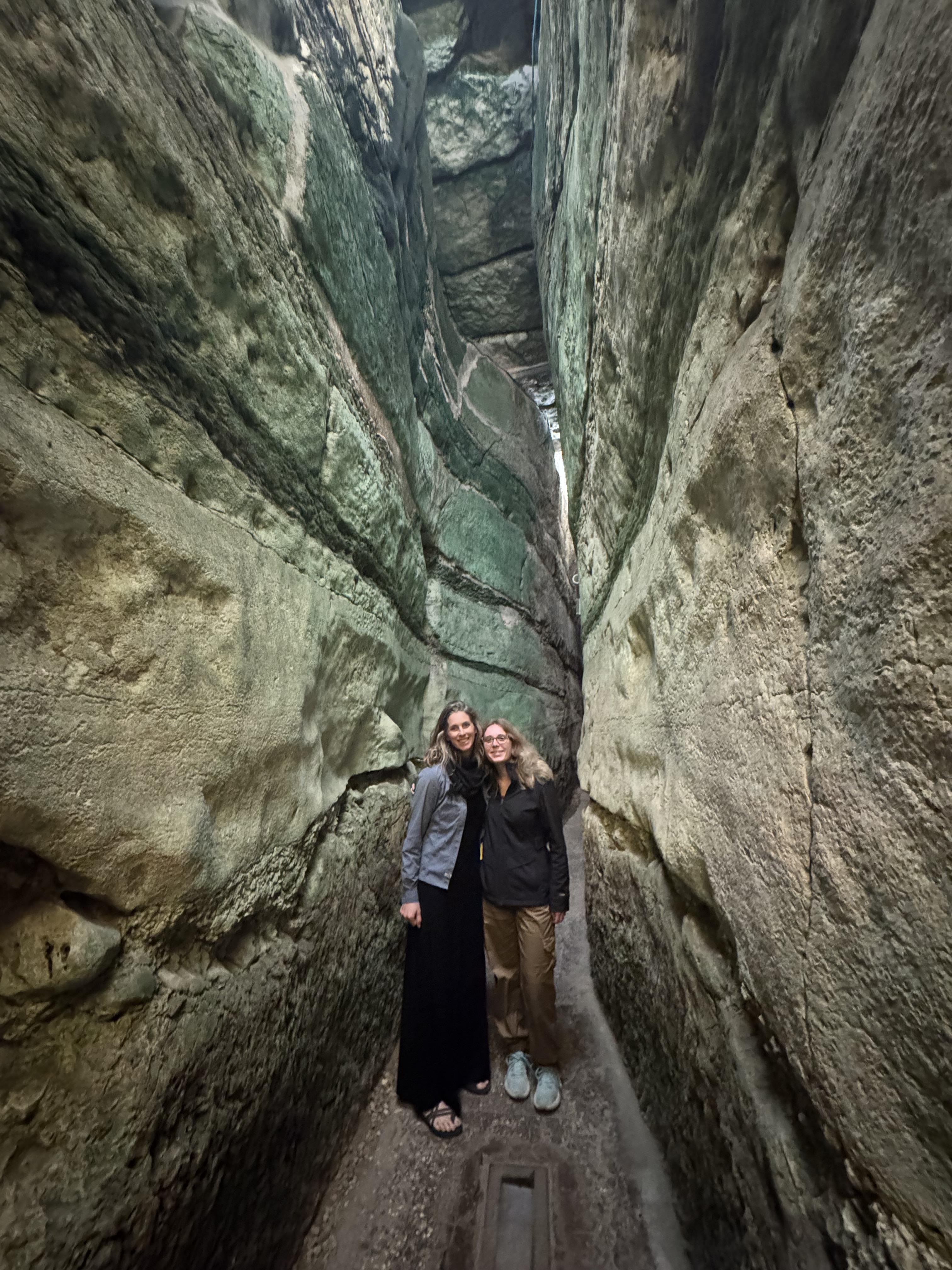
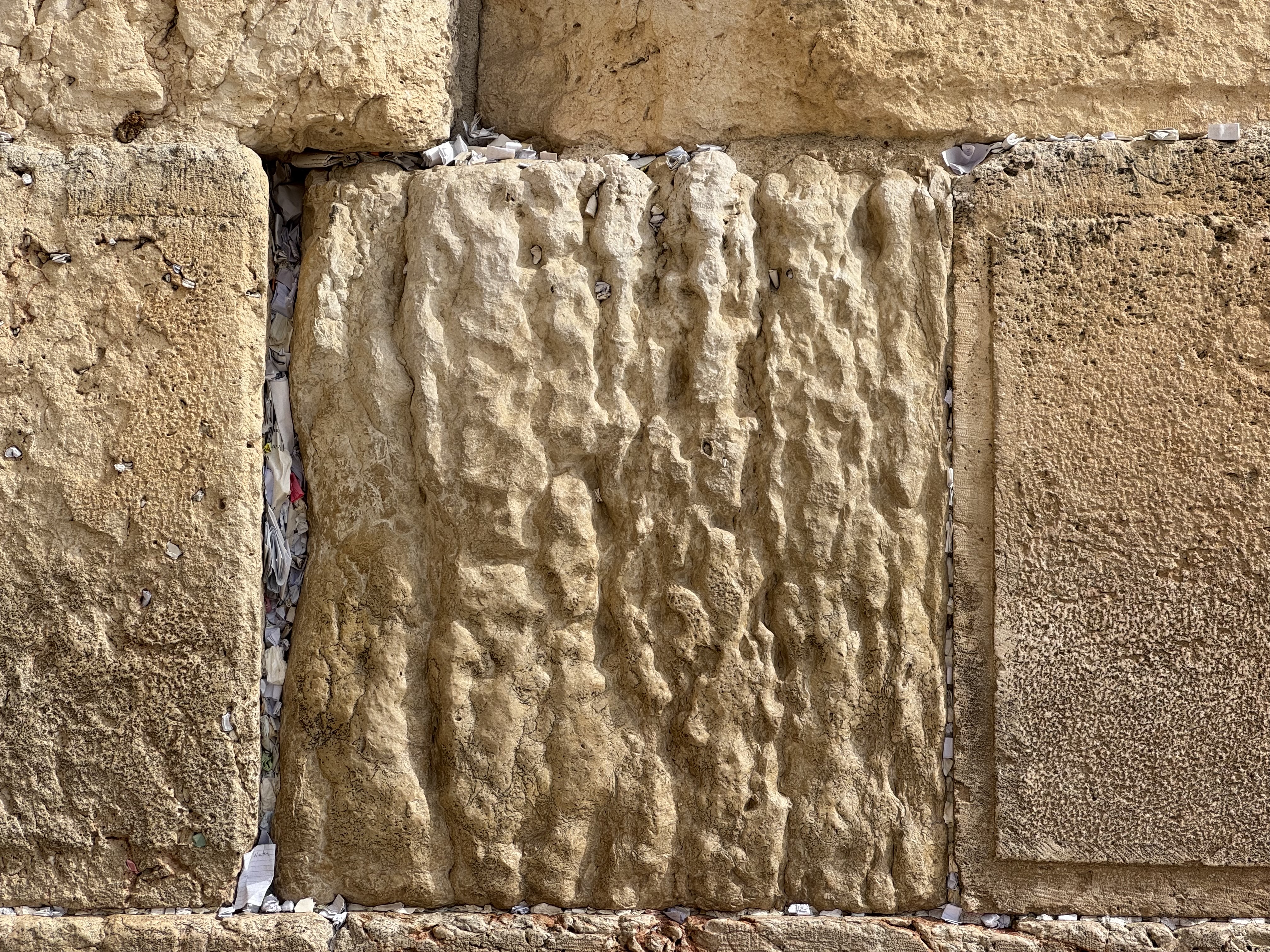


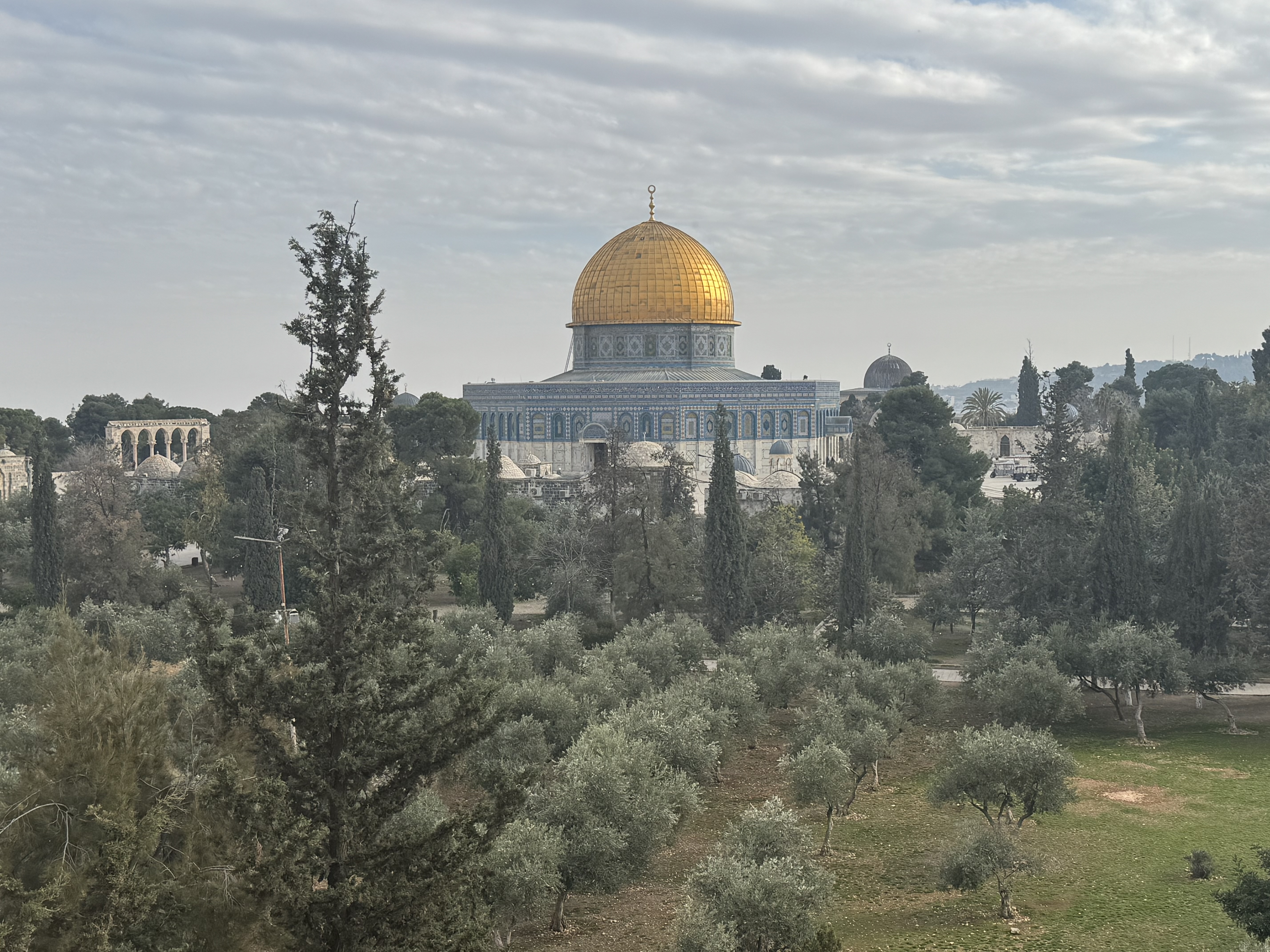


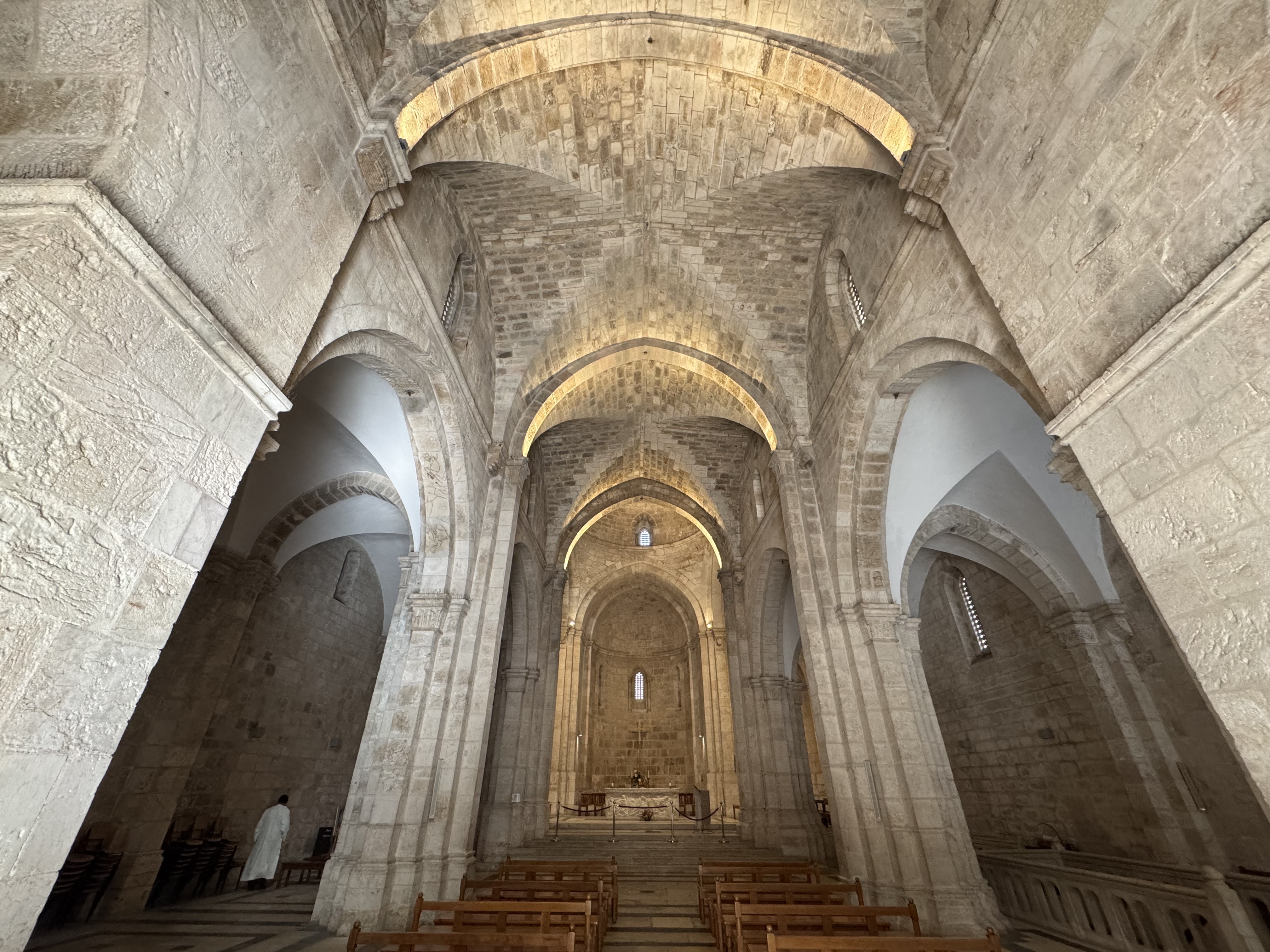


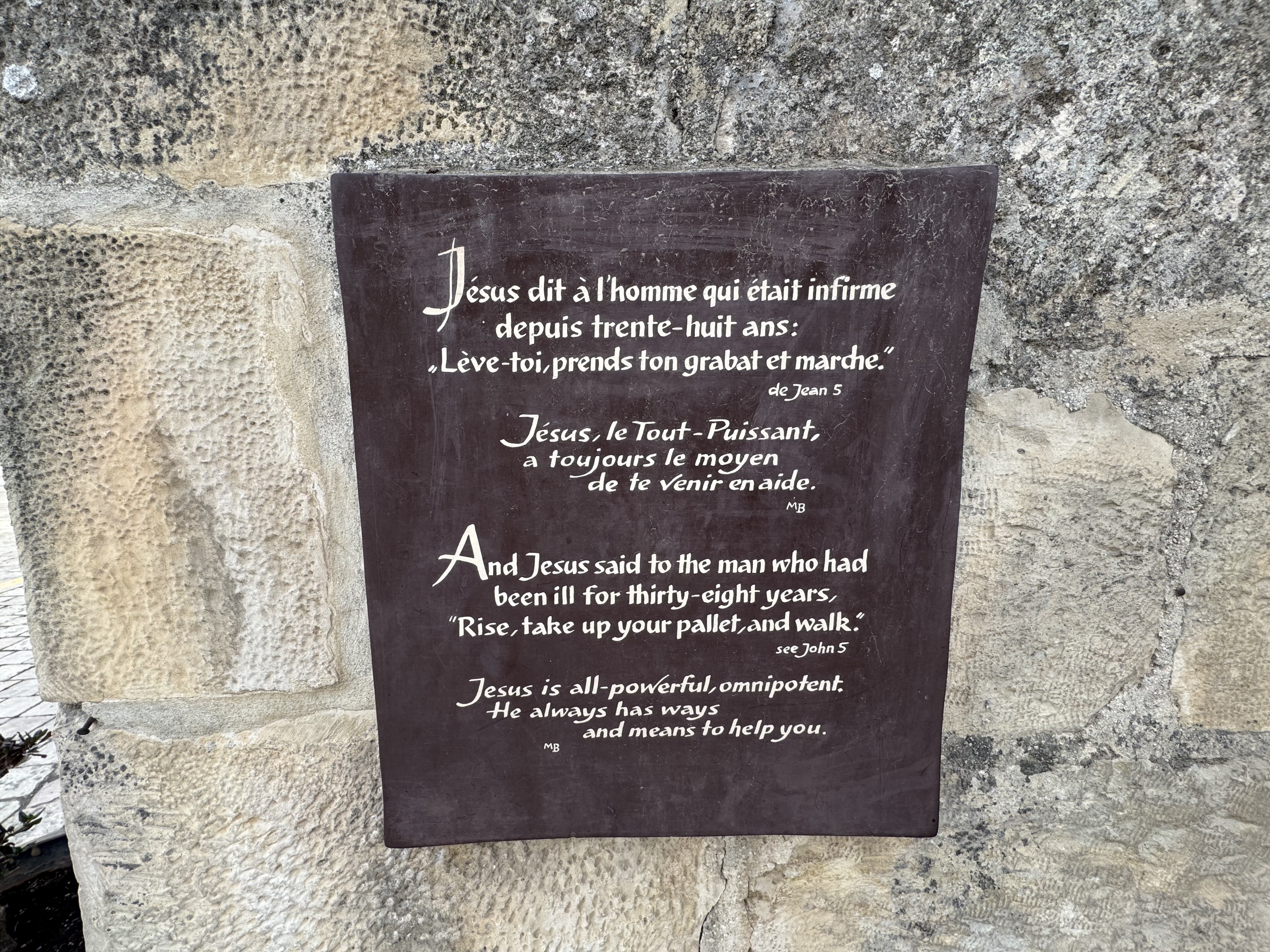
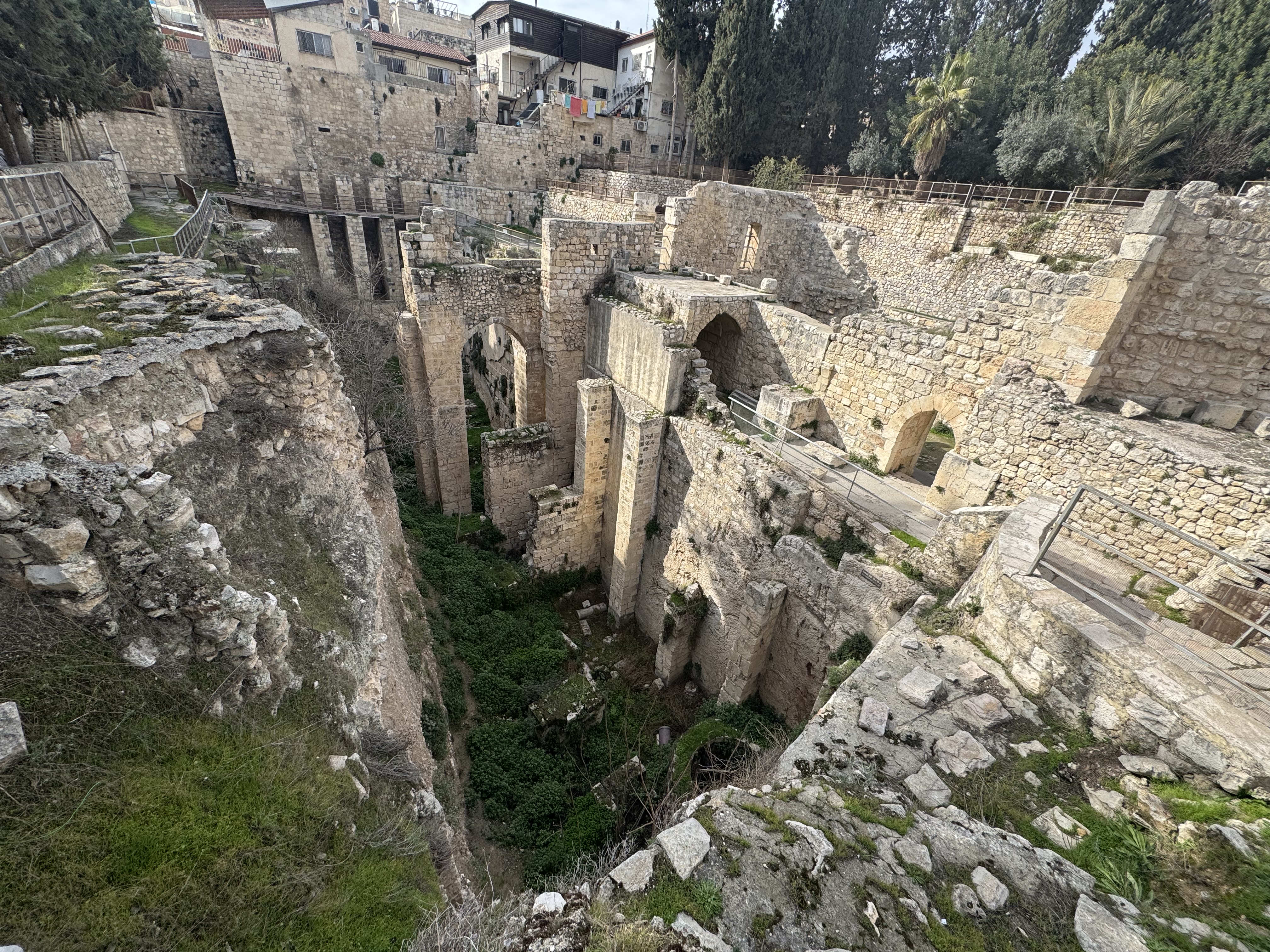

 EXPEDITION 44