Eden as Cosmic Temple, Cosmic Rebellion, and the Reversal of the Curse

The opening chapters of Genesis have traditionally been interpreted primarily as a narrative describing the origin of humanity and the fall of Adam and Eve. While this reading is not incorrect, it may be incomplete. Increasingly, scholars have recognized that Genesis 1–11 presents a much broader theological framework in which the story of humanity unfolds alongside a wider cosmic conflict involving both human and spiritual agents.¹ When read within the ancient Near Eastern context and the larger biblical narrative, the Garden of Eden appears not merely as a geographical location but as the primordial temple of creation, the sacred center where heaven and earth intersect.

Within this framework, Genesis 1–11 may be understood as the opening movement of a larger biblical drama—one that narrates a series of escalating rebellions that disrupt God’s intended order for creation. These rebellions involve both humanity and spiritual beings and culminate in the need for divine restoration. The New Testament ultimately portrays the work of Christ as the decisive reversal of this cosmic disorder, restoring humanity’s original vocation and reclaiming creation from the powers that had corrupted it.


A growing body of scholarship recognizes that the imagery surrounding Eden closely parallels the symbolism of later biblical temples.² The garden contains precious stones and gold, features rivers flowing outward from its center, and is guarded by cherubim following humanity’s expulsion.³ Ezekiel’s depiction of Eden further situates it upon the “mountain of God,” imagery frequently associated with sacred cosmic geography.⁴ These elements strongly suggest that Eden functions as the sanctuary of creation, the place where divine presence and human vocation converge.

Within this sacred environment, Adam appears to be commissioned with a priestly role. Genesis 2:15 states that Adam was placed in the garden “to work it and to keep it.” The Hebrew verbs ʿābad (“serve”) and šāmar (“guard”) later describe the duties of Levites serving in the tabernacle.⁵ This linguistic correspondence indicates that Adam’s task is not merely agricultural but priestly: he is appointed to guard sacred space and maintain the order of God’s sanctuary.⁶

The opening structure of Genesis has often been interpreted as recursive, with Genesis 1 providing a cosmic overview of creation and Genesis 2 retelling the story with a specific focus on Adam and Eve.⁷ However, the narrative can also be read sequentially, much like any other historical narrative. In this reading, Genesis 1 describes the creation of humanity in general terms while Genesis 2 focuses on the installation of Adam within the sacred environment of Eden.

Under this interpretation, Adam may be understood as the first human placed within God’s cosmic temple, while humanity more broadly inhabits the wider earth. One might describe this broader human realm—borrowing Tolkien’s evocative language—as the “lower earth,” the ordinary sphere of human habitation outside the sanctuary of Eden. Adam is then placed within the garden as humanity’s representative priest within sacred space.


Reading Genesis in this narrative manner offers a possible resolution to several tensions within the early chapters of Scripture. After the murder of Abel, Cain fears retaliation from others and subsequently establishes a city.⁸ Such details imply the presence of a broader human population beyond Adam’s immediate family.

Within this framework, the creation of Eve may be understood not as the creation of the second human in existence but as the creation of a suitable partner within the sacred environment of Eden. The text emphasizes that no suitable helper was found for Adam among the animals, not necessarily that no other humans existed elsewhere. Eve therefore functions as Adam’s partner within his priestly vocation inside the garden. This interpretation preserves Adam’s unique role as the first human placed within sacred space while allowing for the presence of humanity outside the garden.


When read together, Genesis 1–11 may be understood as a narrative describing a series of escalating rebellions that disrupt God’s intended order for creation. The fall in Eden introduces disobedience within sacred space. Genesis 6 describes divine beings transgressing their proper boundaries and corrupting humanity. The Tower of Babel narrative portrays humanity once again challenging divine authority.

These events align closely with what many scholars have described as the Deuteronomy 32 worldview, in which the nations of the earth become associated with spiritual powers following Babel while Israel remains under the direct authority of Yahweh.⁹ Within this framework, the primeval history depicts both human and spiritual rebellion unfolding together.

From this perspective, the fall of Adam and Eve may coincide with the corruption of a divine challenger figure—often identified with ha-śāṭān—who oversteps his role within the divine council. The Eden narrative therefore may represent a dual fall: the failure of humanity’s priestly representatives and the simultaneous corruption of a cosmic adversary.

This possibility also opens the door for reconsidering the chronological placement of the Book of Job within the primeval narrative (several scholars have noted Job and Song of Solomon to be ordered within Genesis 1-2). If the adversarial figure in Job is understood as functioning in a legitimate challenger role within the divine council, the events of Job could plausibly occur prior to the events of Eden, portraying the challenger in a pre-fall state and perhaps within the sphere of ordinary human life—what might be described as the “lower earth,” the broader realm of humanity outside the sacred garden. Such a framework naturally raises an important theological question concerning the place of sin in the unfolding story. Was sin first introduced through the failure of Adam and Eve within Eden, or could forms of moral disorder have already existed within the wider human world beyond the garden? The language of Romans 5:12 need not require that Adam be the first being to sin in any conceivable realm of creation; rather, Paul’s argument could center on Adam as the representative head through whom sin and death enter the human order in a covenantally decisive way. Within this temple framework, Adam’s failure within sacred space marks the moment when sin becomes universally determinative for humanity, even if rebellion may have already existed elsewhere in creation.

A further interpretive consideration concerns the meaning of the term Adam itself. In the Hebrew Scriptures, ʾādām often functions not strictly as a proper name but as a collective term referring to humanity or humankind more broadly. When Paul draws upon Adam in Romans 5:12, his argument is framed in corporate and representative terms, contrasting the fate of humanity “in Adam” with the new life offered “in Christ.” Within this framework, Adam may be understood not merely as an isolated individual but as the representative embodiment of humanity itself. Such a reading emphasizes Paul’s theological point: that sin and death enter the human order through humanity’s representative head, just as righteousness and life are restored through the representative work of Christ.


One of the central tensions of the Old Testament emerges from this cosmic conflict. Humanity was created to function as God’s royal priesthood, mediating divine presence and extending God’s rule throughout creation.¹⁰ Yet throughout Israel’s history, humanity repeatedly abandons this vocation.

The biblical narrative frequently attributes this corruption not only to human disobedience but also to the influence of hostile spiritual powers. These powers appear repeatedly throughout the Old Testament narrative, drawing humanity away from its intended role and contributing to the persistent cycle of rebellion that characterizes the biblical story.


The New Testament presents the work of Jesus as the decisive resolution to this cosmic conflict. The ministry, death, and resurrection of Christ are portrayed not only as the redemption of humanity but also as the defeat of the rebellious spiritual powers that had corrupted creation.

Some scholars have described this victory as a Christus Victor event, in which Christ triumphs over the hostile powers and reclaims authority over creation.¹¹ In this sense, the work of Christ may be understood as the moment in which God begins reversing the curse introduced in the primeval rebellions.

This theme is symbolically reinforced in the geographical setting of several events in Jesus’ ministry. The region of Bashan, historically associated with the domain of rebellious spiritual beings and the traditions surrounding Mount Hermon, becomes the setting for Jesus’ declaration that “the gates of Hades will not prevail.”¹² Within this framework, the cross and resurrection represent the decisive reversal of the cosmic disorder that began in the earliest chapters of Genesis.

Through Christ’s victory, the powers are subdued, the authority of the adversary is broken, and humanity’s original vocation is restored. The temple of God is no longer confined to a geographic sanctuary but is reconstituted in the people of God themselves, who once again become a royal priesthood called to mediate God’s presence in the world.


When Genesis 1–11 is read within the broader biblical narrative, the early chapters of Scripture appear to describe far more than the origin of human sin. They depict the opening stage of a cosmic conflict involving both humanity and spiritual powers. Within this framework, Eden functions as the sacred center of creation, where humanity is installed as priestly representatives of God’s rule.

The rebellion that unfolds within these chapters involves both human disobedience and the corruption of spiritual beings who seek to undermine God’s order. Yet the biblical story does not end with this cosmic disorder. The New Testament presents the work of Christ as the decisive turning point in which the curse is reversed, the powers are subdued, and humanity’s original vocation is restored.

Thus the story that begins in Eden ultimately finds its resolution in Christ, who reclaims creation, restores God’s temple among his people, and establishes once again the royal priesthood that humanity was always intended to be.


Footnotes

Michael S. Heiser, The Unseen Realm, 287–293.

Michael S. Heiser, The Unseen Realm (Bellingham: Lexham, 2015), 23–28.

John H. Walton, The Lost World of Genesis One (Downers Grove: IVP Academic, 2009), 72–74.

G. K. Beale, The Temple and the Church’s Mission (Downers Grove: IVP Academic, 2004), 66–80.

Gordon J. Wenham, Genesis 1–15 (WBC 1; Dallas: Word, 1987), 61–63.

Beale, Temple and the Church’s Mission, 67–70.

John H. Walton, The Lost World of Adam and Eve (Downers Grove: IVP Academic, 2015), 92–95.

Kenneth A. Mathews, Genesis 1–11:26 (NAC; Nashville: B&H, 1996), 188–190.

Victor P. Hamilton, Genesis 1–17 (NICOT; Grand Rapids: Eerdmans, 1990), 238–240.

Patrick D. Miller, Deuteronomy (Louisville: Westminster John Knox, 1990), 255–258.

G. K. Beale, Temple and the Church’s Mission, 81–90.

Gustaf Aulén, Christus Victor (London: SPCK, 1931), 20–22.
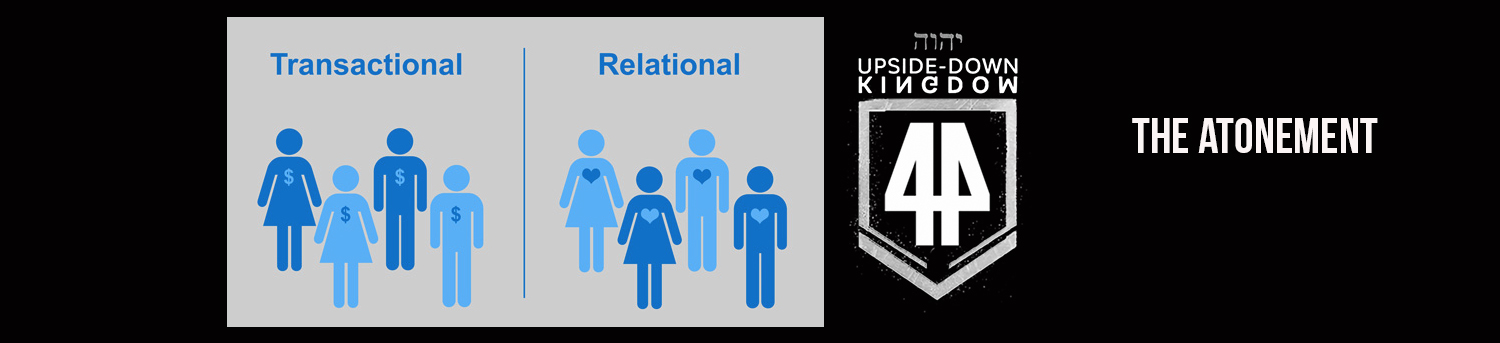
Atonement as Relational Victory

For many Christians, the cross has traditionally been explained using transactional language. We often hear that Jesus “paid our debt,” “bought us back,” or “settled the account” for our sin. Sometimes this language even drifts into the idea that some kind of deal had to be struck between God and Satan, as though humanity had been legally claimed by the enemy and Christ’s death functioned as the payment that secured our release. While these ideas have circulated widely in Christian teaching, they are not actually grounded in the biblical text. The Scriptures never describe the cross as a financial transaction between God and Satan, nor do they suggest that forgiveness required some kind of negotiated payment before God could extend mercy to humanity.

“The world operates through transactions, but the kingdom of God moves through relational covenant interactions.”

Much of this transactional language became especially prominent within Western Christian theology and has been reinforced in certain streams of Christian teaching, particularly within Reformed theology. In these frameworks, the cross is often framed as the place where Jesus paid the penalty for human sin so that God could justly forgive those who believe. While this language has shaped the way many Christians understand the gospel, it raises an important question: does the Bible itself consistently describe the cross in these transactional terms?

When we step back and examine Scripture more carefully, the picture becomes more complex. One of the clearest indications that the cross cannot simply be understood as a payment mechanism is the fact that God forgave people long before the crucifixion. Throughout the Old Testament, God repeatedly forgives His people because of His mercy, covenant love, and faithfulness. David declares, “Blessed is the one whose transgression is forgiven” (Psalm 32), and the prophets frequently speak of God removing sin and restoring His people. These acts of forgiveness occur centuries before Jesus’ death. If forgiveness was already being extended by God prior to the cross, then the cross cannot be understood as the event that finally made forgiveness possible.

The same observation can be made regarding the gift of life. God is consistently portrayed throughout Scripture as the sovereign giver of life. Eternal life ultimately flows from God’s character and His desire to restore creation. While the cross and resurrection stand at the center of God’s redemptive work, the Bible does not suggest that God was unable to grant life until a transaction occurred. The cross reveals and accomplishes something decisive in God’s plan of restoration, but it is not presented as a legal payment (between God and Jesus, or worse, between God and Satan) that suddenly made divine generosity possible.

This is where the New Testament’s description of the cross becomes especially important. When the apostles speak about the work of Christ, they most often describe it using language that is relational, restorative, and victorious rather than transactional. The cross is the place where Christ confronts the powers of sin and death, reconciles humanity to God, and inaugurates the renewal of creation. Rather than focusing on an exchange of payment, the New Testament emphasizes themes such as reconciliation, liberation, purification, and new creation.

Framing the cross transactionally actually creates significant theological and exegetical difficulties. If the cross must function as a payment in order for forgiveness to occur, then numerous biblical passages describing God’s prior forgiveness become difficult to explain. Likewise, the sacrificial language of the Old Testament—centered on purification and restoration—becomes misinterpreted as economic exchange. The transactional model can also distort key New Testament terms such as “ransom,” “redemption,” and “atonement,” which in their original contexts frequently describe liberation from bondage or the restoration of relationship rather than financial payment. When these texts are forced into a commercial framework, the broader narrative logic of Scripture becomes strained and important theological themes are overshadowed.

None of this diminishes the significance of the cross. On the contrary, it helps us see its meaning more clearly. The cross represents the decisive moment in which God, in Christ, enters fully into the depths of human suffering and death in order to overcome them. Through the cross and resurrection, the powers that enslave humanity are defeated, death itself is overturned, and the path to restored communion with God is opened.

There was unquestionably a profound cost in what Jesus did. The cross reveals the depth of divine love and the willingness of Christ to bear the full weight of human brokenness. Yet this cost should not be confused with a transactional payment. The cost belongs to God’s self-giving love, not to a required exchange that humanity somehow owed.

Understanding the cross relationally rather than transactionally also preserves the radical nature of grace. When the gospel is framed as a transaction, it can subtly suggest that salvation operates according to an economy of debt and repayment. In that framework, the Christian life can begin to feel like an attempt to pay God back for what Jesus has done. But the New Testament consistently presents salvation as a gift—freely given by God and received through faith.

There is certainly a covenantal response to this gift. Those who encounter the grace of God are invited into a life of faithfulness, trust, and transformation. But this response is not repayment. It is the natural expression of restored relationship.

In the end, the cross is not the story of a transaction that settles an account. It is the story of God’s love breaking into the world, defeating the powers of sin and death, and restoring humanity to communion with Himself. Christ did not die in order to balance a ledger. He died to rescue, renew, and reconcile creation.

And because of that, the grace we receive is not something we owe back. It is something we are invited to live within.

  1. How have you most often heard the cross explained in Christian teaching?
    • Was it described more in transactional terms (payment, debt, penalty) or relational terms (restoration, reconciliation, victory)?
  2. Why do you think transactional language about the cross has become so common in Christian theology, especially in Western traditions?
  3. What difference does it make theologically if forgiveness was already happening in Scripture before the cross?
    • How does this shape the way we understand what Jesus accomplished?
  4. The New Testament often describes salvation using relational language like reconciliation, adoption, and new creation.
    • Which of these images helps you understand the work of Christ most clearly, and why?
  5. If the cross is primarily about God restoring relationship and defeating the powers of sin and death, how might that reshape the way we think about grace, faith, and the Christian life?

Western Christian theology has often interpreted the atonement through juridical and transactional categories, describing the cross in terms of debt, payment, or penal substitution. While these frameworks have shaped much theological reflection since the medieval period, the narrative structure and conceptual vocabulary of Scripture suggest a different emphasis. This article argues that the biblical witness more consistently presents the work of Christ as the decisive act through which God restores covenant relationship and liberates humanity from enslaving powers. Through examination of the sacrificial theology of the Hebrew Scriptures, lexical analysis of key Greek terms associated with redemption, and reconsideration of texts often interpreted transactionally—particularly Romans 3 and Isaiah 53—this study proposes that the atonement is best understood within a relational and participatory framework. Engagement with patristic theology further demonstrates that early Christian writers emphasized victory over death and restoration of humanity rather than payment or penal substitution. When placed within the broader narrative arc of Scripture—from Eden to new creation—the cross emerges as the climactic act through which God defeats the powers of sin and death and restores humanity to communion with Himself.


Introduction

The doctrine of the atonement lies at the center of Christian theology. Yet the conceptual frameworks through which the cross has been interpreted have varied significantly across the history of the church. Within much of Western theology, particularly since the medieval period, the atonement has frequently been explained through juridical and transactional categories. The cross has been described in terms of debt, satisfaction, and penal substitution, suggesting that Christ’s death functions as the necessary payment required to satisfy divine justice.¹

While such models have exercised considerable influence, they do not necessarily represent the dominant conceptual framework of the biblical narrative. Increasingly, biblical scholars have argued that the New Testament presents the work of Christ primarily as God’s decisive act of covenant restoration and cosmic liberation rather than the settlement of a legal account.²

This perspective aligns with what Gustaf Aulén famously described as Christus Victor, the interpretation that the cross represents the moment in which God confronts and defeats the powers that enslave humanity.³ Within this framework, the atonement is fundamentally relational: the restoration of communion between God and humanity accomplished through Christ’s victory over sin, death, and the hostile spiritual powers.

This article argues that when the atonement is examined within the narrative and cosmological framework of Scripture, the cross emerges not primarily as a transaction but as the climactic act of divine love through which God restores creation and reconciles humanity to Himself.


The Human Condition: Alienation and Dominion

The biblical narrative portrays humanity’s fundamental problem not merely as legal guilt but as alienation from God and subjection to destructive powers.

Genesis introduces this condition through humanity’s expulsion from Eden (Gen 3:23–24). The central consequence of sin is exile from the presence of God and the entrance of death into human existence.

Paul expands this understanding by describing sin and death as reigning powers. In Romans 5:12–14, sin enters the world through Adam and death spreads to all humanity. Sin functions not merely as individual wrongdoing but as a dominion under which humanity lives.⁴

Similarly, Ephesians 2:1–3 describes humanity as living under the authority of “the ruler of the power of the air.” Such language reflects a cosmological worldview in which spiritual forces shape human life and social structures.

Recent scholarship has highlighted the importance of the Deuteronomy 32 worldview, in which the nations are described as being placed under spiritual rulers while Israel remains under Yahweh’s direct authority.⁵ This cosmological background provides an important interpretive context for New Testament discussions of “principalities and powers.”

Within this narrative framework, humanity’s fundamental problem is not merely guilt but enslavement and estrangement. Consequently, the work of Christ addresses both the restoration of relationship with God and the defeat of the powers that sustain humanity’s alienation.


Sacrifice in the Hebrew Scriptures

Transactional interpretations of the atonement often assume that the sacrificial system of the Hebrew Scriptures operates according to payment logic. However, the language and ritual context of sacrifice suggest a different conceptual framework.

The primary Hebrew verb associated with atonement is כפר (kāphar). While often translated “to atone,” the term more broadly signifies to cleanse, purge, or wipe away impurity.⁶ Within Israel’s cultic system, sin is understood as a contaminating force that threatens the holiness of the sanctuary and disrupts the relationship between God and the community.

The Day of Atonement ritual described in Leviticus 16 illustrates this logic clearly. The high priest performs purification rites for the sanctuary and the people, symbolically removing impurity from Israel. The purpose of the ritual is not the payment of a debt but the restoration of covenantal proximity between God and His people.

Jacob Milgrom’s extensive study of Leviticus demonstrates that sacrificial rituals function primarily to purge the sanctuary of pollution caused by human sin rather than to appease divine wrath through payment.⁷

Thus the sacrificial system of the Hebrew Scriptures is fundamentally concerned with restoring relational communion between God and His people.


Greek Lexical Analysis of Atonement Language

The vocabulary used in the New Testament further supports a relational rather than transactional understanding of the atonement.

Hilastērion (ἱλαστήριον)

Romans 3:25 describes Christ as ἱλαστήριον (hilastērion). While sometimes translated “propitiation,” the term most directly refers to the mercy seat of the Ark of the Covenant—the place where the high priest performed the Day of Atonement ritual.⁸

The imagery therefore evokes temple purification and divine presence rather than economic payment.


Lytron (λύτρον)

The Greek term λύτρον (lytron), used in Mark 10:45, refers broadly to liberation from captivity. In Jewish and Greco-Roman contexts, the term often functions metaphorically for deliverance rather than literal financial exchange.⁹

Thus the emphasis lies on release from bondage rather than payment to a specific recipient.


Apolutrōsis (ἀπολύτρωσις)

Another important term is ἀπολύτρωσις (apolutrōsis), often translated “redemption.” The word combines lytron with the prefix apo, emphasizing release or liberation.

Paul uses this term to describe the liberation of humanity from the powers of sin and death (Rom 8:23; Eph 1:7).¹⁰


Katallagē (καταλλαγή)

Paul’s preferred term for the result of Christ’s work is καταλλαγή (katallagē), meaning reconciliation (Rom 5:11; 2 Cor 5:18–19). The word describes the restoration of relationship after estrangement.¹¹

This relational language stands at the center of Paul’s theology of the cross.


Reconsidering Penal Substitution in Romans 3 and Isaiah 53

Two passages frequently cited in support of penal substitutionary interpretations are Romans 3:21–26 and Isaiah 53.

In Romans 3, Paul describes Christ as the hilastērion, evoking the mercy seat of the temple. The imagery points toward purification and restored access to God rather than the satisfaction of divine punishment. N. T. Wright argues that the passage primarily reveals God’s covenant faithfulness rather than a mechanism of penal substitution.¹²

Similarly, Isaiah 53 describes the suffering servant bearing the consequences of the people’s rebellion. Yet the passage emphasizes healing and restoration: “by his wounds we are healed” (Isa 53:5). The servant’s suffering results in the restoration and justification of the many (Isa 53:11), suggesting a restorative rather than strictly punitive framework.

While substitutionary elements are arguably present (two voices), the text does not explicitly frame the servant’s suffering as the satisfaction of divine wrath but rather as the means through which God restores His people.¹³


Patristic Theology and the Atonement

Early Christian theologians overwhelmingly interpreted the atonement through themes of victory, restoration, and participation.

Irenaeus articulated the doctrine of recapitulation, arguing that Christ retraced the steps of humanity in order to restore what had been lost in Adam.¹⁴

Athanasius emphasized that Christ’s incarnation culminates in the defeat of death and the restoration of humanity’s participation in divine life.¹⁵

Gregory of Nyssa described the cross as the moment in which Christ enters the realm of death in order to defeat it from within.¹⁶

These patristic perspectives closely align with the New Testament emphasis on liberation and relational restoration.


Atonement within the Narrative of New Creation

When interpreted within the broader narrative of Scripture, the atonement appears as the decisive turning point in God’s restorative mission for creation.

Humanity’s exile from Eden establishes the central problem of the biblical story: separation from God’s presence. The temple functions as a partial restoration of this communion, yet the prophets anticipate a more complete renewal.

The New Testament presents Jesus as the fulfillment of this expectation. John describes the incarnation using temple language: “The Word became flesh and dwelt among us” (John 1:14).

The resurrection inaugurates the renewal of creation. Paul describes Christ as the “firstborn from the dead” (Col 1:18), signaling the beginning of a new humanity.¹⁷

The biblical narrative culminates in the vision of Revelation 21:3: “Behold, the dwelling place of God is with humanity.”


Conclusion

When interpreted within the narrative and cosmological framework of Scripture, the atonement emerges as God’s decisive act of relational restoration and cosmic victory.

The cross represents the moment in which divine love confronts and defeats the powers of sin and death. Through Christ’s self-giving act, humanity’s exile is reversed, the powers of death are overthrown, and the renewal of creation begins.

The biblical vision of atonement therefore invites a shift away from transactional frameworks toward a more holistic understanding in which the cross is the victorious and relational act through which God reconciles the world to Himself and inaugurates new creation.


Footnotes

  1. Anselm, Cur Deus Homo.
  2. N. T. Wright, The Day the Revolution Began.
  3. Gustaf Aulén, Christus Victor.
  4. James D. G. Dunn, Romans 1–8.
  5. Michael S. Heiser, The Unseen Realm.
  6. William L. Holladay, Concise Hebrew and Aramaic Lexicon.
  7. Jacob Milgrom, Leviticus 1–16.
  8. Leon Morris, The Apostolic Preaching of the Cross.
  9. R. T. France, The Gospel of Mark.
  10. Gordon Fee, Pauline Christology.
  11. Michael J. Gorman, Apostle of the Crucified Lord.
  12. N. T. Wright, The Day the Revolution Began.
  13. John Goldingay, The Message of Isaiah 40–55.
  14. Irenaeus, Against Heresies.
  15. Athanasius, On the Incarnation.
  16. Gregory of Nyssa, The Great Catechism.
  17. Richard Bauckham, The Theology of the Book of Revelation.

Bibliography

Aulén, Gustaf. Christus Victor.
Bates, Matthew W. Salvation by Allegiance Alone.
Bauckham, Richard. The Theology of the Book of Revelation.
Fee, Gordon. Pauline Christology.
France, R. T. The Gospel of Mark.
Goldingay, John. The Message of Isaiah 40–55.
Gorman, Michael J. Apostle of the Crucified Lord.
Heiser, Michael S. The Unseen Realm.
Milgrom, Jacob. Leviticus 1–16.
McKnight, Scot. A Community Called Atonement.
Morris, Leon. The Apostolic Preaching of the Cross.
Rutledge, Fleming. The Crucifixion.
Wright, N. T. The Day the Revolution Began.

Jesus Paid it all?!

I bet you have become accustomed to Christians describing Jesus on the cross with phrases like “purchased” or “paid” describing salvation. That through Christ on the cross, salvation was “bought” or “paid in full.” First, to be clear I don’t think the terminology is horrible, this conversation doesn’t mean much to me and I am certainly not “going to war” over anything in this conversation! I believe that as a light metaphor that this kind of phrase can have some truth to it, we make references all the time in day-to-day life with this sort of linguistic analogy. For instance, my son Will was playing soccer the other night in a recreational game on astroturf and made a heralding dive to strike the ball into the goal. After the game I noticed the giant carpet burn on his knee and saif to him, well you certainly paid for that one, but what a shot! No one really thinks that He actually paid money, that would be absurd; we simply mean that there is a cost associated. That is what the Bible means when it talks about what Jesus did at the cross. Yet too many people have turned a simple biblical metaphor into a theological doctrine, and I find it problematic.

There are better ways to communicate what Christ did for us on the cross than using descriptions like paid for or purchased. This gets into atonement theories (x44 has made several videos on this subject) and if you are reformed you might think this language is “correct”; but if you’re not reformed or a Calvinist, you might want to consider a better formation for your cross theology. Let me walk you through some things towards a better consideration.

Twice the apostle Paul informed believers at Corinth, “You were bought with a price.” In 1 Corinthians 6, Paul was making a passionate appeal against sexual immorality. He concluded his argument, stating, “Or do you not know that your body is a temple of the Holy Spirit within you, whom you have from God? You are not your own, for you were bought with a price. So glorify God in your body” (1 Corinthians 6:19–20, ESV). I quoted the ESV (which is a reformed translation if you didn’t know).  1 Peter 1:18–19 says,“For you know that God paid a ransom to save you from the empty life you inherited from your ancestors. And it was not paid with mere gold or silver, which lose their value. It was the precious blood of Christ, the sinless, spotless Lamb of God” (NLT). We also have Jesus Himself saying that He came to give His life as a ransom for us (Matthew 20:28). We now belong to Him according to 1 Corinthians 7:22. Paul repeated this teaching in 1 Corinthians 7:23, notice however, the emphasis on spiritual freedom: “You were bought at a price; do not become slaves of human beings.” Believers are set free from the dominion of the world or sin through the death of Christ (Galatians 1:4). In this way you might say that spiritual freedom comes at the “price” of Christ’s sacrificial death on the cross (1 Peter 2:24). Consequently, since we now belong to Christ, we must not let ourselves come under the control of other humans, Satan, principalities, or the world… we are or should completely be given to Jesus. 1 That is what we all can agree on right? I mean it is right out of the bible! So, there you have it. The Bible specifically uses words like ransom, paid, bought, price etc… So, I bet you are wondering why do I have issues with phrasing it that way?

In biblical theology, the concept of “ransom” is deeply intertwined with the themes of deliverance and salvation. The term “ransom” according to antiquity refers to the “price paid” to secure the release of someone from bondage or captivity. In general describing what Jesus accomplished through the cross this way is known as the ransom which theory teaches that the death of Christ was a ransom sacrifice, usually said to have been paid to Satan, in satisfaction for the bondage and debt on the souls of humanity as a result of inherited sin.2 Well as you might have perceived,

In the Old Testament, the Hebrew word “kopher” is often used to denote a ransom, particularly in the context of redeeming a person or property.3 For example, Exodus 21:30 discusses the payment of a ransom for the life of a person who has been sentenced to death: “If payment is demanded of him, he may redeem his life by paying the full amount demanded of him.” So there is a Hebraic understanding of transactional payment biblically that is associated with the term ransom, but the problem with thinking that way is that what Jesus does for us on the cross intentionally came with no strings attached, it is a free gift of Grace. What Christ did on the cross was a backwards kingdom dynamic, it was opposite of the world’s expectations. In other words, there wasn’t a physical price paid. This is very important. In the Exodus did Moses pay Pharaoh? Did God pay the spiritual powers he was warring against? NO. There was no payment made. The exodus foreshadows the cross and in the same way there wasn’t a payment made. Jesus didn’t have to pay off God and God didn’t pay Satan. Are you following me? So, phrase it this way is actually poor theology and nearly the opposite idea of what the text portrayed in the exodus and through the cross. Talking about inherited sin or original sin is one of the pillars of Calvinism and thus those that hold to a “ransom” theory are typically reformed. If you aren’t familiar with this conversation this video series will help. Although I do believe in a ransom motif in the exodus and through Jesus at the cross, I do not think framing it as transactional is good theology.

The definition of the word “ransom” has changed over time. At the time the New Testament was written before the end of the first century, it referred to the practice of capturing individuals and demanding their release, particularly in ancient times. In the ancient world it was almost never ties to money, it was based on threats of power and ruling.4 In this sense, Exodus portrays the ransom of the Hebrews quite well. But I certainly won’t deny that at times money was involved; but the emphasis should always be on freedom motive not the payment motive. When you really dive into this what you find is that in the ancient world ransom was relational. You demanded ransom because it was the right thing. It was to put your foot down and demand that an injustice be reconciled. In the Middle Ages and Reformation, the term evolved to usually describe payments made for the release of hostages, and it has also been used figuratively to describe any exorbitant payment or price demanded for something. The definition has certainly changed over time to be described less relational and has become more transactional. The biblical authors definition was relational not transactional, yet we have come to interpret it through our own modern lens as transactional.

Ransom in scripture should always be interpreted as a release of slaves giving freedom. This fits every context of verses that we see the word used in from Micah 6:4 to Isaiah 43:3. Isaiah 52:3 is very clear on this. God says he sold Israel for nothing, and they shall be ransomed/redeemed without payment. Isaiah 45:13 echoes the same thoughts. The point is that the word ransom biblically shouldn’t be used in a substitutionary sense. NT Wright and even the reformed scholar Leon Morris have made this clear. 5

The Greek helps us out here. ὑπέρ Huper (for) means for a benefit. That is what is used in nearly every context of Jesus giving up his life. Not anti (for) which would be in the place of or an exchange. 

When you try to frame the work of the cross as needing to buy someone out, it creates a transactional dynamic that isn’t part of grace and isn’t biblical. Now again, there are some elements that are transactional and that is why this is complicated and often misunderstood. Grace itself is a free gift, yet there is a benefactor understanding of reciprocity. When you give a gift there is no expectation for a payment, you freely give it. Yet in relationships of any kind there are some expectations. In the circle of Grace when Christ gave his life for you, the reciprocity is that you in turn give your life to him.6 But that didn’t actually cost money, there was no buyout, but there was a cost. When we think about Jesus transactionally it muddies the water. I am sure you have been told your whole life that everything costs something, or that if you want something that is worth anything it is going to cost you. In this regard, giving your life to Christ from a worldly sense will cost you everything, your life itself. But Jesus isn’t selling anything. When we frame grace as transactional it leaves us thinking what are we going to get out of Jesus or Christianity. What do we get from the deal? It points you in the wrong direction. With Jesus we don’t get, we give… Job was righteous because he had no expectations.7

To use transactional language cheapens the work of Jesus through the cross. God wasn’t negotiating with terrorists in the Exodus. He obliterated the spiritual powers at war. The exchange was allegiance, freedom, and liberation… no money was exchanged. But was there a cost? The Egyptian “world” certainly suffered. At the cross Jesus gave his life and it was brutal. But that shouldn’t be the emphasis of what Jesus did. In fact, it really shouldn’t be emphasized at all. Sometimes I don’t even like to use the word cross when describing Jesus. For instance, I prefer to say the work of Jesus not the work of the cross. The cross didn’t accomplish anything, Jesus did everything. The cross itself is a picture of barbaric humanity not the generous grace of Jesus, that should better be framed precisely through Christ himself. Yet I still think there is a place for the image of the cross. People should view it as the method to which Jesus did accomplish many things enabling complete life and freedom in Him.

What happened at the cross to Jesus was a result of religious hierarchy. The Jewish religious leaders tied into to the government corruption of the day essentially crucified Jesus. Did Jesus willfully “give his life?” Well, let’s not forget that he prayed for the cup to be passed. If there could have been another way through the father Jesus would have opted for it. Again, this is important in the text. What happened at the cross was brutal and unjust. Jesus turned the other cheek all the way to the grave. It is a picture of complete sacrifice and humility. But it shouldn’t be viewed theologically as transactional. We don’t know exactly why God allowed or used the cross to accomplish the victories that he did, but the fact is that is the way it unfolds. The ransom analogy should be viewed as redemption and freedom not monetary exchange. To view the cross as some kind of economic exchange isn’t accurate. God wasn’t paying or even appeasing Satan and Jesus wasn’t paying or appeasing God the father. Are you following? The trinity wasn’t broken at the cross.

It really becomes “cheap” when you frame it as a payment. For instance, what you are saying is that Jesus then gave his life to “buy” all of the lives who would “accept” him for all of time. That sounds good but think about it for a second. How much is Christ’s life really worth if you are exchanging it for all who believe for all of time, millions, maybe billions? It is actually devaluing him. Who wouldn’t make “that deal” if that is all it was. If I had the power and said to you – if you allow me to crucify you it would buy 10 people you deeply care about eternal salvation, I bet, you would do it. I would. Then if you say not just 10 but EVERYONE who believes it really makes it cheap doesn’t it? What Christ did on the cross shouldn’t be cheapened transactionally. It wasn’t a buy it program. The funny thing about atonement “theories” is that we aren’t actually told in the Bible exactly what Jesus accomplishes through the cross. That is why they are called theories. But let’s not devalue the life of Christ as we theorize. Jesus accomplishes so much through the death, resurrection, and ascension, we don’t need to cheapen it or make it into something it didn’t biblically portray.

Why did Jesus have to die on a cross? That is the grand question. The Bible actually doesn’t precisely answer this question. Perhaps that is some of the mystery of the gospel. A common view in Western Evangelicalism of what happened on the cross is this: humans have sinned and God must punish sinners by venting his wrath, but thankfully, because he loves us, Jesus went to the cross and was murdered in our place to pay our debt, so that God can forgive our sins and we can go to heaven when we die. This idea of how the cross works is called the “Penal Substitution Theory” of the atonement.8 The Penal Substitution Theory has not been the most common view throughout all of church history, nor is it the most common view of the worldwide church today. So while Penal Substitution Theory may be the majority view in modern, Western theology, the Church must wake up and realize that such a view is partially modeled after paganism, often mischaracterizes God, ultimately does not take sin seriously, and leaves out what actually happened on the cross.

The Penal Substitution Theory and purchase, debt language basically depicts God as a debt collector who must collect before he can forgive. Despite the fact that Scripture tells us that love keeps no record of wrongs (1 Corinthians 13:5), this theory states that Jesus must pay our debt to the Father (or in some cases Satan). The idea that God is merciful and forgiving, while also defining justice as demanding payment of debt don’t work together, they are at odds philosophically and ontologically. If there is a debt that is paid, then the debt is never forgiven at all. Sin is not forgiven on the cross in the Penal Substitution Theory; it is just paid off. We would never then be able to be washed truly clean. But what becomes even more problematic in thinking this way is that the only way in which God could be seen as merciful in paying the debt for mankind’s sin by killing Jesus. Let’s be clear God didn’t kill Jesus; he allowed Jesus to be killed and in a “Narnian like story” was a “way maker” to regain the keys of death. This is best framed through a Christus Victor form of atonement, but I also wouldn’t limit the work of the cross to a single view. Scot McKnight has a great book, A Community Called Atonement that is worth reading.9

Christ’s justice is restorative, not retributive. God doesn’t need anyone to pay off debt in order to forgive. God can just simply forgive. That’s what forgiveness is! Forgiveness is not receiving payment for a debt; forgiveness is the gracious cancellation of debt. There is no payment in forgiveness. That is what makes forgiveness mean anything. I have said it many times, but if you are a Calvinist, you can’t truly believe in biblical forgiveness; in the same way a Calvinist struggles to believe in any kind supplication kind of prayer as they don’t believe God works that way. I get that the reformed camp has their own way of explaining how this works, but it seems like a good deal of theological gymnastics.

Along with these misnomers you also may hear people say that Jesus died as our substitute or in our place. That isn’t the intention of this article but let me touch on it briefly since it is closely ties into our conversation. Often PSA advocates might say something like, Jesus was being punished by God for our sins and that what Jesus suffered in torture and crucifixion which is then essentially what every person deserves. That doesn’t really make any sense. Do you deserve to be tortured forever? This makes grace transactional again… accept it or be tortured forever? (Another strong claim for annihilation vs ECT but again, another discussion.) How is it true that every person deserves to be tortured to death? This sounds monstrous to me, not fitting the Exodus 34 self-description of God. Furthermore, if Jesus truly would have died in our place and gotten what we deserved according to PSA shouldn’t he then go to hell eternally according to their own reformed theology? The theory doesn’t hold up. Jesus died on a cross outside Jerusalem at the hand of the Romans (Matthew 27; Mark 15; Luke 23; John 19). None of us faced that death. He did not take our place on a cross, we didn’t deserve that and some would argue that he didn’t either, although Jesus was certainly “guilty” of not being allegiant to Roman authority.

If you have made it this far you likely know or have some knowledge of the foreshadowing of the sacrificial system to also be a picture of some of the thigs Jesus would become and accomplish. If you need to brush up, read the second part of this article first. 10 Two goats are selected for Israel: The sin offering goat and the goat that will “bear the sin”. Lots are cast to see which goat fulfills which role. Jesus actually embodies both at times. The second goat the scapegoat, or the azazel would carry away the sin of the camp into the wilderness. To be clear it is a picture, or a mosaic. Jesus will accomplish what the goat never could. The goat is a picture of simply transferring sin out of the camp, Jesus actually removes it completely. In theology this is called Expiation which means that the barrier lies outside of God, within humankind and/or a stain they leave on the world (sacred space), it is often interpreted as an action aimed at removing sin. To cover, wipe, or to purge sin. Where I believe some theology gets off is when you interpret this story as a propitiation view (punishment). The goat bears the sin and wrath. I don’t think this a great interpretation, but I have gotten significantly into that in videos and other articles. I don’t want to get too far into this here, but propitiation doesn’t really fit (work) for a number of reasons. Fopr instance if the goat was bearing the sin (carrying) it could not be a sacrifice because God only gets spotless pure animals (what does that do for your New Testament theology of the cross if Jesus was imputed our sin?) In Leviticus 16, the Hebraic sacrificial system, we have the first goat as the purification offering which is given to cleanse the temple objects. Blood is not applied to anyone. The scapegoat is sent to Azazel. So, sin, the forces of death, are removed from the camp. This connects God is rescuing his people from the forces of death. (Again it is an Exodus motif of freedom.) Neither of these goats are punished. It’s about expelling or purging God’s space (so Expiation!) The first goat (the one that dies) is more about cleaning the throne room of the stain of sin. The scapegoat doesn’t get killed. This is all about resetting sacred space (getting back to Eden).

To be frank, all of this comes off as weird to us. But God often meets people where they are at within their unique cultural dynamic. All Ancient Near Eastern cultures (including ones that existed before the Hebrews) killed animals, and sometimes humans, to appease the gods. Animal sacrifice is undebatably pagan. Yes, the God of the Bible used this pagan ritual to teach his people something new but it was always just a step in the process to get them away from it. It is really important to note that God never needed sacrifices in order to forgive. Why is this important? The Penal Substitution Theory ignores all this and says that God the Father still demands blood in order to take away sins.11

Leviticus 16 and the story of the scapegoat has some substitutionary aspects. I certainly do not deny that there are pictures of Jesus as our substitute. There is a difference between PSA and simple metaphor of substitution. Whenever you are understanding of substitution wanders into the camp of God’s wrath needing to be satisfied buy killing something I have a problem with that. The sacrificial system needs to be interpreted in light of restorative relationship being reconciled and the theme of redemption. I think when you start trying to understand this as imputation and especially double imputation, you’re getting off track and outside the picture that God has given us for what Jesus accomplishes through the cross, resurrection, and ascension. Again, if we take on this sort of reformed kind of thinking we are having to do some theological gymnastics to make it all work that seem unnatural to the message and mission of Jesus.

Payment language should paint a picture about the costliness of Jesus’ life and not about who receives the payment. So Jesus could “pay it all” by living in total surrender even unto death. We regularly use this analogy of “paid” as total dedication with soldiers who “paid the price for our freedom” in giving up their life in battle. In the same way, they literally did not “pay off” anyone or take anyone’s place. Instead, they died for a benefit to others and gave all they had. That is the way scripture also poses it the few times we see this sort of language used as I displayed in the opening paragraphs, but for some reason when it comes to the cross, PSA and reformed theology (which sometimes then becomes non reformed people using the same language) resorts to Jesus paying off God.

Since a lot of us like digging deeper, it could also help to point out how this “paid” language can sound like old pagan religion, where people had to pay off the gods with sacrifices. The gospel is the opposite of that. God comes to us first and makes things right. It makes sense to name PSA as the view most tied to “paid it all” language and explain why it does not match the whole story of Scripture. If we use the wider range of Bible images instead of locking into just one, we can talk about the cross in a way that shows God’s love and His plan to restore all things. Ending with a simple example of how this shift in language could change the way we pray, teach, or share the gospel would make it hit home even more for me.

I know you have heard these terms your whole life and might believe them to be the gospel, but that isn’t Biblical. Did Jesus pay for what we have in Him? You don’t need to say that any of this was “bought” or “paid for.” Perhaps you can say that as Paul does sometimes (arguably) as I started out this conversation. The intention of scripture using bought/paid/substitution language should be seen as a light metaphor not doctrine. All of scripture points towards the work of the cross as redemptive not transactional. Grace is free. Do you believe that? The exodus motif is Biblical, but the price attached to it isn’t. Yes, there was a process and sometimes we call this a “cost” as I Cor, 6 may frame it (although if you read it in Greek, you will read it differently that the ESV translates.) The cross Jesus Christ conquered all the powers of evil and ushered in the reign of God and the rule of the kingdom of heaven.12 What Christ offers is a return to Eden and then some. Freedom in him is restored. He sends his Spirit at Pentecost and now we are restored to our vocation as image bearers and are now his living temples showering the physical manifestation of Jesus’ sacrificial love. It is transactional, it isn’t retributive… it is free and restorative to all who want to return to their identity and partnership in Jesus. You were made for this!

  1. https://www.gotquestions.org/bought-with-a-price.html ↩︎
  2. Collins, Robin (1995), Understanding Atonement: A New and Orthodox Theory, Grantham: Messiah College ↩︎
  3. https://biblehub.com/topical/r/ransom_and_redemption.htm ↩︎
  4. https://etymologyworld.com/item/ransom ↩︎
  5. Scot McKnight: What is unobserved by the substitutionary theory advocates is that the ransom cannot be a substitute, as we might find in theologically sophisticated language: where death is for death, and penal judgment is for penal judgment. Here we have a mixing of descriptions: a ransom for slaves. Jesus, in Mark’s language, does not become a slave for other slaves. He is a ransom for those who are enslaved. The difference ought to be given careful attention. To be a substitute the ransom price would have to take the place of another ransom price or a slave for another slave, but that is not what is involved here…The ransom does not become a substitute so much as the liberating price.… The ransom, in this case, is not that Jesus “substitutes for his followers as a ransom” but that he ransoms by being the price paid in order to rescue his followers from that hostile power. The notion is one of being Savior, not substitution. The best translation would be that Jesus is a “ransom for the benefit of many.”
     
    Leon Morris: In the New Testament there is never any hint of a recipient of the ransom. In other words, we must understand redemption as a useful metaphor which enables us to see some aspects of Christ’s great saving work with clarity but which is not an exact description of the whole process of salvation. We must not press it beyond what the New Testament tells us about it. To look for a recipient of the ransom is illegitimate.” Morris, The Atonement, 129 ↩︎
  6. https://www.amazon.com/This-Way-Redefining-Biblical-Covenant/dp/1633572390 ↩︎
  7. https://biblicalelearning.org/wp-content/uploads/2025/01/Walton_Job_Session18.pdf ↩︎
  8. https://www.rivalnations.org/god-didnt-kill-jesus/. ↩︎
  9. https://www.bookey.app/book/a-community-called-atonement ↩︎
  10. https://expedition44.com/2024/12/30/the-new-year-jewish-roots/ ↩︎
  11. The theory pits the Father against the Son even though in nature they should be, and are, eternally the same (Matthew 11:27; John 1:18; 4:34; 5:19-20; 6:38, 46; 8:28; 10:29; 12:49; Colossians 2:9; Hebrews 13:8). The Penal Substitution Theory fractures the Trinity and makes God schizophrenic. We are commanded to forgive like God forgives (Ephesians 4:32). But if we choose to forgive like Jesus then forgiveness will precede repentance (Matthew 9:2; 18:22; Luke 23:34; John 8:11; 20:19-23). However, if we choose to forgive like the father (according to PST), we will only forgive those that show repentance, or after they make a payment of some kind. This clearly creates an unnecessary problem. How and why would God need a blood sacrifice before he could love what he had created? Is God that needy, unfree, unloving, rule-bound, and unable to forgive? Once you say it, you see it creates a nonsensical theological notion that is very hard to defend. Thankfully we see this isn’t God’s character. Jesus shows us what God is like, and Jesus says that our perfect heavenly Father displays perfection as pure mercy (Matthew 5:48, Luke 6:36). ↩︎
  12. https://www.amazon.com/Wood-Between-Worlds-Poetic-Theology/dp/151400562X ↩︎

The power play of Calvinism is opposite to the under play of Jesus at the cross.

Every year at Easter I practically have an aneurism from all the poor (or I should say Calvinistic) theology from the pulpit and social media. So much of what is shared and taught from mainstream Christians is Calvinistic Reformed Theology, but usually the person sharing has no idea, and most of them don’t realize just how reformed their language is. A friend posted this image over Easter, and it got me thinking about it. I agree with him that Calvinism is based on ideas that seem opposite to the humility of Jesus to the cross. For instance, as he points out, Calvinism sees sovereignty through or by control, victory needing irresistibility, and salvation as something predetermined and unilateral.

  • Jesus emphasized victory through turning the other cheek or extreme surrender, this is referred to theologically as displaying “power under.” Calvinism is prefaced on the idea that God’s power is best shown through assertive dominance and total “power over.” Jesus’ life shows humility revealing that God doesn’t need to coerce to reign.
  • The very heart of Calvinism and its so-called “glory of God” is often defined by control, while the cross redefines glory as self-emptying love.
  • Jesus’ life through death shows that the cross was about love, restoration, and healing through self-sacrificial grace. Calvinism displays the cross as a legal hostage exchange but somehow Jesus gets away without actually paying anything and not having to serve any penal sentence. Calvinism frames this as if Jesus gives his life but then He somehow gets it back. They say it is such a great exchange but is really? 1 life for all of humanity? Wouldn’t anyone make that exchange if it were true. I think it greatly devalues what Jesus does through the cross. That sort of sounds like what we define as the world’s sense of trickery or thievery not honest sacrificial grace. This kind of purchase sounds more like a back-alley exchange than a picture of truth and unfailing love. Calvinism robs the beauty of Jesus’ mission.
  • Calvinism frames God as planning from the beginning of time to sacrifice Jesus as a debt to be paid. Jesus (who I will remind you is God in the Trinity) asks his father if there is any other way. This shows God uses what the world did to Jesus for unthinkable victory, He didn’t orchestrate it. To this note, some would say that Calvinism frames God as a “cosmic child abuser.”
  • From the beginning pages of the Bible God’s nature is described by His own decree as “merciful and gracious, slow to anger, and abounding in steadfast love [hesed] and faithful” Yet through the cross, Calvinism defines God by pouring out His wrath on His son, turning His face on Jesus as the cross, and the need to make a deal with the Devil. These seem at odds.
  • Calvinism communicates that Jesus was stricken by God at the cross and that God left Jesus at the cross turning His back on Him, a better theology shows God in perfect unity with the son as 2 Cor 5:19 assures us that God was in Christ reconciling the world to himself. God was pleased to heal Him. By Healing His son, raising Him from the dead He accomplishes something great, He heals the nations.