At the heart of covenant faithfulness is trust in God Himself. Abraham “believed the LORD, and He credited it to him as righteousness” (Gen 15:6). This pattern carries through Scripture: covenant faithfulness begins not with works, but with confident reliance on God’s promises (Hab 2:4; Rom 1:17).
2. Obedience Flowing from Love
Obedience is not the covenant’s foundation but its fruit. Israel was called to walk in God’s ways because they already belonged to Him (Exod 19:4–6; Deut 6:4–6). Jesus echoes this covenant logic: “If you love Me, you will keep My commandments” (John 14:15). Faithfulness is lived out through responsive obedience.
3. Communion & Sabbath Rest
The Sabbath functions as a covenant sign of communion, trust and faithfulness (Exod 31:12–17). By resting, Israel confessed that their life and provision came from God, not their own labor. Sabbath-keeping embodied faith in God’s sustaining care and faithfulness.
Circumcision – Washing of Feet – Baptism – Communion
At first glance, practices such as circumcision, foot washing, baptism, and communion can feel foreign—even uncomfortable—to modern readers. Yet within the biblical story, they are deeply connected. Each functions as an embodied sign through which God teaches His people what covenant faithfulness, belonging, and transformation look like.
In the Old Testament, circumcision served as the covenant sign given to Abraham and his descendants (Gen 17:9–14). It marked the body and permanently reminded Israel that their identity and future depended entirely on God’s promise. It was not merely a ritual act, but a visible declaration that God creates life where human ability fails.
Foot washing appears in the Old Testament as an act of hospitality, humility, and purification (Gen 18:4; 19:2; 1 Sam 25:41). In a dusty world, washing another’s feet signaled welcome and relational submission. This cultural practice laid the groundwork for its deeper theological meaning in the New Testament.
Baptism emerges in continuity with Old Testament washing rites that symbolized cleansing and renewal (Exod 29:4; Lev 16:4; Ezek 36:25). These washings pointed forward to a more complete purification—one not merely of the body, but of the heart. In the New Testament, baptism becomes the covenant sign of union with Christ, symbolizing death to the old life and resurrection into new life (Rom 6:3–4).
Communion, like circumcision, is a covenant meal. It echoes the Passover, where Israel remembered God’s saving act through a shared, embodied practice (Exod 12). Jesus reframes this meal around Himself, declaring the bread and cup to be His body and blood—the means by which the New Covenant is established (Luke 22:19–20). Communion continually reorients the Church around Christ’s sacrificial faithfulness.
Foot washing reaches its theological climax when Jesus washes His disciples’ feet (John 13:1–17). In this act, Jesus unites cleansing, humility, and love. He demonstrates that covenant belonging in the New Testament is marked not by dominance or status, but by self-giving service. The act does not replace baptism or communion but interprets them: those who have been cleansed by Christ are called to live cleansed lives marked by humble love.
Together, these practices reveal a consistent biblical pattern. God teaches spiritual truths through physical actions. Covenant faithfulness is not abstract; it is embodied. Circumcision marked God’s people as recipients of divine promise. Washings prepared them for holy presence. Baptism unites believers to Christ’s death and resurrection. Communion sustains them through continual remembrance and participation in Christ’s life.
What seems strange to modern culture is, in Scripture, profoundly intentional. From Genesis to the Gospels, God forms His people through signs that engage the body, the community, and the memory—shaping not only what they believe, but how they live.
Diving deeper into Circumcision
Communion functions in the New Covenant in ways that closely parallel how circumcision functioned in the Old Covenant. In the Old Testament, circumcision was the covenant sign given to Abraham and his household (Gen 17:9–14). It did not create the covenant; rather, it marked those who belonged to it. Circumcision identified a person as part of God’s covenant people and continually pointed back to God’s promise to bring life where human ability had failed.
Similarly, communion does not establish the New Covenant but bears witness to it. At the Last Supper, Jesus identified the cup as “the new covenant in My blood” (Luke 22:20). Each time believers participate in the Lord’s Supper, they are visibly and repeatedly reminded that their life with God is grounded not in their own faithfulness, but in Christ’s sacrificial death.
Both circumcision and communion are physical, embodied signs of spiritual realities. Circumcision marked the body and permanently reminded Israel that their existence depended on God’s miraculous promise. Communion involves tangible elements—bread and wine—that engage the body and senses, proclaiming that the Church’s life flows from Christ’s broken body and shed blood (1 Cor 11:26).
Both signs are also communal and covenantal, not merely private. Circumcision incorporated individuals into a covenant people, shaping their identity and responsibilities. In the same way, communion is a shared meal that proclaims unity in Christ’s body (1 Cor 10:16–17). Participation affirms belonging to the covenant community and submission to its Lord.
Finally, both signs call for faithful response and self-examination. Circumcision without covenant loyalty was condemned by the prophets (Jer 4:4). Likewise, Paul warns against receiving communion in an unworthy manner, detached from repentance and love for the body of Christ (1 Cor 11:27–29). In both cases, the sign points beyond itself to a life of faithful trust and obedience.
In short, circumcision marked Israel as a people created by God’s promise, while communion continually re-centers the Church on the saving work of Christ. Different signs, same covenant logic: God gives a visible marker to remind His people who they are, how they were redeemed, and upon whom their life depends.
Circumcision appears nearly one hundred times in Scripture and plays an important role in both Old and New Testament theology (Rom 4:9–12; Gal 2:1–12; 5:1–10). At first glance, this emphasis can seem strange. Yet Scripture treats circumcision as a serious theological symbol, not a mere cultural practice.
In Genesis 17, circumcision is given as the sign of God’s covenant with Abraham. However, it was not unique to Israel. Many peoples in the ancient Near East practiced circumcision, including Israel’s neighbors (Jer 9:25–26), as well as cultures in Egypt, Syria, and Phoenicia. Historical and archaeological evidence shows that circumcision existed long before Israel emerged as a nation. This suggests that circumcision alone did not set Israel apart from surrounding nations.
What made circumcision distinctive was not the act itself, but the promise attached to it. When God commanded Abraham to be circumcised, Abraham was beyond the age of fathering children, and Sarah was past childbearing years (Gen 18:11). Yet God promised that through Sarah, Abraham would have an innumerable offspring (Gen 17:21; 18:14). The covenant, therefore, depended entirely on God’s miraculous intervention.
Circumcision marked the household of Abraham as participants in a promise that could only be fulfilled by God. At the time, the meaning of this sign may not have been fully clear. Its significance became evident when Isaac was born. That birth confirmed that Israel’s existence was not the result of human strength, but of divine faithfulness.
From that moment on, circumcision served as a lasting reminder that Israel owed its life to the Lord. It pointed back to the miracle that brought the people into being and continually reinforced their dependence on God’s covenant grace.
In the New Testament, circumcision no longer defines membership in God’s people. As Paul teaches, belonging to God’s family is no longer marked by a physical sign, but by faith in Christ (Gal 5:6). Paul even links circumcision to baptism (Col 2:10–12), showing that both are covenant signs grounded in faith. In Christ, God’s people—men and women alike—are marked not by the body, but by trust in the saving work of God.
CONCLUSION
Biblical covenant faithfulness is God’s work of creating and sustaining a people through promise, and the faithful response of that people lived out in embodied trust and obedience. From the Old Testament to the New, God marks His covenant not merely with ideas, but with visible, physical signs—circumcision, washings, baptism, and communion—that remind His people that their life comes from Him alone. These signs do not create the covenant; they testify to it, pointing beyond themselves to God’s saving action. Covenant faithfulness, therefore, is trusting God’s promise, receiving His cleansing and provision, remembering His saving work, and living humbly and obediently as His redeemed people.
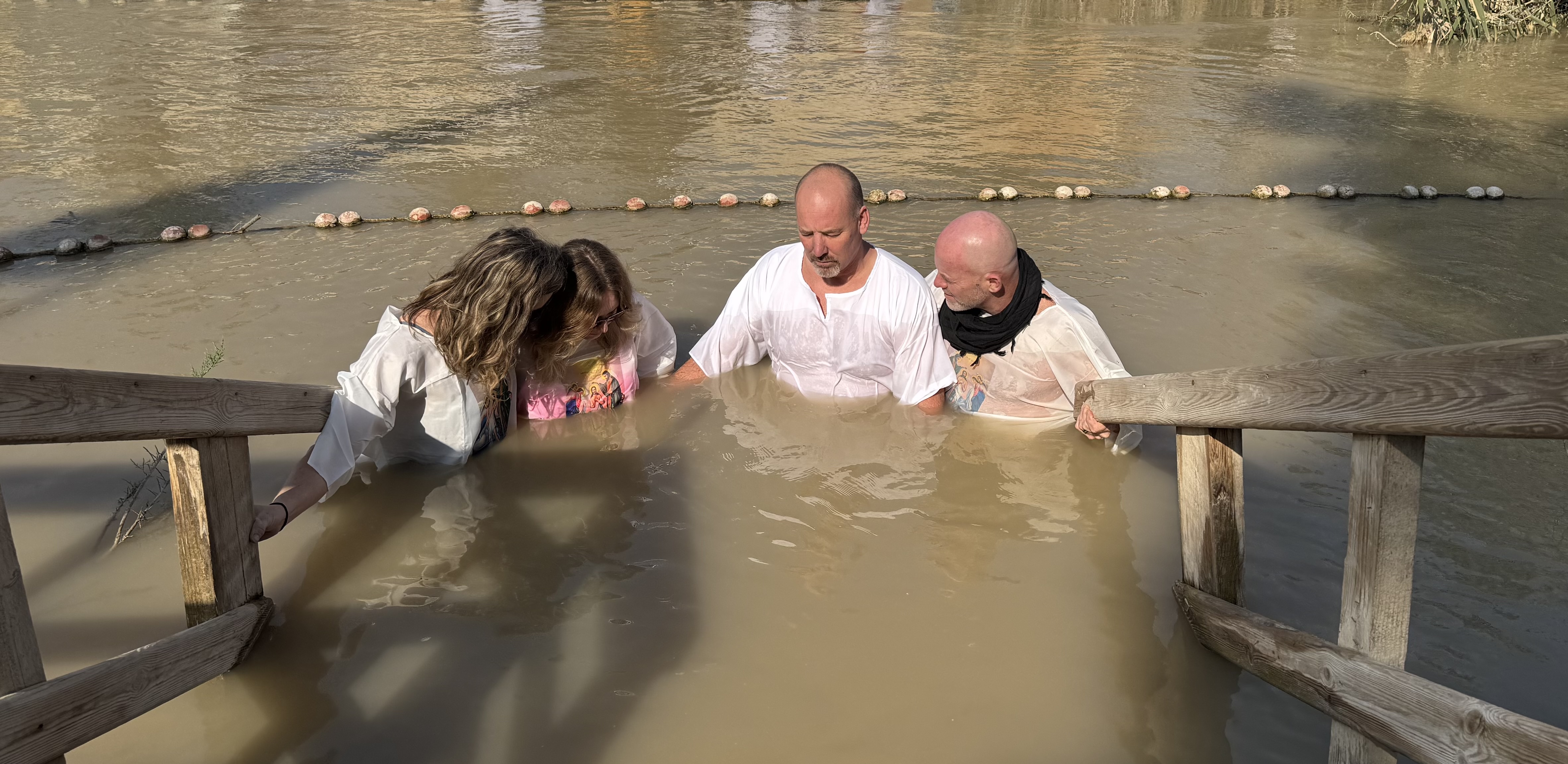
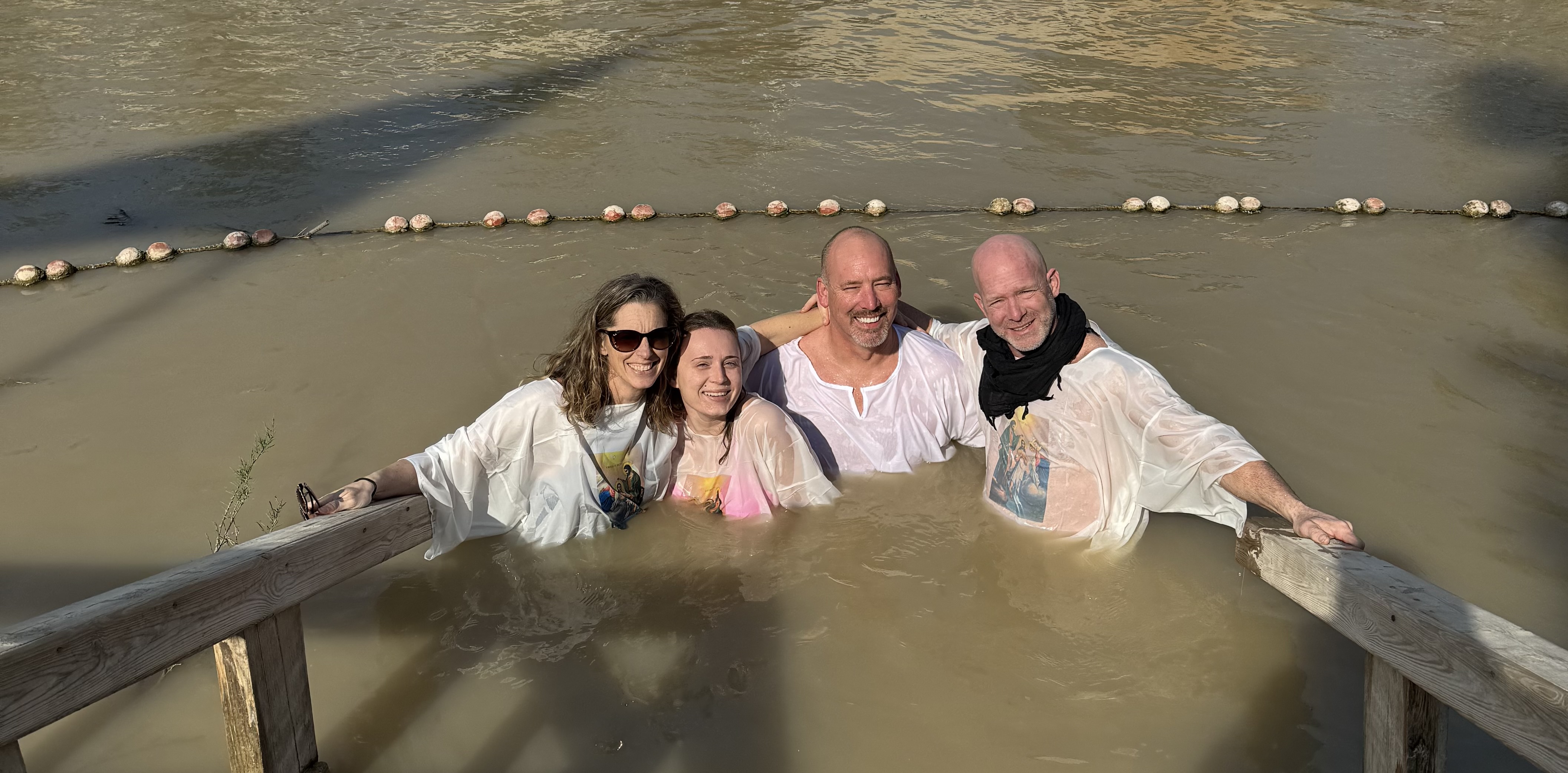
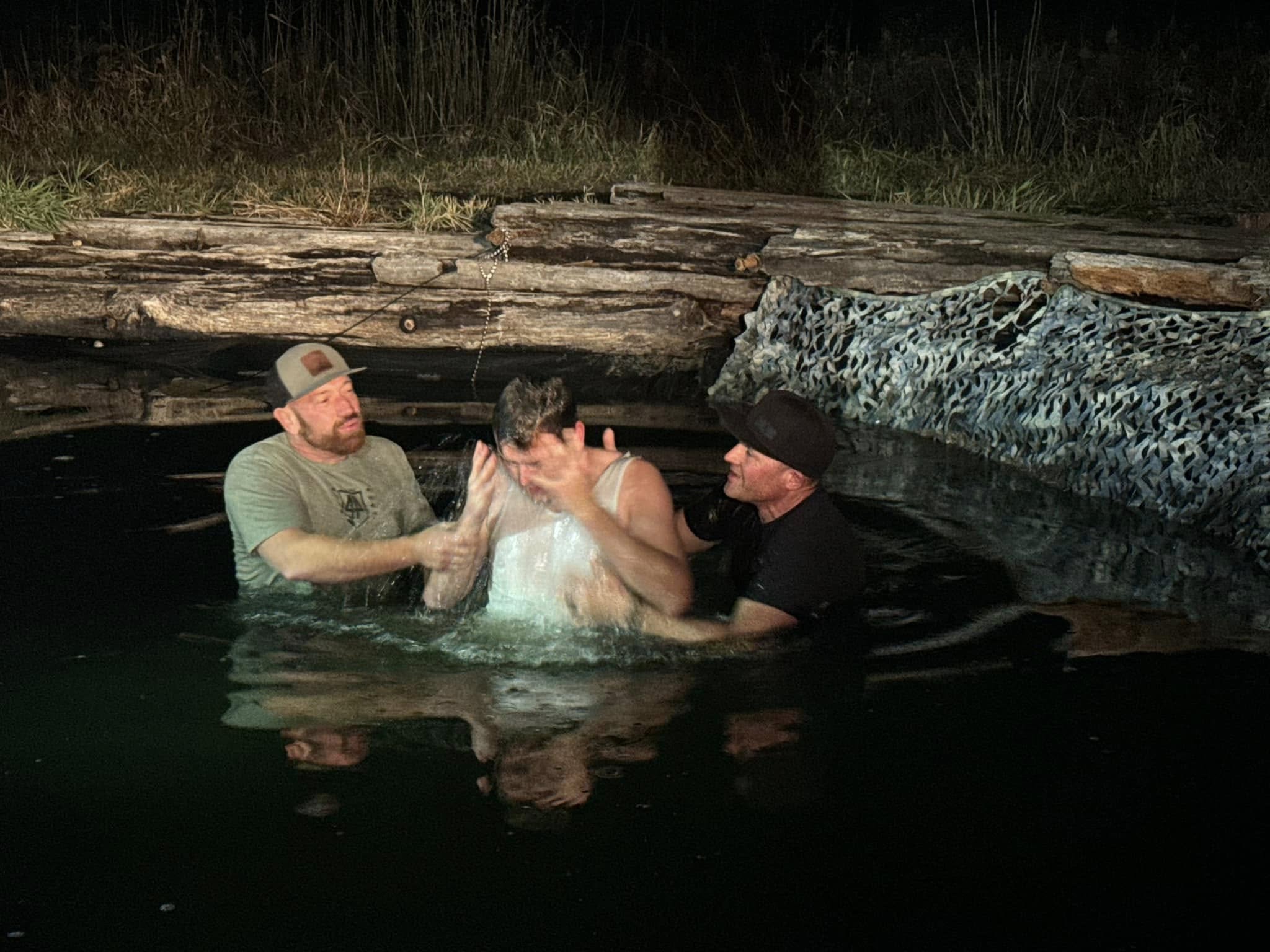
Today I (with help from my wife, Krista) had the incredible privilege of baptizing my good friends Mike and Gabby. Ironically, I just wrote a post on soteriology and baptism. If you haven’t read that, I would start there.
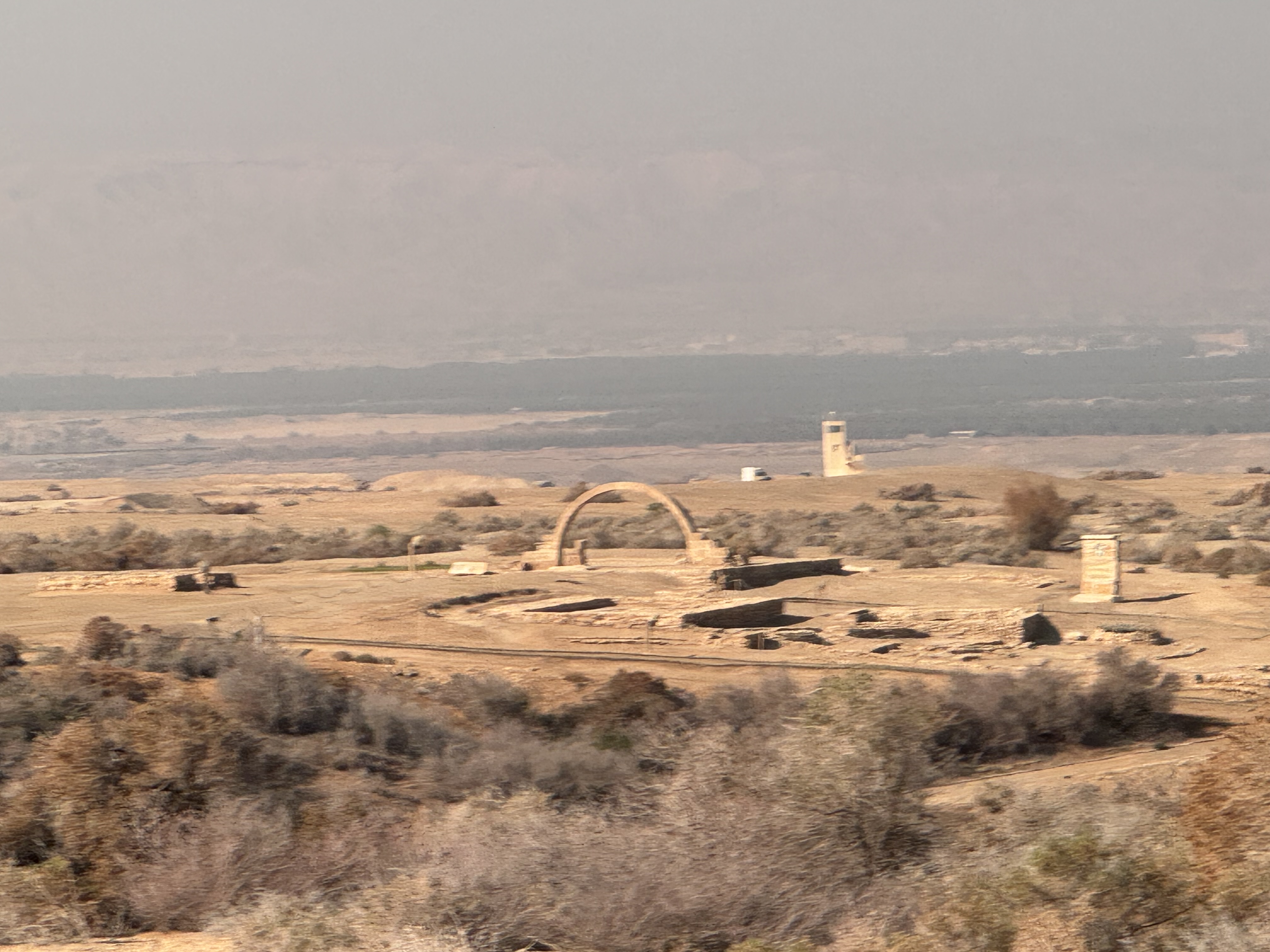
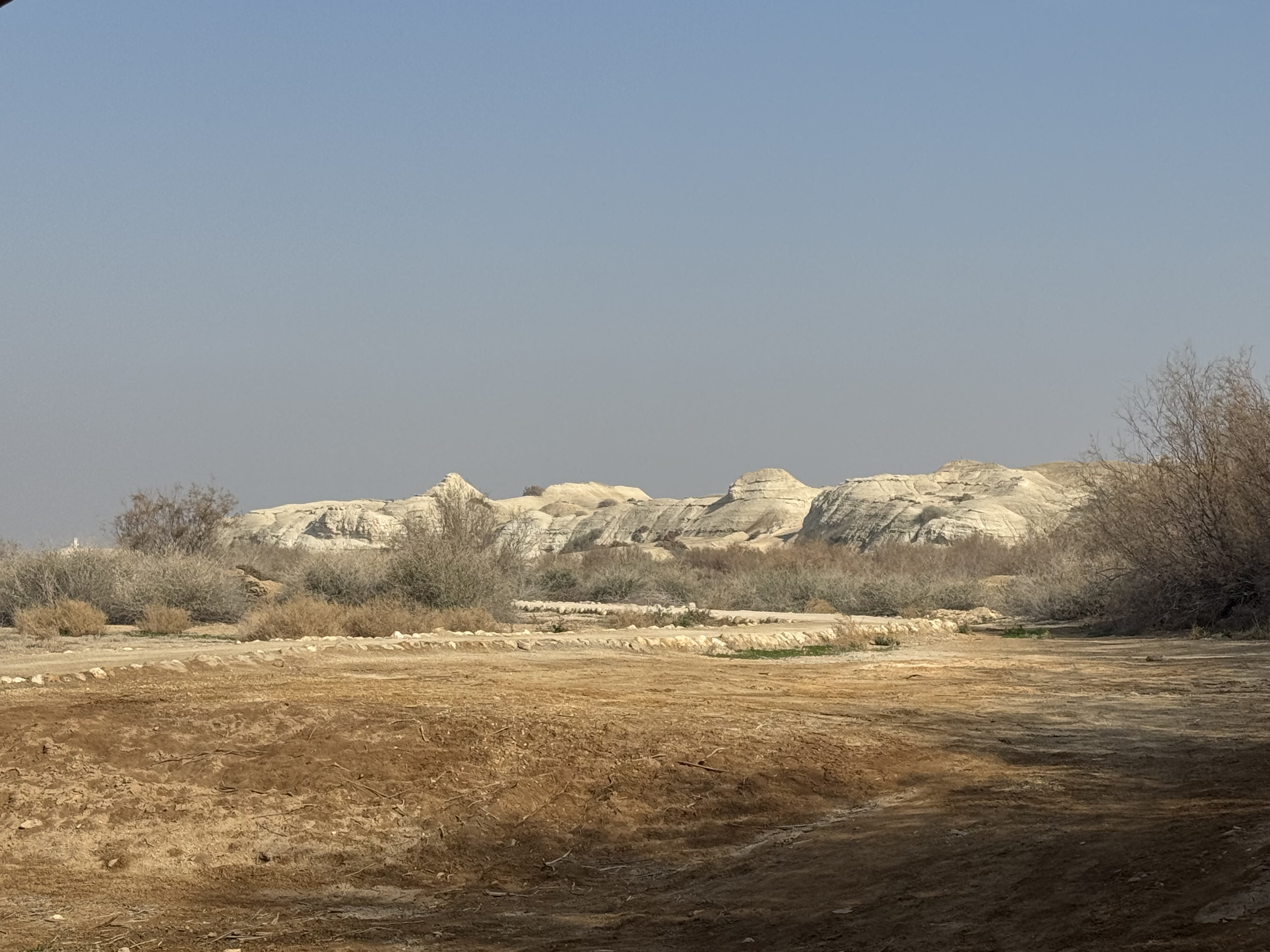
We haven’t always known where exactly Jesus was baptized. We don’t know where Eden was, or exactly where the ark landed, and this isn’t much different. The baptism of Jesus, the ritual purification of Jesus with water by John the Baptist, was a major event described in the three synoptic Gospels of the New Testament (Matthew, Mark and Luke).[1] It is considered to have taken place at what is modernly referred to as Al-Maghtas (also called Bethany Beyond the Jordan), located in Jordan. Al-Maghtas is Arabic: المغطس, al-Maġṭas, which means ‘baptism’ or ‘immersion’, officially known to most (and on Google Earth and mentioned in the Bible) as the Baptism Site “Bethany Beyond the Jordan”, it is an archaeological World Heritage Site in Jordan, on the east bank of the Jordan River, reputed to be the location of the Baptism of Jesus by John the Baptist and venerated as such since at least the Byzantine period.[2] To be clear the exact location has changed due to recent archaeological finds.[3] This area includes two principal archaeological areas: the later remnants of a monastery on a mound originally known and believed to be Elijah’s Hill as a hermit dwelling.[4] The two areas are connected by a small stream that goes by John’s name.[5]
John anticipated a messianic figure greater than himself;[6] in the Gospels, he is portrayed as the precursor or forerunner of Jesus.[7] According to the Gospel of Matthew, Jesus himself identifies John as “Elijah who is to come”,[8] which is a direct reference to the Book of Malachi (Malachi 4:5),[9] as confirmed by the angel who announced John’s birth to his father, Zechariah.[10] According to the Gospel of Luke, John and Jesus were relatives.[11,12]
Some scholars think that John belonged to the Essenes, a semi-ascetic Jewish sect who expected a messiah and practiced ritual baptism.[13][14] John used baptism as the central symbol or sacrament[15] of his pre-messianic movement. Most biblical scholars agree that John baptized Jesus,[16][17] and several New Testament accounts report that some of Jesus’s early followers had previously been followers of John.[18] According to the New Testament, John was sentenced to death and subsequently beheaded by Herod Antipas around AD 30 after John rebuked him for divorcing his wife and then unlawfully wedding Herodias, the wife of his brother Herod Philip I. Josephus also mentions John in the Antiquities of the Jews and states that he was executed by order of Herod Antipas in the fortress at Machaerus.[18]
The Gospel of Mark introduces John as a fulfillment of a prophecy from the Book of Isaiah (in fact, a conflation of texts from Isaiah, Malachi and Exodus but that’s another post)[19] about a messenger being sent ahead, and a voice crying out in the wilderness. John is described as wearing clothes of camel’s hair, and living on locusts and wild honey. John proclaims baptism of repentance for the forgiveness of sin, and says another will come after him who will not baptize with water, but with the Holy Spirit.
The fourth gospel describes John the Baptist as “a man sent from God” who “was not the light”, but “came as a witness, to bear witness to the light, so that through him everyone might believe”.[20] John confirms that he is not the Christ nor Elijah nor ‘the prophet’ when asked by Jewish priests and Pharisees; instead, he described himself as the “voice of one crying in the wilderness”.[20]
The Gospels vary in their depiction of John’s relationship to Elijah. Matthew and Mark describe John’s attire in a way reminiscent of the description of Elijah in 2 Kings 1:8, who also wore a garment of hair and a leather belt. In Matthew, Jesus explicitly teaches that John is “Elijah who was to come” (Matthew 11:14 – see also Matthew 17:11–13); many Christian theologians have taken this to mean that John was Elijah’s successor. In the Gospel of John, John the Baptist explicitly denies being Elijah. In the annunciation narrative in Luke, an angel appears to Zechariah, John’s father, and tells him that John “will turn many of the sons of Israel to the Lord their God,” and that he will go forth “in the spirit and power of Elijah.”[21]
CONCLUSIVE THOUGHTS:
What “set apart” John was that he reminded people of Elijah. Did you ever wonder what that meant? I guess I just gave you a bunch of clues! Elijah was most significant as to have led a school of prophets known as “the sons of the prophets.”[22] Following Elijah’s ascension, his disciple and devoted assistant Elisha took over as leader of this school. After the time of Elisha Israel strayed and although rabbinical training excelled, the schools became very different from what Elijah had established. John was seeking to bring back the idea of living a life completely “SET APART” (Kadosh purification language) as to make way for the king. This is often overlooked particularly in western Evangelical Christianity, and it is very important. You see Jesus came to “complete” or align all things back to the intentions of the father. Jesus continues to call 12 disciples completely out of their former lives and accept new sacrificial lives totally committed to Him. He was the great example shepherded unto them. Jesus also embodies the example of being met by the spirit and later sending it to all who accept and are anointed and/or commissioned in this same way. He was baptizing those that radically sought to do the same; to completely give their life to the pursuant of devotionally following the Way of Jesus, the coming king. As I have made the point several times, we don’t baptize into this calling any longer. It has once again become lost as it had before John’s time. My prayer is that we will return to baptizing those ready to give their lives into complete devotion in allegiance to the king, leaving everything to follow Him.
WORKS CITED:
The Gospel of Matthew by Daniel J. Harrington 1991 ISBN 0-8146-5803-2 p. 63
Bethany beyond the Jordan https://www.baptismsite.com/ Archived 2024-12-04 at the Wayback Machine on baptismsite.com, accessed February 2025
Baptism Site “Bethany Beyond the Jordan” (Al-Maghtas) – UNESCO World Heritage Centre”. UNESCO. Archived from the original on 19 January 2017. Retrieved February 2025
Tharoor, Ishaan (July 13, 2015). “U.N. backs Jordan’s claim on site where Jesus was baptized”. The Washington Post. Archived from the original on July 10, 2018.
Funk, Robert W. & the Jesus Seminar (1998). The Acts of Jesus: the search for the authentic deeds of Jesus. San Francisco: Harper. “Mark”, pp. 51–161.
Meier, John (1994). Mentor, Message, and Miracles (A Marginal Jew: Rethinking the Historical Jesus, Vol. 2). Vol. 2. Anchor Bible. ISBN 978-0-385-46992-0.
“Bible Gateway passage: Matthew 11:14 – New King James Version”. Archived from the original on 3 October 2019.
Malachi 4:5–6
“Bible Gateway passage: Luke 1:17 – New King James Version”. Bible Gateway. Archived from the original on 2 June 2007.
“Bible Gateway passage: ΚΑΤΑ ΛΟΥΚΑΝ 1:36 – SBL Greek New Testament”. Archived from the original on 26 September 2019.
“NETBible: Luke 1”. Archived from the original on 24 July 2020.
Harris, Stephen L. (1985). Understanding the Bible. Palo Alto: Mayfield. p. 382
Marshall, I. H.; Millard, A. R.; Packer, J. I., eds. (1988). “John the Baptist”. New Bible Dictionary (Third ed.). IVP reference collection. ISBN 978-0-85110-636-6.
Edward Oliver James, Sacrament in Encyclopædia Britannica. Retrieved 20 May 2009, from Encyclopædia Britannica Online: https://www.britannica.com/EBchecked/topic/515366/sacrament
Croll, Charles (2019). John the Baptist: A Biography. Malcolm Down Publishing. pp. 127–149. ISBN 978-1-912863-15-0.
Jesus as a figure in history: how modern historians view the man from Galilee. Mark Allan Powell, published by Westminster John Knox Press, p. 47 “Few would doubt the basic fact…Jesus was baptized by John”
Harris, Stephen L. (1985) Understanding the Bible. Palo Alto: Mayfield John 1:36–40
Flavius Josephus: Antiquities of the Jews Book 18, 5, 2
Carl R. Kazmierski, John the Baptist: Prophet and Evangelist (Liturgical Press, 1996) p. 31.
When I was younger, I believed that theological “strength” meant to understand something so firmly that you never waiver from that stance. I think that is still true to much regard and it is important to know your essentials as a basis for your foundation of Truth. This likely includes doctrine on the Divinity of Jesus, the death, resurrection, ascension and throning of Jesus as king, the authority of Scripture, and other similar doctrinal positions. But I have found that on non-essential doctrine and the impact that it might have on your complete lens of scripture, that those in pursuit of the truth transparently guided by the Spirit will at some point be led to a better view. A dynamic open mind based on the wise counsel and discussion with others and guiding of the Spirit leads to deeper spiritual maturity. I don’t have much space left to “fight” over theology but am still incredibly passionate in my pursuit for scriptural depth and understanding.
I grew up believing in some sort of profession of the 4 spiritual laws that would then lead one to the act of baptism as an outward sign of giving their life to the Lord. Rallies that would stack up thousands of people at alter calls and then seemingly leave them hanging to figure it out. The last 50 years or so of evangelical Christianity has loved to brag about all the conversions that has produced at best nominal followers of Jesus and possibly even the results of Matt 7:23. Today I don’t necessarily disagree with that perspective (or give those that hold to it a difficult time); I believe there is a place and season for everything mentioned in the Word, but I think the Bible describes a different primary plan. Every time I hear of a church that is started with the main purpose or solely exists to “discover Jesus for the first time” I cringe. As I think there is a place for evangelism, I am not convinced that Jesus made that the main thrust of His ministry by example, or that the scriptures teach that the assembly of believers is the place for evangelism (wouldn’t that be a misnomer or contradiction of terms?). Jesus modeled by deeper discipleship. I see the “one night stand” soteriology (put another mark on the belt and move on mentality) as a result of our last centuries emphasis on momentary decisions that we refer to as being saved. I don’t see salvation as a line that signifies a moment of time that can simply be crossed, but rather a journey of sanctification. It is the life we live. I also think Jesus emphasized the life of dedicated discipleship of those fully given to Him, rather than mass conversion and especially without the emphasis of ever shepherding them to deeper convictions of life in Him. The scripture, both New and Old Testaments were never about kindergarten faith, but rather the deepest pursuit of devotion. To return to Edenic walking with God.
“Look! Water! What prevents me from being baptized?” Acts 8:36 NASB
In Acts 8 we find a story of an Ethiopian Eunuch walking down the road and is approached by Phillip. As in most stories you have heard, this one also might require some deconstruction to find a better biblical narrative or interpretive message for us. The Eunuch is on the road because he is coming from worshipping in Jerusalem. He is reading a scroll of Isaiah 53. Consider these two things. First, it tells us he was devout and practicing already. Attending several week festivals was a practice for the faithful. The fact that he possessed a scroll of Isaiah is also fascinating. Perhaps it was on borrow from his Queen but likely not, it was probably his personal possession and required a great deal of his economic ability. This came at great cost in the first century. He knows the passage but is deep in study over it. His question is concerning a better interpretation.
What we come to is that baptism followed a conversion of not simply aligning the head and the heart with some ideology; but making an allegiant decision to change the course of your life and follow the way. Things have changed in the church over the last 2000 years. Baptism has become something for those that are convinced to believe in a pamphlet rather than the first century decision of joining the way and what that entailed. In the first century you left your former life and were baptized into a new way of life. You then left your former occupation (i.e. fisherman) and became a follower of Jesus as primary occupation. That was what it meant that Jesus now takes residence in your heart. That is why after Jesus is resurrected, He isn’t too happy with the disciples going back to fishing. Shouldn’t they know better after walking with Him for three years? But in the same way that they didn’t get it, that is also the problem with our current Christian culture, we still don’t get it. Today we might emphasize the importance to make a decision, and we often say it is a “life decision”, but certainly not to the weight of the first century. That’s why Nicodemus was wrestling with it. He knew the law well, he wasn’t at odds with the head and the heart, he was deciding whether he was going to give up everything he knew and had for a new life of minimal earthly materials and full devotion to this occupation of Jesus. Today we sort of leave that part out of joining the way of Jesus in our evangelistic pursuits. It wouldn’t sell very well. Giving up materialism in America to follow Jesus probably wouldn’t make for a lot of decisions under the light and laser show alter calls.
As I alluded to earlier. The assembly for the “body of believers” doesn’t really see like the right place for evangelism. It isn’t wrong (I don’t think), nut out of place or proportion. Even the fact that we have alter calls in church today is a bit counter to the biblical essence of the decision. We call the church the body of believers, yet we invite a bunch of non-believers to that body in hopes of making momentary decisions. Where did the invitation to love your neighbor in your home go? The church then becomes “the body of momentary decision makers and some that are still considering” rather than the body of Christ; we have to put on a show and water down the discipleship to change the motive. The Law actually described this as defilement. I might remind you that one of the primary directives was to not mix the temple areas with those that didn’t believe. That was strictly forbidden and had great consequences. When did we forget this? Is the modern church defiled and need to be cleansed according to the law that I will remind you Jesus followed to a “T.” Modern salvific thrusts of churchianity today even seem far from the life changing covenant community of the way of Jesus during the first century.
But don’t get me wrong, I do see willful individual decisions that need to be made in the New Testament. I have a place for it, but just don’t think it should be our main thrust or concern and especially within the assembly of believers. It has trumped the preeminent calling of Jesus to lead people into deeper waters. So, you are going to be surprised when I challenge you that there are really only three examples of momentary decisions in the biblical narrative and that is arguable at most. The best and perhaps only clear example we have in scripture for a radical momentary decision followed by baptism is of the Philippian Jailer in Acts 16. We have the thief on the cross but there isn’t baptism in that story and that one is complicated because it is still under the Old Covenant when most theologians would take an Apostle’s Creedal view that the thief died and went to paradise and Christ descended to preach giving those in “places of waiting” a last chance at salvation. Therefore, the thief’s salvation might be granted through the work of the cross running backward more than salvatory work post resurrection. It is also worth pointing out that the thief was likely Jewish and therefore would have been somewhat observant and at one in his life possibly even devout. Some have proposed that he might even be an example of one that left the faith and God then redeemed at his death bed in hopes of supporting a once saved always saved premonition; but to be clear, scripture doesn’t give us that, at least here. There is also the Syro-Phoenician woman, but she is even more complicated than the first two examples. There may be others, but they aren’t specifically mentioned in scripture. The great majority of baptism encounters we read (including Jesus Himself) come long after we would consider the point of adherence of the heart and mind. The examples of baptism largely teach that those baptized would have already been “saved” but are making a decision to leave their former way of life and completely follow Jesus. That’s radical. That’s what Jesus asked of the 12. He wanted them to leave everything on the beach and follow him not returning to their former lives. That’s still what He asks of us and biblically is still what signifies baptism.
Baptism was intended as a sign to enter into the deepest waters with Jesus, not just dip your toes in the water! The idea is you start with deep water immersion and pretty soon you’re walking with Jesus on the water over the deepest depths.
Our culture gets it off -wrong maybe- we are baptizing baby Christians. In the Bible they baptized those ready to be all in, to go deep! To finally give up their entanglement to the world and serve one Master. The early Christians practiced a form of communal living, sharing their resources to ensure that no member was in need. Acts 4:32-35 describes this practice: “All the believers were one in heart and mind. No one claimed that any of his possessions was his own, but they shared everything they owned… There were no needy ones among them.”
In the gospels and first church those that got baptized had a history with God – and God had a history with them.
In all of the biblical examples coming to this place took time, it wasn’t a momentary decision from an alter call. In fact the Eunuchs exclamation of “what prevents me from being baptized right now” should tell you that that was radical. The Centurian of Matthew 8:5-13 and Luke 7:1-10, that decision of “the greatest faith” likely cost him his life.
However, as a theologian who weighs every option and doesn’t like to leave any stone left unturned… Let me also give you the other side of the coin for consideration. It’s worth pointing out that the way of Jesus was new to mature Jews. That is what “THIS” baptism meant. That Jesus was your LORD. I can see how 2000 years later things would slightly change and that’s why I say I’m open to the current salvation crusades and alter calls in a place and season that we’re in. I have a place for it. In the first century the way was just found, we have had it for 2000 years. There is also the fact that we don’t have all of the story in the Bible. We don’t know if the Eunuch, Nicodemus, or the Centurian every became deep disciples. Church history and extra biblical sources alludes that they did, but the Bible doesn’t hold that for us. We are left to wonder. But I want to be clear here. When the Bible gives us something, an example a recipe or something to that type; we need to follow it. I have a little room for the evolution of church over 2000 years but not if it gets too far off the example given in scripture. If the scripture describes something that’s usually the way I wanna do it! I think there is some room to change with modernity but not a lot. The progression of the last 75 years to emphasize baby faith over deeper faith doesn’t seem scriptural and I think we need to find the roots of Christianity and the Way of Jesus back into our assembly of believers and who we are as occupational to the calling of our faith.
Fire sale salvation is based on an assumption that the primary goal of life is simply to attain something to get to heaven. It becomes ticket punching theology. Because of this, most western churches have become singularly interested in bringing people to a point of simple decision making and are happy to leave it at that. We have missed the compelling message of Jesus to deeply shepherd and disciple. All we are looking for is a verbal confession and once we get it, it’s time to move on to the next one. It almost is reduced to a competitive game of who can score the most. It devalues the gospel. Sure, we expect the Spirit to sort of take over, and He does… but we have hardly lived up to our end of the deal as the physical manifestation of the hands of Jesus. Can God use it? Absolutely, but I’m sure He desires more of us, and I believe scripture has made that clear. He always desires a better biblical directive and deeper actions of the heart from us.
There is an enormous difference between the pursuit of kindergarten Christianity and the idea of faithful covenantal living. The urgency of one is replaced by the patience of the other. The destination of one is replaced by the direction of the other. One is about ritual; the other about relationship.
We need to return to the covenant communities of the first century that made allegiant decisions that resulted in leaving the world and being immersed in the way of Jesus – (nothing else, no room for that “stuff”) an all in expression of devotion.
“Nicodemus said to Him, “How can a man be born when he is old?”” John 3:4
Nicodemus heard Jesus say that a man must be “born from above” if he is to be a son of God. He asked, “How can I make this happen?” He just wanted the steps but didn’t want the “why.” Sounds like our Christian culture today – Just get in the water, and maybe that’s not all bad! But it’s not about what you can do, it’s about what God will do. In a very eloquent and rhythmic fashion Jesus answers Nicodemus with the words gennēthēnaianōthen. The witty inference is that we must be born from above regenerated by the Spirit. The answer to the real question, why must a man be born from above, is far more important than the how. God knows how. What we need to know is why.
You do not become what you are, but you are what you become.
I studied philosophy first which led me to a better theology. I don’t believe we are simply a product of our environment, nor do I believe in the Calvinist sense that God has predetermined all things and is the grand puppet master.
Our decisions shape us.
Jesus’ answer shares an entire “remez” of theology. I’ll give you the short version. God separated the water and created man in His image within His order. Man fails and falls numerous times, and God does a “reset” with His newly chosen people coming out of Egypt and through the redemptive waters of the red sea, they are “baptized” as a nation and become a “new” people. Those originally created by the direct hand of God were referred to in Genesis as the Bene Ha Elohim. Fast forward to Jesus when we are now “reborn from above”, we take on the same terminology. We are now directly created by the hand of God and are a new royal priesthood set apart as ambassadors for a new kingdom. Jesus Himself was an example – image – foreshadow – archetype of this. As He was born of a virgin, His creation or re-creation to earth in the form of a “second Adam”, was directly by the hand of God. In a similar fashion, all of us now “born from above,” have entered into completely new life with God. The old person is dead.
When Jesus answers Nicodemus He says that we are at a total start over through Him. Nicodemus is a Pharisee and a member of the Sanhedrin who is drawn to hear Jesus’s teachings. As is the case with Lazarus, Nicodemus is not mentioned in the synoptic Gospels and is mentioned only by John. [1] This famous encounter is contextually set before John 3:16, you might consider that. Most Biblical scholars have identified the Nicodemus of the New Testament with a 1st-century historic Nicodemus Ben Gurion, which would have him being a key figure 40 years later in the First Jewish Roman War. [2]
He was a wealthy and popular holy man reputed to later have had miraculous powers, which some would say was a sign that God was with Him. [3] In the account in John we aren’t given the whole picture or all the details. In fact, we seem to get the opposite idea. Jesus tells Nicodemus to leave the world at the beach and he seemingly can’t do that. He comes to Jesus in secret in the night because He is afraid of what His pharisee friends will think if he is aligned with Jesus, yet he says that many of them believe and uses the title Rabbi with Jesus out of honor and respect.
Nicodemus is mentioned in three places in the Gospel of John. This is the first encounter. The second is four chapters later when he reminds his colleagues in the Sanhedrin that the law requires that a person be heard before being judged. He seems to be a friend of Jesus or possibly advocating for Him. The third and final encounter is in John 19 when Nicodemus appears after Jesus’s crucifixion to provide the customary spices for anointing the dead and assists Joseph of Arimathea in preparing the body of Jesus for burial. Some believe this is a sign of conviction. Nicodemus brought a mixture of myrrh and aloes—about 100 Roman pounds (33 kilograms, or 73 lb). Nicodemus must have been a man of means; in his book Jesus of Nazareth: Holy Week, Pope Benedict XVI observes that, “The quantity of the balm is extraordinary and exceeds all normal proportions. This is a royal burial.”[5] If you take the notion that He was the notable Nicodemus Ben Gurion, then it means that over the next 40 years he would lead many to a “born again” notion and eventually be considered a saint within orthodoxy for his actions. But we also may want to question “that notion,” and we likely should.
The decision for Nicodemus wasn’t easy. Brian Zahnd shares, “Undoubtedly, he was raised in a Pharisee household, educated in the Pharisee school of Jewish thought from a child and placed on a course that would inevitably make him what he became. But now Jesus was challenging him to make a choice that would fundamentally alter his self. To make the choice to rethink everything. To start over. To radically change his dominant paradigm; instead of viewing the kingdom of God through the paradigm of the Pharisees, to view the kingdom of God through the new paradigm of Jesus. No easy task.” [6]
Jesus’ words to Nicodemus were life changing. We don’t know if Nicodemus ever “got there.” The orthodox church would say he did, Nicodemus is venerated as a saint in Eastern and Oriental Orthodoxy and in Catholicism. The Eastern Orthodox and Byzantine Catholic Churches commemorate him on the Sunday of the Holy Myrrhbearers, which is celebrated on the Third Sunday of Pascha (i.e., the second Sunday after Easter).[7]But from my perspective, the text nor history gives us the confirmed answer. Jesus’ words were hard. Leave it all at the Beach and start over. Rethink. Everything.
The world and the Christian church (alike) often don’t decipher this story well.
A spiritual re-birth meant a new and/or total spiritual re-learning. A new start. Discipleship. Could he do that? Did he do that the next 40 years? Perhaps. Or perhaps he was still “off” as he might have led thousands to their death in 70AD and completely missed the “WHY” of Jesus. The world (and Christians) often puts those “types” on a pedestal. We nearly “worship” those that are very opposite to the ways and words of Jesus. Maybe he got the fame his heart was postured towards but never could die to himself as Jesus challenged him to do; or maybe He did as His “saint hood” would later venerate. Only God knows.
What about you. The call wasn’t to simply make a decision to get on your knees in tank of water as the lights and lasers dazzle everyone to chalk up another bar of statistics for the year of tallied success. It was to enter total discipleship. The first step is a proclamation of the heart to total faithful allegiance in Jesus by getting in the water, the second step should be towards a changed life of discipleship. I pray the lasers and lights lead that way! That was always the calling of Jesus. Leave it all on the beach.
That is the ONLY commission of Jesus. There was no halfway or halfhearted version of this story. Are you all in? Will the water set you apart?
This article is dedicated to my good friend and disciple Paul Lazzaroni as he is shepherding so many others to walk this journey well. Love you and proud of you, my friend. -Halak
x44 has an old but good video on Nicodemus here:
Driscoll, James F. (1911). “Nicodemus” . In Herbermann, Charles (ed.). Catholic Encyclopedia. Vol. 11. New York: Robert Appleton Company.
Reid, George J. (1907). “Acta Pilati” . In Herbermann, Charles (ed.). Catholic Encyclopedia. Vol. 1. New York: Robert Appleton Company. p. 111.
ee, for instance:
Flusser, David (16 December 2013). “Character Profiles: Gamaliel and Nicodemus”. Jerusalem Perspective.
Burke, Daniel (17 March 2013). “Nicodemus, The Mystery Man of Holy Week”. The Washington Post. Religious News Service. Archived from the original on 14 May 2023.
Holy Greek Orthodox Church of Saint Paraskevi, Saint Barbara, Saint John the Merciful & Our Mother of Consolation. St Albans, Melbourne: Greek Orthodox Archdiocese of Australia. Archived from the original on 20 March 2023.
This article is a 20-minute read. The YouTube version of the discussion is at the Bottom of the page and is an 80-minute listen.
Human beings- We are the most incredibly unique, wildly powerful and intelligent beings ever created but also make some of the most awful decisions, repeatedly, on a regular basis.
The Bible is beautifully simplistic and at the same time houses unsearchable depths of God’s wisdom and goodness.
Of course, the Bible says a lot, everything we need, but there is also quite a bit that it doesn’t simply say. We know very little of what Jesus’s life was like for the better part of three decades, however through extrabiblical material such as historical research of that period, calendars, Jewish and rabbinical practices, and harmonizing the gospel narratives, we can gather much about his life that was not said in the pages of scripture. What we do know is that as soon as Jesus walked in obedience through baptism, he was led by the spirit of God into the wilderness.
Matthew 4:1. “Then Jesus was led by the Spirit into the wilderness to be tempted by the devil.”
The humanity of Jesus is certain, but often eludes us, most of us struggle to fast for one full day, let alone a 40 day and 40-night stint. Utter depletion was upon Jesus, and then came the tempting by ha-satan, and testing by God. What follows is three questions and three rebuttals. The result is Satan fleeing and spiritual beings ministering to Jesus. Although the Bible doesn’t say it, clearly there had been some equipping in Jesus’s life.
and said to Him, “If You are the Son of God, throw Yourself down; for it is written, ‘He will command His angels concerning You’; and ‘On their hands they will bear You up, so that You will not strike Your foot against a stone.’” Matthew 4:6 NASB
Ha-satan misquotes Psalm 91. Yet Jesus doesn’t correct him and simply notes that this is a test of YHWH and infers that to accept this challenge would be forbidden. The fault is in the demanding of Humans of God. God is not the captive genie of my three magical wishes. Jesus makes this clear yet so many Christians today pray in a way that is rival to what Jesus states here. We make demands of God.
“Throw yourself from the Temple” has several other eye raising implications. Some have a hard time asking God for anything personally as it seems to be at odds with really believing in the will of God and the way that God weaves everything to serve His purposes. Can we demand without the eyes to see such things? Do our demands circumvent His intentions? Sometimes in the Bible, such as with Moses we see God heeding the requests of man and altering what would seem to be His better will. But should we really ask God of that. Does asking God to be a way maker mean asking Him to come to our desires rather than posturing ourselves to simply come to His? Do we not throw ourselves from the Temple rather than throw ourselves on His mercy and sovereignty?
Regardless of where your theology lands, there is much going on behind the scenes of Jesus’s interaction with the challenger and it parallels a story in the Old Testament. Most of us know the story of the exile from slavery out of Egypt and through the Red Sea, but often what’s overlooked is also what the Israelites overlooked in the wilderness. We know that both the Israelites and Jesus had just come out of the water before heading into the wilderness. In the Bible, water often signifies chaos. In the beginning, when the spirit of God was hovering over the waters of the deep, the gives us a description of what life, before God interacts with it can look dark, uncontrolled, violent, and unpredictable. As God brings forth land, we first see the life breathing characteristic of the creator of the cosmos.
In the same way, a believers baptism signifies the reaction to an interaction with a life breathing God. They are lowered into the chaotic waters of life for the last time and are risen into a brand-new life.
The hope and promise of a new life are exactly what Israel stepped in to when they stepped out of the Red Sea. The final ascent up the shores on to free land for the first time began the echo of Psalm 136:12 with a mighty hand and outstretched arm; His love endures forever. Just like baptism, this step into their new life was simply the beginning. It was the beginning of a new way of doing things thus signifying the importance of being trained and equipped to withstand the seemingly impossible giants that stood in the way of the final journey to the promised land.
A voice is calling, “Clear the way for the Lord in the wilderness; Make smooth in the desert a highway for our God. Isaiah 40:3 NASB
There is one more connection between wilderness and water. In a D32 consideration, God is at war with other fallen spiritual beings and their slave masters, eventually overthrowing them with the greatest symbol of substitutionary sacrifice being Jesus as the Passover Lamb. At first glance the “horse and the rifer thrown into the sea” it would seem that the slavemasters are completely annihilated, and the earthly force is, but it would seem that the spiritual ones connected with the gods they formerly and will continue to serve will somehow find their way back into the Israelite camp. perhaps this is partially a sign of their continual grumbling and demanding that God do what they want and insisting that it is His fault that they are in such a terrible mess. Are you starting to see the connection of the fallen spiritual beings influencing humanity to make demands of God? This isn’t simply grumbling but a severe violation of the first (and greatest) commandment.
The wilderness becomes God’s classroom in obedience and allegiant devotion to God. In many ways today it still is.
The wilderness is harsh and uncontrollable. We want to live in places where we are in control, so we build cities. That is why cities in the Bible are associated with RA not TOV. We don’t like the testing and trying of the spiritual beings in our lives, so we bulldoze the wilderness and build concrete jungles instead. Unfortunately, that becomes a sign of the RA over the TOV. Humankind actually seems to have very little control and when they think they do it is typically a sign they have been manipulated by the RA of life. We feed our self-delusional fantasy that we are self-sufficient as we are duped by the aggressors.
The wilderness is God’s sacred place, what is left of the earth as He created it. When we attempt to reconstruct it in our image, we lose a connectivity to God and His sacred space. For Israel, the wilderness gave the Word of the Lord, the light and cloud they followed, the learning of grace and mercy, and unending provisions. They learned to heal and worship. They learned to trust and seek. If you have never met God in the wild and untamed placed of His sacred devotion you are likely missing what He has always desired to give to you. Perhaps when we dwell within the city limits, we need to remember to be a wilderness witness. Or maybe we just weren’t intended to live in the concrete jungle and trying to do so could actually be rival to God’s design.
We are in desperate need to be trained and equipped to withstand the seemingly impossible giants that may stand in the way of our journey through this life. If we move too quick, we can miss an important element of God’s character displayed in Matthew 4.
“Then Jesus was led by the Spirit into the wilderness to be tempted by the devil.”
The word tempted is the Greek word peirazó. to make proof of, to attempt, test, tempt, but here it is used in the negative sense, a RA sense.
James 1:2-4. My brothers and sisters] consider it nothing but joy when you fall into all sorts of trials, because you know that the testing of your faith produces endurance. And let endurance have its perfect effect, so that you will be perfect and complete, not deficient in anything. (NET)
Conversely, in this passage, the Greek word for trials is dokimion, meaning- a testing or what is found approved. This testing, or a process or being made complete by the testing of our faith, is very good or Tov.
Both words in this form have significantly similar meanings, however the word tempted in Matthew 4 is in the negative form, or Ra (peirazō) meaning “tempt” by means of luring. This is not a character trait of God. Later in his letter, James 1:13 states “When tempted, no one should say, “God is tempting me.” For God cannot be tempted by evil, nor does he tempt anyone.” Although God will not tempt, he still can use the corrupt schemes of the evil forces as way to test our character. This again is a parallel to God seemingly handing Job over to the fallen spiritual beings (sons of God) for the testing of his character to be found worthy of righteousness and faithfulness to YHWH.
James uses a rare Greek verb, peirázō, meaning “to try, to test.” God does not test anyone with evil. It’s not simply a matter of testing. It’s a matter of attempting to persuade someone to do something evil (and, of course, God is the one who determines what is good and what is evil).
How often they rebelled against Him in the wilderness and grieved Him in the desert! Again and again they tempted God, and pained the Holy One of Israel. Psalm 78:40-41 NASB
Asaph uses the Hebrew verb nāsâ, which means “to put to the test, to try, to prove, to assay.” In other words, they didn’t ask God to do something wicked. They simply acted as if He weren’t God. God doesn’t test us with evil, but we often attempt to test Him, and in so doing, we engage in evil as a means of assaying Him. We disconnect while He attempts to reconnect. This is the exact opposite of what our design and destiny is.
When Israel came out of a 400 plus year stay in RA-Egypt, this nation of people needed to be taught how to do things the way of God’s kingdom. Had the Levitical law been lived out according to its intention, this nation of people would have had such profound impact, other nations would have not helped but take notice and be drawn in to such a beautiful culture. They would have renewed the earth. They were meant to grow grapes as big as their heads that their world would have travelled great distances to partake in. This is the lost “analogy” of what it meant to bear fruit. To have fruit that the entire world sought after and desired. And what could be better than that? Well a fruit that was naturally given and produced by God, it didn’t require any toil. This is the mosaic of what a gift from God was intended to be in our lives… the epitome of what it meant to bear fruit in His kingdom. We were the possessors and recipients of a bountiful harvest that required little if anything from us with enormous blessings.
A contranym is when one word can have two different meanings. Although today we don’t use the word kingdom in our everyday language, we often operate under the ruling of many kingdoms. Our nation is often viewed as a kingdom, if not the strongest kingdom of all kingdoms in the eyes of many. We tend to create our own mini kingdoms either by our nationalities, our blood lines, or even our homesteads. The time we spend investing in these areas can certainly look like worship or idolatry, but what trips us up is our tendency to build vertically (like a city). God has a kingdom which cannot be shaken regardless of our efforts to rebel against it or the attempts of the dark evil forces to lure us away from him. The way God’s kingdom operates is contrary to the ways of the world. God’s kingdom is horizontal, signifying the gift and purpose of diversity amongst all the people. No one person is better or higher in stature, but all created equal although incredibly different. There is but one king amongst a sea of brethren. God’s kingdom is built solely on the foundation of love that never ceases to bring forth life. To this day, our universe is constantly expanding. New stars are being born and galaxies discovered. If we can see through the mess of our daily lives, we can also see new life being formed each day around us. God never stops producing and expanding. This is what you and I were made to do. This is our purpose as the church. We were created by THE life source, the author and perfector of life, the well that never runs dry, but God is also aware of the effect that the kingdoms of this world can have on our nephesh. Although we don’t use the word nephesh in our daily language, contextually here it is important. Although Hebraically nephesh is defined as our soul, we often think of our soul as a separate part of the entire whole of who we are. Our nephesh is every part of who we are down to the deepest part of our composition. Our nephesh is all encompassing and when we bow down to kingdoms of this world, or in the case of the Israelites who had been under to rule of a tyrannical system for over 400 years, it takes reconstruction upon one’s nephesh to learn once again or for the first time the SOP or standard operating practices of God’s kingdom.
According to scripture, the wilderness can often produce the greatest bounty of fruit within our lives. As the kingdom of world tells us to gather from around us to store up treasures in our barns, Jesus continues to teach and to guide us to the truth that true life can only be generated from the inside out. He uses examples of that of a mustard seed. He gave them another parable:
“The kingdom of heaven is like a mustard seed that a man took and sowed in his field. It is the smallest of all the seeds, but when it has grown it is the greatest garden plant and becomes a tree, so that the wild birds] come and nest in its branches.” Matthew 13:31-33
The wilderness is what’s considered a liminal space. Liminal is translated as threshold as in the threshold of a doorway. It’s a space that is not quite outside yet not fully inside either. It’s a transition point. It’s the place where we know we are not where we used to be, but we are not yet where we are intended to go. Our tendency is to view these times in life in a negative context, however in God’s kingdom, what can only be produced through tastings in the wilderness has the potential to produce the highest dividend in our lives, yet we see it through a negative lens and put our best foot forward to get out of the spaces and seasons of life as quickly as possible. Many of us are praying for breakthrough in areas of our lives, but at the same time we are not willing to allow God to teach us what the breakthrough may look like and how to get there. These liminal spaces will force us quickly to realize how much control we still desire of our own lives and see clearly the personal kingdom we’ve created.
We know there’s much about Jesus’s life that we are unaware of, but what we do know is that directly out of baptism he was led by the spirit of God into the wilderness to be tempted by the devil. At the end of this wilderness season, immediately angels came to minister to him. Matthew 4:11. This opens up the door profound displays of the goodness of God’s kingdom displayed through the life of Jesus. In fact, John said this
“Jesus did many other things as well. If every one of them were written down, I suppose that even the whole world would not have room for the books that would be written.” Yet, God has an even bigger plan for the whole of humanity operating through the Kingdom of God. Jesus is recorded saying this in John 14:12. “Very truly I tell you, whoever believes in me will do the works I have been doing, and they will do even greater things than these, because I am going to the Father.”
The only pathway for us to experience this type of life, a land truly flowing with milk and honey from the core of who we are, is to be built up, equipped and empowered by God in liminal spaces. The world calls the wilderness Ra. The Israelites did too. They had everything they needed to survive and were on a journey to thrive, but still found themselves not just complaining, but being so caught up in only what they knew that they didn’t have the faith to trust God with what they don’t know.
“That night all the members of the community raised their voices and wept aloud. All the Israelites grumbled against Moses and Aaron, and the whole assembly said to them, “If only we had died in Egypt! Or in this wilderness! Why is the Lord bringing us to this land only to let us fall by the sword? Our wives and children will be taken as plunder. Wouldn’t it be better for us to go back to Egypt?”
Richard Rohr calls “liminal space”—a particular spiritual position where human beings hate to be, but where the biblical God is always leading them. Many of the greatest stories are messages of stepping positiviely out of liminal space. Abraham, Joseph, David, Jonah, Ruth, Mary and so many others.
Let us not be so quick to judge the lack of faith and the desire to control of that of the Israelites. This is us, too. We have bought in to the lie that these wilderness seasons of life, surrendered to God, cannot produce far greater than what we could ask or imagine. We are all too familiar with liminal spaces. We can be in multiple wilderness seasons at the same time, or around the corner from another one. Eschatologically, we are in a liminal space. Jesus has defeated the forces of darkness and provided for us a pathway to exceptional life, but we are still waiting his return, and a culmination of all things made right. The question becomes whether we as the bride of Christ are willing to receive from this wilderness season the chiseling, purifying, and equipping that is necessary to present ourselves as a spotless bride.
“so that he might present the church to himself in splendor, without spot or wrinkle or any such thing, that she might be holy and without blemish.” Ephesians 5:27.
Maybe today, we don’t necessarily seek to create wilderness seasons or find the liminal spaces, but in humility we can begin to see the power within them. Most of us are somewhat lofty in our thinking, even if we think poorly of ourselves. We still allow the Ra to have more say over our lives and the lives of others than the Tov that God has for us. Exquisite goodness was on the other side of this forming season for the Israelites, yet they threw it all away for the slavery that was familiar to them.
We are designed in the image of God and thus we are designed to bring forth life in everything that we do, yet if we are not allowing God to do the work beginning on the inside of our minds and hearts, lasting fruit cannot be produced.
“I am the true vine, and my Father is the gardener. He cuts off every branch in me that bears no fruit, while every branch that does bear fruit he prunes[a] so that it will be even more fruitful.
You are designed to bring forth fruit and bring it abundantly. Be the one today who considers it pure joy when you face a trial of many kinds, believing that the testing, the equipping, the chiseling, the forming by the hand of God, can produce a steadfastness within us that leads to complete wholeness and maturity, unshakable by the feeble attempts of a broken world.
Written by Dr. Will Ryan with Special Guest Paul Lazzaroni
Baptism, then, is not what produces salvation. It “saves” in that it reflects a heart decision: a pledge of loyalty to the risen Savior. In effect, baptism in New Testament theology is a loyalty oath, a public avowal of who is on the Lord’s side in the cosmic war between good and evil.
Michael Heiser, The Unseen Realm
Baptism is important. In many ways, I think it is the purest example still intact today of what it meant to make an allegiant statement as they did in Jesus’ day. I am often asked what do you say when you baptize someone? People question as if there is some kind of magical phrase or potion that comes with Baptism. It probably won’t surprise you that I don’t really like the usual repetition of words that often come with baptismal “services”. You have probably heard a pastor proclaim something like, “in obedience to our Lord and Savior Jesus Christ, and upon your profession of faith, I baptize you in the name of the Father, Son, and Holy Spirit. Amen.” It’s not that I have a big problem with these words, but my issue is more that the repetition of liturgy from scripture today probably wasn’t really what the authors had in mind here and in other similar situations such as the Lord’s prayer. But that doesn’t make it wrong to do so either. The words of baptism are important whether you see the act as a sacrament or more of an allegiant profession of faith. Nearly everyone sees baptism as an outward sign of a decision that has happened in the head and the heart. It’s the best picture of Biblical 1st century allegiance still found within our modern western culture.
“Do you not know that all of us who have been baptized into Christ Jesus were baptized into his death? We were buried therefore with him by baptism into death, in order that, just as Christ was raised from the dead by the glory of the Father, we too might walk in newness of life.” Romans 6:3-4 ESV
We usually think of life at baptism, not death. We want to think joy and often in western thinking death is not joyous, but Paul’s culture (yes, I continue to arguably allude that Paul wrote Romans or at least had it penned) didn’t think like this. Death was often honorably esteemed and eventually everyone would die.
So why does Paul choose to use the phrase baptized into death? We need to consider how first century followers viewed baptism. Within Judaism, but also other religions baptism was a standard practice of renewal or cleansing.
Without venturing too far into this, baptism in the New Testament signifies an allegiant lifelong commitment (purification) similar to what God asked of Abraham in the covenant of circumcision. There are several connections that are important there.
At the time when this was written, the Greek term (which we transliterate “baptism”) was also a verb used to describe violent acts like drowning. We also see this similar usage in Luke 12:50 and several other places in the Bible. The author wants the reader to consider complete (possibly even violent) death of the old life. All that a person was, any influences you may have been under, any oaths of allegiance, and claims to who you were, even to the point of what you might have been completely immersed (water drowning metaphor) into that kind of living (antinomianism). Paul says it is now dead, all of it.
That’s why when Jesus says the centurion in Matthew 8 has more faith than anyone else (I have not found anyone in Israel with such great faith) it was likely a death sentence, and the centurion was ready for that. He literally was ready to give up his oath of allegiance and life spiritually, but also physically. (That would have been the natural consequence for a centurion that placed their allegiance to anyone other than the emperor.)
When we choose to bury all that was us, we in turn accept new life in Christ pledging the reciprocal dance of grace. I have used this expression several times in the book. [The Roman writer] Seneca explains the image of three dancing connected by grace: a benefit ‘passing from hand to hand nevertheless returns to the giver; the beauty of the whole is destroyed if the course is anywhere broken’ (Seneca, [De Beneficiis, meaning “On Favors”] 1.3.3-4). The “three graces” picture visually represented how grace was understood to function in the first century Greco-Roman world in which Paul wrote. Grace (charis) originated with a generous giver usually thought of as the Benefactor. Often the Benefector was introduced to one in need by a mediator. The gift was then accepted by the recipient (client) who in his or her thankfulness and gratitude in turn extended the gift (grace) to others, and this in turn benefited the original giver. The recipient in many ways became a representative of the Benefactor to those in the Benefactors society. Coaching or mentoring towards what the Benefactor desired was often nurtured through the mediator to the recipient. It became a continual relationship between the three entities. In this unbroken circle, everyone was understood to benefit. In this sense, God works through Christ in us as we freely receive the gift and continue to give all of it to others as they are then introduced in the same way through the mediator to the father. Everything is freely given.
We often use the word “adopted” when describing our new relationship in Him. In the Greco Roman Empire adopted beings could not be disowned as natural born children could be. When you were “adopted in” you were guaranteed the new life promised to you by those that gave the pledge to adopt. You were an heir that could not be passed over in terms of inheritance. It was a new covenant that was cut for you. It was a free will reciprocal agreement even though it seemed like the party adopting had everything to lose and nothing to gain; but as we all know with children that isn’t the case. The blessing is reciprocal.
Baptism is a confirmation to lifelong allegiant faith, a way of life given to king Jesus. An entrance into a beautiful, joyful, reciprocal dance of grace but starts by putting to death “all” that you were. You are no longer your own but His, a new creation by which your very life is an image of His whom you belong. He is in you and your life is a temple that bears His name. Your very essence is to bear the light of Jesus and extend that gift to others. This is not of yourself but only in the grace of our Lord and Savior Jesus Christ.
In life you are now set apart to serve. The Hebrew word ‘abad (עבד) can be translated as “to work,” “to serve,” or “to worship.” This is the word that is used to describe the original mission for humankind.
In essence, through baptism, we return to our cosmic calling. In faith, we worship as we serve. All that we are, we are in Christ.

















 EXPEDITION 44