Jesus Paid it all?!

I bet you have become accustomed to Christians describing Jesus on the cross with phrases like “purchased” or “paid” describing salvation. That through Christ on the cross, salvation was “bought” or “paid in full.” First, to be clear I don’t think the terminology is horrible, this conversation doesn’t mean much to me and I am certainly not “going to war” over anything in this conversation! I believe that as a light metaphor that this kind of phrase can have some truth to it, we make references all the time in day-to-day life with this sort of linguistic analogy. For instance, my son Will was playing soccer the other night in a recreational game on astroturf and made a heralding dive to strike the ball into the goal. After the game I noticed the giant carpet burn on his knee and saif to him, well you certainly paid for that one, but what a shot! No one really thinks that He actually paid money, that would be absurd; we simply mean that there is a cost associated. That is what the Bible means when it talks about what Jesus did at the cross. Yet too many people have turned a simple biblical metaphor into a theological doctrine, and I find it problematic.

There are better ways to communicate what Christ did for us on the cross than using descriptions like paid for or purchased. This gets into atonement theories (x44 has made several videos on this subject) and if you are reformed you might think this language is “correct”; but if you’re not reformed or a Calvinist, you might want to consider a better formation for your cross theology. Let me walk you through some things towards a better consideration.

Twice the apostle Paul informed believers at Corinth, “You were bought with a price.” In 1 Corinthians 6, Paul was making a passionate appeal against sexual immorality. He concluded his argument, stating, “Or do you not know that your body is a temple of the Holy Spirit within you, whom you have from God? You are not your own, for you were bought with a price. So glorify God in your body” (1 Corinthians 6:19–20, ESV). I quoted the ESV (which is a reformed translation if you didn’t know).  1 Peter 1:18–19 says,“For you know that God paid a ransom to save you from the empty life you inherited from your ancestors. And it was not paid with mere gold or silver, which lose their value. It was the precious blood of Christ, the sinless, spotless Lamb of God” (NLT). We also have Jesus Himself saying that He came to give His life as a ransom for us (Matthew 20:28). We now belong to Him according to 1 Corinthians 7:22. Paul repeated this teaching in 1 Corinthians 7:23, notice however, the emphasis on spiritual freedom: “You were bought at a price; do not become slaves of human beings.” Believers are set free from the dominion of the world or sin through the death of Christ (Galatians 1:4). In this way you might say that spiritual freedom comes at the “price” of Christ’s sacrificial death on the cross (1 Peter 2:24). Consequently, since we now belong to Christ, we must not let ourselves come under the control of other humans, Satan, principalities, or the world… we are or should completely be given to Jesus. 1 That is what we all can agree on right? I mean it is right out of the bible! So, there you have it. The Bible specifically uses words like ransom, paid, bought, price etc… So, I bet you are wondering why do I have issues with phrasing it that way?

In biblical theology, the concept of “ransom” is deeply intertwined with the themes of deliverance and salvation. The term “ransom” according to antiquity refers to the “price paid” to secure the release of someone from bondage or captivity. In general describing what Jesus accomplished through the cross this way is known as the ransom which theory teaches that the death of Christ was a ransom sacrifice, usually said to have been paid to Satan, in satisfaction for the bondage and debt on the souls of humanity as a result of inherited sin.2 Well as you might have perceived,

In the Old Testament, the Hebrew word “kopher” is often used to denote a ransom, particularly in the context of redeeming a person or property.3 For example, Exodus 21:30 discusses the payment of a ransom for the life of a person who has been sentenced to death: “If payment is demanded of him, he may redeem his life by paying the full amount demanded of him.” So there is a Hebraic understanding of transactional payment biblically that is associated with the term ransom, but the problem with thinking that way is that what Jesus does for us on the cross intentionally came with no strings attached, it is a free gift of Grace. What Christ did on the cross was a backwards kingdom dynamic, it was opposite of the world’s expectations. In other words, there wasn’t a physical price paid. This is very important. In the Exodus did Moses pay Pharaoh? Did God pay the spiritual powers he was warring against? NO. There was no payment made. The exodus foreshadows the cross and in the same way there wasn’t a payment made. Jesus didn’t have to pay off God and God didn’t pay Satan. Are you following me? So, phrase it this way is actually poor theology and nearly the opposite idea of what the text portrayed in the exodus and through the cross. Talking about inherited sin or original sin is one of the pillars of Calvinism and thus those that hold to a “ransom” theory are typically reformed. If you aren’t familiar with this conversation this video series will help. Although I do believe in a ransom motif in the exodus and through Jesus at the cross, I do not think framing it as transactional is good theology.

The definition of the word “ransom” has changed over time. At the time the New Testament was written before the end of the first century, it referred to the practice of capturing individuals and demanding their release, particularly in ancient times. In the ancient world it was almost never ties to money, it was based on threats of power and ruling.4 In this sense, Exodus portrays the ransom of the Hebrews quite well. But I certainly won’t deny that at times money was involved; but the emphasis should always be on freedom motive not the payment motive. When you really dive into this what you find is that in the ancient world ransom was relational. You demanded ransom because it was the right thing. It was to put your foot down and demand that an injustice be reconciled. In the Middle Ages and Reformation, the term evolved to usually describe payments made for the release of hostages, and it has also been used figuratively to describe any exorbitant payment or price demanded for something. The definition has certainly changed over time to be described less relational and has become more transactional. The biblical authors definition was relational not transactional, yet we have come to interpret it through our own modern lens as transactional.

Ransom in scripture should always be interpreted as a release of slaves giving freedom. This fits every context of verses that we see the word used in from Micah 6:4 to Isaiah 43:3. Isaiah 52:3 is very clear on this. God says he sold Israel for nothing, and they shall be ransomed/redeemed without payment. Isaiah 45:13 echoes the same thoughts. The point is that the word ransom biblically shouldn’t be used in a substitutionary sense. NT Wright and even the reformed scholar Leon Morris have made this clear. 5

The Greek helps us out here. ὑπέρ Huper (for) means for a benefit. That is what is used in nearly every context of Jesus giving up his life. Not anti (for) which would be in the place of or an exchange. 

When you try to frame the work of the cross as needing to buy someone out, it creates a transactional dynamic that isn’t part of grace and isn’t biblical. Now again, there are some elements that are transactional and that is why this is complicated and often misunderstood. Grace itself is a free gift, yet there is a benefactor understanding of reciprocity. When you give a gift there is no expectation for a payment, you freely give it. Yet in relationships of any kind there are some expectations. In the circle of Grace when Christ gave his life for you, the reciprocity is that you in turn give your life to him.6 But that didn’t actually cost money, there was no buyout, but there was a cost. When we think about Jesus transactionally it muddies the water. I am sure you have been told your whole life that everything costs something, or that if you want something that is worth anything it is going to cost you. In this regard, giving your life to Christ from a worldly sense will cost you everything, your life itself. But Jesus isn’t selling anything. When we frame grace as transactional it leaves us thinking what are we going to get out of Jesus or Christianity. What do we get from the deal? It points you in the wrong direction. With Jesus we don’t get, we give… Job was righteous because he had no expectations.7

To use transactional language cheapens the work of Jesus through the cross. God wasn’t negotiating with terrorists in the Exodus. He obliterated the spiritual powers at war. The exchange was allegiance, freedom, and liberation… no money was exchanged. But was there a cost? The Egyptian “world” certainly suffered. At the cross Jesus gave his life and it was brutal. But that shouldn’t be the emphasis of what Jesus did. In fact, it really shouldn’t be emphasized at all. Sometimes I don’t even like to use the word cross when describing Jesus. For instance, I prefer to say the work of Jesus not the work of the cross. The cross didn’t accomplish anything, Jesus did everything. The cross itself is a picture of barbaric humanity not the generous grace of Jesus, that should better be framed precisely through Christ himself. Yet I still think there is a place for the image of the cross. People should view it as the method to which Jesus did accomplish many things enabling complete life and freedom in Him.

What happened at the cross to Jesus was a result of religious hierarchy. The Jewish religious leaders tied into to the government corruption of the day essentially crucified Jesus. Did Jesus willfully “give his life?” Well, let’s not forget that he prayed for the cup to be passed. If there could have been another way through the father Jesus would have opted for it. Again, this is important in the text. What happened at the cross was brutal and unjust. Jesus turned the other cheek all the way to the grave. It is a picture of complete sacrifice and humility. But it shouldn’t be viewed theologically as transactional. We don’t know exactly why God allowed or used the cross to accomplish the victories that he did, but the fact is that is the way it unfolds. The ransom analogy should be viewed as redemption and freedom not monetary exchange. To view the cross as some kind of economic exchange isn’t accurate. God wasn’t paying or even appeasing Satan and Jesus wasn’t paying or appeasing God the father. Are you following? The trinity wasn’t broken at the cross.

It really becomes “cheap” when you frame it as a payment. For instance, what you are saying is that Jesus then gave his life to “buy” all of the lives who would “accept” him for all of time. That sounds good but think about it for a second. How much is Christ’s life really worth if you are exchanging it for all who believe for all of time, millions, maybe billions? It is actually devaluing him. Who wouldn’t make “that deal” if that is all it was. If I had the power and said to you – if you allow me to crucify you it would buy 10 people you deeply care about eternal salvation, I bet, you would do it. I would. Then if you say not just 10 but EVERYONE who believes it really makes it cheap doesn’t it? What Christ did on the cross shouldn’t be cheapened transactionally. It wasn’t a buy it program. The funny thing about atonement “theories” is that we aren’t actually told in the Bible exactly what Jesus accomplishes through the cross. That is why they are called theories. But let’s not devalue the life of Christ as we theorize. Jesus accomplishes so much through the death, resurrection, and ascension, we don’t need to cheapen it or make it into something it didn’t biblically portray.

Why did Jesus have to die on a cross? That is the grand question. The Bible actually doesn’t precisely answer this question. Perhaps that is some of the mystery of the gospel. A common view in Western Evangelicalism of what happened on the cross is this: humans have sinned and God must punish sinners by venting his wrath, but thankfully, because he loves us, Jesus went to the cross and was murdered in our place to pay our debt, so that God can forgive our sins and we can go to heaven when we die. This idea of how the cross works is called the “Penal Substitution Theory” of the atonement.8 The Penal Substitution Theory has not been the most common view throughout all of church history, nor is it the most common view of the worldwide church today. So while Penal Substitution Theory may be the majority view in modern, Western theology, the Church must wake up and realize that such a view is partially modeled after paganism, often mischaracterizes God, ultimately does not take sin seriously, and leaves out what actually happened on the cross.

The Penal Substitution Theory and purchase, debt language basically depicts God as a debt collector who must collect before he can forgive. Despite the fact that Scripture tells us that love keeps no record of wrongs (1 Corinthians 13:5), this theory states that Jesus must pay our debt to the Father (or in some cases Satan). The idea that God is merciful and forgiving, while also defining justice as demanding payment of debt don’t work together, they are at odds philosophically and ontologically. If there is a debt that is paid, then the debt is never forgiven at all. Sin is not forgiven on the cross in the Penal Substitution Theory; it is just paid off. We would never then be able to be washed truly clean. But what becomes even more problematic in thinking this way is that the only way in which God could be seen as merciful in paying the debt for mankind’s sin by killing Jesus. Let’s be clear God didn’t kill Jesus; he allowed Jesus to be killed and in a “Narnian like story” was a “way maker” to regain the keys of death. This is best framed through a Christus Victor form of atonement, but I also wouldn’t limit the work of the cross to a single view. Scot McKnight has a great book, A Community Called Atonement that is worth reading.9

Christ’s justice is restorative, not retributive. God doesn’t need anyone to pay off debt in order to forgive. God can just simply forgive. That’s what forgiveness is! Forgiveness is not receiving payment for a debt; forgiveness is the gracious cancellation of debt. There is no payment in forgiveness. That is what makes forgiveness mean anything. I have said it many times, but if you are a Calvinist, you can’t truly believe in biblical forgiveness; in the same way a Calvinist struggles to believe in any kind supplication kind of prayer as they don’t believe God works that way. I get that the reformed camp has their own way of explaining how this works, but it seems like a good deal of theological gymnastics.

Along with these misnomers you also may hear people say that Jesus died as our substitute or in our place. That isn’t the intention of this article but let me touch on it briefly since it is closely ties into our conversation. Often PSA advocates might say something like, Jesus was being punished by God for our sins and that what Jesus suffered in torture and crucifixion which is then essentially what every person deserves. That doesn’t really make any sense. Do you deserve to be tortured forever? This makes grace transactional again… accept it or be tortured forever? (Another strong claim for annihilation vs ECT but again, another discussion.) How is it true that every person deserves to be tortured to death? This sounds monstrous to me, not fitting the Exodus 34 self-description of God. Furthermore, if Jesus truly would have died in our place and gotten what we deserved according to PSA shouldn’t he then go to hell eternally according to their own reformed theology? The theory doesn’t hold up. Jesus died on a cross outside Jerusalem at the hand of the Romans (Matthew 27; Mark 15; Luke 23; John 19). None of us faced that death. He did not take our place on a cross, we didn’t deserve that and some would argue that he didn’t either, although Jesus was certainly “guilty” of not being allegiant to Roman authority.

If you have made it this far you likely know or have some knowledge of the foreshadowing of the sacrificial system to also be a picture of some of the thigs Jesus would become and accomplish. If you need to brush up, read the second part of this article first. 10 Two goats are selected for Israel: The sin offering goat and the goat that will “bear the sin”. Lots are cast to see which goat fulfills which role. Jesus actually embodies both at times. The second goat the scapegoat, or the azazel would carry away the sin of the camp into the wilderness. To be clear it is a picture, or a mosaic. Jesus will accomplish what the goat never could. The goat is a picture of simply transferring sin out of the camp, Jesus actually removes it completely. In theology this is called Expiation which means that the barrier lies outside of God, within humankind and/or a stain they leave on the world (sacred space), it is often interpreted as an action aimed at removing sin. To cover, wipe, or to purge sin. Where I believe some theology gets off is when you interpret this story as a propitiation view (punishment). The goat bears the sin and wrath. I don’t think this a great interpretation, but I have gotten significantly into that in videos and other articles. I don’t want to get too far into this here, but propitiation doesn’t really fit (work) for a number of reasons. Fopr instance if the goat was bearing the sin (carrying) it could not be a sacrifice because God only gets spotless pure animals (what does that do for your New Testament theology of the cross if Jesus was imputed our sin?) In Leviticus 16, the Hebraic sacrificial system, we have the first goat as the purification offering which is given to cleanse the temple objects. Blood is not applied to anyone. The scapegoat is sent to Azazel. So, sin, the forces of death, are removed from the camp. This connects God is rescuing his people from the forces of death. (Again it is an Exodus motif of freedom.) Neither of these goats are punished. It’s about expelling or purging God’s space (so Expiation!) The first goat (the one that dies) is more about cleaning the throne room of the stain of sin. The scapegoat doesn’t get killed. This is all about resetting sacred space (getting back to Eden).

To be frank, all of this comes off as weird to us. But God often meets people where they are at within their unique cultural dynamic. All Ancient Near Eastern cultures (including ones that existed before the Hebrews) killed animals, and sometimes humans, to appease the gods. Animal sacrifice is undebatably pagan. Yes, the God of the Bible used this pagan ritual to teach his people something new but it was always just a step in the process to get them away from it. It is really important to note that God never needed sacrifices in order to forgive. Why is this important? The Penal Substitution Theory ignores all this and says that God the Father still demands blood in order to take away sins.11

Leviticus 16 and the story of the scapegoat has some substitutionary aspects. I certainly do not deny that there are pictures of Jesus as our substitute. There is a difference between PSA and simple metaphor of substitution. Whenever you are understanding of substitution wanders into the camp of God’s wrath needing to be satisfied buy killing something I have a problem with that. The sacrificial system needs to be interpreted in light of restorative relationship being reconciled and the theme of redemption. I think when you start trying to understand this as imputation and especially double imputation, you’re getting off track and outside the picture that God has given us for what Jesus accomplishes through the cross, resurrection, and ascension. Again, if we take on this sort of reformed kind of thinking we are having to do some theological gymnastics to make it all work that seem unnatural to the message and mission of Jesus.

Payment language should paint a picture about the costliness of Jesus’ life and not about who receives the payment. So Jesus could “pay it all” by living in total surrender even unto death. We regularly use this analogy of “paid” as total dedication with soldiers who “paid the price for our freedom” in giving up their life in battle. In the same way, they literally did not “pay off” anyone or take anyone’s place. Instead, they died for a benefit to others and gave all they had. That is the way scripture also poses it the few times we see this sort of language used as I displayed in the opening paragraphs, but for some reason when it comes to the cross, PSA and reformed theology (which sometimes then becomes non reformed people using the same language) resorts to Jesus paying off God.

Since a lot of us like digging deeper, it could also help to point out how this “paid” language can sound like old pagan religion, where people had to pay off the gods with sacrifices. The gospel is the opposite of that. God comes to us first and makes things right. It makes sense to name PSA as the view most tied to “paid it all” language and explain why it does not match the whole story of Scripture. If we use the wider range of Bible images instead of locking into just one, we can talk about the cross in a way that shows God’s love and His plan to restore all things. Ending with a simple example of how this shift in language could change the way we pray, teach, or share the gospel would make it hit home even more for me.

I know you have heard these terms your whole life and might believe them to be the gospel, but that isn’t Biblical. Did Jesus pay for what we have in Him? You don’t need to say that any of this was “bought” or “paid for.” Perhaps you can say that as Paul does sometimes (arguably) as I started out this conversation. The intention of scripture using bought/paid/substitution language should be seen as a light metaphor not doctrine. All of scripture points towards the work of the cross as redemptive not transactional. Grace is free. Do you believe that? The exodus motif is Biblical, but the price attached to it isn’t. Yes, there was a process and sometimes we call this a “cost” as I Cor, 6 may frame it (although if you read it in Greek, you will read it differently that the ESV translates.) The cross Jesus Christ conquered all the powers of evil and ushered in the reign of God and the rule of the kingdom of heaven.12 What Christ offers is a return to Eden and then some. Freedom in him is restored. He sends his Spirit at Pentecost and now we are restored to our vocation as image bearers and are now his living temples showering the physical manifestation of Jesus’ sacrificial love. It is transactional, it isn’t retributive… it is free and restorative to all who want to return to their identity and partnership in Jesus. You were made for this!

  1. https://www.gotquestions.org/bought-with-a-price.html ↩︎
  2. Collins, Robin (1995), Understanding Atonement: A New and Orthodox Theory, Grantham: Messiah College ↩︎
  3. https://biblehub.com/topical/r/ransom_and_redemption.htm ↩︎
  4. https://etymologyworld.com/item/ransom ↩︎
  5. Scot McKnight: What is unobserved by the substitutionary theory advocates is that the ransom cannot be a substitute, as we might find in theologically sophisticated language: where death is for death, and penal judgment is for penal judgment. Here we have a mixing of descriptions: a ransom for slaves. Jesus, in Mark’s language, does not become a slave for other slaves. He is a ransom for those who are enslaved. The difference ought to be given careful attention. To be a substitute the ransom price would have to take the place of another ransom price or a slave for another slave, but that is not what is involved here…The ransom does not become a substitute so much as the liberating price.… The ransom, in this case, is not that Jesus “substitutes for his followers as a ransom” but that he ransoms by being the price paid in order to rescue his followers from that hostile power. The notion is one of being Savior, not substitution. The best translation would be that Jesus is a “ransom for the benefit of many.”
     
    Leon Morris: In the New Testament there is never any hint of a recipient of the ransom. In other words, we must understand redemption as a useful metaphor which enables us to see some aspects of Christ’s great saving work with clarity but which is not an exact description of the whole process of salvation. We must not press it beyond what the New Testament tells us about it. To look for a recipient of the ransom is illegitimate.” Morris, The Atonement, 129 ↩︎
  6. https://www.amazon.com/This-Way-Redefining-Biblical-Covenant/dp/1633572390 ↩︎
  7. https://biblicalelearning.org/wp-content/uploads/2025/01/Walton_Job_Session18.pdf ↩︎
  8. https://www.rivalnations.org/god-didnt-kill-jesus/. ↩︎
  9. https://www.bookey.app/book/a-community-called-atonement ↩︎
  10. https://expedition44.com/2024/12/30/the-new-year-jewish-roots/ ↩︎
  11. The theory pits the Father against the Son even though in nature they should be, and are, eternally the same (Matthew 11:27; John 1:18; 4:34; 5:19-20; 6:38, 46; 8:28; 10:29; 12:49; Colossians 2:9; Hebrews 13:8). The Penal Substitution Theory fractures the Trinity and makes God schizophrenic. We are commanded to forgive like God forgives (Ephesians 4:32). But if we choose to forgive like Jesus then forgiveness will precede repentance (Matthew 9:2; 18:22; Luke 23:34; John 8:11; 20:19-23). However, if we choose to forgive like the father (according to PST), we will only forgive those that show repentance, or after they make a payment of some kind. This clearly creates an unnecessary problem. How and why would God need a blood sacrifice before he could love what he had created? Is God that needy, unfree, unloving, rule-bound, and unable to forgive? Once you say it, you see it creates a nonsensical theological notion that is very hard to defend. Thankfully we see this isn’t God’s character. Jesus shows us what God is like, and Jesus says that our perfect heavenly Father displays perfection as pure mercy (Matthew 5:48, Luke 6:36). ↩︎
  12. https://www.amazon.com/Wood-Between-Worlds-Poetic-Theology/dp/151400562X ↩︎
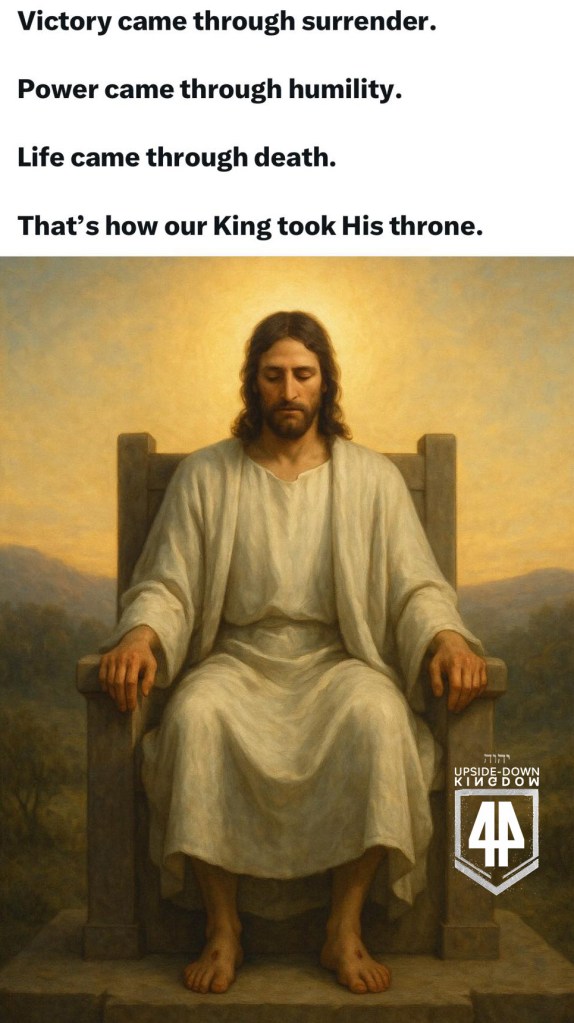
The power play of Calvinism is opposite to the under play of Jesus at the cross.

Every year at Easter I practically have an aneurism from all the poor (or I should say Calvinistic) theology from the pulpit and social media. So much of what is shared and taught from mainstream Christians is Calvinistic Reformed Theology, but usually the person sharing has no idea, and most of them don’t realize just how reformed their language is. A friend posted this image over Easter, and it got me thinking about it. I agree with him that Calvinism is based on ideas that seem opposite to the humility of Jesus to the cross. For instance, as he points out, Calvinism sees sovereignty through or by control, victory needing irresistibility, and salvation as something predetermined and unilateral.

  • Jesus emphasized victory through turning the other cheek or extreme surrender, this is referred to theologically as displaying “power under.” Calvinism is prefaced on the idea that God’s power is best shown through assertive dominance and total “power over.” Jesus’ life shows humility revealing that God doesn’t need to coerce to reign.
  • The very heart of Calvinism and its so-called “glory of God” is often defined by control, while the cross redefines glory as self-emptying love.
  • Jesus’ life through death shows that the cross was about love, restoration, and healing through self-sacrificial grace. Calvinism displays the cross as a legal hostage exchange but somehow Jesus gets away without actually paying anything and not having to serve any penal sentence. Calvinism frames this as if Jesus gives his life but then He somehow gets it back. They say it is such a great exchange but is really? 1 life for all of humanity? Wouldn’t anyone make that exchange if it were true. I think it greatly devalues what Jesus does through the cross. That sort of sounds like what we define as the world’s sense of trickery or thievery not honest sacrificial grace. This kind of purchase sounds more like a back-alley exchange than a picture of truth and unfailing love. Calvinism robs the beauty of Jesus’ mission.
  • Calvinism frames God as planning from the beginning of time to sacrifice Jesus as a debt to be paid. Jesus (who I will remind you is God in the Trinity) asks his father if there is any other way. This shows God uses what the world did to Jesus for unthinkable victory, He didn’t orchestrate it. To this note, some would say that Calvinism frames God as a “cosmic child abuser.”
  • From the beginning pages of the Bible God’s nature is described by His own decree as “merciful and gracious, slow to anger, and abounding in steadfast love [hesed] and faithful” Yet through the cross, Calvinism defines God by pouring out His wrath on His son, turning His face on Jesus as the cross, and the need to make a deal with the Devil. These seem at odds.
  • Calvinism communicates that Jesus was stricken by God at the cross and that God left Jesus at the cross turning His back on Him, a better theology shows God in perfect unity with the son as 2 Cor 5:19 assures us that God was in Christ reconciling the world to himself. God was pleased to heal Him. By Healing His son, raising Him from the dead He accomplishes something great, He heals the nations. 

Understanding the Biblical Lens of the Cross and the timeline of the Resurrection Holy Week as it pertains to Covenant and the atoning works of Jesus.

The most important story in history is the story of Jesus. Perhaps the most unique aspect of this story is that it has the power to significantly impact every person from the beginning of time until the end yet is also so counter cultural to humankind in the same timeless way. Very few Christians really understand the cross, the resurrection, and the ascension dynamics of the story even though they would all claim to have given their life to what it represents. That is strange to me. The other strange thing is that very few Christians can answer the question, “why did Jesus die on the cross for us?” or perhaps, “what did it accomplish?” This is called the atoning works of Christ and I will admit, it can be very simple, yet also complex. Expedition 44 did a 17 part series on the subject. My goal today is to spend a few minutes honing in on the topic as it relates to the Holy week. If you haven’t read the post on Passover and Palm Sunday, you should start there first.

You might also know that I have written on this topic similarly before, here are a couple of posts that have a similar target but discuss Easter from a different pathway than today’s post.

  1. https://expedition44.com/2023/04/08/the-problem-with-easter-theology/
  2. https://expedition44.com/2022/04/17/happy-easter-youre-a-few-days-early/

To fully understand the works of Christ at the cross we have to start with the Old Testament, there are seven major feasts within the year —four in the spring, three in the fall.1 They all have a couple of different names that throughout the scripture describe the same feast.

  • 1. Pesach (Passover), Mar-Apr
  • 2. Feast of Unleavened Bread*, Mar-Apr
  • 3. Feast of First Fruits, Mar-Apr, May-June
  • 4. Feast of Weeks* (Shavuot or Pentecost), May-June
  • 5. Feast of Trumpets (Rosh Hashanah), Sept-Oct
  • 6. Yom Kippur (Day of Atonement), Sept-Oct
  • 7. Feast of Tabernacles* (Sukkot or Feast of Booths), Sept-Oct

NOTE: *All of them are important and have symbolic ramifications for Christ and the church, but I want to highlight the three times a year the festival dealt with what came between God and His people, Covenant Reconciliation.

  • Passover was for individuals and families2
  • Atonement was for the communal body of Israel, the church, and Christ
  • Tabernacles is about regaining the 70 nations

Passover is meant to be pretty simple… it symbolizes a basic sense of salvation and freedom. Israelites applied the Passover lamb’s blood to the doorpost and lintel of their house. This blood was a very simple picture of blood that covered or atoned the door as a symbol to mark those that would be passed over by the grace of Yahweh. After the initial Passover of the Exodus, God’s people would remember Biblical Passover by celebrating in each home in the springtime. With a personal family sacrifice of as close to an unblemished lamb as the family could provide. In fact, the intention of the celebration of this feast is so simple that traditionally seder meals are primarily centered around educating the children of what should be of utmost importance to the family – their covenant devotion to the LORD. Sometimes I think we actually do a disservice when we attempt to bring more into the story than needed. God’s message has always started out with a very basic and simple message that can be understood by anyone.

After Noah’s flood, the ‘table of nations‘ in Genesis chapter 10 includes the 70 patriarchs who became the fathers of modern nations.3 But there is a lot more going on than this. If you prescribe to a Deuteronomy 32 worldview it gives a greater depth of understanding to why God wanted Israel to function as his ambassadors to regather the 70 nations that were essentially lost. Matt and I just wrote a book on this entitled. PRINCIPALITIES, POWERS, AND ALLEGIANCES: Interpreting Romans 13:1-7, 1 Peter 2:13-17, and Revelation 13 within a Deuteronomy 32 Worldview. Essentially at the tower of babel the nations are spread out and eventually lost, or turn against Yahweh. They will eventually need to be regathered, and God’s initial plan was for Israel to be the agents of reconciliation. This is why, during the week-long feast of Tabernacles, 70 bulls were sacrificed. Tabernacles is about God one day reconciling all nations back to Himself through his faithful people. Has that happened? Already but NOT YET. The ability came completely through the cross, but now as all of Israel, [we] are now the holy royal priesthood that is commissioned with this task. Even though we have been given everything we need delivered by Jesus through His death, resurrection, ascensions, throning and sending of the spirit to dwell in us His new Temple to the world; it is certainly an unfinished work in progress.

Leviticus 16 is about the Day of Atonement, and the yearly remembrance of the people of Israel -Yom Kippur. The plan for Israel was that every person should return to their intended “out of Egypt” anointed priestly calling…. But that never happened. That whole golden calf thing two weeks into the plan sort of changed the everything… MOSES ACTUALLY SWAYS THE HEART OF GOD HERE – But one of the results of such failure was that rather than an entire nation of priests, we then end up with just one person functioning in this capacity. Israel had one high priest, a person who speaks on behalf of the people. And represents God to the people. God would start with Aaron and hope to eventually redeem the entire nation and then the world through them. GOD SAID THAT THE PEOPLE NEED TO BECOME PURE– SET APART “HOLY LIKE I AM HOLY“.

God’s original plan seems to indicate that they would come out of Israel, be given the law and the land immediately while God provided a means of sustenance that would be “grapes as big as their heads” that required nearly no “work” from the people of Israel and would result in large financial desire from the rest of the world drawing people from everywhere to the promised land’s beauty flowing with milk and honey and the innate beauty of the people of the Lord. This would allow the people of the Lord to return to a life of less toil and walk beautifully with each other as they learn to keep and cultivate again giving way to a devotion of love in Yahweh and for the world. This would be the main directive of how the world would be regrafted. People would see the beauty, taste that it was good, and desire to have what the people of the Lord had. (You should start noticing how food ties into the picture of the goodness of God.) Yet what happens is nearly the opposite picture of this. Rather than walk beautifully with Yahweh the walk in the wilderness, rather than feast, they east manna. Israel continually breaks covenant, doesn’t ever possess the intended land, and resembles an image of utter brokenness rather than beauty. Even the world views them as ugly. Yet the Lord still sees their inner beauty and never loses His desire for them as His bride.

Yom Kippur is about purification and holiness before the Lord. It is about the path to holiness.

Yom Kippur, the day of atonement acts a bit like a spiritual spring cleaning. It is a yearly communal return to what they should be doing – returning to their destiny, their intended vocation to be Holy and represent the Lord as a combined people. Every part of the day is a reminder as to the character of Holiness in Yahweh with hopes of Israel following that picture or mosaic.

The priest purifies himself – The Bible gets real into this, it even talks about what kind of underwear he has to wear. There are two goats: and lots are cast over them.

Goat 1- is the purification offering, the basic intention is to cleanse the temple objects. But this is a bit of a reciprocal gift given back to God; it is Dance of Grace language. If you aren’t familiar with this concept, I would encourage you to understand the concept as I believe it is lost in our culture yet foundational to understanding God’s covenant love for us. My Book, This is the Way: Defining a Biblical Covenant Way of Life I clearly walk through the dance of Grace. We want to view grace as totally free, and it is in a basic sense, but as with any gift given, relationally there are expectations of reciprocity in friendship and covenant. Genuine love responds in an unbroken circle of devotion. That is what a wedding ring represents between a husband and wife which is our best picture and biblical analogy of what God’s covenant is extended to us as His people. I also want to point out that blood is not applied to anyone, it just cleanses the temple. The sacrificial goat is a gift that represents the people’s intent to live Holy before the Lord. If you don’t know why this is important, or why I would make this definitive statement, I would urge you to start with Heiser’s post on it.4

Goat 2 – The priest would take the cord used to lead the goats and put it on the head of the still live goat and essentially place the sins of communal Israel on it. The Laying on of hands is about setting something apart or consecrating it for a task. Tradition has it that the man appointed to the task would be a Gentile who had no connection with the people of Israel. No Jew would be crazy enough to want this job. There is some tradition surrounding the goat and a red (blood stained) cord. The Mishnah (Yoma 4:2, 6:8)5 says they would take a cord and it would be placed on the head of the goat and then use the cord to tie the curtain veil of the holy of holies.

The word for this second goat in Genesis isn’t the usual word in Hebrew for goat which is pronounced saw-eer but in English gets translated most often as the scapegoat. In Hebrew the word is ahzahzel. Ahzahzel literally means  “taking away” in Hebrew. Ahzahzel is a picture of everything that the Israelite people have done that is contrary to Gods ways – The ways of the world. So, sin, the forces of death, are removed from the camp. God is rescuing his people from the forces of death. This is still Purification language. This is all about resetting sacred space (getting back to Eden).

I need to take a moment and give you a better theology before we move on. You likely need to deconstruct a bit before you move on. Definitions are important here. You often here of the Substitution and Transfer of Sin being transferred to the second goat. Some of this is backread into the story and we usually take more liberty analogously then we probably should. The goat isn’t a substitute for anything. The sin simply needs to be removed from the camp. The goat doesn’t really serve as a substitute for anyone. Those that hold to a substitutionary view of atonement have the goat taking all the sins of the people, but this isn’t really a great analogy because the goat just goes back into the world, It isn’t sacrificed and it doesn’t truly get rid of the sin. It doesn’t really even cover the sins as it has no power to that. Jesus later will do what the goat can’t do which is to make atonement for the sins of the world and wash the slate clean. But this is still purification language. To make any more out of this become poor theology. You often here things like “you and I put Jesus on the cross” within substitution theories of atonement. That isn’t logical. In the same way that I didn’t eat the apple, I didn’t put Jesus on the cross. I don’t “NEED SALVATION” because I am a wretched person that inherited someone else’s guilt or original sin that doesn’t deserve to live or worse deserves to be tortured forever and ever. Sometimes this is even presented because I didn’t accept a free gift or something; even worse would be to frame it as if I didn’t win the cosmic lottery and now have to be tortured forever. That kind of logic is as corrupt as the world we live in. That certainly doesn’t match God’s own description of himself as loving and compassionate. It sounds like a monster god. There is a better theology. So many people have left the faith because this kind of Calvinistic theology doesn’t add up with the pages of the Bible. All of those are poor ways of considering the cross and toxic to the character of God and the plan of Jesus for your life. I need and want Jesus because I am broken and unholy. I need salvation because I desire what God offers through a covenant here and now and in the days to come. There is so much more to the beauty of what Jesus did for me through the cross, resurrection, and ascension. In one sense Jesus covers the sin that I can’t, He is THE mediator for me (and if we define that as a substitute than I get that); but viewing substitution as some kind of exchange with a terrorist or to position this as transactional with God simply doesn’t bear the heart of God. We can frame this better. Jesus would encourage us to think less about what we are saved from (annihilation – death) and more about what we are saved for here and now and into eternity.

Their is also a sense that the goat carries of the sin in a sense of removal and separation from God. Psalm 103:12  says, “As far as the east is from the west, so far has He removed our transgressions from us.” Interesting this is a pre-cross passage because at the point it was written I would not agree with the statement. at that point the goat was only a few miles out of the camp, not as far as the East is from the West. Often in scriptures we get the writers personal narrative, which in this case is David’s and sometimes His theology seems pretty far off. Was he writing prophetically? Perhaps.

Atonement and Reconciliation: The sending away of the live goat was an integral part of the atonement process, signifying reconciliation between God and His people. The removal of sin allowed for a restored relationship with God, highlighting His mercy and grace in providing a means for atonement.6

Lastly, there is obviously a foreshadowing of Christ’s Sacrifice: From a Christian perspective, the live goat serves as a foreshadowing of the ultimate atonement through Jesus Christ. Just as the scapegoat bore the sins of Israel, Christ bore the sins of humanity. Hebrews 9:28 reflects this fulfillment: “So also Christ was offered once to bear the sins of many; and He will appear a second time, not to bear sin, but to bring salvation to those who eagerly await Him.” To be clear Christ “bore” these sins, but I also want to say that we often get “off” by taking this too far. Christ’s work came at a great ransom in terms of an Exodus motif and once and for all declaring freedom; but similar to the Exodus there is no price and this is not transactional. Jesus wasn’t paying the father or Satan and to view it in this way would again be making a doctrine out of a very simple and basic scriptural analogy that was never the intention of the text, nor a faithful reading of it. Do we deserve the torture that Christ went through? (substitutionary atonement). “Unfortunately, this theory has held captive our vision of Jesus, making our view very limited and punitive. The commonly accepted atonement theory led to some serious misunderstandings of Jesus’ role and Christ’s eternal purpose, reaffirmed our narrow notion of retributive justice, and legitimated a notion of “good and necessary violence.” It implied that God the Father was petty, offended in the way that humans are, and unfree to love and forgive of God’s own volition. This is a very untrustworthy image of God which undercuts everything else.”7 If this is the first time you are reading this, I urge you to take on the view that instead of our substitute, Jesus functions as our representative ad then asks us to do the same for him. That is a better picture of the covenant circle formed. Brian Zahnd has some good framework for thinking better.8

The binding of Isaac is one of the most difficult stories in the Bible to reconcile. You better read this. 9 But as it pertains to this story, the actual binding is key to atonement because it references what is important to us. Matthew 18:18 connects here. What are you attached to more than the LORD? Are you entangled? The cord is a continual reminder that humanity is bound to the world. When Jesus comes, we are no longer bound to the world or the principalities. Somehow Jesus regains the keys over death. This basic concept is called a Christus Victor model of Atonement. As I think their is an element of truth to each of the atonement theories; I think we take most of them too far in making doctrines out of simple textual analogies. That isn’t the intention of the text in a faithful reading. Yet Christus Victor, a theory of atonement that emphasizes Christ’s victory over the powers of sin, death, and Satan is readily accepted by everyone. This view sees the cross and resurrection as triumphant events where Jesus conquers evil forces and liberates humanity from bondage. No one disagrees with this statement. Every other view of atonement seems to conflate the cross than simply supply a textual anology. I might recommend Scot McKnight’s book a community called atonement to start thinking better.10

So now let’s fast forward about 1000 years. As mentioned, I wrote a whole post on the Triumphant Entry and Palm Sunday here. So, I am going to keep this part brief…

There are two the triumphal entries. Every year at Passover Pilate, the governor of Judea, would march into the city from the West (THROUGH THE GREAT GATE) with full military might on a war horse. His parade was a show of force to remind the people of Jerusalem that Rome was in charge.

Jesus [LIKELY] came into Jerusalem at the exact same time from the EAST as the Passover lambs were brought in through one gate of the city, the FARM ENTRANCE -Jesus came in humbly riding on a donkey (which strangely was a sign of kingship that was offering peace not war) as he mourns over the state of his people. There are some other things going on, but I want you to key in on the Humility of Christ in this event. That is the main or primary intention of the texts. Power under rather than power over. The opposite of the world.

Then at the last supper… Jesus washes his disciples’ feet… even the feet of those how would deny him and betray him. Remember when Peter says, “you shall never wash my feet.” Jesus answered, “Unless I wash you, you have no part with me?” (JOHN 13:8) We seem to regularly celebrate the remembrance of communion but forget that in the same breath Jesus urges us to also regularly wash feet per 1 Corinthians 11:23-29. Interesting how modern Christianity seems to pick and choose what ways they are willing to follow Christ’s examples and commands.

Jesus then takes bread and breaks it saying that this is his body broken for them and takes the cup saying that this wine is the blood of the new covenant for the forgiveness of sins. This is a far bigger “remembrance” than what typically is the scope of our tiny cups and crackers at church. The intention was that it was to be remembered as a banquet that symbolized the feasts, and all of the richness of the covenant faith walk. What we were to remember was our covenant allegiance. To be clear the upper room was not a Passover dinner. I will go on to show you this, but you also might want to read this article which I agree with and is an excellent source slightly taking a different view on the same discussion.11

They progress to the garden on the Mount of Olives to pray… Jesus walked further into the garden where he knelt and fervently prayed Abba, Father, all things are possible for You. , Take this cup away from Me; “Father, not my will but thine will be done.” The word Abba is an Aramaic word that means “Father.” It was a common term that expressed affection and confidence and trust. Abba signifies the close, trusting intimate relationship of a father and his child.”12 However, let’s not get too carried away with the term Abba, there is nothing magical about it; it simply shows the confidence and trust that Jesus had for His father and is a picture of what we are to posture similarly toward our father.

Jesus returns to his disciples and while speaking with them a mob of temple guards13, and Jewish Religious Leaders arrive being led by Judas Iscariot. With a betrayer’s kiss Jesus is taken before the Sanhedrin and Caiaphas the High Priest in the middle of the night.

In the early morning a bruised, battered, and dehydrated Jesus who is exhausted from sleep deprivation is escorted across Jerusalem to Pontius Pilate. Pilate tries Jesus and finds no fault but when he hears he is Galilean he sends him to Herod. Herod and his men mock Jesus with great contempt and cloth him in a fancy robe and send him back to Pilate unpunished. Pilate ultimately tries Jesus again and condemns him to appease the Jewish leaders and in response to an inconsistent crowd or what our reformed friends like to call a kangaroo court.

Turn to John 19. Verse 15, When the text says, “the crowd shouted,” what did they shout? “Crucify him?” No, first they shout, “Take him away,” then they shout, “Crucify him!”

John uses the words “take away” in John 1:29 and Here. John is saying, Hey, by the way, there’s a connection. The author of Hebrews makes the same connection in Hebrews 10:11. Remember we are reading the translated Greek of the Hebrew and Aramaic they were actually speaking.

Verse 16, “Finally Pilate handed him over to them to be crucified.” Jesus is led outside of the camp, the city of Jerusalem, by Gentiles. The crowd chanting, take him away or likely, “ahzahzel, ahzahzel” and then a Roman Gentile leads him outside of the camp, Jerusalem.

Jesus was then flogged.  The Roman floggings are unimaginably brutal they consisted of 39 lashes. Roman whip was a short whip with several heavy leather thongs. 14

The Roman soldiers then mockingly as a great joke proclaim Jesus is king. A robe is then thrown across his shoulders; a stick is placed into his hand to represent a scepter. As a final piece a crown is fashioned out of thorns and placed across his brow and pushed into his scalp causing a copious amount of bleeding and blood loss.15 Remember the red on the head of the Lamb?

Next is the 650-yard journey from the fortress at Golgotha.16 We don’t know the exact path. The Stations of the Cross is a path in modern Jerusalem and a devotion in the Catholic Church that commemorates the events leading to the crucifixion of Jesus Christ. However, there are some controversies and debates about the content and authenticity of these stations. Some argue that they are based on Scripture, while others believe they include non-biblical events. To some this is misleading. I always prefer to just stick with scripture not man’s concoctions. A new word would later be invented to describe the worst pain the world had ever witnessed… the word excruciating.17

The crucifixion now begins. Simon is now ordered to place the crossbeam on the ground and Jesus is quickly thrown backwards onto the cross with his shoulders against the wood. The soldier drives a heavy square wrought iron 9” nails through the hands (I believe is most scripturally accurate) and deep into the wood.18

It was during this that he uttered the seven short sentences:

As Jesus agony builds, with a loud voice He echoes the text from

JESUS QUOTES PSALM 22

Jesus was quoting the first line of Psalm 22, which was an especially beloved psalm by the Jews of this time. All of the Jews looking on would know what was going on. Jesus often taught using Remez and this is no different.19 The Psalm begins with the psalmist believing that God has forsaken him. This is defined in the psalm by God’s silence, not his abandonment. There are two voices in Psalm 22. Unfortunately, this is pretty common in scripture, but people fail to follow the poet genre or even realize what is happening. Isaiah 53 echoes the same type of two voice narrative. We have one voice saying what they think and then another one later that speaks clarity. Sometimes in scripture we read a narrative and never get the clarifying second voice of God. This can be tricky. We often want to read every passage as “thus saith the Lord,” but we would be mistaken and lead to poor theology. I am so thankful for Job because we get the first voice thinking His friends are giving “GODLY” counsel but the at the end God (second voice) actually says none of that counsel is of me. This is similar to the way we should read Psalm 22 and Isaiah 53.

Next the psalm says “I am a worm”… in Hebrew this is the same word for scarlet. Jesus was covered in blood, scarlet, some see this as a picture of the suffering servant of Is 53. Continuing, this prophetic psalm states he was despised, bones out of joint (but not broken), hands and feet pierced, clothes divided by lots…

Verse 24 says God does not abhor the afflicted (Jesus) and has not hidden his face and has heard the cry for help…. I want you to get this….  I do not believe that God has not forsaken or abandoned Jesus! The trinity isn’t split here. This isn’t God turning His back. As hard as it is to read and witness it is actually part of a beautiful redemptive plan. God didn’t turn his back and Jesus and He won’t turn His back on you.

This is a completely different story than what people wanted or were looking for. It seems backwards or upside down. Christ leading by humility not power. But that is the way of Jesus.

Jesus, though He is suffering, has His mind set on the victory at the end of this psalm. The saving deed that brings the reconciliation of God and the nations. Remember in the garden, the table of nations and the feast of tabernacles? “Not my will but yours be done.” Christ knew that dying was what it would take to win the victory and when he was arrested in the garden, He stated that he could call legions of angels to save him if he wanted to and God would send them… God was not forsaking Jesus.20

NOTE: I think there is a valid argument for the splitting of the trinity but I don’t personally think it is the best explanation. I do however greatly respect Greg Boyd who constructs it this way.21

2 Cor 5:19… assures us that God was in Christ reconciling the world to himself. The perspective of the crowd in IS 53:10 is that we perceived that he was stricken by God (that’s what the world thought.) But the true perspective was that God was pleased to heal Him. By Healing His son, raising Him from the dead He accomplishes something great, He heals the nations. God takes the first step in reclaiming the nations and through the sending of His spirit at Pentecost will now partner and entrust us to be his physical agents of reconciliation.

Jesus dies as the Passover lambs were being slaughtered as our Passover lamb of the new exodus delivering us from the Spiritual Powers and rescuing us from enslavement to Sin by defeating Sin in the flesh.

  • JESUS FULFILLS The Day of Atonement: The purification, the cleansing of sacred space, becomes the sacrifice and the scapegoat, and transfers himself to be the forever high priest.
  • JESUS FULFILLS The Passover lamb by dying for everyone giving us unending freedom and reinstating our place in partnership with him in the royal priesthood of believers. We will soon become the temple of the Holy Spirit.
  • JESUS FULFILLS The feast of Tabernacles so that the nations may be regathered unto Him by us, manifested as His hands and feet.

The tearing of the veil separating the Holy place and the Most Holy place happened simultaneously as the death of the Passover Lamb. Remember that cord that came from the head of the goat that then year after year tied the curtain at the holy of holies? The veil was torn, and the cord fell to the floor.

Fifty days after the resurrection of Jesus Christ from death and the grave, and ten days after He ascended up into heaven to sit at His throne, a great event took place, the equal of which the world has not witnessed since.22 This event is designated in the Bible as “the day of Pentecost” (Acts 2:1) when Jesus sends his spirit to indwell every believer finishing the Passover stover.

He transforms the body of each believer into the New Covenant temple of the Lord. There is no longer a need to travel to the temple because Hebrews tells us that we are the temple. In fact, to say that we want to build another temple implies we don’t trust or believe the work of Jesus at the cross and Pentecost commissioning a once and for all work in us. Therefore, to want to build another temple would be a slap in the face to the atoning work of Christ. Traditional Jews want to build another temple because they don’t see Christ as the Messiah and his finished work.

Hebrews 4:14 14 Therefore, since we have a great high priest who has ascended into heaven, Jesus the Son of God, let us hold firmly to the faith we profess. 

What does this mean? I Peter 2:9 makes it clear that we, ALL OF ISRAEL23 are a New Covenant Priesthood. You probably get royal, Heirs of the Christ. Alot of poor theology has been built on the word “chosen” as the elect here. The elect is Biblical. We can’t just remove it because we don’t like what reformed theology has done to the term election, particularly in an unconditional sense. Brian Zahnd gives us about the most simple understanding I have seen.24 Allow me to paraphrase. Calvinism makes the mistake of confusing the election of Israel for a vocation with the election of an individual for salvation. This is a tragic mistake fraught with enormous implications. Jesus Christ is God keeping covenant with the seed of Abraham. Jesus Christ meets the covenant obligations of both God and man in himself. All things are summed up in Jesus Christ. Election of one (for salvation) necessitates reprobation (election for damnation) of the other. I don’t think we need to go much farther. A sovereign God’s ways are higher than ours, but rational superiority is not the point of Isaiah 55. God’s ways embrace a mercy that we can’t imagine and don’t practice. If you follow Aristotle’s influence in Christian theology, you will convert Aristotle’s terminology to words like omniscient, omnipotent and omnipresent, but your god will also be immutable and impassible25 (you can look that one up). Can He see the future like a crystal ball? (That seems to be what the scripture warns as divination so I kind of doubt it. God’s character doesn’t go both ways unless you’re a Calvinist.) Does He see many options such as a marvel Dr. Strange superpower? It is fun to debate but we might never know the fulness of this until the heavens. Does he have the power to change the future? We see that He does throughout scripture, isn’t that partially what prayer is about? God’s order seems to be a bit of an algorithm based on the devotion to his precepts. Is it a retribution principle? At times it might function that way, but again, we will never have the un-adulterated eyes of God as long as we are on this earth. We are just asked to fully place our trust in him, not once but a complete sense of trust us never ending.

The traditions sometimes get the calendar wrong. He was resurrected in three days and most likely died on Thursday not “GOOD FRIDAY.” as tradition has it.

Jesus’ last meal was Wednesday night, and he was crucified on Thursday, the 14th of the Hebrew month Nisan. The Passover meal itself was eaten Thursday night, at sundown, as the 15th of Nisan began. Jesus never ate that Passover meal. He had died at 3 p.m. on Thursday afternoon. (He was the Passover meal).

So, have you been lied to all your life about Good Friday? Probably, but not intentionally and this is still up for debate in my mind. Here is another consideration. Could Jesus have been crucified on Friday? It is truly hard to reconcile this view with the scripture, you’re going to run into a good deal of harmony problems. The primary problem with this is that Jesus said He would spend three days and three nights in the grave (Matt 12:40). Many historians rightfully point out that by Jewish reckoning, any portion of a day was considered the whole day, but this explanation still does not get us to three days and three nights. To take this view essentially has you saying that Matthew was wrong. I don’t think that is a good solution. There are other problems with that view, but honestly, I think that one should be enough for you to broaden your horizons and consider stepping away from traditional views if they aren’t accurate and explore more exegetical considerations. Below is what I think is the closest chart to try to see this through the lens of a traditional good Friday crucifixion, but as I have said, its problematic.

A better view for many reasons is that Christ dies on Thursday not Friday. As Jews know, the day of Passover itself is also a “Sabbath” or rest day — no matter what weekday it falls on. In the year 30 AD Friday, the 15th of the Jewish month Nisan was also a Sabbath — so two Sabbaths occurred back to back — Friday and Saturday. Matthew knows this as he says that the women who visited Jesus’ tomb came early Sunday morning “after the Sabbaths” (Matthew 28:1). I made this point earlier, but here is another post that thinks similarly that is also worth a read. From a chronological standpoint, it should be noted that the crucifixion took place on a Thursday, not a Friday, and that the year of the Crucifixion was 30 CE. That year can be calculated from Daniel’s Seventy Weeks prophecy, which requires that Jesus’ ministry began in 28 CE. Once the start of Jesus’ public ministry is confirmed as beginning in the year 28 CE, it is a simple matter of calculating the three Passovers mentioned in the Book of John, the first occurring in 28 CE, the second in 29 CE, and the third being the Passover of the Passion Week in 30 CE, to verify that the Crucifixion took place in 30 CE.26 This is not the time or place to get into this but there’s a lot of significance within the scripture of the two Sabbath‘s.27

ON THE THIRD DAY… Sunday (The first day of the week) Christ had risen!!!

Okay, I don’t preach much. But if you know me at all, I am quite different from most theologians in that what drives me is ministry. I believe that my study and teaching is life changing and will deepen your covenant devotion to the Lord. I believe this. So, stick with me for a rare moment…

God knows about the junk. God knows about the addictions, the abortions, the affairs, He knows about the lying, the deception. He knows about all the ugly and He still calls you His royal chosen priesthood. Your worth is in Jesus, your value is in the resurrection, you are a royal holy chosen priesthood.

It’s freedom in Him forever. This picture God gives us—take that goat and send it out because it’s gone and it’s not coming back. 

His death sets us free from death… Oh death where is your sting? You have been swallowed up in victory! … Humanity forsook God and lost access to life and our vocation, but God showed his love for us in this that while we were still sinners Christ died for us. He died upon a tree so that we could have access back to the tree of life. This life is found in Jesus… in the new covenant in his body and blood. His death is the new exodus that ends our exile and brings us back into the glory and relationship we were created for.  

Everything we need was accomplished through the death, resurrection, ascension and sending of the spirit into us. We are the hands and feet of Jesus.

Jesus, help us to take up our cross daily and die to ourselves so that we can live for you, our King.

Affirm the person that Jesus is calling you to be right here right now, take the bread and the cup and be redeemed once and for all.

  1. https://hebrew4christians.com/Holidays/Introduction/introduction.html ↩︎
  2. https://standinfaith.org/passover-and-atonement-whats-the-difference/ ↩︎
  3. https://www.thetorah.com/article/the-table-of-nations-the-geography-of-the-world-in-genesis-10 ↩︎
  4. https://drmsh.com/part-3-bloodless-atonement-and-new-testament-justification/ ↩︎
  5. https://www.bing.com/search?q=Yoma+4%3A2&cvid=462530a3e7cc42dd884ade154ee5a3ec&gs_lcrp=EgRlZGdlKgYIABBFGDkyBggAEEUYOdIBBzMxMmowajmoAgiwAgE&FORM=ANAB01&PC=SMTS ↩︎
  6. https://biblehub.com/topical/t/the_symbolism_of_the_live_goat.htm ↩︎
  7. https://cac.org/daily-meditations/substitutionary-atonement-2019-02-03/ ↩︎
  8. https://brianzahnd.com/2015/04/jesus-died-us-god/ ↩︎
  9. https://expedition44.com/2024/05/09/abraham-sacrificing-issac/ ↩︎
  10. https://www.amazon.com/Community-Called-Atonement-Living-Theology/dp/0687645549 ↩︎
  11. https://goodnewsforjews.org/2023/07/the-last-supper/ ↩︎
  12. https://www.logos.com/grow/what-does-abba-really-mean/?msockid=206e9552481f69af0ce286c8497d6812 ↩︎
  13. https://levaire.com/who-were-the-soldiers-who-arrested-jesus-john-18/ ↩︎
  14. https://bible-history.com/past/flagrum#google_vignette ↩︎
  15. https://cbn.com/article/suffering/physicians-view-crucifixion-jesus-christ ↩︎
  16. https://christianpure.com/learn/jesus-cross-journey-distance/ ↩︎
  17. https://www.etymonline.com/word/excruciating ↩︎
  18. https://www.compellingtruth.org/nails-hands-wrists.html ↩︎
  19. https://www.thattheworldmayknow.com/remez ↩︎
  20. https://opentheo.org/i/2549037389091850683/psalms-22-23-24-15 ↩︎
  21. https://reknew.org/2013/05/when-god-abandoned-god/ ↩︎
  22. https://bible.org/article/pentecostal-experience-study-acts-2 ↩︎
  23. https://www.patheos.com/blogs/jesuscreed/2014/02/06/nt-wright-paul-israel-and-the-church/ ↩︎
  24. https://brianzahnd.com/2009/08/election/ ↩︎
  25. https://skipmoen.com/2010/11/a-reasonable-argument/#:~:text=%E2%80%9CFor%20my%20thoughts%20are%20not%20your%20thoughts%2C%20neither,and%20My%20thoughts%20than%20your%20thoughts.%E2%80%9D%20Isaiah%2055%3A8-9 ↩︎
  26. https://goodnewsforjews.org/2023/07/the-last-supper/ ↩︎
  27. https://gracethrufaith.com/ask-a-bible-teacher/the-week-with-two-sabbaths/#:~:text=There%20were%20two%20consecutive%20Sabbaths%20that%20week%20that,the%20Lord%E2%80%99s%20body%20off%20the%20cross%20before%20sundown. ↩︎

THE NEW YEAR & JEWISH ROOTS

The Jewish New Year (Rosh Hashanah) in 2025 will begin on October 2 and end on October 4.  The American New Year (New Year’s Day) in 2025 will fall on January 1.

Rosh Hashanah (Hebrew: רֹאשׁ הַשָּׁנָה‎, Rōʾš hašŠānā, lit. ’head of the year’) is the “observed” New Year in Judaism, (although as I will get to, it is more complicated than that). The biblical name for this holiday is Yom Teruah (יוֹם תְּרוּעָה‎, Yōm Tərūʿā, lit. ’day of shouting/blasting’). It is the first of the High Holy Days (יָמִים נוֹרָאִים‎, Yāmīm Nōrāʾīm, ‘Days of Awe”), as specified by Leviticus 23:23–25. Current tradition has Rosh Hashanah beginning ten days of penitence culminating in Yom Kippur, as well as beginning the cycle of autumnal religious festivals running through Sukkot.

Rosh is the Hebrew word for “head”, ha is the definite article (“the”), and shana means year. Thus Rosh Hashanah means “head of the year”, referring to the day of the New Year. But Rosh Hashanah itself can’t really be found in the Biblical text itself.

Abandoned old spooky church in Vergalijo (Navarre, Spain)

In ancient times, there were four different New Years on the Jewish calendar. Each had a distinct significance:

  • The first of the Hebrew month of Nisan, the New Year of Kings, was the date used to calculate the number of years a given king had reigned.
  • The first of the Hebrew month of Elul was the new year for tithing of cattle, a time when one of every 10 cattle was marked and offered as a sacrifice to God.
  • The first of the Hebrew month of Tishrei was the agricultural new year, or the New Year of the Years.
  • The 15th of the Hebrew month of Sh’vatknown as Tu BiShvat, was the New Year of the Trees.

Although the Torah refers to Nisan as the first month of the Jewish year, the first day of the month of Tishrei emerged as what we now know as Rosh HaShanah. This is an example of something that isn’t really Biblical but became the norm for some reason.

So, as you will see the celebrated New Year wasn’t really as biblical as it became traditional. (Remember the fiddler on the roof “TRADITION!!!”)

This started when the Babylonians, among whom the Jews lived under the captivity that began the diaspora which then some jews associated as a “Day of Judgment” each year to which the Babylonians believed the “gods” assembled in the temple of Marduk to inscribe the destiny of every person. Well, what is a bit crazy is that the Jews adopted these ideas and borrowed the elements to shape their New year, Rosh HaShanah believing that Yahweh also acted in the same way choosing the good and wicked (yes making God the author of evil); and that for 10 “in between” days you could repent before the book of life was sealed for the new year. Eventually this is going to become the reformed view of God actually ordaining the lives of those who would win the cosmic lottery in a sense of being “chosen” or predestined and laced to a lot of PSA beliefs. (We would see predestination as God simply seeing ahead of time the consequences of free will choices but would agree it is also more complicated than that.) Does it sound messed up, rather un-Biblical? Yea it is! Even though according to the Torah it was NOT the beginning of the year, it officially became the Jewish New Year because of this traditional thought as well as other thoughts such as believing that the world was created on this day (also not of biblical origin.) In the second century the Mishnah basically made this official. It was actually a very visible picture of 2nd temple Judaism walking farther away from the scripture and God than being rooted in Him.

Getting back to the Biblical text…

So the original intent of the New Year was that it would be a day to humble our souls. Imagine that. Humility is a forgotten word in both Hebrew and American culture.

But when the rest of America celebrates the New Year it isn’t a biblical date either! But we can still own this sort of thinking for Jesus. For example, by many reasons, traditionally Yom Kippur is the most solemn day of the year. It is a day of fasting, repentance, self-reflection, and a return to holy thinking. Those are GREAT things we should want!

The root word used in Leviticus is kāpar which has a glossed (regularly known as or thought of but not necessarily correct) meaning of “to cover,” or “conceal” which is also tied to reformed theology. Some have (IMHO) wrongly asserted that the word then would mean to “cover sin” as such to pacify the wrath of the deity in this case Yahweh by making atonement such as I explained the Babylonians believed about the gods and the temple of Marduk. It is suggested then that sin was covered until Christ could rightly atone. Sounds good, and likely what you might have heard at church, but more traditionally based on the gods of the exile than biblically accurate. There is very little evidence for this view. As many scholars have pointed out, the connection is at best weak as the Hebrew root is not used to mean “cover.” To say it correctly, the Hebrew verb is never used in the simple or Qal stem, but only in the derived intensive stems. These intensive stems often indicate not emphasis, but merely that the verb is derived from a noun whose meaning is more basic to the root idea.[1]

Ok so what does that mean or what is a better view? (Kippūr) is the word for Atonement that is also used today in the name of the Jewish holiday yom kippur “day of atonement” (also associated with a Biblical new year) which was the tenth day of the seventh month, Tishri. This solemn day was the only day of fasting prescribed for Israel. It was celebrated by a special sin offering for the whole nation. On that day only would the high priest enter within the inner veil bearing the blood of the sin offering (cf. Heb 9:7). A second goat was released as an escape goat to symbolize the total removal of sin.[2]

Jewish tradition ultimately adopted here a synthesis (not always elegant) of the two views.  Throughout the Day of Atonement, the liturgy bemoans the burden of sin we labor under, and our inadequacy to measure up in God’s sight.  But at the end of the day, in the Ne’ilah (Closing ) Prayer, the burden of sin is gone; the Jew is confident of having achieved forgiveness, by a combination of human repentance and divine mercy, and proceeds forward refreshed, optimistic about our power to do good in the world under God’s guidance.”[3] In other words, despite some terrible history, the final idea of the Hebraic New Year comes back to be pretty Biblical. God has always forgiven. (We actually didn’t need Jesus on the cross for that part contrary to many people’s opinions, but the cross accomplished a slew of other things we did need. God has always offered complete forgiveness.)

Most of you know that X44 has done a good bit of research in this area. Here is a link to our video series on atonement:

If you want to read a better version I would suggest this:

Well first let’s get the word right.

Leviticus 16 – gives us the instructions for the day of Atonement. Notice in Lev 16:2 is the noun for atonement (a place not an action).

Aaron must make a burnt offering (the gift) and a sin (purification or decontamination) offering before entering the Holy place. So, there is a gift to God to say, “Hey I want to spend some time in your presence” and a purification offering.  There is no wrath debt or substitution to be seen here.

2 goats are selected for Israel: The sin offering goat and the goat that will “bear the sin”. Lots are cast to see which goat fulfills which role. 

The “Sin” offering goat

  • Both goats are called a sin/purification/decontamination offering and the reason is that is that the lots have not been cast yet over these two. So, since we don’t know yet which ones going to be the actual sin offering, they’re both referred to that way. We don’t know which one’s going to be for the Lord, which one was to be for azazel. 
  • a better way to translate “Atonement” here is to make expiation with it, or to make a purging with it. The whole notion of the sin offering is decontamination and purification. It is a reset back to holiness. (starting to see new year implications yet?)

Both words presuppose that there is a barrier that must be removed to overcome sin. We need to look to see what is acted upon in order to translate KPR correctly. As we noted atonement language means to cover or purge but is the issue with humans, God, or sin?

  • Propitiation: means that the barrier lies within God himself; thus, it is usually interpreted as an action to satisfy divine wrath against sinners. This was the pagan concept of sacrifice, but Christians who hold to this say that God’s justice must be exercised, and sin must be paid for in order to receive forgiveness and the aversion of God’s wrath. (This is PSA language)  
  • Expiation: means that the barrier lies outside of God, within humankind and/or a stain they leave on the world (sacred space), it is often interpreted as an action aimed at removing sin. To cover, wipe, or to purge sin. 
  • Mercy Seat Translation-This is a common translation, reading the ESV, this is not a good translation although it’s a traditional one. More literally, if atonement (kapper) means to purge then kapporeth (noun) should be the place of purging. In other words, we would really focus on the location not the result, because calling it the mercy seat is sort of reading the theological result into the lemma. That’s why it’s not a great translation. The place is the cover of the Ark in the Holy of Holies which is the footstool of God’s throne. This is a throne room scene. 

  • The propitiation view (punishment). The goat bears the sin and wrath. 
  • The azazel refers to the location (the desert) which theologically if the place where sin and evil lives or belongs (not in God’s camp)
  • Azazel is a proper name. This was the leader of the fallen angels/demons in 2nd temple Judaism. The goat transports the sin to Azazel. 
  • Because the goat was bearing the sin (carrying) it could not be a sacrifice because God only gets spotless pure animals (what does that do for your New Testament theology of the cross if Jesus was imputed our sin?)
  • One more issue here is the laying on of hands and confessing Israel’s sins over the goat. Some argue that this is the connection that all laying on of hands must equal that the animal is bearing sins and the laying on of hands is the transfer. In this instance this is true. But as we saw in every instance of hand laying it is not about sin, so we cannot jump to conclusions when we deal with other sacrifices that as we saw don’t deal with that concept. Laying on of hands is about setting something apart or consecrating it for a task. 

Atonement Conclusions

  • Goat 1- the purification offering, is to cleanse the temple objects. Blood is not applied to anyone. 
  • The scapegoat is sent to Azazel. So, sin, the forces of death, are removed from the camp. This connects God is rescuing his people from the forces of death. 
  • Neither of these goats are punished. It’s about expelling or purging God’s space (so Expiation!). The first goat (the one that dies) is more about cleaning the throne room of the stain of sin. The scapegoat doesn’t get killed (he’ll probably die in the desert). 
  • This is all about resetting sacred space (getting back to Eden)

New Testament 

The Exodus is the primary motif of what is going on at the cross, but the Biblical authors do see the day of atonement being fulfilled in Jesus. We see Jesus as all 3 actors in the Day of Atonement: The purification offering goat, the scapegoat, and the priest. 

1 John 3:8- Christ came to destroy the works of the Devil. Both Exodus and Day of Atonement deal with this concept. 

Romans 3:21-26, 1 John 2:1-2, 1 John 4:10, Heb 13:11-12, Matt 27:28-31, Heb 9:18-26, Heb 10:8-17

  • Addressing PSA notions of the Day of Atonement:
    • Neither goat is taking the place of anyone
    • Neither goat is getting wrath poured out upon them
    • The goat doesn’t make a payment for forgiveness but is the one who carries it away. Remission. 
    • Expiation (defined as purging) is the action taken- like the goat taking the sins back to where they belong. Not only does he take it back to where it belongs, he defeats it for good! 
    • Sin is seen as the forces of death and they have no place in sacred space, Jesus removes them by his blood and carries them out of the camp. Dissolves them- His blood is the ultimate ritual detergent. 
    • Jesus is the place where heaven and earth meet (the “mercy seat”) he’s not the propitiation to satisfy God’s wrath.  This is a rescue of humanity and the world from the powers 

The Day of Atonement was all about resetting holiness in sacred space and not about appeasing God’s wrath. It was about purging the sin from God’s presence 

Whatever date we want to associate as the New year, the idea biblically has always centered around a return to TOV – the way that God intended. Jesus shows us the way back after much brokenness to what God asks of us. To be TOV. To reflect on how to live in Holiness, Devotion, and Tribulation. How to Live in the Joy that we were created for. To bring Heaven to earth. To Celebrate Life here and now in the name of Jesus. To return to what is Holy and who we were made to be – a Set Apart Holy Royal Priesthood.

[1] Harris, R. L. (1999). 1023 כָפַר. R. L. Harris, G. L. Archer Jr., & B. K. Waltke (Eds.), Theological Wordbook of the Old Testament (electronic ed., pp. 452–453). Chicago: Moody Press.

[2] Ibid.

[3] Gordon Tucker, in Abraham Heschel, Heavenly Torah as Refracted through the Generations (ed. and trans. by Gordon Tucker, Continuum International Publishing Group, New York, 2007), p. 169.