Reimagining Giving: Tithe, Firstfruits, and Generosity from Torah to New Creation

Abstract

This article reexamines biblical giving through a layered hermeneutic integrating Ancient Near Eastern (ANE) backgrounds, canonical development, and socio-rhetorical dynamics. It argues that Old Testament tithing is best understood as an agrarian, land-based covenant economy oriented toward cultic support, communal joy, and social justice, while the New Testament reframes giving as voluntary, grace-participation in the self-giving life of Christ. In view of the frequent modern reduction of giving to a universal ten-percent monetary rule, this study proposes a covenantal-theological synthesis that preserves continuity of generosity while respecting covenantal discontinuity between Torah’s land legislation and the church’s Spirit-formed koinonia.

Introduction: Covenant Economy and the Problem of Reductionism

In many contemporary ecclesial contexts, “tithing” is presented as a universal and binding financial obligation. The rhetoric often appeals to Malachi 3, to Abraham’s “tenth,” or to generalized claims that “God’s people have always tithed.” Yet the biblical data, read in its literary, historical, and canonical contours, resists simplistic transposition of Israel’s agrarian tithe system into a New Covenant monetary rule. A more adequate account begins with covenantal ontology: the God of Israel is not merely a recipient of gifts but the divine king who claims ownership of land, produce, and people, and who orders social life around worship, justice, and joy.[1] Within the broader ANE world, kings could present themselves as shepherds who secure “abundance and plenty” for their peoples, a political-theological claim that legitimized tribute and taxation.[2] Israel’s Scriptures adopt the grammar of kingship but relocate ultimate provision in Yahweh rather than human sovereigns. Consequently, giving functions as enacted confession—an economic doxology—signaling allegiance, gratitude, and covenant participation.[3] The aim of this article is not to diminish giving, but to clarify its biblical shape: from voluntary patriarchal gratitude, to a multi-tithe agrarian system in Torah, to prophetic critique of unjust worship, to the New Testament’s grace-driven generosity and Spirit-formed sharing.

Method: Layered Exegesis, ANE Context, and Socio-Rhetorical Reading

This study employs a layered reading strategy. First, it engages close exegesis of key passages (Genesis 14; Genesis 28; Numbers 18; Deuteronomy 14; Malachi 3; Matthew 23; Luke 18; Acts 2–4; 1 Corinthians 9; 2 Corinthians 8–9), attending to literary context, lexical features, and covenant location. Second, it draws on ANE comparative backgrounds—particularly royal ideology and covenantal sanction patterns—to illuminate how Israel’s practices both resemble and subvert common cultural forms.[4] Third, it uses socio-rhetorical analysis to account for identity formation (e.g., Pharisaic boundary marking) and patronage dynamics in Greco-Roman settings, especially as they bear upon Pauline fundraising and ministerial support.[5] Finally, it synthesizes findings within a canonical theology framework, reading Torah, Prophets, and New Testament as a coherent yet developmentally textured witness to God’s economy.

Tithing Before the Mosaic Law: Narrative Acts, Not Normative Statutes

The earliest references to giving a “tenth” occur in narratives, not in legal codes. In Genesis 14:17–20, Abram gives “a tenth of all” to Melchizedek after military victory. The text presents no divine command; the giving is narrated as response to blessing and deliverance. Within an ANE milieu, a “tenth” could function as a conventional tribute portion from spoils, offered to a deity or priestly intermediary as acknowledgment of victory and protection.[6] Yet the pericope also subverts the patronage economy: Abram refuses the king of Sodom’s wealth (Gen 14:22–24), thereby rejecting a rival claim on his allegiance. The tithe, then, is not merely gratitude but a public act of economic allegiance to Yahweh.[7] Genesis 28:20–22 similarly depicts Jacob’s vow to give a tenth of what God provides. Again, the structure is promissory and conditional, reflecting vow patterns rather than legislated obligation.[8] These pre-Torah instances establish a proto-pattern: giving is responsive, voluntary, and tied to significant divine encounters. They do not, by themselves, define a universal percentage requirement.

The Mosaic Tithe System: Agrarian, Land-Based, and Multi-Textured

The Torah’s tithe legislation must be read within Israel’s land theology. The tithe is “holy to the LORD” (Lev 27:30), and the Sabbath/Jubilee logic of Leviticus 25 underscores Yahweh’s claim: “the land is mine.” In this covenant economy, Israel functions as tenant steward; giving returns what already belongs to Yahweh and redistributes surplus toward cultic mediation, communal worship, and social care.[9] Scholarly treatments recognize that “tithing” in Torah is not a monolith. Rather, multiple tithes and giving mechanisms appear across legal corpora, including support for Levites, festival rejoicing, and periodic provision for the poor.[10] The following subsections examine these layers.

Numbers 18:21–24 assigns “all the tithe in Israel” to the Levites “in return for their service” at the tent of meeting. The Levites’ lack of land inheritance means Yahweh is their inheritance, and the tithe becomes their sustenance. This arrangement is not merely pragmatic; it embodies a theological pedagogy: Israel’s life is ordered around worship, and the community sustains those devoted to sacred service.[11] Moreover, Numbers 18:25–28 requires the Levites to offer a “tithe of the tithe,” signaling that even recipients remain givers and that the system is ultimately oriented toward Yahweh.[12] Critically, the materials specify produce and livestock, not wages, as the primary objects of the tithe (Lev 27:30–33). Any translation into cash is procedural (e.g., redemption valuation) rather than conceptual; the native world is agrarian. This matters for contemporary application: the Levitical tithe presumes tribal land allotment, a centralized cult, and a hereditary priestly service.

Deuteronomy 14:22–27 commands Israel to tithe produce annually and to “eat in the presence of the LORD” at the chosen place. The purpose is explicit: “so that you may learn to fear the LORD your God always” (v. 23). The tithe here is not primarily transferred away; it is consumed in covenant communion. This is a striking reconfiguration of “tribute” logic: rather than feeding a palace, Israel’s giving culminates in shared joy before the divine king.[13] The permission to convert goods into money for travel (vv. 24–26) is often misread as proof that the tithe was “money.” In context, money is a transport medium; the telos remains celebratory consumption—oxen, sheep, wine, or strong drink—before Yahweh. As Deuteronomy frames it, the economy of giving is an economy of worshipful rejoicing.

Deuteronomy 14:28–29 introduces a periodic tithe stored “in your town” so that the Levite, the sojourner, the orphan, and the widow may “eat and be satisfied.” This is covenant welfare embedded in worship. The marginalized triad recurs across Torah’s justice legislation, indicating that care for the vulnerable is not an optional charitable add-on but a constitutive dimension of covenant faithfulness.[14] Consequently, Malachi 3’s accusation of “robbing God” in “tithes and offerings” must be read alongside Malachi 3:5’s indictment of oppressing the wage earner, widow, orphan, and sojourner. The prophetic lawsuit targets systemic covenant breach: to withhold the tithe is to fracture the covenantal distribution system God designed to protect the vulnerable.[15]

In 1 Samuel 8, Samuel warns that a human king will “take” the best fields and a “tenth” of produce and flocks. The rhetoric is repetitive and escalating (“he will take … he will take”), portraying monarchy as extractive. This “tenth” is not commanded by Yahweh but predicted as a cost of rejecting Yahweh’s kingship. The passage therefore cautions interpreters against treating every biblical “tenth” as divinely endorsed giving. Some “tithes” are taxes—symptoms of misdirected allegiance.[16]

Prophetic Reframing: Worship Without Justice as Covenant Betrayal

Prophetic literature repeatedly challenges the assumption that ritual precision equals covenant fidelity. Isaiah 1 and Amos 5 critique sacrificial worship divorced from justice; Micah 6:6–8 relativizes offerings in favor of doing justice, loving covenant loyalty (ḥesed), and walking humbly with God. These texts are not anti-worship but anti-hypocrisy: they expose how religious giving can become a substitute for covenant obedience.[17] This prophetic trajectory informs Jesus’ later critique of Pharisaic tithing. It also reinforces that Malachi’s storehouse rhetoric is covenantal and communal, not a timeless fundraising script.

Second Temple Intensification and Jewish Legal Developments

By the Second Temple period, tithing practices were elaborated within halakhic discourse and could be extended to minor produce, even herbs. Such expansions functioned as identity boundary markers—visible enactments of righteousness and group belonging. The Mishnah preserves detailed tithe discussions, reflecting an intensified concern for purity, precision, and faithful observance.[18] Jewish summaries of ma‘aser emphasize that multiple tithes existed (first tithe, second tithe, and poor tithe) and that the second tithe could be redeemed for money to facilitate consumption in Jerusalem.[19] This confirms the land- and produce-based core of the system, while also showing how practical adaptations developed over time.

Tithing in the New Testament: Two Mentions, Both Pre-Cross and Polemical

The New Testament explicitly mentions tithing only twice. In Matthew 23:23, Jesus rebukes scribes and Pharisees who tithe mint, dill, and cumin while neglecting “the weightier matters of the law: justice and mercy and faithfulness.” The critique does not deny Torah’s tithe requirement for Jews under the covenant; rather, it reorders priorities in line with the prophets.[20] In Luke 18:12, tithing appears as part of a Pharisee’s self-justifying résumé, contrasted with the tax collector’s humility. The point is theological anthropology: tithing cannot establish righteousness.[21] Notably, when the Jerusalem Council addresses Gentile inclusion (Acts 15), it does not impose tithing, suggesting that Torah’s land-based tithe system is not transferred as a universal church law.[22]

The New Covenant Ethic of Giving: Grace, Participation, and Communal Care

In Acts 2:44–45 and 4:32–35, believers hold possessions at the disposal of the community, selling property to meet needs. The language of “having all things in common” (koina) is not coercive state redistribution but Spirit-formed koinonia—an identity practice grounded in shared allegiance to the risen Christ.[23] Scholars emphasize that the narrative portrays voluntary generosity and need-oriented distribution, not abolition of private ownership.[24] Paul’s fundraising for Jerusalem (1 Cor 16:1–4; 2 Cor 8–9) supplies the most explicit New Testament teaching on giving. The collection is organized, regular, and proportional (“as he may prosper”), yet not mandated by percentage. Its theological ground is grace: “you know the grace (charis) of our Lord Jesus Christ … though he was rich, yet for your sake he became poor” (2 Cor 8:9). Giving becomes participation in Christ’s self-giving.[25] The Macedonians exemplify the pattern: they “first gave themselves to the Lord” and then gave materially “of their own accord” (2 Cor 8:5). Thus, New Covenant giving is not primarily a rule but a transformed self—a firstfruits people offering life to God.

Supporting Ministry and Avoiding Commodification: Paul, Patronage, and Gospel Freedom

The New Testament affirms that those who proclaim the gospel may receive material support (1 Cor 9:11–14), and that elders who lead well are worthy of “double honor” (1 Tim 5:17–18). Yet Paul frequently refuses support in particular contexts to avoid hindering the gospel. In Greco-Roman patronage systems, financial support could imply obligations, status hierarchy, and rhetorical control.[26] Paul’s refusal of patronage in Corinth can therefore be read socio-rhetorically as resistance to commodifying the gospel and to being positioned as a client of wealthy benefactors.[27] This yields a balanced conclusion: the church may support ministers, but ministerial support must not become a mechanism for buying influence, securing loyalty, or marketing spiritual goods.

Firstfruits Reimagined: From Portion to Personhood

Firstfruits language shifts in the New Testament toward eschatological identity. Christ is “firstfruits” of resurrection (1 Cor 15:20), and believers are described as firstfruits of new creation (Jas 1:18). This reorientation supports a theological move from “a tenth of produce” to “the whole self” as offering (Rom 12:1). The logic is not that material giving disappears, but that it is subsumed under comprehensive devotion: everything belongs to God, and resources are stewarded for the kingdom.[28]

Money, Idolatry, and Allegiance

Jesus’ teaching that one cannot serve God and Mammon (Matt 6:24) personifies wealth as rival lordship. Paul warns that love of money (philargyria) is a root of many evils (1 Tim 6:10) and frames greed as idolatry (Col 3:5). These texts locate the problem not in money’s existence but in money’s power to capture allegiance and shape identity. In this light, giving functions as liturgical resistance: it re-trains desire, loosens Mammon’s grip, and reorients life toward God’s kingdom.[29]

Conclusion: From Tithe to Kingdom Generosity

The canonical movement is clear: patriarchal giving appears as voluntary gratitude; Torah tithing is a multi-layered agrarian covenant economy ordered toward worship, celebration, and justice; prophets expose the emptiness of giving divorced from covenant obedience; Jesus re-prioritizes the weightier matters; and the New Testament reframes giving as grace-driven participation in Christ and Spirit-formed communal care. Therefore, the church should avoid flattening this trajectory into a universal ten-percent monetary rule. Instead, it should cultivate a firstfruits people: generous, just, joyful, and free—offering the whole self to God and stewarding resources for the flourishing of the community and the vulnerable.

Written by Will Ryan Th.D. and Matt Mouzakis Th.D.

Bibliography

Arnold, Clinton E. Colossians. ZECNT. Grand Rapids: Zondervan, 2012.

Barnett, Paul. The Second Epistle to the Corinthians. NICNT. Grand Rapids: Eerdmans, 1997.

Block, Daniel I. Deuteronomy. NIVAC. Grand Rapids: Zondervan, 2012.

Brueggemann, Walter. The Land: Place as Gift, Promise, and Challenge in Biblical Faith. 2nd ed. Minneapolis: Fortress, 2002.

Cohen, Shaye J. D. From the Maccabees to the Mishnah. 2nd ed. Louisville: Westminster John Knox, 2006.

deSilva, David A. Honor, Patronage, Kinship and Purity: Unlocking New Testament Culture. Downers Grove, IL: IVP Academic, 2000.

Fee, Gordon D. Pauline Christology: An Exegetical-Theological Study. Peabody, MA: Hendrickson, 2007.

Fee, Gordon D. God’s Empowering Presence: The Holy Spirit in the Letters of Paul. Peabody, MA: Hendrickson, 1994.

Goldingay, John. Old Testament Theology. 3 vols. Downers Grove, IL: IVP Academic, 2003–2009.

Harris, Murray J. The Second Epistle to the Corinthians. NIGTC. Grand Rapids: Eerdmans, 2005.

Heiser, Michael S. The Unseen Realm: Recovering the Supernatural Worldview of the Bible. Bellingham, WA: Lexham, 2015.

Heiser, Michael S. Reversing Hermon: Enoch, the Watchers & the Forgotten Mission of Jesus Christ. Crane, MO: Defender, 2017.

Hays, Richard B. The Moral Vision of the New Testament. San Francisco: Harper, 1996.

Johnson, Luke Timothy. The Acts of the Apostles. Sacra Pagina. Collegeville, MN: Liturgical Press, 1992.

Kitchen, K. A. On the Reliability of the Old Testament. Grand Rapids: Eerdmans, 2003.

Köstenberger, Andreas J. 1–2 Timothy and Titus. BECNT. Grand Rapids: Baker Academic, 2017.

Longman III, Tremper. How to Read Genesis. Downers Grove, IL: IVP Academic, 2005.

Longman III, Tremper, and Raymond B. Dillard. An Introduction to the Old Testament. 2nd ed. Grand Rapids: Zondervan, 2006.

McCarthy, Dennis J. Treaty and Covenant: A Study in Form in the Ancient Oriental Documents and in the Old Testament. 2nd ed. Rome: Biblical Institute Press, 1981.

Meeks, Wayne A. The First Urban Christians: The Social World of the Apostle Paul. 2nd ed. New Haven: Yale University Press, 2003.

Milgrom, Jacob. Leviticus 23–27. AB 3B. New York: Doubleday, 2001.

Moo, Douglas J. The Epistle to the Romans. 2nd ed. NICNT. Grand Rapids: Eerdmans, 2018.

Neusner, Jacob. The Mishnah: A New Translation. New Haven: Yale University Press, 1988.

Stuart, Douglas. Malachi. WBC 31. Dallas: Word, 1998.

Thiselton, Anthony C. The First Epistle to the Corinthians. NIGTC. Grand Rapids: Eerdmans, 2000.

Walton, John H. Ancient Near Eastern Thought and the Old Testament: Introducing the Conceptual World of the Hebrew Bible. 2nd ed. Grand Rapids: Baker Academic, 2018.

Walton, John H. The Lost World of Genesis One. Downers Grove, IL: IVP Academic, 2009.

Witherington III, Ben. Jesus and Money: A Guide for Times of Financial Crisis. Grand Rapids: Baker Academic, 2010.

Wright, Christopher J. H. Old Testament Ethics for the People of God. Downers Grove, IL: IVP Academic, 2004.

Wright, N. T. Paul and the Faithfulness of God. 2 vols. Minneapolis: Fortress, 2013.

Footnotes

1. Walton, Ancient Near Eastern Thought, 25–34.

2. See the prologue’s “shepherd” ideology in standard translations of the Code of Hammurabi; cf. Roth, Law Collections from Mesopotamia and Asia Minor, 71–72.

3. On giving as enacted allegiance and worship in biblical economy, see Wright, Old Testament Ethics, 182–94.

4. Walton, Ancient Near Eastern Thought, 13–24; McCarthy, Treaty and Covenant, 13–22.

5. deSilva, Honor, Patronage, Kinship and Purity, 95–141.

6. Longman and Dillard, Introduction to the Old Testament, 62–65; Walton, Ancient Near Eastern Thought, 281–87.

7. Longman, How to Read Genesis, 135–39; cf. Heiser, Unseen Realm, 105–13 (on Melchizedek/Divine Council framing).

8. On vow forms and conditional piety patterns, see Walton, Ancient Near Eastern Thought, 102–06.

9. Wright, Old Testament Ethics, 187–90; Brueggemann, The Land, 169–79.

10. Milgrom, Leviticus 23–27, 2330–36.

11. Milgrom, Leviticus 23–27, 2332–33; Block, Deuteronomy, 365–69.

12. Milgrom, Leviticus 23–27, 2334–35.

13. Block, Deuteronomy, 365–68; Wright, Old Testament Ethics, 189.

14. Wright, Old Testament Ethics, 190–95; Walton, Ancient Near Eastern Thought, 291–93.

15. Stuart, Malachi, 133–39.

16. Kitchen, Reliability, 250–55; Kaiser, Toward Old Testament Ethics, 221–24.

17. Brueggemann, The Land, 189–95; Waltke, Old Testament Theology, 864–70.

18. Cohen, From the Maccabees to the Mishnah, 150–56; Neusner, Mishnah, 741–44.

19. Neusner, Mishnah, 741–44; for modern summaries of multiple tithes in Jewish law, see standard encyclopedic treatments.

20. Luz, Matthew 21–28 (Hermeneia), 122–27; Keener, Matthew, 548–50.

21. Hays, Moral Vision, 465–68.

22. Witherington, Acts of the Apostles, 460–64 (on Acts 15 and Gentile inclusion).

23. Johnson, Acts, 62–75.

24. Wright, Paul and the Faithfulness of God, 1062–70; Meeks, First Urban Christians, 108–14.

25. Barnett, Second Corinthians, 406–12; Harris, Second Corinthians, 640–45.

26. deSilva, Honor, Patronage, Kinship and Purity, 122–41.

27. Thiselton, First Corinthians, 690–705.

28. Fee, Pauline Christology, 402–10; Fee, God’s Empowering Presence, 827–33.

29. Witherington, Jesus and Money, 53–70.

30. Arnold, Colossians, 210–14.

31. Goldingay, Old Testament Theology, 1:482–88.

32. Walton, Lost World of Genesis One, 15–28.

33. Longman, How to Read Genesis, 18–24.

34. Heiser, Reversing Hermon, 23–39.

35. Wright, Mission of God, 174–93.

36. Kitchen, Reliability, 283–90.

37. Moo, Romans, 747–58.

38. Waltke, Old Testament Theology, 939–45.

39. Fee, God’s Empowering Presence, 877–88.

40. Brueggemann, The Land, 177–83.
Moses, the Kenites, and the Formation of Israel’s Earliest Faith

The wilderness traditions of Moses are often read as a story of isolation—forty years in obscurity before the divine call. Yet the biblical text itself refuses such a solitary picture. Moses’ exile in Midian is embedded in a network of kinship, priesthood, and tribal alliances centered on a people known as the Kenites. Their presence lingers quietly but persistently throughout the Pentateuch and into the historical books, raising a question that has become increasingly difficult to ignore: to what extent did Israel’s earliest encounter with Yahweh occur within the social and religious world of the Kenites and Midianites?

The purpose of this study is not to advance a simplistic version of the so-called “Kenite hypothesis,” nor to diminish the distinctiveness of Israel’s covenantal revelation, but to situate Moses’ wilderness experience within its Ancient Near Eastern (ANE) social and religious environment. When this context is taken seriously—together with the linguistic texture of the Hebrew text and the witness of extra-biblical sources—a more textured portrait emerges: Moses as a liminal figure formed at the intersection of Egyptian royal culture and Kenite priestly wilderness tradition, and Israel as a people whose earliest articulation of Yahweh-faith was shaped, at least in part, within that southern world.


The narrative of Exodus 2 presents Moses as a fugitive who finds refuge in Midian, where he is welcomed into the household of a priestly figure identified variously as Reuel, Jethro, or Hobab. The text’s multiplicity of names has generated no small amount of discussion, but before turning to those issues it is worth observing the basic social structure at work. In the ANE, asylum was rarely granted to unattached individuals; it was secured through incorporation into a household or clan, often by marriage. Moses’ union with Zipporah therefore functions as a covenantal incorporation into a priestly lineage rather than a mere romantic development. His naming of his son Gershom—“I have been a sojourner there”—captures the liminal legal status of a ger, a resident alien under the protection of a host clan.¹

Such arrangements are well attested in comparative ANE materials, where kinship terminology often serves as a vehicle for treaty relationships. The language of “father,” “brother,” and “son” in Hittite and Mari texts frequently marks political alliance rather than strict biological descent.² Within this framework, Moses’ relationship to Jethro/Hobab should be read not only as familial but also as covenantal and diplomatic, binding Moses—and eventually Israel—to a southern nomadic network.


The biblical tradition terminology alternates between describing Moses’ in-laws as Midianites (Exod 3:1; Num 10:29) and as Kenites (Judg 1:16; 4:11). Rather than forcing a rigid distinction, most modern scholarship understands these terms as overlapping identity markers. The Kenites appear to have been a clan or subgroup associated with the broader Midianite confederation, inhabiting the Negev and the Transjordanian south.³

Such fluidity is characteristic of nomadic and semi-nomadic societies in the Late Bronze and Iron Age Levant, where tribal identity was multi-layered—geographical, genealogical, and occupational. Egyptian New Kingdom texts refer to nomadic groups called the Shasu, some of whom are designated “Shasu of Yhw,” locating a group bearing the divine name Yhw in precisely the southern region (Edom/Midian) associated with the Kenites.⁴ While the precise relationship between these Shasu groups and the biblical Kenites remains debated, the geographic convergence is striking and provides a plausible extra-biblical backdrop for early Yahwistic devotion in the south.


The identity of Moses’ father-in-law is further complicated by the Hebrew terminology itself. The consonantal Hebrew root חתן (ḥtn) is semantically flexible and can denote a range of affinal relationships—“father-in-law,” “son-in-law,” or more broadly “in-law/relative by marriage.” The distinction between ḥōtēn (traditionally “father-in-law”) and ḥātān (“bridegroom/son-in-law”) is supplied by later vocalization and is not present in the earliest consonantal text. This ambiguity is not merely theoretical; it directly affects how we read several key passages.

For example, Exodus 3:1 introduces Jethro as:

“Moses was keeping the flock of Jethro his ḥōtēn, the priest of Midian.”

Here the Masoretic pointing reads ḥōtēn (“father-in-law”), but the consonantal text permits the broader sense “relative by marriage.” The same form appears again in Exodus 4:18 and Exodus 18:1, where Jethro is consistently identified as Moses’ ḥōtēn.

However, Numbers 10:29 complicates matters. There we read:

“Moses said to Hobab son of Reuel the Midianite, Moses’ ḥōtēn…”

If the Masoretic pointing is followed, Hobab is identified as Moses’ father-in-law, yet Exodus 2:18 and 3:1 have already identified Reuel/Jethro in that role. The simplest resolution—recognized by many modern commentators—is that the underlying consonantal term here may refer more broadly to an affinal relation, allowing Hobab to be understood as Moses’ brother-in-law (i.e., Zipporah’s brother) rather than his father-in-law.¹

The ambiguity is compounded in Judges 4:11, where Hobab is again called:

“Hobab the Kenite, the ḥōtēn of Moses…”

Here the term again appears, and once more the precise relationship depends on whether one insists on the narrow sense “father-in-law” or allows the wider semantic range “in-law/kinsman by marriage.”

These overlapping identifications—Jethro/Reuel as ḥōtēn (Exod 3:1; 18:1) and Hobab as ḥōtēn (Num 10:29; Judg 4:11)—are not best resolved by forcing a contradiction, but by recognizing that the Hebrew root חתן functions as a kinship term within a covenantal framework, not a strictly biological descriptor in the modern sense.

This broader usage is consistent with wider ANE patterns in which kinship language regularly functions in diplomatic and covenantal contexts. In treaty texts from Mari, Alalakh, and Hatti, terms such as “father,” “brother,” and “son” are used to express political alliance, loyalty, and obligation rather than literal descent.² Within such a conceptual world, to call Jethro or Hobab Moses’ ḥtn is to locate them within a network of covenantal kinship obligations created through marriage and alliance.

This helps explain why the Kenites are later treated as permanent covenant allies of Israel. In Judges 1:16, the “descendants of the Kenite, Moses’ ḥōtēn,” accompany Judah into the Negev, and in 1 Samuel 15:6 Saul spares the Kenites explicitly “because you showed kindness to all the people of Israel when they came up out of Egypt.” The language of “kindness” (ḥesed) in that context carries covenantal overtones, suggesting that the earlier affinal bond had matured into a recognized inter-tribal covenant relationship.

Accordingly, the genealogical language surrounding Moses’ in-laws should not be read narrowly as an attempt to preserve precise biological lineage. Rather, it signals the formation of a durable covenantal bond between Moses’ household and a southern priestly clan—one that is remembered and honored in Israel’s later historical traditions.


The practical dimension of this relationship surfaces explicitly in Numbers 10:29–32, where Moses entreats Hobab to accompany Israel through the wilderness: “You shall be our eyes.” This is not rhetorical flourish. Survival in the Sinai and Negev required intimate knowledge of water sources, seasonal grazing patterns, and safe routes through contested tribal territories. Archaeological and ethnographic studies of pastoral nomadism confirm that such knowledge was typically preserved within specific clans and transmitted across generations.⁶

The Kenites, therefore, were not incidental companions but indispensable guides whose expertise enabled Israel’s passage. Their later settlement alongside Judah (Judg 1:16) and their protection in Saul’s campaign against Amalek (1 Sam 15:6) attest to a long-standing covenantal relationship rooted in this wilderness partnership.


Perhaps the most theologically significant dimension of the Kenite connection emerges in Exodus 18. Jethro is introduced explicitly as a “priest of Midian” (כֹּהֵן מִדְיָן, kōhēn Midyān), yet his actions throughout the narrative suggest that his priesthood is not merely generic or polytheistic in orientation. Upon hearing of Israel’s deliverance, Jethro blesses Yahweh by name:

“Blessed be Yahweh, who has delivered you… Now I know that Yahweh is greater than all the gods” (Exod 18:10–11).

He then offers burnt offerings and sacrifices to Yahweh, and presides over a covenantal meal in which Aaron and the elders of Israel participate before God (Exod 18:12). Significantly, the narrative does not present Jethro as undergoing conversion or instruction in Yahweh worship. Rather, he appears as a recognized priestly mediator who already possesses knowledge of Yahweh and responds to His acts with liturgical competence and theological clarity.

This observation has led many scholars to reconsider the geographical and cultural origins of Yahwistic devotion, particularly in light of poetic biblical traditions that consistently associate Yahweh’s earliest manifestation with the southern regions of Edom, Seir, Paran, and Teman:

  • “Yahweh came from Sinai, and dawned from Seir upon us; he shone forth from Mount Paran” (Deut 33:2)
  • “O Yahweh, when you went out from Seir… the earth trembled” (Judg 5:4–5)
  • “God came from Teman, and the Holy One from Mount Paran” (Hab 3:3)

These texts do not depict Yahweh as emerging from the land of Canaan or the Nile Delta, but rather from the southern wilderness zone stretching from Edom into northwest Arabia, precisely the region associated with Midianite and Kenite groups.

The “Shasu of Yhw” in Egyptian Texts

This southern localization finds intriguing resonance in Egyptian New Kingdom inscriptions that reference nomadic peoples known as the Shasu (šꜣsw), a term used broadly for semi-nomadic pastoralists inhabiting the Transjordan, Negev, and southern Levant.

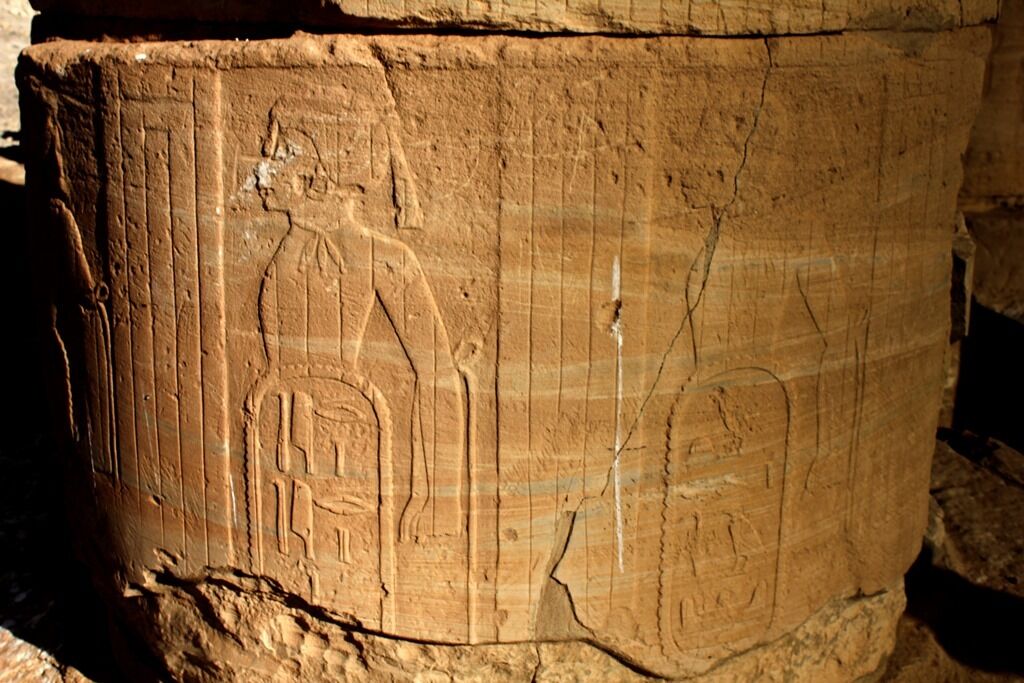
In inscriptions from the reigns of Amenhotep III (14th century BCE) and later Ramesses II, Egyptian topographical lists mention a group designated as:

“tꜣ šꜣsw yhwꜣ” — “the land of the Shasu of Yhw”

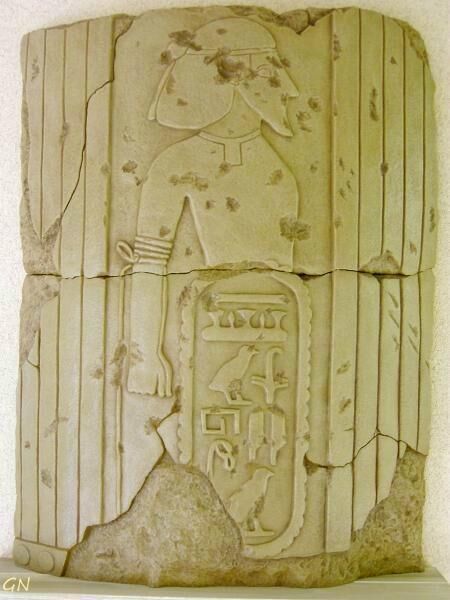
These inscriptions are preserved in temple reliefs at Soleb and Amarah-West in Nubia.¹ The toponym Yhw (often vocalized Yahu or Yahweh) is widely regarded by many scholars as the earliest extra-biblical reference to the divine name Yahweh, associated not with settled Canaanite city-states but with nomadic groups in the southern Transjordan/Edom region

While the precise phonetic equivalence between Yhw and the tetragrammaton (YHWH) cannot be proven with absolute certainty, the convergence of:

  • the geographic location (Edom/Midian region),
  • the nomadic tribal context (Shasu pastoralists), and
  • the phonetic similarity to Yahweh

has led many historians of religion (e.g., Cross, Albright, Smith) to regard the Shasu references as highly suggestive evidence for a southern origin or early center of Yahweh devotion.

https://armstronginstitute.org/files/W1siZiIsIjIwMjIvMTAvMDYvN2F0ZThrdW41Zl9zQlNDYS5qcGVnIl0sWyJwIiwidGh1bWIiLCIxMjAweD4iXSxbInAiLCJlbmNvZGUiLCJqcGciLCItcXVhbGl0eSA4MCJdXQ/8df96e9440dfafe4/sBSCa.jpg.jpg
https://armstronginstitute.org/files/W1siZiIsIjIwMjIvMTAvMDYvNHczNW5wbzc1MF9Tb2xlYjMuanBlZyJdLFsicCIsInRodW1iIiwiMTIwMHg-Il0sWyJwIiwiZW5jb2RlIiwianBnIiwiLXF1YWxpdHkgODAiXV0/bc9402332c6c87af/Soleb3.jpg.jpg

Soleb Temple cartouche referring to tꜣ šꜣsw yhwꜣ (“the land of the Shasu of Yhw”), reign of Amenhotep III (14th century BCE), Nubia (modern Sudan). The inscription appears within a topographical list of foreign peoples, represented as bound captives and labeled with their territorial or tribal names.

Midian, Kenites, and the Transmission of Yahwism

When the biblical data and Egyptian inscriptions are read together, a coherent historical-theological picture begins to emerge. Moses encounters Yahweh in the land of Midian (Exod 3:1), at “the mountain of God,” before Sinai becomes Israel’s covenantal center. His father-in-law Jethro is a priest operating within that same southern milieu and demonstrates familiarity with Yahweh’s identity and character. The poetic traditions remember Yahweh as advancing from Seir, Paran, and Teman—regions overlapping with Midianite and Kenite territory. And Egyptian inscriptions independently attest to a nomadic group in that region associated with a deity named Yhw.

Taken together, these data points suggest that the Sinai revelation did not occur in a theological vacuum, but within a broader southern Yahwistic milieu in which the divine name and worship of Yahweh were already known among certain nomadic groups.

It is important, however, to avoid reductionistic conclusions. The biblical narrative does not portray Israel as merely “borrowing” a deity from the Kenites or Midianites. Rather, it presents Moses’ encounter with Yahweh as a decisive revelatory event that brings clarity, covenantal structure, and universal scope to a name and reality that may already have been known in fragmentary or localized form.

In this sense, Jethro and the Kenite/Midianite milieu function not as the source of Israel’s faith, but as a providential bridge—a relational and cultural context through which Moses is introduced to the divine name and through which Yahweh begins to reveal Himself more fully in redemptive history.

Theological Implications

This reading has several important theological implications. First, it underscores that God’s self-disclosure often occurs within real historical and cultural networks, rather than in isolation from them. Second, it highlights the presence of non-Israelite witnesses to Yahweh prior to Sinai, anticipating the later biblical theme of the nations coming to recognize Israel’s God. And third, it deepens our understanding of Moses himself as a figure shaped by both Egyptian formation and Kenite-Midianite priestly tradition, standing at the intersection of worlds as the mediator of covenant revelation.

In this light, Exodus 18 is not a peripheral narrative but a theological window into the pre-Sinai knowledge of Yahweh—a moment in which the priest of Midian and the elders of Israel sit together before God, acknowledging a divine reality that transcends ethnic and geographic boundaries even as it becomes covenantally focused in Israel.


The presence of the Kenites in Israel’s story illustrates a recurring biblical theme: covenant identity is not reducible to biological descent. From the “mixed multitude” of Exodus 12:38 to Rahab and Ruth, the Old Testament consistently portrays Yahweh’s people as covenantally rather than ethnically defined. The Kenites stand among the earliest examples of this phenomenon—non-Israelite Yahwists who become enduring partners in Israel’s history.

This pattern does not dilute Israel’s calling; it clarifies it. Israel is chosen not as an end in itself but as a people through whom the knowledge of Yahweh extends outward. The Kenites, in turn, embody the inverse movement: outsiders drawn into covenant participation through allegiance to Israel’s God.


Moses emerges from this narrative as a figure uniquely formed by two worlds. Educated in the court of Egypt and tempered in the tents of Midian, he embodies both imperial literacy and nomadic wisdom. His judicial reforms in Exodus 18—prompted by Jethro’s counsel—reflect an administrative model resonant with ANE practices, yet adapted to Israel’s covenantal life.

Theologically, Moses stands at the intersection of traditions: he encounters Yahweh in Midianite territory, receives the covenant at Sinai, and leads a people whose identity is forged through both divine revelation and wilderness dependence. His leadership is thus not the product of isolation but of relational formation, shaped decisively by his Kenite hosts.


The Kenites occupy a subtle but indispensable place in the biblical narrative of origins. Through kinship alliance, priestly mediation, and wilderness expertise, they participate in the formation of Israel’s earliest experience of Yahweh. Whether one adopts a strong or modest version of the Kenite hypothesis, the convergence of biblical, linguistic, and extra-biblical evidence points in a single direction: Israel’s encounter with Yahweh is deeply intertwined with the southern nomadic world of Midian and the Kenites.

This recognition invites a broader theological reflection. Divine revelation, in the biblical witness, often emerges not in isolation but in the intersections of cultures, peoples, and relationships. The story of Moses and the Kenites reminds us that God’s purposes are frequently mediated through unexpected partners—and that the wilderness, far from being a place of absence, is a place where covenant is forged in the company of others.


Footnotes

  1. On the social status of the ger and its ANE parallels, see K. A. Kitchen, On the Reliability of the Old Testament (Grand Rapids: Eerdmans, 2003), 328–32.
  2. Dennis J. McCarthy, Treaty and Covenant (Rome: Biblical Institute Press, 1978), 56–72; cf. K. A. Kitchen, On the Reliability of the Old Testament, 283–90.
  3. Nadav Na’aman, “The Kenites and the Origin of the Yahwistic Cult,” Biblical Archaeology Review and subsequent studies; see also M. E. Mondriaan, “The Kenites in the Old Testament Tradition,” Old Testament Essays 24 (2011).
  4. Donald B. Redford, Egypt, Canaan, and Israel in Ancient Times (Princeton: Princeton University Press, 1992), 273–74.
  5. HALOT, s.v. חתן; Tikva Frymer-Kensky, “The Tribes of Israel and Their Territories,” and TheTorah.com, “Moses’ Father-in-Law: Kenite or Midianite?”
  6. James K. Hoffmeier, Ancient Israel in Sinai (Oxford: Oxford University Press, 2005), 112–35.
  7. Frank Moore Cross, Canaanite Myth and Hebrew Epic (Cambridge: Harvard University Press, 1973), 60–75; Patrick D. Miller, The Religion of Ancient Israel (Louisville: Westminster John Knox, 2000), 59–64.
  8. Donald B. Redford, Egypt, Canaan, and Israel in Ancient Times, 273–74; Kenneth A. Kitchen, Ramesside Inscriptions (Oxford: Blackwell, 1975–90).
  9. Frank Moore Cross, Canaanite Myth and Hebrew Epic, 60–75; Mark S. Smith, The Early History of God (Grand Rapids: Eerdmans, 2002), 32–41; William F. Albright, Yahweh and the Gods of Canaan (Garden City: Doubleday, 1968), 191–210.
  10. Mark S. Smith, The Early History of God, 40–48; James K. Hoffmeier, Ancient Israel in Sinai, 143–52.

Primary Texts and Ancient Sources

Cross, Frank Moore, ed. Canaanite Myth and Hebrew Epic: Essays in the History of the Religion of Israel. Cambridge: Harvard University Press, 1973.

Kitchen, Kenneth A., ed. Ramesside Inscriptions: Historical and Biographical. Oxford: Blackwell, 1975–1990.

Redford, Donald B. Egypt, Canaan, and Israel in Ancient Times. Princeton: Princeton University Press, 1992.

Sparks, Kenton L., ed. Ancient Texts for the Study of the Hebrew Bible. Peabody, MA: Hendrickson, 2005.

Hallo, William W., and K. Lawson Younger Jr., eds. The Context of Scripture. 3 vols. Leiden: Brill, 1997–2002.


Kenites, Midianites, and Southern Yahwism

Na’aman, Nadav. “The Kenites and the Origin of the Yahwistic Cult.” Biblical Archaeology Review and subsequent studies.

Mondriaan, M. E. “The Kenites in the Old Testament Tradition.” Old Testament Essays 24 (2011): 455–473.

Albright, William F. Yahweh and the Gods of Canaan: A Historical Analysis of Two Contrasting Faiths. Garden City: Doubleday, 1968.

Cross, Frank Moore. Canaanite Myth and Hebrew Epic.

Smith, Mark S. The Early History of God: Yahweh and the Other Deities in Ancient Israel. 2nd ed. Grand Rapids: Eerdmans, 2002.

Van der Toorn, Karel. Family Religion in Babylonia, Syria, and Israel. Leiden: Brill, 1996.

Fleming, Daniel E. The Legacy of Israel in Judah’s Bible: History, Politics, and the Reinscribing of Tradition. Cambridge: Cambridge University Press, 2012.


Exodus Traditions, Sinai, and the Wilderness

Hoffmeier, James K. Ancient Israel in Sinai: The Evidence for the Authenticity of the Wilderness Tradition. Oxford: Oxford University Press, 2005.

Kitchen, K. A. On the Reliability of the Old Testament. Grand Rapids: Eerdmans, 2003.

Propp, William H. C. Exodus 1–18. Anchor Yale Bible. New Haven: Yale University Press, 1999.

Durham, John I. Exodus. Word Biblical Commentary. Dallas: Word, 1987.

Childs, Brevard S. The Book of Exodus: A Critical, Theological Commentary. Louisville: Westminster John Knox, 1974.

Sarna, Nahum M. Exploring Exodus. New York: Schocken, 1996.


ANE Treaty, Kinship, and Covenant Language

McCarthy, Dennis J. Treaty and Covenant: A Study in Form in the Ancient Oriental Documents and in the Old Testament. Rome: Biblical Institute Press, 1978.

Kitchen, K. A., and Paul J. N. Lawrence. Treaty, Law and Covenant in the Ancient Near East. Wiesbaden: Harrassowitz, 2012.

Mendenhall, George E., and Gary A. Herion. “Covenant.” In Anchor Bible Dictionary.

Younger, K. Lawson Jr. Ancient Conquest Accounts: A Study in Ancient Near Eastern and Biblical History Writing. Sheffield: JSOT Press, 1990.


Hebrew Linguistics and Lexical Studies

Koehler, Ludwig, and Walter Baumgartner. The Hebrew and Aramaic Lexicon of the Old Testament (HALOT). Leiden: Brill, 1994–2000.

Jenni, Ernst, and Claus Westermann. Theological Lexicon of the Old Testament (TLOT). Peabody, MA: Hendrickson, 1997.

Frymer-Kensky, Tikva. “The Tribes of Israel and Their Territories.”

Huehnergard, John. A Grammar of Akkadian. Atlanta: Scholars Press, 1997.


Egyptology and the Shasu / Yhw Inscriptions

Redford, Donald B. Egypt, Canaan, and Israel in Ancient Times.

Giveon, Raphael. Les Bédouins Shosou des documents égyptiens. Leiden: Brill, 1971.

Astour, Michael C. “Yahweh in Egyptian Topographical Lists.” In Festschrift Elmar Edel.

Kitchen, Kenneth A. Ramesside Inscriptions.

Leclant, Jean. Studies on Soleb Temple Inscriptions.


History of Israelite Religion and Yahwism

Smith, Mark S. The Origins of Biblical Monotheism. Oxford: Oxford University Press, 2001.

Day, John. Yahweh and the Gods and Goddesses of Canaan. Sheffield: Sheffield Academic Press, 2002.

Miller, Patrick D. The Religion of Ancient Israel. Louisville: Westminster John Knox, 2000.

Albertz, Rainer. A History of Israelite Religion in the Old Testament Period. Louisville: Westminster John Knox, 1994.

Mettinger, Tryggve N. D. No Graven Image? Israelite Aniconism in Its Ancient Near Eastern Context. Stockholm: Almqvist & Wiksell, 1995.


Theological and Canonical Reflection

Wright, N. T. The New Testament and the People of God. Minneapolis: Fortress, 1992.

Goldingay, John. Old Testament Theology: Israel’s Gospel. Downers Grove: IVP Academic, 2003.

Brueggemann, Walter. Theology of the Old Testament. Minneapolis: Fortress, 1997.

Walton, John H. Ancient Near Eastern Thought and the Old Testament. Grand Rapids: Baker Academic, 2006.