What is the gospel? Most people answering this would go right into soteriology and likely give you some step plan for salvation, the spiritual laws, the romans road or some other systematic cleverly devised way of super simplifying the message of Jesus. For nearly the last 2000 years this wasn’t the way people thought of the gospel. In the Bible we read stories of people considering “conversion” into the way of Jesus and it never comes off as some checklist. These plans are almost always laced with some kind of Penal Substitutionary theory of atonement and feel very bait and switch. If that was the intention of the text, wouldn’t one of the authors simply have given it to us? But we don’t get that. In fact, we don’t get anything in history close to this until perhaps the reformation with Luther and Calvin. But they wouldn’t be considered evangelists by today’s standards. It isn’t until many years after that when Moody, Billy Sunday, Charles Finney, Bill Bright, and Billy Graham that we really get the church wide view pushing decisions to follow Jesus and altar calls of momentary decision. If we go back to the pages of the Bible what we find is quite different. We see mind wrenching decisions of people determining whether they want to change their entire life to follow the way of Jesus. This is followed by being baptized into this way of life and then likely joining this “ALL IN” community to continue their immersion into discipleship. Jesus literally used the 12 as an example to step away from life as you know it and enter into a life of total commitment. This kind of a decision was intended to be pondered and your old life to be exchanged for a new one should you take the dip.
The Greek word εὐαγγέλιον originally meant a reward given to the messenger for good news (εὔ = “good”, ἀνγέλλω = “I bring a message”; the word “angel or messenger” comes from the same root) and later “good news” itself. The Bible records that Jesus sent out his disciples to evangelize by visiting people’s homes in pairs of two believers (cf. Luke 10:1–12).[1] In the same text, Jesus mentioned that few people were willing to evangelize, despite there being many people who would be receptive to his Gospel message.[2] In case you ever wondered this is why Mormons go door to door.
In 2017 Salvation by Allegiance Alone: Rethinking Faith, Works, and the Gospel of Jesus the King was released by Matthew W. Bates. Anytime something has “alone” in the title I am weary, but there was a lot of good in this book, Jesus is the anointed King of all creation, elevated to that position by God, evidenced by the resurrection. As King, he has expectations for those who follow him. As the verse in John 14 clearly demonstrates, commandments and/or devotion is central to these expectations. Allegiance entails obligatory obedience. I think Torah is important here and even though bates uses the word commandments I would take that more into devotion. He goes on to define the gospel by these points:
a reiteration of his eight-point summary of the gospel, totally Trinitarian which is ok I guess…
a statement that the Church needs to “stop asking others to invite Jesus into their hearts and start asking them to swear allegiance to Jesus the King”[3] Yep!
a claim that “it is dreadfully wrongheaded to suggest that the gospel is best (or even adequately) proclaimed by actions unencumbered by words” . . . “the true gospel is not reducible to Christian activities.”[4] Totally Agree!
a suggestion that the “Christian metanarrative” need only include the creation, the fall, the election of Israel, the gospel, the church and the future renewal [5] This one I see a bit differently
a demand for discipleship: “The invitation to begin the journey of salvation can never be anything less than a call to discipleship, for nothing less will result in final salvation.”[6] YES!!! YES!!!
a suggestion that saying the creeds (particularly the Apostle’s Creed) is the equivalent of saying the eight-points of the Trinitarian gospel as he outlines it. I can argue this one either way.
Where I mainly agree is on allegiance. In the first century you were allegiant to one and had no other masters. If you were loyal to Caesar there couldn’t be another. In my book, this is the way of covenant discipleship I devote an entire chapter to a better way of theologically framing the gospel. I will share some of that book at the bottom of this article. If you haven’t read it, I suggest starting there. My next suggestion would be The King Jesus Gospel: The Original Good released in 2016 by Scot McKnight (Author), N.T. Wright and Dallas Willard (Foreword).
Frank Viola also has a great handle on this. The New Testament calls Jesus an insurgent. He was an enemy of the State, accused of treason.
“They are all defying Caesar’s decrees, saying that there is another king, one called Jesus.”
The Insurgence, then, is the recovery of the titanic, earth-shaking, subversive gospel of the kingdom that got Jesus, John the Baptist, and the apostles in hot water. It’s a spiritual revolution against the world system that Jesus, John, and Paul speak against, and an utter and total allegiance to Jesus Christ and His alternative civilization called “the kingdom of God.”
But I still go down deeper trails… the gospel is combined in every word of the New Testament. The gospel isn’t a “plan” as much as it is a Person.
“And Philip opened his mouth, and beginning from this Scripture he announced Jesus as the gospel to him (Acts 8:35).”
The gospel of God is “concerning His Son (Rom. 1:3).” It is the all-inclusive unveiling of God’s full counsel concerning His goodness, His will, His purpose, and His kingdom.
“The gospel is the work of God to restore humans to union with God and communion with others, in the context of a community, for the good of others and the world.”
– Scot McKnight, Embracing Grace
So then, what is the Gospel? This is pretty basic to Christianity, yet we have made it out to be so confusing. If we can’t answer this as Christians then what are we doing? Many of us understand part of the gospel, or understand part of the gospel to be the complete gospel. The Bible literally calls the gospel the “good news” and the word for that is euengelion. If you have never done a simple word study in the Greek, it is worth the investment to start here. This word is introduced at the announcement of Christ’s birth and carries forward to continue to be our calling as Christians. The word originally signifies the idea of good tidings, but as we work our way through the scripture, ironically what we refer to as “the gospels” or the books that tell the story of Jesus; we find that the word begins to take on a similar yet different meaning. We read passage like Mark 1:14:15, ‘The time has been fulfilled, and the kingdom of God has drawn near; repent and believe in the gospel’. Has the meaning of the word changed, stayed the same, or taken on a broader meaning?
What about Luke 4:18-19“The Spirit of the Lord is upon me, because he has anointedme to proclaim good newsto the poor. He has sent meto proclaim releaseto the captivesand the regaining of sightto the blind, to set freethose who are oppressed, to proclaim the yearof the Lord’s favor.”
The answer is in the covenants and the context of the entire lens of the Bible. When I say you can’t clearly understand the message of the Bible without understanding the covenant thinking, this is what I mean. Many have failed to see the gospel in the Old Testament and that is problematic to understanding the complete message of the overall gospel. In Galatians 3:8 we read, that God made a Covenant to Abraham. We usually call the this the Abrahamic covenant, but it is actually more clearly called the covenant of circumcision. Essentially the message from God to Abraham was that all nations would be blessed through his lineage. In the next chapter we are going to walk through this story, but for now let’s simply leave it that many generations went by and failed to live intimately with God. We see the fall in the garden, the flood, the tower of babel, God taking on Israel as His chosen people (or portion of all the world) and eventually they fail him too and he allows them to go into exile and judgment. But he doesn’t lose everyone throughout those years. Some remain faithful and some will return back to Him. The faithful are called the remnant. The Old testament closes with an idea that the Messiah will come to not only deliver the faithful remnant but possibly even the rest. Those that have fallen short (all of us in some way), and lost their allegiance will be given a chance to find their way back into this covenant of intimacy with God; to be let’s say, “adopted” into the kingdom. But as we read, we also find that even the remnant is blemished and (despite ritual yearly cleansing through faithful sacrifice) still will not “make the cut”; so not only is the good news for the unfaithful to return to faithfulness but even for the faithful to now be made complete. The good news is for everyone.
This plan by original design would be the greatest message to the earth; it would be the “good news” that the world needed to receive after the realization of knowledge that they had lost, or given up their right to the kingdom, by refusing God.
To the Jews, God’s chosen people, it meant a return from exile. To the gentiles, it meant a return or reclaiming by God of all people, the covenant of Abraham. To the spiritual beings, it meant that the fallen would be bound and a promise or covenant that ensured victory had been won. To all, it meant a return of the original plan to be in intimate relationship and walk with God in a covenant vocation with Him. We are all Lightbearers that eventually inherit a new Kingdom merged with the Heavenly realms and sacred space on the earth.
That is essentially the good news. We have been given the opportunity to be with God in intimate sacred living once again and all we have to do, is by our free will accept the new covenant that God is offering and live life in covenant with him, our spiritual family and our neighbor. But God isn’t just asking for a momentary decision, he is asking for us to follow Him as he has shown us; to literally give back all that he has offered in “life” and sacred living.
It comes down to the complete plan of the new covenant, eternal living life with God in His sacred kingdom. The story that starts with a sacred partnership in Eden has a plan to return to that way of walking in life with God almighty. A vocation of light, to be one with God almighty.
Rainer, Thom S. (1989). Evangelism in the twenty-first century: the critical issues. H. Shaw Publishers. p. 148. ISBN 978-0-87788-238-1.
Muzorewa, Abel Tendekayi (December 1, 2005). Evangelism That Decolonizes the Soul: Partnership with Christ. Wipf and Stock Publishers. p. 9. ISBN 978-1-59752-445-2.
[1]Matthew Bates, Salvation by Allegiance Alone, Chapter 8.
I want to talk about what is meant by God’s order, but before I do that, I want to guide you through a brief exegetical teaching through the text. When you hear the word order in relation to a biblical sense we have been conditioned to think about creation, law, hierarchy in the church and marriage, and perhaps even church discipline. Although it encompasses those things, I find it unfortunate that we start there, and therefore I feel we might need some deconstruction to get to good.
In the morning, O Lord, You will hear my voice; in the morning I will order my prayer to You and eagerly watch. Psalm 5:3 NASB
As I begin to read this in Hebrew the first thing that I notice in contrast to most English translations is the phrase “My prayer” is not found in the text. It isn’t a bad translation as I get the context leans that way but in Hebrew the verse better reads, “I will order toward you” which emphasizes a slightly different posture. Interesting the word prayer isn’t really there, perhaps a NT implication or even insertion. Prayer in the OT was a bit different than the way we understand it today. It was communal and far less personal (unless God appeared to you in a bush and orally spoke directly to you), after Jesus ascends to the throne and sends the Spirit to dwell in us and intercede, the biblical concept of prayer takes on a different form than what it had been considered over the last 2000 years or more. The way people thought of “prayer” in the OT may or may not be accurate. Are we just reading what they thought prayer was supposed to be perhaps based on what they knew of their former deities? Is this something that they got a bit off track with and Jesus sought to adjust or shed new light on? Perhaps, but perhaps not. Maybe our prayer should take a cue from the OT notions. When we read this verse in Hebrew form, we see that David isn’t talking about ritualistic prayer, or is he? He isn’t necessarily folding his hands and closing his eyes – but he is sort of. He is making a statement that if his life is in alignment with what is of God – TOV (creation order language), then he expects God to acknowledge and “DO THINGS” on his behalf. This may tie into the never-ending OT grappling over whether God was retributive or not, but it certainly had the trajectory of demonstrating the idea of devotion in connection to intimacy with the Lord. This connection over the years will then be attributed to the conjecture of relationship with the father in prayer. Some prayer is communal and some is personal.
Different people interact with God differently and perhaps in different seasons. Some say they don’t hear God and others act like God never stops screaming in their ear. How can the voice of God differ from person to person? Is it based on the posture of the heart, covenant faithfulness, gifting, seasons, understanding, choice, some sort of prejudice, or something completely different that is higher than our understanding? I believe that God is just that dynamic. I don’t know why He communicates differently to people and what it might be based on; I don’t always have the eyes of God. I believe Him to be Sovereign and know significantly more than we do in a much more complex grid. I am convinced that there are many things that influence this covenant relationship at a cosmic level. It is far bigger than simply me, and to think of my relationship with God (the creator of the universe) as doating on my every thought seems like a selfish notion. Does that view minimize a personal relationship or exemplify it?
God’s order is described in everything naturally defined by Yahweh and described generally as what is good (TOV). This is creation, the waters, the counting of the ark, the building of the temple, the pieces of firewood set in order for a sacrificial fire, showbread set out in two rows of six cakes on the gold table (Lev 24:8); seven altars set up by the pagan mantic Balaam (Num 23:4); stalks of flax arranged by Rahab for hiding the spies (Josh 2:6); a table prepared for dining (Ps 23:5; Isa 21:5); words produced for speaking (Job 32:14); a legal case developed for presentation (Job 13:18); etc. In II Sam 23:5 David exults in the covenant granted him by Yahweh, “for he has made with me an everlasting covenant, / ordered (ʿărûkâ) in all things and secure.[1] We see God’s order in many ways, but the common thread that binds seems to be that it is given as a framework for our devotion to Him. This intimate devotion that is often described as reading or memorizing scripture, devotional repetition, standards of practice and living, and so much more are all described as what it means to be defined as SET APART. That we are defined and claimed as part of God’s order not the chaos of the world.
What defines this? Covenant. Covenant is the secure, accessible, and recognizable attribute of everything good that God offers to us. It is the basis of all of our interaction with the LORD. Without covenant we are detached or separated from the creator and his ways. When David chooses every morning to be in order, he is making a statement about the balance of life and the posture of the heart. The Hebrew term בְּרִית bĕriyth for “covenant” is from a root with the sense of “cutting”, because pacts or covenants were made by passing between cut pieces of flesh of an animal sacrifice.[2] It meant something deep.
The New Covenant is a biblical interpretation originally derived from a phrase in the Book of Jeremiah and often thought of as an eschatological world to come related to the biblical concept of the Kingdom of God. Generally, Christians believe that the New Covenant was instituted at the Last Supper as part of the Eucharist, which in the Gospel of John includes the New Commandment.[3] A connection between the Blood of Christ and the New Covenant is portrayed with the saying: “this cup that is poured out for you is the new covenant in my blood”. Jesus is therefore the mediator of this New Covenant, and that his blood, shed is the required blood of the covenant. This is true looking back in both testaments and can be seen in all of the biblical covenants of the bible.
In the Christian context, this New Covenant is associated with the word ‘testament‘ in the sense of a ‘will left after the death of a person (Latin testamentum),[4] the original Greek word used in Scripture being diatheke (διαθήκη) which in the Greek context meant ‘will (left after death)’ but is also a word play having a dual meaning of ‘covenant, alliance’.[5] This notion implies a reinterpreted view of the Old Testament covenant as possessing characteristics of a ‘will left after death’ placing the old covenant, brit (בְּרִית) into a new application of understanding as revealed by the death, resurrection, ascension, and throning of CHRIST THE KING, JESUS. All things will forever connect at the covenants and be defined by the atoning accomplishments that transform into a covenant of eternity.
Order today might be better understood as a continually evolving algorithm based on the posture of your covenant faithfulness which, as I have described, is defined by many facets of devotion. Some may hear the audible voice of God more clearly while others simply see Him in every image. The revelation of God to us isn’t in a form of hierarchy. One form of transcendence doesn’t trump another. Who are we to judge anyway. But I do know that most of Christianity seems to be off course here. Rather than coming to the LORD as the cosmic wish granting genie in a bottle, let’s get back to biblical roots and think more covenantal and devotional based on the order that God modeled for us.
[1] Harris, R. L., Archer, G. L., Jr., & Waltke, B. K. (Eds.). (1999). Theological Wordbook of the Old Testament (electronic ed., p. 696). Chicago: Moody Press.
[2]Strong’s Concordance (1890).
[3] “Comparison of the two covenants mediated by Moses and the two covenants mediated by Jesus”. 25 September 2022. Archived from the original on 2022-09-28. Retrieved 2023-01-29.
Most of scripture was written thousands of years ago and orally (memorized) and handed down through generations then eventually (as technology gave way to) was put to script followed by scribes carefully debating every word. Somehow, perhaps miraculously, I believe the message has stayed whole, or within the ideals of inspiration. However, a bit like the telephone game spanning over generations and multiple language differences, study is necessary; and what the scripture describes as a sign of intimacy with God.
Know the scripture and know Jesus.
Matt 6:21 is a rough quote of Psalm 37:4, Delight yourself in the Lord, and he will give you the desires of your heart.” Often when we talk about what was written in the pages of old and emphasized by Jesus, we find a notion that everyone is on their own journey but at the end of the day the devotion of the heart is likely the measure of person before the Lord. Proverbs 4:23 plainly reads in most English translations something like, “above all guard your heart.”
The devotion of the heart is based on circular Hebraic thinking. Essentially if you train yourself to diligently pursue something spiritual, eventually it becomes you or what your life embodies. You are a representation of that which you (TRULY) love. God started this process by opening the invitation, you meet Him with offering your heart’s devotion (as a sacrifice placed on the altar), and then He bless and keeps you transforming your heart and giving you immeasurably more. The end result is a partnership similar to what was presented in Eden. But there is also a sense of opposites in this way of thinking too; it is contranym language; if your heart is in the world then that is the path you will walk.
Like so many, this verse is sometimes misunderstood, particularly the idea of “guarding.”
It doesn’t flow well but you can see the Hebrew carries a bit different rendering, in diligence or devotion, keep (guard, cultivate, condition) your heart out of or from the “spring” or the “issues of life.” When you break this down it gives you a different idea than we might get than thinking about simply “guarding” our heart.
Mismar (diligence): The Hebrew word “mishmar” primarily refers to a place or state of guarding or keeping watch. It can denote a physical location such as a prison or a figurative state of being under watch or custody. The term is used to describe both the act of guarding and the place where guarding occurs. In ancient Israel, the concept of guarding was integral to both religious and societal structures. The Levites, for example, were tasked with guarding the tabernacle and later the temple, ensuring that sacred spaces were protected. The idea of watchfulness extended to various aspects of life, including the protection of cities, the safeguarding of individuals, and the maintenance of moral and spiritual vigilance.
Nesor (keep):The Hebrew verb “natsar” primarily means to guard or keep something with care. It conveys the idea of protecting or preserving something valuable, often with a sense of vigilance and attentiveness. In the biblical context, it is frequently used to describe the act of keeping commandments, guarding one’s heart, or preserving knowledge and wisdom. In ancient Israelite culture, the concept of guarding or keeping was integral to daily life, whether it involved protecting physical possessions, maintaining the purity of religious practices, or upholding moral and ethical standards. The Israelites were often reminded to “natsar” God’s commandments as a sign of their covenant relationship with Him. This term reflects the broader Near Eastern understanding of stewardship and responsibility.
Libbeka (heart): n the Hebrew Bible, “leb” primarily refers to the heart, not just as a physical organ but as the center of human emotion, thought, will, and moral character. It encompasses the inner life of a person, including feelings, desires, intellect, and decision-making processes. The heart is seen as the seat of wisdom and understanding, as well as the source of moral and spiritual life. In ancient Hebrew culture, the heart was considered the core of a person’s being. Unlike modern Western thought, which often separates emotion and intellect, the Hebrew concept of the heart integrates these aspects. The heart is where one discerns truth, makes decisions, and experiences emotions. It is also the place where one encounters God and responds to His commandments. The heart’s condition is crucial in determining one’s relationship with God and others.
Mimmenu (out of it): The Hebrew preposition “min” is a versatile term used to denote separation, origin, cause, comparison, and time. It often indicates the point of departure or the source from which something originates. It can also be used in comparative contexts to express “more than” or “less than.” In ancient Hebrew culture, prepositions like “min” were crucial for conveying relationships between objects, people, and concepts. The use of “min” reflects a worldview that emphasizes origins and sources, which is consistent with the biblical emphasis on lineage, heritage, and divine causality. Understanding the use of “min” helps in grasping the relational dynamics present in biblical narratives and laws.
Towsowt (issues): The Hebrew word “totsaah” primarily refers to the concept of an “outcome” or “end result.” It can also denote an “exit” or “issue,” emphasizing the conclusion or result of a process or event. In the biblical context, it often relates to the outcomes of actions, decisions, or divine interventions. In ancient Hebrew culture, the concept of outcomes or results was significant, as it often reflected divine will or judgment. The Israelites understood that their actions, whether righteous or sinful, would lead to specific outcomes, which were seen as either blessings or curses from God. This understanding was deeply embedded in their covenant relationship with Yahweh, where obedience led to favorable outcomes, and disobedience led to adverse consequences. The “flowing spring” is a reference to the refining waters of Eden.
Hayyim (of life): The Hebrew word “chay” primarily denotes the state of being alive or living. It is used to describe living creatures, life itself, and sometimes metaphorically to refer to prosperity or vitality. In the Old Testament, “chay” is often used to contrast with death, emphasizing the dynamic and active nature of life. It can also refer to the quality of life, such as in expressions of well-being or flourishing. In ancient Hebrew culture, life was seen as a divine gift from God, and the concept of “chay” was deeply intertwined with the covenant relationship between God and His people. Life was not only a biological state but also a spiritual condition, reflecting one’s relationship with God. The Israelites understood life as a blessing and a sign of God’s favor, often associated with obedience to God’s commandments and the resulting peace and prosperity.
Putting all of this together, we find garden language, bringing back Edenic ways of living and walking with God. “Guard” takes on the idea of cherubim guarding Eden but so much more. It speaks to devotion, it speaks to cultivating, it speaks to keeping which is something that you present as a sacrifice and God accepts and “cultivates”. It speaks to diligence and perseverance; it speaks to the way work before the Lord was intended and not what the fall made toil into. It speaks to passions of the circular dance of grace and the very reason we were destined to give glory to Jesus. It is a return to things that were given by God and entrusted to us in a partnership with Him.
These things that are TOV start with the heart and end with the heart shepherded by Jesus Himself.
The Jewish New Year (Rosh Hashanah) in 2025 will begin on October 2 and end on October 4. The American New Year (New Year’s Day) in 2025 will fall on January 1.
Rosh Hashanah (Hebrew: רֹאשׁ הַשָּׁנָה, Rōʾš hašŠānā, lit. ’head of the year’) is the “observed” New Year in Judaism, (although as I will get to, it is more complicated than that). The biblical name for this holiday is Yom Teruah (יוֹם תְּרוּעָה, Yōm Tərūʿā, lit. ’day of shouting/blasting’). It is the first of the High Holy Days (יָמִים נוֹרָאִים, Yāmīm Nōrāʾīm, ‘Days of Awe”), as specified by Leviticus 23:23–25. Current tradition has Rosh Hashanah beginning ten days of penitence culminating in Yom Kippur, as well as beginning the cycle of autumnal religious festivals running through Sukkot.
Rosh is the Hebrew word for “head”, ha is the definite article (“the”), and shana means year. Thus Rosh Hashanah means “head of the year”, referring to the day of the New Year. But Rosh Hashanah itself can’t really be found in the Biblical text itself.
Abandoned old spooky church in Vergalijo (Navarre, Spain)
In ancient times, there were four different New Years on the Jewish calendar. Each had a distinct significance:
The first of the Hebrew month of Nisan, the New Year of Kings, was the date used to calculate the number of years a given king had reigned.
The first of the Hebrew month of Elul was the new year for tithing of cattle, a time when one of every 10 cattle was marked and offered as a sacrifice to God.
The first of the Hebrew month of Tishrei was the agricultural new year, or the New Year of the Years.
The 15th of the Hebrew month of Sh’vat, known as Tu BiShvat, was the New Year of the Trees.
Although the Torah refers to Nisan as the first month of the Jewish year, the first day of the month of Tishrei emerged as what we now know as Rosh HaShanah. This is an example of something that isn’t really Biblical but became the norm for some reason.
So, as you will see the celebrated New Year wasn’t really as biblical as it became traditional. (Remember the fiddler on the roof “TRADITION!!!”)
This started when the Babylonians, among whom the Jews lived under the captivity that began the diaspora which then some jews associated as a “Day of Judgment” each year to which the Babylonians believed the “gods” assembled in the temple of Marduk to inscribe the destiny of every person. Well, what is a bit crazy is that the Jews adopted these ideas and borrowed the elements to shape their New year, Rosh HaShanah believing that Yahweh also acted in the same way choosing the good and wicked (yes making God the author of evil); and that for 10 “in between” days you could repent before the book of life was sealed for the new year. Eventually this is going to become the reformed view of God actually ordaining the lives of those who would win the cosmic lottery in a sense of being “chosen” or predestined and laced to a lot of PSA beliefs. (We would see predestination as God simply seeing ahead of time the consequences of free will choices but would agree it is also more complicated than that.) Does it sound messed up, rather un-Biblical? Yea it is! Even though according to the Torah it was NOT the beginning of the year, it officially became the Jewish New Year because of this traditional thought as well as other thoughts such as believing that the world was created on this day (also not of biblical origin.) In the second century the Mishnah basically made this official. It was actually a very visible picture of 2nd temple Judaism walking farther away from the scripture and God than being rooted in Him.
Getting back to the Biblical text…
On exactly the tenth day of this seventh month is the day of atonement; it shall be a holy convocation for you, and you shall humble your souls and present an offering by fire to the Lord. You shall not do any work on this same day, for it is a day of atonement, to make atonement on your behalf before the Lord your God. Leviticus 23:27-28 NASB
So the original intent of the New Year was that it would be a day to humble our souls. Imagine that. Humility is a forgotten word in both Hebrew and American culture.
But when the rest of America celebrates the New Year it isn’t a biblical date either! But we can still own this sort of thinking for Jesus. For example, by many reasons, traditionally Yom Kippur is the most solemn day of the year. It is a day of fasting, repentance, self-reflection, and a return to holy thinking. Those are GREAT things we should want!
The root word used in Leviticus is kāpar which has a glossed (regularly known as or thought of but not necessarily correct) meaning of “to cover,” or “conceal” which is also tied to reformed theology. Some have (IMHO) wrongly asserted that the word then would mean to “cover sin” as such to pacify the wrath of the deity in this case Yahweh by making atonement such as I explained the Babylonians believed about the gods and the temple of Marduk. It is suggested then that sin was covered until Christ could rightly atone. Sounds good, and likely what you might have heard at church, but more traditionally based on the gods of the exile than biblically accurate. There is very little evidence for this view. As many scholars have pointed out, the connection is at best weak as the Hebrew root is not used to mean “cover.” To say it correctly, the Hebrew verb is never used in the simple or Qal stem, but only in the derived intensive stems. These intensive stems often indicate not emphasis, but merely that the verb is derived from a noun whose meaning is more basic to the root idea.[1]
Ok so what does that mean or what is a better view? (Kippūr) is the word for Atonement that is also used today in the name of the Jewish holiday yom kippur “day of atonement” (also associated with a Biblical new year) which was the tenth day of the seventh month, Tishri. This solemn day was the only day of fasting prescribed for Israel. It was celebrated by a special sin offering for the whole nation. On that day only would the high priest enter within the inner veil bearing the blood of the sin offering (cf. Heb 9:7). A second goat was released as an escape goat to symbolize the total removal of sin.[2]
Jewish tradition ultimately adopted here a synthesis (not always elegant) of the two views. Throughout the Day of Atonement, the liturgy bemoans the burden of sin we labor under, and our inadequacy to measure up in God’s sight. But at the end of the day, in the Ne’ilah (Closing ) Prayer, the burden of sin is gone; the Jew is confident of having achieved forgiveness, by a combination of human repentance and divine mercy, and proceeds forward refreshed, optimistic about our power to do good in the world under God’s guidance.”[3] In other words, despite some terrible history, the final idea of the Hebraic New Year comes back to be pretty Biblical. God has always forgiven. (We actually didn’t need Jesus on the cross for that part contrary to many people’s opinions, but the cross accomplished a slew of other things we did need. God has always offered complete forgiveness.)
The New Year is about a return to what is of God – TOV.
Most of you know that X44 has done a good bit of research in this area. Here is a link to our video series on atonement:
If you want to read a better version I would suggest this:
Better views of atonement:
Well first let’s get the word right.
Leviticus 16 – gives us the instructions for the day of Atonement. Notice in Lev 16:2 is the noun for atonement (a place not an action).
Aaron must make a burnt offering (the gift) and a sin (purification or decontamination) offering before entering the Holy place. So, there is a gift to God to say, “Hey I want to spend some time in your presence” and a purification offering. There is no wrath debt or substitution to be seen here.
2 goats are selected for Israel: The sin offering goat and the goat that will “bear the sin”. Lots are cast to see which goat fulfills which role.
The “Sin” offering goat
Both goats are called a sin/purification/decontamination offering and the reason is that is that the lots have not been cast yet over these two. So, since we don’t know yet which ones going to be the actual sin offering, they’re both referred to that way. We don’t know which one’s going to be for the Lord, which one was to be for azazel.
a better way to translate “Atonement” here is to make expiation with it, or to make a purging with it. The whole notion of the sin offering is decontamination and purification. It is a reset back to holiness. (starting to see new year implications yet?)
Propitiation or Expiation (KPR language)
Both words presuppose that there is a barrier that must be removed to overcome sin. We need to look to see what is acted upon in order to translate KPR correctly. As we noted atonement language means to cover or purge but is the issue with humans, God, or sin?
Propitiation: means that the barrier lies within God himself; thus, it is usually interpreted as an action to satisfy divine wrath against sinners. This was the pagan concept of sacrifice, but Christians who hold to this say that God’s justice must be exercised, and sin must be paid for in order to receive forgiveness and the aversion of God’s wrath. (This is PSA language)
Expiation: means that the barrier lies outside of God, within humankind and/or a stain they leave on the world (sacred space), it is often interpreted as an action aimed at removing sin. To cover, wipe, or to purge sin.
Mercy Seat Translation-This is a common translation, reading the ESV, this is not a good translation although it’s a traditional one. More literally, if atonement (kapper) means to purge then kapporeth (noun) should be the place of purging. In other words, we would really focus on the location not the result, because calling it the mercy seat is sort of reading the theological result into the lemma. That’s why it’s not a great translation. The place is the cover of the Ark in the Holy of Holies which is the footstool of God’s throne. This is a throne room scene.
The Scapegoat or the goat for azazel
The propitiation view (punishment). The goat bears the sin and wrath.
The azazel refers to the location (the desert) which theologically if the place where sin and evil lives or belongs (not in God’s camp)
Azazel is a proper name. This was the leader of the fallen angels/demons in 2nd temple Judaism. The goat transports the sin to Azazel.
Because the goat was bearing the sin (carrying) it could not be a sacrifice because God only gets spotless pure animals (what does that do for your New Testament theology of the cross if Jesus was imputed our sin?)
One more issue here is the laying on of hands and confessing Israel’s sins over the goat. Some argue that this is the connection that all laying on of hands must equal that the animal is bearing sins and the laying on of hands is the transfer. In this instance this is true. But as we saw in every instance of hand laying it is not about sin, so we cannot jump to conclusions when we deal with other sacrifices that as we saw don’t deal with that concept. Laying on of hands is about setting something apart or consecrating it for a task.
Atonement Conclusions
Goat 1- the purification offering, is to cleanse the temple objects. Blood is not applied to anyone.
The scapegoat is sent to Azazel. So, sin, the forces of death, are removed from the camp. This connects God is rescuing his people from the forces of death.
Neither of these goats are punished. It’s about expelling or purging God’s space (so Expiation!). The first goat (the one that dies) is more about cleaning the throne room of the stain of sin. The scapegoat doesn’t get killed (he’ll probably die in the desert).
This is all about resetting sacred space (getting back to Eden)
New Testament
The Exodus is the primary motif of what is going on at the cross, but the Biblical authors do see the day of atonement being fulfilled in Jesus. We see Jesus as all 3 actors in the Day of Atonement: The purification offering goat, the scapegoat, and the priest.
1 John 3:8- Christ came to destroy the works of the Devil. Both Exodus and Day of Atonement deal with this concept.
Romans 3:21-26, 1 John 2:1-2, 1 John 4:10, Heb 13:11-12, Matt 27:28-31, Heb 9:18-26, Heb 10:8-17
Addressing PSA notions of the Day of Atonement:
Neither goat is taking the place of anyone
Neither goat is getting wrath poured out upon them
The goat doesn’t make a payment for forgiveness but is the one who carries it away. Remission.
Expiation (defined as purging) is the action taken- like the goat taking the sins back to where they belong. Not only does he take it back to where it belongs, he defeats it for good!
Sin is seen as the forces of death and they have no place in sacred space, Jesus removes them by his blood and carries them out of the camp. Dissolves them- His blood is the ultimate ritual detergent.
Jesus is the place where heaven and earth meet (the “mercy seat”) he’s not the propitiation to satisfy God’s wrath. This is a rescue of humanity and the world from the powers
The Day of Atonement was all about resetting holiness in sacred space and not about appeasing God’s wrath. It was about purging the sin from God’s presence
CONCLUSION:
Whatever date we want to associate as the New year, the idea biblically has always centered around a return to TOV – the way that God intended. Jesus shows us the way back after much brokenness to what God asks of us. To be TOV. To reflect on how to live in Holiness, Devotion, and Tribulation. How to Live in the Joy that we were created for. To bring Heaven to earth. To Celebrate Life here and now in the name of Jesus. To return to what is Holy and who we were made to be – a Set Apart Holy Royal Priesthood.
[1] Harris, R. L. (1999). 1023 כָפַר. R. L. Harris, G. L. Archer Jr., & B. K. Waltke (Eds.), Theological Wordbook of the Old Testament (electronic ed., pp. 452–453). Chicago: Moody Press.
[2] Ibid.
[3] Gordon Tucker, in Abraham Heschel, Heavenly Torah as Refracted through the Generations (ed. and trans. by Gordon Tucker, Continuum International Publishing Group, New York, 2007), p. 169.
Is Christmas Pagan? Well sort of yes, sort of not. It’s a great discussion. I’ll frame it first like this as an easy reference. Some Christians are triggered when people say XMASS instead of Christmas, saying things like your taking “Christ” out of Christmas. Well actually X has been a symbol for Christ since at least His death. IXOYE, the Christian Fish Symbol, (ichthus) means “Jesus Christ God’s Son Savior” in Greek. Christ in Greek starts with the X symbol or character. Since Greek is more Biblically correct than English XMass may actually be a more Bible way of saying Christmas than “Christmas” is. As I will go on to show. It is really a similar argument with Christmas as a whole. Is it Pagan? Well yea, there are some pagan things, are we taking back what is Biblical (Christ and celebrating His birth) as ambassadors of truth? Yea I hope so! In that way some of this gets a bit dicey and comes down to how you’re going to think about it or frame it. I love it that the world celebrates the Birth of Jesus! But I want my readers to work through this on your own, so as usual, nothing is spoon fed. Here are some notes, good luck!
Dec 25, -“unconquered son” (Christians stole this day from the Pagans) Not really. There is no reason to conflate some pagan festivity no one cares about with Christmas. If there was a conspiracy back in the fourth Century, then St. Augustine would likely have said something about it. What he did say was that when the barbarians came to sack Rome, they left the churches alone, out of respect for traditions that were foreign to them, but which they could see were clearly holy.
It likely is a result of mixed Jews and Christians trying to figure out how to be unified in the first few centuries after Christ. Some are aware that during the reformation England banned Christmas in 1647 in some part because of connections to paganism. But the reformation had a lot of problems this really shouldn’t surprise anyone. The accusation that Christmas was usurped from Sol Invictus is probably a result of works of the puritans of the 16/17th Century England.
In America Christmas was banned between the years of 1659-1681. Christmas as we know it really didn’t start happening until the late 1800’s and even then, it was foreign to most people. Puritans then where preaching and distributing literature denouncing such celebration. Christmas really became what we think of it today, when in 1843 Charles Dickens wrote “A Christmas Carol”.
If we look at the outlook of the early Western Church (and by Western, I mean both the Latin Catholics and the various Eastern Orthodoxies) towards pagan life and rituals in general, its abundantly clear that they saw it with utter disgust.
Incensing is also interesting. In the Torah it signified holiness, yet later within some orthodoxy it is outright condemned. For them, it was nothing more than a pagan remnant that would defile Christianity, if adopted. Lactantius, the 4th Cent. Christian writer and one of Constantine’s main advisers condemns it in his book Institutiones Divinae. Hippolytus of Roma omits the use of incense entirely in his work, Apostolic Traditions. Of course, Constantine was a mess.
Accusing the Roman Church of usurping/adopting an entire pagan festival and rebranding it as Christmas to gain pagan converts, when it was repulsed by something so frivolous as a stick of incense which it perceived to be pagan, is in the realm of the absurd.
The Roman Empire wasn’t the only place with Christians in the 4th Century. There is no evidence that Sol Invictus was observed anywhere outside of the borders of the Roman Empire. Earliest record of Sol Invictus being celebrated on the 25th of December is from AD354. There is little evidence to suggest it was celebrated before 4th Century in Rome. But we know that the Syriac Christians were already celebrating Christmas (although it was considered a minor feast leading up to Epiphany) in the last week of their season of Subbara, which falls on December in the Gregorian Calendar – this practice dates from at least the mid-4th Century.
During the early centuries AD, the Jews clearly did not give Hanukkah much importance, as the Mishnah obviously omits it. Neither does Hanukkah have any theological connotations – after all, it’s kept for the memory of the Maccabees. Christianity had no need to find a replacement for an obscure Jewish holiday. But I do agree that some Christian communities, especially the ones with Jewish origins, like the Christians of St’ Thomas of Kerala, do observe some rituals reminiscent of Hanukkah. But they do it in the week of Epiphany, not the week of Christmas.
Christ was likely born on Sep 11, 3bc – Yes, I know some think 4BC was the death of Herod but that is definitely not concrete.
It was winter, and the Festival of the Dedication of the Temple was being celebrated in Jerusalem. Jesus was walking in Solomon’s Porch in the Temple, when the people gathered round him and asked, “How long are you going to keep us in suspense? Tell us the plain truth: are you the Messiah?” – John 10: 22 The Hanukkah festivals that Jesus likely took part in was similar enough to Christmas in ritual and custom to assume that early Christians continued with the festival in honor of the birth of Jesus – that might well have fallen on the same day of the year.
The Feast of the Lights (Hanukkah or ‘Festival of Dedication’) took place for two days on the twenty-fifth and twenty-sixth days of Kislev starting with the lighting of candles on the evening of the twenty-fourth. (The Judaic month of Kislev is almost the same as December.) Candles were then lit for a further six or possibly eight days. The specific reason for the festival of Hanukkah is to celebrate the victory of the Maccabees over the Seleucids and the result of that victory, which was the re-dedication of the altar in the Temple after three years when no services took place. In general, it celebrates religious freedom, the light that was lit in Israel for all people, and the spread of that light throughout the world.
The date was of particular importance in the Greek /Roman calendar and in the calendars of many of the ancient societies. On or roundabout this day the star Sirius (the brightest of all stars) that flies behind the earth in its path around the Milky Way is right overhead at midnight. When Sirius is overhead at midnight it means that the sun is at its furthest south and that summer is coming again. For this reason, the date had been associated in many ancient and not so ancient religions with the birth of a god or a new period of religion. It was therefore no accident that Antiochus Epiphanes offered the first sacrifice to Zeus Olympios in the Temple on this date in 167 BCE. It was intended to show that a new period of rule of the Greek gods over the land had begun. Judah Maccabeus would have been fully aware of this and made sure that the first Hanukkah also fell on 25 December 164 (165) BCE to counter the Greek claim. (Now upon the same day that the strangers profaned the Temple, on the very same day it was cleansed again, even the five and twentieth day of the same month, which is Kislev – II Maccabees 10: 5)
Persia was different from the other countries in their beliefs around Sirius and used the star to make predictions. This is based either on changes in color (white, blue, emerald) the star undergoes (in the past there were times when it has appeared red) or on the positional shift in relation to the background stars due to the gravitational influence of a white dwarf companion star. Because these changes are minute and dependent on great knowledge, it is no surprise that nobody, but the Magi noticed them. (This would explain why Herod and the scribes did not notice it. If a huge comet hung over Bethlehem, millions of people would have turned up, as they were strong believers in the magic of stars.)
Because it is closely linked with the Feast of the Tabernacles (Succoth), so close that it is even called that in some communities as an interchangeable title; and now we see that that ye keep the Feast of Tabernacles in the month Kislev – II Maccabees 1: 9. To the original promise made in the desert by the festival of Sukkoth (that one day Israel would no longer live in tents but in houses) the important facet of lights were added. With the rededication of the Temple, came the profound moment of the lighting of the candelabra. They made also new holy vessels, and into the temple they brought the candlestick . . . and the lamps that were upon the candlestick they lighted, that they might give light in the temple – I Maccabees 4: 49 – 50. Josephus said (Antiquities of the Jews, 12: 7: 7), and from that time to this we celebrate this festival, and called it Lights. I suppose the reason was, because this liberty beyond our hopes appeared to us; and that thence was the name given to that festival.
The festival is supposed to be a happy time in accordance with I Maccabees 4: 59 – the days of the dedication of the altar should be kept in their season from year to year by the space of eight days, from the five and twentieth day of the month Casleu, with mirth and gladness. From the earliest, the festivalgoers bare branches, and fair boughs, and palms also, and sang Psalms – II Maccabees 10: 7.
Israel in winter is green as this is the time of the rains and what snow there is (if at all) quickly melts. Bringing greenery into the home therefore has nothing to do with the pagan midwinter festival but with the promise made in the desert and celebrated during the Feast of the Tabernacles.
The twenty-fifth of December (Kislev) that became important to Christianity together with joyous songs and the Christmas tree and lights all originated in Hanukkah.
Dies Natalis of Sol Invictus, or that is the birthday of the unconquerable sun. It is also called Saturnalia as it Honors the deity Saturn. Saturn was worshiped for agricultural purposes. This was later celebrated by the Romans as Dies Natalis of Sol Invictus. It celebrated the renewal of light and the coming of the new year. What day was it celebrated on? You guessed it December 17-23 and 25. Saturnalia was celebrated with feasting, partying, and gifts. Saturnalia
As the Roman empire came under Christian rule pagan holidays were added to help convert pagans to Christianity. You see this mainly under emperor Constantine’s rule. The people whom the Romans conquered had their “religion” and celebrations added to the Romans celebrations.
The names of Saturnalia where later changed to take on a more Christian aspect. The church commemorated December 25 as Jesus’s birthday. The church got pagan converts, and the pagans simply got to keep their holidays.
NOTE: The best general and easily understood book I have yet seen on ‘Jewish’ holidays is ‘Guide to Jewish Holy Days’ by Hayyim Schauss, published in paperback by Schocken Books of New York in 1962.
Here is more on Christmas: Unfortunately, the churches audio video was not great, but it still has some good content.
A psalm of thanksgiving. Shout joyfully to YHWH, all the land. Psalm 100:1
Thanksgiving – Most of your Bibles have chapter headings that sort of explain what the chapter will be about. Those weren’t in the early manuscripts; they were added much later and some even as recent as your modern translation. However, Psalms has many of these such as we find in Psalm 100 where the headings are actually embedded in the text. Thanksgiving is one of them. Have you ever considered the significance of this?
This is one of the 7 Hebrew words of praise, todah is the Hebrew word for thanksgiving. Expedition has a playlist on this linked below. We have learned to almost skip over these headings in our Bibles and rightfully so as most of them as they aren’t in the inspired text, but in this case, it shouldn’t be simply passed over because it is in the text and means something – in fact it set the tone for the way modern translators have setup our interpretations.
The first word or phrase in Hebrew nearly always sets the context or frame of thought. In Leviticus 7 Israel was instructed to offer a fellowship offering (which was also simply called “todah”) and become sort of an idiom that covered everything from the sacrifice, the heart of the worship, the confessions, supplication, adoration, and proclamation of Yahweh towards all parts of life.
In Hebraic thought everyone and everything would image thanks to Yahweh. The reason that we are given here to offer such praise is a word that resounds deeply to my heart – TOV. Thanksgiving is connected to all things that are TOV, all things created good by God and intended to partner in His good will. This ties in Thanksgiving to connect to much more such as God’s order, God’s Hessed faithfulness, God’s mercy compassion and kindness, tribulation that becomes joy, and so much more. To live in a presence of Todah means to live in all things TOV. To be surrounded by your family of TOV, to walk each day in TOV, to swim in TOV.
Many of us have two families. A family we were born into of this world and then a new regenerated by the spirit family. I am blessed that much of this family is both. But as we connect with both kingdoms, these thankful psalms remind me to focus my attention on the things of TOV.
To understand that under this “TODAH-TOV” umbrella everything that we are given, past present and future -even the tribulation, should remind me to lift my countenance to Him by divine symphony, a pantheon of praise to the Lord is the heart of our thanksgiving. Giving thanks re-orients my thinking and my behavior back to Yahweh and then unto the image of Jesus and returns to everyone that I encounter. In Psalms this becomes a foreshadow of the image of Jesus Himself revealing the father to and in us. The already not yet amongst us.
Expedition 44 was founded by Dr. Will Ryan. It represents a way of life wholly devoted to living as a disciple of Jesus. It is made up of a global assembly of believers united to the Kingdom of Jesus. Dr Ryan and Matt Mouzakis co-host a YouTube channel based on Biblical Theology called Expedition 44 that has about 130,000 subscribers worldwide. There are also various small groups, Bible studies, weekend retreats, and conferences associated with Expedition 44.
The notion of the “image” doesn’t refer to a particular spiritual endowment, a secret “property”…The image is a vocation, a calling. It is the call to be an angled mirror, reflecting God’s wise order into the world and reflecting the praises of all creation back to the Creator. That is what it means to be the royal priesthood: looking after God’s world is the royal bit, summing up creation’s praise is the priestly bit.
– N.T. Wright, The Lost World of Adam and Eve (W/ John Walton)
Expedition 44 represents a way of life based on the pursuit of true discipleship. As those bearing the light of Jesus, we are called to both keep and cultivate life for the Lord in our communal body of believers. The Biblical vision for that culture is Christoformity, or Christlikeness. Nurturing Christoformity was at the heart of the Pauline mission. As New Testament priests, we are charged to mediate Christ in everything. Expedition 44 is based on Biblical Theology teachings encouraging a way of life completely devoted to the Lord.
Everything in the expedition 44 life points towards Jesus, but don’t get too wrapped up in this section. You might find it interesting, but it is just meant to explain a more in-depth pursuit of Jesus that might help you to identify what your journey looks like and pray over the journey of other brothers and sisters within the same kingdom calling.
THE MOSAIC MEANING
Expedition 44 was started by me, Dr. Ryan years ago as a bit of a family crest or coat of arms and has developed into so much more. When I was young, I decided I was different than those in the world in that I wanted to dedicate my life to following Jesus. Many have made that profession and like me, had very little idea of what it really meant, particularly at the time they made the confession.
In ancient times people were often communally represented by what they had in common. For God’s people of Israel, it began with spreading blood over a doorpost. Throughout history people have sought to show their allegiance in similar signs. The flag, a crest, a heraldic symbol, a cross, or even something as simple as a mark on the ground showing a common understanding completed by both parties (the idea of the ixoye) expressed the sign of a common spiritual bond. In eastern society you are communally responsible for those with you. It is very different from our western me-istic thinking. This was the mindset of the early church, that together we are one in the kingdom of Christ. The cross was the culmination of this way of thinking in Christ, but the tone was set to begin thinking this way many years before. Today we have mostly lost this kind of communal consideration and without it, much of the original cultural understanding of proclaiming the kingdom of God has been lost.
There are several ways that this style of thought is described in the Bible and throughout history. The writing of Hebrew itself is actually a bit of a pictograph language with each letter describing a visual identity, many of which contain Biblical truths and meanings. Each letter is a symbol and understanding the letters and how they work together gives insight to deeper meanings, themes, metaphors, and visual imagery throughout the Bible. For thousands of years throughout ancient culture we see these images take form. Representations of an image to signify groups of people or tell a story are very common in the ancient eastern world both inside and outside of scripture.
In western thought we understand the term icon a little bit better as something that represents an image that people might put on a pedestal or desire. Sometimes the idea of an icon was more aligned to words that described idolatry. An icon served as an image that represented something deeper that you claimed. It was and still is associated with spirituality. There were several examples of this kind and other types of imagery in the ancient world. Although Expedition 44 and its logo has been treated like an icon over the years it is actually closer to a Biblical mosaic.
Mosaics date back to the 3rd millennium B.C. and were a major part of Mesopotamian culture. They were pictures that represented something significant in life and were made with whatever could be found. Stones, seashells, bone, and other materials were used to decorate walls and floors for thousands of years. Into the Middle Ages, this was a popular way to create motifs and still continues to be an icon of religious imagery in basilicas around the world. Stained glass is a simple example of a mosaic. The word mosaic as you can imagine, has its roots in the Bible. History shows us that Moses through the law, would give the Hebrew people a collection of small images to live by. (This was the law but so much bigger than the law.) Together all of these images made a collective whole. Similar to the progression we see in the New Testament giftings of various members making up the church. We as westerners understand some of the New Testament picture of spiritual gifts and how they work together but have a hard time understanding the mosaic law because naturally we don’t think of these commands as imagery that builds a complete life. The Lord, through Moses, would give his people a collection of descriptions that would describe holy life and together when practiced by everyone would build a picture of complete devotion to the Lord. Groups of people, families, and tribes would regularly build a collection of imagery, usually something very simple that described who they were. They were communally devoted to a way of living that the image represented. Biblical Mosaics are based on Mosaic covenant.
THE SURFACE MEANING
Years ago, I came up with a symbol that would represent an ancient communal kingdom like way of thinking; it is a symbol that resembles a shield with a front and backwards 44. It has taken on a lot of meaning to me and others bearing the logo to be set apart to a more ancient way of life considering the calling of the kingdom on your life, and the lives of those you are in Biblical covenant with.
The backwards 4 represents Christs backwards, or counter cultural (to our world) kingdom. The first should be last. One of my life themes or motif is to live in the backwards or upside down Kingdom that Christ not only taught but lived.
I am going to encourage you to think in a way that resembled ancient Hebrew and early church culture rather than the culture we live today. Our western thinking doesn’t really consider this kind of representation any more, but the Hebraic, more eastern style of conceptual thought will come to life. The number 44 in the expedition 44 logo on a very surface level represents things like a .44 magnum, my favorite hunting pistol caliber. Throughout the years it has been referred to by many in the 4×4 community (which I am really into), it was also my jeep number when I raced, and has other significance within our family but I think you get the idea. Many hunters, competitive shooters, 4×4 enthusiasts and others have found themselves wearing shirts and hats with the symbol aligning themselves with perhaps part of what the 44 represented, yet often they didn’t fully understand the connection or meaning behind the symbol. It was just a cool image that represented something in their life, in many ways it was more of an icon by that description than anything else. It is very “faith like” in this way. Many will come to desire a relationship with God and accept on a very basic level what that means, yet not first understand the depth that comes with such a relationship. Some will even want to claim ownership, yet their life never takes form to truly represent the mosaic thinking behind what the image represents to those that hold it closer.
I would often hand out 44 t-shirts on 4wheeling trips and people would love them. They would plaster stickers on their jeeps and take great pride that they were part of this select die hard group. I own a private shooting range and the symbol has also taken on a similar form with the competitive firearms crowd. It has been donned in the form of patches, branded into wooden handles, team jerseys, and various other things. There are many other pockets of life that the symbol has represented over the years but perhaps the one closest to its true form is in our church culture. From men’s and women’s weekend retreats to theology videos; the Christian crowd has come to see the symbol on a basic level in a way closer to the real significance of its meanings. To them it is a sign of those that are wholly devoted to the Lord.
Many understand a small part of what the symbol might represent but very few end up understanding the entire mindset. Over the years it has carried with it a very in depth, almost secret sacred definition. Let me explain the deeper meanings behind the symbol.
THE ESSENES
I want to introduce you to a sect during the second temple period called the Essenes אִסִּיִים . They were similar to the Pharisees or Sadducees except dedicated to Biblical (more than Rabbinical) truth. Similarly, it seems today that we have gotten away from seeking the truth of the scripture and Christians are often more defined by tradition similar to the way the pharisees or Sadducees may have acted “religiously.” Part od the Expedition 44 culture is to be less “religious” and more scripturally motivated.
The Essenes were a tight community of dedicated believers who devoted themselves to the scripture and actively sought to preserve what they held sacred to life. Josephus shares that they practiced piety, celibacy, the absence of personal property and of money, the belief in communality, and commitment to a strict observance of Sabbath. He further adds that the Essenes ritually immersed in water every morning, ate together after prayer, devoted themselves to charity and benevolence, forbade the expression of anger, studied the books of the elders, preserved secrets, and were very mindful of the names of the angels kept in their sacred writings. (Josephus, The Wars of the Jews)
So rewind 2000 years and we find a group that in obedience to the prophet Isaiah, went to the desert to “prepare the way for the Lord” (Isaiah 40:1-5). Though small in number (ancient sources indicate 4,000), they exerted significant influence on the religious community of their day. Some have even alluded that they may be the converts mentioned in Acts 6:7.
Now, as in any group, things often get generalized. Such as we say the Essenes were basically pacifistic scholarly types, but as we would argue for any group, not all of them followed this description. The Essenes had their issues, and I am not building a case by any means to be just like them. But they did share some observable qualities that Jesus asked of His church that we seem to have lost in our American or Western influenced culture. They went against the grain of their cultural society to live the way they believed the scriptures taught. They didn’t want to be influenced by anything other than the Word of the Lord.
The Essenes are most known for the Dead Sea Scrolls which are commonly believed to have been their library. But most people don’t realize that this was not the main body of the Essenes but a more aggressive offshoot of them. The place in Qumran where the scrolls were found in the ruins seem to have been a fortress, used as a military base for a very long period of time. Some have argued that this doesn’t make since for the Essenes as they were mostly monk type pacifistic group, yet the facts would confirm that this was indeed part of their community.
There is something that sheds light on this with the discovery of the seven scrolls at the first cave in Qumran. Most of the other scrolls, like in cave four were fragments and scholars believe that they were likely fragments when they were placed in the caves, because they were worn out – retired. All written words were sacred according to Jews, so these scrolls were placed in a Genizah. You might think of this as a protected burial place, nearly every synagogue in the world has one. But many of the scrolls besides these are in much better condition and it is largely assumed that the Essenes were the authors of these scrolls and much of the Pseudepigrapha.
There is a scroll here called the war scroll. It is very eschatological in nature describing the great war that Revelation describes as GOG- MaGOG. What’s interesting is this was written before the book of Revelation. You see they thought the Messiah was coming again and the war would be within their lifetime. Whoever wrote the war scroll, was writing in a spoken dialect of Hebrew and they understood Roman warfare and Persian rule; in other words, they were incredibly well prepared and gave their life to readiness for the coming kingdom.
There is a group known as the Essaioi, and Philo’s Therapeutae describes them as pursuing an active life. The War Scroll, or The War of the Sons of Light Against the Sons of Darkness, was different than many of the others, it has a different writing style, even the jar of clay and Asphalt seal was different. The scroll describes a war in two distinct parts, first (the War against the Kittim) described as a battle between the Sons of Light, consisting of the sons of Levi, the sons of Judah, and the sons of Benjamin, and the exiled of the desert, against Edom, Moab, the sons of Ammon, the Amalekites, and Philistia and their allies the Kittim of Asshur (referred to collectively as the army of Belial), and [those who assist them from among the wicked] who “violate the covenant.” The second part of the war (the War of Divisions) is described as the Sons of Light, now the united twelve tribes of Israel, conquering the “nations of vanity.” In the end, all of Darkness is to be destroyed and Light will live in peace for all eternity.
When we make the connection that this scroll was likely written by this particular group of Essenes, we find the terminology that they refer to themselves as the SONS OF LIGHT.
Interestingly there are many verses in the Bible Like Jn 12:36 that make note of SONS OF LIGHT. What is interesting about this regarding Expedition 44 is that I (Dr. Ryan) am wired a little bit more towards writing a war scroll such as the minority group of the Essenes referred to as the Sons of Light and Matt (who co-leads the video series with me) is a pacifist such as the majority of the Essenes; yet together I like to think we continually bring out the best in each other and have a bit of a communal covenant between us in regard to understanding Biblical Theology. Much like the Essenes in their culture, we are the studious remnant who seek to preserve and live out the true intentions of the scriptures.
THE NUMBERS:
Throughout the Bible numbers matter, they are important and sometimes carry Biblical truth. I would advise not getting too hung up non these numbers and the study of them (numerology), but I do believe we can gather value from them in some areas of study.
In the Bible, God’s chosen ones (both Jew and gentile) are attributed to the number 22, which has some ties to the book of Revelations and the day of judgment (which Biblically appears to have more correlation to 70AD then it does to a dispensational idea of end times). It is usually referred to as the number of completeness. But then you get more specific by narrowing it down to those more deeply devoted (I might even say as true disciples); you see that number doubled which is a concept from Isaiah that is applied to those that are within the Lord’s favor and often ask for or are given a double portion, the number 22 doubled is 44. The idea is that we bring God all of who we are and all of what we can offer. In the Old Testament the word Nephesh would best describe all that God has given us as a person. We can only offer 100% of what we have no more. Yet when we give God our complete life, he takes that life and does exceedingly more than what was possible in of itself. He multiplies what is given (at the altar). Throughout the Bible that is what is often implied by a double portion. It would be like saying I want you to give 110%. That’s western culture thinking. We can’t give more than 100%. Biblical thinking says that Christ gave all for us and asks that we do the same. By Grace we offer our complete lives to Him and he continues this reciprocal dance of Grace by taking that life and doing more than we could ever fathom, God’s part is better than ours. Not 110%, not 200%, something more like 70X7. This way of thinking is rooted deep within the Old Testament narrative and is echoed throughout the pages of the New Testament. We often miss it because we read these pages with 20th century eyes. Expedition 44 represents the expedition of life to completely give God your life and ask that in Him, you might do exceedingly more to the glory of the kingdom. Giving all that is humanly possible while God multiplies that offering and answers by what is his double portion in the spiritual kingdom and is innumerable in His eyes.
The numerology of number 44 is efficient, disciplined, and confident. The number also bears with it the idea of spiritual beings guarding or preserving. Interesting how both of these traits also would have described the Essenes and the first priests. The Essenes were priestly, they were scholarly, they were incredibly devoted in their way of life, and were not influenced by the world around them. They were missional to the scriptures and aware of the spiritual climate of their world.
THE SONS OF GOD
When we study the term often used for spiritual beings in the Bible, sons of God (Bənē hāʾĔlōhīm), it often unfortunately carries a negative connotation perhaps based on Genesis 6. However, I would encourage you to take on the understanding that this term in basic form simply represents all spiritual entities initially created by the hand of God. It has no male or female designation. We are told, and most would believe, that eventually 1/3 of all of these beings fell from the heavenly realms to be opposed to God. (I would argue that this number is more controversial than you might think though, so don’t give it too much weight.) Yet when we enter into covenant relationship in the new kingdom we are also described as “Sons of God” (again gender neutral, so some say sons and daughters of God to align with our western thought) which shows that we are recreated directly by the hand of God. That we are adopted into this royal lineage and now considered sons of God.
THE DEEPER (DIRECTIONAL) CALLING
There is a notion (especially within more Orthodox Christianity) that perhaps the way that we live on this earth will have an impact on our rank, jewels, or proximity to God (direction) in heaven or in the recreated heaven and earth. The expedition 44 way of life implies that we desire to make the spiritual investments here as called into Christlike living that could have lasting eschatological affects. But this is not to be confused with some kind of pie in the sky dispensational fantasy, quite the opposite. We believe that we were “saved for” the life work of Christ’s kingdom here and now. This is a journey or expedition that we might be found faithful, humble, and obedient servants here on earth and on to the final destination of the recreated heavens and earths as we take on our new spiritual bodies. Life and salvation are a journey with Christ as the king of the eternal kingdom.
I might be walking on thin ice with some where I am going next, but I assure you it is Biblical thinking. This is going to seem like a bit of a rabbit trail, but it will come together in the end. Throughout the last 2000 years many have sought to understand the complexities of the re-creation of the new heavens and earth. In my last book, “This is the way?!,” I venture into this a little bit more, so I won’t get to far into it here. We aren’t given the full story in the Bible. We don’t have the New Heavens and Earth or recreated being’s manual yet. But we are given a few hints in the story of the Biblical Narrative that is given to us. We know that some of us will rule angels (I Corinthians 6:3). We also are told that every knee will bow. What does that mean? I have always found it interesting that if God desires that all come to Him, and He is omnipotent or able for all to come to Him, then possibly, could He have found a way that all might come to Him? Is that what every knee will bow means eschatologically? Perhaps we all should be hopeful universalists in that sense. As you can imagine this kind of thinking also will influence your thoughts of hell, but as I said, my previous book explored some of this so I will mostly leave it alone here. Personally, I don’t see the framework for Universal reconciliation, but I might say that I am hopeful. Wouldn’t it be great if all of the world for all of time could be reconciled to Jesus?
Now that I have that out of the way, my point it to say that some may serve in different capacities in the final state of the recreated heaven and earth. Perhaps it is possible that some will rule and others will be ruled in the heavenly realm. It is interesting that some view this very similar to the way the Garden of Eden and the first priests Adam and Eve may have been intended. Some see Adam and Eve partnering to rule and reign with God in the high mountain temple garden over the others on the earth. What others you ask? For just a moment consider the fact that we don’t actually know God’s plan for Adam and Eve in the garden, we can only speculate. We actually don’t even know for sure if there were others living on the rest of the earth when Eden existed. I know to most traditional western readers this is starting to sound crazy but consider it as a more scriptural alternative. Consider the Genesis story as being more concerned with teaching theology (God’s relationship with the universe) as opposed to its being concerned with cosmology (how the universe was created).
Today we would call this science and many of us want to read Genesis as a Science book but that is not what it is. That doesn’t mean it is scientifically inaccurate, it just means that God’s goal in giving us this story was not to teach us science or even history for that fact! It’s not a science book and it’s not even really a history book. That is not its intent. It’s God’s love story to us showing the broken plan and the hope that what was lost will be found and given new life in a new kingdom.
This is going to take a second, have you ever read Genesis chapters one through three straight through? You would likely stop for a second and think that it is restating creation, that it tells the story twice. Isn’t it interesting that Genesis one does not mention Adam and Eve? Genesis 1 says God created humanity, male and female He created them. Then Chapter 2 starts to talk about the creation of Adam and Eve. Let me challenge you that chapter 2 “could” be a sequel to chapter 1 which implies there were more people. As we look at the Bible, we see several hints at this, such as Cain finding a wife. Remember when Cain says anybody who finds me will kill me? Who would he have been talking about? His family? Why would they have killed him? It just doesn’t make sense unless there were other people on the earth. And how do you explain Cain building a city? To you have a city you have to have people, likely more than just your family. Or how do you name all the animals in one day? You don’t, it took longer. Also, did you realize that after Genesis chapter 5 Adam and Eve are never mentioned again in the Old Testament?
What about the idea that Adam and Eve were immortal? From dust we are formed & from dust you return (Genesis 1:19). I would suggest that Adam and Eve were always mortal beings, but when they ate from the tree of wisdom and were kicked out of The Garden they lost the remedy for continued life in a relationship walking with God. They were no longer eating the fruits that granted life.
So, if they weren’t the first people then what is the significance of Adam and Eve? You have probably heard it before, but they are the first pictures of priests. Genesis 2:15 says to serve and keep; doesn’t that sound like the Priestly language described in Leviticus? This is why God created us, because he wanted to be together, and if you read your entire Bible, guess how the story ends? We’re united in this togetherness relationship with God to serve and rule over God’s creation in the new Heaven and Earth. In the Old Testament the priest had knowledge and access to God‘s presence. We see this idea carried over throughout the Bible and into the New Testament as the royal priesthood of believers.
Perhaps in the New Heavens and Earth those who come to an allegiant knowledge of Christ and are found faithful to this coming kingdom while on earth are those that rule over the rest. Perhaps there are even more levels, jewels, or distinctions that will set us apart. This fits very well if you’re considering some version of being a hopeful Universal Reconciliation where every knee bowing might meaning access to the heavenly realm eschatologically. Perhaps there are different degrees of what it means to be found faithful. To be honest I don’t know, we don’t have all the cards to the entire kingdom in the narrative that we are given. It is all speculation given on the scripture that we have. As I have mentioned before, I personally do not see the theology for a universal reconciliation view concerning hell, but I am open to the fact that God could do this.
But what I do know is that I want to be considered the faithful, those set apart, those given a deeper calling, the remnant, the martyrs, those that rule, and those that found faithful in the kingdom to become immeasurably more than they brought to the alter. To completely give all of what I have been given and receive the double portion that only God can give by the power of the only King Jesus in an everlasting Kingdom. This is the heart of Expedition 44.
PSALM 144:1
If you look closely at the logo you will find that within the logo lie the numbers 1441. The bar on the left is a 1, the 44 in the middle and the bar on the right is a 1. Psalm 144:1 says “Praise be to the LORD my Rock, who trains my hands for war, my fingers for battle. He is my loving God and my fortress, my stronghold and my deliverer, my shield, in whom I take refuge, who subdues peoples under me.” If you can’t tell, I (Dr. Ryan) came up with this one (Not Matt!) It is often associated with the gun toting group although, that may actually be taking it out of context! The idea of the verse is complete reliance of every day on the Lord. There is a theological belief that David seemed to hold that God was supposed to fight the battles and when men tried, they usually messed things up and got in the way. That is the essence of Psalm 144:1, that David could simply be a humble instrument devoted to the actions of the Lord and not of himself.
THE SHIELD OR CHALICE
The Box with a chevron under it actually means something as well. At first it appears to be a shield, and it is. Some know that shields in ancient warfare weren’t intended for individual battle. They were best used when locked together as a communal force. This is most commonly known from the Roman Legions using the testudo or tortoise formation as a type of shield wall. As you have figured out, the shield in the 44 means we are all in this together. It’s a picture of the body of Christ.
But that’s not all. You might know that Matt and Ryan are Egalitarians. The egalitarian interpretation of Scripture is based on the view that Scripture does not limit women’s (or anyone else’s) roles and contributions in any arena, including the Church. From Eden to our role in the new heavens and earth, God’s ideal is equality. Everything in between is a mess of the earth, sin, and the fallen spiritual beings. The double line at the bottom of the shield also resembles a chalice. The chalice symbolizes communion and Christ’s blood. In Ancient culture the chalice was a symbol of life. As in other cultures there is also an ancient understanding that a chalice represents the significance over the power God gives to create life in the order of his cosmos. Men are predominantly mentioned in the Bible (due to culture) but the chalice is a constant reminder that we men need women (and I might argue are equal in God’s eyes.) Thus, the eternal chalice is the female uterus, where human life begins. That’s why some say ancient chalices were shaped the way they were. It started with the appearance of humans on Earth, and it will continue until the end of time. The chalice shaped V in the 44 logo is a constant reminder that Man and Women together are the recipe that God gives and communally we are all working together as if we were in one accord moving together as one locked shield.
MYSTERIUM TREMENDUM
There are 44 days between Jesus’ crucifixion and his ascension to Heaven.
There were 44 months in Jesus’ ministry
Jesus was crucified over a period of 4 days. In addition, the four gospels are the story of Jesus, his life, and his ultimate mission, as told by Matthew, Luke, Mark and John.
There is a huge significance in the correlation of the number 44 and sonship (& Daughters) in the Bible.
The number of candles used in a Hanukkah celebration is traditionally forty-four
The number 10000 is used 44 times in the Bible.
The word tribulation is used 44 times in the Bible and typically best describes a tough journey or expedition (not the end times!)
Expedition 44 represents a way or walk of life for those who more than anything else, wish to be true disciples of Jesus, fervently devoted to a deeper calling of intimacy in Him.
The Mesha Stele, also known as the Moabite Stone, is one of the oldest artifacts connecting biblical history to the ancient world dating over 2800 years old with the inscription dating at 840 BC. Stelae (plural of stele) are monuments in the form of upright stone slabs or pillars that are often inscribed. The language of the inscription is Moabite, very similar to Hebrew. It uses an alphabetic script almost identical to the Old Hebrew (or Paleo-Hebrew).
You might notice what resembles several “44” inscriptions on this stone and other paleo- Hebrew relics. Some of the imagery behind X44 is to capture the ancient mindset of those devoted to God as indicated by the earliest known images from Ancient Israel.
_______
The “Moabite” language was a different dialect of the common language spoken (and written) in this region that could just as well be called an early form of Hebrew. Several biblical names and events are mentioned on the stele with amazing specificity.
This stele contains several lines of Aramaic referring to an individual who killed Jehoram of Israel, the son of Ahab and king of the house of David. The account can be found in 2 Kings 9:24.
References to biblical history contained in the Mesha Stele inscription include:
“Nicodemus said to Him, “How can a man be born when he is old?”” John 3:4
Nicodemus heard Jesus say that a man must be “born from above” if he is to be a son of God. He asked, “How can I make this happen?” He just wanted the steps but didn’t want the “why.” Sounds like our Christian culture today – Just get in the water, and maybe that’s not all bad! But it’s not about what you can do, it’s about what God will do. In a very eloquent and rhythmic fashion Jesus answers Nicodemus with the words gennēthēnaianōthen. The witty inference is that we must be born from above regenerated by the Spirit. The answer to the real question, why must a man be born from above, is far more important than the how. God knows how. What we need to know is why.
You do not become what you are, but you are what you become.
I studied philosophy first which led me to a better theology. I don’t believe we are simply a product of our environment, nor do I believe in the Calvinist sense that God has predetermined all things and is the grand puppet master.
Our decisions shape us.
Jesus’ answer shares an entire “remez” of theology. I’ll give you the short version. God separated the water and created man in His image within His order. Man fails and falls numerous times, and God does a “reset” with His newly chosen people coming out of Egypt and through the redemptive waters of the red sea, they are “baptized” as a nation and become a “new” people. Those originally created by the direct hand of God were referred to in Genesis as the Bene Ha Elohim. Fast forward to Jesus when we are now “reborn from above”, we take on the same terminology. We are now directly created by the hand of God and are a new royal priesthood set apart as ambassadors for a new kingdom. Jesus Himself was an example – image – foreshadow – archetype of this. As He was born of a virgin, His creation or re-creation to earth in the form of a “second Adam”, was directly by the hand of God. In a similar fashion, all of us now “born from above,” have entered into completely new life with God. The old person is dead.
When Jesus answers Nicodemus He says that we are at a total start over through Him. Nicodemus is a Pharisee and a member of the Sanhedrin who is drawn to hear Jesus’s teachings. As is the case with Lazarus, Nicodemus is not mentioned in the synoptic Gospels and is mentioned only by John. [1] This famous encounter is contextually set before John 3:16, you might consider that. Most Biblical scholars have identified the Nicodemus of the New Testament with a 1st-century historic Nicodemus Ben Gurion, which would have him being a key figure 40 years later in the First Jewish Roman War. [2]
He was a wealthy and popular holy man reputed to later have had miraculous powers, which some would say was a sign that God was with Him. [3] In the account in John we aren’t given the whole picture or all the details. In fact, we seem to get the opposite idea. Jesus tells Nicodemus to leave the world at the beach and he seemingly can’t do that. He comes to Jesus in secret in the night because He is afraid of what His pharisee friends will think if he is aligned with Jesus, yet he says that many of them believe and uses the title Rabbi with Jesus out of honor and respect.
Nicodemus is mentioned in three places in the Gospel of John. This is the first encounter. The second is four chapters later when he reminds his colleagues in the Sanhedrin that the law requires that a person be heard before being judged. He seems to be a friend of Jesus or possibly advocating for Him. The third and final encounter is in John 19 when Nicodemus appears after Jesus’s crucifixion to provide the customary spices for anointing the dead and assists Joseph of Arimathea in preparing the body of Jesus for burial. Some believe this is a sign of conviction. Nicodemus brought a mixture of myrrh and aloes—about 100 Roman pounds (33 kilograms, or 73 lb). Nicodemus must have been a man of means; in his book Jesus of Nazareth: Holy Week, Pope Benedict XVI observes that, “The quantity of the balm is extraordinary and exceeds all normal proportions. This is a royal burial.”[5] If you take the notion that He was the notable Nicodemus Ben Gurion, then it means that over the next 40 years he would lead many to a “born again” notion and eventually be considered a saint within orthodoxy for his actions. But we also may want to question “that notion,” and we likely should.
The decision for Nicodemus wasn’t easy. Brian Zahnd shares, “Undoubtedly, he was raised in a Pharisee household, educated in the Pharisee school of Jewish thought from a child and placed on a course that would inevitably make him what he became. But now Jesus was challenging him to make a choice that would fundamentally alter his self. To make the choice to rethink everything. To start over. To radically change his dominant paradigm; instead of viewing the kingdom of God through the paradigm of the Pharisees, to view the kingdom of God through the new paradigm of Jesus. No easy task.” [6]
Jesus’ words to Nicodemus were life changing. We don’t know if Nicodemus ever “got there.” The orthodox church would say he did, Nicodemus is venerated as a saint in Eastern and Oriental Orthodoxy and in Catholicism. The Eastern Orthodox and Byzantine Catholic Churches commemorate him on the Sunday of the Holy Myrrhbearers, which is celebrated on the Third Sunday of Pascha (i.e., the second Sunday after Easter).[7]But from my perspective, the text nor history gives us the confirmed answer. Jesus’ words were hard. Leave it all at the Beach and start over. Rethink. Everything.
The world and the Christian church (alike) often don’t decipher this story well.
A spiritual re-birth meant a new and/or total spiritual re-learning. A new start. Discipleship. Could he do that? Did he do that the next 40 years? Perhaps. Or perhaps he was still “off” as he might have led thousands to their death in 70AD and completely missed the “WHY” of Jesus. The world (and Christians) often puts those “types” on a pedestal. We nearly “worship” those that are very opposite to the ways and words of Jesus. Maybe he got the fame his heart was postured towards but never could die to himself as Jesus challenged him to do; or maybe He did as His “saint hood” would later venerate. Only God knows.
What about you. The call wasn’t to simply make a decision to get on your knees in tank of water as the lights and lasers dazzle everyone to chalk up another bar of statistics for the year of tallied success. It was to enter total discipleship. The first step is a proclamation of the heart to total faithful allegiance in Jesus by getting in the water, the second step should be towards a changed life of discipleship. I pray the lasers and lights lead that way! That was always the calling of Jesus. Leave it all on the beach.
That is the ONLY commission of Jesus. There was no halfway or halfhearted version of this story. Are you all in? Will the water set you apart?
This article is dedicated to my good friend and disciple Paul Lazzaroni as he is shepherding so many others to walk this journey well. Love you and proud of you, my friend. -Halak
x44 has an old but good video on Nicodemus here:
Driscoll, James F. (1911). “Nicodemus” . In Herbermann, Charles (ed.). Catholic Encyclopedia. Vol. 11. New York: Robert Appleton Company.
Reid, George J. (1907). “Acta Pilati” . In Herbermann, Charles (ed.). Catholic Encyclopedia. Vol. 1. New York: Robert Appleton Company. p. 111.
ee, for instance:
Flusser, David (16 December 2013). “Character Profiles: Gamaliel and Nicodemus”. Jerusalem Perspective.
Burke, Daniel (17 March 2013). “Nicodemus, The Mystery Man of Holy Week”. The Washington Post. Religious News Service. Archived from the original on 14 May 2023.
Holy Greek Orthodox Church of Saint Paraskevi, Saint Barbara, Saint John the Merciful & Our Mother of Consolation. St Albans, Melbourne: Greek Orthodox Archdiocese of Australia. Archived from the original on 20 March 2023.
I grew up in an incredible home. Had one of the best relationships with my parents (particularly my dad) a kid could ever hope for. Was grounded in my faith from an early age and have been humbled by what God has allowed me to be part of for his kingdom.
God has blessed me beyond comprehension with an amazing Godly woman and an incredible family that is wholly devoted to Him
God used my life as part of teams that have planted several great successful churches
God used me to personally shepherd and disciple over 100 people
By the Grace of God, I was used to rebuild a seminary (as the president) to over 400% growth in 2 years and build over 30 new courses with kingdom partners
By the Grace of God, I have founded a YouTube channel with 130,000 subscribers
By the Grace of God, I have written numerous Theology books and hold a Th.D.
Together we built a photography company nominated Wisconsin’s best photographers over 15 times
Together we have seen more than 30 countries
I was able to compete in professional soccer in Europe, adventure races, marathons, various skiing races and competitions, and firearms various disciplines
Whatever I have touched God has prospered. Thank you Yahweh.
I have spent a great deal of my life studying the Bible and as I look back listing all the things above, it seems like vanity; I am tempted to agree with Solomon as he started out Ecclesiastes, “Futility of futilities! All is futility.” Yet in the same breath, I feel I have journeyed well before the LORD. Transparently I could have done much better. There have been bumps, bruises, and hardship at times, but also unending joy. There are stands I made that I wish in hindsight I would have instead turned the other cheek and walked away from; and there were times when I walked away, and I wished I would have been more persistent to stay the course. But regardless of my choices the LORD has given grace and continued to cover me with his providential hand.
The Qohelet writes a dispassionate assessment of human existence, concluding that nothing really matters much over the course of eternity. However, I am not sure I agree with the teacher said to be the wisest of all men. But that is the mystery of and the contranym of Solomon – the Wisest man who lived the “least wisest” life. But maybe that is exactly what we are supposed to read out of the wayward narrative, perhaps the most discouraging book in the Bible.
As Heschel would say, I need something that carries me out of the empirical somnambulist. That something is the Hebrew integration of ritual with faith. I have become a partaker in OUR redemption from exile. Today as I reflect back, I couldn’t be more satisfied with the course I have chosen, yes there were some rough moments and there will continue to be. The exodus began with Abraham, and it won’t end for many generations of faithful followers until the kingdom of God is established on earth. You and I are in that traveling community, the ones who are in the great waiting. But we are standing still, we are in motion, “exodusing,” leaving behind what interferes with the intended journey on a pathway that despite some tribulation culminates with joy. Thank you, Lord, for a beautiful plan.
I was born in 1974. I am 2 here in 1976. My dad was a preacher in Indiana, Iowa, and New Mexico for most of my life as a child. I remember the church memories the most. Hunting for rattle snakes, riding horses, building legos, fishing (my dad was a pro bass fisherman), and drinking from the garden hose with my faithful dog brandy.
This is a few years later in 1980 with my two favorite people that have now been gone for quite some time but are also still with me every day. I sure loved my dad and my grandpa… and there is that dog! At least her rear end! She went everywhere with me.
We moved from South Haven Indiana to Lake Geneva in the late 1980’s for my parents to start the JH at Faith Christian School. I am number 22 (ironically if you know the ontology of 44). I didn’t really like basketball, I was a soccer kid, but it was good for me eventually being part of 2 state championships as the starting point guard all 4 years of high school. All those years of my dad playing 1-1 games with me in the driveway paid off I guess.
I knew God was calling me, so I went to Moody in 1993 where I studied Biblical theology under Dr. John Walton. I played soccer for the Chicago kickers which gave way to the MLS Chicago Fire who I had the privilege of practicing regularly with in their first couple of years as they won the championship. I also was able to play soccer in Wales for Conway United. In 1997 I graduated early and enrolled at the UW to study Curriculum and Instruction (the first of many advanced degrees) and took a job teaching at Faith Christian School with my parents! I also started back 180 while I was there which was a college ministry at Calvary Community Church and began to be mentored by Dr. Howard Matson where I also was shepherded by his good friend Dr. DA Carson.
I bought our first house just before we were married. I transitioned from Calvary to be a part of the team that started Lakeland Community Church and have such fond memories of those early ministry days. After a few years, I switched gears and helped found the River Church. I continued studies at the UW eventually rekindling my relationship with Keith N. Schoville who served as the chairman of the UW CANES department. He was also the president of the Near East Archaeological Society and professor emeritus at the University of Wisconsin–Madison. I became friend with Dr. Michael Heiser and acquaintances with Dr. Tim Mackie (currently of the Bible project) as I pursued a Ph.D.
SANYO DIGITAL CAMERA
In 2001 I met Krista. I was (and continue to be) good friends with the Mielke family and had little Karli ask Krista out for me to our first date! She said yes and we were married a few short months later.
She rocked my world and still does nearly 25 years later. I called my dad on the way home from my first date and told him this is the woman I would marry. We continued to pursue Jesus together and travel the world on missions.
We got a puppy the same year we got married and named her Charlet Moser after an Ice Climbing company. We sent her away to hunting school and visited her on the weekends for 2 months. She became one of the greatest hunters I have ever seen. We would take here to the boundary waters and she refused to get in the canoe and swam 20-30 miles a day next to us.
Lots of great trips to Alaska and many other adventures with great friends in this era. Great skiing memories!
In 2005 we welcomed Ty! The doctors said he wouldn’t make it. He was in the NICU for 6 weeks and was lived to be soooo healthy and full of life. He was a miracle baby. But a few days after he was born, we unexpectantly lost my father. It was the hardest time in our life, Somehow, we managed smiles in this photo taken shortly after when Ty came home to us. Praise God.
In 2008 Will was born! Ty was so happy to have a little brother! But it wasn’t long before Ty’s perfect rows of trains were being destroyed by “baby Destro” as Will became affectionately known as by his big brother.
Skiing has always been a big part of my life. I competed in college in the FIS Freestyle World Cup – Moguls & Aerials as well as the Bud Mogul Tour. I also got to be part of the World Extreme Ski Championships (WESC) in Alaska’s Wasatch Mountains where I met Doug Coombs (now passed) and Glen Plake who I still 4 wheel with occasionally. Krista and I spent nearly every night skiing with Andy and Abbey at the Grand Geneva.
The early years of kids were so fun. Krista and I continued to travel, make great friendships, coach, and be immersed into all kinds of ministry together.
This is the “boys trip” to ALASKA with George, Russ, Sonny, and Ty in 2009 (The trip my dad always wanted to take.)
Kade came to us at the end of 2009 making life oh so sweet! The Ideal Impressions team (as I have been a tent maker in ministry most of my life out of biblical conviction) was growing and ministry at the River was flourishing.
Ahhhhh the trip to Greece!
Reid was born in 2011 completing the family (but also making family photo shoots very challenging!!! (love this little kiss though!) The River was super great, I started competing in off road Rock Crawling events, and life was in full swing!
Reid was in the NICU for many weeks (and was also a miracle baby) and came home completely healthy. Praise Jesus!
Will Went to the Boundary waters in 2012 on his 3 year old trip.
Kade Would go to Moab on his three year old trip in 2013, & I started building hard core Jeeps and lost all my hair that year!
This was a great era in life! So many great family adventures!
2013-2014 images
Reid’s three year old trip to California with my great life friend Troy!
2015 – Grandma turned 90! WOW Also shot the 2nd biggest dear in WI to date, the 61 point buck that year!
In 2016 we lost a legend. My Grandpa was one of the best! I built my first comp buggy that year too. We also started attending Mt Zion Church in 2016.
2017 was a big year in many ways. I finished my Doctoral Degree and started working with Covenant Theological Seminary teaching Ancient Near East Studies. I also started “EXPEDITION 44” as a passion pursuit not knowing what it might turn into. We opened the Range. Krista lost her mom to ALS this year.
2018 – I started the Expedition 44 YouTube Channel this year and hit 10K subscribers in the first year!
2019 Matt came on board to x44 and we hit 50,000 subscribers later that year. My wife and I coached Soccer at Mt Zion
2020-2025 has been unreal. In many ways I don’t think it could be much better. Over these years I became the Head of Theology at Covenant Theological Seminiary and eventually the President. Ideal Impressions and White River Field and Freedom thrived, Expedition 44 jumped to over 130,000 subscribers. I wrote several books including the This is the way Series. I built a lot of off-road project vehicles; we started Range nights and eventually TOV. God has certainly blessed our family. Today I consider where we have been and what God has for the next chapter. The boys won various soccer tournaments including the WI Badger State Games, and Ty went to state in track two years in a row and received a full scholarship to Wisconsin Lutheran college just 3 turns and 36 minutes away!
50 in Hebraic thinking is the year of jubilee — yovel in Hebrew — following seven cycles of seven-year shmita, or sabbatical. To another favored 50! Thank you to my best friends and family. Shalom
Wait what? All that in the one word? -I don’t think so!
Just about every day I scroll through a “BIBLE” meme on Facebook that makes me cringe. I used to comment but I no longer do largely because I think sometimes people don’t interpret the comments as useful, or teaching better theology but as some kind of self-promotion, or “I think I am better than you” type of thing. I think that is unfortunate. I believe part of shepherding and discipleship is a Mars Hill or rabbinical teaching method of being open to constantly learning and working through a better understanding of the test with the giftings of those around you. To keep each other Biblically sharp and accountable to be faithful to the text. Letting people get really loose with the text has led to alot of bad theology and ditch diving. I believe the Bible greatly encouraged textual exploration together within the body. That is what the body of Christ is supposed to do. I have 40 years of deeply studying the Bible under my belt and God has gifted me with a certain learned spiritual intuition of exegesis. I hope it comes as a gift to those that have a learning posture towards the scripture. To those more interested in fighting or finger pointing, or making internet dumpster fires, I am not interested.
THE MEME:
At first glance this probably looks pretty neat. It’s challenging, it looks at the original language rather than an English glossed translation, it comes off as going deeper. So, what’s the problem? Well, it isn’t faithful.
A faithful translation means you let the text speak for the text. You don’t read your own desire into the text. This commonly referred to as good exegesis.
In this case, here are some issues:
One word? Sort of. The text is Genesis 3:9. Start by typing that into a browser followed by the word interlinear. The first link will be the Bible Hub, click it. The word is ’ay·yek·kāh and you will see the [are] is in parentheses. It technically isn’t in the text but linguistically it is- but it is understood such as an understood “YOU” in English. Click the word and you are going to find there is only one occurrence of this “word” or conjunction of words in the Bible. This is called a Hapax Legomenon. The basic hermeneutical law or idea of any Hapax Legomenon is because it is rare don’t read too much into it. See if you can find how it is used outside of the Bible to give you a better understanding of how the text uses it. But in this case, it isn’t a “TRUE” Hapax Legomenon in the sense that if you click the root word above which is Strong’s 335 you will see the root is “ay” in Hebrew which occurs 36 times in the Old Testament. We have a pretty good idea of what it means! There are some words or phrases in the Bible where we don’t even have the root anywhere else and that is a better example of a Hapax Legomenon, but they are both technically considered Hapax Legomenon’s. This one we can see essentially means “where or how” which makes sense in the English translation “where are you?” I would encourage you to read the usage and cultural notes below the word. These are theologically very basic and at times arguable, but still give you a better start. In this case it notes that the word can come with distress or lament. Seems true to this text! It also notes that this particular word is often noted of spiritual locations within the cosmos. Again, true to the text. Most of the time these notes don’t get too controversial and are written by well noted scholars. This is sort of important because there are other similar words in Hebrew that could have been used without a sometimes-spiritual emphasis. We see this importance in Deuteronomy 32 when the text asks “Where are there gods.” It is also used in 1 Samuel 9:18 in regard to the SEER. It is used in 2 Samuel 15:2 in regard to the city which is interesting and could be signified as one of the reasons I believe in ancient times cities were gatherings of fallen spiritual beings and people aligned to their ways and rival to Yahweh. In Job 2 it is used to ask where “the satan” came from. The problem is (as you can see to the column on the right of all the verses using this Hebrew root) there are at least a few texts that don’t seem to take on “spiritual spatial” significance, it just means where? So that tells us we can’t read too much into a sense of cosmic space every time we see the word used. Hermeneutically it may or may not have spiritual bearing. Therefore, we have to determine from the rest of the text whether it does or not. In other words, we don’t have the “RIGHT” to attribute a spiritual significance to the simple text “where” unless something in the rest of the text gives it to us for certain. If the text doesn’t grant it, then we have to determine if we the ability to say it could go that way, but we don’t know for sure. It may or may not have spiritual spatial implications. In this text we already know they are in Eden, so the context gives us the sacred space.
To say that it is one word is accurate (I would have said the same thing), but it’s a bit complicated as in Hebrew bits of different words form one word. This is actually really helpful in determining what one word can mean because we can break the word up and study the microcosm of it. In this case you would think all the things the author of that post says the word means would be great if the word could have been textually broken up that way. The problem in this case is it doesn’t say all those things. We get “where” which (as we already noted) may or likely implies a spiritual search-find. You could take away from the text exegetically that God is “searching us out” or “looking for us” or perhaps even noting that the space is spiritual as I already alluded to. All of those things could be good exegesis. That is what the text gives us. Next, we have the understood {ARE}. We don’t really get anything magical from that. Then we have “you” essentially as formed into the singular word. There is really not much to exegete there either. He is talking to a certain person. DO we have the right to insert our name here? Well, the genre of this text is a historical narrative. Simply telling the story. So no, we don’t really have the right to insert our name. Because God was seeking out Adam in the garden doesn’t give us the textual ability to say He searches us out the same. He may or may not, but the text doesn’t give us that warrant. So here you see the author of the meme breaking some huge theological and hermeneutical laws. He takes a text that isn’t about him and tries to make it about him or us. This is called reading into the text. Using the Bible to twist it into saying what you want it to say without the merit of the text giving you that. Now could it mean that later God will act the same towards you? Yeah, later the text may do that but here it doesn’t. However, if you read the text doing that for others in the story over and over and over you might come to an ontological conclusion that if there are 26 examples of God acting this way in the narrative, we have then maybe he acts this way towards me too! (But to be clear, the text still wouldn’t give us that for certain.) Sometimes people take a lot of latitude to say the scripture means something that the text never gave or intended to give. That seems to be the case here. It simply isn’t good theology or maybe even theology at all. It is saying the Bible says something in a text that doesn’t say that.
“God’s first words after the fall” – We don’t know this either. The Bible doesn’t give us the full account. There may have been other words. Perhaps these are the first words in the Bible after the fall. But making the statement that the author makes in the way that he does isn’t true. Does this seem nitpicky? Maybe but there is a difference, and it matters in biblical interpretation and textual criticism.
This is classic for someone trying to make a doctrine or in the authors words, “a whole theology” over something the text doesn’t say. The text says nothing of the lost. Was Adam lost? We aren’t told that he was. Was he asking for a confession. Later scripture tells us that when we sin, we need to confess, but that isn’t in the text here. What about restoration and redemption? Well, everyone knows God wants restoration and redemption, right? But this text doesn’t go here either. Are you following me? There are texts that talk about redemption and restoration but not this one. In fact, maybe the opposite. This text leads to exile from the garden, that is the opposite of restoration. So what it does tell us is exile may come before restorative acts. That could be a more faithful takeaway than what the author of the meme comes up with. The author improperly says the text means something that isn’t given to us. It is as if the author is trying to write his own Bible and proof text the word to say what he wants it to say. The real problem is that we are saying the word says something that it isn’t. Maybe other places say that, but a better hermeneutic is to only exegete what the text says. Don’t add or fill in anything. There is no context for the takeaways the author asserts over the text.
CONCLUSION
A Faithful reading of the text means we only take away what the text gives us. We can’t read anything else into it. I can’t tell you how many times in a sermon I hear a pastor say “the Bible says this” and goes on to quote a verse that doesn’t say anything close to what the pastor says it said. In many cases we have become all too comfortable with accepting things like this, and it has led to a lot of bad consequences. It seems there are so many people are using the Bible for their own gain saying what they want it to ay and that is unfaithful to the text.
NOTE; The Bible Hub is free, easily accessible and works well. LOGOS is better but is $$$.


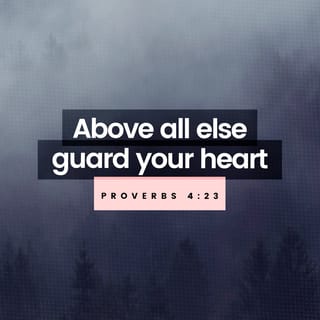



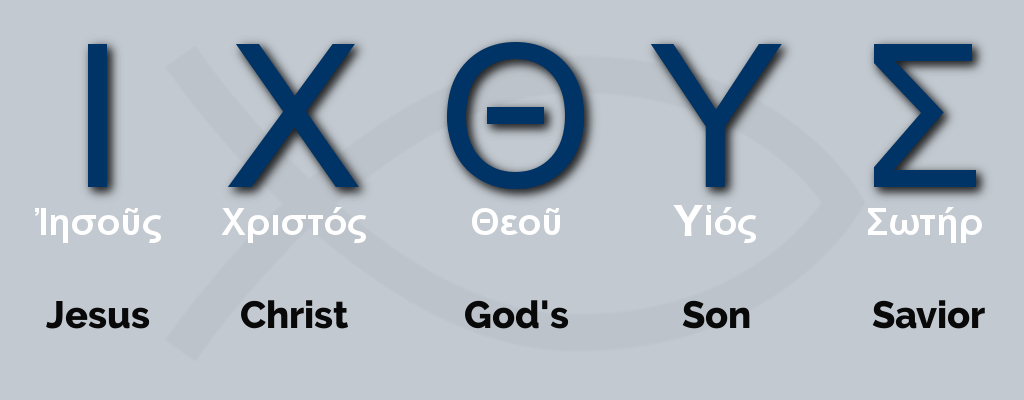








































































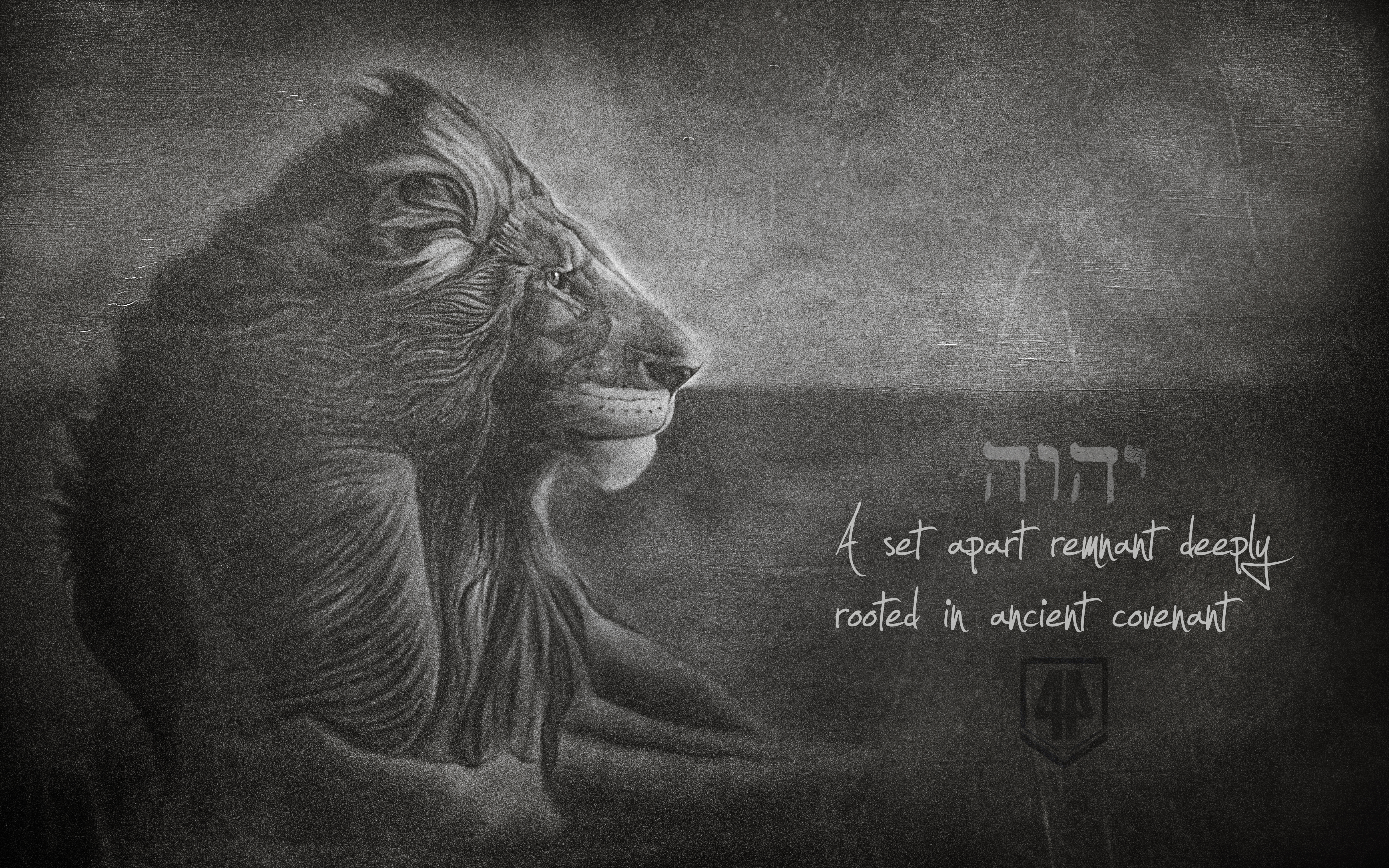


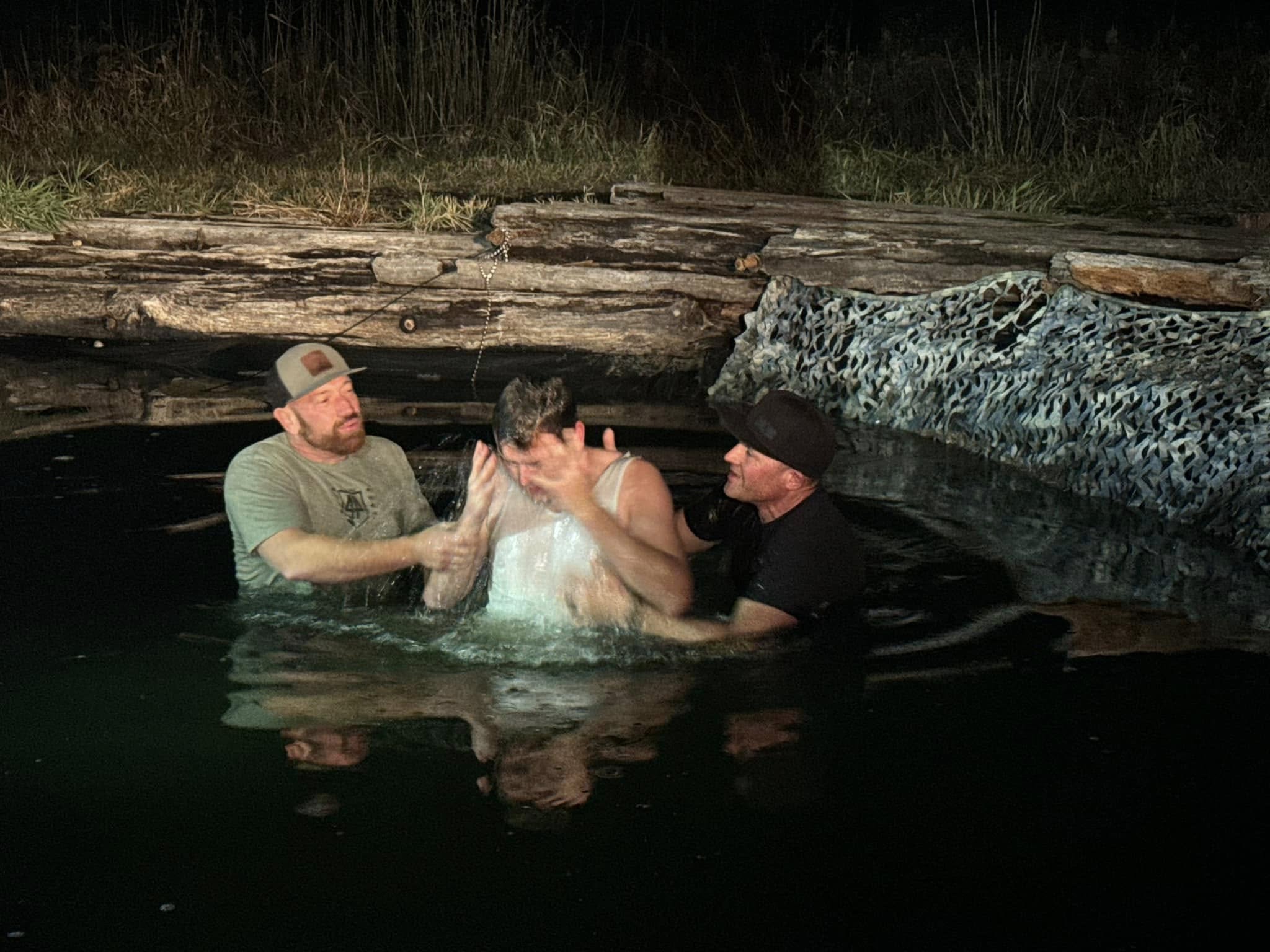















































































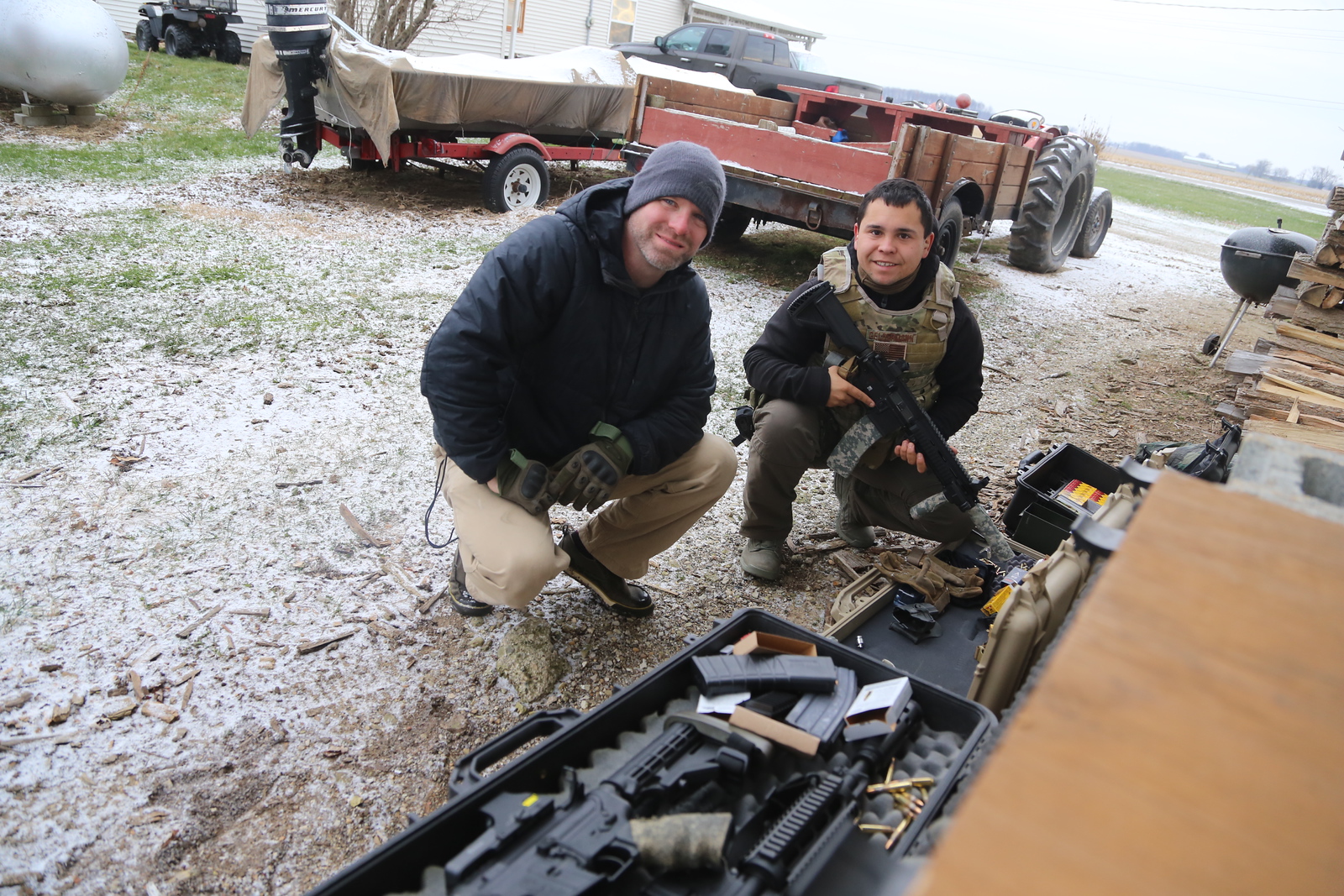







































































 EXPEDITION 44