
PANTOKRATŌR: The God Who Rules the Cosmic Order
Rediscovering the Ancient Near Eastern World Behind “God Almighty”
Beyond the English Word “Almighty”
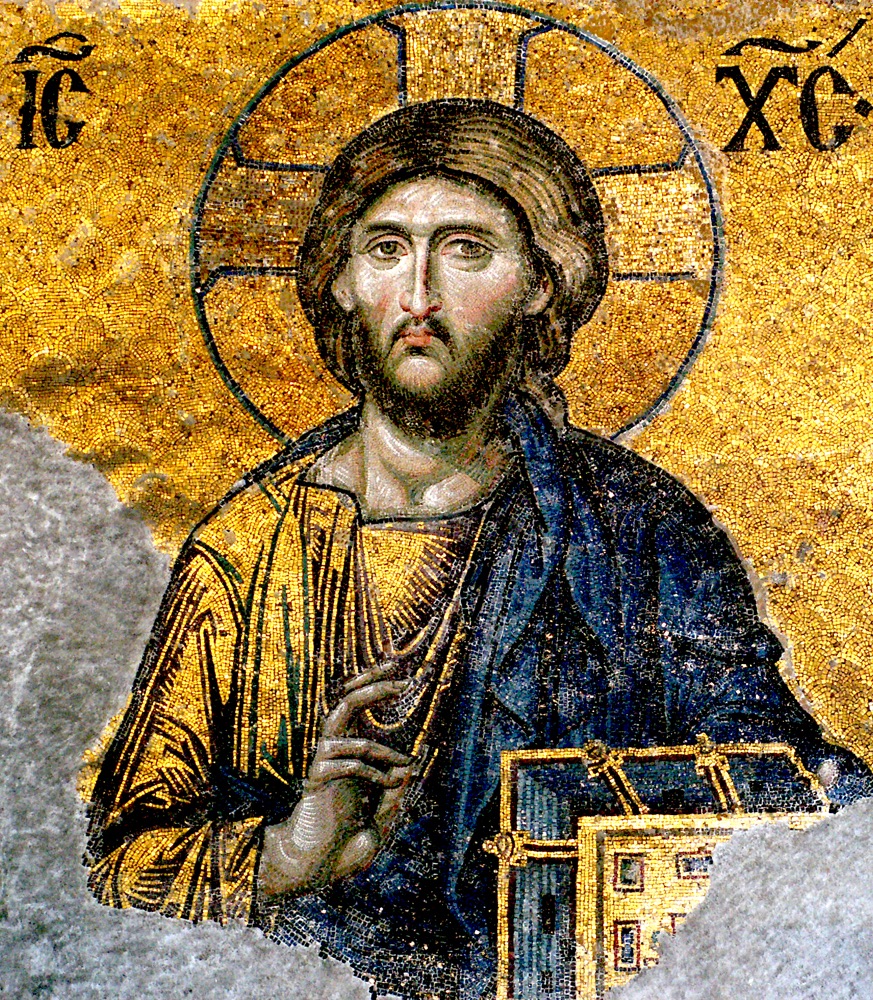
When modern Christians hear the title “God Almighty,” they typically imagine a God possessing unlimited power, capable of doing anything at any moment. Although divine omnipotence is an important theological consideration, this understanding can obscure the ancient worldview behind the biblical language. The Greek title Pantokratōr (παντοκράτωρ), appearing nine times in Revelation and once elsewhere in the New Testament (2 Cor 6:18), carries a rich inheritance from the Hebrew Scriptures, the Septuagint, and the cosmic kingship traditions of the ancient Near East (ANE). Derived from pas (“all”) and kratos (“might,” “dominion,” or “power”), the term identifies God as the sovereign ruler over all things. Yet the biblical emphasis is not merely on God’s ability to exercise power. It concerns his rightful authority over the entire created order, including the nations, heavenly beings, and powers that presume to challenge his reign.¹
YHWH Ṣĕbāʾôt: The Lord of Heaven’s Armies
One of the most significant and often overlooked connections is that Pantokratōr frequently appears in the Septuagint as a rendering of the Hebrew title YHWH Ṣĕbāʾôt (יְהוָה צְבָאוֹת), commonly translated “LORD of Hosts.” The Hebrew ṣābāʾ denotes an army, assembled force, or organized host. While this language can describe earthly armies, it also refers to the heavenly host surrounding God’s throne (1 Kgs 22:19; Ps 103:20–21). Consequently, “Lord of Hosts” is not simply another way of saying that God is powerful. It is a royal designation depicting YHWH as the supreme commander of the heavenly armies and sovereign over the cosmic realm.²
An intriguing connection emerges in Isaiah 6:3, where the seraphim proclaim, “Holy, holy, holy is YHWH of Hosts; the whole earth is full of his glory.” Revelation 4:8 echoes this heavenly liturgy but identifies God as Kyrios ho Theos ho Pantokratōr (“Lord God Almighty”). John’s vision draws upon Isaiah’s throne-room imagery while employing the Greek vocabulary of universal sovereignty. The earthly prophet is permitted to witness the heavenly court, where divine kingship is already established regardless of the political instability unfolding below.
El Shaddai: Was “Almighty” the Original Meaning?
Another fascinating linguistic connection concerns El Shaddai (אֵל שַׁדַּי), traditionally translated “God Almighty.” In Genesis 17:1, God introduces himself to Abraham using this designation, but the original meaning of Shaddai remains uncertain. Some scholars have investigated connections with Akkadian šadû, meaning “mountain,” suggesting a possible ancient association with a mountain deity or divine mountain imagery. Others propose connections with sufficiency, strength, or fertility. None of these explanations has achieved scholarly consensus.
Interestingly, the Septuagint does not consistently translate El Shaddai with Pantokratōr. The Greek association becomes especially prominent in Job, where Shaddai frequently appears as Pantokratōr. This suggests that the familiar translation “Almighty” reflects an important history of interpretation rather than an unquestionable original Hebrew etymology. The distinction matters because ancient divine titles often communicated identity, relationship, and royal authority before later theological traditions expressed them through abstract philosophical categories.³
The Divine Council: God’s Authority over the Elohim
The ANE background becomes particularly illuminating when we encounter the divine council. Ugaritic texts discovered at Ras Shamra describe a heavenly assembly associated with El, the senior deity of the Canaanite pantheon. Biblical authors employ comparable imagery while presenting YHWH’s sovereignty within their own developing theological framework. Psalm 82:1 declares that Elohim stands in the ʿadat El (עֲדַת־אֵל), the divine assembly, judging among the elohim. The vocabulary closely resembles West Semitic descriptions of heavenly councils. Similarly, Psalm 89:5–7 depicts an assembly of holy ones surrounding YHWH, while 1 Kings 22:19 portrays the heavenly host standing on either side of his throne.⁴
These passages are sometimes flattened into poetic descriptions of God’s greatness. Yet their ANE setting suggests something more substantial: the biblical writers envisioned a populated heavenly realm operating under divine authority. Precisely how individual council passages reflect the historical development of Israelite monotheism remains debated. Nevertheless, the broader literary connection is unmistakable. When Revelation calls God Pantokratōr, its language resonates with this ancient portrayal of supreme kingship. God is not struggling to secure a position within the heavenly hierarchy; the biblical narrative presents his authority as unrivaled.
An additional connection appears in Deuteronomy 32:8–9. While the Masoretic Text refers to the “sons of Israel,” the Dead Sea Scrolls preserve the reading “sons of God,” and Greek witnesses refer to divine sons or angels. This older textual tradition places the division of the nations within a heavenly framework, with Israel identified as YHWH’s particular inheritance. The passage does not directly employ Pantokratōr, but it contributes to the worldview inherited by later Jewish apocalyptic literature: the nations and their spiritual powers remain subject to the ultimate authority of God.⁵
Cosmic Warfare: When the King Confronts Chaos
Within Mesopotamian and West Semitic literature, divine kingship was frequently associated with victory over chaos. The Ugaritic Baal Cycle portrays Baal’s conflict with Yamm, the personification of the sea, within a larger struggle over cosmic kingship. Biblical authors likewise employ imagery of waters, sea monsters, and defeated enemies to describe YHWH’s sovereignty (Ps 74:12–17; 89:9–10; Isa 27:1). The Hebrew term tannîn (תַּנִּין), referring to a great serpent or sea creature, participates in this symbolic world, as does Leviathan, the twisting serpent. These images were not necessarily intended as straightforward descriptions of zoological creatures. They belonged to a larger literary vocabulary depicting disorder, rebellion, and forces hostile to God’s created order.⁶
Revelation draws heavily upon this imagery. The dragon, the beast arising from the sea, and Babylon’s imperial arrogance represent hostile powers seeking dominion that does not rightfully belong to them. Against these claims stands Pantokratōr, the sovereign whose kingship will ultimately be vindicated. The biblical drama is therefore not a contest between equally powerful divine rivals but a revelation of the Creator’s authority over powers that have corrupted the world.
The Lamb and the Throne: A Surprising Reversal of Ancient Kingship
Perhaps the most striking feature of Revelation is how John transforms the imagery of ANE conquest. In Revelation 5, John hears of the Lion of Judah who has conquered, but when he turns, he sees a Lamb standing as though slain. The expected royal conqueror is revealed through the imagery of sacrificial death. This is not the abandonment of divine kingship but its surprising revelation through Jesus.
The connection becomes even more compelling in Revelation 19:6, where the heavenly multitude announces that the Lord God Pantokratōr reigns. The proclamation occurs within a narrative celebrating the downfall of Babylon and anticipating the marriage supper of the Lamb. Divine victory is inseparable from the faithfulness of Jesus and the vindication of those who belong to him. Unlike ANE imperial ideologies that frequently legitimized domination through overwhelming military strength, Revelation presents a kingdom whose victory is disclosed through the slain and risen Messiah. The power of God is not absent from the cross; it is revealed through the cross.⁷
One final detail is worth considering. In Revelation 21:22, John declares that the New Jerusalem contains no temple because the Lord God Pantokratōr and the Lamb are its temple. In the ANE, temples functioned as earthly representations of divine dwelling and cosmic order. Revelation’s concluding vision moves beyond a sacred building altogether. God’s presence fills the renewed creation. The cosmic King no longer needs a localized sanctuary because heaven and earth have become the dwelling place of God with humanity.
Conclusion: The God Who Holds All Things Together
Recovering the ANE background of Pantokratōr changes how we hear this remarkable title. God is not merely the strongest being in a universe filled with competing powers. He is the rightful King of creation, Lord of the heavenly hosts, judge of rebellious authorities, and the One who will restore what sin, death, and corruption have disordered. Yet perhaps the most encouraging revelation is that this sovereign King has made himself known through Jesus, the Lamb who was slain.
For those walking through suffering, uncertainty, or the apparent triumph of evil, Pantokratōr offers something deeper than the reassurance that God possesses unlimited strength. It reminds us that the powers presently shaping our circumstances do not possess ultimate authority. The Lamb has overcome, and the kingdom is being restored. Our calling is not to secure God’s victory through coercion or fear, but to live faithfully beneath his reign, embodying the love, justice, mercy, and covenant faithfulness revealed in Jesus.
The One who rules the heavenly hosts is also the One who dwells among his people. And the kingdom he is restoring is marked not merely by the defeat of evil, but by the renewal of all things.

Endnotes
1. Walter Bauer, Frederick William Danker, William F. Arndt, and F. Wilbur Gingrich, A Greek-English Lexicon of the New Testament and Other Early Christian Literature, 3rd ed. (Chicago: University of Chicago Press, 2000), s.v. “παντοκράτωρ”; Rev 1:8; 4:8; 11:17; 15:3; 16:7, 14; 19:6, 15; 21:22; 2 Cor 6:18.
2. Ludwig Koehler, Walter Baumgartner, and Johann Jakob Stamm, The Hebrew and Aramaic Lexicon of the Old Testament, trans. and ed. M. E. J. Richardson, 2 vols. (Leiden: Brill, 2001), s.v. “צבא”; Isa 6:3; 1 Kgs 22:19; Ps 103:20–21.
3. David J. A. Clines, Job 1–20, Word Biblical Commentary 17 (Dallas: Word, 1989); see also the discussion of Shaddai in “Preliminary Ideas on a Substratum Text of Job and the Depiction of Šaddāy” (2023). The proposed Akkadian connection remains disputed.
4. E. Theodore Mullen Jr., The Divine Council in Canaanite and Early Hebrew Literature, Harvard Semitic Monographs 24 (Chico, CA: Scholars Press, 1980); Mark S. Smith, The Origins of Biblical Monotheism: Israel’s Polytheistic Background and the Ugaritic Texts (Oxford: Oxford University Press, 2001). For a recent alternative account of Psalm 82, see Shane M. Thompson, “Local Manifestations of YHWH within El’s Divine Council: Psalm 82 in the Context of Israelite Religion,” Journal of Biblical Literature 143, no. 2 (2024): 245–63.
5. Emanuel Tov, “The Sons of Israel or God?—Deuteronomy 32:8,” TheTorah.com, 2023. The textual witnesses include 4QDeutʲ and differing Septuagint readings.
6. John Day, God’s Conflict with the Dragon and the Sea: Echoes of a Canaanite Myth in the Old Testament, University of Cambridge Oriental Publications 35 (Cambridge: Cambridge University Press, 1985); Frank Moore Cross, Canaanite Myth and Hebrew Epic: Essays in the History of the Religion of Israel (Cambridge, MA: Harvard University Press, 1973).
7. Richard Bauckham, The Theology of the Book of Revelation, New Testament Theology (Cambridge: Cambridge University Press, 1993); Michael J. Gorman, Reading Revelation Responsibly: Uncivil Worship and Witness: Following the Lamb into the New Creation (Eugene, OR: Cascade Books, 2011).

