The Sanctification of the Ordinary: A Theological Review of Amy Peeler’s Ordinary Time

Amy Peeler’s Ordinary Time, within the Fullness of Time series, stands as a deeply pastoral yet theologically substantive contribution to contemporary liturgical theology. In an ecclesial landscape often driven by immediacy, spectacle, and eschatological anxiety, Peeler offers a quiet but profound corrective. She invites the church to recover a theology of time in which the so-called “ordinary” becomes the primary locus of divine formation.¹ This work is, in many respects, a gift to the church. It is careful, attentive, and richly textured. It demonstrates an awareness of Scripture, tradition, and lived ecclesial practice. Yet it is also a work that invites further theological deepening, particularly in areas of eschatology, mission, and apocalyptic framing. within a broader theological framework.

ORDER ON AMAZON: https://a.co/d/0gFd8cdl

Peeler’s introduction establishes her central thesis: the ordinary rhythms of life are not spiritually secondary but are the very means by which God forms his people.² This claim resonates with the broader biblical narrative, wherein divine activity is often embedded within repetition and obscurity rather than dramatic interruption.³ Her reflection on the unrecorded days of Jesus is particularly compelling.⁴ The Gospels, while selective, imply a fullness of lived experience that is not captured in narrative detail. This aligns with a robust incarnational theology in which the entirety of Christ’s life—not merely his climactic acts—is redemptively significant.⁵ Theologically, this positions Ordinary Time as a space of reflection and integration. Growth occurs not only in moments of revelation but in the sustained meditation upon them.⁶ This insight is deeply consonant with Pauline notions of transformation, where believers are “renewed” over time into the image of Christ.⁷

Strength: A compelling integration of Christology and spiritual formation.⁸


Peeler’s “Green” chapter is one of the strongest in the volume. Her use of natural imagery—particularly the discussion of chlorophyll and hidden color—serves as a powerful metaphor for Christian identity.⁹ Her treatment of Galatians 3:27, being “clothed with Christ,” is both exegetically sound and pastorally rich.¹⁰ She avoids reductionism by holding together unity and diversity. In Christ, believers do not lose their particularity but are brought into its proper telos.¹¹ This resonates strongly with patristic theology, particularly Irenaeus’ vision of humanity fully alive in God.¹² It also aligns with contemporary theological anthropology that emphasizes participation rather than mere imputation.¹³ Her discussion of slavery is particularly noteworthy. By distinguishing between created identity (male/female, Jew/Gentile) and fallen structures (slavery), she maintains a robust doctrine of creation while offering a theological critique of oppressive systems.¹⁴

Rich metaphorical theology grounded in Scripture and tradition.¹⁵


The “Bold” chapter offers a striking and, at times, unexpected theological depth. Peeler’s treatment of Mary and the Magnificat is particularly commendable. She resists both sentimentalism and neglect, instead presenting Mary as a figure of bold, Spirit-empowered proclamation.¹⁶ Her reading of the Magnificat as a declaration of divine reversal aligns with Lukan theology, where God consistently overturns systems of power.¹⁷ This is not merely personal piety but socio-theological proclamation.¹⁸ Peeler’s reflection that unity is not always achieved through silence but sometimes through boldness is both pastorally and theologically significant.¹⁹ It reflects a nuanced understanding of ecclesial life that avoids both divisiveness and superficial harmony.

A balanced and theologically rich Marian framework.²⁰


Peeler’s treatment of the Trinity is orthodox, accessible, and pastorally grounded. She rightly emphasizes that the doctrine arises from divine self-revelation rather than speculative reasoning.²¹ Her insistence that the Trinity is not an abstract puzzle but the source of Christian life is a crucial corrective in contemporary theology.²² The integration of Trinitarian prayer throughout the liturgical life of the church reinforces the participatory nature of doctrine.²³ Her use of light imagery is particularly effective, echoing both biblical and patristic traditions.²⁴

Faithful and accessible articulation of Trinitarian theology.²⁵


Peeler’s treatment of the Eucharist as central to Ordinary Time is both fitting and necessary. The Lord’s Supper is not merely a ritual but a participatory act in the life of Christ.²⁶ Her emphasis on repetition as formative aligns with sacramental theology that understands participation as transformative.²⁷ The Eucharist becomes the rhythm through which the ordinary is continually reoriented toward the divine.²⁸

Strong sacramental theology rooted in participation.²⁹


These chapters collectively explore biblical narratives as formative texts for Ordinary Time. Peeler demonstrates a keen awareness of the pedagogical function of Scripture.³⁰ Her emphasis on trust and gratitude reflects a theology of response, where believers participate in God’s work through faithful living.³¹

Integration of narrative theology and spiritual formation.³²


Peeler concludes with a Christological vision that frames Ordinary Time within the broader arc of the church year.³³ This is a fitting conclusion, reminding readers that formation is always oriented toward the reign of Christ.³⁴

Strong Christological framing.³⁵


Amy Peeler’s Ordinary Time is a remarkable work. It is deeply pastoral, theologically attentive, and liturgically grounded. It calls the church to recover a vision of formation that is patient, communal, and Christ-centered.³⁶ This is a work to be read, taught, and lived. It is a reminder that God’s most profound work is often done not in the extraordinary, but in the faithful repetition of ordinary days.³⁷ For this, we give thanks. And for Amy Peeler, whose careful and faithful work serves the church so well, we offer both gratitude and encouragement.


  1. Amy Peeler, Ordinary Time (Downers Grove: IVP Academic, 2025), 3–5.
  2. Esau McCaulley, “Series Preface,” in The Fullness of Time
  3. John H. Walton, Ancient Near Eastern Thought and the Old Testament (Grand Rapids: Baker, 2006)
  4. Peeler, Ordinary Time, 3.
  5. N. T. Wright, Jesus and the Victory of God (Minneapolis: Fortress, 1996)
  6. Scot McKnight, Kingdom Conspiracy (Grand Rapids: Brazos, 2014)
  7. Michael J. Gorman, Becoming the Gospel (Grand Rapids: Eerdmans, 2015)
  8. The introduction could further situate this claim within an explicit new creation framework, emphasizing that ordinary time is not merely reflective but eschatologically charged. Richard B. Hays, Echoes of Scripture in the Gospels (Waco: Baylor, 2016), 12–19.
  9. Peeler, Ordinary Time, 20–22.
  10. BDAG, s.v. “ἐνδύω.”
  11. Gorman, Inhabiting the Cruciform God (Grand Rapids: Eerdmans, 2009)
  12. Irenaeus, Against Heresies
  13. James K. A. Smith, Desiring the Kingdom (Grand Rapids: Baker, 2009)
  14. Peeler, Ordinary Time, 26–27.
  15. Greater engagement with Second Temple Jewish identity categories and socio-historical context would strengthen the exegetical depth. Craig Keener, Galatians (Cambridge: Cambridge, 2019), 210–230.
  16. Peeler, Ordinary Time, 36–37.
  17. Joel B. Green, The Gospel of Luke (Grand Rapids: Eerdmans, 1997)
  18. N. T. Wright, Luke for Everyone (Louisville: Westminster John Knox, 2004)
  19. Peeler, Ordinary Time, 37.
  20. This chapter would benefit from deeper engagement with anti-imperial readings of Luke-Acts, particularly in light of Roman imperial ideology. Warren Carter, The Roman Empire and the New Testament (Nashville: Abingdon, 2006), 75–98.
  21. Peeler, Ordinary Time, 43.
  22. Fred Sanders, The Deep Things of God (Wheaton: Crossway, 2010)
  23. Catherine Mowry LaCugna, God for Us (San Francisco: Harper, 1991)
  24. Augustine, De Trinitate.
  25. Greater engagement with participatory and relational ontologies—particularly in light of divine communion—would deepen the theological implications John Zizioulas, Being as Communion (Crestwood: SVS Press, 1985), 40–65.
  26. Alexander Schmemann, For the Life of the World (Crestwood: SVS, 1973)
  27. Smith, Desiring the Kingdom
  28. Gorman, Apostle of the Crucified Lord (Grand Rapids: Eerdmans, 2004)
  29. A deeper engagement with early church Eucharistic theology and its eschatological dimensions would enrich the discussion. Ignatius of Antioch, Letter to the Smyrnaeans 6–7.
  30. Peeler, Ordinary Time, 16–17.
  31. Walter Brueggemann, Theology of the Old Testament (Minneapolis: Fortress, 1997)
  32. Greater engagement with ANE context and narrative-critical methods would strengthen interpretive depth. Walton, ANE Thought, 90–110.
  33. Peeler, Ordinary Time, 129.
  34. N. T. Wright, Surprised by Hope (New York: Harper, 2008)
  35. A more explicit articulation of new creation and eschatological fulfillment would provide greater theological closure. G. K. Beale, A New Testament Biblical Theology (Grand Rapids: Baker, 2011), 900–915.
  36. Gorman, Becoming the Gospel
  37. Eugene Peterson, A Long Obedience in the Same Direction (Downers Grove: IVP, 2000)

The Way Back to One Another: A Review of Koinōnia in an Age of Aloneness

The contemporary Western church finds itself in a paradox. It is more connected than ever through digital means, yet increasingly marked by fragmentation, loneliness, and relational shallowness. The Way Back to One Another (by Jeff Galley & Phillip Newell Smith) enters this tension with both clarity and conviction, offering a compelling diagnosis of what it terms “aloneness” and a corresponding call toward rediscovering interdependent, Christ-centered community.¹

This work is not merely sociological in its concern. It is profoundly theological. At its core lies the conviction that the human person is created for shared life, and that the church is the primary locus in which this reality is embodied. The authors argue that loneliness is not simply an emotional deficit but a disruption of God’s creational and redemptive intent.² This review seeks to affirm the strengths of the work while situating its claims within a broader biblical-theological framework, offering both edification and gentle admonition for the sake of the church’s formation.

NOTE: Scroll to the bottom for the YouTube X44 Author Interview


One of the most significant contributions of the book is its distinction between loneliness and what it calls “aloneness.” Loneliness may be understood as a subjective emotional state, whereas aloneness is a deeper ontological condition marked by the absence of meaningful, interdependent relationships.³ This distinction is not merely semantic. It reflects a theological anthropology that resonates deeply with Genesis 2:18, where the first “not good” in Scripture emerges prior to the entrance of sin.

The Hebrew term לְבַדּוֹ (levaddo) denotes not merely solitude but a form of existential isolation.⁴ The divine response is not the provision of information, structure, or even worship practices, but the creation of עֵזֶר כְּנֶגְדּוֹ (ezer kenegdo), a corresponding relational partner.⁵ As John Walton notes, this passage establishes relationality as intrinsic to human ontology rather than incidental to it.⁶

The authors rightly perceive that modern Western culture has normalized a form of existence that Scripture identifies as deficient. The church, rather than resisting this formation, has often accommodated it, offering proximity without participation and programs without presence.⁷ In this sense, the book functions prophetically, calling the church to repentance from a subtle but pervasive individualism.


The central constructive proposal of the book is the recovery of κοινωνία (koinōnia), a term that encompasses shared life, mutual participation, and covenantal belonging.⁸ While often translated as “fellowship,” its semantic range is far richer, denoting a dynamic participation in both God and one another.⁹

Acts 2:42–47 provides the paradigmatic expression of this reality. The early church is described as devoted not only to teaching and prayer but to a shared life marked by economic redistribution, daily presence, and communal meals.¹⁰ As Michael J. Gorman observes, this is not an optional expression of Christian life but its very essence, a participation in the life of the crucified and risen Christ.¹¹

The book captures this well, particularly in its emphasis on shared identity, shared purpose, and shared experience.¹² These categories reflect a lived ecclesiology that resists reduction to institutional forms. Instead, they call for a reorientation toward embodied presence and mutual dependence.


While the book is deeply aligned with New Testament expressions of community, it would be strengthened by a more explicit engagement with its Old Testament foundations. The rhythms of Israel’s life were structured around practices that cultivated relational interdependence.

The Deuteronomic festival tithe provides a striking example. Israel was commanded not only to give but to gather, to eat, and to rejoice together before the Lord.¹³ This practice functioned as a formative mechanism, shaping a people whose identity was inseparable from shared presence and celebration. As Christopher Wright notes, Israel’s economic and liturgical life was designed to reinforce covenantal solidarity.¹⁴

Similarly, the concept of חֶסֶד (hesed) underscores the covenantal nature of relationships within Israel. Hesed is not merely kindness but steadfast loyalty expressed in concrete action.¹⁵ It binds individuals into a network of mutual responsibility that reflects the character of God Himself.

The absence of these categories in the book does not undermine its argument but does suggest an opportunity for deeper theological grounding. The vision it articulates is not a novel innovation but a recovery of ancient covenantal patterns.


One of the most compelling aspects of the book is its insistence that meaningful relationships are formed not through affinity but through commitment. The narrative of intentional, sustained relational investment illustrates that depth emerges over time through shared presence and vulnerability.¹⁶

This aligns closely with the biblical concept of covenant. The Hebrew term בְּרִית (berit) denotes a binding relational commitment that persists beyond fluctuating emotions or circumstances.¹⁷ In the New Testament, this finds its fulfillment in the new covenant inaugurated by Christ, which establishes a community marked by mutual self-giving.¹⁸

Discipleship, therefore, cannot be reduced to information transfer or individual spiritual disciplines. It is inherently communal. As Dietrich Bonhoeffer argues, the Christian life is life together under the Word, where believers bear one another’s burdens and confess their sins to one another.¹⁹ The book rightly calls the church back to this reality, emphasizing that spiritual formation occurs within the context of shared life.


The pastoral implications of this work are both urgent and far-reaching. The loneliness epidemic is not merely a cultural phenomenon but a theological crisis. It reveals a disconnect between the church’s practices and its calling.

The authors offer a hopeful vision, but this vision requires costly obedience. It demands a relinquishing of autonomy, a willingness to be known, and a commitment to others that mirrors the self-giving love of Christ.²⁰ As N. T. Wright reminds us, the church is called to be the place where God’s future is brought into the present through a community shaped by love.²¹

At the same time, a gentle admonition is warranted. The recovery of koinōnia must be grounded not only in practical steps but in a robust theological framework that integrates creation, covenant, and new creation. Without this grounding, there is a risk of reducing community to a strategy rather than recognizing it as the very life of God shared among His people.


The Way Back to One Another offers a timely and necessary call to the church. It exposes the inadequacy of superficial connection and invites believers into a deeper, more demanding vision of shared life. Its strengths lie in its clarity, its accessibility, and its compelling portrayal of what authentic community can look like.

Ultimately, the book reminds us that the gospel is not merely a message to be believed but a life to be lived together. The church is not a collection of individuals but a covenantal people, gathered by God and sustained through mutual participation in His life.

If the church is to faithfully respond to the loneliness of our age, it must recover this vision. Not as an optional enhancement, but as the very essence of what it means to be the people of God.


  1. Jeff Galley and Phil Smith, The Way Back to One Another (IVP, 2025), 12.
  2. Ibid., 18.
  3. Ibid., 22.
  4. Ludwig Koehler and Walter Baumgartner, The Hebrew and Aramaic Lexicon of the Old Testament, 2:94.
  5. Genesis 2:18.
  6. John H. Walton, The Lost World of Adam and Eve (IVP Academic, 2015), 82–85.
  7. Galley and Smith, 31.
  8. BDAG, s.v. “κοινωνία.”
  9. Gordon D. Fee, Pauline Christology (Hendrickson, 2007), 45–47.
  10. Acts 2:42–47.
  11. Michael J. Gorman, Apostle of the Crucified Lord (Eerdmans, 2004), 284–289.
  12. Galley and Smith, 69.
  13. Deuteronomy 14:22–27.
  14. Christopher J. H. Wright, Old Testament Ethics for the People of God (IVP, 2004), 195–198.
  15. Nelson Glueck, Hesed in the Bible (Hebrew Union College, 1967).
  16. Galley and Smith, 68–70.
  17. Scott W. Hahn, Kinship by Covenant (Yale University Press, 2009), 27–31.
  18. Luke 22:20; 2 Corinthians 3:6.
  19. Dietrich Bonhoeffer, Life Together (Harper, 1954), 21–30.
  20. Philippians 2:5–11.
  21. N. T. Wright, Paul and the Faithfulness of God (Fortress, 2013), 1040–1045.

Reading the New Testament as History, Literature, and Church Scripture

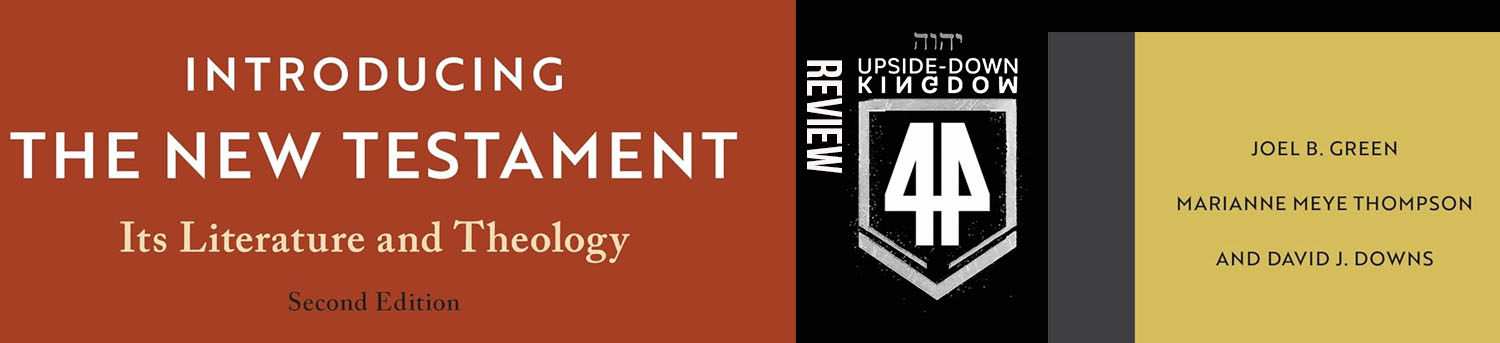
Joel B. Green, Marianne Meye Thompson, and David J. Downs have produced in Introducing the New Testament a substantial and carefully shaped introduction that seeks to hold together three tasks often separated in New Testament studies: reading the New Testament as literature, reading it historically, and reading it as the church’s Scripture.¹ That triadic framework gives the volume both its methodological coherence and its pedagogical strength. Rather than reducing the New Testament to a collection of critical problems or, conversely, flattening it into a devotional anthology, the authors insist that these twenty-seven writings must be heard in their literary particularity, historical situatedness, and canonical function.²

The opening chapter establishes this program with admirable clarity. The New Testament is introduced not simply as a set of ancient Christian documents, but as a collection that, together with the Old Testament, functions normatively within the church’s life.³ At the same time, the authors stress that these writings were not originally composed as a self-conscious anthology called “the New Testament.”⁴ Each text arose as a distinct writing, addressed to concrete communities and historical conditions. That double emphasis is one of the volume’s major virtues. It resists both ecclesial abstraction and historical atomization. The New Testament is neither less than Scripture nor more than first-century writings that must first be understood on their own terms.⁵

The literary angle is handled especially well. The authors rightly stress that the New Testament is not one kind of document but many: Gospels, Acts, letters, and apocalypse.⁶ A reader who approaches Revelation as though it were Philippians, or Romans as though it were Mark, has already begun badly.⁷ Their account of genre as a communicative convention between writers and readers is both theoretically sound and pedagogically effective.⁸ This is not an exercise in literary formalism. It is an exhortation to attend carefully to how texts mean, not merely to what readers want them to say. In this respect, the book aligns with the broader gains of genre criticism and rhetorical criticism while avoiding the excesses of technicality that often burden introductory texts.⁹

That literary attentiveness is not merely asserted in the opening chapter but carried through the book’s structure. Matthew, Mark, Luke, and John are all treated according to narrative shape and theological contour rather than merely source-critical debate.¹⁰ John, for instance, is read in terms of the Prologue, the Book of Signs, the Book of the Passion, and the Postscript, with the central claim that Jesus’ glory is revealed not only in signs but in his death and resurrection.¹¹ That is a familiar but still fruitful reading, and it keeps the Fourth Gospel’s paradox intact. Glory in John is not peripheral to suffering. It is disclosed through it.¹²

Mark is similarly approached as a dramatic narrative in which Jesus’ teaching, healing, and exorcistic ministry all reveal the kingdom of God while also generating misunderstanding and conflict.¹³ The observation that miracle and teaching in Mark are not separate activities but manifestations of the same revelatory reality is particularly perceptive.¹⁴ It guards against the dissection of Jesus into either ethical teacher or thaumaturge and keeps the Gospel’s theological unity before the reader. Luke, likewise, is treated in relation to Luke-Acts, narrative progression, and the divine reversal that lifts up the lowly.¹⁵ Such emphases reflect sound narrative judgment and show that the authors understand introductions to be formative, not merely descriptive.

The historical framing of the New Testament is another major strength. The authors insist, rightly, that no New Testament document was written for a modern English-speaking audience and that historically responsible reading requires sensitivity to language, geography, social structures, political realities, and inherited conventions of communication.¹⁶ Their distinction between history within the text and history behind the text is especially useful.¹⁷ Both matter. New Testament writings arise from particular communities and conflicts, and their meaning is often inseparable from those settings. The illustration from Philemon is instructive. Detached from its world, the letter becomes almost instantly opaque. Read within the realities of household management, patronage, slavery, and mediation, it regains its force and specificity.¹⁸

The chapter on the world of the New Testament deepens this historical orientation by addressing institutional contexts such as patronage and status. The discussion of Roman patronage is especially important. Augustus and the imperial order are presented not simply as political realities but as nodes in a sacralized network of reciprocity, obligation, and benefaction.¹⁹ That is precisely the kind of background necessary for hearing New Testament language about gospel, peace, lordship, grace, and benefaction with fresh acuity. In this respect, the volume stands in fruitful proximity to socio-rhetorical and anti-imperial readings of the New Testament.²⁰ It does not overstate its case, but neither does it leave the Roman world as neutral scenery.

Paul’s letters are also treated with welcome breadth. Before individual Pauline letters are discussed, the book pauses for chapters on letters in the New Testament and on Paul’s life and mission, including a section on Paul’s apocalyptic worldview.²¹ Structurally, this is a wise decision. It prevents the letters from being reduced to isolated doctrinal units and instead places them within apostolic vocation, mission, and worldview. Ephesians, for example, is read in terms of God’s cosmic purpose, the uniting of Jew and Gentile, and the revelation of divine wisdom to the rulers and authorities.²² That is a strong and properly Pauline reading. The church is not treated as a secondary appendix to salvation but as part of God’s cosmic intention in Christ.²³

Philippians is handled with similar care. The Roman colonial setting, Paul’s imprisonment, the congregation’s internal tensions, and the presence of rival teachers all receive due attention.²⁴ Particularly valuable is the treatment of Euodia and Syntyche as named coworkers whose conflict reveals both the reality of congregational fracture and the active leadership of women in Pauline communities.²⁵ Colossians and Philemon are likewise framed with a commendable eye to both theological breadth and social concreteness. Colossians is praised for its expansive christological vision, while Philemon is interpreted within the harsh realities of Roman slavery and household economics.²⁶ This prevents the letter from becoming sentimental and forces readers to reckon with the social depth of Pauline reconciliation.²⁷

The sections on Hebrews and James are among the most pastorally effective in the volume. Hebrews is rightly identified as something other than a typical Hellenistic letter, more plausibly described as an extended homiletical discourse or “word of exhortation.”²⁸ The discussion of authorship is judicious, rehearsing the older Pauline attribution while acknowledging the stylistic and conceptual reasons most scholars reject it.²⁹ More importantly, Hebrews is not left as an antiquarian puzzle. The authors recognize its strangeness to modern readers, with its tabernacle symbolism, Melchizedek typology, and sacrificial argument, yet they also insist that its portrayal of the people of God as pilgrims on the way to the heavenly city remains enduringly potent wherever discouragement threatens discipleship.³⁰ That is not mere homiletical softening. It is a faithful recognition of Hebrews’ own pastoral burden.

James, for its part, is treated not as Paul’s foil but as a deeply Jewish Christian writing standing near both wisdom tradition and the teaching of Jesus.³¹ The comparison of James with Proverbs, Sirach, Romans, and 1 Peter is pedagogically excellent, and the treatment of “James and Jesus” is especially strong.³² The moral imperatives of James are rightly located in the double commandment of love and in concern for the poor, the impartial use of speech, and resistance to friendship with the world.³³ In an ecclesial climate where faith is often detached from embodied obedience, this section is quietly admonitory in exactly the right way.

Revelation is handled with perhaps the greatest theological precision in the volume. The authors reject sensationalist readings that turn the Apocalypse into a coded chart of modern geopolitical events and instead insist that Revelation must be heard in relation to its genre, first-century setting, and symbolic logic.³⁴ The claim that Revelation is a composite of letter, prophecy, and apocalypse is standard but well stated.³⁵ Their discussion of pseudonymity is also helpful. Jewish apocalypses were often pseudonymous; Revelation is not. John writes under his own name and grounds his authority in his relationship to suffering churches.³⁶

The strongest point in the chapter is the insistence that John’s visions are not encrypted future predictions but disclosures of present reality from the vantage point of God’s sovereignty and the Lamb’s victory.³⁷ Rome is identified as beast and Babylon, not to provide speculative timelines, but to unmask the imperial order as blasphemous, exploitative, and doomed.³⁸ The heavenly throne room scenes rightly function as the theological center of the book, from which all judgment and salvation imagery must be read.³⁹ The emphasis on the Lamb as the slain yet living one through whom God’s purposes in history are enacted is exactly the right center for an introduction to Revelation.⁴⁰

If critique is needed here, it is largely a matter of degree rather than direction. The treatment of Revelation’s Old Testament saturation is sound, especially the observation that John works more by creative reconfiguration than by direct quotation.⁴¹ Yet one could wish for fuller reflection on the theological density of that intertextual practice, especially in relation to temple, exodus, and new creation motifs.⁴² Similarly, although the anti-imperial force of Revelation is well captured, the book could say more about the church’s liturgical participation in the Lamb’s victory as a mode of resistance.⁴³

The final chapter on canon formation is another major contribution. Canon is defined as the body of writings regarded by the Christian community as uniquely normative for its life and thought.⁴⁴ The authors explain that the process of canon formation was lengthy and complex, shaped by both internal and external pressures, by the church’s mission, and by the continued use of Jewish Scripture.⁴⁵ Particularly strong are the sections arguing that the church’s missionary task helped generate stable forms of Jesus tradition and apostolic oversight, and that Christian use of Israel’s Scriptures laid groundwork for the eventual emergence of a distinctively Christian canon.⁴⁶ This is historically responsible and pedagogically clear.

The theological force of canon formation appears most clearly, however, in the earlier section on “The New Testament as the Church’s Scripture.” There the authors insist that the New Testament cannot be read apart from the Old Testament, that its witness is rooted in God’s dealings with Israel, and that its primary significance lies not merely in the historical information it preserves but in its function as Scripture within the church.⁴⁷ That judgment is decisive. It keeps the New Testament from being reduced either to a raw archive for historians or to a collection of proof texts for modern doctrinal combat. It also includes a welcome warning about the misuse of Scripture in the history of the church, including slavery, the persecution of Jews, and other forms of injustice.⁴⁸ That acknowledgment gives the book moral seriousness.

In the end, Introducing the New Testament succeeds because it teaches readers how to read before it teaches them how to take sides. It honors literary form without becoming aestheticist, history without becoming reductionist, and ecclesial normativity without retreating from scholarly responsibility. Its shortcomings are real. One could wish for a fuller integration of apocalyptic theology across Pauline and canonical discussions, a more robust engagement with Second Temple currents at certain points, and a somewhat thicker theological synthesis in a few chapters.⁴⁹ Yet these are critiques made of a strong book whose best instincts deserve to be pressed even further. As an introduction, it is learned, balanced, and deeply serviceable. More importantly, it quietly exhorts the reader to approach the New Testament with patience, humility, and obedience. In a time when the church is tempted either to weaponize Scripture or to neglect it, that is no small achievement.

PURCHASE ON AMAZON

Notes

  1. Joel B. Green, Marianne Meye Thompson, and David J. Downs, Introducing the New Testament, 2nd ed. (Grand Rapids: Eerdmans, 2020), 1–11.
  2. Green, Thompson, and Downs, Introducing the New Testament, 1–10.
  3. Green, Thompson, and Downs, Introducing the New Testament, 1, 8–10.
  4. Green, Thompson, and Downs, Introducing the New Testament, 1–2.
  5. Green, Thompson, and Downs, Introducing the New Testament, 2–10.
  6. Green, Thompson, and Downs, Introducing the New Testament, 2–4.
  7. Green, Thompson, and Downs, Introducing the New Testament, 3.
  8. Green, Thompson, and Downs, Introducing the New Testament, 4.
  9. Richard A. Burridge, What Are the Gospels? 2nd ed. (Grand Rapids: Eerdmans, 2004), 239–67.
  10. Green, Thompson, and Downs, Introducing the New Testament, v–ix.
  11. Green, Thompson, and Downs, Introducing the New Testament, 163.
  12. Marianne Meye Thompson, John: A Commentary (Louisville: Westminster John Knox, 2015), 1–21.
  13. Green, Thompson, and Downs, Introducing the New Testament, 121.
  14. Green, Thompson, and Downs, Introducing the New Testament, 121.
  15. Green, Thompson, and Downs, Introducing the New Testament, vi.
  16. Green, Thompson, and Downs, Introducing the New Testament, 5–6.
  17. Green, Thompson, and Downs, Introducing the New Testament, 5–7.
  18. Green, Thompson, and Downs, Introducing the New Testament, 6; 403–7.
  19. Green, Thompson, and Downs, Introducing the New Testament, 48.
  20. Ben Witherington III, New Testament History (Grand Rapids: Baker Academic, 2001), 33–58; Michael J. Gorman, Reading Revelation Responsibly (Eugene, OR: Cascade, 2011), 15–35.
  21. Green, Thompson, and Downs, Introducing the New Testament, vii–viii.
  22. Green, Thompson, and Downs, Introducing the New Testament, 367.
  23. Michael J. Gorman, Inhabiting the Cruciform God (Grand Rapids: Eerdmans, 2009), 1–27.
  24. Green, Thompson, and Downs, Introducing the New Testament, 375, 389.
  25. Green, Thompson, and Downs, Introducing the New Testament, 389.
  26. Green, Thompson, and Downs, Introducing the New Testament, 393, 407.
  27. Jennifer A. Glancy, Slavery in Early Christianity (Minneapolis: Fortress, 2002), 78–103.
  28. Green, Thompson, and Downs, Introducing the New Testament, 450.
  29. Green, Thompson, and Downs, Introducing the New Testament, 451.
  30. Green, Thompson, and Downs, Introducing the New Testament, 449.
  31. Green, Thompson, and Downs, Introducing the New Testament, ix, 481, 488–91.
  32. Green, Thompson, and Downs, Introducing the New Testament, 479, 501.
  33. Scot McKnight, The Letter of James (Grand Rapids: Eerdmans, 2011), 34–59.
  34. Green, Thompson, and Downs, Introducing the New Testament, 531, 536–37.
  35. Green, Thompson, and Downs, Introducing the New Testament, 532.
  36. Green, Thompson, and Downs, Introducing the New Testament, 533–34.
  37. Green, Thompson, and Downs, Introducing the New Testament, 536–37.
  38. Green, Thompson, and Downs, Introducing the New Testament, 534, 539–41.
  39. Green, Thompson, and Downs, Introducing the New Testament, 548–49.
  40. Richard Bauckham, The Theology of the Book of Revelation (Cambridge: Cambridge University Press, 1993), 1–20.
  41. Green, Thompson, and Downs, Introducing the New Testament, 537.
  42. G. K. Beale, The Book of Revelation (Grand Rapids: Eerdmans, 1999), 108–52.
  43. Gorman, Reading Revelation Responsibly, 37–64.
  44. Green, Thompson, and Downs, Introducing the New Testament, 561.
  45. Green, Thompson, and Downs, Introducing the New Testament, 561–65.
  46. Green, Thompson, and Downs, Introducing the New Testament, 562–63.
  47. Green, Thompson, and Downs, Introducing the New Testament, 8–10.
  48. Green, Thompson, and Downs, Introducing the New Testament, 9–10.
  49. N. T. Wright, The New Testament and the People of God (Minneapolis: Fortress, 1992), 147–338; John H. Walton, The Lost World of Scripture (Downers Grove, IL: IVP Academic, 2013), 165–94.

Rest, Hesed, and the Collapse of Babel: A Critical Review of The Sabbath Gospel

G. P. Wagenfuhr and Amy J. Erickson

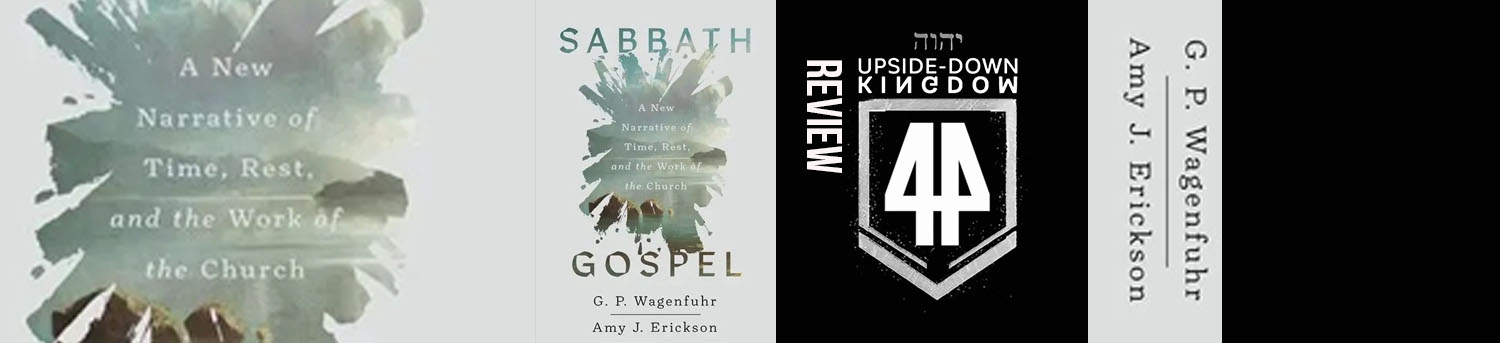
In The Sabbath Gospel, G. P. Wagenfuhr and Amy Erickson offer a constructive and, at points, disruptive proposal: that Sabbath is not merely an ethical category within Scripture but the hermeneutical and ontological center of the gospel itself. Their work situates Sabbath within a broader narrative framework that reorders time, reframes divine sovereignty, and reconfigures the nature of salvation. In doing so, they join a growing chorus of scholars who resist reductionist soteriologies and seek to recover the relational, covenantal, and cosmic dimensions of biblical theology

The volume is ambitious. It attempts to relocate theological discourse away from abstract metaphysical starting points and toward the lived, narrative reality of God’s engagement with creation. The authors’ central contention—that Scripture presents a “Sabbath gospel” in contrast to humanly constructed “gospels of rest”—places their work in conversation with Walter Brueggemann’s socio-theological readings of Sabbath, John Walton’s functional ontology of creation, and Gregory Boyd’s cruciform account of divine action.²


Wagenfuhr and Erickson’s framing of Scripture as a “tale of two times” is one of the book’s most generative contributions. Time, they argue, is not a neutral container but a theologically charged medium shaped by competing sovereignties.³ This resonates strongly with Second Temple Jewish conceptions of “this age” and “the age to come,” as well as with Pauline apocalyptic categories in which time itself is enslaved under hostile powers.⁴

Their claim that time is qualitative rather than merely quantitative aligns with Brueggemann’s insistence that Israel’s calendar reflects a counter-imagination to imperial temporality, particularly in its resistance to endless production and accumulation.⁵ Likewise, their emphasis on time as relational and formative finds support in biblical narrative theology, where identity is shaped not by abstraction but by participation in God’s story.⁶

The authors’ reading of Genesis 1–11 through this lens is particularly compelling. They interpret the movement from Eden to Babel as a transition from divinely ordered time to humanly constructed temporality, a shift marked by increasing autonomy and fragmentation.⁷ This trajectory mirrors Walton’s argument that Genesis is concerned with functional order and sacred space, suggesting that Babel represents not merely disobedience but a misdirected attempt to establish sacred order apart from God’s presence.⁸


The treatment of Babel stands as one of the book’s strongest exegetical and theological achievements. Rather than reducing the narrative to moralism, Wagenfuhr and Erickson situate it within a broader ANE context of temple-building, cosmic geography, and political consolidation.⁹ The tower is not simply a monument but a symbolic center of power, an attempt to mediate divine presence through human construction.¹⁰

This reading aligns with ancient Near Eastern evidence regarding ziggurats as cosmic axes and with Mircea Eliade’s observations concerning sacred space as the “navel of the world.”¹¹ Yet the authors extend this insight by framing Babel as an archetype of empire—an enduring pattern in which human societies seek unity through uniformity and control.¹²

Here the influence of Jacques Ellul is evident, particularly in the critique of technological and political systems that claim autonomy and inevitability.¹³ The authors’ suggestion that modern appeals to diversity can function as mechanisms of homogenization is both provocative and worthy of further exploration.¹⁴

Importantly, God’s response to Babel is interpreted not as arbitrary punishment but as a redemptive disruption of false unity. The confusion of languages introduces diversity as a safeguard against totalizing systems, anticipating the reconciled plurality of Pentecost.¹⁵ This reading coheres with Acts 2, where linguistic diversity is not abolished but transformed into a medium of communion.¹⁶


At the heart of the book lies its redefinition of the gospel. Against what the authors describe as the “dream-home gospel”—the human impulse to construct environments of stability and control—they present Sabbath as a gift that cannot be produced or possessed.¹⁷ This reframing challenges both secular and ecclesial assumptions, calling into question the ways in which Christian practice can mirror the very systems it seeks to resist.

This emphasis on gift resonates with the broader biblical theme of grace as unmerited favor, as well as with theological traditions that emphasize participation over transaction.¹⁸ The authors’ insistence that the gospel reforms desire rather than merely behavior echoes Augustine’s account of disordered loves and aligns with contemporary discussions of formation and discipleship.¹⁹

Moreover, their portrayal of Sabbath as liberation from systems of exploitation reflects Brueggemann’s characterization of Sabbath as an act of resistance against Pharaoh-like economies.²⁰ In this sense, Sabbath becomes not only a theological concept but a political and social reality, challenging structures that perpetuate inequality and oppression.


The book’s hamartiology further strengthens its argument. By framing sin as a power that organizes entire “households” of existence, Wagenfuhr and Erickson move beyond individualistic accounts and recover a more holistic biblical perspective.²¹ This approach finds strong support in Pauline theology, where sin is depicted as a reigning force that enslaves humanity.²²

Their description of sin as an economy of death, exploitation, and corruption aligns with Second Temple Jewish literature and with modern theological accounts of systemic evil.²³ It also provides a coherent framework for understanding the relationship between personal sin and structural injustice, a connection often neglected in traditional theology.


Perhaps the most controversial aspect of the work is its critique of classical theological starting points, particularly the emphasis on aseity. Wagenfuhr and Erickson argue that Scripture does not begin with abstract descriptions of God’s essence but with covenantal relationship, encapsulated in the concept of hesed.²⁴

This claim is not without merit. The Hebrew Bible consistently portrays God in terms of faithful action within history, and the repeated covenant formula underscores the relational nature of divine identity.²⁵ Their reading of Exodus 3:14 as a statement of reliability rather than metaphysical being is provocative and finds some support in narrative interpretations of the text.²⁶

Nevertheless, their critique risks oversimplifying the theological tradition. Classical doctrines of divine attributes were developed not to replace relational theology but to articulate it within a coherent metaphysical framework.²⁷ As scholars such as N. T. Wright have argued, the task is not to abandon ontology but to integrate it within the biblical narrative.²⁸


The authors’ treatment of divine sovereignty reflects a desire to avoid determinism and to preserve the integrity of human agency. Their depiction of God as “invading” history with Sabbath suggests a dynamic interaction between divine and human action.²⁹

While this approach has pastoral and theological appeal, it raises questions regarding the nature of providence and the extent of divine control. The tension between sovereignty and freedom remains unresolved, and further engagement with classical and contemporary discussions would strengthen the argument.³⁰


Although Christ is present throughout the work, the book’s primary focus remains on structural and thematic elements. A more explicit integration of Christology would enhance the authors’ proposal, particularly in relation to:

  • the cross as the dismantling of Babel-like systems
  • the resurrection as the inauguration of Sabbath rest
  • the Spirit as the agent of Sabbath participation

These themes are implicit but could be developed more fully in dialogue with New Testament scholarship.³¹


The Sabbath Gospel represents a significant contribution to contemporary theological discourse. Its strengths lie in its:

  • narrative coherence
  • exegetical depth
  • and willingness to challenge entrenched assumptions

By centering Sabbath within the gospel, Wagenfuhr and Erickson invite readers to reconsider not only their theology but their way of life. Their work calls the church to embody a form of existence that resists the logic of Babel and participates in the rest of God.

In an age marked by restlessness, fragmentation, and control, this vision is both timely and necessary. It reminds us that the gospel is not a system to be mastered but a gift to be received—a Sabbath into which we are invited to dwell.

PURCHASE HERE


  1. Wagenfuhr and Erickson, The Sabbath Gospel, 1–10.
  2. Walter Brueggemann, Sabbath as Resistance (Louisville: WJK, 2014), 1–20.
  3. Wagenfuhr and Erickson, 85–89.
  4. Gal 1:4; Rom 12:2.
  5. Brueggemann, Sabbath as Resistance, 25–40.
  6. Craig G. Bartholomew and Michael W. Goheen, The Drama of Scripture (Grand Rapids: Baker, 2004).
  7. Wagenfuhr and Erickson, 83–86.
  8. John H. Walton, The Lost World of Genesis One (Downers Grove: IVP, 2009).
  9. Wagenfuhr and Erickson, 83–84.
  10. Ibid.
  11. Mircea Eliade, The Sacred and the Profane (New York: Harcourt, 1959).
  12. Wagenfuhr and Erickson, 84–86.
  13. Jacques Ellul, The Technological Society (New York: Vintage, 1964).
  14. Wagenfuhr and Erickson, 84.
  15. Ibid., 86–87.
  16. Acts 2:1–13.
  17. Wagenfuhr and Erickson, 27–30.
  18. Eph 2:8–9.
  19. Augustine, Confessions, trans. Henry Chadwick (Oxford: OUP, 1991).
  20. Brueggemann, Sabbath as Resistance, 44–60.
  21. Wagenfuhr and Erickson, 87–88.
  22. Rom 5:12–21.
  23. 1 Enoch; Jubilees.
  24. Wagenfuhr and Erickson, 27–28.
  25. Exod 6:7; Lev 26:12.
  26. Exod 3:14.
  27. Thomas Aquinas, Summa Theologiae.
  28. N. T. Wright, How God Became King (New York: HarperOne, 2012).
  29. Wagenfuhr and Erickson, 28.
  30. Kevin J. Vanhoozer, Remythologizing Theology (Cambridge: CUP, 2010).
  31. Ben Witherington III, Jesus the Sage (Minneapolis: Fortress, 1994).