STAR OF DAVID/REMPHAN

The Magen David or Star of David  (מָגֵן דָּוִד, lit. ’Shield of David‘) is a symbol generally recognized as representing both Jewish identity and Judaism.1 It may surprise you to learn that it has no Biblical roots. The earliest the hexagram can be found in a religious context is in the Leningrad Codex, a manuscript of the Hebrew Bible from 11th-century Cairo.2 It became representative of Zionism after it was chosen as the central symbol for a Jewish national flag at the First Zionist Congress in 1897.3 By the end of World War I, it was an internationally accepted symbol for the Jewish people, used on the gravestones of fallen Jewish soldiers. 4 Today, the star is the central symbol on the national flag of the State of Israel.
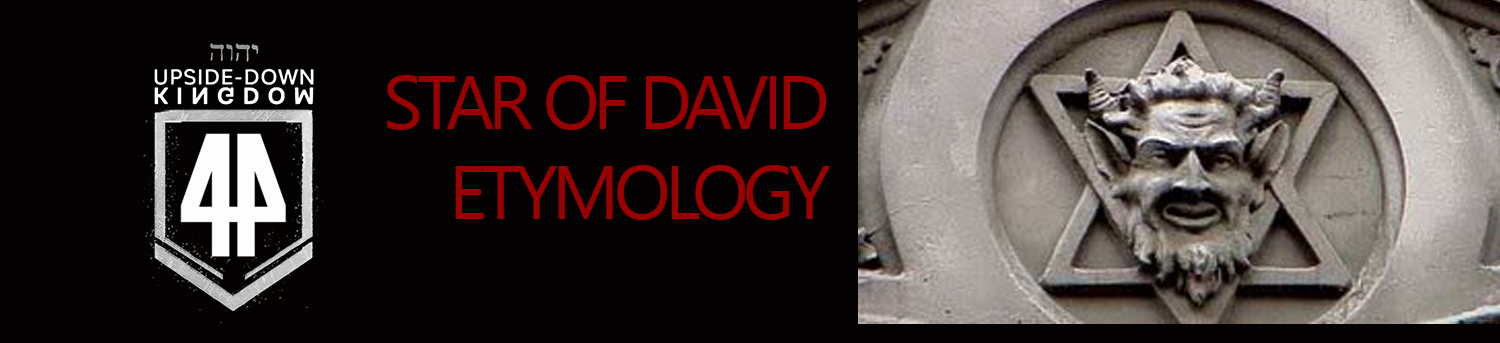
Unlike the menorah, the Lion of Judah, the shofar and the lulav, the hexagram was not originally a uniquely Jewish symbol.5 There are some early signs of the symbol,  in Israel, there is a stone bearing a hexagram from the arch of the 3rd–4th century Khirbet Shura synagogue in Galilee.6 It also appears on a temple on Bar Kokhba Revolt coinage which dates from 135 CE.7 You can also find a hexagram on the ancient synagogue at Capernaum.8
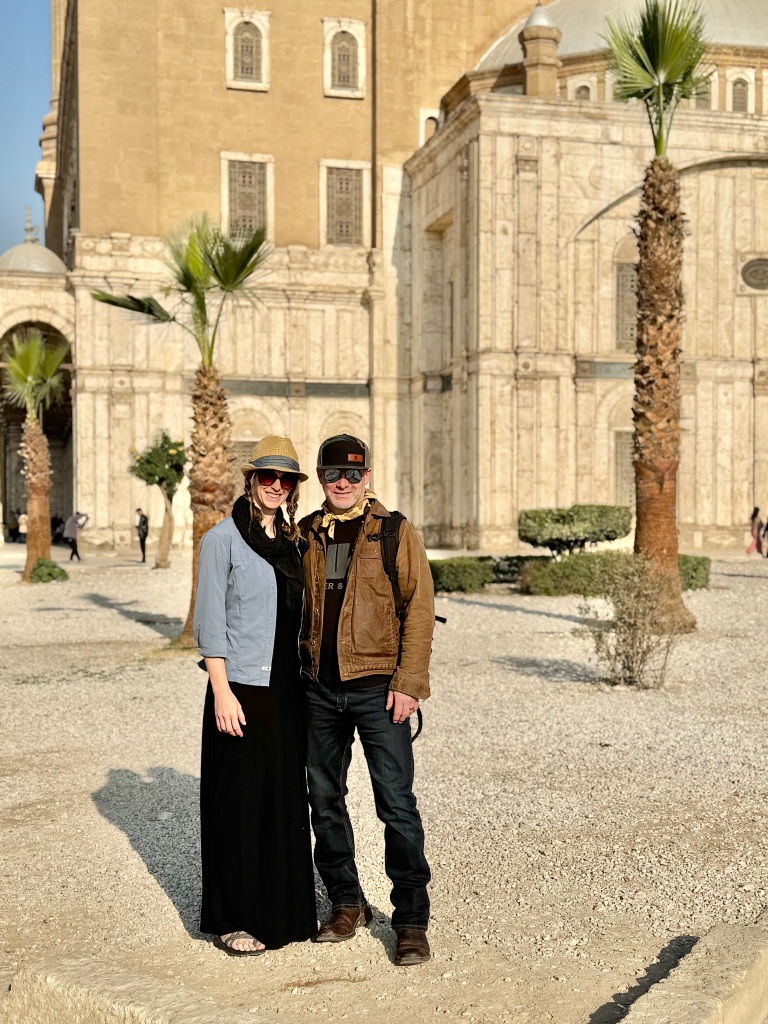
A hexagram has been noted on a Jewish tombstone in Italy and another arguably in Egypt 9 (that I viewed in person earlier this year), which both may date as early as the third century.10 The Jews of Apulia were noted for their scholarship in Kabbalah, which doesn’t sit well in most traditional and Messianic Jewish circles.11

Medieval Kabbalistic grimoires show hexagrams among the tables of segulot, but without identifying them as “Shield of David”.12


In the New Testament, Stephen condemns Jewish idolatry in Acts 7:3: “Ye took up the tabernacle of Moloch, and the star of your god Remphan, figures which ye made to worship them: and I will carry you away beyond Babylon.” Stephen is quoting word-for-word from Septuagint version of Amos 5:26-27.

According to some Biblical scholars, the name refers to the Hebrew Kiyyun or Chiun (Hebrew: כִּיּוּן), However, the words “Kiyyun” (“Chiun”) and “Remphan” are each hapax legomena,13 and the text is unclear as to whether they are common or proper nouns and could be a reference to the planet Saturn (which was also connected to Remphan.) The Masoretic Text reads Kiyyun (Chiun), while the Septuagint renders that name as Rephan. Acts 7:42 quotes the Greek form, showing how the prophetic word moved into the early church. Comparative linguistics links Kiyyun to the Assyrian Kayvân, a name for planet saturn. Ancient peoples called planets “wandering stars” and often built cults around a star god. In more modern history you will recognize these terms from Zoroastrianism.14 

To be clear the Bible just mentions a star, not 5 or 6 points or anything else. The context is about rebellion to the Lord, but a large part of this discussion would have involved symbols of idolatry which is Exodus 20:3-4 language. Furthermore, as I alluded to earlier, there are some Hebrew issues in the text that you may need to be work through. The Hebrew Kiyyun to the Assyrian Kayvân / Chuin or Kewan, was rendered in the Septuagint, as Ῥαιφάν [Raiphan]. Some try to argue that there was no ancient god named Remphan, but I don’t see merit in that argument.
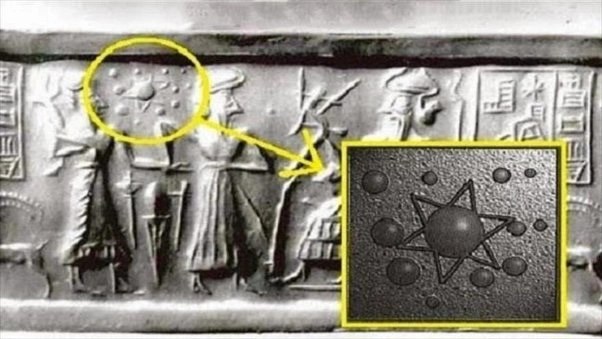
Others may say that the reference is the Star of Ninurta, which has eight points, not six points.15 But the truth of the matter is there are plenty of stars to be found in ancient culture and they didn’t seem to differentiate between 5,6,7 or 8 points; they all held the similar celestial imagery. For instance, I will remind you that in John’s vision of Revelation, Jesus has seven stars in his right hand. Jesus reveals the mystery: “The seven stars are the angels of the seven churches” (Rev 1:20). Thus, there are seven stars or seven angels (messengers) to God’s redeemed people. In this sense it is important to point out that star imagery itself should not necessarily be condemned, it can be viewed in scripture in both positive and negative light. Jesus is called the Morning Star in Revelation 22:26 but Satan is also referenced with a similar term in Isaiah 14:12.

Moloch, Chiun and Remphan are all associated with the star god, Saturn, whose symbol is most commonly viewed as a six pointed star formed by two triangles, but sometimes as an 8 sided star. Saturn was the supreme god of the Chaldeans. Mo, Chiun, Rephan, or Remphan, and Remphis, all are likely the same with the Serapis of the Egyptians, and the calf of the Israelites; and which idolatry was introduced on account of Joseph, who interpreted the dream of Pharaoh’s kine, and provided for the Egyptians in the years of plenty against the years of famine, and was worshipped under the ox with a bushel on his head.

There is also may be a D32 nephalim connection. Giants, with the Hebrews, were called “Rephaim”; and so Mo, who is here meant, is called “Rephan”, and with an epenthesis “Remphan”, because of his gigantic form; which some have concluded from the massy crown on his head, which, with the precious stones, weighed a talent of gold, which David took from thence, 2 Samuel 12:30 for not the then reigning king of the Ammonites, but Molech, or Milchom, their idol, is meant: this is generally thought to be the same with Chiun in Amos; but it does not stand in a place to answer to that; besides, that should not be left untranslated, it not being a proper name of an idol, but signifies a type or form; and the whole may be rendered thus, “but ye have borne the tabernacle of your king, and the type, or form of your images, the star of your god”; which version agrees with Stephens’s, who, from the Septuagint, adds the name of this their king, and their god Rephan, or Remphan.16 Early Hebrew writing easily could have interpreted Rephaim as Rephan. We see these slight textual subtleties all over early ancient transcripts.17 Rephan, very well could point directly to a connection with fallen spiritual beings revered in the ancient world as gods in a Genesis 6 context.

The Seal of Solomon or Ring of Solomon (חותם שלמה, Ḥotam Shlomo) is the legendary signet ring attributed to king Solomon in medieval mystical traditions, from which it developed in parallel within Jewish mysticism, Islamic mysticism and Western occultism. This story comes from the ancient non-canonical writing sometimes referred to as the “Testament of Solomon.” It is often depicted in the shape of either a hexagram or a pentagram. In mystic Jewish lore, the ring is variously described as having given Solomon the power to command the supernatural, including shedim and jinn, and also the ability to speak with animals. Most scholars would say that this is the predecessor to the Star of David.18

While several Biblical passages emphasize Solomon’s supernatural endowment of wisdom, they do not mention him receiving a ring to control demons. Instead, Scripture highlights Solomon’s extensive knowledge of natural phenomena (1 Kings 4:33) and the building of the Temple in Jerusalem (1 Kings 6). No biblical text describes him subjugating evil spirits via an object or talisman. The extra-biblical work called the “Testament of Solomon” is thought to have been compiled between the 1st and 5th centuries AD (well after the Old Testament period). This document is categorized by scholars as pseudepigraphical, meaning it circulates under Solomon’s name but is not recognized as authentic Scripture. In this story, Solomon purportedly receives a ring from an angel, which bears the name or seal of God and grants him authority over demons, enabling him to command them to assist in building the Temple.19

A legend of a magic ring with which the possessor could command demons was already current in the 1st century Josephus as well as the Tractate Gittin (fol. 68) of the Talmud which also has a story involving Solomon, Asmodeus, and a ring with the divine name engraved: Solomon gives the ring and a chain to one Benaiahu son of Jehoiada to catch the demon Ashmedai, to obtain the demon’s help to build the temple; Ashmedai later tricks Solomon into giving him the ring and swallows it.20

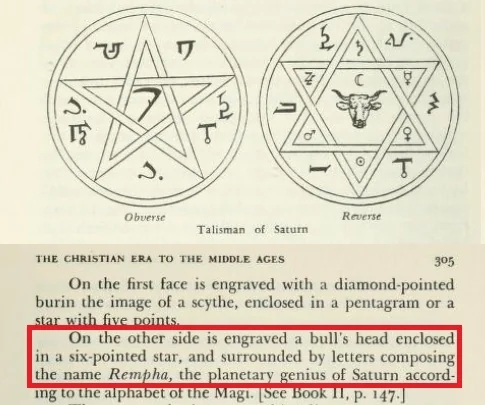
There is also a subtle connection by symbolism to the Magi. The Magi are popularly referred to as wise men and kings. The word magi is used in the original Greek text of the Gospel of Matthew. Magi will later be seen in the etymology of the English term magic. Daniel 2:48 will connect with the same words when describing “Elymas the sorcerer” in Acts 13:6–11. Biblically all of these things fall under divination. The image to the right became part of the Alphabet of the Magi much later in history.
Scripture consistently condemns divination. Deuteronomy 18:10-11 states, “Let no one be found among you…who practices divination, conjury, interprets omens, or sorcery.” This prohibition underscores that seeking information from sources other than God is forbidden. The Israelites were called to be distinct from other nations, which frequently turned to occult rituals for guidance.

Leviticus 19:26 also prohibits divination, reinforcing that God’s people must avoid methods used by pagan cultures. King Manasseh’s downfall exemplifies the tragic consequences of defying these commands: “He sacrificed his sons in the fire in the Valley of Hinnom, practiced sorcery, divination, and witchcraft…” (2 Chronicles 33:6). Through such narratives, the Bible highlights the spiritual dangers and moral corruption that accompany attempts to manipulate or predict the future by occult means.

Some may not like this analogy, but of late, it was a popular “western world” analogy to this conversation so I will mention it. You might consider the question, “Is the star of David rooted in idolatry and divination which was/is rival to Yahweh?” There is certainly an argument for that view. But many symbols both in and out of the Bible can go both ways. Foundationally, evil has always sought to take what is good and turn it to be a symbol of Evil. The Bible doesn’t really give us the whole story here, as that isn’t it’s primary intention. At least with the “taking back of the Rainbow”, there is a clear mention in the Bible. The roots of the rainbow representing something good and of God is not arguable. But with the 6-sided star we don’t necessarily have that. To most people if something has occult type of roots or even some strain of a negative connotation, we aren’t going to use the same symbol for our entity of good intention. When people and organizations do things like this it raises red flags, but it doesn’t make it wrong per se.

A good example is the Starbucks logo. The way it is used most recently seems simple. But when you dig into the history you scratch your head wondering why would a corporate coffee company “go there.” You have probably heard this, but most Christians would call the Starbucks logo downright “DEMONIC.” The image in the center of the Starbucks logo is not a mermaid. She’s actually a mythological Siren, a female creature that lured mariners to destruction by her sex appeal. Since coffee beans typically traveled overseas on large container ships, the founders decided to use a “seductive siren” logo that would lure coffee lovers to its stores. The original Starbucks logo was X rated, a bare-breasted, female Siren with two serpentine tails spread apart (a legs spread open sense.)

In an article published by Revealing Truth, it was claimed that the Starbucks logo also has sinister roots. By turning the original Starbucks logo upside down, you can see the image of satan. In 2014, Starbucks got into trouble after its employees were drawing satanic pentagrams and the number “666” in the foam of coffee.  

However, it is quite possible you visit Starbucks every day and look at the logo and can’t see anything evil in it anymore, and care very little about its dark history. As a Christian should you not support the organization because of its roots? I am not sure we should hold the organizations themselves and the people that represent them accountable for choices they specifically didn’t make. Isn’t that a Biblical theme? God isn’t judging you for the actions of others, just you. (I realize there are views within reformed theology that might see this differently.) There is an argument along these same lines with MONSTER energy Drink. I won’t get into that here. If you drink Monster or Starbucks, you shouldn’t have an issue with the Star of David, if you don’t – well than you might have an issue with the Star of David; but they are all slightly different to this analogy.

I do believe there is a perspective of seeing the good in things despite their dark past. Isn’t that the restorative nature of scripture? You can choose to let ancient bygones be bygones and see the beauty and peace that the star of David a new meaning and we can see it for what it has come to represent. Shouldn’t we all be hopeful that a dark symbol could find There may even be an element of interpretation not specifically declared in the Bible but theologically deduced. The Star of David and the pomegranate are deeply intertwined in Jewish tradition. The pomegranate is one of the seven species mentioned in Deuteronomy 8:8, symbolizing God’s blessings and the good deeds of the people. It is also associated with the Temple and High Priestly garments and is used during the Feasts of Shavuot and Sukkot.21 The pomegranate’s six petals form the Star of David, and its significance extends to kingship and the Messiah Those who see the Star of David as Biblical, see the pomegranate’s deep red color and the presence of seeds that symbolize blood pointing to Jesus. Together, these symbols can be seen as representative to the holiness of God, the good deeds of the people, and point towards Jesus.

  1. Jacob Newman; Gabriel Sivan; Avner Tomaschoff (1980). Judaism A–Z. World Zionist Organization. p. 116. ↩︎
  2.  Kittel, Rud; Alt, A; Eissfeldt, Otto; Kahle, Paul; Weil, Gerard E; Schenker, Adrian (1977). Biblia Hebraica StuttgartensiaISBN 9783438052186.
     (in Foreword by Gérard E. Weil). ↩︎
  3. “The Flag and the Emblem” (MFA). “The Star of David became the emblem of Zionist Jews everywhere. Non-Jews regarded it as representing not only the Zionist current in Judaism, but Jewry as a whole.” ↩︎
  4. Reuveni (2017). p. 43. ↩︎
  5. “The Flag and the Emblem” (MFA). “Unlike the menora (candelabrum), the Lion of Judah, the shofar (ram’s horn) and the lulav (palm frond), the Star of David was never a uniquely Jewish symbol.” ↩︎
  6. Star of David – Wikipedia ↩︎
  7. Plaut, W. Gunther (1991). The Magen David: How the six-pointed Star became an emblem for the Jewish People. Washington, D.C.: B’nai B’rith Books. pp. 26, 61–62. ISBN 0-910250-17-0. ↩︎
  8. “King Solomon-s Seal”, with credits Archived October 16, 2013, at the Wayback Machine Israeli Ministry of Foreign Affairs ↩︎
  9. The Egyptian officials accused the delegation of German archaeologists that has been working on the site’s reconstruction of engraving the Stars of David into the Shrine’s stone.  The engravings are found on a 3rd century B.C, temple located in Elephantine Island in Aswan. ↩︎
  10. Herbert M. Adler, JQR, vol. 14:111. Cited in “Magen David”Jewish Encyclopedia, retrieved May 28, 2010. ↩︎
  11. www.markfoster.net Archived July 22, 2011, at the Wayback Machine ↩︎
  12. Rabbi Blumenkrantz, “The Seder”, The Laws of Pesach: A Digest 2010: Chap. 9. See also: Archived March 17, 2016, at the Wayback Machine, retrieved May 28, 2010. ↩︎
  13. Horne, Thomas Hartwell. An Introduction to the Critical Study and Knowledge of the Holy Scriptures. Vol. 2. pp. 410ff. ↩︎
  14. “An Etymological Dictionary of Astronomy and Astrophysics – 1”dictionary.obspm.fr. Retrieved 2023-05-21. ↩︎
  15. Amar Annus, The God Ninurta in the Mythology and Royal Ideology of Ancient Mesopotamia, State Archives of Assyria Studies, Volume XIV Helsinki 2002. Pg. 104 ↩︎
  16. Gill’s Exposition of the Entire Bible ↩︎
  17. “Scholars seek Hebrew Bible’s original text – but was there one?”Jewish Telegraphic Agency. ↩︎
  18. Protectorat de la République Française au Maroc – Bulletin Officiel – (see page 838), 29th of November 1915, archived in July 2021 ↩︎
  19. https://biblehub.com/q/how_does_solomon_use_his_magic_ring.htm ↩︎
  20. JosephusAntiquitates Judaicae. ↩︎
  21. https://theancientbridge.com/2016/06/pomegranates-the-star-of-david-and-shavuot-aka-pentecost/ ↩︎

Demon Possession and Christians

A couple times a month I get asked similar questions about demons and possession. Are there really spirits in the Old Testament that are still plaguing people today or are people really just experiencing mental illness? Can Christians be afflicted or possessed? What kind of intervention is best? All of these are great questions and as with many Biblically or spiritually related things, theology is important. In my normal scholarly approach, I am going to try to NOT spoon feed you with what I think but offer you some things to consider as you form your own thoughts.

I would urge you to first read this article as it will no doubt affect your comprehension here. Spiritual Healing is certainly central to this conversation.

First, there is no demon possession in the Old Testament.1 Some might even say that there are not even any demons attested, although translations are problematic here.2 Secondly, this article centers on a foundation of biblical theology, not on phenomenology, however I will touch on this at the end. In a traditional sense, most scholars understand that when the snake or nahash3 figure tempts eve it is the introduction to a fallen spiritual being, something we would later call a demon. Adam and Eve are permitted to eat the fruits of all the trees except one, the tree of the knowledge of good and evil. The woman is tempted by a talking serpent to eat the forbidden fruit, and gives some to the man, who eats also.4

There are several non-traditional views, one option within this narrative is to see it as a dual fall5. In this view, it is not only the fall of humanity but the first (or what becomes main*) spiritual being to deny their vocational calling and “fall” as well. We also get insight into spiritual beings continuing to fall and Genesis 6 and Revelation seems to imply that fall continues and that when Jesus come 1/3 of all the spiritual beings will fall.6 The lake of fire was intended for these beings.7 The snake could then be reconciled as the “Ha Satan” figure of later notoriety and becomes the leader of the fallen spirits we call Satan. If you haven’t read this post, it might help before you get too much further.

  • All of this is highly debatable. To be clear I am still on the fence as to what I think the best options are. There may have been other spiritual beings that fell before this one. If the snake had already fallen, he likely would not have been allowed in the garden, therefore logically it seems we are reading the dual fall. Therefore, the story might not necessarily be giving us a narrative of the first spiritual being falling, but simply a story telling the fall of humanity while inferring the other fall. But we don’t know if it is the first fallen spiritual being or not. We aren’t ever given that in the Bible. We may be reading partially the significance of this later turning into the leader of the cosmic bad guys, Satan but we don’t know this for sure either. The central story is about the fall of the man and woman in the garden. The primary message is the casting out of the garden and hermeneutically we shouldn’t deduce much else.

You might be surprised to learn that there’s no verse in the Bible that explains where demons came from. Christians typically assume that demons are fallen angels cast from heaven, but the Bible doesn’t actually state that, we would have to deduce it. When it comes to theology I don’t particularly like deductions or constructs or theologies of man, I like exegesis (which is still going to require some deductions!) But we do get some clues in the Bible and some other extra biblical sources that could help. In ancient Jewish texts like the Dead Sea Scrolls, demons are the disembodied spirits of dead Nephilim giants who perished at the time of the great flood8. I am tempted to save the time and not go where I am going to go, but Matt and I wrote a book9 partially on this and it is fascinating so I want to share some of it. Let me see if I can keep it brief here. I think you will be glad I decided to indulge. I will essentially attempt to summarize the content largely found in Michael Heiser’s Unseen Realm.10

In several contexts the Apkallu are seven divine beings, sometimes described as part man and part fish or bird, associated with human wisdom; these creatures are often referred to in scholarly literature as the Seven Sages.11 They are central to the Mesopotamian version of the flood story and important to Ugaritic text.12 The apkallu were dispensers of divine knowledge to humanity.13 Gilgamesh is perhaps the most familiar example. He is called “lord of the apkallu14 in a cuneiform inscription on a small clay seal. But this is controversial, I might ad, he might not actually be considered one of the apkallu, but has that title attributed to him on a cylinder seal that proclaims his mastery (similar to apkallu). Again, my point is we have to use care with this. Both the divine fathers and their giant children are called apkallu. The apkallu are sometimes referred to by another Mesopotamian term: mats-tsarey, which means “watchers.”15 Genesis 6:1–4 was written by Israelites who wanted to make a statement: the apkallu before the flood were not good guys. Heiser would assert that what they did was wicked, and the giant offspring apkallu produced by their transgression were enemies of the true God of heaven. In fact, their own giant offspring were bent on annihilating Israel many years later. However, I would agree with Walton that there are a number of arguable points here. In Genesis it is not clear that the Nephilim are the offspring of the sons of God, and in Numbers 13, it is not clear that they are giants (that may refer only to the Anakim, and some interpreters conclude that the grasshopper comment there has to do with insignificance rather than with size). As you can imagine, there are certainly some questions to the interpretation.

Later in biblical history, during the days of Moses and Joshua, the Israelites ran into groups of very large warriors called Anakim in Numbers 13:32–33 and tells us explicitly that the Anakim came from the Nephilim.16 Heiser claims that the “The key to understanding how these giants were perceived as demons in the biblical material—an idea that got a lot of focus in Jewish writings produced after the Old Testament—is the term Rephaim.”17 I also might note that the Rephaim are perceived as spirits of the dead in the netherworld, but that does not make them demons.

You also might consider the Rephaim in this discussion, but these discussions are highly controversial and deeply debated. I would be reticent to derive confident conclusions about demons from what we know of them. But to give you a background, in the Old Testament, the Rephaim are described as giant warlords18 (Deut 2:8–11; 3:1–11; Josh 13:12), but also as frightening, sinister disembodied spirits (“the shades”) in the Underworld, called Sheol in Hebrew (Isa 14:9; 26:14; Job 26:5). The disembodied spirits of these giants were therefore associated with the abode of the dead, something everyone feared, since everyone feared death. But the Rephaim also had another awful association. There are nearly 10 references in the Old Testament to a place called the Valley of the Rephaim (e.g., 2 Sam 5:182223:13). Joshua 15:8 and 18:16 tell us that the Valley of the Rephaim adjoined another valley—the Valley of Hinnom, also known as the Valley of the Son of Hinnom.19 In Hebrew “Valley of Hinnom” is ge hinnom, a phrase from which the name gehenna derives—a term conceptually linked to Hades/Hell in the New Testament.20 In the book of 1 Enoch the villainous sons of God of Genesis 6:1–4 are not only called angels—they are called Watchers. The link back to the Mesopotamian apkallu is transparent and unmistakable. First Enoch spells out how the Watchers and their offspring were the source of demons:21 From here I would urge you to read for yourself —1 Enoch 6:1-2; 7:1; 9:1, 9-10; 10:9; 15:8-9 1 Enoch calls the giants “bastard spirits”—a phrase used of demons in several Dead Sea Scrolls. Essentially, we get the idea that fallen beings are a bit more complex than we might at first think.

This leads us to some questions. “Are they still around? Are they to be identified with the demons that we engage in spiritual warfare today?” From here we drift farther from an exegetical approach. Walton reminded me here that just because Enoch connects them to demons doesn’t make that a biblically defensible view and I have to agree. We begin to drift into the guessing game. Every scholar seems to have a slightly different take on it. Nobody really knows the exact answer. Much of what we know is just the way people in the ancient world perceived things, we don’t know that their narrative was actually true. So now, let’s see what the Bible tells us.

Well after we just progressed to the guessing game, let’s get back on exegetical track! The New Testament is a different “cultural river”22 to use Walton’s terminology. There is little or no connection to Nephilim, apkallu or rephaim. In Jesus Christ’s teachings and ministry, He often confronted demons and their activities, i.e., demonic possession of individuals (Matthew 12:22-29, 15:22-28, 25:41; Mark 5:1-16). Christ demonstrated His power over demons and, furthermore, He gave His disciples power to cast out demons (Matthew 10:1).23 Some cessationists would say this period dies with Jesus and His victory at the cross meaning the demons are gone or phased out within a generation. That notion seems far-fetched. Jesus seemed to spend a great deal of time training the disciples for spiritual warfare and imparting the same aspects in scripture for those after to glean. We might distinguish between casting out demons and spiritual warfare at this point in the discussion. The former would be one aspect of the latter, but we know that spiritual warfare as it is envisioned today is a much broader concept.24

The New Testament does testify to the fact that demons are able to enter and control both humans and beasts. It is not mere psychological dysfunction on the part of a person. We find this from general statements the New Testament gives as well as specific examples of demon-possession.

This is an ADD squirrel moment, but again interesting – The gospel of John has very little about demons as you will see below, ironically the only times demons are mentioned is when someone accuses Jesus of being demon possessed in John 7:20 and John 8:48. While John’s gospel does not record any account of the healing of those demon possessed, it certainly acknowledges that the people believed demon-possession was a reality. Some have used this to say that John may not have had the same feelings about demons as other writers.

After Jesus ascended into heaven, the exorcism of demons continued through the ministry of His disciples. They were able to drive out demons through the authority of Jesus. You might remember Acts 8:7, “for unclean spirits, crying with loud shrieks, came out of many who were possessed; and many others who were paralyzed or lame were cured.” There is another account of a Slave Girl At Philippi in Acts 16:18.

Here are all the accounts in the NT in harmony for you:25

  • Synagogue At Capernaum (Mark 1:25-27; Luke 4:51-56)
  • The Gadarene Demoniacs (Matthew 8:28-34) (Mark 5:1-20) (Luke 8:26-39)
  • The Daughter Of The Gentile Woman (Matthew 15:21-28; Mark 7:24-50)
  • The Demoniac Boy (Matthew 17:14-21; Mark 9:14-29; Luke 9:37-42)
  • The Mute Man (Matthew 9:32-34)
  • Mute, Blind, And Demon-Possessed (Matthew 12:22-30; Mark 3:20-27; Luke 11:14-23)
  • Slave Girl At Philippi Acts 16:18

What do we learn from these texts?

1. Demon-Possession Does Occur
2. Possession May Be Voluntary Or Involuntary
3. Those Possessed May Not Necessarily Live Immoral Lives
4. May Or May Not Be Permanent
5. Can Affect The Body
6. Can Also Affect The Mind
7. There Can Be A Wide Variety Of Symptoms
8. When Someone Is Delivered It Is Immediate

This is the central question, and this one is up for debate. Different theologies see it differently. Michael Heiser in His book, Demons would say that,

“The jurisdictional authority of these sons of God has been nullified by the resurrection and ascension of Christ. That reality is what frames the Great Commission—the call to reclaim the nations (“go into all the world and make disciples”). The kingdom of darkness will lose what is essentially a spiritual war of attrition, for the gates of hell will not be able to withstand the Church. This is why believers are never commanded to rebuke spirits and demand their flight in the name of Jesus. It is unnecessary. Their authority has been withdrawn by the Most High. Believers are in turn commanded to reclaim their territory by recruiting the citizens in those territories for the kingdom of God.” 26

However, I don’t personally see eye to eye with Heiser on this one. There are at least two instances when Jesus seems to be preparing His disciples for coming spiritual warfare and still possibly needing to take command over them. Both come as field trips by Jesus which should show us that they were strategic in genre. The first is the crazy pigs story and the second is the grotto of pan. I have written on both instances. At the cross we see a Christus Victor sense of atonement where Jesus gains the keys of death back and the fallen spiritual beings are bound but not completely done away with, imprisoned, or cast into the lake of fire. That comes later after judgment. Until then, I would say they are still active but restrained.

Walton also would not agree with some of what Heiser states here, would have reservation about the cavalier identification of the sons of God with demons (which Heiser believed he built an evidential case for). Walton might disagree with the notion of the Great Commission as saying anything about the activity of demons in the world. Making disciples is not the same as making converts or followers. It is training apprentices who will take up the mantle in the next generation.27

Many of you know that one of my life mentors is John Walton. He and his son wrote an excellent book entitled, Demons and Spirits in Biblical Theology: Reading the Biblical Text in its Cultural and Literary Context. 28 The book runs quite contrary to Dr. Heiser’s take on Demons. Both books shed good light on the subject, but I actually don’t agree with all of the assumptions of either. Walton and Walton think that a lot of what we believe about demons is wrong, I agree. They would assert that Bible is not meant to teach us any kind of demonology as the beliefs about the demons came from the culture much like one could talk about geological beliefs about the shape of the Earth and the nature of creation without having that be meant to give us scientific details. The Waltons also say this doesn’t serve the cause of what they call conflict theology, where God is fighting against the ways of the devil as classically understood, in a good light.29 The book serves a useful purpose of deconstructing some false “churchianity” stuff that is likely in your head, and I found it very useful. I can’t summarize everything that I would like to, so I highly suggest you buy the book and read it. It also seeks to challenge mental illness related to spiritual world assertations. I will get to this.

Can we equate Satan and demons? The only Biblical connection is in the designation of Beelzebub as the “prince of the demons” (Mt 9:34)–but even that is only stated as the opinion of the critics of Jesus. In other words, narrative simply tells us that is what they thought, we aren’t given this as Biblical truth. If that is indeed the case, we cannot say that Christians are immune to possession because demon possession is the invasion of something evil.

Satan has been defeated, but this is theologically foreseen as already not yet instance. I will use some of Andrew Womack’s wording but find the need to slightly edit towards a better theology (I love Andrew but not all of his theology or lack thereof). Satan has already been completely defeated according to Heb. 2:14. But he is still present as the New Testament goes on to clearly emphasizes.

Exegetically, I should again remind you that Satan is never indicated as a fallen being in the Bible (in Enoch, yes but not specifically in the Bible), nor are demons identified as fallen beings.30 Casting them out of heaven in Revelation is future and may or may not be another matter. In other words, your theological convictions are going to continue to matter in the way that you go on to interpret how we are personally affected. Walton and Walton are going to take a different trajectory than anything you might be familiar with. From their perspective, it is even difficult to Biblically prove that demons are the minions of Satan. If you think this way, whatever power Satan does or does not have cannot be associated with demon possession. Satan’s work is not represented as demon possession and demon possession is not associated with Satan. Judas (Satan entered into him) cannot be brought into this conversation any more than Peter (get behind me Satan) can be at Caesarea Philippi.

But theologies differ, in a traditional sense of fallen spiritual beings being thought of as demons, Satan and the other fallen degenerate spirits only power is the power to deceive Christians. I might call these leaching or nagging demons. Our battle should be against the schemes of the devil and his minions (Eph. 6:11), not the devil himself. Any other approach is cognitively giving the devil authority and power which he doesn’t have or deserve.  The only weapon Satan has is the power we give him when we believe his lies. In this sense Satan is powerless towards Christians, Satan was defeated in a Christus Victor sense at the cross.31

As I have been going back and forth, I need to go back to Waltons view here and make the point that demon possession is dependent on associating demon possession connected to the power of Satan.32

Despite the fact that Jesus and his disciples certainly believed the world was oppressed with evil forces, they exhibited a complete freedom from fear in regard to such entities. In fact, the fearlessness of the early Christians was one of the chief “selling points” of early Christianity, since most people in the ancient world lived in fear of demonic forces.33 In large part, that is why the later second temple period had such an apocalyptic genre to so much of its writing including Biblical literature. 34

This is going to be a controversial section. Different people see it differently. We are certainly plagued by our demons. In other words, some of the things we refer to as “demons” are figments of our own inability within a fallen world. Since I believe both in literal demons as well as metaphorical “demons” that are behavioral health issues, it’s important to distinguish between the two. I agree with C.S. Lewis, who said, “There are two equal and opposite errors into which our [human] race can fall about the devils. One is to disbelieve in their existence. The other is to believe, and to feel an excessive and unhealthy interest in them.” 35 We need a balanced approach. There are literal demons, but there are also metaphorical ones. Around the world, in countless cultures and religions, people experience both intentional and unintentional spirit possession, as well as exorcisms to cure them of unwanted possessions. 

One view is that Jesus never conducted rituals to free someone of a demon. In some cases, he engaged them in conversation that resulted in their expulsion. In other cases, the reader is not given details but is left to assume that Jesus summarily dismissed the demons without discussion.36 I would go on to represent this view by stating that the examples of demonic possession listed in the Gospels were not provided as a manual for modern exorcism (let alone as a diagnostic manual of mental disorders), just as Jesus’ miracles are not a blueprint for a higher Christian life. This is a general hermeneutical rule: We shouldn’t automatically deduce general principles or doctrines from a Biblical narrative. There is also a perspective that we aren’t Jesus and won’t ever be (yet are always called to image Him), so perhaps the better question is what did He instruct of His disciples? Sometimes rather than casting out demons we need to seek mental health care for people. However, some theologies of healing would disagree (such as Andrew Womack) and believe that Christ heals all spiritual and physical ailments through his atoning work at the cross. This is where I remind you to read about the theological differences of healing of you haven’t already. I also do not subscribe to Bill Johnson’s theology of healing, but you should see for yourself. I certainly respect the approach.

Dr. Steve Cassell ads, when a person is demon-possessed (non-born-again person), oppressed (born-again person), or mentally unwell, they all can exhibit the exact same ’symptoms’, so there is no way to truly know without the ‘discerning of spirits’ that is offered as a gift from the Holy Spirit. I lean into 1 Cor 2:10-16.

Will you cast out demons from non-believers and nagging or leeching demons from Christians? That is for you to decide. Luckily, we have the Holy Spirit to help us there. I believe this is something that is influenced by God’s order and gifting. Much like miraculous healing there are several things that come into play such as the faith of the healer, the faith of the crowd, and the faith of the one being healed. You also have to take into account the glory of God, what scripture already says about the situation, God’s will and ways, and a plethora of other influential spiritual dynamics. I believe we should all be open and working on all the gifts. Some see casting out demons as a gift. Some are better than others but (if you follow this theology) all should be working on their gift. So, if you go that way, let me give you a better theological framework for it.

This is sometimes called “Deliverance.” As I am weary as to all of the “encounters” I am convinced possession is real and there is a need to call out the demons in the name of the Lord. As I have mentioned, I respect Andrew Womack’s ministry, and I think He has done some good work in this area. As I am hesitant to share this as I don’t agree with all of it. I think you should read it. 37 It is set up in the form of a group discussion should you want to use it that way. Here is a sermon by Bill Johnson that gets into this, more of a cheerleading piece in my opinion, but you still might find it helpful.

I have cast out more demons than I can count. Here are some things to consider: I believe in counseling and the person may need some through this process. I dislike step plans for anything. God doesn’t always work that way, but here is some framework.

  1. Ask for the spirit to guide you. Seek a fresh anointing and the presence of God. The person needs to be honest and transparent (if they are cognitively able).
  2. What might be holding them back? Bitterness, unforgiveness, communion, unreconciled sin. You might need to bring out what is hidden. What needs to be revealed?
  3. Faith – Your faith, their faith. I believe in counseling and the person may need some.
  4. In the name of Jesus renounce – I have found it the most powerful to shepherd this. Start by saying it and urging the person to affirm in their own words. This means to repudiate; disown; to give up or put aside; to give up by formal declaration; to deny, disavow, discard, recant, cast off, and sever oneself from.
  5. Sometimes I think it is important to make a proclamation to live this out. This comes back to faith. Do they need to break every hereditary curse coming down from their ancestors or through their bloodline? Jesus can break generational chains. I would be careful to call these curses. I don’t think that is always accurate or the best theological framework.

I have grown to very much appreciate Waltons criteria for a faithful interpretation over the years. I really like how he finished one of our conversations and I will share it in hopes that it will also help you come to your own conclusive thoughts. John Walton concludes, “I should make it clear that I have no hesitation at all in my belief that demon possession is a reality and that casting them out is an activity in which Christians may be called upon to engage, though I have never been in that situation myself. Nevertheless, I have questions about how confident we can be in connecting some of the dots (sons of God to demons, demons to evil, Satan to demons) and about some traditional teachings (fallen nature of spiritual beings) that are not taught in the Bible (none are). I hope that my comments will help you sharpen up the post a bit, even when you continue to hold a position that may differ from mine.”38 I love that heart!

I pray that you come to your own well exegeted conclusions. I am going to land with Brian Zahnd39 again on this one (which might point to some of my personal theology here different than where you land.) There is nothing to be done with demons but to wage war upon them and their works. That means setting people free by the Gospel of Jesus Christ and the unique Kingdom manifestation of displacing demons. Every human vice and mental torment is a haunt of demon power. (Some would say this is over spiritualizing things but personally I don’t think so.) We can only imagine what led Mary Magdalene to become vexed by seven demons and how can we imagine the nightmarish road the Gadarene with his thousands of demons walked? But Jesus set them free. And He commissioned His followers to do the same in His name. I have to admit I still have a lot of unanswered questions for Jesus on this one! Don’t live in fear, don’t put the rest of the Bible on the shelf and go on a witch hunt, simply follow Jesus, love people, learn the power of God, and you will have opportunities to set people free from demon power by the authority of Jesus’ name. And finally, remember Revelation 20:10!

Steve Gregg on Demons

4 views for understanding spiritual warfare

  1. Some might consider (1 Sam 16:14) but here it uses the word “oppressed” not “possessed” and it is further not clear whether this should be identified as a demon ↩︎
  2. A personal conversation with John Walton based on his book, https://www.amazon.com/Demons-Spirits-Biblical-Theology-Walton/dp/1498288782 ↩︎
  3. Graf, Fritz (2018). “Travels to the Beyond: A Guide”. In Ekroth, Gunnel; Nilsson, Ingela (eds.). Round Trip to Hades in the Eastern Mediterranean Tradition: Visits to the Underworld from Antiquity to Byzantium. Cultural Interactions in the Mediterranean. Vol. 2. Leiden and BostonBrill Publishers. pp. 11–36. doi:10.1163/9789004375963_002ISBN 978-90-04-37596-3. ↩︎
  4. Galambush, Julie (2000). “Eve”. In Freedman, David Noel; Myers, Allen C. (eds.). Eerdmans Dictionary of the Bible. Amsterdam University Press. ISBN 9789053565032. ↩︎
  5. It should be noted that “Fall” is not a Biblical term. It generally refers to a fall (from grace). Walton makes the point that this is not an exegetical conclusion concerning humans, Satan, demons, or the Sons of God. The snake is never connected with Ha-Satan exegetically and he is never the leader of fallen spirits in the Bible. The Bible knows of no fallen beings (except the King of Babylon in Isa 14;12, but that is metaphorical—not a fall from grace and he is not a spirit being). See discussion in W&W. ↩︎
  6. Faulkner, Raymond O.; Goelet, Ogden Jr.; Andrews, Carol A. R. (1994). Dassow, Eva von (ed.). The Egyptian Book of the Dead: the Book of Going Forth by Day. San Francisco, California: Chronicle Books. p. 168. ISBN 978-0-8118-0767-8↩︎
  7. Wilkinson, Richard H. (1992). Reading Egyptian Art: a hieroglyphic guide to ancient Egyptian painting and sculpture (1998 ed.). London, England: Thames and Hudson. p. 161. ISBN 0-500-27751-6↩︎
  8. Belial (or Beliar, a corruption of the original form) is the most common name for the leader of the demons in the Dead Sea Scrolls, and occurs in other intertestamental literature and in II Corinthians 6:15. Belial (Heb. Beliyya’al) is a Hebrew compound word which etymologically means “no benefit” or “no thriving” and in liberal usage is often equivalent to “scoundrel.” But already in the Bible “streams of Beliyya’al” means “streams of destruction” (II Sam. 22:5Ps. 18:5). In the intertestamental literature Belial is “the spirit of perversion, the angel of darkness, the angel of destruction” and other spirits are subject to him. Mastemah, which as a common noun means approximately “enmity, opposition” in Hosea 9:7, 8 and in some passages in the Five Scrolls, is a demon “Prince Mastemah” in Jubilees (11:5, 11; 17:16; et al.), and perhaps also in the Damascus Document (16:5). Watchers (Aram. ʿirin) are a type of angel mentioned in Daniel 4:10, 14, 20. To this class the intertestamental literature assigns the angels who, according to Genesis 6:2, 4, cohabited with women before the flood and fathered the race of giants (Test. Patr., Reu. 5:6–7; Test. Patr., Napht. 3:5; cf. Genesis Apocryphon, ii 2:1, 16). Asmodeus (Tobit 3:8, 17) is a demon who had slain the first seven husbands of Sarah, who becomes the wife of Tobias son of Tobit. ↩︎
  9. https://www.amazon.com/dp/B0F1FQ5CX8 ↩︎
  10. https://www.amazon.com/Unseen-Realm-Recovering-Supernatural-Worldview/dp/1577995562 ↩︎
  11. van der Toorn, Becking & van der Horst 1999, “Apkallu”, page 72. ↩︎
  12. George, Andrew (2007) “The Gilgameš epic at Ugarit”. Aula Orientalis, 25 (2). pp. 237-254. ↩︎
  13. Ataç, Mehmet-Ali (2010), The mythology of kingship in Neo-Assyrian art (1. publ. ed.), Cambridge University ↩︎
  14. Kramer, Samuel Noah (1961), Sumerian Mythology: A Study of Spiritual and Literary Achievement in the Third Millennium B.C.: Revised Edition, Philadelphia, Pennsylvania: University of Pennsylvania Press, ISBN 0-8122-1047-6 ↩︎
  15. https://divinenarratives.org/the-watchers-origins-roles-and-cultural-influence/ ↩︎
  16. Wyatt, Nicolas (2001). Space and Time in the Religious Life of the Near East. A&C Black. ISBN 978-0-567-04942-1. ↩︎
  17. https://www.bing.com/search?q=heiser+%22The+key+to+understanding+how+these+giants+were+perceived+as+demons+in+the+biblical+material&cvid=c4cae408c0fe4b2593efc7b5e97bea16&gs_lcrp=EgRlZGdlKgYIABBFGDkyBggAEEUYOdIBCDQ2NTlqMGo0qAIIsAIB&FORM=ANAB01&PC=SMTS ↩︎
  18. Yogev, J. (2021). The Rephaim: Sons of the Gods. Culture and History of the Ancient Near East. Brill. p. 6. ISBN 978-90-04-46086-7. ↩︎
  19. Rouillard-Bonraisin, Hedwige. 1999. “Rephaim.” In Dictionary of Deities and Demons, pp. 692–700. ↩︎
  20. Kohler, Kaufmann; Ludwig Blau (1906). “Gehenna”Jewish Encyclopedia. “The place where children were sacrificed to the god Moloch was originally in the ‘valley of the son of Hinnom,’ to the south of Jerusalem (Joshua 15:8, passim; II Kings 23:10; Jeremiah 2:23; 7:31–32; 19:6, 13–14). For this reason the valley was deemed to be accursed, and ‘Gehenna’ therefore soon became a figurative equivalent for ‘hell.'” ↩︎
  21. Barker, Margaret. (2005) [1998]. The Lost Prophet: The Book of Enoch and Its Influence on Christianity. London: SPCK; Sheffield Phoenix Press. ISBN 978-1-905048-18-2 ↩︎
  22. https://hc.edu/news-and-events/2016/12/02/the-role-of-the-ancient-near-east-and-modern-science-in-interpretation/ ↩︎
  23. ANGELS ELECT AND EVIL, C. Fred Dickason, p. 150. ↩︎
  24. IBID 1 ↩︎
  25. https://www.blueletterbible.org/faq/don_stewart/don_stewart_58.cfm ↩︎
  26. https://www.amazon.com/Demons-Bible-Really-Powers-Darkness/dp/1683592891 ↩︎
  27. IBID 1 ↩︎
  28. Demons and Spirits in Biblical Theology: Reading the Biblical Text in its Cultural and Literary Context by John H. Walton and J. Harvey Walton (2019). ↩︎
  29. https://www.deeperwatersapologetics.com/2019/08/19/book-plunge-demons-and-spirits-in-biblical-theology/ ↩︎
  30. IBID 1 ↩︎
  31. https://www.awmi.net/reading/teaching-articles/spiritual_authority/ ↩︎
  32. IBID 1 ↩︎
  33. https://reknew.org/2015/07/are-you-afraid-of-demons/ ↩︎
  34. L. Michael White. “Apocalyptic literature in Judaism and early Christianity”. ↩︎
  35. C. S. Lewis Preface – The Screwtape Letters (1942) ↩︎
  36. https://www.patheos.com/blogs/breathingspace/2023/02/the-difference-between-mental-illness-and-demonic-possession/ ↩︎
  37. https://cdn.awmi.net/documents/study-guides/sg417/discipleship-evangelism-study-guide-language-english-level-2-lesson-5.pdf ↩︎
  38. Personal email from John Walton ↩︎
  39. https://brianzahnd.com/ ↩︎