Jesus Paid it all?!

I bet you have become accustomed to Christians describing Jesus on the cross with phrases like “purchased” or “paid” describing salvation. That through Christ on the cross, salvation was “bought” or “paid in full.” First, to be clear I don’t think the terminology is horrible, this conversation doesn’t mean much to me and I am certainly not “going to war” over anything in this conversation! I believe that as a light metaphor that this kind of phrase can have some truth to it, we make references all the time in day-to-day life with this sort of linguistic analogy. For instance, my son Will was playing soccer the other night in a recreational game on astroturf and made a heralding dive to strike the ball into the goal. After the game I noticed the giant carpet burn on his knee and saif to him, well you certainly paid for that one, but what a shot! No one really thinks that He actually paid money, that would be absurd; we simply mean that there is a cost associated. That is what the Bible means when it talks about what Jesus did at the cross. Yet too many people have turned a simple biblical metaphor into a theological doctrine, and I find it problematic.

There are better ways to communicate what Christ did for us on the cross than using descriptions like paid for or purchased. This gets into atonement theories (x44 has made several videos on this subject) and if you are reformed you might think this language is “correct”; but if you’re not reformed or a Calvinist, you might want to consider a better formation for your cross theology. Let me walk you through some things towards a better consideration.

Twice the apostle Paul informed believers at Corinth, “You were bought with a price.” In 1 Corinthians 6, Paul was making a passionate appeal against sexual immorality. He concluded his argument, stating, “Or do you not know that your body is a temple of the Holy Spirit within you, whom you have from God? You are not your own, for you were bought with a price. So glorify God in your body” (1 Corinthians 6:19–20, ESV). I quoted the ESV (which is a reformed translation if you didn’t know).  1 Peter 1:18–19 says,“For you know that God paid a ransom to save you from the empty life you inherited from your ancestors. And it was not paid with mere gold or silver, which lose their value. It was the precious blood of Christ, the sinless, spotless Lamb of God” (NLT). We also have Jesus Himself saying that He came to give His life as a ransom for us (Matthew 20:28). We now belong to Him according to 1 Corinthians 7:22. Paul repeated this teaching in 1 Corinthians 7:23, notice however, the emphasis on spiritual freedom: “You were bought at a price; do not become slaves of human beings.” Believers are set free from the dominion of the world or sin through the death of Christ (Galatians 1:4). In this way you might say that spiritual freedom comes at the “price” of Christ’s sacrificial death on the cross (1 Peter 2:24). Consequently, since we now belong to Christ, we must not let ourselves come under the control of other humans, Satan, principalities, or the world… we are or should completely be given to Jesus. 1 That is what we all can agree on right? I mean it is right out of the bible! So, there you have it. The Bible specifically uses words like ransom, paid, bought, price etc… So, I bet you are wondering why do I have issues with phrasing it that way?

In biblical theology, the concept of “ransom” is deeply intertwined with the themes of deliverance and salvation. The term “ransom” according to antiquity refers to the “price paid” to secure the release of someone from bondage or captivity. In general describing what Jesus accomplished through the cross this way is known as the ransom which theory teaches that the death of Christ was a ransom sacrifice, usually said to have been paid to Satan, in satisfaction for the bondage and debt on the souls of humanity as a result of inherited sin.2 Well as you might have perceived,

In the Old Testament, the Hebrew word “kopher” is often used to denote a ransom, particularly in the context of redeeming a person or property.3 For example, Exodus 21:30 discusses the payment of a ransom for the life of a person who has been sentenced to death: “If payment is demanded of him, he may redeem his life by paying the full amount demanded of him.” So there is a Hebraic understanding of transactional payment biblically that is associated with the term ransom, but the problem with thinking that way is that what Jesus does for us on the cross intentionally came with no strings attached, it is a free gift of Grace. What Christ did on the cross was a backwards kingdom dynamic, it was opposite of the world’s expectations. In other words, there wasn’t a physical price paid. This is very important. In the Exodus did Moses pay Pharaoh? Did God pay the spiritual powers he was warring against? NO. There was no payment made. The exodus foreshadows the cross and in the same way there wasn’t a payment made. Jesus didn’t have to pay off God and God didn’t pay Satan. Are you following me? So, phrase it this way is actually poor theology and nearly the opposite idea of what the text portrayed in the exodus and through the cross. Talking about inherited sin or original sin is one of the pillars of Calvinism and thus those that hold to a “ransom” theory are typically reformed. If you aren’t familiar with this conversation this video series will help. Although I do believe in a ransom motif in the exodus and through Jesus at the cross, I do not think framing it as transactional is good theology.

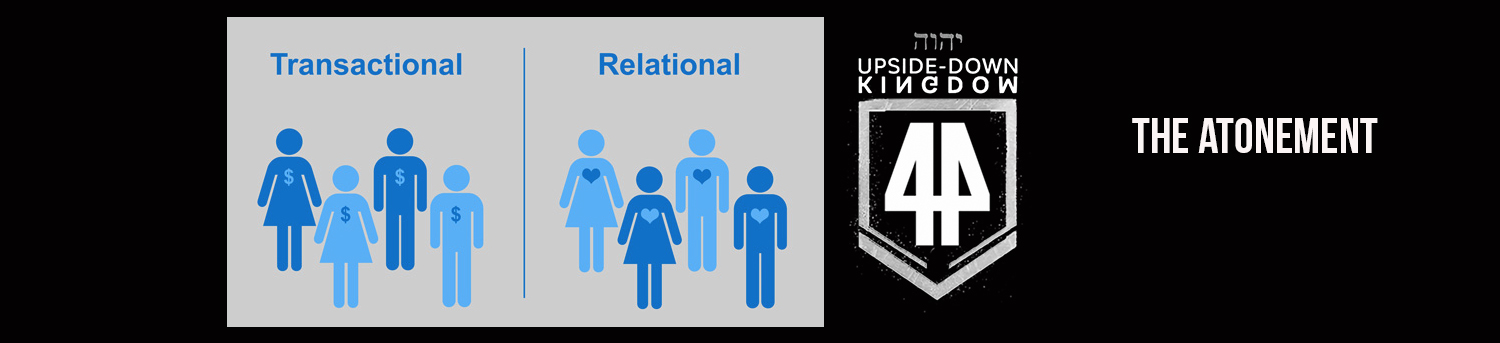
The definition of the word “ransom” has changed over time. At the time the New Testament was written before the end of the first century, it referred to the practice of capturing individuals and demanding their release, particularly in ancient times. In the ancient world it was almost never ties to money, it was based on threats of power and ruling.4 In this sense, Exodus portrays the ransom of the Hebrews quite well. But I certainly won’t deny that at times money was involved; but the emphasis should always be on freedom motive not the payment motive. When you really dive into this what you find is that in the ancient world ransom was relational. You demanded ransom because it was the right thing. It was to put your foot down and demand that an injustice be reconciled. In the Middle Ages and Reformation, the term evolved to usually describe payments made for the release of hostages, and it has also been used figuratively to describe any exorbitant payment or price demanded for something. The definition has certainly changed over time to be described less relational and has become more transactional. The biblical authors definition was relational not transactional, yet we have come to interpret it through our own modern lens as transactional.

Ransom in scripture should always be interpreted as a release of slaves giving freedom. This fits every context of verses that we see the word used in from Micah 6:4 to Isaiah 43:3. Isaiah 52:3 is very clear on this. God says he sold Israel for nothing, and they shall be ransomed/redeemed without payment. Isaiah 45:13 echoes the same thoughts. The point is that the word ransom biblically shouldn’t be used in a substitutionary sense. NT Wright and even the reformed scholar Leon Morris have made this clear. 5

The Greek helps us out here. ὑπέρ Huper (for) means for a benefit. That is what is used in nearly every context of Jesus giving up his life. Not anti (for) which would be in the place of or an exchange. 

When you try to frame the work of the cross as needing to buy someone out, it creates a transactional dynamic that isn’t part of grace and isn’t biblical. Now again, there are some elements that are transactional and that is why this is complicated and often misunderstood. Grace itself is a free gift, yet there is a benefactor understanding of reciprocity. When you give a gift there is no expectation for a payment, you freely give it. Yet in relationships of any kind there are some expectations. In the circle of Grace when Christ gave his life for you, the reciprocity is that you in turn give your life to him.6 But that didn’t actually cost money, there was no buyout, but there was a cost. When we think about Jesus transactionally it muddies the water. I am sure you have been told your whole life that everything costs something, or that if you want something that is worth anything it is going to cost you. In this regard, giving your life to Christ from a worldly sense will cost you everything, your life itself. But Jesus isn’t selling anything. When we frame grace as transactional it leaves us thinking what are we going to get out of Jesus or Christianity. What do we get from the deal? It points you in the wrong direction. With Jesus we don’t get, we give… Job was righteous because he had no expectations.7

To use transactional language cheapens the work of Jesus through the cross. God wasn’t negotiating with terrorists in the Exodus. He obliterated the spiritual powers at war. The exchange was allegiance, freedom, and liberation… no money was exchanged. But was there a cost? The Egyptian “world” certainly suffered. At the cross Jesus gave his life and it was brutal. But that shouldn’t be the emphasis of what Jesus did. In fact, it really shouldn’t be emphasized at all. Sometimes I don’t even like to use the word cross when describing Jesus. For instance, I prefer to say the work of Jesus not the work of the cross. The cross didn’t accomplish anything, Jesus did everything. The cross itself is a picture of barbaric humanity not the generous grace of Jesus, that should better be framed precisely through Christ himself. Yet I still think there is a place for the image of the cross. People should view it as the method to which Jesus did accomplish many things enabling complete life and freedom in Him.

What happened at the cross to Jesus was a result of religious hierarchy. The Jewish religious leaders tied into to the government corruption of the day essentially crucified Jesus. Did Jesus willfully “give his life?” Well, let’s not forget that he prayed for the cup to be passed. If there could have been another way through the father Jesus would have opted for it. Again, this is important in the text. What happened at the cross was brutal and unjust. Jesus turned the other cheek all the way to the grave. It is a picture of complete sacrifice and humility. But it shouldn’t be viewed theologically as transactional. We don’t know exactly why God allowed or used the cross to accomplish the victories that he did, but the fact is that is the way it unfolds. The ransom analogy should be viewed as redemption and freedom not monetary exchange. To view the cross as some kind of economic exchange isn’t accurate. God wasn’t paying or even appeasing Satan and Jesus wasn’t paying or appeasing God the father. Are you following? The trinity wasn’t broken at the cross.

It really becomes “cheap” when you frame it as a payment. For instance, what you are saying is that Jesus then gave his life to “buy” all of the lives who would “accept” him for all of time. That sounds good but think about it for a second. How much is Christ’s life really worth if you are exchanging it for all who believe for all of time, millions, maybe billions? It is actually devaluing him. Who wouldn’t make “that deal” if that is all it was. If I had the power and said to you – if you allow me to crucify you it would buy 10 people you deeply care about eternal salvation, I bet, you would do it. I would. Then if you say not just 10 but EVERYONE who believes it really makes it cheap doesn’t it? What Christ did on the cross shouldn’t be cheapened transactionally. It wasn’t a buy it program. The funny thing about atonement “theories” is that we aren’t actually told in the Bible exactly what Jesus accomplishes through the cross. That is why they are called theories. But let’s not devalue the life of Christ as we theorize. Jesus accomplishes so much through the death, resurrection, and ascension, we don’t need to cheapen it or make it into something it didn’t biblically portray.

Why did Jesus have to die on a cross? That is the grand question. The Bible actually doesn’t precisely answer this question. Perhaps that is some of the mystery of the gospel. A common view in Western Evangelicalism of what happened on the cross is this: humans have sinned and God must punish sinners by venting his wrath, but thankfully, because he loves us, Jesus went to the cross and was murdered in our place to pay our debt, so that God can forgive our sins and we can go to heaven when we die. This idea of how the cross works is called the “Penal Substitution Theory” of the atonement.8 The Penal Substitution Theory has not been the most common view throughout all of church history, nor is it the most common view of the worldwide church today. So while Penal Substitution Theory may be the majority view in modern, Western theology, the Church must wake up and realize that such a view is partially modeled after paganism, often mischaracterizes God, ultimately does not take sin seriously, and leaves out what actually happened on the cross.

The Penal Substitution Theory and purchase, debt language basically depicts God as a debt collector who must collect before he can forgive. Despite the fact that Scripture tells us that love keeps no record of wrongs (1 Corinthians 13:5), this theory states that Jesus must pay our debt to the Father (or in some cases Satan). The idea that God is merciful and forgiving, while also defining justice as demanding payment of debt don’t work together, they are at odds philosophically and ontologically. If there is a debt that is paid, then the debt is never forgiven at all. Sin is not forgiven on the cross in the Penal Substitution Theory; it is just paid off. We would never then be able to be washed truly clean. But what becomes even more problematic in thinking this way is that the only way in which God could be seen as merciful in paying the debt for mankind’s sin by killing Jesus. Let’s be clear God didn’t kill Jesus; he allowed Jesus to be killed and in a “Narnian like story” was a “way maker” to regain the keys of death. This is best framed through a Christus Victor form of atonement, but I also wouldn’t limit the work of the cross to a single view. Scot McKnight has a great book, A Community Called Atonement that is worth reading.9

Christ’s justice is restorative, not retributive. God doesn’t need anyone to pay off debt in order to forgive. God can just simply forgive. That’s what forgiveness is! Forgiveness is not receiving payment for a debt; forgiveness is the gracious cancellation of debt. There is no payment in forgiveness. That is what makes forgiveness mean anything. I have said it many times, but if you are a Calvinist, you can’t truly believe in biblical forgiveness; in the same way a Calvinist struggles to believe in any kind supplication kind of prayer as they don’t believe God works that way. I get that the reformed camp has their own way of explaining how this works, but it seems like a good deal of theological gymnastics.

Along with these misnomers you also may hear people say that Jesus died as our substitute or in our place. That isn’t the intention of this article but let me touch on it briefly since it is closely ties into our conversation. Often PSA advocates might say something like, Jesus was being punished by God for our sins and that what Jesus suffered in torture and crucifixion which is then essentially what every person deserves. That doesn’t really make any sense. Do you deserve to be tortured forever? This makes grace transactional again… accept it or be tortured forever? (Another strong claim for annihilation vs ECT but again, another discussion.) How is it true that every person deserves to be tortured to death? This sounds monstrous to me, not fitting the Exodus 34 self-description of God. Furthermore, if Jesus truly would have died in our place and gotten what we deserved according to PSA shouldn’t he then go to hell eternally according to their own reformed theology? The theory doesn’t hold up. Jesus died on a cross outside Jerusalem at the hand of the Romans (Matthew 27; Mark 15; Luke 23; John 19). None of us faced that death. He did not take our place on a cross, we didn’t deserve that and some would argue that he didn’t either, although Jesus was certainly “guilty” of not being allegiant to Roman authority.

If you have made it this far you likely know or have some knowledge of the foreshadowing of the sacrificial system to also be a picture of some of the thigs Jesus would become and accomplish. If you need to brush up, read the second part of this article first. 10 Two goats are selected for Israel: The sin offering goat and the goat that will “bear the sin”. Lots are cast to see which goat fulfills which role. Jesus actually embodies both at times. The second goat the scapegoat, or the azazel would carry away the sin of the camp into the wilderness. To be clear it is a picture, or a mosaic. Jesus will accomplish what the goat never could. The goat is a picture of simply transferring sin out of the camp, Jesus actually removes it completely. In theology this is called Expiation which means that the barrier lies outside of God, within humankind and/or a stain they leave on the world (sacred space), it is often interpreted as an action aimed at removing sin. To cover, wipe, or to purge sin. Where I believe some theology gets off is when you interpret this story as a propitiation view (punishment). The goat bears the sin and wrath. I don’t think this a great interpretation, but I have gotten significantly into that in videos and other articles. I don’t want to get too far into this here, but propitiation doesn’t really fit (work) for a number of reasons. Fopr instance if the goat was bearing the sin (carrying) it could not be a sacrifice because God only gets spotless pure animals (what does that do for your New Testament theology of the cross if Jesus was imputed our sin?) In Leviticus 16, the Hebraic sacrificial system, we have the first goat as the purification offering which is given to cleanse the temple objects. Blood is not applied to anyone. The scapegoat is sent to Azazel. So, sin, the forces of death, are removed from the camp. This connects God is rescuing his people from the forces of death. (Again it is an Exodus motif of freedom.) Neither of these goats are punished. It’s about expelling or purging God’s space (so Expiation!) The first goat (the one that dies) is more about cleaning the throne room of the stain of sin. The scapegoat doesn’t get killed. This is all about resetting sacred space (getting back to Eden).

To be frank, all of this comes off as weird to us. But God often meets people where they are at within their unique cultural dynamic. All Ancient Near Eastern cultures (including ones that existed before the Hebrews) killed animals, and sometimes humans, to appease the gods. Animal sacrifice is undebatably pagan. Yes, the God of the Bible used this pagan ritual to teach his people something new but it was always just a step in the process to get them away from it. It is really important to note that God never needed sacrifices in order to forgive. Why is this important? The Penal Substitution Theory ignores all this and says that God the Father still demands blood in order to take away sins.11

Leviticus 16 and the story of the scapegoat has some substitutionary aspects. I certainly do not deny that there are pictures of Jesus as our substitute. There is a difference between PSA and simple metaphor of substitution. Whenever you are understanding of substitution wanders into the camp of God’s wrath needing to be satisfied buy killing something I have a problem with that. The sacrificial system needs to be interpreted in light of restorative relationship being reconciled and the theme of redemption. I think when you start trying to understand this as imputation and especially double imputation, you’re getting off track and outside the picture that God has given us for what Jesus accomplishes through the cross, resurrection, and ascension. Again, if we take on this sort of reformed kind of thinking we are having to do some theological gymnastics to make it all work that seem unnatural to the message and mission of Jesus.

Payment language should paint a picture about the costliness of Jesus’ life and not about who receives the payment. So Jesus could “pay it all” by living in total surrender even unto death. We regularly use this analogy of “paid” as total dedication with soldiers who “paid the price for our freedom” in giving up their life in battle. In the same way, they literally did not “pay off” anyone or take anyone’s place. Instead, they died for a benefit to others and gave all they had. That is the way scripture also poses it the few times we see this sort of language used as I displayed in the opening paragraphs, but for some reason when it comes to the cross, PSA and reformed theology (which sometimes then becomes non reformed people using the same language) resorts to Jesus paying off God.

Since a lot of us like digging deeper, it could also help to point out how this “paid” language can sound like old pagan religion, where people had to pay off the gods with sacrifices. The gospel is the opposite of that. God comes to us first and makes things right. It makes sense to name PSA as the view most tied to “paid it all” language and explain why it does not match the whole story of Scripture. If we use the wider range of Bible images instead of locking into just one, we can talk about the cross in a way that shows God’s love and His plan to restore all things. Ending with a simple example of how this shift in language could change the way we pray, teach, or share the gospel would make it hit home even more for me.

I know you have heard these terms your whole life and might believe them to be the gospel, but that isn’t Biblical. Did Jesus pay for what we have in Him? You don’t need to say that any of this was “bought” or “paid for.” Perhaps you can say that as Paul does sometimes (arguably) as I started out this conversation. The intention of scripture using bought/paid/substitution language should be seen as a light metaphor not doctrine. All of scripture points towards the work of the cross as redemptive not transactional. Grace is free. Do you believe that? The exodus motif is Biblical, but the price attached to it isn’t. Yes, there was a process and sometimes we call this a “cost” as I Cor, 6 may frame it (although if you read it in Greek, you will read it differently that the ESV translates.) The cross Jesus Christ conquered all the powers of evil and ushered in the reign of God and the rule of the kingdom of heaven.12 What Christ offers is a return to Eden and then some. Freedom in him is restored. He sends his Spirit at Pentecost and now we are restored to our vocation as image bearers and are now his living temples showering the physical manifestation of Jesus’ sacrificial love. It is transactional, it isn’t retributive… it is free and restorative to all who want to return to their identity and partnership in Jesus. You were made for this!

  1. https://www.gotquestions.org/bought-with-a-price.html ↩︎
  2. Collins, Robin (1995), Understanding Atonement: A New and Orthodox Theory, Grantham: Messiah College ↩︎
  3. https://biblehub.com/topical/r/ransom_and_redemption.htm ↩︎
  4. https://etymologyworld.com/item/ransom ↩︎
  5. Scot McKnight: What is unobserved by the substitutionary theory advocates is that the ransom cannot be a substitute, as we might find in theologically sophisticated language: where death is for death, and penal judgment is for penal judgment. Here we have a mixing of descriptions: a ransom for slaves. Jesus, in Mark’s language, does not become a slave for other slaves. He is a ransom for those who are enslaved. The difference ought to be given careful attention. To be a substitute the ransom price would have to take the place of another ransom price or a slave for another slave, but that is not what is involved here…The ransom does not become a substitute so much as the liberating price.… The ransom, in this case, is not that Jesus “substitutes for his followers as a ransom” but that he ransoms by being the price paid in order to rescue his followers from that hostile power. The notion is one of being Savior, not substitution. The best translation would be that Jesus is a “ransom for the benefit of many.”
     
    Leon Morris: In the New Testament there is never any hint of a recipient of the ransom. In other words, we must understand redemption as a useful metaphor which enables us to see some aspects of Christ’s great saving work with clarity but which is not an exact description of the whole process of salvation. We must not press it beyond what the New Testament tells us about it. To look for a recipient of the ransom is illegitimate.” Morris, The Atonement, 129 ↩︎
  6. https://www.amazon.com/This-Way-Redefining-Biblical-Covenant/dp/1633572390 ↩︎
  7. https://biblicalelearning.org/wp-content/uploads/2025/01/Walton_Job_Session18.pdf ↩︎
  8. https://www.rivalnations.org/god-didnt-kill-jesus/. ↩︎
  9. https://www.bookey.app/book/a-community-called-atonement ↩︎
  10. https://expedition44.com/2024/12/30/the-new-year-jewish-roots/ ↩︎
  11. The theory pits the Father against the Son even though in nature they should be, and are, eternally the same (Matthew 11:27; John 1:18; 4:34; 5:19-20; 6:38, 46; 8:28; 10:29; 12:49; Colossians 2:9; Hebrews 13:8). The Penal Substitution Theory fractures the Trinity and makes God schizophrenic. We are commanded to forgive like God forgives (Ephesians 4:32). But if we choose to forgive like Jesus then forgiveness will precede repentance (Matthew 9:2; 18:22; Luke 23:34; John 8:11; 20:19-23). However, if we choose to forgive like the father (according to PST), we will only forgive those that show repentance, or after they make a payment of some kind. This clearly creates an unnecessary problem. How and why would God need a blood sacrifice before he could love what he had created? Is God that needy, unfree, unloving, rule-bound, and unable to forgive? Once you say it, you see it creates a nonsensical theological notion that is very hard to defend. Thankfully we see this isn’t God’s character. Jesus shows us what God is like, and Jesus says that our perfect heavenly Father displays perfection as pure mercy (Matthew 5:48, Luke 6:36). ↩︎
  12. https://www.amazon.com/Wood-Between-Worlds-Poetic-Theology/dp/151400562X ↩︎

The ongoing results of the fall of the Spiritual beings

When we speak from a Deuteronomy 32 worldview it means that we believe some of those originally created by the hand of God (Spiritual beings – angels – demons – and the first humanity) decided to mirror (image, imagine, worship) themselves rather than God. In doing so, the biblical word that best describes what happens to them and the world is the term fall (or falling away). Here is the prime example of that process as Isaiah references the specific fall of the one we often incorrectly refer to as ‘Lucifer’ [1], the archetype of all the fallen beings (later referred to as Satan in the New Testament.)

This article is a 15 minute read.

Please take note that one of the compelling reasons or causes of this annotated fall was the desire to ‘make myself like the Most High.” If you have heard good messaging from an authentic spiritual leader, then this is exactly what we have all been taught to do. We should passionately crave to be ‘Image Bearers, Imagers’ (Gen 2) and ‘Imitators’ (mimétés in Greek, which is the root of our English word ‘mimic’ in Eph 5:1). So why was this so devastating for Lucifer, and by repercussion, all of humanity yet unborn?

For the cause of brevity, and to give the answer in simplicity… Lucifer did it the wrong way.

Desiring to be ‘like’ God is a Godly (God-like) goal that we are asked repeatedly to embrace. BUT… doing it by His grace and under the leading of His Spirit is a necessary component of the calling. What Satan, the other fallen spiritual beings, and ultimately Adam & Eve did that precipitated their ‘falling away’ was that they all pursued their objective from pride, self-will, and an arrogant belief that they could ascend to that place WITHOUT the Father’s tutelage. Does this not sound familiar to today’s humanistic messaging where everyone is ‘awesome’ and can do/be anything they want with enough self-confidence, self-belief, or self-motivation? (It is also what happens at Babel at a later “fall.”)

The goal of our faith is allowing God’s grace to transform you into the image of God… Good (TOV) and Godly! The opposite (or complete rival) to this dynamic is to desire to promote yourself instead of God. This is the definition of falling away (which some call apostacy.) Trying to conform God into your image version and then working with your own strength towards it is called Idolatry.

Most people are familiar with the term fall to describe the garden serpent tempting Eve and the banishment from Eden, but that isn’t the only fall, it was simply the first fall that was characterized as self-promotion in place of Godly worship (as I believe we are reading the narrative of a dual fall – not simply humankind falling but also the serpent figure likely being the first of the angelic beings that falls or is falling at the same time.) From there, “falling away” becomes a central theme to the entire narrative of the scripture describing the cosmic battle for humankind for either good (TOV) or evil (RA); which is defined by those that are rescued and come to saving faith and those that choose of their own will to remain in the fallen world attempting to elevate themselves. 

The Flood and Babel will immediately be pictures of the perpetual falling away and give specific descriptions of how humanity will be deceived, enslaved, and perhaps destroyed resulting in the consequences of their self-will influenced by giving into the desires of the world and all that dwell within that kingdom (RA). This theme continues with the falling away of Israel (representing the remnant people of God, the Ekklesia of the Old Covenant), and even religion itself by the time of Jesus being described as having become less like the ways of Yahweh instead of more like Him. The religious leaders of the day were the rivals of God’s son Jesus. When Jesus comes and gives revelation to a “new Covenant” through His Kingdom Gospel we are given the power to overcome and triumph over the world and its fallen powers (principalities, rulers, authorities, enslavements). The power to do so comes through His death, resurrection, and ascension as He claims the heavenly throne, regains the keys to life, and sends His Spirit to walk with everyone who allegiantly follows His ways. Returning to this walk is a return to what was established in Eden and will be eschatologically reconciled as “complete” through Jesus in a recreated heaven and earth. In His kingdom, the way to achieve Godliness is through submission, humility, and faithful loyalty. 

In the New Testament narrative outlined by the Epistles, we are told the spiritual beings have been bound but are still present and perhaps are still even falling until the last days of the second coming of Christ. In Revelation 12 we get an implication that 1/3 of the spiritual beings will fall and some consider that to have been a statement taking place from the garden to the tower of Babel; but the context is the incarnation which imply that spiritual beings may continue to be falling away. [2] This would explain certain language: (In fact I usually tell people that are new to a Deuteronomy 32 view, that once you understand the text this way, many of the scriptures that didn’t make sense to you now have clarity.)

As a result of these falls, even though believers know (theologically and eschatologically) they are victorious over the fallen, there is an ongoing struggle (battle) over them in the real-life application. This struggle is characterized by rejecting or ignoring the authority of God in their lives. The result of removing the fear of God is arrogance and pride that leads to the desolation of the world and most things in it. When Jesus came and offered victory, I believe it was to once and for all gain victory over the continual falls and reverse the trajectory for His remnant people; yet 2000 years later we seem to be just as “fallen” or rejecting of God’s ways as those that didn’t have the WORD and the SPIRIT to guide them. 

The world will be renewed, and we are the manifestation of Jesus physically to bring that transformation to the broken fallen world. Even though we live victorious as believers we still contend with the powers of darkness in a real and everyday manner.

Inner spiritual awareness is the true character of a sincere relationship with God and therefore assumes certain epistemological [3] conditions.

1.  Humankind is generally and deliberately unaware of the giant chasm created by their ongoing sins because the church, and culture as a whole, have been deceived by the fallen powers and principalities and/or the evil one and the world.

2.  The great majority of the church has been deceived to believe misguided theology such as but not limited to “Jesus paid the entry fee for Heaven” and perhaps “some won the cosmic lottery, and some didn’t” -that their lives “Here and Now” in Jesus aren’t as important as their escapist theories of Heaven.

3.  We no longer believe that God will hold us accountable for the small things, the everyday falling away of life. This brings on a domino effect that continues to separate us further from the will from God.

4.  The world deceives us – this is the job of the yetzer ha’ra.  Self-deception holds us captive to a theology of feelings rather than a standard of holiness.

5.  The measure of true spirituality has become my inward feelings, not my outward actions.  Shepherding of the 1-3-12-70 along with intimate discipleship to completely leave the world at the beach and walk wholly in the LORD has been completely rejected by the modern evangelical church. In other word, Jesus’ primary message and commission is no longer relevant to the greater modern church. The carnality of the world has won them over.

  • There is a great omission in our Great Commission…

6.  The mainline Jesus communities have nearly removed the external standard of obedience to God’s WORD, and we are largely incapable of measuring our real spiritual condition. We have become blinded.

Abundantly – ‘Perisseuo’, (in this verse ‘perisson’), means ‘to be present overabundantly or to excess,’ censoriously ‘to be superfluous,’ and of persons ‘to be superior or superabounding.’ Transitively the sense is ‘to make overrich,’ ‘to provide superabundantly.’”[4]  Paul doesn’t help us much here either by simply adding hyperbole hyperperisseuo, hyperekperissou, hyperekperissos… the ‘hyper’ adding a superlative to an already over-the-top term.

Has the church also lost the idea of life in Jesus to the abundance? The reason is we have continually, over and over in a habitual manner, given into the yetzer Hara- the ways of the world, our self-will influenced by the fallen and the falling. Jesus didn’t intend for us to continue to live this way. It is even not uncommon to hear in Christian circles the excuses and justification for adopting this broken belief system:

  • “Welp… I’m only human ya know!”
  • “I know I am way short of where I should be but I am better than yesterday… or better than so-and-so…”
  • “We are all just sinners who sin!”
  • “Nobody’s perfect!”
  • “You should give yourself permission to fail…”

“When one does not have a Divine Purpose then any ole’ purpose will do…” -Steve

A common position for many modern believers to adopt is the ‘ I did not know any better” mantra that has become pervasive in the world. And there is a certain level of mercy and even immunity granted by God for genuine ignorance. Yet it is unlikely that those excuses will hold water with the advent of our current ‘information age’ and the near-infinite accessibility of the scriptures. Additionally, there are THOUSANDS of hours of good, solid, spirit-led teaching available for a true seeker to engage with.

There was a time when God ‘winked’ at humanity’s state of blindness and ignorance. In the verse from Hosea above, the stipulation for ‘being destroyed’ by ignorance was tied directly to, “Because you have rejected knowledge”.  A Divine Destiny today is potentially more achievable than in any other era in modern humanity.

Repentance is relegated to the status of something like a cussword in our progressive culture. In the pursuit of endless affirmant and positive feelings, we have forgotten the higher callings of repentance, submission, and pure obedience. This has caused many to adopt a ‘follow your heart’ or ‘just find a good career’ attitude towards the term ‘destiny’. This is to our spiritual detriment, beloved family of God. We were specifically created (Eph 2:10 – workmanship = ‘poiéma’ [where our English ‘poem’ is derived] ‘that which has been made of the hands of God as creator’.) for ‘such a time as this’ for a divine purpose that is of divine importance.

To repent means to turn the center of our ‘yetzer’ (soul, driving force, heart, will, plan, imagination) back around towards God and His will. This is the beginning of the process for a believer to walk out their Divine Destiny. When our ‘hearts’ (nephesh, yetzer) have been properly aligned with the heart of God then what is important to Him becomes our passion, and what is unimportant to Him and His Kingdom becomes reproachable to us.

First means first.

How do you start the process of finding and walking out your Divine Destiny:

  • When your heart has been purified and sanctified by the washing of the water of the Word and the living waters of the Spirit you will find that your priorties become sacred and holy.
  • What does your spirit love… what does it hate? Your purpose is likely engaged with both.
  • If you did not have to ‘worry’ about ‘making a living’ what would you do with God’s grace?

Ways to measure where you are on that Divine path:

  • What are you doing with your time? Be honest with yourself and take good inventory.
  • What are you doing with your affections? If it is about comfort, entertainment, hobbies, wrong people… then something is out of alignment.
  • What are you doing with your money? If it is consumed by bills or selfish goals it is not being used as a Kingdom asset the way God desires.

These are hard truths that many will reject or react negatively to… but Godly heroes will do the hard thing. We would not pen these words to you and for you if we did not confidently believe that you could be victorious and successful in the callings of God. The community that surrounds you now (TOV, Beloved), is part of God’s ordained way of empowering you for this abundant life and high calling. Utilize these Divine assets and see the blessings of God manifest in your life and family. The upward trajectory that reverses the fall of this gravity-infested cosmos is readily and powerfully within our grasp… the Kingdom of God is in your hand!

[1] As a name for the Devil or Satan, the more common name in English, “Lucifer” does not occur in the original languages of the Bible; it is in neither the Hebrew text nor the Greek text. In my opinion, it is an unfortunate translation of the KJV (and of John Wycliffe) here in Isa 14:12 which most modern versions do not have. The Hebrew word in Isa 14:12 is “helel” (הֵילֵל), meaning, “shining one”, from the root word, “halal” meaning, “to shine”. The word was used to describe Venus, the morning (or evening) star (actually a planet!), but which easily outshines Sirius. The complete phrase in the Hebrew is “helel ben-shachar” (הֵילֵ֣ל בֶּן־שָׁ֑חַר) meaning “Venus, son of the morning”, or, “Morning star, son of the morning”. The Septuagint (in Greek) translated the word, “heosphoros” which means, “Morning star”. This translation is correct. The Latin Vulgate (Jerome 400 AD) translated the word, “lucifer” meaning “light bearer”. This translation is arguably correct – for Latin. It is apparent that the KJV translators struggled with the Hebrew and transliterated the Latin word instead of translating it. John Wycliffe (who translated from the Latin and knew no Greek or Hebrew) also appears to have been flummoxed as he left the word untranslated. They appear to ignore the fact that the same word appears elsewhere in the Latin Bible describing other things. (2 Peter 1:19, Job 11:17, 38:32, Ps 110:3) It is only in the later English Christian tradition that “Lucifer” became a proper noun referring to the Devil before his fall, which the Hebrew does not do. The original spiritual beings were considered luminaries in the classical ancient near eastern cultures and to that regard, this passage would have been interpreted as the falling of the cosmic evil leader we refer to as “THE SATAN” figure but the intended audience certainly would not have called that entity by the name of lucifer. We have to be careful with interpreting Satan as “lucifer” because Jesus also is described similarly as the morning star in Revelation 2. To be clear the term is best understood in Hebrew as a luminary or spiritual being; in that context the given name lucifer could actually be applied to Jesus as much as or in the same way as it is applied towards Satan. To be clear perhaps both spiritual beings were seen as “leaders” or the spiritual beings who “shined brighter” than the others. One fell away and one is seated on the heavenly throne. Therefore, Lucifer often referred to as a proper name for Satan as per popular culture in not the best name or title for the one we call Satan in terms of biblical study. Follow this article for more:

[2] “SATAN REBELLED BEFORE THE CREATION OF HUMANKIND AND TOOK A THIRD OF THE ANGELS WITH HIM.”

This is an excellent example of how a Christian tradition can become doctrine. There isn’t a single verse in the entirety of Scripture that tells us (a) the original rebel sinned before the episode of Genesis 3, or (b) a third of the angels also fell either before humanity’s fall or at the time of that fall. There is only one passage that mentions a “third” of the angels (presumably) and Satan/the serpent in tandem (Rev 12:1–9):

1 And a great sign appeared in heaven: a woman clothed with the sun, with the moon under her feet, and on her head a crown of twelve stars. 2 She was pregnant and was crying out in birth pains and the agony of giving birth. 3 And another sign appeared in heaven: behold, a great red dragon, with seven heads and ten horns, and on his heads seven diadems. 4 His tail swept down a third of the stars of heaven and cast them to the earth. And the dragon stood before the woman who was about to give birth, so that when she bore her child he might devour it. 5 She gave birth to a male child, one who is to rule all the nations with a rod of iron, but her child was caught up to God and to his throne, 6 and the woman fled into the wilderness, where she has a place prepared by God, in which she is to be nourished for 1,260 days.

7 Now war arose in heaven, Michael and his angels fighting against the dragon. And the dragon and his angels fought back, 8 but he was defeated, and there was no longer any place for them in heaven. 9 And the great dragon was thrown down, that ancient serpent, who is called the devil and Satan, the deceiver of the whole world—he was thrown down to the earth, and his angels were thrown down with him.

I say that this passage is “presumably” about one-third of God’s heavenly host being fallen because it is not clear that the “third of the stars” swept down by the dragon (serpent/Satan) refers to the angels who already are assisting the devil. It could well be that the one-third are good angels who have been defeated by the dragon. There are good reasons to take that position, namely, that Revelation 12:4 appears to be the fulfillment of Daniel 8:10. For the purposes of this discussion, though, we will presume that this third refers to evil supernatural agents in league with Satan.

The passage is clear that the timing of this conflict involving a third of the angels occurred in conjunction with the first coming of the Messiah:

And the dragon stood before the woman who was about to give birth, so that when she bore her child he might devour it. She gave birth to a male child, one who is to rule all the nations with a rod of iron, but her child was caught up to God and to his throne. (Rev 12:4–5) The birth of the Messiah is clearly in view, as Revelation 12:5 points readers to the messianic theme of Psalm 2:8–9:

Ask of me, and I will make the nations your heritage, and the ends of the earth your possession.

You shall break them with a rod of iron

and dash them in pieces like a potter’s vessel.

The reference to the child born to rule the nations as being “caught up to God and to his throne” is an explicit reference to the resurrection and ascension—the key events that result in the defeat of Satan and the inauguration of the kingdom of God on earth. Scores of scholars recognize this point. Beale is representative:

The destiny of the Christ-child is described in an allusion to Ps. 2:7–9, which prophesies that God’s Son will defeat all worldly enemies and then be enthroned as ruler over the earth. In fact, Christ is referred to as a “male son” to show that he is the initial fulfillment of the Psalm, which is the decisive event for the successful growth of the church. The last clause, referring to Christ’s ascent, implies that the Ps. 2:7–9 prophecy about God’s messianic Son has begun to be fulfilled.… In context, this initial fulfillment means that, as in ancient times, so again the dragon has been defeated. This time the defeat has occurred through the resurrection and ascent of Christ.

The first advent context continues into Revelation 12:13–17:

13 And when the dragon saw that he had been thrown down to the earth, he pursued the woman who had given birth to the male child. 14 But the woman was given the two wings of the great eagle so that she might fly from the serpent into the wilderness, to the place where she is to be nourished for a time, and times, and half a time. 15 The serpent poured water like a river out of his mouth after the woman, to sweep her away with a flood. 16 But the earth came to the help of the woman, and the earth opened its mouth and swallowed the river that the dragon had poured from his mouth. 17 Then the dragon became furious with the woman and went off to make war on the rest of her offspring, on those who keep the commandments of God and hold to the testimony of Jesus. And he stood on the sand of the sea.

The wording of verse 17 is as clear an association of the vision to the first coming of Jesus as the earlier citation of Psalm 2: “Then the dragon became furious with the woman and went off to make war on the rest of her offspring, on those who keep the commandments of God and hold to the testimony of Jesus.” This simply cannot be construed as describing a primeval rebellion prior to the creation of humanity in Eden. Since there is no other passage in the Bible that uses the “third” language in conjunction with a satanic conflict, the idea that Satan and one-third of the angels rebelled at that time is a traditional myth.

 Michael S. Heiser, Demons: What the Bible Really Says about the Powers of Darkness (Bellingham, WA: Lexham Press, 2020), 243–245.

[3] “Epistemological” – Philosophy. Relating to the theory of knowledge, especially with regard to its methods, validity, and scope, and the distinction between justified belief and opinion.

[4] Kittel, G., Friedrich, G., & Bromiley, G. W. (1985). Theological Dictionary of the New Testament (p. 828). Grand Rapids, MI: W.B. Eerdmans.