The Dead Sea Scrolls

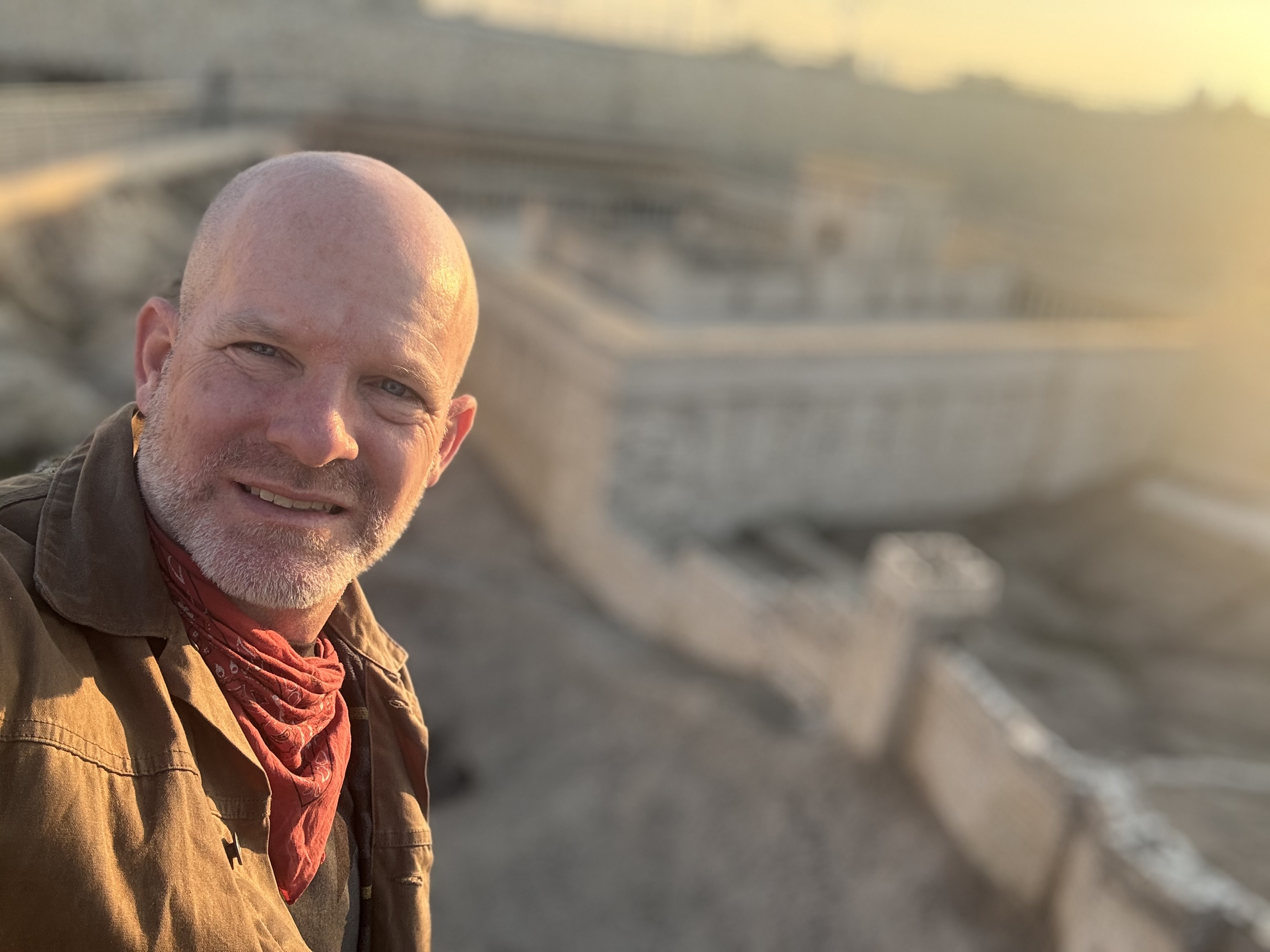
Today was a life milestone. I visited the home of the Dead Sea Scrolls. I have dreamed of this since I was young. As I would love to tell you everything I know about them, I think I will keep this to a brief introduction.
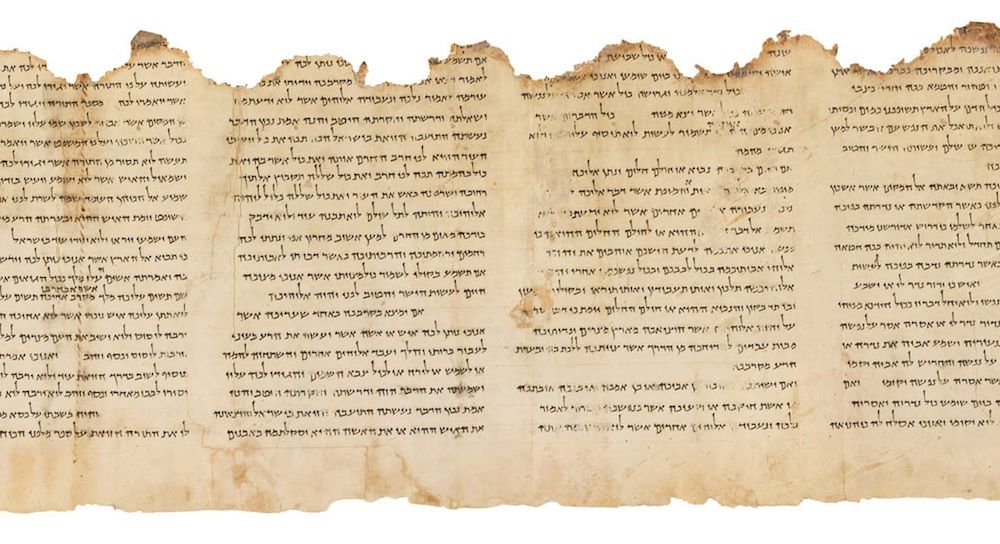
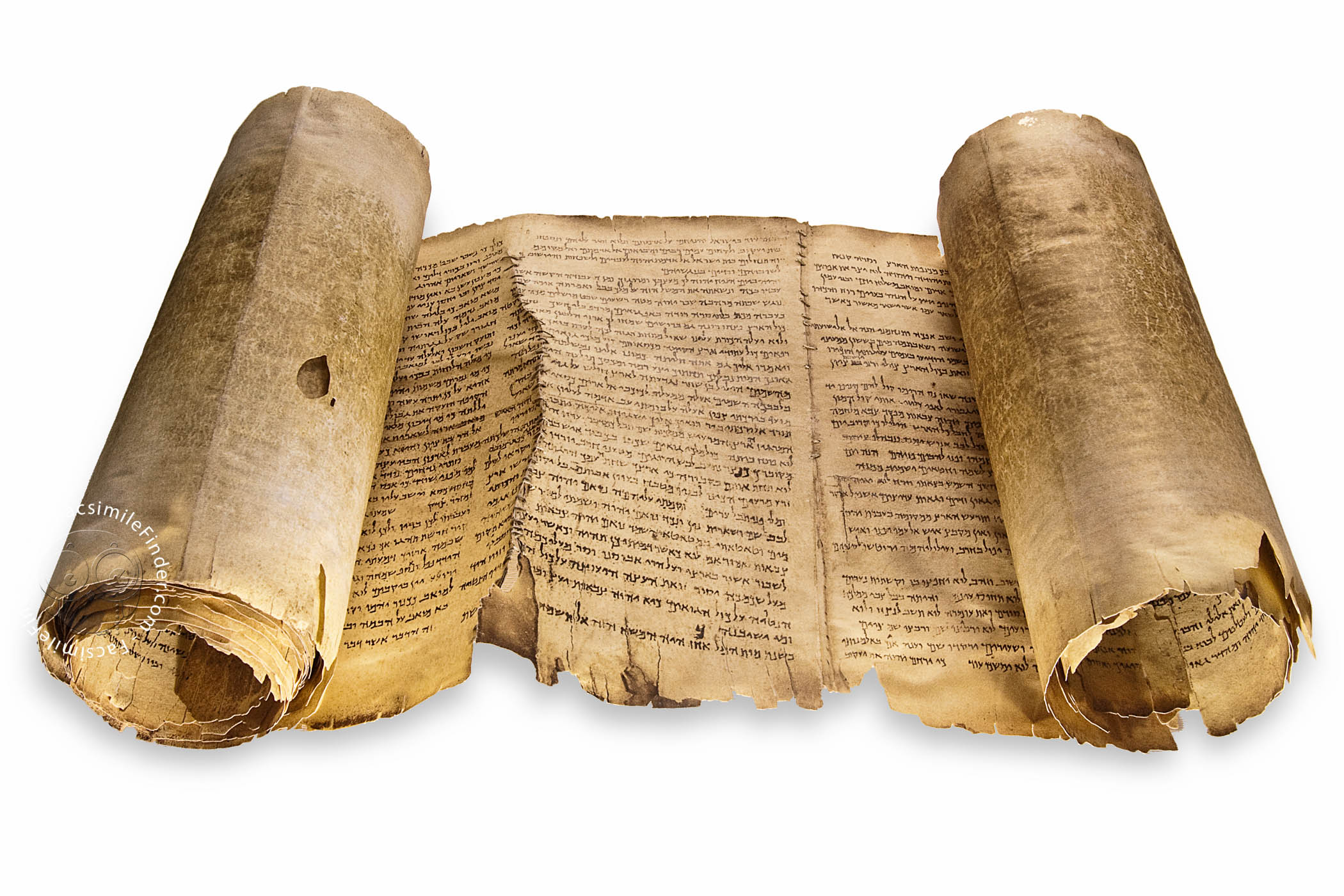
The Dead Sea Scrolls, also called the Qumran Caves Scrolls, are a set of ancient Jewish manuscripts (some original biblical texts) from the Second Temple period. They were discovered over a period of 10 years, between 1946 and 1956, at the Qumran Caves near Ein Feshkha in the West Bank, on the northern shore of the Dead Sea. These date back to the third century BCE.[1] 
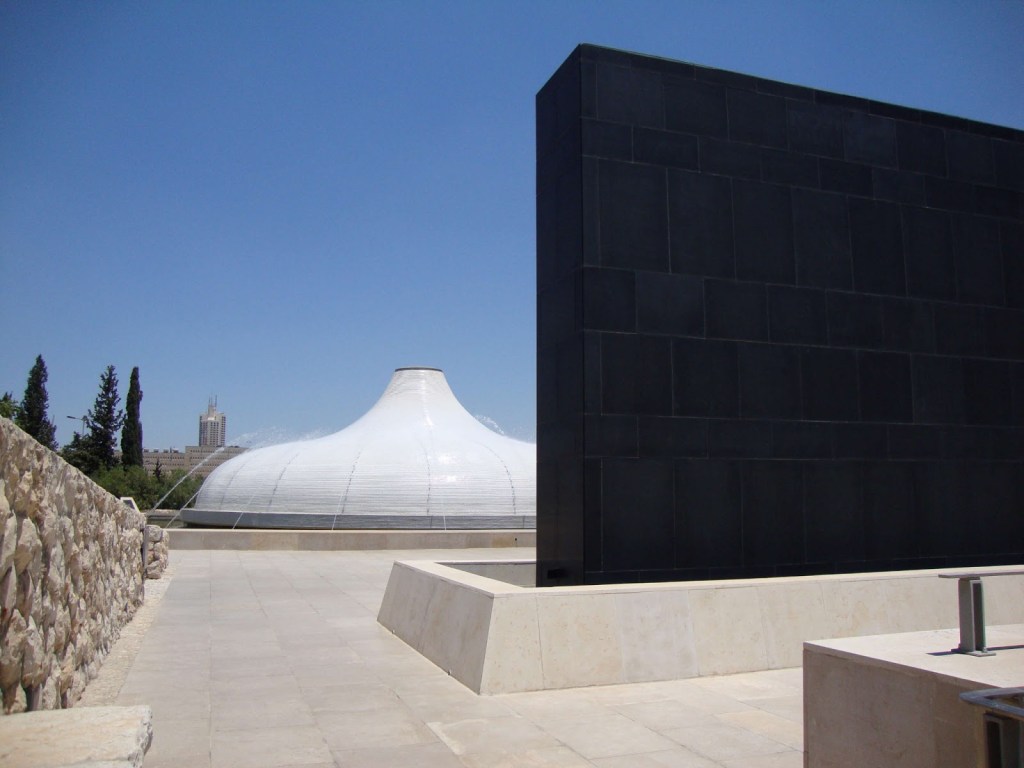
The Shrine of the Book was built as a repository for the first seven scrolls discovered at Qumran in 1947. The unique white dome embodies the lids of the jars in which the first scrolls were found. This symbolic building, a kind of sanctuary intended to express profound spiritual meaning, is considered an international landmark of modern architecture. Designed by American Jewish architects Armand P. Bartos and Frederic J. Kiesler, it was dedicated in an impressive ceremony on April 20, 1965.

The contrast between the white dome and the black wall alongside it alludes to the tension evident in the scrolls between the spiritual world of the “Sons of Light” (as the Judean Desert sectarians called themselves) and the “Sons of Darkness” (the sect’s enemies). The corridor leading into the Shrine resembles a cave, recalling the site where the ancient manuscripts were discovered. [12]

2017 marks the 70th anniversary of the discovery of the Dead Sea Scrolls. Long story short, in late 1947 a young Bedouin boy tossed a stone into a cave, heard the clink of breaking pottery, and would later scramble in to find the tattered remains of ancient scrolls from the centuries leading up to and after the Common Era. If this modern story of ancient discoveries is new to you, you’ve got to ask a very important question. Why does any of this matter today?

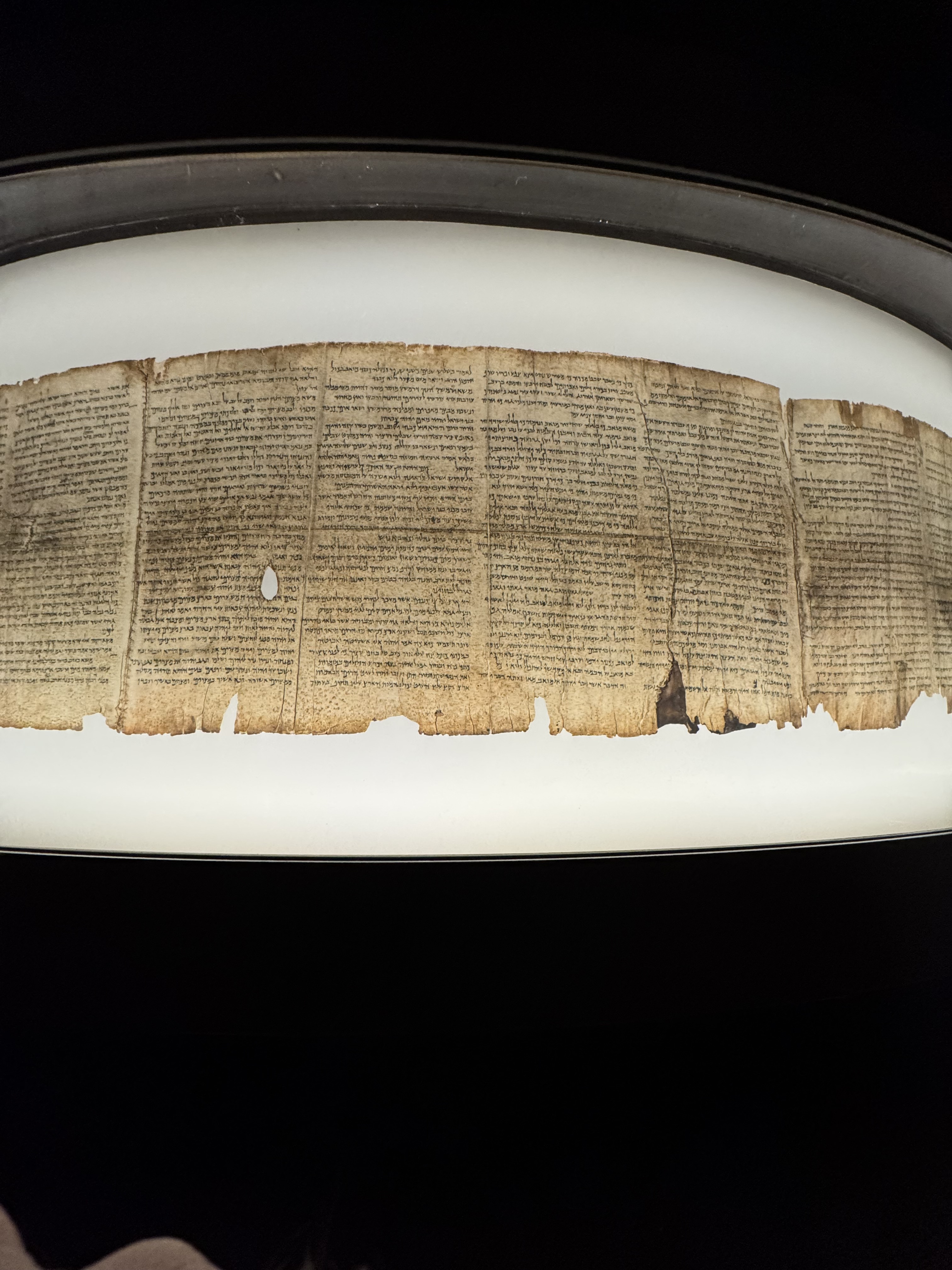
These are the oldest Biblical manuscripts that we have and therefore have made us consider the texts of our later translations of the Bible. [2] Today I visited the Shrine of the Book Museum in Jerusalem where the Dead Sea Scrolls and fragments are located and are now mostly the property and heritage of Judaism.[4] There are 981 different manuscripts (discovered in 1946/1947 and in 1956) from 11 caves,[5] in Qumran in the eastern Judaean Desert in the West Bank.[6] Archaeologists have long associated the scrolls with the ancient Jewish sect known as the Essenes, although some recent interpretations have challenged this connection and argue that priests in Jerusalem or other unknown Jewish groups wrote the scrolls.[7][8]

Most of the scrolls are in Hebrew, with some written in Aramaic and Greek.[9] The texts are written on parchment, some on papyrus, and one on copper.[10] The scrolls cover a wide range of topics and genres. The biblical scrolls include texts from every book of the Old Testament, with the possible exception of Esther. Other scrolls are Jewish sectarian writings, administrative documents, deeds of sale, and even divorce and marriage records. Despite the name, the majority of the scrolls are preserved as fragments, small scraps of what were once larger scrolls and documents. While some scrolls are several feet long, many smaller fragments are no larger than a fingertip. To date, more than 25,000 fragments have been discovered, and extensive work has gone into combining, preserving, translating, and studying these various fragments.[11]

The Dead Sea Scrolls shed light on the period between Alexander the Great’s conquest of Palestine in 332 BCE through the Great Revolt, which ended in 73 CE, with an emphasis on the period from the Maccabean Revolt (168–164 BCE) through the turn of the century. However, in order to fully comprehend the Qumran sect, the reasons for its establishment, and its unique character, one must study Judaism and Jews in the Second Temple Period. It is essential to understand the political realities, external influences, and theology of the time. The Second Temple period, or Second Commonwealth, began in 538 BCE with a declaration by Cyrus the Great, king of Persia and Media, that the Jews could return to the Land of Israel and rebuild their Temple. The Temple and the city of Jerusalem were rebuilt by the year 515 BCE, and, in contrast to the First Commonwealth, the high priest became the secular as well as religious authority. This system of government lasted into the Hasmonean period and became an object of protest in the Dead Sea Scrolls, as well as in other literature of the period. [13]

The scrolls gave historians great insight into the ancient forms of these languages, and they also changed the way scholars studied the Old Testament. For example, the scroll with the most complete version of the book of Psalms had about 40 psalms, including three that were previously unknown. One of these unknown psalms was a “plea for deliverance,” which made note of “evil incarnation.” The Dead Sea Scrolls provide evidence of the diversity of religious thought in early Judaism and the Hebrew Bible’s text development. They revealed the psalms were once sequenced in a different order. This was interesting to scholars because the texts had long been so uniform, and seeing flexibility with the wording and organization was stunning. Few people, however, were able to read and analyze the texts. The Dead Sea Scrolls were long hidden away until they were “liberated” in the 1990s. [14] Later that year, the Biblical Archaeology Society was able to publish the “Facsimile Edition of the Dead Sea Scrolls”, after an intervention of the Israeli government and the IAA.[15] In 1991 Emanuel Tov was appointed as the chairman of the Dead Sea Scrolls Foundation, and publication of the scrolls followed in the same year. Researchers at Hebrew Union College in Cincinnati, Ohio, Ben Zion Wacholder and Martin Abegg, announced the creation of a computer program that used previously published scrolls to reconstruct the unpublished texts.[16] Officials at the Huntington Library in San Marino, California, led by head librarian William Andrew Moffett, announced that they would allow researchers unrestricted access to the library’s complete set of photographs of the scrolls. In the fall of that year, Wacholder published 17 documents that had been reconstructed in 1988 from a concordance and had come into the hands of scholars outside of the international team; in the same month, there occurred the discovery and publication of a complete set of facsimiles of the Cave 4 materials at the Huntington Library. Thereafter, the officials of the IAA agreed to lift their long-standing restrictions on the use of the scrolls.[17]

If you keep a close eye on the footnotes of your Bible, you’ll see a number of places where the words of modern translations are different than those read by your parents or grandparents. One of the reasons for this is that we know more about ancient scribal culture and have access to hoards more biblical manuscripts today than we ever have. This means the textual foundation under the hood of most any contemporary translation is better than it has ever been. Whether you’re a fan of the NIV, NRSV, ESV, or ABC-123, each new edition involves incremental change to the actual words on the page.

But this sword cuts in both directions. While we have far more evidence to work with, if the Scrolls taught us anything about Old Testament scripture, it is generally true that the older the manuscripts the more varied they become. Simply put: human scribes were not photocopiers and no two manuscripts are the same. Scribes copied texts but also interpreted them. That was their job. It wasn’t trickery or introducing error at every turn. This often resulted in slow growth of biblical texts with manuscripts having relatively modest variations in content. A word here, a phrase there, and in some cases, more than one edition of a book circulated. To many modern readers, this might sound like a major problem. I’d rather see it as an opportunity. An opportunity for artful restoration of a text that is both ancient and sacred. Let me show you what I mean.

I really like the way RELEVANT handles this:

Have you ever been reading the Old Testament and then, wham!, some guy shows up in the story and starts gouging out people’s eyeballs? I have, very alarming. (Gotta love the Old Testament though, so old school!) Of course, I’m talking about the incident that plays out in 1 Samuel 10-11, just after Saul became Israel’s first king. In most ancient manuscripts and modern Bible translations, chapter 10 ends with a statement of a small group uttering lack of confidence in Saul’s ability to defeat the Ammonites (1 Sam 10:27). Chapter 11 then opens with the sudden introduction of an Ammonite king named Nahash, who insists on only making a treating with the Israelites so long as he can gouge out each and all’s right eyeball (1 Sam 11:1-2). Not only is this a bad deal, its super confusing in the context of the narrative. Why? Something is missing.

At least seven copies of the book of Samuel were found among the Dead Sea Scrolls. One of these, known as 4QSamuala, just happens to be the oldest known manuscript of the book in existence (dated to around 50-25 BCE). In this version of the text, we find a full paragraph tucked in between the end of chapter 10 and beginning of chapter 11. The translation of this Dead Sea Scroll reads as follows:[Na]hash king of the [A]mmonites oppressed the Gadites and the Reubenites viciously. He put out the right [ey]e of a[ll] of them and brought fe[ar and trembling] on [Is]rael. Not one of the Israelites in the region be[yond the Jordan] remained [whose] right eye Naha[sh king of] the Ammonites did n[ot pu]t out, except seven thousand men [who escaped from] the Ammonites and went to [Ja]besh-gilead. 

What we have here is essentially a cut scene seemingly lost in the generations of copying all other biblical manuscripts. From this content, we learn who this Nahash figure is and why he had the sadistic penchant for collecting eyeballs. Incidentally, the ancient Jewish historian Josephus also seems to have been aware or this detail as he hints at it in his own retelling of Saul’s life (Antiquities 6.5.1). This is the single largest difference discovered when the biblical Dead Sea Scrolls were compared with all previously known witness to the Old Testament. The spectrum of other variations revealed by the scrolls ranges from the spelling of terms, to added/omitted words, or even sentences. While many common Bible translations have dabbled in the Dead Sea Scrolls and included new readings, to date the NRSV is the only one bold enough to integrate the reading described here in 1 Samuel.

[18] https://relevantmagazine.com/faith/how-the-dead-sea-scroll-discovery-changed-christianity/

Conclusion

The Dead Sea Scrolls are important for a number of reasons. First, they shed light on an otherwise known Jewish group. Actually, the people who wrote the Scrolls never refer to themselves as Jews. They are intriguingly vague about their identity. Second, the Scrolls indicate that certain books of the Bible were more popular than others, a conclusion we could draw similarly from the New Testament quotations of the Old Testament. Third, the use of the Old Testament as an authoritative source for biblical interpretation and personal and community life matches material from the New Testament as well. Finally, the discovery of the Dead Sea Scrolls allows us to access Old Testament manuscripts more than 1,000 years older than we previously possessed. Before the discovery of the Scrolls, the oldest complete manuscript of any Old Testament book dated to the 10th century A.D. To be clear, if Moses wrote the Pentateuch in circa 1400 B.C., then our earliest copy of his complete work in Hebrew dated 2,400 years after it was written! It is with justification that the Dead Sea Scrolls are considered by many the most important biblical archaeological discovery of all time.[19]

WORKS CITED:

  1.  “The Digital Dead Sea Scrolls: Nature and Significance”. Israel Museum Jerusalem. Retrieved 4 November 2023.
  2. “Dead Sea Scrolls | Definition, Discovery, History, & Facts | Britannica”. http://www.britannica.com.
  3. Lash, Mordechay; Goldstein, Yossi; Shai, Itzhaq (2020). “Underground-Archaeological Research in the West Bank, 1947–1968: Management, Complexity, and Israeli Involvement”. Bulletin of the History of Archaeology
  4. Duhaime, Bernard; Labadie, Camille (2020). “Intersections and Cultural Exchange: Archaeology, Culture, International Law and the Legal Travels of the Dead Sea Scrolls”. Canada’s Public Diplomacy. Palgrave Macmillan Series in Global Public Diplomacy. Cham: Springer International Publishing. p. 146
  5. “Hebrew University Archaeologists Find 12th Dead Sea Scrolls Cave”. The Hebrew University of Jerusalem. Archived from the original on 2 June 2017.
  6. Donahue, Michelle Z. (10 February 2017). “New Dead Sea Scroll Find May Help Detect Forgeries”. nationalgeographic.com. Archived from the original on 15 June 2018.
  7. Ofri, Ilani (13 March 2009). “Scholar: The Essenes, Dead Sea Scroll ‘authors,’ never existed”. Ha’aretz. Archived from the original on 6 January 2018.
  8. Golb, Norman (5 June 2009). “On the Jerusalem Origin of the Dead Sea Scrolls” (PDF). University of Chicago Oriental Institute. Archived (PDF) from the original on 10 June 2010.
  9. Vermes, Geza (1977). The Dead Sea Scrolls. Qumran in Perspective. London: Collins. p. 15. 
  10. McCarthy, Rory (27 August 2008). “From papyrus to cyberspace”. The Guardian. Archived from the original on 22 December 2016.
  11. https://www.biblicalarchaeology.org/daily/biblical-artifacts/dead-sea-scrolls/what_are_the_dead_sea_scrolls/
  12. https://www.imj.org.il/en/wings/shrine-book/dead-sea-scrolls
  13. https://cojs.org/dead_sea_scrolls_overview/
  14. https://www.discovermagazine.com/the-sciences/at-2-000-years-old-the-dead-sea-scrolls-help-inform-ancient-language
  15. “Copies of Dead Sea Scrolls To Go Public – Release Would End Scholars’ Dispute'”. The Seattle Times. 22 September 1991. Archived from the original on 21 October 2013
  16. HUC-JIR Mourns Dr. Ben Zion Wacholder, Hebrew Union College – Jewish Institute of Religion, 31 March 2011, archived from the original on 18 November 2015
  17. “Dead Sea Scrolls”. Encyclopædia Britannica. Archived from the original on 12 April 2009. 
  18. https://relevantmagazine.com/faith/how-the-dead-sea-scroll-discovery-changed-christianity/
  19. https://apologeticspress.org/the-dead-sea-scrolls-and-the-bible-5741/

SHOT SHOW 2025

If you have been on x44 for very long, you know that I am an enthusiast of many dimensions. I am passionate about many things. I tend to be an all or nothing person. The WORD is the biggest love of my life followed closely my incredible wife and 4 boys and the communion of our “tribe.” My wife calls me the last renaissance man as I am “REALLY INTO” a lot of different things. I have always said I could live life 100 times and do something totally different each life and thoroughly enjoy every one of them. I think over the years I have earned more than 50 certifications such as EMT, AMGA MTN Guide, PADI, various canoe and kayaking certifications, PPA master photographer, A Th.D. Degree and many other credentialed things. But one of the things I have spent a life pursuing is shooting. My father was a writer for several gun magazines in the Peterson line. I grew up shooting competitively every week at the local range and have competed in nearly every NRA discipline, some at the national level. I have been sponsored by more companies than I can remember. About 15 years ago I opened a private NRA gun range that is one of my favorite things in life. My boys have grown up literally learning the ins and outs of the firearm world as they learned to tie their shoes and drive a tractor or motorcycle. It is second nature to our family. Most everyone knows of the NRA because of their legal initiatives, but less people have heard of the Firearm Industry Trade Association. The NSSF is an association “that leads the way in advocating for the industry and its business and jobs, keeping guns out of the wrong hands, encouraging enjoyment of recreational shooting and hunting and helping people better understand the industry’s lawful products.” [1] They put on a several shows but one of them is the SHOT SHOW which is only open to industry professionals. This is truly a MAN CARD lifetime bucket list item. It is amazing. This year here are some things that really stood out to me.

  1. Hk has a history of building the best. Those of you that know me well, know I own an arsenal of their products. I truly believe they are what you would choose if you could have anything, and your life depended on it. They are the number one choice of special forces and have been for many years across the globe. They came out with the HK 416 in the early 2000’s and it has been a stapple for many years. There have been some slight mods over the time but this year marks likely the biggest upgrade the line has seen, at least in the civilian market. “The MR556 A4 and MR762 A4 are the latest products released by HK-USA. The A4’s updated furniture and fully ambidextrous controls make it more user-friendly than ever. A new lifetime barrel bore guarantee, an HK first, reflects HK’s confidence in this no-compromise civilian product.” [2] The MR556 and MR762 are civilian versions of the HK416/417, as used by the U.S. military and other elite military and law enforcement organizations around the world. Although some these features have been available in European exchange, much of these options are new to the US market. For instance, previously you couldn’t get an HK 5.56 in a pistol platform in the US. The A4 series of firearms use the multi-lug, rotating bolt operated by a short-stroke gas-piston system of the original HK416/MR556 (still the best imho), housed in aluminum alloy upper and lower receivers. Beyond this, improvements abound. A new tensioning buffer improves fit between upper and lower receivers. The gas block is adjustable for both suppressed and unsuppressed usage (best on market imho). Controls include ambidextrous bolt release and magazine release buttons, as well as the safety lever with 45-degree throw, all of which are present on both sides of the receiver, and the charging handle is also ambidextrous. I could go on and on… but in brief, this new rifle has it all right out of the box. It’s a no frills no nonsense best option built (period) firearm. The CC9 is also worth mentioning. If you are looking for a CCW gun this is likely the one. The VP9 got an upgrade by way of the VP9A1 F and K models. In my mind the USP’s will always be king though.

2. Barrett has been a HUGE man card fan for many years. The ability to take out armored vehicles miles away using a $6 round is simply amazing. When they sold to the Australian defense contractor NIOA in 2023 I was concerned. I have owned many Barrett firearms over the years, and they continue to be one of my favorite items in the locker. Many know them for their 50 calibers which are amazing, but they also have a history in smaller arms. In 2008 they came out with the M468 which had some heating issues plaguing government contracts, but I owned one and it was super cool. It was a big heavy price of machinery. It felt like what a “real” army man should be using. It was replaced by the rec7. I have owned several of these as well and they continue to be one of my favorites. When the company was purchased, they halted production of rec7’s (partly to push MK22 production). I was worried. This year they were released again. Originally when the rec7 came out it was piston operated. I own a few of these and still prefer this system. But the new rec7 (DI for direct gas impingement) is all that is currently offered. To be clear I don’t think this is a big deal. I own both and can hardly tell the difference. This is also a pretty no frills basic “you want this one when your life depends on it” type rifle. The rifle features a mid-length direct impingement gas system, making it well-suited for suppressor use. The upper and lower receivers feature 7075-T6 aluminum construction. All aluminum components include a Type 3 Hardcoat anodizing. The rifle platform features a hammer-forged, chrome-lined barrel and Magpul furniture. An ALG QMS trigger and extended slimline Barrett handguard with M-LOK accessory mounting slots adds to the rifle’s appeal. [3] However, all that said, it is sort of a nothing special rifle. It is just bare bones cool, but that makes it timeless. This is one that will still be at the front of your safe in 50 years. If you own a 50 this also makes a great matching set. If you don’t own a B50 it might seem a bit to “poserish or wanna be.” IMHO it is one of the top mass manufactured rifles on the market and I am very happy to see it’s return. NOTE: This is an early photo, the production ones are significantly better branded and don’t look as generic as the photo below. See the image lower under Nightforce for the production image.

Of course, Barrett was also continuing to show off the MK22, and the MRADELR Rifle which if you haven’t looked into is pretty amazing. The MRADELR is a high quality, military tested, off-the-shelf, extreme long-range system with user changeable barrels and calibers. Designed to deliver precision typically achieved only by custom-built rifles. If you were going to war with a bolt gun, this is the one.

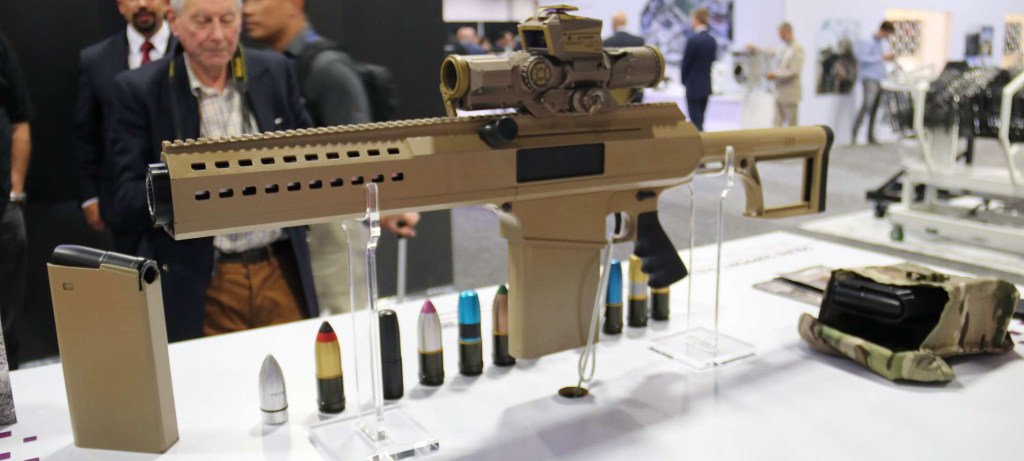
They also had a 3D printed Squad Support Rifle System (SSRS) at SHOT Show 2025. The SSRS is a revolutionary 30mm precision support rifle tailored for the U.S. Army’s Precision Grenadier System (PGS) program. Engineered to tackle modern battlefield threats, it excels in counter-defilade scenarios, neutralizing UAS, and engaging dismounted targets. The SSRS is poised to redefine squad-level firepower with unmatched lethality, versatility, and soldier safety. It was crazy cool! I can’t imagine having this kind of firepower in a lightweight personal sized package. You could take out a regiment from a mile away.

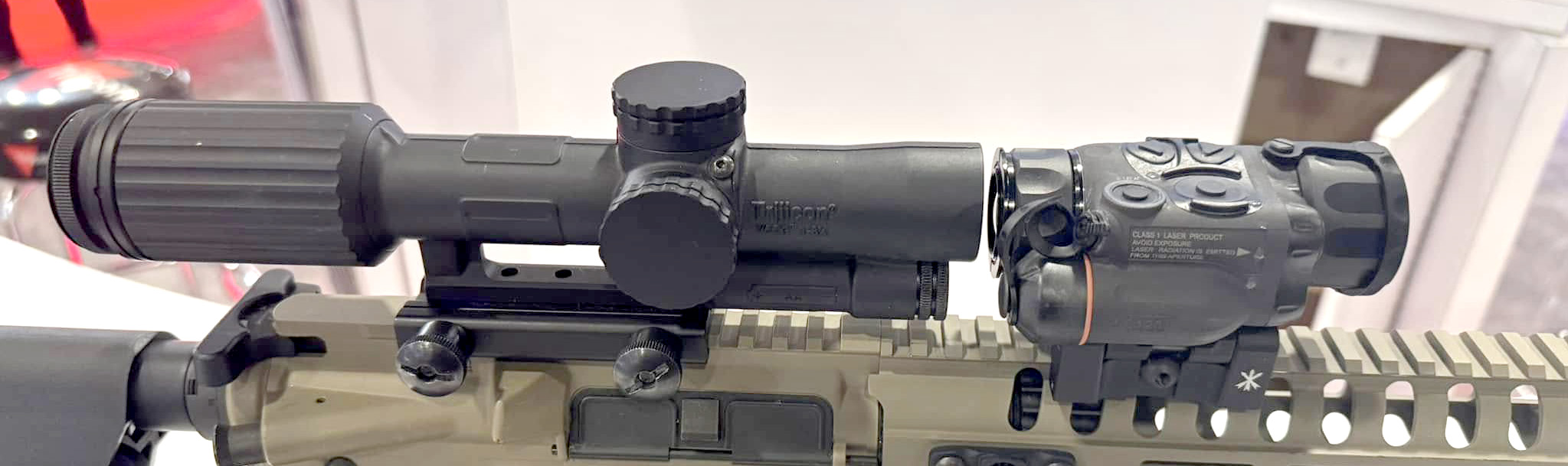
3. TRIJICON: These guys are amazing and it isn’t just because they put Bible verses on their products, although I do LOVE THAT!!! I still believe they make the overall best imaging products. Yes, I am a Nightforce fan (I will get to that) but If I could only choose one optic company this would be it. The RMR is tried and true, the ACOG/VCOG is tank like, and their OASYS thermal is still the best clip on out there and likely the overall singular best NV/Thermal option made. Yes, they are expensive, but again if you’re into the best or a true deployment “life depends on it” unit, these are likely what you’re going to choose. I own the exact setup below. The last three years I have walked around the show with the intent to seek out the best thermal option and for the third year in a row, this is the “BEST YOU CAN BUY” setup. I should also mention that they had perhaps the most convincing display I have ever seen showing the amount of real war abuse their products had taken, literally bullet holes in an ACOG and it was still functioning (not to mention it saved someone’s life from a headshot). That is impressive and defining. Most people don’t see the build benefits of the newer VCOG vs a traditional LPVO. If you aren’t “aware”, you might want to start noticing. This is the future.

4. Nightforce & the others: I am a major fan and own nearly every optic they make. They are just the best imho. Built for a war, proven, repeatable, sharp glass, great designs, unmatched aesthetics. I own them all. And I don’t just mean NF, I mean Schmidt and Bender, Vortex, and the others and I would hands down say NF is still the best. But I do think each has a place to shine. So let me break it down. As I mentioned above, I think Trijicon remains the upper tier across the board. If you want one optic company on all your stuff, they are the one and likely the overall toughest. S&B is awesome and for bragging rights. NF is the best in scopes. As a side note LPVO’s are still the thing for a one rifle do it all platform and the 1-8 ATACR is still the best (yes, I will get to the vortext 1-10). I own two 1-8 ATACR scopes, but that said, they are too big IMHO. The NX8 1-8 24 is smaller, lighter, cheaper, and makes more sense on a one and done rifle. This is the direction things are going. And I have to say, NF saw this a long time ago when they released the unfortunately discontinued 2.5-10 24 (not to be confused with the 42). If you can find this SOCOM relic used GET IT!!! Here is the Barrett rec7 mentioned above with the NF 1-8 24 which I would say is the best LPVO on the market and reasonably priced.

You can’t go wrong with Vortex. I love my Wisco brothers, the warranty, the excellent products. I have ZERO negative to say! These guys ROCK!!! The golden eagle dominates long range bench. The Vortex Razor HD Gen III 1-10×24 FFP is arguably the best LPVO. There I said it! The 1-10 is awesome but this thing is huge and heavy and looks good on an M110 (but then isn’t arguably enough). The best thing about the 5.56 platform is its small and light, this is too big of an optic. However, here is a military vortex 1-10 that is half the size of their civilian version. This is the future. If I could get this, I would!

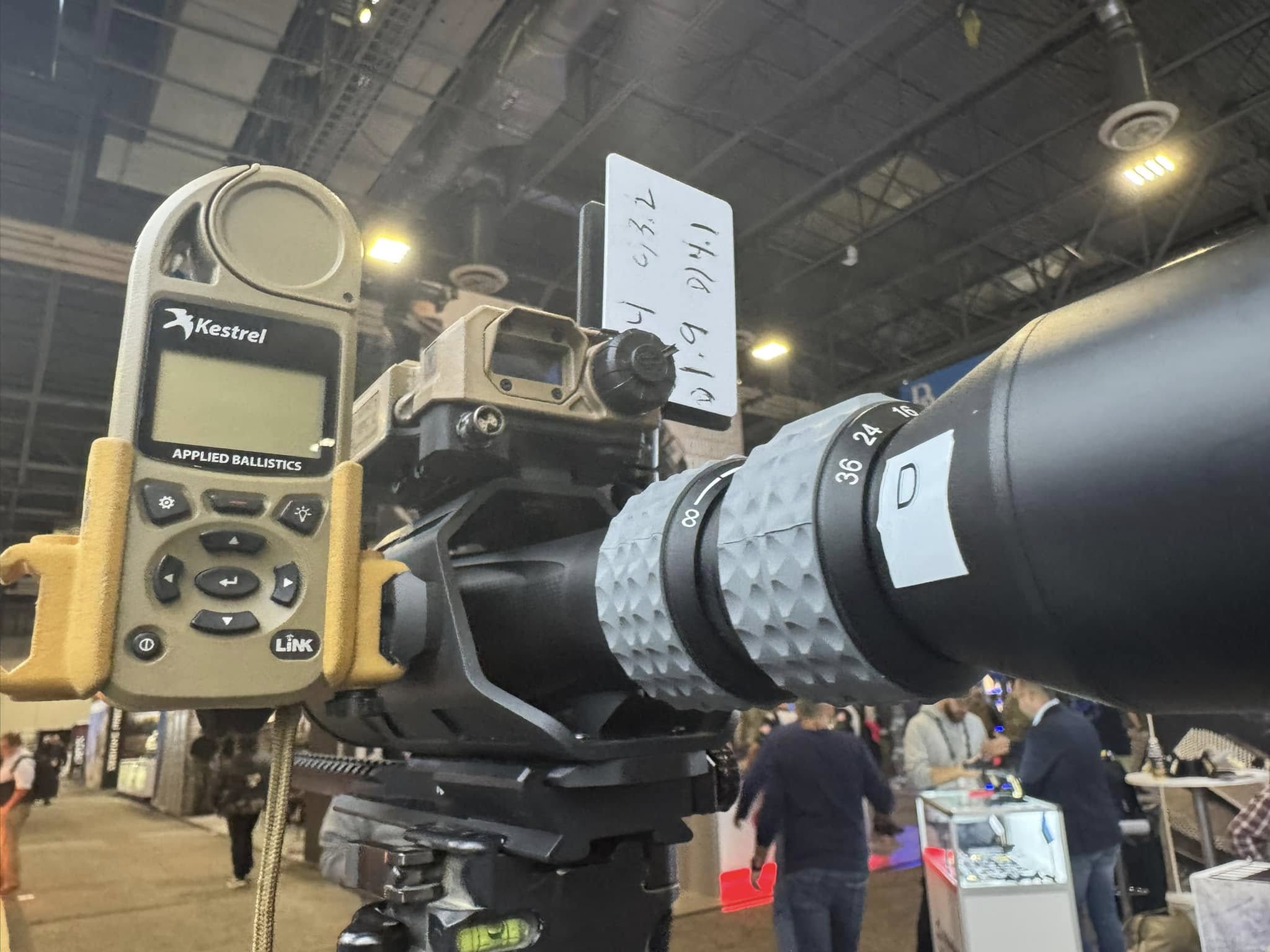
One more thing. It came out a year ago, but the NF CFS 6-36×50mm F1 spotting scope is awesome. I switched years ago to a Canon IS 18x set of binoculars for watching my shots and this is the first spotting scope that I might “GO BACK” to. I was never impressed with the NF TS82 and I own the Vortex Razor HD 27-60×85 which is great, but here is the thing with these. A spotting scope at any power doesn’t work well past 1000 yards or so. Yeah, argue away, but they just don’t. So, at under 1000 yards an IS set of binoculars can’t be beat. Two eyes are wayyyyy better than 1. NF figured this out staying lighter and only going to the ultra-sharp 32 power. On paper the 60x vortex would be better, but not in real life. Anyone who has used “SHARP” glass knows this. There is still an argument for the Vortex 60x scope on a bench next to your Vortex Golden Eagle HD 15-60×52 scope; but not as strong of an argument as you would think if you used all of them and were truly unbiased. For shots at a mile plus you have to go with long range digital viewing and for anything 1000 or less there are lots of workable options. Oh yeah, did I mention the newer NF can be setup with thermal and NV as well as mounted next to your Kestrel? hmmmm

5: OTHER NOTABLES:

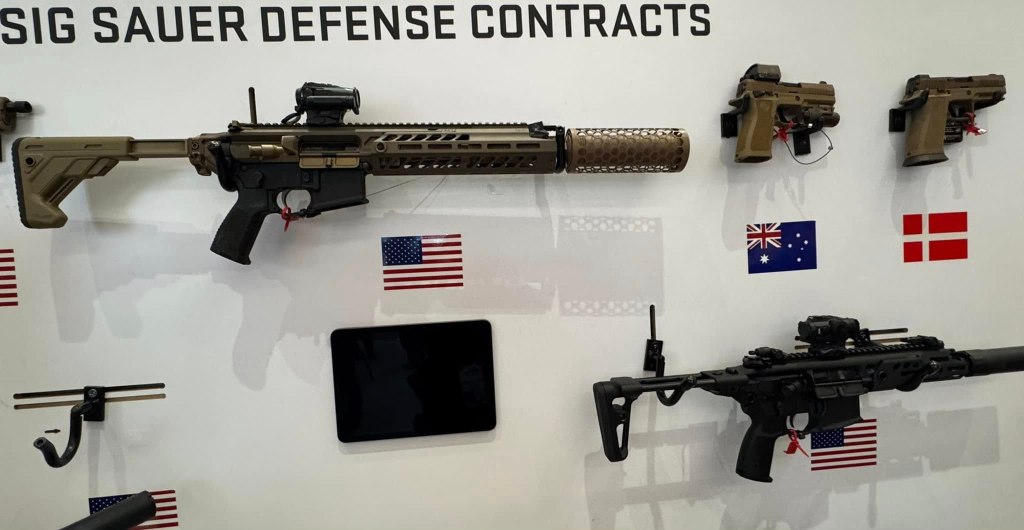
SIG is killing it right now! This contract wall says a lot. However, they have been plagued with problems for the last 5 years. The last 3 SIG items I have owned (365, BDX scopes, and Speer rifle) all left me with malfunctions that I decided in the end, I wouldn’t want to be second guessing if my life depended on it, and that’s what we are all training for right? They are still an amazing company, and I brag about the unrivaled acquisition time of the BDX scopes all the time. I also love the SIG color schemes.

This is Joe and Caleb from ammoracks.com. If you consider yourself an enthusiast, you need these! Can’t say enough about this company and their first year venture. WOW!!! AMAZING PRODUCT and their ideas moving forward are nothing less than incredible!

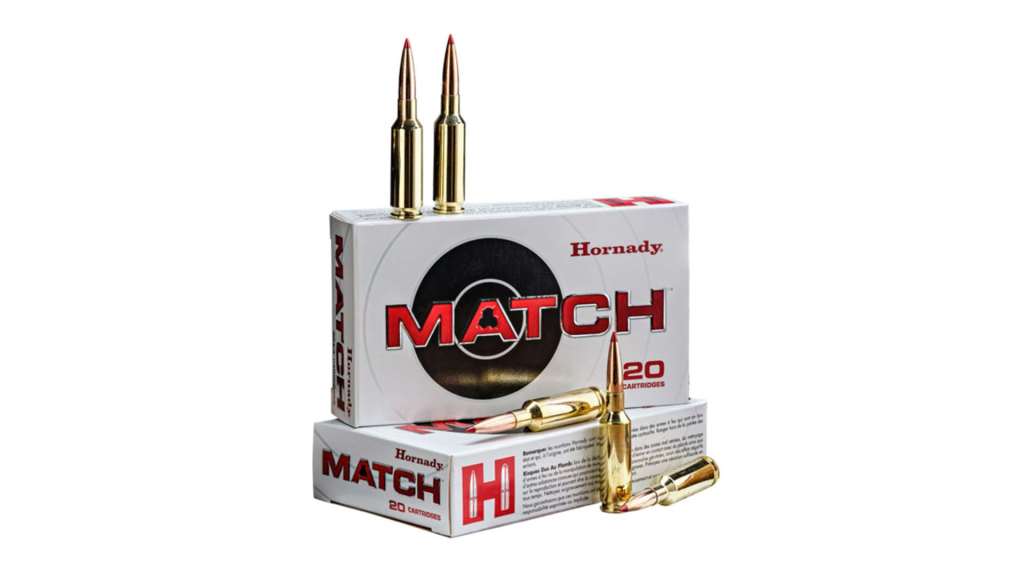
Hornady Match can’t be beat. You can argue with me all day, but you can’t possibly hand load to the tolerances they use. Yeah I still handload for special purposes occasionally but a lot less than I did 20 years ago thanks to Hornady! The cowboy in me loves my .280 Remington at 1000 yards but the tech fanatic in me loves watching what they are doing here. The fairly new 6 mm GT cartridge brings PRC-style competitors a smile. Conceived by George Gardner of GA Precision and Tom Jacobs of Vapor Trail Bullets is worth a look.

The Kimber 2K11 is a trendy 2011 platform. Available in three models – 2K11 OR, 2K11 Target OR, and 2K11 Target OI – this double-stacked pistol not only caught my eye with its aesthetics but also its features. If you want a piece of steel that shoots like a laser Kimber has always been the one, but this is their first techy offering and was much needed. These guys have been trying to keep up and I applaud them, love the k6s!

There are several guns that were hyped up that just aren’t my cup of tea such as the SNT Motiv K2S (a.k.a. Daewoo K2). I would say get a DS ARMS offering or an HK91 any day before you consider this. B&T makes cool stuff, so does Q but they are expensive and a bit toyish imo. Everyone loves the FLEX raider stuff and these guys rock but just give me a decent 9 and maybe a weapons light when it gets real. I don’t really like the hype, and I have never been into a bunch of junk getting in the way. I airsoft with a no sight rifle, shorts, sandals, and sunglasses and in a modern-day engagement (God forbid that ever happens) I would likely be wearing the same thing. Keep it simple and train for the reality. Daniel Defense has a new CCW style pistol, I am always hesitant of first year crossovers, but it looks good! I respect PSA and they had a full offering, but I just don’t really care for lower end stuff and in my mind, they will always be there, everything seems like a knockoff. Their Mixtape .338 ARC was pretty sweet though!!! Laugo Alien Remus was good to see. Aliens have had their issues, and I think the company is addressing it. When they work, they work REALLY WELL! The Henry Carbon Fiber was cool, it’s the hipster thing, not for me – Just give me my grandfather’s old wooden octagon barrel lever henry and I am happy, but to some this is the jewel of the show. Holosun went from being a cheap optic to one of the best in a few years and their NV/Thermal pistol and rifle options are incredible. If you aren’t up on this, you need to google it NOW! I love Staccato, the new HD P4 is a 9mm, steel-frame handgun that benefits from accepting Glock magazines. They needed to get creative, so this is great news! I sold my last Staccato 5 years ago after winning a handgun race and someone saying, “anyone could win with that gun!” I switched the next day to a G17 and never looked back, no one has made that statement since. This is still a great company, and I think the world of their products. It is also fun to carry something so cool! 20 years ago, it made more sense to own an STI or Staccato. You had to work on most guns to really get them to shoot. For the first 20 years of my shooting life, I bought a gun and 20 different brands of ammo expecting $500 worth of gunsmithing to come later; or you just bought and STI and called it quits! But now that is no longer the case. There are just too many great out of the box guns such as the HK VP9 match, the Sig Legions, and several others that shoot just as good for half the price. If you’re paying nor than $1500 for the base gun your likely just paying for bragging rights (and possibly aesthetics) today.

There are lots of great people at this show. Also, amazing displays, I am thankful for everything that goes into it. Some of the nicest people I have ever met. Triple Crown products has helped me out every year! THANK YOU! If you need clothing branded this is your team!

CONCLUSION:

Another amazing year! Thank you to everyone who makes this happen! Psalm 144:1 Praise be to the LORD my Rock, who trains my hands for war, my fingers for battle.

  1. https://www.nssf.org/
  2. https://hk-usa.com/heckler-koch-usa-introduces-all-new-mr-a4-series-rifles/
  3. https://athlonoutdoors.com/article/barrett-rec7-di-rifle/