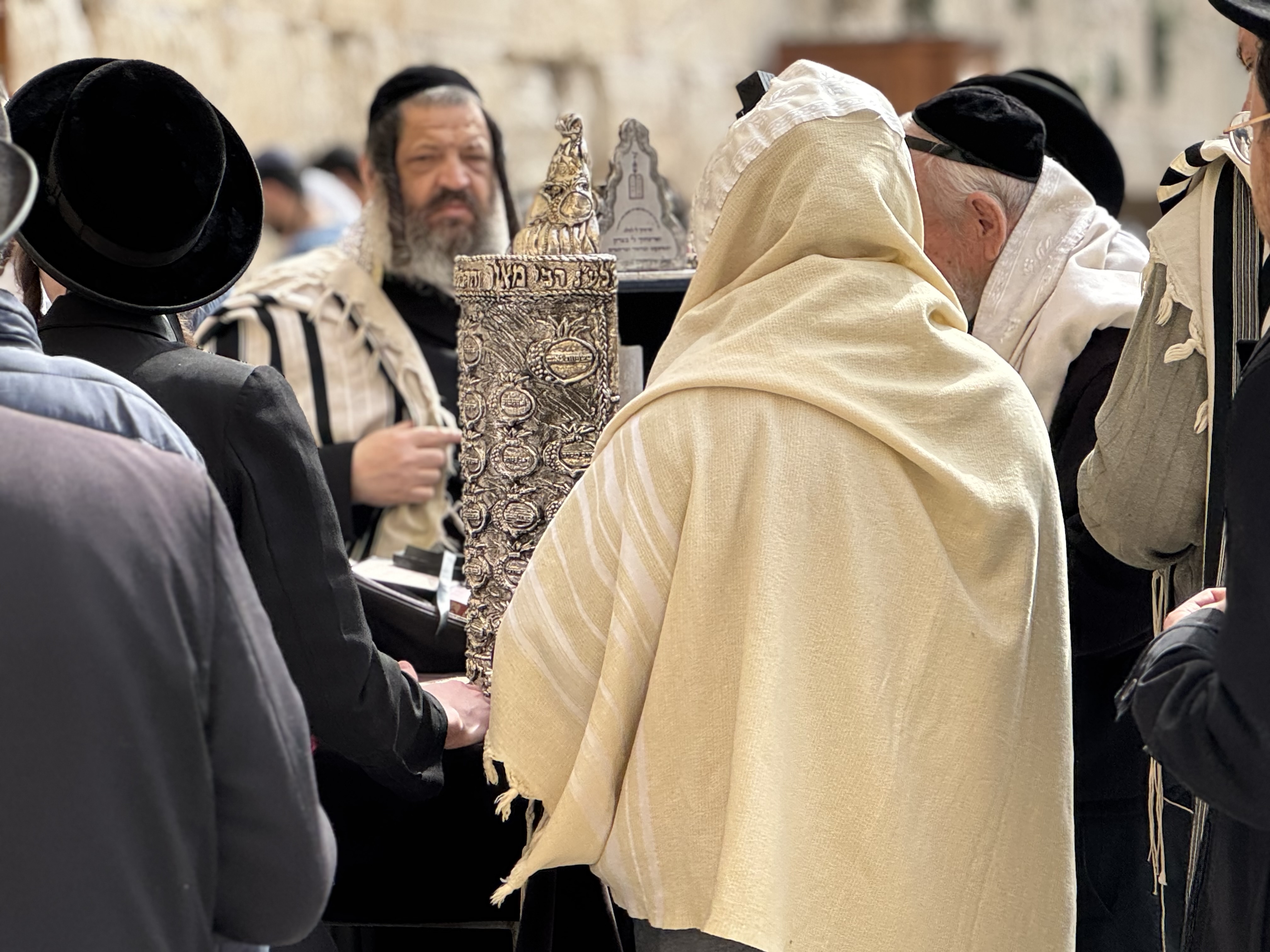
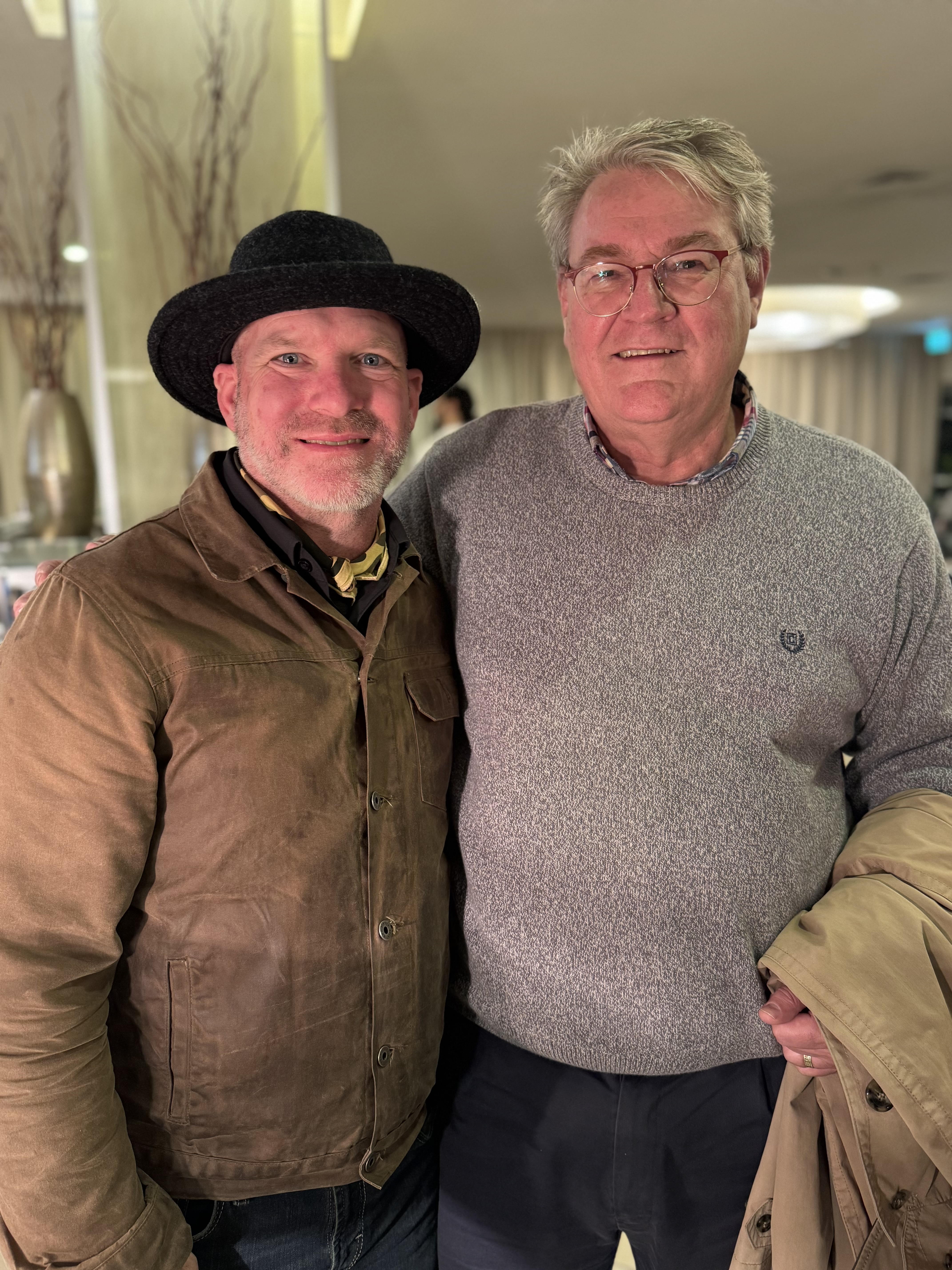
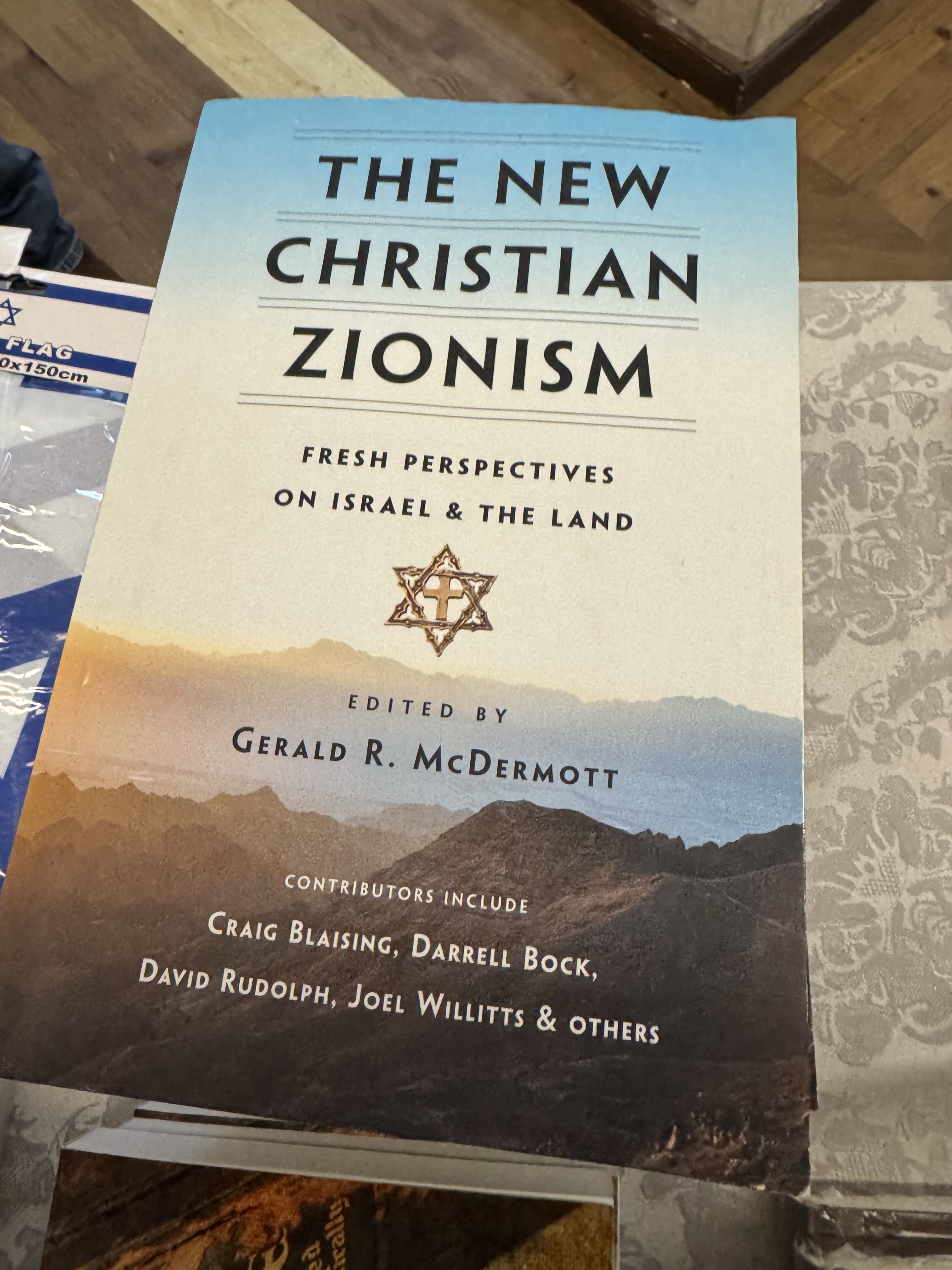
Tonight, my wife and I attended a conference with The International Christian Embassy in Jerusalem. To be clear this is one of the leading Zionist organizations. Some within the organization might be construed as dispensational (although ICEJ leadership would claim that they are not Dispensational as they do not preach the Pre-Trib Rapture or 2/3rds of Israel dying). If you have followed my work or X44 for long, you know that I would not align with either ideology (even though I have a degree from Moody Bible Institute which remains as one of the top dispensational colleges in the world). I might add, nor would I align with most versions of replacement theology. However, simply because I don’t see theologically the same way as another “Christian” individual or organization doesn’t mean that I don’t partner with them as kingdom brothers & sisters. In fact, quite the opposite. As an unbiased theologian of course, I think my theologies are right (who doesn’t); but I am also open to the fact that in the eyes of God my views may not be correct, or God’s “will or order” may not be understandable to me here. I strongly believe in seasons, callings, and anointings. God’s ways are certainly higher than mine. David Parsons, ICEJ Vice President & Senior Spokesman has become a good friend of mine, and I firmly believe in what he and the rest of his team are doing and the heart for which they do it. God is smiling on them. They are incredible kingdom partners! If there was ever a time to put differences aside and unite on what we do stand in agreement with; it is now and, in the name and kingdom of our LORD Jesus Christ. There isn’t a place for petty differences right now, and whatever they may be, seem rather insignificant. Jesus is calling and these brothers and sisters are highly favored and anointed to the calling before them. If you want to support Israeli aid, this is the organization that is going to see the Kingdom established in Israel and I can’t recommend a better organization than ICEJ.
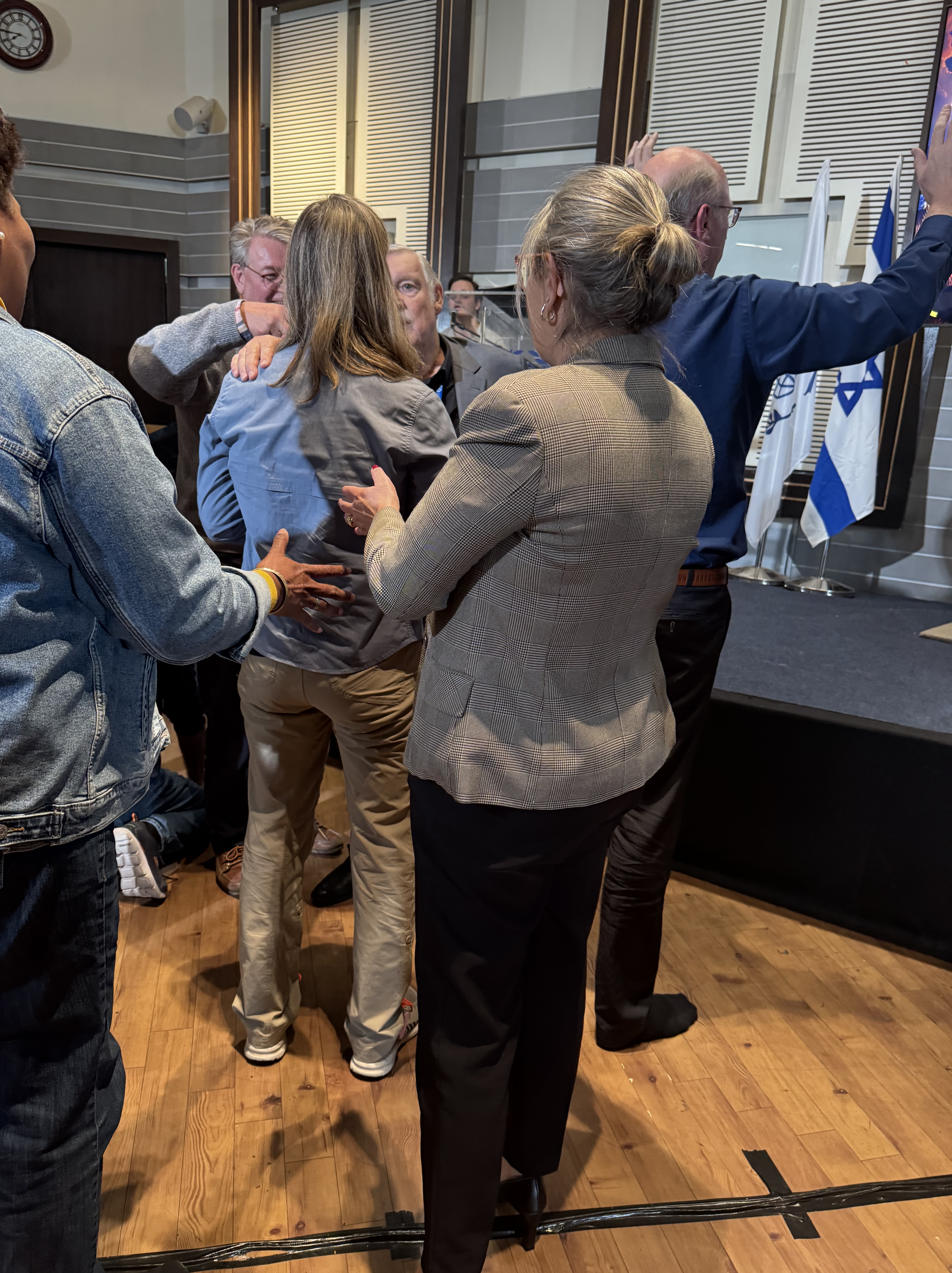
The night was powerful. Praise and worship, amazing testimonies of what God was doing, deep teaching, and the moving of the spirit with fresh anointing.
I pray for Israel, ICEJ, those in affliction, and particularly the now and coming kingdom of Jesus as I stand in agreement with my family at ICEJ. I wrote a previous post on “all things Israel” here.
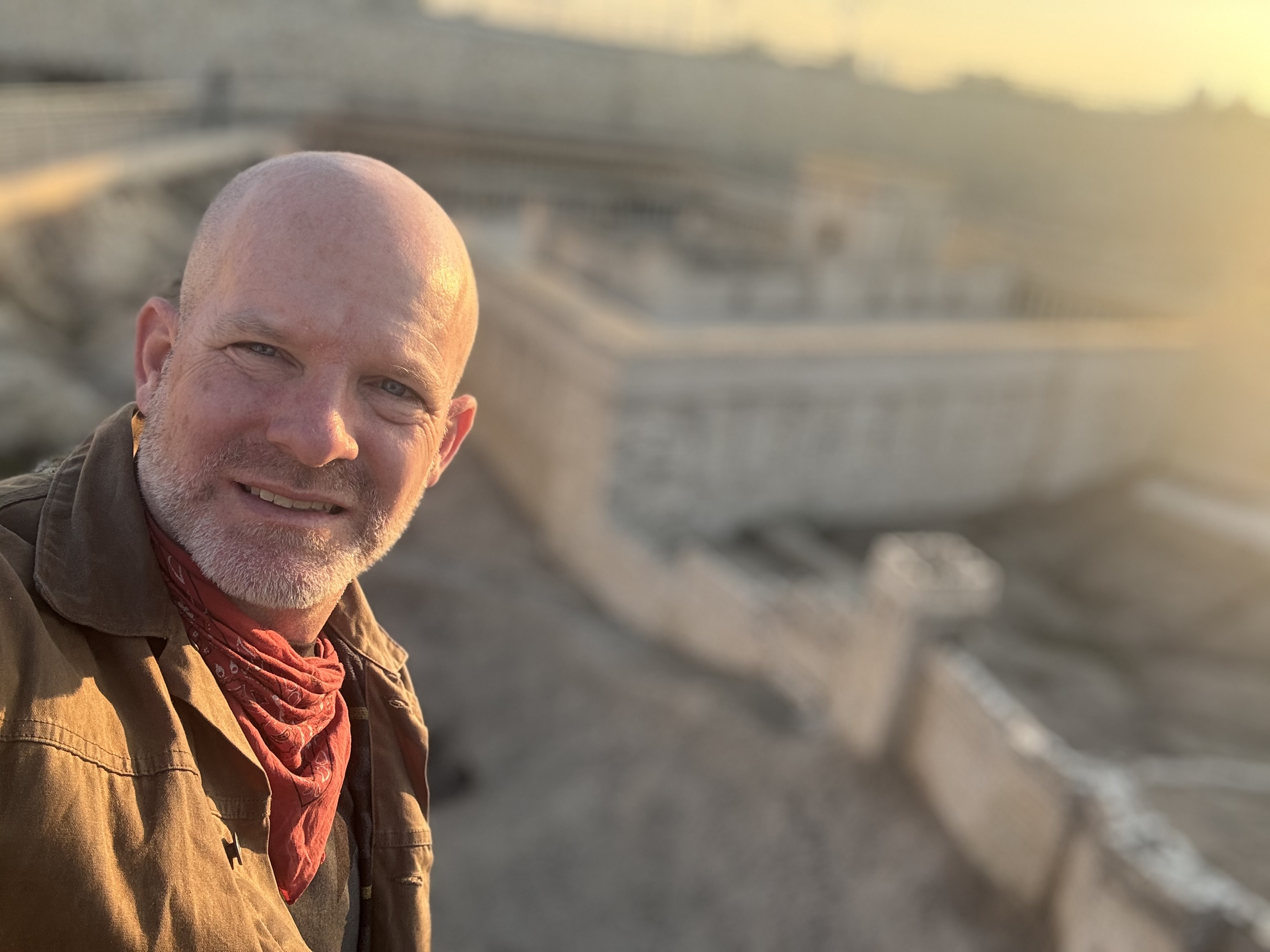
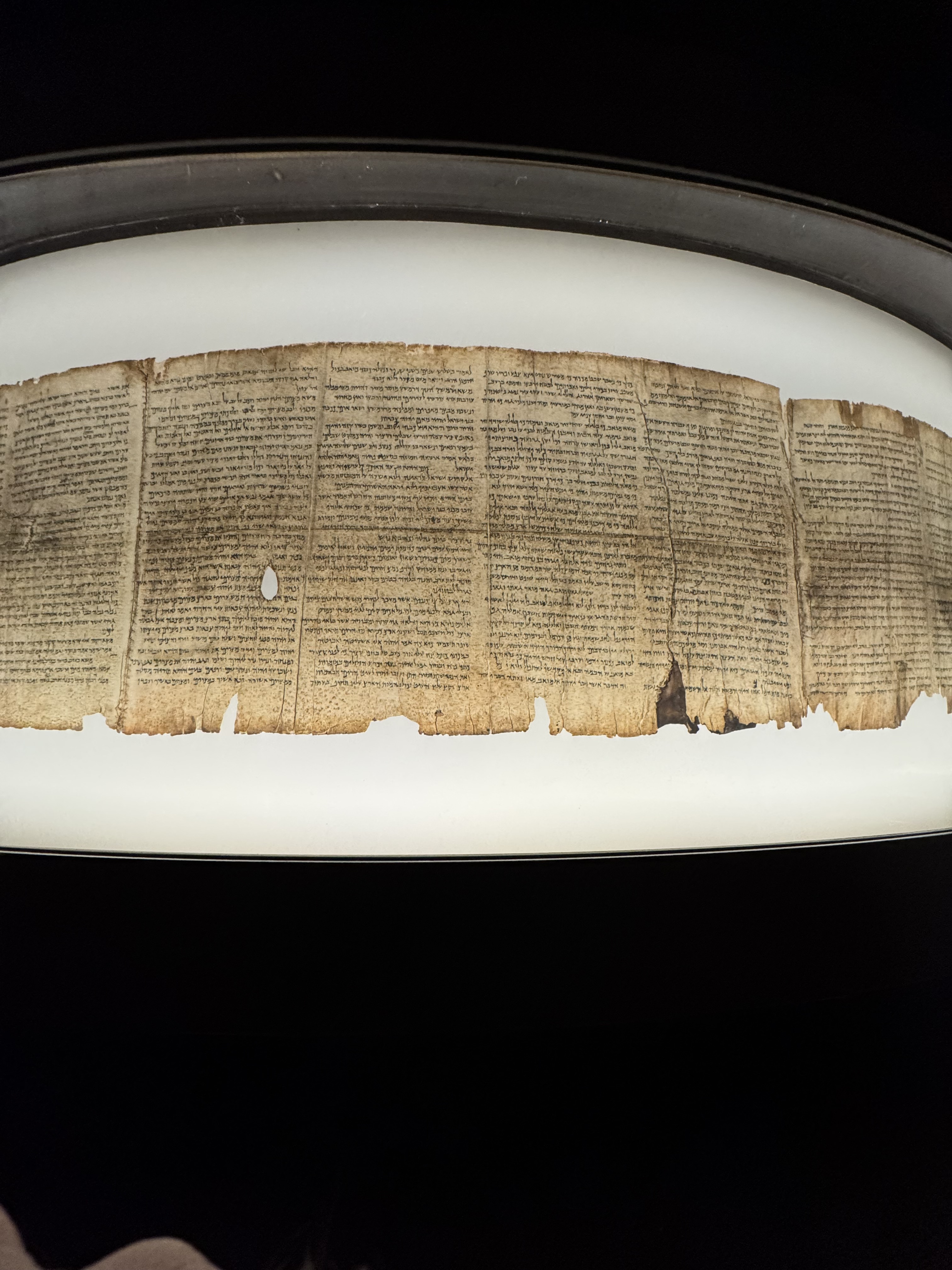
Today was a life milestone. I visited the home of the Dead Sea Scrolls. I have dreamed of this since I was young. As I would love to tell you everything I know about them, I think I will keep this to a brief introduction.
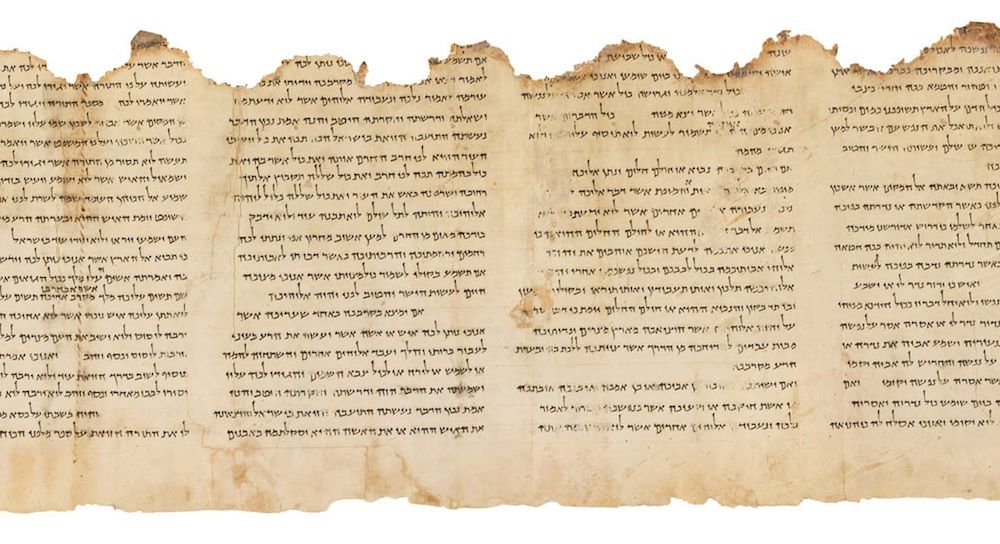
The Dead Sea Scrolls, also called the Qumran Caves Scrolls, are a set of ancient Jewish manuscripts (some original biblical texts) from the Second Temple period. They were discovered over a period of 10 years, between 1946 and 1956, at the Qumran Caves near Ein Feshkha in the West Bank, on the northern shore of the Dead Sea. These date back to the third century BCE.[1]
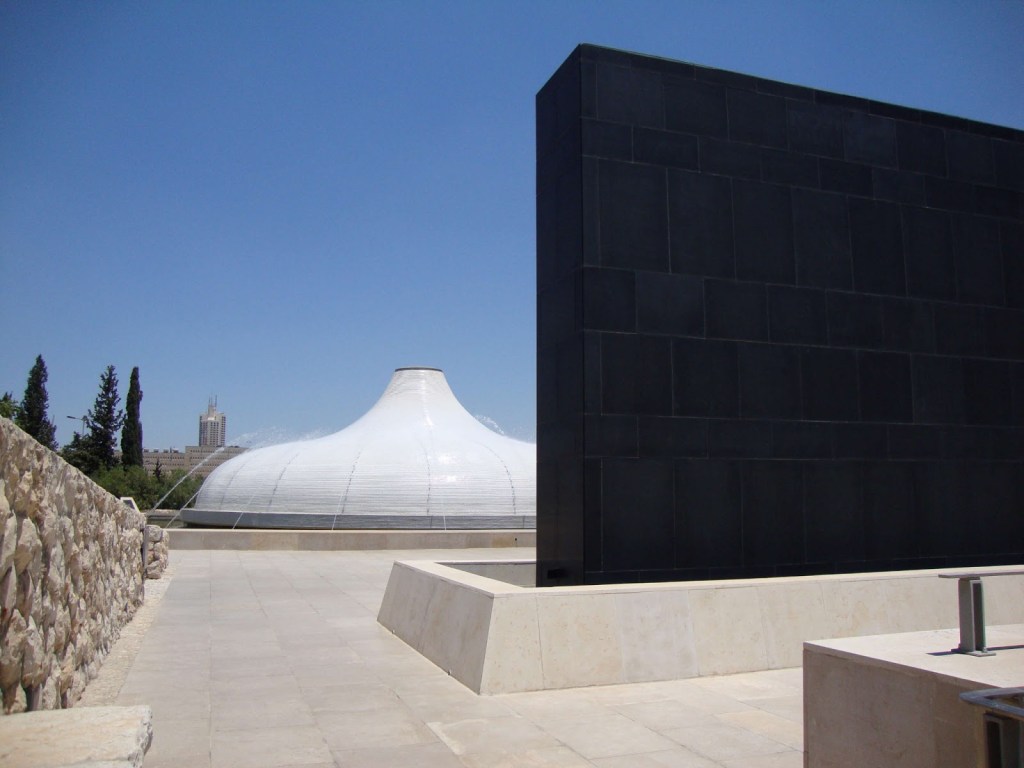
The Shrine of the Book was built as a repository for the first seven scrolls discovered at Qumran in 1947. The unique white dome embodies the lids of the jars in which the first scrolls were found. This symbolic building, a kind of sanctuary intended to express profound spiritual meaning, is considered an international landmark of modern architecture. Designed by American Jewish architects Armand P. Bartos and Frederic J. Kiesler, it was dedicated in an impressive ceremony on April 20, 1965.
The contrast between the white dome and the black wall alongside it alludes to the tension evident in the scrolls between the spiritual world of the “Sons of Light” (as the Judean Desert sectarians called themselves) and the “Sons of Darkness” (the sect’s enemies). The corridor leading into the Shrine resembles a cave, recalling the site where the ancient manuscripts were discovered. [12]
2017 marks the 70th anniversary of the discovery of the Dead Sea Scrolls. Long story short, in late 1947 a young Bedouin boy tossed a stone into a cave, heard the clink of breaking pottery, and would later scramble in to find the tattered remains of ancient scrolls from the centuries leading up to and after the Common Era. If this modern story of ancient discoveries is new to you, you’ve got to ask a very important question. Why does any of this matter today?
These are the oldest Biblical manuscripts that we have and therefore have made us consider the texts of our later translations of the Bible. [2] Today I visited the Shrine of the Book Museum in Jerusalem where the Dead Sea Scrolls and fragments are located and are now mostly the property and heritage of Judaism.[4] There are 981 different manuscripts (discovered in 1946/1947 and in 1956) from 11 caves,[5] in Qumran in the eastern Judaean Desert in the West Bank.[6] Archaeologists have long associated the scrolls with the ancient Jewish sect known as the Essenes, although some recent interpretations have challenged this connection and argue that priests in Jerusalem or other unknown Jewish groups wrote the scrolls.[7][8]
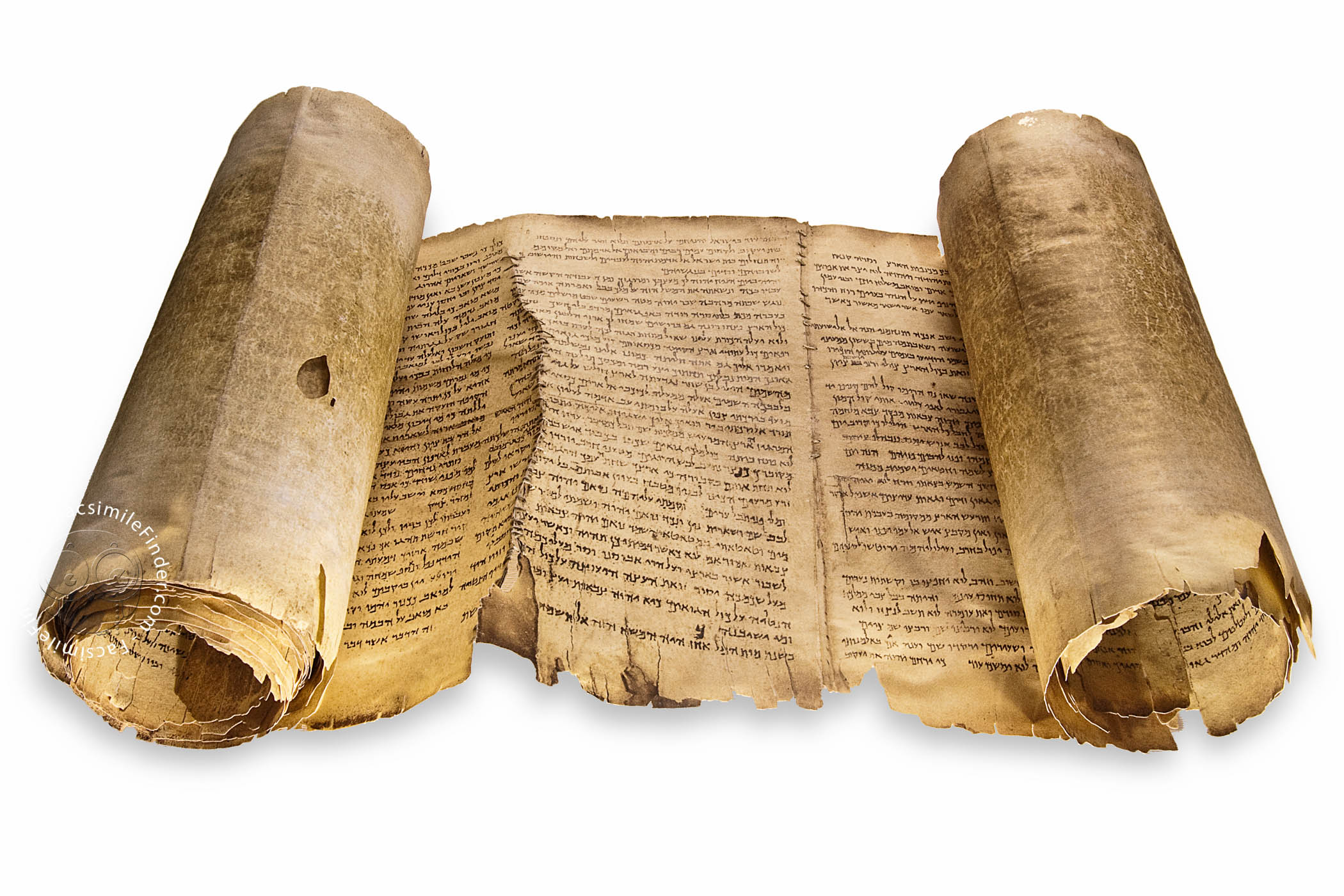
Most of the scrolls are in Hebrew, with some written in Aramaic and Greek.[9] The texts are written on parchment, some on papyrus, and one on copper.[10] The scrolls cover a wide range of topics and genres. The biblical scrolls include texts from every book of the Old Testament, with the possible exception of Esther. Other scrolls are Jewish sectarian writings, administrative documents, deeds of sale, and even divorce and marriage records. Despite the name, the majority of the scrolls are preserved as fragments, small scraps of what were once larger scrolls and documents. While some scrolls are several feet long, many smaller fragments are no larger than a fingertip. To date, more than 25,000 fragments have been discovered, and extensive work has gone into combining, preserving, translating, and studying these various fragments.[11]
The Dead Sea Scrolls shed light on the period between Alexander the Great’s conquest of Palestine in 332 BCE through the Great Revolt, which ended in 73 CE, with an emphasis on the period from the Maccabean Revolt (168–164 BCE) through the turn of the century. However, in order to fully comprehend the Qumran sect, the reasons for its establishment, and its unique character, one must study Judaism and Jews in the Second Temple Period. It is essential to understand the political realities, external influences, and theology of the time. The Second Temple period, or Second Commonwealth, began in 538 BCE with a declaration by Cyrus the Great, king of Persia and Media, that the Jews could return to the Land of Israel and rebuild their Temple. The Temple and the city of Jerusalem were rebuilt by the year 515 BCE, and, in contrast to the First Commonwealth, the high priest became the secular as well as religious authority. This system of government lasted into the Hasmonean period and became an object of protest in the Dead Sea Scrolls, as well as in other literature of the period. [13]
The scrolls gave historians great insight into the ancient forms of these languages, and they also changed the way scholars studied the Old Testament. For example, the scroll with the most complete version of the book of Psalms had about 40 psalms, including three that were previously unknown. One of these unknown psalms was a “plea for deliverance,” which made note of “evil incarnation.” The Dead Sea Scrolls provide evidence of the diversity of religious thought in early Judaism and the Hebrew Bible’s text development. They revealed the psalms were once sequenced in a different order. This was interesting to scholars because the texts had long been so uniform, and seeing flexibility with the wording and organization was stunning. Few people, however, were able to read and analyze the texts. The Dead Sea Scrolls were long hidden away until they were “liberated” in the 1990s. [14] Later that year, the Biblical Archaeology Society was able to publish the “Facsimile Edition of the Dead Sea Scrolls”, after an intervention of the Israeli government and the IAA.[15] In 1991 Emanuel Tov was appointed as the chairman of the Dead Sea Scrolls Foundation, and publication of the scrolls followed in the same year. Researchers at Hebrew Union College in Cincinnati, Ohio, Ben Zion Wacholder and Martin Abegg, announced the creation of a computer program that used previously published scrolls to reconstruct the unpublished texts.[16] Officials at the Huntington Library in San Marino, California, led by head librarian William Andrew Moffett, announced that they would allow researchers unrestricted access to the library’s complete set of photographs of the scrolls. In the fall of that year, Wacholder published 17 documents that had been reconstructed in 1988 from a concordance and had come into the hands of scholars outside of the international team; in the same month, there occurred the discovery and publication of a complete set of facsimiles of the Cave 4 materials at the Huntington Library. Thereafter, the officials of the IAA agreed to lift their long-standing restrictions on the use of the scrolls.[17]
If you keep a close eye on the footnotes of your Bible, you’ll see a number of places where the words of modern translations are different than those read by your parents or grandparents. One of the reasons for this is that we know more about ancient scribal culture and have access to hoards more biblical manuscripts today than we ever have. This means the textual foundation under the hood of most any contemporary translation is better than it has ever been. Whether you’re a fan of the NIV, NRSV, ESV, or ABC-123, each new edition involves incremental change to the actual words on the page.
But this sword cuts in both directions. While we have far more evidence to work with, if the Scrolls taught us anything about Old Testament scripture, it is generally true that the older the manuscripts the more varied they become. Simply put: human scribes were not photocopiers and no two manuscripts are the same. Scribes copied texts but also interpreted them. That was their job. It wasn’t trickery or introducing error at every turn. This often resulted in slow growth of biblical texts with manuscripts having relatively modest variations in content. A word here, a phrase there, and in some cases, more than one edition of a book circulated. To many modern readers, this might sound like a major problem. I’d rather see it as an opportunity. An opportunity for artful restoration of a text that is both ancient and sacred. Let me show you what I mean.
I really like the way RELEVANT handles this:
Have you ever been reading the Old Testament and then, wham!, some guy shows up in the story and starts gouging out people’s eyeballs? I have, very alarming. (Gotta love the Old Testament though, so old school!) Of course, I’m talking about the incident that plays out in 1 Samuel 10-11, just after Saul became Israel’s first king. In most ancient manuscripts and modern Bible translations, chapter 10 ends with a statement of a small group uttering lack of confidence in Saul’s ability to defeat the Ammonites (1 Sam 10:27). Chapter 11 then opens with the sudden introduction of an Ammonite king named Nahash, who insists on only making a treating with the Israelites so long as he can gouge out each and all’s right eyeball (1 Sam 11:1-2). Not only is this a bad deal, its super confusing in the context of the narrative. Why? Something is missing.
At least seven copies of the book of Samuel were found among the Dead Sea Scrolls. One of these, known as 4QSamuala, just happens to be the oldest known manuscript of the book in existence (dated to around 50-25 BCE). In this version of the text, we find a full paragraph tucked in between the end of chapter 10 and beginning of chapter 11. The translation of this Dead Sea Scroll reads as follows:[Na]hash king of the [A]mmonites oppressed the Gadites and the Reubenites viciously. He put out the right [ey]e of a[ll] of them and brought fe[ar and trembling] on [Is]rael. Not one of the Israelites in the region be[yond the Jordan] remained [whose] right eye Naha[sh king of] the Ammonites did n[ot pu]t out, except seven thousand men [who escaped from] the Ammonites and went to [Ja]besh-gilead.
What we have here is essentially a cut scene seemingly lost in the generations of copying all other biblical manuscripts. From this content, we learn who this Nahash figure is and why he had the sadistic penchant for collecting eyeballs. Incidentally, the ancient Jewish historian Josephus also seems to have been aware or this detail as he hints at it in his own retelling of Saul’s life (Antiquities 6.5.1). This is the single largest difference discovered when the biblical Dead Sea Scrolls were compared with all previously known witness to the Old Testament. The spectrum of other variations revealed by the scrolls ranges from the spelling of terms, to added/omitted words, or even sentences. While many common Bible translations have dabbled in the Dead Sea Scrolls and included new readings, to date the NRSV is the only one bold enough to integrate the reading described here in 1 Samuel.
The Dead Sea Scrolls are important for a number of reasons. First, they shed light on an otherwise known Jewish group. Actually, the people who wrote the Scrolls never refer to themselves as Jews. They are intriguingly vague about their identity. Second, the Scrolls indicate that certain books of the Bible were more popular than others, a conclusion we could draw similarly from the New Testament quotations of the Old Testament. Third, the use of the Old Testament as an authoritative source for biblical interpretation and personal and community life matches material from the New Testament as well. Finally, the discovery of the Dead Sea Scrolls allows us to access Old Testament manuscripts more than 1,000 years older than we previously possessed. Before the discovery of the Scrolls, the oldest complete manuscript of any Old Testament book dated to the 10th century A.D. To be clear, if Moses wrote the Pentateuch in circa 1400 B.C., then our earliest copy of his complete work in Hebrew dated 2,400 years after it was written! It is with justification that the Dead Sea Scrolls are considered by many the most important biblical archaeological discovery of all time.[19]
WORKS CITED:
“The Digital Dead Sea Scrolls: Nature and Significance”. Israel Museum Jerusalem. Retrieved 4 November 2023.
Lash, Mordechay; Goldstein, Yossi; Shai, Itzhaq (2020). “Underground-Archaeological Research in the West Bank, 1947–1968: Management, Complexity, and Israeli Involvement”. Bulletin of the History of Archaeology.
Duhaime, Bernard; Labadie, Camille (2020). “Intersections and Cultural Exchange: Archaeology, Culture, International Law and the Legal Travels of the Dead Sea Scrolls”. Canada’s Public Diplomacy. Palgrave Macmillan Series in Global Public Diplomacy. Cham: Springer International Publishing. p. 146
“Hebrew University Archaeologists Find 12th Dead Sea Scrolls Cave”. The Hebrew University of Jerusalem. Archived from the original on 2 June 2017.
Donahue, Michelle Z. (10 February 2017). “New Dead Sea Scroll Find May Help Detect Forgeries”. nationalgeographic.com. Archived from the original on 15 June 2018.
Ofri, Ilani (13 March 2009). “Scholar: The Essenes, Dead Sea Scroll ‘authors,’ never existed”. Ha’aretz. Archived from the original on 6 January 2018.
Golb, Norman (5 June 2009). “On the Jerusalem Origin of the Dead Sea Scrolls” (PDF). University of Chicago Oriental Institute. Archived (PDF) from the original on 10 June 2010.
Vermes, Geza (1977). The Dead Sea Scrolls. Qumran in Perspective. London: Collins. p. 15.
McCarthy, Rory (27 August 2008). “From papyrus to cyberspace”. The Guardian. Archived from the original on 22 December 2016.
“Copies of Dead Sea Scrolls To Go Public – Release Would End Scholars’ Dispute'”. The Seattle Times. 22 September 1991. Archived from the original on 21 October 2013
HUC-JIR Mourns Dr. Ben Zion Wacholder, Hebrew Union College – Jewish Institute of Religion, 31 March 2011, archived from the original on 18 November 2015
“Dead Sea Scrolls”. Encyclopædia Britannica. Archived from the original on 12 April 2009.
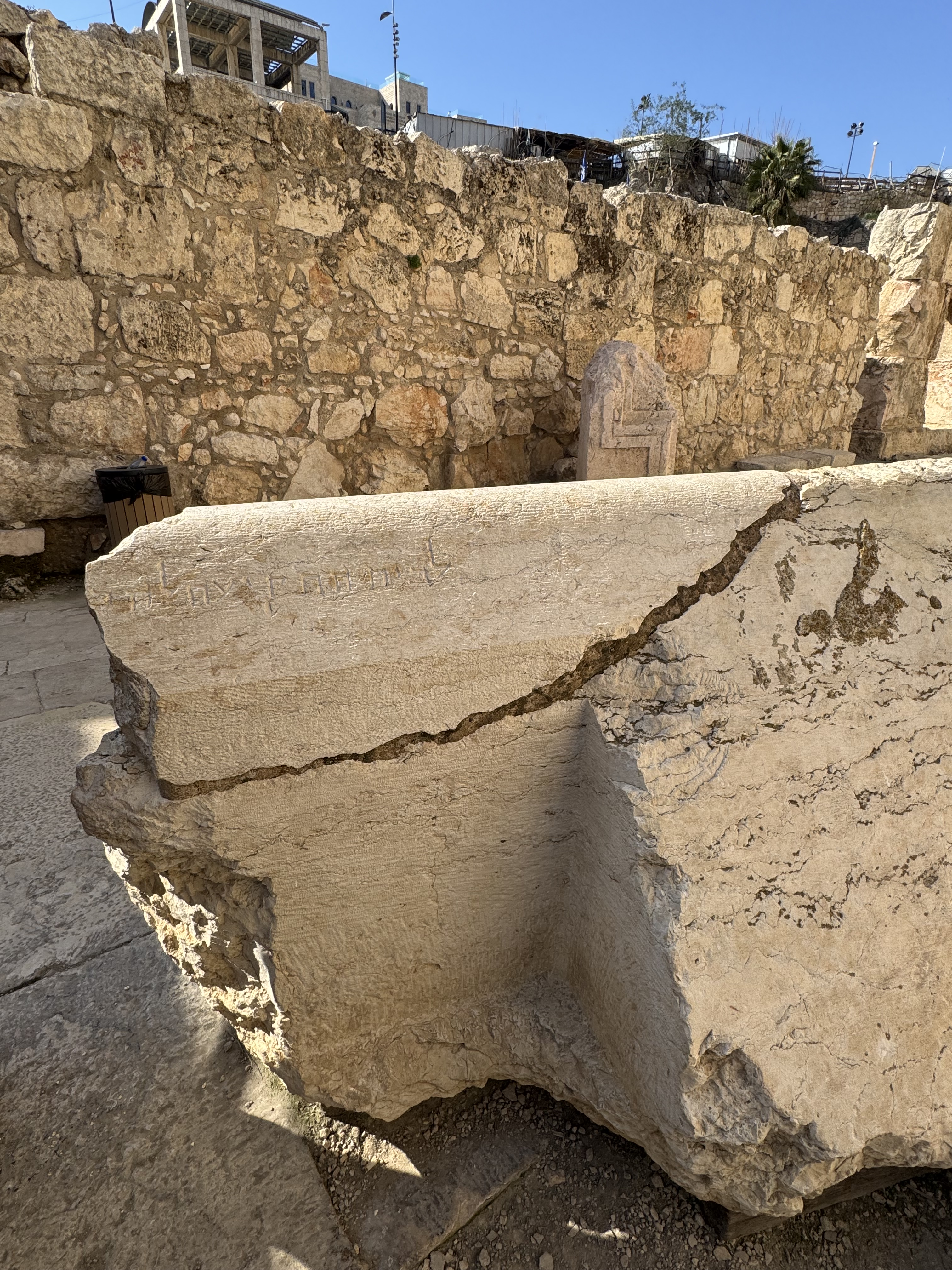
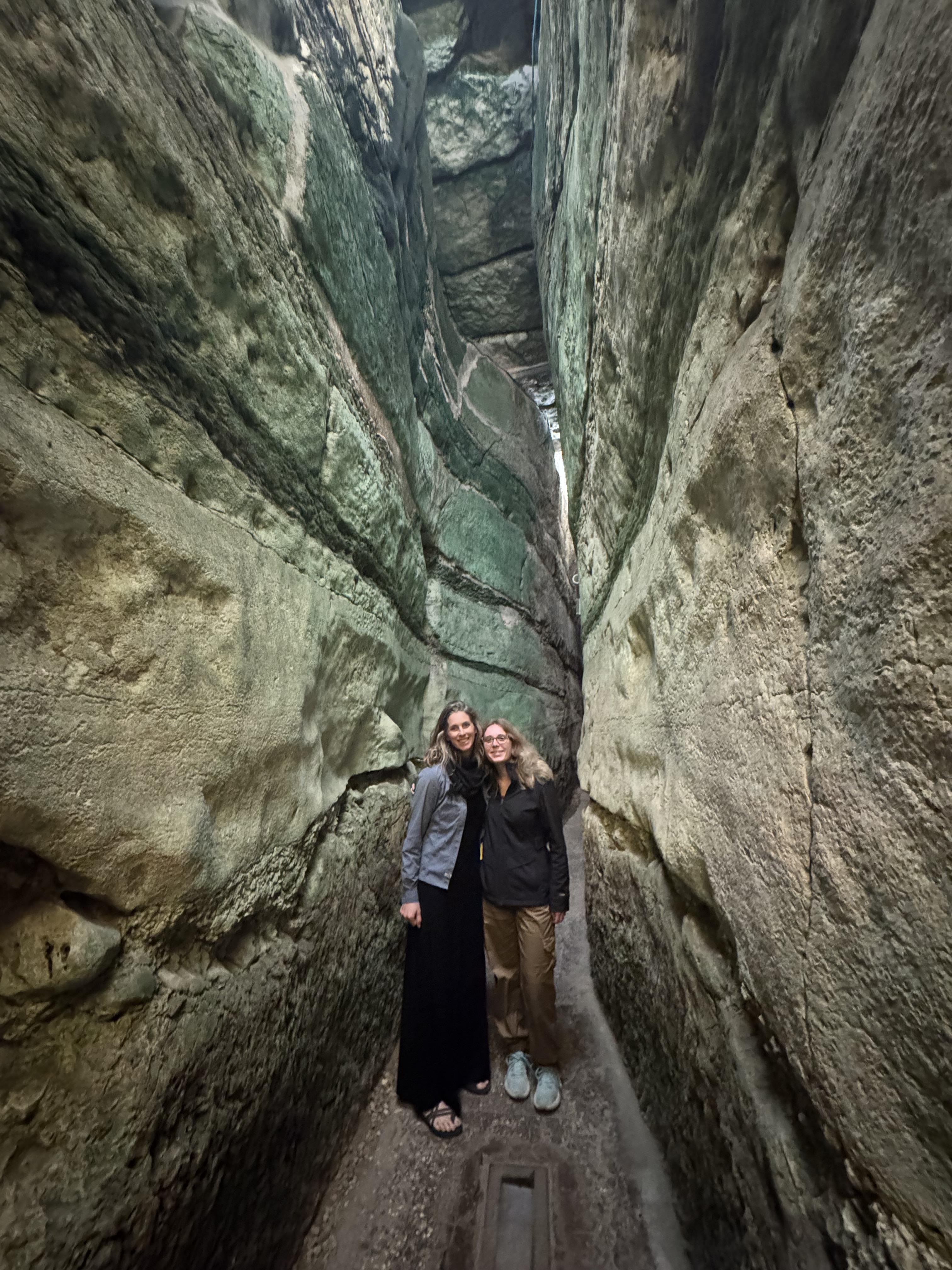
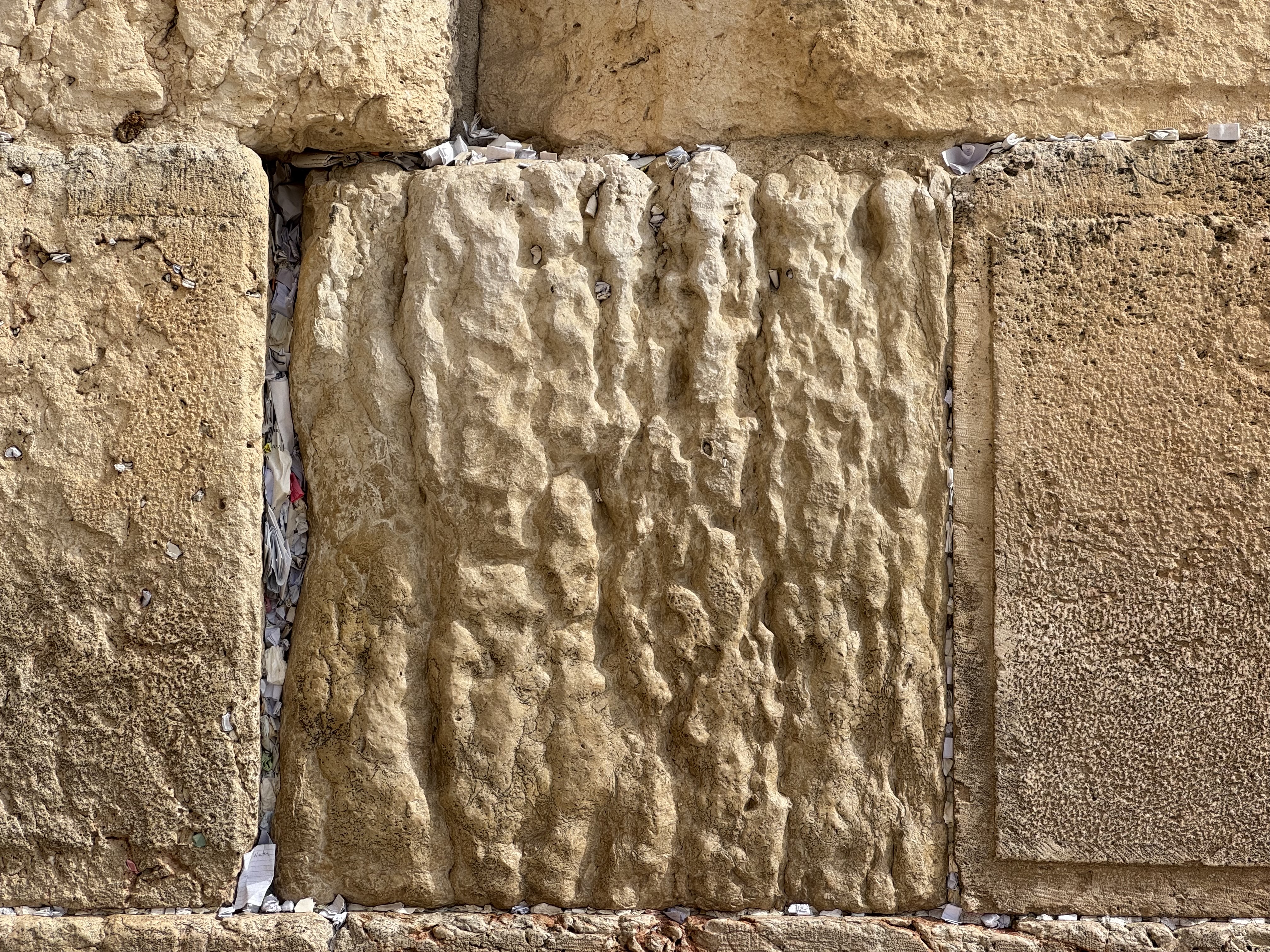
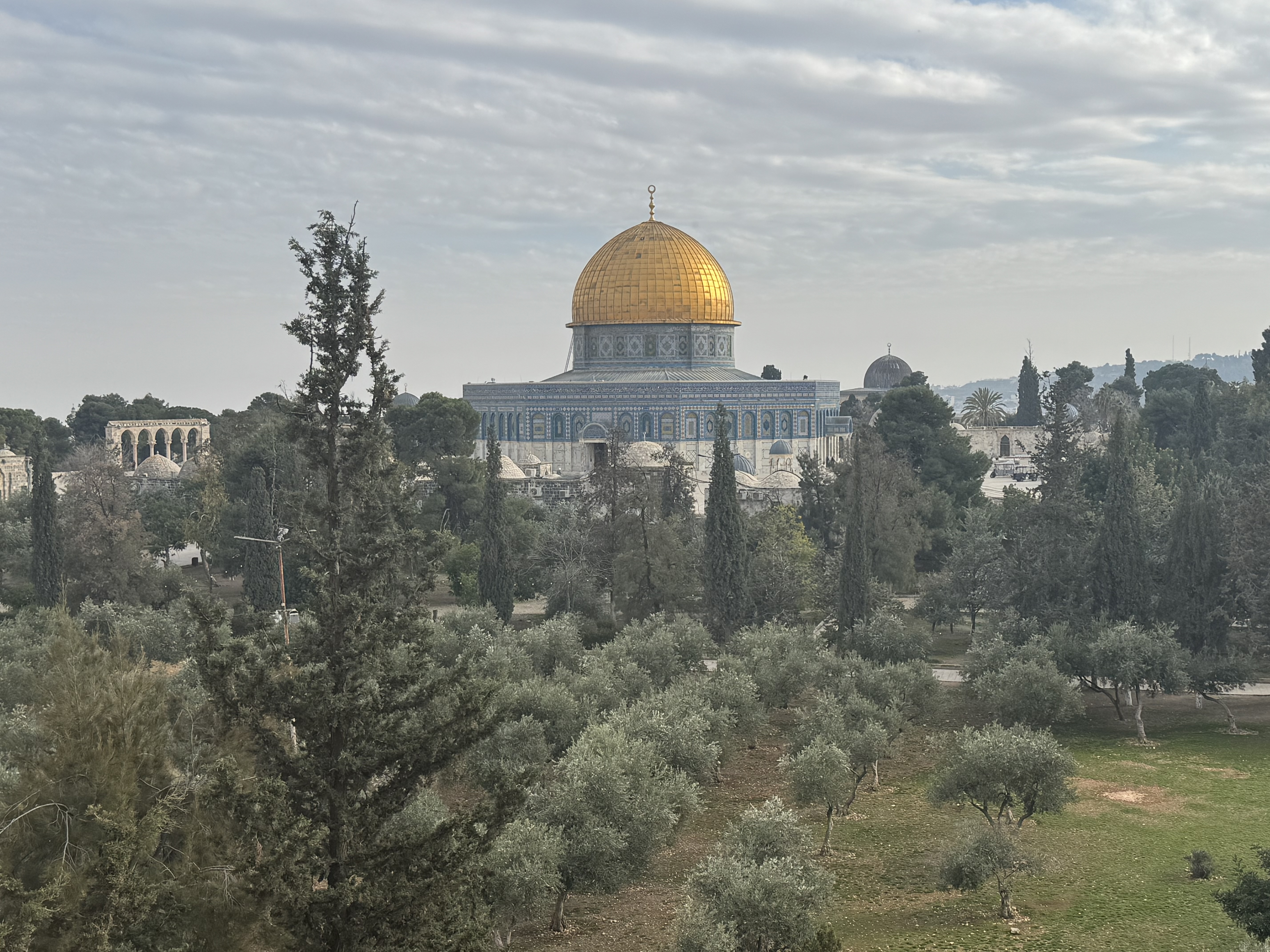
Today was our first full day in Jerusalem and we pretty much covered the entire Old Jerusalem. It was overwhelming but perhaps one of the best days of my life. Our tour guide was an Atheist which I actually quite enjoyed hearing his take on things (that might be a future post). So much of the Jerusalem experience sounds like, “they think this may have been,” or “according to tradition.” I guess that is expected but of course it left me longing to want to stand where Jesus stood for certain. That may be impossible seeing that things have been “excavated” several times over the last 2000 years, and they have continued to build over the last structures raising the “mount” about 40 feet from what it was during the time of Christ. I think there is good evidence for the trial location being at about the same elevation thanks to recent archeology and perhaps the crucifixion site at Golgotha which is covered by a church but shows the mountain top. The temple dome is also covered and completely inaccessible to Christians as the Islamic Mosque covers it. But the location that came to life for me was the Sheep’s gate.
THE ARCHEOLOGY AND LINGUISTICS
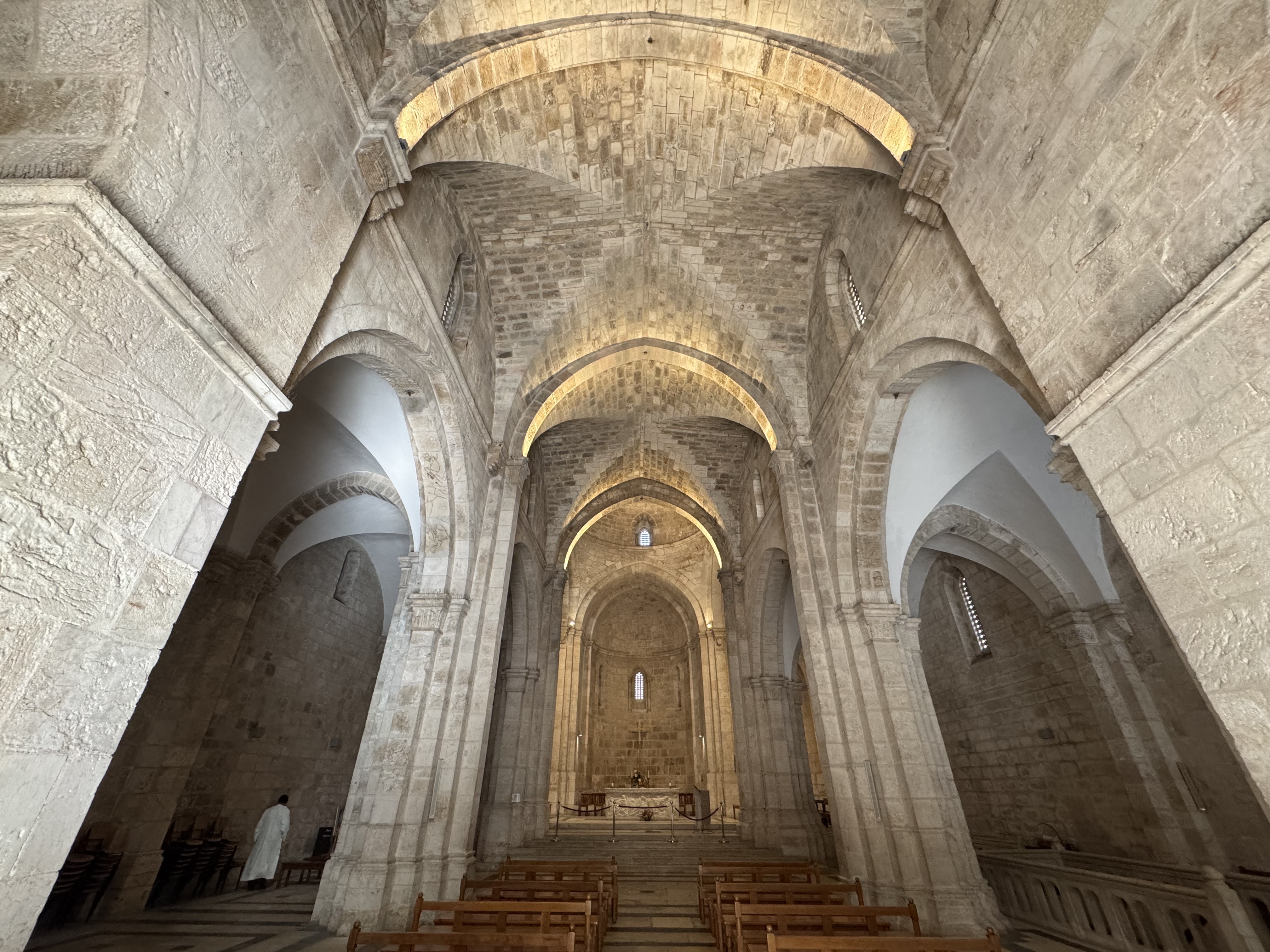
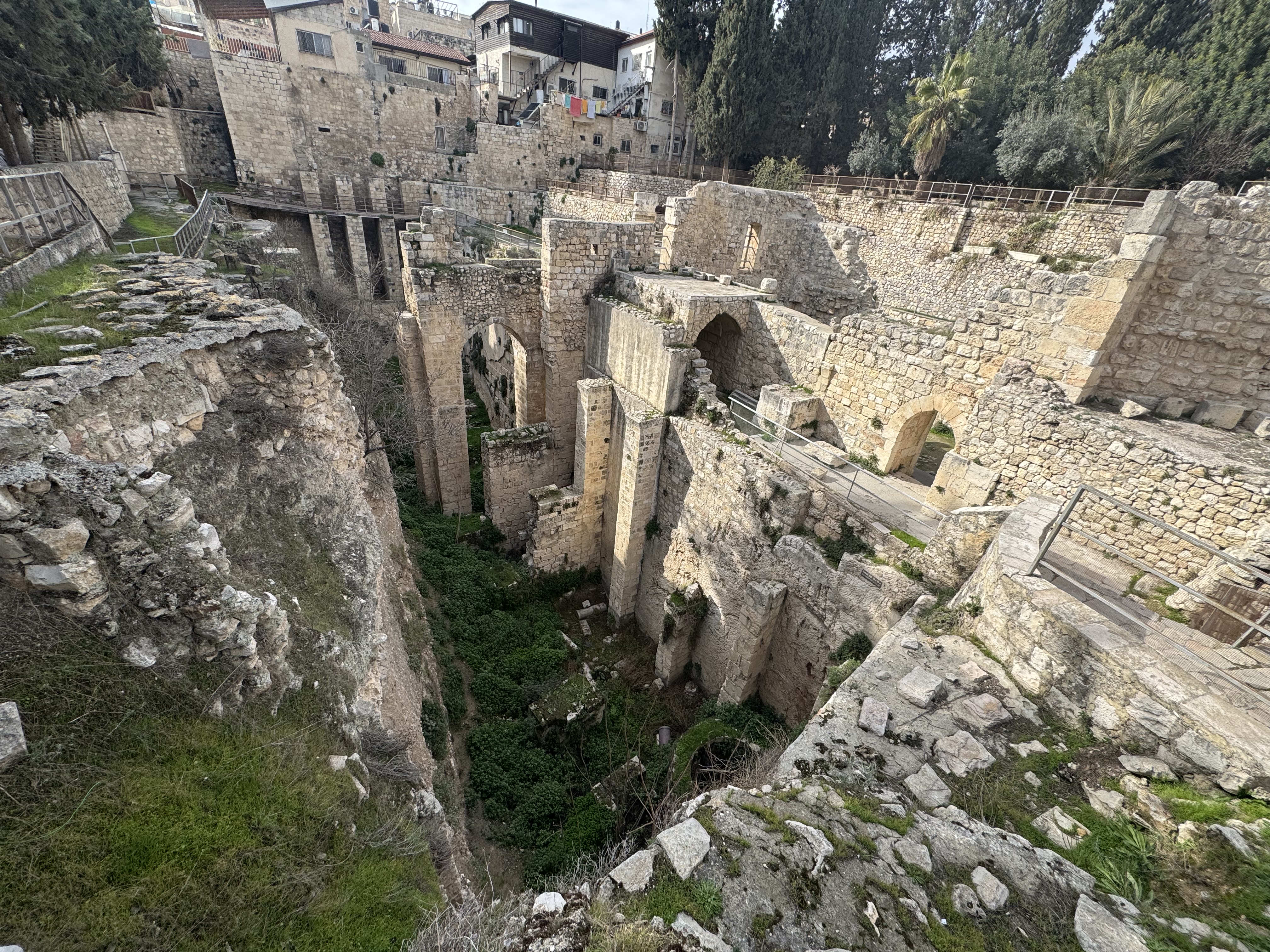
In John 5 we find Jesus, the great physician, engaged with a man who is physically unwell. The Pool of Bethesda is referred to in John 5:2 when Jesus heals a paralyzed man at a pool of water in Jerusalem, described as being near the Sheep Gate and surrounded by five covered colonnades or porticoes. I saw this today and it came to life. (It is also sometimes referred to as Bethzatha) [1] and is now established in the current Muslim Quarter of the city, near the Church of St. Anne, which was excavated in the late 19th century.
The name of the pool in Hebrew is Beth hesda (בית חסד/חסדא) which is a bit ambiguous and could mean “house of mercy”[2] or “house of grace” likely due to the invalids waiting to be healed.[3][4][5]IN Greek it reads Βηθεσδά (Bethesda),[7] appearing in manuscripts of the Gospel of John, include Βηθζαθά[8] (Beth-zatha = בית חדתא[9]) as a derivative of Bezetha, and Bethsaida (not to be confused with Bethsaida, a town in Galilee), although the latter is considered to be a metathetical corruption by Biblical scholars.[10] Franz Delitzsch suggests this is a Mishnaic Hebrew loanword from the Greek estiv/estava, that appropriately referred to stoa (στοά).[11] That would seem to fit here. As I mentioned earlier, when you visit this in person you are looking down into a deep hole. This is because over 2000 years nearly 40 feet of fill has been added to nearly the entire Temple mount. Until the 19th century, there was no conception for the existence of such a pool. The Pool of Bethesda almost took on a mystical or magical persona similar to the fabled fountain of youth. However, Conrad Schick in 1872 was permitted to conduct research on the Temple Mount, which was generally off limits to non-Muslims.[12] He discovered a large tank situated about 100 feet (30 m) north-west of St. Anne’s Church, which he contended was the Pool of Bethesda. Further archaeological excavation in the area, in 1964, uncovered the remains of the Byzantine and Crusader churches, Hadrian’s Temple of Asclepius and Serapis, and the small healing pools of an Asclepeion, the second of the two large pools, and the dam between them.[13] It was discovered that the Byzantine church had been built in the very heart of Hadrian’s temple and contained the healing pools.[14] Essentially, when you see this in person as it was excavated, it comes to life. You see the gentle steps for the inflicted, and the way around them. You see how it was likely off the beaten bath and in the bad part of town.
THE NARRATIVE
“Jesus is making his way through the crowd at the Sheep Gate in Jerusalem. To do so he has to pass by a pool. Today, just like every day, it is surrounded by those who cling to life by a thread of hope. Legend says that this pool sometimes becomes the channel of God’s grace. Legend has it that the first one to enter the water after an angel stirs it up will be cured. So the square is full. There are blind, lame, diseased, dumb, paralytics, amputees. The vestiges of an occupied society. The outcasts, the homeless, the beggars. All there waiting for a chance at new life, to be freed of their special form of imprisonment.”[6]
So, what exactly took place? We aren’t given much of his spiritual state, but he seems to have some faith. Jesus asks a pointed question: “Do you want to get well?” (v 6 NIV). As we take a deeper look at this scene in scripture, we might find Jesus challenging our own situations with that question. The passage points us toward considering the areas in our lives where we are seeking healing from the Lord.
If you have any Bible other than the King James Version you will notice that Verse 4 is missing. Perhaps you have a footnote. I always thought the fact that the NIV has 49 blank verses was very interesting and certainly should challenge your thoughts on inerrancy and what that means. There are over 3000 Greek manuscripts and fragments of the New Testament of varying age. Each one was hand copied, which leaves room for mistakes and even practical decisions of what to do with what the previous copyist has done. John 5:4 is one of the verses in contention, as the addition or subtraction from your translation does carry some interesting implications worth exploring, IMHO it doesn’t change the primary narrative.
The verse or perhaps note in your Bible does help to explain the context of the story and the people involved. They believed in a rather superstitious way that from time to time when the water was troubled (it would rise rapidly and then sink again) that this was caused by an angel who visited the pool, and the first person who got into it when it was so moved would be healed. This is akin to what is found in many parts of the world today. Lourdes, in southern France, has a spa which many believe has healing capacities. The shrine of Guadalupe, in Mexico City, has thousands of crutches stacked along its walls where people have been healed in this special place where they thought they could receive a blessing from God. I spent many summers in Ecuador and there were several pools that took on the same notion. In many historical cases people have been unarguably healed.
Of course, Bethesda, and most of the others mentioned are all intermittent springs, thus explaining the rising and falling water lines, but also may give relevance to people’s notions of healing waters coming from the natural earth. As you can imagine the theories vary. Perhaps most of these healings around the world and throughout history can be explained psychologically. When people believe they are going to be healed, and they are in a place where healings supposedly occur, and they do the expected thing, many of them are “healed.” So much of the human process is psychological and/or spiritual. Thus, the pool at Bethesda had established a reputation as a place where people could be healed. Would you call this then a natural or supernatural occurrence? Yes?! Perhaps? Well, that may depend on your theology!
I used to think that this man at the pool at Bethesda had lain there for 38 years. But the text does not say that; it says he had been ill for 38 years. Scripture likely would have identified him as a “lame” man (or a cripple) had that been the case, but we get more of the description that he is weak, feeble, and unable to stand, probably because of some wasting disease; perhaps what we refer to in modern day language as cancer, tuberculosis, or multiple sclerosis.
The story picks up early in Jesus’ ministry where He is being followed by a crowd at the Sheep Gate in Jerusalem. He approaches the pool where there are blind, lame, diseased, dumb, paralytics, amputees all hoping to be healed. I am sure this was a mosaic of the fallen world. I am sure the stench in the air would have tipped you off to this. Jesus seemed to have a heart for this kind of place and people. There is a certain simplicity that Jesus masters in cutting to the chase. If you have never picked up on this, Jesus always seems to be direct in a sense of what we might think of as “making time or space for something”; but the fact was his expediency commanded the sole work of the father. In other words, that’s the only “time” He kept.
You don’t need to “make time for something” when “all of your time” is given to it.
The question was direct and quite simple, “Do you want to get well?” I am sure some wondered if he was making fun of the man, as the question may have seemed quite rhetorical. If the man is here at the pool, then of course he wants to get well- why else would he be here on the “other side of the tracks”?
What is interesting is that the paralytic doesn’t exactly answer the question that Jesus asks. His response is, “Sir, I can’t get to the pool fast enough. I have no one to help me and before I get there, someone else is always first”. I find this pretty common. We are stuck in our world’s way of thinking; our paradigm isn’t that of the ways or mind of Jesus.
But Jesus isn’t actually asking him if he “wants” or “desires” to be healed, (that would be rude), He is actually asking him if he is willing. There is a difference. I get tired of completely “free” and/or “unmerited” grace language in the American evangelical church. I will get there…
I often read the Biblical texts in Greek and Hebrew and when I get to this part, something jumps out at me that you wouldn’t know from the English translations. The Greek word He uses is “thelo”. This is an unusual choice of words for “willingness”. The Greek word “boulomai” is the more common word for such a question of will or desire. But “thelo” carries a stronger connotation which also likely created a bit of a wordplay in Aramaic. Jesus isn’t asking if he has a desire to be healed, he is asking if he is willing to do what is needed to experience this. It is a bit of a word play because the man responds that he can’t do this alone; and that is true – HE NEEDS JESUS. But he doesn’t actually realize what he “needs.” Does he realize healing comes from Jesus not the pool, does he understand that Jesus is asking if he is willing to enter into what may be an agreement or covenant as a result of the offered healing? It isn’t really a deal or a contract but has some ramifications similar. By modern English-American understanding perhaps we call this “strings attached.” There is an expectation to the action and an expected response to such a gift.
Jesus is asking, “Are you willing to do what it takes to be generated whole?” Often in English we need more than one word to express the singular joined words of the Hebrew and Greek languages. This is why translation is difficult and gets into literal word versus thought for thought arguments. In this case “be” is often short for become and functions the same way in Greek. It is also why I would say the better translation would uses the phrase “be generated.” It is one of the rare Greek words that actually carries over into English knowledge as the transliteration is “genesis” which in English shares the same root notion as the word generated. In other words, do you want to start over to be made whole? This healing experience in many ways is what each of us is confronted with, it is the takeaway from the text, what does complete healing look like for you?
Do you have the desire and are you willing to enter a covenant to be generated completely well. spiritually and physically?
Jesus is asking then if He wants to “commit” to a new life. We say that all the time without thinking of the implications of what commitment means. Again, I am sure he doesn’t understand the question and we have the advantage of reading the entire Biblical narrative backwards or inside out to gain a better understanding. Did you know that this same Greek word carries the connotation linguistically of being “sound or good (TOV)?” (The creation story reminds us of this.) Another way we say this is “to be healthy.” You may be familiar with the term “shalom” which is so important to the balance of life and healthy physical and spiritual living. It embraces the whole person, physical and spiritual. It is far reaching in the kingdom.
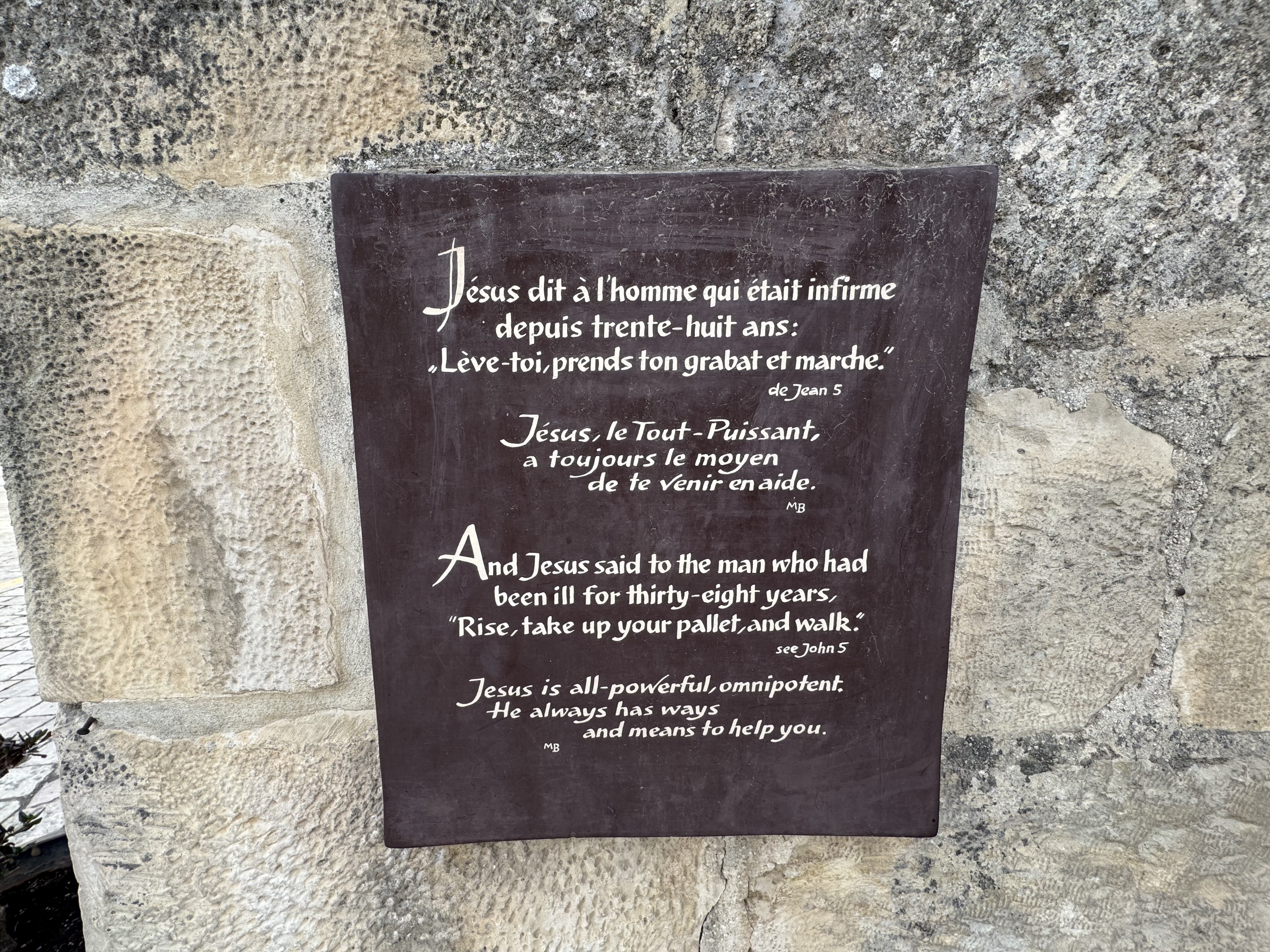
That brings me to the reflective action of this message. Just how ready are we to do whatever is required to begin our own rebirth or regeneration? The man in the story says he needs Jesus and I love the poetic inability. Over and over in the scripture we see that Jesus is looking for a first step and offers for people to simply “Trust Him”. He is asking for first steps of devotion, to follow through right now. He is here, now, in this moment, to help. Take the action of your desire and . . . “Rise up and walk.” Do you see that this is an invitation to all of us?
The reaction on that day would have never been forgotten. The lame man of thirty-eight years stands up and walks. But don’t miss the real miracle- the poetic voice of the story, that without asking, without even knowing or imagining, God visits this victim of the world and asks him to be reimagined for His kingdom. God initiates. God searches. God authors the contact, but our response is important and vital. It is Jesus’ intention to bring this man to wholeness before the paralytic even knows Jesus is there. That is the desire that he has offered and presented to all of us. God cares nothing about your ability. God cares about motivation and action in the midst of inability. Will you complete the covenant gift presented to you?
Do you wish to be generated well?
Maybe the man believed he could be healed, and he wanted to be healed. Maybe this is a story of faith, or maybe it is just a story of what God is offering to anyone, regardless of your faith or even understanding or desire within His kingdom. Perhaps that comes later as a result of enduring devotion and faithfulness. It is absolutely, imperative that you believe Jesus can and does desire to heal you.
Jesus heals in many ways, instantaneously, in a process, and when we see Him face to face. I don’t know what the kingdom sequence or order of why and when is, but I know that He does this, and He will do it completely.
Many of us received initially what was offered (and all of these were miraculous encounters); but perhaps we haven’t completed the circle of the gifted grace. Perhaps we left the covenant on the table. There are “strings attached” that are called devotion, and this devotion is what leads to the preeminent calling of scripture which is to be an “ALL IN” disciple of Jesus. The story wasn’t written with just the expectation to become fans or even simple followers, it was written that we may “become generated” disciples completely whole (and healed) in Jesus. Most American Christians certainly do not fulfill the calling of Biblical discipleship. Yes, it is a free gift of grace, but that gift was given to be regifted or regenerated and show (or display to the world as an image of Jesus in each of us) the way to the new complete life God has intended for you. I feel like many Christians have been quick to take the “free gift” but haven’t followed through with the covenant aspects of the kingdom. We don’t bear the fruit that outwardly proclaims the complete healing inside. Perhaps you’re wondering what you’re missing. I find the answer usually lies in discipleship and devotion. God wants all of us. Thats is what a disciple “works” towards. What does that covenant life look like for you and your family? What does this kind of discipleship look like in your own life and in the lives of those that you are regenerated to impact?
Many of my readers are aware that I would hold to a basic idea that God has partnered with other spiritual beings to manage his creation (and seeks to also partner with humanity) and that when we read the fall of Adam and Eve, we are also most likely reading the beginning of the fall of spiritual beings. The snake figure (Nāḥāš (נחש), Hebrew for “snake” which also later becomes associated with divination) likely would not have been in Eden had it already “fallen.” Eventually it would seem that most of the Spiritual beings that were assigned over the table of nations in Genesis 10 are worshipped as deities and also fall. If you aren’t familiar with this view, I would encourage you to start with this article or this video.
As my friends and I have been navigating Egypt this week, the concepts above have certainly been in my mind. I have been asked more times than I can count if I believe there was alien intervention to build the Pyramids.
Ancient astronauts (or ancient aliens) refers to a pseudoscientific set of beliefs[1] that hold that intelligent extraterrestrial beings (alien astronauts) visited Earth and made contact with humans in antiquity.[1] Proponents of the theory suggest that this contact influenced the development of modern cultures, technologies, religions, and human biology.[3] A common position is that deities from most (if not all) religions are extraterrestrial in origin, and that advanced technologies brought to Earth by ancient astronauts were interpreted as evidence of divine status by early humans.[4]
I have long been open to the perspective that some of these fallen spiritual beings were “high ranking” deities that served on the Divine Council of Yahweh and then fell to become “gods” worshipped by humanity as they “ruled” over them. This would explain the notion that Egyptian pharaohs described themselves as eternal beings and it is clear that they aligned themselves with the celestial (luminaries were known to be spiritual beings in the ancient world.) In Genesis 6 we read of fallen beings intermixing with women of earth and the Nephilim are produced. This reference to them is in Genesis 6:1–4, but the passage is ambiguous and the identity of the Nephilim is disputed.[5] According to Numbers 13:33, ten of the Twelve Spies report the existence of Nephilim in Canaan prior to its conquest by the Israelites.[6] A similar or identical Hebrew term, read as “Nephilim” by some scholars, or as the word “fallen” by others, appears in Ezekiel 32:27 and is also mentioned in the deuterocanonical books of Judith 16:6, Sirach 16:7, Baruch 3:26–28, and Wisdom 14:6.[7] These fallen beings of Genesis 6 would seem to then rise to high places within humanity such as a giant heralded philistine warrior or perhaps even greater esteem.
From the third century BC onwards, references are found in the Enochic literature, the Dead Sea Scrolls,[8] Jubilees, the Testament of Reuben, 2 Baruch, Josephus, and the Book of Jude (compare with 2 Peter 2). For example:1 Enoch 7 “And when the angels, the sons of heaven, beheld them, they became enamoured of them, saying to each other, Come, let us select for ourselves wives from the progeny of men, and let us beget children.” [9] Some Christian apologists, such as Tertullian and especially Lactantius, shared this opinion. Therefore, it is quite plausible to believe that the fallen spiritual beings became rulers of the physical world and possibly used “spiritual abilities or powers” to accomplish their means. To be clear I personally do not see this as a UFO picking up rocks and dropping them like a cosmic crane or tractor beam; but more of a supernatural control of the natural order such as we clearly see the “gods’ of Egypt demonstrating during the Exodus request and test by Moses.
But this still rises several questions. In Exodus 7:10–14, Pharaoh’s magicians are able to turn their staffs into snakes, although their snakes get eaten by Aaron’s. From where do they derive this supernatural power? Are there other gods that have some power, but Yahweh, the true God, has more? If Yahweh is more powerful, why does he allow the lesser gods to perform miracles at all? Is God truly omniscient over them? Or if there is only one God, does Yahweh perform miracles for believers of other gods? You have to ask yourself who was the intended audience of the text and what is the text primarily trying to communicate?
Seeing the museums in person have solidified the notion within my theology that the fallen spiritual beings were at the very least influencing humanity and most likley ruling over them with some supernatural ability. Not all of the Pharaohs were fallen spiritual beings, but they all seemed to esteem to be, and I am alluding that at least some of them were. Here are some signs: oblong heads*, the hieroglyphic of a saucer like objects used as the main preposition of the heiroglyphic language to describe movement (to, over above etc…), and near laser precision cut blocks out of a quarry from all sides. These are a few things (there are many more) that have me seeing that ancient astronauts, or more likely fallen spiritual beings, were interacting with Humanity and as I will propose, the historical timeline fits. The ancient Sumerian myth of Enûma Eliš, inscribed on cuneiform tablets and part of the Library of Ashurbanipal, says humankind was created to serve gods called the “Annunaki“. Hypothesis proponents believe that the Annunaki were aliens who came to Earth to mine gold for their own uses. According to the hypothesis proponents, the Annunaki realized mining gold was taking a toll on their race and then created or used the human race as slaves.[10] I would slightly disagree with those that hold to the “creation view” of it but the story seems to line up with the slavery of the pharaohs. Proponents contend that the evidence for ancient astronauts comes from documentary gaps in historical and archaeological records while citing archaeological artifacts that they believe, contrary to the mainstream explanations, are anachronistic and supposedly beyond the technical capabilities of the people who made them. These are sometimes referred to as “out-of-place artifacts”; and include artwork and legends which believers reinterpret to fit stories of extraterrestrial contact or technologies.[11] As I have been in Egypt researching some of these things I have very much found it to be true. The Egyptian timeline is often a mess. They were really good at recording victories but seem to also be decent at blotting things out of existence! We witnessed a lot of granite that had been etched clean to remove the past! Chuck Missler and Mark Eastman argue that modern UFOs carry the fallen angels, or offspring of fallen angels, and that “Noah’s genealogy was not tarnished by the intrusion of fallen angels. It seems that this adulteration of the human gene pool was a major problem on the planet earth”.[12] They make some interesting statements.
Some would say that Ezekial’s vision was one of UFO type objects. A detailed version of this hypothesis was described by Josef F. Blumrich in his book The Spaceships of Ezekiel (1974).[13] The characteristics of the Ark of the Covenant and the Urim and Thummim have been said to suggest high technology, perhaps from alien origins.[14]
But to be clear, I don’t think that fallen spiritual beings snapped their fingers and pyramids were made. archaeological evidence demonstrates not only the long cultural trajectory of prehistoric Egypt but also the developmental processes the ancient Egyptians underwent.[15] Egyptian tombs began with important leaders of villages being buried in the bedrock and covered with mounds of earth. Eventually, the first pharaohs had tombs covered with single-story, mud-brick, square structures called mastabas. The stepped pyramid developed out of multiple mastabas being stacked on each one in one structure. This led to the construction of pharaoh Djoser’s Step Pyramid at Saqqara, which is known from records to have been built by the ancient Egyptian architect and advisor Imhotep.[16] It was pharaoh Sneferu who had his pyramid transitioned from a stepped to a true pyramid like the well-known pyramids of Giza.[17] A papyrus document like a logbook kept by an official called inspector Merer has also been discovered with records of the construction of the Great Pyramid.[18] I have seen too much this week to think that aliens just did this with a wave of a wand or even their ships!
And then there is the skull thing, among the ancient rulers depicted with elongated skulls are pharaoh Akhenaten and Nefertiti. To be clear this doesn’t necessarily mean there is alien intervention, but it certainly raises an eyebrow. The depiction of Akhenaten and his family with traits like elongated skulls, limbs, underdeveloped torsos, and gynecomastia in Amarna art is hypothesized to be the effect of a familial disease.[19] Marriage between family members, especially siblings, was common in ancient Egyptian royal families, elevating the risk of such disorders.[20] Studies on the remains of the ruling family of 18th Dynasty Egypt have found evidence of deformities and illnesses.[21] Proposed syndromes of Akhenaten include Loeys-Dietz syndrome, Marfan’s syndrome, Frohlich syndrome, and Antley-Bixler syndrome.[22] Akhenaten worshipped the sun disk god Aten and it is suggested that such worship could point to a disease that is alleviated by sunlight.[23] Weighing all of the options, spiritual being or cosmic cowboy intervention per Genesis 6 would seem to not only be viable, but a logical option.
Colloquial concepts of deities can turn into exaggerated extremism, especially when paganism is in the discussion. Corruption of language and corruption of minds seems to turn people into narrow minded symbionts. Egypt was worshiping these “gods” far before Abraham entered Egypt and taught the Egyptians concerning the religion of his God. Abraham was 100 years old when Isaac was born, Gen 21:5, 2066+100=2166. Abraham was born in 2166 BC. Abraham was 75 years old when he was called to leave Haran (Gen 12:4), 2166-75=2091. Abraham was called to leave Haran in 2091 BC. Today I visited the pyramids in/by Djoser which is credited the first Pyramid. He was the first or second king of the 3rd Dynasty (c. 2670–2650 BC) of the Old Kingdom of Egypt (c. 2686 – c. 2125 BC).[25] He is believed to have ruled for 19 years or, if the 19 years were biennial taxation years, 38 years.[26] He reigned long enough to allow the grandiose plan for his pyramid to be realized in his lifetime.[27]
My point is that spiritual beings seem to have influenced ancient Egypt far before Abraham began educating them on Yahweh. The Exodus would then be an establishment (perhaps even spiritual war) of the heavens identifying Yahweh as the greatest “god” as Israel claimed. Notice Yahweh simply says, Have no other gods before me. In Hebrew it would read as just that, the acknowledgment of other “gods” (or fallen spiritual beings.)
When we read the Exodus, we are reading the story of God re-establishing Himself to a lost world as the eternal cosmic KING of the universe and known world.
In early Egyptian writings it makes sense to see congruence or confluence of their concepts of deity. Originally Osiris may have been an Egyptian rendering of “Jehovah” having similar or identical meaning, in which case it would almost necessarily be true that He was present in the Divine council. The Papyrus of Ani and numerous other depictions of the Hall of Judgment mesh exceptionally well with Hebrew and Christian concepts of the Judgment and afterlife. (Interestingly the name of pestilent Egyptian pseudo-deity of the underworld, often called “Set” is lexically indistinguishable from a name pronounced “Satan” in modern tongues.) [23]
It might be an anachronism to say that Israelites believed that Egyptian deities were present in the divine council, but Israelites did teach the Egyptians about the God of Israel. Particularly in regard to Michael Heiser’s recent work, some people have made a point to question whether the Bible taught/represents polytheism. I think this comes down to definitions by which I have never cared for much. I don’t think you’re asking the right question if that is where your mind goes here. You might recall Deuteronomy 4:35, “YHWH is God; there is none else beside him” or Isaiah 44:6–8 which both seem to state Yahweh as the ONLY “god.” But in Exodus 15:11, after the Israelites escape slavery in Egypt, they sing, “Who is like you, O YHWH, among the gods [Elohim]?” At this point they think there are still other “REAL gods.” But what about the other verses that Yahweh seems to be speaking to them such as Deuteronomy 6:14: “Do not follow other gods, the gods of the peoples around you” or Deuteronomy 10:17, which says, “For YHWH your God is the God of gods, and Lord of lords, the great God, mighty and terrible, who does not regard people or take bribes.” In Psalm 95:3, it says, “YHWH is a great God, and a great king above all gods.” And in Exodus 12:12, it says, “On that night I will pass through the land of Egypt and smite every firstborn, both man and beast, and I will execute judgment against all the gods of Egypt. I am YHWH.” These verses seem conclusive that there are other gods which I have alluded to are fallen spiritual beings. SO then if you go back to Deuteronomy 4:35 and possibly others like it, you could interpret them as saying that to Israel God should be the ONLY deity in their life. The Hebrew and contextual position of the texts would also support this reading in every situation I know of.
CONCLUSION:
Did spiritual beings have a hand in ancient Egypt? I think the answer after reading the Bible and viewing ancient Egypt firsthand this week would be, “ABSOLUTELY!” The question is how much, and I will leave that for you to decide.
*A number of ancient cultures, such as the ancient Egyptians and some Native Americans, artificially lengthened the skulls of their children. Some ancient astronaut proponents propose that this was done to emulate extraterrestrial visitors, whom they saw as gods. [19]
WORKS CITED:
Lieb, Michael (1998), “The Psycho-pathology of the Bizarre”, Children of Ezekiel: Aliens, UFOs, the Crisis of Race, and the Advent of End Time, Durham, North Carolina and London: Duke University Press, pp. 51–54, 249–251, doi:10.2307/j.ctv11sn0vx.6, ISBN 978-0-8223-2137-8, OCLC 9354231
Hammer, Olav; Swartz, Karen (2021), “Ancient Aliens”, in Zeller, Ben (ed.), Handbook of UFO Religions, Brill Handbooks on Contemporary Religion, vol. 20, Leiden and Boston: Brill Publishers, pp. 151–177, doi:10.1163/9789004435537_008, ISBN 978-90-04-43437-0, ISSN 1874-6691, S2CID 243018663
May, Andrew (2016), Pseudoscience and Science Fiction (illustrated ed.), Heidelberg: Springer Verlag, p. 133, Bibcode:2017psf..book…..M, ISBN 978-3-319-42605-1
Vetterling-Braggin, Mary (1983), “The Ancient Astronaut Hypothesis: Science or Pseudoscience?”, in Grim, Patrick (ed.), Philosophy of Science and the Occult (1st ed.), Albany, New York: State University of New York Press, pp. 278–288, ISBN 978-0-87395-572-0, archived from the original on March 19, 2024, retrieved July 26, 2021
Encyclopedia Britannica. Retrieved February 2025.
Pentateuch. Jewish Publication Society. 1917.
Hendel, Ronald S. (1987). “Of demigods and the deluge: Toward an interpretation of Genesis 6:1–4”. Journal of Biblical Literature. 106 (1): 22. doi:10.2307/3260551. JSTOR 3260551.
Genesis Apocryphon. Damascus Document. 4Q180.
Kosior, Wojciech (2010). “Synowie bogów i córki człowieka. Kosmiczny ‘mezalians’ i jego efekty w Księdze Rodzaju 6:1–6” [The cosmic mis-alliance and its effects in Genesis 6:1–6]. Ex Nihilo: Periodyk Młodych Religioznawców (in Polish). 1 (3): 73–74.”English translation of “The cosmic mis-alliance and its effects in Genesis 6:1–6″”. Translated by Kalinowski, Daniel. 30 May 2011.
Mark, Joshua J. (May 4, 2018), “Enuma Elish – The Babylonian Epic of Creation – Full Text”, World History Encyclopedia
O’Hehir, Andrew (August 31, 2005), “Archaeology from the dark side”, Salon
Ancient Aliens, Series 2 Episode 7: Angels and Aliens
Josef F. Blumrich: The Spaceships of Ezekiel, Corgi Books, 1974.
AncientDimensions Mysteries: De-Coded: The Ark Of The Covenant, Farshores.org
Feder 2020: p. 226
Feder 2020: pp. 227–228
Feder 2020: p. 229
Tallet and Marouard 2014: pp. 8–10
Vesco, Renato; Childress, David Hatcher (1994), Man-made UFOs 1944–1994 : 50 years of suppression (1st ed.), Stelle, IL: AUP Publishers Network, ISBN 0932813232, OCLC 32056133
Retief and Cilliers 2011
Eshraghian and Loeys 2012: p. 661
Habicht and Henneberg 2015
Card 2018: p. 80
Wainwright, Gerald Averay (1938). The Sky-religion in Egypt: Its Antiquity and Effects. CUP Archive.
Shaw, Ian, ed. (2000). The Oxford History of Ancient Egypt. Oxford University Press. p. 480. ISBN 0-19-815034-2.
George Hart, Pharaohs, and Pyramids, A Guide Through Old Kingdom Egypt (London: The Herbert Press, 1991), 57–68.
Kathryn A. Bard, An Introduction to the Archaeology of Ancient Egypt (Oxford: Blackwell Publishing Ltd, 2008), 128–133.
“Unless you can enter deeply into the mystery of the Incarnation, I’m afraid your Christianity will remain shallow, uninspiring and largely legalistic. You will essentially think that Christianity is about rules and rewards and where you go when you die. And in an increasingly secularized and pluralistic culture not too many people are interested in a legalistic afterlife religion. The best hope I know for presenting the gospel in a compelling way to a 21st century audience is to begin with….the beginning: The Incarnation. The breath-taking mystery of God joining us in our humanity.” [1]
Greg Boyd, has put it this way, “There is no denying that the Incarnation is paradoxical. It is hard, if not impossible, to conceive how a person could be, at one and the same time fully God and fully human. I don’t think this should surprise us too much, however. After all, we confront similar paradoxes in science as well as in our everyday life. For example, as I’m sure most of you have heard that physicists tell us that light has the property of waves in some circumstances and of particles in other circumstances, yet we have no way of understanding how this is possible. Even the nature of time and space is paradoxical if you think about it. We can’t conceive of time having a beginning, but neither can we conceive of it without a beginning. So too, we can’t conceive of space having an end, but we also can’t conceive of it not having an end. If things as basic to our experience as the nature of light, time and space are paradoxical, I don’t think we should find it too surprising that things surrounding God are mysterious.”
Paul declared that Jesus was nothing less than the very embodiment of all of God. This distinction of “all of God” is important for us to understand what it means for us to see Jesus and God rightly. Battling proto-gnostic teachers who were apparently presenting Christ alongside other manifestations of God, Paul declares “in Christ all the fullness of the Deity lives in bodily form” (Col. 2:9; cf. 1:19). His statement could hardly have been more emphatic:
“All” (pan)—not some
“of the fullness” (plērōma)—not a part or an aspect
“of the Deity” (theotēs)—not a lesser divine being. [2]
As F.F. Bruce notes (regarding 1:19), Paul is asserting that, “all the attributes and activities of God—his spirit, word, wisdom and glory—are disclosed in [Christ].”[3]
In other words, the fullness of God is revealed or embodied in Jesus. Jesus is the complete revelation of God in Word. Graeme Goldsworthy puts it this way, if “Jesus is the one mediator between God and man,” then Jesus himself must be “the hermeneutic principle for every word from God.”[4] It is also paramount to recognize that Christ is the “head” of the cosmos by which all reconciliation will come (Eph. 1:10; Col 1:19-20).
The Temple and YHWH’s return to Zion are the keys to gospel Christology. Focus on a young Jewish prophet telling a story about YHWH returning to Zion as judge and redeemer and then embodying it by riding into the city in tears, by symbolizing the Temple’s destruction, and by celebrating the final Exodus. He would be the pillar of cloud for the people of the new Exodus. He would embody in himself the returning and redeeming action of the covenant God. [5] Wright is suggesting, and I would agree that we are to read the Gospels as the Story of God’s returning to Israel, to Zion, to the Temple and Jesus is that presence of God.
Regardless of your view of the atonement, such as Substitution, Satisfaction or Christus Victor; in all of them, Christ must be human in order for the sacrifice of the cross to be efficacious, for human sins to be “removed”, “cleansed”, “purified”, “covered”, and/or “conquered” (again depending on your atonement theology). This soteriological emphasis then gives way to the incarnation of the Son of God becoming a man so that he could save us from our sins. Therefore, the incarnation serves as a fulfilment of the love of God manifested and revealed in completeness as Jesus to be present and living amidst humanity, to “walk in the garden” with us.
The pervasive New Testament theme of union with Christ is by the Spirit. We actually become united to Christ the Lord by the Spirit’s power.
Michael F. Bird shares this, “What we should take away is that in the unfolding story of the New Testament, the pre-incarnate Son who divested himself of divine glory in his incarnation is now fully invested by the Father with divine authority over every realm and every creature. What the Lord God of Israel does in creation and redemption is now, in some way, done through the lordship of Jesus Christ. When Jesus is named as “Lord” it is usually in the context of affirming that he carries the mantle of the Father’s authority and that he is the Father’s agent for rescuing Israel and putting the world to rights. Confession of Jesus as Lord was not a matter of mere assent or academic affirmation. It was a life and death issue. It meant standing up to the Caesar’s of the world who usurped for themselves the praise and power that rightly belonged to God. As Christians today, our highest vocation is to live our lives under the aegis of Jesus’ lordship and to make it clear to all that “this Jesus,” whom men and women reject, is Lord of all. What is more, the Lord Jesus will bring justice to our sin cursed earth and then flood the world with the shalom of heaven.” [6]
Before Christ passes, he shares with the remnant, his faithful disciples that he wants them to continue this oath of allegiance to a coming kingdom and that he will rule as the Lord of all regathering the nations to Him. And when he dies, no one can understand what has happened. We still struggle with this today. We don’t know the full work of the cross; we don’t need to. We know that it was the power to save. The veil separating humankind from God was torn and the cord fell once and for all. The blood of the cross would run both ways. The plan to enter into a holy covenant with God would be not only restored but made perfect. The new covenant was cut. The plan of redemption for all humankind fulfilled. Nothing more than obedient faith to walk with God would be asked for. This commitment would encompass all of life, the heart, mind, and soul. [7]
[1] brianzahnd.com/2008/12/son-of-adam/ [2] The Incarnation: Paradox & reknew.org/2017/01/jesus-center-scripture/ [3] F. F. Bruce, The Epistles to the Colossians, Philemon and to the Ephesians, NICNT (Grand Rapids: Eermans, 1984), 207. [4] Gospel-Centered Hermeneutics, 252, cf. 62. [5] N.T. Wright, The Historical Jesus and Christian Theology, Sewanee Theological Review 39, 1996. [6] Reflections on Jesus as Lord, June 24, 2014 by Michael F. Bird [7] Dr. Will Ryan, This is the Way of Covenant Discipleship, Crosslink Publishing 2021 Pgs. 82-83
What is the gospel? Most people answering this would go right into soteriology and likely give you some step plan for salvation, the spiritual laws, the romans road or some other systematic cleverly devised way of super simplifying the message of Jesus. For nearly the last 2000 years this wasn’t the way people thought of the gospel. In the Bible we read stories of people considering “conversion” into the way of Jesus and it never comes off as some checklist. These plans are almost always laced with some kind of Penal Substitutionary theory of atonement and feel very bait and switch. If that was the intention of the text, wouldn’t one of the authors simply have given it to us? But we don’t get that. In fact, we don’t get anything in history close to this until perhaps the reformation with Luther and Calvin. But they wouldn’t be considered evangelists by today’s standards. It isn’t until many years after that when Moody, Billy Sunday, Charles Finney, Bill Bright, and Billy Graham that we really get the church wide view pushing decisions to follow Jesus and altar calls of momentary decision. If we go back to the pages of the Bible what we find is quite different. We see mind wrenching decisions of people determining whether they want to change their entire life to follow the way of Jesus. This is followed by being baptized into this way of life and then likely joining this “ALL IN” community to continue their immersion into discipleship. Jesus literally used the 12 as an example to step away from life as you know it and enter into a life of total commitment. This kind of a decision was intended to be pondered and your old life to be exchanged for a new one should you take the dip.
The Greek word εὐαγγέλιον originally meant a reward given to the messenger for good news (εὔ = “good”, ἀνγέλλω = “I bring a message”; the word “angel or messenger” comes from the same root) and later “good news” itself. The Bible records that Jesus sent out his disciples to evangelize by visiting people’s homes in pairs of two believers (cf. Luke 10:1–12).[1] In the same text, Jesus mentioned that few people were willing to evangelize, despite there being many people who would be receptive to his Gospel message.[2] In case you ever wondered this is why Mormons go door to door.
In 2017 Salvation by Allegiance Alone: Rethinking Faith, Works, and the Gospel of Jesus the King was released by Matthew W. Bates. Anytime something has “alone” in the title I am weary, but there was a lot of good in this book, Jesus is the anointed King of all creation, elevated to that position by God, evidenced by the resurrection. As King, he has expectations for those who follow him. As the verse in John 14 clearly demonstrates, commandments and/or devotion is central to these expectations. Allegiance entails obligatory obedience. I think Torah is important here and even though bates uses the word commandments I would take that more into devotion. He goes on to define the gospel by these points:
a reiteration of his eight-point summary of the gospel, totally Trinitarian which is ok I guess…
a statement that the Church needs to “stop asking others to invite Jesus into their hearts and start asking them to swear allegiance to Jesus the King”[3] Yep!
a claim that “it is dreadfully wrongheaded to suggest that the gospel is best (or even adequately) proclaimed by actions unencumbered by words” . . . “the true gospel is not reducible to Christian activities.”[4] Totally Agree!
a suggestion that the “Christian metanarrative” need only include the creation, the fall, the election of Israel, the gospel, the church and the future renewal [5] This one I see a bit differently
a demand for discipleship: “The invitation to begin the journey of salvation can never be anything less than a call to discipleship, for nothing less will result in final salvation.”[6] YES!!! YES!!!
a suggestion that saying the creeds (particularly the Apostle’s Creed) is the equivalent of saying the eight-points of the Trinitarian gospel as he outlines it. I can argue this one either way.
Where I mainly agree is on allegiance. In the first century you were allegiant to one and had no other masters. If you were loyal to Caesar there couldn’t be another. In my book, this is the way of covenant discipleship I devote an entire chapter to a better way of theologically framing the gospel. I will share some of that book at the bottom of this article. If you haven’t read it, I suggest starting there. My next suggestion would be The King Jesus Gospel: The Original Good released in 2016 by Scot McKnight (Author), N.T. Wright and Dallas Willard (Foreword).
Frank Viola also has a great handle on this. The New Testament calls Jesus an insurgent. He was an enemy of the State, accused of treason.
“They are all defying Caesar’s decrees, saying that there is another king, one called Jesus.”
The Insurgence, then, is the recovery of the titanic, earth-shaking, subversive gospel of the kingdom that got Jesus, John the Baptist, and the apostles in hot water. It’s a spiritual revolution against the world system that Jesus, John, and Paul speak against, and an utter and total allegiance to Jesus Christ and His alternative civilization called “the kingdom of God.”
But I still go down deeper trails… the gospel is combined in every word of the New Testament. The gospel isn’t a “plan” as much as it is a Person.
“And Philip opened his mouth, and beginning from this Scripture he announced Jesus as the gospel to him (Acts 8:35).”
The gospel of God is “concerning His Son (Rom. 1:3).” It is the all-inclusive unveiling of God’s full counsel concerning His goodness, His will, His purpose, and His kingdom.
“The gospel is the work of God to restore humans to union with God and communion with others, in the context of a community, for the good of others and the world.”
– Scot McKnight, Embracing Grace
So then, what is the Gospel? This is pretty basic to Christianity, yet we have made it out to be so confusing. If we can’t answer this as Christians then what are we doing? Many of us understand part of the gospel, or understand part of the gospel to be the complete gospel. The Bible literally calls the gospel the “good news” and the word for that is euengelion. If you have never done a simple word study in the Greek, it is worth the investment to start here. This word is introduced at the announcement of Christ’s birth and carries forward to continue to be our calling as Christians. The word originally signifies the idea of good tidings, but as we work our way through the scripture, ironically what we refer to as “the gospels” or the books that tell the story of Jesus; we find that the word begins to take on a similar yet different meaning. We read passage like Mark 1:14:15, ‘The time has been fulfilled, and the kingdom of God has drawn near; repent and believe in the gospel’. Has the meaning of the word changed, stayed the same, or taken on a broader meaning?
What about Luke 4:18-19“The Spirit of the Lord is upon me, because he has anointedme to proclaim good newsto the poor. He has sent meto proclaim releaseto the captivesand the regaining of sightto the blind, to set freethose who are oppressed, to proclaim the yearof the Lord’s favor.”
The answer is in the covenants and the context of the entire lens of the Bible. When I say you can’t clearly understand the message of the Bible without understanding the covenant thinking, this is what I mean. Many have failed to see the gospel in the Old Testament and that is problematic to understanding the complete message of the overall gospel. In Galatians 3:8 we read, that God made a Covenant to Abraham. We usually call the this the Abrahamic covenant, but it is actually more clearly called the covenant of circumcision. Essentially the message from God to Abraham was that all nations would be blessed through his lineage. In the next chapter we are going to walk through this story, but for now let’s simply leave it that many generations went by and failed to live intimately with God. We see the fall in the garden, the flood, the tower of babel, God taking on Israel as His chosen people (or portion of all the world) and eventually they fail him too and he allows them to go into exile and judgment. But he doesn’t lose everyone throughout those years. Some remain faithful and some will return back to Him. The faithful are called the remnant. The Old testament closes with an idea that the Messiah will come to not only deliver the faithful remnant but possibly even the rest. Those that have fallen short (all of us in some way), and lost their allegiance will be given a chance to find their way back into this covenant of intimacy with God; to be let’s say, “adopted” into the kingdom. But as we read, we also find that even the remnant is blemished and (despite ritual yearly cleansing through faithful sacrifice) still will not “make the cut”; so not only is the good news for the unfaithful to return to faithfulness but even for the faithful to now be made complete. The good news is for everyone.
This plan by original design would be the greatest message to the earth; it would be the “good news” that the world needed to receive after the realization of knowledge that they had lost, or given up their right to the kingdom, by refusing God.
To the Jews, God’s chosen people, it meant a return from exile. To the gentiles, it meant a return or reclaiming by God of all people, the covenant of Abraham. To the spiritual beings, it meant that the fallen would be bound and a promise or covenant that ensured victory had been won. To all, it meant a return of the original plan to be in intimate relationship and walk with God in a covenant vocation with Him. We are all Lightbearers that eventually inherit a new Kingdom merged with the Heavenly realms and sacred space on the earth.
That is essentially the good news. We have been given the opportunity to be with God in intimate sacred living once again and all we have to do, is by our free will accept the new covenant that God is offering and live life in covenant with him, our spiritual family and our neighbor. But God isn’t just asking for a momentary decision, he is asking for us to follow Him as he has shown us; to literally give back all that he has offered in “life” and sacred living.
It comes down to the complete plan of the new covenant, eternal living life with God in His sacred kingdom. The story that starts with a sacred partnership in Eden has a plan to return to that way of walking in life with God almighty. A vocation of light, to be one with God almighty.
Rainer, Thom S. (1989). Evangelism in the twenty-first century: the critical issues. H. Shaw Publishers. p. 148. ISBN 978-0-87788-238-1.
Muzorewa, Abel Tendekayi (December 1, 2005). Evangelism That Decolonizes the Soul: Partnership with Christ. Wipf and Stock Publishers. p. 9. ISBN 978-1-59752-445-2.
[1]Matthew Bates, Salvation by Allegiance Alone, Chapter 8.
I want to talk about what is meant by God’s order, but before I do that, I want to guide you through a brief exegetical teaching through the text. When you hear the word order in relation to a biblical sense we have been conditioned to think about creation, law, hierarchy in the church and marriage, and perhaps even church discipline. Although it encompasses those things, I find it unfortunate that we start there, and therefore I feel we might need some deconstruction to get to good.
In the morning, O Lord, You will hear my voice; in the morning I will order my prayer to You and eagerly watch. Psalm 5:3 NASB
As I begin to read this in Hebrew the first thing that I notice in contrast to most English translations is the phrase “My prayer” is not found in the text. It isn’t a bad translation as I get the context leans that way but in Hebrew the verse better reads, “I will order toward you” which emphasizes a slightly different posture. Interesting the word prayer isn’t really there, perhaps a NT implication or even insertion. Prayer in the OT was a bit different than the way we understand it today. It was communal and far less personal (unless God appeared to you in a bush and orally spoke directly to you), after Jesus ascends to the throne and sends the Spirit to dwell in us and intercede, the biblical concept of prayer takes on a different form than what it had been considered over the last 2000 years or more. The way people thought of “prayer” in the OT may or may not be accurate. Are we just reading what they thought prayer was supposed to be perhaps based on what they knew of their former deities? Is this something that they got a bit off track with and Jesus sought to adjust or shed new light on? Perhaps, but perhaps not. Maybe our prayer should take a cue from the OT notions. When we read this verse in Hebrew form, we see that David isn’t talking about ritualistic prayer, or is he? He isn’t necessarily folding his hands and closing his eyes – but he is sort of. He is making a statement that if his life is in alignment with what is of God – TOV (creation order language), then he expects God to acknowledge and “DO THINGS” on his behalf. This may tie into the never-ending OT grappling over whether God was retributive or not, but it certainly had the trajectory of demonstrating the idea of devotion in connection to intimacy with the Lord. This connection over the years will then be attributed to the conjecture of relationship with the father in prayer. Some prayer is communal and some is personal.
Different people interact with God differently and perhaps in different seasons. Some say they don’t hear God and others act like God never stops screaming in their ear. How can the voice of God differ from person to person? Is it based on the posture of the heart, covenant faithfulness, gifting, seasons, understanding, choice, some sort of prejudice, or something completely different that is higher than our understanding? I believe that God is just that dynamic. I don’t know why He communicates differently to people and what it might be based on; I don’t always have the eyes of God. I believe Him to be Sovereign and know significantly more than we do in a much more complex grid. I am convinced that there are many things that influence this covenant relationship at a cosmic level. It is far bigger than simply me, and to think of my relationship with God (the creator of the universe) as doating on my every thought seems like a selfish notion. Does that view minimize a personal relationship or exemplify it?
God’s order is described in everything naturally defined by Yahweh and described generally as what is good (TOV). This is creation, the waters, the counting of the ark, the building of the temple, the pieces of firewood set in order for a sacrificial fire, showbread set out in two rows of six cakes on the gold table (Lev 24:8); seven altars set up by the pagan mantic Balaam (Num 23:4); stalks of flax arranged by Rahab for hiding the spies (Josh 2:6); a table prepared for dining (Ps 23:5; Isa 21:5); words produced for speaking (Job 32:14); a legal case developed for presentation (Job 13:18); etc. In II Sam 23:5 David exults in the covenant granted him by Yahweh, “for he has made with me an everlasting covenant, / ordered (ʿărûkâ) in all things and secure.[1] We see God’s order in many ways, but the common thread that binds seems to be that it is given as a framework for our devotion to Him. This intimate devotion that is often described as reading or memorizing scripture, devotional repetition, standards of practice and living, and so much more are all described as what it means to be defined as SET APART. That we are defined and claimed as part of God’s order not the chaos of the world.
What defines this? Covenant. Covenant is the secure, accessible, and recognizable attribute of everything good that God offers to us. It is the basis of all of our interaction with the LORD. Without covenant we are detached or separated from the creator and his ways. When David chooses every morning to be in order, he is making a statement about the balance of life and the posture of the heart. The Hebrew term בְּרִית bĕriyth for “covenant” is from a root with the sense of “cutting”, because pacts or covenants were made by passing between cut pieces of flesh of an animal sacrifice.[2] It meant something deep.
The New Covenant is a biblical interpretation originally derived from a phrase in the Book of Jeremiah and often thought of as an eschatological world to come related to the biblical concept of the Kingdom of God. Generally, Christians believe that the New Covenant was instituted at the Last Supper as part of the Eucharist, which in the Gospel of John includes the New Commandment.[3] A connection between the Blood of Christ and the New Covenant is portrayed with the saying: “this cup that is poured out for you is the new covenant in my blood”. Jesus is therefore the mediator of this New Covenant, and that his blood, shed is the required blood of the covenant. This is true looking back in both testaments and can be seen in all of the biblical covenants of the bible.
In the Christian context, this New Covenant is associated with the word ‘testament‘ in the sense of a ‘will left after the death of a person (Latin testamentum),[4] the original Greek word used in Scripture being diatheke (διαθήκη) which in the Greek context meant ‘will (left after death)’ but is also a word play having a dual meaning of ‘covenant, alliance’.[5] This notion implies a reinterpreted view of the Old Testament covenant as possessing characteristics of a ‘will left after death’ placing the old covenant, brit (בְּרִית) into a new application of understanding as revealed by the death, resurrection, ascension, and throning of CHRIST THE KING, JESUS. All things will forever connect at the covenants and be defined by the atoning accomplishments that transform into a covenant of eternity.
Order today might be better understood as a continually evolving algorithm based on the posture of your covenant faithfulness which, as I have described, is defined by many facets of devotion. Some may hear the audible voice of God more clearly while others simply see Him in every image. The revelation of God to us isn’t in a form of hierarchy. One form of transcendence doesn’t trump another. Who are we to judge anyway. But I do know that most of Christianity seems to be off course here. Rather than coming to the LORD as the cosmic wish granting genie in a bottle, let’s get back to biblical roots and think more covenantal and devotional based on the order that God modeled for us.
[1] Harris, R. L., Archer, G. L., Jr., & Waltke, B. K. (Eds.). (1999). Theological Wordbook of the Old Testament (electronic ed., p. 696). Chicago: Moody Press.
[2]Strong’s Concordance (1890).
[3] “Comparison of the two covenants mediated by Moses and the two covenants mediated by Jesus”. 25 September 2022. Archived from the original on 2022-09-28. Retrieved 2023-01-29.
Expedition 44 was founded by Dr. Will Ryan. It represents a way of life wholly devoted to living as a disciple of Jesus. It is made up of a global assembly of believers united to the Kingdom of Jesus. Dr Ryan and Matt Mouzakis co-host a YouTube channel based on Biblical Theology called Expedition 44 that has about 130,000 subscribers worldwide. There are also various small groups, Bible studies, weekend retreats, and conferences associated with Expedition 44.
The notion of the “image” doesn’t refer to a particular spiritual endowment, a secret “property”…The image is a vocation, a calling. It is the call to be an angled mirror, reflecting God’s wise order into the world and reflecting the praises of all creation back to the Creator. That is what it means to be the royal priesthood: looking after God’s world is the royal bit, summing up creation’s praise is the priestly bit.
– N.T. Wright, The Lost World of Adam and Eve (W/ John Walton)
Expedition 44 represents a way of life based on the pursuit of true discipleship. As those bearing the light of Jesus, we are called to both keep and cultivate life for the Lord in our communal body of believers. The Biblical vision for that culture is Christoformity, or Christlikeness. Nurturing Christoformity was at the heart of the Pauline mission. As New Testament priests, we are charged to mediate Christ in everything. Expedition 44 is based on Biblical Theology teachings encouraging a way of life completely devoted to the Lord.
Everything in the expedition 44 life points towards Jesus, but don’t get too wrapped up in this section. You might find it interesting, but it is just meant to explain a more in-depth pursuit of Jesus that might help you to identify what your journey looks like and pray over the journey of other brothers and sisters within the same kingdom calling.
THE MOSAIC MEANING
Expedition 44 was started by me, Dr. Ryan years ago as a bit of a family crest or coat of arms and has developed into so much more. When I was young, I decided I was different than those in the world in that I wanted to dedicate my life to following Jesus. Many have made that profession and like me, had very little idea of what it really meant, particularly at the time they made the confession.
In ancient times people were often communally represented by what they had in common. For God’s people of Israel, it began with spreading blood over a doorpost. Throughout history people have sought to show their allegiance in similar signs. The flag, a crest, a heraldic symbol, a cross, or even something as simple as a mark on the ground showing a common understanding completed by both parties (the idea of the ixoye) expressed the sign of a common spiritual bond. In eastern society you are communally responsible for those with you. It is very different from our western me-istic thinking. This was the mindset of the early church, that together we are one in the kingdom of Christ. The cross was the culmination of this way of thinking in Christ, but the tone was set to begin thinking this way many years before. Today we have mostly lost this kind of communal consideration and without it, much of the original cultural understanding of proclaiming the kingdom of God has been lost.
There are several ways that this style of thought is described in the Bible and throughout history. The writing of Hebrew itself is actually a bit of a pictograph language with each letter describing a visual identity, many of which contain Biblical truths and meanings. Each letter is a symbol and understanding the letters and how they work together gives insight to deeper meanings, themes, metaphors, and visual imagery throughout the Bible. For thousands of years throughout ancient culture we see these images take form. Representations of an image to signify groups of people or tell a story are very common in the ancient eastern world both inside and outside of scripture.
In western thought we understand the term icon a little bit better as something that represents an image that people might put on a pedestal or desire. Sometimes the idea of an icon was more aligned to words that described idolatry. An icon served as an image that represented something deeper that you claimed. It was and still is associated with spirituality. There were several examples of this kind and other types of imagery in the ancient world. Although Expedition 44 and its logo has been treated like an icon over the years it is actually closer to a Biblical mosaic.
Mosaics date back to the 3rd millennium B.C. and were a major part of Mesopotamian culture. They were pictures that represented something significant in life and were made with whatever could be found. Stones, seashells, bone, and other materials were used to decorate walls and floors for thousands of years. Into the Middle Ages, this was a popular way to create motifs and still continues to be an icon of religious imagery in basilicas around the world. Stained glass is a simple example of a mosaic. The word mosaic as you can imagine, has its roots in the Bible. History shows us that Moses through the law, would give the Hebrew people a collection of small images to live by. (This was the law but so much bigger than the law.) Together all of these images made a collective whole. Similar to the progression we see in the New Testament giftings of various members making up the church. We as westerners understand some of the New Testament picture of spiritual gifts and how they work together but have a hard time understanding the mosaic law because naturally we don’t think of these commands as imagery that builds a complete life. The Lord, through Moses, would give his people a collection of descriptions that would describe holy life and together when practiced by everyone would build a picture of complete devotion to the Lord. Groups of people, families, and tribes would regularly build a collection of imagery, usually something very simple that described who they were. They were communally devoted to a way of living that the image represented. Biblical Mosaics are based on Mosaic covenant.
THE SURFACE MEANING
Years ago, I came up with a symbol that would represent an ancient communal kingdom like way of thinking; it is a symbol that resembles a shield with a front and backwards 44. It has taken on a lot of meaning to me and others bearing the logo to be set apart to a more ancient way of life considering the calling of the kingdom on your life, and the lives of those you are in Biblical covenant with.
The backwards 4 represents Christs backwards, or counter cultural (to our world) kingdom. The first should be last. One of my life themes or motif is to live in the backwards or upside down Kingdom that Christ not only taught but lived.
I am going to encourage you to think in a way that resembled ancient Hebrew and early church culture rather than the culture we live today. Our western thinking doesn’t really consider this kind of representation any more, but the Hebraic, more eastern style of conceptual thought will come to life. The number 44 in the expedition 44 logo on a very surface level represents things like a .44 magnum, my favorite hunting pistol caliber. Throughout the years it has been referred to by many in the 4×4 community (which I am really into), it was also my jeep number when I raced, and has other significance within our family but I think you get the idea. Many hunters, competitive shooters, 4×4 enthusiasts and others have found themselves wearing shirts and hats with the symbol aligning themselves with perhaps part of what the 44 represented, yet often they didn’t fully understand the connection or meaning behind the symbol. It was just a cool image that represented something in their life, in many ways it was more of an icon by that description than anything else. It is very “faith like” in this way. Many will come to desire a relationship with God and accept on a very basic level what that means, yet not first understand the depth that comes with such a relationship. Some will even want to claim ownership, yet their life never takes form to truly represent the mosaic thinking behind what the image represents to those that hold it closer.
I would often hand out 44 t-shirts on 4wheeling trips and people would love them. They would plaster stickers on their jeeps and take great pride that they were part of this select die hard group. I own a private shooting range and the symbol has also taken on a similar form with the competitive firearms crowd. It has been donned in the form of patches, branded into wooden handles, team jerseys, and various other things. There are many other pockets of life that the symbol has represented over the years but perhaps the one closest to its true form is in our church culture. From men’s and women’s weekend retreats to theology videos; the Christian crowd has come to see the symbol on a basic level in a way closer to the real significance of its meanings. To them it is a sign of those that are wholly devoted to the Lord.
Many understand a small part of what the symbol might represent but very few end up understanding the entire mindset. Over the years it has carried with it a very in depth, almost secret sacred definition. Let me explain the deeper meanings behind the symbol.
THE ESSENES
I want to introduce you to a sect during the second temple period called the Essenes אִסִּיִים . They were similar to the Pharisees or Sadducees except dedicated to Biblical (more than Rabbinical) truth. Similarly, it seems today that we have gotten away from seeking the truth of the scripture and Christians are often more defined by tradition similar to the way the pharisees or Sadducees may have acted “religiously.” Part od the Expedition 44 culture is to be less “religious” and more scripturally motivated.
The Essenes were a tight community of dedicated believers who devoted themselves to the scripture and actively sought to preserve what they held sacred to life. Josephus shares that they practiced piety, celibacy, the absence of personal property and of money, the belief in communality, and commitment to a strict observance of Sabbath. He further adds that the Essenes ritually immersed in water every morning, ate together after prayer, devoted themselves to charity and benevolence, forbade the expression of anger, studied the books of the elders, preserved secrets, and were very mindful of the names of the angels kept in their sacred writings. (Josephus, The Wars of the Jews)
So rewind 2000 years and we find a group that in obedience to the prophet Isaiah, went to the desert to “prepare the way for the Lord” (Isaiah 40:1-5). Though small in number (ancient sources indicate 4,000), they exerted significant influence on the religious community of their day. Some have even alluded that they may be the converts mentioned in Acts 6:7.
Now, as in any group, things often get generalized. Such as we say the Essenes were basically pacifistic scholarly types, but as we would argue for any group, not all of them followed this description. The Essenes had their issues, and I am not building a case by any means to be just like them. But they did share some observable qualities that Jesus asked of His church that we seem to have lost in our American or Western influenced culture. They went against the grain of their cultural society to live the way they believed the scriptures taught. They didn’t want to be influenced by anything other than the Word of the Lord.
The Essenes are most known for the Dead Sea Scrolls which are commonly believed to have been their library. But most people don’t realize that this was not the main body of the Essenes but a more aggressive offshoot of them. The place in Qumran where the scrolls were found in the ruins seem to have been a fortress, used as a military base for a very long period of time. Some have argued that this doesn’t make since for the Essenes as they were mostly monk type pacifistic group, yet the facts would confirm that this was indeed part of their community.
There is something that sheds light on this with the discovery of the seven scrolls at the first cave in Qumran. Most of the other scrolls, like in cave four were fragments and scholars believe that they were likely fragments when they were placed in the caves, because they were worn out – retired. All written words were sacred according to Jews, so these scrolls were placed in a Genizah. You might think of this as a protected burial place, nearly every synagogue in the world has one. But many of the scrolls besides these are in much better condition and it is largely assumed that the Essenes were the authors of these scrolls and much of the Pseudepigrapha.
There is a scroll here called the war scroll. It is very eschatological in nature describing the great war that Revelation describes as GOG- MaGOG. What’s interesting is this was written before the book of Revelation. You see they thought the Messiah was coming again and the war would be within their lifetime. Whoever wrote the war scroll, was writing in a spoken dialect of Hebrew and they understood Roman warfare and Persian rule; in other words, they were incredibly well prepared and gave their life to readiness for the coming kingdom.
There is a group known as the Essaioi, and Philo’s Therapeutae describes them as pursuing an active life. The War Scroll, or The War of the Sons of Light Against the Sons of Darkness, was different than many of the others, it has a different writing style, even the jar of clay and Asphalt seal was different. The scroll describes a war in two distinct parts, first (the War against the Kittim) described as a battle between the Sons of Light, consisting of the sons of Levi, the sons of Judah, and the sons of Benjamin, and the exiled of the desert, against Edom, Moab, the sons of Ammon, the Amalekites, and Philistia and their allies the Kittim of Asshur (referred to collectively as the army of Belial), and [those who assist them from among the wicked] who “violate the covenant.” The second part of the war (the War of Divisions) is described as the Sons of Light, now the united twelve tribes of Israel, conquering the “nations of vanity.” In the end, all of Darkness is to be destroyed and Light will live in peace for all eternity.
When we make the connection that this scroll was likely written by this particular group of Essenes, we find the terminology that they refer to themselves as the SONS OF LIGHT.
Interestingly there are many verses in the Bible Like Jn 12:36 that make note of SONS OF LIGHT. What is interesting about this regarding Expedition 44 is that I (Dr. Ryan) am wired a little bit more towards writing a war scroll such as the minority group of the Essenes referred to as the Sons of Light and Matt (who co-leads the video series with me) is a pacifist such as the majority of the Essenes; yet together I like to think we continually bring out the best in each other and have a bit of a communal covenant between us in regard to understanding Biblical Theology. Much like the Essenes in their culture, we are the studious remnant who seek to preserve and live out the true intentions of the scriptures.
THE NUMBERS:
Throughout the Bible numbers matter, they are important and sometimes carry Biblical truth. I would advise not getting too hung up non these numbers and the study of them (numerology), but I do believe we can gather value from them in some areas of study.
In the Bible, God’s chosen ones (both Jew and gentile) are attributed to the number 22, which has some ties to the book of Revelations and the day of judgment (which Biblically appears to have more correlation to 70AD then it does to a dispensational idea of end times). It is usually referred to as the number of completeness. But then you get more specific by narrowing it down to those more deeply devoted (I might even say as true disciples); you see that number doubled which is a concept from Isaiah that is applied to those that are within the Lord’s favor and often ask for or are given a double portion, the number 22 doubled is 44. The idea is that we bring God all of who we are and all of what we can offer. In the Old Testament the word Nephesh would best describe all that God has given us as a person. We can only offer 100% of what we have no more. Yet when we give God our complete life, he takes that life and does exceedingly more than what was possible in of itself. He multiplies what is given (at the altar). Throughout the Bible that is what is often implied by a double portion. It would be like saying I want you to give 110%. That’s western culture thinking. We can’t give more than 100%. Biblical thinking says that Christ gave all for us and asks that we do the same. By Grace we offer our complete lives to Him and he continues this reciprocal dance of Grace by taking that life and doing more than we could ever fathom, God’s part is better than ours. Not 110%, not 200%, something more like 70X7. This way of thinking is rooted deep within the Old Testament narrative and is echoed throughout the pages of the New Testament. We often miss it because we read these pages with 20th century eyes. Expedition 44 represents the expedition of life to completely give God your life and ask that in Him, you might do exceedingly more to the glory of the kingdom. Giving all that is humanly possible while God multiplies that offering and answers by what is his double portion in the spiritual kingdom and is innumerable in His eyes.
The numerology of number 44 is efficient, disciplined, and confident. The number also bears with it the idea of spiritual beings guarding or preserving. Interesting how both of these traits also would have described the Essenes and the first priests. The Essenes were priestly, they were scholarly, they were incredibly devoted in their way of life, and were not influenced by the world around them. They were missional to the scriptures and aware of the spiritual climate of their world.
THE SONS OF GOD
When we study the term often used for spiritual beings in the Bible, sons of God (Bənē hāʾĔlōhīm), it often unfortunately carries a negative connotation perhaps based on Genesis 6. However, I would encourage you to take on the understanding that this term in basic form simply represents all spiritual entities initially created by the hand of God. It has no male or female designation. We are told, and most would believe, that eventually 1/3 of all of these beings fell from the heavenly realms to be opposed to God. (I would argue that this number is more controversial than you might think though, so don’t give it too much weight.) Yet when we enter into covenant relationship in the new kingdom we are also described as “Sons of God” (again gender neutral, so some say sons and daughters of God to align with our western thought) which shows that we are recreated directly by the hand of God. That we are adopted into this royal lineage and now considered sons of God.
THE DEEPER (DIRECTIONAL) CALLING
There is a notion (especially within more Orthodox Christianity) that perhaps the way that we live on this earth will have an impact on our rank, jewels, or proximity to God (direction) in heaven or in the recreated heaven and earth. The expedition 44 way of life implies that we desire to make the spiritual investments here as called into Christlike living that could have lasting eschatological affects. But this is not to be confused with some kind of pie in the sky dispensational fantasy, quite the opposite. We believe that we were “saved for” the life work of Christ’s kingdom here and now. This is a journey or expedition that we might be found faithful, humble, and obedient servants here on earth and on to the final destination of the recreated heavens and earths as we take on our new spiritual bodies. Life and salvation are a journey with Christ as the king of the eternal kingdom.
I might be walking on thin ice with some where I am going next, but I assure you it is Biblical thinking. This is going to seem like a bit of a rabbit trail, but it will come together in the end. Throughout the last 2000 years many have sought to understand the complexities of the re-creation of the new heavens and earth. In my last book, “This is the way?!,” I venture into this a little bit more, so I won’t get to far into it here. We aren’t given the full story in the Bible. We don’t have the New Heavens and Earth or recreated being’s manual yet. But we are given a few hints in the story of the Biblical Narrative that is given to us. We know that some of us will rule angels (I Corinthians 6:3). We also are told that every knee will bow. What does that mean? I have always found it interesting that if God desires that all come to Him, and He is omnipotent or able for all to come to Him, then possibly, could He have found a way that all might come to Him? Is that what every knee will bow means eschatologically? Perhaps we all should be hopeful universalists in that sense. As you can imagine this kind of thinking also will influence your thoughts of hell, but as I said, my previous book explored some of this so I will mostly leave it alone here. Personally, I don’t see the framework for Universal reconciliation, but I might say that I am hopeful. Wouldn’t it be great if all of the world for all of time could be reconciled to Jesus?
Now that I have that out of the way, my point it to say that some may serve in different capacities in the final state of the recreated heaven and earth. Perhaps it is possible that some will rule and others will be ruled in the heavenly realm. It is interesting that some view this very similar to the way the Garden of Eden and the first priests Adam and Eve may have been intended. Some see Adam and Eve partnering to rule and reign with God in the high mountain temple garden over the others on the earth. What others you ask? For just a moment consider the fact that we don’t actually know God’s plan for Adam and Eve in the garden, we can only speculate. We actually don’t even know for sure if there were others living on the rest of the earth when Eden existed. I know to most traditional western readers this is starting to sound crazy but consider it as a more scriptural alternative. Consider the Genesis story as being more concerned with teaching theology (God’s relationship with the universe) as opposed to its being concerned with cosmology (how the universe was created).
Today we would call this science and many of us want to read Genesis as a Science book but that is not what it is. That doesn’t mean it is scientifically inaccurate, it just means that God’s goal in giving us this story was not to teach us science or even history for that fact! It’s not a science book and it’s not even really a history book. That is not its intent. It’s God’s love story to us showing the broken plan and the hope that what was lost will be found and given new life in a new kingdom.
This is going to take a second, have you ever read Genesis chapters one through three straight through? You would likely stop for a second and think that it is restating creation, that it tells the story twice. Isn’t it interesting that Genesis one does not mention Adam and Eve? Genesis 1 says God created humanity, male and female He created them. Then Chapter 2 starts to talk about the creation of Adam and Eve. Let me challenge you that chapter 2 “could” be a sequel to chapter 1 which implies there were more people. As we look at the Bible, we see several hints at this, such as Cain finding a wife. Remember when Cain says anybody who finds me will kill me? Who would he have been talking about? His family? Why would they have killed him? It just doesn’t make sense unless there were other people on the earth. And how do you explain Cain building a city? To you have a city you have to have people, likely more than just your family. Or how do you name all the animals in one day? You don’t, it took longer. Also, did you realize that after Genesis chapter 5 Adam and Eve are never mentioned again in the Old Testament?
What about the idea that Adam and Eve were immortal? From dust we are formed & from dust you return (Genesis 1:19). I would suggest that Adam and Eve were always mortal beings, but when they ate from the tree of wisdom and were kicked out of The Garden they lost the remedy for continued life in a relationship walking with God. They were no longer eating the fruits that granted life.
So, if they weren’t the first people then what is the significance of Adam and Eve? You have probably heard it before, but they are the first pictures of priests. Genesis 2:15 says to serve and keep; doesn’t that sound like the Priestly language described in Leviticus? This is why God created us, because he wanted to be together, and if you read your entire Bible, guess how the story ends? We’re united in this togetherness relationship with God to serve and rule over God’s creation in the new Heaven and Earth. In the Old Testament the priest had knowledge and access to God‘s presence. We see this idea carried over throughout the Bible and into the New Testament as the royal priesthood of believers.
Perhaps in the New Heavens and Earth those who come to an allegiant knowledge of Christ and are found faithful to this coming kingdom while on earth are those that rule over the rest. Perhaps there are even more levels, jewels, or distinctions that will set us apart. This fits very well if you’re considering some version of being a hopeful Universal Reconciliation where every knee bowing might meaning access to the heavenly realm eschatologically. Perhaps there are different degrees of what it means to be found faithful. To be honest I don’t know, we don’t have all the cards to the entire kingdom in the narrative that we are given. It is all speculation given on the scripture that we have. As I have mentioned before, I personally do not see the theology for a universal reconciliation view concerning hell, but I am open to the fact that God could do this.
But what I do know is that I want to be considered the faithful, those set apart, those given a deeper calling, the remnant, the martyrs, those that rule, and those that found faithful in the kingdom to become immeasurably more than they brought to the alter. To completely give all of what I have been given and receive the double portion that only God can give by the power of the only King Jesus in an everlasting Kingdom. This is the heart of Expedition 44.
PSALM 144:1
If you look closely at the logo you will find that within the logo lie the numbers 1441. The bar on the left is a 1, the 44 in the middle and the bar on the right is a 1. Psalm 144:1 says “Praise be to the LORD my Rock, who trains my hands for war, my fingers for battle. He is my loving God and my fortress, my stronghold and my deliverer, my shield, in whom I take refuge, who subdues peoples under me.” If you can’t tell, I (Dr. Ryan) came up with this one (Not Matt!) It is often associated with the gun toting group although, that may actually be taking it out of context! The idea of the verse is complete reliance of every day on the Lord. There is a theological belief that David seemed to hold that God was supposed to fight the battles and when men tried, they usually messed things up and got in the way. That is the essence of Psalm 144:1, that David could simply be a humble instrument devoted to the actions of the Lord and not of himself.
THE SHIELD OR CHALICE
The Box with a chevron under it actually means something as well. At first it appears to be a shield, and it is. Some know that shields in ancient warfare weren’t intended for individual battle. They were best used when locked together as a communal force. This is most commonly known from the Roman Legions using the testudo or tortoise formation as a type of shield wall. As you have figured out, the shield in the 44 means we are all in this together. It’s a picture of the body of Christ.
But that’s not all. You might know that Matt and Ryan are Egalitarians. The egalitarian interpretation of Scripture is based on the view that Scripture does not limit women’s (or anyone else’s) roles and contributions in any arena, including the Church. From Eden to our role in the new heavens and earth, God’s ideal is equality. Everything in between is a mess of the earth, sin, and the fallen spiritual beings. The double line at the bottom of the shield also resembles a chalice. The chalice symbolizes communion and Christ’s blood. In Ancient culture the chalice was a symbol of life. As in other cultures there is also an ancient understanding that a chalice represents the significance over the power God gives to create life in the order of his cosmos. Men are predominantly mentioned in the Bible (due to culture) but the chalice is a constant reminder that we men need women (and I might argue are equal in God’s eyes.) Thus, the eternal chalice is the female uterus, where human life begins. That’s why some say ancient chalices were shaped the way they were. It started with the appearance of humans on Earth, and it will continue until the end of time. The chalice shaped V in the 44 logo is a constant reminder that Man and Women together are the recipe that God gives and communally we are all working together as if we were in one accord moving together as one locked shield.
MYSTERIUM TREMENDUM
There are 44 days between Jesus’ crucifixion and his ascension to Heaven.
There were 44 months in Jesus’ ministry
Jesus was crucified over a period of 4 days. In addition, the four gospels are the story of Jesus, his life, and his ultimate mission, as told by Matthew, Luke, Mark and John.
There is a huge significance in the correlation of the number 44 and sonship (& Daughters) in the Bible.
The number of candles used in a Hanukkah celebration is traditionally forty-four
The number 10000 is used 44 times in the Bible.
The word tribulation is used 44 times in the Bible and typically best describes a tough journey or expedition (not the end times!)
Expedition 44 represents a way or walk of life for those who more than anything else, wish to be true disciples of Jesus, fervently devoted to a deeper calling of intimacy in Him.
The Mesha Stele, also known as the Moabite Stone, is one of the oldest artifacts connecting biblical history to the ancient world dating over 2800 years old with the inscription dating at 840 BC. Stelae (plural of stele) are monuments in the form of upright stone slabs or pillars that are often inscribed. The language of the inscription is Moabite, very similar to Hebrew. It uses an alphabetic script almost identical to the Old Hebrew (or Paleo-Hebrew).
You might notice what resembles several “44” inscriptions on this stone and other paleo- Hebrew relics. Some of the imagery behind X44 is to capture the ancient mindset of those devoted to God as indicated by the earliest known images from Ancient Israel.
_______
The “Moabite” language was a different dialect of the common language spoken (and written) in this region that could just as well be called an early form of Hebrew. Several biblical names and events are mentioned on the stele with amazing specificity.
This stele contains several lines of Aramaic referring to an individual who killed Jehoram of Israel, the son of Ahab and king of the house of David. The account can be found in 2 Kings 9:24.
References to biblical history contained in the Mesha Stele inscription include:
“Nicodemus said to Him, “How can a man be born when he is old?”” John 3:4
Nicodemus heard Jesus say that a man must be “born from above” if he is to be a son of God. He asked, “How can I make this happen?” He just wanted the steps but didn’t want the “why.” Sounds like our Christian culture today – Just get in the water, and maybe that’s not all bad! But it’s not about what you can do, it’s about what God will do. In a very eloquent and rhythmic fashion Jesus answers Nicodemus with the words gennēthēnaianōthen. The witty inference is that we must be born from above regenerated by the Spirit. The answer to the real question, why must a man be born from above, is far more important than the how. God knows how. What we need to know is why.
You do not become what you are, but you are what you become.
I studied philosophy first which led me to a better theology. I don’t believe we are simply a product of our environment, nor do I believe in the Calvinist sense that God has predetermined all things and is the grand puppet master.
Our decisions shape us.
Jesus’ answer shares an entire “remez” of theology. I’ll give you the short version. God separated the water and created man in His image within His order. Man fails and falls numerous times, and God does a “reset” with His newly chosen people coming out of Egypt and through the redemptive waters of the red sea, they are “baptized” as a nation and become a “new” people. Those originally created by the direct hand of God were referred to in Genesis as the Bene Ha Elohim. Fast forward to Jesus when we are now “reborn from above”, we take on the same terminology. We are now directly created by the hand of God and are a new royal priesthood set apart as ambassadors for a new kingdom. Jesus Himself was an example – image – foreshadow – archetype of this. As He was born of a virgin, His creation or re-creation to earth in the form of a “second Adam”, was directly by the hand of God. In a similar fashion, all of us now “born from above,” have entered into completely new life with God. The old person is dead.
When Jesus answers Nicodemus He says that we are at a total start over through Him. Nicodemus is a Pharisee and a member of the Sanhedrin who is drawn to hear Jesus’s teachings. As is the case with Lazarus, Nicodemus is not mentioned in the synoptic Gospels and is mentioned only by John. [1] This famous encounter is contextually set before John 3:16, you might consider that. Most Biblical scholars have identified the Nicodemus of the New Testament with a 1st-century historic Nicodemus Ben Gurion, which would have him being a key figure 40 years later in the First Jewish Roman War. [2]
He was a wealthy and popular holy man reputed to later have had miraculous powers, which some would say was a sign that God was with Him. [3] In the account in John we aren’t given the whole picture or all the details. In fact, we seem to get the opposite idea. Jesus tells Nicodemus to leave the world at the beach and he seemingly can’t do that. He comes to Jesus in secret in the night because He is afraid of what His pharisee friends will think if he is aligned with Jesus, yet he says that many of them believe and uses the title Rabbi with Jesus out of honor and respect.
Nicodemus is mentioned in three places in the Gospel of John. This is the first encounter. The second is four chapters later when he reminds his colleagues in the Sanhedrin that the law requires that a person be heard before being judged. He seems to be a friend of Jesus or possibly advocating for Him. The third and final encounter is in John 19 when Nicodemus appears after Jesus’s crucifixion to provide the customary spices for anointing the dead and assists Joseph of Arimathea in preparing the body of Jesus for burial. Some believe this is a sign of conviction. Nicodemus brought a mixture of myrrh and aloes—about 100 Roman pounds (33 kilograms, or 73 lb). Nicodemus must have been a man of means; in his book Jesus of Nazareth: Holy Week, Pope Benedict XVI observes that, “The quantity of the balm is extraordinary and exceeds all normal proportions. This is a royal burial.”[5] If you take the notion that He was the notable Nicodemus Ben Gurion, then it means that over the next 40 years he would lead many to a “born again” notion and eventually be considered a saint within orthodoxy for his actions. But we also may want to question “that notion,” and we likely should.
The decision for Nicodemus wasn’t easy. Brian Zahnd shares, “Undoubtedly, he was raised in a Pharisee household, educated in the Pharisee school of Jewish thought from a child and placed on a course that would inevitably make him what he became. But now Jesus was challenging him to make a choice that would fundamentally alter his self. To make the choice to rethink everything. To start over. To radically change his dominant paradigm; instead of viewing the kingdom of God through the paradigm of the Pharisees, to view the kingdom of God through the new paradigm of Jesus. No easy task.” [6]
Jesus’ words to Nicodemus were life changing. We don’t know if Nicodemus ever “got there.” The orthodox church would say he did, Nicodemus is venerated as a saint in Eastern and Oriental Orthodoxy and in Catholicism. The Eastern Orthodox and Byzantine Catholic Churches commemorate him on the Sunday of the Holy Myrrhbearers, which is celebrated on the Third Sunday of Pascha (i.e., the second Sunday after Easter).[7]But from my perspective, the text nor history gives us the confirmed answer. Jesus’ words were hard. Leave it all at the Beach and start over. Rethink. Everything.
The world and the Christian church (alike) often don’t decipher this story well.
A spiritual re-birth meant a new and/or total spiritual re-learning. A new start. Discipleship. Could he do that? Did he do that the next 40 years? Perhaps. Or perhaps he was still “off” as he might have led thousands to their death in 70AD and completely missed the “WHY” of Jesus. The world (and Christians) often puts those “types” on a pedestal. We nearly “worship” those that are very opposite to the ways and words of Jesus. Maybe he got the fame his heart was postured towards but never could die to himself as Jesus challenged him to do; or maybe He did as His “saint hood” would later venerate. Only God knows.
What about you. The call wasn’t to simply make a decision to get on your knees in tank of water as the lights and lasers dazzle everyone to chalk up another bar of statistics for the year of tallied success. It was to enter total discipleship. The first step is a proclamation of the heart to total faithful allegiance in Jesus by getting in the water, the second step should be towards a changed life of discipleship. I pray the lasers and lights lead that way! That was always the calling of Jesus. Leave it all on the beach.
That is the ONLY commission of Jesus. There was no halfway or halfhearted version of this story. Are you all in? Will the water set you apart?
This article is dedicated to my good friend and disciple Paul Lazzaroni as he is shepherding so many others to walk this journey well. Love you and proud of you, my friend. -Halak
x44 has an old but good video on Nicodemus here:
Driscoll, James F. (1911). “Nicodemus” . In Herbermann, Charles (ed.). Catholic Encyclopedia. Vol. 11. New York: Robert Appleton Company.
Reid, George J. (1907). “Acta Pilati” . In Herbermann, Charles (ed.). Catholic Encyclopedia. Vol. 1. New York: Robert Appleton Company. p. 111.
ee, for instance:
Flusser, David (16 December 2013). “Character Profiles: Gamaliel and Nicodemus”. Jerusalem Perspective.
Burke, Daniel (17 March 2013). “Nicodemus, The Mystery Man of Holy Week”. The Washington Post. Religious News Service. Archived from the original on 14 May 2023.
Holy Greek Orthodox Church of Saint Paraskevi, Saint Barbara, Saint John the Merciful & Our Mother of Consolation. St Albans, Melbourne: Greek Orthodox Archdiocese of Australia. Archived from the original on 20 March 2023.
I grew up in an incredible home. Had one of the best relationships with my parents (particularly my dad) a kid could ever hope for. Was grounded in my faith from an early age and have been humbled by what God has allowed me to be part of for his kingdom.
God has blessed me beyond comprehension with an amazing Godly woman and an incredible family that is wholly devoted to Him
God used my life as part of teams that have planted several great successful churches
God used me to personally shepherd and disciple over 100 people
By the Grace of God, I was used to rebuild a seminary (as the president) to over 400% growth in 2 years and build over 30 new courses with kingdom partners
By the Grace of God, I have founded a YouTube channel with 130,000 subscribers
By the Grace of God, I have written numerous Theology books and hold a Th.D.
Together we built a photography company nominated Wisconsin’s best photographers over 15 times
Together we have seen more than 30 countries
I was able to compete in professional soccer in Europe, adventure races, marathons, various skiing races and competitions, and firearms various disciplines
Whatever I have touched God has prospered. Thank you Yahweh.
I have spent a great deal of my life studying the Bible and as I look back listing all the things above, it seems like vanity; I am tempted to agree with Solomon as he started out Ecclesiastes, “Futility of futilities! All is futility.” Yet in the same breath, I feel I have journeyed well before the LORD. Transparently I could have done much better. There have been bumps, bruises, and hardship at times, but also unending joy. There are stands I made that I wish in hindsight I would have instead turned the other cheek and walked away from; and there were times when I walked away, and I wished I would have been more persistent to stay the course. But regardless of my choices the LORD has given grace and continued to cover me with his providential hand.
The Qohelet writes a dispassionate assessment of human existence, concluding that nothing really matters much over the course of eternity. However, I am not sure I agree with the teacher said to be the wisest of all men. But that is the mystery of and the contranym of Solomon – the Wisest man who lived the “least wisest” life. But maybe that is exactly what we are supposed to read out of the wayward narrative, perhaps the most discouraging book in the Bible.
As Heschel would say, I need something that carries me out of the empirical somnambulist. That something is the Hebrew integration of ritual with faith. I have become a partaker in OUR redemption from exile. Today as I reflect back, I couldn’t be more satisfied with the course I have chosen, yes there were some rough moments and there will continue to be. The exodus began with Abraham, and it won’t end for many generations of faithful followers until the kingdom of God is established on earth. You and I are in that traveling community, the ones who are in the great waiting. But we are standing still, we are in motion, “exodusing,” leaving behind what interferes with the intended journey on a pathway that despite some tribulation culminates with joy. Thank you, Lord, for a beautiful plan.
I was born in 1974. I am 2 here in 1976. My dad was a preacher in Indiana, Iowa, and New Mexico for most of my life as a child. I remember the church memories the most. Hunting for rattle snakes, riding horses, building legos, fishing (my dad was a pro bass fisherman), and drinking from the garden hose with my faithful dog brandy.
This is a few years later in 1980 with my two favorite people that have now been gone for quite some time but are also still with me every day. I sure loved my dad and my grandpa… and there is that dog! At least her rear end! She went everywhere with me.
We moved from South Haven Indiana to Lake Geneva in the late 1980’s for my parents to start the JH at Faith Christian School. I am number 22 (ironically if you know the ontology of 44). I didn’t really like basketball, I was a soccer kid, but it was good for me eventually being part of 2 state championships as the starting point guard all 4 years of high school. All those years of my dad playing 1-1 games with me in the driveway paid off I guess.
I knew God was calling me, so I went to Moody in 1993 where I studied Biblical theology under Dr. John Walton. I played soccer for the Chicago kickers which gave way to the MLS Chicago Fire who I had the privilege of practicing regularly with in their first couple of years as they won the championship. I also was able to play soccer in Wales for Conway United. In 1997 I graduated early and enrolled at the UW to study Curriculum and Instruction (the first of many advanced degrees) and took a job teaching at Faith Christian School with my parents! I also started back 180 while I was there which was a college ministry at Calvary Community Church and began to be mentored by Dr. Howard Matson where I also was shepherded by his good friend Dr. DA Carson.
I bought our first house just before we were married. I transitioned from Calvary to be a part of the team that started Lakeland Community Church and have such fond memories of those early ministry days. After a few years, I switched gears and helped found the River Church. I continued studies at the UW eventually rekindling my relationship with Keith N. Schoville who served as the chairman of the UW CANES department. He was also the president of the Near East Archaeological Society and professor emeritus at the University of Wisconsin–Madison. I became friend with Dr. Michael Heiser and acquaintances with Dr. Tim Mackie (currently of the Bible project) as I pursued a Ph.D.
SANYO DIGITAL CAMERA
In 2001 I met Krista. I was (and continue to be) good friends with the Mielke family and had little Karli ask Krista out for me to our first date! She said yes and we were married a few short months later.
She rocked my world and still does nearly 25 years later. I called my dad on the way home from my first date and told him this is the woman I would marry. We continued to pursue Jesus together and travel the world on missions.
We got a puppy the same year we got married and named her Charlet Moser after an Ice Climbing company. We sent her away to hunting school and visited her on the weekends for 2 months. She became one of the greatest hunters I have ever seen. We would take here to the boundary waters and she refused to get in the canoe and swam 20-30 miles a day next to us.
Lots of great trips to Alaska and many other adventures with great friends in this era. Great skiing memories!
In 2005 we welcomed Ty! The doctors said he wouldn’t make it. He was in the NICU for 6 weeks and was lived to be soooo healthy and full of life. He was a miracle baby. But a few days after he was born, we unexpectantly lost my father. It was the hardest time in our life, Somehow, we managed smiles in this photo taken shortly after when Ty came home to us. Praise God.
In 2008 Will was born! Ty was so happy to have a little brother! But it wasn’t long before Ty’s perfect rows of trains were being destroyed by “baby Destro” as Will became affectionately known as by his big brother.
Skiing has always been a big part of my life. I competed in college in the FIS Freestyle World Cup – Moguls & Aerials as well as the Bud Mogul Tour. I also got to be part of the World Extreme Ski Championships (WESC) in Alaska’s Wasatch Mountains where I met Doug Coombs (now passed) and Glen Plake who I still 4 wheel with occasionally. Krista and I spent nearly every night skiing with Andy and Abbey at the Grand Geneva.
The early years of kids were so fun. Krista and I continued to travel, make great friendships, coach, and be immersed into all kinds of ministry together.
This is the “boys trip” to ALASKA with George, Russ, Sonny, and Ty in 2009 (The trip my dad always wanted to take.)
Kade came to us at the end of 2009 making life oh so sweet! The Ideal Impressions team (as I have been a tent maker in ministry most of my life out of biblical conviction) was growing and ministry at the River was flourishing.
Ahhhhh the trip to Greece!
Reid was born in 2011 completing the family (but also making family photo shoots very challenging!!! (love this little kiss though!) The River was super great, I started competing in off road Rock Crawling events, and life was in full swing!
Reid was in the NICU for many weeks (and was also a miracle baby) and came home completely healthy. Praise Jesus!
Will Went to the Boundary waters in 2012 on his 3 year old trip.
Kade Would go to Moab on his three year old trip in 2013, & I started building hard core Jeeps and lost all my hair that year!
This was a great era in life! So many great family adventures!
2013-2014 images
Reid’s three year old trip to California with my great life friend Troy!
2015 – Grandma turned 90! WOW Also shot the 2nd biggest dear in WI to date, the 61 point buck that year!
In 2016 we lost a legend. My Grandpa was one of the best! I built my first comp buggy that year too. We also started attending Mt Zion Church in 2016.
2017 was a big year in many ways. I finished my Doctoral Degree and started working with Covenant Theological Seminary teaching Ancient Near East Studies. I also started “EXPEDITION 44” as a passion pursuit not knowing what it might turn into. We opened the Range. Krista lost her mom to ALS this year.
2018 – I started the Expedition 44 YouTube Channel this year and hit 10K subscribers in the first year!
2019 Matt came on board to x44 and we hit 50,000 subscribers later that year. My wife and I coached Soccer at Mt Zion
2020-2025 has been unreal. In many ways I don’t think it could be much better. Over these years I became the Head of Theology at Covenant Theological Seminiary and eventually the President. Ideal Impressions and White River Field and Freedom thrived, Expedition 44 jumped to over 130,000 subscribers. I wrote several books including the This is the way Series. I built a lot of off-road project vehicles; we started Range nights and eventually TOV. God has certainly blessed our family. Today I consider where we have been and what God has for the next chapter. The boys won various soccer tournaments including the WI Badger State Games, and Ty went to state in track two years in a row and received a full scholarship to Wisconsin Lutheran college just 3 turns and 36 minutes away!
50 in Hebraic thinking is the year of jubilee — yovel in Hebrew — following seven cycles of seven-year shmita, or sabbatical. To another favored 50! Thank you to my best friends and family. Shalom