Spiritual Beings & Ancient Egypt

Many of my readers are aware that I would hold to a basic idea that God has partnered with other spiritual beings to manage his creation (and seeks to also partner with humanity) and that when we read the fall of Adam and Eve, we are also most likely reading the beginning of the fall of spiritual beings. The snake figure (Nāḥāš (נחש‎), Hebrew for “snake” which also later becomes associated with divination) likely would not have been in Eden had it already “fallen.” Eventually it would seem that most of the Spiritual beings that were assigned over the table of nations in Genesis 10 are worshipped as deities and also fall. If you aren’t familiar with this view, I would encourage you to start with this article or this video.

As my friends and I have been navigating Egypt this week, the concepts above have certainly been in my mind. I have been asked more times than I can count if I believe there was alien intervention to build the Pyramids.

Ancient astronauts (or ancient aliens) refers to a pseudoscientific set of beliefs[1] that hold that intelligent extraterrestrial beings (alien astronauts) visited Earth and made contact with humans in antiquity.[1] Proponents of the theory suggest that this contact influenced the development of modern cultures, technologies, religions, and human biology.[3] A common position is that deities from most (if not all) religions are extraterrestrial in origin, and that advanced technologies brought to Earth by ancient astronauts were interpreted as evidence of divine status by early humans.[4]

I have long been open to the perspective that some of these fallen spiritual beings were “high ranking” deities that served on the Divine Council of Yahweh and then fell to become “gods” worshipped by humanity as they “ruled” over them. This would explain the notion that Egyptian pharaohs described themselves as eternal beings and it is clear that they aligned themselves with the celestial (luminaries were known to be spiritual beings in the ancient world.) In Genesis 6 we read of fallen beings intermixing with women of earth and the Nephilim are produced. This reference to them is in Genesis 6:1–4, but the passage is ambiguous and the identity of the Nephilim is disputed.[5] According to Numbers 13:33, ten of the Twelve Spies report the existence of Nephilim in Canaan prior to its conquest by the Israelites.[6] A similar or identical Hebrew term, read as “Nephilim” by some scholars, or as the word “fallen” by others, appears in Ezekiel 32:27 and is also mentioned in the deuterocanonical books of Judith 16:6, Sirach 16:7, Baruch 3:26–28, and Wisdom 14:6.[7] These fallen beings of Genesis 6 would seem to then rise to high places within humanity such as a giant heralded philistine warrior or perhaps even greater esteem.

From the third century BC onwards, references are found in the Enochic literature, the Dead Sea Scrolls,[8] Jubilees, the Testament of Reuben, 2 Baruch, Josephus, and the Book of Jude (compare with 2 Peter 2). For example:1 Enoch 7 “And when the angels, the sons of heaven, beheld them, they became enamoured of them, saying to each other, Come, let us select for ourselves wives from the progeny of men, and let us beget children.” [9] Some Christian apologists, such as Tertullian and especially Lactantius, shared this opinion. Therefore, it is quite plausible to believe that the fallen spiritual beings became rulers of the physical world and possibly used “spiritual abilities or powers” to accomplish their means. To be clear I personally do not see this as a UFO picking up rocks and dropping them like a cosmic crane or tractor beam; but more of a supernatural control of the natural order such as we clearly see the “gods’ of Egypt demonstrating during the Exodus request and test by Moses.

But this still rises several questions. In Exodus 7:10–14, Pharaoh’s magicians are able to turn their staffs into snakes, although their snakes get eaten by Aaron’s. From where do they derive this supernatural power? Are there other gods that have some power, but Yahweh, the true God, has more? If Yahweh is more powerful, why does he allow the lesser gods to perform miracles at all? Is God truly omniscient over them? Or if there is only one God, does Yahweh perform miracles for believers of other gods? You have to ask yourself who was the intended audience of the text and what is the text primarily trying to communicate?

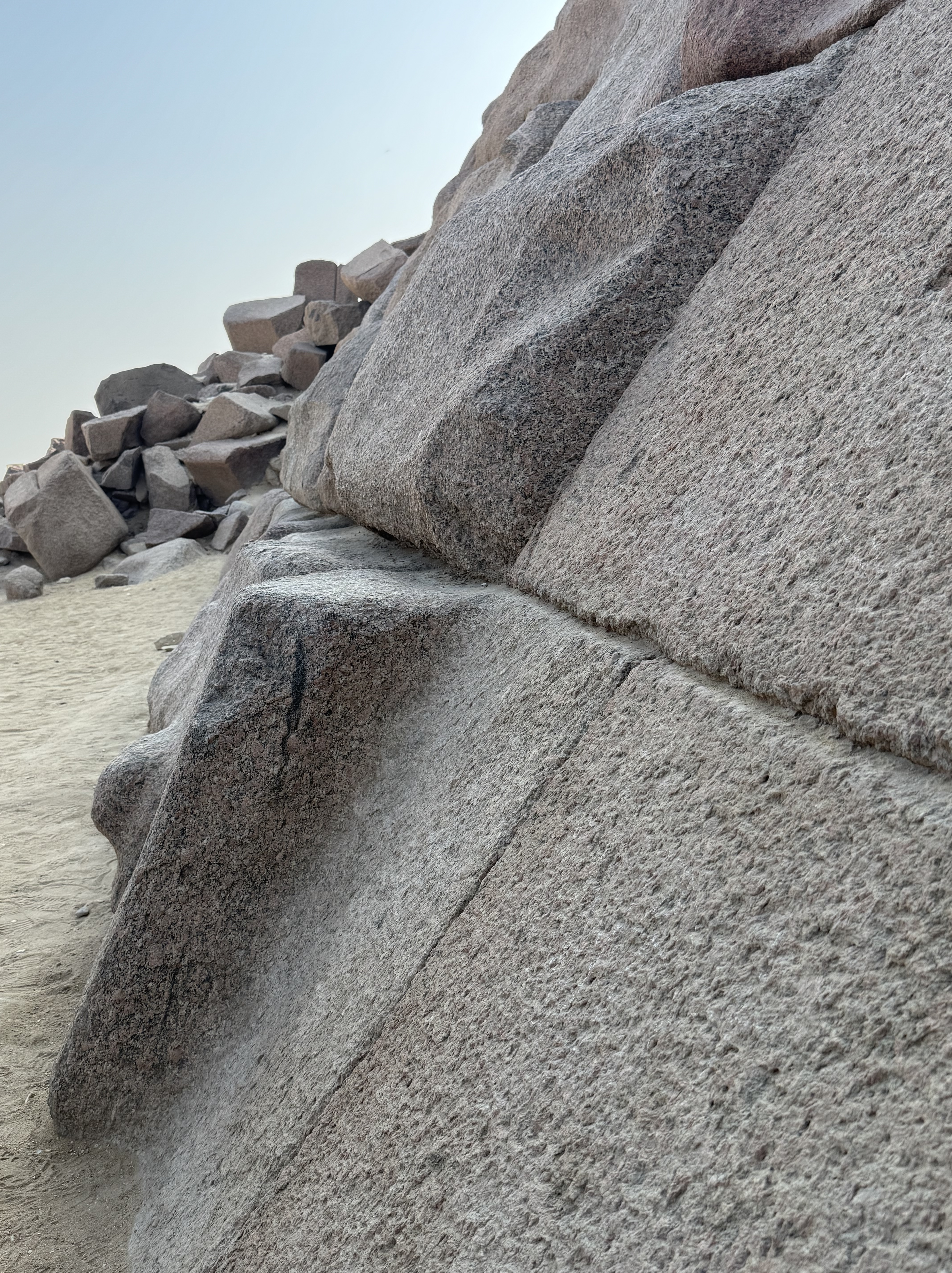
Seeing the museums in person have solidified the notion within my theology that the fallen spiritual beings were at the very least influencing humanity and most likley ruling over them with some supernatural ability. Not all of the Pharaohs were fallen spiritual beings, but they all seemed to esteem to be, and I am alluding that at least some of them were. Here are some signs: oblong heads*, the hieroglyphic of a saucer like objects used as the main preposition of the heiroglyphic language to describe movement (to, over above etc…), and near laser precision cut blocks out of a quarry from all sides. These are a few things (there are many more) that have me seeing that ancient astronauts, or more likely fallen spiritual beings, were interacting with Humanity and as I will propose, the historical timeline fits. The ancient Sumerian myth of Enûma Eliš, inscribed on cuneiform tablets and part of the Library of Ashurbanipal, says humankind was created to serve gods called the “Annunaki“. Hypothesis proponents believe that the Annunaki were aliens who came to Earth to mine gold for their own uses. According to the hypothesis proponents, the Annunaki realized mining gold was taking a toll on their race and then created or used the human race as slaves.[10] I would slightly disagree with those that hold to the “creation view” of it but the story seems to line up with the slavery of the pharaohs. Proponents contend that the evidence for ancient astronauts comes from documentary gaps in historical and archaeological records while citing archaeological artifacts that they believe, contrary to the mainstream explanations, are anachronistic and supposedly beyond the technical capabilities of the people who made them. These are sometimes referred to as “out-of-place artifacts”; and include artwork and legends which believers reinterpret to fit stories of extraterrestrial contact or technologies.[11] As I have been in Egypt researching some of these things I have very much found it to be true. The Egyptian timeline is often a mess. They were really good at recording victories but seem to also be decent at blotting things out of existence! We witnessed a lot of granite that had been etched clean to remove the past! Chuck Missler and Mark Eastman argue that modern UFOs carry the fallen angels, or offspring of fallen angels, and that “Noah’s genealogy was not tarnished by the intrusion of fallen angels. It seems that this adulteration of the human gene pool was a major problem on the planet earth”.[12] They make some interesting statements.

Some would say that Ezekial’s vision was one of UFO type objects. A detailed version of this hypothesis was described by Josef F. Blumrich in his book The Spaceships of Ezekiel (1974).[13] The characteristics of the Ark of the Covenant and the Urim and Thummim have been said to suggest high technology, perhaps from alien origins.[14]

But to be clear, I don’t think that fallen spiritual beings snapped their fingers and pyramids were made. archaeological evidence demonstrates not only the long cultural trajectory of prehistoric Egypt but also the developmental processes the ancient Egyptians underwent.[15] Egyptian tombs began with important leaders of villages being buried in the bedrock and covered with mounds of earth. Eventually, the first pharaohs had tombs covered with single-story, mud-brick, square structures called mastabas. The stepped pyramid developed out of multiple mastabas being stacked on each one in one structure. This led to the construction of pharaoh Djoser’s Step Pyramid at Saqqara, which is known from records to have been built by the ancient Egyptian architect and advisor Imhotep.[16] It was pharaoh Sneferu who had his pyramid transitioned from a stepped to a true pyramid like the well-known pyramids of Giza.[17] A papyrus document like a logbook kept by an official called inspector Merer has also been discovered with records of the construction of the Great Pyramid.[18] I have seen too much this week to think that aliens just did this with a wave of a wand or even their ships!

And then there is the skull thing, among the ancient rulers depicted with elongated skulls are pharaoh Akhenaten and Nefertiti. To be clear this doesn’t necessarily mean there is alien intervention, but it certainly raises an eyebrow. The depiction of Akhenaten and his family with traits like elongated skulls, limbs, underdeveloped torsos, and gynecomastia in Amarna art is hypothesized to be the effect of a familial disease.[19] Marriage between family members, especially siblings, was common in ancient Egyptian royal families, elevating the risk of such disorders.[20] Studies on the remains of the ruling family of 18th Dynasty Egypt have found evidence of deformities and illnesses.[21] Proposed syndromes of Akhenaten include Loeys-Dietz syndrome, Marfan’s syndrome, Frohlich syndrome, and Antley-Bixler syndrome.[22] Akhenaten worshipped the sun disk god Aten and it is suggested that such worship could point to a disease that is alleviated by sunlight.[23] Weighing all of the options, spiritual being or cosmic cowboy intervention per Genesis 6 would seem to not only be viable, but a logical option.

Colloquial concepts of deities can turn into exaggerated extremism, especially when paganism is in the discussion. Corruption of language and corruption of minds seems to turn people into narrow minded symbionts. Egypt was worshiping these “gods” far before Abraham entered Egypt and taught the Egyptians concerning the religion of his God. Abraham was 100 years old when Isaac was born, Gen 21:5, 2066+100=2166. Abraham was born in 2166 BC. Abraham was 75 years old when he was called to leave Haran (Gen 12:4), 2166-75=2091. Abraham was called to leave Haran in 2091 BC. Today I visited the pyramids in/by Djoser which is credited the first Pyramid. He was the first or second king of the 3rd Dynasty (c. 2670–2650 BC) of the Old Kingdom of Egypt (c. 2686 – c. 2125 BC).[25] He is believed to have ruled for 19 years or, if the 19 years were biennial taxation years, 38 years.[26] He reigned long enough to allow the grandiose plan for his pyramid to be realized in his lifetime.[27]

My point is that spiritual beings seem to have influenced ancient Egypt far before Abraham began educating them on Yahweh. The Exodus would then be an establishment (perhaps even spiritual war) of the heavens identifying Yahweh as the greatest “god” as Israel claimed. Notice Yahweh simply says, Have no other gods before me. In Hebrew it would read as just that, the acknowledgment of other “gods” (or fallen spiritual beings.)

In early Egyptian writings it makes sense to see congruence or confluence of their concepts of deity. Originally Osiris may have been an Egyptian rendering of “Jehovah” having similar or identical meaning, in which case it would almost necessarily be true that He was present in the Divine council. The Papyrus of Ani and numerous other depictions of the Hall of Judgment mesh exceptionally well with Hebrew and Christian concepts of the Judgment and afterlife. (Interestingly the name of pestilent Egyptian pseudo-deity of the underworld, often called “Set” is lexically indistinguishable from a name pronounced “Satan” in modern tongues.) [23]

It might be an anachronism to say that Israelites believed that Egyptian deities were present in the divine council, but Israelites did teach the Egyptians about the God of Israel. Particularly in regard to Michael Heiser’s recent work, some people have made a point to question whether the Bible taught/represents polytheism. I think this comes down to definitions by which I have never cared for much. I don’t think you’re asking the right question if that is where your mind goes here. You might recall Deuteronomy 4:35, “YHWH is God; there is none else beside him” or Isaiah 44:6–8 which both seem to state Yahweh as the ONLY “god.” But in Exodus 15:11, after the Israelites escape slavery in Egypt, they sing, “Who is like you, O YHWH, among the gods [Elohim]?” At this point they think there are still other “REAL gods.” But what about the other verses that Yahweh seems to be speaking to them such as Deuteronomy 6:14: “Do not follow other gods, the gods of the peoples around you” or Deuteronomy 10:17, which says, “For YHWH your God is the God of gods, and Lord of lords, the great God, mighty and terrible, who does not regard people or take bribes.” In Psalm 95:3, it says, “YHWH is a great God, and a great king above all gods.” And in Exodus 12:12, it says, “On that night I will pass through the land of Egypt and smite every firstborn, both man and beast, and I will execute judgment against all the gods of Egypt. I am YHWH.” These verses seem conclusive that there are other gods which I have alluded to are fallen spiritual beings. SO then if you go back to Deuteronomy 4:35 and possibly others like it, you could interpret them as saying that to Israel God should be the ONLY deity in their life. The Hebrew and contextual position of the texts would also support this reading in every situation I know of.

CONCLUSION:

*A number of ancient cultures, such as the ancient Egyptians and some Native Americans, artificially lengthened the skulls of their children. Some ancient astronaut proponents propose that this was done to emulate extraterrestrial visitors, whom they saw as gods. [19]

WORKS CITED:

  1.  Lieb, Michael (1998), “The Psycho-pathology of the Bizarre”, Children of Ezekiel: Aliens, UFOs, the Crisis of Race, and the Advent of End Time, Durham, North Carolina and London: Duke University Press, pp. 51–54, 249–251, doi:10.2307/j.ctv11sn0vx.6, ISBN 978-0-8223-2137-8, OCLC 9354231
  2. Hammer, Olav; Swartz, Karen (2021), “Ancient Aliens”, in Zeller, Ben (ed.), Handbook of UFO Religions, Brill Handbooks on Contemporary Religion, vol. 20, Leiden and Boston: Brill Publishers, pp. 151–177, doi:10.1163/9789004435537_008, ISBN 978-90-04-43437-0, ISSN 1874-6691, S2CID 243018663
  3. May, Andrew (2016), Pseudoscience and Science Fiction (illustrated ed.), Heidelberg: Springer Verlag, p. 133, Bibcode:2017psf..book…..M, ISBN 978-3-319-42605-1
  4. Vetterling-Braggin, Mary (1983), “The Ancient Astronaut Hypothesis: Science or Pseudoscience?”, in Grim, Patrick (ed.), Philosophy of Science and the Occult (1st ed.), Albany, New York: State University of New York Press, pp. 278–288, ISBN 978-0-87395-572-0, archived from the original on March 19, 2024, retrieved July 26, 2021
  5. Encyclopedia Britannica. Retrieved February 2025.
  6. Pentateuch. Jewish Publication Society. 1917.
  7.  Hendel, Ronald S. (1987). “Of demigods and the deluge: Toward an interpretation of Genesis 6:1–4”. Journal of Biblical Literature. 106 (1): 22. doi:10.2307/3260551. JSTOR 3260551.
  8. Genesis Apocryphon. Damascus Document. 4Q180.
  9.  Kosior, Wojciech (2010). “Synowie bogów i córki człowieka. Kosmiczny ‘mezalians’ i jego efekty w Księdze Rodzaju 6:1–6” [The cosmic mis-alliance and its effects in Genesis 6:1–6]. Ex Nihilo: Periodyk Młodych Religioznawców (in Polish). 1 (3): 73–74.”English translation of “The cosmic mis-alliance and its effects in Genesis 6:1–6″”. Translated by Kalinowski, Daniel. 30 May 2011.
  10. Mark, Joshua J. (May 4, 2018), “Enuma Elish – The Babylonian Epic of Creation – Full Text”, World History Encyclopedia
  11. O’Hehir, Andrew (August 31, 2005), “Archaeology from the dark side”, Salon
  12. Ancient Aliens, Series 2 Episode 7: Angels and Aliens
  13. Josef F. Blumrich: The Spaceships of Ezekiel, Corgi Books, 1974.
  14.  AncientDimensions Mysteries: De-Coded: The Ark Of The Covenant, Farshores.org
  15. Feder 2020: p. 226
  16. Feder 2020: pp. 227–228
  17. Feder 2020: p. 229
  18. Tallet and Marouard 2014: pp. 8–10
  19. Vesco, Renato; Childress, David Hatcher (1994), Man-made UFOs 1944–1994 : 50 years of suppression (1st ed.), Stelle, IL: AUP Publishers Network, ISBN 0932813232, OCLC 32056133
  20. Retief and Cilliers 2011
  21. Eshraghian and Loeys 2012: p. 661
  22. Habicht and Henneberg 2015
  23. Card 2018: p. 80
  24. Wainwright, Gerald Averay (1938). The Sky-religion in Egypt: Its Antiquity and Effects. CUP Archive.
  25. Shaw, Ian, ed. (2000). The Oxford History of Ancient Egypt. Oxford University Press. p. 480. ISBN 0-19-815034-2.
  26. George Hart, Pharaohs, and Pyramids, A Guide Through Old Kingdom Egypt (London: The Herbert Press, 1991), 57–68.
  27.  Kathryn A. Bard, An Introduction to the Archaeology of Ancient Egypt (Oxford: Blackwell Publishing Ltd, 2008), 128–133.
Translations in Giza

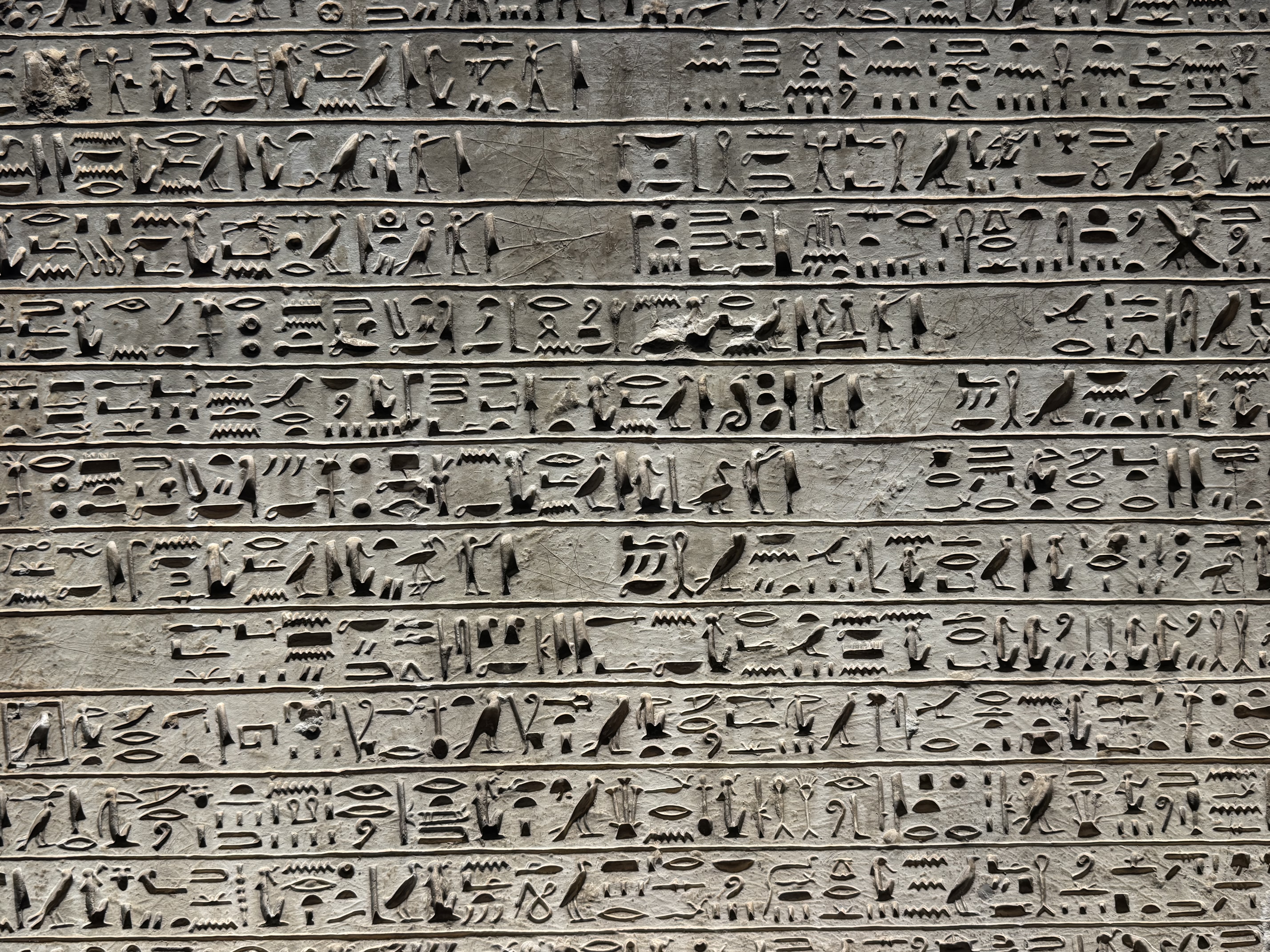
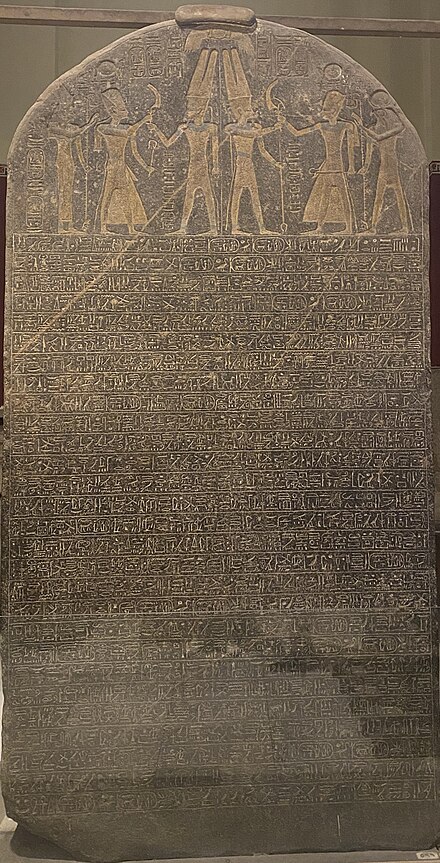
Today I was able to view the Merneptah Stele. This is a pretty big deal in my theological world. The Merneptah Stele, also known as the Israel Stele or the Victory Stele of Merneptah, is an inscription by Merneptah, a pharaoh in ancient Egypt who reigned from 1213 to 1203 BCE. It was discovered by Flinders Petrie at Thebes in 1896, and it is now housed at the Egyptian Museum in Cairo where I visited and was given hands on access to this today.[1][2]

A stele or stela (plural stelae) is a commemorative slab decorated with text and/or images. Ancient Egyptians erected stelae for many purposes including to document historical events, to record decrees (the Rosetta Stone is a famous example), and to remember the dead. [3] Such monuments were made by a variety of cultures in the ancient world, including the Assyrians, Maya, Greeks and Romans. The most common Egyptian term for a stela is wedj, which originally meant “command” and stems from wedj–nesu, “royal decree.” Various qualifiers could be used to further classify wedj, such as wedj-her-tash – “boundary stela” – or wedj-en-nekhtu – “victory stela.” [4]

The “victory stela” here has text engraved and is largely an account of Merneptah’s victory over the ancient Libyans and their allies, but the last three of the 28 lines (in the large photo you will view this as slightly darker colored) deal with a separate campaign in Canaan, then part of Egypt’s imperial possessions. It is sometimes referred to as the “Israel Stele” because a majority of scholars translate a set of hieroglyphs in line 27 as “Israel”. Alternative translations have been advanced but are not widely accepted.[5] The stele represents the earliest textual reference to Israel and the only reference from ancient Egypt. [6] It is one of four known inscriptions from the Iron Age that date to the time of and mention ancient Israel by name, with the others being the Mesha Stele, the Tel Dan Stele, and the Kurkh Monoliths.[7][8][9]

For reference here is the timeline of Pharoahs of Egypt before and after the Exodus: [10]

  • 1295 BCE – 1294 BCEThe reign of Ramesses I in Egypt.
  • 1294 BCE – 1279 BCEThe reign of Seti I in Egypt.
  • 1279 BCE – 1212 BCEReign of Ramesses II (The Great) in Egypt.
  • 1212 BCE – 1202 BCEReign of Merneptah in Egypt.

It was first translated by Wilhelm Spiegelberg.[11] Spiegelberg described the stele as “engraved on the rough back of the stele of Amenhotep III. The inscription says it was carved in the 5th year of Merneptah of the 19th dynasty. From a strictly historical perspective here us what scholars have noted. Egypt was the dominant power in the region during the long reign of Merneptah’s predecessor, Ramesses II, but Merneptah and one of his nearest successors, Ramesses III, faced significant invasions. Traditionally Egyptians only document the victories, not the losses. The final lines of this stele deal with a campaign or situation in the East. Traditionally the Egyptians had concerned themselves only with cities, so the problem presented by Israel is interesting in the ay it is breifly mentioned. Merneptah and Ramesses III were thought to have been fairly successful at fighting off their enemies, but history shows us that it is at this time that Egypt ceased to continue control over Canaan – the last evidence of an Egyptian presence in the area is the name of Ramesses VI (1141–1133 BC) inscribed on a statue base from Megiddo. [12]

In terms of translating the language, the “nine bows” is a term the Egyptians used to refer to their enemies;[13] Israel is clear in the transcription and was thought of as smaller units scattered throughout the region, –Canaan might here refer to the city of Gaza,[14] Based on their determinatives, Canaan referred to the land whilst Israel referred to the people.[15]

The line which refers to Israel is below (shown in reverse to match the English translation; the original Egyptian is in right-to-left script):

According to The Oxford History of the Biblical World, this “foreign people … sign is typically used by the Egyptians to signify nomadic groups or peoples, without a fixed city-state home, thus implying a seminomadic or rural status for ‘Israel’ at that time”.[16] The phrase “wasted, bare of seed” is formulaic, and often used of defeated nations – it usually would imply the people posed some sort of a threat to Egypt.[17] The Merneptah stele is considered to be the first extra-biblical reference to ancient Israel in ancient history and is widely considered to be authentic and providing historical information.[18][19]

There isn’t much scholarly disagreement on the interpretation. It is worth pointing out that in the 4th inscription the image I use above interprets seed/grain. In many other known stela inscriptions this notation meant that famine had come, and conflict resulted in another nation or peoples trying to “war” over Egypt’s grain stores. But in the ancient world this notation is much broader than that and simply means conflict. [20]

DOES THIS GIVE US A CLEAR DATE ON THE EXODUS?

Sadly, no. The dates of the Exodus are still largely inconclusive. Many have chimed in such as Flavius Josephus (c.70 CE), but unfortunately there are some things in Egyptian history that don’t seem to line up. The easiest explanation I have already implied. Most of the documentation of Egypt is in the form of “VICTORY” stela and they are just that, embellished records of victory, not failure. The pharaohs were known widely for covering their less than astounding feats. According to Biblical chronology, the Exodus took place in the 890th year before the destruction of the Temple by the Babylonians in 421 BCE (generally accepted date: 587 BCE). [21] This was 1310 BCE (1476 BCE). In this year, the greatest warlord Egypt ever knew, Thutmose III, deposed his aunt Hatshepsut and embarked on a series of conquests, extending the Egyptian sphere of influence and tribute over Israel and Syria and crossing the Euphrates into Mesopotamia itself. While it is interesting that this date actually saw the death of an Egyptian ruler – and there have been those who tried to identify Queen Hatshepsut as the Pharaoh of the Exodus – the power and prosperity of Egypt at this time is hard to square with the biblical account of the Exodus.

Some historians have been attracted by the name of the store-city Ramses built by the Israelites before the Exodus. They have drawn connections to the best-known Pharaoh of that name, Ramses II, or Ramses the Great, and set the Exodus around his time, roughly 1134 BCE (1300 BCE). [22] In order to do this, they had to reduce the time between the Exodus and the destruction of the Temple by 180 years, which they did by reinterpreting the 480 years between the Exodus and the building of the Temple (1 Kings 6: 1) as twelve generations of forty years. By “correcting” the Bible and setting a generation equal to twenty five years, these imaginary twelve generations become 300 years. Is this acceptable? Generations are fairly generic language in the Bible so there is some textual merit to do this. Others feel strongly that such “adjustments” of the Biblical text imply that the Bible cannot be trusted, Ramses 11 was a conqueror second only to Thutmose III. And as in the case of Thutmose III, the Egyptian records make it clear that nothing even remotely resembling the Exodus happened anywhere near his time of history. However, I come back to, the more powerful and well liked the rulers were, the greater power they had to dictate what was remembered of them. It is also worth noting that Egyptian dating is a disaster in the scholarly community. Few things agree.

Does this stone tell us who the Pharoah of the Exodus was? No; but perhaps it supplies you with a more educated proposition.

WORKS CITED

  1. Drower 1995, p. 221.
  2. Redmount 2001, pp. 71–72, 97.
  3. https://www.artic.edu/articles/824/reading-ancient-egyptian-art-a-curator-answers-common-questions
  4. https://arce.org/resource/stelae-ancient-egypts-versatile-monumental-form/
  5. Sparks 1998, pp. 96–.
  6. Hasel 1998, p. 194.
  7.  Lemche 1998, pp. 46, 62: “No other inscription from Palestine, or from Transjordan in the Iron Age, has so far provided any specific reference to Israel… The name of Israel was found in only a very limited number of inscriptions, one from Egypt, another separated by at least 250 years from the first, in Transjordan. A third reference is found in the stele from Tel Dan – if it is genuine, a question not yet settled. The Assyrian and Mesopotamian sources only once mentioned a king of Israel, Ahab, in a spurious rendering of the name.”
  8. Maeir, Aren. Maeir, A. M. 2013. Israel and Judah. pp. 3523–27, The Encyclopedia of Ancient History. New York: BlackwellThe earliest certain mention of the ethnonym Israel occurs in a victory inscription of the Egyptian king Merenptah, his well-known “Israel Stela” (c. 1210 BCE); recently, a possible earlier reference has been identified in a text from the reign of Rameses II (see Rameses I–XI). Thereafter, no reference to either Judah or Israel appears until the ninth century. The pharaoh Sheshonq I (biblical Shishak; see Sheshonq I–VI) mentions neither entity by name in the inscription recording his campaign in the southern Levant during the late tenth century. In the ninth century, Israelite kings, and possibly a Judaean king, are mentioned in several sources: the Aramaean stele from Tel Dan, inscriptions of Shalmaneser III of Assyria, and the stela of Mesha of Moab. From the early eighth century onward, the kingdoms of Israel and Judah are both mentioned somewhat regularly in Assyrian and subsequently Babylonian sources, and from this point on there is relatively good agreement between the biblical accounts on the one hand and the archaeological evidence and extra-biblical texts on the other.
  9. Fleming, Daniel E. (1998-01-01). “Mari and the Possibilities of Biblical Memory”. Revue d’Assyriologie et d’Archéologie Orientale92 (1): 41–78. JSTOR 23282083. The Assyrian royal annals, along with the Mesha and Dan inscriptions, show a thriving northern state called Israël in the mid—9th century, and the continuity of settlement back to the early Iron Age suggests that the establishment of a sedentary identity should be associated with this population, whatever their origin. In the mid—14th century, the Amarna letters mention no Israël, nor any of the biblical tribes, while the Merneptah stele places someone called Israël in hill-country Palestine toward the end of the Late Bronze Age. The language and material culture of emergent Israël show strong local continuity, in contrast to the distinctly foreign character of early Philistine material culture.
  10. https://www.worldhistory.org/timeline/pharaoh/
  11. Nestor 2015, p. 296.
  12. Drews 1995, pp. 18–20.
  13. William Museum, UK: Ancient Egypt
  14.  H. Jacob Katzenstein, ‘Gaza in the Egyptian Texts of the New Kingdom,’ Journal of the American Oriental Society, January-March 1982, Vol. 102, No. 1 pp. 111-113 pp.111-112
  15.  Smith 2002, p. 26.
  16. FitzWilliam Museum, UK: Ancient Egypt
  17. H. Jacob Katzenstein, ‘Gaza in the Egyptian Texts of the New Kingdom,’ Journal of the American Oriental Society, January-March 1982, Vol. 102, No. 1 pp. 111-113 pp.111-112
  18. Dever 2009, p. 89–91.
  19. Faust, Avraham (2016). Israel’s Ethnogenesis: Settlement, Interaction, Expansion and Resistance (reprinted ed.)
  20. Jones, Daniel (2003) [1917], Roach, Peter; Hartmann, James; Setter, Jane (eds.), English Pronouncing Dictionary, Cambridge University Press, ISBN 978-3-12-539683-8
  21. Contrary to the Jewish historical tradition, the generally accepted date is 166 years earlier, or 587 BCE (see “Fixing the History Books – Dr. Chaim Heifetz’s Revision of Persian History,” in the Spring 199.1 issue of Jewish Action). This difference applies to all Mesopotamian and Egyptian history prior to the Persian period. The dates for Egyptian history given in the history books are therefore off by this amount. For our purposes, we will use the corrected date followed by the generally accepted date in parenthesis.
  22. Some people have been excited about the generally accepted date for Ramses II coming so close to the traditional date for the Exodus. This is a mistake, as Egyptian and Mesopotamian histories are linked. If Ramses II lived c.1300 BCE, then the destruction of the Temple was in 587 BCE, and the Exodus was in 1476 BCE.

Nicodemus – regenerated from above?

Nicodemus heard Jesus say that a man must be “born from above” if he is to be a son of God.  He asked, “How can I make this happen?” He just wanted the steps but didn’t want the “why.” Sounds like our Christian culture today – Just get in the water, and maybe that’s not all bad! But it’s not about what you can do, it’s about what God will do.  In a very eloquent and rhythmic fashion Jesus answers Nicodemus with the words gennēthēnai anōthen. The witty inference is that we must be born from above regenerated by the Spirit. The answer to the real question, why must a man be born from above, is far more important than the how.  God knows how.  What we need to know is why.

I studied philosophy first which led me to a better theology. I don’t believe we are simply a product of our environment, nor do I believe in the Calvinist sense that God has predetermined all things and is the grand puppet master.

Jesus’ answer shares an entire “remez” of theology. I’ll give you the short version. God separated the water and created man in His image within His order. Man fails and falls numerous times, and God does a “reset” with His newly chosen people coming out of Egypt and through the redemptive waters of the red sea, they are “baptized” as a nation and become a “new” people. Those originally created by the direct hand of God were referred to in Genesis as the Bene Ha Elohim. Fast forward to Jesus when we are now “reborn from above”, we take on the same terminology. We are now directly created by the hand of God and are a new royal priesthood set apart as ambassadors for a new kingdom. Jesus Himself was an example – image – foreshadow – archetype of this. As He was born of a virgin, His creation or re-creation to earth in the form of a “second Adam”, was directly by the hand of God. In a similar fashion, all of us now “born from above,” have entered into completely new life with God. The old person is dead.

When Jesus answers Nicodemus He says that we are at a total start over through Him.  Nicodemus is a Pharisee and a member of the Sanhedrin who is drawn to hear Jesus’s teachings. As is the case with Lazarus, Nicodemus is not mentioned in the synoptic Gospels and is mentioned only by John. [1] This famous encounter is contextually set before John 3:16, you might consider that. Most Biblical scholars have identified the Nicodemus of the New Testament with a 1st-century historic Nicodemus Ben Gurion, which would have him being a key figure 40 years later in the First Jewish Roman War. [2]

He was a wealthy and popular holy man reputed to later have had miraculous powers, which some would say was a sign that God was with Him. [3] In the account in John we aren’t given the whole picture or all the details. In fact, we seem to get the opposite idea. Jesus tells Nicodemus to leave the world at the beach and he seemingly can’t do that. He comes to Jesus in secret in the night because He is afraid of what His pharisee friends will think if he is aligned with Jesus, yet he says that many of them believe and uses the title Rabbi with Jesus out of honor and respect.

Nicodemus is mentioned in three places in the Gospel of John. This is the first encounter. The second is four chapters later when he reminds his colleagues in the Sanhedrin that the law requires that a person be heard before being judged. He seems to be a friend of Jesus or possibly advocating for Him. The third and final encounter is in John 19 when Nicodemus appears after Jesus’s crucifixion to provide the customary spices for anointing the dead and assists Joseph of Arimathea in preparing the body of Jesus for burial. Some believe this is a sign of conviction. Nicodemus brought a mixture of myrrh and aloes—about 100 Roman pounds (33 kilograms, or 73 lb). Nicodemus must have been a man of means; in his book Jesus of Nazareth: Holy Week, Pope Benedict XVI observes that, “The quantity of the balm is extraordinary and exceeds all normal proportions. This is a royal burial.”[5] If you take the notion that He was the notable Nicodemus Ben Gurion, then it means that over the next 40 years he would lead many to a “born again” notion and eventually be considered a saint within orthodoxy for his actions. But we also may want to question “that notion,” and we likely should.

The decision for Nicodemus wasn’t easy. Brian Zahnd shares, “Undoubtedly, he was raised in a Pharisee household, educated in the Pharisee school of Jewish thought from a child and placed on a course that would inevitably make him what he became. But now Jesus was challenging him to make a choice that would fundamentally alter his self. To make the choice to rethink everything. To start over. To radically change his dominant paradigm; instead of viewing the kingdom of God through the paradigm of the Pharisees, to view the kingdom of God through the new paradigm of Jesus. No easy task.” [6]

Jesus’ words to Nicodemus were life changing. We don’t know if Nicodemus ever “got there.” The orthodox church would say he did, Nicodemus is venerated as a saint in Eastern and Oriental Orthodoxy and in Catholicism. The Eastern Orthodox and Byzantine Catholic Churches commemorate him on the Sunday of the Holy Myrrhbearers, which is celebrated on the Third Sunday of Pascha (i.e., the second Sunday after Easter).[7] But from my perspective, the text nor history gives us the confirmed answer. Jesus’ words were hard. Leave it all at the Beach and start over. Rethink. Everything.

A spiritual re-birth meant a new and/or total spiritual re-learning. A new start. Discipleship. Could he do that? Did he do that the next 40 years? Perhaps. Or perhaps he was still “off” as he might have led thousands to their death in 70AD and completely missed the “WHY” of Jesus. The world (and Christians) often puts those “types” on a pedestal. We nearly “worship” those that are very opposite to the ways and words of Jesus. Maybe he got the fame his heart was postured towards but never could die to himself as Jesus challenged him to do; or maybe He did as His “saint hood” would later venerate. Only God knows.

What about you. The call wasn’t to simply make a decision to get on your knees in tank of water as the lights and lasers dazzle everyone to chalk up another bar of statistics for the year of tallied success. It was to enter total discipleship. The first step is a proclamation of the heart to total faithful allegiance in Jesus by getting in the water, the second step should be towards a changed life of discipleship. I pray the lasers and lights lead that way! That was always the calling of Jesus. Leave it all on the beach.

This article is dedicated to my good friend and disciple Paul Lazzaroni as he is shepherding so many others to walk this journey well. Love you and proud of you, my friend. -Halak

x44 has an old but good video on Nicodemus here:

  1. Driscoll, James F. (1911). “Nicodemus” . In Herbermann, Charles (ed.). Catholic Encyclopedia. Vol. 11. New York: Robert Appleton Company.
  2. Reid, George J. (1907). “Acta Pilati” . In Herbermann, Charles (ed.). Catholic Encyclopedia. Vol. 1. New York: Robert Appleton Company. p. 111.
  3. ee, for instance:
  4. Flusser, David (16 December 2013). “Character Profiles: Gamaliel and Nicodemus”. Jerusalem Perspective.
  5. Burke, Daniel (17 March 2013). “Nicodemus, The Mystery Man of Holy Week”. The Washington Post. Religious News Service. Archived from the original on 14 May 2023.
  6. https://brianzahnd.com/tag/nicodemus/
  7. Holy Greek Orthodox Church of Saint Paraskevi, Saint Barbara, Saint John the Merciful & Our Mother of Consolation. St Albans, Melbourne: Greek Orthodox Archdiocese of Australia. Archived from the original on 20 March 2023.