“Excavating the Deep: Wells, Living Water, and the Theology of Depth from Genesis to Revelation within Biblical and Second Temple Contexts”

Wells in the biblical tradition function not merely as environmental necessities but as socio-rhetorical, theological, and cosmological symbols embedded within the lived realities of the ancient Near East. This study argues that wells operate as constructed access points to hidden life, mediating themes of land, covenant, revelation, and divine presence. By situating biblical well narratives within their broader ancient Near Eastern and Second Temple contexts—and tracing their canonical development through the New Testament and Revelation—this article demonstrates that wells serve as a unifying metaphor for the movement from external provision to internal participation in divine life.


In the ecological framework of the ancient Near East, water was not simply a resource but a determinant of existence. The relative scarcity of perennial rivers in the Levant meant that survival depended upon access to subterranean water systems through wells, springs, and cisterns.¹ Archaeological and textual evidence confirms that the digging of wells required both technological skill and significant labor investment, rendering them symbols of stability and territorial claim.² Within the biblical narrative, however, wells transcend their functional role. They are consistently positioned at moments of transition, encounter, and contestation, suggesting that their narrative placement reflects a deeper theological intentionality.³

This study contends that wells in Scripture—and their reinterpretation in Second Temple and early Jewish thought—function as liminal structures, mediating between seen and unseen, human effort and divine provision, and ultimately between creation and Creator.


The patriarchal accounts in Genesis situate wells at the center of disputes over land and legitimacy. In ancient Near Eastern legal consciousness, the act of digging a well constituted a claim to the surrounding territory, embedding ownership within labor and memory.⁴ This dynamic is evident in Genesis 21 and 26, where Abraham and Isaac engage in disputes with surrounding peoples over access to wells.⁵ The Philistines’ deliberate act of stopping Abraham’s wells (Gen 26:15) represents not only economic aggression but a symbolic attempt to erase covenantal presence.⁶

Isaac’s re-digging of these wells (Gen 26:18) functions as an act of theological resistance, reclaiming both land and promise.⁷ The naming of the wells—Esek (“contention”), Sitnah (“hostility”), and Rehoboth (“broad places”)—encodes a narrative theology in which divine provision emerges through conflict into spaciousness.⁸ Similarly, Beersheba (be’er shevaʿ), “well of the oath,” becomes a site where covenant and sustenance converge, embedding theological memory within geography.⁹

Such acts of naming transform wells into what may be termed topographies of covenant memory, where physical locations bear witness to divine-human interaction across generations.¹⁰


The Hebrew terminology associated with wells reveals a layered conceptual framework. The term בְּאֵר (be’er) denotes a dug well, emphasizing human participation in uncovering hidden water.¹¹ By contrast, בּוֹר (bor) refers to a cistern, an artificial reservoir dependent upon collected rainwater, often associated with limitation or insufficiency.¹²

More theologically suggestive is עַיִן (ʿayin), meaning both “spring” and “eye,” implying that natural water sources function as points of revelation—openings through which the hidden depths of the earth become visible.¹³ This semantic overlap reflects a worldview in which knowledge and sustenance are intertwined; to see is, in a sense, to drink.

The prophetic critique in Jeremiah 2:13—“they have forsaken me, the fountain of living waters, and hewed out cisterns… broken cisterns that can hold no water”—draws upon this lexical framework to articulate a theology of misplaced dependence.¹⁴ The contrast between living water and stagnant storage becomes a metaphor for covenant fidelity versus self-reliance.


The symbolic resonance of wells is further illuminated when situated within the cosmological frameworks of the ancient Near East. Mesopotamian traditions describe the Apsu as the subterranean freshwater deep from which life emerges.¹⁵ Similarly, the Hebrew concept of תְּהוֹם (tehom) in Genesis 1:2 reflects a shared cultural understanding of primordial waters underlying creation.¹⁶

Within this context, wells may be understood as localized access points to these deeper waters, linking the human world to the hidden structures of creation. The act of digging a well thus becomes symbolically analogous to engaging the depths of existence itself—a movement from surface to source.


Second Temple literature extends the symbolism of water beyond physical necessity into the realm of wisdom, purification, and eschatological hope. In the Dead Sea Scrolls, particularly the Community Rule (1QS), water imagery is explicitly connected to spiritual transformation:

“He shall be cleansed from all his sins by the spirit of holiness… and sprinkled with the waters of truth.”¹⁷

Here, water becomes a metaphor for divine instruction, aligning access to truth with access to life.

Similarly, 1 Enoch associates flowing waters with divine knowledge and cosmic order, presenting water as a medium through which heavenly realities are disclosed.¹⁸ The Wisdom of Ben Sira (Sirach) likewise employs water imagery to describe the outflow of wisdom:

“I came forth like a canal from a river… and my river became a sea.”¹⁹

This expansion of water imagery reflects a shift from physical wells to metaphorical wells of wisdom, where the act of drawing water parallels the reception of divine revelation.

Philo of Alexandria further develops this theme, interpreting wells allegorically as symbols of the soul’s search for divine knowledge.²⁰ Josephus, while more historically oriented, underscores the practical and strategic importance of wells, reinforcing their centrality within Jewish life.²¹


The Gospel of John presents the most explicit theological reinterpretation of the well motif. In John 4, Jesus’ encounter with the Samaritan woman at Jacob’s well transforms the traditional symbolism:

“Whoever drinks of the water that I will give him will never thirst… the water that I will give him will become in him a spring of water welling up to eternal life.”²²

Here, the well serves as a narrative and symbolic threshold. The external act of drawing water gives way to an internal, self-renewing source. This represents a profound theological shift: from dependence on physical access points to participation in divine life.


The trajectory of biblical water imagery reaches its culmination in Revelation 22:

“Then the angel showed me the river of the water of life, bright as crystal, flowing from the throne of God and of the Lamb.”²³

What begins in Genesis as localized wells becomes, in Revelation, an unmediated river flowing directly from divine presence. The movement is both spatial and theological: from scattered access points to an all-encompassing source, from scarcity to abundance, from hidden depths to unveiled glory.


To read the wells of Scripture attentively is to recognize a consistent invitation into depth. The biblical witness does not present life as something found on the surface but as something uncovered through intentional engagement. Wells must be dug. They must be cleared. At times, they must be re-dug.

There is a quiet wisdom here for the life of faith.

Many find themselves living at the “sath” or very surface of the well – drawing from what is immediate, visible, and convenient—yet Scripture gently calls us deeper. The God of the well is not found in hurried glances but in patient excavation. He meets Hagar in the wilderness, Isaac in contention, Moses in exile, and a Samaritan woman in the ordinary rhythm of daily thirst.

For those entrusted with shepherding others, the imagery is both humbling and clarifying. We are not the source of the water. We do not create it, control it, or sustain it. Our calling is simpler, and yet more demanding: to help uncover what has been buried, to remove what has been stopped up, and to guide others toward the place where life flows.

And yet, the story does not end at the well.

The promise that echoes through Scripture is that those who come to draw will themselves become sources. What begins as thirst becomes overflow. What begins as searching becomes abiding.

So the work remains—steady, patient, faithful—to keep digging, to keep returning, to keep trusting that beneath the dust and rock of life, there is water still.

And it is living.


Footnotes

  1. Water scarcity in the Levant (en.wikipedia.org/wiki/Wells_in_the_Bible)
  2. Archaeology of wells and water systems (ibid.)
  3. Narrative placement of wells (worthbeyondrubies.com)
  4. Wells as territorial claims (ibid.)
  5. Genesis well disputes (digitalbible.ca)
  6. Philistine conflict (ibid.)
  7. Isaac re-digging wells (ibid.)
  8. Esek, Sitnah, Rehoboth (chabad.org)
  9. Beersheba meaning (en.wikipedia.org/wiki/Beersheba)
  10. Wells as covenant markers (ibid.)
  11. Hebrew be’er (biblestudytools.com)
  12. Hebrew bor (jewishencyclopedia.com)
  13. Hebrew ʿayin (en.wikipedia.org/wiki/Wells_in_the_Bible)
  14. Jeremiah 2:13 (digitalbible.ca)
  15. Mesopotamian Apsu cosmology
  16. Hebrew tehom (Gen 1:2)
  17. 1QS (Community Rule) 3:8–9
  18. 1 Enoch water imagery
  19. Sirach 24:30–31
  20. Philo, Allegorical Interpretation
  21. Josephus, Antiquities
  22. John 4:14
  23. Revelation 22:1

Ancient Near Eastern and Background Studies

Dalley, Stephanie, ed. Myths from Mesopotamia: Creation, the Flood, Gilgamesh, and Others. Oxford: Oxford University Press, 2000.

Walton, John H. Ancient Near Eastern Thought and the Old Testament. 2nd ed. Grand Rapids: Baker Academic, 2018.

Walton, John H., Victor H. Matthews, and Mark W. Chavalas. The IVP Bible Background Commentary: Old Testament. Downers Grove, IL: IVP Academic, 2000.

Arnold, Bill T., and Bryan E. Beyer. Encountering the Old Testament. Grand Rapids: Baker Academic, 2008.

Matthews, Victor H. The Cultural World of the Bible. Grand Rapids: Baker Academic, 2015.


Biblical Studies and Literary Analysis

Alter, Robert. The Art of Biblical Narrative. New York: Basic Books, 1981.

Alter, Robert. Genesis: Translation and Commentary. New York: W. W. Norton, 1996.

Brueggemann, Walter. Genesis. Interpretation Commentary. Atlanta: John Knox Press, 1982.

Sarna, Nahum M. Genesis. JPS Torah Commentary. Philadelphia: Jewish Publication Society, 1989.

Hamilton, Victor P. The Book of Genesis: Chapters 18–50. NICOT. Grand Rapids: Eerdmans, 1995.

Westermann, Claus. Genesis 12–36: A Commentary. Minneapolis: Augsburg, 1985.


Second Temple and Jewish Interpretive Traditions

Collins, John J. The Apocalyptic Imagination. 3rd ed. Grand Rapids: Eerdmans, 2016.

VanderKam, James C. An Introduction to Early Judaism. Grand Rapids: Eerdmans, 2001.

Neusner, Jacob. Introduction to Rabbinic Literature. New Haven: Yale University Press, 1994.

Kugel, James L. The Bible As It Was. Cambridge, MA: Harvard University Press, 1997.


Hebrew Language and Lexical Resources

Brown, Francis, S. R. Driver, and Charles A. Briggs. The Brown-Driver-Briggs Hebrew and English Lexicon. Peabody, MA: Hendrickson, 1996.

Koehler, Ludwig, and Walter Baumgartner. The Hebrew and Aramaic Lexicon of the Old Testament (HALOT). Leiden: Brill, 2001.

Botterweck, G. Johannes, Helmer Ringgren, and Heinz-Josef Fabry, eds. Theological Dictionary of the Old Testament. Grand Rapids: Eerdmans, 1974–.


Theological and Biblical Imagery Studies

Wright, N. T. Jesus and the Victory of God. Minneapolis: Fortress Press, 1996.

Beale, G. K. The Temple and the Church’s Mission. Downers Grove, IL: IVP Academic, 2004.

Bauckham, Richard. The Theology of the Book of Revelation. Cambridge: Cambridge University Press, 1993.


Specialized and Thematic Studies on Water / Wells

King, Philip J., and Lawrence E. Stager. Life in Biblical Israel. Louisville: Westminster John Knox, 2001.

Borowski, Oded. Daily Life in Biblical Times. Atlanta: SBL Press, 2003.

Hess, Richard S. Israelite Religions: An Archaeological and Biblical Survey. Grand Rapids: Baker Academic, 2007.

Lilith, Adam, and the Limits of Deductive Interpretation:

The figure of Lilith has become one of the most widely discussed characters associated with the early chapters of Genesis, particularly in modern theological speculation and cultural interpretation. In some contemporary retellings, Lilith is portrayed as the first wife of Adam, created prior to Eve and departing the Garden of Eden following conflict with Adam. Yet the origins of this narrative lie far outside the canonical text of Genesis itself.

The present study examines the Lilith tradition through a historical and textual framework rooted in Ancient Near Eastern linguistics, Second Temple Jewish literature, and rabbinic interpretation. The primary aim is to determine whether the concept of Lilith as Adam’s first wife can be sustained through exegetical analysis of the biblical text or whether it emerges primarily through deductive interpretation imposed upon the text by later traditions.

While theological deduction is an unavoidable feature of interpretation—indeed all theological systems rely upon synthesis beyond the immediate words of Scripture—the Lilith tradition provides a compelling case study in the boundary between interpretive inference and post-biblical mythmaking. By tracing the development of Lilith from Mesopotamian demonology to medieval Jewish folklore, it becomes clear that the narrative of Lilith as Adam’s first wife is not grounded in the Genesis text itself but emerges from later interpretive traditions seeking to harmonize perceived tensions in the biblical narrative. Given this, is there still room to incorporate Lilith into the biblical narrative and remain faithful to biblical interpretation?


The Absence of Lilith in the Genesis Narrative

The canonical account of creation in Genesis offers no explicit reference to Lilith. The early chapters present two creation narratives that have often prompted interpretive discussion. Genesis 1:26–27 describes the creation of humanity (hāʾādām) in the image of God, stating that “male and female he created them.”¹ Genesis 2:18–23 then recounts the formation of the woman from the side of Adam within the Garden narrative.²

Some interpreters have proposed that these two passages imply the creation of two separate women, with Genesis 1 describing a primordial woman distinct from the Eve of Genesis 2.³ However, the majority of modern biblical scholarship understands Genesis 1 and Genesis 2 as complementary literary traditions within the Pentateuch rather than sequential historical events.⁴ I however, often challenge this view reading Genesis 1-2 as a sequential narrative reading or chronological reading of the text. If you read it this way, it may better open up the door for a first wife before Eve and the need for her to be “later” created.

The only explicit appearance of the term לִילִית (lîlîṯ) within the Hebrew Bible occurs not in Genesis but in Isaiah 34:14, where the prophet describes the desolation of Edom and lists a series of wilderness creatures inhabiting the ruins.⁵ The term appears within a poetic catalogue of desert beings, including jackals and goat-demons (śeʿîrîm).⁶

Because the word appears only once in the Hebrew Bible, its meaning has long been debated. Some translations render it as “night creature” or “screech owl,” while others retain the transliteration “Lilith.”⁷ The context suggests a demonic or mythological wilderness being, rather than a historical figure associated with the Eden narrative.

In this light, a further feature of the Eden narrative that must be considered is the presence of mythopoetic and anthropomorphic imagery within the text itself. Several of the figures and elements within the primeval history are described in ways that blur the boundaries between natural creatures and symbolic agents within the narrative world. Gordon Wenham reminds us that the serpent in Genesis 3, for example, speaks and reasons in human language, engaging the woman in moral and theological dialogue despite being described as one of the “beasts of the field” (ḥayyat haśśādeh). Likewise, the cherubim placed at the entrance of Eden in Genesis 3:24 appear not as ordinary creatures but as composite guardian beings stationed at sacred space, paralleling protective figures associated with temple entrances throughout the Ancient Near East. Even the trees of the garden, particularly the Tree of Life and the Tree of the Knowledge of Good and Evil, function within the narrative as more than botanical objects, representing cosmic or moral realities embedded within sacred geography.

These features demonstrate that the Eden narrative employs a literary environment where symbolic and anthropomorphic elements are common. Animals converse, trees convey knowledge, and guardian beings protect the boundaries of sacred space. Such imagery resembles the mythopoetic storytelling common to the ancient world, where narrative symbolism communicates theological truths through figurative representation. Yet importantly, the text never introduces a figure resembling the later Lilith tradition within this symbolic cast of Edenic beings. If Genesis were intended to preserve a memory of such a character, one would reasonably expect some trace within the narrative alongside the serpent, the trees, and the cherubim. The absence of any such reference reinforces the conclusion that the Lilith tradition emerged not from the narrative structure of Genesis itself but from later interpretive speculation.

At the same time, it must be acknowledged that the biblical narrative frequently displays a remarkable economy of detail, often focusing narrowly on the theological point of the story being told while leaving many surrounding elements unexplained. The Scriptures regularly assume a broader narrative world that is only partially disclosed within any given passage. In numerous instances, later texts appear to illuminate or expand earlier material through retrospective inference, suggesting that not every element of the biblical worldview is exhaustively articulated at its first appearance. For example, the identity and role of the serpent in Genesis 3 remain largely undefined within the Eden narrative itself, yet later biblical literature associates the figure with cosmic opposition to God (cf. Rev. 12:9). Likewise, Genesis 6 briefly introduces the enigmatic “sons of God” and the Nephilim with minimal explanation, leaving subsequent Jewish traditions and later biblical reflections to wrestle with their meaning.

Note: Biblical interpretation frequently involves a degree of retrospective or “back-reading” into earlier texts, a hermeneutical practice widely recognized within both Jewish and Christian traditions. Later revelation often illuminates earlier passages in ways not immediately apparent in their original context. A well-known example is the Christian reading of the Old Testament through a Christological lens, where the life and work of Jesus are understood to fulfill and reveal deeper meanings within earlier Scriptures (e.g., Luke 24:27). Such interpretive movements demonstrate that retrospective theological inference can be legitimate, though it must remain anchored within the broader trajectory of the canonical text.

Lilith isn’t mentioned in the Genesis text and this narrative restraint may demonstrate that the biblical authors prioritize the theological thrust of the account rather than providing a comprehensive cosmology of every figure involved in the story. Consequently, while the absence of Lilith from the Genesis narrative strongly cautions against reading such a figure directly into the text, the broader pattern of Scripture also reminds interpreters that certain dimensions of the biblical world are occasionally clarified only through later reflection and textual development. The challenge for interpreters, therefore, is discerning the difference between legitimate theological inference grounded in later revelation and speculative deductions that extend beyond the trajectory of the canonical text.

Evidence from the Great Isaiah Scroll (1QIsaᵃ) discovered at Qumran further complicates interpretation. In this manuscript the term appears in plural form (liliyyôt), suggesting that the word may refer to a category of night spirits rather than a singular named entity.⁸ Thus, from the standpoint of textual criticism and lexical analysis, the Hebrew Bible provides no direct evidence that Lilith functioned as a character within the Genesis narrative.


Akkadian Linguistic Background and Ancient Near Eastern Demonology

The linguistic origins of the term lîlîṯ point toward a broader Ancient Near Eastern mythological context. In Akkadian texts, scholars have identified a group of supernatural beings known as lilu, lilītu, and ardat-lilî.⁹ These entities appear frequently in Mesopotamian incantation texts as malevolent wind or night spirits associated with illness, infertility, and sexual predation.¹⁰

The Akkadian līlû is commonly regarded as a loanword reflecting earlier Sumerian linguistic elements. The Hebrew lîlîṯ (Lilith) ultimately derives from the Sumerian root LIL, though most plausibly through the intermediary of Akkadian līlû and related demonological terminology rather than by direct borrowing from Sumerian.¹¹

Among the earliest literary references to a Lilith-like figure appears in the Sumerian narrative “Gilgamesh and the Huluppu Tree,” dating to the early second millennium BCE.¹² In this text a female being identified by the phrase ki-sikil-lil-la-ke inhabits the trunk of a sacred tree alongside a serpent and the Anzû bird until she is driven away by the hero Gilgamesh.¹³

Although the linguistic connection between this Sumerian phrase and the later Hebrew lîlîṯ remains debated, the narrative demonstrates the presence of female wind spirits in Mesopotamian mythology long before the composition of the Hebrew Bible.¹⁴

Archaeological evidence further attests to widespread belief in such spirits. Aramaic incantation bowls, dating between the fifth and seventh centuries CE, frequently contain protective formulas against Lilith and related demons.¹⁵ These bowls, often buried beneath homes, reflect a pervasive fear of nocturnal spirits believed to threaten women and infants.

Within this broader cultural environment, the reference to lîlîṯ in Isaiah likely reflects Israel’s awareness of Mesopotamian demonological traditions, particularly during the Babylonian exile.¹⁶ Yet the biblical authors do not develop these figures into elaborate mythological characters. Instead, the reference appears only as poetic imagery within a prophetic oracle of desolation.


Lilith in Second Temple and Dead Sea Scroll Literature

During the Second Temple period Jewish literature exhibits an increased interest in angelology and demonology. Within this context, Lilith appears as one among several destructive spirits.

The Dead Sea Scroll text Songs of the Sage (4Q510–511) contains an incantation intended to repel supernatural forces. Among the spirits mentioned are Lilith, the howling creatures, and desert demons.¹⁷

Similarly, other Second Temple texts reflect a worldview in which demonic forces inhabit the wilderness and threaten the righteous community.¹⁸ These references demonstrate that Lilith had become a recognized figure within Jewish demonology by the late Second Temple period.

Nevertheless, these texts still do not connect Lilith to Adam or the Eden narrative. Instead, Lilith appears alongside other supernatural beings associated with chaos and the desert.

This pattern aligns with the symbolic geography of the Hebrew Bible, where the wilderness frequently represents a realm of disorder and demonic presence, standing in contrast to the ordered sacred space of the temple.¹⁹

Thus, in Second Temple literature Lilith functions as one among many hostile spirits, rather than a primordial human figure.


Rabbinic Tradition and the Emergence of the “First Wife” Narrative

The identification of Lilith as Adam’s first wife appears only in medieval Jewish literature. The earliest known source is the Alphabet of Ben Sira, a satirical work composed sometime between the eighth and tenth centuries CE.²⁰

In this narrative Lilith is said to have been created from the earth just as Adam was. When Adam demands sexual submission, Lilith refuses, declaring that both were created equally from the ground.²¹ She then pronounces the divine name and flees the Garden of Eden.

The story continues by describing Lilith as a demonic figure who preys upon newborn children, reflecting earlier traditions associated with infant mortality.²²

Many scholars interpret the story as a midrashic attempt to resolve the apparent tension between Genesis 1 and Genesis 2.²³ If Genesis 1 describes the simultaneous creation of male and female, some interpreters speculated that this might refer to a woman preceding Eve.

Yet even within Jewish tradition the Lilith myth was not universally accepted. Rationalist thinkers such as Maimonides regarded many demonological traditions as remnants of ancient superstition rather than theological doctrine.²⁴

Thus the identification of Lilith as Adam’s first wife represents a late interpretive development, emerging more than two millennia after the composition of Genesis.

Note: The fact that a theological idea emerges later in the history of interpretation does not automatically invalidate it as a subject of serious consideration. Many theological systems developed long after the biblical texts themselves were written. For example, the systematic framework of Reformed theology was largely articulated in the sixteenth and seventeenth centuries, yet it remains widely studied and engaged by biblical scholars today. Historical development alone, therefore, is not sufficient grounds to dismiss an interpretive proposal; the question must ultimately be whether the idea can be responsibly grounded within the broader trajectory of the biblical witness.


Deduction and the Boundaries of Exegetical Interpretation

The Lilith tradition ultimately illustrates a significant hermeneutical issue within biblical interpretation: the distinction between textual exegesis and theological deduction.

Interpretation necessarily involves drawing conclusions that extend beyond the explicit wording of a text. Indeed, the construction of systematic theology depends upon synthesizing diverse biblical passages into coherent doctrinal frameworks.²⁵

However, responsible interpretation requires that such deductions remain grounded in the historical and literary context of the text itself. When interpretive conclusions depend primarily upon later traditions rather than the biblical narrative, the risk arises that extrabiblical mythology may be read back into Scripture.²⁶

The Lilith tradition exemplifies this process. The theory that Lilith was Adam’s first wife relies upon several deductive steps:

  1. The assumption that Genesis 1 and Genesis 2 describe two separate creations of women.
  2. The identification of the “night creature” in Isaiah 34 with a personal demonic figure.
  3. The incorporation of Mesopotamian demonology into the Genesis narrative.

None of these steps arise directly from the text of Genesis itself. Rather, they reflect later interpretive speculation layered upon the biblical narrative.²⁷

Consequently, while the Lilith tradition remains historically fascinating, most scholars have then deduced that it cannot be considered a faithful exegetical reading of the Genesis account… but not all of them!


Conclusion

The development of the Lilith tradition demonstrates how biblical interpretation evolves through the interaction of language, culture, and theological imagination. Linguistic evidence connects the Hebrew lîlîṯ with a broader family of Ancient Near Eastern night spirits, while Second Temple literature confirms that Lilith functioned within Jewish demonology as one among many destructive beings.

Only in the medieval period did interpreters reinterpret this figure as Adam’s first wife in an effort to harmonize perceived tensions in the Genesis creation narratives.

While such deductions may hold cultural or literary interest, they remain extrinsic to the biblical text itself. The Genesis narrative consistently portrays Adam and Eve as the primordial human pair, and the Lilith legend represents a later tradition rather than an exegetical conclusion.

In this sense, the Lilith tradition provides a cautionary example within biblical interpretation: deduction may enrich theological reflection, but when it moves too far beyond the textual foundations of Scripture it risks transforming interpretation into mythology.

Acknowledgment: The author gratefully acknowledges Dr. Mark Chavalas for his assistance and expertise in matters relating to Akkadian philology.


Footnotes

  1. Genesis 1:26–27.
  2. Genesis 2:18–23.
  3. Raphael Patai, The Hebrew Goddess (Detroit: Wayne State University Press, 1990), 221.
  4. Gordon Wenham, Genesis 1–15 (Word Biblical Commentary; Dallas: Word, 1987), 5–7.
  5. Isaiah 34:14.
  6. John Oswalt, The Book of Isaiah 1–39 (NICOT; Grand Rapids: Eerdmans, 1986), 624.
  7. Michael Heiser, The Unseen Realm (Bellingham: Lexham, 2015), 188.
  8. Eugene Ulrich, The Dead Sea Scrolls and the Origins of the Bible (Grand Rapids: Eerdmans, 1999), 79.
  9. Samuel Noah Kramer, History Begins at Sumer (Philadelphia: University of Pennsylvania Press, 1981), 188.
  10. Tzvi Abusch, “Mesopotamian Witchcraft,” Journal of Near Eastern Studies 48 (1989): 3–7.
  11. Dictionary of Deities and Demons, ‘lillith’ by M. Hutter, pp. 520-521. 
  12. Samuel Noah Kramer, “Gilgamesh and the Huluppu Tree,” Assyriological Studies 10 (1938): 1–30.
  13. Ibid., 12–15.
  14. Tikva Frymer-Kensky, In the Wake of the Goddesses (New York: Free Press, 1992), 36–37.
  15. James Montgomery, Aramaic Incantation Texts from Nippur (Philadelphia: University of Pennsylvania Press, 1913), 112.
  16. Mark Smith, The Origins of Biblical Monotheism (Oxford: Oxford University Press, 2001), 148.
  17. 4Q510–511, Songs of the Sage.
  18. Loren Stuckenbruck, The Myth of Rebellious Angels (Tübingen: Mohr Siebeck, 1997), 202.
  19. John Walton, The Lost World of Genesis One (Downers Grove: IVP Academic, 2009), 72.
  20. Alphabet of Ben Sira, ed. David Stern (New Haven: Yale University Press, 2011), 89.
  21. Ibid., 90.
  22. Raphael Patai, The Hebrew Goddess, 225.
  23. Judith Baskin, Midrashic Women (Hanover: Brandeis University Press, 2002), 34.
  24. Maimonides, Guide for the Perplexed III.37.
  25. Kevin Vanhoozer, The Drama of Doctrine (Louisville: Westminster John Knox, 2005), 87.
  26. Brevard Childs, Introduction to the Old Testament as Scripture (Philadelphia: Fortress, 1979), 36.
  27. John Day, Yahweh and the Gods and Goddesses of Canaan (Sheffield: Sheffield Academic Press, 2002), 129–130.

Bibliography for Further Reading

Primary Sources and Ancient Texts

Abusch, Tzvi, and Daniel Schwemer. Corpus of Mesopotamian Anti-Witchcraft Rituals. Leiden: Brill, 2011.

Alexander, Philip S. The Dead Sea Scrolls: Hebrew, Aramaic, and Greek Texts with English Translations. Tübingen: Mohr Siebeck, 1994.

Charlesworth, James H., ed. The Old Testament Pseudepigrapha. 2 vols. New York: Doubleday, 1983–1985.

Kramer, Samuel Noah. History Begins at Sumer. Philadelphia: University of Pennsylvania Press, 1981.

Kramer, Samuel Noah. “Gilgamesh and the Huluppu Tree.” In Assyriological Studies, vol. 10. Chicago: University of Chicago Press, 1938.

Montgomery, James A. Aramaic Incantation Texts from Nippur. Philadelphia: University of Pennsylvania Press, 1913.

Ulrich, Eugene. The Dead Sea Scrolls and the Origins of the Bible. Grand Rapids: Eerdmans, 1999.


Ancient Near Eastern Religion and Demonology

Black, Jeremy, and Anthony Green. Gods, Demons, and Symbols of Ancient Mesopotamia. Austin: University of Texas Press, 1992.

Bottéro, Jean. Religion in Ancient Mesopotamia. Chicago: University of Chicago Press, 2001.

Frymer-Kensky, Tikva. In the Wake of the Goddesses: Women, Culture, and the Biblical Transformation of Pagan Myth. New York: Free Press, 1992.

Jacobsen, Thorkild. The Treasures of Darkness: A History of Mesopotamian Religion. New Haven: Yale University Press, 1976.

Leick, Gwendolyn. Mesopotamia: The Invention of the City. London: Penguin, 2002.


Second Temple Jewish Literature and Demonology

Collins, John J. The Apocalyptic Imagination. Grand Rapids: Eerdmans, 2016.

Stuckenbruck, Loren T. The Myth of Rebellious Angels: Studies in Second Temple Judaism and New Testament Texts. Tübingen: Mohr Siebeck, 1997.

VanderKam, James C. An Introduction to Early Judaism. Grand Rapids: Eerdmans, 2001.

Wise, Michael, Martin Abegg, and Edward Cook. The Dead Sea Scrolls: A New Translation. San Francisco: HarperCollins, 2005.


Rabbinic Literature and the Lilith Tradition

Baskin, Judith R. Midrashic Women: Formations of the Feminine in Rabbinic Literature. Hanover: Brandeis University Press, 2002.

Patai, Raphael. The Hebrew Goddess. 3rd ed. Detroit: Wayne State University Press, 1990.

Stern, David. The Alphabet of Ben Sira: A Critical Edition and Commentary. New Haven: Yale University Press, 2011.

Trachtenberg, Joshua. Jewish Magic and Superstition. Philadelphia: University of Pennsylvania Press, 1939.


Genesis, Creation Narratives, and Ancient Near Eastern Context

Day, John. Yahweh and the Gods and Goddesses of Canaan. Sheffield: Sheffield Academic Press, 2002.

Heiser, Michael S. The Unseen Realm: Recovering the Supernatural Worldview of the Bible. Bellingham: Lexham Press, 2015.

Sarna, Nahum. Genesis. JPS Torah Commentary. Philadelphia: Jewish Publication Society, 1989.

Walton, John H. Ancient Near Eastern Thought and the Old Testament. Grand Rapids: Baker Academic, 2006.

Walton, John H. The Lost World of Genesis One. Downers Grove: IVP Academic, 2009.

Wenham, Gordon J. Genesis 1–15. Word Biblical Commentary. Dallas: Word Books, 1987.

Westermann, Claus. Genesis 1–11: A Commentary. Minneapolis: Fortress Press, 1994.


Hermeneutics and Biblical Interpretation

Childs, Brevard S. Introduction to the Old Testament as Scripture. Philadelphia: Fortress Press, 1979.

Vanhoozer, Kevin J. The Drama of Doctrine. Louisville: Westminster John Knox Press, 2005.

Wright, N. T. Scripture and the Authority of God. New York: HarperOne, 2013.

Atonement as Relational Victory

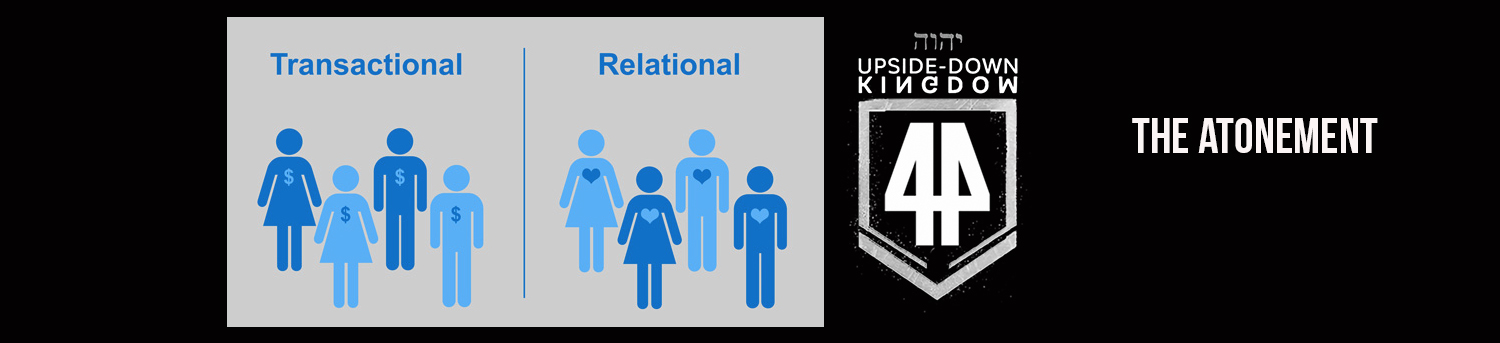
For many Christians, the cross has traditionally been explained using transactional language. We often hear that Jesus “paid our debt,” “bought us back,” or “settled the account” for our sin. Sometimes this language even drifts into the idea that some kind of deal had to be struck between God and Satan, as though humanity had been legally claimed by the enemy and Christ’s death functioned as the payment that secured our release. While these ideas have circulated widely in Christian teaching, they are not actually grounded in the biblical text. The Scriptures never describe the cross as a financial transaction between God and Satan, nor do they suggest that forgiveness required some kind of negotiated payment before God could extend mercy to humanity.

“The world operates through transactions, but the kingdom of God moves through relational covenant interactions.”

Much of this transactional language became especially prominent within Western Christian theology and has been reinforced in certain streams of Christian teaching, particularly within Reformed theology. In these frameworks, the cross is often framed as the place where Jesus paid the penalty for human sin so that God could justly forgive those who believe. While this language has shaped the way many Christians understand the gospel, it raises an important question: does the Bible itself consistently describe the cross in these transactional terms?

When we step back and examine Scripture more carefully, the picture becomes more complex. One of the clearest indications that the cross cannot simply be understood as a payment mechanism is the fact that God forgave people long before the crucifixion. Throughout the Old Testament, God repeatedly forgives His people because of His mercy, covenant love, and faithfulness. David declares, “Blessed is the one whose transgression is forgiven” (Psalm 32), and the prophets frequently speak of God removing sin and restoring His people. These acts of forgiveness occur centuries before Jesus’ death. If forgiveness was already being extended by God prior to the cross, then the cross cannot be understood as the event that finally made forgiveness possible.

The same observation can be made regarding the gift of life. God is consistently portrayed throughout Scripture as the sovereign giver of life. Eternal life ultimately flows from God’s character and His desire to restore creation. While the cross and resurrection stand at the center of God’s redemptive work, the Bible does not suggest that God was unable to grant life until a transaction occurred. The cross reveals and accomplishes something decisive in God’s plan of restoration, but it is not presented as a legal payment (between God and Jesus, or worse, between God and Satan) that suddenly made divine generosity possible.

This is where the New Testament’s description of the cross becomes especially important. When the apostles speak about the work of Christ, they most often describe it using language that is relational, restorative, and victorious rather than transactional. The cross is the place where Christ confronts the powers of sin and death, reconciles humanity to God, and inaugurates the renewal of creation. Rather than focusing on an exchange of payment, the New Testament emphasizes themes such as reconciliation, liberation, purification, and new creation.

Framing the cross transactionally actually creates significant theological and exegetical difficulties. If the cross must function as a payment in order for forgiveness to occur, then numerous biblical passages describing God’s prior forgiveness become difficult to explain. Likewise, the sacrificial language of the Old Testament—centered on purification and restoration—becomes misinterpreted as economic exchange. The transactional model can also distort key New Testament terms such as “ransom,” “redemption,” and “atonement,” which in their original contexts frequently describe liberation from bondage or the restoration of relationship rather than financial payment. When these texts are forced into a commercial framework, the broader narrative logic of Scripture becomes strained and important theological themes are overshadowed.

None of this diminishes the significance of the cross. On the contrary, it helps us see its meaning more clearly. The cross represents the decisive moment in which God, in Christ, enters fully into the depths of human suffering and death in order to overcome them. Through the cross and resurrection, the powers that enslave humanity are defeated, death itself is overturned, and the path to restored communion with God is opened.

There was unquestionably a profound cost in what Jesus did. The cross reveals the depth of divine love and the willingness of Christ to bear the full weight of human brokenness. Yet this cost should not be confused with a transactional payment. The cost belongs to God’s self-giving love, not to a required exchange that humanity somehow owed.

Understanding the cross relationally rather than transactionally also preserves the radical nature of grace. When the gospel is framed as a transaction, it can subtly suggest that salvation operates according to an economy of debt and repayment. In that framework, the Christian life can begin to feel like an attempt to pay God back for what Jesus has done. But the New Testament consistently presents salvation as a gift—freely given by God and received through faith.

There is certainly a covenantal response to this gift. Those who encounter the grace of God are invited into a life of faithfulness, trust, and transformation. But this response is not repayment. It is the natural expression of restored relationship.

In the end, the cross is not the story of a transaction that settles an account. It is the story of God’s love breaking into the world, defeating the powers of sin and death, and restoring humanity to communion with Himself. Christ did not die in order to balance a ledger. He died to rescue, renew, and reconcile creation.

And because of that, the grace we receive is not something we owe back. It is something we are invited to live within.

  1. How have you most often heard the cross explained in Christian teaching?
    • Was it described more in transactional terms (payment, debt, penalty) or relational terms (restoration, reconciliation, victory)?
  2. Why do you think transactional language about the cross has become so common in Christian theology, especially in Western traditions?
  3. What difference does it make theologically if forgiveness was already happening in Scripture before the cross?
    • How does this shape the way we understand what Jesus accomplished?
  4. The New Testament often describes salvation using relational language like reconciliation, adoption, and new creation.
    • Which of these images helps you understand the work of Christ most clearly, and why?
  5. If the cross is primarily about God restoring relationship and defeating the powers of sin and death, how might that reshape the way we think about grace, faith, and the Christian life?

Western Christian theology has often interpreted the atonement through juridical and transactional categories, describing the cross in terms of debt, payment, or penal substitution. While these frameworks have shaped much theological reflection since the medieval period, the narrative structure and conceptual vocabulary of Scripture suggest a different emphasis. This article argues that the biblical witness more consistently presents the work of Christ as the decisive act through which God restores covenant relationship and liberates humanity from enslaving powers. Through examination of the sacrificial theology of the Hebrew Scriptures, lexical analysis of key Greek terms associated with redemption, and reconsideration of texts often interpreted transactionally—particularly Romans 3 and Isaiah 53—this study proposes that the atonement is best understood within a relational and participatory framework. Engagement with patristic theology further demonstrates that early Christian writers emphasized victory over death and restoration of humanity rather than payment or penal substitution. When placed within the broader narrative arc of Scripture—from Eden to new creation—the cross emerges as the climactic act through which God defeats the powers of sin and death and restores humanity to communion with Himself.


Introduction

The doctrine of the atonement lies at the center of Christian theology. Yet the conceptual frameworks through which the cross has been interpreted have varied significantly across the history of the church. Within much of Western theology, particularly since the medieval period, the atonement has frequently been explained through juridical and transactional categories. The cross has been described in terms of debt, satisfaction, and penal substitution, suggesting that Christ’s death functions as the necessary payment required to satisfy divine justice.¹

While such models have exercised considerable influence, they do not necessarily represent the dominant conceptual framework of the biblical narrative. Increasingly, biblical scholars have argued that the New Testament presents the work of Christ primarily as God’s decisive act of covenant restoration and cosmic liberation rather than the settlement of a legal account.²

This perspective aligns with what Gustaf Aulén famously described as Christus Victor, the interpretation that the cross represents the moment in which God confronts and defeats the powers that enslave humanity.³ Within this framework, the atonement is fundamentally relational: the restoration of communion between God and humanity accomplished through Christ’s victory over sin, death, and the hostile spiritual powers.

This article argues that when the atonement is examined within the narrative and cosmological framework of Scripture, the cross emerges not primarily as a transaction but as the climactic act of divine love through which God restores creation and reconciles humanity to Himself.


The Human Condition: Alienation and Dominion

The biblical narrative portrays humanity’s fundamental problem not merely as legal guilt but as alienation from God and subjection to destructive powers.

Genesis introduces this condition through humanity’s expulsion from Eden (Gen 3:23–24). The central consequence of sin is exile from the presence of God and the entrance of death into human existence.

Paul expands this understanding by describing sin and death as reigning powers. In Romans 5:12–14, sin enters the world through Adam and death spreads to all humanity. Sin functions not merely as individual wrongdoing but as a dominion under which humanity lives.⁴

Similarly, Ephesians 2:1–3 describes humanity as living under the authority of “the ruler of the power of the air.” Such language reflects a cosmological worldview in which spiritual forces shape human life and social structures.

Recent scholarship has highlighted the importance of the Deuteronomy 32 worldview, in which the nations are described as being placed under spiritual rulers while Israel remains under Yahweh’s direct authority.⁵ This cosmological background provides an important interpretive context for New Testament discussions of “principalities and powers.”

Within this narrative framework, humanity’s fundamental problem is not merely guilt but enslavement and estrangement. Consequently, the work of Christ addresses both the restoration of relationship with God and the defeat of the powers that sustain humanity’s alienation.


Sacrifice in the Hebrew Scriptures

Transactional interpretations of the atonement often assume that the sacrificial system of the Hebrew Scriptures operates according to payment logic. However, the language and ritual context of sacrifice suggest a different conceptual framework.

The primary Hebrew verb associated with atonement is כפר (kāphar). While often translated “to atone,” the term more broadly signifies to cleanse, purge, or wipe away impurity.⁶ Within Israel’s cultic system, sin is understood as a contaminating force that threatens the holiness of the sanctuary and disrupts the relationship between God and the community.

The Day of Atonement ritual described in Leviticus 16 illustrates this logic clearly. The high priest performs purification rites for the sanctuary and the people, symbolically removing impurity from Israel. The purpose of the ritual is not the payment of a debt but the restoration of covenantal proximity between God and His people.

Jacob Milgrom’s extensive study of Leviticus demonstrates that sacrificial rituals function primarily to purge the sanctuary of pollution caused by human sin rather than to appease divine wrath through payment.⁷

Thus the sacrificial system of the Hebrew Scriptures is fundamentally concerned with restoring relational communion between God and His people.


Greek Lexical Analysis of Atonement Language

The vocabulary used in the New Testament further supports a relational rather than transactional understanding of the atonement.

Hilastērion (ἱλαστήριον)

Romans 3:25 describes Christ as ἱλαστήριον (hilastērion). While sometimes translated “propitiation,” the term most directly refers to the mercy seat of the Ark of the Covenant—the place where the high priest performed the Day of Atonement ritual.⁸

The imagery therefore evokes temple purification and divine presence rather than economic payment.


Lytron (λύτρον)

The Greek term λύτρον (lytron), used in Mark 10:45, refers broadly to liberation from captivity. In Jewish and Greco-Roman contexts, the term often functions metaphorically for deliverance rather than literal financial exchange.⁹

Thus the emphasis lies on release from bondage rather than payment to a specific recipient.


Apolutrōsis (ἀπολύτρωσις)

Another important term is ἀπολύτρωσις (apolutrōsis), often translated “redemption.” The word combines lytron with the prefix apo, emphasizing release or liberation.

Paul uses this term to describe the liberation of humanity from the powers of sin and death (Rom 8:23; Eph 1:7).¹⁰


Katallagē (καταλλαγή)

Paul’s preferred term for the result of Christ’s work is καταλλαγή (katallagē), meaning reconciliation (Rom 5:11; 2 Cor 5:18–19). The word describes the restoration of relationship after estrangement.¹¹

This relational language stands at the center of Paul’s theology of the cross.


Reconsidering Penal Substitution in Romans 3 and Isaiah 53

Two passages frequently cited in support of penal substitutionary interpretations are Romans 3:21–26 and Isaiah 53.

In Romans 3, Paul describes Christ as the hilastērion, evoking the mercy seat of the temple. The imagery points toward purification and restored access to God rather than the satisfaction of divine punishment. N. T. Wright argues that the passage primarily reveals God’s covenant faithfulness rather than a mechanism of penal substitution.¹²

Similarly, Isaiah 53 describes the suffering servant bearing the consequences of the people’s rebellion. Yet the passage emphasizes healing and restoration: “by his wounds we are healed” (Isa 53:5). The servant’s suffering results in the restoration and justification of the many (Isa 53:11), suggesting a restorative rather than strictly punitive framework.

While substitutionary elements are arguably present (two voices), the text does not explicitly frame the servant’s suffering as the satisfaction of divine wrath but rather as the means through which God restores His people.¹³


Patristic Theology and the Atonement

Early Christian theologians overwhelmingly interpreted the atonement through themes of victory, restoration, and participation.

Irenaeus articulated the doctrine of recapitulation, arguing that Christ retraced the steps of humanity in order to restore what had been lost in Adam.¹⁴

Athanasius emphasized that Christ’s incarnation culminates in the defeat of death and the restoration of humanity’s participation in divine life.¹⁵

Gregory of Nyssa described the cross as the moment in which Christ enters the realm of death in order to defeat it from within.¹⁶

These patristic perspectives closely align with the New Testament emphasis on liberation and relational restoration.


Atonement within the Narrative of New Creation

When interpreted within the broader narrative of Scripture, the atonement appears as the decisive turning point in God’s restorative mission for creation.

Humanity’s exile from Eden establishes the central problem of the biblical story: separation from God’s presence. The temple functions as a partial restoration of this communion, yet the prophets anticipate a more complete renewal.

The New Testament presents Jesus as the fulfillment of this expectation. John describes the incarnation using temple language: “The Word became flesh and dwelt among us” (John 1:14).

The resurrection inaugurates the renewal of creation. Paul describes Christ as the “firstborn from the dead” (Col 1:18), signaling the beginning of a new humanity.¹⁷

The biblical narrative culminates in the vision of Revelation 21:3: “Behold, the dwelling place of God is with humanity.”


Conclusion

When interpreted within the narrative and cosmological framework of Scripture, the atonement emerges as God’s decisive act of relational restoration and cosmic victory.

The cross represents the moment in which divine love confronts and defeats the powers of sin and death. Through Christ’s self-giving act, humanity’s exile is reversed, the powers of death are overthrown, and the renewal of creation begins.

The biblical vision of atonement therefore invites a shift away from transactional frameworks toward a more holistic understanding in which the cross is the victorious and relational act through which God reconciles the world to Himself and inaugurates new creation.


Footnotes

  1. Anselm, Cur Deus Homo.
  2. N. T. Wright, The Day the Revolution Began.
  3. Gustaf Aulén, Christus Victor.
  4. James D. G. Dunn, Romans 1–8.
  5. Michael S. Heiser, The Unseen Realm.
  6. William L. Holladay, Concise Hebrew and Aramaic Lexicon.
  7. Jacob Milgrom, Leviticus 1–16.
  8. Leon Morris, The Apostolic Preaching of the Cross.
  9. R. T. France, The Gospel of Mark.
  10. Gordon Fee, Pauline Christology.
  11. Michael J. Gorman, Apostle of the Crucified Lord.
  12. N. T. Wright, The Day the Revolution Began.
  13. John Goldingay, The Message of Isaiah 40–55.
  14. Irenaeus, Against Heresies.
  15. Athanasius, On the Incarnation.
  16. Gregory of Nyssa, The Great Catechism.
  17. Richard Bauckham, The Theology of the Book of Revelation.

Bibliography

Aulén, Gustaf. Christus Victor.
Bates, Matthew W. Salvation by Allegiance Alone.
Bauckham, Richard. The Theology of the Book of Revelation.
Fee, Gordon. Pauline Christology.
France, R. T. The Gospel of Mark.
Goldingay, John. The Message of Isaiah 40–55.
Gorman, Michael J. Apostle of the Crucified Lord.
Heiser, Michael S. The Unseen Realm.
Milgrom, Jacob. Leviticus 1–16.
McKnight, Scot. A Community Called Atonement.
Morris, Leon. The Apostolic Preaching of the Cross.
Rutledge, Fleming. The Crucifixion.
Wright, N. T. The Day the Revolution Began.