Jesus and Egypt

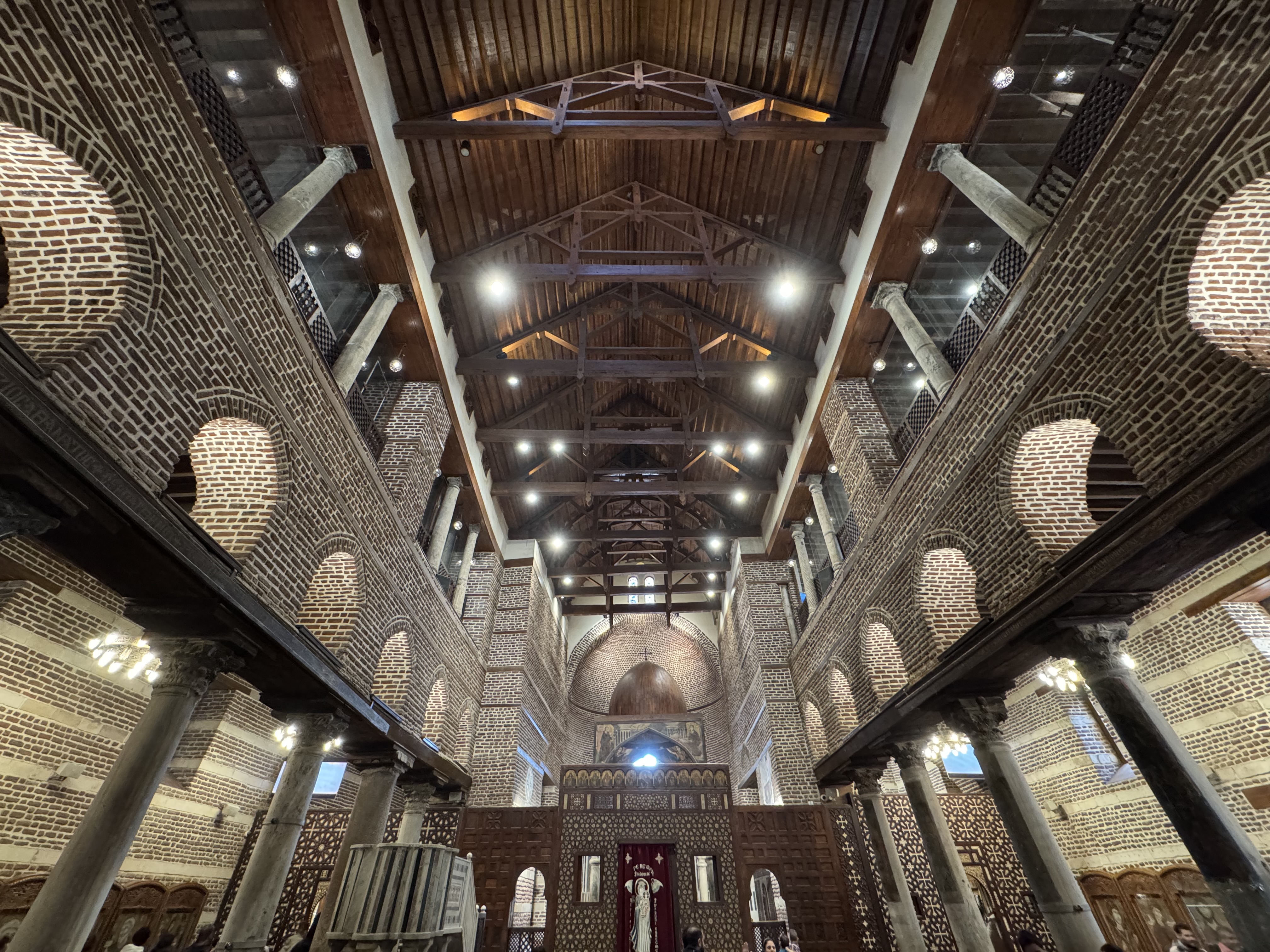
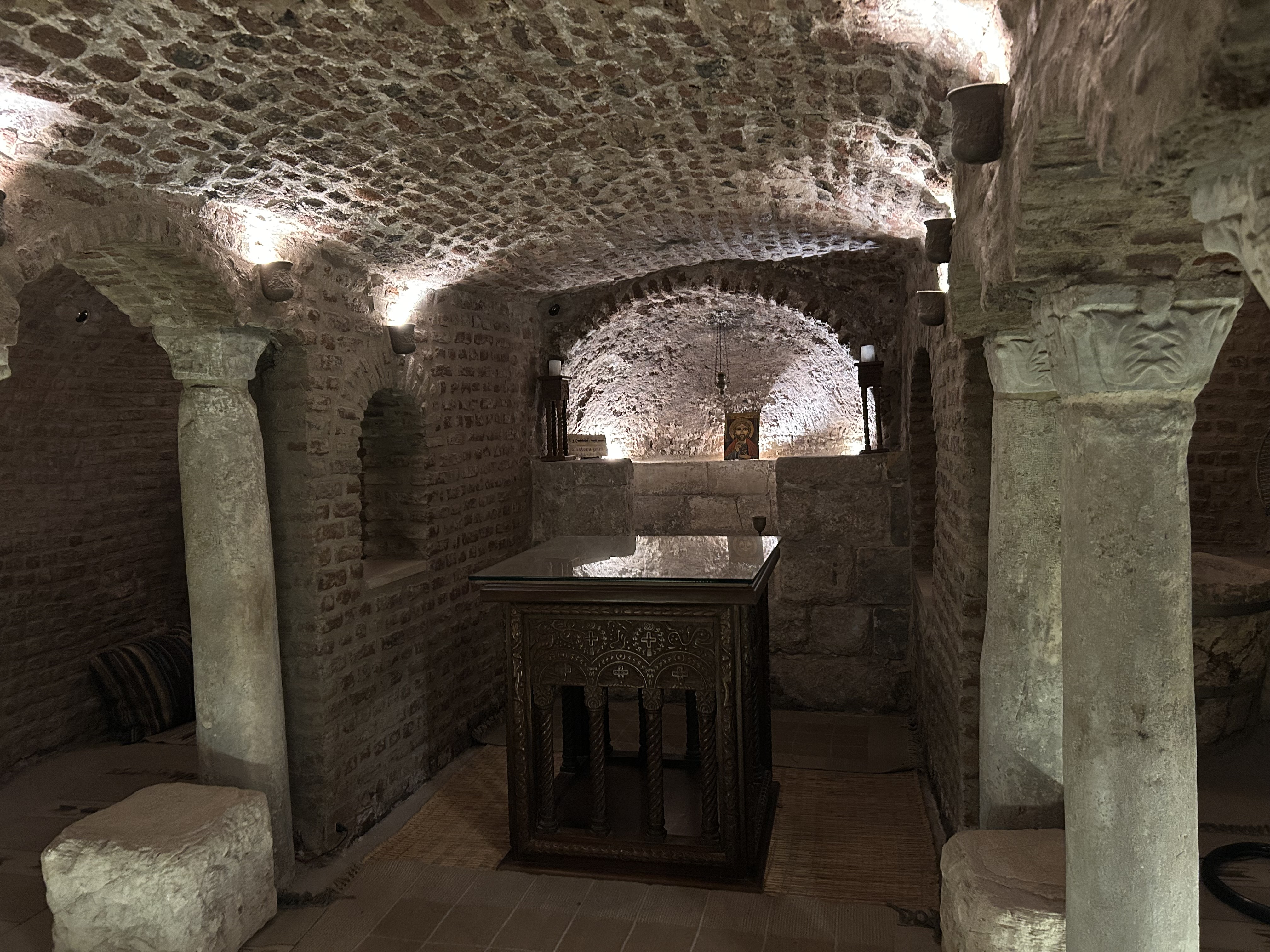
In Egypt today we visited several churches, one of which was The Church of Martyrs Sergius and Bacchus in The Cave, also known as the Abu Serga Church, and is one of the oldest Coptic Christian churches in Egypt, dating back to the 4th century.[1] Tradition holds that Saints Sergius and Bacchus Church was built on the spot where the Joseph, Mary, and the infant Jesus rested at the end of their journey into Egypt.

The flight into Egypt is a story told in Matthew 2:13–23 and in New Testament apocrypha. Soon after the visit by the Magi, an angel appeared to Joseph in a dream telling him to flee to Egypt with Mary and the infant Jesus since King Herod would seek the child to kill him.

You might remember, when the Magi came in search of Jesus, they went to Herod the Great in Jerusalem to ask where to find the newborn “King of the Jews”. Herod became afraid that the child would threaten his throne and sought to kill him (2:1–8). Herod initiated the Massacre of the Innocents in hopes of killing the child (Matthew 2:16). But an angel appeared to Joseph in a dream and warned him to take Jesus and his mother into Egypt (Matthew 2:13). Both Egypt and Judea were part of the Roman Empire, linked by a coastal road known as “the way of the sea”,[2] making travel between them easy and relatively safe.

After Herod passed, Joseph was told by an angel in a dream to return to the land of Israel. However, upon hearing that Archelaus had succeeded his father as ruler of Judaea he “was afraid to go there” (Matthew 2:22), and was again warned in a dream by God “and turned aside to the region of” Galilee. This is Matthew’s explanation of why Jesus was born in Bethlehem in Judea but grew up in Nazareth. Herod died is 4BC, which is stated by Matthew and affirmed by Josephus. Mary and Joseph return to Judah. This is the only time the Biblical Text uses the term “Judah” as a geographical place identifying Judah and Galilee. The text indicates that they first come to Judah but them quickly relocate to Galilee after learning that Archelaus had become the new king who was known to be violent and aggressive.

As an interesting rabbit hole, the beginning and conclusion of Jesus’ parable of the minas in the Gospel of Luke, chapter 19, may refer to Archelaus’ journey to Rome. Some interpreters conclude from this that Jesus’ parables and preaching made use of events familiar to the people as examples for bringing his spiritual lessons to life. Others read the allusion as arising from later adaptations of Jesus’ parables in the oral tradition, before the parables were recorded in the gospels.

Many would deduct the flight to Egypt to fulfill a prophecy by Hosea. Matthew’s use of Hosea 11:1 has been explained in several ways. A sensus plenior approach states that the text in Hosea contains a meaning intended by God and acknowledged by Matthew, but unknown to Hosea. A typological reading interprets the fulfillment as found in the national history of Israel and the antitypical fulfillment as found in the personal history of Jesus. Matthew’s use of typological interpretation may also be seen in his use of Isaiah 7:14 and 9:1, and Jeremiah 31:15. Some have pointed out that “Hosea 11.1 points back to the Exodus, where God’s ‘first-born son’ (Ex 4:22), Israel, was delivered from slavery under the oppressive Pharaoh. Matthew sees this text also pointing forward, when Jesus, the eternal first-born Son (Rom 8:29), is delivered from the tyrant Herod and later brought out of Egypt (2:21).”[3]

The Orthodox Study Bible states that the citation of Hosea 11.1 “refers first to Israel being brought out of captivity. In the Old Testament ‘son’ can refer to the whole nation of Israel. Here Jesus fulfills this calling as the true Son of God by coming out of Egypt.[4] The Anglican scholar N. T. Wright has pointed out that “The narrative exhibits several points of contact with exodus and exile traditions where Jesus’ infancy recapitulates a new exodus and the end of exile, marking him out further as the true representative of Israel.”[5]

The Masoretic Text reads my son, whereas the Septuagint reads his sons or his children;[6] I typically prefer the Septuagint but, in this case, the Masoretic seems more accurate. The Septuagint seeks to find agreement in the plurals of Hosea 11:2 they and them. I bring this up because Luke does not recount this story, relating instead that they went to the Temple in Jerusalem, and then home to Nazareth. However, both texts can be in Harmony without Luke mentioning the flight to Egypt. A theme of Matthew is likening Jesus to Moses for a Judean audience, and the Flight into Egypt illustrates just that theme.[7]

“[Joseph’s] choice of Egypt as a place of exile … was in line with the practice of other Palestinians who feared reprisals from the government; as a neighbouring country with a sizeable Jewish population it was an obvious refuge. And his subsequent avoidance of Judea under Archelaus, and expectation of safety in Galilee, accords with the political circumstances as we know them.”[8]

We also get some strange tales in the extra biblical apocropha. Jesus tames dragons, the trees bow to Him, and the story of the two thieves that later appear on the cross with Him. [9] These stories have certainly influenced Egypt and the Coptic Orthodox Church which was established by Mark, an apostle and evangelist, during the middle of the 1st century (c. AD 42).[10] There are a number of churches and shrines such as the one I visited today marking places where the family stayed.

There is another difficulty here that I should point out. Nazareth is not mentioned in the Old Testament, or by Josephus or any other rabbinical sources.[11] In other words, the quote, “he will be called a Nazarene” is that it occurs nowhere in the Old Testament, or any other extant source. In Judges 13:5 we see a similar clause of Samson but reads “nazirite.” Did Matthew suggest Jesus was intended to have been a Nazirite? Dis the text change and eventually the area became known as Nazareth? Jesus later would not match the description of a first century Nazarite so this has left scholars scratching their heads.

Much of Matthew was likely penned in Hebrew and when you translate this back to Hebrew you find a wordplay that I think answers our difficulty. Isaiah 11:1 states that there shall come forth a rod out of the stem of Jesse, and a Branch shall grow out of his roots:  the Hebrew for branch is נצר (netzer). The priestly clan of the “netzerites” possibly settled in the place which became known as Netzereth/ Nazareth. This leaves us clearly seeing that the title Nazarene alludes not so much to his town of origin as to his royal descent.

At any rate, I hope you enjoyed a venture into my mind and appreciate the way that I view history, theology, and a working through a better lens of agreement within the entire text taking into account several different textures of interpretation. I pray that it deepens your enthusiasm for the Word as it has moved me.

WORKS CITED:

  1. Sheehan, Peter (2015). Babylon of Egypt: The Archaeology of Old Cairo and the Origins of the City. Oxford University Press. pp. 35, 40. ISBN 978-977-416-731-7.
  2. Von Hagen, Victor W. The Roads that Led to Rome published by Weidenfeld & Nicolson 1967. p. 106.
  3. Ignatius Catholic Study Bible, New Testament (2010). San Francisco: Ignatius Press. p. 9. ISBN 978-1586174842
  4. The Orthodox Study Bible (2008). Nashville: Thomas Nelson. p. 1268. ISBN 978-0718003593
  5. Wright, N. T. and Michael F. Bird (2019). The New Testament in its World. London: SPCK; Grand Rapids: Zondervan Academic. p. 590. ISBN 978-0310499305
  6. Brenton’s Septuagint Translation of Hosea 11, accessed 4 December 2016
  7. Harris, Stephen L., Understanding the Bible. Palo Alto: Mayfield. 1985. “Matthew” pp. 272–285
  8. France, R. T. (1981). “Scripture, Tradition and History in the Infancy Narratives of Matthew”. In France, R. T.; Wenham, David (eds.). Gospel Perspectives: Studies of History and Tradition in the Four Gospels. Vol. 2. Sheffield (UK): JSOT Press. p. 257. ISBN 0-905774-31-0.
  9. The Gospel of Pseudo-Matthew at The Gnostic Society Library, Christian Apocrypha and Early Christian Literature
  10. Meinardus, Otta Friedrich August (1999). “The Coptic Church: Its History, Traditions, Theology, and Structure.”. Two Thousand Years of Coptic Christianity. American University in Cairo Press. p. 28. ISBN 9789774247576. JSTOR j.ctt15m7f64.
  11. Perkins, P. (1996). Nazareth. In P. J. Achtemeier (Ed.), The HarperCollins Bible dictionary, pp. 741–742. San Francisco: HarperCollins. ISBN 0-06-060037-3.
  12. Galilee Archived 9 May 2006 at the Wayback Machine.
Is Christmas Christian?

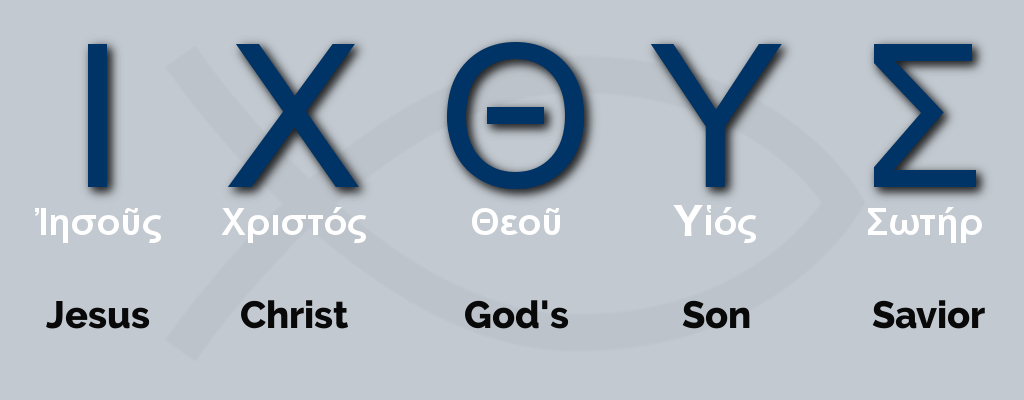
Is Christmas Pagan? Well sort of yes, sort of not. It’s a great discussion. I’ll frame it first like this as an easy reference. Some Christians are triggered when people say XMASS instead of Christmas, saying things like your taking “Christ” out of Christmas. Well actually X has been a symbol for Christ since at least His death. IXOYE, the Christian Fish Symbol, (ichthus) means “Jesus Christ God’s Son Savior” in Greek. Christ in Greek starts with the X symbol or character. Since Greek is more Biblically correct than English XMass may actually be a more Bible way of saying Christmas than “Christmas” is. As I will go on to show. It is really a similar argument with Christmas as a whole. Is it Pagan? Well yea, there are some pagan things, are we taking back what is Biblical (Christ and celebrating His birth) as ambassadors of truth? Yea I hope so! In that way some of this gets a bit dicey and comes down to how you’re going to think about it or frame it. I love it that the world celebrates the Birth of Jesus! But I want my readers to work through this on your own, so as usual, nothing is spoon fed. Here are some notes, good luck!

  • Dec 25, -“unconquered son” (Christians stole this day from the Pagans) Not really. There is no reason to conflate some pagan festivity no one cares about with Christmas. If there was a conspiracy back in the fourth Century, then St. Augustine would likely have said something about it. What he did say was that when the barbarians came to sack Rome, they left the churches alone, out of respect for traditions that were foreign to them, but which they could see were clearly holy.
  • It likely is a result of mixed Jews and Christians trying to figure out how to be unified in the first few centuries after Christ. Some are aware that during the reformation England banned Christmas in 1647 in some part because of connections to paganism. But the reformation had a lot of problems this really shouldn’t surprise anyone. The accusation that Christmas was usurped from Sol Invictus is probably a result of works of the puritans of the 16/17th Century England.
  • In America Christmas was banned between the years of 1659-1681. Christmas as we know it really didn’t start happening until the late 1800’s and even then, it was foreign to most people. Puritans then where preaching and distributing literature denouncing such celebration. Christmas really became what we think of it today, when in 1843 Charles Dickens wrote “A Christmas Carol”.
  • If we look at the outlook of the early Western Church (and by Western, I mean both the Latin Catholics and the various Eastern Orthodoxies) towards pagan life and rituals in general, its abundantly clear that they saw it with utter disgust.
  • Incensing is also interesting. In the Torah it signified holiness, yet later within some orthodoxy it is outright condemned. For them, it was nothing more than a pagan remnant that would defile Christianity, if adopted. Lactantius, the 4th Cent. Christian writer and one of Constantine’s main advisers condemns it in his book Institutiones Divinae. Hippolytus of Roma omits the use of incense entirely in his work, Apostolic Traditions. Of course, Constantine was a mess.
  • Accusing the Roman Church of usurping/adopting an entire pagan festival and rebranding it as Christmas to gain pagan converts, when it was repulsed by something so frivolous as a stick of incense which it perceived to be pagan, is in the realm of the absurd.
  • The Roman Empire wasn’t the only place with Christians in the 4th Century. There is no evidence that Sol Invictus was observed anywhere outside of the borders of the Roman Empire. Earliest record of Sol Invictus being celebrated on the 25th of December is from AD354. There is little evidence to suggest it was celebrated before 4th Century in Rome. But we know that the Syriac Christians were already celebrating Christmas (although it was considered a minor feast leading up to Epiphany) in the last week of their season of Subbara, which falls on December in the Gregorian Calendar – this practice dates from at least the mid-4th Century.
  • During the early centuries AD, the Jews clearly did not give Hanukkah much importance, as the Mishnah obviously omits it. Neither does Hanukkah have any theological connotations – after all, it’s kept for the memory of the Maccabees. Christianity had no need to find a replacement for an obscure Jewish holiday. But I do agree that some Christian communities, especially the ones with Jewish origins, like the Christians of St’ Thomas of Kerala, do observe some rituals reminiscent of Hanukkah. But they do it in the week of Epiphany, not the week of Christmas.
  • Christ was likely born on Sep 11, 3bc – Yes, I know some think 4BC was the death of Herod but that is definitely not concrete.
  • It was winter, and the Festival of the Dedication of the Temple was being celebrated in Jerusalem. Jesus was walking in Solomon’s Porch in the Temple, when the people gathered round him and asked, “How long are you going to keep us in suspense? Tell us the plain truth: are you the Messiah?” – John 10: 22 The Hanukkah festivals that Jesus likely took part in was similar enough to Christmas in ritual and custom to assume that early Christians continued with the festival in honor of the birth of Jesus – that might well have fallen on the same day of the year.
  • The Feast of the Lights (Hanukkah or ‘Festival of Dedication’) took place for two days on the twenty-fifth and twenty-sixth days of Kislev starting with the lighting of candles on the evening of the twenty-fourth. (The Judaic month of Kislev is almost the same as December.) Candles were then lit for a further six or possibly eight days. The specific reason for the festival of Hanukkah is to celebrate the victory of the Maccabees over the Seleucids and the result of that victory, which was the re-dedication of the altar in the Temple after three years when no services took place. In general, it celebrates religious freedom, the light that was lit in Israel for all people, and the spread of that light throughout the world.
  • The date was of particular importance in the Greek /Roman calendar and in the calendars of many of the ancient societies. On or roundabout this day the star Sirius (the brightest of all stars) that flies behind the earth in its path around the Milky Way is right overhead at midnight. When Sirius is overhead at midnight it means that the sun is at its furthest south and that summer is coming again. For this reason, the date had been associated in many ancient and not so ancient religions with the birth of a god or a new period of religion. It was therefore no accident that Antiochus Epiphanes offered the first sacrifice to Zeus Olympios in the Temple on this date in 167 BCE. It was intended to show that a new period of rule of the Greek gods over the land had begun. Judah Maccabeus would have been fully aware of this and made sure that the first Hanukkah also fell on 25 December 164 (165) BCE to counter the Greek claim. (Now upon the same day that the strangers profaned the Temple, on the very same day it was cleansed again, even the five and twentieth day of the same month, which is Kislev – II Maccabees 10: 5)
  • Persia was different from the other countries in their beliefs around Sirius and used the star to make predictions. This is based either on changes in color (white, blue, emerald) the star undergoes (in the past there were times when it has appeared red) or on the positional shift in relation to the background stars due to the gravitational influence of a white dwarf companion star. Because these changes are minute and dependent on great knowledge, it is no surprise that nobody, but the Magi noticed them. (This would explain why Herod and the scribes did not notice it. If a huge comet hung over Bethlehem, millions of people would have turned up, as they were strong believers in the magic of stars.)
  • Because it is closely linked with the Feast of the Tabernacles (Succoth), so close that it is even called that in some communities as an interchangeable title; and now we see that that ye keep the Feast of Tabernacles in the month Kislev – II Maccabees 1: 9. To the original promise made in the desert by the festival of Sukkoth (that one day Israel would no longer live in tents but in houses) the important facet of lights were added. With the rededication of the Temple, came the profound moment of the lighting of the candelabra. They made also new holy vessels, and into the temple they brought the candlestick . . . and the lamps that were upon the candlestick they lighted, that they might give light in the temple – I Maccabees 4: 49 – 50. Josephus said (Antiquities of the Jews, 12: 7: 7), and from that time to this we celebrate this festival, and called it Lights. I suppose the reason was, because this liberty beyond our hopes appeared to us; and that thence was the name given to that festival.
  • The festival is supposed to be a happy time in accordance with I Maccabees 4: 59 – the days of the dedication of the altar should be kept in their season from year to year by the space of eight days, from the five and twentieth day of the month Casleu, with mirth and gladness. From the earliest, the festivalgoers bare branches, and fair boughs, and palms also, and sang Psalms – II Maccabees 10: 7.
  • Israel in winter is green as this is the time of the rains and what snow there is (if at all) quickly melts. Bringing greenery into the home therefore has nothing to do with the pagan midwinter festival but with the promise made in the desert and celebrated during the Feast of the Tabernacles.
  • The twenty-fifth of December (Kislev) that became important to Christianity together with joyous songs and the Christmas tree and lights all originated in Hanukkah.
  • Dies Natalis of Sol Invictus, or that is the birthday of the unconquerable sun. It is also called Saturnalia as it Honors the deity Saturn. Saturn was worshiped for agricultural purposes. This was later celebrated by the Romans as Dies Natalis of Sol Invictus. It celebrated the renewal of light and the coming of the new year. What day was it celebrated on? You guessed it December 17-23 and 25. Saturnalia was celebrated with feasting, partying, and gifts. Saturnalia
  • As the Roman empire came under Christian rule pagan holidays were added to help convert pagans to Christianity. You see this mainly under emperor Constantine’s rule. The people whom the Romans conquered had their “religion” and celebrations added to the Romans celebrations.
  • The names of Saturnalia where later changed to take on a more Christian aspect. The church commemorated December 25 as Jesus’s birthday. The church got pagan converts, and the pagans simply got to keep their holidays. 
  • What about Mithra? Well that is also a good conversation. Mithra the Pagan Christ

Dr. Will Ryan

NOTE: The best general and easily understood book I have yet seen on ‘Jewish’ holidays is ‘Guide to Jewish Holy Days’ by Hayyim Schauss, published in paperback by Schocken Books of New York in 1962.

Here is more on Christmas: Unfortunately, the churches audio video was not great, but it still has some good content.

The Feast of Jesus (Christmas)

Yesterday my family joined our extended Jesus family at Beloved Church in Lena for Christmas Eve Service. Dr. Steve Cassell at one point emphasized the importance of food at Christmas making an allusion to the gathering around food being a central theme of the word, yet eating too much, gluttony can be a sin. As with many things in the scripture and taught be Jesus, the table represents something that can be the source of sin (worldly pleasure) or the source of great joy (heavenly pleasure). I encourage you to shepherd people humbly to Joy this Christmas, bring heaven to earth. Let the Table lead you to Joy.

If you have ever experienced a seder meal, you likely realize a lot of the connections of Jesus and the meal. As this article will not be exhaustive as there are several great books on this subject, I would like to point out something you may not have considered that hinges around the image of the table and the invitation of Jesus.

Jesus offers himself, a ravenous feast. The Hebrew word ‘akal takes on the idea of complete consumption, licking the plate clean -the Levitical meal, the holy fire that consumes the sacrifice.  A word fit for a Christmas meal that reaches back through the ages to father Jacob as Isaiah 58:14 suggests.  So, what is it that Jesus offers at the table to his disciples or to us today? What was the central message of the table? What do we devour in this feast?

Jesus offers an inheritance through complete devotion. Unfortunately, this word (inheritance) means something different to us than it did in the times of Jesus. It is associated today with money and likely brings to mind family bickering (Jesus wanted little to do with the money of the world). Today it means what we get when someone dies. At the time of Christ the inheritance was celebrated and handed down during your life not as a result of death. Jesus didn’t have that in mind, although death was a part of the plan, the big picture was quite the opposite, Jesus offered himself as the nakhalah, the portion given you by legacy that can’t be bought or earned, passed down to you as a member of the family that you were adopted into, your greatest gift that would in turn be completely consumed in your life mission to offer the same legacy to others through devotion at the table through your life. Jesus offers himself primarily to us as life here and now. In theology we call this the primary message. Jesus offered himself that we may have life (as we die to ourselves in humility) and exceeding joy here and now, the bonus is heaven and the recreated earth to come. “Heaven” (pie in the sky thinking) was never meant to be the primary message, yet so many Christians today haven’t grasped the joy offered through Jesus here on this earth, they diminish this feast of Jesus to simply be something to come.

Yes, in this life we will have tribulation and trials, but the plan for you is to feast, to experience great joy, to be part of the great celebration that is unending, to claim the redeemed, sanctified life to its fullest in abundance through Him. You are a royal priest that is grafted into Eden. In Numbers 18:20 God is passing around the inheritance and the inheritance is Himself. Feast yourself on God.  We are finally home, back at the Garden when He gave the very first command, ‘akol tokel, literally, “in feasting you shall feast” (Genesis 2:15). 

Unfortunately for many life doesn’t feel like this and Christmas is difficult, (and don’t get me started on the pagan rituals etc…) If you aren’t living in the joy that Jesus offers, I would encourage you to make changes to move that way in the new year. Surround yourself with a tribe that is devoted to Jesus and living lives that are completely fulfilled and feast on Him. Dive into the Word that leads to Eden. Spend less time doing what the world says you should do and more time seeking the joy that Jesus intended for you here and now and yet to come. Cut off unhealthy relationships and actions and surround yourself with those that thrive in the kingdom of Jesus doing things that represent the Joy of the King. Don’t buy into the ways of the world, get out, run to Jesus and don’t look back.

Consider this year as you come to the Christmas table, to make this resolution for you and your family. Feast on the glory and wonder and love of God, feasting on His provision and plan, feasting on the day our return to the Kingdom was sealed.  This is the Redemption Feast, and it isn’t nearly as much about the birth as it is about the victorious plan that was won at the cross and ascension of our Lord.

Eat!  Rejoice!  And sing with the angels, “Peace on earth and good Will (food?) for men.”