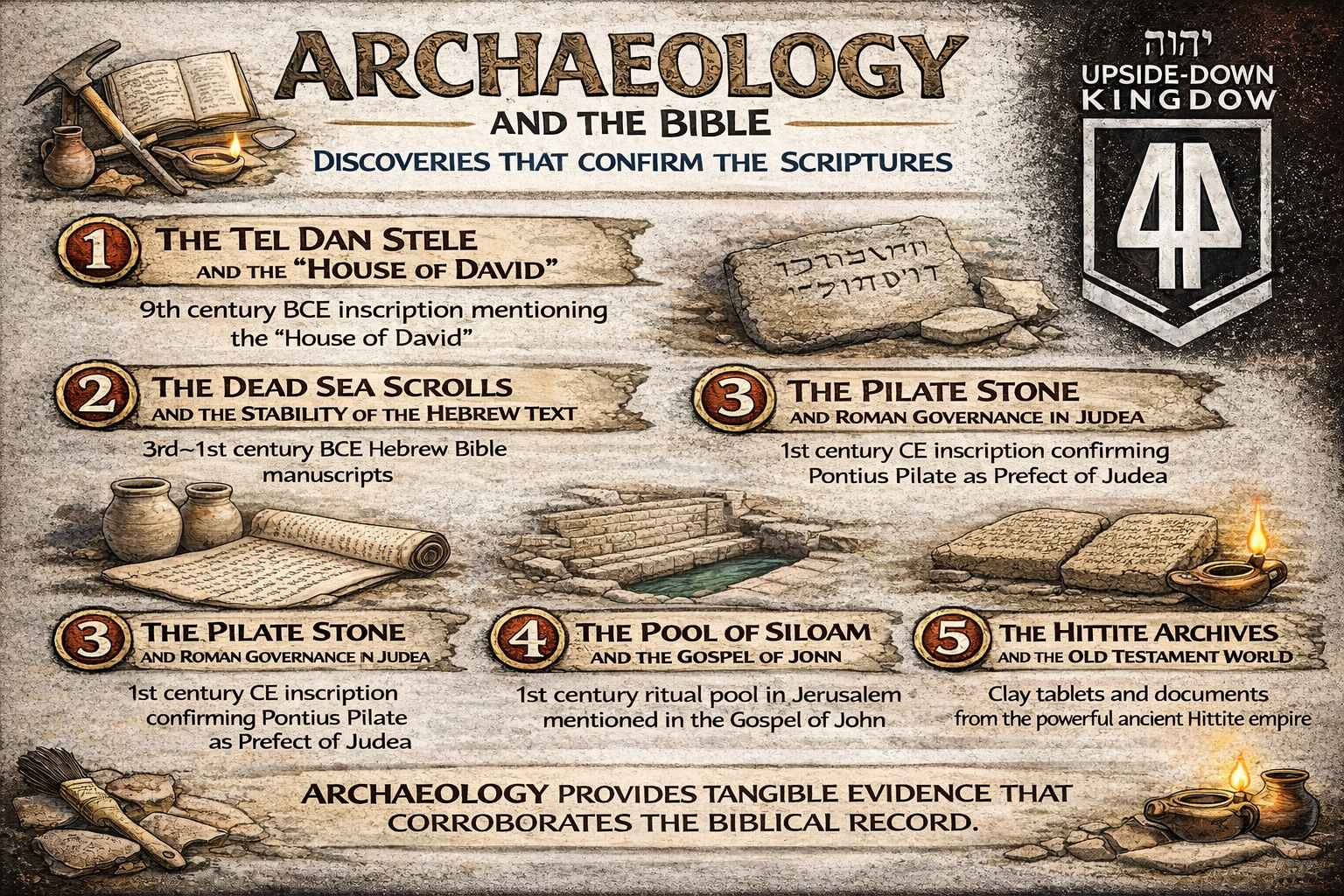
Biblical archaeology does not “prove” the theological claims of Scripture in a strict philosophical sense; however, it does provide a material context that can either corroborate or challenge the historical plausibility of the biblical narrative. Over the past century and a half, a series of major archaeological discoveries have significantly strengthened confidence in the Bible’s historical setting, literary transmission, and cultural coherence. This article surveys five of the most widely discussed discoveries and explores their implications for textual apprehension—that is, how readers understand, interpret, and situate the biblical text in its historical world.
1. The Tel Dan Stele and the “House of David”
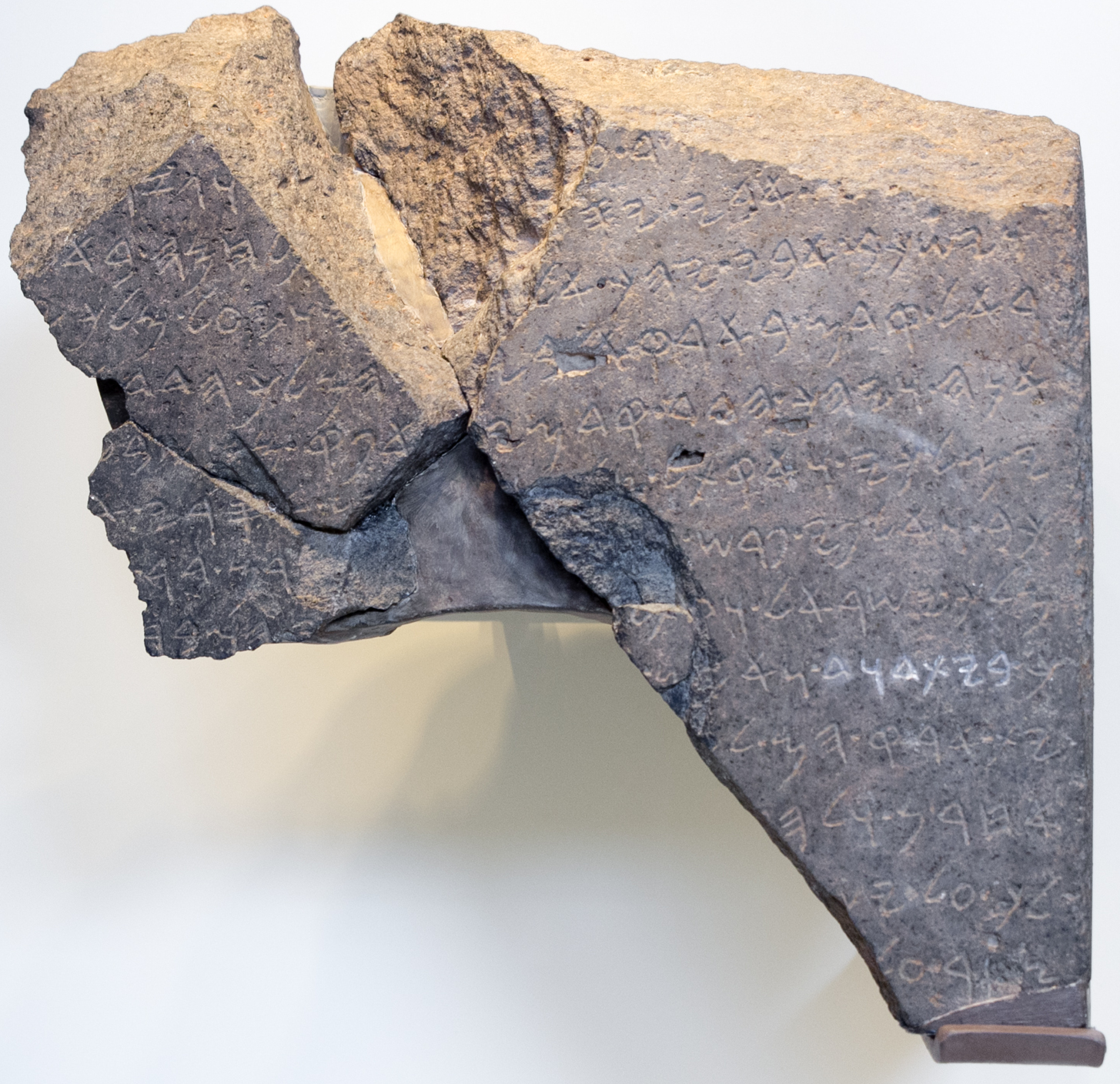
Discovered in 1993–1994 at Tel Dan in northern Israel, the Tel Dan Stele is an Aramaic inscription dating to the 9th century BCE. It contains the phrase bytdwd (“House of David”), which most scholars interpret as a dynastic reference to King David.
Significance
Prior to this discovery, some minimalist scholars argued that David was a legendary or composite figure. The Tel Dan Stele provides the earliest extra-biblical reference to David’s royal line, lending historical credibility to the Davidic monarchy described in 1–2 Samuel and Kings.
Implications for Textual Apprehension
The stele reinforces that the biblical authors were not inventing a fictional dynastic origin, but were engaging a known political reality. This strengthens the plausibility of the historical framework within which the theological claims of covenant (2 Samuel 7) are embedded.
2. The Dead Sea Scrolls and the Stability of the Hebrew Text
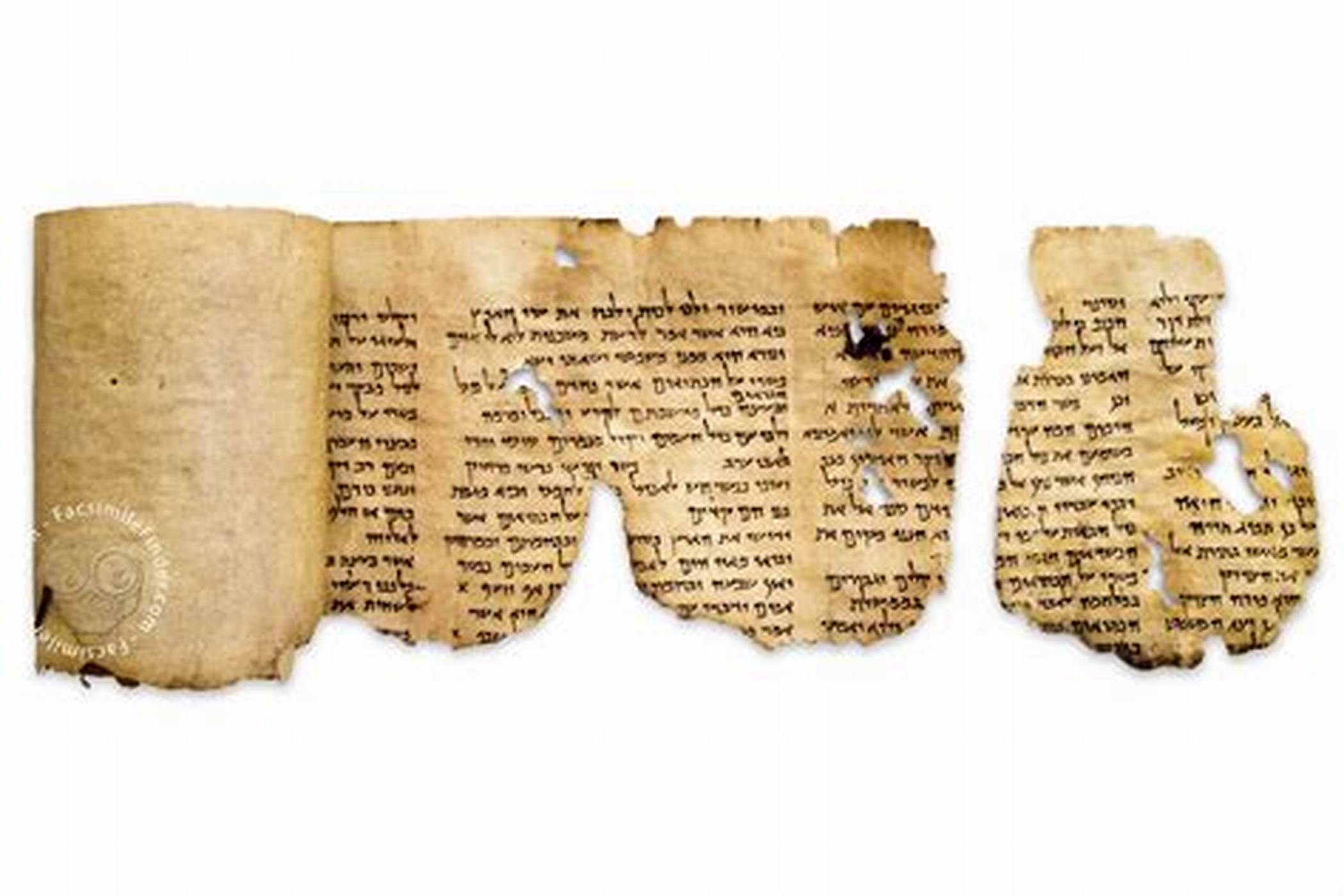
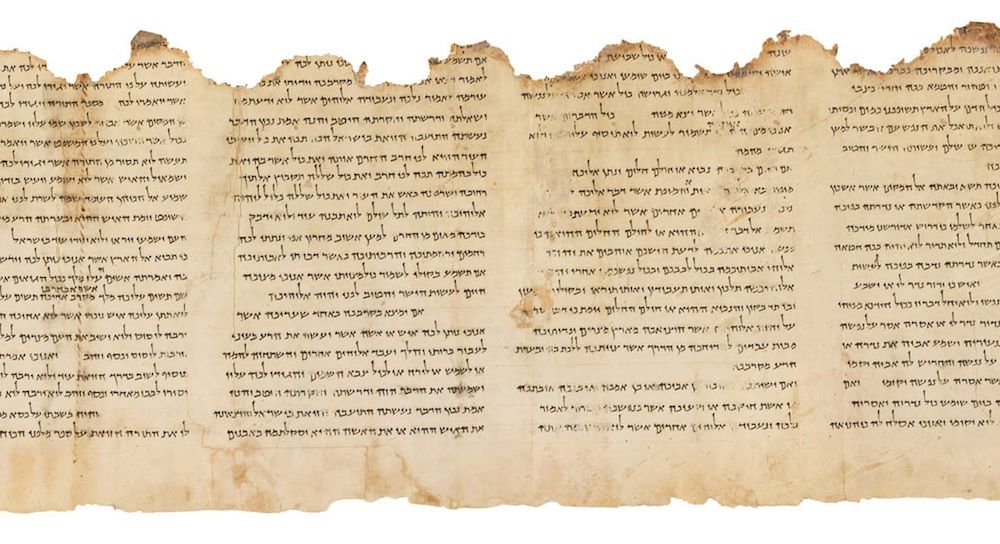
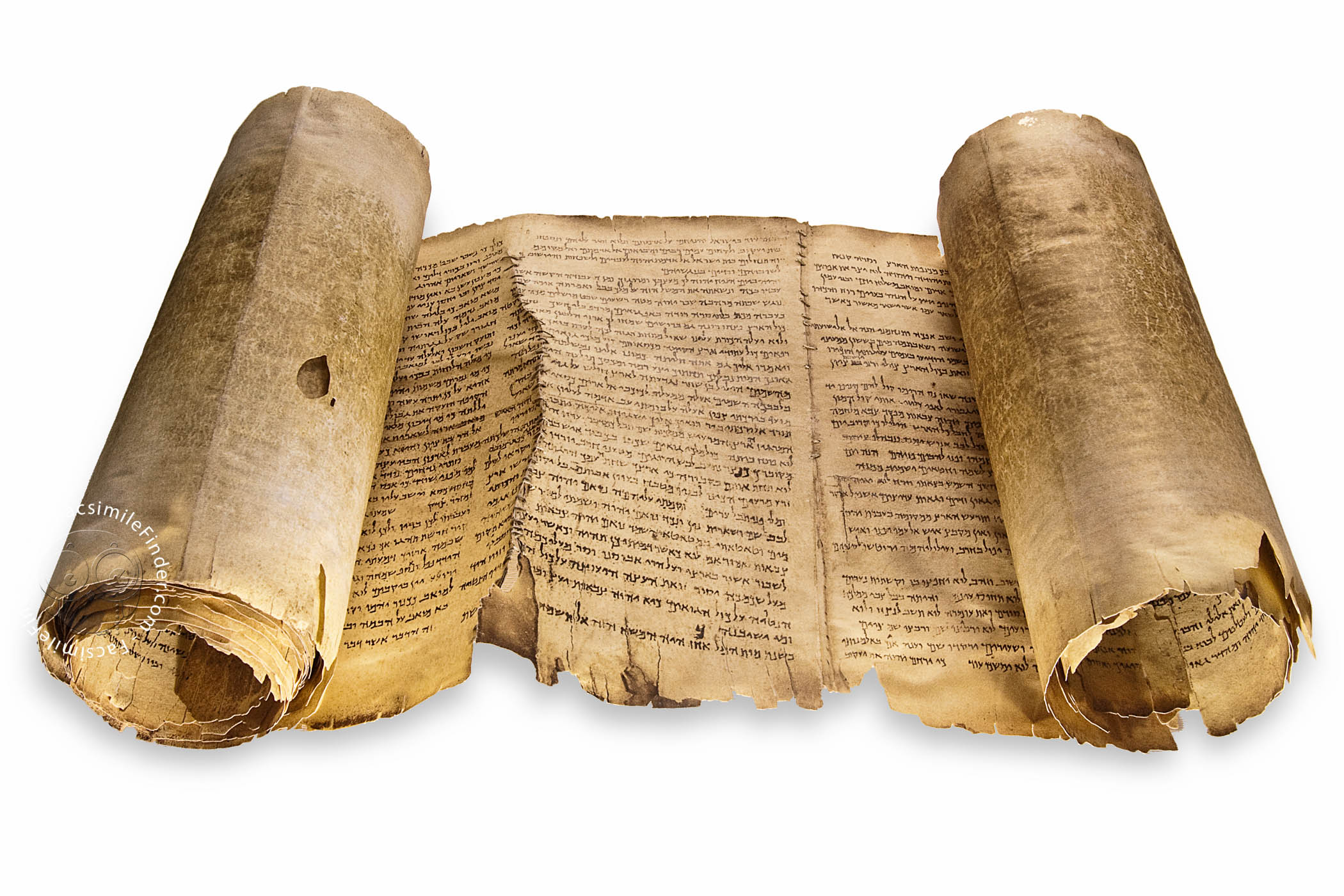
Discovered between 1947 and 1956 near Qumran, the Dead Sea Scrolls include manuscripts of nearly every book of the Hebrew Bible, some dating as early as the 3rd century BCE.
Significance
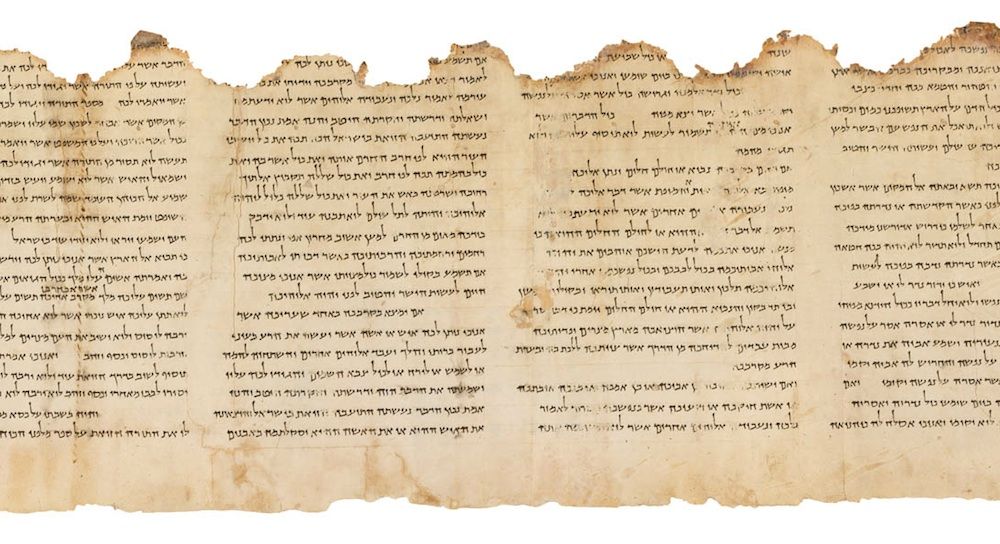
Comparison between the Great Isaiah Scroll and later Masoretic manuscripts (c. 10th century CE) shows remarkable textual stability across nearly a millennium of transmission.
Implications for Textual Apprehension
The scrolls dramatically reinforce the reliability of the textual tradition behind modern Old Testament translations. They also demonstrate that the textual communities of Second Temple Judaism transmitted Scripture with extraordinary care, supporting the assumption that the biblical text used in theological argumentation today is substantially consistent with ancient forms.
3. The Pilate Stone and Roman Governance in Judea
In 1961, excavations at Caesarea Maritima uncovered a limestone block bearing a Latin inscription that includes the name Pontius Pilatus, the Roman prefect of Judea referenced in the Gospels.
Significance
The inscription confirms the historical existence and title of Pontius Pilate, validating the Gospel accounts (e.g., Matthew 27; John 19) within a known Roman administrative structure.
Implications for Textual Apprehension
The Gospels demonstrate familiarity with Roman provincial governance, titles, and political realities. The Pilate Stone situates the crucifixion narrative within a verifiable administrative context, underscoring that the passion accounts are anchored in real historical governance rather than later legendary development.
4. The Pool of Siloam and the Gospel of John
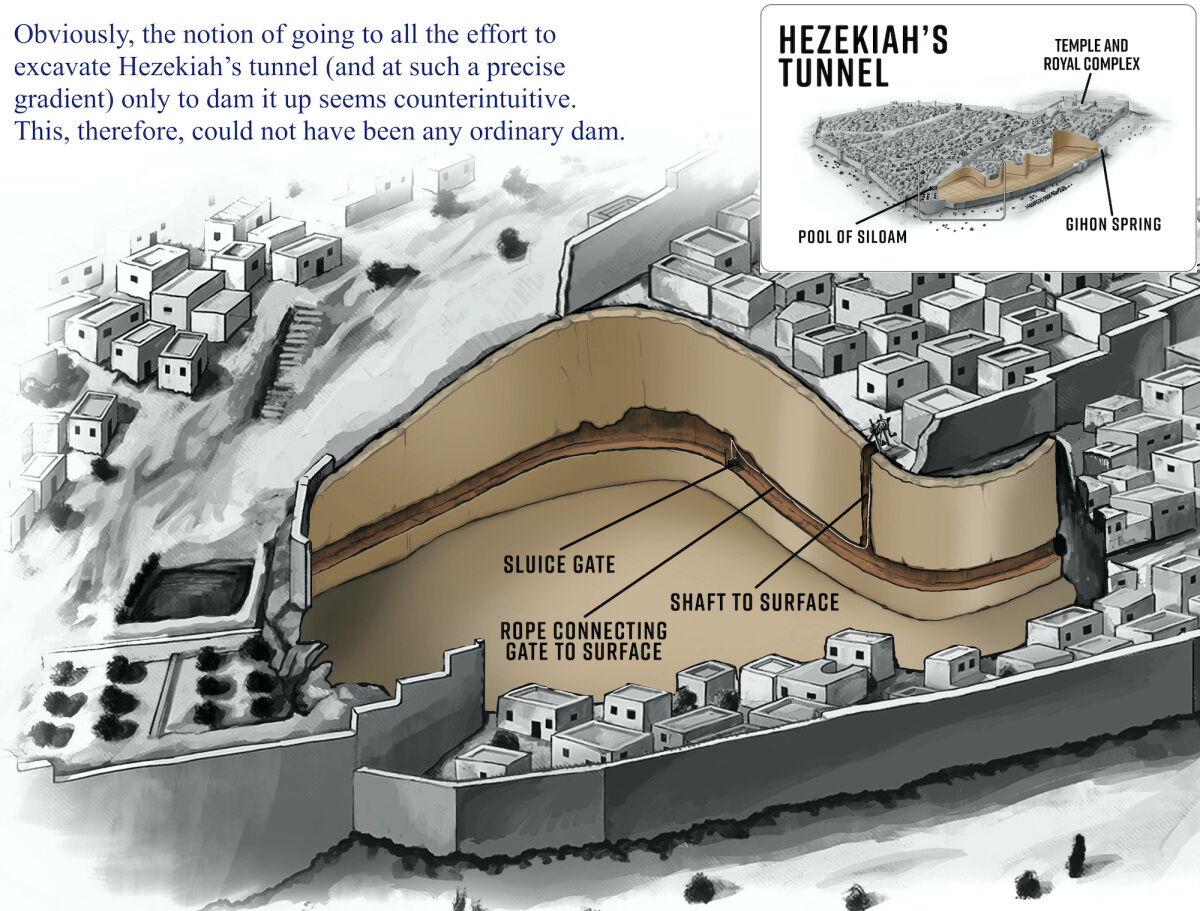
In 2004, archaeologists uncovered the Second Temple–period Pool of Siloam in Jerusalem, referenced in John 9 as the site where Jesus healed a blind man.
Significance
The discovery confirmed the pool’s size, location, and function as a major ritual immersion site in first-century Jerusalem.
Implications for Textual Apprehension
The Gospel of John is sometimes accused of being theologically rich but historically imprecise. However, the accurate topographical detail regarding the Pool of Siloam strengthens confidence that the Johannine narrative reflects genuine knowledge of Jerusalem’s geography prior to its destruction in 70 CE.
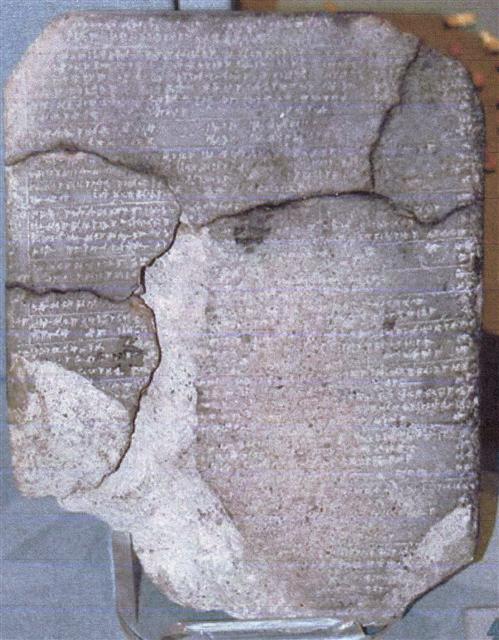
5. The Hittite Archives and the Old Testament World
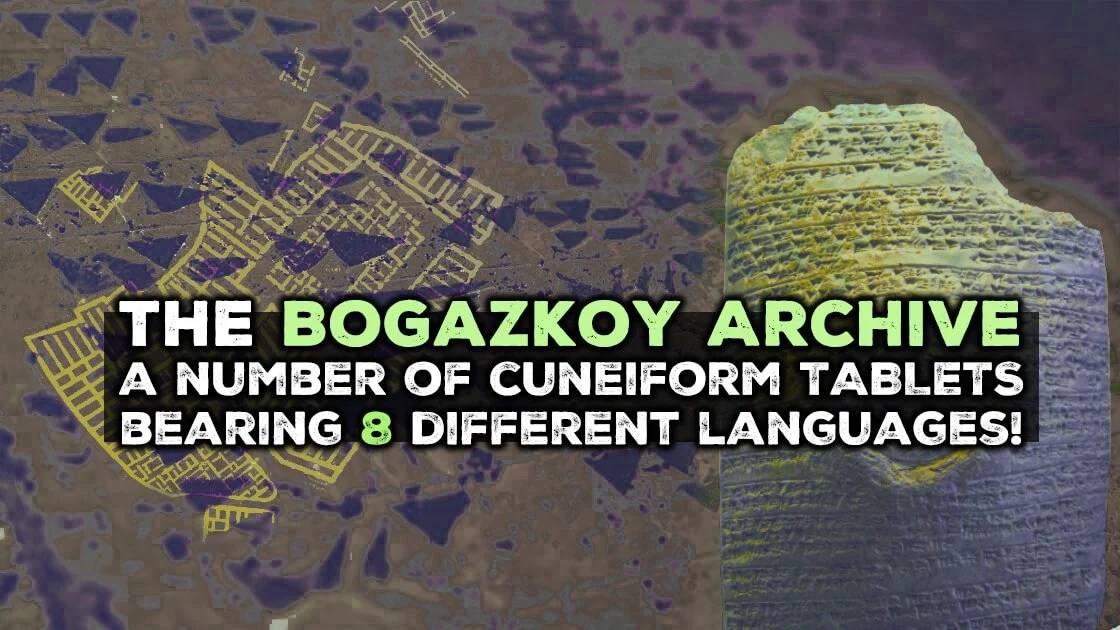
Nineteenth-century critics doubted the biblical references to the Hittites (e.g., Genesis 23; 2 Kings 7), considering them fictional. Excavations at Hattusa (modern Boğazköy, Turkey) uncovered a vast Hittite empire with extensive archives.
Significance
Thousands of cuneiform tablets revealed a sophisticated political culture, including covenant treaty structures strikingly similar to biblical covenant forms (e.g., Deuteronomy).
Implications for Textual Apprehension
The discovery reframes the Old Testament covenant texts as belonging to a recognizable Ancient Near Eastern literary genre. This supports readings of Deuteronomy and related texts as historically situated covenant documents rather than later theological inventions.
Conclusion
These five discoveries do not “prove” the theological truth claims of Scripture; however, they demonstrate that the Bible emerges from a historically grounded world that is increasingly accessible through archaeology. For biblical interpreters, this matters deeply. Theological claims in Scripture are not abstract philosophical propositions detached from history; they are embedded in real people, places, languages, and political structures. Archaeology, therefore, strengthens the plausibility of the biblical narrative and refines our interpretive lens, enabling a more historically responsible reading of the text.
Discussion Questions
In what ways does archaeological corroboration strengthen (or fail to strengthen) theological confidence in Scripture?
How should interpreters balance archaeological data with literary and theological analysis when reading biblical narratives?
Does the Tel Dan Stele definitively prove the historical David, or does it simply make his existence more plausible? Why does this distinction matter?
What does the textual stability demonstrated by the Dead Sea Scrolls imply for modern debates about biblical authority and inspiration?
How do discoveries such as the Hittite treaties reshape our understanding of covenant language in Deuteronomy and the broader Old Testament?
Selected Bibliography
Archaeology and the Bible
Dever, William G. What Did the Biblical Writers Know and When Did They Know It? Grand Rapids: Eerdmans, 2001.
Kitchen, K. A. On the Reliability of the Old Testament. Grand Rapids: Eerdmans, 2003.
Hoffmeier, James K. The Archaeology of the Bible. Oxford: Lion, 2019.
Mazar, Amihai. Archaeology of the Land of the Bible, Vol. 1. New York: Doubleday, 1990.
Specific Discoveries
Biran, Avraham, and Joseph Naveh. “The Tel Dan Inscription.” Israel Exploration Journal 45 (1995): 1–18.
Cross, Frank Moore. The Ancient Library of Qumran and Modern Biblical Studies. Grand Rapids: Baker, 1995.
Taylor, Joan E. The Essenes, the Scrolls, and the Dead Sea. Oxford: Oxford University Press, 2012.
Bond, Helen K. Pontius Pilate in History and Interpretation. Cambridge: Cambridge University Press, 1998.
Reich, Ronny, and Eli Shukron. “The Pool of Siloam in Jerusalem.” Biblical Archaeology Review 31.5 (2005): 16–23.
Our trip to Israel was truly incredible. I have created a virtual tour re-stepping our journey as if you were one of the 12. This post will seek to deliver a theologian’s skeptical and deep look into the probable path of Jesus. It is a virtual tour of the steps He walked and will serve as a great tour guide to perhaps the best understanding of what really took place 2000 years ago. Blessings.
Qumran Caves and the Dead Sea Scrolls
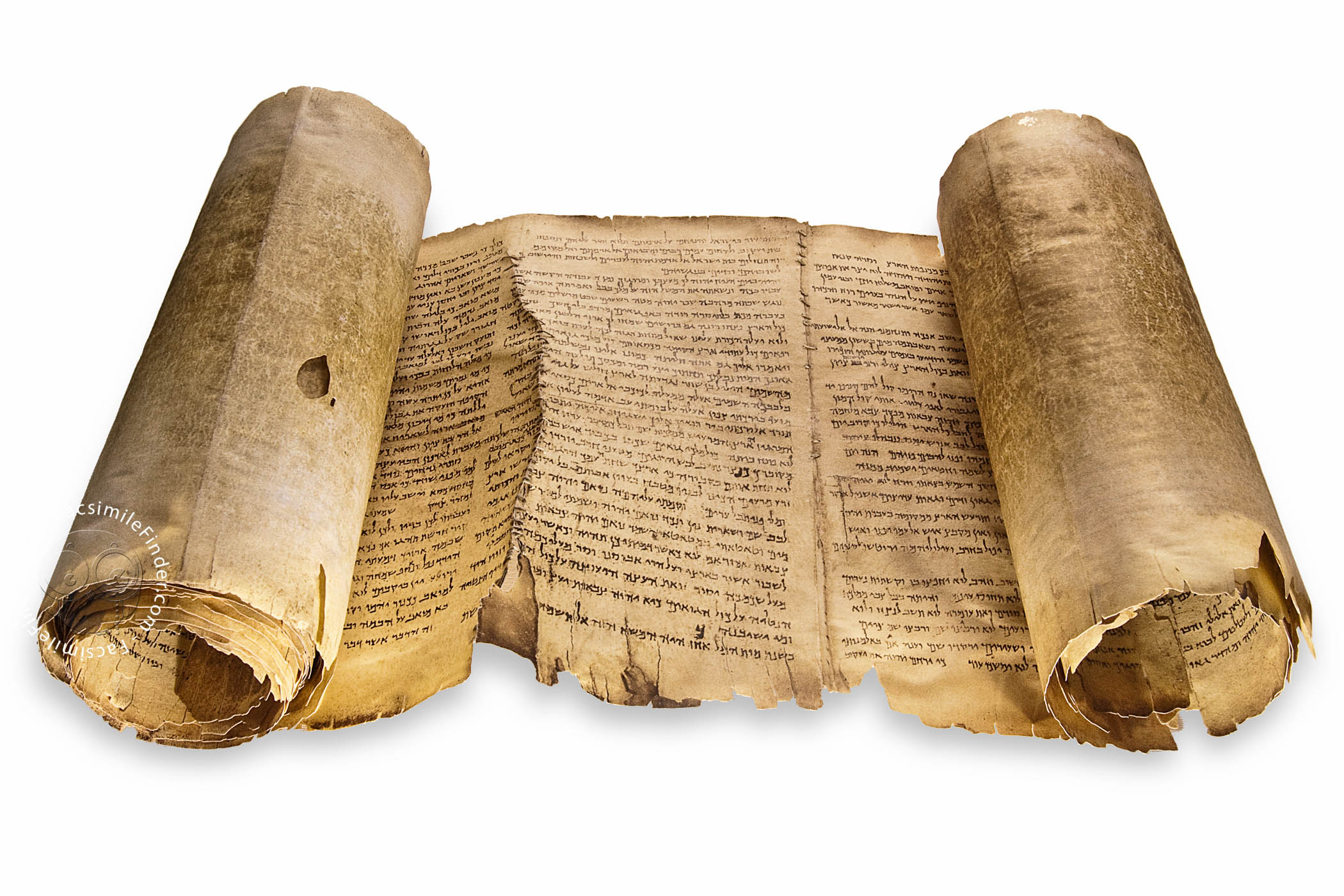
The Dead Sea Scrolls, also called the Qumran Caves Scrolls, are a set of ancient Jewish manuscripts from the Second Temple period. They were discovered over a period of 10 years, between 1946 and 1956, at the Qumran Caves near Ein Feshkha in the West Bank, on the northern shore of the Dead Sea. Dating from the 3rd century BCE to the 1st century CE,[3] the Dead Sea Scrolls include the oldest surviving manuscripts of entire books later included in the biblical canons, including deuterocanonical manuscripts from late Second Temple Judaism and extrabiblical books. At the same time, they cast new light on the emergence of Christianity and of Rabbinic Judaism.[4] Almost all of the 15,000 scrolls and scroll fragments are held in the Shrine of the Book at the Israel Museum located in Jerusalem.
Owing to the poor condition of some of the scrolls, scholars have not identified all of their texts. The identified texts fall into three general groups:
About 40% are copies of texts from Hebrew scriptures.
Approximately 30% are texts from the Second Temple period that ultimately were not canonized in the Hebrew Bible, such as the Book of Enoch, the Book of Jubilees, the Book of Tobit, the Wisdom of Sirach, Psalms 152–155, etc.
The remainder (roughly 30%) are sectarian manuscripts of previously unknown documents that shed light on the rules and beliefs of a particular sect or groups within greater Judaism, such as the Community Rule, the War Scroll, the Pesher on Habakkuk, and The Rule of the Blessing.[5]
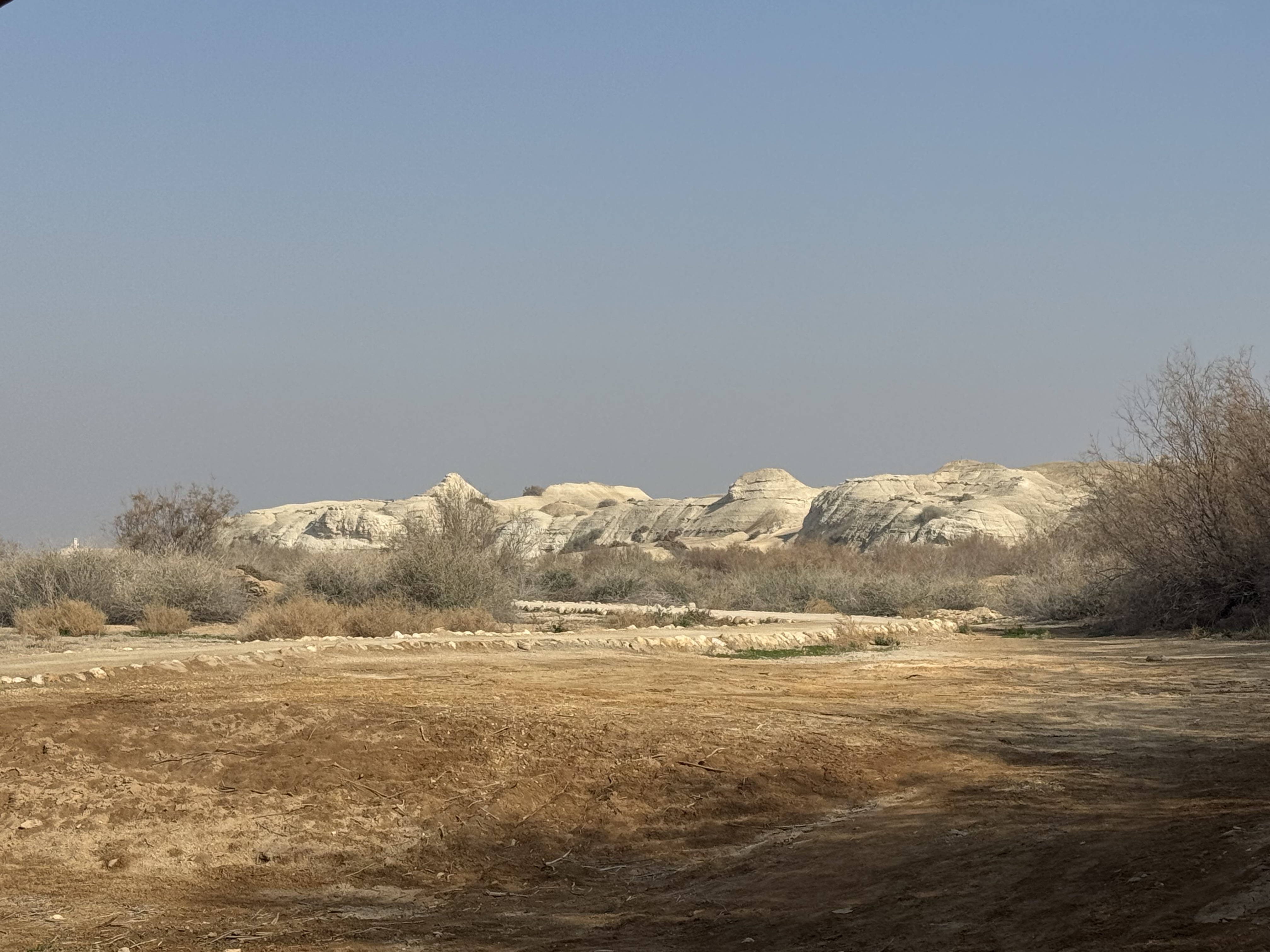
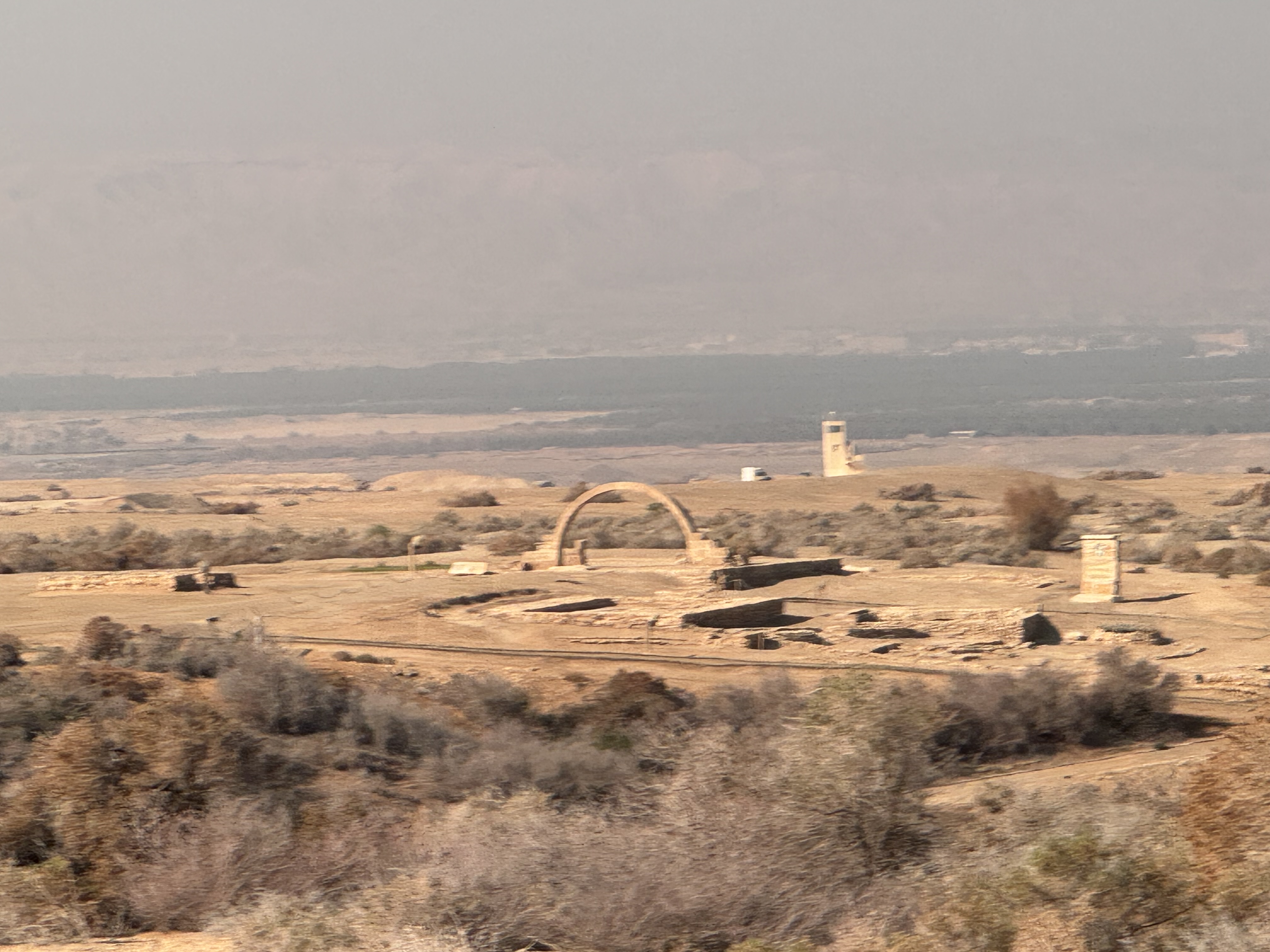
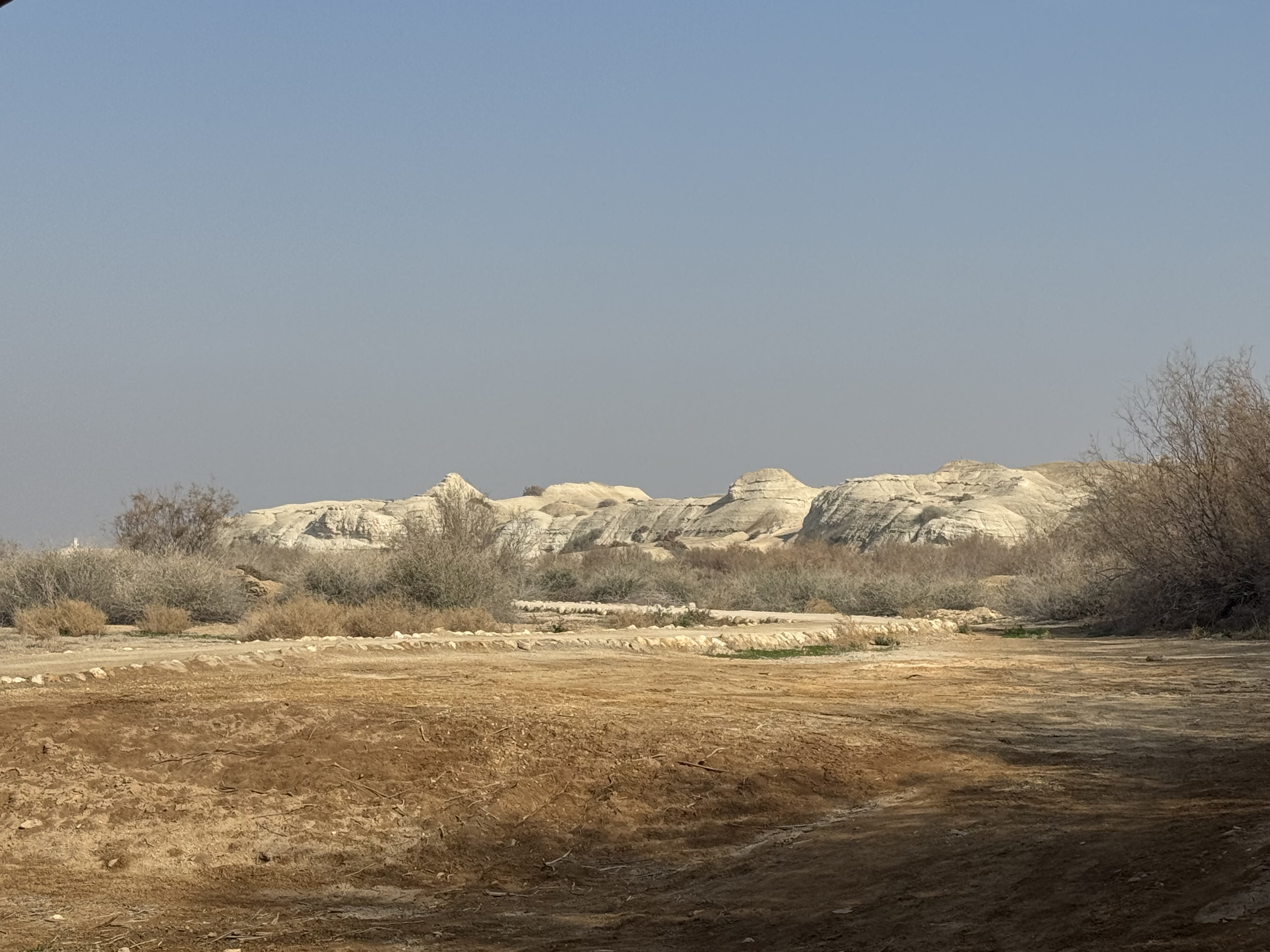
The baptism of Jesus, the ritual purification of Jesus with water by John the Baptist, described in (Matthew, Mark and Luke). It is considered to have taken place at Al-Maghtas, the Gospel of John (John 1:28) states that John was baptizing in “Bethany Beyond the Jordan.” This site was found following UNESCO-sponsored excavations.[6]I wrote a dedicated article to this as well. The river has always been small… more of a stream than a river and I am betting the baptismal site accessed from both the Israel side and Jordan side has been excavated to be more of a “pond” for baptisms. The bottom is clay muck and is quite dirty. If you approach from the Israel side, you won’t see what was likely the Jordan than John and Jesus used as it is dried up now. If you come from the Jordan side, you will walk past the former path of the river (now hardly a stream) and see the place that was very likely the exact spot. But getting baptized in the actual spot isn’t an option anymore and the place accessible from both Israel and Jordan will be close enough for most.
The Garden of Gethsemane
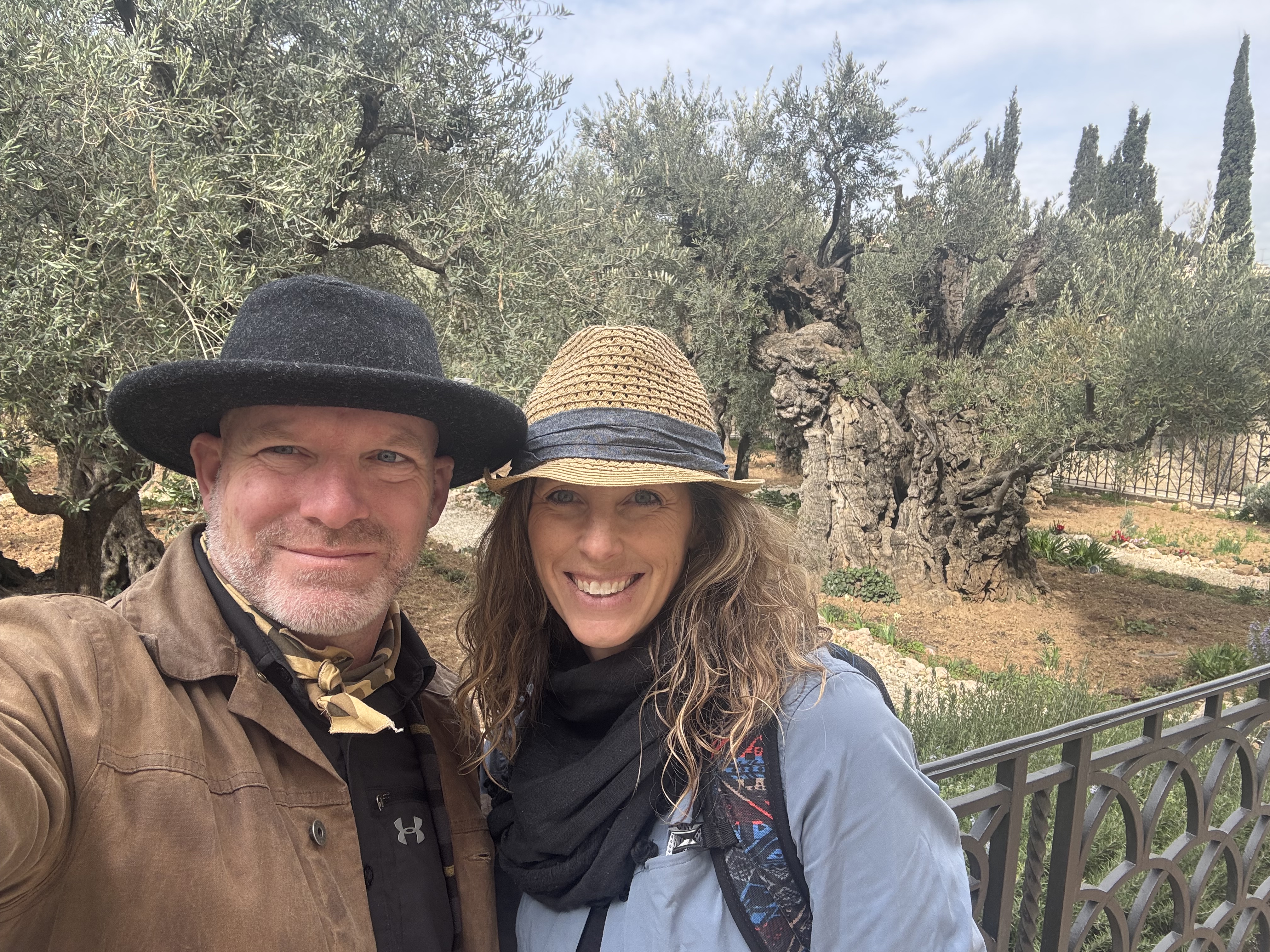
This is Gethsemane the garden at the foot of the Mount of Olives in East Jerusalem, where, according to the four Gospels, Jesus Christ underwent the Agony in the Garden and was arrested before his crucifixion. Currently, there are several small olive groves in church property that has been upkept by the Franciscans. Mark and Matthew record that Jesus went to “a place called the oil press (Gethsemane)” and John states he went to a garden near the Kidron Valley. Modern scholarship acknowledges that the exact location of Gethsemane is unknown.[1] I would propose that it was actually slightly higher closer to where we were parked where there is now a gravesite (See photo). Eight ancient olive trees growing in the Latin site of the garden may be 900 years old.[2]
The Upper Room
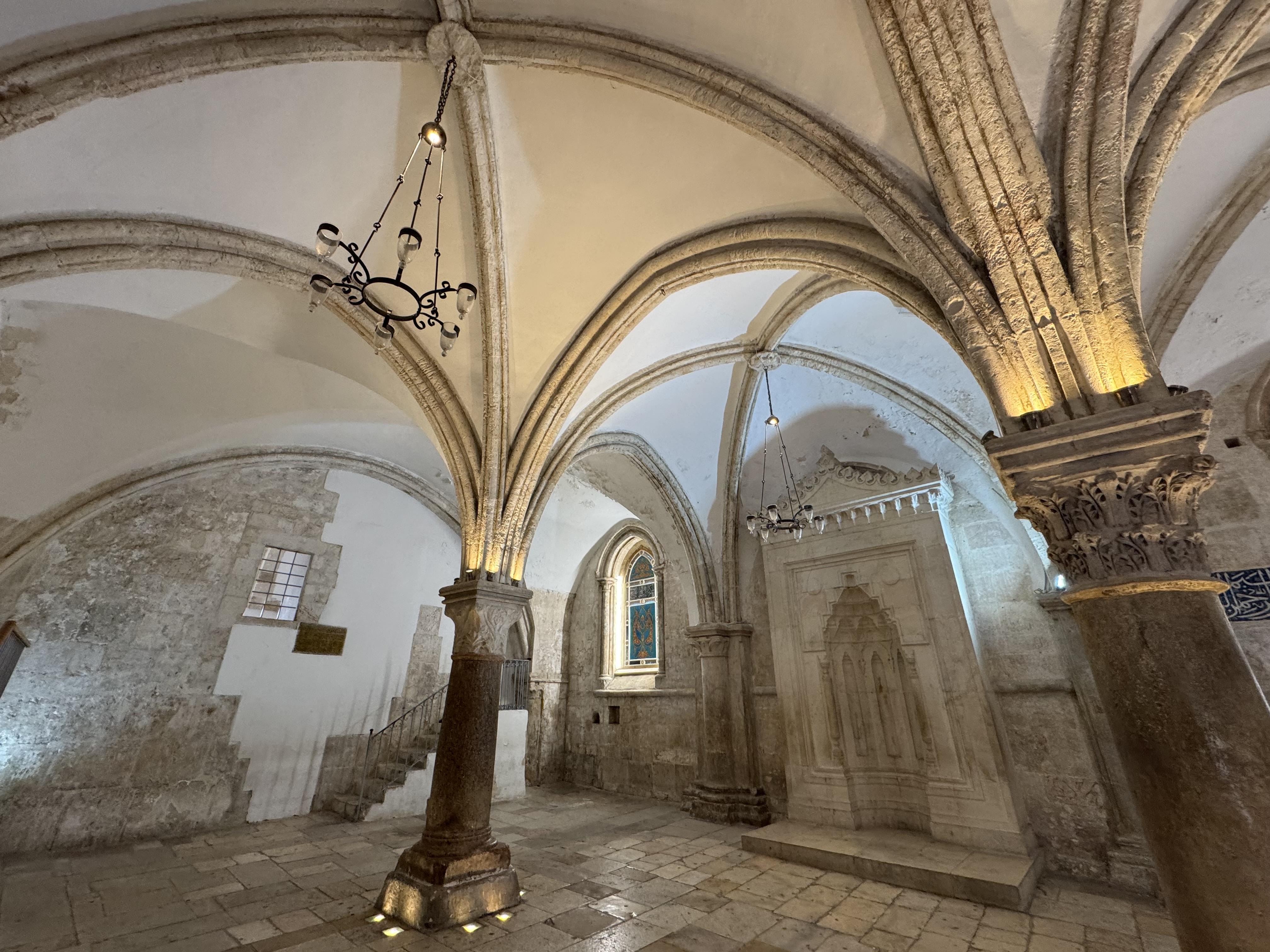
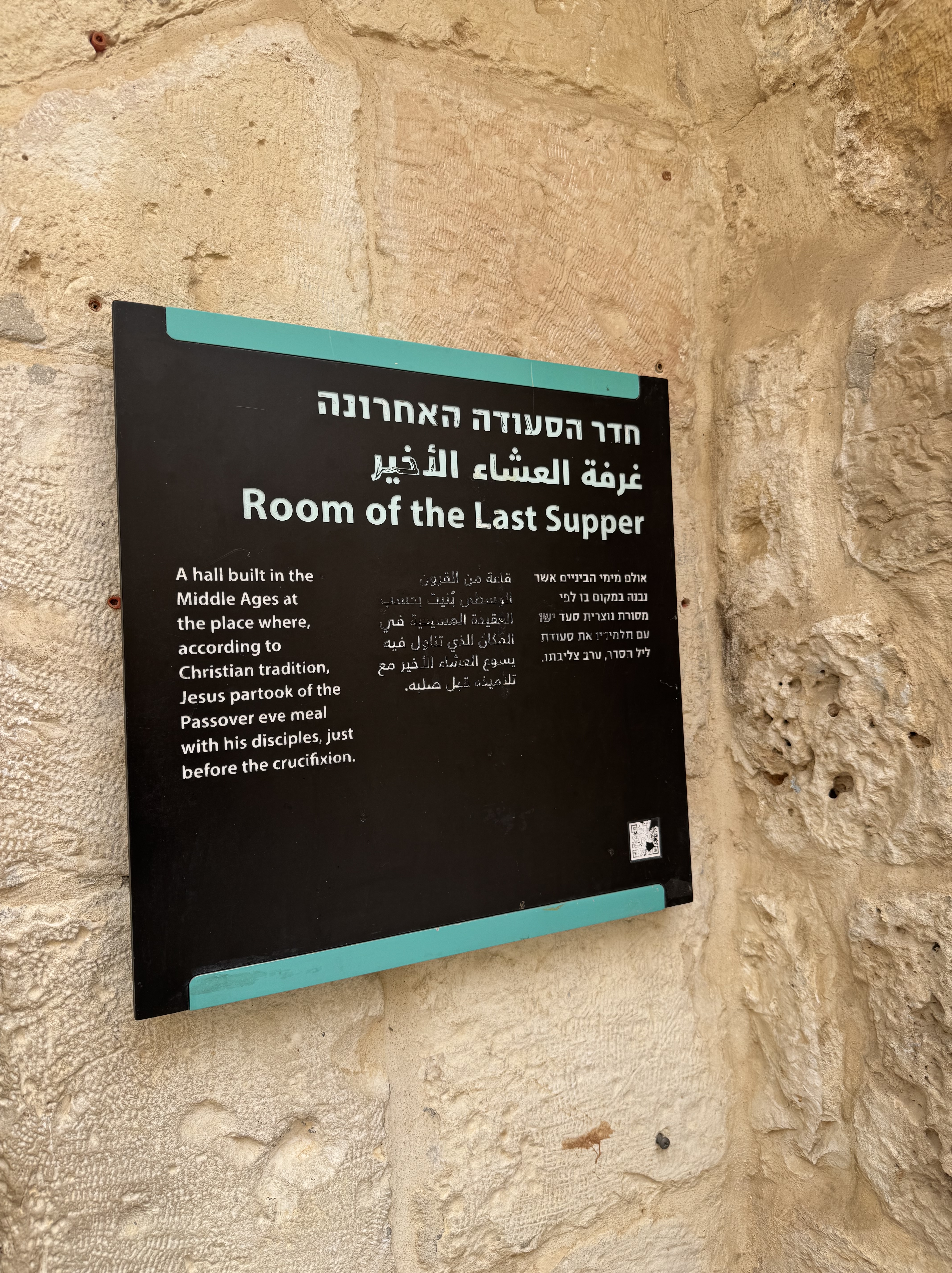
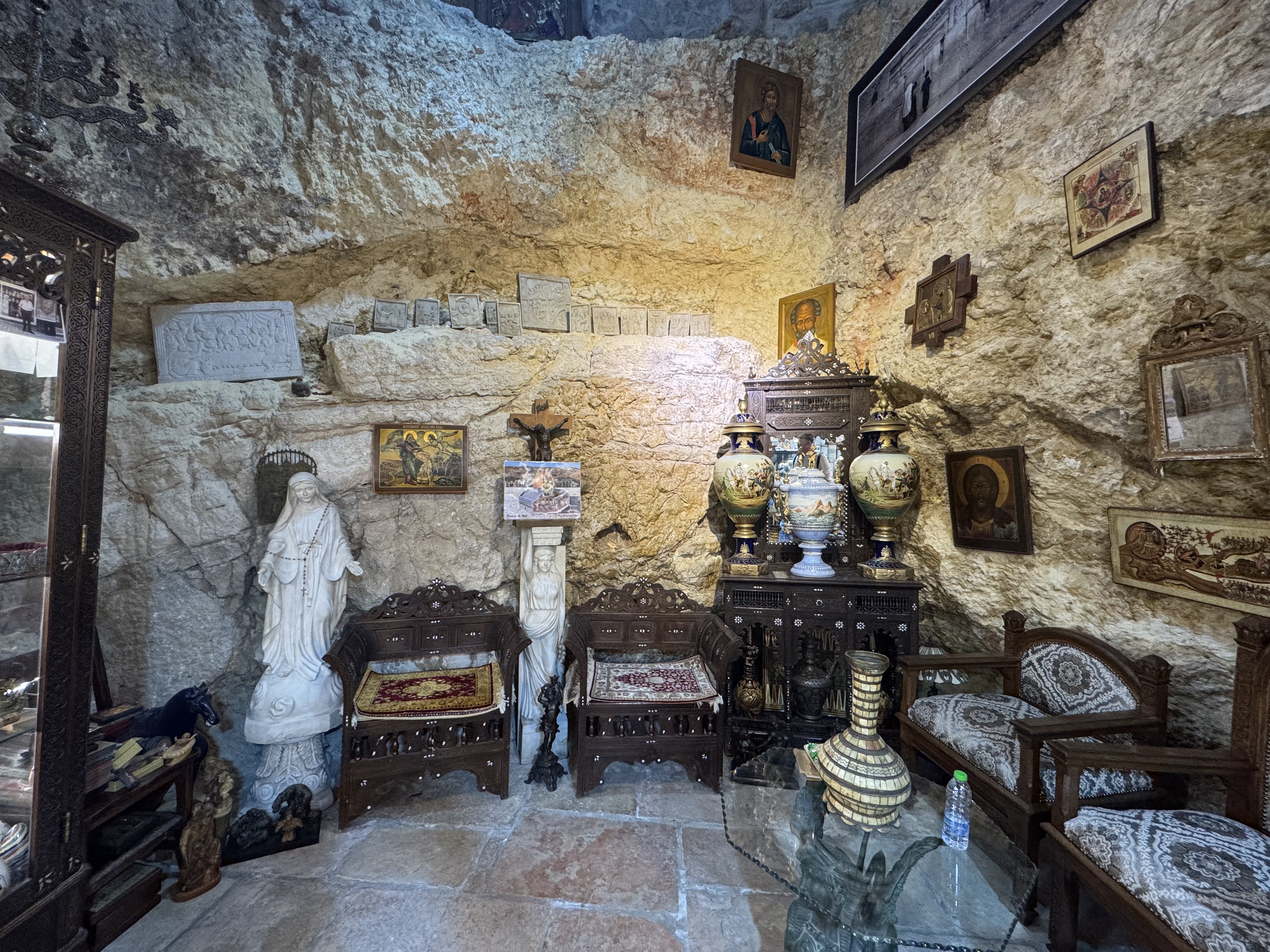
The Cenacle, also known as the Upper Room (from the Koine Greek anagaion and hyperōion, both meaning “upper room”), is a room in Mount Zion in Jerusalem, just outside the Old City walls, traditionally held to be the site of the Last Supper, the final meal that, in the Gospel accounts, Jesus held with the apostles.
The Cenacle was a place in which the apostles continued to gather after the Last Supper, and it was also the site where the Holy Spirit alighted upon the twelve apostles on Pentecost, Matthias having been “numbered with the eleven apostles” to replace Judas in Acts 1:25.[7] The site is administered by the Israeli authorities, and is part of a building holding what is known as “David’s Tomb” on its ground floor, although that may be more controversial.
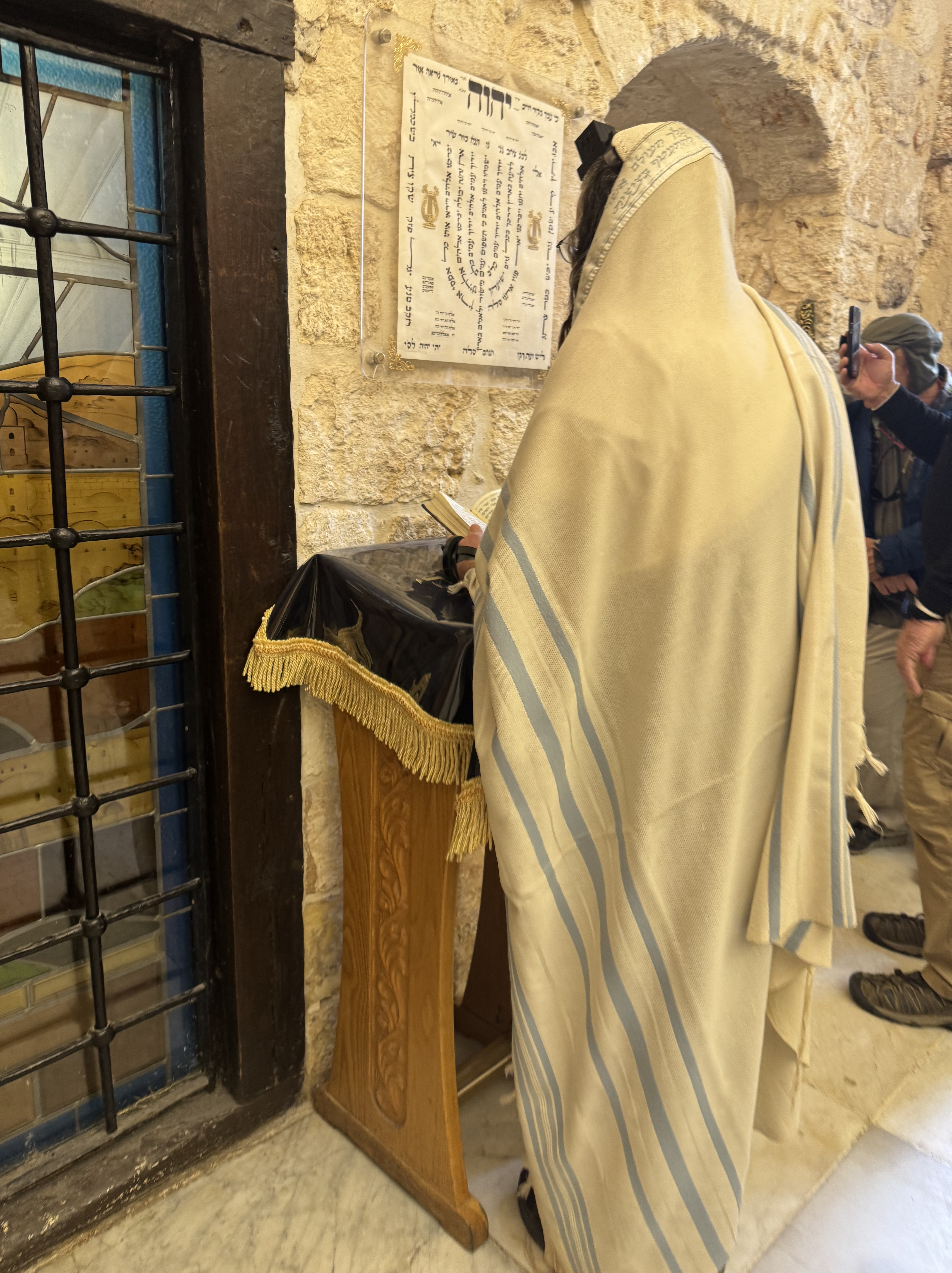
David’s Tomb is a site that, according to a Medieval (9th century) tradition, is associated with the burial of the biblical King David.[8] Images are above, however, historians, archaeologists and theological scholars do not consider the site to be the actual resting place of King David.[8] I would suggest that since the area known today as Mount Zion was not part of inhabited Jerusalem in King David’s time (tenth century BCE) that he was not buried there. Rather, King David was buried in the southeastern area of Jerusalem’s real Old City, which is located to the south of the Temple Mount and Dung Gate and is known today as the City of David. Joel Kramer also makes a convincing argument here.
The Wailing Wall (The Western Temple Mount)
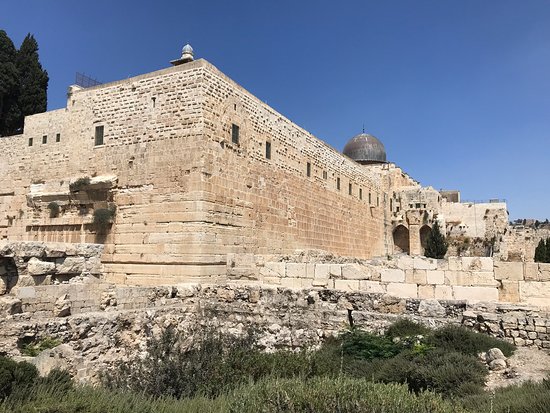
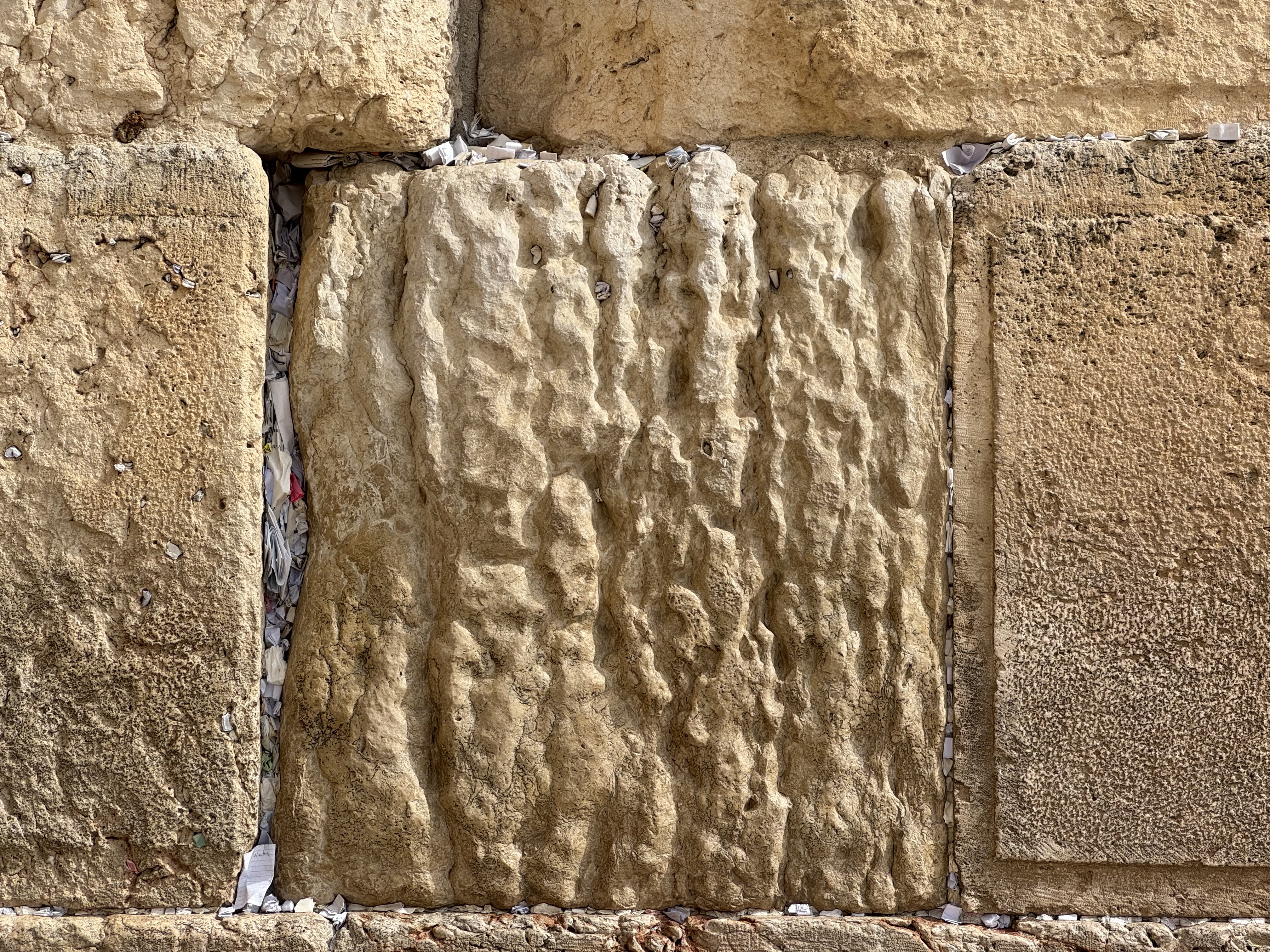
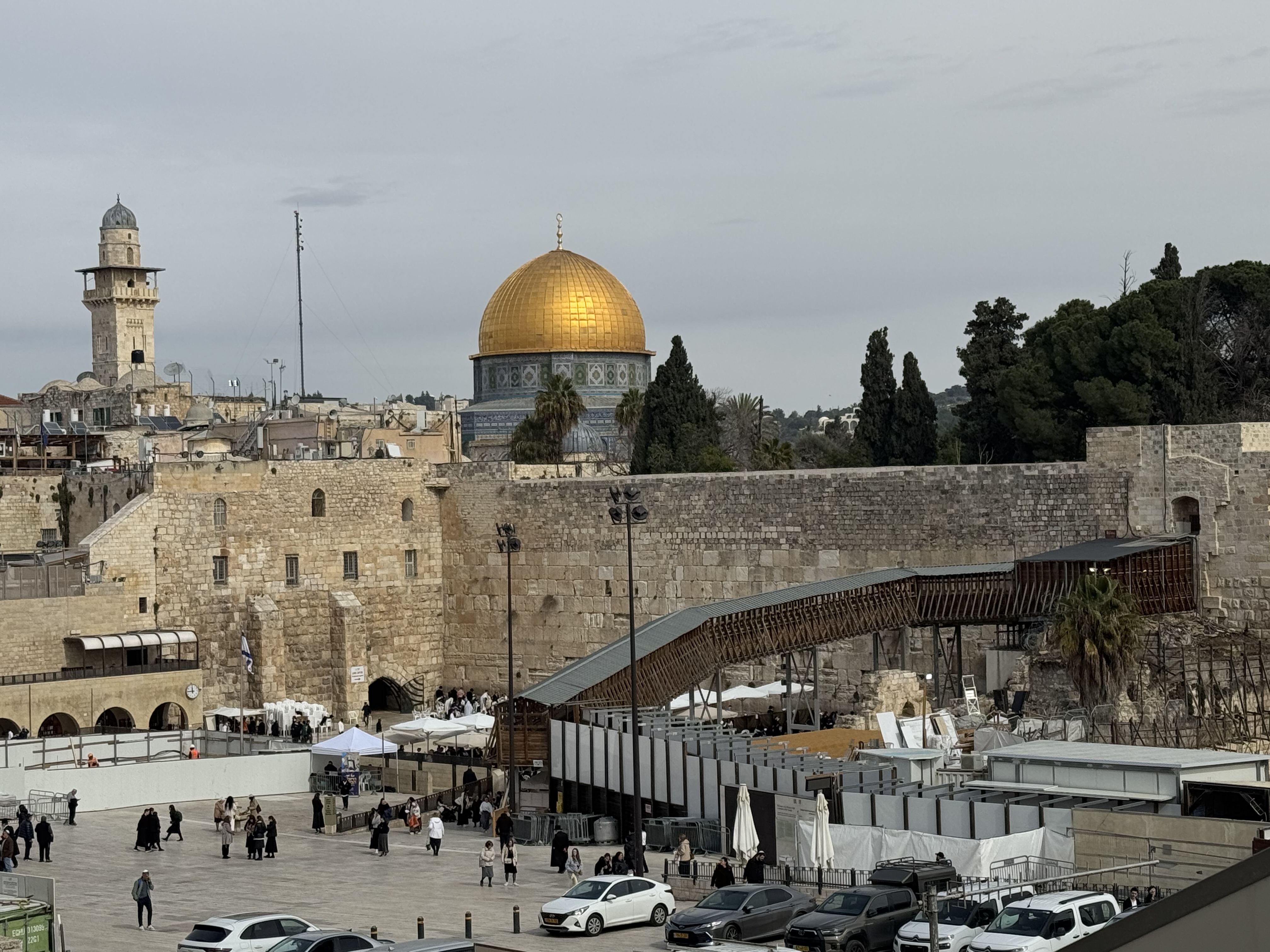
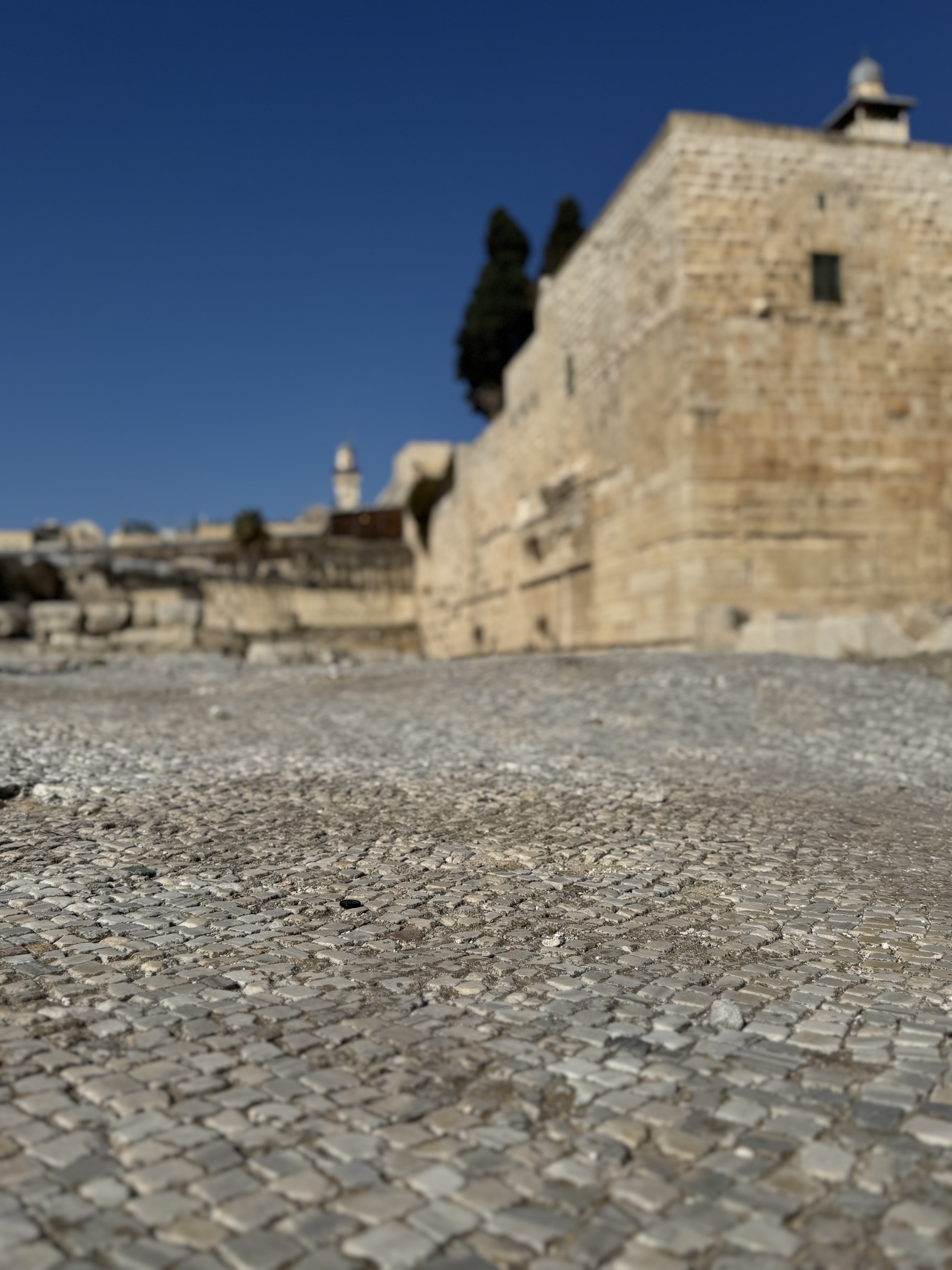
The Western Wall is an ancient retaining wall of the built-up hill known to Jews and Christians as the Temple Mount of Jerusalem. Its most famous section, known by the same name, often shortened by Jews to the Kotel or Kosel, is known in the West as the Wailing Wall. In a Jewish religious context, the term Western Wall and its variations is used in the narrow sense, for the section used for Jewish prayer; in its broader sense it refers to the entire 488-metre-long (1,601 ft) retaining wall on the western side of the Temple Mount. At the prayer section, just over half the wall’s total height, including its 17 courses located below street level, dates from the end of the Second Temple period, and is believed to have been begun by Herod the Great.[10] The very large stone blocks of the lower courses are Herodian, the courses of medium-sized stones above them were added during the Umayyad period, while the small stones of the uppermost courses are of more recent date, especially from the Ottoman period.
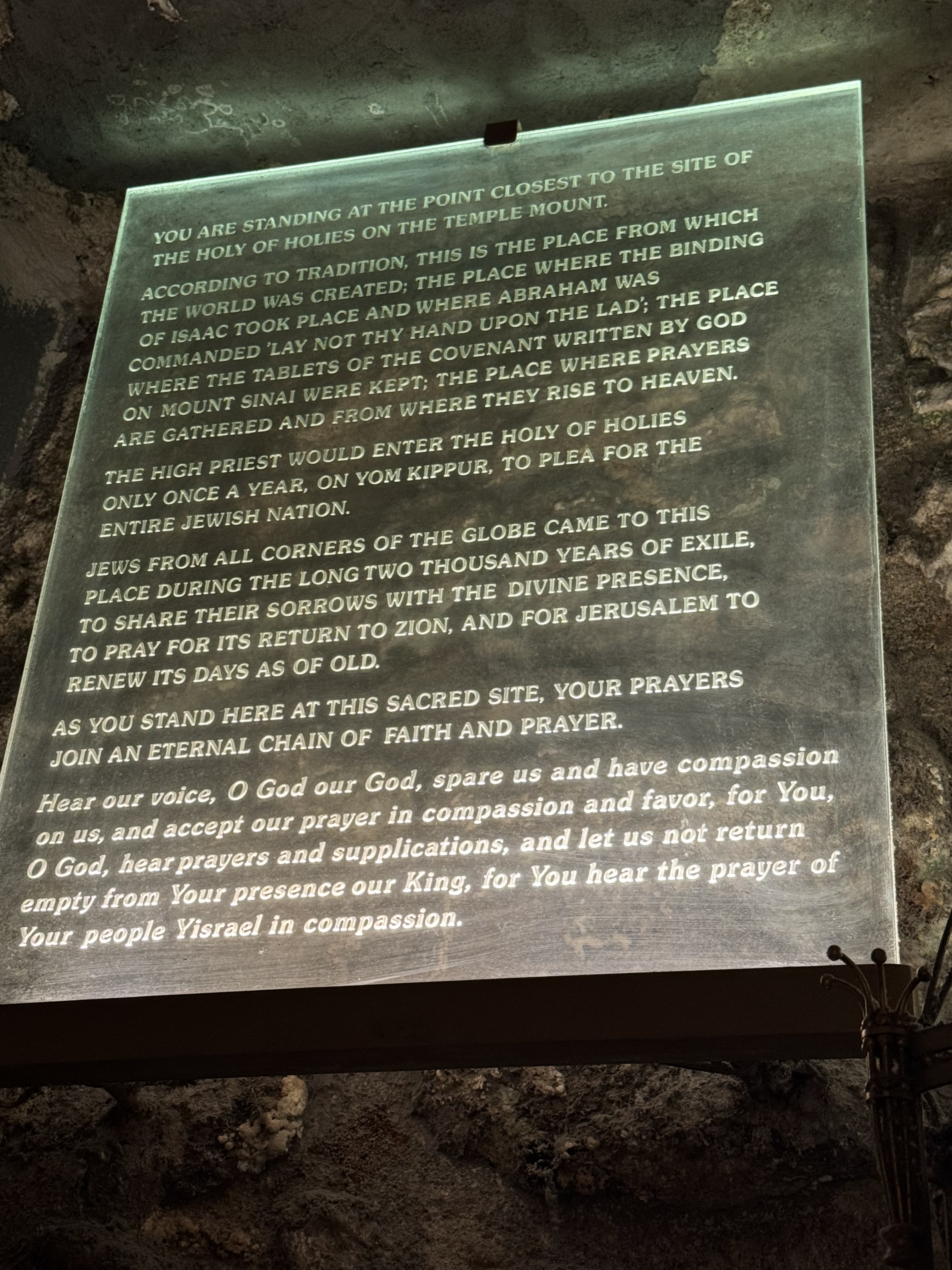
The Western Wall plays an important role in Judaism due to it being part of the man-made “Temple Mount”, an artificially expanded hilltop best known as the traditional site of the Jewish Temple. Because of the Temple Mount entry restrictions, the Wall is the holiest place where Jews are permitted to pray outside the Temple Mount platform, because the presumed site of the Holy of Holies, the most sacred site in the Jewish faith, presumably lies just above and behind it. The original, natural, and irregular-shaped Temple Mount was gradually extended to allow for an ever-larger Temple compound to be built at its top.
With the rise of the Zionist movement in the early 20th century, the wall became a source of friction between the Jewish and Muslim communities, the latter being worried that the wall could be used to further Jewish claims to the Temple Mount and thus Jerusalem. During this period outbreaks of violence at the foot of the wall became commonplace, with a particularly deadly riot in 1929 in which 133 Jews and 116 Arabs were killed, with many more people injured. After the 1948 Arab–Israeli War the eastern portion of Jerusalem was occupied by Jordan. Under Jordanian control Jews were completely expelled from the Old City including the Jewish Quarter, and Jews were barred from entering the Old City for 19 years, effectively banning Jewish prayer at the site of the Western Wall. This period ended on June 10, 1967, when Israel gained control of the site following the Six-Day War. Three days after establishing control over the Western Wall site, the Moroccan Quarter was bulldozed by Israeli authorities to create space for what is now the Western Wall plaza.[11]
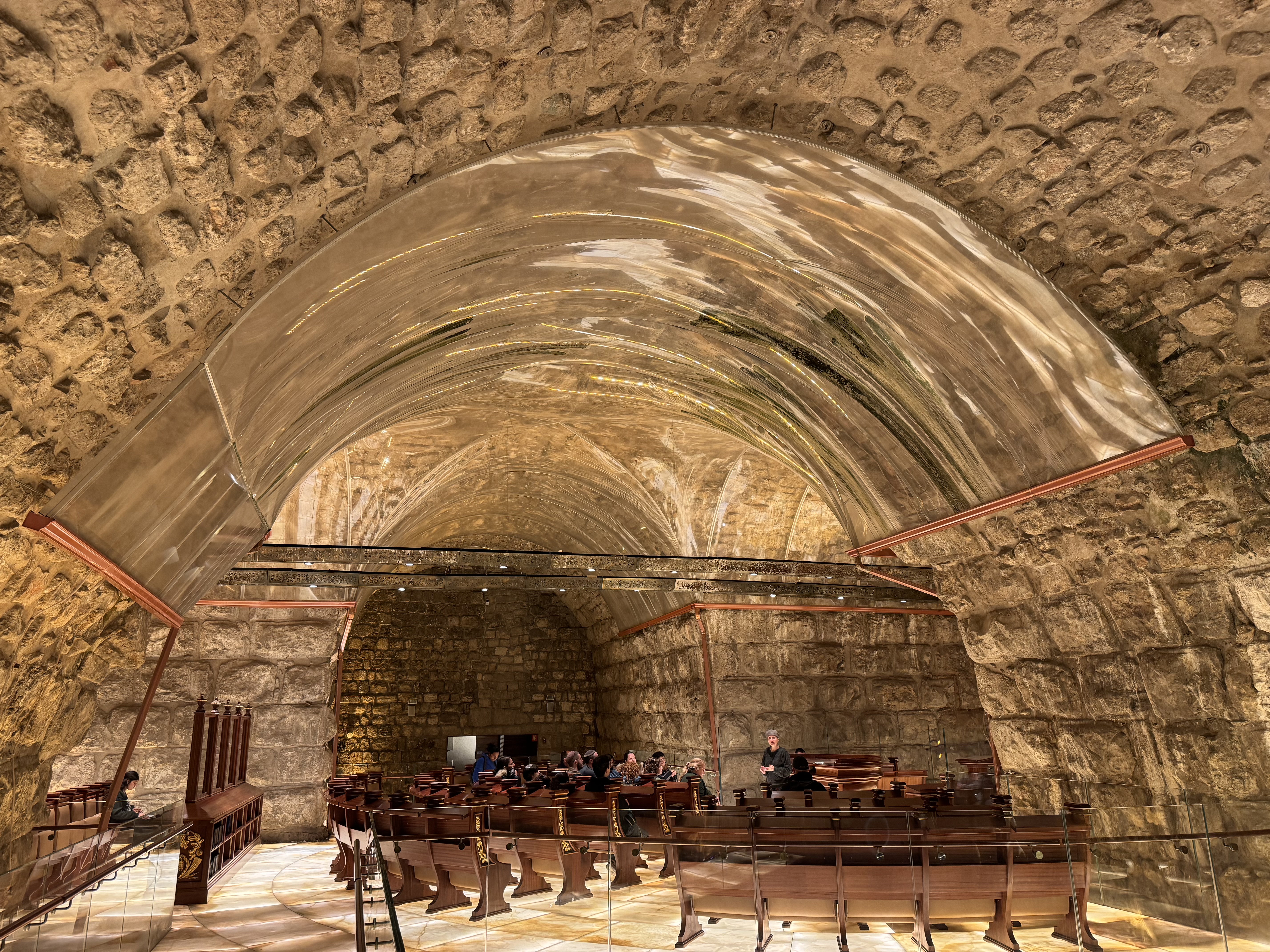
The wall and Temple Mount area is 30-40 feet higher than it was during the time of Jesus and has been built over many times. You can still walk the “tunnels” which show you the original wall.
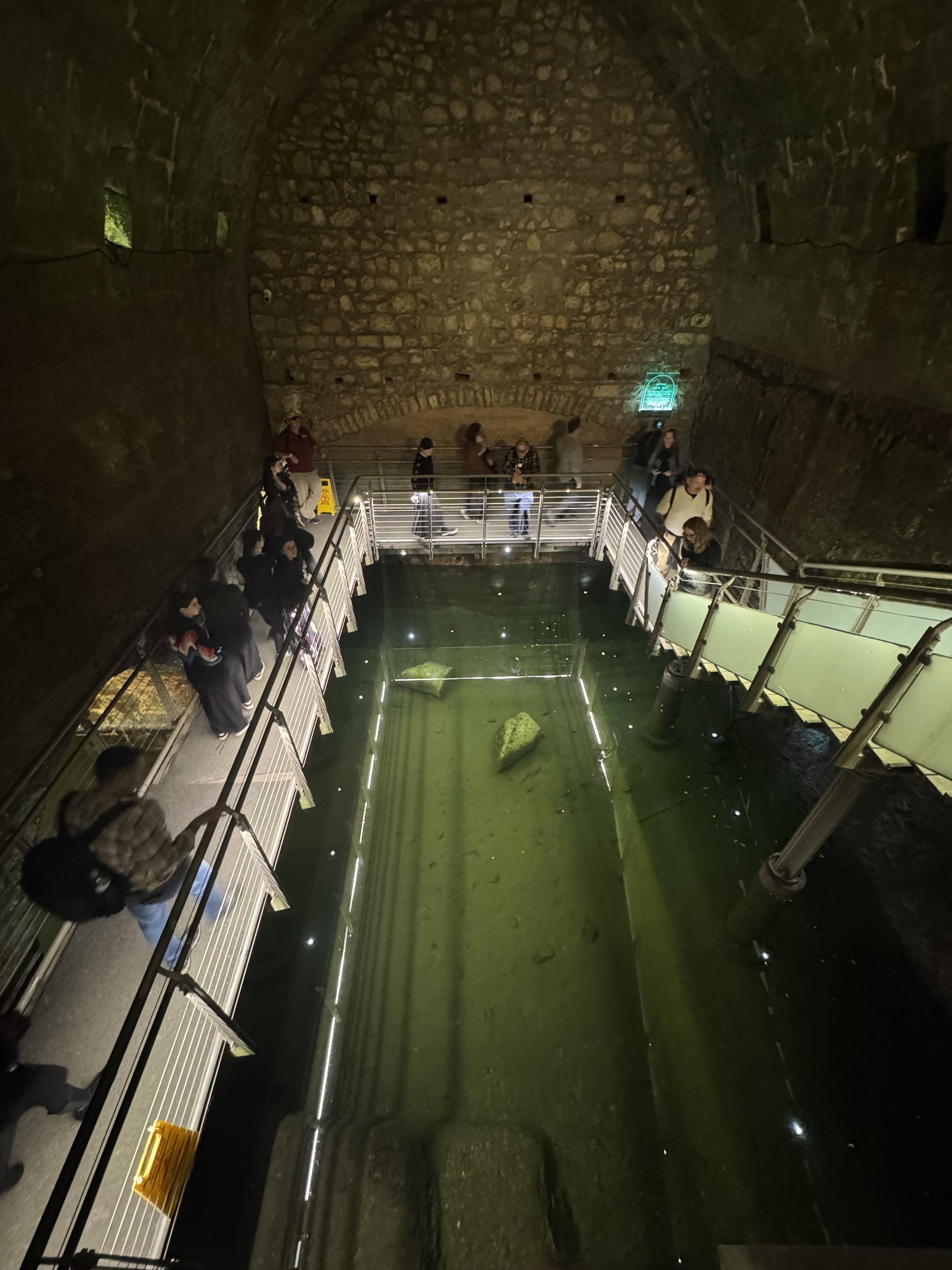
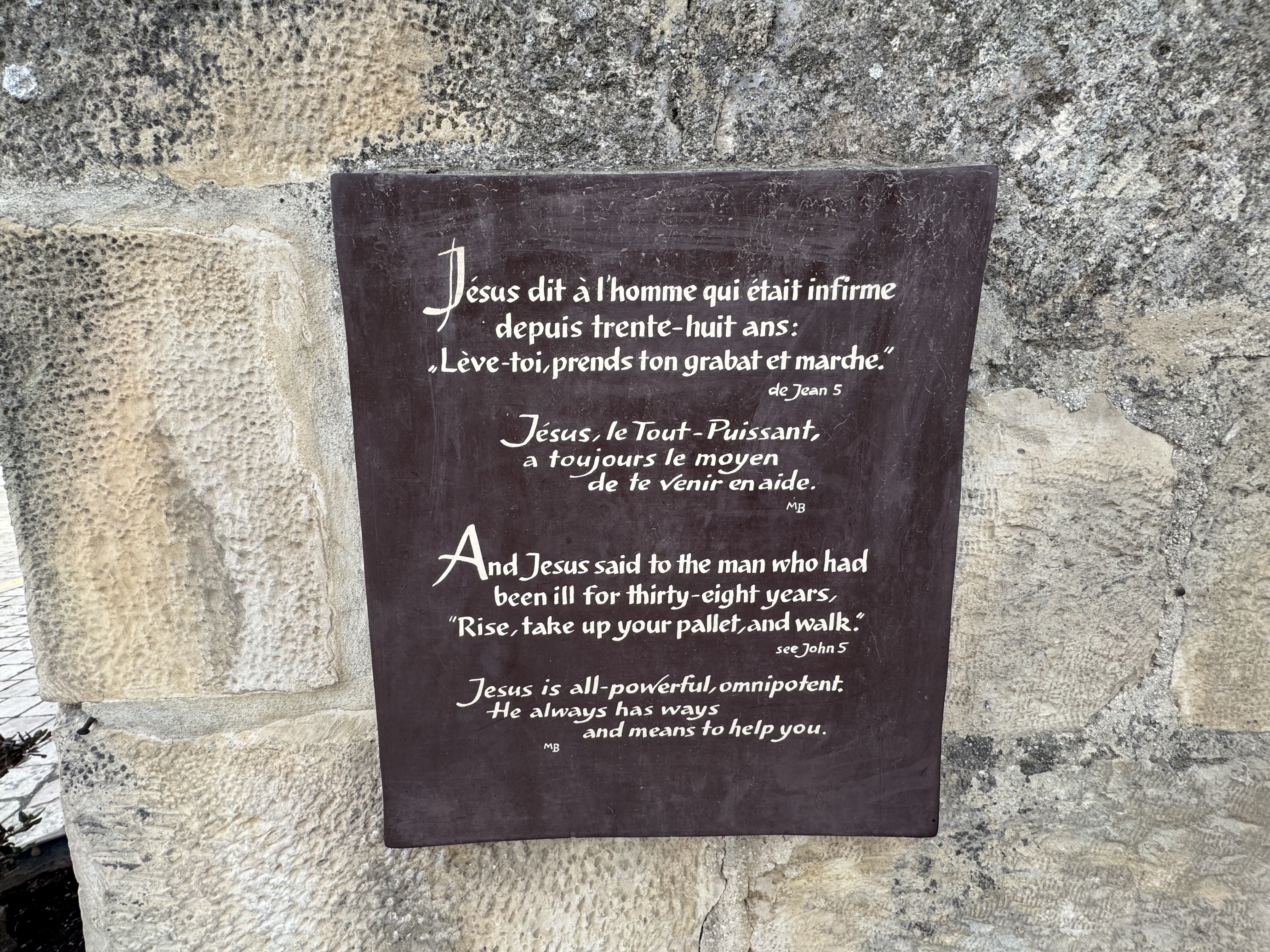
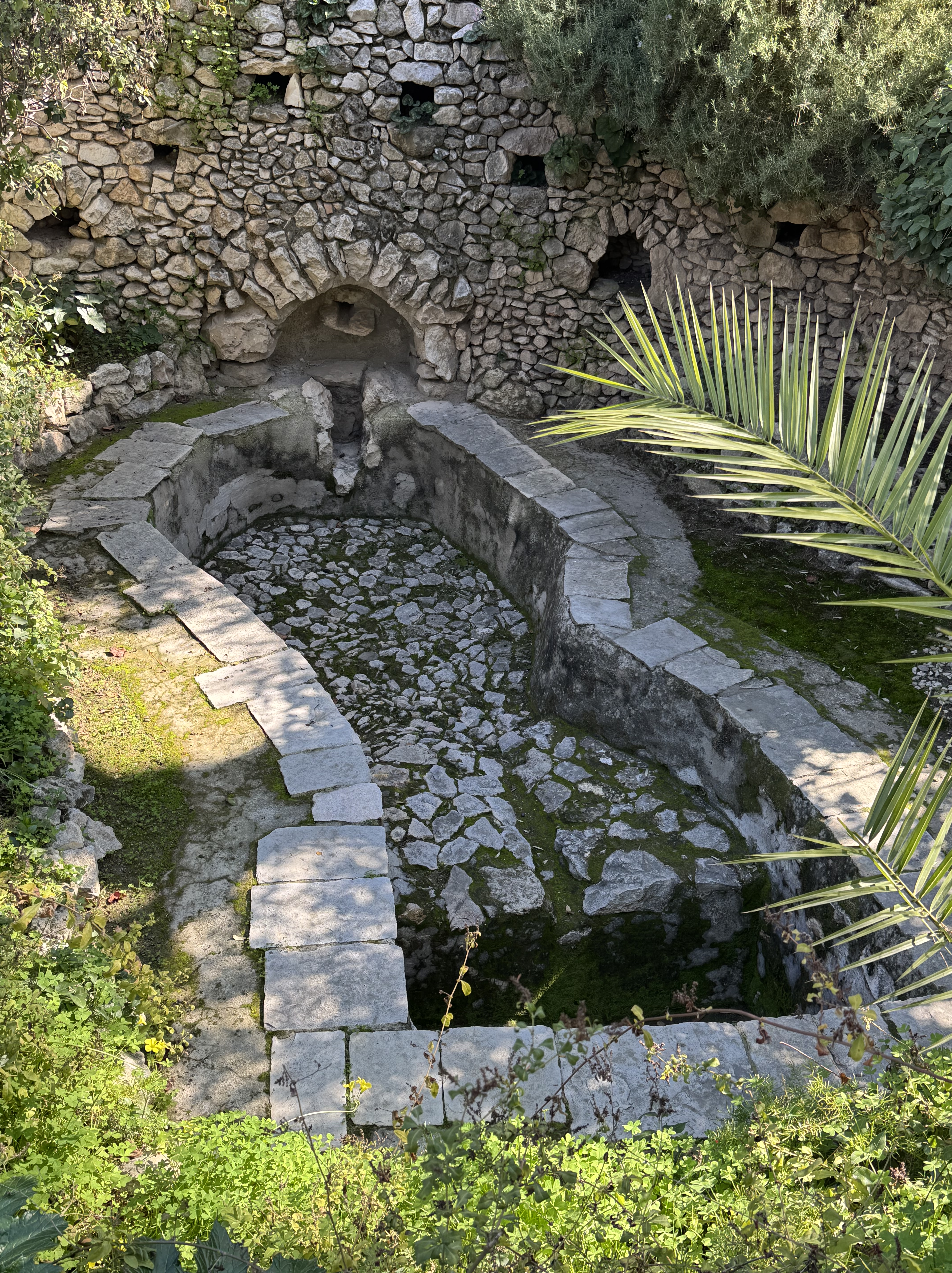
In John 5 we find Jesus, the great physician, engaged with a man who is physically unwell. The Pool of Bethesda is referred to in John 5:2 when Jesus heals a paralyzed man at a pool of water in Jerusalem, described as being near the Sheep Gate and surrounded by five covered colonnades or porticoes. I saw this today and it came to life. (It is also sometimes referred to as Bethzatha) [12] and is now established in the current Muslim Quarter of the city, near the Church of St. Anne, which was excavated in the late 19th century.
The name of the pool in Hebrew is Beth hesda (בית חסד/חסדא) which is a bit ambiguous and could mean “house of mercy”[13] or “house of grace” likely due to the invalids waiting to be healed.[14][15][16]IN Greek it reads Βηθεσδά (Bethesda),[17] appearing in manuscripts of the Gospel of John, include Βηθζαθά[18] (Beth-zatha = בית חדתא[19]) as a derivative of Bezetha, and Bethsaida (not to be confused with Bethsaida, a town in Galilee), although the latter is considered to be a metathetical corruption by Biblical scholars.[20] Franz Delitzsch suggests this is a Mishnaic Hebrew loanword from the Greek estiv/estava, that appropriately referred to stoa (στοά).[21] That would seem to fit here. As I mentioned earlier, when you visit this in person you are looking down into a deep hole. This is because over 2000 years nearly 40 feet of fill has been added to nearly the entire Temple mount. Until the 19th century, there was no conception for the existence of such a pool. The Pool of Bethesda almost took on a mystical or magical persona similar to the fabled fountain of youth. However, Conrad Schick in 1872 was permitted to conduct research on the Temple Mount, which was generally off limits to non-Muslims.[22] He discovered a large tank situated about 100 feet (30 m) north-west of St. Anne’s Church, which he contended was the Pool of Bethesda. Further archaeological excavation in the area, in 1964, uncovered the remains of the Byzantine and Crusader churches, Hadrian’s Temple of Asclepius and Serapis, and the small healing pools of an Asclepeion, the second of the two large pools, and the dam between them.[23] It was discovered that the Byzantine church had been built in the very heart of Hadrian’s temple and contained the healing pools.[24] Essentially, when you see this in person as it was excavated, it comes to life. You see the gentle steps for the inflicted, and the way around them. You see how it was likely off the beaten bath and in the bad part of town.
The Dome of the Rock
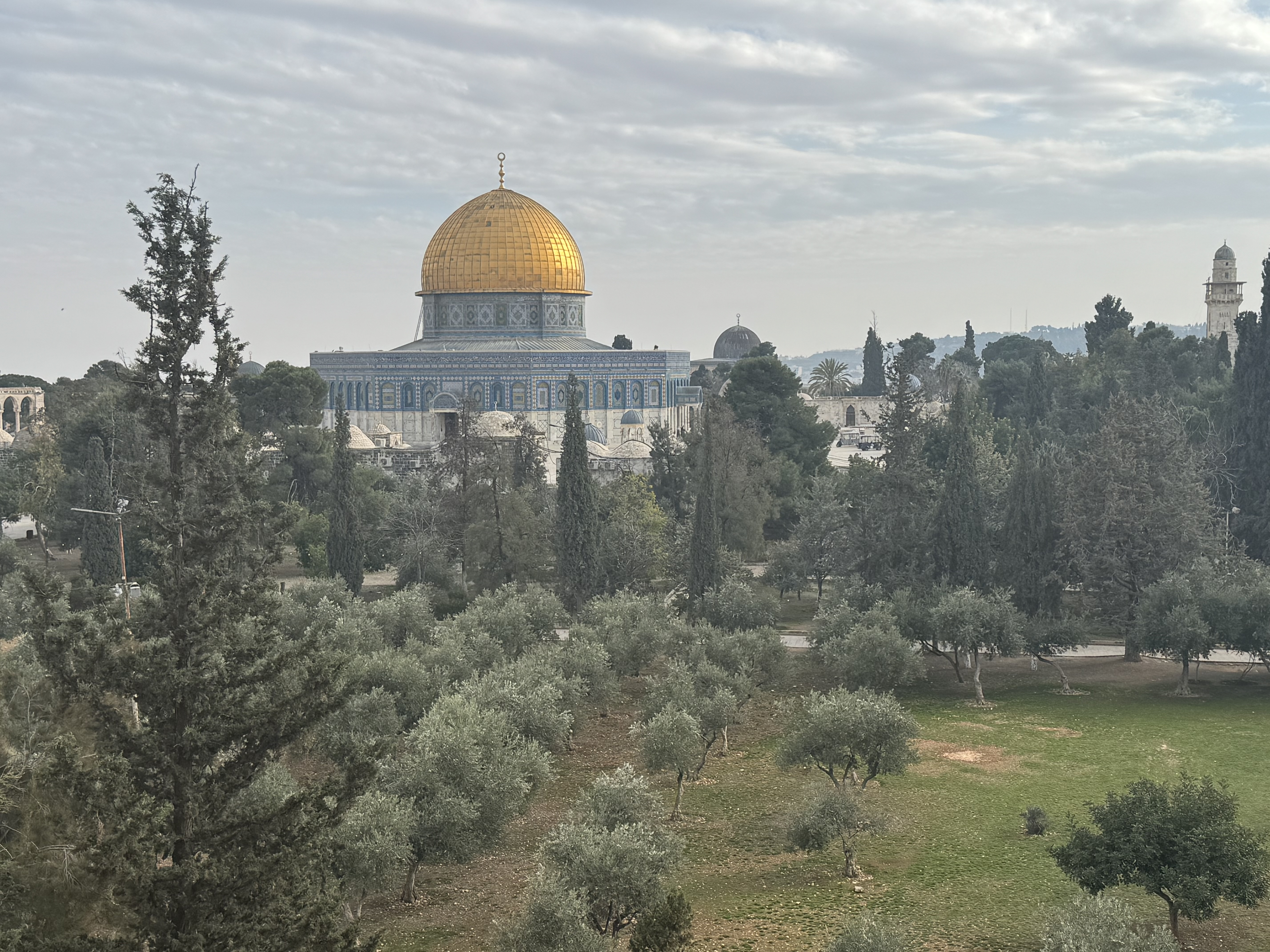
The Dome of the Rock is an Islamic shrine at the center of the Al-Aqsa mosque compound on the Temple Mount in the Old City of Jerusalem. It has been situated on top of the site of the Second Jewish Temple (built in c. 516 BCE to replace the destroyed Solomon’s Temple and rebuilt by Herod the Great), which was destroyed by the Romans in 70 CE. The original dome collapsed in 1015 and was rebuilt in 1022–23.
The Foundation Stone (or Noble Rock) that the temple was built over bears great significance in the Abrahamic religions as the place where God created the world as well as the first human, Adam.[26] It is also believed to be the site where Abraham attempted to sacrifice his son, and as the place where God’s divine presence is manifested more than in any other place, towards which Jews turn during prayer. The site’s great significance for Muslims derives from traditions connecting it to the creation of the world and the belief that the Night Journey of Muhammad began from the rock at the center of the structure.[27] It has been called “Jerusalem’s most recognizable landmark”[28] along with two nearby Old City structures: the Western Wall and the “Resurrection Rotunda” in the Church of the Holy Sepulchre.
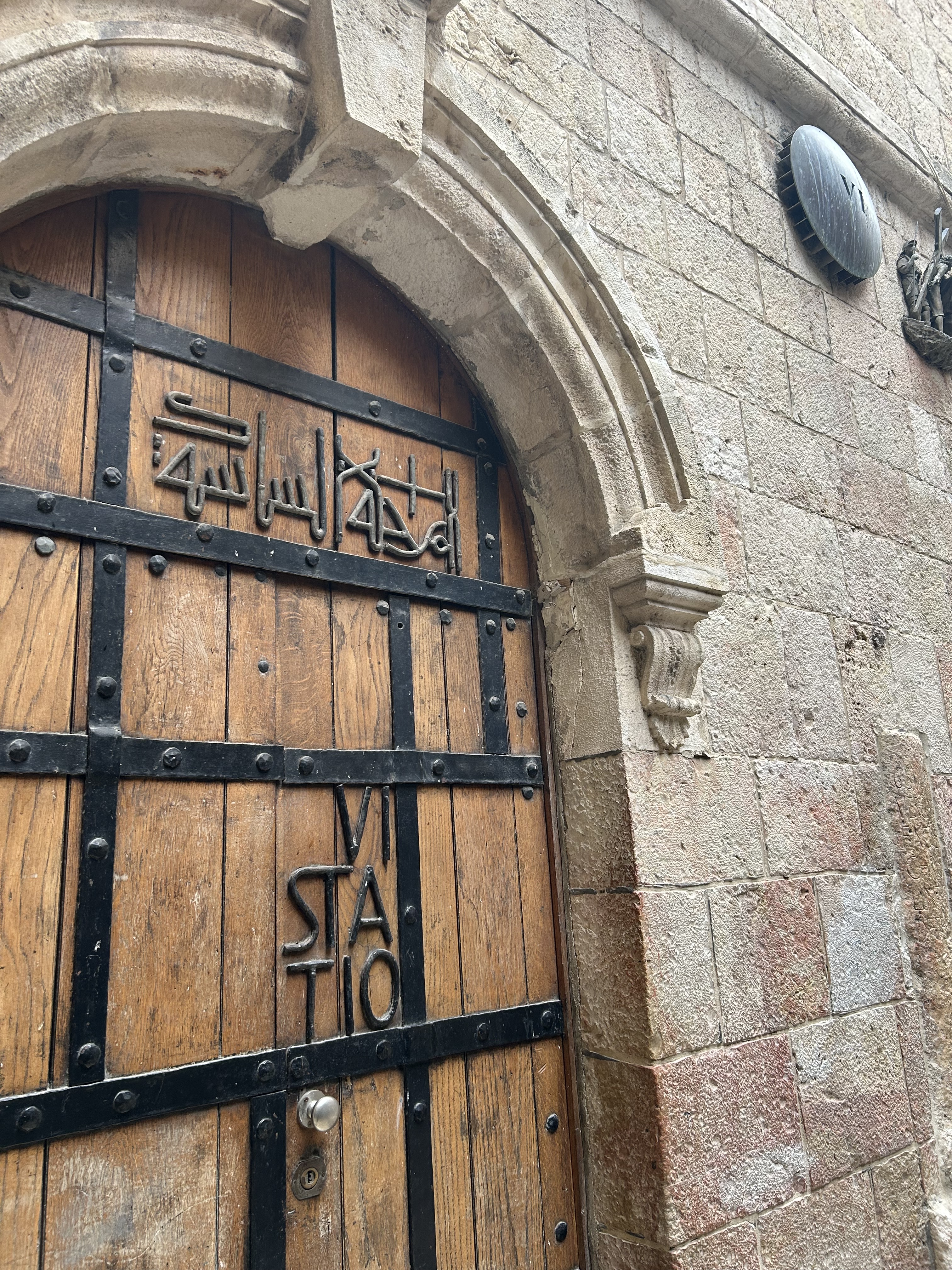
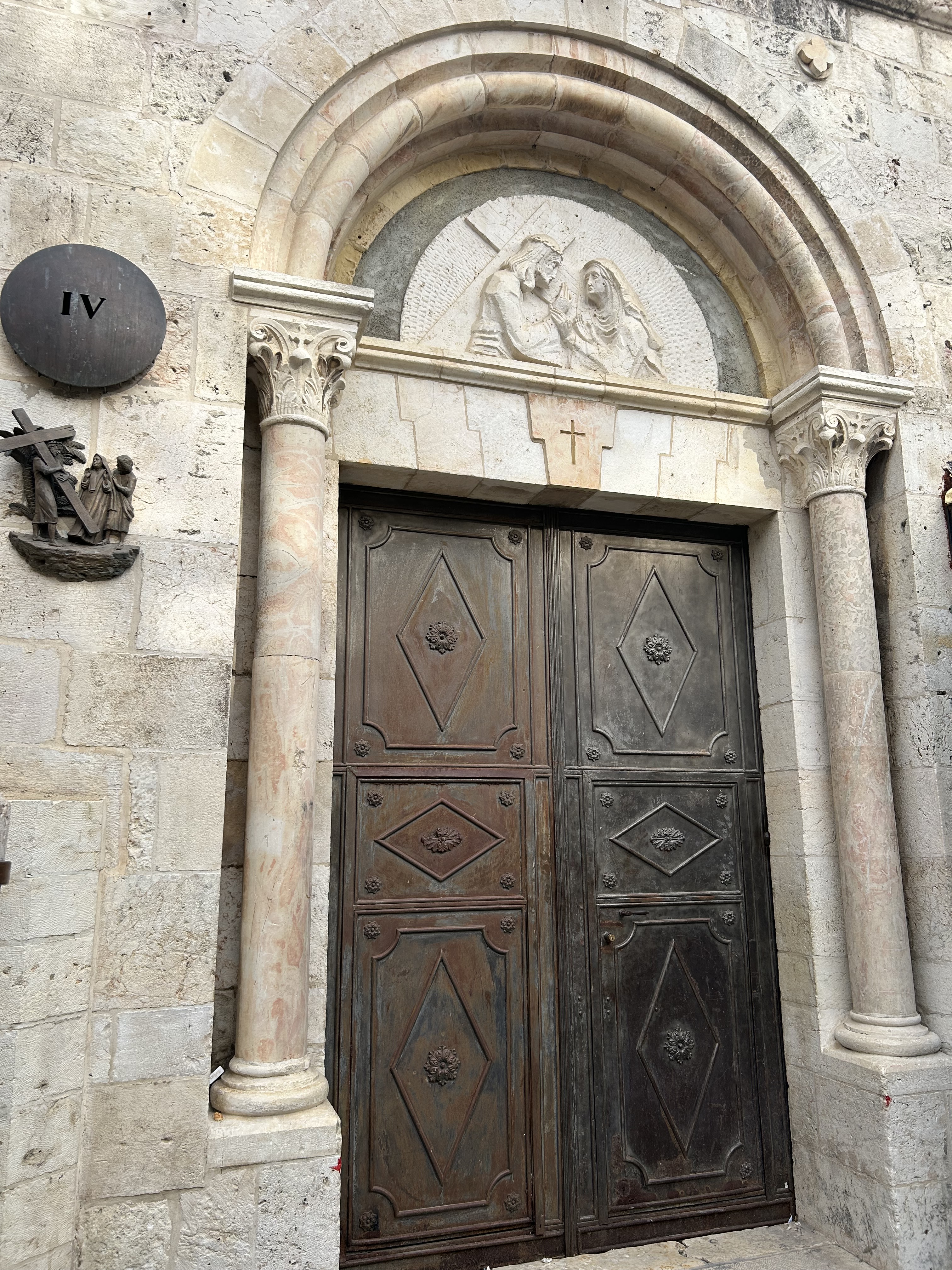
The Stations of the Cross
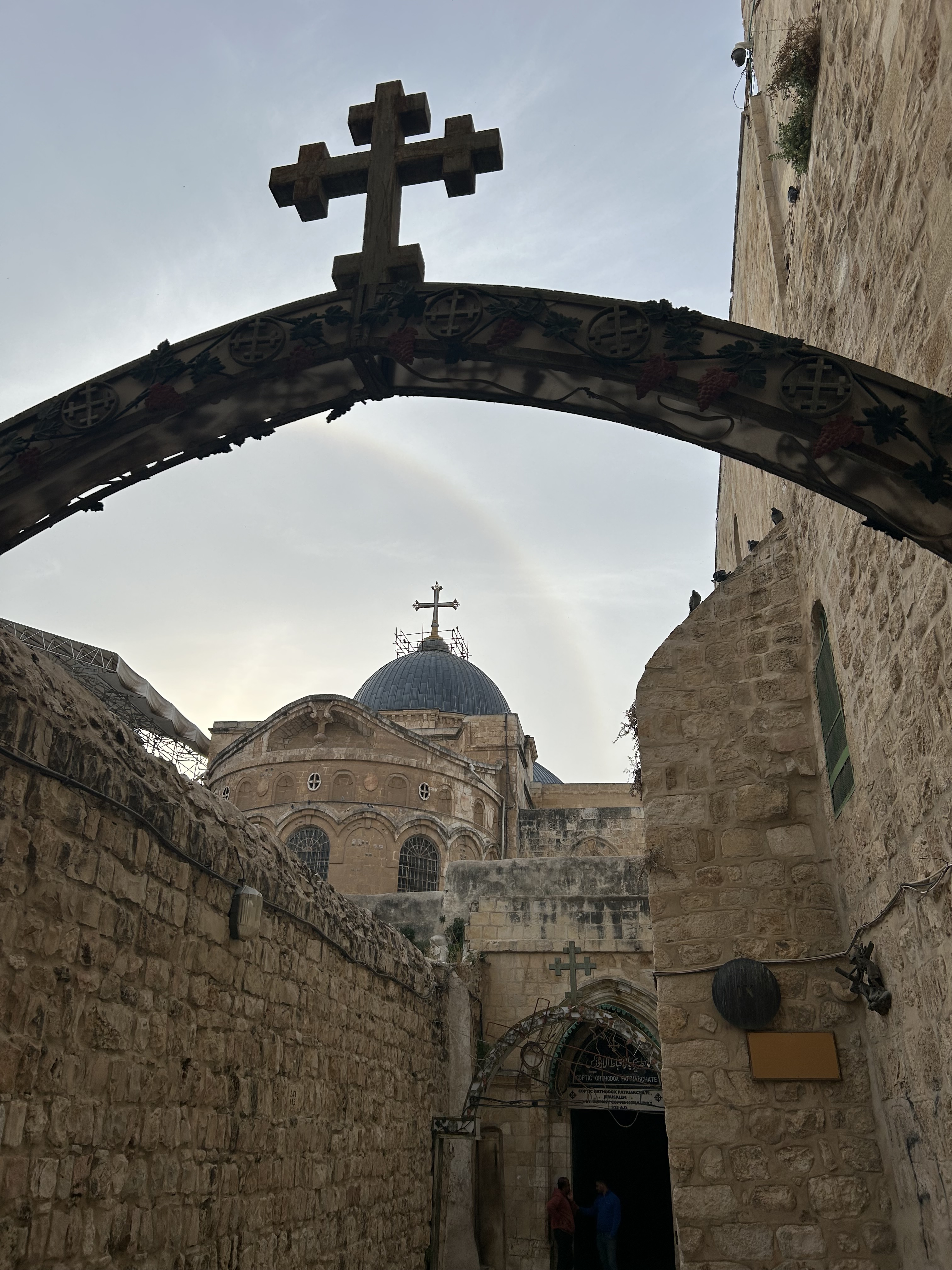
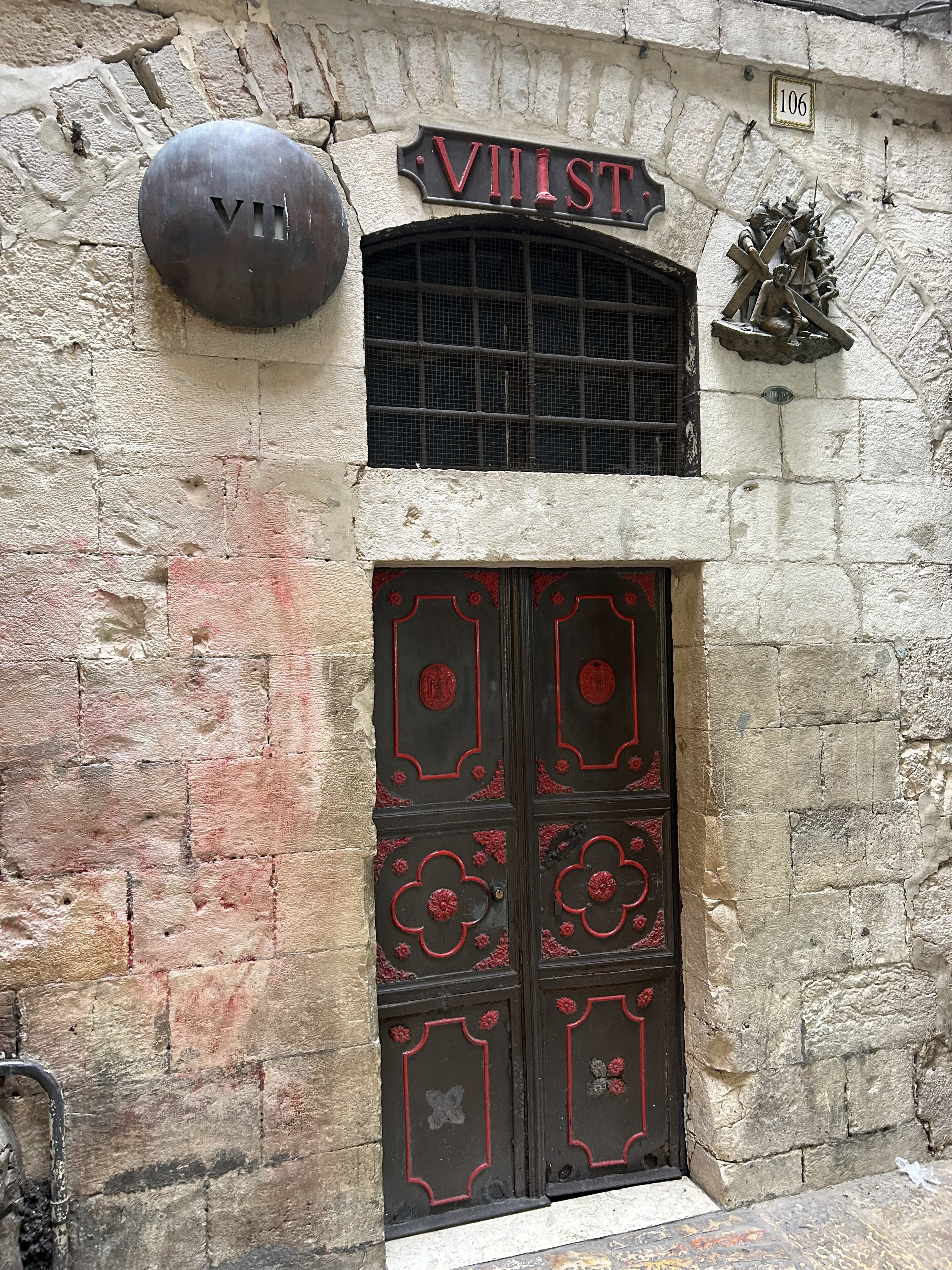
The Stations of the Cross or the Way of the Cross, also known as the Way of Sorrows or the Via Crucis, are a series of images depicting Jesus Christ on the day of his crucifixion and accompanying prayers. The stations grew out of imitations of the Via Dolorosa in Jerusalem, which is a traditional processional route symbolizing the path Jesus walked to Mount Calvary. The objective of the stations is to help the Christian faithful to make a spiritual pilgrimage through contemplation of the Passion of Christ. However, the stations are mainly Catholic relics and aren’t biblical to much if any degree and therefore I cringe even writing this. I highly doubt this was the path of Jesus. But I thought I should show you some pictures.
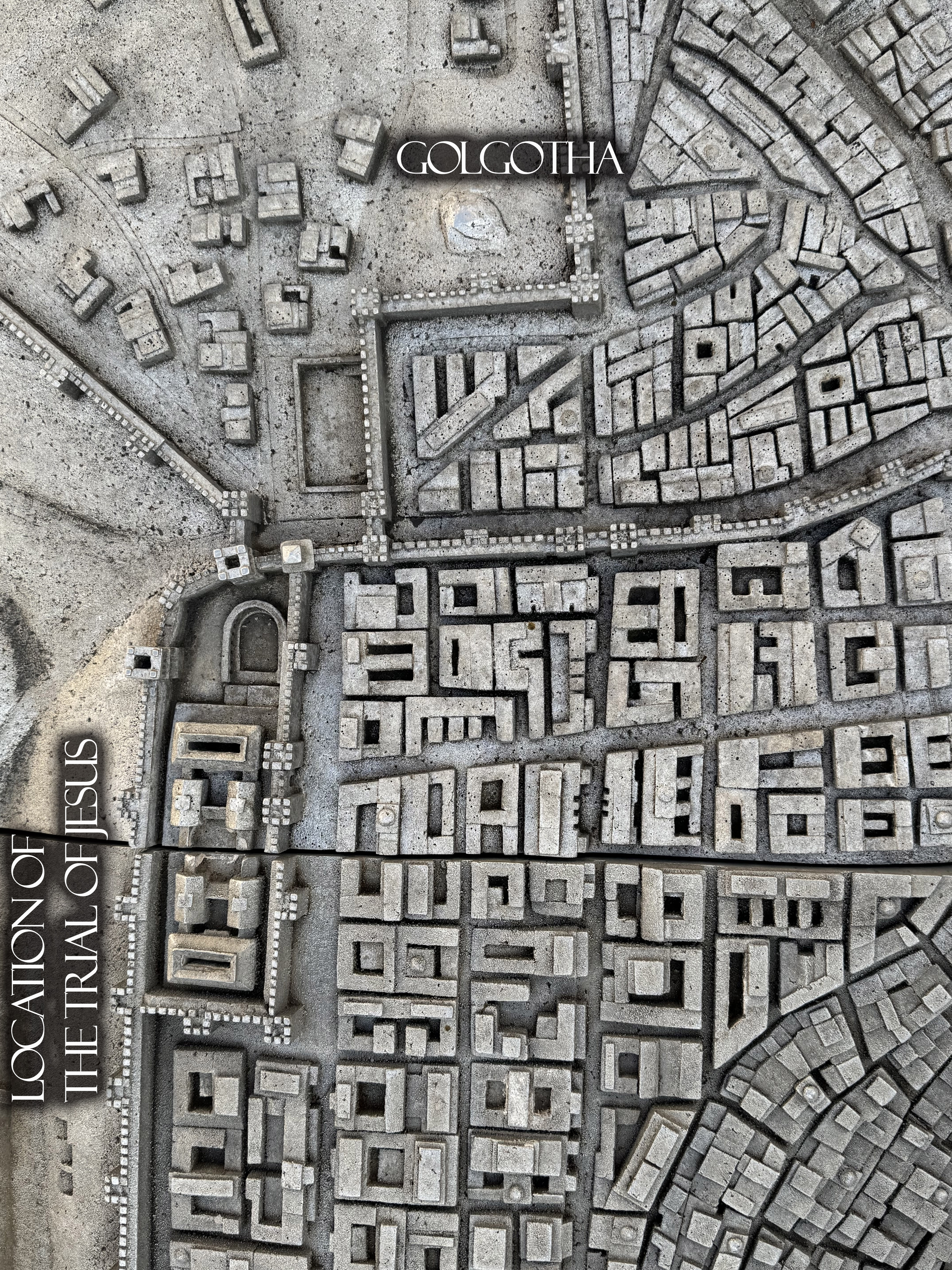
As I can imagine you’re asking, what was the path of Christ, here is an overview of where he was tried and the likely place of Golgotha which I will get to. If you look at the outer gate where Jesus was tried you can see there are several ways they could have taken to get to Golgotha, none of which line up with the advertised tourism path!
Golgotha
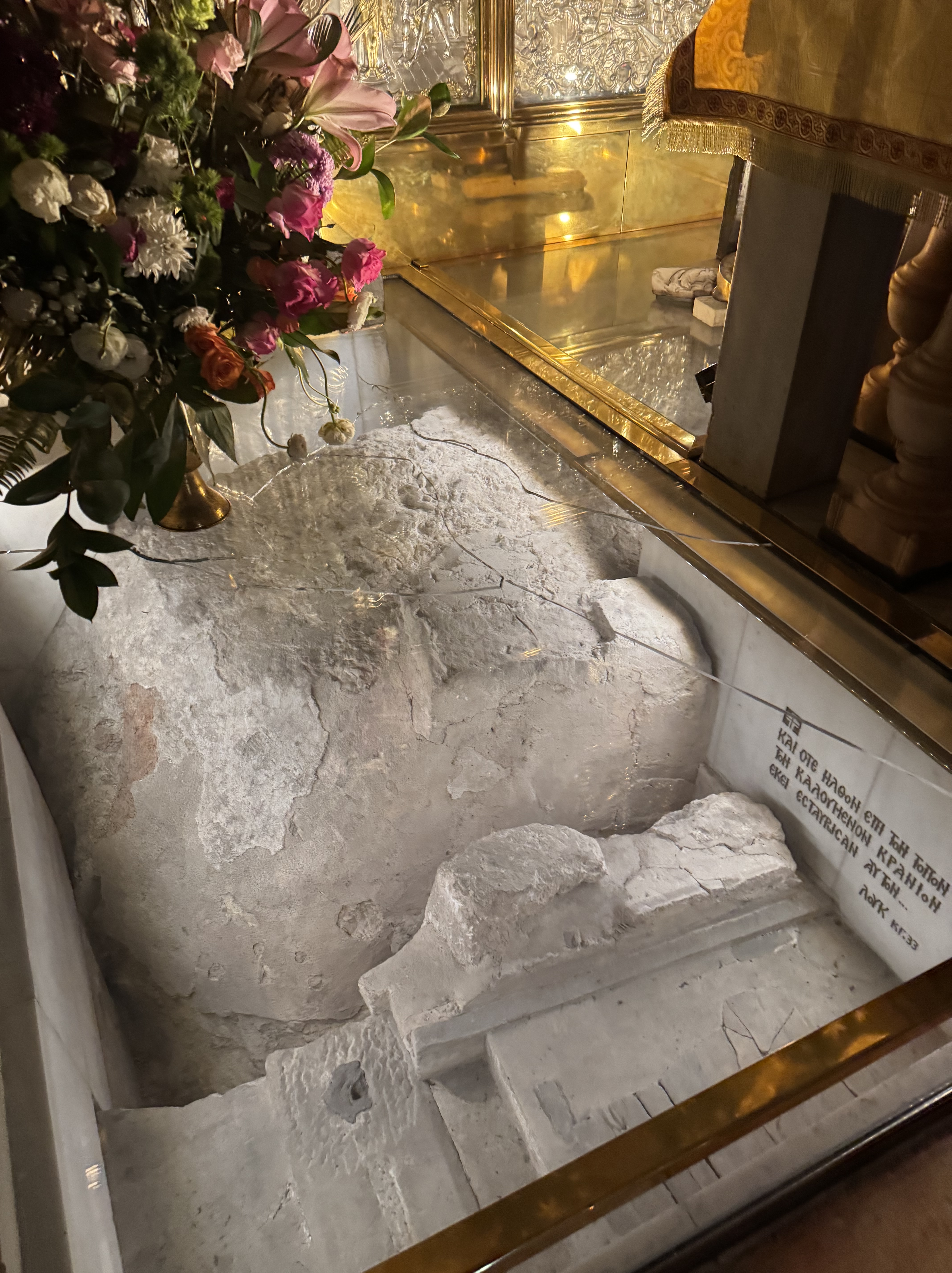
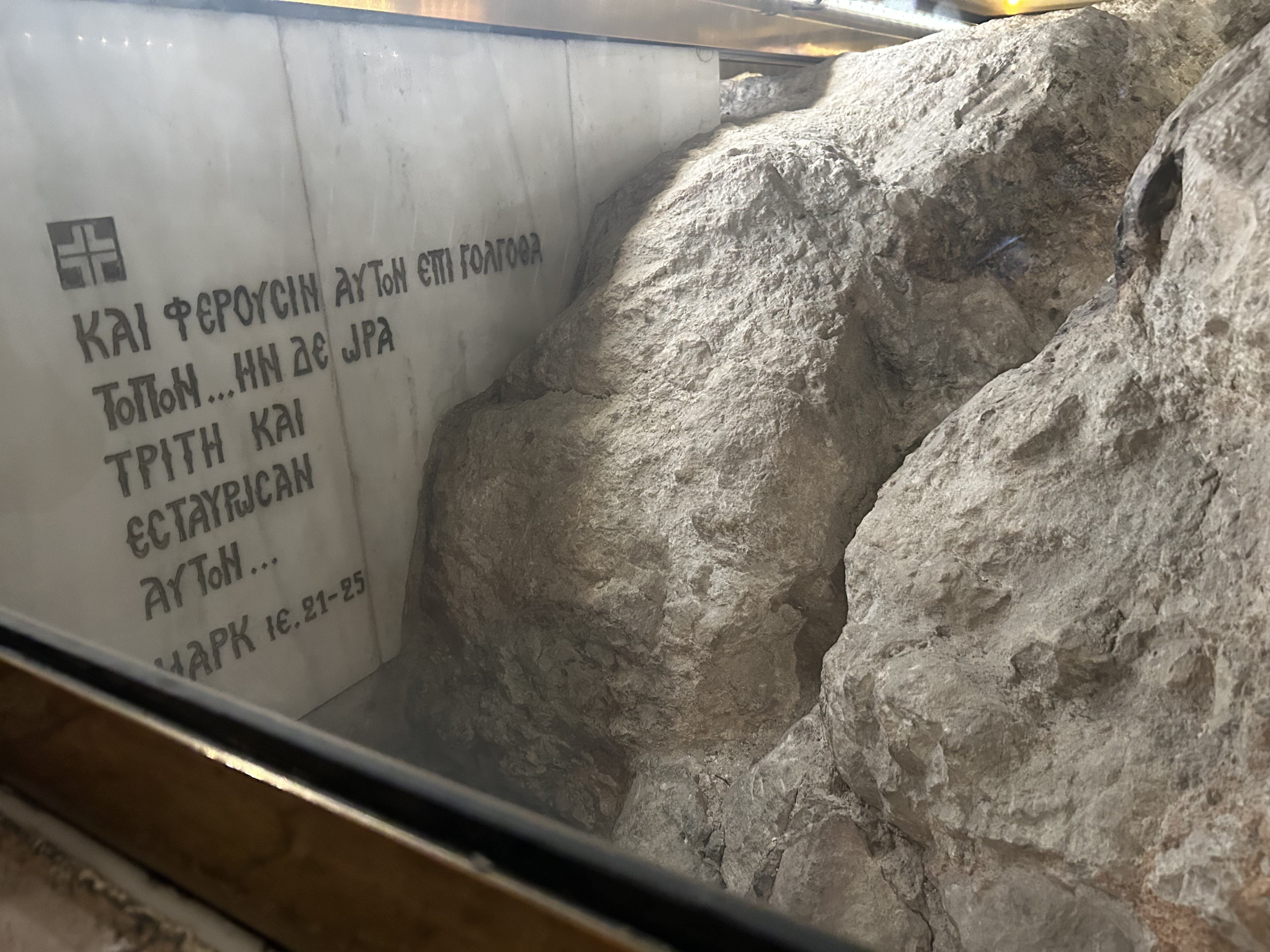
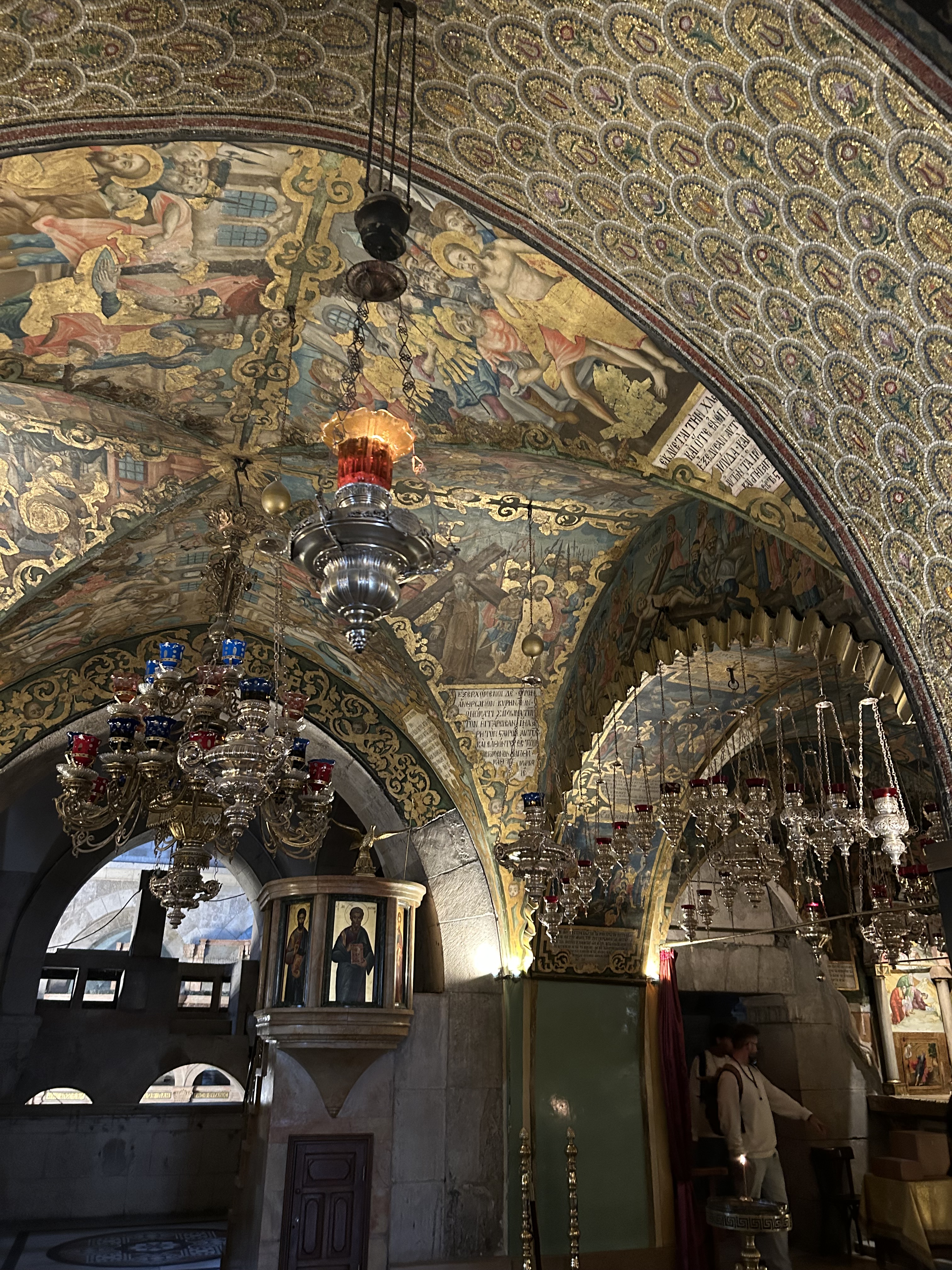
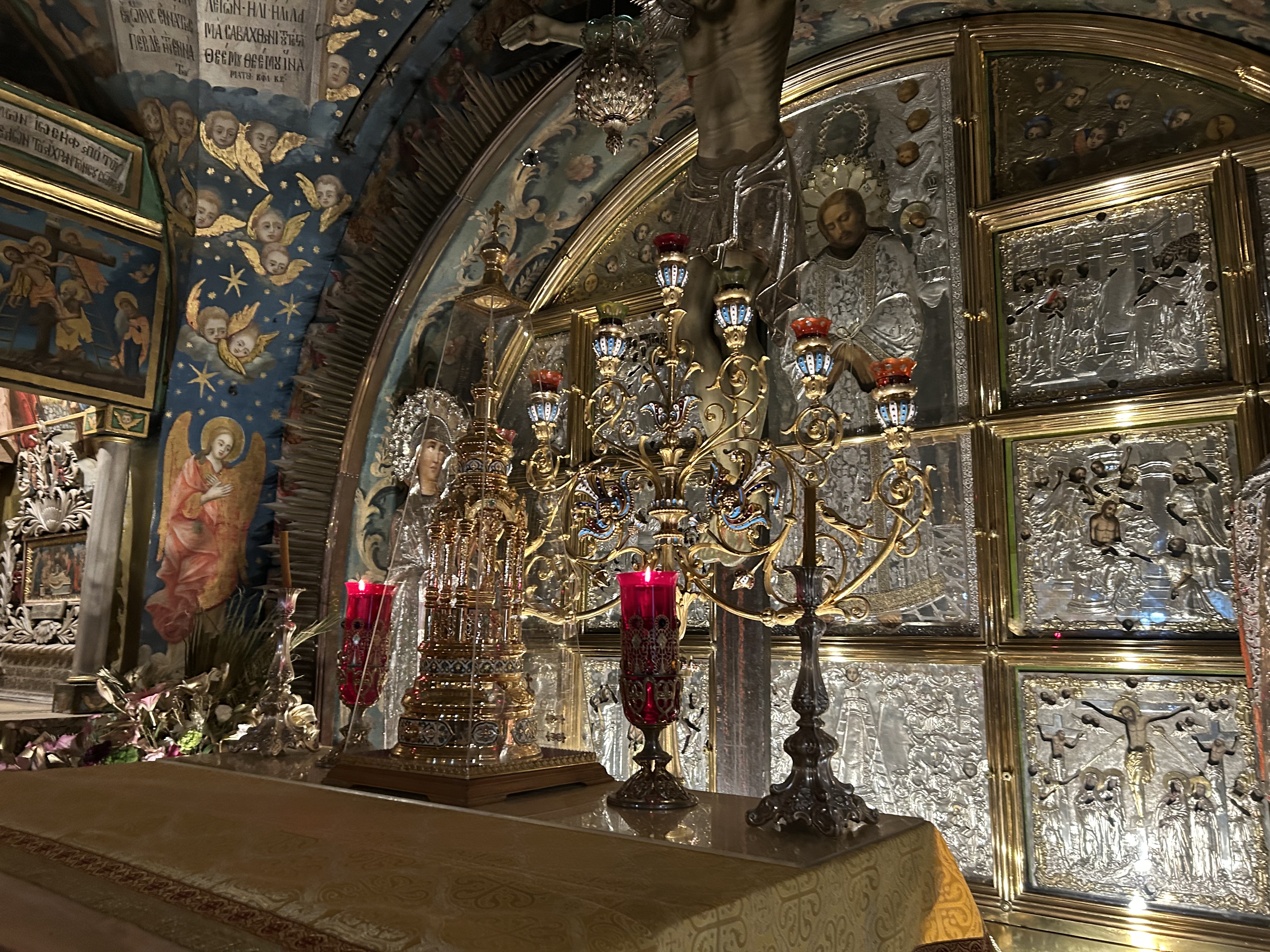
Calvary or Golgotha was a site immediately outside Jerusalem’s walls where Jesus was crucified. The exact location of Calvary has been traditionally associated with a place now enclosed within one of the southern chapels of the multidenominational Church of the Holy Sepulchre, a site said to have been recognized by the Roman empress Helena, mother of Constantine the Great, during her visit to the Holy Land in 325.
Other locations have been suggested: in the 19th century, Protestant scholars proposed a different location near the Garden Tomb on Green Hill (now “Skull Hill”) about 500 m (1,600 ft) north of the traditional site and historian Joan Taylor has more recently proposed a location about 175 m (574 ft) to its south-southeast. There is a bus station there now.
I would propose this to be the actual site, (not the bus station location which looks like a skull in the rocks; but would suggest in was a little farther back than the rock they propose.
The Tomb of Jesus?
The Church of the Holy Sepulcher is a church in the Christian Quarter of the Old City of Jerusalem.[29] It contains, according to traditions dating back to the fourth century, the two holiest sites in Christianity: the site where Jesus was crucified,[30] at a place known as Calvary (or Golgotha), and Jesus’s empty tomb, where he is believed by Christians to have been buried and resurrected.[31]
The marble covering protecting the original limestone slab upon which Jesus was thought to have been laid by Joseph of Arimathea. This is just one of several arguments supporting the identification of tomb of Jesus at this site.[32] You can see a photo of Krista and Gabby standing by another tomb (which was close to the site, but we know is NOT the tomb of Jesus. I would propose that the actual tomb was closer to these.
This is the garden tomb.
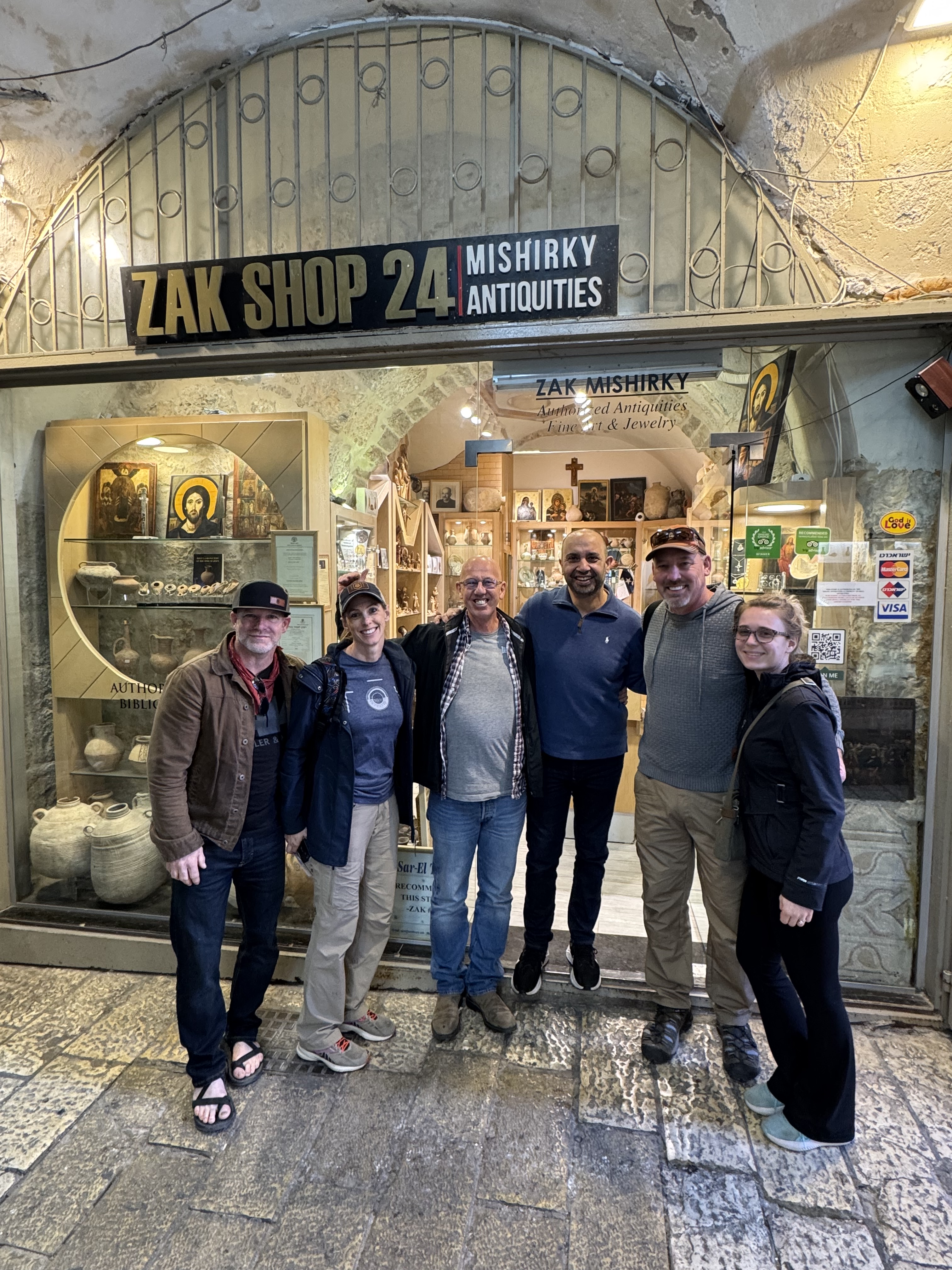
For the record, I do not think this is the location of the burial, but it was beautiful, and the gift store is worth looking at as it is Messianic. They also have a wine press (pictured) that is pretty sweet! On the same note, make sure you stop at Zak’s which is close to the garden tomb!!!
Jesus’ Trial
Shimon Gibson was part of a team that excavated the remains of a gate in the western wall which would have led into Herod’s palace complex. He believes it to match the Biblical data and be the place Pilate passed sentence on Jesus. He describes their findings:
“The discovery of a well-defended gateway…which has an inner courtyard paved with flagstones and with a rocky outcrop on one side corresponds perfectly with the situation of the place of the Roman tribunal as suggested by Josephus [in the account of Gessius Florus] and John. Hence, while it is a fair assumption the gate was used mainly as a private entrance into the Praetorium, this does not exclude public activities from taking place inside the gate and within the large courtyard situated between the walls. Indeed, this spot would have been ideal as a place for proclamation and public trials, and crowd control would have been pretty easy owing to the fact that it was so well defended.” [33]
Leen Ritmeyer, on the other hand, believes this gate probably led into the soldiers’ barracks, not into the part of the palace where Pilate resided. Furthermore, he points out that the tribunals could be located inside the palace complex accessible from inside the city, where people could witness (or sometimes be forced to witness) the Roman governor’s judgements.[34]Presumably there would have been an entrance to Herod’s palace inside the city as well. Trials were traditionally done ofr thousands of years in Israel and other cities at the gates. Other scholars have suggested that there was a public square outside the eastern entrance to Herod’s palace. John’s account implies that Pilate went in and out of his residence multiple times (Jn 18:29, 33, 38; 19:4) to speak with Jesus in private and then speak to the Jews who were waiting outside. I think this gate is the most valid option.
Ruins of Solomom Temple
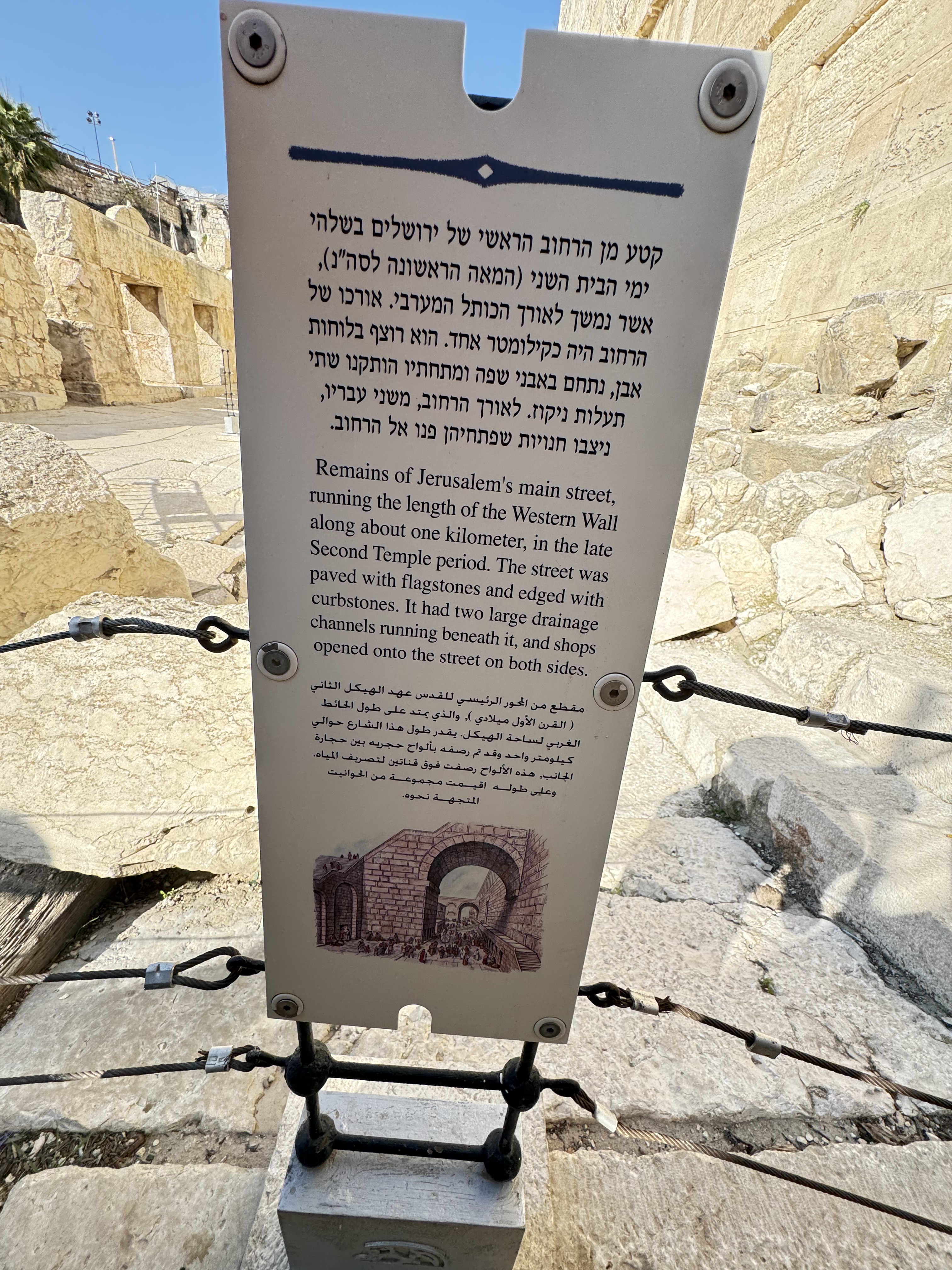
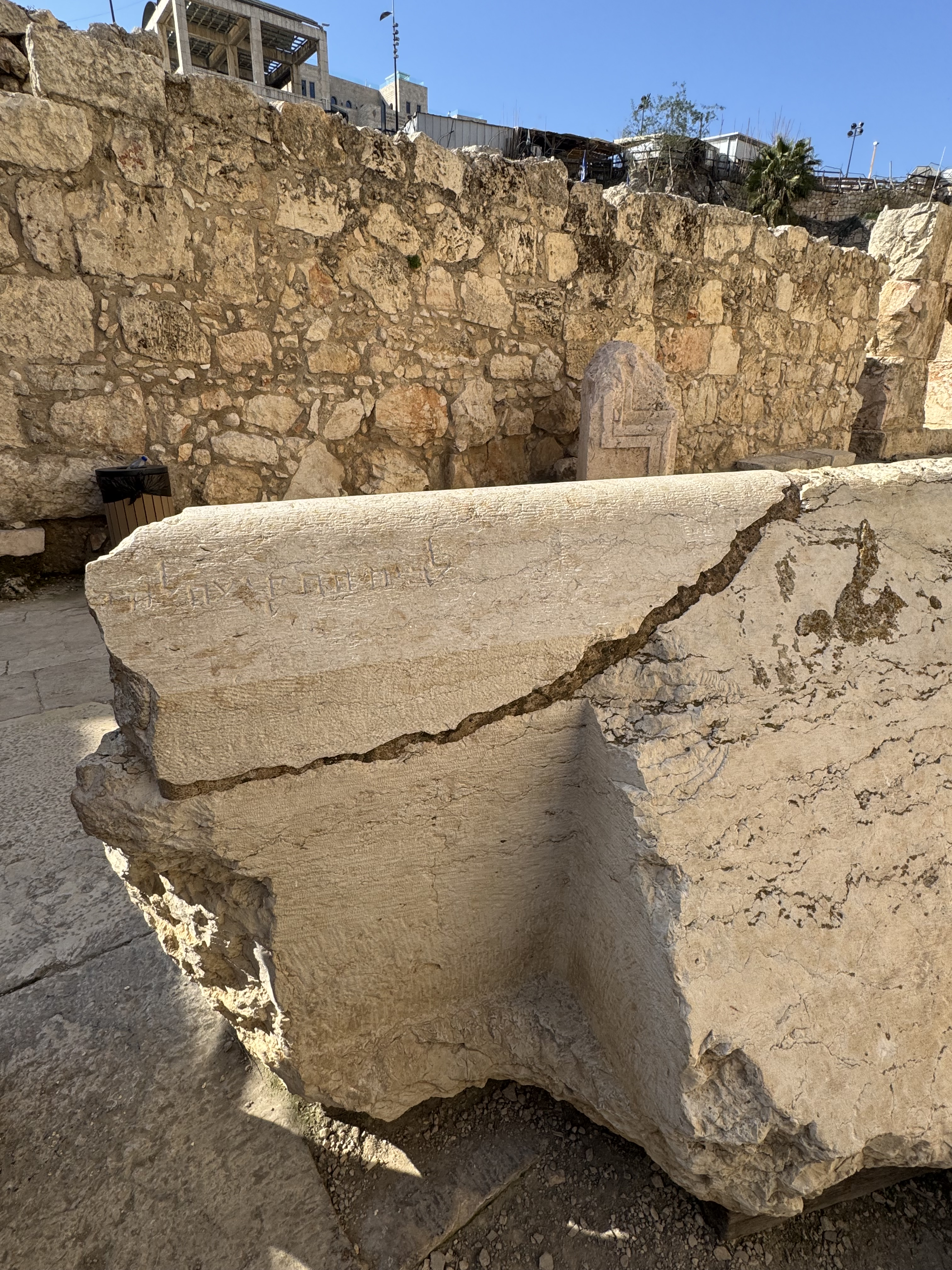
You can see the street where Jesus would have walked and the ruins of Herod’s temple in 70ad. The siege of Jerusalem in 70ad was the decisive event of the First Jewish–Roman War (66–73 CE), a major rebellion against Roman rule in the province of Judaea. After months of conflict, the Romans breached the city’s defenses, culminating in the destruction of the Second Temple, the razing of the city, and the mass killing, enslavement and displacement of its inhabitants. The siege marked the effective end of the Jewish revolt and had profound political, religious, and cultural implications for the Jewish people as well as broader historical consequences.
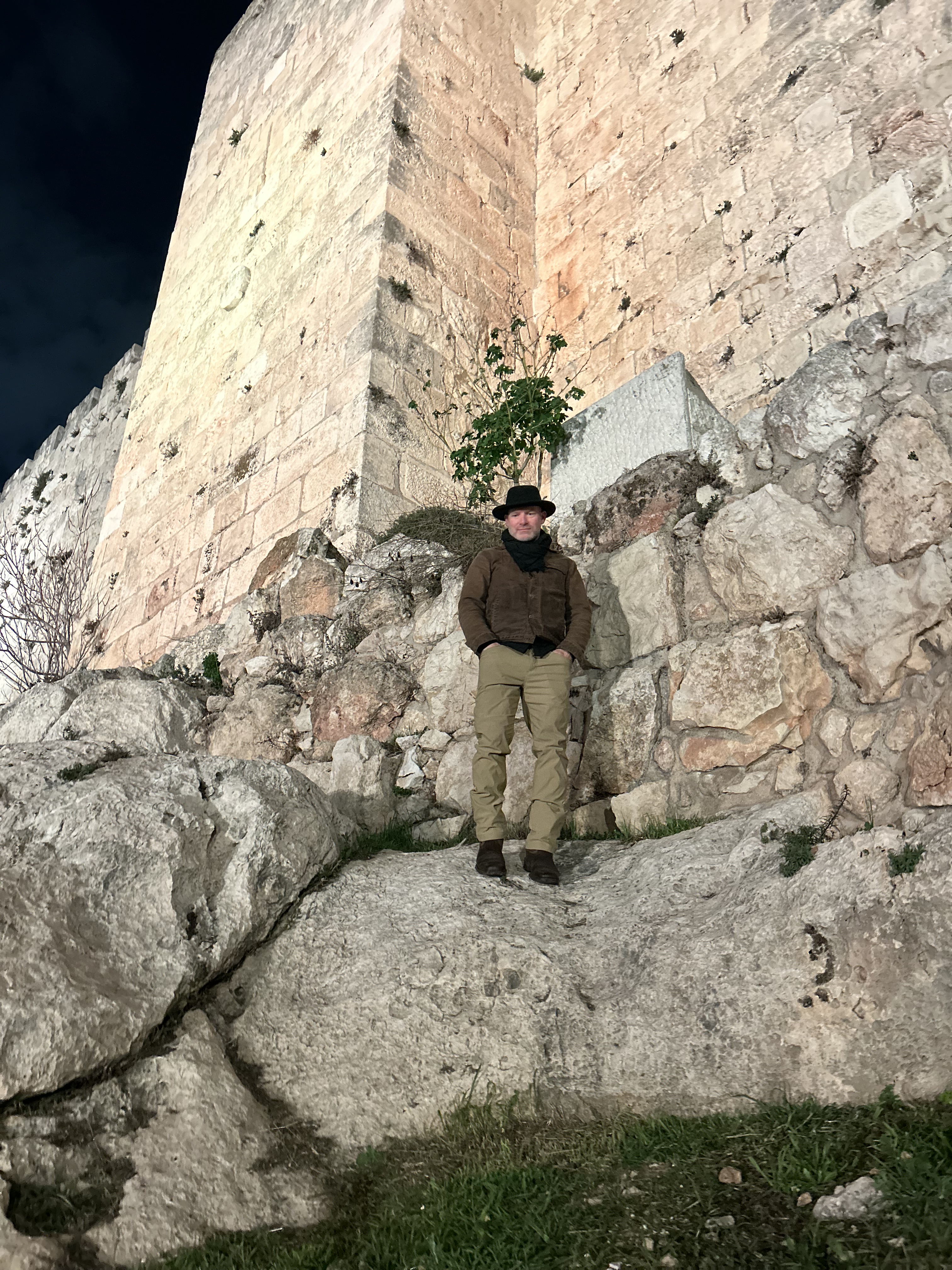
According to Josephus, on Av 9th/10th (late August), a Roman soldier hurled a burning piece of wood into the northern chamber, igniting a fire that ultimately consumed the entire temple structure. As the temple burned, chaos erupted in its courtyards. The Romans then moved to systematically destroy the rest of the Temple Mount, razing the remaining porticoes, treasuries, and gates. The soldiers carried their military standards into the temple court, offering sacrifices before them. Jesus’ prophecy about the destruction of the Temple in Jerusalem was fulfilled at this time. You can still see the huge boulders that are the remains of the temple that once stood on the mount. To be clear all of the temple was destroyed as Jesus said would happen. The mount was left intact. [35-39 summarized]
The Hulda Gates
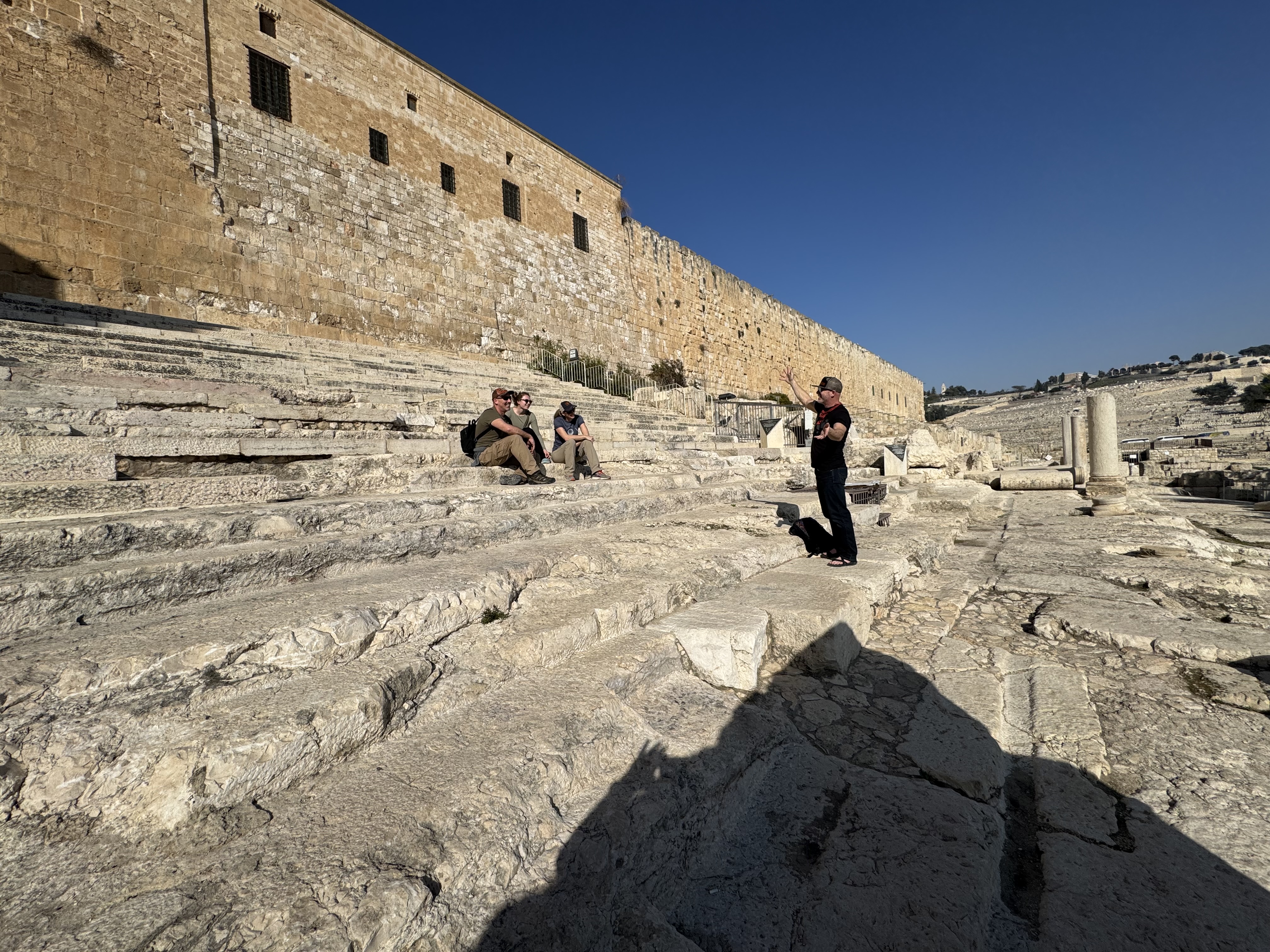
The Huldah Gates were one of the Gates of the Old City of Jerusalem leading into the Jerusalem Temple compound in the Hasmonean period and were named as such in the Mishnah.[40] The steps at the gate were a public forum where Jesus would have taught as a Rabbi.
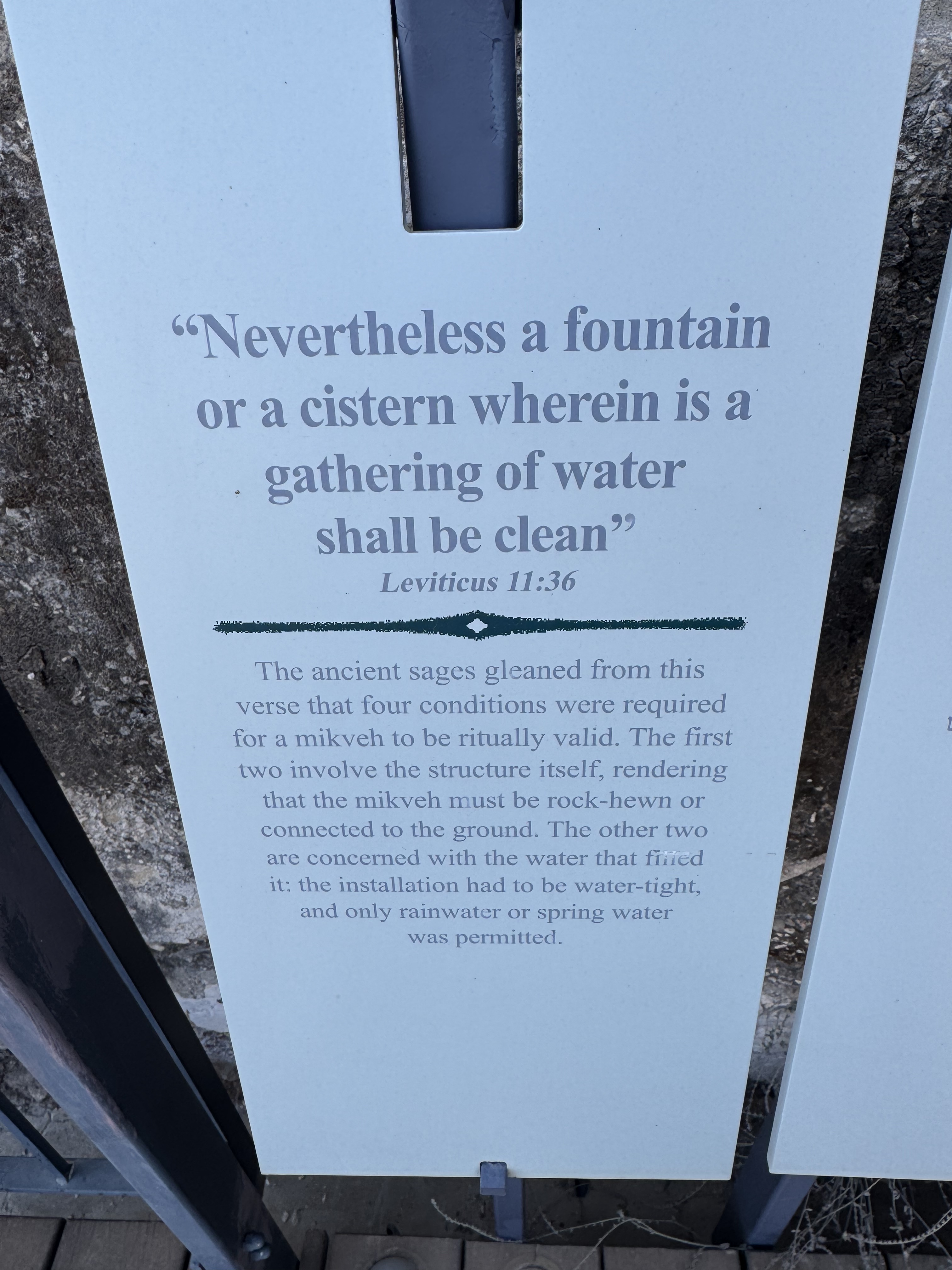
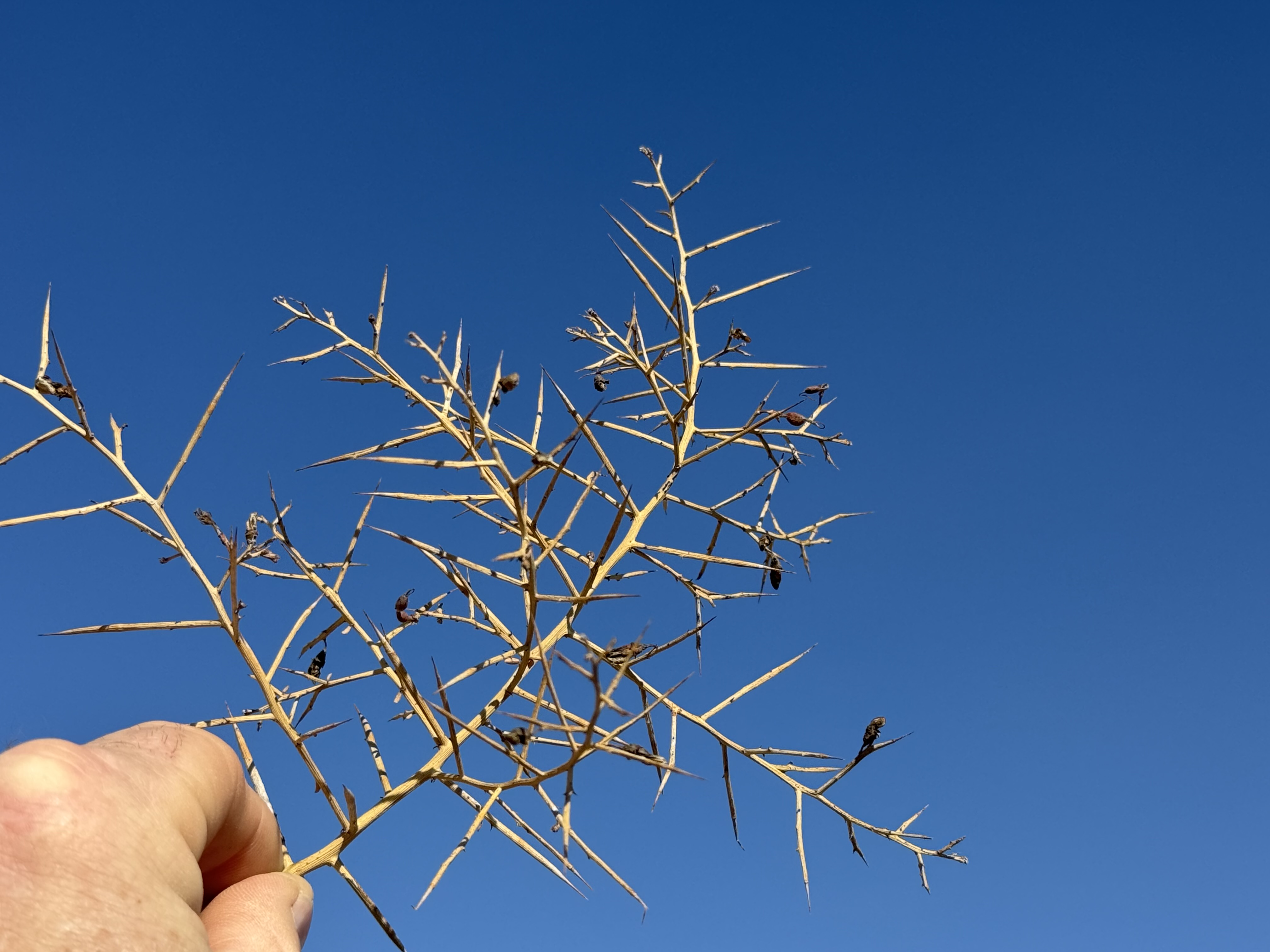
Close to here is the Ophel Mikveh Trail which was a series of ritual bath stations used before entering the temple. There are also several thorn bushes that still grow.
The Israel Museum
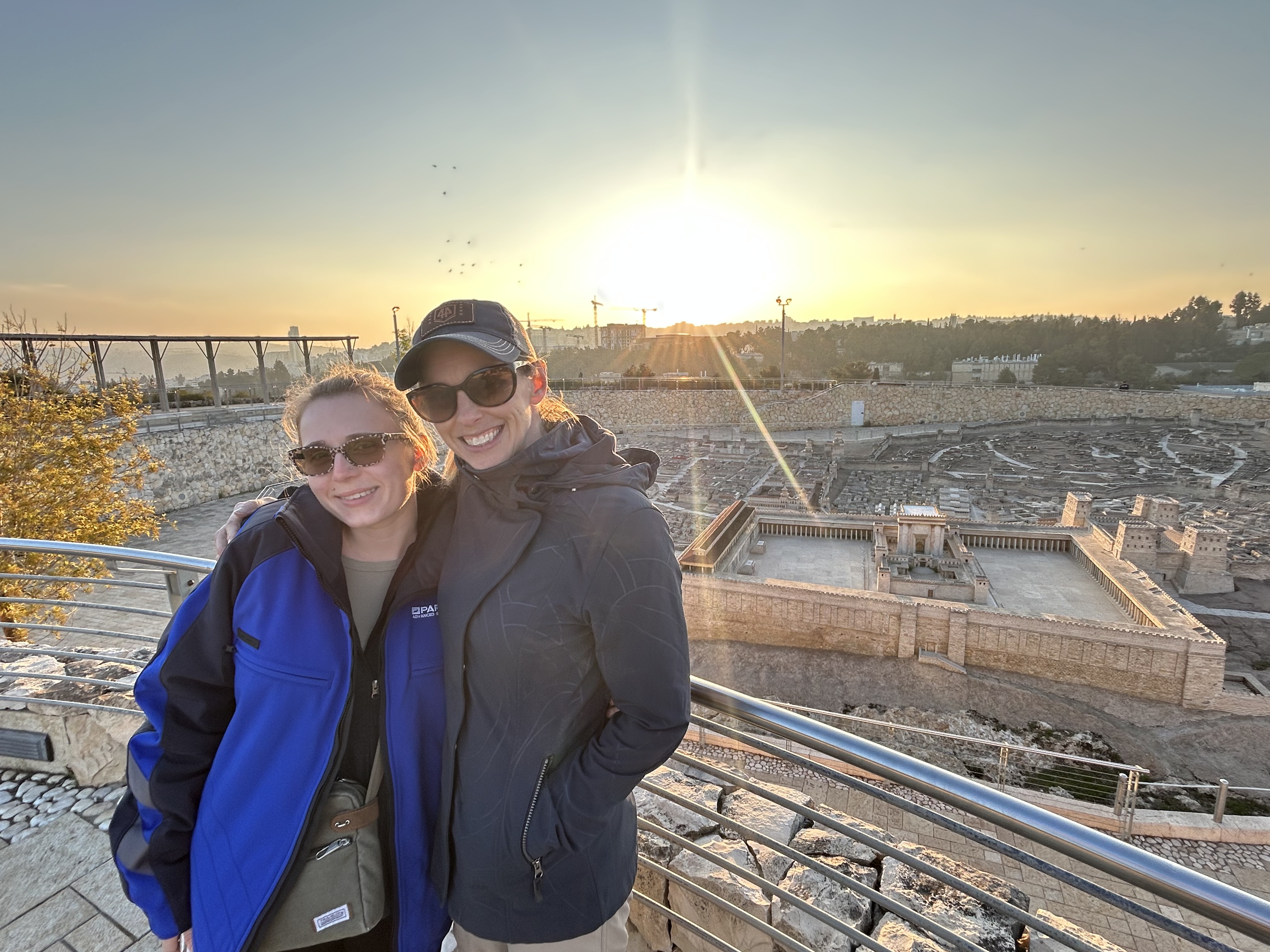
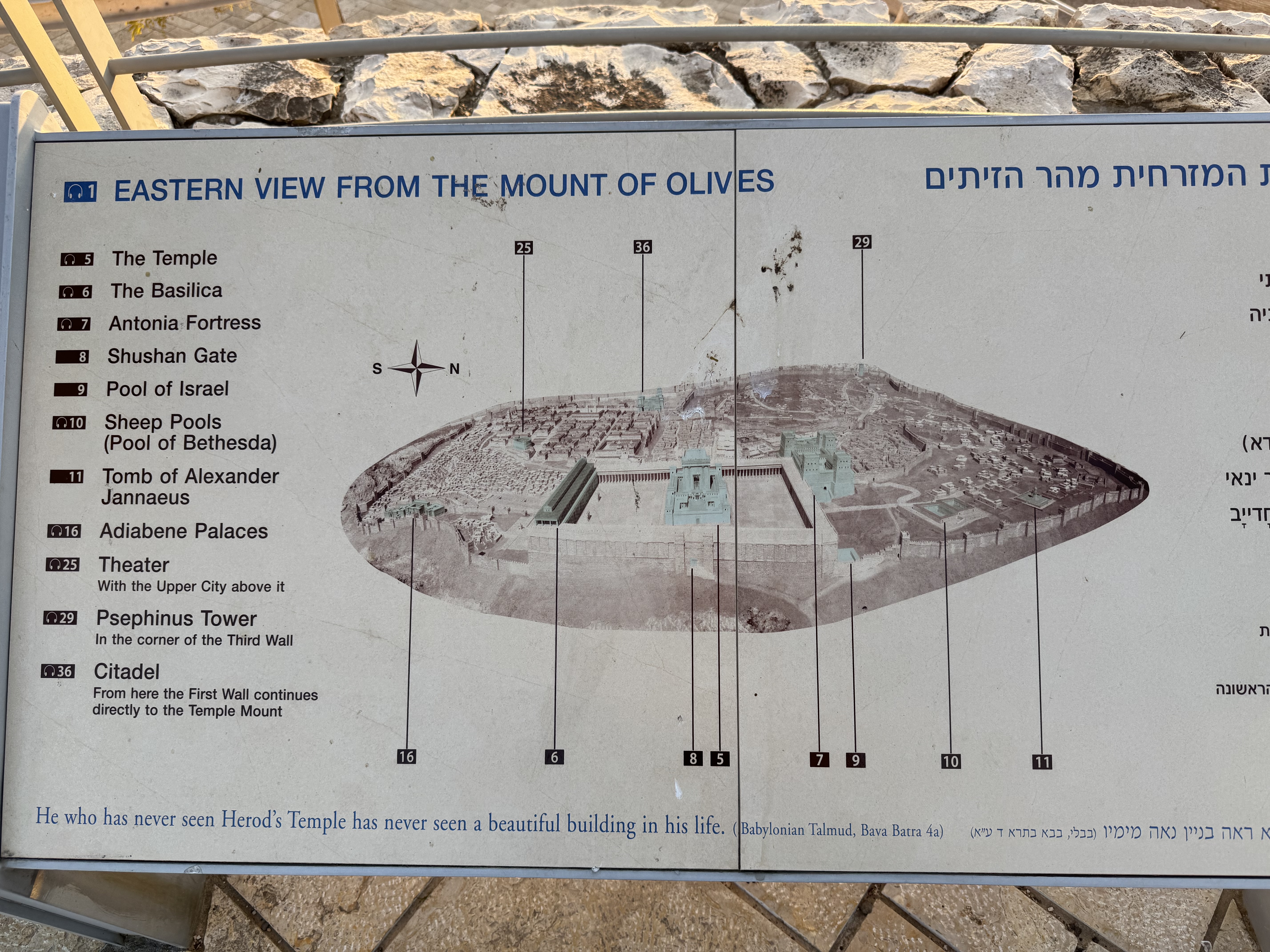
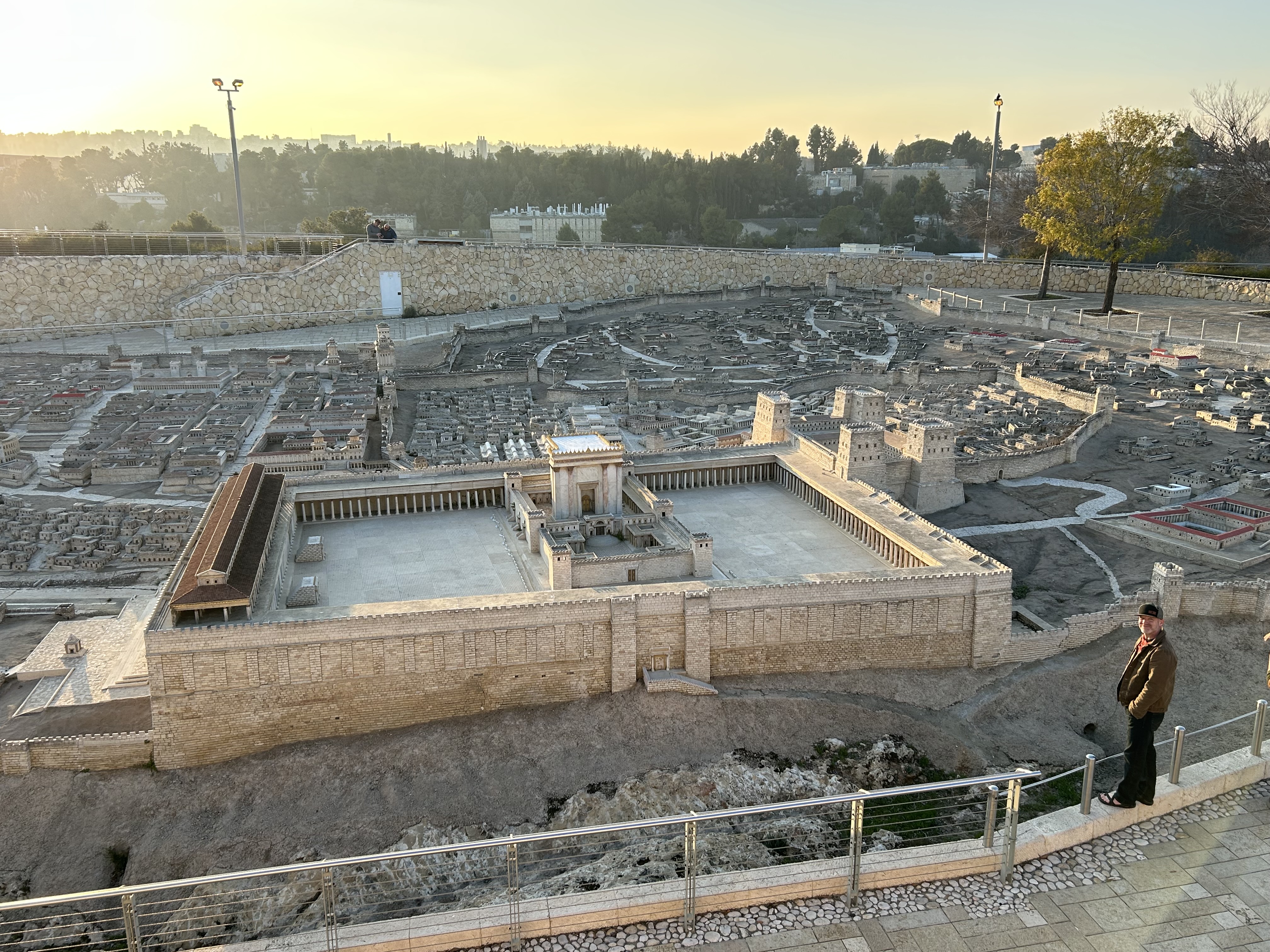
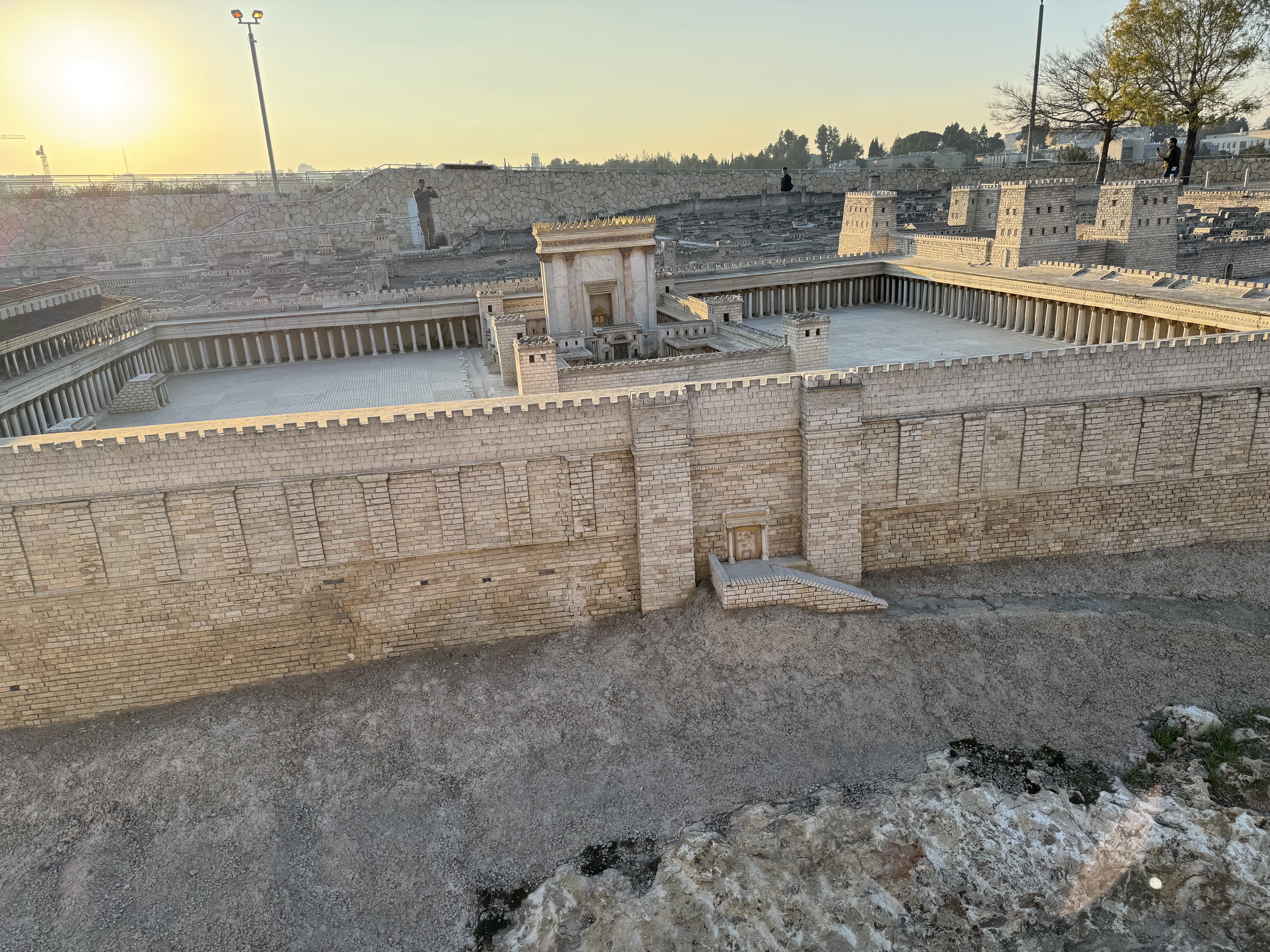
The Dead Sea Scrolls are housed in the Shrine of the Book, which is a wing of the Israel Museum in the Givat Ram neighborhood of Jerusalem. It is also worth seeing the 1/50th scale model of Jerusalem in the 2nd Temple period. This will very much help you conceptualize the steps of Jesus.
Tower of David Jerusalem Museum
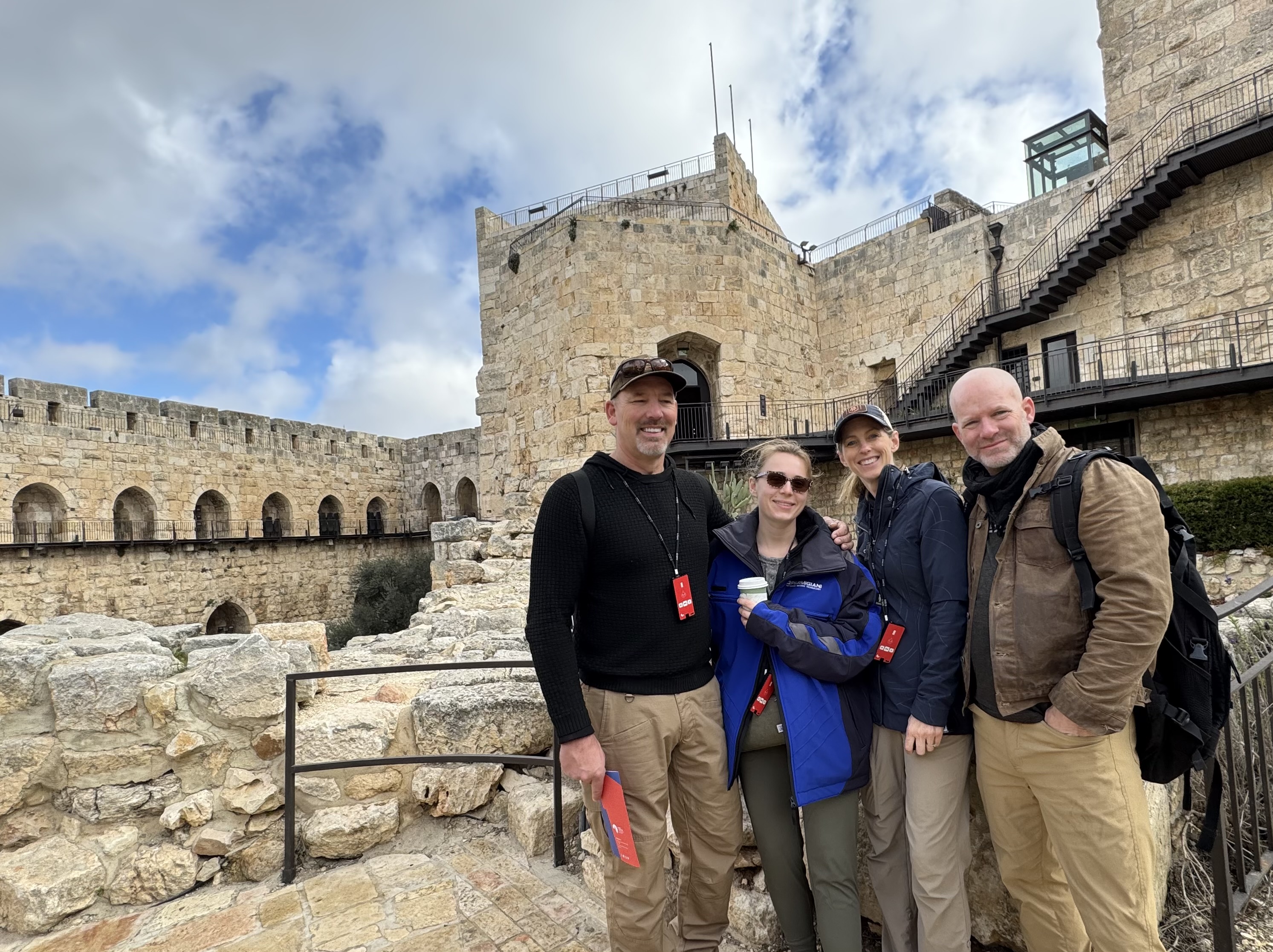
The Tower of David is worth seeing. The Tower of David archaeological excavations reveal the city’s evolution across 3,000 years. For thousands of years, the city’s rulers resided here. Within these walls, Hezekiah’s soldiers built a wall, the Hasmoneans launched ballistas, Herod erected a magnificent palace, zealots fought during the revolt, a crusader dug a tunnel, the Mamluks built a minaret, and Allenby stood on the citadel’s steps. In every era, the importance and beauty of this place was recognized. As Ronald Storrs, the first British Governor of Jerusalem, put it, “This is the most beautiful spot in the city!”
The dust of the Rabbi – What does all this mean to us?
Follow a Rabbi, drink in his words, and be covered with the dust of his feet.—Ancient Jewish Proverb
The message of Scripture is as relevant to us today as it was when given at the time of Christ. In Christ’s time, the decision to be His disciple meant total commitment. Jesus was with the disciples and asked them to be with Him (Mark 3:13–19, John 13:15). They were to be “with” Him (Mark 3:13–19), to follow Him (Mark 1:16–20), to live in Him (John 8:31), and to imitate His actions (John 13:13–15). All of these descriptions are pictures of deep devotion to Jesus.
Today the best phrase we have for this might be “complete obsession.” We think of this when a young person starts dating someone. At first, they are totally obsessed.
Remember when Peter learned to walk on water in Matthew 14? He wanted to believe that he could be like Jesus, and he could—he just needed to start by holding the hand of Jesus. I love Jesus’s simple response to Peter’s doubt: “Why did you doubt?” (14:31). In other words, “Why did you doubt I could empower you to be like me?” The calling here seems so simple, yet even Peter wasn’t quite there.
Today, we seem to be an entire church that has simply sunk beneath the water. As a communal Christian culture of devoted disciples, we must take on a better mindset of discipleship. We must believe and live out the calling to be a wholly devoted disciples of Jesus, believing that He has empowered and filled us with His Spirit so that we can be like Him and be used as the very image of Christ to the world. We need to passionately ask for the hand of God to pull us into Him; to be mediators to others so they too might receive the hand of Jesus in their lives. Essentially, we need to model what passion in Jesus looks like. Did you ever notice that when something is modeled well, people have a desire for it? You might even find people who begin to be obsessed with things that are modeled well. In many ways this describes our humanity, but this is also a picture of how Jesus meets us where we are and pulls us into Him.
What does it mean to pursue Jesus in an American culture? We must be faithful in His time, in the waiting. We should meditate on His Word and imitate His life. The calling of the church today and the mission of disciples is to fulfill the cosmic calling of priesthood: to bring the people to the hand of God and God’s hand to the people as mediators and pictures of Christ. This is a lifelong investment. Devotion has never meant presenting someone with the plan of salvation in a few easy steps; it means being fully immersed with them each and every day as you disciple them to conform to the image of Christ. It is a commitment to deep, personal mentoring. That strategy, blessed by God’s Spirit, radically changed the world in the first few centuries, and it still has the same power today.
One of the major strategies of Jesus was to transform people from pagan culture to kingdom culture. And that strategy, by God’s blessing, would change the most pagan of cultures. Today, that is still the plan for discipleship. We must be passionate in our devotion by following Jesus’s example. The calling of discipleship wasn’t one of casual Christianity, or even to simply set your firstfruits aside for God: The disciple was all in. A disciple is obsessed with Jesus.
What does this obsession with Jesus look like today in our culture? Is the primary goal of your life to passionately and energetically disciple your own family and then those around you? Do you have twelve or seventy invested in a deep relationship, rooted in teaching? Is your complete strategy in life to bring others into deeper, more fervent discipleship? What would the American church look like if we took on this mindset of deep, passionate discipleship? More importantly, what would your life look like? What would your journey be?
WORKS CITED
The Complete Gospels: Annotated Scholars Version. 1994, Polebridge Press. p. 108, note on Matthew 26:36
Paul Maier In the Fullness of Time
Lash, Mordechay; Goldstein, Yossi; Shai, Itzhaq (2020). “Underground-Archaeological Research in the West Bank, 1947–1968: Management, Complexity, and Israeli Involvement”. Bulletin of the History of Archaeology. 30
Abegg, Jr., Martin; Flint, Peter; Ulrich, Eugene (2002). The Dead Sea Scrolls Bible: The Oldest Known Bible Translated for the First Time into English. San Francisco: Harper. pp. xiv–xvii.
Staff writers (28 July 2011). “Israel will reopen (Israeli) site of the baptism of Jesus”. AsiaNews.it
Cambridge Bible for Schools and Colleges on Acts 1, accessed 24 September 2016: “The eleven were the tenants of the upper room, to which the other disciples resorted for conference and communion”.
Kershner, Isabel (May 26, 2014). “Mass on Mount Zion Stirs Ancient Rivalries”. New York Times.
Zivotofsky, Rabbi Dr Ari (May 15, 2014). “Where is King David Really Buried?”. Jewish Press.
“The Temple Mount in the Herodian Period (37 BC–70 AD)”. Biblical Archaeology Society. July 21, 2019.
Peters 1984 “One of the best documented endowments, one that embraced the entire quarter of Western Muslims or Maghrebis”.
John 5:2: Contemporary English Version
Easton’s Bible Dictionary.
“Bethsaida (the pool)”. Catholic Encyclopedia.
International Standard Bible Encyclopedia (1995), on sheep gate and on sheep market.
D. A. Carson, The Gospel according to John (1991), p. 241.
Gibson, Shimon, The Final Days of Jesus: The Archaeological Evidence. (San Francisco: HarperOne, 2009) 104-105.
Leen Ritmeyer, Personal Communication, April 6, 2022.
Schäfer, Peter (2003). The History of the Jews in the Greco-Roman World: The Jews of Palestine from Alexander the Great to the Arab Conquest. Routledge.
Schwartz, Seth (2006). “Political, social, and economic life in the Land of Israel, 66–c. 235”. In Katz, Steven T. (ed.). The Late Roman-Rabbinic Period. The Cambridge History of Judaism. Vol. 4. Cambridge University Press. pp. 23–52.
Schaper, Joachim (1999). “The Pharisees”. In Horbury, William; Davies, W. D.; Sturdy, John (eds.). The Early Roman Period. The Cambridge History of Judaism. Vol. 3. Cambridge University Press. pp. 402–427.
Schwartz, Seth (2014b). The Ancient Jews from Alexander to Muhammad. Cambridge University Press.
Sivan, Hagith (2008). Palestine in Late Antiquity. Oxford University Press.
Encyclopædia Judaica (ed. 1972), vol. 15, pp. 963-4
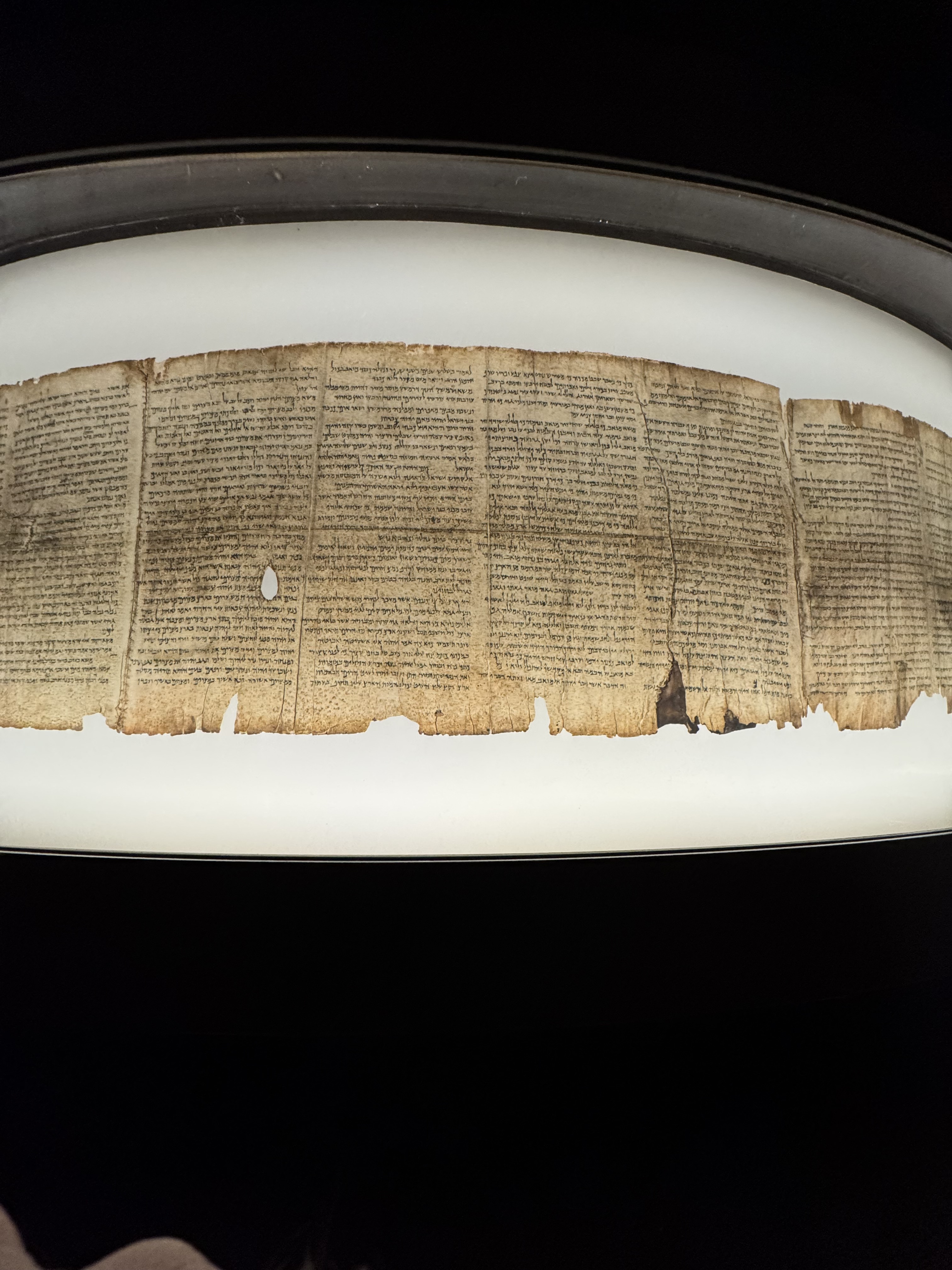
Today was a life milestone. I visited the home of the Dead Sea Scrolls. I have dreamed of this since I was young. As I would love to tell you everything I know about them, I think I will keep this to a brief introduction.
The Dead Sea Scrolls, also called the Qumran Caves Scrolls, are a set of ancient Jewish manuscripts (some original biblical texts) from the Second Temple period. They were discovered over a period of 10 years, between 1946 and 1956, at the Qumran Caves near Ein Feshkha in the West Bank, on the northern shore of the Dead Sea. These date back to the third century BCE.[1]
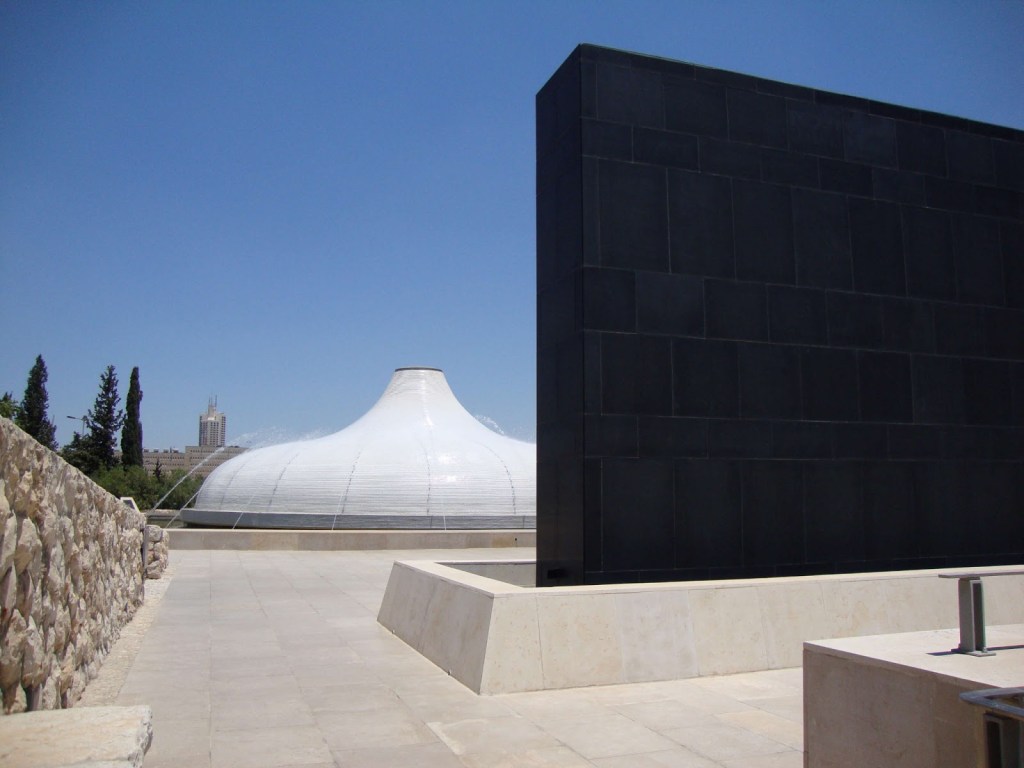
The Shrine of the Book was built as a repository for the first seven scrolls discovered at Qumran in 1947. The unique white dome embodies the lids of the jars in which the first scrolls were found. This symbolic building, a kind of sanctuary intended to express profound spiritual meaning, is considered an international landmark of modern architecture. Designed by American Jewish architects Armand P. Bartos and Frederic J. Kiesler, it was dedicated in an impressive ceremony on April 20, 1965.
The contrast between the white dome and the black wall alongside it alludes to the tension evident in the scrolls between the spiritual world of the “Sons of Light” (as the Judean Desert sectarians called themselves) and the “Sons of Darkness” (the sect’s enemies). The corridor leading into the Shrine resembles a cave, recalling the site where the ancient manuscripts were discovered. [12]
2017 marks the 70th anniversary of the discovery of the Dead Sea Scrolls. Long story short, in late 1947 a young Bedouin boy tossed a stone into a cave, heard the clink of breaking pottery, and would later scramble in to find the tattered remains of ancient scrolls from the centuries leading up to and after the Common Era. If this modern story of ancient discoveries is new to you, you’ve got to ask a very important question. Why does any of this matter today?
These are the oldest Biblical manuscripts that we have and therefore have made us consider the texts of our later translations of the Bible. [2] Today I visited the Shrine of the Book Museum in Jerusalem where the Dead Sea Scrolls and fragments are located and are now mostly the property and heritage of Judaism.[4] There are 981 different manuscripts (discovered in 1946/1947 and in 1956) from 11 caves,[5] in Qumran in the eastern Judaean Desert in the West Bank.[6] Archaeologists have long associated the scrolls with the ancient Jewish sect known as the Essenes, although some recent interpretations have challenged this connection and argue that priests in Jerusalem or other unknown Jewish groups wrote the scrolls.[7][8]
Most of the scrolls are in Hebrew, with some written in Aramaic and Greek.[9] The texts are written on parchment, some on papyrus, and one on copper.[10] The scrolls cover a wide range of topics and genres. The biblical scrolls include texts from every book of the Old Testament, with the possible exception of Esther. Other scrolls are Jewish sectarian writings, administrative documents, deeds of sale, and even divorce and marriage records. Despite the name, the majority of the scrolls are preserved as fragments, small scraps of what were once larger scrolls and documents. While some scrolls are several feet long, many smaller fragments are no larger than a fingertip. To date, more than 25,000 fragments have been discovered, and extensive work has gone into combining, preserving, translating, and studying these various fragments.[11]
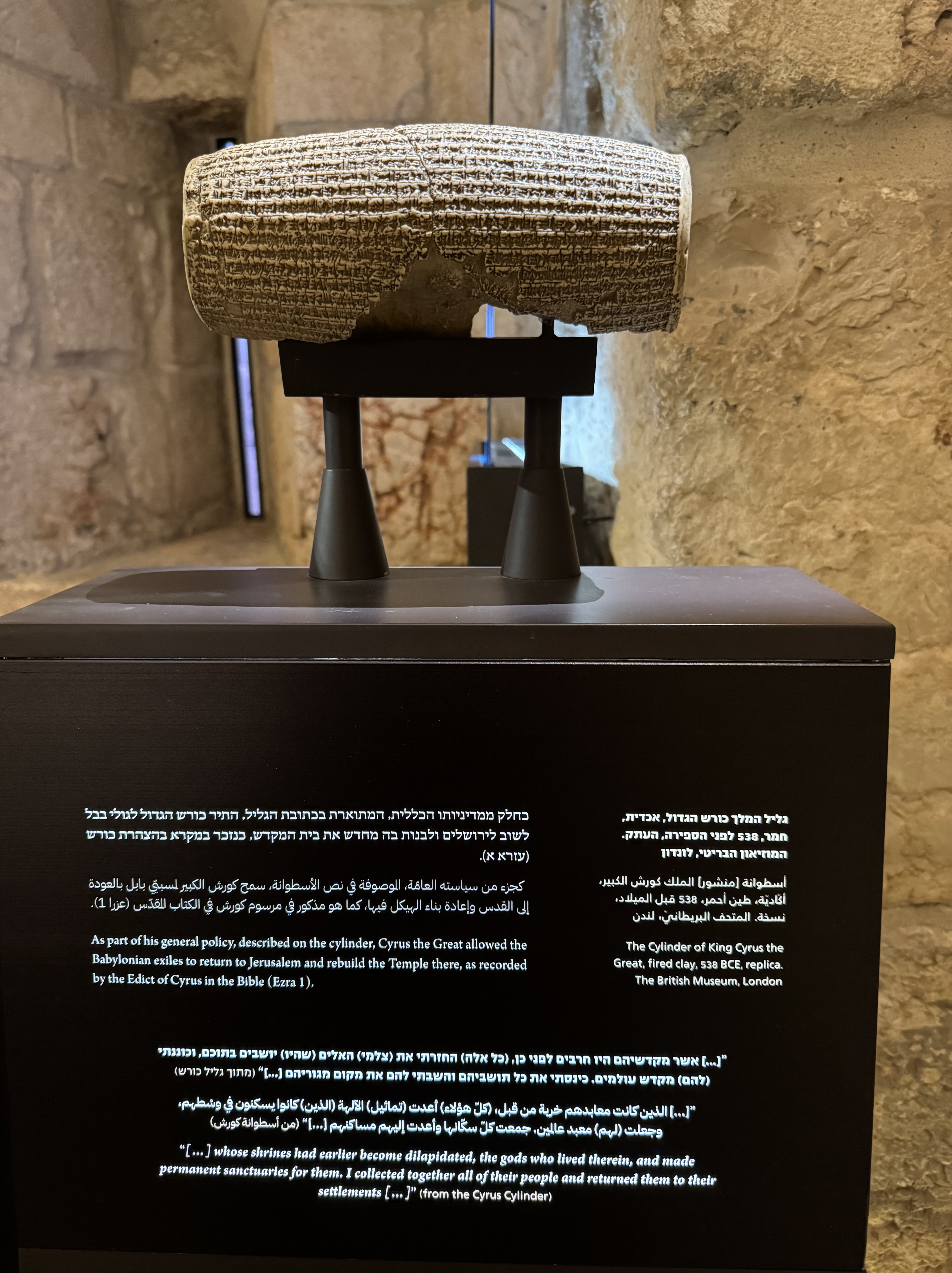
The Dead Sea Scrolls shed light on the period between Alexander the Great’s conquest of Palestine in 332 BCE through the Great Revolt, which ended in 73 CE, with an emphasis on the period from the Maccabean Revolt (168–164 BCE) through the turn of the century. However, in order to fully comprehend the Qumran sect, the reasons for its establishment, and its unique character, one must study Judaism and Jews in the Second Temple Period. It is essential to understand the political realities, external influences, and theology of the time. The Second Temple period, or Second Commonwealth, began in 538 BCE with a declaration by Cyrus the Great, king of Persia and Media, that the Jews could return to the Land of Israel and rebuild their Temple. The Temple and the city of Jerusalem were rebuilt by the year 515 BCE, and, in contrast to the First Commonwealth, the high priest became the secular as well as religious authority. This system of government lasted into the Hasmonean period and became an object of protest in the Dead Sea Scrolls, as well as in other literature of the period. [13]
The scrolls gave historians great insight into the ancient forms of these languages, and they also changed the way scholars studied the Old Testament. For example, the scroll with the most complete version of the book of Psalms had about 40 psalms, including three that were previously unknown. One of these unknown psalms was a “plea for deliverance,” which made note of “evil incarnation.” The Dead Sea Scrolls provide evidence of the diversity of religious thought in early Judaism and the Hebrew Bible’s text development. They revealed the psalms were once sequenced in a different order. This was interesting to scholars because the texts had long been so uniform, and seeing flexibility with the wording and organization was stunning. Few people, however, were able to read and analyze the texts. The Dead Sea Scrolls were long hidden away until they were “liberated” in the 1990s. [14] Later that year, the Biblical Archaeology Society was able to publish the “Facsimile Edition of the Dead Sea Scrolls”, after an intervention of the Israeli government and the IAA.[15] In 1991 Emanuel Tov was appointed as the chairman of the Dead Sea Scrolls Foundation, and publication of the scrolls followed in the same year. Researchers at Hebrew Union College in Cincinnati, Ohio, Ben Zion Wacholder and Martin Abegg, announced the creation of a computer program that used previously published scrolls to reconstruct the unpublished texts.[16] Officials at the Huntington Library in San Marino, California, led by head librarian William Andrew Moffett, announced that they would allow researchers unrestricted access to the library’s complete set of photographs of the scrolls. In the fall of that year, Wacholder published 17 documents that had been reconstructed in 1988 from a concordance and had come into the hands of scholars outside of the international team; in the same month, there occurred the discovery and publication of a complete set of facsimiles of the Cave 4 materials at the Huntington Library. Thereafter, the officials of the IAA agreed to lift their long-standing restrictions on the use of the scrolls.[17]
If you keep a close eye on the footnotes of your Bible, you’ll see a number of places where the words of modern translations are different than those read by your parents or grandparents. One of the reasons for this is that we know more about ancient scribal culture and have access to hoards more biblical manuscripts today than we ever have. This means the textual foundation under the hood of most any contemporary translation is better than it has ever been. Whether you’re a fan of the NIV, NRSV, ESV, or ABC-123, each new edition involves incremental change to the actual words on the page.
But this sword cuts in both directions. While we have far more evidence to work with, if the Scrolls taught us anything about Old Testament scripture, it is generally true that the older the manuscripts the more varied they become. Simply put: human scribes were not photocopiers and no two manuscripts are the same. Scribes copied texts but also interpreted them. That was their job. It wasn’t trickery or introducing error at every turn. This often resulted in slow growth of biblical texts with manuscripts having relatively modest variations in content. A word here, a phrase there, and in some cases, more than one edition of a book circulated. To many modern readers, this might sound like a major problem. I’d rather see it as an opportunity. An opportunity for artful restoration of a text that is both ancient and sacred. Let me show you what I mean.
I really like the way RELEVANT handles this:
Have you ever been reading the Old Testament and then, wham!, some guy shows up in the story and starts gouging out people’s eyeballs? I have, very alarming. (Gotta love the Old Testament though, so old school!) Of course, I’m talking about the incident that plays out in 1 Samuel 10-11, just after Saul became Israel’s first king. In most ancient manuscripts and modern Bible translations, chapter 10 ends with a statement of a small group uttering lack of confidence in Saul’s ability to defeat the Ammonites (1 Sam 10:27). Chapter 11 then opens with the sudden introduction of an Ammonite king named Nahash, who insists on only making a treating with the Israelites so long as he can gouge out each and all’s right eyeball (1 Sam 11:1-2). Not only is this a bad deal, its super confusing in the context of the narrative. Why? Something is missing.
At least seven copies of the book of Samuel were found among the Dead Sea Scrolls. One of these, known as 4QSamuala, just happens to be the oldest known manuscript of the book in existence (dated to around 50-25 BCE). In this version of the text, we find a full paragraph tucked in between the end of chapter 10 and beginning of chapter 11. The translation of this Dead Sea Scroll reads as follows:[Na]hash king of the [A]mmonites oppressed the Gadites and the Reubenites viciously. He put out the right [ey]e of a[ll] of them and brought fe[ar and trembling] on [Is]rael. Not one of the Israelites in the region be[yond the Jordan] remained [whose] right eye Naha[sh king of] the Ammonites did n[ot pu]t out, except seven thousand men [who escaped from] the Ammonites and went to [Ja]besh-gilead.
What we have here is essentially a cut scene seemingly lost in the generations of copying all other biblical manuscripts. From this content, we learn who this Nahash figure is and why he had the sadistic penchant for collecting eyeballs. Incidentally, the ancient Jewish historian Josephus also seems to have been aware or this detail as he hints at it in his own retelling of Saul’s life (Antiquities 6.5.1). This is the single largest difference discovered when the biblical Dead Sea Scrolls were compared with all previously known witness to the Old Testament. The spectrum of other variations revealed by the scrolls ranges from the spelling of terms, to added/omitted words, or even sentences. While many common Bible translations have dabbled in the Dead Sea Scrolls and included new readings, to date the NRSV is the only one bold enough to integrate the reading described here in 1 Samuel.
The Dead Sea Scrolls are important for a number of reasons. First, they shed light on an otherwise known Jewish group. Actually, the people who wrote the Scrolls never refer to themselves as Jews. They are intriguingly vague about their identity. Second, the Scrolls indicate that certain books of the Bible were more popular than others, a conclusion we could draw similarly from the New Testament quotations of the Old Testament. Third, the use of the Old Testament as an authoritative source for biblical interpretation and personal and community life matches material from the New Testament as well. Finally, the discovery of the Dead Sea Scrolls allows us to access Old Testament manuscripts more than 1,000 years older than we previously possessed. Before the discovery of the Scrolls, the oldest complete manuscript of any Old Testament book dated to the 10th century A.D. To be clear, if Moses wrote the Pentateuch in circa 1400 B.C., then our earliest copy of his complete work in Hebrew dated 2,400 years after it was written! It is with justification that the Dead Sea Scrolls are considered by many the most important biblical archaeological discovery of all time.[19]
WORKS CITED:
“The Digital Dead Sea Scrolls: Nature and Significance”. Israel Museum Jerusalem. Retrieved 4 November 2023.
Lash, Mordechay; Goldstein, Yossi; Shai, Itzhaq (2020). “Underground-Archaeological Research in the West Bank, 1947–1968: Management, Complexity, and Israeli Involvement”. Bulletin of the History of Archaeology.
Duhaime, Bernard; Labadie, Camille (2020). “Intersections and Cultural Exchange: Archaeology, Culture, International Law and the Legal Travels of the Dead Sea Scrolls”. Canada’s Public Diplomacy. Palgrave Macmillan Series in Global Public Diplomacy. Cham: Springer International Publishing. p. 146
“Hebrew University Archaeologists Find 12th Dead Sea Scrolls Cave”. The Hebrew University of Jerusalem. Archived from the original on 2 June 2017.
Donahue, Michelle Z. (10 February 2017). “New Dead Sea Scroll Find May Help Detect Forgeries”. nationalgeographic.com. Archived from the original on 15 June 2018.
Ofri, Ilani (13 March 2009). “Scholar: The Essenes, Dead Sea Scroll ‘authors,’ never existed”. Ha’aretz. Archived from the original on 6 January 2018.
Golb, Norman (5 June 2009). “On the Jerusalem Origin of the Dead Sea Scrolls” (PDF). University of Chicago Oriental Institute. Archived (PDF) from the original on 10 June 2010.
Vermes, Geza (1977). The Dead Sea Scrolls. Qumran in Perspective. London: Collins. p. 15.
McCarthy, Rory (27 August 2008). “From papyrus to cyberspace”. The Guardian. Archived from the original on 22 December 2016.
“Copies of Dead Sea Scrolls To Go Public – Release Would End Scholars’ Dispute'”. The Seattle Times. 22 September 1991. Archived from the original on 21 October 2013
HUC-JIR Mourns Dr. Ben Zion Wacholder, Hebrew Union College – Jewish Institute of Religion, 31 March 2011, archived from the original on 18 November 2015
“Dead Sea Scrolls”. Encyclopædia Britannica. Archived from the original on 12 April 2009.
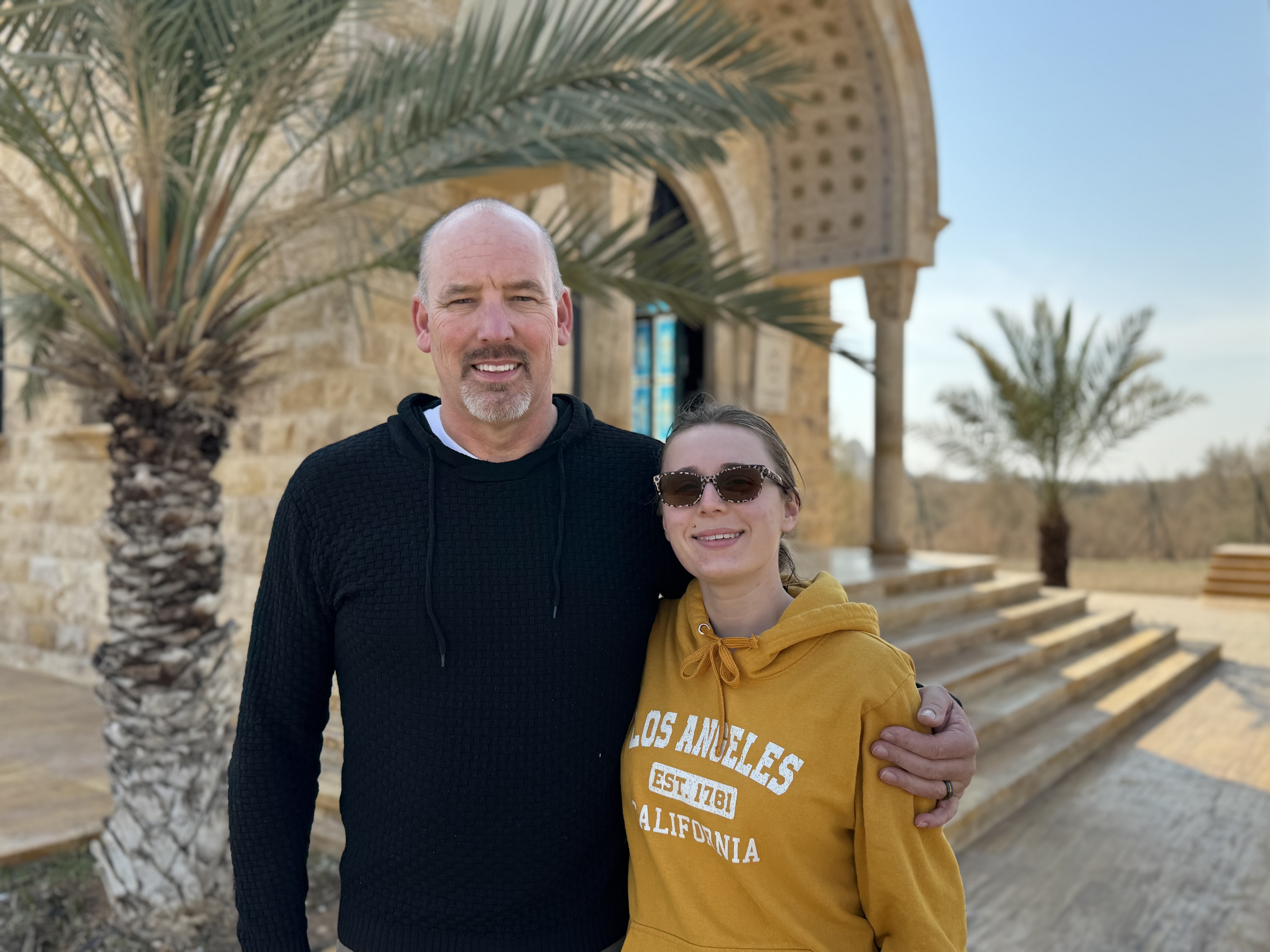
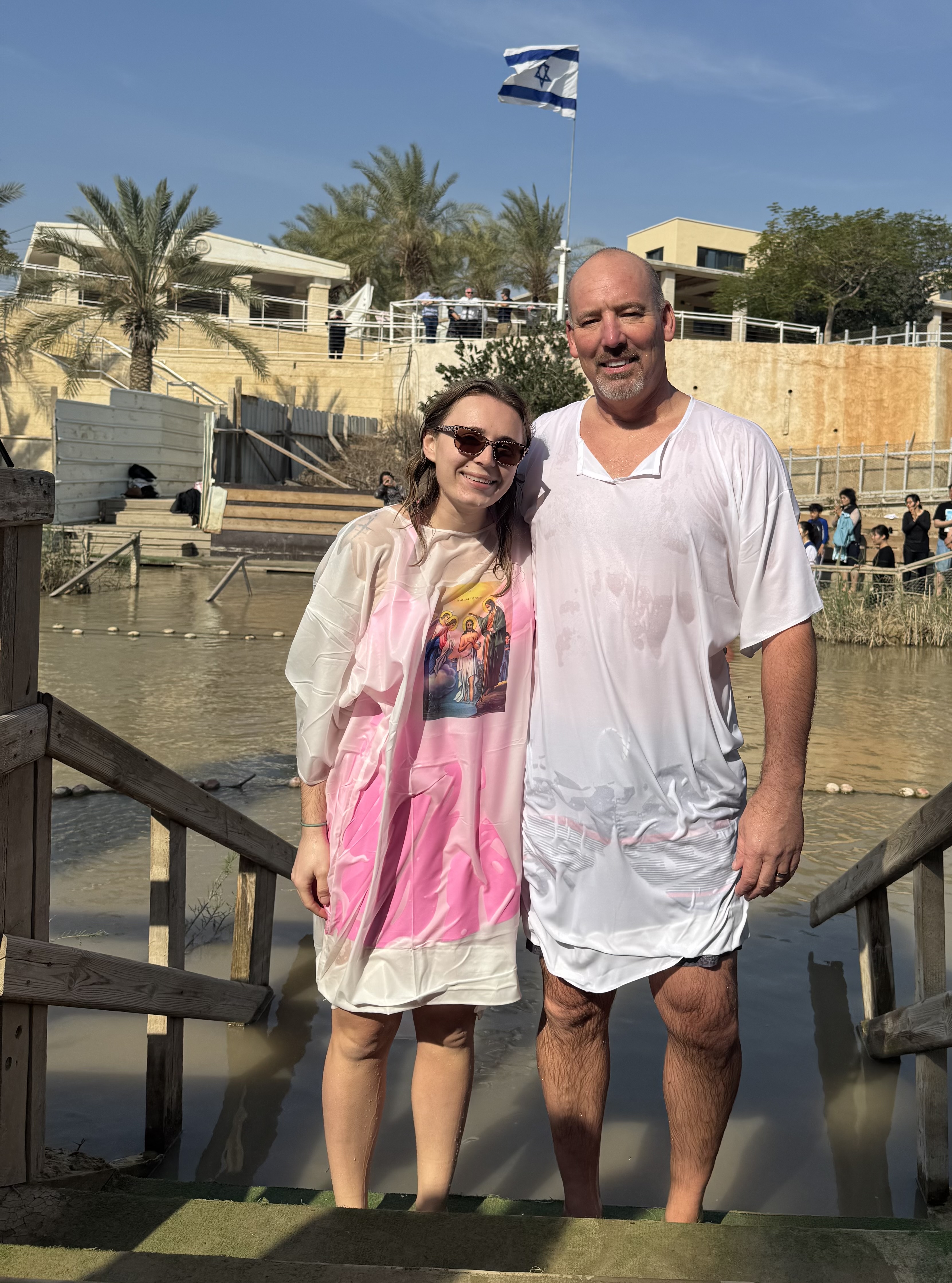
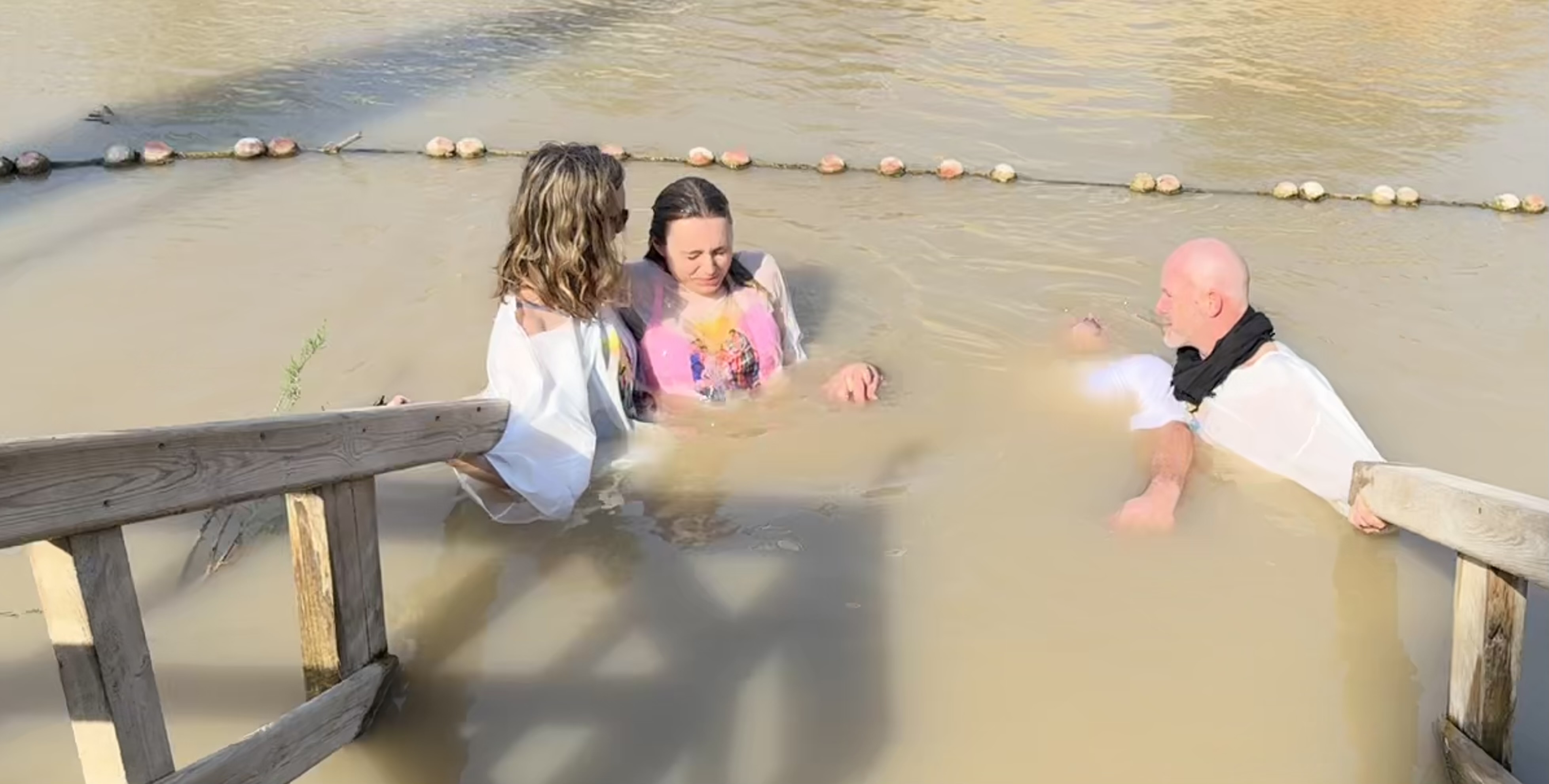
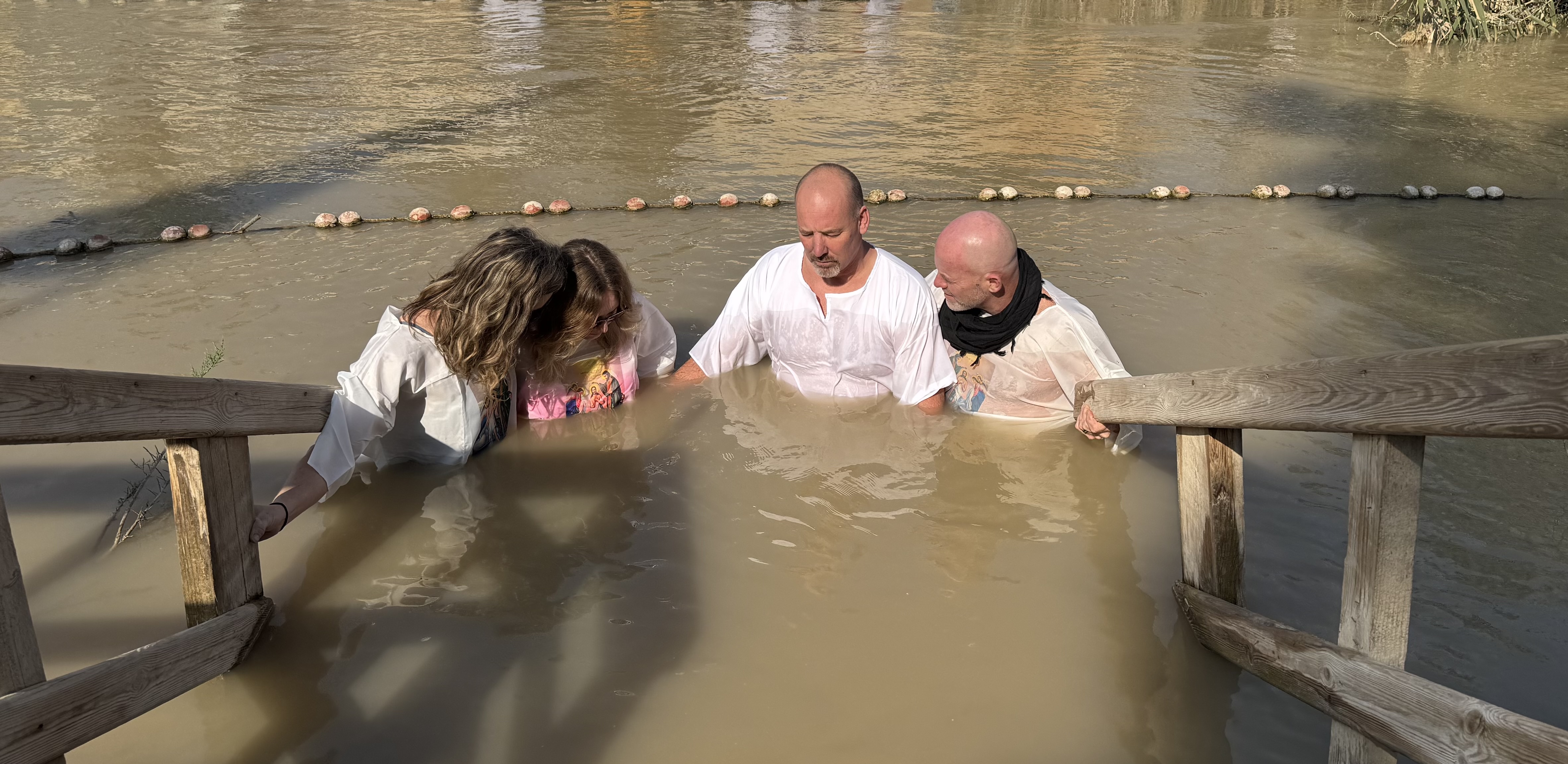
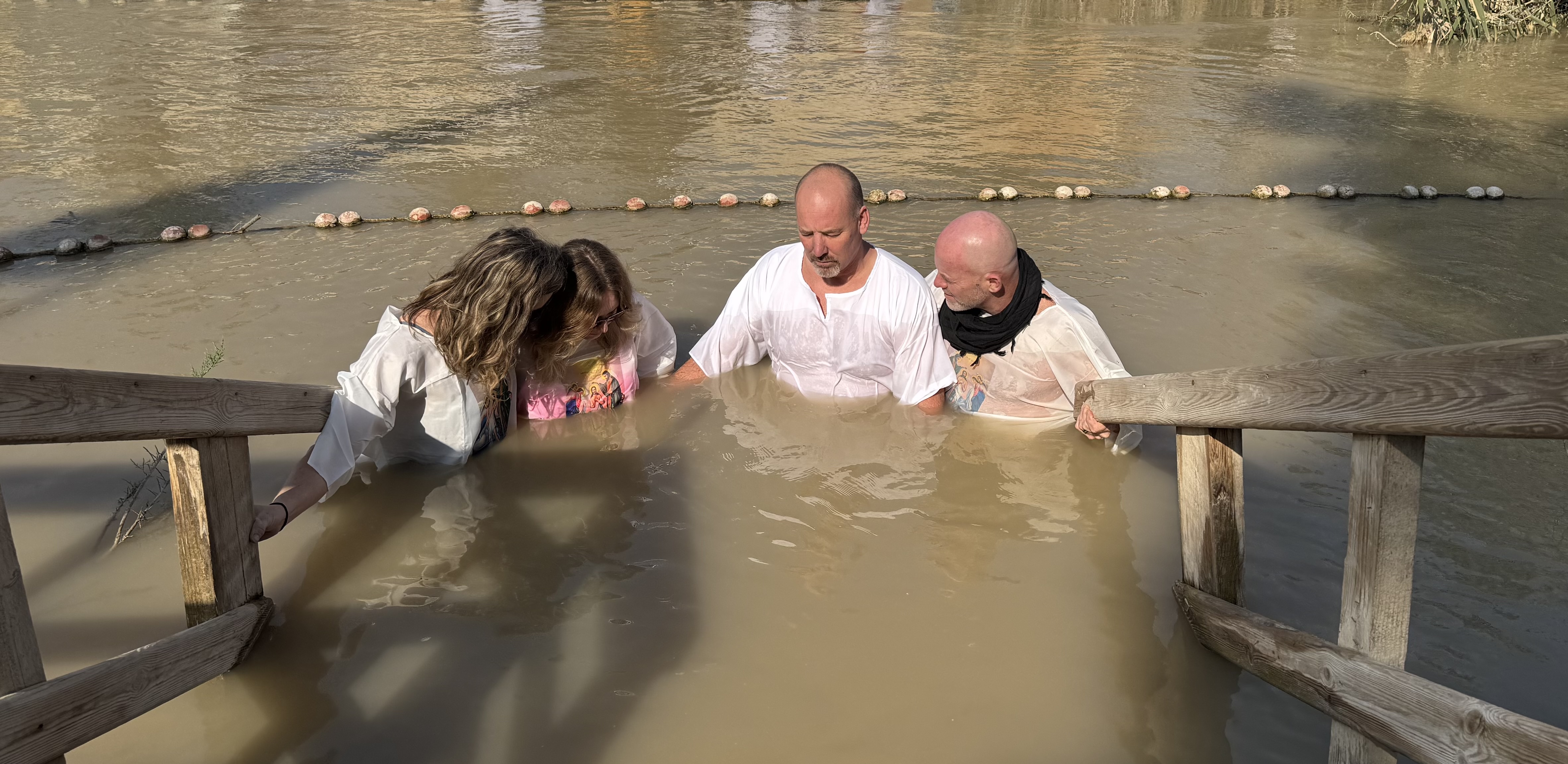
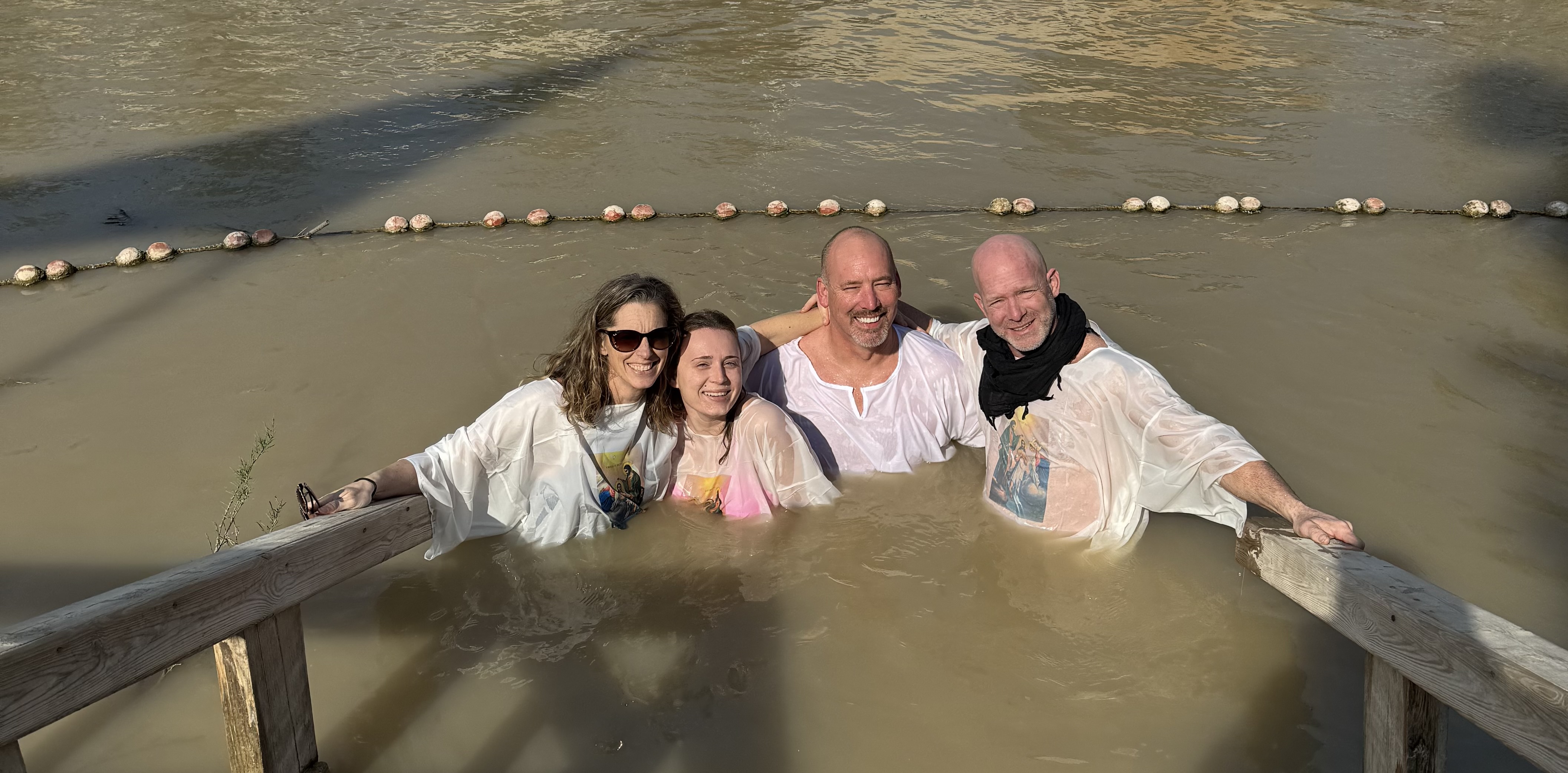
Today I (with help from my wife, Krista) had the incredible privilege of baptizing my good friends Mike and Gabby. Ironically, I just wrote a post on soteriology and baptism. If you haven’t read that, I would start there.
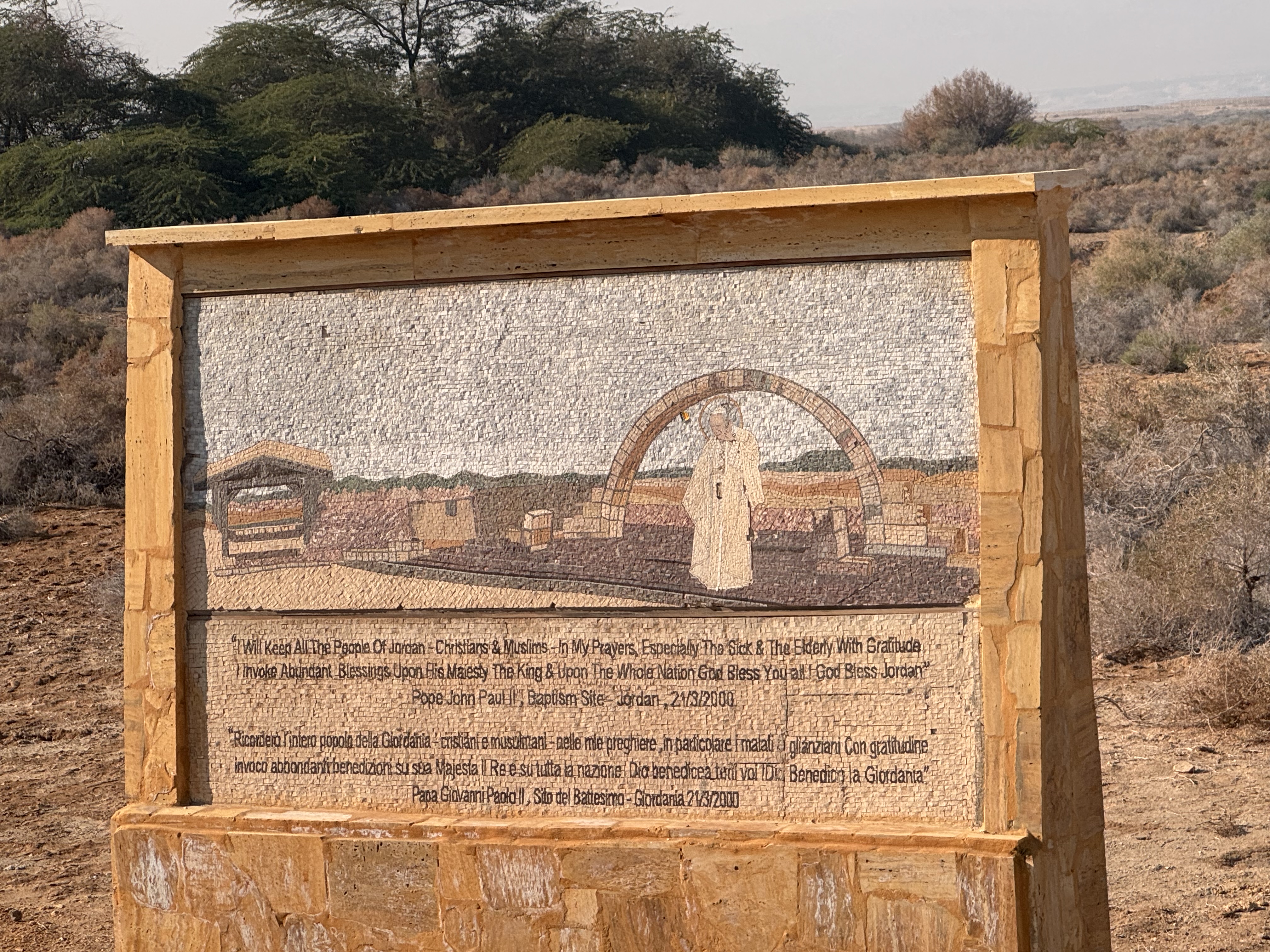
We haven’t always known where exactly Jesus was baptized. We don’t know where Eden was, or exactly where the ark landed, and this isn’t much different. The baptism of Jesus, the ritual purification of Jesus with water by John the Baptist, was a major event described in the three synoptic Gospels of the New Testament (Matthew, Mark and Luke).[1] It is considered to have taken place at what is modernly referred to as Al-Maghtas (also called Bethany Beyond the Jordan), located in Jordan. Al-Maghtas is Arabic: المغطس, al-Maġṭas, which means ‘baptism’ or ‘immersion’, officially known to most (and on Google Earth and mentioned in the Bible) as the Baptism Site “Bethany Beyond the Jordan”, it is an archaeological World Heritage Site in Jordan, on the east bank of the Jordan River, reputed to be the location of the Baptism of Jesus by John the Baptist and venerated as such since at least the Byzantine period.[2] To be clear the exact location has changed due to recent archaeological finds.[3] This area includes two principal archaeological areas: the later remnants of a monastery on a mound originally known and believed to be Elijah’s Hill as a hermit dwelling.[4] The two areas are connected by a small stream that goes by John’s name.[5]
John anticipated a messianic figure greater than himself;[6] in the Gospels, he is portrayed as the precursor or forerunner of Jesus.[7] According to the Gospel of Matthew, Jesus himself identifies John as “Elijah who is to come”,[8] which is a direct reference to the Book of Malachi (Malachi 4:5),[9] as confirmed by the angel who announced John’s birth to his father, Zechariah.[10] According to the Gospel of Luke, John and Jesus were relatives.[11,12]
Some scholars think that John belonged to the Essenes, a semi-ascetic Jewish sect who expected a messiah and practiced ritual baptism.[13][14] John used baptism as the central symbol or sacrament[15] of his pre-messianic movement. Most biblical scholars agree that John baptized Jesus,[16][17] and several New Testament accounts report that some of Jesus’s early followers had previously been followers of John.[18] According to the New Testament, John was sentenced to death and subsequently beheaded by Herod Antipas around AD 30 after John rebuked him for divorcing his wife and then unlawfully wedding Herodias, the wife of his brother Herod Philip I. Josephus also mentions John in the Antiquities of the Jews and states that he was executed by order of Herod Antipas in the fortress at Machaerus.[18]
The Gospel of Mark introduces John as a fulfillment of a prophecy from the Book of Isaiah (in fact, a conflation of texts from Isaiah, Malachi and Exodus but that’s another post)[19] about a messenger being sent ahead, and a voice crying out in the wilderness. John is described as wearing clothes of camel’s hair, and living on locusts and wild honey. John proclaims baptism of repentance for the forgiveness of sin, and says another will come after him who will not baptize with water, but with the Holy Spirit.
The fourth gospel describes John the Baptist as “a man sent from God” who “was not the light”, but “came as a witness, to bear witness to the light, so that through him everyone might believe”.[20] John confirms that he is not the Christ nor Elijah nor ‘the prophet’ when asked by Jewish priests and Pharisees; instead, he described himself as the “voice of one crying in the wilderness”.[20]
The Gospels vary in their depiction of John’s relationship to Elijah. Matthew and Mark describe John’s attire in a way reminiscent of the description of Elijah in 2 Kings 1:8, who also wore a garment of hair and a leather belt. In Matthew, Jesus explicitly teaches that John is “Elijah who was to come” (Matthew 11:14 – see also Matthew 17:11–13); many Christian theologians have taken this to mean that John was Elijah’s successor. In the Gospel of John, John the Baptist explicitly denies being Elijah. In the annunciation narrative in Luke, an angel appears to Zechariah, John’s father, and tells him that John “will turn many of the sons of Israel to the Lord their God,” and that he will go forth “in the spirit and power of Elijah.”[21]
CONCLUSIVE THOUGHTS:
What “set apart” John was that he reminded people of Elijah. Did you ever wonder what that meant? I guess I just gave you a bunch of clues! Elijah was most significant as to have led a school of prophets known as “the sons of the prophets.”[22] Following Elijah’s ascension, his disciple and devoted assistant Elisha took over as leader of this school. After the time of Elisha Israel strayed and although rabbinical training excelled, the schools became very different from what Elijah had established. John was seeking to bring back the idea of living a life completely “SET APART” (Kadosh purification language) as to make way for the king. This is often overlooked particularly in western Evangelical Christianity, and it is very important. You see Jesus came to “complete” or align all things back to the intentions of the father. Jesus continues to call 12 disciples completely out of their former lives and accept new sacrificial lives totally committed to Him. He was the great example shepherded unto them. Jesus also embodies the example of being met by the spirit and later sending it to all who accept and are anointed and/or commissioned in this same way. He was baptizing those that radically sought to do the same; to completely give their life to the pursuant of devotionally following the Way of Jesus, the coming king. As I have made the point several times, we don’t baptize into this calling any longer. It has once again become lost as it had before John’s time. My prayer is that we will return to baptizing those ready to give their lives into complete devotion in allegiance to the king, leaving everything to follow Him.
WORKS CITED:
The Gospel of Matthew by Daniel J. Harrington 1991 ISBN 0-8146-5803-2 p. 63
Bethany beyond the Jordan https://www.baptismsite.com/ Archived 2024-12-04 at the Wayback Machine on baptismsite.com, accessed February 2025
Baptism Site “Bethany Beyond the Jordan” (Al-Maghtas) – UNESCO World Heritage Centre”. UNESCO. Archived from the original on 19 January 2017. Retrieved February 2025
Tharoor, Ishaan (July 13, 2015). “U.N. backs Jordan’s claim on site where Jesus was baptized”. The Washington Post. Archived from the original on July 10, 2018.
Funk, Robert W. & the Jesus Seminar (1998). The Acts of Jesus: the search for the authentic deeds of Jesus. San Francisco: Harper. “Mark”, pp. 51–161.
Meier, John (1994). Mentor, Message, and Miracles (A Marginal Jew: Rethinking the Historical Jesus, Vol. 2). Vol. 2. Anchor Bible. ISBN 978-0-385-46992-0.
“Bible Gateway passage: Matthew 11:14 – New King James Version”. Archived from the original on 3 October 2019.
Malachi 4:5–6
“Bible Gateway passage: Luke 1:17 – New King James Version”. Bible Gateway. Archived from the original on 2 June 2007.
“Bible Gateway passage: ΚΑΤΑ ΛΟΥΚΑΝ 1:36 – SBL Greek New Testament”. Archived from the original on 26 September 2019.
“NETBible: Luke 1”. Archived from the original on 24 July 2020.
Harris, Stephen L. (1985). Understanding the Bible. Palo Alto: Mayfield. p. 382
Marshall, I. H.; Millard, A. R.; Packer, J. I., eds. (1988). “John the Baptist”. New Bible Dictionary (Third ed.). IVP reference collection. ISBN 978-0-85110-636-6.
Edward Oliver James, Sacrament in Encyclopædia Britannica. Retrieved 20 May 2009, from Encyclopædia Britannica Online: https://www.britannica.com/EBchecked/topic/515366/sacrament
Croll, Charles (2019). John the Baptist: A Biography. Malcolm Down Publishing. pp. 127–149. ISBN 978-1-912863-15-0.
Jesus as a figure in history: how modern historians view the man from Galilee. Mark Allan Powell, published by Westminster John Knox Press, p. 47 “Few would doubt the basic fact…Jesus was baptized by John”
Harris, Stephen L. (1985) Understanding the Bible. Palo Alto: Mayfield John 1:36–40
Flavius Josephus: Antiquities of the Jews Book 18, 5, 2
Carl R. Kazmierski, John the Baptist: Prophet and Evangelist (Liturgical Press, 1996) p. 31.

























































 EXPEDITION 44