Song of Solomon 8:6 says, “Put me like a seal over your heart, like a seal on your arm. For love is as strong as death, jealousy is as severe as Sheol; its flashes are flashes of fire, the very flame of the LORD.”
It quickly becomes clear to the attentive reader that the Song of Solomon places sexual desire, passion, and fulfillment under the authority of the “seal.” At the climax of the poem, the woman pleads with the man: “Set me as a seal upon your heart, as a seal upon your arm” (Song 8:6). In biblical thought, the heart represents resolute obedience and devotion, while the arm signifies action and strength. Together, they portray a covenant bond—an inseparable unity of intention and practice—anchored in faithful devotion to the Lord.
The Hebrew word translated “seal” is ḥôtām (hotham). In the ancient Near East, a seal was often a carved stone or cylinder that left a raised impression marking ownership, authority, allegiance, and representation. To bear a seal was to act on behalf of the one who owned it. It signified commissioning and identity—an embodied declaration of whom one belonged to.
Interestingly, ḥôtām is a loanword from Egyptian, where it was sometimes associated with what we might broadly call “magic.” While that term can understandably cause discomfort today, this association invites reflection. Many couples describe the deepening intimacy of covenant marriage as “magical,” not because it is mystical in a pagan sense, but because it reflects something beautiful, powerful, and beyond ordinary explanation—a gift once rightly ordered before the Lord but often distorted in modern culture.
The passage also contains a striking reversal. The woman asks to be placed as a seal upon the man, implying that he belongs to her. In the Davidic period, such language would have been culturally unsettling. Yet this “upside-down” logic anticipates the kingdom ethic later revealed by Jesus—where victory comes through humility, authority through surrender, and life through self-giving love. Here, the man entrusts his life to the woman, foreshadowing the greater reality in which believers entrust their lives fully to Christ, embracing a lowly calling within the royal priesthood of the new covenant.
The woman’s request may be paraphrased as a prayer: “Lord, shape me to steward his heart rightly, placing his devotion to You above my own desires. Use me to lead him into fuller obedience, and let me rejoice in my role of belonging wholly to You together.” This posture reflects not only marital faithfulness but also the calling of the Church as the Bride of Christ—living in covenant submission and shared devotion.
The TKC seal draws upon this biblical imagery and bears an abbreviated Hebrew phrase: haʾUrim vəhaTummim (האורים והתומים), translated as “Urim and Thummim.” Over time—particularly during the diaspora and later Greek translations—the precise meaning of these terms was obscured. While Scripture does not explain exactly what the Urim and Thummim looked like or how they functioned, it is clear that the priests used them to discern the will of the Lord, trusting that the outcome was directed by Him.
The Urim and Thummim were associated with the ḥoshen, the breastplate worn by the High Priest and attached to the ephod. Although similar practices in surrounding cultures resembled divination by casting lots, in Israel this act was understood differently. It was not an attempt to manipulate divine power, but a declaration of total dependence and surrendered obedience. The priest laid down his life before the Lord, trusting that God would respond by guiding, directing, and accomplishing His purposes through faithful submission.
What appeared “impossible” or even “magical” to the surrounding nations was, in reality, the fruit of a life wholly given to God. Today, the language of Urim and Thummim expresses the calling and mission of TKC: to cultivate a discipleship culture unmistakably shaped by the power and presence of the Lord—not by human effort or strategy, but by wholehearted devotion to the Kingdom of Jesus.
Recently a pastor friend of over 20 years sent me a text and asked me what I thought of Amos 3:3. I get this sort of thing a lot, and I have to say I am honored by requests such as this and very much enjoy helping someone to gain a better scriptural understanding of a text. Many are surprised when I tell them that the majority of people that ask me for my take on a particular passage are actually pastors. I appreciate the heartfelt desire of those that ask to best understand a text or what the interpretation of the text means to us. I love the multiplicity of the body’s gifting when crafting a sermon. I used to preach a good deal and would nearly always ask for a panel to work through my sermon with me. Usually, the best part of the message came from something added by the panel. There is wealth in the gifting of the community of Jesus.
People regularly reply to my answers and wonder how I came to this, or how I “got all of that” out of the text. Well, this is a lifetime of understanding (that led to a Th.D.) but let me show you a bit of the process. This is a large part of what we teach at Covenant Theological Seminary.
Exegesis is “the process of careful analytical study of the Bible to produce useful interpretations of those passages.” [1] (In Greek this word “exegesis” is derived from ἐξηγέομαι (exegeomai), which means simply to explain.
For most of our readers that think and primarily communicate in English this is important because the Bible wasn’t written or spoken in our native language. We have to translate the biblical languages and then determine what application it may have to us. The Anchor Yale Bible Dictionary states the goal of exegesis is “to know neither less nor more than the information actually contained in the passage. Exegesis … places no premium on speculation or inventiveness” and “novelty in interpretation is not prized.” [2]
Simply put, exegesis is not about discovering what we think a text means (or want it to mean) but what the biblical author meant. It’s concerned with intentionality—what the author intended his original readers to understand. [3]
My good friend and mentor John Walton would say that the Bible was written “for us, but not to us.” This hermeneutic, recently termed “cognitive environment criticism,”[4] is implicit in Walton’s earlier publications, such as Ancient Israelite Literature in its Cultural Context (1989) and The IVP Bible Background Commentary: Old Testament (2000). However, the phrase “for us, but not to us” does not appear in print, as far as we can tell, until 2008 when it is found in the final sentence of his article, fittingly titled, “Interpreting the Bible as an Ancient Near Eastern Document” (based on a paper presented in January 2004). The phrase (and several variations) subsequently appears throughout Walton’s Lost World volumes and in his Old Testament Theology for Christians: From Ancient Context to Enduring Belief (2017).
The part of scripture that we need to interpret comes when we understand that the text means what the author intended to interpret. It may or may not have any application to us today.
Unfortunately, most people do not approach scripture this way. Rather, they often read meaning into a text that may or may not be there. This is called eisegesis and is the opposite of exegesis. We see this too often in sermons, someone stating a point they want to make and then trying to use a scripture or verse to prove their point or position. We sometimes refer to this as proof texting.
Proper exegesis requires context. Many have come up with a plan or path to best understand scripture. X44 tends to lean towards a Socio-Rhetorical Interpretation, that is first understanding the textures of a text and its reception. If this is new to you, I would suggest Vernon K. Robbins book “exploring the Texture of Texts: A Guide to Socio-Rhetorical Interpretations.” We have several X44 videos on interpretation.
Naselli [5] offers a similar take by considering these 8 steps: (SPECIAL THANKS TO MY FRIENDS AT LOGOS.COM FOR THE VISUALS, whose software I use nearly every hour.) Logos is likely the best exegetical tool, so I am going to demonstrate how I might use it.
1. Genre
Determine the passage’s style of literature. Is it poetry? Historical narrative? An epistle?
The Bible Books Explorer in the Logos app shows the different genres of Scripture by color coding and allows you to see how each book connects with other books in the Bible.
2. Textual criticism
Study the manuscript evidence to determine the original text’s exact wording.
In the Logos platform, you can look at textual variants to see key differences.
3. Translation
Translate the original language and compare other translations. (This is where a good Bible app comes in handy, especially if you do not know biblical Hebrew or Greek. More on that below.)
With the Text Comparison tool, you can easily see how different Bible translations handle a verse.
4. Greek and Hebrew grammar
Consider how sentences communicate by looking into their original language—words, phrases, and clauses.
With the Exegetical Guide, you can dig into specific words and phrases used in the passage you’re studying.
5. Argument diagram
Trace the author’s logical argument by arcing, bracketing, or phrasing.
Using Canvas, you can highlight powerful words, connect thoughts, and use other methods to mark up or outline the text.
6. Historical-cultural context
Understand the situation in which the author composed the literature and any historical-cultural details that the author mentions or probably assumes.
The Advanced Timeline in Logos 10 allows you to see what else was happening in the world when Malachi was written, for example.Using the Cultural Concepts feature in Logos, you can more easily notice things you might be missing about the time and culture in which a passage was written.
7. Literary context
Understand the role a passage plays in its whole book (and the whole Bible).
Find related passages to and from the passage you’re studying so you can zoom out to the bigger context.
8. Word studies
Unpack key words, phrases, and concepts. You can jump into a Bible word study right from your passage. For example, if you noticed that the ESV says “pleasure” and CSB and NIV say “pleased” in step 3, you can take a closer look at the word.
So now that you are beginning to understand how I, or a theologian thinks about scripture, let me give you a hands-on example. The verse my friend asked about specifically was Amos 3:3 so I will use my response to him to demonstrate an exegesis based off of the FREE tools of Bible Hub available on the internet to anyone. I realize Logos is likely more expensive than most people are willing to invest. (But I continually argue that exegesis should be a large part of every Christian’s life.)
Let’s dive into the text! First let’s just consider some simple Observations:
I would suggest just using a browser and type in the verse you wish to know more about followed by the word “interlinear.” This will likely bring up a Bible Hub link.
Hebrew reads right to left so let’s start with the first word. I would recommend clicking the transliterated word itself first, but also clicking the Strong’s number above it to give you a better root word understanding. In this case we see the English “can walk” is from the Hebrew “halak” which is the common word for “to walk.” However, something neither of these software options will tell you plainly is that “halak” became an idiom in Hebrew metaphorically referring to the Edenic walk or relationship of intimacy that we should be desirous of with the Father. Thats where my 25 years of Theology and training may come in helpful. But let’s not jump to conclusions, that may be inferred, or it may not be. Let’s continue.
Two usually means “two” simply or in plain reading, but it is a cardinal number in Hebrew denoting plurality so that can simply mean “more than one” – so here it has to be interpreted in context of the rest of the scripture. (You will find this in Bible Hub reading the commentary section.) So far these aren’t major implications.
Together is a word of being united linguistically both in Hebrew and in our modern English context. NT Greek would be “of one accord” which you may be more familiar with. This is where you might want to stop and think, is there is a slight connection to using the term halak? Maybe, but the text still doesn’t necessarily say that or give us that.
“Except” here in Hebrew functions like a substantive adverb, it is essentially adding “not” in front of something. We do this regularly in English, turning things into the opposite. (Don’t do that.)
In this particular case, we now arrive to why the original person questions the verse, interpretation gets a bit sketchy for scholars here and this comes out in commentary. The issue is in Hebrew the structure gets strange, the word translated as “unless” or something similar is simply “im” in Hebrew which is used over 700 times to simply mean “if;” but can also function like an interrogative participle which in Hebrew would mean it takes on the notion of “although, except, or however.” Lastly, to make it even more complicated, it is also a contronym in Hebrew, so it strangely can also mean sort of the opposite which would be “truly or surely.” This combined with the substantive adverb in front makes any scholar scratch their head.
It continues to be strange with the last singular word in Hebrew is “ya’ad” which they translate “they are agreed” but this is also unique as in Hebrew it functions as the main verb of the sentence. To make it more complicated, the word is only found two places in scripture here and in Psalm 48:4 where it rather takes a notion of assembly rather than agreement, but the root word is a lot more common which usually means appointed. My point is that none of this really helps us much, the truth is it could be interpreted a couple of different ways.
Amos 3:3 is part of a series of cause-and-effect statements to establish Amos’ right and duty to prophesy. The word in 3:3 which must be dealt with is ya’ad (to agree-KJV); it is a Niphal (passive or reflective verb) verb as I alluded to above. All of these things mean something to me, but they likely do not to you. Of course, you can think through it and likely come to a similar thought, that the point of the verse is that Amos would not have been prophesying had God not called him (after all, Amos was neither a prophet nor a son of a prophet) the same as two people would not be walking together unless they had previously made an appointment to meet each other. We could just leave it there, but a good scholar digs deeper. Let’s see what other scholars think and why.
W. J. Deane, The Pulpit Commentary (Grand Rapids: Wm. B. Eerdmans Pub. Co., 1950), Vol. XIV, p. 40 writes:
The contents of these verses are not to be reduced to the general thought, that: a -prophet could no more speak without a divine impulse than any other effect could take place without a cause. There was certainly no need for a long series of examples, such as we have In very. 3-6, to substantiate or illustrate the thought, which a reflecting hearer would hardly have disputed, that there was a connection between cause and effect. The examples are evidently selected with the view of showing that the utterances of the prophet originate with God. This is obvious enough In vers. 7,8. The first clause, ‘Do two men walk together, without having agreed as to their meeting?’ (no’ad, to betake one’s sell to a place, to meet together at an appointed place’or an appointed time; compare Job ii:11, Josh. xi.5, Neh. vi.2; not merely to agree together) contains something more than the trivial truth, that two persons do not take a walk, together without a previous arrangement. The two who walk together are Jehovah and the prophet (Cyril); not Jehovah and the nation, to which the judgment is predicted. . . . Amos went as prophet to Samaria or Bethel, because the Lord had sent him thither to preach judgment on the sinful kingdom.”
Carl Friedrich Keil, The Twelve Minor Prophets (Grand Rapids: Wm. B. Eerdmans Pub. Co., 1951), p. 260 says:
“The ‘two’ are God’s judgments and the prophet’s word. These do not coincide by mere chance, no more than two persons pursue in company the same end without previous agreement. The prophet announces God’s judgment because God has commissioned him; the prophet Is of one mind with God, therefore the Lord is with him and confirms his words.
I also came across an interesting article when researching that shows Leroy Garrett making a claim that this verse represents a biblical reasoning for “unity in diversity”. I don’t see that in the exegesis above.
So, let’s get back to where we started. What did this text mean to the intended audience? I think we need to let this passage mostly represent its intended audience. Personally, I’m not sure there’s much if any application to us here today, but that’s just me! I think we need to let the primary message to the intended audience be the primary message in most cases. But perhaps there is a takeaway for us, that is what everyone is looking for right? Let’s consider that.
If this text in Amos supports anything remotely connected to present-day relationships, the context would show us it would be the necessity of agreeing to meet with a brother/sister in order to walk in unity. In the first century and before most “church” settings were small; there really isn’t a context for the mega church setting we are most all in today. Most situations either address a small intimate group described as a family (which meant those in your circle more than blood relation) or it mean communal Israel. Biblical diversity can be beautiful, but it can also cause us to be “out of harmony.” In a bigger picture, we do not have to agree on everything in order to walk together, even though as Christians we will agree on many things and certainly on the authority of Scripture to take us further in our understanding of God’s truth.
This is where things often get miscommunicated, because as brothers and sisters in Christ, we are in a covenant together “walking” as in the garden might apply to our most intimate relationships, spouses, family, and perhaps our inner circle; but this verse seems to better point towards communal unity in Israel, the big church. And let’s not forget that when Amos was penned, Israel was totally messed up and a far cry from Eden. Thats should adjust your application to your situation.
But I don’t think anyone will argue that we need to be in agreement with God or moving in that direction without imagining that we have arrived at a point where we can demand agreement from others with us. We may not agree on some things that are peripheral to maintaining and manifesting the biblical unity that exists in Christ. If you “swim” in a tribe of other intimate relational covenant fish you’re going to be in a better place each day.
Yet one thing I think this verse shows us that is timeless is that we should understand that a disagreeing brother/sister should not automatically be equated with a disobedient brother/sister. It is far too facile to label disagreement as disobedience and I think this has had devastating consequences on our church.
When anyone starts to think that God’s way is their way and if someone disagrees with them than they disagree with God; they open up a contentious entanglement with the world.
Can we agree to disagree and yet agree to walk together in some measure in the work of God and in the enjoyment of fellowship or at least rejoice at what God is doing in the lives and ministries of others without becoming their theological critics? On the other hand, let’s discuss it in love! Let’s return to the hillside meetings of the first century searching for truth for most of our day.
One true measure of our spiritual maturity and fruit may be whether we will agree to walk together in true obedience and genuine fellowship in spite of our disagreements. Exegesis should come as a circular result of searching for what God has for you and those in your sphere, as God’s word is revealed and applied.
Anchor Yale Bible Dictionary, “Exegesis” (Yale University Press, New Haven, CT), 1992.
Anchor Yale Bible Dictionary, “Exegesis” (Yale University Press, New Haven, CT), 1992.
D. Fee, Handbook to New Testament Exegesis (1993), 27.
Walton, Ancient Near Eastern Thought and the Old Testament (second edition, 2018), 11, 18; Walton, Old Testament Theology for Christians, 16.
Naselli, Andy. New Testament Exegesis: Understanding and Applying the New Testament (Course), (Lexham Press, Bellingham, WA), 2016
“You shall be holy, for I the Lord your God am holy.’” Leviticus 19:2 NASB
Another amazing TRES DIAS RENEWAL weekend! Wow! This was amazing. If you have never experienced one of these with me- with us. Please ask. I invite you. They are every spring and every fall.
At one point in the weekend Pastor Matt and I were commenting on the exegesis of a passage in the morning chapel and the word “perfect” came up. We went on to share that the Biblical definition of perfect is not what the modern view usually means. I have taught on this a lot in x44. Biblical perfection means the journey (or expedition) to be complete or holy as God is holy. To take on the image of Christ – Christoformity.
Today the word translated perfect seems to be the source of condemnation and guilt. How we (the modern church) have abused this verse. We see this quote from Leviticus in Matthew (5:48 in the Greek version, not exactly what it says in Hebrew). We have been taught that Jesus preached that the goal of a religious life is holiness and that anything less than perfect holiness is sin, missing the mark; and as that is true – we are also taught to not wallow in the filth. Don’t live in it, you have been set free! Oh, what trauma we have caused for all who fell under that burden of continual condemnation! Because we didn’t pay attention to the Hebrew grammar or the meaning of qādôš. (The English transliteration is Kadosh.) Don’t live that way! You are free from this shame! You have been redeemed, renewed, and completely set free, own it and live it!
The definition of qādôš generically means to be “set apart.” That was a theme of a tres dias weekend a couple years ago, but has sort of stuck with the community as an ongoing metaphor for life, as it should be. When you dive in to study this word, you find that the same word was generic word that could mean set apart for anything, in fact a regular use of the term was that an animal sacrifice would be “set apart” for death, or prisoners were “set apart” waiting for their sentence. As it does mean this in the ancient world, words often take on a deeper biblical meaning or find a second skin, per se in redemptive thinking. In this way, the word qādôš means spiritually to be completely “devoted.” We are dead to sin that we might be alive in Christ which is characterized by devotion.
That means this crucial passage in Leviticus should be read as God’s desire for reciprocity or multiplicity. We are to be as devoted to Him as He is to us. It’s not about being perfect. It’s about being committed. A heartset to be all in.
John Walton (my Hebrew mentor from my early days at Moody Bible Institute) points out that the verb tense in Leviticus 19:2 is an imperfect form/indicative, not an imperative.[1] I know I am speaking Greek to everyone here, actually Hebrew… but hang in there with me. You can do this! I am going to shepherd you to a new level of depth before the Lord. Understanding the grammar has a startling implication.
God is not commanding platonic perfection or even holiness. Walton suggests that the verse should be read, “You are holy because I am holy.” In other words, according to Walton, this is a declaration of the character of His people, not a command for moral improvement. It is not something we achieve but something we are, based entirely on the declaration of God. God declares Israel qādôš because Israel is “HIS” in the same way that today you are “HIS”, you are God’s recreated “holy ones”, the very image of him to a broken world. You are the very representation (or manifestation) of Jesus to those that come in contact with you. You are Holy because God is in you. Your room is the sacred temple of the holy spirit. That is your sanctuary, the body of Christ. Does your house look holy to others? Do you need to clean your room?
This view of holiness and exegesis of these verses has some amazing truths that I want you to see. God is not judging us on some standard of what the philosopher Plato defined as perfection which is what we think of the word today. Holiness (perfection) is not commanded, having a heart to be made complete is. Devotion (the real idea of holiness) is an imperfect verb, that is, a continuous progressive activity not yet completed (an expedition of pursuing holiness and praying that you might be found faithful). It is here and now, but also te be attained. It’s what we are while we are on the way. “On the way” toward YHVH is what qādôš is all about.
If you were on this last Men’s tres dias weekend, Dave Donehay gave you a verse towards the middle of the page in his notes for the study talk- rollo. It was Isaiah 30:21. You will notice a few verses before in verse 16 Isaiah quotes Exodus 34:6 (again, it is a better quote when read in Hebrew, you can hardly tell it is a quote in English but don’t get me started) where God gives the description of himself as gracious and compassionate. This is what I shared in the tres dias weekend closura. The Hebrew Idiom for Hesed and Shalom means a balance in living – Chanan/Racham embodies a life that looks like Jesus: loyalty, faithfulness, mercy, compassion, love, grace, devotion, sacrifice, and allegiance. (HESED)
A few verses later you come to the verse that Dave shared, Isaiah 30:21 which has another Hebrew Idiom for living in devotion to this life. If you are a STAR WARS person this is going to blow you away- The Hebrew words are “Zeh Hadderek” which is translated, “THIS IS THE WAY” – walk in it. Sound familiar? Anyone finish the book yet this week?
You are hereby exempt from the burden of holy perfection! That must feel good, but don’t thank me, thank God!
Live redeemed today! Claim it, take a step in the right direction. One small step at a time. Align your trajectory. Walk straighter with Jesus. Avoid the “cowpath” of life. Let the Holy Spirit deliver you into a better walk of life. This is the way.
Some of this article has been misinterpreted, misread, and taking certain phrases out context by those who disagree with us. We have sought to clarify some of these items that have been taken out of context with some footnotes below explaining intent on certain points along with our logic for using them. We apologize if the verbiage of this article has upset or offended some who hold to Penal Substitutionary Atonement (PSA). We are not diminishing anything in Christ’s death but aim to give a better explanation of the healing actions of Christ’s life, death, and resurrection, while bringing up some of the scriptural and logical inconsistencies of PSA.
As a theologian Easter is the hardest time of year for me. Poor theology is rampant from social media posts to good-willed pastors and praise and worship songs sung being belted out with no reserve. Most of people’s theological understanding likely comes from what they have been told or taught casually without really thinking about it for themselves. People truly desire to have good theology. In fact, I find well intentioned people that often think they are “theological” taking on some pretty “bad theology.” I truly believe most Christians are well intentioned in their fervor, they just haven’t been taught or presented with a better consideration in regard to Christ’s “work” on the cross and usually can’t identify the problems within what I would consider to be a poor theological framework. Unfortunately, some of the most respected pastors and Christian leaders have fallen into this snare.
Some of what I am going to share may be a surprise to many of you and some of these points are major issues in your understanding of who God is. They are things that people have wrongly attributed to “ALL OF CHRISTIANITY” and in some cases have been the responsible agent of people even leaving the faith.
Here is a brief non exhaustive survey of the main issues within “easter” theology. I think if you consider yourself a fervent follower of Christ you should care and desire to know better about how to understand the way your Jesus loved you and gave his life in a beautiful but gruesome plan for our redemption and why. Let’s focus on the resurrection!
Every year, Christians from around the world gather for worship on Pascha or Resurrection Sunday, in orthodoxy the Holy week is the final day of a weeklong commemoration of the story of Jesus’ final days in the city of Jerusalem leading up to his crucifixion and resurrection. I have a hard time even using the word Easter to describe this time, resurrection is better. Here is another article on why I feel that way.
Court Room Language& PSA
I think the main problem with most westerner’s Easter theology is that it is usually framed around a theological view of atonement called Penal Substitutionary Atonement (PSA). Penal Substitution Atonement is one of the various views (7-12) of atonement theory that is held primarily by Reformed and Calvinist theologians and some Christians around Easter that don’t know any better. The early church and most of Christianity never thought this way. In fact, the legal view of the cross didn’t really come around until 1871 with Charles Hodge who built it off of unformulated ideas from John Calvin and other reformers. John Calvin was a lawyer, and saw the world through the court room. I truly believe in several hundred years Christians are going to look back at the last couple hundred years of “rampant reformed theology” being accepted as the norm and probably laugh.
However, at the same time, I don’t want to take those who believe in PSA lightly or come off with a condescending attitude for anyone who thinks this way. I have some very good friends that have been through Bible school and still hold these views. But I think most of them realize it is a “hard road” to plow. Some of them feel like they have 4 years or more invested at a “reformed” leaning college in learning how to try to reconcile or justify this way of thinking, how can they abandon it. Most people don’t know they are getting into this until they are already there. The Bible college I attended in my youth has nearly turned completely reformed since I attended, and you may remember has caused a huge shake up for them in the last 10 years. But those on the outside looking in don’t often know their hardships were caused by gravitating towards reformed theological notions causing nearly 80% of their professors to leave over the course of 20 years. I have always thought that way of holding onto to something must be hard for people. I know it may seem like a new or tough mountain to climb but experiencing truth is freeing, a true summit experience before the Lord. I also think it is worth pointing out that the great majority of Christian scholars and theologians don’t hold to reformed theology as I will point out, the top theologians in the world (and especially since the time of Christ) do not adhere to this kind of thinking. (Unfortunately, some of the most common household names of current Christianity to take on a good deal of these thoughts such as John Calvin, Martin Luther, Charles Spurgeon, Matthew Henry and more recently John Macarthur, Erwin Lutzer, R.C. Sproul, and James White to name likely the most prominent.)
A better framework for Jesus’ Atoning work on the cross sees the Bible through a covenant. Covenants are about relationships built on trust and always working towards restoration when broken. Laws and contracts are built on mistrust and result in retribution when broken. I will touch more on this at the end.
Unfortunately, too many people don’t realize that this way of thinking (PSA) is primarily Reformed, and I find a lot of non-reformed Christians and pastors framing atonement this way and it doesn’t really fit or agree with the rest of their theology and often even their denominations (particularly for a spirit led theology.) Over the details of this view, many may quibble, (for instance as I will get to, most reformed thinkers also believe in ECT but not all of them) but we are often told that Jesus died in order to save sinners from the wrath of God. In other words, he was a substitutionary sacrifice—he died in our place—to appease the Father’s justice, honor, and wrath. The story of how we get to such a place where we need such a sacrifice has been framed in this way:
God created humankind in his image and saw that it was good. Then, humanity sinned and experienced a “fall.” This created a huge problem, one that finite creatures simply could not make up for. Why? Because God’s justice and honor are such that only a payment of infinite proportions could make atonement. So, God, in his infinite wisdom, sent himself in the form of a Son—one truly human—in order to be sacrificed to himself so that his justice and honor could be upheld. Thus, he fills the conundrum of needing an infinite payment from finite humans. Now, those who accept the blood sacrifice could be forgiven their sins. The rest? The wrath of the infinite Father forever abides on them.
Essays and books have been written on the problems associated with this way of thinking, and X44 has several videos that address these in detail, so let me try to keep this brief. There are several things that need to be considered in this view that will influence the rest of your theology that you likely haven’t given a lot of time to. I pray today is the day for you. You may have even thought this type of thinking was good theology or maybe even the only theology of the cross. Nether is true in our opinion.
Let’s start with the idea is that God is a debt collector. This way of thinking would suggest that a debt was accrued, and payment has to be made in order for the father’s forgiveness and mercy to flow forth into the world. This idea doesn’t agree with Jesus’ definition of forgiveness. The two ideas can’t coexist. It also doesn’t make sense. Who is the debt owed to? Does Jesus owe God? Does God owe something to Satan to buy us? Do we owe God something? Isn’t the salvation that Jesus offers a “FREE GIFT?” If it is truly free nothing needs to be paid off or purchased. When Moses took the Israelites out of Egypt, he wasn’t buying them or purchasing them, he wasn’t negotiating with a terrorist, HE FREED THE SLAVES… they weren’t in turn made slaves again, that wouldn’t make any sense, the plan was for total freedom.To frame the gift Jesus gives as something owed and needing to be bought or purchased back nullifies the free gift given.
The second issue is the way in which original sin gets interpreted by folks in the PSA camp. Indeed, their understanding of humanity’s fall exposes God as a retributive punisher. This is framed as the punishment that Jesus goes through is the punishment that all mind kind should have gotten. This is far reaching into your theology affecting many different areas. (I don’t believe that little Suzy who gets killed by a car at 8 years old and never prayed to accept the plan of salvation will burn – or be tortured in hell forever.) In the reformed camps that is how PSA continues to or develops further into the idea of Eternal Conscious Torment; that we are all damned to hell to be eternally forever tormented for essentially Adam’s sin. To that end, the punishment Jesus took was the punishment we deserve. The lashings, the flogging, the mocking, all of it –something God would do to us or have done to us if Jesus hadn’t taken the beating for us. Those of us who accept the transaction are spared. This view is terrible in my opinion. It is so far away from the story of God’s infinite love, grace, and mercy for us. It is so far off the complete story of God’s unending, unstoppable, un-relenting, pursuing love to reclaim us despite all of our shortcomings and failures. Jesus has no desire to torture you. If that (the desire to torture you) is your church’s view of what God wants to do to you, my advice is to run to a better church with a better view of God’s beautiful plan for your life. [1] Some would assert that this essentially presents God as an utter monster.
PSA also puts (or pits) the trinity against each other. In one corner, you have the wrath of God (going by a more modern definition), which needs the shedding of blood in order to forgive sins (Hebrews 9:22). In the other corner, you have Jesus, who forgave freely (Matthew 9:2; 18:22; Luke 23:34; John 8:11; 20:19–23). In other words, Jesus forgave even though blood hadn’t been spilled. One major issue with this is that the New Testament is fairly clear that both the Father and the Son are, in nature, eternally the same (Matthew 11:27; John 1:18; 4:34; 5:19–20; 6:38, 46; 10:29; 12:49; Colossians 2:9; Hebrews 13:8). That is essentially the doctrine of the trinity. Most of PSA also views God departing from Jesus at the cross, Jesus clearly wasn’t separated from God which would be a major trinitarian problem. If you need more on this, here is a video.
The last PSA (major) problem is wrath, or their more modern definition of what that means. We believe in the wrath of God but the biblical definition of wrath is God handing people over to their own device. When God handed Israel over to reap what they sowed they were conquered and enslaved. God didn’t torture them through their aggressors, He simply removed his hand of providence and protection from them. PSA has redefined wrath into a modern version of torture making God a wrath monster and a slave master. [2] God as a sovereign all powerful entity essentially become not only the author of good but also the author of Evil.
THINKING MORE CLEARLY: Matt and I (and nearly every theologian we quote) typically lean towards a Christus Victor view of atonement (but also see some value in other theories such as McKnight would say) partially because it deals a blow to the principalities, powers, and authorities of the fallen world as being defeated by Christ’s atoning work (a Deuteronomy 32 view). PSA leaves the powers still reigning as it is focused on simply the individual and their failures. That’s a problem. We know at the cross Christ is victorious, reclaims the power of life over death, sets the captives free, and shackles the fallen spiritual beings. We think that’s pretty important!
Substitution Language
To be clear, Penal Substitutionary Atonement and Substitutionary Atonement should be handled separately or as different theological perspectives. Most theologians don’t believe in PSA but do adhere to a basic understanding of substitution. As we have no place for PSA, we do have a slight consideration that Jesus serves as a simple substitute on the cross for us. Most scholars are going to give credence to some form of Jesus being a substitute for us. However, I would contend that we shouldn’t put too much emphasis on any thoughts of substitutionary kind of thinking. Many of the problems of “PSA” are also going to be an issue for simple substitutional thinking as well. For instance, you might notice that NT Wright certainly will not give much or any credence to PSA, but also is hesitant to affirm or oppose the simple idea of substitution. I think Scot McKnight does the best job here by framing the atonement theories as each possibly having some merit but not necessarily putting too much value in completely adhering to any of them as a complete doctrine. In this way, I can agree that in a basic sense Christ gave fully of himself on our behalf to accomplish somethings -life- that we can’t accomplish on our own. But is that really substitution? That is my hesitancy in using the word to describe what Jesus does for us. The word itself isn’t really found anywhere in the Bible and there certainly aren’t any passages that simply frame Christs work that way. If it was meant to have been communicated clearly this way the scripture would have described it significantly better in that way and certainly would have used that exact word. I think in a better lens of theology there are more proper terms to describe what God does such as kippur in a more sacrificial sense of the atonement of Jesus. We shy away from using the term substitute or “in my place” because it opens the door for PSA and doesn’t really seem to adequately fit what Jesus does on the cross as well as other biblical words do.
Debt and Ransom Language
Much of the above PSA conversation is also connected or overflows into debt or ransom language, here are some further bullet points of consideration:
-God doesn’t need to appease his wrath with a blood sacrifice. God regularly forgives people without demanding a sacrifice. In the Old Testament he did ask for “atonement” as a stop gap to until the Messiah came to keep Israel on a holy trajectory relationally with God. It is what was asked but not what was/is necessarily needed. What was/is needed is Jesus and nothing else could actually suffice.
-“If God the father needs someone to “pay the price” for sin, does the Father ever really forgive anyone? Think about it. If you owe me a hundred dollars and I hold you to it unless someone pays me the owed sum, did I really forgive your debt? It seems not, especially since the very concept of forgiveness is about releasing a debt — not collecting it from someone else.” (Greg Boyd)
-There is no Biblical framework theologically to say that sin and guilt can be literally transferred from one party to another. Which is a problem with “Adam” in regard to the way Calvinism handles its pillars of beliefs (TULIP) – Total depravity, Unconditional election, Limited atonement, Irresistible grace, and Perseverance of the saints. Someone being punished in the place of another is against the Torah (Deut. 24:16; Ex. 32:30-34; Ezek. 18:18-22).
-If the just punishment for sin is eternal conscious torment hell (as most Christians have traditionally and tragically believed), how does Jesus’ several hours of suffering and his short time in the grave pay for it? Instead of a Great sacrifice, wouldn’t the idea of one person dying and being enough for every person throughout all of time actually be a really “weak” or cheap sacrifice? [3] If Satan and God are making a deal, then God really got a great deal there. I mean if you asked me to go through what Jesus did so three or 4 people (especially my own family) wouldn’t have to -I would, OFF COURSE, anyone would – not just Jesus. But saying that Christ’s life can be traded for everyone’s lives actually doesn’t really make sense in framing it as an adequate payment or debt (if that is what you’re trying to prove). In fact, that way of thinking makes zero sense. It makes what Christ did actually really undervalued or cheap. (“Have I got a deal for you!” kind of stuff.) If one human person (completely underserving) suffers immensely for a day and dies in severe punishment is that enough to “BUY” eternal life for everyone? If you think that way you have missed the major message of the cross.
–Furthermore, if Christ is actually taking what should be coming to us according to PSA (being tormented in unending hell) wouldn’t that mean He would or should be damned to eternity in hell according in the trade? Yet He isn’t, He rises in 3 days. He didn’t get what we were to have said to deserve -so the trade didn’t really work. Again, this kind of thinking doesn’t logically hold up.
– If it’s true that God’s wrath must be appeased by sacrificing his own Son to settle a debt of some sort, then don’t we have to conclude that pagans who have throughout history sacrificed their children to appease the gods’ wrath had the right intuition. I don’t think God sold His son to pay a debt. God didn’t crucify Jesus in some deal, humanity and the systems and powers of a fallen earth put Jesus on the cross. Some would call that way of thinking cosmic child abuse. [4]
Isaiah 53 references & language
We often read that Jesus died as our substitute or even that it was God’s will to “crush and bruise” him (Isa 53:10), I actually don’t disagree with this, but again, I think there are better words to describe what is taking place Biblically. (For instance, I have no problem saying by his stripes we are healed.) Isaiah 53 has sparked debate amongst Jewish and evangelical Christians for many years. Most scholars would admit that they don’t know exactly who the passage refers to in its original context. There are too many references that DO NOT equate to Jesus in Isa 53 making it problematic, yet some of it seems to point to the Messiah. According to basic rules of hermeneutical textures of interpretation the primary context of the passage would not have been Jesus. Can we theologically in hindsight make these prophetic connections to Jesus? I think the answer is yes, but I think we need to be more careful with how we use them. Modern Rabbis of Judaism and evangelical theologians alike, believe that the “Suffering Servant” of Isaiah 53 refers perhaps to Israel, or to Isaiah himself, or even Moses or another of the Jewish prophets. (Jesus does embody the story of Israel, so there is a bit of a connection worth mentioning here.) In theology we say there is someone that the text speaks of primarily, but that person also serves as a foreshadow of what is to come. In backwards view the passage is nearly undeniably Messianic, but at the time of its writing I doubt anyone would have been reading that into it though. With New Testament eyes we may be afforded to read that back into the texts prophetically, but again I caution about getting too comfortable with that sort of exegesis. It is better to dwell on the primary interpretive message in most cases of theology.
Most scholars also recognize the identification of two voices in Isa 53. The crowd is viewing the scene as if God is punishing the servant as if God was pleased to crush him (“We considered Him”); but the voice of reality shows them that their own actions (transgressions actually) are against the servant (not God.) God heals the servant (LXX) and brings healing to others through Him. This is the same message that we hear over and over in the gospel presentations in Acts, “you killed the Messiah, but God raised Him up.”
Dwell on the Victory – for a better Theology
So what is a better view of the atonement and resurrection? It is actually pretty simple. (I usually find simple truth is freeing) -The victory of the cross is framed by primarily 3 things:
Sin- not as a legal status but as a disease that has infected humanity. It is OT kippur or purity sacred language- Atonement purged sacred space of the forces and stain of death (Blood [force of life] covered over death). At its root, sin, is idolatry, and our immortal acts are the symptoms of the disease. You can’t punish a disease out of someone, the need to be completely healed. That is what Jesus offers and makes available through the cross and resurrection for us.
Death- death is the consequence of living by our own wisdom (trying to be like God without God). It is the results of being separated from the tree of Life- God’s own life. This was a consequence of a loving father that should be framed by not wanting his children to live forever in a state of sin rather than a legal consequence. We are being reclaimed and made new so that we may reenter into the deep relational communion that was lost and the entire Bible is the story of how it is being pursued and reclaimed.
The Principalities and Powers– these are the systems and rulers (spiritual) of the fallen world that held humanity captive. The cross is framed by the exodus and is a rescue and victory from slavery. We are delivered and now can live free here and now for Jesus to build a culture of “all in” intimacy through discipleship with our father to covenant with those that follow the way of the cross, resurrection, and ascension into new life, community, and Kingdom.
The Cross is not a transaction but a transformation!
The cross and resurrection of Jesus was a victory over the world that we might be empowered by Him to become the recreated spiritual beings returning to the Edenic plan of walking with the Father bringing order from chaos and being His representatives or ambassadors of light to a dark world as we seek to reclaim the lost into light introducing God to the people and the people to God. Eventually as a royal priesthood of believers we will reinhabit a new heaven and earth in the unending presence of God’s holiness. Jesus’ sacrifice on the cross gives life to us here and now and throughout the ages, reaching both forward and backwards in His kingdom.
written by Dr. Ryan and Matt
______________________________________________
[1] The key phrase in this is “desire”. We are not telling people to leave their church if you disagree with a certain part of their theology. If your church says that one of God’s primary desires is to torture people in wrath then it depicts something different than the loving father of Luke 15:11-32 who does not have a desire to torture his son in order to provide some payment to him for squandering the inheritance. In fact, the father absorbs the payment of the inheritance that the son squandered and he forgives freely upon his return. God’s desire is that all would come to repentance.
[2] We do not believe that God is a slave master or wrath monster. But some ways of explaining atonement depict God in a way that emphasizes his anger/wrath as an eternal attribute. We believe in God’s wrath but on the day of wrath in which those who rebel against God are storing up wrath (Rom 2:5). Wrath is either satisfied or it is not. All the wrath verses in the NT depict wrath in the end and never connect it to the cross.
[3]The issue here is whether Eternal torment is the payment God requires (if even a payment is requires). If it is then the scales do no line up. But If death is the thing being dealt with (not payment or satisfaction of guilt), and Jesus is the display of God’s dealing with Death (not His punishment on the Son) then this makes sense. Heb 2:14-15 shows how Jesus was like us in every way in order to render death and the devil powerless and free us from the fear of death. When we have the wrong foundation for Jesus’ death it changes its meaning. The early church Father understood it this way: “The unassumed is unhealed” (Gregory of Nyssa), “He became what we are that he might make us what He is” (Athanasius of Alexandria). That is the point of this statement in the article. We do not consider the meaning of Christ’s death to be weak or cheap when interpreted properly. He dealt with death, as the wages of sin (Do not read eternal torment into this), in order to restore us to our original purpose. This is healing not retribution.
[4] The key word here is “some”… these are not our words but the way some think. We do not think this. The idea of wrath being taken out on the innocent is against God’s law in the Torah and the Old Testament, and so is sin transference, yet is central to PSA’s view of the cross within a framework of and Augustinian/Reformed doctrine of Original Sin. See:
Deut. 1- Children are not culpable for the sins of the pervious generation
Ezek. 18:19-20 Sins of the fathers are not transferred to the sons. The sons are not to be punished in the place of the father.
Deut 24:16/2 Kings 14:6- everyone should be put to death for their own sin. Sin is not transferrable to the innocent.
Exodus 32:30-34: Moses tries to give himself as an innocent substitute and God refuses to take it (against Torah)
Proverbs 17:15 He who justifies the wicked and he who condemns the righteous are both alike an abomination to the Lord.
Proverbs 17:26 To impose a fine on a righteous man is not good, nor to strike the noble for their uprightness
God condemns unrighteousness and hates those who spill innocent blood (Prov. 6:16-17, 2 Kings 24:3-4)
Some have commented on how certain atheists use of this phrase and maybe they have the right instincts when they notice that the innocent being killed in the place of the guilty is unjust and against scripture (and some appeal to the fact it is against natural law) making God an unjust judge for doing this. This maybe the image of God within them affirming these notions.
This week we’ve been thinking about a story of Jesus’ trial that is in all 4 gospels. All the gospels include the story of a choice being given between Jesus and a man named Barabbas. Likewise, this week we’ve seen comments from Marjorie Taylor Green and a person on Trump’s legal team comparing the arraignment of President Donald Trump to the arrest of Jesus in the gospels. There have even been Christians in our circles that have shared these and this connection on social media- some positively and some negatively. In some cases, the term “evangelical” has become better known by its connection with a certain political party and Christian Nationalism instead of or better than being recognized as the ones who are about sharing the Good News of Jesus. Because of this many Christians shy away from the term evangelical. This “nationalistic” version of evangelical Christianity has been coopted with the enticement of political power and what it can give them (and force on others).
This brings into question many things X44 has written about in the past. Who is your king? Can you serve two masters? Are you more loyal to the kingdom of Jesus or the nation of America? Has American nationalism become a religion? Should Christians vote? Should you vote for a party because they represent more Christian values than the other party even if the people representing the party are far from Christian or even represent good morals? Should you only be aligned with people in the same covenant relationship in the Lord (are you unequally yoked?) These are all great questions and as X44 typically doesn’t get overly political, (we try to focus on Jesus’ kingdom only), but occasionally these more political questions arise. Today we are writing to question our/your political consideration based on a better theology or cultural understanding of the Bible.
So as usual, we are going to be far more theological than political in this article. The point of this is not to bash Trump or smear him, it’s actually not really about Him personally at all, it’s about an ideology that is behind Him and within many in the evangelical church.
Let’s better examine the story of Jesus and Barabbas.
Now at the feast the governor was accustomed to release for the people any one prisoner whom they wanted. At that time they were holding a notorious prisoner, called Barabbas. So when the people gathered together, Pilate said to them, “Whom do you want me to release for you? Jesus Barabbas, or Jesus who is called Christ?” For he knew that because of envy they had handed Him over. While he was sitting on the judgment seat, his wife sent him a message, saying, “Have nothing to do with that righteous Man; for last night I suffered greatly in a dream because of Him.” But the chief priests and the elders persuaded the crowds to ask for Barabbas and to put Jesus to death. But the governor said to them, “Which of the two do you want me to release for you?” And they said, “Barabbas.” Pilate said to them, “Then what shall I do with Jesus who is called Christ?” They all said, “Crucify Him!” And he said, “Why, what evil has He done?” But they kept shouting all the more, saying, “Crucify Him!”
When Pilate saw that he was accomplishing nothing, but rather that a riot was starting, he took water and washed his hands in front of the crowd, saying, “I am innocent of this Man’s blood; see to that yourselves.” And all the people said, “His blood shall be on us and on our children!” Then he released Barabbas for them; but after having Jesus scourged, he handed Him over to be crucified. (Matthew 27:15-26- see also Mark 15:6–15; Luke 23:18–25; John 18:39–19:16)
All 4 gospels tell us that was Pilate’s custom to release a prisoner during Passover. What was this? It was to pacify the people because there had been many riots and revolutions that had started during the time of Passover in previous years. The Passover was the remembrance of the Hebrew’s liberation from slavery and from the evil empire of Egypt.
On this Passover preparation day there is a choice between two prisoners, you might even say it was a choice between two Jesus’.
Who was Barabbas?
Some of our manuscript traditions have “Jesus Barabbas” and not just Barabbas. The gospel writers are trying to make a distinction between two types of messiah the crowd gets to choose between. Now, who was Barabbas? Movies like Passion of the Christ have done us a disservice here depicting Jesus Barabbas as a deranged serial killer but let’s look at what the gospel writers actually say about him: Matthew says he was a “notorious prisoner”, Mark and Luke speak about Barabbas being involved in a “riot” (stasis- the word for “stand”) in which he committed murder. John 18:40 points out that Barabbas was a bandit (lestes), which is the word Josephus, an ancient historian, always used when talking about revolutionaries and the zealots. The zealots were a group that wanted to presumably “take back Israel for God,” or just cited this as an excuse for insurrection. Barabbas was not some Jeffery Dahmer, he was more like their George Washington, William Wallace, or Che Guevara.
Why Barabbas instead of Jesus?
Since the Maccabean revolt (167-160 BC) there had been many revolts and stands against Rome and none were successful. The Jews were looking for another Judah Maccabees (means Judah the Hammer), who overthrew the Seleucid Greeks. This is why days before the crowds were shouting “hosanna”. This phrase has come to simply mean something like “hallelujah” today but in reality, it meant “Lord save us NOW”. It wasn’t a necessarily religious rendering of the term, as it was often adapted by insurrectionist, in fact it was likely more closely rendered to taking the Lord’s name in vain. The palm branches were a politically loaded symbol. It was the flag per se of the revolutionaries in the days of the Maccabees. They were asking Jesus to be their new Judah Maccabee and “stand” against the Romans like Barabbas. This is why you may read (or better, should read) a subtle adversity in the Biblical texts of the triumphal entry. Jesus didn’t come into Jerusalem riding on a war horse with pride but on the colt of a donkey with humility. Even as Jesus was entering the city, he was crying over the scene saying, “you don’t know the things that make for peace” (Luke 19:42). I can only imagine the crowd, probably saying something like, “What the Hell is this?” As I even feel uncomfortable writing the phrase, it would have fit their mantra well. But they didn’t care, if there was any chance of this person starting a revolt, they were going to cheer it on. I am sure some of them even wondered if he had the power to summon the angels to war, which I am sure they would have loved to join in battle with. That is what the world was looking for in a Mesiah, but that wasn’t the plan of Jesus. His plan actually looked opposite of that plan, backwards, or upside down to what the revolutionaries wanted.
When it came to the prisoner exchange, the choice was obvious for the crowd. They wanted Barabbas. He was a “real” mercenary with a proven track record, not this “peace loving preacher riding a donkey.” But there is more to this story and it is found in the names. Jesus means “salvation” and Barabbas means “son of abba” or “son of the Father”. The crowd has the choice between Jesus “the son of the father” or Jesus “the son of God” (the Messiah/King). Would “salvation” come through their definition of political and national victory (taking back Israel for God) or through the way of Jesus the Christ, who laid down his life, with radical self-giving and co-suffering love? Christlike peacemaking does not come by the way of Rome, the way of the Maccabee, or the way of the Zealot revolutionary, this is what it meant to be the son of their fathers. But Jesus’ was showing them a new way- the upside down kingdom way.
It has been assumed that Barabbas was a prominent figure in a movement resisting the Roman empire. It has even been posited that he belonged to the Sicarii (literally “dagger men”), a group of radical Jewish patriots who pledged to murder Roman rulers and their collaborators whenever possible. Barabbas’ supporters would have perceived him to be a freedom fighter.
Robert H. Gundy (1.) (b. 1932) suspects that knowing the specifics of Barabbas’ crimes would only distract from the narrative. This is the more traditional way that we think of Jesus. He was Innocent and Barrabas wasn’t. Gundy frames that way of thinking:
The placement of ἐν τη στάσει, “in the insurrection,” and φόνον, “murder,” before the verb calls attention to the criminality of Barabbas and his fellow prisoners. Against this foil Jesus’ innocence stands out in bold relief: Barabbas deserves to be bound and crucified; Jesus does not. Mark avoids obscuring this apologetic contrast with details concerning the insurrection. (Gundry, Mark: A Commentary on His Apology for the Cross, 926)
As the text leaves his sins to the imagination, Barabbas becomes an abstract but more relatable figure – At first, it seems that he is the one who deserves the punishment that Jesus receives (Almost as if Jesus takes his place), but as we dive more into the descriptions of both Jesus figures, we are actually going to find that they are equally “guilty” of insurrection in the eyes of Rome. In one sense Jesus was morally “innocent” but in another (nationalistic) sense, he will be deemed equally guilty. You will notice Gundy points out that the Greek may point to the criminality of Barrabas; but to be clear the Greek does not point to innocence or guilt in the description of Jesus. (I would theologically assert that you would have to read Jesus’ innocence into this text as Gundy seems to do, despite making a statement that Marks apologetics don’t allow that way of thinking.) I usually like Gundy, but this one leaves me scratching my head. (He allows the hermeneutic “law” for Barabbas but doesn’t interpret the Greek in the same hermeneutic when approaching the text with Jesus.)
In Hebrew names often tell who some is historically. The name Barabbas means “son of a father.” John R. Donahue (2.) (b. 1933) dissects:
The proper name here consists of two Aramaic elements: bar meaning “son” and ’abba’ meaning “father.” The derivation from Bar-Rabban (“son of the master”) is less likely. There were rabbis known as “Bar-Abba,” and the practice of using bar plus the father’s name is witnessed in the cases of Simon bar Jona (for Peter; see Matthew 16:17) and Simeon Bar Kokhba (or Kosiba) around 132-135 C.E. Some manuscripts supply Barabbas with the first name “Jesus” in Matthew 27:16. Since one would expect him to have a first name and since it is unlikely that early Christians would have created the name “Jesus” for him there may well be a historical basis for this tradition. In either case the choice presented to the crowd—between Jesus of Nazareth (the real “Son of the Father”) and (Jesus) Barabbas—is rich in irony and in theological significance. (Donahue, The Gospel of Mark (Sacra Pagina), 432)
Joel Marcus (3.) (b. 1951) analyzes:
Some texts of Matthew 27:16-17, mostly of a Caesarean type… read “Jesus Barabbas” rather than “Barabbas,” and Origen [184-253] acknowledges that some of the manuscripts known to him attest this reading (Commentary on Matthew 121 [on Matthew 27:16-18]). Many scholars think that “Jesus Barabbas” was the original reading in Matthew and that the forename was later suppressed by reverential scribes who felt, as Origen did, that no sinner should bear the name of Jesus…This theory is made more plausible by the observation that the forename has been erased from several manuscripts (see F. Crawford Burkitt [1864-1935], Evangelion da-Mepharreshe 2.277) …Some exegetes…even suggest that “Jesus Barabbas” may have been the original reading in Mark, since “the one called Barabbas” is awkward, and elsewhere ho legomenos is usually preceded by a personal name and followed by a descriptive title or nickname (Matthew 1:16, 4:18, 10:2, 27:17, 22; John 11:16, 20:24, 21:2; Colossians 4:11). There are instances, however, in which ho legomenos is not preceded by the personal name (Matthew 26:3, 14; Luke 22:47; John 4:25, 9:11, 19:17), and awkward expressions are common in Mark. (Marcus, Mark 8-16 (The Anchor Yale Bible Commentaries), 1028)
Ben Witherington III (4.) (b. 1951) adds:
At Mark 15:7 we are introduced to Barabbas, whose name according to a textual variant at Matthew 27:16 was Jesus Barabbas. This, in turn, has led to the suggestion that Pilate misheard the crowd when they were shouting for the release of Jesus Barabbas, thinking they were asking for Jesus of Nazareth. But there is no clear evidence for such a conclusion here, and most of the earliest and best manuscripts do not have the name Jesus appended to Barabbas. (Witherington, The Gospel of Mark: A Socio-Rhetorical Commentary, 391)
What we have is two radical (Jesus) figures that stand in opposition to the national government and power of the systems and rulers of Rome. In one sense, one is innocent morally and one likely isn’t but, in another sense, they are both guilty of not being allegiant to Rome and make no mistake, both stood in complete opposition to “worshiping” the Roman authority, one by peaceful means and the other by physical harm and insurrection.
N.T. Wright (5.) (b. 1948) resolves:
The story of Barabbas invites us to see Jesus’ crucifixion in terms of a stark personal exchange. Barabbas deserves to die; Jesus dies instead, and he goes free. Barabbas was the archetypical Jewish rebel: quite probably what we today would call a fanatical right-wing zealot, determined to stop at nothing to bring in a version of God’s kingdom which consisted of defeating Roman power by Roman means – in other words, repaying pagan violence with holy violence. No doubt many Christians in Mark’s community, and others who would read his book, had at one stage at least flirted with such revolutionary movements. Reading the story of the guilty man freed and the innocent man crucified, it would not be hard for them to identify with Barabbas, and to view the rest of the story with the awestruck gaze of people who think, ‘There but for God’s grace go I.’ (Wright, Mark for Everyone, 209)
Brian Zahnd (6.) sums up this thinking saying:
“Recently a well-known megachurch pastor said, ‘When I’m looking for a leader I want the meanest, toughest son of a gun I can find.’ Whether he understands it or not, this evangelical pastor is saying, “Give us Barabbas!” For many American Christians the politics of Jesus are dismissed as impractical and so they kick the can down the road saying, ‘maybe someday we can turn our swords into plowshares, but now is the time for us to build more B-2 bombers and stockpile nukes so we can kill all our enemies.’ The crowd that gathers on Good Friday shouting, ‘Give us Barabbas!,’ is far more plausible and numerous than most of us imagine. If we think that killing our enemies is compatible with Christian ethics, we are in effect saying, ‘Give us Barabbas!’ But Lent is the time to rethink everything in the light of Christ. We are not called to scrutinize the Sermon on the Mount through the lens of the Pentagon; we are called to follow Jesus by embodying the kingdom of God here and now, no matter what the rest of the world does.” (Zahnd, The Unvarnished Jesus: A Lenten Journey, 123)
Likewise, today some evangelical Christians want to trade Jesus for “strong man” politicians who will do what it takes to “make America great again” and enforce “Christian values” on the people. Thus, in doing so we’ve created Christ in our own image. This is political idolatry and what Christian nationalistic idolatry looks like.
We’d rather have a “strong man” leader like Barabbas than the turn the other cheek, riding on a donkey, “go to the cross as the battle” savior Jesus.
Benjamin Cremer notes in his article “Trading Jesus for Barabbas” that “history shows us how devastating the consequences can be when we Christians choose ‘strong man’ leaders like Barabbas to lead us instead of Jesus in order to “take our country back for God.” Leaders who promised to do whatever it takes to conquer imagined enemies for the sake of Christianity. Enemies who Christians were convinced by such leaders to often fear and hate rather than to love. It should break our hearts to see this same trend in our world today.” He goes on to quote a democratically elected leader who in the recent past gained the support of the Christians in his nation promising to do these exact things.
This frightening quote on the same topic could sound like something coming out the mouths of many politicians and some in pulpits today:
(7.) “The national government will maintain and defend the foundations on which the power of our nation rests. It will offer strong protection to Christianity as the very basis of our collective morality. Today Christians stand at the head of our country. We want to fill our culture again with the Christian spirit. We want to burn out all the recent immoral developments in literature, in entertainment, and in the press – in short, we want to burn out the poison of immorality which has entered into our whole life and culture as a result of liberal excess during recent years.”
-This is a quote from a radio address that Adolf Hitler gave to Germany on July 22, 1933. (From “My New Order, The Speeches of Adolf Hitler, 1922-1939”, Vol. 1, pp. 871-872, Oxford University Press, London, 1942)
Some Theology of the Cross
As we turn our hearts and minds to Jesus and his life, death, and resurrection this Holy Week, let us be aware of what was going on leading to the cross. Many in the Evangelical tradition like to frame the work of the cross in a court room setting where we are pardoned of sin and our debt “payed off”. I’m not going to get into the deep theology of the cross in this short blog, but we do have a whole series on it on YouTube and our Podcast. These ways of viewing Christ’s work on the Cross, specifically the Penal Substitutionary (Governmental) and Ransom theories of atonement are largely reformed and Calvinistic views; but unfortunately, most Christians have “grown up” thinking this is “just theology” and thinking that there aren’t other Biblical options. There are at least 5 other Biblical views of atonement to consider. X44 takes a Scot McKnight “Golfclub” approach to them, but we lean more on a Christus Victor way of thinking than any of the other views and in this article, you will see some aspects of substitutionary atonement theory, although in a traditional sense we don’t often agree with much of the theology that is tied to substitutionary atonement theories.
I think we can all agree that in some way Jesus was a substitute for us. What we need to realize is that it was the crowd (empowered by the government) that killed Jesus, not God (see Acts 2:23-36; Acts 3:13-18; Acts 4:10-11; Acts 5:27-28; Acts 7:51-52; Acts 10:39-41; Acts 13:26-41, as well as Isaiah 53- we see 2 perspectives [the crowd’s and reality] and it was at the hands of the crowd the servant would suffer, not God’s hands). In the gospel of Mark and John Jesus is said to be a “king” or “King of the Jews” by Pilate. The Crowd responds with “We have no King but Caesar” (John 19:15). The way of the Kingdom is backwards and will look like treason to the kingdoms of this world (Acts 17:6-7). In this way Jesus was definitely guilty of Treason before Caesar.
Leading up to the cross and on the cross Jesus presents a new way and a new kingdom: a substitute for the ones of the World that exist in a framework of power-over rather than power-under. Jesus on the cross shows us the true revelation of God and the way of the Kingdom- rather than hate, fear, violence, and grasping for power we see love, forgiveness, hope, redemption by redefining of what conquering and victory looks like. On his way to Jerusalem, Jesus explained to his disciples: the way of empire is to seek domination and “It shall not be so among you” (Matt 20:26). “The kingdom of God is a kingdom of love, not domination. As followers of Jesus, we are called to the practice of radical patience, because the kingdom of God is without coercion. We persuade by love, witness, Spirit, reason, rhetoric, and if need be, by martyrdom, but never by force.” As Alan Kreider says, this is “the patient ferment of the early church.”
Some struggle with this notion. In the Old Testament there were times where God Himself fought the battles. But at other times He asked the Israelites to act as His physical manifestation to “fight” the battles. Jesus reconciles a lot of things at the cross. That is part of His atonement. Something happens at the cross that “changes” the course of Christianity. The power of life is regained at the cross, and the victory is won. We don’t understand everything that takes place spiritually in the cross, resurrection, and ascension, that is why theologically we call them “atonement theories.” We do know Jesus sets the record straight in many ways.
Theologically we have to ask, “what changes?” It is interesting that in the New Testament (including the book of Revelation) that there isn’t one place that asks us to physically fight as Christians, but we do get some battle language describing spiritual warfare. It seems that physical fighting of Christians was reconciled at the cross, and perhaps that was never the way it was supposed to be. Does Jesus need you to physically fight for Him or His kingdom? Does he need you to fight politically? What about abortion? Should we exercise our dual citizenship to fight abortion politically? What about when government schools say God isn’t welcome there? Should we fight? What if America says you can no longer open the doors of your church to worship. Do you fight? What about when you are being persecuted for your moral convictions. Will Jesus ask you to fight physically, politically, or metaphorically? Does the Bible teach perhaps simply defensively or give permission in the name of God to “fight” offensively?
When we look at the cross this weekend do we just see a savior forgiving a sin debt or do we also see the enthronement of a King and the entrance into a new kingdom and new way of life? Dallas Willard states that we need to rethink our gospel from one of simply sin management to a gospel of a kingdom and a king that results in discipleship and transformation. We are happy about Jesus forgiving us but often reject the upside-down kingdom way of life he calls us to. Do you believe Jesus brought life here and now?
Now, coming full circle, do you see the irony (idolatry and blasphemy?) in the comparisons of Trump paralleled with Jesus during Holy Week? If anything, maybe we should compare this ideology in the church with Barabbas. Benjamin Cremer sums this though pattern up:
We want the war horse.
Jesus rides a donkey.
We want the bird of prey.
The Holy Spirit descends as a dove.
We want the militia.
Jesus calls fishermen, tax collectors, women, and children.
We want the courtroom.
Jesus sets a table.
We want the gavel.
Jesus washes feet.
We want to take up swords.
Jesus takes up a cross.
We want the empire.
Jesus brings the Kingdom of God.
We want the nation.
Jesus calls the church.
We want the roaring lion.
God comes as a slaughtered lamb.
Is there a place in Christianity for a fight? That sounds more like Jesus Barrabas than King Jesus. Some preachers and teachers believe this comes down to calling and gifting. Are some called to fight and some called to be disarmed? What does Jesus say and do? Is there (still) a place still for a disciple to carry a sword?
I pray that the church can choose the way of Jesus versus the way of Barabbas this Holy week. I pray that we can know the things that make for peace and repent of our idolatry. Lord have mercy on us!
Which Messiah will you choose?
Written by Matt Mouzakis and Dr. Will Ryan @X44
Gundry, Mark: A Commentary on His Apology for the Cross, 926
Donahue, The Gospel of Mark (Sacra Pagina), 432
Marcus, Mark 8-16 (The Anchor Yale Bible Commentaries), 1028
Witherington, The Gospel of Mark: A Socio-Rhetorical Commentary, 391
Wright, Mark for Everyone, 209
Zahnd, Unvarnished Jesus, 18-19
“My New Order, The Speeches of Adolf Hitler, 1922-1939”, Vol. 1, pp. 871-872, Oxford University Press, London, 1942
The gifts of the Spirit were given “for the perfecting of the saints, for the work of the ministry, for the edifying of the body of Christ Eph 4:12
When I was a kid in my undergraduate studies at Moody Bible Institute I “worked” as a youth director and later pastor at a Reformed Baptist church where I was first ordained. This may strike you as “odd” if you know anything about me. I am far from reformed and never have been. So, then what might even strike you as odder is that my experience at that church will forever go down as the best churching experience of my life. It was a small church, just the main pastor and me, (the youth director kid, I was 18 when I started there and 23 when I left.) The pastor, John Elifson, was one of the most edifying encouragers I have ever known. He never let our differences in theology or anything else keep Him from discipling me and building me up in Christ. I tell amazing stories of my time with him often and still count him as one of the greatest mentors of my life.
As humans I think appreciation is what spurs us on to continue to do better for each other and for God. A good pastor is a good shepherd, and a good shepherd brings maturity and transforms people through edification. Unfortunately, in the years that were to come I would also experience the other side of the shepherd pendulum – leaders that don’t appreciate and therefore essentially are agents of ungratefulness which turns into people being hurt and bitter rather than being joyful and productive in the kingdom. Some leaders think that partitioners should do everything unto the Lord and therefore no appreciation is needed from them. In my nearly 30 years in church leadership, I have found this to be the trademark of poor shepherding and in some cases, the singular agent that halts fruitful discipleship.
-the three graces
Each person is designed with a primary function to represent the image of God on earth. Our purpose is to be the physical manifestation of God (Jesus) to others. I pray that I might be “Jesus” to you “bringing” heaven to earth. Have you ever been asked to do something for the church and weren’t appreciated for you gift? How did that make you feel? Perhaps your gifts were almost treated as if they were debts that were owed and were waiting to be repaid. (Ok that was admittingly a loaded -anti ransom theory- statement! Which is why theology matters.)
If you have ever been the unfortunate reciprocate of this, I am sorry and ask that you might receive my apology on behalf of the body of Christ and church leadership; receive the apology and be healed and free of the bitterness and hurt that came as a result so that you may be restored to give of your gifts and have them joyfully received.
As rampant as this kind of poor thinking is within the leadership of churches, it isn’t right, it isn’t scriptural, and it certainly isn’t how Jesus would wish his physical manifestation of thanks to have been passed over you. I am the father of 4 boys, can you imagine if they never received encouragement when they offered their gifts to me or others? That isn’t a healthy image of the Father. The father accepts gifts to Himself and others and then “builds” on them encouraging the continued development of the gifts that they might come to maturity within the body of Christ.
Jesus desires to edify, encourage, and admonish His people as they are shepherded to better service and maturity in their gifting. Shepherding is edification.
When we as leaders think that people should give their gifts with no “need” of appreciation it shows that we don’t understand the heart or kingdom plan of the Great Shepherd. It shows that we don’t biblically understand the purpose of the gifts within the body of Christ.
Each gift is equal within the body of Christ. Equality in the Bible is the belief (doctrine) that all people are equal before God and in Christ, and that all humans deserve equal dignity and respect as God’s image-bearers. God loves justice and equity, inequality is the product of a fallen world and sin. The Bible instructs us to honor all people and to use our gifts and obey our calling to the glory of God for the edification of believers.
So why is it that leadership of churches often don’t feel the need to be agents of edification and say thank you or be appreciative? I honestly don’t know, but it seems prevalent within church leadership today. It is likely due to a misrepresentation of Col. 3:23 which says that we should do everything as unto the Lord. Of course, that is true, what I do for my brother or sister I do as if it where Jesus in front of me. But Jesus also was amazing at edification and encouragement. If you want to have influence to shepherd people better, you have to take it on yourself to be the agent of gratitude in accepting their gifts.
The gifts are given to you FOR THE BODY of Christ. God Himself doesn’t actually need our gifts, but the body of Christ does.
When you ask someone to give of their gifts, you expect them to give well, give fully, even eventually in maturity they give completely as a picture of what Christ gave to us. As you accept these gifts from them, you should therefore reciprocate the gratefulness that we are asked for when God presented such a great gift to us. The proper response to a gift received should be extreme gratefulness or thanks. In fact, it should look like a life that is continually lived in gratitude. It is unfortunate that church leaders today miss this; church leadership should be the mosaic image of GRATITUDE. (And some of them are!)
Remember the Ananias and Saphira story? Ananias brought the sale of his property to Peter and “laid it at his feet.” This is Levitical sacrificial language. The offering was supposed to be an act of worship, a sacrifice to God from a broken and repentant heart. It was the picture of presenting all of yourself at the altar in the way that Christ gave Himself to the church. But Peter saw something else. He saw that this act was a sacrilege. I bet you haven’t considered this and why death was the result. It mocked God’s total sacrifice manifest in the life of the Messiah. Ananias pretended to give everything. He wanted it to look like he was giving everything. It was as if he said, “There God, I’ll give you this so that I will look righteous, but Your gift of the Savior was not enough for me to give all that I have in return. I’ll just keep a little in case things don’t work out for me.”
The death of the Christ was the total commitment of Jesus in God’s plan of devotion and the total offering of God for the redemption of every one of us. Offering a sacrifice that deliberately insults God’s sovereignty and sacrifice is a very serious offense. When our leaders of the church fail to honor and edify gifts humbly and sacrificially they are essentially doing the same act as Ananias and Saphira. They aren’t exhibiting the gratitude that the Lord asks of us as a response to His gift and to be continued in the body in the same way reciprocally.
At the time of the writing of the gifts in the New Testament Paul describes what was known as the three graces or the reciprocal dance of grace. I have used this expression several times in my writings (and in my second book of the This is the Way trology series. [The Roman writer] Seneca explains the image of three dancing connected by grace: a benefit ‘passing from hand to hand nevertheless returns to the giver; the beauty of the whole is destroyed if the course is anywhere broken’ (Seneca, [De Beneficiis, meaning “On Favors”] 1.3.3-4). The “three graces” picture visually represented how grace was understood to function in the first century Greco-Roman world in which Paul wrote. Grace (charis) originated with a generous giver usually thought of as the Benefactor. Often the Benefector was introduced to one in need by a mediator. The gift was then accepted by the recipient (client) who in his or her thankfulness and gratitude in turn extended the gift (grace) to others, and this in turn benefited the original giver. The recipient in many ways became a representative of the Benefactor to those in the Benefactors society. Coaching or mentoring towards what the Benefactor desired was often nurtured through the mediator to the recipient. It became a continual relationship between the three entities. In this unbroken circle, everyone was understood to benefit. The appreciation was a circle of incredible equality. Essentially it removed hierarchical barriers. Each part was met with equal gratitude. In this sense, God works through Christ in us as we freely receive the gift and continue to give all of it to others as they are then introduced in the same way through the mediator to the father. Jesus (who was and is God) emptied himself completely. Everything is freely given and should be gratefully accepted and received. At the time of Paul’s writing this was the extreme picture of thanks and gratitude. When church leaders fail to express this kind of thankfulness and gratitude, they are diminishing the gift of Christ at the cross similar to the way that Ananias and Saphira insulted the Lord. The hands of feet of Jesus are the archetype image for the response that should exert extreme gratitude.
When we don’t shepherd in edification, gratitude, and thankfulness in reception of someone’s gifts we are quelching the spirit, and defiling the sacrifice that was given.
My wife and I coach my younger boys soccer team at a Christian school. Our goal is always to build into these players spiritually through a discipleship process, soccer is just the vehicle for the work of the kingdom. Soccer skills developed are a bonus of the program. The first day I shared that each person throughout the game or practice needs to speak 44 words of encouragement around them. This is hard! Try it sometime! The first day we presented the idea it was an absolute train wreck… the students had no idea how to do this because it isn’t done well in our culture. They had a hard time coming up with 4 words of encouragement let alone 44 different moments of encouragement. At first they weren’t sincere and very shallow, but by the end of the season it was amazing. Other schools, parents, opposing coaches and everyone noticed it. The kids began to influence their culture. Their homes were transformed, they made new friends, and they actually learned to shepherd each other. There was no more fighting with other teams, and the kids looked forward to soccer more than anything else in their life. We built a culture of discipleship out of encouragement. Did I mention we also happened to win every game?! Amazing how that works.
Much of the Hebrew Bible speaks to living in balance (shalom). If we want a deeper spiritual encounter with God, we have to make appointments with Him. If we want a healthier body, we have to schedule exercise. If we want better relationships with the ones we love, we have to plan time with them. The pressures of this world, the pace of this life and the constant confusing bombardment of unimportant but necessary demands will drain away all of your time unless you have unbreakable commitments to Biblical purpose. They are sacred times, set aside for special purposes fully given unto the Lord.
Living a life in balance for the Lord means to live in the circle of giving the gifts He has given us and being thankful when you are blessed as the body by the gifts of others receiving them in complete thankfulness matching the spirit of fulness they were given in. Good shepherds not only give well but accept well.
I’ve been a youth pastor for 10 years, taught in Christian schools for nearly 15 years and now continue to teach Christian leaders in a seminary. One of the most heartbreaking conversations to have with so many distraught Christian parents is the familiar one where they can’t figure out why their kids aren’t serving God after they raised them in church for 18 years. This is often a spiritual conundrum. Why are pastor’s kids often known as the most rebellious kids? Why are traditional church kids leaving the church in droves? Is it poor parenting or simply individual choices, free will, and the continual drawing out of the world? Trust me I don’t have it figured out, but here are some thoughts from my experience.
The fact is most parents are not the primary educators of their children and the Bible says they should be. They have passed on that God given responsibility to someone else. Parents in a Christian home have given away their spiritual heritage. Perhaps at best, parents have fallen into the trap of dropping their kids off at youth group and kids church hoping the teacher would invest in their students at the expense of them having to actually disciple their own children in Christ while they were at home. I love Christian schools, but they often fall into the same trap.
It is true that the Bible takes on a tribal community sense of bringing up children together which is given partly to the body of Christ. If you truly are living every day in covenant community than you are one of the rare ones that has found what God is offering to us in the family of Christ.
Unfortunately, the modern American “drop off” mentality is far from the mosaic we were given. In an ancient community of Yahweh, the Shema encouraged training your children 3x a day. The Sabbath encouraged the devotion to things of the Lord to be set aside in reflection every week. And lastly, the 7 Festivals of the year encouraged the community to come together remembering the Lord is everything to us. All of these OT events centered around the devotion of community family to deeper intimacy in worship of the Lord. In the New Testament this is the picture of “ALL-IN” discipleship. That we are given new life and essentially must be brought up (re-fathered) in deeper devotion to the Lord every day. It was a call to an OT sense of devotion both to your blood family and those grafted into the body of Christ. When did the church lose this kind of thinking?
Today the church has often enabled parents to “dedicate their kids to the Lord” with the expectation that someone in the church will do the discipling for them. This is a religious disease that we have to heal if we want to see generations walk in devotion to the Lord.
Biblical churches that encourage and hold parents accountable to primary Biblical training are nearly nonexistent. I’m convinced the vehicle God created (the church) for people to actually encounter Jesus Christ and be discipled in Him as a family and community of covenant has become a social club that entertains and caters to the flesh often acting as agents of empowerment away from Biblical parenting rather than shepherding people towards it.
All of us Christian parents have to ask ourselves, “Are we/did we raise our kids ‘in church’ and just expect them to magically serve God the rest of their lives because they heard good teaching in Sunday school/youth group OR are we actually teaching them how to live “in Christ” through covenant discipleship and living example towards biblical concepts in our own homes?”
I’m convinced that the awakening and revival that so many are longing for is actually going to begin in their living rooms and at dining room tables with healthy marriage, family, and sacrificial parenting. I hope people are no longer ok with giving the world 40-60 hours each and not even have an hour a week left for the discipleship of their own children. I pray the next generation sees the glaring problems of this “drop off” model in the face of Biblical advocacy. Let’s start living in covenant community and first and foremost, train up our (the community of God’s) children. Biblically this has always been a family’s first and primary life calling. Let’s get back to that kind of discipleship in the kingdom.
I’m asking parents to make a new covenant to your family. Choose today whom you will serve. Will you choose to train your children or hand them off to be trained? Every child is a student in training. Who is training your children and in what?
Here are some things to consider:
do you give the world more time than your covenant family?
do you spend more time than anyone else training your children?
do you discuss what others are teaching your kids?
are you strategically planning what you are training your family? (have you considered a plan or even a scope and sequence?)
are you getting help in your covenant community? Two are better than 1
do you regularly have teaching with your family? The Shema suggests 3x a day!
Train up a child in the way he should go; even when he is old he will not depart from it.
Proverbs 22:6 ESV
“Train up” is the Hebrew verb chet-nun-kaf. It has two meanings. The first is the assumed root of the word hek, a word that is translated “palate.” You will find it in Proverbs 8:7 (“All the words of my mouth are righteous.”) This meaning connects Hek to speech. Speaking life into, through, and over your family. Believing and claiming the promises of Jesus as you commit to the challenge.
The second meaning is “to dedicate or inaugurate.” This is the usual meaning in Proverbs 22:6. Training is not discipline. It is dedicating the child to the full expression that God has placed within that child. Teaching, training, and shepherding actively. Holding their hands and guiding them through what matters to God, not what the world says is important.
In other words “Train up” involves both mind and action. A parent is the child’s best encourager, greatest coach and staunchest ally when the parent sees what God sees and does everything possible to assist the child to see it too. It is about parenting with the goal of bringing God’s full expression to life in the child. And no parent can do such a thing without dedicating that child to the way the child should go. Set the groundwork for God’s direction. Set it early and often, multiple times a day. Get a strategic plan and enlist the help of a tribe that is dedicated to you in covenant. And later, when that child is old, he or she will still follow the path God has laid out because the parents made it so abundantly clear.
If you have been around X44 for any time at all you know we talk a lot about CHAOS. The nothingness of the world. This world and everything (everyone) in it are constantly drifting toward chaos and brokenness, it might even be best described as a complete downward spiral. The plan was that we (those commissioned as a royal priesthood) might partner with the sovereign God almighty to keep and cultivate the garden and eventually the rest of the world and bring order to it; yet it seems humanity has failed to restore even just a modicum of that given order. I don’t solely pin this on Adam and Eve, I think we are all to blame, but I also think we can claim this today and be devoted to be agents of transformation.
God brought order from chaos “without form and void” (Genesis 1:2). He organized, he formed, he made, he filled. From that unformed substance emerged the beauty, the order, of this world.
Formless and void – tohu va-vohu reads the Hebrew text. Which has become an idiom or slang for out of control to many today. There is a lot here that I will hardly touch on in this article. In the context of competing ancient cosmological accounts of the formation of the world, chaos is a terrible and terrifying force. The force isn’t evil, it is simply untamed.
“In the religion of many peoples chaos stands at the beginning of being and becoming. It may be understood mythically as Tiamat, as the original water, as the abyss, as night or darkness. But the decisive point is that it is felt to be something supremely negative, abstracted and unqualified.”[1]
You will notice the words formless, void, darkness, water and deep are all symbols of the uncontrollable, unimaginable forces that existed before the formation of the earth. In the beginning the Spirit of God exhibited purposeful action even in the presence of chaos. Chaos was mastered by God. For the original audience, Genesis 1 is about bigger questions than the beginning of the universe. It is about why there is life and what is the purpose of living. Bere’shiyt bara Elohiym.
The is the canvas of the greatest love story ever told, the greatest deliverance & redemption message, the story of what was lost and beautifully reclaimed. The Hebrews lived in a world of the covenant rather than in a world of contracts. The idea of contract was unknown to them. The God of Israel ‘cares as little for contract and the cash nexus as He cares for mere slavish obedience and obsequiousness. His chosen sphere is that of covenant.’ His relationship to His partner is one of benevolence and affection. The indispensable and living instrument holding the community of God and Israel together is the law.”[2]
God created people in his image and assigned them a redemptive mission, to keep and cultivate, to bring order from chaos.“The Lord God took the man and put him in the garden of Eden to work it and keep it” (Genesis 2:15). God meant for his people to make this garden a place of obvious and visible order that would stand apart from the world outside the garden. And as man obeyed God’s instruction to spread out over the rest of the earth, he would extend this order outward, through the region, the continent, the world. This was man’s exercise of dominion, his work of subduing the earth and all that is in it partnering with God as the physical manifestation on earth as God’s “hands” and/or image. That we might be ambassadors of the great creator of the universe.
The Lord brings people out of darkness into light and towards peace (shalom) and intimacy with him. Today we are still on this mission, we still see chaos replaced by order, but unfortunately, we don’t see a lot of it. Chaos is chased away by order where our free will invites Jesus to replace that space. Eventually, or eschatologically, everything and everyone will be either re-gathered or lost.
I believe God could universally bring total “restoration”, and that he has the power to (and may desire to), but I’m not convinced that his “established order” allows this. Perhaps it was only meant for those that freely chose and accepted the devout invitation.
To them someday, a new heaven and new earth will renew the one that humanity has destroyed in chaos, and order will once and for all establish balance and peace. But until then, our mission is to replace the chaos with peace with an image of Jesus to all that might see, bringing heaven to earth right here and right now.
[1] Foerster, ktizo, TDNT, Vol. III, p. 1001.
[2] Abraham Heschel, The Prophets: Two Volumes in One (Hendrickson Publishers, 1962), Vol. 2, p. 10.
If you have been in church (particularly a spirit led or Pentecostal church) for more than a few years you have likely heard of the term “five fold ministry.”
In the last 30 years it has become popular to speak of “the five-fold ministry,” as a system of church government with apostles, prophets, evangelists, pastors, and teachers. This concept comes from Ephesians 4:11-13, which states that Christ gave “some as apostles, and some as prophets, and some as evangelists, and some as pastors and teachers.”
Most of the Pentecostal world believes in the 5 fold ministry, and as I don’t disagree with most anything said or taught about the 5 fold gifts specifically, I can also see how this term has become controversial and often thought of as divisive within the body of Christ towards the other gifts. I also Theologically cringe any time a doctrine or movement seems to be derived in large part by a singular text. (In this way the use of Ephesians to frame the 5 fold ministry as a doctrine has often been claimed as a “proof text.”)
One of the first things to consider is that Paul gave us two other lists elsewhere in his epistles. The lists vary from this one significantly. This list in Ephesians wasn’t intended to be a doctrinal model; if it was the NT or Paul sure didn’t do a very good job of articulating that. If the intention was to present the list as a model of hierarchy in the church, I would think it would have been presented much differently. In other words, the laws of hermeneutics simply don’t allow a scholar reader to interpret this way. To my point, 1 Corinthians 12 would speak to an 8 fold ministry where the order is different. In the same way Romans 12 presents yet another list. This Seven Fold list moves leadership to the very bottom, just ahead of showing mercy, and it moves service, teaching and encouragement to the top. It takes some theological gymnastics to make a doctrine out of the list in Ephesians.
Keith Giles shares that, “Jesus was serious when he said that we are all brothers and sisters and that none of us was meant to play the Father, or the Ruler over anyone else. (See Matthew 23:9) The goal in the Body of Christ is that we are all members of one another, and that no one person is given the preeminence over the rest of us.”
WE HAVE EQUALITY IN CHRIST
If you would like an in-depth theological view of Biblical “leadership” we did an X44 video that is posted below. In this video we show that Apostles are “sent ones” to be messengers and plant churches recognizing gifting areas and beginning the training up in those gifts. Then we go over the other gifts listed. They aren’t offices, or positions of power. There are many other gifts listed in the scripture, at least 22 and there is no reason to promote or exalt some over others. One gift wasn’t intended to be lorded over the others. The design given to us to bring order to chaos was in many gifts of one Spirit.
HISTORY: The 5 fold ministry push is relatively new. It is hard to put a finger on exactly who or where this idea started, but in 1996, Peter Wagner led a conference at Fuller Theological Seminary entitled, The National Symposium on the “Post-Denominational Church.” A few years later he organized a movement called the “International Coalition of Apostles” with Himself as the “Presiding Apostle.” The idea is that they would “restore” the 5 fold ministry of the New Testament church (which I would argue never existed in this way so it can’t be “restored”). From this movement came the “New Apostolic Movement,” (NAR) which established the “offices” of the 5 folds ruling the church. To be clear I really like a lot of Wagner’s work and think he has been one of the leading spirit led “theologians” of our time. I just think the emphasis on this view missed the mark which has unfortunately become what Wagner is most known for.
ANOINTING
This conversation also ties into the ramifications of spiritual anointing theology. Some would believe that those anointed should be the only one’s worthy of the 5 fold gifting. This is a problematic notion, let me explain. There is a debate on whether every Christian is anointed or whether some are anointed “more” or perhaps for different “times” than others. (This conversation can get dispensational, but I am not going to open that door in this article.) The Old Testament clearly displays a sense of anointing as the falling of the spirit on someone or something in a sense of the spirits moving, coming and/or going. It is true that an OT King was anointed, but they were also the archetype (foreshadow) of what the people chose over or instead of God. They wanted a king not God to rule them. God anointing a king was to signify that His spirit would be with Him, but the anointed ones more often than not rejected that spirit anointing. God’s spirit was believed (by most scholars) to have moved away from the king in the same way that it moved away from the temple and eventually Israel.
When Jesus came, was crucified, and resurrected, allowing the spirit to fall at Pentecost, He brought equality to the body of Christ. The anointed were reconciled as the calling or return to Edenic thinking as the priesthood of all believers. I was at a wonderful conference last week and a dear brother in Christ (Pastor Jim Cobrae) shared a lesson on the anointed. I fully agree with everything he taught; but I believe everyone in Christ is given this anointing (not just some.) In the same was as an OT King, they can either accept it and let God bring their gifts to maturity or reject it. Often, I would admit that when people teach on “anointing,” the better Biblical definition of what they are describing is being spirit filled not anointed, but that is another post! I will admit that the terms are used interchangeably; but in a scriptural sense of definitions anointing and spirit filling are likely different.
The New Testament Greek word used for “anoint” is chrió which you will notice is essentially the root of the word for Christ Himself and means to “rub into” even to the point of flowing inside of you. As you can see it is a literal word reference in Greek to explain “Christ in us” and flowing through us. In other words, if Christ is in you, you are anointed, you are asked to mature in Him displaying the image of Him by the way you live Jesus out and bear fruit.
Today our pastor delivered a timely message on sabbath. Of course, it sent me down my (usual) rabbit trail road of Biblical exploration. Here are some quotes from my favorite book on rest:
“In a culture where busyness is a fetish and stillness is laziness, rest is sloth. But without rest, we miss the rest of God: the rest he invites us to enter more fully so that we might know him more deeply. ‘Be still, and know that I am God.’ Some knowing is never pursued, only received. And for that, you need to be still. Sabbath is both a day and an attitude to nurture such stillness.”[1]
“The opposite of a slave is not a free man. It’s a worshipper. The one who is most free is the one who turns the work of his hands into sacrament, into offering. All he makes and all he does are gifts from God, through God, and to God. . . . . Virtually any job, no matter how grueling or tedious . . . can be a gift from God, through God, and to God. The work of our hands, by the alchemy of our devotion, becomes the worship of our hearts.”[2]
“Leisure is what Sabbath becomes when we no longer know how to sanctify time. Leisure is Sabbath bereft of the sacred. It is a vacation – literally, a vacating, an evacuation. As Rybczynski sees it, leisure has become despotic in our age, enslaving us and exhausting us, demanding from us more than it gives.”[3]
“Chronos is the presiding deity of the driven.”[4]
The Sabbath is patterned after the days of creation. Only those who wait on the Lord renew their strength. (I’ll add more on this at the end.)
The Hebrew day starts with when the sun goes down one day and last until the sun goes down the next. Therefore, the first day of your week starts after the sun goes down on Saturday night.
Sunday is the first day and in “first fruits” thinking should be solely given to the Lord. The more in tune you are with God the longer this “first day” lasts. By the time you become an “elder” all of your days should be devoted to the Lord and not yourself… and then there is the day of Sabbath. The coming together to “Rest” in The Lord.
The trajectory of the Sabbath “law” was to keep people on track until the Messiah. First fruits functioned as a stop gap, not a final destination. The hope was that out of devotion to the law, the first day or days weren’t “JUST” the Lords, and the rest of the days the worlds; but that all of the days were eventually reconciled back to the Lord. But that seldom happened individually and never happened communally for Israel. When Jesus came, that was the New Covenant message of redemption, that all days, all peoples, and all things be reconciled to complete Devotion to the Father. -ALL IN
Traditionally, the Sabbath begins with sleep. It begins in the evening. The Sabbath meal and “study” would last as long as the candles would burn; and then you would sleep. A return to the womb to the one who created us and to whom we belong. We become unconscious to the world.
That is why in the Bible a city that never sleeps is synonymous with idolatry. It stands in opposition to God’s order and creation.
Sabbath is about trusting the Lord and placing everything back on the Altar of His providence.
Your sabbath represents and reminds you of your freedom in Christ. (EXODUS MOTIF THINKING REMINDED TO YOU 3x A DAY by the SHEMA and then again each Sabbath.) “I must decrease so that He can increase.” Sabbath is the practice of complete servanthood and submission, becoming nothing. Being reminded of who we are in God and Christ. COMPLETELY
Hebrew Calendar:
The present Hebrew calendar is the result of a process of development, including a Babylonian influence. Until the Tannaitic period (approximately 10–220 CE), the calendar employed a new crescent moon, with an additional month normally added every two or three years to correct for the difference between the lunar year of twelve lunar months and the solar year. The year in which it was added was based on observation of natural agriculture-related events in ancient Israel.[5]
From very early times, the Babylonian calendar was in wide use by the countries of the Near East. The structure, which was also used by the Israelites, was based on lunar months with the intercalation of an additional month to bring the cycle closer to the solar cycle, although there is no mention of this additional month anywhere in the Hebrew Bible.[6]
Based on the classic rabbinic interpretation of Genesis 1:5 (“There was evening and there was morning, one day”), a day in the rabbinic Hebrew calendar runs from sunset (the start of “the evening”) to the next sunset.[7]
The same definition appears in the Bible in Leviticus 23:32, where the holiday of Yom Kippur is defined as lasting “from evening to evening”. The days are therefore figured locally. Halachically, the previous day ends and a new one starts when three stars are visible in the sky. The time between true sunset and the time when the three stars are visible (known as tzait ha’kochavim) is known as bein hashmashot, and there are differences of opinion as to which day it falls into for some uses. This may be relevant, for example, in determining the date of birth of a child born during that gap.[8]
The names of the days of the week are modeled on the seven days mentioned in the creation story.[9] For example, Genesis 1:8 “… And there was evening and there was morning, a second day” corresponds to Yom Sheni meaning “second day”. (However, for days 1, 6, and 7 the modern name differs slightly from the version in Genesis.)
According to one tradition, the origins of the Hebrew word for ‘evening’ – ‘Erev’ {ערב} – come from the old Hebrew verb ‘Le-Arev’ {לערב} which means ‘to mix’ or ‘to intermingle’ and refers to the special time of the day in which the sunset and light and darkness are ALL present and appear as a ‘mix.’
The Hebrew word for ‘morning’ is ‘Boker’ {בוקר} and it derives from the old Hebrew root B-K-R {ב-ק-ר} which means ‘to break through’, ‘ to penetrate’, ‘to crack’ and refers to the special time of the day in which the light is ‘breaking through’ the darkness of the night.
In other words, now when ‘God called the light Day, and the darkness He called Night’ appeared in the ‘first day of Creation’ it is in fact the invention of the CONCEPT of a DAY. This is why the original Hebrew does not talk about ‘the first day’ but rather the period of time from one evening to the next evening and that is called ONE DAY (‘Yom Echad’).
In terms of “months, the period from 1 Adar (or Adar II, in leap years) to 29 Marcheshvan contains all of the festivals specified in the Bible (Pesach, Shavuot, Rosh Hashanah, Yom Kippur, Sukkot, and Shemini Atzeret). This period is fixed, during which no adjustments are made.
There are additional rules in the Hebrew calendar to prevent certain holidays from falling on certain days of the week. These rules are implemented by adding an extra day to Marcheshvan (making it 30 days long) or by removing one day from Kislev (making it 29 days long). Accordingly, a common Hebrew calendar year can have a length of 353, 354 or 355 days, while a leap Hebrew calendar year can have a length of 383, 384 or 385 days.
The mean period of the lunar month (precisely, the synodic month) is very close to 29.5 days. Accordingly, the basic Hebrew calendar year is one of twelve lunar months alternating between 29 and 30 days:
In leap years (such as 5779) an additional month, Adar I (30 days) is added after Shevat, while the regular Adar is referred to as “Adar II”. In Hebrew there are two common ways of writing the year number: with the thousands, called לפרט גדול (“major era”), and without the thousands, called לפרט קטן (“minor era”). Thus, the 2022 was is written as ה’תשפ”ב (5782) using the “major era” and תשפ”ב (782) using the “minor era”. Thus according to the Hebrew Calendar 2023 is 5783.
Remember the sabbath day, to keep it holy. Exodus 20:8 NASB
Work and “Work” – “The Biblical story of mankind begins with the command, ‘Be fruitful and multiply, fill the earth and subdue it.’ Work is more than labour. Biblical Hebrew has two words to express the difference: melakhah is work as creation, avodah is work as service or servitude. Melakhah is the arena in which we transform the world and thus become, in the striking rabbinic phrase, ‘partners with God in the work of creation.’[10]
This is the day which the Lord has made; let us rejoice and be glad in it. Psalm 118:24 NASB
Yom, the Hebrew word for “day,” is the most common word describing time in the Tanakh. The regular occurrence of day and night not only establishes the routine of our world but also affects the biological clocks of all living things. If you don’t think that is true, just trying staying awake for three or four days.
Essentially God’s calendar is all about Him desiring to tabernacle with us. The entire calendar is based on establishing order to come back to complete intimate partnership with Him.
[1]Mark Buchanan: The Rest of God: Restoring Your Soul by Restoring Sabbath
[2] IBID
[3] IBID
[4] IBID
[5] Talmud, Sanhedrin 11b
[6] Ancient Israel: Its Life and Institutions (1961) by Roland De Vaux, John McHugh, Publisher: McGraw–Hill, p. 179
[7] Kurzweil, Arthur (2011). The Torah For Dummies. John Wiley & Sons.
[8] “Zmanim Briefly Defined and Explained”. chabad.org.
[9] Hebrew-English Bible, Genesis 1
[10] Jonathan Sacks, The Dignity of Difference, p. 96.


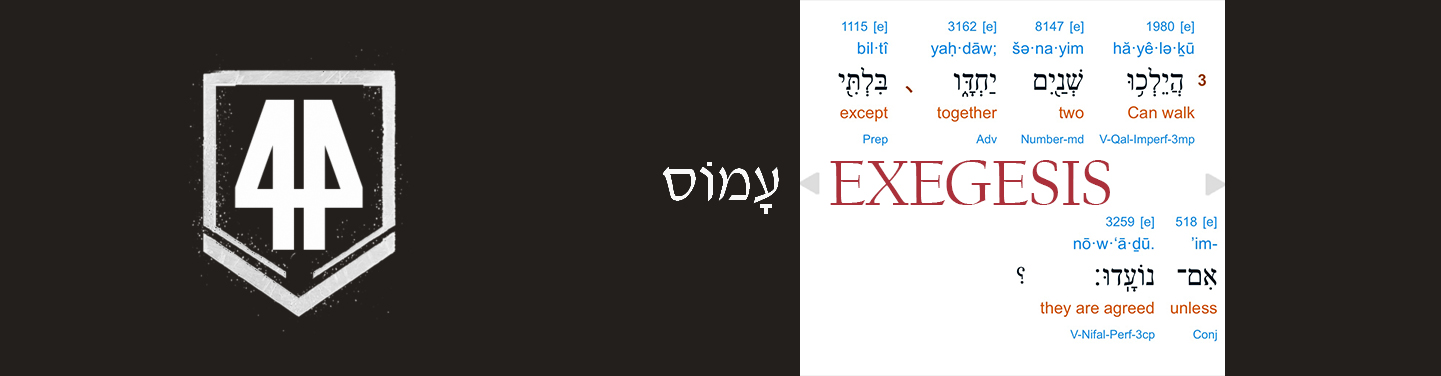

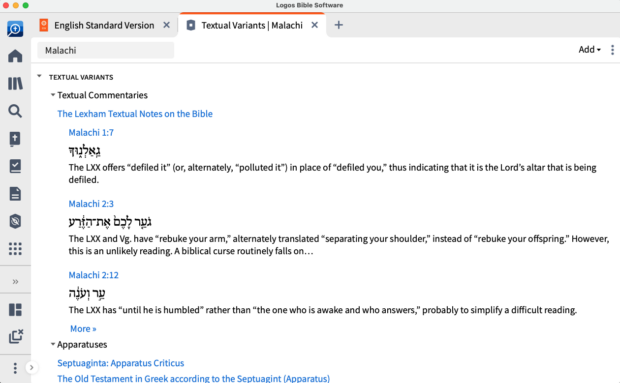
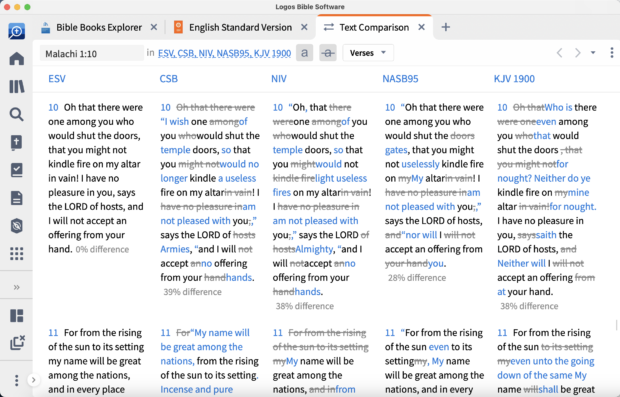
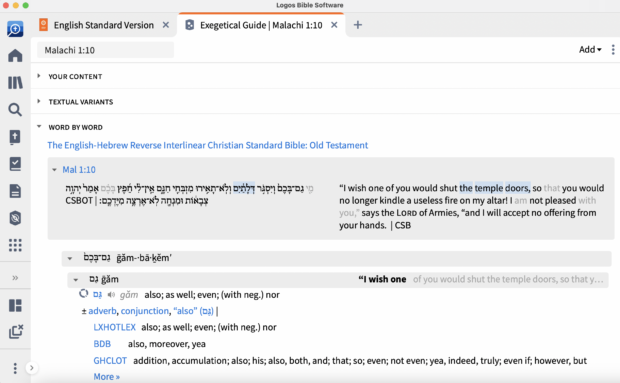
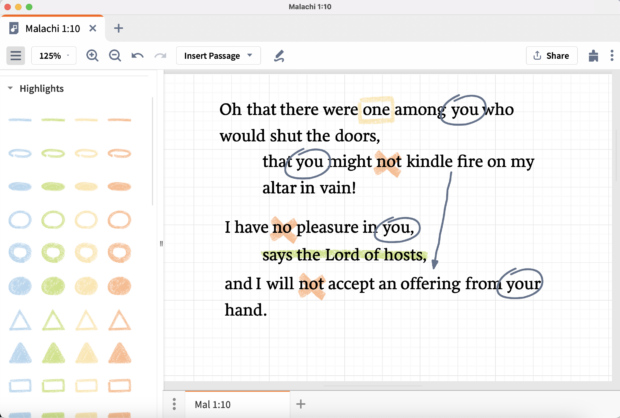
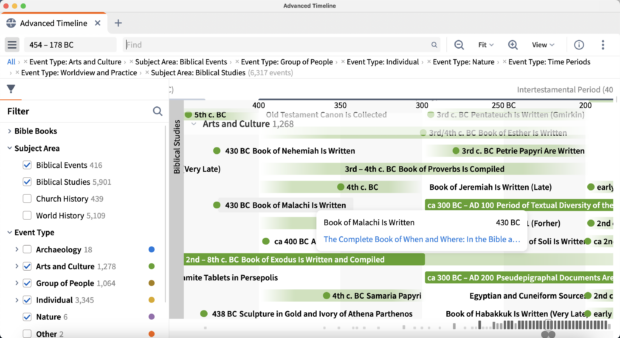
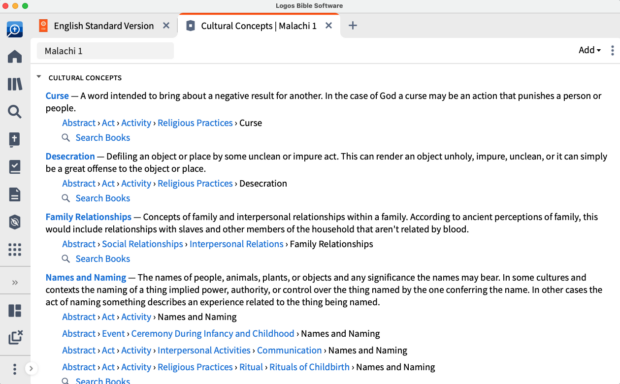
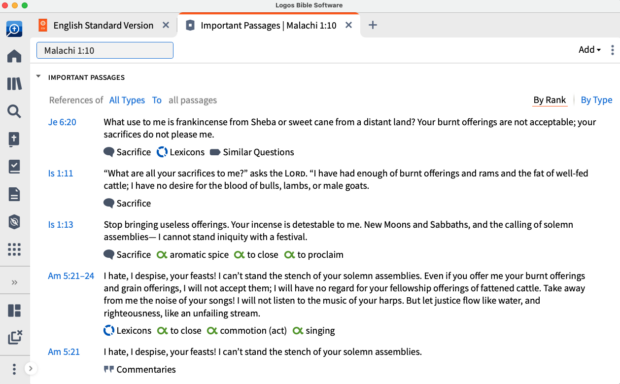
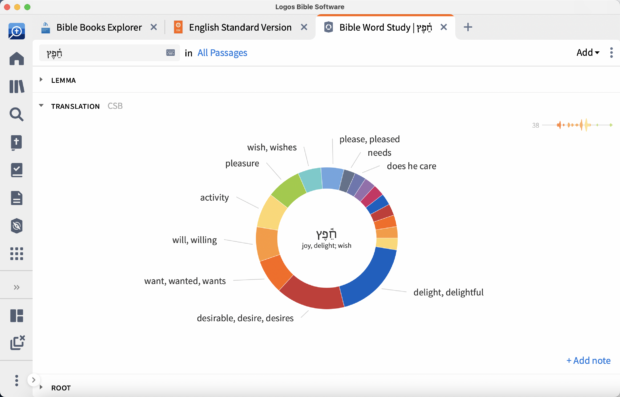








































 EXPEDITION 44