Baptism, then, is not what produces salvation. It “saves” in that it reflects a heart decision: a pledge of loyalty to the risen Savior. In effect, baptism in New Testament theology is a loyalty oath, a public avowal of who is on the Lord’s side in the cosmic war between good and evil.
Michael Heiser, The Unseen Realm
Baptism is important. In many ways, I think it is the purest example still intact today of what it meant to make an allegiant statement as they did in Jesus’ day. I am often asked what do you say when you baptize someone? People question as if there is some kind of magical phrase or potion that comes with Baptism. It probably won’t surprise you that I don’t really like the usual repetition of words that often come with baptismal “services”. You have probably heard a pastor proclaim something like, “in obedience to our Lord and Savior Jesus Christ, and upon your profession of faith, I baptize you in the name of the Father, Son, and Holy Spirit. Amen.” It’s not that I have a big problem with these words, but my issue is more that the repetition of liturgy from scripture today probably wasn’t really what the authors had in mind here and in other similar situations such as the Lord’s prayer. But that doesn’t make it wrong to do so either. The words of baptism are important whether you see the act as a sacrament or more of an allegiant profession of faith. Nearly everyone sees baptism as an outward sign of a decision that has happened in the head and the heart. It’s the best picture of Biblical 1st century allegiance still found within our modern western culture.
“Do you not know that all of us who have been baptized into Christ Jesus were baptized into his death? We were buried therefore with him by baptism into death, in order that, just as Christ was raised from the dead by the glory of the Father, we too might walk in newness of life.” Romans 6:3-4 ESV
We usually think of life at baptism, not death. We want to think joy and often in western thinking death is not joyous, but Paul’s culture (yes, I continue to arguably allude that Paul wrote Romans or at least had it penned) didn’t think like this. Death was often honorably esteemed and eventually everyone would die.
So why does Paul choose to use the phrase baptized into death? We need to consider how first century followers viewed baptism. Within Judaism, but also other religions baptism was a standard practice of renewal or cleansing.
Without venturing too far into this, baptism in the New Testament signifies an allegiant lifelong commitment (purification) similar to what God asked of Abraham in the covenant of circumcision. There are several connections that are important there.
At the time when this was written, the Greek term (which we transliterate “baptism”) was also a verb used to describe violent acts like drowning. We also see this similar usage in Luke 12:50 and several other places in the Bible. The author wants the reader to consider complete (possibly even violent) death of the old life. All that a person was, any influences you may have been under, any oaths of allegiance, and claims to who you were, even to the point of what you might have been completely immersed (water drowning metaphor) into that kind of living (antinomianism). Paul says it is now dead, all of it.
That’s why when Jesus says the centurion in Matthew 8 has more faith than anyone else (I have not found anyone in Israel with such great faith) it was likely a death sentence, and the centurion was ready for that. He literally was ready to give up his oath of allegiance and life spiritually, but also physically. (That would have been the natural consequence for a centurion that placed their allegiance to anyone other than the emperor.)
When we choose to bury all that was us, we in turn accept new life in Christ pledging the reciprocal dance of grace. I have used this expression several times in the book. [The Roman writer] Seneca explains the image of three dancing connected by grace: a benefit ‘passing from hand to hand nevertheless returns to the giver; the beauty of the whole is destroyed if the course is anywhere broken’ (Seneca, [De Beneficiis, meaning “On Favors”] 1.3.3-4). The “three graces” picture visually represented how grace was understood to function in the first century Greco-Roman world in which Paul wrote. Grace (charis) originated with a generous giver usually thought of as the Benefactor. Often the Benefector was introduced to one in need by a mediator. The gift was then accepted by the recipient (client) who in his or her thankfulness and gratitude in turn extended the gift (grace) to others, and this in turn benefited the original giver. The recipient in many ways became a representative of the Benefactor to those in the Benefactors society. Coaching or mentoring towards what the Benefactor desired was often nurtured through the mediator to the recipient. It became a continual relationship between the three entities. In this unbroken circle, everyone was understood to benefit. In this sense, God works through Christ in us as we freely receive the gift and continue to give all of it to others as they are then introduced in the same way through the mediator to the father. Everything is freely given.
We often use the word “adopted” when describing our new relationship in Him. In the Greco Roman Empire adopted beings could not be disowned as natural born children could be. When you were “adopted in” you were guaranteed the new life promised to you by those that gave the pledge to adopt. You were an heir that could not be passed over in terms of inheritance. It was a new covenant that was cut for you. It was a free will reciprocal agreement even though it seemed like the party adopting had everything to lose and nothing to gain; but as we all know with children that isn’t the case. The blessing is reciprocal.
Baptism is a confirmation to lifelong allegiant faith, a way of life given to king Jesus. An entrance into a beautiful, joyful, reciprocal dance of grace but starts by putting to death “all” that you were. You are no longer your own but His, a new creation by which your very life is an image of His whom you belong. He is in you and your life is a temple that bears His name. Your very essence is to bear the light of Jesus and extend that gift to others. This is not of yourself but only in the grace of our Lord and Savior Jesus Christ.
In life you are now set apart to serve. The Hebrew word ‘abad (עבד) can be translated as “to work,” “to serve,” or “to worship.” This is the word that is used to describe the original mission for humankind.
In essence, through baptism, we return to our cosmic calling. In faith, we worship as we serve. All that we are, we are in Christ.
Luke, I am your father! Every 80’s and 90’s guy knows exactly the implications of this phrase. Today we live in a fatherless world. There are so many implications of this, but one of them is the Christian mainstream claiming things of the Lord, yet in actuality is far from the galaxy of their father. I would urge a return to covenant living.
“As for Me, behold, My covenant is with you, and you will be the father of amultitude of nations.” Genesis 17:4 NASB
In Hebrew Av hamon goyim means Abraham would be the father of many, those inside and outside of his immediate family – the regathering of the lost nations (Deuteronomy 32). Today, Christians believe they are faithful to the same God, Yahweh; but if we would have lived during the time this sentiment was expressed to Abraham (the intended audience of the text) I doubt our modern-day actions or fruit would have been recognized as the kind of devotion or allegiance God was asking for. As I write this, Four Southern Baptist theologians and pastors intend to ask messengers to this year’s Southern Baptist Convention annual meeting to adopt the Nicene Creed as part of the denomination’s official faith statement and it begs the question, what does it look like in a modern world to fulfill what Yahweh asked of us?
According to Rabbi Shraga Freedman, “Even when non-Jewish nations recognize the existence of a Supreme Being and the need to serve Him, they advance many distorted notions of what He expects of His creations. Throughout history, their warped perceptions of religious devotion have caused untold pain and suffering to myriads of innocent human beings.”[1]
At first contemplation you might realize that if you aren’t observant to the Torah then you certainly can’t claim Abraham as his spiritual father, and thus what His father Yahweh asked of Him and those to come. You aren’t of the same lineage. But Jesus also redefines a few things for us, and I am thankful for that!
Skip Moen interjects, “God promised that Abraham would become the father of many goyim, that is, the father of many who do not descend from his biological line. But this does not mean these goyim are free to make up their own religious practices. What it means is precisely what James said at the Jerusalem council in the first century. “For from ancient generations Moses has those who preach him in every city, since he is read in the synagogues every Sabbath” (Acts 15:21). We must remember that the promise to Abraham is predicated upon a prior statement, namely, “Walk before Me, and be blameless.” It is hardly conceivable that walking before Abraham’s God is a matter of personal taste.” [2]
I have written a couple of books on the return to covenant practice. That doesn’t mean that all modern Christians should go back to observing the law, but it might carry some implications. I am saying quite clearly that modern day Christianity is a better picture of unfaithfulness than faithfulness. The primary mission of Jesus was to a lost and carnal world to be reconciled back to Yahweh. The religious leaders of His day had become the farthest from His father. I am not sure that has changed any today.
Jesus was observant. This is a call back to being holy, to leave everything on the beach having no other idols before you and completely follow the Lord. Today if you and your family are largely indistinguishable from those of the world you likely aren’t living by the covenant given. The God of Abraham well might be trying to get your attention by calling out your name and urging you to come back into the fold of his love compassion and mercy. Thankfully that calling is from Yahweh and not a “Darth Vader” father figure that has left this world lacking in so many ways. Return to what is TOV.
[1] Rabbi Shraga Freedman, Living Kiddush Hashem, p. 31.
I have come to cringe when people say things like, God is only concerned about your heart. Or perhaps using the semi-excusive example of David having a “heart after God” all the while being a murderer and adulterer (which clearly doesn’t match up with the character of God). I likely wouldn’t let my kids hang out with him. Clearly so many scriptures continue to share how important it is to have a heart for God, and I would fully agree, even though I view complete devotion as so much more than just the motives of the heart.
Matthew 6:21: “For where your treasure is, there your heart will be also.”
Proverbs 3:5: “Trust in the LORD with all your heart and lean not on your own understanding.”
Proverbs 4:23: “Above all else, guard your heart, for everything you do flows from it.”
Romans 12:2: “Do not conform to the pattern of this world but be transformed by the renewing of your mind.” (a quick word study of “nous” will link the heart and mind)
Proverbs 23:26: “My son, give me your heart and let your eyes delight in my ways.”
Psalms 51:10: “Create in me a pure heart, O God, and renew a steadfast spirit within me.”
Psalms 73:26: “My flesh and my heart may fail, but God is the strength of my heart and my portion forever.”
Philippians 4:7: “And the peace of God, which transcends all understanding, will guard your hearts and your minds in Christ Jesus.”
John Walton has been a good friend and lifelong mentor to me that started back when I was a freshman at Moody Bible Institute in 1993, and I asked for his thoughts on the subject as I continue to wrestle through them. We went back and forth working through some things that have influenced my opinion in this conversation. I will indicate his words in our private conversation using quotation and suggest articles for further study.
To start with, I might even suggest, as I allude to in nearly every article, that we might need to rethink a few things according to a better hermeneutic towards the exegesis of the text rather than popular opinion or tradition. John recently wrote a book entitled Wisdom for Faithful Reading that I would suggest starting with. John suggests that the popular text for David having a heart after God’s heart is usually misinterpreted. In 1 Sam 13:14 the expression used there is used elsewhere in the OT (as well as often in the ANE) not to describe the inclinations of the king (one who pursues knowledge and relationship with the God), but to describe the sovereign choice of the deity (who for his own reasons has chosen the king to rule). So, the claim is not that David pursues the heart of God as a spiritually mature person rather than pursuing his own ends; instead, David is the man that God has pursued with his own criteria in mind rather than Saul, who was someone who met the criteria of the people. It is a statement about God’s sovereignty, not about David’s spirituality or piety. It is therefore not something that we can aspire to in our own lives. He has written an excellent article on this topic here.
It was interesting that in the Old Testament a great amount of wealth was used to construct the temple and tabernacle (it is somewhat ambiguous as to whether this was God’s asking or solely the doing of the people in an effort to worship God similar to the way the rest of the world honored and appeased the gods). This wealth has no value to God, but the gold meant something to them. The gracious donation or perhaps giving it up was possibly viewed as an outward sign of the internal heart. John would say that “We honor God with our extravagance in giving that which is of value to us. God does not need what we give.” (But seems to be honored by the giving through a pure and undefiled heart.)
John continues, “we can also see a similar picture of this heart in giving when Jesus responded to Judas’ expressed concern for the poor in the context of Jesus’ feet being anointed. Yes, the money could have gone to the poor, but expressing the worthiness of Jesus through the extravagant expenditure with no return was considered not only legitimate, but commendable.”
Today I often wonder whether God smiles at megachurch budgets and building campaigns that resemble much of the world in the name of Jesus. The scripture would suggest that the answers might lie in the motive of the heart rather than on the extravagance of the expenditure. “God smiled on the extravagance of the woman who anointed his feet with oil, and, since he called for great extravagance in the Tabernacle and Temple, I assume he smiled on those projects, but only to the degree that they were carried out with his honor in mind, not their own.” We could also take into account the widow’s mite or the widow’s offering as presented in the Synoptic Gospels (Mark 12:41–44, Luke 21:1–4) Jesus clearly “smiled on” her and commended her sacrifice—an issue of the heart and extravagant even in its lack of relative worth.
Often it seems that what might at one time be a pure motive becomes defiled and abhorrent to the Lord. Some might say that the golden calf was fashioned as an emblem animal or medium to God or possibly a pedestal for the Lord to be invited to come down and dwell amongst the Israelites. However, God is still displeased as John explains that this was a violation of the second commandment. In a similar way the Tower of Babel may have started out as an invitation for God to dwell with the people (which seems to be God’s desire – tabernacling with His people); but then becomes defiled also by the disobedience of the hearts. (Read more about Babel from John’s account.)
John would share that the medium is the message, but motives can corrupt the medium (heart). Yet, any given medium may be used well or badly by different people at different times. Jesus gives an example as he criticizes how the temple is being used (casting out moneychangers) revealing their impure motives yet affirming the value of the temple when rightly perceived (as His father’s house.)
Often, I wonder about the progression to which we allow the defiling of our heart’s original pure intentions. Some things have the original intent of honoring the Lord but quickly become an extravagance that only serves our own egos or only seeks to oblige God.
Spending in the name of God is hard to figure out sometimes. I have so many questions for God, was the church ever intended to be the religious bank it has become? (Acts seems to suggest people directly giving to the needs of the body not the church acting as the collection agency, but there are several passages that may speak otherwise.) What does He think of a modern church budget that is 50% or even 95% salaries and mortgage? Why isn’t the church caring for widows, the poor, and the broken? (Our “evil” government seems to do this much better than the global church.) We are told to not have judgmental hearts, but to test these things by the spirit and know them by their fruit. One of my good friends leads a church in a lower income area and runs out of seats every Sunday, has leaky roofs over kid’s heads, and can hardly pay the measly mortgage every month while the megachurch the next town over is spending 75K on new LED screens and smoke machines every other year with a tech budget that is 10x more than the net worth of my friend’s entire organization. What would God say?
Sometimes it is hard to see whether the extravagance happening around us in the name of the Lord is an outward sign of a great heart, or an idolatrous tower. Sorry, no “answers” today… just a rambling of my heart!
Marriage is a covenant relationship instituted by the Lord. The term covenant in Hebrew (berith) has a literal meaning of ‘a cut where blood flows’ and is used to accurately portray the strongest of all possible relationship structures we could divinely engage in. This word and concept is one of the largest hermeneutics in scripture and is a necessary component for true revelation of the scriptures, the nature of God, and our new life in Christ Jesus and the basis for all relationships.
Written by Dr. Steve Cassell and edited by Dr. Will Ryan
When I was younger I was entangled with the ‘thug’ or ‘gang’ life because, well, I was stupid. I can almost hear the diverse reactions to that revelation among the readership… from guffaws, to eye-rolls, and possibly a few raised eyebrows of shock. Nevertheless, it is an accurate historical reality. The main compelling factor propelling me in that direction was the deep longing of my heart for a real, committed relationship. One of the first things I learned about gang life was the mantra, “Blood in, blood out”. This just simply meant that you were required to shed blood (your own in a self-sacrificial activity like gang-banging in another gang’s territory that would likely get you thrashed or even killed) or the shedding of innocent blood in an armed robbery or potentially a murder. There was no way into the gang without bloodshed. Once you were in, there was no way out without bloodshed. This mostly meant that you were going to die if you ever wanted out, but in some instances, the exiting member would be ‘allowed’ to go through a gauntlet-style beating that would usually hospitalize them and complicate their health for the remainder of their life. I know it sounds barbaric, but I was desperate for authentic relationships. Ultimately (by the enormous grace of God) I chose a different path which mostly had to do with a God-sent gift sashaying into my cosmos by the name of Kay… who is now my covenant bride. We are most definitely committed unto the blood of self-sacrifice to one another without hesitation or consideration.
Suppose you, our reader, are married or intend to enter into the sacred and divine institution of a marriage covenant at some point in the future. In that case, these words must have a powerful resonation in your soul (nephesh, psyche). I have been doing full or part-time ministry for almost thirty years and the degradation of the covenantal aspect of marriage has been nearly destroyed by our ever-darkening world and the decay of basic humanity as we are propagandized into some animalistic attitudes towards relationships and society.
When a couple is joined in Holy Matrimony the vow is something akin to:
“I swear to honor and love you;
In riches and in poverty,
In sickness and in health,
For the better or the worse,
Until death do we part,
So help me God.”
Those are not just words… they are a covenant vow unto another person sworn in the presence of and under the submission to our Great God. In actuality, in antiquity, this was a “blood in, blood out” solemn oath giving God (and the gathered witnesses) the right to punish, even unto the shedding of blood, either participant if they violate that covenant vow. God’s perfect intention in marriage was ‘blood in’ (the blood of the hymen on the wedding night) and ‘blood out’ which was the ‘until death do we part’ provision.
The first thing we, as the image-bearers of God to a broken mirror of the world, need to embrace is doing our marriages the way God says, not the way culture or our fickle emotions scream. If that is a place you dare to transverse with Doc Ryan and I, then I double-dog-dare you to read on…
Glad you are here this far!
Since you have determined to do the hard thing and stay in this message to this point, firstly I want to applaud you for being willing to be a hero (heroes do hard things) and also warn you that you will be shunned as a rarity in our modern world. But consider that God loves to use heroes and rare people to do great things.
______________________________________________
“You shall fear the LORD your God; you shall serve Him and cling to Him, and you shall swear by His name.” Deuteronomy 10:20
Throughout the Bible God uses the relationship of Marriage to give us an earthly or physical example of our relationship to God and others. You don’t have to be married to glean from this discussion. God positions himself as the forever faith pursuer, the lover that will never leave us despite our shortcomings and continual failure and perhaps even unfaithfulness. Love, compassion, grace, mercy, and forgiveness are just a snapshot of this unending example to us. The Hebrew verb for cling is davaq and is the word used for glue. The implication is longevity, reliability, and consistency in faithful commitment.
What’s important is this: a husband is to cling to his wife in the same way that we are to cling to God. There are several other verses in the Bible that portray the same analogy. In each one, God is represented by the woman, not the man; the scriptures seem to imply a reciprocal role of equality that compliments the relationship by each person’s gifts. A reciprocal circle of grace accepted and freely returned.
The example of covenant relationship is not only exhibited or modeled in the biblical marriage through scripture, but then serves in many ways as an archetype of our relationship with God and between others merging the gap between heaven and earth. We see a glimmer or foreshadow of what all relationships will be in an eschatological sense in a recreated heaven and earth to come. A return to Eden. – Will Ryan Th.D.
______________________________________________
Every relationship is regularly challenged by conflict. There is an undeniable truth to this statement: “Familiarity breeds contempt”. It is true in many Christians relating to their relationship with God and also true in human relationships. The time of Jesus’ life and ministry was regularly hindered by the masses of people who could not reconcile the idea of Jesus being all human and all God at the same time. The majority of people in His time rejected Him because they justified their devaluation of Him based upon His humanity.
John 8:48-53 ESV
The Jews answered him, “Are we not right in saying that you are a Samaritan and have a demon?” Jesus answered, “I do not have a demon, but I honor my Father, and you dishonor me. Yet I do not seek my own glory; there is One who seeks it, and he is the judge. Truly, truly, I say to you, if anyone keeps my word, he will never see death.” The Jews said to him, “Now we know that you have a demon! Abraham died, as did the prophets, yet you say, ‘If anyone keeps my word, he will never taste death.’ Are you greater than our father Abraham, who died? And the prophets died! Who do you make yourself out to be?”
Due to the conflict these religious hypocrites could not reconcile they all missed out on the greatest blessing, the greatest gift, and the greatest possible salvation that would give them the greatest life ever. Conflict steals away the blessings of God from one’s life. As people of the Kingdom of our God, we need to walk out a better way of dealing with ‘conflict and resolve’.
Luke 17:1 NKJV
Then He said to the disciples, “It is impossible that no offenses should come, but woe to him through whom they do come!
Knowing it is impossible to do life without having conflict, we should be desirous to navigate this territory supernaturally. To begin that process we first need to answer the question: “Where do conflicts come from?”
In my attempt at brevity, I am going to only give you the ‘big two’.
Pride (me first, my wants, my ways, my control)
Lack of Understanding (comprehension of your covenant partner)
Let us take up arms against the first evil monster hungry to devour us as its prey… Pride.
Pride has two main expressions. The first we are all mostly familiar with is the overt me-istic, I-centric expression that displays itself in self-aggrandizing, self-focused, self-concerned, self-serving, and narcissistic type attitudes that usually turn our guts when we are confronted with it. Sadly, our culture today has turned pride into an object of worship (by abominable parades and a month-long holiday celebrating perversity). But the scriptures and the life of Christ make it uber clear that pride is an evil foe of everything good and right.
James 4:5-10 ESV
Or do you suppose it is to no purpose that the Scripture says, “He yearns jealously over the spirit that he has made to dwell in us”? But he gives more grace. Therefore it says, “God opposes the proud but gives grace to the humble.” Submit yourselves therefore to God. Resist the devil, and he will flee from you. Draw near to God, and he will draw near to you. Cleanse your hands, you sinners, and purify your hearts, you double-minded. Be wretched and mourn and weep. Let your laughter be turned to mourning and your joy to gloom. Humble yourselves before the Lord, and he will exalt you.”
These statements are echoed by Peter (1 Peter 5:5-7) and quoted from the wisdom of Proverbs (3:34). The stories of narcissistic pride destroying people in the scriptures are on nearly every page from the fall of the divine couple, Adam and Eve looking for their own way into the life of God, to the fall of the divine being ‘Lucifer’ into the wretched Satan as the arch-enemy of God and man, to the mind-numbing ignorance of David’s adulterous murder account of self-gratification resulting in a dead baby and a civil war, to the sadness of Judas selling Jesus for a pittance of silver coins.
A lesser-known expression of pride has the same dangers but is a bit more subtle. This is the prideful attitude of self-debasing words, actions, or identity. A person who operates in insecurity, low self-imaging, fearful social interactions, sheepish or shy behaviors, and isolation as an introvert is equally operating in pride. There are just at the other end of the spectrum. I illustrate it this way:
PR-I-DE.
Anything that has “I” in the center is pride. Whether it takes the form of PR-omoting the “I” or in the DE-basing of “I”… both are “I” in the center. Covenant is a commitment to lay down your “I” for another as Christ exemplified. The definitive aspect of what separates covenant from contractural- or performance-based relationships is the self-sacrificial commitment. In a secular performance-based contract of marriage, the normal interaction will be, “You do this for me and I will do that for you”. That is basically a business transaction where we are ‘purchasing’ the affection or performance of our spouse. The Bible has a word for this type of faux marriage: concubine.
Proverbs 13:10a KJV
Only by pride cometh contention
Only… that is a big word. The cause of any and all contention is pride. Yikes!
When I counsel marriages in this the most normal response is, “No way!” Most folks do not think the contention in their marriage is their fault… it has to be that OTHER person. The scriptures argue that it takes two to tango, and it would behoove us to agree with the scriptures.
James 3:16 Aramaic Bible in Plain English
For where there is envy and contention there is also chaos and every evil thing.
I often refer to this as the ‘other’ 3:16 verse that is WAY less memorized. John 3:16 makes us have warm fuzzies, James 3:16 makes us angry… Jesus said the truth will make you free (John 8:32) but in my experience, before the truth liberates you it tends to make you REALLY mad. Pride is the ONLY root of ALL contention. Where there is contention there is chaos and EVERY evil thing. (Think about that for a second… EVERY evil thing… like sickness, abuse, poverty, anger, oppression, depression, sin…) Does that statement illustrate any of the areas of your marriage?
The second cause of conflict in our covenant relationships is a lack of understanding. You do not know what you do not know. When we do not understand, the natural human response is to assume, analyze, or project our own opinions into the circumstances or motives. “I know why you did that! It is because you think I am stupid!” “No… no, I do not think you are stupid… I just wanted to do something nice for you.”
One of the most precarious places we can attempt to transverse is thinking we know another person’s motives. Kay and I have established a ‘rule’ that we are not allowed to assume one another’s emotions, intentions, or motives. It has actually affected the overall culture of Beloved Church because we have adopted the statement, “That person is blankety-blank at me right now.” What we mean by that is we recognize that something is going on in their heart but we will not speculate in arrogance as to what it is exactly. It requires communication, honesty, courage to be transparent, and a relational commitment to sincerely listen to one another.
But spiritual and covenantal ‘understanding’ is much larger than just a psychologically invented, and sociologically driven ‘model’ of interpersonal communication tactics. That is worldly, and frankly, arrogant as well.
Proverbs 11:2 BSB
When pride comes, disgrace follows, but with humility comes wisdom.
The divine weapon against pride is humility. Humility is the most virtuous character that is the most shunned and avoided in all of Christianity. The more humble we engage in relationships with one another the more fruitful, intimate, and unified they will ultimately be. Humility is a necessary component to spiritually based relationships, as in marriage covenants, because without humility true communication cannot exist.
1 Corinthians 2:11 BSB For who among men knows the thoughts of man except his own spirit within him? So too, no one knows the thoughts of God except the Spirit of God.
If you look closely at that text you will see an eternal principle being expressed: it is only by the Spirit that any one of us can understand the heart. That means our own heart as well as the heart of our covenant spouse. Humility is required to embrace a principle like that because human wisdom and psychological analysis will defiantly argue that our cognitive functions are primitive chemical processes as a derivative of whatever emotion or disposition we randomly are being controlled by. No, Beloved reader. We were created much more complex than science has the capacity to embrace. ONLY by the Spirit of God can we rightly and effectively navigate the deep waters of each other’s souls.
Proverbs 20:5 BSB
The intentions of a man’s heart are deep waters, but a man of understanding draws them out.
When the Bible declares that something is deep, you can bet your bottom dollar it is DEEP. Notice though, that the way to draw that sweet cool water that is in that deep well out is through the ‘bucket’ of understanding. There is much strength and determined effort involved with lowering a bucket on a rope into a deep well and then, hand-over-hand, lifting that heavy bucket back up for the reward of a refreshing drink. The Spirit of God is Who gives us the ability (grace) to ‘understand’ each other in an accurate way. This should convince us of the great importance of knowing each other through the Spirit and not only by the flesh (or psychologically analyzed personalities).
2 Corinthians 5:16
So from now on we regard no one according to the flesh. Although we once regarded Christ in this way, we do so no longer.
Our regard for one another needs to be of a spiritual valuation, not a carnal or natural one. This is only possible by intimacy with the Spirit where we are humbly submitted to allowing God to help us ‘understand’ our mate. This imperative to comprehend our spouse goes much further than just having a happy marriage.
1 Peter 3:7 ESV
Likewise, husbands, live with your wives in an understanding way, showing honor to the woman as the weaker vessel, since they are heirs with you of the grace of life, so that your prayers may not be hindered.
The commitment to live with one another without contention, in humility, and submitted to the intimacy that can only come through the Spirit is necessary for our overall spiritual/soulical health beyond just our marital well-being. This verse says plainly that your prayer life will be hindered if this is not engaged in properly. You can search the scriptures and you will not find another place that declares a more direct reason for hindered prayers. That should impress upon us the needful resolve to guard our marriages voraciously, in these ways.
Doc Ryan and I are deeply invested in the covenantal realm for the body of Christ, especially in the arena of the marriage covenant. This is why we have penned this teaching together and sacrificed our time and energy to sow into your lives. We pray that your life is impacted and blessed by these words are truths to the degree that they inspire true repentance and change in whatever places your Good Father and your covenant community is shepherding you into.
In theology people are going to interpret passages differently...
This article has 7,330 words and will take most people 39 minutes to read.
My good friend Dr. Steve Cassell and I see 99.9% of theology very similarly. But occasionally we take slightly diverging views. I have said this before, but much of our relationship would look like an ongoing respectful healthy argument to most people. This may be described as a Mars Hill brotherhood. Perhaps you might say iron sharpening iron except that term is often used amongst disagreements which I do not think really summarizes our spiritual conversation. Steve and I have a healthy banter in which we work through all kinds of theologies going back and forth. Steve came from a word-of-faith background, and I came from a more traditional yet also spirit-filled background. Steve has been personally influenced by and is a regional representative for Andrew Womack Ministries International (AWMI.net). Both Steve and Andrew hold a minor view, not only recognizing that the cross brings spiritual healing (as nearly every Christian would confer) but also complete physical healing and health. Steve also sees the power to heal as similar to any other gift and I see it as possibly more of something God sets aside or “grants” to some extent; meaning you have it, or you don’t. Some people call this an anointing. Although this is another debated subject that you can read on here. In this case, I hold the mainstream view on healing and Steve holds a minor view.
Some of the minor views that we both hold would be to believe in conditionalism rather than the significantly more accepted view on ‘Hell’ of Eternal Conscious Torment. We also both see Heaven as an intermediate state with the final eschatological state or place for those with God as being a recreated Heaven and Earth (which most theologians I know would agree with, but your normal everyday church pew Christian doesn’t think this way.) We both do not hold a physical ‘rapture’ view of the ‘End Times’.
We also do not hold to any of the normal interpretations of the Calvinism TULIP. Most mainstream churches are going to agree with 2-3 Calvinist positions on this yet probably would not openly consider themselves Calvinist. We wouldn’t accept any of the TULIP views at least to the degree that a reformed church or Calvinist would present them. I could go all day on interpretations like this, but I think you get the point.
Today, I have invited Steve to join me in this article to explain and define our perhaps slight differences in terms of God’s healing power. To be clear we both believe and operate in faith for God’s healing power. Jesus said that believers will lay hands on the sick, and the sick will recover (Mark 16:18). (But our interpretations differ, will all sick recover or just some?) We both train the body of Christ so that they can do the work of the ministry in this area (Eph. 4:11-12). The day of the one-man show in the body of Christ needs to come to an end, and we are literally seeing that take place all around us in our respective opportunities of ministry. Steve and I experience firsthand miracles nearly every day that some people have never experienced (or even seen) once in their lifetime. In fact, we both expect God to do these things and in faith know that He does and will. In many ways we are expectant and in tune with the healing power of Jesus every hour of our lives. We experience nearly the same healing experiences day in and day out in the kingdom and yet explain the theology of what has taken place through different interpretive lenses. We both believe that everyone is called to heal in Jesus’ name and that in that sense it is a spiritual gift. Yet, I would believe that God chooses to empower some as anointed to truly have a more powerful version of this gift while others likely won’t get there. Perhaps that is a developed spiritual gift like any other, but some people seem to have it and others don’t.
This theological difference comes to fruition in varying ways. When someone comes to me and asks that we pray for healing for them or someone else I often feel the spirit telling me right away that they will be healed or that we need to simply pray for God’s will. If I feel the spirit telling me they are going to be healed then I simply declare it in Jesus’ name, and they are healed. I can probably count the times on one hand when this didn’t come to fruition and I can’t tell you why, but I am also not hung up on it. As you can imagine, this is confusing to people asking for me to heal them or simply pray for healing. “Why did Doc Ryan pray and heal one person and then the next person in line he simply shared perhaps a theology of trusting in the Lord, faith, timing, sovereignty, why God may not choose to intervene, or even ministry through brokenness?”
Dr. Steve on the other hand seems to strongly believe that if the person that comes to him has the faith to be healed, they will be (since he also leads by that faith.) In fact, sometimes I see Dr. Steve as being so set apart as God’s healing agent that perhaps God tips His hat to Dr. Steve and allows Steve to command healing even when that may not have been the plan of God. (Oh boy…. this just set off a bunch of peoples alerts on what they think of the sovereignty of God and changeability might or should be.) I would say this is very similar to those that we see in scripture that have the intimacy to wrestle with God and God actually has honored their requests and seemingly delayed or changed his mind as a result of empowering them to actually harness the manifestation of God’s power in them. You might recall in Exodus 32 when Moses pleaded with God so that he would not destroy the people he had saved. The Lord told Moses he would not take out his wrath on Israel. Moses immediately picked up the two stone tablets the Lord had given to him earlier, with the Ten Commandments on them, and returned them to his people. (you may want to look at this wording again) God may even endow His power and doesn’t necessarily keep track or intervene in every situation but allows the person to represent Him in this way. The disciples seem to have been given powers yet come back telling Jesus they couldn’t heal some. Jesus was even unable to heal at one point in Matthew 13 and Mark 6. So, what are all the dynamics of healing?
I have invited Steve to chime in on this article and have noted his comments in blue:
Hello Expedition 44 peeps! Dr. Steve here…
Doc Ryan is accurate in everything he has portrayed about our covenantal relationship and my beliefs. I am interjecting in this place and will do this periodically throughout the article to clarify or exegete my position. This is my first place to interrupt quickly. The first sentence of the last paragraph stating my faith for believing in a 100% manifestation for everyone who approaches me in faith (please note ‘IN FAITH’) comes from ‘watching’ the ministry of Jesus. There was never a time or a person who was turned away when they approached Him in humility and faith. It is a bit simplistic just to base a theology on a truth like that, but I tend to be a smidge more simple regarding actual interactive ministry. Theology is infinitely complex because the One we study (-ology, from the Greek ‘logos’) is infinitely complex. But the Gospel is simple and should remain that way. The way Jesus did the actual ministry (adding in the progressive developing aspects of the ekklesia and ecclesiology of the Epistles and Acts) is what I target as a carbon copy (same with Doc Ryan).
Hebrews 1:3a – ‘The Son is the radiance of God’s glory and the exact representation of His nature…’
Hebrews 13:8 – ‘Jesus Christ is the same yesterday and today and forever.’
We both Agree with Andrew Womack when he says, “One of the worst doctrines in the body of Christ is the belief that God controls everything that happens. Fundamentalists/Evangelical Christians believe that God either controls or allows everything and that Satan has to get His permission before he can do anything.” That’s a convenient theology because it absolves the individual of any personal responsibility. God’s will doesn’t automatically come to pass. We have to believe and cooperate with God to receive what He has provided and in some cases, “covenanted” for us.
But from there Steve and I slightly part ways. AWMI and Steve would continue…
___________________////___________________
Andrew’s theology regarding healing is often referred to as “the finished work of the cross.” Personally, I cringe at this simply because I never like to give merit to the cross. (IMHO, this is a Calvinist phrase usually tied into the doctrine of limited atonement, so we often don’t use this phrase.) Steve has actually changed his verbiage over the years to say, “the finished work of Jesus.” I don’t want to wear a crucifix or even entertain much observance of the cross because I want to focus on the resurrection and ascension that gave life. Yes, the cross was part of the plan, so this isn’t a huge problem for me, but I prefer to focus on the victory of the stories in Jesus -not dark places that were traveled on the way to victory. It is similar to someone sharing a testimony… don’t spend an hour on the muck that you lived in (sounding like you are almost bragging about it) and 5 minutes on the redemption, flip it around. There is a place for the cross but the focus of nearly all of the NT after the Gospel is on the resurrection and what that means for “salvation” and life in Christ here and now but also to come. I do realize that seeing a cross can point people to the victory of Jesus which is why I have a cross at the “range” where we have TOV and have for many years.
Steve here again… Doc Ryan is right again. I have adjusted my language due to the expansion of my revelation on the atonement. The aggregation of information and bringing in the vast matrix of typological precursors from the Old Testament sources has expanded how I understand the atonement to be. (To expand your understanding, see Expedition 44 series on ‘Atonement’ HERE.) Yet knowing that each facet of that atonement process was known, calculated, and used for human redemption is stronger in me today than before. I see that the stripes Jesus took for our healing (1 Peter 2:24) have an even stronger application knowing that Jesus’ atonement was sufficient in all areas, for all people, for all time.
___________________////___________________
With that let’s jump in, Healing is already an accomplished work according to I Peter 2:24,
“Who his own self bare our sins in his own body on the tree, that we, being dead to sins, should live unto righteousness: by whose stripes ye were healed.”
STEVE: The term ‘healed’ is in the simple past tense (aorist indicative passive). RYAN GREEK 101: The Aorist is used for past time and portrays perfective aspect (portraying the action as a bounded whole, or in summary fashion without reference to the way it unfolds in time). As a Passive tense, the subject is the patient of the verbal action: “he was eaten,” “they were killed.” Grammatically in this verse we both agree healing is an action that took place and happened once, the action itself (the cross) theologically doesn’t need to continue or happen again. What it “accomplished” is good for all of time.
The real question then is whether the implication is spiritual and/or physical healing. To this, Steve would say that Jesus isn’t healing people today— that “work” was accomplished 2,000 years ago in Jerusalem when He took those stripes on His back. He hasn’t, and won’t, receive any more stripes. People today only receive through faith what has already been accomplished by Jesus thousands of years ago. (To be clear I -Ryan agree with this in a sense of spiritual healing, we have everything we need, and we aren’t looking for any other continued work of Jesus to make healing possible.)
Andrew would continue, the Scriptures don’t tell us to pray for the sick, in the sense that we are powerless to minister healing to them. It’s just the opposite: Jesus told US to HEAL the sick (Matt. 10:1, 8; Luke 9:1, and 10:9). There’s a big difference between asking the Lord to heal people and healing them. Since Jesus is with us and will never leave me nor forsake us (Heb. 13:5), Steve would then assert that I can say with the Apostle Peter, “Such as I have give I thee” (Acts 3:6). ON the other hand, some would say that none of us has authority to heal a body, only the Creator does (Acts 3:12–13). I do not generally recommend articles from Desiring God as they tend to have a reformed bend to them, but in the spirit of reading another perspective, you might enjoy this post.
Steve here… There is a bit of a semantic point I must make. I (Steve) cannot heal anyone, ever. My confidence and power come from the designated authority granted unto me by the Great Commission and the infilling of the Holy Spirit which is where I parallel Peter’s ideology. I have the power because I have the Creator in me and His known will is to heal (Matt 8:3) congruent with His universal command to heal in the Commission. RYAN – Yes but we both agree that power is endowed to us. We are the hands and feet and physical manifestation of Jesus.
To continue, Andrew (and Steve) would say that this is what Peter said when he ministered to the lame man in Acts 3. Peter didn’t pray for this man. He didn’t say, “O God, we can do nothing without You. Please heal this man if it is Your will.” They would say and I would agree that it’s always God’s will to heal (3 John 2). We don’t ask and then wait and see. That’s not believing His Word. Instead of beggars, we need to become believers who, knowing God’s will, use our authority to heal. I believe that at least some of us (and all of us who claim Jesus to some extent) have this endowed gift from God or physical power given to us.
Steve again… I do not believe this to be a ‘some of us’ condition. The argument over the ‘have and have nots’ has raged in Christianity for far too long. I believe that there is no clergy and laity (a stale old power trip to repress the masses), no less anointed or more anointed (because when you have the Spirit of Christ you have ALL the anointing), no age limit (our children’s church sees healing all the time), and no gender category (my wife Kay is equally effective as I am). The language of ‘gift’ is usually where the disqualification seeps into one’s identity with the thought, “I just do not have that gift.” But if you were to exegete the word ‘gift’ you would see it is a derivative of ‘charis’ (grace). John tells us (John 1) that Jesus was the fullness of grace and truth. When you have Jesus you have the fullness of the Godhead in your Earthly existence and you are complete in Him (Col 2:9-10). RYAN: Steve says this really well!!! I agree, but obviously some gifts are matured and or used or even granted by God more than others.
So where do I/we slightly diverge? I would say a few things to clarify Andrew Womacks statements, and Steve actually agrees with almost everything I would assert here… We personally don’t (regularly) see through the eyes of God, although occasionally some gifted people can and do (seers). His ways are higher than ours. Hebraically it would be very selfish to think that we can request what we want “over” a God who knows more than I do. In other words, to assert that I know that healing is best in every situation is out of my pay grade. Yes, Jesus believes in healing and might endow that power to me but it also might not be in God’s “timing” or order. This could explain why sometimes God doesn’t seem to allow healing through those that were formerly given and proved to have had such things.
Steve here… My perspective is God wants people healed more than I ever could. God loves people more than I ever could. God wants people, all people, everywhere to call upon the name of the Lord for salvation (sōthēsetai, sozo) (Rom 10:13). I do not believe that God ‘wills’ some people for damnation and others for salvation and would see that known will to apply to a lesser form of ‘salvation’ in the manifestation of healing. If God loves every person enough to provide eternal salvation for them, surely His love would surpass the smaller expression of salvation in physical (or emotional) healing (Rom 8:11 and 8:32). RYAN: Well, this falls into the classic, God has the power and God has the desire so why aren’t all things and all people simply reconciled? They aren’t.
Some healing is eschatological in my view. God has created and continues to operate according to His order. We may think we know that, but I don’t think we always do. I think the ancient word order is the best way to say God’s “decisions” may be influenced by a plethora of other conditions. I see this more like the modern word algorithm. Many things come into play that may determine the will of God for any particular person or situation. There are several Biblical words for order and Jeff Benner helps us out with understanding them, but in this case, I would point you to consider the Hebrew root סדר, which again has the root דר (dar) within it. As an example, the verb סדר is found in Job 10:22; A land of darkness is like a darkness of death and without order, and the light is like darkness. This imagery is reminiscent of Genesis 1 where the heavens and the earth were in total darkness, a state of chaos. The creative power of God then “ordered” the world into a state of “order.” [1] Some things are just “above us” and I do not think we will understand them until we reach an eschatological time of understanding spiritually. I see us as watching that movie of our pasts with new eyes perhaps in heaven. My book This is the Way of Covenant Discipleship expounds on this more.
To continue both Andrew and Steve would say that they have prayed for thousands of people across the globe, and they have yet to see every person healed. It might be a problem in the heart of the one receiving prayer, or it might be something they don’t understand in regard to that particular person. But one thing they would exert or say they know for sure—it’s not God. – Personally, I would disagree. I think God’s order may be bigger than what Steve or Andrew see and believe. I also think a fallen world comes into play here. Some things are just broken and can’t be fixed this side of “death.”
Steve again… I agree with Doc Ryan that our cosmos is jacked up beyond repair in some places (human government, death, the Laws of Entropy) and is groaning with pain until the Sons of God releases it in the Eschatological Day of the Lord. (What a day that will be! Come Lord Jesus come!) But I would not classify healing here. I do not believe that what the forces of deception started through the nahash in the Garden of Eden are greater or stronger than what the Son of Man lifted up on the cross (John 3:14-15) redeemed. What Jesus accomplished in the Garden of Gethsemane is greater than what the snake did in the Garden of Eden. Jesus was the victor in the battle of the Gardens… Ryan – Amen!
___________________////___________________
An excursus on James 5:13-16: Healing, Illness, and Resurrection
Above we see that Andrew Womack says that we should not pray for the sick but simply heal them. James 5:13-16 seems to contradict this line of thought.
13 Is anyone among you suffering? Then he must pray. Is anyone cheerful? He is to sing praises. 14 Is anyone among you sick? Then he must call for the elders of the church and they are to pray over him, anointing him with oil in the name of the Lord; 15 and the prayer offered in faith willrestore the one who is sick, and the Lord will raise him up, and if he has committed sins, they will be forgiven him. 16 Therefore, confess your sins to one another, and pray for one another so that you may be healed. The effective prayer of a righteous man can accomplish much.
In this pericope, there are 2 separate words for “sick”. In verse 14 it is astheneo. this is a word used for sickness 18 times in the NT, and most of the LXX usage of the word is for someone who is feeble or sick. In this verse in James, the elders are asked to “pray” over him.
The second word translated as sick in verse 15 is kamonta. This word is not about illness but about being weary. In this context, it is weary from sin. So this could be sin that has led to sickness when you combine the two in the context and links back to “suffering” in verse 13 which leads off the passage.
The solution is prayer and confession in verse 16. Confession and forgiveness bring healing (is this physical healing or spiritual healing?) Now the question is about whether this is only about sin that has led to illness that has to be prayed for to bring healing or all illness? Isn’t all illness, disorder, and weariness a result of the Fall? So shouldn’t we pray for all of it?
God desires to bring about new creation in all of us! As Romans 8:19-25 states all of creation is waiting for the sons of God to be revealed and this revealing is communicated as healing through our resurrection (the redemption of our bodies). Paul explains elsewhere in 2 Corinthians 5 that this is a distinction between an earthy tent (our current body) versus a building from God (our resurrected bodies). Similarly, he speaks in 1 Corinthians 15:36 of the need to die to be resurrected because a seed does not produce life unless it dies. So if Jesus “purchased” full healing in this life what is the purpose of the resurrection of the body? If Jesus’ healing was the resurrection, why wouldn’t ours also be? Maybe the healing in this life is spiritual (and resuscitation of life), but actual true healing is in their resurrection.
Steve again… This is a place I will deviate from Doc Ryan a smidge as well. I teach in our covenant community (Beloved Church) that sickness and disease have been defeated through the atonement, but that does not assert that the aging process of time has been canceled. Just as one must fight for holiness against sin (which was FULLY defeated in the atonement) one must fight the temptation for sickness and disease attacking one’s flesh because it was equally defeated. Our enemy is a persistent cuss and will try and enslave us with the defeated force of sin and will equally try to kill us with the defeated forces of sickness, disease, strife, pride, and all the other tricks up his slimy sleeve.
___________________////___________________
The next issue that similarly we don’t see eye to on is healing through the atonement. It might be good to simply first read the AWMI statement on this here. I am going to be quoting several things from this post. [2] Andrew Wommack also has a more in-depth book on this subject called, “God Wants You Well”, and I would suggest reading it regardless of your view. (NOTE: I have more books on my bookshelf that I don’t agree with than I do, this is a good measure of truly searching for spiritual truth.) I also love AWMI and believe we can learn a great deal from them and as believers need to support His ministry; I just don’t see eye to eye on this one small part of his overall theology which has come to be what he is largely known for.
Andrew (AWMI) would say that Jesus has already “purchased” healing for us. In theology, this is referred to as the ransom theory of atonement. I believe in a ransom theory in terms of Jesus “freeing the slaves” in an exodus sense of freedom, but within most ransom theories of atonement (and specifically the way that AWMI often uses it) the statements bring connotations of purchasing or buying back something. I don’t see God needing to purchase anything back from Satan (as this would put Satan with equal authority to God or having divine “rights”), or Jesus needing to buy something from God for us (Jesus and the Father are one). Moses didn’t “pay” for the Israelites from Pharoah, he simply took back what some might say was rightfully His. This seems to be more of a spiritual war than what we would describe as a purchase agreement by most people’s standards. Some would argue that this is also an example of simply letting God fight all of our battles, as Jesus also seems to allude or suggest to His followers.
Continuing, AWMI would assert that in Matthew 8:17, it says that these healings that took place were the fulfillment of the prophecy spoken by Isaiah, “With his stripes we are healed.” Andrew would interpret that this was the fulfillment that ‘He Himself took our infirmities and bore our sicknesses’ essentially alluding to that being at the cross Jesus healed our physical sicknesses, hurts, and pains. Jesus healed people physically to fulfill the scripture that says we are healed by His stripes.
-Hermeneutically I can’t do that for several reasons. I would say that most Christians do this though. I wouldn’t assert that is what the text says, I would say that is personally eisegeting the text to say something that I wouldn’t naturally read into it. Some would say we don’t have the interpretive right to make those deductions from the text (We get into some of this in this post). But if we look at this verse in context it is before Jesus even went to the cross. The effects of the ministry of the servant brought healing (not just the death on the cross). Yes, there is spiritual healing, but I don’t see the text providing all physical healing. By this measure, it would seem that no one should ever physically die. That assumption that God’s healing at the cross not only gives everlasting spiritual life but everlasting physical life here on earth obviously isn’t the case.
Steve again… This is one of the places where I think theology can get in the way and overcomplicate a simple truth. In the first sixteen verses of Matthew 8, we see a leper healed (an impossible healing by Hebraic standards) specifically because Jesus expresses it is His will for healing. Then we have a disgusting uncircumcised gentile who should have no access to the God of the Jews but Jesus makes it clear He is atoning for ALL people by healing the centurion’s slave (Slave! Another disqualified person!) without question or stipulation. Next, we have Peter’s mother-in-law (I thought a Pope could not be married… hmmm…) who gets healed simply because she was in the same house as Jesus. A woman! A mother-in-law (yikes)! Without requesting! Hard to get away from the interpretation of anybody, anytime conclusion. Then, like a cherry on top, the next part of the narrative is verse 16: “When evening came, many who were demon-possessed were brought to Jesus, and He drove out the spirits with a word and healed all the sick.” They just brought the masses… sinners, unrighteous, rejects, sick-from-birth folks, demon-filled mentally ill peeps, and then like an exclamation point Matthew throws in the “ALL” word to just mess with his readers. It is not coincidental that after all that, Matthew specifically tells us why, under the unction of the Holy Spirit, all of these diverse types of healings were done: This was to fulfill what was spoken through the prophet Isaiah: “He took on our infirmities and carried our diseases.” This just seems too clear to miss Matthews’s doctrine of healing being stated, to me. Matthew seems to unabashedly call Jesus the Isaiah 53 suffering servant and part of His ministry was to defeat disease. The educated second-temple Jews reading this would have known the messianic profile that included authority over demonic beings would also include power over physical sickness/disease. RYAN: Jesus certainly had and has power of sickness and disease but when he was on earth, He didn’t seem to physically heal everyone he came in contact with, some were healed, and some weren’t. He was specific with some in healing and the woman who touched His cloak found this power but not everyone around Him or came to him was healed.
SCHOLARLY NOTE ON WHY ISAIAH 53 MAY BE A STRETCH: Using Isaiah 53 in this way as I alluded to is also hermeneutically not very acceptable by the measure of most scholars. Although I will say it is arguable. I will keep this brief, but the intended audience wouldn’t have read it this way. You have to backread this kind of messianic physical healing into the story. Several issues come into play here. Critical scholars are unified in thinking that this part of Isaiah (chs. 40-55) was not written by Isaiah of Jerusalem in the 8th century BCE, but by a different author in the mid-6th century BCE, after exile into Babylon. [3] It is to be remembered that the prophets of the Hebrew Bible are speaking to their own contexts and delivering a message for their own people to hear, about their own immediate futures… they aren’t telling fortunes, that was considered divination. There is a place for prophetical prediction but not as much as people entertain IMHO. The suffering servant here might have messianic implications but that can be problematic that not all of the personal attributes in IS 53 can describe Jesus. As an example, some of the things just aren’t true to Jesus. Many readers fail to consider the verb tenses in these passages. They do not indicate that someone will come along at a later time and suffer in the future, they are talking about past suffering. The Servant has already suffered – although he “will be” vindicated. Does this mean it ALSO can’t represent a future Messiah? Well to some hard-line scholars and methods of interpretation, the answer might be YES. For at least hundreds of years, Jews never interpreted this passage as referring to a future messiah. To be clear, I am not saying that it can’t have Messianic implications. But it is a very difficult passage and what I am saying, is that within the textures of interpretation, you never draw a major doctrine from a difficult passage that can’t be easily supported elsewhere. The problem is that seems to be exactly what AWMI has done with this passage.
I do agree with a lot of what Andrew says, I think his determination of the Greek word sozo is accurate, and I agree that “Healing is just as much a part of what Jesus came to accomplish in your life as forgiveness of sins.” I also agree when he says that “God is not the author of sickness in your life.” However, what I have a hard time with is his conclusion then that “God would not want you to live in sickness.” I believe some things on this earth are simply effects of a broken world. The ditch this digs is that AWMI seems to be teaching that if you have everything in spiritual order you will never be sick. So then when sickness comes you are continually questioning God on what is wrong with you or your faith, or your devotion, or your heart. You must not be experiencing healing because of your actions or lack of them. I don’t believe that. Some things are just a result of a broken world that eschatologically will eventually be healed in Jesus – but not everything will be healed here or now. We are in a state of transformation called sanctification, but Andrew would say that on earth is possible to attain that “complete” sanctification in physical healing and I would disagree – we physically die here on earth. To me, that seems pretty simple and evident and possibly even un-arguable.
Steve again… and I will dare to argue the inarguable just for a moment of healthy banter with Doc Ryan. I completely agree that we will die here on earth, and that is something that will happen to all of us. I would just argue the assumption that one must become sick, diseased, infirm, infected, and unhealthy to die. The New Testament makes a strong distinction between the death of an unbeliever and the ‘falling asleep’ of the believer. It is just personal conjecture to imply that God needs us to get eventually sick in order to die so that we can then have access to our resurrected (celestial) bodies. I believe that sickness is as much an enemy of God’s will in a person as sin is. Sin means to ‘miss the mark’ and being sick misses the mark of the creative intention of our bodies through the ‘very good’ (Gen 1:31) declaration of scripture… even science would capitulate to the truth that our bodies were designed to fight all sickness, disease and mutation. I love how God can make narcissistic scientists squirm with His infinite wisdom. RYAN – I wouldn’t see most sickness as associated or deemed as sin, but would also agree it can be a result of sin in your life.
Andrew says it is ‘false teaching’ to claim that “God is the One who causes people to die” or to say that God “puts sickness on you to humble you for some redemptive purpose and to perfect you through all this suffering” and I agree! I think that is a poor ditch that Calvinism and reformed theology continue to put people in. God is “TOV” His character doesn’t generally “DO” that people; although there may be situations where He may “USE” such things to His workings or divine order.
On the other hand, in his book, Andrew also asserts that the cross redeems believers from financial poverty. In 2 Cor 8:9, Paul says that Jesus became poor so that through his poverty believers might become rich. Wommack takes Paul literally here which I don’t agree with entirely although this is another conversation on the retribution principle and prosperity which I do somewhat see a place for. But here as it relates to this conversation, AWMI would say that Jesus’ death and resurrection provide for Christians ‘forgiveness of sins, healing, deliverance, and prosperity’ in this life (p. 20). The main issue with this kind of thinking as I have alluded to earlier is, if God intervenes for all believers to be completely well in this lifetime, why are so many seemingly devout believers that are not “well” or not rich?
Steve again, quickly… This is a slippery slope that can engulf some believers. We cannot and should not ever determine God’s will based on the experiences of some, and even the experiences of the masses. God always has had and will have a remnant of people who have experiences others do not and will not. Just because every believer does not experience peace, or joy, or forgiveness does not mean that they cannot. Prosperity and health are available to all, but not all will accept (or even know) that it is for them, just like other great and precious promises annotated throughout scripture.
___________________////___________________
To be clear here are specifically the things that I think Andrew’s theology on healing is a bit off:
He argues that illness and even death (p. 88) can be overcome in this age. I would say that is a poor hermeneutical claim. In fact, I might say that many verses seem to say the opposite, that God will swallow death and wipe away all tears after this life (Isa 25:8). I would also assert that this world is broken and is wasting away (2 Cor 4:16), and only at the coming of Jesus will we receive resurrection bodies (1 Cor 15:23). That’s why Paul says we are waiting for the redemption of our bodies (Rom 8:23). It seems clear that the Bible indicates that in this present physical world men are appointed by God to die (e.g., Ps 90; Heb 9:27). Wouldn’t Andrews theology have more people living physically forever or being taken up into the cloud or whirlwind without actually experiencing physical death? Wouldn’t we have at least a handful of people each one of us knows experiencing this? But we don’t.
Steve here… Andrew does not believe death as a whole is to be overcome in the age, just death that is contrary to God’s plan for a person, more specifically, premature or wrongfully caused death. Otherwise, the many commands (and Jesus’ examples) to raise the dead are nonsequiturs and unrighteous. Why make the command (not request) to ‘raise the dead’ if death was supposed to just be? RYAN – Raising the dead is a possibility within God’s will but not for everyone who is in God’s will.
Wommack argues that Christians are redeemed from sickness and poverty but not from persecution. I see tribulation as being very key to a person’s ongoing process of sanctification. I don’t think Jesus causes the hardship but uses it in a sense of refining us. It also is going to reflect back on the idea of the prosperity gospel. As I do believe that God desires for us to experience all of the Joy he offers, some of it may not be experienced physically here on earth. I would not say that Paul was prosperous by the world’s definition after his conversion encounter on the road. If persecution exists wouldn’t sickness be part of that? Wommack answers that God allows the persecution of Christians because he loves the persecutors and wants them to repent (pp. 76–77). But Luke 22:42 suggests another reason: Jesus understands that his crucifixion is the will of God. God did not want Jesus ‘well’—God allowed (and some will even say “willed” without necessarily taking on Calvinist notions,) Jesus physically dead in order to accomplish His great redemptive purposes (Isa 53:6; Rom 8:32; Luke 22:42; Acts 2:23; 4:27–28). If God in His wisdom allowed the suffering and death of his own Son, can he not allow suffering and sickness for the followers of His Son in order to accomplish his sovereign purposes? Andrew might argue a substitutional atonement theory here, that Christ took this on so that we wouldn’t have to; but I don’t think that is a good view. I think I can lightly agree to a metaphorical extent that Jesus’ death and resurrection served as a “substitute for us” but even thinking this way carries some implications that are hard to reconcile. I think Boyd can help us with this consideration. [4]
Steve again… I think this argument could be settled by the clear deviation of persecution and tribulation. Persecution that we are all universally subject to, and should even rejoice in when afflicted with, is a directed assault against us for the purpose of hindering or stopping the advancement of the Gospel or the Kingdom. Tribulation is the general agitation of life that affects the believer and unbeliever alike. A lost sinner can be tribulating because he is human, but they cannot be persecuted for righteousness sake. As ministers of reconciliation, we will suffer persecution and we are not redeemed from it because we were specifically PROMISED it by our Lord.
Finally, many Christians testify that much (or even most) of their growth in holiness has occurred through suffering (cf. Ps 119:67, 71). However according to Wommack, although someone may learn character-transforming lessons through illness, that was not God’s plan which would imply that God shouldn’t or wouldn’t allow or use it. I agree that I doubt it was his plan, but I do see God using it.
Steve again… I agree as well. God’s perfect plan is for us to learn everything through the Spirit and the scriptures, but because we miss the perfect all too often God has this loving and merciful backup plan of redeeming our mistakes into a beautiful and powerful lesson that is called a ‘testimony’.
___________________////___________________
Despite where you land here, I think it is important to understand that we need to live in unity as believers regarding the way we see healing work. One night at TOV, I said something to the extent of, “Regardless of your theology of healing, join with me in praying within the Will of God that this person may be healed.” The scripture seems to show that through prayer God’s will may be swayed towards the hearts of those that are intimate with Him. I think we can all pray for healing and/or just heal if we believe God works in us that way, but I also think it is important to realize that one person’s views on healing aren’t undeniably proven through scripture. There are different valid interpretations and we need to honor and respect people who may feel differently, uniting on what we can agree on.
Perhaps through His order, God has already taken into account these requests and has accounted for them in faith. As we will never truly know the answer to this debate on this side of heaven, we are charged to grow deeper as disciples and pray for such things. In the end, regardless of your thoughts, we all can agree that eventually every believer will be brought to complete healing in Jesus.
Steve here in finality… My love and unity with Doc Ryan is greater today than yesterday even as we have engaged in the polemics of this deep and vast subject. A major reason for that is we have determined our covenantal love and Christian honor for one another greatly exceeds our doctrinal differences. In our unity, we both agree that God heals and that we love people enough to want them to experience that blessing. In our humility, we will both adamantly assert that MANY folks do not get healed and we do not know why. Yet that does not dissuade us from pressing into the heart of God, it moreso invigorates us towards God, His heart, and His truth. Division is demonic, diversity is divine. We pray that is your conclusion as well. RYAN – Amen and well said brother!
This article was primarily written by Dr. Will Ryan, responded to and edited by Dr. Steve Cassell, and edited in part by Dr. Matt Mouzakis.
Have you ever noticed that the very first occurrence of the word “LOVE” in scripture refers to Abraham’s passion for His son Isaac? The word is used to first describe the long-awaited child of Sarah. But does that feeling change over time? In our previous post (PART 1) we wrestled with Abraham’s “love” for Isaac and noted the hardships that came into the picture. Perhaps this love was perpetrated more from Sarah than Abraham. In Hebrew the first word of a sentence often serves as a guidepost of the main thought. In the same way an “idea” might be introduced in such a way to show significance. It could be that the word “LOVE” is first used as contronym form. This is often found in Hebraic writing forms as an emphasis of the opposite strengths. I have written a good deal about Hebraic contronyms. In this case we might be introduced to the story using the word “LOVE” for the first time to stress what God’s “love” shown in His character looks like next to the “broken love” of the world.
This is the story of archetype faith, indeed, it was this very hope in God’s promise that moved God to rename Abram to Abraham, and Sarai to Sarah. But who was the real Archetype of Faith?
In Jewish tradition, the drama of the sacrifice of Abraham’s beloved son is called the Akedah (עֲקֵדָה, “binding”), which as we have pointed out is traditionally regarded as the supreme test of Abraham’s obedience and faith. The blast of the shofar is intended to remind us of God’s gracious atonement provided through the substitutionary sacrifice of the lamb (as well as to “drown out” the voice of the accuser). In this way, the Akedah represents the truth of the Gospel, and how God’s attribute of justice was “overcome” by His attribute of compassion (Psalm 85:10). We see some truth to these traditional interpretations of atonement but also have pointed out that there is much more to be considered; not to mention some theological problems with the traditional views having to do with substitutionary atonement and “power over” retributive justice problems.
One aspect that is often overlooked is Sarah. Perhaps she is in many regards a better archetype of faith, or dare we even say role model of faith, than Abraham was. It is no secret that Expedition 44 believes in the return to the ideals of Eden. In this way, we see the dual covenant partnership of men and women, husband and wife, and as equal ambassadors of the royal priesthood that we were set apart to be. Today, as we celebrate mothers, we want to take a deeper look at the life of Sarah in this story.
“After these things…” We always want to build on the context of the our previous posts (PART 1) discussion. The story of the offering of Isaac, Abraham’s “promised seed,” begins with the statement, “After these things God tested Abraham…” (Gen. 22:1). The phrase, “after these things” (וַיְהִי אַחַר הַדְּבָרִים הָאֵלֶּה) in Hebrew connects to the next image that “Abraham planted a tamarisk tree in Beersheba and called there on the name of the LORD, the Everlasting God. And Abraham sojourned many days in the land of the Philistines” (Gen. 21:33-34). The Tamarisk tree here recalls the tree of life that is figuratively being restored in hopes of bringing back order that was lost. This is a sign from early on that Abraham believed that God was making a way to return to the Edenic plan that was lost; which in some part meant a return to the equality of the royal priesthood. This is “reverse the curse” language and imagery.
———
Sarah gave birth to Isaac when she was 91 years old (Gen. 17:17, 21), and she later died when Isaac was 36 years old, at the age 127 (Gen. 23:1). The Bible doesn’t give us the cause of death, but the midrash Tanchuma says that Sarah “died from shock.” Jewish tradition states that her soul departed from her. Genesis 23:2 says “And Abraham came to mourn for Sarah and to cry for her.” When we read this in Hebrew, we find something the English doesn’t reveal, the text of the phrase “and to cry for her” (וְלִבְכּתָה) is written with a diminutive letter Kaf, which scholars ascribe as Abraham’s mourning for his deceased wife to have been restrained. Could Abraham have believed in faith that God would raise her from the dead, does Hebrews 11 suggest this? Or is there another reason for restraint?
Have you ever considered that it is Sarah, not Isaac who was actually the sacrificed of the Akedah? Some have even suggested that Sarah prayed to God: “Let me die for my son; let me die in place of my son…” Could Sarah’s love have been so great it brought Isaac back to life from the dead? Various sages wonder why Sarah lived only 127 years while Abraham lived to be 175, that is, 48 years more. Perhaps it is ironic that Sarah’s years amounted to the number of years Abraham lived as ha-Ivri (הָעִבְרִי), in Hebraic thought this is a term that identifies his relationship to the one true God (some might describe this as being saved). Since Abraham was 48 years old when he came to believe, and a convert is regarded as a newborn, then Abraham lived (as a believer) exactly 127 years, precisely as long as did Sarah. There are some implications on Calvinism as she is often regarded as walking in faith from birth, but that is another post.
Essentially, we are given then from the text that Sarah walked in Faith all of her days and Abraham did not, but matched her days in faith as a sign of the “return” to the equality of the tree as to the Royal Priesthood as it was intended in Eden.
———
In Jewish tradition Sarah is one of four most beautiful women who ever lived (both inwardly and outwardly.) Agree with it or not, the Rabbis asserted that by the time she gave birth to Isaac, she was regarded as virtually sinless (Bereshit Rabbah 58:1). The Talmud (Megillah 14a) explains that Iscah was another name for Sarah (Gen. 11:29), meaning “to gaze.” The Hebrew word for face is “panim” (פָּנִים) and is written the same way as the Hebrew word for inside, “penim” (פְּנִים), suggesting that Sarah’s beauty was both external and internal. You may be aware that Sarah is described often as the first prophetess. This comes in part from a word play in Hebrew as people enjoyed “gazing upon her beauty” her real beauty was that she had the ability to “gaze” into the heavens; later this is what prophets described as “seers” who had the ability to see more clearly or perhaps even from the eyes of God. We believe this is still a spiritual gift that some might describe as a spiritual sense; we also believe that when you have the Holy Spirit in you, you have this sense. Like every spiritual gift some have it more than others. Some scholars would argue that Sarah could have been different in that she may have been born with this sense or gift in a mature state.
Her first name Sarai in Hebrew (שָׂרַי, “my princess”), meant princess and could have denoted her as an Egyptian princess which Gen 12:11-20 might allude to; but later she is *renamed by the Lord because of her faith as Sarah (שָׂרָה, which also meant “princess”, but is slightly different. In Hebrew text also has a number correlation and often means something. This is a form of numerology. Regarding Sarah’s name change, the Yod (whose numerical value is 10) was “taken” from Sarai and divided into two Heys (whose numerical value is 5). Half was given (by God) to form the name Sarah and the other half was given to form the name Abraham (from Abram). The implication was that she was already “whole” or “complete” which later is described by Jesus as “perfection” being what believers can attain to in the way they are made new in Christ. In this thinking, Abraham was not complete and needed something from her to be returned to the complete or equal state. There is a sense of “reversing hermon” going on here if you speak that language. It is a reverse of the God taking something from Adam to make Eve; for Abraham to be reinstated, Sarah would have to give something from herself. That is why if you don’t read this in Hebrew you can’t truly understand the implications of Hebrews 11 and why Sarah is actually considered “THE” true heroine of faith (Heb. 11:11) and Abraham isn’t mentioned. Is your mind blown yet? Essentially, at this point in the Timeline what God was attempting to accomplish in Sarah was to re-establish the royal priesthood that had been lost in the fall. Perhaps she thought Issac was the one that would bring life, and perhaps that was God’s plan that men then continued to mess up. The woman began the fall, but man has sustained it. Together in covenant relationship through a strand of three cords we can restore it, but will we get there and when?
[NOTE: Some believe our spiritual names exist before time itself and that God simply reveals them to us, not necessarily renaming us as we are “His” from inception. some have concluded that this is part of the world taking us and then God reclaiming us.]
The Midrash states a divine presence such as a cloud, hovered over her tent, as a foreshadow of the cloud that walked with Israel in the desert. Many scholars have alluded that Sarah was without a doubt an equal to Abraham, and perhaps even more in tune with God. You might remember that when Sarah sent Ishmael away Abraham was unsure, and God had to tell him to listen to her voice in Genesis 21:12. Remember when Abraham lied about here saying, “She is my sister.” Then Abimelek king of Gerar sent for Sarah and took her. Then the Angel told Abraham not to worry because she was surrounded by a divine presence.
There is one last thing that needs to be mentioned. Sarah represents the “life” of Abraham. As I mentioned, Abraham outlives her by 48 years. But did you ever notice that this seems to be the end of the narrative voice for Abraham in the Bible? When Sarah dies, He might as well die; and perhaps He does in God’s eyes. When you read carefully you find that even though we continue to “know” or “be told” more of Abraham’s story there is no further dialogue recorded between God and Abraham after Sarah’s death. It is also pretty crazy that the last story we have of Abraham which is seeking a wife for Isaac is noted as the result of Sarah’s will for her son. She was also the first person to be buried in the Promised land; you might even say she was the seed of what was to become the set apart nation. I often wonder what the world would look like today if this would have come to fruition. If the Seed would have given way to the Royal Priesthood and Israel would have represented God and reclaimed the rest of the world bringing us back to Edenic life of walking with the Lord.
“And he passed in front of Moses, proclaiming, The LORD, the Lord, the compassionate and gracious God, slow to anger, abounding in love and faithfulness, maintaining love to thousands, and forgiving wickedness, rebellion and sin. Yet he does not leave the guilty unpunished; he punishes the children and their children for the sin of the parents to the third and fourth generation.” Exodus 34:6-7
It has been said that behind every great man is a greater woman. It certainly seems that this was true in this story, and I can certainly say that about both of our wives! I believe that naturally mothers possess a closer natural connection to life and God as Exodus 34 describes Him. In many ways it seems like even though Eve may have taken an apple, men have in many ways continued and “LEAD” the march of the downward spiral of this earth. Today I want to celebrate motherhood and the innate compassion of the female. I believe Sarah towered over Abraham in the spiritual realms and today I believe in the upside-down kingdom; that even though women have been repressed in so many ways, they are the ones that continue to gently shepherd and disciple the church from the quiet – which is the preeminent calling of the kingdom. It is always interesting to me that most Men (even in an ultra-progressive world) won’t demand to not work 4o hours a week or more and stay home to shepherd children; yet in many ways Biblical women have demanded that their children be shepherded by their Godly principle rather than take a chance with handing them over to the discipleship of the world. It seems that a lot of the women in our lives have been given better eyes to see such as was embodied by the story of Sarah. Today, and I pray every day to come, we embrace, cherish, and hold high the great women of faith in our lives.
Eschet Chayil – This post is dedicated to our wives and the amazing women of TOV faith.
One of the most difficult stories in the Bible to understand is in Genesis 22 when God asks Abraham to sacrifice Isaac. There is a lot going on here and we can’t address everything, but we are going to open the door for you. We are going to get out of our normal scholarly position in terms of citation and border on the dangerous waters of plagiarism in this article; (ok, not really, but as a couple of Th.D.’s we always prefer to give credit where do) -we strongly feel that this needs to be communicated as part of our ministry and the Kingdom. Too many people have dug theological and religious ditches over this text. Abraham’s Silence by J. Richard Middleton is a great read and Middleton is one of our all-time favorites. We diverge just slightly from his view (mostly in regard to his take on Hebrews and James and NT interpretations of this text) but can’t praise this amazing work enough, one of our favorite reads in years.
Introduction
Let’s start with, And He said, “Take your son, your favored one, Isaac, whom you love, and go to the land of Moriah, and offer him there” Genesis 22:2
We always need to read in context and it is important to read chapters 12-22 as a unit signifying grace, obedience, and trust tied to the character of God. Some call this the bookends of faith. In Hebrew the words translated as go forth are lech lekha and have turned into an idiom of covenant relationship returning to Edenic principle. God asks Abraham to cut ties with His past and put everything on Him. This is a picture or snapshot of what God later asks His entire nation to do and still asks us to do in Him today. Abraham serves as the archetype of this calling and faith. He asks us to die to ourselves, cut the ties of old and be remade completely sanctified in and through Jesus. This story is the story of the person who the Bible defines as having the most faith. Perhaps God is asking him to do something in crazy faith and that might be warranted as a picture of the one with the most faith of anyone in History. That is the traditional take on this, but perhaps there is even more to it. Yes, it’s difficult to leave everything – to cut loose from all those ties that brought us into the world and that give us our identity, safety, and community. But if we are to follow Him, the ties must be cut. Lech lekha is an idiom in of itself that signifies cutting a new covenant with the Lord and it is personal! Perhaps what God is asking has more to do with his character and desire to intimately tabernacle with us than anything else.
This is the story of the binding/offering of Isaac in Genesis 22. In Hebrew they call this the The Binding of Isaac (Hebrew: עֲקֵידַת יִצְחַק ʿAqēḏaṯ Yīṣḥaq), or simply “The Binding” (הָעֲקֵידָה hāʿAqēḏā). In the biblical narrative, God orders Abraham to sacrifice his son Isaac at Moriah. As Abraham begins to comply, having bound Isaac to an altar, he is stopped by the Angel of the Lord; a ram appears and is slaughtered in Isaac’s stead, as God seemingly commends Abraham’s pious obedience to offer his son as a human sacrifice. The traditional interpretation is that Abraham passed the test because he didn’t withhold his son when God asked him to sacrifice him, but what if that was not the answer to the test?
There are various views on this subject, some are more traditional, some are not. Here are a few:
In The Binding of Isaac, Religious Murders & Kabbalah, Lippman Bodoff argues that Abraham never intended to actually sacrifice his son, and that he had faith that God had no intention that he do so. Rabbi Ari Kahn elaborates this view on the Orthodox Union website as follows:
Isaac’s death was never a possibility – not as far as Abraham was concerned, and not as far as God was concerned. God’s commandment to Abraham was very specific, and Abraham understood it very precisely: Isaac was to be “raised up as an offering,” and God would use the opportunity to teach humankind, once and for all, that human sacrifice, child sacrifice, is not acceptable. This is precisely how the sages of the Talmud (Taanit 4a) understood the Akedah. Citing the Prophet Jeremiah’s exhortation against child sacrifice (Chapter 19), they state unequivocally that such behavior “never crossed God’s mind,” referring specifically to the sacrificial slaughter of Isaac. Though readers of this parashah throughout the generations have been disturbed, even horrified, by the Akedah, there was no miscommunication between God and Abraham. The thought of actually killing Isaac never crossed their minds. [1]
Maimonides takes a very modern progressive or philosophical stance:
In The Guide for the Perplexed, Maimonides argues that the story of the binding of Isaac contains two “great notions”. First, Abraham’s willingness to sacrifice Isaac demonstrates the limit of humanity’s capability to both love and fear God. Second, because Abraham acted on a prophetic vision of what God had asked him to do, the story exemplifies how prophetic revelation has the same truth value as philosophical argument and thus carries equal certainty, notwithstanding the fact that it comes in a dream or vision. [2]
Progressive religious views such as this are often criticized as being less exegetical and based on your own human intellect; psychology in some cases is seen as trumping “ancient” perspectives that didn’t know better. We are weary of most of these views, but also want to best present what people are considering over this text.
There are also several traditional Jewish sources such as the book of Jubilees, a non-canonical book written in ancient Israel around 180 BCE, which credits Satan with the suggestion to Abraham to bind and sacrifice His son. Borrowing from the biblical book of Job, Jubilees rewrites the story of the binding of Isaac by inserting Satan into the tale, having him approach God (perhaps in a divine council style meeting) and raise the question of how faithful Abraham would be if God demanded that Abraham sacrifice his and Sarah’s only child.
There are also some non-traditional views to consider (much of which we do not usually align with), they might attribute Abraham’s decisions to possibly mental illness or perhaps becoming senile in old age. Some even go down the road as “crazy devotion” meaning that in Abraham’s mind he took what God was asking of him possibly too far. This also gets into conversations of both Abraham and Moses wondering if they left their wives in a similar form of reasoning; literally or figuratively “divorcing” them to be fully devoted to the Lord. These are extreme views but could be considered. Along these lines you also should be open to the idea that perhaps Abraham was not discerning the voice of God well. In this article we will consider Sarah being the one to possibly discern the voice and sight of the Lord “better” than Abraham. Did Abraham not discern the character of God and act on his own outside of God’s will? Did God have to intervene? Did that bring Sarah to separation from Abraham or possibly even death? Was Abraham obeying God like the pagans obeyed their gods? Perhaps the sacrifice was not God’s intention, but what Abraham thought. The Hebrew Grammar could support this view. When Abraham left, he seemed unsettled. This sounds like chaos not God’s order, it doesn’t embody the peace that the Lord usually instills. Much of the story would reiterate this idea, leaving before Sarah woke, cut wood, saddled the likely impatient donkeys, he was in a hurry.
As we believe these views and observations are at least to some degree valid and deserve consideration, we believe there is also a lot more going on than any one of these views.
I will summarize Dr. Stu Halpern’s synopsis saying, that readers, both ancient and modern, have struggled with how to justify such an awful sacrifice of Abraham, regardless of your theology, everyone has had to wrestle with the legacy, and lessons, of the heart-rendering near-slaughter of Isaac. Recent works like Rutgers professor James Goodman’s “But Where is the Lamb? Imagining the Story of Abraham and Isaac,” and Harvard professor Jon Levenson’s “Inheriting Abraham: The Legacy of the Patriarch in Judaism, Christianity, and Islam,” have offered surveys of the tale’s interpretation over millennia (including modern examples from Bob Dylan, Elie Wiesel, and the Israeli writer A. B. Yehoshua) and emphasizing the ways that the opacity of the 19 biblical verses have allowed for wildly divergent understandings.
Expedition 44 wants you to consider better theological views and grow deeper and more intimate through your theology with God the Father. We invite you to dive into “the journey” with us.
The point
As John Walton often says, this story wasn’t written to us, but it is for us. What can we learn and take away? God wants us to wrestle with him (lament) in trials so that he can teach us His character. He doesn’t want just blind obedience but wants us to work through the hard things to know the deeper things of Him and His character. Deep intimate relationships often are forged in fire; thus, iron sharpens iron resulting in relationships that are much stronger. We encourage followers to dive deeper into a “Mars Hill” style of learning, that is largely what expedition 44 is embodied by and unto.
Our contention through study is that God wanted Abraham to contend/intercede for his son and learn that God is merciful. Later in the Biblical story we see God commissioning Moses to teach Israel about His character and His ways saying:
Then the Lord passed by in front of him and proclaimed, “The Lord, the Lord God, compassionate and gracious, slow to anger, and abounding in lovingkindness and truth; who keeps lovingkindness for thousands, who forgives iniquity, transgression and sin (Exodus 34:6-7a)
And he wanted the same thing of Abraham earlier in the narrative:
“For I have chosen him [Abraham], so that he may teach his children and his household after him to walk the way of the Lord by doing righteousness and justice [God’s character], so that the Lord may bring upon Abraham what He has spoken about him.” (Gen 18:19)
Now we believe that Abraham is the archetype of faith as he did believe God and was credited as righteous, but it seems that Abraham did not really know the character of God, and this affected the way he lived. He seemed to think God was like the false gods he worshipped in Ur (Babylon). He had mere fidelity and not a transformational understanding of God’s character…I know this is a bold statement but hear us out… (God can still work with and is pleased by mere fidelity but it is not where he wants to leave us). Often in the early Old Testament narratives we are reading what people thought of the gods and how they might be “appeased”. We believe in a Deuteronomy 32 worldview sense that these gods were fallen spiritual beings and often imitated God (as in the exodus story) and likely even tormented the people. So, this story of Abraham echoes the voice of Abraham trying to understand who God was. We still even use the phrase “God is for me not against me” which takes us back to these days where God’s people were trying to figure out why the “LORD OF LORDS” would want to have a personal relationship with them. Why would a God want to tabernacle or walk in intimacy with mere mortals? In many ways this is a reintroduction to God’s invitation for humanity to walk with Him as a recursive narrative throughout the Bible. God shows his continued covenant faithfulness despite humankind failing over and over. Perhaps this story of archetype faith could be more about failure than faith; showing us that perhaps it is failure that creates faith.
The backstory in context Genesis 12-22
Genesis 12 Abram is called out of Ur and God makes a covenant with Him
Genesis 15 Abram is promised a son
Genesis 16 Abram takes things into his own hands- sleeps with Hagar and conceives Ishmael
Genesis 17 Their names are changed to Abraham and Sarah and the covenant of circumcision is established.
Sodom and Gomorrah
Genesis 18 has an interesting exchange between Abraham and God where God reveals to Abraham that the outcry of Sodom has risen to Him and he was going down to check it out. Now in the text it never says that the Lord was intent on destroying it. Abraham over-interprets this when he starts bargaining with God assuming that this is what God is going to do anyways. (We often assume a lot about the Bible that has been spoon fed and might need to more transparently approach this text and others.)
Abraham does intercede for Sodom asking if God was going to destroy the righteous with the unrighteous and he challenges God despite merely being “dust and ashes” (which is interesting, because Job is the only other one to use this phrase… more on that later).
Contrary to how some have interpreted the text, this is not bartering or haggling. If it was like what we do with buying a house or a used car one would make an offer, and another would raise it and an agreement would come meeting in the middle. God is giving Abraham all that he is asking for each time.
His opening offer is 50 and God says sure. Then 45 and God says fine. Then he says 30 and God says yes. Then he says 20 and God agrees. Then his final offer is 10 and God says ten it is. And then he stops asking. Now the question is what was God trying to teach Abraham in this exchange? That righteousness and justice is infused with mercy. I think If Abraham asked for the town to be spared God would have done it. God was teaching Abraham about his mercy. What if he kept asking?
After this the angels go to Sodom and meet with Lot and tell him to flee to the hills Lot says it is too far and asks if he could go to the next town and asks for it to be spared for his sake and the request is granted (19:18-20). Lot asked for what Abraham did not.
Did Abraham love Isaac?
Next in the narrative we have the birth of Isaac. But right after this we have Sarah getting jealous over Ishmael. Some translations say he was “mocking”, some say he was “playing”, the Hebrew says he was “Isaac-ing”. Rhetorically it points to the fact that he was in the place of Isaac and I think that was likely in Abraham’s eyes too. So Sarah tells Abraham to send away Ishmael and Hagar and he does this.
Back in Genesis 17 God gives the covenant of circumcision and talks about the birth of Isaac through Sarah but immediately Abraham speaks up about Ishmael and asks God not to forget him (17:8), which God agrees to, while reiterating the promise about Isaac (17:19-21). And in Genesis 21 we see Abraham being very distressed about sending away his son. He seems to favor Ishmael.
In God’s test of Abraham in Genesis 22:2, we see Isaac being called Abraham’s “only son that he loves” but is this rhetorical? It can also be translated as “your remaining son” and I think the part of “whom you love” is God asking Abraham if he really loves him. God is once again trying to teach His character to Abraham of love for all image bearing humans and how God is not partial, especially about partiality between children. We’ll see more about this below…
The Aqedah
There is so much we could get into here, but I want to focus just on a few big picture things (read Abraham’s Silence by J. Richard Middleton).
Elohim or Yahweh?
The first thing to notice is that the name Yahweh is not used who is making the “command” or initiating the test. This is the only time that “God” talks to Abraham that the name “Yahweh” is not used, but “elohim” is. (12:1, 7 ; 13:14; 15:1, 4, 7; 17:1; 18:13, 17, 20, 26, 33 all use Yahweh when talking to Abraham). The writer of Jubilees picks up on this and attributes the request to sacrifice Isaac coming from Masteema (The Satan figure in Jubilees) and not Yahweh. The use of elohim here shows us that something interesting is going on and maybe the narrator is giving us a clue that this is not the intended command of Yahweh that displays His character but is a test to see if Abraham thinks God is like the other gods (also translated as elohim [spiritual being- good or evil] in the Bible, which can be singular or plural for may gods [false gods and their character]).
Also, why make a 3 day journey? Why not sacrifice Isaac right where they were? Maybe God wanted to give Abraham time to contemplate the request and discern God’s character along the way.
The Lord will provide, Isaac or The Lord will provide Isaac?
When Isaac asks about the sacrifice Abraham seems to have a Freudian slip when you read it in Hebrew and it could be translated as either “the Lord will provide a sacrifice” or that “Isaac is the sacrifice”.
Abraham does have faith that God will fulfill his promise as he tells the servants that he and the boy will return to them but Abraham is missing the point of the test.
The Angel’s response
The angel who interrupts Abraham’s sacrifice gives 2 speeches and the first one is about how he knows that Abraham “fears” the Lord. This word for fear is a contranymn and can have the meaning of respect but I think in the context it is more that Abraham is afraid of God. This was evidenced in not wanting to make God angry when he was bargaining for Sodom in chapter 18. Abraham may have an unhealthy fear of God, seeing Him like the gods of Ur, and this is keeping him from knowing God’s true character.
The second response is that Abraham did not withhold his son, his only (remaining) son. Notice that “whom you love” is not mentioned here as it was earlier with the same phrase. It seems that Abraham possibly did not love Isaac and this may prove it.
The next thing to notice is that God will still keep his promise because Abraham was obedient. He passed a test but not the right test in my opinion. This part of Abraham’s obedience is what Paul in Romans 4, the author of Hebrews, and James describe as the mere faith of Abraham… But God wants us to lament and talk to him and learn his character.
What if when God asked Abraham to sacrifice Isaac Abraham responded: “I know your character God and you are not like the elohim of the nations who demand child sacrifice, you are a gracious and compassionate God who is full of mercy. So I plead with you not to ask me to do this. I cannot live with this, if you want to kill him then do it yourself. I plead your character to you!”
This is exactly what Moses did in the incident of the Golden calf on Mt. Sinai- He declared God’s character and God did not destroy Israel. This was also likely a test to see of Moses understood who God was. He passed the test, Abraham did not out of fear.
The Aftermath
After the Angel speaks twice Abraham goes down the mountain and returns with the servants, but Isaac does not return with them. Isaac and Abraham don’t speak or meet again in the narrative of Genesis. Isaac lives elsewhere.
Sarah also separates from Abraham and lives in another region and Abraham only goes to her to bury her later in the narrative.
Abraham lives in the same region as Hagar- maybe together
Also, God doesn’t speak to Abraham again in the narrative of the Bible after this. If we have an unhealthy fear of God does that cut off or at least hinder communication with God?
What if Abraham learned love and not favoritism and taught His family the true character of Yahweh? It seems like favoritism was passed down generation to generation: Abraham favoring Ishmael, Isaac favoring Esau, Jacob favoring Joseph.
Talking back to God
Did you realize that 60% or more of the Psalms are prayers “talking back” to God (lament)? Did you realize that Job was praised by God for “talking back” to Him even when his friends took the “fear” route (and they were told that they spoke wrongly about God!) Who are you battling? Who does the battle belong to? Maybe every battle should be given to Jesus.
We often hear that we should not talk back to God but this is not the message of the Bible. Talking behind God’s back about him makes him angry in scripture, but he wants us to come to him and talk face to face and lament our pain and trials. He wants to teach us who he really is and sometimes the test is where we learn this.
Conclusion
God wants us to talk to him and even protest in our trials- to call out for rescue and to call upon His character. He doesn’t need to be reminded about it but it’s for our benefit. It is how we pass the test. And he will correct us when we are wrong in love.
Remember that God does not command Abraham to sacrifice Isaac. The verb “take” has the particle na attached to it. This effectively converts the verb to a request, not a command. It should be translated, “Please take.” Abraham is free to refuse without moral guilt. This cut is completely voluntary. It is a test of faith, not a command to sacrifice. Nevertheless, it is a confrontation with everything Abraham hopes for the future. God cut Abraham loose from the past a long time ago. Abraham had to learn to trust the Lord without his security blanket. Now God asks him to do the same thing with the future. “Cut away the security blanket – that son whom you believe will guarantee your destiny. Trust only Me and nothing else. Lech lekha.” This is the covenant I ask of my people – to be completely in.
Has God asked you to “go forth” from your past? Have you responded? You’ve walked with Him for a long time now, but perhaps your future still depends on something in your tangible reality. Now God is asking once more – cut it away to find covenant love that is unimaginable. Will you?
So How does this apply to Mothers’ day? Stay tuned for Part 2….
Dr. Ryan and Dr. Matt of Expedition 44
Lippman Bodoff (2005). The Binding of Isaac, Religious Murders & Kabbalah: Seeds of Jewish Extremism and Alienation?. Devora Publishing. ISBN 978-1-932687-53-8. OCLC 1282116298.
Maimonides. The Guide of the Perplexed, Vol. 2, Book III, Ch. 24. English translation by Shlomo Pines. Chicago: University of Chicago Press, 1963.
According to the Book of Exodus, God commanded Moses to tell the Israelites to mark a lamb’s blood above their doors so that the Angel of Death would pass over them: they would not be touched by the tenth Plague of Egypt, the death of the firstborn. After this Plague, Pharaoh ordered the Israelites to leave, taking whatever they wanted, and asked Moses to bless him in the name of God. The passage goes on to state that the Passover sacrifice recalls the time when God “passed over the houses of the Israelites in Egypt”. [1]
Passover, also called Pesach in Biblical Hebrew: חַג הַפֶּסַח, is sometimes referred to as a “Pilgrimage of the Passing Over” because in ancient Hebraic custom everyone would travel to the place of the Tabernacle to be together for the week of observance. This was the first of seven festivals (of which 3 are pilgrimages) and the main gathering of Hebrew people choosing to leave their place in the world and come back into “complete” 24/7 followship of believers before the LORD, reminding them of whose they are and why they were created. Pesach starts on the 15th day of the Hebrew month of Nisan, which is considered the first month of the Hebrew year. The Rabbinical Jewish calendar is adjusted to align with the solar calendar in such a way that 15 Nisan always coincides with Sunday, Tuesday, Thursday, or Saturday. The Hebrew day starts and ends at sunset, so the holiday starts at sunset the day before. For example, in 2024, 15 Nisan coincides with Tuesday, April 23. Therefore, Pesach starts at sundown on Monday, April 22. Today as I write this, it is the first biblical “day” of Passover.
There are numerous special “feasts” in the Torah that God commands the people of Israel to keep. Each of the feasts encapsulate some of the most significant moments in Israel’s history. In this sense, the Biblical feast of Passover serves as the earliest and most evident example. Whenever God says, “Keep this feast as a memorial for you and your generations” (Exod 12:14), it is because the events signified are integral to Israel’s communal story and identity. [2] Perhaps we should still be keeping the feasts!
Pesach or Passover can also refer to the Passover sacrifice, the paschal lamb that was offered when the Temple in Jerusalem stood; to the Passover Seder, the ritual meal on Passover night; or to the week-long Feast of Unleavened Bread. One of the Biblically-ordained three Pilgrimage Festivals, Passover is celebrated for seven days in Israel and eight days in the diaspora due to the principle of the yom tov sheni shel galuyot “the second festival day in the Diaspora”. In the Bible, the seven-day holiday is known as the Feast of Unleavened Bread. [3]
The book of Acts shows how Jewish believers in Jesus continued to observe Passover in the years following the ascension but with the conviction that there was another meaning hidden in the feast, as the Apostle Paul writes, “Christ our Passover lamb has been sacrificed” (1 Cor 5:7). After the Romans destroyed the Second Temple in 70 C.E., a series of Jewish insurrections led to the eventual dispersion of all Jews from Jerusalem in 135 C.E. A series of historical events took place for many years and by the eighth century the name “Easter” was introduced, appearing in the writings of Bede, a Northumbrian monk who wrote the Ecclesiastical History of the English People. Before this time, the Latin name had been Pascha, borrowed from the Greek Pascha (πάσχα), which itself stems from the Hebrew, Pesach (פסח). The Greek Orthodox Church still uses the name Pascha today, but “Easter” has become the preferred English term. In modern parlance, Easter and Passover represent two entirely separate holidays and faith traditions, despite their shared origins. As I have shared before, the specific celebration of Easter has some dark roots. (This is worth a read if you haven’t read it before.)
To be clear the Passover celebration in the Old Testament and much of the more modern aspects of what traditional Jews celebrate as Passover differ significantly. In other words, traditions observed during a modern-day Seder have their origins in later times and do not necessarily reflect the kind of Passover Jesus would have been familiar with. In fact, there is a longstanding debate whether the Last Supper itself was even a Passover meal (like the Synoptics say) or if it took place the evening before Passover (like the Gospel of John says). There are valid theories explaining how to reconcile the two accounts based upon the alternative dates that various sects used which I get into in the article previously mentioned, but the point is that the Gospels themselves contribute to our uncertainty regarding the type of Passover Jesus observed.
The feast of Passover today involves the eating of unleavened bread, bitter herbs, the recounting of Israel’s deliverance from Egypt, and a host of other Jewish traditions which have developed over the centuries. Easter, on the other hand, recounts the story of Jesus’ resurrection, which Christians do not always relate to the Passover story. Sometimes the practice of Communion (also called the Lord’s Supper) is connected to Passover, because it was likely during Passover that Jesus raised the cup and broke the bread saying, “Do this in remembrance of me” (1 Cor 11:23-25), but it is rare that the story of Israel’s exodus is ever discussed during Communion. When Christians collapse both Easter and Communion into Passover, they lose a proper honoring of the uniqueness of all three events, and they also commit the historical error of assuming the Passover Jesus observed is identical to the Passover the Jewish community observes today. [4]
The sacrificial lamb of Passover becomes a key portion of the gospel narrative. You may never have realized that this element of Passover goes back to Abraham, the bazaar story of God asking Abraham to sacrifice His son. The purpose of this post isn’t to break down every part or idea related to Passover, but I would be remiss if I didn’t point out that Abraham is the archetype of faith in the Bible. The man with more faith than anyone. When reading this story, we have to keep in mind that this is a real story but also serves as a recursive narrative pointing to Christ. It is in many ways a foreshadow of the unfathomable love that God has for us. Those familiar with the story will remember that God asked Abraham to sacrifice his son, and Abraham went willingly—but Isaac lived. When Abraham lowered the knife, he was able to breathe again. God had provided a sacrifice which in turn offered a “new” life based on covenant living in and through God.
Today, we can breathe in that same peace that Abraham had. Our word for peace, shalom, can also mean “completeness.” [5] Is it possible that God always knew He would be the One to complete what Abraham started on the mountain by the giving of His own Son? Jesus, the one who died and was resurrected—completes this story.
Should a Christian celebrate Passover or Easter? Well, a traditional Jewish Passover takes on some post post-Biblical ideology that may confuse, and Easter is wrapped up in all kinds of pagan problems. The best answer is always to stay Biblical. Jews for Jesus says this well, we can celebrate the stories of what God has given us. In the same way that God completed the rescue work of Passover, we can complete our act of setting the table by bringing the one element that only we can bring. It’s the same element our ancestors learned in the desert and the same element Abraham brought up the mountain: an active trust in the God of Covenant relationship with us.
When my family invites Jesus to our Passover table, we have faith that he will come in and dine with us (Revelation 3:20). As we set our tables with each element and remember their meanings this Passover, may God help us with the final element of trust. That trust may be the key to true shalom, a shalom that will last long after your Passover feast has ended. [6]
Passover and Easter can remind us of whose we are and the coming out of the World back to being given completely to the ways of the LORD. I encourage you and your family to embrace the discussion and fellowship of the story of the Passover and the Lamb that brings life.
“Pesach” Archived November 30, 2014, at the Wayback Machine. Random House Webster’s Unabridged Dictionary
People often ask what Expedition 44 is and I think I answer the question differently every time someone asks (you can read in its entirety what expedition 44 means here.) I believe the answer is similar to the way Paul expresses the attaining of knowledge through scripture leading to personal intimacy with God as the mystery of the Gospel in Colossians 1. As there isn’t just one way of expressing the deepness of the gospel; similarly, there isn’t simply one explanation of what Expedition 44 means. The simple phrase “expedition 44” is an idiom that represents the entire essence of the journey of sanctification to become truly set apart from the world and fully given unto the LORD. This expressions also points to everything that God gave and is reclaiming that is described as “TOV” or good.
In devout traditional and Messianic Judaism, for generations they have been committed to readings of the Bible daily as a way to train their children to hand down the precepts of holy living but also as a way to continually live wholly committed to the Lord each day. The word parashat (which means portion -a shortened form of Parashat HaShavua) describes the section of scripture that is to be read each day in traditional and messianic devout Judaic circles. In this way the Bible is perhaps mapped out such as a curriculum scope and sequence would be for teaching your family how to live for the LORD.
Today many traditional and Messianic Jews follow a daily reading in their personal lives, but their are still regular and daily public readings in many communities. “Torah Reading” often referred Biblically to the ceremony of removing the scroll (or scrolls) from the Torah ark, chanting the appropriate excerpt with special cantillation (trope), and returning the scroll(s) to the ark. It is also commonly called “laining” (which means “to read”).[1] Regular public reading of the Torah was introduced by Ezra the Scribe after the return of the Judean exiles from the Babylonian captivity (c. 537 BCE), as described in the Book of Nehemiah.[2] In the modern era, Orthodox and some Messianic Jews practice Torah reading according to a set procedure almost unchanged since the Talmudic era.[3]
Every once in a while, there is a pattern to which evangelical Christians get back into traditional OT or Jewish Hebraic customs. Everyone probably knows someone that has done this, and churches often lead similarly by doing seder dinners, or partaking in some of the other OT initiatives. There seems to be a regular debate in Evangelical Christianity as to whether Christians may benefit from such observance. For me it was attending Moody Bible Institute in the 1990’s when it was the center training for Jews for Jesus. I became aware of the reason the devotion to Torah pointed people towards the Lord in regular reminders of living holy. In this way the law might be seen as a guidepost to keep people on tract until the Messiah would reconcile all things through His atoning work and once again offer intimacy to unblemished relationships to walk with the father as had been lost in Eden. This path is called sanctification and leads to a renewed eschatological heaven and earth and re-instated Eden like kingdom both in this life and into the next. But it isn’t so much about the distant future as it is about living out each and every day for the Lord, the here and the now of devotion unto the LORD.
Today some wonder if we as modern Christians would be better off spiritually in devotion unto the LORD returning to the way of the Torah; I and many others feel that particularly evangelical Western Christianity would seem to be far better off returning to the prescription of Torah in seeking devotion to God than simply believing that we no longer need to exercise or are bound to any of the Old Testament ways of pursuing sanctification. In many ways we have failed to live out our NT calling as those given to a holy royal priesthood far worse than the ancient Israelites that God handed over to exile that didn’t have the revelation of the Messiah or the New Testament.
We are supposed to have spiritually surpassed the ancient vestiges of old, but in reality, have fallen far from them.
To be clear, once Jesus came and commissioned us to be disciples, the mission was to leave everything of the world on the beach and completely follow Him. This was a returning to our original intent in the garden to walk (halach) daily in intimacy with the Lord. Our daily devotion or (work) would be to keep and cultivate what had been given. Today through Christ we are commissioned back to the original Edenic calling as a set apart royal priesthood whose mission should be to walk in devotion unto the Lord keeping and cultivating or reclaiming what was lost or defiled and giving it new life and purpose in the Jesus Kingdom. But some have deducted that we don’t simply not meet this description, but we even seem “less devout” than those under the Law that were handed over to their sinful premonitions and experienced exile. Where does that “put us” 2000 years later?
Expedition 44 is about not only returning to perhaps practicing some of the ancient ways to get “back on track”, but to then fulfill our New Exodus calling to return to an “ALL IN” or “SETAPART” way of I Peter 1:9 commissioned living as those claiming and living out the life that Jesus offered to us as disciples.
This year the Parashat Emor is the 31st weekly Torah portion in the annual Jewish cycle of Torah reading or to be read on 8 May 2024 / 10 Iyyar 5784. As I shared earlier, parashat simply means portion and “Emor” means to say or speak over. You hear parts of this in evangelical Christianity (particularly in charismatic circles) today by speaking into or over someone as a statement of faith or belief. This is sometimes associated with the “word of faith” movement. There are many modern suggestions to this such as the recent song by Charity Gayle – I Speak Jesus. We often speak “Jesus” into or over others believing the words of the Spirit will manifest. Last week at TOV we did this over our children.
The “emor” text is found most specifically in Leviticus 21, but there are many texts that also support this such as Ezekiel 44. (The 44 is not a coincidence but that’s a longer explanation). In Hebrew a complete text is often defined by the first word such as in the Shema – “hear”… this text is similarly is “speak”… emor el-haKohenim benei Aharon, “say to the priests, the sons of Aaron…” The text then goes on to give instruction on several things such as service in the tabernacle, prohibition of pagan nations, and lots of specific kehen (priestly) requirements. The charge of Leviticus 21 is for the Kohen (priests) to lead the way for a nation of people that are to be set apart from the world unto the LORD.
To be specific, much of the text is specifically towards Aaron’s descendants. There are three “classes” within the structure of Jewish society: the Kohen, the Levi and the Israelite. The Kohanim are the physical descendants of Aaron and would offer sacrifices and one of which would function as the high priest. Contrary to most people’s understanding, the other descendants of Levi were assigned to other roles of the temple service (maintenance related – call them the custodians of the temple, notice the foreshadow of Christ type humility, -they served the people). The Kohanim, then, are a subset of the Tribe of Levi.
Some have wondered why the Kohanim were “set apart” in this way from the other Levites. The Bible doesn’t really give us the answer, but oral and rabbinical tradition says they refused to contribute gold or partake in the sin of the Golden Calf and were so zealous for the LORD that they slew 3,000 of the instigators of the rebellion. (The golden calf likely started off as being a pedestal inviting Yahweh to ascend to as a throne but eventually became worshipped by the people and likely some of the Levitival priests instead of Yahweh Himself. This is what actually became the sin, not the building of the calf.) Previously, it was also said that the Levites continued the practice of circumcision while in Egypt, when the other tribes of Israel had abandoned the practice. Perhaps after the golden calf account the kohanim were set apart as those that were undefiled and would “make a way” or “make right” or represent the people before Yahweh. They functioned as the remnant that represented God to the people and the people to God.
That was actually the calling to “all Israel”, but they failed immediately and thus only a small percentage lived out the calling. You may remember God in Deuteronomy 9:13-14, God saying to Moses, “Let me alone that I may destroy them.” Israel failed God very early in the story and continued to do so over and over. Today according to I Peter we are all charged with this royal calling of priesthood. That’s what x44 is all about.
Kiddush HaShem (“sanctifying the Name,”) means that we honor the Name of the LORD by giving up our lives to and for Him. Christ is our example of complete sacrificial humility painting the picture of how then we are asked to be image bearers as living sacrifices. Kiddush HaShem (“sanctifying the Name,”) means that we honor the Name of the LORD by giving up our lives. We die to ourselves that we may receive full life in Jesus.
To the ancient Hebrew, when Shadrach, Meshach, and Abednego were faced with the fiery furnace of Nebuchadnezzar’s design, they did not presume that the LORD would perform a miracle for them, but fully expected to give up their lives for the sake of kiddush HaShem in Daniel 3; but God does something more, He offers life where death was presumed. This foreshadows the NT when Jesus leads us in a “new exodus” to give up our lives (lay them down) and accept new life in and through Him. This new life takes us back and reinstates us to the original priestly calling of Eden. To be a “living sacrifice” wholly and completely given to the Lord.
The second part of the parashah lists the eight main mo’edim which are the appointed times of the Jewish calendar where families are “set apart” in what is referred to as mikra’ei kodesh or “times in which holiness is proclaimed” (Lev. 23:2). These are the yamim tovim, in English we simply refer to these as Jewish Holidays.
The Sabbath – weekly observance and day of rest where your family comes together with Yahweh.
Pesach also called “Passover.”
Unleavened Bread.
Firstfruits also called Reishit Katzir.
Shavuot also called “Pentecost” or “Weeks.”
Yom Teru’ah also called “Rosh Hashanah.”
Yom Kippur also called the “Day of Atonement.”
Sukkot also called “Tabernacles” or “Booths.”
These were intended to bring your family out of the world “back” to being set apart before the LORD. Can you imagine life as a Christian today if we set aside from Friday night until Saturday night to simply do nothing but promote Jesus in our families? And then strategically planned 7 “vacations” a year with the sole plan of living each day as best we can in accordance to what God has given us. Christianity might be viewed differently. But the reality of this is that we were even called to more than that in the Great Commission of Jesus to discipleship.
When Christ calls disciples, the intention wasn’t just to be called back to God once a week and 7 times a year; but was even more, to never return to the world. You don’t need 7 times a year or even a special day weekly to be reminded to get out of the world if you never return to the world. Therefore, the new exodus was to completely be set apart, more than what the law called for! So fast forward to Jesus and the great commission to be and make disciples – modern Western Christianity seems to be waaaay off the mark. Therefore, some would assert that we as 21st century Christians may need to return to the ancient ways (first fruits thinking of the law) to get back on track and then eventually we can live completely set apart as Jesus’ disciples into the new royal priesthood calling reclaiming what was lost into the New Kingdom.
If this article sounds like a journey you would like to begin pursuing, truly making the Yahweh the LORD of your life and finding the course of discipleship with Him; we have a community for you. The community of TOV. A community devoted to seeking what it means to live wholly given to Jesus – ALLIN.
“Leyenen”. Yiddish Word of the Week. Leyenen is the popular term for the public reading of sections of the Torah and megiles […] on Shabes and holidays. […] a designated member of the community (the leyener) who would have to spend time memorising the proper way to read the text
“8”, Nehemiah, Tanakh, Mechon Mamre.
^ The exceptions being that most communities (except for Yemenites) ceased in the early Middle Ages to translate the Torah reading into Aramaic as was done in Talmudic times. In addition, in Talmudic times, the one receiving an Aliyah would read his own portion, but most communities today have an institution of a Baal keriah who reads on behalf of all of those receiving Aliyot.
I remember one time when I was young, my father took me to hear a great lecturer on the Shroud of Turin. The gentlemen that was giving the lecture had a Ph.D. in something and came off as very intelligent. It was one of the first times in my young life I ever heard someone speak with this kind of wisdom or understanding. I remember thinking, “maybe someday.” Well perhaps I have arrived, perhaps not. Some people know that the Biblical names we say in English aren’t really accurate. They aren’t the way they would have been pronounced in Hebrew or Greek they are the English versions of the words. For instance, in this lecture the scholar kept saying, “Yeshayahu.” I asked my dad what that meant and He whispered, “Hebrew for Isaiah.” Little did I know this would end up turning into a significant part of my life path.
Biblical Hebrew (or classical Hebrew) was an ancient language that some say emerged in the 10th century B.C (or 1,000 B.C.) and perhaps earlier. Some believe it was the primary language given by God. During the Roman Period Biblical Hebrew “evolved” beyond recognition. The Jewish Diaspora (or spreading of the Jews) changed the pronunciations to be unrecognizable in many ways. Languages got mixed & new dialects were made. Eventually Biblical Hebrew got so minced that it was unrecognizable and basically “died.” But it’s even more complicated, Jeff Benner addresses the issue like this,
“The Hebrew texts of the Bible were originally written with only the 22 letters of the Hebrew alphabet, which only represent consonantal sounds. As no vowel sounds were originally included in the text, they had to be memorized. As you can imagine with the Diaspora and passing on of the language orally in through different dialect and slang things became very difficult to know exactly what words were what. Around the 10th Century AD, a group of Jewish scribes called Masorites, created a system of dots and dashes, called nikkudot or vowel pointings and added these to the hebrew text. These vowel pointings served to supply the vowel sounds to the text in order to codify the pronunciation. The Masorites also included notes in the margins of the text. Prior to the discovery of the Dead Sea Scrolls, the oldest Hebrew manuscript known to exist is the Masoretic text called the Aleppo Codex which was written in 826 A.D. This text is considered the most authoritative Hebrew manuscript and all future editions are based on this text.”
But the problem therein lies that by 826 A.D. most scholars would believe we had already lost the core of what Biblical Hebrew once was. Are you starting to see the issues?
Hebrew experienced a revival in the 19th century – and there was a push to bring back the Hebrew language, what we know was “Modern Hebrew” came as a result.
This was part of the Zionist Movement, or National Revival Movement to create a state/home for Jews and was an instrumental part of dispensationalism. During this movement, Eliezer Ben-Yehuda, a lexicographer (dictionary writer/editor), prepared the first modern Hebrew dictionary. With the new dictionary, people started using Hebrew again and speaking 1 language. Because of the influence of European languages (remember, the Jewish Diaspora and evolving mentioned above?), Hebrew changed as a language. By the medieval period, we know of three main oral reading traditions: Babylonian, Palestinian, and Tiberian. Numerous medieval biblical manuscripts have survived representing these oral reading traditions with different vocalization sign systems.
(SOURCE: A comprehensive description of Babylonian vocalization is presented by Yisrael Yeivin The Hebrew Language Tradition as Reflected in the Babylonian Vocalization -Jerusalem: The Academy of the Hebrew Language, 1985).
Modern Hebrew and Biblical Hebrew are different. For instance, the basic word for “I” changed, and words from outside languages came into modern Hebrew, essentially, a Biblical Hebrew “speaker” wouldn’t understand a Modern one and vice versa. In this way a someone that knows modern Hebrew often cannot really easily read the Hebrew Bible. They are “that” different. Because of these things and several others, there is a good bit of “acceptable” linguistic variation. Biblical Hebrew has been hard to track for many reasons.
Mark Ward sheds some light into this, “In New Testament times, the disciples were noted as Galileans, probably indeed because of their accents. What was the “right” way back then to pronounce Kiriath Jearim? And was it FIL-uh-steen or fuh-LISS-teen—or something else entirely? Who can know? I’m not saying we can’t know anything about ancient pronunciation of Hebrew and Greek words; I’m saying it cannot serve as the standard for how you pronounce names in the Bible today. Take that impossible pressure off of you.”
We simply “do not know” and because of this, some scholars have gone to great lengths to try to show why one pronunciation or another may be better, but we are so far removed and there are so many complications to this argument that instead of the scholarly community getting particular about all the various possible pronunciations, for the most part, there is a loose grace that comes with the ground. In Hebrew thought, there is never really an absolute “correct” way of seeing something anyway. The ONLY correct “view” is God’s view, and no one has those exact eyes.
So now, you will better understand how TOV specifically gets interesting.
Most people reading this know that Tov is the Biblical Hebrew word that describes God’s handiwork as “good” [tov]. The Hebrew word tov would best be translated as the word “functional” in terms of God’s order (algorithm may be a better modern word to describe what God does here in regard to devotion) in contrast to this word is the Hebrew word “ra”. These two words, tov and ra are used for the tree of the knowledge of “good” and “evil”. While “ra” is often translated as evil it is best translated as “dysfunctional” or “chaotic”. In the Bible we see narratives such as good-evil, tov-ra, order-disorder, function-disfunction, peace-chaos and so on and so forth, and they all describe the contrast of everything that becomes rival to the ways of the Lord.
Tov becomes a one word Idiom to describe all things as intended by God with the idea of a journey to being what you were fully designed to be from the eyes of God both in a sense of your person and the community that represents God.
In Ancient or Paleo Hebrew each character makes a picture that has a loose description of its intention. The above from “strongs” will help you understand this ancient Hebraic idea.
You might notice if you look up the word “good” that different sources or commentators handle meanings and even the pronunciation of the word slightly differently. This just goes back to the idea above that we really do not know what the original word exactly sounded like and many different scholars have suggested differences of opinion and research.
Transliteration takes the letters from one language (in this case, Hebrew) and puts them into another while trying to preserve pronunciation as best as possible. This presents challenges when languages like Hebrew have different sounds than English and have changed immensely over time. For example, one of the sounds in Hebrew that’s hard to carry over in English is the kh sound. It appears in words like chesed (steadfast love, lovingkindness) and sounds like phlegm coming out the back of the throat.
You may see the word TOV written by some commentators as “tobe” where as others may suggest “towb” or somethings different. Sometimes this is a variation in vocabulary and tense but most often it isn’t. In Hebrew the V, W, and B English sounds are very close.
____________________
HOW TO PRONOUNCE TOV: So specifically, when we pronounce TOV, scholars can agree on a few things; in Hebrew you emphasize a strong syllable, and in this word, it is at the beginning. T and O are strong and for the most part are pronounced like “TOE” in English. (However, this is complicated because in modern Hebrew this O often can take on an “A” sound. You might be familiar with this when people say, Mozel TAV with a long A sound rather than Mozel TOV with a short O sound.) Then when you get to the end of the word TOV (particularly in Biblical Hebrew), the emphasis almost fades to nothing. You end with a nearly slurred WVB sound in English. Therefore, TOwvb may be the closest thing (transliteration) you would understand in English (but don’t give to much emphasis to any of the “w” “v” or “b” sound, they should softly fade together.) It comes off as a strong “Toe” with a fading wvb sound. All that said, TAV, TOWB, TOBE, TOVE, TOV and likely other ways of saying it, are all “acceptable” especially when spoken in English! As I alluded to above, only God knows.







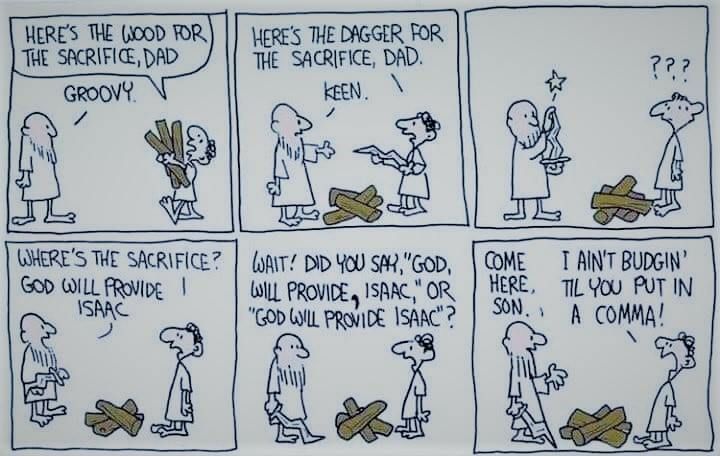




 EXPEDITION 44