
Today was our first full day in Jerusalem and we pretty much covered the entire Old Jerusalem. It was overwhelming but perhaps one of the best days of my life. Our tour guide was an Atheist which I actually quite enjoyed hearing his take on things (that might be a future post). So much of the Jerusalem experience sounds like, “they think this may have been,” or “according to tradition.” I guess that is expected but of course it left me longing to want to stand where Jesus stood for certain. That may be impossible seeing that things have been “excavated” several times over the last 2000 years, and they have continued to build over the last structures raising the “mount” about 40 feet from what it was during the time of Christ. I think there is good evidence for the trial location being at about the same elevation thanks to recent archeology and perhaps the crucifixion site at Golgotha which is covered by a church but shows the mountain top. The temple dome is also covered and completely inaccessible to Christians as the Islamic Mosque covers it. But the location that came to life for me was the Sheep’s gate.
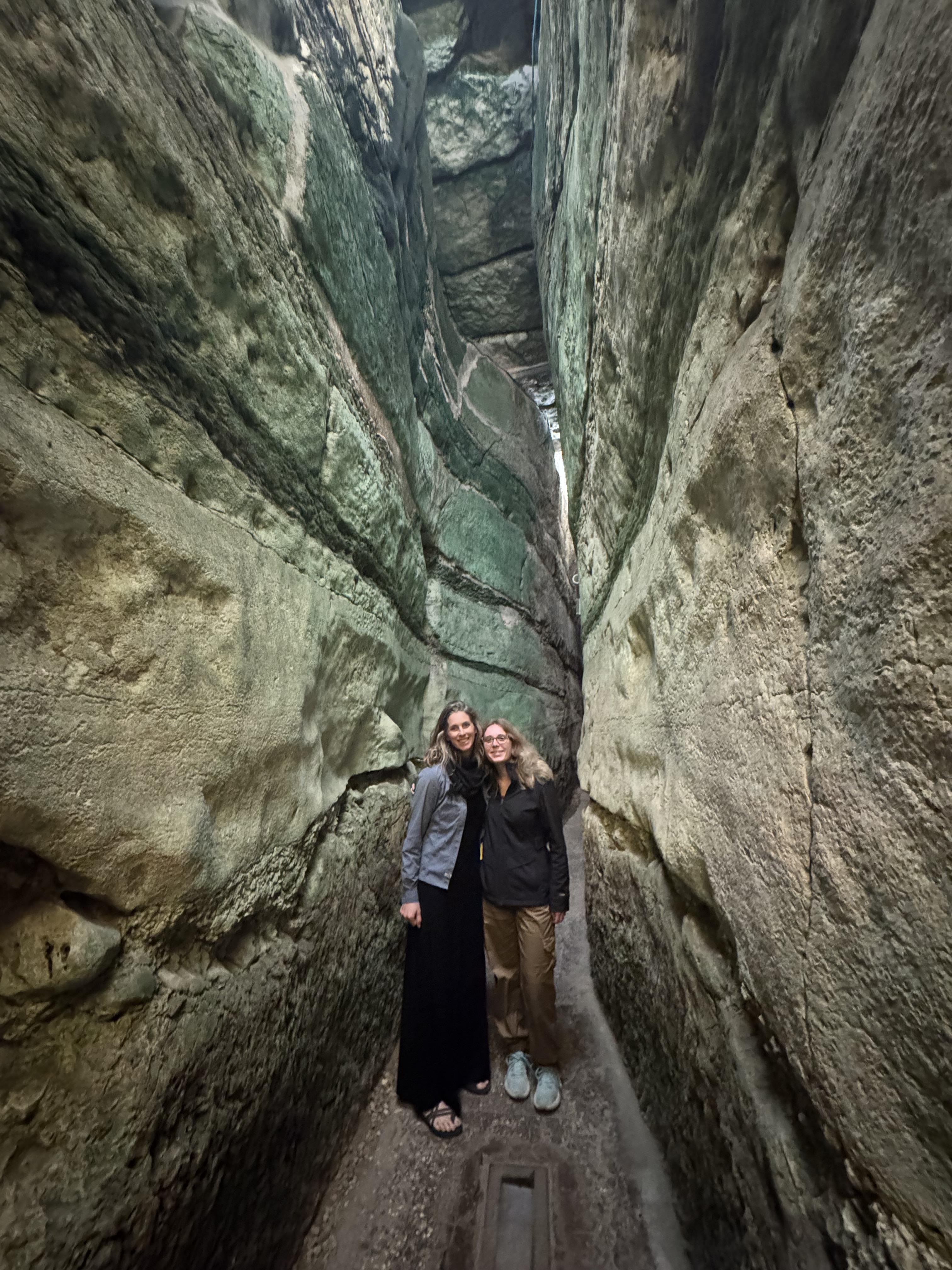
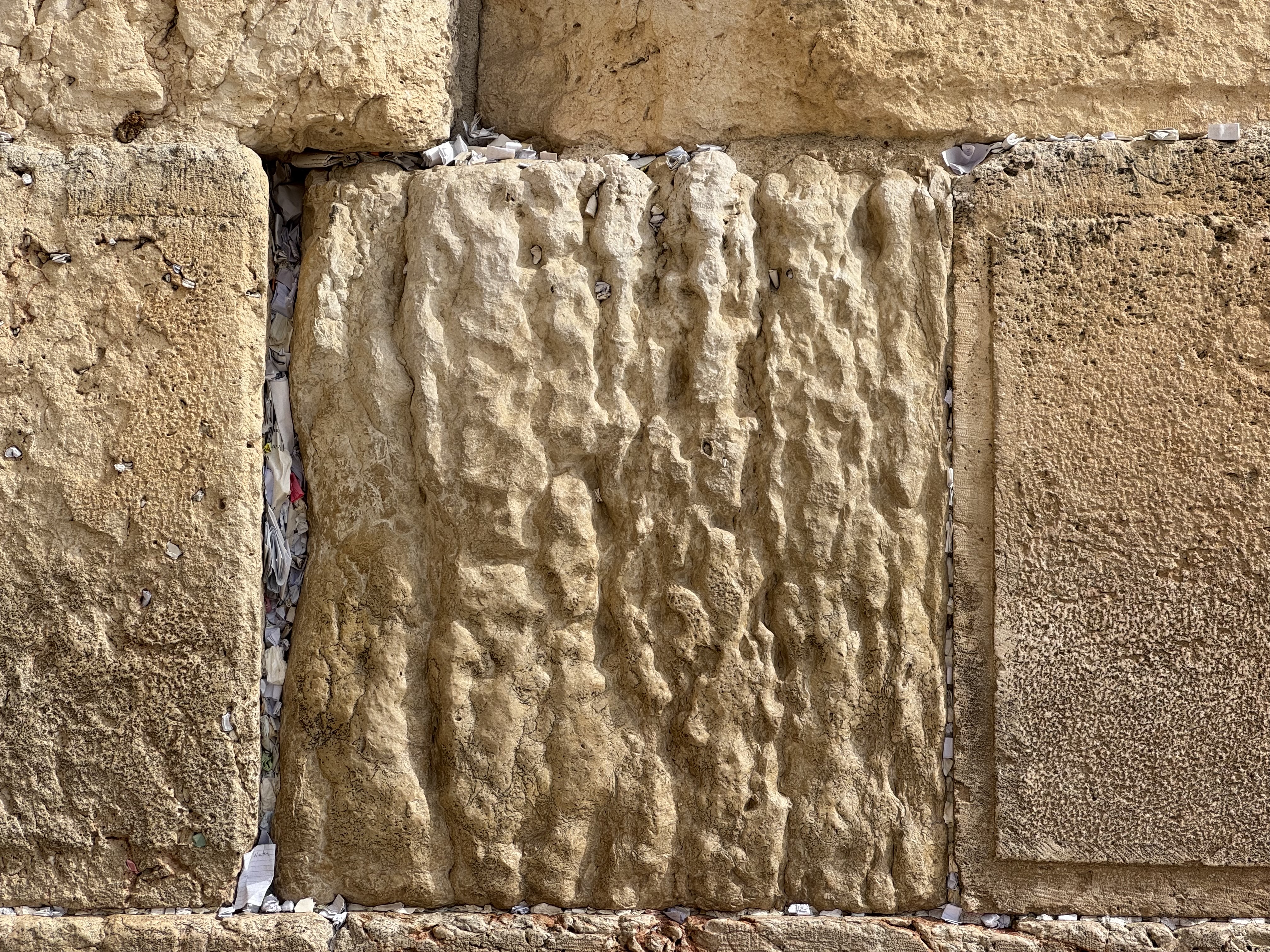


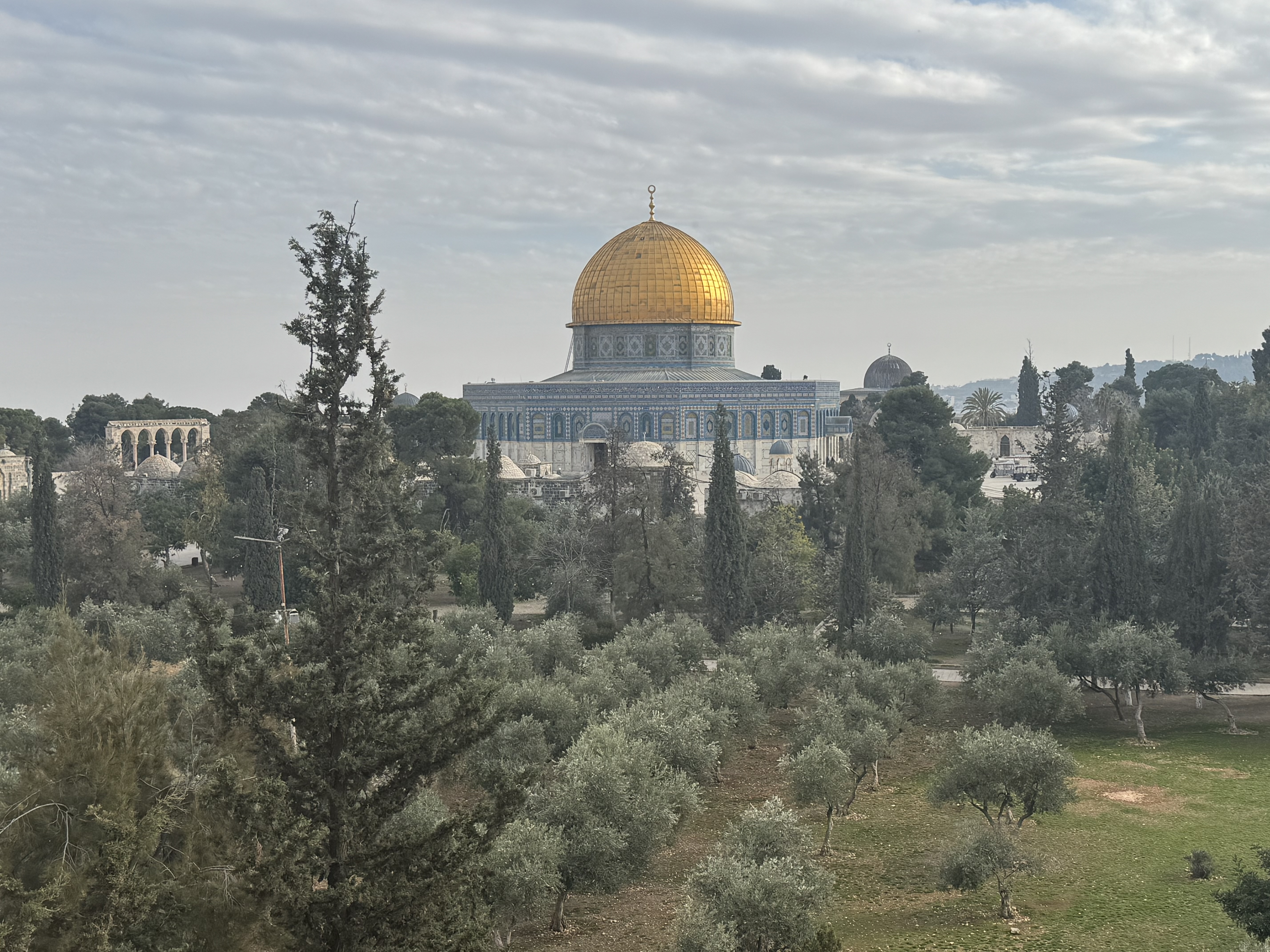


THE ARCHEOLOGY AND LINGUISTICS
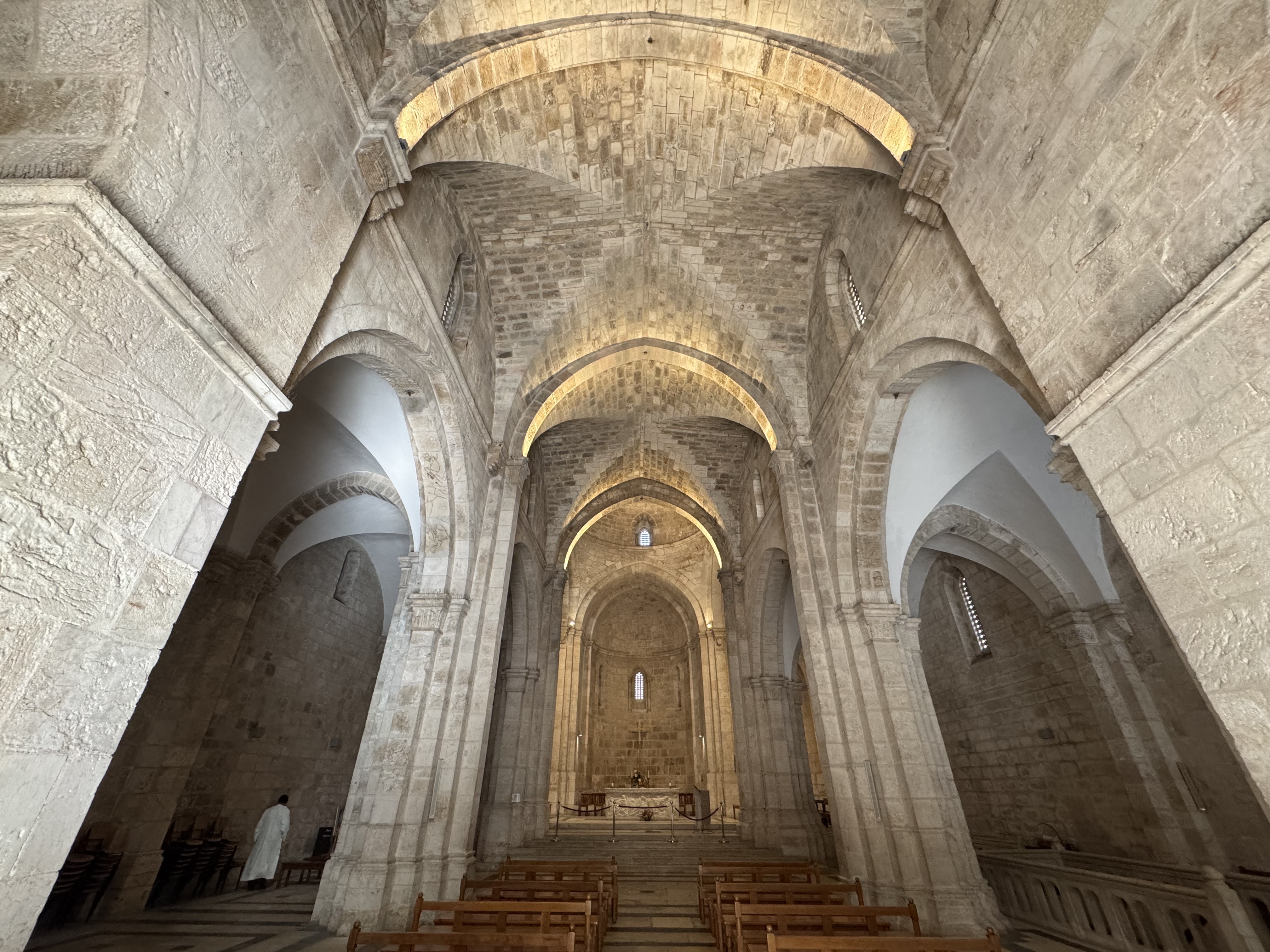
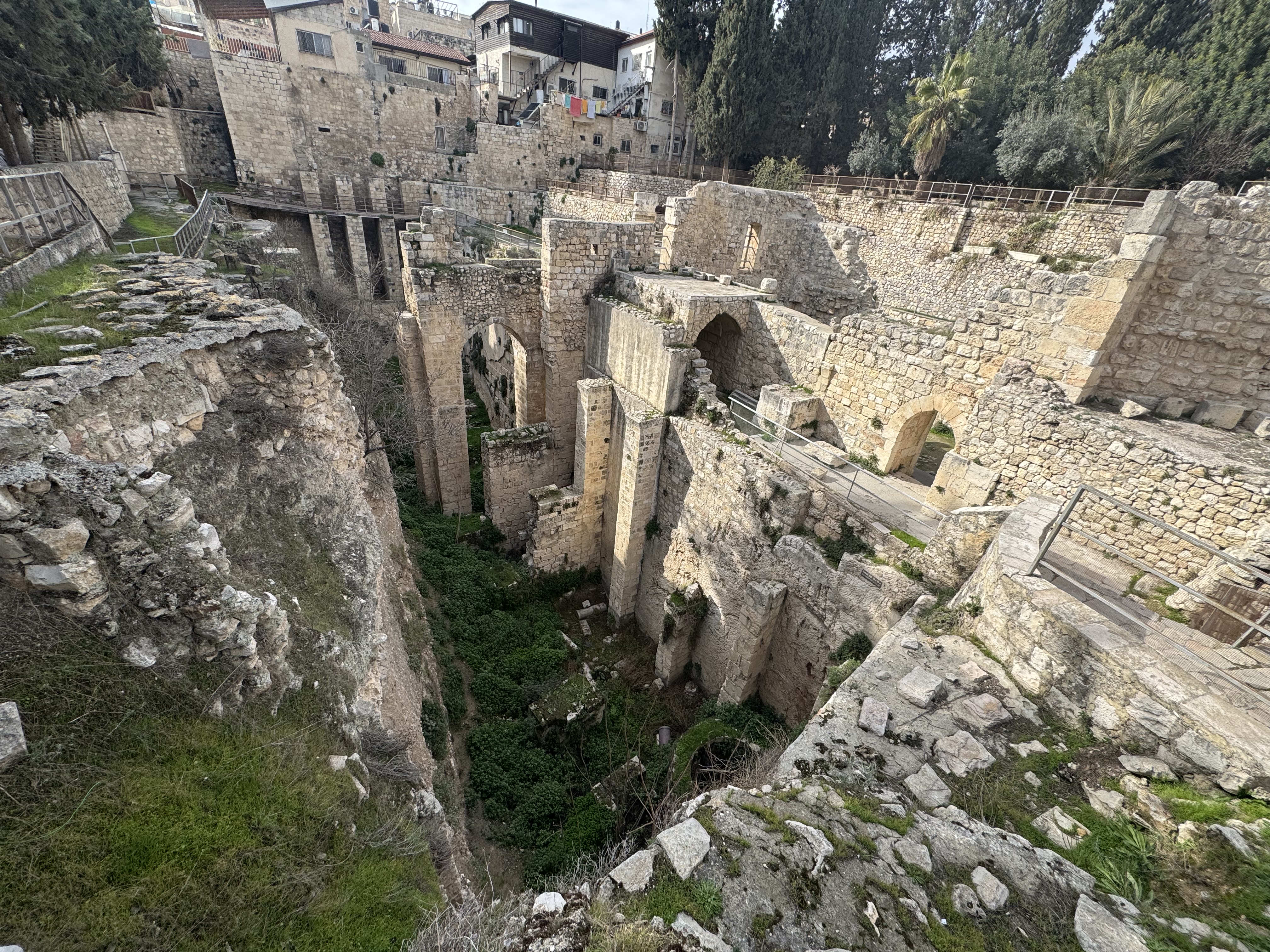
In John 5 we find Jesus, the great physician, engaged with a man who is physically unwell. The Pool of Bethesda is referred to in John 5:2 when Jesus heals a paralyzed man at a pool of water in Jerusalem, described as being near the Sheep Gate and surrounded by five covered colonnades or porticoes. I saw this today and it came to life. (It is also sometimes referred to as Bethzatha) [1] and is now established in the current Muslim Quarter of the city, near the Church of St. Anne, which was excavated in the late 19th century.
The name of the pool in Hebrew is Beth hesda (בית חסד/חסדא) which is a bit ambiguous and could mean “house of mercy”[2] or “house of grace” likely due to the invalids waiting to be healed.[3][4][5]IN Greek it reads Βηθεσδά (Bethesda),[7] appearing in manuscripts of the Gospel of John, include Βηθζαθά[8] (Beth-zatha = בית חדתא[9]) as a derivative of Bezetha, and Bethsaida (not to be confused with Bethsaida, a town in Galilee), although the latter is considered to be a metathetical corruption by Biblical scholars.[10] Franz Delitzsch suggests this is a Mishnaic Hebrew loanword from the Greek estiv/estava, that appropriately referred to stoa (στοά).[11] That would seem to fit here. As I mentioned earlier, when you visit this in person you are looking down into a deep hole. This is because over 2000 years nearly 40 feet of fill has been added to nearly the entire Temple mount. Until the 19th century, there was no conception for the existence of such a pool. The Pool of Bethesda almost took on a mystical or magical persona similar to the fabled fountain of youth. However, Conrad Schick in 1872 was permitted to conduct research on the Temple Mount, which was generally off limits to non-Muslims.[12] He discovered a large tank situated about 100 feet (30 m) north-west of St. Anne’s Church, which he contended was the Pool of Bethesda. Further archaeological excavation in the area, in 1964, uncovered the remains of the Byzantine and Crusader churches, Hadrian’s Temple of Asclepius and Serapis, and the small healing pools of an Asclepeion, the second of the two large pools, and the dam between them.[13] It was discovered that the Byzantine church had been built in the very heart of Hadrian’s temple and contained the healing pools.[14] Essentially, when you see this in person as it was excavated, it comes to life. You see the gentle steps for the inflicted, and the way around them. You see how it was likely off the beaten bath and in the bad part of town.
THE NARRATIVE
“Jesus is making his way through the crowd at the Sheep Gate in Jerusalem. To do so he has to pass by a pool. Today, just like every day, it is surrounded by those who cling to life by a thread of hope. Legend says that this pool sometimes becomes the channel of God’s grace. Legend has it that the first one to enter the water after an angel stirs it up will be cured. So the square is full. There are blind, lame, diseased, dumb, paralytics, amputees. The vestiges of an occupied society. The outcasts, the homeless, the beggars. All there waiting for a chance at new life, to be freed of their special form of imprisonment.”[6]
So, what exactly took place? We aren’t given much of his spiritual state, but he seems to have some faith. Jesus asks a pointed question: “Do you want to get well?” (v 6 NIV). As we take a deeper look at this scene in scripture, we might find Jesus challenging our own situations with that question. The passage points us toward considering the areas in our lives where we are seeking healing from the Lord.
If you have any Bible other than the King James Version you will notice that Verse 4 is missing. Perhaps you have a footnote. I always thought the fact that the NIV has 49 blank verses was very interesting and certainly should challenge your thoughts on inerrancy and what that means. There are over 3000 Greek manuscripts and fragments of the New Testament of varying age. Each one was hand copied, which leaves room for mistakes and even practical decisions of what to do with what the previous copyist has done. John 5:4 is one of the verses in contention, as the addition or subtraction from your translation does carry some interesting implications worth exploring, IMHO it doesn’t change the primary narrative.
The verse or perhaps note in your Bible does help to explain the context of the story and the people involved. They believed in a rather superstitious way that from time to time when the water was troubled (it would rise rapidly and then sink again) that this was caused by an angel who visited the pool, and the first person who got into it when it was so moved would be healed. This is akin to what is found in many parts of the world today. Lourdes, in southern France, has a spa which many believe has healing capacities. The shrine of Guadalupe, in Mexico City, has thousands of crutches stacked along its walls where people have been healed in this special place where they thought they could receive a blessing from God. I spent many summers in Ecuador and there were several pools that took on the same notion. In many historical cases people have been unarguably healed.
Of course, Bethesda, and most of the others mentioned are all intermittent springs, thus explaining the rising and falling water lines, but also may give relevance to people’s notions of healing waters coming from the natural earth. As you can imagine the theories vary. Perhaps most of these healings around the world and throughout history can be explained psychologically. When people believe they are going to be healed, and they are in a place where healings supposedly occur, and they do the expected thing, many of them are “healed.” So much of the human process is psychological and/or spiritual. Thus, the pool at Bethesda had established a reputation as a place where people could be healed. Would you call this then a natural or supernatural occurrence? Yes?! Perhaps? Well, that may depend on your theology!
I used to think that this man at the pool at Bethesda had lain there for 38 years. But the text does not say that; it says he had been ill for 38 years. Scripture likely would have identified him as a “lame” man (or a cripple) had that been the case, but we get more of the description that he is weak, feeble, and unable to stand, probably because of some wasting disease; perhaps what we refer to in modern day language as cancer, tuberculosis, or multiple sclerosis.
The story picks up early in Jesus’ ministry where He is being followed by a crowd at the Sheep Gate in Jerusalem. He approaches the pool where there are blind, lame, diseased, dumb, paralytics, amputees all hoping to be healed. I am sure this was a mosaic of the fallen world. I am sure the stench in the air would have tipped you off to this. Jesus seemed to have a heart for this kind of place and people. There is a certain simplicity that Jesus masters in cutting to the chase. If you have never picked up on this, Jesus always seems to be direct in a sense of what we might think of as “making time or space for something”; but the fact was his expediency commanded the sole work of the father. In other words, that’s the only “time” He kept.
You don’t need to “make time for something” when “all of your time” is given to it.
The question was direct and quite simple, “Do you want to get well?” I am sure some wondered if he was making fun of the man, as the question may have seemed quite rhetorical. If the man is here at the pool, then of course he wants to get well- why else would he be here on the “other side of the tracks”?
What is interesting is that the paralytic doesn’t exactly answer the question that Jesus asks. His response is, “Sir, I can’t get to the pool fast enough. I have no one to help me and before I get there, someone else is always first”. I find this pretty common. We are stuck in our world’s way of thinking; our paradigm isn’t that of the ways or mind of Jesus.
But Jesus isn’t actually asking him if he “wants” or “desires” to be healed, (that would be rude), He is actually asking him if he is willing. There is a difference. I get tired of completely “free” and/or “unmerited” grace language in the American evangelical church. I will get there…
I often read the Biblical texts in Greek and Hebrew and when I get to this part, something jumps out at me that you wouldn’t know from the English translations. The Greek word He uses is “thelo”. This is an unusual choice of words for “willingness”. The Greek word “boulomai” is the more common word for such a question of will or desire. But “thelo” carries a stronger connotation which also likely created a bit of a wordplay in Aramaic. Jesus isn’t asking if he has a desire to be healed, he is asking if he is willing to do what is needed to experience this. It is a bit of a word play because the man responds that he can’t do this alone; and that is true – HE NEEDS JESUS. But he doesn’t actually realize what he “needs.” Does he realize healing comes from Jesus not the pool, does he understand that Jesus is asking if he is willing to enter into what may be an agreement or covenant as a result of the offered healing? It isn’t really a deal or a contract but has some ramifications similar. By modern English-American understanding perhaps we call this “strings attached.” There is an expectation to the action and an expected response to such a gift.
Jesus is asking, “Are you willing to do what it takes to be generated whole?” Often in English we need more than one word to express the singular joined words of the Hebrew and Greek languages. This is why translation is difficult and gets into literal word versus thought for thought arguments. In this case “be” is often short for become and functions the same way in Greek. It is also why I would say the better translation would uses the phrase “be generated.” It is one of the rare Greek words that actually carries over into English knowledge as the transliteration is “genesis” which in English shares the same root notion as the word generated. In other words, do you want to start over to be made whole? This healing experience in many ways is what each of us is confronted with, it is the takeaway from the text, what does complete healing look like for you?
Do you have the desire and are you willing to enter a covenant to be generated completely well. spiritually and physically?
Jesus is asking then if He wants to “commit” to a new life. We say that all the time without thinking of the implications of what commitment means. Again, I am sure he doesn’t understand the question and we have the advantage of reading the entire Biblical narrative backwards or inside out to gain a better understanding. Did you know that this same Greek word carries the connotation linguistically of being “sound or good (TOV)?” (The creation story reminds us of this.) Another way we say this is “to be healthy.” You may be familiar with the term “shalom” which is so important to the balance of life and healthy physical and spiritual living. It embraces the whole person, physical and spiritual. It is far reaching in the kingdom.
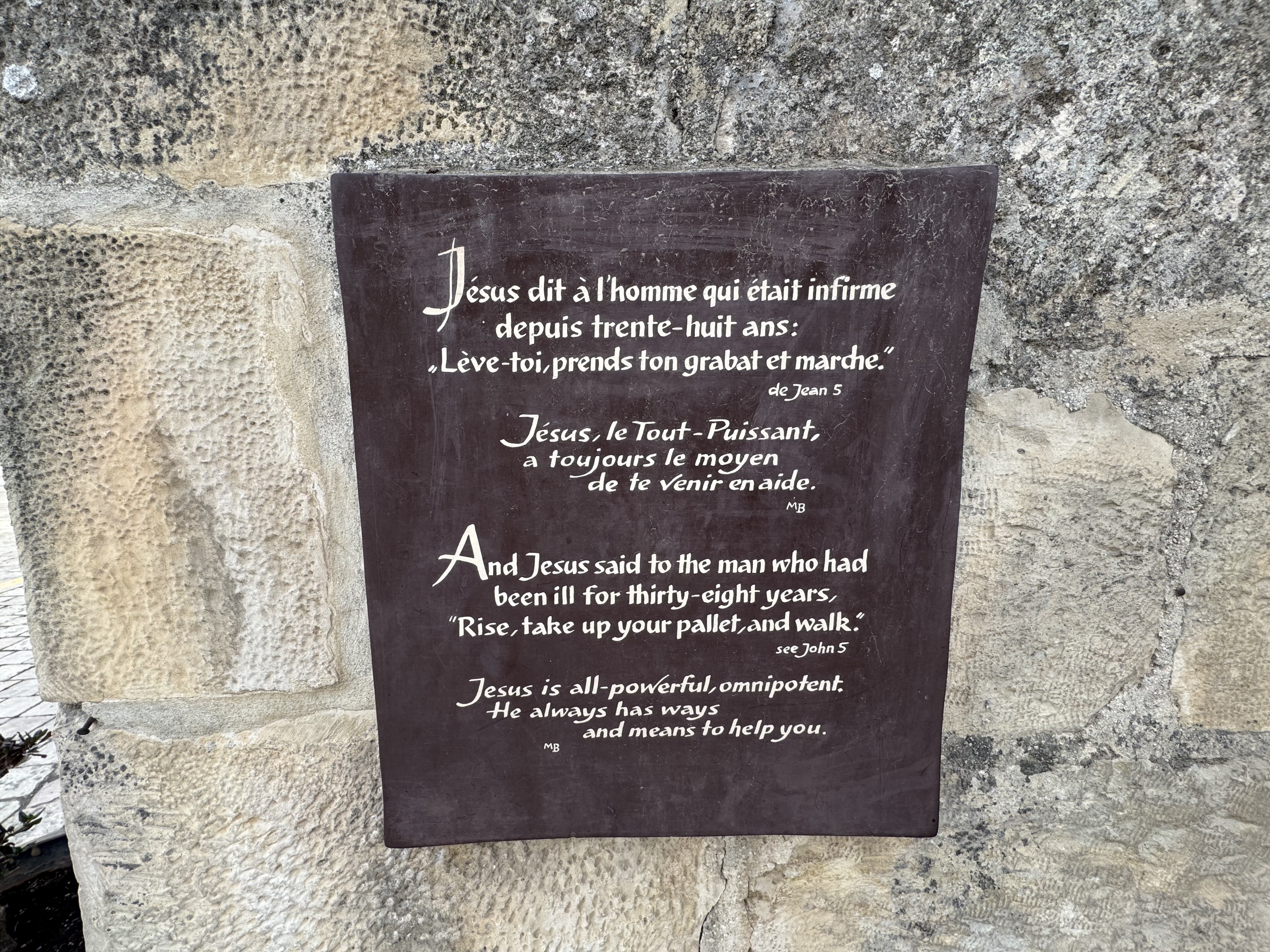
That brings me to the reflective action of this message. Just how ready are we to do whatever is required to begin our own rebirth or regeneration? The man in the story says he needs Jesus and I love the poetic inability. Over and over in the scripture we see that Jesus is looking for a first step and offers for people to simply “Trust Him”. He is asking for first steps of devotion, to follow through right now. He is here, now, in this moment, to help. Take the action of your desire and . . . “Rise up and walk.” Do you see that this is an invitation to all of us?
The reaction on that day would have never been forgotten. The lame man of thirty-eight years stands up and walks. But don’t miss the real miracle- the poetic voice of the story, that without asking, without even knowing or imagining, God visits this victim of the world and asks him to be reimagined for His kingdom. God initiates. God searches. God authors the contact, but our response is important and vital. It is Jesus’ intention to bring this man to wholeness before the paralytic even knows Jesus is there. That is the desire that he has offered and presented to all of us. God cares nothing about your ability. God cares about motivation and action in the midst of inability. Will you complete the covenant gift presented to you?
Do you wish to be generated well?
Maybe the man believed he could be healed, and he wanted to be healed. Maybe this is a story of faith, or maybe it is just a story of what God is offering to anyone, regardless of your faith or even understanding or desire within His kingdom. Perhaps that comes later as a result of enduring devotion and faithfulness. It is absolutely, imperative that you believe Jesus can and does desire to heal you.
Jesus heals in many ways, instantaneously, in a process, and when we see Him face to face. I don’t know what the kingdom sequence or order of why and when is, but I know that He does this, and He will do it completely.
Many of us received initially what was offered (and all of these were miraculous encounters); but perhaps we haven’t completed the circle of the gifted grace. Perhaps we left the covenant on the table. There are “strings attached” that are called devotion, and this devotion is what leads to the preeminent calling of scripture which is to be an “ALL IN” disciple of Jesus. The story wasn’t written with just the expectation to become fans or even simple followers, it was written that we may “become generated” disciples completely whole (and healed) in Jesus. Most American Christians certainly do not fulfill the calling of Biblical discipleship. Yes, it is a free gift of grace, but that gift was given to be regifted or regenerated and show (or display to the world as an image of Jesus in each of us) the way to the new complete life God has intended for you. I feel like many Christians have been quick to take the “free gift” but haven’t followed through with the covenant aspects of the kingdom. We don’t bear the fruit that outwardly proclaims the complete healing inside. Perhaps you’re wondering what you’re missing. I find the answer usually lies in discipleship and devotion. God wants all of us. Thats is what a disciple “works” towards. What does that covenant life look like for you and your family? What does this kind of discipleship look like in your own life and in the lives of those that you are regenerated to impact?
NOTE: If this is the first you have read of such a notion of reciprocal grace I would point you to consider this article: https://expedition44.com/2024/06/23/baptism/




WORKS CITED:
- John 5:2: Contemporary English Version
- Easton’s Bible Dictionary.
- “Bethsaida (the pool)”. Catholic Encyclopedia.
- International Standard Bible Encyclopedia (1995), on sheep gate and on sheep market.
- D. A. Carson, The Gospel according to John (1991), p. 241.
- https://skipmoen.com/2009/02/do-you-want-to-be-well/
- Textus Receptus.
- Tischendorf and WH.
- Revised Standard Version marginal note to John 5:2.
- “Bethsaida”. newadvent.org. Retrieved 6 October 2010.
- Delitzsch, F. 1856. “Talmudische Studien, X. Bethesda”, Zeitschrift für die gesamte lutherische Theologie und Kirche.
- August Strobel, Conrad Schick: ein Leben für Jerusalem; Zeugnisse über einen erkannten Auftrag, Fürth: Flacius-Verlag, 1988, p. 44. ISBN 3-924022-18-6
- https://en.wikipedia.org/wiki/Pool_of_Bethesda#cite_note-Rex-18
- https://en.wikipedia.org/wiki/Pool_of_Bethesda#cite_note-Wahlde2006-17
 EXPEDITION 44