TEDS Demise & Reformed Theology

One of the most well-known Evangelical Seminaries in the world has agreed to be acquired by a Canadian university and move to British Columbia, the school’s leaders announced Tuesday. The move comes after years of financial and theological struggles resulting in declining attendance at Trinity Evangelical Divinity School—known as TEDS—an Evangelical Free Church Seminary. [1]

To those that are in the theology world, this announcement comes as no surprise. Over the last 10 years Trinity (TEDS) and the Evangelical Free Church of America has moved towards a reformed bend in their theology which I and many others would say continues to be the source of their demise. [2]

The Baptist convention is also unfortunately figuring this out over the last few years. [3] Reformed theology leads to Calvinism and those that understand the dilemmas involved with accepting the tenets of these views arguably can’t reconcile them with a Biblical character of God. [4] Many educated young people have walked away from Christianity altogether not being able to reconcile the nature of a loving God with these theological views. This is particularly unfortunate to the rest of the non-reformed world because it is an identifier that those leaving the faith didn’t comprehend that there were several other constructs of Christianity besides reformed theology. [5] According to Barna, less than 31% of all Christians in the US consider their theology to have some kind of reformed perspective (TULIP), yet reformed theology attempts to convince the rest of the world that their view is the only Biblical view. [6] This notion is killing evangelical Christianity and making people walk away from Jesus. We need to do better.

There are several reasons why reformed theology has been identified as a less Biblical interpretation of the scripture. [7] Along with not reconciling the Biblical character of God in core views of the belief such as Penal Substitutionary Atonement and hardline views of eternal conscious torment there are many other objections. [8] Calvinistic soteriology can lead to a misapplication of scripture and a misunderstanding of its storyline, such as predestination as an example of a concept that is not clearly supported by scripture. Perhaps the bigger problem is trying to position the Bible to say what you want it to say rather than exegetically and faithfully reading it for all it is worth. [9] The doctrine of total depravity and/or original sin which states that humans are inherently sinful and incapable of choosing God, can be seen as a denigration of human nature and a disincentive for personal responsibility. [10] Other critics argue that Reformed theology confuses the gospel of grace by bringing the law into sanctification and hedging on eternal security. [11]

Over the last 10 years I have watched other respected graduates of TEDS also become concerned such as the esteemed New Testament scholar Scot McKnight. [12]

Graduates of TEDS include the disgraced evangelist Ravi Zacharias, Christian television host John Ankerberg, and Collin Hansen, editor-in-chief of The Gospel Coalition. Longtime professor Don Carson also was one of the founders of The Gospel Coalition (a reformed organization), helping launch the so-called Young, Restless and Reformed movement that led to a Calvinist revival among evangelicals, but is now seeing a great demise. [13]

In the end, the theology of the reformation is quite problematic and rather unbiblical by most scholars’ opinions. [14] Since the 1980s the reformed movement has thrived through the support of great rhetorical spokesman such as the convincing late RC Sproul; but the world isn’t buying it anymore. For the first 1800 years of Christianity those ideas were unfounded, and of late, generations x,z, and millennials aren’t buying it either.

Most Christians today aren’t accepting the spoon-fed dogma; we need the text to exegetically be in harmony with the overall lens of the Bible. We demand a better Biblical theology. And that is a very good thing! As the average Christians become scholars, they need to be taught better theology in the church from the pulpit, or they are simply going to leave the church to find a better way. The next generation isn’t going to just take “the pastor’s word for it” anymore, they are done with being duped by those they thought they trusted in the name of religion. If we can learn anything from the demise of one of the largest evangelical seminaries in the world this should be the point, we take away. Expedition 44 has long sense been a source of truth examining the overall lens of the Bible and how it should be viewed in harmony. The Kings Commision School of Divinity (https://tkc.education/) and several other great institutions such as AWKNG (Heiser’s School), The Bible Project. (Tim Mackie’s School), Eternity Bible College (Francis Chan’s School), Dr. Jordan B. Peterson’s Peterson Academy and other similar institutions have changed the way that students engage. Did you notice what all of these schools have in common? They aren’t reformed! Out with the old (well newer -old reformational thinking), and in with the new.

  1. https://www.christianitytoday.com/2025/04/trinity-evangelical-divinity-teds-moving-canada/
  2. https://blogs.efca.org/strands-of-thought/posts/arminianism-and-calvinism
  3. https://christoverall.com/article/longform/encore-reformed-and-reforming-the-sbc-christ-over-the-law-amendment/
  4. https://beyondcalvinism.blogspot.com/2016/11/dr-greg-boyd-on-romans-9-and-leaving.html
  5. https://www.bartehrman.com/branches-of-christianity/
  6. https://www.barna.com/research/is-there-a-reformed-movement-in-american-churches/
  7. https://www.theologymatters.com/articles/theology/2023/characteristics-of-reformed-theology/
  8. https://reknew.org/2015/12/10-problems-with-the-penal-substitution-view-of-the-atonement/
  9. https://soteriology101.com/2014/12/08/the-5-points-that-lead-me-out-of-calvinism/
  10. https://drjohnjackson.com/irresistible-grace/total-depravity/
  11. https://heidelblog.net/2014/05/do-the-reformed-distinguish-between-law-and-gospel/
  12. McKnight, S. The King Jesus Gospel: The Original Good News Revisited (Grand Rapids: Zondervan, 2011); ISBN: 978-0-310-49298-6
  13. IBID 1: https://www.christianitytoday.com/2025/04/trinity-evangelical-divinity-teds-moving-canada/
  14. https://zondervanacademic.com/blog/was-the-reformation-a-mistake-an-excerpt-by-catholic-theologian-matthew-levering
Baptizing in the Jordan

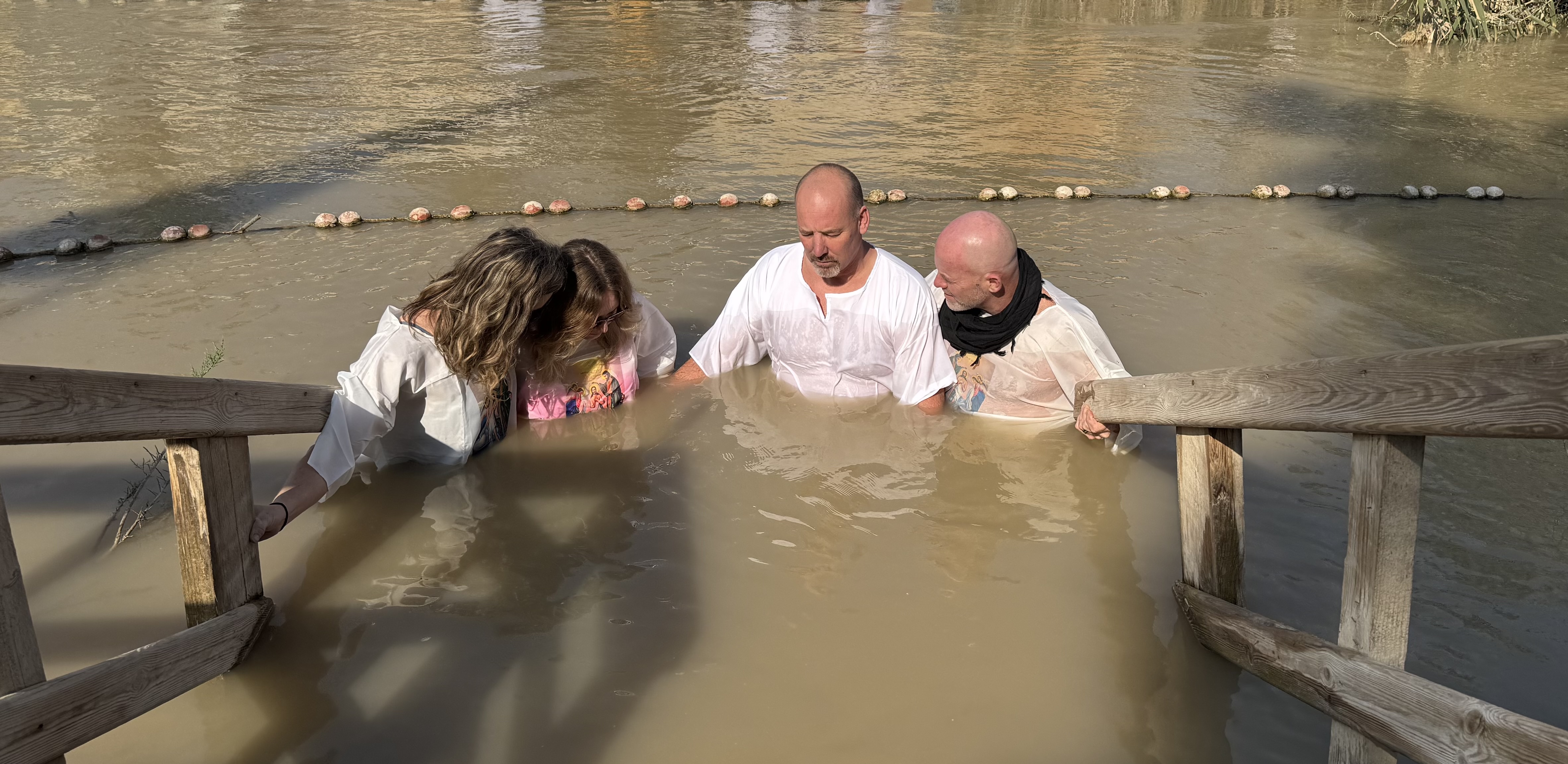
Today I (with help from my wife, Krista) had the incredible privilege of baptizing my good friends Mike and Gabby. Ironically, I just wrote a post on soteriology and baptism. If you haven’t read that, I would start there.

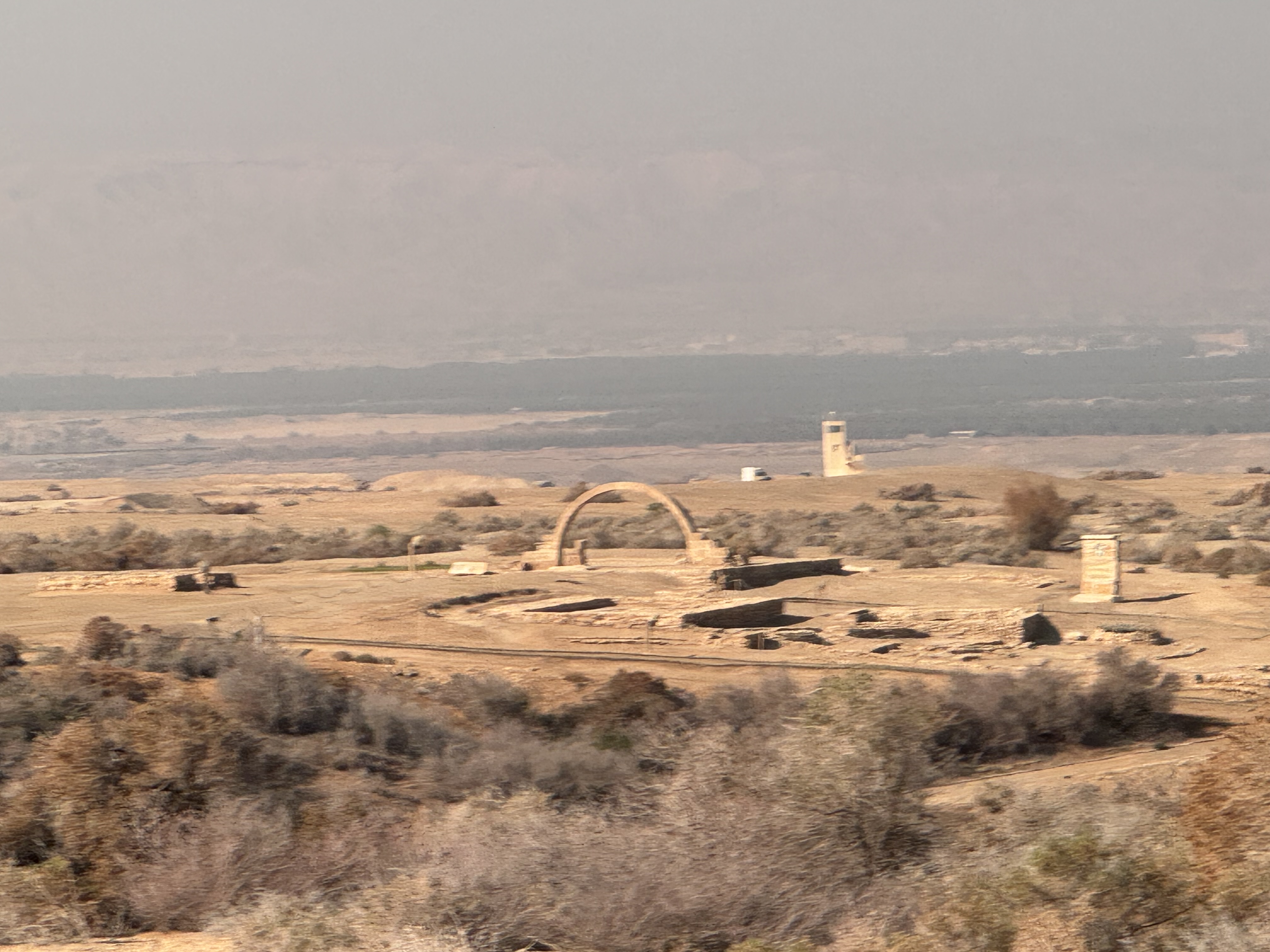
We haven’t always known where exactly Jesus was baptized. We don’t know where Eden was, or exactly where the ark landed, and this isn’t much different. The baptism of Jesus, the ritual purification of Jesus with water by John the Baptist, was a major event described in the three synoptic Gospels of the New Testament (Matthew, Mark and Luke).[1] It is considered to have taken place at what is modernly referred to as Al-Maghtas (also called Bethany Beyond the Jordan), located in Jordan. Al-Maghtas is Arabic: المغطس, al-Maġṭas, which means  ‘baptism’ or ‘immersion’, officially known to most (and on Google Earth and mentioned in the Bible) as the Baptism Site “Bethany Beyond the Jordan”, it is an archaeological World Heritage Site in Jordan, on the east bank of the Jordan River, reputed to be the location of the Baptism of Jesus by John the Baptist and venerated as such since at least the Byzantine period.[2] To be clear the exact location has changed due to recent archaeological finds.[3] This area includes two principal archaeological areas: the later remnants of a monastery on a mound originally known and believed to be Elijah’s Hill as a hermit dwelling.[4] The two areas are connected by a small stream that goes by John’s name.[5]

John anticipated a messianic figure greater than himself;[6] in the Gospels, he is portrayed as the precursor or forerunner of Jesus.[7] According to the Gospel of Matthew, Jesus himself identifies John as “Elijah who is to come”,[8] which is a direct reference to the Book of Malachi (Malachi 4:5),[9] as confirmed by the angel who announced John’s birth to his father, Zechariah.[10] According to the Gospel of Luke, John and Jesus were relatives.[11,12]

Some scholars think that John belonged to the Essenes, a semi-ascetic Jewish sect who expected a messiah and practiced ritual baptism.[13][14] John used baptism as the central symbol or sacrament[15] of his pre-messianic movement. Most biblical scholars agree that John baptized Jesus,[16][17] and several New Testament accounts report that some of Jesus’s early followers had previously been followers of John.[18] According to the New Testament, John was sentenced to death and subsequently beheaded by Herod Antipas around AD 30 after John rebuked him for divorcing his wife and then unlawfully wedding Herodias, the wife of his brother Herod Philip I. Josephus also mentions John in the Antiquities of the Jews and states that he was executed by order of Herod Antipas in the fortress at Machaerus.[18]

The Gospel of Mark introduces John as a fulfillment of a prophecy from the Book of Isaiah (in fact, a conflation of texts from Isaiah, Malachi and Exodus but that’s another post)[19] about a messenger being sent ahead, and a voice crying out in the wilderness. John is described as wearing clothes of camel’s hair, and living on locusts and wild honey. John proclaims baptism of repentance for the forgiveness of sin, and says another will come after him who will not baptize with water, but with the Holy Spirit.

The fourth gospel describes John the Baptist as “a man sent from God” who “was not the light”, but “came as a witness, to bear witness to the light, so that through him everyone might believe”.[20] John confirms that he is not the Christ nor Elijah nor ‘the prophet’ when asked by Jewish priests and Pharisees; instead, he described himself as the “voice of one crying in the wilderness”.[20]

The Gospels vary in their depiction of John’s relationship to Elijah. Matthew and Mark describe John’s attire in a way reminiscent of the description of Elijah in 2 Kings 1:8, who also wore a garment of hair and a leather belt. In Matthew, Jesus explicitly teaches that John is “Elijah who was to come” (Matthew 11:14 – see also Matthew 17:11–13); many Christian theologians have taken this to mean that John was Elijah’s successor. In the Gospel of John, John the Baptist explicitly denies being Elijah. In the annunciation narrative in Luke, an angel appears to Zechariah, John’s father, and tells him that John “will turn many of the sons of Israel to the Lord their God,” and that he will go forth “in the spirit and power of Elijah.”[21]

CONCLUSIVE THOUGHTS:

What “set apart” John was that he reminded people of Elijah. Did you ever wonder what that meant? I guess I just gave you a bunch of clues! Elijah was most significant as to have led a school of prophets known as “the sons of the prophets.”[22] Following Elijah’s ascension, his disciple and devoted assistant Elisha took over as leader of this school. After the time of Elisha Israel strayed and although rabbinical training excelled, the schools became very different from what Elijah had established. John was seeking to bring back the idea of living a life completely “SET APART” (Kadosh purification language) as to make way for the king. This is often overlooked particularly in western Evangelical Christianity, and it is very important. You see Jesus came to “complete” or align all things back to the intentions of the father. Jesus continues to call 12 disciples completely out of their former lives and accept new sacrificial lives totally committed to Him. He was the great example shepherded unto them. Jesus also embodies the example of being met by the spirit and later sending it to all who accept and are anointed and/or commissioned in this same way. He was baptizing those that radically sought to do the same; to completely give their life to the pursuant of devotionally following the Way of Jesus, the coming king. As I have made the point several times, we don’t baptize into this calling any longer. It has once again become lost as it had before John’s time. My prayer is that we will return to baptizing those ready to give their lives into complete devotion in allegiance to the king, leaving everything to follow Him.

WORKS CITED:

  1. The Gospel of Matthew by Daniel J. Harrington 1991 ISBN 0-8146-5803-2 p. 63
  2.  Bethany beyond the Jordan https://www.baptismsite.com/ Archived 2024-12-04 at the Wayback Machine on baptismsite.com, accessed February 2025
  3. Baptism Site “Bethany Beyond the Jordan” (Al-Maghtas) – UNESCO World Heritage Centre”. UNESCO. Archived from the original on 19 January 2017. Retrieved February 2025
  4. Tharoor, Ishaan (July 13, 2015). “U.N. backs Jordan’s claim on site where Jesus was baptized”. The Washington Post. Archived from the original on July 10, 2018.
  5. Funk, Robert W. & the Jesus Seminar (1998). The Acts of Jesus: the search for the authentic deeds of Jesus. San Francisco: Harper. “Mark”, pp. 51–161.
  6.  Meier, John (1994). Mentor, Message, and Miracles (A Marginal Jew: Rethinking the Historical Jesus, Vol. 2). Vol. 2. Anchor Bible. ISBN 978-0-385-46992-0.
  7. “Bible Gateway passage: Matthew 11:14 – New King James Version”. Archived from the original on 3 October 2019.
  8. Malachi 4:5–6
  9. “Bible Gateway passage: Luke 1:17 – New King James Version”. Bible Gateway. Archived from the original on 2 June 2007.
  10. “Bible Gateway passage: ΚΑΤΑ ΛΟΥΚΑΝ 1:36 – SBL Greek New Testament”. Archived from the original on 26 September 2019.
  11. “NETBible: Luke 1”. Archived from the original on 24 July 2020.
  12. Harris, Stephen L. (1985). Understanding the Bible. Palo Alto: Mayfield. p. 382
  13. Marshall, I. H.; Millard, A. R.; Packer, J. I., eds. (1988). “John the Baptist”. New Bible Dictionary (Third ed.). IVP reference collection. ISBN 978-0-85110-636-6.
  14. Edward Oliver James, Sacrament in Encyclopædia Britannica. Retrieved 20 May 2009, from Encyclopædia Britannica Online: https://www.britannica.com/EBchecked/topic/515366/sacrament 
  15. Croll, Charles (2019). John the Baptist: A Biography. Malcolm Down Publishing. pp. 127–149. ISBN 978-1-912863-15-0.
  16. Jesus as a figure in history: how modern historians view the man from Galilee. Mark Allan Powell, published by Westminster John Knox Press, p. 47 “Few would doubt the basic fact…Jesus was baptized by John”
  17. Harris, Stephen L. (1985) Understanding the Bible. Palo Alto: Mayfield John 1:36–40
  18. Flavius Josephus: Antiquities of the Jews Book 18, 5, 2 
  19. Carl R. Kazmierski, John the Baptist: Prophet and Evangelist (Liturgical Press, 1996) p. 31.
  20. John 1:6–8, John 1:19–23, Isaiah 40:3
  21. Luke 1:16–17
  22.  2 Kings 2:3