
A Pastoral Summary: The Atonement as Relational Victory
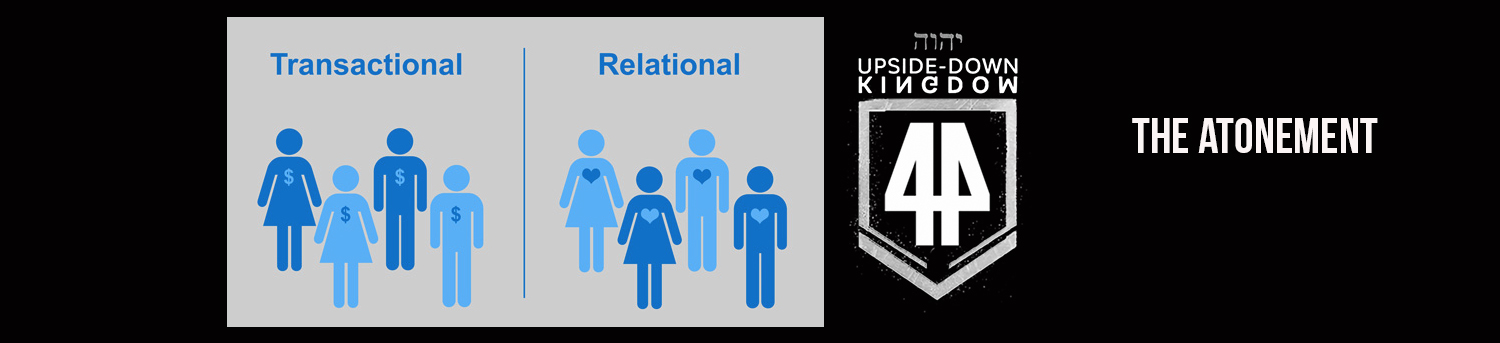
For many Christians, the cross has traditionally been explained using transactional language. We often hear that Jesus “paid our debt,” “bought us back,” or “settled the account” for our sin. Sometimes this language even drifts into the idea that some kind of deal had to be struck between God and Satan, as though humanity had been legally claimed by the enemy and Christ’s death functioned as the payment that secured our release. While these ideas have circulated widely in Christian teaching, they are not actually grounded in the biblical text. The Scriptures never describe the cross as a financial transaction between God and Satan, nor do they suggest that forgiveness required some kind of negotiated payment before God could extend mercy to humanity.
“The world operates through transactions, but the kingdom of God moves through relational covenant interactions.”
Much of this transactional language became especially prominent within Western Christian theology and has been reinforced in certain streams of Christian teaching, particularly within Reformed theology. In these frameworks, the cross is often framed as the place where Jesus paid the penalty for human sin so that God could justly forgive those who believe. While this language has shaped the way many Christians understand the gospel, it raises an important question: does the Bible itself consistently describe the cross in these transactional terms?
When we step back and examine Scripture more carefully, the picture becomes more complex. One of the clearest indications that the cross cannot simply be understood as a payment mechanism is the fact that God forgave people long before the crucifixion. Throughout the Old Testament, God repeatedly forgives His people because of His mercy, covenant love, and faithfulness. David declares, “Blessed is the one whose transgression is forgiven” (Psalm 32), and the prophets frequently speak of God removing sin and restoring His people. These acts of forgiveness occur centuries before Jesus’ death. If forgiveness was already being extended by God prior to the cross, then the cross cannot be understood as the event that finally made forgiveness possible.
The same observation can be made regarding the gift of life. God is consistently portrayed throughout Scripture as the sovereign giver of life. Eternal life ultimately flows from God’s character and His desire to restore creation. While the cross and resurrection stand at the center of God’s redemptive work, the Bible does not suggest that God was unable to grant life until a transaction occurred. The cross reveals and accomplishes something decisive in God’s plan of restoration, but it is not presented as a legal payment (between God and Jesus, or worse, between God and Satan) that suddenly made divine generosity possible.
This is where the New Testament’s description of the cross becomes especially important. When the apostles speak about the work of Christ, they most often describe it using language that is relational, restorative, and victorious rather than transactional. The cross is the place where Christ confronts the powers of sin and death, reconciles humanity to God, and inaugurates the renewal of creation. Rather than focusing on an exchange of payment, the New Testament emphasizes themes such as reconciliation, liberation, purification, and new creation.
Framing the cross transactionally actually creates significant theological and exegetical difficulties. If the cross must function as a payment in order for forgiveness to occur, then numerous biblical passages describing God’s prior forgiveness become difficult to explain. Likewise, the sacrificial language of the Old Testament—centered on purification and restoration—becomes misinterpreted as economic exchange. The transactional model can also distort key New Testament terms such as “ransom,” “redemption,” and “atonement,” which in their original contexts frequently describe liberation from bondage or the restoration of relationship rather than financial payment. When these texts are forced into a commercial framework, the broader narrative logic of Scripture becomes strained and important theological themes are overshadowed.
None of this diminishes the significance of the cross. On the contrary, it helps us see its meaning more clearly. The cross represents the decisive moment in which God, in Christ, enters fully into the depths of human suffering and death in order to overcome them. Through the cross and resurrection, the powers that enslave humanity are defeated, death itself is overturned, and the path to restored communion with God is opened.
There was unquestionably a profound cost in what Jesus did. The cross reveals the depth of divine love and the willingness of Christ to bear the full weight of human brokenness. Yet this cost should not be confused with a transactional payment. The cost belongs to God’s self-giving love, not to a required exchange that humanity somehow owed.
Understanding the cross relationally rather than transactionally also preserves the radical nature of grace. When the gospel is framed as a transaction, it can subtly suggest that salvation operates according to an economy of debt and repayment. In that framework, the Christian life can begin to feel like an attempt to pay God back for what Jesus has done. But the New Testament consistently presents salvation as a gift—freely given by God and received through faith.
There is certainly a covenantal response to this gift. Those who encounter the grace of God are invited into a life of faithfulness, trust, and transformation. But this response is not repayment. It is the natural expression of restored relationship.
In the end, the cross is not the story of a transaction that settles an account. It is the story of God’s love breaking into the world, defeating the powers of sin and death, and restoring humanity to communion with Himself. Christ did not die in order to balance a ledger. He died to rescue, renew, and reconcile creation.
And because of that, the grace we receive is not something we owe back. It is something we are invited to live within.
DISCUSS THIS TOPIC
- How have you most often heard the cross explained in Christian teaching?
- Was it described more in transactional terms (payment, debt, penalty) or relational terms (restoration, reconciliation, victory)?
- Why do you think transactional language about the cross has become so common in Christian theology, especially in Western traditions?
- What difference does it make theologically if forgiveness was already happening in Scripture before the cross?
- How does this shape the way we understand what Jesus accomplished?
- The New Testament often describes salvation using relational language like reconciliation, adoption, and new creation.
- Which of these images helps you understand the work of Christ most clearly, and why?
- If the cross is primarily about God restoring relationship and defeating the powers of sin and death, how might that reshape the way we think about grace, faith, and the Christian life?
ACADEMIC ABSTRACT: Reconsidering the Cross Beyond Transactional Categories
Western Christian theology has often interpreted the atonement through juridical and transactional categories, describing the cross in terms of debt, payment, or penal substitution. While these frameworks have shaped much theological reflection since the medieval period, the narrative structure and conceptual vocabulary of Scripture suggest a different emphasis. This article argues that the biblical witness more consistently presents the work of Christ as the decisive act through which God restores covenant relationship and liberates humanity from enslaving powers. Through examination of the sacrificial theology of the Hebrew Scriptures, lexical analysis of key Greek terms associated with redemption, and reconsideration of texts often interpreted transactionally—particularly Romans 3 and Isaiah 53—this study proposes that the atonement is best understood within a relational and participatory framework. Engagement with patristic theology further demonstrates that early Christian writers emphasized victory over death and restoration of humanity rather than payment or penal substitution. When placed within the broader narrative arc of Scripture—from Eden to new creation—the cross emerges as the climactic act through which God defeats the powers of sin and death and restores humanity to communion with Himself.
Introduction
The doctrine of the atonement lies at the center of Christian theology. Yet the conceptual frameworks through which the cross has been interpreted have varied significantly across the history of the church. Within much of Western theology, particularly since the medieval period, the atonement has frequently been explained through juridical and transactional categories. The cross has been described in terms of debt, satisfaction, and penal substitution, suggesting that Christ’s death functions as the necessary payment required to satisfy divine justice.¹
While such models have exercised considerable influence, they do not necessarily represent the dominant conceptual framework of the biblical narrative. Increasingly, biblical scholars have argued that the New Testament presents the work of Christ primarily as God’s decisive act of covenant restoration and cosmic liberation rather than the settlement of a legal account.²
This perspective aligns with what Gustaf Aulén famously described as Christus Victor, the interpretation that the cross represents the moment in which God confronts and defeats the powers that enslave humanity.³ Within this framework, the atonement is fundamentally relational: the restoration of communion between God and humanity accomplished through Christ’s victory over sin, death, and the hostile spiritual powers.
This article argues that when the atonement is examined within the narrative and cosmological framework of Scripture, the cross emerges not primarily as a transaction but as the climactic act of divine love through which God restores creation and reconciles humanity to Himself.
The Human Condition: Alienation and Dominion
The biblical narrative portrays humanity’s fundamental problem not merely as legal guilt but as alienation from God and subjection to destructive powers.
Genesis introduces this condition through humanity’s expulsion from Eden (Gen 3:23–24). The central consequence of sin is exile from the presence of God and the entrance of death into human existence.
Paul expands this understanding by describing sin and death as reigning powers. In Romans 5:12–14, sin enters the world through Adam and death spreads to all humanity. Sin functions not merely as individual wrongdoing but as a dominion under which humanity lives.⁴
Similarly, Ephesians 2:1–3 describes humanity as living under the authority of “the ruler of the power of the air.” Such language reflects a cosmological worldview in which spiritual forces shape human life and social structures.
Recent scholarship has highlighted the importance of the Deuteronomy 32 worldview, in which the nations are described as being placed under spiritual rulers while Israel remains under Yahweh’s direct authority.⁵ This cosmological background provides an important interpretive context for New Testament discussions of “principalities and powers.”
Within this narrative framework, humanity’s fundamental problem is not merely guilt but enslavement and estrangement. Consequently, the work of Christ addresses both the restoration of relationship with God and the defeat of the powers that sustain humanity’s alienation.
Sacrifice in the Hebrew Scriptures
Transactional interpretations of the atonement often assume that the sacrificial system of the Hebrew Scriptures operates according to payment logic. However, the language and ritual context of sacrifice suggest a different conceptual framework.
The primary Hebrew verb associated with atonement is כפר (kāphar). While often translated “to atone,” the term more broadly signifies to cleanse, purge, or wipe away impurity.⁶ Within Israel’s cultic system, sin is understood as a contaminating force that threatens the holiness of the sanctuary and disrupts the relationship between God and the community.
The Day of Atonement ritual described in Leviticus 16 illustrates this logic clearly. The high priest performs purification rites for the sanctuary and the people, symbolically removing impurity from Israel. The purpose of the ritual is not the payment of a debt but the restoration of covenantal proximity between God and His people.
Jacob Milgrom’s extensive study of Leviticus demonstrates that sacrificial rituals function primarily to purge the sanctuary of pollution caused by human sin rather than to appease divine wrath through payment.⁷
Thus the sacrificial system of the Hebrew Scriptures is fundamentally concerned with restoring relational communion between God and His people.
Greek Lexical Analysis of Atonement Language
The vocabulary used in the New Testament further supports a relational rather than transactional understanding of the atonement.
Hilastērion (ἱλαστήριον)
Romans 3:25 describes Christ as ἱλαστήριον (hilastērion). While sometimes translated “propitiation,” the term most directly refers to the mercy seat of the Ark of the Covenant—the place where the high priest performed the Day of Atonement ritual.⁸
The imagery therefore evokes temple purification and divine presence rather than economic payment.
Lytron (λύτρον)
The Greek term λύτρον (lytron), used in Mark 10:45, refers broadly to liberation from captivity. In Jewish and Greco-Roman contexts, the term often functions metaphorically for deliverance rather than literal financial exchange.⁹
Thus the emphasis lies on release from bondage rather than payment to a specific recipient.
Apolutrōsis (ἀπολύτρωσις)
Another important term is ἀπολύτρωσις (apolutrōsis), often translated “redemption.” The word combines lytron with the prefix apo, emphasizing release or liberation.
Paul uses this term to describe the liberation of humanity from the powers of sin and death (Rom 8:23; Eph 1:7).¹⁰
Katallagē (καταλλαγή)
Paul’s preferred term for the result of Christ’s work is καταλλαγή (katallagē), meaning reconciliation (Rom 5:11; 2 Cor 5:18–19). The word describes the restoration of relationship after estrangement.¹¹
This relational language stands at the center of Paul’s theology of the cross.
Reconsidering Penal Substitution in Romans 3 and Isaiah 53
Two passages frequently cited in support of penal substitutionary interpretations are Romans 3:21–26 and Isaiah 53.
In Romans 3, Paul describes Christ as the hilastērion, evoking the mercy seat of the temple. The imagery points toward purification and restored access to God rather than the satisfaction of divine punishment. N. T. Wright argues that the passage primarily reveals God’s covenant faithfulness rather than a mechanism of penal substitution.¹²
Similarly, Isaiah 53 describes the suffering servant bearing the consequences of the people’s rebellion. Yet the passage emphasizes healing and restoration: “by his wounds we are healed” (Isa 53:5). The servant’s suffering results in the restoration and justification of the many (Isa 53:11), suggesting a restorative rather than strictly punitive framework.
While substitutionary elements are arguably present (two voices), the text does not explicitly frame the servant’s suffering as the satisfaction of divine wrath but rather as the means through which God restores His people.¹³
Patristic Theology and the Atonement
Early Christian theologians overwhelmingly interpreted the atonement through themes of victory, restoration, and participation.
Irenaeus articulated the doctrine of recapitulation, arguing that Christ retraced the steps of humanity in order to restore what had been lost in Adam.¹⁴
Athanasius emphasized that Christ’s incarnation culminates in the defeat of death and the restoration of humanity’s participation in divine life.¹⁵
Gregory of Nyssa described the cross as the moment in which Christ enters the realm of death in order to defeat it from within.¹⁶
These patristic perspectives closely align with the New Testament emphasis on liberation and relational restoration.
Atonement within the Narrative of New Creation
When interpreted within the broader narrative of Scripture, the atonement appears as the decisive turning point in God’s restorative mission for creation.
Humanity’s exile from Eden establishes the central problem of the biblical story: separation from God’s presence. The temple functions as a partial restoration of this communion, yet the prophets anticipate a more complete renewal.
The New Testament presents Jesus as the fulfillment of this expectation. John describes the incarnation using temple language: “The Word became flesh and dwelt among us” (John 1:14).
The resurrection inaugurates the renewal of creation. Paul describes Christ as the “firstborn from the dead” (Col 1:18), signaling the beginning of a new humanity.¹⁷
The biblical narrative culminates in the vision of Revelation 21:3: “Behold, the dwelling place of God is with humanity.”
Conclusion
When interpreted within the narrative and cosmological framework of Scripture, the atonement emerges as God’s decisive act of relational restoration and cosmic victory.
The cross represents the moment in which divine love confronts and defeats the powers of sin and death. Through Christ’s self-giving act, humanity’s exile is reversed, the powers of death are overthrown, and the renewal of creation begins.
The biblical vision of atonement therefore invites a shift away from transactional frameworks toward a more holistic understanding in which the cross is the victorious and relational act through which God reconciles the world to Himself and inaugurates new creation.

Footnotes
- Anselm, Cur Deus Homo.
- N. T. Wright, The Day the Revolution Began.
- Gustaf Aulén, Christus Victor.
- James D. G. Dunn, Romans 1–8.
- Michael S. Heiser, The Unseen Realm.
- William L. Holladay, Concise Hebrew and Aramaic Lexicon.
- Jacob Milgrom, Leviticus 1–16.
- Leon Morris, The Apostolic Preaching of the Cross.
- R. T. France, The Gospel of Mark.
- Gordon Fee, Pauline Christology.
- Michael J. Gorman, Apostle of the Crucified Lord.
- N. T. Wright, The Day the Revolution Began.
- John Goldingay, The Message of Isaiah 40–55.
- Irenaeus, Against Heresies.
- Athanasius, On the Incarnation.
- Gregory of Nyssa, The Great Catechism.
- Richard Bauckham, The Theology of the Book of Revelation.
Bibliography
Aulén, Gustaf. Christus Victor.
Bates, Matthew W. Salvation by Allegiance Alone.
Bauckham, Richard. The Theology of the Book of Revelation.
Fee, Gordon. Pauline Christology.
France, R. T. The Gospel of Mark.
Goldingay, John. The Message of Isaiah 40–55.
Gorman, Michael J. Apostle of the Crucified Lord.
Heiser, Michael S. The Unseen Realm.
Milgrom, Jacob. Leviticus 1–16.
McKnight, Scot. A Community Called Atonement.
Morris, Leon. The Apostolic Preaching of the Cross.
Rutledge, Fleming. The Crucifixion.
Wright, N. T. The Day the Revolution Began.


 EXPEDITION 44