
Many of my readers are aware that I would hold to a basic idea that God has partnered with other spiritual beings to manage his creation (and seeks to also partner with humanity) and that when we read the fall of Adam and Eve, we are also most likely reading the beginning of the fall of spiritual beings. The snake figure (Nāḥāš (נחש), Hebrew for “snake” which also later becomes associated with divination) likely would not have been in Eden had it already “fallen.” Eventually it would seem that most of the Spiritual beings that were assigned over the table of nations in Genesis 10 are worshipped as deities and also fall. If you aren’t familiar with this view, I would encourage you to start with this article or this video.

As my friends and I have been navigating Egypt this week, the concepts above have certainly been in my mind. I have been asked more times than I can count if I believe there was alien intervention to build the Pyramids.
Ancient astronauts (or ancient aliens) refers to a pseudoscientific set of beliefs[1] that hold that intelligent extraterrestrial beings (alien astronauts) visited Earth and made contact with humans in antiquity.[1] Proponents of the theory suggest that this contact influenced the development of modern cultures, technologies, religions, and human biology.[3] A common position is that deities from most (if not all) religions are extraterrestrial in origin, and that advanced technologies brought to Earth by ancient astronauts were interpreted as evidence of divine status by early humans.[4]
I have long been open to the perspective that some of these fallen spiritual beings were “high ranking” deities that served on the Divine Council of Yahweh and then fell to become “gods” worshipped by humanity as they “ruled” over them. This would explain the notion that Egyptian pharaohs described themselves as eternal beings and it is clear that they aligned themselves with the celestial (luminaries were known to be spiritual beings in the ancient world.) In Genesis 6 we read of fallen beings intermixing with women of earth and the Nephilim are produced. This reference to them is in Genesis 6:1–4, but the passage is ambiguous and the identity of the Nephilim is disputed.[5] According to Numbers 13:33, ten of the Twelve Spies report the existence of Nephilim in Canaan prior to its conquest by the Israelites.[6] A similar or identical Hebrew term, read as “Nephilim” by some scholars, or as the word “fallen” by others, appears in Ezekiel 32:27 and is also mentioned in the deuterocanonical books of Judith 16:6, Sirach 16:7, Baruch 3:26–28, and Wisdom 14:6.[7] These fallen beings of Genesis 6 would seem to then rise to high places within humanity such as a giant heralded philistine warrior or perhaps even greater esteem.
From the third century BC onwards, references are found in the Enochic literature, the Dead Sea Scrolls,[8] Jubilees, the Testament of Reuben, 2 Baruch, Josephus, and the Book of Jude (compare with 2 Peter 2). For example:1 Enoch 7 “And when the angels, the sons of heaven, beheld them, they became enamoured of them, saying to each other, Come, let us select for ourselves wives from the progeny of men, and let us beget children.” [9] Some Christian apologists, such as Tertullian and especially Lactantius, shared this opinion. Therefore, it is quite plausible to believe that the fallen spiritual beings became rulers of the physical world and possibly used “spiritual abilities or powers” to accomplish their means. To be clear I personally do not see this as a UFO picking up rocks and dropping them like a cosmic crane or tractor beam; but more of a supernatural control of the natural order such as we clearly see the “gods’ of Egypt demonstrating during the Exodus request and test by Moses.
But this still rises several questions. In Exodus 7:10–14, Pharaoh’s magicians are able to turn their staffs into snakes, although their snakes get eaten by Aaron’s. From where do they derive this supernatural power? Are there other gods that have some power, but Yahweh, the true God, has more? If Yahweh is more powerful, why does he allow the lesser gods to perform miracles at all? Is God truly omniscient over them? Or if there is only one God, does Yahweh perform miracles for believers of other gods? You have to ask yourself who was the intended audience of the text and what is the text primarily trying to communicate?
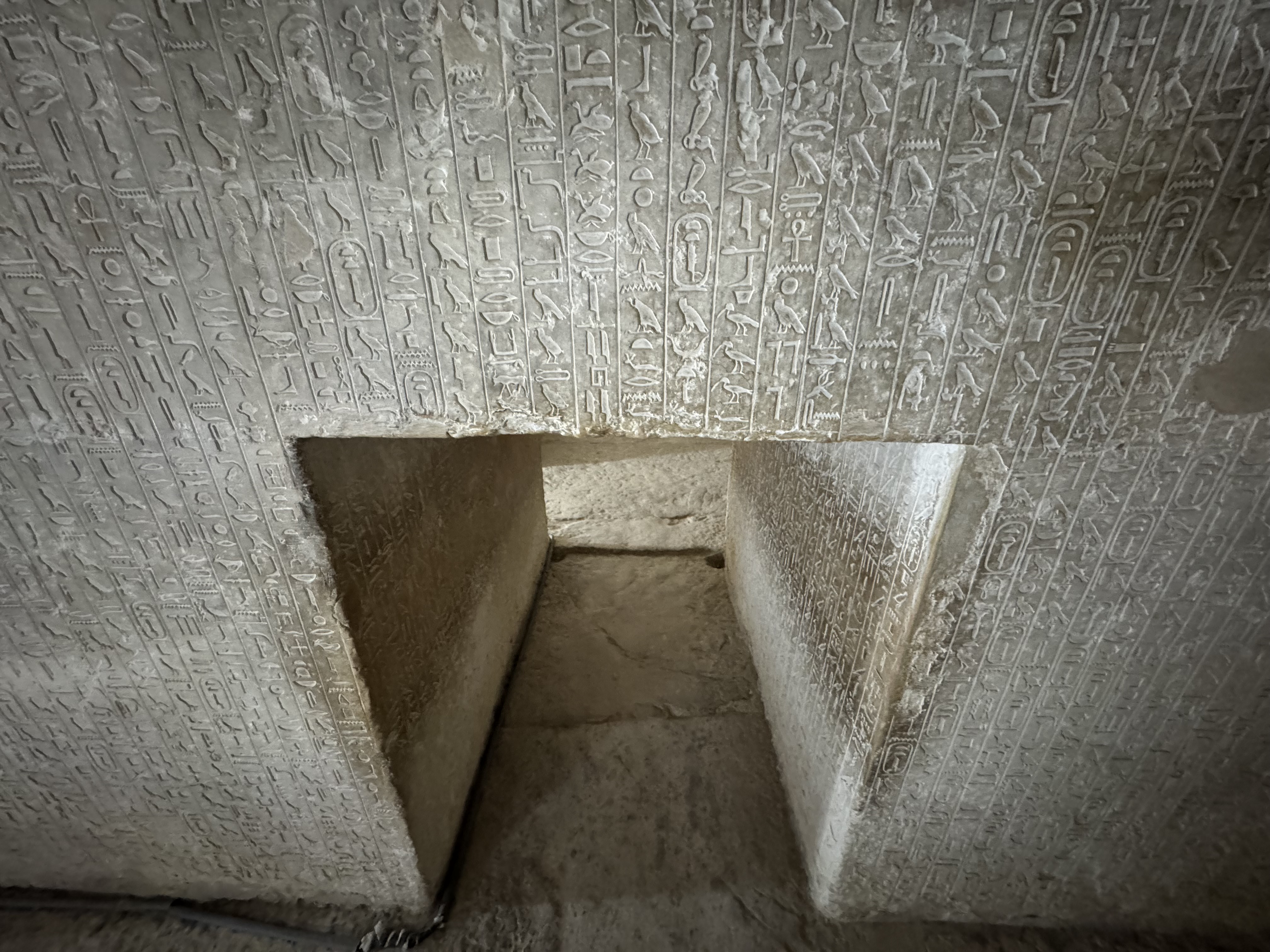
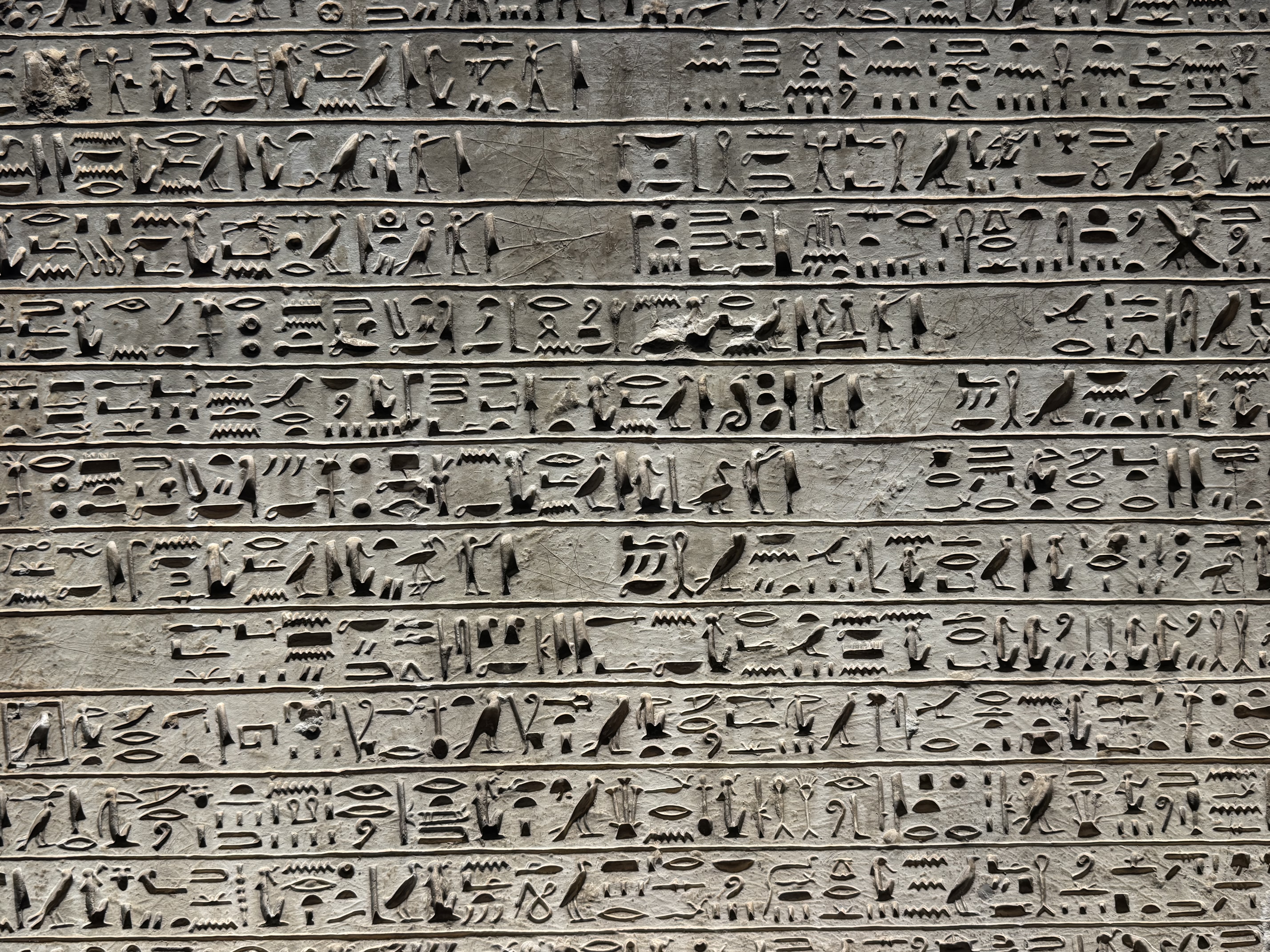
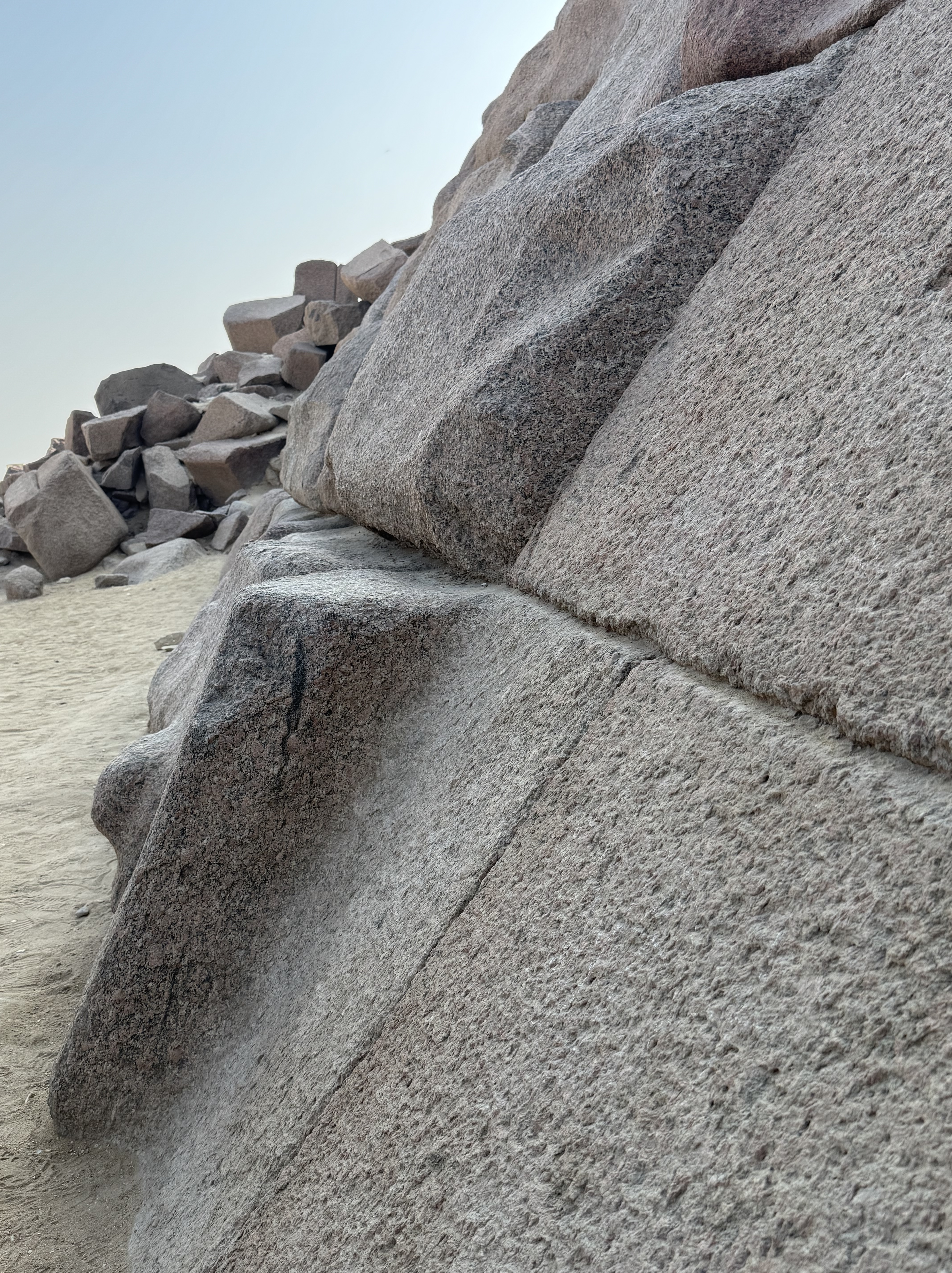
Seeing the museums in person have solidified the notion within my theology that the fallen spiritual beings were at the very least influencing humanity and most likley ruling over them with some supernatural ability. Not all of the Pharaohs were fallen spiritual beings, but they all seemed to esteem to be, and I am alluding that at least some of them were. Here are some signs: oblong heads*, the hieroglyphic of a saucer like objects used as the main preposition of the heiroglyphic language to describe movement (to, over above etc…), and near laser precision cut blocks out of a quarry from all sides. These are a few things (there are many more) that have me seeing that ancient astronauts, or more likely fallen spiritual beings, were interacting with Humanity and as I will propose, the historical timeline fits. The ancient Sumerian myth of Enûma Eliš, inscribed on cuneiform tablets and part of the Library of Ashurbanipal, says humankind was created to serve gods called the “Annunaki“. Hypothesis proponents believe that the Annunaki were aliens who came to Earth to mine gold for their own uses. According to the hypothesis proponents, the Annunaki realized mining gold was taking a toll on their race and then created or used the human race as slaves.[10] I would slightly disagree with those that hold to the “creation view” of it but the story seems to line up with the slavery of the pharaohs. Proponents contend that the evidence for ancient astronauts comes from documentary gaps in historical and archaeological records while citing archaeological artifacts that they believe, contrary to the mainstream explanations, are anachronistic and supposedly beyond the technical capabilities of the people who made them. These are sometimes referred to as “out-of-place artifacts”; and include artwork and legends which believers reinterpret to fit stories of extraterrestrial contact or technologies.[11] As I have been in Egypt researching some of these things I have very much found it to be true. The Egyptian timeline is often a mess. They were really good at recording victories but seem to also be decent at blotting things out of existence! We witnessed a lot of granite that had been etched clean to remove the past! Chuck Missler and Mark Eastman argue that modern UFOs carry the fallen angels, or offspring of fallen angels, and that “Noah’s genealogy was not tarnished by the intrusion of fallen angels. It seems that this adulteration of the human gene pool was a major problem on the planet earth”.[12] They make some interesting statements.
Some would say that Ezekial’s vision was one of UFO type objects. A detailed version of this hypothesis was described by Josef F. Blumrich in his book The Spaceships of Ezekiel (1974).[13] The characteristics of the Ark of the Covenant and the Urim and Thummim have been said to suggest high technology, perhaps from alien origins.[14]
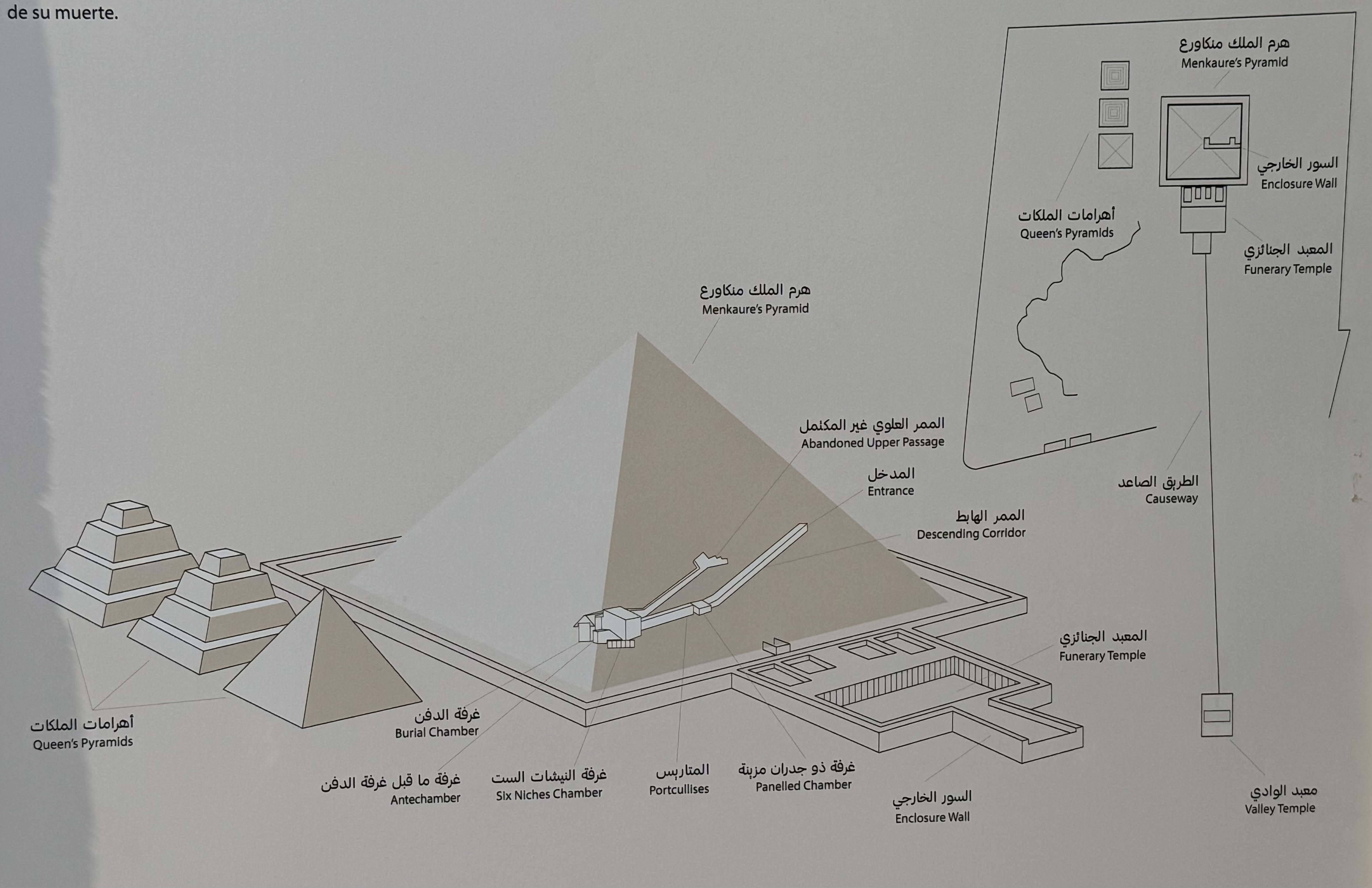
But to be clear, I don’t think that fallen spiritual beings snapped their fingers and pyramids were made. archaeological evidence demonstrates not only the long cultural trajectory of prehistoric Egypt but also the developmental processes the ancient Egyptians underwent.[15] Egyptian tombs began with important leaders of villages being buried in the bedrock and covered with mounds of earth. Eventually, the first pharaohs had tombs covered with single-story, mud-brick, square structures called mastabas. The stepped pyramid developed out of multiple mastabas being stacked on each one in one structure. This led to the construction of pharaoh Djoser’s Step Pyramid at Saqqara, which is known from records to have been built by the ancient Egyptian architect and advisor Imhotep.[16] It was pharaoh Sneferu who had his pyramid transitioned from a stepped to a true pyramid like the well-known pyramids of Giza.[17] A papyrus document like a logbook kept by an official called inspector Merer has also been discovered with records of the construction of the Great Pyramid.[18] I have seen too much this week to think that aliens just did this with a wave of a wand or even their ships!
And then there is the skull thing, among the ancient rulers depicted with elongated skulls are pharaoh Akhenaten and Nefertiti. To be clear this doesn’t necessarily mean there is alien intervention, but it certainly raises an eyebrow. The depiction of Akhenaten and his family with traits like elongated skulls, limbs, underdeveloped torsos, and gynecomastia in Amarna art is hypothesized to be the effect of a familial disease.[19] Marriage between family members, especially siblings, was common in ancient Egyptian royal families, elevating the risk of such disorders.[20] Studies on the remains of the ruling family of 18th Dynasty Egypt have found evidence of deformities and illnesses.[21] Proposed syndromes of Akhenaten include Loeys-Dietz syndrome, Marfan’s syndrome, Frohlich syndrome, and Antley-Bixler syndrome.[22] Akhenaten worshipped the sun disk god Aten and it is suggested that such worship could point to a disease that is alleviated by sunlight.[23] Weighing all of the options, spiritual being or cosmic cowboy intervention per Genesis 6 would seem to not only be viable, but a logical option.
Colloquial concepts of deities can turn into exaggerated extremism, especially when paganism is in the discussion. Corruption of language and corruption of minds seems to turn people into narrow minded symbionts. Egypt was worshiping these “gods” far before Abraham entered Egypt and taught the Egyptians concerning the religion of his God. Abraham was 100 years old when Isaac was born, Gen 21:5, 2066+100=2166. Abraham was born in 2166 BC. Abraham was 75 years old when he was called to leave Haran (Gen 12:4), 2166-75=2091. Abraham was called to leave Haran in 2091 BC. Today I visited the pyramids in/by Djoser which is credited the first Pyramid. He was the first or second king of the 3rd Dynasty (c. 2670–2650 BC) of the Old Kingdom of Egypt (c. 2686 – c. 2125 BC).[25] He is believed to have ruled for 19 years or, if the 19 years were biennial taxation years, 38 years.[26] He reigned long enough to allow the grandiose plan for his pyramid to be realized in his lifetime.[27]
My point is that spiritual beings seem to have influenced ancient Egypt far before Abraham began educating them on Yahweh. The Exodus would then be an establishment (perhaps even spiritual war) of the heavens identifying Yahweh as the greatest “god” as Israel claimed. Notice Yahweh simply says, Have no other gods before me. In Hebrew it would read as just that, the acknowledgment of other “gods” (or fallen spiritual beings.)
When we read the Exodus, we are reading the story of God re-establishing Himself to a lost world as the eternal cosmic KING of the universe and known world.
In early Egyptian writings it makes sense to see congruence or confluence of their concepts of deity. Originally Osiris may have been an Egyptian rendering of “Jehovah” having similar or identical meaning, in which case it would almost necessarily be true that He was present in the Divine council. The Papyrus of Ani and numerous other depictions of the Hall of Judgment mesh exceptionally well with Hebrew and Christian concepts of the Judgment and afterlife. (Interestingly the name of pestilent Egyptian pseudo-deity of the underworld, often called “Set” is lexically indistinguishable from a name pronounced “Satan” in modern tongues.) [23]
It might be an anachronism to say that Israelites believed that Egyptian deities were present in the divine council, but Israelites did teach the Egyptians about the God of Israel. Particularly in regard to Michael Heiser’s recent work, some people have made a point to question whether the Bible taught/represents polytheism. I think this comes down to definitions by which I have never cared for much. I don’t think you’re asking the right question if that is where your mind goes here. You might recall Deuteronomy 4:35, “YHWH is God; there is none else beside him” or Isaiah 44:6–8 which both seem to state Yahweh as the ONLY “god.” But in Exodus 15:11, after the Israelites escape slavery in Egypt, they sing, “Who is like you, O YHWH, among the gods [Elohim]?” At this point they think there are still other “REAL gods.” But what about the other verses that Yahweh seems to be speaking to them such as Deuteronomy 6:14: “Do not follow other gods, the gods of the peoples around you” or Deuteronomy 10:17, which says, “For YHWH your God is the God of gods, and Lord of lords, the great God, mighty and terrible, who does not regard people or take bribes.” In Psalm 95:3, it says, “YHWH is a great God, and a great king above all gods.” And in Exodus 12:12, it says, “On that night I will pass through the land of Egypt and smite every firstborn, both man and beast, and I will execute judgment against all the gods of Egypt. I am YHWH.” These verses seem conclusive that there are other gods which I have alluded to are fallen spiritual beings. SO then if you go back to Deuteronomy 4:35 and possibly others like it, you could interpret them as saying that to Israel God should be the ONLY deity in their life. The Hebrew and contextual position of the texts would also support this reading in every situation I know of.
CONCLUSION:
Did spiritual beings have a hand in ancient Egypt? I think the answer after reading the Bible and viewing ancient Egypt firsthand this week would be, “ABSOLUTELY!” The question is how much, and I will leave that for you to decide.

*A number of ancient cultures, such as the ancient Egyptians and some Native Americans, artificially lengthened the skulls of their children. Some ancient astronaut proponents propose that this was done to emulate extraterrestrial visitors, whom they saw as gods. [19]





WORKS CITED:
- Lieb, Michael (1998), “The Psycho-pathology of the Bizarre”, Children of Ezekiel: Aliens, UFOs, the Crisis of Race, and the Advent of End Time, Durham, North Carolina and London: Duke University Press, pp. 51–54, 249–251, doi:10.2307/j.ctv11sn0vx.6, ISBN 978-0-8223-2137-8, OCLC 9354231
- Hammer, Olav; Swartz, Karen (2021), “Ancient Aliens”, in Zeller, Ben (ed.), Handbook of UFO Religions, Brill Handbooks on Contemporary Religion, vol. 20, Leiden and Boston: Brill Publishers, pp. 151–177, doi:10.1163/9789004435537_008, ISBN 978-90-04-43437-0, ISSN 1874-6691, S2CID 243018663
- May, Andrew (2016), Pseudoscience and Science Fiction (illustrated ed.), Heidelberg: Springer Verlag, p. 133, Bibcode:2017psf..book…..M, ISBN 978-3-319-42605-1
- Vetterling-Braggin, Mary (1983), “The Ancient Astronaut Hypothesis: Science or Pseudoscience?”, in Grim, Patrick (ed.), Philosophy of Science and the Occult (1st ed.), Albany, New York: State University of New York Press, pp. 278–288, ISBN 978-0-87395-572-0, archived from the original on March 19, 2024, retrieved July 26, 2021
- Encyclopedia Britannica. Retrieved February 2025.
- Pentateuch. Jewish Publication Society. 1917.
- Hendel, Ronald S. (1987). “Of demigods and the deluge: Toward an interpretation of Genesis 6:1–4”. Journal of Biblical Literature. 106 (1): 22. doi:10.2307/3260551. JSTOR 3260551.
- Genesis Apocryphon. Damascus Document. 4Q180.
- Kosior, Wojciech (2010). “Synowie bogów i córki człowieka. Kosmiczny ‘mezalians’ i jego efekty w Księdze Rodzaju 6:1–6” [The cosmic mis-alliance and its effects in Genesis 6:1–6]. Ex Nihilo: Periodyk Młodych Religioznawców (in Polish). 1 (3): 73–74.”English translation of “The cosmic mis-alliance and its effects in Genesis 6:1–6″”. Translated by Kalinowski, Daniel. 30 May 2011.
- Mark, Joshua J. (May 4, 2018), “Enuma Elish – The Babylonian Epic of Creation – Full Text”, World History Encyclopedia
- O’Hehir, Andrew (August 31, 2005), “Archaeology from the dark side”, Salon
- Ancient Aliens, Series 2 Episode 7: Angels and Aliens
- Josef F. Blumrich: The Spaceships of Ezekiel, Corgi Books, 1974.
- AncientDimensions Mysteries: De-Coded: The Ark Of The Covenant, Farshores.org
- Feder 2020: p. 226
- Feder 2020: pp. 227–228
- Feder 2020: p. 229
- Tallet and Marouard 2014: pp. 8–10
- Vesco, Renato; Childress, David Hatcher (1994), Man-made UFOs 1944–1994 : 50 years of suppression (1st ed.), Stelle, IL: AUP Publishers Network, ISBN 0932813232, OCLC 32056133
- Retief and Cilliers 2011
- Eshraghian and Loeys 2012: p. 661
- Habicht and Henneberg 2015
- Card 2018: p. 80
- Wainwright, Gerald Averay (1938). The Sky-religion in Egypt: Its Antiquity and Effects. CUP Archive.
- Shaw, Ian, ed. (2000). The Oxford History of Ancient Egypt. Oxford University Press. p. 480. ISBN 0-19-815034-2.
- George Hart, Pharaohs, and Pyramids, A Guide Through Old Kingdom Egypt (London: The Herbert Press, 1991), 57–68.
- Kathryn A. Bard, An Introduction to the Archaeology of Ancient Egypt (Oxford: Blackwell Publishing Ltd, 2008), 128–133.



 EXPEDITION 44