“Have this attitude in yourselves which was also in Christ Jesus” -Philippians 2:5
Today we blame a lot on someone’s Attitude. In our modern [American] culture this can mean practically anything. It can mean your mental stability, your mindset, your heart set, your gut reaction, what drives you, ambition, love, emotion, or a plethora of other things. But in Philippians it takes on a more specific [cultural] meaning that had a great wealth of traditional Hebraic understanding.
This simple sentence is PARAMOUNT to the Christian journey and had foundational thinking rooted in ancient Judaism since the time of the Torah. The word translated as “attitude” in English is the Greek verb phroneo. It is important to see that in English we have translated it changing it to a noun rather than the Greek verb that it was intended. The intention of the original language was to show the continuing action of the ancient Torah principles that is transferred and made new in Christ.
When I attended Moody Bible Institute in the early 1990’s it was the center of training for Jews for Jesus. The first week I was there I was invited to a messianic synagogue and witnessed a young child recite one of the minor prophets, the entire book. He did so slowly with skilled oration demonstrating his understanding of the poetic narrative and that he thoroughly knew the content. I leaned over to my friend and said, “that is amazing!” She looked back at me visibly disgusted and said, “you have no idea.” I continued to represent the average evangelical Christian to someone who was extremely turned off by my notion of faith and devotion. Why?
I grew up in Awana cramming verses into my head spewing them out as fast as I could. This is American learning and far from the original idea of being immersed in Torah. In ancient Hebraic culture you demonstrated that you not only memorized the Scripture but that you thoroughly understood and applied it to your heart, soul, and mind (the SHEMA). This was the idea of “knowing” the Torah. It was more than simply memorization, it was an “attitude” for life.
When Paul writes about having the same “attitude” of Christ this is what he was referring to, it is a melding of what was sacred and what was made alive and new in Christ. To not “just” have the SHEMA upon you every day, but even take this a step further to have complete servanthood within the attitude. (Servanthood had been replaced by the second temple with a rabbinical hierarchy that Jesus often spoke against.) Today we don’t even match the SHEMA’s idea “attitude” let alone upgrade it to a Jesus sense of it.
Getting back to the text, phroneo was a verb that took into mind practical thinking and living. This is likely an idiom style word that would have reminded them of the words and many teachings of the SHEMA, & the Jewish tripod. It was a balance of life based on Torah understanding, worship within the heart, and culminated in compassion of the hands. In Jewish circles this is often explained as “HEAD TO HEART TO HANDS.” Then Paul takes it one step further and applies the servanthood of Christ. This is a total mind, heart, and hand transplant.
Today as modern Christians we have forgotten the balance. I have long said that American Christianity has lost two of the most important recipes for the foundation of what God asks of us; sacred devotion and the “understanding” of the scripture that is well demonstrated by the hands. Most churches are so fixated on salvation that they leave the rest of the church around an elementary level of Torah or scriptural understanding. According to the Judaic mindset if you don’t have the foundation of Torah (scripture) you can’t expect it to permeate the heart and it certainly won’t be demonstrated by the hands. Sadly, I would propose that is why our modern church doesn’t often look much like the hands of Christ. Perhaps the hands of our church today don’t resemble the hands of Jesus very well because we never got the foundation of the scriptures “memorized” and therefore haven’t taken on the attitude that our hands and heart should demonstrate.
Today we need to get back to a thorough sacred understanding of God and His word tied to the heart and exhibited in the hands of Christ. This is what God has asked of His followers for thousands of years, is it completely lost today? Jesus said leave your stuff on the beach and follow me, but most of us haven’t even made it to the beach yet.
When the Bible (both OT & NT) speaks against idolatry, it does not have (US) modern humanity in view. It was addressed to a primary ancient near east audience and culture thousands of years ago and was “written for us, but not to us” (as my good friend John Walton often says); yet the message is still vitally relevant today. Eph 6 is aimed at the ancient near east societies that worshipped other gods, that is, societies that had the wrong trajectory of worship. What I find interesting is these “pagan” societies still believed in the sacred, perhaps even more than the evangelical church does today. They were off course in not worshipping YHVH, but they had the notion of what was sacred and to be valued in other gods. Conversely, our culture today is not sacred, but we still give away our hearts to and/or “worship” other entities. This is why so many today are walking away from the church and Frank Viola would call main stream evangelical Christianity “Pagan Christianity.” By Biblical definition, we are worshipping the wrong entities and they aren’t even sacred. We are worse than Paul’s Rome.
Today we have sent God into exile as we frolic in “our” Babylon.
Pagan worldliness has abdicated the spiritual world. “Forces” have replaced the sacred.
Today we live in a world that doesn’t honor anything sacred but still operates by similar forces, (not a personal God.) We are concerned with the social forces that affect our comfort, the economic forces that affect security, the political forces that shape our fear and prosperity, and the moral and ethical forces that govern interpersonal relationships. What we (the modern evangelical church) usually call “Satan”, or “spiritual powers” are almost always the world forces that we continue to “worship”, and thus we enter into a similar ancient relationship of modern enslavement and idol or power/god over forces. In the same type of thinking as the Ancient Near East thinking of idolatry and gods, we fear that these modern forces will at the very least control us, and possibly even extinguish or annihilate us. For the first time in human history, the world is without gods, any gods, including YHVH the God of Israel.
Peter Leithart (one of my favorites) also observed that modern Christianity (and specifically the modern church) is nothing more than institutionalized worldliness. It is Rome ensconced in the sanctuary.
Our culture is idolatrous and is controlled by powers/forces/systems of the world. We don’t worship a one true God in the sense of “everything or all.” The world is no longer sacred. There are some who still desire to live set apart wholly devoted as sacred to YHVH, but will their actions ever truly live that out? Will we return as “Christian’s” to the allegiance that YHVH asks for or will we continue to live in idolatry?
An exegetical and cultural review of 1 Peter 2:13-17 by Expedition 44 YouTube co-host Matt Mouzakis
Submit yourselves for the Lord’s sake to every human institution, whether to a king as the one in authority, or to governors as sent by him for the punishment of evildoers and the praise of those who do right. For such is the will of God that by doing right you may silence the ignorance of foolish men. As free men, and do not use your freedom as a covering for evil but use it as bondslaves of God. Honor all people, love the brotherhood, fear God, honor the king. (1 Peter 2:13-17 NASB)
We have done several videos on a Christian’s involvement in government. 1 Peter 2:13-17 is a text that is often cited as the primary passage of instruction in this conversation.
The interpretation of this passage put forth in many American Evangelical churches and Protestant churches teaches dual citizenship; that the church rules in the realm of spiritual things and the government in the area of the polis. This “dual citizenship” idea allows Christians to still feel an obligation to participate in the systems of this world and even positively encourages to be politically involved in them; yet somehow, they still consider themselves to be “spiritual exiles”. This always seemed a bit gnostic to me, or perhaps a contradiction of terms. This idea of two kingdoms or dual citizenship came about as a result of the politics of the Reformation. Earlier this week was the 505th anniversary of the Reformation. The Reformation brought much good but, in my opinion, did not go far enough back in their reforms.
The idea of two kingdoms is credited mainly to Martin Luther. This doctrine granted independence to the state and the church in the spheres in which they rule. The government was to have free reign in the secular sphere and the church in the spiritual, both as God’s instruments. An example of this is seen in the peasant revolt. Prince Fredrick comes to Luther citing the Sermon on the Mount (loving enemies, turning the other cheek, etc.) and asking for advice on how to bring peace since it seems that Jesus is against violently crushing the revolt. Luther, referring to passages like Romans 13 and 1 Peter 2, tells him that his role as the authority mandates him to take a harsh (even violent) stand against the rebelling peasants, it is the role he plays as a civic leader. The moral calling of the government is viewed as a top of the social hierarchal authority and not a bottom one as of a Christian. So, Fredrick proceeds to violently slaughter a bunch of peasants to “bring peace”. Luther essentially tells the Prince that those in political power, including Christians, must resort to coercive and violent methods to manage the state even when they go against the ethic of Christ. The other side of this is that the Church is simply placed into the realm of dealing with the spiritual and Christ is demoted to “secretary of afterlife affairs” instead of King of kings and Lord of lords.
We need to ask if this doctrine and this way of interpretating 1 Peter 2 results in entanglement with the kingdoms of this world. I believe there is a better interpretation of 1 Peter 2:13-17 based on the context. The following interpretation shows that we are exiles and ambassadors here for the Kingdom of God and we have citizenship in only one kingdom: the kingdom of God.
Context
The letter of 1 Peter was written to Christians in Asia Minor (modern day Turkey). He begins his letter calling the audience “called exiles and strangers/aliens” (1 Peter 1:1; 2:11). This audience has been living in this area for their entire lives; Jews having been here for generations after the dispersion and gentiles being in their native-born homeland. Yet, Peter calls them exiles and aliens because of their baptismal identity and they are now citizens in the Kingdom of God. He says they are “called”. The language of “called” or election in the OT was not simply about salvation but about a vocation or mission- ambassadorship.
This new citizenship this would have brought about social troubles in these times due to not participating in the emperor cult and the worship of the local gods. They were seen as atheists for only worshipping one God and unpatriotic for declaring the gospel of Jesus as Lord (and Caesar as not).
Preceding this text, we have Peter reminding these churches of their identity in Christ’s Kingdom and fact they are now exiles and aliens in the lands they live in,
“9 But you are a chosen people, a royal priesthood, a holy nation, God’s special possession, that you may declare the praises of him who called you out of darkness into his wonderful light. 10 Once you were not a people, but now you are the people of God; once you had not received mercy, but now you have received mercy. 11 Dear friends, I urge you, as foreigners and exiles, to abstain from sinful desires, which wage war against your soul. 12 Live such good lives among the pagans that, though they accuse you of doing wrong, they may see your good deeds and glorify God on the day he visits us.” (1 Peter 2:11-12)
Peter kicks off his message about kings and rulers by reminding these churches that they are a set apart nation and not part of the kingdoms of the world.
Submit to the Government?
When we come to 1 Peter 2:13 it is often used in a way that tries to communicate the concept of outright obedience to the governing institutions. But the verse doesn’t say that. The word Peter uses for submission (hypotasso) meant to voluntarily yield, so this is not subjugation or outright obedience. If Peter meant obedience he had a word for that, but he did not use it (hypakouo). The concept of obedience is in 1 Peter but it is applied only to God (1 Pet 1:2,14, 22). Peter says this submission is “for the Lord’s sake” and we’ll see how he defines this as we continue.
The next thing that we need to look at is the word that is translated as “human institutions” in the text (some translate it as “human authority”). The Greek word for “institution” is ktisis. This word is used 19 times in the NT and it always means a creature, being, or God’s creation act. It never is used to communicate a human institution or any type of human authority. A better translation of this would say, “submit to every human creature/being”. This sounds very much like Paul in Ephesians 5:21, “submit to one another out of reverence for Christ”. I believe Peter is trying to communicate two things: 1) We are to submit to every human out of love and reverence for Christ because they are made in His image and worthy of honor and dignity, and 2) It is also a subversion of the idea that Caesar had authority and was like the gods (or a god himself). So, Peter is saying “nah, he’s a created human being like anyone else”, and thus taking Caesar down a notch by removing his divinity.
God’s Will for Government?
The next idea that many try to extract from this text is that government leaders and governments are established by God to punish evildoers and praise those who do good. There are a few things we will need to realize here though, first, contrary to the way our good friend Pastor Steve Cassell interpreted this text in our voting episode, the text never says that God appoints the king or the governors. 1 Peter 3:14 says the king appoints the governors, not God, and then simply explains the local governor’s job description. 1 Peter 2:13-17 does not speak of any God ordained role for kings or governors, that must be read into the text.
Many will cite Romans 13 and the “ordaining” of governments and authorities or the governments as a servant. But there are also plenty of texts that show how God doesn’t set up governmental leaders (1 Sam 8; Hos 8:4) and actually says it’s against His will. Also, there is the fact that pagan nations were called God’s “servants” (Assyria, Babylon, etc.) and then used to punish Israel and other nations. This simply communicates that God can use kings, governors, or governments as a tool to accomplish His means. (See our article on Romans 13)
One thing that is often missed here is the cultural context of the honor-shame society in the Roman world. When people did great deeds in public there was an expectation to receive public honor. Peter is not telling the Christian about the “God ordained role” of governors or rulers but rather about living such good lives in love to their neighbors that the governors and rulers would have to publicly honor them. God can use the governors as a tool to publicly honor Godly deeds and people. Peter’s point here is to counter the thoughts of violent retaliation against authorities for the injustice done when Christians refuse to follow the Roman culture (1 Pet 2:11) and instead following the way of Christ and the example of the suffering servant. In doing this the governors and kings will be forced by custom to honor Christians, their behavior, and way of life because of the good it brings.
The Way of Christ
In 1 Peter 2:16 he says the church is free, they are not slaves to the kings or governors but not to use that freedom for evil but to rather to subvert in love. He explains this in verse 17, “Honor all people, love the brotherhood, fear God, honor the king”. This goes along with the interpretation suggested above that this is about equal honor of all human beings; “all people” and “the king” are put in equality. Yet, there is a special kind of love for the brotherhood/sisterhood of Christ. Also notice that fear is reserved only for God, just like obedience is.
Now we need to chase a squirrel (excursus) for a minute… There are many who bring up the idea that in the USA “we do not have kings, we have representatives” or “our Republic form of government can’t be applied to these texts because it did not exist then”. The issue being addressed here is not the style of governing institution but the issue of human authority- Who is your authority? Let’s define “authority”: it is the idea that some people have the moral right to forcibly control others, and consequently, those others have the moral obligation to obey. Sounds like our government even though we have “representatives”.
We can say that our representatives “work for us” and “do our will”, but is it the truth? A Princeton study recently looked at 20 years of voting data researching the simple question of “does the American government represent the citizens”? They found that it does! But only if you are in the top 10% wealthiest Americans: the ones who use of lobbyists, which is 100% legal and constitutional. The study concluded “the preferences of the average American appear to have only a minuscule, near-zero, statistically non-significant impact upon public policy.”[1]Usually the rebuttal to this is that the system is not working the way it should. But even at the ratification of the constitution there were 3 million people living in this country only 10% had a “voice”. If you were a slave, a woman, or didn’t own land you could not vote for a “representative”. It has always been about the rich ruling the poor and 10% “representing” the other 90%. George Washington when writing to John Jay about this said that the common people don’t have the common sense of what’s good for them so we must inject our imperial dignity.[2] “We the People” has historically always been 10%. You cannot have true representation unless everyone is actually represented. The people are not represented despite the rhetoric and deceptive euphemisms such as “will of the people,” “consent of the governed,” and “representative government.” This quote sums it up,
“Thousands of years ago, megalomaniacs claimed to be gods in order to rule over their subjects. Once that stopped working, they claimed to be representatives of the gods in order to rule over their subjects. Once that stopped working, they claimed to be representatives of their subjects in order to rule over their subjects.”[3]
Maybe the Republic can get better. Maybe your vote can make a difference (or maybe it’s an affirmation of an anti-Christ system?). I’m sympathetic to the redemptive movement found in scripture. I believe Jesus will make all things new! But I believe this comes through the organism of the church and not through the institutions and systems of the world. The message here is that when we look to anyone other than Jesus to govern us we are becoming idolatrous (1 Sam 8). We do pray for our leaders but in order than we can live quiet lives going about Kingdom business (1 Tim 2:1-2). We do honor “leaders” the same way we honor all made in God’s image. This all comes down to allegiance.
So, I do agree that the early Christians didn’t have a republic in view but their subversion of Rome was not due to the style of its government. It was because they declared Jesus as their King, the Kingdom of God as their government, and the Jesus upside-down way as it’s Law. If Jesus wanted a Christian nation he would have planted one or tried to make Rome “Christian”, but instead he started the church as His kingdom ambassadors. This goes back to the original plan in Eden for humans to live in equality under God’s rulership. The way of humans ruling over other humans is the result of the fall not the Edenic ideal. God’s ideal has always been a Thearchy/Theocracy. His call is for His disciples to plant these kingdom communities and pull the world into it rather than for Christians to take positions of power in the world systems and force their morality and ethics onto society. How can we expect people not born again by the Spirit to behave in a Christlike way? But we can work to transform hearts and minds by being the church. The early church (first 300 years of Christianity) did this and it began to transform the world until Constantine gave Christians political power in the 4th century. The pagans praised the Christians for their deeds of justice and societal transformation despite having no political power. They took care of the poor, the outcast, the homeless, the mother, the baby, etc. better than they could. They prophetically acted justly to the “least of these” and spoke truth in love to power from the margins of society. This was way the early church interpreted what Jeremiah tells the exiles in Babylon- to seek the good of the city and in its peace (shalom) you will have peace (Jer 29:4-7). We need to stop outsourcing the call of the church to the government.
When Jesus was on trial with Pilate he says he is a King and “His kingdom is not of this world [like this world], if it was his subjects would be fighting [would be using power over tactics]”. Yet what we see a lot of in the American church is Christ’s subjects fighting to be in power. Jesus rebukes James and John when they want positions of power in His kingdom with the strongest NO you can get: “it is not so among you” (Matt 20:26). If Jesus didn’t even let his disciples have political power in his Kingdom do we really think he would want Christians have political power in the kingdoms of the world? The early church went around proclaiming this King and His way of life. This is actually what the Gospel is. It is not an individual self-focused proclamation of forgiveness of sins (these are the benefits) but an announcement of a new king and a new way of life.
“These men [Paul and Co.] who have turned the world upside down have come here also, and they are all acting against the decrees of Caesar, saying that there is another king, Jesus.”Acts 17:6-7
Don’t get me wrong here, I am not calling for Christians to overthrow the government. Jesus didn’t do that. Jesus and Christians seek peace- they are peacemakers. Jesus acknowledged that Satan ruled the kingdoms of the world and declared that seeking political power was equal to worshipping Satan (Matt 4:8-10). The government that is proclaimed in the prophet Isaiah that “shall be on his shoulders” is not America or any other earthly nation, They will be put under Jesus feet and suffer the same fate as death (1 Cor 15:24-26) because they are really Satan’s agents of death. It is the Kingdom of God that is the government on Christ’s shoulders. I am calling for the church to get disentangled and live in the power-under way of Christ and His kingship. We see Paul speak of the wisdom of the way of the cross which is foolishness to the world and yet says it is this wisdom is what declares to the rulers and authorities that they are “coming to nothing” (1 Cor 2:6). It is time to get back to being ambassadors and exiles until God’s kingdom comes in fullness and until His will is done on earth as it is in heaven!
If we still try to take a positive view of the “authority” of kings, governors, or governments from the text it would be very difficult based on the context proceeding 1 Peter 2:13-17. After Peter speaks about kings and rulers, he uses 2 other parallel examples to show how Christians should relate to worldly “authority” in order to win others by behavior. First, we have the example of slaves and masters in 1 Peter 2:18-20 and next the patriarchal system of the Roman household codes in 1 Peter 3:1-7. In each we see a posture of submission and love in order to bring these “authorities” into the Kingdom of God. If we want to take a positive view of “authority” of government or kings from 1 Peter 2:13-17 we must also make the case that slavery and patriarchal systems are part of God’s ideals and positive as well since these three are literary parallels. We obviously cannot do that, though many Christians throughout history have tried to and some are still trying to… but that is another conversation for another time. The point Peter makes to those under these systems is not to subvert them in the way the world would (violence, etc.) but rather through the way of Christ.
In the middle of these texts, Peter gives the example for Christians to follow, which is the way of their King,
You have been called for this purpose, since Christ also suffered for you, leaving you an example for you to follow in His steps, who committed no sin, nor was any deceit found in His mouth; and while being reviled, He did not revile in return; while suffering, He uttered no threats, but kept entrusting Himself to Him who judges righteously; and He Himself bore our sins in His body on the cross, so that we might die to sin and live to righteousness; for by His wounds you were healed. For you were continually straying like sheep, but now you have returned to the Shepherd and Guardian of your souls.1 Peter 2:21-25
And then in the end of this discourse we see how the church should look different than the world in the area of marriage and thus should look different in the other two areas of slavery and “authority” as well,
You husbands in the same way, live with your wives in an understanding way, as with someone weaker, a woman; and show her honor as a fellow heir of the grace of life, so that your prayers will not be hindered. To sum up, all of you be harmonious, sympathetic, brotherly, kindhearted, and humble in spirit; not returning evil for evil or insult for insult but giving a blessing instead; for you were called for the very purpose that you might inherit a blessing. For, “The one who desires life, to love and see good days, Must keep his tongue from evil and his lips from speaking deceit. “He must turn away from evil and do good; He must seek peace and pursue it. “For the eyes of the Lord are toward the righteous, And His ears attend to their prayer, But the face of the Lord is against those who do evil.” Who is there to harm you if you prove zealous for what is good? But even if you should suffer for the sake of righteousness, you are blessed. And do not fear their intimidation, and do not be troubled, but sanctify Christ as Lord in your hearts, always being ready to make a defense to everyone who asks you to give an account for the hope that is in you, yet with gentleness and reverence; and keep a good conscience so that in the thing in which you are slandered, those who revile your good behavior in Christ will be put to shame.
1 Peter 3:7-16
Peter lays out the mission- it is to image the way of Jesus. The church’s role is to reflect heaven on earth as heavenly outposts in this world. Therefore, believing husbands should live in an understanding way with their wife because they are socially lower/weaker in the Roman society (not weaker sex in mind or strength). In the church they are fellow co-heirs in the Kingdom. This is language of kingdom equality and echoes his message of honor towards all humans. Notice that Peter says if husbands don’t live in equality that their prayers will be hindered! This is all completely backwards compared to the Roman society.
Peter concludes with the example of Christ and the mission of love as the way to “stand up” and notice it looks like how you live your life as a reflection of Jesus character rather that how vocal you are about standing up for “truth”. There is a time to speak up for justice but it must be done with gentleness and reverence (1 Peter 3:15). The American church (me included) often concentrates on the part about always having a defense for our hope but often lacks in the Christlike character that is at the foundation of this verse in the context: being harmonious, kind-hearted, humble, not returning evil for evil (violence for violence), not returning insult for insult, blessing those who come against us, and actively seeking peace.
The Early Church
The disciples of the disciples (early church fathers) in the first 300 years of Christianity did not agree on everything but when it came to this view of Jesus as King it was a virtually unanimous view. The Constantine shift changed the entire view of Christians and the state when the church got entangled politically. Yet, the early church prior to this shift did not base their convictions on who was the earthly king or what kind of government system they lived under. Jesus was king and this was the reason they could not participate in any empire or state despite who was in charge or what format it was ruled in. Now we don’t put the Church Fathers on the same level as scripture but they do give us insight into what the early Christians believed based on scripture and from being taught by the disciples and the disciples of the disciples.
“Celsus [A Pagan] also urges us [Christians] to ‘take office in the government of the country, if that is necessary for the maintenance of the laws and the support of religion.’ However, we recognize in each state the existence of separate national organization that was founded by the Word of God. And we exhort those who are mighty in word and of blameless life to rule within churches.… So, it is not for the purpose of escaping public duties that Christians decline public offices. Rather, it is so they may reserve themselves for a more divine and necessary service in the church of God [Kingdom of God]—for the salvation of men.” – Origen
“To those who ask us whence we have come or whom we have for a leader, we say that we have come in accordance with the counsels of Jesus to cut down our warlike and arrogant swords of argument into ploughshares, and we convert into sickles the spears we formerly used in fighting. For we no longer take ‘sword against a nation,’ nor do we learn ‘any more to make war,’ having become sons of peace for the sake of Jesus, who is our leader.” – Origin
“Among us you will find uneducated persons, and artisans, and old women, who, if they are unable in words to prove the benefit of our doctrine, yet by their deeds exhibit the benefit arising from their persuasion of its truth: they do not rehearse speeches, but exhibit good works; when struck, they do not strike again; when robbed, they do not go to law; they give to those that ask of them, and love their neighbors as themselves.” – Athenagoras
We Christians have no pressing inducement to take part in your public meetings; nor is anything more entirely foreignto us than the affairs of the state. – Tertullian
Shall we carry a flag? No, it is rival to Christ! – Tertullian
I owe no duty to forum, campaign, or senate. I stay awake for no public function. I make no effort to occupy a platform. I am no office seeker. I have no desire to smell out political corruption. I shun the voters booth, the juryman’s bench. I break no laws and push no lawsuits; I will not serve as a magistrate or judge. I refuse to do military service. I desire to rule over no one- I have withdrawn from worldly politics! – Tertullian
“For how can he be just who injures, hates, despoils, kills? And those who strive to serve their country do all these things.”— Lactantius
If you are a Christian, no earthly country is yours. God is a better builder and maker of our country. Even if we gained possession of the entire world, we are nevertheless immigrants and foreigners. We are enrolled in Heaven; our citizenship is there. Virtue of soul is what we put on and is our defense, not the greatness of our nation… our warfare is to make the dead to live, not make the living die. – John Chrysostom
“A military commander or civic magistrate must resign or be rejected. If a believer seeks to become a soldier, he must be rejected, for he has despised God.” Hippolytus of Rome
I could keep going and going with evidence from the first 300 years of Christianity.[4] But the point is that they lived out the politics of Jesus and the teachings of the apostles that we have seen in this text from 1 Peter 2.
Submit yourself in love to your neighbor (and your enemy)
Disciples live as exiles and ambassadors of a different Kingdom
Disciples pledge allegiance to one king and one kingdom
Disciples subvert in though love and power-under service instead of power-over tactics
Jesus said that you cannot serve 2 masters (Matt 6:24) and you can gain the whole world and lose your soul (Matt 16:26)- Worldly politics will definitely do this. James says friendship with the world is enmity with God (James 4:4). Paul says no soldier entangles himself in civilian affairs but is about pleasing his Master (2 Tim 2:4). The evidence of the New Testament and the Early Church shows us how off base the two kingdoms and dual citizenship teaching of the Reformation was. Let’s start a new Reformation and take the church all the way back to the teachings of Christ! Back to true discipleship!
The example and way of Christ is to suffer in love, to bear the sin of others in love, and to bring peace through your actions and behavior that will turn the world upside-down. Through this way of life Jesus brought stray sheep home and we are called to follow the King’s pattern. We subvert the kingdoms of the world through love of neighbor, not violence. We submit in order to win those in “authority” over to God’s Kingdom. This power-under way of Christ is the mission of His ambassadors!
[2] The Writings of George Washington, collected and edited by Worthington Chauncey Ford (New York and London: G. P. Putnam’s Sons, 1890). Vol. XI (1785-1790).
Perhaps the most bizarre story in the entire Bible is the story where Jesus visits a very “dark” domain and speaks to the evil spirits, and they enter some pigs and run off a cliff into the water. It is bizarre for many reasons and most people don’t know what to do with it. It comes off incredibly weird to our culture; and makes people uncomfortable. Unfortunately, the details of the story induce a lot of “wrong” theological thinking within our modern cultural mindset; the average evangelical reader has no filter or hermeneutic plan for something so bizarre within their western Christian clothing. As a result, it leaves most people walking away with a negative Biblical experience. I think this is the result of kindergarten Christianity. The pre-eminent call of Jesus is to transition from a fan to follower, and to eventually be a completely devoted disciple checking everything on the beach and entering the journey to know Jesus and completely give yourself to him in heart, mind, and action. Most within the church won’t become a disciple (possibly until after death) and therefore can’t shepherd others into discipleship while on this earthly journey of sanctification. But this is a story geared at those who have made the decision to become intimate disciples fully given to their pursuit for the kingdom of Jesus (here and now) and they are clearly in training under the tutelage of The Great Shepherd. However, not eve all of them seem to fulfill the calling.
Mk 5:1-10, Mt 8:28-34 and Lk 8:26-39 tell what seems to be the same story yet there are several differences or variances. One mentions two demoniacs and the other text simply says one. As a theologian or simply a faithful disciple, it leaves us asking the question, “what are the viable solutions within the harmony of scripture?” Are they different episodes? No, they seem to be the same. Why the discrepancy? My friend Michael Sandberg (A previous pastor at our church) gave a brief explanation that the texts are NOT necessarily in disagreement. One text might refer to one man and another two, but both can be correct and likely are. I am good with that explanation that took Michael less than a minute and usually feel that is a great way to preach to the masses from the pulpit. Don’t major on the minors, pose the problems, present a good hermeneutical approach, and present harmonized solutions within the complete lens of scripture. If there are multiple views briefly present them and create a positive Biblical challenge for people to dive in deeper. Create a culture of discipleship and invite the Spirit to move past you.
Well, that might take care of the first and most obvious issue at hand (and be enough for the casual Christian); there are other problems with the text that a deeper disciple is going to want to work through. As we challenge people to dive in deeper someone needs to offer a better shepherded experience. My life calling has been to master the depth of the Scriptures and shepherd others to a similar understanding. That is also one of the core values of Covenant Theological Seminary (CTS) where I am involved.
To continue with the passage, the less scholarly will have a problem with the slight variation in location. Mark 5:1 states the country of the Ger’asenes (Luke 8:26 is identical) but Matthew 8:28 reads the country of the Gadarenes. I won’t expound much here. A simple internet search will show you they are logically rendered as the same place.
The next place I want to visit is the interpretation of the narrative story. The first thing we should do in any study is think Biblically and logically. According to scripture what makes the most sense? What is happening in this bizarre story?
Most mainstream preachers will take a traditional perspective that the demons shriek at Jesus’ mere image; and Jesus threatens to torment them all the way to the lake of fire (abyss) where they will be tortured forever. It is usually followed up with some kind of judgment day inuendo with a “watch out or maybe you will end up there too” mindset, pressuring people to make a decision so they won’t be forever tormented by Jesus placing their faith in the 7 steps of salvation or something similar. Framework like this gets its roots from the Penal Substitutionary view of Atonement and overflows towards an Eternal Torment Conscious view of hell. As they are likely both common traditional views, in my opinion they lean very reformed and are likely the least biblically based of all the theological views on atonement and hell. My main issue with both of them is that they present Jesus in a near opposite fashion of who He was and what He represented to the church and lost world. If this conversation is new to you, I would recommend you start with my book “This is the way.”
Greg Boyd on ReKnew.org makes an excellent point that “Some find it morally objectionable that this mass suicide was the result of Jesus allowing the multitude of demons that possessed this man to enter into them. Does this story present Jesus as someone who evidenced a callous disregard for the welfare of these animals?” Personally, I think animals are delicious. I am not going to have a lot of personal issues killing pigs, but I still am with Boyd on this theologically. I am not sure Jesus would simply slaughter pigs. I don’t think it’s a great take on the text. (Boyd ends up landing here as perhaps being the best option of the alternative variables essentially – which I continue to struggle with, but think is a good or acceptable theological view.)
If you have watched our x44 atonement series you will see that I typically fall somewhere around a Christus Victor view of atonement, but as Scot McKnight in “A Community Called Atonement” alludes, I carry a few other (golf) clubs. But your atonement thoughts are going to affect this pig story and mine tie into (at least somewhat) the cosmic battle at the cross that I think is worth exploring. I would suggest that the main emphasis of this story is over the cosmic battle of the cross which Matt and I discuss in our X44 church series PART 9 episode on Philadelphia, you can watch it here.
This brings me to the main thrust of this article. I have a hat that says, “into the storm” and people ask me what it means all the time. It was made by Froning Farms, a bison jerky company, and I don’t think they are Christians, but I have “reclaimed” the slogan and I love to wear the hat. (And have since made x44 versions of the hat.) In these texts Jesus and His disciples come through a life-threatening storm and Jesus commands the storm to be calm. This is an allusion to God sometimes asking His disciples to step into the storm in total trust that God can heal and control everything that is in His domain.. That is what my hat means to me regardless of what it meant to the farm that made it. (Thank God my hermeneutics don’t have to line up with my clothing choices all the time! -or do they?)
In the ancient world water and storms represented chaos in the Bible. They are not necessarily good or evil they just simply happen. But sometimes the gods were wondered to be able to control them, and because of this, sometimes the water itself can take on an “evil” personification. In this way the water might represent the “home” of the evil. That is the story of the exodus and the Red Sea. The war of the gods. Yahweh vs the fallen spiritual beings, who will rise or immerse as the Lord of Lords? This occurrence is going to go back to that Deuteronomy 32 power struggle of the gods in many ways. If you aren’t familiar with this idea, you can watch our x44 video on it here. In this way God can even control the water which was said to be partially home to the “evil.” But water simply represents an agent (or literally house) that can be for good or bad. I will come back to this thought towards the end because I think we need to develop the core narrative first. Let’s first focus our attention to the storm itself.
Jesus silences the storm to be still by the word translated from phimoo. What is interesting about this is it is the same word that he uses to quiet the demons in at least two other places (Mk 4:39; cf. 1:25; Lk 4:35). This leads me away from the average chaos monster (water) of the ancient near East world and perhaps more towards a Christus Victor version of spiritual warfare within the water, especially because this is pre-cross and the spirits are unbound. There are multiple Greek negatives at work worth considering. Ouketi, oudeis, and oude build the emphatic triple negative in Greek. There becomes a word play on the description of him originally as “out of his mind” contrasted to in a “right mind” after he is healed. There is a strong sense of “pneuma” spirit language here both in and out of the water.
In the ancient world people were always wondering if the gods sent things or tampered with nature to react or rule over the people. Were the people in favor with the gods? Nearly every person, (and likely even the disciples) in this story may have expected a storm of this magnitude to have been the result of upset gods. (As the x44 video on Philadelphia points out, even by the letter (book) of revelation the culture was still thinking that way.) How do we appease the gods? Perhaps throw the bad guy out of the boat? That was the way they thought. Today we think this way about Karma, even though we don’t blame it on the gods we no longer believe in, most people still attribute power to some kind of known spiritual over-arching higher power or force.
Was the storm the result of an angry god or simply a product of the uncontrollable chaos of God’s world. Were they monsters that couldn’t be harnessed by anyone but God? Job might imply that only God can harness them which could also adjust your view here. In the exodus story, there seem to similar powers represented by the actual gods against Yahweh such as the Egyptian sorcerers. I will admit that the majority of the time we read of chaos in the scripture it seems more naturally not good or evil and just a description of what is (as I alluded to earlier). But this particular instance is strange and may give merit to handle it differently, more in the way that we interpret the Exodus story or the tower of Babel. The water seems to be full of spiritual warfare, and only Christ can calm it.
Perhaps this is the central message to this story of Jesus acting over the fallen spiritual powers (that we commonly refer to as demons in New Testament). From a Christus victor or Deuteronomy 32 perspective there is a lot going on here that is likely setting the stage for what happens at the cross. This is the manner to which Jesus enters into the “STORM” of darkness. It is the oppressed area of the gentiles. The text alludes to a naked man. In Hebraic thinking this is defilement language. This is the far other side of the tracks. This isn’t a place for the “body” of the Lord’s disciples in Hebraic thinking. They were told to not congregate in these areas of sin, not to be surrounded or let sin “cling” to them. We have to keep in mind though, that this is Jesus, and he is “changing” the trajectory from the Old Covenant to the New Covenant with every step. It still doesn’t necessarily give grounds for a “Christian” to go there, but at the same time it may be an invitation to “get to that place” as you are now called to live like Jesus and harness the power that will be transferred to you through the cross and resurrection and falling (or indwelling) of the Spirit. Jesus is about to obtain a feat that no one else has ever done and no one else will ever do. It is a game changer for the devout.
In Revelation 1:18 we read that Jesus holds the keys to Hades. This is something that happens during the three days before the resurrection. This hasn’t taken place during these texts yet. David Aune, has a book called Apocalypticism, Prophecy and Magic in Early Christianity. It isn’t for most evangelicals, but I do recommend it if you make it through this entire article and haven’t thrown in the towel. His work is a lot of things, one of which I appreciate is an exercise to understand and connect cosmic sovereignty language. Luckily some evangelicals have been very well introduced to this world of late through the writings of Dr. Michael Heiser and Dr. John Walton amongst others. Essentially what is happening here in Revelation, is that despite the fact that Christ was slain, He now holds the keys to life and death and emerges as the victor who will now forever have this power. (Which is still described with a backward kingdom “power under” rather than “power over” genre which is quite interesting to those trying to figure out Jesus in the early New Testament. Many things point this way such as the seven eyes to be understood as “the seven spirits of God sent out into all the earth” which is another symbolic way of emphasizing the sovereignty Jesus Christ who is the Lamb. Isaiah 22 and Hosea 13 are also going to tie into this conversation as they support the same view.
Without getting too sidetracked, but giving you enough to support my over all premise of the pig story, let me slightly elaborate. There is a greek “thing” going on here. When we read the “KEYS TO DEATH AND HADES” we are reading the Greek “Genitive” of two nouns piled up. In this case the genitives tou thanatou and tou hadou which can be objective or possessive. In other words you could read it as “the keys to Death and Hades” or “the keys belonging to Death and Hades.” There becomes a question of whether the term is spatial or personification? I would make an argument they both happen in the book of revelation. So, then we hermeneutically say, “Do we have these grounds one way or another?” Are death and hades ever personified these ways in the OT? Well yea, all over the place. In Hebrew the term for “death” is mot. That is the same word in Ugaritic (mot) and in Ugaritic, Mot is a deity (part of a pantheon).
I am sure this sounds like we are getting way off track (as interesting as the conversation might be) but let me get to the really important part that affects this story. Enoch and Elijah are the only people who can be found to have gone to “Heaven” or the cosmos of Yahweh and remain there. There seems to be waiting places of those that pass in the OT until Jesus returns to possibly preach or offer a last chance to them. (This has a lot of spiritual implications from universal reconciliation to theories on judgement that we don’t have time in this post to explore.) This is going to get into a Yahoel conversation and discussions on OT binitarian thinking, but for the New Testament, (specifically in Revelation), the author John (and I) will argue all of the texts at hand in this discussion are going to be wondering who holds the power over death. Who really holds the keys? My point in all of this is that the book of Revelation and connecting OT texts tell us clearly that it’s ONLY Jesus (who controls the keys of life and death). There are also several 2nd Temple texts such as the “The Apocalypse of Zephaniah” that at the least would tip us to continue to think this way. This is where we benefit by having the complete lens of the Bible at our fingertips and can apply what we have been given to the weird pig’s story in the synoptics. To be clear, it would seem that when the pig’s story was penned, before Jesus rose from the dead, he didn’t have the keys to Death and Hades, somebody else did. He went to Hades for three days, He conquered Death and Hades (personified as supernatural enemies), and He took (or somehow attained) the keys from their domain, and they are now bound. (This seems to be spiritual battle language.) When he comes back triumphantly, He holds the power of life and death forever. Something in the cosmos changed at the cross and resurrection in terms of eternal life and the complete process of sanctification.
So now let’s return to our bizarre story. When the pigs are mentioned any Jew would have understood them to be the “icon” of uncleanness (or the archetype of uncleanliness). (This ties into the don’t go there or be part of this defilement code directed towards observant Jews). The pigs were a picture (think visionary) of the worst of the world. At this point the law was a stop Gap directing people to stay away from these things of the world. To not have any part in them, and this is one of the problems of the text to be clear. The law would say don’t go there but Jesus is leading His disciples there. The stop gap of the law is met with Jesus and the trajectory is changing with every step Jesus leads us in. From the fall to the birth of Jesus humankind is on a downward spiral, at the resurrection and ascension with the falling of the spirit the trajectory will now turn upward. Things will be reclaimed and be made new again. The veil will be torn signifying the once and for all sacrifice has taken place and the law will be perfected in, by, and through Jesus.
Remember the prodigal son story, they pigs represented the farthest place from the father. Most people today still associate Jewish Kosher (right living) meals as avoiding pork as the main example of uncleanliness that nearly any person identifies regardless of their shallow knowledge of Jewish kosher foods. But the reference here is almost too generic, and that is likely intentional, I’ll come back to this. The possessed man, (and actually I am going to say there were likely many), (this could have been the “place of the damned”) were unusually strong with a subtle context tied to the world (reference to breaking chains – the world can’t even harness their own problems in him.) This is similar to a chaos monster that has gone really bad by the gods mingling -the water has become tainted by and for the world. It has the same feeling as Genesis 6. It is also interesting that tombs are mentioned. Right about now I am wondering, “why are Jesus and the disciples even here?” This sounds like hell, like Gehena. But that is actually one of the main themes I am arguing for – all of these points are also Hebraic references to sacred/temple uncleanliness spiritual domains that are often personified.
Let me be more blunt, are they on a disciple’s mission trip to convert the lost? Maybe. But here is where I start to even scratch my head more. The number of demons is counted as a legion. That is a Roman Battalion of 6000 men. There are a lot of adequate ways to count, why a legion? Alot of people would consider this war language (especially if Paul wrote it!) It is also exodus motif language of releasing the captives and likely the narrative we are reading is setting the tone for the REAL EXODUS of the foreshadowed OT red Sea victory story… The exodus of the world into eternal life by Jesus.
THIS STORY IS SETTING THE STAGE FOR THE RELEASE OF THE COSMIC CAPTIVES.
This is also where I start or continue to question the literal story. That is an immense number of pigs even by today’s western standards. There are a couple ways to go with the legion. One is that it simply represents military language of a strong army. Some viewed Rome as the enemy and it could be interpreted as enemy territory and a lot of scholars go this way, but this view is also problematic because Jesus didn’t view Rome that way. Jesus viewed Rome as the brother that would eventually be won back over in humility and love; not by an enemy takeover of the sword wielding Jesus’ revolution (as much as the very disciples with him desired that!) It wasn’t in Jesus’ character to talk about Rome as the enemy or using words entangled with destroying them. That wasn’t what Jesus did, it was opposite of what Jesus preached and lived. (It could very well be the authors influence in the texts though -that’s how they thought and what they likely wanted) How do we reconcile what is going on to the better character and mission of Jesus? It may have been a small implication of the text that Jesus’ power under “authority” even has the power to eventually reconcile Rome, but I am not convinced we can take that away (hermeneutically) merely from the text we are given. I would file that theory under possible theological implications of the text but not “given” by the text.
But there is still another problem with taking this story at face value as an actual “physical” story. It would be the ONLY singular instance in the Bible when Jesus commands a demon to leave and they don’t immediately. The demons seemingly begin to plead. This again leaves me scratching my head. Are we listening to Jesus have a court proceeding with the demons? Is this like Jesus bargaining for hostages? Jesus has limited himself by humanity but it doesn’t seem fitting that Jesus would be “bargaining with the Devil.”
As we continue, the story takes an even stranger turn. This is also when the various accounts tend to get muddy. One author represents one view, another emphasizes something else. They don’t disagree but each seem to emphasize different things that are perhaps just subtly strange. Why do the Demons want to stay in this area in Luke? Why isn’t it the appointed time of the abyss in Matthew? It also seems that Jesus is not able to do some things, were His powers stifled? Was there kryptonite in the nearby rocks? Why would the demons almost ask to go play with the pigs? There is also a rather strange, shackled sense of authority on both sides. The whole story comes off as a bizarre abstract painting at best.
Finally, we see the demons go into the pigs and jump into the sea. Interesting we started with the sea and Jesus could easily calm the seas. (I will still come back to the water – I promise!) When we read that earlier in the text we are clearly still in the physical world. In the physical world Jesus easily brings order to chaos and never has a problem casting out demons before this. These points would continue to build on the view that at some point we step from the physical realm into the spiritual visionary cosmos where things become “dim”.
Don’t pigs swim? Can’t demons swim? Can you drown a demon? I know pigs don’t fly but I am pretty sure they swim, and I sure wouldn’t think a spirit being would be killed by a swim. These actions seem to be figurative. I would argue that the story fades from a real physical story into more of a visionary perspective to show the disciples what they are being asked to partner in doing through Christ after he physically leaves them.
Also, as a side note to be clear, the text doesn’t say Jesus sent or ordered the pigs into the sea. Some want to point this to or at an action of which Jesus performed or commanded and often go as far as to identify mental illness as an uncontrolled chaos monster. I don’t see the validity for that in the text. Others are going to try to come to a spiritual doctrine of suicide out of this text and I will also concur that doesn’t work within the theology or hermeneutic of this text, especially when viewed as a vision. In this way, theologically, it is an indicator to take it more figuratively. If we leave the story as purely literal (which doesn’t really work at all) we also have war problems coming from a pacifistic Jesus to discuss, such as…
Were the pig’s casualties of a Jesus war? If pigs could be, then could you and I also be?
Wow, read that one slowly, that might be a whole other series of videos! But the simple answer is no; that is simply another reason to read/interpret the latter part of this story as a vision. Don’t read too much into what the authors thought they saw. Don’t build a doctrine on a murky interpretation of something seen or not seen. There is too much about this story that doesn’t literally make logical sense to go with a completely literal non visionary interpretation.
What’s the other options then you ask? Can we just sever it from the Canon? That would seem like the easiest thing. Just throw it away. If we don’t like something in scripture just throw it out or don’t read it. Write it off to a bad scribe or later tampering of the text. Maybe make it political. Ok, that doesn’t work even though most churches preach and interpret the Bible to say whatever they want politically, using it for their own worldly gain. Let’s stick to what the text allows exegetically. Do we just go with the old, reformed view of just trust a sovereign God; you in your humanity can’t possibly understand this one? Don’t even try. Its above your paygrade. No, I never buy into that. God gives truth. Let’s pray for the spirit to reveal the truth within the text.
Finding a better view in the lens of scripture
Like many in the church, I grew up touting the words LITERAL within scripture as a sense of strength and pride. I used to think a literal interpretation was a better or perhaps more valid interpretation. I usually go the other way now. Nothing is really literal. The word “literal” is problematic because it connotes different things to different people. The meaning of words depends on context. How someone in one culture uses a phrase or metaphor may not correspond to the way people in another time and place use that same language. If you can’t understand what the message meant to the intended audience you can’t accurately apply it to your own context. When we overlook this, we will inevitably misinterpret the Bible. This is beautifully illustrated in Misreading Scripture with Western Eyes. My friend John Walton (who would likely view this text/topic a bit differently, but I still love, honor, and respect him as one of my primary mentors in life) would also say that:
We therefore recognize that although the Bible is written for us(indeed, for everyone), it is not written to us. In this way, if we assume our worldview is equivalent to that of the Biblical writers, we will inevitably misinterpret Scripture. This article has partly served as a model to most readers to encourage better interpretation.
In the last few years, I lean toward believing that this bizarre PIG STORY is something that actually happened somewhat physically (at least at the beginning parts, the calming the seas etc…) but that much of it is part of a retold story by Jesus. In other words, the story is an actual account of Jesus and His disciples but some of it, the latter parts are told in a figurative visionary fashion. My personal take is that it was a field trip for some of the disciples into the spiritual world of the war that ensued. That is why it takes on a visionary perspective. Jesus was always taking them on workshops for the kingdom and this one was more of the spiritual realm than physical. It was teaching them that things of the kingdom were about to change forever under a new Kingdom Authority in Him.
I think the text presents a more visionary perspective to look into a different cosmic domain “figuratively” because hermeneutically it just seems to be a better interpretation of the text within the complete lens of scripture.
Taking a visionary figurative view of this story is the best interpretation based on the complete lens of Jesus and what He was accomplishing in the context of the varied stories through the cross, resurrection, ascension and giving of the Spirit.
At this point I would like to suggest the main theme of my discourse. The story from every account, and especially when weighed within the whole lens of scripture, has the sense of vision rather than a parable or purely physical story. Things are murky and possibly interpreted differently to everyone that recounts the story in the synoptics. This is characteristic of apocalyptic literature of the day in the sense that each author experienced the same thing yet explains it differently from a murky visionary type of perspective. It is also very reminiscent of any other visions we have in scripture. Even those that see aren’t quite sure what they have seen, how to interpret or even describe what they have seen and often might not be seeing clearly. We read what they think they saw. This is evident in Revelation as we contrast what John sees verses what he hears. Sometimes we are given the divine interpretation but often we aren’t. We are simply left with knowing what the author thought. Some will experience the revelation of the text, but many will not.
Dr. Will Ryan
We don’t need to settle the vagueness of visions. We never have had that need in visions, but we would if we were trying to establish a need to interpret purely physically or literally. For instance, something as simple as, if Jews detested pigs, why were there thousands of pigs in the area? There likely wouldn’t have been any kind of market for pigs this close to where the Jews lived. If they were caught in the spiritual cosmos it settles some difficulties. There seem to be plenty of animal like creatures in the spiritual domains.
But theologically some will struggle here. The problem is we don’t have the merit within the text to go indefinitely one way or the other; and typically, if that is the ticket we are looking for we want to interpret literally not figuratively. Nothing about this story starts by saying, “there once was a man,” or a long long time ago in a galaxy far far away.” I think you get my point, we don’t have a clear direction that this is figurative or when it transitions from physical to visionary, so then we usually want to lean literal. But I want to be careful to say that a better interpretation is probably a figurative approach. We don’t “have to” have those words to consider a more figurative or visionary interpretation.
There are laws of hermeneutics. Some of these laws will suggest when to interpret parts of the Bible literally or figuratively and there are a lot of parts of the Bible that we still aren’t sure on. Maybe this should be one of them. There are all kinds of different standards or textures of interpretation. Perhaps you are familiar with one or the other, I am going to give you the simplest basic 4 because it is the your likely familiar with them.
Words must be interpreted literally unless the sense implies an impossibility.
Words must be interpreted literally unless the sense implies a contradiction.
Words must be interpreted literally unless the sense implies an absurdity.
The nature of a biblical book may provide a clue, suggesting that the student is to watch for an abundance of figures of speech.
I am going to argue that we have all of these within the story.
The best interpretation is to interpret this story figuratively. It is a “better” interpretation than wanting to go literal with it. Let me explain why (as if I haven’t been already). First, we don’t typically draw doctrinal conclusions from parables or figurative stories. I am going to argue that some have allowed their doctrine to be clouded by stories that aren’t given to us to teach science, geology, physics or DOCTRINE. We have those texts but hermeneutically these shouldn’t be overly read into doctrine. That said, I don’t really avoid anything here either. I don’t think the text teaches ECT or anything else and I am not bending, messaging, or performing any theological gymnastics to make something fit my doctrine or politics. I am merely searching for the best interpretation or exegesis of the text and have nothing to lose.
At this point in the article, I feel like most readers can already understand my need to want to go visionary or figurative with the text but let me continue to build the case for a few moments in case you’re on the fence.
First, Its written with a similar feel to Jewish apocalypse language.
“Apocalyptic literature is a genre of prophetical writing that developed in post-Exilic Jewish culture that involved an unveiling or unfolding of things not previously known and which could not be known apart from the unveiling”.
-Goswiller
Teachers including Jesus, would regularly speak and teach in ways that could be construed by different audiences without speaking plainly. The intended audience would have understood this story at least to be partially aimed against hypocrisy of the religious systems. As I have previously alluded, I don’t necessarily “put” that on Jesus as much as on the authors. Pigs are a Jewish symbol of hypocrisy.
The Midrash draws a comparison between the Roman empire and the pig: Just as the pig sticks out its hooves when it is resting, as if to say, “I am kosher,” so did the Romans put on a show of justice to mask their avarice and corruption. There is a bit of a word play or even joke going on in comparison of Romans, demons and pigs as well as the fact that many Jews and early Christians hoped that the Roman legions would do just what the pigs did and take a long walk off a short cliff. I am sure some reading the text later were hoping that Jesus may have been speaking in a prophetic picture of what would come of Rome, but we know that doesn’t happen. Matt and I in the Philadelphia Part 9 series also bring out this point in other ways. In fact, the opposite happens, the Jews are decimated by the Romans. I think there is a subtle message from Jesus (or perhaps the authors) imploring a better Jesus kingdom narrative and to be free from the systems of the world, but I also don’t want to make out the entire story to go that way. There is so much more going on. I am far more comfortable putting these thoughts on the authors rather than Jesus, but some are going to struggle with this sentence, and I can understand that partially.
Juvenal, the first century poet and satirist wrote that among the Jews, ‘‘a long- established clemency suffers pigs to attain old age.” Another satirist commented regarding Herod, who killed several of his own children, that he would “rather be Herod’s pig than Herod’s son.” Petronius referred to the Jews as worshipers of a ‘‘pig-god.” The Jews’ refusal to eat pork was twisted into evidence of a Jewish fondness for pigs.
Jesus speaks within His cosmos or spiritual world and a lot of the strange references would have had more significance to those that found them interesting. We don’t always get this part. Why Luke would have found something significant that Mark didn’t. On the other hand, we don’t need to “get everything” to “get the text” or the main message of the text particularly as a takeaway to us 2000 years later.
Secondly, this has traits of an ancient chassidic story that would have been understood to be largely idiomatic that pre-date the synoptics. 2 It is a similar story or narrative that was regularly entertained by the Jews and people would have been familiar with. As bizarre as the account sounds it was actually pretty normal for the day. We think it is weird 2000 years removed but they didn’t, they were quite used to apocalyptic writing.
Thirdly, it fits the context of Jesus’ bigger picture teaching to the disciples. It was a missional field trip teaching day to the cosmos that they were in transition between. Jesus regularly went to great lengths to teach His disciples. Jesus walked his disciples around 30 miles to Caesarea Philippi (Banias) to the pan of grotto for a similar trip to the spiritual realm (which in some part also may have been visionary.) Jesus was teaching spiritual warfare and in order to experience and understand it, a visionary trip to a different domain was likely needed. This isn’t uncommon in scripture. We regularly entertain these “visions” within the OT and NT so this understanding of the text really shouldn’t be difficult to take on. The difference is it isn’t clearly presented that way. Or is it?
I also promised I would come back to “the water.” This is another slight detour from the main message and likely disserves its own article so I am not going to cover everything here that could connect. I think I will just paint a picture. In the Bible water can be a contronym symbolizing a method to “carry” or “contain” you to or away from something, namely the Lord. It wasn’t necessarily good or bad but was feared for its power. God creates the water TOV (good) but then the world gets a hold of it. some water it couldn’t be consumed without refining (boiling) it or might bring sickness perhaps even to death, but at the same time other water may be “pure” and consumed without harm. You often didn’t know in ancient times whether the water was “good” or not. The water also housed the Leviathon and other creatures that could take life. It was often wondered whether these creatures were tied to the gods. I would encourage you to return to a Deuteronomy 32 perspective here again. I am going out on a limb here because I don’t have the space in this already long article to expound much. The leviathan is a monster that is referenced in the Bible and which has roots in the pre-biblical mythologies of ancient cultures. Described as a giant sea serpent, dragon, or other sea monster, the leviathan symbolizes chaos, fearsome power, dark forces, authoritarianism, massive challenges, addiction, and more. Ancient people wondered if the Leviathon where like any other creature, not necessarily bad or good, or whether the gods controlled them such as the simple story of the angel and Balaam’s Donkey. Some even wondered if the Leviathon where actually fallen gods. There is a bit of consideration to this point as the authors of the Old and New Testaments describe the leviathan as a massive sea monster that has serpentine and dragon-like qualities. In Job 41:26 – 30, the leviathan is described as having scales that are like armor or shields, which a javelin cannot pierce. Not only does it have sharp teeth, when it breathes, smoke comes out of its nostrils and fire comes out of its mouth. (Job 41:19 – 20, Psalm 18:8.) Furthermore, in the Book of Revelation, the leviathan is described as being red in color with seven heads and 10 horns which doesn’t necessarily match the description in the rest of the Bible but is fitting in view of the apocalyptic genre of the revelation text (Revelation 12:1-17.) From this consideration some viewed these dragon-like creatures to be “the devil himself” and is why the seas were feared. There is even an ancient allusion that if you met death at sea, you might be carried away to the middle earth (or hell) where the dragon lived and kept as a captive. This thinking goes all the way to first and second century writings and also has a place in Christ “freeing the captives” during the three-day grave cycle to which Jesus emerges victorious with the keys of life and death.
Perhaps some creatures where like the water and remained neutral, and others were fallen spiritual beings or agents of the world or evil. But the point is for this reason and others, the water represented an agent that could be evil. This is why people greatly feared it. This is why when the crowds were rushing Jesus, He get on a boat to escape them. Normal people wouldn’t follow Him into the water especially if it looked like a storm may be coming. This is why when He calmed the seas it meant He was the Lord of Lords. As Job says who can tame the Leviathan? Only God. This is also why Jesus makes a point to offer living (or good-TOV) water. Because not all water was good. It is a sign of the reclaiming of everything that the world contaminated. All things will be made good in Jesus, even the most uncertain or powerful things of the world. This is also why Jesus likely chose fisherman, they were willing to take a life chance on the water to feed their families. This was the mindset that Jesus needed for His Kingdom. Faith that conquers fear. When Jesus calms the storm, He establishes His rightful place of Lord over everything on the earth.
There is a lot going on in the text. It is quite dynamic. It is likely serving to train disciples and introduce future disciples to the realm of the spiritual that isn’t often seen. It also might give cause or merit to regaining those immersed into the total darkness of the world (but as a vision I am not sure we actually have that take away – I am open to that view though!) Jesus is starting to regain what was lost to the powers and principalities and wants to use us as agents to accomplish this. There is also, in my opinion, an angle to which we might understand what takes place at the cross, to come to an understanding of atonement and how we fit into the cosmic kingdom that we are grafted into. I also have a place for the traditional theme that goes something like, Jesus is greater than anything the world has to offer, choose Jesus and choose life.
Sometimes the message is as simple as showing the love of Jesus through a smile, other times, it may feel a lot more complicated and might even ask us to give those things we hold most dear, even to death itself. Jesus simply says trust me. Into the storm, through the waters, out of the mist, and into the holy places. What he was asking for was total devotion and and complete allegiance. He wasn’t asking for fans or followers; He was calling wholly devoted disciples. He wants to take us on a journey of sanctification, and it might get weird to the world. It might be the strangest expedition you have ever been a part of. Jesus is missionally calling us to be disciples and completely given to Him as his representatives in the devout body of Christ. The calling is wayyyyyyy out of our American comfort zone. It likely isn’t skinny jeans and smoke machines; it is much deeper into covenant culture of an “all in” kingdom. Can you take steps with Jesus that will take you on a journey you can’t begin to make sense of? Perhaps you will only get a mere vision of where you can go when you place all of yourself at the feet of Jesus and ask him to double your portion within His kingdom. Are you ready to prioritize your mission and life for Jesus? Discipleship involves total sacrifice (you are no longer yours); providing water to the thirsty, food for the hungry, clothing the naked, caring for sick, comforting the brokenhearted, being an agent of good news to the imprisoned. Can you love their enemies or do good to those who threatened them? Can you learn to completely trust the Lord with every facet of your life. Can you check your weapons at the door or beach? You are the agent to bring peace to chaos and calm the storms by the power of Jesus. Jesus invites you into the storm. Will you follow as a fervent disciple to be a living sacrifice?
JESUS IS CALLING YOU | INTO THE STORM
Bereishit Rabbah 65:1. Roman legion (X Fretensis) used the boar as one of its ensigns. Additionally, one of the prominent Roman families was that of the Porcii (“pigs”), whose male and female members bore the respective names of Porcius and Porcia.
This idea appears in various Talmudic commentaries. See Likkutei Sichot 29:128, where several versions of this adage are cited.
“Until American churches actually function as outposts of Jesus’ heavenly empire rather than as cheerleaders for America—until the churches produce martyrs rather than patriots—the political witness of Christians will continue to be diluted and co-opted” – Peter Leithart
I think we can all agree that biblically we represent King Jesus as the royal priesthood of ambassadors of light to a dark world to which we shouldn’t share allegiance. Our obedience is solely to Christ’s kingdom. In this way, the church acts as a sort of embassy for the government of the King. It is an outpost of the kingdom of God surrounded by the rival kingdom(s) of darkness. And just as the embassy of a nation is meant, at least in part, to showcase the life of that nation to the surrounding people, so the church is meant to manifest the life of the kingdom of God to the world around it. Our first and primary identity should be with the King of the universe, not with any worldly country or nationality or political party. But there is a lot to consider, our covenant with Jesus also impacts our kingdom covenants with others. Where do we draw the lines and how dynamic is this kingdom boundary within the context of Jesus’ prominent message of love, grace, and mercy admonishing us to have towards this lost and fallen world?
Few will argue that there is a place by which Christians should be thankful and perhaps even “indebted” to American freedom because of our covenant in Jesus. If there was a cost for freedom and it meant that we could freely worship Jesus, most Christians would be interested in the price.
We are in transition from beings of the world to becoming beings of the Heavenly father and His kingdom. Unfortunately, this journey of sanctification is going to be a long process (that likely involves time after this life on earth as we know it) and until we get to the culmination of this heavenly transition, we are torn between the two worlds and kingdoms continually representing aspects of both worlds within our beings. In many ways Christians are caught in the middle; we are torn not fully belonging to either realm. We are leaving the world but are also not fully transitioned into spiritual beings until the eschatological recreation of the new heaven and earth is complete and we become fully re-created spiritual beings of the complete kingdom.
This transitional problem is real for every Christian despite some of us being in different stages within the kingdom realm of sanctification, especially when you consider that only God can purely interpret our hearts. Some who know me locally (and know I own an NRA gun range) take me for an ardent patriot who would be ready to bust into a fighting revolution for freedom at a moment’s notice. However, many that read my Theology posts would get quite another picture and perhaps even take me for a pacifist to which I would rather turn the cheek in humility and step aside to simply trust God to whatever end may come (justice or not). If you know me well, you know I represent a little bit of both worlds. I believe there are seasons, and we need to be ready to go where God leads, but make no mistake, wherever you fall as a Christian on this issue your complete devotion and obedience is to be solely to Him and none other. I and many others along this journey attain to live by the Ideals of the Lord but are continually falling short.
Matt Mouzakis, the co-host of the Expedition 44 YouTube Channel whom we all know well and love deeply would take the position that we should solely belong to the kingdom of Jesus; other kingdoms are Rival to that authority and can’t or shouldn’t co-exist. Are you Roman, American, or Christian? This is hard to argue in terms of an eschatological finish. At the end of the day in a new Heaven and earth we are simply going to be Christians, there isn’t a place or room for anything else. In this way of thinking shouldn’t your target here on earth be the same?
In consideration of this view, early Christians were willing to be martyred rather than pledge allegiance to Rome or have any part in such a corrupt anti-Godly system of government. As Americans, our faith has become so nationalized that we in many ways represent America far more than Jesus. Patriotism has become our/their religion. This is an idolatrous problem. Most American Christians are indistinguishable from the lives of their pagan American neighbors. I would agree with Matt and also contend, that America’s values and government is overtly pagan and as Christians we can’t ignore this or continue to be part of the anti-God aspects of it. American Christian Nationalism often represents the near opposite of what Jesus taught. It is contrary or rival to His kingdom.
In the first century, baptism itself was a right of resistance (non-violently) in the early church. In its original meaning in the New Testament, it meant abandoning your loyalties to all other nations and pledging your allegiance to the kingdom of God. In Thessalonica in Acts 17:6 Paul and Silas get accused of “Turning the world upside down” by saying there is another king, Jesus. This had nothing to do with the style of government they were under (Totalitarian, democratic, republic, etc.), it had everything to do with being part of another kingdom and having another king. The early church, disciples of the disciples, echo this concept:
· We have no country on earth- Clement of Alexandria
· I serve Jesus Christ the eternal king. I will no longer serve your emperors… it is not right for Christians to serve in the armies of this world- Marcellus the centurion
· We (Christians) have no pressing inducement to take part in your public meetings; not is there anything more foreign to us than affairs of the state- Tertullian
· Shall we carry a flag? It is rival to Christ- Tertullian
· How can a man be just who hates, who despoils, who puts to death? And those who strive to be serviceable to their country do all these things – Lactantius
This was the mindset of the early church until the mingling of church and state under Constantine. I believe we need to get back to an “exile” mindset. Matt will concur, that this doesn’t mean that we violently usurp the government, we follow the laws where we are exiled as long as it doesn’t compromise kingdom values. In 1 Tim 2:1-2 we are called to pray for rulers. The purpose of this is not to transform the government but rather that the church “may live peaceful and quiet lives in all godliness and holiness.”
Perhaps, the purpose of our prayers for the government is for them to stay out of our business so we can be about the kingdom and have less of their influence in our lives. As Jeremiah said to the exiles in Babylon to pray for it and seek the prosperity of the city because in its prospering you will prosper (Jer 29:7), but God never told his exiles to work in Babylon, simply pray and live a kingdom life where they were. The church needs to stop outsourcing its call to love their neighbor, to care for the hurting and the outcast to the government. The church is a colony (Outpost) of heaven that should promote only its kingdom and king.
Nugget sums this concept up perfectly,
“Our responsibility is not to make the world a better place, but to be the better place God has begun in this world through Christ. We are his kingdom work. We are ambassadors who proclaim what God has done, is doing, and will do. God’s strategy is for his people not to fix this world but to plant a new world in the midst of the old one and to woo the old world to Himself through it. As followers of Jesus, the body of Christ, the new humanity and new creation is us. A new creation as begun in the midst of the old world that remains. It is the new world of God’s Kingdom and its people. So God’s people are not responsible for making the world a better place, but for being the better place that Christ has already made… the early believers were vocal in proclaiming the gospel of the kingdom and visible in living it out in community… the church’s calling centers on being the better place God began in Jesus.”- John Nugget (Endangered Gospel)
But there is another side to this argument within those that live wholly devoted to Jesus we may consider. On the one hand we are called as Christians to be singly allegiant to one king and one kingdom. On the other hand, some will argue that America was founded largely by God fearing men to fulfil just the sort of pro-liberty, non-interventionist role the Bible envisions. What they sought was simply freedom. This is why the founding fathers intended to produce a federal Constitution, which elaborately checked sinful men’s insatiable lust for power.
Keeping this in check; unfortunately, these desires of our founding fathers seem very lost compared to the current American dilemma of corruption in Politics and a nearly God-less America. Is the nation completely lost or can some semblance of faith in God exist again within the leadership of this country?
And let’s pause for a moment to make another clear point before we continue. To be clear America was started as a free country not a Christian country. To be frank, there shouldn’t be any thoughts of “returning to God.” Our country was never “with” God in that matter. But the founding fathers (many of whom were God fearing men) created a framework where God could be freely worshipped.
Isn’t this the very reason why our founding fathers drafted a Bill of Rights, which jealously guarded religious liberty. Essentially most of the founding fathers just wanted a government that would leave the church alone. They weren’t building a Christian nation; they were simply enabling a nation where Christianity could be built. In my mind this is noble but not purely “Christian.” It still poses a problem for me as my Ideal is completely Jesus not the world. I don’t desire the ideals of anything in the world as I long to be completely within the kingdom of God.
But still perhaps this “complete Jesus thinking” is impossible within the current spiritual condition of the world. Some will ardently argue that what America has within its political system happens to be the sort of civil government the Bible demands we pray for in 1 Timothy.
Many Christians feel that our role as ambassadors is to eventually be agents that partner with God (Edenic keep and cultivate language) to reclaim what has been lost to the world and the powers and principalities of darkness. We know we will eventually be used as God’s agents to do this but what does that mean? Are we there yet? Where do we draw the lines of allegiance until then? Can we be dual citizens or is that serving two masters? Is that being indebted to something that isn’t part of the servanthood to the Lord?
My good friend Steve Cassell (The pastor who fought and saved religious freedom in Illinois at the beginning of government church shutdowns in covid) would say, “Christian patriotism in the United States is needful and necessary because it is congruent with our Lord‘s command to love our neighbor, and has been established in a system of government that cultivates and represents the exact type of civil human government, committed to liberty, that the whole of scriptures would require.”
He and many other Christian Americans would say that we are patriots not because we have a love affair with the United States as such; we are patriots because the principles on which the nation were founded allow Christianity to flourish.
I do also see some ability to have a relationship that is completely first and foremost given to the Lord but also have secondary relationships within that spiritual covenant. I have always found it interesting in this way that Paul chose to keep some of his benefits as a citizen within Rome according to Acts 22.
I may be able to understand how my friend Steve views patriotism and Christian allegiance as not having to be the antithesis of each other. Perhaps they could both be done in a new covenant way; to the same regard as your covenant commitment to your wife should be and can be fully submitted within the covenant commitment with Jesus as the Bride of the church. There is undeniably the (limited) ability to maintain relationships based on covenant that are not in opposition to each other but submitted and prioritized to each other. For instance, you may be a martyr for your wife or the church because of your commitment to Jesus. Your wife can submit to you as her husband and God both within the same covenant and appear to be within God’s graces and not meet the spiritual definition of serving two masters. Could you die (or live) for your country because of the same commitment?
As much as I love, honor, and respect my brother immensely and agree with a lot of the comparisons made above; personally, I still tend to go slightly the other way because of desire of attaining to get closer to the eschatological finish line sooner than later, and largely while on this earth.
We live in a country where we aren’t regularly tormented or persecuted for Jesus, let alone the consideration of being martyrs for Him. We don’t physically have to decide every day to day for Him. Or do we or should we? Will we ever need to, or would God ask us to physically fight for that end? Matt and Steve would likely end up in different places if we took this conversation that far.
But perhaps the other differences of thinking are merely semantics. Something also tells me that my friend Steve (or Matt) would also likely agree with most if not all of my points mentioned. All three of us often seem to say similar things but then move towards slightly different directions of actions or conclusive ideals. Steve wants to fix the broken system and reclaim it (and everything else lost to the world) for Jesus and Matt wants to just end up with purely Jesus as soon as He can get there, leaving little if any room for the world. Both thoughts have biblical and spirituals foundations. When is the season to sever and when is the season to reclaim in the name of Jesus? When do you fight and when do you turn the other cheek? When do you stand and when do you step aside. When are you THE agent of Jesus and when do you get out of the way to make room for Jesus? These are the conundrums of the kingdom.
Where my friend Steve and I often land together is in agreeing that patriotism (or anything else) can take the place of Christ in a person’s life. Can Chocolate take the place in a person’s heart where Christ should solely belong? It might be a silly analogy, but the answer is yes. But most people would not spend a lot of time arguing against the antichrist principles of chocolate, even though gluttony is covered pretty blatantly in scripture. (But we would rather discuss politics than gluttony.)
Lastly, there is also a static/dynamic interpretation of scripture within modern times to be considered. One of the first textures of interpretation is to understand what the message meant to its intended audience before we can apply it to our situations. Once you understand what the message meant to the original audience and the context to which it was delivered, you can attempt to apply it in a similar way to your situation. However, it will likely never be an exact application or example of yours, yet still as Christians we are called to apply scripture to our lives. In this way, America may be different than Rome within the context of the application. For instance, you might argue that there has never been in history, nor was there in the days of the biblical writings, any system of government that was even close to what we have in America today. Or perhaps it might not matter… allegiance is allegiance.
Do you stand and fight to change the system or turn the other cheek and humbly and solely follow Jesus? How dynamic is the kingdom of Christ and calling of all in discipleship within the context of multiple relationships within a supreme covenant kingdom?
Perhaps some are called one way and others another with in the dynamic kingdom of Jesus. I don’t claim to have all the answers, but I do press others to inteligently and strategically consider where, why, and how they should represent their God and the systems of the world. Wherever you stand, we can agree that we are each called to represent Jesus, to be an outpost of light in a dark world.
-written in partnership by Dr. Will Ryan Th.D, Matt Mouzakis, and Dr. Steve Cassell D. Min
Romans 13 is theologically difficult. I would argue the great majority of the Bible seems to speak differently when interpreted by 21st century English-American. Hebrews 11:13; 1 Peter 1:17, 2:11, 2 Corinthians 5:20 and Philippians 3:20 (to name a few) all clearly speak to being in complete allegiance to the kingdom of the Lord and being single minded to only serve one master who is Jesus the Lord of your life.
Romans 13 has become a favorite proof text for every church narcissist who wants to Lord over and rule like a king in the name of Jesus. Does Romans 13 mean that God actually instituted every authority by God and that Christians should comply to whatever they ask?
The Bible agrees. When it seems like it doesn’t, we are tasked with the puzzle of figuring out the best interpretation. In this case, countless verses say to not be of the world, to solely and completely follow Jesus, that God is good (Tov) and not part of corruption, that we as His children are not to compromise to the ways of the world but be undivided and not tangled up in the affairs of the systems of the world.
How do we reconcile, “Let every person be subject to the governing authorities. For there is no authority except from God, and those that exist have been instituted by God.”
Seeking a better interpretation
The first law of Hermeneutics is context. Any Romans scholar would tell you that you have to read Romans in complete context. As believers, you are the set apart remnant, we should expect persecution, all authority belongs to and should be given solely to the Lord, live as a royal priesthood set apart in living sacrifice. Follow the example of Christ in humble submission and be devoted to the body and the Word.
Paul is chronically in trouble with the government and seen as treasonous by them, eventually He will be killed by them for His traitorous mindset. Some scholars would assert that Romans 13 is referring to church governance. I think that is a viable option, but the reference to taxes and revenue doesn’t really fit first century church as much as a description of state government. It would seem to fit a context of tithing in churches today, but that doesn’t fit the audience so personally I think that “view” shows a poor hermeneutic.
Could Paul be writing to appease the Roman government who would have been screening these letters? Well, that is certainly a consideration. We don’t have records of several letters that we know Paul wrote and they were likely confiscated. I think there is some truth to this theory and should be taken into any consideration on the best interpretation.
Let’s get a few things straight. Paul regularly taught that Jesus was king, NOT Caesar. All authority is given to Christ. In fact, there isn’t anywhere in Paul’s writings other than Romans 13 that would seem to assert ANY “authority” to Caesar. I would argue Romans 13 doesn’t either. Caesar was and should not ever be recognized as a valid authority instilled or given by God. In other words, God didn’t institute the authority of Caesar. According to Paul, Jesus is “the blessed and only Ruler” (1 Timothy 6:15, 1:17; Acts 17:6-7; James 4:12). This happened all the time in the Old Testament and God clearly doesn’t honor the authority instituted by men or ask His followers to do the same. In fact, one of the reigning messages of the Old Testament is to follow God not the pagan nations. Have nothing to do with them. Yet there still seems to be a sense to this text of trying to live within what they are asking of us.
Paul often taught as a Rabbi in the same way that Jesus did using Hebrew idioms that reminded them of complete teachings by simple phrases. I teach regularly about the use of contronyms, extreme opposites that by explaining the opposite of something shape what is true on the other extreme as well. There is some of this going on in Romans 13 as well. Paul clearly thinks that Caesar is a terror to Christians in I Corinthians 2 and 2 Timothy 2. But I don’t want to major on this as I view it as a minor emphasis. Still, it should be considered in your interpretation.
I also need to touch on paying taxes. Paul doesn’t seem to go along with the Roman government in Acts 16. Neither Paul nor Jesus ever taught their followers to pay tax. Taxation was considered theft or extortion by the Jews. Paul would exclaim in verse 8 that we owe nothing but love to our neighbors. Those words are similar to Jesus. When he was asked to pay tax, it was miraculously paid from a fish which represented money of the world given back to the world. Jesus didn’t pay the tax from money from the purse that was given for ministry. That would have been giving God’s money to the world or stealing.
If something is Evil we are taught to NOT be a part of it, or entangled in it. We are set apart to be of the world but not in it. Don’t be conformed to the patterns of the world. Did Joseph and Mary willfully submit their baby to Herod for execution? Paul spent more time in prison for disobeying the government then he did out of Prison after his 14 years of training.
So, as I, and every other scholar I know, would agree, this section of Romans 13 seemingly being contradictory to the message of nearly the entire lens of the scripture. We have an option not to read “into it” that way. It can’t mean something to us today that it didn’t mean to its intended audience. How would they have interpreted it?
In his commentary on Romans, Colin Kruse observes that in Romans 13 “Paul is drawing upon teaching in Jewish literature about God’s sovereignty over the rise and fall of earthly rulers” (Paul’s Letter to the Romans, 493). Supporting that claim, he lists a handful of key passages from the Old Testament, the Jewish Apocrypha, and Josephus. Here’s his list.
· By me kings reign and rulers issue decrees that are just; by me princes govern, and nobles—all who rule on earth. (Prov 8:15–16)
· In the Lord’s hand the king’s heart is a stream of water that he channels toward all who please him. (Prov 21:1)
· With my great power and outstretched arm I made the earth and its people and the animals that are on it, and I give it to anyone I please. Now I will give all your countries into the hands of my servant Nebuchadnezzar king of Babylon; I will make even the wild animals subject to him. All nations will serve him and his son and his grandson until the time for his land comes; then many nations and great kings will subjugate him. (Jer 27:5–7)
· He changes times and seasons; he deposes kings and raises up others. (Dan 2:21)
· The Most High is sovereign over the kingdoms on earth and gives them to anyone he wishes. (Dan 4:17, 25, 32)
· For your dominion was given you from the Lord, and your sovereignty from the Most High; he will search out your works and inquire into your plans. (Wis 6:3)
· The government of the earth is in the hand of the Lord, and over it he will raise up the right leader for the time. (Sir 10:4)
· He will for ever keep faith with all men, especially with the powers that be, since no ruler attains his office save by the will of God. (Josephus, Jewish Wars 2.140)
Paul commands believers to willingly submit to governing authorities (Rom. 13:1, 4), he does not mean that governing authorities have absolute autonomy or unchecked authority. As Romans 13:4 says, they are “God’s servants,” hence subject to God himself. And it’s this point of reference—the relationship between governing authorities and God—that we need consider more fully.
Government leaders are actually a rejection of God (1 Sam 8:5-7)
God allows government leaders to have their power, but he is actually working against them (Col 2:15)
Hosea 8:4 actually says that leaders are chosen without God’s approval
HYPOTASSO:
The ONLY true authority was and is Jesus. Period. In fact, the rulers and authorities of the world are the enemies and will be destroyed according to I Corinthians 15:24-25 and Mark 10. It is interesting when Paul writes, “Let every person be subject to the governing authorities” he uses the word ‘hypotassō,’ which means “submission involving the recognition of an ordered structure.”1 The Greek word hypakouo is the common word for complete obedience and Paul could have used that word, but instead he uses this one. This is the same word he uses in Ephesians when He asks wives to submit to their husbands. The implication is to live in peace but not to go along with something that is ungodly. That understanding is so basic to Paul’s writing that no one in the intended audience would have questioned it.
Why do we? I think because we have been compromised for 2000 years. We have changed definitions to work for us. We like our new definitions better than the Biblical definitions. We don’t think that way. Did Paul imply in any way to go along with something that is un-Godly, no way. There is not a chance His audience would have interpreted this letter in that light, or rather darkness. Any first century Christian wouldn’t think twice about this. They would understand the context to follow Jesus not someone contrary to Jesus. Today we have the big picture and should even interpret the scripture more strongly along these lines. The 7 letters to the churches of Revelation should make this message exceedingly clear to us. (Watch our X44 series on the church for our take on this.)
TASSO
Depending on your translation you’re going to read the words “instituted” or “established” authority by God. This is really the main problem of Romans 13. In our western world 21st century thinking we interpret this word similar to the way a Calvinist interprets predestination. That all things were set in concrete form the beginning of time. That isn’t the Biblical definition of predestination and that wasn’t the first century meaning of the term “establish” either. Tasso meant to arrange or bring order. In the same way that God seeks to bring order to the chaos of the world He doesn’t agree or approve of them, and neither should we. He often meets us where we are and that is messed up. Authority is God’s and most of it in this world is messed up and even abused.
There is also a Deuteronomy 32 worldview tied into this idea but that is a longer conversation that you can watch in our videos on that subject. Revelation is clear that God “hates” the empires of the world (that are contrary to Him) and that they will be overcome and reconciled to Him in the end.
What does the rest of Romans say? Obviously, a verse in Romans can’t be interpreted to mean exactly the opposite to the rest of the book right? Romans 12 (the chapter in context establishing the foundation for the statements of Chapter 13 and in the ancient manuscripts their isn’t a break or chapter difference here) tells us not to conform or be tempted by the world and their systems. We are to bless and love our enemies and even those who persecute us.
NT Wright is likely the best expert on Paul the world has ever known. Personally, I agree with NT Wright’s take on Romans 13, Wright argues that, Romans 13 is in fact a general statement about ruling authorities (as I have alluded the statements about taxes are hard not to apply to government and why I lean this way as well). In essence, in this time between the times where God’s new world is on its way but not quite here, government is something God has put in place to preserve some measure of justice and order and to prevent the world from falling into complete anarchy and chaos. To disagree with this general sentiment is to endorse actual anarchy, which, on the whole, is far worse than government, even though government can certainly go horribly wrong.
As I alluded to in the previous article, no one wants the wild west. But I also make an argument that maybe in a better state of trust in Christ we should. Maybe we are supposed to have the faith to completely trust the justice of the Lord and be able to turn the other cheek in the greatest of adversity.
In other words, it isn’t a blank check to follow evil as if we are just zombies that can’t think for ourselves. We are called to far greater places and that is expressed in the rest of the book and GREATLY assumed in Paul’s written audience. The apostles clearly defy their rulers when their rulers ask them to do something that violates faithfulness to Christ (Acts 4:23-31). Paul harshly condemns the high priest (Acts 23:1-5). Wright’s proposal is that all of this could have led many Christians into a sort of over-realized eschatological anarchy in which Christians try to overthrow government in the name of Christ. He points to the riots under Claudius and Jewish revolutionaries as examples of actions the early Christians might be tempted to emulate. That, claims Wright, is why Paul is saying this particular thing to these particular people: “Romans 13:1-7 issues commands that are so obvious that they only make sense if there might be some reason in the air not to obey the civic authorities.”[2]
Inasmuch as the authorities are themselves meant to submit to God, calling them back to their purpose is indeed a form of faithfulness to the will of God. That is our calling as those set apart. To bring God’s order to the world’s chaos. Essentially, we should be seeking to call the authorities back to their God-ordained purpose. Martin Luther King Jr. suggested that such a person is “in reality expressing the highest respect for law.”[3]
Simply put, the law does not dictate our ethics or authority, God does.
Peter and Paul knew that if we break an unjust law to highlight and protest its injustice, we should be willing to submit to the punishment for breaking such laws, so that we demonstrate our respect for the role of government in general. We do not follow a God of chaos, each doing whatever we want. But a God of order and respect for one another and the governing authorities.
Romans 13 does not undermine that posture – it informs it.
_________________
Matt and I did a video on the overlap in content between 1 Peter 2:13-17 and Romans 13:1-7. Matt is alos writing his Th.D dissertation on the subject. Many see some contradictions in these texts as well (who to fear in 1 Peter vs Romans). The traditional approach to Romans 13 has been that all governments are ordained by God.
As I have pointed out above, as in Romans, 1 Peter submit does not mean obey, In Peter honor is due to all things and all Peter not just institutions. In this way we honor all people but keep the brotherhood and live as a witness to the authority of light in Jesus that you represent. You can watch the video below.
[1] William Arndt et al., A Greek-English Lexicon of the New Testament and Other Early Christian Literature (Chicago: University of Chicago Press, 2000), 1042.
[2] Wright, NIB, Romans, 722.
[3] Martin Luther King Jr., “Letter from Birmingham Jail,”
Today is primary election day in Wisconsin. I often don’t vote. Some people don’t understand why; and frankly, I seldom try to change anyone’s mind or even share my perspective on the subject. I usually just quietly keep to myself. The last time I voted I simply voted for one person on the ballot and honestly felt “dirty” walking out of the voting stands. Does this mean I am un-American? Well, sort of. Let me attempt to explain. I realize not everyone will agree with my stance and that’s also ok with me. My goal is that perhaps writing this will open some eyes to kingdom dynamics that lead to better Jesus principles amongst the body of believers. Each person is called uniquely for the kingdom of God and likely will think differently according to their own journey (expedition) with the Lord.
This is going to be about a 15 minute read, I encourage you to clear your schedule and make the prayerful investment. I am not asking for much of your time to invest as a Christian in a better perspective for the kingdom you claim allegiance to.
My goal in sharing this, is that you might consider what I think is a better biblical view. Let’s first start out with who we are in the Lord. From the very beginning of creation our vocation in the kingdom of God has been to be bearers of light. We were made to represent the image of God to those in the dark. When God created the world, he created it Good. This is the Hebrew word Tov. It represents the idea of God entering into a partnership with us to bring goodness. We are his instruments to bring good to a broken world; and eventually reclaim what was lost or fallen and bring back the holiness that God designed “it” and us for. God is asking us to represent him to those in the dark and represent those in the dark to God. (This is the definition of a royal priesthood of believers). We are somewhere in the middle right now. If we are new creations in Christ, we are on a transformation journey to leave this world and be fully transformed (kainos-made new) to the kingdom of the Lord. In doing so, one of our missions is to bring others with us into this partnership and journey. This is the life we were designed for, both now and to eternity. If you are clearly the Lords, consider these things.
WALK IN DEVOTION TO THE PRECEPTS OF THE LORD.
1. Can you be a “Christian” American? Can you hold dual citizenship?
When we pledge our obedience (allegiance) to Christ in a profession of faith we are claiming to place complete authority over to Him. Philippians 3:20 (and many other passages) seem to argue for us to consider sole citizenship in Christ. This is the root of what it means to have new life in Christ or be reborn in Him. We are now aliens or foreigners to a nation that we are charged to be simply an ambassador in. Although ambassadors seek to make the foreign countries they are in better places, their allegiance isn’t to that country, and they don’t vote there. (Hebrews 11:13; 1 Peter 1:17, 2:11 & 2 Corinthians 5:20).
2. Are you validating a system that is anti-God by voting?
In the Bible we are told that human authority usurp Gods authority. Essentially God is the only one that can rightfully rule over people. The world was intended at creation to be ruled by God alone. All authority is the Lord’s and was passed on to Christ. I Samuel 8 tells us that choosing a human ruler is the path to sin, it describes lording over others as slavery. Wanting a human ruler was a rejection of Him.
You cannot serve two masters. You will hate one and love the other, or you will be loyal to one and not care about the other. Matthew 6:24
3. God’s kingdom is rival to other kingdoms and systems of the world.
Voting is an attempt to “appoint a king to lead us,” which makes God say, “they have rejected me as their king” (1 Samuel 8:5-7). God has never viewed other nations favorably. Every other kingdom outside of God’s kingdom is referred to as “pagan.” God still desires a Theocracy with His people and to regain everyone to Him that is lost in the darkness.
4. God should be your only basis for authority?
Do you desire to empower some people to forcibly control other people? Do you want to give them that power over? What about where the Bible says to submit to authority of the world? God doesn’t approve of the authorities of the world, but he asks us to live at peace with them, that we might win them over.
The idea of giving a human authority the ability to legitimize “lording over” others opens up the door for evil to take the place in the sacred space that should only be given to the Lord. Let’s look at an example. If I come to you and demand that you give me money or I will punish you, most of us would never agree to that deal. Yet somehow, we are ok with voting on how to allow others to do that to us. When someone refuses to comply, they are a criminal now because of the authority we have empowered. We are essentially not only allowing a biblical sin (called theft) but are voting for it. We are impowering men to do what is immoral and against the Lord. We have double standards (and become double minded.) We want to allow government to steal, but if a citizen does the same, we want to put them in jail. This deceptive “voting to power” of human authority empowers morality and sin to be inverted or counter to what God says. This is contrary to Jesus’ kingdom. We simply can’t vote to make an evil act a good act. The kingdom of God doesn’t work that way. You don’t have the right to rule over someone else and therefore do not have the authority to vote that right to anyone else. That thinking is backwards to the authority of Jesus over your life. The right to rule belongs solely to Jesus. There is only one authority of the church and the world and that is Jesus.
5. You’re voting for slavery not freedom.
Will a “public servant” represent the people? What if he/she is a Christian representative? The problem comes down to when the representative isn’t representing you or Jesus. Are you going to be ok with them forcibly victimizing what they think is best on you and those around you? Are you ok with imposing your Christian beliefs on others (Jesus let people choose to accept Him.)
By agreeing to “the vote” we have agreed to enter into master slave relationships and instill this on others. The one given the right to rule is the master; the one with the obligation to obey is the slave. We are essentially voting to choose a new master because we don’t believe that God can or will rule. We are being deceived to give humanity what is only God’s. What happens when we choose “satan” as the result of our vote? The lesser of two evils is usually voting for evil. This kind of democracy creates war not peace.
6. Are you legitimizing evil?
When you vote you are essentially expressing your will for someone else to be in power over others. Some say you are forcing others to pay for what you want. Voting is too often an act of aggression, to impose others to live the way someone else wants them to live. This is the opposite of what the Bible teaches. We are creating mass peoples to draw lines and make those on the other side the enemy. Jesus says the opposite, treat your enemy with love grace and mercy so that you might win them over to the kingdom. Is your vote causing violence? Will your vote bring violence by enforcing views to millions of people that don’t agree? Jesus didn’t force anyone into the kingdom. By voting or legitimizing this system of the world you are likely validating oppression and violence. You are agreeing that whoever wins the vote gets to legally impress their views on everyone else. What happens if their views are evil or anti-God? Guess what, you just went along with it and/or empowered the evil. Every vote is an attempt to dominate others by coercion and oppression.
7. be a peacemaker.
Romans 12 is clear that Christians are to be agents of peace. You have probably heard said, “If you don’t vote, you have no right to complain.” I would strongly disagree. If you vote, you agree to the system. Essentially if you vote you are agreeing to allowing the outcome. In other words, whoever is picked as ruler has the moral right to dominate an entire nation’s population and possibly impose what is morally and Biblically against God. By Biblical definition this is conforming to the world.
BIBLICAL IDEOLOGY
Is this asking for Anarchy? Do you want the wild west back? These are valid concerns and questions. Essentially Christians are allegiant to only Christ’s kingdom but charged to be agents to reflect Jesus to the world they came from. What would happen in America if the only authority was God’s? In our humanity this is difficult. Who would bring justice to the rape offenders? The murders? Those oppressing others?
The Bible teaches that justice is only the Lord’s and not mine. In fact, it teaches that I should turn the other cheek. What about rape? What if someone rapes your daughter? Do you turn the other cheek? Does God then allow me to represent Him and bring justice to that person? Do I get to do that? I would argue the Bible never teaches that. So then will God just start smiting all the sex traffickers? Will the earth open up and swallow every murderer? Likely not. That was what Jonah was mad at God for.
It is interesting to me that most Christians call those that advocate abortion “murderers.” (To be clear, I am HUGELY pro-life). We view those performing abortions as murders similar to the same camp we put rapists and child molesters in. Before 1973 a Christian would treat them as the enemy. But what we learned over the last nearly 40 years is that we can still treat “murderers” with Christs love. Somehow, we learned to have a cup of coffee with murders and perhaps even come to the place of turning the other cheek, but we can’t do that for rapists or sex traffickers. Jesus could, can, and does, and asks us to do the same. That is difficult in my humanity. Do you trust that Jesus can rule you and this world?
Can God use you as a representative in the government? I am open to this, but personally I don’t like it. That we should vote for Christians to bring light to a dark world. But what happens when it doesn’t go our way? You often hear something like, “now we are in the fight” talking about the politics of Christianity and the ways of our world. Isn’t this a bit anti-biblical? I get a bit uncomfortable when anyone decides they think God is telling them to fight. Does God want you to fight or tell us that He will fight our battles? This is an age-old theological debate. I own a gun range, believe me, if God asked for that fight, I would be all in, but I don’t think He has or will ask me, it isn’t in the Biblical history of His character in my opinion.
Jesus brings light to the interpretation of the Old Testament, and He sure didn’t seem to be advocating the fight, and most (if not all) of the fighting of Israel in the Old Testament seemed contrary to the Lord’s bidding for them. When God first asks Israel to completely follow Him; He opened the red sea and himself defeated the Egyptian army. That is perhaps one of the few pictures we see of God’s ideal, a theocracratic battle.
Should we “take a chance” and vote for the Christians and hope that they don’t turn on us as most politicians are known to do? If you could snap your fingers and make every political officer a Christian would you do it? Wouldn’t that just make Christians seem to be lording over others now? Can we change the system?
Some are also going to present the church problem. Isn’t the church supposed to be the body of believers that “JUST” lives under God’s rule and authority? How are they doing with that. Yea, you see the problem here. Abuse and power are attributes of humankind. God is the only one that is truly righteous. Some of the most hurt people have been at the hands of well-intended Christians. There unfortunately aren’t a lot of churches that seem to represent the Jesus I know or be the kind of people I would desire to rule over me or anyone else. We all need to pray for the humility of Christ.
I just want Jesus.
What is a better view? Biblically both in the old and new testaments it was theocracy. A rule by simply God in your family that would eventually spread to all the world. There isn’t a place for hierarchy in the body of believers. If you biblically “lead” in a gifting area as a shepherd, you lead as a servant in humility taking on the mindset of Christ. You trust Jesus completely. You give yourself, and pray for your family to live in obedient trust and allegiance to the only King and Kingdom, that of Jesus. You act as a light bearing agent in the image of God to reclaim what has been lost for that kingdom. You live according to the word, and the word is Christ. Start with yourself and your intimate family of those proclaiming the only king and kingdom. Start with simply voting for Jesus in your life, and pray that you may be an ambassador, a representative of the body of Christ who wins over the world to the kingdom of Jesus.
What about Romans 13? Glad you asked!!! Click here:
Original Word: חָגַר Part of Speech: Verb of Action that became a Hebrew idiom Phonetic Spelling (English transliteration) : (khaw-gar’)
The term gird up your loins can be found many places throughout scripture, It is a major theme of the Bible. From proverbs 31, to battle cries, to gentle words of Jesus, and finally eschatological promises; these words have great significance to those in covenant. Today much of the meaning has been lost in translation. Let’s bring it back to our Jesus Culture.
The term is first mentioned in Exodus 12 when the instructions were given for the Passover and preparation for the Exodus. Instructions on the lamb meal and sacrifice and marking your family by the blood of the Lamb.
EX 12:11 This is how you are to eat it: with your cloak tucked into your belt, your sandals on your feet and your staff in your hand. Eat it in haste; it is the Lord’s Passover.
It became an Action Verb like none other for Israel. It was a Hebrew idiom that bore great significance to Israel that they should be ready at any moment to follow the Lord with all they were. Like many Hebrew idioms the chant “chagar” literally become a one word sermon on being ready. Through my life I have always lived by a boy scout type motto of “go prepared” with the connotation of being ready for anything. It has been a missional approach to all of life that is rooted the ancient covenant of the chagar idiom.
Throughout Israel’s history this would become a household family and military chant or reminder that would lead them to battle and most great things that was rooted in the idea of simply doing what was asked in the waiting before the Lord, putting things at the altar, painting the door, and giving them to Yahweh in sacred devotion that He might not only go before you, but that he might completely bring you victory. That complete victories were only of God (or later Jesus) and not at all through you yourself. That in emptying yourself in complete humility Jesus meets your humble sacrifice and does immeasurably more than you ever prayed or imagined. This is the 44. That you bring a complete (22) offering of all you have to offer and God doubles the portion. Takes the number of completeness 22 and doubles it to 44 which is actually the sign of innumerable strength… thus the 144,000 it later represents as the faithful remnant that knows no boundary.
(NOTE: Some people are aware of the theological notion that God intended to literally fight every battle for Israel just like he defeated the Egyptian army in the closing of the Red Sea. That Israel wasn’t ever supposed to actually fight. In this way, when the Israelites did physically fight it was actually a sign of not totally trusting God.)
In war time as the Israelite soldiers rallied for battle and chanted KHAW-GAR as they pounded their spears to the ground, their hope and prayer would be that God would completely fight the battle. That should be the way that we also gird up. That is why Paul makes the connection to rather gird up your mind for prayer rather than the physical. If you can mentally and spiritually give something to God, the end result is that your faithfulness results in little to nothing of yourself and all of what Jesus does. Similar to an ancient Israelite battle you might only be intended to be the cleanup crew that through God enabled or brought healing!
It is likely the same word that Jesus declared (in Hebrew) over his disciples in Luke 12 ““Be dressed ready for service and keep your lamps burning, 36 like servants waiting for their master to return from a wedding banquet”
In Hebraic culture preparation for weddings and wars meant you were ready to give of your life, the ultimate sacrifice and act of humility for another. This is the Exodus motif connected throughout all of scripture. Paint your doorway and be free! In this way chagar also is used in traditional Jewish weddings.
In Proverbs 31, we read, “She girds her loins.” If you are reading the ESV, it is translated as “she dresses herself with strength,” (which I personally think is an injustice to this verse), but the Hebrew literally says, “she girds her loins.” That phrase refers to the act of rolling up one’s tunic and tucking it under a belt or tying it in a knot. Your tunic gave you added strength such as a weightlifting belt does for us today.
A person would do this to get the tunic out of the way and be able to have freedom of movement. Men would typically gird up their loins if they were getting ready to engage in battle, travel long distances, partake in strenuous running (as Elisha did in 1 Kings 18:46), or perform hard labor. It is also used as a symbol of humility form the father in greeting His lost son in the prodigal son parable. An esteemed elderly man would not typically run or show his legs, this was what young men did. It is a picture of Christ taking a role of ultimate humility to save us from the kazazzah or pot breaking ceremony, we should have rightly received after we disavowed our inheritance and left.
The idiom or chagar chant should bring you to freedom in Christ. To accept being recreated (kainos) as a royal priesthood that lives in freedom and is ready to bring others to this freedom in Christ as those that live in ancient intimate covenant to pledge an allegiance to the kingdom and represent the king that goes before them. To live humbly as temples of the Holy spirit in devout consecration to your mission. That you and your family might be living sacrifices that are enumerable in your vocation to represent the king of kings as His ambassador to dark and hurting world. To function as agents that bring order to chaos and healing to brokenness.
For questions on this post please email: Matt@expedition44.com
Matt and I lean towards an early dating for the authorship of Revelation. We are both partial preterists and see the majority of the book of Revelation being directly applied to the first century. We would agree that some of the things in the book may be foreshadows of events that will also happen later, but we aren’t looking for any of them to “need” to happen. The only thing we would squarely put as primarily future are the last two chapters in the book.
We go early largely because of (Syriac) evidence but also on 8-9 other points regarding the transmission of Revelation. Essentially, we see Revelation being written on the Island of Patmos around 64-68 AD by John and being handed off to a messenger to be delivered to a scribe. Some scholars believe that the letter was held up or lost for many years. Eventually it was delivered to a scribe who I think made notes before he would have presented it to the 7 churches mentioned in the “mail order.” He was essentially preaching the message to them, and I think because of the elements of 70 AD had already happened some of the content was slightly edited to better fit the message. Over the years the scribes notes often get mixed in with the text (Mark 16:9-20, John 7:53-8:11, John 21, Luke 22:17-21, Luke 22:43-44, 1 John 5:7-8, etc) When the scribe preached the content, he likely stayed a bit at each location to make sure the church received the message and answered any questions. He likely then also left a copy of the text which also would have taken some time to do. This would answer why some parts of the letter would seem to address not only persecution under Nero but also be applied to Domitian later. Statements like this often shock evangelicals to learn that the scripture may have been slightly altered by a scribe, but it was commonplace to the messengers of the time. We don’t have any of the complete original manuscripts. Matt and I will do a video on inspiration and the canon later this year.
The following points to show why we would date the writing of Revelation from 64-68 AD
#1: The Syriac
The witness of one of the most ancient versions of the New Testament is called The Syriac and the title page of the fourth-century Syriac Version, called the Peshitto, says this: “Again the revelation, which was upon the holy John the Evangelist from God when he was on the island of Patmos where he was thrown by the emperor Nero.” As we alluded to above, Nero ruled over the Roman Empire from AD 54 to AD 68.
In Revelation 17:10 we read “They are also seven kings. Five have fallen, one is, the other has not yet come; but when he does come, he must remain for only a little while.” This passage, which speaks of the line of rulers in Rome and tells us exactly how many rulers had already come, which one was currently in power, and that the next one would only last a short while. “Five have fallen…” Julius Caesar (49–44 BC) Augustus (27 BC–AD 14) Tiberius (AD 14–37) Caligula (AD 37–41) Claudius (AD 41–54) “One is…” Nero (AD 54–68) “the other has not yet come; but when he does come, he must remain for only a little while.” Galba (June AD 68–January AD 69, a six-month rule) Of the first seven kings, five had come (Julius Caesar, Augustus, Tiberius, Gaius, and Claudius), one was currently in power (Nero), and one had not yet come (Galba), but would only remain for a short time (six months). From this we can clearly see that the current Caesar at the time of John’s writing was the sixth Caesar, Nero.
#3: Near language
In the Introduction (rev 1:3) we read because the time is near. This would have meant very soon to those the letter was written to, not 2000 years later. The same Greek word eggus is used to describe summer coming in Matthew 24:32. There is also a Hebrew idiom in the text that goes this way, “coming on clouds” in Revelation 1:7 gives us more insight. “Lo, he doth come with the clouds, and see him shall every eye, even those who did pierce him, and wail because of him shall all the tribes of the land.” Taking the correct context of these verses according to their Hebraic meaning multiple places in the Old Testamant we would interpret “the Son of man coming in the clouds of heaven” and all of the allusions to ‘clouds of heaven’ as simply the symbolic power and might of God. Here, the phrase “those who did pierce him” refers to the people of the first century. At any later time in history, these people would be deceased. Yet, according to this passage, they were expected to be alive at the time of this verse’s fulfillment. This tells us that the prophecy of Revelation 1:7 had to be fulfilled within a short time after Jesus’ death, while His accusers were still alive on earth. In other words, it was fulfilled in the destruction of. In Revelation 1:1 and 1:3, as well as 22:10 and 22:20, we find internal time indicators that declare “the time is near,” it is “shortly to come to pass,” “he is coming quickly,” and “behold, he comes speedily.” John clearly wrote that the time of judgment was close. These only fits if the book was written before the destruction of Jerusalem, and likely immediately before which would also explain the delay of the delivery. Lastly, Temple language in Revelation 11 suggests that the book was written before the destruction of AD 70.
#4: Influence of the Jews and Judaizing Heretics
let’s consider the activity of the Jewish leaders and Judaizers in the Church as mentioned in the letters to the churches in Revelation. Jesus speaks of “those who say they are Jews and are not, but are a synagogue of Satan” (Rev. 2:9). This was a clear reference to the Jewish leaders who persecuted the Christians. Also, among the Christians existed a group called the Judiazers, who tried to turn Christians back to the old covenant Jewish Law. This was a major heresy in the first century church, and Paul wrote quite a bit against it. Prior to AD 70, both the Jewish leaders outside the church and the Judiazers within the church had a strong negative impact upon believers. About them, Jesus says: I will make those who are of the synagogue of Satan, who claim to be Jews though they are not, but are liars—I will make them come and fall down at your feet and acknowledge that I have loved you (Revelation 3:9). Before the AD 70 destruction, it was advantageous to be a Jew. The Jewish people had a favored relationship with Rome. They were allowed to have their own police force and follow their own Temple system, so long as they continued in subservience to the empire. But all that changed in AD 70, when the Roman army destroyed Jerusalem and killed more than a million Jews. Ever since that time, history has not been particularly kind to the Jewish people, and I think it is safe to say that after AD 70 people were not touting their status as Jews. These verses about people who falsely claimed to be Jews only makes sense in the pre–AD 70 context. Since the destruction of Jerusalem in AD 70, it has not been advantageous to claim to be Jewish. In this way, these verses point to an earlier dating of the letter. The first century Jews and Judaizers lost a great deal of influence after the destruction of AD 70, because the Jewish religious system had been destroyed and the Jewish population significantly diminished. Only if we give the Book of Revelation an early date of authorship does the significant presence and threat of the Jews and Judiazers make sense.
#5: John’s Appearance in AD 96
John appeared old in AD 96. Jerome noted in his writings that John was seen in AD 96, and he was so old and infirm that “he was with difficulty carried to the church, and could speak only a few words to the people.”8 We must put this fact together with Revelation 10:11, which says John must “prophesy again concerning many peoples and nations and tongues and kings.” It is difficult to imagine John would be able to speak to many nations and many kings at any date after AD 96 since he was already elderly and feeble.
#6: Timetable Comparison with Daniel/Revelation
In Daniel’s prophesy about events that would happen hundreds of years later, he was told to “roll up and seal the words of the scroll until the time of the end,” because it was a long way off (Dan. 12:4ff). By contrast, John was told, “Do not seal up the words of the prophecy of this scroll, because the time is near” (Rev. 22:10). This contrast is intentional and important to the text. While Daniel was told to seal the prophecy up because it was a long way off (but still ONLY about 500 years), John was told not to seal it up because it was about to come to pass. In other words, the prophetic events were closer than 500 years.
#7: Only Seven Churches
There are only seven churches. This tells us that the book was written before the greater expansion of Christianity into that region, which occurred after the fall of Jerusalem. After 70 AD
Some of this information is gathered or adapted from “Raptureless” by Jonathan Welton. It is a very good work on preterism but, probably needless to say to most of our audience, I don’t agree with a lot of the authors take on “full preterism.”
We’re both early date guys but can see some evidence of the late date in the manuscripts
Ryan-I go early primarily because of (Syriac) evidence but also on 8-9 other points regarding the transmission of Revelation. Essentially, I see Revelation being written on the Island of Patmos around 64-68 AD by John and being handed off to a messenger to be delivered to a scribe. Some scholars believe that the letter was held up or lost for many years. Eventually it was delivered to a scribe who I think made notes before he would have presented it to the 7 churches mentioned in the “mail order.” He was essentially preaching the message to them, and I think because of the elements of 70AD already happening some of the content was slightly edited to better fit the message. Over the years the scribes notes often get mixed in with the text. (Mark 16:9-20, John 7:53-8:11, John 21, Luke 22:17-21, Luke 22:43-44, 1 John 5:7-8, etc) When the scribe preached the content he likely stayed a bit to make sure the church received the message and answered any questions. He likely then also left a copy of the text which also would have taken some time to do. This would answer why some parts of the letter would seem to address not only persecution under Nero but also be applied to Domitian later. Statements like this often shock evangelicals to learn that the scripture may have been slightly altered by a scribe, but it was commonplace to the messengers of the time. We don’t have any of the complete manuscripts. Matt and I will do a video on inspiration and the canon later this year.
For questions on this post please email: Matt@expedition44.com
Revelation 1:4-6
4 John, To the seven churches in the province of Asia: Grace and peace to you from him who is, and who was, and who is to come, and from the seven spirits before his throne, 5 and from Jesus Christ, who is the faithful witness, the firstborn from the dead , and the ruler of the kings of the earth. To him who loves us and has freed us from our sins by his blood 6 and has made us to be a kingdom and priests to serve his God and Father—to him be glory and power for ever and ever! Amen.
The Greek word for witness is martus (We get martyr from this)- It someone who testifies about something they’ve seen and experienced (like a witness in court)
The big idea for these episodes is that if we’ve seen and experienced Jesus in our life it should be reflected in our church.
Remember revelation is about a revelation of Jesus to the churches in Asia minor against the Roman Empire.
Revelation 2:1-7
“To the angel of the church in Ephesus write: These are the words of him who holds the seven stars in his right hand and walks among the seven golden lampstands. 2 I know your deeds, your hard work and your perseverance. I know that you cannot tolerate wicked people, that you have tested those who claim to be apostles but are not, and have found them false. 3 You have persevered and have endured hardships for my name, and have not grown weary. 4 Yet I hold this against you: You have forsaken the love you had at first. 5 Consider how far you have fallen! Repent and do the things you did at first. If you do not repent, I will come to you and remove your lampstand from its place. 6 But you have this in your favor: You hate the practices of the Nicolaitans, which I also hate. 7 Whoever has ears, let them hear what the Spirit says to the churches. To the one who is victorious, I will give the right to eat from the tree of life, which is in the paradise of God.
Background
It is interesting that much of our New Testament was written to the church in Ephesus: Ephesians, 1 and 2 Timothy, 1-3 John, and Revelation. Also, the Gospel of John was likely written by John when he was in Ephesus.
We know that Paul and Timothy also ministered in this church.
Ephesus was the home to many major temples. The patron God of Ephesus was Artemis who was the goddess of food and fertility/childbirth.
Her temple was one of the wonders of the ancient world
The myth was that she fell from heaven and landed on the tree of life in Ephesus. This was where her temple was built, and they also called her temple paradise.
John’s use of these terms in the text- (Falling, tree of life, and paradise) are not only connecting the meaning to the garden of Eden but also as a jab against Ephesian culture.
Ephesus was also the hub of the imperial cult in Asia minor with a temple to the Caesars and worship of the empire. Ephesus was the center of patriotism.
When you traveled by foot or by sea into Ephesus you would have seen a massive 50-foot statue of Caesar outside his temple. This temple was built on a platform and on the base of the platform was the 24 gods of the Greco-Roman Pantheon. It communicated that Caesar stood on the backs of the gods as “most high”. This was the first thing you saw as you traveled into town.
Ephesus was also the center of commerce of the entire world. it was the bridge between the East and the West. It was the city where everyone would come to buy and sell. It was centrally located and easily accessible from both land and sea. (Think New York City or Tokyo)
Ephesus had this huge marketplace called the Agora.
The Agora eventually became so popular, literally the world flocked there, that Caesar’s advisors told him he should implement a tax in order to buy and sell there.
Caesar thought on it and said no because his popularity would be hindered if he raised taxes. Instead, he forced people to make an offering to him… so it’s not a tax (it’s healthcare LOL) …it’s worship.
He built 4 altars, one at each of the 4 corners of the agora. These altars had the names of Caesar on it… “Lord God Almighty”. They would sacrifice a bull on the altars to Caesar every day and to enter the Agora you’d give your financial offering and then offer incense at one of the altars. After this you’d be given a mark made up of the ashes of the bull and paste. It would be put on your right hand or on your forehead so that you could buy and sell. But in order to do this you needed to worship the Caesar as an act of allegiance to the empire.
Angel
Many believe this “angel” is the solo pastor of the church, some think it could be a messenger delivering or reading the letter to the church, others think it’s an actual spiritual being.
in Revelation “angel” is mentioned 77 times and always is a spiritual being. The only place people make it ambiguous is in the 7 churches.
Remember Revelation is apocalyptic so the idea of the church having an assigned angel is not out of the question.
I also don’t dismiss the idea of the one who is the letter reader either
The pastor interpretation is not very good. We don’t get this anywhere else in scripture that a pastor can be an “angel/messenger”. People who want to find the single or senior pastor role in the church want to use this as a poor proof text.
Power and Presence
Jesus is described in 2 ways… Power and Presence
Jesus is described as the one who holds the 7 stars. “Holding” was a symbol of power in the Roman world.
Now Caesar had a 10-year-old son that he really loved but he died. He was questioned that if he was “lord god almighty” why he couldn’t raise his son from the dead. So, Caesar went and consulted with himself (the highest authority) and when he returned he said, “I just met with the gods, and they said they needed my son to hold the 7 stars in place.”
They put their news on their money. There was a denarius going around during this time with Caesar’s son (The son of man/god) holding the 7 stars
The text is continually replacing Caesar with Jesus as the true king of the universe, and it calls us to follow his way.
Jesus is depicted as the one that walks among the lampstands. It says he knows what they do… He is present!
The churches are described as lampstands here. This is temple imagery. In the Temple the lampstand was a menorah with 7 candles, representing these 7 churches.
the role of the lampstand in the temple was to shine light on the table of showbread. Jesus is the bread of life!
Our purpose as the church is to shine our light on Jesus, who is our life!
Praise for Ephesus
In verses 2, 3, & 6 of the text Jesus praises the church in Ephesus for their works
During Caesars’ games in the opening ceremony the representatives of the regions of the empire would come forward and meet Caesar. He would say to them “this I find in your favor, but this I hold against you”. He would tell them something that need to change for them to better represent Rome and conquer.
Again, the Ephesians would have heard this as Jesus is King, Caesar is not. And as Jesus telling them how to faithfully represent the Kingdom of God.
Jesus knows their deeds and hard work
The Ephesians worked hard serving the Lord.
“work” in the NT is often tied into the work of the ministry (good works) and spreading the gospel of Jesus as King.
They had discernment and good doctrine
The Ephesians took Paul and Timothy’s instructions on false teachers seriously.
They also took John’s instructions in his epistles on discernment seriously.
1 Timothy is all about false teachers in Ephesus.
The big idea for that letter is found in 1 Tim 1:3-7 where Timothy is warned about people who teach myths and genealogies (this is likely connected to the Artemis cult). He exhorts them to have good doctrine which is directly connected to their ethics, morals, and behavior.
John taught the church to discern in his epistles.
He taught them that if someone denies that Jesus came in the flesh he is a liar and an anti-Christ. (1 John 2:22)
He taught them not to believe every spirit but to test if they came from God by this: If they don’t acknowledge that Jesus came from God they are of the spirit of the anti-Christ (1 John 4:2)
I believe in Revelation, John is likely talking about discernment in the context of those who are coming into Ephesus and claiming Christ, but they are taking the mark to buy and sell in the Agora or worshipping in the temple if Artemis (which I’ll tell you more about here in a minute) and encouraging others to do it out of “Christian freedom”.
They endured hardships for Jesus’ name
My thought is that the Ephesians stood strong against the civil religion of the empire in that day. It would have brought persecution as the Ephesian church would have been seen as unpatriotic, pledging their allegiance to Jesus alone and not to Rome.
They would have avoided the Agora and taking the mark to buy and sell by worshipping the emperor and the empire. Without access to these goods, it would have put many in hardship and they would have to persevere through social persecutions and lack of resources.
They hate the practices of the Nicolaitans
We don’t know of any historical group called the Nicolaitans. This is likely a nickname John made up for certain people.
This group is mentioned again in the church in Pergamum in Rev 2:15 connected to Balaam and sexual immorality.
In Numbers 22-25 the king of Moab hires Balaam to curse Israel but every time Balaam opens his mouth to curse them he blesses Israel. So, Balaam tells the king that if their women seduce the Israelite men and get them to worship other gods, then Yahweh will punish Israel.
Nicolaitan makes sense with the Balaam story as it is 2 Greek words combined into one that means to “conquer the people”. The Nicolaitans were likely encouraging Christians to participate in idolatry and sexual immorality… you know just go along with the culture.
I believe this has Artemis in the background. Remember she was the goddess of food and fertility.
Now her temple was also the bank. Say your plow breaks and you need to buy a new one and have no $. You go to the temple and to appease the goddess you submit yourself to all kinds of sexual indecency and acts of immorality in order to secure the funds to buy your plow.
Also, If you were pregnant you would go there and again submit to indecent acts to gain Artemis’ favor so that you’d live through your childbirth.
I believe this is what Paul is coming against in part in 1 Timothy and false teachings coming in the church.
The Ephesian church in Revelation and Jesus rightly hated these practices.
The Ephesians have a lot going for them… Standing up to the culture and for the truth. This sounds like a great church!!!!
Forsaken Love
In verse 4Jesus has something against them… They had forsaken the love they had at first.
What is this?
There are 2 ways this can be translated- “Left your first love” (Jesus) or “left the love you had at first” (love for others)
I take the second view, but it connects to the first view too. As we see in 1 John shortly
Ephesus obviously loved Jesus they obeyed his commands to be in the truth and worked hard for his name.
The Ephesian church was rightly focused on some good things but neglected the greatest thing. They were incomplete.
The Ephesians likely had been refuting false teachers and the culture around them for years. This got to them, and they became hard and rigid even towards those in the church.
Jesus warned in Matthew 24 that when lawlessness increases the love of many grows cold.
Remember, Repent, Do
The book of Ephesians if the earliest letter we have written to this church in the Bible and it’s interesting that it’s Paul’s only letter to a church that isn’t in crisis.
It’s also interesting that the only command in the first 4 chapters of the book of Ephesians is to “remember” (Ephesians 2:11) … remember what? Let’s do a tour of Ephesians…
In Ephesians 1 Paul is reminding the Ephesians of their adoption and identity as children of God and all the blessings and promises that come with that status in Christ.
At the beginning of Ephesians 2 Paul reminds the Ephesians of the fact that they were dead and now they are alive because of God’s love as a result they’ve been seated with Christ in heavenly places.
Have the Ephesians fallen from their seat in God’s kingdom and instead taken their seats below among Artemis and Caesar because they have not lived the kingdom ethic of love?
The end of Ephesians 2 talks about how Jesus has torn down the dividing wall of Jews and Gentiles and made them one new man. Bringing unity with God and each other.
Ephesians 3 talks about God’s eternal purpose to have a family and a body that reflects Christ’s love.
Ephesians 4 is about the gifts God has given to each member of the church in order to build up and edify and equip the body of Christ by His example- being built up on love for each other.
Ephesians 4 ends with instruction for Christian living that includes putting off our former way of life in speech and deeds and instead being moved with compassion and forgiveness towards each other.
Ephesians 5 is all about following Jesus’ example and mutual submission and service to each other out of love for Christ.
Ephesians 6 sees all of this as a suit of armor that we should put on to battle the Principalities and Powers of this dark world.
The letter to Ephesians is all about what Christ has done in love for the church and how that should motivate them in love for each other. Now the Ephesians had fallen and forgotten this.
They had fallen from the first deeds and first works which were proactive love and instead they were reactive to the outside and allowed their love for each other to grow cold.
Remove Lampstand
Jesus gives 2 consequences… a negative and a positive.
Negative consequence: Their lampstand will be removed if they don’t turn back to their first works!
I don’t believe Jesus is talking about salvation here… He’s talking about witness. I believe this mean that they will no longer be counted as a faithful gospel witness despite all they had going for them. (THIS IS SCARY!)
Looks like Matthew 7- “Away from me I never knew you.” The Ephesians had great works but lacked love for one another. Their witness was incomplete without love.
Conquering and the Reward
Jesus says that “the conquers” have the right to eat of the tree of life in the paradise of God
This is not only a jab at Artemis but a connection to Genesis and the end of Revelation.
The question is: How does Jesus conquer and how does he want us to conquer?
Most of our views of conquering look like winning a bloody battle by destroying our enemies… whether literally or metaphorically.
This word for conquer/victory in Greek is the word nike. Nike was a word used in Roman society to communicate exactly that… to conquer by annihilating your enemy. That is how Rome brought their version of “peace” to the world through violence. Strongs 3528nikáō (from 3529/níkē, “victory”) – properly, conquer (overcome); ” ‘to carry off the victory, come off victorious.’ or nenikēka in John 16:33
Revelation 5 defines conquering for the book of Revelation.
There is a throne scene and a scroll (Caesars carried a scroll with all their divine names and attributes written on both sides as a sign of who rules and how they rule) … holding the scroll is a sign of who’s king.
A question is asked “Who is worthy to take the scroll”?. John wept because no one was found worthy.
But then he hears an angels say “The lion of the tribe of Judah has conquered (same word) and is able to take the scroll”
So, John hears this massive conquering lion… the picture of power and strength and victory… We’re probably thinking – “YA! This lion is going to kick some butt!”
But when John turns and looks what does he see… a lamb that was slain. The Greek word is for a baby lamb, an infant lamb… not exactly the fiercest thing.
Pay attention to hearing and seeing in Revelation
This lamb has been slain and it says that he purchased a people through His blood to be a kingdom and priest for God. (back to the calling of the church to be like Jesus)
Everyone worships saying “Worthy is the Lamb, who was slain!
The big picture: It doesn’t look like Rome’s version of victory and conquering. Conquering looks like laying down your life in love. This is Revelation’s definition of conquering! – Lamb Power not Beast Power.
Even when Jesus comes back on the white horse, the sword is in his mouth not his hand… He’s conquering by his word and the truth… by his faithful witness.
the way Jesus was victorious was through cross-shaped love- radical forgiveness and self-giving co-suffering love.
And this is the way we are victorious too.
This is what John means by “we’ve overcome by the blood of the lamb and the word of our testimony… because they didn’t love their live so much to shrink back” … it’s being a reflection of the faithful witness of the slaughtered lamb.
Winning in God’s kingdom often looks like losing in the eyes of the world. So, conquering in God’s kingdom looks the opposite of conquering in the world.
Positive consequence:If they remember, repent, and take action- they will be rewarded with eternal life in God’s kingdom
All of the rewards to the churches in Revelation are things that do show up in the last 2 chapters of the book.
Conclusions:
This is a church that was reactive and defensive towards the outside (The lived in one of the darkest parts of the empire) rather than living the love of Jesus inside the church
Without love for the body, we won’t be counted as a faithful witness.
Jesus tell his disciples that the world would know they are disciples by their love for EACH OTHER, not by pure doctrine or good works done in his name.









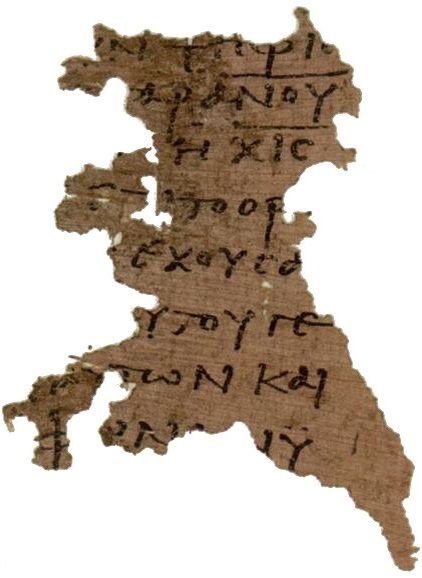

 EXPEDITION 44