“If your enemy is hungry, give him food to eat; if he is thirsty, give him water to drink. In doing this, you will heap burning coals on his head, and the LORD will reward you.” (Proverbs 25:21–22)
The Bible refers to “burning coals on the head” of someone you may consider an enemy in Rom 12:20 which is quoting Proverbs 25. In our western minds this looks like us possibly turning the other cheek or acting gracious towards our enemies as we possibly take on a sense that God in his wrath will serve them justice for their deeds. In other words, we sometimes think that if we are nice to our enemies, God will in the end give them a good cosmic spanking (karma right?!) They will get what they deserve. Have you ever found yourself offering grace in order to incite strifeful thoughts? Will God reward you if you are simply practicing random acts of kindness to your enemies even if your real intention is for God to serve them destruction by doing so? Some people even go as far as using this way of thinking in constructing their views of hell.
You may also argue that God will use our acts of kindness to convict the person as a psychological expression of guilt (this is what Augustine and Jerome thought.)
If you simply google “coals in the Bible” or one of these passages, you will likely find a lot of messages that seem to be rooted in the above thinking. But as we take a closer look we get a bit more, we see judgment. People like to equate this with hell, but there is a lot more to judgment than simply eschatological ramifications. In Leviticus 16 we get more of a picture that hot coals bring purification. In this way God is often equated to refining fire. Fire reveals brightness, power, and sometimes healing, which are all Godly attributes. But more often than not, you’re going to find Proverbs 25 and read God’s vindication to the wicked into the story. May writers will unabashedly say that “We must “leave room for God’s wrath” (Romans 12:19) and wait for the vengeance God brings in His own time. When we relinquish to God our right to take revenge, we show faith in His justice. God will bring conviction upon the sinning heart.” There may be some truth to this statement, but if that is your intention for goods than you have the wrong heart and you have missed the primary message of the passage. This statement doesn’t seem to describe the God of Love, Grace, and Mercy of the rest of the Bible. It also leaves you considering the wrong things about the definition of God’s wrath and vindication. You might consider watching this video for a better understanding of wrath within Biblical Theology. I think we can find a better way to interpret this passage theologically and in doing so, participate in a better lens of scripture.
The biggest problem reading all or any of these western ideas into this passage is that everyone thinks God is on their side but is simply hesitant to completely be on Jesus’s side. Perhaps the person you have always framed as your enemy may not be the enemy of Jesus.
_________________________
There are several different things we need to take into consideration when exegeting this verse. The Hebrew word gahelet describes the hot coals used when getting ready to ignite a sacrifice. You might think of it as an ancient fire starter. The metaphorical meaning is a reaction that will “spark” contention, but we need to interpret this according to its original meaning and symbolism. It represented the sins of the people given at the altar. The people brought the contention, but God refined it as a holy sacrifice.
In Hebrew, words connect. You might consider the second greatest command to love our neighbor or enemy.
In context, when in Romans 12:14-21 we read that most people are not going to change their ways simply out of random acts of kindness, they often require divine assistance. It was no different in the Old Testament.
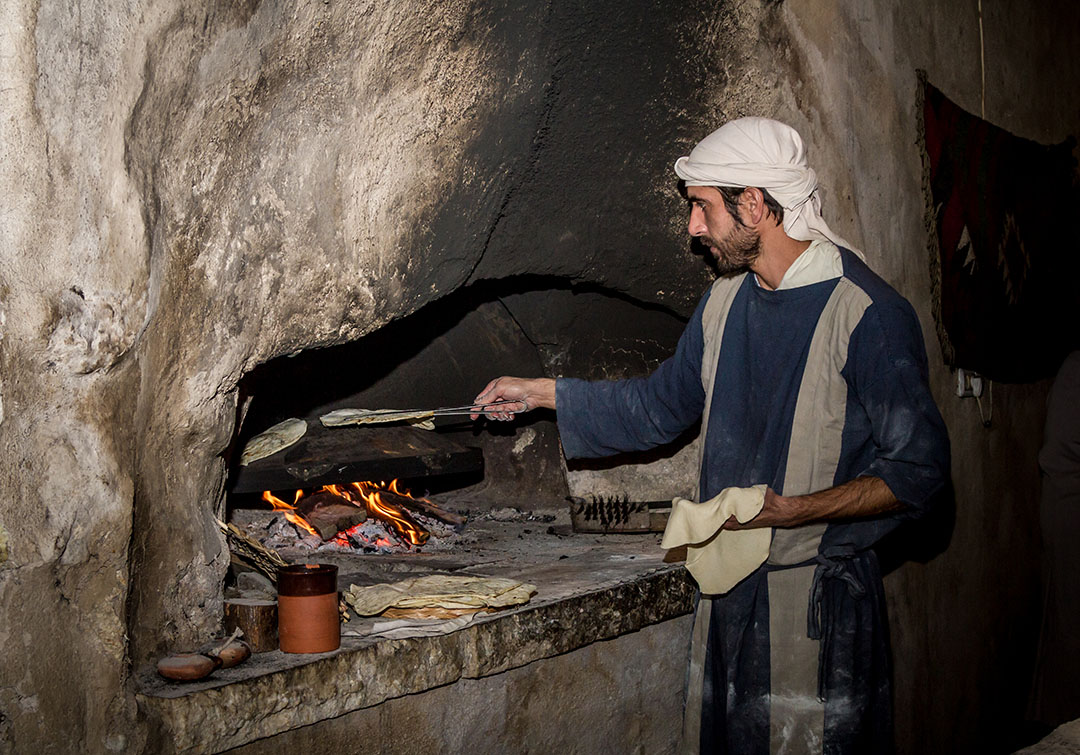
“The king was sitting in the winter house in the ninth month, with a fire burning in the brazier before him.” (Jeremiah 36:22) At first this seems like a rather random, boring verse. I have found a lot of significance in the seemingly “boring” scriptures over the years. The brazier (Hebrew, ach – אָח) is a fire pan or grill that was used not only to cook but also keep the home warm and fire going for long periods of time. If you have ever been camping, you know how important a fire is. In the ancient homes the goal was to keep the home fire going as long as needed or to the extent you could afford it. In some cases, it was actually a sign of wealth to keep a fire going all the time. Today we just pop a TV dinner in the microwave and set the thermostat for 72 on a rainy day. In ancient times having a fire burning to cook whenever you were hungry was often an expensive luxury. If you could afford the wood, then the hired help often held this at the top of their priority. In extreme winter cases, especially when illness set in, death may even occur if a fire went out. If you have ever tried to heat a home or workshop using wood, you know what a chore this can be. You have to work before you can work or live! But most people didn’t have the luxury of hired help or enough consumables to keep the fire burning so they relied on neighbors with spark. In ancient times there were many reasons to live in caravans and this was one of them.
In ancient times you burned whatever you had. Getting consumable fire was more difficult than it is today. Things that burned were sought after commodities; especially things that burned long and slow such as coal! We know they had coal in the Bible, there are over 30 mentions of it. We even get a reference in Isaiah 6 that might lead you to believe that coal is a gift from the heavens! (Even though we would more traditionally associate it with Hell!) This is a fascinating study as we find that coal was likely formed by a cataclysmic event. This idea associates the formation of earth’s coal beds with the great flood of Genesis 6-8. Many Hebrews regarded it as a gift given by God directly from the creation of His hands from the earth. In the New Testament when a roman official (who often wanted to be revered as a deity) would plan a visit, they would “prepare the way” by repairing the roads before them. The finest roads required use of coal (a tessellated pavement.) Coal was often regarded as not only luxurious, but often times spiritual and greatly sought after. It was considered a commodity.
In Genesis 22:6 Abraham seems to travel a great distance to which he “brought the fire” with Him. Some believe the fire itself was significant, perhaps coming from a home altar tied to sacred land.
Getting to the message, if you didn’t have hired help or a great supply of consumables to burn, you often borrowed an ember from a neighbor to start your fire. A neighbor would gladly meet the reciprocal request, especially if they were in your caravan, the better question was would you ask an enemy for an ember?
Can you imagine what it may communicate if at the end of a long hard day of blazing rain you simply showed up at your enemy’s door with the gift of coal? They couldn’t say no, because of the great worth it brought to them. It not only represented something monetary, but also an expression of the greatest commodity available to the day which, as you may have gathered by now, was also a metaphor for the persons time and energy. In a sense you were offering your best to the enemy.
In Ancient times caring for enemy was the symbol of strength, faith, and generosity. It takes on the New Testament covenant idea that God is reclaiming all the earth to be His people. “To feed an enemy and give him drink was like heaping the empty brazier with live coals—which meant food, warmth and almost life itself to the person or home needing it, and was the symbol of finest generosity.” (Strange Scriptures that Perplex the Western Mind, by B.M. Bowen, p. 29)
When the passage describes heaping coals on an enemy’s head it is talking about generosity with no strings attached, even though it is followed up with the word reward. Often when you gave away a coal, you gave away part of what sustains life and luxury. In many ways coal was a foreshadow of the new covenant and God asking us to give of our absolute best with no strings attached. Yet as a reward is mentioned here, we also know that grace became a circular relationship that continued to bless.
Essentially when we offer kindness to an enemy, we are blessing them. In Hebrew there are several expressions of blessings. Barak (which is a contronym, or a word that meant the extreme opposite both a curse and a blessing) is the one you are probably most familiar with which is one of the 7 words of worship. This takes on the idea that whatever you consider your biggest curse in life may be fully given to the Lord, and He in turn accepts your sacrifice and turns it into the biggest blessing from you within His kingdom. You pray that your curses become blessings both from you to the Lord and towards others. You give wholly of yourself, and God takes that humble sacrificial gift at His altar and uses it to do immeasurably more.
The other Hebrew word that translates as blessing is ashar. Ashar translates into the way that you interact with others, the sense that you might bless them. In this way Barak is often tied to the actions of God back towards us where ashar demonstrate the actions of us. What is really interesting is that in Hebrew words are written as pictures. (You here me talk and write using Old Testament Mosaic language a lot.) Ashar resembles a fire on the head. In other words the Hebrew word itself carries the entire connotation of a blessing coming in the form of a coal on the head.
There is a bit more to this passage though, what about the last line? Could there be a retribution principle going on? “If your enemy is hungry, give him food to eat; if he is thirsty, give him water to drink. In doing this, you will heap burning coals on his head, and the LORD will reward you.” (Proverbs 25:21–22) I Peter 3:9 also carries a similar feel, “Do not repay evil with evil or insult with insult, but with blessing, because to this you were called so that you may inherit a blessing.” The main problem with people thinking about spiritual rewards is that they think of them in terms of the world. We are too entangled. What is a true spiritual blessing? From spiritual eyes blessings are often curses, or come in the form of tribulation, trials, affliction. So make sure you get this straight, from God’s view if you are following him wholly; your going to bedazzle your enemies with kindness and the best gifts you have been given and then you can likely expect affliction; and not only should you expect affliction, but accept it with Joy! What kind of backwards, messed up deal is this? Welcome to the kingdom!
Well, perhaps we should be ok stopping here, but I am also glad there is a bit more to the story! The Septuagint translates this as (“the Lord will reward you with good things”). I usually like the Septuagint, and in this case I do think it represented what the people thought of God; that maybe he would bless them on earth materially for their good deeds. The book of Job partially supports this idea; although better communicates that He may or may not! Some commentators have also noted that the idea of a reward may come in the form of reconciliation, but I personally do not think we have the hermeneutic within the text to take that away. What I see is that we are to act in kindness to our enemy because God speaks it.
When I read this in Hebrew, I find the root for reward comes from Shalom, which as you know carries the notion of peace, or a feeling of being wholly complete. It also asks for protection at times of war. This might cause a lightbulb to go off in your head. As I painted a picture earlier of creeping to a neighbors camp asking for a spark to start a fire you may have actually prayed for protection on your way over and I highly doubt you would have sent a son or daughter. The mindset is that they are the enemy but we desire shalom “from” them. That takes on the notion of both peace and protection.
How would your world be different if you always treated your neighbors and/or enemies in this way? Perhaps eventually they wouldn’t be your enemy much longer.
Do you see the transparency that God is asking for us to take on for his Kingdom? When I function as a New Testament covenant priest to the nations my prayer is that God will bless and keep me. This is the quintessential calling of who we are; and when we are faithful, God is also faithful in asking us for full transparency to be wholly given in our pursuit for the kingdom. This is essentially the greater calling to be a light in the dark.
 EXPEDITION 44