There is a time for everything, and a season for every activity under the heavens: Ecclesiastes 3:1 NIV
Whenever I read Ecclesiastes 3 I start humming “Turn! Turn! Turn! (To Everything There Is a Season)”, a song written by Pete Seeger in the late 1950s, which the Byrds scored a HUGE 1965 hit with.1 The lyrics, except for the title which is repeated throughout the song and the final two lines, are adapted word-for-word from the English King James Version of Ecclesiastes 3:1-8.2 In the U.S., the song holds distinction as the number one hit with the oldest lyrics.3 I sometimes Joke that Seeger got more people to memorize scripture than any pastor in history. However, you remember it, I am sure at some point you have contemplated the questions it raises.
Ecclesiastes 3 contains philosophical speeches by a character called ‘Qoheleth’ (“the Teacher”; Koheleth or Kohelet), composed probably between the fifth and second centuries BC. Peshitta, Targum, and Talmud attribute the authorship of the book to King Solomon.4
Although I am sure you have hummed the tune, too many people go through life without ever stopping to “really” ponder a very simple question, “what connection do you have to Jesus and His kingdom and what should that mean to you in this life?” That is the question the wise Kohelet brings to their audience and is as relevant 2500 years later, today – as it was the day it was penned.
Mircea Eliade was a Romanian philosopher, and professor at the University of Chicago who became one of the most influential scholars of religion of the 20th century and interpreter of religious experience, he established paradigms in religious studies that persist to this day.5 He helped us recognize the “myth of eternal return” in the ancient world. The idea that every culture has had some kind of circle of life (as Disney later adopted it). From the Aztecs 27,000 year cycle,6 to the Hebraic 50 years of Jubilee year, including every seven years a sabbatical year, most cultures have recognized some cycle of life.7 In our culture New Years is a day of rethinking the past and taking on a resolution to do better in the coming year. In some way shape or form, I think everyone has considered the notion.
As I reflect on different life cycles I am reminded that even though the Hebraic calendar includes yearly festivals, they are different than the other cycles of the world because they are not merely repetitions of the primordial event. In Hebrew thought, the world is actually going somewhere, and we are all a distinct part of that story. We are all part of a return to Eden. But the past is finished and luckily for many of us, a recreated heaven and earth will bring the perfect union of Jesus in partnership with our true identity in Him that we have only imagined in fairy tale like songs. But to many who have stopped and considered the mastery of the entire narrative to us we have arrived and become firmly fixed on the notion that the sentiment is worth our lives.
Jon Gibson has uncovered something beautifully for us. As we reflect, remember, resolve and contemplate things more significant in this life, I am betting that we have seen seasons and have hopefully travelled to a better place of life through these journeys. But perhaps the best is yet to come for you.
The word the Qohelet uses in Hebrew for time is zĕmān. In Hebrew the word doesn’t denote an indeterminate sequence but rather an appointed moment. 8 An appointed moment of birth—and death. An appointed moment to laugh—and cry. To kill—and heal. To sow—and reap. All appointed.9 Perhaps there is something more going on in this life. Maybe there is a sense of orchestration in the ordinary that has led us to beautiful places even in the messiness or busyness of our modern life cycles. Most of us wouldn’t choose the courses of our past but we also wouldn’t choose to remove them from our lives. That seems to be an ontological fact of existence that we have in common. We are on a sentient journey.
I pray that in the pages of this masterful piece that you will find peace, comfort, and a sense of direction in the fact that somehow God is working out His plan within the pages of your life journey. Behind it all is His invisible hand. That’s comforting. Perhaps in the tears and fears, joy and grief, success and failure, helping and hurting; we will understand the immense love that Jon has so beautifully given us through his connections to Jesus. I pray that on this journey you may be captivated by these seasons and find a sense of peace but also action.
“The more beauty of God you capture today in your heart today, the greater the beauty you will find in your next season.” Don’t cast your seasons to the wind until you have grabbed hold of its beauty and set it in your heart for eternity.10
This article is intended to be a catalyst to Jon Gibson’s book “HERE AND NOW” to be released in 2026.
Hill Boone, Elizabeth (2016). Ciclos de tiempo y significado en los libros mexicanos del destino [Cycles of time and meaning in the Mexican books of destiny]. Mexico City: Fondo de Cultura Económica. ISBN9786071635020. ↩︎
B. Zuckermann, A Treatise on the Sabbatical Cycle and the Jubilee, trans. A. Löwy. New York: Hermon Press, 1974. ↩︎
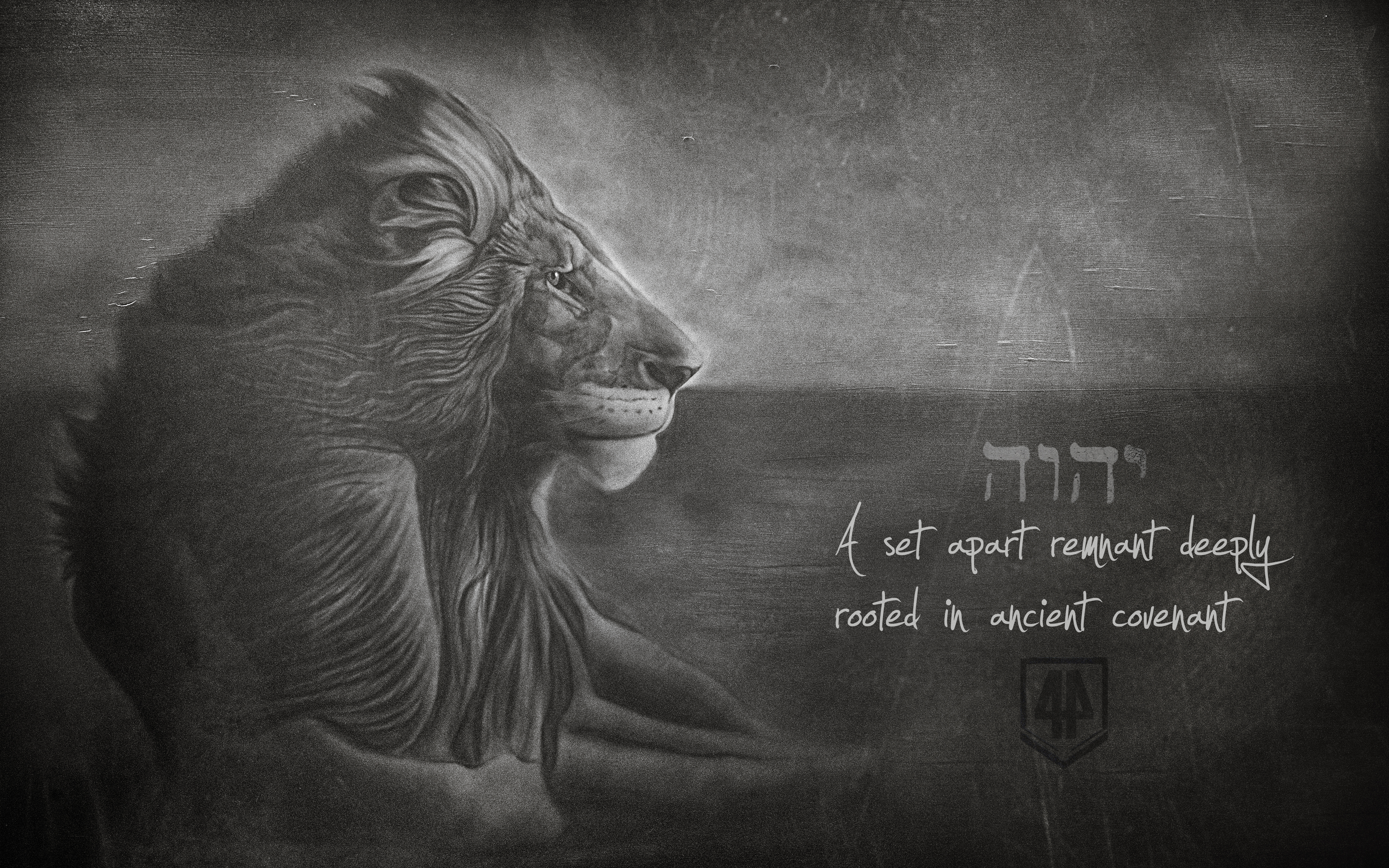
I have this large print rendering on the wall of our home. Many ask about it and I am usually pretty quiet and generic in my response to people. There is something about the name of God that seems unutterable. I kind of feel like saying, “If you have to ask me, then you are not going to understand.”
The best name for referring to God is יהוה (YHWH). This is called “THE” Tetragrammaton and comes from the Greek tetra, meaning “four,” and gramma, which means “letters.” It refers to the four consonants Yod, He, Vav and He (written from right to left in the Hebrew), used to designate God’s name in the Old Testament’s original manuscripts. They represent the English letters (from left to right) of YHWH (or YHVH). The Tetragrammaton is commonly translated as Lord, God or Jehovah in modern Bibles. Most translations, such as the KJV, NIV, NASB, HBFV and others, capitalize these words (e.g. LORD) when the underlying Hebrew referencing God is (usually) the Tetragrammaton. YHWH (or YHVH) is the most common proper name of the one true God found in Scripture. The Tetragrammaton occurs 5,410 times in the Old Testament manuscripts according to the 1906 Jewish Encyclopedia. The encyclopedia also states it is found the most in the Psalms (645) followed by the book of Jeremiah (555).1
The Bible actually only calls God by 7 different names, the rest of the “names” often attributed are actually descriptions of God, which I will admit, could also be construed as a “name” since God is in essence the definition of these attributes. Most of our research will land in the Old Testament, but I will finish with the New. Here is a better understanding to the names of God.
Tetragrammaton
YHWH is called the Tetragrammaton which is the four-letter Hebrew-language theonym יהוה (transliterated as YHWH or YHVH). This is the best and most used name for God in the scripture, some would argue that is really the only “real” name. Contrary to what some believe, Jehovah is not the Divine Name revealed to Israel. The name Jehovah is a product of mixing different words and different alphabets of different languages. Due to a fear of accidentally taking God’s name in vain (Leviticus 24:16), the Jews basically quit saying it out loud altogether. Instead, when reading Scripture aloud, the Jews substituted the tetragrammaton YHWH with the word Adonai (“Lord”). Even in the Septuagint (the Greek translation of the Old Testament), the translators substituted Kurios (“Lord”) for the Divine Name. Eventually, the vowels from Adonai (“Lord”) or Elohim (“God”) found their way in between the consonants of YHWH, thus forming YaHWeH. But this interpolation of vowels does not mean that was how God’s name was originally pronounced. In fact, we aren’t entirely sure if YHWH should have two syllables or three.2
The four Hebrew letters, written and read from right to left, are yod, he, vav, and he. The name is derived from a verb that means ‘to be’, ‘to exist’, ‘to cause to become’, or ‘to come to pass’.3 This is based off of many scriptures such as when Moses asks for God’s name at the burning bush, God answers ‘I AM WHO I AM.’ He then tells Moses that when the Israelites ask the name of the God of their ancestors, Moses should tell them ‘I AM’ has sent you (Exodus 3:14). In Hebrew the word is Ehyeh, the Hebrew word Yahweh is a derivative of Ehyeh and means “he will be.” The name Yahweh is used over six thousand times in the Old Testament and is so closely identified with the essence of God’s nature that, out of reverence, many orthodox Jewish people refuse to say the name out loud. Instead, they say HaShem—which means “the name,” or Adonai, which means “Lord.” Modern translations of the Bible print LORD, in all capital letters, to denote the use of the Hebrew word YHWH throughout scripture.4 Owing to the expansion of chumra, the idea of ‘building a fence around the Torah’, the word Adonai itself has come to be too holy to say for Orthodox Jews outside of prayer, leading to its replacement by HaShem (‘The Name’). In modernity, Christianity is the only Abrahamic religion in which the Tetragrammaton is freely and openly pronounced. As other traditions might view this openness as irreverent, Christians believe that God has offered a personal relationship to which bearing His image and claiming His name has been offered to them. The books of the Torah and the rest of the Hebrew Bible except Esther, Ecclesiastes, and (with a possible instance of יה (Jah) in verse 8:6) the Song of Songs contain this Hebrew name.5
7 NAMES OF GOD
The Jewish sages would say that there are 7 names of God that, once written, cannot be erased because of their holiness6 are the Tetragrammaton (YHWH), Adonai, El, Elohim, Shaddai, Tzevaot; some also include I Am that I Am, from which “YHWH” is believed to be derived.7 As mentioned previously, all other names, such as “Merciful”, “Gracious” and “Faithful”, merely represent attributes that are also common to human beings.8
יהוה (YHWH) – The Tetragrammaton appears in Genesis and occurs 6,828 times in total in the Biblia Hebraica Stuttgartensia edition of the Masoretic Text. It is thought to be an archaic third-person singular of the imperfective aspect of the verb “to be” (i.e., “[He] is/was/will be”). This agrees with the passage in Exodus where God names himself as “I Will Be What I Will Be” using the first-person singular imperfective aspect, open to interpretation as present tense (“I am what I am”), future (“I shall be what I shall be”), or imperfect (“I used to be what I used to be”).9
אֲדֹנָי (Adonai transl. my Lord[s]) -As with Elohim, Adonai’s grammatical form is usually explained as a form akin to the “royal we”. In the Hebrew Bible, the word is nearly always used to refer to God (approximately 450 occurrences). The Deuteronomy 32 Worldview is largely based around a plural understanding of El and Adonai.
אֵל (El transl. God) – El appears in Ugaritic, Phoenician and other late Bronze and Iron Age Levant texts both as generic “god” and as the head of the divine pantheon.10 In the Hebrew Bible, El (אל, ʾel) appears very occasionally alone (e.g. Genesis 33:20, el elohei yisrael, ‘Mighty God of Israel’, and Genesis 46:3, ha’el elohei abika, ‘El the God of thy father’), but usually with some epithet or attribute attached (e.g. El Elyon, ‘Most High El’, El Shaddai, El Shaddai, El ʿOlām ‘Everlasting El’, El Hai, ‘Living El’, El Ro’i ‘El my Shepherd’, and El Gibbor ‘El of Strength’). In can also be seen in theophoric names such as Gabriel (“Strength of God”), Michael (“Who is like God?”), Raphael (“God healed”), Ariel (“My lion is God”), Daniel (“My judgment is God”), Ezekiel (“God shall strengthen”), Israel (“one who has struggled with God”), Immanuel (“God is with us”), and Ishmael (“God hears/ will hear / listens/ will listen”).
אֱלֹהִים (Elohim transl. Gods/Godhead) – A common name of God in the Hebrew Bible is Elohim (אלהים, ʾĕlōhīm), the plural of אֱלוֹהַּ (Eloha). When Elohim refers to God in the Hebrew Bible, singular verbs are used. The word is identical to elohim meaning gods and is cognate to the ‘lhm found in Ugaritic, where it is used for the pantheon of Canaanite gods, the children of El and conventionally vocalized as “Elohim” although the original Ugaritic vowels are unknown. When the Hebrew Bible uses elohim not in reference to God, it is plural (for example, Exodus 20:2). There are a few other such uses in Hebrew, for example Behemoth. In Modern Hebrew, the singular word ba’alim (‘owner’) looks plural, but likewise takes a singular verb. Therefore scholars would consider “elohim” as the most generic term for God and can mean other gods. There is a view to which Elohim is translated as the plural construct ‘powers’; Hebrew grammar allows for this form to mean “He is the Power (singular) over powers (plural)”, such as LORD MOST HIGH.
שַׁדַּי (Shaddai transl. Almighty) – El Shaddai is conventionally translated as “God Almighty”. While the translation of El as ‘god’ in Ugaritic/Canaanite languages is straightforward, the literal meaning of Shaddai is the subject of debate.
צְבָאוֹת (Tzevaoth transl. [Lord of] Hosts) – Tzevaot, Tzevaoth, Tsebaoth or Sabaoth (צבאות, ṣəḇāʾōṯ, lit. “Armies”), usually translated “Hosts”, appears in reference to armies or armed hosts of men but is not used as a divine epithet in the Torah, Joshua, or Judges. Starting in the Books of Samuel, the term “Lord of Hosts” appears hundreds of times throughout the Prophetic books, in Psalms, and in Chronicles. Tertullian and other Fathers of the Church used it with the meaning of “Army of angels of God”.11
I Am that I Am – already explained above
OTHER NAMES FOR GOD
Early authorities considered other Hebrew names mere epithets or descriptions of God, many Orthodox Jews have adopted the chumras of writing “G-d” instead of “God”.
You also might be surprised to learn that Baal meant ‘owner’ and, by extension, ‘lord’, ‘master’, and ‘husband’ in Hebrew and the other Northwest Semitic languages.12 In some early contexts and theophoric names, it and Baali (“My Lord”) were treated as synonyms of Adon and Adonai.13
There are other “names” used for God, but all of them are a bit more arguable. Elim and Elah are often Hebrew/Aramaic words for God. Elah is used to describe both pagan gods and the Abrahamic God and therefore is often considered the Aramic version of the Hebrew Elohim. El Roi is a “name” found in Genesis, when Hagar uses this name for the God who spoke to her through His Angel. In Hebrew, her phrase El Roi, is literally, ‘God of Seeing Me’. But as I have made the point previously, it really isn’t another proper name for God but a description of God that might perhaps be entitled as a name. In the ancient world an original name was given (sometimes later than the original name) according to what you were known for. That is also true when considering the name changes given by God to others in the Bible. Therefore, there is an argument for the many other “names” of God being defined as original attributes… such as God isn’t just described as being Holy, He actually is Holy; He has defined the attribute.
In a Deuteronomy 32 worldview (Divine Council) there is another name worth mentioning. The name Elyon (עליון) occurs in combination with El, YHWH, Elohim and alone. It appears chiefly in poetic and later Biblical passages. The modern Hebrew adjective ‘Elyon means ‘supreme’ (as in “Supreme Court”: Hebrew: בית המשפט העליון) or ‘Most High’. El Elyon has been traditionally translated into English as ‘God Most High’. 14 But again, the name is really just “El” attached to an adjective, but does the original adjective then become Him?
Shekhinah (שכינה) is the presence or manifestation of God which has descended to “dwell” among humanity. The term never appears in the Hebrew Bible; later rabbis used the word when speaking of God dwelling either in the Tabernacle or amongst the people of Israel. The root of the word means “dwelling”. Of the principal names of God, it is the only one that is of the feminine gender in Hebrew grammar. The term, however, may not be a name, as it may merely describe the presence of God, and not God Himself.15 I mention this because some wonder about the femininity of God. You might consider reading this post if you are interested in those that hold views this way. However, to get back to the name shekinah, in the New Testament after Jesus ascends to the throne and sends His spirit to indwell every believe we are now the manifestation physically of that Spirit. God in us. The phrase “God with us” is often associated with the Hebrew name “Immanuel” (sometimes spelled “Emmanuel”), which directly translates to “God with us.” This phrase appears prophetically in the Old Testament and is quoted in the New Testament to reveal a profound truth about the identity of Jesus. It proclaims that the Messiah is not merely a human representative but the very presence of God dwelling among humanity.16 In similar ontological idea, at Pentecost God now dwells in His people.
NEW TESTAMANT NAMES OF GOD
While the Old Testament has a wide variety of names and epithets that refer to God in Hebrew, the Greek text of the New Testament uses far fewer variants.17 In the New Testament God’s names are written as Theos (θεός the Greek term for God), Kyrios (i.e. Lord in Greek) and Patēr (πατήρ i.e. Father in Greek). The Aramaic word “Abba” (אבא), meaning “Father” is used by Jesus in Mark 14:36 and also appears in Romans 8:15 and Galatians 4:6. Paul refers to “the Father of mercies” in his Second Letter to the Corinthians,[and James refers to “the Father of lights” in his epistle.
The names of the Father, Son and the Holy Spirit are inherently related in the New Testament, e.g. with Jesus’ instruction to His disciples at the end of the Gospel of Matthew (28:19): “make disciples of all the nations, baptizing them into the name of the Father and of the Son and of the Holy Spirit”.
The Greek word pneuma, generally translated spirit, is found around 385 times in the New Testament. The “Spirit of Truth” is used in John 14:17, 15:26 and 16:13. The First Epistle of John then contrasts this with the “spirit of error” in 1 John 4:6. Although most of the evangelical word believes in the Trinity to be “God Himself”, much of the orthodox world does not view “GOD” this way. They would view God and Jesus and the ability for either of them to “send” their spirit, but not necessarily as a separate entity or person. There is a consistent argument for both the New and Old Testaments to interpret the spirit in this sense. Some would then call it a matter of semantics, but to be clear this does divide those that call themselves trinitarians and those that don’t. Here is a Biblically conservative post that dives into this conversation.
CONCLUSIVE THOUGHTS
Although in some modern culture’s names are simply labels and designators that distinguish one item from another, in Christian theology the names of God have always had much deeper meaning and significance.18 In the religious sense, the names of God are not human inventions, but have divine origin and are based on divine revelation. Berkhof states that the issue surrounding the use and interpretation of the names of God provide a theological puzzle in that given that God is “infinite and incomprehensible”, His names transcend human thought, yet they allow Him to be revealed to humans as he descends to what is finite and comprehensible. 19 The name(s) of God have always been revered in the Christian tradition and has been associated with His presence. We often say, there is power in the name and we truly believe that. All the power and all the authority that Jesus had is invested in His Name and given through His Spirit to manifest in them. Jesus said we could use His Name in prayer. He said we could use His Name in dealing with demons. He said we could use His Name in ministering healing.
Kenyon wrote: The measure of His ability [the measure of the ability of the Lord Jesus Christ] is the measure of the value of that Name, and all that is invested in that Name belongs to us, for Jesus gave us the unqualified use of His Name.20
He wondered have you ever wondered what Matthew 7 is really about?
gates – ways – foundations – false prophets of the world – entanglement – alignment
As you dive in deeper there are some concerning words that are sure to raise an eyebrow. But what Jesus is saying is that “false prophets” are those who propagate the ways and the systems of the world and bring them into the church and entangle God’s people. Those who Jesus never knew are those who are entangled and aren’t walking the better way, but walking the entangled way. Jesus makes a point of showing that there are those who know Jesus but then those that claim to know him but don’t follow him.
7:13-14
7:15-20
7:21-23
7:24-27
When we look at the genre of the literary style we see that it’s a chiasm the beginning and the end are the same and the two in the middle are the same it’s broken up in this way:
Matt 7:13 Narrow Gate – The place where the blind have no idea what lies ahead. The narrow path (gate) is the Hebrew word mish’ol, the word is found in the Torah only once, in the story of Balaam’s donkey in Numbers 22. The Angel of the Lord (a title used in the Old Testament often considered as the pre-incarnation theophany of the Messiah) once stood in the narrow space. The Narrow Gate is synonymous with those that can’t see the way of Jesus. The result was violence. Balaam almost beating his donkey to death to get what he wants (materialism using the name of the LORD). The way of Jesus is peaceful and subversive, not violent and angry.
Matt 7:14 For the gate is small and the way is narrow that leads to life, and there are few who find it.”
Today we don’t really like the idea of “narrow gates”; the implication is that some of us are blind to the “truth.” In this regard, Christianity as a religion (not at the level of each individual) has often become “supernatural commercialism” (Heschel’s brilliant phrase1) tied to what sells. It is a picture of the worldly entanglement of the church. It is self-interest par excellence because it promotes as religion exactly those objectives that make us feel good. Often is the name of Jesus we end up doing things that are opposite of His Ways. We create paradigms of “Christianity” that are far more aligned with the ways of the world than the ways of Jesus, but we want to rubber stamp a Jesus label on it. Jesus calls this spiritual blindness. When we choose to be in debt to a slave like work week, extravagant homes, and are financed to the hilt with credit cards, cars, boats, and materialism we show the motives of our heart. Jesus doesn’t call us to live this way. Jesus lived simply and calls us to walk in His image. He didn’t appear to own a home, a donkey (car), or be overly concerned with any other material things. He didn’t even seem to want any money. Judas carried the money, that should actually speak volumes. When it came time to pay a tax his father provided from a fish.
Matt 7:15-20 You will know them by their fruits. Grapes are not gathered from thorn bushes nor figs from thistles, are they?
Fruits – The Bible is clear that we shouldn’t be judgmental but rather test by fruitfulness. Love, joy, peace, long-suffering; all that good stuff we recognize as the hallmarks of a follower. The commission is to be set a part from the ways of the world.
Matt 7:21-23 “Not everyone who says to me, ‘Lord, Lord,’ will enter the kingdom of heaven, but the one who does the will of my Father who is in heaven. On that day many will say to me, ‘Lord, Lord, did we not prophesy in your name, and cast out demons in your name, and do many mighty works in your name?’ And then will I declare to them, ‘I never knew you; depart from me, you workers of lawlessness’”.
Our works–
I believe bates was strongly influenced by Heschel. “It is clear here that the salvific pistis [faith] action is closely aligned with obedience so that it cannot be separated from it. . . . the gospel is purposed toward bringing about the practical obedience characteristic of allegiance to a king. . .”2
Bates shows that the rhetoric of Paul’s letters and the gospels must be understood within the socio-political environment of the first century, and in that environment allegiance to a king was in some ways deemed contrary to the Way of Jesus. Jesus has expectations of allegiance and obedience. The King expects results being aligned to His kingdom not the kingdoms of the world.
Watchman Nee once said that human beings have the propensity to create sustainable good works without the anointing and on-going involvement of the Spirit.3 Good things do not necessarily please God. TOV (good) was just the start, God was looking for a partnership in covenant obedience. Be obedient to the little things and the master will entrust you with the greater things of the kingdom. Bathe your life in Spirit-saturated works. Your time, treasure, talent, and testimony point to the “ways” of your heart. Then God’s joyful celebration in His completed desire will be yours too. -The Heart of Psalm 37:4.
Many will say to me in that day, “Lord, Lord, didn’t we . . “ Matthew 7:22 Jesus is not talking about intentions. He’s talking about real actions. These people stand before Him and points to precisely the things that we would count as worthy of the kingdom and entangle you to the world.
never knew you – “The truth of being human is gratitude, the secret of existence is appreciation, its significance is revealed in reciprocity.”4 Anomia in Greek is lawlessness. In Hebraic thought this is whatever is contrary to Torah. Torah is nomos. Whatever is not Torah is anomos. The Torah pointed people to the coming JESUS. Know Torah, know Jesus. Does anyone know what the Torah was about? Devotion.
7:24-27 And the rain fell, and the floods came, and the winds blew and beat on that house, but it did not fall, because it had been founded on the rock.
Heschel reminds us: “Only those who live spiritually on edge will be able to go beyond the shore without longing for the certainties established on the artificial rock of our speculation.”5 “Longing for the certainties.” That is the hardest part of following Jesus is a modern world. The materialisms are too great. We want assurances, comfort, we don’t like reliance or faith, we want to know that we all can make our own way. We don’t need faith, an Acts 2 community or quite frankly Jesus. We have become our own gods.
It is my opinion faith is the opposite of certainty and that makes faith hard. All of your relationships are built on trust. None are certain. Jesus is certain, but asks us to have faith and be part of this community.
Walking the way is hard in our modern world, but it is what Jesus asks. It reminds me of John 6 when the disciples said, “This is a hard teaching. Who can accept it?” Seems pretty narrow minded, doesn’t it?
This article was written by Dr. Will Ryan and Dr. Matt Mouzakis



 EXPEDITION 44