
I have been into climbing for a long time. When I was in 8th grade (going into HS) our church hired a new youth HS pastor from Colorado named Steve Ledford that asked me and a friend to go to Devils Lake with Him to climb. I was athletic and had done some “bouldering” before but never been climbing on rope. That day my life changed, or was better, “influenced” forever. First Steve (although was later unfortunately let go by our church) went on to be one of my best mentors in life. I also went on to become a certified AMGA guide and climb more mountains than I can count including some of the largest in the world. But more importantly, I decided to dedicate a good part of my life to use the sport of climbing to introduce people to a better understanding of themselves and what God has for them. This last weekend a good friend of mine (Phil Reynolds) and I took our boys on an epic “climb” to learn some mountaineering basics and introduce them to some fundamental considerations of life. We took the time to share how every opportunity has the potential to shape your life and influence the lives of others, and how important it is to recognize and utilize these life moments.
It came about when the priests who carried the ark of the covenant of the Lord had come up from the middle of the Jordan, and the soles of the priests’ feet were lifted up to the dry ground, that the waters of the Jordan returned to their place, and went over all its banks as before. Joshua 4:18 NASB
If you aren’t familiar with Hebrew, let me share something pretty basic about the language that you probably aren’t aware of, Stefan Schorch puts this best, “the Hebrew script is not able to record vowels, with the exception of the so-called vowel letters (matres lectionis), although the distinctiveness of a certain vocalization may carry important semantic information. As a result, the Hebrew Bible contains in fact a large number of words with different meaning, which had been homographs before the invention of the masoretic pointing.”[1]
Joshua 4:8 is a great example of the challenges that this has brought us in regard to interpretation. The verb used here means “to go up, climb, ascend” [עָלָה (ʿālâ)]. Notice the description in TWOT:
There are nearly 900 occurrences of the verb ʿālâ in the ot. The most common meanings in the simple tenses are “go up” (over 300 times), “come up” (over 160 times) and “ascend” (17 times). In the causative stems the two predominant meanings are “to bring up” (over 100 times) and “to offer” (77 times). The other 230 uses of the word are translated about 85 different ways in the av.[2]
To put this plainly, this single word in Hebrew takes on over 100 different English translations. Here is a list of some of the derivatives:
1624c עֹלָה (ʿōlâ) I, whole burnt offering.
1624d עֹלָה (ʿōlâ) II, ascent, stairway.
1624e עִלִּי (ʿillî) upper (Jud 1:15; Josh 15:14).
1624g עֶלְיוֹן (ʿelyôn) I, high.
1624h עֶלְיוֹן (ʿelyôn) II, most high.
1624i מֹעַל (mōʿal) lifting.
1624j מַעֲלֶה (maʿăleh) ascent.
1624k מַעַל (maʿal) above, upward.
1624l מַעֲלָה (maʿălâ) I, what comes up, i.e. thoughts (Ezk 11:5).
1624m מַעֲלָה (maʿălâ) II, step, stair.
1624n תְּעָלָה (tĕʿālâ) I, conduit, water course.
1624o תְּעָלָה (tĕʿālâ) II, healing.
1624p עַל (ʿal) above.[3]
To many this is very confusing. How can the simple word for “climbing” in the Bible be translated in so many ways that often seem so far apart, possibly not even noticeably related when translated in English. This is why Biblical Hebrew is challenging to say the least. Context helps, but much of the older Hebrew scripture was guarded through oral handing down, that we have to simply take on a certain sense of trust with. In fact, the oldest written scriptures we have are at best from a few hundred years before the time of Christ yet represent “inspired writings” from what we like to think would have been original manuscripts lost many years before this but guarded and carried down (or up to us) by oral tradition. X44 is on a long video series on the church but when we finish, we will be unveiling perhaps the longest anticipated series yet on inspiration and inerrancy. This conversation will start to consider some of the points we will greatly consider in the upcoming X44 Youtube series on inspiration and inerrancy. But I won’t be getting much deeper into that today.
Many of our X44 readers know that the Masoretes decided when and where they would add the vowel points and I have to say alot rides on this and reads into our translations. Wikipedia would tell us that the Masoretes “were groups of Jewish scribe-scholars who worked from around the end of the 5th through 10th centuries CE. Each group compiled a system of pronunciation and grammatical guides in the form of diacritical notes (niqqud) on the external form of the Biblical text in an attempt to standardize the pronunciation, paragraph and verse divisions, and cantillation of the Hebrew Bible. The ben Asher family of Masoretes was largely responsible for the preservation and production of the Masoretic Text
So as if Biblical Hebrew isn’t hard enough to translate already, now that you know, you have to consider the fact that your English translation is highly influenced by this group of people that took the liberty to fill in a lot of blanks throughout the text. But this is me taking a second to teach Theology, let me return to my primary observation.
The Hebrew word “ala” in its most basic sense described what it meant to “CLIMB OR ASCEND.” In a Biblical sense the idea means that you are going to allow something to influence you or be the catalyst to influence others. Are you identifying and looking for a climb every day? Nearly every decision we make has the power to influence who we are and want to be before the Lord. We have the power to shape who we want to be or allow ourselves to digress based on the same process of influence.
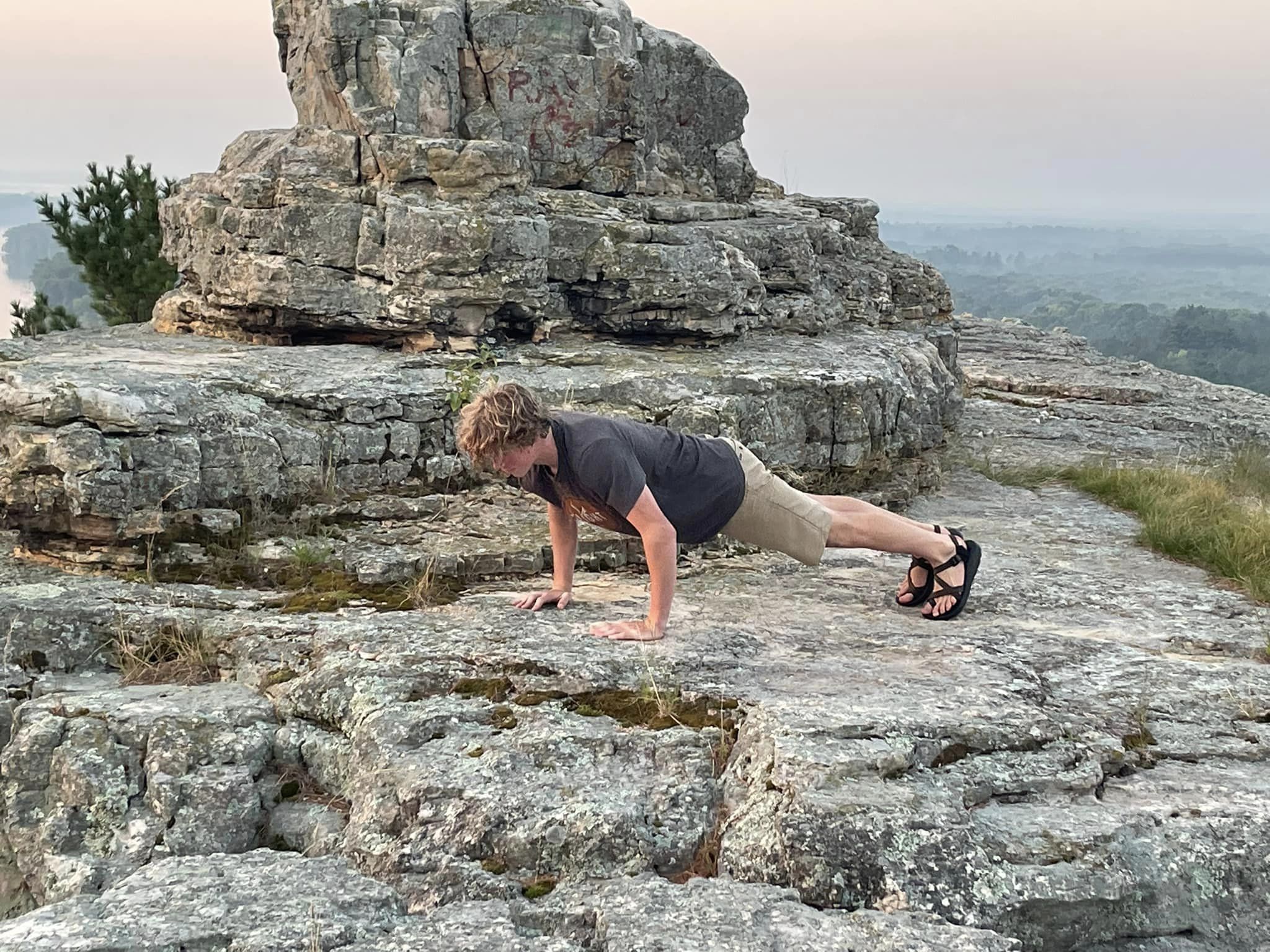
This last weekend I led my boys and their best friends in life up a 900 foot egress of rock to a pinnacle where we camped on the top and firsthand watched the majestic splendors of the cosmos declared to the Lord. We also were steps from imminent death with one misplaced foot or handhold. This expedition will influence them forever. The Biblical words for climb mean so much. They describe how we learn, how we heal, how we stretch ourselves, and determine our pathway and live in spiritual balance. The words embody the course that is given to the Lord spiritually at nearly every decision and the allegiant obedient faith that characterizes the covenant relationship that we walk in each and every day.
How is your climb going? Are you each and every day considering where Jesus will lead? Are you approaching life as an open ascent to the cosmos that has been given to you? Do you see yourself as a shepherd guide to mentor others in this? If you haven’t figured it out with the over 100 different interpretations, THIS IS THE WAY.

[1] Stefan Schorch, “Dissimilatory reading and the making of Biblical texts: the Jewish Pentateuch and the Samaritan Pentateuch”, in Raymond F. Person, Jr. and Robert Rezetko (eds.), Empirical Models Challenging Biblical Criticism (SBL Press, 2016), p. 113.
[2] Carr, G. L. (1999). 1624 עָלָה. R. L. Harris, G. L. Archer Jr., & B. K. Waltke (Eds.), Theological Wordbook of the Old Testament (electronic ed., p. 666). Chicago: Moody Press.
[3] Carr, G. L. (1999). 1624 עָלָה. R. L. Harris, G. L. Archer Jr., & B. K. Waltke (Eds.), Theological Wordbook of the Old Testament (electronic ed., p. 666). Chicago: Moody Press.



 EXPEDITION 44